Showing results for officer
Welcome Amplify Science educators! Test
Welcome Amplify Science educators!
Amplify appoints Paul Sheppard as Chief Financial Officer
BROOKLYN, NY (January 14, 2021) — Amplify, a publisher of next-generation curriculum and assessment programs, announced today the appointment of Paul Sheppard as chief financial officer. Sheppard previously served as chief financial officer of Entangled (now Guild Education) and has held senior positions at several other education companies, including McGraw-Hill and Pearson.
As CFO at Entangled, a venture capital and advisory firm focused on education innovation, Sheppard helped the company implement best practices at scale across several departments, including finance, accounting, and operations. In 2020, Entangled was sold to Guild Education.
“Paul Sheppard is both an innovator and trusted leader who consistently delivers results. He is also deeply committed to our mission, which is important to us,” said Amplify CEO Larry Berger. “As an accomplished executive with demonstrated success in the education and corporate training sectors, Paul will further drive our financial planning and business growth, enabling Amplify to serve more educators and students across the country.”
During his time at McGraw-Hill, Sheppard served as chief operating officer for Learning Science Platforms and vice president of strategy. He helped transition the core business to a digital subscription model and led major research on the future of education. In his earlier career, Sheppard served as vice president of corporate development and strategy for Pearson.
About Amplify
A pioneer in K–12 education since 2000, Amplify is leading the way in next-generation curriculum and assessment. Our core and supplemental programs in ELA, math, and science engage all students in rigorous learning and inspire them to think deeply, creatively, and for themselves. Our formative assessment products turn data into practical instructional support to help all students build a strong foundation in early reading and math. All of our programs provide teachers with powerful tools that help them understand and respond to the needs of every student. Today, Amplify serves seven million students in all 50 states. For more information, visit amplify.com.
Program introduction
Professional learning
What will you find in the Professional Learning section?
Whether you’re launching into a new program or looking to strengthen your skills, Amplify’s professional learning sessions will support your needs.
- Register now to join new and upcoming learning sessions.
- On-demand sessions offer timely insights to support your mCLASS implementation.
- Webinar recordings from 2020-2021 or 2021-2022 ensure you don’t miss a thing.
Amplify is working in partnership with the Kindergarten Assessment Support (KAS) Initiative to provide virtual professional development trainings to teacher, specialists, and campus/district leader users of mCLASS Texas Kindergarten across the state of Texas. These trainings are funded by the KAS Grant and will be provided at no charge to participants. Please note that all content will be focused on kindergarten only.
You will find a list of sessions below that you can register for. Sessions will be updated on an ongoing basis. To register, educators can enter the Session ID number into the Region 4 ESC search bar (https://www.escweb.net/tx_esc_04/) to sign up for the session(s) and to secure a spot or type ‘mclass’ into the search bar; all virtual sessions are capped at 30 participants.
For more information about the KAS Initiative, please visit https://tea.texas.gov/academics/early-childhood-education/data-driven-instruction-best-practices.
View the on-demand sessions for below to gain timely insights to support your mCLASS implementation.
All mCLASS Texas Edition users will have access to free online modules. Contact your district for details about accessing these modules.
For those districts that want to support teachers in a more comprehensive approach we will work to ensure that the professional learning section supporting each mCLASS Texas Edition rollout meets each district’s unique needs. Here is a professional learning catalog to show the breadth and depth of what we offer.
Remote assessment
mCLASS Texas Edition can be administered in many ways, including remotely. This site will give guidance on the various ways to administer mCLASS Texas Edition to best support your students in any learning environment.
Watch the Remote Assessment Guidance Office Hours recording here.
Documents referenced during Office Hours are linked below.
Administrators, welcome to mCLASS Texas Edition!
Here you’ll find information about enrollment and licensing, technical requirements, professional learning resources, and more.
Onboarding: What to expect
Welcome to mCLASS Texas Edition! To help you know what’s coming next, we created the following visual that outlines the steps of the onboarding process. You can use it as a reference.

Enrollment and licensing
Amplify provides services to fit the different types of enrollment needs for various times of year:
- Self-Service Enrollment (SSE) is a batch enrollment tool that you can use to import large amounts of student, staff, and class information into the Amplify system at the beginning of the school year or any time you need to update your enrollment data.
- Auto Self-Service Enrollment (Auto SSE) is a service for automatically sending enrollment data from your computer to Amplify, which does not require intervention after you initiate the process, and which can be run at any time of year. You must have the ability to run scripts in order to use Auto SSE.
- Amplify also offers the Manual Enrollment tools on the Amplify Administration page, which you can use at any time of year to add or update enrollment information by entering the information directly into Amplify, rather than uploading spreadsheets.
Preparing your materials
Click here to access a list of the print materials included in each mCLASS Texas Edition kit.

Technology requirements and guidelines
To ensure that your hardware and network meet the minimum technical requirements for optimal performance and support of your digital curriculum products, please see Amplify’s customer requirements page.
To ensure access to mCLASS, add the URLs on this page to your corresponding district or school-level filters.
Teachers, welcome to mCLASS Texas Edition!
Here you’ll learn about the program, how to set up your device, and how to get help when using mCLASS Texas Edition.
Onboarding: What to expect

Logging in to mCLASS Home
mCLASS Home is where you access mCLASS reporting, instruction, and other helpful resources. Follow these steps to log in:
1. Navigate to mclass.amplify.com.
2. You will need your Amplify user name and password to log in. If you forget your password, you can follow the instructions below to generate a new one.
- Click “Forgot Password”
- Enter your Amplify username and your district or school email address. Click Send. Then follow the instructions in the email you receive to reset your password.
If you have not received an Amplify username and password, please contact your
school or district administrator.
Setting up your assessment device
Assessments are administered using the mCLASS app. The mCLASS app is installed by creating a shortcut from Chrome™ (Safari for iPads) on your device’s desktop or home screen. Click the link for your device for installation instructions:
iPad
Chromebook
Windows device
Note that you need your Amplify username and password to install the mCLASS app. If you have not received it, please contact your school or district administrator.
Dyslexia screening
mCLASS® Texas DIBELS® 8 and IDEL assess the updated skills required for dyslexia screening. We’ve got you covered!
Click here to learn more about the Texas Dyslexia handbook updates.
Looking for help?
Our technical and pedagogical support teams are available from 7 a.m. to 7 p.m. ET, Monday through Friday.
For your most urgent questions
- Use our live chat within your program
- Call our toll-free number: (800) 823-1969
For less urgent questions, send us an email!
- Technical support: help@amplify.com
- Pedagogical support: edsupport@amplify.com
Professional development for core programs
Amplify professional development provides learning experiences that intentionally develop the knowledge and skills you need for effective and self-sustaining implementation.
Learn and apply impactful instructional techniques and develop a deeper understanding of your Amplify program(s) by investing in professional development.

Amplify professional development has been vetted by Rivet Education’s team through a rigorous three-step process and is listed in the Professional Learning Partner Guide.

About Amplify core programs
Amplify’s programs help you teach inspiring lessons that develop student brilliance through robust scaffolding and differentiated instruction.
Literacy
- Amplify Core Knowledge Language Arts (CKLA) 2nd Edition and 3rd Edition
- Amplify Caminos 1st and 3rd Edition
- Amplify ELA 2nd Edition
STEM
- Amplify Math
- Amplify Desmos Math* (for Grades PreK–5, 6–Algebra 1, or high school)
- Amplify Science (for Grades K–5 or 6–8)
Contact your account executive for extended PD catalog options or quotes.
*Amplify Desmos Math is our new K–12 program (English and Spanish) using a problem-based approach for deep conceptual understanding. Contact us for available packages.
About Amplify professional development (PD)
Take a systemic approach to drive lasting change. Partner with us to create a learning plan that enhances implementation, instruction, and student impact.
At each phase of your journey, packages include different types of learning experiences strategically bundled for multiple touchpoints throughout the year.

Session types within packages


Begin packages
You’re ready to shift to evidence-based practices in your first year with Amplify programs. Let us support your educators with professional development that builds new skills and knowledge.
Choose from flexible on-site, hybrid, or virtual packages which include:
- One Launch session to introduce Amplify programs and support strong implementation.
- One Strengthen session to deepen understanding of the program.
- One Coach session to elevate instructional practice and meet specific needs.
- Suggested add-ons are available.
Each package supports up to 30 participants in similar grade bands.
On-site 15 package
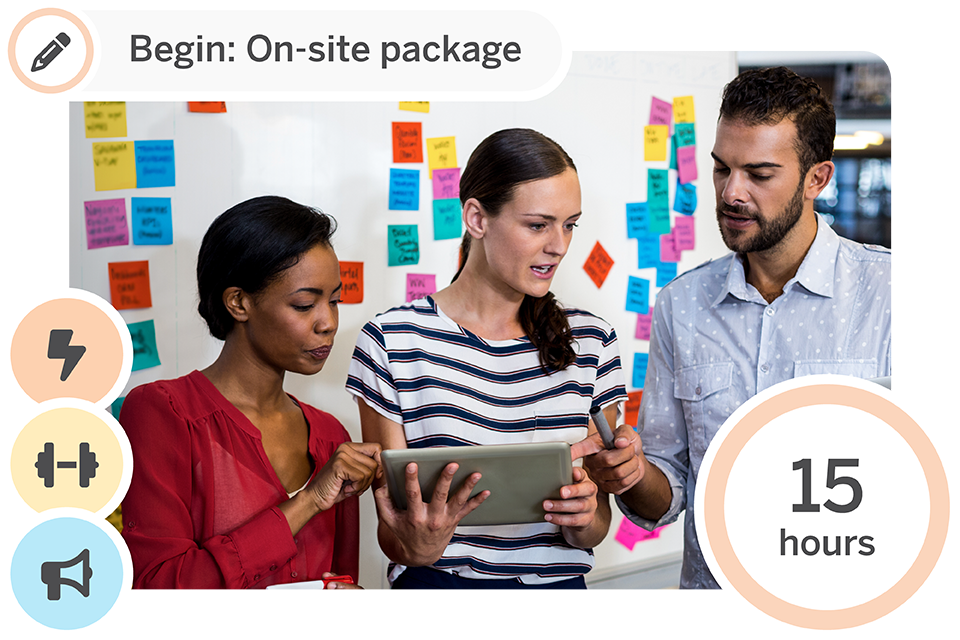
Participate in 15 hours of program-aligned professional development across three sessions for up to 30 participants. Build understanding of research-based practices and develop knowledge through curated Launch, Strengthen, and Coach sessions.
Begin: On-site 15 package |
||
| Session type | Modality/duration | What’s included |
| Launch (1) | On-site, 6-hr. | Initial training for teachers |
| Strengthen (1) | On-site, 3-hr. | Program-specific Strengthen session (selected based on your needs) for Core Literacy and STEM programs. |
| Coach (1) | On-site, 6-hr. | Coach session |
| Suggested enhancements | ||
| Launch add-on | On-site or virtual, 3-hr. | Program overview for leaders |
| Launch add-on | Virtual, 1 hr. | Amplify CKLA Grade 3–5 Skills supplement training for teachers |
Begin: Launch: Initial training for teachers
Amplify Caminos 3rd Edition, Amplify CKLA/Caminos 3rd Edition biliteracy, and Amplify Desmos Math high school sessions are available July 2026.
On-site, 6 hours
Initial training sessions are designed for educators who are new to our program. In our initial training session, educators are oriented to the key components of their program(s), including learning how to navigate, teach, and monitor student progress, while exploring content and program resources. Participants will leave the session with the foundational knowledge and skills necessary to begin teaching with the program.
Session options: Amplify CKLA (2nd and 3rd Edition), Amplify Caminos (1st and 3rd Edition), Amplify CKLA 2nd Edition/Caminos 1st Edition biliteracy, Amplify CKLA 3rd Edition/Caminos 3rd Edition biliteracy, Amplify ELA 2nd Edition, Amplify Math (Grades 6–A1), Amplify Desmos Math (Grades PreK–5, 6–A1, or high school), Amplify Science (Grades K–5 or 6–8)
Audience: Teachers, instructional staff (maximum 30 participants)
Launch add-on
Suggested enhancement: Program overview for leaders
Amplify Caminos 3rd Edition sessions are available July 2026.
On-site or virtual, 3 hours
The program overview for leaders session supports district and school-level instructional leaders in effectively coordinating the implementation of the program. Leaders will learn the foundational elements of the program, build an understanding of the key teacher and student practices to look for in classrooms, and develop an implementation plan.
Session options: Amplify CKLA (2nd and 3rd Edition), Amplify Caminos (1st and 3rd Edition), Amplify CKLA 2nd Edition/Caminos 1st Edition biliteracy, Amplify CKLA 3rd Edition/Caminos 3rd Edition biliteracy, Amplify ELA 2nd Edition, Amplify Math (Grades 6–A1), Amplify Desmos Math (Grades K–5, 6–A1, or high school), Amplify Science (Grades K–5 or 6–8)
Audience: Leaders (maximum 30 participants)
Available July 2026
Suggested enhancement: Launch add-on: Amplify CKLA Grade 3–5 Skills supplement training for teachers
Grades 4 and 5 available July 2026
Virtual, 1 hour
Learn how to implement Amplify CKLA Grades 3–5 Skills in the classroom. Learn the foundational elements of Amplify CKLA Grades 3–5 Skills, including becoming familiar with materials and key lesson components.
Note:
- Grade 3 Skills is included in the purchase of Amplify CKLA 2nd Edition, while Grade 4 Skills and Grade 5 Skills can be added on.
- Grades 3–5 Skills are included with the purchase of Amplify CKLA 3rd Edition.
Session options: Amplify CKLA 2nd Edition (Grades 3–5) or Amplify CKLA 3rd Edition (Grades 3–5)
Audience: Teachers, instructional staff (maximum 30 participants)
Strengthen: Program-specific sessions
Strengthen your Amplify implementation with program-specific sessions that support personalized learning and practice in your classroom.
To explore the core Strengthen sessions, select your program:
Amplify will partner closely with you to select the appropriate session(s) that will deepen educators’ understanding of Amplify program(s) and equip them with the tools they need to improve students’ learning outcomes. Each package includes one Strengthen session. Additional sessions can be added as Enhancements.
Coach: Customized support
Amplify Caminos 3rd Edition, Amplify CKLA/Caminos 3rd Edition biliteracy, and Amplify Desmos Math high school sessions are available July 2026.
On-site, 6 hours
Coaching sessions focus on building internal school and district capacity and leadership excellence. Coaching is customized to meet a school or district’s needs and can include model lessons, observations, walk-throughs, and/or co-planning.
Session options: Amplify CKLA (2nd and 3rd Edition), Amplify Caminos (1st and 3rd Edition), Amplify CKLA 2nd Edition/Caminos 1st Edition biliteracy, Amplify CKLA 3rd Edition/Caminos 3rd Edition biliteracy, Amplify ELA 2nd Edition, Amplify Math (Grades 6–A1), Amplify Desmos Math (Grades K–5, 6–A1, or high school), Amplify Science (Grades K–5 or 6–8)
Audience: Individual teachers, grade-level teams, PLCs,
and/or instructional leaders (maximum 30 participants)
Hybrid 15 on-site package
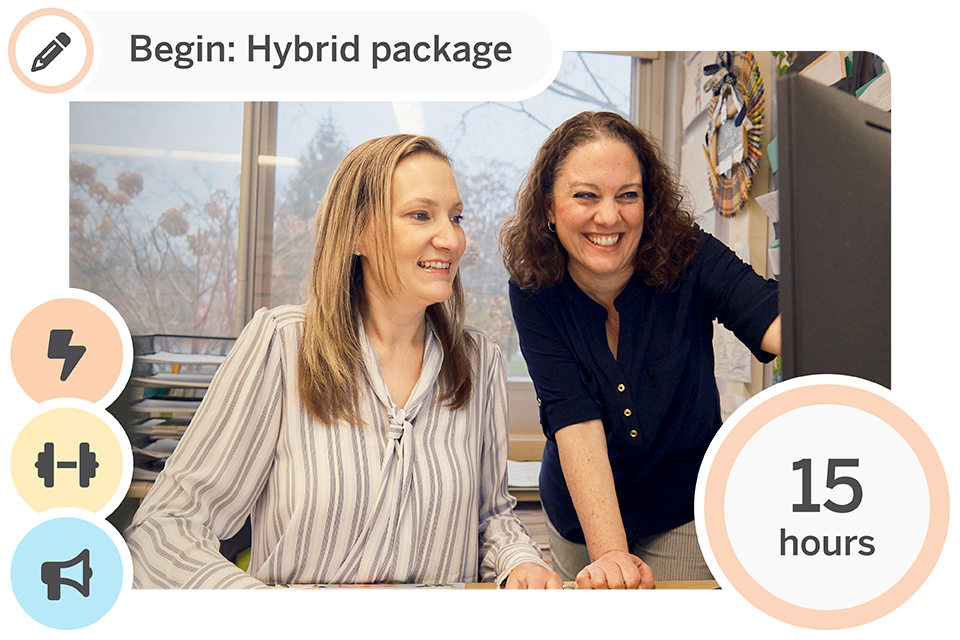
Participate in 15 hours of program-aligned professional development across three sessions for up to 30 participants. Build understanding of research-based practices and develop knowledge through curated Launch, Strengthen, and Coach sessions.
Begin: Hybrid 15 on-site package |
||
| Session type | Modality/duration | What’s included |
| Launch (1) | On-site, 6-hr. | Initial training for teachers |
| Strengthen (1) | Virtual, 3-hr. | Program-specific Strengthen session (selected based on your needs) for Core Literacy and STEM programs. |
| Coach (1) | On-site, 6-hr. | Coach session |
| Suggested enhancements | ||
| Launch add-on | On-site or virtual, 3-hr. | Program overview for leaders |
| Launch add-on | Virtual, 1 hr. | Amplify CKLA Grade 3–5 Skills supplement training for teachers |
Begin: Launch: Initial training for teachers
Amplify Caminos 3rd Edition, Amplify CKLA/Caminos 3rd Edition biliteracy, and Amplify Desmos Math high school sessions are available July 2026.
On-site, 6 hours
Initial training sessions are designed for educators who are new users. In our initial training session, educators are oriented to the key components of the program, including learning how to navigate, teach, and monitor student progress, while exploring content and program resources. Participants will leave the session with the foundational knowledge and skills necessary to begin teaching with the program.
Session options: Amplify CKLA (2nd and 3rd Edition), Amplify Caminos (1st and 3rd Edition), Amplify CKLA 2nd Edition/Caminos 1st Edition biliteracy, Amplify CKLA 3rd Edition/Caminos 3rd Edition biliteracy, Amplify ELA 2nd Edition, Amplify Math (Grades 6–A1), Amplify Desmos Math (Grades K–5, 6–A1, or high school), Amplify Science (Grades K–5 or 6–8)
Audience: Teachers, instructional staff (maximum 30 participants)
Launch add-on
Suggested enhancement: Program overview for leaders
Amplify Caminos 3rd Edition sessions are available July 2026.
On-site or virtual, 3 hours
The program overview for leaders session supports district and school-level instructional leaders in effectively coordinating the implementation of the program. Leaders will learn the foundational elements of the program, build an understanding of the key teacher and student practices to look for in classrooms, and develop an implementation plan.
Session options: Amplify CKLA (2nd Edition), Amplify Caminos (1st and 3rd Edition), Amplify CKLA 2nd Edition/Caminos 1st Edition biliteracy, Amplify ELA 2nd Edition, Amplify Math (Grades 6–A1), Amplify Desmos Math (Grades K–5 or 6–A1), Amplify Science (Grades K–5 or 6–8)
Audience: Leaders (maximum 30 participants)
Launch add-on
Suggested enhancement: Amplify CKLA Grade 3–5 Skills supplement training for teachers
Virtual, 1 hour
Learn how to implement Amplify CKLA Grades 3–5 Skills in the classroom. Learn the foundational elements of Amplify CKLA Grades 3–5 Skills, including becoming familiar with materials and key lesson components.
Notes:
- Grade 3 Skills is included in the purchase of Amplify CKLA 2nd Edition, while Grade 4 Skills and Grade 5 Skills can be added on.
- Grades 3–5 Skills are included with the purchase of Amplify CKLA 3rd Edition.
Session options: Amplify CKLA 2nd Edition (Grades 3–5)
Audience: Teachers, instructional staff (maximum 30 participants)
Strengthen: Program-specific sessions
Strengthen your Amplify implementation with program-specific sessions that support personalized learning and practice in your classroom.
To explore the available core Strengthen sessions, select your program:
Amplify will closely partner with you to select the appropriate session(s) that will deepen educators’ understanding of Amplify program(s) and equip them with the tools they need to improve students’ learning outcomes. Each package includes one Strengthen session. Additional sessions can be added as Enhancements.
Coach session: Customized support
Amplify Caminos 3rd Edition, Amplify CKLA/Caminos 3rd Edition biliteracy, and Amplify Desmos Math high school sessions are available July 2026.
On-site, 6 hours
Coaching sessions focus on building internal school and district capacity and leadership excellence. Coaching is customized to meet a school or district’s needs and can include model lessons, observations, walk-throughs, and/or co-planning.
Session options: Amplify CKLA (2nd and 3rd Edition), Amplify Caminos (1st Edition), Amplify CKLA 2nd Edition/Caminos 1st Edition biliteracy, Amplify CKLA 3rd Edition/Caminos 3rd Edition biliteracy, Amplify ELA 2nd Edition, Amplify Math (Grades 6–A1), Amplify Desmos Math (Grades K–5, 6–A1, or high school), Amplify Science (Grades K–5 or 6–8)
Audience: Individual teachers, grade-level teams, PLCs, and/or instructional leaders (maximum 30 participants)
Hybrid 10 package
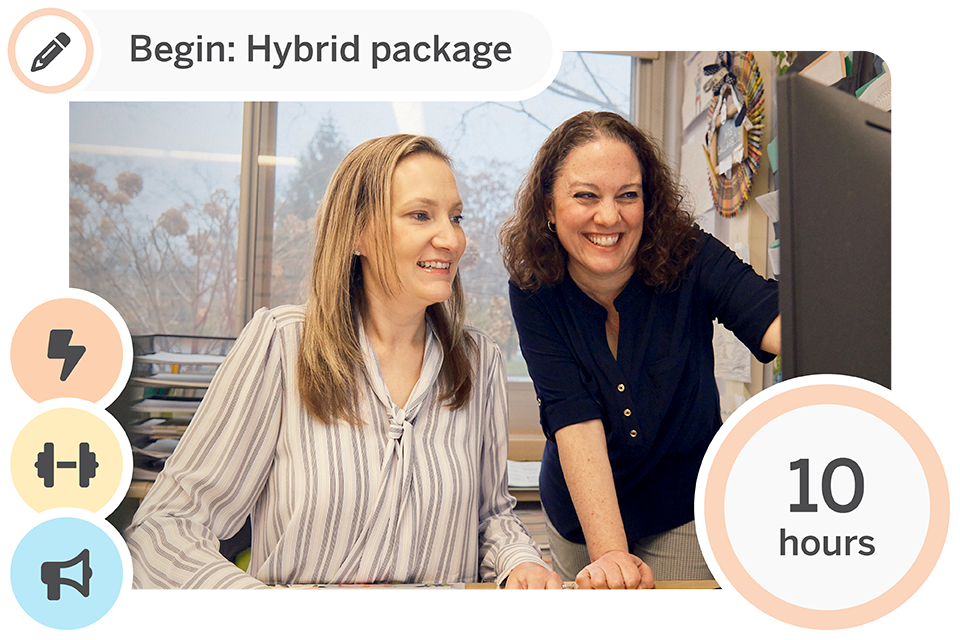
Participate in 10 hours of program-aligned professional development across three sessions for up to 30 participants. Build understanding of research-based practices and develop knowledge through curated Launch, Strengthen, and Coach sessions.
Begin: Hybrid 10 package |
||
| Session type | Modality/duration | What’s included |
| Launch (1) | On-site, 3-hr. | Program overview for teachers |
| Strengthen (1) | Virtual, 1-hr. | Program-specific Strengthen Focus session (selected based on your needs) for Core Literacy and STEM programs. |
| Coach (1) | On-site, 6-hr. | Coach session |
| Suggested enhancements | ||
| Launch add-on | On-site or virtual, 3-hr. |
Program overview for leaders |
| Launch add-on | Virtual, 1 hr. | Amplify CKLA Grade 3–5 Skills supplement training for teachers |
Begin: Launch: Program overview for teachers
Amplify Caminos 3rd Edition, Amplify CKLA/Caminos 3rd Edition biliteracy, and Amplify Desmos Math high school sessions are available July 2026.
On-site, 3 hours
Program overview sessions provide a basic introduction for educators who are new users of the program. In a program overview session, educators learn how to get started with the key features and materials of the program.
Session options: Amplify CKLA (2nd and 3rd Edition), Amplify Caminos (1st Edition), Amplify CKLA 2nd Edition/Caminos 1st Edition biliteracy, Amplify CKLA 3rd Edition/Caminos 3rd Edition biliteracy, Amplify ELA 2nd Edition, Amplify Math (Grades 6–A1), Amplify Desmos Math (Grades PreK–5, 6–A1, or high school), Amplify Science (Grades K–5 or 6–8)
Audience: Teachers, instructional staff (maximum 30 participants)
Launch add-on
Suggested enhancement: Program overview for leaders
Amplify Caminos 3rd Edition sessions are available July 2026.
On-site or virtual, 3 hours
The program overview for leaders session supports district and school-level instructional leaders in effectively supporting the implementation of the program. Leaders will learn the foundational elements of the program, build an understanding of the key teacher and student practices to look for in classrooms, and develop an implementation plan.
Session options: Amplify CKLA (2nd and 3rd Edition), Amplify Caminos (1st Edition), Amplify CKLA 2nd Edition/Caminos 1st Edition biliteracy, Amplify CKLA 3rd Edition/Caminos 3rd Edition biliteracy (Grades PreK–5), Amplify ELA 2nd Edition (Grades 6–8), Amplify Math (Grades 6–A1), Amplify Desmos Math (Grades K–5, 6–A1, or high school), Amplify Science (Grades K–5 or 6–8)
Audience: Leaders (maximum 30 participants)
Launch add-on
Suggested enhancement: Amplify CKLA Grade 3–5 Skills supplement training for teachers
Virtual, 1 hour
Learn how to implement Amplify CKLA Grades 3–5 Skills in the classroom. Learn the foundational elements of Amplify CKLA Grades 3–5 Skills, including becoming familiar with materials and key lesson components.
Note:
- Grade 3 Skills is included in the purchase of Amplify CKLA 2nd Edition, while Grade 4 Skills and Grade 5 Skills can be added on.
- Grades 3–5 Skills are included with the purchase of Amplify CKLA 3rd Edition.
Session options: Amplify CKLA 2nd Edition (Grades 3–5)
Audience: Teachers, instructional staff (maximum 30 participants)
Strengthen: Program-specific sessions
Strengthen your Amplify implementation with program-specific sessions that support personalized learning and practice in your classroom.
To explore the available core Strengthen sessions, select your program:
Amplify will closely partner with you to select the appropriate session(s) that will deepen educators’ understanding of your Amplify program(s) and equip them with the tools they need to improve students’ learning outcomes. Each package includes one Strengthen session. Additional sessions can be added as Enhancements.
Coach session: Customized support
Amplify Caminos 3rd Edition, Amplify CKLA/Caminos 3rd Edition biliteracy, and Amplify Desmos Math high school sessions are available July 2026.
On-site, 6 hours
Coaching sessions focus on building internal school and district capacity and leadership excellence. Coaching is customized to meet a school or district’s needs and can include model lessons, observations, walk-throughs, and/or co-planning.
Session options: Amplify CKLA (2nd and 3rd Edition), Amplify Caminos (1st and 3rd Edition), Amplify CKLA 2nd Edition/Caminos 1st Edition biliteracy, Amplify CKLA 3rd Edition/Caminos 3rd Edition biliteracy, Amplify ELA 2nd Edition, Amplify Math (Grades 6–A1), Amplify Desmos Math (Grades K–5, 6–A1, or high school), Amplify Science (Grades K–5 or 6–8)
Audience: Individual teachers, grade-level teams, PLCs,
and/or instructional leaders (maximum 30 participants)
Hybrid 15 virtual package
Participate in 15 hours of program-aligned professional development across three sessions for up to 30 participants. Build understanding of research-based practices and develop knowledge through curated Launch, Strengthen, and Coach sessions.
Begin: Hybrid 15 virtual package |
||
| Session type | Modality/duration | What’s included |
| Launch (1) | Virtual, 6-hr. (2 half-days) |
Initial training for teachers |
| Strengthen (1) | Virtual, 3-hr. | Program-specific Strengthen session (selected based on your needs) for Core Literacy and STEM programs. |
| Coach (1) | On-site, 6-hr. | Coach session |
| Suggested enhancements | ||
| Launch add-on | On-site or virtual, 3-hr. | Program overview for leaders |
| Launch add-on | Virtual, 1 hr. | Amplify CKLA Grade 3–5 Skills supplement training for teachers |
Begin: Launch: Initial training for teachers
Amplify Caminos 3rd Edition, Amplify CKLA/Caminos 3rd Edition biliteracy, and Amplify Desmos Math high school sessions are available July 2026.
Virtual, 6 hours (2 half-days)
Initial training sessions are designed for educators who are new to our program. In our initial training session, educators are oriented to the key components of their program(s), including learning how to navigate, teach, and monitor student progress, while exploring content and program resources. Participants will leave the session with the foundational knowledge and skills necessary to begin teaching with the program.
Session options: Amplify CKLA (2nd and 3rd Edition), Amplify Caminos (1st and 3rd Edition), Amplify CKLA 2nd Edition/Caminos 1st Edition biliteracy, Amplify CKLA 3rd Edition/Caminos 3rd Edition biliteracy, Amplify ELA 2nd Edition, Amplify Math (Grades 6–A1), Amplify Desmos Math (Grades K–5, 6–A1, or high school), Amplify Science (Grades K–5 or 6–8)
Audience: Teachers, instructional staff (maximum 30 participants)
Launch add-on
Suggested enhancement: Program overview for leaders
Amplify Caminos 3rd Edition sessions are available July 2026.
On-site or virtual, 3 hours
The program overview for leaders session supports district and school-level instructional leaders in effectively supporting the implementation of the program. Leaders will learn the foundational elements of the program, build an understanding of the key teacher and student practices to look for in classrooms, and develop an implementation plan.
Session options: Amplify CKLA (2nd and 3rd Edition), Amplify Caminos (1st Edition), Amplify CKLA 2nd Edition/Caminos 1st Edition biliteracy, Amplify CKLA 3rd Edition/Caminos 3rd Edition biliteracy, Amplify ELA 2nd Edition, Amplify Math (Grades 6–A1), Amplify Desmos Math (Grades K–5, 6–A1, or high school), Amplify Science (Grades K–5 or 6–8)
Audience: Leaders (maximum 30 participants)
Launch add-on
Suggested enhancement: Amplify CKLA Grade 3–5 Skills supplement training for teachers
Virtual, 1 hour
Learn how to implement Amplify CKLA Grades 3–5 Skills in the classroom. Learn the foundational elements of Amplify CKLA Grades 3–5 Skills, including becoming familiar with materials and key lesson components.
Note:
- Grade 3 Skills is included in the purchase of Amplify CKLA 2nd Edition, while Grade 4 Skills and Grade 5 Skills can be added on.
- Grades 3–5 Skills are included with the purchase of Amplify CKLA 3rd Edition.
Session options: Amplify CKLA 2nd Edition (Grades 3–5)
Audience: Teachers, instructional staff (maximum 30 participants)
Strengthen: Program-specific sessions
Strengthen your Amplify implementation with program-specific sessions that support personalized learning and practice in your classroom.
To explore the available core Strengthen sessions, select your program:
Amplify will closely partner with you to select the appropriate session(s) that will deepen educators’ understanding of Amplify program(s) and equip them with the tools they need to improve students’ learning outcomes. Each package includes one Strengthen session. Additional sessions can be added as Enhancements.
Coach session: Customized support
Amplify Caminos 3rd Edition, Amplify CKLA/Caminos 3rd Edition biliteracy, and Amplify Desmos Math high school sessions are available July 2026.
On-site, 6 hours
Coaching sessions focus on building internal school and district capacity and leadership excellence. Coaching is customized to meet a school or district’s needs and can include model lessons, observations, walk-throughs, and/or co-planning.
Session options: Amplify CKLA (2nd and 3rd Edition), Amplify Caminos (1st and 3rd Edition), Amplify CKLA 2nd Edition/Caminos 1st Edition biliteracy, Amplify CKLA 3rd Edition/Caminos 3rd Edition biliteracy, Amplify ELA 2nd Edition, Amplify Math (Grades 6–A1), Amplify Desmos Math (Grades K–5, 6–A1, or high school), Amplify Science (Grades K–5 or 6–8)
Audience: Individual teachers, grade-level teams, PLCs, and/or instructional leaders (maximum 30 participants)
Virtual 7 package
Participate in 7 hours of program-aligned professional development across three sessions for up to 30 participants. Build understanding of research-based practices and develop knowledge through curated Launch, Strengthen, and Coach sessions.
Begin: Virtual 7 package |
||
| Session type | Modality/duration | What’s included |
| Launch (1) | Virtual, 3-hr. | Program overview for teachers |
| Strengthen (1) | Virtual, 1-hr. | Program-specific Strengthen Focus session (selected based on your needs) for Core Literacy and STEM programs. |
| Coach (1) | Virtual, 3-hr. | Coach session |
| Suggested enhancements | ||
| Launch add-on | On-site or virtual, 3-hr. | Program overview for leaders |
| Launch add-on | Virtual, 1 hr. | Amplify CKLA Grade 3–5 Skills supplement training for teachers |
Begin: Launch: Program overview for teachers
Amplify Caminos 3rd Edition, Amplify CKLA/Caminos 3rd Edition biliteracy, and Amplify Desmos Math high school sessions are available July 2026.
Virtual, 3 hours
Program overview sessions provide a basic introduction for educators who are new users of the program. In a program overview session, educators learn how to get started with the key features and materials of the program.
Session options: Amplify CKLA (2nd and 3rd Edition), Amplify Caminos (1st and 3rd Edition), Amplify CKLA 2nd Edition/Caminos 1st Edition biliteracy, Amplify CKLA 3rd Edition/Caminos 3rd Edition biliteracy, Amplify ELA 2nd Edition, Amplify Math (Grades 6–A1), Amplify Desmos Math (Grades PreK, K–5, 6–A1, or high school), Amplify Science (Grades K–5 or 6–8)
Audience: Teachers, instructional staff (maximum 30 participants)
Launch add-on
Suggested enhancement: Launch add-on: Program overview for leaders
Amplify Caminos 3rd Edition sessions are available July 2026.
On-site or virtual, 3 hours
The program overview for leaders session supports district and school-level instructional leaders in effectively coordinating the implementation of the program. Leaders will learn the foundational elements of the program, build an understanding of the key teacher and student practices to look for in classrooms, and develop an implementation plan.
Session options: Amplify CKLA (2nd and 3rd Edition), Amplify Caminos (1st and 3rd Edition), Amplify CKLA 2nd Edition/Caminos 1st Edition biliteracy, Amplify CKLA 3rd Edition/Caminos 3rd Edition biliteracy, Amplify ELA 2nd Edition, Amplify Math (Grades 6–A1), Amplify Desmos Math (Grades K–5, 6–A1, or high school), Amplify Science (Grades K–5 or 6–8)
Audience: Leaders (maximum 30 participants)
Launch add-on
Suggested enhancement: Amplify CKLA Grade 3–5 Skills supplement training for teachers
Virtual, 1 hour
Learn how to implement Amplify CKLA Grades 3–5 Skills in the classroom. Learn the foundational elements of Amplify CKLA Grades 3–5 Skills, including becoming familiar with materials and key lesson components.
Note:
- Grade 3 Skills is included in the purchase of Amplify CKLA 2nd Edition, while Grade 4 Skills and Grade 5 Skills can be added on.
- Grades 3–5 Skills are included with the purchase of Amplify CKLA 3rd Edition.
Session options: Amplify CKLA 2nd Edition (Grades 3–5)
Audience: Teachers, instructional staff (maximum 30 participants)
Strengthen: Program-specific sessions
Strengthen your Amplify implementation with program-specific sessions that support personalized learning and practice in your classroom.
To explore the available core Strengthen sessions, select your program:
Amplify will closely partner with you to select the appropriate session(s) that will deepen educators’ understanding of your Amplify program(s) and equip them with the tools they need to improve students’ learning outcomes. Each package includes one Strengthen session. Additional sessions can be added as Enhancements.
Coach session: Customized support
Amplify Caminos 3rd Edition, Amplify CKLA/Caminos 3rd Edition biliteracy, and Amplify Desmos Math high school sessions are available July 2026.
Virtual, 3 hours
Coaching sessions focus on building internal school and district capacity and leadership excellence. Coaching is customized to meet a school or district’s needs and can include model lessons, observations, walk-throughs, and/or co-planning.
Session options: Amplify CKLA (2nd and 3rd Edition), Amplify Caminos (1st and 3rd Edition), Amplify CKLA 2nd Edition/Caminos 1st Edition biliteracy, Amplify CKLA 3rd Edition/Caminos 3rd Edition biliteracy, Amplify ELA 2nd Edition, Amplify Math (Grades 6–A1), Amplify Desmos Math (Grades K–5, 6–A1, or high school), Amplify Science (Grades K–5 or 6–8)
Audience: Individual teachers, grade-level teams, PLCs,
and/or instructional leaders (maximum 30 participants)
Practice packages
You’re familiar with Amplify programs and ready to deepen your knowledge and implementation. Let us support your educators with professional development that emphasizes continuous improvement and enhanced understanding.
Choose from flexible on-site, hybrid, or virtual packages:
- One Strengthen session to deepen understanding of the program, expand practice, and drive student outcomes
- Two Coach sessions to elevate instructional practice and meet specific needs
Each package supports up to 30 participants in similar grade bands.
On-site 15 package
Participate in 15 hours of program-aligned professional development across three sessions for up to 30 participants. Build understanding of research-based practices and develop knowledge through curated Strengthen and Coach sessions.
Practice: On-site 15 package |
||
| Session type | Modality/duration | What’s included |
| Strengthen (1) | On-site, 3-hr. | Program-specific Strengthen session (selected based on your needs) for Core Literacy and STEM programs. |
| Coach (2) | On-site, 6-hr. | Coach session |
| Suggested enhancements | ||
| Launch substitution | Virtual, 1-hr. | NEW: Amplify Caminos 1st–3rd Ed. transition training for teachers |
| Launch substitution | Virtual, 1-hr. | NEW: Amplify CKLA 2nd Ed/Caminos 1st Ed to Amplify CKLA 3rd Ed/Caminos 3rd Ed transition training for teachers |
| Launch add-on | Virtual, 1-hr. | Amplify CKLA 3–5 Skills supplement training for teachers |
| Launch substitution |
Virtual, 1-hr. | Amplify CKLA 2nd–3rd Edition transition training for teachers |
| Launch add-on | Virtual, 1-hr. | Language Studio for CKLA 3rd Edition session |
Strengthen: Program-specific sessions
Strengthen your Amplify implementation with program-specific sessions that support personalized learning and practice in your classroom.
To explore the available core Strengthen sessions, select your program:
Amplify will closely partner with you to select the appropriate session(s) that will deepen educators’ understanding of Amplify program(s) and equip them with the tools they need to improve students’ learning outcomes. Each package includes one Strengthen session. Additional sessions can be added as Enhancements.
Coach session: Customized support
Amplify CKLA, Amplify Caminos 3rd Edition, and Amplify Desmos Math K–5 and 6–A1 are available July 2026.
On-site, 6 hours
Coaching sessions focus on building internal school and district capacity and leadership excellence. Coaching is customized to meet a school or district’s needs and can include model lessons, observations, walk-throughs, and/or co-planning.
Session options: Amplify CKLA (2nd and 3rd Edition), Amplify Caminos (1st and 3rd Edition), Amplify CKLA 2nd Edition/Caminos 1st Edition biliteracy, Amplify CKLA 3rd Edition/Caminos 3rd Edition biliteracy, Amplify ELA 2nd Edition, Amplify Math (Grades 6–A1), Amplify Desmos Math (Grades K–5, 6–A1, or high school), Amplify Science (Grades K–5 or 6–8)
Audience: Individual teachers, grade-level teams, PLCs, and/or instructional leaders (maximum 30 participants)
Available July 2026
Suggested enhancement: Launch substitution: Amplify Caminos 1st and 3rd Edition transition training for teachers
Virtual, 1 hour
Participants will get an overview of the similarities and differences between Amplify Caminos 1st and 3rd Editions, including becoming familiar with changes in materials; the digital platform; and key lesson, assessment, and reporting components.
Session options: Amplify Caminos 1st Edition (Grades K–2 or 3–5)
Audience: Teachers, instructional staff (maximum 30 participants)
Available July 2026
Suggested enhancement: Launch substitution: Amplify CKLA 2nd Edition/Caminos 1st Edition to Amplify CKLA 3rd Edition/Caminos 3rd Edition transition training for teachers
Virtual, 1 hour
Participants will get an overview of the similarities and differences between Amplify Caminos 1st and 3rd Editions, including becoming familiar with changes in materials; the digital platform; and key lesson, assessment, and reporting components.
Session options: Amplify CKLA 2nd Edition/Amplify Caminos 1st Edition (Grades K–2 or 3–5)
Audience: Teachers, instructional staff (maximum 30 participants)
Launch add-on
Suggested enhancement: Amplify CKLA Grade 3–5 Skills supplement training for teachers
Virtual, 1 hour
Learn how to implement Amplify CKLA Grades 3–5 Skills in the classroom. Learn the foundational elements of Amplify CKLA Grades 3–5 Skills, including becoming familiar with materials and key lesson components.
Note:
- Grade 3 Skills is included in the purchase of Amplify CKLA 2nd Edition, while Grade 4 Skills and Grade 5 Skills can be added on.
- Grades 3–5 Skills are included with the purchase of Amplify CKLA 3rd Edition.
Session options: Amplify CKLA 2nd Edition (Grades 3–5)
Audience: Teachers, instructional staff (maximum 30 participants)
Launch substitution
Suggested enhancement: Launch substitution: Amplify CKLA 2nd Edition to 3rd Edition transition training for teachers
Virtual, 1 hour
Ideal substitution for CKLA 2nd Edition Launch sessions
Participants will get an overview of the similarities and differences between Amplify CKLA 2nd Edition and Amplify CKLA 3rd Edition, including becoming familiar with changes in materials; the digital platform; and key lesson, assessment, and reporting components.
Session options: Amplify CKLA 2nd Edition (Grades K–2 or 3–5)
Audience: Teachers, instructional staff (maximum 30 participants)
Launch add-on
Suggested enhancement: Launch add-on: Language Studio companion training for teachers
On-site and virtual, 3 hour
Ideal add-on for Amplify CKLA (2nd Edition or 3rd Edition) Launch sessions
Participants will be able to summarize the key features of Language Studio. During this session they will connect key segments of Language Studio to ELD instructional best practices, identify the segments of Language Studio, and plan and practice a Language Studio lesson.
Session options: Amplify CKLA 2nd or 3rd Edition (Grades K–2 or 3–5)
Audience: Teachers, instructional staff (maximum 30 participants)
Hybrid 15 package
Participate in 15 hours of program-aligned professional development across three sessions for up to 30 participants. Build understanding of research-based practices and develop knowledge through curated Strengthen and Coach sessions.
Practice: Hybrid 15 package |
||
| Session type | Modality/duration | What’s included |
| Strengthen (1) | Virtual, 3-hr. | Program-specific Strengthen session (selected based on your needs) for Core Literacy and STEM programs. |
| Coach (2) | On-site, 6-hr. | Coach session |
| Suggested enhancements |
||
| Launch substitution | Virtual, 1-hr. | NEW: Amplify Caminos 1st and 3rd Ed. transition training for teachers |
| Launch substitution | Virtual, 1-hr. | NEW: Amplify CKLA 2nd Ed./Caminos 1st Ed. to Amplify CKLA 3rd Ed./Caminos 3rd Ed. transition training for teachers |
| Launch add-on | Virtual, 1-hr. | Amplify CKLA Grade 3–5 Skills supplement training for teachers |
| Launch substitution | Virtual, 1-hr. | Amplify CKLA 2nd Edition to 3rd Edition transition training for teachers |
| Launch add-on | Virtual, 1-hr. | Language Studio for CKLA 3rd Edition session |
Strengthen: Program-specific sessions
Strengthen your Amplify implementation with program-specific sessions that support personalized learning and practice in your classroom.
To explore the available core Strengthen sessions, select your program:
Amplify will closely partner with you to select the appropriate session(s) that will deepen educators’ understanding of your Amplify program(s) and equip them with the tools they need to improve students’ learning outcomes. Each package includes one Strengthen session. Additional sessions can be added as Enhancements.
Coach session: Customized support
Amplify CKLA 3rd Edition and Amplify Desmos Math K–5 and 6–A1 sessions are available July 2026.
On-site, 6 hours
Coaching sessions focus on building internal school and district capacity and leadership excellence. Coaching is customized to meet a school or district’s needs and can include model lessons, observations, walk-throughs, and/or co-planning.
Session options: Amplify CKLA (2nd and 3rd Edition), Amplify Caminos (1st Edition), Amplify CKLA 2nd Edition/Caminos 1st Edition biliteracy, Amplify ELA 2nd Edition, Amplify Math (Grades 6–A1), Amplify Desmos Math (Grades K–5, 6–A1, or high school), Amplify Science (Grades K–5 or 6–8)
Audience: Individual teachers, grade-level teams, PLCs,
and/or instructional leaders (maximum 30 participants)
Available July 2026
Suggested enhancement: Launch substitution: Amplify Caminos 1st and 3rd Edition transition training for teachers
Virtual, 1 hour
Participants will get an overview of the similarities and differences between Amplify Caminos 1st and 3rd Editions, including becoming familiar with changes in materials; the digital platform; and key lesson, assessment, and reporting components.
Session options: Amplify Caminos 1st Edition (Grades K–2 or 3–5)
Audience: Teachers, instructional staff (maximum 30 participants)
Available July 2026
Suggested enhancement: Launch substitution: Amplify CKLA 2nd Edition/Caminos 1st Edition to Amplify CKLA 3rd Edition/Caminos 3rd Edition transition training for teachers
Virtual, 1 hour
Participants will get an overview of the similarities and differences between Amplify Caminos 1st and 3rd Editions, including becoming familiar with changes in materials; the digital platform; and key lesson, assessment, and reporting components.
Session options: Amplify CKLA 2nd Edition/Amplify Caminos 1st Edition (Grades K–2 or 3–5)
Audience: Teachers, instructional staff (maximum 30 participants)
Launch add-on
Suggested enhancement: Amplify CKLA Grade 3–5 Skills supplement training for teachers
Virtual, 1 hour
Learn how to implement Amplify CKLA Grades 3–5 Skills in the classroom. Learn the foundational elements of Amplify CKLA Grades 3–5 Skills, including becoming familiar with materials and key lesson components.
Note:
- Grade 3 Skills is included in the purchase of Amplify CKLA 2nd Edition, while Grade 4 Skills and Grade 5 Skills can be added on.
- Grades 3–5 Skills are included with the purchase of Amplify CKLA 3rd Edition.
Session options: Amplify CKLA 2nd Edition (Grades 3–5)
Audience: Teachers, instructional staff (maximum 30 participants)
Launch substitution
Suggested enhancement: Amplify CKLA 2nd Edition to 3rd Edition transition training for teachers
Virtual, 1 hour
Ideal substitution for CKLA 2nd Edition Launch sessions
Participants will get an overview of the similarities and differences between Amplify CKLA 2nd Edition and Amplify CKLA 3rd Edition, including becoming familiar with changes in materials; the digital platform; and key lesson, assessment, and reporting components.
Session options: Amplify CKLA 2nd Edition (Grades 3–5)
Audience: Teachers, instructional staff (maximum 30 participants)
Launch add-on
Suggested enhancement: Launch add-on: Language Studio companion training for teachers
On-site and virtual, 3 hours
Ideal add-on for Amplify CKLA (2nd Edition or 3rd Edition) Launch sessions
Participants will be able to summarize the key features of Language Studio. During this session they will connect key segments of Language Studio to ELD instructional best practices, identify the segments of Language Studio, and plan and practice a Language Studio lesson.
Session options: Amplify CKLA 2nd or 3rd Edition (Grades K–2 or 3–5)
Audience: Teachers, instructional staff (maximum 30 participants)
Hybrid 13 package
Participate in 13 hours of program-aligned professional development across three sessions for up to 30 participants. Build understanding of research-based practices and develop knowledge through curated Strengthen and Coach sessions.
Practice: Hybrid 13 package |
||
| Session type | Modality/duration | What’s included |
| Strengthen (1) | Virtual, 1-hr. | Program-specific Strengthen Focus session (selected based on your needs) for Core Literacy and STEM programs. |
| Coach (2) | On-site, 6-hr. | Coach session |
| Suggested enhancements | ||
| Launch substitution | Virtual, 1-hr. | NEW: Amplify Caminos 1st and 3rd Ed. transition training for teachers |
| Launch substitution | Virtual, 1-hr. | NEW: Amplify CKLA 2nd Ed./Caminos 1st Ed. to Amplify CKLA 3rd Ed./Caminos 3rd Ed. transition training for teachers |
| Launch add-on | Virtual, 1-hr. | Amplify CKLA Grade 3–5 Skills supplement training for teachers |
| Launch substitution | Virtual, 1-hr. | Amplify CKLA 2nd Edition to 3rd Edition transition training for teachers |
Strengthen: Program-specific sessions
Strengthen your Amplify implementation with program-specific sessions that support personalized learning and practice in your classroom.
To explore the available core Strengthen sessions, select your program:
Amplify will closely partner with you to select the appropriate session(s) that will deepen educators’ understanding of Amplify program(s) and equip them with the tools they need to improve students’ learning outcomes. Each package includes one Strengthen session. Additional sessions can be added as Enhancements.
Coach session: Customized support
Amplify CKLA; Amplify Caminos 3rd Edition; and Amplify Desmos Math K–5, 6–A1, and high school are available July 2026.
On-site, 6 hours
Coaching sessions focus on building internal school and district capacity and leadership excellence. Coaching is customized to meet a school or district’s needs and can include model lessons, observations, walk-throughs, and/or co-planning.
Session options: Amplify CKLA (2nd and 3rd Edition), Amplify Caminos (1st Edition), Amplify CKLA 2nd Edition/Caminos 1st Edition biliteracy, Amplify ELA 2nd Edition, Amplify Math (Grades 6–A1), Amplify Desmos Math (Grades K–5, 6–A1, or high school), Amplify Science (Grades K–5 or 6–8)
Audience: Individual teachers, grade-level teams, PLCs, and/or instructional leaders (maximum 30 participants)
Available July 2026
Suggested enhancement: Launch substitution: Amplify Caminos 1st and 3rd Edition transition training for teachers
Virtual, 1 hour
Participants will get an overview of the similarities and differences between Amplify Caminos 1st and 3rd Editions, including becoming familiar with changes in materials; the digital platform; and key lesson, assessment, and reporting components.
Session options: Amplify Caminos 1st Edition (Grades K–2 or 3–5)
Audience: Teachers, instructional staff (maximum 30 participants)
Available July 2026
Suggested enhancement: Launch substitution: Amplify CKLA 2nd Edition/Caminos 1st Edition to Amplify CKLA 3rd Edition/Caminos 3rd Edition transition training for teachers
Virtual, 1 hour
Participants will get an overview of the similarities and differences between Amplify Caminos 1st 3rd Editions, including becoming familiar with changes in materials; the digital platform; and key lesson, assessment, and reporting components.
Session options: Amplify CKLA 2nd Edition/Amplify Caminos 1st Edition (Grades K–2 or 3–5)
Audience: Teachers, instructional staff (maximum 30 participants)
Launch add-on
Suggested enhancement: Amplify CKLA Grade 3–5 Skills supplement training for teachers
Virtual, 1 hour
Learn how to implement Amplify CKLA Grades 3–5 Skills in the classroom. Learn the foundational elements of Amplify CKLA Grades 3–5 Skills, including becoming familiar with materials and key lesson components.
Note:
- Grade 3 Skills is included in the purchase of Amplify CKLA 2nd Edition, while Grade 4 Skills and Grade 5 Skills can be added on.
- Grades 3–5 Skills are included with the purchase of Amplify CKLA 3rd Edition.
Session options: Amplify CKLA 2nd Edition (Grades 3–5)
Audience: Teachers, instructional staff (maximum 30 participants)
Launch substitution
Suggested enhancement: Amplify CKLA 2nd Edition to 3rd Edition transition training for teachers
Virtual, 1 hour
Ideal substitution for CKLA 2nd Edition Launch sessions
Participants will get an overview of the similarities and differences between Amplify CKLA 2nd Edition and Amplify CKLA 3rd Edition, including becoming familiar with changes in materials; the digital platform; and key lesson, assessment, and reporting components.
Session options: Amplify CKLA 3rd Edition (Grades 3–5)
Audience: Teachers, instructional staff (maximum 30 participants)
Virtual 9 package
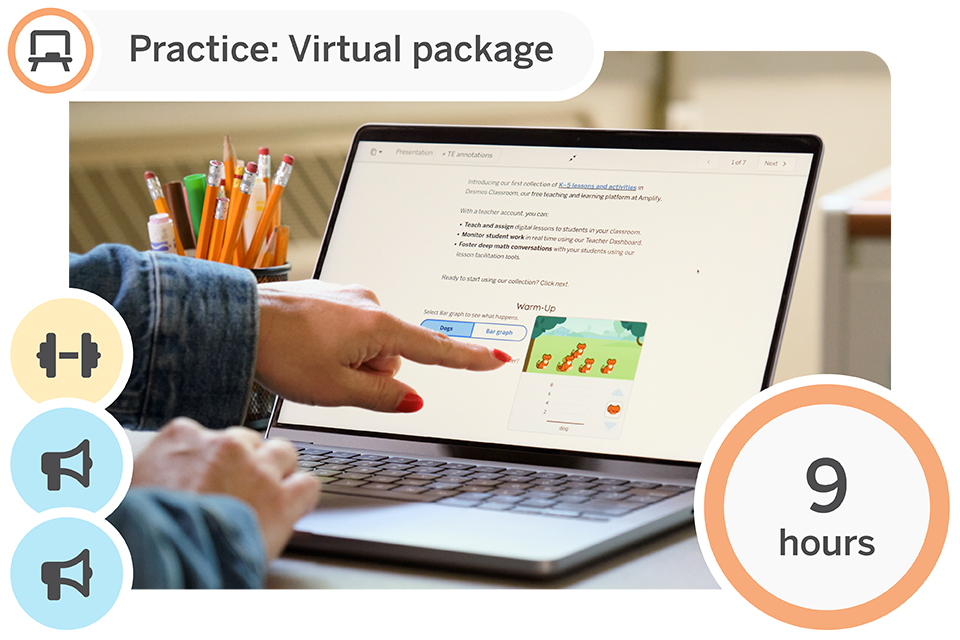
Participate in 9 hours of program-aligned professional development across three sessions for up to 30 participants. Build understanding of research-based practices and develop knowledge through curated Strengthen and Coach sessions.
Practice: Virtual 9 package |
||
| Session type | Modality/duration | What’s included |
| Strengthen (1) | Virtual, 3-hr. | Program-specific Strengthen session (selected based on your needs) for Core Literacy and STEM programs. |
| Coach (2) | Virtual, 3-hr. | Coach session |
| Suggested enhancements |
||
| Launch substitution | Virtual, 1-hr. | NEW: Amplify Caminos 1st and 3rd Ed. transition training for teachers |
| Launch substitution | Virtual, 1-hr. | NEW: Amplify CKLA 2nd Ed./Caminos 1st Ed. to Amplify CKLA 3rd Ed./Caminos 3rd Ed. transition training for teachers |
| Launch add-on | Virtual, 1-hr. | Amplify CKLA Grade 3–5 Skills supplement training for teachers |
| Launch substitution | Virtual, 1-hr. | Amplify CKLA 2nd Edition to 3rd Edition transition training for teachers |
Strengthen: Program-specific sessions
Strengthen your Amplify implementation with program-specific sessions that support personalized learning and practice in your classroom.
To explore the available core Strengthen sessions, select your program:
Amplify will closely partner with you to select the appropriate session(s) that will deepen educators’ understanding of your Amplify program(s) and equip them with the tools they need to improve students’ learning outcomes. Each package includes one Strengthen session. Additional sessions can be added as Enhancements.
Coach session: Customized support
Amplify CKLA; Amplify Caminos 3rd Edition; and Amplify Desmos Math K–5, 6–A1, and high school are available July 2026.
On-site, 6 hours
Coaching sessions focus on building internal school and district capacity and leadership excellence. Coaching is customized to meet a school or district’s needs and can include model lessons, observations, walk-throughs, and/or co-planning.
Session options: Amplify CKLA (2nd and 3rd Edition), Amplify Caminos (1st Edition), Amplify CKLA 2nd Edition/Caminos 1st Edition biliteracy, Amplify ELA 2nd Edition, Amplify Math (Grades 6–A1), Amplify Desmos Math (Grades K–5, 6–A1, or high school), Amplify Science (Grades K–5 or 6–8)
Audience: Individual teachers, grade-level teams, PLCs, and/or instructional leaders (maximum 30 participants)
Available July 2026
Suggested enhancement: Launch substitution: Amplify CKLA 2nd Edition/Caminos 1st Edition to Amplify CKLA 3rd Edition/Caminos 3rd Edition transition training for teachers
Virtual, 1 hour
Participants will get an overview of the similarities and differences between Amplify Caminos 1st and 3rd Editions, including becoming familiar with changes in materials; the digital platform; and key lesson, assessment, and reporting components.
Session options: Amplify Caminos 1st Edition (Grades K–2 or 3–5)
Audience: Teachers, instructional staff (maximum 30 participants)
Available July 2026
Suggested enhancement: Launch substitution: Amplify CKLA 2nd Edition/Caminos 1st Edition to Amplify CKLA 3rd Edition/Caminos 3rd Edition transition training for teachers
Virtual, 1 hour
Participants will get an overview of the similarities and differences between Amplify Caminos 1st and 3rd Editions, including becoming familiar with changes in materials; the digital platform; and key lesson, assessment, and reporting components.
Session options: Amplify CKLA 2nd Edition/Amplify Caminos 1st Edition (Grades K–2 or 3–5)
Audience: Teachers, instructional staff (maximum 30 participants)
Launch add-on
Suggested enhancement: Amplify CKLA Grade 3–5 Skills supplement training for teachers
Virtual, 1 hour
Learn how to implement Amplify CKLA Grades 3–5 Skills in the classroom. Learn the foundational elements of Amplify CKLA Grades 3–5 Skills, including becoming familiar with materials and key lesson components.
Note:
- Grade 3 Skills is included in the purchase of Amplify CKLA 2nd Edition, while Grade 4 Skills and Grade 5 Skills can be added on.
- Grades 3–5 Skills are included with the purchase of Amplify CKLA 3rd Edition.
Session options: Amplify CKLA 2nd Edition (Grades 3–5)
Audience: Teachers, instructional staff (maximum 30 participants)
Launch substitution
Suggested enhancement: Amplify CKLA 2nd Edition to 3rd Edition transition training for teachers
Virtual, 1 hour
Ideal substitution for Amplify CKLA 2nd Edition Launch sessions
Participants will get an overview of the similarities and differences between Amplify CKLA 2nd Edition and Amplify CKLA 3rd Edition, including becoming familiar with changes in materials; the digital platform; and key lesson, assessment, and reporting components.
Session options: Amplify CKLA 3rd Edition (Grades 3–5)
Audience: Teachers, instructional staff (maximum 30 participants)
Enhancement options
Want to extend learning for teachers and leaders? Have a unique need that you’d like to address? Seeking more targeted coaching options? Our package enhancements allow you to tailor your PD experience to meet the needs of your staff, whether they’re new or returning to the program.
Enhancements can be purchased for all teachers/leaders or a subset of educators.
General enhancement offerings
| Session name | On-site, 6-hr. |
On-site, 3-hr. |
Virtual, 6-hr. (2 half days) |
Virtual, 3-hr. |
Virtual, 1-hr. |
| Leadership Launch session |  |
||||
| Leadership Strengthen session | |
|
|
|
|
| Launch (Practice) session for teachers and leaders | |
|
|
||
| Strengthen session for teachers and leaders | |
|
|
||
| Coach session for teachers and leaders | |
|
|
||
| Amplify CKLA Grade 3–5 Skills supplement training for teachers | |
||||
| Launch add-on: Language Studio companion training for K–2 or 3–5 teachers | |
|
|||
| Launch substitution: Amplify CKLA 2nd Edition to 3rd Edition transition | |
Launch add-on
Suggested enhancement: Launch add-on: Amplify CKLA Grade 3–5 Skills supplement training for teachers
Virtual, 1 hour
Learn how to implement Amplify CKLA Grades 3–5 Skills in the classroom. Learn the foundational elements of Amplify CKLA Grades 3–5 Skills, including becoming familiar with materials and key lesson components.
Note:
- Grade 3 Skills is included in the purchase of Amplify CKLA 2nd Edition, while Grade 4 Skills and Grade 5 Skills can be added on.
- Grades 3–5 Skills are included with the purchase of Amplify CKLA 3rd Edition.
Session options: Amplify CKLA 2nd Edition (Grades 3–5)
Audience: Teachers, instructional staff (maximum 30 participants)
Launch add-on
Suggested enhancement: Language Studio companion training for teachers
On-site and virtual, 3 hours
Ideal add-on for Amplify CKLA (2nd or 3rd Edition) Launch sessions
Participants will be able to summarize the key features of Language Studio. During this session, they will connect key segments of Language Studio to ELD instructional best practices, identify the segments of Language Studio, and plan and practice a Language Studio lesson.
Session options: Amplify CKLA 2nd or 3rd Edition (Grades K–2 or 3–5)
Audience: Teachers, instructional staff (maximum 30 participants)
Launch substitution
Suggested enhancement: Amplify CKLA 2nd Edition to 3rd Edition transition training for teachers
Virtual, 1 hour
Ideal substitution for CKLA 2nd Edition Launch sessions
Participants will get an overview of the similarities and differences between Amplify CKLA 2nd Edition and Amplify CKLA 3rd Edition, including becoming familiar with changes in materials; the digital platform; and key lesson, assessment, and reporting components.
Session options: Amplify CKLA 3rd Edition (Grades 3–5)
Audience: Teachers, instructional staff (maximum 30 participants)
Biliteracy packages
Biliteracy packages for Amplify CKLA and Amplify Caminos
We also offer several of the core Amplify CKLA sessions for our biliteracy and Spanish immersion programs. These specialized sessions support educators teaching with both Amplify CKLA and Amplify Caminos programs, facilitated in English, Spanish, or both languages as appropriate.
Contact your account executive for extended PD catalog options or quotes.
Companion programs
Additional sessions are available for Amplify CKLA’s companion programs (Writing Studio and Language Studio).
Get in touch with a PD expert.
Jason Zimba joins Amplify as Chief Academic Officer of STEM
BROOKLYN, NY (January 11, 2022) — Amplify, a publisher of next-generation curriculum and assessment programs, announced today the appointment of Jason Zimba, Ph.D., as chief academic officer of STEM. Zimba, who most recently founded Student Achievement Partners, a nonprofit organization dedicated to helping teachers and school leaders implement equitable, high-quality, college- and career-ready standards, has spent his career as a researcher, educator, and advocate for high-quality curriculum and instruction for all students.
Over the last 30 years, Zimba has participated in numerous endeavors related to the advancement of excellent STEM education for all students, including his work with Engage New York Math, Illustrative Math and the Next Generation Science Standards. In 2019, Zimba created Math Milestones, a nonprofit subsidiary of Student Achievement Partners, that provides educators with a carefully crafted set of tasks that make mathematics learning easy and accessible to diverse communities, including Black students, English learners, and students in poverty. He also worked with the nonprofit Learning Heroes on a series of resources to inspire and equip parents with information to help their children succeed in school.
“Jason has been one of the most influential and incisive voices about math and science education in the last 20 years, and we could not be happier that Jason has joined the Amplify team,” said Amplify Chief Executive Officer Larry Berger. ”Jason’s immense expertise in STEM education will help us create the next generation of high-quality math and science programs that engage all students in the beauty and rigor of STEM subjects.”
“I’m thrilled to be joining the passionate and talented Amplify team,” stated Zimba. “In the past two years educators have gone above and beyond for their students, and they deserve all the support we can provide. I look forward to working with my math and science colleagues to deliver excellent and innovative tools for teachers.”
A Rhodes scholarship recipient and former professor of physics and mathematics, Zimba holds a bachelor’s degree from Williams College, with a double major in mathematics and astrophysics; a master’s degree in mathematics from the University of Oxford; and a doctorate in mathematical physics from the University of California at Berkeley. He has worked as a researcher and educator, teaching mathematics and physics to university and high school students, and incarcerated adults. Zimba is also the author of the book “Force and Motion: An Illustrated Guide to Newton’s Laws,” which presents the laws not only in mathematical form but also visually. This unique approach allows students to appreciate the conceptual underpinnings of each law before moving on to qualitative descriptions of motion and, finally, to the equations and their solutions. Finally, as the first person in his family to attend college, Zimba has a deep commitment to giving all students access to a high-quality education and the opportunity to excel in STEM and other fields.
###
About Amplify
A pioneer in K–12 education since 2000, Amplify is leading the way in next-generation curriculum and assessment. Our core and supplemental programs in ELA, math, and science engage all students in rigorous learning and inspire them to think deeply, creatively, and for themselves. Our formative assessment products turn data into practical instructional support to help all students build a strong foundation in early reading and math. All of our programs provide teachers with powerful tools that help them understand and respond to the needs of every student. Today, Amplify serves ten million students in all 50 states. For more information, visit amplify.com.
Making reading comprehension connections

Comprehension isn’t just a process, or just a product—it’s both. And connecting reading and understanding is what most teachers are working on every day.
That fundamental connection was the focus of our recent Science of Reading Webinar Week: Comprehension Connections—Building the Bridge Between Reading and Understanding, a five-day, expert-filled series that unpacked what really drives comprehension, from early decoding to middle school mastery.
Here’s a quick look at what you’ll learn when you watch—and a few ideas you can use right away.
Day 1: What Is Reading Comprehension, Anyway?
Speaker: Susan Lambert, Ed.D., Chief Academic Officer, Literacy, Amplify; Host of Science of Reading: The Podcast
“Reading comprehension is more than just language comprehension. It’s language comprehension on the page, which makes it much more complex.” — Susan Lambert, Ed.D.
If you ask ten teachers to define comprehension, you might get twelve answers. Lambert opened the week by grounding everyone in the Science of Reading, including the Simple View of Reading and the Reading Rope. Skilled reading, she reminded viewers, is the result of multiple strands—decoding, language comprehension, and knowledge—woven together over time.
The takeaway? The most effective approaches don’t teach comprehension strategies—such as “find the main idea”—in isolation. Rather, they connect word recognition to meaning through rich texts, conversation, and writing. Whether you’re teaching second-grade reading comprehension or sixth-grade reading comprehension, students need the same thing: a clear path from sounding out words to making sense of ideas.
Day 2: Comprehension and Knowledge Building: A Two-Way Street
Speakers: Sonia Cabell, Ph.D., Sigmon Endowed Professor of Reading Education, Florida State University
HyeJin Hwang, Ph.D., Assistant Professor, Department of Educational Psychology, University of Minnesota Twin Cities
“Better background knowledge leads to improved reading comprehension, which in turn enables readers to learn more from text, thereby building additional knowledge.” —HyeJin Hwang, Ph.D.
In their session, Sonia Cabell and HyeJin Hwang explored one of the clearest findings in reading research: Comprehension and knowledge develop together. Cabell began by explaining how comprehension (including oral language, background knowledge, vocabulary, syntax, and verbal reasoning) forms one of the essential strands of the Reading Rope.
Students can’t activate knowledge they don’t yet have. Teachers need to help them build it early, and intentionally. Cabell’s research found that integrating literacy and content instruction produced gains in vocabulary and content knowledge.
Likewise, Hwang’s two large-scale longitudinal studies showed that better knowledge instruction leads to better reading, which leads to even more knowledge. These findings held true across languages and grade levels, underscoring the universal value of content-rich instruction.
Classroom takeaways:
- Plan literacy units around connected science or social studies topics to build coherent knowledge.
- Use content-rich interactive read-alouds with discussion before, during, and after reading.
- Ask inferential comprehension questions (“Why?” “How?”) that require students to connect ideas using their own words.
- Encourage quick writing or drawing tasks that help students show what they’ve learned.
Day 3: Where and How to Measure Comprehension to Drive Improvement
Speakers: Danielle Damico, Ph.D., Executive Director of Learning Science, Amplify
Gina Biancarosa, Ed.D., Ann Swindells Chair in Education, University of Oregon
“Reading comprehension is both a process and a product.” —Danielle Damico, Ph.D.
Too often, comprehension is measured only as a finished product—how well students answer questions after reading—without revealing how they built understanding along the way. This session explored what comprehension actually involves: reading words accurately, understanding their meaning, applying background knowledge, and making inferences. As researcher Sharon Vaughn, Ph.D., has described, these interconnected skills all work together as students learn to read.
Biancarosa showed how looking at comprehension as a complex process helps teachers see student thinking in action. She described the major types of inferences—lexical, bridging, gap-filling, and causal—and the importance of understanding how students connect ideas and construct meaning.
Try this:
- Treat comprehension as ongoing thinking, not a one-time test score.
- Use brief think-alouds or class discussions to get a look at how students connect ideas.
- Match assessments to the precise question you’re trying to answer.
- Let assessment guide instruction—data should lead directly to next steps.
Day 4: Comprehension in Middle School: More Important Than Ever
Speaker: Deb Sabin, Chief Academic Officer, Amplify ELA
“Writing done right encodes knowledge. And discourse done right gets into the realm of higher-order thinking.” —Deb Sabin
By the time you’re teaching fourth-grade reading comprehension through sixth-grade reading comprehension, decoding should be automatic. At this stage, the upper strands of the Reading Rope—vocabulary, background knowledge, and syntax—move to the forefront. In this session, Deb Sabin highlighted how comprehension in middle school relies on academic knowledge, disciplinary vocabulary, and structured discourse—and how it truly blossoms when reading, writing, and speaking reinforce one another.
Classroom moves that help:
- Pair writing with reading: Even short, text-based responses consolidate knowledge in long-term memory.
- Use structured discussion (“accountable talk”), where students cite text evidence and build on one another’s ideas.
- Center rich, grade-level texts that challenge thinking and vocabulary.
Day 5: Finding the Missing Link in Reading Comprehension to Boost Literacy Success
Speaker: Julie A. Van Dyke, Ph.D., Clinical Assistant Professor, Yale University Child Study Center; Research Scientist, Yale-UConn Haskins Global Literacy Hub
“Teach phonics for decoding. Teach syntax for understanding.” —Julie A. Van Dyke, Ph.D.
In the final presentation of the series, Julie Van Dyke explored an often-overlooked element of comprehension: syntax—the way words combine to create meaning. Van Dyke argued that syntax is to comprehension what phonics is to decoding.
She illustrated how the Science of Reading and the Reading Rope locate syntax within the language-comprehension strands—critical to understanding who did what to whom in complex sentences. Explicitly teaching sentence structure helps all learners, including multilingual/English learners, access higher-level meaning.
Simple practices can make a difference:
- Have students paraphrase tricky sentences. (Starter question: “Who’s doing the action?”)
- Pull strong sentences from your class texts to show how structure shapes meaning.
- Encourage students to mirror those structures in their own writing.
What linked all five sessions together? The understanding that comprehension develops when teachers connect the code, the language, and the knowledge. Whether students are decoding in second grade or crafting essays in sixth, they thrive when we help them move from reading to understanding—step by step, strand by strand.
Watch all five on-demand recordings.
More to explore:
- Download your Comprehension 101 bundle.
- Read (and comprehend!): Reading comprehension strategies grounded in science
- Listen to this special Essentials episode of Science of Reading: The Podcast, where Susan Lambert and other experts distill key reading comprehension insights.
Supporting mCLASS® students at home
Dear educator,
Below you will find guidance and resources to support your students’ learning at home. Please visit this site again soon for updated information and materials.

How to use these materials
Guided skills practice
mCLASS® Home Connect provides resources for families to practice and reinforce important literacy skills at home. Send an email to parents in English or Spanish to let them know about it.
Caregiver-assisted reading activities
Email a packet to caregivers to help families reinforce and practice literacy skills at home.
Grade | Caregiver-assisted activity packets
K | View
1 | View
2 | View
3 | View
4 | View
5 | View
6 | View
Caregiver-assisted math activities
The mCLASS Math Activities Guide includes many activities that caregivers can do with their children. The activities focus on early elementary math skills, ranging from counting to multiplication.
When you share these activities with parents, please let them know we suggest the following substitutions:
- household objects that are easy to count (e.g. coins) instead of chips
- paper clips or rubber bands instead of unifix cubes
- paper instead of chalkboard/overhead projectors
Number cards and dot cards are at the end of the guide.
Skill Maps & Instructional Resources
The mCLASS® Interactive Skill Maps help teachers and caregivers identify early elementary students’ reading needs and find high-quality resources for addressing them.
Amplify Reading
Amplify is offering free access to a remote learning version of Amplify Reading through the end of the school year. Amplify Reading uses mCLASS benchmark data to automatically place students in the program and does not require additional enrollment data for mCLASS users. Learn how to gain access here.
Guidance on Remote Assessment
Some districts have asked for information about assessing students between now and the end of the school year. In collaboration with our research partners, we’ve created guidance for administering the following assessments remotely:
Online Assessment Suite
We’re offering a suite of online assessments, measuring comprehension, spelling and vocabulary, to help you learn about your students’ current reading skills. Learn more here.
How to Deliver mCLASS® Small Group Instruction Remotely
To help you continue building students’ literacy skills during school closures, we developed guidance on how to deliver mCLASS Small Group Instruction remotely.
How to Deliver mCLASS® Intervention Remotely
If you use mCLASS® Intervention to support struggling readers, watch videos and read guidance on how to continue serving students via your virtual learning platform. Learn more here.
Office hours
To best support you as you adjust to the new realities of remote learning, we’ve been hosting Remote Learning Office Hours for CKLA, Amplify Science, Amplify ELA, and mCLASS.
These product-specific sessions have been focused on remote learning resources, tools, and solutions.
These office hours sessions have included:
- Overviews of our remote learning resources
- Tips based on questions from educators
- A chance to share ideas about how to support students during remote learning
- Opportunities for Q&A with our Amplify team
Click below to watch a recording of a previous session.
Customer Support
Amplify’s support for teachers via email, phone, and chat related specifically to COVID-19 remote learning is available:
- Call 1-844-589-4651
- Email: COVID-19planning@amplify.com
About mCLASS in NC
DPI is committed to providing literacy instruction for all by:
- Aligning core curriculum, instruction, and assessments with Science of Reading.
- Providing appropriate literacy interventions to address difficulty with reading development.
- Implementing practices based on the Science of Reading in every classroom every day.
- Providing aligned resources to parents, guardians and family members.
mCLASS is built on decades of research at the Center on Teaching and Learning at the University of Oregon, a national center for early childhood assessment and instruction. The measures are already in use in many districts in North Carolina. With the additional mCLASS suite including reporting, grouping, lessons and caregiver support, DPI’s early literacy goals for North Carolina students will be met.
North Carolina mCLASS DIBELS 8 requirements
DIBELS 8th Edition fulfills legislative requirements for K-3 students with sub test measures for:
- Phonemic awareness
- Phonics
- Fluency
- Vocabulary
- Comprehension
For the above reasons, the state will begin using DIBELS 8 data for EVAAS purposes effective 2021-22 from MOY-EOY for Kindergarten, BOY-EOY for all 1-2 teachers, and BOG-EOG for grade 3.
| DIBELS measures at each grade level | ||||
| Measure | Grade K | Grade 1 | Grade 2 | Grade 3 |
| Letter naming fluency |  |
|
||
| Phonemic segmentation fluency | |
|
||
| Nonsense word fluency | |
|
|
|
| Word reading fluency | |
|
|
|
| Oral reading fluency | |
|
|
|
| Maze (basic comprehension) | |
|
||
| Required additional measures at each grade level below | ||||
| Oral language | |
|
|
|
| Vocabulary | |
|
|
|
Amplify assessment invalidation process
- Teacher requests approval for an invalidation from a school-level administrator and provides a valid reason for requesting the invalidation.
- School-level administrators reach out to the district Read to Achieve (RtA) contact to approve the invalidation.
- District RtA contact approves the request and notifies the school-level administrator who notifies the teacher.
- Teacher invalidates assessment.
Professional Learning
Stay tuned for new registration links!
Stay tuned for new registration links!
Preparing for EOY (Administrators and Enrollment)
North Carolina Online Course
All of our monthly webinars will be linked in the online course. You will access the North Carolina Online Course to view previous webinars.

- When you open your course you will see a navigation panel along the left hand side.
- At the top of this panel, you will see a small back arrow by the title mCLASS in North Carolina Initial Training.
- Click on that back arrow to be taken to the beginning of the course with the introduction.
- When you land on that Introduction page along the left panel, you will see the welcome to the course.
- Scroll down that left panel to the section titled Monthly Recorded Webinars, within that section you will see a link to the page where we are posting the webinars, click on the “this page” link.
mCLASS DIBELS 8th Edition online course
As part of the implementation of mCLASS with DIBELS 8th Edition for the 2023-24 school year, all North Carolina educators will have access to a self-paced online course as a support for a successful implementation and to serve as a resource throughout the school year.
Learn how to:
- Administer and score mCLASS with DIBELS 8th Edition Interpret student data Identify students’ instructional need Access skills-focused lessons.
- Plan differentiated instruction.
- Please contact your district for access information to the online course. Districts received the link for the course in the DPI memo. Please reach out to your DPI consultant for assistance.
Monthly Webinar recordings will be placed on the Online Course site upon the completion of each session.
In addition, PSUs may purchase additional remote or in-person training sessions. Amplify offers in-person training options pending:
- agreement to Amplify’s Covid safety guidelines, and
- confirmation of availability for the requested training date.
Contact us for more information on additional PD.
Reading Camp
Overview
The Excellent Public Schools Act of 2021 defines “Reading camp” as an additional educational program outside the instructional calendar that the local school administrative unit offers as a literacy intervention to:
- any third-grade student who does not demonstrate reading proficiency and
- any second-grade student who demonstrates difficulty with reading development. Local school administrative units may offer a reading camp as a literacy intervention to any first-grade student who demonstrates difficulty with reading development.
Resources
The resources below review the Summer Benchmark assessment, Reading Camp data, and explain enrollment for Reading Camp.
Please Note: Do not make any manual changes in the Amplify platform prior to June 1st, 2026. Any changes made before this date will be overwritten.
- Districts hosting Reading Camp at each individual school
- Districts merging schools for Reading Camp
- Charters
- Accessing Summer Benchmark Data
Additional support:
We will be hosting office hours each Wednesday from 2:00 pm-2:30 pm EDT starting May 20th, 2026 and continuing through July 15th, 2026. This is a time for you to chat directly with us so we can help answer any questions you may have regarding reading camp.
Click here to join the office hours.
Office hours will occur on the following dates:
- May 20th
- May 27th
- June 3rd
- June 10th
- June 17th
- June 24th
- July 1st
- July 8th
- July 15th
Please note that this is not a presentation, but a chance to ask questions and receive specific support.
Enrollment resources
Each night, DPI extracts rostering files from Infinite Campus and sends them to Amplify. Changes in the enrollment system are captured in mCLASS the next day. As a reminder, no manual changes can take place in mCLASS.
In order to be included in the staff file sent to mCLASS from Infinite Campus, staff members must have a Read to Achieve role assigned to them. It is also important to ensure staff members are active, have a district assignment (Navigation to verify district assignment: Search Staff > Census > Staff > District Assignments), and an email address associated with NCEdCloud; If a staff member receives a “user not found” message when attempting to log in to mCLASS via NCEdCloud, this means they do not have a staff record enrolled in mCLASS.
Additional troubleshooting documents around enrollment can be found here.
Infinite Campus Resources:
mCLASS reporting
mCLASS gives you instant results and clear next steps for each student. Quick and actionable reports provide detailed insight into students’ reading development across foundational literacy skills for teachers, specialists, administrators, and caregivers.
View the mCLASS Reporting Guide to learn more.
Charter Schools
More information coming soon!
Remote assessment
We at Amplify and the team at the University of Oregon are here to provide continued guidance and support around collecting and using DIBELS® 8th Edition data.
This guide offers recommendations for benchmark assessment with DIBELS as well as tips for interpreting benchmark data during our unpredictable school disruptions.
North Carolina remote assessment guidance
Service Hub
Amplify Service Hub Now Live:
The Service Hub is an online portal which allows district- and school-level administrators to create support tickets, check on ticket status, and view reports related to support cases. Educators who have an RtA Admin role have access to the Service Hub. You can access the Service Hub here. Log in with the SSO Login icon and search for North Carolina Public Schools. Your NCEdCloud credentials will enable you to access the Service Hub.
Learn about navigating, viewing insights, and more in the
Spanish in NC
mCLASS Lectura is available for all students enrolled in a Dual Language program. When mCLASS Lectura is used with D8 teachers have access to the dual language report. This report provides side-by-side data of the student’s performance in Spanish and English.
Then mCLASS suggests actual strategies and specific activities to promote cross-linguistic transfer for bilingual students.
If you have students that would benefit from this assessment but are not enrolled in a dual language program, individual licenses can be purchased. Please reach out to your CSM and Jennifer Eason, your Account Executive, for more information.
Science of Reading resources
To continue your own professional learning around the Science of Reading, subscribe and join with your colleagues.
Science of Reading: The Podcast delivers the latest insights from researchers and practitioners in early reading. Further your professional development with each episode by subscribing and downloading them now.
Science of Reading: The Community is built for those committed to fostering conversation around the Science of Reading and implementing best practices in the classroom (including the virtual classroom).
What does classroom instruction look like when it is based on Science of Reading practices? We’ve outlined a Science of Reading action plan to guide your evaluation in our new FREE ebook, Science of Reading: Making the shift.
Caregiver supports
The mCLASS Home Connect website houses literacy resources for parents and caregivers, including at-home lessons organized by skill to help students at home during remote learning. Our mCLASS parent/caregiver letters in English and Spanish ensure that families know how to best support their child.
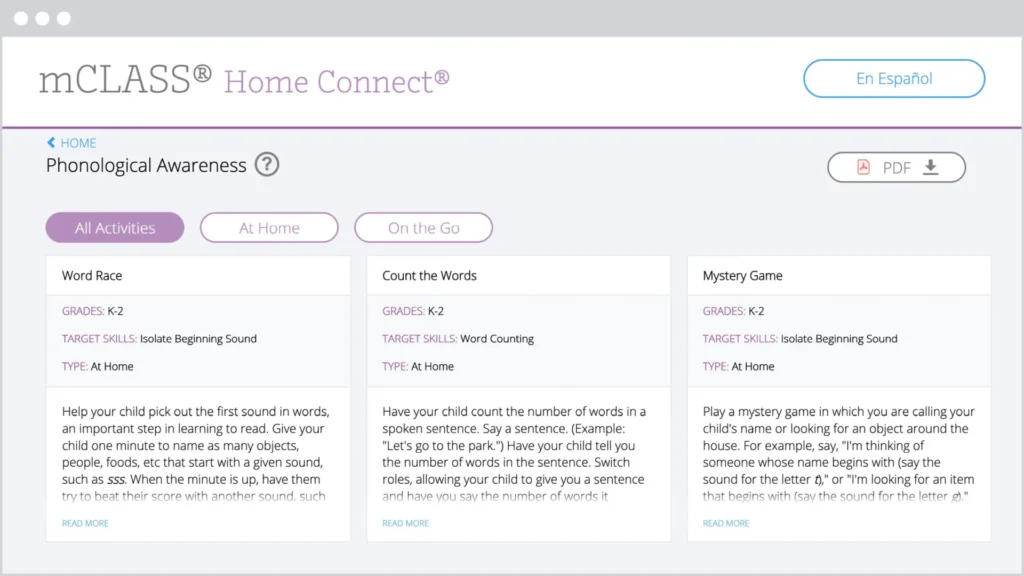
Support
NCDPI has been provided with its own dedicated support line: +1 (888) 890-2505
The current national support line will remain available and include the North Carolina option on the phone tree throughout the fall.
FAQs
Interested in learning more?
Amplify and NC DPI are collaborating on this FAQ. Please continue to check back, as we are updating this based on questions we receive about mCLASS and the current NC implementation.
Additional Amplify products
Get in touch with us to learn more about bringing other high-quality Amplify programs to your school or district.
Welcome!
As the 2021-2022 school year continues to pose new challenges, you’re likely thinking about making your classroom responsive to student needs due to the covid-19 pandemic.
- CLRT in Amplify Science
- SEL in Amplify Science
- Responsive Relaunch Introduction Video
- Responsive Relaunch NYC Brief
Got additional questions? Use Zoom to attend office hours with Nadya Awadallah, the DOE’s Elementary Science Lead on Fridays from 12-1pm.
Meeting ID: 835 9458 3142
Passcode: 263518
NYC Newsletters
- February 2022
- January 2022
- December 2021
- October 2021
- September 2021
- June 2021
- May 2021
- April 2021
- March 2021
- February 2021
- January 2021
- December 2020
- October 2020
Educator Spotlight Submission
Calling all NYC DOE educators! Do you know an educator who has gone above and beyond? Would you like to highlight your teaching experience for others? Submit nominations here to see them featured as a spotlight in a future edition of our monthly newsletter and on our Instagram pages!
Introduction
This page includes planning, implementation, and professional learning resources for NYC schools using Amplify Science. Please take a moment to familiarize yourself with the categories in the navigation bar on the left side of the page so that you’ll be able to easily find what you need.
Most New York City educators come here looking for specific information, but if you’re new to Amplify Science, we recommend you read through the program guide to learn a little about the program.
New to Amplify? – Start HERE!
Teachers and Administrators
Step 1: Review the Amplify Science Navigation Essentials K-5 Video
Step 2: Review your Scope and sequence/course structure calendar
Step 3: Review the Unpacking the Kit Videos listed below to understand what’s in your unit 1 kit
Step 4: Access your unique log in information to log-in to the Amplify Science Curriculum outlined below under Login support
Step 5: Log into the platform and access our Program Hub. Select Using this site for self study for a complete suite of training videos and resources for an initial orientation video series
Step 6: Log into the curriculum and begin studying the Unit Map and Teacher’s Guide resources and begin planning your first lesson. Print out the NYC Program Guide for essential program information.
Step 7: Administrator’s ONLY – Review the K-5 Admin Orientation presentation for an overview on the program. Review materials under Admin Resources.
NOTE: Should you need any additional guidance on how to get started with prep (or anything else!), please feel free to get in touch with our pedagogical support team. They are available Monday-Friday from 7AM-7PM EST. You can reach them via the chat icon in the lower right- hand corner of your screen when logged in, through email (help@amplify.com), or via phone (800-823-1969).
Getting started resources
NYC Resource Site overview – quick links
Login support
- Login video: classroom teacher login via Amplify
- Classroom teachers: Login with Amplify or TeachHub (district preferred login method)
- Cluster teachers: Login with Amplify
- K-5 administrators: Login with Amplify or TeachHub (district preferred login method)
- K-5 students: Shared student logins login with Amplify
- Other staff (co-teachers, ICT, etc.): Administrator instructions for creating a Shared Teacher Login
Materials
- Materials lists – lists of kit contents by unit
K | 1 | 2 | 3 | 4 | 5 - Spanish materials lists – lists of Spanish print kit contents by unit
K | 1 | 2 | 3 | 4 | 5 - Kit-level packing detail (chart) – high-level information regarding kits including dimensions, weights, etc.
Unpacking your first Amplify Science classroom kit
All Amplify Science units coming with kits that include hands-on and print materials. The number of boxes (sometimes referred to as “tubs”) varies depending on the unit.
- Kindergarten: Needs of Plants and Animals
- Grade 1: Plant and Animal Defenses
- Grade 2: Animal and Plant Relationships
- Grade 3: Balancing Forces
- Grade 4: Energy Conversion
- Grade 5: Patterns of Earth and Sky
21-22 Login Update
The temporary login credentials for fall ’21 have been deactivated.
Please make sure you check out the Getting started resources > Login support below for instructions around teacher and the NYC shared student logins.
If there are any issues, please confirm with your STARS programmer that your classes are finalized and then contact the Amplify Help Desk at help@amplify.com or at 1-800-823-1969.
Planning and implementation resources
Use our NYC Field Trip List to plan an engaging field trip for your students!
Use the resources below to plan out your year and ensure you are teaching each standard to mastery.
- K–5 Course Structure Calendar
- Planning and Implementation Guide – Kindergarten
- Planning and Implementation Guide – Grade 1
- Planning and Implementation Guide – Grade 2
- Planning and Implementation Guide – Grade 3
- Planning and Implementation Guide – Grade 4
- Planning and Implementation Guide – Grade 5
NYC DOE Supplemental Guiding Documents: Curriculum Gaps
- Grade K Curriculum Gaps
- Grade 3 Curriculum Gaps
- “Where do we find water on Earth?” slideshow (Unit 3, L. 1 of 2)
- Water Cycle Lesson (Unit 3, L. 2 of 2)
- Grade 4 Curriculum Gaps
- Water Cycle Powerpoint (Ch.1, L. 1)
Admin resources
- Implementation Rubric
- Look-for Tool (1 page)
- Look-for Tool (3 pages)
- NYC Resource Site overview – quick links
- Introduction to Amplify Science for Administrators K-5 Webinar
- 2021 Fall Administrators’ Orientation: Introduction to K-5 Amplify Science Participant notebook and presentation
- 2021 Spring Utilizing the Amplify Science Assessment System Webinar
- 2020 Summer New Administrator Orientation Agenda, Presentation, Webinar, and Participant Notebook
- 2020 Summer Returning Administrator Orientation Agenda, Presentation, and Webinar
Remote and hybrid learning resources
In response to the shifts towards remote learning, Amplify has created resources for using our programs remotely. Please visit our Program Hub accessible via your Teacher Platform for all of our hybrid and remote learning supports which includes guidance for teachers and parents/guardians.
Additionally, please see below where you’ll find the recordings from our recently held webinars on our remote learning resources and some best practices for implementing Amplify Science in a distance learning setting.
Resource guides
On-demand remote learning videos
Professional Learning Opportunities
Interested in attending training? Check out and sign up for this year’s PL offerings here!
All 2021-2022 PL session materials will be uploaded below under Professional learning resources.
Amplify Science Back-to-School Recorded Webinars – Amplify held a series of national office hours throughout the summer and fall to share information about our new resources to support remote and hybrid learning– including recommendations about what to prioritize from your curriculum and essential refresher topics, such as how to navigate your program and find the best planning resources. Feel free to watch all recorded sessions at your convenience.
21-22 Professional learning resources
Fall 2021 materials:
- Make Science Accessible for All Learners K-2 Presentation
- Three-Dimensional Learning in Amplify Science: Kindergarten Agenda, K Presentation, Participant notebook, and Webinar
Summer 2021 materials:
- Exploring the Amplify Science K-2 Presentation pt.1, pt. 2, pt. 3, and Participant notebook
- Exploring the Amplify Science K-2 Curriculum Webinar: Digging Deeper Presentation and Participant notebook
Fall 2021 materials:
- Make Science Accessible for All Learners K-2 Presentation
- Three-Dimensional Learning in Amplify Science: 1st Grade Agenda, Grade 1 Presentation, Participant notebook, and Webinar,
Summer 2021 materials:
- Exploring the Amplify Science K-2 Presentation pt.1, pt. 2, pt. 3, and Participant notebook
- Exploring the Amplify Science K-2 Curriculum Webinar: Digging Deeper Presentation and Participant notebook
Fall 2021 materials:
- Make Science Accessible for All Learners K-2 Presentation
- Three-Dimensional Learning in Amplify Science: 2nd Grade Agenda, Grade 2 Presentation, Participant notebook, and Webinar
Summer 2021 materials:
- Exploring the Amplify Science K-2 Presentation pt.1, pt. 2, pt. 3, and Participant notebook
- Exploring the Amplify Science K-2 Curriculum Webinar: Digging Deeper Presentation and Participant notebook
Fall 2021 materials:
- Make Science Accessible for All Learners 3-5 Presentation
- Three-Dimensional Learning in Amplify Science: 3rd Grade Agenda, Grade 3 Presentation, Participant notebook, and Webinar
Summer 2021 materials:
- Exploring the Amplify Science 3-5 Curriculum Presentation pt.1, pt. 2, pt. 3, and Participant notebook
- Exploring the Amplify Science 3-5 Curriculum Webinar: Digging Deeper Presentation and Participant notebook
Fall 2021 materials:
- Make Science Accessible for All Learners 3-5 Presentation
- Three-Dimensional Learning in Amplify Science: 4th Grade Agenda, Grade 4 Presentation, Participant notebook, and Webinar
Summer 2021 materials:
- Exploring the Amplify Science 3-5 Curriculum Presentation pt.1, pt. 2, pt. 3, and Participant notebook
- Exploring the Amplify Science 3-5 Curriculum Webinar: Digging Deeper Presentation and Participant notebook
Fall 2021 materials:
- Make Science Accessible for All Learners 3-5 Presentation
- Three-Dimensional Learning in Amplify Science: 5th Grade Agenda, Grade 5 Presentation, Participant notebook, and Webinar
Summer 2021 materials:
- Exploring the Amplify Science 3-5 Curriculum Presentation pt.1, pt. 2, pt. 3, and Participant notebook
- Exploring the Amplify Science 3-5 Curriculum Webinar: Digging Deeper Presentation and Participant notebook
20-21 Professional learning resources
Winter 2021 materials:
- K-2 Introduction to Amplify Science Webinar, Agenda and Presentation
- Unit 3: Supporting Diverse Learner Needs Webinar, Agenda, K Presentation, and Participant workspace
- Unit 3: Focusing on the Assessment System Webinar, Agenda and K Presentation
- Supporting ELLs in the Amplify Science Classroom Agenda, Presentation, and Webinar
- Analyzing Student Assessment Data Agenda and K Presentation
Fall 2020 materials:
- Accessing Complex Texts Webinar, Agenda, K Presentation, and Participant Notebook
- Unit 2: Understanding the Storyline & Coherence Webinar, Agenda, Presentation, Planning Doc, and Note catcher (Election Day PL)
- Unit 2: Guided Unit Internalization with @Home Resources Presentation and Planning Doc (Election Day PL)
- Teaching with Technology Webinar with Agenda and K Presentation
- Amplify@Home Planning Tool – Teaching with Technology
- The Amplify Science Approach: Practicing Multiple-Modalities & 3-Dimensional LearningWebinar with Agenda and Grade K Presentation
- Practicing Multiple-Modalities & 3-Dimensional Learning Participant Notebook
- Academic Discourse & Questioning Strategies in the Amplify Science ClassroomAgenda and Grade K Presentation
- Academic Discourse & Questioning Strategies Participant Materials
Summer 2020 materials:
- Remote and Hybrid LearningAgenda with K Presentation
- Amplify@Home Planning Tool and Amplify@Home Note Catcher
- Grades K-1 Utilizing Program Assessments Effectively Webinar
- Reaching All Learners for Grades K-1 Webinar
- Kindergarten New Teacher Orientation Webinar with Participant Notebook
- Kindergarten Returning Teacher Remote Learning: Guided Planning Workshop Webinar
Winter 2021 materials:
- K-2 Introduction to Amplify Science Webinar, Agenda and Presentation
- Unit 3: Supporting Diverse Learner Needs Webinar, Agenda, 1st Grade Presentation, and Participant workspace
- Supporting ELLs in the Amplify Science Classroom Agenda, Presentation, and Webinar
- Unit 3: Focusing on the Assessment System Webinar, Agenda and 1st Grade Presentation
- Analyzing Student Assessment Data Agenda and 1st Grade Presentation
Fall 2020 materials:
- Accessing Complex Texts Webinar, Agenda, 1st Grade Presentation, and Participant Notebook
- Unit 2: Understanding the Storyline & Coherence Agenda, Presentation, Planning Doc, and Note catcher (Election Day PL)
- Unit 2: Guided Unit Internalization with @Home Resources Presentation and Planning Doc (Election Day PL)
- Teaching with Technology Webinar with Agenda and Grade 1 Presentation
- Amplify@Home Planning Tool – Teaching with Technology
- The Amplify Science Approach: Practicing Multiple-Modalities & 3-Dimensional LearningAgenda and Grade 1 Presentation
- Practicing Multiple-Modalities & 3-Dimensional Learning Participant Notebook
- Academic Discourse & Questioning Strategies in the Amplify Science ClassroomWebinar, Agenda and Grade 1 Presentation
- Academic Discourse & Questioning Strategies Participant Materials
Summer 2020 materials:
- Remote and Hybrid LearningAgenda with Grade 1 Presentation
- Amplify@Home Planning Tool and Amplify@Home Note Catcher
- Grades K-1 Utilizing Program Assessments Effectively Webinar
- Reaching All Learners for Grades K-1 recorded webinar
- Grade 1 New Teacher Orientation Webinar with Participant Notebook
- Grade 1 Returning Teacher Remote Learning: Guided Planning Workshop Webinar
Winter 2021 materials:
- K-2 Introduction to Amplify Science Webinar, Agenda and Presentation
- Unit 3: Supporting Diverse Learner Needs Webinar, Agenda, 2nd Grade Presentation, and Participant workspace
- Unit 3: Focusing on the Assessment System Webinar, Agenda and 2nd Grade Presentation
- Supporting ELLs in the Amplify Science Classroom Agenda and Presentation
- Analyzing Student Assessment Data Agenda and 2nd Grade Presentation
Fall 2020 materials:
- Accessing Complex Texts Agenda, 2nd Grade Presentation, and Participant Notebook
- Unit 2: Understanding the Storyline & Coherence Agenda, Presentation, Planning Doc, and Note catcher (Election Day PL)
- Unit 2: Guided Unit Internalization with @Home Resources Presentation and Planning Doc (Election Day PL)
- Teaching with TechnologyWebinar with Agenda and Grade 2 Presentation
- Amplify@Home Planning Tool – Teaching with Technology
- The Amplify Science Approach: Practicing Multiple-Modalities & 3-Dimensional LearningWebinar with Agenda and Grade 2 Presentation
- Practicing Multiple-Modalities & 3-Dimensional Learning Participant Notebook
- Academic Discourse & Questioning Strategies in the Amplify Science ClassroomWebinar with Agenda and Grade 2 Presentation
- Academic Discourse & Questioning Strategies Participant Materials
Summer 2020 materials:
- Remote and Hybrid LearningAgenda with Grade 2 Presentation
- Amplify@Home Planning Tool and Amplify@Home Note Catcher
- K-5 New Teacher Orientation with Participant Notebook
- Grades 2-3 Utilizing Program Assessments Effectively Webinar
- Reaching All Learners for Grades 2-3 Webinar
- Grade 2 Returning Teacher Remote Learning: Guided Planning Workshop Webinar
Spring 2021 materials:
- Unit 4: Focusing on Evidence of Learning for New Teachers Webinar
Winter 2021 materials:
- Grades 3-5 Introduction to Amplify Science Agenda and Presentation
- Unit 3: Supporting Diverse Learner Needs Webinar, Agenda, 3rd Grade Presentation, and Participant workspace
- Unit 3: Focusing on the Assessment System Webinar, Agenda and 3rd Grade Presentation
- Supporting ELLs in the Amplify Science Classroom Agenda and Presentation
- Analyzing Student Assessment Data Agenda and 3rd Grade Presentation
Fall 2020 materials:
- Progress Builds and Embedded Assessments Webinar
- Accessing Complex Texts Agenda, 3rd Grade Presentation, and Participant Notebook
- Unit 2: Understanding the Storyline & Coherence Agenda, Presentation, Planning Doc, and Note catcher (Election Day PL)
- Unit 2: Guided Unit Internalization with @Home Resources Presentation and Planning Doc (Election Day PL)
- Teaching with TechnologyWebinar with Agenda and Grade 3 Presentation
- Amplify@Home Planning Tool – Teaching with Technology
- The Amplify Science Approach: Practicing Multiple-Modalities & 3-Dimensional LearningAgenda and Grade 3 Presentation
- Practicing Multiple-Modalities & 3-Dimensional Learning Participant Notebook
- Academic Discourse & Questioning Strategies in the Amplify Science ClassroomWebinar, Agenda and Grade 3 Presentation
- Academic Discourse & Questioning Strategies Participant Materials
Summer 2020 materials:
- Remote and Hybrid LearningAgenda with Grade 3 Presentation
- Amplify@Home Planning Tool and Amplify@Home Note Catcher
- Grade 3 New Teacher Orientation Webinar with Participant Notebook
- Grades 2-3 Utilizing Program Assessments Effectively Webinar
- Reaching All Learners for Grades 2-3 Webinar
- Grade 3 Returning Teacher Remote Learning: Guided Planning Workshop Webinar
Winter 2021 materials:
- Grades 3-5 Introduction to Amplify Science Agenda and Presentation
- Unit 3: Supporting Diverse Learner Needs Agenda, 4th Grade Presentation, and Participant workspace
- Supporting ELLs in the Amplify Science Classroom Agenda, Presentation, and Webinar
- Unit 3: Focusing on the Assessment System Webinar, Agenda and 4th Grade Presentation
- Analyzing Student Assessment Data Agenda and 4th Grade Presentation
Fall 2020 materials:
- Accessing Complex Texts Webinar, Agenda, 4th Grade Presentation, and Participant Notebook
- Unit 2: Understanding the Storyline & Coherence Agenda, Presentation, Planning Doc, and Note catcher (Election Day PL)
- Unit 2: Guided Unit Internalization with @Home Resources Webinar, Presentation and Planning Doc (Election Day PL)
- Teaching with TechnologyWebinar, Agenda and Grade 4 Presentation
- Amplify@Home Planning Tool – Teaching with Technology
- The Amplify Science Approach: Practicing Multiple-Modalities & 3-Dimensional LearningWebinar with Agenda and Grade 4 Presentation
- Practicing Multiple-Modalities & 3-Dimensional Learning Participant Notebook
- Academic Discourse & Questioning Strategies in the Amplify Science ClassroomAgenda and Grade 4 Presentation
- Academic Discourse & Questioning Strategies Participant Materials
Summer 2020 materials:
- Remote and Hybrid LearningAgenda with Grade 4 Presentation
- Amplify@Home Planning Tool and Amplify@Home Note Catcher
- Grade 4 New Teacher Orientation Webinar with Participant Notebook
- Grades 4-5 Utilizing Program Assessments Effectively Webinar
- Reaching All Learners for Grades 4-5 Webinar
- Grade 4 Returning Teacher Remote Learning: Guided Planning Workshop Webinar
Winter 2021 materials:
- Grades 3-5 Introduction to Amplify Science Agenda and Presentation
- Unit 3: Supporting Diverse Learner Needs Webinar, Agenda, 5th Grade Presentation, and Participant workspace
- Unit 3: Focusing on the Assessment System Webinar, Agenda and 5th Grade Presentation
- Analyzing Student Assessment Data Webinar, Agenda, 5th Grade Presentation, and Webinar
- Supporting ELLs in the Amplify Science Classroom Agenda and Presentation
Fall 2020 materials:
- Teaching with TechnologyAgenda and Grade 5 Presentation
- Amplify@Home Planning Tool – Teaching with Technology
- The Amplify Science Approach: Practicing Multiple-Modalities & 3-Dimensional LearningWebinar with Agenda and Grade 5 Presentation
- Practicing Multiple-Modalities & 3-Dimensional Learning Participant Notebook
- Academic Discourse & Questioning Strategies in the Amplify Science ClassroomWebinar, Agenda and Grade 5 Presentation
- Academic Discourse & Questioning Strategies Participant Materials
Summer 2020 materials:
- Remote and Hybrid LearningAgenda with Grade 5 Presentation
- Amplify@Home Planning Tool and Amplify@Home Note Catcher
- Grade 5 New Teacher Orientation Webinar with Participant Notebook
- Grades 4-5 Utilizing Program Assessments Effectively Webinar
- Reaching All Learners for Grades 4-5 Webinar
- Grade 5 Returning Teacher Remote Learning: Guided Planning Workshop Webinar
19-20 Professional learning resources
Summer 2019 materials:
- Needs of Plants and Animals (Year 1 schools)
- Needs of Plants and Animals (Year 2 schools)
Fall 2019 materials:
- Pushes and Pulls (Year 1 schools) with Participant Notebook
- Pushes and Pulls (Year 2 schools) with Participant Notebook
Spring 2020 materials:
- Reaching ALL Learners: Utilizing Program Assessments Effectively in Grades K & 1 – Participant Notebook
Summer 2019 materials:
- Animal and Plant Defenses (Year 1 schools)
- Animal and Plant Defenses (Year 2 schools)
Fall 2019 materials:
- Light and Sound (Year 1 schools) with Participant Notebook
- Light and Sound (Year 2 schools) with Participant Notebook
Spring 2020 materials:
- Reaching ALL Learners: Utilizing Program Assessments Effectively in Grades K & 1 – Participant Notebook
Summer 2019 materials:
- Plant and Animal Relationships (Year 1 schools)
- Plant and Animal Relationships (Year 2 schools)
Fall 2019 materials:
- Properties of Materials (Year 1 schools) with Participant Notebook
- Properties of Materials (Year 2 schools) with Participant Notebook
Spring 2020 materials:
- Reaching ALL Learners: Utilizing Program Assessments Effectively in Grades 2 & 3 – Participant Notebook
Summer 2019 materials:
- Balancing Forces (Year 1 schools)
- Balancing Forces (Year 2 schools)
Fall 2019 materials:
- Inheritance and Traits (Year 1 schools) with Participant Notebook
- Inheritance and Traits (Year 2 schools) with Participant Notebook
Spring 2020 materials:
- Reaching ALL Learners: Utilizing Program Assessments Effectively in Grades 2 & 3 – Participant Notebook
Summer 2019 materials:
- Energy Conversions (Year 1 schools)
- Energy Conversions (Year 2 schools)
Fall 2019 materials:
- Vision and Light (Year 1 schools) with Participant Notebook
- Vision and Light (Year 2 schools) with Participant Notebook
Summer 2019 materials:
- Patterns of Earth and Sky (Year 1 schools)
- Patterns of Earth and Sky (Year 2 schools)
Fall 2019 materials;
- Modeling Matter (Year 1 schools) with Participant Notebook
- Modeling Matter (Year 2 schools) with Participant Notebook
Caregiver Resources
Caregiver letters – information about Next Generation Science Standards by grade level
Questions
For general questions about the Amplify program (navigation, pedagogy, login), please reach out:
Email – scihelp@amplify.com
Phone – call toll-free at (800) 823-1969, Monday to Friday 7 a.m.–7 p.m. ET
Amplify Chat – click the Amplify Chat icon within the individual teacher account
Welcome, Florida middle school educators!
Amplify ELA Florida is the program built for Florida middle school teachers and students. We designed the program to help ensure the B.E.S.T standards are covered; the skills are taught; the test is prepped for; and your students are scaffolded and encouraged. We want you to spend your time bringing the text to life, making the classroom hum, and letting every student know you are paying attention to their growth.

Instruction matters
Florida’s new standards have been crafted to give your students the B.E.S.T. Amplify ELA Florida’s lessons explore the most compelling aspect of a text and target the standards that best support that analysis through reading, writing, and communication. These key standards are identified as the lesson’s Spotlight benchmark. Strategic connections are attained in the program through:
- Florida model texts including rich literature and compelling non-fiction, taught in engaging new ways for today’s learners.
- Benchmark stacks that build connections within lessons and across units.
- Foundational instruction that targets key standards and multiple learning modes.
- Writing that builds directly from reading complex text and is evaluated by Amplify’s Automated Writing Evaluation (AWE).
- Reading with the B.E.S.T. Modules have been built to guide teachers and students as they begin to work with Florida’s new reading standards, providing an introduction to each grade-level B.E.S.T. Reading Benchmark. (Example module: Grade 6, Understanding Rhetoric)
Knowledge matters
Texts in the Amplify ELA Florida Edition curriculum cover a wide range of topics, themes, and genres with differentiated supports that ensure that all students can work through each reading and lesson. Taken as a whole, the texts show students a diverse picture of the world and help foster a lifelong love of reading. Comprehension develops as students engage with literary and informational text selections that are complex, rich, and meaningful.
Texts were selected for Amplify ELA Florida Edition using the following criteria:
- Text complexity as defined by qualitative, quantitative, and reader and task measurements as required by the B.E.S.T. Standards and the Amplify Text Complexity Index
- Balance of literary and informational texts
- Varied representation of genres: novels, plays, poetry, biographies, and other full-length texts
- Diverse cultures, perspectives, and authors
- Engaging texts that extend learning and support students as they build knowledge
- Grade-appropriate texts, with scaffolding and compelling activities to support student engagement with 100% authentic texts
- A library with more than 700 complete books, both classic and contemporary, encompassing a wide range of genres, topics, and cultural perspectives

Curriculum matters
Amplify ELA Florida is a blended curriculum designed specifically for grades 6–8. The heart of every lesson is the text. Each grade includes six units centered on literary or informational texts, delivered in several forms of media. Your classroom will also benefit from two or three immersive, project-based experiences and a dedicated Story Writing unit.
- Full B.E.S.T. coverage: Standards are clearly labeled in each lesson, so teachers can save time planning and get back to what they love: teaching. Also included are Benchmark Modules that support teachers’ and students’ introduction to the new standards for Florida.
- Five levels of differentiation: Based on each student’s needs and the performance measures within Amplify ELA reports, a teacher can choose the differentiation level that’s the right fit for everyone.
- Embedded Assessments: Teachers benefit from uninterrupted instructional time and a continuously updated picture of each student’s progress with key skills and standards.
- Powerful feedback tools: Comprehensive tools help teachers maximize both the quantity and quality of feedback.
- Robust reporting: Our reporting app offers information on student progress to help inform instructional decisions.
All in one place: Embedded teacher support, differentiation tools, student data, text, and other curriculum features—they’re all right there.
Materials
Amplify ELA Florida Edition is a blended curriculum that seamlessly integrates print and digital resources to be used in any learning environment. The resources are designed to facilitate instruction for planning, teaching, learning, and assessment.
Student materials
Available digitally and in print, the student materials guide middle schoolers through complex texts and writing with the following:
- Student Edition will engage students with high-quality narrative and informational texts.
- Digital experience will provide videos, a library of more than 700 texts, audio supports, and other online experiences that capture their attention.
- Writing Journal will keep all of their thinking and writing about text in one place.

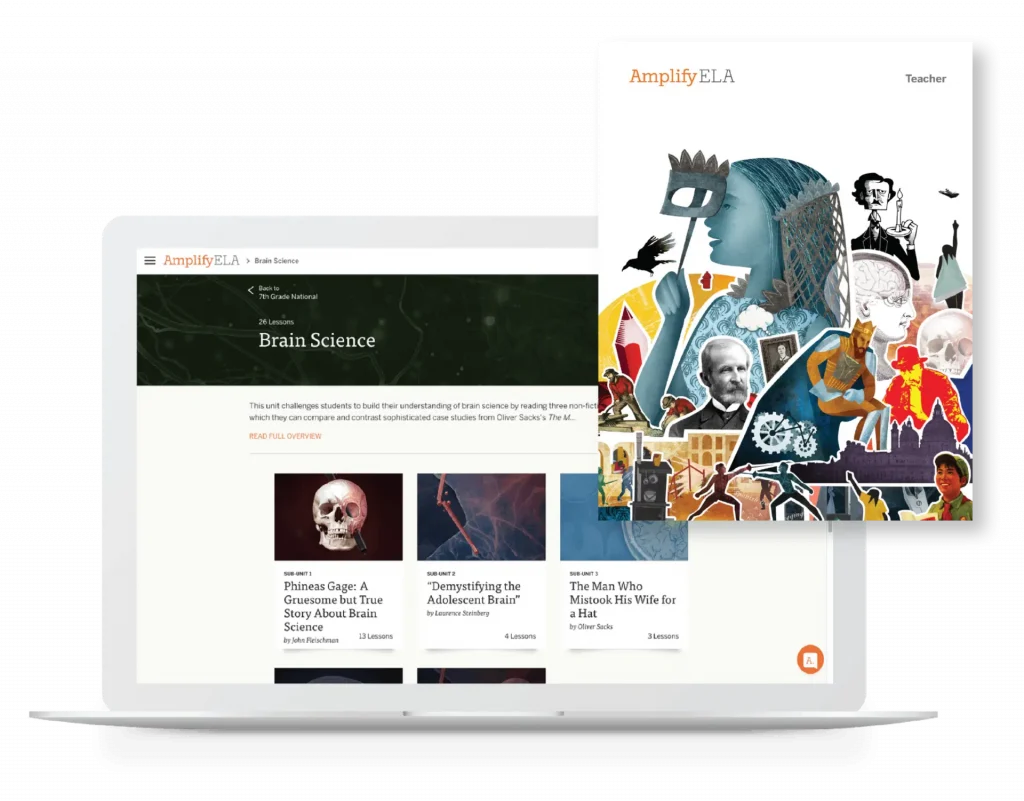
Teacher materials
Available digitally and in print, the Teacher Edition contains all of the information teachers need to facilitate classroom instruction, including:
- From detailed lesson plans.
- Video teacher tips embedded in the lesson.
- B.E.S.T. standards alignment and assessments including exit tickets.
- Real-time differentiation strategies.
- Clarify and Compare lessons.
- Robust reporting.
Professional learning
Amplify employs a national cohort of more than 50 ELA facilitators, all of whom have experience as former classroom teachers and many of whom are former school and/or district leaders. Our professional learning team has decades of experience working with large districts across the nation. Amplify has experience supporting district launches over multiple years and has partnered with districts of all sizes nationwide. We partner deeply with districts and tailor professional learning to their unique needs.

K–12 education podcasts
Amplify is proud to showcase cutting-edge research and insights in K–12 education. Explore our popular podcasts in literacy, math, and science; learn from top thought leaders and educators; and discover cross-disciplinary insights to support your instruction.


Science of Reading: The Podcast
Science of Reading delivers the latest insights from researchers and practitioners in early reading. In each Science of Reading episode, host Susan Lambert, Ed.D., Amplify’s chief academic officer of elementary humanities, explores the increasing body of scientific research around how reading is best taught.
Beyond My Years
Host and educator Ana Torres knows firsthand how hard it is to be a teacher. That’s why, in our podcast Beyond My Years, she seeks out educational insights from people who’ve thrived for decades in the classroom: seasoned educators. Sharing their biggest victories and a few lessons they wish they’d learned sooner, these longtime educators prepare listeners for their own teaching journeys. Hear stories that make you cry, make you laugh—and may even change the way you think.


Math Teacher Lounge
Math Teacher Lounge is a podcast created specifically for K–12 math educators. In each episode co-hosts Bethany Lockhart Johnson (@lockhartedu) and Dan Meyer (@ddmeyer) chat with guests, taking a deep dive into the math and educational topics you care about.
Join Math Teacher Lounge: The Community on Facebook to continue the conversation, view exclusive content, interact with fellow educators, participate in giveaways, and more!
Science Connections
Join our host Eric Cross as he sits down with educators, scientists, and knowledge experts on ways to best support students in science classrooms. Hear how to inspire kids across the country to love learning science, and how you can bring that magic into your classroom for your students.

Amplify podcast awards



Read about our all-green programs on EdReports.
See what the evaluators at EdReports have to say about Amplify’s high-quality curriculum.

start.amplify test page
Webinar: Desmos Math 6–A1 Office Hours (Free Trial Users)
S4 – 02. Bethany and Dan share their math biographies

In this episode, co-hosts Bethany Lockhart Johnson and Dan Meyer get personal and share their “math bios”—their early experiences with math and how those experiences turned them into the educators they are today.
Explore more from Math Teacher Lounge by visiting our main page.
Dan Meyer (00:00):
We’re recording. What’s up, everybody. This is Dan Meyer with Math Teacher Lounge.
Bethany Lockhart Johnson (00:08):
And I’m Bethany Lockhart Johnson. We are so excited to be back. Season Four, Episode Two. Hi, Dan.
Dan Meyer (00:16):
Hey, Bethany, how are you doing today?
Bethany Lockhart Johnson (00:18):
I’m so excited to be talking with you! You know, as we record this, our reunion at NCTM is getting closer and closer.
Dan Meyer (00:28):
The NCTM live show is gonna be bonkers. I don’t think people are ready for it. You think you know what we’re about on MTL from listening to us, but the live show is gonna be outta control. You cannot imagine how many clowns and elephants Bethany wants to have at the live show. We’re still—we’re trying to talk her down from like three to one, but we’ll see.
Bethany Lockhart Johnson (00:44):
All I want is the t-shirt cannon. Because I used to go to these baseball games and they would have a t-shirt cannon. And I thought, I wanna operate a t-shirt cannon! So like, if I could be standing on stage aiming t-shirts at people who are jumping up and down requesting a t-shirt? I don’t know. Doesn’t that sound fun?
Dan Meyer (01:01):
Sounds awesome. High point of my college education was catching a t-shirt. No, it was—it was a burrito. It was a burrito cannon. But I think it was just a t-shirt cannon, but it was a burrito cannon. And I caught a burrito at a game and it was probably the most memorable moment of all of college education for me.
Bethany Lockhart Johnson (01:16):
Was the burrito still warm?
Dan Meyer (01:18):
Oh yeah. I think it got—like, I think it might’ve been warm at one point and then it got warmed back up through the muzzle velocity of the cannon. So it was a pretty great system they had going on there. <Laugh> Yeah. <Laugh> Anyway, I’m off topic, but, we’re thrilled to—I’m thrilled to chat with you and we’re thrilled to be listened to by you folks out there in MTL land. In the lounge itself. We got a fun show today.
Bethany Lockhart Johnson (01:40):
So if you listen to Episode One—which if you haven’t, hope you go back and listen to it—if you listen to Season Four, Episode One, you’re gonna hear—we asked Huon, KT, who is this delight of a joyful teacher. We asked her to talk to us about what’s her math bio. And we want to ask all of our guests—like, I wanna go back and ask every single guest we’ve ever had to tell us their math bio.
Dan Meyer (02:06):
Yep.
Bethany Lockhart Johnson (02:06):
Because, while seemingly simple in nature, our students enter our math classroom already having had this relationship with math and these notions about their role in math or what they think about math. And it impacts our school year with them if we’re a teacher. And it impacts our relationship with math as we move through our education and beyond. Right? And I I’m so excited about this question, ’cause I think it also ties into this theme for Season Four, which is joyful math, and diving into “When has math felt joyful? When has it not? Does it feel like—how do we think about how our math bio, our relationship with math, has evolved into a joyful or less joyful place?”
Dan Meyer (02:54):
I get it. And what’s really key here, I think, is that teaching more than other professions is a generational profession. You know what I’m saying? Like, no one is like, “Well, you know, I sold insurance to you and now you’re selling insurance to, you know, my grandkids; that’s amazing!” But people are always posting photos when, like, you teach someone who then becomes a teacher later. Teaching is a generational sort of thing. So the kinds of joyful experiences that we offer or don’t offer students now affect the experiences that students who haven’t even been born yet will have, you know, some 20, 30 years later. That, to me, is a trip. And well-worth exploring, you know, how we got here, mathematically speaking.
Bethany Lockhart Johnson (03:39):
I remember a friend had sent me this image of an assignment that her son got that was asking for their Mathography. They wanted to know about their history of mathematics. And this was their first assignment. And this teacher, I would like to imagine, read them all and used it to inform conversations about students’ relationship with math. And, you know, some of the questions they asked were thinking about whether you consider yourself, quote, unquote, “good at math.” Like “what kind of experiences have you had? What do you like or dislike about math? What is, you know—what do you expect to learn in math this year?” Just asking students to actually pause and examine and reflect on their relationship and then also looking forward to, like, what kind of a classroom community do we wanna create? And I loved that assignment. And yeah, so today’s episode Dan, guess what?
Dan Meyer (04:32):
What’s going on? What’s happening?
Bethany Lockhart Johnson (04:33):
I figured we should ask each other about our math bio.
Dan Meyer (04:39):
I think the people out there would love to know this about us. ‘Cause you know, we’re both awesome. But also what’s really cool here is that like, I don’t know this about you. Like not, not a lot. You know, the folks at Amplify, they kind of assembled me and Bethany together in the same way that record labels assembled pop boy bands, girl bands, that kind of thing, back in the day. You know, grabbing some stars from screen or film and just like throwing ’em together and saying, “All right, now you’re here to perform together.” And so it’s just a really good moment for us to, like, settle back and just know who we’ve been working with for the last three seasons and change here. I love it.
Bethany Lockhart Johnson (05:15):
Well, I don’t know. I don’t actually agree with that, Dan. Because don’t you remember? We knew each other beforehand. And while I would like to think of us as…oh, I’ll say One Direction—well, no, One Direction is now defunct. Who’s another band that got formed by one of those shows and is still together and still—
Dan Meyer (05:33):
BTS! K-Pop, you know! Let’s go!
Bethany Lockhart Johnson (05:35):
K-pop. BTS.
Dan Meyer (05:38):
Let’s go, Bethany <laugh>.
Bethany Lockhart Johnson (05:39):
So can we incorporate some K-pop into the NCTM Math Teacher Lounge live episode? Don’t answer now. Don’t answer now. OK. So not only are we gonna share our math bios, but we want to encourage you listeners to share your math bio with somebody in your life. It could be a child in your life, maybe talking to your kiddo about what was it like. What was math like for you? It could be a student that you have. It could be a partner, a friend, a parent. I mean, the sky’s the limit. Share your math bio. And most of all, share with us. We wanna hear about your math bio and you can share it with us at Twitter, at MTLShow, or in our Facebook group, Math Teacher Lounge.
Dan Meyer (06:26):
Stop on by, please. All right. I’m gonna just share like, just a couple of quick, signposts. Not the full bio. Gotta leave them wondering about something here. But here’s a few quick highlights and lowlights of my math bio and how, maybe, it made me the teacher that I was and the educator I am. Is that cool?
Bethany Lockhart Johnson (06:44):
Wait, I didn’t even, I didn’t ask you yet.
Dan Meyer (06:46):
Ask me what?
Bethany Lockhart Johnson (06:47):
Hey, Dan!
Dan Meyer (06:49):
Is there like a magical word? Like, what’s your math bio? <Laugh> Oh, go for it. No, no, that’s right. They won’t know what I’m talking about. Why is he talking about his math bio? Bethany—
Bethany Lockhart Johnson (06:57):
That whole lead-in that we just gave? They might not know.
Dan Meyer (07:00):
Yeah. We just talked about math bios for the last 20 minutes. But yeah, they might not know what we’re—
Bethany Lockhart Johnson (07:04):
<laugh> So Dan, why don’t you go first? ‘Cause I know you were gonna ask me to go first, but why don’t you go first? Dan? What’s your math bio?
Dan Meyer (07:12):
Oh, wow. Well, thank you for the formal invitation to share my math bio, Bethany Lockhart Johnson. So, I’ll just share—I just wanna share a couple items here, not the full history. Gotta leave ’em—leave a little mystery in there, you know what I’m saying? But here’s a few highlights and lowlights, and I think what it means for me as an educator. So, I was homeschooled for eight years. That was big—did a lot of math learning on my own. Couple of lowlights from that, a lot of highlights, in terms of just like being able to, like, learn at my own rate and just jump on ahead and pursue different wacky things. But I tried to switch into public school in fourth grade and I lasted, um, four hours. I didn’t even go to class. I enrolled and then it was like, boom, I was out of there. Because we went to the school; we met the teacher, saw the room, very nice person and place. But I got the homework assignment and the homework assignment was gibberish. I had no idea what to do and such was this feeling of just, like, despair and hopelessness, I was like, I cannot be a part of this. I remember the assignment. It was about identifying scalene, isosceles, and equilateral triangles. I’ll tell you this: I am quite good at that now. But at the time, like, I didn’t know what those words meant. And you know, at that moment we had Encyclopedia Britannica, could not Google this or even Ask Jeeves or AltaVista this so well back then. It just—it was an entry moment of failure and realizing that so much of math is like a, kind of a social kind of construct. And if you’re not part of that social circle, what can you do? So that was a bummer. Another bummer was eighth-grade math, learned it all by way of videotape. You know, put in the tape and watch—not gonna say the person’s name and not this person’s fault—but it was just like watching someone work on a whiteboard. Kind of a precursor to Khan Academy, kind of a drag. Went to high school—
Bethany Lockhart Johnson (09:02):
Wait, wait, wait, wait. We were—I’m not ready to jump to high school. Wait. Can you pause for just a second?
Dan Meyer (09:06):
Yeah. Rock on.
Bethany Lockhart Johnson (09:07):
I just need you to go back to the triangle thing. So in that moment, what did that mean for you that you had had all these experiences with math and then you encounter math in a completely different sphere, a public school, and it did not have a connection or meaning to you because prior to that, it sounds like it was pretty positive. Right? Explore these things you’re curious about; there’s not, like, a level you need to stick with…
Dan Meyer (09:33):
Yep, yep. Yeah. I think that’s right. Maybe it was a little bit of a classic, like, “Oh, I didn’t have a growth mindset; my mindset was like, ‘Oh, I’m good at math because I am, you know, born that way,’” and all of a sudden, that identity was, you know, thrown into question. And, you know, my foundation was all of a sudden quite shaky. And yeah, that’s—you know, I think I taught a lesson recently where I was like, “Hey, this whole thing with a less-than or equal-to sign and a greater-than or equal-to sign, like what those signs are: it’s just, it’s language. And if it’s confusing to you, it’s not because you’re bad at math; it’s ’cause language is oftentimes confusing ’cause people have to agree on it.” So I dunno, that sort of thing is kind of filtered in, filtered back in periodically, some sympathy for like how a lot of math is like just socially agreed upon ways of working with, you know, numbers, shapes, patterns, that kind of thing.
Bethany Lockhart Johnson (10:20):
OK.
Dan Meyer (10:21):
Anyway.
Bethany Lockhart Johnson (10:21):
- And in this home school—I have a lot of questions about that, but I’ll stick to one—were you in a community of people that you talked about these math ideas with? Were you homeschooled solo? You have a sibling, so I think you were together, right?
Dan Meyer (10:39):
Yeah. Yeah. I’ve got a twin sister. So we were, you know, like, right on with each other the whole way through there. And yeah, so we had—but it wasn’t, it wasn’t like a—it was a lot of individual work, with my flavor of homeschooling.
Bethany Lockhart Johnson (10:54):
- Got it. And the tapes—wait, before you go to high school, the tapes, the VHS tapes, which I’m just loving this image—
Dan Meyer (11:02):
Yeah.
Bethany Lockhart Johnson (11:02):
Was that a positive experience? Was that because that was an area of math that whoever was homeschooling you wasn’t that comfortable with? Why was it that route for the tapes, and what was that? Was that joyful for you?
Dan Meyer (11:15):
Yeah, definitely not joyful. Yeah, it was like, if you had questions, you couldn’t really ask them of the VHS tape. It didn’t work out so well in that way. And it was a lot of operational-type math. It was, you know—there was no give and take; it was all kind of take. From the video teacher. And yeah, I was doing that because my homeschool teacher, my mom, who is very smart in lots of areas, did not have the math knowledge or confidence, especially to help with math at eighth grade. And that was a big reason why, flash-forward to the next year, went to high school.
Bethany Lockhart Johnson (11:48):
Nice segue. OK.
Dan Meyer (11:50):
<laugh> You caught up to high school…I encountered just like four years of just crazy-good, just bonkers-good math teachers who just really changed a lot for me. Especially, Mr. Bishop and Mr. Cavender, very cool folks who did a lot. And especially, I think Mr. Bishop and Cavender both modeled for me what curiosity from a knowledgeable adult looks like. Like someone who, you know, now I can say to myself, “Oh, they were kind of like putting on an act of being very curious about answers they were hearing for the 2000th time from a student,” let’s say, but what a powerful experience that was for me to feel like, “Oh, wow, my thoughts are interesting to someone besides myself.” I got like, maybe it’s two real highlights that I’ll just point to, from my math bio that made me the math teacher and person that I am. Let’s see here. Maybe three, if you you’ll indulge me. One is just like the idea that you could do math wherever you have your brain, a pencil and a paper. And so I remember like in high school, I was in church with my family and kind of a little bit bored of whatever’s going on. And I just had the Bolton and I like drew a pentagon, a regular one, then a hexagon, a regular one, and kept on drawing, like adding sides to the shape. And it was like, it was becoming a circle. And, you know, I was able to take the area of each of those shapes and say, you know, “What happens as you send the number of sides to infinity?” And watch as the formula for area of a circle, Pi R squared, popped out. And it was kind of a literal religious experience, in that moment, just like, “Wow, like my brain’s so cool and math is so cool and paper and pencil’s so cool.” And so there’s that. Just that kind of experience was pretty awesome. And then I would just say like, I’ve had some really fantastic experiences with math in the world itself. Stuff like—let’s see, this is gonna invite more questions from Bethany, probably, maybe I should avoid—I got, I have a Guinness—I have a Guinness world record that’s almost 20 years old. This Guinness world record is—it’s old enough to drive basically at this point. And almost old enough to drink. But like it was—it was a record for chaining the longest paper clip chain together in 24 hours. And the only way I was able to break that record was through mathematics. Where, like, I would be finishing a box of clips. And I would say to my buddy who was there, “I just finished a box of clips.” And that person would type in the number of clips that I had just done. And then a mathematical formula that I had created would tell me how many—how long the chain was at that point. It was being rolled around a spool. And like, it’s just like, wow. So math just made this possible. You know, math revealed that the record I was trying to beat was beatable, because I did the math on it. It was, like, thousands of feet long in 24 hours. And other folks might be like, “Oh, like, that’s that’s huge!” But me, I was like, “All right, let’s divide this out. You know, divide by 24 hours in a day, divide by 60 minutes an hour, 60 seconds in a minute. Oh, that’s like one clip every four seconds. That’s really slow.” You know, think about that <counts aloud>, “Clip, two, three, four. Clip two, three…” It was just slow. So math helped me, you know, wreck that record. Which to my knowledge still still stands. Don’t get any ideas, Math Teacher Lounge Folks! Is this news to you, Bethany? You haven’t blinked in the last, like, five minutes. I’m curious if this is new.
Bethany Lockhart Johnson (15:20):
It is news to me. And I have so many questions. Because OK, if four seconds was slow, so then what was your like—so then I’m assuming a hundred clips per box? Like, what was the rate, you know, per box? How long did it take you to complete a box? What did this friend like? Did this friend stick with you for the whole 24 hours? Did you really do it for 24 hours? Or once you beat the record, did you rest? How did you account for biological function? Like, needs? Like a restroom?
Dan Meyer (15:51):
<Interrupting> Like what?
Bethany Lockhart Johnson (15:51):
Eating.
Dan Meyer (15:51):
Like what, Bethany? OK.
Bethany Lockhart Johnson (15:52):
Um, Sleep.
Dan Meyer (15:55):
So yeah, maybe we dive into some of the specifics in a different time.
Bethany Lockhart Johnson (15:59):
Just tell me one of ’em. Tell me one.
Dan Meyer (15:59):
I’ll just say. So as to discourage other Math Teacher Lounge listeners from taking this on—back off of the record, folks!—this was back in college, so I was a little more limber back then. But I did one—I think it was 1.8 seconds per clip. For an entire 24 hours. Just like, so just like think about it, would you? If you’re gonna step to me on this one, just think about that, OK? And then, and then, you know, make an informed decision.
Bethany Lockhart Johnson (16:28):
Wait. Wait, wait, I just wanna tell you one thing. I’m picturing somebody with a straw, and like, giving you water as you keep clipping. I’m picturing, like, music, I…
Dan Meyer (16:37):
That’s not far. That’s not far. That’s not far from—yeah.
Bethany Lockhart Johnson (16:40):
So many questions! OK. Go on. Sorry, sorry, sorry. Go on. This is your bio.
Dan Meyer (16:44):
We gotta, I gotta wrap this up. I wanna hear your bio. But, like, I would just say like this move to this sense that math is actually a thing that’s useful for more than just a grade; it’s useful for more than just, you know, the societal, you know, adulation that comes from being a math nerd. That kind of thing. And so that, I think that affected a lot of math teaching for me. And, if I gotta, like, summarize math teaching itself in a journey, it went from like, “Hey kids, aren’t I awesome?” to, “Hey kids, isn’t math awesome?” to “Hey kids, aren’t you awesome?” And like that journey was facilitated by lots and lots of people, you know, a lot of personal growth, but at this point, at one point I was like, “Hey, math can help you get records and whatnot. It’s really useful.” And now I’m like, “Wow, your brain’s just doing just really interesting things. I can help you understand how interesting those things are, and maybe make them more interesting, or interesting in a different way, with some help here.” Let’s put a pin in that. That’s the math bio.
Bethany Lockhart Johnson (17:50):
- So I have no doubt that if you ask someone in your life, listeners, for their math bio, that you will discover things about them that you never knew. Literally the questions that I have…I have so many question. And Dan is very good at, you know, bringing me back. Bring me back, like, come on, come on. But I just wanna say, overall, your journey seems pretty joyful. It seems pretty joyful. It seems pretty full of confidence. I don’t wanna say “ego” in a negative way, but I wanna say you were buoyed by these experiences that allowed you to feel like math was a place for you to thrive.
Dan Meyer (18:36):
Right.
Bethany Lockhart Johnson (18:36):
Where you could try out things. You could try it out and just, “I could do that!” Right? Like…your relationship just felt very, like…you felt like you had autonomy, agency, perhaps much like you, you operate in this world. Dan, is that, is that right <laugh>?
Dan Meyer (18:54):
Yeah, I think it’s fair to say. And without telling too much of her story, my twin sister with whom I share most things, including genetics, you know—she had a very different experience in math early on. She’s brilliant. She’s a doctor. And not, you know, the book kind of doctor that I am, but like a real, you know, medical doctor. She’s brilliant. But we were—we encountered different messages about who math was made for, early on in, you know, in our entire math learning. And she—we both digested the messages that we were sent, and took, you know, different, different paths because of them, for sure.
Bethany Lockhart Johnson (19:31):
Funny how that works. I thank you, Dan. I do. For in all sincerity, I appreciate you sharing that. And I think that it’s exciting to hear how it influenced your teaching. It feels like you want to cultivate those experiences for your students. And I’ve been in the room when you’ve presented; I was in a room where you taught a class live. It felt like you were making space for the students to have these aha moments. And it feels like in your work at Desmos, and now Amplify, you’re trying to create these products that allow folks to recreate these amazing math moments. Right? And that it’s for everyone and that it’s accessible and it can be very positive. I feel like I have this new perspective on kind of the energy you bring to your teaching. So thank you for sharing that.
Dan Meyer (20:24):
Yeah. Been a pleasure. Thanks for your questions here, Bethany. And it’s been—it’s been fun to reflect on it. And I do—I do feel very lucky in lots of ways. Privileged. Lucky. I know, like—I think the world has been set up for my success in lots of ways, as who I am. But I do just…yeah, I feel—I want more people to experience what it’s like when you walk into a math classroom and it’s like, “Hey, this place is for you. You have interesting thoughts about this. Let’s get ’em out.” So that’s awesome. I would love to hear about you and how you…I mean, we have taught different kinds of kids. You know, I taught kids who I think were somewhat set in, they’re a little bit more solid at secondary in who they are as a math learner. Like “I know who math is and who I am with math.” And I’m really excited to hear what your math bio allowed you to do with students who were perhaps open to the idea that they are very mathematical or at least not yet closed off to those possibilities. So, yeah. What are some of the high, the, you know, the high and low water marks of the making of Bethany Lockhart Johnson, math teacher? <Laugh>
Bethany Lockhart Johnson (21:24):
Thanks for asking, Dan. <Laugh> I’ve shared aspects of my math bio because I think it really informs the way that I talk to people about math and think about math. And I like to share it because I want folks to consider their own journey with math, as we like engage with problem-solving and sense-making and thinking about the students in our classroom. My dad is a math and computer science major. So he had a computer very early on. I wish he had invested in Apple early on when he had like one of the first Apple computers ever. And, sorry, dad, but it’s true. I do wish you had done that.
Dan Meyer (22:10):
I’m sure he does too.
Bethany Lockhart Johnson (22:11):
Oh, he does. So math and computers and conversations about counting, you know, it felt like it was kind of just normal. Like it was around me. And I went to Montessori, which is a private school that—oh, they have some public Montessori—but it’s very self-directed. And so we would have these kind of charts, these goals for the day that you explored. And so we would explore math in very, I don’t know, very organic ways, with these natural materials. And I feel like I excelled at math, but it wasn’t something that I was conscious of. It was just like, “Oh, well, yeah. Math, it’s, you know, something we do.” And then when I went to—when I left Montessori in fourth grade, I remember that year being a lot of like repetition. I was like, well, we did this. We covered this. And except for the mission project that we hadn’t done, that was all new. And that’s it. For another time I’ll share about that. But <laugh> then, they actually, I was moved with a group of students to the fifth grade math class, ’cause we had already done the work that we were doing. And so, it wasn’t that it felt like it came easily, but it did make sense. What we were doing made sense. And then it all kind of changed. There was a lot of change in my family. There was, like, missed school time. And we moved and I went to a new middle school and I was in this environment with students who—it was like an accelerated program. And so I was in this environment with students who were pretty competitive with each other. And I remember going—and I was not from of a competitive environment; like Montessori is not competitive. It’s not about that.
Dan Meyer (24:02):
Right. Right.
Bethany Lockhart Johnson (24:02):
It’s—it was very strange to me that I would be competing against anyone, even competing against myself. And I, you know, knew how to set goals. But it was a different level of energy. And I felt like, because I wasn’t competitive in that nature, I felt like that kind—I felt on the outside of a lot of the energy. Besides the regular, like, middle-school feeling outside of things. And I remember the first friend that I made. Hi, Susan! She had said to me, this was like maybe our second week of school, she’s like, “Oh, at lunchtime, come with me to math club.” And I was like, “OK.” And I remember walking into that room and I had no idea what was going on. And so that was one of the first times where I was just like, “Whoa, I have absolutely no concept of what they’re talking about or what.” These are my peers. I felt very—it was very—it was strange. It was strange. I was like, “This doesn’t feel like a space for me at all.” When I think ordinarily I was kind of excited about the idea of going to math club at lunch, you know? And over middle school, I kind of just got progressively more and more behind. It started with missing some work and then missing more and then checking out. And, you know, the problem was that I really made it about myself. That, like, it wasn’t something that I was then good at or could do. When really it was that well, pre-algebra, I was having a really hard time in like the rest of my life. And so I wasn’t real present in that class. And so when I got to algebra, it didn’t make a whole lot of sense. And then if I missed Monday, Tuesday, and Wednesday, well, Thursday is gonna be hard, you know? And, it just got progressively harder and harder. So I had this great idea that between eighth grade and ninth grade, I was going to take this accelerated geometry class. ‘Cause that was the ninth grade class, it was geometry. And I would take it. It was like geometry in three weeks or something. So then when I entered high school, I would’ve gotten this like jumpstart. But I wish I had said, “Oh, I’ll take this, and then in ninth grade I’ll take geometry.” So like I’ve already kind of gotten a preview of the material. But instead I went to the 10th grade math, which was like intermediate algebra, trigonometry. I had absolutely no clue what was going on. And I had a very, very difficult time and I wasn’t ready for that class. But it was exacerbated by the fact that this teacher felt very free to let the freshmen in that class know that they shouldn’t be in that class. That this class was for 10th graders.
Dan Meyer (26:49):
Oh wow. Oh, wow.
Bethany Lockhart Johnson (26:51):
And we had a rather contentious relationship. And I will never forget that we were in the hallway, and he says to me, “You don’t belong here.” And I’ve talked to—I’ve talked to a girlfriend of mine about her experiences with this teacher and she has the fondest memories.
Dan Meyer (27:13):
Wow.
Bethany Lockhart Johnson (27:14):
She—in fact, almost everyone I’ve spoken with, you know, if we are talking about past teachers or, “Oh, what was that class like?” I mean, they just have these wonderful memories! And for me, my sense of like belonging was already so on a tight rope anyway, that to have this adult, this teacher, tell me, “You do not belong here,” just crushed me. And in hindsight, I think he was saying like, “This class is too hard for you.” I mean, maybe. <Laugh> But all I heard was “You don’t belong here.” And I extrapolated it to connect to math and to anything having to do with math in general. And it just got worse and worse through high school in the world of math. My next math class was even—I had to repeat that class, and still didn’t understand what was going on, and felt more out of place, and, you know, it’s one of those things that I just kind of had started to accept that, I guess, math isn’t for me. I guess I’m just not a math person. Or whatever these stories are that I started to create and build and find evidence for around me that was informing that this wasn’t for me. And I had always done well in school. I was in, you know, accelerated classes. I felt like I was capable of problem solving. And yet in math, I just felt like I had all of this evidence saying that I didn’t belong there. And so when I went to college, I took whatever two math classes were—you know, I was in performing arts and then I did ethnic studies as well. And I remember you had to take two math classes that were GEs. There were these classes that if you don’t wanna deal with math, you go take those classes. And I was like, “Oh yeah, I’ll take that. I’ll take that.” The gulf widened, you know? <Laugh> And I didn’t feel like anxiety when I had to do things like balance my checkbook or navigate math in everyday spaces. It was just, it would never occur to me that I would like seek out opportunities to engage with math or think about it or talk about it.
Dan Meyer (29:35):
That is—yeah, that’s just so wild, how, I don’t know, like it’s often, from the student’s perspective, it is them in a vacuum with math, and the two of them interact and decide if, you know, if they’re right for each other. But from the grown-up perspective, it’s just, you know, it’s a little bit clearer that your story with math was not just you in math, but you with, you know, various external things happening. With family, various teachers playing their different roles—sometimes, you know, really tragic and horrible roles—and then like the compounding mathematical debt that it feels like you were kind of building up, as challenges in one year didn’t get resolved and moved into the next year and so on. And all that makes me wonder—it makes me, like really, really scared, first of all, because I would bet that your teacher might not even remember that moment, that for you is part of just a pivotal moment in your math story, and how many kids have I played—have I been a part of their story in that way and wouldn’t even recall? You know what I’m saying? So that’s a scary part. And then also I’m just wondering, like, how can we, how can we help kids who are in those moments recognize that, “Oh, this kid is like absent a bunch,” and give them more resources to be successful rather than say, “Well, you just gotta try harder now.” Those are things I’m wondering, hearing your story. Thank you for sharing that. I’d love to know more about how you then became a teacher and what all that did for you as you helped students.
Bethany Lockhart Johnson (31:06):
Well, but to answer what you were saying, it wasn’t that I wasn’t—I was always absent physically, but at least like mentally at that point, because it had become so difficult. It didn’t make sense to me. So I was just really checked out in math class, you know? So in hindsight, you know, as a teacher, for sure I can look back, and especially hearing these stories and these experiences my friend had with this teacher and just like chalks up as one of like her most favorite teachers ever! And you know, he clearly did a great job for so many students. But for me, and I think for some people, they would’ve taken those challenges and, you know, it would have fortified them in a different way or something. But for me, I took it upon myself to mean certain things about myself and about my ability and what I was capable of. And so I think, I think in some ways, you know, yeah, it’s all, it’s all interconnected. You know, when your students walk in the door, they’re not this—the things that are impacting them in their life are coming into the room with them. And I don’t think we can take that for granted and think, “Well, if they just focus hard enough…”
Dan Meyer (32:21):
Yeah.
Bethany Lockhart Johnson (32:23):
So let’s go back to my love of Oprah. You know, Oprah talks about living your best life. And something I really appreciate about Oprah is that she encourages you to examine, like, sticking points, right? Like she doesn’t just say, “Well, this…just pretend nothing ever happened, and everything’s fine!” You know, she really talks about making time for reflection. And I kind of got mad that anytime I thought about math, or math schooling came up. Or, you know, whatever, any time that came up that I just felt UGH about it. And I felt like a failure. And I’m like, “You know what, what if I took a math class? And I’m an adult at this point. I’ve graduated. I have—I’ve left college. I have my degrees. But I said, “What if I took a math class?” So I went down to, the city college and I found out that you have to take this exam, like a placement exam. And I went and took the placement exam. And I remember it’s one of the responsive tests where if you get it right, the next question’s a little harder. And so I’m taking it, panicking, because it’s getting more like…I just, you know. And I remember it placed me in like, whatever, Algebra Something, this class that was far more advanced than I thought I should be in. And I was like, there’s been a mistake! You know, and I went to the counselor and said, you know, “I got these results, but I couldn’t answer a lot of the questions on the test.” She’s like, “No, no, no, that’s how it works.” So I go take this class and the class was hard. And I decided that I was just gonna keep showing up. And every day before class, I kid you not, they had a little math…it was like a math center where you could go in and they had a bunch of tables and you’d sit at the table and you could sit and do your work or whatever. If you had a question, you walked up and put your name on a clipboard and then somebody would come and help you. So I did that, every single—like before every single class I would go in. I’d sit there. I’d do the work. I’d go. And I’d get help. Like somebody would walk over and you know, some kid for whom they’re like this…you know, they’re math—it might be you, Dan! It could be you! It could have been you! You know, would walk over and be like—
Dan Meyer (34:38):
Yeah, I was in Help like that. Naw, it’s awesome. Love, love those people. Yeah.
Bethany Lockhart Johnson (34:42):
And you know, I did it. And I did so well in the class. I did exceedingly well in the class. And I said—
Dan Meyer (34:50):
Take that! Take that, everything! Every other math experience!
Bethany Lockhart Johnson (34:53):
I said, what?
Dan Meyer (34:55):
Yeah!
Bethany Lockhart Johnson (34:55):
Wait a second.
Dan Meyer (34:56):
Yeah.
Bethany Lockhart Johnson (34:57):
And it was that I was present. I was not afraid to look at what didn’t make sense. And if something didn’t make sense, it didn’t mean there was something wrong with me. Whaaaaat?
Dan Meyer (35:10):
Yeah. Yeah.
Bethany Lockhart Johnson (35:10):
So I was just in such a different space. And then I took another math class and that class was even harder. And I did the same thing where I went to the little lab and, you know, and it just buoyed me. And it made me realize that, like, this story, that my experience with it was very powerful and that was a real lived experience, but that it didn’t have to define my relationship with math. But then! I decided I wanted to go back to school to become a classroom teacher. And I totally—this was a couple years after that math class experience. So now, you know, I’m healing my relationship with math through basic positive experiences, da, da, da, you know, doing other work. But fast-forward, for a whole number of reasons, decided to become a classroom teacher. And I freaked out. All of my—like, I’m studying for the GRE and the CSET and all the things you have to the hoops you have to jump through to apply to the masters program and the credential program. And I freaked out. I was so close to quitting, Dan. Because I was convinced that the reason I couldn’t be a classroom teacher is because I wasn’t capable in math. Like I was—it was all that resurfaced. And even though I now had evidence to say something different, to the contrary, it was still so visceral. And I was so scared. But I passed that Math CSET.
Dan Meyer (36:47):
Get it.
Bethany Lockhart Johnson (36:47):
I did well enough on the GRE—
Bethany Lockhart Johnson (36:50):
Yes!
Bethany Lockhart Johnson (36:50):
You know, I finished my credential. I worked really, really hard. I had to work so hard in my student placement, when I was student teaching for a fifth-grade class, ’cause I felt like, “Oh my God!” I mean, now I could do the mathematics, but I couldn’t TEACH it to someone, you know? But I had amazing professors at UCI, and my math professors really like just—and my mentor teacher! shout out to Jennifer! shout out to Phil!—these amazing mentor teachers who just loved teaching and who loved—like you said, you have these teachers in your life who you got to see the way that they listened to students. They taught me about that love of listening to students. And then I fell in love with, you know, CGI, cognitively guided instruction, and started learning all about all of these educators who just wanna learn from students’ thinking. And it was just so powerful. And I realize as a kindergarten teacher that I have this really special role in helping to create space for a positive school experience. Like we get to talk about—I talk about my students as mathematicians; they’re writers; they’re thinkers; they’re problem-solvers. And I also want to make space for parents. Some of them, this is their first kid in kindergarten, and they brought all of their experiences, a lot of it negative, that they had had with mathematics. So I felt like it was such an exciting opportunity to help show parents how they could have conversations about math with their students. That also, I hope helped heal their own anxiety with mathematics.
Dan Meyer (38:41):
Right, right.
Bethany Lockhart Johnson (38:42):
Like, I’ve not even scratched the surface of math learning. But I just have such a changed perspective and relationship with math. And I just fell in love with the sense-making. And I fell in love with the journey of it. I still experience math anxiety about a wide variety of things, but I do love it. And I feel like there’s a space for me in relationship with math. And that really excites me.
Dan Meyer (39:09):
Yeah. Wow. Listen to that folks. We, we don’t deserve her! Bethany Lockhart Johnson! She got some math game and could have gone off there and, you know, become an accountant or something. And she chose to hang with kids and their parents. That’s so wild that you’re like rehabbing parents and their self-conception about mathematics at the same time. I think that is so cool.
Bethany Lockhart Johnson (39:32):
Well, thanks Dan Meyer. I gotta tell you, I don’t know when or if I’ve ever shared that much of my math story. So there is a certain amount of vulnerability there. But thanks for listening. And I’m glad that, you know—I think there’s space for us to talk about these things that we care deeply about, but that can be really complicated.
Dan Meyer (39:56):
Yes. Yes. And I love how you you’ve really sharpened the point on what I feel like I know in my brain, but not my body all the time: That individual teachers are huge. Like, individual teachers, and individual moments of teaching, are just not something to play with. You know, like that kid that’s in fifth grade having a tough time, like there could be a month or a day-long period where all of a sudden, like, you’re just like, “Oh yeah, I’m back in the mix; like, me and math are still buddies.” And there’s also like moments that you had, where like one casual word from a teacher can just really put a huge wedge between you and a discipline that needs and wants you and your intellect in it.That’s a really powerful testimonial. Not just for math, but for teaching, your teaching bio.
Bethany Lockhart Johnson (40:43):
I agree with you. And I also, I also…you know, I think we can’t put this—we are human. Teachers are human. And so I’m sure there’s things I’ve said to students. Twenty-second story: a student stapled his finger in my class. <Laugh> And I remember holding his hand and saying, “Why did you do that?” And I wasn’t yelling at him, but it was like, I am sure the panic in my face…like, that’s what he’s gonna remember about kindergarten. Right? <Laugh>.
Dan Meyer (41:19):
Yeah.
Bethany Lockhart Johnson (41:20):
That. He will remember that. He won’t remember the really cool city project we did. He’s gonna remember his teacher holding his hand, in his face: “Why did you do that?”
Dan Meyer (41:30):
Yeah. Yeah.
Bethany Lockhart Johnson (41:30):
You know, so we’re human. And yes, it was awful that that teacher said that to me. There were a thousand other ways that he could have said whatever it was he was thinking. And that did deeply wound me. But despite his influence—because teachers do have a lot of power and I think they need to examine that power, ongoing—it still doesn’t have to define us. So I don’t wanna put this pressure, like—
Bethany Lockhart Johnson (41:55):
Sure.
Bethany Lockhart Johnson (41:56):
“So never ever say anything negative!” You know, we’re human.
Dan Meyer (42:00):
I feel like that kid is currently on some office-supply podcast talking about “your office-supply bio” and saying, “Let me tell you how I first got really freaked out by staples. Here’s the deal: I only use paper clips. And here’s why.”
Bethany Lockhart Johnson (42:15):
“Here’s why.” But then—callback!—he’s going to stumble upon THIS podcast and think, “And because I’m so adept with paper clips, I can beat that record!”
Dan Meyer (42:30):
Though—aaay! whoa! Settle down!
Bethany Lockhart Johnson (42:31):
BOOM.
Dan Meyer (42:31):
Don’t get any ideas, kid. No way. Uh-uh. I don’t like that at all. That’s not what—that’s not what I want to have happen here. No, thank you.
Bethany Lockhart Johnson (42:41):
Well, I’m spent, Dan. I need a nap.
Dan Meyer (42:45):
Yeah. I need a box of Kleenex. I need a nap. I need a—yeah, for sure, a baba. Uh-huh. Definitely. Hey, so look, I’m not expecting you folks out there in the lounge to kind of give us the same depth or breadth. You know, we are here, of course, for your entertainment. Feast on our stories and dramas. But I would love to know at some point, like, what are a few, a few moments that really came to define you mathematically? Came to influence you as a teacher? I think we would do really well for each other to understand that about all of our processes. So yeah, I would just toss in a plug in for Twitter, @MTLShow, or Facebook, Math Teacher Lounge; it would be fantastic to hear from you.
Bethany Lockhart Johnson (43:24):
Thanks so much for listening.
Dan Meyer (43:25):
Thanks, folks. Bye now.
Stay connected!
Join our community and get new episodes every other Tuesday!
We’ll also share new and exciting free resources for your classroom every month.


Meet the guests
Dan Meyer
Dan Meyer taught high school math to students who didn’t like high school math. He has advocated for better math instruction on CNN, Good Morning America, Everyday With Rachel Ray, and TED.com. He earned his doctorate from Stanford University in math education and is currently the Dean of Research at Desmos, where he explores the future of math, technology, and learning. Dan has worked with teachers internationally and in all 50 United States and was named one of Tech & Learning’s 30 Leaders of the Future.
Bethany Lockhart Johnson
Bethany Lockhart Johnson is an elementary school educator and author. Prior to serving as a multiple-subject teacher, she taught theater and dance and now loves incorporating movement and creative play into her classroom. Bethany is committed to helping students find joy in discovering their identities as mathematicians. In addition to her role as a full-time classroom teacher, Bethany is a Student Achievement Partners California Core Advocate and is active in national and local mathematics organizations. Bethany is a member of the Illustrative Mathematics Elementary Curriculum Steering Committee and serves as a consultant, creating materials to support families during distance learning.

About Math Teacher Lounge: The podcast
Math Teacher Lounge is a biweekly podcast created specifically for K–12 math educators. In each episode co-hosts Bethany Lockhart Johnson (@lockhartedu) and Dan Meyer (@ddmeyer) chat with guests, taking a deep dive into the math and educational topics you care about.
Join the Math Teacher Lounge Facebook group to continue the conversation, view exclusive content, interact with fellow educators, participate in giveaways, and more!
You might also like:



Amplify is proud to be an approved provider for LASO Cycle 4!
Amplify is the original HQIM leader in change management as the original program that initiated this transformation movement. Now it continues with YOU – our district partners.
Learn more and request a meeting HERE!

Why choose Amplify?
For many years, districts across Texas have relied on Amplify as a trusted partner for their curriculum, instruction, and professional development needs. Backed by a strong regional team with deep Texas experience, our services have been thoroughly vetted for quality and expertise across the state supporting urban, suburban, and rural districts. Our partners can continue to count on the Amplify team for comprehensive support that is tailored to their unique district and campus needs. Amplify looks forward to walking alongside your district and school leaders as well as your teachers with coaching that ultimately drives the work forward to positively impact teaching and learning.

What LIFT supports:
Curriculum adoption support
Conduct needs assessments and prepare for SBOE-approved HQIM or Bluebonnet adoption.
Professional learning and skill-building
Build instructional capacity through research-based training and coaching for leaders and teachers.
Observation and feedback systems
Design and refine feedback cycles that elevate classroom practice and instructional leadership.
Implementation training and PLCs
Establish sustainable systems for lesson internalization, data-driven collaboration, and student-focused improvement.
Learn more on TEA’s LIFT website.
Additional LASO Cycle 4 Support
In addition to LIFT, Amplify is an approved provider for the following LASO Cycle 4 Grants:
- LIFT Add-On: School Improvement PLC Support (LIFT SI PLC)
- School Improvement Curriculum and Instruction Support Grant (SI CISG)
- Blended Learning Grant (BLG) (LIFT-BLG Supplemental Application submitted with updates to SAPL by 11/10)

Winter Wrap-Up 02: Mathematizing Children’s Literature
While we’re hard at work producing the exciting fifth season of Math Teacher Lounge: The Podcast, we’re continuing to share some of our favorite conversations from our first four seasons. This time around, we’re revisiting our popular episode that connected literacy and math!
In this episode, we sit down with Allison Hintz and Antony Smith, authors of Mathematizing Children’s Literature, to talk about what would happen if we were to approach children’s literature, and life, through a math lens–and how we can apply those same techniques to classroom teaching!
Explore more from Math Teacher Lounge by visiting our main page.
Bethany Lockhart Johnson (00:02):
Hi, I’m Bethany Lockhart Johnson.
Dan Meyer (00:04):
Hi, I’m Dan Meyer.
Bethany Lockhart Johnson (00:05):
And we are so excited for another episode of Math Teacher Lounge. And as you know, podcast format; you’re listening now. I think one beautiful thing about the podcast format is that it gives us a little bit more time to have these rich conversations. And I promise I won’t do it, but I could talk to our guests for hours, hours! Authors Allison Hintz and Tony Smith have just released Mathematizing Children’s Literature: Sparking Connections, Joy, and Wonder Through Read-Alouds and Discussion. And today we get to talk to the authors. Allison, Tony, welcome. Welcome to the lounge.
Allison Hintz (00:53):
Thank you. We’re so grateful to be here.
Bethany Lockhart Johnson (00:55):
We’re so excited to have you here. And I wanna say that my very first—was it my first math conference? Maybe it was my first math conference—up in Seattle, the CGI conference, and I’m all like, you know, wide-eyed and just like, “Can this be a place for me, this math community?” Re-envisioning my relationship with math and thinking about myself as a math teacher, what? And I went to your session on mathematizing children’s literature, and I was just so fired up. I was so wowed by your ideas, your energy, and your passion for students’ thinking. And I feel like as I read this book, I felt like I was hanging out with you. Like you were just so encouraging all the way through. Of educators, of other folks working with young people, and really guiding us how to listen with joy and with an open curious mind.
Dan Meyer (02:03):
Yeah. I would love to hear a bit about the genesis of this book for you folks. Like, I’m coming at this from a secondary educator lens. I’ve got small kids, so that’s also part of my interest here. But I love any book, any idea that seeks to merge what seems like two disparate worlds. Like it’s often the case that we feel like, well, there’s approaches for ELA and approaches for math, and they’re kind of separate disciplines. And these poor elementary teachers have to learn all of them and be experts at all of them. And here you both come along and say, “Hey, what if they are the same kind of technique?” Can you just speak to how this came about?
Allison Hintz (02:38):
Definitely. Tony, do you wanna take a try? Do you want me to start us off?
Antony Smith (02:42):
I can start. We oftentimes present and talk together and so we kinda switch back and forth. So that’s just how we are. So probably about eight or nine years ago, Allison and I, our offices were next to each other on our small campus. We’re both professors and we just happened to have a few children’s books that we looked at together and we were just thumbing through the pages. We really liked children’s literature. And we noticed that I would stop at certain points wondering about character motive or plot or sequence of events or language use. And Allison would stop at very different points in the book and notice number and concepts or something about mathematics. And that’s when we started to wonder, what would it be like if we were sharing a children’s book with a group of children and we put our ideas together? Where would we stop? What would we talk about? What would we ask children about in terms of their thinking and what they notice?
Allison Hintz (03:42):
And so we started playing with these questions that we had and started approaching stories with multiple lenses to see what kinds of things would children notice and what kinds of things might they say. And we were also on our own journey in trying to understand how to plan for and facilitate lively discussions and classrooms that surface really complex mathematics. And it felt like stories were a place where that might be a fruitful context for hearing children’s thinking. We’ve worked with a lot of teachers and students in our region. We live in the Seattle area and we’ve applied for some funding over time that’s really helped us be in a lot of community-based organizations and educational contexts and libraries and pediatricians’ offices and classrooms, various classrooms, and see what’s interesting about this and what might teachers and children do with stories that would surface complex mathematics to think about together.
Antony Smith (04:41):
Over time, we came to the realization that if we wanted to hear children’s ideas, we had to stop bombarding them with questions. <laugh> Yeah. And at first it made it worse that we were asking them math and literacy questions at the same time. And so we realized that what we needed to do was to back off and to ask children what they noticed and wondered.
Bethany Lockhart Johnson (05:01):
Can you say more about that and how that kind of evolved into mathematizing children’s literature?
Antony Smith (05:07):
We did work with a number of very thoughtful, talented classroom teachers and children’s librarians in public library systems who were just so masterful at asking open-ended prompts and questions, rather than kind of like the de facto reading quiz, that a read-aloud can become, which I’ve always disliked as a literacy educator. And we realized in our observing these read-alouds or interactive read-alouds or shared reading experiences that given the opportunity in the space and an adult who was actually listening, that children came up with all of the ideas we would have asked them about and more. So we didn’t have to be bombarding them with questions. They were already much more thoughtful than what would’ve been sufficient to answer our questions.
Allison Hintz (05:58):
And much like mathematics, it was really an iterative process. You know, we had some clunky read-aloud discussions where we were trying to accomplish so much and toggling multiple chart papers and different colored pens and all sorts of “how do we capture these ideas” and “do we separate ’em? do we keep ’em together?” And so it’s really been over time that with partners, we’ve learned these ways of having multiple reads of the same story that allow us to hear what children notice and wonder, and then to delve more deeply into their questions and their ideas through multiple reads where we might spotlight literary ideas that they notice; we might spotlight mathematical ideas that they notice. We might make purposeful integrations between those. But we found it to be most productive—and Kristin Gray really help us think about this—to have an open Notice and Wonder, get everything out much like an open-strategy share. We welcome here, record all the ideas, and it goes all over everywhere. You know, it can be a really not math-y noticing! And those are amazing! So there’s a lot of, um, yes, there is a ladybug on this page! The grandma is wearing green triangle earrings! Oh, your grandma wears green earrings! I mean, it all comes out.
Bethany Lockhart Johnson (07:27):
Wait, have you been in my classroom? ‘Cause that’s exactly— <laugh>
Allison Hintz (07:29):
<laugh> And then, you know, we think of it a lot like if math teachers might use the 5 Practices for selecting and sequencing, or if you might move from an open-strategy share to a targeted share, how can we get out all the questions that children are asking and then step back from them, take some time to really think about what they’re telling us they’re curious about, and plan some purposeful, intentional subsequent discussions that can delve more deeply into their ideas.
Dan Meyer (08:02):
I’d love to go into that a little bit more if that’s all right. Um, I’m gonna speak from someone who doesn’t have an elementary background and I’m gonna voice some worries that I had, some anxiety. One anxiety I have like in a classroom or a curriculum is when there’s no room for student ideas. Right? When it’s like, oh, there’s just room for the curriculum author or the teacher here. That is a sadness. But I when I see an instructional environment like you’re describing here, where there is openness to all kinds of different student ideas, of different levels of formality, from different kinds of cultural fonts of knowledge or wherever, I also get a little bit nervous because that, like, increases the risk that a student might come to understand that “my ideas are not good enough,” whereas in the class with no room for their ideas from their home or their language or their hobbies, like, they’re not gonna internalize the message that, “that wasn’t good enough.” And so I’m really curious as you move from the open Notice and Wonder where kids share all of themselves with you, and then you move to a targeted focus on some sort of disciplinary objective, how do you navigate that tension and help students feel like their contributions are valuable, even though we aren’t taking them up per se?
Allison Hintz (09:18):
That’s such an important question. I mean, I think we’ve grappled with this broadly in math education. I think any time we’re thinking about which ideas we choose to take up to pursue to consider, we have a responsibility to think carefully about whose ideas are being taken up and heard and considered. And so one of the tensions I hear you naming, I think, Dan, is when we engage in lively discussion where children’s thinking’s at the center, how do we make sure to upend and interrupt kinda status norms that run the risk of being deepened? Um, and I think by paying attention to whose ideas are taken up as much as which ideas are taken up, and what’s the mathematics we wanna explore is one tension. Um, another tension I might hear you naming is, you know, the complications that teachers face with time and pressure and coverage, and which mathematics ends up getting worked on. And, um, you know, it’s something we’ve really had to struggle with in mathematics education, where we move to more discussion-oriented classrooms that are really centered in sense-making to know that it takes a lot of time to do this thoughtful, thoughtful work. Um, does that begin to get at some of the tensions you’re raising? Is there, is there more you’re thinking about?
Dan Meyer (10:53):
I think it’s really helpful that you kind of broadened the scope of the question beyond your book to “this is an issue that we are, you know, really challenged by and focused on broadly in math education.” And, um, I appreciate you bringing the element in of whose idea—not just which idea is taken up, but whose idea is taken up—is an opportunity where, let’s say, multiple people raise an idea that is towards an objective the teacher has, they have the opportunity to disrupt certain kinds of status, like ideas about status, in that moment. From your perspective, like, are there techniques to say, I don’t know, parking-lot certain kinds of questions and say like, “Hey, like these are awesome”? I don’t know. I just know that I see kids at like ninth grade. They are very reticent, often. They’ve internalized totally this sense of like, “I’m not gonna just, like, share about the pants the grandma’s wearing, you know; that will not be received well.” And so I’m just kinda wondering how that happens and like, what are the ways we can disrupt that? That process?
Antony Smith (11:54):
So thinking about that, Dan, from the teacher’s perspective, in those kinds of scenarios where you wanna honor each child’s contribution, a couple of things that come to mind: One is that by, you know, initially by modeling what I as a teacher, something that I notice or wonder about, helps kind of set the expectation for what kind of response would be encouraged. And it’s broad, but it gives an example. And then also we really try to record or to chart all of the ideas that are shared so that we can revisit and honor those together. And then either later or on another day, if we choose one or two of those to explore in some way within a more focused read, then another thing that we do is have the idea investigation afterward that continues that thought, but goes back to being as open-ended as possible, so that those students or children who maybe didn’t have their idea as the one that was focused on by the group could go back to that or explore some other idea of their own, so that the idea investigation isn’t a lockstep extension activity, which is why we don’t call it that. So they could again bring in their own perspective. But I have to say from the teacher’s point of view, there is that moment of potential panic <laugh> because there is that power transfer when you’re asking children to help steer where this is going. And if you really mean it, you have to let them steer a little bit. And that can be terrifying. And, um, I always think of one teacher, Ashley, we worked with who read an adorable book, Stack the Cats, by Susie Ghahremani. And in that book, there’s a point where there are eight cats and they’re kind of trying to be a tower of cats and they fall and they’re sort of in the air on that page. And she asked her first graders—she stopped, and she asked, “How, do you think, how will the cats land?” And for about a minute and a half, the entire <laugh> class, was silent. They had their little papers; they had chart paper; they had clipboards; they had everything they needed. But that unusual phenomenon of a group of six- and seven-year-olds actually just sitting and thinking and not being peppered with activities was really stressful, but amazing. And then, after about the 90 seconds, they started out into their exploration of how the eight cats might land. They just needed a minute to think. And it’s so rare that we’re able to let children have that.
Allison Hintz (14:40):
In that same moment, Ashley, who’s a learning partner to us, she turned to us kind of quietly, like, “Should I pose a different question?” And <laugh>, we’re like, “No, let’s stick with it. Let’s see what happens.” So I think it creates this space too, this thinking culture, right? And this culture of “what does that mean to really pose a rich task?That’s open-ended, where there’s multiple access points?” Those eight cats could land in so many different ways. And there was broad access, there was a wide range of all the cats landing, and one’s on their feet, ’cause cats always land on their feet <laugh>, and there was every combination. And so, um, I think what’s really interesting—and to me, this brings back to your wonder, Dan—is, you know, “What’s the risk in openness?” And there’s always risk in openness. Um, it’s scary as a teacher, right? If I’m not the authority of knowledge and I don’t have control over where we’re gonna go, it might get into places that I didn’t anticipate. Or I don’t really feel as solid in the math as I want to. Or I don’t know what it sounds like to stick with silence and wait time, to know if my students are really in productive struggle or if that question was a flop. And so, um, I think this is some practice space for young mathematicians and teachers of mathematics, and just teachers, to explore with that openness and kind of the risk of the openness required for complex thinking to emerge.
Bethany Lockhart Johnson (16:12):
You know, it feels like the way you’re both describing this, it really is a culture shift, right? I kept feeling like I was given permission to be a beginner as I read this book. Like I was really…I loved how you said, I believe it was you, Allison, when you were in the class, you had a couple index card that you kept on your clipboard and that as you walked around, you were like, “Hey, if I don’t know what to ask, I ask one of these questions.” You know? And just this idea that, that, like Dan was saying, there is that loss of control, but that’s also a way to create this culture where students ideas are valued and we are allowing students to really generate the questions, which I thought was such an important idea to explore.
Allison Hintz (17:00):
We started this work long ago, super-excited about math-y books. And we saw a lot of potential in them and we still do. But the limitation we saw is that math-y books, they, they put forth a certain mathematics to be curious about. In some ways they tell you what mathematics to think about. So we started asking ourselves what would happen if we considered any story a chance to engage as mathematical sense-makers. And we started playing with non-math-y books and we got to a place where we could consider every story an opportunity to engage in mathematical thinking. And so we started noticing things over times, oh, these books tend to be really math-y. We call those text-dependent. We’d have to pay attention to the mathematics to understand the story. Whereas this pile of stories, these, they’re not overtly math-y. You could really enjoy the story and not pay attention to mathematics and have an amazing conversation. But what would happen if we thought of about this story as mathematical sense-makers and how might it deepen our understanding of the story? And then this other teetering pile of books, these are books where, you know, children didn’t tend to engage as overtly as mathematicians in it, but there’s opportunities in this story to go back to something—to a moment, to an illustration, to a comment—and think as mathematicians. And those were more about illustration exploring. And so, as we notice these different kinds of books, we really broaden what we thought about. And I think one of the things we really wanna think about in community through this book is what happens if we approach any story, every story, as mathematical sense-makers, because stories are alive in children’s lives, in homes and communities and in schools. And it’s a broad opportunity that we wanna take up. I was thinking, as I stay in this strait for just a moment about book selection, before we move into that process, um, Bethany in a previous MTL, you talked about representation.
Bethany Lockhart Johnson (19:12):
Mm, yeah.
Allison Hintz (19:14):
And do you remember when you shared the image of hair braiding?
Bethany Lockhart Johnson (19:19):
Yes. Vividly, yes. <laugh>.
Allison Hintz (19:22):
Yeah. And can you say just what that meant to you? What that….
Bethany Lockhart Johnson (19:27):
Yeah. Well, it was from a conference; Sunil Singh had used it and was talking about the artistry in mathematics and beauty in hair braiding. And, um, particularly, he was showing this particular image of this Black woman with her hair braided in profile and looking at the angles and the symmetry. And I shared that, you know, I spent so many hours in the beauty shop with my aunties and my mom and my grandma and continue to, to this day, that it just, it struck me immediately as familiar. And it struck me immediately as seeing an image that was reflective of my lived reality, projected as valuable and worthwhile for consideration in the world of mathematics. Which is not what I felt as a student of mathematics as a young adult or child. So it was this beautiful moment of, for me, the power of when we see images and we allow opportunities for re-envisioning what may be a common practice for that student, or may be something that they see every day.
Allison Hintz (20:44):
And in that same way, that image that was put up, we wanna think really carefully about representation in the stories that we select. And when we think of stories as mirrors or windows, we really wanna be mindful in story selection of whose stories are told and whose stories are heard. And when you said that you would sit down to listen to a story and you felt at ease or that you saw an image and you saw yourself that can be and should be something we really think carefully about when we select the stories that we select.
Dan Meyer (21:21):
It’s a wider path for representation of different kinds of people in literature, because people’s stories seem so much more present and towards the surface of their lives, versus, say, the abstractions and numbers and shapes in mathematics. It feels like more of a struggle to find ways to show people, hey, like you’re here, this, this place belongs to you. So in all these reasons, I think it’s really great you folks are using literature, which has this history of humanities, literally humanities, as a vehicle for mathematics. That seems pretty special here.
Antony Smith (21:56):
We both go to libraries and bookstores and look through books as often as we can, but also our partner, a children’s librarian, Mie-Mie Wu, helped us go through—when we would meet, she would bring three or four hundred books at a time.
Bethany Lockhart Johnson (22:13):
When you described her wheeling in the cart, oh, I wish I been in that room! <Laugh>
Antony Smith (22:18):
And the cart was, you know, probably three or four times bigger than she was sometimes. And we would go through hundreds of books and look at them and listen to her thoughts as a skilled librarian sharing with families, diverse families, and what catches the attention of a three-year-old sitting with her grandfather. And that was really a valuable, helpful experience. And it’s a partnership that continues. So in Last Stop on Market Street—and this is in the book; we talk about this, this children’s book quite a bit—in this story, CJ with his Nana, his grandmother, are riding the bus to the last stop on Market Street in San Francisco, to go, as we will find out, to help serve in a soup kitchen to help the community. And the teacher, Susan Hadreas, had the children record their ideas. She charted them in an open Notice and Wonder read. And one of the ideas that a young boy noticed was that CJ on the bus…a man with a guitar starts playing the guitar on the bus and CJ closes his eyes and it says CJ’s chest grew full. And he was lost in the sound and the sound gave him the feeling of magic. So this boy said, “I wonder, what does that feel like if you’re feeling the magic? What’s that?” And that was one of many ideas in the open Notice and Wonder, and Allison will talk about the math lens read, but first Susan went back and read with them. She had that idea, she circled it on the chart paper, and another day that week, she said, let’s go back and visit this story we really liked. And remember, we wondered what feeling the magic was like. Let’s go back through and let’s keep track of all the feelings and emotions that CJ had across the journey to the soup kitchen in this book. And so they did another read of the story; they were very familiar with it, of course, but they noticed new things and they also, every few pages, stopped and she helped chart all of the emotions that CJ experienced from envy to excitement to sadness. There’s a huge range in this book. And it was fascinating.
Allison Hintz (24:36):
I think one of the things that the children noticed was that CJ’s feelings were shaped by community. And that he shaped and shaped…he was shaped by and helped shape his community. And so the ways that he felt across the story were impacted by the other characters that he comes across. The guitar man on the bus. The bus driver who can pull a coin out from behind someone’s ear. The lady with the butterflies in the jar. Nana helping him to see the rainbow. And the students started, you know, being curious about that. How do we shape and how are we shaped by community? What communities are we a part of? This class is one community. I’m in many communities across my life. And they started to quantify the number of people in the story. So Mrs. Hedreas went back for a math lens read, and she said, let’s just keep track of and pay attention to how many people are in CJ’s life in this day. Because I can hear you starting to think about quantity. This class at the same time in other areas of the day had been working on counting collections, how to keep track, so they got out their tools. Some people pulled out ten frames, some people pulled out clipboards. They had a wide range of things they could use to help them keep track. They developed their own strategy, keep track however you want. She did a quicker read through it, flipping the pages, and then they get into these debates: <laugh> “We already counted that person!” “But they took their hat off and put it down to collect money!
Antony Smith (26:10):
“What about the dog?”
Allison Hintz (26:11):
“That’s the same person!” “Yeah, there’s a dog pound in his community!” <laugh> “Do animals count in our community?”
Bethany Lockhart Johnson (26:17):
I love it!
Allison Hintz (26:17):
“Yes, they count!” Uh, and so we went through and quantified and there was really this understanding as you saw these people throughout the story that communities can be of different sizes, but community has impact. And you have responsibility in your community to show up and to lean in and to know that bringing your full, authentic, vulnerable self, you shape people and they shape you. And what communities are people a part of. And it turned into this really interesting discussion about quantity and helped us think more about quantity and community. I think a really important moment for us and for that class was the transition from being people who almost did mathematics to a story, like counted things on a page, um, count acorns on a page in an autumn book, to being mathematicians who thought within the story.
Antony Smith (27:17):
And then two idea investigations that came from that —not at the same time, of course, but with the same group of children—one was they identified an emotion of their own and wrote and drew about that. And also, who helped them address or get out of or acknowledge that emotion. And then the other idea investigation was that all of the children drew or kind of mapped out a community that they were part of. Whether it was their neighborhood or their classroom or their soccer team or whatever it was. And so then those investigations strengthened the connections of those concepts to the lives of those children.
Bethany Lockhart Johnson (28:05):
Well, I, actually wanted to ask you about idea investigations. Because I feel like that was such an important invitation in your book. And the way I understood the idea investigation is you’re really paying attention to what’s coming up in your other reads. Right? And then these are opportunities to extend the thinking, or like you said, to extend a particular aspect: What’s your community? Can we map your community? Or what’s a particular emotion? And it was in such contrast to what I think I have probably done in my classroom more than once, which was like, “Oh, we read this story about seals. So now my story problem is gonna be about seals, right? <laugh> Like in the story, you know, Jojo, the seal had five balls. <laugh> So if Jojo still had five balls and two of them bounced away…” You know, or whatever. Right? But that’s not what an idea investigation is. Right?
Allison Hintz (29:03):
Yeah. I think this is where we also had some stumbles and can totally relate to what you’re saying as previous classroom teachers as well. We have come to a place where we are pretty in favor of a super open-ended idea investigation that takes up the things that have surfaced in the multiple reads and making sure it’s a rich task with many, many ways children can engage with that. There’s many, many, many right answers or ways to engage. Less is more there. So we moved way away from, like, even a worksheet that might have an idea from it to blank paper and math tools and places to get into some productive struggle around some of the complex things that were raised.
Antony Smith (29:59):
A challenge with worksheets is that they put a frame around children’s ideas. So either there are only three lines to write on, or there’s only a small box to draw in. Whereas a blank page really opens up the possibility. Um, and so—is it Ann Jonas who wrote Splash!? sorry, I don’t have it in front of me—the book Splash!, about animals that end up in and out of the pond, including a cat that is not happy about ending up in the pond, an idea investigation after that for very young children was, with the list of the different creatures displayed at the front of the room: On blank paper, hey, draw your own pond and decide how many of which and each type of animal you want in your pond and then write about it. Just on blank paper. And so that allowed some children to draw, like, three giant goldfish. But other children drew 17 frogs and three cats. And, and just, it lets children follow—
Bethany Lockhart Johnson (31:02):
It was theirs, right? It was theirs.
Antony Smith (31:04):
Their idea. <laugh> And that comes partly from, I think, as Allison mentioned, we both were classroom teachers before moving into academia. And I remember giving children worksheets, particularly math worksheets, where they weren’t necessarily bad, but right at the bottom, it says like, explain your strategy. And it gives two lines.
Bethany Lockhart Johnson (31:23):
Right! <laugh>
Antony Smith (31:25):
The only thing a seven-year-old can write there is “I thought.” Or “I solved it.” <laugh> And that’s not where we need to go.
Dan Meyer (31:34):
Yeah. If I could just ask the indulgence of the primary crowd here, like, I’m trying to make sense of all this. And I just wanna like, offer my perspective. My summary statement of what’s going on here. I’m trying to—I love how you both came here—
Bethany Lockhart Johnson (31:45):
<laughs> How ya doin’, Dan? How ya doin’?
Dan Meyer (31:47):
<laughs> I’m, ah, A, I’m loving this a lot. Um, B, I came in here loving how you folks are broadening the work of primary education to kind of find commonalities between these sometimes seemingly disparate kinds of teaching in ELA and math. Love that, I wanna say. But I think you folks are describing, with all these teachers you observed and your own work, is the work of attaching meaning to what students might not realize yet has meaning. Or they might think it only has one kind of meaning. But you, the teacher, with their knowledge, realizes that there are many more dimensions of meaning that can be attached to those thoughts. And I’m hearing that from you folks, when you describe A, what math is and the power of a teacher to name a thing as mathematical. Like, “Oh, you didn’t think math was that, but math is noticing; math is wondering; math is asking questions,” for one. But also this work you’re describing of how, like, first the task has to invite lots of student thoughts and then to say like, “Oh, I see that there’s a similarity to these two.” And to raise those up for a conversation or to ask a question like to extend one person’s, one student’s question a little bit more. But it’s always…I’m just hearing you folks attaching more meaning than the student might have originally thought. I appreciate the conversation. That’s really interesting.
Bethany Lockhart Johnson (33:03):
Well, and now that the book is out, I think it’s gonna keep evolving, right? Now that it’s gonna be in the hands of teachers and librarians and educators and caregivers, it’s exciting to see kind of where it goes next. Which actually brings us to our MTL challenge. Dan Meyer, do you wanna share?
Dan Meyer (33:22):
Math Teacher Lounge, we have a challenge for the folks who listen and we’d love for them to hop into the Facebook group Math Teacher Lounge, or hit us up on Twitter at @MTLShow and just, like, kind of exercise beyond listening, exercise the ideas you folks are talking about, some kind of a challenge that can help us dive deeper into your ideas. So what would you folks suggest for our crowd, for our listeners?
Allison Hintz (33:42):
I would love to invite people to playfully experiment with a favorite story, with a story that’s new to you. I would love to invite listeners to sit with a story maybe on your own, and just ask yourself as a mathematician: What do you notice and wonder in this story? Don’t feel any pressure. Maybe sit with a child or some children and listen to what they notice and wonder. Like, really listen! Don’t ask questions! But hear their questions and place children at the center and consider multiple reads. Consider continuing to pursue their questions. And we have a planning template that might support people in kind of sketching out some ideas if you’re open to playing with that too.
Bethany Lockhart Johnson (34:34):
And we will post—
Dan Meyer (34:36):
That’s awesome.
Bethany Lockhart Johnson (34:36):
—a link for that planning template in our Facebook group and on Twitter as well. So thank you so much for that resource, because I think it’ll definitely help. It could help you, like you said, it could help you kind of organize your thoughts or help you think about this work in a new way. So thank you for that resource and thank you for the amazing resource that is Mathematizing Children’s Literature. I am so excited to continue to engage with you both and with listeners as they dive into this book. If folks want to engage with you more, where can they find you? How can they reach you?
Allison Hintz (35:12):
Well, we’re on Twitter.
Bethany Lockhart Johnson (35:14):
Great.
Dan Meyer (35:15):
What’s your home address? <laugh>
Bethany Lockhart Johnson (35:24):
Wait, let me try that again. <laugh> ‘Cause it does sound like I’m like, <fake ominous voice> “Where can they find you?”
Allison Hintz (35:29):
4-2-5…. <laughs>
Antony Smith (35:32):
At the bookstore!
Bethany Lockhart Johnson (35:34):
Y’all, if folks want to continue this conversation or share these ideas or the math challenge, how can they tag you? How can they, they reach you on the World Wide Web, besides the Math Teacher Lounge Facebook group?
Antony Smith (35:50):
Yeah. Well, we are both on Twitter, and we’ve been trying to promote the hashtag #MathematizingChildrensLiterature. It’s very long, but once you type it once, your phone or computer…
Bethany Lockhart Johnson (36:01):
Easy. Yeah, those click, right? Is that what it is now?
Antony Smith (36:03):
<laugh> The other is that we do for our project, we have an Instagram account that is @MathematizeChildren’sLiterature.
Allison Hintz (36:11):
We care really deeply about hearing from people. You know, we think our ideas are constantly evolving and that there’s such exciting room to grow. And we just felt compelled to share what we were learning now so that together we could learn and build vibrant experiences for young children and teachers and families through stories. So we want to hear from people! We wanna learn about stories that are important in your lives and what children say, and grow these ideas together.
Bethany Lockhart Johnson (36:42):
And credit to Dan, you told me you went and ordered a bunch of the books they have on the suggested read list.
Dan Meyer (36:48):
Oh my gosh.
Bethany Lockhart Johnson (36:49):
You read ’em to your son.
Dan Meyer (36:50):
I got such a side-eye from my significant others around here for what I dropped on Amazon in one night! <laugh> Uh, all these books I didn’t have. Some of them I did. We are not fully illiterate around here! We do love the written word at the Meyer household! But there were a bunch that that I grabbed. I’m morseling them out day by day.
Bethany Lockhart Johnson (37:09):
Wait, at bedtime I read my one-year-old One Is a Snail, Ten Is a Crab. <laugh> And let me tell you, he had vigorous pointing and “Da? Da da da da?”
Allison Hintz (37:22):
<laugh> Aww, da da!
Bethany Lockhart Johnson (37:22):
So hey, we’re on the road. <laugh> <music> Deeply grateful, not only for your work and your beautiful book and your work, but also for the invitation to dive into the world of children’s literature in a way that many of us have not before. And it’s fun! Thank you, Tony. And thank you, Allison. And thanks for hanging out in the lounge.
Allison Hintz (37:48):
Thanks for having the lounge!
Antony Smith (37:49):
It’s been fun!
Allison Hintz (37:52):
Thank you both.
Stay connected!
Join our community and get new episodes every other Tuesday!
We’ll also share new and exciting free resources for your classroom every month.
Meet the guest
Allison B. Hintz: Dr. Hintz’s research and teaching are in the area of mathematics education. Her focus on mathematics came about during her years as a fifth grade teacher – it was alongside her students that she developed her own positive identity as a mathematician! Today she studies teaching and learning, specifically facilitating engaging discussion. Her research and teaching happen in partnership with educators and children in formal and informal settings and focuses on beliefs and practices that support all children in lively mathematics learning. She is a co-author, with Elham Kazemi, of Intentional Talk: How to Structure and Lead Productive Mathematical Discussions.
Twitter: @allisonhintz124
Antony T. Smith: Antony T. Smith is an associate professor of literacy education at the University of Washington, Bothell. He works alongside teachers to create engaging literacy-mathematics learning experiences through exploring and discussing children’s literature. He is committed to the concepts of motivation, engagement, challenge, and creativity in literacy teaching and learning.
Twitter: @smithant Instagram: mathematizechildrensliterature

About Math Teacher Lounge: The podcast
Math Teacher Lounge is a biweekly podcast created specifically for K–12 math educators. In each episode co-hosts Bethany Lockhart Johnson (@lockhartedu) and Dan Meyer (@ddmeyer) chat with guests, taking a deep dive into the math and educational topics you care about.
Join the Math Teacher Lounge Facebook group to continue the conversation, view exclusive content, interact with fellow educators, participate in giveaways, and more!
You might also like:
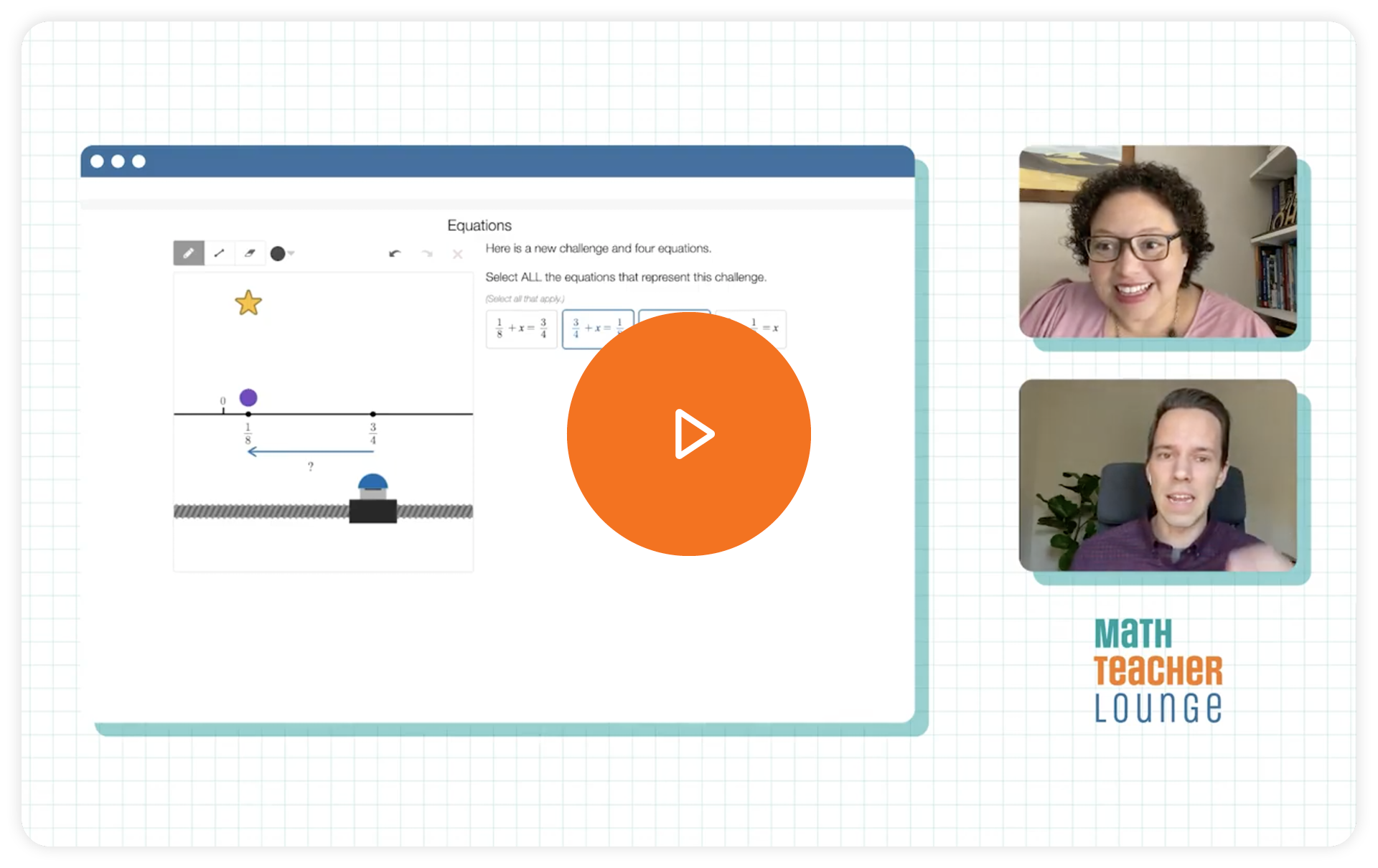
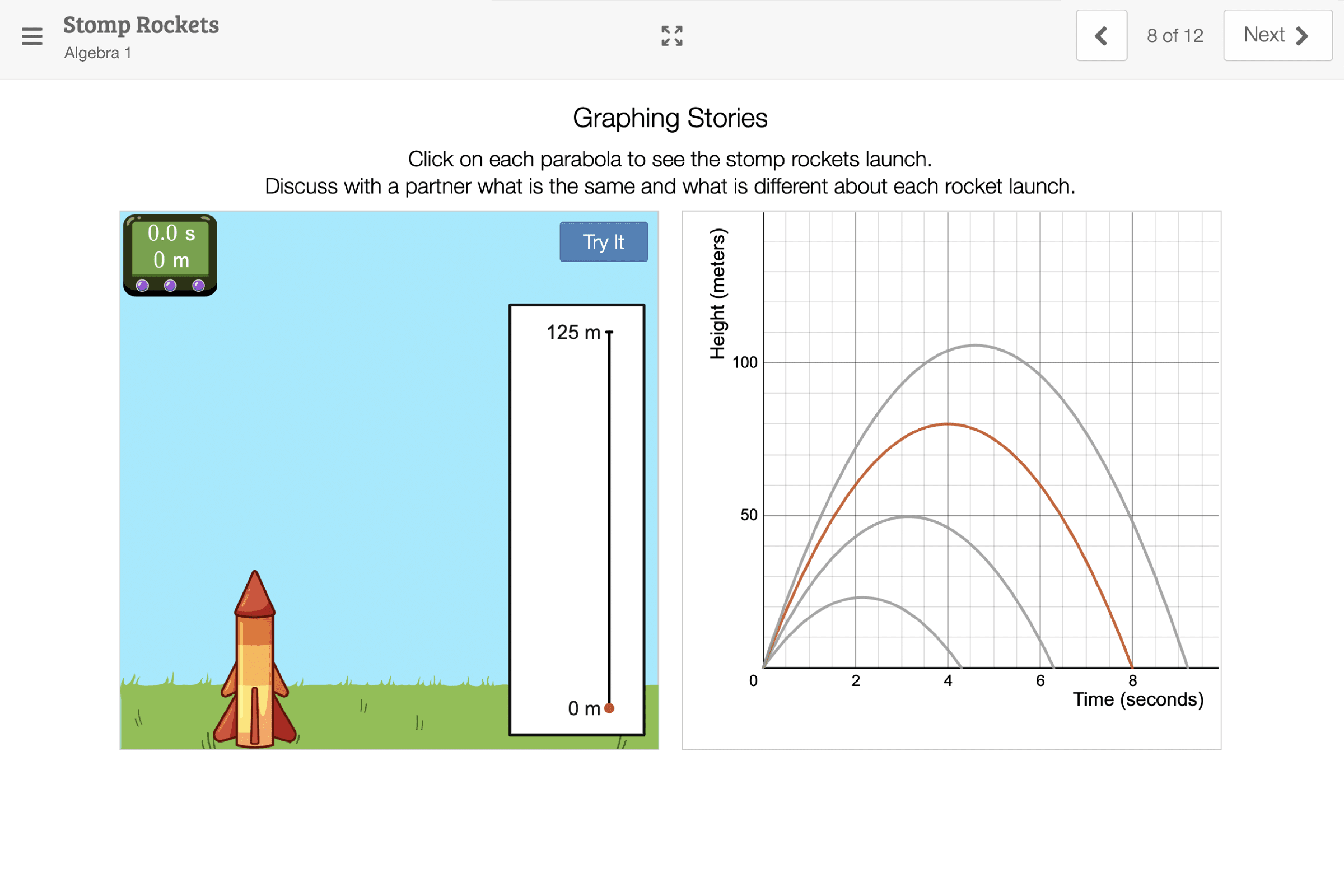
Utah ELA Review for Grades PK–5
Thank you for taking the time to review Amplify’s core ELA program for PK–5. Amplify Core Knowledge Language Arts® (CKLA) is a state-approved core ELA curriculum designated as a primary core program that fully meets the Science of Reading requirements outlined in SB 127.
Amplify CKLA, developed in partnership with the Core Knowledge Foundation, was designed to help teachers implement Science of Reading principles and evidence-based instructional practices. Scroll down to learn how CKLA is uniquely designed to help all your students make learning leaps in literacy.

Step 1: Program Introduction
Welcome to Amplify CKLA! Before you dive into our materials, watch the video below to learn about the big picture behind Amplify CKLA’s pedagogy.
In this video, Susan Lambert (Chief Academic Officer and host of Science of Reading: The Podocast) shares why Amplify CKLA was created, how it is built on the Science of Reading, and the impact it’s making across the country.
Step 2: Program Overview
Amplify CKLA is different for a reason. Watch the overview video below to learn about these differences and why educators love them.
In this video, you’ll get an in-depth look at the program’s overall structure and organization, the design behind our proven lessons, and the materials included to support teaching and learning.
The Amplify CKLA Program Guide also provides an in-depth view of how Amplify CKLA works, how it’s structured, and why it’s uniquely capable of helping you bring reading instruction based on the Science of Reading to your classroom.
Evidence-based design
Amplify CKLA is rooted in Science of Reading research. Mirroring Scarborough’s Rope, Amplify CKLA delivers a combination of explicit foundational skills with meaningful knowledge-building.
- In Grades PK–2, dedicated knowledge-building and explicit skills instruction are taught simultaneously through two distinct instructional strands.
- In Grades 3–5, dedicated knowledge-building and explicit skills instruction are woven together and delivered through one integrated strand.

Grades K–2 Skills and Knowledge Strands
Every day students in Grades K–2 complete one full lesson that explicitly and systematically builds foundational reading skills in the Skills Strand, as well as one full lesson that builds robust background knowledge to access complex text in the Knowledge Strand. Through learning in each of these strands, students develop the early literacy skills necessary to help them become confident readers and build the context to understand what they’re reading.
Grades 3–5 Integrated Strand
In Grades 3–5, Knowledge and Skills are integrated in one set of instructional materials. Lessons begin to combine skills and knowledge with increasingly complex texts, close reading, and a greater writing emphasis. Students can then use their skills to go on their own independent reading adventures.
Key features
For each Amplify CKLA key feature below, click the drop down arrow to learn more.
Built out of the latest research in the Science of Reading, Amplify CKLA delivers explicit instruction in both foundational literacy skills (systematic phonics, decoding, and fluency) and background knowledge in grades PK–2 with an integrated approach to explicit instruction in grades 3–5.
Review this Science of Reading toolkit to learn more about the Science of Reading best practices integrated throughout CKLA.
Amplify CKLA aligns with the instructional principles recommended by Orton Gillingham and LETRS.
- Structured–Concepts are taught through consistent routines
- Sequential–Concepts are taught in a logical, well-planned sequence
- Systematic–Phonemes are taught from simplest to most complex
- Explicit–Decoding and encoding concepts are taught directly and explicitly
- Multi-sensory–Instruction is delivered through visual, auditory, and kinesthetic-tactile pathways
- Cumulative–Concepts are applied in decodable, connected texts with constant review and reinforcement
Watch this video to learn more!
Additionally, great reading instruction starts with helping kids develop great decoding skills. Our instruction is supported by:
- Step-by-step lessons with multi-sensory approaches, clear lesson objectives, and embedded formative assessments.
- Decodable books and student readers with ebook and audiobook versions that feature engaging plots and relatable characters.
The Science of Reading reveals knowledge as an essential pillar of reading comprehension and lifelong literacy. Hear from author Natalie Wexler and CKLA customers on edWebinar about the importance of knowledge-building in reading instruction.
Students build grade-appropriate subject-area knowledge and vocabulary in history, science, literature, and the arts while learning to read, write, and think creatively and for themselves. Our instruction is supported by:
- Knowledge builders that provide a quick overview of each domain with its key ideas.
- Interactive Read-Alouds designed to build knowledge and vocabulary.
- Content-rich anchor texts that support students as they tackle increasingly complex text and sharpen their analytical skills.
- Social and emotional learning paired with lessons in civic responsibility.
Amplify CKLA not only received an all-green rating from the rigorous evaluators at EdReports, but it was also recently recognized by the Knowledge Matters Campaign as a high-quality literacy program that excels in building knowledge. Our shared message: background knowledge is essential to literacy and learning.
Student-led reading practice should be purposeful and connected to the core. That’s why Amplify createdBoost Reading. As an optional add-on to Amplify CKLA, students have the opportunity to practice skills directly tied to the skills they’ve been working on during core reading time. Boost Reading also adapts to each student to address their personal gaps and bolsters foundational skills at a pace that supports their individual development.
Boost Reading’s collection of 40+ adaptive games target foundational reading skills and develops them in alignment with Science of Reading principles. Unlike other adaptive games, we ensure students:
- Practice the right skills at the right time. Our embedded placement tool ensures students receive the content and skill practice most appropriate for their current reading level. From there, students move through our curriculum along their own learning pathway where they encounter personalized content tailored to their evolving skill and grade levels.
- Progress along a pathway that adapts on multiple dimensions, not just one. For example, a student can work on early first-grade decoding in one game while building more advanced vocabulary knowledge in another.
- Practice skills in tandem. For example, a student is never forced to master one skill area before proceeding to the next. Instead, we offer students that opportunity to work on multiple skills concurrently.
- Feel supported with scaffolding, instruction, and practice that adapts based on student performance.
- Stay engaged by giving them immediate and clear feedback. These results are never punitive. Instead our always-positive feedback is delivered in the context of the game world and is designed to motivate students to keep trying.
Click the buttons below to learn more:
Step 3: Program Resources
Easy-to-use print materials
Amplify CKLA’s easy-to-use materials bring foundational skills and knowledge to life in the classroom.
Download the Amplify CKLA Components guide to see components by grade and watch the print materials walkthrough below.
Engaging CKLA digital experience
The top-rated content of Amplify CKLA is now live with the digital experience that enhances instruction and saves time.
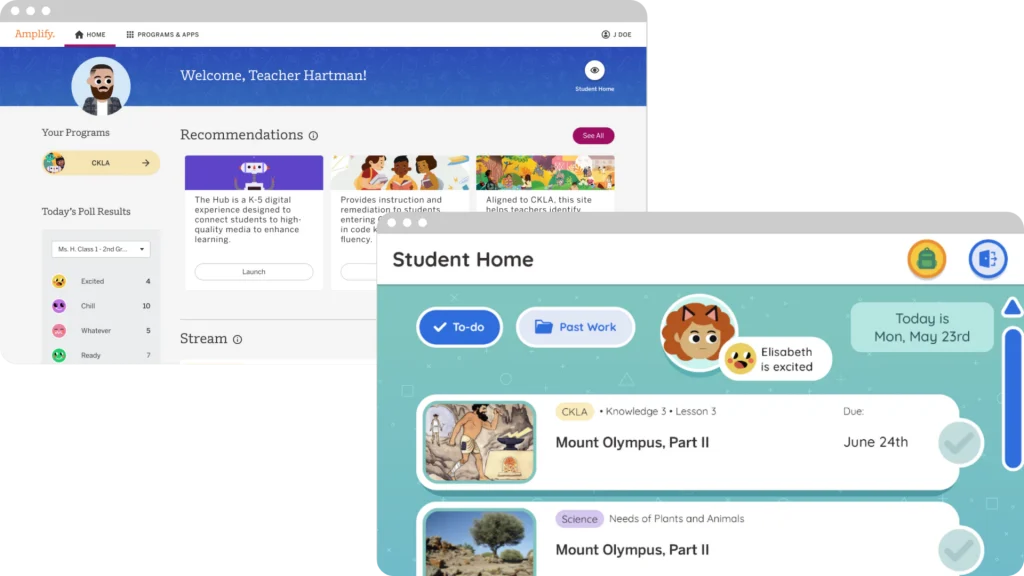
With the digital experience, everything is in one place, making it easier and more engaging than ever to plan lessons, present digital content, and review student work. Click the arrows below to learn more.
With the digital experience, teachers have access to ready-to-use and customizable lesson presentation slides, complete with all the prompts from the print Teacher Guide embedded in the teacher view. As teachers deliver each lesson, students can engage with the content in one cohesive experience—through these CKLA resources: Activity Books, slides, digital components, videos, Student Readers, and more.
The innovative live review tool found in the digital experience enables you to keep an eye on all of your students as they work on drawing, recording audio, uploading and capturing images, and typing or writing in pre-placed textboxes in their Activity Pages. This dynamic tool provides countless classroom management benefits, enabling you to spot and correct common mistakes as they’re happening, praise your students for thoughtful work, and identify students who are not engaged in the task at hand. Simply put, it will give you those valuable “eyes in the back of your head” you’ve warned your students about!
The digital experience integrates with various LMSs, allowing you and your students to access Amplify CKLA with the software you’re already comfortable using.
In the Amplify CKLA student digital experience, your students have one intuitive access point to fully engage with classroom instruction. Through the Student Home, students can easily access digital lessons with slides, Activity Pages, ebooks, videos, and other interactives from one simple dashboard. Students can draw, record audio, upload and capture images, and type or write in pre-placed text boxes in their Activity Pages.
CKLA review resources
- CKLA Program Guide
- Language Studio (ELD)
- Writing Studio (Writing)
- CKLA Research Hub (Efficacy and Case Studies)
- Text complexity in CKLA
- Trade books in CKLA
- Assessments in CKLA
- Amplify Caminos (K-5 Spanish Language Arts Program)
- Amplify CKLA Video for Families and Caregivers
- Amplify CKLA Caregivers Hub
- ELA Curriculum Evaluation Tools
- Remote and hybrid learning with CKLA
- CKLA Scopes and Sequences
- Grade K Skills and Knowledge
- Grade 1 Skills and Knowledge
- Grade 2 Skills and Knowledge
- Grade 3 Integrated
- Grade 4 Integrated
- Grade 5 Integrated
Step 4: State Review Resources
- Utah State Standards Alignment K-5
- Utah Instructional Strategies and Routines
- Utah Science of Reading Evidence-Informed Core Criteria Checklist (Amplify created)
- Utah Critical Features of Tiered Literacy Interventions (featuring Boost Reading)
- Amplify ELA Technical Specifications
Step 5: Program Access
Explore as a teacher
Before logging in, watch this brief video on navigating the CKLA Teacher Platform.
Ready to explore as a teacher? Follow these instructions:
- Click the Amplify CKLA Teacher Platform button below.
- Select Log in with Amplify.
- Enter the teacher username: t1.utcklapk5@demo.tryamplify.net
- Enter the teacher password: Amplify1-utcklapk5
- Choose CKLA from the “Your Programs” menu on Educator Home.
- Select a grade level from the drop-down menu at the top of the page.
Ready to explore as a Student? Follow these instructions:
- Click the Amplify CKLA Teacher Platform button below.
- Select Log in with Amplify.
- Enter the student username: s1.utahcklapk5@demo.tryamplify.net
- Enter the student password: Amplify1-utahcklapk5
Meet Science of Reading changemaker Altramez Simone McQuaige

Awards for teachers—we should probably give them out every day. We try to honor teachers and their exceptional contributions in as many ways as we can at Amplify. That’s why our annual Science of Reading Star Awards is one of our biggest events of the year!
We’re currently accepting nominations through Jan. 31. Apply now!
This annual award program is a great opportunity for us to shine a spotlight on the classroom teachers, school administrators, and educators who are improving student literacy outcomes in schools and communities across the country—like 2024 Changemaker Award winner Altramez Simone McQuaige. We hope her significant contributions inspire you in your work—and inspire you to nominate a teacher for an award next year!
A leadership role: Experience and experimentation
Altramez Simone McQuaige has spent more than 30 years in education, so it’s probably safe to assume she knows what she’s doing. But she’s not afraid to embrace change, or even take risks. “We didn’t go into this profession to do the same thing every day,” she says.
As supervisor of elementary reading and English language arts at Prince George’s County Public Schools, McQuaige took on the challenge of improving literacy instruction in her district by focusing on the Science of Reading.
Foundational skills: Noticing the problem
Several years ago, McQuaige and her team noticed a specific issue with foundational skills instruction, especially in first and second grades. “We were seeing a population of students that we weren’t seeing progress with consistency,” she says.
Under McQuaige’s leadership, a team of coaches, reading leaders, and administrators met to discuss how to improve their foundational skills instruction and student outcomes, asking themselves questions like: Should they shift their curriculum? Their classroom methods? Their entire literacy approach?
Then the pandemic hit.
Coming together: Exploring a new approach
Despite pandemic disruptions, McQuaige and her team convened and launched a cohort of 240 teachers, central office personnel, and reading leaders to learn more about the Science of Reading.
Openness to change was key. The cohort had to be willing to look at the latest research and see—as McQuaige puts it— that “some of the practices that may have been used from yesteryear were not effective.”
Their decision? Start to shift from a balanced literacy environment to a structured literacy approach involving explicit, systematic teaching of the elements of reading and a strong emphasis on phonological and phonemic awareness, phonics, vocabulary, and comprehension strategies.
Varied stakeholders building energy for change
There was “energy around the shift,” she recalls. The excitement coming from that large team of varied stakeholders helped build further buy-in—and success.
“We wanted to ensure that our reading leaders and our central office personnel with ESOL teachers and special educators had an opportunity to engage in these conversations,” she says. “That led us to have teachers practice or pilot programs before we chose the best products to meet the needs of our teachers.”
“We were building capacity across our district,” she says, “and building leaders and allies to talk about why the shift is necessary, and what they noticed as they started to embed those practices in their instruction.”
Professional development: Continued improvement and support
The result? The district successfully moved to a structured literacy approach in just three years, and improvements in student performance data demonstrate the effectiveness of the changes. “Even those who were once reticent are seeing the shift in their students,” McQuaige says of the teachers around her.
She also acknowledges the essential role of their partners: “Amplify’s support was crucial as we shifted. We know that as you make the shift, it will never be one and done. The continuous learning across our district, using our Amplify team, is invaluable.”
But McQuaige knows that even if the shift in approach is technically complete, she—like her students—must always be learning. “Let’s follow the research,” she says. “I know research is always changing, and that means we’re always changing.”
Here’s your nomination form!
Inspired? We’re looking for our shining 2025 Science of Reading leaders now! Visit our Star Awards page for information like our submission deadline, and nominate a teacher for an award today!
Amplify Science Resources for NYC (6-8)
This page has been archived. For the latest information, please visit the NYC Resource Site.
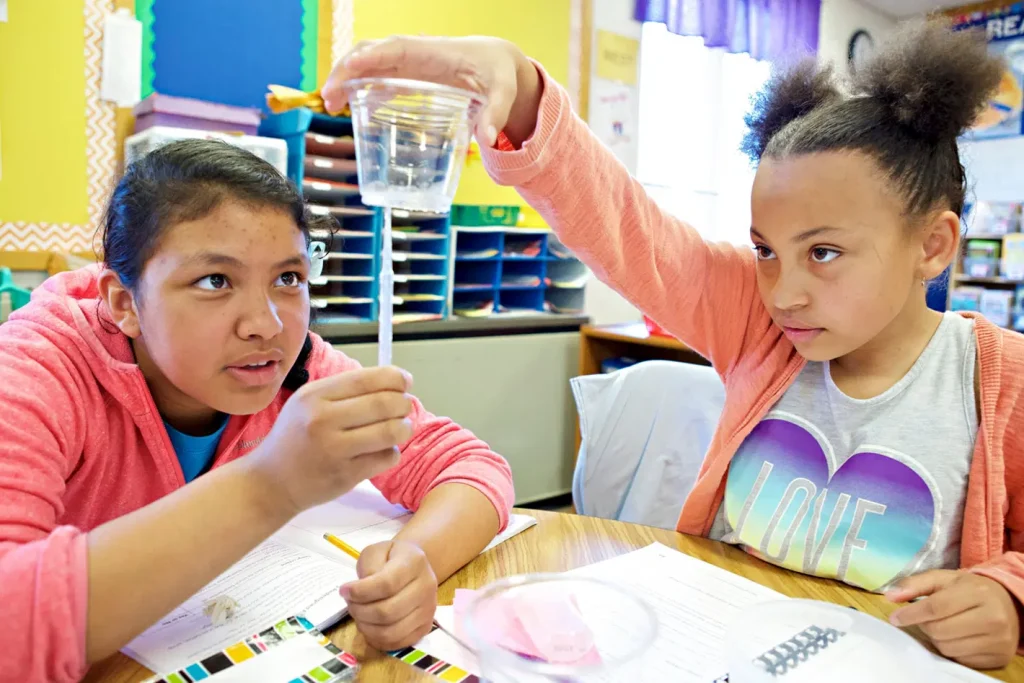
Welcome!
As the 2021-2022 school year kicks into full gear, you’re likely thinking about making your classroom responsive to student needs due to the covid-19 pandemic.
- CLRT in Amplify Science
- SEL in Amplify Science
- Responsive Relaunch Introduction Video
- Responsive Relaunch NYC Brief
Got additional questions? Use Zoom to attend office hours with Adaliz Gonzalez, the DOE’s Middle School Science Lead on Thursdays from 3-4pm.
Meeting ID: 852 2280 0969
Passcode: 528986
A powerful partnership
Amplify Science was developed by the science education experts at UC Berkeley’s Lawrence Hall of Science and the digital learning team at Amplify.

NYC Newsletters
- February 2022
- January 2022
- December 2021
- October 2021
- September 2021
- June 2021
- May 2021
- April 2021
- March 2021
- February 2021
- January 2021
- December 2020
- October 2020
Educator Spotlight Submission
Calling all NYC DOE educators! Do you know an educator who has gone above and beyond? Would you like to highlight your teaching experience for others? Submit nominations here to see them featured as a spotlight in a future edition of our monthly newsletter and on our Instagram pages!
Introduction
This page includes planning, implementation, and professional learning resources for NYC schools using Amplify Science. Please take a moment to familiarize yourself with the categories in the navigation bar on the left side of the page, so that you’ll be able to easily find what you need.
Most New York City educators come here looking for specific information, but if you’re new to Amplify Science, we recommend you read through the program guide to learn a little about the program.
New to Amplify? – Start HERE!
Teachers and Administrators
Step 1: Review the Amplify Science Overview Video.
Step 2: Review the NYC Scope and sequence for 21-22 school year.
Step 3: Review the Unpacking the Kit Videos listed below to understand what’s in your unit 1 kit.
Step 4: Access your unique Log-in information to log-in to the Amplify Science Curriculum outlined below under Login support
Step 5: Log into the platform and access our Program Hub. Select Using this site for self study for a complete suite of training videos and resources for an initial orientation video series.
Step 6: Log into the curriculum and begin studying the Unit Map and Teacher’s Guide resources and begin planning your first lesson. Print out the NYC Program Guide for essential program information.
Step 7: Administrator’s ONLY – Review the new administrator orientation presentation for an overview of the program. Review other materials under Admin Resources.
NOTE: Should you need any additional guidance on how to get started with prep (or anything else!), please feel free to get in touch with our pedagogical support team. They are available Monday-Friday from 7AM-7PM EST. You can reach them via the chat icon in the lower right- hand corner of your screen when logged in, through email (help@amplify.com), or via phone (800-823-1969).
Getting started resources
- NYC Resource Site overview – quick links
- Tech requirements
- Classroom Technology Quick Start Guide – a one-page guide to using Amplify Science in a variety of technology environments
Login Support
- Login video: Classroom teacher login with Amplify
- 6-8 science teacher: Login with Amplify or TeachHub (district preferred login method)
- 6-8 administrator: Login with Amplify or TeachHub (district preferred login method)
- 6-8 students: Login with Amplify or TeachHub (district preferred login method)
- Other staff (co-teachers, ICT, etc.): Administrator instructions for creating a Shared Teacher Login
- How to reset student(s) password
- How to log my class out of a shared device
- Clever class logout instructions
Materials
Unpacking your first Amplify Science classroom kit
- Unpacking kit video: Metabolism
- Unpacking kit video: Plate Motion
- Unpacking kit video: Force and Motion video
21-22 Login Update
The temporary login credentials for fall ’21 have been deactivated.
Please make sure you check out the Getting started resources > Login Support below for instructions around teacher and student logins. If there are any issues, please confirm with your STARS programmer that your classes are assigned correctly and then contact our Amplify Help Desk at help@amplify.com or at 1-800-823-1969 for further assistance.
Implementation resources
21-22 NYC Scope and Sequence and Pacing Guide
Use our NYC Field Trip List to plan an engaging field trip for your students!
NYC Companion Lesson Guides
The format of the NYC Companion Lessons is similar to other Amplify Science lessons. Some companion lessons are designed to require more than a single class period to teach, so each lesson includes pacing suggestions. Science Background sections support teachers with the science content introduced in the lessons. For students’ written work, possible student responses are included at the end of each lesson guide.
The Lesson Guides are available in the last section of each unit’s print Teacher’s Guide and can be downloaded from the tables in the downloads section below.
NYC Companion Lesson Copymasters
Each NYC Companion Lesson has an accompanying Copymaster (for creating student sheets) that can be copied and distributed to students or used as a visual reference. The NYC Companion Lessons require students to have physical copies of the student sheets. The copymasters are available to download as printable PDF files from the tables in the downloads section below.
Grade 6 Lesson guides and Copymasters
- Companion lesson: Insert after Lesson 2.2
- Time frame: 60 minutes (can spread across multiple class periods)
- NYSP–12SLS: PE: MS-PS3-6, DCI: PS3.B
- Links (click to download):
- Companion lesson: Insert after Lesson 3.3
- Time frame: Two 45-minute class periods
- NYSP–12SLS: PE: MS-PS2-3, MS-PS2-5, DCI: PS2.B
- Links (click to download):
- Companion lesson: Insert after Lesson 3.3 and after Investigating Non-Touching Forces
- Time frame: 60 minutes (first and second reads can be spread across two class periods)
- NYSP–12SLS: PE: MS-PS2-5, MS-PS2-3, DCI: PS2.B
- Links (click to download):
- Companion lesson: Insert after Lesson 2.5
- Time frame: 105 minutes (can be spread across multiple class periods)
- NYSP–12SLS: PE: MS-PS1-6, DCI: PS1.B
- Links (click to download):
- Companion lesson: Insert after Lesson 3.4
- Time frame: 60 minutes (first and second reads can be spread across two class periods)
- NYSP–12SLS: PE: MS-LS2-5, DCI: LS2.C, LS4.D
- Links (click to download):
- Companion lesson: Insert after Lesson 1.3
- Time frame: 60 minutes (first and second reads can be spread across two class periods)
- NYSP–12SLS: PE: MS-ESS2-4, DCI: ESS2.C
- Links (click to download):
- Companion lesson: Insert after Lesson 3.3*
- Time frame: 90 minutes (can be spread across multiple class periods)
- NYSP–12SLS: PE: MS-PS1-7, MS-ESS2-6, DCI: PS1.A, ESS2.C
- Links (click to download):
*Note: The homework assignment for Ocean, Atmosphere, and Climate Lesson 3.3 (reading the article “Deep Ocean Currents: Driven by Density”) should be assigned after the Investigating Deep Ocean Currents companion lesson rather than after Lesson 3.3.
Grade 7 Lesson Guides and Copymasters
- Companion lesson: Insert after Lesson 3.2
- Time frame: 60 minutes (first and second reads can be spread across two class periods)
- NYSP–12SLS: PE: MS-LS1-3, DCI: PS3.D, LS1.A
- Links (click to download):
- Companion lesson: Insert after Lesson 3.3 or later
- Time frame: Three 45-minute class periods, each several days apart
- NYSP–12SLS: PE: MS-LS1-8, DCI: LS1.D
- Links (click to download):
- Companion lesson: Insert after Lesson 3.5
- Time frame: 60 minutes (first and second reads can be spread across two class periods)
- NYSP–12SLS: PE: MS-LS1-6, MS-LS1-7, DCI: LS1.C, PS3.D
- Links (click to download):
- Companion lesson: Insert after Lesson 2.2
- Time frame: 60 minutes (first and second reads can be spread across two class periods)
- NYSP–12SLS: PE: MS-PS1-4, DCI: PS3.A
- Links (click to download):
- Companion lesson: Insert after Lesson 1.3
- Time frame: 60 minutes
- NYSP–12SLS: PE: MS-PS1-7, DCI: PS1.A
- Links (click to download):
- Companion lesson: Insert after Lesson 2.3, 2.4, or 2.5
- Time frame: Two 45-minute class periods
- NYSP–PE: MS-PS1-8, MS-PS1-2 DCI: PS1.A, PS1.B
- Links (click to download):
Grade 8 Lesson Guides and Copymaster
- Companion lesson: Insert after Lesson 2.2
- Time frame: 90 minutes (can be spread across multiple class periods)
- NYSP–12SLS: PE: MS-PS3-2, MS-PS3-5
- Links (click to download):
NYC Companion Kits
Materials needed to teach Amplify Science lessons are provided in a kit for each unit. While some materials used in the NYC Companion Lessons are also found in a unit’s kit, materials specific to the companion lessons are provided in NYC Companion Kits. The contents of each kit and any additional materials needed to teach the companion lessons are listed in the PDFs provided below. Please select your grade to view or download the list.
NYC Student Editions (print)
The NYC Student Editions are durable student references that compile all reading material required for a grade level, including the articles students read for NYC Companion Lessons. Students reading in the Student Edition should annotate the text directly with sticky notes to achieve the full benefits of Active Reading. The Active Reading approach was designed as an interactive process in which students highlight and annotate digital or hard copies of articles directly. Printable versions of the articles are available in the downloads section below.
- Harnessing Human Energy: Printable article: “Magnetic Force and Rainbow Trout”
- Harnessing Human Energy: Printable article: “Gravity and Bats”
- Harnessing Human Energy: Printable article: “Electrostatic Force and Bees”
- Populations and Resources: Printable article: “The Amazing Variety of Life in a Coral Reef”
- Weather Patterns: Printable article: “What Makes Water Move?”
- Metabolism: Printable article: “How You Are Like a Sneezing Iguana”
- Metabolism: Printable article: “How Do Trees Grow So Huge Without Eating?”
- Phase Change: Printable article: “Icy Heat”
- Chemical Reactions: Printable article: “This Is Not an Oxygen Tank”
It is recommended that NYC teachers insert this additional lesson between Lessons 3.1 and 3.2 in order to have students complete a reading assignment in class along with an additional Sim activity.
- Lesson: Earth, Moon and Sun: Modeling Seasons
- Lesson Placement: Insert between Lessons 3.1 and 3.2*
- Links (click to download):
*If teaching this Modeling Seasons lesson, do not assign reading “The Endless Summer of the Arctic Tern” article for homework in Lesson 3.1. However, students should still model a lunar eclipse with the Modeling Tool for homework, as they will be revisiting and revising this model in Lesson 3.3.
NYC Investigation Notebooks (for teacher download)
- Harnessing Human Energy*
- Thermal Energy*
- Populations and Resources*
- Matter and Energy in Ecosystems
- Weather Patterns*
- Ocean, Atmosphere, and Climate*
- Earth’s Changing Climate
* includes NYC Companion Lesson Copymaster(s)
- Microbiome
- Metabolism*
- Phase Change*
- Chemical Reactions*
- Plate Motion
- Engineering Internship: Plate Motion
- Rock Transformations
- Engineering Internship: Earth’s Changing Climate
* includes NYC Companion Lesson Copymaster(s)
- Geology on Mars
- Earth, Moon, and Sun
- Force and Motion
- Engineering Internship: Force and Motion
- Magnetic Fields*
- Light Waves
- Traits and Reproduction
- Natural Selection
- Evolutionary History
* includes NYC Companion Lesson Copymaster(s)
Admin resources
- Getting started checklist
- Implementation rubric
- Look-for tool
- NEW Administrator data reports overview
- NYC Resource Site overview – quick links
- 2021 Grade 6-8 Instructional Leaders: Analyzing Student Assessment Data Agenda and Presentation
- 2021 Grade 6-8 Administrators: Utilizing the Amplify Science Assessment System Agenda and Presentation
- 2020 New Administrator Orientation Presentation with Participant Notebook
- 2020 Returning Administrator Orientation Agenda
- 2020 Amplify Science Remote & Hybrid Resources for Administrators Webinar
- 2020 Supporting Multilingual Learners for Administrators Webinar
- 2020 Accessing Complex Texts: Administrators Webinar
- 2020 Academic Discourse and Questioning Strategies: Administrators Webinar
- 2021 Planning For Next Year: Administrators Agenda, Participant Notebook, and Presentation
- 2021 Planning For Next Year: Instructional Leads Agenda, Participant Notebook, and Presentation
Remote and hybrid learning resources
In response to the shifts towards remote learning, Amplify has created resources for using our programs remotely. Please visit our Program Hub accessible via your Teacher Platform for all of our hybrid and remote learning supports which includes guidance for teachers and parents/guardians.
Additionally, please see below where you’ll find the recordings from our recently held webinars on our remote learning resources and some best practices for implementing Amplify Science in a distance learning setting.
Resource guides
- 20-21 Scope and sequence/pacing guide
- K-8 Remote and hybrid learning guide
- 6-8 Planning Tool for @Home Resources
Professional learning opportunities
Interested in attending training? Check out and sign up for this year’s PL offerings here!
Election Day 21-22 PL
Grade 6 Guided Planning Presentation and Webinar
Grade 7 Guided Planning Presentation and Webinar
Grade 8 Guided Planning Presentation and Webinar
Grades 6-8 Unpacking Phenomena Presentation and Webinar
All 2020-2021 PL session materials can be found below under Professional learning resources.
Amplify Science Back-to-School Recorded Webinars – Amplify held a series of national office hours throughout the summer and fall to share information about our new resources to support remote and hybrid learning– including recommendations about what to prioritize from your curriculum and essential refresher topics, such as how to navigate your program and find the best planning resources. Feel free to watch all recorded sessions at your convenience.
Archived Professional Learning Resources
Winter 2022
- Guided Planning: Unit Internalization Agenda, Participant notebook, and Presentation
Spring 2021
- Planning For Next Year Agenda, Participant notebook, and Grade 6 Presentation
Winter 2021
- Guided Planning: Matter and Energy in Ecosystems Agenda, Participant notebook, and Grade 6 Presentation
- Engaging English Learners in 3-D Learning Agenda, Participant notebook, and Grade 6 Presentation
- Accessing Complex Text in Amplify Science Agenda, Participant notebook, and Grade 6 Presentation
- Applying Reading and Writing Strategies in Amplify Science Agenda, Participant notebook, and Grade 6 Presentation
Fall 2020
- Grade 6: Academic Discourse and Questioning Strategies Webinar
- Accessing Complex Texts: Ocean, Atmosphere, and Climate Webinar
- Grade 6: Ocean, Atmosphere, and Climate Guided Unit Internalization Presentation and Planning document
- Grades 6-8: Supporting Students with Special Needs in Remote Learning Presentation with Participant Notebook
- Grade 6: Supporting Multilingual Learners Webinar
- Grade 6: Thermal Energy Guided Unit Internalization Presentation and Participant Notebook with @Home Resources (Election Day PL)
- Grades 6-8 Navigating Program Essentials: Agenda, Presentation, Participant Notebook
- Grade 6: Progress Builds & Embedded Assessments Webinar
- Grade 6: Amplify Science Remote & Hybrid Resources Webinar
Summer 2020
- Returning Teachers: Guided Planning Workshop Remote and Hybrid LearningAgenda,Presentation, and Webinar
- 6-8 New Teacher Institute Agenda: Day One and Day Two with Participant Notebook
Summer 2019- Harnessing Human Energy and Thermal Energy
Fall 2019- Population and Resources with Participant Notebook
Winter 2022
- Guided Planning: Unit Internalization Agenda, Participant notebook, and Presentation
Spring 2021
- Planning For Next Year Agenda, Participant notebook, and Grade 7 Presentation
Winter 2021
- Engaging English Learners in 3-D Learning Agenda, Participant notebook, and Grade 7 Presentation
- Accessing Complex Text in Amplify Science Agenda, Participant notebook, and Grade 7 Presentation
- Applying Reading and Writing Strategies in Amplify Science Agenda, Participant notebook, and Grade 7 Presentation
Fall 2020
- Grade 7: Academic Discourse and Questioning Strategies Webinar
- Accessing Complex Texts: Phase Change Webinar
- Grade 7: Phase Change Guided Unit Internalization Presentation and Planning document
- Grades 6-8: Supporting Students with Special Needs in Remote Learning Presentation with Participant Notebook
- Grade 7: Supporting Multilingual Learners Webinar
- Grade 7: Metabolism Guided Unit Internalization Presentation and Participant Notebook with @Home Resources (Election Day PL)
- Grades 6-8 Navigating Program Essentials Agenda, Presentation, Participant Notebook
- Grade 7: Progress Builds & Embedded Assessments Webinar
- Grade 7: Amplify Science Remote & Hybrid Resources Webinar
Summer 2020
- Returning Teachers: Guided Planning Workshop Remote and Hybrid LearningAgenda,Presentation, and Webinar
- 6-8 New Teacher Institute Agenda, Day One and Day Two with Participant Notebook
Summer 2019 – Microbiome and Metabolism
Fall 2019 – Phase Change with Participant Notebook
Winter 2022
- Guided Planning: Unit Internalization Agenda, Participant notebook, and Presentation
Spring 2021
- Planning For Next Year Agenda, Participant notebook, and Grade 8 Presentation
Winter 2021
- Guided Planning: Traits and Reproduction Agenda, Participant notebook, and Grade 8 Presentation
- Engaging English Learners in 3-D Learning Agenda, Participant notebook, and Grade 8 Presentation
- Accessing Complex Text in Amplify Science Agenda, Participant notebook, and Grade 8 Presentation
- Applying Reading and Writing Strategies in Amplify Science Agenda, Participant notebook, and Grade 8 Presentation
Fall 2020
- Grade 8: Academic Discourse and Questioning Strategies Webinar
- Accessing Complex Texts: Earth, Moon, and Sun Webinar
- Grades 6-8: Unpacking the Engineering Internship Presentation and Participant Notebook
- Grades 6-8: Supporting Students with Special Needs in Remote Learning Presentation with Participant Notebook
- Grade 8: Supporting Multilingual Learners Webinar
- Grade 8: Force and Motion Guided Unit Internalization Presentation and Participant Notebook with @Home Resources (Election Day PL)
- Grades 6-8 Navigating Program Essentials Agenda, Presentation, Participant Notebook
- Grade 8: Progress Builds & Embedded Assessments Webinar
- Grade 8: Amplify Science Remote & Hybrid Resources Webinar
Summer 2020
- Returning Teachers: Guided Planning Workshop Remote and Hybrid LearningAgenda, Presentation, and Webinar
- 6-8 New Teacher Institute Agenda: Day One and Day Two with Participant Notebook
Summer 2019 – Geology on Mars and Earth, Moon, Sun
Fall 2019 – Force and Motion with Participant Notebook
Caregiver resources
Questions
For general questions about the Amplify program (navigation, pedagogy, login), please reach out:
Email – scihelp@amplify.com
Phone – call toll-free at (800) 823-1969, Monday to Friday, 7 a.m.–7 p.m. ET
Amplify Chat – click the Amplify Chat icon within the individual teacher account
Amplify Science resources for Chicago Public Schools
Top 10 Science of Reading podcasts to get you started

Since 2019, Science of Reading: The Podcast has delivered the latest insights from researchers and practitioners in early reading. Hosted by Amplify’s Chief Academic Officer Susan Lambert, each episode welcomes a renowned leader in the education and literacy community, explores a timely topic related to the Science of Reading, and offers instructional advice to educators implementing evidence-based practices in their schools.
New to the podcast? Here are 10 popular episodes to acquaint yourself with the Science of Reading. Listen, enjoy, and subscribe — we have new episodes every other Wednesday!
S1-E1: Natalie Wexler on “The Knowledge Gap”
Susan hosts Natalie Wexler for a deep dive into her latest book, The Knowledge Gap: The Hidden Cause of America’s Broken Education System—And How to Fix It, and a discussion of the lack of equity in reading education among students, the benefits of knowledge-rich curriculum inside and beyond the classroom, why it’s important to build background knowledge while teaching foundational skills, and why professional development doesn’t seem to be making a difference and how it can be improved.
S1-E3: Emily Hanford on reporting on education and the Science of Reading
Susan sits down with Emily Hanford, education reporter and host of the Education Post podcast, to examine the big takeaways from her experience reporting on dyslexia and the patterns that emerged in her investigation; why reading instruction isn’t more aligned with the Science of Reading; and the evolution of whole language, balanced literacy, and phonics instruction.
S1-E8: Tim Shanahan on evidence-based literacy practices
Reading expert Tim Shanahan discusses his view on teaching reading, including an explanation of the four crucial things you need to teach reading, and what it means to really do a “close read” in literature.
S3-E1: Dr. Jane Oakhill on Scarborough’s Reading Rope
Dive into the first episode of our Deconstructing the Rope series as Dr. Jane Oakhill, professor of experimental psychology at the University of Sussex, provides an overview of Scarborough’s Reading Rope. She also emphasizes the importance of inferencing in comprehension, why the Simple View of Reading is still relevant almost 40 years later, and how each element of the Rope comes together to deconstruct the complexity of reading.
S3-E3: Dr. Louisa Moats on decoding
Join Dr. Louisa Moats, President of Moats Associates Consulting, as she unwinds decoding, a strand of Scarborough’s Reading Rope. In the third episode of our Deconstructing the Rope series, Louisa highlights the significance of decoding in the Science of Reading and discusses the value of becoming students of our own language. She also explains the reciprocal relationship between decoding and encoding and why both are essential to provide effective phonics instruction to children in the classroom.
S2-E7: Sonia Cabell on research, comprehension, and content-rich literacy instruction
Join Sonia Cabell, Assistant Professor of Education at Florida State University, as she shares findings from her research trials on content-rich literacy curricula and whether activating students’ background knowledge alongside explicit phonics instruction is more effective than traditional approaches. She also explains what constitutes “compelling evidence” in the Science of Reading and why students need to interact with both written and spoken language while learning to read.
S3-E5: Dr. Bruce McCandliss on sight recognition
Join Dr. Bruce McCandliss, Professor at the Graduate School of Education of Stanford University, as he unwinds sight recognition, a strand of Scarborough’s Reading Rope. In the fifth episode of our series, Bruce explains the role of sight and word recognition in the Science of Reading and highlights the importance of the rapid integration of print, speech, and meaning. He also encourages listeners to be cognizant of the ever-changing technological learning environment while nurturing young readers and writers.
S2-E1: Dr. LaTonya Goffney on a district-wide SoR adoption
Join Dr. LaTonya Goffney, Superintendent of Schools for Aldine Independent School District in Texas, as she recounts her two-year journey with her team of district educators to adopt a new early literacy curriculum. Hear how they successfully challenged the traditional adoption process, studied the science of teaching reading, analyzed student data and experiences, and developed a district-wide set of beliefs and expectations.
S3-E7: Maria Murray on The Reading League’s Defining Movement
In this special episode, Dr. Maria Murray, President, and CEO of The Reading League analyze the intricacies of literacy instruction and shares common misconceptions that educators have about the Science of Reading. She also explains why the Science of Reading: A Defining Movement coalition was founded: the belief in a clear understanding of what the Science of Reading is and what it is not, in order to promote the proper use of instructional practices aligned with its findings.
Defining math fluency with Jason Zimba

When we think of fluency, especially as a goal, we might think of speaking or reading a language. But fluency is also a goal in learning math! So what is math fluency? And what does it look like in the math classroom? In Season 6, Episode 1 of our Math Teacher Lounge podcast, Amplify’s own Jason Zimba helps us understand—using some analogies to baseball and chicken, of course.
Definitions of math fluency
We can develop fluency in many things, from coding to cooking. On the Math Teacher Lounge podcast, Amplify Chief Academic Officer of STEM Jason Zimba recounted becoming fluent in…roast chicken.
Jason describes practicing one particular recipe until it was perfect. For Jason, that meant not just that the outcome was flawless or delicious, but that he was eventually able to make it from memory, without thinking—and to naturally adjust and calculate for variables like a smaller or larger chicken, or an unfamiliar oven.
Math fluency works the same way. Practice brings effortlessness—freeing up time and mind space for new opportunities.
The word “fluency” comes from the Latin fluentia, which means “flowing.” When applied to math, it means ”skill in carrying out procedures flexibly, accurately, efficiently, and appropriately,” says podcast host and math teacher and advocate Dan Meyer. As with someone fluent in a language (or a recipe), someone fluent in math is able to think and calculate mathematically without struggle or effort—that is, with fluidity.
Podcast host and elementary educator Bethany Lockhart Johnson adds this informal description: “It’s that thing you don’t even think about anymore. ‘Cause it’s in there. You’re not still thinking about addition facts, because you’ve got it. And it fuels you. It’s the foundation that allows you to do all the other cool stuff.”
Fluency in the math classroom
What does fluency look like in practice? A young learner fluent in math will be able to smoothly recite the number word list in order (“one, two, three…”) and write the numerals from 0 to 9. As the student grows, so does their fluency with multi-digit calculation, rational-number arithmetic, and eventually even variable expressions.
“It’s a wordless but still somehow almost verbal sort of fluency, with properties of operations as the grammar of the language,” says Jason.
But “it’s not fact recall,” he says. “Recall is remembering or just knowing. Fluency refers to calculation.”
Why and how to improve math fluency
There are different paths to fluency, but all can lead to “conceptual richness and mathematical joy,” says Dan.
If fluency provides that crucial foundation, what happens to students who are not math-fluent?
“When kids don’t have access to [fluency], it keeps them from diving into the juicy parts of math,” says Bethany. “Math is so much bigger than addition facts, but when they don’t know those addition facts, that becomes all math is.”
Without fluency, students miss opportunities to progress in (and enjoy) math, and may even develop math anxiety.
So how can you support math students in developing fluency?
For one thing, it’s important not to underestimate the value of practice and repetition. These approaches—especially when used in combination with other, more organic modes—can be highly productive, says Jason. “I worry about whether discomfort with repetitive practice is short-changing students of the power and confidence that fluency can bring.”
Dan compares it to achieving excellence in a sport—”like shooting from the same spot on the court over and over again,” he says. That kind of rote repetition is valuable in sports, and should also have its place in math instruction.
It’s also important for students to understand why they’re learning and even drilling their numbers, arithmetic, or times tables, Jason notes. They need to be “invested in understanding and agreeing that this is going to do something for them.”
One thing that helps: providing students a sense that they’ve accomplished something. “We need to have moments for them to reflect on what has been learned and what is now easy that was previously hard,” Dan says. He calls this process “humanizing fluency”—and Math Teacher Lounge will be here all season to help math educators do just that.
Save the date
Join us at NCTM in October for a live Math Teacher Lounge podcast recording with Dan Meyer and special guest Jennifer Bay-Williams! We’ll be investigating math fluency and finding fun ways to get all students engaged in math instruction.
Math Teacher Lounge LIVE!
NCTM | Oct. 27 | 2:30 p.m. EST (doors at 2:15) | Room 158AB
More to explore
Meet Amplify Desmos Math

Meet Amplify Desmos Math, a new, curiosity-driven K–12 math program that builds students’ lifelong math proficiency. Lessons in Amplify Desmos Math are standards-aligned, easy to use, and fully customizable by educators. And every Amplify Desmos Math lesson includes suggestions for differentiation that support, strengthen, and stretch student understanding.
“Engagement is a real challenge in math classrooms,” said Jason Zimba, Amplify Chief Academic Officer of STEM. “Knowing this, we created a program with interesting problems that students are eager to solve, one that keeps them engaged and learning. Amplify Desmos Math achieves rigor and delight, motivating all students to explore new horizons and develop new understanding.”
We believe that math class is a place where teachers can elicit, celebrate, and build on their students’ interesting ideas. Those ideas fuel meaningful classroom conversations and drive the learning process. Read on to learn more.
Meet Amplify Desmos Math. This is math that motivates.
A structured approach to problem-based learning
The program combines the best problem-based lessons with tightly aligned personalized practice, assessments, and intervention, creating an integrated experience for teachers and students. Data informs instruction. Comprehensive student profiles provide full data on students’ assets and skills, empowering teachers to provide just-in-time scaffolds and targeted intervention when needed.
Amplify Desmos Math is a powerful suite of math resources that includes:
- Core instruction: Amplify Desmos Math lessons provide a structured approach to problem-based learning, where each lesson builds on students’ curiosity using a Proficiency Progression™ to develop lasting grade-level understanding for all students.
- Screening and progress monitoring: mCLASS® assessments and daily formative checks measure what students know and how they think. The asset-based assessment system provides teachers with targeted, actionable insights, linked to core instruction and intervention resources.
- Integrated personalized learning: Personalized Learning activities help students access grade-level math through engaging, independent digital practice. The program’s signature Responsive Feedback™ adjusts to students’ work, providing item-level adaptivity to further support their learning.
- Embedded intervention: Integrated resources like Mini-Lessons and math fluency games provide targeted intervention on specific concepts or skills connected to the daily lesson. Extensions are also available to stretch students’ understanding.
Amplify Desmos Math expands on the Desmos Math 6–8 curriculum, which is featured in a recent efficacy study led by WestEd that demonstrates increased math achievement across more than 900 schools in nine states.
Delightful digital activities and tools
To complement robust printed materials, Amplify Desmos Math leverages a digital platform that enables educators and students to connect with one another as they work through lessons, engage in personalized learning, and check for understanding. The interactive platform and facilitation tools foster mathematical discussions and allow educators to see student thinking in real time.
“Right now, teachers have to jump between platforms to access meaningful data, understand it, and use it,” said Alexandra Walsh, Amplify Chief Product Officer. “By combining instruction, assessment, and differentiation on the same digital platform, we’ve made student data more accessible, so educators can spend less time toggling and more time responding to student needs.”
Amplify Desmos Math is available:
- Kindergarten–Algebra 1
- As a beta release for the 2024-2025 school year, for pilot implementations and early adoptions
- As a commercial release for the 2025-2026 school year
- Geometry, Algebra 2, Integrated 1, Accelerated Grades 6 and 7
- As a beta release for the 2025-2026 school year
- As a commercial release for the 2026-2027 school year
- Integrated 2 and 3
- As a commercial release for the 2026-2027 school year
Try a free lesson.
Hundreds of free math lessons and activities from Amplify Desmos Math are available on Desmos Classroom, a free teaching and learning platform that places student engagement at the center of instruction. Desmos Classroom features free lessons, lesson-building tools, sharing features, and more. Built by math educators, the platform makes leaning into good pedagogy easier for teachers—which makes the lesson a more interactive experience for students.
You can teach these free lessons, but also customize them, or even build your own from scratch. Visit teacher.desmos.com to create a free account.
Expect more from your assessments with mCLASS Math.
Understanding student thinking is the key to accelerating student performance.
Welcome to mCLASS® Math, the benchmarking and progress monitoring system for grades K–8 that measures proficiency, reveals underlying mathematical thinking, and informs instructional support for every learner. Analyzing student responses to reveal valid underlying mathematical thinking—even in wrong answers—helps better target individualized instructional recommendations that build grade-level proficiency.
Meet mCLASS Math.
mCLASS Math’s research-based benchmark and progress monitoring assessment system tracks performance against grade-level expectations to help predict later growth outcomes.
With screening and diagnostic capabilities and empirically established cut scores to assess risk, mCLASS Math reporting helps educators pinpoint strengths and areas of growth for individualized instructional support for every student. Together, these establish a strong Multi-Tiered System of Supports (MTSS).
This powerful assessment is digitally assigned to the whole class three times annually: beginning-of-year (BOY), middle-of-year (MOY), and end-of-year (EOY). The open responses of the assessment give more robust data-points gathered from each item, and it only takes 30 to 40 minutes to complete.
Designed to target critical grade-level skills that predict success, the rich data can be used as a diagnostic tool for Tier 2 and Tier 3 intervention and flags for the potential risk of dyscalculia.
mCLASS Progress Monitoring assessments help teachers chart students’ progression between benchmark assessment windows. For students receiving targeted support, mCLASS Progress Monitoring determines if intervention is effective or adjustments are needed to enhance student learning.
These short yet effective assessments enable teachers to monitor a student’s math performance between mCLASS Benchmark assessments. mCLASS Progress Monitoring assessments can be assigned to a select group of students needing targeted support in a specific skill or Tier 2 or Tier 3 intervention, and are aligned around crucial math domains for each grade level.
Assess in less time.
With the groundbreaking digital analysis of student thinking, mCLASS Math teachers can rely on the predictive validity of assessments in less time.
The powerful Student Response Analysis of open-ended questions provides deep insight into what and how students think—faster and with fewer questions.

Access deeper insights.
mCLASS Math’s dynamic data reports offer a window into student thinking, reliably guiding intervention across Tiers 1–3.
The more teachers understand how their students think, the better they can support their growth. The assessment system recognizes students’ individual strengths, experiences, understandings, and strategies—or assets, as we collectively refer to them—to inform the robust data that powers mCLASS Math.
Educator and caregiver reports
Empirically established cut scores and domain-specific measures help teachers plan for tiered intervention with classroom, school, and district-level performance reports set to predict end-of-year outcomes.
To reinforce learning at home, Home Connect letters provide caregivers with easy-to-use reports on their child’s math development.
Student Thinking Report
The Student Thinking Report gives teachers actionable recommendations tailored to how individual students or groups of students approach problems. By understanding the different ways of thinking in skimmable, yet robust, reports, teachers have the tools they need to efficiently plan differentiation to achieve instructional targets.
Actionable recommendations enable teachers to quickly differentiate with intervention resources aligned to common misconceptions.
Research behind mCLASS Math
Based on decades of research for best practices in math, mCLASS Math efficiently assesses students’ skills and thinking to give teachers instant recommendations for small group and individualized instruction.
Following research from leading math experts and an in-depth validation analysis through WestEd, a technical report will be released summer 2025.
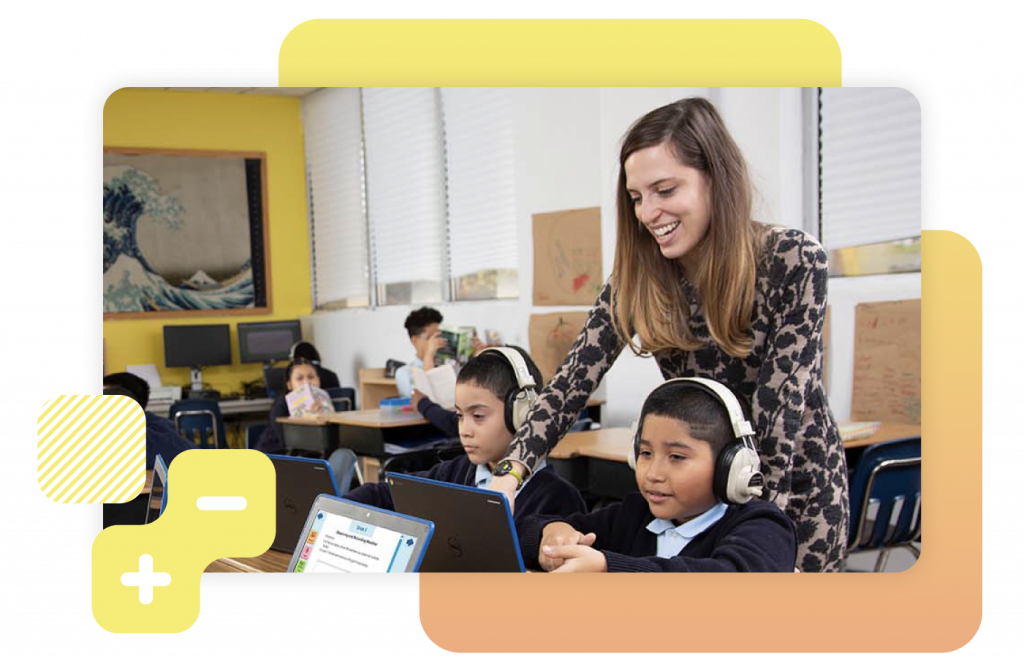
A dedicated team at Amplify with over 500 combined years of classroom teaching, school leadership, and assessment experience thoughtfully created mCLASS Math with teachers and students in mind.
Following research from leading math experts and an in-depth validation analysis through WestEd, data will be continuously released starting in spring 2025.

Sandra Pappas
Associate Director of Research

Patrick Callahan, Ph.D.
Educator and Founder of Math ANEX

Jason Zimba, Ph.D.
Chief Academic Officer of STEM
at Amplify
The mCLASS Math K–5 assessment system is designed to provide educators with reliable and valid measures to identify students needing additional support in mathematics and to inform instructional decisions. Preliminary data presents evidence supporting the psychometric quality of the assessment using the technical standards outlined by the National Center on Intensive Intervention (NCII) and state requirements for screening measures.
Data informs
instruction
mCLASS Math works alongside your core instruction, differentiation, and intervention. The data model behind mCLASS Math provides comprehensive data for each student across grades K–8, easily connecting teachers to the immediate next steps that will support, strengthen, and stretch all learners.
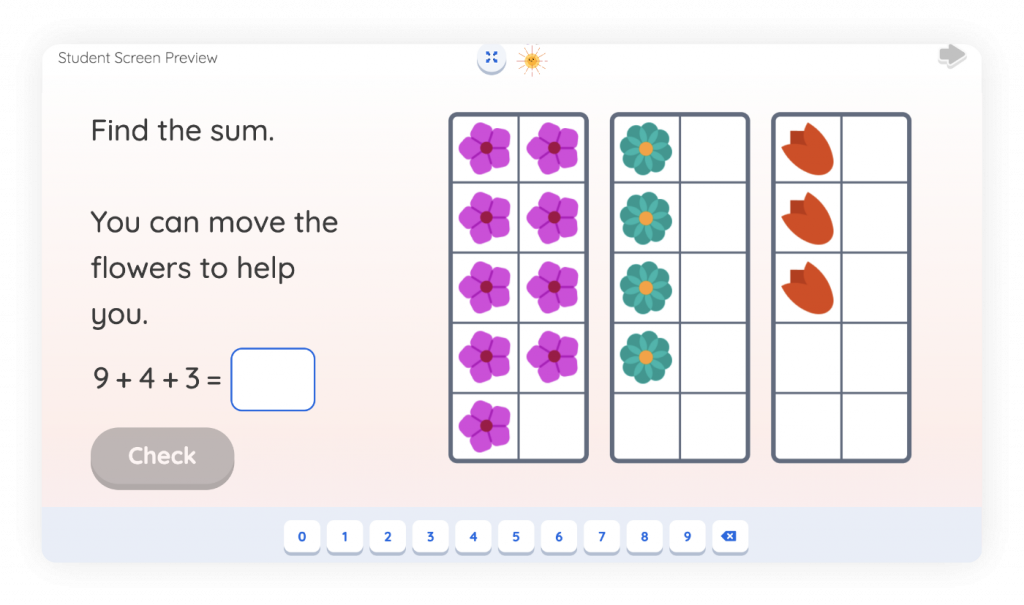
Personalized Learning accelerates student growth with daily, targeted 15-minute digital activities. Supported by a virtual tutor, students tackle individualized tasks linked to daily lessons, receiving just-in-time support to foster grade-level success.

Teacher-led, 15-minute Mini-Lessons can build grade-level proficiency by providing research-based, targeted intervention to small groups of students who need additional support.

Reinforce students’ understanding of concepts through collaborative, hands-on Centers (grades K–5). These student-led routines provide additional practice with vertical alignment across grade levels.
Fluency Practice uses spaced repetition, an evidence-based approach to promoting memory retention, to teach basic facts. The adaptive nature of the practice allows students to focus less and less on the facts they already know. We’ve partnered with Math for Love to iterate on the popular Multiplication by Heart to create Division by Heart and Addition and Subtraction by Heart I & II. These proven fluency decks—plus Skills Fluency for supporting procedural fluency practice—help students practice crucial skills independently.
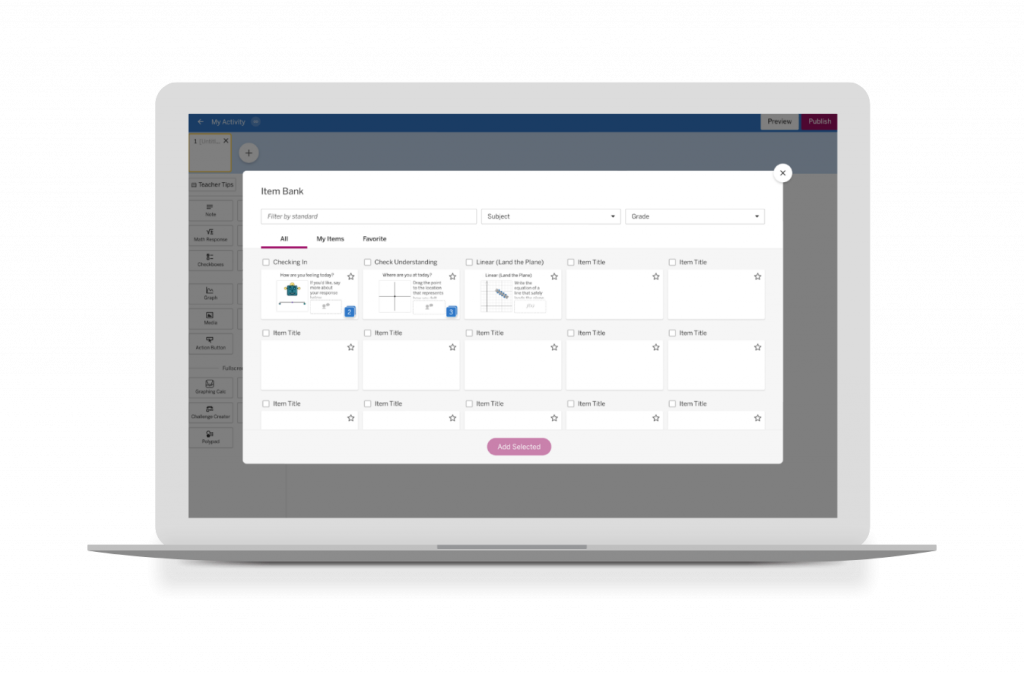
Item Banks provide space for teachers to create custom practice and assessments by using filters and searching for standards, summative-style items, and more.

All students should have access to fun and challenging problems. Extensions are 10- to 15-minute activities aligned to the most critical topics for the grade, providing flexible, low-lift activities for the whole class or targeted intervention to small groups of students ready for an extra challenge.
One cohesive math experience
As part of Amplify Desmos Math, Amplify’s comprehensive math suite, mCLASS Math provides a strong foundation of actionable data to help teachers diagnose and capitalize on student strengths. Amplify Desmos Math ensures that you have all the core, intervention, and personalized instruction you need to support each stage of a student’s math journey.
S3-02: How science strengthens literacy and language development

In our second episode of the season, we continue finding ways that science is overlooked and how it can be better utilized in schools—and as an ally to other subjects!
We sat down with Susan Gomez Zwiep, former middle school science teacher and senior science educator and staff advocate at BSCS Science Learning. She shared past experiences and research that shows the benefits of integrating science and literacy, as well as strategies for applying these ideas in the classroom.
We hope you enjoy this episode and explore more from Science Connections by visiting our main page!
Dr. Susan Gomez Zwiep (00:00):
We started to see this trend of students communicating more in English because they were excited about the science that they had been learning.
Eric Cross (00:10):
Welcome to Science Connections. I’m your host Eric Cross. In this third season, we’re exploring the theme of science as the underdog. And last time around, we delved into the data showing that compared to other subjects, science is often put on the back burner. Now it’s time to explore why it’s so important to change that and how to do it effectively. So over the course of these coming episodes, we’re gonna make the case for science and equip you with data and strategies for advancing science in your own home, school, or community. To kick things off, we’re going to spend a few episodes going in depth on the integration of science and English instruction. We know we need to dramatically improve literacy rates in this country, and as we’ll show in the coming episodes, science can be a key ally in that goal. We’ll also show how language development and literacy instruction can support science. Yes, it can be a win-win, folks. To start out, I’m joined by someone who has been studying science and language development for more than a decade. Dr. Susan Gomez Zwiep is a senior science educator and staff advocate for BSCS Science Learning. On this episode, she talks about her own experience as a middle school science teacher and share some key insights and strategies from the research on integrating science and English language development. Please enjoy this conversation with Dr. Susan Gomez Zwiep.
Eric Cross (01:36):
Welcome to the podcast. Thank you for being here and having this really important conversation. So I’m so glad you can make it, Susan.
Dr. Susan Gomez Zwiep (01:43):
Yeah, I’m excited to be here.
Eric Cross (01:44):
We’re gonna talk all about language development and science. But first I was hoping that you can just kind of set the stage and tell the listeners about yourself and how you came about to studying this specific subject.
Dr. Susan Gomez Zwiep (01:57):
Sure. So I am a California native. I grew up in the San Gabriel Valley and that’s where I started teaching. I have an undergraduate degree in integrated biology from UC Berkeley. And I thought I was gonna go be a field scientist. And while I was waiting for grad school applications to run their course, I took a substitute job in Montebello to kind of bide my time. And because I had a science degree, they asked if I would take a permanent placement, well, a temporary permanent placement. And I said sure. And found myself teaching seventh and eighth grade general science to a population that at the time was about 68% English language learners, in a school that you would consider urban, under-resourced with a community that was large percentage immigrants from Mexico, Central and South America. And I never looked back. I kept that job.
Dr. Susan Gomez Zwiep (03:04):
I loved it. I love the middle school classroom. I love teaching science to my middle school students and truly, truly just found a really good home for my love of science, but also my love for talking about science and helping other people understand science. So at some point I was entertained with the idea of going to graduate school. So while I was still teaching, I actually did a Ph.D. At the University of Southern California in the science education field. And once there, realized that I actually had a unique experience in higher ed, that experience of teaching with populations that are learning English or have home languages other than English, was actually not common in higher ed circles. And being from that community was also not common. And so I pretty quickly leveraged that experience to combat what I think is universally agreed as an equity issue that in my school where I taught, the district had advocated for ELs to get an extra hour of language development in order to promote their English language proficiency.
Dr. Susan Gomez Zwiep (04:28):
And, our principal wisely said, there are not enough English-only students in this school to do that without losing all of our science teachers because there’s not enough kids left to actually fill a day, a teacher’s day. And she said, these kids learn more language in their science courses than they do anywhere else, so I don’t wanna remove that. But the reality is, is that at that time–this was in the late nineties, early two thousands–if you were not proficient in English, you went to more time with language development. And that makes a lot of sense in some ways. But when you look at the big picture, you realize, well, that means those kids aren’t going to science and they’re not having opportunities to have consistent quality science learning opportunities simply because they spoke a language other than English at home. And so that’s really how I fell into this work.
Eric Cross (05:28):
And that has a downstream effect. I mean, once you start pulling students from a course, that automatically sets the trajectory for later outcomes, which we ultimately see in STEM fields where we, we don’t see the population of our students represented in the STEM fields. Now, I know this goes back a few years, but you were doing research for your Ph.D. What did you start to follow?
Dr. Susan Gomez Zwiep (05:50):
Yeah, so I eventually took a position at Cal State Long Beach, which was not by chance, it’s a Hispanic-serving institution, and that’s where I wanted to do my academic work. And once I was there, sought funding with a district to support elementary science learning. So it had a teacher professional learning component that was both summer and in-class, sort of like PD in the classroom component. And the district came back and said, the only way you are gonna get time to even talk about science in elementary school is if it’s attached to language development. And so that’s what we did. It was a three-year grant, there was a sister grant that followed–so all told, it was about a five-year program where we basically said, what if instead of following the traditional ELD, English Language Development curriculum, we modified and put science as the context for language development in the K2 bands.
Dr. Susan Gomez Zwiep (07:01):
Teachers at the district traditionally had not been excited about their language development curriculum until we said, we’re gonna take that and we’re gonna do some science instead. And then they were like, no, no, no! We love our ELD curriculum. But they hung in there with us. The project was successful enough that it actually became a K4 and then a K5 project. The district ended up having to put in a ton of money into this because the grant only paid for so much. But their schools actually wanted “in” ’cause what they heard is when we put science as a context for language development, kids were talking more. Kids were speaking in English more. Kids were writing more. Kids were engaged. And the ultimate, kids were developing English quickly and in a community where you could actually operate within the community without speaking English. These are Spanish-speaking communities and the schools operated in Spanish outside the classroom. So if you walked into the school’s office, the principal secretary, the person who manned the door, spoke Spanish. The field supervisors that the lunch supervisors spoke Spanish.
Eric Cross (08:17):
The non-teaching staff that are supporting the rest of the students outside of the classroom.
Dr. Susan Gomez Zwiep (08:23):
Yeah. Everybody spoke Spanish and they spoke Spanish at school. And even the principals came back and said, from being in this project, that the kids were coming into the office and had transitioned to communicating in English, especially when they wanted to talk about science, and they really wanted to talk about science ’cause they were super excited about the stuff that they were learning. So we started to see this trend of students communicating more in English because they were excited about the science that they had been learning. And yeah, that sold itself and we had schools jumping in.
Eric Cross (09:01):
So you started off in a situation where you were told that you had to, if you wanna get science and you had to merge it into English, basically. And is it fair to say that that’s because of testing requirements that schools have on them? Like this is what gets analyzed or what was the purpose behind that?
Dr. Susan Gomez Zwiep (09:15):
It was district policy and it was site policy and those policies were put into place for very good intentions. Students don’t get reclassified into English only, and reclassification is how you traditionally got access to all this other programming, electives, AP college prep, all those other things. And the best way to get them reclassified was to learn English, and to learn it sooner rather than later. So it was in an attempt to get kids reclassified from English learner to English proficient.
Eric Cross (09:55):
And then during that process it was able to be expanded to K4. And then with these open-minded teachers, you gave them the content, they used science as the context for learning. And then your students who were mostly emerging bilinguals and multilingual students, you found that they started speaking English more frequently. What did you make of that result? Like what did you come to after seeing all that happen?
Dr. Susan Gomez Zwiep (10:20):
So I do wanna say that there’s a couple of reasons why we think this works so well. But I have to really acknowledge that there were linguistics, second language acquisition experts that were part of this team. And we wouldn’t have been able to make any of this work if it was purely science educators leading this cause. There’s a lot we didn’t understand about language development, and they really helped us. But one of the things that we think is unique about science, there’s a few really important aspects–one is that we all have experiences in the natural world, since we can process outside information, right? We all have observations, things we’ve observed with our eyes, we’ve heard, we’ve felt, and all of those experiences build some pretty good science ideas before we enter formal schooling. You know, kids already have ideas about this.
Dr. Susan Gomez Zwiep (11:20):
We don’t have to give them language for it. They already have these concepts and experiences. The other thing is that we are inherently interested in the natural world we occupy. And so we’re curious, science is often considered cool, there are science channels and science fiction movies and science fiction books and magazines–and this is just … it’s just cool. And that tended to be the trigger, you know, when we gave kids something interesting to observe. A Ziploc bag with water that we added an Alka-Seltzer to, and strange things starts happening in the baggie. That curiosity, that excitement allowed kids to leap over any concerns they had about the language they were supposed to use in the classroom. One of the most difficult things about learning a language is using a language that is imperfect. So saying things and communicating in a language that you are not a hundred percent confident about, that you’re not sure you’re using the right words or the right tenses. But when kids were excited about this thing in a Ziploc bag, they didn’t care. They communicated however they could, sometimes in their primary language or their home language, sometimes in imperfect English, but by and large they just communicated. They did it in oral language, like listening and speaking, but they also did it in writing. And that was easy. Like we didn’t have to do anything other than provide interesting science experiences. And that’s, that’s pretty common.
Eric Cross (13:06):
Yeah. I feel like, to co-sign on the science is cool, it is objectively, if a matter of fact, even just looking at the Oscars, like we have multiverse, you know, we have sci-fi you know, the costume designer of Wakanda Forever. We have all of these different movies that are all founded in some kind of these scientific principles. And so the idea that science is cool and organic, naturally engaging is something I think we, we all can connect to and it resonates with all of us. So I feel like is sort of your origin story too.
Dr. Susan Gomez Zwiep (13:33):
That’s the origin story.
Eric Cross (13:34):
That’s the origin story right there, to continue with this like movie theme. Now if we fast forward to today, based on all the research that you’ve seen since then, and your experience, why would you advocate merging English language development and science?
Dr. Susan Gomez Zwiep (13:49):
Well, for one, the research that we conducted actually provided some really nice evidence that showed, even though we had essentially stole minutes from language development time and inserted science. And on state mandated tests and on their students’ language proficiency measures, the kids in the program with the blended, did significantly better than students who were getting ELD instruction alone. Traditional ELD instruction. And that kind of blew our mind. We would’ve been happy if they had done just fine. Like we could put science into a student’s day and do no harm. They could get their language development; they could get science. But in fact, what we found was that they did better. That they actually gained English more quickly and it showed up in multiple measures, including the state English language arts assessment, which again, kind of blew our mind.
Eric Cross (14:55):
So just to be clear about the study that you did, you looked at two groups and one was the blended science and English language development, and then the other one was a control group. And the blended group ended up showing more improvement.
Dr. Susan Gomez Zwiep (15:09):
Yes. So there’s quite a bit of research now, this research was done in the early two thousands, and the research has built around it to really suggest that this does seem to be a more efficient way to promote language development while still maintaining students’ access to a core content area. But in recent years, the standards have shifted and that has been just a remarkable, wonderful change. And both standards have shifted. So when we did our research, we did it under the old California Science standards that were fairly heavy in technical terms. They were heavy in science concepts rather than kids doing things. And they were a much narrower focus.
Eric Cross (16:04):
And these are the standards that most of us grew up on, right? Those of us who are pretty much teachers in the classroom today pretty much grew up on what you’re talking about. Is that fair to say?
Dr. Susan Gomez Zwiep (16:12):
That’s fair to say, yes. So the new standards that we have now, the California NGSS Standards emphasize not just ideas, but they also emphasize students doing things in science. And we didn’t have to build-in language portions to the standards. They now exist. The NGSS is a very, very rich linguistic opportunity for students. And at the same time, the way we’ve thought about language development has also shifted. We used to talk about language and science… we used to think about science as a lot of words, and you had to know the words, you had to have this technical language. And we’ve sort of shifted that to really thinking about, language is no longer a prerequisite for science learning. Language is now developed through the science learning or the content learning experiences.
Eric Cross (17:11):
So now there’s more chances to integrate English into science. Have you seen success stories or have you seen examples of this? Maybe just anecdotes of teachers kind of doing this since you’ve been doing this research and kind of watching. If so, would you mind sharing one or two?
Dr. Susan Gomez Zwiep (17:30):
Yeah. And I will just give a nod to Dr. Dr. Okie Lee who’s now at NYU who has really led sort of this reconception of language and science. And one of the ways she talks about it is this notion that I enter this learning experience, I enter this observation of this phenomena with fairly naive, simple scientific ideas. And my language about it is equally simple. But as I develop more and more ideas, as my understanding of the phenomenon, what I figured out becomes more sophisticated, I need more sophisticated language. And so what we’re starting to see are these spaces where teachers are building science ideas and science and understanding along with the language. And in order to do that, you really need to know what’s the storyline arc of my science lesson? What do they figure out in lesson one? What do they figure out in lesson two?
Dr. Susan Gomez Zwiep (18:35):
What do they figure out in lesson three? How are the science ideas building over time? So that I can then look at the language that they’re using and what language supports do I need in order to allow students to not only engage and figure things out, but communicate their ideas about it. And so we’re seeing teachers blow up what we call language, what we call text. It’s not just words. It’s not just sentences written on a paper, but it’s models, it’s pictorial representations, it’s gestures, it’s this wide range. We pretty much said, let’s blow language up. Let’s like use all of the linguistic registers that we have in order to make meaning of what we’re seeing it in together in this classroom. So that’s one thing that we’re starting to see. The other thing is that teachers are really allowing students opportunities to use what we call social language, non-standard dialects.
Dr. Susan Gomez Zwiep (19:40):
The language I use at home and with my friends. Because earlier I had said, we have all these experiences and those experiences in the world are tied up in my social register. They’re tied up in my home language ’cause that’s where I experience them. And to let students have access to using that language in the classroom, especially initially in a unit, means we’re giving ’em access to those experiences that they have that are related to the phenomena under study. So I totally understand the benefit of promoting academic language and promoting language frames and forms that we use in more academic settings. But it’s a sticky wicket. You have to be careful how you tell students about the way you want them to communicate. Because when we tell them that language that you use at home with your friends and family is not welcome here, we can send a message that they’re not welcome here. And that those experiences that they have outside of classroom about how things fall, the way sunlight heats up different surfaces, where you’ll find plants and what plants you will find based on conditions. All of those experiences, we’re sending a message that those are not welcome in the classroom. And so this expansion of language, including non-standard dialects and even home language, is really important for letting students bring their whole selves into the classroom.
Eric Cross (21:23):
I love what you just said. It legitimizes the funds of knowledge, the language, the cultures that our students are bringing to the table. I remember when I first learned the word code-switching in college and you know, I’m biracial, I grew up in my home community and my school community were two different communities and I ethnically, culturally belonged to both. And I had to code-switch in order to kind of survive and be accepted into different communities. And not until I was in college did I actually understand what I was doing. Now there were all kinds of teasing and jokes that went on to how I would talk if I code-switched improperly. And in my classroom, I would see students who would explain concepts in a way that was maybe like a casual register. They just were explaining it the best way they could.
Eric Cross (22:10):
And the way they were speaking was kind of denigrated or it was seen as negative even though they were communicating their concept. And when I became a middle school teacher, one of my, I don’t know, it’s like sometimes when you teach, you get to, you change how you were taught or what you experience and legitimizing my students’ language, and they would tell these beautiful stories and in their most common like, casual language, but they’re explaining the concept brilliantly. And it was phenomenal to see this barrier be removed of saying, you have to talk like this in order to be a scientist or you have to say these right words. And, and that’s what I feel like I’m hearing that in how you’re describing kind of how science has been done and what language can do to certain groups of students.
Dr. Susan Gomez Zwiep (22:58):
Yeah, very much so. And you know, back to the origin story, you know, I grew up in a multi-generational household. My mom, my aunt, my grandmother, Spanish was their first language, but they lost it because my mom was raised in Riverside and she, you know, went to school in the, the fifties and sixties and back then you weren’t allowed to speak Spanish at school. And so they lost the language.
Eric Cross (23:27):
They weren’t allowed to speak it at all.
Dr. Susan Gomez Zwiep (23:29):
At all. I didn’t directly observe it, but that is the story that my family tells, that there was no English spoken anywhere on school grounds. And that was a different issue. Right? That was very much for people unfamiliar with some of the history in Southern California. Their segregated schools, severe racism, linguistic racism, racial racism against Mexicans was a real thing. But yet I grew up in this household where the sort of way of speaking, like I think many Mexican households, the context is everything. So you can’t get to the facts until you’ve told the whole context of everything happening around it. So we used to joke that we couldn’t send my grandmother to the doctor by herself ’cause he had 15 minutes, and she was gonna take 20 just to tell him how she got there before she got to why she was there. But this telling of the context, the telling of the story around the idea is part of the linguistic, this sort of linguistic way of my household. When I got to school, I had to learn to drop it because teachers found me off topic. You know, I still have to be careful how I express things and sometimes I’m not a fast storyteller <laugh>, and I monitor that for myself. So I can only imagine what it’s like to be a kid in a classroom.
Eric Cross (24:59):
Right. And there are so many constraints in the school day, you know, especially if you’re multi-subject and you’re elementary and you’re teaching multiple subjects and someone’s trying to tell a story and you’re just like, land the plane! And they’ve, you know, gotta tell ’em the story, but realizing that when you look at it through a lens of like, culturally, this is how we communicate, then it reframes what the student is trying to do. They’re communicating to you based on how they’ve learned to communicate and they’re including essential parts of the story. And so how do you both honor that while also, you know, certain things like brevity and being concise and things like that that they’ll have to learn. But also honoring that and making sure that there’s space for that in your classroom. Even me, I’m thinking about this where I had students record this video and it was one minute to two-and-a-half minutes explaining three concepts. And I had students coming up to me afterwards saying, Mr. Cross, I need to record two videos because two-and-a-half minutes is not long enough. And I was like, how? I even extended it. But I’m realizing and listening to you and going, they’re probably not just getting to the point. They’re probably including more context into this because that’s how they story tell and that was actually part of the lesson.
Eric Cross (26:12):
So now I need to go back and extend their time that I’ve given them for <laugh> that project. I wanna come back to kind of, since we’re on this topic about why this is also an equity issue. Mm-hmm. <affirmative>. So we were talking about language, you touched on this a bit, and we were talking about integrating into science, but can we go a little bit further into how this integrated approach maybe can benefit English language learners in particular? And maybe anything else that’s related to equity that comes to mind.
Dr. Susan Gomez Zwiep (26:40):
So there’s a couple of layers of the equity issue. The most tangible and clear is student access. If we wait until students develop English proficiency to allow them access to quality science learning, we lose a tremendous number of students that could not only could they benefit from science, we could benefit from their entering this science conversation. And I was at a university and I was in a college of natural sciences and we were dedicated to increasing the diversity of the faculty. And it was a struggle ’cause the number of Ph.D. science ed or biology or chemistry academics that come from marginalized populations is very, very small. And it’s not by accident. You know, the number of students that make it into the next level, that make it into college prep courses, that make it into STEM majors, that complete STEM majors and go on to either careers or advanced degrees narrows at every possible step.
Dr. Susan Gomez Zwiep (28:01):
And so the equity issue is really one of access. And as basic as that is, it’s the easiest to solve. So that’s the first layer of equity. But the second issue around equity is how we engage these students once they’re in this space. Do we make it possible for them to see themselves as a scientist or an engineer? Are we creating learning experiences that not only allow them to use all the sense-making resources that they have, but do we make them feel like they’re valuable and useful in that space? Because there’s a lot of people that will say, I could be successful as a scientist, but I’m not willing to give up who I am in order to do that. And that’s a real thing. There’s a lot of research about like, why are they leaving? Like why, you know, is it because they’re not able?
Dr. Susan Gomez Zwiep (29:05):
Is it because they don’t see themselves as being capable? And now I think we’re looking at this as a different issue. It’s not that students don’t see themselves as capable and not that they’re not achieving. They see the cost that it will take to enter these fields and essentially not be able to be their full selves. So that’s the second equity issue. And in both cases we lose. As a society, we lose. We lose access to the full range of human resources that we have, and we lose access to their unique perspectives that they would bring to real problems facing us. It’s like all hands-on deck. We need to stop making it too difficult to participate in the conversation and we need to be more inclusive about how we invite these other perspectives and how we respect and utilize their ways of sense-making. That may not be Western science ways that we have in our books now, but hopefully those science materials are gonna change and we’re gonna start to see other ways of sense-making and other people involved in the stories that we tell around science concepts.
Eric Cross (30:29):
And just to be clear, this practice in integration, while it lifts up equity for marginalized or underrepresented groups or students who are emerging bilinguals or students who typically we don’t see representation of, this approach also benefits native speakers as well. Correct?
Dr. Susan Gomez Zwiep (30:47):
Yeah. And there’s actually a group of native speakers that come from text poor homes. It’s typical in underserved communities. Poor people living in poverty that may be native English speakers. They may not be marginalized populations. But they don’t have access to like text. And so that’s another group altogether that needs linguistic support. And then once you have all voices in the room contributing, everybody benefits because now the conversation, the building understanding conversation we’re having or the sense-making conversation that we’re having has everybody involved. And we all benefit from that.
Eric Cross (31:33):
And we see, I think one of the benefits about a country like the U.S., is we have such a heterogeneous group of people. And when we’re moving in the same direction, we’re all coming to the same problem, but from different perspectives and we’re able to come up with more innovative and novel solutions to them. And that’s kind of what I’m hearing is like as we generate scientists that are all coming from different backgrounds, we’re gonna be able to solve future problems, current problems a lot more effectively because nobody has a monopoly on perspective. Nobody has a monopoly on knowledge or the fastest way to do something or the best way to do something.
Dr. Susan Gomez Zwiep (32:11):
Right. Right. And traditionally we really have privileged particular experiences, particular ways of sense-making particular linguistic registers. And if we could just kind of put that privileged ways aside and open up space for everybody to feel like they have a voice, I think the next generation could change the world. I think they could solve some real problems. I’m truly hopeful that they would see themselves not just as capable, but as necessary in these pursuits.
Eric Cross (32:50):
So what does it actually look like today to do this work in instruction well? So to integrate the science, to integrate literacy, to take the benefits of the things that we’ve been talking about. What are some practical things that educators could do to get started, whether it’s in early, you know, K5 or middle school or even high school.
Dr. Susan Gomez Zwiep (33:13):
So I will say, I’m gonna kind of separate ’cause in the elementary space, students are primarily developing literacy in multiple languages. The language of the classroom, typically English, home language, languages, they may be multilingual. In the secondary setting where students tend to have developed social language in some language, it’s a little different. So I’m gonna kind of separate those two. So for elementary spaces where teachers tend to teach multiple things, I recommend that you get a partner. Don’t do this work alone. You cannot do this work alone. I mean you can, but it’s very frustrating and not nearly as much fun. So you really wanna take a look at what is the science that kids are going to be engaged in. Because when we look at science first and build language development around it, the experience tends to be more authentic and organic.
Dr. Susan Gomez Zwiep (34:18):
And what we used to do is we used to, like when we were talking about the science, we’d monitor the language we were using and then use that to say these are the registers. This is the language that we use when we were thinking about this. So if students are gonna use this, these are the scaffolds they’re gonna need. ‘Cause to do it, well, to do it efficiently, the scaffolds need to be specific to the science learning. So if we’re doing cause and effect, those are specific linguistic scaffolds that are different than if, say we’re doing model and systems and systems models, those are a whole other slew of scaffolds. And so you wanna be really tending to, what is the science being discussed and what is the language that kids are going to use and build scaffolds around it.
Dr. Susan Gomez Zwiep (35:10):
And then you also wanna think about what is the social language? What are the experience that kids will have either in words or pictures that I can leverage in this space. And then you wanna do that for the arc of the unit and slowly increase sophistication around those linguistic supports, as well as the science learning. But if kids have social language and they’re now in, there’s a group we call long-term English learners who have not been reclassified way beyond what the typical reclassification is. And that actually is important to think about because if you think about the kinder group, the group of kindergartners that enter a school when they’re five or six, those kids are going to go from grade to grade to grade. And as students develop proficiency, will get reclassified and they move out of this group that we’re still calling English learners.
Dr. Susan Gomez Zwiep (36:10):
So by the time you get to like seventh, eighth, ninth grade, if they’re still students in that category, they have very different needs on average than the group we started with. Often when we talk about secondary or these long-term English learners, we can leverage social language a lot more, but have to build the scaffolds more carefully around, for lack of a better word, the more academic content transferring that those social nonverbal language into more sophisticated forms. I think in any setting, you wanna utilize your resources. If I’m in a secondary space and I have a language development teacher and I’m not talking to her or him or they, that’s a problem. You need to go talk to the other people that have these same kids and talk to them about, how are you engaging in language, what are you doing?
Dr. Susan Gomez Zwiep (37:07):
Because you know, you could actually have a lesson, maybe this is a lesson about energy and you’re using a model and the kids are creating an initial model. And over in ELD land, they’re doing some linguistic supports. They’re working on some forms and functions of language. You could talk about the catapult, you could talk about the solar heater. You could use the context of the science conversation, which has a whole bunch of tangible experiences. You know, there’s the solar heater in front of you. I don’t need to keep it all in my head ’cause it’s in front of me and we can point to things and talk about things by manipulating the materials. And then I can take all of that and my ELD partner can use that as context when available. But it takes collaboration, but it’s collaboration well spent. And it’s more challenging in the initial phases of the collaboration. Once you kind of the get into the groove, it becomes a lot easier.
Eric Cross (38:16):
The meta of this, as we talk about integrating science and literacy is, and this is great advice, but it’s basically integrate your science teachers with your English teachers and co-plan and do this work together. It’s a force multiplier. One, you’re both, you’re getting two specialists together. It also, I’m just listening to just the parallels. It also resembles what you actually do in the STEM fields of collaboration working together to problem-solve, and you’re modeling for your students what you want to happen. And if I was an administrator listening to this, someone who had control, like master schedules and things like that, there also needs to be space created for these teachers to talk to each other and plan and do all these other things to kind of maybe come up with like interdisciplinary units or even just meet and begin the conversation. It just seems like such great advice.
Dr. Susan Gomez Zwiep (39:07):
Yeah. We’re professionals. We have academic degrees and credentials and experience in the classroom and yet more often than not, we leave it to the students in the seats to make the connections between my class and the class they go to next. And that’s not fair. We need to be talking to each other. So if we’re talking about argumentation, argumentation in science and argumentation in ELA and argumentation in math–we’re not even talking about the same thing. I mean, cognitively we’re talking about taking some evidence and creating a claim and supporting it, but what we mean by evidence is very different in the different disciplines. What counts as more convincing evidence changes. And yet we assume that because we say evidence in one class, the kids know what we’re talking about. And the kids are sitting there going, which one is this? Which evidence are you talking about? Because last period it was something else. And so I think we also need to really consider who’s in the best position to clarify the connections and the integration because we leave it to kids more often than not right now.
Eric Cross (40:19):
I agree. Just having those conversations and defining your terms and agreeing on them just to make it easier for students. ‘Cause you’re right, they are left to make those connections or bridge the gaps. And when you have an education system for many schools, I think most of us, it’s still pretty siloed. You’re still kind of like, especially when you’re in secondary, it’s we’re doing this or even elementary, different times of the day you do different subjects, versus the way that we experience life itself or even our professions. We’re actually integrating science and math and reading and writing throughout the day, and ebbs and flows going back and forth. And without making those explicit connections, we’re leaving a lot of things to chance, hoping that the learning’s there in such a valuable moment. Before we go, I’m wondering if you have a parting message for listeners about the topic of integrating science and literacy. You’ve already said so many amazing things, but you have the platform speaking to educators and folks out there. What would you wanna say to them?
Dr. Susan Gomez Zwiep (41:18):
This is not an easy endeavor. The system that we operate in does not make this effort easy, but it is worth it. It is worth it to the kids in our classrooms. It is worth it to the building of a scientific community and a scientifically literate populace. It’s important to solving problems in the future. It’s important to have kids feel like regardless of how they say things, that they belong in a classroom. If we can relax the sort of linguistic demands on kids and let them enter science learning in a way that allows them to use all their resources and they’re curious, they can really leverage both areas in a way that they don’t do individually. It’s really hard to think about what it is I’m trying to say if I’m worried about how I have to say it. And so we really need to think about, when are those times that we’re gonna let kids just tell us what it is that they’re excited about and when is it that we’re going to help them craft a more formalized language around those ideas. Right now we do a really good job at that second half. We need to do better at the first.
Eric Cross (42:46):
Susan, thank you so much for joining us today and for sharing your expertise and your wisdom and your passion for serving the students and for bringing everybody to the table through language and through science. We really appreciate it and the listeners will too.
Dr. Susan Gomez Zwiep (43:03):
Thank you so much. This is my favorite topic.
Eric Cross (43:06):
Thanks so much for listening to my conversation with Dr. Susan Gomez Zwiep, senior science educator and staff advocate at BSCS Science Learning. And please remember to subscribe to Science Connections so that you don’t miss any of the episodes in this exciting third season. And while you’re there, we’d really appreciate it if you can leave us a review. It’ll help more listeners find the show. Next time on the show, we’re going to continue exploring the how and why of integrating science and literacy instruction.
Speaker 3 (43:35):
When we interview scientists, they spend a lot of their time reading the work of other scientists and writing their findings, writing grant proposals, presenting at conferences. A huge part of the work of a scientist is not just at a bench conducting experiments, but even if you’re conducting experiments, you’re using your literacy processes to think about what you’re seeing in your experiment.
Eric Cross (43:57):
That’s next time on Science Connections. Thanks so much for listening.
Stay connected!
Join our community and get new episodes every other Wednesday!
We’ll also share new and exciting free resources for your classroom every month!
Meet the guests
Susan Gomez Zwiep began her career in science education as a middle school science teacher in Los Angeles where she spent over 12 years working in urban schools. Prior to joining BSCS, Susan worked at California State University, Long Beach as a Professor of Science Education.
Susan has also worked as a Regional Director for the K-12 Alliance, providing high-quality professional development in science and mathematics for K12 educators, including the CA NGSS Early Implementer Initiative. Susan consistently works toward establishing equitable access for all students to rigorous, inquiry-based science instruction and supporting teachers in their journey to become advocates for students, science education, and their own professional development.


About Science Connections
Welcome to Science Connections! Science is changing before our eyes, now more than ever. So…how do we help kids figure that out? We will bring on educators, scientists, and more to discuss the importance of high-quality science instruction. In this episode, hear from our host Eric Cross about his work engaging students as a K-8 science teacher.
You might also like:



S1-06: Supporting students with a creative twist: A conversation with Kentucky Science Teacher of the Year, Shad Lacefield
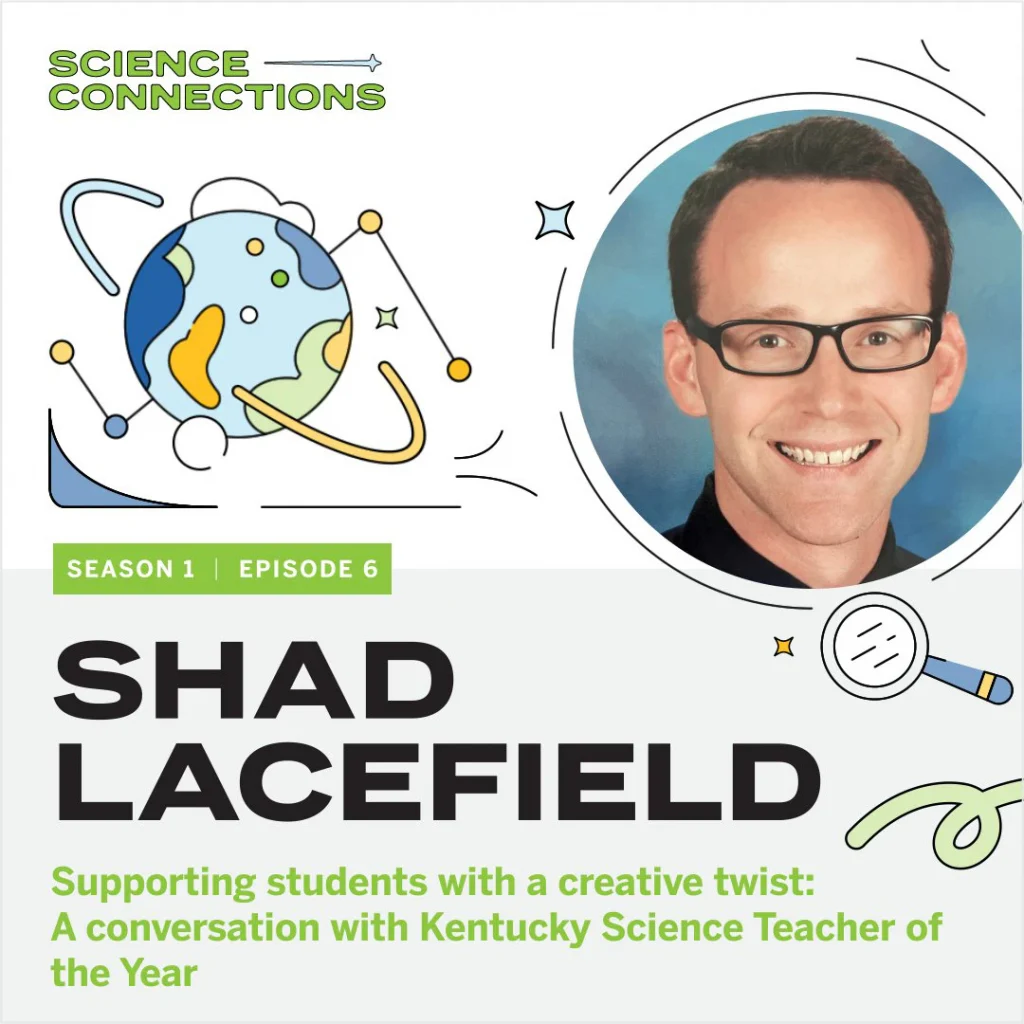
In this episode, Eric sits down with the Kentucky Science Teacher of the Year, Shad Lacefield. Shad shares his experience teaching during the first year of the pandemic, where Shad dressed up in over 100 costumes to create a unique and engaging online learning experience for his students. Shad also explains ways he connects with his students to celebrate student success, as well as large-scale efforts he leads within his school to cultivate the love of learning science content. Explore more from Science Connections by visiting our main page.
Shad Lacefield (00:00):
When you stay relevant, it’s being engaged with your students and figuring out, or what are, what are they liking? And every year it’s gonna be different. And that helps you stay relevant. When you have conversations and you build relationships with your kids,Eric Cross (00:13):
Welcome to science connections. I’m your host. Eric Cross. My guest today is Shad Layfield. Shad is a teacher at garden Springs elementary and a part-time professor at Asbury University in Kentucky during the first year of the pandemic, Mr. Layfield dressed up in over a hundred costumes to create a unique and engaging online learning experience for his students. He also created Vader visits, where he visited students at their homes, dressed as Darth Vader to celebrate their online successes and keep them encouraged. During a challenging time. In this episode, we discuss how creativity impacts engagement, transferring lessons learned from distance teaching back to in-person instruction, and how upper grades can apply the same principles to improve student learning. I hope you enjoy this discussion with shad lays field. So you’ve been in fourth grade for four years, and then you were in second grade and fifth grade. And so like how long have you been teaching for like total?
Shad Lacefield (01:09):
So this is my 15th year teaching.
Eric Cross (01:12):
Really? Yeah. You’ve been in the game for a while.
Shad Lacefield (01:15):
Yeah. Yep. It, it doesn’t, and it’s always surprising to parents too during that, that first like, come in and meet your teacher. And I walk in, I’m like, yeah, I’ve been teaching for 15 years and every time it gets ’em, they’re like no way. And I’m like, yeah,
Eric Cross (01:28):
That’s, that’s a good thing though. That’s a good thing. Right?
Eric Cross (01:31):
You know? So like, well the energy and then, and you’re just how you’re perceived. Like you’re, they’re just, I don’t know. It’s something about work with young people. Like it keeps you young.
Shad Lacefield (01:39):
That’s what it is. Absolutely.
Eric Cross (01:41):
So how did, how, like, what’s your origin story? Like, how did you become a teacher? Like what, what was it? Was it something like you knew second career, like right outta school? Like how did you end up in the classroom?
Shad Lacefield (01:53):
Yeah. No, and I love this question cause I’m a big Marvel and, and superhero. So origin stories are all, I love a good origin story. So I grew up on a 13 acre farm in a little bitty town called Gustin, Kentucky, and very early on, like we were instilled my parents, amazing, amazing parents. But they really instilled like a, a super important work ethic in our lives of like, it’s, it’s all about hard work and it’s important that you’re working hard in whatever it is that you do. And I’m one of six kids as well in my family.
Eric Cross (02:24):
Where are you in the–
Shad Lacefield (02:25):
I’m second to last.
Eric Cross (02:26):
Second to last. Okay. So you’re the second youngest.
Shad Lacefield (02:29):
Yes. Okay. And and so, and so growing up, like with that, like, you know, I worked in tobacco, I worked in hay, you know, we did things being on the farm and stuff like that. And within my family as well, there’s four boys. And so when I decided to go to college I was the first guy in my family to go to college. And the first and only boy that ended up going to college. And so it was like this big deal, like, oh, you know, we got one of our boys gonna go to college. So what is he gonna be? And I was like, well, if I’m gonna put forth the, the time and effort and then the financial strain that it would cause cuz we were not poor at all. My dad worked two jobs to make sure, but I really felt the responsibility of like, if I’m gonna go, I’m gonna work in a profession.
Shad Lacefield (03:09):
That’s gonna make a lot of money. And here I am as a teacher now. So I didn’t go to college to be a teacher. I actually was pre dentistry. I thought, now here’s a profession. You can, a lot of money. You don’t work weekends or holidays, you know, I can still be the doctor thing. And so I’m gonna be pre dentistry. But like all good origin stories. There was a, there was a flip. So in my first year I started working at the most majestic place that you will ever go. It’s called Squire, boon, caverns. It’s a cave in Southern Indiana. And it’s an amazingly beautiful little place. You have to like one lane highway, like road to go back there up and down. Like you, you think you’re never gonna make it. And if it rains too much, the bridge will flood and you actually can’t even get back there.
Shad Lacefield (03:52):
So that’s how we’re talking like way back in the sticks. But once you get back, back there totally worth it. And as part of the job you were a tour I also did grist mill demonstrations and gym mining adventures, or, you know, as they’re gym mining and stuff like that. And within that, I started working with school aged kids and on very large tours and stuff. And my manager at the time, Claudia, I’m still great friends with and we still take our kids back there. Every summer she, to me, you’re really good with kids. Like you’re really good with kids. We have this scout program that’s on the weekends. And then during the summers and you would be teaching kindergarten through eighth grade kids, geology and forestry. What do you think about doing that? And I said, well, right, let’s try that out. And then I got the teaching bug and it hit and I was like, oh my gosh, like I don’t wanna spend my life doing something that is all about money or, or that is like, this is where it’s at. Like, I love this, I enjoy this. I enjoy the response that I get when I’m talking. And kids are excited about learning and getting new information and learning new stuff. And so then I change my major and here I am now, all these years later teaching instead of being a dentist,
Eric Cross (05:04):
Are there, are there days, do you ever have days where you’re like, you know, dentistry, it’s still an option. Like I can, I can go back.
Shad Lacefield (05:12):
Oh, rare, rare occasions. Rarely. Yeah.
Eric Cross (05:16):
Okay. Yeah. All right. All right. Fair enough. I, I, I always joke and say that like we have, you know, sometimes I have my, my alternate job on the hard days, which is for me, it’s working at the gap where I just want to fold clothes and go home at the end of the day, you know, on those really rough days. And you know, it’s never the kids, right. It’s always other things. The kids are like the great part. And then there’s all these other things. And I just wanna work at the gap. I just wanna work at the gap. Fold some clothes. Yes, sir. Yes. Ma’am absolutely. I can find that size for you. And then I just go home cause about their job when they go home at the end of the day, when you work at the gap, at least sorry, gap workers. I’m sure hard of that, but my perception in my mind is that you close up shop and then you’re done. Yeah,
Shad Lacefield (05:52):
Absolutely. Like you said, they can turn it, like it’s a turnoff at the end. Exactly. As teachers we know, like you don’t ever turn it off, it’s always there.
Eric Cross (06:00):
Yeah. So one of the things that I was super excited about when I, when I first heard about you is I went on your website and there’s so many things I feel like I can just talk about your website and just the, the content that you’ve produced. I, I, there’s so many directions I can go. But one, one of the things I want to ask you is, is about that. Now, one of the things that’s on there, and this is coming from a fellow star wars, Fisha who finished Bobba FET and the Mandalorian recently and is Jones in four OB one to come out.
Shad Lacefield (06:33):
Oh, so yes,
Eric Cross (06:35):
I live in Southern California next to Disneyland visited Galaxy’s edge star wars. You have these things called VA Vader visits. And so what do you do in those? And like, where did you get the idea for these Vader visits?
Shad Lacefield (06:50):
So the costumes were bringing the kids into the classroom. But when they left my room because you would, we only had them for a certain amount of time. There was still a lot of extra work that they needed to get done. And what I was seeing was I could get them to come in and they were really engaged during my lesson. But then afterwards, when it came to work completion or getting things done, there was, it was starting to fall off. As you know, we were experiencing, you know, more and more craziness of what’s going on. So then as an incentive, I decided if you have everything turned in, by the end of the day, I’m gonna dress up in my Darth Vader outfit, full costume, the, you know, the, the full helmet, like everything. And I’m gonna show up to your house and we’re gonna hang out and play any game at all that you wanna play.
Shad Lacefield (07:34):
So then it was a way of rewarding. My kids for getting everything turned in. But same time I felt like it would also help me build a relationship with them. That was a very challenging part of online learning. Like, again, I want you to feel like you’re a part of my classroom. I wanna feel like I’m invested in you and wanna learn about you. And it was a commitment because some of those kids put me through the ringer, whether it was we’re gonna do gymnastics on a trampoline. And again, I’m in full costume doing gymnast on the trampoline, or we’re doing soccer drills with their soccer coach at their house playing football games. I mean, all kinds of stuff. I made a Yachty game for a kid that loves Harry Potter. And it was really a big part of getting work turned in because, and it’s the crazy thought they wanted to spend time with me. Like that’s what it was. And so it was like, yeah, absolutely. I’ll keep dressing up. I did over 50 plus Vater visits. It wasn’t just for my homeroom. It was for all of fourth grade. So I went over 50 visits and it was cool to see kids in their home and talk to them and meet their parents. It was a great opportunity for me to engage with parents as well. How is online learning, going, what can I do to support you? Do you guys have any questions and stuff like that? So
Eric Cross (08:39):
This thing of relationships is like leading to work completion, which isn’t, which isn’t always the, the thing that we think to as educators of like how, you know, work completion. A lot of times we think of like structures or you know, certain protocols that you do in class get work completion, but here you are addressing as Darth Vader. And, and you said students were turning in more work because they’re connected to, you saw an increase in, in yeah. Engagement.
Shad Lacefield (09:07):
And absolutely. And, and I remember even saying that to myself, like this is, this is what’s getting them. But it, it was, and as part of the Vader visit as well with the videos we recorded all of them and I said, I’m gonna make you a YouTube star. And so I would, I, I recorded them. I put ’em on my YouTube channel. And so a lot of the videos that are on my website, all those Vader visits are like the kids showing off and playing against the teacher. And I promise you, I didn’t take it easy on any one of those kids. Like when it was like a verse match, I went all out and I told ’em. I was like, if you beat me, you know, it’s gonna be like, you earned it.
Eric Cross (09:38):
What a great way to leverage, just what, what is relevant to our students? Like you used your platform and then now you’re showcasing them on your, you know, your platform or what you were using. And then they’re seeing each other. And I could just see, regardless of the grade level, like just students, like beam from, from getting that kind of positive praise through, through, you know a medium that doesn’t, that tends to be more of a, just content consumption, but you’re kind of watching other folks do stuff, but now it’s about them. Like, and they’re, they’re getting that attention directly. Now I have to ask about the Vader costume. Did you, did you buy it for this event or did you already have that Darth Vader costume in your closet?
Shad Lacefield (10:19):
I had parts of the costume, but not the complete costume. And honestly, the very first Vader visit I had, I had the Vader mask that makes sounds, and like you could talk and it makes you sound like Vader.
Eric Cross (10:29):
My dark saber is on order. Yes. And it keeps getting delayed from best buy. It’s supposed to arrive in April, but I do have dark staple and order that I ordered back in November. So the best to your point, I don’t know who doesn’t have one, I’m waiting for mine though.
Shad Lacefield (10:42):
There you go, come on. Best buy come through for us. So
Eric Cross (10:44):
You, you did all this investment in time and, and you created all this content, but then we went back in person. Were, were you able to bring this back into the classroom or any of the things that you had generated during distance learning back in the classroom? Or are you, are you using some of the things that you learned? Like what, or is it just completely separate and you’re just doing something completely different. Now
Shad Lacefield (11:04):
That’s a great question. So I still try to dress up at least once every week, if not once every other week just to make whatever we’re doing fun, cuz I already have costumes that were connected to the content that I was doing. So had I had made a character called captain Soundwave that will use when I’m teaching my amplify lessons over sound. And so then I, you know, I have that or I would have, you know, specific characters that were designed for certain lessons that I would do. And so I still
Eric Cross (11:32):
Lemme interrupt you real quick. Where did you get these character ideas from? Cause they are super creative. I clicked on one random one. And you have had like a, a knitted like skull cap and like some blue shiny like cloak and I like who is this guy? I think, is that him? Is that captain sound wave? That’s
Shad Lacefield (11:48):
That’s hilarious. That was, that was my attempted Elsa. Oh, that was yeah. Started buying more and more costumes and and making characters and putting costumes together. And so yeah, it just ends up being this thing where you never know when I’m gonna show up in a completely random costume and be like today, we’re getting ready to learn about how sedimentary rocks form. And I dressed in my rock outfit, which is the old school rock with the turtleneck and the gold chain with,
Eric Cross (12:16):
Wait, do you have a Fanny pack too?
Shad Lacefield (12:17):
I have a Fanny pack. Yes you have. Yep. You nailed it. And they’re like, what does this guy
Eric Cross (12:22):
Do? He raise the one eyebrow. Can you do the, the rock eyebrow? Oh yeah, you got this. Oh, people on the podcast. Can’t see. Chad’s got it down. He’s got it down. He’s got the, he’s got the eyebrow going. Okay, so you, so I feel like I can go on a tangent and talk about all your costumes that you have, but the thinking about this. So tons of engagement, younger people now taking like some of the principles that you’ve learned from this, how can, how can upper grades like bring this joy to their classroom? Like middle school students, you know, older kids sometimes, you know, they can, they’re still kids, but you know, they might not be the same thing as fourth graders. Like would you, do you have any ideas of like how teachers and upper grades can kind of take these elements that you’ve done and, and apply them?
Shad Lacefield (13:04):
Absolutely. So some of the things that you had talked about, like with YouTube can also be applied to like TikTok videos and things like that, that kids are, are willing to watch and, and be engaged in. And so those things, I feel like I’ve seen other middle and high school teachers really utilize in their classroom. But honestly, and this is a new initiative that we’ve started in our district. Minecraft has been something that a lot of kids play and are really engaged in and has shown an amazing engagement for all of our kids when it comes to science engagement, particularly. And so with that, so there’s 126 million active Minecraft players right now in the world. And Minecraft is one of the largest selling video games. The average age, cuz they’re always like, oh, Minecraft is for kids who actually the average age is like 24.
Shad Lacefield (13:51):
So a lot of the older kids are playing Minecraft as well with the younger kids. And with that in mind, it was a way when I looked at Minecraft and specifically like Minecraft educational edition came out and it was during COVID and it was free. So if you had a school email or it’s like the, what the go 365 account, you could get it for free and all of our kids got it for free. And so then, then we went from playing Minecraft on the computer as like a fun game to me looking at it and saying like, wait a minute. I feel like when I’m doing energy conversions, we can take Redstone and Minecraft and kids can now show how a simple system using different parts and devices can work and understand even more con creates how energy is converted from one form to another.
Shad Lacefield (14:39):
And so let’s make this a, a, a, an actual activity. Let’s take what I’m teaching in the classroom. And if they get done early as an enrichment piece, because there’s not a ton of science and enrichment activities at times for kids to be able to do, like, what do I do when I’m done, Minecraft ended up being that. And so I could have these elaborate worlds that I would build for them that they could then go and play and be super engaged in and show me way more on this Minecraft world, what they knew than what they were writing on paper sometimes, cuz I, you know, you’d get like a sentences out of them on paper, but then all of a sudden when they would build this elaborate system and you just had them record and talk, it was like, oh my gosh, you understand way more than I was thinking that you did with that last exit slip, an assessment that we did.
Shad Lacefield (15:25):
And so like, this is awesome. So then I went to my district and I actually proposed an idea what if we did tire Minecraft build challenges for the whole district? So our district has 37 elementary schools and I was like, I think this could be something that, you know, as we’re looking for science, curriculum engagement and making kids excited about learning science and stuff again, cuz that was always the hard part. I feel like sometimes with COVID everything kids lost this love of, of being in the classroom and, and, and learning and that it was like, you know, getting them to come back into the classroom and, and finding, learning fun again. It was like this, this started to get ’em excited and like, yeah, I get to play in Minecraft and I’m learning at the same time. And it was working for all kinds of content areas.
Shad Lacefield (16:07):
We’re doing a blast off to, to Mars. We it’s called blast off to us. We’re partnering with CLO of the future. They’re working with SpaceX. Our kids will actually get to send postcards to space and yes, it’s, it’s a super cool thing. And I love my district and all of the office of technology, individuals, Ashley Josh and Kelly for putting this together. And so it asks this question if you could a community in space, what would it be like? And the goal is that kids will write on the back what they want. And then we send this postcard off to space, they stamp it saying it’s been in space and the kids get to have it back and, and be able to use it. But what, what we decided, what we could do with Minecraft is what if they actually built the colony on Mars, like really research put time and effort into reading scientific articles about plants and how plants would grow and, and water and, and structures and apply all of that in a massive build challenge. And then that be, you know what we’re doing? That can be the answer to the question. And so it’s not just a couple sentences on a postcard, but it’s like a week or two week unit that pulls all this scientific content and standards that we’re working with and really allows kids to show so much creativity like on my Twitter I’ve been posting like pictures and stuff like that of some of the students builds. And I’m gonna continue to do that throughout the build challenge.
Eric Cross (17:26):
Now, are you using Minecraft EDU?
Shad Lacefield (17:28):
Yes. That is correct.
Eric Cross (17:29):
I love Minecraft EDU. Like it, it, you talking about it inspires me to, to try to dive back into it. One of the things sometimes I feel limited by is the time that I have and the things that we’re trying to cover. And it’s almost, it almost feels like we’re doing something wrong using a video game to teach, but it’s such a great educational tool. Like you said, you just said that students are able to show what they know in, in a way by creating something that’s different than if they would’ve just written it, but they’re actually creating, and this is one of the things, I guess you kind of hit on this, but I wanted to probe it a little more. Is do you have your students creating content like you do? Cause I kind of heard that they, you were, did you say that they were explaining or doing a video recording or describing it? How are they, how are they, how are they doing that work?
Shad Lacefield (18:17):
Yeah. So what they actually do is they’ll write a script and they will use Screencastify to record and then upload to Flipgrid. And then that way they can actually show their build to all of fourth grade. Since we weren’t allowed to be in the same class, like we were all departmentalized, so then we will have voting challenges. So after you record, you get to see everyone’s videos, you get to like and comment and leave feedback on their builds. So you can see what the other kids created. And then then from those initial videos and voting, we selected a certain of kids that then go on to the district level for our Minecraft build challenge. And then those videos are viewed by administration and other teachers to vote again. And then you end up having grade level winners and then an overall winner, which shout out to my boy in fourth grade, who was our overall winner, Eli, super proud of him.
Shad Lacefield (19:07):
He, he made this really, really space saving system, which was hidden stairs that ran off of Redstone and used motion, energy. And again, in his video, he talks about like how motion energy has changed to electrical energy and then back into motion through the process of how this hidden staircase would be in the wall. And then you’d be able to use this lever to then release that staircase. So you could go up and down but it was just, and again, when you, when you let kids talk about energy conversions and you let them build all of a sudden, you have kids making security systems for banks. Another kid that made a feeding system for kids for animals at the zoo, and it was just like, oh my gosh, I had no idea that this was what you guys could run out and do. When I, when I taught you how energy conversions work, that this is what you could produce and come over, like this is mind blowing. I love it,
Eric Cross (19:56):
What our kids can do and what they can create always kind of blows us away when we give them an opportunity to kind of have that freedom to, to create and take their knowledge and actually do something with it versus channel it into what, show me what, you know, but only do it like this. This is, this is the lane that you have to stay in. How do you get these ideas and, and stay, stay relevant? Like so many of the things like you’re touching, like pop culture, you, you have this hand in education technology, you have you’re, you’re doing video editing. Like where are you drawing from? Cause I’m just thinking like, as a teacher listening to this, that might be newer. And they go to the side like, oh my gosh, this, this guy is doing these so many things like where are you drawing from for inspiration or ideas?
Shad Lacefield (20:39):
I think a lot of it is like you say, when, when you stay relevant, it’s being engaged with your students and figuring out, or what are, what are they liking? And every year it’s gonna be different. And that helps you stay relevant. When you have conversations and you build relationships with your kids to figure out, you know, what’s going on. Because I was not a big Minecraft person. It was the group that came in that really challenged me to do Minecraft because it, it showed up on their Chromebooks one day and all of a sudden it’s like, oh, we can play Minecraft all the time. And I said, no, you can’t play Minecraft until that I’ve had training. And I know what’s going on because I’m super nervous about this new thing. And I wanna make sure you guys aren’t doing something that you’re not supposed to.
Shad Lacefield (21:13):
And like, they hounded me hardcore about you better do you need to do that training, Mr. Lacefield, you need to, we wanna play Minecraft. You better be doing this. Right. And so I was like, all right, man, I’ll, I’ll invest. I’ll, I’ll put some time into this training. And I’m so glad that I did yeah, again, that’s it just like building relationships and having those conversations help you realize like, what’s, what’s what are they interested in? What what’s going on and what would be really funny, even connecting that back to the costumes. What would it be really funny if I showed up in you know, today, princess Jasmine.
Eric Cross (21:42):
Yeah.
Shad Lacefield (21:43):
Been yes. Done that. That’s a great one. I,
Eric Cross (21:45):
I, I just went to the social studies page. I, and I stop laughing while you were talking. Cause I saw the princess Jasmine.
Shad Lacefield (21:52):
Oh yeah. Folks.
Eric Cross (21:53):
I’m telling you, you have to go, you have to go to his videos and see what he’s done. I mean, they’re just, they’re just amazing with my middle school students. They, I, I find myself having to be into things that I’m not normally into. And we have these intergenerational relationships, right? Like I think teachers are unique in this I aspect where I can connect with a 12 year old with what 12 year olds are in no matter where this 12 year old’s from. Cuz I get 12 year old culture. But sometimes when I go back into my adult world, like I forget that like, Hey yeah, haven’t watched a new anime you know, or, or whatever, you know, up
Shad Lacefield (22:26):
That. Yeah. No said too. And a kid will show up wearing a, a shirt to school and I’m like, I wasn’t the world’s that like, I’ve never even seen that before. And you’re like, okay, I’m gonna have to learn what that is cuz that yeah.
Eric Cross (22:38):
And then the next student asks you about, Hey, do you like, do you like these this game? I’m like, yeah, yeah, let me go Google that game real quick. Yeah, I’m totally into it. I’m downloading on my phone real quick. And, and now I’m connected to all kinds of obscure random interests, but to your, to what you said, it like, it helps keep us fresh, right? With I, with ideas, there, there is something that is super practical that you’ve done that you’ve created that I’ve encouraged teachers to do. And I think you really nailed it. On your site, you have these video tutorials. When I look at those, I, I think about how much time you must have saved yourself of not having to explain the same exact thing multiple times. Because you’ve created this virtual help section that allows students to log in amplify earth, check, Flipgrid, whatever. Like do you, when you’re, when you’re teaching students, do you, do you use those in direct students there so they can kind of support themselves? Or is that, what, how did that come to be when you, when you made these, these virtual tools? Because I could just imagine these are time savers for you.
Shad Lacefield (23:49):
Absolutely. Cuz again, like you said, it’s it saves on time. So a lot of when you have kids that are already visual learners as well, and they love watching YouTube and they learn stuff from YouTube, why not? I mean, make the video and then attach it to my Google classroom, keeping everything online. Everyone always has access. And by still having those videos, it allows kids to hear the directions multiple time, but on their time and at their pace. So then it’s posted on the assignment. So even though I probably still will give those directions verbally out loud if a kid forgets and maybe they feel a little nervous about asking in front of their peers, like, oh, how do I do this again? Or, oh, I don’t remember how to do that. That video is linked on there. So that way they can go back and watch it.
Eric Cross (24:28):
It’s almost like a little co-teacher that you have like a little aide that’s like, but it’s you, but it’s like a mini you who’s helping you out. I found that putting sometimes those tutorial videos on ed puzzle, where at different points in time, you can set it up so that at a certain timestamp, it asks a question and you can control it. So they can’t move faster past it until they respond to the question and you have the question be about whatever you just said. And then it, it syncs with Google classroom. So you can import all the grades and you can see how far through the video they got. But that was one other layer that I was able to do. So I can have some accountability and make sure that okay, everybody watched it and they answered all five questions of like, how do you do this?
Shad Lacefield (25:07):
Oh, see, now you’re sharing stuff with me, Eric, because I, I’m not as familiar with ed puzzle. I’ve used like near pod and per deck, but I mean just you saying that I’m like, okay, I need to check out ed puzzle and, and see what, what this is all about. Cause that sounds awesome.
Eric Cross (25:20):
Hey, I shared something with Chad and it it’s useful. I’m I’m feeling good right now. I’m feel I’m feeling good. So as we, as we kind of wind down one, couple questions I wanna ask. One of ’em is you’ve been in teaching for, for 15 years and I, I talk to you like right now and I get this energy and this vibe that’s just so upbeat, so positive. How do you stay fresh, fresh. And how did you stay fresh during a time when things have been so hard, you know, and it, and still is for so many educators, how do you stay encouraged? Like what, what have you done and, and to stay in, in education for, for this long,
Shad Lacefield (26:00):
I think it, it even goes back to like when I made my initial decision to switch my major to education, like I, I really felt like I found so thing that I thoroughly loved and enjoyed, and I always feel like you go through seasons. Like, and I definitely, when, when COVID hit, like you went through a season of where you start to feel again, that pressure like do I really like doing this as much as I thought that I like doing this and am I ready for this next thing? And then I just go back to just the, well, why did I do this to begin with? And, and it gets me, you know, excited to be like, I did it for the kids, like, and it’s about the kids. And I get joy when they’re laughing and smiling. So again, with the videos, it’s like, how can I make ’em laugh and smile because if they’re laughing and smiling and having a good time, I’m gonna get, you know, jacked and ready to start teaching again.
Eric Cross (26:48):
And I just hear that so much in what you’re saying is you’re serving your kids is, is being more than that building the relationship, that connection. And then through all that, the learning happens. The last question I wanna ask you is who’s one teacher that created a memorable experience for you or inspired you. Is it someone that you remember when you were in school or learn experience that just, that stands out to you to this day? Cuz as teachers, we remember thi like our kids remember us and it’s weird to be in that position to think that we’re gonna be that person. So is there anybody or anything that stands out to you that you remember from a, a teacher and experience?
Shad Lacefield (27:27):
Gosh, I have, I have a lot that you know, from my fifth grade science teacher, Mr. Goodman, who we did the ecology meet and the ecology team, and we went to OT Creek park and we competed against other schools about science, connected materials to my physics teacher in high school that let us build boats out of cardboard and take it to the only hotel in our town and the pool. And we had like boat races with the cardboard boats that we did. But really I, I go back to Squire boon and Claudia my manager and I remember not only was, she’s such a, a pivotal like getting me into teaching. But I remember the, the curriculum that we were using at the time that I was. And again, it goes back to what if I was to teach that curriculum, I would not still be a teacher because again, as sometimes you experience with curriculum, it can be boring and not engaging. And I was already putting my own flare on it at SQUI boon during the scout lessons. And I said, what if I just completely rewrote this curriculum? What if I made it really fun and put my own, spin on it? And, and she was like, absolutely, absolutely do that. And I feel like that encouragement as teachers, when we encourage kids to be creative when we encourage kids to, to take risk and to try new things we end up getting such amazing results that we didn’t even expect
Eric Cross (28:45):
Thought I out to Mr. Goodman for the ecology meet the physics teacher for the, the boat races, which are hilarious, by the way, if you’ve ever been able to watch students, did you make ’em at a cardboard?
Shad Lacefield (28:53):
We did. Yep.
Eric Cross (28:54):
Yeah. Those are hilarious to watch. And Claudia for giving the freedom to let you be a educational DJ and remix things to make it fun. Thanks for being on the podcast. Thanks for your inspiration and for sharing your stuff like publicly and letting other people see it and, and get ideas. It’s, I’m sure there’s more people than, you know, and more teachers than, you know, that are looking at that and getting their own ideas and coming up with their own. It might not be star wars, but coming up with their own inspiration, maybe it’s like Harry Potter or Lord of the rings or some like that.
Shad Lacefield (29:26):
Yeah. Whatever. You’re passionate about. Pull that in.
Eric Cross (29:31):
Thanks so much for joining me and Shad today. We want to hear more about you. If you have any great lessons or ways to keep student engagement high, please email us at stem@amplify.com. That’s STEM@amplify.com and make sure to click, subscribe wherever you listen to podcasts until next time.
Stay connected!
Join our community and get new episodes every other Tuesday!
We’ll also share new and exciting free resources for your classroom every month.
Meet the guest
Shad Lacefield is a teacher at Garden Springs Elementary and part-time professor at Asbury University in Kentucky. Mr. Lacefield leads professional development in his district, and has been a guest speaker for Eastern Kentucky University, Campbellsville University, and Amplify Education. His topics include classroom managment, integrating techology, and student engagement. He earned his bachelor’s degree in elementary education from Campbellsville University in 2007, and his master’s in science from Southwest Baptist University in 2011. Shad has either taught or coached every grade K-12, and in his 14 years in education he has served as a lead teacher in literacy, math, science, and social studies. He currently coordiantes with the FCPS Office of Instructional Technology to plan Minecraft build challenges for elementary students, and is working on setting up a science field trip that turns a golf course into a STEM lab. During the first year of the pandemic, Shad dressed up in over 100 costumes to create a unique and engaging online learning experience for his students. He also created Vader Visits where he visited students at their homes dressed as Darth Vader to celebrate their online successes, and keep them encouraged during a challenging time. His creative teaching style, and over 50 “Vader Visits” with students, have been featured on WKYT-TV, LEX-18, Spectrum 1 News, and several local and college news publications. Shad lives in Lexington Kentucky with his wife Whitney Lacefield and their three children.
Check out his website, YouTube channel, and Facebook account!

About Science Connections
Welcome to Science Connections! Science is changing before our eyes, now more than ever. So…how do we help kids figure that out? We will bring on educators, scientists, and more to discuss the importance of high-quality science instruction. In this episode, hear from our host Eric Cross about his work engaging students as a K-8 science teacher. Listen here!


Careers
We’re looking for innovators and optimists to join us in developing next-generation curriculum and assessment programs for K–12 schools.
Who we are
Remote first. Brooklyn based. In person sometimes. Amplify is powered by a collaborative team of education, technology, and creative professionals who develop next-generation programs that inspire teachers and students to do their best work. Apply for one of our open positions.

People and culture
Amplify is a purpose-driven community where cross-functional teams work together to create high-quality programs.
Share our view.
With headquarters in Brooklyn’s DUMBO neighborhood, we’re at the center of New York’s thriving tech and creative community.


Get inspired.
We take an agile approach that enables us to adapt our programs to the needs of teachers and students. Collaboration helps us stay innovative.
Meet the team.
Our common purpose drives us to work across disciplines to develop next-generation solutions for the classroom. Meet some of our team members.


Leadership
Amplify’s leadership includes executives and board members from the fields of education, technology, design, business, and media.
Hiring practices
We hire and develop people with the broadest range of talents, life stories, and experiences, and together we build a cohesive team. We follow fair hiring practices and create an environment where team members feel valued, empowered, and heard.

Amplify workplace awards





What we offer
Amplify employees report feeling engaged and eager to come to work every day. They’re motivated by our mission of improving the lives of teachers and students. And learning isn’t just for the students we serve—we are dedicated to providing our employees opportunities for ongoing growth. Explore our benefits in detail.


Full benefits
Our health insurance options include health, dental, and vision coverage for spouses, domestic partners, and children—effective on your date of hire. We make a generous contribution to all employee HSA plans, which can be used to cover eligible health expenses. We offer unlimited paid time off, a 401(k) plan with an employer match, long- and short-term disability, and employer-sponsored employee life insurance. We offer paid parental leave, backup childcare and backup eldercare. On top of all that, we also provide our full-time employees with a robust voluntary benefits program that includes coverage options for everyone in the family, including pets.

Opportunities for inspiration
Amplify believes in the importance of supporting charitable nonprofits in the communities where we live and work. We encourage employees to support organizations that promote the welfare of children and families in the areas of education, health, and social services. One way for employees to give back is through our Volunteer Time Off program, which allows employees to take 16 hours each year to contribute to an eligible charitable or nonprofit organization.

Tuition reimbursement
Full-time employees who are enrolled in an accredited college or university course related to their areas of work are eligible to receive tuition reimbursement.
Season 9, Episode 4
Comprehension is not a skill, with Hugh Catts, Ph.D.
In this episode Susan Lambert is joined by Hugh Catts, Ph.D., professor at Florida State University, to break down what comprehension is and bust some myths about what it isn’t. With a family history of dyslexia, he has a personal connection to the topic that led him into research in language sciences and language disorders. He discusses how his findings moved him away from viewing comprehension as simply a “component of reading” but rather something entirely separate—a condition created over time, defined by purpose, and influenced by prior knowledge. Together, Susan and Hugh address many comprehension-related concepts, such as the Simple View of Reading, the five pillars of reading, and comprehension’s relationship to knowledge building. Hugh also gives listeners practical advice for helping students suss out their comprehension before reading, and he clarifies why understanding the standard of coherence is important.

Meet our guest(s):

Hugh Catts, Ph.D.
Hugh Catts’s research interests include the early identification and prevention of reading disabilities. He is a former board member of the International Dyslexia Association and former president of the Society for the Scientific Study of Reading. He has received the Samuel T. Orton Award, the International Dyslexia Association’s highest honor, and the Honors of the Association Award from the American Speech-Language-Hearing Association, for his career contributions in these disciplines. His current research concerns the early identification of reading and language difficulties and the nature and assessment of reading comprehension problems.
Meet our host, Susan Lambert
Susan Lambert is the Chief Academic Officer of Elementary Humanities at Amplify, and the host of Science of Reading: The Podcast. Throughout her career, she has focused on creating high-quality learning environments using evidence-based practices. Lambert is a mom of four, a grandma of four, a world traveler, and a collector of stories.
As the host of Science of Reading: The Podcast, Lambert explores the increasing body of scientific research around how reading is best taught. As a former classroom teacher, administrator, and curriculum developer, Lambert is dedicated to turning theory into best practices that educators can put right to use in the classroom, and to showcasing national models of reading instruction excellence.

Transcripts and additional resources
Show notes:
Read: Rethinking How to Promote Reading Comprehension by Hugh Catts
Submit your literacy questions for a chance to win!
Read: The Simple View of Reading: Advancements and False Impressions by Hugh Catts
Quotes
If you learn how to swim, you can swim in a lake, a pool, an ocean, whatever. But that’s not the case for comprehension. You can’t learn to comprehend and then take that out into different situations for different purposes. You can learn some things that will help you, but in general, it’s the topic and purpose that are going to impact how well you understand something.
–Hugh Catts, Ph.D.
If I was going to define comprehension, it’s not a single thing. I mean, that’s the problem. We want it to be a single thing, but it depends upon what you’re reading and why you’re reading it.
–Hugh Catts, Ph.D.
What comprehension is is the interaction of what you bring into that reading situation and what you already know about it, and your motivation and purpose to comprehend it.
–Hugh Catts, Ph.D.
There’s just not enough mental reserve to be able to build that meaning that quickly. So it helps tremendously that you have some knowledge about it beforehand. That knowledge gives you a place to put information. So when you read about something, it gives you storage for the information. It’s kind of like a cubby hole that you put the mail in, in an office.
–Hugh Catts, Ph.D.
Amplify announces integration of goal-setting product, Huddle, into its line of curriculum products
Brooklyn, NY (January 21, 2020) — Amplify, a publisher of next-generation curriculum and assessment programs, and Huddle, the maker of student goal-setting technology, have announced the integration of Huddle’s goal-setting product into Amplify’s portfolio of blended curriculum programs. Amplify will have exclusive access to incorporate Huddle’s technology and feature set within the school market.
“Huddle offers an exciting opportunity for Amplify to bring core curriculum programs into the classroom that help students not only engage deeply in academic content but also develop a mindset for success,” said Larry Berger, founder and chief executive officer of Amplify.
“In response to schools seeking ways to help their students develop a growth mindset, we sought to create a tool that enables more conversations between students and teachers about their goals and makes it easy to keep students motivated along the way,” commented Sean Farrell, co-founder and chief executive officer of Huddle. “We are honored to have the opportunity to broaden Huddle’s reach and excited to see it grow within the Amplify family.”
Huddle’s Co-Founder and Chief Academic Officer Kathleen Sheehy noted, “Amplify is known for creating instructional materials that are high quality and designed with students in mind. We know that the students and teachers who use Amplify’s programs are going to love Huddle’s useful and engaging tools for helping every student accomplish their goals.”
One of the unique aspects of Huddle’s technology is its ability to integrate seamlessly with existing digital products. Rather than require teachers and students to log into another site or app, Huddle can embed itself within the programs they use everyday while bringing a host of goal-setting, coaching, and motivational features that enhance their experience.
About Amplify
A pioneer in K–12 education since 2000, Amplify is leading the way in next-generation curriculum and assessment. Our captivating core and supplemental programs in ELA, math, and science engage all students in rigorous learning and inspire them to think deeply, creatively, and for themselves. Our formative assessment products turn data into practical instructional support to help all students build a strong foundation in early reading and math. All of our programs provide teachers with powerful tools that help them understand and respond to the needs of every student. Today, Amplify serves five million students in all 50 states. For more information, visit amplify.com.
About Huddle
Founded in 2018, Huddle provides a digital solution to help students create personal and academic goals, automatically track their progress, and facilitate 1:1 meetings with teachers to check in and discuss progress.
Amplify launches educational leadership award, honors North Carolina Superintendent of Public Instruction Catherine Truitt as first recipient
BROOKLYN, NY (December 6, 2024) – Amplify, a publisher of next-generation curriculum and assessment programs, today awarded North Carolina Superintendent of Public Instruction Catherine Truitt its inaugural Leader in Education Award. This Award honors and recognizes policymakers who have shown dedication, creativity, and leadership to improve the education system and enhance learning opportunities for all students.
Since taking office in January 2021, Superintendent Truitt has implemented innovative education policies, practices, and initiatives, raising the bar for student achievement and performance. North Carolina’s third-grade students have outperformed the national average on end-of-year literacy assessments for three years in a row. In the 2023 – 2024 school year alone, over 80,000 more students met or exceeded benchmarks. More broadly, North Carolina’s K-3 students consistently surpass the national average for students on track.
A driving force behind North Carolina’s success has been Truitt’s adoption of the Science of Reading, a research-based approach to literacy instruction that emphasizes the importance of explicit and systemic foundational skills instruction and knowledge-building to support reading comprehension. She actively championed the approach and worked diligently to make it the standard.
“It is such an honor to receive this distinction,” said Truitt. “I’m so proud of the work we’ve done for North Carolina students, and I owe so much of that to our schools and teachers, who worked tirelessly with me to implement the science of reading.”
Just two years after implementing the Science of Reading, the state’s K-3 students are outpacing peers in other states in reading proficiency and rate of improvement, despite recent national decreases in literacy proficiency and understanding.
“One of the most important jobs of the school system is to teach children to read by third grade,” said Amplify Chief Executive Officer Larry Berger. “Superintendent Truitt has achieved remarkable outcomes through her laser focus on comprehensively implementing the Science of Reading in North Carolina. Her policies serve as a model for other superintendents, and her impact on K-3 literacy will be felt across the state for years to come.”
Truitt was honored earlier today in Brooklyn, New York.
About Amplify
A pioneer in K–12 education since 2000, Amplify is leading the way in next-generation curriculum and assessment. Our core and supplemental programs in ELA, math and science engage all students in rigorous learning and inspire them to think deeply, creatively and for themselves. Our formative assessment products help teachers identify the targeted instruction students need to build a strong foundation in early reading and math. All of our programs and services provide educators with powerful tools that help them understand and respond to the needs of every student. Today, Amplify serves more than 15 million students in all 50 states and on six continents. For more information, visit Amplify.com.
Media Contact: Kristine Frech; media@amplify.com
K-2 early literacy improvements offer hope, but persistent challenges remain
BROOKLYN, NY (February 26, 2024) – Amplify, a publisher of next-generation curriculum and assessment programs, today released a research brief on the latest K-2 middle-of-school-year literacy data. Findings reveal that while this year’s kindergarten cohort has returned to pre-pandemic literacy readiness levels, overall progress remains slow. Only 56 percent of students are on track for learning to read, and 29 percent of students are far behind.
“The return of our youngest students to pre-pandemic reading levels is encouraging—but that said, broad literacy trends in the United States are still concerning,” said Susan Lambert, chief academic officer, elementary humanities, at Amplify. “This is a moment to celebrate, but also a call to action: To prepare students for life-long success, we need all students exceeding pre-pandemic early reading levels. By regularly monitoring student progress via tools like middle-of-year data, educators can respond earlier when their students need support.”
The research brief outlines how middle-of-year data is uniquely positioned to help schools plan for instructional changes and implement those changes before the following school year.
Progress monitoring—identifying, supporting, and tracking outcomes—is one strategy schools can engage in when working with students who are the most at-risk for not learning to read. Using that data, they can provide differentiated support, developing foundational reading skills based on each student’s progress and proficiency.
Amplify encourages districts and schools to analyze middle-of-year data by school, grade, and classroom and create plans that:
- Ensure all students receive quality instruction grounded in the Science of Reading
- Identify students that need additional support and develop a plan for addressing their needs
- Allocate resources for additional support and implement those plans
- Regularly monitor progress for students and make adjustments as needed
About Amplify
A pioneer in K–12 education since 2000, Amplify is leading the way in next-generation curriculum and assessment. Our core and supplemental programs in ELA, math and science engage all students in rigorous learning and inspire them to think deeply, creatively and for themselves. Our formative assessment products help teachers identify the targeted instruction students need to build a strong foundation in early reading and math. All of our programs and services provide educators with powerful tools that help them understand and respond to the needs of every student. Today, Amplify serves more than 15 million students in all 50 states and on six continents. For more information, visit Amplify.com.
Media Contact: Kristine Frech; media@amplify.com
Amplify announces new board member Michael Camuñez
Brooklyn, NY (October 21, 2020) – Amplify, a publisher of next-generation curriculum and assessment programs, announced today that it appointed a new board member, Michael Camuñez to its board of directors.
Camuñez serves as president and chief executive officer of Monarch Global Strategies LLC, a bi-national consulting firm providing strategic advice and advocacy to companies doing business in emerging economies, with a particular emphasis on Mexico and Latin America. Previously, Camuñez served as one of the nation’s leading commercial diplomats as the assistant secretary of commerce at the International Trade Administration, where he managed a global portfolio to help lead the U.S. government’s efforts to open new markets for U.S. goods and services. Prior to that, he also served as special counsel to the president at the White House.
“We are honored and excited to have Michael Camuñez join the board of Amplify,” said Amplify CEO Larry Berger. “His unique experience in political, legal, economic, and international worlds means he brings critical insight to our company as we continue growing and serving educators and students across the country and, in time, the globe.”
“Amplify’s mission to revolutionize education and expand access to learning through technology is not only exciting, it’s essential to help bridge the equity gap and accelerate learning for millions of children in the U.S. and around the world,” stated Camuñez. “I’m thrilled to be joining such an important endeavor with such a talented team.”
Camuñez joins Amplify’s existing board members: Russlynn Ali, CEO and co-founder, XQ Institute; Brad Powell, managing director, investments at the Emerson Collective; Margaret Spellings, president and CEO of Texas 2036; and Larry Berger, CEO at Amplify.
About Amplify
A pioneer in K–12 education since 2000, Amplify is leading the way in next-generation curriculum and assessment. Our core and supplemental programs in ELA, math, and science engage all students in rigorous learning and inspire them to think deeply, creatively, and for themselves. Our formative assessment products turn data into practical instructional support to help all students build a strong foundation in early reading and math. All of our programs provide teachers with powerful tools that help them understand and respond to the needs of every student. Today, Amplify serves seven million students in all 50 states. For more information, visit amplify.com.
Contact: media@amplify.com
Prepare Professional Development (PD)
Learning experiences to prepare for literacy and math instructional shifts
The following literacy and math sessions can help any educator—regardless of the program used—enhance their instructional practices.
- Science of Reading sessions offering research-backed strategies to deepen understanding and improve student outcomes.
- Problem-based approach to math sessions that empower educators to facilitate meaningful learning experiences and develop critical thinking skills.
- Multiliterate learner sessions enable educators to make a meaningful impact on students’ literacy development.
Professional learning journey

| Prepare | Begin | Practice | Advance |
| Learning sessions will help shift literacy and math instruction in areas such as the Science of Reading and/or problem-based approaches to math. | Program-aligned packages will support those who are new to Amplify programs. | Program-aligned packages will support those who have experience using Amplify programs. | Offerings will support advanced implementation, build capacity for instructional leaders, certify in-house trainers to deliver Launch sessions, and more. |

Science of Reading learning experiences
Listening to students read is magic. But knowing how to get them reading? That’s science.
Making the shift to the Science of Reading is no small feat, but participating in professional development sessions can help you make this change seamlessly.
Amplify Science of Reading sessions offer flexible, professional learning experiences for teachers that incorporate engaging activities grounded in what science tells us about literacy development.

Build your knowledge of the Science of Reading
Virtual | 90-minute session
This introductory session provides educators with a foundational overview of what the Science of Reading means and what it tells us about how to teach using evidence-based reading practices.
Participants will learn to:
- Define the Science of Reading by examining evidence-based research.
- Explain how two frameworks, the Simple View of Reading and the Reading Rope, work in tandem to guide effective literacy instruction.
- Identify instructional principles aligned to the Science of Reading.

Deepen your knowledge of the Science of Reading
On-site or virtual | 3-hour session
This session will build a base of common knowledge about the Reading Rope and support educators in identifying effective instruction grounded in the Science of Reading.
Participants will learn to:
- Identify the strands in the Reading Rope.
- Describe how each strand plays an important role in developing skilled readers and writers.
- Identify key look-fors in effective Science of Reading instruction.
Science of Reading: The Learning Lab online course
This series of three self-paced online courses, crafted by literacy expert Susan Lambert and built around International Dyslexia Association (IDA) Knowledge and Practice Standards, guides you through the essential Science of Reading skills and knowledge needed to teach students to read proficiently, as well as advanced strategies for aiding struggling readers. Each course builds on the last, equipping you with the tools and confidence to make a lasting impact on your students’ literacy journeys.
Benefit from flexible learning on an interactive platform spanning 20–25 hours of instruction. Each course is accessible for 12 months. Upon completion, you’ll be provided with a downloadable certificate, validating your new expertise in the Science of Reading.
Foundations to the Science of Reading
This course offers a comprehensive overview of research in the field. Each of the eight modules contains three lessons covering the foundations of literacy acquisition.
Explore the scope and sequence of Foundations to the Science of Reading with a Pacing Guide.
Access the free Preview Pass for this course.
Advanced topics in the Science of Reading: Assessment and reading difficulties
The second course is aimed at providing an in-depth examination of assessments, a deeper understanding of reading difficulties, and familiarity with pertinent legal frameworks for educators, all of which influence instructional decision-making.
Explore the scope and sequence of Advanced topics in the Science of Reading with our Pacing Guide.
Access the free Preview Pass for this course.
Coming soon!
Applied structured literacy
The final course in the series is designed to review key concepts and knowledge from previous coursework, explore fundamental aspects of structured literacy within lessons, observe and analyze structured literacy instruction in action, and investigate how data informs instructional decisions.
[Available June 2025]
New
Supporting multiliterate learner sessions
Unlock the magic of teaching multiliterate learners with evidence-based literacy practices. Making the shift to effectively support diverse readers in multiple languages is no small feat, but our professional development sessions are here to guide you effortlessly.
Empower your teaching with these engaging sessions, and make a meaningful impact on your multiliterate students’ literacy development.

Build your knowledge of multiliterate learners
Virtual | 90-minute session
This session provides educators with a foundational overview of how to teach multiliterate learners using evidence-based literacy practices.
Contact us to request a quote.

Deepen your knowledge of multiliterate learners
On-site or virtual | 3-hour session
This session will build an understanding of how the brain learns to read in multiple languages, as well as how to leverage cross-linguistic transfer, and align instruction to best practices for multiliterate learners.
Contact us to request a quote.
Problem-based approach to math instruction sessions
Elevate educational experiences by placing students’ ideas at the core of math lessons through problem-based learning. These sessions offer flexible professional learning experiences, allowing you to gain firsthand experience with a problem-based approach as a learner. You then learn to integrate this approach seamlessly into your teaching practices, bringing renewed energy to your math classroom.

Build your knowledge of a problem-based approach
Virtual | 90-minute session
This session provides you with a foundational overview of what an engaging problem-based approach in math entails for K–5 students.
During this session you’ll learn to:
- Explain how a problem-based approach to math brings delight to both teaching and learning and builds lasting student understanding.
- Identify actionable strategies for using a problem-based approach in a math classroom.
Contact us to request a quote.

Deepen your knowledge of a problem-based approach
On-site or virtual | 3-hour session
This session provides you with hands-on experience facilitating problem-solving in math, leaving you with an increased understanding of how to teach conceptual understanding, procedural skill and fluency, and applications of math.
During this session you’ll learn to:
- Explain how a problem-based approach to math brings delight to both teaching and learning and builds lasting student understanding.
- Identify actionable strategies for using a problem-based approach in a math classroom.
- Connect your current teaching practice to a problem-based approach, and choose a next step to implement a more problem-based approach.
Contact us to request a quote.

Get in touch with a PD expert
We’re here to provide answers and guidance as you explore your PD options. Fill out the form to connect with us and discover how Amplify PD can enhance your educational journey.
Welcome, Indiana review committees!
Dear teachers and educators,
At Amplify, we believe Indiana students and teachers deserve high-quality instructional materials. That’s why we partner with schools across the Hoosier State to meet their core curriculum, assessment, and intervention goals. With solutions grounded in research and evidence-based practices, Amplify is leading the way with rigorous and relevant learning experiences. Select a program below to learn more.
With great respect for what you do,
The Indiana Amplify team


Amplify CKLA
Using a fundamentally different approach to language arts, Amplify Core Knowledge Language Arts® (CKLA) is a PreK–5 program that sequences deep content knowledge with research-based foundational skills. Amplify CKLA met expectations and received all-green ratings from EdReports. Read the review on EdReports.
Amplify ELA
Amplify ELA is the only program truly designed to support middle school students at this critical developmental moment. We ensure that skills are taught, standards are covered, and the test is prepped – all while bringing texts to life and differentiating instruction. Read the review on EdReports.

mCLASS
mCLASS® is an all-in-one system that integrates universal and dyslexia screening, progress monitoring, and targeted instruction for grades K–8. Built on Science of Reading principles and powered by DIBELS® 8th Edition, mCLASS provides educators with the tools to assess and develop the essential reading skills that Indiana students need to build reading confidence and proficiency.
Amplify Science
Amplify Science empowers Indiana students to think, read, and write like real scientists and engineers. Amplify Science K–8 received all-green ratings in EdReports’ review of national science curricula. Read the review on EdReports.

Amplify Desmos Math
Amplify Desmos Math is a curiosity-driven program for grades K–12 that builds lifelong math proficiency. Through a structured approach to problem-based learning, Amplify Desmos Math helps teachers create a collaborative math community with students at its center. Grades K–8 courses rated perfect scores on EdReports. Read the review on EdReports.
Looking for help?
Powerful pedagogical and technical support
Amplify provides a unique kind of support you won’t find from other publishers. We have developed an educational support team of former teachers and administrators who provide pedagogical support for every Amplify curriculum, assessment, and intervention program. This service is completely free for all educators who are using our programs, and includes:
- Guidance for developing lesson plans and intervention plans.
- Information on where to locate standards and other planning materials.
- Recommendations and tips for day-to-day teaching with Amplify programs.
- Support with administering and interpreting assessment data and more.
To reach our pedagogical or technical team, try the following options:
- Live chat: Click the orange icon while logged in to any program to receive immediate help.
- Phone: Call our toll-free number: (800) 823-1969.
- Email: Send an email to help@amplify.com. In the message body, please include your name and question. Provide as much detail as possible, so we can more quickly help you find a solution.
Contact us
Support is always available. Our team is committed to helping you every step of the way. Contact your dedicated Indiana representative here for program access, samples, and additional information.

Elizabeth Sillies Callahan
Southern IN
(513) 407-5801

Jody Kammer
Central IN
(310) 402-7837

Amanda Knipper
Northern IN
(260) 894-5123

Paige Lawrence
District enrollment below 1200
(980) 421-2608
Prepare Professional Development (PD)
Learning experiences to prepare for literacy and math instructional shifts
The following literacy and math sessions are designed to support all educators—regardless of the program used—in enhancing their instructional practices.
- Sessions devoted to Science of Reading offer research-based strategies to deepen understanding that support students’ reading development.
- Sessions focusing on a problem-based approach to math empower educators to facilitate meaningful learning experiences and foster critical thinking skills in their students.
- Sessions supporting multilingual/English learners enable educators to make a meaningful impact on students’ multiliteracy development.

Professional learning journey

| Prepare |
Begin |
Practice |
Advance |
| Learning sessions will help shift literacy and math instruction in areas such as the Science of Reading and/or problem-based approaches to math. | Program-aligned packages will support those who are new to Amplify programs. | Program-aligned packages will support those who have experience using Amplify programs. | Offerings will support advanced implementation, build capacity for instructional leaders, certify in-house trainers to deliver Launch sessions, and more. |
Science of Reading learning experiences
Listening to students read is magic. But knowing how to get them reading? That’s science.
Making the shift to the Science of Reading is no small feat, but participating in professional development sessions can help you make this change seamlessly.
Amplify Science of Reading sessions offer flexible professional learning experiences for teachers that incorporate engaging activities grounded in what science tells us about literacy development.

Build your knowledge of the Science of Reading
Virtual | 90-minute session
This introductory session provides educators with a foundational overview of what the Science of Reading means and what it tells us about how to teach using evidence-based reading practices.
Participants will learn to:
- Define the Science of Reading by examining evidence-based research.
- Explain how two frameworks, the Simple View of Reading and the Reading Rope, work in tandem to guide effective literacy instruction.
- Identify instructional principles aligned to the Science of Reading.

Deepen your knowledge of the Science of Reading
On-site or virtual | 3-hour session
This session will build a base of common knowledge about the Reading Rope and support educators in identifying effective instruction grounded in the Science of Reading.
Participants will learn to:
- Identify the strands in the Reading Rope.
- Describe how each strand plays an important role in developing skilled readers and writers.
- Identify key look-fors in effective Science of Reading instruction.
Science of Reading: The Learning Lab online courses
This series of three self-paced online courses, crafted by literacy expert Susan Lambert and built around International Dyslexia Association (IDA) Knowledge and Practice Standards, guides you through the essential Science of Reading skills and knowledge needed to teach students to read proficiently, as well as advanced strategies for aiding struggling readers. Each course builds on the last, equipping you with the tools and confidence to make a lasting impact on your students’ literacy journeys.
Benefit from flexible learning on an interactive platform—each course spans 25–30 hours of instruction and is accessible for 12 months. Upon completion, you’ll be provided with a downloadable certificate, validating your new expertise in the Science of Reading.
Foundations to the Science of Reading
This course offers a comprehensive overview of research in the field. Each of the eight modules contains three lessons covering the foundations of literacy acquisition.
Explore the scope and sequence of Foundations to the Science of Reading with a Pacing Guide.
Access the free Preview Pass for this course.
Advanced topics in the Science of Reading: Assessment and reading difficulties
The second course is aimed at providing an in-depth examination of assessments, a deeper understanding of reading difficulties, and familiarity with pertinent legal frameworks for educators, all of which influence instructional decision-making.
Explore the scope and sequence of Advanced topics in the Science of Reading with our Pacing Guide.
Access the free Preview Pass for this course.
Applied structured literacy
The final course in the series is designed to review key concepts and knowledge from previous coursework, explore fundamental aspects of structured literacy within lessons, observe and analyze structured literacy instruction in action, and investigate how data informs instructional decisions.
Explore the scope and sequence of Applied structured literacy with our Pacing Guide.
Access the free Preview Pass for this course.
NEW
Sessions supporting multiliterate learners
Unlock the magic of teaching multiliterate learners with evidence-based literacy practices. Making the shift to effectively support diverse readers in multiple languages is no small feat, but our professional development sessions are here to guide you effortlessly.
Empower your teaching with these engaging sessions, and make a meaningful impact on your multiliterate students’ literacy development.

Build your knowledge of multilingual/English learners
Virtual | 90-minute session
This session provides educators with a foundational overview of how to teach multiliterate learners using evidence-based literacy practices.
Contact us to request a quote.

Deepen your knowledge of multilingual/English learners
On-site or virtual | 3-hour session
This session will build an understanding of how the brain learns to read in multiple languages, as well as how to leverage cross-linguistic transfer and align instruction to best practices for multiliterate learners.
Contact us to request a quote.
Sessions focusing on a problem-based approach to math instruction
Elevate educational experiences by placing students’ ideas at the core of math lessons through problem-based learning. These sessions offer flexible professional learning experiences, allowing you to gain firsthand experience with a problem-based approach as a learner. You then learn to integrate this approach seamlessly into your teaching practices, bringing renewed energy to your math classroom.

Build your knowledge of a problem-based approach for grades K–5 or 6–8
Virtual | 90-minute session
This session provides you with a foundational overview of what an engaging problem-based approach in math entails.
During this session you’ll learn to:
- Explain how a problem-based approach to math brings delight to both teaching and learning and builds lasting student understanding.
- Identify actionable strategies for using a problem-based approach in a math classroom.
Contact us to request a quote.

Deepen your knowledge of a problem-based approach for grades K–5 or 6–8
On-site or virtual | 3-hour session
This session provides you with hands-on experience facilitating problem-solving in math, leaving you with an increased understanding of how to teach conceptual understanding, procedural skill and fluency, and applications of math.
During this session you’ll learn to:
- Explain how a problem-based approach to math brings delight to both teaching and learning and builds lasting student understanding.
- Identify actionable strategies for using a problem-based approach in a math classroom.
- Connect your current teaching practice to a problem-based approach, and choose a next step to implement a more problem-based approach.
Contact us to request a quote.
Get in touch with a PD expert
Welcome to your Amplify Science California pilot!
We’re thrilled to welcome you to the Amplify family, and we look forward to making your experience with Amplify Science California successful from day one.
On this site, you’ll find resources, tips, videos, and other helpful information designed to support you throughout your pilot experience.


Tips for getting started successfully
It takes time to learn any new program and get used to its patterns and flow—time that you aren’t always afforded in a pilot situation. Based on our work with thousands of pilot teachers who are now happy users, we can tell you with 100% confidence that it gets easier. In no time, you’ll be preparing and delivering all your lessons with ease.
Until you become comfortable with the organization of each unit and how one lesson flows into the next, the following resources will be key in helping you prepare to teach your first unit.
Unit Guide
These short and sweet guides provide a big picture overview of each unit’s phenomenon and storyline, the key questions that guide learning, and how the storyline develops from chapter to chapter. We even spoil the big reveal at the end by pointing out ahead of time what students figure out throughout the unit.
Ready to download? Navigate to your grade level using the menu bar above, scroll to the Unit Types section, and then download the appropriate Unit Guide(s).

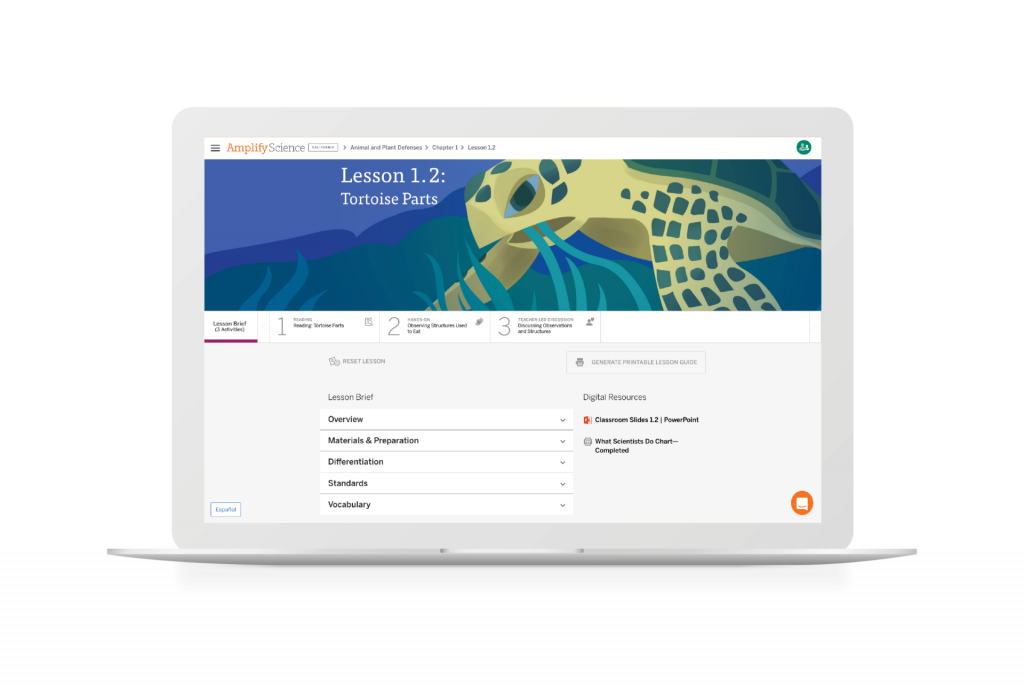
Lesson Overview
Reading this short summary is a great way to get a quick snapshot of the learning that will take place during the day ahead. It includes a short description of the lesson, student learning objectives, and an at-a-glance list of activities.
Where to find it? Log into the digital Teacher’s Guide and navigate to the lesson you want to teach by following this click path: Grade Level > Unit > Chapter > Lesson. Next, scroll to the Lesson Brief section and click Overview. This same information is also found in your printed Teacher’s Reference Guide.
Material and preparation tips
Also found in the Lesson Brief section of your digital Teacher’s Guide and printed Teacher’s Reference Guide is a complete list of materials that you’ll need to gather as well as step-by-step lesson preparation tips organized by:
- Before the Day of the Lesson
- Immediately Before the Lesson
- At the End of the Day


3-D Statements
Color-coded for easy readability and quick scanning, our 3-D Statements can be found at point-of-use for every unit and lesson, making it easy to pinpoint the exact SEPs, DCIs, and CCCs that will be targeted on any given day.
Where to find them? Log into the digital Teacher’s Guide and navigate to any Unit Guide or Lesson Brief and click the expandable box called 3-D Statements. A complete list of 3-D Statements can also be found in the back of any printed Teacher’s Reference Guide.
Coherence Flowcharts
These are another great tool for helping you visualize the flow of a unit and the connections between the questions that drive students’ experiences and:
- The evidence they gather
- The solutions they figure out
- The new questions they generate
Where to find them? Log into the digital Teacher’s Guide, navigate to your desired unit, scroll to the Unit Guide, and look in the Printable Resources section.

Support is always within reach
Your role as a pilot teacher is important. Your district is counting on you not only to evaluate how Amplify Science California works in your classroom, but also to pick a reliable and supportive long-term partner. We feel confident that we’re that partner, and we look forward to proving that to you during your pilot experience.
Just as it will be when you become a customer, support during your pilot will always be within reach through the following channels.
Pilot support coordinator
Your dedicated pilot support coordinator has extensive experience delivering training, rostering students, answering both pedagogical and technical questions, and delivering demonstration lessons. Said another way, he or she is here to help. So, don’t hesitate to reach out.
Who is my pilot support coordinator? Look for his or her contact information in the pilot support brochure that you received during your pilot implementation training.

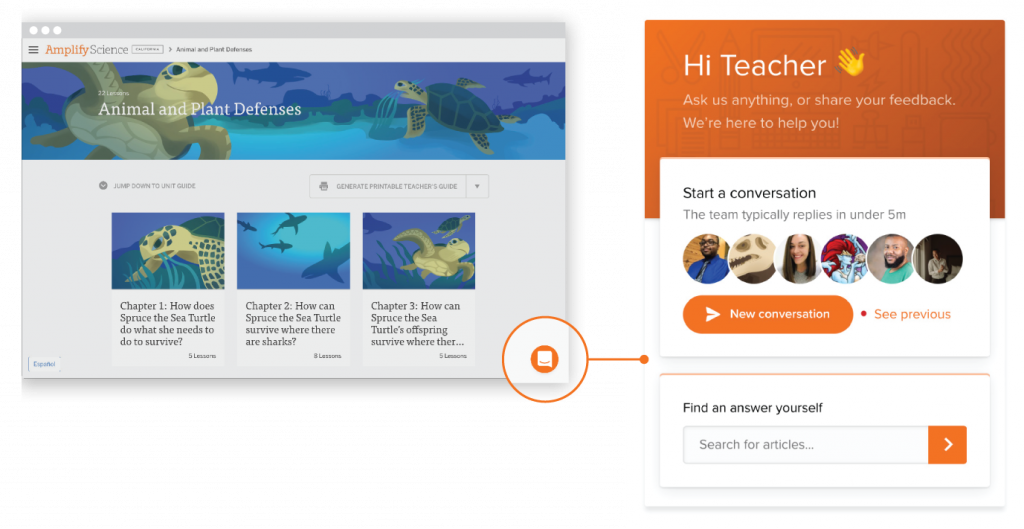
Intercom chat
In addition to traditional lines of communication, our Intercom feature gives you the ability to chat with our customer support, technical support, and pedagogical support teams in real time directly from the digital platform. This ensures that issues that arise in the classroom can be addressed as quickly as possible.
Support teams can be reached from 4 a.m. to 4 p.m. PST, Monday through Friday.
Our customer support, technical support, and pedagogical support teams can also be reached by email at help@amplify.com.
Support teams can be reached from 4 a.m. to 4 p.m. PST, Monday through Friday.


Welcome, Florida K–5 educators!
Amplify Core Knowledge Language Arts (CKLA) Florida is the program built on the latest Science of Reading research. Using a fundamentally different approach to language arts, Amplify CKLA Florida sequences deep content knowledge with research-based foundational skills.
Built on the science of reading
The cornerstones of reading comprehension in Florida assert that foundational instruction matters; knowledge matters; and curriculum matters. Amplify CKLA Florida is built on the Science of Reading. To support you before your review, we put together a Science of Reading Toolkit that will provide some insight into the research behind the Science of Reading. It will also show why we designed Amplify CKLA for Florida educators to mirror this critical research.


Foundational instruction matters
Amplify CKLA Florida’s first design principle is a research-based, explicit, and systematic approach to foundational skills that gets real results.
- Explicit.
- Learning isn’t left to chance. All 44 sounds and their 150 spellings in the English language are taught, practiced, and mastered, with ample opportunity for students to encounter each sound-spelling in diverse settings.
- Sequential.
- By moving in a sequence from easier to more complex in phonics and foundational reading skills, students master concepts before moving forward and gradually become more independent.
- Rewarding
- Learning to read should be fun. Decodable chapter books that feature dynamic plots and characters make kids want to read more. The engaging stories feature children who discover fossils, a grandmother who flies hang gliders, and more.
Knowledge matters
Amplify CKLA Florida’s second design principle is that reading comprehension depends more on relevant background knowledge than on mastery of reading strategies. Knowledge builds on knowledge.
Our approach to building background knowledge is based on three pillars often overlooked in other programs. It is:
- Content-specific.
Clearly outlined content objectives are specific and support the development of knowledge in history, science, literature, culture, and the arts. - Cumulative.
Topics and vocabulary connect within and across grades, allowing students to extend knowledge and revisit topics in increasing depth in later grades. - Coherent.
When curriculum is fragmentary and disconnected, students face repetitions as well as gaps that can hinder learning. An intentional design ensures the curriculum fits together as a whole. - Amplify and ReadWorks have partnered to provide Amplify CKLA Florida classrooms a way to expand knowledge in connected yet varied ways.
- ReadWorks
- Login Credentials for ReadWorks
Username: t.floridackla@tryamplify.net
Password: FLReviewer
- Login Credentials for ReadWorks
- ReadWorks

Curriculum matters
Amplify CKLA was built on the science of reading research to meet the all standards in a vertically and horizontally aligned, coherent, and cumulative knowledge-based curriculum. To encourage a broader view of literacy, our intentional design embraces history, art, science, music and other disciplines to ensure that all West Virginia students have a level playing field.
What’s included
Amplify CKLA provides engaging print and multimedia materials—accessible from anywhere—that are designed to provide a robust, literacy-rich foundation in every classroom.
Proven high-quality teacher materials
Teacher supports include research-based lessons that integrate foundational literacy skills and cross-curricular content knowledge.
- Teacher Guides
- Kindergarten Example Unit: Skills and Knowledge
- Grade 1 Example Unit: Skills and Knowledge
- Grade 2 Example Unit: Skills and Knowledge
- Grade 3 Example Unit: Integrated Skills and Knowledge
- Grade 4 Example Unit: Integrated Skills and Knowledge
- Grade 5 Example Unit: Integrated Skills and Knowledge
- Projectable lesson components
- Writing Studio (example from Grade 4)
- The Hub for digital components
- Vocabulary Lessons (example from Grade 1)
- Quests for the Core for Grades 3–5 (immersive, problem-based learning, example from Grade 5)
- Professional development website with model lessons and training resources
- Teacher Resource Site
- Assessments in Amplify CKLA Florida
- Trade Book Guides, and Novel Guides

Student materials
Engaging student resources include dynamic decodable chapter books and content-rich, cross-curricular Readers.
- Student Readers
- Activity Books
- Kindergarten: Skills: Unit 7 and Knowledge: Domain 7-12
- Grade 1: Skills: Unit 4 and Knowledge: Domain 1-6
- Grade 2: Skills: Unit 2 and Knowledge: Domain 7-12
- Grade 3: Unit 7
- Grade 4: Unit 8
- Grade 5: Unit 8
- Formative Assessments
- Poet’s Journal and Writer’s Journal (write-in resources for Grades 4–5, example grade 5)
- The Hub for digital components
Digital resources
Access the program’s online resources anywhere, anytime, from any device.
- Digital Hub
- Knowledge Builder animated videos (example from Grade 2)
- Sound Library songs and videos (examples from Kindergarten)
- eReader
- Vocabulary App
- Recorded Read-Alouds
- Professional development website
- Real-time program support via email, live chat, and phone
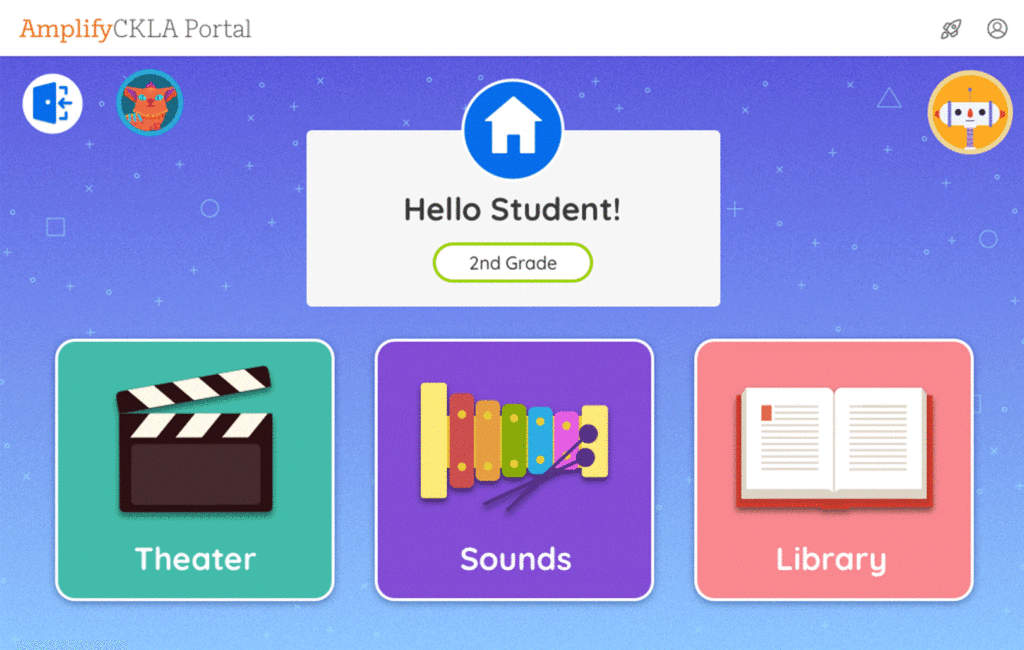

Hands-on phonics materials
Multisensory phonics and foundational skills resources give students the opportunity to practice key skills using diverse, fun approaches that build independence.
- Large and Small Letter Cards
- Spelling Cards
- Chaining Folders
- Digital Big Books
Florida Resources
- FL Program Guide
- Assessment Guide
- Poetry and Vocabulary Lesson Sampler
- Curriculum Maps
- Grade K Skills and Knowledge
- Grade 1 Skills and Knowledge
- Grade 2 Skills and Knowledge
- Grade 3 Integrated
- Grade 4 Integrated
- Grade 5 Integrated

Professional learning
Amplify employs a national cohort of more than 50 ELA facilitators, all of whom have experience as former classroom teachers and many of whom are former school and/or district leaders. Our professional learning team has decades of experience working with large districts across the nation. Amplify has experience supporting district launches over multiple years and has partnered with districts of all sizes nationwide. We partner deeply with districts and tailor professional learning to their unique needs.
Registration is now closed.
Thank you for your interest, but registration is unfortunately closed.
If you’re interested in hearing about other virtual learning opportunities this fall, please contact us at STEM@amplify.com.
About the event
The 1.5-day interactive retreat for math and science district leaders will be held at the Intercontinental Hotel in Chicago, Illinois from October 20–21, 2022. During the retreat, you will spend your time in interactive workshops while learning from thought-leaders, and will also have time to collaborate with other district leaders.
By attending, you will:
- Immerse yourself in the latest math and science education trends with thought leaders and subject-matter experts.
- Expand your leadership network while sharing challenges and success stories with other district leaders.
- Build action plans that you can bring back to your district in interactive workshops.
Logistics
We will have an optional welcome reception on the evening of October 19, and the event will run from 8 a.m. on Thursday, October 20 through 1 p.m. on Friday, October 21.
Participants will be provided breakfast, lunch, dinner, and snacks on the 20th and breakfast, lunch, and snacks on the 21st.
Amplify will cover on-site hotel and meal fees. Attendees are responsible for their own travel costs.

Meet a few of our speakers
Rebecca Abbott

Professional Learning Lead
UC Berkeley’s Lawrence Hall of Science
Eric Cross

Middle school science educator
Host, Science Connections: The Podcast
Kristin Gray

Math Content Consultant
Amplify
Sunil Singh

Storyteller and author
Desiré Whitmore

Senior Physics Educator
The Exploratorium
Jason Zimba

Chief Academic Officer, STEM
Amplify
The fine print
While we’ve made every effort to ensure that this invitation is consistent with the gift and ethics rules adopted by most jurisdictions, we recognize that many public officials are subject to rules that do not permit acceptance of this offer or require approval of other officials at your agency. If you do plan to attend our event, please ensure that acceptance of our invitation is fully compliant with your local rules regarding travel, lodging, and meals for events with vendors. Please let us know if we can provide any additional information to support your determination.
High-impact, evidence-based programs that help students make gap-closing gains in reading and math
Amplify Tutoring engages students and drives measurable academic gains. We partner with districts to ensure that children become confident, proficient readers and mathematical thinkers.

About Amplify Tutoring
Grounded in evidence-based practices and taught by caring, consistent tutors, our high-impact tutoring programs use high-quality instructional materials and data-driven mCLASS® products to support and engage students.
- Personalized, data-driven instruction
- Research-backed solutions tailored to support your Multi-Tiered System of Supports (MTSS) framework
- Customizable—before, during, or after school; year-long, semester-long, and summer programming
- Comprehensive, hands-on program management and staffing support
Amplify Literacy Tutoring supports K–6 readers through engaging, systematic instruction aligned to the Science of Reading and driven by mCLASS DIBELS® data.
Amplify Math Tutoring accelerates student achievement in grades 3–5 and builds students’ confidence in speaking, writing, and thinking mathematically.
More than a program: a true partner
Hear directly from district leaders and educators who’ve experienced the Amplify Tutoring difference. In these candid conversations, they share how we partner to deliver solutions for schools, gains for students, and support for teachers.


Our impact
Amplify Tutoring accelerates learning for students who need it most. Students in Amplify Tutoring are more likely to achieve outsized academic gains than similarly at-risk peers in the same schools who are not enrolled in the program.
Amplify Tutoring has been awarded the National Student Support Accelerator (NSSA) Tutoring Program Design Badge by Stanford University!
Learn moreReliable, easy-to-read data
With valid and reliable mCLASS assessments and real-time reporting always within reach, everyone involved in a child’s learning journey—from teachers and tutors to school leaders and families—can support student growth.
- Teachers have visibility into students’ data and all tutoring lesson content.
- School and district administrators receive regular tutoring attendance and progress-monitoring reports.
- Caregivers receive Home Connect letters and activities to help their child practice foundational skills at home.


High-quality instructional materials that power Amplify Literacy Tutoring
Amplify Literacy Tutoring includes high-quality resources to support students’ growth.
Targeted lessons generated by precise data
mCLASS Intervention is a research-backed, ESSA rated program that targets instruction based on students’ mCLASS DIBELS 8th Edition assessment results. With engaging lessons aligned to the Science of Reading that adapt based on students’ progress monitoring results, mCLASS Intervention streamlines time-consuming data analysis for teachers and makes sure that tutoring focuses on the literacy skills students need.


Transparency into student performance
mCLASS DIBELS 8th Edition is our nationally normed benchmarking and progress monitoring assessment tool to measure students’ foundational literacy skills. Students take the benchmark assessment three times a year and progress monitoring occurs every 7–10 lessons in between.
Proven impact for students who need it most
Boost Reading delivers targeted, adaptive practice that meets students where they are, while teachers get simple and meaningful insights into student progress. The program consistently moves students toward grade-level proficiency with just 30 minutes of use per week. Students can continue learning through Boost Reading between tutoring sessions or at home.

High-quality instructional materials that power Amplify Math Tutoring
Amplify Math Tutoring includes high-quality resources to support students’ growth.
Intervention Mini-Lessons aligned to core instruction
Amplify Desmos Math Mini-Lessons provide targeted intervention for students who require additional support or need more time. These lessons are aligned to the most critical topics throughout a unit; they enhance conceptual understanding while improving procedural fluency and application.

Valuable insights into student mathematical thinking
mCLASS Math is our benchmarking and progress monitoring assessment tool. Students take the benchmark assessment three times a year; progress monitoring occurs every 7–10 lessons in between.
Personalized practice—anytime and at home
Fact fluency practice provides students with regular practice beyond rote memorization. The program is used during tutoring sessions and is available on non-tutoring days. Students also have access to Boost Math’s independent learning activities, to continue practicing between tutoring sessions or at home.

Consultation and collaboration
Amplify Tutoring tailors our support for educators, schools, districts, caregivers, and state-level leaders, helping to realize the promise of high-impact tutoring programs. Through collaborative partnerships at every level, Amplify Tutoring engages communities in driving academic improvement and boosting attendance.
Our services can include:
Program design consultation: Amplify Tutoring offers expert program design consultation services to help schools and districts create effective and scalable high-impact tutoring programs.
Tailored onboarding: We provide customized training sessions for school, district, and state leaders, ensuring that Amplify Tutoring services are integrated smoothly into existing systems.
Ongoing professional development and coaching: Our program management includes continuous training, coaching support, and office hours with pedagogical experts to fortify the program’s success and adaptability.
Caregiver engagement: We offer resources and support for families and caregivers, including tips for at-home support, helping them stay informed and involved in their child’s progress.
Seamless communication and support: We provide transparent communication and engage all stakeholders—district and school leaders, teachers, caregivers, and students—to keep everyone aligned and informed.
Data reporting: We provide detailed reports and analytics to district and school leaders, giving them the power to monitor progress, make data-driven decisions, and celebrate successes.
Amplify Tutoring is part of a connected early literacy and math suite.
Our literacy and math suite programs are designed to support and complement each other in a Multi-Tiered System of Supports (MTSS). Learn more about our related programs.



Amplify Desmos Math Summer bridge program
This upcoming back-to-school season is sure to be anything but normal. It will be critical to use the summer months to tend to unfinished learning and prepare students for the math to come.


Thinking ahead
Amplify is offering free complete middle school and Algebra 1 units that support a number of typical summer school or bridge programs. The lessons are based on the highly rated Illustrative Mathematics program and designed to make problem-based instruction easier for teachers and more exciting for students.
Units available (June 2020)
Find a complete list of lessons available here.
Materials available June 2020
- Complete unit Teacher’s Guide available online or for printing
- Delivery format: Google Docs
- Complete unit Student Edition pages available online or for printing
- Delivery format: Google Docs
- Digital lessons
- Delivery format: Desmos
- Pre- and post-assessments
- Delivery format: Desmos and Google Docs

Making the materials work for you
We’re offering free, asynchronous professional learning resources to help your teachers quickly get up to speed with the Amplify Desmos Math lessons. These resources include:
- Quick-start videos for each unit, including a unit overview and a walkthrough of the print and digital lessons.
- Pacing suggestions for a variety of summer school scenarios.
- Regularly scheduled office hours in July and August with an Amplify Desmos Math product expert.
Proposed learning models


Samples
Printable Google Docs
Including Teacher Edition pages, Student Edition pages, and practice
Digital lessons powered by Desmos
Five fundamentals of high-quality materials in action
So what do we mean by high quality instructional materials, or HQIM? We can start with how EdReports.org, the leading third-party reviewer of curriculum, defines it:
- Materials that help educators teach to rigorous standards.
- Materials that are relatively easy to use.
Beyond these important starting points, what does high quality curriculum look like in action—in real classrooms? Here are five fundamentals of how we think about it at Amplify.
1. It looks like ALL students engaged and thinking.
Students at all levels are able to engage deeply with important questions, to think deeply, creatively, and for themselves.
There’s a commitment to fairness and a “low floors/high ceilings” approach: all students get the scaffolding they need to grapple with the things great minds in the subject area find important, beautiful, and true.

2. It looks like teachers using materials that work harder for them.
Teachers find the program easy and enjoyable to teach. The rich content inspires them to do some of their best teaching.
Teachers also have powerful tools and data that enable them to understand their students more deeply and give more precise feedback.

3. It looks like a vibrant classroom community.
The pedagogy of the program supports the formation of a classroom community where teachers and students wonder, share, debate, and learn together.
It looks like a model of civil society.

4. It looks like a culture of continuous learning for educators, districts, and publishers.
Professional development is not one and done. The district not only provides teachers with high-quality training upfront, but also ongoing ways for teachers to compare notes and share best practices in implementing a new program.
The publisher also collaborates with districts on the initial training as well as provides ongoing support to teachers with on-demand resources, customer support, and online communities. Both the publisher and district continuously respond to teacher feedback and data to keep improving the program and classroom-level implementation.
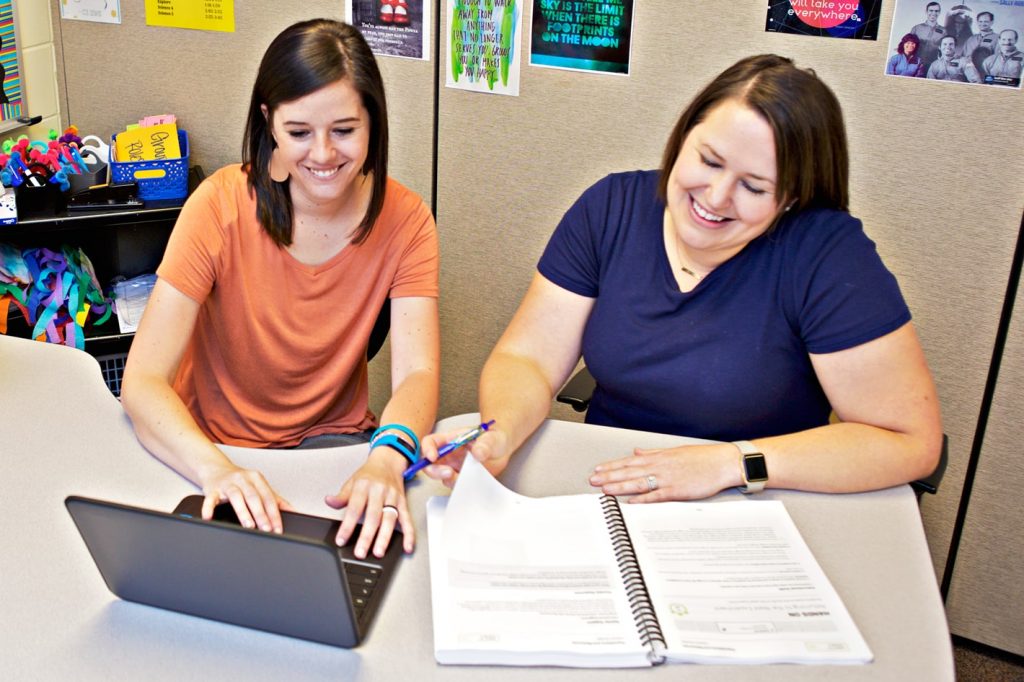
5. Finally and most importantly, it looks like improved learning outcomes for students.
The program has demonstrated the ability to raise student achievement. It may start with growth on benchmark assessments and then, over time, you can see it on state tests.
The district continues to track how well the program is helping to drive strong learning outcomes, and the publisher also continues to seek ever higher levels of efficacy through ongoing product improvement and measurement.
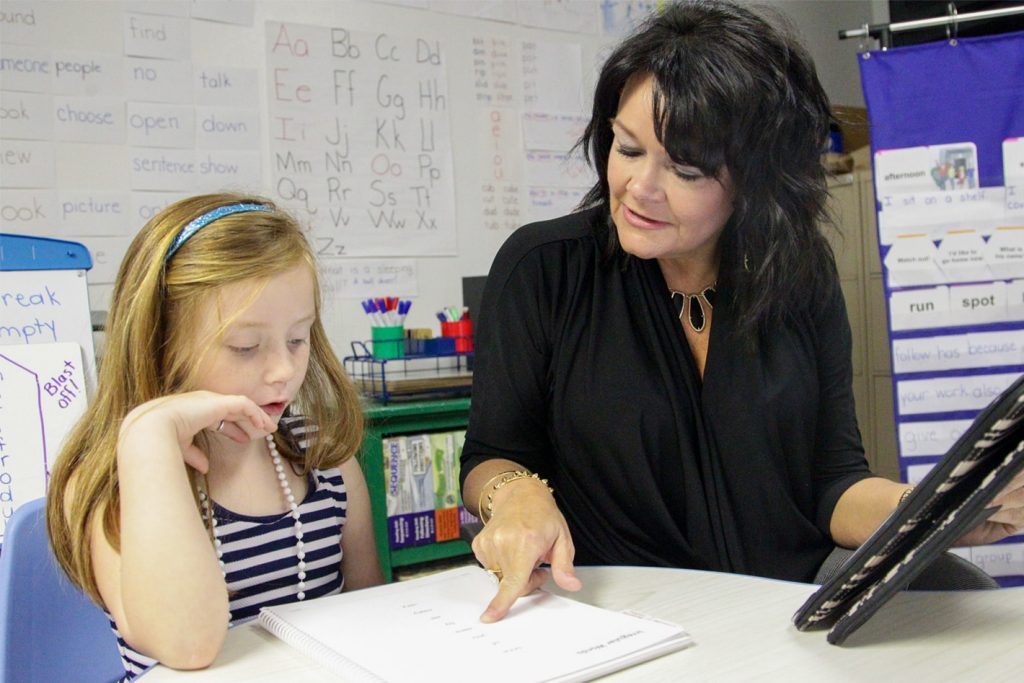
Welcome, Jordan K-8 reviewers!
Our new activity page: Inside the renovation
Our new activity page: Inside the renovation
Slow and steady progress at middle-of-year highlights the urgency of data-driven instruction.
Slow and steady progress at middle-of-year highlights the urgency of data-driven instruction.
AI Features
S4 – 03: LIVE from NCTM with Bethany and Dan
In this episode, co-hosts Bethany Lockhart Johnson and Dan Meyer are LIVE with more than one hundred Math Teacher Lounge listeners at the recent National Council of Teachers of Mathematics conference. Listen in as they answer the pressing question: Who is the best teacher in film or television?
Explore more from Math Teacher Lounge by visiting our main page.
Presenter (00:00):
Ladies and gentlemen, from Math Teacher Lounge, we have Bethany Lockhart Johnson and Dan Meyer! <cheering>
Bethany Lockhart Johnson (00:08):
Doesn’t go well that the door was locked. Like, I could not get in! <Laugh>
Dan Meyer (00:12):
Yeah. Gotcha. All right. We’re gonna sit a little bit. Let’s see how that works—
Bethany Lockhart Johnson (00:16):
Hi!
Dan Meyer (00:16):
Yeah. I think we’ll stand up? Or whaddaya think, sit…?
Bethany Lockhart Johnson (00:19):
Should we stand? Hi.
Dan Meyer (00:22):
Hello. Great to see you folks. Yeah, I can hear you.
Bethany Lockhart Johnson (00:25):
Can you hear me? That’s—I know YOU can me. Can you hear me OK? OK! We’re here. Hello. Thank you for like, lining up and coming out and being here. Thank you!
Dan Meyer (00:35):
Means so much to me that you could be here for me, on my show, with Bethany Lockhart Johnson, my co-host. <Audience laughs>
Bethany Lockhart Johnson (00:40):
The hour has just started.
Dan Meyer (00:42):
We’re just getting going. Yeah. If you folks have heard the podcast, you don’t know how much gets cut out. And it’s like, mostly me just having, you know, anxious nerves and saying something silly and then we cut it out and we can’t do that here today. So it should be real fun for all of us, I think. Yeah.
Bethany Lockhart Johnson (00:55):
It’s not true. It’s mostly dancing. “Bethany, can you stop talking? Bethany?” Cause it’s mostly—
Dan Meyer (00:59):
“It’s my turn. It’s my turn! Bethany <laugh>! I haven’t been heard for a while.”
Bethany Lockhart Johnson (01:02):
Dan. We’re at an in-person conference.
Dan Meyer (01:05):
In-person BIG conference, I would say. I’d say a big conference. Yeah.
Bethany Lockhart Johnson (01:08):
And have you been to the Amplify booth?
Dan Meyer (01:11):
I have! Have these people? There’s a claw machine with free socks.
Bethany Lockhart Johnson (01:16):
Yeah. You’re saving me socks, right? That’s what you’re saying. <Laugh> I mean, it’s exciting. How has your conference been so far?
Dan Meyer (01:21):
So far it’s been a blast. I feel fed. I feel like the community’s been awesome. How are you feeling about it?
Bethany Lockhart Johnson (01:29):
OK. Let’s talk about me for just a second.
Dan Meyer (01:31):
Yeah. Talk about you.
Bethany Lockhart Johnson (01:31):
Last night, Dan, was the very first night that I was away from my toddler. <Audience: Aw!>
Dan Meyer (01:38):
Big commitment being here. Thank you.
Bethany Lockhart Johnson (01:40):
I got super-emotional walking back to the hotel after dinner, and then I got in my room, <laugh> I put on pajamas, and I turned on music. I slept so good!
Dan Meyer (01:50):
Yeah. <Audience laughs> Give it up for no kids! <Audience laughs> Hey!
Bethany Lockhart Johnson (01:55):
I love him so much. But I slept all the way through the night. Oh, by the way, I ordered room service in the morning.
Dan Meyer (02:01):
On Amplify.
Bethany Lockhart Johnson (02:01):
That bill’s coming. But it’s been a great conference and I’m so delighted to be here in person and to get to share energy…and hopefully that’s all we’re sharing today. Y’all got your tests, right? Yep. Sharing energy and community today. Because we know it’s been hard. Hardness. Hard.
Dan Meyer (02:25):
Yeah.
Bethany Lockhart Johnson (02:26):
Years. Hard. And to be in person, I know conferences reinvigorate me and I go back into my educational spaces feeling revitalized with new connections and new ideas to try. So yeah, I’ve been excited to be here. And thank you all for being here.
Dan Meyer (02:40):
Yep. I don’t care if I get six different strains of Covid here. I’m just thrilled to be here. <Audience laughs> I don’t know if you’ve had the same feeling, though, Bethany, you folks…I’m a little bit confused to some degree about what we’re doing. I just wanna be really transparent. This is my sarcastic voice but I’m being sincere here. It kind of feels like we’re in a little bit of a time capsule. Like we all got in a time capsule in 2019 and, you know, you open it back up and it’s like, OK, so we’re still, you know, talking about X, Y, or Z protocol for establishing classroom routines or whatever. And I’m like, OK! Like, I loved that in 2019! But I do admit, I’m still trying to figure out a little bit like, what are we doing now? What’s our relationship to the world out there? Things are very different. I have had some great sessions that I’ve enjoyed. I’m also like, still waiting for a session to draw a little blood. Do you know what I mean? Like there’s been sessions…no? OK. You’ve been in these sessions where it’s like, “Oh, ow.” Like, and you look down and there’s and there’s blood there. It’s like, I thought I knew what we were up to. Like, I thought I knew what teaching was and how we relate to the world. I dunno, like in any Danny Martin session in 2019, “Take a Knee” was one, where I was like, “Oh, OK. Like, I’m not as hot as I think I am here. Like, I’m part of a system.” That kind of thing for me draws blood. And I haven’t been in one of those yet. Been some great sessions. I’m a little hopeful that today we draw a little blood and think about what we’re doing here, is my hope here, if that’s OK. So Bethany’s gonna moderate that impulse and she’ll be the fun one and I’ll be the blood-drawing one.
Bethany Lockhart Johnson (04:05):
No, I don’t…that metaphor doesn’t speak to me personally. But what I will say is, I get what you’re saying about really wanting to be in that room where there’s like this synergy happening. No promises about that today other than—
Dan Meyer (04:18):
I promise. <Audience laughs> Go on.
Bethany Lockhart Johnson (04:20):
Other than I get what you’re saying. I’ll find my own metaphor that does not involve bloodshed, but.
Dan Meyer (04:25):
Sure. There’s a lot of ways we we could go about this today. And the one that I’m excited about is, you know, we could like, you know, analyze some results from students, and talk about what went into that. Look at classroom video. Lots of possibilities. But here’s what we’re up to today. Hope you’re into it. Which is, we are here in the heart of the entertainment industry. You know, Tinseltown! Um, the Big Apple! Uh…
Bethany Lockhart Johnson (04:47):
No!
Dan Meyer (04:47):
Come on. What do you got here? Um…
Bethany Lockhart Johnson (04:51):
It was daytime at night. Like the lights were so bright.
Dan Meyer (04:54):
The City of Lights.
Bethany Lockhart Johnson (04:55):
There was a movie premiere outside my hotel room, which I was not invited to, unfortunately. But so what are we doing today?
Dan Meyer (05:01):
So here’s what we’re doing. We are gonna settle, once and for all, a question you have not asked yourself yet, perhaps, but will want to know the answer to in a moment. Which is: Who is the best teacher in all of film or television? OK? We’re gonna do that. It’ll be fun. But I hope that in debating this a little bit with a special guest we’ll bring up in a moment, that we will start to uncover some truths about what makes good teaching. How that’s different from teaching as we see it in movies and tv. Why middle-class America wants teachers to look a certain way in movies and tv. What all that means. And it’ll be awesome. I think. I’m hopeful it’ll be awesome. So what we did here is we’ve invited eight people. Eight folks you people may have known. You’ve been in their sessions today, in this conference, perhaps. And asked them: Who’s your fave? Like, we might have our favorites, but we wanted to democratize it a bit. So asked some cool people who you folks like, who are very smart and thoughtful about teaching: Who’s your favorite teacher?
Bethany Lockhart Johnson (05:58):
A few of whom are in this room. Thank you for your submission.
Dan Meyer (06:00):
Thank so much. Yeah. We’ll see what happens here. <laugh>
Bethany Lockhart Johnson (06:03):
As they shrink down.
Dan Meyer (06:03):
Yeah. Might draw some blood that I don’t mean to right now. We’ll see. OK.
Bethany Lockhart Johnson (06:06):
That metaphor, what IS that??
Dan Meyer (06:07):
Yeah. Yeah. I love it. I’m still going with it. <laugh> And you folks will be a huge part of this. THE part of this, really. So what will happen is I’ll share with you our first nominees. A few of us will make a case for our favorites, or least favorites, as the case may be sometimes. And then by applause, by acclamation, you folks will decide who wins and advances to the next round. Start with eight, move to four. You folks know math.You know where this goes. OK.
Bethany Lockhart Johnson (06:34):
No, keep going. Keep going.
Dan Meyer (06:36):
Two, then one.
Bethany Lockhart Johnson (06:36):
Yeah. Got it.
Dan Meyer (06:37):
Then a half of it. No?
Bethany Lockhart Johnson (06:38):
He had to school me on the making of brackets. But we got it. Yeah.
Dan Meyer (06:41):
How brackets work.
Bethany Lockhart Johnson (06:41):
But we got it. March Madness, what?
Dan Meyer (06:44):
Yeah, in order to do this right, we had to bring up—all the folks that you’ll see are also former Math Teacher Lounge guests, or like, just fan favorites. And we’re also bringing up a former Math Teacher Lounge guest to help us decide this and debate this in a respectful manner.
Bethany Lockhart Johnson (06:59):
New dad.
Dan Meyer (07:00):
New dad.
Bethany Lockhart Johnson (07:01):
You see where my brain’s still at? I miss him. <Laughs>
Dan Meyer (07:03):
Friend from San Diego. Really cool teacher.
Bethany Lockhart Johnson (07:06):
Incredible teacher.
Dan Meyer (07:06):
Works at Desmos and Amplify. And I just want you to welcome up your friend and mine. Chris Nho!
Bethany Lockhart Johnson (07:11):
Chris Nho!
Dan Meyer (07:13):
Come up, Chris. Let’s go, buddy. We didn’t talk about it, but did you want to do the cornball stuff too?
Chris Nho (07:22):
Wow. Would I love to do—
Bethany Lockhart Johnson (07:23):
And then the door could be locked! And then you have to wait and like, just—
Chris Nho (07:27):
Yeah, I’ll skip that part.
Bethany Lockhart Johnson (07:28):
Hi. Welcome. You’re here. We’re here in person.
Chris Nho (07:30):
Very glad to be here. Thank you all for having me.
Dan Meyer (07:33):
Tell me who you are.
Chris Nho (07:34):
My name is Chris Nho. I live in San Diego. I’m a new dad. A three month old, just had. Yeah, she’s actually here at the conference with us in the hotel room. And I promise you she is not by herself. She is with…come on. I was like, “Hey, just gimme one hour. I’ll be right back. I have to do very important work.” But yeah, I think I got invited here because I have opinions and I’m willing to draw…some…blood.
Dan Meyer (08:02):
There we go! Two outta three! We’re good on the metaphor now.
Bethany Lockhart Johnson (08:06):
We’re so glad you’re here. If you haven’t listened to the episode where Chris and Molly and some other public math folks share their ideas and ideas of how to take math out into the world, please listen, because we had a blast.
Dan Meyer (08:19):
Inspiring work. Really inspiring work. Very cool. Cool. OK. Right on. OK.
Bethany Lockhart Johnson (08:23):
Let’s do this!
Dan Meyer (08:24):
Let’s get started here. Yeah! <Audience cheers> Yeah. And we might ask you who your favorite teacher is, who’s missing from our list of eight? We might have forgotten some people. Anyway. All right. So here’s our first two. Our first two are nominated by way of, let’s see, um, Mandy Jansen is a professor at the University of Delaware. Got some awesome talks here this week, a Shadow Con talk last night. She’ll be nominating one. And also, um, Lani Horn is a professor at Vanderbilt, also extremely cool, prolific author and speaker, just all-around great human and friend of teachers everywhere. And she’ll nominate another in this bracket, which is the Northeastern Comedy bracket, Northeastern comedy bracket.
Bethany Lockhart Johnson (09:06):
It just worked out that way.
Dan Meyer (09:07):
Yeah. Here it is. Here is Tina Fey in Mean Girls.
Tina Fey in Mean Girls (09:12):
“OK. Everybody close your eyes. All right. I want you to raise your hand if you have ever had a girl say something bad about you behind your back. Open your eyes. Now close your eyes again. And this time I want you to raise your hand if you have ever said anything about a friend behind her back. Open up. It’s been some girl-on-girl crime here.”
Lani Horn (09:52):
I am nominating Sharon Norbury from Mean Girls as the best movie math teacher. She is an awesome teacher who is always there for her kids. She always sees the best in them. She shows that she can forgive even some pretty bad behavior, if she sees that kids are trying. She’s a strong feminist who makes sure that smart girls don’t dumb themselves down just to impress boys.
Tina Fey in Mean Girls (10:22):
“Katie, I know that having a boyfriend may seem like the most important thing in the world right now, but you don’t have to dumb yourself down to get guys to like you.”
Lani Horn (10:30):
She’s also super hard-working. She works three jobs. She’s always there for the kids. She plays piano in the talent show and takes them to Mathlete competitions. And she’s also socially aware. And when things go really badly among the girls, she does some pretty creative things to try to get them to be kinder to each other.
Dan Meyer (10:54):
OK. That’s one.
Bethany Lockhart Johnson (10:55):
Helen Case.
Dan Meyer (10:57):
All right. Settle down. Settle down. Settle down. All right.
Bethany Lockhart Johnson (10:59):
Piano too!
Dan Meyer (11:00):
Bethany’s already trying to bias people here. All right. Chill out. Hold on. So next one is Mandy Jansen with Jack Black from School of Rock. Uh-oh. Uh-oh.
Jack Black in School of Rock (11:09):
“What was your name?”
Kid in School of Rock (11:10):
“Katie.”
Jack Black in School of Rock (11:11):
“Katie. What was that thing you were playing today? The big thing.”
Kid in School of Rock (11:14):
“Cello.”
Jack Black in School of Rock (11:15):
“OK. This is a bass guitar and it’s the exact same thing, but instead of playing like this, you tip it on the side. Chellooooo! You’ve got a bass! <Laugh> Try it on.”
Mandy Jansen (11:25):
And I’m nominating for best teacher in a film Jack Black as Dewey Finn playing Mr. Ned Schneebly in the film School of Rock. So why this portrayal? First of all, playing a longterm sub. Those are so hard to find right now. <Audience laughs> Really hard. And then he teaches using class projects. That’s brilliant. Integrated learning. And then love this. He gives students roles and tasks that are differentiated and align to the specific strengths that each student has.
Kid 2 in School of Rock (12:05):
“I can also play clarinet, you know!”
Jack Black in School of Rock (12:06):
“I’ll find something for you when we get back from lunch. I’ll assign the rest of you killer positions.”
Mandy Jansen (12:13):
And the film culminates in a performance of a collaborative song that they all wrote and performed together. And the students experience that collaboration and teamwork and creating something beautiful is much more important than winning first place. And finally, one of the songs that the character sings in the film is “Math is a Wonderful Thing.” Can’t beat that.
Dan Meyer (12:40):
All right. That’s tough. That’s tough. So here’s the deal. What we have right now is just a quick minute—so Bethany, you ranked, we all ranked our own faves here outta the list of eight. And Bethany put Jack Black in School of Rock a bit higher than Tina Fey in Mean Girls.
Bethany Lockhart Johnson (12:54):
Missed the piano part though.
Dan Meyer (12:55):
And Chris, vice versa here. So Bethany, would you start us off and just make a quick case here for Jack Black versus Tina Fey?
Bethany Lockhart Johnson (13:01):
OK. So here’s what I’m thinking. There’s been rumor that maybe they’re putting less than credentialed people into classrooms to fill teaching gaps. I mean, just rumor. And so here’s this guy who is a rocker. He is not a substitute. He has no teaching training. And yet he goes in there and it turns out that he has the ability to see students’ potential and to recognize their unique abilities. And like Mandy said, he really tapped into, like, he saw them and said, “No, more is possible for you than what you think is possible.” And there’s like real sub anxiety. When you walk in, you can either be like, happy there’s a sub, but I was usually really nervous. Right? And he goes in and he makes that classroom into a home.
Dan Meyer (13:53):
Wow.
Chris Nho (13:54):
Wow.
Dan Meyer (13:56):
Chris, speak on it. Tina Fey needs you. Chris.
Chris Nho (13:59):
Tina Fey. Here we go. I’m gonna argue here that—when was that movie made?
Dan Meyer (14:03):
T is for terrific. I is for Interesting.
Chris Nho (14:06):
Decades ago. And I’m gonna argue that Tina Fey was very progressive for her time. OK, let’s talk about social emotional learning. Hello. <Audience laughs> Love that. Right? Stand up if, I mean, she’s getting people to talk about their emotions. And there’s a curriculum. But let’s just pause, because that’s not what’s really happening in the classroom right now. So social emotional learning, I think she’s, she’s got that a lot. And then number two, you know, if you remember the plot of Mean Girls a little bit, she gets her name written in that Burn Book. Like she sees what they say about her. Restorative justice. Let’s go. <Audience laughs>.
Dan Meyer (14:38):
Whom amongst us. Yes.
Chris Nho (14:40):
You write Mr. Nho in the Burn Book?? Well, your grade book is gonna look like a Burn Book! OK? <Audience laughs> Tina Fey, Tina Fey, she was like, “No, you know, know what? I’m actually gonna spend more time with you. You’re gonna become a mathlete.” And Lindsay Lohan discovers—she drops the most iconic line in all of math education. “The limit does not exist.” Thank you, Tina Fey, for that. For that gift.
Dan Meyer (15:04):
Bless. Bless you. Tina Fey. Wow.
Bethany Lockhart Johnson (15:05):
Oh, man. Wow.
Dan Meyer (15:09):
Let’s see what the people say here. I do wanna just add one quick thing about—it’s interesting to me how often in these movies—just kind of go in a little bit, zoom out just a minute—how often it’s a teacher who has no training as a teacher. <Bethany laughs> I am kind of curious why it is. Like, those are the movies that get hot, that get made. Again, these are all kind of a mirror of the taste of the moviegoing public. You know what I’m saying? Like, these, these are not movies—I wanna believe they are made for me and for us as teachers. But they are not. There’s not enough of us to justify, you know, Jack Black’s, you know, M&M budget or whatever he’s got going on in his trailer or whatever. That needs to be for everybody in middle-class America. So what is it about middle-class America that wants to see teaching as something that anybody can do? Just like, you know, just, just run up there in your van and make it happen.
Bethany Lockhart Johnson (15:54):
Magic magically manifests.
Dan Meyer (15:56):
Yeah. Manifest. Yeah. That’s just interesting to me. I just toss that out there as some red meat. Let’s see what the people say here. All right, OK, so you’re ready. Let’s get the bracket going here. The question is Tina Fey versus Jack Black. You had a moment here. Just whisper to someone real fast who you’re going for here real quick. What are you thinking here? <Crowd murmuring> All right. Crowd’s buzzing. Crowd’s buzzing. Would you folks…? All right. Bring it back. Go ahead and make some noise for Tina Fey. <Crowd cheers> OK. OK. Make some noise for Jack Black! <Crowd cheers> Judges say Tina Fey. Tina Fey moves on. All right. All right.
Chris Nho (16:44):
Stunned. I’m stunned. I’m speechless.
Bethany Lockhart Johnson (16:46):
Tina Fey moves on. Wow.
Dan Meyer (16:48):
This has exceeded my expectations in terms of having some fun, but also getting deep, getting deep and real about teaching. I’m into this right here. Yeah. What’s up?
Bethany Lockhart Johnson (16:54):
That’s the goal. That’s the goal. OK. You wanted blood? Oooh, this next matchup might just be where that blood comes forth! OK. Stretch. Warm up. Dan Meyer, who’s up next?
Dan Meyer (17:11):
We’ve got the animated/animatronic round here in the Southeast. And repping the two contestants here, who do we have? We have Allison Hintz, professor, author outta Washington, as one of the two nominators. And the other nominator is one of my heroes, though we’ll find out very wrong about this nomination, Jenna Laib, who’s in the crowd, and I’m trying not to make eye contact here. <Laugh> And here are the two nominations. A couple minutes each. And then we’ll chat about it. And one of us will probably die. But we’ll see how it goes.
Allison Hintz (17:50):
A long, long time ago, in a galaxy far, far away, MTL, we began learning from the Jedi Master of Teaching. With the Socratic and experiential approach. With unparalleled mindfulness, compassion, and humility. The best teacher in TV and film, Yoda is. <Audience laughs> Yoda lives the values we share as teachers and learners. He humbly comes alongside us as we construct new knowledge.
Yoda (18:29):
“You must unlearn what you have learned.”
Allison Hintz (18:32):
Yoda allows us to struggle and sees mistakes as critical to learning.
Yoda (18:39):
“The greatest teacher, failure is.”
Allison Hintz (18:43):
Yoda values curiosity and reminds us of the beauty and joy of teachers learning from children.
Yoda (18:52):
“Truly wonderful, the mind of a child is.”
Allison Hintz (18:59):
MTL! Join the Resistance! Let the force flow through you in declaring, the best teacher in TV and film, Yoda is.
Dan Meyer (19:18):
Give it up for Allison Hintz! All right! <Audience applauds>
Bethany Lockhart Johnson (19:20):
Alison! And to have that on hand too, which Is kind of perfect.
Bethany Lockhart Johnson (19:26):
Just to be clear, the helmet is not a part of a Zoom background.
Dan Meyer (19:29):
You may evaluate the quality of the nomination based on the costumes of the nominator. That is acceptable. That’s acceptable.
Bethany Lockhart Johnson (19:35):
That is a REAL HELMET.
Dan Meyer (19:35):
All right. The next nominator here, this one is from Jenna Laib, math coach, all-around stellar human. Here we go. This is Ms. Frizzle.
Ms. Frizzle (19:42):
“Single file, class. Our rotten field trip has only just begun.”
Jenna Laib (19:47):
And I think that the best teacher from TV or movies is Ms .Valerie Frizzle from The Magic School Bus. First and foremost, Ms. Frizzle believes in her students. She encourages them to take an active role in their learning, and also to advocate for change in their local community. For example, there’s an episode where there is a logger who’s gonna cut down a rotting log that would benefit the local ecosystem. And the students figure out a way to convince him to leave the log so that all of the animals and the plant life can benefit. She orchestrates really challenging situations for these students, and she allows them the space to ask questions and engage in problem-solving and puzzle their way out of these really, really difficult scenarios. Ms. Frizzle has unmatched pedagogy. She’s bold, she’s innovative, and she’s a major proponent of experiential learning. So these students are heading straight into a storm to learn about weather systems. <Audience laughs> These students are heading into the human body to learn about digestion and disease. They literally get baked into a cake to learn about some chemistry and reactions.
Children in The Magic School Bus (20:54):
“What’s happening?” <Audience laughs> “Why is it suddenly getting so hot?” “Maybe it’s because the floor is on fire!” <Audience laughs>
Jenna Laib (21:02):
This pedagogy is all led by her outstanding catchphrase, which is:
Ms. Frizzle (21:06):
“Take chances; make mistakes; get messy!”
Jenna Laib (21:14):
From her pedagogy to the classroom community that she creates, Ms. Frizzle is an inspiration, and that is why I think that she is the best teacher from TV or film. <Audience applauds>
Dan Meyer (21:25):
Right on! Give it up for Jenna. Give it up for Jenna. All right. I’m gonna take first pass at this. Chris knows my argument already, so I’m gonna take this here. I see some of you are feeling how I’m feeling on this one. OK, so I don’t have tons to say in favor of Yoda. I think it was all true what Allison said. I think the costume was banging. It was awesome. So there’s all that, but I have more to say against Ms. Frizzle than for Yoda.
Bethany Lockhart Johnson (21:48):
No, no, no. Wait a second!
Bethany Lockhart Johnson (21:49):
Let’s let it happen. Bethany, I’ve come prepared.
Dan Meyer (21:54):
I may have made a misstep here, I realize.
Bethany Lockhart Johnson (21:56):
I’ve come prepared.
Dan Meyer (21:56):
So I think Jenna is all correct. I think those clips spoke for themselves. I think that what they add up to, to me, is not “great teacher,” but more “someone who should be locked up.” <Audience laughs> Or at the very minimum, “someone who should be kept away from children.” <Audience laughs> Do not let that woman around children. I mean, check it out. Look, I don’t wanna throw down credentials. I’ve been to grad school, though. I know how this works. When your brain is stressed, you get these—all the cortisol happens. Your working memory shrinks up. You cannot learn when you’re stressed. And those kids, like whatever lesson Ms. Frizzle is teaching by sending them into an oven, I repeat, an oven <audience laughs>, like, they’re not gonna learn anything ’cause their brains are freaking out with stress and fear. OK?
Bethany Lockhart Johnson (22:41):
“What’s happening??”
Dan Meyer (22:43):
“What’s happening? Am I on fire? Well…I’m learning lots, though! Sure is magical!” <Audience laughs> It’s like, “No. Get that woman out of a classroom.” That’s my opening and closing argument. Right? There’s all it is.
Chris Nho (23:01):
All right. All right. All right.
Bethany Lockhart Johnson (23:02):
Chris knows.
Chris Nho (23:03):
I’ve got, I’ve got lots to say. First off, I think Dan was in charge of the editing of those video clips. So let’s let that be—you know, let the record stand. <Audience laughs>
Dan Meyer (23:11):
Where’s the lie though? Where’s the lie?
Chris Nho (23:14):
And, you know, second, I think, um—this is the guy up here saying, “I wanna see blood.” You know? And then he has a teacher who literally takes the students into a blood cell and, and you get a little scared! You get a little worried for the students, you know? So I just don’t get it, Dan. This or that. OK? I think Ms. Frizzle—so I actually went to a project-based learning school. I taught at a project-based learning school. And the best thing about it is like, your learning, it doesn’t just stay in this box of math lesson or writing lesson, history lesson. And I think with Ms. Frizzle, like you can’t help but learn things because you are getting baked in a cake. <Audience laughs> Yeah, it is a little scary. And I imagine there’s cortisol and things happening, but guess what? Probably the next episode, they go into their own brains and explore what’s happening. That kind of thing. You know?
Dan Meyer (24:07):
The kids that survived, just be clear. <Audience laughs>
Chris Nho (24:10):
Yeah. OK. Would I want Nora, my three-month-old, to be babysat by Ms. Frizzle? Maybe not. <Audience laughs> But what I have to say about Yoda is Yoda maybe wins the best tutor award. Give it up for Yoda’s Best Tutor Award.
Bethany Lockhart Johnson (24:24):
Oh, yeah…
Chris Nho (24:25):
That ratio’s looking really nice. I could teach the heck outta Luke Skywalker. OK? But 20 little Luke Skywalkers running around. I’m not sure. OK?
Dan Meyer (24:34):
Luke did survive the training, though. <Audience laughs> So that’s awfully nice to say about it. All right, Great words from Chris here. I’m still not convinced. We’ll see how you’re convinced here. Would you whisper to someone where you’re leaning here? Frizzle or Yoda? <Audience buzzing>
Chris Nho (24:47):
I tried. I tried.
Dan Meyer (24:53):
All right. That’s enough of that. Let’s hear it folks. Give it up for Yoda. <Audience cheers> Give it up. Give it up. You. Give. It. Up.
Chris Nho (25:05):
Hey, next. Next.
Dan Meyer (25:06):
All right. All right, all right. <Mutters> Give it up for Ms. Frizzle. <Audience cheers louder> I dunno, it’s pretty close. Call a tie. Maybe Yoda? Yoda by nose? <Audience laughs> All right. All right. Let’s…let me see who’s it. Let’s get the people advancing here. I’ll keep on moving here.
Chris Nho (25:26):
As you’re doing that. Um, Dan ranked Ms. Frizzle last in his personal ranking. And I ranked Ms. Frizzle very high, so we knew this one would be spicy,
Bethany Lockhart Johnson (25:36):
<laugh> Spicy it was. Are you having a good time so far? <Audience cheers> So while we love seeing these images and we love seeing these video clips, at the core, what are these things about how teachers are portrayed? And how accurate is that to our real lives? I mean, besides the cake part, right? That my chemistry class did often feel like I was on fire. I was so stressed in it. Um, we’re ready?
Dan Meyer (26:05):
Yep. Great. We’re ready, we’re up here. So the next two nominees are coming to you folks from Tracy Zager, who is the editor of my book, forthcoming in 2027 at the earliest and 2032 at the latest. And also your very own Zak Champagne from Florida, here in the room. Hey, Zak. Zak, let’s see who the nominations are. I’m gonna skip past that, didn’t work out so well for me. Here it is. This is Marshall Kane from the TV show Community.
Michael K. Williams in Community (26:32):
“You two complete your case to the class and let them decide your grades.”
Joel McHale in Community (26:37):
“Professor, thank you.”
Michael K. Williams in Community (26:40):
“It’s not a favor, Mr. Winger. Man’s gotta have a code.”
Joel McHale in Community (26:44):
“Awesome.”
Zak Champagne (26:46):
This is a pitch for an underdog. This teacher didn’t stand on desks or encourage his students to follow their musical passions. In fact, this teacher was seen only in a few episodes of my favorite TV show of all time, Community, Community has set at Greendale Community College in Colorado. And in season three, we get to meet Dr. Marshall Kane, a biology professor whose story is an inspiration to anyone who just takes the time to look and listen. Dr. Marshall Kane slowly earned his PhD while in prison, serving a sentence of 25 to life. In his classroom, he inspires students to love biology, question why LEGO has become so complicated, and randomly pairs his students for group projects to ensure no one feels left out. His greatest performance comes when a group of students believe their yam project was intentionally sabotaged. Dr. Kane took this as an opportunity for some trans-disciplinary real-world learning. So yes, at community college, he felt that a middle-school mock trial was the best way to determine who killed the yam. So let’s all pick the underdog and vote for Dr. Marshall Kane. After all, man’s gotta have a code. <Audience goes “oh!” and applauds>
Dan Meyer (27:53):
Thank you, Zak.
Bethany Lockhart Johnson (27:54):
I have a code.
Dan Meyer (27:56):
Next up is Tracy Zager, nominating an unusual nomination, not a single person, but an ensemble performance. A bunch of people from a movie called Searching for Bobby Fisher. Here we go.
Rapid-fire movie dialogue (28:11):
“What’s that?” “Schleimann attack.” “Schleimann attack? Where’d you learn that from, a book?” “No, my teacher taught me.” “Aw, your teacher. Well, forget it. Play like you used to, from the gut. Get your pawns rolling on the queen’s side.”
Tracy Zager (28:26):
Hey, Math Teacher Lounge. This is Tracy Zager. I’m excited to share my nominee for the best movie teacher. But I have to admit that when I first got the email, I thought, oh, who am I gonna nominate? Because most movies about teachers are highly problematic. They usually have like a saviorism thing, usually white saviors. And I just felt like I couldn’t suggest any of those. So rather than nominate a movie about a single teacher, I wanted to nominate a movie that taught me something about teaching. And that movie is a deep cut. It’s Searching for Bobby Fischer. It’s a movie about a chess prodigy. And what I love about it is that all of the different adults in the movie are in teacher roles in some way. And the student, Josh, the chess player, is a fully realized character, not an empty pail, who pulls from the strengths of each one of those adults while also dealing with their flaws and humanity. And there’s just beautiful synergy in the way he gets the best out of everybody, but also has to overcome some of the barriers that they put in front of him. So I feel like it’s a much more authentic and humbling, but also inspiring, movie about the power of teaching. So if you haven’t ever seen it, check it out. And I can’t wait to see who the other nominees are. Thanks so much.
Dan Meyer (29:53):
Right on. Thank you, Tracy. Wherever you are. <Applause> We’ll move a little quicker here. I’m curious, Bethany, you put Marshall Kane pretty high. I put Bobby Fischer pretty high. What do you have to say about Marshall Kane for us here?
Bethany Lockhart Johnson (30:04):
Well, I just wanna say two things. One is that, like Zak said, he has this code of conduct that he brings in. And he stays true to it no matter what happens. If you saw him in in Community, you know that he held himself up to such high esteem, but not just himself, his students as well. And he took accountability when he felt he had done wrong, even though, well, that’s controversy. But first—oh, the other thing, rest in peace, Michael K. Williams. Oh my gosh. The actor who plays Marshall K. And the thing that I wanna say most of all about it is that he brings his whole self to the classroom. He was in prison for decades. He brings his whole self and says, “This is who I was. This is who I am today. And this is how we can work together as a community.”
Dan Meyer (30:58):
That’s big. I love your comments about code of conduct too. It makes me wish that Ms. Frizzle had a code of conduct also.
Bethany Lockhart Johnson (31:05):
I knew that was coming back!
Chris Nho (31:06):
Two slides ago, Dan. That was two slides ago.
Dan Meyer (31:08):
Can’t let it go. So yeah, I love what you said there. I have no strong beef here either way. Bobby Fischer’s a movie I have loved dearly and can’t be objective about it. I love that the kid in that movie, more than any other movie here, the kid teaches the adults so much through his innocence and how he challenges them and how they’re treating him. Dig all that so much. Will not, will not begrudge anyone any vote either way here. I do begrudge many of you your vote in previous rounds. <Audience laughs> So let’s just, let’s hear. We’re not gonna ask you folks at all to chitchat. We’re gonna move on this one. So would you folks make some noise here for Marshall Kane in Community? OK. OK. And would you make some noise here for Bobby Fischer, the kid in Bobby Fischer, the ensemble? <Audience cheers, applauds>
Bethany Lockhart Johnson (31:56):
Marshall Kane.
Dan Meyer (31:57):
Marshall Kane takes it. All right. Good job, Marshall Kane! All right. Zak’s feeling good. Moving on to the final four here, Zak, right on. OK. Our last—the Northwest Division here is also the large urban district division here. We have a couple different teachers in sets of large urban schools. They’re nominated, they’re advanced by a couple people here. One is past president of NCTM, Robert Berry. And another is Fawn Nguyen, Southern California phenom. Great teacher and friend of lots of us. Um, let’s see who they nominated here. First from Robert Berry, let’s see, who is it here? Janine Teagues from Abbott Elementary.
Abbott Elementary dialogue (32:37):
“Hey, you know what? I’m probably probably gonna be Kenny’s second-grade teacher. Why don’t you just let him get a head start with me today?” “That’d be great.” “Yeah? OK. Hey, Kenny, would you like to be in my group today?” “Not really.” “That’s the spirit.”
Robert Berry (32:54):
My nomination is gonna be Quinta Brunson, the Emmy Award-winning Quinta Brunson from Abbott Elementary. Janine Teagues is the character. She exemplifies care not only from an affect way, but she also exemplifies care in the things that she does for her students. While the scenes in the show are entertaining, they do represent the challenges that teachers experience when they’re trying to meet the needs of her students. So she goes, goes all out for her students and finding resources. She accesses other people to get resources for her students. But the care shows up in the way that she is mindful of their needs. And so, for me, when I think about teachers and teaching, sometimes we can talk about pedagogy, but sometimes we also can talk about those kind of intangibles that makes a teacher a great teacher. It is apparent from her students that she cares about them, she supports them, and she goes all out 100% for her students. Janine Teagues, Quinta Brunson is, I think, is my choice of the best teacher on television because of the realism and the representation that she brings to this character of what teaching is about. <Applause>
Dan Meyer (34:28):
Right on. Right on. OK. OK. Next up, we’ve got, Fawn Nguyen is nominating Erin Gruwell from Freedom Writers. Here we go.
Hilary Swank in Freedom Writers movie (34:39):
“Look, you can either sit in your seats reading those workbooks or you can play a game. Either way, you’re in here till the bell rings. OK? This is called the Line Game. I’m gonna ask you a question. If that question applies to you, you step onto the line and then step back away for the next question. Easy, right? The first question. How many of you have the new Snoop Dog album? <kids move around> OK, back away. Next question. How many of you have seen Boys in the Hood?”
Fawn Nguyen (35:26):
We all learn about Miss G and her 150 students in the movie Freedom Writers starring Hilary Swank. All great teachers share a common set of traits. They care deeply about their students, have high expectations of them, and always believing wholeheartedly that they will succeed. Great teachers go above and beyond, not because they extraordinary—as Anne Gruwell would always refer to herself as an ordinary teacher—but because extraordinary things happen to people when we believe in them, give them hope, help them write their own story with a different ending. So what stood out for me with Miss G is the scope of her reach, the ever-expanding sphere of her humanity. The red tape she had placed on the classroom floor for the line game shows just how much we all have in common despite our differences. Her students didn’t just learn from her; they learned from one another. If you’d like to be part of this expanding sphere to give voice and hope, please check out Freedom Writers Foundation dot org.
Dan Meyer (36:38):
OK. This right here is a tough one for us. Thank you, Fawn. We collectively ranked—that’s our number one seed and number eight seed, which I hasten to say does not have to do with Erin Gruwell, a person, but the portrayal and the movie. So we don’t have like a whole lot of…there’s not a lot of defense we have to offer here of our eighth seed. And I heard like a kind of a little bit of a murmur over the crowd on Erin Gruwell. So I’m more interested than having a defense back and forth. I’d be curious what you, Bethany, think about what, like, what both movies have to say about like, what teaching is, especially teaching urban schools with black and brown kids and lower-class kids, for instance. They both have, I think, very different things to say about them. Do you have thoughts about that?
Bethany Lockhart Johnson (37:19):
Well, it’s interesting because there is some overlap in the sense that the arguments that both Fawn and Robert Berry put out, they both care deeply about their students, right? We’re not gonna argue that. They care deeply. And something that I would say about Miss Teagues is there’s something about the way that she sees not only her classroom, her students, but she sees all of the students in the school as her students. And her idea of resource generation is really helping the teachers to generate resources from their community themselves, and to also realize that the students see themselves reflected in the teachers. And I think that—you know, again, this is not about the real person—but the movie portrayal, and we often see kind of this, for Freedom Writers, we often see this like, Great Last Hope whisked in and her personal sacrifices are what makes these students, these brown and black students’ transformation possible. Because of her sacrifices. Including her marriage. Including, you know, three jobs. And it’s just portrayed in a way that I think really celebrates her sacrifices rather than what the students have already brought—they already come into the room bringing so much as they are, already, without her intervention.
Dan Meyer (38:38):
I love the portrayal of the teacher as part of a community of teachers. Versus in so many of these movies, it’s the teacher as the only person who gets it, you know, oftentimes coming from outside of the world of teaching and everyone’s against them and wants ’em just to fall in line and do the thing we always do, and they’re the outlier. But in Abbott Elementary, it’s like we all rise and we fall together. And teachers are investing in each other’s success, especially with Gregory the longterm sub. We’re all rooting for his, you know, his flourishing. I love that. And yeah. That’s bigtime.
Chris Nho (39:09):
Yeah, I think one interesting thing is that Freedom Writers, when it came out, I think it was like a commercial success.
Bethany Lockhart Johnson (39:17):
Oh, big time. Yeah. It was.
Chris Nho (39:18):
It probably influenced a lot of people to try teaching out. So I do wonder what it says about us, right? Like that we want teaching to fit this narrative, and we wanna be those people who could go into a classroom and <puts on “cool voice”> “Y’all listen to Snoop Dog?” and just have that question HIT. <laughter> And you know, I’ve taught in a large urban school district, and I’ve been that person and I’ve seen other people try and be that person. And I think stepping away from it a little bit, just—it’s a reflection of what people want out of teaching and what they think better education looks like.
Dan Meyer (39:57):
Yeah, yeah. This idea that, so I’m a middle-class person, let’s say, and like, there’s this idea, like, “I know what I would do if I was going into circumstances of impoverishment.” Like I have—
Bethany Lockhart Johnson (40:06):
“All they really need is…”
Dan Meyer (40:07):
…for me to give ’em some real talk and tell ’em, you know, pull their pants up or whatever, listen to Snoop Dog, that kind of thing. And that will be the key. And that’s not how it is in, you know, in Jack Black in School of Rock or Tina Fey school, which are, you know, coded as largely like upper-class or largely white schools. And in those movies, it’s interesting, like how it’s about students discovering themselves, oftentimes. And the central figures are often students. And the students need to reject an oppressive parent figure or something and find themselves. But no, in Freedom Writers, it’s like, “You need to become more like the middle-class teachers who are coming in here to give you this wisdom.” It’s just interesting. I do find it—a pet peeve of mine is when movies portray teachers as only successful if you endure, for instance, the failure of your marriage, or even in Stand and Deliver, for instance, like Jaime Escalante, they depict him having a heart attack. And, like, the job oughta be…easier. <Audience laughs>
Chris Nho (41:04):
Truth.
Bethany Lockhart Johnson (41:05):
That’s the barometer for how much….
Dan Meyer (41:09):
Like, no heart attacks and no divorces related to the job, that kind of thing. I do love how in Abbott—one last thing and we’ll vote and Abbott will win <audience laughs>—is like how, like there, there is a lot of degradation in Abbott, but it’s not a divorce or a heart attack—it’s the petty indignities of asking a student, “Do you wanna hang with me?” And a student says, “Nah, not really.” And that just spoke to me like how it’s not cinematic, but teaching, successful teaching, is like a collection of developing an immunity to students saying, “You’re not hot.” <Laugh> You know? And so I love that. I do wish that there was more depiction of students in Abbott Elementary. It’s a lot of adult stuff. Whatever. Give it up for Abbott, if you would, please. Let’s just get this done here. All right. That’s plenty. That’s plenty. Not gonna ask folks about Freedom Writers. OK, let’s move on to— all right, let’s hear it for Freedom Writers! Yeah. OK, cool. We go, yep.
Chris Nho (42:05):
Plot twist!
Bethany Lockhart Johnson (42:07):
OK, let’s see our final four. Cut and paste. Real time. Real time.
Audience member (42:12):
Where’s Dolores Umbridge?
Dan Meyer (42:14):
Oh….
Bethany Lockhart Johnson (42:16):
Hey, did you hear that? He said, “Where’s Dolores Umbridge?”
Dan Meyer (42:20):
All right. OK.
Bethany Lockhart Johnson (42:20):
See, we missed so many. We could…
Dan Meyer (42:21):
So coming up here, we’ve got in the Eastern Conference, Tina Fey and Ms. Frizzle. Y’all know how I feel about that one. Let’s just get this one done. OK, let’s give it up for Tina Fey. Let’s hear it. <Audience cheers> OK. All right. Yes! Let’s give it up for menace to children everywhere, the terror, the Ms. Frizzle. <Audience cheers> One more time for Tina Fey. Let’s hear it. <Audience cheers> One more time for Ms. Frizzle. Let’s hear it. <Audience cheers>
Bethany Lockhart Johnson (42:59):
Yeah. OK.
Dan Meyer (43:00):
It took ’em one round, but they made the right call in the end. <Laugh>
Chris Nho (43:04):
All it took was 10 minutes of constant Ms. Frizzle-bashing. <Laugh>
Dan Meyer (43:09):
Persevering and problem-solving, that’s my game. Yes. All right. So, do either of you want to influence the audience one way or the other?
Bethany Lockhart Johnson (43:16):
That’s not how I play, Dan.
Dan Meyer (43:18):
Oh, OK. Yeah, that’s true. That’s true. You’re good. On Abbott versus Marshall Kane, should we just let ’em have it? All right. All right. Give it up For Abbott Elementary. Not bad. And for Marshall Kane. OK. OK. I hear Zak and five other people. All right, cool. <laugh> Right on. All right. We got our, we got our finals,
Bethany Lockhart Johnson (43:45):
We did it. We made it to two. And we know: We left out a lot of people. Right? And honestly, I kind of wish we could poll like everyone. I mean, think you put it on Twitter, right? Like, who would you pick? But I would say we had a pretty solid eight there. I’m excited to see who… Look at the little crown he put, you guys. Come on.
Dan Meyer (44:05):
I worked hard for you. For you. <Laugh> Yeah. I liked that it was a good bunch that had a lot of different kinds of qualities…and lack of qualities in some cases. And it allowed us that—I shouldn’t knock her while she’s down, and she IS down, it’s true. <Laugh> And I appreciate the conversation we’ve had, what they have revealed overall about teaching and what the world wants teaching to be versus what it actually is or actually should be. I appreciate that. So let’s settle this here. Give it up, if you would, for Abbott Elementary. <Audience cheers> And give it up for Tina Fey in Mean Girls. <Audience cheers>
Bethany Lockhart Johnson (44:49):
Wow.
Dan Meyer (44:51):
That was close. I almost give that to Tina Fey.
Audience member (44:55):
Yeah, we do!
Dan Meyer (44:55):
I don’t know. That was a bracket-buster for me right there. Yeah. I lost money in the office pool off that right there. Maybe let’s just find out one more time here. One more time.
Bethany Lockhart Johnson (45:03):
Last time.
Dan Meyer (45:03):
Time to summon up all your conviction on one or the other here. No half-measures right now. All right.
Bethany Lockhart Johnson (45:07):
Emmy Award-winning Quinta Brunson.
Dan Meyer (45:09):
Yeah, you saw Robert Berry on that, right? He was like, “Oh, I got one more card to play. Emmy Award-winning.” That’s admissible. That’s admissible. We’ll take that. All right. So…give it up for Abbott Elementary, one last time. <Audience cheers> OK. All right. All right. And give it up for Tina Fey in Mean Girls. <Audience cheers>
Bethany Lockhart Johnson (45:30):
Drumroll, please!
Chris Nho (45:33):
Best teacher is….
Dan Meyer (45:34):
Tina Fey in Mean Girls! Yeah. Not a bad pick.
Bethany Lockhart Johnson (45:39):
I love it. And I think, too, I think we’re gonna have a little bit of a more reflective lens than we thought we did when we see depictions of teachers in film and television. And, you know, hopefully we’ll see some new tropes come in, right?
Dan Meyer (45:55):
Yep. Yeah. Every dollar we spend on movies with lousy teachers is just encouraging these people to make more lousy teacher movies, you know? Awesome. Thank you for being here for a live taping—
Bethany Lockhart Johnson (46:06):
Thank you for being here.
Dan Meyer (46:06):
—of our podcast, Math Teacher Lounge, in a hot room. Appreciate that. Yeah, it’s been fun for us to have you here. Um, super-important, super-important final remark: Bethany loves Oprah and Oprah occasionally, in the show—
Bethany Lockhart Johnson (46:18):
Is she coming?! Is she here?!
Dan Meyer (46:19):
Not here! Not here! Calm down. Calm down. Um, but we do have in Oprah fashion, not something—
Bethany Lockhart Johnson (46:24):
Oh. Oh, OK. Oh, that’s, that’s OK. Sorry. I got, had really excited for a second. As if the Amplify playing cards, The Amplify t-shirts being chucked at you at high speed—I did try to get a t-shirt cannon, and that was quickly ruled out <laugh>. They didn’t know about my rocket arm, right?
Dan Meyer (46:46):
Yeah, you got a cannon. <Laugh>
Bethany Lockhart Johnson (46:47):
Yeah. Oh, that’s a compliment. Oh, is that a compliment? Thank you, Dan. Thank you. Look under your seat because we have five winners. We wanna thank you for being here in person. We wanna thank the folks who are listening. We wanna thank Amplify. Oh my God. Somebody just pulled off the chair tag. You get to take that chair home with you.
Dan Meyer (47:08):
Does anybody have a prize?
Bethany Lockhart Johnson (47:10):
OK, stand up if you…stand up if you…Yes! Stand up if you have one!
Dan Meyer (47:16):
Free set of classroom dry-erase boards, right here. Congratulations.
Bethany Lockhart Johnson (47:22):
And for you who pulled off the chair tag, I don’t know. We gotta we gotta find something for you.
Dan Meyer (47:27):
Put that in your backpack.
Bethany Lockhart Johnson (47:30):
Thank you again for being here. Thank you. Amplify. Thank you, Desmos. Thank you. Dan Meyer.
Dan Meyer (47:36):
Thank you folks. Chris, thank you buddy.
Bethany Lockhart Johnson (47:38):
Chris! Chris Nho, everybody!
Dan Meyer (47:40):
We will be, we will be at—Bethany and I will be at the booth, if you wanna chit-chat and hang out, sign some stuff. Whatever. You wanna have Bethany sign you, she’ll do that. Um, come on down to the Amplify booth and we’ll—
Bethany Lockhart Johnson (47:50):
We’ll talk to you more about Ms. Frizzle.
Dan Meyer (47:52):
Fun and prizes. I will share with my real thoughts about Ms. Frizzle down there. I’d love to see you. Thanks for being here, folks.
Bethany Lockhart Johnson (47:57):
Thanks for listening. Bye.
Stay connected!
Join our community and get new episodes every other Tuesday!
We’ll also share new and exciting free resources for your classroom every month.
Meet the guests
Dan Meyer
Dan Meyer taught high school math to students who didn’t like high school math. He has advocated for better math instruction on CNN, Good Morning America, Everyday With Rachel Ray, and TED.com. He earned his doctorate from Stanford University in math education and is currently the Dean of Research at Desmos, where he explores the future of math, technology, and learning. Dan has worked with teachers internationally and in all 50 United States and was named one of Tech & Learning’s 30 Leaders of the Future.
Bethany Lockhart Johnson
Bethany Lockhart Johnson is an elementary school educator and author. Prior to serving as a multiple-subject teacher, she taught theater and dance and now loves incorporating movement and creative play into her classroom. Bethany is committed to helping students find joy in discovering their identities as mathematicians. In addition to her role as a full-time classroom teacher, Bethany is a Student Achievement Partners California Core Advocate and is active in national and local mathematics organizations. Bethany is a member of the Illustrative Mathematics Elementary Curriculum Steering Committee and serves as a consultant, creating materials to support families during distance learning.
About Math Teacher Lounge: The podcast
Math Teacher Lounge is a biweekly podcast created specifically for K–12 math educators. In each episode co-hosts Bethany Lockhart Johnson (@lockhartedu) and Dan Meyer (@ddmeyer) chat with guests, taking a deep dive into the math and educational topics you care about.
Join the Math Teacher Lounge Facebook group to continue the conversation, view exclusive content, interact with fellow educators, participate in giveaways, and more!
You might also like:
Math Teacher Lounge
Math Teacher Lounge is a biweekly podcast created specifically for K–12 math educators. In each episode, co-hosts Bethany Lockhart Johnson (@lockhartedu) and Dan Meyer (@ddmeyer) chat with expert guests, taking a deep dive into the math and educational topics you care about.
Join the Math Teacher Lounge Facebook group to continue the conversation, view exclusive content, interact with fellow educators, participate in giveaways, and more!
 |
 |
 |
 |
 |
 |
Stay connected
Join our community to connect with thousands of other math educators—and be the first to hear when new episodes drop!
We’ll also share new free resources for your classroom every month!
Current episode

S5-05. Math technology & hacks for math anxiety: research-based tips for caregivers
We’ve been very lucky to have so many prolific and brilliant researchers on this season of Math Teacher Lounge, and our next guest is no exception.
Listen as we sit down with Dr. Marjorie Schaeffer to discuss what causes math anxiety, math hacks, and how the right math technology can make an incredible impact in children and caregivers coping with math anxiety.
Listen today and don’t forget to grab your MTL study guide to track your learning and make the most of this episode!
Available episodes
Listen to our available episodes below!
Season 5
Listen to Season 5!
Season 5, Episode 04.
Coaching tips for managing math anxiety in teachers
So far this season, we’ve investigated math anxiety in students and its causes with passionate researchers and curriculum experts, including one from Sesame Workshop! In this episode, we hear from Dr. Heidi Sabnani, consultant, coach, and co-host of Math 4 All, as she gives us research-based tips for teachers who are facing math anxiety themselves! Listen as we discuss Heidi’s own math anxiety and journey through math, the effects teacher math anxiety can have on instruction, and practices educators can implement right away for overcoming math anxiety.
Season 5, Episode 03.
Cultivating a joy of learning with Sesame Workshop
In this episode, listen as we chat with Dr. Rosemarie Truglio, senior vice president of curriculum and content for Sesame Workshop! Continuing our theme of math anxiety this season, we sat down with Dr. Truglio to chat about Sesame Street and her thoughts on how to spread a growth mindset to young children and put them on course to academic achievement and long-term success.

Season 5, Episode 02.
Uncovering the causes of math anxiety
We’re continuing our season theme of math anxiety, going beyond the basics, diving deeper into what causes it, and how we can help students move forward. In this episode, we talk to Dr. Erin Maloney from the University of Ottawa to better understand what’s actually happening in the brain when a person experiences math anxiety, and how we can take steps to shift student mindsets in a positive direction.
Investigating math anxiety in the classroom

Season 5, Episode 01.
Investigating math anxiety in the classroom
This season, we’ll be talking all about math anxiety: what it is, what causes it, and what we can do to prevent or ease this anxiety in the math classroom. To launch this very important theme, in this episode, we sit down with Dr. Gerardo Ramirez, associate professor of educational psychology at Ball State University.
As someone who’s been studying math anxiety for more than a decade, he had some interesting research and advice to share on why math anxiety affects so many students (and adults), and tips for how to start reducing it.
Winter Wrap-Up episodes
Listen to the Winter Wrap-Up!
Ideas to build math fluency

Winter Wrap-Up, Episode 03.
Ideas to build math fluency
In this episode, we sit down with Dr. Valerie Henry to talk about math fluency and what that means for students. Listen as we dig into the research, hear Val’s three-part definition of fluency, and explore her five principles for developing it.
Mathematizing Children’s Literature
Winter Wrap-Up, Episode 02.
Mathematizing Children’s Literature
While we’re hard at work producing the exciting fifth season of Math Teacher Lounge: The Podcast, we’re continuing to share some of our favorite conversations from our first four seasons. This time around, we’re revisiting our popular episode that connected literacy and math!
In this episode, we sit down with Allison Hintz and Antony Smith, authors of Mathematizing Children’s Literature, to talk about what would happen if we were to approach children’s literature, and life, through a math lens–and how we can apply those same techniques to classroom teaching!
Problem solving and facilitating classroom discussions

Winter Wrap-Up, Episode 01.
Problem solving and facilitating classroom discussions
In this episode, In this episode, hosts Bethany Lockhart Johnson and Dan Meyer are looking back at the amazing speakers and conversations from past episodes and sharing some of their favorites!
First up: A season 2 double feature of The Power of Problem-Solving with Fawn Nguyen and Facilitating Classroom Discussions with authors Christy Hermann Thompson and Kassia Omohundro Wedekind.
Fawn is a specialist on Amplify’s advanced math team, and is a former math teacher and math coach—so she knows her stuff! You’ll hear about her five criteria for good problem-solving problems, and the power and importance of exposing all students to problem solving.
Then, we’ll move into Bethany and Dan’s conversation with Christy and Kassia to learn how hands-down conversations allow students to become better listeners and the steps you can take to implement hands-down conversations in your classroom.
Season 4
Listen to Season 4!
Cultivating mathematical joy
Season 4, Episode 05.
Cultivating mathematical joy
In this episode, Bethany and Dan explore mathematical joy while visiting a math teacher conference in Southern California. During this program, Dan describes his attempts to cultivate mathematical joy in his own school-aged kids.
Dear Math
Season 4, Episode 04.
Dear Math
In this episode, Bethany and Dan chat with Sarah Strong and Gigi Butterfield, authors of Dear Math: Why Kids Hate Math and What Teachers Can Do About It. Listen in as they chat about their experiences with finding joy in math, and how their passion helped them tell the stories of other students’ journeys to find (or not find!) joy in math.
LIVE from NCTM with Bethany and Dan
Season 4, Episode 03.
LIVE from NCTM with Bethany and Dan
In this episode, co-hosts Bethany Lockhart Johnson and Dan Meyer are LIVE with more than one hundred Math Teacher Lounge listeners at the recent National Council of Teachers of Mathematics conference. Listen in as they answer the pressing question: Who is the best teacher in film or television?
Bethany and Dan share their math biographies
Season 4, Episode 02.
Bethany and Dan share their math biographies
In this episode, co-hosts Bethany Lockhart Johnson and Dan Meyer get personal and share their “math bios”—their early experiences with math and how those experiences turned them into the educators they are today.
Joyful math teaching with Kanchan Kant

Season 4, Episode 01.
Joyful math teaching with Kanchan Kant
In this episode, Kanchan Kant joins Bethany Lockhart Johnson and Dan Meyer to discuss the key, early investment she makes at the start of the school year to ensure her math teaching will be joyful for herself and for her students for the rest of the year.
Season 3
Listen to Season 3!
Dan and Bethany Take on Twitter!
Season 6, Episode 06.
Dan and Bethany Take on Twitter!
In this episode, Bethany and Dan take a look at several tweets that caught the most fire on Twitter during the 2021-2022 school year. The pair answer questions about viral teaching methods, the best teaching advice you can give in three words, and if students should use pencils or pens in class. Join them as they take on those questions and several others in a fast-paced episode.
Developing an asset orientation with Lani Horn

Season 3, Episode 05.
Developing an asset orientation with Lani Horn
In this episode, math education professor Lani Horn shares with us what it means to have an asset orientation towards students, contrasting it with a deficit orientation, and helping Bethany and Dan understand the many ways students experience one or the other. Their conversation hit both high notes and low notes and included a challenge that Bethany and Dan both found extremely valuable for helping a teacher develop an asset orientation towards their students.
Ideas to build math fluency with Valerie Henry, Graham Fletcher, and Tracy Zager

Season 3, Episode 04.
Ideas to build math fluency with Valerie Henry, Graham Fletcher, and Tracy Zager
In this episode, Bethany and Dan are joined by three guests to better understand fluency and how to make its approach fun. Dr. Val Henry shares her three-part definition of fluency and her five principles for developing it. Additionally, Tracy Zager and Graham Fletcher join Bethany and Dan to better understand fluency through a lens of equity and using multimedia as a tool.
Math professional learning experiences with Elham Kazemi

Season 4, Episode 03.
Math professional learning experiences with Elham Kazemi
In this episode, Bethany Lockhart Johnson and Dan Meyer chat with Elham Kazemi to explore how to look at teaching as a collaborative experiment. Moving more toward analyzing student thinking and how that contributes to teaching itself, leaves more space for one’s own understanding of math to grow throughout your career. When one revises their teaching based on the data we’re collecting from students and peers, this allows us to be both teachers and learners forever.
Mathematizing Children’s Literature with Allison Hintz and Antony Smith
Season 3, Episode 02.
Mathematizing Children’s Literature with Allison Hintz and Antony Smith
In this episode, Mathematizing Children’s Literature authors Allison Hintz and Antony Smith join Bethany Lockhart Johnson and Dan Meyer to discuss what would happen if we were to approach children’s literature, and life, through a math lens – and how we can apply those techniques to classroom teaching.
Making math viral with Howie Hua

Season 4, Episode 01.
Making math viral with Howie Hua
In this episode, Howie Hua (you may know him from his viral TikTok videos) joins Bethany Lockhart Johnson and Dan Meyer to discuss making math accessible for students through multiple social media platforms, creating an engaging space for students to share their ideas.
Season 2
Watch Season 2!
Math potluck favorites
Bethany Lockhart Johnson and Dan Meyer are hosting a Math Teacher Lounge potluck. Instead of bringing a casserole (or a store-bought item passed off as homemade), Bethany and Dan are bringing you a cornucopia of math topics. Be sure to join our Facebook group (facebook.com/groups/mathteacherlounge) as we will be announcing some exciting changes in the new year!
The power of problem solving with Fawn Nguyen
Rio School District Teacher on Special Assignment and Amplify Math advisor Fawn Nguyen joins Bethany and Dan to discuss the power of problem solving. Hear from Fawn about:
- Her five criteria for good problem solving problems.
- How problem solving should involve all students.
- The power of exposing all students to problem solving.
- And much more!
Hands Down, Speak Out | Facilitating classroom discussions
Authors Christy Hermann Thompson and Kassia Omohundro Wedekind chat with Bethany and Dan about facilitating student conversations in the math and literacy classrooms. Watch the video to learn how hands down conversations allow students to become better listeners and learn about steps you can take to implement hands down conversations in your classroom.
Be sure to head over to our Facebook group to participate in our book club study with Christy and Kassia.
An asset-based return to school | Math teaching ideas
A lot of great learning occurred over the last school year. Watch Bethany and Dan’s conversation with math educators (Zak Champagne, Natali I. Gaxiola, Howie Hua, Janaki Nagarajan, Brian Shay, and Dolores Torres) to hear what learning, practices, and ideas they want to bring with them to the 2021-2022 school year.
Season 1
Watch Season 1!
Episode 6, Segment 1: Math in public with Molly Daley and Chris Nho
Where is the most unusual place you have seen math in the last year? In this segment of Math Teacher Lounge, Public Math’s Molly Daley (@mdaley15) and Chris Nho (@nhoskee) join Bethany Lockhart and Dan Meyer to discuss all the unique places one can find math, including a laundromat, to elicit and invite math conversations.
Learn more about Public Math by visiting public-math.org.
Episode 6, Segment 2: Math in public with Molly Daley and Chris Nho
Molly Daley and Chris Nho are back in the lounge to answer this question. In this segment they join Bethany and Dan for a mathematizing public places game. Watch the video to join in the game and see how you can spot and make sense of math in public spaces.
Learn more about Public Math by visiting public-math.org.
Episode 6, Segment 3: Math in public with Omo Moses
MathTalk’s CEO Omo Moses enters the Math Teacher Lounge to chat with Bethany Lockhart Johnson and Dan Meyer. Watch their conversation to learn about how communities can create positive math experiences for all.
Episode 5: Slow reveal in an 8th grade classroom
In the latest segment of the Math Teacher Lounge series, Dan Meyer (@ddmeyer) substitute teaches an 8th grade class. Students interact with a few activities authored by Dan using the slow reveal described first in the Power of Data Science segment.
Curious how Dan found his way to this class? Our Math Teacher Lounge Facebook group made it happen! Join the group today and catch up on previous segments and stay in-the-know with all things MTL.
Episode 4, Segment 1: Wrong and brilliant
Is there a different and better way to teach rightness and wrongness in math class? In this segment, Bethany and Dan use a Desmos activity to discuss how wrong and brilliant answers can reveal student understanding and inform your instruction.
Episode 4, Segment 2: Wrong and brilliant with Mandy Jansen
University of Delaware professor and author Mandy Jansen (@mandymathed) joins Bethany Lockhart Johnson and Dan Meyer to continue the discussion around wrong and brilliant and the idea of rough draft math.
Episode 4, Segment 3: Wrong and brilliant with Megan Franke
The conversation around wrong and brilliant in the classroom concludes with UCLA Professor Megan Franke (@meganlfranke). Professor Franke discusses with Bethany (@lockhartedu) and Dan (@ddmeyer) the amazing things students are doing in math (in a pandemic!) and more.
Episode 3: The power of data science with Jenna Laib
Curious how data science can reveal profound noticings in your math class? Special guest Jenna Laib joins Bethany Lockhart Johnson and Dan Meyer to discuss this and the power of data science in the classroom.
Episode 2: Effective and ineffective technology in the math classroom
Bethany Lockhart Johnson and Dan Meyer discuss technology in the math classroom with the following special guests: Idil Abdulkadir, Robert Berry, Lauren Carr, Steve Leinwand, Francis Su, and Theresa Wills.
Episode 1: Welcome to MTL, let’s talk distance learning!
In this episode, Bethany and Dan talk distance learning. You’ll learn a little about what’s in store for series subscribers, listen to your hosts figure out the topic du jour by playing a game, and hear from Idil Abdulkadir as the group discusses real vs. fake Zoom norms.
About your hosts
Learn more about your hosts!
Bethany Lockhart Johnson
Bethany Lockhart Johnson is an elementary school educator and author. Prior to serving as a multiple-subject teacher, she taught theater and dance, and now loves incorporating movement and creative play into her classroom. Bethany is committed to helping students find joy in discovering their identities as mathematicians. In addition to her role as a full-time classroom teacher, Bethany is a Student Achievement Partners California Core Advocate and is active in national and local mathematics organizations. Bethany is a member of the Illustrative Mathematics Elementary Curriculum Steering Committee and serves as a consultant, creating materials to support families during distance learning.

Dan Meyer
Dan Meyer taught high school math to students who didn’t like high school math. He has advocated for better math instruction on CNN, Good Morning America, Everyday With Rachel Ray, and TED.com. He earned his doctorate from Stanford University in math education and is currently the Dean of Research at Desmos, where he explores the future of math, technology, and learning. Dan has worked with teachers internationally and in all 50 United States and was named one of Tech & Learning’s 30 Leaders of the Future.
Follow us on social media!
Check out our social media!

Facebook groups
Join in the Math Teacher Lounge conversation by joining our Facebook group or by checking out our Facebook community group!
Join in the Math Teacher Lounge conversation by following us on Instagram @Amplify.education.


Desmos Classroom
Desmos Classroom is a teaching and learning platform offering a collection of free digital lessons and lesson building tools. Learn more about Desmos Classroom on Twitter and on Facebook.
Resources
Enjoy our free resources!
Welcome, Indiana review committees!
The early reading gender gap may be smaller than it seems.

Amplify’s 2024–25 research brief on the latest end-of-year literacy data showed improvement in early literacy across grades K–2, with more young learners on track to learn to read and fewer far behind than at any time since the pandemic.
Compared to 2020–21, 8% more second graders, 14% more first graders, and 21% more kindergarteners were at or above benchmark.
We also found that while boys in grades K–2 score the same or better than girls of the same age in reading readiness at the beginning of the year, girls improved more during the school year, narrowing gaps and sometimes outperforming boys by end of year.
A complex picture of early readers
The data present a nuanced picture of gender disparities in early literacy.
Among K–2 students who were on track to learn to read at the end of the 2024–25 school year, boys began the year with the same or better early reading scores than girls.

But in spite of this slim advantage, girls were ahead of boys by the end of kindergarten and first grade. Girls again narrowed the gap in second grade, but boys were still slightly ahead at the end of the year.
Similarities below the literacy benchmark
The story was similar for K–2 students at risk of not learning to read.
Across K–2, girls scored the same or better than boys, and the same trend emerged with students who were on track: During the year, girls showed more improvement than boys.
As a result, by the end of the year, fewer girls were at risk of not learning to read than boys.

Toward reading readiness
The latest end-of-year data show that student performance in early reading is at the highest levels since the lows of the pandemic five years ago. More students are on track for learning to read and fewer are far behind in grades K–2. But despite these successes, broad literacy trends across the United States remain a concern, as year-over-year progress across all early grades has slowed. As schools and districts align on priorities ahead of the new school year, they must take into account students who are learning to read. It’s important that schools and districts invest in a reliable universal screener, high-quality core curriculum, evidence-based interventions, and professional development.
“Grades K–2 remain critical years for literacy development,” said Susan Lambert, Chief Academic Officer of elementary humanities at Amplify and the host of Science of Reading: The Podcast. “To support young readers, educators need data-driven insights into student reading development and instructional practices that are based in the Science of Reading.”
Teachers and administrators can best support all students with data-driven strategies and tools for reaching literary benchmarks, including:
- Administering elementary reading assessments three times a year to monitor student risk level for reading challenges.
- Supporting students at risk for not learning to read by analyzing data from reading assessments and making informed decisions.
- Allocating extra classroom time and resources to help students who aren’t on track.
- Monitoring progress and making adjustments as needed.
- Ensuring that evidence-based reading instruction is offered at every grade level.
- Instilling a love of reading in and out of school, in partnership with caregivers and community.
How we gather data
Amplify mCLASS, our teacher-administered literary assessment and intervention suite for grades K–6, is powered by Dynamic Indicators of Basic Early Literacy Skills (DIBELSⓇ) 8th Edition—an observational assessment collected by teachers interacting with students one on one, either live or over video, typically administered three times a year (beginning, middle, and end of year).
At the end of the school year, our report highlights reading scores by comparing Amplify mCLASS with DIBELS benchmark data from the preceding six school years (2019–20 through 2024–25).
Our data represent approximately 250,000 students in a matched set of 1,400 schools in 43 states. The schools in the source data are slightly more likely to be in large urban metropolitan areas than the nation overall, but perform comparably to the much larger mCLASS national population.
Additional resources
Let’s keep the conversation going! Join the discussion in our Amplify learning communities.
Dive into the findings in our End-of-Year Report.
More to explore
Big gains but slow progress in reading readiness
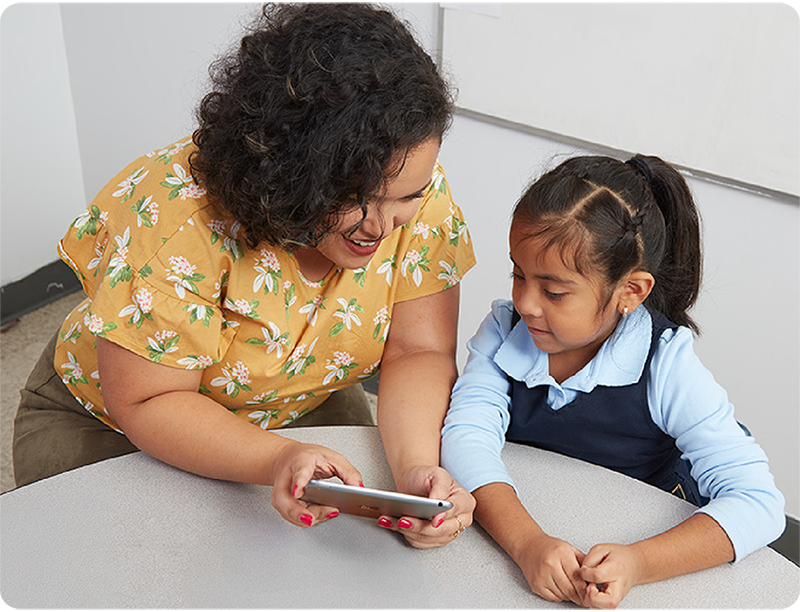
Amplify’s end-of-year research brief for 2024–25 shows that the youngest learners have made the greatest progress with foundational reading skills in the last five years: more kindergarteners, first graders, and second graders are on track to learn to read and fewer are far behind than at any time since the pandemic.
Kindergarteners made the biggest strides in the knowledge and skills measured by elementary reading assessments, with 70% on track to learn to read—a 21-point improvement since the pandemic.
Post-pandemic slide
In 2020–21 (the year students returned to school after the pandemic shutdowns), only 55% of K–2 students were on track to learn to read by the end of the year.
The youngest cohort struggled the most, with only 49% of kindergarteners at or above benchmark.
More students on track to learn to read
But by the end of the 2024–25 school year, the overall picture of reading readiness was much brighter.
Our data shows a 13-point increase, with 68% of the youngest readers at or above benchmark.
First and second graders were also far ahead of where they were five years ago, with improvements of 14 and 8 points, respectively.
Progress slowing
While our 2024–25 end-of-year early reading data shows significant progress relative to 2020-21, the picture is less rosy when we compare it to last year:
- Overall, the number of K–2 students at or above literacy benchmarks was only one percentage point higher at the end of 2024–25 than it was at the end of the previous school year.
- Within that cohort, both kindergarten and first graders saw a 2% increase, but second graders only saw a 1% increase.
Fewer students far behind
Similarly, our data showed a significant drop in the number of young readers well below benchmark between the post-pandemic school year and the 2024–25 school year.
- Kindergarteners, again, showed the most improvement, with the number of students far behind dropping from 38% in 2020–21 to 20% at the end of the 2024–25 school year.
- Among first graders, we saw a 12-point decline in students who were not on track to learn to read compared to 2020–21
- Second graders showed the least improvement, with a decline of six percentage points relative to 2020-21.
Improvements among this cohort followed a similar trend to those of the at-benchmark readers: a noticeable decline over five years, but a barely noticeable year-over-year improvement.
- Only 1% fewer students across K–2 were far behind at the end of this year compared to the year before.
More improvement during the school year
Our data also revealed some good news about annual progress in early literacy development:
- Across K–2, students showed a bigger improvement in reading readiness than they did in prior years.
- By the end of the 2024–25 school year, 70% of kindergarten students were on track to learn to read, compared to 36% at the beginning of the year (the greatest improvement since 2020–21).
- First graders had a 19% improvement by the end of the 2024–25 school year (70% on track by end of year) compared to 56% in 2021.
- Second graders showed an 11-point increase in reading readiness from beginning to end of year (65% to 54%).
Putting the Science of Reading to work for students
“Grades K–2 remain critical years for literacy development,” said Susan Lambert, Chief Academic Officer of elementary humanities at Amplify and host of Science of Reading: The Podcast. “To support young readers, educators need data-driven insights into student reading development and instructional practices that are based in the Science of Reading.”
Research has shown that data-driven strategies and tools provide the best support for young learners’ future academic success. Here are a few of the ways teachers, administrators, and parents can put them into practice:
- Administering elementary reading assessments three times a year, to monitor student risk level for reading challenges
- Supporting students at risk for not learning to read by analyzing data from reading assessments and making informed decisions
- Allocating extra classroom time and resources to help students who aren’t on track
- Monitoring progress and making adjustments as needed
- Ensuring that evidence-based reading instruction is offered at every grade level
- Instilling a love of reading in and out of school, in partnership with caregivers and community
Let’s keep the conversation going! Join the discussion in our Amplify learning communities.
Dive into the findings in our End-of-Year Report.
More to explore
Amplify Trust Center
The Trust Center provides information about Amplify’s high standards for privacy, security, artificial intelligence use, technology integration partners, and how we build our programs.


A trusted partner
A pioneer in K–12 education since 2000, Amplify is a trusted partner to schools and districts. Read more about the policies, principles, and best practices that help us support millions of teachers and students.
The principles and policy that govern what personal information Amplify collects and maintains on behalf of school customers:
The comprehensive physical, technical, and administrative safeguards Amplify implements to protect student data:
Amplify’s commitment to using artificial intelligence (AI) transparently, safely, responsibly, and ethically:
Interoperable data standards that help our products integrate with the systems schools and districts use:
Editorial and accessibility experts who help build Amplify’s high-quality programs:
See our customer data subprocessors:
Our certifications
The following badges represent Amplify’s privacy and security certifications.


Winter Wrap-Up 03: Ideas to build math fluency
Join us for the third episode in our Winter Wrap-Up! In this episode from season 3 of Math Teacher Lounge: The Podcast, we sit down with Dr. Valerie Henry to talk about math fluency and what that means for students. Listen as we dig into the research, hear Val’s three-part definition of fluency, and explore her five principles for developing it.
Explore more from Math Teacher Lounge by visiting our main page.
Dan Meyer (00:03)
Hey folks. Welcome back. This is Math Teacher Lounge, and I am one of your hosts, Dan Meyer.
Bethany Lockhart Johnson (00:07):
And I’m your other host, Bethany Lockhart Johnson. Hi, Dan.
Dan Meyer (00:11):
Hey, great to see you. We have a big one this week to chat about and some fantastic guests. We are chatting about fluency, which is the sort of word and concept that I feel like people have very, very non-neutral associations with it. A lot of them are very negative, for a lot of people.
Bethany Lockhart Johnson (00:26):
I saw you frown a little. What’s up with that, Dan? You kind of, like, shrank.
Dan Meyer (00:30):
I have strong feelings about it. You know, there’s lots of ways that people go about helping people become fluent in mathematics. And a lot of them are harmful for students, and ineffective. And it got me thinking about fluency as it exists outside of the world of mathematics, where we have a lot of very clear images of it. We’re getting fluent in things all the time. Like, as humans. Human development is the story of fluency. And I just was wondering….Bethany, would you describe yourself as fluent at something outside of the world of mathematics? What is that? How’d you get fluent at it? What was the process?
Bethany Lockhart Johnson (01:05):
Hmm, I think I’m a pretty fluent reader. I read all the time. I’m a happier person if I’ve read that day. I once saw this poster in a classroom; it said “10 Ways to Become a Better Reader: Read, Read, Read, Read, Read…you know, 10 times. Get it? Reading? You get better at reading by reading! So I would say reading. And it’s been kind of cool—I have a one-year-old who, it’s been really exciting slash overwhelmingly anxiety-producing to see him get very fluent with walking slash running, ’cause he’s getting faster every day. And it’s kind of fun. When I think of what’s something somebody’s trying to get fluent with…walking! He’s trying to be more fluid. He’s practicing transitions. He doesn’t wanna hold my hand while he traverses rocky terrain. He’s getting better at it. He’s practicing. What about you? What’s something…?
Dan Meyer (02:08):
I think about driving a lot. I’m a very fluent driver and I think a lot about when I was first a driver, you know? And how l have my hands on 10 and 2, vice grip, and do not talk to me; do not ask me anything; don’t ask me my NAME. I need to focus so hard. And then a year later, you know, I’m driving with one hand, smash the turn signal, take a sip off of whatever, change the CD. And then it’s no big deal.
Bethany Lockhart Johnson (02:38):
Wait, did you pass the first time? Your test?
Dan Meyer (02:40):
Yeah, I don’t like to brag about it. <laugh> But I do all the time. <laugh> But I got a hundred on my driving test. I don’t care who knows it. And I hope it’s everybody. But I guess all of this is just to say there are areas of life where fluency feels natural, with the case of walking. There’s areas of life where fluency feels motivating, with like driving—I wanna be able to switch the CD out or whatever. And there’s areas where fluency feels terrifying and hard to come by, like mathematics, sometimes. So we have a set of guests here. Our first guest will help us figure out what do we mean by fluency? And what’s the research say about what fluency is and how students develop it in mathematics? And then our other guests will help us think about what it looks like in practice in the classroom. What are some novel, new ways to work on fluency? So first up we have Val Henry, Dr. Val Henry.
Bethany Lockhart Johnson (03:32):
So we knew we needed help with the fluency definition, because when we think about it, it’s kind of big, right? And we wanted to look at what research about fluency really says. So we called on Valerie Henry. Val is a nationally board-certified teacher, taught middle school for 17 years, and since 2002 has worked with undergraduates graduates, credential candidates as a lecturer at the University of California, Irvine, one of my alma maters. So after doing her dissertation on addition and subtraction fluency in first grade, Val created a project to study ways to build addition and subtraction and multiplication and division fluency while also developing number sense in algebraic thinking. And the pilot grew and grew over the last 18 years into a powerful daily mini-lesson approach to facts fluency called FactsWise. And when we thought of fluency, the first person I thought of was Val. Welcome, Val Henry, to the Lounge! I’m so excited to have you here. Welcome.
Valerie Henry (04:36):
Thanks, Bethany. And thanks to you, Dan. It’s great to be here today.
Dan Meyer (04:41):
Great to have you; help yourself to whatever you find in the fridge. The names that people write down on those things in the bags are just recommendations. It’s potluck-style here. I’m curious, Val, if you’re, like, on an airplane, someone asks you what you do, and you say you study fluency…what is the layperson’s definition of what does it mean to be fluent in mathematics? And if you can give a brief tour through what the research says about what works and what doesn’t that would really help us orient our conversation here.
Valerie Henry (05:12):
The first thing I have to do when I talk to somebody on a plane is define the idea of fluency. And I often use an example of tying your shoelaces. Because that works with first graders as well as adults. This idea that when we first start trying to put our shoes on and get those shoelaces tied, somebody tries to, first of all, just do it for us. But then of course maybe tries to teach us the bunny-ears approach. And we struggle and struggle as little kids and eventually either the bunny-ears approach or something else starts to work for us. But we still have to pay attention to it. We have to think hard and it’s not easy. And then over time we get to the point where we basically don’t even think about it. When I tie my shoes in the morning. I’m not thinking about right-over-left and left-over-right and all of those things. I just do it. And so that’s a good, easy example of becoming fluent with something. I think what we’re talking about today though, is the basics, the adding and subtracting that we hope kids are going to have mastered maybe by second grade, and the multiplication and division facts that we wanna maybe have mastered by third, maybe fourth grade. So now what does that mean to become fluent with those basics? I have a three-part definition that seems to match up really nicely with the common core approach to fluency. Which is, first of all, we want the answers to be correct. And then second, we want the answers to be easy to know. And so what does that mean? Well, to me, it means without needing to count,
Bethany Lockhart Johnson (07:12):
You mean without having to kind of muscle through it? Or say more about you mean.
Valerie Henry (07:16):
Well, I guess what I mean is that when you watch a young child try and solve something even as simple as two plus three, they might put up two fingers and then go 3, 4, 5 with three more fingers winding up on their hand, one or the other of their hands. While they’re doing that, they don’t really have a sense of whether even their answer is right or not, quite often. Especially when you get to the larger adding and subtracting problems, you can see a lot of errors happening as they’re trying to count. And it’s taking up cognitive energy to do that counting process, especially as you get to the larger quantities. So my definition of fluency now is “getting it right without needing to do that hard work like counting.” Now, some people might say, well, we just want them to have ’em memorized. But in my research, I’ve learned that a lot of very fluid adults don’t always have every fact memorized. In fact, if you ask a room full of adults, what’s seven plus nine, you might learn that they can all get it correct quickly, quickly…but they don’t all have it memorized. And so when you ask them, “How did you get that?” Many of them will say, “Well, I just gave one from the 7 to the 9 and I know that 10 plus 6 is 16.”
Bethany Lockhart Johnson (08:53):
That’s such an important distinction. My brain literally just did that actually!
Valerie Henry (08:58):
<laugh> Right? <laugh> But you’re fluid with it, because it doesn’t take you much cognitive energy at all.
Bethany Lockhart Johnson (09:05):
Right.
Valerie Henry (09:07):
So now we have “correct without needing to put that cognitive energy,” which usually means that you’re counting. And then the third thing is “relatively quickly,” so that you’re not spending 15 seconds trying to figure it out. Even that part-whole strategy approach can be done really quickly, almost instantaneously. Or it can take a long time. So if a student can get the answer correct within, you know, three or four seconds— is I’m pretty generous—I figure that they’re pretty darn fluent with that fact. So that’s my three-part definition of these basics, fluency.
Dan Meyer (09:55):
I love the distinction between getting it correct and getting it quick. It’s possible to be quick with wrong answers. It’s possible to be like, “Those are separate components there.” And I echo Bethany’s appreciation for this third option in between knowing it instantaneously through memorization and muscling through it. But there’s like a continuum there of how much energy it took you to come up with it that all feels extremely helpful.
Valerie Henry (10:21):
And you know, one of the things that I’ve noticed is that when kids are pressured to come up with those instantaneous answers, they often default to guessing and get it wrong.
Bethany Lockhart Johnson (10:30):
Mm, yeah.
Valerie Henry (10:30):
So that’s one of the things that I’ve learned is that as we’re trying to help students develop fluency, it’s important to start with building their conceptual understanding of what it means to do, you know, 3 times 9 and what the correct answer is, maybe using manipulatives or representations of some sort. Not skip-counting! I really have found that skip-counting just perpetuates itself in many students’ minds and that they never stop skip-counting, which means they’re putting in not very much mental energy if it’s 2 times 3 but a ton of mental energy if it’s 7 times 8. Because frankly, it’s really hard to skip count by sevens. And by eights.
Bethany Lockhart Johnson (11:18):
I can get to 14 and then I’m like, wait, wait, what was next? Right? No, no, no…21! What do you feel are some misconceptions that maybe teachers, maybe parents have about fluency in math?
Valerie Henry (11:30):
I think maybe one of the first ones is that if students count or skip-count, their answers repetitively over and over and over and over, that they’re bound to memorize them. And the study that I did back in 2004, I actually had a school that had decided that they were going to do time tests with their students every day, all year. And that undoubtedly by the end of the year, those students would be fluent.
Bethany Lockhart Johnson (12:06):
And to clarify by time test, you mean like, sit down, pencil, paper, ready, go, worksheet kind of thing.
Valerie Henry (12:15):
Yes.
Bethany Lockhart Johnson (12:16):
Some of us might remember quite vividly.
Valerie Henry (12:18):
<laugh> Very vividly. And you know, you have to get it done within a certain amount of time. So they made it fun for the students. Apparently the students enjoyed it. I was a little leery about that, but in the end, when I went and checked on the students and I did one-on-one assessments with half of the students in every class that were randomly selected so that I could get a sense of where they were with their fluency—and these were first graders—they basically had nothing memorized. They were simply counting as fast as they possibly could. And, you know, mostly getting the right answers. But they had not memorized. So that’s one of the myths, I think, is that repetitive practice of counting gets you to memorization.
Bethany Lockhart Johnson (13:10):
If I put it in front of you enough times, you’ll become fluent.
Valerie Henry (13:14):
Right, right. Now these students didn’t really get any instruction, any help learning these. They just simply tested over and over and over. So that’s another thing that I think is a misconception. It’s that if we test students, but don’t really teach them fluency, then they’re going to become fluent. If we just test them every Friday or that kind of thing. And that they’ll learn them at home. But really what that means is a few lucky kids who have parents who have the time and the energy and the background to know how to help will take that job on at home. Not that many students are really that fortunate.
Dan Meyer (14:01):
It’s almost like the traditional approach, or the approach you’re describing, confuses process and product. It says, “Well, the product is that eventually fluent students will be able to do something like this, see these problems and answer them, answer them quickly,” and says, “Well, that must be the process then as well; let’s give them that products a whole lot.” But as I hear you describe fluency with bunny ears on shoelaces, there’s these images and approaches and techniques that require a very active teacher presence to support the development of it. That’s just kind of interesting to me.
Valerie Henry (14:35):
My initial project, the pilot project that I tried, was to simply ask teachers to follow five key principles. And the first one was to do something in the classroom every day for—I told them, even if you’ve only got five or 10 minutes, work on fluency for five or 10 minutes a day, and let’s see what happens. So that was one key element was just to teach it and to give students opportunities to get what the research calls for when you’re trying to memorize, which is actually immediate feedback. When I talk about immediate feedback with my student teachers, I say, “I’m talking about within one or two seconds of trying a problem, and then sort of immediately knowing, getting feedback of whether you got the answer right or not so that your brain can kind of gain that confidence. ‘Oh, not only did I come up with an answer, but somebody’s telling me it’s the correct answer.’”
Dan Meyer (15:38):
There’s a lot of apps now in the digital world that offer students questions about arithmetic or other kinds of mathematical concepts and give immediate feedback of a sort: the feedback of “You’re right; you’re wrong” sort. Is that effective fluency development, in your view?
Valerie Henry (15:57):
I haven’t heard and I haven’t seen them being super-effective. The ways I think about this are “Immediate feedback isn’t the only thing we need.” Probably one of the biggest things that we need is for students to develop strategies. And this is one of the other things I’ve learned from international research, from countries that do have students who become very fluent very early, is that they don’t shoot straight for memorization, but they go through this process of taking students from doing some counting and then quickly moving them to trying to use logic. So, “Hey, you really are confident that 2 + 2 is 4; so now let’s use that to think about 2 + 3.” Actually, as an algebra teacher, I would much rather have students that have a combination of memorization and these strategies, than students who’ve only memorized. Isn’t that interesting that my most successful algebra students were good strategy thinkers. Not just good memorizers.
Bethany Lockhart Johnson (17:09):
So you mentioned there were five that kind of helped root this idea in like, “What can teachers do? What is the best thing that teachers can do to support with fact fluency?” So, everyday was key.
Valerie Henry (17:22):
Then the next principle that I really focus on is switching immediately to the connected subtractions so that students—
Bethany Lockhart Johnson (17:33):
Not waiting until you’ve gotten all the way through addition. But making “Ooh!”
Valerie Henry (17:38):
Totally. And I didn’t do that the first year. And when we looked at the results of the assessments at the end of the year, we realized that our students were so much weaker in subtraction than addition. So the following pilot year, we tried this other approach of doing subtraction right after the students had developed some fluency with that small chunk of addition. And we got such better subtraction results.
Bethany Lockhart Johnson (18:11):
What are the other principles?
Valerie Henry (18:13):
The biggest one is to use these strategies. So the strategies makes the third. And then the fourth I would say is to go from concrete to representational to abstract.
Bethany Lockhart Johnson (18:27):
Don’t put away those manipulatives. Don’t put away those tools.
Valerie Henry (18:31):
Oh, so important to come back to them for multiplication and division. And my fifth principle is to wait on assessment. To use it as true assessment, but not race to start testing before students have had a chance to go through this three-phase process. Which is conceptual understanding with manipulatives; building strategies, usually with representations; and then working on building some speed until it’s just that natural fluency.
Bethany Lockhart Johnson (19:07):
I wanna say thank you so much for offering your really learned perspective, because you have not only done the research, but seen it in action and seen how shifting our notions of fluency and what fluency can be and what a powerful foundation it can be for all mathematicians. Really, that shift is so powerful. And I appreciate you sharing it with our listeners and with us. So we’re so excited that we got to talk with you today, Val—
Dan Meyer (19:35):
Thank you, Dr. Henry.
Valerie Henry (19:37):
You’re welcome!
Dan Meyer (19:41):
With us now we have Graham Fletcher and Tracy Zager, a couple of people who understand fluency at a very deep and classroom level. I wanna introduce them and get their perspective on what we’re trying to solve here with fluency. So Graham Fletcher has served in education in a lot of different roles: as a classroom teacher, math coach, math specialist, and he’s continually seeking new and innovative ways to support students and teachers in their development of conceptual understanding in elementary math. He’s the author, along with Tracy, of Building Fact Fluency, a fluency kit we’ll talk about, and openly shares so much of his wisdom and resources at gfletchy.com. Tracy Johnson Zager is a district math coach who loves to get teachers hooked on listening to kids’ mathematical ideas. She is a co-author of this toolkit, Building Fact Fluency, and the author of Becoming the Math Teacher You Wish You’d Had: Ideas and Strategies from Vibrant Classrooms. Tracy also edits professional books for teachers at Stenhouse Publishers, including, yours truly. Thank you for all that insight, Tracy, and support on the book.
Bethany Lockhart Johnson (20:49):
Dan and I were talking at the beginning of the episode about things we feel like, “Hey, I’m fluent in that. I’m fluent in that.”
Dan Meyer (20:55):
Just very curious: What’s something you would like to get fluent in outside of the world of mathematics, let’s say?
Tracy Zager (21:00):
I’ll say understanding the teenage brain, as the parent of a 13-year-old and 15-year-old. That’s the main thing I’m working on becoming fluent in!
Bethany Lockhart Johnson (21:10):
Ooh!
Dan Meyer (21:13):
A language fluency, perhaps. All right, Graham. How about you?
Graham Fletcher (21:16):
For me typing, it’s always been an Achilles heel of mine. So voice-to-text has been my friend. But it’s also been my nemesis in much of my texting here and working virtually over the last couple years. So yeah, typing.
Dan Meyer (21:33):
Do you folks have some way of helping us understand the difference in how fluency is handled by instructors and by learners?
Tracy Zager (21:40):
I would say that the lay meaning of fluency is definitely a little different than what we mean in the math education realm. When we’re talking about math fact fluency, which is just one type of fluency. So you gotta think about procedural fluency and computational fluency; there are lots of types of fluency in math. And Graham and I had the luxury of really focusing in specifically on math fact fluency. We’re looking at kind of a subset of the procedural fluency. So the words you hear in all the citations are accurate, efficient, and flexible. There’s this combination of kids get the right answer in a reasonable amount of time and with a reasonable amount of work and they can match their strategy or their approach to the situation. That’s where that flexibility comes in. And there’s like lots more I wanna say about that about sort of…I think one issue that comes up around fluency is that people are in a little bit of a rush. So they tend to think of the fluency as this automaticity or recall of known facts without having to think about it. And that is part of the end goal, but that’s not the journey to fluency. So this is one of the things that Graham and I thought about a lot was the path to fluency. The goal here it’s that student in middle school who’s learning something new doesn’t have to expend any effort to gather that fact. And they might do it because they’ve done it so many different ways that they’ve got it, and now they just know it, or they might be like my friend who’s a mathematician who still, if you say, “Six times 8,” she thinks in her head, “Twelve, 24, 48…” and she does this double-double-double associative property strategy. And it’s so efficient, you would never know. And that’s totally great. That’s fine. That’s not slowing her down. That’s not providing a drag in the middle of a more complex problem or new learning. So we’re really focused on having elementary school students be able to enter the middle and high school standards without having that pull out of the new thinking.
Graham Fletcher (23:53):
And as I think about that, I think about how so many students will memorize their facts, but then they haven’t memorized them with understanding. So that when they move into middle school and they move into high school, it’s almost like new knowledge and new understanding that’s applied from a stand-alone skill.
Bethany Lockhart Johnson (24:10):
So something that felt really unique to me, Graham, as I was diving into the toolkit, is your use of images, Tracy, Graham, is the way that you use images to help students notice and wonder to start making sense of these quantities and the decomposition of numbers using images. Can you talk a little bit about how images played a part in the way that you think about this building a fact fluency?
Graham Fletcher (24:41):
What I realized is so many times when we approach math with just naked numbers with so many of our elementary students, the numbers aren’t visible. The quantities. They can’t see them; they can’t move them. They’re just those squiggly figures that we were talking about earlier on. So how is it that we make the quantities visible, to where students feel as if they can grab an apple and move it around? Because a lot of times we start with the naked numbers and then if kids don’t get the naked numbers, then we kind of backfill it. But what would happen if we start with the images? And then from there, these rich, flourishing mathematical conversations develop from the images. And I think that was the premise and the goal of the toolkit.
Tracy Zager (25:22):
When you look at how fact fluency has traditionally been taught, it’s all naked numbers. And sometimes we wrote ’em sideways. Like, that’s it. That was our variety of task type. Right? Sometimes it’s vertical; sometimes it’s horizontal. And that was it. And I’ve just known way too many kids who couldn’t find a hook to hang their hat on with that. It didn’t connect to anything. And so part of why I knew Graham was the perfect person for this project was his strength in multimedia photography, art, video. And so we started from this idea of contexts that for each lesson string in the toolkit, there’s some kind of context. An everyday object, arranged in some kind of a way that reveals mathematical structure and invites students to notice the properties. So we start with images of everyday objects: tennis balls, paint pots…um, help me out; here are a million of them. Crayons—
Bethany Lockhart Johnson (26:18):
Crayons, markers.
Tracy Zager (26:18):
Shoes, right? Sushi, origami paper, all kinds of things in the different toolkits. So there’s a series of images or a three-act task or both around those everyday objects, and then story problems grounded in that context. And then there are images with mathematical tools that bring out different ideas, but relate in some way to the image talks. And we do all of that before we get to the naked number talk. Which we do, and by the time you get to the number talk, it’s pretty quick, ’cause they’ve been reasoning about cups of lemonade. And now when you give them the actual numerals, they’re all over it.
Bethany Lockhart Johnson (27:03):
I have to say too, as somebody who—particularly in middle school—navigated math anxiety, we recently talked with Allison Hintz and Anthony Smith about their amazing book Mathematizing Children’s Literature.
Tracy Zager (27:14):
Yay!
Bethany Lockhart Johnson (27:14):
And I was explaining, like, if I sat down at the beginning of a math class and my teacher opened a picture book and said, “We’re gonna start here,” I felt my whole body relax. And if we start with this image, if we start with just looking at an image and making sense of an image, I feel like that could be such a powerful touchstone for all the work you do from there.
Tracy Zager (27:41):
That’s core. That’s a core design principle, is that invitational access. There are no barriers to entry. There’s nothing to decode. There’s nothing formal. We’ve been learning from Dan for years about this, right? Of starting with the informal and then eventually layering in the formal. I was in a class in Maine where they were doing an image talk and it’s these boxes of pencils. It’s a stack of boxes of pencils and they’re open and you can see there are 10 pencils in each box. And so there are five boxes of pencils each with 10 pencils in it. And then the next image is 10 boxes of pencils and each box is half full. So now it’s 10 boxes each with five. And the kids are talking and talking and then the third image, I think there are seven boxes each with 10 pencils in it. And she said, “What do you think the next picture’s gonna be?” And this girl said, “You just never know with these people!” <laugh> I dunno!”
Bethany Lockhart Johnson (28:37):
That’s kinda true. Knowing you both, it’s kinda true.
Tracy Zager (28:42):
Like if it’s seven boxes with 10 in it, one kid said, I think it’s gonna be 14 boxes of five. And other kids are like, I think it’s gonna be 10 boxes with seven. And they start talking about which of those there are and the relationships between—
Bethany Lockhart Johnson (28:58):
But they’re making sense of numbers!
Tracy Zager (28:59):
Totally. So all the kids felt invited. They can offer something up. They’re noticing and wondering about that image. They’re talking about it in whatever informal language or home language that they speak. And that was core to us. That was a huge priority, because honestly, one of the motivations to talk about fluency is that it’s always been this gatekeeper. It has served to keep kids out of meaningful math. Particularly kids from marginalized or historically excluded communities. So they’re back at the round table, doing Mad Minutes, while the more advantaged kids are getting to do rich problem solving. And so, we thought, what if we could teach fact fluency through rich problem solving that everybody could access? That was like square one for us.
Bethany Lockhart Johnson (29:45):
That’s huge.
Dan Meyer (29:46):
That’s great to hear. What’s been helpful for me is to understand that students who are automatic, that’s just kind of what’s on the surface of things. And that below that might be some really robust kind of foundation or scaffolding that bleeds to a larger building being built, or it might be just really rickety and not offer a sturdy place to build farther up. It’s been really exciting to hear that. I wonder if you’d comment for a moment about, in the digital age and—I’m at Desmos and our sponsors are Amplify and we all work in the digital world quite a bit. There are a lot of what report to be solutions to the fluency issue, to developing fluency in the digital world. Just lots and lots of them. Some that are quite well used, others that are just like X, Y, or Z app on the market. You can find something. Do you have perspectives on these kinds of digital fluency building apps? Like, what about them works or doesn’t work? Let us know. Graham, how about you? And then Tracy, I’d love to hear your thoughts too.
Graham Fletcher (30:47):
Yeah, I think that’s a great question, ’cause there’s a lot of shiny bells and whistles out there right now that can really excite a lot of teachers. But I always come back to what works for me as a classroom teacher is probably gonna work in a digital world as well. So what are the things that I love and honor most about being in front of students, and how can I capture that in that virtual world? I think one of the things that really helps students make connections is coherence. I think coherence, especially when you leave students for—you don’t get to talk with them after the lesson is done—so I think about how we can purposefully sequence things through a day-to-day basis. I think coherence is something that gets really lost when we talk about fluency, especially with whether it be digital or whether it be print, because what ends up happening is we say, “OK, we have all these strategies we need to teach,” and it becomes a checklist. So how is it that we can just provide students the opportunity to play around in a space, whether it be digital or in person, but in a meaningful way that allows them the time and the space and that area to breathe and think, but be coherent. And connecting those lessons along the way. And I think coherence is one thing that a lot of the times it’s harder to—when we’re in the weeds, it’s so hard and difficult to zoom back out and say, “Do all these lessons connect? How do they intentionally connect? And how do they purposefully connect?” And without coherence, everything’s kind of broken down into that granular level. So when looking at—I think about Desmos and I think about the Toolkit and I think about how Tracy and I talked a lot about, “Well, this, does it connect with the context problem, does it connect with the image talk, or the lessons? Like, how does it all connect and how are we providing students an opportunity to make connections between the day-to-day instruction and lessons that we tackle?”
Tracy Zager (32:44):
I’m reminded of a conversation that Dan, you and I had a long time ago, in Portland, Maine, in a bar. I’ll just be honest. <laugh> And we were talking about how, in the earlier days of Desmos, you were stressed out by what you saw, which was kids one-on-one, on a device, in a silent room. And you were like, no, this is not it. This is not what technology is here to serve. We can do so many things better using technology appropriately, but we can’t lose talk and we can’t lose relationships and we can’t lose formative assessment and teachers listening to kids and kids listening to each other and helping each other understand their thinking. Right? So when I think about the tech that’s out there for fact fluency, most of it is gonna violate all rules I have around time testing. So that a whole bunch of it, I would just toss on that premise. They’re really no different than flashcards. It’s just flashcards set in junkyard heaps. Or, you know, underground caverns. Or with a volcano or whatever. It’s the same thing. There are some lovely visuals—I’m thinking of Berkeley Everett’s Math Flips. Those are really pretty. Mathigon has some really nice stuff that’s digital. And I think that those resources invite you to kind of ponder and notice things and talk about them. All the tools that we design in the toolkit are designed to get people talking to each other, and give teachers opportunities to pull alongside kids and listen in and understand where they are. For example, our games, we didn’t design the games to be played digitally, even though you could, and people did during COVID, because we want kids on the rug, next to each other, on their knees; I’ve seen kids like across tables. I was in a school recently where a kid was like, “I hope you believe in God, ’cause you’re going…!” You know what I mean? <laugh>. Like they’re all pumped up.
Bethany Lockhart Johnson (34:41):
They’re invested!
Tracy Zager (34:45):
They’re psyching each other up and down and they’re interacting and it’s social and the teacher’s walking around and she’s listening to the games. And they don’t actually need any bells and whistles. They need dice and they need counters and they need this game that is actually a game. In all of our conversations, games have to actually be games. Games cannot be “roll and record.” Games have to involve strategy. They have to be fun. So in designing those games, we didn’t feel like it brought any advantage to make that a digital platform. But things that did bring advantages digitally, like the ability to project these beautiful images or to use short video in the classroom, that really was a value-add that enabled us to do something different in math class than we had done before, and to get kids talking in a different way than they ever had before. When I think about fluency, historically, if you say like, “OK, it’s time to practice our math facts,” you hear a lot of groans. And when I see a Building Fact Fluency classroom and I say, “OK, it’s BFF time!” There’s like a “YEAAAAHHH!” You know? And so that’s what we’re after.
Graham Fletcher (35:47):
It’s all about kids, really, for us. And I think at the heart of it, we made all the decisions with teachers and kids at the forefront of it.
Tracy Zager (35:55):
I know of high schoolers who are newcomers, who have experienced very little formal education, and speak in other languages, are using it as high schoolers, because it involves language and math and all the deep work in the properties and it’s accessible, but it’s also not at all condescending or patronizing. Like we designed it to be appropriate for older kids. So that’s just something that I think we’re both really proud of. One thing we thought a lot about, especially in the multiplication-division kit is how a classroom teacher could use it and a coordinating educator in EL, Title, special education, intervention could also use it because there’s so much in it, that students could get to be experts, if they got extra time in it, using something that’s related and would give them additional practice. So they could play a game a little bit earlier than the rest of the classes. And they could come in already knowing about that game, or they could do a related task. We have all these optional tasks that no classroom teacher would ever have time to teach it all. So the special educator could use it and have kids doing a Same and Different or a True/False, or some of the optional games. And then the work in both special education and general education could connect.
Dan Meyer (37:20):
I just wanna say that this is an area that for so many students, as you’ve said, Tracy, it presents a barrier. It’s a very emotionally fraught area of mathematics. And we really appreciate the wisdom you brought here. And just the care you’ve brought to the product itself. Your knowledge of teaching, knowledge of math, and yeah, especially a love for students feels like it’s really infused throughout Building Fact Fluency. If our listeners want to know more outside of this podcast, outside of the product itself, where can they find your words, your voice? Where you folks at these days? Tell ’em, Graham would you?
Graham Fletcher (37:57):
You can find us at Stenhouse, Building Fact Fluency. And then Tracy and I, currently playing around, sharing ideas a lot on Twitter, under the hashtag #BuildingFactFluency. That’s kind of where we can all come together and share ideas. And then also on the Facebook community, where there’s lots of teachers sharing ideas.
Bethany Lockhart Johnson (38:19):
If you were to ask our listeners like, “Hey, if you wanna keep thinking about this, here’s something you could try or here’s something you could go do,” what could be a challenge that we could share that could help us continue this conversation?
Graham Fletcher (38:35):
Online you can actually download a full lesson string. And a lesson string is a series of activities and resources that are purposefully connected. You can pick one or two of those from the Stenhouse web site, Building Fact Fluency. You can try the game. You can try one of those strategy-based games. You can try an image talk and just see how it goes. And just share and reflect back, whether on Twitter or on Facebook. But it’s kind of there, if you wanna give it a whirl. And as Tracy was sharing, even if you’re a middle-school teacher or a high-school teacher, we really tried to think about those middle-school and high-school students keeping it grade level-agnostic. Just so every student has those opportunities for those mathematical conversations. So download a lesson string and give it a whirl, and we’d love to hear how it goes.
Dan Meyer (39:25):
Bethany and I will be working the same challenge with people in our life.
Bethany Lockhart Johnson (39:29):
Yes.
Dan Meyer (39:29):
Enjoying some fact fluency with people in our homes, perhaps. We’ll see. And we’ll be sharing the results in the Math Teacher Lounge Facebook group. Graham and Tracy, thanks so much for being here. It was such a treat to chat with you both.
Bethany Lockhart Johnson (39:42):
I love learning with you and just helping to shift this idea of fluency into something that can be accessible and powerful and positive.
Stay connected!
Join our community and get new episodes every other Tuesday!
We’ll also share new and exciting free resources for your classroom every month.
Meet the guest
Valerie Henry has been a math educator since 1986. She taught middle school math for 17 years and has worked as a lecturer at University of California Irvine since 2002. After doing her 2004 dissertation research on addition/subtraction fluency in first grade, Valerie created FactsWise, a daily mini-lesson approach that simultaneously develops fluency, number sense, and algebraic thinking. Additionally, she has provided curriculum and math professional development for K-12 teachers throughout her career, working with individual schools, districts, county offices of education, Illustrative Mathematics, the SBAC Digital Library, and the UCI Math Project.
About Math Teacher Lounge: The podcast
Math Teacher Lounge is a biweekly podcast created specifically for K–12 math educators. In each episode co-hosts Bethany Lockhart Johnson (@lockhartedu) and Dan Meyer (@ddmeyer) chat with guests, taking a deep dive into the math and educational topics you care about.
Join the Math Teacher Lounge Facebook group to continue the conversation, view exclusive content, interact with fellow educators, participate in giveaways, and more!
You might also like:
Free professional learning to support your Science of Reading journey
We know you seek the best research-tested methods for your students—and want to start applying them as quickly and easily as possible. Whether you’re looking to improve your students’ writing or understand how to boost their comprehension, here are a few resources designed to save precious time!


Science of Reading: The Podcast Essentials episodes
Looking for a roundup of the latest research on key topics? Look no further! Our Science of Reading Essentials episodes can unlock insights that can truly transform your instruction. Each episode is just over 30 minutes. You can also download our discussion guides to fuel your own professional learning sessions.
Comprehension episode
Comprehension podcast listening guide
Writing episode
Writing podcast listening guide
Dyslexia episode
Dyslexia Support Power Pack
Science of learning episode
Science of Reading: A Primer—Part One
 |
 |
 |
|
Explore the Science of Writing
Discover the captivating journey of writing with our new guide, Science of Writing: A Primer. Explore the history of writing to understand the crucial link between reading and writing instruction—and why handwriting still matters in today’s digital world.
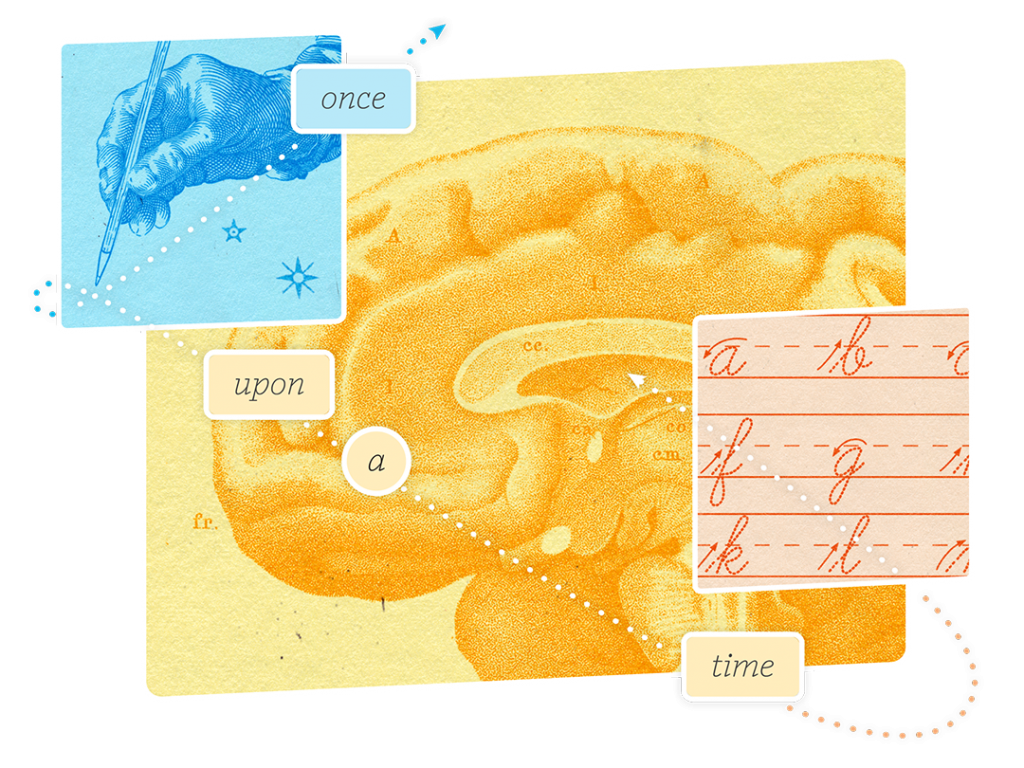

A year’s professional learning from Science of Reading: The Podcast
Looking for ways to bring Science of Reading: The Podcast into your professional learning communities? Here’s one starting place: Share a presentation of top takeaways to jump-start your discussions.
Science of Reading professional development on your own schedule
Science of Reading: Learning Lab offers unparalleled research-backed instruction crafted to the standards of the International Dyslexia Association. Explore enriching activities, curated resources, and guidance from Susan Lambert, Chief Academic Officer of Literacy and Host of Science of Reading: The Podcast.

Amplify webinar library
Amplify’s webinar library is a collection of valuable insights on the teaching and learning topics you care about. From quick tips to continuing education (CE) credit options, each webinar is designed to support educators across Amplify CKLA, Amplify ELA, Amplify Science, Amplify’s math programs, and the Science of Reading. Explore these free professional learning opportunities from the Amplify team below.

Welcome, Central Kitsap, to Amplify Desmos Math!
Amplify Desmos Math K-5 thoughtfully combines conceptual understanding, procedural fluency, and application. Each lesson is designed to tell a story by posing problems that invite a variety of approaches before guiding students to synthesize their understanding of the learning goals.
Scroll to learn more about the program and explore sample materials.
About the program
We believe in math that motivates. Our structured approach to problem-based learning builds on students’ curiosity to develop lasting grade-level understandings for all students.
The program motivates students with interesting problems they are eager to solve. Teachers can spend more time where it’s most impactful: creating a collaborative classroom of learners.
A powerful suite of math resources
Amplify Desmos Math combines the best of problem-based lessons, intervention, personalized practice, and assessments into a coherent and engaging experience for both students and teachers. Feel free to explore our grade-level ancillary samplers to learn more about assessment and reporting, intervention, and differentiation:

Assessment
mCLASS® Assessments, along with daily formative checks, measure not only what students know, but how they think. The asset-based assessment system provides teachers with targeted, actionable insights, linked to core and intervention resources. Visit our mClass Math site to learn more.
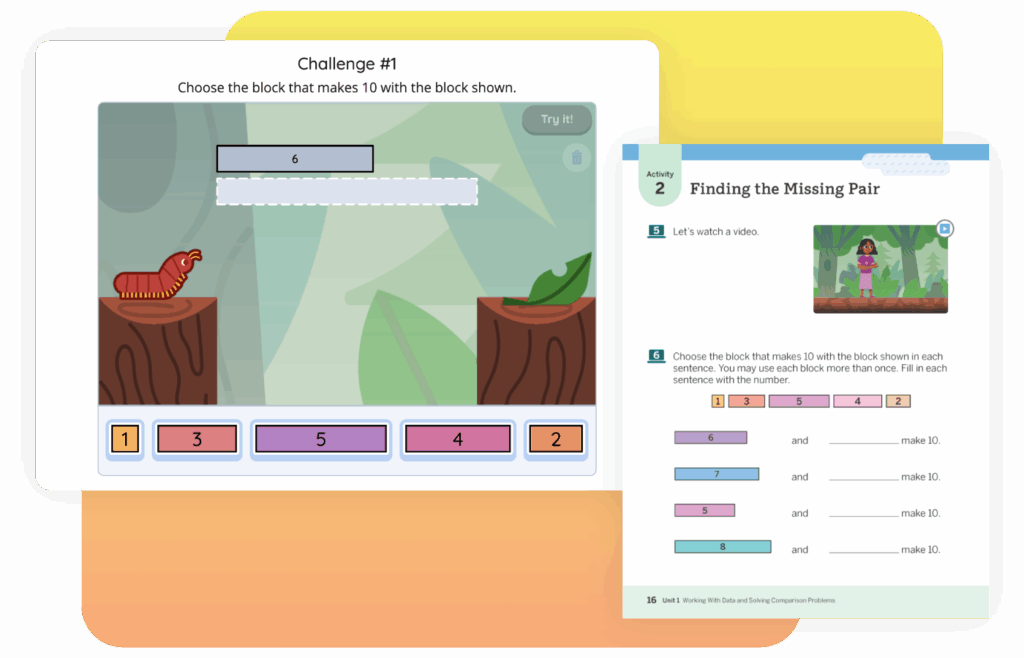
Core instruction
Amplify Desmos Math lessons pair problems students are eager to solve with clear instructional moves for teachers. With low-floor, high-ceiling tasks every student can actively participate and be a part of the math community. Unit- and lesson-level core assessments give teachers data at their fingertips to guide and differentiate instruction.
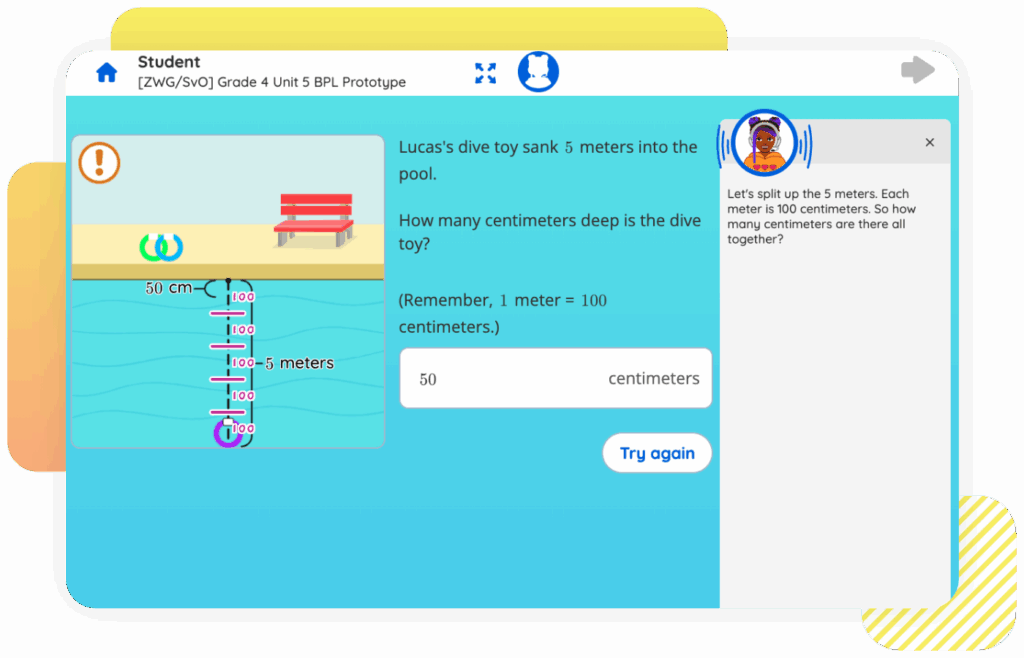
Differentiation
Boost Personalized Learning activities help students access grade-level math through engaging, independent digital practice. Responsive Feedback adjusts to students’ work, providing item-level adaptivity to further support their learning and offer personalized differentiation. Visit our Boost Math site to learn more.
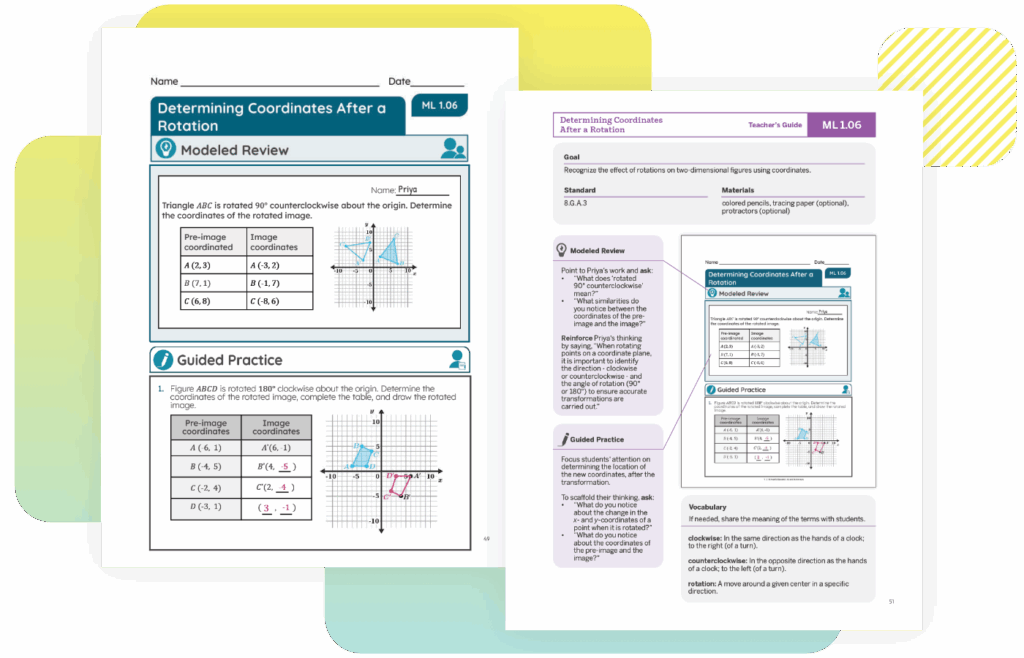
Embedded intervention
Integrated resources like Mini-Lessons, Fluency Practice, and Math Adventures provide targeted intervention on a specific concept or skill connected to the daily lesson. Extensions are also available to stretch students’ understanding.
Multilingual Learners
To support multilingual/English learners, Amplify Desmos Math incorporates research-based Math Language Routines (MLRs) by providing language modality strategies like sentence frames where appropriate, both in the teacher language provided for each task and in the differentiation support section found throughout the program. For further information on math language development, please see pg. 82 of the Amplify Desmos Math Program Guide.
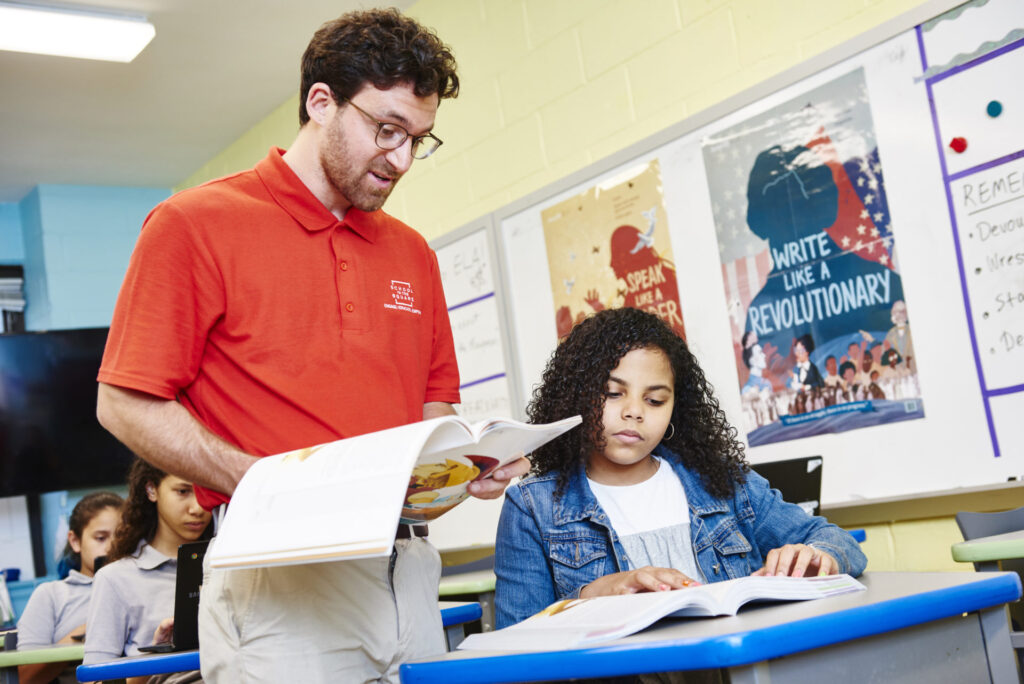
Review Resources
To support your review of Amplify Desmos Math here are links to important K-5 review resources:
- Amplify Desmos Math Correlations to Washington State Standards:
K-5 sample materials
Click the links in the drop-down sections below to explore sample materials from each grade. To see sample student responses, please click on the Teacher Edition pages and scroll to “Sample Student Work” (first one is about 30 pages in) or click on Intervention and Extension resources.
For helpful navigation tips and more program information, download the Amplify Desmos Math Program Guide.
You can also watch a product expert walk through a lesson and the available program components.

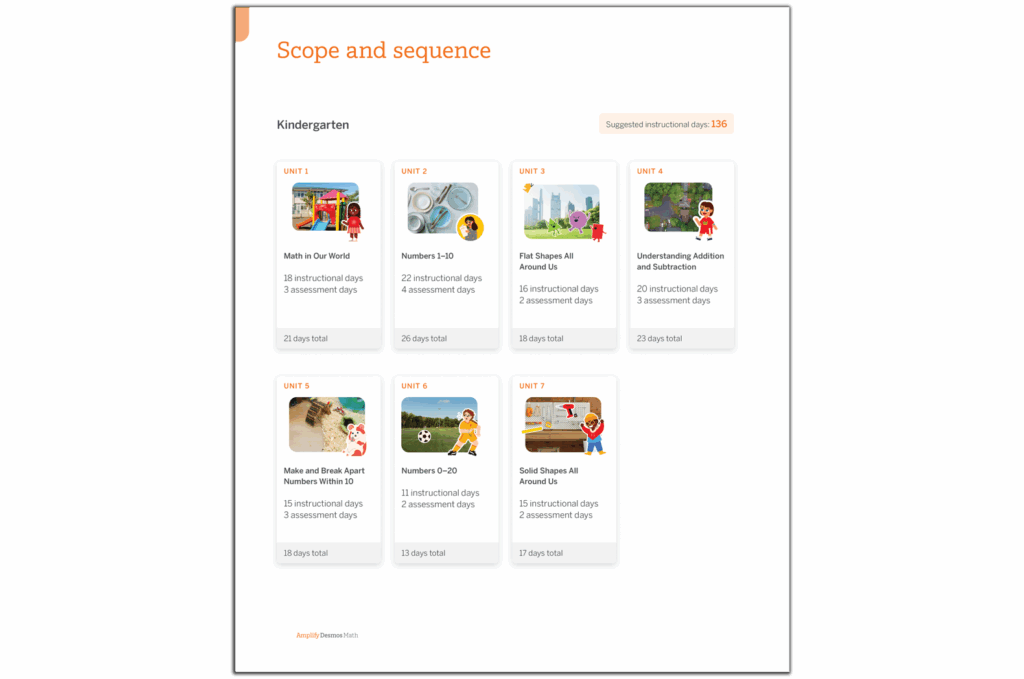
Teacher Edition pages
Planning and instructional guidance is visual, organized, and easy-to-follow. To help you review the program, we have included samples from a complete sub-unit on this site: Unit 2, Sub-Unit 1: Counting and Comparing Objects.
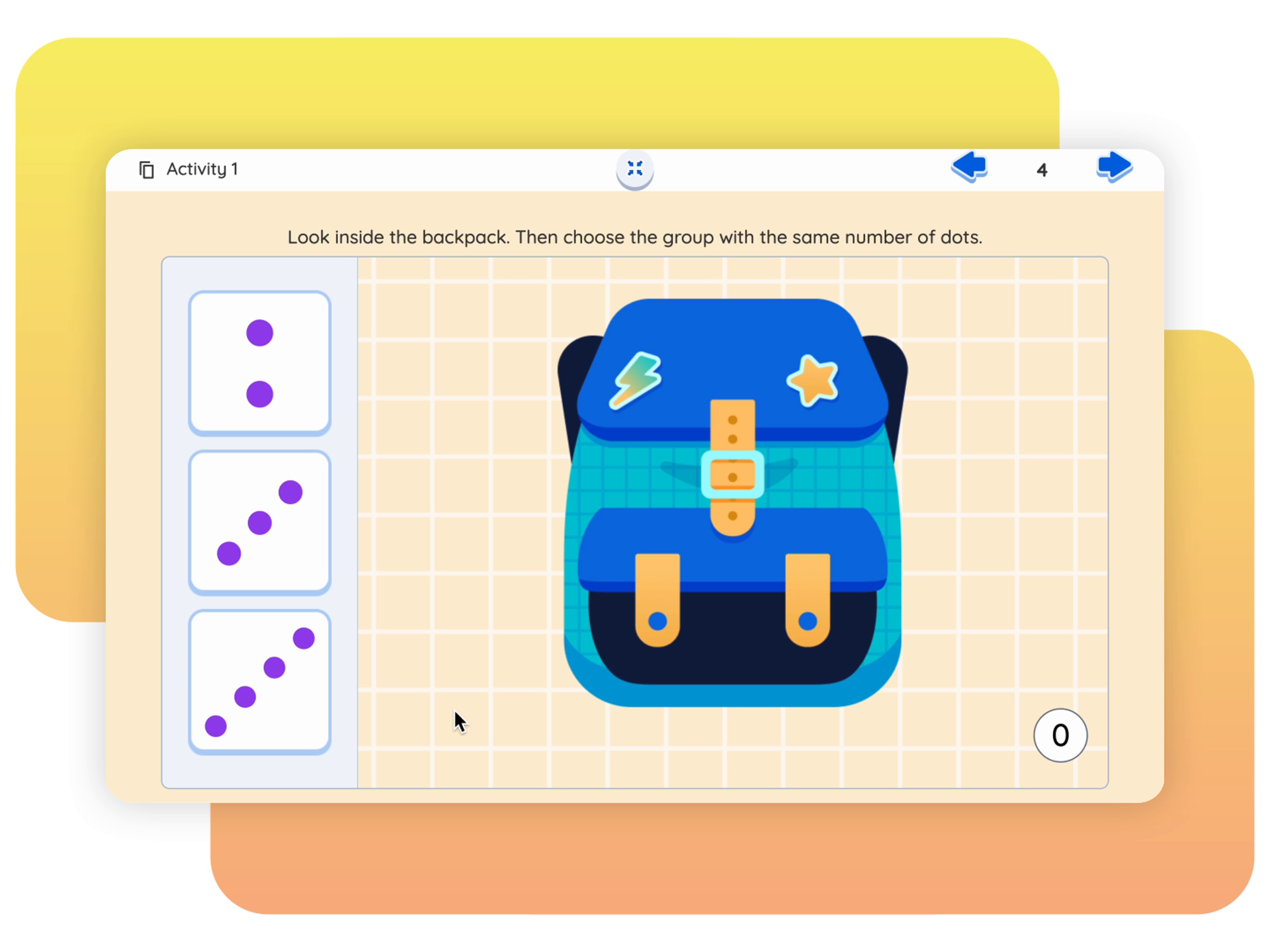
Digital experience
Explore our digital experience! Every lesson in Amplify Desmos Math has student print materials and digital recommendations.


Centers Resources
Engaging, hands-on games for students to play collaboratively to strengthen their understanding of key skills and concepts.
Intervention and Extension Resources
Additional resources to reinforce and extend key concepts, including Mini-Lessons and Extensions.

Featured digital lesson: Forest Friends
In this lesson, students apply their understanding of how to compare groups of images as they determine which group has more or fewer and then compare their strategies by guiding a bear through a path that has more mushrooms than the other.
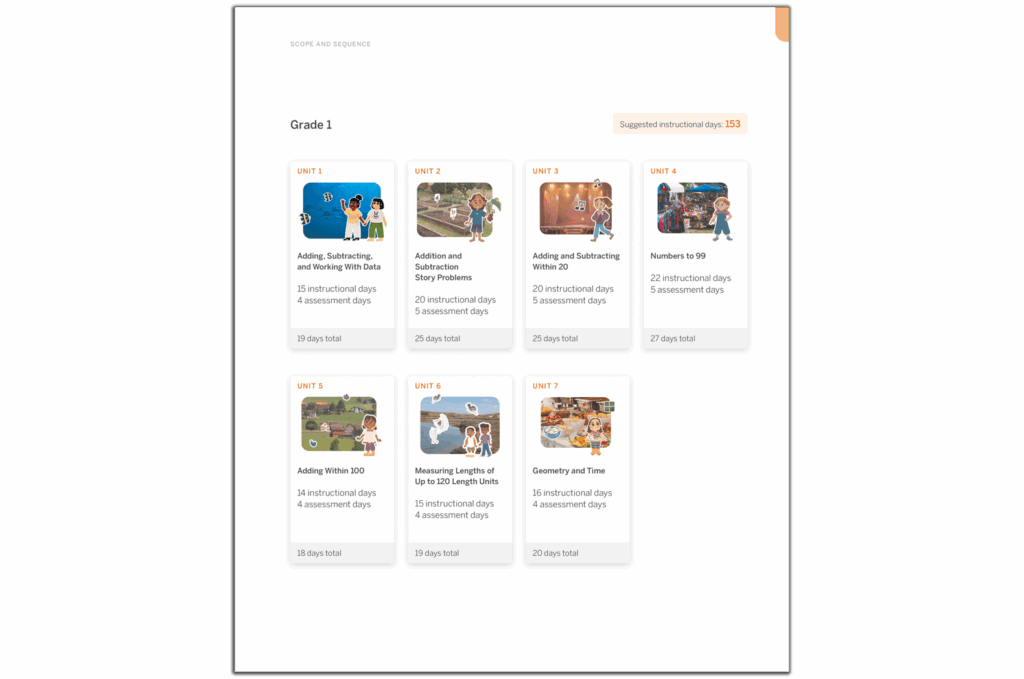

Teacher Edition pages
Planning and instructional guidance is visual, organized, and easy-to-follow. To help you review the program, we have included samples from a complete sub-unit on this site: Unit 2, Sub-Unit 1: Story Problems in Maui.

Digital experience
Explore our digital experience! Every lesson in Amplify Desmos Math has student print materials and digital recommendations.
Centers Resources
Engaging, hands-on games for students to play collaboratively to strengthen their understanding of key skills and concepts.
Intervention and Extension Resources
Additional resources to reinforce and extend key concepts, including Mini-Lessons and Extensions.
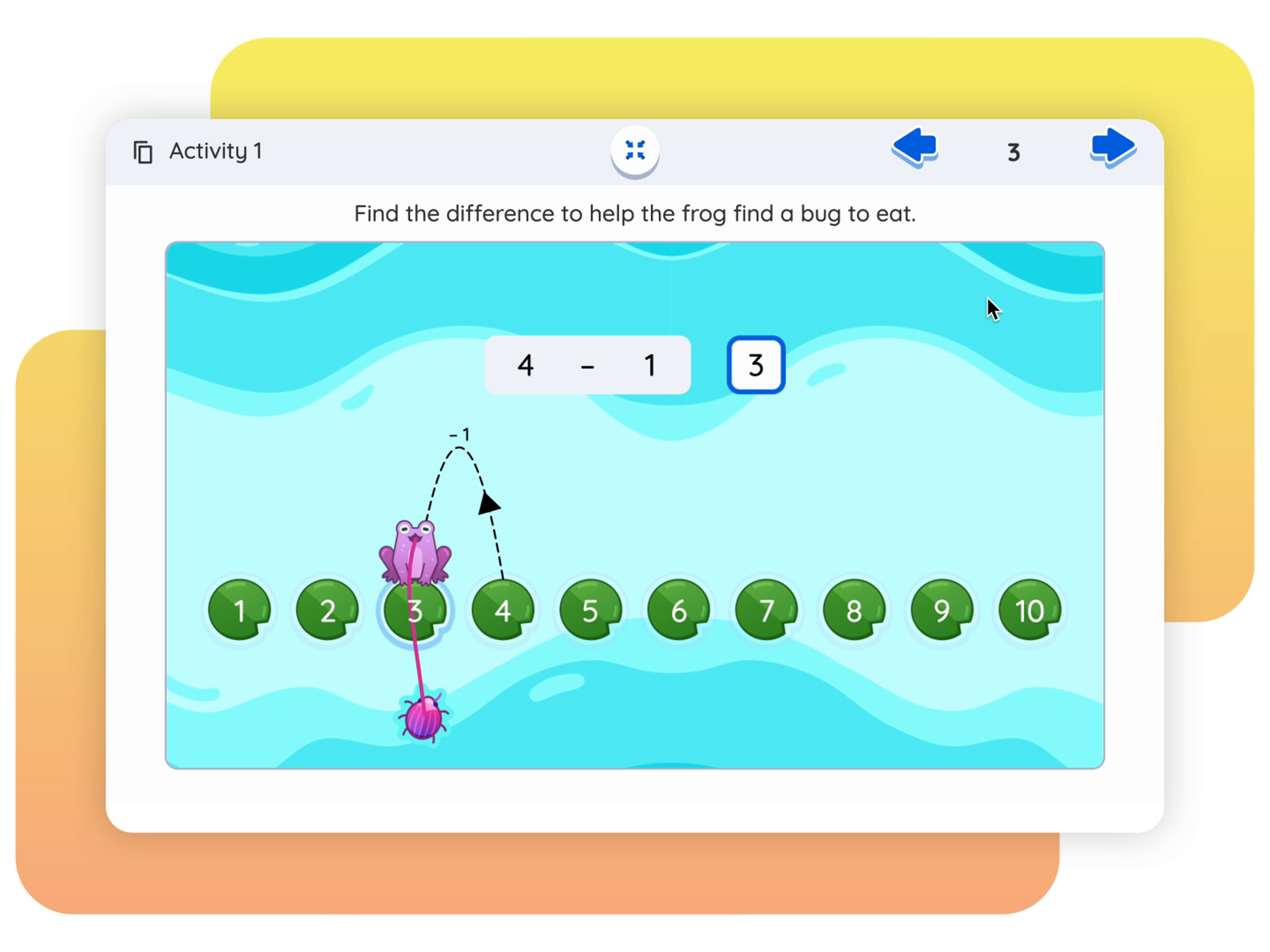
Featured digital lesson: Leaping Lily Pads!
In this lesson, students find differences when subtracting 1 and 2 from the same number by helping a frog reach a lily pad where it can eat a bug.
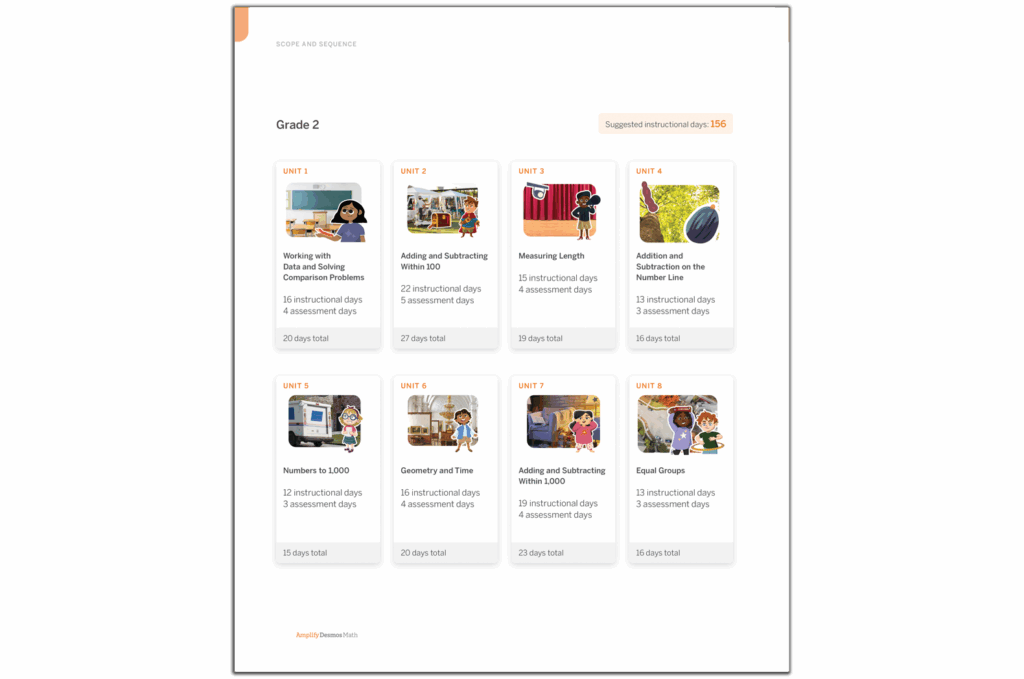

Teacher Edition pages
Planning and instructional guidance is visual, organized, and easy-to-follow. To help you review the program, we have included samples from a complete sub-unit on this site: Unit 2, Sub-Unit 1: Adding and Subtracting.
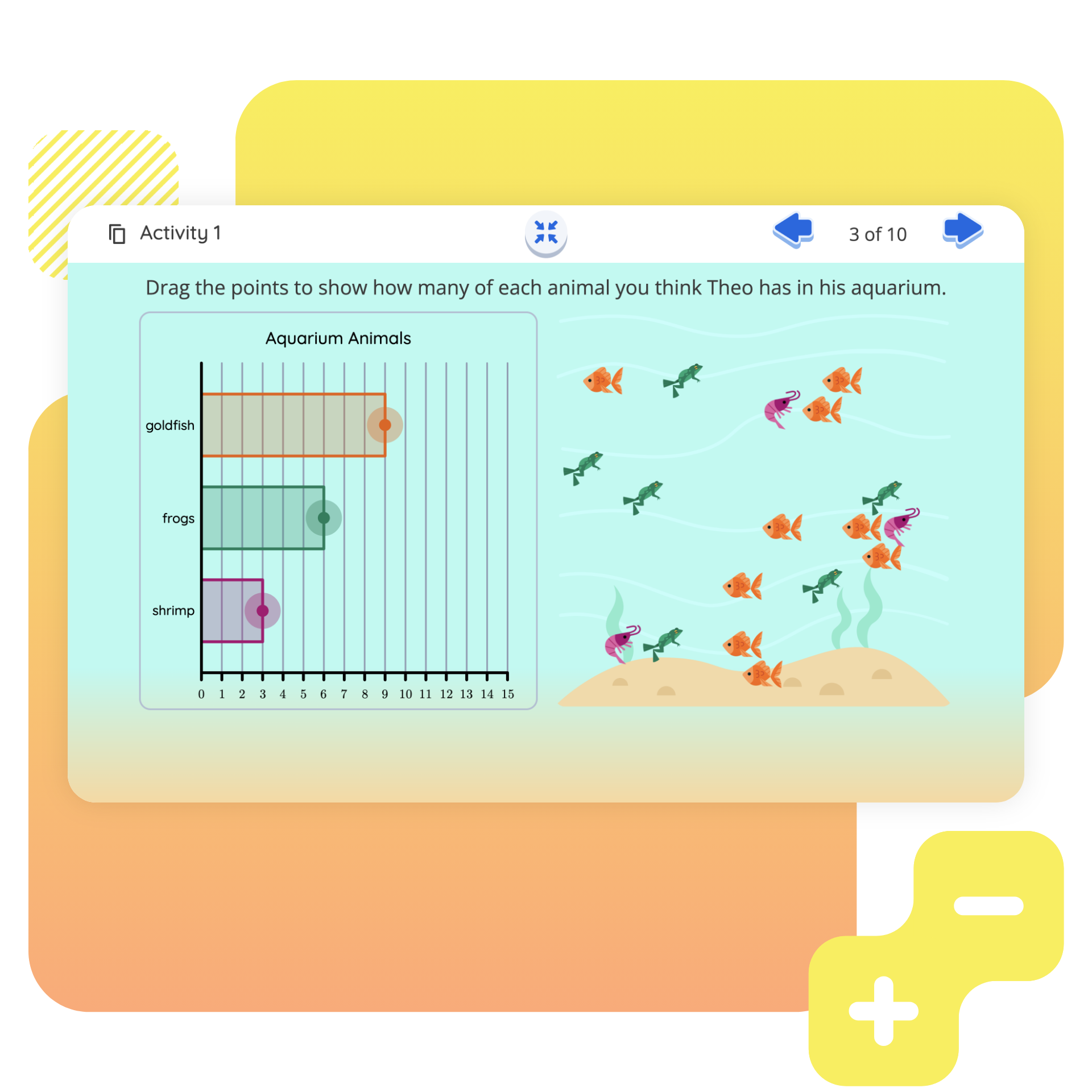
Digital experience
Explore our digital experience! Every lesson in Amplify Desmos Math has student print materials and digital recommendations.


Centers Resources
Engaging, hands-on games for students to play collaboratively to strengthen their understanding of key skills and concepts.
Intervention and Extension Resources
Additional resources to reinforce and extend key concepts, including Mini-Lessons and Extensions.

Featured digital lesson: Ways to Make 10
Students continue to develop fluency by finding the number that makes 10 by helping a millipede reach its favorite food – a clump of leaves!
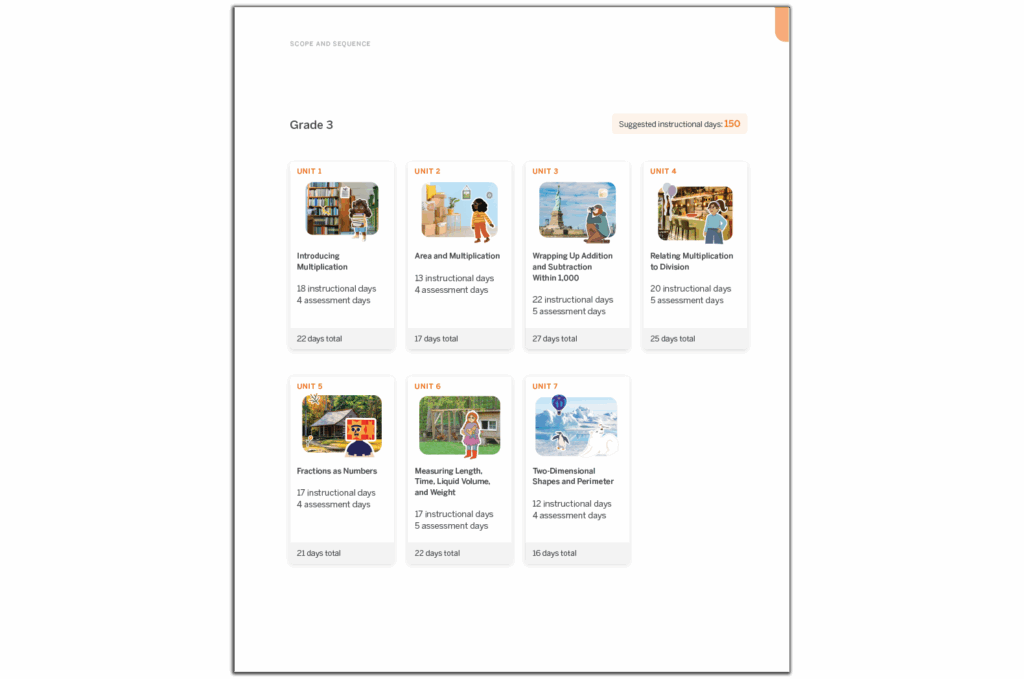

Teacher Edition pages
Planning and instructional guidance is visual, organized, and easy-to-follow. To help you review the program, we have included samples from a complete sub-unit on this site: Unit 2, Sub-Unit 1: Concepts of Area Measurement.
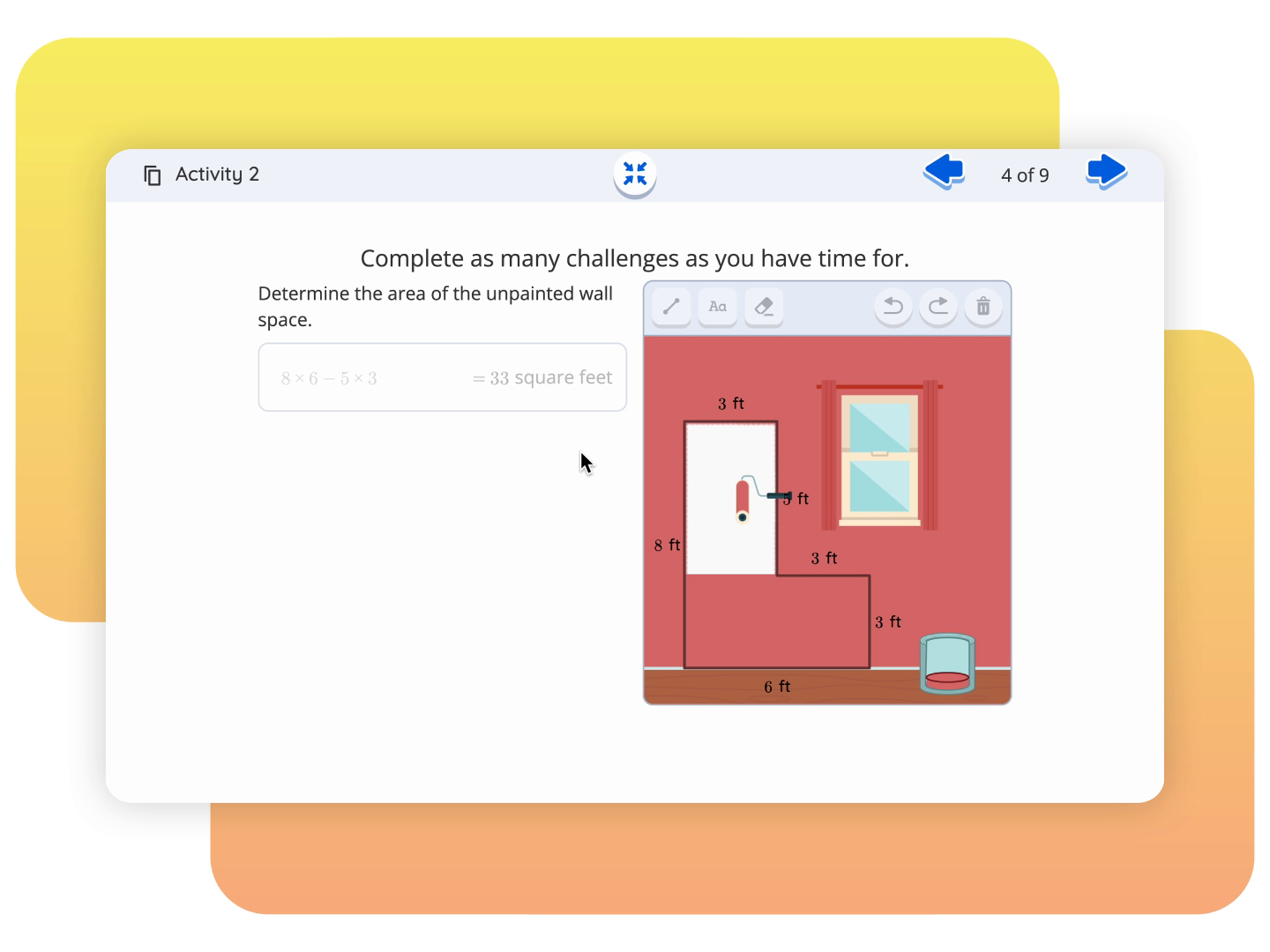
Digital experience
Explore our digital experience! Every lesson in Amplify Desmos Math has student print materials and digital recommendations.


Centers Resources
Engaging, hands-on games for students to play collaboratively to strengthen their understanding of key skills and concepts.
Intervention and Extension Resources
Additional resources to reinforce and extend key concepts, including Mini-Lessons and Extensions.
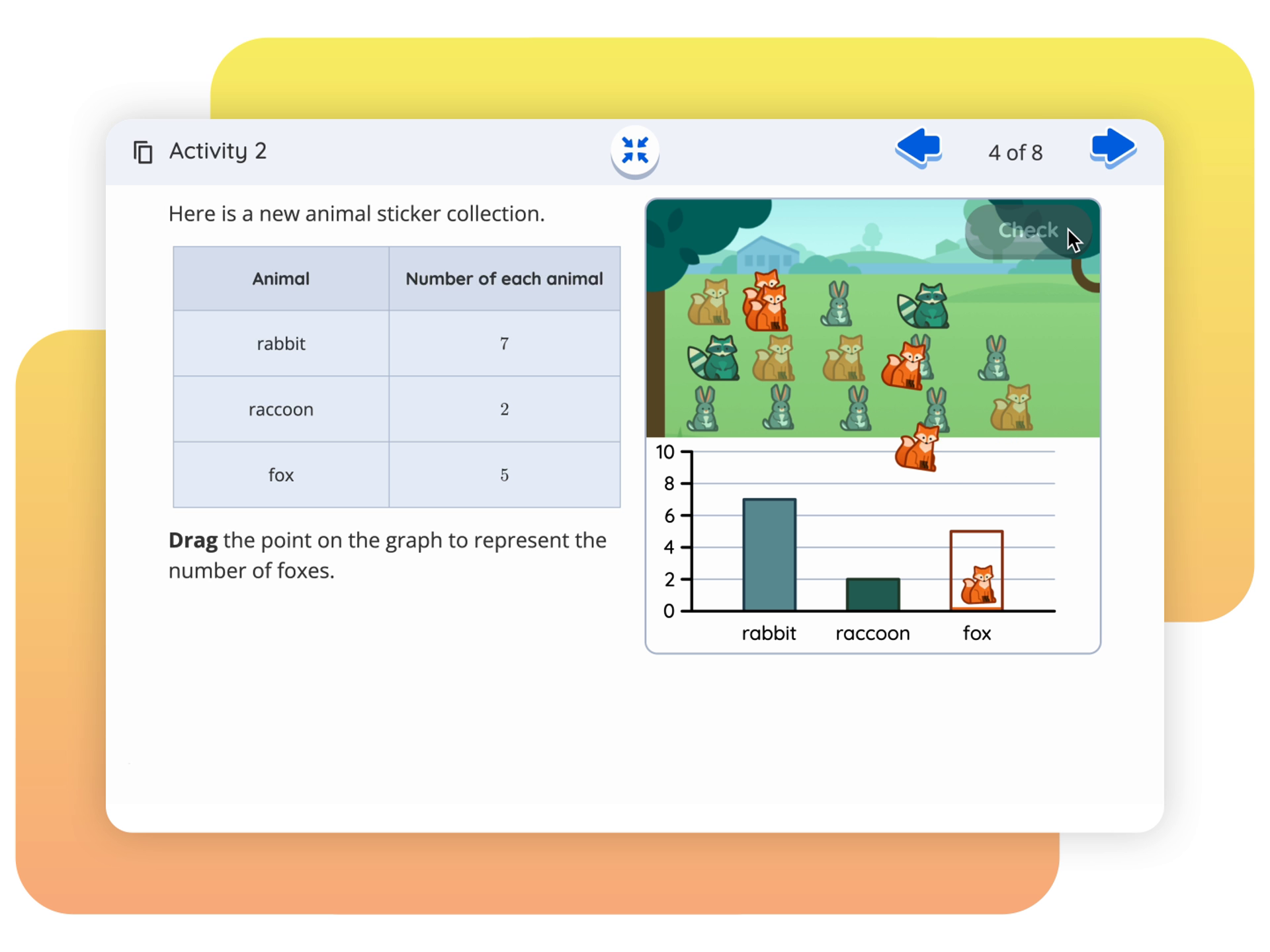
Featured digital lesson: Puppy Pile
Students compare data represented on bar graphs with different scales by using animal stickers to create scaled bar graphs.


Teacher Edition pages
Planning and instructional guidance is visual, organized, and easy-to-follow. To help you review the program, we have included samples from a complete sub-unit on this site: Unit 2, Sub-Unit 1: Size and Location of Fractions.

Digital experience
Explore our digital experience! Every lesson in Amplify Desmos Math has student print materials and digital recommendations.

Centers Resources
Engaging, hands-on games for students to play collaboratively to strengthen their understanding of key skills and concepts.
Intervention and Extension Resources
Additional resources to reinforce and extend key concepts, including Mini-Lessons and Extensions.
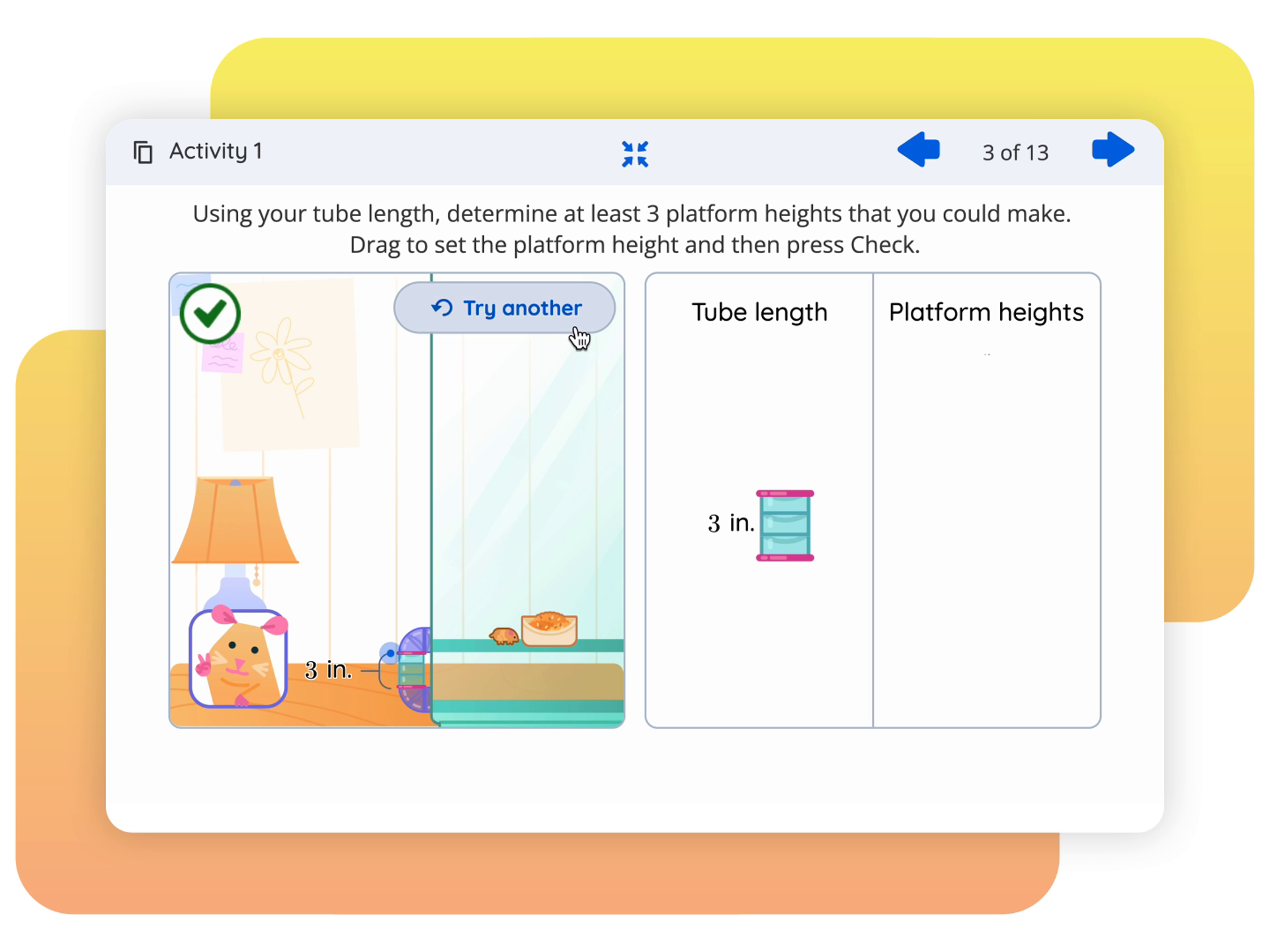
Featured digital lesson: Hamster Homes
Students choose tube lengths to connect to platform heights for hamster homes, identifying possible heights using what they know about multiples.
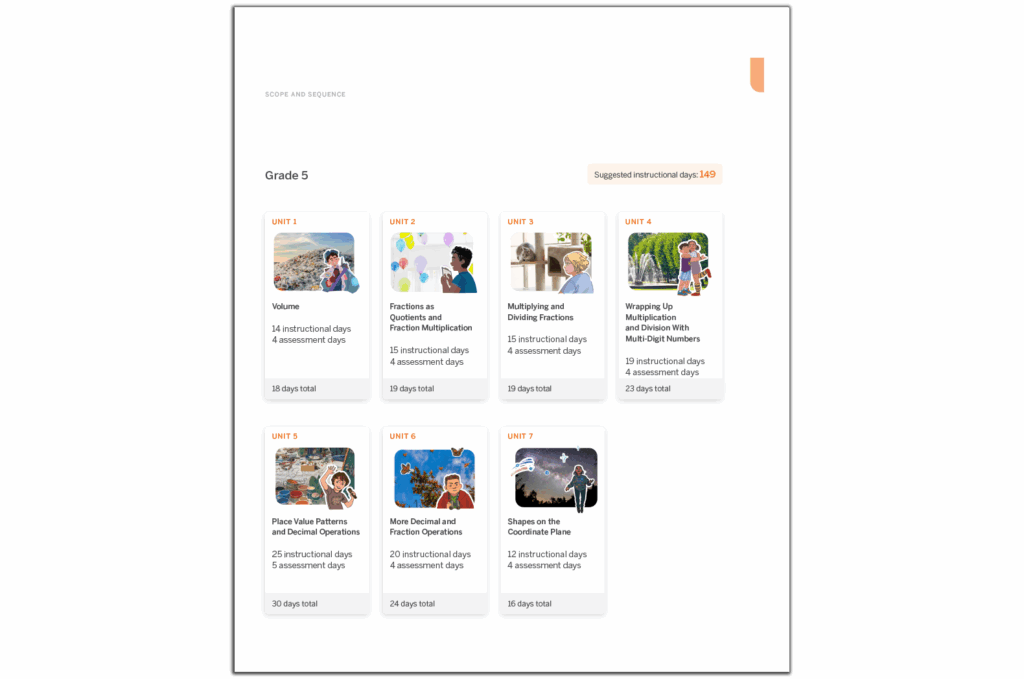
Teacher Edition pages
Planning and instructional guidance is visual, organized, and easy-to-follow. To help you review the program, we have included samples from a complete sub-unit on this site: Unit 2, Sub-Unit 1: Fractions as Quotients.
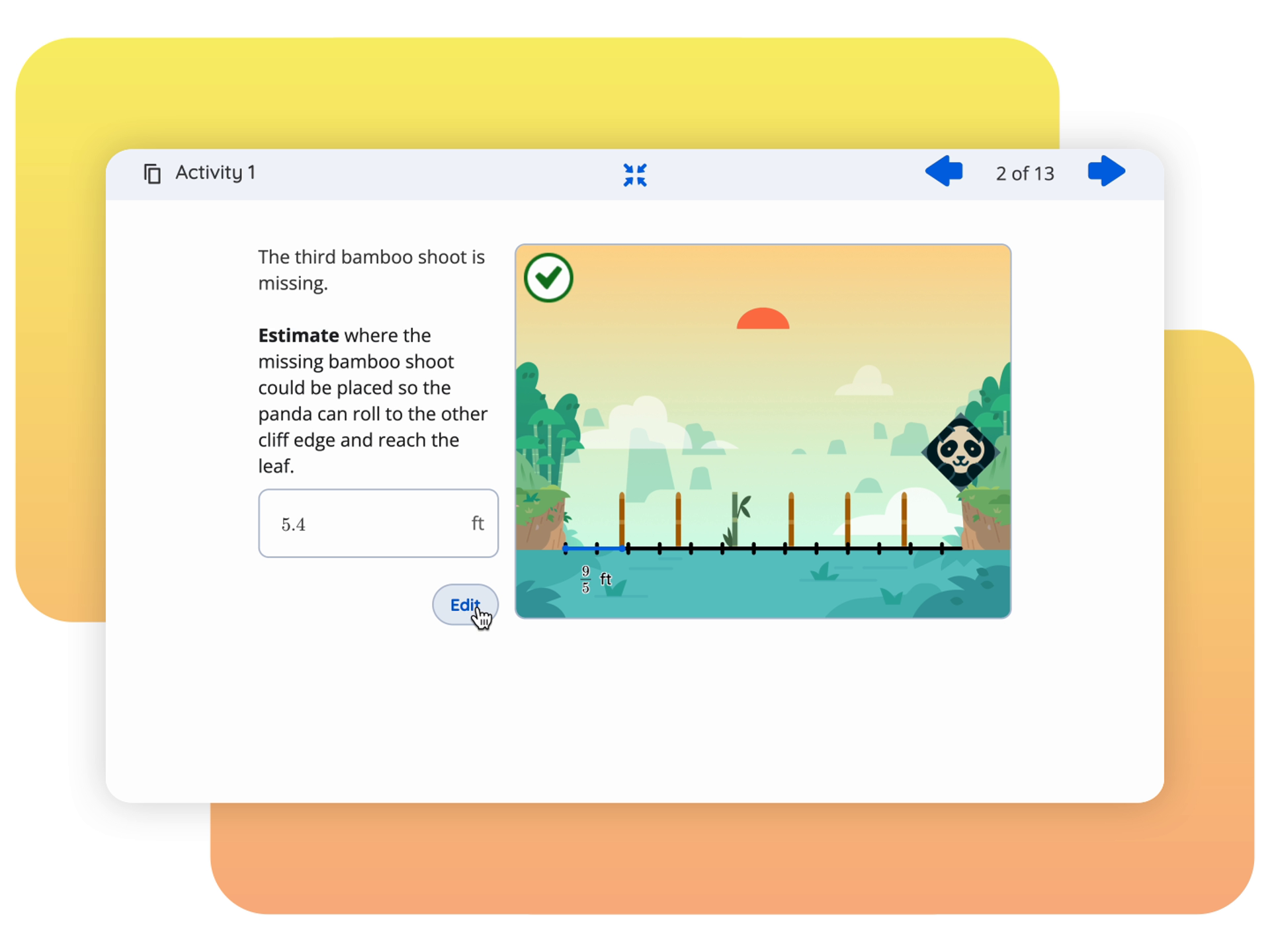
Digital experience
Explore our digital experience! Every lesson in Amplify Desmos Math has student print materials and digital recommendations.
Centers Resources
Engaging, hands-on games for students to play collaboratively to strengthen their understanding of key skills and concepts.

Intervention and Extension Resources
Additional resources to reinforce and extend key concepts, including Mini-Lessons and Extensions.

Featured digital lesson: Figures Made of Prisms
Students decompose a figure into rectangular prisms and determine the volume of the figure by adding the volumes of the individual prisms.
Contact Us
If you have any questions throughout your review process or need additional samples, please don’t hesitate to contact:
Alicia O’Neil
Account Executive
425-890-6103
aoneil@amplify.com
Request additional samples
Ready to learn more? Connect with an Amplify Desmos Math expert to request additional program samples.

Hi, educator. Here’s your Step-by-Step Guide to a Quality Curriculum Adoption.

Welcome to the Step-by-Step Guide.
We talked to leaders like you and created this guide to help with the complex process of adopting a high-quality curriculum. You can explore our recommended steps and use the downloadable articles and templates to help with your decision-making process.
You can also download the entire short guide here: Word Doc | PDF
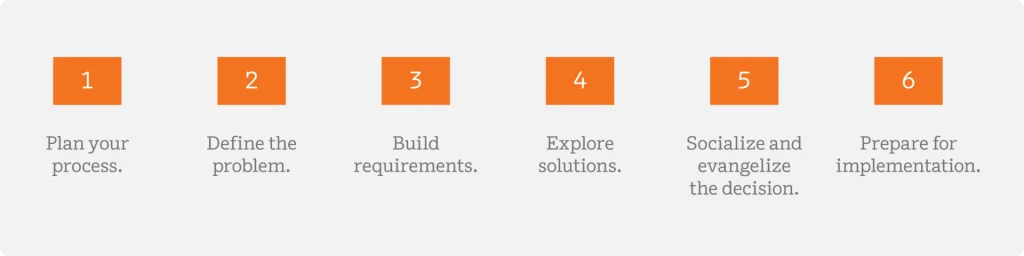
1. Plan your process.
Each step of the process, from assembling a team to preparing materials and socializing the decision, needs to be planned based on your district’s unique needs.
Start with the following case studies if you’d like to see examples from small and mid-sized districts. The worksheets that come next should help you plan the steps in your process and schedule, and the articles provide some ideas for how to assemble your committee.
Links
Case studies:
Worksheets:
Articles:
- Five things to consider as you assemble your team Word Doc | PDF
- Shaping the future: Participating on an adoption committee Word Doc | PDF
2. Define the problem.
Defining the problem shapes your list of requirements and ensures that all involved parties are focused on selecting the right high-quality curriculum.
Links
Worksheet:
3. Build requirements.
Requirements help you prioritize what is most important to your school district and to evaluate why a high-quality curriculum adoption would be the best fit.
Links
Worksheet:
4. Explore programs.
Start with your critical focus areas from step 2 (defining the problem) and select a short list of programs to explore. Next, conduct a thorough review of those programs. If you’re a school or district that pilots, a pilot would happen during this step.
Links
Worksheet:
Articles:
- Getting ready for the review Word Doc | PDF
- Important questions to ask publishers upfront Word Doc | PDF
5. Socialize and evangelize the decision.
You’ve done it! But your work isn’t over. Now you need to create clear, exciting messaging about the high-quality curriculum you’ve chosen and why it’s a good match for your teachers and students.
Links
Article:
Template:
6. Prepare for implementation.
A lot of things happen between signing a purchase order and the first day of professional learning. You’ll want to be organized as you coordinate people, places, and things to get ready for back to school.
Links
Worksheet:
Download the guide.
Welcome to Amplify CKLA!
Amplify Core Knowledge Language Arts (CKLA) is a cutting-edge and effective core ELA program for students in grades K–5. It was developed in partnership with the Core Knowledge Foundation, features proven evidence-based instructional practices, and was specifically designed to help teachers implement Science of Reading principles.
Note: We’re continually adding information to this site, including specific details regarding our alignment with your non-negotiables. Keep checking back with us between now and April 20, 2023.
Getting Started
On this site, you’ll find a variety of resources designed to support your review and evaluation of the program. Before you dive in, watch the Orientation Overview and Program Overview videos below to learn about CKLA’s alignment to CCSD’s ELA adoption requirements, as well as where to find key program resources.
[Video] Orientation Overview
[Video] Program Overview
In the video below, learn about CKLA’s structure and materials, as well the research behind the curriculum.
Evidence-Based
[Video] Pedagogical Overview with Simple View of Reading
In the video below, Amplify’s Chief Academic Officer Susan Lambert shares the big picture of CKLA, and explains why it was created and the impact it’s making across the country. Below are a few portions of the video that you may find particularly helpful as you conduct your review.
- 0-1:00 Why CKLA?
- 1:00-4:40 How CKLA was built on the Simple View of Reading
- 4:40-8:00 How to review the CKLA Components
- 8:00-end Teacher Testimonial
[Features] Supporting the Simple View of Reading
Built out of the latest research in the Science of Reading, Amplify CKLA delivers explicit instruction in both foundational literacy skills (systematic phonics, decoding, and fluency) and background knowledge in grades K–2 with an integrated approach to explicit instruction in grades 3–5.
Review this Science of Reading toolkit to learn more about the Science of Reading best practices integrated throughout CKLA.
See our Science of Reading solutions in action! Click here to see a real example of how one Ohio district is implementing and educating their K–8 community on the Science of Reading as a response to Ohio’s Plan to Raise Literacy Achievement Initiative.
Great reading instruction starts with helping kids develop great decoding skills. By building a solid foundation of phonological awareness and phonics, reading the words on the page becomes automatic so that comprehension and critical thinking can happen. Our instruction is supported by:
- Step-by-step lessons with multisensory approaches, clear lesson objectives, and embedded formative assessments.
- Decodable books and student readers with ebook and audiobook versions that feature engaging plots and relatable characters.
- An engaging sound library with fun songs and videos that develop phonological awareness.
- An interactive Vocab App featuring engaging activities with immediate feedback and automated, customized instruction based on student performance.
Students build grade-appropriate subject-area knowledge and vocabulary in history, science, literature, and the arts while learning to read, write, and think creatively and for themselves. Our instruction is supported by:
- Knowledge builders that provide a quick overview of each domain with its key ideas.
- Interactive Read-Alouds designed to build knowledge and vocabulary.
- Content-rich anchor texts that support students as they tackle increasingly complex text and sharpen their analytical skills.
- Social and emotional learning paired with lessons in civic responsibility.
Easy-to-Use Materials
Amplify CKLA offers a number of digital and multimedia resources to support instruction and enhance the teacher and student experience.
- Amplify CKLA Digital Experience Site: All teacher and student materials are posted on this site for planning and information purposes, including Teacher Guides, Readers, Activity Books, Ancillary Materials, videos, additional resources, and links to other useful sites, such as the Professional Learning site.
- The Professional Learning Site: This site includes training materials, best practices, and other resources to develop program expertise. Access professional development anywhere, anytime.
- Intervention Toolkit: The Intervention Toolkit provides easy-to use resources to assist teachers in filling gaps in students’ foundational skills. Teachers will find hundreds of activities to support phonics, fluency, comprehension, handwriting, and other key skills.
- The Science of Reading: The Podcast: Hosted by Susan Lambert, The Podcast delivers the latest insights from researchers and practitioners in early reading. Each episode takes a conversational approach and explores a timely topic related to the Science of Reading.
In addition to the videos below, our CKLA Components Guide can be a helpful tool as you explore the materials provided within your sample tubs.
[Video] Physical Materials Walkthrough
As you explore your physical samples, the material walkthrough video below can be a helpful resource. In particular, we suggest watching the following portions of the video.
- 0-4:38 CKLA components for K–2
- 4:38-7:00 CKLA components for 3–5
- 7-7:30 CKLA Program Guide
- 10:12-13:20 CKLA’s Teacher Resource Site
Note: The below video covers both our K-5 program (Amplify CKLA) as well as our 6-8 program (Amplify ELA).
[Video] Digital Materials Walkthrough
In the video below, learn about CKLA’s digital tools for teachers and students across both classroom and asynchronous environments.
As you prepare to explore our digital platform, be sure to watch and refer to the video below.
Diverse Texts
In Amplify CKLA, texts serve a variety of purposes, from building background knowledge, vocabulary, and comprehension to building decoding and fluency skills.
In grades K–2, instruction is segmented between two strands: Knowledge and Skills.
- Reading within the Knowledge Strand is centered around authentic read-alouds and trade books that are intentionally sequenced to build content knowledge and vocabulary in specific domain topics around literature, history, science, and the arts. Because research shows that students’ listening comprehension outpaces their reading comprehension until their early teens, Amplify CKLA strategically uses read-aloud text in this strand, allowing students to focus their cognitive energy on gaining meaning from the words and better understanding from the images.
- Reading within the Skills Strand centers around carefully crafted Student Readers that teach students how to read. Structured as chapter books, these readers are 100% decodable and were developed to align with Amplify CKLA’s scope and sequence for phonics, directly connecting instruction to student practice in connected texts. Students use the Readers to practice decoding, fluency, and comprehension during shared reading lessons, targeted close reading sessions, in small groups, and independently.
In grades 3–5, integrated units bring the Skills and Knowledge strands together as students become increasingly automatic and strategic in their word recognition and language comprehension skills. Student reading and comprehension activities involve a variety of reading materials:
- Authentic Read-Alouds and trade books ensure students encounter a variety of perspectives as they use these complex text to increase their knowledge while practicing vocabulary and listening comprehension skills.
- Student Readers connect to each theme and are designed to increase in complexity over time, providing a continual challenge as students’ reading and listening comprehension skills develop and strengthen throughout the year.
- Novel Guides provide teachers a flexible option for extending authentic reading and text-based activities in the classroom using award-winning and acclaimed novels.
- ReadWorks articles give students access to additional high-quality texts aligned to both Amplify CKLA knowledge topics and the topics outlined in the Common Core State Standards.
Decodable Readers at Grades K–2
Our Decodable Readers are designed to progress in skills, mirroring the scope and sequence of instruction, which allows students to immediately apply what they are learning to 100% decodable text. More specifically, our decodables:
- Are uniquely designed to provide intensive practice with the CKLA code while students read compelling and engaging stories and informational texts for the first time.
- Gradually introduce students to “tricky” spelling concepts, such as different sounds that use the same letter code.
- Increase in text complexity (i.e., content, length, and vocabulary) as students progress through the grades.
- Include fiction and nonfiction text.
- Are available as ebooks and audiobooks.
Below, you can see how students grow from year-to-year across grades K–2.
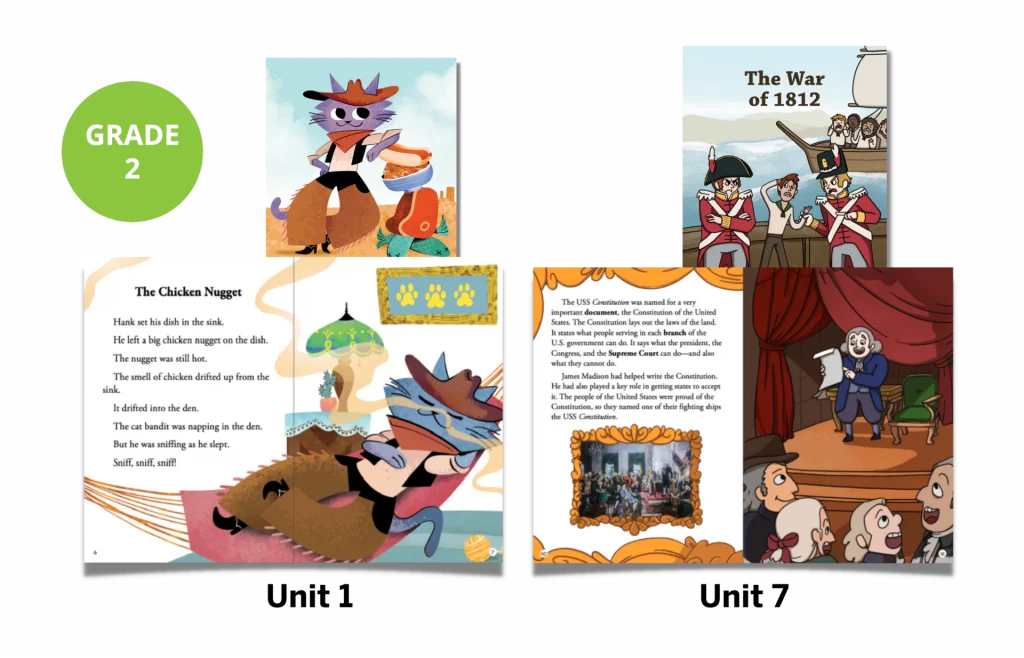
Student Readers at Grades 3–5
By grades 3–5, students have mastered the basics of decoding and are hungry to use what they’ve learned to reach out to the world. Although Read-Alouds remain an important part of lessons, students are also encouraged to practice independent reading starting in grade 3 with the support of carefully crafted Student Readers. These readers are chock-full of various text types, cultural stories, and a blend of fiction and nonfiction texts that are tied to and support the overarching theme of the unit.

Read-alouds
Authentic literature exposes students to a variety of text types and perspectives to deepen their knowledge of fascinating topics in social studies, science, literature, and the arts. Authentic texts support text-to-self, text-to-world, and text-to-text connections for readers.

Trade books
Our optional Trade Book Collection (and suggested list of additional trade books) align with our grade-level topics, and extend the knowledge students are learning through an authentic text.
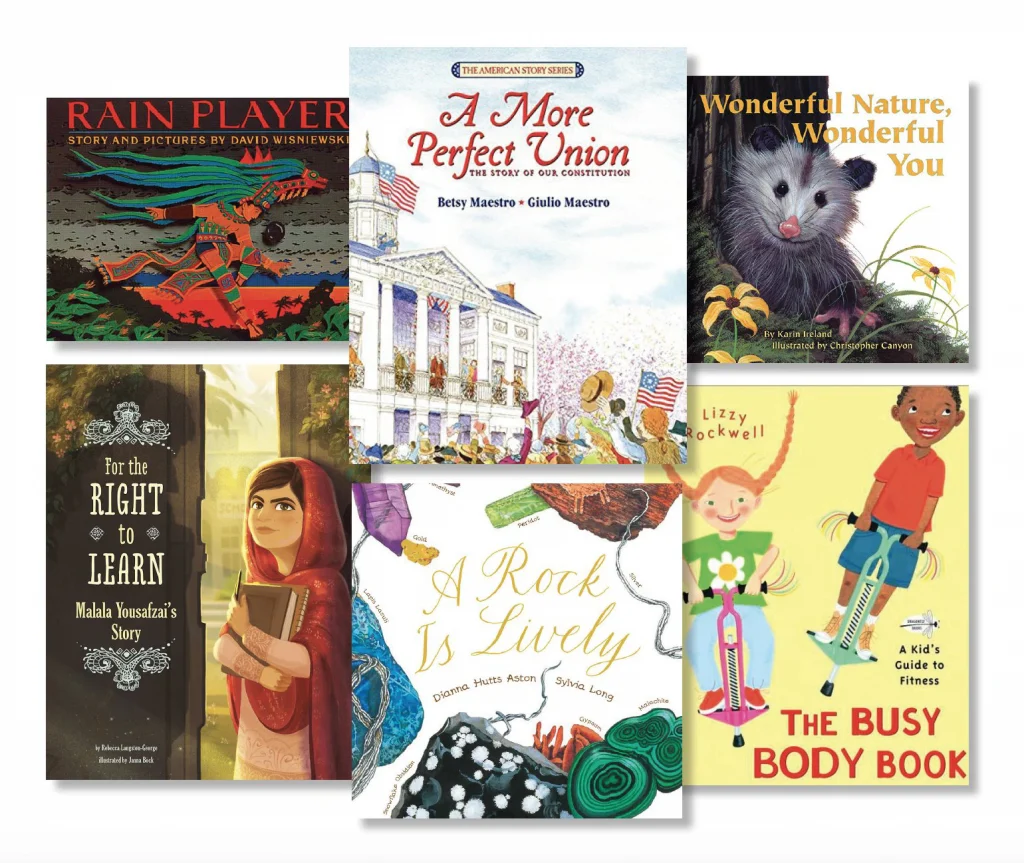
Novel Guides
Novel Guides bring students beyond the CKLA curriculum. We provide fifteen full days of instruction on contemporary trade books, as well as writing prompts that help students navigate the authentic literature they love.

ReadWorks
Amplify CKLA and ReadWorks® have partnered to deliver high-quality texts curated to support the Amplify CKLA Knowledge Sequence and to extend student learning. Texts include high-interest nonfiction articles in topics in social studies, science, literature, and the arts. These texts are accompanied by vocabulary supports and standards-aligned formative assessment opportunities. Teachers can monitor their students’ progress using the ReadWorks reporting features.
Reading resources
The following resources may be helpful as you explore our approach to reading and the role that diverse texts play in the program.
- CKLA Text Complexity Guide
- What students read in Grade K
- What students read in Grade 1
- What students read in Grade 2
- What students read in Grade 3
- What students read in Grade 4
- What students read in Grade 5
Writing
CKLA is rich with opportunities for students to develop, practice, and hone their writing skills. While the shape of writing instruction looks slightly different at each grade level, a commonality across all grades K–5 is that writing isn’t taught in isolation. Rather, it’s embedded within the context of each unit, and is connected to what students read.
At Grades K–2, writing takes place in both the Skills and Knowledge strands.
- Explicit instruction in writing skills (such as sentence structure) and handwriting takes place in the Skills Strand, and is tied to the decodable readers used within each unit.
- Extended writing and writing process activities take place in the Knowledge Strand.
At Grades 3–5, writing is embedded through the integrated units.
- Across each unit, students work on smaller, more discrete writing skills alongside their Student Reader. These skills eventually culminate at the end of each unit in the form of a writing project.
- In 4th and 5th grades, we expand writing even further with the addition of Poetry units.
Writing and text-dependent questions
The overwhelming majority of questions, tasks, and assignments in CKLA materials are text-dependent. Every CKLA unit and domain is based around key texts that are either read aloud, with a peer, or independently. These readings are followed by class discussions where students are expected to refer to these texts when answering literal, inferential, and evaluative questions, both orally during class discussions and through written responses.
- Literal questions assess students’ recall of key details from the text. These are text-dependent questions that require students to paraphrase and/or refer back to the portion of the text where the specific answer is provided.
- Inferential questions ask students to infer information from the text and to think critically. These text-dependent questions require students to summarize and/or reference the portions of the text that lead to and support the inference they are making.
- Evaluative questions ask students to build on what they have learned from the text using analytical and application skills, often to form an opinion or make a judgment. These questions require students to paraphrase and/or cite the textual evidence that substantiates their argument or opinion.
In addition, students are often asked to generate additional questions based on the texts. Students further demonstrate understanding in writing by applying what they have learned and providing evidence from the text to back up their answers and opinions. For example, Grade 3 students learning about sea exploration write a paragraph from the perspective of a sailor on John Cabot’s ship, stating their opinion of whether the hardships they experienced are worth the adventure or glory and citing examples from the text to support their response. Grade 5 students studying the Adventures of Don Quixote write a four-paragraph persuasive essay arguing whether they believe Don Quixote’s good intentions justify his often calamitous actions, using reasons and evidence from the text to support their claims.
Writing with authentic literature
Novel Guides are designed around authentic texts students love. They not only help students foster a love for reading, they also present authentic opportunities for students to express themselves through writing. Novel Guides provide daily text-based writing and discussion through five activity types:
- Ask contains questions for discussion, reflection, or brief written responses. These questions cover information all students should understand as they read the text.
- Explore prompts offer brief research opportunities centered around items mentioned in the text.
- Imagine activities promote creativity and further reflection.
- Observe items ask students to take notes or make other kinds of observations about what they have read.
- Understand questions push students to explore connections to the text.
Writing and enrichment
Writing tasks throughout the program provide almost limitless opportunities for extension. Feedback from the teacher, peers, and self-reflection provide students opportunities to strengthen their writing. For example, advanced students can be encouraged to:
- Use more complex and unusual descriptive vocabulary.
- Incorporate figurative language into their writing.
- Write multi-clause sentences with more complex joining words.
- Create longer or richer opinion, explanatory, and narrative pieces.
- Evaluate the use of informational textual characteristics and use in their own writing (e.g., headers, bullets).
Writing resources
The following resources may be helpful as you explore our approach to writing and how writing develops across the program.
Access the program
Explore as a teacher
Before logging in, watch this brief video on navigating the CKLA Teacher Resource Site.
Ready to explore as a teacher? Follow these instructions:
- Click the CKLA Teacher Resource Site button below.
- Select Log in with Amplify.
- Enter the username: t1.ccsd-k5-ckla@demo.tryamplify.net
- Enter the password: Amplify1-ccsd-k5-ckla
- Click the CKLA Teacher Resource icon
- Select a grade level
Explore as a student
Before logging in, watch this brief video on navigating the CKLA Student Hub.
Ready to explore as a student? Follow these instructions:
- Click the CKLA Teacher Resource Site button below.
- Select Log in with Amplify.
- Enter the username: s1.ccsd-k5-ckla@demo.tryamplify.net
- Enter the password: Amplify1-ccsd-k5-ckla
- Click the CKLA Teacher Resource icon
- Select a grade level
Check out these additional resources
Nevada submission resources:
- CKLA Program Alignment to the Standards (Nevada Rubric: Category 1)
- CKLA Program Social Justice Alignment (Nevada Rubric 2: Category 2)
- CKLA Grade K Lesson Alignment to the Nevada Academic Content Standards for English Language Arts
- CKLA Grade 1 Lesson Alignment to the Nevada Academic Content Standards for English Language Arts
- CKLA Grade 2 Lesson Alignment to the Nevada Academic Content Standards for English Language Arts
- CKLA Grade 3 Lesson Alignment to the Nevada Academic Content Standards for English Language Arts
- CKLA Grade 4 Lesson Alignment to the Nevada Academic Content Standards for English Language Arts
- CKLA Grade 5 Lesson Alignment to the Nevada Academic Content Standards for English Language Arts
CKLA review resources:
- CKLA Program guide
- Diversity, equity, and inclusion in CKLA
- Text complexity in CKLA
- Trade books in CKLA
- Assessments in CKLA
- Remote and hybrid learning with CKLA
- Amplify ELA Technical Specifications
- CKLA Scopes and Sequences
- Grade K Skills and Knowledge
- Grade 1 Skills and Knowledge
- Grade 2 Skills and Knowledge
- Grade 3 Integrated
- Grade 4 Integrated
- Grade 5 Integrated
Oklahoma ELA Review for grades K–5
Thank you for taking the time to review Amplify’s core ELA program for K–5.
Amplify Core Knowledge Language Arts (CKLA) is a cutting-edge and effective core ELA program for students in grades K–5. It was developed in partnership with the Core Knowledge Foundation, was specifically designed to help teachers implement Science of Reading principles, and features proven evidence-based instructional practices.
Getting started
On this site, you’ll find a variety of resources designed to support your review and evaluation of the program. Before you start scrolling, watch the video below to learn about CKLA.
Curriculum background
Pedagogical overview
In the video below, Amplify’s Chief Academic Officer Susan Lambert shares the big picture of Amplify CKLA, explaining why it was created and the impact it’s making across the country.
Program overview
In the video below, learn about CKLA’s structure and materials, as well the research behind the curriculum.
Program features
Built on the latest research in the Science of Reading, Amplify CKLA delivers explicit instruction in both foundational literacy skills (systematic phonics, decoding, and fluency) and background knowledge in grades K–2, with an integrated approach to explicit instruction in grades 3–5.
Review this Science of Reading toolkit to learn more about the Science of Reading best practices integrated throughout CKLA.
When students build a solid foundation of phonological awareness and phonics, reading words on the page becomes automatic so that comprehension and critical thinking can happen.
- Step-by-step lessons with multisensory approaches, clear lesson objectives, and embedded formative assessments.
- Decodable books and Student Readers with ebook and audiobook versions that feature engaging plots and relatable characters.
- An engaging sound library with fun songs and videos that develop phonological awareness.
- An interactive App featuring engaging activities with immediate feedback and automated, customized instruction based on student performance.
Students build grade-appropriate subject-area knowledge and vocabulary in history, science, literature, and the arts while learning to read, write, and think creatively and for themselves. Our instruction is supported by:
- Knowledge Builders that provide a quick overview of each domain with its key ideas.
- Interactive Read-Alouds designed to build knowledge and vocabulary.
- Content-rich anchor texts that support students as they tackle increasingly complex text and sharpen their analytical skills.
Getting students caught up on reading skills requires more than just an extra mini-lesson here or there. It requires targeted and intensive instruction delivered in short bursts. Our intervention component:
- Assesses and analyzes students’ areas of mastery and growth.
- Automatically groups students with like needs.
- Provides educators with ready-to-teach, research-based instructional progressions that last 10 days.
- Progress monitors students, updates their skill profiles, and reforms groups for the next 10-day period.
Student-led reading practice should be purposeful and connected to the core. In addition to practicing skills directly tied to the skills they’ve been working on during ELA time, Amplify CKLA students have opportunities to interact with adaptive content that addresses their personal gaps and bolsters foundational skills at a pace that supports their individual development.
Our collection of 40+ adaptive games targets foundational reading skills and develops them in alignment with Science of Reading principles. Unlike other adaptive games, ours ensure students:
- Practice the right skills at the right time. Our embedded placement tool ensures students receive the content and skill practice most appropriate for their current reading level. From there, students move through our curriculum along their own learning pathway, where they encounter personalized content tailored to their evolving skill and grade levels.
- Progress along a pathway that adapts on multiple dimensions, not just one. For example, a student can work on early first-grade decoding in one game while building more advanced vocabulary knowledge in another.
- Practice skills in tandem. For example, a student is never forced to master one skill area before proceeding to the next. Instead, we offer students the opportunity to work on multiple skills concurrently.
- Feel supported with scaffolding, instruction, and practice that adapts based on student performance.
- Stay engaged by giving them immediate and clear feedback. These results are never punitive. Instead, our always-positive feedback is delivered in the context of the game world and is designed to motivate students to keep trying.
From the printed page to the screen, we bring foundational skills and knowledge of the world to your young learners, and make the transition from classroom to home learning seamless.
Download the Amplify CKLA Components guide to see components by grade.
Download the Remote and hybrid learning guide to learn how we support in-person, remote, and hybrid instruction.
Digital experience overview
In the video below, learn about CKLA’s digital tools for teachers and students across both classroom and asynchronous environments.
Curriculum review
Digital navigation walkthrough
Physical materials walkthrough
Access the program
Explore as a teacher
Before logging in, watch this brief video on navigating the CKLA Teacher Resource Site.
Ready to explore as a teacher? Follow these instructions:
- Click the CKLA Teacher Resource Site button below.
- Select Log in with Amplify.
- Enter the teacher username and password found on the login flyer PDF provided to you.
- Click the CKLA Teacher Resource icon.
- Select a grade level.
Explore as a student
Before logging in, watch this brief video on navigating the CKLA Student Hub.
Ready to explore as a student? Follow these instructions:
- Click the CKLA Student Hub button below.
- Select Log in with Amplify.
- Enter the student username and password found on the login flyer PDF provided to you.
- Click the CKLA Student Hub icon.
- Select a grade level.
Check out these additional resources
Oklahoma submission resources:
CKLA review resources:
- CKLA Program Guide
- Text complexity in CKLA
- Trade books in CKLA
- Assessments in CKLA
- Remote and hybrid learning with CKLA
- CKLA Scopes and Sequences
- Grade K Skills and Knowledge
- Grade 1 Skills and Knowledge
- Grade 2 Skills and Knowledge
- Grade 3 Integrated
- Grade 4 Integrated
- Grade 5 Integrated
Nevada ELA Review for grades K–5
Thank you for taking the time to review Amplify’s core ELA program for K–5.
Amplify Core Knowledge Language Arts (CKLA) is a cutting-edge and effective core ELA program for students in grades K–5. It was developed in partnership with the Core Knowledge Foundation, was specifically designed to help teachers implement Science of Reading principles, and features proven evidence-based instructional practices.
Getting started
On this site, you’ll find a variety of resources designed to support your review and evaluation of the program. Before you start scrolling, watch the video below to learn about CKLA’s alignment to Nevada’s literacy initiatives as well as where to find key program resources.
Curriculum background
Pedagogical overview
In the video below, Amplify’s Chief Academic Officer Susan Lambert shares the big picture of CKLA, and explains why it was created and the impact it’s making across the country.
Program overview
In the video below, learn about CKLA’s structure and materials, as well the research behind the curriculum.
Program features
Built out of the latest research in the Science of Reading, Amplify CKLA delivers explicit instruction in both foundational literacy skills (systematic phonics, decoding, and fluency) and background knowledge in grades K–2 with an integrated approach to explicit instruction in grades 3–5.
Review this Science of Reading toolkit to learn more about the Science of Reading best practices integrated throughout CKLA.
Great reading instruction starts with helping kids develop great decoding skills. By building a solid foundation of phonological awareness and phonics, reading the words on the page becomes automatic so that comprehension and critical thinking can happen. Our instruction is supported by:
- Step-by-step lessons with multisensory approaches, clear lesson objectives, and embedded formative assessments.
- Decodable books and student readers with ebook and audiobook versions that feature engaging plots and relatable characters.
- An engaging sound library with fun songs and videos that develop phonological awareness.
- An interactive Vocab App featuring engaging activities with immediate feedback and automated, customized instruction based on student performance.
Students build grade-appropriate subject-area knowledge and vocabulary in history, science, literature, and the arts while learning to read, write, and think creatively and for themselves. Our instruction is supported by:
- Knowledge builders that provide a quick overview of each domain with its key ideas.
- Interactive Read-Alouds designed to build knowledge and vocabulary.
- Content-rich anchor texts that support students as they tackle increasingly complex text and sharpen their analytical skills.
- Social and emotional learning paired with lessons in civic responsibility.
Amplify CKLA provides built-in differentiation strategies in every lesson for all students,
including supports for ELLs.
- Access supports for ELLs—Integrated ELD supports in each lesson segment
for ELLs are specific to students’ mastery of the lesson’s objectives. - Support and Challenge for all learners—Lessons include Support and Challenge suggestions that provide assistance or opportunities for more advanced work toward the goal of the lesson. These supports are suitable for all learners, including ELLs.
- 30 minutes of Additional Support in every Skills lesson–In the Skills Strand, every lesson concludes with an Additional Support section of recommendations for 30 minutes of extended instruction and activities, directly aligned to the skills taught in the lesson to assist students who need more support in mastering the lesson’s objectives.
- Intervention Toolkit–The Intervention Toolkit provides easy-to-use resources to assist teachers in filling gaps in students’ foundational skills. Teachers will find of hundreds of activities to support phonics, fluency, comprehension, handwriting, and other key skills.
The slides-based Amplify CKLA digital experience enhances instruction while saving you time. Everything you need is all in one place, making it easier than ever to plan lessons, present digital content, and review student work.
- Simplify planning and instruction–Teachers have access to ready-to-use and customizable lesson presentation slides, complete with all the prompts from the print Teacher Guide embedded in the teacher view. As teachers deliver each lesson, students can engage with the content in one cohesive
experience—through Activity Books, slides, digital components, videos, Student Readers, and more. - Interactive student activities–Through the Student Home, students can easily access digital lessons with slides, Activity Pages, ebooks, videos, and other interactive resources from one simple dashboard.
- Your teacher command center–You’re provided with the tools you need to ensure a productive digital experience that’s personalized to meet your students’ needs. This includes a teacher home from which to launch and track lessons, LMS integrations such as Google Classroom and Microsoft Teams, and other customizations based on classroom needs.
- Get real-time insights into your students’ work–The innovative live review tool enables you to keep an eye on students drawing, recording audio, uploading and capturing images, and typing or writing in pre-placed text boxes in their Activity Pages.
Curriculum review
Digital experience overview
In the video below, learn about CKLA’s digital tools for teachers and students across both classroom and asynchronous environments.
Digital navigation walkthrough
Physical materials walkthrough
Curriculum implementation
See our Science of Reading solutions in action! Click here to see a real example of how one Ohio district is implementing and educating their K–8 community on the Science of Reading as a response to Ohio’s Plan to Raise Literacy Achievement Initiative.
Access the program
Explore as a teacher
Before logging in, watch this brief video on navigating the CKLA Teacher Resource Site.
Ready to explore as a teacher? Follow these instructions:
- Click the CKLA Teacher Resource Site button below.
- Select Log in with Amplify.
- Enter the username: t1.nvk5@tryamplify.net
- Enter the password: AmplifyNumber1
- Click the CKLA Teacher Resource icon
- Select a grade level
Explore as a student
Before logging in, watch this brief video on navigating the CKLA Student Hub.
Ready to explore as a student? Follow these instructions:
- Click the CKLA Teacher Resource Site button below.
- Select Log in with Amplify.
- Enter the username: s1.nvk5@tryamplify.net
- Enter the password: AmplifyNumber1
- Click the CKLA Teacher Resource icon
- Select a grade level
Check out these additional resources
Nevada submission resources:
- CKLA Program Alignment to the Standards (Nevada Rubric: Category 1)
- CKLA Program Social Justice Alignment (Nevada Rubric 2: Category 2)
- CKLA Grade K Lesson Alignment to the Nevada Academic Content Standards for English Language Arts
- CKLA Grade 1 Lesson Alignment to the Nevada Academic Content Standards for English Language Arts
- CKLA Grade 2 Lesson Alignment to the Nevada Academic Content Standards for English Language Arts
- CKLA Grade 3 Lesson Alignment to the Nevada Academic Content Standards for English Language Arts
- CKLA Grade 4 Lesson Alignment to the Nevada Academic Content Standards for English Language Arts
- CKLA Grade 5 Lesson Alignment to the Nevada Academic Content Standards for English Language Arts
CKLA review resources:
- CKLA Program guide
- Diversity, equity, and inclusion in CKLA
- Text complexity in CKLA
- Trade books in CKLA
- Assessments in CKLA
- Remote and hybrid learning with CKLA
- Amplify ELA Technical Specifications
- CKLA Scopes and Sequences
- Grade K Skills and Knowledge
- Grade 1 Skills and Knowledge
- Grade 2 Skills and Knowledge
- Grade 3 Integrated
- Grade 4 Integrated
- Grade 5 Integrated
CKLA Review for Scottsdale
Thank you for taking the time to review Amplify’s core ELA program for K–5.
Amplify Core Knowledge Language Arts (CKLA) is a cutting-edge and effective core ELA program for students in grades K–5. It was developed in partnership with the Core Knowledge Foundation, was specifically designed to help teachers implement Science of Reading principles, and features proven evidence-based instructional practices.

Step 1: Program Introduction
Welcome to Amplify CKLA! Before you dive into our materials, watch the video below to learn about the big picture behind Amplify CKLA’s pedagogy.
In this video, Susan Lambert (Chief Academic Officer and host of Science of Reading: The Podocast) shares why Amplify CKLA was created, how it is built on the Science of Reading, and the impact it’s making across the country.
Step 2: Program Overview
Amplify CKLA is different for a reason. Watch the overview video below to learn about these differences and why educators love them.
In this video, you’ll get an in-depth look at the program’s overall structure and organization, the design behind our proven lessons, and the materials included to support teaching and learning.
The Amplify CKLA Program Guide also provides an in-depth view of how Amplify CKLA works, how it’s structured, and why it’s uniquely capable of helping you bring reading instruction based on the Science of Reading to your classroom.
Evidence-based design
Amplify CKLA is rooted in Science of Reading research. Mirroring Scarborough’s Rope, Amplify CKLA delivers a combination of explicit foundational skills with meaningful knowledge-building.
- In Grades PK–2, dedicated knowledge-building and explicit skills instruction are taught simultaneously through two distinct instructional strands.
- In Grades 3–5, dedicated knowledge-building and explicit skills instruction are woven together and delivered through one integrated strand.
Grades K–2 Skills and Knowledge Strands
Every day students in Grades K–2 complete one full lesson that explicitly and systematically builds foundational reading skills in the Skills Strand, as well as one full lesson that builds robust background knowledge to access complex text in the Knowledge Strand. Through learning in each of these strands, students develop the early literacy skills necessary to help them become confident readers and build the context to understand what they’re reading.
Grades 3–5 Integrated Strand
In Grades 3–5, Knowledge and Skills are integrated in one set of instructional materials. Lessons begin to combine skills and knowledge with increasingly complex texts, close reading, and a greater writing emphasis. Students can then use their skills to go on their own independent reading adventures.
Key features
Built out of the latest research in the Science of Reading, Amplify CKLA delivers explicit instruction in both foundational literacy skills (systematic phonics, decoding, and fluency) and background knowledge in grades K–2 with an integrated approach to explicit instruction in grades 3–5.
Review this Science of Reading toolkit to learn more about the Science of Reading best practices integrated throughout CKLA.
Great reading instruction starts with helping kids develop great decoding skills. By building a solid foundation of phonological awareness and phonics, reading the words on the page becomes automatic so that comprehension and critical thinking can happen. Our instruction is supported by:
- Step-by-step lessons with multi-sensory approaches, clear lesson objectives, and embedded formative assessments.
- Decodable books and student readers with ebook and audiobook versions that feature engaging plots and relatable characters.
- An engaging sound library with fun songs and videos that develop phonological awareness.
- An interactive Vocab App featuring engaging activities with immediate feedback and automated, customized instruction based on student performance.
Students build grade-appropriate subject-area knowledge and vocabulary in history, science, literature, and the arts while learning to read, write, and think creatively and for themselves. Our instruction is supported by:
- Knowledge builders that provide a quick overview of each domain with its key ideas.
- Interactive Read-Alouds designed to build knowledge and vocabulary.
- Content-rich anchor texts that support students as they tackle increasingly complex text and sharpen their analytical skills.
- Social and emotional learning paired with lessons in civic responsibility.
Getting students caught up on reading skills requires more than just an extra mini-lesson here or there. It requires targeted and intensive instruction delivered in short bursts. Our intervention component:
- Assesses and analyzes students’ areas of mastery and growth.
- Automatically groups students with like needs.
- Provides educators with ready-to-teach, research-based instructional progressions that last 10-days.
- Progress monitors students, updates their skill profiles, and reforms groups for the next 10-day period.
Student-led reading practice should be purposeful and connected to the core. In addition to practicing skills directly tied to the skills they’ve been working on during ELA time, Amplify CKLA students have opportunities to interact with adaptive content that addresses their personal gaps and bolsters foundational skills at a pace that supports their individual development.
Our collection of 40+ adaptive games target foundational reading skills and develops them in alignment with Science of Reading principles. Unlike other adaptive games, we ensure students:
- Practice the right skills at the right time. Our embedded placement tool ensures students receive the content and skill practice most appropriate for their current reading level. From there, students move through our curriculum along their own learning pathway where they encounter personalized content tailored to their evolving skill and grade levels.
- Progress along a pathway that adapts on multiple dimensions, not just one. For example, a student can work on early first-grade decoding in one game while building more advanced vocabulary knowledge in another.
- Practice skills in tandem. For example, a student is never forced to master one skill area before proceeding to the next. Instead, we offer students that opportunity to work on multiple skills concurrently.
- Feel supported with scaffolding, instruction, and practice that adapts based on student performance.
- Stay engaged by giving them immediate and clear feedback. These results are never punitive. Instead our always-positive feedback is delivered in the context of the game world and is designed to motivate students to keep trying.
From the printed page to the screen, we bring foundational skills and knowledge to life in the classroom.
Download the Amplify CKLA Components guide to see components by grade.
Download the Remote and hybrid learning guide to learn how we support in-person, remote, and hybrid instruction.
Engaging digital experience
The top-rated content of Amplify CKLA is now live with the digital experience that enhances instruction and saves time.
With the digital experience, everything is in one place, making it easier and more engaging than ever to plan lessons, present digital content, and review student work. Click the arrows below to learn more.
With the digital experience, teachers have access to ready-to-use and customizable lesson presentation slides, complete with all the prompts from the print Teacher Guide embedded in the teacher view. As teachers deliver each lesson, students can engage with the content in one cohesive experience—through these CKLA resources: Activity Books, slides, digital components, videos, Student Readers, and more.
The innovative live review tool found in the digital experience enables you to keep an eye on all of your students as they work on drawing, recording audio, uploading and capturing images, and typing or writing in pre-placed textboxes in their Activity Pages. This dynamic tool provides countless classroom management benefits, enabling you to spot and correct common mistakes as they’re happening, praise your students for thoughtful work, and identify students who are not engaged in the task at hand. Simply put, it will give you those valuable “eyes in the back of your head” you’ve warned your students about!
The digital experience integrates with various LMSs, allowing you and your students to access Amplify CKLA with the software you’re already comfortable using.
In the Amplify CKLA student digital experience, your students have one intuitive access point to fully engage with classroom instruction. Through the Student Home, students can easily access digital lessons with slides, Activity Pages, ebooks, videos, and other interactives from one simple dashboard. Students can draw, record audio, upload and capture images, and type or write in pre-placed text boxes in their Activity Pages.
Step 3: Program Resources
Digital navigation walkthrough
Physical materials walkthrough
Step 4: Arizona Review Resources
Arizona resources:
CKLA review resources:
- CKLA Program guide
- Digital Navigation guide
- CKLA Components guide
- Literacy Suite brochure: How CKLA, mClass Intervention, and Boost Reading work together
- DEI in CKLA
- Text complexity in CKLA
- Trade books in CKLA
- Assessments in CKLA
- CKLA Scopes and Sequences
- Grade K Skills and Knowledge
- Grade 1 Skills and Knowledge
- Grade 2 Skills and Knowledge
- Grade 3 Integrated
- Grade 4 Integrated
- Grade 5 Integrated
Step 5: Demo Program Access
Explore as a teacher
Before logging in, watch this brief video on navigating the CKLA Teacher Platform.
Ready to explore as a teacher? Follow these instructions:
- Click the Amplify CKLA Teacher Platform button below.
- Select Log in with Amplify.
- Enter the teacher username: t1.scottsdaleunified@demo.tryamplify.net
- Enter the password: Amplify1-scottsdaleunified
- Click the CKLA icon.
- Select a grade level from the drop-down menu at the top of the page.
Explore as a student
Before logging in, watch this brief video on navigating the CKLA Student Hub.
Ready to explore as a student? Follow these instructions:
- Click the CKLA Student Hub button below.
- Select Log in with Amplify.
- Enter the student username: s1.scottsdaleunified@demo.tryamplify.net
- Enter the password: Amplify1-scottsdaleunified
- Click the Hub icon
- Select a grade level.
South Carolina review for grades K–5
South Carolina review for grades K–5
Thank you for taking the time to review Amplify’s CKLA resources for K–5.
Amplify Core Knowledge Language Arts (CKLA) is a cutting-edge and effective core literacy resource for students in grades K–5. It was developed in partnership with the Core Knowledge Foundation, was specifically designed to help teachers implement Science of Reading principles, and features proven evidence-based instructional practices.

Getting started
On this site, you’ll find a variety of resources designed to support your review and evaluation of the program. Before you start scrolling, watch the video below to learn about CKLA’s alignment to South Carolina literacy initiatives and what included in your physical samples.
South Carolina review documents
SC College and Career Readiness Correlations K-5:
Please use the provided Amplify credentials to access the CKLA content cited below.
Each Skills unit or Knowledge domain is linked to its corresponding Teacher Guide. The bolded lessons are linked to lesson segments or direct examples of the SC College- and Career-Readiness standards expressed in the Amplify CKLA South Carolina Edition Teacher Guides.
SC Instructional Strategies & Routines K-5
Scope and Sequence
K Skills Scope and Sequence
K Knowledge Scope and Sequence
1st Skills Scope and Sequence
1st Knowledge Scope and Sequence
2nd Skills Scope and Sequence
2nd Knowledge Scope and Sequence
What is Amplify CKLA K-5?
In the video below, Amplify’s Chief Academic Officer Susan Lambert shares the big picture of CKLA, and explains why it was created and the impact it’s making across the country.
How does CKLA work?
Through a unique, evidence-based two-strand approach, Amplify CKLA helps students master foundational skills and build a robust knowledge base–both of which are necessary for accessing and comprehending complex texts.
Grades K–2: Dedicated knowledge building and explicit skills instruction
Every day, students in Grades K–2 complete one full lesson that builds foundational reading skills in the Amplify CKLA Skills Strand, as well as one full lesson that builds background knowledge in the Amplify CKLA Knowledge Strand. Through learning in each of these strands, students develop the early literacy skills necessary to help them become confident readers and build the context to understand what they’re reading.
Grades 3–5: Integrated instruction
In Grades 3–5, Knowledge and Skills are integrated in one set of instructional materials. Lessons begin to combine skills and knowledge with increasingly complex texts, close reading, and a greater writing emphasis. Students can then use their skills to go on their own independent reading adventures.
Why review CKLA K-5?
Built out of the latest research in the Science of Reading, Amplify CKLA delivers explicit instruction in both foundational literacy skills (systematic phonics, decoding, and fluency) and background knowledge in grades K–2 with an integrated approach to explicit instruction in grades 3–5.
Review this Science of Reading toolkit to learn more about the Science of Reading best practices integrated throughout CKLA.
Students build grade-appropriate subject-area knowledge and vocabulary in history, science, literature, and the arts while learning to read, write, and think creatively and for themselves. Our instruction is supported by:
- Knowledge builders that provide a quick overview of each domain with its key ideas.
- Interactive Read-Alouds designed to build knowledge and vocabulary.
- Content-rich anchor texts that support students as they tackle increasingly complex text and sharpen their analytical skills.
- Social and emotional learning paired with lessons in civic responsibility.
Amplify CKLA provides built-in differentiation strategies in every lesson for all students,
including supports for Multi Language Learners.
- Access supports for Multi Language Learners—Integrated ELD supports in each lesson segment
for Multi Language Learners are specific to students’ mastery of the lesson’s objectives. - Support and Challenge for all learners—Lessons include Support and Challenge suggestions that provide assistance or opportunities for more advanced work toward the goal of the lesson. These supports are suitable for all learners, including ELLs.
- 30 minutes of Additional Support in every Skills lesson–In the Skills Strand, every lesson concludes with an Additional Support section of recommendations for 30 minutes of extended instruction and activities, directly aligned to the skills taught in the lesson to assist students who need more support in mastering the lesson’s objectives.
- Intervention Toolkit–The Intervention Toolkit provides easy-to-use resources to assist teachers in filling gaps in students’ foundational skills. Teachers will find of hundreds of activities to support phonics, fluency, comprehension, handwriting, and other key skills.
The slides-based Amplify CKLA digital experience enhances instruction while saving you time. Everything you need is all in one place, making it easier than ever to plan lessons, present digital content, and review student work.
- Simplify planning and instruction–Teachers have access to ready-to-use and customizable lesson presentation slides, complete with all the prompts from the print Teacher Guide embedded in the teacher view. As teachers deliver each lesson, students can engage with the content in one cohesive
experience—through Activity Books, slides, digital components, videos, Student Readers, and more. - Interactive student activities–Through the Student Home, students can easily access digital lessons with slides, Activity Pages, ebooks, videos, and other interactive resources from one simple dashboard.
- Your teacher command center–You’re provided with the tools you need to ensure a productive digital experience that’s personalized to meet your students’ needs. This includes a teacher home from which to launch and track lessons, LMS integrations such as Google Classroom and Microsoft Teams, and other customizations based on classroom needs.
- Get real-time insights into your students’ work–The innovative live review tool enables you to keep an eye on students drawing, recording audio, uploading and capturing images, and typing or writing in pre-placed text boxes in their Activity Pages.
Digital navigation walkthrough
Access the resources
Ready to explore as a teacher? Follow these instructions:
- Visit learning.amplify.com
- Select Log in with Amplify.
- Enter the username: t.southcarolina@tryamplify.net
- Enter the password: AmplifyNumber1
- Select CKLA
Ready to explore as a student? Follow these instructions:
- Visit learning.amplify.com
- Select Log in with Amplify.
- Enter the username: s.southcarolina@tryamplify.net
- Enter the password: AmplifyNumber1
- Select CKLA
Amplify literacy success K-8
See our Science of Reading solutions in action! Click here to see a real example of how one Ohio district is implementing and educating their K–8 community on the Science of Reading as a response to Ohio’s Plan to Raise Literacy Achievement Initiative.
Welcome, Georgia educators!
Welcome, Granite SD, to Amplify CKLA!
Thank you for taking the time to review Amplify’s core ELA program for K–5. Amplify Core Knowledge Language Arts® (CKLA) is a state-approved core ELA curriculum designated as a primary core program that fully meets the Science of Reading requirements outlined in SB 127.
Amplify CKLA, developed in partnership with the Core Knowledge Foundation, was designed to help teachers implement Science of Reading principles and evidence-based instructional practices. Scroll down to learn how CKLA is uniquely designed to help all your students make learning leaps in literacy.
Step 1: Program Introduction
Welcome to Amplify CKLA! Before you dive into our materials, watch the video below to learn about the big picture behind Amplify CKLA’s pedagogy.
In this video, Susan Lambert (Chief Academic Officer and host of Science of Reading: The Podcast) shares why Amplify CKLA was created, how it is built on the Science of Reading, and the impact it’s making across the country.
Step 2: Program Overview
Amplify CKLA is different for a reason. Watch the overview video below to learn about these differences and why educators love them.
In this video, you’ll get an in-depth look at the program’s overall structure and organization, the design behind our proven lessons, and the materials included to support teaching and learning.
The Amplify CKLA Program Guide also provides an in-depth view of how Amplify CKLA works, how it’s structured, and why it’s uniquely capable of helping you bring reading instruction based on the Science of Reading to your classroom.
Evidence-based design
Amplify CKLA is rooted in Science of Reading research. Mirroring Scarborough’s Rope, Amplify CKLA delivers a combination of explicit foundational skills with meaningful knowledge-building.
- In Grades K–2, dedicated knowledge-building and explicit skills instruction are taught simultaneously through two distinct instructional strands.
- In Grades 3–5, dedicated knowledge-building and explicit skills instruction are woven together and delivered through one integrated strand.
Grades K–2 Skills and Knowledge Strands
Every day students in Grades K–2 complete one full lesson that explicitly and systematically builds foundational reading skills in the Skills Strand, as well as one full lesson that builds robust background knowledge to access complex text in the Knowledge Strand. Through learning in each of these strands, students develop the early literacy skills necessary to help them become confident readers and build the context to understand what they’re reading.
Grades 3–5 Integrated Strand
In Grades 3–5, Knowledge and Skills are integrated in one set of instructional materials. Lessons begin to combine skills and knowledge with increasingly complex texts, close reading, and a greater writing emphasis. Students can then use their skills to go on their own independent reading adventures.
Key features
For each Amplify CKLA key feature below, click the drop down arrow to learn more.
Built out of the latest research in the Science of Reading, Amplify CKLA delivers explicit instruction in both foundational literacy skills (systematic phonics, decoding, and fluency) and background knowledge in grades K–2 with an integrated approach to explicit instruction in grades 3–5.
Review this Science of Reading toolkit to learn more about the Science of Reading best practices integrated throughout CKLA.
Amplify CKLA aligns with the instructional principles recommended by Orton Gillingham and LETRS.
- Structured–Concepts are taught through consistent routines
- Sequential–Concepts are taught in a logical, well-planned sequence
- Systematic–Phonemes are taught from simplest to most complex
- Explicit–Decoding and encoding concepts are taught directly and explicitly
- Multi-sensory–Instruction is delivered through visual, auditory, and kinesthetic-tactile pathways
- Cumulative–Concepts are applied in decodable, connected texts with constant review and reinforcement
Watch this video to learn more!
Additionally, great reading instruction starts with helping kids develop great decoding skills. Our instruction is supported by:
- Step-by-step lessons with multi-sensory approaches, clear lesson objectives, and embedded formative assessments.
- Decodable books and student readers with ebook and audiobook versions that feature engaging plots and relatable characters.
The Science of Reading reveals knowledge as an essential pillar of reading comprehension and lifelong literacy. Hear from author Natalie Wexler and CKLA customers on edWebinar about the importance of knowledge-building in reading instruction.
Students build grade-appropriate subject-area knowledge and vocabulary in history, science, literature, and the arts while learning to read, write, and think creatively and for themselves. Our instruction is supported by:
- Knowledge builders that provide a quick overview of each domain with its key ideas.
- Interactive Read-Alouds designed to build knowledge and vocabulary.
- Content-rich anchor texts that support students as they tackle increasingly complex text and sharpen their analytical skills.
- Social and emotional learning paired with lessons in civic responsibility.
Amplify CKLA not only received an all-green rating from the rigorous evaluators at EdReports, but it was also recently recognized by the Knowledge Matters Campaign as a high-quality literacy program that excels in building knowledge. Our shared message: background knowledge is essential to literacy and learning.
Student-led reading practice should be purposeful and connected to the core. That’s why Amplify createdBoost Reading. As an optional add-on to Amplify CKLA, students have the opportunity to practice skills directly tied to the skills they’ve been working on during core reading time. Boost Reading also adapts to each student to address their personal gaps and bolsters foundational skills at a pace that supports their individual development.
Boost Reading’s collection of 40+ adaptive games target foundational reading skills and develops them in alignment with Science of Reading principles. Unlike other adaptive games, we ensure students:
- Practice the right skills at the right time. Our embedded placement tool ensures students receive the content and skill practice most appropriate for their current reading level. From there, students move through our curriculum along their own learning pathway where they encounter personalized content tailored to their evolving skill and grade levels.
- Progress along a pathway that adapts on multiple dimensions, not just one. For example, a student can work on early first-grade decoding in one game while building more advanced vocabulary knowledge in another.
- Practice skills in tandem. For example, a student is never forced to master one skill area before proceeding to the next. Instead, we offer students that opportunity to work on multiple skills concurrently.
- Feel supported with scaffolding, instruction, and practice that adapts based on student performance.
- Stay engaged by giving them immediate and clear feedback. These results are never punitive. Instead our always-positive feedback is delivered in the context of the game world and is designed to motivate students to keep trying.
Click the buttons below to learn more:
Step 3: Program Resources
Easy-to-use print materials
Amplify CKLA’s easy-to-use materials bring foundational skills and knowledge to life in the classroom.
Download the Amplify CKLA Components guide to see components by grade and watch the print materials walkthrough below.
Engaging CKLA digital experience
The top-rated content of Amplify CKLA is now live with the digital experience that enhances instruction and saves time.
With the digital experience, everything is in one place, making it easier and more engaging than ever to plan lessons, present digital content, and review student work. Click the arrows below to learn more.
With the digital experience, teachers have access to ready-to-use and customizable lesson presentation slides, complete with all the prompts from the print Teacher Guide embedded in the teacher view. As teachers deliver each lesson, students can engage with the content in one cohesive experience—through these CKLA resources: Activity Books, slides, digital components, videos, Student Readers, and more.
The innovative live review tool found in the digital experience enables you to keep an eye on all of your students as they work on drawing, recording audio, uploading and capturing images, and typing or writing in pre-placed textboxes in their Activity Pages. This dynamic tool provides countless classroom management benefits, enabling you to spot and correct common mistakes as they’re happening, praise your students for thoughtful work, and identify students who are not engaged in the task at hand. Simply put, it will give you those valuable “eyes in the back of your head” you’ve warned your students about!
The digital experience integrates with various LMSs, allowing you and your students to access Amplify CKLA with the software you’re already comfortable using.
In the Amplify CKLA student digital experience, your students have one intuitive access point to fully engage with classroom instruction. Through the Student Home, students can easily access digital lessons with slides, Activity Pages, ebooks, videos, and other interactives from one simple dashboard. Students can draw, record audio, upload and capture images, and type or write in pre-placed text boxes in their Activity Pages.
CKLA review resources
- CKLA Program Guide
- Language Studio (ELD)
- Writing Studio (Writing)
- Text complexity in CKLA
- Trade books in CKLA
- Assessments in CKLA
- ELA Curriculum Evaluation Tools
- Remote and hybrid learning with CKLA
- CKLA Scopes and Sequences
- Grade K Skills and Knowledge
- Grade 1 Skills and Knowledge
- Grade 2 Skills and Knowledge
- Grade 3 Integrated
- Grade 4 Integrated
- Grade 5 Integrated
Step 4: State Review Resources
- Utah State Standards Alignment K-5
- Utah Instructional Strategies and Routines
- Utah Science of Reading Evidence-Informed Core Criteria Checklist (Amplify created)
- Utah Critical Features of Tiered Literacy Interventions (featuring Boost Reading)
- Amplify ELA Technical Specifications
Step 5: Program Access
Explore as a teacher
Before logging in, watch this brief video on navigating the CKLA Teacher Platform.
Ready to explore as a teacher? Follow these instructions:
- Click the Amplify CKLA Teacher Platform button below.
- Select Log in with Amplify.
- Enter the teacher username: t1.graniteckla@demo.tryamplify.net
- Enter the teacher password: Amplify1-graniteckla
- Choose CKLA from the “Your Programs” menu on Educator Home.
- Select a grade level from the drop-down menu at the top of the page.
CKLA Review for Arizona
Thank you for taking the time to review Amplify’s core ELA program for K–5.
Amplify Core Knowledge Language Arts (CKLA) is a cutting-edge and effective core ELA program for students in grades K–5. It was developed in partnership with the Core Knowledge Foundation, was specifically designed to help teachers implement Science of Reading principles, and features proven evidence-based instructional practices.
Step 1: Program Introduction
Welcome to Amplify CKLA! Before you dive into our materials, watch the video below to learn about the big picture behind Amplify CKLA’s pedagogy.
In this video, Susan Lambert (Chief Academic Officer and host of Science of Reading: The Podcast) shares why Amplify CKLA was created, how it is built on the Science of Reading, and the impact it’s making across the country.
Step 2: Program Overview
Amplify CKLA is different for a reason. Watch the overview video below to learn about these differences and why educators love them.
In this video, you’ll get an in-depth look at the program’s overall structure and organization, the design behind our proven lessons, and the materials included to support teaching and learning.
The Amplify CKLA Program Guide also provides an in-depth view of how Amplify CKLA works, how it’s structured, and why it’s uniquely capable of helping you bring reading instruction based on the Science of Reading to your classroom.
Evidence-based design
Amplify CKLA is rooted in Science of Reading research. Mirroring Scarborough’s Rope, Amplify CKLA delivers a combination of explicit foundational skills with meaningful knowledge-building.
- In Grades K–2, dedicated knowledge-building and explicit skills instruction are taught simultaneously through two distinct instructional strands.
- In Grades 3–5, dedicated knowledge-building and explicit skills instruction are woven together and delivered through one integrated strand.
Grades K–2 Skills and Knowledge Strands
Every day students in Grades K–2 complete one full lesson that explicitly and systematically builds foundational reading skills in the Skills Strand, as well as one full lesson that builds robust background knowledge to access complex text in the Knowledge Strand. Through learning in each of these strands, students develop the early literacy skills necessary to help them become confident readers and build the context to understand what they’re reading.
Grades 3–5 Integrated Strand
In Grades 3–5, Knowledge and Skills are integrated in one set of instructional materials. Lessons begin to combine skills and knowledge with increasingly complex texts, close reading, and a greater writing emphasis. Students can then use their skills to go on their own independent reading adventures.
Key features
Built out of the latest research in the Science of Reading, Amplify CKLA delivers explicit instruction in both foundational literacy skills (systematic phonics, decoding, and fluency) and background knowledge in grades K–2 with an integrated approach to explicit instruction in grades 3–5.
Review this Science of Reading toolkit to learn more about the Science of Reading best practices integrated throughout CKLA.
Great reading instruction starts with helping kids develop great decoding skills. By building a solid foundation of phonological awareness and phonics, reading the words on the page becomes automatic so that comprehension and critical thinking can happen. Our instruction is supported by:
- Step-by-step lessons with multi-sensory approaches, clear lesson objectives, and embedded formative assessments.
- Decodable books and student readers with ebook and audiobook versions that feature engaging plots and relatable characters.
- An engaging sound library with fun songs and videos that develop phonological awareness.
- An interactive Vocab App featuring engaging activities with immediate feedback and automated, customized instruction based on student performance.
Students build grade-appropriate subject-area knowledge and vocabulary in history, science, literature, and the arts while learning to read, write, and think creatively and for themselves. Our instruction is supported by:
- Knowledge builders that provide a quick overview of each domain with its key ideas.
- Interactive Read-Alouds designed to build knowledge and vocabulary.
- Content-rich anchor texts that support students as they tackle increasingly complex text and sharpen their analytical skills.
- Lessons in civic responsibility.
Getting students caught up on reading skills requires more than just an extra mini-lesson here or there. It requires targeted and intensive instruction delivered in short bursts. Our intervention component:
- Assesses and analyzes students’ areas of mastery and growth.
- Automatically groups students with like needs.
- Provides educators with ready-to-teach, research-based instructional progressions that last 10-days.
- Progress monitors students, updates their skill profiles, and reforms groups for the next 10-day period.
Student-led reading practice should be purposeful and connected to the core. In addition to practicing skills directly tied to the skills they’ve been working on during ELA time, Amplify CKLA students have opportunities to interact with adaptive content that addresses their personal gaps and bolsters foundational skills at a pace that supports their individual development.
Our collection of 40+ adaptive games target foundational reading skills and develops them in alignment with Science of Reading principles. Unlike other adaptive games, we ensure students:
- Practice the right skills at the right time. Our embedded placement tool ensures students receive the content and skill practice most appropriate for their current reading level. From there, students move through our curriculum along their own learning pathway where they encounter personalized content tailored to their evolving skill and grade levels.
- Progress along a pathway that adapts on multiple dimensions, not just one. For example, a student can work on early first-grade decoding in one game while building more advanced vocabulary knowledge in another.
- Practice skills in tandem. For example, a student is never forced to master one skill area before proceeding to the next. Instead, we offer students that opportunity to work on multiple skills concurrently.
- Feel supported with scaffolding, instruction, and practice that adapts based on student performance.
- Stay engaged by giving them immediate and clear feedback. These results are never punitive. Instead our always-positive feedback is delivered in the context of the game world and is designed to motivate students to keep trying.
From the printed page to the screen, we bring foundational skills and knowledge to life in the classroom.
Download the Amplify CKLA Components guide to see components by grade.
Download the Remote and hybrid learning guide to learn how we support in-person, remote, and hybrid instruction.
Engaging digital experience
The top-rated content of Amplify CKLA is now live with the digital experience that enhances instruction and saves time.
With the digital experience, everything is in one place, making it easier and more engaging than ever to plan lessons, present digital content, and review student work.
With the digital experience, teachers have access to ready-to-use and customizable lesson presentation slides, complete with all the prompts from the print Teacher Guide embedded in the teacher view. As teachers deliver each lesson, students can engage with the content in one cohesive experience—through these CKLA resources: Activity Books, slides, digital components, videos, Student Readers, and more.
The innovative live review tool found in the digital experience enables you to keep an eye on all of your students as they work on drawing, recording audio, uploading and capturing images, and typing or writing in pre-placed textboxes in their Activity Pages. This dynamic tool provides countless classroom management benefits, enabling you to spot and correct common mistakes as they’re happening, praise your students for thoughtful work, and identify students who are not engaged in the task at hand. Simply put, it will give you those valuable “eyes in the back of your head” you’ve warned your students about!
The digital experience integrates with various LMSs, allowing you and your students to access Amplify CKLA with the software you’re already comfortable using.
In the Amplify CKLA student digital experience, your students have one intuitive access point to fully engage with classroom instruction. Through the Student Home, students can easily access digital lessons with slides, Activity Pages, ebooks, videos, and other interactives from one simple dashboard. Students can draw, record audio, upload and capture images, and type or write in pre-placed text boxes in their Activity Pages.
Step 3: Program Resources
Digital navigation walkthrough
Physical materials walkthrough
Step 4: Arizona Review Resources
Arizona resources:
CKLA review resources:
- CKLA Program guide
- Digital Navigation guide
- CKLA Components guide
- Literacy Suite brochure: How CKLA, mClass Intervention, and Boost Reading work together
- Text complexity in CKLA
- Trade books in CKLA
- Assessments in CKLA
- CKLA Scopes and Sequences
- Grade K Skills and Knowledge
- Grade 1 Skills and Knowledge
- Grade 2 Skills and Knowledge
- Grade 3 Integrated
- Grade 4 Integrated
- Grade 5 Integrated
Washington County ELA Review for Grades PK–5
Thank you for taking the time to review Amplify’s core ELA program for PK–5. Amplify Core Knowledge Language Arts® (CKLA) is a state-approved core ELA curriculum designated as a primary core program that fully meets the Science of Reading requirements outlined in SB 127.
Amplify CKLA, developed in partnership with the Core Knowledge Foundation, was designed to help teachers implement Science of Reading principles and evidence-based instructional practices. Scroll down to learn how CKLA is uniquely designed to help all your students make learning leaps in literacy.

Step 1: Program Introduction
Welcome to Amplify CKLA! Before you dive into our materials, watch the video below to learn about the big picture behind Amplify CKLA’s pedagogy.
In this video, Susan Lambert (Chief Academic Officer and host of Science of Reading: The Podocast) shares why Amplify CKLA was created, how it is built on the Science of Reading, and the impact it’s making across the country.
Step 2: Program Overview
Amplify CKLA is different for a reason. Watch the overview video below to learn about these differences and why educators love them.
In this video, you’ll get an in-depth look at the program’s overall structure and organization, the design behind our proven lessons, and the materials included to support teaching and learning.
The Amplify CKLA Program Guide also provides an in-depth view of how Amplify CKLA works, how it’s structured, and why it’s uniquely capable of helping you bring reading instruction based on the Science of Reading to your classroom.
Evidence-based design
Amplify CKLA is rooted in Science of Reading research. Mirroring Scarborough’s Rope, Amplify CKLA delivers a combination of explicit foundational skills with meaningful knowledge-building.
- In Grades PK–2, dedicated knowledge-building and explicit skills instruction are taught simultaneously through two distinct instructional strands.
- In Grades 3–5, dedicated knowledge-building and explicit skills instruction are woven together and delivered through one integrated strand.

Grades K–2 Skills and Knowledge Strands
Every day students in Grades K–2 complete one full lesson that explicitly and systematically builds foundational reading skills in the Skills Strand, as well as one full lesson that builds robust background knowledge to access complex text in the Knowledge Strand. Through learning in each of these strands, students develop the early literacy skills necessary to help them become confident readers and build the context to understand what they’re reading.
Grades 3–5 Integrated Strand
In Grades 3–5, Knowledge and Skills are integrated in one set of instructional materials. Lessons begin to combine skills and knowledge with increasingly complex texts, close reading, and a greater writing emphasis. Students can then use their skills to go on their own independent reading adventures.
Key features
For each Amplify CKLA key feature below, click the drop down arrow to learn more.
Built out of the latest research in the Science of Reading, Amplify CKLA delivers explicit instruction in both foundational literacy skills (systematic phonics, decoding, and fluency) and background knowledge in grades PK–2 with an integrated approach to explicit instruction in grades 3–5.
Review this Science of Reading toolkit to learn more about the Science of Reading best practices integrated throughout CKLA.
Amplify CKLA aligns with the instructional principles recommended by Orton Gillingham and LETRS.
- Structured–Concepts are taught through consistent routines
- Sequential–Concepts are taught in a logical, well-planned sequence
- Systematic–Phonemes are taught from simplest to most complex
- Explicit–Decoding and encoding concepts are taught directly and explicitly
- Multi-sensory–Instruction is delivered through visual, auditory, and kinesthetic-tactile pathways
- Cumulative–Concepts are applied in decodable, connected texts with constant review and reinforcement
Watch this video to learn more!
Additionally, great reading instruction starts with helping kids develop great decoding skills. Our instruction is supported by:
- Step-by-step lessons with multi-sensory approaches, clear lesson objectives, and embedded formative assessments.
- Decodable books and student readers with ebook and audiobook versions that feature engaging plots and relatable characters.
The Science of Reading reveals knowledge as an essential pillar of reading comprehension and lifelong literacy. Hear from author Natalie Wexler and CKLA customers on edWebinar about the importance of knowledge-building in reading instruction.
Students build grade-appropriate subject-area knowledge and vocabulary in history, science, literature, and the arts while learning to read, write, and think creatively and for themselves. Our instruction is supported by:
- Knowledge builders that provide a quick overview of each domain with its key ideas.
- Interactive Read-Alouds designed to build knowledge and vocabulary.
- Content-rich anchor texts that support students as they tackle increasingly complex text and sharpen their analytical skills.
- Social and emotional learning paired with lessons in civic responsibility.
Amplify CKLA not only received an all-green rating from the rigorous evaluators at EdReports, but it was also recently recognized by the Knowledge Matters Campaign as a high-quality literacy program that excels in building knowledge. Our shared message: background knowledge is essential to literacy and learning.
Student-led reading practice should be purposeful and connected to the core. That’s why Amplify created Boost Reading. As an optional add-on to Amplify CKLA, students have the opportunity to practice skills directly tied to the skills they’ve been working on during core reading time. Boost Reading also adapts to each student to address their personal gaps and bolsters foundational skills at a pace that supports their individual development.
Boost Reading’s collection of 40+ adaptive games target foundational reading skills and develops them in alignment with Science of Reading principles. Unlike other adaptive games, we ensure students:
- Practice the right skills at the right time. Our embedded placement tool ensures students receive the content and skill practice most appropriate for their current reading level. From there, students move through our curriculum along their own learning pathway where they encounter personalized content tailored to their evolving skill and grade levels.
- Progress along a pathway that adapts on multiple dimensions, not just one. For example, a student can work on early first-grade decoding in one game while building more advanced vocabulary knowledge in another.
- Practice skills in tandem. For example, a student is never forced to master one skill area before proceeding to the next. Instead, we offer students that opportunity to work on multiple skills concurrently.
- Feel supported with scaffolding, instruction, and practice that adapts based on student performance.
- Stay engaged by giving them immediate and clear feedback. These results are never punitive. Instead our always-positive feedback is delivered in the context of the game world and is designed to motivate students to keep trying.
Click the buttons below to learn more:
Step 3: Program Resources
Easy-to-use print materials
Amplify CKLA’s easy-to-use materials bring foundational skills and knowledge to life in the classroom.
Download the Amplify CKLA Components guide to see components by grade and watch the print materials walkthrough below.
Engaging CKLA digital experience
The top-rated content of Amplify CKLA is now live with the digital experience that enhances instruction and saves time.
With the digital experience, everything is in one place, making it easier and more engaging than ever to plan lessons, present digital content, and review student work. Click the arrows below to learn more.
With the digital experience, teachers have access to ready-to-use and customizable lesson presentation slides, complete with all the prompts from the print Teacher Guide embedded in the teacher view. As teachers deliver each lesson, students can engage with the content in one cohesive experience—through these CKLA resources: Activity Books, slides, digital components, videos, Student Readers, and more.
The innovative live review tool found in the digital experience enables you to keep an eye on all of your students as they work on drawing, recording audio, uploading and capturing images, and typing or writing in pre-placed textboxes in their Activity Pages. This dynamic tool provides countless classroom management benefits, enabling you to spot and correct common mistakes as they’re happening, praise your students for thoughtful work, and identify students who are not engaged in the task at hand. Simply put, it will give you those valuable “eyes in the back of your head” you’ve warned your students about!
The digital experience integrates with various LMSs, allowing you and your students to access Amplify CKLA with the software you’re already comfortable using.
In the Amplify CKLA student digital experience, your students have one intuitive access point to fully engage with classroom instruction. Through the Student Home, students can easily access digital lessons with slides, Activity Pages, ebooks, videos, and other interactives from one simple dashboard. Students can draw, record audio, upload and capture images, and type or write in pre-placed text boxes in their Activity Pages.
CKLA review resources
- CKLA Program Guide
- Language Studio (ELD)
- Writing Studio (Writing)
- CKLA Research Hub (Efficacy and Case Studies)
- Text complexity in CKLA
- Trade books in CKLA
- Assessments in CKLA
- Amplify Caminos (K-5 Spanish Language Arts Program)
- Amplify CKLA Video for Families and Caregivers
- Amplify CKLA Caregivers Hub
- ELA Curriculum Evaluation Tools
- Remote and hybrid learning with CKLA
- CKLA Scopes and Sequences
- Grade K Skills and Knowledge
- Grade 1 Skills and Knowledge
- Grade 2 Skills and Knowledge
- Grade 3 Integrated
- Grade 4 Integrated
- Grade 5 Integrated
Step 4: State Review Resources
- Utah State Standards Alignment K-5
- Utah Instructional Strategies and Routines
- Utah Science of Reading Evidence-Informed Core Criteria Checklist (Amplify created)
- Utah Critical Features of Tiered Literacy Interventions (featuring Boost Reading)
- Amplify ELA Technical Specifications
Step 5: Program Access
Explore as a teacher
Before logging in, watch this brief video on navigating the CKLA Teacher Platform.
Ready to explore as a teacher? Follow these instructions:
- Click the Amplify CKLA Teacher Platform button below.
- Select Log in with Amplify.
- Enter the teacher username: t1.cklaidaho@tryamplify.net
- Enter the teacher password: AmplifyNumber1
- Choose CKLA from the “Your Programs” menu on Educator Home.
- Select a grade level from the drop-down menu at the top of the page.
Idaho ELA Review for Grades PK–5
Thank you for taking the time to review Amplify’s core ELA program for PK–5, Amplify Core Knowledge Language Arts® (CKLA). Amplify CKLA, developed in partnership with the Core Knowledge Foundation, was designed to help teachers implement Science of Reading principles and evidence-based instructional practices. Scroll down to learn how CKLA is uniquely designed to help all Idaho students make learning leaps in literacy.
Step 1: Program Introduction
Welcome to Amplify CKLA! Before you dive into our materials, watch the video below to learn about the big picture behind Amplify CKLA’s pedagogy.
In this video, Susan Lambert (Chief Academic Officer and host of Science of Reading: The Podocast) shares why Amplify CKLA was created, how it is built on the Science of Reading, and the impact it’s making across the country.
Step 2: Program Overview
Amplify CKLA is different for a reason. Watch the overview video below to learn about these differences and why educators love them.
In this video, you’ll get an in-depth look at the program’s overall structure and organization, the design behind our proven lessons, and the materials included to support teaching and learning.
The Amplify CKLA Program Guide also provides an in-depth view of how Amplify CKLA works, how it’s structured, and why it’s uniquely capable of helping you bring reading instruction based on the Science of Reading to your classroom.
Evidence-based design
Amplify CKLA is rooted in Science of Reading research. Mirroring Scarborough’s Rope, Amplify CKLA delivers a combination of explicit foundational skills with meaningful knowledge-building.
- In Grades PK–2, dedicated knowledge-building and explicit skills instruction are taught simultaneously through two distinct instructional strands.
- In Grades 3–5, dedicated knowledge-building and explicit skills instruction are woven together and delivered through one integrated strand.
Grades K–2 Skills and Knowledge Strands
Every day students in Grades K–2 complete one full lesson that explicitly and systematically builds foundational reading skills in the Skills Strand, as well as one full lesson that builds robust background knowledge to access complex text in the Knowledge Strand. Through learning in each of these strands, students develop the early literacy skills necessary to help them become confident readers and build the context to understand what they’re reading.
Grades 3–5 Integrated Strand
In Grades 3–5, Knowledge and Skills are integrated in one set of instructional materials. Lessons begin to combine skills and knowledge with increasingly complex texts, close reading, and a greater writing emphasis. Students can then use their skills to go on their own independent reading adventures.
Key features
For each Amplify CKLA key feature below, click the drop down arrow to learn more.
Built out of the latest research in the Science of Reading, Amplify CKLA delivers explicit instruction in both foundational literacy skills (systematic phonics, decoding, and fluency) and background knowledge in grades PK–2 with an integrated approach to explicit instruction in grades 3–5.
Review this Science of Reading toolkit to learn more about the Science of Reading best practices integrated throughout CKLA.
Amplify CKLA aligns with the instructional principles recommended by Orton Gillingham and LETRS.
- Structured–Concepts are taught through consistent routines
- Sequential–Concepts are taught in a logical, well-planned sequence
- Systematic–Phonemes are taught from simplest to most complex
- Explicit–Decoding and encoding concepts are taught directly and explicitly
- Multi-sensory–Instruction is delivered through visual, auditory, and kinesthetic-tactile pathways
- Cumulative–Concepts are applied in decodable, connected texts with constant review and reinforcement
Watch this video to learn more!
Additionally, great reading instruction starts with helping kids develop great decoding skills. Our instruction is supported by:
- Step-by-step lessons with multi-sensory approaches, clear lesson objectives, and embedded formative assessments.
- Decodable books and student readers with ebook and audiobook versions that feature engaging plots and relatable characters.
The Science of Reading reveals knowledge as an essential pillar of reading comprehension and lifelong literacy. Hear from author Natalie Wexler and CKLA customers on edWebinar about the importance of knowledge-building in reading instruction.
Students build grade-appropriate subject-area knowledge and vocabulary in history, science, literature, and the arts while learning to read, write, and think creatively and for themselves. Our instruction is supported by:
- Knowledge builders that provide a quick overview of each domain with its key ideas.
- Interactive Read-Alouds designed to build knowledge and vocabulary.
- Content-rich anchor texts that support students as they tackle increasingly complex text and sharpen their analytical skills.
- Social and emotional learning paired with lessons in civic responsibility.
Amplify CKLA not only received an all-green rating from the rigorous evaluators at EdReports, but it was also recently recognized by the Knowledge Matters Campaign as a high-quality literacy program that excels in building knowledge. Our shared message: background knowledge is essential to literacy and learning.
Student-led reading practice should be purposeful and connected to the core. That’s why Amplify created Boost Reading. As an optional add-on to Amplify CKLA, students have the opportunity to practice skills directly tied to the skills they’ve been working on during core reading time. Boost Reading also adapts to each student to address their personal gaps and bolsters foundational skills at a pace that supports their individual development.
Boost Reading’s collection of 40+ adaptive games target foundational reading skills and develops them in alignment with Science of Reading principles. Unlike other adaptive games, we ensure students:
- Practice the right skills at the right time. Our embedded placement tool ensures students receive the content and skill practice most appropriate for their current reading level. From there, students move through our curriculum along their own learning pathway where they encounter personalized content tailored to their evolving skill and grade levels.
- Progress along a pathway that adapts on multiple dimensions, not just one. For example, a student can work on early first-grade decoding in one game while building more advanced vocabulary knowledge in another.
- Practice skills in tandem. For example, a student is never forced to master one skill area before proceeding to the next. Instead, we offer students that opportunity to work on multiple skills concurrently.
- Feel supported with scaffolding, instruction, and practice that adapts based on student performance.
- Stay engaged by giving them immediate and clear feedback. These results are never punitive. Instead our always-positive feedback is delivered in the context of the game world and is designed to motivate students to keep trying.
Click the buttons below to learn more:
Step 3: Program Resources
Easy-to-use print materials
Amplify CKLA’s easy-to-use materials bring foundational skills and knowledge to life in the classroom.
Download the Amplify CKLA Components guide to see components by grade and watch the print materials walkthrough below.
Engaging CKLA digital experience
The top-rated content of Amplify CKLA is now live with the digital experience that enhances instruction and saves time.
With the digital experience, everything is in one place, making it easier and more engaging than ever to plan lessons, present digital content, and review student work. Click the arrows below to learn more.
With the digital experience, teachers have access to ready-to-use and customizable lesson presentation slides, complete with all the prompts from the print Teacher Guide embedded in the teacher view. As teachers deliver each lesson, students can engage with the content in one cohesive experience—through these CKLA resources: Activity Books, slides, digital components, videos, Student Readers, and more.
The innovative live review tool found in the digital experience enables you to keep an eye on all of your students as they work on drawing, recording audio, uploading and capturing images, and typing or writing in pre-placed textboxes in their Activity Pages. This dynamic tool provides countless classroom management benefits, enabling you to spot and correct common mistakes as they’re happening, praise your students for thoughtful work, and identify students who are not engaged in the task at hand. Simply put, it will give you those valuable “eyes in the back of your head” you’ve warned your students about!
The digital experience integrates with various LMSs, allowing you and your students to access Amplify CKLA with the software you’re already comfortable using.
In the Amplify CKLA student digital experience, your students have one intuitive access point to fully engage with classroom instruction. Through the Student Home, students can easily access digital lessons with slides, Activity Pages, ebooks, videos, and other interactives from one simple dashboard. Students can draw, record audio, upload and capture images, and type or write in pre-placed text boxes in their Activity Pages.
CKLA review resources
- CKLA Program Guide
- Language Studio (ELD)
- Writing Studio (Writing)
- CKLA Research Hub (Efficacy and Case Studies)
- Text complexity in CKLA
- Trade books in CKLA
- Assessments in CKLA
- Amplify Caminos (K-5 Spanish Language Arts Program)
- Amplify CKLA Video for Families and Caregivers
- Amplify CKLA Caregivers Hub
- ELA Curriculum Evaluation Tools
- Remote and hybrid learning with CKLA
- CKLA Scopes and Sequences
- Grade K Skills and Knowledge
- Grade 1 Skills and Knowledge
- Grade 2 Skills and Knowledge
- Grade 3 Integrated
- Grade 4 Integrated
- Grade 5 Integrated
Step 4: State Review Resources
- Amplify CKLA Correlations to Idaho ELA Standards
- Amplify CKLA Evaluation Form (IMET)
- Amplify CKLA Brief Form
Step 5: Program Access
Explore as a teacher
Before logging in, watch this brief video on navigating the CKLA Teacher Platform.
Ready to explore as a teacher? Follow these instructions:
- Click the Amplify CKLA Teacher Platform button below.
- Select Log in with Amplify.
- Enter the teacher username: t1.cklaidaho@tryamplify.net
- Enter the teacher password: AmplifyNumber1
- Choose CKLA from the “Your Programs” menu on Educator Home.
- Select a grade level from the drop-down menu at the top of the page.
Explore as a student
Ready to explore as a student? Follow these instructions:
- Click the Amplify CKLA Student Platform button below.
- Select Log in with Amplify.
- Enter the student username: s1.cklaidaho@tryamplify.net
- Enter the student password: AmplifyNumber1
Science of Reading Resources Hub
The Science of Reading is complex, so your understanding of it should be, too. That’s why our resource pages break it all down for you, from word recognition and comprehension to dyslexia and Multi-Tiered Systems of Supports. Equip yourself with the knowledge you need to make the greatest difference to your students!

Select a resource:

Amplify’s Science of Reading overview
Learn the ins and outs of the Science of Reading—what it means, and why its principles matter.

Change management
Educational change doesn’t happen overnight, or by itself. We’ll walk you through the process to help you make literacy success a lasting reality in your classroom.

Knowledge building
Narrow the knowledge gap to increase your students’ language comprehension and improve their literacy skills.

Dyslexia and the Science of Reading
Discover how assessment and instruction grounded in the Science of Reading helps identify children at risk of developing dyslexia at the earliest possible moments, creating the widest opportunity for intervention.

Science of Reading success stories
We’ve helped thousands of Science of Reading champions make the shift, and they’re eager to share the secrets of their long-term success with fellow educators like you.


Science of Reading: The Podcast
Listen to the latest insights from researchers and practitioners in early reading.

Science of Reading Star Awards
Nominate a literacy changemaker for our prestigious Science of Reading Star Awards!

Science of Reading professional development course
Learn everything you need to know about Science of Reading instruction with Amplify’s Chief Academic Officer and host of Science of Reading: The Podcast Susan Lambert.

Science of Reading webinars
Get on-demand professional development to build and refine your toolkit of Science of Reading resources and instructional practices.

Science of Reading programs
Achieve next-level literacy growth with a cohesive Science of Reading suite.

Science of Reading data and MTSS
Fortify your Science of Reading implementation using essential data and a Multi-Tiered System of Supports (MTSS).
Managing the change that matters most: Implementing the Science of Reading with integrity
Reading requires deliberate, systematic attention—and so does shifting to the Science of Reading in your school or district. It requires not only the correct curriculum, but also all-new mindsets, metrics, and more. Reflecting years of experience supporting real educators, our resources will walk you through the process of change management in your community—and show you why the shift is worth it.
How data drives Science of Reading change management
Making the shift requires meticulous planning, open communication, and most importantly, data. Learn how to harness data to drive your implementation forward.
Step 1: Prepare your team
Big change doesn’t happen without buy-in. We’ll help you take the crucial first step of getting your team on board.
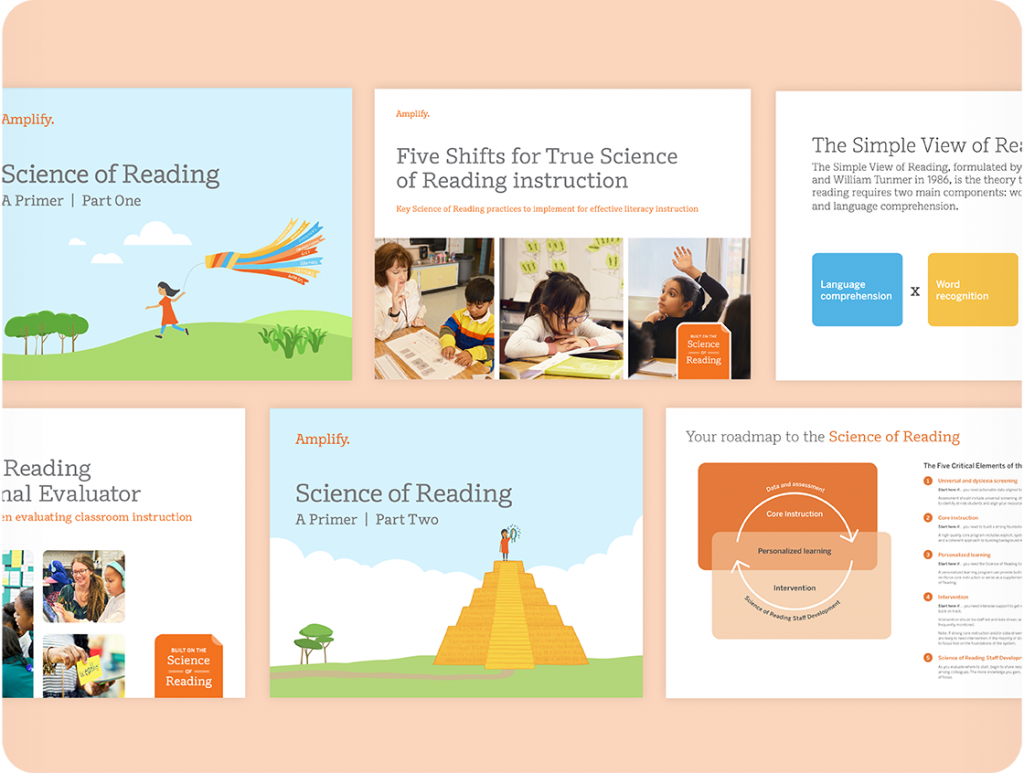
Build a Science of Reading digital bookbag
Getting up to speed with the Science of Reading takes some homework. We’ve pulled some key resources into one place for you and your team.
Subscribe to Science of Reading: The Podcast
Tune in to our chart-topping Science of Reading podcast—which recently celebrated four million downloads—to keep up with the latest insights from experts and practitioners. Subscribe to listen to the latest episodes exploring relatable, real-life challenges faced by literacy educators—from managing small groups to delivering trauma-informed instruction—and visit the archives to binge Seasons 1 through 7!

Read The Knowledge Gap and Science of Reading: The Defining Guide
You’ll want to curl up with The Knowledge Gap, Natalie Wexler’s essential work making the case for the power of knowledge to fuel literacy. You can also get all the basics in Science of Reading: The Defining Guide by our friends at the Reading League.
Professional development to support your shift to the Science of Reading
Ignite literacy transformation with Amplify’s Science of Reading: The Learning Lab—an inspiring three-course series.
- Dive into a comprehensive overview with course one, Foundations to the Science of Reading.
- Examine assessments and their roles in course two, Advanced Topics in the Science of Reading: Assessment and Reading Difficulties.
- Apply effective literacy instruction to your classroom in course three, Applied Structured Literacy.
Crafted to the standards of the International Dyslexia Association, this self-paced online series provides unparalleled, research-backed instruction. Explore enriching activities, curated resources, and learn from Susan Lambert, chief academic officer and host of Science of Reading: The Podcast.
The best investment you can make is in knowledge, and the returns are priceless.
Learn more about the online courses or request a quote!
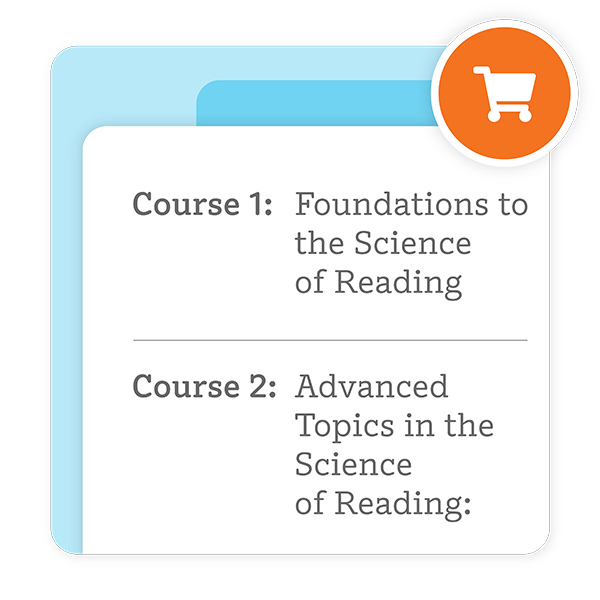
Tap into individual online course seats.
Step 2: Adopt the right program
Making the Science of Reading a reality in your school means choosing the right evidence-based curriculum.
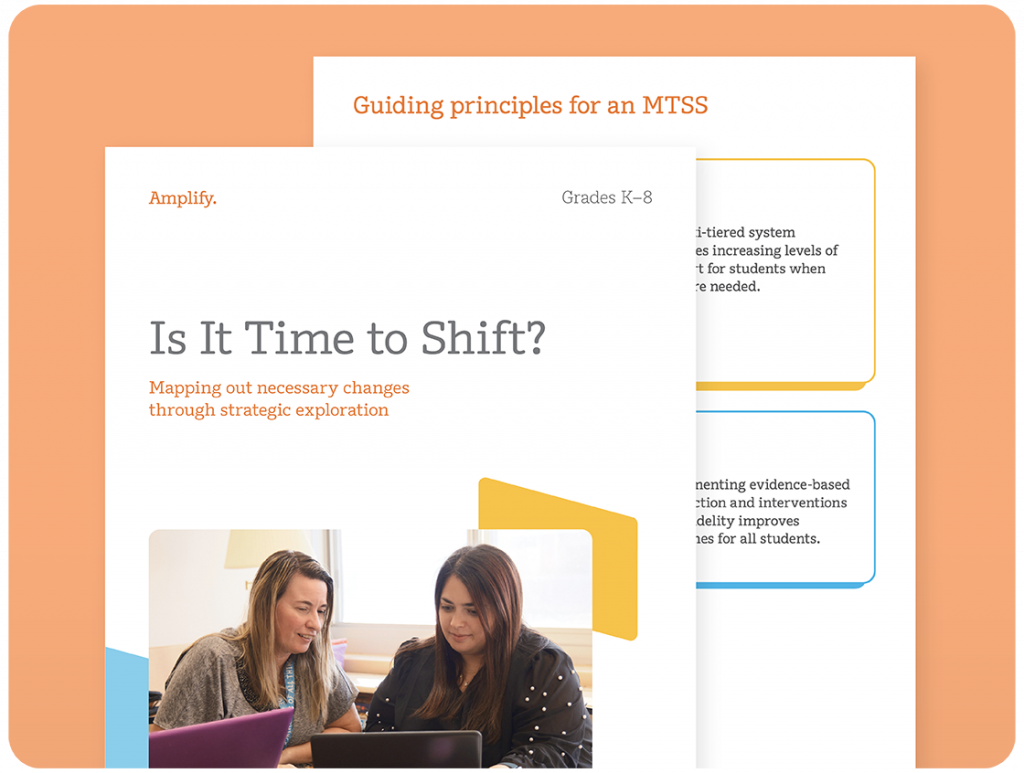
Change management
Our Change Management Playbook is your trusted companion in transforming schools with proven strategies. Crafted alongside educators who have successfully pioneered change, this comprehensive guide lays out actionable steps and critical questions for each phase of your implementation journey.
Evaluate curricula and look out for red flags
A core literacy curriculum needs to be aligned with evidence-based practices every step of the way. This curriculum evaluation guide from the Reading League will walk you through the evaluation you need to conduct to ensure that you’re investing in only the best instruction for your students and teachers, and to know that the curriculum you’re selecting is true to the research.


Make the five most critical instructional shifts
Big change is best done gradually. That’s why we’ve identified five key shifts in reading instruction that will set you on the path to transforming your classroom with the Science of Reading.
Watch our Science of Reading webinars
In our Literacy Is Opportunity webinar series, you’ll learn why it’s crucial to get reading instruction right for all students—and how to make the shifts needed in your school.

Step 3: Build an evidence-based literacy ecosystem that supports all students
Science-based reading instruction can actually reduce the need for intervention and support. These principles and practices show how evidence and data build a culture of literacy for everyone.
Establish a Multi-Tiered System of Supports (MTSS) grounded in the Science of Reading
A complete Science of Reading system is one that aligns with a Multi-Tiered System of Supports (MTSS) framework. Because an MTSS includes all students—and stakeholders—it prevents struggles before they happen, setting everyone up for literacy success.
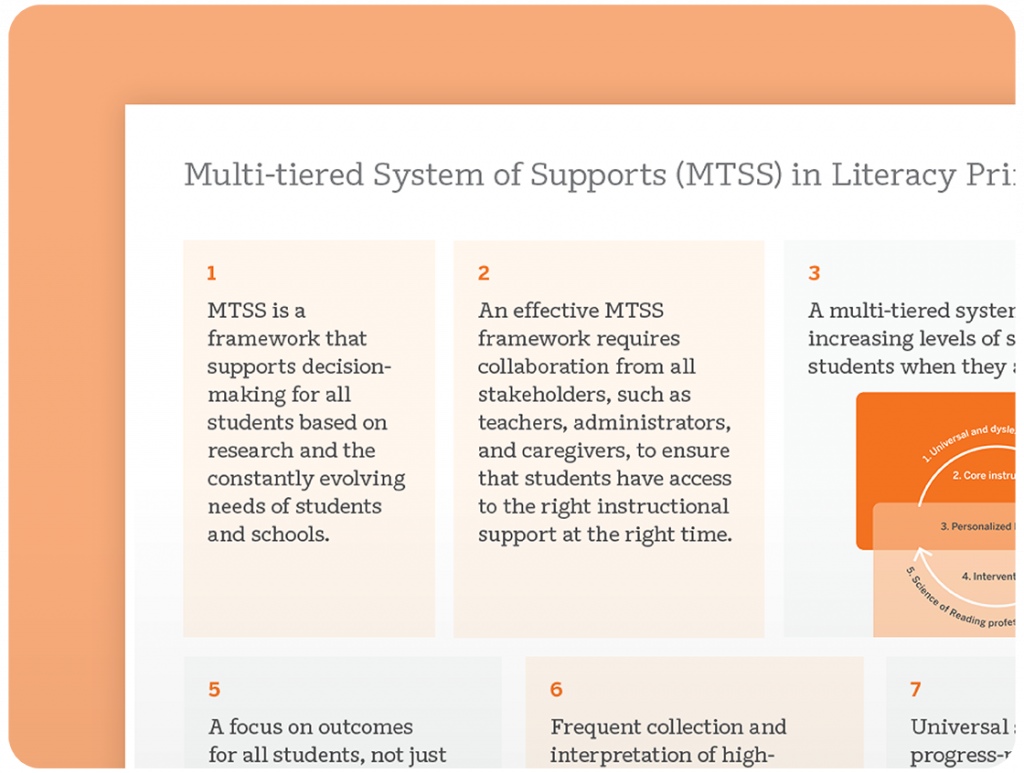
Explore Amplify’s Science of Reading early literacy suite
Built on more than 20 years of Science of Reading experience, our early literacy suite ensures that research-based and data-driven literacy practices are at the heart of everything you do. The suite includes every component of instruction, from assessment and personalized learning to intervention and professional development.
Bring the Science of Reading to middle school and biliteracy instruction
The Science of Reading can have an impact on learning outside of traditional K–5 literacy instruction, too—it can also address the specific needs of middle schoolers and multilingual students.
View our resources:

Step 4: Sustain change for long-term results
Educational change doesn’t happen overnight, or by itself. We’ve helped thousands of Science of Reading champions make the shift, and they’re eager to share the secrets of their long-term success with fellow educators like you.
Achieve life-changing results with the
Science of Reading—we’ll show you how.
Watching students learn to read is magic. But knowing how they get there? That’s science.
Making the shift to the Science of Reading is commendable, but it is no small feat. Our extensive experience, field-tested resources, and stories of literacy success will help you deliver the true transformation you need in your district—and see the results your students deserve.
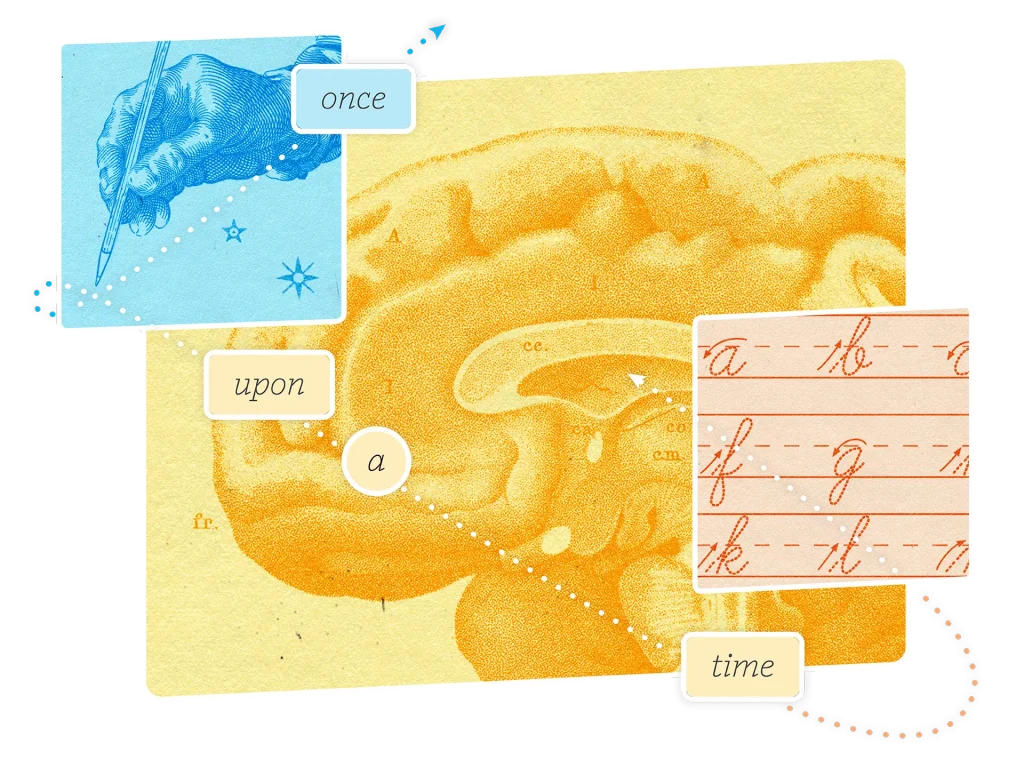
Exploring the Science of Writing
Discover the captivating journey of writing with our new guide, Science of Writing: A Primer. This resource delves into the history of writing, highlights the crucial link between combining reading and writing instruction, and reveals why handwriting still matters in today’s digital world. Designed to complement CKLA 3rd Edition and our other literacy tools, this primer is set to become a trusted companion, just like those before it.
MTSS Playbook
Explore our new ebook designed to help you build an evidence-based Multi-Tiered System of Supports (MTSS) tailored to diverse literacy goals. This resource provides actionable steps and essential questions to fortify your MTSS with the Science of Reading, enhancing its effectiveness and achieving better outcomes for your students.
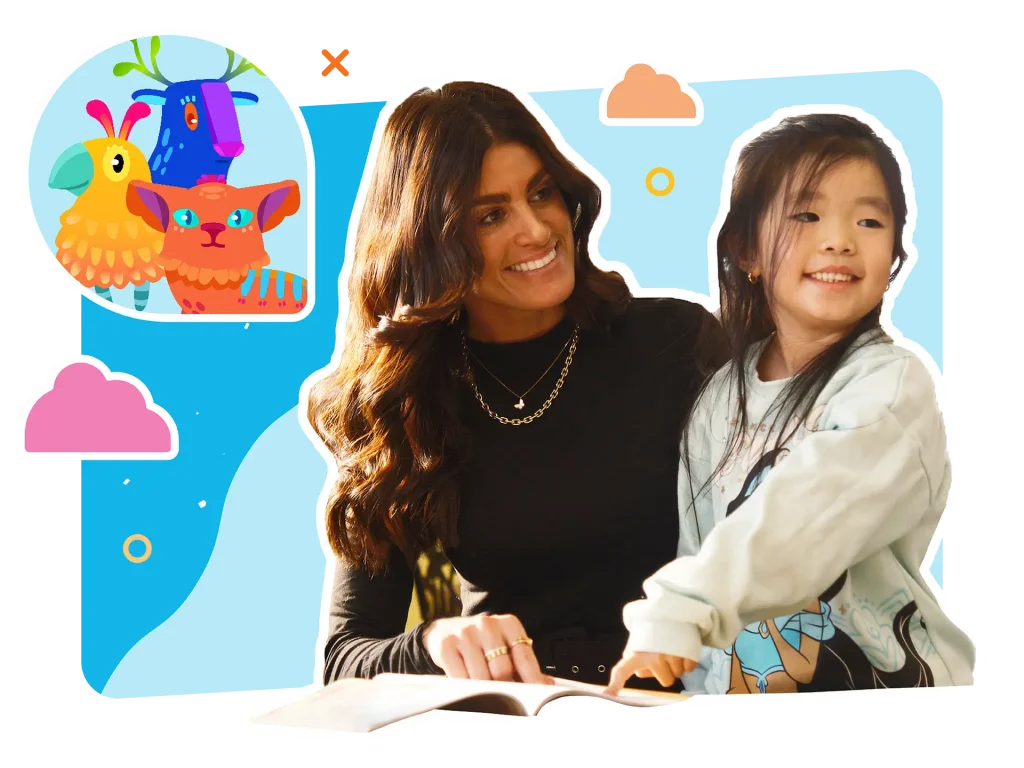
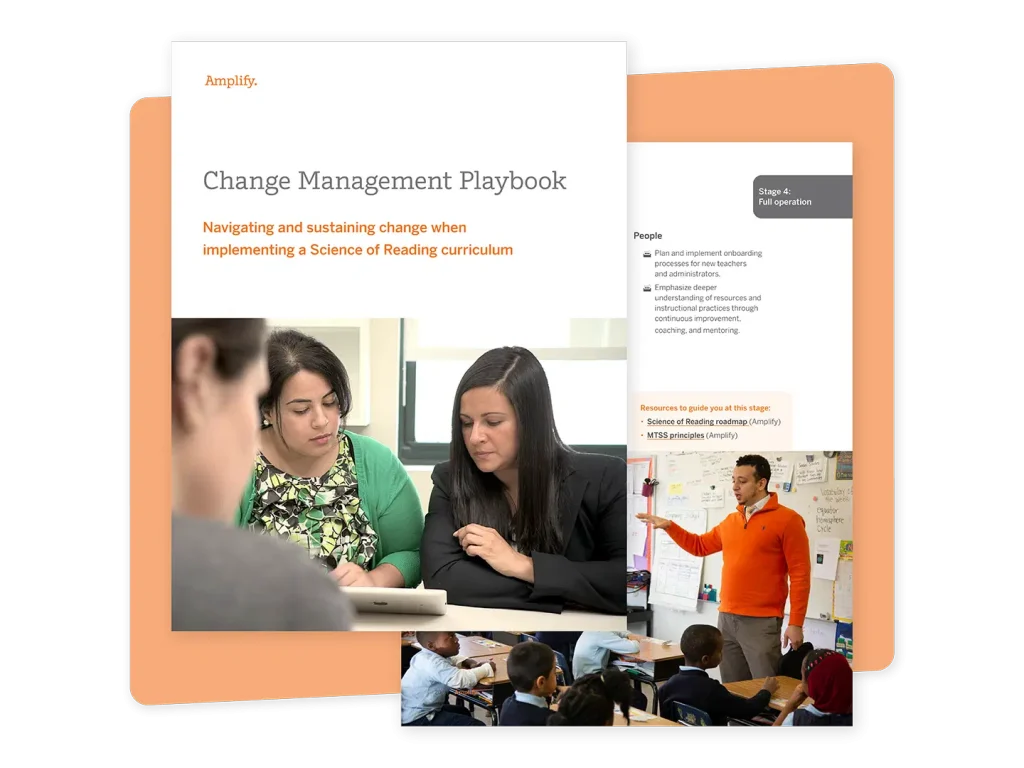
The science of teaching reading, coupled with the art of change management
Shifting to the Science of Reading isn’t just an overnight curriculum swap—it’s a profound culture change with multiple stages and stakeholders. We’ve helped educators succeed in that shift for years, and now we’re here to guide you every step of the way. Through each stage of implementation, our Change Management Playbook will help you mobilize your practice, process, and people to make the shift that matters most.
What is the Science of Reading?
Learning to read is not innate, but it can be taught—and science tells us how. The Science of Reading refers to the vast body of growing research that deconstructs how children learn to read, and the instructional practices that can get them there.
Reading fluency requires a complex combination of skills, taught explicitly and systematically. There are two main frameworks that can help us break it all down: The Simple View of Reading and Scarborough’s Rope.
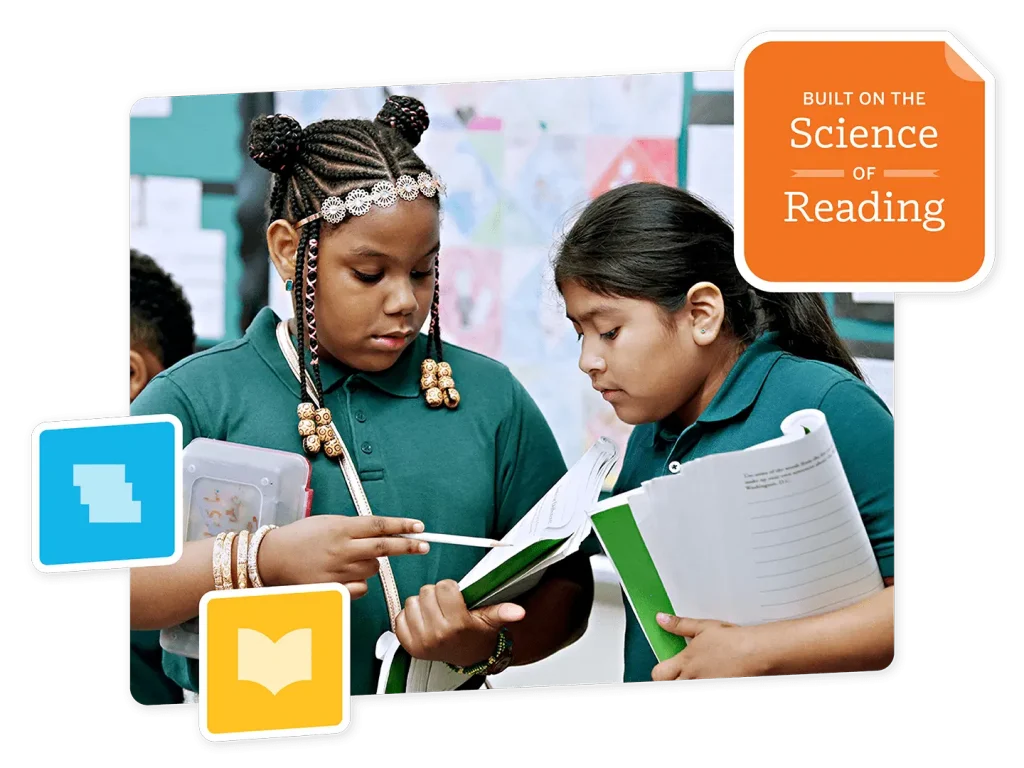

Science of Reading starter kit for new teachers
New to the classroom? We’ve compiled a collection of resources and insights about the Science of Reading to help you acquire more knowledge and build confidence. You’ll find the tools, information, and support you need to foster successful readers and writers in your classroom this school year—and beyond.
The Simple View of Reading
The Simple View of Reading, formulated by Philip Gough and William Tunmer in 1986, is the theory that proficient reading requires two main components:
- Converting written words into speech, otherwise known as decoding.
- Understanding that speech, otherwise known as reading comprehension.
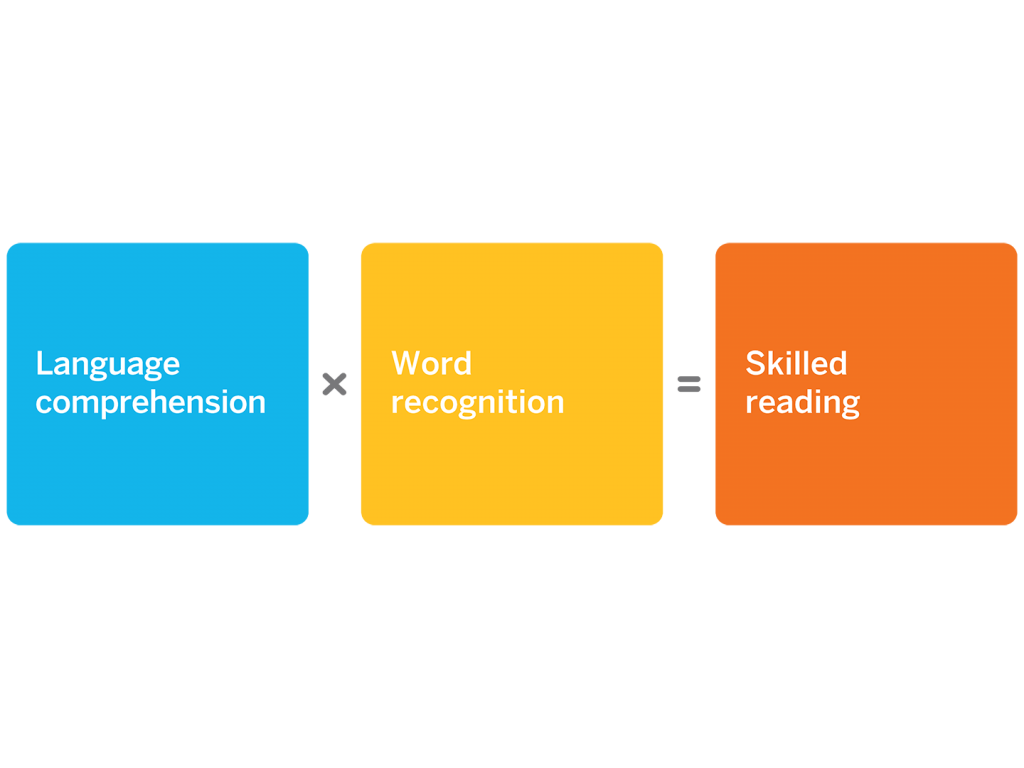
The Reading Rope
The Reading Rope, developed by Dr. Hollis Scarborough in 2001, helps us visualize the strands of specific skills and instruction that support students in decoding and comprehension.
Professional development to support your shift to the Science of Reading
Ignite literacy transformation with Amplify’s Science of Reading: The Learning Lab—an inspiring three-course series.
- Dive into a comprehensive overview with course one, Foundations to the Science of Reading.
- Examine assessments and their roles in course two, Advanced Topics in the Science of Reading: Assessment and Reading Difficulties.
- Apply effective literacy instruction to your classroom in course three, Applied Structured Literacy.
Crafted to the standards of the International Dyslexia Association, this self-paced online series provides unparalleled, research-backed instruction. Explore enriching activities, curated resources, and learn from Susan Lambert, chief academic officer and host of Science of Reading: The Podcast.
The best investment you can make is in knowledge, and the returns are priceless.
Learn more about the online courses or request a quote!
Tap into individual online course seats.

Science of Reading: The Podcast
Tune in to hear the latest insights and trends in early reading, right from leading literacy experts and practitioners.
Listen nowBuild your background knowledge of the Science of Reading.
Our Science of Reading principles and primers explain the essentials: what the Science of Reading is, how it works, and why it matters for every student.
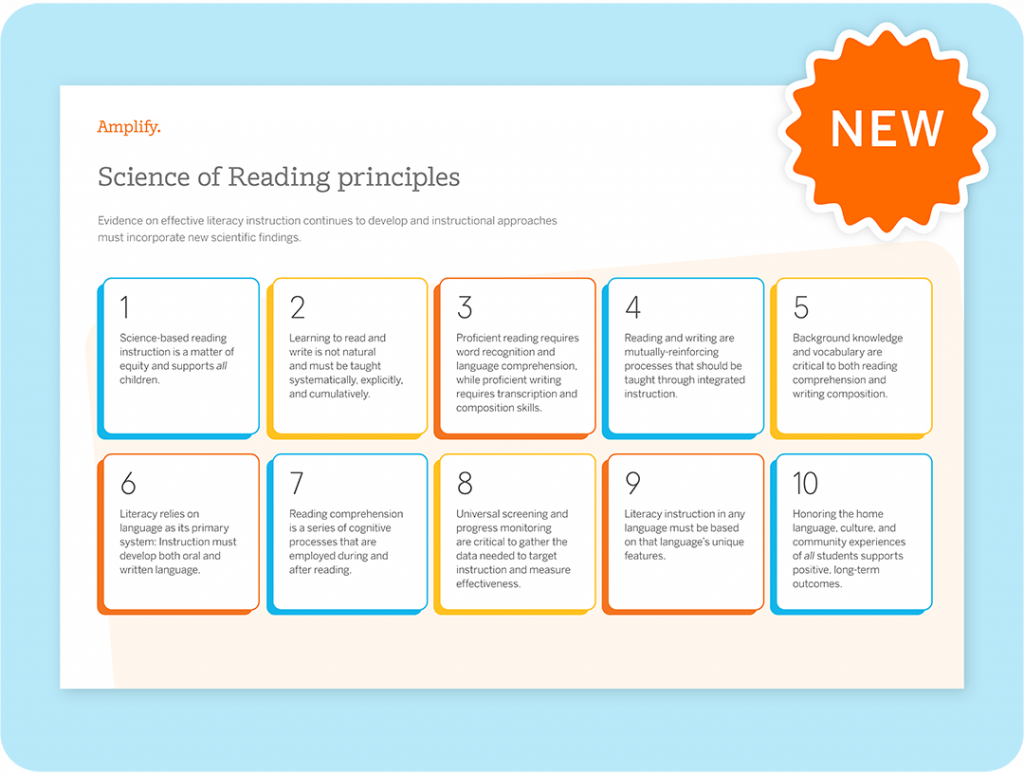
New Science of Reading principles placemat!
Decades of research inform the updated Science of Reading principles placemat. Use these insights as a guide for evidence-based literacy instruction—perfect for committed educators aiming to achieve real improvements in student reading outcomes.
Science of Reading
A Primer: Part 1
In part 1 of our definitive Science of Reading primer, we discuss literacy as a societal goal, walk you through how the brain learns to decode and comprehend text, and present the patterns that top-performing schools and districts follow to achieve early reading success.
Science of Reading
A Primer: Part 2
In part 2 of our Science of Reading primer, we establish the importance of prior knowledge for comprehension, lay out the process of micro-comprehension, and demonstrate how literacy skills build on and accelerate themselves.
Why undertake this crucial change?
When we bring proven methods based on the Science of Reading into schools, we make sure kids are learning to read and help teachers and caregivers support a culture of reading. Together, we can solve the reading crisis and make literacy a reality everywhere.
You’ll change lives with literacy.
According to the National Assessment of Educational Progress (NAEP), only 35% of fourth graders in the United States are proficient in reading. But schools using a Science of Reading approach have seen significant improvements in literacy rates. Using research-based methods, educators can help give all children the chance to become successful readers.
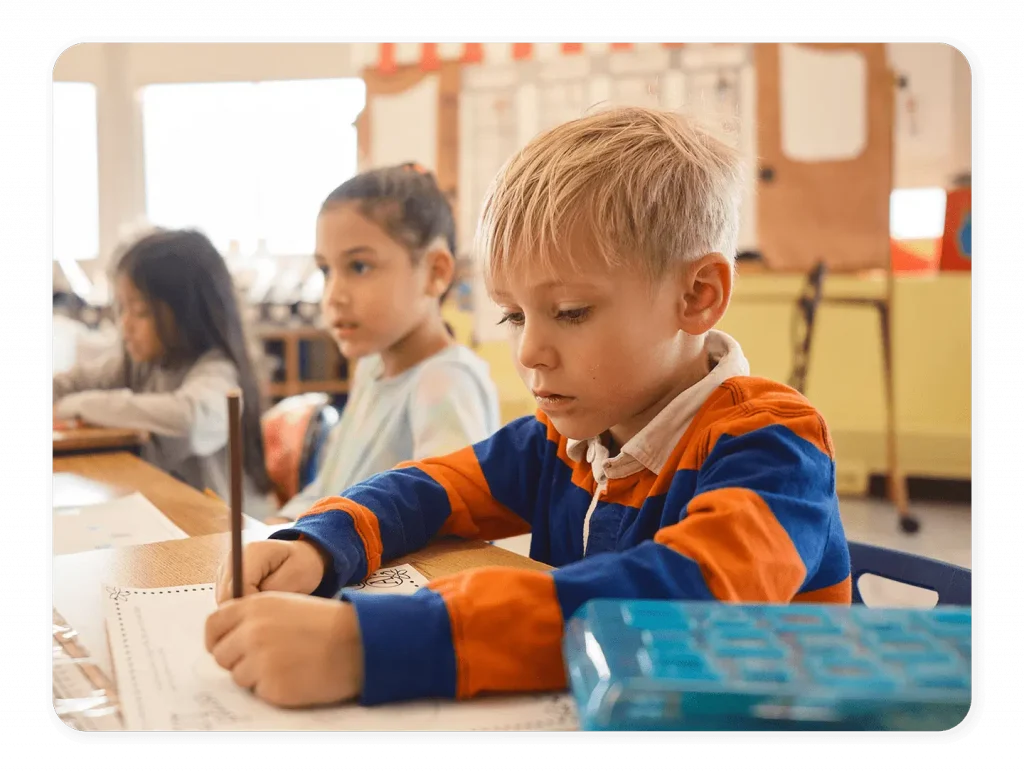
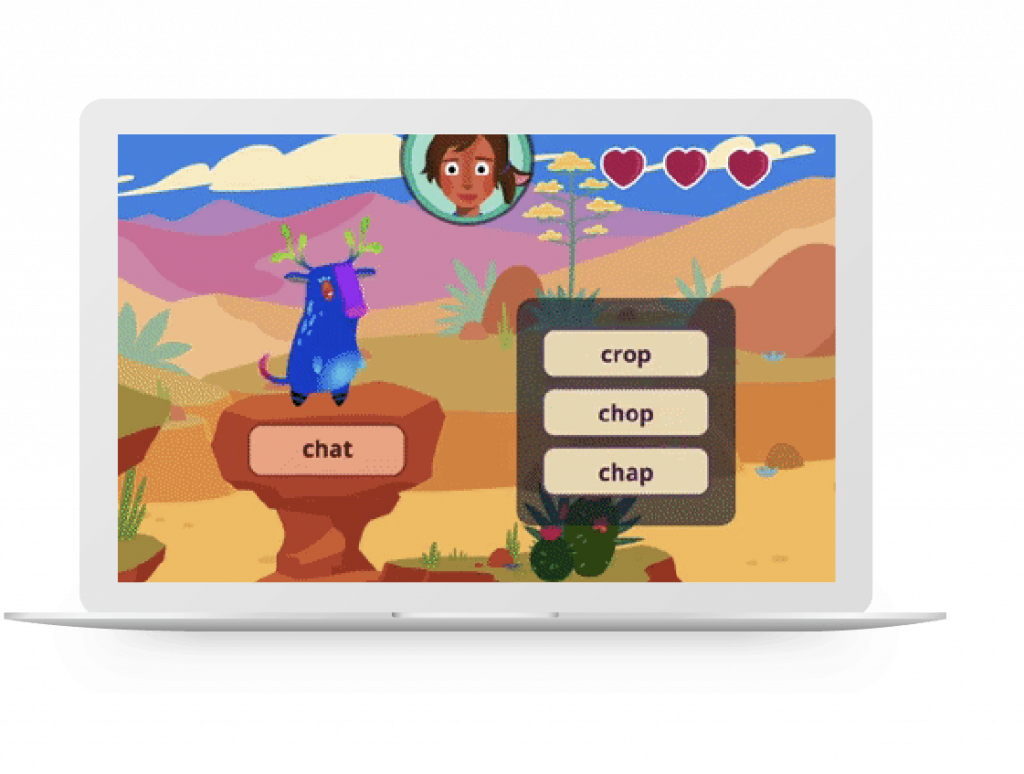
You’ll build a foundation with explicit, systematic skills instruction.
Reading skills don’t come naturally. We actually need to rewire our brains with intentional, structured literacy instruction—starting with sounds.
You’ll improve outcomes with knowledge building.
Longitudinal research shows that knowledge building doesn’t just happen as a result of reading, but is also a vital prerequisite for and component of it. And when delivered intentionally and systematically, knowledge delivers literacy results.


Science of Reading & Early Literacy Resources FAQ
Amplify understands that making the shift to the Science of Reading is no small feat. Get some early literacy resources and guidance with our Science of Reading FAQ.
Learning to read is not innate. It needs to be taught intentionally and systematically—and science tells us how. The vast and growing body of research on early literacy is referred to as the Science of Reading. It draws on extensive research in cognitive science, linguistics, and neuroscience. It emphasizes the systematic teaching of foundational skills—such as phonics, phonological awareness, and decoding—in building vocabulary and comprehension. In other words, it deconstructs the processes behind how children learn to read, and provides evidence for the instructional practices and early literacy resources that can get them there.
The Science of Reading refers to the pedagogy and practices proven by extensive research to effectively teach children how to read. It places a strong emphasis on both components of the Simple View of Reading, demonstrating that systematic and explicit instruction in phonics and and intentionally sequenced knowledge building are critical to reading success.
In a balanced literacy environment, learning happens through reading and writing immersion, where the need for explicit instruction in phonics is recognized but is not the primary focus.
The key difference between the approaches lies in their emphasis on foundational reading skills and a coherent approach to building language comprehension.
A balanced literacy approach typically includes a combination of whole language approaches (emphasizing meaning and context) and phonics instruction. Balanced literacy instruction is designed to be flexible and open to interpretation by the instructor. It may include the three-cueing system, which encourages students to rely on syntactic and semantic clues in a text to read an unfamiliar word, rather than decoding (Does it look right? Does it sound right? Does it make sense?). Balanced literacy practitioners may also use leveled reading to differentiate instruction, which can can limit vocabulary exposure, hinder in-depth comprehension skills, and further widen achievement gaps.
Balanced literacy has long been a popular approach to reading instruction, with educators appreciating its openness to variation. But advocates for the Science of Reading argue that an evidence-based approach aligned with known cognitive processes and a focus on foundational skills and language comprehension provides the most solid foundation for reading instruction—for confident and struggling readers alike.
According to our friends at The Reading League, the Science of Reading is important not because it gives us an effective way to teach reading, but because it gives us the most effective way to teach reading.
“The Science of Reading is critical because it emphasizes evidence-based instruction. Decades of scientific research on reading have consistently shown the most effective ways to teach reading. The Science of Reading incorporates this research, which includes phonemic awareness, phonics, fluency, vocabulary, and comprehension.”
The Reading League also takes it to the next level: What happens when all children have access to the most effective early literacy and reading education? “We believe in a future where a collective focus on applying the Science of Reading through teacher and leader preparation, classroom application, and community engagement will elevate and transform every community, every nation, through the power of literacy.”
The Science of Reading has identified five foundational reading skills that are considered crucial for early reading development. One of those skills is phonics. In other words, the Science of Reading has established that phonics are crucial, but the Science of Reading is not the same as phonics.
Phonics instruction helps students learn how to sound out and blend letters to read words accurately. As we know from the Simple View of Reading, two fundamental skills are required for reading with comprehension:
- Decoding—the ability to recognize written words (via phonics)
- Language comprehension—understanding what words mean
And the Science of Reading also reminds us that students do not have to learn phonics or decoding before knowledge comes into the equation. “The background knowledge that children bring to a text is also a contributor to language comprehension,” says Sonia Cabell, Ph.D., associate professor at Florida State University’s School of Teacher Education, on Science of Reading: The Podcast.
The Science of Reading is an evolving field built on decades of high-quality, evidence-based research that continually integrates new insights gathered from cognitive neuroscience, psychology, and linguistics. These ongoing studies constantly refine our understanding of how the human brain processes language and learning, enabling more personalized and effective teaching strategies that can adapt to the wide-ranging learning needs of students.
Like other sciences such as medicine, astronomy, or engineering – new advancements in reading technology allow us to understand how the brain works and refine our practices. Every scientific advancement in this field of reading science deepens our comprehension of reading-related challenges like dyslexia and informs the development of evidence-based interventions. We don’t believe that the Science of Reading can be reduced to a fad or trend. Rather, it is a continually evolving, enduringly effective discipline, grounded in rigorous research and driven by the quest for better comprehension of how we read and learn.
Assessment grounded in the Science of Reading can help identify children at risk of dyslexia at the earliest possible moments, creating the widest opportunity for intervention.
People with dyslexia often experience challenges in phonological awareness. They may struggle to break down words into their component sounds and to recognize the relationships between letters and sounds. Systematic and explicit instruction in phonics and phonological awareness can help individuals with dyslexia develop necessary phonological skills. This evidence-based instruction can also help students who have difficulty with decoding.
Further, evidence-based comprehension instruction, including explicit instruction in vocabulary and comprehension strategies, can support students with dyslexia in understanding and making meaning from text.
The Science of Reading can be integrated with a Multi-Tiered System of Supports (MTSS) to provide comprehensive and targeted reading instruction for all students. The Science of Reading aligns with a tiered model by providing evidence-based practices for instruction at each tier. An MTSS includes universal screening to identify students at risk of reading difficulties; the Science of Reading can also guide the selection of screening measures to assess specific foundational skills. Aligning the Science of Reading with an MTSS framework can also enhance instructional practices and interventions, ensure data-driven decision making, and help meet the needs of all students.
Integrating the Science of Reading and the Science of Writing strengthens our approach to teaching literacy. Reading and writing are interdependent. Understanding how sentences are built not only contributes to better reading comprehension, it also helps writers develop clear, logical text. As students grow as readers, they also grow as writers, leading to a comprehensive literacy education. Clear thinking and effective writing are crucial for expressing ideas. By fostering both skills, teachers better support students in becoming confident readers and writers, prepared for academic challenges and beyond.
One of the research-based frameworks used in the Science of Reading is the Simple View of Reading. According to the Simple View, two cognitive capacities are needed for proficient reading: (1) understanding the language (comprehension) and (2) recognizing words in print (decoding). A true Science of Reading program is designed from the start for students to build these skills, in a developmentally appropriate way.
It will also emphasize the importance of knowledge building by exposing students to a diverse array of new topics spanning history, science, and literature, organized intentionally and coherently within and across grades. Deep and intentionally sequenced knowledge domains will help build a student’s vocabulary and understanding of complex texts. And it will include instruction in all five foundational skills: phonics, phonemic awareness, vocabulary, fluency, and comprehension.
Download our free ebook, Science of Reading: Making the Shift, which includes a checklist of what to look for in a curriculum based on the Science of Reading. Learn more from our friends at The Reading League.
Actually, we have a full literacy suite built on the Science of Reading! It includes:
- mCLASS® assessment, powered by DIBELS® 8th Edition, a gold-standard universal and dyslexia screener, plus a progress monitoring tool, all in one.
- Amplify Core Knowledge Language Arts (CKLA), which provides explicit, systematic foundational skills instruction combined with intentional knowledge building.
- Boost Reading, a highly adaptive personalized reading program that reinforces the core curriculum and supports enrichment, remediation, and intervention for each student in your classroom.
- mCLASS Intervention, a staff-led intervention program targeted to Tiers 2 and 3, made easy with automatic data-driven grouping and sequenced explicit, systematic skills lesson plans to support at-risk students.
Reading requires deliberate, systematic attention—and so does shifting to the Science of Reading in your school or district. It requires not only the right curriculum, but also all-new mindsets, metrics, and more. Reflecting years of experience supporting real educators, our resources will walk you through the process of change management in your community—and show you why the shift is worth it. View our Science of Reading change management playbook.
Welcome to Amplify Science 6–8!
Amplify Science is an engaging core curriculum designed for three-dimensional, phenomena-based learning.
With Amplify Science, Oregon students don’t just passively learn about science concepts. Instead, they take on the role of scientists and engineers to actively investigate and figure out real-world phenomena. They do this through a blend of cohesive and compelling storylines, hands-on investigations, collaborative discussions, literacy-rich activities, and interactive digital tools.
Publisher presentation
The Lawrence Hall of Science
Developed by the science education experts at UC Berkeley’s Lawrence Hall of Science and the digital learning team at Amplify, our program features:
- A phenomena-based approach where students construct a complex understanding of each unit’s anchor phenomenon.
- A blend of cohesive storylines, hands-on investigations, rich discussions, literacy-rich activities, and digital tools.
- Carefully crafted units, chapters, lessons, and activities designed to deliver true 3-dimensional learning.
- An instructional design that supports all learners in accessing all standards.

Proven to work
Instructional model
The Amplify Science program is rooted in the proven, research-based pedagogy of Do, Talk, Read, Write, Visualize. Here’s how each element works:
Do
First-hand investigations are an important part of any science classroom, and Amplify Science has students getting hands-on in every unit—from building models of protein molecules to experimenting with electrical systems.
Talk
Student-to-student discourse and full-class discussions are an integral part of the program. Students are provided with numerous opportunities to engage in meaningful oral scientific argumentation, all while fostering a collaborative classroom environment.
Read
Students read scientific articles, focusing their reading activities on searching for evidence related to their investigation and, importantly, on asking and recording questions as they read through fascinating texts on 21st-century topics.
Write
Following real-world practices, students write scientific arguments based on evidence they’ve collected, making clear their reasoning about how a given piece of evidence connects to one of several claims.
Visualize
By manipulating digital simulations and using modeling tools to craft visualizations of their thinking— just as real scientists and engineers
do—students take their learning far beyond the confines of what they can physically see in the classroom in an exciting and authentic way.
Program structure
Our cyclical lesson design ensures students receive multiple exposures to concepts through a variety of modalities. As they progress through the lessons within a unit, students build and deepen their understanding, increasing their ability to develop and refine complex explanations of the unit’s phenomenon.
It’s this proven program structure and lesson design that enables Amplify Science to address 100% of the NGSS, and support students in mastering the Oregon Science Standards.

Unit types
While every unit delivers three-dimensional learning experiences and engages students in gathering evidence from a rich collection of sources, each unit also serves a unique instructional purpose.
In grades 6–8:
- One unit is a launch unit.
- Three units are core units.
- Two units are engineering internships.
Launch units are the first units taught in each year of Amplify Science. The goal of the Launch unit is to introduce students to norms, routines, and practices that will be built on throughout the year, including argumentation, active reading, and using the program’s technology. For example, rather than taking the time to explain the process of active reading in every unit in a given year, it is explained thoroughly in the Launch unit, thereby preparing students to read actively in all subsequent units.
Core units establish the context of the unit by introducing students to a real-world problem. As students move through lessons in a Core unit, they figure out the unit’s anchoring phenomenon, gain an understanding of the unit’s disciplinary core ideas and science and engineering practices, and make linkages across topics through the crosscutting concepts. Each Core unit culminates with a Science Seminar and final writing activity.
Engineering Internship units invite students to design solutions for real-world problems as interns for a fictional company called Futura. Students figure out how to help those in need, from tsunami victims in Sri Lanka to premature babies, through the application of engineering practices. In the process, they apply and deepen their learning from Core units.
Unit sequence
Our lessons follow a structure that is grounded in regular routines while still being flexible enough to allow for a variety of learning experiences.
In fact, our multi-modal instruction offers more opportunities for students to construct meaning, and practice and apply concepts than any other program. What’s more, our modular design means our units can be flexibly arranged to support your instructional goals.

Program components
Available digitally and in print, our unit-specific reference guides are chock full of helpful resources, including scientific background knowledge, planning information and resources, color-coded 3D Statements, detailed lesson plans, tips for delivering instruction, and differentiation strategies.

Hands-on learning is an essential part of Amplify Science, and is integrated into every unit. Students actively participate in science, playing the roles of scientists and engineers as they gather evidence, think critically, solve problems, and develop and defend claims about the world around them. Every unit includes hands-on investigations that are critical to achieving the unit’s learning goals.

More hands-on with Flextensions:
Hands-on Flextensions are additional, optional investigations that are included at logical points in the learning progression and give students an opportunity to dig deeper if time permits. These activities offer teachers flexibility to choose to dedicate more time to hands-on learning. Materials referenced in Hands-on Flextension activities will either be included in the unit kit or are easily sourced. Supporting resources such as student worksheets will be included as downloadable PDF files.
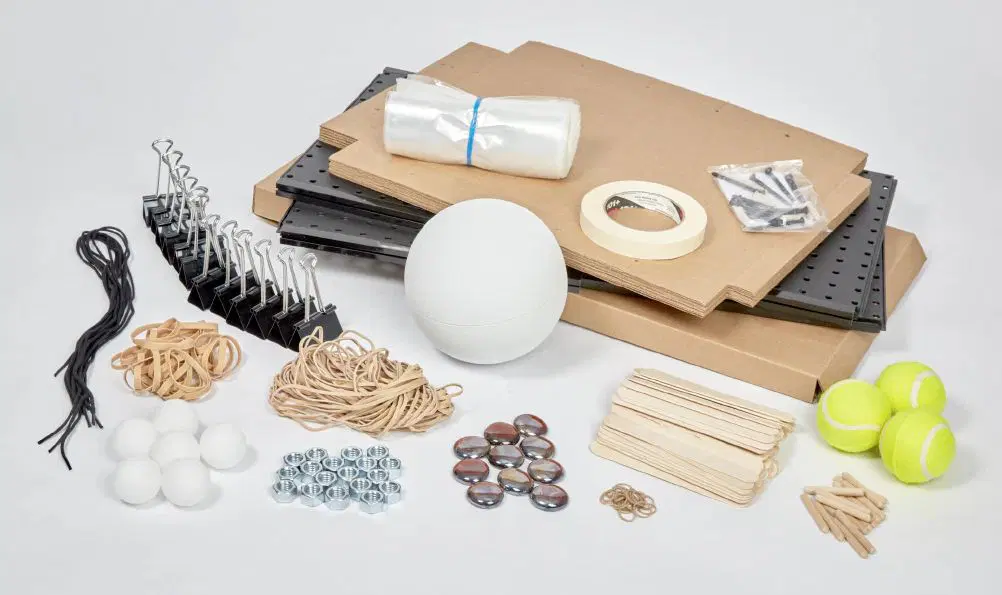
Our digital Simulations and Practice Tools are powerful resources for exploration, data collection, and student collaboration. They allow students the ability to explore scientific concepts that might otherwise be invisible or impossible to see with the naked eye.
Available for every unit, our Student Investigation Notebooks contain instructions for activities and space for students to record data and observations, reflect on ideas from texts and investigations, and construct explanations and arguments.
In grades 6–8, one copy of the Student Investigation Notebook is included in each unit’s materials kit for use as a blackline master. Each notebook is also available as a downloadable PDF on the Unit Guide page of the digital Teacher’s Guide.
These customizable PowerPoints are available for every lesson of the program and make delivering instruction a snap with visual prompts, colorful activity instructions, investigation set-up videos and animations, and suggested teacher talk in the notes section of each slide.
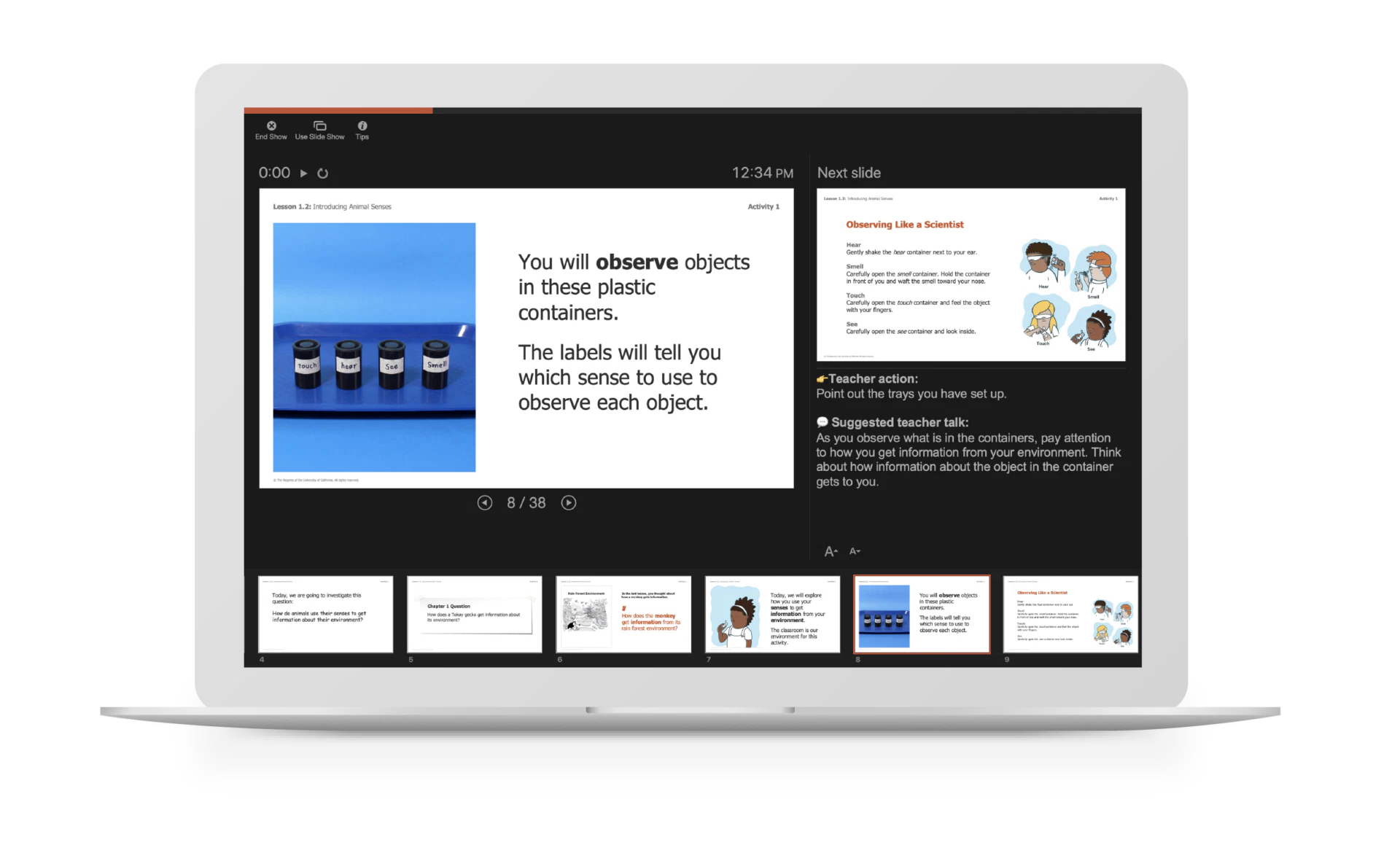
Full coverage of the Oregon Science Standards
Amplify Science was designed from the ground up to meet the Next Generation Science Standards (NGSS). As such, it aligns to the Oregon Science Standards, which were also borne out of the NGSS.
The guidance below is meant to provide support for integrating additional activities that support full coverage of Oregon’s standards. Organized by grade level, each section below will outline:
- Additional activities that support 100% alignment to the Oregon Science Standards.
- The standard being addressed with the activities.
- The recommended placement of the activities within a specific Amplify Science unit.
- PDFs of any accompanying materials that are necessary to implement the activities.
Activity Title: Meet a Scientist Who Changed How We Think About Brain Cells
About this activity: In this activity, students read a short article about a scientist who studied the nervous system.
Recommended placement: Metabolism unit, Lesson 3.2
Materials:
Instructions: Download the PDF “Meet a Scientist Who Changed How We Think About Brain Cells” above and remind students of the Active Reading guidelines. Before students read the article, invite them to share prior experiences. Then have students complete the copymaster above.
Activity Title: Meet a Scientist Who Studies Underwater Currents
About this activity: In this activity, students read a short article about a scientist who studies ocean currents.
Recommended placement: Oceans, Atmosphere, and Climate unit, Lesson 2.1
Materials:
Instructions: Download the PDF “Meet a Scientist Who Studies Underwater Currents” above and remind students of the Active Reading guidelines. Before students read the article, invite them to share prior experiences. Then have students complete the copymaster above.
Activity Title: Meet a Scientist Who Studies How the Environment Affects Our Traits
About this activity: In this activity, students read two short articles, one about current research on genes and proteins, and one about a scientist who is studying how the environment can affect our traits.
Recommended placement: Traits and Reproduction unit, Lesson 2.4
Materials:
Instructions: Download the PDF “Meet a Scientist Who Studies How the Environment Affects Our Traits” above and remind students of the Active Reading guidelines. Before students read the article, invite them to share prior experiences. Then have students complete the copymaster above.
Activity Title: Who Becomes a Space Scientist?
About this activity: In this activity, Students read a short article about a scientist who studies space.
Recommended placement: Geology on Mars unit, Lesson 3.1
Materials:
Instructions: Download the PDF “Who Becomes a Space Scientist?” above and remind students of the Active Reading guidelines. Before students read the article, invite them to share prior experiences. Then have students complete the copymaster above.
Activity Title: Meet a Scientist Who Studies How Plants Find Water Underground
About this activity: In this activity, students read a short article about a scientist who studies how plants’ roots get water.
Recommended placement: Matter and Energy in Ecosystems unit, Lesson 1.6
Materials:
Instructions: Download the PDF “Meet a Scientist Who Studies How Plants Find Water Underground” above and remind students of the Active Reading guidelines. Before students read the article, invite them to share prior experiences. Then have students complete the copymaster above.
Activity Title: Bringing Back the Buffalo
About this activity: In this activity, students change one competing population to try to decrease the other in the Sim, and read a short article about a scientist who studies buffalo.
Recommended placement: Populations and Resources unit, Lesson 3.2
Materials:
Instructions: Download the PDF “Bringing Back the Buffalo” above and remind students of the Active Reading guidelines. Before students read the article, invite them to share prior experiences. Then have students complete the copymaster above.
Activity Title: Rereading “A Continental Puzzle”
About this activity: In this activity, students reread “A Continental Puzzle” and think about how patterns were helpful to Wegener’s work.
Recommended placement: Plate Motion unit, Lesson 3.2
Materials:
Instructions: Direct students back to “A Continental Puzzle” above and remind students of the Active Reading guidelines. Before students re-read the article, invite them to share prior experiences. Then have students complete the copymaster above.
Activity Title: Meet a Scientist Who Studies Variation in Monkey Populations
About this activity: In this activity, students read a short article about a scientist who studies variation of traits in monkey populations.
Recommended placement: Natural Selection unit, Lesson 1.6
Materials:
Instructions: Download the PDF “Meet a Scientist Who Studies Variation in Monkey Populations” above and remind students of the Active Reading guidelines. Before students read the article, invite them to share prior experiences. Then have students complete the copymaster above.
Activity Title: Extinctions and Human Impacts
About this activity: The purpose of this lesson is for students to see how increases in human population and consumption of natural resources can negatively impact Earth’s systems.
Recommended placement: Natural Selection unit, Lesson 4.5
Materials:
Instructions: Download the PDF “Extinctions and Human Impacts” above and remind students of the Active Reading guidelines. Before students read the article, invite them to share prior experiences. Then have students complete the copymaster above.
Activity Title: Steno and the Shark
About this activity: In this activity, students read a short article about Nicolas Steno, a scientist from the 1600s whose studies of fossilized sharks’ teeth embedded in rock layers laid the foundation for the modern understanding of stratigraphy.
Recommended placement: Evolutionary History unit, Lesson 2.4
Materials:
Instructions: Download the PDF “Steno and the Shark” above and remind students of the Active Reading guidelines. Before students read the article, invite them to share prior experiences. Then have students complete the copymaster above.
Activity Title: Scale in the Solar System
About this activity: In this activity, students read and annotate the articles “Scale in the Solar System” and “The Solar System Is Huge.”
Recommended placement: Earth, Moon, and Sun unit, Lesson 1.2
Materials:
Instructions: Download the PDF “Scale in the Solar System” above and remind students of the Active Reading guidelines. Before students read the article, invite them to share prior experiences. Then have students complete the copymaster above.
Explore your print samples
With your Amplify Science print samples, you’ll find unit-specific Teacher’s References Guides and Student Investigation Notebooks for each grade level.
A note about the Teacher’s Reference Guides:
It’s important that your committee sees the full breadth and depth of our instruction. For that reason, we provided a copy of each of our unit-specific Teacher Reference Guides.
Rest assured that teachers do not use these robust reference guides for day-to-day teaching. For that, we have a hands-free TG!

- Teacher Reference Guide: Unlike a typical TG that requires a series of supplemental books to support it, our encyclopedic reference guide is chock-full of everything a teacher needs to fully implement our program and the NGSS.
- Ready-to-Teach Lesson Slides: For daily instruction, teachers need their hands free. That’s why we created ready-to-teach lesson slides for every single lesson. What’s more, they are editable and include suggested teacher talk and point-of-use differentiation and other instructional tips. Click to learn more.
A note about the Materials Kits:
Hands-on learning is at the heart of Amplify Science, and is integrated into every unit. In order to make hands-on learning more manageable for busy teachers, Amplify Science materials are organized into unit-specific kits.
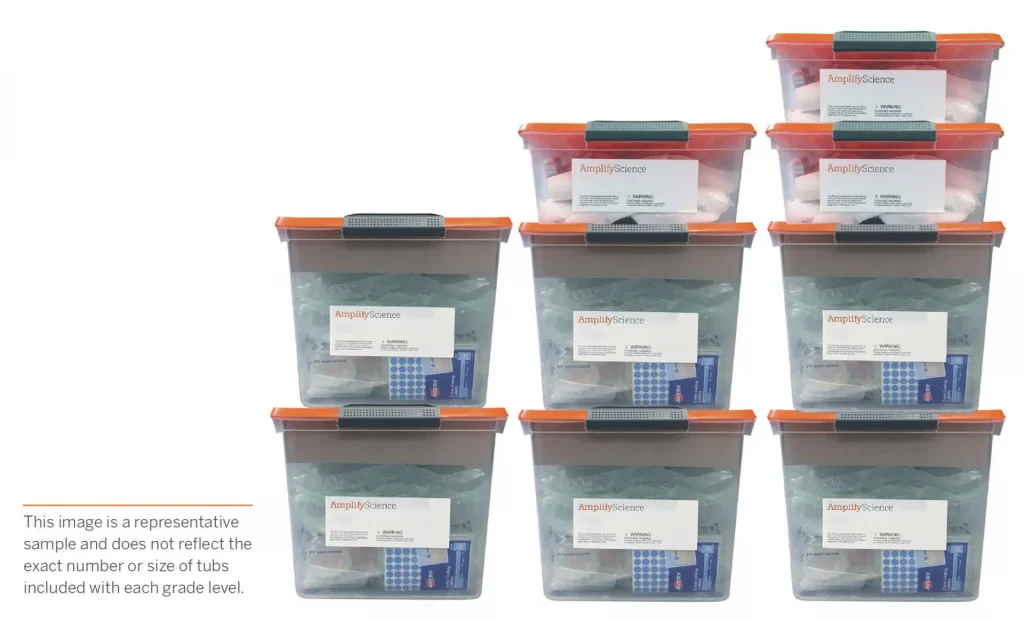
Our unit-specific kits:
- Include more materials — We give teachers enough materials to support 200 student uses.
- Are more manageable — Unlike other programs that require large groups of students to share limited sets of materials, our kits include enough to support small groups of 4–5 students.
- Include supportive videos — Each hands-on activity provides clear instructions for the teacher, with more complex activities supported by video demonstrations and illustrations.
At your request, we did not include our materials kits with our submissions samples. However, we did provide grade-specific lists of all materials included in each kit, which you can also find with the links below.
Access your digital samples
Explore as a teacher
Follow these instructions to explore the Amplify Science digital platform as a teacher.
- Click the Access Amplify Science Platform button below and bookmark it.
- Select Log in with Amplify.
- Enter the username: t.or68sci@tryamplify.net
- Enter the password: Science5OR
- Click the Science icon.
- Click on the Grade Menu in the top center of the screen and select any grade.
- Select any unit.
To help familiarize yourself with navigating the digital platform, watch the below navigational video.
Explore as a student
Follow these instructions to explore the Amplify Science digital platform as a student.
- Click the Access Amplify Science Platform button below and bookmark it.
- Select Log in with Amplify.
- Enter the username: s.or68sci@tryamplify.net
- Enter the password: Science5OR
- Click the Science icon.
- Click on the Grade Menu in the top center of the screen and select any grade.
- Select any unit.
Resources to support your review
- Oregon standards correlation for grades 6–8
- QCD Science Adoption Criteria 2022 for grades 6-8
- QCD IMET Citation guidance for grades 6-8
- Oregon Science IMET for grades 6-8 (Excel download)
- Oregon QCD-IMET Citation guidance for grades 6-8
- Research behind Amplify Science
- Phenomena in grades 6–8
- Program structure for grades 6–8
- Active Reading in grades 6–8
- Engineering in Amplify Science
- Approaches to assessment in grades 6–8
New Mexico Educators: Welcome to Amplify Science 6–8!
Amplify Science is an engaging core curriculum designed for three-dimensional, phenomena-based learning that is rated ‘all green’ on EdReports.
With Amplify Science, New Mexico students don’t just passively learn about science concepts. Instead, they take on the role of scientists and engineers to actively investigate and figure out real-world phenomena. They do this through a blend of cohesive and compelling storylines, hands-on investigations, collaborative discussions, literacy-rich activities, and interactive digital tools.

Amplify Science Success Story
The Lawrence Hall of Science
Developed by the science education experts at UC Berkeley’s Lawrence Hall of Science and the digital learning team at Amplify, our program features:
- A phenomena-based approach where students construct a complex understanding of each unit’s anchor phenomenon.
- A blend of cohesive storylines, hands-on investigations, rich discussions, literacy-rich activities, and digital tools.
- Carefully crafted units, chapters, lessons, and activities designed to deliver true 3-dimensional learning.
- An instructional design that supports all learners in accessing all standards.
Instructional model
The Amplify Science program is rooted in the proven, research-based pedagogy of Do, Talk, Read, Write, Visualize. Here’s how each element works:
Do
First-hand investigations are an important part of any science classroom, and Amplify Science has students getting hands-on in every unit—from building models of protein molecules to experimenting with electrical systems.
Talk
Student-to-student discourse and full-class discussions are an integral part of the program. Students are provided with numerous opportunities to engage in meaningful oral scientific argumentation, all while fostering a collaborative classroom environment.
Read
Students read scientific articles, focusing their reading activities on searching for evidence related to their investigation and, importantly, on asking and recording questions as they read through fascinating texts on 21st-century topics.
Write
Following real-world practices, students write scientific arguments based on evidence they’ve collected, making clear their reasoning about how a given piece of evidence connects to one of several claims.
Visualize
By manipulating digital simulations and using modeling tools to craft visualizations of their thinking— just as real scientists and engineers do—students take their learning far beyond the confines of what they can physically see in the classroom in an exciting and authentic way.
Program structure
Our cyclical lesson design ensures students receive multiple exposures to concepts through a variety of modalities. As they progress through the lessons within a unit, students build and deepen their understanding, increasing their ability to develop and refine complex explanations of the unit’s phenomenon.
It’s this proven program structure and lesson design that enables Amplify Science to address 100% of the NGSS and support students in mastering the New Mexico STEM Ready! Science Standards.
Unit types
While every unit delivers three-dimensional learning experiences and engages students in gathering evidence from a rich collection of sources, each unit also serves a unique instructional purpose.
In grades 6–8:
- One unit is a launch unit.
- Three units are core units.
- Two units are engineering internships.
Launch units are the first units taught in each year of Amplify Science. The goal of the Launch unit is to introduce students to norms, routines, and practices that will be built on throughout the year, including argumentation, active reading, and using the program’s technology. For example, rather than taking the time to explain the process of active reading in every unit in a given year, it is explained thoroughly in the Launch unit, thereby preparing students to read actively in all subsequent units.
Core units establish the context of the unit by introducing students to a real-world problem. As students move through lessons in a Core unit, they figure out the unit’s anchoring phenomenon, gain an understanding of the unit’s disciplinary core ideas and science and engineering practices, and make linkages across topics through the crosscutting concepts. Each Core unit culminates with a Science Seminar and final writing activity.
Engineering Internship units invite students to design solutions for real-world problems as interns for a fictional company called Futura. Students figure out how to help those in need, from tsunami victims in Sri Lanka to premature babies, through the application of engineering practices. In the process, they apply and deepen their learning from Core units.
Unit sequence
Our lessons follow a structure that is grounded in regular routines while still being flexible enough to allow for a variety of learning experiences.
In fact, our multi-modal instruction offers more opportunities for students to construct meaning, and practice and apply concepts than any other program. What’s more, our modular design means our units can be flexibly arranged to support your instructional goals.
Program components
Available digitally and in print, our unit-specific reference guides are chock full of helpful resources, including scientific background knowledge, planning information and resources, color-coded 3-D Statements, detailed lesson plans, tips for delivering instruction, and differentiation strategies.

Hands-on learning is an essential part of Amplify Science, and is integrated into every unit. Students actively participate in science, playing the roles of scientists and engineers as they gather evidence, think critically, solve problems, and develop and defend claims about the world around them. Every unit includes hands-on investigations that are critical to achieving the unit’s learning goals.

More hands-on with Flextensions:
Hands-on Flextensions are additional, optional investigations that are included at logical points in the learning progression and give students an opportunity to dig deeper if time permits. These activities offer teachers flexibility to choose to dedicate more time to hands-on learning. Materials referenced in Hands-on Flextension activities will either be included in the unit kit or are easily sourced. Supporting resources such as student worksheets will be included as downloadable PDF files.
Our kits include enough materials to support 200 student uses. In other words, teachers can easily support all five periods and small groups of 4-5 students each. Plus, our unit-specific kits mean teachers just grab the tub they need and then put it all back with ease.
Our digital Simulations and Practice Tools are powerful resources for exploration, data collection, and student collaboration. They allow students the ability to explore scientific concepts that might otherwise be invisible or impossible to see with the naked eye.
Available for every unit, our Student Investigation Notebooks contain instructions for activities and space for students to record data and observations, reflect on ideas from texts and investigations, and construct explanations and arguments.
In grades 6–8, one copy of the Student Investigation Notebook is included in each unit’s materials kit for use as a blackline master. Each notebook is also available as a downloadable PDF on the Unit Guide page of the digital Teacher’s Guide.

These customizable PowerPoints are available for every lesson of the program and make delivering instruction a snap with visual prompts, colorful activity instructions, investigation set-up videos and animations, and suggested teacher talk in the notes section of each slide.

Full coverage of NGSS and New Mexico STEM Ready! Science Standards
Amplify Science was designed from the ground up to meet the Next Generation Science Standards (NGSS). As such, it aligns to the New Mexico Science Standards, which were also borne out of the NGSS.
K-8 NGSS Correlation by Dimension
K-8 NM STEM Ready! Standards Correlation
Explore your print samples
With your Amplify Science print samples, you’ll find unit-specific Teacher’s References Guides and Student Investigation Notebooks for each grade level.
A note about the Teacher’s Reference Guides:
It’s important that your committee sees the full breadth and depth of our instruction. For that reason, we provided a copy of each of our unit-specific Teacher Reference Guides.
Rest assured that teachers do not use these robust reference guides for day-to-day teaching. For that, we have a hands-free Teacher Guide!
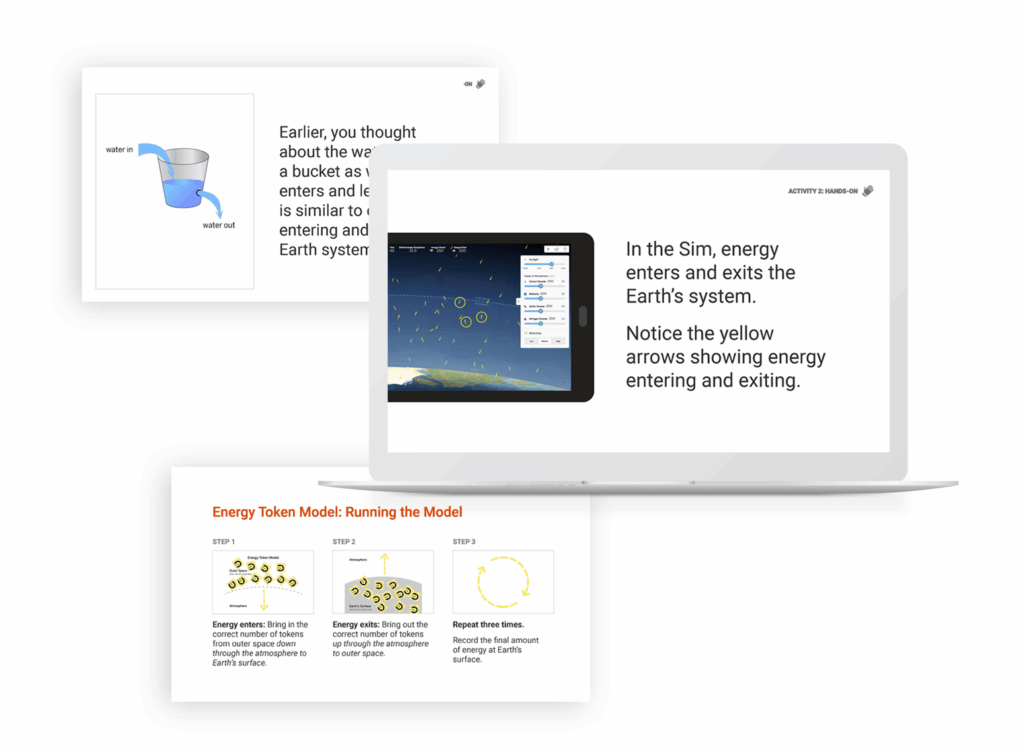
- Teacher Reference Guide: Unlike a typical Teacher Guide that requires a series of supplemental books to support it, our encyclopedic reference guide is chock-full of everything a teacher needs to fully implement our program and the NGSS.
- Ready-to-Teach Lesson Slides: For daily instruction, teachers need their hands free. That’s why we created ready-to-teach lesson slides for every single lesson. What’s more, they are editable and include suggested teacher talk and point-of-use differentiation and other instructional tips. Click to learn more.
A note about the Materials Kits:
Hands-on learning is at the heart of Amplify Science, and is integrated into every unit. In order to make hands-on learning more manageable for busy teachers, Amplify Science materials are organized into unit-specific kits.
Our unit-specific kits:
- Include more materials — We give teachers enough materials to support 200 student uses.
- Are more manageable — Unlike other programs that require large groups of students to share limited sets of materials, our kits include enough to support small groups of 4–5 students.
- Include supportive videos — Each hands-on activity provides clear instructions for the teacher, with more complex activities supported by video demonstrations and illustrations.
Access your digital samples
Explore as a teacher
Follow these instructions to explore the Amplify Science digital platform as a teacher.
- Click the Access Amplify Science Platform button below and bookmark it.
- Select Log in with Amplify.
- Enter the username: t20.sci6-8@tryamplify.net
- Enter the password: AmplifyNumber1
- Click on Science in Your Programs
- Click on the Program drop-down menu and select your desired domain
- Select any unit.
To help familiarize yourself with navigating the digital platform, watch the below navigational video.
Explore as a student
Follow these instructions to explore the Amplify Science digital platform as a student.
- Click the Access Amplify Science Platform button below and bookmark it.
- Select Log in with Amplify.
- Enter the username: s20.sci6-8@tryamplify.net
- Enter the password: AmplifyNumber1
- Click Science in Your Programs
- Click on the Program drop-down menu and select your desired domain
- Select any unit title.
Additional resources to support your review
Welcome to Amplify Science K–5!
Amplify Science is an engaging core curriculum designed for three-dimensional, phenomena-based learning.
With Amplify Science, Detroit students won’t just passively learn about science concepts. Instead, they will take on the role of scientists and engineers to actively investigate and figure out real-world phenomena. They will do this through a blend of cohesive and compelling storylines, hands-on investigations, collaborative discussions, literacy-rich activities, and interactive digital tools.
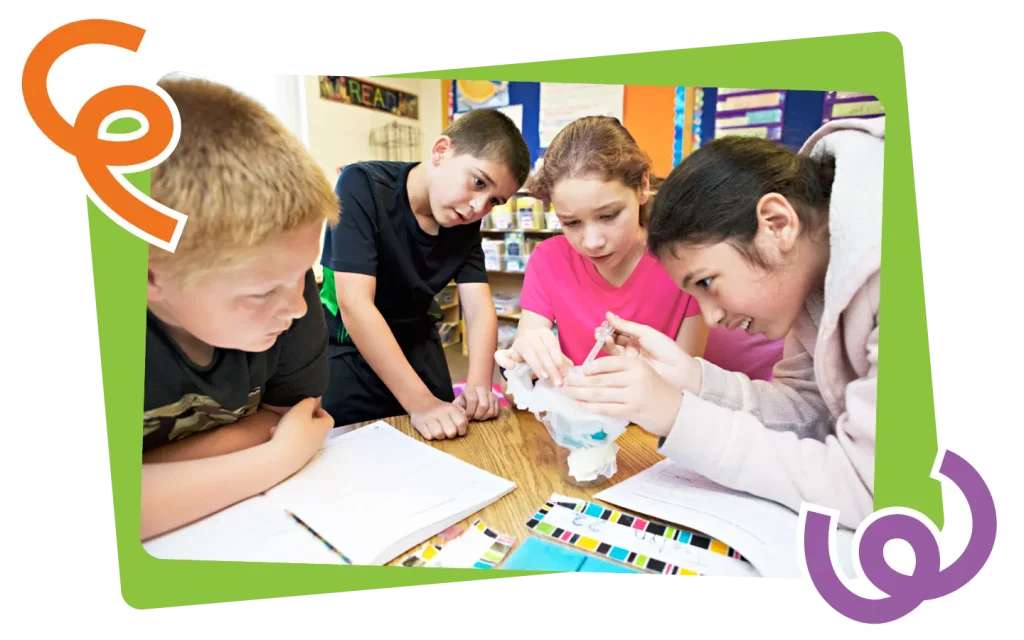
What is Amplify Science?
The Lawrence Hall of Science
Developed by the science education experts at UC Berkeley’s Lawrence Hall of Science and the digital learning team at Amplify, our program features:
- A phenomena-based approach where students construct a complex understanding of each unit’s anchor phenomenon.
- A blend of cohesive storylines, hands-on investigations, rich discussions, literacy-rich activities, and digital tools.
- Carefully crafted units, chapters, lessons, and activities designed to deliver true three-dimensional learning.
- An instructional design that supports all learners in accessing all standards.
Proven to work
Instructional model
The Amplify Science program is rooted in the proven, research-based pedagogy of Do, Talk, Read, Write, Visualize. Here’s how each element works:
Do
First-hand investigations are an important part of any science classroom, and Amplify Science has students getting hands-on in every unit—from building models of protein molecules to experimenting with electrical systems.
Talk
Student-to-student discourse and full-class discussions are an integral part of the program. Students are provided with numerous opportunities to engage in meaningful oral scientific argumentation, all while fostering a collaborative classroom environment.
Read
Students read scientific articles, focusing their reading activities on searching for evidence related to their investigation and, importantly, on asking and recording questions as they read through fascinating texts on 21st-century topics.
Write
Following real-world practices, students write scientific arguments based on evidence they’ve collected, making clear their reasoning about how a given piece of evidence connects to one of several claims.
Visualize
By manipulating digital simulations and using modeling tools to craft visualizations of their thinking— just as real scientists and engineers
do—students take their learning far beyond the confines of what they can physically see in the classroom in an exciting and authentic way.
Program structure
Our cyclical lesson design ensures students receive multiple exposures to concepts through a variety of modalities. As they progress through the lessons within a unit, students build and deepen their understanding, increasing their ability to develop and refine complex explanations of the unit’s phenomenon.
It’s this proven program structure and lesson design that enables Amplify Science to address 100% of the Next Generation Science Standards (NGSS) and support students in mastering the Pennsylvania Science Standards.
Unit types
While every unit delivers three-dimensional learning experiences and engages students in gathering evidence from a rich collection of sources, each unit also emphasizes a particular science and engineering practice.
In grades K–2:
- One unit emphasizes the practice of investigation.
- One unit emphasizes the practice of modeling.
- One unit emphasizes the practice of engineering design.
In grades 3–5, students experience the three unit types above, plus:
- One additional unit that emphasizes the practice of argumentation.
Investigation units focus on the process of strategically developing investigations and gathering data to answer questions. Students are first asked to consider questions about what happens in the natural world and why, and are then involved in designing and conducting investigations that produce data to help answer those questions.
Modeling units provide extra support to students engaging in the practice of modeling. Students use physical models, investigate with computer models, and create their own diagrams to help them visualize what might be happening on the nanoscale.
Engineering design units provide opportunities for students to solve complex problems by applying science principles to the design of functional solutions, and iteratively testing those solutions to determine how well they meet preset criteria.
Argumentation units provide students with regular opportunities to explore and discuss available evidence, time and support to consider how evidence may be leveraged in support of claims, and independence that increases as they mount written arguments in support of their claims.
Unit sequence
Our lessons follow a structure that is grounded in regular routines while still being flexible enough to allow for a variety of learning experiences.
In fact, our multi-modal instruction offers more opportunities for students to construct meaning, and practice and apply concepts, than any other program. What’s more, our modular design means our units can be flexibly arranged to support your instructional goals.
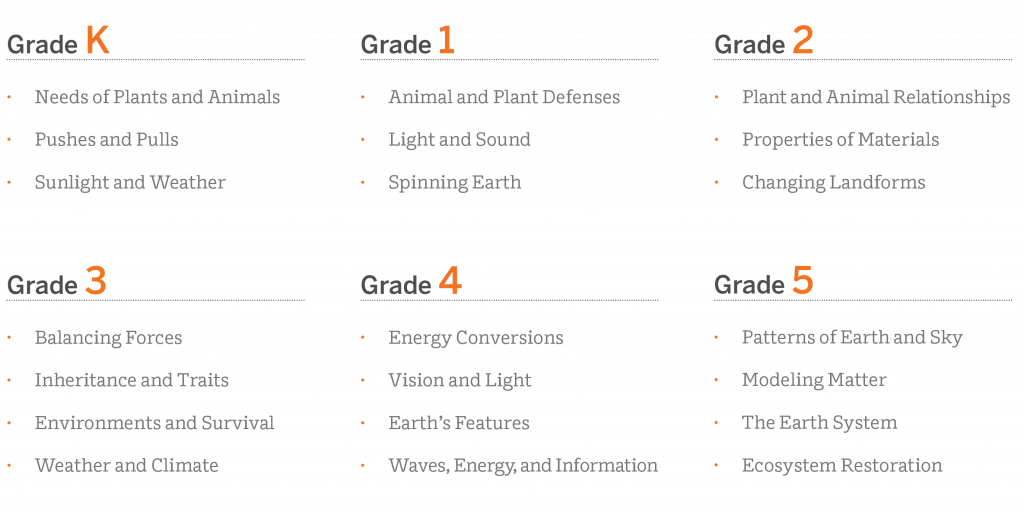
Program components
Available digitally and in print, our unit-specific reference guides are chock-full of helpful resources, including scientific background knowledge, planning information and resources, color-coded 3D Statements, detailed lesson plans, tips for delivering instruction, and differentiation strategies.
Hands-on learning is an essential part of Amplify Science, and is integrated into every unit. Students actively participate in science, playing the roles of scientists and engineers as they gather evidence, think critically, solve problems, and develop and defend claims about the world around them. Every unit includes hands-on investigations that are critical to achieving the unit’s learning goals.
More hands-on with Flextensions:
Hands-on Flextensions are additional, optional investigations that are included at logical points in the learning progression and give students an opportunity to dig deeper if time permits. These activities offer teachers flexibility to choose to dedicate more time to hands-on learning. Materials referenced in Hands-on Flextension activities will either be included in the unit kit or are easily sourced. Supporting resources such as student worksheets will be included as downloadable PDF files.
Our kits include enough materials to support 200 student uses. In other words, teachers can easily support all five periods and small groups of 4-5 students each. Plus, our unit-specific kits mean teachers just grab the tub they need and then put it all back with ease.
Each unit of Amplify Science K–5 includes six unique Student Books written by the Lawrence Hall of Science specifically for the program. These content-rich nonfiction and informational texts provide opportunities for students to search for evidence relevant to their firsthand investigations, see science practices and dispositions modeled, extend their science knowledge, provide real world connections as they master reading-to-learn and close reading skills, and construct evidence-based arguments.
Important note:
Students in grades K–5 are never asked to read alone. Rather, books are read to, with, and by students with ample scaffolding and support provided by the teacher. Big Books are read aloud or together with the class to introduce ideas. Student Books allow for small-group reading and reading in pairs.

Available for every unit, our Student Investigation Notebooks contain instructions for activities and space for students to record data and observations, reflect on ideas from texts and investigations, and construct explanations and arguments.
In grades K–5, one copy of the Student Investigation Notebook is included in each unit’s materials kit for use as a blackline master. Each notebook is also available as a downloadable PDF on the Unit Guide page of the digital Teacher’s Guide.
Amplify Science offers digital experience licenses that make elementary instruction more flexible for students and teachers, as well as providing additional means to engage in remote, hybrid, or in-person learning!
Student-facing digital lessons
With the digital experience, students can engage with digital lesson content in one cohesive experience. It’s the same content from Amplify science in a new, integrated format where students can interact with slides, Sims, modeling tools, videos, books, and more.

Digital student notebook pages
Students can draw, write, record audio, and insert images into their Investigation Notebook pages. Their work is automatically saved and delivered to you in real time. When students edit their work, those edits are immediately reflected on your teacher work review page. You can access student responses by clicking “View Work,” where you can see students’ Investigation Notebook pages from the lesson, updating live.
Assign in Amplify
The digital experience allows flexibility with optional features like scheduling assignments in advance and setting due dates. You can use Scheduling to determine the date and time that the assignment appears in Student Home. You also have the flexibility to schedule when assignments appear and use dates to remove assignments from Student Home.
Assign in LMS
You can also assign lessons via our integrations with Google Classroom and Microsoft Teams, or by copying a lesson link and sharing it with students through the platform of your choice. The assignment link you send will provide students with direct access to the full lesson—slides, videos, digital tools, and worksheet activities—no student platform navigation required!
Teacher platform and presentation
Teacher-facing lesson content—including sample teacher talk, student responses, pedagogical support, and possible student responses—shows on a teacher’s private Teacher Guide tab. Students only see the lesson slides that are being presented.

Explore your print samples
With your Amplify Science print samples, you’ll find unit-specific Teacher’s References Guides, Student Investigation Notebooks, and sets of Student Books for each grade level.
A note about the Teacher’s Reference Guides:
It’s important that you see the full breadth and depth of our instruction. For that reason, we provide a copy of each of our unit-specific Teacher Reference Guides.
Rest assured that teachers do not use these robust reference guides for day-to-day teaching. For that, we have a hands-free TG!
- Teacher Reference Guide: Unlike a typical TG that requires a series of supplemental books to support it, our encyclopedic reference guide is chock-full of everything a teacher needs to fully implement our program and the NGSS.
- Ready-to-Teach Lesson Slides: For daily instruction, teachers need their hands free. That’s why we created ready-to-teach lesson slides for every single lesson. What’s more, they are editable and include suggested teacher talk and point-of-use differentiation and other instructional tips. Click to learn more.
A note about the Materials Kits:
Hands-on learning is at the heart of Amplify Science, and is integrated into every unit. In order to make hands-on learning more manageable for busy teachers, Amplify Science materials are organized into unit-specific kits.
Our unit-specific kits:
What’s different about Amplify’s unit-specific material kits? They…
- Include more materials — We give teachers enough non-consumable materials to support a class of 36 students and enough consumables to support 72 student uses. In other words, each kit will last two years.
- Are more manageable — Unlike other programs that require large groups of students to share limited sets of materials, our kits include enough to support small groups of four to five students.
- Include supportive videos — Each hands-on activity provides clear instructions for the teacher, with more complex activities supported by video demonstrations and illustrations.
Grade-specific lists of all materials included in each kit:
- Grade K: Materials Kit List
- Grade 1: Materials Kit List
- Grade 2: Materials Kit List
- Grade 3: Materials Kit List
- Grade 4: Materials Kit List
- Grade 5: Materials Kit List
Access your digital samples
Explore as a teacher
When you’re ready to explore the teaching experience on your own, follow these instructions to access the Amplify Science digital teacher platform.
- Click the Access Amplify Science Platform button below and bookmark the page.
- Select Log in with Amplify.
- Enter the username: t1.dpsscience@demo.tryamplify.net
- Enter the password: Amplify1-dpsscience
- Click on Science on the left hand side.
- Click on the Grade Menu in the top center of the screen and select any grade.
- Select any unit.
To help familiarize yourself with navigating the digital platform, watch the below navigational video.
Explore as a student
When you’re ready to explore the student learning experience on your own, follow these instructions to access the Amplify Science digital student platform.
- Click the Access Amplify Science Platform button below and bookmark the page.
- Select Log in with Amplify.
- Enter the username: s1.dpsscience@demo.tryamplify.net
- Enter the password: Amplify1-dpsscience
- Click the backpack icon on the top right.
- Click Science K-5
- Select any unit.
Spanish-language support
Amplify Science is committed to providing support to meet the needs of all learners, including multiple access points for Spanish-speaking students. Developed in conjunction with Spanish-language experts and classroom teachers, several components are available in Spanish across the Amplify Science curriculum.
Spanish-language materials include:
| COMPONENT | TEACHER/STUDENT |
| Student Investigation Notebooks | Student |
| Student Books | Student |
| Printed classroom materials Unit and chapter questions, key concepts, vocabulary cards, etc. | Teacher and student |
| Copymasters | Teacher |
| Assessments | Teacher |
| Spanish teacher support license This license includes teacher talk, projections, and downloadable PDFs of all print materials in Spanish. | Teacher |
Resources to support your review
- Michigan Next Generation Science Standards Correlation K-8
- DEIA in Amplify Science
- Research behind Amplify Science
- What’s so phenomenal about phenomena? – eBook
- Phenomena in grades K–5
- Program structure for grades K–5
- Student Books in grades K–5
- Literacy-rich science instruction in grades K–5
- Approaches to assessment in grades K–5
Welcome to Amplify Science 6–8!
Amplify Science is an engaging core curriculum designed for three-dimensional, phenomena-based learning.
With Amplify Science, Detroit students don’t just passively learn about science concepts. Instead, they take on the role of scientists and engineers to actively investigate and figure out real-world phenomena. They do this through a blend of cohesive and compelling storylines, hands-on investigations, collaborative discussions, literacy-rich activities, and interactive digital tools.
What is Amplify Science?
The Lawrence Hall of Science
Developed by the science education experts at UC Berkeley’s Lawrence Hall of Science and the digital learning team at Amplify, our program features:
- A phenomena-based approach where students construct a complex understanding of each unit’s anchor phenomenon.
- A blend of cohesive storylines, hands-on investigations, rich discussions, literacy-rich activities, and digital tools.
- Carefully crafted units, chapters, lessons, and activities designed to deliver true three-dimensional learning.
- An instructional design that supports all learners in accessing all standards.
Proven to work
Instructional model
The Amplify Science program is rooted in the proven, research-based pedagogy of Do, Talk, Read, Write, Visualize. Here’s how each element works:
Do
First-hand investigations are an important part of any science classroom, and Amplify Science has students getting hands-on in every unit—from building models of protein molecules to experimenting with electrical systems.
Talk
Student-to-student discourse and full-class discussions are an integral part of the program. Students are provided with numerous opportunities to engage in meaningful oral scientific argumentation, all while fostering a collaborative classroom environment.
Read
Students read scientific articles, focusing their reading activities on searching for evidence related to their investigation and, importantly, on asking and recording questions as they read through fascinating texts on 21st-century topics.
Write
Following real-world practices, students write scientific arguments based on evidence they’ve collected, making clear their reasoning about how a given piece of evidence connects to one of several claims.
Visualize
By manipulating digital simulations and using modeling tools to craft visualizations of their thinking— just as real scientists and engineers
do—students take their learning far beyond the confines of what they can physically see in the classroom in an exciting and authentic way.
Program structure
Our cyclical lesson design ensures students receive multiple exposures to concepts through a variety of modalities. As they progress through the lessons within a unit, students build and deepen their understanding, increasing their ability to develop and refine complex explanations of the unit’s phenomenon.
It’s this proven program structure and lesson design that enables Amplify Science to address 100% of the Next Generation Science Standards (NGSS) and support students in mastering the Pennsylvania Science Standards.
Unit types
While every unit delivers three-dimensional learning experiences and engages students in gathering evidence from a rich collection of sources, each unit also serves a unique instructional purpose.
In grades 6–8:
- One unit is a launch unit.
- Three units are core units.
- Two units are engineering internships.
Launch units are the first units taught in each year of Amplify Science. The goal of the Launch unit is to introduce students to norms, routines, and practices that will be built on throughout the year, including argumentation, active reading, and using the program’s technology. For example, rather than taking the time to explain the process of active reading in every unit in a given year, it is explained thoroughly in the Launch unit, thereby preparing students to read actively in all subsequent units.
Core units establish the context of the unit by introducing students to a real-world problem. As students move through lessons in a Core unit, they figure out the unit’s anchoring phenomenon, gain an understanding of the unit’s disciplinary core ideas and science and engineering practices, and make linkages across topics through the crosscutting concepts. Each Core unit culminates with a Science Seminar and final writing activity.
Engineering Internship units invite students to design solutions for real-world problems as interns for a fictional company called Futura. Students figure out how to help those in need, from tsunami victims in Sri Lanka to premature babies, through the application of engineering practices. In the process, they apply and deepen their learning from Core units.
Unit sequence
Our lessons follow a structure that is grounded in regular routines while still being flexible enough to allow for a variety of learning experiences.
In fact, our multi-modal instruction offers more opportunities for students to construct meaning, and practice and apply concepts than any other program. What’s more, our modular design means our units can be flexibly arranged to support your instructional goals.
Program components
Available digitally and in print, our unit-specific reference guides are chock-full of helpful resources, including scientific background knowledge, planning information and resources, color-coded 3D Statements, detailed lesson plans, tips for delivering instruction, and differentiation strategies.
Hands-on learning is an essential part of Amplify Science, and is integrated into every unit. Students actively participate in science, playing the roles of scientists and engineers as they gather evidence, think critically, solve problems, and develop and defend claims about the world around them. Every unit includes hands-on investigations that are critical to achieving the unit’s learning goals.
More hands-on with Flextensions:
Hands-on Flextensions are additional, optional investigations that are included at logical points in the learning progression and give students an opportunity to dig deeper if time permits. These activities offer teachers flexibility to choose to dedicate more time to hands-on learning. Materials referenced in Hands-on Flextension activities will either be included in the unit kit or are easily sourced. Supporting resources such as student worksheets will be included as downloadable PDF files.
Our kits include enough materials to support 200 student uses. In other words, teachers can easily support all five periods and small groups of 4-5 students each. Plus, our unit-specific kits mean teachers just grab the tub they need and then put it all back with ease.
Our digital Simulations and Practice Tools are powerful resources for exploration, data collection, and student collaboration. They allow students the ability to explore scientific concepts that might otherwise be invisible or impossible to see with the naked eye.
Available for every unit, our Student Investigation Notebooks contain instructions for activities and space for students to record data and observations, reflect on ideas from texts and investigations, and construct explanations and arguments.
In grades 6–8, one copy of the Student Investigation Notebook is included in each unit’s materials kit for use as a blackline master. Each notebook is also available as a downloadable PDF on the Unit Guide page of the digital Teacher’s Guide.
These customizable PowerPoints are available for every lesson of the program and make delivering instruction a snap with visual prompts, colorful activity instructions, investigation set-up videos and animations, and suggested teacher talk in the notes section of each slide.
Explore your print samples
With your Amplify Science print samples, you’ll find unit-specific Teacher’s References Guides and Student Investigation Notebooks for each grade level.
A note about the Teacher’s Reference Guides:
It’s important that your committee sees the full breadth and depth of our instruction. For that reason, we provided a copy of each of our unit-specific Teacher Reference Guides.
Rest assured that teachers do not use these robust reference guides for day-to-day teaching. For that, we have a hands-free TG!
- Teacher Reference Guide: Unlike a typical TG that requires a series of supplemental books to support it, our encyclopedic reference guide is chock-full of everything a teacher needs to fully implement our program and the NGSS.
- Ready-to-Teach Lesson Slides: For daily instruction, teachers need their hands free. That’s why we created ready-to-teach lesson slides for every single lesson. What’s more, they are editable and include suggested teacher talk and point-of-use differentiation and other instructional tips. Click to learn more.
A note about the Materials Kits:
Hands-on learning is at the heart of Amplify Science, and is integrated into every unit. In order to make hands-on learning more manageable for busy teachers, Amplify Science materials are organized into unit-specific kits.
Our unit-specific kits:
- Include more materials — We give teachers enough materials to support 200 student uses.
- Are more manageable — Unlike other programs that require large groups of students to share limited sets of materials, our kits include enough to support small groups of 4–5 students.
- Include supportive videos — Each hands-on activity provides clear instructions for the teacher, with more complex activities supported by video demonstrations and illustrations.
At your request, we did not include our materials kits with our submissions samples. However, we did provide grade-specific lists of all materials included in each kit, which you can also find with the links below.
Access your digital samples
Explore as a teacher
Follow these instructions to explore the Amplify Science digital platform as a teacher.
- Click the Access Amplify Science Platform button below and bookmark it.
- Select Log in with Amplify.
- Enter the username: t1.dps68sci@demo.tryamplify.net
- Enter the password: Amplify1-dps68sci
- Click the Science icon.
- Click on the Grade Menu in the top center of the screen and select any grade.
- Select any unit.
To help familiarize yourself with navigating the digital platform, watch the below navigational video.
Spanish-language support
Amplify Science is committed to providing support to meet the needs of all learners, including multiple access points for Spanish-speaking students. Developed in conjunction with Spanish-language experts and classroom teachers, several components are available in Spanish across the Amplify Science curriculum.
Spanish-language materials include:
| COMPONENT | TEACHER/STUDENT |
| Student Investigation Notebooks | Student |
| Science articles | Student |
| Video Transcripts | Student |
| Digital simulation translation keys | Student |
| Printed classroom materials Unit and chapter questions, key concepts, vocabulary cards, etc. | Teacher |
| Copymasters | Teacher |
| Assessments | Teacher |
| Digital student experience license This license gives students access to the student resources in Spanish, including instructional text, articles, and assessments. Teachers can control student access to Spanish-language content through the digital Teacher’s Guide. | Teacher |
| Spanish teacher support license This license includes teacher talk, projections, downloadable PDFs of all print resources, and video transcripts and closed captioning in Spanish. | Teacher |
Explore as a student
Follow these instructions to explore the Amplify Science digital platform as a student.
- Click the Access Amplify Science Platform button below and bookmark it.
- Select Log in with Amplify.
- Enter the username: s1.dpsscience@demo.tryamplify.net
- Enter the password: Amplify1-dpsscience
- Click the Science icon.
- Click on the Grade Menu in the top center of the screen and select any grade.
- Select any unit.
Resources to support your review
Write better feedback for better math learning.
Research suggests that Black and Latino students pay attention to what teachers say about their work in math class, and that teacher feedback can affect their learning, motivation, and sense of belonging. Learn how to give better feedback with AI.

Overview
With support from the Bill and Melinda Gates Foundation, Amplify researched the features of effective feedback for underrepresented minority students and used that research to create a generative AI tool that helps teachers give students feedback about math.
This project resulted in the following work:
- Two literature reviews about feedback in mathematics, especially for underrepresented minority students.
- A prompt for a large language model (LLM) that would take in written feedback and offer feedback on the feedback, helping its author learn principles of effective feedback using principles of effective feedback.
- A professional development activity in the Desmos Classroom platform that engages teachers in writing feedback messages about student thinking and receiving feedback on their feedback via an API call to OpenAI’s ChatGPT.
Literature reviews
We asked researchers to review literature about feedback, especially for underrepresented minority students. The researchers compiled the following literature reviews:
Stereotype Threat and Feedback (Picho-Kiroga)
Teacher Feedback: A Brief Literature Review (Good)
LLM prompt
We wrote an LLM prompt designed to take in the following context:
- The text of a math problem
- A student’s response to the problem
- A teacher’s feedback to the student
- The principles of effective feedback we distilled from the literature reviews
The prompt gives teachers feedback on their feedback, helping them learn to give effective feedback using the principles of effective feedback. The prompt and sample response:
You are a helpful and patient mathematics instructional coach who needs to support teachers who are trying to give feedback to their students on mathematics problems.
You will give feedback to teachers helping them give more effective feedback to their students. Your goal is to help teachers improve their feedback using several principles. It is important that you also use these principles when you give feedback to the teachers.
First, feedback must communicate high standards and the message that a person is capable of meeting high standards. Those responses might look like:
- “I am giving you these comments because I have very high expectations and I know that you can reach them.”
- “The expectations in this course are high and I know you can do great work. The feedback here is designed to help you get there.”
Second, feedback must emphasize mastery goals rather than performance goals. Feedback that incorporates mastery goals:
- Is specific and substantive rather than one that is comparative/fosters competition.
- Encourages perseverance, focuses on development of competence on the relevant topic and/or domain.
- Acknowledges (praises) effort, improvement, and tells the person what is right about their work.
- Emphasizes achieving a standard relative to mastery of content and prior performance, rather than focusing on relative performance (comparison to others).
Third, feedback needs to be in language that the person receiving it can easily understand. Feedback to students should be written at a level that a grade 6 student can read and understand. Feedback to teachers should be written at a level that a grade 12 student can read and understand.
The feedback should be concise. It should not tell the teacher the exact feedback to offer. Rather it should ask a question designed to help them think more about the principles of effective feedback we have described above.
For context, you will receive a [mathematics problem], [student response], [teacher feedback message]. Here is an example of how you can support a teacher with providing feedback that follows the principles of effective feedback:
[mathematics problem] Write the equation of this line. The line is given by the equation y = ⅔ x + 4
[student response] y = 3/2 x + 4
[teacher feedback message] That is incorrect. Try again.
Your feedback to the teacher might be:
Giving effective feedback is challenging and all of us can learn it. Here you told the student their answer is incorrect, which is important information, but doesn’t tell them what part of the task they got right. Can you change your feedback to emphasize an area where they are correct or, if you don’t see anything correct, to give them a first question to help them start?
Given the following a [mathematics problem], [student response], and [teacher feedback message], write a three-to-five sentence message to the teacher that gives them feedback on their feedback and provides an example.

Teacher professional development activity
The OpenAI ChatGPT interface could help teachers develop more effective feedback, but working with it is more complex too. Teachers must input a math question, a student answer, and their original message into the context window.
We wanted to simplify that process by embedding an API call to ChatGPT in an environment that automatically collects and injects the context information. To do that, we used the Desmos Classroom Activity Builder, the same platform we use to author our Desmos Math 6-A1 curriculum.
In the professional development activity we created, teachers think about how students might respond to common math questions in middle school. They brainstorm their own responses to common wrong answers. And then they receive feedback from a helpful generative AI agent.

Prototype: AI-enhanced Feedback Support
Desmos Math contains an interface that lets teachers write feedback to students through its software platform. We created an activity that would a) help teachers learn how to give asset-based mathematics feedback, b) introduce educators to the affordances of AI in their practice.
To use the activity:
- Click this activity link.
- Log in with a Google or Amplify account.
You will interact with ideas about feedback and several incorrect student answers. When you give your feedback on those student answers, you’ll receive AI-generated feedback on your feedback. You can revise and resubmit multiple times.

User Testing: Report of Results
We invited middle school mathematics teachers to participate in this teacher feedback activity through one of our email communications. 95 teachers responded affirmatively and 44 of them ultimately participated. They accessed the activity and completed a survey about their experience.
Overall, we have significant qualitative evidence in survey responses that teachers are interested in learning more about giving effective feedback and that they are at least curious about generative AI. This particular instantiation has significant room for improvement and we will continue to investigate ways to improve the kinds of feedback Black and Latino students receive from their teachers. Read more in the below report.
Asset-oriented AI feedback for Black & Latino students at scale: Results of user testing
Contact us
What’s New for Amplify Science 6–8!
Denver Public Schools (DPS), check out what’s new from Amplify Science 6-8! The first part of this site will take you through the updates that have been made to Amplify Science. The second will be a refresher of Amplify Science for any new users in DPS. With Amplify Science, DPS students don’t just passively learn about science concepts. Instead, they take on the role of scientists and engineers to actively investigate and figure out real-world phenomena. With culturally sustaining pedagogy, Amplify Science strives to make sure every student feels included in the science classroom.

Update: The Digital Experience
The digital experience allows students to engage with digital lessons and provides teachers with everything they need in one place—ready-to-use slides-based lessons, seamlessly integrated teacher prompts and guidance, robust PD resources, and more. It’s now easier and more engaging than ever to plan lessons, present digital content, and review student work. To learn more, click here.
Update: The PD Library
All professional development (PD) content is consolidated into the PD Library, a one-stop hub for all your self-paced PD needs. As a result, the “Professional Learning Resources” tile will no longer be available on the main Amplify Science Program Hub page. The rest of the non-PD content in the Program Hub will remain as is, including the on-demand resources.

Update: Educator & Student Home expansion
Educator and Student Home landing pages will now be available for all Amplify Science users. This Home page provides a central location to access all Amplify programs in one place and a customized stream based on your activity.
Your Amplify Science grades 6–8 students will no longer access My Work for assignments, scores, and teacher feedback. Instead, they’ll find it all on Student Home, the page they already land on when logging in to Amplify Science.
Keep in mind: Amplify Science middle school teachers will continue to have access to Classwork.

Update: Caregiver Hub
Throughout the school year, teachers can share the Amplify Science Caregiver Hub with students’ families. This site provides curriculum details, an overview of what caregivers can expect throughout the school year, and resources they can use with students at home.

What is Amplify Science?
The Lawrence Hall of Science
Developed by the science education experts at UC Berkeley’s Lawrence Hall of Science and the digital learning team at Amplify, our program features:
- A phenomena-based approach where students construct a complex understanding of each unit’s anchor phenomenon.
- A blend of cohesive storylines, hands-on investigations, rich discussions, literacy-rich activities, and digital tools.
- Carefully crafted units, chapters, lessons, and activities designed to deliver true three-dimensional learning.
- An instructional design that supports all learners in accessing all standards.
Proven to work
Instructional model
The Amplify Science program is rooted in the proven, research-based pedagogy of Do, Talk, Read, Write, Visualize. Here’s how each element works:
Do
First-hand investigations are an important part of any science classroom, and Amplify Science has students getting hands-on in every unit—from building models of protein molecules to experimenting with electrical systems.
Talk
Student-to-student discourse and full-class discussions are an integral part of the program. Students are provided with numerous opportunities to engage in meaningful oral scientific argumentation, all while fostering a collaborative classroom environment.
Read
Students read scientific articles, focusing their reading activities on searching for evidence related to their investigation and, importantly, on asking and recording questions as they read through fascinating texts on 21st-century topics.
Write
Following real-world practices, students write scientific arguments based on evidence they’ve collected, making clear their reasoning about how a given piece of evidence connects to one of several claims.
Visualize
By manipulating digital simulations and using modeling tools to craft visualizations of their thinking— just as real scientists and engineers
do—students take their learning far beyond the confines of what they can physically see in the classroom in an exciting and authentic way.
Program structure
Our cyclical lesson design ensures students receive multiple exposures to concepts through a variety of modalities. As they progress through the lessons within a unit, students build and deepen their understanding, increasing their ability to develop and refine complex explanations of the unit’s phenomenon.
It’s this proven program structure and lesson design that enables Amplify Science to address 100% of the Next Generation Science Standards (NGSS) and support students in mastering the Pennsylvania Science Standards.
Unit types
While every unit delivers three-dimensional learning experiences and engages students in gathering evidence from a rich collection of sources, each unit also serves a unique instructional purpose.
In grades 6–8:
- One unit is a launch unit.
- Three units are core units.
- Two units are engineering internships.
Launch units are the first units taught in each year of Amplify Science. The goal of the Launch unit is to introduce students to norms, routines, and practices that will be built on throughout the year, including argumentation, active reading, and using the program’s technology. For example, rather than taking the time to explain the process of active reading in every unit in a given year, it is explained thoroughly in the Launch unit, thereby preparing students to read actively in all subsequent units.
Core units establish the context of the unit by introducing students to a real-world problem. As students move through lessons in a Core unit, they figure out the unit’s anchoring phenomenon, gain an understanding of the unit’s disciplinary core ideas and science and engineering practices, and make linkages across topics through the crosscutting concepts. Each Core unit culminates with a Science Seminar and final writing activity.
Engineering Internship units invite students to design solutions for real-world problems as interns for a fictional company called Futura. Students figure out how to help those in need, from tsunami victims in Sri Lanka to premature babies, through the application of engineering practices. In the process, they apply and deepen their learning from Core units.
DPS Scope and Sequence
Our lessons follow a structure that is grounded in regular routines while still being flexible enough to allow for a variety of learning experiences.
In fact, our multi-modal instruction offers more opportunities for students to construct meaning, and practice and apply concepts than any other program. What’s more, our modular design means our units can be flexibly arranged to support your instructional goals.

Program components
Available digitally and in print, our unit-specific reference guides are chock-full of helpful resources, including scientific background knowledge, planning information and resources, color-coded 3D Statements, detailed lesson plans, tips for delivering instruction, and differentiation strategies.
Hands-on learning is an essential part of Amplify Science, and is integrated into every unit. Students actively participate in science, playing the roles of scientists and engineers as they gather evidence, think critically, solve problems, and develop and defend claims about the world around them. Every unit includes hands-on investigations that are critical to achieving the unit’s learning goals.
More hands-on with Flextensions:
Hands-on Flextensions are additional, optional investigations that are included at logical points in the learning progression and give students an opportunity to dig deeper if time permits. These activities offer teachers flexibility to choose to dedicate more time to hands-on learning. Materials referenced in Hands-on Flextension activities will either be included in the unit kit or are easily sourced. Supporting resources such as student worksheets will be included as downloadable PDF files.
Our kits include enough materials to support 200 student uses. In other words, teachers can easily support all five periods and small groups of 4-5 students each. Plus, our unit-specific kits mean teachers just grab the tub they need and then put it all back with ease.
Our digital Simulations and Practice Tools are powerful resources for exploration, data collection, and student collaboration. They allow students the ability to explore scientific concepts that might otherwise be invisible or impossible to see with the naked eye.
Available for every unit, our Student Investigation Notebooks contain instructions for activities and space for students to record data and observations, reflect on ideas from texts and investigations, and construct explanations and arguments.
In grades 6–8, one copy of the Student Investigation Notebook is included in each unit’s materials kit for use as a blackline master. Each notebook is also available as a downloadable PDF on the Unit Guide page of the digital Teacher’s Guide.
These customizable PowerPoints are available for every lesson of the program and make delivering instruction a snap with visual prompts, colorful activity instructions, investigation set-up videos and animations, and suggested teacher talk in the notes section of each slide.
Explore your print samples
With your Amplify Science print samples, you’ll find unit-specific Teacher’s References Guides, Student Investigation Notebooks, and sets of Student Books for each grade level.
A note about the Teacher Reference Guides:
It’s important that you see the full breadth and depth of our instruction. For that reason, we provide a copy of each of our unit-specific Teacher Reference Guides.
Rest assured that teachers do not use these robust reference guides for day-to-day teaching. For that, we have a hands-free Teacher’s Guide!
- Teacher Reference Guide: Unlike a typical TG that requires a series of supplemental books to support it, our encyclopedic reference guide is chock-full of everything a teacher needs to fully implement our program and the NGSS.
- Ready-to-Teach Lesson Slides: For daily instruction, teachers need their hands free. That’s why we created ready-to-teach lesson slides for every single lesson. What’s more, they are editable and include suggested teacher talk and point-of-use differentiation and other instructional tips. Click to learn more.
A note about the Materials Kits:
Hands-on learning is at the heart of Amplify Science, and is integrated into every unit. In order to make hands-on learning more manageable for busy teachers, Amplify Science materials are organized into unit-specific kits.
Our unit-specific kits:
- Include more materials — We give teachers enough materials to support 200 student uses.
- Are more manageable — Unlike other programs that require large groups of students to share limited sets of materials, our kits include enough to support small groups of 4–5 students.
- Include supportive videos — Each hands-on activity provides clear instructions for the teacher, with more complex activities supported by video demonstrations and illustrations.
At your request, we did not include our materials kits with our submissions samples. However, we did provide grade-specific lists of all materials included in each kit, which you can also find with the links below.
Access your digital samples
Explore as a teacher
Follow these instructions to explore the Amplify Science digital platform as a teacher.
- Click the Access Amplify Science Platform button below and bookmark it.
- Select Log in with Amplify.
- Enter the username: t1.dps68sci@demo.tryamplify.net
- Enter the password: Amplify1-dps68sci
- Click the Science icon.
- Click on the Grade Menu in the top center of the screen and select any grade.
- Select any unit.
To help familiarize yourself with navigating the digital platform, watch the below navigational video.
Spanish-language support
Amplify Science is committed to providing support to meet the needs of all learners, including multiple access points for Spanish-speaking students. Developed in conjunction with Spanish-language experts and classroom teachers, several components are available in Spanish across the Amplify Science curriculum.
Spanish-language materials include:
| COMPONENT | TEACHER/STUDENT |
| Student Investigation Notebooks | Student |
| Science articles | Student |
| Video Transcripts | Student |
| Digital simulation translation keys | Student |
| Printed classroom materials Unit and chapter questions, key concepts, vocabulary cards, etc. | Teacher |
| Copymasters | Teacher |
| Assessments | Teacher |
| Digital student experience license This license gives students access to the student resources in Spanish, including instructional text, articles, and assessments. Teachers can control student access to Spanish-language content through the digital Teacher’s Guide. | Teacher |
| Spanish teacher support license This license includes teacher talk, projections, downloadable PDFs of all print resources, and video transcripts and closed captioning in Spanish. | Teacher |
Resources to support your review
- DEIA in Amplify Science
- Research behind Amplify Science
- Phenomena in grades 6–8
- Program structure for grades 6–8
- Active Reading in grades 6–8
- Engineering in Amplify Science
- Approaches to assessment in grades 6–8
Contact Us
If you have any further questions as your review Amplify Science, please contact:
Monty Lammers
Senior Account Executive
719-964-4501
mlammers@amplify.com
Welcome to Amplify Science Pennsylvania
(6–8)!
Amplify Science is an engaging core curriculum designed for three-dimensional, phenomena-based learning.
With Amplify Science, Pennsylvania students shift from learning about to figuring out science, through authentic three-dimensional (3D) learning and phenomena-based exploration. In each unit, students take on the role of a scientist or engineer to investigate a real-world problem. This prepares them to become critical thinkers who can solve problems in their communities and beyond.

What is Amplify Science Pennsylvania?
Customized lessons for Pennsylvania
Amplify Science Pennsylvania (6–8) combines our nationally recognized, proven curriculum with custom lessons specifically designed to ensure that you are meeting Pennsylvania’s STEELS standards.

The Lawrence Hall of Science
Developed by the science education experts at UC Berkeley’s Lawrence Hall of Science and the digital learning team at Amplify, our program features:
- A phenomena-based approach, in which students construct a complex understanding of each unit’s anchor phenomenon.
- A blend of cohesive storylines, hands-on investigations, rich discussions, literacy-rich activities, and digital tools.
- Carefully crafted units, chapters, lessons, and activities designed to deliver true three-dimensional learning.
- An instructional design that supports all learners in accessing all standards.
Proven to work
Instructional model
The Amplify Science Pennsylvania program is rooted in the proven, research-based pedagogy of Do, Talk, Read, Write, Visualize. Here’s how each element works:
Do
First-hand investigations are an important part of any science classroom, and Amplify Science Pennsylvania has students getting hands-on in every unit—from building models of protein molecules to experimenting with electrical systems.
Talk
Student-to-student discourse and full-class discussions are an integral part of the program. Students are provided with numerous opportunities to engage in meaningful oral scientific argumentation while fostering a collaborative classroom environment.
Read
Students read scientific articles, focusing on searching for evidence related to their investigation and on asking and recording questions as they read through fascinating texts on 21st-century topics.
Write
Following real-world practices, students write scientific arguments based on evidence they’ve collected, making clear their reasoning about how a given piece of evidence connects to one of several claims.
Visualize
By manipulating digital simulations and using modeling tools to craft visualizations of their thinking— just as real scientists and engineers
do—students take their learning far beyond the confines of what they can physically see in the classroom in an exciting and authentic way.
Program structure
Our cyclical lesson design ensures that students receive multiple exposures to concepts through a variety of modalities. As they progress through the lessons within a unit, students build and deepen their understanding, increasing their ability to develop and refine complex explanations of the unit’s phenomenon.
It’s this proven program structure and lesson design that enables Amplify Science Pennsylvania to address 100% of the Next Generation Science Standards (NGSS), and support students in mastering the Pennsylvania Science Standards.
Unit types
While every unit delivers three-dimensional learning experiences and engages students in gathering evidence from a rich collection of sources, each unit also serves a unique instructional purpose.
In grades 6–8:
- One unit is a launch unit.
- Three units are core units.
- Two units are engineering internships.
Launch units are the first units taught in each year of Amplify Science Pennsylvania. The goal of the Launch unit is to introduce students to norms, routines, and practices that will be built on throughout the year, including argumentation, active reading, and using the program’s technology. For example, rather than taking the time to explain the process of active reading in every unit in a given year, it is explained thoroughly in the Launch unit, thereby preparing students to read actively in all subsequent units.
Core units establish the context of the unit by introducing students to a real-world problem. As students move through lessons in a Core unit, they figure out the unit’s anchoring phenomenon, gain an understanding of the unit’s disciplinary core ideas and science and engineering practices, and make linkages across topics through the crosscutting concepts. Each Core unit culminates with a Science Seminar and final writing activity.
Engineering Internship units invite students to design solutions for real-world problems as interns for a fictional company called Futura. Students figure out how to help those in need, from tsunami victims in Sri Lanka to premature babies, through the application of engineering practices. In the process, they apply and deepen their learning from Core units.
Unit sequence
Our lessons follow a structure that is grounded in regular routines while still being flexible enough to allow for a variety of learning experiences.
In fact, our multimodal instruction offers more opportunities for students to construct meaning, and practice and apply concepts, than any other program. What’s more, our modular design means our units can be flexibly arranged to support your instructional goals.

Program components
Available digitally and in print, our unit-specific reference guides are chock full of helpful resources, including scientific background knowledge, planning information and resources, color-coded 3D Statements, detailed lesson plans, tips for delivering instruction, and differentiation strategies.
Hands-on learning is an essential part of Amplify Science Pennsylvania, and is integrated into every unit. Students actively participate in science, playing the roles of scientists and engineers as they gather evidence, think critically, solve problems, and develop and defend claims about the world around them. Every unit includes hands-on investigations that are critical to achieving the unit’s learning goals.
More hands-on with Flextensions:
Hands-on Flextensions are additional, optional investigations that are included at logical points in the learning progression and give students an opportunity to dig deeper if time permits. These activities offer teachers flexibility to choose to dedicate more time to hands-on learning. Materials referenced in Hands-on Flextension activities will either be included in the unit kit or are easily sourced. Supporting resources such as student worksheets will be included as downloadable PDF files.
Our kits include enough materials to support 200 student uses. In other words, teachers can easily support all five periods and small groups of 4–5 students each. Plus, our unit-specific kits mean teachers just grab the tub they need and then put all the materials back with ease.
Our digital Simulations and Practice Tools are powerful resources for exploration, data collection, and student collaboration. They allow students the ability to explore scientific concepts that might otherwise be invisible or impossible to see with the naked eye.
Available for every unit, our Student Investigation Notebooks contain instructions for activities and space for students to record data and observations, reflect on ideas from texts and investigations, and construct explanations and arguments.
In grades 6–8, one copy of the Student Investigation Notebook is included in each unit’s materials kit for use as a blackline master. Each notebook is also available as a downloadable PDF on the Unit Guide page of the digital Teacher’s Guide.
These customizable PowerPoints are available for every lesson of the program and make delivering instruction a snap with visual prompts, colorful activity instructions, investigation set-up videos and animations, and suggested teacher talk in the notes section of each slide.
Explore your print samples
With your Amplify Science Pennsylvania print samples, you’ll find unit-specific Teacher’s References Guides and Student Investigation Notebooks for each grade level.
A note about the Teacher Reference Guides:
It’s important that your committee sees the full breadth and depth of our instruction. For that reason, we’ve provided a copy of each of our unit-specific Teacher Reference Guides.
Teachers do not use these robust reference guides for day-to-day teaching. For that, we have a hands-free Teacher’s Guide!
- Teacher Reference Guide: Unlike a typical Teacher Guide that requires a series of supplemental books to support it, our encyclopedic reference guide is chock-full of everything a teacher needs to fully implement our program and the NGSS.
- Ready-to-Teach Lesson Slides: For daily instruction, teachers need their hands free. That’s why we created ready-to-teach lesson slides for every single lesson. What’s more, they are editable and include suggested teacher talk and point-of-use differentiation and other instructional tips. Click to learn more.
A note about the Materials Kits:
Hands-on learning is at the heart of Amplify Science Pennsylvania, and is integrated into every unit. In order to make hands-on learning more manageable for busy teachers, Amplify Science Pennsylvania materials are organized into unit-specific kits.
Our unit-specific kits:
- Include more materials. We give teachers enough materials to support 200 student uses.
- Are more manageable. Unlike other programs that require large groups of students to share limited sets of materials, our kits include enough to support small groups of four to five students.
- Include supportive videos. Each hands-on activity provides clear instructions for the teacher, with more complex activities supported by video demonstrations and illustrations.
Within each kit, we provide grade-specific lists of all materials included, which you can also find using the links below.
Spanish-language support
Amplify Science Pennsylvania is committed to providing support to meet the needs of all learners, including multiple access points for Spanish-speaking students. Developed in conjunction with Spanish-language experts and classroom teachers, several components are available in Spanish across the Amplify Science Pennsylvania curriculum.
Spanish-language materials include:
| COMPONENT | TEACHER/STUDENT |
| Student Investigation Notebooks | Student |
| Science articles | Student |
| Video transcripts | Student |
| Digital simulation translation keys | Student |
| Printed classroom materials Unit and chapter questions, key concepts, vocabulary cards, etc. |
Teacher |
| Copymasters | Teacher |
| Assessments | Teacher |
| Digital student experience license This license gives students access to the student resources in Spanish, including instructional text, articles, and assessments. Teachers can control student access to Spanish-language content through the digital Teacher’s Guide. |
Teacher |
| Spanish teacher support license This license includes teacher talk, projections, downloadable PDFs of all print resources, and video transcripts and closed captioning in Spanish. |
Teacher |
Resources to support your review
- Pennsylvania STEELS Standards Alignment
- Research Highlights
- Program Structure
- Phenomena
- Amplify Science & the 5E Model
- Approaches to Assessment
- Science & Literacy Integration
- Hands-on Investigations (Integrated-Specific Model)
- Hands-On Investigations (Discipline-Specific Model)
- Engineering in Amplify Science
Contact us
Support is always available. Our team is dedicated to helping you every step of the way.
Contact your dedicated Pennsylvania representative here.



Welcome to Amplify Science Pennsylvania
(K–5)!
Amplify Science is an engaging core curriculum designed for three-dimensional, phenomena-based learning.
With Amplify Science, Pennsylvania students shift from learning about to figuring out science through authentic three-dimensional (3D) learning and phenomena-based exploration. In each unit, students take on the role of a scientist or engineer to investigate a real-world problem. This prepares them to become critical thinkers who can solve problems in their communities and beyond.

What is Amplify Science Pennsylvania?
Customized lessons for Pennsylvania
Amplify Science Pennsylvania (K–5) combines our nationally recognized, proven curriculum with custom lessons specifically designed to ensure you are meeting Pennsylvania’s STEELS standards.

The Lawrence Hall of Science
Developed by the science education experts at UC Berkeley’s Lawrence Hall of Science and the digital learning team at Amplify, our program features:
- A phenomena-based approach in which students construct a complex understanding of each unit’s anchor phenomenon.
- A blend of cohesive storylines, hands-on investigations, rich discussions, literacy-rich activities, and digital tools.
- Carefully crafted units, chapters, lessons, and activities designed to deliver true three-dimensional learning.
- An instructional design that supports all learners in accessing all standards.
Proven to work
Instructional model
The Amplify Science Pennsylvania program is rooted in the proven, research-based pedagogy of Do, Talk, Read, Write, Visualize. Here’s how each element works:
Do
Firsthand investigations are an important part of any science classroom, and Amplify Science Pennsylvania has students getting hands-on in every unit—from building models of protein molecules to experimenting with electrical systems.
Talk
Student-to-student discourse and full-class discussions are an integral part of the program. Students are provided with numerous opportunities to engage in meaningful oral scientific argumentation, all while fostering a collaborative classroom environment.
Read
Students read scientific articles, focusing their reading activities on searching for evidence related to their investigation and on asking and recording questions as they read through fascinating texts on 21st-century topics.
Write
Following real-world practices, students write scientific arguments based on evidence they’ve collected, making clear their reasoning about how a given piece of evidence connects to one of several claims.
Visualize
By manipulating digital simulations and using modeling tools to craft visualizations of their thinking— just as real scientists and engineers
do—students take their learning far beyond the confines of what they can physically see in the classroom in an exciting and authentic way.
Program structure
Our cyclical lesson design ensures that students receive multiple exposures to concepts through a variety of modalities. As they progress through the lessons within a unit, students build and deepen their understanding, increasing their ability to develop and refine complex explanations of the unit’s phenomenon.
It’s this proven program structure and lesson design that enables Amplify Science Pennsylvania to address 100% of the Next Generation Science Standards (NGSS) and support students in mastering the Pennsylvania Science Standards.
Unit types
While every unit delivers three-dimensional learning experiences and engages students in gathering evidence from a rich collection of sources, each unit also emphasizes a particular science and engineering practice.
In grades K–2:
- One unit emphasizes the practice of investigation.
- One unit emphasizes the practice of modeling.
- One unit emphasizes the practice of engineering design.
In grades 3–5, students experience the three unit types above, plus:
One additional unit that emphasizes the practice of argumentation.
Investigation units focus on the process of strategically developing investigations and gathering data to answer questions. Students are first asked to consider questions about what happens in the natural world and why, and are then involved in designing and conducting investigations that produce data to help answer those questions.
Modeling units provide extra support to students engaging in the practice of modeling. Students use physical models, investigate with computer models, and create their own diagrams to help them visualize what might be happening on the nanoscale.
Engineering design units provide opportunities for students to solve complex problems by applying science principles to the design of functional solutions, and iteratively testing those solutions to determine how well they meet preset criteria.
Argumentation units provide students with regular opportunities to explore and discuss available evidence, time and support to consider how evidence may be leveraged in support of claims, and independence that increases as they mount written arguments in support of their claims.
Unit sequence
Our lessons follow a structure that is grounded in regular routines while still being flexible enough to allow for a variety of learning experiences.
In fact, our multimodal instruction offers more opportunities for students to construct meaning, and practice and apply concepts, than any other program. What’s more, our modular design means our units can be flexibly arranged to support your instructional goals.
Program components
Available digitally and in print, our unit-specific reference guides are chock-full of helpful resources, including scientific background knowledge, planning information and resources, color-coded 3D Statements, detailed lesson plans, tips for delivering instruction, and differentiation strategies.
Hands-on learning is an essential part of Amplify Science Pennsylvania and is integrated into every unit. Students actively participate in science, playing the roles of scientists and engineers as they gather evidence, think critically, solve problems, and develop and defend claims about the world around them. Every unit includes hands-on investigations that are critical to achieving the unit’s learning goals.

More hands-on with Flextensions:
Hands-on Flextensions are additional, optional investigations that are included at logical points in the learning progression and give students an opportunity to dig deeper if time permits. These activities offer teachers flexibility to choose to dedicate more time to hands-on learning. Materials referenced in Hands-on Flextension activities will either be included in the unit kit or are easily sourced. Supporting resources such as student worksheets will be included as downloadable PDF files.
Our kits include enough non-consumable materials to support a class of 36 students and enough consumable items to support 72 students. In other words, each kit can last two years! Plus, our unit-specific kits mean teachers just grab the tub they need for the unit and then put it all back with ease.
Each unit of Amplify Science Pennsylvania (K–5) includes six unique Student Books written by educators at the Lawrence Hall of Science specifically for the program. These content-rich nonfiction and informational texts provide opportunities for students to search for evidence relevant to their firsthand investigations, see science practices and dispositions modeled, extend their science knowledge, provide real-world connections as they master reading-to-learn and close reading skills, and construct evidence-based arguments.
Important note:
Students in grades K–5 are never asked to read alone. Rather, books are read to, with, and by students with ample scaffolding and support provided by the teacher. Big Books are read aloud or together with the class to introduce ideas. Student Books allow for small-group reading and reading in pairs.

Available for every unit, our Student Investigation Notebooks contain instructions for activities and space for students to record data and observations, reflect on ideas from texts and investigations, and construct explanations and arguments.
In grades K–5, one copy of the Student Investigation Notebook is included in each unit’s materials kit for use as a blackline master. Each notebook is also available as a downloadable PDF on the Unit Guide page of the digital Teacher’s Guide.
Amplify Science Pennsylvania offers digital experience licenses that make elementary instruction more flexible for students and teachers and provide additional means to engage in remote, hybrid, or in-person learning!
Student-facing digital lessons
With the digital experience, students can engage with digital lesson content in one cohesive experience. It’s the same content from Amplify Science Pennsylvania in a new, integrated format, in which students can interact with slides, Sims, modeling tools, videos, books, and more.
Digital student notebook pages
Students can draw, write, record audio, and insert images into their Investigation Notebook pages. Their work is automatically saved and delivered to you in real time. When students edit their work, those edits are immediately reflected on your teacher work review page. You can access student responses by clicking “View Work,” where you can see students’ Investigation Notebook pages from the lesson, updating live.
Assign in Amplify
The digital experience allows flexibility with optional features such as scheduling assignments in advance and setting due dates. You can use Scheduling to determine the date and time that the assignment appears in Student Home. You also have the flexibility to schedule when assignments appear and to use dates to remove assignments from Student Home.
Assign in LMS
You can also assign lessons via our integrations with learning management systems (LMS) such as Google Classroom and Microsoft Teams, or by copying a lesson link and sharing it with students through the platform of your choice. The assignment link you send will provide students with direct access to the full lesson—slides, videos, digital tools, and worksheet activities—no student platform navigation required!
Teacher platform and presentation
Teacher-facing lesson content—including sample teacher talk, student responses, pedagogical support, and possible student responses—shows on a teacher’s private Teacher Guide tab. Students only see the lesson slides that are being presented.
Explore your print samples
With your Amplify Science Pennsylvania print samples, you’ll find unit-specific Teacher’s References Guides, Student Investigation Notebooks, and sets of Student Books for each grade level.
A note about the Teacher Reference Guides:
It’s important that you see the full breadth and depth of our instruction. For that reason, we provide a copy of each of our unit-specific Teacher Reference Guides.
Teachers do not use these robust reference guides for day-to-day teaching. For that, we have a hands-free Teacher’s Guide!
- Teacher’s Reference Guide: Unlike a typical Teacher’s Guide that requires a series of supplemental books to support it, our encyclopedic reference guide is chock-full of everything a teacher needs to fully implement our program and the NGSS.
- Ready-to-Teach Lesson Slides: For daily instruction, teachers need their hands free. That’s why we created ready-to-teach lesson slides for every single lesson. What’s more, the slides are editable and include suggested teacher talk and point-of-use differentiation and other instructional tips. Click to learn more.
A note about the Materials Kits:
Hands-on learning is at the heart of Amplify Science Pennsylvania, and is integrated into every unit. To make hands-on learning more manageable for busy teachers, Amplify Science Pennsylvania materials are organized into unit-specific kits.
What’s different about Amplify’s unit-specific material kits?
- They include more materials. We give teachers enough non-consumable materials to support a class of 36 students and enough consumables to support 72 student uses. In other words, each kit will last two years.
- They’re more manageable. Unlike other programs that require large groups of students to share limited sets of materials, our kits include enough to support small groups of four to five students.
- They include supportive videos. Each hands-on activity provides clear instructions for the teacher, with more complex activities supported by video demonstrations and illustrations.
Grade-specific lists of all materials included in each kit:
- Grade K: Materials Kit List
- Grade 1: Materials Kit List
- Grade 2: Materials Kit List
- Grade 3: Materials Kit List
- Grade 4: Materials Kit List
- Grade 5: Materials Kit List
Spanish-language support
Amplify Science Pennsylvania is committed to providing support to meet the needs of all learners, including multiple access points for Spanish-speaking students. Developed in conjunction with Spanish-language experts and classroom teachers, several components are available in Spanish across the Amplify Science Pennsylvania curriculum.
Spanish-language materials include:
| COMPONENT | TEACHER/STUDENT |
| Student Investigation Notebooks | Student |
| Student Books | Student |
| Printed classroom materials Unit and chapter questions, key concepts, vocabulary cards, etc. |
Teacher and student |
| Copymasters | Teacher |
| Assessments | Teacher |
| Spanish teacher support license This license includes teacher talk, projections, and downloadable PDFs of all print materials in Spanish. |
Teacher |
Resources to support your review
Contact us
Support is always available. Our team is dedicated to helping you every step of the way.
Contact your dedicated Pennsylvania representative.