Amplify Education welcomes executive Paul Griffin

Brooklyn, NY (February 24, 2020) — Amplify, a publisher of next-generation curriculum and assessment programs, announced today the appointment of Paul Griffin as vice president of strategic urban initiatives. In Griffin’s new role, he will partner with sales managers across Amplify and work with large urban accounts and superintendents. Griffin previously served as head of national partnerships at Lexia Learning and director of urban initiatives at Houghton Mifflin, where he built relationships with key urban school districts and decision-makers across the nation.

“Amplify is thrilled to welcome Paul Griffin to the company,” said Rita Schaefer, senior vice president and national sales manager at Amplify. “Paul’s extensive K–12 experience, strong record of success, and long-standing ties within the industry will allow us to deliver the dynamic opportunities that educators and students across the country deserve.”

At Lexia Learning, Griffin worked with sales teams and district administrators to bring learning solutions to schools nationwide; at Houghton Mifflin he was the organization’s trusted liaison to member districts of the Council of Great City Schools. He has a long history of participation with nationally recognized organizations such as the Council of Urban Boards of Education (CUBE), The School Superintendents Association (AASA), the National Alliance of Black School Educators (NABSE), and the Association of Latino Administrators and Superintendents (ALAS).

Griffin is a former advisory board member of the National League of Cities, Youth, Education and Families Institute. He holds The President’s Award from the National Alliance of Black School Educators, the organization’s highest honor, as well as the California Alliance of African American Educators’ Corporate Leadership Award. He has been listed in Ebony Magazine’s 100 most influential Black Americans. Griffin continues to have a strong interest in increasing educational excellence across the country.

About Amplify

A pioneer in K–12 education since 2000, Amplify is leading the way in next-generation curriculum and assessment. Our captivating core and supplemental programs in ELA, math, and science engage all students in rigorous learning and inspire them to think deeply, creatively, and for themselves. Our formative assessment products turn data into practical instructional support to help all students build a strong foundation in early reading and math. All of our programs provide teachers with powerful tools that help them understand and respond to the needs of every student. Today, Amplify serves five million students in all 50 states. For more information, visit amplify.com.

Contact: media@amplify.com 

Amplify appoints Paul Sheppard as Chief Financial Officer

BROOKLYN, NY (January 14, 2021) — Amplify, a publisher of next-generation curriculum and assessment programs, announced today the appointment of Paul Sheppard as chief financial officer. Sheppard previously served as chief financial officer of Entangled (now Guild Education) and has held senior positions at several other education companies, including McGraw-Hill and Pearson.

As CFO at Entangled, a venture capital and advisory firm focused on education innovation, Sheppard helped the company implement best practices at scale across several departments, including finance, accounting, and operations. In 2020, Entangled was sold to Guild Education. 

“Paul Sheppard is both an innovator and trusted leader who consistently delivers results. He is also deeply committed to our mission, which is important to us,” said Amplify CEO Larry Berger. “As an accomplished executive with demonstrated success in the education and corporate training sectors, Paul will further drive our financial planning and business growth, enabling Amplify to serve more educators and students across the country.”

During his time at McGraw-Hill, Sheppard served as chief operating officer for Learning Science Platforms and vice president of strategy. He helped transition the core business to a digital subscription model and led major research on the future of education. In his earlier career, Sheppard served as vice president of corporate development and strategy for Pearson.

About Amplify
A pioneer in K–12 education since 2000, Amplify is leading the way in next-generation curriculum and assessment. Our core and supplemental programs in ELA, math, and science engage all students in rigorous learning and inspire them to think deeply, creatively, and for themselves. Our formative assessment products turn data into practical instructional support to help all students build a strong foundation in early reading and math. All of our programs provide teachers with powerful tools that help them understand and respond to the needs of every student. Today, Amplify serves seven million students in all 50 states. For more information, visit amplify.com.

Amplify CKLA

To view this protected page, enter the password below:


Celebrating the 2026 Science of Reading Star Awards finalists

Three ribbons on a blue background: a yellow ribbon with paper symbolizing personalized learning, a blue ribbon with a rocket representing MTSS strategies, and an orange ribbon with a star.

Every day, teachers and education leaders guide students toward a future lit up by literacy. It’s not always easy, especially for those championing shifts toward programs grounded in the Science of Reading.

That’s why we’re thrilled to celebrate the finalists of the 2026 Science of Reading Star Awards! These awards recognize educators, schools, and districts who go above and beyond to make evidence-based instruction a reality.

Empowering students through literacy

The Science of Reading Star Awards shine a beacon on the champions of literacy—the educators putting research into action.

Studies show that systematic phonics instruction leads to significantly higher achievement, particularly for students experiencing reading difficulties. Literacy instruction grounded in the Science of Reading strengthens critical thinking by building the vocabulary and background knowledge students need to make meaning from complex texts.

But shifting to this instruction is about more than swapping programs—it’s about leading change and inspiring others. With these awards, we celebrate the educators and districts whose innovative approach does just that.

Here are this year’s categories and finalists:

  • The District Captain: For the district that exemplifies strong Science of Reading practices across the board
    • Keppel Union School District, CA
    • Traverse City Area Public Schools, MI
    • DeSoto County School District, MS
    • Colton Joint Unified School District, CA
  • The Literacy Legend: For the school that’s seen significant reading gains among their students school-wide when using the Science of Reading
    • Albuquerque Collegiate Charter School, NM
    • Faircrest Memorial Elementary School, OH
    • Grantsburg Elementary School, WI
  • The Background Knowledge Builder: For showing the world that the Science of Reading empowers students with knowledge, context, and vocabulary from elementary through middle school
    • Sara Allen, Spring Hill Unified School District 230, KS
    • Joy Villahermosa, North Slope Borough School District, AL
    • Jesse Muehler, St. John-Emmanuel Lutheran School, IN
  • The Changemaker: For showcasing exemplary Science of Reading routines and practices, and serving as an inspiration to others on the journey
    • Olivia Eastwood, Dedham Public School District, MA
    • Amy Sell, Lower Dauphin School District, PA
    • Rob Murray, Romeo Community School District, MI
  • The Comprehension Champion: For fostering deep understanding and critical thinking by expertly guiding students to make meaning from complex texts, ask thoughtful questions, and connect reading to their world and experiences
    • Kiera Bridley, Webster School District, WI
    • Sandi Bourque, Ascension Parish School District, LA
    • Rebecca Zandbergen, Kamaile Academy Public Charter School, HI
  • The Data Dynamo: For expertly using data to drive instruction within a Multi-Tiered System of Supports framework, identifying student needs with precision, and implementing targeted interventions that accelerate literacy growth for every learner
    • ZaTaya Rivenbark, Charleston County School District, SC
    • Yaneth Acosta, Buncombe County School District, NC
    • Diana Van Osdell, Northwestern School Corporation, IN
    • Kelly Scheurich, Stratford Public Schools, CT
  • The Language Luminary: For outstanding success in developing the skills and strengths of multilingual/English learners
    • Melissa García, Passaic Public Schools, NJ
    • Maria Monsivais, Cicero School District 99, IL
    • Yessenia Viera, Carthage R9 School District, MO
    • Jennifer Gomez Vallejos, Buncombe County School District, NC
  • The Science of Reading Rookie: For a teacher in their first three years of teaching already making strides with the Science of Reading
    • Johanna Vargas, Grand Island Public Schools, NE
    • Christian Watkins, Cornerstone Prep Denver, TN
    • Marissa Riley, Urbana School District 116, IL
  • The Writing Whiz: For integrating writing instruction with the Science of Reading, cultivating articulate and confident writers through innovative and effective practices
    • Joandra Mendoza, Rome City School District, GA
    • Jennifer Csolkovits, Walton-Verona Independent School District, KY
    • Caitlyn Bacom Dominguez, Cambridge Public School District, MA
    • William Strunk, South Bend Community School Corporation, IN

Welcome to Amplify Desmos Math California!

California educators, welcome to math that motivates. Introducing Amplify Desmos Math California, a curiosity-driven TK–12 program that builds lifelong math proficiency. Each lesson poses problems that invite a variety of approaches before guiding students to synthesize their understanding of the learning goals. Students encounter math problems they’re eager to solve, while teachers spend more time where it’s most impactful—creating a collaborative classroom of learners.

Explore the California Adoption Toolkit resources and discover more about the program in the sections below.

Built for California

The Amplify Desmos Math California program is designed around the vision articulated in the Mathematics Framework for California Public Schools: Kindergarten Through Grade Twelve to enable all California students to become powerful users of mathematics. Our program incorporates the latest research in student learning, meaning that we:

  • Focus on the Big Ideas: Amplify Desmos Math California’s courses, units, and lessons are centered around the Big Ideas. Big Ideas, like standards, are not considered in isolation. In addition to each unit and lesson’s focal Big Ideas, Amplify Desmos Math California also provides connections among the Big Ideas across units and lessons.
  • Center on open and engaging tasks: Amplify Desmos Math California is grounded in engaging tasks meant to address students’ often-asked question: “Why am I learning this?”  Students are invited into learning with low-floor, high-ceiling tasks that provide an entry point for all. Open tasks in Amplify Desmos Math California provide the space for students to try on multiple strategies and represent their thinking in different ways, and allow student explanation and discussion to serve as the center of the classroom. All lessons offer both print and digital representations.
  • Provide enhanced digital experiences: Amplify Desmos Math California includes digitally-enhanced lesson activities, incorporating interactive digital tools alongside print materials. These purposefully-placed resources allow students to visualize mathematical concepts, receive actionable feedback while practicing, encounter personalized learning support from an onscreen tutor, and engage in discussions about their thinking and approaches.
  • Treat core instruction and differentiation as integral partners: The Amplify Desmos Math California curriculum provides teachers with lessons, strategies, and resources to eliminate barriers and increase access to grade-level content without reducing the mathematical demand of tasks. Every activity has multiple entry points to ensure that all students are supported and challenged. Intervention and personalized learning activities are directly connected to lesson content and offer students individualized support as they dive into the mathematics.

California Adoption Toolkit resources

Program Description

Linked here is the Program Description for Amplify Desmos Math California.

Our Major Conceptual Ideas Strategy

The renowned mathematician William Paul Thurston said that mathematics is about understanding. The essence of this perspective is woven into the California Mathematics Framework. The Framework is clear that mathematics calls for “original thought and connections of concepts” and that mathematics teaching should “position students as thinkers and members of the classroom community…to support students in seeing themselves as young mathematicians.”

When Amplify developed Amplify Desmos Math California, we built it with one clear priority: grounding it in student understanding. The Framework provided a basis in the Big Ideas, of course, but also in the Drivers of Investigation (DIs), Content Connections (CCs), and Standards for Mathematical Practice (SMPs). Using those components of the Framework, we organized student learning around how students would make sense of the mathematics.

In addition to lessons and learning experiences specifically designated as Explore lessons or Investigations, we utilized the structure of the DIs, CCs, and SMPs in each lesson. Not only is every lesson in our program tied to one or more of the Big Ideas and their connections with one another, every lesson is also framed around these additional components. Each Lesson Overview centers around these questions:

Why? Why are students learning this content?

How? How are students grappling with the mathematical concepts?

What? What contexts encourage students to apply their knowledge?

Each of these questions maps to one of the additional aspects of the Mathematical Framework. Addressing the “Why?” grounds the lesson in one or more of the Drivers of Investigation. Focusing on “How?” encourages students to develop the habits of mind described by the SMPs, becoming explorers in mathematics rather than passive recipients. And maintaining attention on “What?” centers students and teachers on the precise mathematical topics that they are exploring aligned to the four Content Connections.

The Big Ideas and the conceptual and pedagogical shifts in the California Mathematics Framework reflect a shared goal to center education on student understanding. The Amplify Desmos Math California team is eager to support educators and students in their transition to conceptual understanding through our High-Quality Instructional Materials, professional development opportunities, and continued support.

Standards Maps

The links below provide the Standards Maps for Amplify Desmos Math California for each grade level.

Evaluation Criteria Map

Linked here is the Evaluation Criteria Map for grades K–8. Please note that you will need to be logged into the digital platform to access the links in the Evaluation Criteria Map.

Standards for Mathematical Practice

The links below provide the alignment of Amplify Desmos Math California to the Standards for Mathematical Practice at each grade level.

Big Ideas

Amplify Desmos Math California’s courses, units, and lessons are centered around the Big Ideas. In addition to each unit and lesson’s focal Big Ideas, Amplify Desmos Math California also provides connections among the Big Ideas across units and lessons. Please refer to Keeping the Big Ideas at the Center (linked below) for specific lesson designs and alignment with the Big Ideas for each grade level.

Drivers of Investigation and Content Connections

Amplify Desmos Math California incorporates the Drivers of Investigation and Content Connection throughout the program. Throughout the year, students engage with open and authentic tasks of varying durations — from lesson activities to unit-level Explore lessons and longer course-level Investigations. Every lesson and investigation opportunity is grounded around the why, how, and what of the learning experience, and helps teachers bring mathematical concepts to life.

A three-column chart details: Drivers of Investigation, Standards for Mathematical Practice, and Content Connections, each with their respective codes and brief descriptions.

California English Language Development Standards

The links below provide the alignment of Amplify Desmos Math California to the California English Language Development Standards at each grade level.

California Environmental Principles and Concepts

Select lessons, performance tasks, and investigations across grade levels in Amplify Desmos Math California are aligned to one or more of the California Environmental Principles and Concepts. Click the links below to view how the California Environmental Principles and Concepts are represented in each grade level.

Contact us

For questions, samples, or more information, please contact your local Amplify Account Executive:

Erin King
Sales Director, CA
(512) 736-3162
eking@amplify.com
Northern CA
Wendy Garcia
Senior Account Executive
(510) 368-7666
wgarcia@amplify.com
Bay Area
Lance Burbank
Account Executive
(415) 830-5348
lburbank@amplify.com
Central Valley and Central Coast
Demitri Gonos
Senior Account Executive
(559) 355-3244
dgonos@amplify.com
Ventura and L.A. County
Jeff Sorenson
Associate Account Executive
(310) 902-1407
jsorenson@amplify.com
Orange and L.A. County
Lauren Sherman
Senior Account Executive
(949) 397-5766
lsherman@amplify.com
San Bernardino and L.A. County
Michael Gruber
Senior Account Executive
(951) 520-6542
migruber@amplify.com
Riverside and L.A. County
Brian Roy
Account Executive
(818) 967-1674
broy@amplify.com
San Diego County
Kirk Van Wagoner
Senior Account Executive
(760) 696-0709
kvanwagoner@amplify.com
Under 2300 students in Bay Area, Sacramento Valley, and Northern Counties
Kevin Mauser
Lead Account Executive
(815) 534-0148
kmauser@amplify.com
Under 2300 students in Southern CA, Central Coast, and Southern Central Valley Counties
Charissa Snyder
Account Executive
(720) 936-6802
chsnyder@amplify.com
 

What’s included in our literacy curriculum for 6–8

Amplify ELA is a blended literacy curriculum designed specifically for grades 6–8. The heart of every lesson is the text. Our core English Language Arts curriculum enables teachers to teach skills through texts and develop their students’ muscles for building meaning through reading. With Amplify ELA, students learn to attack any complex text and make observations, grapple with interesting ideas, and find relevance for themselves.

Year at a glance

Each grade includes six core units centered on literary or informational texts, delivered in several forms of media. In addition to these main units, students will engage with targeted Grammar lessons and a dedicated Story Writing unit, plus two to three immersive learning experiences called Quests.

Dahl & Narrative

1 assessment lesson
4 sub-units | 28 lessons | 4-6 weeks

A man with a mustache looks through a microscope at a slide, with abstract yellow lines in the background.

Mysteries & Investigations

1 assessment lesson
5 sub-units | 32 lessons | 4-6 weeks

A man with a mustache looks through a microscope at a slide, with abstract yellow lines in the background.

The Chocolate Collection

1 assessment lesson
5 sub-units | 25 lessons | 4-6 weeks

The Greeks

Myth World Quest

1 assessment lesson
4 sub-units | 25 lessons | 4-6 weeks

A man with a mustache looks through a microscope at a slide, with abstract yellow lines in the background.

Summer of the Mariposas

1 assessment lesson
2 sub-units | 27 lessons | 4-6 weeks

A man with a mustache looks through a microscope at a slide, with abstract yellow lines in the background.

The Titanic Collection

1 assessment lesson
5 sub-units | 25 lessons | 4-6 weeks

A man with a mustache looks through a microscope at a slide, with abstract yellow lines in the background.

Red Scarf Girl

1 assessment lesson
4 sub-units | 31 lessons | 4-6 weeks

A man with a mustache looks through a microscope at a slide, with abstract yellow lines in the background.

Character & Conflict

1 assessment lesson
4 sub-units | 29 lessons | 4-6 weeks

A man with a mustache looks through a microscope at a slide, with abstract yellow lines in the background.

Brain Science

Perception Academy Quest

1 assessment lesson
4 sub-units | 25 lessons | 4-6 weeks

A man with a mustache looks through a microscope at a slide, with abstract yellow lines in the background.

Poetry & Poe

The “Who Killed Edgar Allen Poe” Quest

1 assessment lesson
5 sub-units | 29 lessons | 4-6 weeks

A man with a mustache looks through a microscope at a slide, with abstract yellow lines in the background.

The Frida & Diego Collection

1 assessment lesson
5 sub-units | 25 lessons | 4-6 weeks

A man with a mustache looks through a microscope at a slide, with abstract yellow lines in the background.

The Gold Rush Collection

1 assessment lesson
5 sub-units | 25 lessons | 4-6 weeks

A man with a mustache looks through a microscope at a slide, with abstract yellow lines in the background.

Perspectives & Narrative

1 assessment lesson
4 sub-units | 27 lessons | 4-6 weeks

A man with a mustache looks through a microscope at a slide, with abstract yellow lines in the background.

Liberty & Equality

1 assessment lesson
6 sub-units | 38 lessons | 4-6 weeks

A man with a mustache looks through a microscope at a slide, with abstract yellow lines in the background.

Science & Science Fiction

1 assessment lesson
3 sub-units | 29 lessons | 4-6 weeks

A man with a mustache looks through a microscope at a slide, with abstract yellow lines in the background.

Shakespeare’s Romeo & Juliet

1 assessment lesson
2 sub-units | 22 lessons | 4-6 weeks

A man with a mustache looks through a microscope at a slide, with abstract yellow lines in the background.

The Holocaust: Memory & Meeting

1 assessment lesson
6 sub-units | 21 lessons | 4-6 weeks

A man with a mustache looks through a microscope at a slide, with abstract yellow lines in the background.

The Space Race Collection

1 assessment lesson
5 sub-units | 25 lessons | 4-6 weeks

Units at a glance

Amplify ELA lessons follow a structure both grounded in regular routines and flexible enough to allow for a variety of learning experiences. Lesson structures vary from day to day, ensuring that students are always engaged.

Learn more in the Amplify ELA Grade Overview.

Unit 6A

Dahl & Narrative

Students begin with narrative writing to develop foundational Focus skills and establish key classroom routines. Teachers use this work to create targeted feedback cycles and build a vibrant community centered on diverse experiences. Students then apply observational skills to Roald Dahl’s Boy: Tales of Childhood, learning to work closely with textual evidence.

Unit 6B

Mysteries & Investigations

Students read like an investigator to embark on a multi-genre study into the mesmerizing world of scientific and investigative sleuthing. The Secret of the Yellow Death: A True Story of Medical Sleuthing by Suzanne Jurmain, and Sir Arthur Conan Doyle’s Sherlock Holmes stories take place in the late 19th century, when medical diagnostics and criminal investigations were still evolving into scientific fields.

Unit 6C

The Chocolate Collection

Students explore primary documents and research the diverse cultural roles chocolate has played over 3,700 years, from its various uses in ancient Mexico to issues with modern production. Along the way, they build information literacy skills, craft research questions, and collaborate in Socratic seminars. Students also learn how to construct an evidence-based argument and use those skills to write pieces aimed at convincing readers about chocolate preferences, school lunch policies, and recommendations for local candy stores.

Unit 6D

The Greeks

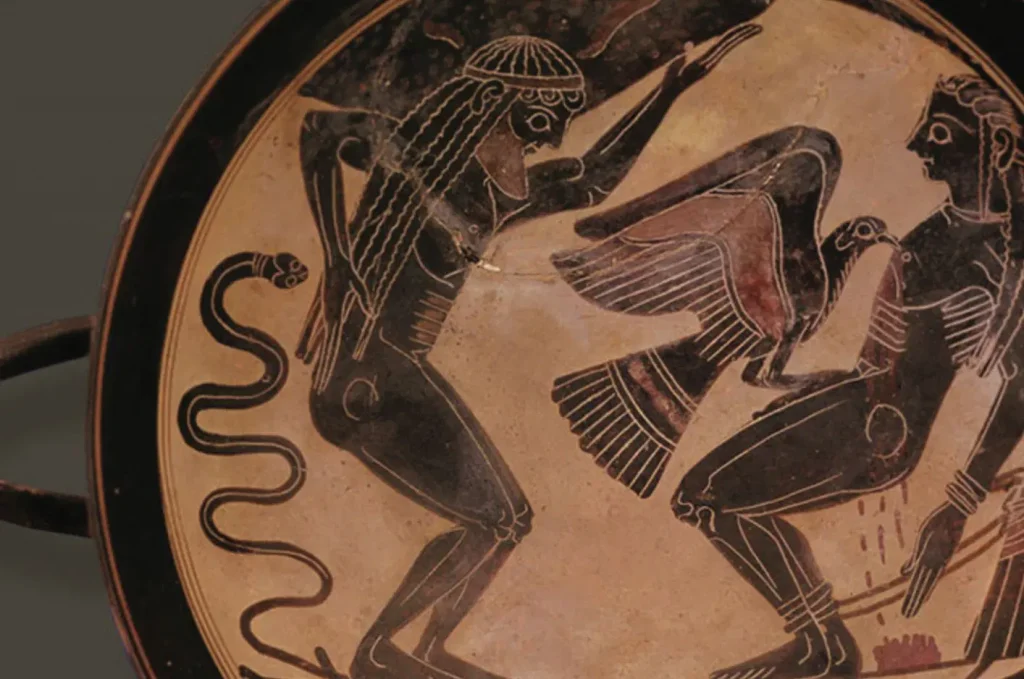
Students closely explore and analyze three stories from Greek mythology: “Prometheus,” “Odysseus,” and “Arachne.” Drawing on the routines and skills established in previous units, these lessons ask students to move from considering the state of a single person to contemplating broader questions concerning the role people play in the world and the various communities they inhabit.

Unit 6E

Summer of the Mariposas

Students read Summer of the Mariposas by Guadalupe García McCall, a contemporary Latino retelling of The Odyssey. Following five sisters on their journey into Mexico and back, students explore this reimagining of the hero’s journey as they encounter Mexican folklore and Aztec legends along the way. Students analyze character development, compare the novel to Homer’s original, research Aztec mythology, explore symbolism, and engage in collaborative discussions before writing an essay about what makes the heroes successful.

Unit 6F

The Titanic Collection

Students explore primary documents and conduct research to understand the 1912 Titanic disaster, building information literacy skills by examining artifacts such as dining menus, ship photos, telegraph transcripts, and newspaper accounts. Each student is assigned a passenger from the manifest and writes a narrative account from that person’s perspective, considering different views. Students also participate in Socratic seminars to examine the complicated issues within the Titanic story.

Unit 7A

Red Scarf Girl & Narrative

Students begin with narrative writing to develop foundational Focus skills while teachers establish targeted feedback cycles and build a classroom community centered on diverse experiences. After exploring how they describe their own experiences and emotions, students apply the same close attention to analyzing details in Ji-li Jiang’s Red Scarf Girl: A Memoir of the Cultural Revolution.

Unit 7B

Character & Conflict

Students analyze characters’ responses to conflict and examine how authors use character interactions to develop theme and perspective. They read Carson McCullers’ “Sucker” and Lorraine Hansberry’s A Raisin in the Sun, both texts that explore how families facing hardships can support and harm one another. Students observe complex character growth and discuss issues of identity, family obligations, and differing notions of success.

Unit 7C

Brain Science

Students explore narrative nonfiction and informational texts about brain science to understand what it means to be human and how their developing brains impact daily experiences. They also build awareness of their cognitive strengths and analyze the structures of informational texts and scientific arguments. Key texts include Phineas Gage, Inventing Ourselves: The Secret Life of the Teenage Brain, and Oliver Sacks’ The Man Who Mistook His Wife for a Hat.

Unit 7D

Poetry & Poe

Students learn visualization techniques to read like a movie director, beginning with poems by D.H. Lawrence, Federico García Lorca, and Emily Dickinson to form mental images. They then read three Edgar Allan Poe texts, creating storyboards and analyzing narrative elements to learn about unreliable narrators. Students also participate in the murder-mystery Quest “Who Killed Edgar Allan Poe?” and write an essay arguing whether they can trust a narrator in the unit’s texts.

Unit 7E

The Frida & Diego Collection

Students explore primary source documents and research on Mexican artists Diego Rivera and Frida Kahlo, learning how they drew inspiration from Latin American folklore, politics, and customs. Along the way, students build information literacy by generating research questions and visual analysis skills through close reading of key paintings. They also compare the artists’ descriptive writing to Shakespeare’s and analyze figurative language. The unit culminates in a research project showcasing their interpretation of Frida and Diego’s work and legacy.

Unit 7F

The Gold Rush Collection

Students explore primary documents and conduct research on the California Gold Rush, building information literacy skills and constructing research questions. They also learn about the diverse people who participated, compare fictional and historical accounts, and participate in Socratic seminars. Students write narrative accounts from specific perspectives and complete a culminating research assignment combining essay and media project elements.

Unit 8A

Perspectives & Narrative

Students learn to read like writers, paying attention to craft and writing moves that shape reader experience and developing Focus and Showing skills as they build collaborative classroom routines. Students study three narrative texts, exploring themes of belonging and identity through close reading. They also practice alternating between analytic and narrative writing, and conclude with an essay arguing whether the mothers in Amy Tan’s “Fish Cheeks” are role models. 

Unit 8B

Liberty & Equality

Students study Civil War-era writings that debate the meaning of “all men are created equal,” exploring various perspectives on American ideals. Key texts include Walt Whitman’s Leaves of Grass, Frederick Douglass’ Narrative, and Harriet Ann Jacobs’s Incidents in the Life of a Slave Girl. The unit culminates with an essay examining Douglass’s arguments and Lincoln’s Gettysburg Address to consider what America means by “all men are created equal.”

Unit 8C

Science & Science Fiction

Students read Gris Grimly’s Frankenstein, a graphic novel adaptation of Mary Shelley’s novel, exploring themes of creator responsibility, societal influence, and the risks of scientific inquiry. They trace Victor’s sympathy for his creation, rewrite scenes from the creature’s perspective, and debate whether Victor owes the creature a companion. The unit concludes with an essay determining whether the creature should be considered human.

Unit 8D

Shakespeare’s Romeo & Juliet

Students read five excerpts from Shakespeare’s Romeo and Juliet to learn key elements of Shakespearean English through close reading. They practice memorizing and reciting the famous “Prologue,” put on stage performances, translate Shakespeare’s language into contemporary terms, and study the Shakespearean sonnet form. The unit concludes with an essay arguing whether love or hate is responsible for Romeo’s death.

Unit 8E

Holocaust: Memory & Meaning

Students use close reading to explore memoirs and primary sources that address two key Holocaust questions: How do societies become participants in atrocity, and what are our responsibilities as witnesses? Students analyze multiple perspectives through texts, including Alexander Kimel’s “I Cannot Forget,” Irene Butter’s Shores Beyond Shores, 1936 Olympics propaganda, and excerpts from Maus and Night.

Unit 8F

The Space Race Collection

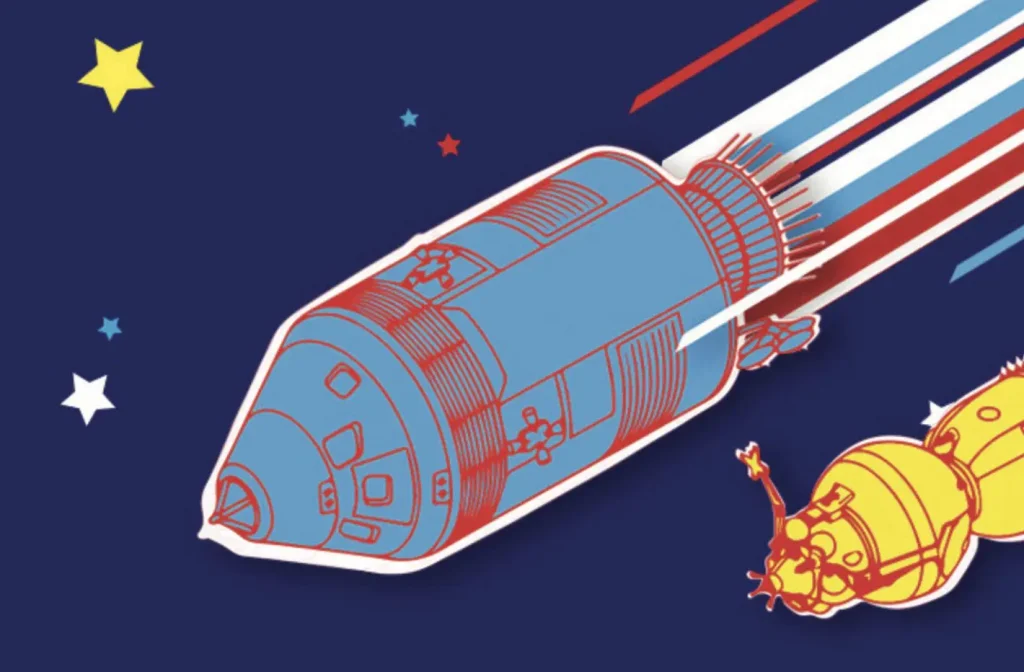
Students explore primary documents and conduct research on the Space Race. They build information literacy skills, construct research questions, and learn about diverse participants from Soviet cosmonauts to American heroes like Buzz Aldrin and Katherine Johnson. Each student researches an assigned cosmonaut or astronaut and writes space blog entries from their perspective. Students also complete a capstone research essay and media project.

Print & digital components

The program includes instructional guidance and student materials for a year of instruction, with lessons and activities that keep students engaged every day.

A diagram shows the Amplify ELA curriculum with examples of the digital teacher edition on a tablet, print teacher edition pages, and a teacher projection of an artwork on a screen.

Teacher materials

Teacher Edition

Available digitally and in print, the Teacher’s Edition contains all the information teachers need to facilitate classroom instruction, including detailed lesson plans, video teacher tips, presentation slides, standards alignment, Exit Tickets, real-time differentiation strategies, and robust reporting.

Student materials

Student Edition

Available digitally and in print, student materials guide middle schoolers through complex texts and writing by engaging them with high-quality narrative and informational texts—providing videos, audio supports, and a digital experience that captures their attention. They also keep all of their writing in one place with a personal Writing Journal.

A collection of Amplify ELA materials including a print student edition, a digital student edition on a laptop, a writing journal, and an Arachne literature module.

Explore more programs

Our programs are designed to support and complement one another. Learn more about our related programs.

Achieve next-level literacy growth with a cohesive Science of Reading suite.

The Science of Reading programs in Amplify’s early literacy suite empower you to meet the dynamic needs of every student learning to read. Discover the programs that best fit your literacy priorities and how they work together for a seamless teaching and learning environment.

“There were other programs that claimed to be Science of Reading, but no other vendor provided the suite of products together. So from our perspective, [Amplify’s literacy suite] met our needs because it aligned and provided us the best suite of products. Hands down. We couldn’t find anybody else who touched that.”

Nicole Peterson, Director, PreK–8 Education

Sampson County Schools, North Carolina

A true Science of Reading early literacy suite for grades K–5

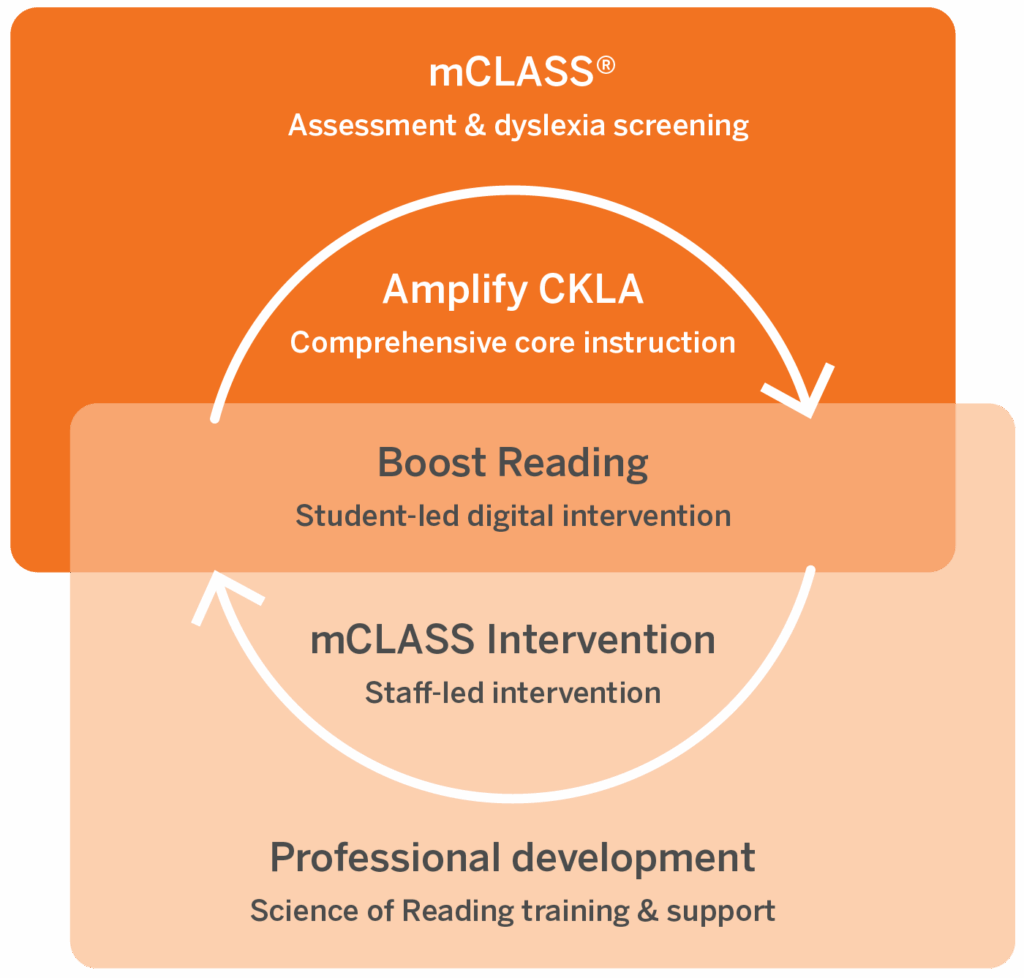
Amplify has combined the critical elements of a Science of Reading system of assessment, core curriculum, personalized learning, and intervention. Based on 20 years of experience with the Science of Reading, this complete system saves you time and aligns your literacy practices.

  • Assess with mCLASS®: A universal and dyslexia screener, powered by DIBELS® 8th Edition
  • Instruct with Amplify Core Knowledge Language Arts (CKLA)®: Core curriculum to build foundational skills and knowledge
  • Support with Boost Reading: Student-led digital intervention to extend and reinforce core instruction
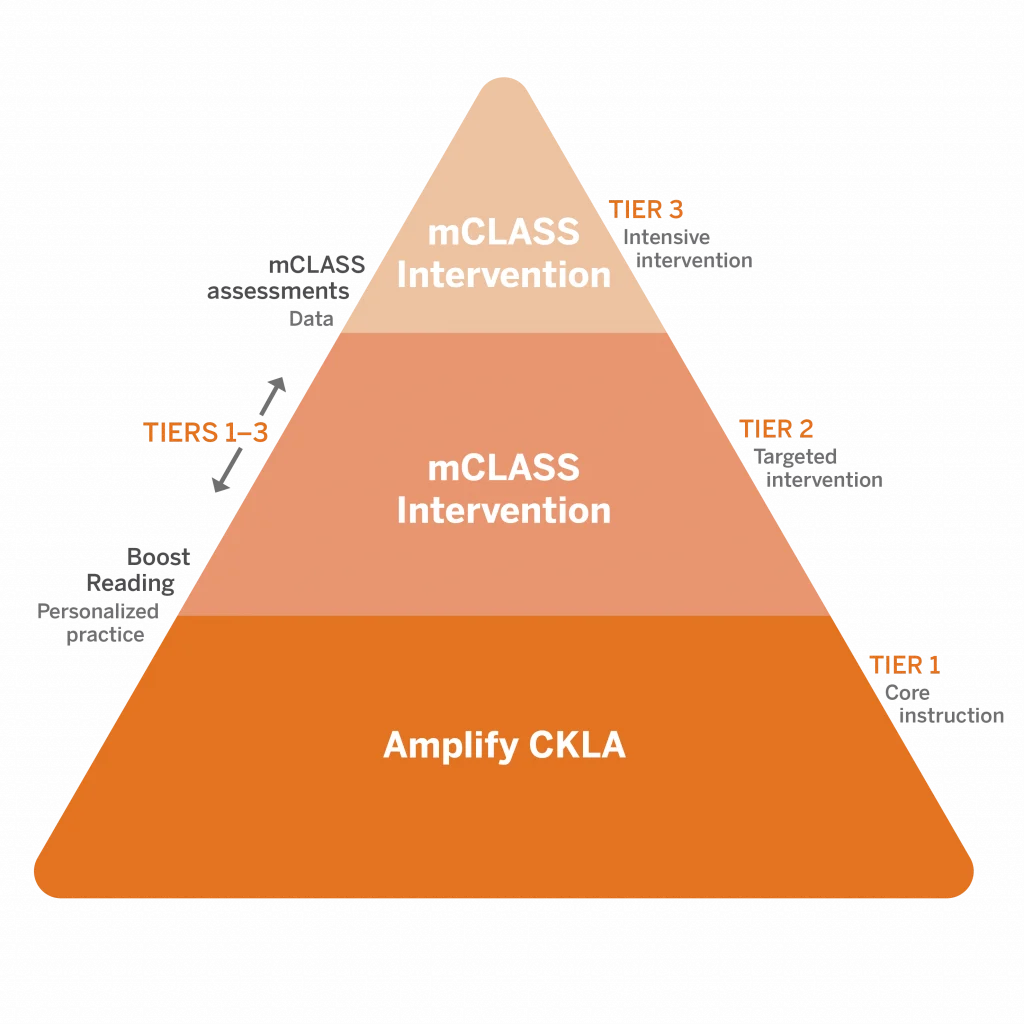
  • Intervene with mCLASS Intervention: Staff-led Tier 2 and 3 intervention for intensive support
  • Science of Reading professional development: Amplify training, events, and podcasts to strengthen instruction

mCLASS assessment

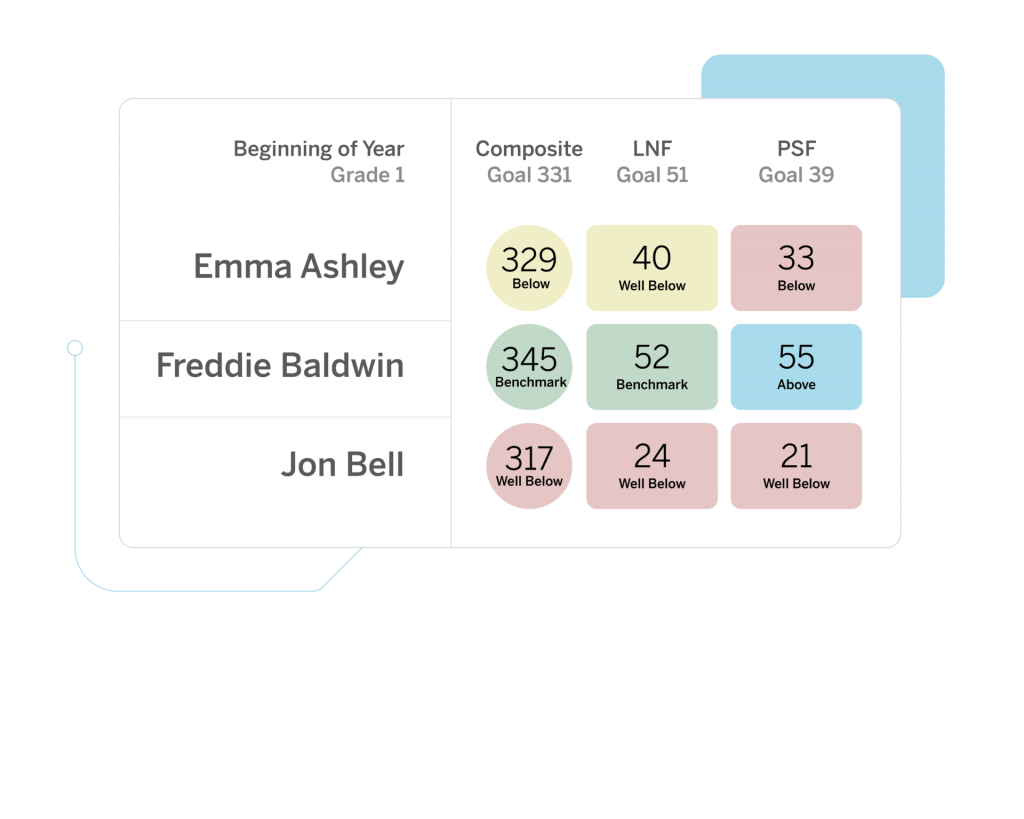
Powered by DIBELS 8th Edition, mCLASS is a universal and dyslexia screener, plus a progress monitoring tool, all in one. With this comprehensive tool, you have precise one-minute measures delivered one-on-one that give you the data you can trust to make informed instructional decisions.

Amplify CKLA core curriculum

mCLASS data informs instructional needs and identifies whole-class and small-group areas of focus.

mCLASS can replace Amplify CKLA’s benchmark assessments in K–2 and can identify appropriate Amplify CKLA instruction for small groups.

Boost Reading digital intervention

Boost Reading and mCLASS integrate to provide adaptive, student-led practice in targeted skill areas. 

mCLASS data automatically places students at the appropriate Boost Reading starting point.

You can track student progress with side-by-side mCLASS and Boost Reading growth data.

mCLASS Intervention

mCLASS assessment identifies risk early on and places students in and out of mCLASS Intervention groups.

mCLASS progress monitoring data creates intervention groups and daily lesson plans for 10-day cycles.

Amplify CKLA core curriculum

Amplify Core Knowledge Language Arts (CKLA) provides explicit, systematic foundational skills instruction combined with intentional knowledge building. Rich content spans topics in history, science, literature, and the arts to build deep background knowledge.

mCLASS assessment

Amplify CKLA instructs in the same critical literacy skills measured by mCLASS, aligning your assessment and core curriculum.

mCLASS can replace Amplify CKLA’s benchmark assessments in K–2 and can identify appropriate Amplify CKLA instruction for small groups.

Boost Reading digital intervention

Boost Reading reinforces skills through a shared scope and sequence with Amplify CKLA.

Instruction adjusts, providing differentiated skill development where needed and advancing students to the next level.

Dynamic growth reporting offers insight into how Amplify CKLA skills are developing over time.

mCLASS Intervention

mCLASS Intervention allows you to support Tier 1 instruction to get at-risk readers on track.

mCLASS Intervention lesson plans extend skills learned in Amplify CKLA curriculum.

Phonological awareness and phonics focus complements Amplify CKLA’s Skills Strand.

Boost Reading digital intervention

Boost Reading is a digital intervention program that adapts to every learner, reinforcing core instruction while providing support for remediation and intervention. The program delivers differentiated, student-led practice and clear growth reporting data, helping you understand how students are progressing at a glance.

mCLASS assessment

Boost Reading and mCLASS integrate to provide adaptive, student-led practice in targeted skill areas.

mCLASS data automatically places students at the appropriate Boost Reading starting point.

You can track student progress with side-by-side mCLASS and Boost Reading growth data.

Amplify CKLA core curriculum

Boost Reading reinforces skills through a shared scope and sequence with Amplify CKLA.

Instruction adjusts, providing differentiated skill development where needed and advancing students to the next level.

Advanced growth reporting offers insight into how Amplify CKLA skills are developing over time.

mCLASS Intervention

Boost Reading and mCLASS Intervention provide a complete system for intervention support.

Use mCLASS Intervention for staff-led small groups and Boost Reading for student-led digital intervention.

Together, they provide continuous intervention support across all tiers.

mCLASS Intervention

mCLASS Intervention is a Tier 2 and 3 targeted, staff-led intervention program made easy with automatic data-driven grouping and sequenced explicit, systematic skills lesson plans to support at-risk students.

mCLASS assessment

mCLASS assessment identifies risk early on and places students in and out of mCLASS intervention groups.

mCLASS benchmark and progress monitoring data creates groups and daily lesson plans for 10-day cycles.

Amplify CKLA core curriculum

mCLASS Intervention allows you to support Tier 1 instruction to get at-risk readers on track.

mCLASS Intervention lesson plans extend skills learned in Amplify CKLA instruction.

Phonological awareness and phonics focus complements Amplify CKLA’s Skills Strand.

Boost Reading digital intervention

Boost Reading and mCLASS Intervention provide a complete system for intervention support.

Use mCLASS Intervention for staff-led small groups and Boost Reading for student-led digital intervention.

Together, they provide continuous intervention support across all tiers.

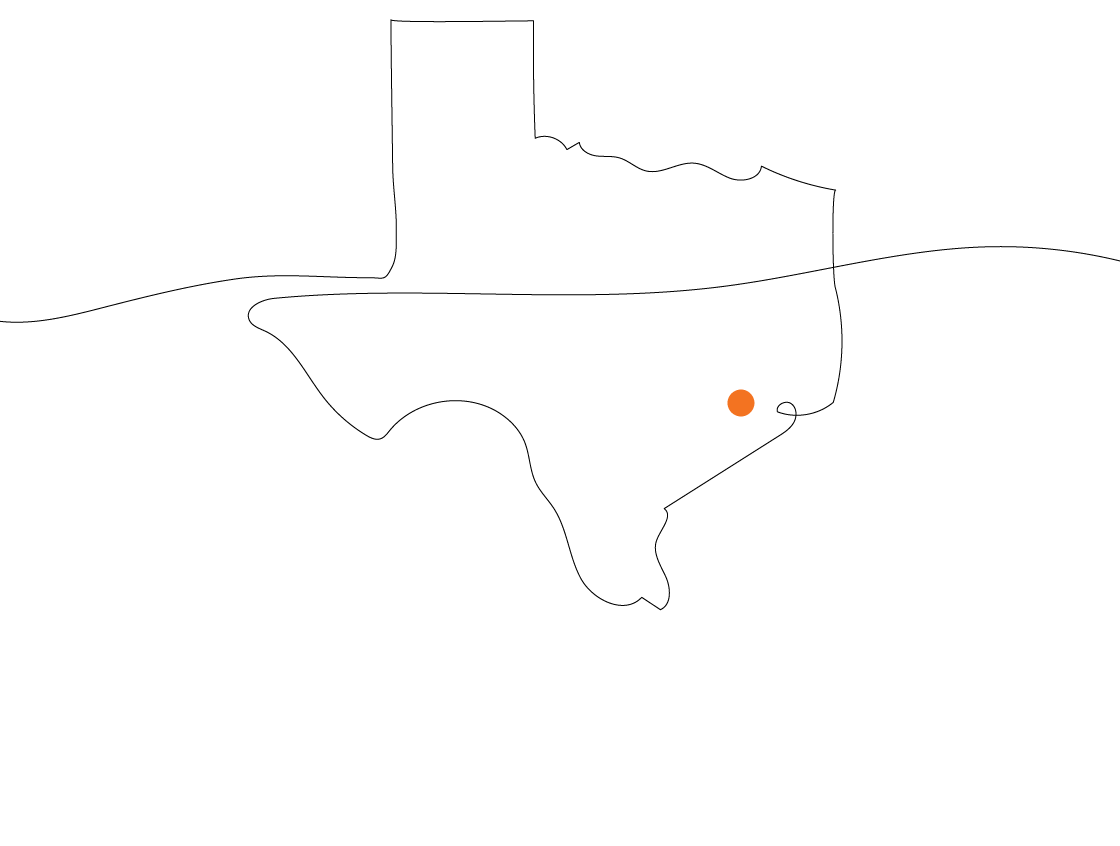
A 20% boost in literacy rates:

Our Science of Reading programs are helping Aldine Independent School District in Texas rewrite its literacy narrative.

Read more

The cohesive early literacy system teachers and students deserve

Support your MTSS and RTI models

A strong Multi-Tiered System of Supports (MTSS) enables you to make data-based decisions and confidently meet every student’s needs. Our integrated early literacy suite includes universal and dyslexia screening, core curriculum, personalized learning, intervention, and ongoing professional development.

Each program in the suite is directly aligned to the Response to Intervention (RTI) model of tiered instruction.

Aligned resources that do away with piecemealing

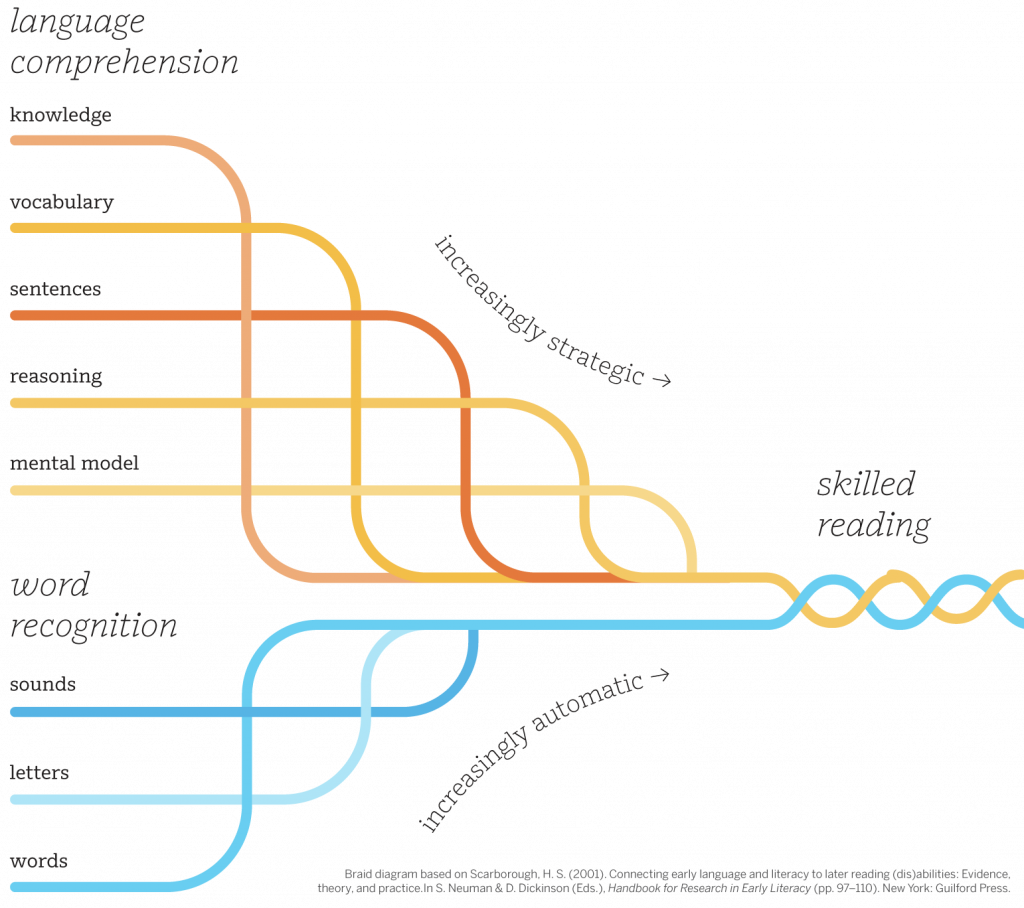
A literacy ecosystem built on the same Science of Reading principles and pedagogical foundation ensures that students experience a cohesive and reinforced literacy journey. Our programs allow you to support all students without cobbling together additional resources to fill in the gaps.

They follow an explicit and systematic structure, build knowledge, and assess and instruct on all of the foundational skills essential to literacy development.

The data you need to make informed decisions

Our universal and dyslexia screening data is predictive and reliable, and it’s aligned to the entire instructional system. It enables you to make informed decisions for whole-group, small-group, and individual instruction, as well as resource allocation at the school and district level.

Amplify’s early literacy programs support you wherever you are in the Science of Reading journey. Download our Science of Reading roadmap to help you determine where to start.

Download now

Our early literacy programs in action

Case study: Aldine Independent School District, Texas

Implementing Amplify CKLA core curriculum, Boost Reading personalized learning, and mCLASS assessment boosted reading proficiency from 30% to 50%

Read more

Case study: Allen Parish School District, Louisiana

After just one year of integrating mCLASS assessment and Amplify CKLA core curriculum, Grade 1 student reading proficiency rose from 58% to 80% across eleven Title 1 schools

Read more

Case study: West Jefferson Hills School District, Pennsylvania

Students reached the 98th percentile among their peers nationwide after implementing Amplify CKLA core curriculum, Boost Reading personalized learning, and mCLASS assessment. The shift not only inspired students in their literacy journey, but also made teachers feel more confident in teaching literacy.

Read more

Science of Reading resources

Successfully adopting new Science of Reading literacy programs will change lives. We provide extensive resources, professional learning, and complementary events and webinars so you can begin using your new programs with fidelity.

Science of Reading essentials

Champion research-based literacy programs in your classroom with our extensive Science of Reading resources.

Science of Writing: A Primer

Unlock writing mastery! Explore our new primer on literacy research and the Science of Writing.

Portada de "Science of Reading: The Podcast" con un libro abierto, formas coloridas y la palabra "Amplify".

Cultivate lifelong learning

Gain useful knowledge with our top-rated podcast.

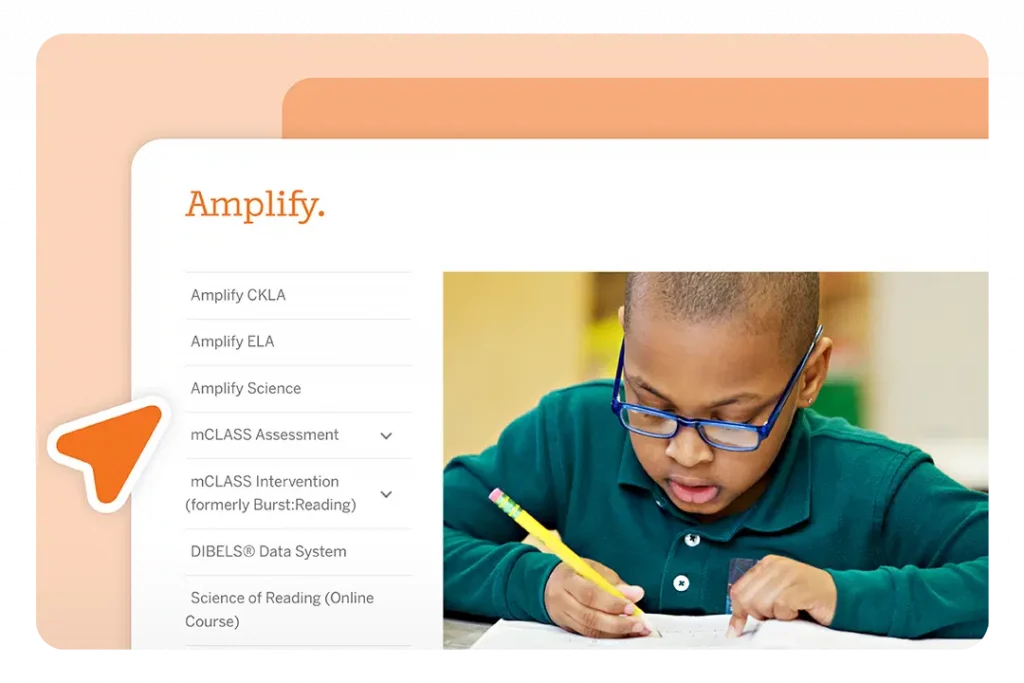
Niño con camisa verde escribiendo con un lápiz amarillo; barra lateral que muestra recursos educativos como Amplify CKLA y Amplify Science.

Staff development services

Invest in a professional development plan.

“[We wanted] something that moved kids beyond the traditional low-level type of thinking about literacy, reading, and engaging with text. The choice of Amplify became clear for our district. The tremendous professional support from Amplify, matched with the commitment of our people. We’re finally seeing something different, and the results are encouraging.”

Matthew Patterson, Ph.D., Assistant Superintendent

West Jefferson Hills School District , Pennsylvania

Passion for reading in Sampson County, NC

Mia and Grade 2 teacher Jenny Denning explored the power of the Amplify early literacy suite together.

Inspiring confidence in Tennessee

Kaleb and Assistant Principal Casey Price tackled reading from the ground up with Amplify’s early literacy programs.

Real results, rooted in the Science of Reading: Amplify success stories

The Science of Reading is all about the evidence we have of how our brains learn to read. We also have evidence that it works—not just from science, but from real Amplify educators using it to transform their classrooms every day.

Learn More

District spotlights

Oak Harbor, Washington

Kindergarten reading proficiency improved by 19% and Grade 1 by 31% in three years.

Read More

Aldine Independent School District, Texas

Amplify’s early literacy suite boosts reading proficiency from 30% to 50%.

Read More

Allen Parish School District, Louisiana

After just one year of using Amplify CKLA, student reading proficiency rose from 58% to 80%.

Read more

West Jefferson Hills School District, Pennsylvania

Students reached the 98th percentile among their peers nationwide after implementing Amplify.

Read More

Portrait of a woman with long dark hair, smiling warmly, wearing a black top. She is posed against a neutral, softly blurred background, embodying the confidence and wisdom often seen in educators passionate about early literacy and the science of reading curriculum.
“When we were looking at the products… no other vendor provided the suite of products together. And that is what we were looking for… So from our perspective, [Amplify’s literacy suite] met our needs because it aligned and provided us the best suite of products. And hands down, we couldn’t find anybody else who touched that.”

—Nicole Peterson, PreK-8 Director

Sampson County Schools, North Carolina

Amplify + North Carolina: The power of a Science of Reading curriculum

Discover how Sampson County, North Carolina, schools use Amplify’s early literacy suite based on the Science of Reading to unlock the magic of reading for their students—and ensure results.

Sparking literacy success in Tennessee

Learn how Tennessee uses Amplify programs to change lives and create new futures for kids every single day.

Explore More

Customer voices

Saving time with Amplify

Michelle Arnett, New Glarus School District

Watch Now

Amplify CKLA Skills strand

Martyna Stelter, Parkview School District

Watch Now

Amplify CKLA as a comprehensive solution

Laura Eichner, New Glarus School District

Watch Now

Amplify CKLA knowledge-building

Erica Chapman and Jena Lipnick, Onslow County Schools

Watch Now

On-demand roundtable discussions

Learn how you can start making the shift to improved literacy instruction with the Science of Reading right now by hearing from educators across the country who used Amplify programs and saw incredible results.

Elementary ELA Educator Roundtable

Watch now

Supplemental Reading Educator Roundtable

Watch now

Assessment & Intervention Educator Roundtable

Watch now

Middle School ELA Educator Roundtable

Watch now

Amplify Science of Reading Star Award Winners Panel—K–8 Literacy and Reading Supplemental Program

Watch now

The Importance of Dual Language Assessment & How to Deliver It

Watch now

Amplify CKLA Knowledge Building—K–5 Core Knowledge Language Arts Curriculum

Watch now

Boost Reading Customer Panel—K–5 Personalized Reading Curriculum and Program

Watch now

Amplify CKLA Customer Panel—K–5 Core Knowledge Language Arts Curriculum

Watch now

mCLASS Customer Panel—K–6 Literacy Systems and Support

Watch now

Welcome to Amplify ELA!

To view this protected page, enter the password below:


S1-09: Supporting K–8 science students in the digital world: Ricky Mason

Podcast cover for "Science Connections," Season 1, Episode 9, featuring "Ricky Mason" discussing K–8 science education. Includes a globe illustration and decorative science-themed elements.

In this episode, Eric sits down with Ricky Mason, chief executive officer of BrainSTEM. Ricky shares his passion for inspiring students into science careers, and his path from an engineering career with organizations like the Department of Defense, National Aeronautics and Space Administration, and the Central Intelligence Agency to starting BrainSTEM, an education program that develops creative digital tools to enable all teachers and students to dive deeper into STEM content. Ricky and Eric talk about representation in science classrooms and the importance of embedding fun within K–8 science content! Explore more from Science Connections by visiting our main page.

Download Transcript

Ricky Mason (00:00):

I feel like comfort is where dreams go to die. And I’m still dreaming every night. So I’ll wake up, chasing them.

Eric Cross (00:08):

Welcome to Science Connections. I’m your host, Eric Cross. My guest today is Ricky Mason. Ricky is an engineer whose career included lead roles at the Department of Defense, NASA, and the CIA. Ricky transitioned to education as an adjunct faculty at the University of Kentucky. And while there, he founded BrainSTEM, an edtech company that developed a 3D virtual reality metaverse for STEM education. Today, BrainSTEM serves public school districts, private schools, and nonprofits. And in this episode, we discuss what led Ricky to creating BrainSTEM Metaversity, and how he’s using the metaverse to transform STEM learning for students. And now please enjoy my conversation with Ricky Mason. How did you, so like maybe going back doing your origin story, maybe you can talk about it, but brother, you don’t sleep. Talk about keep making moves, your hashtag, I mean, I was looking at your LinkedIn profiles, looking at your details. You get after it. I was getting tired just reading it. I was like John Hopkins, electrical engineering, real estate, starting companies. You must have that gene where it’s like four hours of sleep and then you’re like, ready to go.

Ricky Mason (01:19):

Yeah, man. My mom told me if I didn’t stay busy, then I’m in trouble. So when I was about 14, she told me that. I said, well, Mama, I guess I’m gonna stay busy then. And yeah, man, that’s just been my life. I feel like if I don’t keep making moves, then I’m in trouble. So, feel like comfort is where dreams go to die and I’m still dreaming every night. So I’ll wake up chasing them.

Eric Cross (01:44):

I feel like a kindred spirit with you. So, were you always interested in STEM like, was there something like a moment or a year where you remember you were like, this is my jam. This is what I’m gonna get into.

Ricky Mason (01:57):

Yeah, man. When it really clicked for me was in the fifth grade. I was at a school assembly and an IBM engineer came in and he brought a robot and he programmed it with punch cards right on the stage. And I got the opportunity to come up andyou know, put one of the punch cards in the robot to program it. And I asked him, I’m like, what is your job? He said, I’m a robotics engineer. And I went home right after that assembly and I said, Mom, that’s what I wanna do, become a robotics engineer. And my mom would take me to the libraries. Well, I felt like I was getting outta bible study on Wednesdays by going to the library. So I went there and I started researching robots.

Ricky Mason (02:39):

And at the time the robots that were popular were all being sent to space. And it was the spiritless. It was being sent to Mars. And I said, Mom, well, I guess I gotta become an astronaut if I’m gonna be a robotics engineer. And that’s kind of what set me out on that dream. And my mom started trying to find outlets for me to get involved in STEM, but it was really tough to find those outlets, you know, especially in that fifth to eighth grade range here in Kentucky. So that was kind of where it started for me man, when I knew that yeah, engineering is what I wanna do.

Eric Cross (03:14):

What does an electrical engineer do? I imagine there’s different types of specialties, but like, was there something that you specialize in that you focused on or was it, is it just kind of like a generalist field?

Ricky Mason (03:23):

Yeah, so I would say, yeah, man, it’s a huge field. So you could be doing anything from, you know, power, like power coming into your house. So those large power systems all the way down to nanotechnology and microchips. I like to tell people I’m a real full stack engineer, so my wheelhouse is kind of from the PCD, the little green computer chips, all the way to the cloud. Over my career, I’ve had some pretty cool jobs. One of those things was I was a test engineer for the army. So I got to test weapons up at Aberdeen Proving Ground for the Army. So I got to drive those weapons and test them before they went to theater there. After that,I worked at United Launch Alliance down at Cape Canaveral where I launched five rockets.

Ricky Mason (04:07):

So I was a part of the electrical ground systems team there where we were responsible for all of the electrical systems on the rocket while it was on the pad. Somonitoring the temperature of the rocket, the fuel, the entire system for safety while it was on that pad. And then finally I worked at the CIA as a computer engineer building data centers and as a data center architect for some of our remote systems and virtualizing our systems. So kind of had a broad spectrum of things there. And then finally coming back to the University of Kentucky as a research engineer and faculty. I developed drone technology for monitoring crops. So flying drones over crops with LIDAR, just like self-driving cars with high-definition cameras to pull in data about those crops, to help farmers determine about pesticides fertilizers, and the overall health of their crops from a remote location.

Eric Cross (05:10):

It’s so neat to hear you talk about it and to see how this is all built up to what you do now with BrainSTEM. How would you explain what BrainSTEM is? I know that’s your, that’s kind of your baby right now and what you’ve been working on a few years.

Ricky Mason (05:23):

Yeah, man, we started BrainSTEM in 2019 officially, but I would say BrainSTEM has been almost 10 years in coming. While I was in undergrad, I played football at the University of Kentucky. But I got hurt going into my sophomore year and that kind of shattered my dreams of football. And that’s when I really got back into engineering. One of my professors asked me to come to a robotics competition and I saw these third graders and sixth graders programming robots. And I’m like, oh my God, they’re programming robots! And I had no idea how to code or what to do with these things. And where was this a when I was a kid? And so I immediately bought one of those robots and taught myself how to program it <laugh> and then we started a robotics team in Lexington,there at a church.

Ricky Mason (06:10):

And we got a sponsorship from Lexmark to start that team. And that was kind of my first leap into STEM and teaching STEM and creating programs for students in STEM. I did that in undergrad and like I said, fast forward 10 years later, I’m teaching at the University of Kentucky and we’re struggling to recruit STEM students. Why aren’t students going into STEM? I hear too many adults tell me, oh man, I wish I would’ve done engineering, or I started out in engineering, but I left engineering or I wish I could go back to school for engineering or learn to code. And I’m like, I asked them like, why didn’t you do this? What happened? And often it’s like, it was the math. It was, oh, I didn’t get into it until I was in college. And I’m like, well, that’s the key.

Ricky Mason (06:52):

I knew I wanted to do this in the fifth grade. And I started with a plan in the fifth grade to achieve these goals and dreams. And I started doing that research and realizing that the same problem existed that I had. There was no outlet for kids to get involved in STEM, and so many kids have an affinity for STEM an early age. So we started BrainSTEM to provide access to STEM education and exposure STEM careers, STEM professionals, and just to STEM fields as a whole, because too often kids may know about the term, engineer, or the term, scientists, but they don’t really know what those people do or have a strong connection with the field or have any hands-on projects that they kind of done around those things or met anyone like me.

Ricky Mason (07:42):

I didn’t meet an engineer until I was in college. So that has really been impactful for some of the students that we’ve been able to touch. I had a family reach out to me. They moved to Lexington from California and they were like, man, I really want my ninth-grade son to get involved in engineering. So we started a weekend program with that one student and it went amazing. Like we competed in science fairs, we applied for different college programs and things like that. So it became an entire like mentorship program. And I’m proud to say that a year ago, he actually graduated with his bachelor’s in electrical engineering from your side of town, UCSB. It was just awesome to actually see this come full circle. And that’s kind of one of the first things that we did before we actually formalized as BrainSTEM University.

Eric Cross (08:34):

What will be like your elevator pitch for a teacher? If you were gonna say, this is what BrainSTEM does. I have the luxury of going through it on the site, but since we’re on a podcast, how would you kind of pitch it to people letting them know, like what, what does it do? Who does it serve?

Ricky Mason (08:47):

Yeah. So BrainSTEM provides STEM curriculum and STEM magnets for schools and nonprofits looking to increase access to STEM for K through 12 students. We also have launched our BrainSTEM Metaversity, a metaverse product for teachers to take their 2D Google classroom and convert it into a 3D metaverse classroom where students can collaborate during a 3D class. So all of your students show up as their avatars that they can select from our inventory of 150 avatars, and enjoy class in a 3D gameified Minecraft like World.

Eric Cross (09:26):

So I made my avatar by the way. It’s kind of tight, I have to say, it’s kind of tight. Hey, I’m gonna share. So those of you in the podcasts I’ll share it so you can see it. You’re not gonna be able to see it right now, but since I have the man himself I gotta share it with him just so I can get a reaction. So can you see that?

Ricky Mason (09:43):

Yeah. <laugh> That’s so good.

Eric Cross (09:44):

I feel like I wanna look like him though. I want him in real life. Like I want be able to switch to looking like my avatar

Ricky Mason (09:52):

<Laugh>

Eric Cross (09:54):

That was the first thing that I jumped on, when I went on your site, was making the avatar and I had so much fun doing it. I actually took longer than I probably wanna admit cause I was like customizing everything

Ricky Mason (10:03):

Yeah, man. It’s so fun. And that’s exactly what, you know, when you can show up as the person you want, it changes your whole being. I’ve seen kids that are quiet in class. They show up as their avatar and they’re talkative, they’re asking questions, they’re moving around the room, interacting with other kids. I feel like it’s almost like a superpower just to put your avatar on.

Eric Cross (10:25):

So what is something that a teacher could have their students go and learn or do if they, if they signed up,

Ricky Mason (10:31):

Let’s kick it off. So how we started with the metaverses, was teaching coding. So our first class was Minecraft and Python coding in the metaverse. So students showed up in the metaverse with our virtual instructor, that instructor led a lecture in the metaverse and then those students could collaborate on their Python games. So, they created and built the game in Python. We shared those games in the metaverse and we have our leaderboards that are in the metaverse, as they’re completing these challenges, including these games, then sharing them back in the metaverse with other students and getting that feedback on their game. So we’ve seen huge excitement from students when I can come back in and see my friend’s work. Like too often, students don’t get to see their work and that’s motivation to do better when I’m like, Jim’s gonna see my work. It’s amazing to see that motivation when students are sharing their work with other kids and not just their parent or just them and the teacher or seeing their grades. It’s been really cool to see.

Eric Cross (11:33):

You have that genuine audience too. Like that real-time feedback. And then like an authentic audience for students that makes everything seem, it takes it up a notch.

Ricky Mason (11:42):

Yeah, man. And then as we have built on this platform, so like you said with that avatar, so think if you created a really cool looking avatar and other students wanted to be that avatar, we have a way of sharing that avatar back into the world and in the inventory so that other students could then be your avatar. Or, if you create a world, we could then share that world back into the inventory, so the teacher could have class in a world that you created.

Eric Cross (12:07):

They’re creating content, not just consuming it. They’re actually creating content that could be shared across like grade levels or students.

Ricky Mason (12:14):

Well, we’re gonna say right now it’s just within your classroom. Eventually yes, we want students to be able to share that across school districts. At least we think that data will be probably limited to those kinds of realms as far as schools go. But you’ll be able to share this across sixth grade. We’ll be able to see what everyone in the sixth grade is doing in their STEM class or their game development class or their history class, per se, even if they’re giving back a presentation or what we have here in JCPS is backpack skills of success, where students are presenting on things that they’re learning that relate back to core competencies that the district is focused on. And I think that sharing those in the metaverse and doing those in the 3D world will be an awesome experience for students.

Eric Cross (12:56):

Are you seeing anything else as far as those skills that we see that are needed in coding? Is there something that the VR adds that was distinct from maybe just a kid with a Chromebook in his class that it’s just him in isolation doing the coding? Was there any like aha moments or surprises when they’re in the VR world doing this?

Ricky Mason (13:13):

I think the biggest thing is we could actually show them real examples of code working in other ways. Sofor example, if we’re working through loops, we can show them something looping. We can relate these functions to real-world things happening in the VR world so that they can see and better relate the actual concept with visuals, if that makes sense. So, you’re in loop Allen the whole time you’re learning about loops. You’re immersed in that kind of world. What we’ve seen is students really start to, you know, they it pick up and it clicks a lot faster because some of these concepts are so abstract for students to understand, when we can relate them to things in that world that they see that are in front of them, that they can grasp before we go to okay, type in “while” “”parentheses” <laugh> they can thenrelate that and pick up on those clues a lot better after they’ve seen those things in the world.

Eric Cross (14:09):

So they can actually visualize it in the metaverse. Whereas outside of it, it’s more just, just text-based coding and they’re not isolated. Like the first thing I’m thinking about is how like, with my own students, when they’re learning Sratch or Python, it’s not easy to share back and forth because they all are on individual accounts and they’d have to go on a different computer, or we’d have to find some way to publish it. And then all the kids would have to access it. But it sounds like in the metaversity classrooms, it’s easy for students in that same class to see each other’s work. Am I getting that right?

Ricky Mason (14:37):

Yeah. So most of our classrooms are limited to 24 students and in some of our breakout classrooms, we limit them to about eight students. Everybody can share their screen, so students can share their screen in the metaverse. They can share their video in the metaverse. They can share documents in the metaverse. They can share their, like I said, their code or anything that they want to share with other students. They can kind of do that. So it’s been a really cool product, I think, for students to almost find independence to work within a group, in an online setting. As they’ve been working through these problems online and remote it’s been really cool to see how they use the metaverse and break out. Even in a class, they can go off into a section because it’s all spacial. If you walk away, I can’t hear your conversation. So they can go into a little section within a metaverse class and have their own breakout. And a teacher can walk over to them. Okay. You guys are working over here. Let me walk to my next group. Just like in class. So it’s been really cool to see those students use the metaverse like that.

Eric Cross (15:41):

Just listening to you talk about this. One of the exciting things about emerging technologies or taking what the private sector does, and someone with a mind like yourself, and go, how do I use this for education? Like, that’s something that like excites me and you’ve run with it. But I just thought about, you’re doing an hour of code, you’ve created this metaverse, and you can bring in somebody, a professional into the metaverse, but they’re in, you know, the Bay area, but they could be a software engineer for Tesla or Google or anybody. Could they move around the metaverse and take a look at different students’ work and interact in that way.

Ricky Mason (16:17):

Yeah, man, we get in there. We make metaverse selfies. I drop Lambos in the metaverse, we take picture with Lambos. We have scavenger hunts in the metaverse. It’s a really awesome experience. And that’s one of the big things I think that is so powerful, is like you said, we could have that engineer, that celebrity, we could have Travis Scott, you know, in the world meeting thousands of kids motivating them because they met their STEM goals. They met their, you know, their testing school goals or whatever. These are things that kids really care about. If I get the Travis Scott avatar or the Elon Musk avatar, because I completed the Elon Musk rocket challenge, like that’s huge for me to show up in class as that avatar, like it’s just like Fortnite and it’s bringing all of those mechanics into the classroom.

Eric Cross (17:07):

When I hear you talk about the metaverse and I hear you talk about the potential of where you want to go with it, I think about my own students, and I think about, how they would really have a genuine interest and desire to want to do this and probably be doing it when they don’t have to, like at home at night wanting to go back into it and interact. And, you’re also building this virtual community. I mean, are you seeing that like, cause I’m hearing that?

Ricky Mason (17:28):

Yeah, man, building that community is huge. And I often tell people all the time, I want the STEM community to be just like the basketball community, the football community. I want students to have that camaraderie built around them for learning STEM and participating in STEM activities and competitions. Because when you see students out there at a robotics, they have the same zeal, the same, you know, everything that you find at a football competition. So we just have to get behind them and back those events with the same enthusiasm that we back sports. And that’s the environment that I want to create for STEM students and for that STEM community, because I longed for that community when I was in school. And like I said, I had it in football, but I wanted both. I wanted the best of both worlds. I wanted my robotics guys and my football guys to show up together here at the competition and have a good time.

Eric Cross (18:23):

You’re absolutely right. Like robotics STEM, these things, community helps fuel like people’s interest and working together. And it brings people from the outside who are seeking that community. Like, hey, my friends are doing this, I wanna kind of check it out. That’s how we recruit a wider swath of our population into it. So it’s not this kind of very narrow channel of folks who are going into STEM.

Ricky Mason (18:45):

If you can’t find that community. I mean for me, I felt like I was the only one playing football who was interested in robotics. So I never told anybody because I didn’t feel like that related to anybody within my vicinity. So I kept that to myself and that’s the biggest thing. I think if we get these kids just talking more about their interests, because a lot of them are interested in robotics and space and these STEM topics, but they don’t have anyone that’s really nudging them or asking them or piquing their interest in those spaces and saying, hey man, it’s okay to, you know, learn about robots. It’s okay to geek out on space. <Laugh> So that’s been my goal and that’s kind of why I felt like this was the time in my career for me to kind of do this, be a face for STEM education and inspire kids to chase their goals and dreams. Over my career, I’ve had some really cool jobs, but I felt like I could keep doing cool jobs, but I’m like at the right age to still connect with those students and inspire them to chase their dreams. And that’s why I feel like right now, man, it’s just an opportune time to get these students involved in STEM.

Eric Cross (20:01):

We don’t get that. Oftentimes, when we’re solely doing the cool job or simply in the private sector, we don’t get those experiences as much as we do when we’re able to actually serve our community or students or take our passion, our skill set, and use it to serve another person. I hear that like, as you describe what you’re doing now is like, there’s something beyond just, you know, the using your skills and doing cool stuff, but there’s something I hear. That’s helping people and actually doing something you believe in that resonates deeply in you. And I can hear it as you talk about it.

Ricky Mason (20:30):

It’s been just amazing to actually chart out that journey. Like I said, and like tell kids, like, no man, I’m from right up the block from you, cause I mean, I’m building this back at home in my hometown. And that’s the reason why I kind of came back to kind of do that in my hometown, because I really want to, you know, relate to those students and inspire, you know, students here. Nobody thinks about technology coming out of Kentucky and that’s been a gift and a curse, I guess, with launching BrainSTEM in Kentucky. When I first started, I said, we’re a STEM education company, people are asking me what is STEM? So, that was where we started out with this in 2019, all the way to, you know, hey, in 2020, we’re gonna launch a metaverse. A metaverse! What is that? It’s been amazing to try to change the minds of not only Kentuckians about STEM and the importance of STEM, but the world that a metaverse company is coming outta Kentucky. <Laugh>

Eric Cross (21:31):

The work that you’re doing and, it exists beyond you and you probably know this, but as a Black science educator out here in San Diego … We don’t see people who look like all of us in this work often, and I saw that you had created something, a network group, network and chill. And that was one of the things, we had touched on community, but I thought that that was so huge because we need each other.

Ricky Mason (21:55):

I feel like that was the biggest thing for us in engineering. Like I showed up to my first internship and I’m like, I mean, my boss was cool. Everything else was cool, but I just didn’t feel like, hey, this is a community for me. And I almost changed my major because of that. But I’m glad that I didn’t, it’s huge to have more of us represented in, in these spaces.

Eric Cross (22:16):

And you know, in engineering, especially when we look at the disproportionate, you know, men versus women. Like it’s not, you know, it’s not just culture, but it’s, you know, gender, all of these different things. And if we’re gonna change it, I think a program like yours that gets exposure to all kids and then giving them choice. What advice would you give to students? Or what advice I should say, do you give to students now? When you see like your younger self in the different kind of K12 grades who are thinking about their futures or they’re thinking about STEM, what do you say to them?

Ricky Mason (22:46):

So my biggest advice, man is start now. Whatever that big thing is, that big dream is that you have, what is that now? You’re thinking about planes. You’re thinking about robots. You’re thinking about RC cars, whatever that is. Let’s start now. Let’s get your hands on an RC car. Let’s take it apart. Let’s start coding. Let’s start thinking about those problems now. But the biggest thing is, is getting kids used to solving tough problems. Typically, most students that have an affinity for, you know, STEM — and you just know that that kid’s gonna go into, STEM — they’re problem solvers. They’re typically looking and seeking those tough problems and seeking opportunities to learn. That’s where I feel like it’s parents’ jobs to provide that environment to foster, that zeal. A five-year-old kid, we started our STEM program with them at the beginning of this month.

Ricky Mason (23:39):

The first day I came in after I told him I was a rocket scientist. And now he’s like, well, I wanna be a pilot. I said, if you pay attention to this class, we’re gonna get you started on your way to being a pilot. And he knows all the parts of a rocket and he knows a rocket needs an oxidizer. And he knows the fuselage, the wings, the wing flaps. He knows all the different parts of the plane and how the forces, the drag, the lift, the weight, he knows how those are working cause we talked about those in class and he has so much more confidence and it came all to fruition when a kid said, wow, I thought it was gonna be really hard to be a robotics engineer. And I’m like, no, that’s not gonna be that hard. That is exactly what we set out to do when we started BrainSTEM, was to break down those barriers and those walls and build that confidence and say, look man, you can do this. It’s easy.

Eric Cross (24:26):

Society doesn’t help much either because one of our terms, right, if something’s really hard, or if something’s not hard, we say it’s not rocket science. That implies that rocket science is really hard and inaccessible. If kids would hear that it kind of instills in their brain, okay. It’s really hard, it’s probably too hard for me. To that point to parents, it sounds like a lot of just exposure, like giving students the opportunity to be able to be exposed to these things and letting them create wonder from it.

Ricky Mason (24:51):

Yeah, man. I often tell parents we’re gonna set kids up to go pro no matter what,

Eric Cross (24:56):

And those skill sets transfer, whether they decide to go into coding or they decide to manage a bank, you’re still gonna be dealing with people. You’re still gonna be problem-solving. You’re still gonna have to come up with creative solutions to things. It sounds like through a program like this, they learn those skills early.

Ricky Mason (25:12):

Yes. And I think that one thing that parents don’t think about … We talk about all the STEM and we want smart kids, but we need those soft skills also within STEM. So those competitions, getting them involved in those communities with STEM students is really huge in presenting their ideas because oftentimes, you know, our STEM guys, we’re in a lab working and that’s where we love and that’s where we wanna be because we haven’t, you know, been prepared to talk and present our ideas. So I think that’s a huge part of what we have to teach our STEM students. And we do that by providing that community and those opportunities for them to, you know, do that.

Eric Cross (25:47):

Thinking about where you are now, looking back on your K-12 education, were there any teachers that stood out to you or that inspired you as I even just say that, can you think of a particular teacher or one or two?

Ricky Mason (26:00):

When I think about my teachers, my teachers really taught me to solve those tough problems and those subjects that you don’t kinda like <laugh>, cause I was always a great student, but my teachers helped me to focus on those subjects that I didn’t so much, you know, enjoy. So I enjoyed math and science, but English social studies, like why do I have to be here? I had two teachers during my high school career that really supported me in that regard, and helping me to be the best student all aroundfrom like I said, STEM to English and social studies, and making me realize that I have to be a well-rounded student if I’m gonna be truly successful. As far as engineering, man, I would say one guy, my teacher, Nick Bazar up at John Hopkins. During my master’s there, I had a really cool project. I got to do data forensics on a real live murder case. <Laugh> That was really inspiring because I’m like, wow, this is real life where my coding skills are being used in a jury trial <laugh>. And so that was a really cool experience to partner with my professor to kind of do that. I mean, that was just mind blowing that I got to help with that and that, I mean, he was using his programming skills to help solve a murder case.

Eric Cross (27:22):

What’s the best way for people to connect with you and follow your journey? And if a teacher’s interested and they’re listening to this and they’re hearing, okay, this metaverse coding thing sounds awesome, I want to get involved, I wanna know more, where can people go? What steps should they take to be able to get connected to you and what you’re doing?

Ricky Mason (27:40):

Yeah. So you can check us out at brainSTEMu.com, that’s brainSTEM, the letter “u” dot com and on all social medias, we’re BrainSTEMu or BrainSTEM University. Teachers, right now, we are doing our free course for teachers. So sign up at brainstemu.com. You can sign up for your class to get into a free metaverse experience, just so you can kind of check it out and get your class into the metaverse and see how your students like the metaverse, how you like teaching in the metaverse and convert one of your 2D lessons from Google classroom into a metaverse classroom. For me, I’m Ricky Mason, 5 0 2 on all social media platforms. So you can just type that in Ricky Mason502 and get with me there.

Eric Cross (28:28):

Nice. Well Ricky, I wanna thank you for sharing your story and creating BrainSTEM. And then for, I know you’re a man of tremendous talents and skills and accomplishments, and you’re focusing all that on not only being back in your community, but also creating something for younger versions of you and opening up opportunities that they might not otherwise have, as you said, folks are like, what is STEM? And that is exactly where we need those seeds planted. So thank you for doing that.

Ricky Mason (28:55):

Oh man, this is awesome. I appreciate you, man for hosting this podcast and providing this platform and sharing the message of, you know, educators and people in the space.

Eric Cross (29:07):

Thanks so much for joining me and Ricky today. Make sure to support Science Connections by subscribing wherever you listen to podcasts. And you could hear more from Ricky in our Facebook group, Science Connections the community, where you can check out all the exclusive content. Until next time.

Stay connected!

Join our community and get new episodes every other Tuesday!

We’ll also share new and exciting free resources for your classroom every month.

What Ricky Mason says about science

“We just have to get behind [students] and back them with the same enthusiasm that we back sports…because I longed for that community when I was in school.”

– Ricky Mason

CEO, BrainSTEM

Meet the guest

Ricky Mason is the dynamic CEO and founder of BrainSTEM, an ed-tech company that developed a metaverse for education. His corporate career included lead engineer roles at the DoD, NASA, and CIA. Ricky transitioned to education as adjunct faculty at the University of Kentucky. While there, he started BrainSTEM to bring innovative technology and an inspirational curriculum to STEM education. Today, BrainSTEM serves public school districts, private schools, and nonprofits.

Follow Ricky on all social media @rickymason502

Portrait of a smiling man with a beard and short hair, wearing a white shirt, against a gray background.

About Science Connections

Welcome to Science Connections! Science is changing before our eyes, now more than ever. So…how do we help kids figure that out? We will bring on educators, scientists, and more to discuss the importance of high-quality science instruction. In this episode, hear from our host Eric Cross about his work engaging students as a K-8 science teacher. Listen here!

Season 3, Episode 7

Telling the story of science

Join us for a new episode with doctoral student and 2023 NSTA keynote speaker, Minerva Contreras. Listen as Minerva tells her science story, discusses the benefits of storytelling in science, and shares how diverse representation and inclusion in science opens doors for all students.

And don’t forget to grab your Science Connections study guide to track your learning and find additional resources!

Portrait of a smiling woman with dark hair, wearing a black turtleneck, framed by a circular border with colorful doodle icons representing diversity in science.

Meet Our Guest(s):

A woman with long dark hair and a black sleeveless top smiles at the camera, framed by a circular border with a star graphic and decorative lines, representing diversity in science and inspiring new science connections.

Minerva Contreras

Minerva Contreras, better known as Mini Contreras, is a fifth-year PhD student at University of California San Diego Neurosciences Graduate Program, with thesis advisor Dr. Nicola Allen, at the Salk Institute. Mini’s research focuses on investigating the cellular mechanisms that allow our brain to change in response to experience. Mini is a National Academies of Science Engineering and Medicine (NASEM) Pre-doctoral Ford Fellow, a San Diego ARCS Scholar, and a Society for Neuroscience (SfN) NSP Fellow.
Mini received her bachelor of science degree in biotechnology engineering at Universidad Autonoma de Queretaro, Mexico, and her continuing master of science degree in neuroscience at UCSD. She co-created and directs the Colors of the Brain-KIBM Undergrad Scholars Program, assists in teaching for UCSD’s BP-ENDURE STARTneuro, and is the host of Crash Course Biologia. Outside of lab, Minerva loves going on road trips with her wife and two dogs, Glia and Loki, she named the former.

Meet our host: Eric Cross

Eric Cross is a seventh grade science/technology teacher, grade level lead, and digital learning innovator for Albert Einstein Academies, International Baccalaureate schools. He is also an adjunct professor of learning and technology at the University of San Diego and a Google certified innovator. Eric earned a bachelor’s degree from Azusa Pacific University and a Master of Education from the University of San Diego. He had 17 years of experience working with at-risk youth and underserved populations before becoming a middle school teacher. By building relationships with students, colleagues, and the community, he has become an empowered leader in and out of the classroom. Through meaningful learning experiences centered around student agency, STEM has become accessible to students through highly engaging lesson design, thoughtful integration of digital tools, and culturally relevant pedagogy.

Quotes

I do feel very much responsible to exist in this space, staying true to myself and just continue making this space more accessible for people like me.
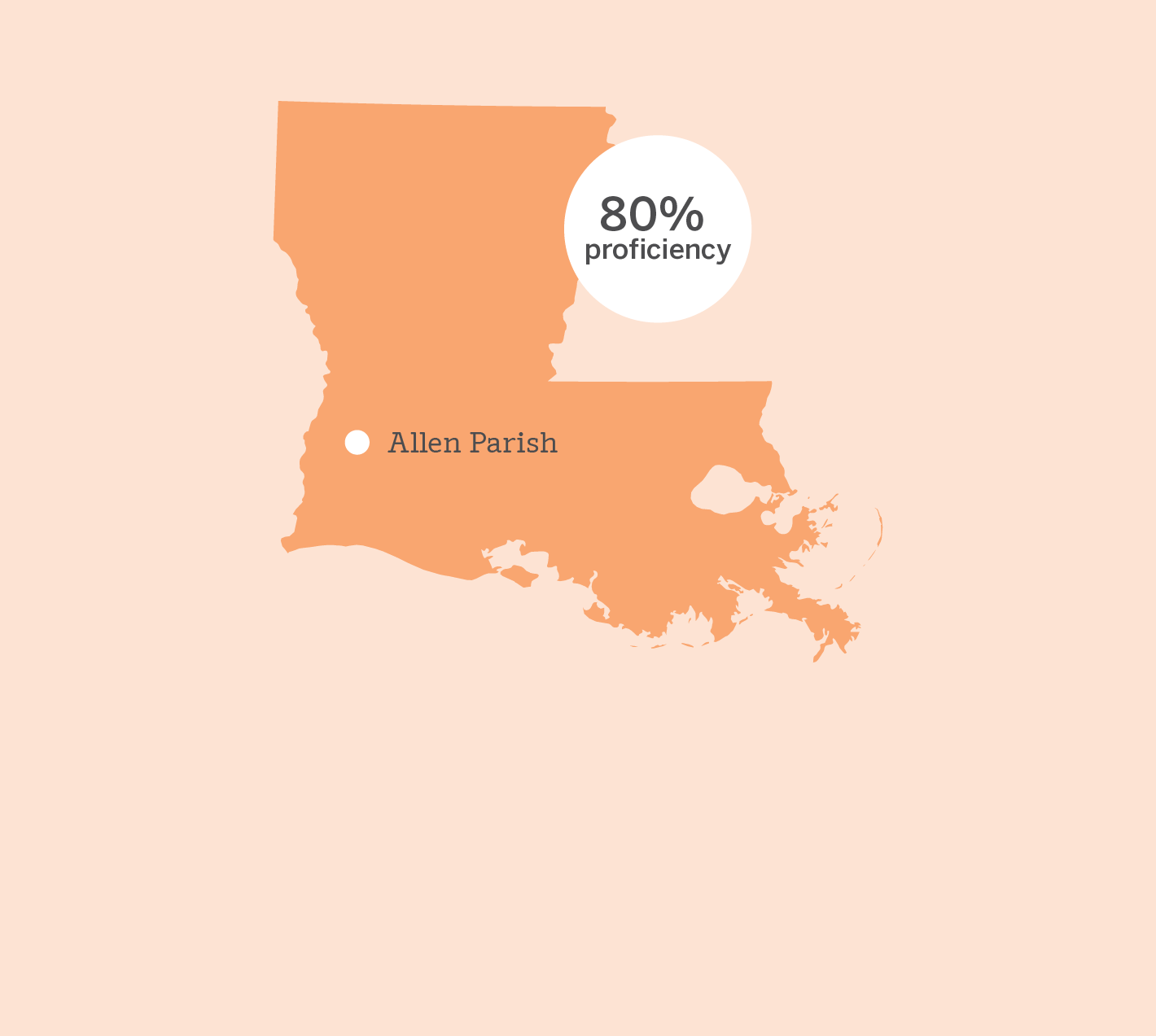
—Minerva Contreras

Stay connected

Four women sitting at a table in a meeting, with one standing and presenting on the topic of "why is science so important," all engaged in discussion.

Season 8, Episode 5

No perfect set of words: Building vocabulary, with Margaret McKeown

This episode’s guest is Margaret McKeown, Ph.D., a retired professor from the University of Pittsburgh, decades-long researcher, and former elementary school teacher. In it, McKeown and Susan Lambert address why vocabulary is so important, particularly for knowledge building; talk about the various elements of effective vocabulary instruction; discuss the key role of informal instruction in vocabulary building; and share best practices for assessing vocabulary. Listeners will come away from this episode with a deeper understanding of the how and why of vocabulary instruction, as well as tips for bolstering vocabulary instruction in their own communities.

Meet Our Guest(s):

Margaret McKeown

Margaret McKeown

Margaret G. McKeown, Ph.D., is clinical professor emerita of the School of Education and senior scientist of the Learning Research and Development Center at University of Pittsburgh. McKeown’s work covers the areas of learning, instruction, and teacher professional development in reading comprehension and vocabulary. McKeown and Isabel Beck were co-developers of an approach called Questioning and Author. They also co-authored Bringing Words to Life: Robust Vocabulary Instruction.
nBefore her career in research, McKeown taught reading and language arts in elementary school. Although now retired, she likes to keep in contact with teachers and the literacy field, and is also a grandmother to two grandsons.

Meet our host, Susan Lambert

Susan Lambert is the Chief Academic Officer of Elementary Humanities at Amplify, and the host of Science of Reading: The Podcast. Her career has been focused on creating high-quality learning environments using evidence-based practices. Lambert is a mom of four, a grandma of four, a world traveler, and a collector of stories.

As the host of Science of Reading: The Podcast, Lambert explores the increasing body of scientific research around how reading is best taught. As a former classroom teacher, administrator, and curriculum developer, Lambert is dedicated to turning theory into best practices that educators can put right to use in the classroom, and to showcasing national models of reading instruction excellence.

Retrato de una mujer caucásica sonriente con cabello rubio corto, involucrada en un podcast sobre la ciencia de la lectura, con gafas, lápiz labial rojo y un collar de perlas.
Quotes

“Good instruction needs to be interactive. We're using words. Vocabulary pervades the day.”

—Margaret McKeown

“Having mastery of your language is part of your self image.”

—Margaret McKeown

“The more you know, the more you can laugh.”

—Margaret McKeown

“We're always encountering something new with language. We can't just learn it by sitting down and being told a bunch of rules.”

—Margaret McKeown

Early reading data reveal progress overall, with varying outcomes for boys and girls 

BROOKLYN, NY (July 2, 2025) – Amplify, a publisher of next-generation curriculum and assessment programs, today released a research brief on the latest K–2 end-of-school-year literacy data. Findings suggest that overall, more young students are on track to learn to read and fewer are behind than during the pandemic—8 percent more second graders, 14 percent more first graders, and 21 percent more kindergartners are at or above benchmark compared to the 2020-21 school year. 

However, year-over-year improvements have slowed. Since the 2023-24 school year, the percentage of students on track has only improved by 1-2 points in each grade.

The data also show a nuanced picture of gender disparities in early reading. Across K–2, boys score the same or better than girls in reading readiness at the beginning of the year. But as the year progresses, girls show more improvement than boys, narrowing gaps and sometimes outperforming them by the end of the year.

“Five years out from the pandemic, we’re seeing encouraging signs that early literacy recovery is taking hold as more students across all early grades are on track to learn to read, with kindergarteners and first graders leading the recovery,” said Paul Gazzerro, director of customer data at Amplify.

Despite these successes, literacy trends across the United States remain a concern, as year-over-year progress remains slow. 

“Grades K–2 remain critical years for literacy development,” said Susan Lambert, chief academic officer of elementary humanities at Amplify. “To support young readers, educators need data-driven insights into student reading development and instructional practices that are based in the Science of Reading.” 

Amplify encourages districts and schools to analyze end-of-year data by school, grade, and classroom, and create integrated plans that:

  • Administer benchmark assessments three times per year to monitor levels of risk for reading difficulties. 
  • Analyze student data and make informed decisions to support students who are at risk for not learning to read.
  • Allocate additional instructional time and resources for at-risk students.
  • Regularly monitor progress for students, making adjustments as needed.
  • Ensure all students receive instruction that is evidence-based. 
  • Instill a love of reading during school programs, with caregiver and community support.

About Amplify

A pioneer in K–12 education since 2000, Amplify is leading the way in next-generation curriculum and assessment. Our core and supplemental programs in ELA, math and science engage all students in rigorous learning and inspire them to think deeply, creatively and for themselves. Our formative assessment products help teachers identify the targeted instruction students need to build a strong foundation in early reading and math. All of our programs and services provide educators with powerful tools that help them understand and respond to the needs of every student. Today, Amplify serves more than 15 million students in all 50 states and on six continents. For more information, visit Amplify.com.

Media Contact: Kristine Frech; media@amplify.com

Amplify announces groundbreaking digital curriculum

(AUSTIN, Texas March 3, 2014) Today at SXSWedu, Amplify unveiled its groundbreaking digital curriculum for sixth-, seventh- and eighth-grade English Language Arts (ELA). The curriculum for each grade combines a year’s worth of Common Core-aligned lessons, written in collaboration with some of the world’s leading experts and intellectuals, with rich digital media from Academy Award-winning studios and stars of both stage and screen.

The curriculum will be available in classrooms at the start of the Fall 2014 school year at an introductory price of $45 per student per year. It includes an e-library stocked with more than 300 works of fiction and nonfiction. To help boost learning outside of class, the curriculum comes with more than 20 immersive, digital games from some of the world’s best independent game designers. The curriculum is built on top of an education-friendly analytics engine that is designed to help students read three times more and write three times more, as well as to help teachers provide students three times more meaningful feedback.

“Our goal was to design the most effective and engaging digital curriculum for the classroom that supports the kinds of rigorous learning goals that schools are ready for,” said Amplify Learning President Larry Berger. “I think we’ve done that.”

Today’s announcement is part of Amplify’s broader effort to produce K-12 curriculum for English, math and science. In addition to the digital ELA curriculum for sixth, seventh and eighth grades, the company will also offer a hybrid print and digital curriculum for K-5 ELA and supplemental digital curriculum in math and science in time for the start of the Fall 2014 school year.

About The Digital ELA Curriculum

Content

The curriculum contains academic lessons authored by world-class intellectuals like Benjamin Franklin biographer Walter Isaacson, Nobel Prize winner Eric Kandel and MacArthur Genius Grant winner Danielle Allen. We’ve paired their knowledge with Common Core experts to develop a full-year’s worth of scoped and sequenced curriculum for sixth-, seventh- and eighth-grade ELA, with lessons around personal narrative, fiction, informational texts, poetry and foundational documents. In addition to the books anchored in the lessons, each student has access to an e-library with more than 300 works of fiction and nonfiction.

Digital Media

Dramatic Readings: To help make difficult texts more interesting and accessible, Amplify has brought them to life with dramatic readings by stars of both stage and screen. Students can watch actors like Chadwick Boseman read from “Narrative of the Life of Frederick Douglass, an American Slave” or Elizabeth Olsen’s interpretation of “A Confederate Girl’s Diary.” School-based pilots have shown that when students watch a dramatic reading of the first chapter of a book, they’re more likely to go on and read the entire text.

Story Animations: Amplify has worked in collaboration with Academy Award-winning animators to produce visually rich, artistic renditions of some of the texts students encounter in the lessons. Captivating, high-quality depictions of “The Raven” and “The Cask of Amontillado” are tied to writing prompts and designed to help students grasp difficult literary concepts, perspectives and points of view, which are key to the Common Core.

Quests: These experiential lessons immerse students in a text through role-playing, close reading, evidence gathering, discussion and expressive writing. Students can solve Edgar Allan Poe’s murder, seek treasure as Tom Sawyer or debate signing the Declaration of Independence as a member of the Second Continental Congress, among other interactive experiences. These adventures engage students in active learning and help them develop essential Common Core skills such as critical thinking and the use of primary resources.

Vocabulary Program: Our approach to learning vocabulary is centered around hundreds of essential “reveal words” per grade. Students encounter these words in core texts and supplementary materials. Amplify’s Reveal Tool is designed to encourage students to learn a definition in context and then return to the text as seamlessly as possible. Amplify also provides ELL vocabulary activities, targeting key concrete nouns and verbs that are necessary for understanding the day’s lesson.

Teachers can use results from these diagnostic exercises to determine each student’s level of comprehension, and assign activities to meet a student where he or she is. Students can track their own progress using the analytical vocabulary tool, which tells them how many words they’ve mastered and how often they’ve used the words in their writing, empowering them to self-direct their learning goals.

Upon conclusion of Amplify’s complete ELA curriculum for middle school, students will have been exposed to 4,500 reveal words and completed more than 1,500 vocabulary practice activities.

About Amplify

Amplify is reimagining the way teachers teach and students learn through data-driven instruction, one-to-one learning and next-generation digital curriculum. Our products and services are designed for tomorrow’s promise and today’s realities.

At Amplify, we’re creating exciting new approaches to teaching and learning that are: as immersive as the best films; as compelling as the best video games; as social as the best networking applications; as personal as the best tutors; and as analytically sophisticated as the best search engines.

We’ve helped more than 200,000 educators and 3 million students in all 50 states begin their digital transition through mobile assessment solutions, adaptive curricula and tools that harness the power of data for classroom teachers. And we’re just getting started.

Headquartered in New York City and with more than 1,000 employees across the country, Amplify is led by a team of digital education experts and has provided industry-leading instructional tools, data analytics and assessment solutions to the K-12 market for more than a decade as Wireless Generation.