S3-02: How science strengthens literacy and language development
A graphic with the text "Science Connections" and "Amplify" features colorful circles and curved lines on a dark gray background.

In our second episode of the season, we continue finding ways that science is overlooked and how it can be better utilized in schools—and as an ally to other subjects!

We sat down with Susan Gomez Zwiep, former middle school science teacher and senior science educator and staff advocate at BSCS Science Learning. She shared past experiences and research that shows the benefits of integrating science and literacy, as well as strategies for applying these ideas in the classroom.

We hope you enjoy this episode and explore more from Science Connections by visiting our main page!

DOWNLOAD TRANSCRIPT

Dr. Susan Gomez Zwiep (00:00):
We started to see this trend of students communicating more in English because they were excited about the science that they had been learning.

Eric Cross (00:10):
Welcome to Science Connections. I’m your host Eric Cross. In this third season, we’re exploring the theme of science as the underdog. And last time around, we delved into the data showing that compared to other subjects, science is often put on the back burner. Now it’s time to explore why it’s so important to change that and how to do it effectively. So over the course of these coming episodes, we’re gonna make the case for science and equip you with data and strategies for advancing science in your own home, school, or community. To kick things off, we’re going to spend a few episodes going in depth on the integration of science and English instruction. We know we need to dramatically improve literacy rates in this country, and as we’ll show in the coming episodes, science can be a key ally in that goal. We’ll also show how language development and literacy instruction can support science. Yes, it can be a win-win, folks. To start out, I’m joined by someone who has been studying science and language development for more than a decade. Dr. Susan Gomez Zwiep is a senior science educator and staff advocate for BSCS Science Learning. On this episode, she talks about her own experience as a middle school science teacher and share some key insights and strategies from the research on integrating science and English language development. Please enjoy this conversation with Dr. Susan Gomez Zwiep.

Eric Cross (01:36):
Welcome to the podcast. Thank you for being here and having this really important conversation. So I’m so glad you can make it, Susan.

Dr. Susan Gomez Zwiep (01:43):
Yeah, I’m excited to be here.

Eric Cross (01:44):
We’re gonna talk all about language development and science. But first I was hoping that you can just kind of set the stage and tell the listeners about yourself and how you came about to studying this specific subject.

Dr. Susan Gomez Zwiep (01:57):
Sure. So I am a California native. I grew up in the San Gabriel Valley and that’s where I started teaching. I have an undergraduate degree in integrated biology from UC Berkeley. And I thought I was gonna go be a field scientist. And while I was waiting for grad school applications to run their course, I took a substitute job in Montebello to kind of bide my time. And because I had a science degree, they asked if I would take a permanent placement, well, a temporary permanent placement. And I said sure. And found myself teaching seventh and eighth grade general science to a population that at the time was about 68% English language learners, in a school that you would consider urban, under-resourced with a community that was large percentage immigrants from Mexico, Central and South America. And I never looked back. I kept that job.

Dr. Susan Gomez Zwiep (03:04):
I loved it. I love the middle school classroom. I love teaching science to my middle school students and truly, truly just found a really good home for my love of science, but also my love for talking about science and helping other people understand science. So at some point I was entertained with the idea of going to graduate school. So while I was still teaching, I actually did a Ph.D. At the University of Southern California in the science education field. And once there, realized that I actually had a unique experience in higher ed, that experience of teaching with populations that are learning English or have home languages other than English, was actually not common in higher ed circles. And being from that community was also not common. And so I pretty quickly leveraged that experience to combat what I think is universally agreed as an equity issue that in my school where I taught, the district had advocated for ELs to get an extra hour of language development in order to promote their English language proficiency.

Dr. Susan Gomez Zwiep (04:28):
And, our principal wisely said, there are not enough English-only students in this school to do that without losing all of our science teachers because there’s not enough kids left to actually fill a day, a teacher’s day. And she said, these kids learn more language in their science courses than they do anywhere else, so I don’t wanna remove that. But the reality is, is that at that time–this was in the late nineties, early two thousands–if you were not proficient in English, you went to more time with language development. And that makes a lot of sense in some ways. But when you look at the big picture, you realize, well, that means those kids aren’t going to science and they’re not having opportunities to have consistent quality science learning opportunities simply because they spoke a language other than English at home. And so that’s really how I fell into this work.

Eric Cross (05:28):
And that has a downstream effect. I mean, once you start pulling students from a course, that automatically sets the trajectory for later outcomes, which we ultimately see in STEM fields where we, we don’t see the population of our students represented in the STEM fields. Now, I know this goes back a few years, but you were doing research for your Ph.D. What did you start to follow?

Dr. Susan Gomez Zwiep (05:50):
Yeah, so I eventually took a position at Cal State Long Beach, which was not by chance, it’s a Hispanic-serving institution, and that’s where I wanted to do my academic work. And once I was there, sought funding with a district to support elementary science learning. So it had a teacher professional learning component that was both summer and in-class, sort of like PD in the classroom component. And the district came back and said, the only way you are gonna get time to even talk about science in elementary school is if it’s attached to language development. And so that’s what we did. It was a three-year grant, there was a sister grant that followed–so all told, it was about a five-year program where we basically said, what if instead of following the traditional ELD, English Language Development curriculum, we modified and put science as the context for language development in the K2 bands.

Dr. Susan Gomez Zwiep (07:01):
Teachers at the district traditionally had not been excited about their language development curriculum until we said, we’re gonna take that and we’re gonna do some science instead. And then they were like, no, no, no! We love our ELD curriculum. But they hung in there with us. The project was successful enough that it actually became a K4 and then a K5 project. The district ended up having to put in a ton of money into this because the grant only paid for so much. But their schools actually wanted “in” ’cause what they heard is when we put science as a context for language development, kids were talking more. Kids were speaking in English more. Kids were writing more. Kids were engaged. And the ultimate, kids were developing English quickly and in a community where you could actually operate within the community without speaking English. These are Spanish-speaking communities and the schools operated in Spanish outside the classroom. So if you walked into the school’s office, the principal secretary, the person who manned the door, spoke Spanish. The field supervisors that the lunch supervisors spoke Spanish.

Eric Cross (08:17):
The non-teaching staff that are supporting the rest of the students outside of the classroom.

Dr. Susan Gomez Zwiep (08:23):
Yeah. Everybody spoke Spanish and they spoke Spanish at school. And even the principals came back and said, from being in this project, that the kids were coming into the office and had transitioned to communicating in English, especially when they wanted to talk about science, and they really wanted to talk about science ’cause they were super excited about the stuff that they were learning. So we started to see this trend of students communicating more in English because they were excited about the science that they had been learning. And yeah, that sold itself and we had schools jumping in.

Eric Cross (09:01):
So you started off in a situation where you were told that you had to, if you wanna get science and you had to merge it into English, basically. And is it fair to say that that’s because of testing requirements that schools have on them? Like this is what gets analyzed or what was the purpose behind that?

Dr. Susan Gomez Zwiep (09:15):
It was district policy and it was site policy and those policies were put into place for very good intentions. Students don’t get reclassified into English only, and reclassification is how you traditionally got access to all this other programming, electives, AP college prep, all those other things. And the best way to get them reclassified was to learn English, and to learn it sooner rather than later. So it was in an attempt to get kids reclassified from English learner to English proficient.

Eric Cross (09:55):
And then during that process it was able to be expanded to K4. And then with these open-minded teachers, you gave them the content, they used science as the context for learning. And then your students who were mostly emerging bilinguals and multilingual students, you found that they started speaking English more frequently. What did you make of that result? Like what did you come to after seeing all that happen?

Dr. Susan Gomez Zwiep (10:20):
So I do wanna say that there’s a couple of reasons why we think this works so well. But I have to really acknowledge that there were linguistics, second language acquisition experts that were part of this team. And we wouldn’t have been able to make any of this work if it was purely science educators leading this cause. There’s a lot we didn’t understand about language development, and they really helped us. But one of the things that we think is unique about science, there’s a few really important aspects–one is that we all have experiences in the natural world, since we can process outside information, right? We all have observations, things we’ve observed with our eyes, we’ve heard, we’ve felt, and all of those experiences build some pretty good science ideas before we enter formal schooling. You know, kids already have ideas about this.

Dr. Susan Gomez Zwiep (11:20):
We don’t have to give them language for it. They already have these concepts and experiences. The other thing is that we are inherently interested in the natural world we occupy. And so we’re curious, science is often considered cool, there are science channels and science fiction movies and science fiction books and magazines–and this is just … it’s just cool. And that tended to be the trigger, you know, when we gave kids something interesting to observe. A Ziploc bag with water that we added an Alka-Seltzer to, and strange things starts happening in the baggie. That curiosity, that excitement allowed kids to leap over any concerns they had about the language they were supposed to use in the classroom. One of the most difficult things about learning a language is using a language that is imperfect. So saying things and communicating in a language that you are not a hundred percent confident about, that you’re not sure you’re using the right words or the right tenses. But when kids were excited about this thing in a Ziploc bag, they didn’t care. They communicated however they could, sometimes in their primary language or their home language, sometimes in imperfect English, but by and large they just communicated. They did it in oral language, like listening and speaking, but they also did it in writing. And that was easy. Like we didn’t have to do anything other than provide interesting science experiences. And that’s, that’s pretty common.

Eric Cross (13:06):
Yeah. I feel like, to co-sign on the science is cool, it is objectively, if a matter of fact, even just looking at the Oscars, like we have multiverse, you know, we have sci-fi you know, the costume designer of Wakanda Forever. We have all of these different movies that are all founded in some kind of these scientific principles. And so the idea that science is cool and organic, naturally engaging is something I think we, we all can connect to and it resonates with all of us. So I feel like is sort of your origin story too.

Dr. Susan Gomez Zwiep (13:33):
That’s the origin story.

Eric Cross (13:34):
That’s the origin story right there, to continue with this like movie theme. Now if we fast forward to today, based on all the research that you’ve seen since then, and your experience, why would you advocate merging English language development and science?

Dr. Susan Gomez Zwiep (13:49):
Well, for one, the research that we conducted actually provided some really nice evidence that showed, even though we had essentially stole minutes from language development time and inserted science. And on state mandated tests and on their students’ language proficiency measures, the kids in the program with the blended, did significantly better than students who were getting ELD instruction alone. Traditional ELD instruction. And that kind of blew our mind. We would’ve been happy if they had done just fine. Like we could put science into a student’s day and do no harm. They could get their language development; they could get science. But in fact, what we found was that they did better. That they actually gained English more quickly and it showed up in multiple measures, including the state English language arts assessment, which again, kind of blew our mind.

Eric Cross (14:55):
So just to be clear about the study that you did, you looked at two groups and one was the blended science and English language development, and then the other one was a control group. And the blended group ended up showing more improvement.

Dr. Susan Gomez Zwiep (15:09):
Yes. So there’s quite a bit of research now, this research was done in the early two thousands, and the research has built around it to really suggest that this does seem to be a more efficient way to promote language development while still maintaining students’ access to a core content area. But in recent years, the standards have shifted and that has been just a remarkable, wonderful change. And both standards have shifted. So when we did our research, we did it under the old California Science standards that were fairly heavy in technical terms. They were heavy in science concepts rather than kids doing things. And they were a much narrower focus.

Eric Cross (16:04):
And these are the standards that most of us grew up on, right? Those of us who are pretty much teachers in the classroom today pretty much grew up on what you’re talking about. Is that fair to say?

Dr. Susan Gomez Zwiep (16:12):
That’s fair to say, yes. So the new standards that we have now, the California NGSS Standards emphasize not just ideas, but they also emphasize students doing things in science. And we didn’t have to build-in language portions to the standards. They now exist. The NGSS is a very, very rich linguistic opportunity for students. And at the same time, the way we’ve thought about language development has also shifted. We used to talk about language and science… we used to think about science as a lot of words, and you had to know the words, you had to have this technical language. And we’ve sort of shifted that to really thinking about, language is no longer a prerequisite for science learning. Language is now developed through the science learning or the content learning experiences.

Eric Cross (17:11):
So now there’s more chances to integrate English into science. Have you seen success stories or have you seen examples of this? Maybe just anecdotes of teachers kind of doing this since you’ve been doing this research and kind of watching. If so, would you mind sharing one or two?

Dr. Susan Gomez Zwiep (17:30):
Yeah. And I will just give a nod to Dr. Dr. Okie Lee who’s now at NYU who has really led sort of this reconception of language and science. And one of the ways she talks about it is this notion that I enter this learning experience, I enter this observation of this phenomena with fairly naive, simple scientific ideas. And my language about it is equally simple. But as I develop more and more ideas, as my understanding of the phenomenon, what I figured out becomes more sophisticated, I need more sophisticated language. And so what we’re starting to see are these spaces where teachers are building science ideas and science and understanding along with the language. And in order to do that, you really need to know what’s the storyline arc of my science lesson? What do they figure out in lesson one? What do they figure out in lesson two?

Dr. Susan Gomez Zwiep (18:35):
What do they figure out in lesson three? How are the science ideas building over time? So that I can then look at the language that they’re using and what language supports do I need in order to allow students to not only engage and figure things out, but communicate their ideas about it. And so we’re seeing teachers blow up what we call language, what we call text. It’s not just words. It’s not just sentences written on a paper, but it’s models, it’s pictorial representations, it’s gestures, it’s this wide range. We pretty much said, let’s blow language up. Let’s like use all of the linguistic registers that we have in order to make meaning of what we’re seeing it in together in this classroom. So that’s one thing that we’re starting to see. The other thing is that teachers are really allowing students opportunities to use what we call social language, non-standard dialects.

Dr. Susan Gomez Zwiep (19:40):
The language I use at home and with my friends. Because earlier I had said, we have all these experiences and those experiences in the world are tied up in my social register. They’re tied up in my home language ’cause that’s where I experience them. And to let students have access to using that language in the classroom, especially initially in a unit, means we’re giving ’em access to those experiences that they have that are related to the phenomena under study. So I totally understand the benefit of promoting academic language and promoting language frames and forms that we use in more academic settings. But it’s a sticky wicket. You have to be careful how you tell students about the way you want them to communicate. Because when we tell them that language that you use at home with your friends and family is not welcome here, we can send a message that they’re not welcome here. And that those experiences that they have outside of classroom about how things fall, the way sunlight heats up different surfaces, where you’ll find plants and what plants you will find based on conditions. All of those experiences, we’re sending a message that those are not welcome in the classroom. And so this expansion of language, including non-standard dialects and even home language, is really important for letting students bring their whole selves into the classroom.

Eric Cross (21:23):
I love what you just said. It legitimizes the funds of knowledge, the language, the cultures that our students are bringing to the table. I remember when I first learned the word code-switching in college and you know, I’m biracial, I grew up in my home community and my school community were two different communities and I ethnically, culturally belonged to both. And I had to code-switch in order to kind of survive and be accepted into different communities. And not until I was in college did I actually understand what I was doing. Now there were all kinds of teasing and jokes that went on to how I would talk if I code-switched improperly. And in my classroom, I would see students who would explain concepts in a way that was maybe like a casual register. They just were explaining it the best way they could.

Eric Cross (22:10):
And the way they were speaking was kind of denigrated or it was seen as negative even though they were communicating their concept. And when I became a middle school teacher, one of my, I don’t know, it’s like sometimes when you teach, you get to, you change how you were taught or what you experience and legitimizing my students’ language, and they would tell these beautiful stories and in their most common like, casual language, but they’re explaining the concept brilliantly. And it was phenomenal to see this barrier be removed of saying, you have to talk like this in order to be a scientist or you have to say these right words. And, and that’s what I feel like I’m hearing that in how you’re describing kind of how science has been done and what language can do to certain groups of students.

Dr. Susan Gomez Zwiep (22:58):
Yeah, very much so. And you know, back to the origin story, you know, I grew up in a multi-generational household. My mom, my aunt, my grandmother, Spanish was their first language, but they lost it because my mom was raised in Riverside and she, you know, went to school in the, the fifties and sixties and back then you weren’t allowed to speak Spanish at school. And so they lost the language.

Eric Cross (23:27):
They weren’t allowed to speak it at all.

Dr. Susan Gomez Zwiep (23:29):
At all. I didn’t directly observe it, but that is the story that my family tells, that there was no English spoken anywhere on school grounds. And that was a different issue. Right? That was very much for people unfamiliar with some of the history in Southern California. Their segregated schools, severe racism, linguistic racism, racial racism against Mexicans was a real thing. But yet I grew up in this household where the sort of way of speaking, like I think many Mexican households, the context is everything. So you can’t get to the facts until you’ve told the whole context of everything happening around it. So we used to joke that we couldn’t send my grandmother to the doctor by herself ’cause he had 15 minutes, and she was gonna take 20 just to tell him how she got there before she got to why she was there. But this telling of the context, the telling of the story around the idea is part of the linguistic, this sort of linguistic way of my household. When I got to school, I had to learn to drop it because teachers found me off topic. You know, I still have to be careful how I express things and sometimes I’m not a fast storyteller <laugh>, and I monitor that for myself. So I can only imagine what it’s like to be a kid in a classroom.

Eric Cross (24:59):
Right. And there are so many constraints in the school day, you know, especially if you’re multi-subject and you’re elementary and you’re teaching multiple subjects and someone’s trying to tell a story and you’re just like, land the plane! And they’ve, you know, gotta tell ’em the story, but realizing that when you look at it through a lens of like, culturally, this is how we communicate, then it reframes what the student is trying to do. They’re communicating to you based on how they’ve learned to communicate and they’re including essential parts of the story. And so how do you both honor that while also, you know, certain things like brevity and being concise and things like that that they’ll have to learn. But also honoring that and making sure that there’s space for that in your classroom. Even me, I’m thinking about this where I had students record this video and it was one minute to two-and-a-half minutes explaining three concepts. And I had students coming up to me afterwards saying, Mr. Cross, I need to record two videos because two-and-a-half minutes is not long enough. And I was like, how? I even extended it. But I’m realizing and listening to you and going, they’re probably not just getting to the point. They’re probably including more context into this because that’s how they story tell and that was actually part of the lesson.

Eric Cross (26:12):
So now I need to go back and extend their time that I’ve given them for <laugh> that project. I wanna come back to kind of, since we’re on this topic about why this is also an equity issue. Mm-hmm. <affirmative>. So we were talking about language, you touched on this a bit, and we were talking about integrating into science, but can we go a little bit further into how this integrated approach maybe can benefit English language learners in particular? And maybe anything else that’s related to equity that comes to mind.

Dr. Susan Gomez Zwiep (26:40):
So there’s a couple of layers of the equity issue. The most tangible and clear is student access. If we wait until students develop English proficiency to allow them access to quality science learning, we lose a tremendous number of students that could not only could they benefit from science, we could benefit from their entering this science conversation. And I was at a university and I was in a college of natural sciences and we were dedicated to increasing the diversity of the faculty. And it was a struggle ’cause the number of Ph.D. science ed or biology or chemistry academics that come from marginalized populations is very, very small. And it’s not by accident. You know, the number of students that make it into the next level, that make it into college prep courses, that make it into STEM majors, that complete STEM majors and go on to either careers or advanced degrees narrows at every possible step.

Dr. Susan Gomez Zwiep (28:01):
And so the equity issue is really one of access. And as basic as that is, it’s the easiest to solve. So that’s the first layer of equity. But the second issue around equity is how we engage these students once they’re in this space. Do we make it possible for them to see themselves as a scientist or an engineer? Are we creating learning experiences that not only allow them to use all the sense-making resources that they have, but do we make them feel like they’re valuable and useful in that space? Because there’s a lot of people that will say, I could be successful as a scientist, but I’m not willing to give up who I am in order to do that. And that’s a real thing. There’s a lot of research about like, why are they leaving? Like why, you know, is it because they’re not able?

Dr. Susan Gomez Zwiep (29:05):
Is it because they don’t see themselves as being capable? And now I think we’re looking at this as a different issue. It’s not that students don’t see themselves as capable and not that they’re not achieving. They see the cost that it will take to enter these fields and essentially not be able to be their full selves. So that’s the second equity issue. And in both cases we lose. As a society, we lose. We lose access to the full range of human resources that we have, and we lose access to their unique perspectives that they would bring to real problems facing us. It’s like all hands-on deck. We need to stop making it too difficult to participate in the conversation and we need to be more inclusive about how we invite these other perspectives and how we respect and utilize their ways of sense-making. That may not be Western science ways that we have in our books now, but hopefully those science materials are gonna change and we’re gonna start to see other ways of sense-making and other people involved in the stories that we tell around science concepts.

Eric Cross (30:29):
And just to be clear, this practice in integration, while it lifts up equity for marginalized or underrepresented groups or students who are emerging bilinguals or students who typically we don’t see representation of, this approach also benefits native speakers as well. Correct?

Dr. Susan Gomez Zwiep (30:47):
Yeah. And there’s actually a group of native speakers that come from text poor homes. It’s typical in underserved communities. Poor people living in poverty that may be native English speakers. They may not be marginalized populations. But they don’t have access to like text. And so that’s another group altogether that needs linguistic support. And then once you have all voices in the room contributing, everybody benefits because now the conversation, the building understanding conversation we’re having or the sense-making conversation that we’re having has everybody involved. And we all benefit from that.

Eric Cross (31:33):
And we see, I think one of the benefits about a country like the U.S., is we have such a heterogeneous group of people. And when we’re moving in the same direction, we’re all coming to the same problem, but from different perspectives and we’re able to come up with more innovative and novel solutions to them. And that’s kind of what I’m hearing is like as we generate scientists that are all coming from different backgrounds, we’re gonna be able to solve future problems, current problems a lot more effectively because nobody has a monopoly on perspective. Nobody has a monopoly on knowledge or the fastest way to do something or the best way to do something.

Dr. Susan Gomez Zwiep (32:11):
Right. Right. And traditionally we really have privileged particular experiences, particular ways of sense-making particular linguistic registers. And if we could just kind of put that privileged ways aside and open up space for everybody to feel like they have a voice, I think the next generation could change the world. I think they could solve some real problems. I’m truly hopeful that they would see themselves not just as capable, but as necessary in these pursuits.

Eric Cross (32:50):
So what does it actually look like today to do this work in instruction well? So to integrate the science, to integrate literacy, to take the benefits of the things that we’ve been talking about. What are some practical things that educators could do to get started, whether it’s in early, you know, K5 or middle school or even high school.

Dr. Susan Gomez Zwiep (33:13):
So I will say, I’m gonna kind of separate ’cause in the elementary space, students are primarily developing literacy in multiple languages. The language of the classroom, typically English, home language, languages, they may be multilingual. In the secondary setting where students tend to have developed social language in some language, it’s a little different. So I’m gonna kind of separate those two. So for elementary spaces where teachers tend to teach multiple things, I recommend that you get a partner. Don’t do this work alone. You cannot do this work alone. I mean you can, but it’s very frustrating and not nearly as much fun. So you really wanna take a look at what is the science that kids are going to be engaged in. Because when we look at science first and build language development around it, the experience tends to be more authentic and organic.

Dr. Susan Gomez Zwiep (34:18):
And what we used to do is we used to, like when we were talking about the science, we’d monitor the language we were using and then use that to say these are the registers. This is the language that we use when we were thinking about this. So if students are gonna use this, these are the scaffolds they’re gonna need. ‘Cause to do it, well, to do it efficiently, the scaffolds need to be specific to the science learning. So if we’re doing cause and effect, those are specific linguistic scaffolds that are different than if, say we’re doing model and systems and systems models, those are a whole other slew of scaffolds. And so you wanna be really tending to, what is the science being discussed and what is the language that kids are going to use and build scaffolds around it.

Dr. Susan Gomez Zwiep (35:10):
And then you also wanna think about what is the social language? What are the experience that kids will have either in words or pictures that I can leverage in this space. And then you wanna do that for the arc of the unit and slowly increase sophistication around those linguistic supports, as well as the science learning. But if kids have social language and they’re now in, there’s a group we call long-term English learners who have not been reclassified way beyond what the typical reclassification is. And that actually is important to think about because if you think about the kinder group, the group of kindergartners that enter a school when they’re five or six, those kids are going to go from grade to grade to grade. And as students develop proficiency, will get reclassified and they move out of this group that we’re still calling English learners.

Dr. Susan Gomez Zwiep (36:10):
So by the time you get to like seventh, eighth, ninth grade, if they’re still students in that category, they have very different needs on average than the group we started with. Often when we talk about secondary or these long-term English learners, we can leverage social language a lot more, but have to build the scaffolds more carefully around, for lack of a better word, the more academic content transferring that those social nonverbal language into more sophisticated forms. I think in any setting, you wanna utilize your resources. If I’m in a secondary space and I have a language development teacher and I’m not talking to her or him or they, that’s a problem. You need to go talk to the other people that have these same kids and talk to them about, how are you engaging in language, what are you doing?

Dr. Susan Gomez Zwiep (37:07):
Because you know, you could actually have a lesson, maybe this is a lesson about energy and you’re using a model and the kids are creating an initial model. And over in ELD land, they’re doing some linguistic supports. They’re working on some forms and functions of language. You could talk about the catapult, you could talk about the solar heater. You could use the context of the science conversation, which has a whole bunch of tangible experiences. You know, there’s the solar heater in front of you. I don’t need to keep it all in my head ’cause it’s in front of me and we can point to things and talk about things by manipulating the materials. And then I can take all of that and my ELD partner can use that as context when available. But it takes collaboration, but it’s collaboration well spent. And it’s more challenging in the initial phases of the collaboration. Once you kind of the get into the groove, it becomes a lot easier.

Eric Cross (38:16):
The meta of this, as we talk about integrating science and literacy is, and this is great advice, but it’s basically integrate your science teachers with your English teachers and co-plan and do this work together. It’s a force multiplier. One, you’re both, you’re getting two specialists together. It also, I’m just listening to just the parallels. It also resembles what you actually do in the STEM fields of collaboration working together to problem-solve, and you’re modeling for your students what you want to happen. And if I was an administrator listening to this, someone who had control, like master schedules and things like that, there also needs to be space created for these teachers to talk to each other and plan and do all these other things to kind of maybe come up with like interdisciplinary units or even just meet and begin the conversation. It just seems like such great advice.

Dr. Susan Gomez Zwiep (39:07):
Yeah. We’re professionals. We have academic degrees and credentials and experience in the classroom and yet more often than not, we leave it to the students in the seats to make the connections between my class and the class they go to next. And that’s not fair. We need to be talking to each other. So if we’re talking about argumentation, argumentation in science and argumentation in ELA and argumentation in math–we’re not even talking about the same thing. I mean, cognitively we’re talking about taking some evidence and creating a claim and supporting it, but what we mean by evidence is very different in the different disciplines. What counts as more convincing evidence changes. And yet we assume that because we say evidence in one class, the kids know what we’re talking about. And the kids are sitting there going, which one is this? Which evidence are you talking about? Because last period it was something else. And so I think we also need to really consider who’s in the best position to clarify the connections and the integration because we leave it to kids more often than not right now.

Eric Cross (40:19):
I agree. Just having those conversations and defining your terms and agreeing on them just to make it easier for students. ‘Cause you’re right, they are left to make those connections or bridge the gaps. And when you have an education system for many schools, I think most of us, it’s still pretty siloed. You’re still kind of like, especially when you’re in secondary, it’s we’re doing this or even elementary, different times of the day you do different subjects, versus the way that we experience life itself or even our professions. We’re actually integrating science and math and reading and writing throughout the day, and ebbs and flows going back and forth. And without making those explicit connections, we’re leaving a lot of things to chance, hoping that the learning’s there in such a valuable moment. Before we go, I’m wondering if you have a parting message for listeners about the topic of integrating science and literacy. You’ve already said so many amazing things, but you have the platform speaking to educators and folks out there. What would you wanna say to them?

Dr. Susan Gomez Zwiep (41:18):
This is not an easy endeavor. The system that we operate in does not make this effort easy, but it is worth it. It is worth it to the kids in our classrooms. It is worth it to the building of a scientific community and a scientifically literate populace. It’s important to solving problems in the future. It’s important to have kids feel like regardless of how they say things, that they belong in a classroom. If we can relax the sort of linguistic demands on kids and let them enter science learning in a way that allows them to use all their resources and they’re curious, they can really leverage both areas in a way that they don’t do individually. It’s really hard to think about what it is I’m trying to say if I’m worried about how I have to say it. And so we really need to think about, when are those times that we’re gonna let kids just tell us what it is that they’re excited about and when is it that we’re going to help them craft a more formalized language around those ideas. Right now we do a really good job at that second half. We need to do better at the first.

Eric Cross (42:46):
Susan, thank you so much for joining us today and for sharing your expertise and your wisdom and your passion for serving the students and for bringing everybody to the table through language and through science. We really appreciate it and the listeners will too.

Dr. Susan Gomez Zwiep (43:03):
Thank you so much. This is my favorite topic.

Eric Cross (43:06):
Thanks so much for listening to my conversation with Dr. Susan Gomez Zwiep, senior science educator and staff advocate at BSCS Science Learning. And please remember to subscribe to Science Connections so that you don’t miss any of the episodes in this exciting third season. And while you’re there, we’d really appreciate it if you can leave us a review. It’ll help more listeners find the show. Next time on the show, we’re going to continue exploring the how and why of integrating science and literacy instruction.

Speaker 3 (43:35):
When we interview scientists, they spend a lot of their time reading the work of other scientists and writing their findings, writing grant proposals, presenting at conferences. A huge part of the work of a scientist is not just at a bench conducting experiments, but even if you’re conducting experiments, you’re using your literacy processes to think about what you’re seeing in your experiment.

Eric Cross (43:57):
That’s next time on Science Connections. Thanks so much for listening.

Stay connected!

Join our community and get new episodes every other Wednesday!

We’ll also share new and exciting free resources for your classroom every month!

What Dr. Susan Gomez Zwiep says about science

“When we used science as a context for language development, kids were talking more, kids were writing more, kids were engaged.”

– Dr. Susan Gomez Zwiep

Senior Science Educator, BSCS Science Learning

Meet the guests

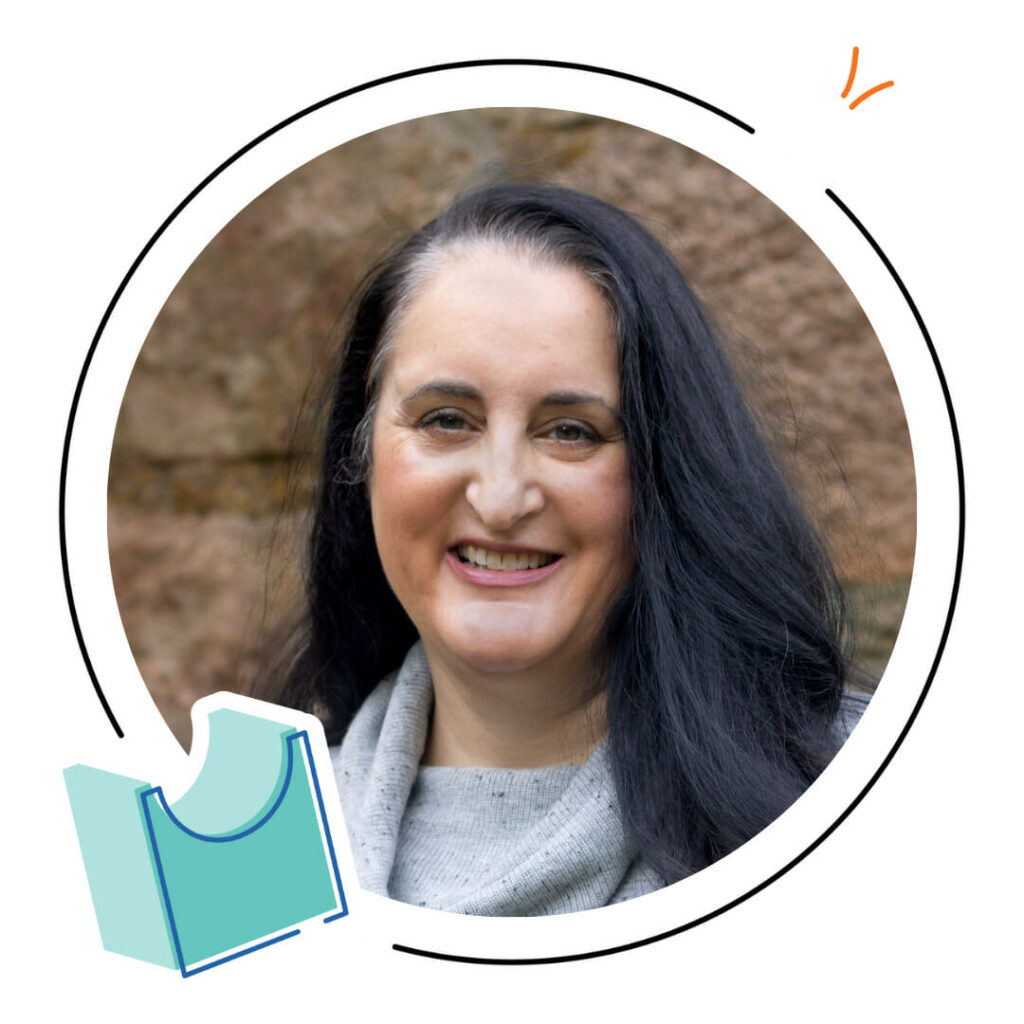
Susan Gomez Zwiep began her career in science education as a middle school science teacher in Los Angeles where she spent over 12 years working in urban schools. Prior to joining BSCS, Susan worked at California State University, Long Beach as a Professor of Science Education.

Susan has also worked as a Regional Director for the K-12 Alliance, providing high-quality professional development in science and mathematics for K12 educators, including the CA NGSS Early Implementer Initiative. Susan consistently works toward establishing equitable access for all students to rigorous, inquiry-based science instruction and supporting teachers in their journey to become advocates for students, science education, and their own professional development.

A person with short dark hair smiles at the camera outdoors, with trees and hills in the background. The photo is framed by a circular graphic with a star and an accent mark.
A laptop screen displays the “Science Connections: The Community” private group page, with science-themed icons decorating the background and edges.

About Science Connections

Welcome to Science Connections! Science is changing before our eyes, now more than ever. So…how do we help kids figure that out? We will bring on educators, scientists, and more to discuss the importance of high-quality science instruction. In this episode, hear from our host Eric Cross about his work engaging students as a K-8 science teacher. 

S1-02: Community and joy within K–8 science instruction: Desiré Whitmore

Promotional graphic for "Science Connections" Season 1, Episode 2 featuring Desiré Whitmore, focusing on community and joy in K–8 science instruction.

In this episode, we join Eric Cross as he sits down with physicist and science education specialist, Desiré Whitmore. Listen in as Desiré explains her work at the Exploratorium, a public learning laboratory. Eric and Desiré discuss finding passion in science, the importance of meeting students we’re they’re at, and K–8 science instruction with real-life connections. Desiré chats with Eric about her work on supporting the science of teaching science content at the Exploratorium museum.

Explore more from Science Connections by visiting our main page.

Download Transcript

Desiré Whitmore (00:00):

I think it’s really amazing when we can realize as teachers, like, no, our job is not to just enforce rules on our students, right? Our job is to help students to achieve more learning.

Eric Cross (00:37):

Welcome to Science Connections. I’m your host, Eric Cross. My guest today is Desiré Whitmore. Desiré has held positions as a science curriculum specialist with Amplify Science, a professor of laser and photonics technology at Irvine Valley College, and is now the senior physics educator in the Teacher Institute at the Exploratorium in San Francisco. Her current work is focused on providing support and professional development to middle and high school science teachers to help them teach through inquiry. In this episode, we discussed Desiré’s pathway into physics, the impact of educators in her life, and the importance of representation for students in the classroom. I’m so excited for you to meet my physicist friend, Dr. Desiré Whitmore. All right. So just like a superhero, STEM superhero, you have an origin story and so—

Desiré Whitmore (01:36):

How long is this podcast gonna be? ‘Cause, you know, I can talk for days, so you—

Eric Cross (01:40):

I know, I know! But it’s, it’s…so, OK. We can give us a highlight. So, you know, 30 minutes. But what would be the origin story? You can start from any point in time, but what’s that journey like?

Desiré Whitmore (01:51):

I’m gonna start at the beginning, when I was really young, just because I think it’s important. Neither of my parents were college-educated. My mother didn’t finish high school. My father went back and got a GED later. But my father’s grandmother, her name was Claudia Pairs, and she was a teacher, right? So when I was a kid, she actually kind of raised me from, I don’t know, until I was around seven or eight. And so she was very important in who I became, I think because she taught me that college is important and she taught me to think. She taught me to ask questions. She taught me how to ask questions. Just the Exploratorium likes to do. Which is why I fit so well here. She taught me to always wonder and always think about things. And I remember as a kid, she taught me to count and read and write when I was, like, three. And she would always have bubbles at her house. And I was obsessed with bubbles. I thought bubbles were the coolest thing in the world. And just how you can take your breath and create this thing that now you can see, and it’s your breath, right? It’s your breath inside of a bubble and it’s flying around and it has all these cool colors, and then it would fly up and then eventually just pop. And you’re like, where did it go? Now my breath is just up there. Not understanding, as a kid, but my breath is always everywhere. I didn’t understand any of that, but I understood that my breath was inside of a bubble. That’s my earliest memory of thinking about science, was from that. And she was not a science teacher. She was—I don’t even know what she taught. I think she was an elementary school teacher, maybe. She died when I was 12. So I don’t have super-strong memories or of understanding who she was, only that she raised me and what she taught me as a kid. But that in itself really helped me because then when I was in the environment that I was in at home with my parents, which was not at all the environment she provided for me, I always had the things she taught me in my head, right? So I was always asking questions. My mother hated it. I was always taking things apart and putting them back together. So I used to take apart TVs and VCRs and vacuum cleaners and telephones, and my mother’s like, “Oh my God, I’m gonna murder you.” And she tried a couple times, too.

Eric Cross (04:25):

Did you ever put ’em back together and realize you had extra parts? You’re like, oh, hi.

Desiré Whitmore (04:29):

Oh yeah. All the time. Yeah. Yeah. VCRs have a lot of extra pieces. You’re like, “What do you even…it still works. It’s fine.” <laugh> You know? And vacuum cleaners too. They had a lot of extra parts, <laugh> all the time. And TVs. I should not have been playing with TVs. But like I said, I didn’t have a lot of parental, guidance as a child. So, like, whatever—I’m opening up TVs.

Eric Cross (04:54):

There’s a lot of open inquiry going on in your household. Yeah. Unsupervised.

Desiré Whitmore (04:59):

Unsupervised. But I didn’t know what it was or what it meant as a kid. I mean, I used to put things in the microwave. I did so many microwave experiments as a child, trying to cook different foods or melt different things. And so I think those kinds of experiences, where I was allowed to just be curious, kind of shaped who I am today. And then I kind of got into…you know, when I was in school, I loved math. In 10th grade, I had my first Black teacher, he was my chemistry teacher. His name was Mr. Strickland. And I was like, chemistry is cool, dude. And he was not the best teacher, but he was fun. Like you were saying, he was me, and he was talking to us the way I speak. And he was so like, just kind of chill and happy-go-lucky, I guess. But he wasn’t…he hadn’t taught chemistry in a long time. So he wasn’t a very good teacher. And me and one other kid in the class were in love with chemistry. And so we would read the book and do all the homework and he’d be in class lecturing and we’re like, “That’s not right, Mr. Strickland, like, what are you talking about?” And then he’d be like, “Oh, really, Desiré? Do you wanna teach the class, then?” And I’d be like, “Yeah.” And so I would go up and I would teach my chemistry class in high school, because the teacher was trying to make an example out of me. But he was also, I think, willing to be like, “I really don’t know.” And I really appreciated that. That he wasn’t just like, “I know all of the answers and you’re wrong.” Like, he wasn’t being a jerk, right? Like, the fact that I said, “Yes, I do wanna teach it,” and he actually let me do it? That’s pretty dope. And then I liked physics in my senior year in high school, but I didn’t think it was where I was gonna go or anything. I loved music and I loved math. Those were my two subjects.

Eric Cross (06:51):

What was it about math that resonated with you?

Desiré Whitmore (06:55):

I think it helped me understand the world a lot better. I didn’t have strong science teachers, I guess, growing up. It was a lot of reading out of books or watching laser discs in class. That’s how old I am.

Eric Cross (07:12):

Laser discs.

Desiré Whitmore (07:13):

Laser discs. And you know, so there wasn’t a lot of…I moved around a lot as a kid. I didn’t have this straight curriculum. You know, in one year, in the third grade, I went to three different schools.

Eric Cross (07:25):

Mm. Oh wow.

Desiré Whitmore (07:26):

It was kinda hard for me to latch onto school. But with math, because I could look at math and actually understand the world in it, I could see how math can be used to describe how things work.

Eric Cross (07:40):

I almost imagine, especially with so much transition in your life, it helped make sense of things. You had a lot of transition going on, but you were able to understand the world through the process of math. And then this early exposure, it kind of reminds me my own story too. Because there were these books that would do these cross sections of a cruise ship or a machine; that’s what got me really into engineering. Kind of How Stuff Works. I would watch that on Nova, How Stuff Works. I’d always be fascinated. Even Sesame Street had a segment where they would show you crayons and how the dye was added. You remember that?

Desiré Whitmore (08:19):

Yep. Yeah.

Eric Cross (08:20):

Young Desiré, doing photronics…photronics?

Desiré Whitmore (08:24):

Photonics.

Eric Cross (08:24):

Photonics. Photonics at home with the microwave and all these other things.

Desiré Whitmore (08:29):

Sure. How ’bout that.

Eric Cross (08:30):

<laugh> Right. And then loving math. So, early, I could see this combination, sort of this alchemy, happening inside you. And then, how did that lead to you becoming a physicist?

Desiré Whitmore (08:46):

It’s not as straightforward as it seems it should be. It’s obvious to everyone. <laugh>. But it wasn’t obvious to me. ‘Cause I wanted to be a lawyer. You know, because my parents weren’t educated, they didn’t really know…both of my parents and their subsequent spouses when they broke up—so my parents and my stepparents—are all bus drivers. And so they don’t know what options are. Right? So for them it’s like, “You have to be—you can be a doctor. You can be a lawyer. ‘Cause you’re smart. I know you’re smart, so you’re gonna be one of those things.” And I was like, “I don’t wanna be a doctor. That’s not actually interesting to me.” I did wanna be a teacher when I was younger, because I knew that my grandmother was one. But yeah, I went in and I was like, “I’m gonna be a lawyer. I’m gonna be a lawyer.” And then I go to college and I was like, ‘Eh, I don’t. I hate writing.” <Laugh> Like, I love reading, but I don’t writing. So I don’t think I wanna be a lawyer. I love music and I love math. I was originally going to major in music and math, but then I went to community college because I missed my opportunity to go to university for…long story. And so I’m at community college and I was like, “You know what? I’m gonna just do something new. I’m gonna be a marine biologist.” So my major was marine biology, and then they’re helping me pick out my classes. And they had zero math there. And I was like, “Pardon me. I think there’s a mistake, but I’m not taking any math.” And they were like, “No, you’re done with all your math. For marine biology, you only need calculus. And you took all of that in high school, so you’re done.” And I was like, “No, this is not gonna work for me, dude.” So I continued taking calculus anyway and moving on in math. And then I realized that biology wasn’t what I needed, but I did love my chemistry and I loved my physics classes. So I asked those teachers—chemistry, physics, and math teachers in community college, my professors—”I don’t wanna be a marine biologist and I don’t wanna be a lawyer. What do I do? What do you think I could study? I really like chemistry and math and physics.” And so all of them, all three of these professors told me, “Oh, it sounds chemical engineering would be good for you, so you should be a chemical engineer.” And I was like, “OK, cool. No problem.” That’s what I did. So I got my degree in chemical engineering. Right. And I finished community college, studying chemical engineering. I was like, “This is really cool. This is a lot of fun. I love engineering.” And then I transferred to UCLA as a chemical engineering major. And I was like, “I hate this.” <Laugh>. “I hate it a lot.” It was just…

Eric Cross (11:07):

What was it about chemical engineering that you were just not feeling anymore? What was it that just made you go, “nope”?

Desiré Whitmore (11:12):

It didn’t—at least the way it was taught to me—it wasn’t as as…exploratory, I guess. There wasn’t a lot of theory in it. There was just a lot of “OK, pull out a ruler and you’re gonna draw a thing and then this is how you’re gonna build a reactor.” And it didn’t seem very scientific to me. The science was missing. And don’t get me wrong, I understand, now that I have a degree in chemical engineering, that it’s not that chemical engineering is not scientific. But it’s that you build up the science and then you don’t focus on it. You focus on the engineering aspect of it. Which is, you have the science and the scientists will work on that aspect. But then how can WE do kind of larger batch chemistry. And for me, that was just less interesting. It was a lot of pushing buttons and just plug-and-play equations stuff. Instead of diving into first principles of why things happen in chemical engineering. There was no “why things happen”; it was “this is what happens, so this is the next step.”

Eric Cross (12:25):

You had to go so far into your academic career to realize that this is what chemical engineering is. And we were talking about representation, and not having examples or parents; your families were bus drivers. My mom was a receptionist and executive assistant, things like that. And I was the first of many, like you…we kind of had to go through and invest all this time and money to finally get to this place to realize, “This ain’t it.”

Desiré Whitmore (12:58):

This is not for me, yeah.

Eric Cross (12:59):

This is not for me. That was a long journey to get to that point.

Desiré Whitmore (13:03):

It was. Especially because I went through community college and I took a long time in community college, ’cause I was working full-time. So I was working full-time, going to community college. Took me a while. And then I finally get to UCLA. I’m like, “Yeah, I’m finally gonna get my degree and go make money!” And then I was like, “Ooh, no.” I mean, I could go and make money, don’t get me wrong. I could have graduated and made a ton of money. But I was not happy at all and I did not enjoy what I was doing. So, while I was in undergrad, I realized I don’t wanna do chemical engineering anymore. But what do I wanna do? But then I was taking…I took a quantum mechanics class. And that class blew my whole mind. And I was like, “This is the coolest thing that I’ve ever learned in my life, and this is what I wanna do.” And so I went and talked to my professor and I was like, “Can I work for you? Can I do research? Because this is amazing and I wanna do this.” I felt it was too late for me. I had been in school for so long and I was already kind of burnt out. So I was, “I’m not going to change my major. That’s just outta the question for me right now. It costs so much money for this degree and I don’t have—I’m not just gonna waste my time and keep working all these jobs.” So I had three jobs in college. And it was like, I worked at Radio Shack, I did research for this professor, and I worked in the library, the chemistry and physics library.

Eric Cross (14:28):

I love the fact that we’ve talked about laser discs; you said Radio Shack; and we talked about the analog internet of the encyclopedia salespeople. And I know all of those things. And I’ve been through all of those things together.

Desiré Whitmore (14:43):

Just in case people don’t know how old I am. <Laugh>

Eric Cross (14:47):

For our listeners who are way younger, yeah, this is how we grew up. This is how we—these things are extinct now. There’s this element of this kind of cultural connection. I think that we experience that. It kind of it flies under the radar. People don’t really realize it until you’re in an environment that’s different from what you’re used to. And you realize that, “Oh wow. this is not what I’m used to.” And the things that I’m finding funnier, the things that I connect with, it’s not what everybody else connects with. And as a teacher, it’s the same thing, right? Like, we go in the classroom and you know, you and I are rapping about laser discs and Radio Shack and I’m trying to talk to my kids about it. And they’re like, “Yo, Cross, what is that? Are you gonna give us a history lesson? What are these things?”

Desiré Whitmore (15:35):

Yeah.

Eric Cross (15:36):

And I found myself having to stay connected to pop culture, because I teach 12- and 13-year-olds all day. And it’s great for keeping things relevant for my students. But when I talk to my friends that are my peers, they’re like, unless they’re a teacher, they’re like, “I got no idea what you’re talking about.”

Desiré Whitmore (15:55):

Yeah. I have a friend who’s also a middle-school teacher and she’s always coming to me with all this. I’m like, “What are you talking about?” She did the Glow-up Challenge, but she did the Glow-down Challenge. So she invented a new thing. She’s like, “No, I couldn’t do Glow Up ’cause that’s too much. So I did the Glow-Down Challenge.” And it’s the cutest thing ever. And the students think it’s amazing. And I’m like, “That’s awesome. But I have no idea what the point of that is.” <Laugh>

Eric Cross (16:21):

And there’s this theme, too, that when we talk about teaching kids STEM, there’s this soft part of it, this relational piece of it that you mentioned, of this connective aspect that in a certain way kind of even superseded the content knowledge that your teacher even had at that point, where you’re going up and teaching the class. But just the fact that someone looked like you or spoke like you or connected with you in a certain way made a big difference to who you are as…well, the trajectory of where you went.

Desiré Whitmore (16:57):

Yeah.

Eric Cross (16:57):

“I like chemistry. It resonates with me.” And it’s something I think can get lost. And I think just to kind of a good segue, I use Amplify my classroom, and one of the reasons why is because of the representation that is in these videos. And you were part of crafting this for…was it the fifth grade?

Desiré Whitmore (17:21):

I mean, it was K–8. So I was—

Eric Cross (17:23):

OK, so you were doing the whole thing.

Desiré Whitmore (17:24):

Yeah, I was a part of the K–8 science team. My title was science curriculum specialist. But in reality I was hired to do the engineering internships, mostly. Which are middle school. And to be a sim developer. So sims K–8. I worked on several of them in both middle school and elementary. Yeah.

Eric Cross (17:47):

What was that like for you? When you were designing curriculum? ‘Cause as a teacher, it’s, you know, I think with teachers it’s kind of…I would consider myself, if I was gonna use hip hop as a metaphor, I’m more of a DJ than an MC. Where I wanna remix things that exist, versus, I don’t wanna write the lyrics in freestyle. So I don’t want to go and write the curriculum completely; I wanna take something that’s solid and then I want to go ahead and remix it. You are great at both. What was the process for you, being on that team, designing? How did you go about making, “OK, we’re gonna create this experience for kids”?

Desiré Whitmore (18:25):

It was, it was amazing. I learned so much, so much. It was the best job I had before I came to the Exploratorium. The process was amazing, because it wasn’t just me, right? It wasn’t just me. It was a whole team. And each unit had its own team. So we had a scientist, which I was the scientist we had. So we had a scientist; we had a literacy specialist, because it was really important to increase science literacy so that students understand not just that science exists, but “What are the terms that are used in science and how can I speak and act a scientist? What are the things that scientists actually do in their real life?” Then we had an assessment specialist and then we had a simulation specialist. And so, on the units that I was on, sometimes I was both the sim developer and the scientist, or sometimes I was just the sim developer and I got to work alongside another scientist, which was always fun. And so it was really nice, because I was working alongside master teachers. People who had been teaching for years, and they were able to help me better understand. ‘Cause I’ll come in and I’ll be like, “Yeah, there’s a unit on light waves, let’s come in and teach this unit on light waves!” <laugh> I was the sim developer and scientist on that unit, and there was another scientist working on the unit, but they were like, “Well, Desiré literally builds lasers, so I think she should be the science developer.” So we kinda had two science developers on that one, which was fun. But I come in and she’ll come in and she’ll be like, “Yeah, I think this is where we wanna go and this is what we wanna teach.” I’m like, “No way! Like, that’s not accurate, right?” And so I can come in, but then I’m coming in with all this crazy lingo, right? I’m up here. But then also I have taught kids about lasers and optics and photonics my whole career. So I’m also very capable of bringing it down to where kids need it to be. What I don’t know is how effective that is, right? When to do it and when not to do it. When to bring the level up; when to bring the level down. And so working alongside these other teachers and assessors really helped me to do that. And so for me it was just two years of deep learning experience. I learned—every single day at work, I learned something new. Which is something that I value and I’ve wanted in my career, my whole life. We made active decisions in that room. Like, “We want to interview scientists who are scientists of color or who have different abilities or who have different representations in all kinds of ways.” Right? And then we also have these fake internships, or not even the internships, but just in the general units. And we actively wrote scripts for those. And we actively wrote in those scripts, like, “This is a Black woman. This is an Indian woman. This is a Jewish man in a wheelchair.” Like, we specifically dictated exactly who we wanted in these videos, because we knew that representation was super-important and we knew that we wanted students to be able to connect.

Eric Cross (21:35):

Right. One of the things, I appreciate what I’m hearing a lot in that is the amount of intentionality that went into this. But even now as you’re reliving it, you’re still almost iterating on how could we improve it or how can we make it different or reach more people. And I think that goes towards when we’re talking about including more people and inclusion. Like, it’s not a binary thing. You’re always modifying; you’re always iterating; you’re always redesigning and improving to be more inclusive, to reach more students. Because you know, to your point, part of it is, “Yes, we wanna do this really awesome science curriculum,” but the other part of it is there’s more to it than just your content. And I think now more than ever…I use—we just finished the food bar unit. Metabolism. And in there there’s a simulator. They always ask me when I show the videos, “Are these, are these real people? Are these real situations?” And I tell ’em, “Well, the story is real, but these are all fictional actors. But what’s actually happening happens. It’s real.” And they get really into it. And I think one of the other things is with your simulations—especially the engineering units—there’s no one right answer. And so my students who want to go, “Mr. Cross, I wanna make the best bar! Perfect 10, best taste, cheapest!” And I’m like, “All right, good luck!”

Desiré Whitmore (23:06):

Yeah. Go do that.

Eric Cross (23:09):

Casue there’s something called trade-offs! It could happen! And they’re like, they’re trying. They get into the code. They try to open up the Inspect Element, when they feel like hackers.

Desiré Whitmore (23:17):

Yeah, they do. But these kids like, they’re so smart and they’re so resourceful. And I’m just thinking like, maybe that’s how we challenge them more, right? Sometimes we can give them these kinds of things where it’s like, “Go and create a program, ’cause that’s the level you’re at <laugh>. Go and create this program to do something similar that’s related to the work that we’re doing.”

Eric Cross (23:38):

I’ve had some of my own students redesign—I have one student who redesigns every assessment I give him. I give the project; I give the options for the final goal; and he always chooses—if I give three options, he always chooses option four. If I choose two options, he’s choosing option three. And so he’ll go into Google Sheets, he’ll pull all the data and then he’ll construct his own kind of spreadsheet with all the probabilities of different things.

Desiré Whitmore (24:06):

You tell this kid to make a GitHub right now <laugh> so that he can get a job as soon as he’s done with high school. <laugh>.

Eric Cross (24:12):

He’s amazing. And we did this one project where students had to design a Netflix show to show their understanding of metabolism. And they had to do four episodes. So I gave him a template. It’s not from me; it’s from, I think, EdTechPicks.org or something. And it looks like the whole Netflix splash page. They took photos, did the whole deal. He created NOTflix. Everyone else did Google Slides. His Google Slides was interactive. So when you clicked on different boxes, it actually took you to the next splash page of that show. I mean, it was….

Desiré Whitmore (24:48):

That’s fantastic.

Eric Cross (24:49):

It was, it was. I recorded his presentation. It was brilliant.

Desiré Whitmore (24:53):

But that’s amazing. And that speaks to your strengths as a teacher and why you’re an amazing teacher. Because you see the students and what they’re trying to do and you work with them; you meet them where they are. Right? There are so many teachers who would just be frustrated with that student. And it’d be like, “No, these are not your options. Your option was to do what I told you to do.” And there are many teachers who would do that. And I think it’s really amazing when we can realize as teachers, “No, our job is not to just enforce rules on our students. I mean, that is part of the job, because that’s what school was when it was created. But our job is to help students to achieve more learning in what we’re trying to do. And so the fact that you are so good with this student and that you encourage him to go above and beyond when he can, I think it’s so amazing.

Eric Cross (25:49):

Well, that brings me to my favorite group, organization, and the phase of your career of where you are now: The Exploratorium. And I wanted to kind of rap, talking about what you do now. Because the Exploratorium—I tell people, they go, what is that place? And maybe you can tell us what it is and then what you do. But for me, I’ll just tell everybody: It’s Disneyland for science teachers. And I love going there. I not only love going there because of what I receive from it professionally. Many of the PDs, I don’t even call ’em PDs—just communal learning experiences, that I’ve had that have been led by you and Lori and, and Tammy and the rest, and everybody that’s there have been incredible. And I have so much fun. Emotionally, I get excited when I go. When I’m on the plane, I’m like, “Here we go!” And then we go and we’re making fudge or we’re blowing darts with marshmallows across the room in the theme of Boba Fett. There’s just these rad things that are going on there. And it’s not like anything I’ve ever experienced before. So maybe we can close with talking about what the Exploratorium is, what you do there, for people who’ve never been and have been a part of it.

Desiré Whitmore (27:19):

I’m gonna give you what my definition of the Exploratorium is.

Eric Cross (27:21):

That’s what we want.

Desiré Whitmore (27:22):

So, the actual definition is, we are a public learning laboratory. We are known as the Museum of Art, Science and Human Perception. Cool. But, like, what does that all mean? Right? And I think your description of the Disneyland for science teachers, I think that’s a perfect description. ‘Cause for me, I tell people like, “Oh, I wanna go to the happiest place on earth.” And for me, that is the Exploratorium. And yes, I work there, and yes, it’s still true for me. So the Exploratorium is this huge museum. It’s an interactive science museum. And art—we have a lot of art. And it’s all about learning through doing. It’s not about learning science by going up to an exhibit and reading the little paper next to it. It’s like, no, you go up to an exhibit and you interact with it and you teach yourself science. The goal of the Exploratorium is really to help people understand that learning science, doing science, isn’t reserved for only scientists. Doing science is something that everyone in the world should and does do. And so helping people understand that everything we do is science is kind of the point of the Exploratorium to me.

Eric Cross (28:35):

Even the building itself…one of the other cool things too is, for people that don’t know, it’s the size of Costco or two.

Desiré Whitmore (28:43):

Yeah. Yeah.

Eric Cross (28:44):

It’s immense! And even the building itself teaches. Like, you have that whole workshop, dead-center in the middle of the floor where they’re designing things. It’s like inside-out. And then I remember going to the one experience where I think it was Eric who showed us that it’s one of the few facilities that is actually cooled by the Bay water. And there’s only a couple of those in the state that can do that. And it has a platinum rating, something wild that. So even just the building itself…everything that if they can extract every ounce of science teaching in that, it’s in there. And you are in a very important program for me. And can you talk a little bit about maybe what you’re doing in T.I.?

Desiré Whitmore (29:33):

So I am in the Teacher Institute. I’m a physicist in the Teacher Institute. And the Teacher Institute is a group of teachers and scientists. And our job is to basically support middle school and high school science teachers and teacher leaders in the state of California, but science teachers around the world, in their pursuit of science teaching. And by support, I mean we provide professional development. We provide other things, communities of practice, and we go and do workshops in certain places. We go to India to teach Tibetan monks and nuns science. And we go to Costa Rica to teach teachers all over the country of Costa Rica about science. And so our job is really, to help science teachers feel more secure in their science teaching and help to retain them in the field, because a good science teacher is so important in helping our students thrive. And so our job—and we take this very seriously—is to help science teachers thrive. And we are made up of PhD scientists and veteran classroom teachers. So we have on the one side teachers who have been teaching middle school or high school for years. One of my coworkers, Zeke, who I work with the most, he was a high school physics and environmental science teacher for 21 years before coming to the Exploratorium. And then me, I was never a classroom teacher. I was a professor; I was a physics professor at a community college, and I was a researcher. So my deep knowledge of physics and current knowledge of physics—or knowledge of current physics—combined with Zeke’s extremely experienced pedagogy is really how we work together as a team. And it’s not just Zeke, right? We’ve got a geologist on the team, Eric Muller. We’ve got Tammy, who’s a middle-school bio teacher. We’ve got, Julie Yu, who is a chemical engineer, PhD, and also a prior middle school teacher, former middle school teacher. We’ve got Hilleary Osheroff, who was a PhD biologist who used to work at the American Museum of Natural History. We’ve got Lori Lambertson, who was a middle-school math teacher. And so, you know, we all come together to bring our experiences both in and out of the classroom and in and out of the research lab to provide teachers with the best inquiry-driven stuff we can. And we’re very—we’re so equity-focused, because we believe that that’s important, right? We know that the impact of our work is, I think, why most of us are here. It’s why I’m here. In undergrad, my grad school, and my postdoc, I would go into classrooms. I would go into science museums and teach science to people. And I probably reached out to maybe…over that whole time, I would say a couple thousand people, right? Maybe a couple thousand people total. That’s great. But over 15 years of reaching out and only reaching a couple thousand people, that’s rough, right? And now I’m at the Exploratorium, and I know that if I reach one teacher, right? If I can teach one teacher…let’s say you. How many students do you have in your classes a year?

Eric Cross (33:11):

Two hundred a year.

Desiré Whitmore (33:12):

You have 200 students a year that you teach. So if you teach for 10 years, that’s 2000. That’s 2000 students. So I have, by teaching you today, assuming that I’m actually teaching you something that’s gonna be useful for you—

Eric Cross (33:29):

You do! And you are!

Desiré Whitmore (33:30):

You are going to be impacting these 2000 students over the next 10 years. And of course you’re gonna be in teaching for much longer than that. But let’s just say in 10 years, that payoff is so much higher, right? And you’re one teacher. But I have 30 of you in my workshop! And so if all of these 30 teachers each teach 2000 kids over the next 10 years, then I’m actually doing something. I’m actually changing the way that students see science, through changing the way that you see science. Right? And so I take my job very seriously, as we all do. Like, we’re so invested in our teachers. And it’s not that we don’t care about students, ’cause we absolutely do. But we understand that without good teachers, students aren’t going to be able to thrive, as often as they would otherwise. I was able to do it somehow. But I’m one. There are so many other kids who could have gone into science who didn’t because they felt they never connected to it. So our job is to try to help teachers connect to it. And an important part of that is allowing you all to experience science as a learner. We want you to play and have joyful experiences. We want you to enjoy science and to try to think about it from the perspective of your students. Walk in their shoes. So that when you then go back to your classroom, you are able to think about like, “Oh yeah, you know, my students totally asked the same question that I asked, or that another teacher asked in the workshop because they had the foresight to think about that’s what my students would ask.” Right?

Eric Cross (35:02):

Well, I think it’s really effective to create empathy for the learner. Because I find myself in that position. I don’t know if some kind of memory displacement field happens to me when I sit in those workshops, but Hillary will ask a question that I know the answer to and I’m like, “I don’t want to answer the question. I don’t—I might be wrong.” And I teach the subject! And I embody what it’s like to be a student. And when I leave, I might have to go back and reference exactly what the lesson was, but I remember how I felt when I didn’t know. And very rarely as teachers do we get put in positions like that. And so it helps me be in the position of my students emotionally, of what it’s like. Even even the intentionality of how do you ask questions and not showing an affect on your face when somebody says the right answer or the wrong answer.

Desiré Whitmore (35:55):

Well, I’m still learning that. I’m not great at it. Julie is the mast.

Eric Cross (35:59):

Julie’s got it nailed.

Desiré Whitmore (36:00):

I’m still trying to learn from her. She’s amazing. And I really would like to get there one day. But I’m still not there. I’ll be like, “Oh! Oh! Well, that’s…”. I have a terrible poker face. So I’ll be like, “Oh yeah, but you think that? Maybe…”. That’s a piece of it that’s really important, right? It’s this not giving away the answer, even when you have the right answer. Allowing people to ask the questions and explore and become invested in the problem, before giving away the answer. That’s something that I learn here at the Exploratorium. And like I said, I learn every day. And it’s something that I think is so important for us as teachers to learn and try to implement. Because oftentimes you’ll come and you’ll have students who are like, “I’m too stupid. I don’t know the answer.” And then somebody else will say the answer, and then the student is like, “Yeah, I was right. I’m too stupid.’” But it’s like no! But if you have that student actually think about it, then the student—once they do hear the right answer—they might be like, “Oh yeah, that would make sense.” Instead of “I’m stupid.” It’s like, no, this is, “I explored this and I figured it out on my own.”

Eric Cross (37:08):

Things keep coming back to how this experience and the process of them learning science even outweighs the content of it. ‘Cause the content is almost easier to share, it’s easier to get, you can look it up really quickly. But in your story and in many other people’s stories, the exposure, the experience, how they’re going through that process—I know that’s something that I’ve learned a lot in just watching. Not teaching science, but actually the science of teaching. Sitting in the workshops and watching how we’re treated as students, how you interact with us, and then being able to take that back to the classroom. And just to add onto the value that it’s created, I think one thing that it’s also done is given us community. And in addition to being able to impact students, it’s also been able to build resilience in teachers. Because we as teachers can feel very isolated. And especially now when things are incredibly difficult, and every teacher’s experiencing Covid and shutdowns and low staffing across the country in different ways, when you don’t feel you have community or people that you can connect with, it just makes everything feel exponentially harder. And you’ve done a great job at being able to build community with us in our community of practice. The Exploratorium has been able to do that. And it’s something that I’m super-grateful for probably more than anything else is that through these last two years, being able to connect really made me feel like, “OK, we’re gonna be able to do this.” And it’s not just about Cross or my other teacher in eighth grade or my sixth grade teacher who’s doing this. That message, I think, is really, really important. I wanna ask this: Was there a teacher or an experience that impacted you or inspired you throughout your educational career? You know, kindergarten all the way to college? Was there a moment or a person or anything that that really stuck with you, that you felt maybe influenced who you became? Met you where you were at? I know you mentioned your chemistry teacher at that point, but is there anyone else, or was it that person that was really the person who sticks out for you?

Desiré Whitmore (39:21):

There actually have been a few. Of course, the first is my great-grandmother, Claudia Pairs. But I think in the fourth and fifth grade I had the same teacher. She stayed with us going from fourth to fifth grade. And fourth grade was a new school for me. New town. I was the only Black child in the school, me and my sister. And my teacher recognized that I had no real help at home, I guess? And she really kind of…she saw that I was really smart. She would give me extra assignments when she could tell I was bored. It meant that someone outside of my house cared about me in a way that I didn’t feel cared about at home. Her name is Ms. Comet. Mrs. Comet.

Eric Cross (40:11):

Like…comet?

Desiré Whitmore (40:13):

Yeah. Mrs. Fran Comet. And I’ve tried looking her up as an adult and I can’t find her. But I work with so many teachers, and I know how hard teaching is and how degrading it can be…or demoralizing, I guess, to not be appreciated. And so I know what it feels to me when a student has reached out and shown me like, “Hey, I’m now in dental school,” or “I’m now getting a PhD in science,” and I’m just like….

Eric Cross (40:40):

I got a message this morning on Instagram from a student. And none of my students use their real names in their Instagram handles. So I got a message from Moonshine. <Laugh> And I was a seventh grade teacher. And through deduction, deductive reasoning, I figured out who it was. This person’s now in college and they responded in that…you know, you get one of those every once in a while. And I feel it just fills your tank. It’s just so important that we—it’s funny because, kind of to your point, we don’t realize who or how we’re making impacts on people. And in what ways. We just know that we are. And I tell other teachers, I said, “You have one of the few professions where you fall asleep worrying about other people’s kids.” And it’s the words that we speak, the things that we do, people are always watching. I know, no pressure, right!? Hopefully, someone listening can find Ms. Comet.

Desiré Whitmore (41:37):

Ms. Comet. Teacher at Buena Vista Elementary School back in the ’80s. But your talk about this impact, it reminds me of the thing I wanted to say, but I didn’t. But I’m gonna tell you right now. I mentioned how science was not a priority when I went to school, in my hometown. That’s Lancaster, California. But recently I got a phone call from a family friend and she was so excited. And she called me to tell me that her daughter was super-excited when she picked her up from school. Because I was in her classroom. She said, “Auntie Desiré was in my class today! And she works on lasers! And she does spectroscopy! And I wanna learn about spectroscopy now. So can we call Auntie Desiré?” And I was like, “Wait, what?” My friend was kind of confused. She’s like, “Desiré didn’t tell me she was in town.” She had no idea why her daughter was saying I was in her classroom, ’cause I was not physically there. And then I had to put the pieces together and I was like, “Oh my God, your daughter’s in eighth grade already.” It made me feel really old, ’cause I know this girl from a little baby. But I was like, “Oh my God, that’s the eighth grade unit on light waves for Amplify that I wrote, and I’m featured as the scientist.” Because we have real scientists in the units. And they featured me in that one, in my laser lab. And so this little girl who knows me really well, who lives in my hometown, is seeing representation in science. She doesn’t necessarily know I’m a scientist. She knows that—I don’t know what she knows about me. She just knows I’m Auntie Desiré and, you know, I like gumbo at Christmas. That’s what she knows about me. <Laugh>. And so she comes back and she’s so excited ’cause now she knows so much more about me. And she knows that if I can do it and I came from where she’s at, she can do it too. And she was super-excited. And I was just…it brought me to tears. I was just crying in the car. I was driving <laugh> at the time and I was like, “This is amazing. Work that I did is teaching you and all of your friends in this tiny little town that you live in. And that to me is so important because now this little girl knows that, like, she knows me as just a normal human right. Who likes Star Trek and Star Wars and The Owl House. And now she’s over here like, “Oh my gosh, this normal human wrote the science curriculum that I’m learning from.” Which I think is just so fantastic. And it really brought home for me kind of the importance of my work and why I’m doing what I’m doing. And that’s pretty awesome. And I get messages from Instagram, you know, from teachers who are like, “Hey, did you work on this? ‘Cause you were featured in the video, but did you write this light waves unit?” And I’m like, “Yeah.” And they’ll tell me, “I have students, this is their favorite unit. I’ve gotten notes from students saying, ‘This was my favorite unit in all of middle school.’” And I’m like, “Ohhhhhh!”<Laugh>

Eric Cross (44:33):

That story just gives me chills. Because I just can imagine how surreal that must feel. And you’re directly making that impact on those kids. And I’m glad that you shared that story so that everyone can hear it, because it’s a powerful story and I lived—I feel I was living it through you, just now, as you were discussing it.

Desiré Whitmore (44:54):

Yeah.

Eric Cross (44:54):

And I feel that way in the classroom to a small degree, because I get to have—when my students create posters of scientists that we don’t typically see, I’ve got you on my list of scientists, and I’m they’re like…And I’m like, “I can call her!” Like, “Mr. Cross, you KNOW her?!” I’m like, “Yeah, she’s a friend of mine! I was talking to her the other day!” And they’re like, “Whoa. She works with lasers?!”

Desiré Whitmore (45:17):

<Whispers> I do.

Eric Cross (45:18):

Desiré. I’ve held you for so long and—

Desiré Whitmore (45:23):

Yes, I’m sorry! I told you, I talk so much! I’m a teacher!

Eric Cross (45:26):

No! No, no, no, no. It was great! I wanna honor your time. Can you tell everybody where they can find out more about you again?

Desiré Whitmore (45:33):

So first off, you can find me on Twitter at Darth Science, D A R T H S C I E N C E, and you can also find me at Instagram at Dr. Laser Chick: D R dot laser chick. Even though I don’t post on Instagram that much. I also have a website, which is laser chick dot net. I’m still working on it. It’s not the best website yet. But, you know, it’ll, it’ll be better in the future.

Eric Cross (46:02):

Would you be willing to come back later on in the year and do a part two?

Desiré Whitmore (46:07):

Oh, for sure. Yeah. So I can actually finish telling you the story of how I got into physics! ‘Cause I totally didn’t. ‘Cause I’m all over the place.

Eric Cross (46:15):

So, everybody, cliffhanger! Next time she comes back, she’ll continue to tell us the story. Desiré, thank you so much.

Stay connected!

Join our community and get new episodes every other Tuesday!

We’ll also share new and exciting free resources for your classroom every month.

What Desiré Whitmore says about science

“I think it’s really amazing when we can realize as teachers… our job is not just to enforce rules on our students… our job is is to help students achieve more learning.”

– Desiré Whitmore

Senior Physics Educator, aka “LaserChick”, Exploratorium

Meet the guest

A Southern California native, Desiré earned an associate of science from Antelope Valley College, a bachelor of science in chemical engineering from UCLA, and a master of science and Ph.D. in chemical and material physics from UC Irvine. Her research focused on developing very fast laser and microscope systems that could capture molecules vibrating and rotating in real time. She was a postdoctoral fellow at UC Berkeley, where she designed and built attosecond lasers (the fastest laser pulses, which emit x-ray light, ever measured). At the Lawrence Hall of Science she wrote an all-digital K–8 science curriculum (Amplify Science), which aligned to the NGSS, with the Learning Design Group (LDG). Desiré left LDG to teach hands-on laser technology and physics courses at Irvine Valley College before joining the TI staff. She is the proud mom of Stella, a four-year-old boxer-pit mix. In her spare time, Desiré is restoring her 1967 VW bug.

Person with curly hair wearing a blue jacket, smiling at the camera with a blurred background.

About Science Connections

Welcome to Science Connections! Science is changing before our eyes, now more than ever. So…how do we help kids figure that out? We will bring on educators, scientists, and more to discuss the importance of high-quality science instruction. In this episode, hear from our host Eric Cross about his work engaging students as a K-8 science teacher. Listen here!

S5-04. Coaching tips for managing math anxiety in teachers

A blue graphic with text reading "Math Teacher Lounge" in multicolored letters and "Amplify." at the bottom, with abstract geometric shapes and lines as decoration.

So far this season, we’ve investigated math anxiety in students and its causes with passionate researchers and curriculum experts, including one from Sesame Workshop! Now we hear from Dr. Heidi Sabnani, consultant, coach, and co-host of Math 4 All, as she gives us research-based tips for teachers who are facing math anxiety themselves! Listen as we discuss Heidi’s own math anxiety and journey through math, the effects teacher math anxiety can have on instruction, and practices educators can implement right away for overcoming math anxiety.

Listen today and don’t forget to grab your MTL study guide to track your learning and make the most of this episode!

Download Transcript

Dr. Heidi Sabnani (00:00):

Coaching is the opportunity to provide that just-in-time kind of professional development for teachers, if we go at it in a slightly different way.

Dan Meyer (00:10):

Hey folks, welcome back to Math Teacher Lounge. I’m your host, Dan Meyer.

Bethany Lockhart Johnson (00:14):

And I’m Bethany Lockhart Johnson.

Dan Meyer (00:16):

Bethany, how are you doing, and how are you feeling about our current trajectory through this exploration of math anxiety?

Bethany Lockhart Johnson (00:24):

Dan, I gotta tell you — let me make it about me for a second. <laugh>.

Dan Meyer (00:29):

Go. Do it.

Bethany Lockhart Johnson (00:30):

If only I had known that so many other people experienced math anxiety, and I wasn’t the only one. I mean, I’ve said it before, but you know, I hope that this series so far is helping to reframe math anxiety for folks who maybe have a narrow definition of it … and I guess expand, reframe. And also, for those folks who are working with students who have math anxiety, or who they themselves have experienced math anxiety, I hope they’ve found some tools, some resources. Right? Like, “Yes!”

Dan Meyer (01:04):

Yes! Same.

New Speaker (01:06):

And what about you? How are you feeling?

Dan Meyer (01:08):

Yeah, I hope this has been cathartic for all of our listeners who have experienced math anxiety, and not re-traumatizing, that there are lots of people who feel this way about math in particular. And that it’s so well-experienced, so broadly experienced, that people have decided to study it a whole bunch. Which is great. And now we’re moving into our kind of solutioning. You know, in my relationships, I’m sometimes told that I rush too quickly to solutions before trying to understand what’s going on. So I’ve loved our episodes that have been about what is going on. And now, with Dr. Truglio last episode and our guest today, we’re moving more into some solutions, which I’m excited about.

Bethany Lockhart Johnson (01:49):

I don’t know, Dan, I think next time I see you I’m gonna bring a list of some concerns or worries I have, and I would love if you just get right to the solution. I’m actually OK with that.

Dan Meyer (02:01):

All right. Good to know. Good to know. I’ll say I am coming off of a day where I was feeling some teacher anxiety today, because I taught really real students. So just to let you know where I’m coming from here. I taught some seventh grade students at Montera Middle, here in Oakland Unified School District. Taught ’em a lesson outta the Desmos curriculum. And it was one of those lessons where some thorny stuff comes up. I’m talking students who are wrong for smart reasons, who are right for the wrong reasons, and their minds are working so hard trying to figure out inequalities. And I’m like trying to just step into that process as an educator with some curriculum and help shape those ideas. But it’s just … I don’t know, you want it to be as easy as like, “let me just show you how it’s done a few times, and now you got it.” But whew, some of these ideas, they take a long time to form up and they’re really easily reshaped by lots of stuff going on. So that’s where I’m at, anxiety-wise, right now. The teacher anxiety stuff.

Bethany Lockhart Johnson (03:04):

I think there’s probably plenty of teachers who do kind of just say, this is how you do it. And so, from what I have seen of your teaching and what I know of the Desmos curriculum, it is such an opportunity to think hard about the things that we are assuming about our students, assuming about what we know about the math itself. And yeah, that requires some thought.

Dan Meyer (03:30):

Yeah, for sure. I came in ready, like, “When you multiply both sides of an inequality by a negative, this sign flips around.” And I could just say that to kids and say, “Hey, remember that! Write that down!” And a lot of them would do it really well, you know, provided the assessment problems looked like ones we’ve gone over in class. And they’re also learning — in addition to that math, they’re learning that math is a giant sack of tricks they gotta memorize, right? So there’s just these pros and cons. And at the end of the one period I’m gonna teach this week, I was like, “Well, your teacher’s gonna go over that tomorrow, when they’re with you instead of me.” So it felt a bit like I copped out on that one. And I’m just in in my feelings about that right now. And I’m gonna try to come on down here and be present in the math-anxiety world.

Bethany Lockhart Johnson (04:25):

I appreciate you sharing that, Dan. And I think … I have a feeling that you could write a pretty catchy rhyme to allow the students to flip and <starting to rap> “multiply by negative. and dit-dit-dit-dit.” Can you feel it? You picking up that beat?

Dan Meyer (04:40):

Ooh, yeah. A nice little beat. Uh-huh. Yup.

Bethany Lockhart Johnson (04:41):

Yeah. You know, you could come up with something pretty clever, and yet you did not lean on your wordsmithing skills. You said, “No, let us dive in.” So what are you gonna do with this lesson, by the way? What happens now? You popped in for one period, and then what happens?

Dan Meyer (05:03):

Yeah. So this is gonna be a blast. I hope you folks tune in. We’re gonna actually release the footage of me teaching this lesson live. You know, it’ll be replayed live. And on top of that, a couple of my favorite teacher coaches and just smart people about teaching are going to be giving commentary. They are gonna be giving the director’s commentary, the sports announcers’ commentary on what they’re seeing. I beg for their generosity in their commentary. But I think it’ll be a lot of fun. I’ve never seen anything like this before, a commentary track on top of a teaching lesson, in this way. So I’m just gonna gonna be excited to see what they noticed that I didn’t, what they might have done, the thoughts they might have. Maybe I’ll do a post-game interview, you know.

Bethany Lockhart Johnson (05:50):

Ooh, yes!

Dan Meyer (05:50):

With my towel around my neck, <laugh> looking all sweaty.

Bethany Lockhart Johnson (05:54):

Ready, set, grow!

Dan Meyer (05:55):

Like, “Yup, we gave it all out there, you know, just a real team effort.” You know, that kind of thing. We’ll see how that goes.

Bethany Lockhart Johnson (06:02):

I actually love that idea. I love that it’s not just this one random lesson that just kind of floats out there, and it’s about, you walk away with whatever feelings you have, and the students obviously walk away, but that this is gonna help other educators.

Dan Meyer (06:17):

Yeah. Yeah. We’ll multiply my anxiety and make it more people’s anxiety. We’ll see how that goes. So stay tuned on the Math Teacher Lounge feed for that. All right?

Bethany Lockhart Johnson (06:25):

All right! And speaking of anxiety, Dan Meyer, we gotta get to today’s show. You know, last time we had some amazing strategies for helping students from Dr. Truglio from Sesame Workshop. I gotta tell you, I sent that episode to so many of my friends, like, “Listen to these ideas!” and have had some interesting follow-up conversations. And we would love to hear what you think about this season so far, at MTLShow on Twitter or in our Facebook group, Math Teacher Lounge. So today, we’re gonna focus on strategies for supporting teachers.

Dan Meyer (07:00):

Yes. Which is why we’re so excited to bring to you folks Heidi Sabnani, who — we’ve had researchers. We’ve had Sesame Workshoppers. And Heidi Sabnani has been a classroom teacher; she’s teacher-consultant; newly minted doctoral degree holder. We’re so pumped to bring to you folks: Heidi Sabnani.

Bethany Lockhart Johnson (07:25):

Dr. Sabnani, thank you for being here. Can we call you Dr. Heidi? What would you. …

Dr. Heidi Sabnani (07:31):

You can just call me Heidi. Yeah. Heidi is good.

Dan Meyer (07:36):

Right on.

Bethany Lockhart Johnson (07:36):

  1. Heidi, thank you for joining us in the Lounge. We’re so excited to talk with you.

Dr. Heidi Sabnani (07:41):

I am super-honored to be here. It’s really exciting and I just really appreciate the opportunity.

Bethany Lockhart Johnson (07:47):

I will say I don’t have a PhD, although the two people I’m talking with right now, both do, and you’re both like holding up your degrees as we speak and saying, “Wah-wah.” But I imagine that if I did, I’d wanna throw that doctor in more frequently, so.

Dr. Heidi Sabnani (08:02):

Well—

Bethany Lockhart Johnson (08:03):

If I sneak in a “Doctor,” Heidi, it’s only out of respect.

Dr. Heidi Sabnani (08:05):

  1. I appreciate it.

Bethany Lockhart Johnson (08:07):

Dan makes me call him Dr. Meyer all the time.

Dan Meyer (08:10):

You don’t call me Dr. Dan or Dr. Meyer, ever. So—

Bethany Lockhart Johnson (08:13):

I will now!

Dan Meyer (08:14):

—this respect only goes towards Dr. Heidi, it seems. But yeah, we’ll take that off the air.

Bethany Lockhart Johnson (08:19):

Well, we are going to delve into your research on math anxiety soon, because I actually — speaking of becoming a doctor, a new doctor, I have some questions. We have questions about your research, but on a personal level, I really appreciated the way that you share that you yourself experienced math anxiety as a student. So I’m wondering if you could tell us a bit about your own math anxiety, your <laugh> journey through math.

Dr. Heidi Sabnani (08:50):

Yeah, so much like the people in the research that I did, and with the research that I read by others, many of us can tie the beginnings — or like the evil villain origin story of math anxiety — to a particular event, or series of events. And my series of events started, the big blow-up, I guess, in fourth grade. And I had had some struggles in school — I have mild dyslexia and dyscalculia. And so I had always been in the special group of kids who got some extra attention <laugh> from the teacher, or from an aide, or whoever happened to be in the room. But in fourth grade — at that time, they taught multiplication and division facts in fourth grade. Many, many moons ago. And I struggled greatly with just understanding what was happening and why we were moving so quickly. And, my teacher was probably not the best person to be entrusted with my learning at the time. Like, her style may have been OK for others, but it was obvious that she felt like kind of wasting her time with some people in the classroom. And I happened to be one of those people.

Bethany Lockhart Johnson (10:26):

Mmm. You said that really diplomatically, though. <Laugh>

Dr. Heidi Sabnani (10:30):

Well, you know, you look back at things from the perspective of many years. And having made lots of mistakes myself in the classroom as a teacher, I try to give some grace to things that happened, and how you remember them. Yeah, that’s my story, but maybe she had a different one, right?

Bethany Lockhart Johnson (10:55):

Yeah. But fourth grade Heidi was still, you know, still experiencing that. Yeah.

Dr. Heidi Sabnani (11:01):

Yeah. Fourth-grade Heidi didn’t like being in the “dumb group” and didn’t like being told that she would probably not graduate from high school. So that was kind of the general environment. And I got further and further behind in math. The dyslexia was less and less of an issue the older I got, because I had great comprehension. And so I could figure out the fluency thing just by the pattern of language, because mine is mild in comparison to so many who struggle with that. But math was not working in that same way. And I got more and more behind and to the point where I was having to stay in every day at recess. And I had had it after like a month. Like, I’m not staying in at recess anymore to do this math that I don’t understand, by myself. Like, not doing it. So I—

Bethany Lockhart Johnson (11:53):

Which, by the way, if there’s one way to make you hate it, <laugh> like, to engender, to endear you to a subject, could it be, “Let’s have you stay in at recess”?

Dr. Heidi Sabnani (12:07):

Right. And so one day I just stormed out of the classroom, I was like, “I’m not coming. I’m not staying, I’m not doing this anymore. I’m done.” And I can remember her standing up at the top of the hill screaming at me to come back, and I was like, “No way. Not doing it. Done with this.” I went to a parochial school, though, and my dad is a pastor. So that whole little incident blew up in the greater community in a way that I didn’t really anticipate as a fourth grader. And my parents had no idea that this was going on. And so they were shocked and dismayed that their — up until that point — oldest child, rule-follower, had done this. But then even more upset when they found out what was happening with my math understanding, or lack thereof. And they did what they knew best at the time. So my mom was a great memorizer. She has a brain like an elephant. And my dad grew up in the British system in India and Singapore, and it was at that time very much based on memorization. And so they were like, “We are gonna just work really hard. We’re gonna buckle down and do this thing <laugh>.” And so that’s what we did, and that’s where all of it began. It was not — it was just about “We’re gonna learn the facts. We’re not gonna ask questions; we’re not gonna think about it, because it’s just the rules. And if you can figure out the rules or the system or what the teacher wants, and mimic what the teacher is doing, then you’ll be successful.” And it was really successful for me, once I figured that out all the way through. My whole goal in high school when I took high school math was to take enough math courses with a high-enough GPA that when I got my BA in college, that I would never have to take math again. And I succeeded in that and got an English degree and a Master’s in world lit. And I was in no way doing math ever again.

Bethany Lockhart Johnson (14:31):

But little did you know that Future You was going to be researching math anxiety. How did you wind up researching it then? How did you wind up researching math anxiety?

Dr. Heidi Sabnani (14:43):

So I took a job in school improvement when I was working in Ohio, after a number of years teaching high school English in Southern California and Guatemala and Michigan, all over the place. And I took a job in school improvement with a co-consultant who was gonna be doing the math end, and I was gonna be doing the literacy end, and we were just gonna go in, and I was gonna make kids love reading, and she was gonna make kids love math, and it was gonna be so fun. And then she decided she didn’t like working with adults and they couldn’t find anyone else. And my boss said, “So you’re just gonna do both for the rest of the year.” After that year, I got requested to go back and, and do this again. I said, “Well, if I’m gonna do this, I’m going to go back and reteach myself the math in ways that I wish that fourth-grade Heidi had learned it, and fourth-grade-and-up Heidi had learned it.” And so that was like the, the beginning of the switch. And so now equal amounts of time in my career have been spent in both. But when I started, when I continued working, when I left the classroom to continue working with teachers, and when I transitioned more into an elementary setting, I began to notice the same behaviors that I had in high school of avoiding math, and avoiding teaching math, were happening in the classrooms that I was supporting. And so I would have teachers come and say, “Oh, can we talk about this literacy thing?” And even if it was like a math meeting, or we were supposed to split the time evenly, and ohhh, for some reason the literacy time talk would just like move over <laugh>. And then there was no time to talk about math at the end. And “Oh, that’s just too bad.” Like, we’re just gonna move on to this next thing. Funny how that happens, right?

Bethany Lockhart Johnson (16:32):

Yeah. <laugh>.

Dr. Heidi Sabnani (16:34):

And noticing teachers’ behaviors around going to and or avoiding math professional development that I was giving. Or getting sick. Or like having to leave the room for a long period of time. And so I began to notice these behaviors. And initially I thought I wanted to look at math anxiety in children, which is one branch of the research that I started with. But as I got into things more, the people that I have the most influence in are adults right now.

Dan Meyer (17:09):

Right.

Dr. Heidi Sabnani (17:09):

And so as I started looking at the research that had already been done, I feel like we do a really nice job of admiring the problem of math anxiety, and we do less in the “what to do about” phase. And so I was like, “Well, if I’m going to continue to be in this career and in this profession, then I need to be doing something in the space of ‘what are we gonna do about it?’” And so that’s how I switched to looking at “what do we do to help teachers?” Particularly elementary school teachers, because that’s the area of greatest need, based on previous research that we could at least do something to help.

Dan Meyer (17:51):

Yeah. A previous guest mentioned that a lot of research is better understood as me-search, especially in this kind of arena, where we’re going back in to try to understand what it was that happened for us and how to prevent it for future generations. And I have nothing but respect for that motivation right there. And your point is well-put, that it is very possible to spend a ton of time examining math anxiety from every angle, every facet, you know, put it up there on a mounted board and admire it … and there’s a lot of value there, but I appreciate that you’re moving into, “So, now what?”

Dr. Heidi Sabnani (18:27):

Yep.

Dan Meyer (18:28):

And so I’d love if you’d share with us and our listeners the broad details of your study, and what you ultimately found. Like, if there are any large takeaways here, what were they?

Dr. Heidi Sabnani (18:40):

Yeah. So a couple of things to kind of just lay a little bit of the groundwork. One out of four teachers say that they have math anxiety. Those numbers increase rapidly, the younger of the grades that the teachers teach. So if we think about preK to two, it’s about 88%, based on other people’s research. So I was like, “Well that’s a lot of people <laugh>!” And so, that’s the scope of the problem. And so I was thinking, “OK, what do we do in these moments?” Because other researchers had said they’re spending — when they don’t like it, they’re spending less time teaching math and avoiding it, or relying on methods that were done to us. Just out of fear of trying something different, at many times. And so one thing that has become more prominent in math education since I transitioned 16 years ago into this has been the role of coaches in school systems. And so one of the questions I wanted to think about was, “What can coaches or math specialists who work with adults as well do to help the teachers that they work with?” So that was kind of the lens that I was looking at. Like, let’s think about the systems that we currently have in place. Is there something that we could be doing that would help teachers, that wouldn’t be so huge or so monumental that with little shifts in our own behavior as coaches or professional development providers that we could make that would make a difference? So that being said, this was a qualitative study, so a small group of people in very intense settings. So I kind of always wanna preface that, because in academic world, you know, there’s <laugh> all sorts of thoughts about that. So I had asked teachers from districts that I work with who self-identified as having math anxiety if they would be interested in the study. So, this is what we’re thinking of, this is what it would look like, and the scope of the support they would have.

Bethany Lockhart Johnson (20:50):

So basically you’re tracking these four teachers who self-identified as math anxious. And were you serving as their coach and kind of seeing what was working?

Dr. Heidi Sabnani (21:00):

I was serving as their coach. Yeah. I was serving as their coach during that time period. And some fairly recent research that had been done was in the idea of “Can we do some reflective conversations or reflective writing around where your math anxiety started, and how that makes you feel both as a teacher of mathematics now, because you are teaching math, and how that affects your identity as a mathematician?” And so that was the first starting point. And that was a really critical moment that I’m glad that I had stumbled across the research on, because it turned out that having someone hear and acknowledge that what happened to them was both wrong and inappropriate, in many cases, and in a couple instances, was traumatic and also abusive — that that mattered. That it was OK to feel anger and hurt and frustration based on what happened to you in the past. And then have that moment to reflect on, “OK, so what do you want the classroom environment that you’re building as a teacher to feel like for your students?” So it was turning that moment of how they felt to thinking about, then, what kind of environment do we wanna make within the math classroom? And what steps can we take to ensure that happens? So that was like, Step One is just thinking about what that looks like. What kind of math identities then do you want to create for your students? Because all of the teachers were very concerned with not continuing the cyclical nature that often happens with math anxiety, from teacher to student and back again.

Bethany Lockhart Johnson (22:54):

Well, and even that validation, right? Like, how many of them hadn’t even had, like you said, had that? We had another, when in our first episode, Dr. Gerardo Ramirez talked about that validation and how key.

Dr. Heidi Sabnani (23:09):

Yeah. That was the first thing. The next step of it, which very different from what I often do — I don’t generally go in and model for teachers — just me, taking over your classroom. I really like to co-plan with teachers and co-teach with teachers and have it not feel like they’re losing control over what’s happening in that moment. And that’s generally the way that I go in when I’m doing professional development in a classroom, right? Like, I’m working with the teacher and we’re a team; we’re doing this together. But in these four cases, these teachers were very, very resistant <laughs> to co-teaching. And so I said, “OK, well, let’s throw everything out. Let’s try whatever it happens to be.” So the modeling aspect turned out to be really important, in part when three out of the four cases, because they were like, “Oh, I can do that.” <laugh> like, Well, yeah, I know you can! Like, it was that having a moment to sit back and see someone else doing it — which is harder to do when you’re co-teaching, right? It’s harder to be reflective in the moment when you’re still thinking about the teaching choices you’re making, because you’re both co-teaching.

Bethany Lockhart Johnson (24:24):

Right. Or sometimes you see, like in co-teaching, it falls into “one teach, one manage,” you know, or something like that.

Dr. Heidi Sabnani (24:31):

Yes.

Bethany Lockhart Johnson (24:31):

I have definitely fallen into that. But you, by modeling … it was almost, I don’t know, it feels like you’re kind of holding their hand. Like, “I’ll show you!” And not that it has to exactly look like that, right? But you found if a coach is coming in and the teacher gets to sit back and basically watch their students learn, they’re probably gettinga ton of information about their students, and they’re really learning some teaching strategies for mathematics that they can then like dip their toe in. I think? <Laugh> Am I kind of thinking of this? I’m trying to picture this and it feels rich and rife with possibilities <laugh>.

Dr. Heidi Sabnani (25:16):

Well, and it, it turned it from … I think sometimes, when I go into a classroom, I learn so much from watching teachers and being able to sit and listen to students, that you don’t always have the luxury of when you’re the teacher. <Laugh> Right? It’s so much harder to be like, “OK, I’m gonna be watching what a kid does, because I’m hoping someone uses this strategy, so I can connect it to this other person’s strategy, so that we can take that apart and look at it and really have immediate discussion around it.” Those are all so many things that are happening in the moment as a teacher. You don’t get to sit back and look at it from a researcher kind of lens. Or look, you know, from the up-above lens. And when I had these conversations with teachers, I was like, “That’s what I want you to do. I want you to be able to sit back and look at all the things that are happening.” Because then you begin to notice not only the moves that the teacher — in this case, me — who was modeling for them was doing, but also the student conversations. And it was almost like having a case study within that moment, where they got to sit back and just experience, versus thinking about all the decisions that they would make at the moment. So that was something that was really surprising to me.

Dan Meyer (26:33):

Yeah. And I love the idea that they’re seeing the pedagogical moves, but they’re also experiencing perhaps a sense of math that’s de-stressed. You know, they are allowing themselves to sit next to students and feel as though they are a student, in ways that if you’re co-teaching, you are still like enmeshed in the gears of the whole lesson. I wonder if that’s a part of this too. So I’m hearing from you that we’re taking these teachers who have all admitted to some math anxiety, and that one of the interventions, or one of the findings, was that modeling worked really well for, again, this set of teachers. But you modeling lessons that highlighted mathematics, that was less anxious, that helped the teachers see that students were engaging in really productive un-anxious ways, brave ways. Were there other kinds of takeaways that you experienced there?

Dr. Heidi Sabnani (27:24):

Yeah. So in addition to that, we had to think about and start at Step One. One of the teachers that I worked with had done her student teaching with a teacher who had math anxiety, and who never taught math. And so she entered her teaching career, never having taught math before or seen it taught. And so in her situation, she had had one course in her teacher preparation program, that was on fractions.

Bethany Lockhart Johnson (27:54):

That’s often the case, right? One math methods course! Help, we have to get it all in in this semester! <Laugh>

Dr. Heidi Sabnani (28:01):

<Laugh> Yes. And so she came in and said, “I feel like I have to start at the beginning.” And so there was no question that was inappropriate, or that we weren’t going to explore or think about. And so that was, I think, the starting place with that particular teacher. And then one other, who was kind of in her same age range, where we had to start thinking about, “OK, how did you learn as a learner? What ways are you seeing your students learn as learners? And then let’s focus on those first as the areas that you wanna explore in your teaching.” And so a lot of that ended up being much more visual and hands-on ways of exploring. And so those were some of the changes in, I think, pedagogy that were the most significant. In a couple of cases, these are early elementary teachers who had had one experience with manipulatives in their whole teaching career up until that point. And so one teacher brought me a bucket of Cuisenaire rods and said, “These are in my room. I don’t know what they are. <Laugh> Are we building things with them? Are they blocks that are just small? <Laugh> Like what are they for?”

Bethany Lockhart Johnson (29:20):

Yes!

Dr. Heidi Sabnani (29:21):

And so, <laugh> it was that idea of, “OK, let’s, let’s explore all the different ways that we can use these, and that we can think about how your students might learn best with this particular tool that you have in your room.”

Bethany Lockhart Johnson (29:34):

So hearing you talk about this research — which by the way, I know, you’re like, for our listeners, it’s all, “Quick, boil down your years and hours of research and synthesize it for us.”

Dan Meyer (29:50):

Your life’s work.

Bethany Lockhart Johnson (29:50):

In a little tiny neat package. But really though, even though I know there’s so many layers to your research, and your work with these teachers, I wanna flag for our listeners that even the things that you’ve identified for us, you were giving teachers space — as coach, giving teachers space, and validating their experience as a mathematician, as you know, as a young student, right? Making space for that experience and validating “Yeah, that was really lousy and your math anxiety is real.” Like, Step One is already powerful. And then you’re creating space where they get to be in their classroom as a learner, right? And have a lesson modeled. And then you’re creating more <laugh> space for them to learn and ask questions. And I have absolutely seen teachers like, “I don’t know what to do with these,” and kind of shove aside the district-provided tools or the curriculum-provided tools. And so even those things, Heidi — Dr. Heidi <laugh> — you know, even if … I don’t know, for me, I am listening to you and just holding those points in mind and feeling like that, alone, if a coach did even just that … I know there’s so much more to it, but what a powerful opportunity for reclaiming math as an educator, right? That’s what I’m feeling.

Dr. Heidi Sabnani (31:25):

Well, and I was hoping that there wouldn’t be … I mean, OK, it’s a double-sided hope. If there was something like so novel and so fantastic that was so different from the things that we have already at our disposal, that would’ve made a much better book or dissertation. <Laugh> But the reality is, there are things that we already know work. And we don’t often take the time or, or are given the time to be able to explore those things. Right? So even as coaches, you have district initiatives or things like, “this is what we’re working on this year,” and that’s fantastic, right? We keep those things moving forward. But if we’re thinking about coaching teachers with math anxiety, no teacher with math anxiety is going to be coming to NCTM.

Dan Meyer (32:16):

Right. Right. Or the training.

Dr. Heidi Sabnani (32:19):

Or the training. They’re like, “Oh, PD day? Literacy! Yes, please! Bye!” You know, it’s that piece of it. So when we have these moments, the coaching is the opportunity to provide that just-in-time kind of professional development for teachers, if we go at it in a slightly different way. It does not have to be huge. It can be things like, they feel that they’re stronger in literacy. Well, then, let’s explore some of the ideas around math, anxiety and math identity and examples of people who’ve overcome either those things or other barriers in their life. And how can those things help form not only your students’ math identity, but your math identity. And it gives entry points in ways that you have access to if you’re a person’s coach.

Dan Meyer (33:18):

So in that sense, I’d love to know from you, if someone came to you at a coach’s meeting at NCSM and asked you, “What is something I can do right now to support the teachers at my site and my district, who are commonly experiencing math anxiety?” What is something that you would offer them in that brief moment you had with that coach?

Dr. Heidi Sabnani (33:40):

So it is hearing their story first. That’s the big one. And then, can you, in your coaching, provide opportunities to slow down? We all have these pacing guides in some form or another, that drive the things that are coming. Is there a way that you can set up meetings a month or more in advance of the content that those teachers are going to teach? Can we explore a month in advance, that content? And ways to teach it and understand it? There’s the ways to teach it, but there’s also like, “What is this math and how do kids experience this math?” What kind of experiences do we want to have ourselves as learners and then have as kids? If we can create cycles like that, that then don’t feel so rushed. It’s so hard when we’re like, “Oh, we have a planning meeting and we’re meeting with our coach!” And you’re teaching this lesson tomorrow. “Learn all this stuff about adding and subtracting on a number line. Go!” It’s so fast. And so if we had those opportunities to build in cycles, where we could slow down that process, it would make a huge difference in the lives of so many teachers. And it’s finding that time and the willingness. If you listen to teachers, they will work with you. If you validate what happens to them, and acknowledge that sometimes that still happens to us. I mean, I still have experiences like that. Sometimes I’ll walk into a classroom and I’m like, “Oh, I forgot how to do that!” You know, like, “I’ve not reached that far in my remaking of my own education!”

Bethany Lockhart Johnson (35:24):

Yehhhh, heh heh heh.

Dr. Heidi Sabnani (35:25):

<laugh>. And you think, “I don’t wanna look like an idiot. I’m the math consultant who’s here to duh duh duh.” All of those things still come up. Yeah. And stopping and saying like, “OK, everybody, this is what’s happening to me right now.” <laugh> The vulnerability you have, you have to think about that. Even if you don’t have experiences of math anxiety in your own life. Let’s say you always rocked out in math, and you’re now a math specialist and you love it. You think it’s the most spectacular thing. There’s some other element in your life where you face some anxiety. All of us do. So it’s about thinking about, “OK, this is where I experience anxiety. Can I find that in the teachers that I work with? And then, can my teachers find that in the students they work with?” You know, the teachers, as they begin to reflect on their own experiences, began noticing which students always went to the nurse during math time, always asked to go to the bathroom during math time, always couldn’t find a pencil, or whatever it happened to be. And they began to be more aware of their students’ behaviors as well, and could then say, “Hey, let’s sit and talk about how you feel in math class. Like, I’ve been noticing that when it’s time for math, like your stomach hurts. Can we talk about like why that might be?” Because those teachers with math are more attuned, often, to those students. And so it just … the time factor, I guess is, is the bottom line.

Bethany Lockhart Johnson (36:59):

I just wanna say, it’s so great to have you in the Lounge. Because I think you’re really bringing this perspective that we haven’t talked about, which … we are not expecting coaches to walk in and know it all. That’s actually the exact opposite. You are allowed to be vulnerable. We are not saying, “Come,” quote-unquote, “Fix this.” It’s like, “Hey, how can you facilitate and make space?” And I feel like you have given us just a taste of like how that might be possible. And you know, I think even if it’s just a chance for teachers to reflect on their own experience in math, even that would probably be kind of revolutionary for — and I don’t say that word lightly — for some PD spaces, especially if they have another peer in their team that is like quote-unquote, “a whiz,” or like, “Oh, I don’t feel like I can be vulnerable in my math anxiety because this teacher seems to know it all.” But you’re creating space where it’s like, “Hey, we all have strengths. We all have areas where we could support each other.” And I love that invitation for coaches. I love that invitation for teachers. And … yeah. I’m just, I’m so glad we get a snapshot of your research. Again, I know, I respect that this is not the whole thing!

Dan Meyer (38:22):

Can we find … is there a link to your dissertation in the show notes, for those of us who peruse dissertations? Can we add something here? Think about —

Dr. Heidi Sabnani (38:29):

Oh, I have no idea!

Dan Meyer (38:30):

Just think about it. Just think about it. But —

Dr. Heidi Sabnani (38:34):

It’s somewhere on ProQuest. It did get some. …

Dan Meyer (38:36):

Right on.

Bethany Lockhart Johnson (38:36):

Is that a thing, Dan? Could I go, like, Google your dissertation?

Dan Meyer (38:39):

You definitely could. Yeah, for sure. It’s around. Yeah, same way. Well, that’s awesome. And I think it’s so helpful for those who write those enormous unwieldy essays to, you know, distill it in different ways. I hope it’s been … we’ve enjoyed so much, hearing you carve up a huge project into pieces that were really helpful for us to think about here in the Lounge. Thank you so much for coming on and hanging out with us. Dr. Sabnani, it’s been a pleasure.

Dr. Heidi Sabnani (39:06):

Hey, I’m happy to do it any time. Always the biggest joy in the work that I do is little changes in a positive direction.

Dan Meyer (39:18):

Right on.

Dr. Heidi Sabnani (39:19):

That’s all that this is about. Right? Whether it’s kids, whether it’s teachers, whether it’s administration. The work that we all do is so valuable, and it is more and more difficult over time. And just giving ourselves a little bit of space to think about and acknowledge that, I think, is really important. So I appreciate you all making space as well. And thinking about this idea. Because <laugh> we’re math people! And we don’t have math anxiety! Right?

Bethany Lockhart Johnson (39:51):

<laugh>

Dan Meyer (39:51):

So people would assume

Dr. Heidi Sabnani (39:54):

<laugh>. Yeah.

Bethany Lockhart Johnson (39:54):

Thank you so much. You’re welcome back in the Lounge anytime. <laugh> Thanks so much for listening to our conversation with Dr. Heidi Sabnani, consultant and co-host of the show “Math for All.” I can’t get enough about talking about math anxiety!

Dan Meyer (40:13):

Especially from people who are working with teachers so closely.

Bethany Lockhart Johnson (40:18):

Yes, totally. I loved that lens of, “Hey, look at what happens if we actually focus on the teacher’s experience and help them kind of reclaim this comfort, this sense of identity, relationship with math that’s positive. How does that impact their teaching?” I loved talking about it, and I’m really interested in how that work continues to evolve. So thank you so much Dr. Sabnani, for your time. And you know, listeners, please keep in touch with us on our Facebook, in our discussion group, Math Teacher Lounge Community, or you can find us on Twitter at MTL show.

Dan Meyer (40:58):

If you haven’t already, please subscribe to Math Teacher Lounge, wherever you get podcasts. Also, if you like what you’re hearing, please rate us and leave us a review. It will help more listeners find the show. And it just makes me and Bethany feel good about ourselves, too. You can find more information on all of Amplify’s shows at our new podcast hub. Go to Amplify.com/hub.

Bethany Lockhart Johnson (41:20):

You know, Dan, I also always like to say, I find most of my podcasts through recommendations from other listeners, friends, folks. So if you like what you’re hearing, share it in your teacher lounge. Just, like, on break, turn it up and start vibing and having the conversation right there.

Dan Meyer (41:40):

Yep. Yep. I got a better idea. Take the link to this podcast and then copy it and find the longest — the thread in your inbox with the most people on it. One of those ones that’s like, someone accidentally cc’d like 500 people, everyone at your school. Press “reply.” This is crucial. Not “reply,” but “reply all.” Paste that link in. Press “send.” Watch what happens.

Bethany Lockhart Johnson (42:04):

Nothing but good —

Dan Meyer (42:04):

Good fortune will be yours.

Bethany Lockhart Johnson (42:06):

Nothing but good things can happen when you send this to 500 people in the next 10 minutes. Next time on Math Teacher Lounge, we’re gonna be joined by Dr. Marjorie Schaeffer of St. Mary’s College for a conversation about math anxiety, and specifically Dan, how parents and caregivers, how their disposition influences the way their kiddos feel about math.

Dr. Marjorie Schaeffer (42:29):

I think the most important thing we know from literature right now is that high-math-anxious parents, when they interact with their children, their children learn less math over the course of the school year.

Bethany Lockhart Johnson (42:40):

And get this, she’s gonna talk to us about an app that just might be something worth, you know, heading over to the app store for.

Dan Meyer (42:49):

I’ve used some apps, I have opinions, and I can’t wait. We just share recommendations on apps with Dr. Schaeffer.

Bethany Lockhart Johnson (42:56):

That’s next time on Math Teacher Lounge. Thanks so much for listening.

Stay connected!

Join our community and get new episodes every other Tuesday!

We’ll also share new and exciting free resources for your classroom every month.

What Dr. Heidi Sabnani says about math

“Much like the people in my research, many of us can tie the beginnings or the ‘evil villain origin story’ of our own math anxiety to an event or series of events.”

– Dr. Heidi Sabnani

Consultant and Co-host of Math 4 All

Meet the guest

Heidi Sabnani is always surprised that she works in math education. She developed math anxiety as a young student and spent much of her school life and early career avoiding math. After teaching English in the United States and Guatemala, and earning her MA in World Literature, she found herself in the uncomfortable position of working in math classrooms as a school improvement consultant. Once she realized that her life was going to involve math, Heidi decided to relearn math in the ways she wished she had learned the first time around. 18 years later she is still learning with and from the students and teachers she has the privilege to serve.

Heidi’s doctoral research at Northeastern University focused on interventions for math anxiety in elementary teachers. She currently works as a consultant, speaker, and author.

Portrait of a woman with long dark hair, wearing a light gray sweater, smiling in front of a blurred outdoor background, with graphic elements framing the photo—perfect for math teacher resources or a welcoming math teacher lounge.
A laptop displaying a Facebook group page for "Math Teacher Lounge Community," featuring profile photos, a group banner, and geometric shapes in the image background.

About Math Teacher Lounge

Math Teacher Lounge is a biweekly podcast created specifically for K–12 math educators. In each episode co-hosts Bethany Lockhart Johnson (@lockhartedu) and Dan Meyer (@ddmeyer) chat with guests, taking a deep dive into the math and educational topics you care about.

Join the Math Teacher Lounge Facebook group to continue the conversation, view exclusive content, interact with fellow educators, participate in giveaways, and more!

S2-01: How teachers are really feeling this school year

science connections S02-01 Episode Cover

In this special solo episode, Eric Cross starts the season by sharing his personal journey as an educator, and how the difficulties of the last few years have shaped his mindset going into the upcoming school year. Eric also addresses teacher burnout and what inspires him to continue working as a classroom educator. Explore more from Science Connections by visiting our main page.

Download Transcript

Eric Cross (00:02):

Welcome to Science Connection, Season Two. As we begin the next season, I thought it would be a good time to share my story. As the host, I get to ask people questions about their journey, but I’ve actually never shared much about my own. So I’ve taken some of my most frequently asked questions to guests and asked them to myself. I hope you enjoy.

Eric Cross (00:23):

So the origin story question, I think really gets to the heart of why a person does what they do, because so much of who we are, especially as adults and teachers, is a result of experiences that we had in our lives when we were kids or in school with other teachers. And my life’s no different. I was born to a 19-year-old single mom. And when you’re a young boy growing up, especially with a young single mom, you often look to older men in different positions as kinda like a surrogate or like a mentor. And you may not even tell them that they are that to you. You kind of keep it close to the chest. And that’s what I did growing up. One of the ones that really stood out to me is, in seventh grade, I went to a middle school here in San Diego that was called Keiller Middle School. And we were a magnet program that specialized in science. And they had this program that brought professors from the local universities and they did this high-level enrichment. They would even take us to the college campus and we would work in these labs as seventh graders. It was amazing. And one of the people there, his name was Dr. Tress, and he was a professor. And Dr. Tress took a liking to me. I reminded him of his son. We were doing this great embryology experiment. We would take purple sea urchins. And we would inject them with potassium chloride, which would cause them to spawn. And we would fertilize these eggs, and then we would run different experiments using them. And these were things that I had never done before. I had always loved science. I’d always loved tinkering and building things. But this was my introduction, really, to high-level biology and to higher levels of education. I didn’t—I didn’t have many figures like that in my life growing up. I mean, I’m a first-generation, you know, high school, college graduate. Many of these are first generations for me. So, this was a new experience. And so Dr. Tress really unlocked a core memory and was one of my first mentors, as far as academics are concerned. And during my seventh-grade year, I entered the science fair and won first place, which was a huge deal. They took us out to Balboa Park. We got to miss school for a week. We got to go to all the museums for free. It was the best. And I think at that point in time, it really solidified something in me that would lay dormant until later on in my adult life. High school, I was really fortunate: the high school I went to was Morse High School, not too far from Keiller, and they had an aeronautics program. So I was able to enroll in that aeronautics program. And I learned how to fly before I learned how to drive. And I had this great instructor named Mr. Klon, who was this like 6′ 4″, 250-pound hippie guy. And he—we would get in the plane and we would have these like philosophical conversations. And through that, especially looking back now as a teacher, I realized that he was making connections with me and investing into who I was as a person. And it was something that I so needed at the time. Because at home I didn’t have that. You know, my safe place, a lot of time, was school. It was my only structure. It was where I knew I would get encouragement. It was where I knew things were reliable and consistent. For a lot of people, and a lot of kids, their home life isn’t like that. School was that for me. So Mr. Klon, I mean, he was this authentic, you know, consistent person in my life and made a huge difference at this time.

Eric Cross (03:23):

After I graduated high school, I left home just to get away from a difficult environment. And I was homeless for a little while and that was a huge moment in my life. And around that time, an aunt found out and she said, “You’re gonna come stay with us.” And this was like this three-year process of me living with them in this, like, functional family that ate dinner together. And they went to the zoo. They had family passes. And they took family photos at Christmastime. This was all weird stuff. Like, I didn’t know—I didn’t know who did these things. It was—I felt like a puppy that like lived in a home that was like…it was a home that was just always kind of like violent or like just really toxic. And then it gets put into a healthy home and doesn’t know how to act. That’s how it felt. And this was around like 19, 20 years old. During that time I started putting myself through school. So I went to community college and I was broke as a joke. And so I couldn’t afford the textbooks while I was going. So I would just go to the bookstore, the Barnes and Noble bookstore in Mira Mesa here in San Diego. And I would stay there all night using the textbooks or using the books there for doing my work. And then I would just put the books back on the shelves. Because let’s just face it. Textbooks are expensive, brother wasn’t trying to pay for all that. So I really had to earn that time. So I was working full-time. I was going to school. And, eventually I got a job in working in finance with a really great friend who mentored me during my younger twenties. And I didn’t wanna be broke and finance made sense.

Eric Cross (04:44):

And so I did that for a little while, until I got to a point in my career where I was watching an episode of The Office, the UK version, the Ricky Gervais version, and a character said, “I’d rather be at the bottom of a ladder I want to climb than halfway up one I don’t.” And I realized, working in finance, that I was halfway up a ladder I never wanted to climb. So I wanted to move into something that, if I was gonna spend eight hours a day or 10 hours a day doing something, I wanted it to be something that actually filled me up inside. And this is how I got into teaching. So I had always been working with young people, specifically 12- to 18-year-olds, like a non-profit or volunteering, mentoring, after-school programs. And I’ve always managed to rationalize my job in the finance world as meaningful because it let me do the real work that fulfilled me. So the real work was working with the kids. But my day job, my, like, Clark Kent-type job, was just, you know, doing the finance thing of like helping people that have a lot of money make more money. Which at the end of my life, I look back and I said, “That’s not what I want my legacy to be.”

Eric Cross (05:43):

And when the finance crash happened in 2008, that’s when I think I started looking back on it and said, “If I’m gonna spend all my time doing something and spending 40 or 60 or 80 hours of my day of my week doing things, I want it to matter. And that’s when I decided to pivot and leave that field and go and get my master’s in education and get my teaching credential, teaching science specifically. Now, one of the questions we get asked a lot and I’ve been asked is, is “How has teaching changed as a result of the pandemic?” And I feel like this could be several podcasts in and of itself, and it’s also regional, because everybody’s experienced it differently, And we’re still experiencing it! That’s the crazy thing! It’s like, it’s not over, we’re still in it. And some places have innovated and pivoted and some places just did what they needed to and they are trying to go back to business as usual. But if anything has happened, the pandemic revealed how much more, how much schools are more than places of just content learning. For many students it’s where they have their only community, their structure, their emotional wellness. They get regular meals, access to tech, and adults that care about them that are outside of their family. The schools are so much more than that. I mean, my school, they were a place, like a hub, that was giving out food every single day during the pandemic to families that would kind of drive by. So for a lot of schools, they became places like that. It also…the pandemic revealed the intensity of the educator workload. I mean, being able to manage your family, having the capacity, to be a content expert, you need to be a counselor, a trauma-care specialist, a coach, an encourager, a tech expert.

Eric Cross (07:23):

I mean, the term mental health is now more common and starting to become prioritized. Now we’re focusing so much more on the whole child. And we know from research that how a child feels about themselves and their safety and their security impacts their ability to learn. So the more comfortable and safe a student feels in the classroom with teachers and with friends, the better they’re gonna be able to learn. And ultimately the higher they’re gonna be able to achieve. You can’t, you can’t have one without the other. In addition, I think less teachers, see themselves teaching into retirement. I think that’s a big thing. I read these articles about teacher shortages and I think the reality is it’s actually teacher exodus. It’s teachers leaving. And that’s been really difficult. I’ve had many friends who’ve left for the private sector. And I get it, especially if you’re one that has—if you’re the first in your family to graduate from college, with a STEM degree, to them taking a teaching position can mean walking away from a salary in the private sector that pays two or three times more.

Eric Cross (08:23):

And in many places around the country, in order to be a teacher and maintain a median standard of living, you need either dual income, multiple jobs, or a multi-generational household. For a lot of people it just doesn’t make sense. And even right now, today, as I’m recording this, I’m reading articles and getting text messages…and I received a text message three days ago from a teacher that said, “My goal this year is to just not resign.” And that’s where a lot of teachers are feeling right now: isolated, challenged, and under-appreciated. And Plato said, “What’s honored in a country is cultivated there.” And I’ve been looking at how teachers are honored and one of the ways is just, like, practical. Like, look, I gotta pay my bills. You know, love the Starbucks gift card. Love the CPK, the gift card. The cards, all those other things…but brother got a car payment. And at the end of the day, if we care about our kids, we need to take care of the people that take care of them. And there’s very practical ways for that to happen. And everybody in different sectors around the country is dealing with that in different ways. I think the pandemic also revealed, now the public can see how our kids don’t receive the same quality of education. And once you’re aware of that, you can’t put the genie back in the bottle. So once you see on Zoom or once you see in a meeting, or once you see on the news, that students in different areas, whether it’s the rural South or a suburb in Seattle, are not getting equitable educations, well, ultimately that impacts all of us. Now. It’s not all doom and gloom. Good things have come from, as a result of, the pandemic. Many schools have made progress towards narrowing the technology gap, ’cause they had to! ‘Cause you can’t do Zoom and you can’t do Google Meet and all that stuff with a packet! You gotta get those Chromebooks. And Chromebooks and the internet and access to tech is not a new thing. It’s been out for a long time. The technology gap is not a new thing. It’s been written about extensively, but all of a sudden districts and schools started figuring out how to close that gap. And that’s awesome. We didn’t want a pandemic to be the catalyst for that to happen. But at the end of the day, we started closing it. A lot of schools did an amazing job and districts did an amazing job with deploying the hardware, sending out buses with wifi, putting lessons and videos on USB sticks and dropping them off to parents who live in sparsely populated areas. I mean, there were so many stories that I’ve heard about schools and teachers just doing amazing things, going above and beyond what they needed to on behalf of kids.

Eric Cross (10:51):

I think in addition to that, there’s also been students and families are now having more options to personalize their learning. So we have this in-person model, we have this Zoom or kind of online model, and this hybrid model, and it hasn’t all been perfect, you know, at all. But some families have come out and said, you know what actually doing this hybrid model is better for my son or better for my daughter or better for my student, because they’re able to get the socialization, but also able to focus better at home than they are in a classroom of 36. And that’s legitimate. You know, we talk about personalized learning, but it’s not exactly personalized when everybody has to wake up at the same time, same schedule, go to the same, the same classroom of, you know, up to 40 kids, and do the same lesson. I mean, we have to be honest about our limitations with personalizing learning for students. And when we can provide more options and we give teachers the infrastructure to be able to use different platforms, then we’re able to personalize learning a lot more.

Eric Cross (11:51):

There’s also been an emphasis on the whole-child wellness. I think the spotlight on mental well-being heavily impacts their academic success, but counseling teams, social workers, school psychologists—I think more than ever we’ve realized the value that they bring to the schools. And unfortunately many of them have caseloads of 200 students or more. And they’re seeing students most often that are in crisis. And especially after the pandemic, we’re realizing how valuable they are and how much we need to, one, honor them and give them the support that they need, and also recruit more. Because as we start recognizing how our brains are impacted by the things that we’re dealing with, we’re also gonna see how that’s gonna impact our students’ performance. And we need the specialists in those positions to be able to support our kids. I think, last, I think more innovation and lesson design and how we assess students. And so we’ve been talking about in education just kind of critiquing: how do we assess what a student knows? How do we make what a student actually does at school relevant to real life? I mean, so many times I have students who’ve graduated that are like, “I feel like the things I learned in school, like, they’re not always transferable to real life. It helped me on a test, but like, I don’t know how to do my taxes.” Or “I memorized these facts, but I don’t really apply it in my job.” Or “The facts that I learned I could have actually learned on the fly in my job. I wish I would’ve actually focused on the skills or had an earlier opportunity to get some experience because when I’m trying to apply for a job, <laugh> they ask for experience and I’m 22 years old.”

Eric Cross (13:28):

And so all these things kind of come up. And so I think there’s been some great conversations around “how do we rethink what education looks like?” And there’s different pockets around the country that have been doing that, I think, really well. And I think it’s important for us as teachers to stay connected to those people who are kind of pushing the boundaries and thinking outside the box, because when we get siloed, it’s really easy to get calcified and cynical. I get it. And it impacts me too. But when we’re around those people who have those fresh ideas, who are really pushing the limits, it inspires us. And that’s something I think during the pandemic that I’m grateful that I was intentional about, is staying connected with other teachers. There’s a big question; Why do you continue your work in the classroom and what keeps you motivated? And I was thinking really hard about this question, because depending on <laugh>, depending on my day, I feel like my answer’s gonna be a little bit different. So I’ve had to step back from this 30-foot, thousand-foot perspective and answer the question. And my answer is this: I think because I still feel like I can be effective to influence positive change in my classroom with my students and within the larger education system as a whole. I think if I lost either of those two, then I’d rethink my profession. Look, I’m an innovator. I like asking “why” questions and things like that. And I’m not always the most popular person when you do that. But education is like just a huge ship. It doesn’t pivot on a dime. And asking why questions and pushing for change on behalf of kids isn’t easy, fun, or glamorous, but it’s it’s necessary. And I feel like over the last few years, I’ve been able to see these kind of glimmers of a trajectory change, at least where I am locally. And that’s something that has given me a lot of hope. I’m very fortunate to be connected to educators and people in leadership that are really about making a difference beyond just kind of the cliched platitudes. They actually wanna make systemic change, in a way that’s positive. And that’s been really helpful for me. So as long as I feel like I’m useful in the classroom for students, and as long as I feel like I’m bringing, I think change, on behalf of teachers and students and administrators and our community in a way that moves the ball down the field, that’s what keeps me motivated. And what I like to ask teachers when I close in the podcast is. “What teacher or teachers have inspired you?”

Eric Cross (15:54):

And for me, I think it would start off with the teachers who cared about me when they didn’t have to, in elementary school all the way through college. And there are numerous teachers. My science-teacher community of practice. For the last two years, I’ve been fortunate to spend every month, once a month, meeting with just a core group of science teachers that really care about some of the things that we are impacted by in the classroom. And when the pandemic was going on, we still met regularly. And because we’re not all teaching in the same place, we kind of were able to bring different perspectives to the table. I think the current classroom teachers and former classroom teachers that I have in my community really inspire me. The ones who are dedicated to opening doors for students. The graduate students that I teach at the University of San Diego, they keep me fresh. I love leaving teaching my 12- and 13-year-olds, and then driving down the street to the university and teaching 20somethings who are all about to be in the classroom. They come with new ideas, they’re asking questions, and I get to actually share things that I just did three hours ago. I think that’s one thing that continues to inspire me. And it’s one of the reasons why I love teaching at the University of San Diego. Their energy and enthusiasm is super-refreshing. And then all the teachers that are willing to take risks and fail forward, to try things different, to ask hard questions, to push the envelope. Teaching’s hard. It’s easy to point out the problems in education as a whole. But after we do that, it’s important to figure out the practical ways we can make the changes that we wanna see.

Eric Cross (17:23):

Now, that’s to say that if you have the capacity for it and the resources and the support. Some of us, we don’t. Some of us, we are on an island, and that’s a really, really difficult place to be, especially when you have family and kids to take care of. And you have to make decisions on what’s best for you and for your own students. We do this work on behalf of kids. And it’s one of the most honorable services a person can provide to our community. But one area for growth that I think we have kind of as a society, is teachers spend their lives, daily, on behalf of the future of our country. For other people’s children. They fall asleep at night worrying about other people’s kids. They spend their own money to create opportunities and experiences that students might not otherwise have. And it’s important that we collectively, and I know I’m preaching the choir when I say this, but this is one of my messages, is that we honor them in turn. We create programs that allow them to be able to afford housing. We create opportunities for them to be able to generate wealth. We create ways for them to be able to find rest, to get connection. And then internally we create systems where they can just work on themselves, fill themselves, get trained, and be whole, so they can bring their best self to the kids in front of them. That’s one of my personal platforms. It’s something that I think is vital. We gotta take care of the people that take care of our kids. So there’s a saying that says, “It’s better to light a candle than to curse the darkness.” And it takes one person to blow out a candle, but one candle can light thousands of other candles, without diminishing its own light. And that’s what we have to be. So my encouragement, teachers, as you’re going into this new school year, and you’re thinking about what’s going on, you’re thinking about all the challenges—and they’re there, and they’re real, and trust me, it’s not like some Pollyanna, like, “Hey, just be positive!” mindset and everything’s gonna be great—no, no, no, no, no. It’s not that. But my encouragement…if I can tell you one thing that’s helped me more than anything else, it’s being connected to other people who are candle-lighters. Because there are a lot of places that are gonna blow out the candle. It could be the staff lounge. It could be Twitter, it could be Reddit. It could be Instagram. It could be TikTok. It could be, you know, anybody. Someone next door to you. There’s a lot of folks that are gonna be willing to point out and say, “Look, this is what’s wrong.” But find the helpers. Find the people that are candle-lighters. And stay connected with them. Find that community. I can tell you for me, that’s been the thing that’s been able to help me sojourn through all of this—I couldn’t do this by myself—is being able to share my story with other teachers and knowing that I’m doing this work alongside of other folks who are doing this work, and I can share my story with them and listen to their stories, is something that’s been able to fill my cup. And so I hope I can do the same for you and for other people listening to other people I come in contact with.

Eric Cross (20:08):

Teachers, I wish you a great school year. Hang in there. Be those candle-lighters and bring your best self on behalf of the students. Thanks so much for listening. Now, we wanna hear more about you. If you have any stories you wanna share about the classroom, please email stem@amplify.com. That’s STEM at amplifycom.wpengine.com. And make sure to click subscribe wherever you listen to podcasts. And join our Facebook group, Science Connections: The Community. Until next time.

Stay connected!

Join our community and get new episodes every other Tuesday!

We’ll also share new and exciting free resources for your classroom every month.

What Eric Cross says about science

“We do this work on behalf of kids, and it’s one of the most honorable services a person can provide to our community.”

– Eric Cross

K–8 Science teacher, Host of Science Connections: The Podcast

Meet the guest

Eric Cross is a 7th grade science/technology teacher, grade level lead, and digital learning innovator for Albert Einstein Academies, International Baccalaureate schools. He is also an adjunct professor of learning and technology at the University of San Diego and a Google certified innovator. Eric earned a bachelor’s degree from Azusa Pacific University and a Master of Education from the University of San Diego. He had 17 years of experience working with at-risk youth and underserved populations before becoming a middle school teacher. By building relationships with students, colleagues, and the community, he has become an empowered leader in and out of the classroom. Through meaningful learning experiences centered around student agency, STEM has become accessible to students through highly engaging lesson design, thoughtful integration of digital tools, and culturally relevant pedagogy.

Smiling person with short hair and a beard, wearing a collared shirt and sweater, against a dark background. Small star icon on the top left of the circular frame.

About Science Connections

Welcome to Science Connections! Science is changing before our eyes, now more than ever. So…how do we help kids figure that out? We will bring on educators, scientists, and more to discuss the importance of high-quality science instruction. In this episode, hear from our host Eric Cross about his work engaging students as a K-8 science teacher. Listen here!