Boost Close Reading for 6–8 uses captivating storylines to engage students in powerful personalized reading instruction and practice. Whether students are learning to read fluently or sharpening close reading skills, Boost Close Reading accelerates their growth while freeing educators up to work with small groups or individual students. Explore more of the program here.
Boost Close Reading is a recipient of Digital Promise’s Research-Based Design and Learner Variability certifications.
Program at a glance
Boost Close Reading is a research-based, standards aligned program that supports students along an adaptive path of increasingly complicated texts and literary concepts. Students find these games embedded in an engaging narrative world that grows as they do, whether they are learning foundational skills or mastering close reading.
Books at a glance
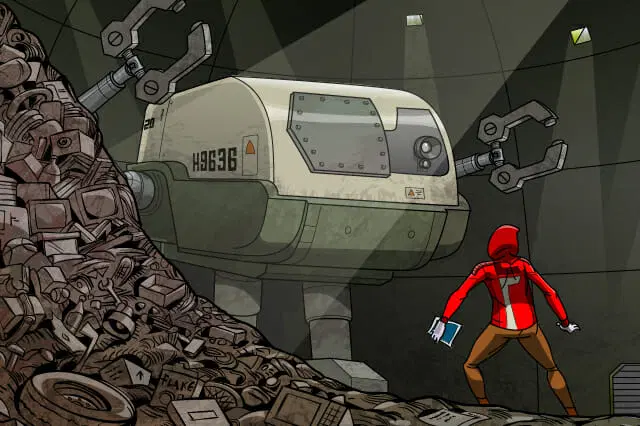
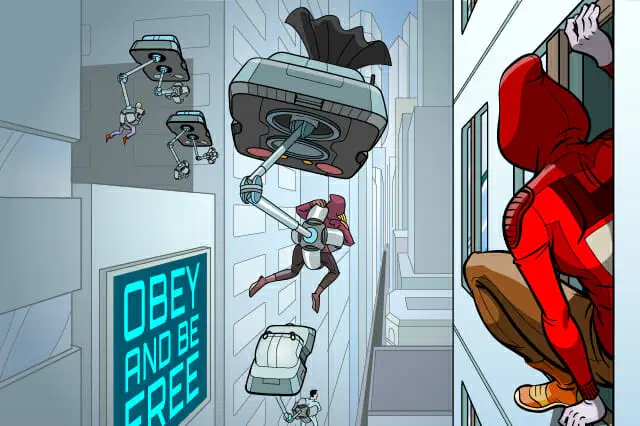
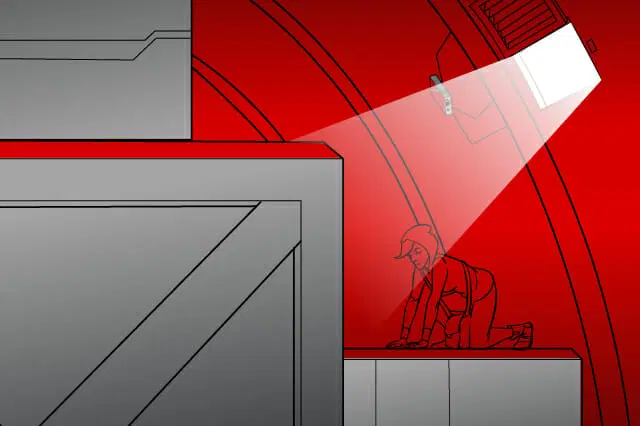
At the middle school level, Boost Close Reading sets students in a dystopian future world run by Machines, where people are told what to read and what to think. Students are recruited into the rebellion and trained in the powerful ways authors convey meaning and affect their audience. This interactive graphic novel is divided into three books with each chapter focusing on a different skill or concept.
Chapter 1: Arguments and their structure
Students learn to build arguments using claims, evidence, and reasons.
Chapter 2: Setting and Mood
Students learn to analyze how descriptions of setting evoke mood for the reader.
Chapter 3: Pathos
Students learn to evaluate methods of persuasion in pathos arguments.
Chapter 4: Word choice and tone
Students learn to analyze word choices to determine tone.
Chapter 5: Logos
Students learn to identify, analyze, and create logos arguments.
Chapter 6: Figurative language
Students learn to analyze and use figurative language.
Chapter 7: Ethos
Students learn to identify, analyze, and create ethos arguments.
Chapter 8: Review and Synthesis
Students review what they’ve learned in the past seven lessons and apply their knowledge to create an original protest text.
Chapter 1: Narrative Arguments
Students learn to analyze the use of narrative in arguments.
Chapter 2: Characterization
Students learn to identify different types of characterization and make inferences from indirect characterization.
Chapter 3: Description in arguments
Students learn to identify sensory language and analyze its use in arguments.
Chapter 4: Conflict and character change
Students learn to identify different types of conflict and analyze how characters change in response to conflict.
Chapter 5: Causal reasoning
Students learn to analyze, evaluate, and create causal arguments.
Chapter 6: Themes
Students learn to use analysis of character change to determine and express the theme of a literary work.
Chapter 7: Evaluating arguments and fallacies
Students learn to evaluate pathos, logos, and ethos arguments by checking for completeness and coherence and identifying common fallacies.
Chapter 8: Review and synthesis
Students review what they’ve learned in the past seven chapters and apply their knowledge to putting the finishing touches on an original text.
Chapter 1: Complex arguments
Students learn to map out and analyze complex argument structures.
Chapter 2: Narrative voice
Students learn to identify the narrative point of view and analyze the purpose and effects of narrative voice.
Chapter 3: Arguments by analogy
Students learn to analyze and evaluate arguments by analogy.
Chapter 4: Style
Students learn to identify the elements of style and analyze how they are used to achieve an author’s purpose.
Chapter 5: Dialectic
Students learn to participate in dialectics by using logos arguments and crafting appropriate counterpoints.
Chapter 6: Review and synthesis
Students review the literary and argumentative tools they’ve learned throughout the three books and apply them to creating an effective rhetorical message.
Digital components
The program includes resources that give students chances to apply skills they’ve learned and teachers the ability to track student progress across multiple data points.
Component
Format
Teacher dashboard
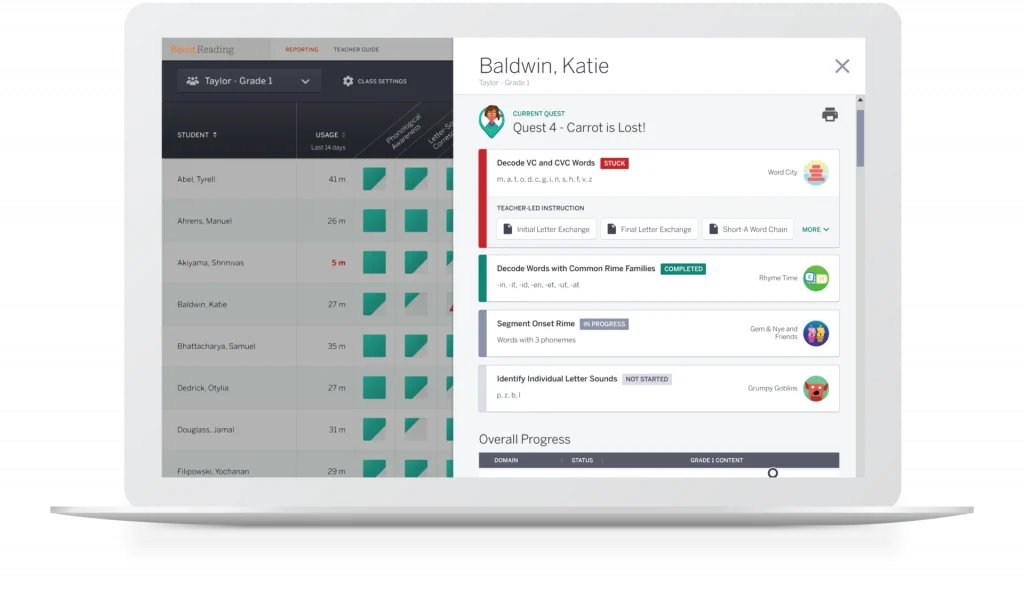
The teacher dashboard requires zero set-up time and uses detailed data to provide insights into student progress. Teachers can drill down into student profiles to see specific areas of focus and where they are struggling.
Digital
Component
Format
Practice mode
In addition to the books, speeches, and articles weaved into the narrative arc of the game, students may also access hundreds of texts in practice mode. Here, they can continue to hone their mastery of close reading skills on a wide range of authentic texts.
digital
Explore more programs
Our programs are designed to support and complement one another. Learn more about our related programs.
Amplify Reading 6–8 is a digital reading program laser-focused on helping students find deeper meaning in texts by teaching them to question everything they read.
To capture students’ imagination, Amplify Reading 6–8 takes the form of an interactive graphic novel called The Last Readers. This story is set in a dystopian future world run by Machines, where people are told what to read and what to think. But dissent is afoot. Recruited for the rebellion, students are trained in the powerful ways authors convey meaning and affect their audience.
What students learn
Exploring texts from literary classics to propaganda, from great speeches to scientific articles, students learn to analyze the moves that authors make to achieve their purposes. Chapter topics alternate between the close analysis of arguments and literary analysis.
Each chapter should take approximately one hour for students to complete.
How to integrate this program into your curriculum
Amplify Reading 6–8 is designed for students to work independently as they progress through the chapters of The Last Readers. For the last chapter of each book, teachers have the option to build on independent work through group and whole-class activities.
For the best experience, students should complete the chapters in order. The chapters and concepts build on each other and were designed to help students master close reading skills. While teachers can unlock chapters so students can work on specific concepts at any given moment, doing so may result in a less-than-ideal experience. Later lessons are locked by default, but we will provide the ability to unlock lessons from within the teacher dashboard.
How teachers are using Amplify Reading 6–8
Reinforcement of concepts
Many teachers find the program extremely helpful for reinforcing key reading skills in the core curriculum. They use it in class one or two times a week for 20 to 30 minutes over the course of a year.
Test preparation
The program features extensive practice with text-dependent questions, providing a fun and effective way for students to get comfortable answering those kinds of questions.
Other common uses
Teachers also use the program to introduce key close reading concepts, for extra practice or homework, as response to intervention, and for after-school and summer school programs.
Routines
Devoting one class period every week or two to having students work independently on The Last Readers. While students are working independently on devices, teachers can work with small groups who need extra support with their core curriculum work. Teachers can also assign students work in Practice Mode during class or for homework.
Treating each book of The Last Readers as a 2–3 week mini-unit that can be inserted between units of core curriculum instruction. In addition to having students work on the chapters during class, teachers can assign students work in Practice Mode in between chapters or for homework.
Regularly assigning The Last Readers to students as homework. Because students may move through the chapters at different paces, teachers may want to assign one chapter per week and ask students to work in Practice Mode for the rest of the week after they complete a chapter.
Pedagogical approach
In Amplify Reading 6–8:
Students learn to question everything they read by engaging with a story-based adventure in which understanding every piece of text and every article, billboard, speech and poem is essential to the narrative.
Students learn to leverage the same devices used by authors to convey meaning by creating new content that integrates seamlessly with the story.
Unlike other reading supplementals that rely solely on assessment questions and feedback, Amplify Reading 6–8 weaves digital instruction together with assessment, all within an immersive story where the analysis of text is a critical element of the plot. The storytelling is vivid, suspenseful, and complex, designed to provide students with purpose and agency as they take on ever more challenging and high-stakes close reading tasks.
Each mission includes three steps:
Interactive instruction: Students engage with a specific close reading concept using digital manipulatives.
Guided close reading: Students apply knowledge of the concept to a complex text.
Creative application: Students use their knowledge of the concept to create new content that solves a story-based problem.
Literary and informational passages are paired with carefully crafted, text-dependent questions and technology-enhanced items that prepare students for the same types of questions they’ll face on high stakes assessments. All along the way, teachers receive reports that visualize activity and progress, and highlight areas of improvement. Teachers can also leverage the original content generated by students in each mission as a rich classroom discussion piece.
Combining content and pedagogy with the creativity and purpose of storytelling results in an experience that truly motivates students and gives them the skills and confidence to tackle complex text.
The practice of close reading lies at the heart of the Common Core and many other state standards for English Language Arts. Instruction in close reading enables students to become attuned to the essential elements of authentic texts: from key ideas and claims to specific details and evidence; from the effects of single words to those of larger textual structures; from the significance of individual texts to the interrelated meanings of entire corpora.
The recent focus on close reading is reflected in the text-dependent questions that populate many recent state assessments of ELA proficiency. Text-dependent questions address students’:
understanding of vocabulary
understanding of syntax and structure
understanding of literary and argumentative devices
understanding of themes and central ideas
Amplify Reading 6–8 gives students the essential skills and confidence they need to address text-dependent questions and the standards to which they refer.
Additionally, each book of The Last Readers emphasizes at least one Common Core reading anchor standards associated with each of the ELA standards strands:
Book 1: KID 1 / C&S 4 / IKI 8
Book 2: KID 1, 2, 3 / C&S 4, 5, 6 / IKI 8
Book 3: KID 1, 2, 3 / C&S 4, 5, 6 / IKI 6, 7, 8
ANCHOR STANDARD
CHAPTERS
CCSS.ELA-LITERACY.CCRA.R.1 Read closely to determine what the text says explicitly and to make logical inferences from it; cite specific textual evidence when writing or speaking to support conclusions drawn from the text.
Books 1, 2, 3: All chapters
CCSS.ELA-LITERACY.CCRA.R.2 Determine central ideas or themes of a text and analyze their development; summarize the key supporting details and ideas.
Book 2: Chapters 9, 10, 12, 14, 16 Book 3: All chapters
CCSS.ELA-LITERACY.CCRA.R.3 Analyze how and why individuals, events, or ideas develop and interact over the course of a text.
Book 2: Chapters 10, 12, 14 Book 3: All chapters
CCSS.ELA-LITERACY.CCRA.R.4 Interpret words and phrases as they are used in a text, including determining technical, connotative, and figurative meanings, and analyze how specific word choices shape meaning or tone.
Book 1: Chapters 2, 3, 4, 6, 7, 8 Book 2: All chapters Book 3: All chapters
CCSS.ELA-LITERACY.CCRA.R.5 Analyze the structure of texts, including how specific sentences, paragraphs, and larger portions of the text (e.g., a section, chapter, scene, or stanza) relate to each other and the whole.
Book 2: Chapters 9, 11, 13, 15, 16 Book 3: All chapters
CCSS.ELA-LITERACY.CCRA.R.6 Assess how point of view or purpose shapes the content and style of a text.
Book 2: Chapters 9, 11, 16 Book 3: At least 50% of the chapters
CCSS.ELA-LITERACY.CCRA.R.7 Integrate and evaluate content presented in diverse media and formats, including visually and quantitatively, as well as in words.
Book 3: At least 50% of the chapters
CCSS.ELA-LITERACY.CCRA.R.8 Delineate and evaluate the argument and specific claims in a text, including the validity of the reasoning as well as the relevance and sufficiency of the evidence.
Book 1: Chapters 1, 5, 8 Book 2: Chapters 9, 11, 13, 15 Book 3: At least 50% of the chapters
CCSS.ELA-LITERACY.CCRA.R.9 Analyze how two or more texts address similar themes or topics in order to build knowledge or to compare the approaches the authors take.
Book 3: At least 50% of the chapters
CCSS.ELA-LITERACY.CCRA.R.10 Read and comprehend complex literary and informational texts independently and proficiently.
Books 1, 2, 3: All chapters
Levels
Because each classroom represents a wide range of reading abilities, teachers can assign students to unique learning tracks that are tailored to provide the level of support each student needs.
After your students have enrolled in a class, you can assign them to a particular level in Reporting. All students will be automatically enrolled in the Core level. It is recommended that you assign all students to whatever level is most appropriate for them before they begin chapter 1. You can change a student’s level at any time.
LEVEL
DESIGNED FOR
CORE
Students whose reading levels fall within the middle school band.
EXTRA SUPPORT
Students who are reading below middle school level or with limited English proficiency. The instructional content and texts have been adapted or replaced to support students who “can engage in complex, cognitively demanding social and academic activities requiring language when provided moderate linguistic support.” Support includes streamlined, scaffolded content that integrates the built-in-dictionary tool, so students can access content and academic vocabulary at their language level and above. For productive written activities, students are given supports such as sentence frames to help them develop structured academic responses.
ADVANCED (coming soon)
We are developing an advanced level that will challenge readers with more complex texts and prompts, and with additional content.
Included texts
Book 1
Book 2
Book 3
Amplify enters supplemental curriculum market
New York, NY – (June 25, 2018) Amplify, a company that creates next-generation curriculum and assessment programs, announced today that it is entering the digital supplemental market in reading and math with two new supplemental programs, Amplify Close Reading and Amplify Fractions. These new supplemental products join Amplify’s growing portfolio of core curriculum and assessment programs for grades K-8.
“Digital supplemental programs in reading and math are widely used, but they’re often repetitive and focused on drilling students in skills versus developing conceptual understanding that take kids deeper and deeper into a particular field,” said Larry Berger, CEO of Amplify. “We have found that teachers and students love Amplify’s conceptually rich, story-based programs that provide both high-quality instruction and practice.”
Amplify Close Reading takes the form of a digital graphic novel adventure, engaging students in a suspenseful story while helping them master close reading skills covered by ELA standards in grades 6-8. Titled “The Last Readers,” the graphic novel is set in a dystopian future world run by machines that tell people what they can and can’t read. Recruited for the rebellion, students are trained in the powerful ways authors convey meaning and affect their audience.
Close reading, the practice of analyzing a text to determine what it says and how it says it, is a skill prioritized by recent middle school ELA standards, which have placed renewed emphasis on text-dependent analysis of literary and informational texts. Amplify Close Reading was developed in partnership with literacy expert Tim Shanahan, Distinguished Professor Emeritus at the University of Illinois at Chicago.
“I recommend it all the time to colleagues because it’s such a great program,” said Kris Wren, a 7th-grade ELA teacher at Central Middle School in New Madrid, MO. “My students are very focused when they are playing the program. They don’t realize they are building skills and developing close reading skills. They enjoy it and ask for it.”
Amplify Fractions covers math standards in grades 3–6 and offers a new approach to learning fractions through a blend of adaptive learning and interactive storytelling. Students learn fractions through playful storylines and real-world contexts, with lessons that adapt to individual student need. To ensure that students are set up for success in math, Amplify Fractions includes personalized feedback via digital tutor, along with unlimited practice opportunities.
A research team led by Carnegie Mellon University’s Robert Siegler found that 5th graders’ understanding of fractions and division predicted high school students’ knowledge of algebra and overall math achievement and that U.S. students’ inadequate knowledge of fractions and division is a major source of the stagnant growth in the subject.
“Fractions are one of the most difficult concepts for students,” said Rebecca Gilbreath-Levan, a 4th-grade teacher at Double Churches Elementary School in Columbus, GA. “With Amplify Fractions, I found a program that actually excites my students to want to learn and practice fractions. Students remembered the characters and stories in the program, which is a great thing to fall back on to remember the concept.”
Educators were able to sign up for the beta version of both programs for the 2017-18 school year. The full versions are now available.
Amplify entered the core curriculum market in 2012 with the launch of Amplify CKLA, a knowledge-based elementary language arts program. It launched its middle school Amplify ELA program in 2014 and its K–8 Amplify Science program in 2017. Amplify Close Reading and Amplify Fractions are the company’s first supplemental curriculum programs.
About Amplify A pioneer in K–12 education since 2000, Amplify is leading the way in next-generation curriculum and assessment. Our captivating core and supplemental programs in ELA, math, and science engage all students in rigorous learning and inspire them to think deeply, creatively, and for themselves. Our formative assessment products turn data into practical instructional support to help all students build a strong foundation in early reading and math. All of our programs provide teachers with powerful tools that help them understand and respond to the needs of every student. Today, Amplify serves more than three million students in all 50 states. For more information, visit amplify.com.