Amplify Tutor Fingerprinting
Customer Privacy Policy
Last Modified: January 23, 2026 | Update History
Most recent update: This Privacy Policy has been updated to address additional rights for individuals in the European Union/UK.
We advise you to read this Privacy Policy in its entirety, including the jurisdiction-specific provisions in the appendix. Click here to review Our U.S. Notice At Collection.
Customer Privacy Policy: K–12 Schools
Who We Are
Amplify Education, Inc. (“Amplify”) is leading the way in next-generation curriculum and assessment. Amplify’s programs provide teachers with powerful tools that help them understand and respond to the needs of each student and use data in a way that is safe, secure, and effective.
Our Products and Services
Amplify’s products support classroom instruction and learning and include Amplify CKLA, Amplify ELA, Amplify Caminos, Amplify Science, Amplify Desmos Math, Boost Reading, Boost Math, mCLASS, Mathigon, associated professional development and tutoring services, and services at classroom.amplify.com (for creating and assigning activities) and student.amplify.com (for use of the activities or curricula as directed by an instructor), and any other product or service that links to this Privacy Policy (together, the “Products”).
Our Approach to Student Data Privacy
In the course of providing the Products to Schools and their Authorized School Users, Amplify collects, receives, generates, or has access to Student Data (defined below). We consider Student Data to be confidential and we collect and use Student Data solely for educational purposes in connection with providing our Products to, or on behalf of the School as described in this Privacy Policy and our Agreements (defined below). We work to maintain the security and confidentiality of Student Data that we collect or store, and we enable Schools to control the use, access, sharing, and retention of Student Data.
Our Products are geared towards K–12 students (“Students”), and the educators, agents and staff members who use the Products as authorized by their School (“Educators”). Information that directly relates to an identifiable Student (“Student Data”) is owned and controlled by the School, and Amplify receives Student Data as a “school official” under Section 99.31 of the Family Educational Rights and Privacy Act of 1974 (“FERPA”) for the purpose of providing the Products hereunder. In addition, we rely on the School acknowledging that it is acting as the parent’s agent and consenting on the parent’s behalf to process personal information of Students under the age of 13 (“Child Users”) in accordance with the Children’s Online Privacy Protection Act (“COPPA”).
Our collection and use of Student Data is governed by our Agreements with Schools, including this Privacy Policy (“Privacy Policy”), and applicable laws which may include FERPA, COPPA, the Protection of Pupil Rights Amendment (“PPRA”), as well as other applicable federal, state, and local privacy laws and regulations (“Applicable Laws”). As noted above, with respect to FERPA, Amplify receives Student Data as a “school official” under Section 99.31 of FERPA for the purpose of providing its Products, and such Student Data is owned and controlled by the School.
Schools may provide authorization in two ways:
- by the School agreeing to our Customer Terms and Conditions located at amplify.com/customer-terms or another written agreement between Amplify and the School, as applicable; or
- by an Educator agreeing to the Acceptable Use Policy located at amplify.com/acceptable-use-policy/ (“AUP”) on behalf of the School as outlined in the AUP.
In each case, we collect Student Data and provide these Products solely for the use and benefit of the School and for no other commercial purpose. We require all Schools to review this Privacy Policy, available at amplify.com/customer-privacy, and to make a copy of the Privacy Policy available to the parents or guardians of Child Users.
We also provide limited opportunities for individual users to sign up for an account for use of our Products at-home or otherwise outside of the authorization of a School (“Home Users”). See the Appendix–Supplemental Disclosures for additional information that applies to our Home Users.
What This Privacy Policy Covers
This Customer Privacy Policy (“Privacy Policy”) describes how Amplify collects, uses, and discloses personal information through the provision of Products.
For purposes of this Privacy Policy, “you” and “your” means Authorized Users (defined below).
This Privacy Policy does not apply to Amplify’s handling of:
- information collected from users of Amplify’s company website, which is governed by our Website Privacy Policy.
- job applicant data that we process in accordance with our applicant privacy notice.
There may be different contractual terms or privacy policies in place with some Schools. Such other terms or policies supersede this Privacy Policy for information collected or released under those terms. If you have any questions as to which legal agreement or privacy policy controls the collection and use of your personal information, please contact us using the information provided below. Unless expressly superseded, this Privacy Policy is incorporated into and is subject to the Agreement that governs your use of the Products.
Our Role
Amplify as a processor/service provider: Our School customers are the controllers of Student Data (as well as certain other Educator personal information to the extent required by law or Amplify’s agreement with the School) (together “School Data”).
Amplify acts as a processor/service provider for our School customers with respect to School Data, which means when we use School Data, we do so solely on the instruction of the School. School Data is subject to the School’s privacy policies; therefore, you will need to contact the School directly if you have any questions or would like to exercise your rights with respect to School Data.
Amplify as a controller: We are the controller of all other personal information we collect from non-Student Authorized Users (“Amplify Data”) and can be reached by email at privacy@amplify.com or by mail at Amplify Education, Inc., 55 Washington St.#800, Brooklyn, NY, 11201.
Policy
1. Definitions
Capitalized terms not defined in this section or elsewhere in this Privacy Policy will have the meaning set forth by Applicable Laws.
“Agreement” means the underlying contractual agreement between Amplify and the School.
“Authorized Users” means all users of our Products, including Authorized School Users, parents and legal guardians, and Home Users.
“Authorized School Users” means Students and Educators.
“Local Education Authority” means a local education agency or authority, school district, school network, independent school, or other regional education system.
“Non-Student Data” means information that is linked or linkable to Authorized Users who are not Students.
“School” means the Local Education Authority or State Agency.
“State Agency” means the educational agency primarily responsible for the supervision of public elementary and secondary schools in any of the 50 states, the Commonwealth of Puerto Rico, the District of Columbia, or other territories and possessions of the United States, as well as a national or regional ministry or department of education in other countries, as applicable.
2. What personal information do we collect?
When you access or use our Products, you may choose to provide us with personal information, including Student Data. This information may be provided to us directly (e.g. when an account is created or through communications with us) or through your interactions with our Products.
Student Data. Below is a list of the categories of Student Data that may be collected by Amplify or its Products, either directly or through the Authorized School User’s use of the various features and configurations of the Products:
- Identifier and Enrollment Data, such as name, email, school / state ID number, username and password, grade level, homeroom, courses, teacher names.
- Why? Most of Amplify’s Products require some basic information about who is in a classroom and who teaches the class—Student or teacher Identifier and Enrollment data. This information is provided to Amplify by the School, either directly from the School’s student information system or via a third party with whom the School contracts to provide that information.
- Demographic Data, such as date of birth, socioeconomic status, race, national origin, and preferred or primary language.
- Why? To support school instructional and reporting requirements, Amplify’s Products allow Schools to view reports and analyze data using Demographic Data. Generally, Demographic Data is provided on a voluntary basis by the School. For example, a School may wish to analyze Student literacy assessment results based on English Language Learner status to better tailor classroom instruction, and in that case, the School may provide Demographic Data to enable that reporting.
- School Records, such as grades, attendance, assessment results, and whether an Individualized Education Plan (IEP or local equivalent) is in place.
- Why? Some of our Products support grading assignments and administering formative, diagnostic, and curriculum-based assessments. Teachers use that information to support Students’ progress in the program or help with instructional decisions. We do not collect specific details from an IEP, nor do we collect protected health information or other sensitive information.
- Schoolwork and Student Generated Content, which includes any information contained in Student assignments and assessments, including information in response to instructional activities and participation in collaborative or interactive features of our Products, such as Student responses to academic questions and Student-written essays, as well as images, video, and audio recordings.
- Why? As part of the digital learning experience, some of our Products may enable Students to write text and create and upload images, video, and audio recordings. For example, in Amplify ELA, students may write essays or submit short-form responses in our platform as part of a lesson on literature. As another example, in Boost Reading, student interactions with reading skills games are recorded to keep track of the student’s progress to level up in the program and to provide visibility to teachers on how students are mastering the skills.
- Teacher Comments and Feedback, such as scores, written comments, or other feedback that Educators may provide about Student responses or student course performance.
- Why? To enable teachers to track the performance and provide feedback to their students.
- Non-Student Data. We may collect the following types of personal information from all other Authorized Users:
- Contact Information, such as name and email address, as well as grade level taught, school name and school location, whether you are an Educator or Home User that creates an account or uses our Products or communicates with us.
- Account Information, such as user login and password, for account creation and access purposes.
- Survey Responses, which you provide in response to surveys or questionnaires.
- Device and Usage Data. Depending on the Product, we may collect certain information about the device used to connect to our Product, such as device type and model, browser configurations, and persistent identifiers, such as IP addresses and unique device identifiers. We may collect device diagnostic information, such as battery level, usage logs, and error logs, as well as usage, viewing, and technical information (e.g., email open rates), such as the number of requests a device makes, to ensure proper system capacity for all Authorized Users. We may collect IP addresses and use that information to approximate device location to support operation of the Product. To the extent that we collect this information, this data is solely used to support operation of the Product and is not linked to Student Data. For purposes of clarity, Amplify does not use Student Data for marketing or advertising purposes (see section 6 of this Privacy Policy for more information about our commitments regarding Student Data).
- Why? We use this information to remember returning users and facilitate ease of login, to customize the function and appearance of the Products, and to improve the learning experience. This information also helps us track product usage for various purposes, including website optimization, to ensure proper system capacity, troubleshoot and fix errors, provide technical assistance and customer support, provide and monitor the effectiveness of our Products, monitor and address security concerns, and compile analytics for product improvement and other internal purposes.
- How? Cookies and Similar Technologies. We collect device and usage data through “cookies,” Web beacons, HTML5 local storage, and other similar technologies, which are used in some of our Products solely to support operation of the Products as described above. While we may use third party cookies and similar technologies for advertising and marketing purposes on our website (in accordance with our Website Privacy Policy), we do not permit such tracking technologies to be present on Student-facing portions of the Products. In particular, we only use the following types of cookies in our Products:
- Strictly necessary cookies – These are cookies that are required for the operation of our websites and applications that host our Products. They include, for example, cookies that enable you to log into secure areas of our Products. These cookies are not generally stored beyond the browser session and are less likely to include personal information. This category of cookies cannot be disabled.
- Functionality Cookies – We use these cookies so that we recognize you on the websites and apps that host our Products and remember your previously selected preferences. These cookies are stored on your device between browsing sessions but expire after a pre-defined period. These cookies enable us to “recognize” you when you use our Products, including your preferences such as your preferred language, time, and location. A mix of first party (placed by us) and third-party cookies (placed by third parties) are used.
- Performance Cookies – These cookies help us and service providers acting on our behalf compile statistics and analytics about users of our Products that are accessed via websites and apps, including Device and Usage Information.
- Learn how to opt out of cookies and similar technologies by reading the “What Rights and Choices Do You Have?” section of this Privacy Policy below.
3. How do we use personal information?
Student Data. Amplify uses Student Data for educational purposes, to provide the Products, and to ensure secure and effective operation of our Products, including:
- to provide and improve our educational Products;
- to support School and Authorized School Users’ activities;
- to ensure secure and effective operation of our Products;
- for purposes requested or authorized by the School or Authorized School User or as otherwise permitted by Applicable Laws;
- for customer support purposes, to respond to the inquiries and fulfill the requests of the School and their Authorized School Users;
- to enforce Product access and security controls; and
- to conduct system audits and improve protections against the misuse of our Products, or to detect and prevent fraud and other harmful activities.
- to enable the adaptive and personalized learning features of the Products.
Non-Student Data. Amplify may use Non-Student Data for the purposes for which Student Data is used as set forth above. In addition, Amplify may use Non-Student Data to provide customized content, advertising and marketing in limited circumstances (e.g. to periodically send newsletters and other promotional materials) directed to Educators and Home Users. For sake of clarity, we do not use Student Data for marketing purposes and we do not direct marketing to Students. Amplify may also use Non-Student Data for internal research and analytics, including generating insights on the use of our Products by Educators in certain Schools so that we can better serve those communities. We will also use Non-Student Data as otherwise required or permitted by law, or as we may notify you at the time of collection. Learn how to opt out of these communications by reading the “What Rights and Choices Do You Have?” section of this Privacy Policy below.
Amplify may use aggregate or de-identified data as described in the Aggregate/De-identified Data section below.
4. To whom do we disclose personal information?
Student Data. We disclose Student Data to third parties only as needed to provide the Products under the Agreement, as directed or permitted by the School or Authorized School User, and as required by law. Such disclosures may include but are not limited to the following:
- to other Authorized School Users of the School entitled to access such data in connection with the Products;
- to our service providers, subprocessors, or vendors who have a legitimate need to access such data in order to assist us in providing or supporting our Products, such as platform, infrastructure, and application software. We contractually bind such parties to protect Student Data in a manner consistent with those practices set forth in this Privacy Policy and in accordance with Applicable Laws. A list of Amplify subprocessors is available at https://www.amplify.com/subprocessors;
- to comply with the law, respond to requests in legal or government enforcement proceedings (such as complying with a subpoena), protect our rights in a legal dispute, or seek assistance of law enforcement in the event of a threat to our rights, security, or property or that of our affiliates, customers, Authorized Users, or others;
- in the event Amplify or all or part of its assets are acquired or transferred to another party, including in connection with any bankruptcy or similar proceedings, provided that successor entity will be required to comply with the privacy protections in this Privacy Policy with respect to information collected under this Privacy Policy, or we will provide the School with notice and an opportunity to opt out of the transfer of such data prior to the transfer; and
- except as restricted by Applicable Laws or contracts with the School, we may also share Student Data with Amplify’s affiliated education companies, provided that such disclosure is solely for the purposes of providing Products and at all times is subject to this Policy.
Non-Student Data. Amplify discloses Non-Student Data for the purposes for which Student Data is used as set forth above. Amplify may also disclose Non-Student Data as otherwise required or permitted, or as disclosed at the time of collection. Please note that we do not share mobile information or opt-in consent with third parties / affiliates for their own marketing or promotional purposes.
5. Aggregate/De-identified data
Amplify may use de-identified or aggregate data for purposes allowed under FERPA and other Applicable Laws, to research, develop, and improve educational sites, services, and applications and to demonstrate the effectiveness of the Amplify Products. Amplify will not attempt to re-identify de-identified data. We may use aggregate information (which is information that has been collected in summary form such that the data cannot be associated with any individual) for analytics and reports. For example, our promotional materials may note the total number of students served by our programs in the prior year, but that information cannot be used to identify any one student. We may also share de-identified or aggregate data with research partners to help us analyze the information for product improvement and development purposes.
Records and information are de-identified when all personal information has been removed or obscured, such that the remaining information does not reasonably identify a specific individual. We de-identify Student Data in compliance with Applicable Laws and in accordance with the guidelines of NIST SP 800-122. Amplify has implemented internal procedures and controls to protect against the re-identification of de-identified Student Data. Amplify does not disclose de-identified data to its research partners unless that party has agreed in writing not to attempt to re-identify such data.
6. Data prohibitions, Advertising, Advertising limitations
Amplify will not:
- sell Student Data to third parties;
- use or disclose Student Data to inform, influence, or enable targeted advertising to a Student based on Student Data or information or data inferred over time from the Student’s usage of the Products;
- use Student Data to develop a profile of a Student for any purpose other than providing the Products to a School or Authorized School User, or as authorized by a parent or legal guardian;
- use Student Data for any commercial purpose other than to provide the Products to the School or Authorized School User, or as permitted by Applicable Laws.
7. External third-party services
This Privacy Policy applies solely to Amplify’s Products and practices. Schools and other Authorized Users may choose to connect or use our Products in conjunction with third-party services and Products. Additionally, our sites and Products may contain links to third-party websites or services . This Privacy Policy does not address, and Amplify is not responsible for, the privacy, information, or other practices of such third parties. Schools should carefully consider which third-party applications to include among the Products and services they provide to Students and vet the privacy and data security standards of those providers.
Authorized Users may be able to log in to our Products using third-party sign-in services such as Clever, ClassLink or Google. These services authenticate your identity and provide you with the option to share certain personal information with us, including your name and email address, to pre-populate our account sign-up form. If you choose to enable a third party to share your third-party account credentials with Amplify, we may obtain personal information via that mechanism. You may configure your accounts on these third-party platform services to control what information they share.
8. Security
Amplify maintains a comprehensive information security program and uses industry standard administrative, technical, operational, and physical measures to safeguard Student Data in its possession against loss, theft and unauthorized use, disclosure, or modification. Amplify performs periodic risk assessments of its information security program and prioritizes the remediation of identified security vulnerabilities. Please see https://amplify.com/security for a detailed description of Amplify’s security program.
In the event Amplify discovers or is notified that Student Data within our possession or control was disclosed to, or acquired by, an unauthorized party, we will investigate the incident, take steps to mitigate the potential impact, and notify the School in accordance with Applicable Laws.
Non-Student Data
Outside of Student Data, Amplify uses commercially reasonable administrative, technical, personnel, and physical measures to safeguard personal information in its possession against loss, theft, and unauthorized use, disclosure or modification.
9. Data Storage and Transfers
We are a United States Company, and our servers are hosted, managed, and controlled by us in the United States. If you are outside of the United States, we use industry standards to protect your data when it leaves your country of residence and your data will always be protected in accordance with this Privacy Policy, Applicable Laws and our Agreement regardless of the storage location.
Additionally, where we transfer your personal information to service providers outside of the United Kingdom (UK), European Economic Area (EEA), or other region that offers similar protections, we use specific appropriate safeguards to contractually obligate such service providers to protect personal information in accordance with Amplify’s commitment to privacy and security and applicable data protection laws.
If you have questions or wish to obtain more information about the international transfer of your personal information or the implemented safeguards, please contact us using the contact information below.
10. Data Retention / Deletion
Student Data
Upon request, we provide the School the opportunity to review and delete the personal information collected from Students. We will retain Student Data for the period necessary to fulfill the purposes outlined in this Privacy Policy and our Agreement with the School. We do not knowingly retain Student Data beyond the time period required to support the School or Authorized School User’s educational purpose, unless authorized by the School or Authorized School User. Upon request, Amplify will return, delete, or destroy Student Data stored by Amplify in accordance with applicable law and customer requirements. We may not be able to delete all data in all circumstances, such as information retained in technical support records, customer service records, back-ups, and similar business records. All such information will be protected in accordance with this Privacy Policy and our Agreement until it has been permanently deleted. Unless otherwise notified by the School, we will delete or de-identify Student Data after termination of our Agreement with the School.
Non-Student Data
Outside of Student Data, we keep personal information as long as it is necessary or relevant for the practices described in this Privacy Policy or as otherwise required by our Agreement with the School, if applicable. We determine the appropriate retention period for personal information on the basis of the amount, nature and sensitivity of the personal information being processed, the potential risk of harm from unauthorized use or disclosure of the personal information, whether we can achieve the purposes of the processing through other means, and on the basis of applicable legal requirements (such as applicable statutes of limitations).
11. What rights and choices do you have?
What Choices Do You Have?
Marketing/Advertising
As noted above, we do not use Student Data for marketing purposes and we do not direct marketing to Students. Amplify does not use third party cookies and similar technologies for advertising and marketing purposes on Student-facing portions of the Products. The choices below apply to Non-Student Authorized Users.
Opt-out of Marketing Communications. If you want to stop receiving promotional materials from Amplify, you can follow the unsubscribe instructions at the bottom of each email or email us at privacy@amplify.com. Amplify does not send marketing communications to Students.
Opt-out of Cookies and Similar Tracking Technologies. With respect to cookies, you may be able to reject cookies through your browser or device controls. Note that you have to opt-out of cookies on each browser or device that you use. If you replace, change, or upgrade your browser or device, or delete your cookies, you may need to use these opt-out tools again. Please be aware that disabling cookies may negatively impact your experience as some features may not work properly. To learn more about browser cookies, including how to manage or delete them, check the “Help,” “Tools,” or similar section of your browser.
What Rights Do You Have?
Individuals in the U.S.
- What Rights Do You Have With Respect to Student Data?
- Review and Correction. FERPA requires schools to provide parents with access to their children’s education records, and parents may request that the school correct records that they believe to be inaccurate or misleading.
- If you are a parent or guardian and would like to review, correct, or update your child’s data stored in our Products, contact your School. Amplify will work with your School to enable your access to and, if applicable, correction of your child’s education records.
- If you have any questions about whom to contact or other questions about your child’s data, you may contact us using the information provided below.
- Other Privacy Rights? Please see section 3 of our supplemental disclosures: “Additional U.S. State Privacy Law Rights” for more information about your U.S. privacy rights
Individuals in the EU/UK
Please see section 4 of our supplemental disclosures: “Notice for European Economic Area and United Kingdom Customers” for more information about your EU/UK privacy rights.
12. COPPA
We do not knowingly collect personal information from a Child User unless and until a School or Educator, with the permission of the School, has authorized us to collect such information to provide the Products. Amplify relies on the School acknowledging that it is acting as the parent’s agent and consenting on the parent’s behalf to process personal information of Child Users in accordance with all applicable provisions of COPPA. To the extent COPPA applies to the information we collect, we process such information for educational purposes only, and no other commercial purpose, at the direction of the School and on the basis of the School’s authorization. If you are a parent or guardian and have questions about your child’s use of the Products and any personal information collected, please direct these questions to your child’s school.
Please refer to the Appendix–Supplemental Disclosures if you are a Home User.
13. Updates to this Privacy Policy
We may change this Privacy Policy in the future. For example, we may update it to comply with new laws or regulations, to conform to industry best practices, or to reflect changes in our product offerings. When these changes do not reflect material changes in our practices with respect to use and/or disclosure of Authorized Users’ personal information, including Student Data, such changes to the Privacy Policy will become effective when we post the revised Privacy Policy on our website. In the event there are material changes in our practices that would result in Authorized Users’ personal information being used in a materially different manner than was disclosed when the information was collected, with respect to Student Data, we will notify the School, and with respect to other information, we will notify you via email and provide an opportunity to opt out before such changes take effect.
14. Contact us
If you have questions about this Privacy Policy, please contact us at:
Email: privacy@amplify.com
Mail: Amplify Education, Inc.
55 Washington St.#800
Brooklyn, NY, 11201
Phone: (800) 823-1969
Attn: General Counsel
To report a security vulnerability, visit https://amplify.com/report-a-vulnerability/.
Appendix – Supplemental Disclosures
1. Mathigon and Amplify Classroom accounts
While our Products are geared towards Schools we do provide a limited opportunity for Home Users to use the Products at home—outside of the school context. We do not allow persons under the age of 13 (or those under the age of consent in any applicable jurisdiction) to register for an account with us outside the school context.
If you are a Home User, you are prohibited from collecting or providing any personal information from students or minors. You are permitted to access the platform for instructional purposes, but you may not enroll or roster minors, create accounts for minors, or input any personal information of minors into the Product.
Please note that most parts of Mathigon can be used without creating an account or providing any personal information that directly identifies you.
What Rights Do You Have? If you are a Child User who is 13 or older with a legacy Mathigon account (or the parent or guardian of a Child User with a legacy Mathigon account), you may request that we provide for your review, delete from our records, or cease collecting any Child User personal information. To the extent that you are unable to exercise these rights through self-service features within your account with us, please contact us by sending an email to: help@amplify.com and we will provide assistance.
2. U.S. Notice at Collection
| Personal Information We Collect | How We Use Personal Information |
|
Student Data, which includes:
|
|
|
Authorized Users, which includes:
|
|
Some of the information described above may be considered “sensitive” under the laws of certain jurisdictions (i.e., account credentials and race/national origin) (“Sensitive Information”). We use Sensitive Information for necessary or reasonably expected purposes – specifically, to provide you with our Services (i.e., account credentials are used to allow account logins and race/national origin are used for the School’s reporting purposes when voluntarily provided by the School).
We do not sell or share your personal information, as described in California law.
We retain your personal information for as long as reasonably necessary for the purposes disclosed in the chart above. Additional information about our retention of Student Data and personal information from other Authorized Users can be found in Section 10 of this Privacy Policy.
Please see the Additional U.S. State Privacy Law Rights section of this appendix for information about your privacy rights pursuant to applicable U.S. law.
Notice of Financial Incentive
From time to time, to support our services, we offer opportunities to complete surveys and questionnaires. As an incentive for completing the survey or questionnaire, you can voluntarily provide personal information as an entry into a raffle drawing or to obtain other benefits, discounts, offers, or deals that may constitute a financial incentive under California law (“Financial Incentive”). The categories of personal information required for us to provide the Financial Incentives include: contact information and any other information that you choose to provide when you complete the survey.
Participation is voluntary and you can opt out at any time before the survey is complete. We do not allow students to participate in our surveys.
The value of the personal information we collect in connection with our Financial Incentives is equivalent to the value of the benefit offered.
3. Additional U.S. State Privacy Law Rights
Note for Requests Relating to Student Data: Because Amplify provides the Products to Schools as a “School Official,” we collect, retain, use, and disclose Student Data only for or on behalf of the School for educational purposes, including the purpose of providing the Products specified in our Agreement with the School and for no other commercial purpose. Accordingly, we act as a “service provider” for the School with respect to School Data. We work with the School to support and assist them in addressing privacy requests relating to School Data. Please reach out to your School directly if you wish to exercise any privacy rights that may be available to you.
For all other requests: With respect to Amplify Data, individuals residing in certain U.S. states have the following rights, regarding your personal information (each of which is subject to various exceptions and limitations):
- Access. You have the right to request, up to two times every 12 months, that we disclose to you the categories of personal information collected about you; the categories of sources from which the personal information is collected; the categories of personal information sold or shared; the business or commercial purpose for collecting, selling, or sharing the personal information; the categories of third parties with whom personal information was shared; and the specific pieces of personal information collected about you.
- Correction. You have the right to request that we correct inaccurate personal information collected from you.
- Deletion. You have the right to request that we delete the personal information that we maintain about you. Even after the deletion of your account, some personal information may remain on our servers, such as in technical support logs, server caches, data backups, or email conversations. These will be automatically deleted after a reasonable amount of time, unless we are legally required to retain information for longer, or unless there is a legitimate business reason (e.g. security and fraud prevention or financial record-keeping). We are not required to delete any information which has been aggregated or de-identified in accordance with Section 5.
- No Discrimination. You have the right not to be discriminated against for exercising these rights.
- Appeals. You have a right to appeal decisions concerning your ability to exercise your consumer rights.
See Submitting Requests section below for details on submitting a request to exercise these rights.
4. Notice for European Economic Area (EEA) and United Kingdom (UK) Customers
As detailed at the beginning of our Privacy Policy (under the section titled “Our Role”), Amplify operates primarily as a processor that collects personal information on behalf of the School, and we act as a controller in limited circumstances where we offer Products outside the school context.
If you represent a School in the EEA or the UK, please note that we process personal information in accordance with this Privacy Policy, our Acceptable Use Policy, and our standard Data Protection Agreement, which sets out our responsibilities when it comes to our processing activities. Schools must send an email to privacy@amplify.com to enter into that DPA.
Lawful Basis for Processing
We rely on the following lawful bases for our processing activities:
- Consent;
- We obtain your consent to use cookies to collect and process device and usage data to understand how individuals use our Products.
- Pursuant to a contract for use of our Products;
- We process School Data to provide our Products (e.g., to create, authenticate and manage your account, to verify your identity, to manage our Products) pursuant to the Agreement between us and the School, as required in order for us to perform our obligations.
- To comply with our legal obligations;
- We process all categories of personal information that we collect to ensure the safety and security of our Products where we are complying with security requirements under data protection and cyber and information security law.
- We process all categories of personal information that we collect to comply with our legal obligations which includes, for example, to access, retain or share certain personal information where we receive a valid request from a government body, law enforcement body, judicial body regulator or similar, to deal with legal claims and prospective legal claims, and to ensure we are complying with applicable laws.
- When we have a legitimate interest in doing so, which is not outweighed by the risks to the individual.
- We process all categories of personal information that we collect to support the provision, effective management, and improvement of our Products where such activities are not strictly required under our contract. This is in our legitimate interests to ensure that we are providing the best possible service.
- We process all categories of personal information that we collect to ensure the safety and security of our services where this is important but not required under the data protection law or cyber and information security laws. This is in our legitimate interests to ensure the security of our services and systems, to prevent threats, abuse or fraudulent or unlawful activity, to promote safety and security and to ensure our Products are used in accordance with our terms and conditions.
- We process the contact information of Non-Student Authorized Users to manage our relationship, including to respond to queries or otherwise communicate with you in relation to our Products and the operation of our business where this is not strictly required under a contract with you. This is in our legitimate interests to communicate with and resolve queries from users of our Products and to ensure that we are providing the best possible service.
We process the contact information and survey data of Non-Student Authorized Users for internal research and marketing purposes in limited circumstances (e.g. to periodically send newsletters and other promotional materials), which will not be based on Student Data or directed to Students. This is in our legitimate interests to understand our customers and prospective customers, understand how our products and services are perceived in the market, to promote our products, and to grow and develop our business.
Your Data Subject Rights
Note for Requests Relating to School Data: Amplify acts as processor to its School customers with respect to all School Data. We work with our School customers to support and assist them in addressing privacy requests relating to School Data. Please reach out to your School directly if you wish to exercise any privacy rights that may be available to you.
For all other Requests – With respect to Amplify Data, you have the following rights if you are in the EEA or UK, subject to certain exceptions:
- Right of access: You have the right to ask us for confirmation on whether we are processing your personal information and access to that personal information.
- Right to correction: You have the right to have your personal information corrected.
- Right to erasure: You have the right to ask us to delete your personal information.
- Right to withdraw consent: You have the right to withdraw consent that you have provided.
- Right to lodge a complaint with a supervisory authority: You have the right to lodge a complaint with a supervisory authority.
- Right to restriction of processing: You have the right to request the limiting of our processing under limited circumstances.
- Right to data portability: You have the right to receive the personal information that you have provided to us, in a structured, commonly used, and machine-readable format, and you have the right to transmit that information to another controller, including to have it transmitted directly, where technically feasible.
- Right to object: You have the right to object to our processing of your personal information
See Submitting Requests section below for details on submitting a request to exercise these rights.
5. Submitting Requests
To exercise any of the rights described in sections 2 and 3 of this appendix, email us at privacy@amplify.com and specify which privacy right you intend to exercise. We may require additional information from you to allow us to confirm your identity. The verification steps will vary depending on the sensitivity of the personal information and whether you have an account with us. Please note that your rights may not apply in all cases. For example, we may need to retain your personal information to comply with our legal obligations, resolve disputes, prevent fraud and enforce our agreements. We will inform you if we are not able to fully respond to your requests. You may designate an authorized agent to make a request on your behalf. When submitting the request, please ensure the authorized agent identifies himself/herself/itself as an authorized agent and can show written permission from you to represent you. We may contact you directly to confirm that you have authorized the agent to act on your behalf or confirm your identity.
Complaints
If you have any issues, you have the right to lodge a complaint with an EEA or UK supervisory authority. We would, however, appreciate the opportunity to address your concerns before you approach a data protection regulator and would welcome you directing an inquiry first to us. To do so, please contact us by email at privacy@amplify.com or by mail at Amplify Education, Inc., 55 Washington St.#800, Brooklyn, NY, 11201.
6. Google APIs
Amplify uses Google’s Application Programming Interface (API) Services to enable Authorized Users to log in to Amplify, import classes and rosters from Google Classroom, create assignments in Google Classroom, and copy, edit, and publish Amplify content using Google Slides. Amplify will use and transfer information received from Google’s API in accordance with Google API Service User Data Policy, including the Limited Use requirements.
Update History:
Update: 6/13/2025: This Policy has been updated to align with product updates and to provide additional context for authorized educational use of Amplify’s Products.
Update 6/27/2024: The Policy has been updated to include an explanation regarding Google APIs in the Appendix — Supplemental Disclosures section.
Update 6/30/2023: This Privacy Policy has been updated to address new state law data privacy requirements.
S4 – 02. Bethany and Dan share their math biographies

In this episode, co-hosts Bethany Lockhart Johnson and Dan Meyer get personal and share their “math bios”—their early experiences with math and how those experiences turned them into the educators they are today.
Explore more from Math Teacher Lounge by visiting our main page.
Dan Meyer (00:00):
We’re recording. What’s up, everybody. This is Dan Meyer with Math Teacher Lounge.
Bethany Lockhart Johnson (00:08):
And I’m Bethany Lockhart Johnson. We are so excited to be back. Season Four, Episode Two. Hi, Dan.
Dan Meyer (00:16):
Hey, Bethany, how are you doing today?
Bethany Lockhart Johnson (00:18):
I’m so excited to be talking with you! You know, as we record this, our reunion at NCTM is getting closer and closer.
Dan Meyer (00:28):
The NCTM live show is gonna be bonkers. I don’t think people are ready for it. You think you know what we’re about on MTL from listening to us, but the live show is gonna be outta control. You cannot imagine how many clowns and elephants Bethany wants to have at the live show. We’re still—we’re trying to talk her down from like three to one, but we’ll see.
Bethany Lockhart Johnson (00:44):
All I want is the t-shirt cannon. Because I used to go to these baseball games and they would have a t-shirt cannon. And I thought, I wanna operate a t-shirt cannon! So like, if I could be standing on stage aiming t-shirts at people who are jumping up and down requesting a t-shirt? I don’t know. Doesn’t that sound fun?
Dan Meyer (01:01):
Sounds awesome. High point of my college education was catching a t-shirt. No, it was—it was a burrito. It was a burrito cannon. But I think it was just a t-shirt cannon, but it was a burrito cannon. And I caught a burrito at a game and it was probably the most memorable moment of all of college education for me.
Bethany Lockhart Johnson (01:16):
Was the burrito still warm?
Dan Meyer (01:18):
Oh yeah. I think it got—like, I think it might’ve been warm at one point and then it got warmed back up through the muzzle velocity of the cannon. So it was a pretty great system they had going on there. <Laugh> Yeah. <Laugh> Anyway, I’m off topic, but, we’re thrilled to—I’m thrilled to chat with you and we’re thrilled to be listened to by you folks out there in MTL land. In the lounge itself. We got a fun show today.
Bethany Lockhart Johnson (01:40):
So if you listen to Episode One—which if you haven’t, hope you go back and listen to it—if you listen to Season Four, Episode One, you’re gonna hear—we asked Huon, KT, who is this delight of a joyful teacher. We asked her to talk to us about what’s her math bio. And we want to ask all of our guests—like, I wanna go back and ask every single guest we’ve ever had to tell us their math bio.
Dan Meyer (02:06):
Yep.
Bethany Lockhart Johnson (02:06):
Because, while seemingly simple in nature, our students enter our math classroom already having had this relationship with math and these notions about their role in math or what they think about math. And it impacts our school year with them if we’re a teacher. And it impacts our relationship with math as we move through our education and beyond. Right? And I I’m so excited about this question, ’cause I think it also ties into this theme for Season Four, which is joyful math, and diving into “When has math felt joyful? When has it not? Does it feel like—how do we think about how our math bio, our relationship with math, has evolved into a joyful or less joyful place?”
Dan Meyer (02:54):
I get it. And what’s really key here, I think, is that teaching more than other professions is a generational profession. You know what I’m saying? Like, no one is like, “Well, you know, I sold insurance to you and now you’re selling insurance to, you know, my grandkids; that’s amazing!” But people are always posting photos when, like, you teach someone who then becomes a teacher later. Teaching is a generational sort of thing. So the kinds of joyful experiences that we offer or don’t offer students now affect the experiences that students who haven’t even been born yet will have, you know, some 20, 30 years later. That, to me, is a trip. And well-worth exploring, you know, how we got here, mathematically speaking.
Bethany Lockhart Johnson (03:39):
I remember a friend had sent me this image of an assignment that her son got that was asking for their Mathography. They wanted to know about their history of mathematics. And this was their first assignment. And this teacher, I would like to imagine, read them all and used it to inform conversations about students’ relationship with math. And, you know, some of the questions they asked were thinking about whether you consider yourself, quote, unquote, “good at math.” Like “what kind of experiences have you had? What do you like or dislike about math? What is, you know—what do you expect to learn in math this year?” Just asking students to actually pause and examine and reflect on their relationship and then also looking forward to, like, what kind of a classroom community do we wanna create? And I loved that assignment. And yeah, so today’s episode Dan, guess what?
Dan Meyer (04:32):
What’s going on? What’s happening?
Bethany Lockhart Johnson (04:33):
I figured we should ask each other about our math bio.
Dan Meyer (04:39):
I think the people out there would love to know this about us. ‘Cause you know, we’re both awesome. But also what’s really cool here is that like, I don’t know this about you. Like not, not a lot. You know, the folks at Amplify, they kind of assembled me and Bethany together in the same way that record labels assembled pop boy bands, girl bands, that kind of thing, back in the day. You know, grabbing some stars from screen or film and just like throwing ’em together and saying, “All right, now you’re here to perform together.” And so it’s just a really good moment for us to, like, settle back and just know who we’ve been working with for the last three seasons and change here. I love it.
Bethany Lockhart Johnson (05:15):
Well, I don’t know. I don’t actually agree with that, Dan. Because don’t you remember? We knew each other beforehand. And while I would like to think of us as…oh, I’ll say One Direction—well, no, One Direction is now defunct. Who’s another band that got formed by one of those shows and is still together and still—
Dan Meyer (05:33):
BTS! K-Pop, you know! Let’s go!
Bethany Lockhart Johnson (05:35):
K-pop. BTS.
Dan Meyer (05:38):
Let’s go, Bethany <laugh>.
Bethany Lockhart Johnson (05:39):
So can we incorporate some K-pop into the NCTM Math Teacher Lounge live episode? Don’t answer now. Don’t answer now. OK. So not only are we gonna share our math bios, but we want to encourage you listeners to share your math bio with somebody in your life. It could be a child in your life, maybe talking to your kiddo about what was it like. What was math like for you? It could be a student that you have. It could be a partner, a friend, a parent. I mean, the sky’s the limit. Share your math bio. And most of all, share with us. We wanna hear about your math bio and you can share it with us at Twitter, at MTLShow, or in our Facebook group, Math Teacher Lounge.
Dan Meyer (06:26):
Stop on by, please. All right. I’m gonna just share like, just a couple of quick, signposts. Not the full bio. Gotta leave them wondering about something here. But here’s a few quick highlights and lowlights of my math bio and how, maybe, it made me the teacher that I was and the educator I am. Is that cool?
Bethany Lockhart Johnson (06:44):
Wait, I didn’t even, I didn’t ask you yet.
Dan Meyer (06:46):
Ask me what?
Bethany Lockhart Johnson (06:47):
Hey, Dan!
Dan Meyer (06:49):
Is there like a magical word? Like, what’s your math bio? <Laugh> Oh, go for it. No, no, that’s right. They won’t know what I’m talking about. Why is he talking about his math bio? Bethany—
Bethany Lockhart Johnson (06:57):
That whole lead-in that we just gave? They might not know.
Dan Meyer (07:00):
Yeah. We just talked about math bios for the last 20 minutes. But yeah, they might not know what we’re—
Bethany Lockhart Johnson (07:04):
<laugh> So Dan, why don’t you go first? ‘Cause I know you were gonna ask me to go first, but why don’t you go first? Dan? What’s your math bio?
Dan Meyer (07:12):
Oh, wow. Well, thank you for the formal invitation to share my math bio, Bethany Lockhart Johnson. So, I’ll just share—I just wanna share a couple items here, not the full history. Gotta leave ’em—leave a little mystery in there, you know what I’m saying? But here’s a few highlights and lowlights, and I think what it means for me as an educator. So, I was homeschooled for eight years. That was big—did a lot of math learning on my own. Couple of lowlights from that, a lot of highlights, in terms of just like being able to, like, learn at my own rate and just jump on ahead and pursue different wacky things. But I tried to switch into public school in fourth grade and I lasted, um, four hours. I didn’t even go to class. I enrolled and then it was like, boom, I was out of there. Because we went to the school; we met the teacher, saw the room, very nice person and place. But I got the homework assignment and the homework assignment was gibberish. I had no idea what to do and such was this feeling of just, like, despair and hopelessness, I was like, I cannot be a part of this. I remember the assignment. It was about identifying scalene, isosceles, and equilateral triangles. I’ll tell you this: I am quite good at that now. But at the time, like, I didn’t know what those words meant. And you know, at that moment we had Encyclopedia Britannica, could not Google this or even Ask Jeeves or AltaVista this so well back then. It just—it was an entry moment of failure and realizing that so much of math is like a, kind of a social kind of construct. And if you’re not part of that social circle, what can you do? So that was a bummer. Another bummer was eighth-grade math, learned it all by way of videotape. You know, put in the tape and watch—not gonna say the person’s name and not this person’s fault—but it was just like watching someone work on a whiteboard. Kind of a precursor to Khan Academy, kind of a drag. Went to high school—
Bethany Lockhart Johnson (09:02):
Wait, wait, wait, wait. We were—I’m not ready to jump to high school. Wait. Can you pause for just a second?
Dan Meyer (09:06):
Yeah. Rock on.
Bethany Lockhart Johnson (09:07):
I just need you to go back to the triangle thing. So in that moment, what did that mean for you that you had had all these experiences with math and then you encounter math in a completely different sphere, a public school, and it did not have a connection or meaning to you because prior to that, it sounds like it was pretty positive. Right? Explore these things you’re curious about; there’s not, like, a level you need to stick with…
Dan Meyer (09:33):
Yep, yep. Yeah. I think that’s right. Maybe it was a little bit of a classic, like, “Oh, I didn’t have a growth mindset; my mindset was like, ‘Oh, I’m good at math because I am, you know, born that way,’” and all of a sudden, that identity was, you know, thrown into question. And, you know, my foundation was all of a sudden quite shaky. And yeah, that’s—you know, I think I taught a lesson recently where I was like, “Hey, this whole thing with a less-than or equal-to sign and a greater-than or equal-to sign, like what those signs are: it’s just, it’s language. And if it’s confusing to you, it’s not because you’re bad at math; it’s ’cause language is oftentimes confusing ’cause people have to agree on it.” So I dunno, that sort of thing is kind of filtered in, filtered back in periodically, some sympathy for like how a lot of math is like just socially agreed upon ways of working with, you know, numbers, shapes, patterns, that kind of thing.
Bethany Lockhart Johnson (10:20):
OK.
Dan Meyer (10:21):
Anyway.
Bethany Lockhart Johnson (10:21):
- And in this home school—I have a lot of questions about that, but I’ll stick to one—were you in a community of people that you talked about these math ideas with? Were you homeschooled solo? You have a sibling, so I think you were together, right?
Dan Meyer (10:39):
Yeah. Yeah. I’ve got a twin sister. So we were, you know, like, right on with each other the whole way through there. And yeah, so we had—but it wasn’t, it wasn’t like a—it was a lot of individual work, with my flavor of homeschooling.
Bethany Lockhart Johnson (10:54):
- Got it. And the tapes—wait, before you go to high school, the tapes, the VHS tapes, which I’m just loving this image—
Dan Meyer (11:02):
Yeah.
Bethany Lockhart Johnson (11:02):
Was that a positive experience? Was that because that was an area of math that whoever was homeschooling you wasn’t that comfortable with? Why was it that route for the tapes, and what was that? Was that joyful for you?
Dan Meyer (11:15):
Yeah, definitely not joyful. Yeah, it was like, if you had questions, you couldn’t really ask them of the VHS tape. It didn’t work out so well in that way. And it was a lot of operational-type math. It was, you know—there was no give and take; it was all kind of take. From the video teacher. And yeah, I was doing that because my homeschool teacher, my mom, who is very smart in lots of areas, did not have the math knowledge or confidence, especially to help with math at eighth grade. And that was a big reason why, flash-forward to the next year, went to high school.
Bethany Lockhart Johnson (11:48):
Nice segue. OK.
Dan Meyer (11:50):
<laugh> You caught up to high school…I encountered just like four years of just crazy-good, just bonkers-good math teachers who just really changed a lot for me. Especially, Mr. Bishop and Mr. Cavender, very cool folks who did a lot. And especially, I think Mr. Bishop and Cavender both modeled for me what curiosity from a knowledgeable adult looks like. Like someone who, you know, now I can say to myself, “Oh, they were kind of like putting on an act of being very curious about answers they were hearing for the 2000th time from a student,” let’s say, but what a powerful experience that was for me to feel like, “Oh, wow, my thoughts are interesting to someone besides myself.” I got like, maybe it’s two real highlights that I’ll just point to, from my math bio that made me the math teacher and person that I am. Let’s see here. Maybe three, if you you’ll indulge me. One is just like the idea that you could do math wherever you have your brain, a pencil and a paper. And so I remember like in high school, I was in church with my family and kind of a little bit bored of whatever’s going on. And I just had the Bolton and I like drew a pentagon, a regular one, then a hexagon, a regular one, and kept on drawing, like adding sides to the shape. And it was like, it was becoming a circle. And, you know, I was able to take the area of each of those shapes and say, you know, “What happens as you send the number of sides to infinity?” And watch as the formula for area of a circle, Pi R squared, popped out. And it was kind of a literal religious experience, in that moment, just like, “Wow, like my brain’s so cool and math is so cool and paper and pencil’s so cool.” And so there’s that. Just that kind of experience was pretty awesome. And then I would just say like, I’ve had some really fantastic experiences with math in the world itself. Stuff like—let’s see, this is gonna invite more questions from Bethany, probably, maybe I should avoid—I got, I have a Guinness—I have a Guinness world record that’s almost 20 years old. This Guinness world record is—it’s old enough to drive basically at this point. And almost old enough to drink. But like it was—it was a record for chaining the longest paper clip chain together in 24 hours. And the only way I was able to break that record was through mathematics. Where, like, I would be finishing a box of clips. And I would say to my buddy who was there, “I just finished a box of clips.” And that person would type in the number of clips that I had just done. And then a mathematical formula that I had created would tell me how many—how long the chain was at that point. It was being rolled around a spool. And like, it’s just like, wow. So math just made this possible. You know, math revealed that the record I was trying to beat was beatable, because I did the math on it. It was, like, thousands of feet long in 24 hours. And other folks might be like, “Oh, like, that’s that’s huge!” But me, I was like, “All right, let’s divide this out. You know, divide by 24 hours in a day, divide by 60 minutes an hour, 60 seconds in a minute. Oh, that’s like one clip every four seconds. That’s really slow.” You know, think about that <counts aloud>, “Clip, two, three, four. Clip two, three…” It was just slow. So math helped me, you know, wreck that record. Which to my knowledge still still stands. Don’t get any ideas, Math Teacher Lounge Folks! Is this news to you, Bethany? You haven’t blinked in the last, like, five minutes. I’m curious if this is new.
Bethany Lockhart Johnson (15:20):
It is news to me. And I have so many questions. Because OK, if four seconds was slow, so then what was your like—so then I’m assuming a hundred clips per box? Like, what was the rate, you know, per box? How long did it take you to complete a box? What did this friend like? Did this friend stick with you for the whole 24 hours? Did you really do it for 24 hours? Or once you beat the record, did you rest? How did you account for biological function? Like, needs? Like a restroom?
Dan Meyer (15:51):
<Interrupting> Like what?
Bethany Lockhart Johnson (15:51):
Eating.
Dan Meyer (15:51):
Like what, Bethany? OK.
Bethany Lockhart Johnson (15:52):
Um, Sleep.
Dan Meyer (15:55):
So yeah, maybe we dive into some of the specifics in a different time.
Bethany Lockhart Johnson (15:59):
Just tell me one of ’em. Tell me one.
Dan Meyer (15:59):
I’ll just say. So as to discourage other Math Teacher Lounge listeners from taking this on—back off of the record, folks!—this was back in college, so I was a little more limber back then. But I did one—I think it was 1.8 seconds per clip. For an entire 24 hours. Just like, so just like think about it, would you? If you’re gonna step to me on this one, just think about that, OK? And then, and then, you know, make an informed decision.
Bethany Lockhart Johnson (16:28):
Wait. Wait, wait, I just wanna tell you one thing. I’m picturing somebody with a straw, and like, giving you water as you keep clipping. I’m picturing, like, music, I…
Dan Meyer (16:37):
That’s not far. That’s not far. That’s not far from—yeah.
Bethany Lockhart Johnson (16:40):
So many questions! OK. Go on. Sorry, sorry, sorry. Go on. This is your bio.
Dan Meyer (16:44):
We gotta, I gotta wrap this up. I wanna hear your bio. But, like, I would just say like this move to this sense that math is actually a thing that’s useful for more than just a grade; it’s useful for more than just, you know, the societal, you know, adulation that comes from being a math nerd. That kind of thing. And so that, I think that affected a lot of math teaching for me. And, if I gotta, like, summarize math teaching itself in a journey, it went from like, “Hey kids, aren’t I awesome?” to, “Hey kids, isn’t math awesome?” to “Hey kids, aren’t you awesome?” And like that journey was facilitated by lots and lots of people, you know, a lot of personal growth, but at this point, at one point I was like, “Hey, math can help you get records and whatnot. It’s really useful.” And now I’m like, “Wow, your brain’s just doing just really interesting things. I can help you understand how interesting those things are, and maybe make them more interesting, or interesting in a different way, with some help here.” Let’s put a pin in that. That’s the math bio.
Bethany Lockhart Johnson (17:50):
- So I have no doubt that if you ask someone in your life, listeners, for their math bio, that you will discover things about them that you never knew. Literally the questions that I have…I have so many question. And Dan is very good at, you know, bringing me back. Bring me back, like, come on, come on. But I just wanna say, overall, your journey seems pretty joyful. It seems pretty joyful. It seems pretty full of confidence. I don’t wanna say “ego” in a negative way, but I wanna say you were buoyed by these experiences that allowed you to feel like math was a place for you to thrive.
Dan Meyer (18:36):
Right.
Bethany Lockhart Johnson (18:36):
Where you could try out things. You could try it out and just, “I could do that!” Right? Like…your relationship just felt very, like…you felt like you had autonomy, agency, perhaps much like you, you operate in this world. Dan, is that, is that right <laugh>?
Dan Meyer (18:54):
Yeah, I think it’s fair to say. And without telling too much of her story, my twin sister with whom I share most things, including genetics, you know—she had a very different experience in math early on. She’s brilliant. She’s a doctor. And not, you know, the book kind of doctor that I am, but like a real, you know, medical doctor. She’s brilliant. But we were—we encountered different messages about who math was made for, early on in, you know, in our entire math learning. And she—we both digested the messages that we were sent, and took, you know, different, different paths because of them, for sure.
Bethany Lockhart Johnson (19:31):
Funny how that works. I thank you, Dan. I do. For in all sincerity, I appreciate you sharing that. And I think that it’s exciting to hear how it influenced your teaching. It feels like you want to cultivate those experiences for your students. And I’ve been in the room when you’ve presented; I was in a room where you taught a class live. It felt like you were making space for the students to have these aha moments. And it feels like in your work at Desmos, and now Amplify, you’re trying to create these products that allow folks to recreate these amazing math moments. Right? And that it’s for everyone and that it’s accessible and it can be very positive. I feel like I have this new perspective on kind of the energy you bring to your teaching. So thank you for sharing that.
Dan Meyer (20:24):
Yeah. Been a pleasure. Thanks for your questions here, Bethany. And it’s been—it’s been fun to reflect on it. And I do—I do feel very lucky in lots of ways. Privileged. Lucky. I know, like—I think the world has been set up for my success in lots of ways, as who I am. But I do just…yeah, I feel—I want more people to experience what it’s like when you walk into a math classroom and it’s like, “Hey, this place is for you. You have interesting thoughts about this. Let’s get ’em out.” So that’s awesome. I would love to hear about you and how you…I mean, we have taught different kinds of kids. You know, I taught kids who I think were somewhat set in, they’re a little bit more solid at secondary in who they are as a math learner. Like “I know who math is and who I am with math.” And I’m really excited to hear what your math bio allowed you to do with students who were perhaps open to the idea that they are very mathematical or at least not yet closed off to those possibilities. So, yeah. What are some of the high, the, you know, the high and low water marks of the making of Bethany Lockhart Johnson, math teacher? <Laugh>
Bethany Lockhart Johnson (21:24):
Thanks for asking, Dan. <Laugh> I’ve shared aspects of my math bio because I think it really informs the way that I talk to people about math and think about math. And I like to share it because I want folks to consider their own journey with math, as we like engage with problem-solving and sense-making and thinking about the students in our classroom. My dad is a math and computer science major. So he had a computer very early on. I wish he had invested in Apple early on when he had like one of the first Apple computers ever. And, sorry, dad, but it’s true. I do wish you had done that.
Dan Meyer (22:10):
I’m sure he does too.
Bethany Lockhart Johnson (22:11):
Oh, he does. So math and computers and conversations about counting, you know, it felt like it was kind of just normal. Like it was around me. And I went to Montessori, which is a private school that—oh, they have some public Montessori—but it’s very self-directed. And so we would have these kind of charts, these goals for the day that you explored. And so we would explore math in very, I don’t know, very organic ways, with these natural materials. And I feel like I excelled at math, but it wasn’t something that I was conscious of. It was just like, “Oh, well, yeah. Math, it’s, you know, something we do.” And then when I went to—when I left Montessori in fourth grade, I remember that year being a lot of like repetition. I was like, well, we did this. We covered this. And except for the mission project that we hadn’t done, that was all new. And that’s it. For another time I’ll share about that. But <laugh> then, they actually, I was moved with a group of students to the fifth grade math class, ’cause we had already done the work that we were doing. And so, it wasn’t that it felt like it came easily, but it did make sense. What we were doing made sense. And then it all kind of changed. There was a lot of change in my family. There was, like, missed school time. And we moved and I went to a new middle school and I was in this environment with students who—it was like an accelerated program. And so I was in this environment with students who were pretty competitive with each other. And I remember going—and I was not from of a competitive environment; like Montessori is not competitive. It’s not about that.
Dan Meyer (24:02):
Right. Right.
Bethany Lockhart Johnson (24:02):
It’s—it was very strange to me that I would be competing against anyone, even competing against myself. And I, you know, knew how to set goals. But it was a different level of energy. And I felt like, because I wasn’t competitive in that nature, I felt like that kind—I felt on the outside of a lot of the energy. Besides the regular, like, middle-school feeling outside of things. And I remember the first friend that I made. Hi, Susan! She had said to me, this was like maybe our second week of school, she’s like, “Oh, at lunchtime, come with me to math club.” And I was like, “OK.” And I remember walking into that room and I had no idea what was going on. And so that was one of the first times where I was just like, “Whoa, I have absolutely no concept of what they’re talking about or what.” These are my peers. I felt very—it was very—it was strange. It was strange. I was like, “This doesn’t feel like a space for me at all.” When I think ordinarily I was kind of excited about the idea of going to math club at lunch, you know? And over middle school, I kind of just got progressively more and more behind. It started with missing some work and then missing more and then checking out. And, you know, the problem was that I really made it about myself. That, like, it wasn’t something that I was then good at or could do. When really it was that well, pre-algebra, I was having a really hard time in like the rest of my life. And so I wasn’t real present in that class. And so when I got to algebra, it didn’t make a whole lot of sense. And then if I missed Monday, Tuesday, and Wednesday, well, Thursday is gonna be hard, you know? And, it just got progressively harder and harder. So I had this great idea that between eighth grade and ninth grade, I was going to take this accelerated geometry class. ‘Cause that was the ninth grade class, it was geometry. And I would take it. It was like geometry in three weeks or something. So then when I entered high school, I would’ve gotten this like jumpstart. But I wish I had said, “Oh, I’ll take this, and then in ninth grade I’ll take geometry.” So like I’ve already kind of gotten a preview of the material. But instead I went to the 10th grade math, which was like intermediate algebra, trigonometry. I had absolutely no clue what was going on. And I had a very, very difficult time and I wasn’t ready for that class. But it was exacerbated by the fact that this teacher felt very free to let the freshmen in that class know that they shouldn’t be in that class. That this class was for 10th graders.
Dan Meyer (26:49):
Oh wow. Oh, wow.
Bethany Lockhart Johnson (26:51):
And we had a rather contentious relationship. And I will never forget that we were in the hallway, and he says to me, “You don’t belong here.” And I’ve talked to—I’ve talked to a girlfriend of mine about her experiences with this teacher and she has the fondest memories.
Dan Meyer (27:13):
Wow.
Bethany Lockhart Johnson (27:14):
She—in fact, almost everyone I’ve spoken with, you know, if we are talking about past teachers or, “Oh, what was that class like?” I mean, they just have these wonderful memories! And for me, my sense of like belonging was already so on a tight rope anyway, that to have this adult, this teacher, tell me, “You do not belong here,” just crushed me. And in hindsight, I think he was saying like, “This class is too hard for you.” I mean, maybe. <Laugh> But all I heard was “You don’t belong here.” And I extrapolated it to connect to math and to anything having to do with math in general. And it just got worse and worse through high school in the world of math. My next math class was even—I had to repeat that class, and still didn’t understand what was going on, and felt more out of place, and, you know, it’s one of those things that I just kind of had started to accept that, I guess, math isn’t for me. I guess I’m just not a math person. Or whatever these stories are that I started to create and build and find evidence for around me that was informing that this wasn’t for me. And I had always done well in school. I was in, you know, accelerated classes. I felt like I was capable of problem solving. And yet in math, I just felt like I had all of this evidence saying that I didn’t belong there. And so when I went to college, I took whatever two math classes were—you know, I was in performing arts and then I did ethnic studies as well. And I remember you had to take two math classes that were GEs. There were these classes that if you don’t wanna deal with math, you go take those classes. And I was like, “Oh yeah, I’ll take that. I’ll take that.” The gulf widened, you know? <Laugh> And I didn’t feel like anxiety when I had to do things like balance my checkbook or navigate math in everyday spaces. It was just, it would never occur to me that I would like seek out opportunities to engage with math or think about it or talk about it.
Dan Meyer (29:35):
That is—yeah, that’s just so wild, how, I don’t know, like it’s often, from the student’s perspective, it is them in a vacuum with math, and the two of them interact and decide if, you know, if they’re right for each other. But from the grown-up perspective, it’s just, you know, it’s a little bit clearer that your story with math was not just you in math, but you with, you know, various external things happening. With family, various teachers playing their different roles—sometimes, you know, really tragic and horrible roles—and then like the compounding mathematical debt that it feels like you were kind of building up, as challenges in one year didn’t get resolved and moved into the next year and so on. And all that makes me wonder—it makes me, like really, really scared, first of all, because I would bet that your teacher might not even remember that moment, that for you is part of just a pivotal moment in your math story, and how many kids have I played—have I been a part of their story in that way and wouldn’t even recall? You know what I’m saying? So that’s a scary part. And then also I’m just wondering, like, how can we, how can we help kids who are in those moments recognize that, “Oh, this kid is like absent a bunch,” and give them more resources to be successful rather than say, “Well, you just gotta try harder now.” Those are things I’m wondering, hearing your story. Thank you for sharing that. I’d love to know more about how you then became a teacher and what all that did for you as you helped students.
Bethany Lockhart Johnson (31:06):
Well, but to answer what you were saying, it wasn’t that I wasn’t—I was always absent physically, but at least like mentally at that point, because it had become so difficult. It didn’t make sense to me. So I was just really checked out in math class, you know? So in hindsight, you know, as a teacher, for sure I can look back, and especially hearing these stories and these experiences my friend had with this teacher and just like chalks up as one of like her most favorite teachers ever! And you know, he clearly did a great job for so many students. But for me, and I think for some people, they would’ve taken those challenges and, you know, it would have fortified them in a different way or something. But for me, I took it upon myself to mean certain things about myself and about my ability and what I was capable of. And so I think, I think in some ways, you know, yeah, it’s all, it’s all interconnected. You know, when your students walk in the door, they’re not this—the things that are impacting them in their life are coming into the room with them. And I don’t think we can take that for granted and think, “Well, if they just focus hard enough…”
Dan Meyer (32:21):
Yeah.
Bethany Lockhart Johnson (32:23):
So let’s go back to my love of Oprah. You know, Oprah talks about living your best life. And something I really appreciate about Oprah is that she encourages you to examine, like, sticking points, right? Like she doesn’t just say, “Well, this…just pretend nothing ever happened, and everything’s fine!” You know, she really talks about making time for reflection. And I kind of got mad that anytime I thought about math, or math schooling came up. Or, you know, whatever, any time that came up that I just felt UGH about it. And I felt like a failure. And I’m like, “You know what, what if I took a math class? And I’m an adult at this point. I’ve graduated. I have—I’ve left college. I have my degrees. But I said, “What if I took a math class?” So I went down to, the city college and I found out that you have to take this exam, like a placement exam. And I went and took the placement exam. And I remember it’s one of the responsive tests where if you get it right, the next question’s a little harder. And so I’m taking it, panicking, because it’s getting more like…I just, you know. And I remember it placed me in like, whatever, Algebra Something, this class that was far more advanced than I thought I should be in. And I was like, there’s been a mistake! You know, and I went to the counselor and said, you know, “I got these results, but I couldn’t answer a lot of the questions on the test.” She’s like, “No, no, no, that’s how it works.” So I go take this class and the class was hard. And I decided that I was just gonna keep showing up. And every day before class, I kid you not, they had a little math…it was like a math center where you could go in and they had a bunch of tables and you’d sit at the table and you could sit and do your work or whatever. If you had a question, you walked up and put your name on a clipboard and then somebody would come and help you. So I did that, every single—like before every single class I would go in. I’d sit there. I’d do the work. I’d go. And I’d get help. Like somebody would walk over and you know, some kid for whom they’re like this…you know, they’re math—it might be you, Dan! It could be you! It could have been you! You know, would walk over and be like—
Dan Meyer (34:38):
Yeah, I was in Help like that. Naw, it’s awesome. Love, love those people. Yeah.
Bethany Lockhart Johnson (34:42):
And you know, I did it. And I did so well in the class. I did exceedingly well in the class. And I said—
Dan Meyer (34:50):
Take that! Take that, everything! Every other math experience!
Bethany Lockhart Johnson (34:53):
I said, what?
Dan Meyer (34:55):
Yeah!
Bethany Lockhart Johnson (34:55):
Wait a second.
Dan Meyer (34:56):
Yeah.
Bethany Lockhart Johnson (34:57):
And it was that I was present. I was not afraid to look at what didn’t make sense. And if something didn’t make sense, it didn’t mean there was something wrong with me. Whaaaaat?
Dan Meyer (35:10):
Yeah. Yeah.
Bethany Lockhart Johnson (35:10):
So I was just in such a different space. And then I took another math class and that class was even harder. And I did the same thing where I went to the little lab and, you know, and it just buoyed me. And it made me realize that, like, this story, that my experience with it was very powerful and that was a real lived experience, but that it didn’t have to define my relationship with math. But then! I decided I wanted to go back to school to become a classroom teacher. And I totally—this was a couple years after that math class experience. So now, you know, I’m healing my relationship with math through basic positive experiences, da, da, da, you know, doing other work. But fast-forward, for a whole number of reasons, decided to become a classroom teacher. And I freaked out. All of my—like, I’m studying for the GRE and the CSET and all the things you have to the hoops you have to jump through to apply to the masters program and the credential program. And I freaked out. I was so close to quitting, Dan. Because I was convinced that the reason I couldn’t be a classroom teacher is because I wasn’t capable in math. Like I was—it was all that resurfaced. And even though I now had evidence to say something different, to the contrary, it was still so visceral. And I was so scared. But I passed that Math CSET.
Dan Meyer (36:47):
Get it.
Bethany Lockhart Johnson (36:47):
I did well enough on the GRE—
Bethany Lockhart Johnson (36:50):
Yes!
Bethany Lockhart Johnson (36:50):
You know, I finished my credential. I worked really, really hard. I had to work so hard in my student placement, when I was student teaching for a fifth-grade class, ’cause I felt like, “Oh my God!” I mean, now I could do the mathematics, but I couldn’t TEACH it to someone, you know? But I had amazing professors at UCI, and my math professors really like just—and my mentor teacher! shout out to Jennifer! shout out to Phil!—these amazing mentor teachers who just loved teaching and who loved—like you said, you have these teachers in your life who you got to see the way that they listened to students. They taught me about that love of listening to students. And then I fell in love with, you know, CGI, cognitively guided instruction, and started learning all about all of these educators who just wanna learn from students’ thinking. And it was just so powerful. And I realize as a kindergarten teacher that I have this really special role in helping to create space for a positive school experience. Like we get to talk about—I talk about my students as mathematicians; they’re writers; they’re thinkers; they’re problem-solvers. And I also want to make space for parents. Some of them, this is their first kid in kindergarten, and they brought all of their experiences, a lot of it negative, that they had had with mathematics. So I felt like it was such an exciting opportunity to help show parents how they could have conversations about math with their students. That also, I hope helped heal their own anxiety with mathematics.
Dan Meyer (38:41):
Right, right.
Bethany Lockhart Johnson (38:42):
Like, I’ve not even scratched the surface of math learning. But I just have such a changed perspective and relationship with math. And I just fell in love with the sense-making. And I fell in love with the journey of it. I still experience math anxiety about a wide variety of things, but I do love it. And I feel like there’s a space for me in relationship with math. And that really excites me.
Dan Meyer (39:09):
Yeah. Wow. Listen to that folks. We, we don’t deserve her! Bethany Lockhart Johnson! She got some math game and could have gone off there and, you know, become an accountant or something. And she chose to hang with kids and their parents. That’s so wild that you’re like rehabbing parents and their self-conception about mathematics at the same time. I think that is so cool.
Bethany Lockhart Johnson (39:32):
Well, thanks Dan Meyer. I gotta tell you, I don’t know when or if I’ve ever shared that much of my math story. So there is a certain amount of vulnerability there. But thanks for listening. And I’m glad that, you know—I think there’s space for us to talk about these things that we care deeply about, but that can be really complicated.
Dan Meyer (39:56):
Yes. Yes. And I love how you you’ve really sharpened the point on what I feel like I know in my brain, but not my body all the time: That individual teachers are huge. Like, individual teachers, and individual moments of teaching, are just not something to play with. You know, like that kid that’s in fifth grade having a tough time, like there could be a month or a day-long period where all of a sudden, like, you’re just like, “Oh yeah, I’m back in the mix; like, me and math are still buddies.” And there’s also like moments that you had, where like one casual word from a teacher can just really put a huge wedge between you and a discipline that needs and wants you and your intellect in it.That’s a really powerful testimonial. Not just for math, but for teaching, your teaching bio.
Bethany Lockhart Johnson (40:43):
I agree with you. And I also, I also…you know, I think we can’t put this—we are human. Teachers are human. And so I’m sure there’s things I’ve said to students. Twenty-second story: a student stapled his finger in my class. <Laugh> And I remember holding his hand and saying, “Why did you do that?” And I wasn’t yelling at him, but it was like, I am sure the panic in my face…like, that’s what he’s gonna remember about kindergarten. Right? <Laugh>.
Dan Meyer (41:19):
Yeah.
Bethany Lockhart Johnson (41:20):
That. He will remember that. He won’t remember the really cool city project we did. He’s gonna remember his teacher holding his hand, in his face: “Why did you do that?”
Dan Meyer (41:30):
Yeah. Yeah.
Bethany Lockhart Johnson (41:30):
You know, so we’re human. And yes, it was awful that that teacher said that to me. There were a thousand other ways that he could have said whatever it was he was thinking. And that did deeply wound me. But despite his influence—because teachers do have a lot of power and I think they need to examine that power, ongoing—it still doesn’t have to define us. So I don’t wanna put this pressure, like—
Bethany Lockhart Johnson (41:55):
Sure.
Bethany Lockhart Johnson (41:56):
“So never ever say anything negative!” You know, we’re human.
Dan Meyer (42:00):
I feel like that kid is currently on some office-supply podcast talking about “your office-supply bio” and saying, “Let me tell you how I first got really freaked out by staples. Here’s the deal: I only use paper clips. And here’s why.”
Bethany Lockhart Johnson (42:15):
“Here’s why.” But then—callback!—he’s going to stumble upon THIS podcast and think, “And because I’m so adept with paper clips, I can beat that record!”
Dan Meyer (42:30):
Though—aaay! whoa! Settle down!
Bethany Lockhart Johnson (42:31):
BOOM.
Dan Meyer (42:31):
Don’t get any ideas, kid. No way. Uh-uh. I don’t like that at all. That’s not what—that’s not what I want to have happen here. No, thank you.
Bethany Lockhart Johnson (42:41):
Well, I’m spent, Dan. I need a nap.
Dan Meyer (42:45):
Yeah. I need a box of Kleenex. I need a nap. I need a—yeah, for sure, a baba. Uh-huh. Definitely. Hey, so look, I’m not expecting you folks out there in the lounge to kind of give us the same depth or breadth. You know, we are here, of course, for your entertainment. Feast on our stories and dramas. But I would love to know at some point, like, what are a few, a few moments that really came to define you mathematically? Came to influence you as a teacher? I think we would do really well for each other to understand that about all of our processes. So yeah, I would just toss in a plug in for Twitter, @MTLShow, or Facebook, Math Teacher Lounge; it would be fantastic to hear from you.
Bethany Lockhart Johnson (43:24):
Thanks so much for listening.
Dan Meyer (43:25):
Thanks, folks. Bye now.
Stay connected!
Join our community and get new episodes every other Tuesday!
We’ll also share new and exciting free resources for your classroom every month.


Meet the guests
Dan Meyer
Dan Meyer taught high school math to students who didn’t like high school math. He has advocated for better math instruction on CNN, Good Morning America, Everyday With Rachel Ray, and TED.com. He earned his doctorate from Stanford University in math education and is currently the Dean of Research at Desmos, where he explores the future of math, technology, and learning. Dan has worked with teachers internationally and in all 50 United States and was named one of Tech & Learning’s 30 Leaders of the Future.
Bethany Lockhart Johnson
Bethany Lockhart Johnson is an elementary school educator and author. Prior to serving as a multiple-subject teacher, she taught theater and dance and now loves incorporating movement and creative play into her classroom. Bethany is committed to helping students find joy in discovering their identities as mathematicians. In addition to her role as a full-time classroom teacher, Bethany is a Student Achievement Partners California Core Advocate and is active in national and local mathematics organizations. Bethany is a member of the Illustrative Mathematics Elementary Curriculum Steering Committee and serves as a consultant, creating materials to support families during distance learning.

About Math Teacher Lounge: The podcast
Math Teacher Lounge is a biweekly podcast created specifically for K–12 math educators. In each episode co-hosts Bethany Lockhart Johnson (@lockhartedu) and Dan Meyer (@ddmeyer) chat with guests, taking a deep dive into the math and educational topics you care about.
Join the Math Teacher Lounge Facebook group to continue the conversation, view exclusive content, interact with fellow educators, participate in giveaways, and more!
You might also like:



Remote & hybrid learning
Rich, engaging content is at the center of Amplify CKLA instruction. Students build subject area knowledge in history, science, literature, and the arts by learning to read and write. We have built new resources to make our high-quality preK–5 program easy to use in remote or hybrid settings during the 2020–2021 school year.

Supporting back to school 2021–2022
As students return to school this fall, Amplify Core Knowledge Language Arts® (CKLA) will be offering resources to help you flexibly transition from the physical classroom to at-home learning as needed. This includes a new digital Hub for students to access videos, readers, and an interactive Vocab App from anywhere, and the Foundational Skills Boost to help students fill in gaps from spring 2020.
Amplify Core Knowledge Language Arts (CKLA) will be offering resources to help you flexibly transition from the physical classroom to at-home learning as needed. This includes a new digital Hub for students to access videos, readers, and an interactive Vocab App from anywhere, and the Foundational Skills Boost to help students fill in gaps from spring 2020.
Foundational Skills Boost website
To address foundational skills instruction missed during COVID-19 school closures, we are providing a free resource for educators and parents. This new website includes video-based instruction for students in Grades 1–3, covering the last nine weeks of the previous school year to give students the boost they need. The video-based, self-guided lessons pull from Amplify CKLA instructional resources and are designed for students to complete independently, either at home or in the classroom. Access it here!

The site features:
- Video lessons targeting phonemic awareness and phonics
- Decodable readers for practice
- Optional teacher-led small group activities
- Family resources for additional practice
- A planner for educators and caregivers to track students’ progress.
Scope and Sequences: These documents show the scope and sequence of the Foundational Skills Boost.
- Grade 1 Foundational Skills Boost Scope and Sequence
- Grade 2 Foundational Skills Boost Scope and Sequence
- Grade 3 Foundational Skills Boost Scope and Sequence
These documents show how Foundational Skills Boost aligns with the Amplify CKLA grade-level curriculum. If you’re using Amplify CKLA, download the PDFs below to use with Foundational Skills Boost.
- Grade 1 Foundational Skills Boost / Amplify CKLA Scope and Sequence
- Grade 2 Foundational Skills Boost / Amplify CKLA Scope and Sequence
- Grade 3 Foundational Skills Boost / Amplify CKLA Scope and Sequence
Back-to-school instructional recommendations
- Begin grade-level instruction with Unit 1 in every grade, utilizing recommended instructional minutes.
- In grades 1–3, CKLA instruction begins with review from the previous year.
- For grades 4–5, you may choose the optional novel guide unit to start the school year.
- For grades 1–3, we recommend you schedule an additional 30-minute instructional block for unfinished foundational skills instruction from spring 2020. We will offer the Foundational Skills Boost for use during this block.
New back-to-school features for remote and hybrid learning
Recorded daily Read-Alouds
Teachers and students will have access to video recordings of all K–2 Knowledge Read-Alouds with pictures from the Flip Books.
Digital Hub for students and teachers
Students can now access materials that support K–5 instruction from anywhere, including student Readers in an audio-enabled eReader. Teachers will find multimedia resources on the Hub and digital versions of all instructional components on the Teacher Resource Site.

Parent access
Parents will now have access to important student resources via the digital Hub. We will have a parent login available and a letter in both English and Spanish that explains how to use the resources.
Skills at home
Grade-level foundational skills guidance for parents includes instructions and materials to teach and practice grade-level phonics at home. Resources include sound videos, Readers, and a how-to video with editable instructions that teachers can customize to meet individual classroom needs.
How to use Amplify CKLA during remote learning
We’ve developed a variety of resources to ensure you have the tools you need to support students in developing foundational skills and building background knowledge—no matter where learning is happening. On the following pages, you’ll find information on using Amplify CKLA for extended periods of remote learning, both in situations where students have access to technology and those where technology is limited.
For remote learning with access to technology at home, we recommend teacher-led virtual lessons for daily Skills Strand lessons in K–2 and daily lessons in 3–5, while students access application activities, recorded Knowledge Strand Read-Alouds, and the Foundational Skills Boost online. In the Student Hub, students will have access to K–2 Skills Strand components such as student Readers and the Sound Library, K–2 Knowledge components like Knowledge Builders, and the 3–5 Vocab App.
| Grade level | Instructional resources |
|---|---|
| Kindergarten |
|
| Grades 1–2 |
|
| Grade 3 |
|
| Grades 4–5 |
|
Amplify CKLA’s resources ensure students can continue learning at home. If students have limited access to technology, Activity Books and student Readers can be sent home with editable family letters. If students have access to a smartphone, K–2 Knowledge Strand recorded Read-Alouds are mobile friendly, as are Student Readers and other multimedia on the Hub.
Grades K–2 sample daily schedule
Foundational skills lesson
Teacher-led virtual Skills lesson on Zoom or a similar platform
Independent skills practice
Students use the Hub to practice sound-spellings in the eReader, using the audio as additional support. Then, they complete an activity page.

Independent Knowledge Read-Aloud
Students engage with the daily recorded Read-Aloud

Knowledge discussion and application
Teacher-led virtual knowledge discussion and application
Foundational Skills Boost
For students in grades 1–2, we recommend setting aside an additional 30 minutes for Foundational Skills Boost lessons covering unfinished instruction from the previous year. Foundational Skills Boost lessons are video modules that students can complete on their own at home.

Grades 3–5 sample daily schedule
Daily lesson and discussion
Teacher-led virtual lesson on Zoom or a similar platform

Reading and writing application
Students use the Hub to access the eReader, using the audio as additional support. Students complete daily application activities online.
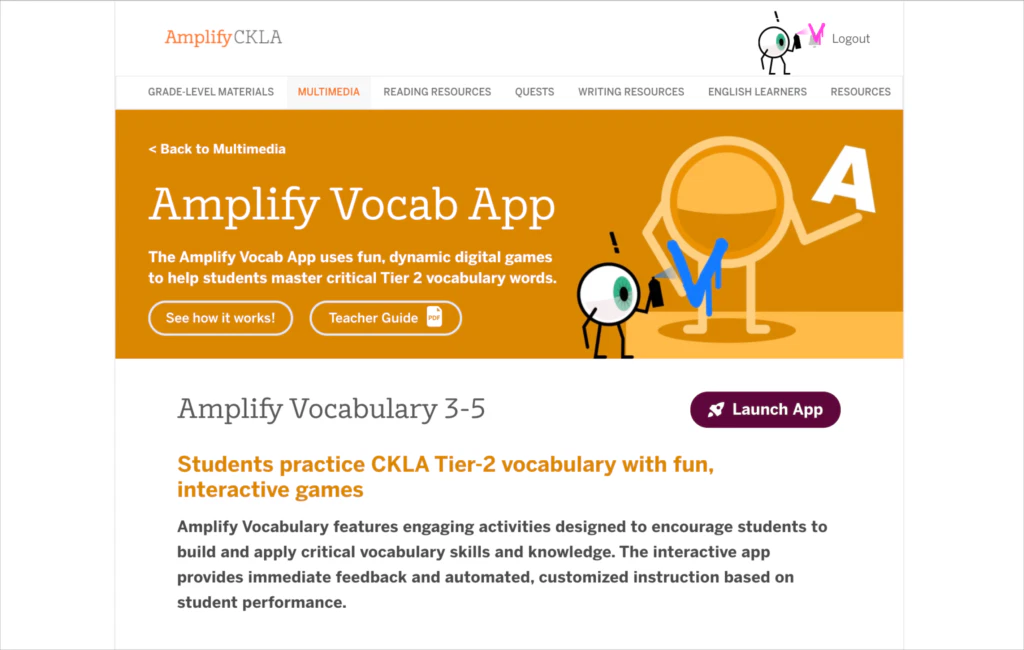
Independent vocabulary practice
Students work on vocabulary in the Vocab App on the Hub.
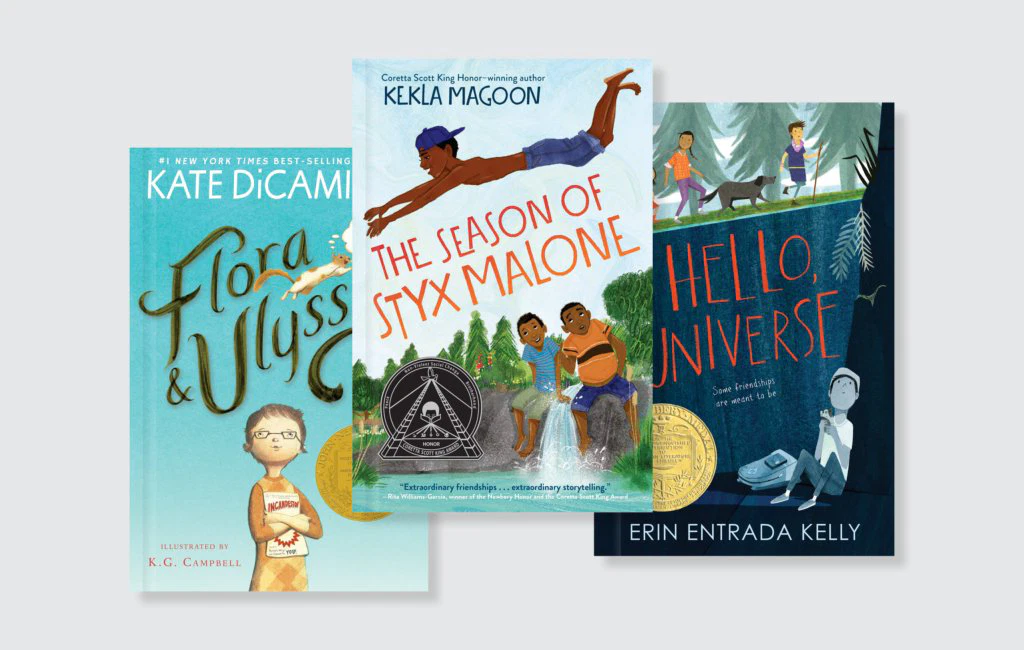
Optional novel study (grades 4–5)
Teacher-led virtual discussion in conjunction with independent reading and writing
Foundational Skills Boost
For students in grade 3, we recommend setting aside an additional 30 minutes for Foundational Skills Boost lessons covering unfinished instruction from the previous year. Foundational Skills Boost lessons are video modules that students can complete on their own at home.
Resources for remote learning with limited student access to technology
| Grade level | Instructional resources |
|---|---|
| Kindergarten |
|
| Grades 1–2 |
|
| Grade 3 |
|
| Grades 4–5 |
|
How to use Amplify CKLA during hybrid learning
We know that back to school will look different for every district. You may be considering staggered schedules or alternating between remote and in-person days. Amplify CKLA’s resources for hybrid learning ensure that students continue to develop critical foundational skills both in the classroom and at home.
Resources for hybrid learning with student access to technology
| Grade level | Remote days | In-person days |
|---|---|---|
| Kindergarten |
|
|
| Grades 1–2 |
|
|
| Grade 3 |
|
|
| Grades 4–5 |
|
|
We understand that access to technology is a significant barrier for many of our students. Amplify CKLA’s resources ensure students are able to continue to develop their skills in any learning environment. Following is a plan for maximizing both in-person and remote days when students have limited access to technology.
| Grade level | Remote days | In-person days |
|---|---|---|
| Kindergarten |
|
|
| Grades 1–2 |
|
|
| Grade 3 |
|
|
| Grades 4–5 |
|
|
Discovering and exploring mathematics in every story

Every picture book on your classroom shelf holds mathematical treasures waiting to be discovered! What if every read-aloud could go beyond a literacy moment to become a catalyst for mathematical sense-making? This question lies at the heart of Allison Hintz and Antony T. Smith’s delightful and informative book, Mathematizing Children’s Literature: Sparking Connections, Joy, and Wonder Through Read-Alouds and Discussion.
Many teachers have used traditional counting books and shape-focused stories to support students in connecting mathematics to literature. According to Hintz and Smith, you can challenge readers to extend and expand upon these experiences in ways that provide more space for them to make sense of stories; ask their own questions; see mathematics authentically in the world; and make connections between the stories, the math, and their lives. That’s the promise of mathematizing—approaching any story with a mathematical lens.
The concept of “mathematizing” goes beyond simply finding numbers in a story. Children are naturally curious and construct meaning by noticing, exploring, explaining, and modeling. The story context becomes a place to play and practice seeing math everywhere in our world. As we read a story aloud and pause to ask, “What do you notice? What do you wonder?,” students are able to surface structure, compare quantities, model situations, and justify their ideas, all while staying rooted in characters, plot, setting, and theme. The result is a classroom where math feels joyful, meaningful, connected, and accessible.
In this post, we’ll explore simple moves to mathematize your next read-aloud, sample prompts to elevate discussion, and follow-up activities to turn your library into a launchpad for mathematical thinking!
Mathematizing process and structure
While there’s no one way to facilitate a mathematical read-aloud, the following steps can help you get started:
- Explore books in your current library. There are no hard and fast rules for choosing the right book to mathematize, because a book can spark mathematical ideas in many ways. Look for books that a) are overtly ‘mathy’ where the math is central to the story’s plot, b) have illustrations that provide opportunities to explore the math in them, and/or c) have a story that inspires mathematical thinking, even if the math isn’t central to the story’s plot.
- Read the book aloud for the first time. The first read is a wonderful opportunity for students to hear and enjoy the story itself.
- Ask students what they noticed and wondered. As students share their responses, record them on a piece of chart paper to revisit later. If no responses pertain to the math in the story, you can follow up with the question, “Where did you see math in the story?”
- Reread the book a second time or revisit a specific page in the book. At this point, you want to start to focus on the math the students will explore in the book. You can either reread the entire story and pause on strategic pages that center on the mathematical ideas, or revisit specific pages in the story. (If the story is longer,it will probably be easiest to just flip back to specific pages.)
- Elicit student thinking. Ask students what math questions they could ask based on the pages they revisited.
- Give students a follow-up math activity. This could be based on a question the students mentioned earlier in this process, or one the teacher has planned.
Mathematizing examples
To save you time finding a book to use, we’ve outlined a plan based on some of our favorite books to mathematize (listed by grade band).
| Grade level | K–1 |
| Book title and author | Bear Says Thanks by Karma Wilson |
| Mathematical focus | Counting, addition, and mathematical representations |
| Launch | Read the story aloud. Ask students, “What do you notice? What do you wonder?” Record their responses on a piece of chart paper. And ask students, “How many friends visited Bear? What different food items did Bear’s friends bring?” |
| Pages to revisit | As students describe the different foods, revisit those pages. Identify any foods the students didn’t mention. As you revisit each page, ask students, “How many of that food item did that friend bring? ”Record their responses on a piece of chart paper for each friend. |
| Activity | Arrange students in small groups of 3–4 and give them a piece of poster paper. Ask students to show each friend’s food items. They can represent them using pictures, counters, ten-frames, etc. After they’ve correctly represented each friend, ask them to show how many total food items Bear’s friends brought using numbers and equations. When they’ve finished, have them visit one another’s posters to see how others represented and added the food items. |
| Grade level | 2–3 |
| Book title and author | 100 Hungry Ants by Elinor J. Pinczes |
| Mathematical focus | Connecting arrays to expressions |
| Launch | Read the story aloud. Ask students, “What do you notice? What do you wonder?” Record their responses on a piece of chart paper. And ask students, “How did the ants rearrange themselves throughout the book?” |
| Pages to revisit | As students describe the different arrangements of ants, revisit those pages so students have a visual of the array. As you revisit each page, ask students, “How many ants are in each row? Each column? What is an equation we can write to represent the array?” Record their responses on a piece of chart paper. |
| Activity | Arrange students in small groups of 3–4 and give them a piece of poster paper. Give each group a different number of ants. Suggested numbers are: 12, 24, 36, 20, 18. Ask students to draw all of the different ways their number of ants could rearrange themselves and record an equation to match each. If it’s helpful, you can give each group a set of cubes, counters, or beans to represent the ants so they can manipulate them. Wrap up the activity by having students visit one another’s posters and discussing the similarities and differences between them. |
| Grade level | 4–5 |
| Book title and author | Dozens of Doughnuts by Carrie Finison |
| Mathematical focus | Multiplication and division |
| Launch | Read the story aloud. Ask students, “What do you notice? What do you wonder?” Record their responses on a piece of chart paper. And ask students, “How many ways did Luanne share her doughnuts as friends arrived at her door?” |
| Pages to revisit | As students describe the different ways Luanne shared her doughnuts, revisit those pages. As you revisit each page, ask students, “How many doughnuts were being shared? By how many animals? ”Record their responses on a piece of chart paper. |
| Activity | Arrange students in small groups of 3–4 and give them each a piece of poster paper. Ask them to show all of the ways Luanne shared her doughnuts. To enable variation, refrain from specifying the representation they should use. After they’ve finished, ask them to do a Gallery Walk to each other’s posters to get ideas to add to their poster. If none of the groups have a multiplication and division equation for each way, ask students to record those as well. Ask students how Luanne could have shared a dozen doughnuts with the following number of animals showing up at her door: 5, 8, 10, 14, 16, and 18. Encourage students to show their work and record multiplication and division equations. |
And with all the upcoming holidays and opportunities to gather with friends and family, we were also inspired to use Spaghetti and Meatballs for All! by Marilyn Burns in a mathematizing read-aloud. Follow this link to find K–2 and 3–5 lesson plans for this book that you can use right away!
Grade 6
Module 1: Ratios and Unit Rates
| Eureka Math | Desmos Math 6–A1 |
| Topic A Representing and Reasoning About Ratios | |
| Lesson 1: Ratios Lesson 2: Ratios | Unit 2 Lesson 1: Pizza Maker [Free lesson] Lesson 2: Ratio Rounds (Print available) |
| Lesson 3: Equivalent Ratios Lesson 4: Equivalent Ratios | Unit 2 Lesson 3: Rice Ratios Lesson 4: Fruit Lab [Free lesson] Lesson 5: Balancing Act Lesson 7: Mixing Paint, Part 1 Lesson 8 World Records (Print available) Lesson 11 Community Life (Print available) Practice Day 1 (Print available) |
| Lesson 5: Solving Problems by Finding Equivalent Ratios Lesson 6: Solving Problems by Finding Equivalent Ratios | Unit 2 Lesson 5 Balancing Act |
| Lesson 7: Associated Ratios and the Value of a Ratio Lesson 8: Equivalent Ratios Defined Through the Value of a Ratio | Unit 2 Lesson 6: Product Prices (Print available) Lesson 7: Mixing Paint, Part 1 |
| Topic B Collections of Equivalent Ratios | |
| Lesson 9: Tables of Equivalent Ratios | Unit 2 Lesson 6: Product Prices (Print available) Lesson 7: Mixing Paint, Part 1 |
| Lesson 10: The Structure of Ratio Tables-Additive and Multiplicative | Unit 2 Lesson 10: Balloons Lesson 11: Community Life (Print available) |
| Lesson 11: Comparing Ratios Using Ratio Tables | Unit 2 Lesson 10: Balloons |
| Lesson 12: From Ratio Tables to Double Number Line Diagrams | Unit 2 Lesson 6: Product Prices (Print available) Lesson 8: World Records (Print available) Lesson 12: Mixing Paint, Part 2 Lesson 14: Lunch Waste (Print available) Practice Day 2 (Print available) |
| Lesson 13: From Ratio Tables to Equations Using the Value of a Ratio | |
| Lesson 14: From Ratio Tables, Equations, and Double Number Line Diagrams to Plots on the Coordinate Plane | |
| Lesson 15: A Synthesis of Representations of Equivalent Ratio Collections | |
| Topic C Unit Rates | |
| Lesson 16: From Ratio to Rates | Unit 2 Lesson 8: World Records (Print available) Unit 3 Lesson 4: Model Trains Lesson 5: Soft Serve [Free lesson] Lesson 6: Welcome to the Robot Factory |
| Lesson 17: From Rates to Ratios | |
| Lesson 18: Finding a Rate by Dividing Two Quantities | Unit 3 Lesson 4: Model Trains Lesson 5: Soft Serve [Free lesson] Lesson 6: Welcome to the Robot Factory Lesson 7: More Soft Serve |
| Lesson 19: Comparison Shopping-Unit Price and Related Measurement Conversions Lesson 20: Comparison Shopping-Unit Price and Related Measurement Conversions Lesson 21: Getting the Job Done—Speed, Work, and Measurement Units Lesson 22: Getting the Job Done—Speed, Work, and Measurement Units | Unit 3 Lesson 2: Counting Classrooms Lesson 3: Pen Pals |
| Lesson 23: Problem-Solving Using Rates, Unit Rates, and Conversions. | Unit 3 Lesson 13: A Country as a Village |
| Topic D Percent | |
| Lesson 24: Percent and Rates per 100 | Unit 3 Lesson 8: Lucky Duckies [Free lesson] Lesson 9: Bicycle Goals |
| Lesson 25: A Fraction as a Percent | |
| Lesson 26: Percent of a Quantity. | Unit 3 Lesson 10: What´s Missing? (Print available) Lesson 11: Cost Breakdown |
| Lesson 27: Solving Percent Problems Lesson 28: Solving Percent Problems Lesson 29: Solving Percent Problems | Unit 3 Lesson 10: What´s Missing? (Print available) Lesson 11: Cost Breakdown Lesson 12: More Bicycle Goals Lesson 13: A Country as a Village Practice Day 2 (Print available) |
Module 2: Arithmetic Operations Including Division of Fractions
| Lesson 1: Interpreting Division of a Fraction by a Whole Number—Visual Models. | Unit 4 Lesson 2: Making Connections (Print available) |
| Lesson 2: Interpreting Division of a Whole Number by a Fraction —Visual Models. | Unit 4 Lesson 1: Cookie Cutter Lesson 3: Flour Planner [Free lesson] Lesson 4: Flower Planters Lesson 5: Garden Bricks (Print available) |
| Lesson 3: Interpreting and Computing Division of a Fraction by a Fraction—More Models Lesson 4: Interpreting and Computing Division of a Fraction by a Fraction—More Models | Unit 4 Lesson 5: Garden Bricks Lesson 6: Fill the Gap [Free lesson] Lesson 7: Break It Down Lesson 8: Potting Soil Lesson 9: Division Challenges Lesson 10: Swap Meet (Print available) Practice Day |
| Lesson 5: Creating Division Stories. | |
| Lesson 6: More Division Stories. | |
| Lesson 7: The Relationship Between Visual Fraction Models and Equations | |
| Lesson 8: Dividing Fractions and Mixed Numbers | Unit 4 Lesson 5: Garden Bricks (Print available) Lesson 6: Fill the Gap [Free lesson] |
| Topic B Multi-Digit Decimal Operations—Adding, Subtracting, and Multiplying | |
| Lesson 9: Sums and Differences of Decimals | Unit 5 Lesson 2: Decimal Diagrams [Free lesson] Lesson 3: Fruit by the Pound Lesson 4: Missing Digits |
| Lesson 10: The Distributive Property and the Products of Decimals | Unit 5 Lesson 5: Decimal Multiplication Lesson 6: Multiplying with Areas Lesson 7: Multiplication Methods (Print available) |
| Lesson 11: Fraction Multiplication and the Products of Decimals | Unit 5 Lesson 7: Multiplication Methods (Print available) |
| Topic C Dividing Whole Numbers and Decimals | |
| Lesson 12: Estimating Digits in a Quotient | |
| Lesson 13: Dividing Multi-Digit Numbers Using the Algorithm | Unit 5 Lesson 9: Long Division Launch Practice Day 1 (Print available) Practice Day 2 (Print available) |
| Lesson 14: The Division Algorithm—Converting Decimal Division into Whole Number Division Using Fractions. | |
| Lesson 15: The Division Algorithm—Converting Decimal Division into Whole Number Division Using Mental Math | |
| Topic D Number Theory—Thinking Logically About Multiplicative Arithmetic | |
| Lesson 16: Even and Odd Numbers | |
| Lesson 17: Divisibility Tests for 3 and 9 | |
| Lesson 18: Least Common Multiple and Greatest Common Factor | Unit 5 Lesson 14: Common Multiples Lesson 15: Common Factors Practice Day 2 (Print available) |
| Lesson 19: The Euclidean Algorithm as an Application of the Long Division Algorithm |
Module 3: Rational Numbers
| Lesson 1: Positive and Negative Numbers on the Number Line—Opposite Direction and Value | Unit 7Lesson 2: Digging Deeper |
| Lesson 2: Real-World Positive and Negative Numbers and Zero. Lesson 3: Real-World Positive and Negative Numbers and Zero. | Unit 7 Lesson 4: Sub-Zero |
| Lesson 4: The Opposite of a Number Lesson 5: The Opposite of a Number’s Opposite Lesson 6: Rational Numbers on the Number Line | Unit 7Lesson 2: Digging Deeper |
| Topic B Order and Absolute Value | |
| Lesson 7: Ordering Integers and Other Rational Numbers Lesson 8: Ordering Integers and Other Rational Numbers Lesson 9: Comparing Integers and Other Rational Numbers | Unit 7Lesson 3: Order in the Class (Print available) [Free lesson] |
| Lesson 10: Writing and Interpreting Inequality Statements Involving Rational Numbers | |
| Lesson 11: Absolute Value—Magnitude and Distance Lesson 12: The Relationship Between Absolute Value and Order | Unit 7Lesson 5: Distance on the Number Line |
| Lesson 13: Statements of Order in the Real World. | |
| Topic C Rational Numbers and the Coordinate Plane | |
| Lesson 14: Ordered Pairs Lesson 15: Locating Ordered Pairs on the Coordinate Plane | Unit 7Lesson 9: Sand Dollar SearchLesson 10: The A-maze-ing Coordinate PlaneLesson 11: Polygon Maker |
| Lesson 16: Symmetry in the Coordinate Plane. | |
| Lesson 17: Drawing the Coordinate Plane and Points on the Plane | Lesson 10: The A-maze-ing Coordinate Plane |
| Lesson 18: Distance on the Coordinate Plane | Unit 7Lesson 11: Polygon Maker |
| Lesson 19: Problem Solving and the Coordinate Plane | Unit 7Lesson 12: Graph Telephone (Print available)Practice Day 2 (Print available) |
Module 4: Expressions and Equations
| Topic A Relationships of the Operations | |
| Lesson 1: The Relationship of Addition and Subtraction | |
| Lesson 2: The Relationship of Multiplication and Division | |
| Lesson 3: The Relationship of Multiplication and Addition. | |
| Lesson 4: The Relationship of Division and Subtraction | |
| Topic B Special Notations of Operations | |
| Lesson 5: Exponents | Unit 6Lesson 10: PowersLesson 11: Exponent Expressions (Print available)Practice Day 2 (Print available) |
| Lesson 6: The Order of Operations | |
| Topic C Replacing Letters and Numbers | |
| Lesson 7: Replacing Letters with Numbers Lesson 8: Replacing Numbers with Letters | Unit 6Lesson 7: Border TilesLesson 12: Squares and Cubes |
| Topic D Expanding, Factoring, and Distributing Expressions | |
| Lesson 9: Writing Addition and Subtraction Expressions | Unit 6Lesson 6: Vari-applesLesson 8: Products and Sums [Free lesson]Lesson 9: Products, Sums, and Differences |
| Lesson 10: Writing and Expanding Multiplication Expressions Lesson 11: Factoring Expressions Lesson 12: Distributing Expressions | Unit 6Lesson 8: Products and Sums [Free lesson]Lesson 9: Products, Sums, and Differences |
| Lesson 13: Writing Division Expressions | |
| Lesson 14: Writing Division Expressions | |
| Topic E Expressing Operations in Algebraic Form | |
| Lesson 15: Read Expressions in Which Letters Stand for Numbers Lesson 16: Write Expressions in Which Letters Stand for Numbers Lesson 17: Write Expressions in Which Letters Stand for Numbers | Unit 6Lesson 6: Vari-applesLesson 7: Border Tiles |
| Topic F Writing and Evaluating Expressions and Formulas | |
| Lesson 18: Writing and Evaluating Expressions—Addition and Subtraction Lesson 19: Substituting to Evaluate Addition and Subtraction Expressions Lesson 20: Writing and Evaluating Expressions—Multiplication and Division Lesson 21: Writing and Evaluating Expressions—Multiplication and Addition | Unit 6Lesson 7: Border TilesLesson 8: Products and Sums [Free lesson]Lesson 9: Products, Sums, and DifferencesLesson 12: Squares and Cubes |
| Lesson 22: Writing and Evaluating Expressions—Exponents | Unit 6Lesson 10: PowersLesson 11: Exponent Expressions (Print available)Lesson 12: Squares and CubesPractice Day 2 (Print available) |
| Topic G Solving Equations | |
| Lesson 23: True and False Number Sentences Lesson 24: True and False Number Sentences | Unit 6Lesson 1: Weight for It [Free lesson] |
| Lesson 25: Finding Solutions to Make Equations True | Unit 6Lesson 1: Weight for It [Free lesson]Lesson 2: Five Equations |
| Lesson 26: One-Step Equations—Addition and Subtraction | Unit 6Lesson 1: Weight for It [Free lesson]Lesson 2: Five EquationsLesson 3: Hanging Around |
| Lesson 27: One-Step Equations—Multiplication and Division Lesson 28: Two-Step Problems—All Operations Lesson 29: Multi-Step Problems—All Operations | Unit 6Lesson 3: Hanging AroundLesson 4: Hanging It UpLesson 5: Swap and Solve |
| Topic H Applications of Equations | |
| Lesson 30: One-Step Problems in the Real World Lesson 31: Problems in Mathematical TermsLesson Lesson 32: Multi-Step Problems in the Real World | Unit 6Lesson 3: Hanging AroundLesson 4: Hanging It UpLesson 5: Swap and SolvePractice Day 1 (Print available) |
| Lesson 33: From Equations to Inequalities Lesson 34: Writing and Graphing Inequalities in Real-World Problems | Unit 7Lesson 6: Tunnel Travel [Free lesson]Lesson 7: Comparing WeightsLesson 8: Shira´s Solutions |
Module 5: Area, Surface Area, and Volume Problems
| Topic A: Area of Triangles, Quadrilaterals, and Polygons | |
| Lesson 1: The Area of Parallelograms Through Rectangle Facts | Unit 1Lesson 3: Exploring Parallelograms (Print available) [Free lesson]Lesson 4: Off the Grid |
| Lesson 2: The Area of Right Triangles Lesson 3: The Area of Acute Triangles Using Height and Base | Unit 1Lesson 5: Exploring Triangles (Print available)Lesson 6: Triangles and ParallelogramsLesson 7: Off the Grid, Part 2 |
| Lesson 4: The Area of All Triangles Using Height and Base | Unit 1Lesson 6: Triangles and ParallelogramsLesson 7: Off the Grid, Part 2 |
| Lesson 5: The Area of Polygons Through Composition and Decomposition | Unit 1Lesson 2: LettersLesson 8: Pile of PolygonsPractice Day 1 (Print available) |
| Lesson 6: Area in the Real World | |
| Topic B Polygons on the Coordinate Plane | |
| Lesson 7: Distance on the Coordinate Plane | Unit 1Lesson 8: Pile of Polygons |
| Lesson 8: Drawing Polygons in the Coordinate Plane | Unit 7Lesson 11: Polygon Maker |
| Lesson 9: Determining Perimeter and Area of Polygons on the Coordinate Plane | Unit 1Lesson 8: Pile of Polygons |
| Lesson 10: Distance, Perimeter, and Area in the Real World | |
| Topic C Volume of Right Rectangular Prisms | |
| Lesson 11: Volume with Fractional Edge Lengths and Unit Cubes | Unit 4Lesson 11: Classroom ComparisonsLesson 12: Puzzling Areas (Print available) [Free lesson]Lesson 13: Volume ChallengesLesson 14: Planter Planner (Print available) |
| Lesson 12: From Unit Cubes to the Formulas for Volume | |
| Lesson 13: The Formulas for Volume | |
| Lesson 14: Volume in the Real World | Unit 4Lesson 14: Planter Planner (Print available) |
| Topic D Nets and Surface Area | |
| Lesson 15: Representing Three-Dimensional Figures Using Nets Lesson 16: Constructing Nets Lesson 17: From Nets to Surface Area | Unit 1Lesson 10: Plenty of PolyhedraLesson 11: Nothing But Nets (Print available)Lesson 13: Take It To Go (Print available) |
| Lesson 18: Determining Surface Area of Three-Dimensional Figures | Unit 1Lesson 9: Renata´s Stickers [Free lesson]Lesson 10: Plenty of PolyhedraLesson 11: Nothing But Nets (Print available)Lesson 13: Take It To Go (Print available)Practice Day 2 (Print available) |
| Lesson 19: Surface Area and Volume in the Real World | |
| Lesson 19a: Addendum Lesson for Modeling―Applying Surface Area and Volume to Aquariums | |
| Lesson 3: The Area of Acute Triangles Using Height and Base | Unit 1Lesson 5 Exploring TrianglesLesson 6 Triangles and ParallelogramsLesson 7 Off the Grid, Part 2 |
Module 6: Statistics
| Topic A Understanding Distributions | |
| Lesson 1: Posing Statistical Questions | Unit 8 Lesson 1: Screen TimeLesson 2: Dot Plots |
| Lesson 2: Displaying a Data Distribution Lesson 3: Creating a Dot Plot | Unit 8 Lesson 2: Dot PlotsLesson 3: Minimum Wage (Print available) [Free lesson]Lesson 4: Lots More Dots |
| Lesson 4: Creating a Histogram Lesson 5: Describing a Distribution Displayed in a Histogram | Unit 8Lesson 5: The Plot Thickens [Free lesson]Lesson 6: DIY Histograms (Print available) |
| Topic B Summarizing a Distribution That Is Approximately Symmetric Using the Mean and Mean Absolute Deviation | |
| Lesson 6: Describing the Center of a Distribution Using the Mean Lesson 7: The Mean as a Balance Point | Unit 8Lesson 7: Snack Time |
| Lesson 8: Variability in a Data Distribution | Unit 8Lesson 8: Pop It! |
| Topic 9: The Mean Absolute Deviation (MAD). | Unit 8Lesson 9: Hoops |
| Lesson 10: Describing Distributions Using the Mean and MAD Lesson 11: Describing Distributions Using the Mean and MAD | Unit 8Lesson 10 Hollywood Part 1Practice Day 1 (Print available) |
| Topic C Summarizing a Distribution That Is Skewed Using the Median and the Interquartile Range | |
| Lesson 12: Describing the Center of a Distribution Using the Median | Unit 8Lesson 11: Toy Cars [Free lesson]Lesson 12: In the News |
| Lesson 13: Describing Variability Using the Interquartile Range (IQR) | Unit 8Lesson 13: Pumpkin Patch |
| Lesson 14: Summarizing a Distribution Using a Box Plot Lesson 15: More Practice with Box Plots | Unit 8Lesson 14: Car, Plane, Bus, or Train? (Print available) |
| Lesson 16: Understanding Box Plots | Unit 8Lesson 14: Car, Plane, Bus, or Train? (Print available)Lesson 15: Hollywood Part 2Lesson 16: Hollywood Part 3 (Print available)Practice Day 2 (Print available) |
| Topic D Summarizing and Describing Distributions | |
| Lesson 17: Developing a Statistical Project | |
| Lesson 18: Connecting Graphical Representations and Numerical Summaries | Unit 8Lesson 5: The Plot Thickens [Free lesson] |
| Lesson 19: Comparing Data Distributions | Unit 8Lesson 15: Hollywood Part 2 |
| Lesson 20: Describing Center, Variability, and Shape of a Data Distribution from a Graphical Representation Lesson 21: Summarizing a Data Distribution by Describing Center, Variability, and Shape | Unit 8Lesson 16: Hollywood Part 3 (Print available) |
| Lesson 22: Presenting a Summary of a Statistical Project | |
| Lesson 3: Creating a Dot Plot | Unit 8Lesson 2 Dot PlotsLesson 3 Minimum Wage [Free lesson]Lesson 4 Lots More Dots |
Grade 7
Module 1: Ratios and Proportional Relationships
Module 2: Rational Numbers
| Topic A Addition and Subtraction of Integers and Rational Numbers | |
| Lesson 1: Opposite Quantities Combine to Make Zero | Unit 5 Lesson 1: Floats and Anchors [Free lesson] |
| Lesson 2: Using the Number Line to Model the Addition of Integers Lesson 3: Understanding Addition of Integers Lesson 4: Efficiently Adding Integers and Other Rational Numbers Lesson 5: Understanding Subtraction of Integers and Other Rational Numbers | Unit 5 Lesson 2: More Floats and Anchors Lesson 4: Draw Your Own (Print available) [Free lesson] Lesson 5: Number Puzzles Lesson 10: Integer Puzzles [Free lesson] Lesson 11: Changing Temperatures Lesson 13: Solar Panels and More (Print available) |
| Lesson 6: The Distance Between Two Rational Numbers | |
| Lesson 7: Addition and Subtraction of Rational Numbers | Unit 5 Lesson 3: Bumpers Lesson 4: Draw Your Own (Print available) [Free lesson] Lesson 5: Number Puzzles Lesson 10; Integer Puzzles [Free lesson] Lesson 11: Changing Temperatures Lesson 13: Solar Panels and More (Print available) Practice Day 1 (Print available) |
| Lesson 8: Applying the Properties of Operations to Add and Subtract Rational Numbers | |
| Lesson 9: Applying the Properties of Operations to Add and Subtract Rational Numbers | |
| Topic B Multiplication and Division of Integers and Rational Numbers | |
| Lesson 10: Understanding Multiplication of Integers Lesson 11: Develop Rules for Multiplying Signed Numbers | Unit 5 Lesson 6: Floating in Groups Lesson 7: Back in Time Lesson 8: Speeding Turtles Lesson 10: Integer Puzzles [Free lesson] Practice Day 2 (Print available) |
| Lesson 12: Division of Integers | Unit 5 Lesson 8: Speeding Turtles |
| Lesson 13: Converting Between Fractions and Decimals Using Equivalent Fractions | |
| Lesson 14: Converting Rational Numbers to Decimals Using Long Division | Unit 4 Lesson 13: Decimal Deep Dive (Print available) |
| Lesson 15: Multiplication and Division of Rational Numbers | Unit 5 Lesson 8: Speeding Turtles Lesson 10: Integer Puzzles [Free lesson] Lesson 12: Arctic Sea Ice (Print available) Lesson 13: Solar Panels and More (Print available) Practice Day 2 (Print available) |
| Lesson 16: Applying the Properties of Operations to Multiply and Divide Rational Numbers | |
| Topic C Applying Operations with Rational Numbers to Expressions and Equations | |
| Lesson 17: Comparing Tape Diagram Solutions to Algebraic Solutions | Unit 6 Lesson 2: Smudged Receipts Lesson 3: Equations Lesson 4: Seeing Structure (Print available) |
| Lesson 18: Writing, Evaluating, and Finding Equivalent Expressions with Rational Numbers Lesson 19: Writing, Evaluating, and Finding Equivalent Expressions with Rational Numbers | Unit 5 Lesson 9 Expressions |
| Lesson 20: Investments—Performing Operations with Rational Numbers | |
| Lesson 21: If-Then Moves with Integer Number Cards | |
| Lesson 22: Solving Equations Using Algebra Lesson 23: Solving Equations Using Algebra | Unit 6 Lesson 3: Equations Lesson 4: Seeing Structure (Print available) Lesson 6: Balancing Equations Lesson 7: Keeping It True (Print available) Lesson 12: Community Day (Print available) Unit 5 Lesson 3: Bumpers |
Module 3: Expressions and Equations
Module 4: Percent and Proportional Relationships
Module 5: Statistics and Probability
| Topic A Calculating and Interpreting Probabilities | |
| Lesson 1: Chance Experiments | Unit 8Lesson 1: How Likely? (Print available) [Free lesson]Lesson 2: Prob-bear-bilities [Free lesson]Lesson 3: Mystery Bag |
| Lesson 2: Estimating Probabilities by Collecting Data Lesson 3: Chance Experiments with Equally Likely Outcomes Lesson 4: Calculating Probabilities for Chance Experiments with Equally Likely Outcomes | Unit 8Lesson 3: Mystery BagLesson 4: Spin ClassLesson 5: Is It Fair?Lesson 6: Fair Games |
| Lesson 5: Chance Experiments with Outcomes That Are Not Equally Likely | Unit 8Lesson 4: Spin ClassLesson 5: Is It Fair?Lesson 6: Fair GamesLesson 7: Weather or Not |
| Lesson 6: Using Tree Diagrams to Represent a Sample Space and to Calculate Probabilities | Unit 8Lesson 6: Fair GamesLesson 7: Weather or Not |
| Lesson 7: Calculating Probabilities of Compound Events | Unit 8Lesson 8: Simulate It! (Print available)Lesson 9: Car, Bike, or Train? (Print available)Practice Day 1 (Print available) |
| Topic B Estimating Probabilities | |
| Lesson 8: The Difference Between Theoretical Probabilities and Estimated Probabilities Lesson 9: Comparing Estimated Probabilities to Probabilities Predicted by a Model | Unit 8Lesson 6: Fair GamesLesson 7: Weather or NotLesson 8: Simulate It! (Print available)Lesson 9: Car, Bike, or Train? (Print available) |
| Lesson 10: Conducting a Simulation to Estimate the Probability of an Event | Unit 8Lesson 7: Weather or NotLesson 8: Simulate It! (Print available)Lesson 9: Car, Bike, or Train? (Print available) |
| Lesson 11: Conducting a Simulation to Estimate the Probability of an Event Lesson 12: Applying Probability to Make Informed Decisions | Unit 8Lesson 7: Weather or NotLesson 8: Simulate It! (Print available) |
| Topic C Random Sampling and Estimating Population Characteristics | |
| Lesson 13: Populations, Samples, and Generalizing from a Sample to a Population | Unit 8Lesson 9: Car, Bike, or Train? (Print available)Lesson 10: Crab Island [Free lesson]Lesson 11: HeadlinesLesson 12: Flower Power |
| Lesson 14: Selecting a Sample Lesson 15: Random Sampling Lesson 16: Methods for Selecting a Random Sample | Unit 8Lesson 10: Crab Island [Free lesson]Lesson 11: Headlines |
| Lesson 17: Sampling Variability | Unit 8Lesson 9: Car, Bike, or Train? (Print available)Lesson 13: Plots and Samples |
| Lesson 18: Sampling Variability and the Effect of Sample Size Lesson 19: Understanding Variability When Estimating a Population Proportion | Unit 8Lesson 9: Car, Bike, or Train? (Print available)Lesson 13: Plots and SamplesLesson 14: School Newspaper (Print available) |
| Lesson 20: Estimating a Population Proportion | |
| Topic D Comparing Populations | |
| Lesson 21: Why Worry About Sampling Variability? | Unit 8Lesson 9: Car, Bike, or Train? (Print available)Lesson 13: Plots and SamplesLesson 14: School Newspaper (Print available) |
| Lesson 22: Using Sample Data to Compare the Means of Two or More Populations Lesson 23: Using Sample Data to Compare the Means of Two or More Populations | Unit 8Lesson 9: Car, Bike, or Train? (Print available)Lesson 10: Crab Island [Free lesson]Lesson 13: Plots and SamplesLesson 14: School Newspaper (Print available)Lesson 15: Asthma Rates (Print available) |
Module 6: Geometry
| Topic A Unknown Angles | |
| Lesson 1: Complementary and Supplementary Angles | Unit 7Lesson 2: Friendly Angles [Free lesson]Lesson 3: Angle Diagrams |
| Lesson 2: Solving for Unknown Angles Using Equations Lesson 3: Solving for Unknown Angles Using Equations Lesson 4: Solving for Unknown Angles Using Equations | Unit 7Lesson 1: PinwheelsLesson 2: Friendly AnglesLesson 3: Angle DiagramsLesson 4: Missing Measures (Print available) [Free lesson] |
| Topic B Constructing Triangles | |
| Lesson 5: Identical Triangles | Unit 7Lesson 6: Is It Enough?Lesson 7: More Than One |
| Lesson 6: Drawing Geometric Shapes | Unit 7Lesson 6: Is It Enough?Lesson 7: More Than OneLesson 8: Can You Draw It? (Print available) |
| Lesson 7: Drawing Parallelograms | |
| Lesson 8: Drawing Triangles | Unit 7Lesson 5: Can You Build It? [Free lesson]Lesson 6: Is It Enough?Lesson 7: More Than OneLesson 8: Can You Draw It? (Print available)Practice Day 1 (Print available) |
| Lesson 9: Conditions for a Unique Triangle―Three Sides and Two Sides and the Included Lesson 10: Conditions for a Unique Triangle—Two Angles and a Given Side Angle | Unit 7Lesson 8: Can You Draw It? (Print available) |
| Lesson 11: Conditions on Measurements That Determine a Triangle | Unit 7Lesson 5: Can You Build It? [Free lesson]Lesson 6: Is It Enough?Lesson 7: More Than OneLesson 8: Can You Draw It? (Print available)Practice Day 1 (Print available) |
| Lesson 12: Unique Triangles―Two Sides and a Non-Included Angle | |
| Lesson 13: Checking for Identical Triangles Lesson 14: Checking for Identical Triangles | Unit 7Lesson 6: Is It Enough?Lesson 7: More Than OnePractice Day 1 |
| Lesson 15: Using Unique Triangles to Solve Real-World and Mathematical Problems | |
| Topic C Slicing Solids | |
| Lesson 16: Slicing a Right Rectangular Prism with a Plane Lesson 17: Slicing a Right Rectangular Pyramid with a Plane Lesson 18: Slicing on an Angle | Unit 7Lesson 9: Slicing Solids |
| Lesson 19: Understanding Three-Dimensional Figures | |
| Topic D Problems Involving Area and Surface Area | |
| Lesson 20: Real-World Area Problems | Unit 3Lesson 5: Area Strategies |
| Lesson 21: Mathematical Area Problems | Unit 3Lesson 5: Area StrategiesLesson 6: Radius Squares (Print available) |
| Lesson 22: Area Problems with Circular Regions | Unit 3Lesson 5: Area StrategiesLesson 8: Area Challenges [Free lesson] |
| Lesson 23: Surface Area Lesson 24: Surface Area | Unit 7Lesson 12: Surface Area Strategies (Print available)Lesson 13: Popcorn Possibilities |
| Topic E Problems Involving Volume | |
| Lesson 25: Volume of Right Prisms | Unit 7Lesson 10: Simple PrismsLesson 11: More Complicated PrismsLesson 13: Popcorn Possibilities |
| Lesson 26: Volume of Composite Three-Dimensional Objects | Unit 7Lesson 11: More Complicated Prisms |
| Lesson 27: Real-World Volume Problems | Unit 7Lesson 13: Popcorn Possibilities |
Grade 8
Module 1: Integer Exponents and Scientific Notation
| Eureka Math | Desmos Math 6–A1 |
| Topic A Exponential Notation and Properties of Integer Exponents | |
| Lesson 1: Exponential Notation | Unit 7 Lesson 1 Circles [Free lesson]Lesson 2 Combining Exponents |
| Lesson 2: Multiplication of Numbers in Exponential Form Lesson 3: Numbers in Exponential Form Raised to a Power | Unit 7 Lesson 2 Combining ExponentsLesson 3 Power Pairs (Print available) [Free lesson]Lesson 4 Rewriting Powers |
| Lesson 4: Numbers Raised to the Zeroth Power Lesson 5: Negative Exponents and the Laws of Exponents | Unit 7 Lesson 5 Zero and Negative ExponentsLesson 6 Write a Rule (Print available)Practice Day 1 (Print available) |
| Lesson 6: Proofs of Laws of Exponents | |
| Topic B Magnitude and Scientific Notation | |
| Lesson 7: Magnitude | Unit 7 Lesson 7 Scales and Weights |
| Lesson 8: Estimating Quantities | Unit 7 Lesson 7: Scales and WeightsLesson 8: Point ZapperLesson 9: Use Your Powers |
| Lesson 9: Scientific Notation Lesson 10: Operations with Numbers in Scientific Notation | Unit 7 Lesson 10: Solar System [Free lesson]Lesson 11: Balance the Scales [Free lesson]Lesson 13: Star Power |
| Lesson 11: Efficacy of Scientific Notation | Unit 7 Lesson 13: Star Power |
| Lesson 12: Choice of Unit | |
| Lesson 13: Comparison of Numbers Written in Scientific Notation and Interpreting Scientific Notation Using Technology | Unit 7 Lesson 13: Star Power Practice Day 2 (Print available) |
Module 2: The Concept of Congruence
| Topic A Definitions and Properties of the Basic Rigid Motions | |
| Lesson 1: Why Move Things Around? Lesson 2: Definition of Translation and Three Basic Properties | Unit 1Lesson 1: Transformers [Free lesson]Lesson 2: Spinning, Flipping, Sliding [Free lesson] |
| Lesson 3: Translating Lines | Unit 1Lesson 1: Transformers [Free lesson]Lesson 2: Spinning, Flipping, Sliding [Free lesson] Unit 3Lesson 6: Translations |
| Lesson 4: Definition of Reflection and Basic Properties Lesson 5: Definition of Rotation and Basic Properties Lesson 6: Rotations of 180 Degrees | Unit 1Lesson 1: Transformers [Free lesson]Lesson 2: Spinning, Flipping, Sliding [Free lesson]Lesson 4: Moving Day (Print available) [Free lesson]Lesson 5: Getting Coordinated |
| Topic B Sequencing the Basic Rigid Motions | |
| Lesson 7: Sequencing Translations Lesson 8: Sequencing Reflections and Translations | Unit 1Lesson 3: Transformation GolfLesson 6: Connecting the Dots [Free lesson] |
| Lesson 9: Sequencing Rotations Lesson 10: Sequences of Rigid Motions | Unit 1Lesson 3: Transformation GolfLesson 6: Connecting the Dots [Free lesson]Lesson 13: Tessellate [Free lesson]Practice Day |
| Topic C Congruence and Angle Relationships | |
| Lesson 11: Definition of Congruence and Some Basic Properties | Unit 1 Lesson 7: Are They the Same?Lesson 8: No Bending, No StretchingLesson 9: Are They Congruent?Practice Day |
| Lesson 12: Angles Associated with Parallel Lines | Unit 1 Lesson 10: Transforming Angles |
| Lesson 13: Angle Sum of a Triangle | Unit 1 Lesson 11: Tearing It Up (Print available) |
| Lesson 14: More on the Angles of a Triangle | Unit 1 Lesson 11: Tearing It Up (Print available)Lesson 12: Puzzling It Out [Free lesson] |
| Topic D: The Pythagorean Theorem | |
| Lesson 15: Informal Proof of the Pythagorean Theorem | Unit 8Lesson 7: Pictures to Prove It |
| Lesson 16: Applications of the Pythagorean Theorem | Unit 8Lesson 10: Taco TruckPractice Day 2 (Print available) |
Module 3: Similarity
Module 4: Linear Equations
Module 5: Examples of Functions from Geometry
Module 6: Linear Functions
Module 7: Introduction to Irrational Numbers Using Geometry
| Topic A Square and Cube Roots | |
| Lesson 1: The Pythagorean Theorem | Unit 8 Lesson 6: The Pythagorean Theorem |
| Lesson 2: Square Roots | Unit 8 Lesson 2: From Squares to Roots Lesson 3: Between Squares Lesson 4: Root Down [Free lesson] |
| Lesson 3: Existence and Uniqueness of Square Roots and Cube Roots | Unit 8 Lesson 5: Filling Cubes |
| Lesson 4: Simplifying Square Roots | Unit 8 Lesson 2: From Squares to Roots Lesson 3: Between Squares Lesson 4: Root Down [Free lesson] Practice Day 1 (Print available) |
| Lesson 5: Solving Equations with Radicals | |
| Topic B Decimal Expansions of Numbers | |
| Lesson 6: Finite and Infinite Decimals Lesson 7: Infinite Decimals Lesson 8: The Long Division Algorithm Lesson 9: Decimal Expansions of Fractions, Part 1 Lesson 10: Converting Repeating Decimals to Fractions | Unit 8 Lesson 12: Fractions to Decimals Lesson 13: Decimals to Fractions |
| Lesson 11: The Decimal Expansion of Some Irrational Numbers | |
| Lesson 12: Decimal Expansions of Fractions, Part 2 | |
| Lesson 13: Comparing Irrational Numbers | Unit 8 Lesson 14: Hit the Target |
| Lesson 14: Decimal Expansion of π | |
| Topic C The Pythagorean Theorem | |
| Lesson 15: Pythagorean Theorem, Revisited | Unit 8 Lesson 6: The Pythagorean Theorem Lesson 7: Pictures to Prove It |
| Lesson 16: Converse of the Pythagorean Theorem | Unit 8 Lesson 9: Make It Right |
| Lesson 17: Distance on the Coordinate Plane | Unit 8 Lesson 11: Pond Hopper |
| Lesson 18: Applications of the Pythagorean Theorem | Unit 8 Lesson 10: Taco Truck [Free lesson] Practice Day 2 (Print available) |
| Topic D Applications of Radicals and Roots | |
| Lesson 19: Cones and Spheres | |
| Lesson 20: Truncated Cones | |
| Lesson 21: Volume of Composite Solids | |
| Lesson 22: Average Rate of Change | |
| Lesson 23: Nonlinear Motion |
Welcome, North Carolina educators!
About mCLASS in NC
DPI is committed to providing literacy instruction for all by:
- Aligning core curriculum, instruction, and assessments with Science of Reading.
- Providing appropriate literacy interventions to address difficulty with reading development.
- Implementing practices based on the Science of Reading in every classroom every day.
- Providing aligned resources to parents, guardians and family members.
mCLASS is built on decades of research at the Center on Teaching and Learning at the University of Oregon, a national center for early childhood assessment and instruction. The measures are already in use in many districts in North Carolina. With the additional mCLASS suite including reporting, grouping, lessons and caregiver support, DPI’s early literacy goals for North Carolina students will be met.
North Carolina mCLASS DIBELS 8 requirements
DIBELS 8th Edition fulfills legislative requirements for K-3 students with sub test measures for:
- Phonemic awareness
- Phonics
- Fluency
- Vocabulary
- Comprehension
For the above reasons, the state will begin using DIBELS 8 data for EVAAS purposes effective 2021-22 from MOY-EOY for Kindergarten, BOY-EOY for all 1-2 teachers, and BOG-EOG for grade 3.
| DIBELS measures at each grade level | ||||
| Measure | Grade K | Grade 1 | Grade 2 | Grade 3 |
| Letter naming fluency |  |
|
||
| Phonemic segmentation fluency | |
|
||
| Nonsense word fluency | |
|
|
|
| Word reading fluency | |
|
|
|
| Oral reading fluency | |
|
|
|
| Maze (basic comprehension) | |
|
||
| Required additional measures at each grade level below | ||||
| Oral language | |
|
|
|
| Vocabulary | |
|
|
|
Amplify assessment invalidation process
- Teacher requests approval for an invalidation from a school-level administrator and provides a valid reason for requesting the invalidation.
- School-level administrators reach out to the district Read to Achieve (RtA) contact to approve the invalidation.
- District RtA contact approves the request and notifies the school-level administrator who notifies the teacher.
- Teacher invalidates assessment.
Professional Learning
Stay tuned for new registration links!
Stay tuned for new registration links!
Preparing for EOY (Administrators and Enrollment)
North Carolina Online Course
All of our monthly webinars will be linked in the online course. You will access the North Carolina Online Course to view previous webinars.

- When you open your course you will see a navigation panel along the left hand side.
- At the top of this panel, you will see a small back arrow by the title mCLASS in North Carolina Initial Training.
- Click on that back arrow to be taken to the beginning of the course with the introduction.
- When you land on that Introduction page along the left panel, you will see the welcome to the course.
- Scroll down that left panel to the section titled Monthly Recorded Webinars, within that section you will see a link to the page where we are posting the webinars, click on the “this page” link.
mCLASS DIBELS 8th Edition online course
As part of the implementation of mCLASS with DIBELS 8th Edition for the 2023-24 school year, all North Carolina educators will have access to a self-paced online course as a support for a successful implementation and to serve as a resource throughout the school year.
Learn how to:
- Administer and score mCLASS with DIBELS 8th Edition Interpret student data Identify students’ instructional need Access skills-focused lessons.
- Plan differentiated instruction.
- Please contact your district for access information to the online course. Districts received the link for the course in the DPI memo. Please reach out to your DPI consultant for assistance.
Monthly Webinar recordings will be placed on the Online Course site upon the completion of each session.
In addition, PSUs may purchase additional remote or in-person training sessions. Amplify offers in-person training options pending:
- agreement to Amplify’s Covid safety guidelines, and
- confirmation of availability for the requested training date.
Contact us for more information on additional PD.
Reading Camp
Overview
The Excellent Public Schools Act of 2021 defines “Reading camp” as an additional educational program outside the instructional calendar that the local school administrative unit offers as a literacy intervention to:
- any third-grade student who does not demonstrate reading proficiency and
- any second-grade student who demonstrates difficulty with reading development. Local school administrative units may offer a reading camp as a literacy intervention to any first-grade student who demonstrates difficulty with reading development.
Resources
The resources below review the Summer Benchmark assessment, Reading Camp data, and explain enrollment for Reading Camp.
Please Note: Do not make any manual changes in the Amplify platform prior to June 1st, 2026. Any changes made before this date will be overwritten.
- Districts hosting Reading Camp at each individual school
- Districts merging schools for Reading Camp
- Charters
- Accessing Summer Benchmark Data
Additional support:
We will be hosting office hours each Wednesday from 2:00 pm-2:30 pm EDT starting May 20th, 2026 and continuing through July 15th, 2026. This is a time for you to chat directly with us so we can help answer any questions you may have regarding reading camp.
Click here to join the office hours.
Office hours will occur on the following dates:
- May 20th
- May 27th
- June 3rd
- June 10th
- June 17th
- June 24th
- July 1st
- July 8th
- July 15th
Please note that this is not a presentation, but a chance to ask questions and receive specific support.
Enrollment resources
Each night, DPI extracts rostering files from Infinite Campus and sends them to Amplify. Changes in the enrollment system are captured in mCLASS the next day. As a reminder, no manual changes can take place in mCLASS.
In order to be included in the staff file sent to mCLASS from Infinite Campus, staff members must have a Read to Achieve role assigned to them. It is also important to ensure staff members are active, have a district assignment (Navigation to verify district assignment: Search Staff > Census > Staff > District Assignments), and an email address associated with NCEdCloud; If a staff member receives a “user not found” message when attempting to log in to mCLASS via NCEdCloud, this means they do not have a staff record enrolled in mCLASS.
Additional troubleshooting documents around enrollment can be found here.
Infinite Campus Resources:
mCLASS reporting
mCLASS gives you instant results and clear next steps for each student. Quick and actionable reports provide detailed insight into students’ reading development across foundational literacy skills for teachers, specialists, administrators, and caregivers.
View the mCLASS Reporting Guide to learn more.
Charter Schools
More information coming soon!
Remote assessment
We at Amplify and the team at the University of Oregon are here to provide continued guidance and support around collecting and using DIBELS® 8th Edition data.
This guide offers recommendations for benchmark assessment with DIBELS as well as tips for interpreting benchmark data during our unpredictable school disruptions.
North Carolina remote assessment guidance
Service Hub
Amplify Service Hub Now Live:
The Service Hub is an online portal which allows district- and school-level administrators to create support tickets, check on ticket status, and view reports related to support cases. Educators who have an RtA Admin role have access to the Service Hub. You can access the Service Hub here. Log in with the SSO Login icon and search for North Carolina Public Schools. Your NCEdCloud credentials will enable you to access the Service Hub.
Learn about navigating, viewing insights, and more in the
Spanish in NC
mCLASS Lectura is available for all students enrolled in a Dual Language program. When mCLASS Lectura is used with D8 teachers have access to the dual language report. This report provides side-by-side data of the student’s performance in Spanish and English.
Then mCLASS suggests actual strategies and specific activities to promote cross-linguistic transfer for bilingual students.
If you have students that would benefit from this assessment but are not enrolled in a dual language program, individual licenses can be purchased. Please reach out to your CSM and Jennifer Eason, your Account Executive, for more information.
Science of Reading resources
To continue your own professional learning around the Science of Reading, subscribe and join with your colleagues.
Science of Reading: The Podcast delivers the latest insights from researchers and practitioners in early reading. Further your professional development with each episode by subscribing and downloading them now.
Science of Reading: The Community is built for those committed to fostering conversation around the Science of Reading and implementing best practices in the classroom (including the virtual classroom).
What does classroom instruction look like when it is based on Science of Reading practices? We’ve outlined a Science of Reading action plan to guide your evaluation in our new FREE ebook, Science of Reading: Making the shift.
Caregiver supports
The mCLASS Home Connect website houses literacy resources for parents and caregivers, including at-home lessons organized by skill to help students at home during remote learning. Our mCLASS parent/caregiver letters in English and Spanish ensure that families know how to best support their child.
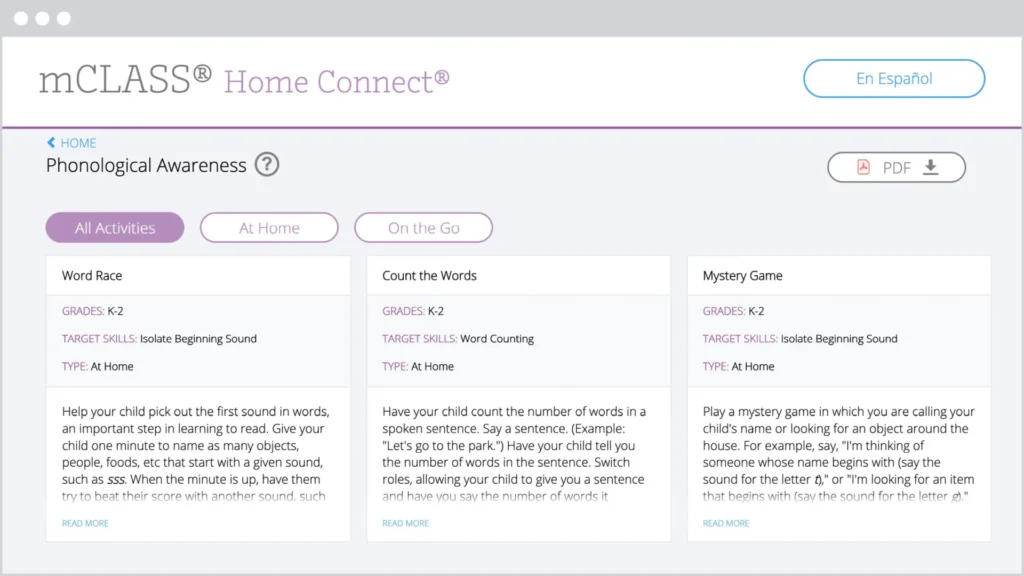
Support
NCDPI has been provided with its own dedicated support line: +1 (888) 890-2505
The current national support line will remain available and include the North Carolina option on the phone tree throughout the fall.
FAQs
Interested in learning more?
Amplify and NC DPI are collaborating on this FAQ. Please continue to check back, as we are updating this based on questions we receive about mCLASS and the current NC implementation.
Additional Amplify products
Get in touch with us to learn more about bringing other high-quality Amplify programs to your school or district.
Amplify Tutor Hiring
Science of Reading: The Learning Lab course reflection
Create a short video or audio recording (approx. 1-3 minutes) responding to the course prompt. Please fill out the “Consent and release” section if you are willing to let us share your experience.

Tips for recording
Below are some suggested best practices for video and/or audio recordings:
- Lighting is best when the source is facing you; avoid overhead lighting.
- Avoid background noise and echos.
- It’s best to avoid both a busy background and clothing.
- Direct your gaze into the camera as much as possible.
- Record with phone in landscape (long from left to right) ensuring there’s ample open space around your head.
- Do a brief test to check video and audio quality.
- Ask a friend to help with the recording, if needed.
Submit feedback
We want to hear from you!
S1-06: Supporting students with a creative twist: A conversation with Kentucky Science Teacher of the Year, Shad Lacefield

In this episode, Eric sits down with the Kentucky Science Teacher of the Year, Shad Lacefield. Shad shares his experience teaching during the first year of the pandemic, where Shad dressed up in over 100 costumes to create a unique and engaging online learning experience for his students. Shad also explains ways he connects with his students to celebrate student success, as well as large-scale efforts he leads within his school to cultivate the love of learning science content. Explore more from Science Connections by visiting our main page.
Shad Lacefield (00:00):
When you stay relevant, it’s being engaged with your students and figuring out, or what are, what are they liking? And every year it’s gonna be different. And that helps you stay relevant. When you have conversations and you build relationships with your kids,Eric Cross (00:13):
Welcome to science connections. I’m your host. Eric Cross. My guest today is Shad Layfield. Shad is a teacher at garden Springs elementary and a part-time professor at Asbury University in Kentucky during the first year of the pandemic, Mr. Layfield dressed up in over a hundred costumes to create a unique and engaging online learning experience for his students. He also created Vader visits, where he visited students at their homes, dressed as Darth Vader to celebrate their online successes and keep them encouraged. During a challenging time. In this episode, we discuss how creativity impacts engagement, transferring lessons learned from distance teaching back to in-person instruction, and how upper grades can apply the same principles to improve student learning. I hope you enjoy this discussion with shad lays field. So you’ve been in fourth grade for four years, and then you were in second grade and fifth grade. And so like how long have you been teaching for like total?
Shad Lacefield (01:09):
So this is my 15th year teaching.
Eric Cross (01:12):
Really? Yeah. You’ve been in the game for a while.
Shad Lacefield (01:15):
Yeah. Yep. It, it doesn’t, and it’s always surprising to parents too during that, that first like, come in and meet your teacher. And I walk in, I’m like, yeah, I’ve been teaching for 15 years and every time it gets ’em, they’re like no way. And I’m like, yeah,
Eric Cross (01:28):
That’s, that’s a good thing though. That’s a good thing. Right?
Eric Cross (01:31):
You know? So like, well the energy and then, and you’re just how you’re perceived. Like you’re, they’re just, I don’t know. It’s something about work with young people. Like it keeps you young.
Shad Lacefield (01:39):
That’s what it is. Absolutely.
Eric Cross (01:41):
So how did, how, like, what’s your origin story? Like, how did you become a teacher? Like what, what was it? Was it something like you knew second career, like right outta school? Like how did you end up in the classroom?
Shad Lacefield (01:53):
Yeah. No, and I love this question cause I’m a big Marvel and, and superhero. So origin stories are all, I love a good origin story. So I grew up on a 13 acre farm in a little bitty town called Gustin, Kentucky, and very early on, like we were instilled my parents, amazing, amazing parents. But they really instilled like a, a super important work ethic in our lives of like, it’s, it’s all about hard work and it’s important that you’re working hard in whatever it is that you do. And I’m one of six kids as well in my family.
Eric Cross (02:24):
Where are you in the–
Shad Lacefield (02:25):
I’m second to last.
Eric Cross (02:26):
Second to last. Okay. So you’re the second youngest.
Shad Lacefield (02:29):
Yes. Okay. And and so, and so growing up, like with that, like, you know, I worked in tobacco, I worked in hay, you know, we did things being on the farm and stuff like that. And within my family as well, there’s four boys. And so when I decided to go to college I was the first guy in my family to go to college. And the first and only boy that ended up going to college. And so it was like this big deal, like, oh, you know, we got one of our boys gonna go to college. So what is he gonna be? And I was like, well, if I’m gonna put forth the, the time and effort and then the financial strain that it would cause cuz we were not poor at all. My dad worked two jobs to make sure, but I really felt the responsibility of like, if I’m gonna go, I’m gonna work in a profession.
Shad Lacefield (03:09):
That’s gonna make a lot of money. And here I am as a teacher now. So I didn’t go to college to be a teacher. I actually was pre dentistry. I thought, now here’s a profession. You can, a lot of money. You don’t work weekends or holidays, you know, I can still be the doctor thing. And so I’m gonna be pre dentistry. But like all good origin stories. There was a, there was a flip. So in my first year I started working at the most majestic place that you will ever go. It’s called Squire, boon, caverns. It’s a cave in Southern Indiana. And it’s an amazingly beautiful little place. You have to like one lane highway, like road to go back there up and down. Like you, you think you’re never gonna make it. And if it rains too much, the bridge will flood and you actually can’t even get back there.
Shad Lacefield (03:52):
So that’s how we’re talking like way back in the sticks. But once you get back, back there totally worth it. And as part of the job you were a tour I also did grist mill demonstrations and gym mining adventures, or, you know, as they’re gym mining and stuff like that. And within that, I started working with school aged kids and on very large tours and stuff. And my manager at the time, Claudia, I’m still great friends with and we still take our kids back there. Every summer she, to me, you’re really good with kids. Like you’re really good with kids. We have this scout program that’s on the weekends. And then during the summers and you would be teaching kindergarten through eighth grade kids, geology and forestry. What do you think about doing that? And I said, well, right, let’s try that out. And then I got the teaching bug and it hit and I was like, oh my gosh, like I don’t wanna spend my life doing something that is all about money or, or that is like, this is where it’s at. Like, I love this, I enjoy this. I enjoy the response that I get when I’m talking. And kids are excited about learning and getting new information and learning new stuff. And so then I change my major and here I am now, all these years later teaching instead of being a dentist,
Eric Cross (05:04):
Are there, are there days, do you ever have days where you’re like, you know, dentistry, it’s still an option. Like I can, I can go back.
Shad Lacefield (05:12):
Oh, rare, rare occasions. Rarely. Yeah.
Eric Cross (05:16):
Okay. Yeah. All right. All right. Fair enough. I, I, I always joke and say that like we have, you know, sometimes I have my, my alternate job on the hard days, which is for me, it’s working at the gap where I just want to fold clothes and go home at the end of the day, you know, on those really rough days. And you know, it’s never the kids, right. It’s always other things. The kids are like the great part. And then there’s all these other things. And I just wanna work at the gap. I just wanna work at the gap. Fold some clothes. Yes, sir. Yes. Ma’am absolutely. I can find that size for you. And then I just go home cause about their job when they go home at the end of the day, when you work at the gap, at least sorry, gap workers. I’m sure hard of that, but my perception in my mind is that you close up shop and then you’re done. Yeah,
Shad Lacefield (05:52):
Absolutely. Like you said, they can turn it, like it’s a turnoff at the end. Exactly. As teachers we know, like you don’t ever turn it off, it’s always there.
Eric Cross (06:00):
Yeah. So one of the things that I was super excited about when I, when I first heard about you is I went on your website and there’s so many things I feel like I can just talk about your website and just the, the content that you’ve produced. I, I, there’s so many directions I can go. But one, one of the things I want to ask you is, is about that. Now, one of the things that’s on there, and this is coming from a fellow star wars, Fisha who finished Bobba FET and the Mandalorian recently and is Jones in four OB one to come out.
Shad Lacefield (06:33):
Oh, so yes,
Eric Cross (06:35):
I live in Southern California next to Disneyland visited Galaxy’s edge star wars. You have these things called VA Vader visits. And so what do you do in those? And like, where did you get the idea for these Vader visits?
Shad Lacefield (06:50):
So the costumes were bringing the kids into the classroom. But when they left my room because you would, we only had them for a certain amount of time. There was still a lot of extra work that they needed to get done. And what I was seeing was I could get them to come in and they were really engaged during my lesson. But then afterwards, when it came to work completion or getting things done, there was, it was starting to fall off. As you know, we were experiencing, you know, more and more craziness of what’s going on. So then as an incentive, I decided if you have everything turned in, by the end of the day, I’m gonna dress up in my Darth Vader outfit, full costume, the, you know, the, the full helmet, like everything. And I’m gonna show up to your house and we’re gonna hang out and play any game at all that you wanna play.
Shad Lacefield (07:34):
So then it was a way of rewarding. My kids for getting everything turned in. But same time I felt like it would also help me build a relationship with them. That was a very challenging part of online learning. Like, again, I want you to feel like you’re a part of my classroom. I wanna feel like I’m invested in you and wanna learn about you. And it was a commitment because some of those kids put me through the ringer, whether it was we’re gonna do gymnastics on a trampoline. And again, I’m in full costume doing gymnast on the trampoline, or we’re doing soccer drills with their soccer coach at their house playing football games. I mean, all kinds of stuff. I made a Yachty game for a kid that loves Harry Potter. And it was really a big part of getting work turned in because, and it’s the crazy thought they wanted to spend time with me. Like that’s what it was. And so it was like, yeah, absolutely. I’ll keep dressing up. I did over 50 plus Vater visits. It wasn’t just for my homeroom. It was for all of fourth grade. So I went over 50 visits and it was cool to see kids in their home and talk to them and meet their parents. It was a great opportunity for me to engage with parents as well. How is online learning, going, what can I do to support you? Do you guys have any questions and stuff like that? So
Eric Cross (08:39):
This thing of relationships is like leading to work completion, which isn’t, which isn’t always the, the thing that we think to as educators of like how, you know, work completion. A lot of times we think of like structures or you know, certain protocols that you do in class get work completion, but here you are addressing as Darth Vader. And, and you said students were turning in more work because they’re connected to, you saw an increase in, in yeah. Engagement.
Shad Lacefield (09:07):
And absolutely. And, and I remember even saying that to myself, like this is, this is what’s getting them. But it, it was, and as part of the Vader visit as well with the videos we recorded all of them and I said, I’m gonna make you a YouTube star. And so I would, I, I recorded them. I put ’em on my YouTube channel. And so a lot of the videos that are on my website, all those Vader visits are like the kids showing off and playing against the teacher. And I promise you, I didn’t take it easy on any one of those kids. Like when it was like a verse match, I went all out and I told ’em. I was like, if you beat me, you know, it’s gonna be like, you earned it.
Eric Cross (09:38):
What a great way to leverage, just what, what is relevant to our students? Like you used your platform and then now you’re showcasing them on your, you know, your platform or what you were using. And then they’re seeing each other. And I could just see, regardless of the grade level, like just students, like beam from, from getting that kind of positive praise through, through, you know a medium that doesn’t, that tends to be more of a, just content consumption, but you’re kind of watching other folks do stuff, but now it’s about them. Like, and they’re, they’re getting that attention directly. Now I have to ask about the Vader costume. Did you, did you buy it for this event or did you already have that Darth Vader costume in your closet?
Shad Lacefield (10:19):
I had parts of the costume, but not the complete costume. And honestly, the very first Vader visit I had, I had the Vader mask that makes sounds, and like you could talk and it makes you sound like Vader.
Eric Cross (10:29):
My dark saber is on order. Yes. And it keeps getting delayed from best buy. It’s supposed to arrive in April, but I do have dark staple and order that I ordered back in November. So the best to your point, I don’t know who doesn’t have one, I’m waiting for mine though.
Shad Lacefield (10:42):
There you go, come on. Best buy come through for us. So
Eric Cross (10:44):
You, you did all this investment in time and, and you created all this content, but then we went back in person. Were, were you able to bring this back into the classroom or any of the things that you had generated during distance learning back in the classroom? Or are you, are you using some of the things that you learned? Like what, or is it just completely separate and you’re just doing something completely different. Now
Shad Lacefield (11:04):
That’s a great question. So I still try to dress up at least once every week, if not once every other week just to make whatever we’re doing fun, cuz I already have costumes that were connected to the content that I was doing. So had I had made a character called captain Soundwave that will use when I’m teaching my amplify lessons over sound. And so then I, you know, I have that or I would have, you know, specific characters that were designed for certain lessons that I would do. And so I still
Eric Cross (11:32):
Lemme interrupt you real quick. Where did you get these character ideas from? Cause they are super creative. I clicked on one random one. And you have had like a, a knitted like skull cap and like some blue shiny like cloak and I like who is this guy? I think, is that him? Is that captain sound wave? That’s
Shad Lacefield (11:48):
That’s hilarious. That was, that was my attempted Elsa. Oh, that was yeah. Started buying more and more costumes and and making characters and putting costumes together. And so yeah, it just ends up being this thing where you never know when I’m gonna show up in a completely random costume and be like today, we’re getting ready to learn about how sedimentary rocks form. And I dressed in my rock outfit, which is the old school rock with the turtleneck and the gold chain with,
Eric Cross (12:16):
Wait, do you have a Fanny pack too?
Shad Lacefield (12:17):
I have a Fanny pack. Yes you have. Yep. You nailed it. And they’re like, what does this guy
Eric Cross (12:22):
Do? He raise the one eyebrow. Can you do the, the rock eyebrow? Oh yeah, you got this. Oh, people on the podcast. Can’t see. Chad’s got it down. He’s got it down. He’s got the, he’s got the eyebrow going. Okay, so you, so I feel like I can go on a tangent and talk about all your costumes that you have, but the thinking about this. So tons of engagement, younger people now taking like some of the principles that you’ve learned from this, how can, how can upper grades like bring this joy to their classroom? Like middle school students, you know, older kids sometimes, you know, they can, they’re still kids, but you know, they might not be the same thing as fourth graders. Like would you, do you have any ideas of like how teachers and upper grades can kind of take these elements that you’ve done and, and apply them?
Shad Lacefield (13:04):
Absolutely. So some of the things that you had talked about, like with YouTube can also be applied to like TikTok videos and things like that, that kids are, are willing to watch and, and be engaged in. And so those things, I feel like I’ve seen other middle and high school teachers really utilize in their classroom. But honestly, and this is a new initiative that we’ve started in our district. Minecraft has been something that a lot of kids play and are really engaged in and has shown an amazing engagement for all of our kids when it comes to science engagement, particularly. And so with that, so there’s 126 million active Minecraft players right now in the world. And Minecraft is one of the largest selling video games. The average age, cuz they’re always like, oh, Minecraft is for kids who actually the average age is like 24.
Shad Lacefield (13:51):
So a lot of the older kids are playing Minecraft as well with the younger kids. And with that in mind, it was a way when I looked at Minecraft and specifically like Minecraft educational edition came out and it was during COVID and it was free. So if you had a school email or it’s like the, what the go 365 account, you could get it for free and all of our kids got it for free. And so then, then we went from playing Minecraft on the computer as like a fun game to me looking at it and saying like, wait a minute. I feel like when I’m doing energy conversions, we can take Redstone and Minecraft and kids can now show how a simple system using different parts and devices can work and understand even more con creates how energy is converted from one form to another.
Shad Lacefield (14:39):
And so let’s make this a, a, a, an actual activity. Let’s take what I’m teaching in the classroom. And if they get done early as an enrichment piece, because there’s not a ton of science and enrichment activities at times for kids to be able to do, like, what do I do when I’m done, Minecraft ended up being that. And so I could have these elaborate worlds that I would build for them that they could then go and play and be super engaged in and show me way more on this Minecraft world, what they knew than what they were writing on paper sometimes, cuz I, you know, you’d get like a sentences out of them on paper, but then all of a sudden when they would build this elaborate system and you just had them record and talk, it was like, oh my gosh, you understand way more than I was thinking that you did with that last exit slip, an assessment that we did.
Shad Lacefield (15:25):
And so like, this is awesome. So then I went to my district and I actually proposed an idea what if we did tire Minecraft build challenges for the whole district? So our district has 37 elementary schools and I was like, I think this could be something that, you know, as we’re looking for science, curriculum engagement and making kids excited about learning science and stuff again, cuz that was always the hard part. I feel like sometimes with COVID everything kids lost this love of, of being in the classroom and, and, and learning and that it was like, you know, getting them to come back into the classroom and, and finding, learning fun again. It was like this, this started to get ’em excited and like, yeah, I get to play in Minecraft and I’m learning at the same time. And it was working for all kinds of content areas.
Shad Lacefield (16:07):
We’re doing a blast off to, to Mars. We it’s called blast off to us. We’re partnering with CLO of the future. They’re working with SpaceX. Our kids will actually get to send postcards to space and yes, it’s, it’s a super cool thing. And I love my district and all of the office of technology, individuals, Ashley Josh and Kelly for putting this together. And so it asks this question if you could a community in space, what would it be like? And the goal is that kids will write on the back what they want. And then we send this postcard off to space, they stamp it saying it’s been in space and the kids get to have it back and, and be able to use it. But what, what we decided, what we could do with Minecraft is what if they actually built the colony on Mars, like really research put time and effort into reading scientific articles about plants and how plants would grow and, and water and, and structures and apply all of that in a massive build challenge. And then that be, you know what we’re doing? That can be the answer to the question. And so it’s not just a couple sentences on a postcard, but it’s like a week or two week unit that pulls all this scientific content and standards that we’re working with and really allows kids to show so much creativity like on my Twitter I’ve been posting like pictures and stuff like that of some of the students builds. And I’m gonna continue to do that throughout the build challenge.
Eric Cross (17:26):
Now, are you using Minecraft EDU?
Shad Lacefield (17:28):
Yes. That is correct.
Eric Cross (17:29):
I love Minecraft EDU. Like it, it, you talking about it inspires me to, to try to dive back into it. One of the things sometimes I feel limited by is the time that I have and the things that we’re trying to cover. And it’s almost, it almost feels like we’re doing something wrong using a video game to teach, but it’s such a great educational tool. Like you said, you just said that students are able to show what they know in, in a way by creating something that’s different than if they would’ve just written it, but they’re actually creating, and this is one of the things, I guess you kind of hit on this, but I wanted to probe it a little more. Is do you have your students creating content like you do? Cause I kind of heard that they, you were, did you say that they were explaining or doing a video recording or describing it? How are they, how are they, how are they doing that work?
Shad Lacefield (18:17):
Yeah. So what they actually do is they’ll write a script and they will use Screencastify to record and then upload to Flipgrid. And then that way they can actually show their build to all of fourth grade. Since we weren’t allowed to be in the same class, like we were all departmentalized, so then we will have voting challenges. So after you record, you get to see everyone’s videos, you get to like and comment and leave feedback on their builds. So you can see what the other kids created. And then then from those initial videos and voting, we selected a certain of kids that then go on to the district level for our Minecraft build challenge. And then those videos are viewed by administration and other teachers to vote again. And then you end up having grade level winners and then an overall winner, which shout out to my boy in fourth grade, who was our overall winner, Eli, super proud of him.
Shad Lacefield (19:07):
He, he made this really, really space saving system, which was hidden stairs that ran off of Redstone and used motion, energy. And again, in his video, he talks about like how motion energy has changed to electrical energy and then back into motion through the process of how this hidden staircase would be in the wall. And then you’d be able to use this lever to then release that staircase. So you could go up and down but it was just, and again, when you, when you let kids talk about energy conversions and you let them build all of a sudden, you have kids making security systems for banks. Another kid that made a feeding system for kids for animals at the zoo, and it was just like, oh my gosh, I had no idea that this was what you guys could run out and do. When I, when I taught you how energy conversions work, that this is what you could produce and come over, like this is mind blowing. I love it,
Eric Cross (19:56):
What our kids can do and what they can create always kind of blows us away when we give them an opportunity to kind of have that freedom to, to create and take their knowledge and actually do something with it versus channel it into what, show me what, you know, but only do it like this. This is, this is the lane that you have to stay in. How do you get these ideas and, and stay, stay relevant? Like so many of the things like you’re touching, like pop culture, you, you have this hand in education technology, you have you’re, you’re doing video editing. Like where are you drawing from? Cause I’m just thinking like, as a teacher listening to this, that might be newer. And they go to the side like, oh my gosh, this, this guy is doing these so many things like where are you drawing from for inspiration or ideas?
Shad Lacefield (20:39):
I think a lot of it is like you say, when, when you stay relevant, it’s being engaged with your students and figuring out, or what are, what are they liking? And every year it’s gonna be different. And that helps you stay relevant. When you have conversations and you build relationships with your kids to figure out, you know, what’s going on. Because I was not a big Minecraft person. It was the group that came in that really challenged me to do Minecraft because it, it showed up on their Chromebooks one day and all of a sudden it’s like, oh, we can play Minecraft all the time. And I said, no, you can’t play Minecraft until that I’ve had training. And I know what’s going on because I’m super nervous about this new thing. And I wanna make sure you guys aren’t doing something that you’re not supposed to.
Shad Lacefield (21:13):
And like, they hounded me hardcore about you better do you need to do that training, Mr. Lacefield, you need to, we wanna play Minecraft. You better be doing this. Right. And so I was like, all right, man, I’ll, I’ll invest. I’ll, I’ll put some time into this training. And I’m so glad that I did yeah, again, that’s it just like building relationships and having those conversations help you realize like, what’s, what’s what are they interested in? What what’s going on and what would be really funny, even connecting that back to the costumes. What would it be really funny if I showed up in you know, today, princess Jasmine.
Eric Cross (21:42):
Yeah.
Shad Lacefield (21:43):
Been yes. Done that. That’s a great one. I,
Eric Cross (21:45):
I, I just went to the social studies page. I, and I stop laughing while you were talking. Cause I saw the princess Jasmine.
Shad Lacefield (21:52):
Oh yeah. Folks.
Eric Cross (21:53):
I’m telling you, you have to go, you have to go to his videos and see what he’s done. I mean, they’re just, they’re just amazing with my middle school students. They, I, I find myself having to be into things that I’m not normally into. And we have these intergenerational relationships, right? Like I think teachers are unique in this I aspect where I can connect with a 12 year old with what 12 year olds are in no matter where this 12 year old’s from. Cuz I get 12 year old culture. But sometimes when I go back into my adult world, like I forget that like, Hey yeah, haven’t watched a new anime you know, or, or whatever, you know, up
Shad Lacefield (22:26):
That. Yeah. No said too. And a kid will show up wearing a, a shirt to school and I’m like, I wasn’t the world’s that like, I’ve never even seen that before. And you’re like, okay, I’m gonna have to learn what that is cuz that yeah.
Eric Cross (22:38):
And then the next student asks you about, Hey, do you like, do you like these this game? I’m like, yeah, yeah, let me go Google that game real quick. Yeah, I’m totally into it. I’m downloading on my phone real quick. And, and now I’m connected to all kinds of obscure random interests, but to your, to what you said, it like, it helps keep us fresh, right? With I, with ideas, there, there is something that is super practical that you’ve done that you’ve created that I’ve encouraged teachers to do. And I think you really nailed it. On your site, you have these video tutorials. When I look at those, I, I think about how much time you must have saved yourself of not having to explain the same exact thing multiple times. Because you’ve created this virtual help section that allows students to log in amplify earth, check, Flipgrid, whatever. Like do you, when you’re, when you’re teaching students, do you, do you use those in direct students there so they can kind of support themselves? Or is that, what, how did that come to be when you, when you made these, these virtual tools? Because I could just imagine these are time savers for you.
Shad Lacefield (23:49):
Absolutely. Cuz again, like you said, it’s it saves on time. So a lot of when you have kids that are already visual learners as well, and they love watching YouTube and they learn stuff from YouTube, why not? I mean, make the video and then attach it to my Google classroom, keeping everything online. Everyone always has access. And by still having those videos, it allows kids to hear the directions multiple time, but on their time and at their pace. So then it’s posted on the assignment. So even though I probably still will give those directions verbally out loud if a kid forgets and maybe they feel a little nervous about asking in front of their peers, like, oh, how do I do this again? Or, oh, I don’t remember how to do that. That video is linked on there. So that way they can go back and watch it.
Eric Cross (24:28):
It’s almost like a little co-teacher that you have like a little aide that’s like, but it’s you, but it’s like a mini you who’s helping you out. I found that putting sometimes those tutorial videos on ed puzzle, where at different points in time, you can set it up so that at a certain timestamp, it asks a question and you can control it. So they can’t move faster past it until they respond to the question and you have the question be about whatever you just said. And then it, it syncs with Google classroom. So you can import all the grades and you can see how far through the video they got. But that was one other layer that I was able to do. So I can have some accountability and make sure that okay, everybody watched it and they answered all five questions of like, how do you do this?
Shad Lacefield (25:07):
Oh, see, now you’re sharing stuff with me, Eric, because I, I’m not as familiar with ed puzzle. I’ve used like near pod and per deck, but I mean just you saying that I’m like, okay, I need to check out ed puzzle and, and see what, what this is all about. Cause that sounds awesome.
Eric Cross (25:20):
Hey, I shared something with Chad and it it’s useful. I’m I’m feeling good right now. I’m feel I’m feeling good. So as we, as we kind of wind down one, couple questions I wanna ask. One of ’em is you’ve been in teaching for, for 15 years and I, I talk to you like right now and I get this energy and this vibe that’s just so upbeat, so positive. How do you stay fresh, fresh. And how did you stay fresh during a time when things have been so hard, you know, and it, and still is for so many educators, how do you stay encouraged? Like what, what have you done and, and to stay in, in education for, for this long,
Shad Lacefield (26:00):
I think it, it even goes back to like when I made my initial decision to switch my major to education, like I, I really felt like I found so thing that I thoroughly loved and enjoyed, and I always feel like you go through seasons. Like, and I definitely, when, when COVID hit, like you went through a season of where you start to feel again, that pressure like do I really like doing this as much as I thought that I like doing this and am I ready for this next thing? And then I just go back to just the, well, why did I do this to begin with? And, and it gets me, you know, excited to be like, I did it for the kids, like, and it’s about the kids. And I get joy when they’re laughing and smiling. So again, with the videos, it’s like, how can I make ’em laugh and smile because if they’re laughing and smiling and having a good time, I’m gonna get, you know, jacked and ready to start teaching again.
Eric Cross (26:48):
And I just hear that so much in what you’re saying is you’re serving your kids is, is being more than that building the relationship, that connection. And then through all that, the learning happens. The last question I wanna ask you is who’s one teacher that created a memorable experience for you or inspired you. Is it someone that you remember when you were in school or learn experience that just, that stands out to you to this day? Cuz as teachers, we remember thi like our kids remember us and it’s weird to be in that position to think that we’re gonna be that person. So is there anybody or anything that stands out to you that you remember from a, a teacher and experience?
Shad Lacefield (27:27):
Gosh, I have, I have a lot that you know, from my fifth grade science teacher, Mr. Goodman, who we did the ecology meet and the ecology team, and we went to OT Creek park and we competed against other schools about science, connected materials to my physics teacher in high school that let us build boats out of cardboard and take it to the only hotel in our town and the pool. And we had like boat races with the cardboard boats that we did. But really I, I go back to Squire boon and Claudia my manager and I remember not only was, she’s such a, a pivotal like getting me into teaching. But I remember the, the curriculum that we were using at the time that I was. And again, it goes back to what if I was to teach that curriculum, I would not still be a teacher because again, as sometimes you experience with curriculum, it can be boring and not engaging. And I was already putting my own flare on it at SQUI boon during the scout lessons. And I said, what if I just completely rewrote this curriculum? What if I made it really fun and put my own, spin on it? And, and she was like, absolutely, absolutely do that. And I feel like that encouragement as teachers, when we encourage kids to be creative when we encourage kids to, to take risk and to try new things we end up getting such amazing results that we didn’t even expect
Eric Cross (28:45):
Thought I out to Mr. Goodman for the ecology meet the physics teacher for the, the boat races, which are hilarious, by the way, if you’ve ever been able to watch students, did you make ’em at a cardboard?
Shad Lacefield (28:53):
We did. Yep.
Eric Cross (28:54):
Yeah. Those are hilarious to watch. And Claudia for giving the freedom to let you be a educational DJ and remix things to make it fun. Thanks for being on the podcast. Thanks for your inspiration and for sharing your stuff like publicly and letting other people see it and, and get ideas. It’s, I’m sure there’s more people than, you know, and more teachers than, you know, that are looking at that and getting their own ideas and coming up with their own. It might not be star wars, but coming up with their own inspiration, maybe it’s like Harry Potter or Lord of the rings or some like that.
Shad Lacefield (29:26):
Yeah. Whatever. You’re passionate about. Pull that in.
Eric Cross (29:31):
Thanks so much for joining me and Shad today. We want to hear more about you. If you have any great lessons or ways to keep student engagement high, please email us at stem@amplify.com. That’s STEM@amplify.com and make sure to click, subscribe wherever you listen to podcasts until next time.
Stay connected!
Join our community and get new episodes every other Tuesday!
We’ll also share new and exciting free resources for your classroom every month.
Meet the guest
Shad Lacefield is a teacher at Garden Springs Elementary and part-time professor at Asbury University in Kentucky. Mr. Lacefield leads professional development in his district, and has been a guest speaker for Eastern Kentucky University, Campbellsville University, and Amplify Education. His topics include classroom managment, integrating techology, and student engagement. He earned his bachelor’s degree in elementary education from Campbellsville University in 2007, and his master’s in science from Southwest Baptist University in 2011. Shad has either taught or coached every grade K-12, and in his 14 years in education he has served as a lead teacher in literacy, math, science, and social studies. He currently coordiantes with the FCPS Office of Instructional Technology to plan Minecraft build challenges for elementary students, and is working on setting up a science field trip that turns a golf course into a STEM lab. During the first year of the pandemic, Shad dressed up in over 100 costumes to create a unique and engaging online learning experience for his students. He also created Vader Visits where he visited students at their homes dressed as Darth Vader to celebrate their online successes, and keep them encouraged during a challenging time. His creative teaching style, and over 50 “Vader Visits” with students, have been featured on WKYT-TV, LEX-18, Spectrum 1 News, and several local and college news publications. Shad lives in Lexington Kentucky with his wife Whitney Lacefield and their three children.
Check out his website, YouTube channel, and Facebook account!

About Science Connections
Welcome to Science Connections! Science is changing before our eyes, now more than ever. So…how do we help kids figure that out? We will bring on educators, scientists, and more to discuss the importance of high-quality science instruction. In this episode, hear from our host Eric Cross about his work engaging students as a K-8 science teacher. Listen here!


Grade 6
Unit 1: Area and Surface Area
| Illustrative Mathematics | Desmos Math 6–A1 |
|---|---|
| Topic A: Reasoning to Find Area | |
| Lesson 1: Tiling the Plane | Unit 1 Lesson 1: Shapes on a Plane [Free lesson] |
| Lesson 2: Finding Area by Decomposing and Rearranging Lesson 3: Reasoning to Find Area | Unit 1 Lesson 2: Letters |
| Topic 2: Parallelograms | |
| Lesson 4: Parallelograms Lesson 5: Bases and Heights of Parallelograms Lesson 6: Area of Parallelograms | Unit 1 Lesson 3: Exploring Parallelograms (Print available) [Free lesson] Lesson 4: Off the Grid |
| Topic 3: Triangles | |
| Lesson 7: From Parallelograms to Triangles | Unit 1 Lesson 3: Exploring Parallelograms (Print available) [Free lesson] Lesson 4: Off the Grid Lesson 6: Triangles and Parallelograms |
| Lesson 8: Area of Triangles | Unit 1 Lesson 5: Exploring Triangles (Print available) |
| Lesson 9: Formula for the Area of a Triangle Lesson 10: Bases and Heights of Triangles | Unit 1 Lesson 4: Off the Grid Lesson 6: Triangles and Parallelograms |
| Topic 4: Polygons | |
| Lesson 11: Polygons | Unit 1 Lesson 2: Letters Lesson 8: Pile of Polygons Practice Day 1 (Print available) Unit 7 Lesson 11: Polygon Maker |
| Topic 5: Surface Area | |
| Lesson 12: What is Surface Area? | Unit 1 Lesson 9: Renata´s Stickers [Free lesson] |
| Lesson 13: Polyhedra | Unit 1Lesson 10: Plenty of Polyhedra |
| Lesson 14: Nets and Surface Area | Unit 1 Lesson 10: Plenty of Polyhedra Lesson 11: Nothing But Nets (Print available) Lesson 13: Take It To Go |
| Lesson 15: More Nets, More Surface Area | Unit 1 Lesson 10: Plenty of Polyhedra Lesson 11: Nothing But Nets (Print available) Lesson 12: Face Value Lesson 13: Take It To Go (Print available) Practice Day 2 (Print available) |
| Lesson 16: Distinguishing Between Surface Area and Volume | |
| Topic 6: Squares and Cubes | |
| Lesson 17: Squares and Cubes | Unit 6 Lesson 12: Squares and Cubes |
| Lesson 18: Surface Area of a Cube | |
| Topic 7: Let’s Put It to Work | |
| Lesson 19: Designing a Tent | Unit 1 Lesson 13: Take It To Go (Print available) |
Unit 2: Introducing Ratios
Unit 3: Rates and Percentages
| Topic 1: Units of Measurement | |
| Lesson 1: The Burj Khalifa | Unit 3 Lesson 4: Model Trains |
| Topic 2: Unit Conversion | |
| Lesson 2: Anchoring Units of Measurement | Unit 3 Lesson 1: Many Measurements (Print available) [Free lesson] |
| Lesson 3: Measuring with Different-Sized Units Lesson 4: Converting Units | Unit 3 Lesson 2: Counting Classrooms Lesson 3: Pen Pals |
| Topic 3: Rates | |
| Lesson 5: Comparing Speeds and Prices | Unit 2 Lesson 8: World Records (Print available) Unit 3 Lesson 4: Model Trains Lesson 5: Soft Serve [Free lesson] Lesson 6: Welcome to the Robot Factory |
| Lesson 6: Interpreting Rates Lesson 7: Equivalent Ratios Have the Same Unit Rates | Unit 3 Lesson 4: Model Trains Lesson 5: Soft Serve [Free lesson] |
| Lesson 8: More About Constant Speed | Unit 2 Lesson 8: World Records (Print available) Unit 3 Lesson 4: Model Trains |
| Lesson 9: Solving Rate Problems | Unit 3 Lesson 7: More Soft Serve |
| Topic 4: Percentages | |
| Lesson 10: What Are percentages | Unit 3 Lesson 8: Lucky Duckies [Free lesson] Lesson 9: Bicycle Goals |
| Lesson 11: Percentages and Double Number Lines | Unit 3 Lesson 9: Bicycle Goals Lesson 10: What’s Missing? (Print available) |
| Lesson 12: Percentages and Tape Diagrams | Unit 3 Lesson 10: What’s Missing? (Print available) |
| Lesson 13: Benchmark percentages | Unit 3 Lesson 8: Lucky Duckies [Free lesson] |
| Lesson 14: Solving Percentage Problems Lesson 15: Finding This Percent of That Lesson 16: Finding the Percentage | Unit 3 Lesson 10: What’s Missing? (Print available) Lesson 11: Cost Breakdown Lesson 12: More Bicycle Goals Lesson 13: A Country as a Village |
| Topic 5: Let’s Put It to Work | |
| Lesson 17: Painting a Room | Unit 3 Lesson 13: A Country as a Village |
| Lesson 7: Equivalent Ratios Have the Same Unit Rates | Unit 3 Lesson 4: Model Trains Lesson 5: Soft Serve [Free lesson] |
Unit 4: Dividing Fractions
| Topic 1: Making Sense of Division | |
| Lesson 1: Size of Divisor and Size of Quotient Lesson 2: Meanings of Division | Unit 4Lesson 1: Cookie Cutter |
| Lesson 3: Interpreting Division Situations | Unit 4Lesson 2: Making Connections (Print available) |
| Topic 2: Meanings of Fraction Division | |
| Lesson 4: How Many Groups (Part 1) | Unit 4Lesson 3: Flour Planner [Free lesson]Lesson 4: Flower Planters |
| Lesson 5: How Many Groups (Part 2) | Unit 4Lesson 5: Garden Bricks (Print available) |
| Lesson 6: Using Diagrams to Find the Number of Groups | Unit 4Lesson 5: Garden Bricks (Print available)Lesson 6: Fill the Gap [Free lesson] |
| Lesson 7: What Fraction of a Group? Lesson 8: How Much in Each Group? (Part 1) Lesson 9: How Much in Each Group? (Part 2) | Unit 4Lesson 8: Potting Soil |
| Topic 3: Algorithm for Fraction Division | |
| Lesson 10: Dividing by Unit and Non-Unit Fractions | Unit 4Lesson 7: Break It DownLesson 8: Potting SoilLesson 9: Division Challenges |
| Lesson 11: Using an Algorithm to Divide Fractions | Unit 4Lesson 9: Division ChallengesPractice Day |
| Topic 4: Fractions in Lengths, Areas, and Volumes | |
| Lesson 12: Fractional Lengths | Unit 4Lesson 11: Classroom Comparisons |
| Lesson 13: Rectangles with Fractional Side Lengths | Unit 4Lesson 12: Puzzling Areas (Print available) [Free lesson] |
| Lesson 14: Fractional Lengths in Triangles and Prisms | |
| Lesson 15: Volume of Prisms | Unit 4Lesson 13: Volume Challenges |
| Topic 5: Let’s Put It to Work | |
| Lesson 16: Solving Problems with Fractions | Unit 4Lesson 10: Swap Meet (Print available) |
| Lesson 17: Fitting Boxes into Boxes | Unit 4Lesson 14: Planter Planner (Print available) |
Unit 5: Arithmetic in Base Ten
| Topic 1: Warming Up to Decimals | |
| Lesson 1: Using Decimals in a Shopping Context | Unit 5Lesson 1: Dishing Out Decimals (Print available) [Free lesson] |
| Topic 2: Adding and Subtracting Decimals | |
| Lesson 2: Using Decimals to Represent Addition and Subtraction | Unit 5Lesson 3: Fruit by the PoundLesson 4: Missing Digits |
| Lesson 3: Adding and Subtracting Decimals with Few Non-Zero Digits | Unit 5Lesson 4: Missing Digits |
| Lesson 4: Adding and Subtracting Decimals with Many Non-Zero Digits | |
| Topic 3: Multiplying Decimals | |
| Lesson 5: Decimal Points in Products | Unit 5Lesson 5: Decimal Multiplication |
| Lesson 6: Methods for Multiplying Decimals | Unit 5Lesson 5: Decimal MultiplicationLesson 6: Multiplying with AreasLesson 7: Multiplication methods (Print available) |
| Lesson 7: Using Diagrams to Represent Multiplication | Unit 5Lesson 5: Decimal MultiplicationLesson 6: Multiplying with Areas |
| Lesson 8: Calculating Products of Decimals | Unit 5Lesson 6: Multiplying with Areas |
| Topic 4: Dividing Decimals | |
| Lesson 9: Using the Partial Quotients Method | Unit 5Lesson 8: Division Diagrams |
| Lesson 10: Using Long Division | Unit 5Lesson 8: Division DiagramsLesson 9: Long Division Launch (Print available)Lesson 10: Return of the Long Division (Print available) |
| Lesson 11: Dividing Numbers That Result in Decimals Lesson 12: Dividing Decimals by Whole Numbers Lesson 13: Dividing Decimals by Decimals | Unit 5Lesson 9: Long Division Launch (Print available)Lesson 10: Return of the Long Division (Print available) |
| Topic 5: Let’s Put It to Work | |
| Lesson 14: Using Operations on Decimals to Solve Problems | Unit 5Lesson 11: Movie Time [Free lesson] |
| Lesson 15: Making and Measuring Boxes | |
| Lesson 12: Dividing Decimals by Whole Numbers | |
| Lesson 13: Dividing Decimals by Decimals | Unit 5Lesson 9: Long Division Launch (Print available)Lesson 10: Return of the Long Division (Print available) |
Unit 6: Expressions and Equations
Unit 7: Rational Numbers
| Topic 1: Positive and Negative Numbers | |
|---|---|
| Lesson 1: Positive and Negative Numbers | Unit 7Lesson 1: Can You Dig In [Free lesson]Lesson 2: Digging Deeper |
| Lesson 2: Points on the Number Line | Unit 7Lesson 2: Digging Deeper |
| Lesson 3: Comparing Positive and Negative Numbers Lesson 4: Ordering Rational Numbers | Unit 7Lesson 3: Order in the Class (Print available) [Free lesson] |
| Lesson 5: Using Negative Numbers to make Sense of Contexts | Unit 7 Lesson 4: Sub-Zero |
| Lesson 6: Absolute Value of Numbers Lesson 7: Comparing Numbers and Distance from Zero | Unit 7Lesson 5: Distance on the Number Line |
| Topic 2: Inequalities | |
| Lesson 8: Writing and Graphing Inequalities | Unit 7Lesson 13: Popcorn Possibilities |
| Lesson 9: Solutions of Inequalities Lesson 10: Interpreting Inequalities | Unit 7Lesson 6: Tunnel Travel [Free lesson]Lesson 7: Comparing WeightsLesson 8: Shira´s Solutions |
| Topic 3: The Coordinate Plane | |
| Lesson 11: Points on the Coordinate Plane Lesson 12: Constructing the Coordinate Plane | Unit 7Lesson 9: Sand Dollar SearchLesson 10: The A-maze-ing Coordinate Plane |
| Lesson 13: Interpreting Points on a Coordinate Plane | Unit 7Lesson 9: Sand Dollar SearchLesson 10: The A-maze-ing Coordinate PlaneLesson 11: Polygon Maker |
| Lesson 14: Distances on a Coordinate Plane | Unit 7Lesson 11: Polygon MakerLesson 12: Graph Telephone (Print available) |
| Lesson 15: Shapes on the Coordinate Plane | Unit 1Lesson 1: Shapes on a Plane [Free lesson]Lesson 2: LettersLesson 5: Exploring Triangles (Print available)Lesson 6: Triangles and ParallelogramsUnit 7Lesson 3: Exploring Parallelograms (Print available)Lesson 11: Polygon MakerLesson 12: Graph Telephone (Print available) |
| Topic 4: Common Factors and Common Multiples | |
| Lesson 16: Common Factors | Unit 5Lesson 15: Common factors |
| Lesson 17: Common Multiples | Unit 5Lesson 14: Common Multiples |
| Lesson 18: Using Common Multiples and Common Factors | Unit 5Lesson 14: Common MultiplesLesson 15: Common factorsPractice Day 2 (Print available) |
| Topic 5: Let’s Put It to Work | |
| Lesson 19: Drawing on the Coordinate Plane | Unit 7Lesson 11: Polygon MakerLesson 12: Graph Telephone (Print available) |
Unit 8: Data Sets and Distributions
| Topic 1: Data, Variability, and Statistical Questions | |
|---|---|
| Lesson 1: Got Data? Lesson 2: Statistical Questions | Unit 8Lesson 1: Screen TimeLesson 2: Dot Plots |
| Topic 2: Dot Plots and Distributions | |
| Lesson 3: Representing Data Graphically Lesson 4: Dot Plots Lesson 5: Using Dot Plots to Answer Statistical Questions | Unit 8Lesson 2: Dot PlotsLesson 3: Minimum Wage (Print available) [Free lesson]Lesson 4: Lots More Dots |
| Lesson 6: Interpreting Histograms Lesson 7: Using Histograms to Answer Statistical Questions Lesson 8: Describing Distributions on Histograms | Unit 8Lesson 5: The Plot Thickens [Free lesson]Lesson 6: DIY Histograms (Print available) |
| Topic 3: Measures of Center and Variability | |
| Lesson 9: Mean Lesson 10: Finding and Interpreting the Mean as a Balance Point | Unit 8Lesson 7: Snack Time |
| Lesson 11: Variability and MAD | Unit 8Lesson 8: Pop It! |
| Lesson 12: Using Mean and MAD to Make Comparisons | Unit 8Lesson 9: Hoops |
| Topic 4: Median and IQR | |
| Lesson 13: Median | Unit 8Lesson 11: Toy Cars [Free lesson]Lesson 12: In the News |
| Lesson 14: Comparing Mean and Median | Unit 8Lesson 12: In the News |
| Lesson 15: Quartiles and Interquartile Range | Unit 8Lesson 13: Pumpkin Patch |
| Lesson 16: Box Plots | Unit 8Lesson 14: Car, Plane, Bus, or Train? (Print available) |
| Lesson 17: Using Box Plots | Unit 8Lesson 14: Car, Plane, Bus, or Train? (Print available)Lesson 15: Hollywood Part 2Lesson 16: Hollywood Part 3 (Print available)Practice Day 2 (Print available) |
| Topic 5: Let’s Put It to Work | |
| Lesson 18: Using Data to Solve Problems | Unit 8Lesson 16: Hollywood Part 3 (Print available) |
Unit 9: Putting It All Together
| Topic 1: Making Connections | |
|---|---|
| Lesson 1: Fermi Problems Lesson 2: In Our Class Were the World | Unit 3Lesson 13: A Country as a Village |
| Lesson 3: Rectangle Madness | Unit 5Lesson 14: Common MultiplesLesson 15: Common factors |
| Topic 2: Voting | |
| Lesson 4: How Do We Choose? | Unit 2Lesson 13: City PlanningLesson 14: Lunch Waste (Print available) |
| Lesson 5: More than Two Choices | Unit 3Lesson 13: A Country as a Village |
| Lesson 6: Picking Representatives | Unit 8Lesson 16: Hollywood Part 3 (Print available) |
Grade 7
Unit 1: Scale Drawings
| Illustrative Mathematics | Desmos Math 6–A1 |
|---|---|
| Topic 1: Scaled Copies | |
| Lesson 1: What are Scaled Copies? | Unit 1Lesson 1: Scaling Machines [Free lesson] |
| Lesson 2: Corresponding Parts and Scale Factors | Unit 1Lesson 2: Scaling Robots Unit 3Lesson 1: Toothpicks |
| Lesson 3: Making Scaled Copies Lesson 4: Scaled Relationship | Unit 1Lesson 3: Make It Scale Unit 4Lesson 3: Sticker Sizes |
| Lesson 5: The Size and the Scale Factor | Unit 1Lesson 4: Scale Factor Challenges |
| Lesson 6: Scaling and Area | Unit 1Lesson 5: TilesPractice Day 1 (Print available) |
| Topic 2: Scale Drawings | |
| Lesson 7: Scale Drawings | Unit 1Lesson 6: Introducing ScaleLesson 7: Will It Fit? (Print available) [Free lesson] |
| Lesson 8: Scale Drawings and Maps | |
| Lesson 9: Creating Scale Drawings Lesson 10: Changing Scales in Scale Drawings | Unit 1Lesson 8: Scaling StatesLesson 9: Scaling BuildingsLesson 10: Room Redesign (Print available) |
| Lesson 11: Scales without Units | |
| Lesson 12: Units in Scale Drawings | Unit 1Lesson 8: Scaling StatesLesson 9: Scaling BuildingsLesson 10: Room Redesign (Print available)Practice Day 2 (Print available) |
| Topic 3: Let’s Put It to Work | |
| Lesson 13: Draw It to Scale | Unit 1Lesson 10: Room Redesign (Print available) |
Unit 2: Introducing Proportional Relationships
| Topic 1: Representing Proportional Relationships with Tables | |
| Lesson 1: One of These Things Is Not Like the Others | Unit 2Lesson 1: Paint [Free lesson] |
| Lesson 2: Introducing Proportional Relationships with Tables | Unit 2Lesson 2: Balloon FloatLesson 3: Sugary Drinks (Print available)Lesson 4: Robot Factory |
| Lesson 3: More About Constant of Proportionality | Unit 2Lesson 3: Sugary Drinks (Print available)Unit 4Lesson 3: Sticker Sizes |
| Topic 2: Representing Proportional Relationships with Equations | |
| Lesson 4: Proportional Relationships with Equations | Unit 2Lesson 4: Robot FactoryLesson 5: SnapshotsLesson 6: Two and Two (Print available) [Free lesson]Lesson 7: All Kinds of Equations |
| Lesson 5: Two Equations for Each Relationship Lesson 6: Using Equations to Solve Problems | Unit 2Lesson 6: Two and Two (Print available) [Free lesson]Lesson 7: All Kinds of EquationsPractice Day |
| Topic 3: Comparing Proportional and Nonproportional Relationships | |
| Lesson 7: Comparing Relationships with Tables | Unit 2Lesson 2: Balloon FloatLesson 3: Sugary Drinks (Print available)Lesson 4: Robot Factory |
| Lesson 8: Comparing Relationships with Equations | Unit 2Lesson 4: Robot FactoryLesson 5: SnapshotsLesson 6: Two and Two (Print available) [Free lesson]Lesson 7: All Kinds of EquationsLesson 11: Four RepresentationsLesson 12: Water Efficiency |
| Lesson 9: Solving Problems About Proportional Relationships | Unit 2Lesson 12: Water Efficiency |
| Topic 4: Representing Proportional Relationships with Graphs | |
| Lesson 10: Introducing Graphs of Proportional Relationships Lesson 11: Interpreting Graphs of Proportional Relationships Lesson 12: Using Graphs to Compare Relationships Lesson 13: Two Graphs for Each Relationship | Unit 2Lesson 8: Dino Pops [Free lesson]Lesson 9: Gallon ChallengeLesson 10: Three TurtlesLesson 11: Four RepresentationsLesson 12: Water Efficiency |
| Topic 5: Let’s Put It to Work | |
| Lesson 14: For Representations | Unit 2Lesson 11: Four Representations (Print available) |
| Lesson 15: Using Water Efficiency | Unit 2Lesson 12: Water Efficiency |
Unit 3: Measuring Circles
| Topic 1: Circumference of a Circle | |
| Lesson 1: How Well Can You Measure? | Unit 3Lesson 1: Toothpicks |
| Lesson 2: Exploring Circles Lesson 3: Exploring Circumference Lesson 4: Applying Circumference | Unit 3Lesson 2: Is It a Circle?Lesson 3: Measuring Around [Free lesson] |
| Lesson 5: Circumference and Wheels | |
| Topic 2: Area of a Circle | |
| Lesson 6: Estimating Areas | Unit 3Lesson 5: Area Strategies |
| Lesson 7: Exploring the Area of a Circle Lesson 8: Relating Area to Circumference | Unit 3Lesson 5: Area StrategiesLesson 6: Radius Squares (Print available)Lesson 7: Why Pi?Lesson 8: Area Challenges [Free lesson]Lesson 9: Circle vs. SquarePractice Day 2 (Print available) |
| Lesson 9: Applying Area of Circles | Unit 3Lesson 6: Radius Squares (Print available) |
| Topic 3: Let’s Put It to Work | |
| Lesson 10: Distinguishing Circumference and Area | Unit 3Lesson 7: Why Pi? |
| Lesson 11: Stained-Glass Windows | Unit 3Lesson 5: Area StrategiesLesson 6: Radius Squares (Print available) |
Unit 4: Proportional Relationships and Percentages
Unit 5: Rational Number Arithmetic
| Topic 1: Interpreting Negative Numbers | |
| Lesson 1: Interpreting Negative Numbers | Unit 5Lesson 1: Floats and Anchors [Free lesson] |
| Topic 2: Adding and Subtracting Rational Numbers | |
| Lesson 2: Changing Temperatures Lesson 3: Changing Elevation | Unit 5Lesson 2: More Floats and AnchorsLesson 3: BumpersLesson 4: Draw Your Own (Print available) [Free lesson] |
| Lesson 4: Money and Debts | |
| Lesson 5: Representing Subtraction | Unit 5Lesson 5: Number Puzzles |
| Lesson 6: Subtracting Rational Numbers Lesson 7: Adding and Subtracting to Solve Problems | Unit 5Lesson 3: BumpersLesson 4: Draw Your Own (Print available) [Free lesson]Lesson 5: Number PuzzlesLesson 10: Integer Puzzles [Free lesson]Lesson 11: Changing TemperaturesLesson 13: Solar Panels and More (Print available)Practice Day 1 (Print available) |
| Topic 3: Multiplying and Dividing Rational Numbers | |
| Lesson 8: Position, Speed, and Direction Lesson 9: Multiplying Rational Numbers Lesson 10: Multiply! | Unit 5Lesson 7: Back in Time |
| Lesson 11: Dividing Rational Numbers | Unit 5Lesson 8: Speeding Turtles |
| Lesson 12: Negative Rates | |
| Topic 4: Four Operations with Rational Numbers | |
| Lesson 13: Expressions with Rational Numbers | Unit 5Lesson 9: Expressions (Print available) |
| Lesson 14: Solving Problems with Rational Numbers | Lesson 11: Changing Temperatures Lesson 12: Arctic Ice Sea (Print available) Lesson 13: Solar Panels and More (Print available) |
| Topic 5: Solving Equations When There Are Negative Numbers | |
| Lesson 15: Making and Measuring Boxes | |
| Lesson 16: Representing Contexts with Equations | |
| Topic 6: Let’s Put It to Work | |
| Lesson 17: The Stock market |
Unit 6: Expressions, Equations, and Inequalities
Unit 7: Angles, Triangles, and Prisms
| Topic 1: Angle Relationships | |
|---|---|
| Lesson 1:Relationships of Angles | Unit 7 Lesson 1: Pinwheels Lesson 2: Friendly Angles [Free lesson] Lesson 3: Angle Diagrams |
| Lesson 2: Adjacent Angles Lesson 3: Nonadjacent Angles | Unit 7Lesson 2: Friendly Angles [Free lesson]Lesson 3: Angle Diagrams |
| Lesson 4: Solving for Unknown Angles | Unit 7Lesson 2: Friendly Angles [Free lesson]Lesson 3: Angle DiagramsLesson 4: Missing Measures (Print available) |
| Lesson 5: Using Equations to Solve for Unknown Angles | Unit 7Lesson 3: Angle DiagramsLesson 4: Missing Measures (Print available) [Free lesson] |
| Topic 2: Drawing Polygons with Given Conditions | |
| Lesson 6: Building Polygons (Part 1) Lesson 7: Building Polygons (Part 2) | Unit 7Lesson 6: Is It Enough? |
| Lesson 8: Triangles with 3 Common Measures | Unit 7Lesson 13: Popcorn Possibilities |
| Lesson 9: Drawing Triangles (Part 1) Lesson 10: Drawing Triangles (Part 2) | Unit 7Lesson 5: Can You Build It? [Free lesson]Lesson 6: Is It Enough?Lesson 7: More Than OneLesson 8: Can You Draw It? (Print available)Practice Day 1 (Print available) |
| Topic 3: Solid Geometry | |
| Lesson 11: Slicing Solids | Unit 7Lesson 9: Slicing Solids |
| Lesson 12: Volume of Right Prisms | Unit 7Lesson 10: Simple Prisms |
| Lesson 13: Decomposing Bases for Areas | Unit 7Lesson 11: More Complicated Prisms |
| Lesson 14: Surface Area of Right Prisms | Unit 7Lesson 10: Simple PrismsLesson 11: More Complicated PrismsLesson 12: Surface Area Strategies (Print available) |
| Lesson 15: Distinguishing Volume and Surface Area | |
| Lesson 16: Applying Volume and Surface Area | Unit 7Lesson 13: Popcorn Possibilities |
| Topic 4: Let’s Put It to Work | |
| Lesson 17: Building Prisms |
Unit 8: Probability and Sampling
Grade 8
Unit 1: Rigid Transformations and Congruence
Unit 2: Dilations, Similarity, and Introducing Slope
Unit 3: Linear Relationships
Unit 4: Linear Equations and Linear Systems
Unit 5: Functions and Volume
Unit 6: Associations in Data
Unit 7: Exponents and Scientific Notation
| Topic 1: Exponent Review | |
| Lesson 1: Exponent Review | Unit 7 Lesson 1: Circles [Free lesson]Lesson 2: Combining Exponents |
| Topic 2: Exponent Rules | |
| Lesson 2: Multiplying Powers of 10 Lesson 3: Powers of Powers of 10 Lesson 4: Dividing Powers of 10 | Unit 7 Lesson 3: Power Pairs (Print available) [Free lesson]Lesson 4: Rewriting Powers |
| Lesson 5: Negative Exponents with Powers of 10 | Unit 7 Lesson 5: Zero and Negative ExponentsLesson 6: Write a Rule (Print available)Practice Day 1 (Print available) |
| Lesson 6: What about Other Bases? | |
| Lesson 7: Practice with Rational Bases | |
| Lesson 8: Combining Bases | |
| Topic 3: Scientific Notation | |
| Lesson 9: Describing Large and Small Numbers using Powers of 10 | Unit 7 Lesson 7: Scales and Weights |
| Lesson 10: Representing Large Numbers on the Number Line Lesson 11: Representing Small Numbers on the Number Line | Unit 7 Lesson 8: Point Zapper |
| Lesson 12: Applications of Arithmetic with Powers of 10 | Unit 7 Lesson 8: Point ZapperLesson 9: Use Your Powers |
| Lesson 13: Defining Scientific Notation Lesson 14: Multiplying, Dividing, and Estimating with Scientific Notation | Unit 7 Lesson 10: Solar System [Free lesson]Lesson 11: Balance the Scales [Free lesson]Lesson 13: Star Power |
| Lesson 15: Adding and Subtracting with Scientific Notation | Unit 7 Lesson 10: Solar System [Free lesson]Lesson 11: Balance the Scales [Free lesson]Lesson 12: City LightsLesson 13: Star Power |
| Topic 4: Let’s Put It to Work | |
| Lesson 16: Is a Smartphone Smart Enough to Go to the Moon? | Lesson 13: Star Power Practice Day 2 (Print available) |
Unit 8: Pythagorean Theorem and Irrational Numbers
| Topic 1: Side Lengths and Areas of Squares | |
| Lesson 1: The Areas of Squares and Their Side Lengths | Unit 8Lesson 1: Tilted Squares |
| Lesson 2: Side Lengths and Areas | Unit 8Lesson 2: From Squares to RootsLesson 3: Between Squares |
| Lesson 3: Rational and Irrational Numbers | |
| Lesson 4: Square Roots on the Number Line | |
| Lesson 5: Reasoning about Square Roots | Unit 8Lesson 2: From Squares to RootsLesson 3: Between SquaresLesson 4: Root Down [Free lesson]Practice Day 1 (Print available) |
| Topic 2: The Pythagorean Theorem | |
| Lesson 6: Finding Side Lengths of Triangles | Unit 8Lesson 6: The Pythagorean TheoremLesson 7: Pictures to Prove ItLesson 8: Triangle-Tracing Turtle [Free lesson] |
| Lesson 7: A Proof of the Pythagorean Theorem | Unit 8Lesson 7: Pictures to Prove It |
| Lesson 8: Finding Unknown Side Lengths | Unit 8Lesson 11: Pond Hopper |
| Lesson 9: The Converse | Unit 8Lesson 9: Make It Right |
| Lesson 10: Applications of the Pythagorean Theorem | Unit 8Lesson 10: Taco Truck [Free lesson] |
| Lesson 11: Finding Distances in the Coordinate Plane | Unit 8Lesson 11: Pond Hopper |
| Topic 3: Side Lengths and Volumes of Cubes | |
| Lesson 12: Edge Lengths and Volumes Lesson 13: Cube Roots | Unit 8Lesson 5: Filling Cubes |
| Topic 4: Decimal Representation of Rational and Irrational Numbers | |
| Lesson 14: Decimal Representation of Rational and Numbers Lesson 15: Infinite Decimal expansions | Unit 8Lesson 12: Fractions to DecimalsLesson 13: Decimals to Fractions |
| Topic 5: Let’s Put It to Work | |
| Lesson 16: When Is the Same Size Not the Same Size? | Unit 8Lesson 10: Taco Truck [Free lesson] |
Unit 9: Putting It All Together
| Topic 1: Tessellations | |
| Lesson 1: Tessellations of the Plane | |
| Lesson 2: Regular Tessellations | |
| Lesson 3: Tessellating Polygons | |
| Topic 2: The Weather | |
| Lesson 4: What Influences Temperature? | |
| Lesson 5: Plotting the Weather | |
| Lesson 6: Using and Interpreting a Mathematical Model |
Amplify Science – Oklahoma
Amplify Science – Oklahoma
Inspiring the next generation of Oklahoma scientists, engineers, and curious citizens
Amplify Science is an engaging new core curriculum designed for three-dimensional, phenomena-based learning.
A powerful partnership
Amplify Science was developed by the science education experts at UC Berkeley’s Lawrence Hall of Science and the digital learning team at Amplify.
Our Instructional Model
The Amplify Science program is rooted in the proven, research-based pedagogy of Do, Talk, Read, Write, Visualize. Here’s how each element works:
DO
First-hand investigations are an important part of any science classroom, and Amplify Science has students getting hands-on in every unit, from building models of protein molecules to experimenting with electrical systems.
TALK
Student-to-student discourse and full class discussions are an integral part of the program. Students are provided with numerous opportunities to engage in meaningful oral scientific argumentation, all while fostering a collaborative classroom environment.
READ
Students read scientific articles, focusing their reading activities on searching for evidence related to their investigation, and importantly, on asking and recording questions as they read through fascinating texts on 21st-century topics.
WRITE
Following real-world practices, students write scientific arguments based on evidence they’ve collected, making clear their reasoning about how a given piece of evidence connects to one of several claims.
VISUALIZE
By manipulating digital simulations and using modeling tools to craft visualizations of their thinking— just as real scientists and engineers do—students take their learning far beyond the confines of what they can physically see in the classroom in an exciting and authentic way.
Resources to support your review
- What’s so phenomenal about phenomena? – ebook
- Phenomena in grades K–5
- Phenomena in grades 6–8
- Student Books in grades K–5
- Literacy-rich science instruction in grades K–5
- Active Reading in grades 6–8
- Engineering in Amplify Science
- Oklahoma standards correlation for grades K–8
- Program structure for grades K–5
- Program structure for grades 6–8
- Oklahoma recommended scope and sequence for grades 6–8
Remote and hybrid learning supports

Oklahoma remote and hybrid overview video
Amplify has launched a new remote learning solution called Amplify Science@Home. Intended to make extended remote learning and hybrid learning easier, Amplify Science@Home includes two useful options for continuing instruction: @Home Videos and @Home Units.
Amplify Science @Home Videos are recordings of real Amplify Science teachers teaching the lessons. For those teachers who are unable to meet synchronously with their students, the recorded lessons are a great way to keep their students on track and engaged with Amplify Science while at home. These videos will be produced for all K–5 units, and for the first four units of each 6–8 grade level. Their release will be rolling, beginning in August.
Amplify Science@Home Units are modified versions of Amplify Science units, strategically designed to highlight key activities from the program. The @Home Units take significantly less instructional time than the complete Amplify Science program and allow students to engage with science at home. @Home Units will be developed for all Amplify Science K–8 units. Each @Home unit includes:
- Teacher overviews explaining how to use the materials, including suggestions for enhancing the @Home Units if synchronous learning or in-class time with students is available.
- Overviews to send home to families.
Student materials are available in two formats:
- @Home Slides (PDF/PPT) + Student Sheets (PDF) for students with access to technology at home.
- Downloadable @Home Packets (PDF) for students without access to technology at home.
Download the Remote and hybrid learning guide.
What’s included
Flexible resources that work seamlessly together
Science articles
The middle school science articles serve as sources for evidence collection and were authored by science and literacy experts at the Lawrence Hall of Science.

Student Investigation Notebooks
Available for every unit, the Student Investigation Notebooks provide space for students to:
- Record data
- Reflect on ideas from texts and investigations
- Construct explanations and arguments
Available with full-color article compilations for middle school units.

Digital student experience
Students access the digital simulations and modeling tools, as well as lesson activities and assessments, through the digital student experience. Students can interact with the digital student experience as they:
- Conduct hands-on investigations
- Engage in active reading and writing activities
- Participate in discussions
- Record observations
- Craft end-of-unit scientific arguments

Teacher’s Guides
Available digitally and in print, the Teacher’s Guides contain all of the information teachers need to facilitate classroom instruction, including:
- Classroom Slides
- Detailed lesson plans
- Unit and chapter overview documentation
- Differentiation strategies
- Standards alignments
- In-context professional development

Hands-on materials kits
Hands-on learning is at the heart of Amplify Science. Each unit kit contains:
- Consumable and non-consumable hands-on materials
- Print classroom display materials
- Premium print materials for student use (sorting cards, maps, etc.)

Scope and sequence
GRADE |
UNIT |
| Kindergarten |
|
| Grade 1 |
|
| Grade 2 |
|
| Grade 3 |
|
| Grade 4 |
|
| Grade 5 |
|
Grade |
Units |
|
Grade 6 |
|
|
Grade 7 |
|
|
Grade 8 |
|
Oklahoma Academic Standards for Science coverage
Amplify Science was designed from the ground up to meet the Next Generation Science Standards (NGSS), and the Oklahoma Academic Standards for Science (OASS) are closely aligned to the NGSS at K-8. The guidance below is meant to provide support for integrating additional activities that support full coverage of the OASS. You can view the full K–8 OASS correlation here.
Organized by grade level, each section below will outline:
- additional activities that support 100% alignment to the Oklahoma Academic Standards for Science;
- the standard being addressed with the activities;
- the recommended placement of the activities within a specific Amplify Science unit; and
- PDFs of any accompanying materials that are necessary to implement the activities.
Standard: 1.ESS3.1: Communicate solutions that will reduce the impact of humans on the land, water, air, and/or other living things in the local environment.
Recommended placement: Animal and Plant Defenses unit, Chapter 1
Materials: The Student Book Investigating Monarchs from the unit Needs of Plants and Animals
Investigating Monarchs emphasizes the needs of monarch caterpillars and butterflies and shows what happens when these animals are not able to meet their needs. The book first introduces the life cycle of monarchs, explaining that monarch caterpillars must eat milkweed to survive and change into butterflies. Their summer habitat must have milkweed. The butterflies then migrate a long distance, from the United States to a forest in the mountains of Mexico, where they take shelter in the trees. Their winter habitat must have trees. Scientists discovered that the monarch population in Mexico was greatly reduced because people were cutting down the trees. The forest was then protected, but the monarch population did not recover as expected. Scientists in the United States found evidence that this was because fields with milkweed are being replaced by farms and buildings. This book could be read with the class either before or after Chapter 1 of the Animal and Plant Defenses unit, which focuses on what plants and animals need to do to survive. Students could be asked to reflect on what the monarchs need to survive (including food and shelter), and how human activities impacted the monarchs’ ability to meet those needs. After reading the book, students could brainstorm ideas for how to reduce the impact of humans on the local environment.
Standard: MS-PS4-2: Develop and use a model to describe that waves are reflected, absorbed, or transmitted through various materials.
Recommended placement: Metabolism unit, Lesson 3.3, addition to Activity 5
Materials: “What Eyes Can See” science article
As students investigate metabolism and the body systems, the article “What Eyes Can See” should be assigned to deepen their understanding of information processing and sense receptors and connect that understanding to the emerging idea of the interaction of waves with various materials. The article explores how the only thing we can really see is light. Light travels from a light source to the eye, passing through some materials and bouncing off others. Tiny organs inside the eye called rods and cones absorb energy from light, making vision possible. These interactions between light and materials determine our visible world.
Instructions:
Download the PDF “What Eyes Can See” above and remind students of the Active Reading Guidelines. Before students read the article, invite them to share prior experiences. For example, “Have you ever had an experience where something looked different in one kind of light than in another kind of light? Or where something seemed to appear or disappear when the light changed?”
Standard: MS-PS3-1: Construct and interpret graphical displays of data to describe the relationships of kinetic energy to the mass of an object and to the speed of an object.
Recommended placement: Harnessing Human Energy unit, Lesson 1.4, after Activity 4
Materials: Force and Motion Simulation; Activity instructions and copymasters
In this activity, students use the Force and Motion Simulation to investigate the relationship between kinetic energy, mass, and velocity.
Instructions
Download the PDF linked above for the Lesson Guide and copymasters needed for the activity. Note that this investigation is typically implemented during the Force and Motion unit. This means the Lesson Guide will contain some incongruous labeling (e.g., unit name), as well as instructions that are out of context and unnecessary for the purposes of addressing this standard at grade 7. We suggest skipping to step 4 of the Instructional Guide to avoid some of this. Your students will get additional exposure to this activity, and indeed the standard as a whole, when they get to the Force and Motion unit in grade 8.
Standards:
- MS-PS2-3: Ask questions about data to determine the factors that affect the strength of electric and magnetic forces.
- MS-PS2-5: Conduct an investigation and evaluate the experimental design to provide evidence that fields exist between objects exerting forces on each other even though the objects are not in contact.
Recommended placement: Force and Motion unit, after Lesson 1.5
Materials: Flextension PDF
This hands-on activity builds on and reinforces students’ understanding of forces that act at a distance, with a focus on electrostatic force. Students explore electrostatic forces, prompted by a set of challenges that they try to accomplish. Next, students generate scientific questions based on their observations. Electrostatic force is less predictable and consistent than magnetic force, and investigating it can be both challenging and intriguing. The purpose of this lesson is for students to gain firsthand experience with electrostatic force and to gain experience generating scientific questions based on observations. You might choose to include this Flextension if you would like your students to have more exposure to electrostatic force, and if you would like to challenge your students to explore and ask questions about a challenging type of force.
Instructions:
Download the PDF linked above for a detailed Lesson Guide and the copymasters associated with the activity. Note that this activity is typically implemented as an add-on Flextension during the Magnetic Fields unit. This means that you will see some information that is out of context (e.g., placement information, unit title), but the activity itself also works for the purposes of the Force and Motion unit. If you have any questions, please reach out to our support team via the chat icon in your account or help@amplify.com.
Explore the Digital Teacher’s Guide
When you’re ready to review, click the orange button below and use your provided login credentials to access the Amplify Science Digital Teacher’s Guide.
To help familiarize yourself with navigating the digital Teacher’s Guide, watch our navigational guide videos:
Grades K–5:
Grades 6–8:
Looking for help?
Powerful (and free!) pedagogical support
Amplify provides a unique kind of support you won’t find from other publishers. We have developed an educational support team of former teachers and administrators who provide pedagogical support for every Amplify curriculum, assessment, and intervention program. This service is completely free for all educators who are using our programs and includes:
- Guidance for developing lesson plans and intervention plans
- Information on where to locate standards and other planning materials
- Recommendations and tips for day-to-day teaching with Amplify programs
- Support with administering and interpreting assessment data and more
To reach our pedagogical team, use our live chat within your program, call (800) 823-1969, or email edsupport@amplify.com
Timely technical and program support
Our technical and program support is included and available from 7 a.m. to 7 p.m. ET, Monday through Friday, through a variety of channels, including a live chat program that enables teachers to get immediate help in the middle of the school day.
For your most urgent questions:
- Use our live chat within your program
- Call our toll-free number: (800) 823-1969
For less urgent questions:
Contact us
Contact your South Carolina team representatives:
Jeff Rutter
Field Manager
jrutter@amplify.com
(727) 512-8440
Cathy McMillan
Senior Account Executive
cmcmillan@amplify.com
(904) 465-9904
Inspiring the next generation of South Carolina scientists, engineers, and curious citizens
Amplify Science is an engaging new core curriculum designed for three-dimensional, phenomena-based learning.
Amplify Science was developed by the science education experts at UC Berkeley’s Lawrence Hall of Science and the digital learning team at Amplify.

Our Instructional model
The Amplify Science program is rooted in the proven, research-based pedagogy of Do, Talk, Read, Write, Visualize. Here’s how each element works:
DO
First-hand investigations are an important part of any science classroom, and Amplify Science has students getting hands-on in every unit, from building models of protein molecules to experimenting with electrical systems.
TALK
Student-to-student discourse and full class discussions are an integral part of the program. Students are provided with numerous opportunities to engage in meaningful oral scientific argumentation, all while fostering a collaborative classroom environment.
READ
Students read scientific articles, focusing their reading activities on searching for evidence related to their investigation, and importantly, on asking and recording questions as they read through fascinating texts on 21st-century topics.
WRITE
Following real-world practices, students write scientific arguments based on evidence they’ve collected, making clear their reasoning about how a given piece of evidence connects to one of several claims.
VISUALIZE
By manipulating digital simulations and using modeling tools to craft visualizations of their thinking— just as real scientists and engineers do—students take their learning far beyond the confines of what they can physically see in the classroom in an exciting and authentic way.
Explore the Digital Teacher’s Guide
When you’re ready to review, click the orange button below and use your provided login credentials to access the Amplify Science Digital Teacher’s Guide. If you need login credentials, contact Jeff Rutter, jrutter@amplify.com.
Resources to support your review
- South Carolina recommended scope and sequence for grades 6–8
- South Carolina standards correlation for grades K–8
- What’s so phenomenal about phenomena? – ebook
- Phenomena in grades K–5
- Student Books in grades K–5
- Literacy-rich science instruction in grades K–5
- Active Reading in grades 6–8
- Engineering in Amplify Science
- Program structure for grades K–5
Scope and sequence
GRADE |
UNIT |
| Kindergarten |
|
| Grade 1 |
|
| Grade 2 |
|
| Grade 3 |
|
| Grade 4 |
|
| Grade 5 |
|
Grade |
Units |
|
Grade 6 |
|
|
Grade 7 |
|
|
Grade 8 |
|
South Carolina College- and Career-Ready Science Standards 2021
Amplify Science was designed from the ground up to meet the Next Generation Science Standards (NGSS), and the South Carolina College- and Career-Ready Science Standards 2021 are closely aligned to the NGSS at K-8. The guidance below is meant to provide support for integrating additional companion activities that support full coverage of the South Carolina College- and Career-Ready Science Standards 2021.
Organized by grade level, each section below will outline:
- Additional activities that support 100% alignment to the South Carolina College- and Career-Ready Science Standards 2021;
- The standard being addressed with the activities;
- The recommended placement of the activities within a specific Amplify Science unit; and
- PDFs of any accompanying materials that are necessary to implement the activities.
Standard: MS-PS1-4: Develop a model that predicts and describes changes in particle motion, temperature, and state of a pure substance when thermal energy is added or removed.
Recommended placement: Thermal Energy unit, Lesson 4.4, addition to Activity 3
Materials: “Liquid Oxygen”
By reading the article “Liquid Oxygen,” which describes how the relationship between attraction and kinetic energy determines when a substance changes phase, students extend their understanding of the possible effects of adding or removing thermal energy to include changes in state (phase). Oxygen is one of the most common elements in the world, but most people are only familiar with oxygen in the gas phase. Because oxygen molecules are only weakly attracted to one another, condensing oxygen is difficult. This article introduces students to molecular attraction and discusses its role in phase change, including how it can be used to turn oxygen from a gas to a liquid.
Instructions:
Download PDFs of the “Liquid Oxygen” and distribute it to students. Before they begin reading, remind students of the Active Reading Guidelines.
Standard: MS-PS4-2: Develop and use a model to describe that waves are reflected, absorbed, or transmitted through various materials.
Recommended placement: Weather Patterns unit, Lesson 4.4, addition to Activity 3
Materials: “Harvesting Sunlight”, “Why No One in Space Can Hear You Scream” and “Making Waves at Swim Practice”
After investigating weather patterns, which includes a focus of the effects of energy from sunlight, students extend their learning about light by reading three articles about light and other waves.
“Harvesting Sunlight:” Students read this article to learn about the types of light from the sun that plants use for photosynthesis. The article describes how the sun emits all types of light, but plants can only use certain types of visible light for photosynthesis, mostly red and blue light. Plants also absorb other types of light, and these types of light affect plants in different ways. Students use this information to gather evidence that there are different types of light that can affect a material in different ways.
“Why No One in Space Can Hear You Scream:” Students read this article to learn about how waves are transmitted. Explosions that would be deafening on Earth are silent in space. This is because sound is produced by sound waves and, unlike light waves, sound waves need matter to travel through. Reading about this phenomenon helps students understand the similarities and differences between mechanical and electromagnetic waves.
“Making Waves at Swim Practice:” A practice for the school swim team provides an everyday context for discussing light waves and sound waves in this engaging article. First, the article explores sound waves traveling through different materials–the air, the water of the pool, and even a metal poolside bench. Students discover that sound waves travel at different speeds in different materials. The later part of the article discusses light waves, which also travel at different speeds in different materials. As light waves move from one material to another, they change speed and bend. This bending of light waves is called refraction, and it explains why objects that are partly in the water and partly out of the water (such as the legs of a person sitting on the side of a pool) appear ripply and bent.
Instructions:
Plan one class period for each article. Download PDFs of the “Harvesting Sunlight,” “Why No One in Space Can Hear You Scream,” and “Making Waves at Swim Practice” articles. For each article, before students begin reading, preview the article and discuss what students already know and what they wonder about the topic, then remind students of the Active Reading Guidelines.
Standard: MS-PS2-3: Ask questions about data to determine the factors that affect the strength of electric and magnetic forces. MS-PS2-5: Conduct an investigation and evaluate the experimental design to provide evidence that fields exist between objects exerting forces on each other even though the objects are not in contact.
Recommended placement: Harnessing Human Energy unit, Lesson 3.4, after Activity 1
Materials: “Earth’s Geomagnetism” and “Painting with Static Electricity”
After concluding their investigations of energy transfers and conversions, students read two articles that introduce the topic of forces that act at a distance.
“Earth’s Geomagnetism:” What makes a compass needle point north, no matter what? This article introduces students to Earth’s geomagnetic field and the field lines scientists use to show its direction.
“Painting with Static Electricity:” This article gives students the opportunity to learn about electrostatic fields and forces in the context of spray painting without making a mess. Electrostatic painting systems use electrostatics to draw spray paint toward the object being painted, and nowhere else. Painters charge the object they are painting with a negative charge and the paint with a positive charge. The opposite charges are attracted to one another, causing the paint to move toward the object. This surprising use of electrostatics saves time and paint and keeps things tidy!
Instructions
Plan one class period for each article. Download PDFs of the “Earth’s Geomagnetism” and “Painting with Electricity” articles. For each article, before students begin reading, preview the article and discuss what students already know and what they wonder about the topic, then remind students of the Active Reading Guidelines.
What’s included
Science articles
The middle school science articles serve as sources for evidence collection and were authored by science and literacy experts at the Lawrence Hall of Science.

Student Investigation Notebooks
Available for every unit, the Student Investigation Notebooks provide space for students to:
- Record data
- Reflect on ideas from texts and investigations
- Construct explanations and arguments
Available with full-color article compilations for middle school units.

Digital student experience
Students access the digital simulations and modeling tools, as well as lesson activities and assessments, through the digital student experience. Students can interact with the digital student experience as they:
- Conduct hands-on investigations
- Engage in active reading and writing activities
- Participate in discussions
- Record observations
- Craft end-of-unit scientific arguments
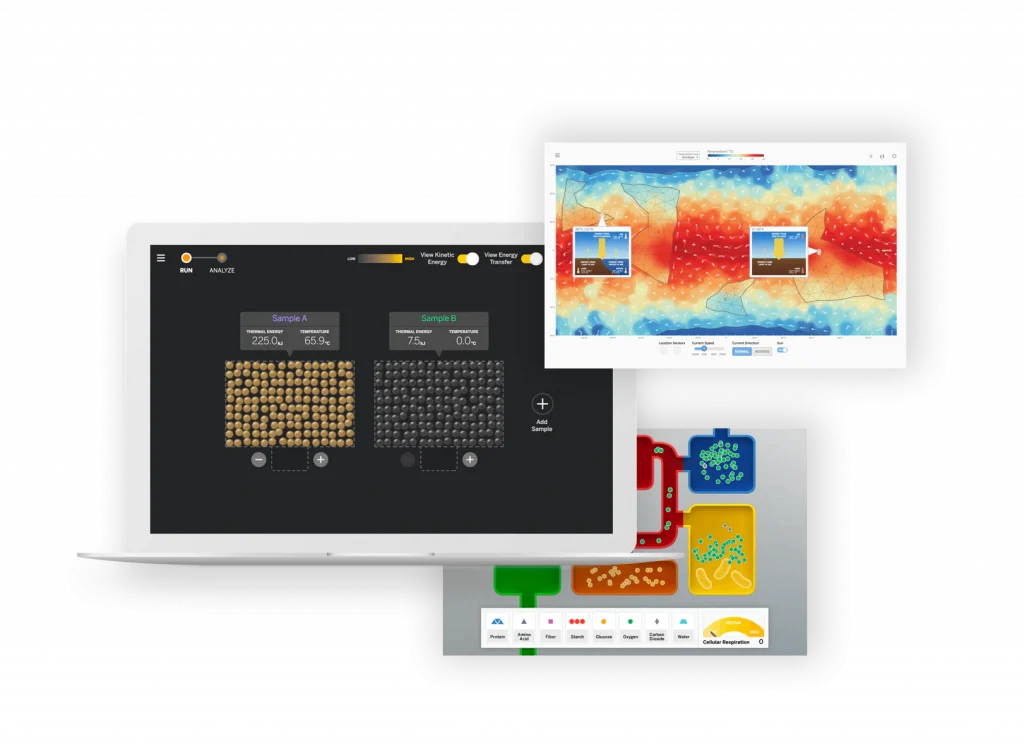
Teacher’s Guides
Available digitally and in print, the Teacher’s Guides contain all of the information teachers need to facilitate classroom instruction, including:
- Classroom Slides
- Detailed lesson plans
- Unit and chapter overview documentation
- Differentiation strategies
- Standards alignments
- In-context professional development
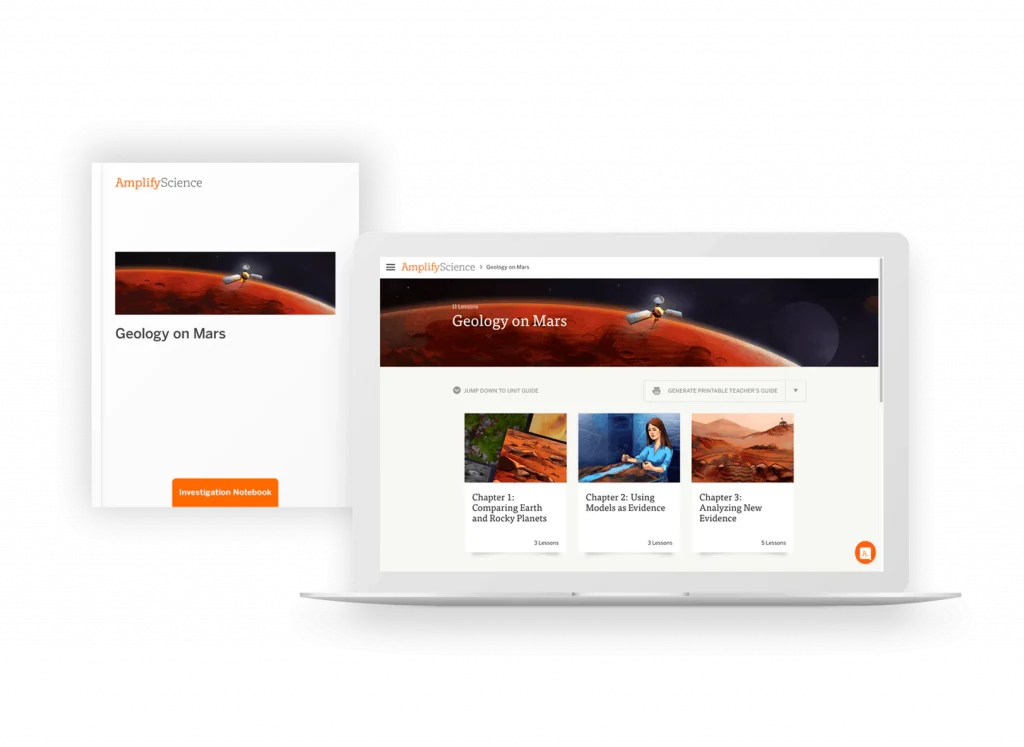
Hands-on materials kits
Hands-on learning is at the heart of Amplify Science. Each unit kit contains:
- Consumable and non-consumable hands-on materials
- Print classroom display materials
- Premium print materials for student use (sorting cards, maps, etc.)
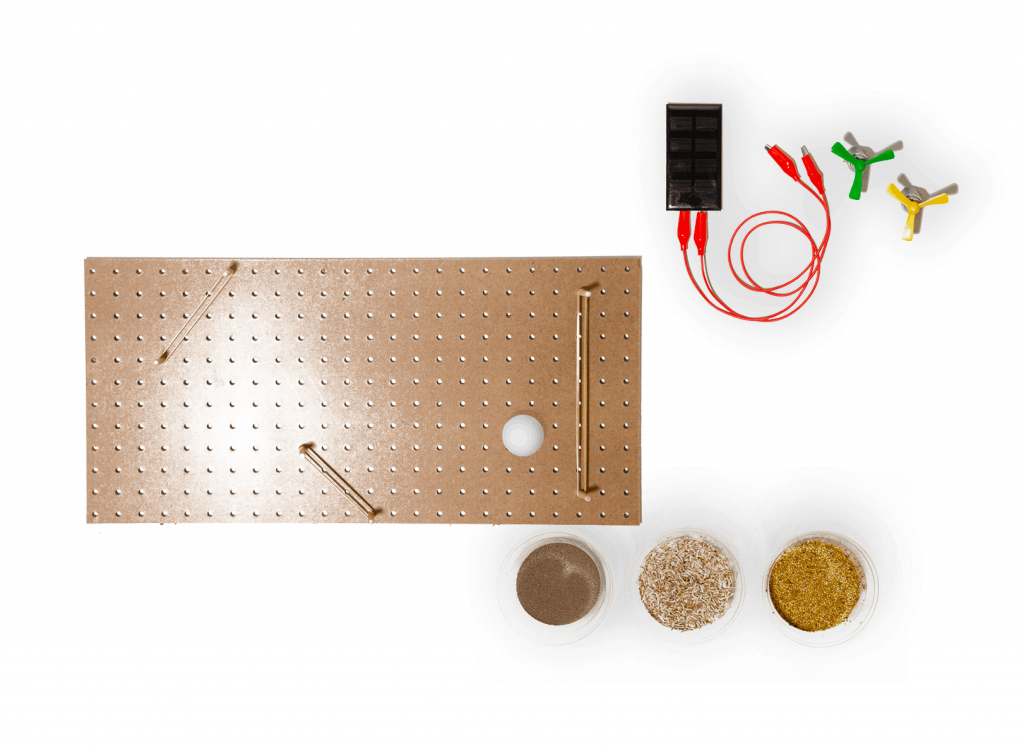
Remote and hybrid learning supports

Amplify has launched a new remote learning solution called Amplify Science@Home. Intended to make extended remote learning and hybrid learning easier, Amplify Science@Home includes two useful options for continuing instruction: @Home Videos and @Home Units.
Amplify Science @Home Videos are recordings of real Amplify Science teachers teaching the lessons. For those teachers who are unable to meet synchronously with their students, the recorded lessons are a great way to keep their students on track and engaged with Amplify Science while at home. These videos will be produced for all K–5 units, and for the first four units of each 6–8 grade level. Their release will be rolling, beginning in August.
Amplify Science@Home Units are modified versions of Amplify Science units, strategically designed to highlight key activities from the program. The @Home Units take significantly less instructional time than the complete Amplify Science program and allow students to engage with science at home. @Home Units will be developed for all Amplify Science K–8 units. Each @Home unit includes:
- Teacher overviews explaining how to use the materials, including suggestions for enhancing the @Home Units if synchronous learning or in-class time with students is available.
- Overviews to send home to families.
Student materials are available in two formats:
- @Home Slides (PDF/PPT) + Student Sheets (PDF) for students with access to technology at home.
- Downloadable @Home Packets (PDF) for students without access to technology at home.
Download the Remote and hybrid learning guide.
Looking for help?
Powerful (and free!) pedagogical support
Amplify provides a unique kind of support you won’t find from other publishers. We have developed an educational support team of former teachers and administrators who provide pedagogical support for every Amplify curriculum, assessment, and intervention program. This service is completely free for all educators who are using our programs and includes:
- Guidance for developing lesson plans and intervention plans
- Information on where to locate standards and other planning materials
- Recommendations and tips for day-to-day teaching with Amplify programs
- Support with administering and interpreting assessment data and more
To reach our pedagogical team, use our live chat within your program, call (800) 823-1969, or email edsupport@amplify.com
Timely technical and program support
Our technical and program support is included and available from 7 a.m. to 7 p.m. ET, Monday through Friday, through a variety of channels, including a live chat program that enables teachers to get immediate help in the middle of the school day.
For your most urgent questions:
- Use our live chat within your program
- Call our toll-free number: (800) 823-1969
For less urgent questions:
Contact us
Contact your South Carolina team representatives:
Jeff Rutter
Field Manager
jrutter@amplify.com
(727) 512-8440
Cathy McMillan
Senior Account Executive
cmcmillan@amplify.com
(904) 465-9904
Core Principles:
These core principles guide our operations, employee behavior and product development:
- Customer Control: We help school districts securely manage their personally identifiable student information. The districts direct our use of the data, and control who has access to that data and with whom it is shared.
- Educational Purpose: Personal student information can only be used for customer-authorized purposes to support student learning through the secure and effective operation of our educational tools.
- Transparency: School districts, teachers, parents and students have the right to know what information is collected by school technology, how it is used and by whom, as clearly described in our privacy policy.
- Commitment: Privacy and security are thoroughly embedded into our organizational practices. We dedicate substantial resources to systems, processes and personnel required to protect student information.
Amplify Data Privacy and Security Practices:
Amplify maintains a customer data privacy policy that explains our data collection, handling and use practices.
Amplify also maintains a data security policy that explains how student data is protected from unauthorized access. Data security practices at Amplify are developed and maintained in accordance with the internationally recognized ISO27002 security standards. In addition, Amplify has successfully completed the SOC 2 Type 2 examination of controls relevant to security and conducts such examination on an annual basis.
For more information, please review our customer privacy policy and security practices. If you have additional questions, please contact us at privacy@amplify.com.
State Law Compliance
Amplify has entered into Data Privacy Agreements (DPAs) with districts across the country to facilitate compliance with applicable laws governing student data privacy. These DPAs can be applied to any Amplify product.
Unless otherwise noted, the DPAs are based on the Student Data Privacy Consortium’s (SDPC) model agreement which was created to simplify the contracting process between providers and local education agencies (LEAs) while ensuring LEAs have the necessary data protection obligations in place with providers. For additional information please visit the SDPC website and select your state.
General Offer of Privacy Terms:
To expedite your district’s need for a DPA and streamline the contracting process, we have compiled the following DPAs, listed by state.
By executing the General Offer of Privacy Terms, your LEA can “piggy back” off an existing DPA that other LEAs in your state have already agreed to. If you do not see your state below, please contact privacy@amplify.com.
Instructions:
(i) Please download the General Offer of Privacy Terms, (ii) sign and send the executed copy to your Amplify account representative, and (iii) retain a copy for your records. If you have any questions please reach out to privacy@amplify.com.
*Please note, states marked with an asterisk do not have a General Offer of Privacy Terms; however, please review the instructions below on how to quickly implement a DPA in compliance with your LEA’s state law.
Arizona: To enter into Amplify’s AZ-NDPA-V1, please sign the General Offer of Privacy Terms
Arkansas: To enter into Amplify’s AR-NDPA-V1, please sign the and General Offer of Privacy Terms
California: To enter into Amplify’s CA-NDPA, Version 1.5, please sign the General Offer of Privacy Terms
Connecticut*
To facilitate your district’s compliance with the requirements of Connecticut’s student data privacy law (Connecticut General Statutes §§ 10-234aa through 10-234dd), Amplify is proud to offer our “Connecticut Terms of Service Addendum” linked below. This Addendum supplements Amplify’s Terms and Conditions for use of Amplify products licensed by the district available at https://amplify.com/customer-terms.
Addendum: Connecticut Terms of Service Addendum
Instructions: Please retain a copy for your records – no further action is required.
Florida: To enter into Amplify’s FL-NDPA, Version 1.0, please sign the General Offer of Privacy Terms
Hawaii*
Amplify has entered into a Data Sharing Agreement with the Hawaii State Department of Education (HIDOE) which applies to any LEA associated with HIDOE. If your LEA is not a part of the HIDOE and you require a data privacy agreement, please reach out to privacy@amplify.com.
Illinois: To enter into Amplify’s IL-NDPA (which includes the IL State Supplemental Terms), please sign the General Offer of Privacy Terms
Iowa: To enter into Amplify’s IA-NDPA (which includes the IA State Supplemental Terms), please sign the General Offer of Privacy Terms
Maine: To enter into Amplify’s MA-ME-MO-NH-NY-OH-RI-VT DPA, Version 1 (which includes the ME State Supplemental Terms), please sign the General Offer of Privacy Terms
Massachusetts: To enter into Amplify’s MA-ME-MO-NH-NY-OH-RI-VT DPA, Version 1 (which includes the MA State Supplemental Terms), please sign the General Offer of Privacy Terms
Missouri: To enter into Amplify’s MO-NDPA, Version 1.0, please sign the General Offer of Privacy Terms
Montana: To enter into Amplify’s MT DPA, Version 3, please sign the General Offer of Privacy Terms
Nebraska: To enter into Amplify’s NE NDPA (which includes the NE State Supplemental Terms), please sign the General Offer of Privacy Terms
New York*
Option 1:
To facilitate your district’s compliance with the requirements of New York State Education Law § 2-D and regulations promulgated thereunder, Amplify is proud to offer our “New York Data Privacy and Security Addendum” linked below. This Addendum supplements Amplify’s Terms and Conditions for use of Amplify products licensed by the educational agency available at https://amplify.com/customer-terms.
Addendum: New York Data Privacy and Security Addendum
Instructions: Please retain a copy for your records- no further action is required.
Option 2:
To enter into Amplify’s MA-ME-MO-NH-NY-OH-RI-VT DPA, Version 1 (which includes the NY State Supplemental Terms), please sign the General Offer of Privacy Terms
New Hampshire: To enter into Amplify’s MA-ME-MO-NH-NY-OH-RI-VT DPA, Version 1 (which includes the NH State Supplemental Terms), please sign the General Offer of Privacy Terms
North Carolina*
The Data Confidentiality and Security Agreement issued by the North Carolina Department of Public Instruction (NCDPI) is not applicable to Amplify’s services given Amplify does not have a direct integration to any state system via API/plugin. You can review the NCDPI guidance here: https://www.dpi.nc.gov/about-dpi/technology-services/third-party-data-integration. However, Amplify can sign this form with some revisions. As such, we have prepared an Addendum which supplements the Data Confidentiality and Security Agreement.
Instructions: Please download a copy of the Data Confidentiality and Security Agreement with Amplify Addendum, return an executed copy to your account executive, and retain a copy for your records.
Ohio: To enter into Amplify’s OH-NDPA Version 1.0, please sign the General Offer of Privacy Terms
Oregon: To enter into Amplify’s OR-NDPA-V1, please sign the General Offer of Privacy Terms
Rhode Island: To enter into Amplify’s MA-ME-MO-NH-NY-OH-RI-VT DPA, Version 1 (which includes the RI State Supplemental Terms), please sign the General Offer of Privacy Terms
Tennessee: To enter into Amplify’s TN-NDPA-V1, please sign the General Offer of Privacy Terms
Texas: To enter into Amplify’s TX-NDPA-V1R6, please sign the General Offer of Privacy Terms
Utah: To enter into Amplify’s UT-NDPA, Version 1, please sign the General Offer of Privacy Terms
Vermont: To enter into Amplify’s MA-ME-MO-NH-NY-OH-RI-VT DPA, Version 1 (which includes the VT State Supplemental Terms), please sign the General Offer of Privacy Terms
Virginia: To enter into Amplify’s VA-DPA, please sign the General Offer of Privacy Terms
Washington: To enter into Amplify’s WA-NDPA, Version 1, please sign the General Offer of Privacy Terms
Wisconsin: To enter into Amplify’s WI SDPA, Version 1, please sign the General Offer of Privacy Terms
Wyoming: To enter into Amplify’s WY-NDPA-V1, please sign the General Offer of Privacy Terms
What is mCLASS?
mCLASS is a best-in-class assessment platform that houses a suite of proven, gold-standard assessment measures and tools that can be flexibly combined to meet the unique literacy needs of both teachers and students across grades K–6, including:
- Universal screening
- Diagnostic assessment
- Dyslexia screening
- Text Reading and Comprehension (a.k.a. running records via mCLASS: Reading 3D)
- Progress monitoring
- Dual language reporting
- Targeted teacher-led instruction
What is the DIBELS 8th Edition assessment?
Developed by the University of Oregon, the DIBELS 8th Edition is the latest version of the DIBELS® (Dynamic Indicators of Basic Early Literacy Skills) assessment.
With this latest version, the University of Oregon Center on Teaching and Learning (UO CTL) made significant efforts to ensure measures would meet state-level screening requirements for universal screening, diagnostic assessment, and dyslexia screening. To support this, measures were updated based on the latest research to meet increased standards of reliability and validity. In addition, adaptive procedures and discontinue rules focus on the assessment of priority skills and prevent over-testing.
Summary of changes:
- Consistent measures within grades will provide improved growth measurement.
- All subtests have been revised to be grade-specific and to increase in difficulty, covering a full progression of skills and minimizing floor and ceiling effects. This provides the opportunity for students to demonstrate what they know and further pinpoint what they don’t know.
- Phoneme Segmentation Fluency replaces First Sound Fluency. The expanded coverage minimizes floor effect and provides information about difficulty in Phonemic Awareness skills without the additional First Sound Fluency measure.
- A new subtest, Word Reading Fluency, helps identify students with poor sight word reading skills that other subtests miss.
- For all measures, the basic scoring procedures remain the same. For Nonsense Word Fluency, credit is given for recording words as whole words even if the student misses in the first attempt.
- Oral Reading Fluency is now only one passage, instead of three. Retell has been removed. Thus, Oral Reading Fluency assessment will take a third of the time.
Assessment measures by grade
| DIBELS measures at each grade level | |||||
| Measure | Grade K | Grade 1 | Grade 2 | Grade 3 | Grades 4–6 |
| Letter naming fluency |  |
|
|||
| Phonemic segmentation fluency | |
|
|||
| Nonsense word fluency | |
|
|
|
|
| Word reading fluency | |
|
|
|
|
| Oral reading fluency | |
|
|
|
|
| Maze (basic comprehension) | |
|
|
||
| Amplify measures at each grade level | |||||
| Oral language | |
|
|
|
|
| Vocabulary | |
|
|
|
|
Assessment measures sample videos
DIBELS 8th Edition measure: Phonemic Segmentation Fluency (PSF)
DIBELS 8th Edition measure: Nonsense Word Fluency (NWF)
DIBELS 8th Edition measure: Letter Naming Fluency (LNF)
DIBELS 8th Edition measure: Word Reading Fluency (WRF)
DIBELS 8th Edition measure: Oral Reading Fluency (ORF)
What makes mCLASS with DIBELS 8th Edition different?
mCLASS with DIBELS 8th Edition combines the power of the mCLASS assessment platform and the effectiveness of the DIBELS 8th Edition assessment measures. As a result – educators are empowered with the latest and greatest assessment tool.
More than a test, mCLASS with DIBELS 8th Edition is an integrated system that closes the knowing-doing gap by helping teachers take immediate instructional action that’s right for each and every student.
Assessment systems must enable and compel educators to answer not just the “What” questions, but also the “So What” and “Now What” questions. These are the questions that are essential in transforming classroom instruction, and the questions that mCLASS with DIBELS 8th Edition helps teachers answer with confidence.
What makes mCLASS with DIBELS 8th Edition different?
- It gives teachers access to the latest digital version of the DIBELS assessment. Amplify is the only licensed provider of the digital DIBELS 8th Edition assessment. As such, our solution is the only one to enhance the DIBELS 8th Edition assessment with the power, reliability, and quickness of the mCLASS system.
- It makes it faster and easier to understand where every student is in their early literacy journey. By combining 1:1 observational diagnostic assessments, dyslexia screening, progress monitoring, instant scoring, rigorous reporting, automatic student grouping, and targeted instruction all in one place, it reduces the instructional delays associated with manual scoring, manual data analysis, and manual lesson planning.
- It makes every instructional minute count. In addition to one-minute measures that quickly gauge student progress toward reading proficiency, it leverages a teacher’s most powerful instructional tool — their own 1:1 observations.
- It drives growth more efficiently. Rather than relying on broad composite scores alone, granular data and in-depth insights for every student help teachers pinpoint exact skill gaps and areas of unfinished learning, making whole-group, small-group, and 1:1 instruction more targeted and effective.
- It saves teachers time. Instant reports, automatic student groups, and ready-to-teach lessons mean teachers spend less time cobbling together materials and more time working directly with students and responding to their needs.
How does mCLASS with DIBELS 8th Edition support screening for dyslexia risk?
DIBELS 8th Edition measures have been updated based on the latest research. They now offer stronger measures of processing speed, phonological awareness, and alphabetic principles for dyslexia screening purposes.
To support this, a new subtest in Word Reading Fluency was introduced and revisions were made to Letter Naming Fluency, Phonemic Segmentation Fluency, and Nonsense Fluency subtests to improve their ability to screen for deficits commonly associated with dyslexia risk, such as phonological awareness, rapid naming ability, and alphabetic principle. These measures provide early warning signs for neurological processing difficulties that contribute to risk for dyslexia (Wolf & Bowers, 1999; Denckla & Rudel, 1974).
Moreover, measures in Oral Language and Vocabulary are included to provide additional information to help evaluate additional risk areas associated with dyslexia risk.
How does mCLASS with DIBELS 8th Edition support the use of running records?
Track your students’ reading progress from every angle with the Text Reading and Comprehension (TRC) assessment. When TRC is paired with the DIBELS 8th Edition assessment, classroom teachers unlock the ability to record reading behaviors through running digital records. Available in English and Spanish, it measures reading comprehension and provides insight into how each student finds meaning in text.

Measures include:
- Lesson plans for whole class, small-group, and one-on-one instruction.
- Small-group advisor, which organizes students into groups based on strengths and gaps.
- Item-level advisor, which drills deep into student responses to uncover patterns, strengths, and gaps.
- Instructional resources for each student’s parent/guardian(s).
How does mCLASS with DIBELS 8th Edition turn data into instant action?
mCLASS with DIBELS 8th Edition gives you instant results and clear next steps for each student.
Quick and actionable reports provide detailed insight into students’ reading development across foundational literacy skills for teachers, specialists, administrators, and caregivers.
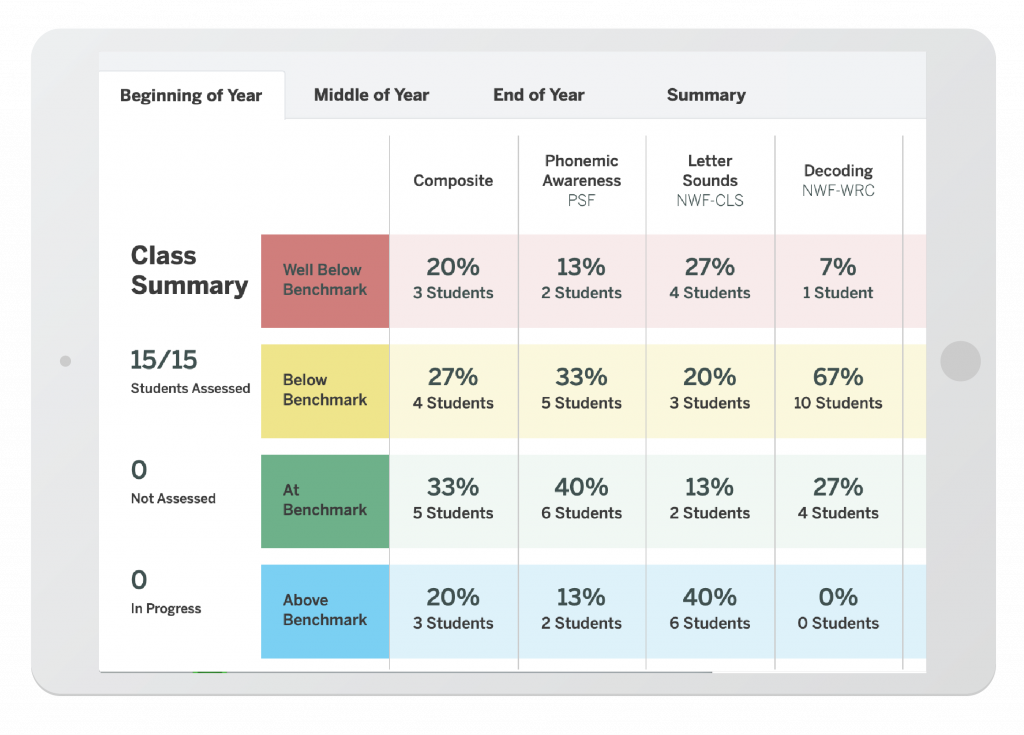
Diagnostic assessment
mCLASS with DIBELS 8th Edition analyzes individual student response data through a proprietary scoring algorithm that pinpoints a student’s specific area(s) of growth and improvement, providing classroom teachers in-depth insight into a students’ instructional needs.
Ready-to-teach instruction
Immediately following the analysis of individual student responses, mCLASS with DIBELS 8th Edition provides an in-depth diagnostic report complete with suggested next steps, also known as “mCLASS Instruction.”
mCLASS Instruction evaluates each student’s responses on each individual subtest and instantly:
- Provides a list of specific needs by student, such as struggling with medial vowel sounds or difficulty reading words with consonant blends.
- Groups students automatically based on similar discrete skill needs, not simply composite scores like other assessment tools.
- Recommends a variety of ready-to-teach lessons that specifically target each individual student’s areas of need or common areas of need for small-group instruction.
Classroom skill and benchmark summary
The Classroom Skill Summary report is a dashboard showing benchmark performance on each skill. Teachers can use it to determine which skill areas need instructional focus at a classroom level.
The Classroom Benchmark Summary report is a classroom-wide view of overall reading performance. Teachers can use this report to determine if composite scores improved, declined, or remained the same each semester.
Detailed benchmark performance
Teachers can see each student’s performance during the current school year, on each subtest as well as the overall composite. The benchmark goal displays below the subtest name when applicable. The ability to sort the columns in this report gives teachers more flexibility to analyze data the way they prefer.
Dyslexia screening
Identify students who are at risk for reading difficulties, including dyslexia, based on their results from foundational skills measures and additional measures as needed by local policies.
Progress monitoring summary
See which subtests have been assessed since the most recent benchmark assessment, how students performed on the three most recent progress monitoring assessments for each measure, and which students have not been progress monitored since the benchmark assessment.
Goal setting tool
The Zones of Growth (ZoG) analysis uses a rich set of national data to determine student goals for the next benchmark period. Teachers can use the Goal Setting Tool to view these recommended goals or modify the default goals for individual students as they see fit, if the default goal is too challenging or not challenging enough.
Growth outcomes
Teachers and interventionists can see each student’s actual growth achieved and how it compares to the goal that was set for the student.
Caregiver supports
The mCLASS Home Connect website houses literacy resources for parents and caregivers, including at-home lessons organized by skill. Our mCLASS parent/caregiver letters in English and Spanish ensure that families know how to best support their child.
Self-guided tour
Our self-guided tour is a great way to orient yourself to the organization of our mCLASS platform. Click the button below to get started.

Demo access
Follow the instructions below to login to your demo account.
- Click the mCLASS Demo button below.
- Select Log in with Amplify.
- Enter the username: d8demoD
- Enter the password: 1234
- Click the Reading tile.
Once you are logged in:
- Find the Class/Group dropdown field and select Grade 1.
- Right above the Class Summary, click Beginning of Year or Middle of Year and explore the data.
- Scroll down to the class list. Each column within the class list is sortable by clicking the double arrow in the column header.
- Click on any score to see the measure transcript.
- Click on a student’s name to see historical data and progress monitoring graphs.
After exploring the Benchmark tab in the purple bar:
- Click on the Instruction tab.
- If you don’t see groups, click Updated recommendations.
- Explore freely! The Groups, Students, and All Activities tabs have rich information.
- Click the Progress tab.
- Click on Home Connect to see a sample of our caregiver letters.
What is mCLASS?
mCLASS is a best-in-class assessment platform that houses a suite of proven, gold-standard assessment measures and tools that can be flexibly combined to meet the unique literacy needs of both teachers and students across grades K–6, including:
- Universal screening
- Diagnostic assessment
- Dyslexia screening
- Text Reading and Comprehension (a.k.a. running records via mCLASS: Reading 3D)
- Progress monitoring
- Dual language reporting
- Targeted teacher-led instruction
What is the DIBELS 8th Edition assessment?
Developed by the University of Oregon, the DIBELS 8th Edition is the latest version of the DIBELS® (Dynamic Indicators of Basic Early Literacy Skills) assessment.
With this latest version, the University of Oregon Center on Teaching and Learning (UO CTL) made significant efforts to ensure measures would meet state-level screening requirements for universal screening, diagnostic assessment, and dyslexia screening. To support this, measures were updated based on the latest research to meet increased standards of reliability and validity. In addition, adaptive procedures and discontinue rules focus on the assessment of priority skills and prevent over-testing.
Summary of changes:
- Consistent measures within grades will provide improved growth measurement.
- All subtests have been revised to be grade-specific and to increase in difficulty, covering a full progression of skills and minimizing floor and ceiling effects. This provides the opportunity for students to demonstrate what they know and further pinpoint what they don’t know.
- Phoneme Segmentation Fluency replaces First Sound Fluency. The expanded coverage minimizes floor effect and provides information about difficulty in Phonemic Awareness skills without the additional First Sound Fluency measure.
- A new subtest, Word Reading Fluency, helps identify students with poor sight word reading skills that other subtests miss.
- For all measures, the basic scoring procedures remain the same. For Nonsense Word Fluency, credit is given for recording words as whole words even if the student misses in the first attempt.
- Oral Reading Fluency is now only one passage, instead of three. Retell has been removed. Thus, Oral Reading Fluency assessment will take a third of the time.
Assessment measures by grade
| DIBELS measures at each grade level | |||||
| Measure | Grade K | Grade 1 | Grade 2 | Grade 3 | Grades 4–6 |
| Letter naming fluency | |
|
|||
| Phonemic segmentation fluency | |
|
|||
| Nonsense word fluency | |
|
|
|
|
| Word reading fluency | |
|
|
|
|
| Oral reading fluency | |
|
|
|
|
| Maze (basic comprehension) | |
|
|
||
| Amplify measures at each grade level | |||||
| Oral language | |
|
|
|
|
| Vocabulary | |
|
|
|
|
Assessment measures sample videos
DIBELS 8th Edition measure: Phonemic Segmentation Fluency (PSF)
DIBELS 8th Edition measure: Nonsense Word Fluency (NWF)
DIBELS 8th Edition measure: Letter Naming Fluency (LNF)
DIBELS 8th Edition measure: Word Reading Fluency (WRF)
DIBELS 8th Edition measure: Oral Reading Fluency (ORF)
What makes mCLASS with DIBELS 8th Edition different?
mCLASS with DIBELS 8th Edition combines the power of the mCLASS assessment platform and the effectiveness of the DIBELS 8th Edition assessment measures. As a result – educators are empowered with the latest and greatest assessment tool.
More than a test, mCLASS with DIBELS 8th Edition is an integrated system that closes the knowing-doing gap by helping teachers take immediate instructional action that’s right for each and every student.
Assessment systems must enable and compel educators to answer not just the “What” questions, but also the “So What” and “Now What” questions. These are the questions that are essential in transforming classroom instruction, and the questions that mCLASS with DIBELS 8th Edition helps teachers answer with confidence.
What makes mCLASS with DIBELS 8th Edition different?
- It gives teachers access to the latest digital version of the DIBELS assessment. Amplify is the only licensed provider of the digital DIBELS 8th Edition assessment. As such, our solution is the only one to enhance the DIBELS 8th Edition assessment with the power, reliability, and quickness of the mCLASS system.
- It makes it faster and easier to understand where every student is in their early literacy journey. By combining 1:1 observational diagnostic assessments, dyslexia screening, progress monitoring, instant scoring, rigorous reporting, automatic student grouping, and targeted instruction all in one place, it reduces the instructional delays associated with manual scoring, manual data analysis, and manual lesson planning.
- It brings more equity to the classroom. When used in conjunction with mCLASS Lectura, teachers have access to dual language reports that highlight a student’s strengths and weaknesses in both English and Spanish.
- It makes every instructional minute count. In addition to one-minute measures that quickly gauge student progress toward reading proficiency, it leverages a teacher’s most powerful instructional tool — their own 1:1 observations.
- It drives growth more efficiently. Rather than relying on broad composite scores alone, granular data and in-depth insights for every student help teachers pinpoint exact skill gaps and areas of unfinished learning, making whole-group, small-group, and 1:1 instruction more targeted and effective.
- It saves teachers time. Instant reports, automatic student groups, and ready-to-teach lessons mean teachers spend less time cobbling together materials and more time working directly with students and responding to their needs.
How does mCLASS with DIBELS 8th Edition support screening for dyslexia risk?
DIBELS 8th Edition measures have been updated based on the latest research. They now offer stronger measures of processing speed, phonological awareness, and alphabetic principles for dyslexia screening purposes.
To support this, a new subtest in Word Reading Fluency was introduced and revisions were made to Letter Naming Fluency, Phonemic Segmentation Fluency, and Nonsense Fluency subtests to improve their ability to screen for deficits commonly associated with dyslexia risk, such as phonological awareness, rapid naming ability, and alphabetic principle. These measures provide early warning signs for neurological processing difficulties that contribute to risk for dyslexia (Wolf & Bowers, 1999; Denckla & Rudel, 1974).
Moreover, measures in Oral Language and Vocabulary are included to provide additional information to help evaluate additional risk areas associated with dyslexia risk.
How does mCLASS with DIBELS 8th Edition support the use of running records?
Track your students’ reading progress from every angle with the Text Reading and Comprehension (TRC) assessment. When TRC is paired with the DIBELS 8th Edition assessment, classroom teachers unlock the ability to record reading behaviors through running digital records. Available in English and Spanish, it measures reading comprehension and provides insight into how each student finds meaning in text.
Measures include:
- Lesson plans for whole class, small-group, and one-on-one instruction.
- Small-group advisor, which organizes students into groups based on strengths and gaps.
- Item-level advisor, which drills deep into student responses to uncover patterns, strengths, and gaps.
- Instructional resources for each student’s parent/guardian(s).
How does mCLASS with DIBELS 8th Edition turn data into instant action?
mCLASS with DIBELS 8th Edition gives you instant results and clear next steps for each student.
Quick and actionable reports provide detailed insight into students’ reading development across foundational literacy skills for teachers, specialists, administrators, and caregivers.
Diagnostic assessment
mCLASS with DIBELS 8th Edition analyzes individual student response data through a proprietary scoring algorithm that pinpoints a student’s specific area(s) of growth and improvement, providing classroom teachers in-depth insight into a students’ instructional needs.
Ready-to-teach instruction
Immediately following the analysis of individual student responses, mCLASS with DIBELS 8th Edition provides an in-depth diagnostic report complete with suggested next steps, also known as “mCLASS Instruction.”
mCLASS Instruction evaluates each student’s responses on each individual subtest and instantly:
- Provides a list of specific needs by student, such as struggling with medial vowel sounds or difficulty reading words with consonant blends.
- Groups students automatically based on similar discrete skill needs, not simply composite scores like other assessment tools.
- Recommends a variety of ready-to-teach lessons that specifically target each individual student’s areas of need or common areas of need for small-group instruction.
Classroom skill and benchmark summary
The Classroom Skill Summary report is a dashboard showing benchmark performance on each skill. Teachers can use it to determine which skill areas need instructional focus at a classroom level.
The Classroom Benchmark Summary report is a classroom-wide view of overall reading performance. Teachers can use this report to determine if composite scores improved, declined, or remained the same each semester.
Detailed benchmark performance
Teachers can see each student’s performance during the current school year, on each subtest as well as the overall composite. The benchmark goal displays below the subtest name when applicable. The ability to sort the columns in this report gives teachers more flexibility to analyze data the way they prefer.
Dyslexia screening
Identify students who are at risk for reading difficulties, including dyslexia, based on their results from foundational skills measures and additional measures as needed by local policies.
Progress monitoring summary
See which subtests have been assessed since the most recent benchmark assessment, how students performed on the three most recent progress monitoring assessments for each measure, and which students have not been progress monitored since the benchmark assessment.
Goal setting tool
The Zones of Growth (ZoG) analysis uses a rich set of national data to determine student goals for the next benchmark period. Teachers can use the Goal Setting Tool to view these recommended goals or modify the default goals for individual students as they see fit, if the default goal is too challenging or not challenging enough.
Growth outcomes
Teachers and interventionists can see each student’s actual growth achieved and how it compares to the goal that was set for the student.
Caregiver supports
The mCLASS Home Connect website houses literacy resources for parents and caregivers, including at-home lessons organized by skill. Our mCLASS parent/caregiver letters in English and Spanish ensure that families know how to best support their child.
What is mCLASS?
mCLASS is a best-in-class assessment platform that houses a suite of proven, gold-standard assessment measures and tools that can be flexibly combined to meet the unique literacy needs of both teachers and students across grades K–6, including:
- Universal screening
- Diagnostic assessment
- Dyslexia screening
- Text Reading and Comprehension (a.k.a. running records via mCLASS: Reading 3D)
- Progress monitoring
- Dual language reporting
- Targeted teacher-led instruction
What is the DIBELS 8th Edition assessment?
Developed by the University of Oregon, the DIBELS 8th Edition is the latest version of the DIBELS® (Dynamic Indicators of Basic Early Literacy Skills) assessment.
With this latest version, the University of Oregon Center on Teaching and Learning (UO CTL) made significant efforts to ensure measures would meet state-level screening requirements for universal screening, diagnostic assessment, and dyslexia screening. To support this, measures were updated based on the latest research to meet increased standards of reliability and validity. In addition, adaptive procedures and discontinue rules focus on the assessment of priority skills and prevent over-testing.
Summary of changes:
- Consistent measures within grades will provide improved growth measurement.
- All subtests have been revised to be grade-specific and to increase in difficulty, covering a full progression of skills and minimizing floor and ceiling effects. This provides the opportunity for students to demonstrate what they know and further pinpoint what they don’t know.
- Phoneme Segmentation Fluency replaces First Sound Fluency. The expanded coverage minimizes floor effect and provides information about difficulty in Phonemic Awareness skills without the additional First Sound Fluency measure.
- A new subtest, Word Reading Fluency, helps identify students with poor sight word reading skills that other subtests miss.
- For all measures, the basic scoring procedures remain the same. For Nonsense Word Fluency, credit is given for recording words as whole words even if the student misses in the first attempt.
- Oral Reading Fluency is now only one passage, instead of three. Retell has been removed. Thus, Oral Reading Fluency assessment will take a third of the time.
Assessment measures by grade
| DIBELS measures at each grade level | |||||
| Measure | Grade K | Grade 1 | Grade 2 | Grade 3 | Grades 4–6 |
| Letter naming fluency | |
|
|||
| Phonemic segmentation fluency | |
|
|||
| Nonsense word fluency | |
|
|
|
|
| Word reading fluency | |
|
|
|
|
| Oral reading fluency | |
|
|
|
|
| Maze (basic comprehension) | |
|
|
||
| Amplify measures at each grade level | |||||
| Oral language | |
|
|
|
|
| Vocabulary | |
|
|
|
|
Assessment measures sample videos
DIBELS 8th Edition measure: Phonemic Segmentation Fluency (PSF)
DIBELS 8th Edition measure: Nonsense Word Fluency (NWF)
DIBELS 8th Edition measure: Letter Naming Fluency (LNF)
DIBELS 8th Edition measure: Word Reading Fluency (WRF)
DIBELS 8th Edition measure: Oral Reading Fluency (ORF)
What makes mCLASS with DIBELS 8th Edition different?
mCLASS with DIBELS 8th Edition combines the power of the mCLASS assessment platform and the effectiveness of the DIBELS 8th Edition assessment measures. As a result – educators are empowered with the latest and greatest assessment tool.
More than a test, mCLASS with DIBELS 8th Edition is an integrated system that closes the knowing-doing gap by helping teachers take immediate instructional action that’s right for each and every student.
Assessment systems must enable and compel educators to answer not just the “What” questions, but also the “So What” and “Now What” questions. These are the questions that are essential in transforming classroom instruction, and the questions that mCLASS with DIBELS 8th Edition helps teachers answer with confidence.
What makes mCLASS with DIBELS 8th Edition different?
- It gives teachers access to the latest digital version of the DIBELS assessment. Amplify is the only licensed provider of the digital DIBELS 8th Edition assessment. As such, our solution is the only one to enhance the DIBELS 8th Edition assessment with the power, reliability, and quickness of the mCLASS system.
- It makes it faster and easier to understand where every student is in their early literacy journey. By combining 1:1 observational diagnostic assessments, dyslexia screening, progress monitoring, instant scoring, rigorous reporting, automatic student grouping, and targeted instruction all in one place, it reduces the instructional delays associated with manual scoring, manual data analysis, and manual lesson planning.
- It brings more equity to the classroom. When used in conjunction with mCLASS Lectura, teachers have access to dual language reports that highlight a student’s strengths and weaknesses in both English and Spanish.
- It makes every instructional minute count. In addition to one-minute measures that quickly gauge student progress toward reading proficiency, it leverages a teacher’s most powerful instructional tool — their own 1:1 observations.
- It drives growth more efficiently. Rather than relying on broad composite scores alone, granular data and in-depth insights for every student help teachers pinpoint exact skill gaps and areas of unfinished learning, making whole-group, small-group, and 1:1 instruction more targeted and effective.
- It saves teachers time. Instant reports, automatic student groups, and ready-to-teach lessons mean teachers spend less time cobbling together materials and more time working directly with students and responding to their needs.
How does mCLASS with DIBELS 8th Edition support screening for dyslexia risk?
DIBELS 8th Edition measures have been updated based on the latest research. They now offer stronger measures of processing speed, phonological awareness, and alphabetic principles for dyslexia screening purposes.
To support this, a new subtest in Word Reading Fluency was introduced and revisions were made to Letter Naming Fluency, Phonemic Segmentation Fluency, and Nonsense Fluency subtests to improve their ability to screen for deficits commonly associated with dyslexia risk, such as phonological awareness, rapid naming ability, and alphabetic principle. These measures provide early warning signs for neurological processing difficulties that contribute to risk for dyslexia (Wolf & Bowers, 1999; Denckla & Rudel, 1974).
Moreover, measures in Oral Language and Vocabulary are included to provide additional information to help evaluate additional risk areas associated with dyslexia risk.
How does mCLASS with DIBELS 8th Edition support the use of running records?
Track your students’ reading progress from every angle with the Text Reading and Comprehension (TRC) assessment. When TRC is paired with the DIBELS 8th Edition assessment, classroom teachers unlock the ability to record reading behaviors through running digital records. Available in English and Spanish, it measures reading comprehension and provides insight into how each student finds meaning in text.

Measures include:
- Lesson plans for whole class, small-group, and one-on-one instruction.
- Small-group advisor, which organizes students into groups based on strengths and gaps.
- Item-level advisor, which drills deep into student responses to uncover patterns, strengths, and gaps.
- Instructional resources for each student’s parent/guardian(s).
How does mCLASS with DIBELS 8th Edition turn data into instant action?
mCLASS with DIBELS 8th Edition gives you instant results and clear next steps for each student.
Quick and actionable reports provide detailed insight into students’ reading development across foundational literacy skills for teachers, specialists, administrators, and caregivers.

Diagnostic assessment
mCLASS with DIBELS 8th Edition analyzes individual student response data through a proprietary scoring algorithm that pinpoints a student’s specific area(s) of growth and improvement, providing classroom teachers in-depth insight into a students’ instructional needs.
Ready-to-teach instruction
Immediately following the analysis of individual student responses, mCLASS with DIBELS 8th Edition provides an in-depth diagnostic report complete with suggested next steps, also known as “mCLASS Instruction.”
mCLASS Instruction evaluates each student’s responses on each individual subtest and instantly:
- Provides a list of specific needs by student, such as struggling with medial vowel sounds or difficulty reading words with consonant blends.
- Groups students automatically based on similar discrete skill needs, not simply composite scores like other assessment tools.
- Recommends a variety of ready-to-teach lessons that specifically target each individual student’s areas of need or common areas of need for small-group instruction.
Classroom skill and benchmark summary
The Classroom Skill Summary report is a dashboard showing benchmark performance on each skill. Teachers can use it to determine which skill areas need instructional focus at a classroom level.
The Classroom Benchmark Summary report is a classroom-wide view of overall reading performance. Teachers can use this report to determine if composite scores improved, declined, or remained the same each semester.
Detailed benchmark performance
Teachers can see each student’s performance during the current school year, on each subtest as well as the overall composite. The benchmark goal displays below the subtest name when applicable. The ability to sort the columns in this report gives teachers more flexibility to analyze data the way they prefer.
Dyslexia screening
Identify students who are at risk for reading difficulties, including dyslexia, based on their results from foundational skills measures and additional measures as needed by local policies.
Progress monitoring summary
See which subtests have been assessed since the most recent benchmark assessment, how students performed on the three most recent progress monitoring assessments for each measure, and which students have not been progress monitored since the benchmark assessment.
Goal setting tool
The Zones of Growth (ZoG) analysis uses a rich set of national data to determine student goals for the next benchmark period. Teachers can use the Goal Setting Tool to view these recommended goals or modify the default goals for individual students as they see fit, if the default goal is too challenging or not challenging enough.
Growth outcomes
Teachers and interventionists can see each student’s actual growth achieved and how it compares to the goal that was set for the student.
Caregiver supports
The mCLASS Home Connect website houses literacy resources for parents and caregivers, including at-home lessons organized by skill. Our mCLASS parent/caregiver letters in English and Spanish ensure that families know how to best support their child.

Self-guided tour
Our self-guided tour is a great way to orient yourself to the organization of our mCLASS platform. Click the button below to get started.

Demo access
Follow the instructions below to login to your demo account.
- Click the mCLASS Demo button below.
- Select Log in with Amplify.
- Enter the username: d8demoD
- Enter the password: 1234
- Click the Reading tile.
Once you are logged in:
- Find the Class/Group dropdown field and select Grade 1.
- Right above the Class Summary, click Beginning of Year or Middle of Year and explore the data.
- Scroll down to the class list. Each column within the class list is sortable by clicking the double arrow in the column header.
- Click on any score to see the measure transcript.
- Click on a student’s name to see historical data and progress monitoring graphs.
After exploring the Benchmark tab in the purple bar:
- Click on the Instruction tab.
- If you don’t see groups, click Updated recommendations.
- Explore freely! The Groups, Students, and All Activities tabs have rich information.
- Click the Progress tab.
- Click on Home Connect to see a sample of our caregiver letters.
Eureka Math²
Level K
Module 1: Counting and Cardinality
Topic A: Classify to Make Categories and Count
| Lesson 1: Compare objects based on their attributes. | Connecting Cubes |
| Lesson 3: Classify objects into two categories and count. | Skye’s Style |
Topic B: Answer How Many Questions with Up to 5 Objects
| Lesson 3: Sort by Same Color | Matching Groups |
Topic C: Write Numerals and Create Sets of Up to 5 Objects
| Lesson 10: Count out a group of objects to match a numeral. | Designing Shoes with Skye |
Topic E: Answer How Many Questions with Up to 10 Objects
| Lesson 19: Organize, count, and represent a collection of objects. | Investigate: Cafeteria Math |
| Lesson 20: Count objects in 5-group and array configurations and match to a numeral. | Fingers as Math Tools |
| Lesson 23: Conserve number regardless of the order in which objects are counted. | Moving and Grooving |
Module 2: Two- and Three- Dimensional Shapes
Topic A: Analyze and Name Two-Dimensional Shapes
| Lesson 1: Find and describe attributes of flat shapes. | So Much Sorting |
| Lesson 2: Classify shapes as triangles or nontriangles. | What’s That Shape Called? |
| Lesson 3: Classify shapes as circles, hexagons, or neither. | What’s That Shape Called? |
| Lesson 4: Classify shapes as rectangles or nonrectangles, with square rectangles as a special case. | Another Shape |
Module 3: Comparison
Topic C: Compare Sets Within 10
| Lesson 12: Relate more and fewer to length. | More, Fewer, or the Same Forest Friends |
| Lesson 13: Compare sets by using more than, fewer than, and the same number as. | Fingers and Counters Comparing Words |
Module 4: Composition and Decomposition
Topic A: Explore Composition and Decomposition
| Lesson 1: Compose flat shapes and count the parts. | Investigate: Casey’s Town |
| Lesson 2: Decompose flat shapes and count the parts. | How Many Objects? |
| Lesson 3: Decompose a group to identify parts and total. | How Many Objects in Pictures? |
Topic B: Record Composition and Decomposition
| Lesson 5: Sort to decompose a number in more than one way. | How Will You Count? |
| Lesson 6: Decompose a number in more than one way and record. | Harry Explores the Ocean |
Module 5: Addition and Subtraction
Topic A: Represent Addition
| Lesson 1: Represent add to with result unknown story problems by using drawings and numbers. | What Does It Mean to Add? |
Topic B: Represent Subtraction
| Lesson 8: Understand taking away as a type of subtraction. | What Does It Mean to Subtract? |
Topic C: Make Sense of Problems
| Lesson 15: Identify the action in a problem to represent and solve it. | The Bus Depot |
Level 1
Module 1: Counting, Comparison, and Addition
Topic A: Count and Compare with Data
| Lesson 2: Organize and represent data to compare two categories. | Shapes Ying Saw |
Module 2: Addition and Subtraction Relationships
Topic A: Reason About Take From Situations
| Lesson 1: Represent result unknown problems and record as addition or subtraction number sentences. | Packing for a Picnic |
| Lesson 3: Subtract 1 or subtract 1 less than the total. | What’s the Difference? Leaping Lily Pads! |
Topic B: Relate and Distinguish Addition and Subtraction
| Lesson 5: Use the Read–Draw–Write process to solve result unknown problems. | Investigate: Let’s Grow! |
| Lesson 6: Represent and solve related addition and subtraction result unknown problems. | Tutu’s Garden in Maui |
| Lesson 7: Count on or count back to solve related addition and subtraction problems. | The Kalo Plants |
Topic C: Find an Unknown Part in Change Unknown Problems
| Lesson 8: Interpret and find an unknown change. | Replanting Huli |
| Lesson 11: Represent and solve take from with change unknown problems. | Helping Others A Community Working Together |
Module 3: Properties of Operations to Make Easier Problems
Topic B: Make Easier Problems to Add
| Lesson 9: Make ten with either addend. | Making 10 Kitten Coaster |
Topic D: Reason about Ten as a Unit to Add or Subtract
| Lesson 16: Identify ten as a unit. | Same Number, Different Ways |
Module 5: Place Value Concepts to Compare, Add, and Subtract
Topic A: Grouping Units in Tens and Ones
| Lesson 2: Count a collection and record the total in units of tens and ones. | Investigate: Game Points Meeting Yara |
| Lesson 4: Represent a number in multiple ways by trading 10 ones for a ten. | It’s a Match |
| Lesson 6: Add 10 or take 10 from a two-digit number. | How Many Cubes? |
Topic D: Addition and Subtraction of Tens
| Lesson 15: Count on and back by tens to add and subtract. | Boris’s Thimbles |
| Lesson 16: Use related single-digit facts to add and subtract multiples of ten. | How Many Tens? |
Level 2
Module 1: Place Value Concepts Through Metric Measurement and Data · Place Value, Counting, and Comparing Within 1,000
Topic A: Representing Data to Solve Problems
| Lesson 3: Use information presented in a bar graph to solve put together and take apart problems. | Exploring Within 10 Ways to Make 10 |
| Lesson 4: Use information presented in a bar graph to solve compare problems. | Awesome Aquariums |
Topic C: Estimate, Measure, and Compare Lengths
| Lesson 12: Model and reason about the difference in length. | Lengths of Jungle Animals |
Topic D: Solve Compare Problems by Using the Ruler as a Number Line
| Lesson 15: Use a measuring tape as a number line to add efficiently. | Investigate: Where Am I? Time to Line Up! What’s That Number? |
| Lesson 17: Represent and solve comparison problems by using measurement contexts. | Greater Than, Less Than, or Equal to |
Module 2: Addition and Subtraction Within 200
Topic A: Simplifying Strategies for Addition
| Lesson 1: Reason about addition with four addends. | Investigate: Activities at the Block Party |
Module 5: Money, Data, and Customary Measurement
Topic A: Problem Solving with Coins and Bills
| Lesson 1: Organize, count, and represent a collection of coins. | Discovering Coins (Part 1) Discovering Coins (Part 2) |
| Lesson 2: Use the fewest number of coins to make a given value. | How Much Money? |
| Lesson 5: Use different strategies to make 1 dollar or to make change from 1 dollar. | The Toy Stand |
| Lesson 3: Solve one- and two-step word problems to find the total value of a group of coins. | The Craft Stand at the Block Party |
Topic B: Use Customary Units to Measure and Estimate Length
| Lesson 12: Identify unknown numbers on a number line by using the interval as a reference point. | In Full Bloom |
Topic C: Use Measurement and Data to Solve Problems
| Lesson 15: Use measurement data to create a line plot. | Messy Measurements |
| “Lesson 16: Create a line plot to represent data and ask and answer questions. 60 min | Bracelets and Wristbands |
Level 3
Module 1: Multiplication and Division with Units of 2, 3, 4, 5, and 10
Topic A: Conceptual Understanding of Multiplication
| Lesson 2: Interpret equal groups as multiplication. | Equal Groups |
Topic C: Properties of Multiplication
| Lesson 10: Demonstrate the commutative property of multiplication using a unit of 2 and the array model. | Arrays of Flavor |
Topic D: Two Interpretations of Division
| Lesson 15: Model division as an unknown factor problem. | It’s Chili in Here |
Module 2: Place Value Concepts Through Metric Measurement
Topic A: Understanding Place Value Concepts Through Metric Measurement
| Lesson 1: Connect the composition of 1 kilogram to the composition of 1 thousand. | Investigate: Create a Photo Gallery |
Topic C: Simplifying Strategies to Find Sums and Differences
| Lesson 13: Collect and represent data in a scaled bar graph and solve related problems. | Puppy Pile |
| Lesson 14: Use place value understanding to add and subtract like units. | Adding Your Way |
| Lesson 15: Use the associative property to make the next ten to add. | Panda Patterns |
| Lesson 16: Use compensation to add. | How Would You Solve It? |
Topic D: Two- and Three-Digit Measurement Addition and Subtraction
| Lesson 20: Add measurements using the standard algorithm to compose larger units once. | What is an Algorithm? Using Fewer Digits |
| Lesson 21: Add measurements using the standard algorithm to compose larger units twice. | Determining Sums of 2 or More Addends Adding Strategically |
Module 3: Multiplication and Division with Units of 0, 1, 6, 7, 8, and 9
Topic B: Multiplication and Division Concepts with an Emphasis on the Unit of 7
| Lesson 11: Use the break apart and distribute strategy to divide with units of 7. | Relating Quotients to Familiar Products |
| Lesson 12: Solve one-step word problems involving multiplication and division. | Division and Multiplication Equations |
Module 4: Multiplication and Area
Topic A: Foundations for Understanding Area
| Lesson 2: Recognize area as an attribute of polygons. | Investigate: Comparing Rugs Which Covers More Space? |
| Lesson 3: Tile polygons to find their areas. | Tiling Figures Area Hunt |
Topic B: Concepts of Area Measurement
| Lesson 6: Tile rectangles with squares to make arrays and relate the side lengths to area. | Rectangles and Arrays |
| Lesson 7: Draw rows and columns to complete a rectangular array and determine its area. | Area Hunt |
Module 6: Geometry, Measurement, and Data
Topic D: Collecting and Displaying Dat
| Lesson 23: Solve problems by creating scaled picture graphs and scaled bar graphs. | 2, 5, or 10? |
Level 4
Module 1: Place Value Concepts for Addition and Subtraction
Topic A: Multiplication as Multiplicative Comparison
| Lesson 1: Interpret multiplication as multiplicative comparison. | How Does It Grow? |
Module 2: Place Value Concepts for Multiplication and Division
Topic E: Factors and Multiples
| Lesson 24: Recognize that a number is a multiple of each of its factors. | Hamster Homes Factor or Multiple? |
| Lesson 25: Explore properties of prime and composite numbers up to 100 by using multiples. | A Number Game |
Module 4: Foundations for Fraction Operations
Lesson 1: Decompose whole numbers into a sum of unit fractions.
| Lesson 1: Decompose whole numbers into a sum of unit fractions. | Investigate: Building Your Own Number Line |
| Lesson 3: Decompose fractions into a sum of fractions. | Math Pizzeria |
| Lesson 4: Represent fractions by using various fraction models. | Fraction Strips Chop It |
| Lesson 5: Rename fractions greater than 1 as mixed numbers. | All Kinds of Fractions |
Topic D: Add and Subtract Fractions
| Lesson 21: Solve addition and subtraction word problems and estimate the reasonableness of the answers. | Pizza Problems |
Topic F: Repeated Addition of Fractions as Multiplication
| Lesson 32: Multiply a fraction by a whole number by using the associative property. | Equal Groups of Fractions |
Module 5: Place Value Concepts for Decimal Fractions
Topic A: Exploration of Tenths
| Lesson 1: Organize, count, and represent a collection of money. | Investigate: Different Units |
| Lesson 3: Represent tenths as a place value unit. | A New Way to Write Tenths |
| Lesson 4: Write mixed numbers in decimal form with tenths. | A New Way to Write Tenths |
Topic B: Tenths and Hundredths
| Lesson 5: Decompose 1 one and express hundredths in fraction form and decimal form. | Are They Equivalent? |
| Lesson 6: Represent hundredths as a place value unit. | A New Way to Write Hundredths |
| Lesson 7: Write mixed numbers in decimal form with hundredths. | A New Way to Write Hundredths |
Topic C: Comparison of Decimal Numbers
| Lesson 10: Use pictorial representations to compare decimal numbers. | How Can You Compare? |
| Lesson 11: Compare and order decimal numbers. | Robot Factory What’s the Order? |
Level 5
Module 1: Place Value Concepts for Multiplication and Division with Whole Numbers
Topic B: Multiplication of Whole Numbers
| Lesson 8: Multiply two- and three-digit numbers by two-digit numbers by using the distributive property. | Partial Products Everywhere |
| Lesson 9: Multiply two- and three-digit numbers by two-digit numbers by using the standard algorithm. | How Do They Compare? |
Topic C: Division of Whole Numbers
| Lesson 15: Divide three-digit numbers by two-digit numbers in problems that result in two-digit quotients. | Emptying the Water Tank |
Module 2: Addition and Subtraction with Fractions
Topic A: Fractions and Division
| Lesson 1: Interpret a fraction as division. | Investigate: Sharing Sandwiches Sharing More Sandwiches Dance Breaks |
| Lesson 3: Represent fractions as division by using models. | Making Generalizations |
| Lesson 4: Solve word problems involving division and fractions. | Division Story Problems |
Module 3: Multiplication and Division with Fractions
Topic B: Multiplication of Fractions
| Lesson 7: Multiply fractions less than 1 by unit fractions pictorially. | Investigate: Folding Paper |
| Lesson 8: Multiply fractions less than 1 pictorially. | Parts of Parts One Part of One Part Rows and Columns |
| Lesson 9: Multiply fractions by unit fractions by making simpler problems. | Messy Multiplication |
| Lesson 10: Multiply fractions greater than 1 by fractions. | Making Food Installing Turf |
| Lesson 11: Multiply fractions. | Applying Fraction Multiplication Chores at Animal Haven The Re-size-inator |
Module 5: Addition and Multiplication with Area and Volume
Topic C: Volume Concepts
| Lesson 17: Find the volume of right rectangular prisms by packing with unit cubes and counting. | Which is Largest |
| Lesson 18: Find the volume of right rectangular prisms by packing with improvised units. | Packing the Barge |
Topic D: Volume and the Operations of Multiplication and Addition
| Lesson 25: Find the volumes of solid figures composed of right rectangular prisms. | Putting It Together Figures Made of Prisms |
Level 6
Module 1: Ratios, Rates, and Percents
Topic A: Ratios
| Lesson 2: Introduction to Ratios | Pizza Maker |
Topic B: Collections of Equivalent Ratios
| Lesson 6: Ratios Tables and Double Number Lines | Fruit Lab |
| Lesson 9: Multiplication Patterns in Ratio Relationships | Disaster Preparation |
Topic D: Rates
| Lesson 16: Speed | World Records |
| Lesson 17: Rates | Many Measurements Soft Serve |
| Lesson 18: Comparing Rates | Welcome to the Robot Factory |
| Lesson 19: Unit Rates to Convert Units | Model Trains More Soft Serve |
| Lesson 20: Solving Rate Problems | Lucky Duckies |
Module 2: Operations with Fractions and Multi-Digit Numbers
Topic B: Dividing Fractions
| Lesson 6: Dividing a Whole Number by a Fraction | Flour Planner |
| Lesson 8: Dividing Fractions by Making Common Denominators | Fill the Gap |
Topic C: Dividing Fractions Fluently
| Lesson 9: Dividing Fractions by Using Tape Diagrams | Puzzling Areas |
Topic D: Decimal Addition, Subtraction, and Multiplication
| Lesson 13: Decimal Addition and Subtraction | Dishing Out Decimals |
| Lesson 16: Applications of Decimal Operations | Decimal Diagrams and Algorithms |
Topic F: Decimal Division
| Lesson 21: Dividing a Decimals by a Whole Number | Movie Time |
| Lesson 22: Dividing a Decimal by a Decimal Greater than 1 | Movie Time |
| Lesson 23: Dividing a Decimal by a Decimal Less than 1 | Movie Time |
Module 3: Rational Numbers
Topic A: Integers and Rational Numbers
| Lesson 1: Positive and Negative Numbers | Can You Dig It? |
| Lesson 3: Rational Numbers | Order in the Class |
Module 4: Expressions and One-Step Equations
Topic B: Expressions and Real-World Problems
| Lesson 9: Addition and Subtraction Expressions from the Real-World | Subway Fares |
Topic C: Equivalent Expressions Using the Properties of Operations
| Lesson 13: The Distributive Property | Products and Sums |
Topic D: Equations and Inequalities
| Lesson 17: Equations and Solutions | Five Equations |
| Lesson 18: Inequalities and Solutions | Hanging It Up Tunnel Travels |
| Lesson 19: Solving Equations with Addition and Subtraction | Weight for It |
| Lesson 20: Solving Equations with Multiplication and Division | Hanging Around |
| Lesson 21: Solving Problems with Equations | Swap and Solve |
Module 5: Area, Surface Area, and Volume
Topic A: Areas of Polygons
| Lesson 1: The Area of a Parallelogram | Exploring Parallelograms, Part 1 |
| Lesson 2: The Area of a Right Triangle | Off the Grid, Part 2 |
| Lesson 3: The Area of a Triangle | Exploring Parallelograms, Part 2 Off the Grid, Part 1 |
| Lesson 4: Areas of Triangles in Real-World Situations | Exploring Triangles |
Topic B: Problem Solving with Area
| Lesson 5: Perimeter and Area in the Coordinate Plane | Shapes on a Plane |
| Lesson 6: Problem Solving with Area in the Coordinate Plane | Letters |
| Lesson 7: Areas of Trapezoids and Other Polygons | Triangles and Parallelograms |
| Lesson 8: Areas of Composite Rigures in Real-World Situations | Pile of Polygons |
Topic C: Nets and Surface Area
| Lesson 12: From Nets to Surface Area | Renata’s Stickers |
Module 6: Statistics
Topic A: Understanding Distributions
| Lesson 2: Describing a Data Distribution | Hoops |
| Lesson 3: Creating a Dot Plot | Minimum Wage |
| Lesson 4: Creating a Histogram | The Plot Thickens |
Topic B: Mean and Mean Absolute Deviation
| Lesson 7: Using the Mean to Describe Center | Toy Cars |
Level 7
Module 1: Ratios and Proportional Relationships
Topic A: Understanding Proportional Relationships
| Lesson 1: An Experiment with Ratios and Rates | Paint |
| Lesson 2: Exploring Tables and Proportional Relationships | Two and Two |
| Lesson 4: Exploring Graphs of Proportional Relationships | DinoPops |
Topic C: Scale Drawing and Proportional Relationships
| Lesson 14: Extreme Bicycles | Scaling Machines |
| Lesson 15: Scale Drawing | Scaling Robots |
| Lesson 16: Using Scale Factor | Scale Factor Challenges |
| Lesson 17: Finding Actual Distances from Scale | Make it Scale |
| Lesson 18: Relating Areas of Scale Drawing | Tiles Will It Fit |
Module 2: Operations with Rational Numbers
Topic A: Adding Rational Numbers
| Lesson 2: Adding Integers | Floats and Anchors |
Topic B: Subtracting Rational Numbers
| Lesson 8: Subtracting Integers, Part 1 | More Floats and Anchors |
| Lesson 10: Subtracting Rational Numbers, Part 1 | Draw Your Own |
Topic E: Numberical Expressions with Rational Numbers
| Lesson 25: Writing and Evaluating Expressions with Rational Numbers | Integer Puzzles |
Module 3: Expressions, Equations, and Inequalities
Topic A: Equivalent Expressions
| Lesson 1: Equivalent Expressions | Collect the Squares |
Topic B: Unknown Angle Measurements
| Lesson 7: Angle Relationships and Unknown Angle Measures | Friendly Angles |
Topic C: Solving Equations
| Lesson 11: Dominoes and Dominoes | Keeping it True |
Topic D: Inequalities
| Lesson 18: Understanding Inequalities and Their Solutions | I Saw the Signs |
| Lesson 19: Using Equations to Solve Inequalities | Unbalanced Hangers |
| Lesson 20: Preserving and Reversing | Shira the Sheep |
| Lesson 21: Solving Two-Step Inequalities | Budgeting |
| Lesson 22: Solving Problems Involving Inequalities | Write Them and Solve Them |
Module 4: Geometry
Topic A: Constructing Geometric Figures
| Lesson 3: Side Lengths of a Triangle | Can You Build It |
| Lesson 4: Angles of a Triangle | Friendly Angles |
Topic C: Circumference and Areas of Circles
| Lesson 10: The Outside of a Cicle | Measuring Around |
| Lesson 11: The Inside of a Circle | Why Pi? |
| Lesson 14: Composite Figures with Circular Regions | Area Challenges |
Module 5: Percent and Applications of Percent
Topic A: Proportion and Percent
| Lesson 3: Percent as a Rate per 100 | Mosaics |
| Lesson 4: Proportion and Percent | More and Less |
Topic C: More of Less Than 100%
| Lesson 10: Percent Increase | All the Equations |
Topic D: Applications of Percent
| Lesson 16: Markups and Discount | 100% |
| Lesson 18: Simple Interest – Solving for Unknown Values | Percent Machines |
Topic E: Problems Involving Percent
| Lesson 20: Making Money, Day 1 | Back in My Day |
Module 6: Probability and Populations
Topic A: Calculating and Interpreting Probabilities
| Lesson 2: Empirical Probability | How Likely |
| Lesson 4: Theoretical Probability | Prob-bear-bilities |
Topic B: Estimating Probabilities
| Lesson 7: The Law of Large Numbers | Is It Fair? |
Topic C: Random Sampling
| Lesson 11: Populations and Samples | Crab Island |
Level 8
Module 1: Scientific Notation, Exponents, and Irrational Numbers
Topic A: Introduction to Scientific Notation
| Lesson 2: Comparing Large Numbers | Specific and Scientific (formerly Solar System) |
| Lesson 4: Adding and Subtracting Numbers Written in Scientific Notation | Balance the Scale |
Topic B: Properties and Definitions of Exponents
| Lesson 6: More Properties of Exponents | Circles |
| Lesson 7: Making Sense of the Exponent 0 | Power Pairs |
Topic D: Perfect Squares, Perfect Cubes, and the Pythagorean Theorem
| Lesson 18: The Pythagorean Theorem | Triangle Tracing Turtle |
| Lesson 19: Using the Pythagorean Theorem | Taco Truck |
| Lesson 23: Ordering Irrational Numbers | Root Down |
Module 2: Rigid Motions and Congruent Figures
Topic A: Rigid Motion and Their Properties
| Lesson 1: Motions in the Plane | Transformers Moving Day |
| Lesson 2: Translations | Spinning, Flipping, Sliding Moving Day |
| Lesson 4: Translations and Reflections on the Coordinate Plane | Getting Coordinated, Part 1 |
| Lesson 6: Rotations on the Coordinate Plane | Getting Coordinated, Part 2 |
Topic B: Rigid Motions and Congruent Figures
| Lesson 8: Sequencing the Rigid Motions | Transformation Golf |
Topic C: Angle Relationships
| Lesson 12: Lines Cut by a Transversal | Puzzling It Out |
Module 3: Dilations and Similar Figures
Topic A: Dilations
| Lesson 1: Exploring Dilations | Sketchy Dilations |
| Lesson 3: Reductions and More Enlargments | Dilation Mini Golf |
Topic B: Properties of Dilations
| Lesson 5: Figures and Dilations | Social Scavenger Hunt |
Module 4: Linear Equations in One and Two Variables
Topic A: Linear Equations in One Variable
| Lesson 3: Solving Linear Equations with Rational Coefficients | Equation Roundtable |
Topic D: Slope of a Line
| Lesson 16: Proportional Relationships and Slope | Turtle Time Trials |
| Lesson 17: Slopes of Rising Lines | Flags Ups and Downs |
| Lesson 18: Slopes of Falling Lines | Flags Water Cooler Ups and Downs |
Topic E: Different Forms of a Linear Equation
| Lesson 20: Slope-Intercept form of the Equation of a Line | Stacking Cups (Optional) |
| Lesson 21: Slopes and Parallel Lines | Translations |
Module 5: Systems of Linear Equations
Topic A: Solving Systems of Linear Equations Graphically
| Lesson 1: Solving Problems with Equations and Their Graphs | Make Them Balance |
Topic B: Solving Systems of Linear Equations Algebraically
| Lesson 6: Solving Systems of Linear Equations without Graphing | Line Zapper |
Module 6: Functions and Bivariate Statistics
Topic A: Functions
| Lesson 1: Motion and Speed | Turtle Crossing |
| Lesson 2: Definition of a Function | Guess My Rule |
Topic B: Linear and Nonlinear Functions
| Lesson 9: Increasing and Decreasing Functions | The Tortoise and the Hare |
Topic C: Bivariate Numerical Data
| Lesson 11: Scatter Plots | Robots Dapper Cats |
| Lesson 12: Patterns in Scatter Plots | Interpreting Scatter Plots |
| Lesson 13: Informally Fitting a Line to Data | Find the Fit (called Fit Fights in Desmos Math) |
| Lesson 14: Determining an Equation of a Line Fit to Data | Interpreting Slopes |
| Lesson 15: Linear Model | Animal Brains |
| Lesson 16: Using the Investigative Process | Scatter Plot City |
| Lesson 17: Analyzing the Modle | Scatter Plot City |
Topic D: Bivariate Categorical Data
| Lesson 18: Bivariate Categorical Data | Finding Associations |
Topic E: Volume
Algebra 1
Module 1: Expressions, Equations and Inequalities in One Variable
| Lesson 1: The Growing Pattern of Ducks | More Visual Patterns |
| Lesson 8: Solution Sets for Equations and Inequalities in One Variable | Same Position |
| Lesson 9: Solving Linear Equations in One Variable | Working Backwards Solving Strategies |
| Lesson 12: Rearranging Formulas | Subway Seats Various Variables Shelley the Snail Five Representations |
| Lesson 13: Solving Linear Inequalities in One Variable | Pizza Delivery |
| Lesson 21: Describing Variability in a Univariate Distribution with Standard Deviation | Finding Desmo |
Module 2: Equations and Inequalities in Two Variables
| Lesson 1: Solution Sets of Linear Equations in Two Variables | Subway Seats Various Variables Shelley the Snail Five Representations |
| Lesson 6: Applications of Linear Equations and Inequalities | Subway Seats Various Variables Shelley the Snail Five Representations Pizza Delivery |
| Lesson 8: Systems of Linear Equations in Two Variables | Shape It Up Lizard Lines |
| Lesson 12: Solution Sets of Systems of Linear Inequalities | Quilts |
| Lesson 13: Graphing Solution Sets of Systems of Linear Inequalities | Seeking Solutions |
| Lesson 16: Using Lines to Model Bivariate Quantitative Data | City Data |
| Lesson 17: Modeling Relationships with a Line | Penguin Populations |
| Lesson 18: Calculating and Analyzing Residuals | Residual Fruit |
| Lesson 20: Interpreting Correlation | Correlation Coefficient How Hot Is It? City Slopes |
| Lesson 21: Analyzing Bivariate Quantitative Data | Behind the Headlines |
Module 3: Functions and Their Representations
| Lesson 7: Exploring Key Features of a Function and Its Graph | Craft-a-Graph |
| Lesson 17: Piecewise Linear Functions in Context | Pumpkin Prices |
Module 4: Quadratic Functions
| Topic A: Quadratic Functions and Their Graphs | Robot Launch |
| Lesson 1: Falling Objects | Quadratic Visual Patterns |
| Lesson 2: Projectile Motion | Stomp Rockets |
| Lesson 3: Analyzing Functions That Model Projectile Motion | Stomp Rockets in Space |
| Lesson 4: Graphs of Quadratic Functions | On the Fence Plenty of Parabolas |
| Lesson 5: Solving Equations that Contain Factored Expressions | Shooting Stars |
| Lesson 11: Graphing Quadratic Functions from Factored Form | Two for One Parabola Zapper |
| Lesson 14: Solving Quadratic Equations by Completing the Square | Square Tactic |
| Lesson 27: Search and Rescue Helicopter | City Data |
Module 5: Linear and Exponential Functions
| Topic A: Arithmetic and Geometric Sequences | More Visual Patterns Sequence Carnival |
| Lesson 8: Exponential Functions | Carlos’s Fish |
| Topic A: Arithmetic and Geometric Sequences | Sequence Carnival |
| Topic A: Arithmetic and Geometric Sequences | Revisiting Visual Patterns, Part 1 |
| Lesson 18: Modeling Populations | Sorting Relationships |
| Lesson 20: Comparing Growth of Functions | Plane, Train, and Automobile Sorting Relationships |
Module 6: Modeling with Functions
| Topic A: Modeling Bivariate Quantitative Data | City Data |
| Topic B: Developing Models for Contexts | Detroit’s Population, Part 1 Detroit’s Population, Part 2 |
What is mCLASS?
mCLASS is a best-in-class assessment platform that houses a suite of proven, gold-standard assessment measures and tools that can be flexibly combined to meet the unique literacy needs of both teachers and students across grades K–6, including:
- Universal screening
- Diagnostic assessment
- Dyslexia screening
- Text Reading and Comprehension (a.k.a. running records via mCLASS: Reading 3D)
- Progress monitoring
- Dual language reporting
- Targeted teacher-led instruction
What is the DIBELS 8th Edition assessment?
Developed by the University of Oregon, the DIBELS 8th Edition is the latest version of the DIBELS® (Dynamic Indicators of Basic Early Literacy Skills) assessment.
With this latest version, the University of Oregon Center on Teaching and Learning (UO CTL) made significant efforts to ensure measures would meet state-level screening requirements for universal screening, diagnostic assessment, and dyslexia screening. To support this, measures were updated based on the latest research to meet increased standards of reliability and validity. In addition, adaptive procedures and discontinue rules focus on the assessment of priority skills and prevent over-testing.
Summary of changes:
- Consistent measures within grades will provide improved growth measurement.
- All subtests have been revised to be grade-specific and to increase in difficulty, covering a full progression of skills and minimizing floor and ceiling effects. This provides the opportunity for students to demonstrate what they know and further pinpoint what they don’t know.
- Phoneme Segmentation Fluency replaces First Sound Fluency. The expanded coverage minimizes floor effect and provides information about difficulty in Phonemic Awareness skills without the additional First Sound Fluency measure.
- A new subtest, Word Reading Fluency, helps identify students with poor sight word reading skills that other subtests miss.
- For all measures, the basic scoring procedures remain the same. For Nonsense Word Fluency, credit is given for recording words as whole words even if the student misses in the first attempt.
- Oral Reading Fluency is now only one passage, instead of three. Retell has been removed. Thus, Oral Reading Fluency assessment will take a third of the time.
Assessment measures by grade
| DIBELS measures at each grade level | |||||
| Measure | Grade K | Grade 1 | Grade 2 | Grade 3 | Grades 4–6 |
| Letter naming fluency | |
|
|||
| Phonemic segmentation fluency | |
|
|||
| Nonsense word fluency | |
|
|
|
|
| Word reading fluency | |
|
|
|
|
| Oral reading fluency | |
|
|
|
|
| Maze (basic comprehension) | |
|
|
||
| Amplify measures at each grade level | |||||
| Oral language | |
|
|
|
|
| Vocabulary | |
|
|
|
|
Assessment measures sample videos
DIBELS 8th Edition measure: Phonemic Segmentation Fluency (PSF)
DIBELS 8th Edition measure: Nonsense Word Fluency (NWF)
DIBELS 8th Edition measure: Letter Naming Fluency (LNF)
DIBELS 8th Edition measure: Word Reading Fluency (WRF)
DIBELS 8th Edition measure: Oral Reading Fluency (ORF)
What makes mCLASS with DIBELS 8th Edition different?
mCLASS with DIBELS 8th Edition combines the power of the mCLASS assessment platform and the effectiveness of the DIBELS 8th Edition assessment measures. As a result – educators are empowered with the latest and greatest assessment tool.
More than a test, mCLASS with DIBELS 8th Edition is an integrated system that closes the knowing-doing gap by helping teachers take immediate instructional action that’s right for each and every student.
Assessment systems must enable and compel educators to answer not just the “What” questions, but also the “So What” and “Now What” questions. These are the questions that are essential in transforming classroom instruction, and the questions that mCLASS with DIBELS 8th Edition helps teachers answer with confidence.
What makes mCLASS with DIBELS 8th Edition different?
- It gives teachers access to the latest digital version of the DIBELS assessment. Amplify is the only licensed provider of the digital DIBELS 8th Edition assessment. As such, our solution is the only one to enhance the DIBELS 8th Edition assessment with the power, reliability, and quickness of the mCLASS system.
- It makes it faster and easier to understand where every student is in their early literacy journey. By combining 1:1 observational diagnostic assessments, dyslexia screening, progress monitoring, instant scoring, rigorous reporting, automatic student grouping, and targeted instruction all in one place, it reduces the instructional delays associated with manual scoring, manual data analysis, and manual lesson planning.
- It brings more equity to the classroom. When used in conjunction with mCLASS Lectura, teachers have access to dual language reports that highlight a student’s strengths and weaknesses in both English and Spanish.
- It makes every instructional minute count. In addition to one-minute measures that quickly gauge student progress toward reading proficiency, it leverages a teacher’s most powerful instructional tool — their own 1:1 observations.
- It drives growth more efficiently. Rather than relying on broad composite scores alone, granular data and in-depth insights for every student help teachers pinpoint exact skill gaps and areas of unfinished learning, making whole-group, small-group, and 1:1 instruction more targeted and effective.
- It saves teachers time. Instant reports, automatic student groups, and ready-to-teach lessons mean teachers spend less time cobbling together materials and more time working directly with students and responding to their needs.
How does mCLASS with DIBELS 8th Edition support screening for dyslexia risk?
DIBELS 8th Edition measures have been updated based on the latest research. They now offer stronger measures of processing speed, phonological awareness, and alphabetic principles for dyslexia screening purposes.
To support this, a new subtest in Word Reading Fluency was introduced and revisions were made to Letter Naming Fluency, Phonemic Segmentation Fluency, and Nonsense Fluency subtests to improve their ability to screen for deficits commonly associated with dyslexia risk, such as phonological awareness, rapid naming ability, and alphabetic principle. These measures provide early warning signs for neurological processing difficulties that contribute to risk for dyslexia (Wolf & Bowers, 1999; Denckla & Rudel, 1974).
Moreover, measures in Oral Language and Vocabulary are included to provide additional information to help evaluate additional risk areas associated with dyslexia risk.
How does mCLASS with DIBELS 8th Edition support the use of running records?
Track your students’ reading progress from every angle with the Text Reading and Comprehension (TRC) assessment. When TRC is paired with the DIBELS 8th Edition assessment, classroom teachers unlock the ability to record reading behaviors through running digital records. Available in English and Spanish, it measures reading comprehension and provides insight into how each student finds meaning in text.
Measures include:
- Lesson plans for whole class, small-group, and one-on-one instruction.
- Small-group advisor, which organizes students into groups based on strengths and gaps.
- Item-level advisor, which drills deep into student responses to uncover patterns, strengths, and gaps.
- Instructional resources for each student’s parent/guardian(s).
How does mCLASS with DIBELS 8th Edition turn data into instant action?
mCLASS with DIBELS 8th Edition gives you instant results and clear next steps for each student.
Quick and actionable reports provide detailed insight into students’ reading development across foundational literacy skills for teachers, specialists, administrators, and caregivers.
Diagnostic assessment
mCLASS with DIBELS 8th Edition analyzes individual student response data through a proprietary scoring algorithm that pinpoints a student’s specific area(s) of growth and improvement, providing classroom teachers in-depth insight into a students’ instructional needs.
Ready-to-teach instruction
Immediately following the analysis of individual student responses, mCLASS with DIBELS 8th Edition provides an in-depth diagnostic report complete with suggested next steps, also known as “mCLASS Instruction.”
mCLASS Instruction evaluates each student’s responses on each individual subtest and instantly:
- Provides a list of specific needs by student, such as struggling with medial vowel sounds or difficulty reading words with consonant blends.
- Groups students automatically based on similar discrete skill needs, not simply composite scores like other assessment tools.
- Recommends a variety of ready-to-teach lessons that specifically target each individual student’s areas of need or common areas of need for small-group instruction.
Classroom skill and benchmark summary
The Classroom Skill Summary report is a dashboard showing benchmark performance on each skill. Teachers can use it to determine which skill areas need instructional focus at a classroom level.
The Classroom Benchmark Summary report is a classroom-wide view of overall reading performance. Teachers can use this report to determine if composite scores improved, declined, or remained the same each semester.
Detailed benchmark performance
Teachers can see each student’s performance during the current school year, on each subtest as well as the overall composite. The benchmark goal displays below the subtest name when applicable. The ability to sort the columns in this report gives teachers more flexibility to analyze data the way they prefer.
Dyslexia screening
Identify students who are at risk for reading difficulties, including dyslexia, based on their results from foundational skills measures and additional measures as needed by local policies.
Progress monitoring summary
See which subtests have been assessed since the most recent benchmark assessment, how students performed on the three most recent progress monitoring assessments for each measure, and which students have not been progress monitored since the benchmark assessment.
Goal setting tool
The Zones of Growth (ZoG) analysis uses a rich set of national data to determine student goals for the next benchmark period. Teachers can use the Goal Setting Tool to view these recommended goals or modify the default goals for individual students as they see fit, if the default goal is too challenging or not challenging enough.
Growth outcomes
Teachers and interventionists can see each student’s actual growth achieved and how it compares to the goal that was set for the student.
Caregiver supports
The mCLASS Home Connect website houses literacy resources for parents and caregivers, including at-home lessons organized by skill. Our mCLASS parent/caregiver letters in English and Spanish ensure that families know how to best support their child.
Self-guided tour
Our self-guided tour is a great way to orient yourself to the organization of our mCLASS platform. Click the button below to get started.
Demo access
Follow the instructions below to login to your demo account.
- Click the mCLASS Demo button below.
- Select Log in with Amplify.
- Enter the username: d8demoD
- Enter the password: 1234
- Click the Reading tile.
Once you are logged in:
- Find the Class/Group dropdown field and select Grade 1.
- Right above the Class Summary, click Beginning of Year or Middle of Year and explore the data.
- Scroll down to the class list. Each column within the class list is sortable by clicking the double arrow in the column header.
- Click on any score to see the measure transcript.
- Click on a student’s name to see historical data and progress monitoring graphs.
After exploring the Benchmark tab in the purple bar:
- Click on the Instruction tab.
- If you don’t see groups, click Updated recommendations.
- Explore freely! The Groups, Students, and All Activities tabs have rich information.
- Click the Progress tab.
- Click on Home Connect to see a sample of our caregiver letters.
Welcome, North Carolina educators!
Inspiring the next generation of Oklahoma scientists, engineers, and curious citizens
Amplify Science is an engaging new core curriculum designed for three-dimensional, phenomena-based learning.
A powerful partnership
Amplify Science was developed by the science education experts at UC Berkeley’s Lawrence Hall of Science and the digital learning team at Amplify.
Instructional model
The Amplify Science program is rooted in the proven, research-based pedagogy of Do, Talk, Read, Write, Visualize. Here’s how each element works:
DO
First-hand investigations are an important part of any science classroom, and Amplify Science has students getting hands-on in every unit—from building models of protein molecules to experimenting with electrical systems.
TALK
Student-to-student discourse and full-class discussions are an integral part of the program. Students are provided with numerous opportunities to engage in meaningful oral scientific argumentation, all while fostering a collaborative classroom environment.
READ
Students read scientific articles, focusing their reading activities on searching for evidence related to their investigation and, importantly, on asking and recording questions as they read through fascinating texts on 21st-century topics.
WRITE
Following real-world practices, students write scientific arguments based on evidence they’ve collected, making clear their reasoning about how a given piece of evidence connects to one of several claims.
VISUALIZE
By manipulating digital simulations and using modeling tools to craft visualizations of their thinking— just as real scientists and engineers do—students take their learning far beyond the confines of what they can physically see in the classroom in an exciting and authentic way.
Oklahoma Instructional Samplers
Video: Oklahoma Spotlight on All Learners (SPED, G & T, EL, DEI)
Resources to support your review
- What’s so phenomenal about phenomena? – ebook
- Phenomena in grades K–5
- Phenomena in grades 6–8
- Student Books in grades K–5
- Literacy-rich science instruction in grades K–5
- Active Reading in grades 6–8
- Engineering in Amplify Science
- Oklahoma standards correlation for grades K–8
- Program structure for grades K–5
- Program structure for grades 6–8
- Oklahoma recommended scope and sequence for grades 6–8
Remote and hybrid learning support
Oklahoma Spotlight Video: Remote and Hybrid Learning
Amplify has launched a new remote learning solution called Amplify Science @Home. Intended to make extended remote learning and hybrid learning easier, Amplify Science@Home includes two useful options for continuing instruction: @Home Videos and @Home Units.
Amplify Science @Home Videos are recordings of real Amplify Science teachers teaching the lessons. For those teachers who are unable to meet synchronously with their students, the recorded lessons are a great way to keep their students on track and engaged with Amplify Science while at home. These videos will be produced for all K–5 units, and for the first four units of each 6–8 grade level. Their release will be rolling, beginning in August 2021.
Amplify Science@Home Units are modified versions of Amplify Science units, strategically designed to highlight key activities from the program. The @Home Units take significantly less instructional time than the complete Amplify Science program and allow students to engage with science at home. @Home Units will be developed for all Amplify Science K–8 units. Each @Home unit includes:
- Teacher overviews explaining how to use the materials, including suggestions for enhancing the @Home Units if synchronous learning or in-class time with students is available.
- Overviews to send home to families.
Student materials are available in two formats:
- @Home Slides (PDF/PPT) + Student Sheets (PDF) for students with access to technology at home.
- Downloadable @Home Packets (PDF) for students without access to technology at home.
Download the remote and hybrid learning guide.
What’s included
Flexible resources that work seamlessly together
Oklahoma Spotlight Video: Instructional Resources: More than a textbook!
Science articles
The middle school science articles serve as sources for evidence collection and were authored by science and literacy experts at the Lawrence Hall of Science.
Student Investigation Notebooks
Available for every unit, the Student Investigation Notebooks provide space for students to:
- record data.
- reflect on ideas from texts and investigations.
- construct explanations and arguments.
Available with full-color article compilations for middle school units.
Digital student experience
Students access the digital simulations and modeling tools, as well as lesson activities and assessments, through the digital student experience. Students can interact with the digital student experience as they:
- conduct hands-on investigations.
- engage in active reading and writing activities.
- participate in discussions.
- record observations.
- craft end-of-unit scientific arguments.
Oklahoma Spotlight Video: Spotlight on Simulations
Teacher’s Guides
Available digitally and in print, the Teacher’s Guides contain all of the information teachers need to facilitate classroom instruction, including:
- Classroom Slides.
- detailed lesson plans.
- unit and chapter overview documentation.
- differentiation strategies.
- standards alignments.
- in-context professional development.
Oklahoma Spotlight Video: Classroom Slides

Hands-on materials kits
Hands-on learning is at the heart of Amplify Science. Each unit kit contains:
- consumable and non-consumable hands-on materials.
- print classroom display materials.
- premium print materials for student use (sorting cards, maps, etc).
Scope and sequence
GRADE
UNITS
Kindergarten
- Needs of Plants and Animals
- Pushes and Pulls
- Sunlight and Water
Grade 1
- Animal and Plant Defenses
- Light and Sound
- Spinning Earth
Grade 2
- Plant and Animal Relationships
- Properties of Materials
- Changing Landforms
Grade 3
- Balancing Forces
- Inheritance and Traits
- Environments and Survival
- Weather and Climate
Grade 4
- Energy Conversions
- Vision and Light
- Earth’s Features
- Waves, Energy, and Information
Grade 5
- Patterns of Earth and Sky
- Modeling Matter
- The Earth System
- Ecosystem Restoration
GRADE
UNITS
Grade 6
- Launch: Microbiome
- Metabolism
- Plate Motion
- Plate Motion Engineering Internship
- Rock Transformations
- Ocean, Atmosphere, and Climate
- Weather Patterns
- Thermal Energy
- Phase Change
Grade 7
- Launch: Harnessing Human Energy
- Chemical Reactions
- Populations and Resources
- Matter Energy and Ecosystems
- Earth’s Changing Climate
- Earth’s Changing Climate Engineering Internship
- Magnetic Fields
Grade 8
- Launch: Geology on Mars
- Force and Motion
- Force and Motion Engineering Internship
- Light Waves
- Earth, Moon, and Sun
- Traits and Reproduction
- Natural Selection
- Evolutionary History
Oklahoma Academic Standards for Science coverage
Amplify Science was designed from the ground up to meet the Next Generation Science Standards (NGSS), and the Oklahoma Academic Standards for Science (OASS) are closely aligned to the NGSS at K–8. The guidance below is meant to provide support for integrating additional activities that support full coverage of the OASS. You can view the full K–8 OASS correlation here.
Organized by grade level, each section below will outline:
- additional activities that support 100% alignment to the Oklahoma Academic Standards for Science;
- the standard being addressed with the activities;
- the recommended placement of the activities within a specific Amplify Science unit; and
- PDFs of any accompanying materials that are necessary to implement the activities.
Standard: 1.ESS3.1: Communicate solutions that will reduce the impact of humans on the land, water, air, and/or other living things in the local environment.
Recommended placement: Animal and Plant Defenses unit, Chapter 1
Materials: The Student Book Investigating Monarchs from the unit Needs of Plants and Animals
Investigating Monarchs emphasizes the needs of monarch caterpillars and butterflies and shows what happens when these animals are not able to meet their needs. The book first introduces the life cycle of monarchs, explaining that monarch caterpillars must eat milkweed to survive and change into butterflies. Their summer habitat must have milkweed. The butterflies then migrate a long distance, from the United States to a forest in the mountains of Mexico, where they take shelter in the trees. Their winter habitat must have trees. Scientists discovered that the monarch population in Mexico was greatly reduced because people were cutting down the trees. The forest was then protected, but the monarch population did not recover as expected. Scientists in the United States found evidence that this was because fields with milkweed are being replaced by farms and buildings. This book could be read with the class either before or after Chapter 1 of the Animal and Plant Defenses unit, which focuses on what plants and animals need to do to survive. Students could be asked to reflect on what the monarchs need to survive (including food and shelter), and how human activities impacted the monarchs’ ability to meet those needs. After reading the book, students could brainstorm ideas for how to reduce the impact of humans on the local environment.
Standard: MS-PS4-2: Develop and use a model to describe that waves are reflected, absorbed, or transmitted through various materials.
Recommended placement: Metabolism unit, Lesson 3.3, addition to Activity 5
Materials: “What Eyes Can See” science article
As students investigate metabolism and the body systems, the article “What Eyes Can See” should be assigned to deepen their understanding of information processing and sense receptors and connect that understanding to the emerging idea of the interaction of waves with various materials. The article explores how the only thing we can really see is light. Light travels from a light source to the eye, passing through some materials and bouncing off others. Tiny organs inside the eye called rods and cones absorb energy from light, making vision possible. These interactions between light and materials determine our visible world.
Instructions:
Download the PDF “What Eyes Can See” above and remind students of the Active Reading guidelines. Before students read the article, invite them to share prior experiences. For example, “Have you ever had an experience where something looked different in one kind of light than in another kind of light? Or where something seemed to appear or disappear when the light changed?”
Standard: MS-PS3-1: Construct and interpret graphical displays of data to describe the relationships of kinetic energy to the mass of an object and to the speed of an object.
Recommended placement: Harnessing Human Energy unit, Lesson 1.4, after Activity 4
Materials: Force and Motion simulation; Activity instructions and copymasters
In this activity, students use the Force and Motion Simulation to investigate the relationship between kinetic energy, mass, and velocity.
Instructions
Download the PDF linked above for the Lesson Guide and copymasters needed for the activity. Note that this investigation is typically implemented during the Force and Motion unit. This means the Lesson Guide will contain some incongruous labeling (e.g., unit name), as well as instructions that are out of context and unnecessary for the purposes of addressing this standard at grade 7. We suggest skipping to step 4 of the Instructional Guide to avoid some of this. Your students will get additional exposure to this activity, and indeed the standard as a whole, when they get to the Force and Motion unit in grade 8.
Standards:
- MS-PS2-3: Ask questions about data to determine the factors that affect the strength of electric and magnetic forces.
- MS-PS2-5: Conduct an investigation and evaluate the experimental design to provide evidence that fields exist between objects exerting forces on each other even though the objects are not in contact.
Recommended placement: Force and Motion unit, after Lesson 1.5
Materials: Flextension PDF
This hands-on activity builds on and reinforces students’ understanding of forces that act at a distance, with a focus on electrostatic force. Students explore electrostatic forces, prompted by a set of challenges that they try to accomplish. Next, students generate scientific questions based on their observations. Electrostatic force is less predictable and consistent than magnetic force, and investigating it can be both challenging and intriguing. The purpose of this lesson is for students to gain firsthand experience with electrostatic force and to gain experience generating scientific questions based on observations. You might choose to include this Flextension if you would like your students to have more exposure to electrostatic force, and if you would like to challenge your students to explore and ask questions about a challenging type of force.
Instructions:
Download the PDF linked above for a detailed Lesson Guide and the copymasters associated with the activity. Note that this activity is typically implemented as an add-on Flextension during the Magnetic Fields unit. This means that you will see some information that is out of context (e.g., placement information, unit title), but the activity itself also works for the purposes of the Force and Motion unit. If you have any questions, please reach out to our support team via the chat icon in your account or help@amplify.com.
Explore the Digital Teacher’s Guide
When you’re ready to review, click the orange button below and use your provided login credentials to access the Amplify Science Digital Teacher’s Guide.
To help familiarize yourself with navigating the digital Teacher’s Guide, watch our navigational guide videos:
Grades K–5:
Grades 6–8:
Looking for help?
Powerful (and free!) pedagogical support
Amplify provides a unique kind of support you won’t find from other publishers. We’ve developed an educational support team of former teachers and administrators who provide pedagogical support for every Amplify curriculum, assessment, and intervention program. This service is completely free for all educators who are using our programs and includes:
- Guidance for developing lesson plans and intervention plans.
- Information on where to locate standards and other planning materials.
- Recommendations and tips for day-to-day teaching with Amplify programs.
- Support with administering and interpreting assessment data and more.
To reach our pedagogical team, use our live chat within your program, call (800) 823-1969, or email edsupport@amplify.com
Timely technical and program support
Our technical and program support is included and available from 7 a.m. to 7 p.m. ET, Monday through Friday, through a variety of channels, including a live chat program that enables teachers to get immediate help in the middle of the school day.
For your most urgent questions:
- Use our live chat within your program.
- Call our toll-free number: (800) 823-1969.
For less urgent questions:
Contact us
Contact your Oklahoma representative:
Julie Godfrey
Account Executive
jgodfrey@amplify.com
(817) 360-0527
Amplify Science – Prince George
A powerful partnership
Amplify Science was developed by the science education experts at UC Berkeley’s Lawrence Hall of Science and the digital learning team at Amplify.
Instructional model
The Amplify Science program is rooted in the proven, research-based pedagogy of Do, Talk, Read, Write, Visualize. Here’s how each element works.
DO
First-hand investigations are an important part of any science classroom, and Amplify Science has students getting hands-on in every unit, from building models of protein molecules to experimenting with electrical systems.
TALK
Student-to-student discourse and full-class discussions are an integral part of the program. Students are provided with numerous opportunities to engage in meaningful oral scientific argumentation, all while fostering a collaborative classroom environment.
READ
Students read scientific articles, focusing their reading activities on searching for evidence related to their investigation and, importantly, on asking and recording questions as they read through fascinating texts on 21st-century topics.
WRITE
Following real-world practices, students write scientific arguments based on evidence they’ve collected, making clear their reasoning about how a given piece of evidence connects to one of several claims.
VISUALIZE
By manipulating digital simulations and using modeling tools to craft visualizations of their thinking— just as real scientists and engineers do—students take their learning far beyond the confines of what they can physically see in the classroom in an exciting and authentic way.
Resources to support your review
- What’s so phenomenal about phenomena? – ebook
- Phenomena in grades K–5
- Phenomena in grades 6–8
- Student Books in grades K–5
- Literacy-rich science instruction in grades K–5
- Active Reading in grades 6–8
- Engineering in Amplify Science
- Program structure for grades K–5
- Louisiana Standards Correlation K–5
- Louisiana Standards Correlation 6
- Louisiana Standards Correlation 7
- Louisiana Standards Correlation 8
- Louisiana recommended scope and sequence for grades 6–8
Remote and hybrid learning support

Amplify has launched a new remote learning solution called Amplify Science@Home. Intended to make extended remote learning and hybrid learning easier, Amplify Science@Home includes two useful options for continuing instruction: @Home Videos and @Home Units.
Amplify Science @Home Videos are recordings of real Amplify Science teachers teaching the lessons. For those teachers who are unable to meet synchronously with their students, the recorded lessons are a great way to keep their students on track and engaged with Amplify Science while at home. These videos will be produced for all K–5 units, and for the first four units of each 6–8 grade level. Their release will be rolling, beginning in August.
Amplify Science@Home Units are modified versions of Amplify Science units, strategically designed to highlight key activities from the program. The @Home Units take significantly less instructional time than the complete Amplify Science program and allow students to engage with science at home. @Home Units will be developed for all Amplify Science K–8 units. Each @Home Unit includes:
- Teacher overviews explaining how to use the materials, including suggestions for enhancing the @Home Units if synchronous learning or in-class time with students is available.
- Overviews to send home to families.
Student materials are available in two formats:
- @Home Slides (PDF/PPT) + Student Sheets (PDF) for students with access to technology at home.
- Downloadable @Home Packets (PDF) for students without access to technology at home.
Download the Remote and hybrid learning guide.
What’s included:
Flexible resources that work seamlessly together
Science articles
The middle school science articles serve as sources for evidence collection and were authored by science and literacy experts at the Lawrence Hall of Science.

Student Investigation Notebooks
Available for every unit, the Student Investigation Notebooks provide space for students to:
- record data.
- reflect on ideas from texts and investigations.
- construct explanations and arguments.
Available with full-color article compilations for middle school units.
Louisiana-specific Materials
Louisiana Companion Student Booklet
Digital student experience
Students access the digital simulations and modeling tools, as well as lesson activities and assessments, through the digital student experience. Students can interact with the digital student experience as they:
- conduct hands-on investigations.
- engage in active reading and writing activities.
- participate in discussions.
- record observations.
- craft end-of-unit scientific arguments.
Teacher’s Guides
Available digitally and in print, the Teacher’s Guides contain all of the information teachers need to facilitate classroom instruction, including:
- Louisiana Companion Teacher Booklet (6-8)
- Classroom Slides
- detailed lesson plans.
- unit and chapter overview documentation.
- differentiation strategies.
- standards alignments.
- in-context professional development.
Hands-on materials kits
Hands-on learning is at the heart of Amplify Science. Each unit kit contains:
- consumable and non-consumable hands-on materials.
- print classroom display materials.
- premium print materials for student use (sorting cards, maps, etc.).
Scope and sequence
Amplify Science Louisiana K–5 Program Brochure
GRADE
UNITS
Kindergarten
- Needs of Plants and Animals
- Pushes and Pulls
- Sunlight and Water
Grade 1
- Animal and Plant Defenses
- Light and Sound
- Spinning Earth
Grade 2
- Plant and Animal Relationships
- Properties of Materials
- Changing Landforms
Grade 3
- Balancing Forces
- Inheritance and Traits
- Environments and Survival
- Weather and Climate
Grade 4
- Energy Conversions
- Vision and Light
- Earth’s Features
- Waves, Energy, and Information
Grade 5
- Patterns of Earth and Sky
- Modeling Matter
- The Earth System
- Ecosystem Restoration
GRADE
UNITS
Grade 6
- Launch: Microbiome
- Populations and Resources
Additional instruction added: Human impact on Earth systems and Louisiana’s natural resources - Matter and Energy in Ecosystems
Additional instruction added: Structure and properties of matter Structure and function of cells - Force and Motion
- Engineering Internship: Force and Motion
- Magnetic Fields
- Earth, Moon, and Sun
- Light Waves
Additional instruction added: The function of the cell nucleus
Grade 6 Louisiana Resources
- 5 Companion Lessons
- Units with Companions Lessons: Populations and Resources; Matter and Energy in Ecosystems; Light Waves
- Louisiana Companion Materials Kit
Grade 7
- Metabolism
- Engineering Internship: Metabolism
- Phase Change
- Chemical Reactions
- Traits and Reproduction
- Ocean, Atmosphere, and Climate
- Weather Patterns
- Earth’s Changing Climate
Grade 7 Louisiana Resources
- 8 Companion Lessons
- Units with Companions Lessons: Phase Change; Traits and Reproduction; Ocean, Atmosphere, and Climate; Weather Patterns; Earth’s Changing Climate
- Louisiana Companion Materials Kit, not needed in 7th grade
Grade 8
- Launch: Geology on Mars
- Plate Motion
- Engineering Internship: Plate Motion
- Rock Transformations
- Thermal Energy
- Natural Selection
- Engineering Internship: Natural Selection
- Evolutionary History
Grade 8 Louisiana Resources
- 6 Companion Lessons
- Unit with Companions Lessons: Plate Motion; Rock Transformations; Thermal Energy; Natural Selection
- Louisiana Companion Materials Kit
Amplify and the Lawrence Hall of Science have created custom Amplify Science Louisiana materials for middle school students and teachers. The Louisiana edition of Amplify Science 6–8 differs from our national program in a few key ways:
- Standards cited are Louisiana State Standards for Science (LSSS) instead of NGSS
- A custom scope and sequence tailored to the LSSS is used
- Louisiana Companion Lessons are included
- Louisiana companion kits, which contain materials to accommodate the added companion lessons, are available for grades 6 and 8
Explore the Digital Teacher’s Guide
When you’re ready to review, click the orange button below and use your provided login credentials to access the Amplify Science Digital Teacher’s Guide.
To help familiarize yourself with navigating the digital Teacher’s Guide, watch our navigational guide videos:
Grades K–5:
Grades 6-8
Looking for help?
Powerful (and free!) pedagogical support
Amplify provides a unique kind of support you won’t find from other publishers. We have developed an educational support team of former teachers and administrators who provide pedagogical support for every Amplify curriculum, assessment, and intervention program. This service is completely free for all educators who are using our programs and includes:
- Guidance for developing lesson plans and intervention plans.
- Information on where to locate standards and other planning materials.
- Recommendations and tips for day-to-day teaching with Amplify programs.
- Support with administering and interpreting assessment data and more.
To reach our pedagogical team, use our live chat within your program, call (800) 823-1969, or email edsupport@amplify.com
Timely technical and program support
Our technical and program support is included and available from 7 a.m. to 7 p.m. ET, Monday through Friday, through a variety of channels, including a live chat program that enables teachers to get immediate help in the middle of the school day.
For your most urgent questions:
- Use our live chat within your program.
- Call our toll-free number: (800) 823-1969.
For less urgent questions:
Contact us
Contact your Louisiana representative:
Wayne Hebert
whebert@amplify.com
(337) 298-7833
Our Instructional model
The Amplify Science program is rooted in the proven, research-based pedagogy of Do, Talk, Read, Write, Visualize. Here’s how each element works:
DO
First-hand investigations are an important part of any science classroom, and Amplify Science has students getting hands-on in every unit, from building models of protein molecules to experimenting with electrical systems.
TALK
Student-to-student discourse and full class discussions are an integral part of the program. Students are provided with numerous opportunities to engage in meaningful oral scientific argumentation, all while fostering a collaborative classroom environment.
READ
Students read scientific articles, focusing their reading activities on searching for evidence related to their investigation, and importantly, on asking and recording questions as they read through fascinating texts on 21st-century topics.
WRITE
Following real-world practices, students write scientific arguments based on evidence they’ve collected, making clear their reasoning about how a given piece of evidence connects to one of several claims.
VISUALIZE
By manipulating digital simulations and using modeling tools to craft visualizations of their thinking— just as real scientists and engineers do—students take their learning far beyond the confines of what they can physically see in the classroom in an exciting and authentic way.
Supporting resources
- South Carolina recommended scope and sequence for grades 6–8
- South Carolina standards correlation for grades K–5
- Program Components K-5
- Curriculum Unit Kits K-5
- What’s so phenomenal about phenomena? – ebook
- Phenomena in grades K–5
- Student Books in grades K–5
- Literacy-rich science instruction in grades K–5
- Active Reading in grades 6–8
- Engineering in Amplify Science
- Program structure for grades K–5
Scope and sequence
GRADE
UNITS
Kindergarten
- Needs of Plants and Animals
- Pushes and Pulls
- Sunlight and Water
Grade 1
- Animal and Plant Defenses
- Light and Sound
- Spinning Earth
Grade 2
- Plant and Animal Relationships
- Properties of Materials
- Changing Landforms
Grade 3
- Balancing Forces
- Inheritance and Traits
- Environments and Survival
- Weather and Climate
Grade 4
- Energy Conversions
- Vision and Light
- Earth’s Features
- Waves, Energy, and Information
Grade 5
- Patterns of Earth and Sky
- Modeling Matter
- The Earth System
- Ecosystem Restoration
GRADE
UNITS
Grade 6
- Launch: Microbiome
- Metabolism
- Metabolism Engineering Internship
- Thermal Energy
- Plate Motion
- Plate Motion Engineering Internship
- Rock Transformations
- Weather Patterns
- Ocean, Atmosphere, and Climate
Grade 7
- Launch: Harnessing Human Energy
- Phase Change
- Phase Change Engineering Internship
- Magnetic Fields
- Earth’s Changing Climate
- Earth’s Changing Climate Engineering Internship
- Chemical Reactions
- Populations and Resources
- Matter and Energy in Ecosystems
Grade 8
- Launch: Geology on Mars
- Earth, Moon, and Sun
- Light Waves
- Force and Motion
- Force and Motion Engineering Internship
- Traits and Reproduction
- Natural Selection
- Natural Selection Engineering Internship
- Evolutionary History
South Carolina College- and Career-Ready Science Standards 2021
Amplify Science was designed from the ground up to meet the Next Generation Science Standards (NGSS), and the South Carolina College- and Career-Ready Science Standards 2021 are closely aligned to the NGSS at K-8. The guidance below is meant to provide support for integrating additional companion activities that support full coverage of the South Carolina College- and Career-Ready Science Standards 2021.
Organized by grade level, each section below will outline:
- Additional activities that support 100% alignment to the South Carolina College- and Career-Ready Science Standards 2021;
- The standard being addressed with the activities;
- The recommended placement of the activities within a specific Amplify Science unit; and
- PDFs of any accompanying materials that are necessary to implement the activities.
Standard: MS-PS1-4: Develop a model that predicts and describes changes in particle motion, temperature, and state of a pure substance when thermal energy is added or removed.
Recommended placement: Thermal Energy unit, Lesson 4.4, addition to Activity 3
Materials: “Liquid Oxygen”
By reading the article “Liquid Oxygen,” which describes how the relationship between attraction and kinetic energy determines when a substance changes phase, students extend their understanding of the possible effects of adding or removing thermal energy to include changes in state (phase). Oxygen is one of the most common elements in the world, but most people are only familiar with oxygen in the gas phase. Because oxygen molecules are only weakly attracted to one another, condensing oxygen is difficult. This article introduces students to molecular attraction and discusses its role in phase change, including how it can be used to turn oxygen from a gas to a liquid.
Instructions:
Download PDFs of the “Liquid Oxygen” and distribute it to students. Before they begin reading, remind students of the Active Reading Guidelines.
Standard: MS-PS4-2: Develop and use a model to describe that waves are reflected, absorbed, or transmitted through various materials.
Recommended placement: Weather Patterns unit, Lesson 4.4, addition to Activity 3
Materials: “Harvesting Sunlight”, “Why No One in Space Can Hear You Scream” and “Making Waves at Swim Practice”
After investigating weather patterns, which includes a focus of the effects of energy from sunlight, students extend their learning about light by reading three articles about light and other waves.
“Harvesting Sunlight:” Students read this article to learn about the types of light from the sun that plants use for photosynthesis. The article describes how the sun emits all types of light, but plants can only use certain types of visible light for photosynthesis, mostly red and blue light. Plants also absorb other types of light, and these types of light affect plants in different ways. Students use this information to gather evidence that there are different types of light that can affect a material in different ways.
“Why No One in Space Can Hear You Scream:” Students read this article to learn about how waves are transmitted. Explosions that would be deafening on Earth are silent in space. This is because sound is produced by sound waves and, unlike light waves, sound waves need matter to travel through. Reading about this phenomenon helps students understand the similarities and differences between mechanical and electromagnetic waves.
“Making Waves at Swim Practice:” A practice for the school swim team provides an everyday context for discussing light waves and sound waves in this engaging article. First, the article explores sound waves traveling through different materials–the air, the water of the pool, and even a metal poolside bench. Students discover that sound waves travel at different speeds in different materials. The later part of the article discusses light waves, which also travel at different speeds in different materials. As light waves move from one material to another, they change speed and bend. This bending of light waves is called refraction, and it explains why objects that are partly in the water and partly out of the water (such as the legs of a person sitting on the side of a pool) appear ripply and bent.
Instructions:
Plan one class period for each article. Download PDFs of the “Harvesting Sunlight,” “Why No One in Space Can Hear You Scream,” and “Making Waves at Swim Practice” articles. For each article, before students begin reading, preview the article and discuss what students already know and what they wonder about the topic, then remind students of the Active Reading Guidelines.
Standard: MS-PS2-3: Ask questions about data to determine the factors that affect the strength of electric and magnetic forces. MS-PS2-5: Conduct an investigation and evaluate the experimental design to provide evidence that fields exist between objects exerting forces on each other even though the objects are not in contact.
Recommended placement: Harnessing Human Energy unit, Lesson 3.4, after Activity 1
Materials: “Earth’s Geomagnetism” and “Painting with Static Electricity”
After concluding their investigations of energy transfers and conversions, students read two articles that introduce the topic of forces that act at a distance.
“Earth’s Geomagnetism:” What makes a compass needle point north, no matter what? This article introduces students to Earth’s geomagnetic field and the field lines scientists use to show its direction.
“Painting with Static Electricity:” This article gives students the opportunity to learn about electrostatic fields and forces in the context of spray painting without making a mess. Electrostatic painting systems use electrostatics to draw spray paint toward the object being painted, and nowhere else. Painters charge the object they are painting with a negative charge and the paint with a positive charge. The opposite charges are attracted to one another, causing the paint to move toward the object. This surprising use of electrostatics saves time and paint and keeps things tidy!
Instructions
Plan one class period for each article. Download PDFs of the “Earth’s Geomagnetism” and “Painting with Electricity” articles. For each article, before students begin reading, preview the article and discuss what students already know and what they wonder about the topic, then remind students of the Active Reading Guidelines.
What’s included
Science articles
The middle school science articles serve as sources for evidence collection and were authored by science and literacy experts at the Lawrence Hall of Science.
Student Investigation Notebooks
Available for every unit, the Student Investigation Notebooks provide space for students to:
- Record data
- Reflect on ideas from texts and investigations
- Construct explanations and arguments
Available with full-color article compilations for middle school units.
Digital student experience
Students access the digital simulations and modeling tools, as well as lesson activities and assessments, through the digital student experience. Students can interact with the digital student experience as they:
- Conduct hands-on investigations
- Engage in active reading and writing activities
- Participate in discussions
- Record observations
- Craft end-of-unit scientific arguments

Teacher’s Guides
Available digitally and in print, the Teacher’s Guides contain all of the information teachers need to facilitate classroom instruction, including:
- Classroom Slides
- Detailed lesson plans
- Unit and chapter overview documentation
- Differentiation strategies
- Standards alignments
- In-context professional development
Hands-on materials kits
Hands-on learning is at the heart of Amplify Science. Each unit kit contains:
- Consumable and non-consumable hands-on materials
- Print classroom display materials
- Premium print materials for student use (sorting cards, maps, etc.)
Remote and hybrid learning supports
Amplify has launched a new remote learning solution called Amplify Science@Home. Intended to make extended remote learning and hybrid learning easier, Amplify Science@Home includes two useful options for continuing instruction: @Home Videos and @Home Units.
Amplify Science @Home Videos are recordings of real Amplify Science teachers teaching the lessons. For those teachers who are unable to meet synchronously with their students, the recorded lessons are a great way to keep their students on track and engaged with Amplify Science while at home. These videos will be produced for all K–5 units, and for the first four units of each 6–8 grade level. Their release will be rolling, beginning in August.
Amplify Science@Home Units are modified versions of Amplify Science units, strategically designed to highlight key activities from the program. The @Home Units take significantly less instructional time than the complete Amplify Science program and allow students to engage with science at home. @Home Units will be developed for all Amplify Science K–8 units. Each @Home unit includes:
- Teacher overviews explaining how to use the materials, including suggestions for enhancing the @Home Units if synchronous learning or in-class time with students is available.
- Overviews to send home to families.
Student materials are available in two formats:
- @Home Slides (PDF/PPT) + Student Sheets (PDF) for students with access to technology at home.
- Downloadable @Home Packets (PDF) for students without access to technology at home.
Download the Remote and hybrid learning guide.
Looking for help?
Powerful (and free!) pedagogical support
Amplify provides a unique kind of support you won’t find from other publishers. We have developed an educational support team of former teachers and administrators who provide pedagogical support for every Amplify curriculum, assessment, and intervention program. This service is completely free for all educators who are using our programs and includes:
- Guidance for developing lesson plans and intervention plans
- Information on where to locate standards and other planning materials
- Recommendations and tips for day-to-day teaching with Amplify programs
- Support with administering and interpreting assessment data and more
To reach our pedagogical team, use our live chat within your program, call (800) 823-1969, or email edsupport@amplify.com
Timely technical and program support
Our technical and program support is included and available from 7 a.m. to 7 p.m. ET, Monday through Friday, through a variety of channels, including a live chat program that enables teachers to get immediate help in the middle of the school day.
For your most urgent questions:
- Use our live chat within your program
- Call our toll-free number: (800) 823-1969
For less urgent questions:
Contact us
Contact your South Carolina team representatives:
Jeff Rutter
Field Manager
jrutter@amplify.com
(727) 512-8440
Lisa Jurovaty
Account Executive (West South Carolina)
ljurovaty@amplify.com
(803) 526-1899
Cathy McMillan (East South Carolina)
Senior Account Executive
cmcmillan@amplify.com
(904) 465-9904
Welcome Amplify Science educators! Test
The High Impact Tutoring Implementation Workshop Series
Families and caregivers, welcome to Amplify Desmos Math Texas K–5!
Welcome to the Amplify Desmos Math Texas K–5 Caregiver Hub. We’re here to support your student as they explore math, work with friends to solve problems, and learn new and interesting concepts—and to support you as you go on this math journey with them! Below are some suggestions and resources for how you can support their learning at home.
Learn more about Amplify Desmos Math Texas.
Para la versión en español, haga clic aquí.

Unit Caregiver Resources
For every unit of the program, we’ve created a Caregiver Resource that provides a summary of key concepts. You’ll find a Caregiver Resource for each unit, in both English and Spanish.
Unit 1: Beginning Number Concepts
Unit 2: Numbers 1–10
Unit 3: Shapes, Coins, and Financial Literacy
Unit 4: Understanding Addition and Subtraction
Unit 5: Make and Break Apart Numbers Within 10
Unit 6: Numbers 0–20
Unit 7: Solid Shapes All Around Us
Unit 1: Adding, Subtracting, and Working With Data
Unit 2: Story Problems Within 10
Unit 3: Adding and Subtracting Within 20
Unit 4: Numbers to 99 and Financial Literacy
Unit 5: Adding Within 120
Unit 6: Length Measurement Within 120 Units
Unit 7: Geometry and Time
Unit 1: Working With Data and Developing Financial Literacy
Unit 2: Adding and Subtracting Within 100
Unit 3: Measuring and Solving Problems Using Length
Unit 4: Numbers to 1,200
Unit 5: Geometry and Time
Unit 6: Adding and Subracting Within 1,000
Unit 7: Equal Groups and Area
Unit 1: Introducing Multiplication
Unit 2: Adding, Subtracting, and Rounding Larger Numbers
Unit 3: Relating Multiplication to Division
Unit 4: Fractions as Numbers
Unit 5: Measurement and Financial Literacy
Unit 6: Sorting and Classifying Shapes
Unit 1: Fraction Equivalence and Comparison
Unit 2: Extending Operations to Fractions
Unit 3: From Hundredths to One Billion
Unit 4: Mathematical Relationships and Financial Literacy
Unit 5: Multiplying and Dividing Multi-Digit Numbers
Unit 6: Angles and Properties of Shapes
Unit 1: Volume, Factors, and Expresssions
Unit 2: Multiplying and Dividing Fractions
Unit 3: Multi-Digit Multiplication and Division and Financial Literacy
Unit 4: Place Value Patterns and Decimal Operations
Unit 5: Measurement, Fraction Operations, and Data
Unit 6: Geometry and Algebraic Reasoning
Sub-Unit Summaries
- Unit 1 – Volume, Factors, and Expressions
- Unit 2 – Multiplying and Dividing Fractions
- Unit 3 – Multi-Digit Multiplication and Division and Financial Literacy
- Unit 4 – Place Value Patterns and Decimal Operations
- Unit 5 – Measurement, Fraction Operations, and Data
- Unit 6 – Geometry and Algebraic Reasoning
Access Amplify Desmos Math at home.
In addition to a print Student Edition workbook, your student will have digital access to all learning, practice, and assessment materials through the Amplify platform. The digital curriculum can be accessed in school and at home by following these instructions:
- Select the Amplify Desmos Math button.
- Select Log in with Amplify.
- Enter your student’s username and password provided by your student’s teacher.
- Select the desired grade level.
Once logged in, caregivers can view student work by opening previous assignments.
Learn how to navigate the student home page.
Materials overview
Amplify Desmos Math Texas supports blended learning with supporting print materials and a unique digital experience. All K–5 lessons are available in a write-in Student Edition book. Many of the lessons include hands-on activities with manipulatives, tools that help students understand abstract concepts by making them tangible. Your student will also work with digital devices for an age-appropriate number of lessons.
When students use devices, teachers can monitor their work in real time, making sure they get the exact support that they need at every part of the lesson, in and outside of class.
Components of a lesson
Students in an Amplify Desmos Math Texas classroom can be seen (and heard!) asking questions, debating answers, justifying their thinking, grappling with problems, and working together and independently.
A typical Amplify Desmos Math Texas lesson includes:
- Warm-up: A short, attention-getting problem to pique students’ interest in the lesson.
- Activities: One to two mini-activities that challenge students’ problem-solving skills.
- Synthesis: Discussion to review and bring together the important concepts from the lesson.
- Show What You Know and Reflection: Questions for students to show what they know from the lesson. (Note: The Show What You Know lesson assessment is optional for kindergarten and grade 1.)
- Centers: Student-led activity stations that reinforce the math learned during lesson activities through interactive and often game-like formats. In kindergarten and grade 1, time for Centers is built into the last 15 minutes of every lesson.
To support, strengthen, and stretch students’ learning after the lesson, Amplify Desmos Math Texas offers options for:
- Differentiation: Mini-Lessons, Centers, Extensions, Boost Personalized Learning, and Fluency Practice.
- Practice: Additional problems your student’s teacher may assign for classwork or homework.
Support math learning at home.
You can support your student’s math learning outside of school in many ways:
Your student’s teacher may assign practice problems at the end of each lesson for classwork or homework. If your student has already completed the practice problems for the lesson, ask them to walk you through how they solved each problem, or talk about any parts that were challenging for them. Ask your student follow-up questions to encourage the use of math language as they explain their thinking, such as, “How do you know?,” “How can you show your thinking?,” or “How would you describe that?” If students are stuck, ask support questions, such as, “What information do you know here?” or “How could you represent this problem?”
Your student’s teacher may introduce a Center game with students in the lesson or beyond the lesson. These games are aligned to the math of the unit and can be played with students outside of class. Your student’s teacher may introduce a Center game to students during or after completing a lesson, or you may need to teach the game before you play by using easy-to-follow instructions. Try out the following Center games with your student!
- Kindergarten
- Connecting Cubes: Build to Match
- Math Fingers: Show and Say
- Grade 1
- Find the Pair: Make 10
- Check It Off: Add or Subtract Within 10
- Grade 2
- Capture Squares: Add Within 10
- How Close? Add to 100
- Grade 3
- Capture Squares: Add Within 20
- Capture Squares: Multiply With 2, 5, and 10
- Grade 4
- Can You Draw It: Area and Perimeter
- Fraction Math: Beginner Fraction Models
- Grade 5
- Rectangle Rumble: Factors 1–5
- Compare: Divide Within 100
Each unit in Amplify Desmos Math begins with a Read-Aloud to engage students and provide context for the math of the unit. Elements and characters from the Unit Story then appear in lessons throughout the unit.
Kindergarten
- Unit 1 Story: The First Day of School
- Unit 2 Story: What’s in a Restaurant?
- Unit 3 Story: A Great Shape Adventure
- Unit 4 Story: Casey’s Town
- Unit 5 Story: Where is Harry?
- Unit 6 Story: Winners
- Unit 7 Story: Everybody Needs Help Sometimes
Grade 1
- Unit 1 Story: Ying’s New Town
- Unit 2 Story: Let’s Grow!
- Unit 3 Story: Impossible
- Unit 4 Story: The Collectors
- Unit 5 Story: The Day of the Wazzle-Squash
- Unit 6 Story: Side by Side
- Unit 7 Story: A Potluck for Pia
Grade 2
- Unit 1 Story: A New Class Pet
- Unit 2 Story: The Heroes of Pineapple Street
- Unit 3 Story: What Orson Imagined
- Unit 4 Story: 302 Ricotta Drive
- Unit 5 Story: Arjun the Artist
- Unit 6 Story: Where Eli Went
- Unit 7 Story: On Clementine Court
Grade 3
- Unit 1 Story: My Name Is Harper
- Unit 2 Story: The View From Up Here
- Unit 3 Story: Home Cooking
- Unit 4 Story: Coen and Obita
- Unit 5 Story: Just Stick With It, Sasha
- Unit 6 Story: Through Piho’s Eyes
Grade 4
- Unit 1 Story: One Step at a Time
- Unit 2 Story: Finny
- Unit 3 Story: Myles and the Loggerheads
- Unit 4 Story: Just for Fun
- Unit 5 Story: Special Day, Special Le
- Unit 6 Story: Captain Bogwart’s Treasure
Grade 5
- Unit 1 Story: Joyful Green
- Unit 2 Story: Princess Sweetsocks
- Unit 3 Story: Andrea
- Unit 4 Story: Market Day
- Unit 5 Story: The Monarchs
- Unit 6 Story: Hanan Pacha
Relate math to daily activities at home, whether grocery shopping, preparing a meal, or planning for a trip to the store. Your student can help you figure out how many more apples there are than oranges in the grocery cart, show how to split a sandwich into fourths, or figure out how much change you’ll receive in exchange for a $10 bill. Encourage your student to point out ways that you use math in your daily tasks.
Remind your student that getting stuck is part of the process—a necessary and beneficial part of learning. Many students (and adults) fear making mistakes, but research shows that mistakes help our brains grow! When your student gets stuck on a problem, encourage them to keep trying different strategies even if they’re not sure they’re right.
Inspiring the next generation of Arkansas scientists, engineers, and curious citizens
Amplify Science is a proven effective core curriculum designed for three-dimensional, phenomena based learning that provides an immersive experience for students.
Amplify Science was developed by the science education experts at UC Berkeley’s Lawrence Hall of Science and the digital learning team at Amplify.

Grounded in Research
UC Berkeley’s Lawrence Hall of Science, the authors behind Amplify Science, developed the Do, Talk, Read, Write, Visualize approach, and gold standard research shows that it works. Our own efficacy research is pretty exciting, too.
Instructional model
The Amplify Science program is rooted in the proven, research-based pedagogy of Do, Talk, Read, Write, Visualize. Here’s how each element works:
DO
First-hand investigations are an important part of any science classroom, and Amplify Science has students getting hands-on in every unit, from building models of protein molecules to experimenting with electrical systems.
TALK
Student-to-student discourse and full class discussions are an integral part of the program. Students are provided with numerous opportunities to engage in meaningful oral scientific argumentation, all while fostering a collaborative classroom environment.
READ
Students read scientific articles, focusing their reading activities on searching for evidence related to their investigation and, importantly, on asking and recording questions as they read through fascinating texts on 21st-century topics.
WRITE
Following real-world practices, students write scientific arguments based on evidence they’ve collected, making clear their reasoning about how a given piece of evidence connects to one of several claims.
VISUALIZE
By manipulating digital simulations and using Modeling Tools to craft visualizations of their thinking—just as real scientists and engineers do—students take their learning far beyond the confines of what they can physically see in the classroom in an exciting and authentic way.
Explore the digital Teacher’s Guide
When you’re ready to review, click the orange button below and use your provided login credentials to access the Amplify Science Digital Teacher’s Guide.
If you need login credentials, contact your local Arkansas Account Executive, Marty Pitts, mpitts@amplify.com.
Instructional samplers
Resources to support your review
- What’s so phenomenal about phenomena? – ebook
- Phenomena in Grades K–5
- Phenomena in Grades 6–8
- Student Books in grades K–5
- Literacy-rich science instruction in grades K–5
- Active Reading in Grades 6–8
- Engineering in Amplify Science
- Program structure for grades K–5
- Program structure for grades 6–8
- Scope and Sequence for grades K–5
- Scope and Sequence for grades 6–8
What’s included
Flexible resources that work seamlessly together:
Science articles
The middle school science articles serve as sources for evidence collection and were authored by science and literacy experts at the Lawrence Hall of Science.
Student Investigation Notebooks
Available for every unit, the Student Investigation Notebooks provide space for students to:
- Record data.
- Reflect on ideas from texts and investigations.
- Construct explanations and arguments.
Available with full-color article compilations for middle school units.
Digital student experience
Students access the digital simulations and Modeling Tools, as well as lesson activities and assessments, through the digital student experience. Students can interact with the digital student experience as they:
- Conduct hands-on investigations.
- Engage in active reading and writing activities.
- Participate in discussions.
- Record observations.
- Craft end-of-unit scientific arguments.
Teacher’s Guides
Available digitally and in print, the Teacher’s Guides contain all of the information teachers need to facilitate classroom instruction, including:
- Classroom Slides.
- Detailed lesson plans.
- Unit and chapter overview documentation.
- Differentiation strategies.
- Standards alignments.
- In-context professional development.
Hands-on materials kits
Hands-on learning is at the heart of Amplify Science. Each unit kit contains:
- Consumable and non-consumable hands-on materials.
- Print classroom display materials.
- Premium print materials for student use (sorting cards, maps, etc.)
Scope and Sequence
Remote and hybrid learning support

Amplify provides a remote learning solution called Amplify Science @OnDemand. Intended to make extended remote learning and hybrid learning easier, Amplify Science @OnDemand includes two useful options for continuing instruction: @OnDemand Videos and @OnDemand Units. These videos also provide embedded professional development for teachers as well as opportunities for students to review a lesson, if needed.
Amplify Science @OnDemand Videos are recordings of real Amplify Science teachers teaching the lessons. For those teachers who are unable to meet synchronously with their students, the recorded lessons are a great way to keep their students on track and engaged with Amplify Science while at home. These videos will be produced for all K–5 units, and for the first four units of each 6–8 grade level. Their release will be rolling, beginning in August.
Amplify Science@OnDemand Units are modified versions of Amplify Science units, strategically designed to highlight key activities from the program. The @OnDemand Units take significantly less instructional time than the complete Amplify Science program and allow students to engage with science at home. @OnDemand Units will be developed for all Amplify Science K–8 units. Each @OnDemand unit includes:
- Teacher overviews explaining how to use the materials, including suggestions for enhancing the @OnDemand Units if synchronous learning or in-class time with students is available.
- Overviews to send home to families.
Student materials are available in two formats:
- @OnDemand Slides (PDF/PPT) + Student Sheets (PDF) for students with access to technology at home.
- Downloadable @OnDemand Packets (PDF) for students without access to technology at home.
Download the remote and hybrid learning guide.
Looking for help?
Powerful (and free!) pedagogical support
Amplify provides a unique kind of support you won’t find from other publishers. We have developed an educational support team of former teachers and administrators who provide pedagogical support for every Amplify curriculum, assessment, and intervention program. This service is completely free for all educators who are using our programs and includes:
- Guidance for developing lesson plans and intervention plans.
- Information on where to locate standards and other planning materials.
- Recommendations and tips for day-to-day teaching with Amplify programs.
- Support with administering and interpreting assessment data and more.
To reach our pedagogical team, use our live chat within your program, call (800) 823-1969, or email edsupport@amplify.com
Timely technical and program support
Our technical and program support is included and available from 7 a.m. to 7 p.m. ET, Monday through Friday, through a variety of channels, including a live chat program that enables teachers to get immediate help in the middle of the school day.
For your most urgent questions:
- Use our live chat within your program.
- Call our toll-free number: (800) 823-1969.
For less urgent questions:
Contact your Arkansas representative:
Marty Pitts
Senior Account Executive
mpitts@amplify.com
(214) 945-5544

Mark Ramos
Inside Account Executive
mramos@amplify.com
(737) 308-4822
Welcome, New York City Educators!
Welcome! This site contains supporting resources for the New York City Department of Education’s Amplify Science adoption for grades K–8.
What’s new?
- Demo accounts have ended. Please make sure you are using your full Amplify account. See directions here.
- Check out the new, detailed K-8 Amplify Science pacing guides.
- Use this guide to save work in the Investigations. Review the NYC Assessment Resources using the Benchmark User Guide and videos.
- Need help? Check here for who can help! Our dedicated phone number, just for NYC, has team members ready to help! 1-888-960-0380

NYC Resources


Professional Learning Resources
Professional learning resources to support New York City educators. Interested in attending training? Contact your instructional lead for next steps.


Archived PD Supports
Professional learning recordings
- Click here to access the professional learning recordings and materials.
- Would you like to purchase school based professional learning? Contact Michael Kasloff and Carly Kriss at mkasloff@amplify.com and ckriss@amplify.com.
Archived professional learning resources
Responsive Classroom Resources
Amplify Science supports creating a responsive classroom environment. Click below to explore resources to help aid your responsive launch.
Utah ELA Review for Grades PK–5
Thank you for taking the time to review Amplify’s core ELA program for PK–5. Amplify Core Knowledge Language Arts® (CKLA) is a state-approved core ELA curriculum designated as a primary core program that fully meets the Science of Reading requirements outlined in SB 127.
Amplify CKLA, developed in partnership with the Core Knowledge Foundation, was designed to help teachers implement Science of Reading principles and evidence-based instructional practices. Scroll down to learn how CKLA is uniquely designed to help all your students make learning leaps in literacy.

Step 1: Program Introduction
Welcome to Amplify CKLA! Before you dive into our materials, watch the video below to learn about the big picture behind Amplify CKLA’s pedagogy.
In this video, Susan Lambert (Chief Academic Officer and host of Science of Reading: The Podocast) shares why Amplify CKLA was created, how it is built on the Science of Reading, and the impact it’s making across the country.
Step 2: Program Overview
Amplify CKLA is different for a reason. Watch the overview video below to learn about these differences and why educators love them.
In this video, you’ll get an in-depth look at the program’s overall structure and organization, the design behind our proven lessons, and the materials included to support teaching and learning.
The Amplify CKLA Program Guide also provides an in-depth view of how Amplify CKLA works, how it’s structured, and why it’s uniquely capable of helping you bring reading instruction based on the Science of Reading to your classroom.
Evidence-based design
Amplify CKLA is rooted in Science of Reading research. Mirroring Scarborough’s Rope, Amplify CKLA delivers a combination of explicit foundational skills with meaningful knowledge-building.
- In Grades PK–2, dedicated knowledge-building and explicit skills instruction are taught simultaneously through two distinct instructional strands.
- In Grades 3–5, dedicated knowledge-building and explicit skills instruction are woven together and delivered through one integrated strand.

Grades K–2 Skills and Knowledge Strands
Every day students in Grades K–2 complete one full lesson that explicitly and systematically builds foundational reading skills in the Skills Strand, as well as one full lesson that builds robust background knowledge to access complex text in the Knowledge Strand. Through learning in each of these strands, students develop the early literacy skills necessary to help them become confident readers and build the context to understand what they’re reading.
Grades 3–5 Integrated Strand
In Grades 3–5, Knowledge and Skills are integrated in one set of instructional materials. Lessons begin to combine skills and knowledge with increasingly complex texts, close reading, and a greater writing emphasis. Students can then use their skills to go on their own independent reading adventures.
Key features
For each Amplify CKLA key feature below, click the drop down arrow to learn more.
Built out of the latest research in the Science of Reading, Amplify CKLA delivers explicit instruction in both foundational literacy skills (systematic phonics, decoding, and fluency) and background knowledge in grades PK–2 with an integrated approach to explicit instruction in grades 3–5.
Review this Science of Reading toolkit to learn more about the Science of Reading best practices integrated throughout CKLA.
Amplify CKLA aligns with the instructional principles recommended by Orton Gillingham and LETRS.
- Structured–Concepts are taught through consistent routines
- Sequential–Concepts are taught in a logical, well-planned sequence
- Systematic–Phonemes are taught from simplest to most complex
- Explicit–Decoding and encoding concepts are taught directly and explicitly
- Multi-sensory–Instruction is delivered through visual, auditory, and kinesthetic-tactile pathways
- Cumulative–Concepts are applied in decodable, connected texts with constant review and reinforcement
Watch this video to learn more!
Additionally, great reading instruction starts with helping kids develop great decoding skills. Our instruction is supported by:
- Step-by-step lessons with multi-sensory approaches, clear lesson objectives, and embedded formative assessments.
- Decodable books and student readers with ebook and audiobook versions that feature engaging plots and relatable characters.
The Science of Reading reveals knowledge as an essential pillar of reading comprehension and lifelong literacy. Hear from author Natalie Wexler and CKLA customers on edWebinar about the importance of knowledge-building in reading instruction.
Students build grade-appropriate subject-area knowledge and vocabulary in history, science, literature, and the arts while learning to read, write, and think creatively and for themselves. Our instruction is supported by:
- Knowledge builders that provide a quick overview of each domain with its key ideas.
- Interactive Read-Alouds designed to build knowledge and vocabulary.
- Content-rich anchor texts that support students as they tackle increasingly complex text and sharpen their analytical skills.
- Social and emotional learning paired with lessons in civic responsibility.
Amplify CKLA not only received an all-green rating from the rigorous evaluators at EdReports, but it was also recently recognized by the Knowledge Matters Campaign as a high-quality literacy program that excels in building knowledge. Our shared message: background knowledge is essential to literacy and learning.
Student-led reading practice should be purposeful and connected to the core. That’s why Amplify createdBoost Reading. As an optional add-on to Amplify CKLA, students have the opportunity to practice skills directly tied to the skills they’ve been working on during core reading time. Boost Reading also adapts to each student to address their personal gaps and bolsters foundational skills at a pace that supports their individual development.
Boost Reading’s collection of 40+ adaptive games target foundational reading skills and develops them in alignment with Science of Reading principles. Unlike other adaptive games, we ensure students:
- Practice the right skills at the right time. Our embedded placement tool ensures students receive the content and skill practice most appropriate for their current reading level. From there, students move through our curriculum along their own learning pathway where they encounter personalized content tailored to their evolving skill and grade levels.
- Progress along a pathway that adapts on multiple dimensions, not just one. For example, a student can work on early first-grade decoding in one game while building more advanced vocabulary knowledge in another.
- Practice skills in tandem. For example, a student is never forced to master one skill area before proceeding to the next. Instead, we offer students that opportunity to work on multiple skills concurrently.
- Feel supported with scaffolding, instruction, and practice that adapts based on student performance.
- Stay engaged by giving them immediate and clear feedback. These results are never punitive. Instead our always-positive feedback is delivered in the context of the game world and is designed to motivate students to keep trying.
Click the buttons below to learn more:
Step 3: Program Resources
Easy-to-use print materials
Amplify CKLA’s easy-to-use materials bring foundational skills and knowledge to life in the classroom.
Download the Amplify CKLA Components guide to see components by grade and watch the print materials walkthrough below.
Engaging CKLA digital experience
The top-rated content of Amplify CKLA is now live with the digital experience that enhances instruction and saves time.
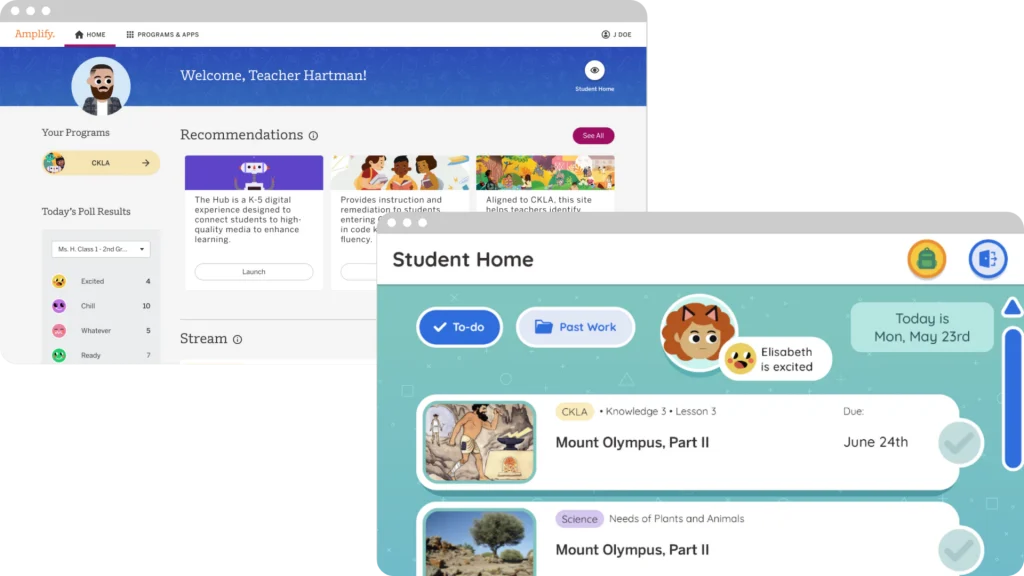
With the digital experience, everything is in one place, making it easier and more engaging than ever to plan lessons, present digital content, and review student work. Click the arrows below to learn more.
With the digital experience, teachers have access to ready-to-use and customizable lesson presentation slides, complete with all the prompts from the print Teacher Guide embedded in the teacher view. As teachers deliver each lesson, students can engage with the content in one cohesive experience—through these CKLA resources: Activity Books, slides, digital components, videos, Student Readers, and more.
The innovative live review tool found in the digital experience enables you to keep an eye on all of your students as they work on drawing, recording audio, uploading and capturing images, and typing or writing in pre-placed textboxes in their Activity Pages. This dynamic tool provides countless classroom management benefits, enabling you to spot and correct common mistakes as they’re happening, praise your students for thoughtful work, and identify students who are not engaged in the task at hand. Simply put, it will give you those valuable “eyes in the back of your head” you’ve warned your students about!
The digital experience integrates with various LMSs, allowing you and your students to access Amplify CKLA with the software you’re already comfortable using.
In the Amplify CKLA student digital experience, your students have one intuitive access point to fully engage with classroom instruction. Through the Student Home, students can easily access digital lessons with slides, Activity Pages, ebooks, videos, and other interactives from one simple dashboard. Students can draw, record audio, upload and capture images, and type or write in pre-placed text boxes in their Activity Pages.
CKLA review resources
- CKLA Program Guide
- Language Studio (ELD)
- Writing Studio (Writing)
- CKLA Research Hub (Efficacy and Case Studies)
- Text complexity in CKLA
- Trade books in CKLA
- Assessments in CKLA
- Amplify Caminos (K-5 Spanish Language Arts Program)
- Amplify CKLA Video for Families and Caregivers
- Amplify CKLA Caregivers Hub
- ELA Curriculum Evaluation Tools
- Remote and hybrid learning with CKLA
- CKLA Scopes and Sequences
- Grade K Skills and Knowledge
- Grade 1 Skills and Knowledge
- Grade 2 Skills and Knowledge
- Grade 3 Integrated
- Grade 4 Integrated
- Grade 5 Integrated
Step 4: State Review Resources
- Utah State Standards Alignment K-5
- Utah Instructional Strategies and Routines
- Utah Science of Reading Evidence-Informed Core Criteria Checklist (Amplify created)
- Utah Critical Features of Tiered Literacy Interventions (featuring Boost Reading)
- Amplify ELA Technical Specifications
Step 5: Program Access
Explore as a teacher
Before logging in, watch this brief video on navigating the CKLA Teacher Platform.
Ready to explore as a teacher? Follow these instructions:
- Click the Amplify CKLA Teacher Platform button below.
- Select Log in with Amplify.
- Enter the teacher username: t1.utcklapk5@demo.tryamplify.net
- Enter the teacher password: Amplify1-utcklapk5
- Choose CKLA from the “Your Programs” menu on Educator Home.
- Select a grade level from the drop-down menu at the top of the page.
Ready to explore as a Student? Follow these instructions:
- Click the Amplify CKLA Teacher Platform button below.
- Select Log in with Amplify.
- Enter the student username: s1.utahcklapk5@demo.tryamplify.net
- Enter the student password: Amplify1-utahcklapk5
Inspiring the next generation of Massachusetts scientists, engineers, and curious citizens
Amplify Science is an engaging new core curriculum designed for three-dimensional, phenomena-based learning.

A powerful partnership
Amplify Science was developed by the science education experts at UC Berkeley’s Lawrence Hall of Science and the digital learning team at Amplify. This partnership extends to 2032, allowing us to continuously improve our program and provide our customers with the most up-to-date enhancements, free of charge. Get a glimpse at our latest back-to-school updates here.
Instructional model
The Amplify Science program is rooted in the proven, research-based pedagogy of Do, Talk, Read, Write, Visualize. Here’s how each element works:

Phenomena-based approach
In each Amplify Science unit, students take on the roles of scientists or engineers in order to investigate a real-world problem. Students work to define the problem and collect and make sense of evidence. Once the context is clear, students collect evidence from multiple sources and through a variety of modalities. At the end of the unit, students are presented with a brand new problem, giving them an opportunity to apply what they’ve learned over the course of the unit to a new context. This represents a shift from asking students to learn about science to supporting students in figuring out the science.

Resources to support your review
- Massachusetts Amplify Science. K-5 Correlation
- K-5 Massachusetts Science Rubric
- What’s so phenomenal about phenomena?—ebook
- Phenomena in grades K–5
- Student Books in grades K–5
- Literacy-rich science instruction in grades K–5
- Engineering in Amplify Science
- Amplify Science in Action classroom videos
Scope and Sequence
GRADE
Kindergarten
UNITS
- Needs of Plants and Animals
- Pushes and Pulls
- Sunlight and Water
Grade 1
- Needs of Plants and Animals
- Pushes and Pulls
- Sunlight and Water
Grade 2
- Plant and Animal Relationships
- Properties of Materials
- Changing Landforms
Grade 3
- Balancing Forces
- Inheritance and Traits
- Environments and Survival
- Weather and Climate
Grade 4
- Energy Conversions
- Vision and Light
- Earth’s Features
- Waves, Energy, and Information
Grade 5
- Patterns of Earth and Sky
- Modeling Matter
- The Earth System
- Ecosystem Restoration
Flexible implementation
One of the key features of Amplify Science is the flexibility that it offers. We give students authentic opportunities to experience the full breadth of what it means to be a scientist or engineer. Just as scientists gather evidence from many types of sources, so do students in our program. Like scientists, students gather evidence not just from physical models, but also from digital models, texts, videos, photographs, maps, data sets, and even their peers!
Simply put, real scientists don’t just get messy—they read, write, analyze, hypothesize, model, test, and communicate with purpose, too.
Student Books
Beginning and young readers have unique developmental needs, and science instruction should support these students in reading more independently as they progress through sections of content, the school year, and each grade. One way Amplify Science meets these needs is by strategically deploying different modes of reading throughout each unit: Read-Aloud, Shared Reading, and Partner Reading.

Student Investigation Notebooks
Available for every unit, the Student Investigation Notebooks provide space for students to:
- record data.
- reflect on ideas from texts and investigations.
- construct explanations and arguments.
Digital student experience
Students access the digital simulations and Modeling Tools, as well as lesson activities and assessments, through the digital student experience. Students can interact with the digital student experience as they:
- conduct hands-on investigations.
- engage in Active Reading and writing activities.
- participate in discussions.
- record observations.
- craft end-of-unit scientific arguments.
Dive into a quick example of our powerful simulations
Hands-on materials kits
Hands-on learning is at the heart of Amplify Science and is integrated
into every unit. Students actively take on the roles of scientists and engineers as they gather evidence, think critically, solve problems, and develop and defend claims about the world around them.
Check out this 2-minute video to see an Amplify Science hands-on investigation in action.
Each unit kit contains:
- consumable and non-consumable hands-on materials.
- print classroom display materials.
- premium print materials for student use (sorting cards, maps, etc.).
Teaching support
Available digitally and in print, the Teacher’s Guides contain all of the information teachers need to facilitate classroom instruction, including:
- detailed lesson plans.
- unit and chapter overview documentation.
- differentiation strategies.
- standards alignments.
- in-context professional development.
Massachusetts Academic Standards in Science coverage
Amplify Science was designed from the ground up to meet the NGSS, a set of standards that closely align with the Massachusetts Learning Standards for Science coverage. Most grade levels’ respective set of Amplify Science units therefore address the necessary MASS (see correlation).
For grades K, 1, 2, 3, and 5, teachers should plan to also use the resources provided in the sections below to achieve full coverage of the appropriate standards before their students move on to the next grade band. Organized by grade level, each section outlines:
- companion lesson materials that were written to support 100% alignment to the Massachusetts Learning Standards for Science coverage when used with the core Amplify Science units for the grade level
- the standard being addressed with each companion lesson; and
- the recommended placement of each companion lesson within a specific Amplify Science unit
Standard: K-PS1-1(MA). Investigate and communicate the idea that different kinds of materials can be solid or liquid depending on temperature.
Recommended placement: Following Lesson 5.6 of Sunlight and Weather
Resources: After students finish reflecting on their unit-long exploration of energy and temperature, play and discuss this read-aloud video of the student book Can you Change it Back?, which is featured in the grade 2 unit Properties of Materials. You might also consider borrowing the physical books from a grade 2 colleague’s Properties of Materials kit and reading it as a class instead of or in addition to playing the video.
Using the book, you will introduce students to the idea that heating and cooling can cause changes to materials. In the book, students are presented with a variety of materials and asked to predict whether a certain change caused by heating or cooling is reversible or irreversible.
Companion lesson: “Seasonal Changes”
Standard: 1-ESS1-2– Analyze provided data to identify relationships among seasonal patterns of change, including relative sunrise and sunset time changes, seasonal temperature and rainfall or snowfall patterns, and seasonal changes to the environment.
Recommended placement: Following Lesson 5.1 of Spinning Earth
Resources: Season Changes Classroom Slides and Student Sheet
Companion lesson: “Properties and Weight”
Standard: 2-PS1-3– Analyze a variety of evidence to conclude that when a chunk of material is cut or broken into pieces, each piece is still the same material and, however small each piece is, has weight. Show that the material properties of a small set of pieces do not change when the pieces are used to build larger objects.
Recommended placement: Following Lesson 4.4 of Properties of Materials.
Resources: Weight and Properties Classroom Slides, Resources, and Student Sheet
Companion lesson 1: Extinct Insects
Standard: 3-LS4-1: Use fossils to describe types of organisms and their environments that existed long ago and compare those to living organisms and their environments. Recognize that most kinds of plants and animals that once lived on Earth are no longer found anywhere.
Recommended placement: Following Lesson 2.3 of Environments and Survival
Resources: Extinct Insects Classroom Slides and Student Sheet
Companion lesson 2: Friction
Standard: 3-PS2-1: Provide evidence to explain the effect of multiple forces, including friction, on an object. Include balanced forces that do not change the motion of the object and unbalanced forces that do change the motion of the object.
Recommended placement: Following Lesson 1.1 of Balancing Forces
Resources: Friction Classroom Slides, Resources, and Student Sheet
Companion lesson 1: Composters
Standard: 5-LS2-2(MA)– Compare at least two designs for a composter to determine which is most likely to encourage decomposition of materials.
Recommended placement: Following Lesson 3.7 of Ecosystem Restoration
Resources: Composters Classroom Slides and Student Sheet
Companion lesson 2: Properties of Materials
Standard: 5-PS1-3 (MA) – Make observations and measurements of substances to describe characteristic properties of each, including color, hardness, reflectivity, electrical conductivity, thermal conductivity, response to magnetic forces, and solubility.
Recommended placement: Following Lesson 1.3 of Modeling Matter
Resources: Properties of Materials Classroom Slides, Resources, Articles, Copymaster, and Student Sheet
Companion lesson 3: Water Filters
Standard: 5-ESS3-2(MA)– Test a simple system designed to filter particulates out of water and propose one change to the design to improve it.
Recommended placement: Following Lesson 5.6 of The Earth System
Resources: Water Filters Classroom Slides and Student Sheet
Benchmark Assessments
Amplify’s Benchmark Assessments are designed to help teachers measure student progress toward the three dimensions—Disciplinary Core Ideas (DCIs), Science and Engineering Practices (SEPs), and Crosscutting Concepts(CCCs)—and performance expectations (PEs) of the NGSS. The assessments provide important insight into how students are progressing toward mastery of different standards ahead of high-stakes, end-of-year assessments.
The Benchmark Assessments are built to be delivered after specific units in the recommended Amplify Science scope and sequence.* They are given three or four times per year, depending on the grade level. The benchmarks are intended to show progress at various points in time across a school year, and are therefore not summative in nature. Digital items and item clusters are also tagged to specific NGSS standards, allowing customization to align with other course sequences. The assessments are available via the following platforms:
Print
PDF files: For administering Benchmark Assessments on paper
Digital platforms
- Illuminate
- SchoolCity
- Otus
- QTI (“Question and Test Interoperability”) files
Not sure whether QTI files are compatible with your assessment platform? Contact your school IT or assessment platform representative for more information.
Please note that Amplify is able to provide access to the QTI files themselves, but is not able to support the integration process. Your assessment platform provider should be able to assist with QTI file integration.
Remote and hybrid learning support
See an example of our remote and hybrid learning support below:
Intended to make extended remote and hybrid learning easier, Amplify Science @Home includes two useful options for continuing instruction: @Home Videos and @Home Units.
Amplify Science @Home Videos are recordings of real Amplify Science teachers teaching the lessons. For those teachers who are unable to meet synchronously with their students, the recorded lessons are a great way to keep their students on track and engaged with Amplify Science while at home.
Amplify Science @Home Units are modified versions of Amplify Science units, strategically designed to highlight key activities from the program. The @Home Units take significantly less instructional time than the complete Amplify Science program and allow students to engage with science at home. Each @Home unit includes:
- Teacher overviews explaining how to use the materials, including suggestions for enhancing the @Home Units if synchronous learning or in-class time with students is available
- Overviews to send home to families
Student materials will be available in two formats:
- @Home Slides (PDF/PPT) + Student Sheets (PDF) for students with access to technology at home
- Downloadable @Home Packets (PDF) for students without access to technology at home
Download the remote and hybrid learning guide
Explore the digital Teacher’s Guide
To familiarize yourself with navigation of the digital Teacher’s Guide, watch our navigational guide videos:
Grades K–5:
Looking for help?
Powerful (and free!) pedagogical support
Amplify provides a unique kind of support you won’t find from other publishers. We’ve developed an educational support team of former teachers and administrators who provide pedagogical support for every Amplify curriculum, assessment, and intervention program. This service is completely free for all educators who are using our programs and includes:
- Guidance for developing lesson plans and intervention plans.
- Information on where to locate standards and other planning materials.
- Recommendations and tips for day-to-day teaching with Amplify programs.
- Support with administering and interpreting assessment data and more.
Timely technical and program support
Our technical and program support is included and available Monday through Friday, from 7 a.m. to 7 p.m. ET, through a variety of channels, including a live chat program that enables teachers to get immediate help in the middle of the school day.
Ready to dive in?
Contact your Massachusetts representative:
Tracy Yefimenko
518-466-3497
tyefimenko@amplify.com
Inspiring the next generation of Massachusetts scientists, engineers, and curious citizens
A powerful partnership
Amplify Science was developed by the science education experts at UC Berkeley’s Lawrence Hall of Science and the digital learning team at Amplify. This partnership extends to 2032, allowing us to continuously improve our program and provide our customers with the most up-to-date enhancements, free of charge. Get a glimpse at our latest back-to-school updates here.
Instructional model
The Amplify Science program is rooted in the proven, research-based pedagogy of Do, Talk, Read, Write, Visualize. Here’s how each element works:
Phenomena-based approach
In each Amplify Science unit, students take on the roles of scientists or engineers in order to investigate a real-world problem. Students work to define the problem and collect and make sense of evidence. Once the context is clear, students collect evidence from multiple sources and through a variety of modalities. At the end of the unit, students are presented with a brand new problem, giving them an opportunity to apply what they’ve learned over the course of the unit to a new context. This represents a shift from asking students to learn about science to supporting students in figuring out the science.
Resources to support your review
- What’s so phenomenal about phenomena?—ebook
- Phenomena in grades K–5
- Phenomena in grades 6–8
- Student Books in grades K–5
- Literacy-rich science instruction in grades K–5
- Active Reading in grades 6–8
- Engineering in Amplify Science
- Amplify Science: See it in action
- EdReports—Compare resources
Remote and hybrid learning support
See an example of our remote and hybrid learning support below:
- K–5 example—Balancing Forces: Chapter 2, Lesson 2.3
- 6–8 example—Force and Motion: Chapter 3, Lesson 3.2
This fall, Amplify launched a new remote learning solution called Amplify Science@Home. Intended to make extended remote and hybrid learning easier, Amplify Science @Home includes two useful options for continuing instruction: @Home Videos and @Home Units.
Amplify Science @Home Videos are recordings of real Amplify Science teachers teaching the lessons. For those teachers who are unable to meet synchronously with their students, the recorded lessons are a great way to keep their students on track and engaged with Amplify Science while at home. These videos will be produced for all K–5 units, and for the first four units of each 6–8 grade level. Their release will be rolling, beginning in August.
Amplify Science @Home Units are modified versions of Amplify Science units, strategically designed to highlight key activities from the program. The @Home Units take significantly less instructional time than the complete Amplify Science program and allow students to engage with science at home. @Home Units will be developed for all Amplify Science K–8 units. Each @Home unit includes:
- Teacher overviews explaining how to use the materials, including suggestions for enhancing the @Home Units if synchronous learning or in-class time with students is available
- Overviews to send home to families
Student materials will be available in two formats:
- @Home Slides (PDF/PPT) + Student Sheets (PDF) for students with access to technology at home
- Downloadable @Home Packets (PDF) for students without access to technology at home
Download the remote and hybrid learning guide
Benchmark Assessments
Amplify’s Benchmark Assessments are designed to help teachers measure student progress toward the three dimensions—Disciplinary Core Ideas (DCIs), Science and Engineering Practices (SEPs), and Crosscutting Concepts(CCCs)—and performance expectations (PEs) of the NGSS. The assessments provide important insight into how students are progressing toward mastery of different standards ahead of high-stakes, end-of-year assessments.
The Benchmark Assessments are built to be delivered after specific units in the recommended Amplify Science scope and sequence.* They are given three or four times per year, depending on the grade level. The benchmarks are intended to show progress at various points in time across a school year, and are therefore not summative in nature. Digital items and item clusters are also tagged to specific NGSS standards, allowing customization to align with other course sequences. The assessments are available via the following platforms:
Print
PDF files: For administering Benchmark Assessments on paper
Digital platforms
- Illuminate
- SchoolCity
- Otus
- QTI (“Question and Test Interoperability”) files
Not sure whether QTI files are compatible with your assessment platform? Contact your school IT or assessment platform representative for more information.
Please note that Amplify is able to provide access to the QTI files themselves, but is not able to support the integration process. Your assessment platform provider should be able to assist with QTI file integration.
Flexible implementation
One of the key features of Amplify Science is the flexibility that it offers. We give students authentic opportunities to experience the full breadth of what it means to be a scientist or engineer. Just as scientists gather evidence from many types of sources, so do students in our program. Like scientists, students gather evidence not just from physical models, but also from digital models, texts, videos, photographs, maps, data sets, and even their peers!
Simply put, real scientists don’t just get messy—they read, write, analyze, hypothesize, model, test, and communicate with purpose, too.
Science articles
The middle school science articles serve as sources for evidence collection and were authored by science and literacy experts at the Lawrence Hall of Science.

Student Books
Beginning and young readers have unique developmental needs, and science instruction should support these students in reading more independently as they progress through sections of content, the school year, and each grade. One way Amplify Science meets these needs is by strategically deploying different modes of reading throughout each unit: Read-Aloud, Shared Reading, and Partner Reading.
Student Investigation Notebooks
Available for every unit, the Student Investigation Notebooks provide space for students to:
- record data.
- reflect on ideas from texts and investigations.
- construct explanations and arguments.
Available with full-color article compilations for middle school units.
Digital student experience
Students access the digital simulations and Modeling Tools, as well as lesson activities and assessments, through the digital student experience. Students can interact with the digital student experience as they:
- conduct hands-on investigations.
- engage in Active Reading and writing activities.
- participate in discussions.
- record observations.
- craft end-of-unit scientific arguments.
Dive into a quick example of our powerful simulations
Hands-on materials kits
Hands-on learning is at the heart of Amplify Science and is integrated
into every unit. Students actively take on the roles of scientists and engineers as they gather evidence, think critically, solve problems, and develop and defend claims about the world around them.
Check out these 2-minute videos to see an Amplify Science hands-on investigation in action.
- Grade 2: Hands-on investigation from Animal and Plant Relationships
- Grade 6: Hands-on investigation from Populations andResources
Each unit kit contains:
- consumable and non-consumable hands-on materials.
- print classroom display materials.
- premium print materials for student use (sorting cards, maps, etc.).
Teacher’s Guides
Available digitally and in print, the Teacher’s Guides contain all of the information teachers need to facilitate classroom instruction, including:
- detailed lesson plans.
- unit and chapter overview documentation.
- differentiation strategies.
- standards alignments.
- in-context professional development.
Scope and Sequence
Minnesota Academic Standards in Science coverage
Amplify Science was designed from the ground up to meet the NGSS, a set of standards that closely align with the K–8 Minnesota Academic Standards in Science (MASS). Therefore, most grade levels’ respective set of Amplify Science units address the necessary MASS (see K–5 reverse alignment and/or correlations for K–5 and 6–8). However, for grades 2–4, teachers should also use the resources provided in the sections below to achieve full coverage of the appropriate standards before their students move on to the next grade level. Organized by grade level, each section outlines:
- companion lesson materials that were written to support 100% alignment to the Minnesota Academic Standards in Science when used with the core Amplify Science units for the grade level
- the standard being addressed with each companion lesson; and
- the recommended placement of each companion lesson within a specific Amplify Science unit
Companion lesson: “Shelter”
Standard: 1P.4.2.2.1 Communicate solutions that use materials to provide shelter, food, or warmth needs for communities including Minnesota American Indian tribes and communities.* (P: 8, CC: 2, CI: PS1, ETS2)
Recommended placement: Following Lesson 5.1 of Spinning Earth
Materials: Shelter Classroom Slides and Student Sheet
Companion lesson: “Describing Climates”
Standard: 2E.4.2.1.2 Obtain and use information from multiple sources, including electronic sources, to describe climates in different regions of the world.** (P: 8, CC: 1, CI: ESS2)
Recommended placement: Following Lesson 4.5 of Changing Landforms
Materials: Describing Climates Classroom Slides and Student Sheet
Note: Students will further investigate the content in this standard, and revisit the book used in this companion lesson, in 3rd grade (Weather and Climate unit)
Companion lesson 1: Light and Vision
Standard: 3P.3.1.1.1 Develop a model to describe that light reflecting from objects and entering the eye allows objects to be seen. (P: 2, CC: 2, CI: PS4)
Recommended placement: Following Lesson 4.5 of Environments and Survival
Materials: Light and Vision Part 1 Classroom Slides and Student Sheet; Light and Vision Part 2 Classroom Slides and Student Sheet
Note: Students will further investigate the content in this standard, and revisit the book used in this companion lesson, in 4th grade (Vision and Light unit)
Companion lesson 2: Studying Stars
Standard: 3E.4.2.2.1 Gather information and communicate how Minnesota American Indian Tribes and communities and other cultures use patterns in stars to make predictions and plans. (P 8, CC: 1, CI: ESS1)
Recommended placement: Following Lesson 4.4 of Weather and Climate
Materials: Studying Stars Classroom Slides and Student Sheet
Note: Students will further investigate the content in this standard, and revisit the book used in this companion lesson, in 5th grade (Patterns of Earth and Sky unit)
Companion lesson 1: Salt Water and Freshwater
Standard: 4E.2.2.1.1 Interpret charts, maps and/or graphs of the amounts of salt water and fresh water in various reservoirs to provide evidence about the distribution of water on Earth.** (P: 5, CC: 4, CI: ESS2)
Recommended placement: Following Lesson 2.6 of Earth’s’ Features
Materials: Salt Water and Freshwater Classroom Slides and Student Sheet
Note: Students will further investigate the content in this standard, and revisit the book used in this companion lesson, in 5th grade (The Earth System unit)
Companion lesson 2: How Raindrops Form
Standard: 4E.1.1.1.2 Ask questions about how water moves through the Earth system and identify the type of question. (P: 1, CC: 5, CI: ESS2)
Recommended placement: Following Lesson 4.5 of Earth’s’ Features
Materials: How Raindrops Form Classroom Slides and Student Sheet
Note: Students will further investigate the content in this standard, and revisit the book used in this companion lesson, in 5th grade (The Earth System unit)
Explore the digital Teacher’s Guide
To familiarize yourself with navigation of the digital Teacher’s Guide, watch our navigational guide videos:
Grades K–5:
Grades 6–8:
Looking for help?
Powerful (and free!) pedagogical support
Amplify provides a unique kind of support you won’t find from other publishers. We’ve developed an educational support team of former teachers and administrators who provide pedagogical support for every Amplify curriculum, assessment, and intervention program. This service is completely free for all educators who are using our programs and includes:
- Guidance for developing lesson plans and intervention plans.
- Information on where to locate standards and other planning materials.
- Recommendations and tips for day-to-day teaching with Amplify programs.
- Support with administering and interpreting assessment data and more.
Timely technical and program support
Our technical and program support is included and available Monday through Friday, from 7 a.m. to 7 p.m. ET, through a variety of channels, including a live chat program that enables teachers to get immediate help in the middle of the school day.
Ready to dive in?
Contact your Minnesota representative:
Kristi Stengel
Account Executive
kstengel@amplify.com
(612) 306-3941
Tammy Sigwarth
Account Executive
tsigwarth@amplify.com
(563) 663-0056
Program introduction
Professional learning
What will you find in the Professional Learning section?
Whether you’re launching into a new program or looking to strengthen your skills, Amplify’s professional learning sessions will support your needs.
- Register now to join new and upcoming learning sessions.
- On-demand sessions offer timely insights to support your mCLASS implementation.
- Webinar recordings from 2020-2021 or 2021-2022 ensure you don’t miss a thing.
Amplify is working in partnership with the Kindergarten Assessment Support (KAS) Initiative to provide virtual professional development trainings to teacher, specialists, and campus/district leader users of mCLASS Texas Kindergarten across the state of Texas. These trainings are funded by the KAS Grant and will be provided at no charge to participants. Please note that all content will be focused on kindergarten only.
You will find a list of sessions below that you can register for. Sessions will be updated on an ongoing basis. To register, educators can enter the Session ID number into the Region 4 ESC search bar (https://www.escweb.net/tx_esc_04/) to sign up for the session(s) and to secure a spot or type ‘mclass’ into the search bar; all virtual sessions are capped at 30 participants.
For more information about the KAS Initiative, please visit https://tea.texas.gov/academics/early-childhood-education/data-driven-instruction-best-practices.
View the on-demand sessions for below to gain timely insights to support your mCLASS implementation.
All mCLASS Texas Edition users will have access to free online modules. Contact your district for details about accessing these modules.
For those districts that want to support teachers in a more comprehensive approach we will work to ensure that the professional learning section supporting each mCLASS Texas Edition rollout meets each district’s unique needs. Here is a professional learning catalog to show the breadth and depth of what we offer.
Remote assessment
mCLASS Texas Edition can be administered in many ways, including remotely. This site will give guidance on the various ways to administer mCLASS Texas Edition to best support your students in any learning environment.
Watch the Remote Assessment Guidance Office Hours recording here.
Documents referenced during Office Hours are linked below.
Administrators, welcome to mCLASS Texas Edition!
Here you’ll find information about enrollment and licensing, technical requirements, professional learning resources, and more.
Onboarding: What to expect
Welcome to mCLASS Texas Edition! To help you know what’s coming next, we created the following visual that outlines the steps of the onboarding process. You can use it as a reference.

Enrollment and licensing
Amplify provides services to fit the different types of enrollment needs for various times of year:
- Self-Service Enrollment (SSE) is a batch enrollment tool that you can use to import large amounts of student, staff, and class information into the Amplify system at the beginning of the school year or any time you need to update your enrollment data.
- Auto Self-Service Enrollment (Auto SSE) is a service for automatically sending enrollment data from your computer to Amplify, which does not require intervention after you initiate the process, and which can be run at any time of year. You must have the ability to run scripts in order to use Auto SSE.
- Amplify also offers the Manual Enrollment tools on the Amplify Administration page, which you can use at any time of year to add or update enrollment information by entering the information directly into Amplify, rather than uploading spreadsheets.
Preparing your materials
Click here to access a list of the print materials included in each mCLASS Texas Edition kit.

Technology requirements and guidelines
To ensure that your hardware and network meet the minimum technical requirements for optimal performance and support of your digital curriculum products, please see Amplify’s customer requirements page.
To ensure access to mCLASS, add the URLs on this page to your corresponding district or school-level filters.
Teachers, welcome to mCLASS Texas Edition!
Here you’ll learn about the program, how to set up your device, and how to get help when using mCLASS Texas Edition.
Onboarding: What to expect

Logging in to mCLASS Home
mCLASS Home is where you access mCLASS reporting, instruction, and other helpful resources. Follow these steps to log in:
1. Navigate to mclass.amplify.com.
2. You will need your Amplify user name and password to log in. If you forget your password, you can follow the instructions below to generate a new one.
- Click “Forgot Password”
- Enter your Amplify username and your district or school email address. Click Send. Then follow the instructions in the email you receive to reset your password.
If you have not received an Amplify username and password, please contact your
school or district administrator.
Setting up your assessment device
Assessments are administered using the mCLASS app. The mCLASS app is installed by creating a shortcut from Chrome™ (Safari for iPads) on your device’s desktop or home screen. Click the link for your device for installation instructions:
iPad
Chromebook
Windows device
Note that you need your Amplify username and password to install the mCLASS app. If you have not received it, please contact your school or district administrator.
Dyslexia screening
mCLASS® Texas DIBELS® 8 and IDEL assess the updated skills required for dyslexia screening. We’ve got you covered!
Click here to learn more about the Texas Dyslexia handbook updates.
Looking for help?
Our technical and pedagogical support teams are available from 7 a.m. to 7 p.m. ET, Monday through Friday.
For your most urgent questions
- Use our live chat within your program
- Call our toll-free number: (800) 823-1969
For less urgent questions, send us an email!
- Technical support: help@amplify.com
- Pedagogical support: edsupport@amplify.com
Overview Video
The Lawrence Hall of Science
Developed by the science education experts at UC Berkeley’s Lawrence Hall of Science and the digital learning team at Amplify, our program features:
- A phenomena-based approach where students construct a complex understanding of each unit’s anchor phenomenon.
- A blend of cohesive storylines, hands-on investigations, rich discussions, literacy-rich activities, and digital tools.
- Carefully crafted units, chapters, lessons, and activities designed to deliver true 3-dimensional learning.
- An instructional design that supports all learners in accessing all standards.
Instructional model
The Amplify Science program is rooted in the proven, research-based pedagogy of Do, Talk, Read, Write, Visualize. Here’s how each element works:
DO
First-hand investigations are an important part of any science classroom, and Amplify Science has students getting hands-on in every unit—from building models of protein molecules to experimenting with electrical systems.
TALK
Student-to-student discourse and full-class discussions are an integral part of the program. Students are provided with numerous opportunities to engage in meaningful oral scientific argumentation, all while fostering a collaborative classroom environment.
READ
Students read scientific articles, focusing their reading activities on searching for evidence related to their investigation and, importantly, on asking and recording questions as they read through fascinating texts on 21st-century topics.
WRITE
Following real-world practices, students write scientific arguments based on evidence they’ve collected, making clear their reasoning about how a given piece of evidence connects to one of several claims.
VISUALIZE
By manipulating digital simulations and using modeling tools to craft visualizations of their thinking— just as real scientists and engineers do—students take their learning far beyond the confines of what they can physically see in the classroom in an exciting and authentic way.
Program structure
Our cyclical lesson design ensures students receive multiple exposures to concepts through a variety of modalities. As they progress through the lessons within a unit, students build and deepen their understanding, increasing their ability to develop and refine complex explanations of the unit’s phenomenon.
It’s this proven program structure and lesson design that enables Amplify Science to address 100% of the NGSS, and support students in mastering the standards.
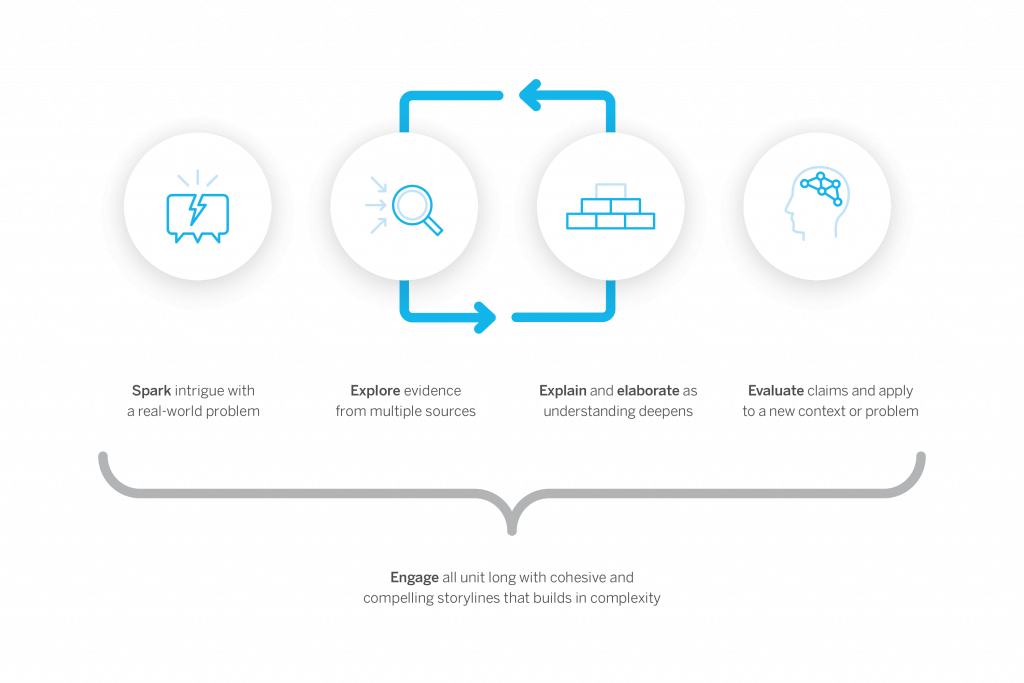
Unit types
While every unit delivers three-dimensional learning experiences and engages students in gathering evidence from a rich collection of sources, each unit also serves a unique instructional purpose.
In grades 6–8:
- One unit is a launch unit.
- Three units are core units.
- Two units are engineering internships.
Launch units are the first units taught in each year of Amplify Science. The goal of the Launch unit is to introduce students to norms, routines, and practices that will be built on throughout the year, including argumentation, active reading, and using the program’s technology. For example, rather than taking the time to explain the process of active reading in every unit in a given year, it is explained thoroughly in the Launch unit, thereby preparing students to read actively in all subsequent units.
Core units establish the context of the unit by introducing students to a real-world problem. As students move through lessons in a Core unit, they figure out the unit’s anchoring phenomenon, gain an understanding of the unit’s disciplinary core ideas and science and engineering practices, and make linkages across topics through the crosscutting concepts. Each Core unit culminates with a Science Seminar and final writing activity.
Engineering Internship units invite students to design solutions for real-world problems as interns for a fictional company called Futura. Students figure out how to help those in need, from tsunami victims in Sri Lanka to premature babies, through the application of engineering practices. In the process, they apply and deepen their learning from Core units.
Unit sequence
Our lessons follow a structure that is grounded in regular routines while still being flexible enough to allow for a variety of learning experiences.
In fact, our multi-modal instruction offers more opportunities for students to construct meaning, and practice and apply concepts than any other program. What’s more, our modular design means our units can be flexibly arranged to support your instructional goals.

Program components
Available digitally and in print, our unit-specific reference guides are chock full of helpful resources, including scientific background knowledge, planning information and resources, color-coded 3-D Statements, detailed lesson plans, tips for delivering instruction, and differentiation strategies.

Hands-on learning is an essential part of Amplify Science, and is integrated into every unit. Students actively participate in science, playing the roles of scientists and engineers as they gather evidence, think critically, solve problems, and develop and defend claims about the world around them. Every unit includes hands-on investigations that are critical to achieving the unit’s learning goals.
More hands-on with Flextensions:
Hands-on Flextensions are additional, optional investigations that are included at logical points in the learning progression and give students an opportunity to dig deeper if time permits. These activities offer teachers flexibility to choose to dedicate more time to hands-on learning. Materials referenced in Hands-on Flextension activities will either be included in the unit kit or are easily sourced. Supporting resources such as student worksheets will be included as downloadable PDF files.
Our kits include enough materials to support 200 student uses. In other words, teachers can easily support all five periods and small groups of 4-5 students each. Plus, our unit-specific kits mean teachers just grab the tub they need and then put it all back with ease.

Our digital Simulations and Practice Tools are powerful resources for exploration, data collection, and student collaboration. They allow students the ability to explore scientific concepts that might otherwise be invisible or impossible to see with the naked eye.
Available for every unit, our Student Investigation Notebooks contain instructions for activities and space for students to record data and observations, reflect on ideas from texts and investigations, and construct explanations and arguments.
In grades 6–8, one copy of the Student Investigation Notebook is included in each unit’s materials kit for use as a blackline master. Each notebook is also available as a downloadable PDF on the Unit Guide page of the digital Teacher’s Guide.
These customizable PowerPoints are available for every lesson of the program and make delivering instruction a snap with visual prompts, colorful activity instructions, investigation set-up videos and animations, and suggested teacher talk in the notes section of each slide.

Explore your print samples
With your Amplify Science print samples, you’ll find unit-specific Teacher’s References Guides and Student Investigation Notebooks for each grade level.
A note about the Teacher’s Reference Guides:
It’s important that your committee sees the full breadth and depth of our instruction. For that reason, we provided a copy of each of our unit-specific Teacher Reference Guides.
Rest assured that teachers do not use these robust reference guides for day-to-day teaching. For that, we have a hands-free TG!
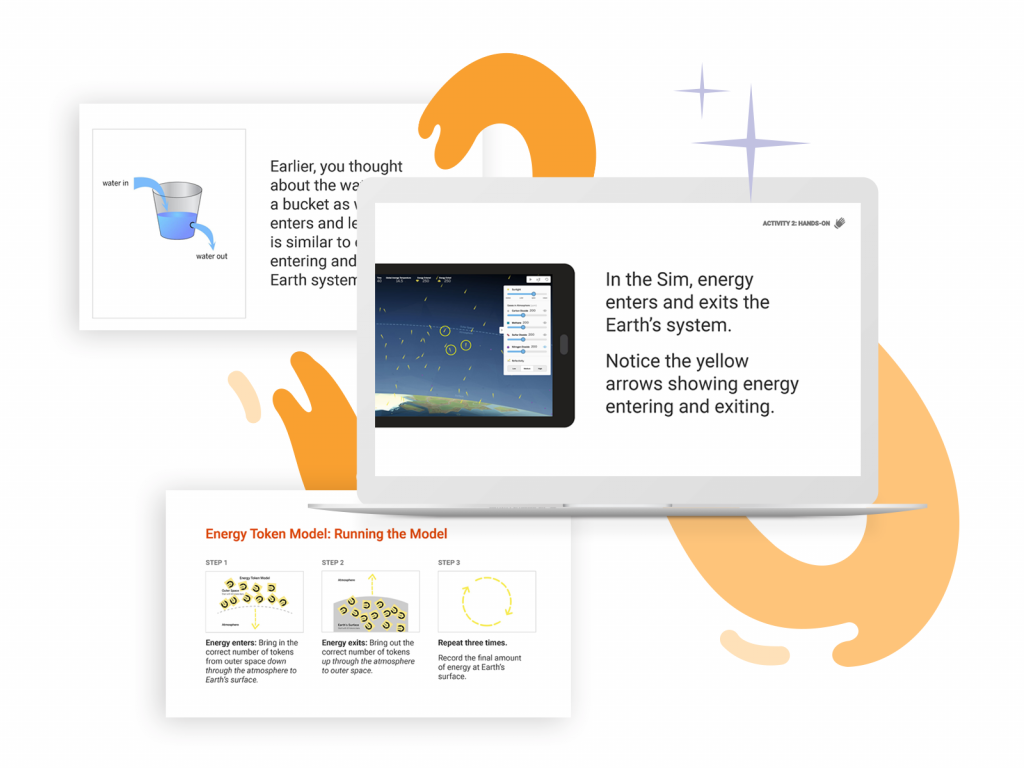
- Teacher Reference Guide: Unlike a typical TG that requires a series of supplemental books to support it, our encyclopedic reference guide is chock-full of everything a teacher needs to fully implement our program and the NGSS.
- Ready-to-Teach Lesson Slides: For daily instruction, teachers need their hands free. That’s why we created ready-to-teach lesson slides for every single lesson. What’s more, they are editable and include suggested teacher talk and point-of-use differentiation and other instructional tips. Click to learn more.
A note about the Materials Kits:
Hands-on learning is at the heart of Amplify Science, and is integrated into every unit. In order to make hands-on learning more manageable for busy teachers, Amplify Science materials are organized into unit-specific kits.
Our unit-specific kits:
- Include more materials — We give teachers enough materials to support 200 student uses.
- Are more manageable — Unlike other programs that require large groups of students to share limited sets of materials, our kits include enough to support small groups of 4–5 students.
- Include supportive videos — Each hands-on activity provides clear instructions for the teacher, with more complex activities supported by video demonstrations and illustrations.
What comes in each grade level kit? Click the links below to see the grade-specific lists of all materials included in each kit.
Access your digital samples
Explore as a teacher
Follow these instructions to explore the Amplify Science digital platform as a teacher.
- Click the Access Amplify Science Platform button below and bookmark it.
- Select Log in with Amplify.
- Enter the username: t1.jeffersoncounty@demo.tryamplify.net
- Enter the password: Amplify1-jeffersoncounty
- Click the Science icon.
- Click on the Program Menu in the top center of the screen and select any grade.
- Select any unit.
To help familiarize yourself with navigating the digital platform,watch the below navigational video.
Explore as a student
Follow these instructions to explore the Amplify Science digital platform as a student.
- Click the Access Amplify Science Platform button below and bookmark it.
- Select Log in with Amplify.
- Enter the username: s1.jeffersoncounty@demo.tryamplify.net
- Enter the password: Amplify1-jeffersoncounty
- Click the Science icon.
- Click on the Grade Menu in the top center of the screen and select any grade.
- Select any unit.
Resources to support your review
Science of Reading:
The Podcast seeks
student voices
The next season of Science of Reading: The Podcast will be focused on the importance of knowledge-building, so we want to hear from students about their favorite classroom topics!
If you know a student who might want to be a podcast star, use the form below to submit a short video or voice recording of them answering the question: What’s your favorite classroom topic and why?
Recordings should be 30 seconds or less.
Caregivers must complete the “consent and release” section of the form in order for student recordings to be considered.
We want to hear from you!
What is mCLASS?
mCLASS is a best-in-class assessment platform that houses a suite of proven, gold-standard assessment measures and tools that can be flexibly combined to meet the unique literacy needs of both teachers and students across grades K–6, including:
- Universal screening
- Diagnostic assessment
- Text Reading and Comprehension (a.k.a. running records via Amplify Atlas Español)
- Dyslexia screening
- Progress monitoring
- Dual language reporting
- Targeted teacher-led instruction
What is the Lectura assessment?
The Lectura assessment is a brand-new interim and diagnostic assessment that consists of measures based on the latest research of how Spanish literacy develops.
Co-developed with the Center on Teaching and Learning at the University of Oregon (UO CTL) and validated in partnership with Dr. Lillian Durán, the Lectura assessment was created to provide educators with a high-quality, evidence-based tool to support understanding of Spanish-speaking students’ biliteracy development, specifically foundational Spanish reading skills, which includes measures of phonological awareness, alphabetic understanding and decoding, reading fluency, and reading comprehension.
The measures in Lectura were written from the ground-up to assess students’ literacy development based on how Spanish literacy develops. Measures explicitly account for the syllabic and morphological structures of Spanish, and connected text was written and calibrated with respect to syntactical, lexical, and grammatical rules of Spanish. For example, phonological awareness is measured using syllable segmentation, and letter sounds and syllable reading are included in the decoding subtests for greater face-validity (in lieu of pseudowords). Word choice reflects the multisyllabic word complexity and variety of Spanish, driven by how decoding skills develop in Spanish. As such, Lectura provides instructionally actionable data for all students, including those scoring below the benchmark and those who meet or exceed the benchmark.
The Lectura assessment measures were purposefully designed, developed, field tested, and evaluated to address limitations that educators of Spanish speaking students have experienced in assessments. Specifically in these ways:
- Assessment measures based on current research on how Spanish literacy is developed
- Culturally responsive word choice and content reflecting the regional diversity of Spanish
- Technical adequacy established through rigorous study
- A sample size and geographic diversity reflecting the broad population of Spanish speakers across the U.S.
- Complete parity with English solutions (instructional tools, skill coverage)
Assessment measures by grade
| Lectura measures at each grade level | |||||
| Measure | Grade K | Grade 1 | Grade 2 | Grade 3 | Grades 4–6 |
| Fluidez en nombrar letras | |
|
 |
||
| Fluidez en la segmentación de sílabas | |
|
|||
| ¿Qué queda? | |
|
|
||
| Fluidez en los sonidos de letras | |
|
|||
| Fluidez en los sonidos de sílabas | |
|
|||
| Fluidez en las palabras | |
|
|
|
|
| Fluidez en la lectura oral | |
|
|
|
|
| ¿Cuál palabra? | |
|
|
|
|
| Amplify measures at each grade level | |||||
| Oral Language Español | |
|
|
||
| Vocabulario | |
|
|
|
|
Assessment measures sample videos
Please note that the videos below are intended for illustrative purposes only. Performance levels in mCLASS Lectura have yet to be finalized.
mCLASS Lectura measure: Fluidez en nombrar letras (FNL)
Students are asked to identify as many uppercase and lowercase letter names as they can in one minute.
mCLASS Lectura measure: Fluidez en los sonidos de letras (FSL)
Students are asked to identify the sounds of as many uppercase and lowercase letters as they can in one minute.
mCLASS Lectura measure: Fluidez en los sonidos de sílabas (LSS)
Students are presented with a page of printed orthographically regular Spanish syllables and asked to read as many syllables as they can in one minute.
mCLASS Lectura measure: Fluidez en la lectura oral (FLO)
Students are presented with an authentically written informational or narrative passage of Spanish connected text and asked to read as much of the passage as they can in one minute.
mCLASS Lectura measure: ¿Qué Queda? (QQ)
Students are presented with a word orally and then the examiner omits part of the word (i.e., compound word part, syllable, or phoneme). Students are asked to identify what word remains after the word part has been elided.
What makes mCLASS Lectura different?
mCLASS Lectura combines the power of the mCLASS assessment platform and the effectiveness of the Lectura assessment measures. As a result – educators are empowered with latest and greatest assessment tool.
More than a test, mCLASS Lectura is an integrated system that closes the knowing-doing gap by helping teachers take immediate instructional action that’s right for each and every student. What’s more, it addresses the classroom inequities Spanish-speaking students face along their early literacy journeys.
Spanish-speaking students have been underserved and misclassified for decades. With mCLASS Lectura, teachers of Spanish-speaking students finally have access to the same robust assessment tools that have been available to teachers of English-speaking students for years.
Plus! When mCLASS Lectura and DIBELS 8th Edition are used together, teachers are empowered with a more holistic view of their Spanish-speaking students abilities in both English and Spanish, making instructional next steps more targeted and effective.
What makes mCLASS Lectura different?
- It gives teachers access to authentic Spanish measures. Amplify is the only provider of the Lectura assessment. Rather than a direct translation of an English assessment, our solution is the only one to provide teachers a research-based, authentic Spanish assessment that is both valid and reliable.
- It makes it faster and easier to understand where every student is in their early literacy journey. By combining 1:1 observational diagnostic assessments, dyslexia screening, progress monitoring, instant scoring, rigorous reporting, automatic student grouping, and targeted instruction all in one place, it reduces the instructional delays associated with manual scoring, manual data analysis, and manual lesson planning.
- It brings more equity to the classroom. When used in conjunction with mCLASS DIBELS 8th Edition, teachers have access to Dual Language Reports that highlight a students strengths and weaknesses in both English and Spanish.
- It makes every instructional minute count. In addition to one-minute measures that quickly gauge student progress toward reading proficiency, it leverages a teacher’s most powerful instructional tool — their own 1:1 observations.
- It drives growth more efficiently. Rather than relying on broad composite scores alone, granular data and in-depth insights for every student help teachers pinpoint exact skill gaps and areas of unfinished learning, making whole-group, small-group, and 1:1 instruction more targeted and effective.
- It saves teachers time. Instant reports, automatic student groups, and ready-to-teach lessons mean teachers spend less time cobbling together materials and more time working directly with students and responding to their needs.
Assessment systems must enable and compel educators to answer not just the “What?” questions, but also the “So What?” and “Now What?” questions. These are the questions that are essential in transforming classroom instruction, and the questions that mCLASS Lectura helps teachers answer with confidence.
How does mCLASS Lectura support screening for dyslexia risk?
mCLASS Lectura subtests have been specifically designed and validated to screen for dyslexia risks.
mCLASS Lectura was specifically developed to ensure the measure is able to meet state-level screening requirements for both dyslexia and universal reading screening. The research and development of Lectura was designed with this use in mind to accurately identify reading difficulties, including difficulties related to risk for dyslexia.
How does mCLASS Lectura support the use of running records?
Track your students’ reading progress from every angle with the Text Reading and Comprehension (TRC) assessment. When TRC is paired with the Lectura assessment, classroom teachers unlock the ability to record reading behaviors through running digital records. Available in English and Spanish, it measures reading comprehension and provides insight into how each student finds meaning in text.

How does mCLASS Lectura turn data into instant action?
mCLASS Lectura gives you instant results and clear next steps for each student.
Quick and actionable reports provide detailed insight into students’ reading development across foundational literacy skills for teachers, specialists, administrators, and caregivers.

Diagnostic assessment
mCLASS Lectura analyzes individual student response data through a proprietary scoring algorithm that pinpoints a student’s specific area(s) of growth and improvement, providing classroom teachers in-depth insight into a students’ instructional needs.
Ready-to-teach instruction
Immediately following the analysis of individual student responses, mCLASS Lectura provides an in-depth diagnostic report complete with suggested next steps, also known as “mCLASS Instruction.”
mCLASS Instruction evaluates each student’s responses on each individual subtest and instantly:
- Provides a list of specific needs by student, such as struggling with medial vowel sounds or difficulty reading words with consonant blends.
- Groups students automatically based on similar discrete skill needs, not simply composite scores like other assessment tools.
- Recommends a variety of ready-to-teach lessons that specifically target each individual student’s areas of need or common areas of need for small-group instruction.
Classroom skill and benchmark summary
The Classroom Skill Summary report is a dashboard showing benchmark performance on each skill. Teachers can use it to determine which skill areas need instructional focus at a classroom level.
The Classroom Benchmark Summary report is a classroom-wide view of overall reading performance. Teachers can use this report to determine if composite scores improved, declined, or remained the same each semester.
Detailed benchmark performance
Teachers can see each student’s performance during the current school year, on each subtest as well as the overall composite. The benchmark goal displays below the subtest name when applicable. The ability to sort the columns in this report gives teachers more flexibility to analyze data the way they prefer.
Dual language reports
When mCLASS Lectura and mCLASS with DIBELS 8th Edition are used together, teachers will receive an asset-based picture of a student’s biliteracy and instructional guidance on how to leverage literacy skills in one language to support literacy skill development in the second language.
- Side-by-side view of foundational literacy skills in English and Spanish
- Explicit guidance to teachers to support asset-based instruction using cross-linguistic transfer strategies

Progress monitoring summary
See which subtests have been assessed since the most recent benchmark assessment, how students performed on the three most recent progress monitoring assessments for each measure, and which students have not been progress monitored since the benchmark assessment.
Caregiver supports
The mCLASS Home Connect letter provides parent and caregivers information in English or Spanish about the student’s literacy and guidance on how to support their child at home.

What is mCLASS?
mCLASS is a best-in-class assessment platform that houses a suite of proven, gold-standard assessment measures and tools that can be flexibly combined to meet the unique literacy needs of both teachers and students across grades K–6, including:
- Universal screening
- Diagnostic assessment
- Text Reading and Comprehension (a.k.a. running records via Amplify Atlas Español)
- Dyslexia screening
- Progress monitoring
- Dual language reporting
- Targeted teacher-led instruction
What is the Lectura assessment?
The Lectura assessment is a brand-new interim and diagnostic assessment that consists of measures based on the latest research of how Spanish literacy develops.
Co-developed with the Center on Teaching and Learning at the University of Oregon (UO CTL) and validated in partnership with Dr. Lillian Durán, the Lectura assessment was created to provide educators with a high-quality, evidence-based tool to support understanding of Spanish-speaking students’ biliteracy development, specifically foundational Spanish reading skills, which includes measures of phonological awareness, alphabetic understanding and decoding, reading fluency, and reading comprehension.
The measures in Lectura were written from the ground-up to assess students’ literacy development based on how Spanish literacy develops. Measures explicitly account for the syllabic and morphological structures of Spanish, and connected text was written and calibrated with respect to syntactical, lexical, and grammatical rules of Spanish. For example, phonological awareness is measured using syllable segmentation, and letter sounds and syllable reading are included in the decoding subtests for greater face-validity (in lieu of pseudowords). Word choice reflects the multisyllabic word complexity and variety of Spanish, driven by how decoding skills develop in Spanish. As such, Lectura provides instructionally actionable data for all students, including those scoring below the benchmark and those who meet or exceed the benchmark.
The Lectura assessment measures were purposefully designed, developed, field tested, and evaluated to address limitations that educators of Spanish speaking students have experienced in assessments. Specifically in these ways:
- Assessment measures based on current research on how Spanish literacy is developed
- Culturally responsive word choice and content reflecting the regional diversity of Spanish
- Technical adequacy established through rigorous study
- A sample size and geographic diversity reflecting the broad population of Spanish speakers across the U.S.
- Complete parity with English solutions (instructional tools, skill coverage)
Assessment measures by grade
| Lectura measures at each grade level | |||||
| Measure | Grade K | Grade 1 | Grade 2 | Grade 3 | Grades 4–6 |
| Fluidez en nombrar letras | |
|
|
||
| Fluidez en la segmentación de sílabas | |
|
|||
| ¿Qué queda? | |
|
|
||
| Fluidez en los sonidos de letras | |
|
|||
| Fluidez en los sonidos de sílabas | |
|
|||
| Fluidez en las palabras | |
|
|
|
|
| Fluidez en la lectura oral | |
|
|
|
|
| ¿Cuál palabra? | |
|
|
|
|
| Amplify measures at each grade level | |||||
| Oral Language Español | |
|
|
||
| Vocabulario | |
|
|
|
|
Assessment measures sample videos
Please note that the videos below are intended for illustrative purposes only. Performance levels in mCLASS Lectura have yet to be finalized.
mCLASS Lectura measure: Fluidez en nombrar letras (FNL)
Students are asked to identify as many uppercase and lowercase letter names as they can in one minute.
mCLASS Lectura measure: Fluidez en los sonidos de letras (FSL)
Students are asked to identify the sounds of as many uppercase and lowercase letters as they can in one minute.
mCLASS Lectura measure: Fluidez en los sonidos de sílabas (LSS)
Students are presented with a page of printed orthographically regular Spanish syllables and asked to read as many syllables as they can in one minute.
mCLASS Lectura measure: Fluidez en la lectura oral (FLO)
Students are presented with an authentically written informational or narrative passage of Spanish connected text and asked to read as much of the passage as they can in one minute.
mCLASS Lectura measure: ¿Qué Queda? (QQ)
Students are presented with a word orally and then the examiner omits part of the word (i.e., compound word part, syllable, or phoneme). Students are asked to identify what word remains after the word part has been elided.
What makes mCLASS Lectura different?
mCLASS Lectura combines the power of the mCLASS assessment platform and the effectiveness of the Lectura assessment measures. As a result – educators are empowered with latest and greatest assessment tool.
More than a test, mCLASS Lectura is an integrated system that closes the knowing-doing gap by helping teachers take immediate instructional action that’s right for each and every student. What’s more, it addresses the classroom inequities Spanish-speaking students face along their early literacy journeys.
Spanish-speaking students have been underserved and misclassified for decades. With mCLASS Lectura, teachers of Spanish-speaking students finally have access to the same robust assessment tools that have been available to teachers of English-speaking students for years.
Plus! When mCLASS Lectura and DIBELS 8th Edition are used together, teachers are empowered with a more holistic view of their Spanish-speaking students abilities in both English and Spanish, making instructional next steps more targeted and effective.
What makes mCLASS Lectura different?
- It gives teachers access to authentic Spanish measures. Amplify is the only provider of the Lectura assessment. Rather than a direct translation of an English assessment, our solution is the only one to provide teachers a research-based, authentic Spanish assessment that is both valid and reliable.
- It makes it faster and easier to understand where every student is in their early literacy journey. By combining 1:1 observational diagnostic assessments, dyslexia screening, progress monitoring, instant scoring, rigorous reporting, automatic student grouping, and targeted instruction all in one place, it reduces the instructional delays associated with manual scoring, manual data analysis, and manual lesson planning.
- It brings more equity to the classroom. When used in conjunction with mCLASS DIBELS 8th Edition, teachers have access to Dual Language Reports that highlight a students strengths and weaknesses in both English and Spanish.
- It makes every instructional minute count. In addition to one-minute measures that quickly gauge student progress toward reading proficiency, it leverages a teacher’s most powerful instructional tool — their own 1:1 observations.
- It drives growth more efficiently. Rather than relying on broad composite scores alone, granular data and in-depth insights for every student help teachers pinpoint exact skill gaps and areas of unfinished learning, making whole-group, small-group, and 1:1 instruction more targeted and effective.
- It saves teachers time. Instant reports, automatic student groups, and ready-to-teach lessons mean teachers spend less time cobbling together materials and more time working directly with students and responding to their needs.
Assessment systems must enable and compel educators to answer not just the “What?” questions, but also the “So What?” and “Now What?” questions. These are the questions that are essential in transforming classroom instruction, and the questions that mCLASS Lectura helps teachers answer with confidence.
How does mCLASS Lectura support screening for dyslexia risk?
mCLASS Lectura subtests have been specifically designed and validated to screen for dyslexia risks.
mCLASS Lectura was specifically developed to ensure the measure is able to meet state-level screening requirements for both dyslexia and universal reading screening. The research and development of Lectura was designed with this use in mind to accurately identify reading difficulties, including difficulties related to risk for dyslexia.
How does mCLASS Lectura support the use of running records?
Track your students’ reading progress from every angle with the Text Reading and Comprehension (TRC) assessment. When TRC is paired with the Lectura assessment, classroom teachers unlock the ability to record reading behaviors through running digital records. Available in English and Spanish, it measures reading comprehension and provides insight into how each student finds meaning in text.

How does mCLASS Lectura turn data into instant action?
mCLASS Lectura gives you instant results and clear next steps for each student.
Quick and actionable reports provide detailed insight into students’ reading development across foundational literacy skills for teachers, specialists, administrators, and caregivers.

Diagnostic assessment
mCLASS Lectura analyzes individual student response data through a proprietary scoring algorithm that pinpoints a student’s specific area(s) of growth and improvement, providing classroom teachers in-depth insight into a students’ instructional needs.
Ready-to-teach instruction
Immediately following the analysis of individual student responses, mCLASS Lectura provides an in-depth diagnostic report complete with suggested next steps, also known as “mCLASS Instruction.”
mCLASS Instruction evaluates each student’s responses on each individual subtest and instantly:
- Provides a list of specific needs by student, such as struggling with medial vowel sounds or difficulty reading words with consonant blends.
- Groups students automatically based on similar discrete skill needs, not simply composite scores like other assessment tools.
- Recommends a variety of ready-to-teach lessons that specifically target each individual student’s areas of need or common areas of need for small-group instruction.
Classroom skill and benchmark summary
The Classroom Skill Summary report is a dashboard showing benchmark performance on each skill. Teachers can use it to determine which skill areas need instructional focus at a classroom level.
The Classroom Benchmark Summary report is a classroom-wide view of overall reading performance. Teachers can use this report to determine if composite scores improved, declined, or remained the same each semester.
Detailed benchmark performance
Teachers can see each student’s performance during the current school year, on each subtest as well as the overall composite. The benchmark goal displays below the subtest name when applicable. The ability to sort the columns in this report gives teachers more flexibility to analyze data the way they prefer.
Dual language reports
When mCLASS Lectura and mCLASS with DIBELS 8th Edition are used together, teachers will receive an asset-based picture of a student’s biliteracy and instructional guidance on how to leverage literacy skills in one language to support literacy skill development in the second language.
- Side-by-side view of foundational literacy skills in English and Spanish
- Explicit guidance to teachers to support asset-based instruction using cross-linguistic transfer strategies
Progress monitoring summary
See which subtests have been assessed since the most recent benchmark assessment, how students performed on the three most recent progress monitoring assessments for each measure, and which students have not been progress monitored since the benchmark assessment.
Caregiver supports
The mCLASS Home Connect letter provides parent and caregivers information in English or Spanish about the student’s literacy and guidance on how to support their child at home.

Clickable demo
Our clickable demo is a great way to orient yourself to the organization of our mCLASS platform and the mCLASS Lectura assessment. Click the button below to get started.
Here you will find 10 interactive screens:
- Screen 2: Scroll down to the class list. Find Gabriel Archulata. Click on his score for “Decodificación”.
- Screen 3: Explore Gabriel’s measure transcript. Then click on the gray arrow to the far right to advance to the next screen.
- Screen 4: Click on the “Instruction” tab.
- Screen 5: Scroll down to “Decoding Group 4” and click “See Activities”.
- Screen 6: Click on the first activity called “Identificar y leer palabras con los dígrafos ch y ll.”
- Screen 7: Click on the gray arrow to the far right to advance to the next screen.
- Screen 8: Explore the detailed “Student” tab and then click the “Dual Language” tab.
- Screen 9: Scroll down to the section about Gabriel’s phonological awareness skills. Click on the link called “Cross-Linguistic Transfer: Phonological Awareness”.
- Screen 10: Click on the gray arrow to the far right to advance to the next screen. Explore the “Home Connect” letter.
What is mCLASS?
mCLASS is a best-in-class assessment platform that houses a suite of proven, gold-standard assessment measures and tools that can be flexibly combined to meet the unique literacy needs of both teachers and students across grades K–6, including:
- Universal screening
- Diagnostic assessment
- Text Reading and Comprehension (a.k.a. running records via Amplify Atlas Español)
- Dyslexia screening
- Progress monitoring
- Dual language reporting
- Targeted teacher-led instruction
What is the Lectura assessment?
The Lectura assessment is a brand-new interim and diagnostic assessment that consists of measures based on the latest research of how Spanish literacy develops.
Co-developed with the Center on Teaching and Learning at the University of Oregon (UO CTL) and validated in partnership with Dr. Lillian Durán, the Lectura assessment was created to provide educators with a high-quality, evidence-based tool to support understanding of Spanish-speaking students’ biliteracy development, specifically foundational Spanish reading skills, which includes measures of phonological awareness, alphabetic understanding and decoding, reading fluency, and reading comprehension.
The measures in Lectura were written from the ground-up to assess students’ literacy development based on how Spanish literacy develops. Measures explicitly account for the syllabic and morphological structures of Spanish, and connected text was written and calibrated with respect to syntactical, lexical, and grammatical rules of Spanish. For example, phonological awareness is measured using syllable segmentation, and letter sounds and syllable reading are included in the decoding subtests for greater face-validity (in lieu of pseudowords). Word choice reflects the multisyllabic word complexity and variety of Spanish, driven by how decoding skills develop in Spanish. As such, Lectura provides instructionally actionable data for all students, including those scoring below the benchmark and those who meet or exceed the benchmark.
The Lectura assessment measures were purposefully designed, developed, field tested, and evaluated to address limitations that educators of Spanish speaking students have experienced in assessments. Specifically in these ways:
- Assessment measures based on current research on how Spanish literacy is developed
- Culturally responsive word choice and content reflecting the regional diversity of Spanish
- Technical adequacy established through rigorous study
- A sample size and geographic diversity reflecting the broad population of Spanish speakers across the U.S.
- Complete parity with English solutions (instructional tools, skill coverage)
Assessment measures by grade
| Lectura measures at each grade level | |||||
| Measure | Grade K | Grade 1 | Grade 2 | Grade 3 | Grades 4–6 |
| Fluidez en nombrar letras | |
|
|
||
| Fluidez en la segmentación de sílabas | |
|
|||
| ¿Qué queda? | |
|
|
||
| Fluidez en los sonidos de letras | |
|
|||
| Fluidez en los sonidos de sílabas | |
|
|||
| Fluidez en las palabras | |
|
|
|
|
| Fluidez en la lectura oral | |
|
|
|
|
| ¿Cuál palabra? | |
|
|
|
|
| Amplify measures at each grade level | |||||
| Oral Language Español | |
|
|
||
| Vocabulario | |
|
|
|
|
Assessment measures sample videos
Please note that the videos below are intended for illustrative purposes only. Performance levels in mCLASS Lectura have yet to be finalized.
mCLASS Lectura measure: Fluidez en nombrar letras (FNL)
Students are asked to identify as many uppercase and lowercase letter names as they can in one minute.
mCLASS Lectura measure: Fluidez en los sonidos de letras (FSL)
Students are asked to identify the sounds of as many uppercase and lowercase letters as they can in one minute.
mCLASS Lectura measure: Fluidez en los sonidos de sílabas (LSS)
Students are presented with a page of printed orthographically regular Spanish syllables and asked to read as many syllables as they can in one minute.
mCLASS Lectura measure: Fluidez en la lectura oral (FLO)
Students are presented with an authentically written informational or narrative passage of Spanish connected text and asked to read as much of the passage as they can in one minute.
mCLASS Lectura measure: ¿Qué Queda? (QQ)
Students are presented with a word orally and then the examiner omits part of the word (i.e., compound word part, syllable, or phoneme). Students are asked to identify what word remains after the word part has been elided.
What makes mCLASS Lectura different?
mCLASS Lectura combines the power of the mCLASS assessment platform and the effectiveness of the Lectura assessment measures. As a result – educators are empowered with latest and greatest assessment tool.
More than a test, mCLASS Lectura is an integrated system that closes the knowing-doing gap by helping teachers take immediate instructional action that’s right for each and every student. What’s more, it addresses the classroom inequities Spanish-speaking students face along their early literacy journeys.
Spanish-speaking students have been underserved and misclassified for decades. With mCLASS Lectura, teachers of Spanish-speaking students finally have access to the same robust assessment tools that have been available to teachers of English-speaking students for years.
Plus! When mCLASS Lectura and DIBELS 8th Edition are used together, teachers are empowered with a more holistic view of their Spanish-speaking students abilities in both English and Spanish, making instructional next steps more targeted and effective.
What makes mCLASS Lectura different?
- It gives teachers access to authentic Spanish measures. Amplify is the only provider of the Lectura assessment. Rather than a direct translation of an English assessment, our solution is the only one to provide teachers a research-based, authentic Spanish assessment that is both valid and reliable.
- It makes it faster and easier to understand where every student is in their early literacy journey. By combining 1:1 observational diagnostic assessments, dyslexia screening, progress monitoring, instant scoring, rigorous reporting, automatic student grouping, and targeted instruction all in one place, it reduces the instructional delays associated with manual scoring, manual data analysis, and manual lesson planning.
- It brings more equity to the classroom. When used in conjunction with mCLASS DIBELS 8th Edition, teachers have access to Dual Language Reports that highlight a students strengths and weaknesses in both English and Spanish.
- It makes every instructional minute count. In addition to one-minute measures that quickly gauge student progress toward reading proficiency, it leverages a teacher’s most powerful instructional tool — their own 1:1 observations.
- It drives growth more efficiently. Rather than relying on broad composite scores alone, granular data and in-depth insights for every student help teachers pinpoint exact skill gaps and areas of unfinished learning, making whole-group, small-group, and 1:1 instruction more targeted and effective.
- It saves teachers time. Instant reports, automatic student groups, and ready-to-teach lessons mean teachers spend less time cobbling together materials and more time working directly with students and responding to their needs.
Assessment systems must enable and compel educators to answer not just the “What?” questions, but also the “So What?” and “Now What?” questions. These are the questions that are essential in transforming classroom instruction, and the questions that mCLASS Lectura helps teachers answer with confidence.
How does mCLASS Lectura support screening for dyslexia risk?
mCLASS Lectura subtests have been specifically designed and validated to screen for dyslexia risks.
mCLASS Lectura was specifically developed to ensure the measure is able to meet state-level screening requirements for both dyslexia and universal reading screening. The research and development of Lectura was designed with this use in mind to accurately identify reading difficulties, including difficulties related to risk for dyslexia.
How does mCLASS Lectura support the use of running records?
Track your students’ reading progress from every angle with the Text Reading and Comprehension (TRC) assessment. When TRC is paired with the Lectura assessment, classroom teachers unlock the ability to record reading behaviors through running digital records. Available in English and Spanish, it measures reading comprehension and provides insight into how each student finds meaning in text.
How does mCLASS Lectura turn data into instant action?
mCLASS Lectura gives you instant results and clear next steps for each student.
Quick and actionable reports provide detailed insight into students’ reading development across foundational literacy skills for teachers, specialists, administrators, and caregivers.
Diagnostic assessment
mCLASS Lectura analyzes individual student response data through a proprietary scoring algorithm that pinpoints a student’s specific area(s) of growth and improvement, providing classroom teachers in-depth insight into a students’ instructional needs.
Ready-to-teach instruction
Immediately following the analysis of individual student responses, mCLASS Lectura provides an in-depth diagnostic report complete with suggested next steps, also known as “mCLASS Instruction.”
mCLASS Instruction evaluates each student’s responses on each individual subtest and instantly:
- Provides a list of specific needs by student, such as struggling with medial vowel sounds or difficulty reading words with consonant blends.
- Groups students automatically based on similar discrete skill needs, not simply composite scores like other assessment tools.
- Recommends a variety of ready-to-teach lessons that specifically target each individual student’s areas of need or common areas of need for small-group instruction.
Classroom skill and benchmark summary
The Classroom Skill Summary report is a dashboard showing benchmark performance on each skill. Teachers can use it to determine which skill areas need instructional focus at a classroom level.
The Classroom Benchmark Summary report is a classroom-wide view of overall reading performance. Teachers can use this report to determine if composite scores improved, declined, or remained the same each semester.
Detailed benchmark performance
Teachers can see each student’s performance during the current school year, on each subtest as well as the overall composite. The benchmark goal displays below the subtest name when applicable. The ability to sort the columns in this report gives teachers more flexibility to analyze data the way they prefer.
Dual language reports
When mCLASS Lectura and mCLASS with DIBELS 8th Edition are used together, teachers will receive an asset-based picture of a student’s biliteracy and instructional guidance on how to leverage literacy skills in one language to support literacy skill development in the second language.
- Side-by-side view of foundational literacy skills in English and Spanish
- Explicit guidance to teachers to support asset-based instruction using cross-linguistic transfer strategies

Progress monitoring summary
See which subtests have been assessed since the most recent benchmark assessment, how students performed on the three most recent progress monitoring assessments for each measure, and which students have not been progress monitored since the benchmark assessment.
Caregiver supports
The mCLASS Home Connect letter provides parent and caregivers information in English or Spanish about the student’s literacy and guidance on how to support their child at home.

Clickable demo
Our clickable demo is a great way to orient yourself to the organization of our mCLASS platform and the mCLASS Lectura assessment. Click the button below to get started.
Here you will find 10 interactive screens:
- Screen 2: Scroll down to the class list. Find Gabriel Archulata. Click on his score for “Decodificación”.
- Screen 3: Explore Gabriel’s measure transcript. Then click on the gray arrow to the far right to advance to the next screen.
- Screen 4: Click on the “Instruction” tab.
- Screen 5: Scroll down to “Decoding Group 4” and click “See Activities”.
- Screen 6: Click on the first activity called “Identificar y leer palabras con los dígrafos ch y ll.”
- Screen 7: Click on the gray arrow to the far right to advance to the next screen.
- Screen 8: Explore the detailed “Student” tab and then click the “Dual Language” tab.
- Screen 9: Scroll down to the section about Gabriel’s phonological awareness skills. Click on the link called “Cross-Linguistic Transfer: Phonological Awareness”.
- Screen 10: Click on the gray arrow to the far right to advance to the next screen. Explore the “Home Connect” letter.
Welcome!
As the 2021-2022 school year continues to pose new challenges, you’re likely thinking about making your classroom responsive to student needs due to the covid-19 pandemic.
- CLRT in Amplify Science
- SEL in Amplify Science
- Responsive Relaunch Introduction Video
- Responsive Relaunch NYC Brief
Got additional questions? Use Zoom to attend office hours with Nadya Awadallah, the DOE’s Elementary Science Lead on Fridays from 12-1pm.
Meeting ID: 835 9458 3142
Passcode: 263518
NYC Newsletters
- February 2022
- January 2022
- December 2021
- October 2021
- September 2021
- June 2021
- May 2021
- April 2021
- March 2021
- February 2021
- January 2021
- December 2020
- October 2020
Educator Spotlight Submission
Calling all NYC DOE educators! Do you know an educator who has gone above and beyond? Would you like to highlight your teaching experience for others? Submit nominations here to see them featured as a spotlight in a future edition of our monthly newsletter and on our Instagram pages!
Introduction
This page includes planning, implementation, and professional learning resources for NYC schools using Amplify Science. Please take a moment to familiarize yourself with the categories in the navigation bar on the left side of the page so that you’ll be able to easily find what you need.
Most New York City educators come here looking for specific information, but if you’re new to Amplify Science, we recommend you read through the program guide to learn a little about the program.
New to Amplify? – Start HERE!
Teachers and Administrators
Step 1: Review the Amplify Science Navigation Essentials K-5 Video
Step 2: Review your Scope and sequence/course structure calendar
Step 3: Review the Unpacking the Kit Videos listed below to understand what’s in your unit 1 kit
Step 4: Access your unique log in information to log-in to the Amplify Science Curriculum outlined below under Login support
Step 5: Log into the platform and access our Program Hub. Select Using this site for self study for a complete suite of training videos and resources for an initial orientation video series
Step 6: Log into the curriculum and begin studying the Unit Map and Teacher’s Guide resources and begin planning your first lesson. Print out the NYC Program Guide for essential program information.
Step 7: Administrator’s ONLY – Review the K-5 Admin Orientation presentation for an overview on the program. Review materials under Admin Resources.
NOTE: Should you need any additional guidance on how to get started with prep (or anything else!), please feel free to get in touch with our pedagogical support team. They are available Monday-Friday from 7AM-7PM EST. You can reach them via the chat icon in the lower right- hand corner of your screen when logged in, through email (help@amplify.com), or via phone (800-823-1969).
Getting started resources
NYC Resource Site overview – quick links
Login support
- Login video: classroom teacher login via Amplify
- Classroom teachers: Login with Amplify or TeachHub (district preferred login method)
- Cluster teachers: Login with Amplify
- K-5 administrators: Login with Amplify or TeachHub (district preferred login method)
- K-5 students: Shared student logins login with Amplify
- Other staff (co-teachers, ICT, etc.): Administrator instructions for creating a Shared Teacher Login
Materials
- Materials lists – lists of kit contents by unit
K | 1 | 2 | 3 | 4 | 5 - Spanish materials lists – lists of Spanish print kit contents by unit
K | 1 | 2 | 3 | 4 | 5 - Kit-level packing detail (chart) – high-level information regarding kits including dimensions, weights, etc.
Unpacking your first Amplify Science classroom kit
All Amplify Science units coming with kits that include hands-on and print materials. The number of boxes (sometimes referred to as “tubs”) varies depending on the unit.
- Kindergarten: Needs of Plants and Animals
- Grade 1: Plant and Animal Defenses
- Grade 2: Animal and Plant Relationships
- Grade 3: Balancing Forces
- Grade 4: Energy Conversion
- Grade 5: Patterns of Earth and Sky
21-22 Login Update
The temporary login credentials for fall ’21 have been deactivated.
Please make sure you check out the Getting started resources > Login support below for instructions around teacher and the NYC shared student logins.
If there are any issues, please confirm with your STARS programmer that your classes are finalized and then contact the Amplify Help Desk at help@amplify.com or at 1-800-823-1969.
Planning and implementation resources
Use our NYC Field Trip List to plan an engaging field trip for your students!
Use the resources below to plan out your year and ensure you are teaching each standard to mastery.
- K–5 Course Structure Calendar
- Planning and Implementation Guide – Kindergarten
- Planning and Implementation Guide – Grade 1
- Planning and Implementation Guide – Grade 2
- Planning and Implementation Guide – Grade 3
- Planning and Implementation Guide – Grade 4
- Planning and Implementation Guide – Grade 5
NYC DOE Supplemental Guiding Documents: Curriculum Gaps
- Grade K Curriculum Gaps
- Grade 3 Curriculum Gaps
- “Where do we find water on Earth?” slideshow (Unit 3, L. 1 of 2)
- Water Cycle Lesson (Unit 3, L. 2 of 2)
- Grade 4 Curriculum Gaps
- Water Cycle Powerpoint (Ch.1, L. 1)
Admin resources
- Implementation Rubric
- Look-for Tool (1 page)
- Look-for Tool (3 pages)
- NYC Resource Site overview – quick links
- Introduction to Amplify Science for Administrators K-5 Webinar
- 2021 Fall Administrators’ Orientation: Introduction to K-5 Amplify Science Participant notebook and presentation
- 2021 Spring Utilizing the Amplify Science Assessment System Webinar
- 2020 Summer New Administrator Orientation Agenda, Presentation, Webinar, and Participant Notebook
- 2020 Summer Returning Administrator Orientation Agenda, Presentation, and Webinar
Remote and hybrid learning resources
In response to the shifts towards remote learning, Amplify has created resources for using our programs remotely. Please visit our Program Hub accessible via your Teacher Platform for all of our hybrid and remote learning supports which includes guidance for teachers and parents/guardians.
Additionally, please see below where you’ll find the recordings from our recently held webinars on our remote learning resources and some best practices for implementing Amplify Science in a distance learning setting.
Resource guides
On-demand remote learning videos
Professional Learning Opportunities
Interested in attending training? Check out and sign up for this year’s PL offerings here!
All 2021-2022 PL session materials will be uploaded below under Professional learning resources.
Amplify Science Back-to-School Recorded Webinars – Amplify held a series of national office hours throughout the summer and fall to share information about our new resources to support remote and hybrid learning– including recommendations about what to prioritize from your curriculum and essential refresher topics, such as how to navigate your program and find the best planning resources. Feel free to watch all recorded sessions at your convenience.
21-22 Professional learning resources
Fall 2021 materials:
- Make Science Accessible for All Learners K-2 Presentation
- Three-Dimensional Learning in Amplify Science: Kindergarten Agenda, K Presentation, Participant notebook, and Webinar
Summer 2021 materials:
- Exploring the Amplify Science K-2 Presentation pt.1, pt. 2, pt. 3, and Participant notebook
- Exploring the Amplify Science K-2 Curriculum Webinar: Digging Deeper Presentation and Participant notebook
Fall 2021 materials:
- Make Science Accessible for All Learners K-2 Presentation
- Three-Dimensional Learning in Amplify Science: 1st Grade Agenda, Grade 1 Presentation, Participant notebook, and Webinar,
Summer 2021 materials:
- Exploring the Amplify Science K-2 Presentation pt.1, pt. 2, pt. 3, and Participant notebook
- Exploring the Amplify Science K-2 Curriculum Webinar: Digging Deeper Presentation and Participant notebook
Fall 2021 materials:
- Make Science Accessible for All Learners K-2 Presentation
- Three-Dimensional Learning in Amplify Science: 2nd Grade Agenda, Grade 2 Presentation, Participant notebook, and Webinar
Summer 2021 materials:
- Exploring the Amplify Science K-2 Presentation pt.1, pt. 2, pt. 3, and Participant notebook
- Exploring the Amplify Science K-2 Curriculum Webinar: Digging Deeper Presentation and Participant notebook
Fall 2021 materials:
- Make Science Accessible for All Learners 3-5 Presentation
- Three-Dimensional Learning in Amplify Science: 3rd Grade Agenda, Grade 3 Presentation, Participant notebook, and Webinar
Summer 2021 materials:
- Exploring the Amplify Science 3-5 Curriculum Presentation pt.1, pt. 2, pt. 3, and Participant notebook
- Exploring the Amplify Science 3-5 Curriculum Webinar: Digging Deeper Presentation and Participant notebook
Fall 2021 materials:
- Make Science Accessible for All Learners 3-5 Presentation
- Three-Dimensional Learning in Amplify Science: 4th Grade Agenda, Grade 4 Presentation, Participant notebook, and Webinar
Summer 2021 materials:
- Exploring the Amplify Science 3-5 Curriculum Presentation pt.1, pt. 2, pt. 3, and Participant notebook
- Exploring the Amplify Science 3-5 Curriculum Webinar: Digging Deeper Presentation and Participant notebook
Fall 2021 materials:
- Make Science Accessible for All Learners 3-5 Presentation
- Three-Dimensional Learning in Amplify Science: 5th Grade Agenda, Grade 5 Presentation, Participant notebook, and Webinar
Summer 2021 materials:
- Exploring the Amplify Science 3-5 Curriculum Presentation pt.1, pt. 2, pt. 3, and Participant notebook
- Exploring the Amplify Science 3-5 Curriculum Webinar: Digging Deeper Presentation and Participant notebook
20-21 Professional learning resources
Winter 2021 materials:
- K-2 Introduction to Amplify Science Webinar, Agenda and Presentation
- Unit 3: Supporting Diverse Learner Needs Webinar, Agenda, K Presentation, and Participant workspace
- Unit 3: Focusing on the Assessment System Webinar, Agenda and K Presentation
- Supporting ELLs in the Amplify Science Classroom Agenda, Presentation, and Webinar
- Analyzing Student Assessment Data Agenda and K Presentation
Fall 2020 materials:
- Accessing Complex Texts Webinar, Agenda, K Presentation, and Participant Notebook
- Unit 2: Understanding the Storyline & Coherence Webinar, Agenda, Presentation, Planning Doc, and Note catcher (Election Day PL)
- Unit 2: Guided Unit Internalization with @Home Resources Presentation and Planning Doc (Election Day PL)
- Teaching with Technology Webinar with Agenda and K Presentation
- Amplify@Home Planning Tool – Teaching with Technology
- The Amplify Science Approach: Practicing Multiple-Modalities & 3-Dimensional LearningWebinar with Agenda and Grade K Presentation
- Practicing Multiple-Modalities & 3-Dimensional Learning Participant Notebook
- Academic Discourse & Questioning Strategies in the Amplify Science ClassroomAgenda and Grade K Presentation
- Academic Discourse & Questioning Strategies Participant Materials
Summer 2020 materials:
- Remote and Hybrid LearningAgenda with K Presentation
- Amplify@Home Planning Tool and Amplify@Home Note Catcher
- Grades K-1 Utilizing Program Assessments Effectively Webinar
- Reaching All Learners for Grades K-1 Webinar
- Kindergarten New Teacher Orientation Webinar with Participant Notebook
- Kindergarten Returning Teacher Remote Learning: Guided Planning Workshop Webinar
Winter 2021 materials:
- K-2 Introduction to Amplify Science Webinar, Agenda and Presentation
- Unit 3: Supporting Diverse Learner Needs Webinar, Agenda, 1st Grade Presentation, and Participant workspace
- Supporting ELLs in the Amplify Science Classroom Agenda, Presentation, and Webinar
- Unit 3: Focusing on the Assessment System Webinar, Agenda and 1st Grade Presentation
- Analyzing Student Assessment Data Agenda and 1st Grade Presentation
Fall 2020 materials:
- Accessing Complex Texts Webinar, Agenda, 1st Grade Presentation, and Participant Notebook
- Unit 2: Understanding the Storyline & Coherence Agenda, Presentation, Planning Doc, and Note catcher (Election Day PL)
- Unit 2: Guided Unit Internalization with @Home Resources Presentation and Planning Doc (Election Day PL)
- Teaching with Technology Webinar with Agenda and Grade 1 Presentation
- Amplify@Home Planning Tool – Teaching with Technology
- The Amplify Science Approach: Practicing Multiple-Modalities & 3-Dimensional LearningAgenda and Grade 1 Presentation
- Practicing Multiple-Modalities & 3-Dimensional Learning Participant Notebook
- Academic Discourse & Questioning Strategies in the Amplify Science ClassroomWebinar, Agenda and Grade 1 Presentation
- Academic Discourse & Questioning Strategies Participant Materials
Summer 2020 materials:
- Remote and Hybrid LearningAgenda with Grade 1 Presentation
- Amplify@Home Planning Tool and Amplify@Home Note Catcher
- Grades K-1 Utilizing Program Assessments Effectively Webinar
- Reaching All Learners for Grades K-1 recorded webinar
- Grade 1 New Teacher Orientation Webinar with Participant Notebook
- Grade 1 Returning Teacher Remote Learning: Guided Planning Workshop Webinar
Winter 2021 materials:
- K-2 Introduction to Amplify Science Webinar, Agenda and Presentation
- Unit 3: Supporting Diverse Learner Needs Webinar, Agenda, 2nd Grade Presentation, and Participant workspace
- Unit 3: Focusing on the Assessment System Webinar, Agenda and 2nd Grade Presentation
- Supporting ELLs in the Amplify Science Classroom Agenda and Presentation
- Analyzing Student Assessment Data Agenda and 2nd Grade Presentation
Fall 2020 materials:
- Accessing Complex Texts Agenda, 2nd Grade Presentation, and Participant Notebook
- Unit 2: Understanding the Storyline & Coherence Agenda, Presentation, Planning Doc, and Note catcher (Election Day PL)
- Unit 2: Guided Unit Internalization with @Home Resources Presentation and Planning Doc (Election Day PL)
- Teaching with TechnologyWebinar with Agenda and Grade 2 Presentation
- Amplify@Home Planning Tool – Teaching with Technology
- The Amplify Science Approach: Practicing Multiple-Modalities & 3-Dimensional LearningWebinar with Agenda and Grade 2 Presentation
- Practicing Multiple-Modalities & 3-Dimensional Learning Participant Notebook
- Academic Discourse & Questioning Strategies in the Amplify Science ClassroomWebinar with Agenda and Grade 2 Presentation
- Academic Discourse & Questioning Strategies Participant Materials
Summer 2020 materials:
- Remote and Hybrid LearningAgenda with Grade 2 Presentation
- Amplify@Home Planning Tool and Amplify@Home Note Catcher
- K-5 New Teacher Orientation with Participant Notebook
- Grades 2-3 Utilizing Program Assessments Effectively Webinar
- Reaching All Learners for Grades 2-3 Webinar
- Grade 2 Returning Teacher Remote Learning: Guided Planning Workshop Webinar
Spring 2021 materials:
- Unit 4: Focusing on Evidence of Learning for New Teachers Webinar
Winter 2021 materials:
- Grades 3-5 Introduction to Amplify Science Agenda and Presentation
- Unit 3: Supporting Diverse Learner Needs Webinar, Agenda, 3rd Grade Presentation, and Participant workspace
- Unit 3: Focusing on the Assessment System Webinar, Agenda and 3rd Grade Presentation
- Supporting ELLs in the Amplify Science Classroom Agenda and Presentation
- Analyzing Student Assessment Data Agenda and 3rd Grade Presentation
Fall 2020 materials:
- Progress Builds and Embedded Assessments Webinar
- Accessing Complex Texts Agenda, 3rd Grade Presentation, and Participant Notebook
- Unit 2: Understanding the Storyline & Coherence Agenda, Presentation, Planning Doc, and Note catcher (Election Day PL)
- Unit 2: Guided Unit Internalization with @Home Resources Presentation and Planning Doc (Election Day PL)
- Teaching with TechnologyWebinar with Agenda and Grade 3 Presentation
- Amplify@Home Planning Tool – Teaching with Technology
- The Amplify Science Approach: Practicing Multiple-Modalities & 3-Dimensional LearningAgenda and Grade 3 Presentation
- Practicing Multiple-Modalities & 3-Dimensional Learning Participant Notebook
- Academic Discourse & Questioning Strategies in the Amplify Science ClassroomWebinar, Agenda and Grade 3 Presentation
- Academic Discourse & Questioning Strategies Participant Materials
Summer 2020 materials:
- Remote and Hybrid LearningAgenda with Grade 3 Presentation
- Amplify@Home Planning Tool and Amplify@Home Note Catcher
- Grade 3 New Teacher Orientation Webinar with Participant Notebook
- Grades 2-3 Utilizing Program Assessments Effectively Webinar
- Reaching All Learners for Grades 2-3 Webinar
- Grade 3 Returning Teacher Remote Learning: Guided Planning Workshop Webinar
Winter 2021 materials:
- Grades 3-5 Introduction to Amplify Science Agenda and Presentation
- Unit 3: Supporting Diverse Learner Needs Agenda, 4th Grade Presentation, and Participant workspace
- Supporting ELLs in the Amplify Science Classroom Agenda, Presentation, and Webinar
- Unit 3: Focusing on the Assessment System Webinar, Agenda and 4th Grade Presentation
- Analyzing Student Assessment Data Agenda and 4th Grade Presentation
Fall 2020 materials:
- Accessing Complex Texts Webinar, Agenda, 4th Grade Presentation, and Participant Notebook
- Unit 2: Understanding the Storyline & Coherence Agenda, Presentation, Planning Doc, and Note catcher (Election Day PL)
- Unit 2: Guided Unit Internalization with @Home Resources Webinar, Presentation and Planning Doc (Election Day PL)
- Teaching with TechnologyWebinar, Agenda and Grade 4 Presentation
- Amplify@Home Planning Tool – Teaching with Technology
- The Amplify Science Approach: Practicing Multiple-Modalities & 3-Dimensional LearningWebinar with Agenda and Grade 4 Presentation
- Practicing Multiple-Modalities & 3-Dimensional Learning Participant Notebook
- Academic Discourse & Questioning Strategies in the Amplify Science ClassroomAgenda and Grade 4 Presentation
- Academic Discourse & Questioning Strategies Participant Materials
Summer 2020 materials:
- Remote and Hybrid LearningAgenda with Grade 4 Presentation
- Amplify@Home Planning Tool and Amplify@Home Note Catcher
- Grade 4 New Teacher Orientation Webinar with Participant Notebook
- Grades 4-5 Utilizing Program Assessments Effectively Webinar
- Reaching All Learners for Grades 4-5 Webinar
- Grade 4 Returning Teacher Remote Learning: Guided Planning Workshop Webinar
Winter 2021 materials:
- Grades 3-5 Introduction to Amplify Science Agenda and Presentation
- Unit 3: Supporting Diverse Learner Needs Webinar, Agenda, 5th Grade Presentation, and Participant workspace
- Unit 3: Focusing on the Assessment System Webinar, Agenda and 5th Grade Presentation
- Analyzing Student Assessment Data Webinar, Agenda, 5th Grade Presentation, and Webinar
- Supporting ELLs in the Amplify Science Classroom Agenda and Presentation
Fall 2020 materials:
- Teaching with TechnologyAgenda and Grade 5 Presentation
- Amplify@Home Planning Tool – Teaching with Technology
- The Amplify Science Approach: Practicing Multiple-Modalities & 3-Dimensional LearningWebinar with Agenda and Grade 5 Presentation
- Practicing Multiple-Modalities & 3-Dimensional Learning Participant Notebook
- Academic Discourse & Questioning Strategies in the Amplify Science ClassroomWebinar, Agenda and Grade 5 Presentation
- Academic Discourse & Questioning Strategies Participant Materials
Summer 2020 materials:
- Remote and Hybrid LearningAgenda with Grade 5 Presentation
- Amplify@Home Planning Tool and Amplify@Home Note Catcher
- Grade 5 New Teacher Orientation Webinar with Participant Notebook
- Grades 4-5 Utilizing Program Assessments Effectively Webinar
- Reaching All Learners for Grades 4-5 Webinar
- Grade 5 Returning Teacher Remote Learning: Guided Planning Workshop Webinar
19-20 Professional learning resources
Summer 2019 materials:
- Needs of Plants and Animals (Year 1 schools)
- Needs of Plants and Animals (Year 2 schools)
Fall 2019 materials:
- Pushes and Pulls (Year 1 schools) with Participant Notebook
- Pushes and Pulls (Year 2 schools) with Participant Notebook
Spring 2020 materials:
- Reaching ALL Learners: Utilizing Program Assessments Effectively in Grades K & 1 – Participant Notebook
Summer 2019 materials:
- Animal and Plant Defenses (Year 1 schools)
- Animal and Plant Defenses (Year 2 schools)
Fall 2019 materials:
- Light and Sound (Year 1 schools) with Participant Notebook
- Light and Sound (Year 2 schools) with Participant Notebook
Spring 2020 materials:
- Reaching ALL Learners: Utilizing Program Assessments Effectively in Grades K & 1 – Participant Notebook
Summer 2019 materials:
- Plant and Animal Relationships (Year 1 schools)
- Plant and Animal Relationships (Year 2 schools)
Fall 2019 materials:
- Properties of Materials (Year 1 schools) with Participant Notebook
- Properties of Materials (Year 2 schools) with Participant Notebook
Spring 2020 materials:
- Reaching ALL Learners: Utilizing Program Assessments Effectively in Grades 2 & 3 – Participant Notebook
Summer 2019 materials:
- Balancing Forces (Year 1 schools)
- Balancing Forces (Year 2 schools)
Fall 2019 materials:
- Inheritance and Traits (Year 1 schools) with Participant Notebook
- Inheritance and Traits (Year 2 schools) with Participant Notebook
Spring 2020 materials:
- Reaching ALL Learners: Utilizing Program Assessments Effectively in Grades 2 & 3 – Participant Notebook
Summer 2019 materials:
- Energy Conversions (Year 1 schools)
- Energy Conversions (Year 2 schools)
Fall 2019 materials:
- Vision and Light (Year 1 schools) with Participant Notebook
- Vision and Light (Year 2 schools) with Participant Notebook
Summer 2019 materials:
- Patterns of Earth and Sky (Year 1 schools)
- Patterns of Earth and Sky (Year 2 schools)
Fall 2019 materials;
- Modeling Matter (Year 1 schools) with Participant Notebook
- Modeling Matter (Year 2 schools) with Participant Notebook
Caregiver Resources
Caregiver letters – information about Next Generation Science Standards by grade level
Questions
For general questions about the Amplify program (navigation, pedagogy, login), please reach out:
Email – scihelp@amplify.com
Phone – call toll-free at (800) 823-1969, Monday to Friday 7 a.m.–7 p.m. ET
Amplify Chat – click the Amplify Chat icon within the individual teacher account
Welcome, New York City Educators!
Welcome! This site contains supporting resources for the New York City Public Schools Amplify Science implementation for grades K–8.
Resources for Getting Started
Click here for support for getting started with Amplify Science for New York City — including login support, materials lists, program overviews and more!
What’s new?
- Benchmarks and Investigations can now be graded in the platform and downloaded! Read the directions here.
- Check out the detailed K-8 Amplify Science pacing guides.
- Review the NYC Assessment Resources using the Benchmark User Guide and videos.
- Need help? Check here for who can help! Our dedicated phone number, just for NYC, has team members ready to help! 1-888-960-0380
NYC Resources
Professional Learning Resources
Professional learning resources to support New York City educators. Interested in attending training? Contact your instructional lead for next steps.
Archived PD Supports
Professional learning recordings
- Click here to access the professional learning recordings and materials.
- Would you like to purchase school based professional learning? Contact Michael Kasloff and Carly Kriss at mkasloff@amplify.com and ckriss@amplify.com.
Archived professional learning resources
Responsive Classroom Resources
Amplify Science supports creating a responsive classroom environment. Click below to explore resources to help aid your responsive launch.
mCLASS® Lectura for SFUSD
mCLASS® Lectura is the brand-new Spanish-language counterpart to the mCLASS® with DIBELS® 8th Edition comprehensive diagnostic assessment system. Its screening, diagnostic assessment, and progress monitoring measures gauge student progress toward reading proficiency, and helps identify students who may be at risk of future reading difficulties such as dyslexia.
What is mCLASS?
mCLASS is a best-in-class assessment platform that houses a suite of proven, gold-standard assessment measures and tools that can be flexibly combined to meet the unique literacy needs of both teachers and students across grades K–6, including:
- Universal screening
- Diagnostic assessment
- Text Reading and Comprehension (a.k.a. running records via Amplify Atlas Español)
- Dyslexia screening
- Progress monitoring
- Dual language reporting
- Targeted teacher-led instruction
What is the Lectura assessment?
The Lectura assessment is a brand-new interim and diagnostic assessment that consists of measures based on the latest research of how Spanish literacy develops.
Co-developed with the Center on Teaching and Learning at the University of Oregon (UO CTL) and validated in partnership with Dr. Lillian Durán, the Lectura assessment was created to provide educators with a high-quality, evidence-based tool to support understanding of Spanish-speaking students’ biliteracy development, specifically foundational Spanish reading skills, which includes measures of phonological awareness, alphabetic understanding and decoding, reading fluency, and reading comprehension.
The measures in Lectura were written from the ground-up to assess students’ literacy development based on how Spanish literacy develops. Measures explicitly account for the syllabic and morphological structures of Spanish, and connected text was written and calibrated with respect to syntactical, lexical, and grammatical rules of Spanish. For example, phonological awareness is measured using syllable segmentation, and letter sounds and syllable reading are included in the decoding subtests for greater face-validity (in lieu of pseudowords). Word choice reflects the multisyllabic word complexity and variety of Spanish, driven by how decoding skills develop in Spanish. As such, Lectura provides instructionally actionable data for all students, including those scoring below the benchmark and those who meet or exceed the benchmark.
The Lectura assessment measures were purposefully designed, developed, field tested, and evaluated to address limitations that educators of Spanish speaking students have experienced in assessments. Specifically in these ways:
- Assessment measures based on current research on how Spanish literacy is developed
- Culturally responsive word choice and content reflecting the regional diversity of Spanish
- Technical adequacy established through rigorous study
- A sample size and geographic diversity reflecting the broad population of Spanish speakers across the U.S.
- Complete parity with English solutions (instructional tools, skill coverage)
Assessment measures by grade
| Lectura measures at each grade level | |||||
|
Measure |
Grade K | Grade 1 | Grade 2 | Grade 3 | Grades 4–6 |
| Fluidez en nombrar letras |  |
|
 |
||
| Fluidez en la segmentación de sílabas | |
|
|||
| ¿Qué queda? | |
|
|
||
| Fluidez en los sonidos de letras | |
|
|||
| Fluidez en los sonidos de sílabas | |
|
|||
| Fluidez en las palabras | |
|
|
|
|
| Fluidez en la lectura oral | |
|
|
|
|
| ¿Cuál palabra? | |
|
|
|
|
| Amplify measures at each grade level | |||||
| Oral Language Español | |
|
|
||
| Vocabulario | |
|
|
|
|
Assessment measures sample videos
Please note that the videos below are intended for illustrative purposes only. Performance levels in mCLASS Lectura have yet to be finalized.
mCLASS Lectura measure: Fluidez en nombrar letras (FNL)
Students are asked to identify as many uppercase and lowercase letter names as they can in one minute.
mCLASS Lectura measure: Fluidez en los sonidos de letras (FSL)
Students are asked to identify the sounds of as many uppercase and lowercase letters as they can in one minute.
mCLASS Lectura measure: Fluidez en los sonidos de sílabas (LSS)
Students are presented with a page of printed orthographically regular Spanish syllables and asked to read as many syllables as they can in one minute.
mCLASS Lectura measure: Fluidez en la lectura oral (FLO)
Students are presented with an authentically written informational or narrative passage of Spanish connected text and asked to read as much of the passage as they can in one minute.
mCLASS Lectura measure: ¿Qué Queda? (QQ)
Students are presented with a word orally and then the examiner omits part of the word (i.e., compound word part, syllable, or phoneme). Students are asked to identify what word remains after the word part has been elided.
What makes mCLASS Lectura different?
mCLASS Lectura combines the power of the mCLASS assessment platform and the effectiveness of the Lectura assessment measures. As a result – educators are empowered with latest and greatest assessment tool.
More than a test, mCLASS Lectura is an integrated system that closes the knowing-doing gap by helping teachers take immediate instructional action that’s right for each and every student. What’s more, it addresses the classroom inequities Spanish-speaking students face along their early literacy journeys.
Spanish-speaking students have been underserved and misclassified for decades. With mCLASS Lectura, teachers of Spanish-speaking students finally have access to the same robust assessment tools that have been available to teachers of English-speaking students for years.
Plus! When mCLASS Lectura and DIBELS 8th Edition are used together, teachers are empowered with a more holistic view of their Spanish-speaking students abilities in both English and Spanish, making instructional next steps more targeted and effective.
What makes mCLASS Lectura different?
- It gives teachers access to authentic Spanish measures. Amplify is the only provider of the Lectura assessment. Rather than a direct translation of an English assessment, our solution is the only one to provide teachers a research-based, authentic Spanish assessment that is both valid and reliable.
- It makes it faster and easier to understand where every student is in their early literacy journey. By combining 1:1 observational diagnostic assessments, dyslexia screening, progress monitoring, instant scoring, rigorous reporting, automatic student grouping, and targeted instruction all in one place, it reduces the instructional delays associated with manual scoring, manual data analysis, and manual lesson planning.
- It brings more equity to the classroom. When used in conjunction with mCLASS DIBELS 8th Edition, teachers have access to Dual Language Reports that highlight a students strengths and weaknesses in both English and Spanish.
- It makes every instructional minute count. In addition to one-minute measures that quickly gauge student progress toward reading proficiency, it leverages a teacher’s most powerful instructional tool — their own 1:1 observations.
- It drives growth more efficiently. Rather than relying on broad composite scores alone, granular data and in-depth insights for every student help teachers pinpoint exact skill gaps and areas of unfinished learning, making whole-group, small-group, and 1:1 instruction more targeted and effective.
- It saves teachers time. Instant reports, automatic student groups, and ready-to-teach lessons mean teachers spend less time cobbling together materials and more time working directly with students and responding to their needs.
Assessment systems must enable and compel educators to answer not just the “What?” questions, but also the “So What?” and “Now What?” questions. These are the questions that are essential in transforming classroom instruction, and the questions that mCLASS Lectura helps teachers answer with confidence.
How does mCLASS Lectura support screening for dyslexia risk?
mCLASS Lectura subtests have been specifically designed and validated to screen for dyslexia risks.
mCLASS Lectura was specifically developed to ensure the measure is able to meet state-level screening requirements for both dyslexia and universal reading screening. The research and development of Lectura was designed with this use in mind to accurately identify reading difficulties, including difficulties related to risk for dyslexia.
How does mCLASS Lectura support the use of running records?
Track your students’ reading progress from every angle with the Text Reading and Comprehension (TRC) assessment. When TRC is paired with the Lectura assessment, classroom teachers unlock the ability to record reading behaviors through running digital records. Available in English and Spanish, it measures reading comprehension and provides insight into how each student finds meaning in text.
How does mCLASS Lectura turn data into instant action?
mCLASS Lectura gives you instant results and clear next steps for each student.
Quick and actionable reports provide detailed insight into students’ reading development across foundational literacy skills for teachers, specialists, administrators, and caregivers.
Diagnostic assessment
mCLASS Lectura analyzes individual student response data through a proprietary scoring algorithm that pinpoints a student’s specific area(s) of growth and improvement, providing classroom teachers in-depth insight into a students’ instructional needs.
Ready-to-teach instruction
Immediately following the analysis of individual student responses, mCLASS Lectura provides an in-depth diagnostic report complete with suggested next steps, also known as “mCLASS Instruction.”
mCLASS Instruction evaluates each student’s responses on each individual subtest and instantly:
- Provides a list of specific needs by student, such as struggling with medial vowel sounds or difficulty reading words with consonant blends.
- Groups students automatically based on similar discrete skill needs, not simply composite scores like other assessment tools.
- Recommends a variety of ready-to-teach lessons that specifically target each individual student’s areas of need or common areas of need for small-group instruction.
Classroom skill and benchmark summary
The Classroom Skill Summary report is a dashboard showing benchmark performance on each skill. Teachers can use it to determine which skill areas need instructional focus at a classroom level.
The Classroom Benchmark Summary report is a classroom-wide view of overall reading performance. Teachers can use this report to determine if composite scores improved, declined, or remained the same each semester.
Detailed benchmark performance
Teachers can see each student’s performance during the current school year, on each subtest as well as the overall composite. The benchmark goal displays below the subtest name when applicable. The ability to sort the columns in this report gives teachers more flexibility to analyze data the way they prefer.
Dual language reports
When mCLASS Lectura and mCLASS with DIBELS 8th Edition are used together, teachers will receive an asset-based picture of a student’s biliteracy and instructional guidance on how to leverage literacy skills in one language to support literacy skill development in the second language.
- Side-by-side view of foundational literacy skills in English and Spanish
- Explicit guidance to teachers to support asset-based instruction using cross-linguistic transfer strategies
Progress monitoring summary
See which subtests have been assessed since the most recent benchmark assessment, how students performed on the three most recent progress monitoring assessments for each measure, and which students have not been progress monitored since the benchmark assessment.
Caregiver supports
The mCLASS Home Connect letter provides parent and caregivers information in English or Spanish about the student’s literacy and guidance on how to support their child at home.
Clickable demo
Our clickable demo is a great way to orient yourself to the organization of our mCLASS platform and the mCLASS Lectura assessment. Click the button below to get started.
Here you will find 10 interactive screens:
- Screen 2: Scroll down to the class list. Find Gabriel Archulata. Click on his score for “Decodificación”.
- Screen 3: Explore Gabriel’s measure transcript. Then click on the gray arrow to the far right to advance to the next screen.
- Screen 4: Click on the “Instruction” tab.
- Screen 5: Scroll down to “Decoding Group 4” and click “See Activities”.
- Screen 6: Click on the first activity called “Identificar y leer palabras con los dígrafos ch y ll.”
- Screen 7: Click on the gray arrow to the far right to advance to the next screen.
- Screen 8: Explore the detailed “Student” tab and then click the “Dual Language” tab.
- Screen 9: Scroll down to the section about Gabriel’s phonological awareness skills. Click on the link called “Cross-Linguistic Transfer: Phonological Awareness”.
- Screen 10: Click on the gray arrow to the far right to advance to the next screen. Explore the “Home Connect” letter.
A digital experience exclusively for Amplify CKLA 2nd Edition
Amplify Core Knowledge Language Arts (CKLA) 2nd Edition’s top-rated content is available with a digital experience that enhances instruction and saves time. With everything you need in one place, this platform makes it easier and more engaging to plan lessons, present digital content, and review student work.
Information on this page relates to Amplify CKLA 2nd Edition. Access Amplify CKLA 3rd Edition here.

Simplify planning and instruction
With the digital experience, teachers have access to ready-to-use and customizable lesson presentation slides, complete with all the prompts from the print Teacher Guide embedded in the teacher view. As teachers deliver each lesson, students can engage with the content in one cohesive experience—through these CKLA resources: Activity Books, slides, digital components, videos, Student Readers, and more.
Get real-time insights into your students’ work
The innovative live review tool found in the digital experience enables you to keep an eye on all of your students as they work on drawing, recording audio, uploading and capturing images, and typing or writing in pre-placed textboxes in their Activity Pages. This dynamic tool provides countless classroom management benefits, enabling you to spot and correct common mistakes as they’re happening, praise your students for thoughtful work, and identify students who are not engaged in the task at hand. Simply put, it will give you those valuable “eyes in the back of your head” you’ve warned your students about!
Learning Management System integrations
The digital experience integrates with various LMSs, allowing you and your students to access Amplify CKLA with the software you’re already comfortable using.
Engage your students with one easy-to-use access point
In the Amplify CKLA student digital experience, your students have one intuitive access point to fully engage with classroom instruction. Through the Student Home, students can easily access digital lessons with slides, Activity Pages, ebooks, videos, and other interactives from one simple dashboard. Students can draw, record audio, upload and capture images, and type or write in pre-placed text boxes in their Activity Pages.
NYC Solves Regents Prep A1
Hello NYC high school math educators!
Welcome to Amplify Desmos Math NYC Solves Regents Prep A1. This sequence of lessons is specifically designed for students who passed Algebra 1 in eighth grade but did not pass the NYS Regents exam in June. The instructional resources are accessed through the Amplify Desmos Math platform, affording students a highly engaging experience to prepare them for the January administration of the Regents by reinforcing conceptual understanding.
On this site, you’ll find a variety of resources to guide you in learning more about the course and how to get started.
Ready to jump in? This quick start guide will help you take the first steps to get started. Remember to use your NYCDOE email for access.


About Amplify Desmos Math
Amplify Desmos Math 6–A1 is based on the highly rated IM K–12™ curricula from Illustrative Mathematics, with extensive enhancements that include teacher supports, interactivity, assessments, and reporting.
The program is aligned with the expectations outlined in the New York City Department of Education Definition of Culturally Responsive-Sustaining Education and the New York State Culturally Responsive-Sustaining Education Framework.
Your NYC Solves Regents Prep A1 course uses key lessons and activities from Amplify Desmos Math to prepare students for the A1 Regents.
NYC webinar series
Figuring out how to implement a problem-based learning approach to mathematics can be fun—and challenging. Rest assured that you will not be alone on this journey. Amplify will be by your side every step of the way. Our back-to-school math webinar series for K–8 administrators and teachers:
- Introduces the new NYC Solves initiative.
- Establishes the foundation for all educators to effectively understand and implement the NYCPS Shifts in Mathematics in their classrooms.
- Provides an overview of Amplify Desmos Math, the pre-approved NYCPS curriculum chosen to ensure every school can successfully implement these math shifts and is supported with high-level, tailored professional development and coaching throughout the process.
Please see the specific webinars and the recordings below to learn more!
On-demand webinar 1
[Aug. 29 and Sept. 3, 2024]
Would you like to learn more about the NYCPS Shifts in Mathematics and enhance your understanding of each of the five shifts?
Explore how the NYCPS math shifts are transforming mathematics education from a procedural approach to a more engaging, discoverable, and connected learning experience.
Listen to the Understanding the NYCPS Shifts in Mathematics session recording.
On-demand webinar 2
[Sept. 10 and Sept. 12, 2024]
Let’s unpack the why, what, and how to unlock every student’s mathematical mind and build math proficiency for life! In this webinar, we discuss the power of teaching our children to be skilled mathematicians through a structured approach to problem solving
Listen to the Unlocking Mathematical Minds: A Structured Approach to Problem-Based Learning session recording.
On-demand webinar 3
[Sept. 17 and Sept. 19, 2024]
For some educators, transitioning to problem-based learning might seem daunting. There is often concern that its open-ended nature could derail students from achieving mathematical goals. However, by finding the right balance between open-ended opportunities and structured classroom activities, students can be encouraged to share their thinking while meeting key learning targets. Uncover simple shifts that educators can implement to foster open-ended student thinking while maintaining focus on mathematical instructional goals.
Listen to the Making the Shift to Problem-Based Learning session recording.
Live webinar 4
[Oct. 1 and Oct. 3, 2024]
Learn More and Experience Amplify Desmos Math LIVE, an NYCPS Approved Math Curricula.
This is the final session of the series. Amplify Desmos Math New York K–A1 is math that motivates! During this session, you’ll experience a Grade 6 lesson that captures the essence of NYC Solves.
Choose from two convenient times and register below:
- Oct. 1, 2024, 9:15–10:15 a.m. EDT
- Oct. 3, 2024, 3:15–4:15 p.m. EDT
Program features to know

Desmos Classroom digital lessons
Digital lessons should be powerful in their ability to surface student thinking and spark interesting and productive discussions. We’ve joined forces with Desmos Classroom to bring this vision to life with a complete library of interactive, collaborative lessons.

Engaging student experience
Relevant content and interactive math tools create an intuitive and engaging student experience. Plus, working together in real-time allows students to see that communicating their ideas and learning from each other are important parts of math class.

Visibility into student thinking
Imagine having more visibility into your students’ mathematical thinking. Now imagine students have access to this same information. With our collaborative lesson interface and teacher dashboard, students stay engaged. What’s more, they have visibility into the thinking of their peers—exposing them to a wider variety of approaches to solving the same problem.

Ready-to-teach lessons
The two tracks for scope and sequence include ready-to-teach lessons to prepare students for the A1 Regents. Lessons come complete with slides, step-by-step teaching notes, suggested student and teacher responses, tips for incorporating instructional routines, support for developing mathematical language, and links to useful resources. Teachers can also control what slides students see, giving teachers the ability to control the pace of the lesson to suit the needs of the class.
Planning for instruction
To start using the program quickly in your classroom, check out the following onboarding videos, guide, and planning resources. They cover what you need to know to get going fast.
Amplify Desmos Math Regents Prep Course Session I
NYC Solves Regents Prep A1 is customized specifically to meet the needs of students in ninth grade preparing for the Algebra 1 Regents exam. Within each document below, you’ll find the scope and sequence with course structure and lessons.

Logging in to access the program
Login instructions:
- Teachers: Log in with Amplify steps 1–3 and steps 4–6 or TeachHub (district-preferred login method)
- Administrators: Log in with Amplify or TeachHub (district-preferred login method)
- Students: Log in with Amplify steps 1–3 and steps 4–6 or TeachHub (district-preferred login method)
Questions? Check out this Tech FAQ for more information.
Additional support:
- How to navigate the platform
- How to reset student(s) password
- How to log my class out of a shared device
- Clever class logout instructions

Lesson Sampler
Amplify Desmos Math delivers the instructional power of student-centered learning in a lesson format that’s teacher-friendly and manageable.
With easy-to-follow instructional support, implementing a problem-based program is effective and enjoyable for both you and your students. Paired with the Desmos Classroom digital experience, math class becomes fun and dynamic, with plenty of opportunities for students to talk through their reasoning, work with their peers, and gain new understanding.


Additional features
Universal design
Every student is brilliant, and every student has brilliant mathematical ideas worth sharing and cultivating. Incorporating principles of Universal Design for Learning (UDL) into lessons brings students’ brilliance to the forefront. UDL is a research-based framework designed to ensure that all learners can access and participate in meaningful, challenging learning opportunities.

Diversity and representation
Helping students develop strong, healthy, and flexible math identities is a cornerstone of our program. Throughout the curriculum, students are taught that they themselves are mathematicians, that today’s math has been shaped by a diverse range of mathematicians who deserve to be celebrated, and that learning is never finished.

Assessments
Less exciting, but essential for learning: assessments. Amplify Desmos Math features a robust variety of formative and summative assessments, including readiness checks, exit tickets, quizzes, end-of-unit tests, and benchmarks aligned with New York State Next Generation Mathematics Learning Standards.
Reporting
Not only do our reports reveal progress toward standard mastery, they also include details on how students performed against the standard in the past and how many encounters are yet to come. This feature alone helps teachers prioritize instruction and intervene with additional resources when necessary.
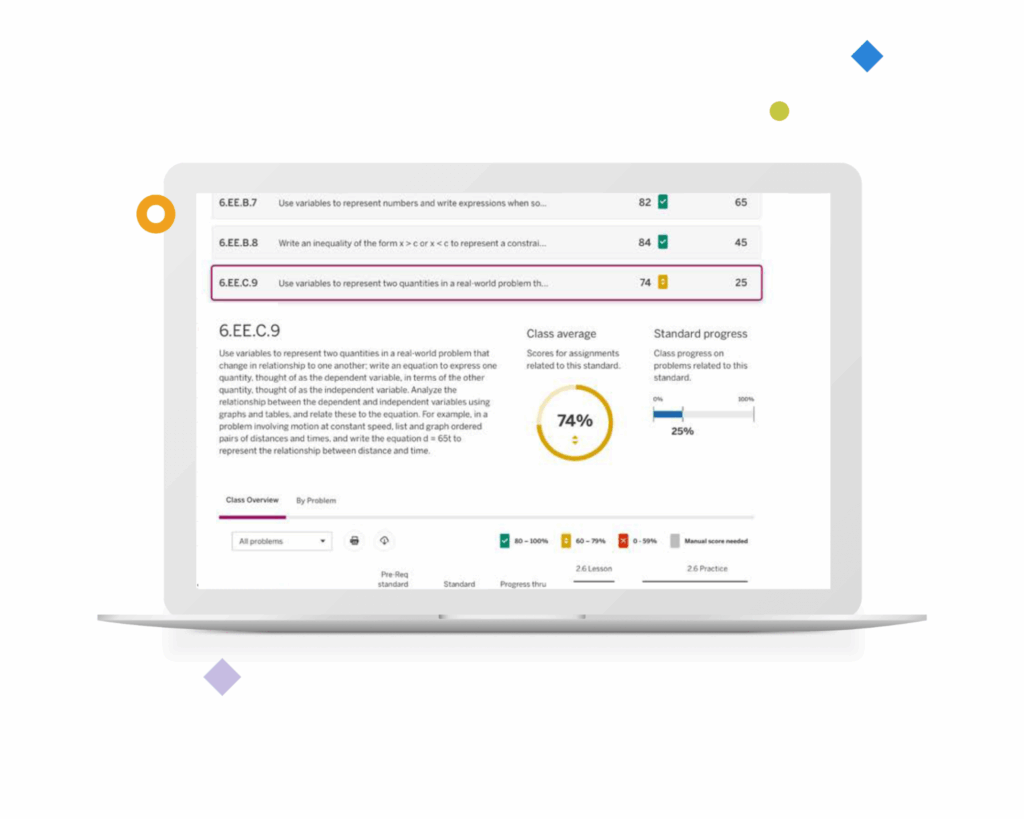
Looking for help?
Throughout your implementation, you can reach our support team by live chat, phone, or email Monday through Friday,
7 a.m. to 7 p.m. ET.
- Chat: Click the orange icon while logged in to get immediate help.
- Phone: Call our dedicated support line for NYCPS (888) 960-0380.
- Email: Send an email to help@amplify.com. In the message body, please include your name and question. Provide as much detail as possible, so we can help you find a solution.

S1-05: How does coding fit in the science classroom? A conversation with Aryanna Trejo of Code.org
In this episode, Eric sits down with Aryanna Trejo, a professional learning specialist of Code.org. Aryanna shares her journey from working as an elementary teacher in New York City and Los Angeles to teaching other educators at Code.org. Eric and Aryanna chat about computer literacy within the science classroom, problem-solving skills, and ways to model productive struggle for students. Aryanna also shares ways to teach coding and computer literacy in schools, no matter the classroom’s technology level. Explore more from Science Connections by visiting our main page.
Aryanna Trejo (00:00):
I would hear teachers saying things like, “Well, I just can’t do coding; this is too hard for me; the time has passed.” And I would ask them, “Would you say that to your student about math or English?” And they would always sheepishly go, “No.” And I’d say, “Well, be as kind to yourself as you would be to your student.”
Eric Cross (00:19):
Welcome to Science Connections. I’m your host, Eric Cross. My guest today is Aryanna Trejo. Aryanna is a member of the professional learning team at Code.org. Before joining Code.org, Aryanna led computer science professional development for elementary school teachers, and served as an instructional coach for new educators. She also taught fourth and fifth grade in both New York City and in Los Angeles. In this episode, we discuss Aryanna’s journey to Code.org, where she helps educators connect coding to real life, how to use a rubber duck to solve problems, and how coding and computer science principles can be taught to students in areas without access to the internet…or even a computer. I hope you enjoy my conversation with Aryanna Trejo. So I was born and raised here, and I saw that you went to UC San Diego.
Aryanna Trejo (01:11):
I did, I did. I actually just put a deposit down on an apartment in University Heights, ’cause I’m moving back.
Eric Cross (01:16):
You’re coming back?
Aryanna Trejo (01:17):
I’m coming back. Yeah.
Eric Cross (01:19):
So if you need a classroom to visit….
Aryanna Trejo (01:21):
I would love to do more classroom observations!
Eric Cross (01:24):
Are we doing this? Let’s do—we’re making this happen.
Aryanna Trejo (01:26):
We are. Yeah. So I’ll be there. I’m moving there in April. I actually grew up in Orange County too, so I’m like a very diehard SoCal person.
Eric Cross (01:35):
So I feel like I know the answer to, hopefully—Tupac or Biggie? ‘Cause you’re on the East Coast, and you’re on the West Coast.
Aryanna Trejo (01:40):
Yeah. I like Tupac, but I have more Biggie songs committed to memory. Which is not a lot. I have “Juicy” and “Hypnotized” memorized.
Eric Cross (01:53):
All right. So you’re just memorizing, and you have the Biggie songs memorized, but not the Tupac ones.
Aryanna Trejo (01:58):
No, but I do love Tupac songs. You know, it’s like, Biggie has the flow, but Tupac has the lyrics. Nobody’s—they both have something really amazing about them.
Eric Cross (02:06):
You know, I can respect that you broke it down into both of their strengths.
Aryanna Trejo (02:11):
Thanks for buttering me up before this interview. And not….
Eric Cross (02:15):
<laugh> Oh, we already started.
Aryanna Trejo (02:16):
Huh? We already started?
Eric Cross (02:17):
We’re already started. Yeah. We’re already into this.
Aryanna Trejo (02:19):
We’re into it.
Eric Cross (02:21):
You were in the classroom, fourth and fifth grade, and you were doing TFA.
Aryanna Trejo (02:26):
I did. I did Teach For America. I was 2012, New York City Corps. Right after graduation. ‘Cause I graduated UC San Diego in 2012. So graduation was on June 17th, and I touched down at JFK on June 19th.
Eric Cross (02:40):
Even though I wasn’t in TFA, I know a lot of the fellows that are in it. And there’s just some phenomenal teachers in there. How long were you doing elementary school when you were teaching?
Aryanna Trejo (02:49):
Yeah, I taught for—well, I did, three years of teaching fourth grade. Then there happened to be an instructional coach opening in my fourth year. I took that, did some instructional coaching within the same network, and then I moved back to LA and I taught fifth grade for a year.
Eric Cross (03:11):
- And what was it like now? Did you go to Code.org right after the classroom?
Aryanna Trejo (03:17):
No, I didn’t. No. I transitioned after teaching fifth grade for a year in downtown Los Angeles, in the Pico-Union neighborhood. I ended up getting this email out of the blue from someone who had actually found me through the Teach for America job site. ‘Cause I was hitting the pavement; I was really looking to transition out of the classroom. And she invited me to interview with this company called 9 Dots. And they taught computer science to kids K–6 throughout Los Angeles and Compton. And I was like, “Sure, no problem. Let’s do it.” So I interviewed, I got the job, and yeah, that’s how I transitioned to 9 Dots. And then after almost four years there, I transitioned to Code.org, with the same person. Actually, she moved over to Code.org first, and then she helped me get this job.
Eric Cross (04:07):
Oh, that’s happened a lot—like, that relationship kinda carries over.
Aryanna Trejo (04:11):
Yeah. We’re meant to be coworkers.
Eric Cross (04:13):
Yeah. Are you still? Is she still there? Are you both still together?
Aryanna Trejo (04:17):
Yeah, we’re on the same team and it’s nice. I saw her last night for Happy Hour, with another coworker who’s in LA. So we’re tight. And she’s a wonderful, wonderful mentor to me.
Eric Cross (04:28):
That’s great. Did you have computer-science background, when you were doing elementary school teaching? Did you have—
Aryanna Trejo (04:34):
No. <laugh> Not at all. When I was teaching in New York City, I had like four desktop computers in my classroom, and we rarely used them. Which was such a shame. And then when I moved to Los Angeles and taught fifth grade there, we were a one-to-one school, and the joys of that are just amazing. It was just really wonderful to, you know, get the students used to typing on the computer, using different software to submit their assignments. Getting creative—as creative as you can get—with Google Slides. You know, to show off what they know. And stuff like that. That’s all I had, though. And you know, when I transitioned to 9 Dots I was like, “Sure, why not? Let’s give a shot.” And I learned a lot. It was really interesting, yeah.
Eric Cross (05:26):
And so now at Code.org you are…well, so my journey with Code.org, I’ve been in the classroom for eight years. Still in the classroom as of…an hour ago, I was there. <Laugh> And I use Code.org, and I feel like I’ve checked it periodically, and I feel like it’s evolved over the gaps. And I’ve seen it. It’s become more robust in the things that they offer, over the years I’ve been an educator. Just to kind of…could you give a thumbnail sketch? Like, what is Code.org? Who’s it for? Who’s the target audience? What resources are there?
Aryanna Trejo (06:00):
Yeah. So it’s for everyone. It is a nonprofit that provides curriculum and training and a platform for teachers and students. We provide curriculum for K through 12. It’s completely free. And it comes with lesson plans, slideshows, all that. We focus specifically on underrepresented groups. So we have targeted measures for Black students, for Native American students, for students who identify as female. That’s a huge part of our mission. But we’re really working to expand access to computer science to as many students as we can.
Eric Cross (06:41):
One of the things I’m hearing in your story is you were teaching in Compton; you were in Bronx, New York. One of the reasons why I got into the classroom is because of educators, and the impact they made on me in exposing me to science and technologies I’d never had access to. And that intentionality, that you’re going about it…are there…not just the code, but how you bring that across to different groups…are there strategies, or are there ways to connect this idea of coding to diverse groups and diverse audiences? Or is it kind of, the curriculum applies for everyone? ‘Cause in science, when I’m teaching, I’m always trying to make what I’m doing relevant to the backgrounds of my students.
Aryanna Trejo (07:28):
Sure.
Eric Cross (07:28):
So I’m teaching biology, and I’m trying to make this kind of connection. Sometimes it’s more organic; sometimes it feels kind of forced. Because it’s just not always a nice fit. But it sounds like Code.org is really about inclusion. And in the numbers that I’ve seen for representation, in especially computer science software engineers, the groups that you’re focusing on are not necessarily represented in the professional workforce. At least disproportionately.
Aryanna Trejo (07:54):
Yeah, absolutely. Yeah, that’s correct.
Eric Cross (07:57):
And so how do you go about being intentional about reaching groups that we don’t see in, you know, the Silicon Valley software engineers? How do you start that? Like, at a young age, do you look for specific schools in specific areas to say, “We are going to bring this to the school. We’re going out to these populations of the cities”? Because we’re just not seeing…you know, on the map, we’re not seeing anybody really doing anything with coding here. Or we’re not seeing the numbers come out of these areas, out of these cities, of students who are going into STEM or going into computer science fields.
Aryanna Trejo (08:41):
Yeah. I don’t necessarily work on the recruitment side of it, is the issue, in my position. But I do work on the professional learning, that is brought out to teachers. And we have a huge focus on equity throughout the workshops that we create from K–12. It’s something we’re really passionate about. We definitely aim to prepare teachers to teach computer science. That’s a huge part of it. Knowing the content, but also thinking through, “What does recruitment look like at your school to make sure that the demographics of your classroom match the demographics of your entire school?” Also, thinking through, “How can we make sure that female students feel included in your classroom? How can we make sure that we are, giving students creativity to think about, or we are setting students up to be creative and think about the problems that are in their community, and how they can use computer science to solve them, or at least work towards them?”
Eric Cross (09:39):
So solving real-world problems and that inclusion aspect…are there things like…you were saying “female or students who identify as female”…are there things that teachers can do to ensure that they’re being more inclusive? Or to recruit, or encourage more female students to take part? One of the things I was thinking of, that I’ve seen, is I’ve seen coding kind of camps.
Aryanna Trejo (10:06):
Sure.
Eric Cross (10:08):
That were specifically for a female audience. And that seemed to help with recruitment. Is that something that you see on your side?
Aryanna Trejo (10:16):
That’s not something that we set up, no. But the curriculum that I work with is CS Principles. And it’s offered as an Advanced Placement course, as well as an AP class. So that’s a curriculum that’s designed for students who are in grades 10 through 12. And so at that point, we can really talk to teachers and ask them what the recruitment strategy is. But in terms of strategies that teachers can use to recruit those students…I mean, I’ve heard over and over from lots of different teachers who identify as female that they didn’t think that computer science was for them, until they saw a role model in that position. And so just being a role model for those students is really wonderful.
Eric Cross (11:00):
And I see it too, with—like, we do “Draw a Scientist” activity, which is like a popular science thing—
Aryanna Trejo (11:05):
Sure, yeah, I’m familiar.
Eric Cross (11:05):
But it’s the same thing, right? Like, it fleshes out. My students don’t draw themselves as scientists. They draw what they perceive, based on what television says. I imagine with computer science, it’s probably really similar, when you think about “What’s a software engineer look like?” Do students tend to draw themselves? Or is it even a mystery? Because I don’t even know what a software engineer looks like.
Aryanna Trejo (11:28):
Yeah, absolutely. Well, one of the things we love to do with our professional learning workshops is talk about understanding yourself, your identities, how they show up in the classroom as biases. And, you know, things like stereotype threat. We see that as really important to understand, and think through, and consider, before you step into the classroom. So that you’re not, you know, coddling certain groups of students because you don’t believe that they are able to be successful in computer science. Holding all the students to the same expectations and believing that they can succeed. And computer science, I think a lot of the times people have this conception of it being this utopian, bias-less, technocratic field. When in reality, everything has bias. And people talk about algorithmic bias and facial recognition, but also the people who created computers and computer languages have their own bias that comes through. And I think it’s really important to show students that. So that they can, one, know what they’re working with, and two, make sure that they can create products that reduce that bias.
Eric Cross (12:50):
It’s like…it’s not objective, just because we’re creating software. Like, once it gets to a point of being so sophisticated…I think, like, AI software, right? With facial recognition? And we’re seeing more and more articles come out about, you know, predicting trends based on historical data.
Aryanna Trejo (13:12):
Sure.
Eric Cross (13:13):
But then, the trends and things that they’re seeing tend to target things that have happened in the past. But it also doesn’t take into consideration a lot of other factors that can lead to certain groups or populations being identified. And I’ve seen some articles lately about how your code is really just representation of what you put into it. And like you just said, your bias—if you have that, conscious or unconscious—you’re gonna put that into your code. And the input is gonna be an impact, is gonna impact the output.
Aryanna Trejo (13:44):
Yeah, absolutely. Or even just—and I’m ashamed to say this, ’cause this is an idea that came to me just recently, through an article that I read—but computers themselves have bias. The hardware assumes that you have vision, that you can see the screen, that you are able-bodied, that you can use your hands to work the keyboard, the mouse, et cetera, and that you don’t have to use assistive technology. You know, there are small things like that, where we think that technology, like I said, is this utopian, futuristic science…but there are biases throughout.
Eric Cross (14:19):
You’re absolutely right. I’ve never even—I’ve never even considered that. Even though I do use assistive tech, and figure it out, I’ve never thought from the ground up, the process is built for an able-bodied, sighted, hearing person.
Aryanna Trejo (14:31):
Exactly.
Eric Cross (14:32):
To be able to engage with the hardware. And then these other things, these tertiary things that we kind of add on, so that you can do this, but it’s not designed from the ground up for people who are, you know, different audiences, physically. So I’m glad you brought that up, though. Now I’ve seen—and I haven’t done this—but I know Hour of Code is a big thing. And this is something that’s ongoing. Can you talk a little bit about what Hour of Code is? I know it’s, it’s a big thing for the classroom teachers.
Aryanna Trejo (15:08):
Yeah. So Hour of Code is really exciting, and it’s just blossomed from something small to something tremendous. This year is gonna be the 10th Hour of Code. So what it is, is it happens during CS Education Week in December, during Grace Hopper’s—or to honor Grace Hopper’s birthday. She was a computer scientist and Navy Admiral. And basically the aim of it is to get as many students on the computer doing an hour of code, and demystify what coding is. You know, to do seed-planting. To show teachers that this is something that you can facilitate for your students. And also to show students like, “Hey, computer science is something you can absolutely do. Not just for an hour, but more if you want.” So, yeah. Now it’s worldwide, and it’s really exciting.
Eric Cross (15:58):
That’s awesome. And I think about teachers and I still hear the apologetic—when I’m helping teachers in the classroom with education technology—the self-deprecating “I’m a dinosaur; I’m not good with tech,” which is never true. Like, they’re better than they even realize. And I feel like sometimes there’s still a stigma, too. It’s like <laugh> The Simpsons’ Comic Book Store Guy. The condescending tech support person—
Aryanna Trejo (16:27):
Sure.
Eric Cross (16:28):
—who has that tone. And so I feel like some people have been so negatively impacted by that person. So I know when I’m helping people, I actually try to go full-spectrum the other side. But I’m thinking about teachers’ barrier to entry. Sometimes code is like, “Whoa.” And I don’t teach computer science. Do you see those barriers to entry, or at least the perception of them? And then, what’s the reality for like someone listening, and going, “I’m a fourth grade teacher,” or “I’m a humanities teacher in ninth grade.” What’s the perception that you see, versus reality, with the teachers that you train? Is it much more accessible than we think? Or is there a level of sophistication that you have to have coming into it?
Aryanna Trejo (17:10):
No, not at all. I know computer science, and that says a lot! <Laugh> You know, I know my own corner of computer science. And you know, that’s me being self-deprecating, too. But I think learning computer science has helped me in so many different ways that I wasn’t expecting. I recently took the GRE in hopes of, you know, getting back into grad school. And I think just the way that computer science teaches you to search for bugs in your code, or errors, and kind of tirelessly look at a problem from multiple different angles, I was able to carry that into the math that I was doing. And I noticed just a huge difference in the way that I approached it, and the way that I was open to it. But you asked a great question, in regards to the barriers to technology. In my position at 9 Dots, I was working directly with teachers to lead professional development with them. Sometimes it would be a full day; sometimes it would be an hour after school. And the one thing that I always had in my back pocket that was really useful is that I would hear teachers saying things like, “Well, I just can’t do coding; this is too hard for me; the time has passed.” And I would ask them, “Would you say that to your student about math or English?” And they would always sheepishly go, “No.” And I’d say, “Well, be as kind to yourself as you would be to your student.” You know, it takes some patience and nobody’s gonna get it perfect 100 percent of the time. Have I banged my head against the wall trying to solve one tiny little syntax error in my code? Absolutely! But it feels absolutely phenomenal to fix that. And I was an English major in undergrad, and I had never done computer science before. So it’s something that becomes really satisfying.
Eric Cross (19:07):
Yeah, I imagine. I had someone—a trainer or a presenter—one time bring up the fact that our students rarely get to see us learn in real time.
Aryanna Trejo (19:19):
Yeah.
Eric Cross (19:19):
So we don’t get to ever really model failure. I mean, unless we’re in a classroom situation <laughs> in our failures, with classroom management. Then they see it, they see it! But they don’t get to see us model learning failure. And I don’t mean like failure—and yes, I know, “first attempt is learning,” and “no such thing as failure”—that’s not what I’m talking about. But just when we’re not successful with our code, and then we experience real-time frustration.
Aryanna Trejo (19:42):
Yep.
Eric Cross (19:42):
And they said that is actually a great learning experience for your students to watch you go through productive struggle. And that was really liberating for me. Because now I’m in the classroom, and I’m trying to go through it with my students, and the beautiful thing was, they started helping me. We were all trying to solve the problem. And then we had this authentic problem-solving experience. I think it was like a Scratch program, where we were trying to solve, trying to embed it somewhere, or something. And then, in the background of the class: “Mr. Cross! I got it! I figured it out!” And it was this really neat bonding experience. And I felt that—your ears get red, and you get hot, ’cause you’re not—
Aryanna Trejo (20:19):
Oh yeah.
Eric Cross (20:20):
You don’t know it! And you’re in front of 36 kids! And I said, “OK, I need to tell them how I feel.”
Aryanna Trejo (20:25):
Yeah.
Eric Cross (20:26):
So I said, “Now I feel really frustrated.” Like, “I want to go through this, and here’s my thoughts.” ‘Cause I knew that it would be helpful if they saw and would hear my thoughts. So I just did a quick think-aloud and I said, “In my head, <laugh> I want to just quit,” I said, “But I realize that this is the part where my learning’s happening. So I just want you all to hear what’s going on in my brain.” And now I feel like when I’m doing coding with my students, and it’s just basic coding, I feel much more comfortable, like, not knowing. But I needed someone to release me from that “I have to be the expert in everything” to do it.
Aryanna Trejo (21:06):
And teachers are used to being the experts. Right? And they should be. And coding is just such a different landscape. But I think once you kind of give over to the power of tinkering, I think it’s really gratifying. I love being able to…you can revise a sentence, and then read your paragraph back to yourself in English, and say, “OK, I get it.” But there’s something so gratifying about changing a line of code or a block and then being able to hit play and watch your program come to life, and say, “Hmm, that’s not quite what I wanted. Let’s try something different.”
Eric Cross (21:39):
I love your connection to tinkering. ‘Cause—I had never thought about it—’cause I love tinkering with my hands. But I always think about physical things. But coding is exactly that. It’s tinkering.
Aryanna Trejo (21:47):
It’s exactly that.
Eric Cross (21:47):
That’s exactly what it is.
Aryanna Trejo (21:49):
And a lot of it is, for me, especially when I’m trying something new, it’s guess-and-check. It’s like, “OK, that didn’t work. What if I add a semicolon here? Will it finally work? Or what if I add a ‘for’ loop? Will this get me what I want?” And it’s wonderful because you have that with students as well. Like, you have that record of their thinking, and you can ask them to go step-by-step and tell you, you know, “First, I added this, because I wanted the program to do this,” and so on and so forth. And so you have that record, but you can always get rid of it. Students often wanna get completely get rid of it. That’s something that I’ve noticed a lot as I’ve taught computer science. But, once you can get them to target the specific parts of the program, tinker with that, and continue, that’s a really wonderful learning space. There was also something you said about modeling failure. I love the fact that in computer science you can model failure for your students. You said to your students, “I’m getting frustrated.” I love that, because I never got that in math. Nobody ever showed me what it was like to be frustrated with graphing a parabola. Right? Like, my math teachers were always like, “Doot, doot, doot, here you go, you’re done!” <Laugh> And I would get so frustrated, because it didn’t come that easily to me. And I think there’s two parts to that. So there’s modeling the learning and the thinking and the productive struggle, but also there’s the identity of being a computer scientist and modeling what that looks like. So for me, when I get really frustrated with a program, I walk away. I take five minutes. I take a deep breath. I say, “I’m not gonna think about it in these five minutes.” And I come back to it. And I think once you start teaching computer science, you can facilitate that for students. And there’s so many different strategies that they can pick up. They can pick up rubber ducking, which is where they pick up a rubber duck or a similar object, and they talk to it as if they were a partner and talk through their code. And oftentimes, as you’re rubber ducking, you’re gonna find that error, because you’re explaining it to someone who’s a stand-in for a novice. And rubber ducking is a well-known strategy for computer scientists who make it their career. You know, there’s pair programming. Some students love pair programming; some students hate it. But the students start to build this identity about how they problem-solve. And how they approach failure. And I just love that.
Eric Cross (24:31):
I’m writing this down. Because the rubber-ducking strategy, I love. I just imagine my seventh graders, a bunch of 13-year-olds with, like, rubber on the desk. And not necessarily in coding, but I was thinking in my science class. And they’re working through a challenge, and they’re all looking at this duck, and they’re talking to it. But I just love the the idea of externalizing your thought process and talking through it yourself so that you can hopefully arrive at a conclusion. But it’s such a great practice, and this is something that’s been around for a long time, apparently. So.
Aryanna Trejo (24:59):
Yeah. Yeah. It’s a real thing. And you know, you can go low-fi. It doesn’t have to be a rubber duck. You can have students talk to their pencils or their imaginary friends. That’s not the issue; the issue is, you know, talking to somebody.
Eric Cross (25:10):
I know you support teachers. But I just wanted to…I was just curious about your typical day, what that’s like. And then what you do, how you support ’em.
Aryanna Trejo (25:15):
So, at my previous job at 9 Dots, I was in there with the teachers in the classrooms. I was coaching our internal staff who went out to co-teach with teachers. And I loved that. And I had such a great impact on a local scale. But now at Code.org, I have a much broader impact. But I don’t get to interface with—that’s such a tech-y word!—I don’t get to interact with—
Eric Cross (25:42):
You work at Code.org! You get to—
Aryanna Trejo (25:42):
I know! But I’m a teacher at heart, forever, right? That’s my identity that I forged when I was 22 years old. And a typical day looks like opening up my computer, taking a look at my calendar. I often have meetings to talk about, different things that we’re doing to support our facilitators who go out to our teachers and lead their workshops for them. I recently worked on a product that was designed for CS principles, teachers, to onboard to the course if they weren’t able to get into an in-person workshop. And it’s completely self-paced, so it gives teachers an on-ramp into the course. And now I’m working on some in-person workshop agendas. So I feel really wonderful that my work is going out to thousands of teachers. But at the same time, I really, really miss talking to teachers. Because that’s something that energizes me so much.
Eric Cross (26:46):
When should students start learning computer science? I feel like we see it in this kind of narrow lane. Like, this is computer science if you make an app. Can it be more than that? As far as like the benefit of computer science? And—I guess two-part question—when should students, one, start being exposed to it? And then two, what are some of the benefits beyond just, “I wanna just make an app”?
Aryanna Trejo (27:08):
I taught coding to kindergartners. It can start as early as you as you want it to. And it doesn’t necessarily need to be on the computer. A lot of students that I worked with didn’t have computers at home, were interacting with computers for the first time. And that’s a huge barrier, of course, to a lot of teachers. But there are so many unplugged lessons that you can do to start to start to have students think about algorithms, which is just a series of steps to complete to solve a problem. As long as a student can use a computer, I think they can do computer science. There are products out there like codeSpark, where students—and Code.org has these products too—where students are moving an avatar around a board, kind of like a quadrant to…you know, they feed the directions to a computer and then the computer enacts it for them. And with that, they can learn algorithms. You know, that is computer science. And a lot of people don’t see it that way, but it really is. And it starts to set students up for more complex thinking as they move on.
Eric Cross (28:13):
One of the biggest underserved communities, geographically, are students in rural areas.
Aryanna Trejo (28:20):
Yep.
Eric Cross (28:21):
They can be reservations; they can be places just not an urban area. Is there a way to serve our communities of students and bring these skills in an unplugged way?
Aryanna Trejo (28:32):
Yeah. Yeah. If you typed in “unplugged computer science lessons” to Google, you’ll have a ton of hits. And there are so many students out there—not just in rural areas. But there’s incarcerated students. It hurts my heart to even say those words, but in urban areas too. Like in my classroom, where I only had four desktop computers. Access is a real struggle. And there’s things, like I said, instead of moving an avatar around a grid on the computer, I used to have an actual mat that I would take out to my kindergarten classrooms, lay it out, and it would have a grid on it. And we’d have one of the students act as the avatar and the rest of the students would give them directions to get to a different point on the grid. And there, you’re building an algorithm or just a series of steps. Like I said, it’s not some fancy term to solve a problem. And there’s multiple ways to solve that problem, too. And I think investigating that can be a really good way to stretch those lessons.
Eric Cross (29:32):
It almost sounds like an oxymoron, but this low-tech computer science strategy. Develop these skills and then transfer that once you have access to the tools.
Aryanna Trejo (29:39):
Yeah. Yeah. Absolutely. And I think it’s a good way for students who need kinesthetic means to start to understand something, or just different learning styles, to start transferring that over.
Eric Cross (29:53):
I probably have students in the classroom where those kinesthetic moving things would help be a great way—or WILL be a great way—for them to learn the principles and the fundamentals of coding. Instead of only giving the option to just do the computer, actually giving them some choice. Or giving them a way to be able to manipulate things. We’re still in the system of education that’s still very siloed. It’s been the same way for a hundred years. We got math and then we got science and we got English. I’m wondering, how can a teacher fit this into their daily lessons? And then, do you have any experiences or stories or things that you’ve seen, just really creative ways that you’ve seen teachers incorporate this? Outside the norm of, “This is a computer science class; we’re just gonna code.” But have you seen it branch out? In the trainings that you’ve done?
Aryanna Trejo (30:40):
I’ve seen examples of that. I’ve seen a teacher use Scratch to demonstrate different climates of California, and show the different climates. This past year for Hour of Code, my friend Amy—the one who helped me move to 9 Dots and at Code.org—she created this incredible tutorial called Poetry Bot. And it was a way to get students to match the mood of the poem to some of the elements that were happening in the stage. So they would have different backgrounds show up at different parts of the poem. When the words would show up, they would have different sprites show up. They would have, sometimes, sounds. Or the text would show up with different animations. So there are cross-curricular opportunities everywhere, if you can be creative enough to find them, or if you beg, borrow, steal from other educators who are doing this incredible work out there.
Eric Cross (31:36):
Yeah. I say this all the time, but I’m an educational DJ, not an MC.
Aryanna Trejo (31:44):
Oh yeah.
Eric Cross (31:45):
So MCs write their lyrics and DJs remix with things that other people have done.
Aryanna Trejo (31:48):
Absolutely.
Eric Cross (31:48):
I was like, I’m a DJ. I was like, all day. Sometimes I’ll write a lyric, once or twice, but most of the time I’m remixing things. So teachers, if you’ve been out there and you got an awesome interdisciplinary thing, or you’ve incorporated coding and it’s something that’s traditionally not seen, please send it to us. Share it with us.
Aryanna Trejo (32:03):
Yeah. And there are so many different places where you can find that. We have a forum for Code.org, but there’s also CSTA, the Computer Science Teachers Association. You can join your local chapter and get to know other computer science teachers out there.
Eric Cross (32:19):
I guess…to wrap up, I’ve been using Scratch programming, the MIT website. My students do the basic animated name, CS First, stuff. But over the years, I’ve noticed that my students are coming in with a higher level of sophistication in Scratch to where now the differentiation…some of my students are just doing very basic…and then I have other students who’ve created full-on video games with complex…like, you look at their Scratch page and it’s just an amazing amount of blocks and integrations and things that they have. Is there anything on Code.org that could be a next step? That takes them beyond, maybe like the visuals? And if so, what would be a good next step, to take students to advance them to another platform? There’s so many coding languages out there, I feel like. Or I might not even be thinking about that the right way.
Aryanna Trejo (33:20):
No, I think you are. You know, we have three different curricula out on our website right now. We have CS Fundamentals, which is probably more in line with what you’re talking about. We have a free CS Discoveries curriculum, and that is designed for, grades, I believe, 6 through 10. And that would be a really good entry point, for both teachers and for students.
Eric Cross (33:44):
There’s a lot of new stuff that I hadn’t seen yet, a few years ago.
Aryanna Trejo (33:49):
Yeah.
Eric Cross (33:49):
So I was really excited.
Aryanna Trejo (33:50):
One thing that I do know is that CS Discovery has just added an artificial intelligence slash machine-learning unit, that you can just pick up and give to your students. You don’t have to go in order with CS Discoveries, like you do with CS Principles. And I’ve gone through some of those lessons. They are really rad. And I would’ve loved to have learned that when I was in middle school or high school. So yeah, we’re constantly thinking of how we can make things one, relevant to our students, and two relevant to what’s going on in the world.
Eric Cross (34:20):
So would I be overselling it if I said, “If you go through this, you’ll be able to create an AI or a neural net to do all your homework”?
Aryanna Trejo (34:26):
You would be overselling it.
Eric Cross (34:27):
I would be? OK. So what I’ll do is, I’ll wait until the end of the school year, and then introduce it, and then by the time they’ve realized it’s not true, they’ll be eighth graders.
Aryanna Trejo (34:35):
There you go. Good old bait-and-switch.
Eric Cross (34:37):
You’re amazing. Thank you for serving teachers, and for being part of such a great organization that puts out great stuff. So much free curricula for teachers to be able to use. Especially nowadays we hunt and scour the internet for those types of things. And to be able to bring computer literacy into the classroom, and with your focus of serving communities of underrepresented groups, it feels good to know that not only is it high-quality material, but it’s also trying to raise everyone up. Because ultimately when we have more people trying to solve a common problem, we come up with better solutions. And I was talking to somebody who was a materials engineer somewhere in Europe, and he said one of the things about the U.S., As he was critiquing me on this flight, critiquing the U.S., He said, “One of the things about your country is that you have a heterogeneous group of people who, in a group, when you have multiple perspectives attacking a problem, you come up with more novel solutions.” He says, “That’s one of the great things, is that there’s not necessarily just a hive mind.” And I think that that’s one of the great things. We uplift different communities, and we uplift women, people of color, people who, have backgrounds that parents didn’t go to college but have these amazing qualities and strengths. And we put everybody focusing on the same issue. We come up with novel solutions that we wouldn’t have come up with if only select groups were trying to look at it and solve it. And so—.
Aryanna Trejo (36:22):
Yeah.
Eric Cross (36:23):
And we couldn’t do that without organizations like yours, that help empower teachers. So.
Aryanna Trejo (36:27):
Yeah! You really said it.
You’re coming to my classroom when you’re back in San Diego?
Aryanna Trejo (36:31):
Yeah! I totally will. Yeah. Let’s make it happen.
Eric Cross (36:34):
Last question. If you think back in your schooling, your own schooling, K through college, is there a person or a teacher that had a big impact on you? Or a learning experience that had an impact on you? And it could be, you know, positive or negative. But something that impacted you, even to this day, that stands out to you, that you remember?
Aryanna Trejo (36:56):
This is a big diversion from the topics that we’re talking about. But in grades 10 through 12, my drama teacher, Mr. Byler, who I still talk with, was such a huge impression on me. Really wonderful. And I couldn’t tell you the teaching moves that he did that were wonderful. I don’t know much about his management. But I can tell you that he gave me space to be confident, and grow into myself, through drama productions. They were high school productions, so they weren’t amazing. But I just really came into myself in high school, because I had the confidence to get on stage. And he was just such a wonderful mentor to all of us. So, props to Mr. Byler.
Eric Cross (37:39):
Shout out to Mr. Byler for creating space for Aryanna to fly! Thanks for making time, after your workday, to talk with us and to share Code.org with teachers.
Aryanna Trejo (37:54):
Of course. Happy to.
Eric Cross (37:59):
Thanks so much for joining me and Aryanna today. We want to hear more about you. If you have any great lessons or ways to keep student engagement high, please email us at stem@amplify.com. Make sure to click subscribe wherever you listen to podcasts. And join our brand new Facebook group, Science Connections: The Community for some extra content.
Stay connected!
Join our community and get new episodes every other Tuesday!
We’ll also share new and exciting free resources for your classroom every month.
Meet the guest
Aryanna is a member of the Code.org Professional Learning Team. Before joining Code.org, Aryanna led computer science professional development for K-6 teachers and served as an instructional coach for new educators. She also taught fourth and fifth grade in New York City and Los Angeles. In her spare time, Aryanna loves taking advantage of the California sunshine, creating wheel-thrown pottery, and hanging out with her dog Lola.

About Science Connections
Welcome to Science Connections! Science is changing before our eyes, now more than ever. So…how do we help kids figure that out? We will bring on educators, scientists, and more to discuss the importance of high-quality science instruction. In this episode, hear from our host Eric Cross about his work engaging students as a K-8 science teacher. Listen here!
You might also like:

S4 – 01. Joyful math teaching with Kanchan Kant
This season on the Math Teacher Lounge podcast, we follow the theme “joyful math” and uncover its meaning.
In this episode, Kanchan Kant joins Bethany Lockhart Johnson and Dan Meyer to discuss the key, early investment she makes at the start of the school year to ensure her math teaching will be joyful for herself and for her students for the rest of the year.
Explore more from Math Teacher Lounge by visiting our main page.
Dan Meyer (00:00):
Okay, we are recording. Hey folks. Welcome back to Math Teacher Lounge. (laugh)
Bethany Lockhart Johnson (00:06):
Hardly off to a rocking start.
Dan Meyer (00:06):
Yeah. Yeah. <laugh> Did you like my energy there? Hey folks. Welcome back to Math Teacher Lounge. It’s a new season with your host Dan Meyer. And…
Bethany Lockhart Johnson (00:15):
I’m Bethany, Lockhart Johnson. How’s your summer Dan?
Dan Meyer (00:22):
Summer for me feels really hectic as we prepare, here at Amplify, for the new school year, and everyone’s starting these new math programs. So I’ve been feeling quite amped up, like usual in the summer. But also, my kids started big kid school. So I’ve been seeing the educational system from the role of a parent and all the anxieties and I worry, will I be my kids’ teacher’s most annoying parent <laugh> … So what kind of math curriculum you using? Oh, have you heard of core counting? Can I lead a math center? What’s this worksheet about? I’m really worried my kids are just overall gonna hate my vibe when I come around their classes. Uh, <laugh> so lots going on with me.
Bethany Lockhart Johnson (01:06):
It’s already happening for me and I have a toddler.
Dan Meyer (01:10):
<laugh> There we go. Anyway, that’s what I’m up to. That’s how I’m feeling. I’m curious how you’re doing. We haven’t chatted in a while. We’re excited about the podcast, but it’s been a bit, you know? Bethany got a break from me and my antics over the summer. So, how are we finding you here, as we ramp up to the new season?
Bethany Lockhart Johnson (01:24):
Uhhhh. Well, let me just tell you, I have a toddler. That’s kind of all I need to say. Except that’s not all I will say. Of course, I’ll say more. I am exploring, I’m dipping my toe into the extracurricular toddler activities; the music classes of the toddler world, the creative movement of the toddler world. And yeah, I have lots of opinions and lots of things to say about the teachers. And I’m like, Ugh, I can’t wait to be room mom. And just like…<laugh>
Dan Meyer (01:55):
Just let it rip, you know?
Bethany Lockhart Johnson (01:57):
I have opinions on everything and just hope I don’t get kicked out of the class.
Bethany Lockhart Johnson (02:05):
It’s been an eventfully recharging summer and we are ready for this new season. And in fact, we’re so ready that we decided that we were gonna mix up this season. Just a, just a tiny bit. Shall I explain Dan?
Dan Meyer (02:21):
Yeah. Let’s do it.
Bethany Lockhart Johnson (02:22):
So we have loved all the different topics that we have explored in the Math Teacher Lounge world, but we kind of feel like we need to do some more deep dives. So for this season and the foreseeable seasons …
Dan Meyer (02:38):
We’ll see how it goes.
Bethany Lockhart Johnson (02:38):
Let’s stick with this season. For this season. We’re going to be exploring a singular theme.
Dan Meyer (02:46):
We’re not bouncing around. Yep. We’re not bouncing around from a guest to guest going on whatever shiny thing in the river bed catches our eye. We’re gonna take one theme and see where it goes. What we working with here this season?
Bethany Lockhart Johnson (02:57):
This season, we are going to be exploring the idea of joyful math, joyful math. And Dan, the question I have for you is, is the term joyful math one that you use on the regular?
Dan Meyer (03:10):
No, it definitely is not. I think that joy and math are very rarely, you know, connected in the popular mind. Number one, and number two, you know, I’m kind of an ornery fellow, so that’s not my natural kind of description of math. But we decided that it feels like an important one at the moment, because a lot of math teaching–a lot of teaching in general, math teaching in particular–math teaching is often not a joyful discipline for students, where, you know, I’ve done some research where you look at what people type into Google. And I looked at like, what they…why am I bad at X? And I looked at that for where X is math, where it’s science, where it’s reading, where it’s history. And it was just wild to see how many more hits there are out there on the Internet for “why am I bad at math?” People don’t really associate math with joy, but also we’re looking at joyful math in terms of joyful math teaching. Math teaching, teaching in general, is a tough field at the moment with a lot of teachers leaving teaching. And those who remain are having a lot of soul searching and thinking about, why am I here and how do I sustain this work? And in an environment that seems hostile to my interests or my talents, or work-life balance. And so that’ll be the theme that we’re gonna kind of uncover over the course of our season, talking to various interesting guests, including one today about, yeah, joyful math teaching and joyful math.
Dan Meyer (04:43):
And to help us think about what joyful math teaching looks like, we figured we’d first look at what UN-joyful math teaching looks like. It happens to be the case that we’ve been in a pandemic as you might be aware, and teaching has been challenging. And the NEA, our National Education Association, surveyed its member teachers and asked them the following question … Gave a list of issues that school employees have experienced and asked, for each one indicate how serious of a problem this is for you. This is a survey where more than half of members said they are more likely to leave or retire sooner than planned because of the pandemic. And this is almost double the numbers from July, 2020. It’s really hard to keep track of teacher departures and unfilled vacancies across states. So I don’t wanna like blow this up out of proportion, but it does indicate some real challenges in teaching. So Bethany, I was curious, what do you think like at the top of the list, like what kinds of factors, issues facing educators would you imagine there are?
Bethany Lockhart Johnson (05:48):
So if I’m to understand you correctly, these are reasons someone is not actively experiencing joy in the profession of teaching. Like why would they leave?
Dan Meyer (05:58):
Exactly.
Bethany Lockhart Johnson (05:59):
Well, the number one thing that came to mind for me, well, okay. Wait, wait, one other caveat I need to ask about, you said specifically pandemic-related or just in general, because if it’s pandemic-related, then I think, well, there’s health issues, right? That people are concerned about, but in general, the thing that came to mind was a lack of support from administration districts, lack of funding, and overcrowding in classrooms. Like, you know, I saw somebody had 40 students in their classroom. So those are the two things that I can imagine like top on someone’s list that would make them experience less than a joyful day.
Dan Meyer (06:44):
Yeah. There’s a bunch of you’re kind of identifying here. So number seven on the list is lack of respect from parents and the public, which is like 76% of teachers call that out as serious for them. Others that you kind of circled around in terms of resources go like, not enough planning or unstructured time in the job kind of ties into resources. Yeah. But there’s others that are on the list that I’m curious, you wanna take on the swing at it, given what I’ve said here,
Bethany Lockhart Johnson (07:15):
I feel like too much being asked of them, like being asked to wear too many hats, like they’re being asked to not only teach their class, but also cover all the vacancies and supervise recess and, you know, make a delicious, nutritious lunch. That’s what came to mind. Am am I close?
Dan Meyer (07:33):
Yeah. Number four on the list, unfilled job openings leading to more work for remaining staff. People covering, you know, not just the kind of external to teaching work like you’re describing, but also just taking on like losing your prep period, to take on a class that has been unfilled for all kinds of reasons. Yeah.
Bethany Lockhart Johnson (07:54):
Yeah. I’ve only gotten the fourth. Give me one clue, one clue about …
Dan Meyer (07:59):
So, I mean like, so number one is general stress from the coronavirus pandemic, you know, which I feel like …
Bethany Lockhart Johnson (08:06):
I mentioned that.
Dan Meyer (08:07):
I’ll give you that one. Yep, yep, sure. And then number two, close behind, is feeling burned out, which I think ties into what you’re describing as well. I’m giving Bethany credit on that one. The third one is very different from the ones you’ve been describing. I think I cannot in good faith give you even partial credit for this one. I’ll just say it. Student…
Bethany Lockhart Johnson (08:28):
Wait! Dan, this is not how you give clues.
Dan Meyer (08:31):
Here’s a clue. It’s student absences due to COVID19. It’s really hard to deal student absences. That’s your clue.
Bethany Lockhart Johnson (08:40):
That wasn’t a clue that you told me.
Dan Meyer (08:43):
Yeah, let’s see. I think that’s largely it. There’s also pay is too low, is on the list; student behavioral issues, on the list. And I think that about covers it. So all of that, that basket of items has led to more than half of teachers in this survey, saying that they’re more likely to leave or retire from education sooner than planned. And I don’t know. I think we all know teachers who have bailed.
Bethany Lockhart Johnson (09:08):
I’ve never played a board game with you, Dan, but if we ever play a board game, we’re gonna work on your clue giving, ’cause I want to keep guessing. And you just told me.
Dan Meyer (09:22):
Yeah. Yeah.
Bethany Lockhart Johnson (09:22):
In all seriousness, the <laugh>. In all seriousness, I think yes, the stress of the pandemic and students being absent, what some folks are calling unfinished learning, all of those pieces do play into it. But a lot of those things that you’re mentioning on the list are things that are not unique to the pandemic, right? Like those are things that I feel like there is some modicum of control that we could have over shifting the way the culture of the teaching profession is going so that we could create a more joyful experience for educators, administrators, and students.
Dan Meyer (10:03):
Yeah. Good call out. That’s exactly right. We could tax the people who are not in the classrooms more and increase the pay to classroom teachers. You know, there we go.
Bethany Lockhart Johnson (10:11):
Oh. Bingo. Why didn’t we ask you sooner Dan, for your wisdom.
Dan Meyer (10:15):
Yeah. I’m … solved by Dan. Yeah, good point though. So I read that and yeah, I think that there’s been some … people have critiqued the NEA for being very alarmist about teacher departures as the year has ramped up. It has not been quite the flood of departing teachers as was predicted and thank heavens for that, but we should still be very bummed if teachers are unhappy and wanting to leave and feel like they can’t leave. That is definitely not good. So we were really excited to bring to the table, someone who is just a very joyful teacher and one in a very intentional way. Someone who has a lot of discipline in how she approaches the job and the students in it and tries to create a joyful environment for herself, Kanchan Kant. Kanchan is a math and computer science teacher at Newton North High School in Newton, Massachusetts. She’s been sharing her love for math with her students for the past four years, while also being instrumental in setting the culture and ethos of the math department at her school in her role as the assistant department head. We welcome you on the show Kanchan to help us understand joy and math teaching. Thanks for being here.
Bethany Lockhart Johnson (11:29):
Welcome!
Kanchan Kant (11:30):
Thank you for having me. I really appreciate it.
Bethany Lockhart Johnson (11:33):
One of my friends, her son was asked as his first math homework assignment to write out his math bio. And I loved that idea because we got to hear a little bit about your bio from like a broader perspective. But if we were to ask about your math bio, I will speak for myself to say like, automatically certain images flash into my mind, right? To think about my relationship, my evolving relationship with math. But I’m so curious if I was to ask you, what’s your math bio? How did you become the person, mathematically speaking, that you are today? Would you mind sharing a bit about that?
Kanchan Kant (12:10):
Of course I would love to. So I was born and raised in India and I belong to a family which considers mathematics to be extremely important to succeed in life. My father used to have me add and subtract license plates since I was four years old, when we were out and about. I loved math in school, it just made like complete sense to me. It was logical and you know, it was my favorite subject. I loved it all through high school. I had a confidence speed breaker in undergrad. When in my second semester I almost failed the engineering math course that I took. That was the first time math felt like too much and not like my best friend, which it was supposed to be. So it was a while before I could summon the courage to take on another math course in college.
Kanchan Kant (12:56):
But once I did that, it was like old times. I realized I had to persevere through the challenging bits. And once I did that, it started to make sense again. And through my journey, as an educator speaking to people from various backgrounds and like coming to the United States, I realized that math is challenging for everyone at one time or another. For some people that is elementary school. And for some others, it is college or even later. Either way does not mean that you are not a math person. When I was in college, I felt I was not a math person. Whereas my sister, my very own sister said the same thing about math in middle school. Both of us use math every day. And we are definitely, definitely math people. So for me to be a math person is to persevere, to approach problem-solving in a logical manner, and to find the joy in the process ,as well as the answer.
Dan Meyer (13:47):
That’s wonderful. Yeah. A lot of people, have a moment where they feel like almost betrayed by what they thought was a close friend of theirs, with math, where it’s like, wait, I thought we were tight. You know, I thought we were cool. You and me. And there’s that moment. And I wonder if that’s been a useful moment for you to, you know, bring back now and then as a teacher with students who might feel that even, you know, in high school or in a secondary school as a kid.
Kanchan Kant (14:15):
Absolutely. Like when I talk to students and tell them, yes, I had difficulty in math too. It has not always been easy for men and there are still things I struggle with sometimes, then it’s like more modeling for them that you have to persevere, you should persevere. And once you do that, it makes sense and you can feel successful. So, almost every year I end up sharing the story with my students.
Bethany Lockhart Johnson (14:38):
There’s so much value in that, right? That you are sharing that vulnerability with students. And to say your relationship with mathematics has not been, you know, smooth sailing the whole way through. There were times when you had to work harder than others.
Dan Meyer (14:55):
Yeah. Really fun to hear about you and your father as well. I tried to ask my five-year-old to do some skip counting the other day, like, okay, cool, you’re hot stuff. You can count, you know, up by ones, but what about by twos? And the moment really fell flat. And I watched myself becoming the kind of parent who is whose enthusiasm for math is one day resented by his children. I feel a lot of, yeah, I felt your anxiety Kanchan, with math itself. And now I feel anxiety as like someone who loves math and loves to teach math and may one day alienate the people closest to him. <laugh>
Kanchan Kant (15:31):
I don’t like that future. I have a three-month-old. I do not like this future of mine. If I have to go through what you’re going through. Uh, oh, <laugh>
Dan Meyer (15:38):
You got this. So Kanchan, you’re going back to the classroom coming up here at the time of this recording. It’s a few weeks out. And we’re thinking about like the kind of ways that math teachers sustain a disposition that is joyful. How are you feeling right now, as far as going back to class after this summer? Are you feeling excited, anxious, some combo, tell us about it.
Kanchan Kant (16:01):
I would say combo, but more excited than anxious. I was on maternity leave, as I mentioned, before the school year ended, and I missed the students dearly. Like, my students are what gives me hope in the darkest times. They are thoughtful. They’re empathetic. They’re so eager to learn. And very soon into my teaching career, I realized that if I take the time to get to know my students and make them feel safe and seen in my class, teaching them math would be so much easier and so much more fun. So I’m a little worried about this being like fourth year into the pandemic, but let’s see. Last year I felt the students were finding it difficult to interact with and work with their classmates because they had not been doing it for so long. So I’m hoping this year would go a little better and I’m really looking forward to working with them and building community and see how it goes.
Dan Meyer (16:53):
So if I’m understanding you correctly, you are feeling very well recharged here. You had basically an extended summer with this maternity leave, basically just like a lot of rest and relaxation over the last, like several months. Um, if I get you here. So anyway, I’m glad for that for you. And, yeah. I also hear you on the difficulties of teaching post pandemic or mid pandemic. Anyway, thanks for sharing that.
Bethany Lockhart Johnson (17:19):
What I love is I hear you being so intentional, like thinking about those relationships and thinking about that community that you want to build, you know? How do you hope that you’re gonna cultivate joy in your teaching this year? I mean like, are there certain routines or disciplines that you specifically call forth or that you think other teachers should think about?
Kanchan Kant (17:41):
So at the start of every school year, I dedicate like about three to four weeks to set up the classroom culture, both social and academic. I call my classroom a learning community. We start with community circles, we do icebreaker activities, group building and all those kinds of things. But most importantly, we do a lot of collective problem solving. So I try to present students with problems, which can be solved using multiple strategies and have multiple entry points, basically they are low floor, high ceiling problems. These could be stretch problems that they have seen before, like concepts that they already know or logical puzzles, or just wrapping their heads around different problems. Then I have students share their strategies. The more strategies they have on the board, the more successful I think the problem was. Every year, inevitably, students come up with strategies that I’ve never ever seen before for the same problems that I do.
Kanchan Kant (18:35):
And so I have students come up to the board, they would share their strategies. If they’re not ready for that, they would walk me through their strategies. And I would write their name on the board with different colored markers and everything. Basically to give them choice and agency. It also shows them that the process of doing the problem is so much more important than just getting the right answer and that it is okay to make mistakes in our learning community. I use a lot of vertical whiteboards, some concepts and problems align so well with the vertical surfaces, especially when students can explore together, learn from each other. So I do a lot of that. As for routines, I would say consistency is the key. I consistently reinforce that I want to hear multiple strategies, that it is okay to make mistakes. I am willing to learn from you as much as you’re willing to learn from me. So all like that consistency in culture more than the routines, is I feel important to bring that joy.
Dan Meyer (19:29):
That’s super interesting. Thanks for that. So I’ve heard, I hear two common objections or two common concerns to using rich tasks or doing problem solving. And I think I heard like answers to those two common reservations within what you described there, but I wonder if we can kind of bring it to the surface. And so one of the reservations is around the time that those problems take and another is that teachers often feel like, well, I might be surprised, you know, I might not know what to do with what a student does. And I thought I was hearing like some very interesting answers to both of those kinds of reservations from you, but would you just surface those up if you have some.
Kanchan Kant (20:09):
So in terms of time, I feel if I spend the time at the beginning of the year, setting up that community and doing those problems, it makes learning the math and learning the concepts much more faster throughout the rest of the year. And even when I am trying, like, even throughout the year, if we are doing a warm up problem, as I call it, which has multiple strategies, that’s gonna clarify so many more concepts when we talk about those five, 10 strategies of doing the same problem, then going through multiple problems to clarify those concepts. So for me, it actually saves time instead of taking more time.
Dan Meyer (20:43):
Hmm. That’s super interesting. It’s an investment I’m hearing from you that, yeah, you might not be hitting the curriculum quite as hard early on, but that all of a sudden you’re in the spring and it’s like, oh wow, we’ve been moving so much faster through territory that has been more challenging. What would you say to you know, comfort concerned educators or to address the concern that I don’t know what I’ll do with these five, 10 different strategies. You say, I always see strategies that I’ve never anticipated. Like, it’s a good thing, you know, like you’re happy about that. I think that’s a very intimidating thing for lots of educators. What would you say to that?
Kanchan Kant (21:19):
I think like, for me, it’s a good kind of discomfort. That means like a student is teaching me something, which is actually doing two things. One modeling for them that I’m willing to learn and that I don’t know everything. And two, also telling them that they’re mathematicians. They know what they’re doing. They’re not just receivers of math, they’re actually creating it. So for me, that is very, very important.
Bethany Lockhart Johnson (21:43):
I love that so much. When you think about your students and you’re about to start this new school year, how do you hope your students will experience math in your classroom?
Kanchan Kant (21:53):
So I hope my students can see the beauty and joy of math. They can see that math is a way to see the world and not as something we have to do to get through school. So my hope for my classroom is that we can learn to problem-solve and persevere through problems and learn from each other and not just get through the curriculum. Because like, I think math is a wonderful way to learn these skills, which are so important when you get out of high school. Most importantly, I just wanna make sure that my students see themselves as mathematicians. And like one of the things that like I have to share with you that, because one of my highlights for the year has to be the Desmos art project. I do it every year for the past three years, I think since I’ve started teaching sophomores. And I do it as a unit assessment for functions and my students design something that is meaningful to them, using all the different kinds of functions and colors and shading and everything that you can think of in Desmos.
Kanchan Kant (22:49):
Thank you so much for that though. It is such a cool way for me to see them do that. Like I have seen such amazing creations. One of my students once made a scaled working model of a solar system wherein the planets were rotating at relative speed. The Saturn had rings and they were like asteroids and everything. And then it was beautifully done. Then there was another one who did a very, very detailed whale scenery, her reasoning. I wanna be a Marine biologist and I wanna study whales. So this is what is meaningful to me. So like that one project is just a culmination of everything that I want students to see in math and in my classroom. And like I do more of those kinds of things, but that is one thing that it’s one of the highlights of my year.
Dan Meyer (23:32):
That’s awesome. I love hearing that. Yeah. Shout out to the team at Desmos Studio for building and continuing to develop a tool list that so good for art and animation, even, in addition to some mathematics with a more computational kind. Yeah, that’s really exciting. What’s interesting to me is that you teach high school, and I think that like students at that age have a very well-defined sense of what math is and who they are as mathematicians. And then along you come, you know, and like offer this really interesting disruption, you know, in their sophomore year of high school that like, oh, this can be totally different, this relationship who I am. And that’s just really exciting. I imagine it’s a very surprising year. I would imagine that first month, I would imagine is a very surprising month for a lot of your sophomores.
Kanchan Kant (24:20):
Yeah, it is. I mean, that’s why I take that time to build that community because then that sets the tone and the relationship that we’re gonna have for the rest of the year. Students get to know how to work with each other. They get to know each other, that whole piece is like super important because of that.
Dan Meyer (24:35):
Yeah. That’s awesome. So here’s the thing, like we’re exploring these ideas about joyful math teaching and what it will take to cultivate restore, reclaim joy in math, teaching this next year. And you’ve offered us these really interesting ideas some, some very, you know, philosophical and some technical about how you spend time in ways that lead to joy in the spring for you and your students. Love that. We don’t want to as hosts, as researchers, investigators of this joyful math teaching idea, we don’t wanna say it’s all up to teachers to change their mindset, to do different technical practices, and that will lead to joy. We also wanna be really attentive to the environment that surrounds you, the people who are around to support you, the policy makers, the social structures that influence your joy in very significant ways. So what we would love to know from you is, how are you supported by the greater educational community in keeping your joy in your work? I’m thinking, especially about administrators, you know, front office, staff, parents, even, can you name a few ways for those sorts of people who listen to this podcast, how they can cultivate a math teacher’s joy this coming year?
Kanchan Kant (25:54):
I would say trust. I think more than anything, educators want administrators, parents, the greater educational community, to trust them to be professionals and experts in what they do. That does not mean that we don’t want to learn, that we don’t want feedback, that we don’t wanna get better. It just means that we keep the wellbeing of our students as our top priority. And we would like to be trusted to do just that. Also just keeping in mind that whether we like it or not, we are still adjusting to the new normal while recovering from the worst of the pandemic times. A lot of us are recovering from trauma, a lot of our students are recovering from trauma, and we need time and space for our social and emotional wellbeing.
Dan Meyer (26:35):
Yeah. I’m really curious, Kanchan, you’ve done a lot of work in your area with your grading team and in thinking about equitable and biased resistant instruction. I’m curious how you see those efforts lining up with creating joyful math learning conditions for all students, not just students from a dominant culture of math doing, let’s say.
Kanchan Kant (26:55):
For me, creating an equitable environment in a classroom is most important because once you have that, that’s when you have the relationships, that’s when you have the culture, that’s when all students actually thrive. So to that end, our school and our department has been doing a lot of work around grading practices. We actually assess how we grade students, where the bias is, what we can do to make them more bias resistant. Should we move to mastery based grading? Like that’s something I’ve been experimenting with for the past two years. Through the pandemic, I started doing mastery based grading so that my students can get more opportunities to show that they have learned the content. And so like just little things which help bridge the opportunity gap. I would say another project that our school undertakes is called the calculus project wherein we have students in Black, Latinx, and low income families sign up for that and are recommended for that. And then we do summer classes and yearlong support to preview the material for next year, not as a remedial class, but to actually set students up for success in AP classes for the coming year. So we have the community buildup. We have the courses we have like math support. It’s a very beautiful thing actually. And I’ve been working with that program for four years now. So yeah, so those are my ways of creating more equity in our school.
Bethany Lockhart Johnson (28:19):
That’s so beautiful and I deeply, deeply wish you had been my high school math teacher. And I have to say that the theme that I kind of keep hearing is this intentionality. How you are so intentional about your work, not just with what your students are learning, but how they’re learning it, how they are engaging with this subject and how they are building their own relationship. You talked a little bit about your relationship over the years with mathematics, but how are your students building that relationship? And so I’m just very appreciative of you sharing that with us and with our listeners. And we are so excited to have learned a little bit about, like, I feel like I got a little mini peek into your classroom.
Kanchan Kant (29:03):
Thank you.
Bethany Lockhart Johnson (29:04):
And can I say that if you are listening to this prior to October at NCTM Los Angeles, you will get to hear Kanchan Kant speak at Shadow Con. Can I give that away, Dan? Is that, is that …
Dan Meyer (29:23):
You can drop that. Yeah, It’s pretty top secret.
Bethany Lockhart Johnson (29:26):
Can I drop it?
Dan Meyer (29:27):
Yeah. Do it. Yeah.
Bethany Lockhart Johnson (29:28):
Dan and I will be in the audience cheering you on. It’s been a joy to learn with and from you, and we are so excited to just, you know, kind of keep marinating on some of these ideas about how we can continue to be intentional about creating joyful math spaces for our students. Thank you so much for joining us today.
Kanchan Kant (29:49):
Thank you so much. It was a real pleasure.
Dan Meyer (29:57):
So Bethany, I loved hearing Kanchan talk about both her, just her joyful personality, but how she cultivates joy through craft and technique through, you know, through the various ways she interacts with students in intentional ways, that those make the job more joyful for her. And I thought it was really interesting to hear her talk about how autonomy is the thing that she needs most in her job environment to feel like she can be joyful in her work. In that context, I saw … something on Twitter popped up for me in my, you know, my many Twitter wanderings. This is a segment we might call, Dan finds something on Twitter and shares it with Bethany. Which we’ll tighten that up a little bit, but I’m sending this over to you right now, and I’d love to know as you check this out, what you’re seeing and what you’re thinking and we’ll chat about how it relates to our interview here in a moment.
Bethany Lockhart Johnson (30:47):
All right. I’m ready, send it over. It’s opening. So this appears to be a document by the way, outlining, maybe it’s a district, maybe it’s administration, they’re outlining expectation type and expectation guidelines. Hmm. Okay. And these are lesson plan expectations. Expectation type. Timeliness. Plans are due no later than 6 p.m.. Friday prior to the week of instruction. Comprehensive, all activities for the week for all subjects taught should be included and complete by due date and time. Plans should have at minimum, the following, see template for detail. Okay. So then it goes through the things that the plans need to have, the topic title, target, the objective, the activities, the sequence, the display agendas to be displayed backward design. Okay. So basically <laugh>, we were just talking about, overwhelm. And when I see this document, listeners, have you ever received something from your administrator or anyone, let’s take it more broadly, that is requesting something of you that would take so much time to complete and be so out of touch with your lived reality that it really genuinely sucks the joy out of the experience.
Bethany Lockhart Johnson (32:25):
So the first thing that I see that this document, and again, the goal of whichever district’s plan this is, is that these expectations will lead–now, mind you, I am a fan of like, you know, looking ahead, I’m not a like, oh, hey, what am I gonna teach in five minutes? No, but the idea that then it lays out all of the things in such detail that you’re gonna be teaching feels like one of those pacing guides where, oh, move on to the next page, whether or not your students have any sort of sense making whatsoever. So my first thought is, oh, sad. I have to stay here. I’ll be there past 6 p.m. But I’m gonna be there trying to make the plans for the next week based on what I think my students have learned. Hmm it’s sounds like a little bit of a bummer. Dan, what did you think when you saw this and did I do a fair description of what it is?
Dan Meyer (33:25):
No, it’s, it’s a tough one to describe, ’cause it’s basically a wall of text and commands from an administrator who like, I just have to imagine has just like acres and acres of teachers trying to beat down their door to teach at this school, if this is how you’re gonna treat your teachers. I mean just, yeah. The idea of having a week… I’m with you, you don’t wanna just like, just jump in by the seat of your pants, but the idea of having a full week of lessons for every section you teach, every prep you teach, planned and submitted with every minute, basically morseled out to different goals. It says down here, you gotta like, for all of these, download a CSV of grades and whatnot and attach those. It’s the sort of thing, like you said, there are some edicts that you get from administration where you just have to laugh or just like, you have definitely missed like what I am willing to do here. It’s so far beyond. Yeah. I can’t imagine it. And it just felt like, yeah, it was a great way to get teachers like Kanchan to feel like a real lack of autonomy. Like it’s this would not work. I don’t think.
Bethany Lockhart Johnson (34:33):
And it’s not even like willing to do. Like, let’s say you’re even willing to produce it. Let’s say that me, the rule follower is like, okay. I’m gonna attempt to meet these demands. One, most teachers were just, you know, they probably would put baloney down there anyway. Not saying that I would, but I’m saying like, it’s clearly just a hoop that they’re having to jump through and two…
Dan Meyer (35:04):
Yeah. Compliance, right?
Bethany Lockhart Johnson (35:05):
Yeah. Compliance, compliance. There you go. And two, yeah, it feels like it’s about control and not trusting the teacher. And I love that. Kanchan said that trust is what she needs. Right? You’re hiring me. Yes. I still have lots to learn, but you’re trusting me and you’re creating an environment where I can continue to learn from and with my students. And if I was being asked to submit this tome every Friday before six, that is predicting, what does it say, anticipating the steps necessary for student mastery? You know, I kind of feel like maybe it’s like that one or two teachers where maybe they feel like, oh, I don’t trust that teacher or that teacher isn’t doing a good job, whatever. We better do this for all of the teachers, but then it’s not gonna change the practices of that one teacher and all the other teachers are gonna be resentful.
Dan Meyer (36:00):
Like if there was like feedback that came back to you on, you know, on lesson plans or there was some like something that was very constructive or productive, like maybe that would be different, but it really just feels like these are gonna go into a digital drawer somewhere and not be looked at, at all.
Bethany Lockhart Johnson (36:15):
Yes. The digital drawer. Like I’m gonna send you this report and then nothing is going to happen with it. Except that four hours of my time. Well, you wouldn’t do it, but <laugh>…
Dan Meyer (36:29):
You’ve worn me down. You’ve worn me down. I’m now putty in your hands and more compliant for the next thing. And I also just wanna shout out the administrator today, who I emailed asking about like a teacher participating in a project and this administrator said, I have a standing policy not to email teachers over summer break, which you know, as administrators out there doing just the good work, you know, trusting teachers, watching out for them, trying to be a force multiplier for teachers, making the road wider, the way easier for teachers. So shout out to y’all doing the out there. Really appreciate that.
Bethany Lockhart Johnson (37:04):
Okay. Wait, wait. About that email thing, quick question. Did you ever check your email over the summer?
Dan Meyer (37:11):
Uh, yeah. That’s one way in which I was the, you know, I just love email, you know? Oh. Someone wanted to reach out. Oh, oh, Banana Republic wants to tell me about new clothes that are on offer. <laugh> I mean like, it’s just, I love those personal emails. So yeah, I did check my email over the summer.
Bethany Lockhart Johnson (37:26):
Somebody emailed me recently and they emailed me at like two in the morning. And because I currently have a toddler, I received the email at four in the morning because you know, the best thing to help myself fall back asleep is to hop on my phone, right? Like I’m already up trying to get my toddler back to sleep. I might as well start scrolling. Anyway, so the person had this little thing at the bottom of their email and it said, I have, something to the effect of, I have really like wonky work hours. I may be sending this outside of the like more standard nine to five. But please don’t feel pressure in any way to respond outside of your time. Would you appreciate that, seeing that or does it make you feel like you should respond? ‘Cause I almost responded at four in the morning, and maybe that says something about …
Dan Meyer (38:15):
They’re telling you not to respond.
Bethany Lockhart Johnson (38:16):
I know it was helpful.
Dan Meyer (38:18):
It says don’t, but you’re like, what if they’re saying that because they really expect me to respond and this is one of many ways that you and I are different. I’m always happy to see that.
Bethany Lockhart Johnson (38:29):
Do you respond? I’ve texted you in the evening because you know I have some wonky hours. Do you respond to things, like where’s your boundary there? Or when you were in the classroom, where was your boundary there? Did parents have your phone number?
Dan Meyer (38:43):
No. I gave kids my cell phone number for a couple years and it was a wobbly experiment. But parents will email, you know, back and forth with you. And I think the best thing to like … I love just like adding some friction, some latency into the kind of the chain, you know, like I hate going like back and forth, like da, da, da, da, and then like respond and then da, da da respond. And it just like goes back and forth. So just like just sitting back for an hour or two hours, you know, not responding, just let someone cool down, calm down. Email just gets you more email. That’s like if you send an email, you are just making it more likely to get more email. It’s a, you know, it’s a problem.
Bethany Lockhart Johnson (39:20):
Are you one of the zero people?
Dan Meyer (39:23):
My inbox is at zero. Most days before work.
Bethany Lockhart Johnson (39:26):
You’re joking!
Dan Meyer (39:28):
I end work every day with inbox, at zero.
Bethany Lockhart Johnson (39:31):
You’re joking!
Dan Meyer (39:32):
That’s just, you know.
Bethany Lockhart Johnson (39:33):
Who are you?
Dan Meyer (39:34):
You know, you should take my life coaching, Bethany. I’ll give you a discount since we’re math teacher, lunch pals. But, um yeah. I can help.
Bethany Lockhart Johnson (39:44):
Thank you for qualifying where our pal-dom lives. I wouldn’t even tell you how many are in my inbox. Point is, if you are actively starting the school year, we celebrate you and we are here and over the next few months, we’re gonna be diving into joyful math and that definition’s gonna keep evolving. But I wanna say something that is making me feel a little joyful, Dan. You ready?
Dan Meyer (40:15):
Tell me.
Bethany Lockhart Johnson (40:16):
You and I, in person, at NCTM, the National Council for Teachers and Mathematics. It’s coming up and we are going to be recording Math Teacher Lounge, live. Live, in person! And I hear there’s gonna be like a t-shirt cannon and there’s gonna be, you know, like musicians marching through the aisles or something.
Dan Meyer (40:46):
A marching band?
Bethany Lockhart Johnson (40:46):
A marching band!
Dan Meyer (40:46):
Trained animals. Yeah.
Bethany Lockhart Johnson (40:48):
But the point is, I’m so excited, Dan. And you know, when I see you, I might just, it’s been so long since I’ve seen you, Dan. I’d love to give you a big old embrace.
Dan Meyer (41:04):
You might just, you might just cry. Yeah. Yeah. It’ll be great. Yeah. It’s gonna be awesome for you folks to see me and Bethany have a real awkward first hug since the pandemic. And, uh, but it’s gonna be a blast to hang with us in person. We’ll have some special guests, probably, some interesting segments. You folks should stop on by at NCTM, if you’re gonna be there. Highly recommended.
Bethany Lockhart Johnson (41:29):
Now, we will be broadcasting that episode. You’re gonna get to hear … we’re gonna record it live. It’s gonna happen. In the meantime, you can find us at MTLshow on Twitter, or you can find us in our Facebook group, Math Teacher Lounge. We can’t wait to hear from you. And we’d love to hear what makes math joyful for you? Where can we add a little bit more joy to you this, this season? So thrilled to be back. Thanks for listening.
Stay connected!
Join our community and get new episodes every other Tuesday!
We’ll also share new and exciting free resources for your classroom every month.
Meet the guest
As a math and computer science teacher at Newton North High School, Newton, MA, Kanchan has been sharing her love for math with her students for the past four years. Kanchan is instrumental in setting the culture and ethos of the mathematics department at her school in her role as the Assistant Department Head. Kanchan also leads the Math Department Grading Team and has been instrumental in making grading policies which are more equitable and bias resistant. In her new role as a Transformative Leaders of Massachusetts Fellow in collaboration with Springpoint and Barr Foundation, Kanchan looks forward to making equity and joy of learning the foundation of many more classrooms.
About Math Teacher Lounge: The podcast
Math Teacher Lounge is a biweekly podcast created specifically for K–12 math educators. In each episode co-hosts Bethany Lockhart Johnson (@lockhartedu) and Dan Meyer (@ddmeyer) chat with guests, taking a deep dive into the math and educational topics you care about.
Join the Math Teacher Lounge Facebook group to continue the conversation, view exclusive content, interact with fellow educators, participate in giveaways, and more!
You might also like:
Getting Started
One Amplify app for everything.
Educators can log into Schoology, using their LAUSD Single Sign-On (SSO), to access the Amplify app. One click into the Amplify app takes you to the Educator Home page and into the mCLASS Portal.

Attention iOS device users:
You must sync your device before upgrading your iOS version. If you update your iOS version before syncing, all unsynced mCLASS data will be lost since any Apple-related software updates clear Safari’s cache memory. If your device prompts you to upgrade your iOS version, tap cancel or close to decline and then sync your assessments. We encourage you to follow best practices and sync your assessment data regularly. Establishing a regular sync routine helps ensure that your assessment data isn’t lost due to device changes, software updates, or any unforeseen issues.
- DIBELS 8 Help Guide
- mCLASS Classes and Groups Help – Refer to our mCLASS Help system for instructions on using Amplify’s enrollment tools for administrators and other staff with school-wide or system access. If you need to help teachers administer mCLASS or assist substitute teachers with assessing a class, you can add yourself to a class. You can also create student groups to organize students within classes or to share students across classes with other staff.
mCLASS Instruction
How mCLASS® Instruction works
All schools in LAUSD have access to mCLASS® Instruction, which can help you use your benchmark data to individualize instruction for each student. You can access the following tools at Amplify Home > My Assessments > DIBELS 8th Edition (in the upper-left corner you will see an Instruction button). View our Instruction webcast for overviews of the tools.
- mCLASS® Item-Level Advisor automatically highlights important patterns, offering detailed analysis and suggesting next steps for targeted instruction.
- mCLASS® Small-Group Advisor uses results to create optimal groups of students with similar needs and selects targeted instructional activities at the appropriate level.
- mCLASS® Home Connect® allows you to easily provide parents with progress reports and specific activities to help bolster students’ learning at home.
Student Online Assessments
How to enable the mCLASS Student Online Assessments Video
Online Assessments:
- MAZE Online (required for DIBELS 8 composite)
- About MAZE Online
- Assigning Maze Online (Video)
- Assigning Maze Online (Job Aid)
- Manually entering MAZE Results on mCLASS
- Help with LAUSD SSO- Schoology: MyMail Pin
- Text Reading Online (TRO) is a new computer-administered assessment for grades 1-6 that measures oral reading fluency, accuracy, and comprehension to evaluate students’ reading proficiency against grade level expectations. TRO employs innovative voice recognition technology that automatically and immediately scores the recording of students reading as they progress through the assessment. REMINDER: Students must read out loud while reading.
- TRO Job Aid
- Click HERE to view online help for TRO
- Decoding Online (DO) is a new computed-administered assessment for grades 1-6 that measures students’ skill in reading grade-level words in isolation. The results help educators plan decoding instruction by providing information about the specific word types where students may need more practice at a given point in time. Click HERE to view online help for DO.
- Spelling Online (available in Spanish)- In the Spelling assessment, students hear a target word and use letter tiles to spell the word. These words include the phoneme-grapheme correspondences that students at each grade level are expected to learn over the course of a year based upon the scopes and sequences of published reading and spelling curricula. The final score is the number of words spelled correctly, with partial credit provided for correct spelling sequences within a word. This makes the Spelling measure more sensitive to students’ actual spelling skills, giving more information about their progress.
- Vocabulary Online (available in Spanish)- In the Vocabulary assessment, students demonstrate their knowledge of grade-specific words, as well as their skill at deriving meaning from context. The assessment covers words that are high utility (i.e. Tier 2) and content specific (i.e. Tier 3). Depending on grade level, students may be asked to answer questions about the word, to fill in a blank correctly with the word, or to match the word with its definition.
Progress Monitoring
DIBELS 8 Progress Monitoring
- Progress monitoring materials are included in the DIBELS 8 benchmark booklets.
TRC Progress Monitoring
- Teachers should add the titles they will use to their Book List on mCLASS (located at the top right by the Support button). If the publisher of the books you use for TRC progress monitoring made digital copies of materials available, you will be sharing the digital book as you assess your student remotely.
- Reading/Learning A-Z books are on mCLASS (2300+ titles). LAUSD purchased for all schools. Teachers will need to add them to their Book List on mCLASS.
Reading 3D
Text Reading Comprehension (TRC)
How TRC (Text Reading & Comprehension) works
After completing the mCLASS foundational skills assessment, teachers record observations with a running record to quickly analyze reading comprehension. They assign reading levels and monitor progress to support mastery of increasingly complex texts.
- Quickly log observations and easily identify error patterns for any level.
- Compare student progress with predictive, research-based benchmark goals.
- Translate assessment data into instructional support.
- Track progress and target instruction to individual student needs.
Additional Links:
Inspiring the next generation of Indiana scientists, engineers, and curious citizens
Amplify Science is a proven effective core curriculum designed for three-dimensional, phenomena-based learning that provides an immersive experience for science students. Amplify Science was developed in partnership with the science education experts at UC Berkeley’s Lawrence Hall of Science.

What is Amplify Science?
Amplify Science is a curiosity-driven science curriculum that empowers students to Do, Talk, Read, Write, and Visualize like scientists. Through phenomena-based, literacy-rich, and interactive learning experiences, students develop as critical thinkers who will gain the skills they need to solve real problems in their communities and the world.
Each unit of Amplify Science engages students in a relevant, real-world problem where they investigate scientific phenomena, engage in collaboration and discussion, and develop models or explanations in order to arrive at solutions.
Grounded in research
Developed by the science education experts at UC Berkeley’s Lawrence Hall of Science in partnership with the digital learning team at Amplify, our program features:
- A phenomena-based approach where students construct a deep understanding of each unit’s anchor phenomenon.
- A blend of cohesive storylines, hands-on investigations, lively discussions, literacy-rich activities, and digital tools.
- Carefully crafted units, chapters, lessons, and activities designed to deliver truly authentic three-dimensional learning.
- An instructional design that supports all learners in accessing all standards.


Instructional model
The Amplify Science program is rooted in the research-based proven effective pedagogy of Do, Talk, Read, Write, Visualize.
Here’s how each element works:
Do
Learners engage with scientific phenomena by conducting student-centered investigations.
Talk
Students engage in collaborative and inquisitive discussions and scientific argumentation.
Read
Reading scientific texts is an act of inquiry: Students ask questions, gather evidence, and make connections through literacy.
Write
Students write to share what they have learned and apply new evidence to strengthen written arguments and explanations.
Visualize
Students gather evidence through simulations, physical models, and modeling tools, allowing them to see and investigate complex, microscopic, or otherwise unobservable phenomena.
What’s included
Flexible resources that work seamlessly together

Grades K–5 materials

Student Books
Age-appropriate Student Books allow students to:
- engage with content-rich texts
- obtain evidence
- develop research and close-reading skills
- construct arguments and explanations

Student Investigation Notebooks
Available for every unit, the Student Investigation Notebooks provide space for students to:
- record data
- reflect on ideas from texts and investigations
- construct explanations and arguments

Simulations and practice tools (grades 2+)
Developed exclusively for the Amplify Science program, these engaging digital tools:
- serve as venues for exploration
- enable data collection
- allow students to explore scientific concepts
- show what might be impossible to see with the naked eye

Teacher’s Guides
Available digitally and in print, the Teacher’s Guides contain all of the information teachers need to facilitate classroom instruction, including:
- detailed lesson plans
- unit and chapter overview documentation
- differentiation strategies
- standards alignments
- in-context professional development

Hands-on materials kits
Hands-on learning is at the heart of Amplify Science. Each unit kit contains:
- consumable and non-consumable hands-on materials
- print classroom display materials
- premium print materials for student use (sorting cards, maps, etc.)
Grades 6–8 materials

Science articles
The middle school science articles serve as sources for evidence collection and were authored by science and literacy experts at the Lawrence Hall of Science.

Student Investigation Notebooks
Available for every unit, the Student Investigation Notebooks provide space for students to:
- record data
- reflect on ideas from texts and investigations
- construct explanations and arguments
- Available with full-color article compilations for middle school units

Digital student experience
Students access the digital simulations and modeling tools, as well as lesson activities and assessments, through the digital student experience. Students can interact with the digital student experience as they:
- conduct hands-on investigations
- engage in active reading and writing activities
- participate in discussions
- record observations
- craft end-of-unit scientific arguments

Teacher’s Guides
Available digitally and in print, the Teacher’s Guides contain all of the information teachers need to facilitate classroom instruction, including:
- detailed lesson plans
- unit and chapter overview documentation
- differentiation strategies
- standards alignments
- in-context professional development
Hands-on materials kits
Hands-on learning is at the heart of Amplify Science. Each unit kit contains:
- consumable and non-consumable hands-on materials
- print classroom display materials
- premium print materials for student use (sorting cards, maps, etc.)

Unit Sequence
Our lessons follow a structure that is grounded in regular routines while still being flexible enough to allow for a variety of learning experiences.
In fact, our multimodal instruction offers more opportunities for students to construct meaning—and practice and apply concepts—than any other program. What’s more, our modular design means our units can be flexibly arranged to support your instructional goals.


Indiana science resources to support your review

K–5 Science Resources
Contact us
Support is always available. Our team is committed to helping you every step of the way. Contact your dedicated Indiana representative here for program access, samples, and additional information.

Elizabeth Sillies Callahan
Southern IN
(513) 407-5801

Jody Kammer
Central IN
(310) 402-7837

Amanda Knipper
Northern IN
(260) 894-5123

Paige Lawrence
District enrollment below 1200
(980) 421-2608
Welcome, Idaho SMART educators and schools!
In alignment with the Idaho Department of Education’s K–3 Idaho SMART Project, mCLASSⓇ DIBELSⓇ 8th Edition has been selected to support the initiative’s goals. This selection reinforces Idaho’s commitment to ensuring every child reads proficiently by the end of third grade using evidence-based practices grounded in the Science of Reading.
Log in to access your mCLASS program and hundreds of resources at learning.amplify.com.
What’s new?
- Contact Yvonne Rhode at yrohde@amplify.com for dedicated account support.
- New episodes of Amplify’s Science of Reading: The Podcast are now available!
Want advice and answers from the Amplify team?

About mCLASS in Idaho
mCLASS DIBELS 8th Edition will enable the early identification of students requiring additional reading support, providing the data and insights needed to build the strong literacy foundations envisioned in Idaho’s SMART Project through its collaborative work with leadership, district/building coaches, and educators.
mCLASS in Idaho is committed to providing literacy instruction for all by:
- Aligning core curriculum, instruction, and assessments with the Science of Reading.
- Providing appropriate literacy interventions to address the varying needs and challenges of reading development.
- Implementing practices based on the Science of Reading in every classroom, every day.
- Providing aligned resources to parents, guardians, and family members.
mCLASS is built on decades of research from the Center on Teaching and Learning at the University of Oregon, a national center for early childhood assessment and instruction. The measures are already in use in many districts in Idaho. The additional mCLASS suite includes reporting, grouping, lessons, and caregiver support.
Interested in more information? Watch the recording of the Idaho Department of Education’s overview of what is being offered to educators.
Transform your assessment and instructional skills with mCLASS DIBELS 8th Edition training.
Ready to master one of education’s most powerful assessment tools? Join our comprehensive mCLASS DIBELS 8th Edition training sessions and unlock the full potential of data-driven instruction!
You’ll gain:
- Complete mastery of mCLASS essentials, from administration to scoring.
- Confidence in using standardized assessment guidelines.
- Expertise in leveraging powerful mCLASS reports and lessons.
- Proven strategies to accelerate student outcomes through data-driven decisions.
Perfect for: Teachers, reading specialists, interventionists, and administrators who want to maximize student growth through precise assessment and targeted instruction.
Walk away ready to: Immediately implement what you’ve learned and start making a measurable impact on student reading achievement in your classroom or school.
Explore the abundant learning opportunities available for Idaho teachers and leaders below, including session recordings, training resources, and more. Don’t miss this opportunity to elevate your assessment expertise and drive real results for your students!
Interest Survey
Interested in hearing more and determining your school or district’s eligibility? Complete the interest survey below.
What to expect next:
- An email from Amplify will be sent to schedule professional development based on your survey responses
- Idaho SMART Project will verify school eligibility
- Once approved, an Amplify representative will reach out to your technical contact and yourself and provide information on completing the Digital Onboarding
- Schools or districts will then share roster data with Amplify
Register now—limited spots available!
Support your implementation with our half-day virtual mCLASS DIBELS 8th Edition training sessions offered throughout the 2025–26 school year. Various session topics will be offered at strategic times to support teachers at critical times. Sessions will be conducted via Zoom, providing a convenient online format for districts seeking flexible professional development without full-site commitments.
mCLASS DIBELS 8th Edition initial training (3 hrs)
Participants will dive into the essentials of mCLASS DIBELS 8th Edition and leave ready to administer and score the assessment to collect data using standardized guidelines.
Register now!
mCLASS DIBELS 8th Edition: Creating a data-driven culture for teachers (3 hrs)
What’s next? Dive deep into mCLASS DIBELS 8th Edition reports and instructional recommendations to drive stronger student outcomes in your classroom. You will leave ready to leverage mCLASS progress monitoring and grouping tools to support a robust MTSS program.
Sessions coming soon.
mCLASS DIBELS 8th Edition: Administration and reporting training for leaders (3 hrs)
Prepare to implement mCLASS with your school or district. Determine systems-level actions that will ensure assessment fidelity and leave ready to leverage key admin reports to support data-informed decision making.
Sessions coming soon.
mCLASS DIBELS 8th Edition: Creating a data-driven culture for leaders (3 hrs)
Cultivate a school-wide culture of data-driven practices. Use mCLASS reports to drill into key school-level data and leave with a systems-level action plan to drive stronger student and teacher outcomes.
Sessions coming soon.
Looking for additional training? No problem. Reach out to your local Account Executive to explore our flexible training alternatives that work with your district’s unique schedule.
Coming soon!
Training resources

Explore the complete professional development library and the Amplify webinar library.
View the mCLASS DIBELS 8th Edition Benchmark Scoring in action:
- Practice videos and forms
- Video: How to Assign Online Assessments (3:36)
- How To: Use District-Level Student Online Assessment Management
- mCLASS DIBELS 8th Edition assessment materials (for print)
Learn about additional assessment measures (RAN, Spelling, Vocabulary, Oral Language).
Explore more programs.

Amplify’s proven suite of assessment, instruction, and intervention is the gold standard in early literacy. Our programs are designed to enable students to build robust foundational skills and grow at all reading levels. Unlock the full suite and learn more about our related programs today!
Contact us!
Yvonne Rhode
Senior Account Executive
yrohde@amplify.com
Skyler Dario
Account Executive
sdario@amplify.com
Winter Wrap-Up 02: Mathematizing Children’s Literature
While we’re hard at work producing the exciting fifth season of Math Teacher Lounge: The Podcast, we’re continuing to share some of our favorite conversations from our first four seasons. This time around, we’re revisiting our popular episode that connected literacy and math!
In this episode, we sit down with Allison Hintz and Antony Smith, authors of Mathematizing Children’s Literature, to talk about what would happen if we were to approach children’s literature, and life, through a math lens–and how we can apply those same techniques to classroom teaching!
Explore more from Math Teacher Lounge by visiting our main page.
Bethany Lockhart Johnson (00:02):
Hi, I’m Bethany Lockhart Johnson.
Dan Meyer (00:04):
Hi, I’m Dan Meyer.
Bethany Lockhart Johnson (00:05):
And we are so excited for another episode of Math Teacher Lounge. And as you know, podcast format; you’re listening now. I think one beautiful thing about the podcast format is that it gives us a little bit more time to have these rich conversations. And I promise I won’t do it, but I could talk to our guests for hours, hours! Authors Allison Hintz and Tony Smith have just released Mathematizing Children’s Literature: Sparking Connections, Joy, and Wonder Through Read-Alouds and Discussion. And today we get to talk to the authors. Allison, Tony, welcome. Welcome to the lounge.
Allison Hintz (00:53):
Thank you. We’re so grateful to be here.
Bethany Lockhart Johnson (00:55):
We’re so excited to have you here. And I wanna say that my very first—was it my first math conference? Maybe it was my first math conference—up in Seattle, the CGI conference, and I’m all like, you know, wide-eyed and just like, “Can this be a place for me, this math community?” Re-envisioning my relationship with math and thinking about myself as a math teacher, what? And I went to your session on mathematizing children’s literature, and I was just so fired up. I was so wowed by your ideas, your energy, and your passion for students’ thinking. And I feel like as I read this book, I felt like I was hanging out with you. Like you were just so encouraging all the way through. Of educators, of other folks working with young people, and really guiding us how to listen with joy and with an open curious mind.
Dan Meyer (02:03):
Yeah. I would love to hear a bit about the genesis of this book for you folks. Like, I’m coming at this from a secondary educator lens. I’ve got small kids, so that’s also part of my interest here. But I love any book, any idea that seeks to merge what seems like two disparate worlds. Like it’s often the case that we feel like, well, there’s approaches for ELA and approaches for math, and they’re kind of separate disciplines. And these poor elementary teachers have to learn all of them and be experts at all of them. And here you both come along and say, “Hey, what if they are the same kind of technique?” Can you just speak to how this came about?
Allison Hintz (02:38):
Definitely. Tony, do you wanna take a try? Do you want me to start us off?
Antony Smith (02:42):
I can start. We oftentimes present and talk together and so we kinda switch back and forth. So that’s just how we are. So probably about eight or nine years ago, Allison and I, our offices were next to each other on our small campus. We’re both professors and we just happened to have a few children’s books that we looked at together and we were just thumbing through the pages. We really liked children’s literature. And we noticed that I would stop at certain points wondering about character motive or plot or sequence of events or language use. And Allison would stop at very different points in the book and notice number and concepts or something about mathematics. And that’s when we started to wonder, what would it be like if we were sharing a children’s book with a group of children and we put our ideas together? Where would we stop? What would we talk about? What would we ask children about in terms of their thinking and what they notice?
Allison Hintz (03:42):
And so we started playing with these questions that we had and started approaching stories with multiple lenses to see what kinds of things would children notice and what kinds of things might they say. And we were also on our own journey in trying to understand how to plan for and facilitate lively discussions and classrooms that surface really complex mathematics. And it felt like stories were a place where that might be a fruitful context for hearing children’s thinking. We’ve worked with a lot of teachers and students in our region. We live in the Seattle area and we’ve applied for some funding over time that’s really helped us be in a lot of community-based organizations and educational contexts and libraries and pediatricians’ offices and classrooms, various classrooms, and see what’s interesting about this and what might teachers and children do with stories that would surface complex mathematics to think about together.
Antony Smith (04:41):
Over time, we came to the realization that if we wanted to hear children’s ideas, we had to stop bombarding them with questions. <laugh> Yeah. And at first it made it worse that we were asking them math and literacy questions at the same time. And so we realized that what we needed to do was to back off and to ask children what they noticed and wondered.
Bethany Lockhart Johnson (05:01):
Can you say more about that and how that kind of evolved into mathematizing children’s literature?
Antony Smith (05:07):
We did work with a number of very thoughtful, talented classroom teachers and children’s librarians in public library systems who were just so masterful at asking open-ended prompts and questions, rather than kind of like the de facto reading quiz, that a read-aloud can become, which I’ve always disliked as a literacy educator. And we realized in our observing these read-alouds or interactive read-alouds or shared reading experiences that given the opportunity in the space and an adult who was actually listening, that children came up with all of the ideas we would have asked them about and more. So we didn’t have to be bombarding them with questions. They were already much more thoughtful than what would’ve been sufficient to answer our questions.
Allison Hintz (05:58):
And much like mathematics, it was really an iterative process. You know, we had some clunky read-aloud discussions where we were trying to accomplish so much and toggling multiple chart papers and different colored pens and all sorts of “how do we capture these ideas” and “do we separate ’em? do we keep ’em together?” And so it’s really been over time that with partners, we’ve learned these ways of having multiple reads of the same story that allow us to hear what children notice and wonder, and then to delve more deeply into their questions and their ideas through multiple reads where we might spotlight literary ideas that they notice; we might spotlight mathematical ideas that they notice. We might make purposeful integrations between those. But we found it to be most productive—and Kristin Gray really help us think about this—to have an open Notice and Wonder, get everything out much like an open-strategy share. We welcome here, record all the ideas, and it goes all over everywhere. You know, it can be a really not math-y noticing! And those are amazing! So there’s a lot of, um, yes, there is a ladybug on this page! The grandma is wearing green triangle earrings! Oh, your grandma wears green earrings! I mean, it all comes out.
Bethany Lockhart Johnson (07:27):
Wait, have you been in my classroom? ‘Cause that’s exactly— <laugh>
Allison Hintz (07:29):
<laugh> And then, you know, we think of it a lot like if math teachers might use the 5 Practices for selecting and sequencing, or if you might move from an open-strategy share to a targeted share, how can we get out all the questions that children are asking and then step back from them, take some time to really think about what they’re telling us they’re curious about, and plan some purposeful, intentional subsequent discussions that can delve more deeply into their ideas.
Dan Meyer (08:02):
I’d love to go into that a little bit more if that’s all right. Um, I’m gonna speak from someone who doesn’t have an elementary background and I’m gonna voice some worries that I had, some anxiety. One anxiety I have like in a classroom or a curriculum is when there’s no room for student ideas. Right? When it’s like, oh, there’s just room for the curriculum author or the teacher here. That is a sadness. But I when I see an instructional environment like you’re describing here, where there is openness to all kinds of different student ideas, of different levels of formality, from different kinds of cultural fonts of knowledge or wherever, I also get a little bit nervous because that, like, increases the risk that a student might come to understand that “my ideas are not good enough,” whereas in the class with no room for their ideas from their home or their language or their hobbies, like, they’re not gonna internalize the message that, “that wasn’t good enough.” And so I’m really curious as you move from the open Notice and Wonder where kids share all of themselves with you, and then you move to a targeted focus on some sort of disciplinary objective, how do you navigate that tension and help students feel like their contributions are valuable, even though we aren’t taking them up per se?
Allison Hintz (09:18):
That’s such an important question. I mean, I think we’ve grappled with this broadly in math education. I think any time we’re thinking about which ideas we choose to take up to pursue to consider, we have a responsibility to think carefully about whose ideas are being taken up and heard and considered. And so one of the tensions I hear you naming, I think, Dan, is when we engage in lively discussion where children’s thinking’s at the center, how do we make sure to upend and interrupt kinda status norms that run the risk of being deepened? Um, and I think by paying attention to whose ideas are taken up as much as which ideas are taken up, and what’s the mathematics we wanna explore is one tension. Um, another tension I might hear you naming is, you know, the complications that teachers face with time and pressure and coverage, and which mathematics ends up getting worked on. And, um, you know, it’s something we’ve really had to struggle with in mathematics education, where we move to more discussion-oriented classrooms that are really centered in sense-making to know that it takes a lot of time to do this thoughtful, thoughtful work. Um, does that begin to get at some of the tensions you’re raising? Is there, is there more you’re thinking about?
Dan Meyer (10:53):
I think it’s really helpful that you kind of broadened the scope of the question beyond your book to “this is an issue that we are, you know, really challenged by and focused on broadly in math education.” And, um, I appreciate you bringing the element in of whose idea—not just which idea is taken up, but whose idea is taken up—is an opportunity where, let’s say, multiple people raise an idea that is towards an objective the teacher has, they have the opportunity to disrupt certain kinds of status, like ideas about status, in that moment. From your perspective, like, are there techniques to say, I don’t know, parking-lot certain kinds of questions and say like, “Hey, like these are awesome”? I don’t know. I just know that I see kids at like ninth grade. They are very reticent, often. They’ve internalized totally this sense of like, “I’m not gonna just, like, share about the pants the grandma’s wearing, you know; that will not be received well.” And so I’m just kinda wondering how that happens and like, what are the ways we can disrupt that? That process?
Antony Smith (11:54):
So thinking about that, Dan, from the teacher’s perspective, in those kinds of scenarios where you wanna honor each child’s contribution, a couple of things that come to mind: One is that by, you know, initially by modeling what I as a teacher, something that I notice or wonder about, helps kind of set the expectation for what kind of response would be encouraged. And it’s broad, but it gives an example. And then also we really try to record or to chart all of the ideas that are shared so that we can revisit and honor those together. And then either later or on another day, if we choose one or two of those to explore in some way within a more focused read, then another thing that we do is have the idea investigation afterward that continues that thought, but goes back to being as open-ended as possible, so that those students or children who maybe didn’t have their idea as the one that was focused on by the group could go back to that or explore some other idea of their own, so that the idea investigation isn’t a lockstep extension activity, which is why we don’t call it that. So they could again bring in their own perspective. But I have to say from the teacher’s point of view, there is that moment of potential panic <laugh> because there is that power transfer when you’re asking children to help steer where this is going. And if you really mean it, you have to let them steer a little bit. And that can be terrifying. And, um, I always think of one teacher, Ashley, we worked with who read an adorable book, Stack the Cats, by Susie Ghahremani. And in that book, there’s a point where there are eight cats and they’re kind of trying to be a tower of cats and they fall and they’re sort of in the air on that page. And she asked her first graders—she stopped, and she asked, “How, do you think, how will the cats land?” And for about a minute and a half, the entire <laugh> class, was silent. They had their little papers; they had chart paper; they had clipboards; they had everything they needed. But that unusual phenomenon of a group of six- and seven-year-olds actually just sitting and thinking and not being peppered with activities was really stressful, but amazing. And then, after about the 90 seconds, they started out into their exploration of how the eight cats might land. They just needed a minute to think. And it’s so rare that we’re able to let children have that.
Allison Hintz (14:40):
In that same moment, Ashley, who’s a learning partner to us, she turned to us kind of quietly, like, “Should I pose a different question?” And <laugh>, we’re like, “No, let’s stick with it. Let’s see what happens.” So I think it creates this space too, this thinking culture, right? And this culture of “what does that mean to really pose a rich task?That’s open-ended, where there’s multiple access points?” Those eight cats could land in so many different ways. And there was broad access, there was a wide range of all the cats landing, and one’s on their feet, ’cause cats always land on their feet <laugh>, and there was every combination. And so, um, I think what’s really interesting—and to me, this brings back to your wonder, Dan—is, you know, “What’s the risk in openness?” And there’s always risk in openness. Um, it’s scary as a teacher, right? If I’m not the authority of knowledge and I don’t have control over where we’re gonna go, it might get into places that I didn’t anticipate. Or I don’t really feel as solid in the math as I want to. Or I don’t know what it sounds like to stick with silence and wait time, to know if my students are really in productive struggle or if that question was a flop. And so, um, I think this is some practice space for young mathematicians and teachers of mathematics, and just teachers, to explore with that openness and kind of the risk of the openness required for complex thinking to emerge.
Bethany Lockhart Johnson (16:12):
You know, it feels like the way you’re both describing this, it really is a culture shift, right? I kept feeling like I was given permission to be a beginner as I read this book. Like I was really…I loved how you said, I believe it was you, Allison, when you were in the class, you had a couple index card that you kept on your clipboard and that as you walked around, you were like, “Hey, if I don’t know what to ask, I ask one of these questions.” You know? And just this idea that, that, like Dan was saying, there is that loss of control, but that’s also a way to create this culture where students ideas are valued and we are allowing students to really generate the questions, which I thought was such an important idea to explore.
Allison Hintz (17:00):
We started this work long ago, super-excited about math-y books. And we saw a lot of potential in them and we still do. But the limitation we saw is that math-y books, they, they put forth a certain mathematics to be curious about. In some ways they tell you what mathematics to think about. So we started asking ourselves what would happen if we considered any story a chance to engage as mathematical sense-makers. And we started playing with non-math-y books and we got to a place where we could consider every story an opportunity to engage in mathematical thinking. And so we started noticing things over times, oh, these books tend to be really math-y. We call those text-dependent. We’d have to pay attention to the mathematics to understand the story. Whereas this pile of stories, these, they’re not overtly math-y. You could really enjoy the story and not pay attention to mathematics and have an amazing conversation. But what would happen if we thought of about this story as mathematical sense-makers and how might it deepen our understanding of the story? And then this other teetering pile of books, these are books where, you know, children didn’t tend to engage as overtly as mathematicians in it, but there’s opportunities in this story to go back to something—to a moment, to an illustration, to a comment—and think as mathematicians. And those were more about illustration exploring. And so, as we notice these different kinds of books, we really broaden what we thought about. And I think one of the things we really wanna think about in community through this book is what happens if we approach any story, every story, as mathematical sense-makers, because stories are alive in children’s lives, in homes and communities and in schools. And it’s a broad opportunity that we wanna take up. I was thinking, as I stay in this strait for just a moment about book selection, before we move into that process, um, Bethany in a previous MTL, you talked about representation.
Bethany Lockhart Johnson (19:12):
Mm, yeah.
Allison Hintz (19:14):
And do you remember when you shared the image of hair braiding?
Bethany Lockhart Johnson (19:19):
Yes. Vividly, yes. <laugh>.
Allison Hintz (19:22):
Yeah. And can you say just what that meant to you? What that….
Bethany Lockhart Johnson (19:27):
Yeah. Well, it was from a conference; Sunil Singh had used it and was talking about the artistry in mathematics and beauty in hair braiding. And, um, particularly, he was showing this particular image of this Black woman with her hair braided in profile and looking at the angles and the symmetry. And I shared that, you know, I spent so many hours in the beauty shop with my aunties and my mom and my grandma and continue to, to this day, that it just, it struck me immediately as familiar. And it struck me immediately as seeing an image that was reflective of my lived reality, projected as valuable and worthwhile for consideration in the world of mathematics. Which is not what I felt as a student of mathematics as a young adult or child. So it was this beautiful moment of, for me, the power of when we see images and we allow opportunities for re-envisioning what may be a common practice for that student, or may be something that they see every day.
Allison Hintz (20:44):
And in that same way, that image that was put up, we wanna think really carefully about representation in the stories that we select. And when we think of stories as mirrors or windows, we really wanna be mindful in story selection of whose stories are told and whose stories are heard. And when you said that you would sit down to listen to a story and you felt at ease or that you saw an image and you saw yourself that can be and should be something we really think carefully about when we select the stories that we select.
Dan Meyer (21:21):
It’s a wider path for representation of different kinds of people in literature, because people’s stories seem so much more present and towards the surface of their lives, versus, say, the abstractions and numbers and shapes in mathematics. It feels like more of a struggle to find ways to show people, hey, like you’re here, this, this place belongs to you. So in all these reasons, I think it’s really great you folks are using literature, which has this history of humanities, literally humanities, as a vehicle for mathematics. That seems pretty special here.
Antony Smith (21:56):
We both go to libraries and bookstores and look through books as often as we can, but also our partner, a children’s librarian, Mie-Mie Wu, helped us go through—when we would meet, she would bring three or four hundred books at a time.
Bethany Lockhart Johnson (22:13):
When you described her wheeling in the cart, oh, I wish I been in that room! <Laugh>
Antony Smith (22:18):
And the cart was, you know, probably three or four times bigger than she was sometimes. And we would go through hundreds of books and look at them and listen to her thoughts as a skilled librarian sharing with families, diverse families, and what catches the attention of a three-year-old sitting with her grandfather. And that was really a valuable, helpful experience. And it’s a partnership that continues. So in Last Stop on Market Street—and this is in the book; we talk about this, this children’s book quite a bit—in this story, CJ with his Nana, his grandmother, are riding the bus to the last stop on Market Street in San Francisco, to go, as we will find out, to help serve in a soup kitchen to help the community. And the teacher, Susan Hadreas, had the children record their ideas. She charted them in an open Notice and Wonder read. And one of the ideas that a young boy noticed was that CJ on the bus…a man with a guitar starts playing the guitar on the bus and CJ closes his eyes and it says CJ’s chest grew full. And he was lost in the sound and the sound gave him the feeling of magic. So this boy said, “I wonder, what does that feel like if you’re feeling the magic? What’s that?” And that was one of many ideas in the open Notice and Wonder, and Allison will talk about the math lens read, but first Susan went back and read with them. She had that idea, she circled it on the chart paper, and another day that week, she said, let’s go back and visit this story we really liked. And remember, we wondered what feeling the magic was like. Let’s go back through and let’s keep track of all the feelings and emotions that CJ had across the journey to the soup kitchen in this book. And so they did another read of the story; they were very familiar with it, of course, but they noticed new things and they also, every few pages, stopped and she helped chart all of the emotions that CJ experienced from envy to excitement to sadness. There’s a huge range in this book. And it was fascinating.
Allison Hintz (24:36):
I think one of the things that the children noticed was that CJ’s feelings were shaped by community. And that he shaped and shaped…he was shaped by and helped shape his community. And so the ways that he felt across the story were impacted by the other characters that he comes across. The guitar man on the bus. The bus driver who can pull a coin out from behind someone’s ear. The lady with the butterflies in the jar. Nana helping him to see the rainbow. And the students started, you know, being curious about that. How do we shape and how are we shaped by community? What communities are we a part of? This class is one community. I’m in many communities across my life. And they started to quantify the number of people in the story. So Mrs. Hedreas went back for a math lens read, and she said, let’s just keep track of and pay attention to how many people are in CJ’s life in this day. Because I can hear you starting to think about quantity. This class at the same time in other areas of the day had been working on counting collections, how to keep track, so they got out their tools. Some people pulled out ten frames, some people pulled out clipboards. They had a wide range of things they could use to help them keep track. They developed their own strategy, keep track however you want. She did a quicker read through it, flipping the pages, and then they get into these debates: <laugh> “We already counted that person!” “But they took their hat off and put it down to collect money!
Antony Smith (26:10):
“What about the dog?”
Allison Hintz (26:11):
“That’s the same person!” “Yeah, there’s a dog pound in his community!” <laugh> “Do animals count in our community?”
Bethany Lockhart Johnson (26:17):
I love it!
Allison Hintz (26:17):
“Yes, they count!” Uh, and so we went through and quantified and there was really this understanding as you saw these people throughout the story that communities can be of different sizes, but community has impact. And you have responsibility in your community to show up and to lean in and to know that bringing your full, authentic, vulnerable self, you shape people and they shape you. And what communities are people a part of. And it turned into this really interesting discussion about quantity and helped us think more about quantity and community. I think a really important moment for us and for that class was the transition from being people who almost did mathematics to a story, like counted things on a page, um, count acorns on a page in an autumn book, to being mathematicians who thought within the story.
Antony Smith (27:17):
And then two idea investigations that came from that —not at the same time, of course, but with the same group of children—one was they identified an emotion of their own and wrote and drew about that. And also, who helped them address or get out of or acknowledge that emotion. And then the other idea investigation was that all of the children drew or kind of mapped out a community that they were part of. Whether it was their neighborhood or their classroom or their soccer team or whatever it was. And so then those investigations strengthened the connections of those concepts to the lives of those children.
Bethany Lockhart Johnson (28:05):
Well, I, actually wanted to ask you about idea investigations. Because I feel like that was such an important invitation in your book. And the way I understood the idea investigation is you’re really paying attention to what’s coming up in your other reads. Right? And then these are opportunities to extend the thinking, or like you said, to extend a particular aspect: What’s your community? Can we map your community? Or what’s a particular emotion? And it was in such contrast to what I think I have probably done in my classroom more than once, which was like, “Oh, we read this story about seals. So now my story problem is gonna be about seals, right? <laugh> Like in the story, you know, Jojo, the seal had five balls. <laugh> So if Jojo still had five balls and two of them bounced away…” You know, or whatever. Right? But that’s not what an idea investigation is. Right?
Allison Hintz (29:03):
Yeah. I think this is where we also had some stumbles and can totally relate to what you’re saying as previous classroom teachers as well. We have come to a place where we are pretty in favor of a super open-ended idea investigation that takes up the things that have surfaced in the multiple reads and making sure it’s a rich task with many, many ways children can engage with that. There’s many, many, many right answers or ways to engage. Less is more there. So we moved way away from, like, even a worksheet that might have an idea from it to blank paper and math tools and places to get into some productive struggle around some of the complex things that were raised.
Antony Smith (29:59):
A challenge with worksheets is that they put a frame around children’s ideas. So either there are only three lines to write on, or there’s only a small box to draw in. Whereas a blank page really opens up the possibility. Um, and so—is it Ann Jonas who wrote Splash!? sorry, I don’t have it in front of me—the book Splash!, about animals that end up in and out of the pond, including a cat that is not happy about ending up in the pond, an idea investigation after that for very young children was, with the list of the different creatures displayed at the front of the room: On blank paper, hey, draw your own pond and decide how many of which and each type of animal you want in your pond and then write about it. Just on blank paper. And so that allowed some children to draw, like, three giant goldfish. But other children drew 17 frogs and three cats. And, and just, it lets children follow—
Bethany Lockhart Johnson (31:02):
It was theirs, right? It was theirs.
Antony Smith (31:04):
Their idea. <laugh> And that comes partly from, I think, as Allison mentioned, we both were classroom teachers before moving into academia. And I remember giving children worksheets, particularly math worksheets, where they weren’t necessarily bad, but right at the bottom, it says like, explain your strategy. And it gives two lines.
Bethany Lockhart Johnson (31:23):
Right! <laugh>
Antony Smith (31:25):
The only thing a seven-year-old can write there is “I thought.” Or “I solved it.” <laugh> And that’s not where we need to go.
Dan Meyer (31:34):
Yeah. If I could just ask the indulgence of the primary crowd here, like, I’m trying to make sense of all this. And I just wanna like, offer my perspective. My summary statement of what’s going on here. I’m trying to—I love how you both came here—
Bethany Lockhart Johnson (31:45):
<laughs> How ya doin’, Dan? How ya doin’?
Dan Meyer (31:47):
<laughs> I’m, ah, A, I’m loving this a lot. Um, B, I came in here loving how you folks are broadening the work of primary education to kind of find commonalities between these sometimes seemingly disparate kinds of teaching in ELA and math. Love that, I wanna say. But I think you folks are describing, with all these teachers you observed and your own work, is the work of attaching meaning to what students might not realize yet has meaning. Or they might think it only has one kind of meaning. But you, the teacher, with their knowledge, realizes that there are many more dimensions of meaning that can be attached to those thoughts. And I’m hearing that from you folks, when you describe A, what math is and the power of a teacher to name a thing as mathematical. Like, “Oh, you didn’t think math was that, but math is noticing; math is wondering; math is asking questions,” for one. But also this work you’re describing of how, like, first the task has to invite lots of student thoughts and then to say like, “Oh, I see that there’s a similarity to these two.” And to raise those up for a conversation or to ask a question like to extend one person’s, one student’s question a little bit more. But it’s always…I’m just hearing you folks attaching more meaning than the student might have originally thought. I appreciate the conversation. That’s really interesting.
Bethany Lockhart Johnson (33:03):
Well, and now that the book is out, I think it’s gonna keep evolving, right? Now that it’s gonna be in the hands of teachers and librarians and educators and caregivers, it’s exciting to see kind of where it goes next. Which actually brings us to our MTL challenge. Dan Meyer, do you wanna share?
Dan Meyer (33:22):
Math Teacher Lounge, we have a challenge for the folks who listen and we’d love for them to hop into the Facebook group Math Teacher Lounge, or hit us up on Twitter at @MTLShow and just, like, kind of exercise beyond listening, exercise the ideas you folks are talking about, some kind of a challenge that can help us dive deeper into your ideas. So what would you folks suggest for our crowd, for our listeners?
Allison Hintz (33:42):
I would love to invite people to playfully experiment with a favorite story, with a story that’s new to you. I would love to invite listeners to sit with a story maybe on your own, and just ask yourself as a mathematician: What do you notice and wonder in this story? Don’t feel any pressure. Maybe sit with a child or some children and listen to what they notice and wonder. Like, really listen! Don’t ask questions! But hear their questions and place children at the center and consider multiple reads. Consider continuing to pursue their questions. And we have a planning template that might support people in kind of sketching out some ideas if you’re open to playing with that too.
Bethany Lockhart Johnson (34:34):
And we will post—
Dan Meyer (34:36):
That’s awesome.
Bethany Lockhart Johnson (34:36):
—a link for that planning template in our Facebook group and on Twitter as well. So thank you so much for that resource, because I think it’ll definitely help. It could help you, like you said, it could help you kind of organize your thoughts or help you think about this work in a new way. So thank you for that resource and thank you for the amazing resource that is Mathematizing Children’s Literature. I am so excited to continue to engage with you both and with listeners as they dive into this book. If folks want to engage with you more, where can they find you? How can they reach you?
Allison Hintz (35:12):
Well, we’re on Twitter.
Bethany Lockhart Johnson (35:14):
Great.
Dan Meyer (35:15):
What’s your home address? <laugh>
Bethany Lockhart Johnson (35:24):
Wait, let me try that again. <laugh> ‘Cause it does sound like I’m like, <fake ominous voice> “Where can they find you?”
Allison Hintz (35:29):
4-2-5…. <laughs>
Antony Smith (35:32):
At the bookstore!
Bethany Lockhart Johnson (35:34):
Y’all, if folks want to continue this conversation or share these ideas or the math challenge, how can they tag you? How can they, they reach you on the World Wide Web, besides the Math Teacher Lounge Facebook group?
Antony Smith (35:50):
Yeah. Well, we are both on Twitter, and we’ve been trying to promote the hashtag #MathematizingChildrensLiterature. It’s very long, but once you type it once, your phone or computer…
Bethany Lockhart Johnson (36:01):
Easy. Yeah, those click, right? Is that what it is now?
Antony Smith (36:03):
<laugh> The other is that we do for our project, we have an Instagram account that is @MathematizeChildren’sLiterature.
Allison Hintz (36:11):
We care really deeply about hearing from people. You know, we think our ideas are constantly evolving and that there’s such exciting room to grow. And we just felt compelled to share what we were learning now so that together we could learn and build vibrant experiences for young children and teachers and families through stories. So we want to hear from people! We wanna learn about stories that are important in your lives and what children say, and grow these ideas together.
Bethany Lockhart Johnson (36:42):
And credit to Dan, you told me you went and ordered a bunch of the books they have on the suggested read list.
Dan Meyer (36:48):
Oh my gosh.
Bethany Lockhart Johnson (36:49):
You read ’em to your son.
Dan Meyer (36:50):
I got such a side-eye from my significant others around here for what I dropped on Amazon in one night! <laugh> Uh, all these books I didn’t have. Some of them I did. We are not fully illiterate around here! We do love the written word at the Meyer household! But there were a bunch that that I grabbed. I’m morseling them out day by day.
Bethany Lockhart Johnson (37:09):
Wait, at bedtime I read my one-year-old One Is a Snail, Ten Is a Crab. <laugh> And let me tell you, he had vigorous pointing and “Da? Da da da da?”
Allison Hintz (37:22):
<laugh> Aww, da da!
Bethany Lockhart Johnson (37:22):
So hey, we’re on the road. <laugh> <music> Deeply grateful, not only for your work and your beautiful book and your work, but also for the invitation to dive into the world of children’s literature in a way that many of us have not before. And it’s fun! Thank you, Tony. And thank you, Allison. And thanks for hanging out in the lounge.
Allison Hintz (37:48):
Thanks for having the lounge!
Antony Smith (37:49):
It’s been fun!
Allison Hintz (37:52):
Thank you both.
Stay connected!
Join our community and get new episodes every other Tuesday!
We’ll also share new and exciting free resources for your classroom every month.
Meet the guest
Allison B. Hintz: Dr. Hintz’s research and teaching are in the area of mathematics education. Her focus on mathematics came about during her years as a fifth grade teacher – it was alongside her students that she developed her own positive identity as a mathematician! Today she studies teaching and learning, specifically facilitating engaging discussion. Her research and teaching happen in partnership with educators and children in formal and informal settings and focuses on beliefs and practices that support all children in lively mathematics learning. She is a co-author, with Elham Kazemi, of Intentional Talk: How to Structure and Lead Productive Mathematical Discussions.
Twitter: @allisonhintz124
Antony T. Smith: Antony T. Smith is an associate professor of literacy education at the University of Washington, Bothell. He works alongside teachers to create engaging literacy-mathematics learning experiences through exploring and discussing children’s literature. He is committed to the concepts of motivation, engagement, challenge, and creativity in literacy teaching and learning.
Twitter: @smithant Instagram: mathematizechildrensliterature

About Math Teacher Lounge: The podcast
Math Teacher Lounge is a biweekly podcast created specifically for K–12 math educators. In each episode co-hosts Bethany Lockhart Johnson (@lockhartedu) and Dan Meyer (@ddmeyer) chat with guests, taking a deep dive into the math and educational topics you care about.
Join the Math Teacher Lounge Facebook group to continue the conversation, view exclusive content, interact with fellow educators, participate in giveaways, and more!
You might also like:
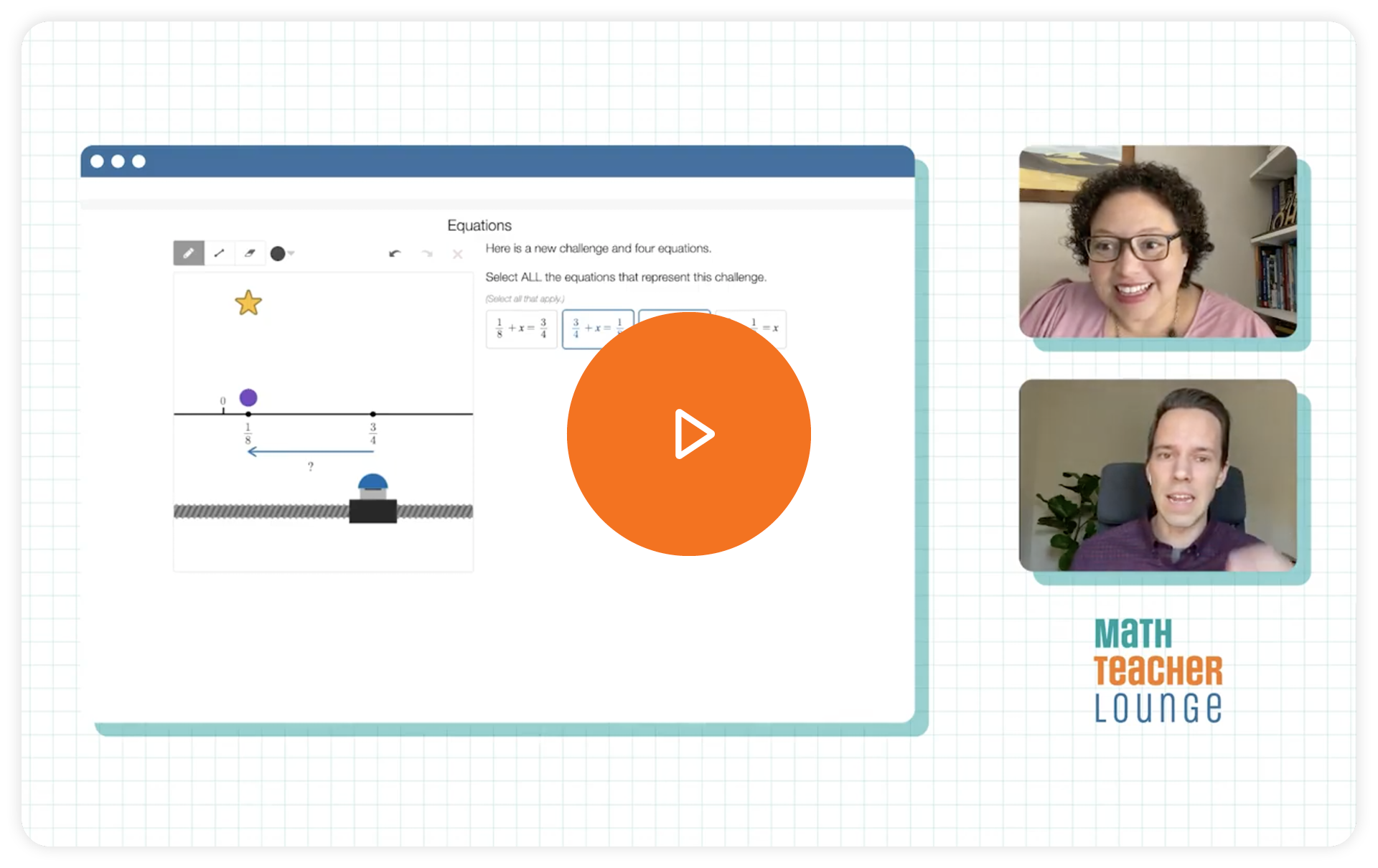
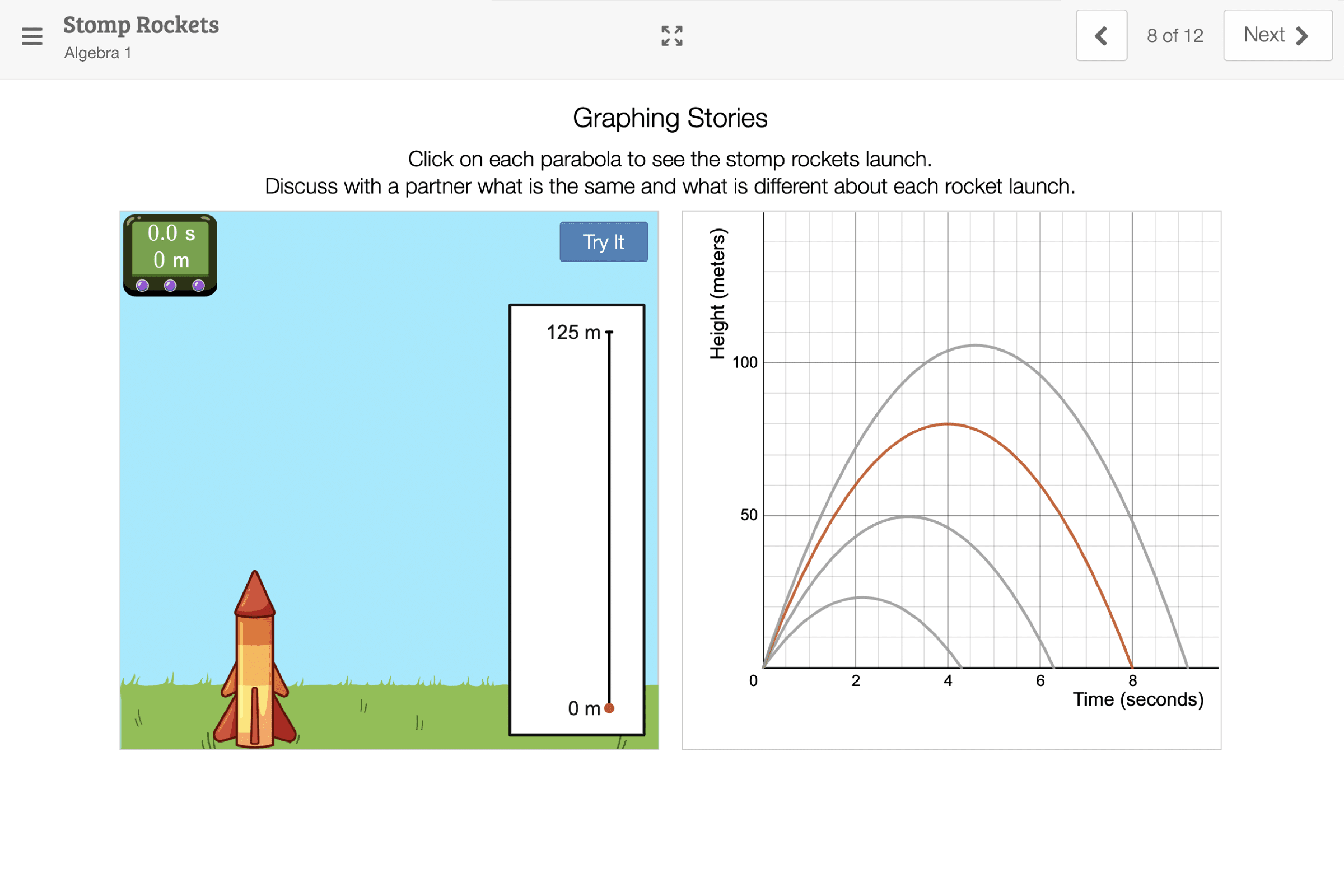
USBE Data Analysis for K-3 Reading Assessment Program
Introduction
mCLASS Assessment: Acadience™ Reading
How it works: Quickly identify the needs of each student and inform next steps with instant analysis, reports, and instructional planning tools included in the only licensed mobile version of the research-based Acadience Reading assessment.
- Use short, 1-minute fluency measures for foundational reading skills.
- Replace manual calculations with instant results and recommended activities.
- Compare student progress with predictive, research-based benchmark goals.
- Track progress and target instruction to individual student needs.
- Support decision-making at every level using aggregate reports.
- Translate class- and student-level reports into individualized instruction using the Now What?Tools.
- Get a more complete view of early literacy skills with the new mCLASS:Early Literacy Measures (ELM).
Enrollment for mClass
Please review the Utah Enrollment for mCLASS document for important information about the rostering process for LEAs in Utah.
Benchmark Windows
The USBE has required that each Acadience Reading testing benchmark window occur within the below dates:
BOY — the first benchmark before October 14
MOY — the second benchmark between December 1 and February 5
EOY — the third benchmark between the middle of April and June 15
Benchmark windows for LEAs are set to the state benchmark window dates in mCLASS. Each LEA is to have 2-4 week benchmark period that is within the state benchmark window dates and LEA leaders are to share those dates with staff. The benchmark windows in mCLASS are set to the state benchmark window dates; not the LEA benchmark window dates and this can not be changed in mCLASS. If a student moves into your LEA and your benchmark window is closed, but the state benchmark period is still open, the student must be benchmarked. Should your LEA need an extension of a benchmark window beyond the close of the state benchmark windows, that must be approved by the USBE Assessment Department. Once the benchmark window closes, do not give the benchmark to a student, instead, educators can progress monitor the student on the measures they would have received a benchmark in order to get the students current instructional levels.
If you have questions regarding your current benchmark window dates, feel free to reach out to Amplify Customer Services at help@amplify.com.
Acadience Reading Benchmark Invalidations
Before you invalidate a benchmark probe, review the USBE’s list of acceptable reasons for invalidating on the Frequently Asked Questions: Acadience Reading Invalidations document. If a district/charter has a significant percentage of invalidations, contact and further action will be deployed. If you believe an invalidation is required, please contact your District/Charter Literacy Director. If they need support, they can contact Sara Wiebke, sara.wiebke@schools.utah.gov, to request an invalidation.
Progress Monitoring
The impact of progress monitoring
Progress monitoring is the most powerful tool we offer with regards to student achievement.
“Scores for Daze increase more slowly than they do for other Acadience Reading measures, so more frequent monitoring may not be as informative. For students who need to be monitored on Daze, we recommend monitoring once per month.”
Progress Monitoring with Acadience Reading
© Acadience Learning
October 2012
The Acadience Reading authors recommend progress monitoring students in the Well Below Benchmark category once every 7-10 days (and once every 10-12 days for students in the Below Benchmark category).
Progress monitoring is the practice of testing students briefly but frequently on the skill areas in which they are receiving instruction, to ensure that they are making adequate progress. When students are identified as at risk for reading difficulties, they can receive progress monitoring testing more frequently to ensure that the instruction they are receiving is helping them make progress. (Acadience Learning/October 2012, Progress Monitoring Guide)
The purposes of progress monitoring are:
- to provide ongoing feedback about the effectiveness of instruction,
- to determine students’ progress toward important and meaningful goals, and
- to make timely decisions about changes to instruction so that students will meet those goals.
How to progress monitor?
- Select students for progress monitoring
- Select Acadience Reading materials for progress monitoring
- Set progress monitoring goals
- Determine the frequency of progress monitoring
- Conduct progress monitoring assessment
- Access data through class and student reports
- Evaluate progress and modify instruction.
The key to progress monitoring: Instruction should link to progress monitoring and progress monitoring should link to instruction. They should run parallel and merge as one to confirm student growth in reading.
Check your progress monitoring fidelity report in mCLASS to ensure you are on track with these students. For more information regarding progress monitoring guidelines, visit the official progress monitoring guidelines.
Support Team
Amplify Customer Services
(800) 823-1969
Monday to Friday, 5 a.m. to 5 p.m. MT
help@amplify.com
Educational Support Team
Pedagogical Questions
(800) 823-1969
Monday to Friday, 5 a.m. to 5 p.m. MT
edsupport@amplify.com
For more information, please contact:
Sarah McCarty
Associate Director, Educational Partnership
(812) 593-5776
smccarty@amplify.com
Donna Bright
Educational Partnership Manager
(303) 960-3772
dbright@amplify.com
Robert McCarty
Regional Director of Educational Partnership
(435) 655-1731
rmccarty@amplify.com
Cydnee Carter
Assessment Development Coordinator
(801) 538-7654
cydnee.carter@schools.utah.gov
Liz Williams
Elementary ELA Assessment Specialist
(801) 538-7542
Liz.williams@schools.utah.gov
Sara Wiebke
Literacy Coordinator
(801) 538-7935
sara.wiebke@schools.utah.gov
Krista Hotelling
K-3 Literacy Specialist
(801) 538-7794
krista.hotelling@schools.utah.gov
Christine Elegante
K-3 Literacy Specialist
(801) 538-7551
christine.elegante@schools.utah.gov
Julie Clark
K-3 Literacy Specialist
801-499-2515
julie.clark@schools.utah.gov
Melissa Preziosi
Assessment Data Specialist
(801) 538-7949
melissa.preziosi@schools.utah.gov
Resources
Helpful tips and guides
- Implementation Roadmap Every school system has different objectives and needs, and this document is designed to help you define how the mCLASS system can best support you in achieving your goals.
- Checklist Use this checklist to ensure your staff is trained and your programmatic expectations are clearly communicated to all stakeholders. Completing each of these steps during the correlated benchmark window will help you realize the full value of your mCLASS assessment program.
- mCLASS: Online Help
- Acadience Reading Assessment Manual (Note: You will need to register as a user to get access to the materials; both registration and materials are available at no cost.)
- Acadience Reading Benchmark Goals and Composite Score
- Grouping Worksheets for Acadience Reading
- Acadience Reading Key Skills This document correlates the Acadience Reading measures to Basic Early Literacy Skills.
- The Big Ideas in Early Reading This document is a reference of the five Big Ideas in Early Reading.
- Acadience Reading Reminders A list of reminders the teacher can give to students while assessing Acadience Reading.
- USBE Literacy Framework
- Utah School Report Card: Early Literacy
- Utah State Board of Education Reading on Grade Level Targets for Acadience Reading K-6
- Five leadership practices that drive success in K-2 literacy
mCLASS:Acadience Reading tutorials
- mCLASS:Acadience Reading Next Scoring Practice
- mCLASS Now What? Tools Tutorial
- Pathways of Progress: Purpose
- ?Pathways of Progress: Setting Meaningful Goals
- Pathways of Progress: Highly Skilled Learners Criteria
- ?Goal Setting in mCLASS
- mCLASS How to calculate student pathways video
- Calculating Pathways from DYD Presentation
Technical resources
Amplify Enrollment This guide walks you through the necessary steps to complete enrollment using the manual enrollment tools on Amplify Home. It shows you how to manage staff, student, and class assignment information, and maintain the accuracy of your staff, student, and class assignments.
Devices & Requirements Ensure mCLASS is compatible with your devices and systems for optimal performance and support.
Remote Assessing
Videos:
Remote Assessment Guidance from the Acadience Team:
mCLASS®: Acadience® Reading (formerly known as DIBELS Next)
Key Points:
Before you assess:
1. Determine how you will show student materials and score in mCLASS at the same time.
| Description | |
|
Description Recommended set up |
|
| Modified set up |
Note: mCLASS app is optimized for touchscreen; scoring with a mouse may need more practice. |
2. Familiarize yourself with the digital copies of student materials.
3. Schedule virtual meetings with students. To communicate with English-speaking caregivers, consider sending this email or video. To communicate with Spanish-speaking caregivers, consider sending this email or video.
4. Determine how you will handle scenarios where there’s a lag:
| Description | |
| Record the meeting |
|
| Use a phone |
|
While you assess:
1. Take the opportunity to connect individually with your students as they experience so much change. Don’t make the session solely about testing, and remind caregivers and students that the assessment is a way to see how you can best tailor instruction.
2. Make student materials visible to your student.
For Maze, choose the model that works best for you:
Enter results into the mCLASS web reports
- Students complete online Maze during a video conference
- Put a link to the student assessment site (mclass.amplify.com/student) and the student’s credentials into the chat box (learn how to generate student credentials in this video)
- Ask your student to complete Maze.
- Students complete online Maze outside of a video conference (caregiver support is needed with log-in)
- Students complete Maze on paper
- Locate the benchmark Maze Acadience Learning’s site.
- Print a copy of the form you need (e.g. BOY) for each student in your class.
- Send the form home in a sealed envelope with students, mail the form to caregivers, or have caregivers get forms via school-based pick-up. Provide instructions not to open the envelope until the student is ready to take the assessment.
- Provide parents with instructions on how to proctor the assessment for their child. They need to:
- Give the form to their child
- Sit with their child and read the instructions and practice items
- Tell their child to stop when 3 minutes has elapsed
- Send screenshots of their child’s work via email or text, or return the completed form to the school in a sealed envelope provided by the school.
| Guidance | |
| Acadience:Reading |
Use the share screen feature to display student materials on your screen. Optional next step for measures that have student materials: Zoom users: grant your student control of your screen so you can see their cursor as they read:
Note: For Mac OSX, you will need to give Zoom access in the Accessibility tab in the Privacy and Security preferences of your Mac. For more information on giving Zoom access in Security and Privacy, click here. |
3. Score in mCLASS.
| Benchmark | Progress monitoring | |
| Acadience Reading (formerly known as DIBELS Next) | Available for free download on the Acadience Learning website | |
Amplify Science-arch
Amplify CKLA Community Review Site
Welcome to the Amplify CKLA community review site for Idaho Falls School District. This site is designed to help you learn about Amplify CKLA—a core English Language Arts curriculum for Grades K–5.
Your district leaders want to hear from you! Please share your thoughts by completing this district survey.
What is Amplify CKLA?
Amplify Core Knowledge Language Arts (CKLA) is a core English language arts program for Grades K-5 that combines phonics with rich texts designed to build content knowledge—so that students learn to read and read to learn at the same time. It is also a blended program, which means your student will be interacting with both print and digital materials.
- In Grades K–2, students complete one full lesson each day that builds foundational reading skills, as well as one full lesson that builds background knowledge.
- In Grades 3–5, foundational reading skills and background knowledge are taught together through one integrated lesson each day.
Looking for 6th grade material? Click here.
There’s no better way to understand the power of Amplify CKLA than seeing it in action. Watch Ms. Lehman’s second-graders in the video below as they learn how to decode and spell words with the long /ā/ sound.
What do students learn?
Amplify CKLA is an evidence-based program built on research about how students learn to read. This collection of research is often referred to as the Science of Reading or The Simple View of Reading. It tells us that:
- Students learn to read best when they are taught foundational reading skills (like phonics) and comprehension skills (like vocabulary and background knowledge) at the same time. That’s why Amplify includes a combination of skills and concepts in every unit.
- The more students know about a particular topic, the better they are able to comprehend what they read. That’s why Amplify CKLA incorporates rich stories, texts, and articles about a variety of topics throughout the program.
Because students learn so much with Amplify CKLA, it can be hard to review it all at once. To make it easier for you to review the program, we’ve provided links to a variety of resources below, including unit overviews and text lists by grade.
Important note:
Amplify believes in empowering teachers to make the best instructional decisions for their students. For that reason, we include a variety of optional materials for teachers to use at their own discretion. For example: Trade Books are an optional tool that teachers can choose to use to extend a lesson. These books do not come with the program and only serve as a suggestion to assist teachers in finding additional material that ties to the unit topic.
Print materials
Student Readers
These readers are uniquely designed to provide intensive practice while reading simple but authentic stories. All readers are also available as ebooks and audiobooks on the teacher resource site.
In grades K-2, these readers are chapter books that allow students to practice just-learned sound-spellings within an authentic reading experience that incorporates compelling plots and interesting characters.
In grades 3-5, readers develop close reading and other literacy skills through a selection of diverse, content-rich literary and informational texts.
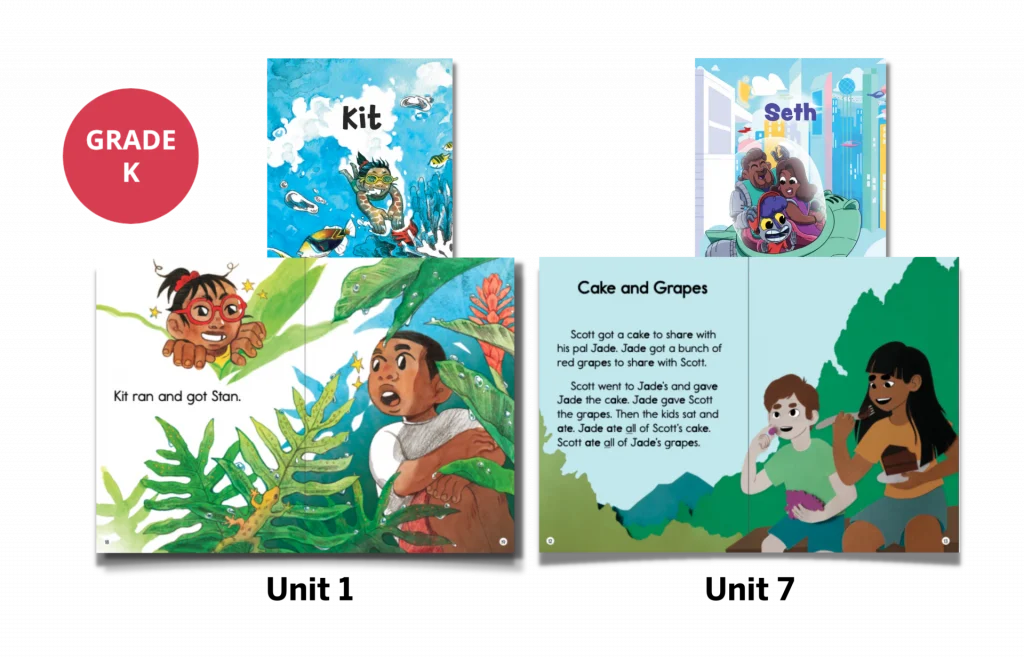
Student Activity Books
Part of the daily lessons, these activity pages ask students to respond to the text they’ve read and apply skills and knowledge. They also include assessments that track students’ skills development, to which teachers have access.
Digital materials
We are excited to announce that students will be able to access multimedia resources and engage in a new digital experience on the CKLA Hub. Unlike ever before, students can access digital resources independently from anywhere, taking full advantage of the instructional multimedia experiences that Amplify CKLA has to offer. Students can access the Hub at home, in the classroom, and on the go, making it ideal for remote learning. It’s compatible with laptops, Chromebooks, tablets, and desktops—we’ve also optimized it for mobile devices.
Knowledge Builder videos for grades K–2
Each Knowledge Domain starts with a Knowledge Builder video: a short, fun, animated story that enriches the lesson and motivates students with new characters, places, and concepts.
Recorded daily read-alouds for grades K–2
Teachers and students will have access to video recordings of all K–2 Knowledge Read-Alouds with pictures from the Flip Books.
Sound Library for grades K-2
The Sound Library uses audio sounds, catchy songs, and animated articulation videos to help students learn and master sounds.

Foundational Skills Boost for grades 1–3
Designed for grades 1–3, these video-based, self-guided lessons target critical foundational skills from the previous year’s instruction in order to fill in any gaps. They offer approximately nine weeks of instruction organized as daily lessons, with additional teacher-led small-group activities and family resources.
Vocab App for grades 3-5
The Vocabulary App is designed for independent practice with vocabulary. Students can use the Vocabulary App for game-like activities that challenge them.
Quests for grades 3–5
Each of the grade levels in 3–5 contains a Core Quest. In these special units, all the normal rules of the classroom change, and students engage with language in surprising new ways. For example, in grade 5, they learn to love the dense Shakespearian language of A Midsummer Night’s Dream through imagery, close reading, and performance.
Support your child at home
Read and talk at home
- If possible, read with your child daily; even 15 minutes of reading together each day can make a huge impact.
- You can read sections of the text aloud together. If your child struggles, you might try reading the text to them with expression, and then have them read it aloud back to you.
- For additional practice, watch the recorded read-alouds with your K-2 student or have your grade 3-5 student use the Vocabulary App.
- Find moments to discuss what they are reading and discovering. Examples of questions you could ask: What stood out to you from what you read today? Were any sentences or words confusing? What was most surprising? What do you think the writer was trying to communicate? Do you agree with the writer’s ideas or descriptions? What connections can you make between what you are reading and your own life or other issues?
- Listen to your child read their written responses or have them share with a friend over video chat.
- We recommend reviewing this Protecting Kids Online article by the Federal Trade Commission addressing digital safety.
Skills practice at home
We’ve developed a set of resources for families to use with their students that includes instructions and materials to teach and practice grade-level phonics at home. Resources include sound videos, Readers, and a how-to video with editable instructions that family members can customize to meet individual student needs.

Program access
Before accessing the program, watch the below video to learn even more about Amplify CKLA! Then scroll down and follow the login instructions provided.
Take a closer look at the program with the Idaho Falls Community demo account! Follow these simple instructions to access our program digitally.
- Click the CKLA Teacher Resource Site button.
- Select Log in with Amplify.
- Enter this username: t1.ifckla@demo.tryamplify.net
- Enter this password: Amplify1-ifckla
- Select the desired grade level.
Where to go for help
Whether you have questions about your technology or want to know more about the program, Amplify’s Support Team is here to help!
Contact Support via telephone at (833) 97-Care-8 (833-972-2738) or caregiver@amplify.com.
Our support hours are Monday – Friday, 7 am – 9 PM ET, and Sunday, 10 – 6 ET.
Puyallup families, welcome to Amplify CKLA!
Welcome to the Amplify CKLA Caregiver Hub for Puyallup School District. This site is designed to help you learn about Amplify CKLA—a core English Language Arts curriculum.
We want to hear from you! Please share your thoughts by completing this district survey.
What is Amplify CKLA?
Amplify Core Knowledge Language Arts (CKLA) is a language arts program for Grades PreK-5 that combines a multi-sensory approach to phonics with rich texts carefully sequenced to build content knowledge—so that students learn to read and read to learn at the same time.
Every day in Grades PreK–2, students complete one full lesson that builds foundational reading skills, as well as one full lesson that builds background knowledge. In Grades 3–5, students start to master the skills of reading, further opening up their worlds.
CKLA in Action
There’s no better way to understand the power of Amplify CKLA than seeing it in action. Watch Ms. Lehman’s second graders in the video below as they learn how to decode and spell words with the long /ā/ sound.
Unit Overviews
Below are quick overviews of the units your student will be working through in their grade throughout the year. Next to each unit are downloadable guides which provide a more in-depth look at the content covered and how you can help your student advance their understanding of the topics.
Materials overview
Amplify CKLA is a blended program, which means your student will be interacting with both print and digital materials.
Print materials
Student Readers
These readers are uniquely designed to provide intensive practice while reading simple but authentic stories. All readers are also available as ebooks and audiobooks on the teacher resource site, which caregivers can now access.
In grades K-2, these readers are chapter books that allow students to practice just-learned sound-spellings within an authentic reading experience that incorporates compelling plots and interesting characters.
In grades 3-5, readers develop close reading and other literacy skills through a selection of diverse, content-rich literary and informational texts.
Student Activity Books
Part of the daily lessons, these activity pages ask students to respond to the text they’ve read and apply skills and knowledge. They also include assessments that track students’ skills development, to which teachers have access.
Digital materials
CKLA Hub for grades K–5
We are excited to announce that students will be able to access multimedia resources and engage in a new digital experience on the CKLA Hub. Unlike ever before, students can access digital resources independently from anywhere, taking full advantage of the instructional multimedia experiences that Amplify CKLA has to offer. Students can access the Hub at home, in the classroom, and on the go, making it ideal for remote learning. It’s compatible with laptops, Chromebooks, tablets, and desktops—we’ve also optimized it for mobile devices.
Knowledge Builder videos for grades K–2
Each Knowledge Domain starts with a Knowledge Builder video: a short, fun, animated story that enriches the lesson and motivates students with new characters, places, and concepts.
Recorded daily read-alouds for grades K–2
Teachers and students will have access to video recordings of all K–2 Knowledge Read-Alouds with pictures from the Flip Books.
Sound Library for grades K-2
The Sound Library uses audio sounds, catchy songs, and animated articulation videos to help students learn and master sounds.
Foundational Skills Boost for grades 1–3
Designed for grades 1–3, these video-based, self-guided lessons target critical foundational skills from the previous year’s instruction in order to fill in any gaps. They offer approximately nine weeks of instruction organized as daily lessons, with additional teacher-led small-group activities and family resources.
Vocab App for grades 3-5
The Vocabulary App is designed for independent practice with vocabulary. Students can use the Vocabulary App for game-like activities that challenge them.
Quests for grades 3–5
Each of the grade levels in 3–5 contains a Core Quest. In these special units, all the normal rules of the classroom change, and students engage with language in surprising new ways. For example, in grade 5, they learn to love the dense Shakespearian language of A Midsummer Night’s Dream through imagery, close reading, and performance.
Support your child at home
Read and talk at home
- If possible, read with your child daily; even 15 minutes of reading together each day can make a huge impact.
- You can read sections of the text aloud together. If your child struggles, you might try reading the text to them with expression, and then have them read it aloud back to you.
- For additional practice, watch the recorded read-alouds with your K-2 student or have your grade 3-5 student use the Vocabulary App.
- Find moments to discuss what they are reading and discovering. Examples of questions you could ask: What stood out to you from what you read today? Were any sentences or words confusing? What was most surprising? What do you think the writer was trying to communicate? Do you agree with the writer’s ideas or descriptions? What connections can you make between what you are reading and your own life or other issues?
- Listen to your child read their written responses or have them share with a friend over video chat.
- We recommend reviewing this Protecting Kids Online article by the Federal Trade Commission addressing digital safety.
Skills practice at home
We’ve developed a set of resources for caregivers to use with their students that includes instructions and materials to teach and practice grade-level phonics at home. Resources include sound videos, Readers, and a how-to video with editable instructions that caregivers can customize to meet individual student needs.
Where to go for help
Whether you have questions about your technology or want to know more about the program, Amplify’s Support Team is here to help!
Contact Support via telephone at (833) 97-Care-8 (833-972-2738) or caregiver@amplify.com.
Our support hours are Monday – Friday, 7 am – 9 PM ET, and Sunday, 10 – 6 ET.
Professional learning materials
Find Amplify Science PD recordings from school year 24-25 sessions for teachers and leaders below. Learn more about Amplify Science through short videos found in the PD Library.
Quick links:
- Click here to access all archived professional learning resources

Professional learning recordings and resources 2025-26
Access the 2025-26 and 2024-25 session recordings below.
Looking for a past resource? Click here to access all archived professional learning resources.
Professional development sessions 2024-25
- GK Supporting all learners with complex texts (AM session)
- GK Writing in science (PM session)
- G1 Supporting all learners with complex texts (AM session)
- G1 Writing in science (PM session)
- G2 Supporting all learners with complex texts (AM session)
- G2 Writing in science (PM session)
- G3 Supporting all learners with complex texts (coming soon)
- G3 Writing in science (coming soon)
- G4 Supporting all learners with complex texts (AM session)
- G4 Writing in science (PM session)
- G5 Supporting all learners with complex texts (AM session)
- G5 Writing in science (PM session)
- G6 Amplify Science: Enhancing Planning for teachers (AM session)
- G6 Amplify Science: Enhancing Practice for teachers (PM session coming soon)
- G7 Amplify Science: Enhancing Planning for teachers (AM session)
- G7 Amplify Science: Enhancing Practice for teachers (PM session)
- G8 Amplify Science: Enhancing Planning for teachers (AM session)
- G8 Amplify Science: Enhancing Practice for teachers (PM session)
- K-1 AS Program Overview for teachers
- K-1 AS Enhancing Planning
- K-1 AS Enhancing Practice
- 2-3 AS Program Overview for teachers
- 2-3 AS Enhancing Planning
- 2-3 AS Enhancing Practice
- 4-5 AS Program Overview for teachers
- 4-5 AS Enhancing Planning
- 4-5 AS Enhancing Practice
- Grade 6 Amplify Science Program Overview for Teachers
- Grade 7 Amplify Science Program Overview for Teachers
- Grade 8 Amplify Science Program Overview for Teachers
- 6-8 Amplify Science: Supporting Multilingual Learners
- K-5 AS Program Overview for Leaders
Northshore families, welcome to Amplify CKLA!
Welcome to the Amplify CKLA Caregiver hub for Northshore School District. We are here to support you and your child with all things Amplify!
CKLA in Action
There’s no better way to understand the power of Amplify CKLA than seeing it in action. Watch Ms. Lehman’s second graders in the video below as they learn how to decode and spell words with the long /ā/ sound.
What is Amplify CKLA?
Amplify Core Knowledge Language Arts (CKLA) is a language arts program for Grades PreK-5 that combines a multi-sensory approach to phonics with rich texts carefully sequenced to build content knowledge—so that students learn to read and read to learn at the same time.
Every day in Grades PreK–2, students complete one full lesson that builds foundational reading skills, as well as one full lesson that builds background knowledge. In Grades 3–5, students start to master the skills of reading, further opening up their worlds.
Equitable Spanish instruction
Our equivalent Spanish language arts program, Amplify Caminos, ensures our native Spanish-speaking students are equally inspired to become confident readers, writers, and thinkers.
Like Amplify CKLA, Amplify Caminos is designed to spark curiosity through content-rich instruction. Amplify Caminos features complex interactive Read-Alouds and authentic Spanish literature to develop reading and writing skills and build bridges across Spanish and English.
Most importantly, Amplify Caminos is more than just a translation. It includes transadaptations and authentic texts written by Latin American and Spanish authors across a diversity of topics and genres.

Unit Overviews
Below are quick overviews of the units your student will be working through in their grade throughout the year. Next to each unit are downloadable guides which provide a more in-depth look at the content covered and how you can help your student advance their understanding of the topics.
Materials overview
Amplify CKLA is a blended program, which means your student will be interacting with both print and digital materials.
Print materials
Student Readers
These readers are uniquely designed to provide intensive practice while reading simple but authentic stories. All readers are also available as ebooks and audiobooks on the teacher resource site, which caregivers can now access.
In grades K-2, these readers are chapter books that allow students to practice just-learned sound-spellings within an authentic reading experience that incorporates compelling plots and interesting characters.
In grades 3-5, readers develop close reading and other literacy skills through a selection of diverse, content-rich literary and informational texts.
Student Activity Books
Part of the daily lessons, these activity pages ask students to respond to the text they’ve read and apply skills and knowledge. They also include assessments that track students’ skills development, to which teachers have access.
Digital materials
CKLA Hub for grades K–5
We are excited to announce that students will be able to access multimedia resources and engage in a new digital experience on the CKLA Hub. Unlike ever before, students can access digital resources independently from anywhere, taking full advantage of the instructional multimedia experiences that Amplify CKLA has to offer. Students can access the Hub at home, in the classroom, and on the go, making it ideal for remote learning. It’s compatible with laptops, Chromebooks, tablets, and desktops—we’ve also optimized it for mobile devices.
Knowledge Builder videos for grades K–2
Each Knowledge Domain starts with a Knowledge Builder video: a short, fun, animated story that enriches the lesson and motivates students with new characters, places, and concepts.
Recorded daily read-alouds for grades K–2
Teachers and students will have access to video recordings of all K–2 Knowledge Read-Alouds with pictures from the Flip Books.

Sound Library for grades K-2
The Sound Library uses audio sounds, catchy songs, and animated articulation videos to help students learn and master sounds.
Foundational Skills Boost for grades 1–3
Designed for grades 1–3, these video-based, self-guided lessons target critical foundational skills from the previous year’s instruction in order to fill in any gaps. They offer approximately nine weeks of instruction organized as daily lessons, with additional teacher-led small-group activities and family resources.
Vocab App for grades 3-5
The Vocabulary App is designed for independent practice with vocabulary. Students can use the Vocabulary App for game-like activities that challenge them.
Quests for grades 3–5
Each of the grade levels in 3–5 contains a Core Quest. In these special units, all the normal rules of the classroom change, and students engage with language in surprising new ways. For example, in grade 5, they learn to love the dense Shakespearian language of A Midsummer Night’s Dream through imagery, close reading, and performance.
Support your child at home
Read and talk at home
- If possible, read with your child daily; even 15 minutes of reading together each day can make a huge impact.
- You can read sections of the text aloud together. If your child struggles, you might try reading the text to them with expression, and then have them read it aloud back to you.
- For additional practice, watch the recorded read-alouds with your K-2 student or have your grade 3-5 student use the Vocabulary App.
- Find moments to discuss what they are reading and discovering. Examples of questions you could ask: What stood out to you from what you read today? Were any sentences or words confusing? What was most surprising? What do you think the writer was trying to communicate? Do you agree with the writer’s ideas or descriptions? What connections can you make between what you are reading and your own life or other issues?
- Listen to your child read their written responses or have them share with a friend over video chat.
- We recommend reviewing this Protecting Kids Online article by the Federal Trade Commission addressing digital safety.
Skills practice at home
We’ve developed a set of resources for caregivers to use with their students that includes instructions and materials to teach and practice grade-level phonics at home. Resources include sound videos, Readers, and a how-to video with editable instructions that caregivers can customize to meet individual student needs.
Explore the program
Watch the below video to learn even more about Amplify CKLA!
Take a closer look at the program with our demo account! Follow these simple instructions to access our program digitally.
- Click the CKLA Teacher Resource Site button.
- Select Log in with Amplify.
- Enter this username: t1.northshoreckla@demo.tryamplify.net
- Enter this password: Amplify1-northshoreckla
- Select the desired grade level.
Where to go for help
Whether you have questions about your technology or want to know more about the program, Amplify’s Support Team is here to help!
Contact Support via telephone at (833) 97-Care-8 (833-972-2738) or caregiver@amplify.com.
Our support hours are Monday – Friday, 7 am – 9 PM ET, and Sunday, 10 – 6 ET.
Amplify CKLA Review Site for Bonneville Joint School District #93
Welcome to the Amplify CKLA community review site for Bonneville Joint School District #93. This site is designed to help you learn about Amplify CKLA—a core English Language Arts curriculum.
What is Amplify CKLA?
Amplify Core Knowledge Language Arts (CKLA) is a core English language arts program for Grades K-5 that combines phonics with rich texts designed to build content knowledge—so that students learn to read and read to learn at the same time. It is also a blended program, which means your student will be interacting with both print and digital materials.
- In Grades K–2, students complete one full lesson each day that builds foundational reading skills, as well as one full lesson that builds background knowledge.
There’s no better way to understand the power of Amplify CKLA than seeing it in action. Watch Ms. Lehman’s second-graders in the video below as they learn how to decode and spell words with the long /ā/ sound.
What do students learn?
Amplify CKLA is an evidence-based program built on research about how students learn to read. This collection of research is often referred to as the Science of Reading or The Simple View of Reading. It tells us that:
- Students learn to read best when they are taught foundational reading skills (like phonics) and comprehension skills (like vocabulary and background knowledge) at the same time. That’s why Amplify includes a combination of skills and concepts in every unit.
- The more students know about a particular topic, the better they are able to comprehend what they read. That’s why Amplify CKLA incorporates rich stories, texts, and articles about a variety of topics throughout the program.
Because students learn so much with Amplify CKLA, it can be hard to review it all at once. To make it easier for you to review the program, we’ve provided links to a variety of resources below, including unit overviews and text lists by grade.
Print materials
Student Readers
These readers are uniquely designed to provide intensive practice while reading simple but authentic stories. All readers are also available as ebooks and audiobooks on the teacher resource site.
In grades K-2, these readers are chapter books that allow students to practice just-learned sound-spellings within an authentic reading experience that incorporates compelling plots and interesting characters.
Student Activity Books
Part of the daily lessons, these activity pages ask students to respond to the text they’ve read and apply skills and knowledge. They also include assessments that track students’ skills development, to which teachers have access.
Digital materials
We are excited to announce that students will be able to access multimedia resources and engage in a new digital experience on the CKLA Hub. Unlike ever before, students can access digital resources independently from anywhere, taking full advantage of the instructional multimedia experiences that Amplify CKLA has to offer. Students can access the Hub at home, in the classroom, and on the go, making it ideal for remote learning. It’s compatible with laptops, Chromebooks, tablets, and desktops—we’ve also optimized it for mobile devices.
Knowledge Builder videos for grades K–2
Each Knowledge Domain starts with a Knowledge Builder video: a short, fun, animated story that enriches the lesson and motivates students with new characters, places, and concepts.
Recorded daily read-alouds for grades K–2
Teachers and students will have access to video recordings of all K–2 Knowledge Read-Alouds with pictures from the Flip Books.
Sound Library for grades K-2
The Sound Library uses audio sounds, catchy songs, and animated articulation videos to help students learn and master sounds.
Foundational Skills Boost for grades 1–3
Designed for grades 1–3, these video-based, self-guided lessons target critical foundational skills from the previous year’s instruction in order to fill in any gaps. They offer approximately nine weeks of instruction organized as daily lessons, with additional teacher-led small-group activities and family resources.
Support your child at home
Read and talk at home
- If possible, read with your child daily; even 15 minutes of reading together each day can make a huge impact.
- You can read sections of the text aloud together. If your child struggles, you might try reading the text to them with expression, and then have them read it aloud back to you.
- For additional practice, watch the recorded read-alouds with your K-2 student.
- Find moments to discuss what they are reading and discovering. Examples of questions you could ask: What stood out to you from what you read today? Were any sentences or words confusing? What was most surprising? What do you think the writer was trying to communicate? Do you agree with the writer’s ideas or descriptions? What connections can you make between what you are reading and your own life or other issues?
- Listen to your child read their written responses or have them share with a friend over video chat.
- We recommend reviewing this Protecting Kids Online article by the Federal Trade Commission addressing digital safety.
Skills practice at home
We’ve developed a set of resources for families to use with their students that includes instructions and materials to teach and practice grade-level phonics at home. Resources include sound videos, Readers, and a how-to video with editable instructions that family members can customize to meet individual student needs.
Program access
Watch the below video to learn even more about Amplify CKLA digital!
Where to go for help
Whether you have questions about your technology or want to know more about the program, Amplify’s Support Team is here to help!
Contact Support via telephone at (833) 97-Care-8 (833-972-2738) or caregiver@amplify.com.
Our support hours are Monday – Friday, 7 am – 9 PM ET, and Sunday, 10 – 6 ET.
Inspiring the next generation of Louisiana scientists, engineers, and curious citizens
Amplify Science Louisiana blends hands-on investigations, literacy-rich activities, and interactive digital tools to empower students to think, read, write, and argue like real scientists and engineers.
The national edition of Amplify Science for middle school was recently rated all green by EdReports. Read the review on EdReports.


Grounded in research and proven effective
UC Berkeley’s Lawrence Hall of Science, the authors behind Amplify Science Louisiana, developed the Do, Talk, Read, Write, Visualize approach, and gold standard research shows that it works. Our own efficacy research is pretty exciting, too.
DEEP UNDERSTANDING
Do, Talk, Read, Write students outperform their peers.
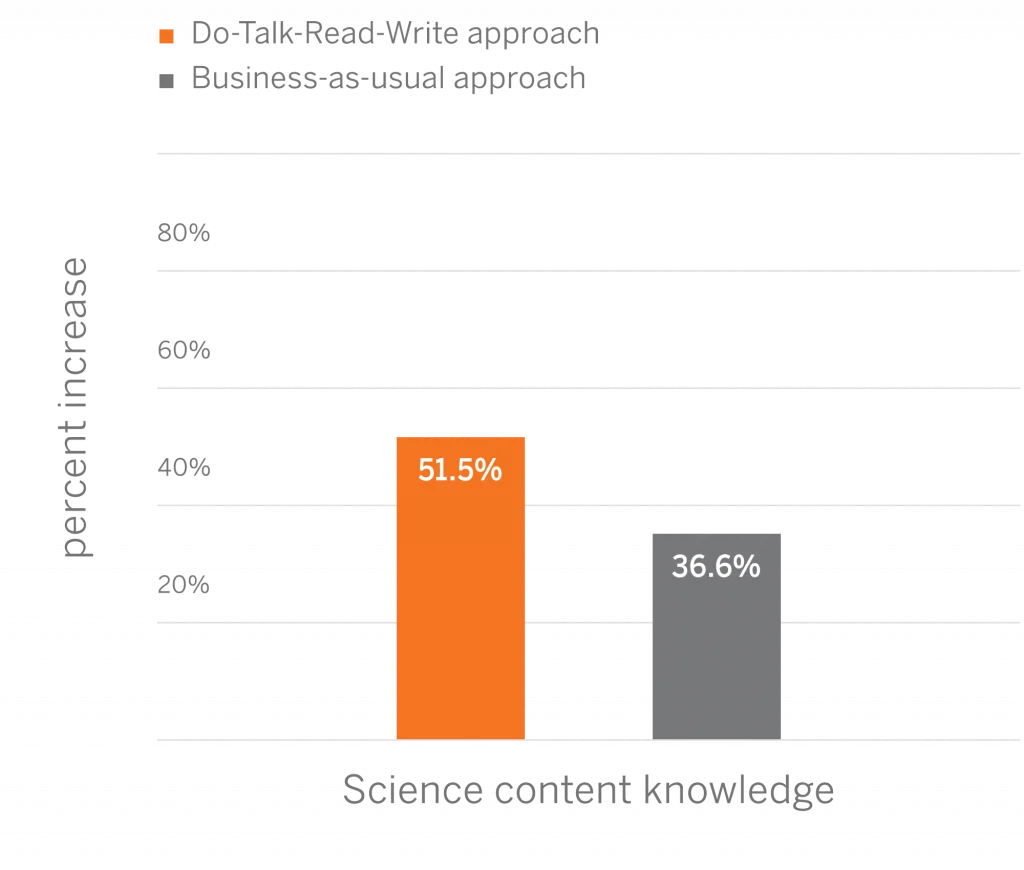
ENGLISH LANGUAGE LEARNERS EXCEL
ELLs who used Do, Talk, Read, Write outperformed their ELL peers.
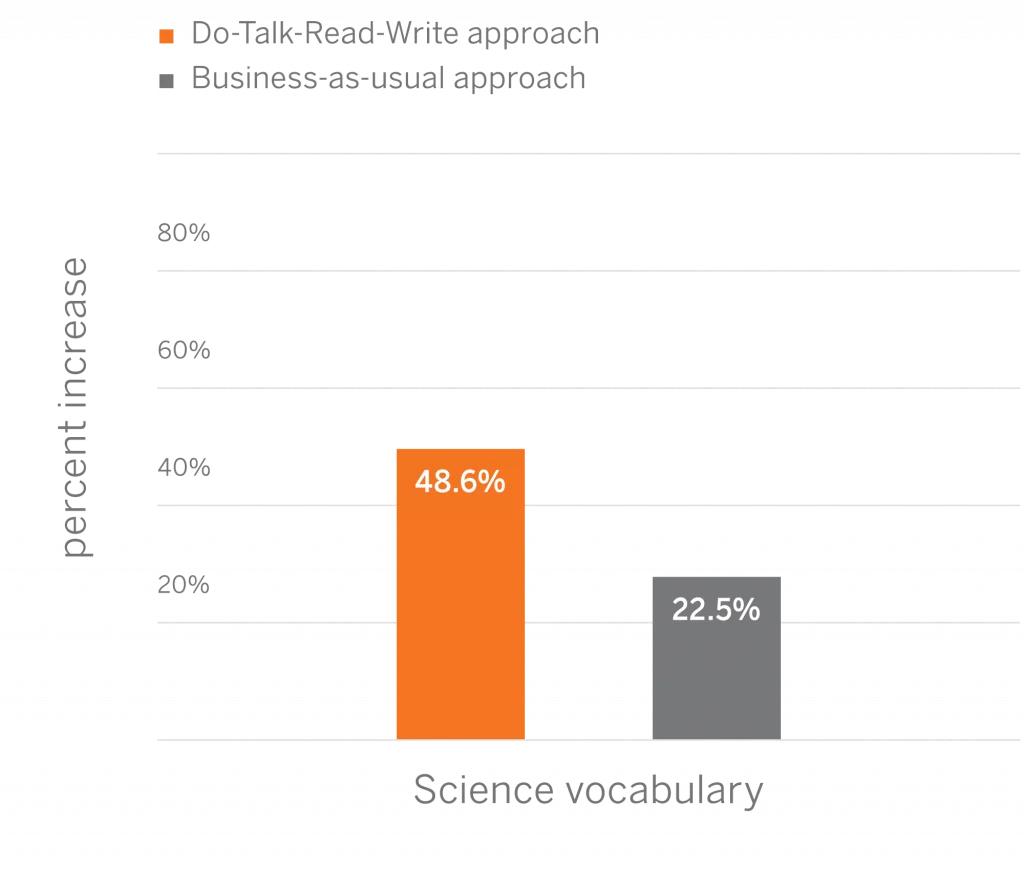
PROGRESS THROUGH THE LEARNING PROFESSION
Progress through the learning progression for all middle school implementations, 2017-18 school year.
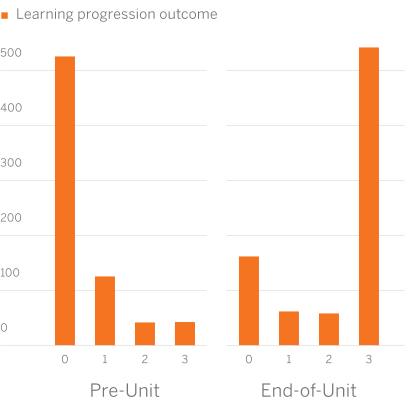
A powerful partnership
Amplify Science Louisiana was developed by the science education experts at UC Berkeley’s Lawrence Hall of Science and the digital learning team at Amplify. As the Hall’s first curriculum designed to address the new science standards, Amplify Science Louisiana reflects state-of-the-art practices in science teaching and learning.
Our approach
Each unit of Amplify Science Louisiana engages students in a relevant, real-world problem where they investigate scientific phenomena, engage in collaboration and discussion, and develop models or explanations in order to arrive at solutions.
Rooted in research
Amplify Science Louisiana is rooted in the Lawrence Hall of Science’s Do, Talk, Read, Write, Visualize model of learning. This research-based approach presents students with multiple modalities through which to explore the curriculum.
A flexible, blended program
Amplify Science Louisiana includes hands-on activities, print materials, and powerful digital tools to support online and offline teaching and learning. Highly adaptable and user-friendly, the program gives schools and individual teachers flexibility based on their technology resources and preferences.
Students take on the roles of scientists and engineers.
In each unit, students take on the role of a scientist or engineer to investigate a real-world problem. These problems provide relevant contexts through which students investigate phenomena.

Phenomena-based teaching and learning
Download the “What’s so phenomenal about phenomena?” e-book
Download a free e-bookWhat’s included
Flexible resources that work seamlessly together
ElementaryMiddle School
Student Books
Age-appropriate Student Books allow students to:
- engage with content-rich texts
- obtain evidence
- develop research and close-reading skills
- construct arguments and explanations
Student Investigation Notebooks
Available for every unit, the Student Investigation Notebooks provide space for students to:
- record data
- reflect on ideas from texts and investigations
- construct explanations and arguments
Simulations and practice tools (grades 2+)
Developed exclusively for the Amplify Science program, these engaging digital tools:
- serve as venues for exploration
- enable data collection
- allow students to explore scientific concepts
- show what might be impossible to see with the naked eye
Teacher’s Guides
Available digitally and in print, the Teacher’s Guides contain all of the information teachers need to facilitate classroom instruction, including:
- detailed lesson plans
- unit and chapter overview documentation
- differentiation strategies
- standards alignments
- in-context professional development
Science articles
The middle school science articles serve as sources for evidence collection and were authored by science and literacy experts at the Lawrence Hall of Science.
Student Investigation Notebooks
Available for every unit, the Student Investigation Notebooks provide space for students to:
- record data
- reflect on ideas from texts and investigations
- construct explanations and arguments
Available with full-color article compilations for middle school units
Digital student experience
Students access the digital simulations and modeling tools, as well as lesson activities and assessments, through the digital student experience. Students can interact with the digital student experience as they:
- conduct hands-on investigations
- engage in active reading and writing activities
- participate in discussions
- record observations
- craft end-of-unit scientific arguments
Teacher’s Guides
Available digitally and in print, the Teacher’s Guides contain all of the information teachers need to facilitate classroom instruction, including:
- detailed lesson plans
- unit and chapter overview documentation
- differentiation strategies
- standards alignments
- in-context professional development
Hands-on materials kits
Hands-on learning is at the heart of Amplify Science Louisiana. Each unit kit contains:
- consumable and non-consumable hands-on materials
- print classroom display materials
- premium print materials for student use (sorting cards, maps, etc.)
Explore more programs.
Our programs are designed to support and complement one another. Learn more about our related programs.



Amplify Science Success Story
The Lawrence Hall of Science
Developed by the science education experts at UC Berkeley’s Lawrence Hall of Science and the digital learning team at Amplify, our program features:
- A phenomena-based approach where students construct a complex understanding of each unit’s anchor phenomenon.
- A blend of cohesive storylines, hands-on investigations, rich discussions, literacy-rich activities, and digital tools.
- Carefully crafted units, chapters, lessons, and activities designed to deliver true three-dimensional learning.
- An instructional design that supports all learners in accessing all standards.
Proven to work
Instructional model
The Amplify Science program is rooted in the proven, research-based pedagogy of Do, Talk, Read, Write, Visualize. Here’s how each element works:
DO
Firsthand investigations are an important part of any science classroom, and Amplify Science has students getting hands-on in every unit—from building models of protein molecules to experimenting with electrical systems.
TALK
Student-to-student discourse and full-class discussions are an integral part of the program. Students are provided with numerous opportunities to engage in meaningful oral scientific argumentation, all while fostering a collaborative classroom environment.
READ
Students read scientific articles, focusing their reading activities on searching for evidence related to their investigation and, importantly, on asking and recording questions as they read through fascinating texts on 21st-century topics.
WRITE
Following real-world practices, students write scientific arguments based on evidence they’ve collected, making clear their reasoning about how a given piece of evidence connects to one of several claims.
VISUALIZE
By manipulating digital simulations and using modeling tools to craft visualizations of their thinking— just as real scientists and engineers do—students take their learning far beyond the confines of what they can physically see in the classroom in an exciting and authentic way.
Program structure
Our cyclical lesson design ensures students receive multiple exposures to concepts through a variety of modalities. As they progress through the lessons within a unit, students build and deepen their understanding, increasing their ability to develop and refine complex explanations of the unit’s phenomenon.
It’s this proven program structure and lesson design that enables Amplify Science to address 100% of the NGSS and support students in mastering the Oregon Science Standards.

Unit types
While every unit delivers three-dimensional learning experiences and engages students in gathering evidence from a rich collection of sources, each unit also emphasizes a particular science and engineering practice.
In grades K–2:
- One unit emphasizes the practice of investigation.
- One unit emphasizes the practice of modeling.
- One unit emphasizes the practice of engineering design.
In grades 3–5, students experience the three unit types above, plus:
- One additional unit that emphasizes the practice of argumentation.
Investigation units focus on the process of strategically developing investigations and gathering data to answer questions. Students are first asked to consider questions about what happens in the natural world and why, and are then involved in designing and conducting investigations that produce data to help answer those questions.
Modeling units provide extra support to students engaging in the practice of modeling. Students use physical models, investigate with computer models, and create their own diagrams to help them visualize what might be happening on the nanoscale.
Engineering design units provide opportunities for students to solve complex problems by applying science principles to the design of functional solutions, and iteratively testing those solutions to determine how well they meet preset criteria.
Argumentation units provide students with regular opportunities to explore and discuss available evidence, time and support to consider how evidence may be leveraged in support of claims, and independence that increases as they mount written arguments in support of their claims.
Unit sequence
Our lessons follow a structure that is grounded in regular routines while still being flexible enough to allow for a variety of learning experiences.
In fact, our multi-modal instruction offers more opportunities for students to construct meaning, and practice and apply concepts, than any other program. What’s more, our modular design means our units can be flexibly arranged to support your instructional goals.
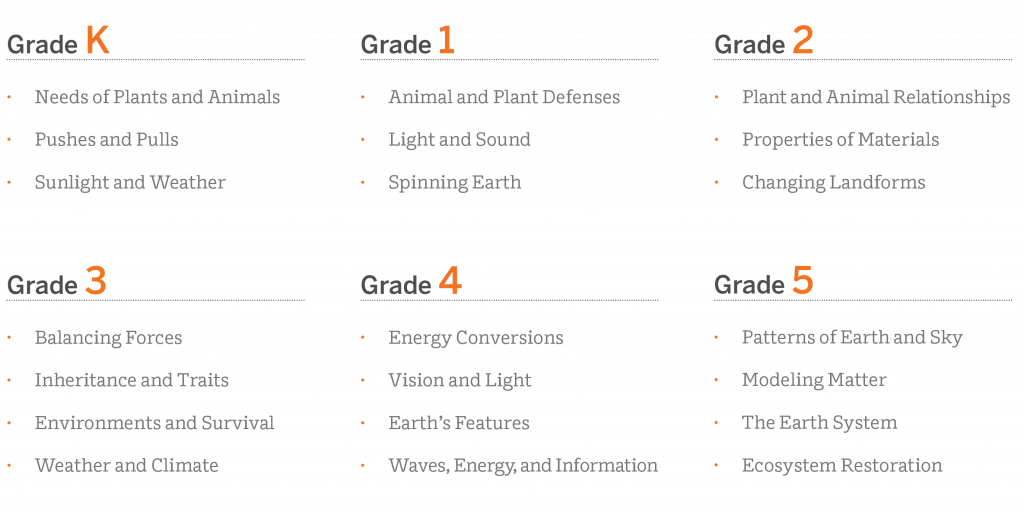
Program components
Available digitally and in print, our unit-specific reference guides are chock-full of helpful resources, including scientific background knowledge, planning information and resources, color-coded 3D Statements, detailed lesson plans, tips for delivering instruction, and differentiation strategies.
Hands-on learning is an essential part of Amplify Science and is integrated into every unit. Students actively participate in science, playing the roles of scientists and engineers as they gather evidence, think critically, solve problems, and develop and defend claims about the world around them. Every unit includes hands-on investigations that are critical to achieving the unit’s learning goals.
More hands-on with Flextensions:
Hands-on Flextensions are additional, optional investigations that are included at logical points in the learning progression and give students an opportunity to dig deeper if time permits. These activities offer teachers flexibility to choose to dedicate more time to hands-on learning. Materials referenced in Hands-on Flextension activities will either be included in the unit kit or are easily sourced. Supporting resources such as student worksheets will be included as downloadable PDF files.
Our kits include enough non-consumable materials to support a class of 36 students and enough consumable items to support 72 students. In other words, each kit can last two years! Plus, our unit-specific kits mean teachers just grab the tub they need for the unit and then put it all back with ease.
Each unit of Amplify Science K–5 includes six unique Student Books written by the Lawrence Hall of Science specifically for the program. These content-rich nonfiction and informational texts provide opportunities for students to search for evidence relevant to their firsthand investigations, see science practices and dispositions modeled, extend their science knowledge, provide real world connections as they master reading-to-learn and close reading skills, and construct evidence-based arguments.
Important note:
Students in grades K–5 are never asked to read alone. Rather, books are read to, with, and by students with ample scaffolding and support provided by the teacher. Big Books are read aloud or together with the class to introduce ideas. Student Books allow for small-group reading and reading in pairs.

Available for every unit, our Student Investigation Notebooks contain instructions for activities and space for students to record data and observations, reflect on ideas from texts and investigations, and construct explanations and arguments.
In grades K–5, one copy of the Student Investigation Notebook is included in each unit’s materials kit for use as a blackline master. Each notebook is also available as a downloadable PDF on the Unit Guide page of the digital Teacher’s Guide.
Amplify Science offers digital experience licenses that make elementary instruction more flexible for students and teachers, as well as providing additional means to engage in remote, hybrid, or in-person learning!
Student-facing digital lessons
With the digital experience, students can engage with digital lesson content in one cohesive experience. It’s the same content from Amplify science in a new, integrated format where students can interact with slides, Sims, modeling tools, videos, books, and more.

Digital student notebook pages
Students can draw, write, record audio, and insert images into their Investigation Notebook pages. Their work is automatically saved and delivered to you in real time. When students edit their work, those edits are immediately reflected on your teacher work review page. You can access student responses by clicking “View Work,” where you can see students’ Investigation Notebook pages from the lesson, updating live.
Assign in Amplify
The digital experience allows flexibility with optional features like scheduling assignments in advance and setting due dates. You can use Scheduling to determine the date and time that the assignment appears in Student Home. You also have the flexibility to schedule when assignments appear and use dates to remove assignments from Student Home.
Assign in LMS
You can also assign lessons via our integrations with Google Classroom and Microsoft Teams, or by copying a lesson link and sharing it with students through the platform of your choice. The assignment link you send will provide students with direct access to the full lesson—slides, videos, digital tools, and worksheet activities—no student platform navigation required!
Teacher platform and presentation
Teacher-facing lesson content—including sample teacher talk, student responses, pedagogical support, and possible student responses—shows on a teacher’s private Teacher Guide tab. Students only see the lesson slides that are being presented.

Explore your print samples
With your Amplify Science print samples, you’ll find unit-specific Teacher’s References Guides, Student Investigation Notebooks, and sets of Student Books for each grade level.
A note about the Teacher’s Reference Guides:
It’s important that you see the full breadth and depth of our instruction. For that reason, we provide a copy of each of our unit-specific Teacher Reference Guides.
Rest assured that teachers do not use these robust reference guides for day-to-day teaching. For that, we have a hands-free TG!
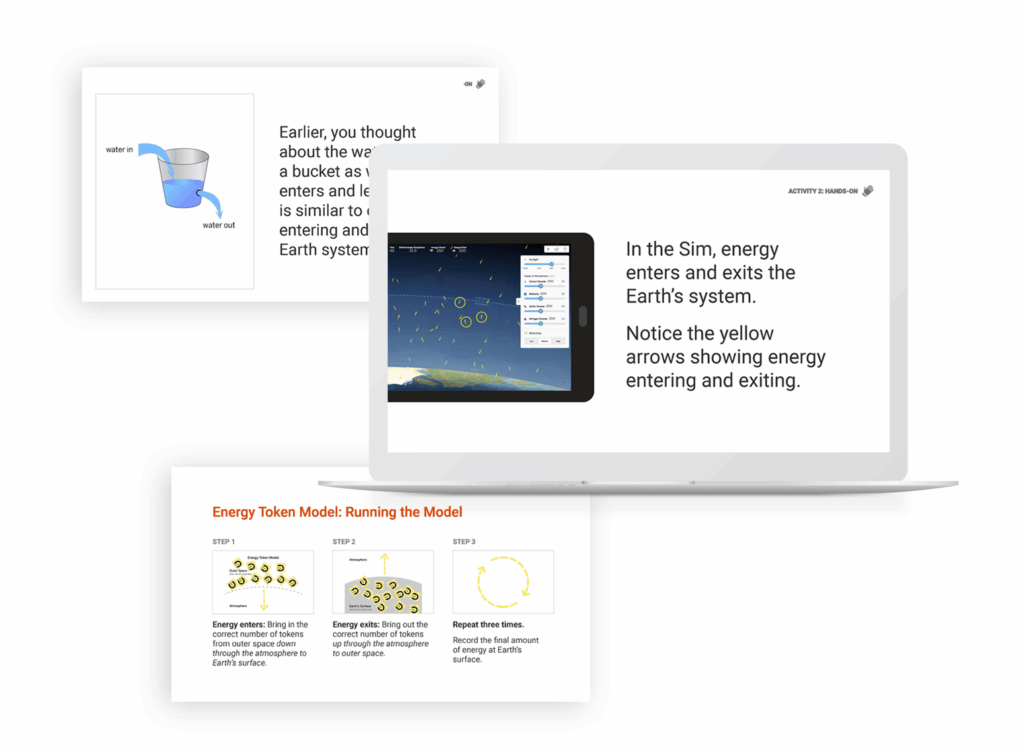
- Teacher Reference Guide: Unlike a typical TG that requires a series of supplemental books to support it, our encyclopedic reference guide is chock-full of everything a teacher needs to fully implement our program and the NGSS.
- Ready-to-Teach Lesson Slides: For daily instruction, teachers need their hands free. That’s why we created ready-to-teach lesson slides for every single lesson. What’s more, they are editable and include suggested teacher talk and point-of-use differentiation and other instructional tips. Click to learn more.
A note about the Materials Kits:
Hands-on learning is at the heart of Amplify Science, and is integrated into every unit. In order to make hands-on learning more manageable for busy teachers, Amplify Science materials are organized into unit-specific kits.
What’s different about Amplify’s unit-specific material kits? They…
- Include more materials — We give teachers enough non-consumable materials to support a class of 36 students and enough consumables to support 72 student uses. In other words, each kit will last two years.
- Are more manageable — Unlike other programs that require large groups of students to share limited sets of materials, our kits include enough to support small groups of 4–5 students.
- Include supportive videos — Each hands-on activity provides clear instructions for the teacher, with more complex activities supported by video demonstrations and illustrations.
Grade-specific lists of all materials included in each kit:
- Grade K: Materials Kit List
- Grade 1: Materials Kit List
- Grade 2: Materials Kit List
- Grade 3: Materials Kit List
- Grade 4: Materials Kit List
- Grade 5: Materials Kit List
Access your digital samples
Explore as a teacher
When you’re ready to explore the teaching experience on your own, follow these instructions to access the Amplify Science digital teacher platform.
- Click the Access Amplify Science Platform button below and bookmark the page.
- Select Log in with Amplify.
- Enter the username: t1.jeffersoncounty@demo.tryamplify.net
- Enter the password: Amplify1-jeffersoncounty
- Click on Science on the left hand side.
- Click on the Program Menu in the top center of the screen and select any grade.
- Select any unit.
To help familiarize yourself with navigating the digital platform, watch the below navigational video.
Explore as a student
When you’re ready to explore the student learning experience on your own, follow these instructions to access the Amplify Science digital student platform.
- Click the Access Amplify Science Platform button below and bookmark the page.
- Select Log in with Amplify.
- Enter the username: s1.jeffersoncounty@demo.tryamplify.net
- Enter the password: Amplify1-jeffersoncounty
- Click the backpack icon on the top right.
- Click Science K-5
- Select any unit.
Resources to support your review
New Mexico Educators: Welcome to Amplify Science K–5!
Amplify Science is an engaging core curriculum designed for three-dimensional, phenomena-based learning that is rated ‘all green’ on EdReports.
With Amplify Science, New Mexico students won’t just passively learn about science concepts. Instead, they will take on the role of scientists and engineers to actively investigate and figure out real-world phenomena. They will do this through a blend of cohesive and compelling storylines, hands-on investigations, collaborative discussions, literacy-rich activities, and interactive digital tools.

Amplify Science Success Story
The Lawrence Hall of Science
Developed by the science education experts at UC Berkeley’s Lawrence Hall of Science and the digital learning team at Amplify, our program features:
- A phenomena-based approach where students construct a complex understanding of each unit’s anchor phenomenon.
- A blend of cohesive storylines, hands-on investigations, rich discussions, literacy-rich activities, and digital tools.
- Carefully crafted units, chapters, lessons, and activities designed to deliver true three-dimensional learning.
- An instructional design that supports all learners in accessing all standards.
Instructional model
The Amplify Science program is rooted in the proven, research-based pedagogy of Do, Talk, Read, Write, Visualize. Here’s how each element works:
Do
First-hand investigations are an important part of any science classroom, and Amplify Science has students getting hands-on in every unit—from building models of protein molecules to experimenting with electrical systems.
Talk
Student-to-student discourse and full-class discussions are an integral part of the program. Students are provided with numerous opportunities to engage in meaningful oral scientific argumentation, all while fostering a collaborative classroom environment.
Read
Students read scientific articles, focusing their reading activities on searching for evidence related to their investigation and, importantly, on asking and recording questions as they read through fascinating texts on 21st-century topics.
Write
Following real-world practices, students write scientific arguments based on evidence they’ve collected, making clear their reasoning about how a given piece of evidence connects to one of several claims.
Visualize
By manipulating digital simulations and using modeling tools to craft visualizations of their thinking— just as real scientists and engineers do—students take their learning far beyond the confines of what they can physically see in the classroom in an exciting and authentic way.
Program structure
Our cyclical lesson design ensures students receive multiple exposures to concepts through a variety of modalities. As they progress through the lessons within a unit, students build and deepen their understanding, increasing their ability to develop and refine complex explanations of the unit’s phenomenon.
It’s this proven program structure and lesson design that enables Amplify Science to address 100% of the NGSS and support students in mastering the New Mexico STEM Ready! Science Standards.
Unit types
While every unit delivers three-dimensional learning experiences and engages students in gathering evidence from a rich collection of sources, each unit also emphasizes a particular science and engineering practice.
In grades K–2:
- One unit emphasizes the practice of investigation.
- One unit emphasizes the practice of modeling.
- One unit emphasizes the practice of engineering design.
In grades 3–5, students experience the three unit types above, plus:
- One additional unit that emphasizes the practice of argumentation.
Investigation units focus on the process of strategically developing investigations and gathering data to answer questions. Students are first asked to consider questions about what happens in the natural world and why, and are then involved in designing and conducting investigations that produce data to help answer those questions.
Modeling units provide extra support to students engaging in the practice of modeling. Students use physical models, investigate with computer models, and create their own diagrams to help them visualize what might be happening on the nanoscale.
Engineering design units provide opportunities for students to solve complex problems by applying science principles to the design of functional solutions, and iteratively testing those solutions to determine how well they meet preset criteria.
Argumentation units provide students with regular opportunities to explore and discuss available evidence, time and support to consider how evidence may be leveraged in support of claims, and independence that increases as they mount written arguments in support of their claims.
Unit sequence
Our lessons follow a structure that is grounded in regular routines while still being flexible enough to allow for a variety of learning experiences.
In fact, our multi-modal instruction offers more opportunities for students to construct meaning, and practice and apply concepts, than any other program. What’s more, our modular design means our units can be flexibly arranged to support your instructional goals.
Program components
Available digitally and in print, our unit-specific reference guides are chock full of helpful resources, including scientific background knowledge, planning information and resources, color-coded 3-D Statements, detailed lesson plans, tips for delivering instruction, and differentiation strategies.
Hands-on learning is an essential part of Amplify Science, and is integrated into every unit. Students actively participate in science, playing the roles of scientists and engineers as they gather evidence, think critically, solve problems, and develop and defend claims about the world around them. Every unit includes hands-on investigations that are critical to achieving the unit’s learning goals.
More hands-on with Flextensions:
Hands-on Flextensions are additional, optional investigations that are included at logical points in the learning progression and give students an opportunity to dig deeper if time permits. These activities offer teachers flexibility to choose to dedicate more time to hands-on learning. Materials referenced in Hands-on Flextension activities will either be included in the unit kit or are easily sourced. Supporting resources such as student worksheets will be included as downloadable PDF files.
Our kits include enough non-consumable materials to support a class of 36 students and enough consumable items to support 72 students. In other words, each kit can last two years! Plus, our unit-specific kits mean teachers just grab the tub they need for the unit and then put it all back with ease.
Each unit of Amplify Science K–5 includes six unique Student Books written by the Lawrence Hall of Science specifically for the program. These content-rich nonfiction and informational texts provide opportunities for students to search for evidence relevant to their firsthand investigations, see science practices and dispositions modeled, extend their science knowledge, provide real world connections as they master reading-to-learn and close reading skills, and construct evidence-based arguments.
Important note:
Students in grades K–5 are never asked to read alone. Rather, books are read to, with, and by students with ample scaffolding and support provided by the teacher. Big Books are read aloud or together with the class to introduce ideas. Student Books allow for small-group reading and reading in pairs.
Available for every unit, our Student Investigation Notebooks contain instructions for activities and space for students to record data and observations, reflect on ideas from texts and investigations, and construct explanations and arguments.
In grades K–5, one copy of the Student Investigation Notebook is included in each unit’s materials kit for use as a blackline master. Each notebook is also available as a downloadable PDF on the Unit Guide page of the digital Teacher’s Guide.
We know equity is a priority for you and it’s also important to us! Click below to view a comprehensive list of Spanish resources available to support English learners and dual-language classrooms in New Mexico. All components are available digitally. Resources also available in print are noted with an asterisk.
Amplify Science offers digital experience licenses that make elementary instruction more flexible for students and teachers, as well as providing additional means to engage in remote, hybrid, or in-person learning!
Student-facing digital lessons
With the digital experience, students can engage with digital lesson content in one cohesive experience. It’s the same content from Amplify science in a new, integrated format where students can interact with slides, Sims, modeling tools, videos, books, and more.
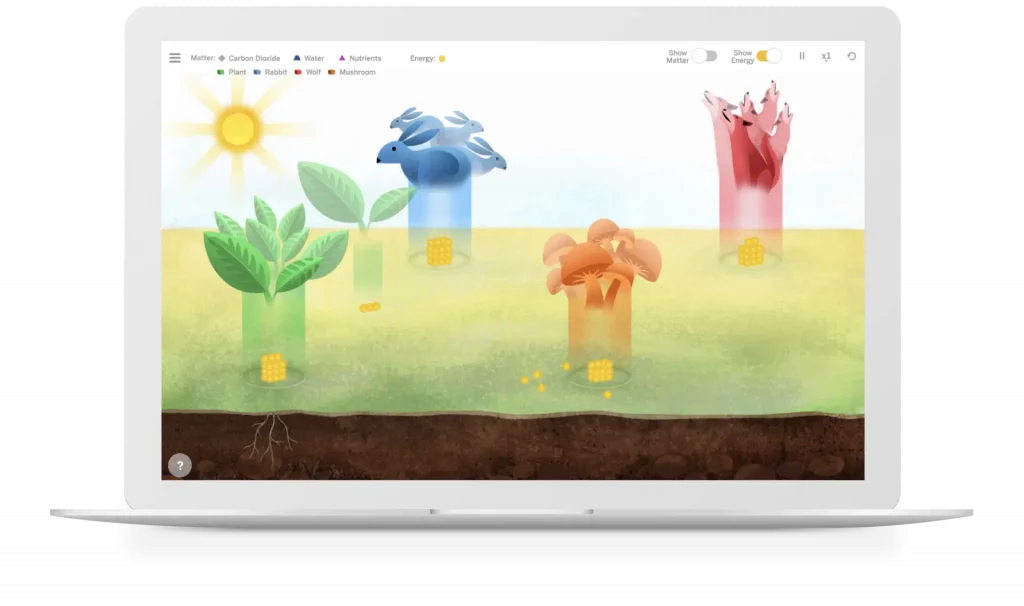
Digital student notebook pages
Students can draw, write, record audio, and insert images into their Investigation Notebook pages. Their work is automatically saved and delivered to you in real time. When students edit their work, those edits are immediately reflected on your teacher work review page. You can access student responses by clicking “View Work,” where you can see students’ Investigation Notebook pages from the lesson, updating live.
Assign in Amplify
The digital experience allows flexibility with optional features like scheduling assignments in advance and setting due dates. Teacher can use Scheduling to determine the date and time that the assignment appears in Student Home. They also have the flexibility to schedule when assignments appear and use dates to remove assignments from Student Home.
Assign in LMS
You can also assign lessons via our integrations with Google Classroom and Microsoft Teams, or by copying a lesson link and sharing it with students through the platform of your choice. The assignment link you send will provide students with direct access to the full lesson—slides, videos, digital tools, and worksheet activities—no student platform navigation required!
Teacher platform and presentation
Teacher-facing lesson content—including sample teacher talk, student responses, pedagogical support, and possible student responses—shows on a teacher’s private Teacher Guide tab. Students only see the lesson slides that are being presented.

Explore your print samples
With your Amplify Science print samples, you’ll find unit-specific Teacher’s References Guides, Student Investigation Notebooks, and sets of Student Books for each grade level.
A note about the Teacher’s Reference Guides:
It’s important that you see the full breadth and depth of our instruction. For that reason, we provide a copy of each of our unit-specific Teacher Reference Guides.
Rest assured that teachers do not use these robust reference guides for day-to-day teaching. For that, we have a hands-free TG!

- Teacher Reference Guide: Unlike a typical Teacher Guide that requires a series of supplemental books to support it, our encyclopedic reference guide is chock-full of everything a teacher needs to fully implement our program and the NGSS.
- Ready-to-Teach Lesson Slides: For daily instruction, teachers need their hands free. That’s why we created ready-to-teach lesson slides for every single lesson. What’s more, they are editable and include suggested teacher talk and point-of-use differentiation and other instructional tips. Click to learn more.
A note about the Materials Kits:
Hands-on learning is at the heart of Amplify Science, and is integrated into every unit. In order to make hands-on learning more manageable for busy teachers, Amplify Science materials are organized into unit-specific kits.
What’s different about Amplify’s unit-specific material kits? They…
- Include more materials — We give teachers enough non-consumable materials to support a class of 36 students and enough consumables to support 72 student uses. In other words, each kit will last two years.
- Are more manageable — Unlike other programs that require large groups of students to share limited sets of materials, our kits include enough to support small groups of 4–5 students.
- Include supportive videos — Each hands-on activity provides clear instructions for the teacher, with more complex activities supported by video demonstrations and illustrations.
Grade-specific lists of all materials included in each kit:
- Grade K: Materials Kit List
- Grade 1: Materials Kit List
- Grade 2: Materials Kit List
- Grade 3: Materials Kit List
- Grade 4: Materials Kit List
- Grade 5: Materials Kit List
Access your digital samples
Explore as a teacher
When you’re ready to explore the teaching experience on your own, follow these instructions to access the Amplify Science digital teacher platform.
- Click the Access Amplify Science Platform button below and bookmark the page.
- Select Log in with Amplify.
- Enter the username: t.nmk-5@demo.tryamplify.net
- Enter the password: AmplifyNumber1
- Click on Science on the left hand side.
- Click on the Grade Menu in the top center of the screen and select any grade.
- Select any unit.
To help familiarize yourself with navigating the digital platform, watch the navigational video below.
Explore as a student
When you’re ready to explore the student learning experience on your own, follow these instructions to access the Amplify Science digital student platform.
- Click the Access Amplify Science Platform button below and bookmark the page.
- Select Log in with Amplify.
- Enter the username: s.nmk-5@demo.tryamplify.net
- Enter the password: AmplifyNumber1
- Click the backpack icon on the top right.
- Click Science K-5
- Select any unit.
Resources to support your review
- Approaches to assessment in grades K–5
- Spanish Supports in Amplify Science
- New Mexico STEM Ready! Science Standards Correlation
- NGSS Alignment to Amplify Science Unit Summaries K-5
- Research behind Amplify Science
- What’s so phenomenal about phenomena? – eBook
- Phenomena in grades K–5
- Program structure for grades K–5
- Student Books in grades K–5
- Literacy-rich science instruction in grades K–5
Welcome to Amplify Science K–5!
Amplify Science is an engaging core curriculum designed for three-dimensional, phenomena-based learning.
With Amplify Science, Detroit students won’t just passively learn about science concepts. Instead, they will take on the role of scientists and engineers to actively investigate and figure out real-world phenomena. They will do this through a blend of cohesive and compelling storylines, hands-on investigations, collaborative discussions, literacy-rich activities, and interactive digital tools.
What is Amplify Science?
The Lawrence Hall of Science
Developed by the science education experts at UC Berkeley’s Lawrence Hall of Science and the digital learning team at Amplify, our program features:
- A phenomena-based approach where students construct a complex understanding of each unit’s anchor phenomenon.
- A blend of cohesive storylines, hands-on investigations, rich discussions, literacy-rich activities, and digital tools.
- Carefully crafted units, chapters, lessons, and activities designed to deliver true three-dimensional learning.
- An instructional design that supports all learners in accessing all standards.
Proven to work
Instructional model
The Amplify Science program is rooted in the proven, research-based pedagogy of Do, Talk, Read, Write, Visualize. Here’s how each element works:
Do
First-hand investigations are an important part of any science classroom, and Amplify Science has students getting hands-on in every unit—from building models of protein molecules to experimenting with electrical systems.
Talk
Student-to-student discourse and full-class discussions are an integral part of the program. Students are provided with numerous opportunities to engage in meaningful oral scientific argumentation, all while fostering a collaborative classroom environment.
Read
Students read scientific articles, focusing their reading activities on searching for evidence related to their investigation and, importantly, on asking and recording questions as they read through fascinating texts on 21st-century topics.
Write
Following real-world practices, students write scientific arguments based on evidence they’ve collected, making clear their reasoning about how a given piece of evidence connects to one of several claims.
Visualize
By manipulating digital simulations and using modeling tools to craft visualizations of their thinking— just as real scientists and engineers
do—students take their learning far beyond the confines of what they can physically see in the classroom in an exciting and authentic way.
Program structure
Our cyclical lesson design ensures students receive multiple exposures to concepts through a variety of modalities. As they progress through the lessons within a unit, students build and deepen their understanding, increasing their ability to develop and refine complex explanations of the unit’s phenomenon.
It’s this proven program structure and lesson design that enables Amplify Science to address 100% of the Next Generation Science Standards (NGSS) and support students in mastering the Pennsylvania Science Standards.
Unit types
While every unit delivers three-dimensional learning experiences and engages students in gathering evidence from a rich collection of sources, each unit also emphasizes a particular science and engineering practice.
In grades K–2:
- One unit emphasizes the practice of investigation.
- One unit emphasizes the practice of modeling.
- One unit emphasizes the practice of engineering design.
In grades 3–5, students experience the three unit types above, plus:
- One additional unit that emphasizes the practice of argumentation.
Investigation units focus on the process of strategically developing investigations and gathering data to answer questions. Students are first asked to consider questions about what happens in the natural world and why, and are then involved in designing and conducting investigations that produce data to help answer those questions.
Modeling units provide extra support to students engaging in the practice of modeling. Students use physical models, investigate with computer models, and create their own diagrams to help them visualize what might be happening on the nanoscale.
Engineering design units provide opportunities for students to solve complex problems by applying science principles to the design of functional solutions, and iteratively testing those solutions to determine how well they meet preset criteria.
Argumentation units provide students with regular opportunities to explore and discuss available evidence, time and support to consider how evidence may be leveraged in support of claims, and independence that increases as they mount written arguments in support of their claims.
Unit sequence
Our lessons follow a structure that is grounded in regular routines while still being flexible enough to allow for a variety of learning experiences.
In fact, our multi-modal instruction offers more opportunities for students to construct meaning, and practice and apply concepts, than any other program. What’s more, our modular design means our units can be flexibly arranged to support your instructional goals.
Program components
Available digitally and in print, our unit-specific reference guides are chock-full of helpful resources, including scientific background knowledge, planning information and resources, color-coded 3D Statements, detailed lesson plans, tips for delivering instruction, and differentiation strategies.
Hands-on learning is an essential part of Amplify Science, and is integrated into every unit. Students actively participate in science, playing the roles of scientists and engineers as they gather evidence, think critically, solve problems, and develop and defend claims about the world around them. Every unit includes hands-on investigations that are critical to achieving the unit’s learning goals.
More hands-on with Flextensions:
Hands-on Flextensions are additional, optional investigations that are included at logical points in the learning progression and give students an opportunity to dig deeper if time permits. These activities offer teachers flexibility to choose to dedicate more time to hands-on learning. Materials referenced in Hands-on Flextension activities will either be included in the unit kit or are easily sourced. Supporting resources such as student worksheets will be included as downloadable PDF files.
Our kits include enough materials to support 200 student uses. In other words, teachers can easily support all five periods and small groups of 4-5 students each. Plus, our unit-specific kits mean teachers just grab the tub they need and then put it all back with ease.
Each unit of Amplify Science K–5 includes six unique Student Books written by the Lawrence Hall of Science specifically for the program. These content-rich nonfiction and informational texts provide opportunities for students to search for evidence relevant to their firsthand investigations, see science practices and dispositions modeled, extend their science knowledge, provide real world connections as they master reading-to-learn and close reading skills, and construct evidence-based arguments.
Important note:
Students in grades K–5 are never asked to read alone. Rather, books are read to, with, and by students with ample scaffolding and support provided by the teacher. Big Books are read aloud or together with the class to introduce ideas. Student Books allow for small-group reading and reading in pairs.

Available for every unit, our Student Investigation Notebooks contain instructions for activities and space for students to record data and observations, reflect on ideas from texts and investigations, and construct explanations and arguments.
In grades K–5, one copy of the Student Investigation Notebook is included in each unit’s materials kit for use as a blackline master. Each notebook is also available as a downloadable PDF on the Unit Guide page of the digital Teacher’s Guide.
Amplify Science offers digital experience licenses that make elementary instruction more flexible for students and teachers, as well as providing additional means to engage in remote, hybrid, or in-person learning!
Student-facing digital lessons
With the digital experience, students can engage with digital lesson content in one cohesive experience. It’s the same content from Amplify science in a new, integrated format where students can interact with slides, Sims, modeling tools, videos, books, and more.

Digital student notebook pages
Students can draw, write, record audio, and insert images into their Investigation Notebook pages. Their work is automatically saved and delivered to you in real time. When students edit their work, those edits are immediately reflected on your teacher work review page. You can access student responses by clicking “View Work,” where you can see students’ Investigation Notebook pages from the lesson, updating live.
Assign in Amplify
The digital experience allows flexibility with optional features like scheduling assignments in advance and setting due dates. You can use Scheduling to determine the date and time that the assignment appears in Student Home. You also have the flexibility to schedule when assignments appear and use dates to remove assignments from Student Home.
Assign in LMS
You can also assign lessons via our integrations with Google Classroom and Microsoft Teams, or by copying a lesson link and sharing it with students through the platform of your choice. The assignment link you send will provide students with direct access to the full lesson—slides, videos, digital tools, and worksheet activities—no student platform navigation required!
Teacher platform and presentation
Teacher-facing lesson content—including sample teacher talk, student responses, pedagogical support, and possible student responses—shows on a teacher’s private Teacher Guide tab. Students only see the lesson slides that are being presented.

Explore your print samples
With your Amplify Science print samples, you’ll find unit-specific Teacher’s References Guides, Student Investigation Notebooks, and sets of Student Books for each grade level.
A note about the Teacher’s Reference Guides:
It’s important that you see the full breadth and depth of our instruction. For that reason, we provide a copy of each of our unit-specific Teacher Reference Guides.
Rest assured that teachers do not use these robust reference guides for day-to-day teaching. For that, we have a hands-free TG!
- Teacher Reference Guide: Unlike a typical TG that requires a series of supplemental books to support it, our encyclopedic reference guide is chock-full of everything a teacher needs to fully implement our program and the NGSS.
- Ready-to-Teach Lesson Slides: For daily instruction, teachers need their hands free. That’s why we created ready-to-teach lesson slides for every single lesson. What’s more, they are editable and include suggested teacher talk and point-of-use differentiation and other instructional tips. Click to learn more.
A note about the Materials Kits:
Hands-on learning is at the heart of Amplify Science, and is integrated into every unit. In order to make hands-on learning more manageable for busy teachers, Amplify Science materials are organized into unit-specific kits.
Our unit-specific kits:
What’s different about Amplify’s unit-specific material kits? They…
- Include more materials — We give teachers enough non-consumable materials to support a class of 36 students and enough consumables to support 72 student uses. In other words, each kit will last two years.
- Are more manageable — Unlike other programs that require large groups of students to share limited sets of materials, our kits include enough to support small groups of four to five students.
- Include supportive videos — Each hands-on activity provides clear instructions for the teacher, with more complex activities supported by video demonstrations and illustrations.
Grade-specific lists of all materials included in each kit:
- Grade K: Materials Kit List
- Grade 1: Materials Kit List
- Grade 2: Materials Kit List
- Grade 3: Materials Kit List
- Grade 4: Materials Kit List
- Grade 5: Materials Kit List
Access your digital samples
Explore as a teacher
When you’re ready to explore the teaching experience on your own, follow these instructions to access the Amplify Science digital teacher platform.
- Click the Access Amplify Science Platform button below and bookmark the page.
- Select Log in with Amplify.
- Enter the username: t1.dpsscience@demo.tryamplify.net
- Enter the password: Amplify1-dpsscience
- Click on Science on the left hand side.
- Click on the Grade Menu in the top center of the screen and select any grade.
- Select any unit.
To help familiarize yourself with navigating the digital platform, watch the below navigational video.
Explore as a student
When you’re ready to explore the student learning experience on your own, follow these instructions to access the Amplify Science digital student platform.
- Click the Access Amplify Science Platform button below and bookmark the page.
- Select Log in with Amplify.
- Enter the username: s1.dpsscience@demo.tryamplify.net
- Enter the password: Amplify1-dpsscience
- Click the backpack icon on the top right.
- Click Science K-5
- Select any unit.
Spanish-language support
Amplify Science is committed to providing support to meet the needs of all learners, including multiple access points for Spanish-speaking students. Developed in conjunction with Spanish-language experts and classroom teachers, several components are available in Spanish across the Amplify Science curriculum.
Spanish-language materials include:
| COMPONENT | TEACHER/STUDENT |
| Student Investigation Notebooks | Student |
| Student Books | Student |
| Printed classroom materials Unit and chapter questions, key concepts, vocabulary cards, etc. | Teacher and student |
| Copymasters | Teacher |
| Assessments | Teacher |
| Spanish teacher support license This license includes teacher talk, projections, and downloadable PDFs of all print materials in Spanish. | Teacher |
Resources to support your review
- Michigan Next Generation Science Standards Correlation K-8
- DEIA in Amplify Science
- Research behind Amplify Science
- What’s so phenomenal about phenomena? – eBook
- Phenomena in grades K–5
- Program structure for grades K–5
- Student Books in grades K–5
- Literacy-rich science instruction in grades K–5
- Approaches to assessment in grades K–5
Amplify Science Overview
The Lawrence Hall of Science
Developed by the science education experts at UC Berkeley’s Lawrence Hall of Science and the digital learning team at Amplify, our program features:
- A phenomena-based approach where students construct a complex understanding of each unit’s anchor phenomenon.
- A blend of cohesive storylines, hands-on investigations, rich discussions, literacy-rich activities, and digital tools.
- Carefully crafted units, chapters, lessons, and activities designed to deliver true 3-dimensional learning.
- An instructional design that supports all learners in accessing all standards.
Instructional model
The Amplify Science program is rooted in the proven, research-based pedagogy of Do, Talk, Read, Write, Visualize. Here’s how each element works:
DO
First-hand investigations are an important part of any science classroom, and Amplify Science has students getting hands-on in every unit—from building models of protein molecules to experimenting with electrical systems.
TALK
Student-to-student discourse and full-class discussions are an integral part of the program. Students are provided with numerous opportunities to engage in meaningful oral scientific argumentation, all while fostering a collaborative classroom environment.
READ
Students read scientific articles, focusing their reading activities on searching for evidence related to their investigation and, importantly, on asking and recording questions as they read through fascinating texts on 21st-century topics.
WRITE
Following real-world practices, students write scientific arguments based on evidence they’ve collected, making clear their reasoning about how a given piece of evidence connects to one of several claims.
VISUALIZE
By manipulating digital simulations and using modeling tools to craft visualizations of their thinking— just as real scientists and engineers do—students take their learning far beyond the confines of what they can physically see in the classroom in an exciting and authentic way.
Program structure
Our cyclical lesson design ensures students receive multiple exposures to concepts through a variety of modalities. As they progress through the lessons within a unit, students build and deepen their understanding, increasing their ability to develop and refine complex explanations of the unit’s phenomenon.
It’s this proven program structure and lesson design that enables Amplify Science to address 100% of the NGSS, and support students in mastering the standards.
Unit types
While every unit delivers three-dimensional learning experiences and engages students in gathering evidence from a rich collection of sources, each unit also emphasizes a particular science and engineering practice.
In grades K–2:
- One unit emphasizes the practice of investigation.
- One unit emphasizes the practice of modeling.
- One unit emphasizes the practice of engineering design.
In grades 3–5, students experience the three unit types above, plus:
- One additional unit that emphasizes the practice of argumentation.
Investigation units focus on the process of strategically developing investigations and gathering data to answer questions. Students are first asked to consider questions about what happens in the natural world and why, and are then involved in designing and conducting investigations that produce data to help answer those questions.
Modeling units provide extra support to students engaging in the practice of modeling. Students use physical models, investigate with computer models, and create their own diagrams to help them visualize what might be happening on the nanoscale.
Engineering design units provide opportunities for students to solve complex problems by applying science principles to the design of functional solutions, and iteratively testing those solutions to determine how well they meet preset criteria.
Argumentation units provide students with regular opportunities to explore and discuss available evidence, time and support to consider how evidence may be leveraged in support of claims, and independence that increases as they mount written arguments in support of their claims.
Unit sequence
Our lessons follow a structure that is grounded in regular routines while still being flexible enough to allow for a variety of learning experiences.
In fact, our multi-modal instruction offers more opportunities for students to construct meaning, and practice and apply concepts than any other program. What’s more, our modular design means our units can be flexibly arranged to support your instructional goals.

Program components
Available digitally and in print, our unit-specific reference guides are chock full of helpful resources, including scientific background knowledge, planning information and resources, color-coded 3-D Statements, detailed lesson plans, tips for delivering instruction, and differentiation strategies.
Hands-on learning is an essential part of Amplify Science, and is integrated into every unit. Students actively participate in science, playing the roles of scientists and engineers as they gather evidence, think critically, solve problems, and develop and defend claims about the world around them. Every unit includes hands-on investigations that are critical to achieving the unit’s learning goals.
More hands-on with Flextensions:
Hands-on Flextensions are additional, optional investigations that are included at logical points in the learning progression and give students an opportunity to dig deeper if time permits. These activities offer teachers flexibility to choose to dedicate more time to hands-on learning. Materials referenced in Hands-on Flextension activities will either be included in the unit kit or are easily sourced. Supporting resources such as student worksheets will be included as downloadable PDF files.
Our kits include enough non-consumable materials to support a class of 36 students and enough consumable items to support 72 students. In other words, each kit can last two years! Plus, our unit-specific kits mean teachers just grab the tub they need for the unit and then put it all back with ease.
Each unit of Amplify Science K–5 includes six unique Student Books written by the Lawrence Hall of Science specifically for the program. These content-rich nonfiction and informational texts provide opportunities for students to search for evidence relevant to their firsthand investigations, see science practices and dispositions modeled, extend their science knowledge, provide real world connections as they master reading-to-learn and close reading skills, and construct evidence-based arguments.
Important note:
Students in grades K–5 are never asked to read alone. Rather, books are read to, with, and by students with ample scaffolding and support provided by the teacher. Big Books are read aloud or together with the class to introduce ideas. Student Books allow for small-group reading and reading in pairs.
Available for every unit, our Student Investigation Notebooks contain instructions for activities and space for students to record data and observations, reflect on ideas from texts and investigations, and construct explanations and arguments.
In grades K–5, one copy of the Student Investigation Notebook is included in each unit’s materials kit for use as a blackline master. Each notebook is also available as a downloadable PDF on the Unit Guide page of the digital Teacher’s Guide.
Amplify Science offers digital experience licenses that make elementary instruction more flexible for students and teachers, as well as providing additional means to engage in remote, hybrid, or in-person learning!
Student-facing digital lessons
With the digital experience, students can engage with digital lesson content in one cohesive experience. It’s the same content from Amplify science in a new, integrated format where students can interact with slides, Sims, modeling tools, videos, books, and more.
Digital student notebook pages
Students can draw, write, record audio, and insert images into their Investigation Notebook pages. Their work is automatically saved and delivered to you in real time. When students edit their work, those edits are immediately reflected on your teacher work review page. You can access student responses by clicking “View Work,” where you can see students’ Investigation Notebook pages from the lesson, updating live.
[IMAGE TO COME]
Assign in Amplify
The digital experience allows flexibility with optional features like scheduling assignments in advance and setting due dates. Teacher can use Scheduling to determine the date and time that the assignment appears in Student Home. They also have the flexibility to schedule when assignments appear and use dates to remove assignments from Student Home.
Assign in LMS
You can also assign lessons via our integrations with Google Classroom and Microsoft Teams, or by copying a lesson link and sharing it with students through the platform of your choice. The assignment link you send will provide students with direct access to the full lesson—slides, videos, digital tools, and worksheet activities—no student platform navigation required!
Teacher platform and presentation
Teacher-facing lesson content—including sample teacher talk, student responses, pedagogical support, and possible student responses—shows on a teacher’s private Teacher Guide tab. Students only see the lesson slides that are being presented.
Explore your print samples
With your Amplify Science print samples, you’ll find unit-specific Teacher’s References Guides, Student Investigation Notebooks, and sets of Student Books for each grade level.
A note about the Teacher’s Reference Guides:
It’s important that you see the full breadth and depth of our instruction. For that reason, we provide a copy of each of our unit-specific Teacher Reference Guides.
Rest assured that teachers do not use these robust reference guides for day-to-day teaching. For that, we have a hands-free TG!
- Teacher Reference Guide: Unlike a typical TG that requires a series of supplemental books to support it, our encyclopedic reference guide is chock-full of everything a teacher needs to fully implement our program and the NGSS.
- Ready-to-Teach Lesson Slides: For daily instruction, teachers need their hands free. That’s why we created ready-to-teach lesson slides for every single lesson. What’s more, they are editable and include suggested teacher talk and point-of-use differentiation and other instructional tips. Click to learn more.
A note about the Materials Kits:
Hands-on learning is at the heart of Amplify Science, and is integrated into every unit. In order to make hands-on learning more manageable for busy teachers, Amplify Science materials are organized into unit-specific kits.
What’s different about Amplify’s unit-specific material kits? They…
- Include more materials — We give teachers enough non-consumable materials to support a class of 36 students and enough consumables to support 72 student uses. In other words, each kit will last two years.
- Are more manageable — Unlike other programs that require large groups of students to share limited sets of materials, our kits include enough to support small groups of 4–5 students.
- Include supportive videos — Each hands-on activity provides clear instructions for the teacher, with more complex activities supported by video demonstrations and illustrations.
Grade-specific lists of all materials included in each kit:
- Grade K: Materials Kit List
- Grade 1: Materials Kit List
- Grade 2: Materials Kit List
- Grade 3: Materials Kit List
- Grade 4: Materials Kit List
- Grade 5: Materials Kit List
Access your digital samples
Explore as a teacher
When you’re ready to explore the teaching experience on your own, follow these instructions to access the Amplify Science digital teacher platform.
- Click the Access Amplify Science Platform button below and bookmark the page.
- Select Log in with Amplify.
- Enter the username: t1.jeffersoncounty@demo.tryamplify.net
- Enter the password: Amplify1-jeffersoncounty
- Click on Science on the left hand side.
- Click on the Program Menu in the top center of the screen and select any grade.
- Select any unit.
To help familiarize yourself with navigating the digital platform,watch the below navigational video.
Explore as a student
When you’re ready to explore the student learning experience on your own, follow these instructions to access the Amplify Science digital student platform.
- Click the Access Amplify Science Platform button below and bookmark the page.
- Select Log in with Amplify.
- Enter the username: s1.jeffersoncounty@demo.tryamplify.net
- Enter the password: Amplify1-jeffersoncounty
- Click the backpack icon on the top right.
- Click Science K-5
- Select any unit.
Resources to support your review
Welcome to Amplify Science Pennsylvania
(K–5)!
Amplify Science is an engaging core curriculum designed for three-dimensional, phenomena-based learning.
With Amplify Science, Pennsylvania students shift from learning about to figuring out science through authentic three-dimensional (3D) learning and phenomena-based exploration. In each unit, students take on the role of a scientist or engineer to investigate a real-world problem. This prepares them to become critical thinkers who can solve problems in their communities and beyond.

What is Amplify Science Pennsylvania?
Customized lessons for Pennsylvania
Amplify Science Pennsylvania (K–5) combines our nationally recognized, proven curriculum with custom lessons specifically designed to ensure you are meeting Pennsylvania’s STEELS standards.

The Lawrence Hall of Science
Developed by the science education experts at UC Berkeley’s Lawrence Hall of Science and the digital learning team at Amplify, our program features:
- A phenomena-based approach in which students construct a complex understanding of each unit’s anchor phenomenon.
- A blend of cohesive storylines, hands-on investigations, rich discussions, literacy-rich activities, and digital tools.
- Carefully crafted units, chapters, lessons, and activities designed to deliver true three-dimensional learning.
- An instructional design that supports all learners in accessing all standards.
Proven to work
Instructional model
The Amplify Science Pennsylvania program is rooted in the proven, research-based pedagogy of Do, Talk, Read, Write, Visualize. Here’s how each element works:
Do
Firsthand investigations are an important part of any science classroom, and Amplify Science Pennsylvania has students getting hands-on in every unit—from building models of protein molecules to experimenting with electrical systems.
Talk
Student-to-student discourse and full-class discussions are an integral part of the program. Students are provided with numerous opportunities to engage in meaningful oral scientific argumentation, all while fostering a collaborative classroom environment.
Read
Students read scientific articles, focusing their reading activities on searching for evidence related to their investigation and on asking and recording questions as they read through fascinating texts on 21st-century topics.
Write
Following real-world practices, students write scientific arguments based on evidence they’ve collected, making clear their reasoning about how a given piece of evidence connects to one of several claims.
Visualize
By manipulating digital simulations and using modeling tools to craft visualizations of their thinking— just as real scientists and engineers
do—students take their learning far beyond the confines of what they can physically see in the classroom in an exciting and authentic way.
Program structure
Our cyclical lesson design ensures that students receive multiple exposures to concepts through a variety of modalities. As they progress through the lessons within a unit, students build and deepen their understanding, increasing their ability to develop and refine complex explanations of the unit’s phenomenon.
It’s this proven program structure and lesson design that enables Amplify Science Pennsylvania to address 100% of the Next Generation Science Standards (NGSS) and support students in mastering the Pennsylvania Science Standards.
Unit types
While every unit delivers three-dimensional learning experiences and engages students in gathering evidence from a rich collection of sources, each unit also emphasizes a particular science and engineering practice.
In grades K–2:
- One unit emphasizes the practice of investigation.
- One unit emphasizes the practice of modeling.
- One unit emphasizes the practice of engineering design.
In grades 3–5, students experience the three unit types above, plus:
One additional unit that emphasizes the practice of argumentation.
Investigation units focus on the process of strategically developing investigations and gathering data to answer questions. Students are first asked to consider questions about what happens in the natural world and why, and are then involved in designing and conducting investigations that produce data to help answer those questions.
Modeling units provide extra support to students engaging in the practice of modeling. Students use physical models, investigate with computer models, and create their own diagrams to help them visualize what might be happening on the nanoscale.
Engineering design units provide opportunities for students to solve complex problems by applying science principles to the design of functional solutions, and iteratively testing those solutions to determine how well they meet preset criteria.
Argumentation units provide students with regular opportunities to explore and discuss available evidence, time and support to consider how evidence may be leveraged in support of claims, and independence that increases as they mount written arguments in support of their claims.
Unit sequence
Our lessons follow a structure that is grounded in regular routines while still being flexible enough to allow for a variety of learning experiences.
In fact, our multimodal instruction offers more opportunities for students to construct meaning, and practice and apply concepts, than any other program. What’s more, our modular design means our units can be flexibly arranged to support your instructional goals.
Program components
Available digitally and in print, our unit-specific reference guides are chock-full of helpful resources, including scientific background knowledge, planning information and resources, color-coded 3D Statements, detailed lesson plans, tips for delivering instruction, and differentiation strategies.
Hands-on learning is an essential part of Amplify Science Pennsylvania and is integrated into every unit. Students actively participate in science, playing the roles of scientists and engineers as they gather evidence, think critically, solve problems, and develop and defend claims about the world around them. Every unit includes hands-on investigations that are critical to achieving the unit’s learning goals.

More hands-on with Flextensions:
Hands-on Flextensions are additional, optional investigations that are included at logical points in the learning progression and give students an opportunity to dig deeper if time permits. These activities offer teachers flexibility to choose to dedicate more time to hands-on learning. Materials referenced in Hands-on Flextension activities will either be included in the unit kit or are easily sourced. Supporting resources such as student worksheets will be included as downloadable PDF files.
Our kits include enough non-consumable materials to support a class of 36 students and enough consumable items to support 72 students. In other words, each kit can last two years! Plus, our unit-specific kits mean teachers just grab the tub they need for the unit and then put it all back with ease.
Each unit of Amplify Science Pennsylvania (K–5) includes six unique Student Books written by educators at the Lawrence Hall of Science specifically for the program. These content-rich nonfiction and informational texts provide opportunities for students to search for evidence relevant to their firsthand investigations, see science practices and dispositions modeled, extend their science knowledge, provide real-world connections as they master reading-to-learn and close reading skills, and construct evidence-based arguments.
Important note:
Students in grades K–5 are never asked to read alone. Rather, books are read to, with, and by students with ample scaffolding and support provided by the teacher. Big Books are read aloud or together with the class to introduce ideas. Student Books allow for small-group reading and reading in pairs.

Available for every unit, our Student Investigation Notebooks contain instructions for activities and space for students to record data and observations, reflect on ideas from texts and investigations, and construct explanations and arguments.
In grades K–5, one copy of the Student Investigation Notebook is included in each unit’s materials kit for use as a blackline master. Each notebook is also available as a downloadable PDF on the Unit Guide page of the digital Teacher’s Guide.
Amplify Science Pennsylvania offers digital experience licenses that make elementary instruction more flexible for students and teachers and provide additional means to engage in remote, hybrid, or in-person learning!
Student-facing digital lessons
With the digital experience, students can engage with digital lesson content in one cohesive experience. It’s the same content from Amplify Science Pennsylvania in a new, integrated format, in which students can interact with slides, Sims, modeling tools, videos, books, and more.
Digital student notebook pages
Students can draw, write, record audio, and insert images into their Investigation Notebook pages. Their work is automatically saved and delivered to you in real time. When students edit their work, those edits are immediately reflected on your teacher work review page. You can access student responses by clicking “View Work,” where you can see students’ Investigation Notebook pages from the lesson, updating live.
Assign in Amplify
The digital experience allows flexibility with optional features such as scheduling assignments in advance and setting due dates. You can use Scheduling to determine the date and time that the assignment appears in Student Home. You also have the flexibility to schedule when assignments appear and to use dates to remove assignments from Student Home.
Assign in LMS
You can also assign lessons via our integrations with learning management systems (LMS) such as Google Classroom and Microsoft Teams, or by copying a lesson link and sharing it with students through the platform of your choice. The assignment link you send will provide students with direct access to the full lesson—slides, videos, digital tools, and worksheet activities—no student platform navigation required!
Teacher platform and presentation
Teacher-facing lesson content—including sample teacher talk, student responses, pedagogical support, and possible student responses—shows on a teacher’s private Teacher Guide tab. Students only see the lesson slides that are being presented.
Explore your print samples
With your Amplify Science Pennsylvania print samples, you’ll find unit-specific Teacher’s References Guides, Student Investigation Notebooks, and sets of Student Books for each grade level.
A note about the Teacher Reference Guides:
It’s important that you see the full breadth and depth of our instruction. For that reason, we provide a copy of each of our unit-specific Teacher Reference Guides.
Teachers do not use these robust reference guides for day-to-day teaching. For that, we have a hands-free Teacher’s Guide!
- Teacher’s Reference Guide: Unlike a typical Teacher’s Guide that requires a series of supplemental books to support it, our encyclopedic reference guide is chock-full of everything a teacher needs to fully implement our program and the NGSS.
- Ready-to-Teach Lesson Slides: For daily instruction, teachers need their hands free. That’s why we created ready-to-teach lesson slides for every single lesson. What’s more, the slides are editable and include suggested teacher talk and point-of-use differentiation and other instructional tips. Click to learn more.
A note about the Materials Kits:
Hands-on learning is at the heart of Amplify Science Pennsylvania, and is integrated into every unit. To make hands-on learning more manageable for busy teachers, Amplify Science Pennsylvania materials are organized into unit-specific kits.
What’s different about Amplify’s unit-specific material kits?
- They include more materials. We give teachers enough non-consumable materials to support a class of 36 students and enough consumables to support 72 student uses. In other words, each kit will last two years.
- They’re more manageable. Unlike other programs that require large groups of students to share limited sets of materials, our kits include enough to support small groups of four to five students.
- They include supportive videos. Each hands-on activity provides clear instructions for the teacher, with more complex activities supported by video demonstrations and illustrations.
Grade-specific lists of all materials included in each kit:
- Grade K: Materials Kit List
- Grade 1: Materials Kit List
- Grade 2: Materials Kit List
- Grade 3: Materials Kit List
- Grade 4: Materials Kit List
- Grade 5: Materials Kit List
Spanish-language support
Amplify Science Pennsylvania is committed to providing support to meet the needs of all learners, including multiple access points for Spanish-speaking students. Developed in conjunction with Spanish-language experts and classroom teachers, several components are available in Spanish across the Amplify Science Pennsylvania curriculum.
Spanish-language materials include:
| COMPONENT | TEACHER/STUDENT |
| Student Investigation Notebooks | Student |
| Student Books | Student |
| Printed classroom materials Unit and chapter questions, key concepts, vocabulary cards, etc. |
Teacher and student |
| Copymasters | Teacher |
| Assessments | Teacher |
| Spanish teacher support license This license includes teacher talk, projections, and downloadable PDFs of all print materials in Spanish. |
Teacher |
Resources to support your review
Contact us
Support is always available. Our team is dedicated to helping you every step of the way.
Contact your dedicated Pennsylvania representative.





Publisher presentation
The Lawrence Hall of Science
Developed by the science education experts at UC Berkeley’s Lawrence Hall of Science and the digital learning team at Amplify, our program features:
- A phenomena-based approach where students construct a complex understanding of each unit’s anchor phenomenon.
- A blend of cohesive storylines, hands-on investigations, rich discussions, literacy-rich activities, and digital tools.
- Carefully crafted units, chapters, lessons, and activities designed to deliver true 3-dimensional learning.
- An instructional design that supports all learners in accessing all standards.
Instructional model
The Amplify Science program is rooted in the proven, research-based pedagogy of Do, Talk, Read, Write, Visualize. Here’s how each element works:
DO
First-hand investigations are an important part of any science classroom, and Amplify Science has students getting hands-on in every unit—from building models of protein molecules to experimenting with electrical systems.
TALK
Student-to-student discourse and full-class discussions are an integral part of the program. Students are provided with numerous opportunities to engage in meaningful oral scientific argumentation, all while fostering a collaborative classroom environment.
READ
Students read scientific articles, focusing their reading activities on searching for evidence related to their investigation and, importantly, on asking and recording questions as they read through fascinating texts on 21st-century topics.
WRITE
Following real-world practices, students write scientific arguments based on evidence they’ve collected, making clear their reasoning about how a given piece of evidence connects to one of several claims.
VISUALIZE
By manipulating digital simulations and using modeling tools to craft visualizations of their thinking— just as real scientists and engineers do—students take their learning far beyond the confines of what they can physically see in the classroom in an exciting and authentic way.
Program structure
Our cyclical lesson design ensures students receive multiple exposures to concepts through a variety of modalities. As they progress through the lessons within a unit, students build and deepen their understanding, increasing their ability to develop and refine complex explanations of the unit’s phenomenon.
It’s this proven program structure and lesson design that enables Amplify Science to address 100% of the NGSS, and support students in mastering the Oregon Science Standards.
Unit types
While every unit delivers three-dimensional learning experiences and engages students in gathering evidence from a rich collection of sources, each unit also emphasizes a particular science and engineering practice.
In grades K–2:
- One unit emphasizes the practice of investigation.
- One unit emphasizes the practice of modeling.
- One unit emphasizes the practice of engineering design.
In grades 3–5, students experience the three unit types above, plus:
- One additional unit that emphasizes the practice of argumentation.
Investigation units focus on the process of strategically developing investigations and gathering data to answer questions. Students are first asked to consider questions about what happens in the natural world and why, and are then involved in designing and conducting investigations that produce data to help answer those questions.
Modeling units provide extra support to students engaging in the practice of modeling. Students use physical models, investigate with computer models, and create their own diagrams to help them visualize what might be happening on the nanoscale.
Engineering design units provide opportunities for students to solve complex problems by applying science principles to the design of functional solutions, and iteratively testing those solutions to determine how well they meet preset criteria.
Argumentation units provide students with regular opportunities to explore and discuss available evidence, time and support to consider how evidence may be leveraged in support of claims, and independence that increases as they mount written arguments in support of their claims.
Unit sequence
Our lessons follow a structure that is grounded in regular routines while still being flexible enough to allow for a variety of learning experiences.
In fact, our multi-modal instruction offers more opportunities for students to construct meaning, and practice and apply concepts than any other program. What’s more, our modular design means our units can be flexibly arranged to support your instructional goals.
Program components
Available digitally and in print, our unit-specific reference guides are chock full of helpful resources, including scientific background knowledge, planning information and resources, color-coded 3-D Statements, detailed lesson plans, tips for delivering instruction, and differentiation strategies.
Hands-on learning is an essential part of Amplify Science, and is integrated into every unit. Students actively participate in science, playing the roles of scientists and engineers as they gather evidence, think critically, solve problems, and develop and defend claims about the world around them. Every unit includes hands-on investigations that are critical to achieving the unit’s learning goals.
More hands-on with Flextensions:
Hands-on Flextensions are additional, optional investigations that are included at logical points in the learning progression and give students an opportunity to dig deeper if time permits. These activities offer teachers flexibility to choose to dedicate more time to hands-on learning. Materials referenced in Hands-on Flextension activities will either be included in the unit kit or are easily sourced. Supporting resources such as student worksheets will be included as downloadable PDF files.
Our kits include enough non-consumable materials to support a class of 36 students and enough consumable items to support 72 students. In other words, each kit can last two years! Plus, our unit-specific kits mean teachers just grab the tub they need and then put it all back with ease.
Each unit of Amplify Science K–5 includes six unique Student Books written by the Lawrence Hall of Science specifically for the program. These content-rich nonfiction and informational texts provide opportunities for students to search for evidence relevant to their firsthand investigations, see science practices and dispositions modeled, extend their science knowledge, provide real world connections as they master reading-to-learn and close reading skills, and construct evidence-based arguments.
Important note:
Students in grades K–5 are never asked to read alone. Rather, books are read to, with, and by students with ample scaffolding and support provided by the teacher. Big Books are read aloud or together with the class to introduce ideas. Student Books allow for small-group reading and reading in pairs.
Available for every unit, our Student Investigation Notebooks contain instructions for activities and space for students to record data and observations, reflect on ideas from texts and investigations, and construct explanations and arguments.
In grades K–5, one copy of the Student Investigation Notebook is included in each unit’s materials kit for use as a blackline master. Each notebook is also available as a downloadable PDF on the Unit Guide page of the digital Teacher’s Guide.
Amplify Science offers digital experience licenses that make elementary instruction more flexible for students and teachers, as well as providing additional means to engage in remote, hybrid, or in-person learning!
Student-facing digital lessons
With the digital experience, students can engage with digital lesson content in one cohesive experience. It’s the same content from Amplify science in a new, integrated format where students can interact with slides, Sims, modeling tools, videos, books, and more.
Digital student notebook pages
Students can draw, write, record audio, and insert images into their Investigation Notebook pages. Their work is automatically saved and delivered to you in real time. When students edit their work, those edits are immediately reflected on your teacher work review page. You can access student responses by clicking “View Work,” where you can see students’ Investigation Notebook pages from the lesson, updating live.
[IMAGE TO COME]
Assign in Amplify
The digital experience allows flexibility with optional features like scheduling assignments in advance and setting due dates. Teacher can use Scheduling to determine the date and time that the assignment appears in Student Home. They also have the flexibility to schedule when assignments appear and use dates to remove assignments from Student Home.
Assign in LMS
You can also assign lessons via our integrations with Google Classroom and Microsoft Teams, or by copying a lesson link and sharing it with students through the platform of your choice. The assignment link you send will provide students with direct access to the full lesson—slides, videos, digital tools, and worksheet activities—no student platform navigation required!
Teacher platform and presentation
Teacher-facing lesson content—including sample teacher talk, student responses, pedagogical support, and possible student responses—shows on a teacher’s private Teacher Guide tab. Students only see the lesson slides that are being presented.
Explore your print samples
Amplify Science physical samples can be found at the Hamersley Library at Western Oregon University. There you’ll find unit-specific Teacher’s References Guides, Student Investigation Notebooks, and sets of Student Books for each grade level.
A note about the Teacher’s Reference Guides:
It’s important that your committee sees the full breadth and depth of our instruction. For that reason, we provided a copy of each of our unit-specific Teacher Reference Guides.
Rest assured that teachers do not use these robust reference guides for day-to-day teaching. For that, we have a hands-free TG!
A note about the Materials Kits:
Hands-on learning is at the heart of Amplify Science, and is integrated into every unit. In order to make hands-on learning more manageable for busy teachers, Amplify Science materials are organized into unit-specific kits.
Our unit-specific kits:
-
- Include more materials — We give teachers enough non-consumable materials to support a class of 36 students and enough consumables to support 72 student uses. In other words, each kit will last two years.
- Are more manageable — Unlike other programs that require large groups of students to share limited sets of materials, our kits include enough to support small groups of 4–5 students.
- Include supportive videos — Each hands-on activity provides clear instructions for the teacher, with more complex activities supported by video demonstrations and illustrations.
At your request, we did not include our materials kits with our submissions samples. However, we did provide grade-specific lists of all materials included in each kit, which you can also find with the links below.
Access your digital samples
Explore as a teacher
When you’re ready to explore the teaching experience on your own, follow these instructions to access the Amplify Science digital teacher platform.
- Click the Access Amplify Science Platform button below.
- Select Log in with Amplify.
- Enter the teacher username and password found on your unique login flyer enclosed in your physical sample box.
- Click the Science icon.
- Click on the Grade Menu in the top center of the screen and select any grade.
- Select any unit.
To help familiarize yourself with navigating the digital platform, watch the below navigational video.
Explore as a student
When you’re ready to explore the student learning experience on your own, follow these instructions to access the Amplify Science digital student platform.
- Click the Access Amplify Science Platform button below.
- Select Log in with Amplify.
- Enter the student username and password found on your unique login flyer enclosed in your physical sample box.
- Click the Science icon.
- Click on the Grade Menu in the top center of the screen and select any grade.
- Select any unit.
Resources to support your review
- Oregon standards correlation for grades K–5
- QCD Science Adoption Criteria 2022 for grades K-5
- QCD IMET Citation guidance for grades K-5
- Oregon Science IMET for grades K-5 (Excel download)
- Oregon QCD-IMET Citation guidance for grades K-5
- Research behind Amplify Science
- What’s so phenomenal about phenomena? – eBook
- Phenomena in grades K–5
- Program structure for grades K–5
- Student Books in grades K–5
- Literacy-rich science instruction in grades K–5
- Approaches to assessment in grades K–5
Grade 6
Unit 1: Area and Surface Area
| Amplify Math | Desmos Math 6–A1 |
|---|---|
| Unit 1: Area and Surface Area | Unit 1: Area and Surface Area Unit 7: Positive and Negative Numbers |
| Lesson 1: The Tangram | Unit 1 Lesson 1: Shapes on a Plane |
| Lesson 2: Exploring the Tangram | Unit 1 Lesson 2: Letters |
| Sub-Unit 1 : Area of Special Polygons | |
| Lesson 3: Tilting the Plane | Unit 1 Lesson 1: Shapes on a Plane |
| Lesson 4: Compositing and Rearranging to Determine Area | Unit 1 Lesson 2: Letters |
| Lesson 5: Reasoning to Determine Area | Unit 1 Lesson 2: Letters |
| Lesson 6: Parallelograms | Unit 1 Lesson 3: Exploring Parallelograms (Print available) Lesson 4: Off the Grid |
| Lesson 7: Bases and Heights of Parallelograms | Unit 1 Lesson 3: Exploring Parallelograms (Print available) Lesson 4: Off the Grid |
| Lesson 8: Bases and Heights of Parallelograms | Unit 1 Lesson 3: Exploring Parallelograms (Print available) Lesson 4: Off the Grid |
| Lesson 9: From Parallelograms to Triangles | Unit 1 Lesson 3: Exploring Parallelograms (Print available) Lesson 4: Off the Grid Lesson 6: Triangles and Parallelograms |
| Lesson 10: Bases and Heights of Triangles | Unit 1 Lesson 4: Off the Grid Lesson 6: Triangles and Parallelograms |
| Lesson 11: Formula for the Area of a Triangle | Unit 1 Lesson 5: Exploring Triangles (Print available) |
| Lesson 12: From Triangles to Trapezoids | Unit 1 Lesson 4: Off the Grid Lesson 6: Triangles and Parallelograms |
| Lesson 13: Polygons | Unit 1 Lesson 2: Letters Lesson 8: Pile of Polygons Practice Day 1 (Print available) Unit 7 Lesson 11: Polygon Maker |
| Sub-Unit 2: Nets and Surface Area | |
| Lesson 14: What is Surface Area? | Unit 1 Lesson 9: Renata’s Stickers |
| Lesson 15: Nets and Surface Area of Rectangular Prisms | Unit 1 Lesson 10: Plenty of Polyhedra Lesson 11:Nothing but Nets(Print available) Lesson 12: Face Value Lesson 13: Take It To Go (Print available) |
| Lesson 16: Nets and Surface Area of Prisms | Unit 1 Lesson 12: Face Value Lesson 13: Take It To Go (Print available) |
| Lesson 17: Constructing a Rhombicuboctahedron | Unit 1 Lesson 13: Take It To Go (Print available) |
| Lesson 18: Simplifying Expressions for Squares and Cubes | Unit 1 Lesson 11: Exponent Expressions (Print available) Lesson 12: Squares and Cubes |
| Lesson 19: Simplifying Expressions Even More Using Exponents | Unit 1 Lesson 11: Exponent Expressions (Print available) |
| Lesson 20: Designing a Suspended Tent |
Unit 2: Introducing Ratios
| Amplify Math | Desmos Math 6–A1 |
|---|---|
| Unit 2: Introducing Ratios | Unit 2: Introducing Ratios |
| Lesson 1: Fermi Problems | |
| Sub-Unit 1: What are Ratios? | |
| Lesson 2: Introducing Ratios and Ratio Language | Unit 2 Lesson 1: Pizza Maker Lesson 2: Ratio Rounds (Print available) |
| Lesson 3: Representing Ratios with Diagrams | Unit 2 Lesson 1: Pizza Maker Lesson 2: Ratio Rounds (Print available) Lesson 3:Rice Ratios (Print available) |
| Lesson 4: A Recipe for Purple Oobleck | |
| Lesson 5: Kapa Dyes | |
| Sub-Unit 2:Equivalent Ratios | |
| Lesson 6: Defining Equivalent Ratios | Unit 2 Lesson 3: Rice Ratios (Print available) Lesson 4: Fruit Lab (Print available) Lesson 11: Community Life (Print available) Practice Day 1 (Print available) |
| Lesson 7: Representing Equivalent Ratios with Tables | |
| Lesson 8: Reasoning with Multiplication and Division (optional) | |
| Lesson 9: Common Factors | |
| Lesson 10: Common Multiples | |
| Lesson 11: Navigating a Table of Equivalent Ratios | Unit 2 Lesson 6: Product Prices (Print available) Lesson 7: Mixing Paint, Part 1 |
| Lesson 12: Tables and Double Number Line Diagrams | Unit 2 Lesson 6: Product Prices (Print available) Lesson 7: Mixing Paint, Part 1 |
| Lesson 13: Tempo and Double Number Lines | Unit 2 Lesson 5: Balancing Act Lesson 6: Product Prices (Print available) |
| Sub-Unit 3: Solving Ratio Problems | |
| Lesson 14: Solving Equivalent Ratios | Unit 2 Lesson 6: Product Prices (Print available) Lesson 7: Mixing Paint, Part 1 Lesson 10: Balloons Lesson 11: Community Life (Print available) |
| Lesson 15: Part-Part-Whole Ratios | Unit 2 Lesson 12 Mixing Paint, Part 2 Lesson 13: City Planning |
| Lesson 16: Comparing Ratios | |
| Lesson 17: More Comparing and Solving | |
| Lesson 18: Measuring with Different-Sized Units | |
| Lesson 20: More Fermi Problems |
Unit 3: Rates and Percentages
| Amplify Math | Desmos Math 6–A1 |
|---|---|
| Unit 3: Rates and Percentages | Unit 2: Introducing Ratios Unit 3: Unit Rates and percentages |
| Lesson 1: Choosing Representation for Student Council | Launch Lesson |
| Sub-Unit 1: Rates | |
| Lesson 2: How Much for One? | Unit 3 Lesson 4: Model Trains |
| Lesson 3: Constant Speed | |
| Lesson 4: Comparing Speeds | Unit 2 Lesson 8: World Records (Print available) Unit 3 Lesson 4: Model Trains Lesson 5: Soft Serve Lesson 6: Welcome to the Robot Factory |
| Lesson 5: Interpreting Rates | Unit 3 Lesson 8: World Records (Print available) Unit 3 Lesson 4: Model Trains Lesson 5: Soft Serve Lesson 6: Welcome to the Robot Factory |
| Lesson 6: Comparing Rates | |
| Lesson 7: Solving Rate Problems | Unit 3 Lesson 7: More Soft Serve |
| Sub-Unit 2: Percentages | |
| Lesson 8: What Are percentages? | Unit 3 Lesson 8: Lucky Duckies Lesson 9: Bicycle Goals |
| Lesson 9: Determining Percentages | |
| Lesson 10: Benchmark Percentages | Unit 3 Lesson 7: Lucky Duckies |
| Lesson 11: Finding This Percent of That | Unit 3 Lesson 10: What’s Missing? (Print available) Lesson 11: Cost Breakdown Lesson 12: More Bicycle Goals Lesson 13: A Country as a Village |
| Lesson 12: This Percent of What | |
| Lesson 13: Solving Percentage Problems | Unit 3 Lesson: 10: What’s Missing (Print available) Lesson: 11: Cost Breakdown Lesson: 12: More Bicycle Goals Lesson: 13: A Country as a Village |
| Lesson 14: If Our Class Were the World | |
| Lesson 15: Voting for a School Mascot |
Unit 4: Dividing Fractions
| Amplify Math | Desmos Math 6–A1 |
|---|---|
| Lesson 1: Seeing Fractions | |
| Sub-Unit 1: Interpreting Division Scenarios | |
| Lesson 3: Relating Multiplication and Division | |
| Lesson 4: Size of Divisor and Size of Quotient | Unit 4 Lesson 1: Cookie Cutter |
| Sub-Unit 2: Division with Fractions | |
| Lesson 5: How Many Groups | Unit 4 Lesson 3: Flour Planner Lesson 4: Flower Planters Lesson 4: Garden Bricks (Print available) |
| Lesson 6: Using Diagrams to Find the Number of Groups | Unit 4 Lesson 5: Garden Bricks (Print available) Lesson 6: Fill the Gap |
| Lesson 7: Dividing with Common Denominators | Unit 4 Lesson 6: Fill the Gap |
| Lesson 8: How Much in Each Group? (Part 1) | Unit 4 Lesson 8: Potting Soil |
| Lesson 9: How Much in Each Group? (Part 2) | Unit 4 Lesson 8: Potting Soil |
| Lesson 10: Dividing by Unit and Non-Unit Fractions | Unit 4 Lesson 7: Break It Down Lesson 8: Potting Soil Lesson 9: Division Challenges |
| Lesson 11: Using an Algorithm to Divide Fractions | Unit 4 Lesson 9: Division Challenges Practice Day |
| Lesson 13: Fractional Lengths | Unit 4 Lesson 12: Puzzling |
| Lesson 14: Area with Fractional Lengths | Unit 4 Lesson 9: Puzzling Area (Print available) |
| Lesson 15: Volume of Prisms | Unit 4 Lesson 13: Volume Challenges (Print available) |
| Lesson 16: Fish Tanks Inside of Fish Tanks | Unit 4 Lesson 10: Swap Meet |
| Lesson 17: Now, Where Was That Bus? | Unit 4 Lesson 10: Capstone |
Unit 5: Arithmetic in Base Ten
| Amplify Math | Desmos Math 6–A1 |
|---|---|
| Lesson 1: Precision and World Records | |
| Sub-Unit 1: Adding and Subtracting Decimals | |
| Lesson 2: Speaking of Decimals… | Unit 5 Lesson 1: Dishing Out Decimals (Print available) |
| Lesson 3: Adding and Subtracting Decimals | Unit 5 Lesson 3: Fruit by the Pound Lesson 4: Missing Digits |
| Lesson 4: X Games Medal Results | Unit 5 Lesson 2: Decimal Diagrams |
| Sub-Unit 2: Multiplying Decimals | |
| Lesson 5: Decimal Points in Products | Unit 5 Lesson 5: Decimal Multiplication |
| Lesson 6: Methods for Multiplying Decimals | Unit 5 Lesson 5: Decimal Multiplication Lesson 6: Multiplying with Areas Lesson 7: Multiplication Methods (Print available) |
| Lesson 7: Using Diagrams to Represent Multiplication | Unit 5 Lesson 5: Decimal Multiplication Lesson 6: Multiplying with Areas |
| Lesson 8: Calculating Products of Decimals | Unit 5 Lesson 6: Multiplying with Areas |
| Sub-Unit 3: Dividing Decimals | |
| Lesson 9: Exploring Division | |
| Lesson 10: Using Long Division | Unit 5 Lesson 8: Division Diagrams Lesson 9: Long Division Launch (Print available) Lesson 10: Return of the Long Division (Print available) |
| Lesson 11: Dividing Numbers That Result in Decimals | Unit 5 Lesson 9: Long Division Launch (Print available) Lesson 10: Return of the Long Division (Print available) |
| Lesson 12: Using Related Expressions to Divide with Decimals | |
| Lesson 13: Dividing Multi-Digit Decimals | Unit 5 Lesson 9: Long Division Launch (Print available) Lesson 10: Return of the Long Division (Print available) |
| Lesson 14: The So-called World’s Littlest Skyscraper |
Unit 6: Expressions and Equations
Unit 7: Rational Numbers
| Amplify Math | Desmos Math 6–A1 |
| Unit 7: Rational Numbers | Unit 1: Area and Surface Area Unit 7: Positive and Negative Numbers |
| Lesson 1: How Far? Which Way? | |
| Sub-unit 1: Negative Numbers and Absolute Value | |
| Lesson 2: Positive and Negative Numbers | Unit 7 Lesson 1: Can You Dig In Lesson 2: Digging Deeper |
| Lesson 3: Points on the Number Line | Unit 7 Lesson 2: Digging Deeper |
| Lesson 4: Comparing Integers | Unit 7 Lesson 3: Order in the Class (Print available) |
| Lesson 5: Comparing and Ordering Rational Numbers | Unit 7 Lesson 3: Order in the Class (Print available) |
| Lesson 6: Using Negative Numbers to Make Sense of Contexts> | Unit 7 Lesson 4: Sub-Zero |
| Lesson 7: Absolute Value of Numbers | Unit 7 Lesson 5: Distance on the Number Line |
| Lesson 8: Comparing Numbers and Distance from Zero | Unit 7 Lesson 5: Distance on the Number Line |
| Sub-Unit 2: Inequalities | |
| Lesson 9: Writing Inequalities | |
| Lesson 10: Graphing Inequalities | |
| Lesson 11: Solutions to One or More Inequalities | Unit 7 Lesson 6: Tunnel Travel Lesson 7: Comparing Weights Lesson 8: Shira´s Solutions |
| Lesson 12: Interpreting Inequalities | Unit 7 Lesson 6: Tunnel Travel Lesson 7: Comparing Weights Lesson 8: Shira´s Solutions |
| Sub-Unit 3: The Coordinate Plane | |
| Lesson 13: Extending the Coordinate Plane | |
| Lesson 14: Points on the Coordinate Plane | Unit 7 Lesson 9: Sand Dollar Search Lesson 10: The A-maze-ing Coordinate Plane |
| Lesson 15: Interpreting Points on a Coordinate Plane | Unit 7 Lesson 9: Sand Dollar Search Lesson 10: The A-maze-ing Coordinate Plane Lesson 11: Polygon Maker |
| Lesson 16: Distances on a Coordinate Plane | Unit 7 Lesson 11: Polygon Maker Lesson 12: Graph Telephone (Print available) |
| Lesson 17: Shapes on the Coordinate Plane | Unit 1 Lesson 1: Shapes on a Plane Lesson 2: Letters Lesson 5: Exploring Triangles (Print available) Lesson 6: Triangles and Parallelograms Unit 7 Lesson 3: Exploring Parallelograms (Print available) Lesson 11: Polygon Maker Lesson 12: Graph Telephone (Print available) |
| Lesson 18: Lost and Found Puzzles | |
| Lesson 19: Drawing on the Coordinate Plane | Unit 7 Lesson 11: Polygon Maker Lesson 12: Graph Telephone (Print available) |
Unit 8: Data Sets and Distributions
| Amplify Math | Desmos Math 6–A1 |
| Unit 8: Data Sets and Distributions | Unit 8: Describing Data |
| Lesson 1: Plausible Variation or New Species? | |
| Sub-Unit 1: Statistical Questions and Representing Data | |
| Lesson 2: Statistical Questions | Unit 8 Lesson 1: Screen Time Lesson 2: Dot Plots |
| Lesson 3: Interpreting Dot Plots | Unit 8 Lesson 2: Dot Plots Lesson 3: Minimum Wage (Print available) Lesson 4: Lots More Dots |
| Lesson 4: USing Dot Plots to Answer Statistical Questions | Unit 8 Lesson 2: Dot Plots Lesson 3: Minimum Wage (Print available) Lesson 4: Lots More Dots |
| Lesson 5: Interpreting Histograms | Unit 8 Lesson 5: The Plot Thickens Lesson 6: DIY Histograms (Print available) |
| Lesson 6: Using Histograms to Answer Statistical Questions | Unit 8 Lesson 5: The Plot Thickens Lesson 6: DIY Histograms (Print available) |
| Lesson 7: Describing Distributions on Histograms | Unit 8 Lesson 5: The Plot Thickens Lesson 6: DIY Histograms (Print available) |
| Sub-Unit 2: Measures of Center | |
| Lesson 8: Mean as a Fair Share | Unit 8 Lesson 7: Snack Time |
| Lesson 9: Mean as a Balance Point | Unit 8 Lesson 7: Snack Time |
| Lesson 10: Median | Unit 8 Lesson 11: Toy Cars Lesson 12: In the News |
| Lesson 11: Comparing Mean and Median | Unit 8 Lesson 12: In the News |
| Sub-Unit 3: Measures of Variability | |
| Lesson 12: Describing Variability | |
| Lesson 13: Variability and MAD | |
| Lesson 14: Variability and IQR | Unit 8 Lesson 13: Pumpkin Patch |
| Lesson 15: Box Plots | Unit 8 Lesson 14: Car, Plane, Bus, or Train? (Print available) |
| Lesson 16: Comparing MAD and IQR | |
| Lesson 17: Asian Elephant Populations |
Grade 7
Unit 1: Scale Drawings
| Amplify Math | Desmos Math 6–A1 |
|---|---|
| Unit 1: Scale Drawings | Unit 1: Scale Drawings Unit 3: Measuring Circles Unit 4: Proportional Relationships and Percentages |
| Lesson 1: Scale-y Shapes | |
| Sub-Unit 1: Scaled Copies | |
| Lesson 2: What are Scaled Copies? | Unit 1 Lesson 1: Scaling Machines |
| Lesson 3: Corresponding Parts and Scale Factors | Unit 1 Lesson 2: Scaling Robots Unit 3 Lesson 1: Toothpicks |
| Lesson 4: Making Scaled Copies | Unit 1 Lesson 3: Make It Scale Unit 4 Lesson 3: Sticker Sizes |
| Lesson 5: The Size of the Scale Factor | Unit 1 Lesson 4: Tiles |
| Lesson 6: Scaling and Area | Unit 1 Lesson 5: Tiles Practice Day 1 (Print available) |
| Sub-Unit 2: Scale Drawings | |
| Lesson 7: Scale Drawings | Unit 1 Lesson 6: Introducing Scale Lesson 7: Will It Fit? (Print available) |
| Lesson 8: Creating Scale Drawings | Unit 1 Lesson 8: Scaling States Lesson 9: Scaling Buildings Lesson 10: Room Redesign (Print available) |
| Lesson 9: Scale Drawings and Maps | |
| Lesson 10: Changing Scale in Scale Drawings | Unit 1 Lesson 8: Scaling States Lesson 9: Scaling Buildings Lesson 10: Room Redesign (Print available) |
| Lesson 11: Scales without Units | |
| Lesson 12: Units in Scale Drawings | Unit 1 Lesson 8: Scaling States Lesson 9: Scaling Buildings Lesson 10: Room Redesign (Print available)Practice Day (Print available) |
| Lesson 13: Build Your Brand |
Unit 2: Introducing Proportional Relationships
Unit 3: Measuring Circles
| Amplify Math | Desmos Math 6–A1 |
|---|---|
| Unit 3: Measuring Circles | Unit 3: Measuring Circles |
| Lesson 1: The Wandering Goat | |
| Sub-unit 1: Circumference of a Circle | |
| Lesson 2: Exploring Circles | Unit 3 Lesson 2: Is it a Circle? Lesson 3: Measuring Around |
| Lesson 3: How Well Can You Measure? | |
| Lesson 4: Exploring Circumference | Unit 3 Lesson 2: Is It a Circle? Lesson 3: Measuring Around |
| Lesson 5: Understanding π | |
| Lesson 6: Applying Circumference | Unit 3 Lesson 2: Is It a Circle? Lesson 3: Measuring Around |
| Lesson 7: Circumference and Wheels | |
| Sub-Unit 2: Area of a Circle | |
| Lesson 8: Exploring the Area of a Circle | Unit 3 Lesson 5: Area Strategies Lesson 6: Radius Squares (Print available) Lesson 7: Why Pi? Lesson 8: Area Challenges Lesson 9: Circle vs. Square Practice Day 2 (Print available) |
| Lesson 9: Relating Area to Circumference | Unit 3 Lesson 5: Area Strategies Lesson 6: Radius Squares (Print available) Lesson 7: Why Pi? Lesson 8: Area Challenges Lesson 9: Circle vs. Square Practice Day 2 (Print available) |
| Lesson 10: Applying Area to Circles | Unit 3 Lesson 6:Radius Squares (Print available) |
| Lesson 11: Distinguishing Circumference and Area | Unit 3 Lesson 7: Why Pi? |
| Lesson 12: Capturing Space |
Unit 4: Proportional Relationships and Percentages
| Amplify Math | Desmos Math 6–A1 |
|---|---|
| Unit 4: Percentages | Unit 4: Proportional Relationships and Percentages |
| Lesson 1: (Re)Presenting the United States | |
| Lesson 2: Understanding Percentages and Decimals | |
| Lesson 3: Percent Increase and Decrease | Unit 4Lesson 4: More or Less |
| Lesson 4: Determining 100% | Unit 4Lesson 6: 100% (Print available) |
| Lesson 5: Determining Percent Change | Unit 4Lesson 7: Percent Machines |
| Lesson 6: Percent Increase and Decrease With Equations | Unit 4Lesson 5: All the Equations |
| Lesson 7: Using Equations to Solve Percent Problems | Unit 4Lesson 5: All the Equations |
| Sub-Unit 2: Applying Percentages | |
| Lesson 8: Tax and Tip | Unit 4 Lesson 8: Tax and Tip Lesson 9: Minimum Wage (Print available) Lesson 10: Cost of College (Print available) Lesson 11: Bookcase Builder Lesson 12: Posing Percent Problems |
| Lesson 9: Percent Contexts | Unit 4 Lesson 8: Tax and Tip Lesson 9: Minimum Wage (Print available) Lesson 10: Cost of College (Print available) Lesson 11: Bookcase Builder Lesson 12: Posing Percent Problems |
| Lesson 10: Determining the Percentage | Unit 4 Lesson 4: More and Less |
| Lesson 11: Measurement Error | Unit 4 Lesson 11: Bookcase Builder |
| Lesson 12: Error Intervals | Unit 4 Lesson 11: Bookcase Builder |
| Lesson 13: Writing Better Headlines |
Unit 5: Rational Number Arithmetic
| Amplify Math | Desmos Math 6–A1 |
|---|---|
| Unit 5: Rational Number Arithmetic | Unit 5: Rational Number Artithmetics |
| Lesson 1: Target: Zero | |
| Sub-Unit 1: Adding and Subtracting Rational Numbers | |
| Lesson 2: Interpreting Negative Numbers | |
| Lesson 3: Changing Temperatures | Unit 5 Lesson 2: More Floats and Anchors Lesson 3: Bumpers Lesson 4: Draw Your Own (Print available) |
| Lesson 4: Adding Rational Numbers | |
| Lesson 5: Money and Debts | |
| Lesson 6: Representing Subtraction | Unit 5 Lesson 5: Number Puzzles |
| Lesson 7: Subtracting Rational Numbers (Part 1) | Unit 5 Lesson 3: Bumpers Lesson 4: Draw Your Own (Print available) Lesson 5: Number Puzzles Lesson 10: Integer Puzzles Lesson 11: Changing Temperatures Lesson 13: Solar Panels and More (Print available) |
| Lesson 8: Subtracting Rational Numbers (Part 2) | Unit 5 Lesson 3: Bumpers Lesson 4: Draw Your Own (Print available) Lesson 5: Number Puzzles Lesson 10: Integer Puzzles Lesson 11: Changing Temperatures Lesson 13: Solar Panels and More (Print available) |
| Lesson 9: Adding and Subtracting Rational Numbers | Unit 5 Lesson 3: Bumpers Lesson 4: Draw Your Own (Print available) Lesson 5: Number Puzzles Lesson 10: Integer Puzzles Lesson 11: Changing Temperatures Lesson 13: Solar Panels and More (Print available)Practice Day 1 (Print available) |
| Sub-Unit 2: Multiplying and Dividing Rational Numbers | |
| Lesson 10: Position, Speed, and Time | Unit 5 Lesson 7: Back in Time |
| Lesson 11: Multiplying Rational Numbers | Unit 5 Lesson 7: Back in Time |
| Lesson 12: Multiply! | Unit 5 Lesson 7: Back in Time |
| Lesson 13: Dividing Rational Numbers | Unit 5 Lesson 7: Speeding Turtles |
| Lesson 14: Negative Rates | |
| Sub-Unit 3: Four Operations with Rational Numbers | |
| Lesson 15: Expressions with Rational Numbers | Unit 5 Lesson 9: Expressions (Print available) |
| Lesson 16: Say It With Decimals | |
| Lesson 17: Solving Problems with Rational Numbers | Lesson 11: Changing Temperatures Lesson 12: Arctic Ice Sea (Print available) Lesson 13: Solar Panels and More (Print available) |
| Lesson 18: Solving Equations With Rational Numbers | |
| Lesson 19: Representing Contexts With Equations | |
| Lesson 20: Summiting Everest |
Unit 6: Expressions, Equations, and Inequalities
| Amplify Math | Desmos Math 6–A1 |
|---|---|
| Unit 6: Expressions, Equations, and Inequalities | Unit 2: Introducing Proportional Relationships Unit 4: Proportional Relationships and Percentages Unit 6: Expressions, Equations, and Inequalities |
| Lesson 1: Keeping the Balance | |
| Lesson 2: Balanced and Unbalanced | Unit 6 Lesson 1: Toothpicks and Tiles |
| Lesson 2: Balanced and Unbalanced | Unit 6 Lesson 1: Toothpicks and Tiles |
| Lesson 3: Reasoning About Solving Equations (Part 1) | Unit 6 Lesson 2: Smudged Receipts |
| Lesson 4: Reasoning About Solving Equations (Part 2) | Unit 6 Lesson 2: Smudged Receipts Lesson 3: Equations Lesson 4: Seeing Structure (Print available) |
| Lesson 5: Dealing with Negative Numbers | Unit 6 Lesson 2: Smudged Receipts Lesson 3: Equations Lesson 4: Seeing Structure (Print available) |
| Lesson 5: Dealing with Negative Numbers | Unit 6 Lesson 8: Factoring and Expanding (Print available) Lesson 16: Shira the Sheep |
| Lesson 6: Two Ways to Solve One Equation | Unit 6 Lesson 4: Seeing Struction (Print available) |
| Lesson 7: Practice Solving Equations | Unit 6 Lesson 2: Smudged Receipts Lesson 3: Equations Lesson 4: Seeing Structure (Print available) |
| Sub-Unit 2: Solving Real-World Problems Using Two-Step Equations | |
| Lesson 8: Reasoning With Tape Diagrams | Unit 6 Lesson 2: Smudged Receipts |
| Lesson 9: Reasoning About Equations and Tape Diagrams (Part 1) | Unit 6 Lesson 2: Smudged Receipts |
| Lesson 10: Reasoning About Equations and Tape Diagrams (Part 2) | Unit 6 Lesson 2: Smudged Receipts |
| Lesson 11: Using Equations to Solve Problems | Unit 6 Lesson 2: Smudged Receipts Lesson 3: Equations Lesson 4: Seeing Structure (Print available) |
| Lesson 12: Solving Percent Problems in New Ways | Unit 6 Lesson 4: Seeing Structure (Print available) Unit 4 Lesson 7: Percent MachinesPractice Day 1 (Print available) Practice Day 2 (Print available) |
| Sub-Unit 3: Inequalities | |
| Lesson 13: Reintroducing Inequalities | Unit 6 Lesson 1: Toothpicks and Tiles |
| Lesson 14: Solving Inequalities | Unit 6 Lesson 5: Balancing Moves Lesson 6: Balancing Equations Lesson 13: I Saw the Signs |
| Lesson 15: Finding Solutions to Inequalities in Context | Unit 6 Lesson 13: I Saw the Signs Practice Day 1 (Print available) |
| Lesson 16: Efficiently Solving Inequalities | Unit 6 Lesson 10: Collect the Squares |
| Lesson 17: Interpreting Inequalities | Unit 6 Lesson 13: I Saw the Signs Lesson 14: Unbalanced Hangers Lesson 15: Budgeting (Print available) |
| Lesson 18: Modeling With Inequalities | |
| Sub-Unit 4: Equivalent Expressions | |
| Lesson 19: Subtraction in Equivalent Expressions |
Unit 7: Angles, Triangles, and Prisms
| Amplify Math | Desmos Math 6–A1 |
|---|---|
| Unit 7: Angles, Triangles, and Prisms | Unit 7: Angles, Triangles, and Prisms |
| Lesson 1: Shaping Up | |
| Sub-Unit 1: Angle Relationships | |
| Lesson 2: Relationships of Angles | Unit 7 Lesson 1: Pinwheels Lesson 2: Friendly Angles Lesson 3: Angle Diagrams |
| Lesson 3: Supplementary and Complementary Angles (Part 1) | |
| Lesson 4: Supplementary and Complementary Angles (Part 2) | |
| Lesson 5: Vertical Angles | Unit 7 Lesson 2: Friendly Angles Lesson 3: Angle Diagrams Lesson 4: Missing Measures (Print available) [Free lesson] |
| Lesson 6: Using Equations to Solve for Unknown Angles | Unit 7 Lesson 3: Angle Diagrams Lesson 4: Missing Measures (Print available) [Free lesson] |
| Lesson 7: Like Clockwork | |
| Sub-Unit 2: Drawing Polygons with Given Conditions | |
| Lesson 8: Building Polygons (Part 1) | Unit 7 Lesson 6: Is It Enough? |
| Lesson 9: Building Polygons (Part 2) | Unit 7 Lesson 6: Is It Enough? |
| Lesson 10: Triangles with Three Common Measures | Unit 7 Lesson 13: Popcorn Possibilities |
| Lesson 11: Drawing Triangles (Part 1) | Unit 7 Lesson 5: Can You Build It? [Free lesson] Lesson 6: Is It Enough? Lesson 7: More Than One Lesson 8: Can You Draw It? (Print available) Practice Day 1 (Print available) |
| Lesson 12: Drawing Triangles (Part 2) | Unit 7 Lesson 5: Can You Build It? [Free lesson] Lesson 6: Is It Enough? Lesson 7: More Than One Lesson 8: Can You Draw It? (Print available) Practice Day 1 (Print available) |
| Sub-Unit 3: Solid Geometry | |
| Lesson 13: Slicing Solids | Unit 7 Lesson 9: Slicing Solids |
| Lesson 14: Volume of Right Prisms | Unit 7 Lesson 10: Simple Prisms |
| Lesson 15: Decomposing Bases for Areas | Unit 7 Lesson 11: More Complicated Prisms |
| Lesson 16: Surface Area of Right Prisms | Unit 7 Lesson 10: Simple Prisms Lesson 11: More Complicated Prisms Lesson 12: Surface Area Strategies (Print available) |
| Lesson 17: Distinguishing Volume and Surface Area | |
| Lesson 18: Applying Volume and Surface Area | Unit 7 Lesson 13: Popcorn Possibilities |
Unit 8: Probability and Sampling
| Amplify Math | Desmos Math 6–A1 |
|---|---|
| Unit 8: Probability and Sampling | Unit 8: Probability and Sampling |
| Lesson 1: The Invention of Fairness | |
| Lesson 2: Chance Experiments | |
| Lesson 3: What are Probabilities? | Unit 8 Lesson 1: How Likely? (Print available) Lesson 2: Prob-bear-bilities [Free lesson Lesson 3: Mystery Bag |
| Lesson 4: Estimating Probabilities Through Repeated Experiments | Unit 8 Lesson 4: Spin Class Lesson 5: Is It Fair? Lesson 6: Fair Games |
| Lesson 5: Code Breaking (Part 1) | |
| Lesson 6: Code Breaking (Part 2) | |
| Sub-Unit 2: Probabilities of Multi-Step Events | |
| Lesson 7: Keeping Track of All Possible Outcomes | Unit 8 Lesson 4: Spin Class Lesson 5: Is it Fair? Lesson 6: Fair Games |
| Lesson 8: Experiments With Multi-Step Events | |
| Lesson 9: Simulating Multi-Step Events | |
| Lesson 10: Designing Simulations | |
| Sub-Unit 3:Sampling | |
| Lesson 11: Comparing Two Populations | Unit 8 Lesson 10: Crab Island Lesson 11: Headlines |
| Lesson 12: Larger Populations | Unit 8 Lesson 10: Crab Island Lesson 11: Headlines |
| Lesson 13: What Makes a Good Sample? | Unit 8 Lesson 10: Crab Island Lesson 11: Headlines |
| Lesson 14: Sampling in a Fair Way | Unit 8 Lesson 10: Crab Island Lesson 11: Headlines |
| Lesson 15: Estimating Population Measures of Center | Unit 8 Lesson 9: Car, Bike, or Train? Lesson 10: Crab Island Lesson 11: Headlines Lesson 12: Flower Power |
| Lesson 16: Estimating Population Proportions | Unit 8 Lesson 9: Car, Bike, or Train? Lesson 10: Crab Island Lesson 11: Headlines Lesson 12: Flower Power |
| Lesson 17: Presentation of Findings |
Grade 8
Unit 1: Rigid Transformations and Congruence
| Amplify Math | Desmos Math 6–A1 |
|---|---|
| Unit 1: Rigid Transformations and Congruence | Unit 1: Rigid Transformations and Congruence Unit 3: Proportional and Linear Relationships |
| Lesson 1: Tessellations | |
| Sub-Unit 1: Rigid Transformations | |
| Lesson 2: Moving in the Plane | Unit 1 Lesson 1: Transformers |
| Lesson 3: Symmetry and Reflection | |
| Lesson 4: Grid Moves | Unit 1 Lesson 3: Transformation Golf Lesson 4: Moving Day (Print available) Lesson 5: Getting Coordinated Unit 3 Lesson 6: Translations |
| Lesson 5: Making the Moves | Unit 1 Lesson 1: Transformers Lesson 2: Spinning, Flipping, Sliding Lesson 4: Moving Day (Print available) Lesson 5: Getting Coordinated |
| Lesson 6: Coordinate Moves (Part 1) | Unit 1 Lesson 4: Moving Day (Print available) Lesson 5: Getting Coordinated |
| Lesson 7: Coordinate Moves (Part 2) | Unit 1 Lesson 4: Moving Day (Print available) Lesson 5: Getting Coordinated |
| Lesson 6: Describing Transformations | Unit 1 Lesson 5: Getting Coordinated Lesson 6: Connecting the Dots |
| Sub-Unit 2: Rigid Transformations and Congruence | |
| Lesson 9: No Bending or Stretching | Unit 1 Lesson 7: No Bending, No Stretching |
| Lesson 10: What is the Same? | Unit 1 Lesson 7: Are They the Same? Lesson 9: Are They Congruent? |
| Lesson 11: Congruent Polygons | Unit 1 Lesson 7: Are They the Same? Lesson 9: Are They Congruent? |
| Sub-Unit 4: Angles in a Triangle | |
| Lesson 13: Line Moves | |
| Lesson 14: Rotation Patterns | |
| Lesson 15: Alternate Interior Angles | Unit 1 Lesson 11: Tearing It Up (Print available) |
| Lesson 16: Adding the Angles in a Triangle | Unit 1 Lesson 11: Tearing It Up (Print available) |
| Lesson 17: Parallel Lines and the Angles in a Triangle | Unit 1 Lesson 10: Transforming Angles |
| Lesson 18: Creating a Border Pattern Using Transformations |
Unit 2: Dilations, Similarity, and Introducing Slope
| Amplify Math | Desmos Math 6–A1 |
|---|---|
| Unit 2: Dilations and Similarity | Unit 2: Dilations and Similarity |
| Lesson 1: Projecting and Scaling | |
| Sub-Unit 1: Dilations | |
| Lesson 2: Circular Grid | Unit 2 Lesson 1: Sketchy Dilations Lesson 2: Dilation Mini Golf Lesson 3: Match My Dilation Lesson 4: Dilations on a Plane |
| Lesson 3: Dilations on a Plane | |
| Lesson 4: Dilations on a Square Grid | Unit 2 Lesson 1: Sketchy Dilations Lesson 2: Dilation Mini Golf Lesson 3: Match My Dilation Lesson 4: Dilations on a Plane |
| Lesson 5: Dilations with Coordinates | Unit 2 Lesson 4: Dilations on a Plane |
| Sub-Unit 2: Similiarity | |
| Lesson 6: Similarity | Unit 2 Lesson 5: Transformations Golf with Dilations Lesson 6: Social Scavenger Hunt (Print available) |
| Lesson 7: Similar Polygons | Unit 2 Lesson 6: Social Scavenger Hunt (Print available) |
| Lesson 8: Similar Triangles | Unit 2 Lesson 7: Are Angles Enough? Lesson 8: Shadows |
| Lesson 9: Ratios of Side Lengths in Similar Triangles | |
| Lesson 12: Optical Illusions |
Unit 3: Linear Relationships
| Amplify Math | Desmos Math 6–A1 |
|---|---|
| Unit 3: Proportional and Linear Relationships | Unit 3: Proportional and Linear Relationships Unit 4: Linear Equations and Linear Systems Unit 5: Functions and Volume |
| Lesson 1: Visual Patterns | |
| Sub-Unit 1: Proportional Relationships | |
| Lesson 2: Proportional Relationships | |
| Lesson 3: Understanding Proportional Relationships | Unit 3 Lesson 1: Turtle Time Trials |
| Lesson 4: Graphs of Proportional Relationships | Unit 3 Lesson 1: Turtle Time Trials Lesson 2: Water Tank Unit 5 Lesson 4: Window Frames |
| Lesson 5: Representing Proportional Relationships | Unit 3 Lesson 1: Turtle Time Trials Unit 5 Lesson 4: Window Frames Lesson 6: Graphing Stories Lesson 7: Feel the Burn (Print available) Lesson 8: Charge! (Print available) |
| Lesson 6: Comparing Proportional Relationships | Unit 3 Lesson 3: Posters |
| Sub-Unit 2: Linear Relationships | |
| Lesson 7: Introduction to Linear Relationships | Unit 3 Lesson 1: Turtle Time Trials Lesson 4: Stacking Cups Unit 5 Lesson 6: Graphing Stories Lesson 7: Feel the Burn (Print available) Lesson 8: Charge! (Print available) |
| Lesson 8: Comparing Linear Relationships | |
| Lesson 9: More Linear Relationships | Unit 5 Lesson 6: Graphing Stories Lesson 7: Feel the Burn (Print available) Lesson 8: Charge! (Print available) |
| Lesson 10: Representations of Linear Relationships | Unit 3 Lesson 5: Flags Lesson 6: Graphing Stories Lesson 7: Feel the Burn (Print available) Lesson 8: Charge! (Print available) |
| Lesson 11: Writing Equations for Lines Using Two Points | |
| Lesson 12: Translating y = mx + b | Unit 3 Lesson 3: Posters Lesson 6: Translations |
| Lesson 13: Slopes Don’t Have to be Positive | Unit 3 Lesson 5: Flags Lesson 6: Translations Lesson 7: Water Cooler Lesson 8: Landing Planes |
| Lesson 10: Calculating Slope | Unit 3 Lesson 7: Water Cooler Lesson 8: Landing Planes |
| Lesson 14: Writing Equations for Lines Using Two Points, Revisited | |
| Lesson 11: Equations of All Kinds of Lines | Unit 3 Lesson 3: Posters Lesson 4: Stacking Cups Lesson 5: Flags Lesson 6: Translations |
| Sub-Unit 3: Linear Equations | |
| Lesson 16: Solutions to Linear Equations | Unit 3 Lesson 3: Posters Lesson 6: Translations Lesson 10: Solutions Unit 4 Lesson 3: Balanced Moves Lesson 4: More Balanced Moves (Print available) |
| Lesson 17: More Solutions to Linear Equations | Unit 3 Lesson 4: Stacking Cups Lesson 5: Flags Lesson 6: Translations Lesson 7: Water Cooler Lesson 10: Solutions |
| Lesson 18: Coordinating Linear Relationships | |
| Lesson 19: Rogue Planes |
Unit 4: Linear Equations and Linear Systems
| Amplify Math | Desmos Math 6–A1 |
|---|---|
| Unit 4: Linear Equations and Systems of Linear Equations | Unit 4: Linear Equations and Systems of Linear Equations |
| Lesson 1: Number Puzzles | Unit 4 Lesson 1: Number machines |
| Sub-Unit 1: Linear Equations in One Variable | |
| Lesson 2: Writing Expressions and Equations | |
| Lesson 3: Keeping the Balance | Unit 4 Lesson 2: Keep It Balanced |
| Lesson 4: Balanced Moves (Part 1) | Unit 4 Lesson 3: Balanced Moves |
| Lesson 5: Balanced Moves (Part 2) | Unit 4 Lesson 4: More Balanced Moves (Print available) |
| Lesson 6: Solving Any Linear Equations | Unit 4 Lesson 4: More Balanced Moves (Print available) Lesson 5: Equation Roundtable (Print available) Lesson 6: Strategic Solving (Print available) |
| Lesson 7: How Many Solutions? (Part 1) | Unit 4 Lesson 5: Equation Roundtable (Print available) |
| Lesson 8: How Many Solutions? (Part 2) | Unit 4 Lesson 5: Equation Roundtable (Print available) |
| Lesson 9: Strategic Solving | |
| Lesson 10: When Are They the Same | Unit 4 Lesson 8: When Are They the Same? |
| Sub-Unit 2: Systems of Linear Equations | |
| Lesson 11: On or Off the Line? | Unit 4 Lesson 9: On or Off the Line? |
| Lesson 12: On Both of the Lines | Unit 4 Lesson 10: On Both Lines |
| Lesson 13: Systems of Linear Equations | Unit 4 Lesson 11: Make Them Balance |
| Lesson 14: Solving Systems of Equations (Part 1) | Unit 4 Lesson 14: All, Some, or None? Part 2 |
| Lesson 15: Solving Systems of Equations (Part 2) | Unit 4 Lesson 12: All, Some, or None? Part 2 |
| Lesson 16: Writing Systems of Linear Equations | Unit 4 Lesson 14: Strategic Solving, Part 2 (Print available) |
| Lesson 17: Pay Gaps |
Unit 5: Functions and Volume
| Amplify Math | Desmos Math 6–A1 |
|---|---|
| Unit 5: Functions and Volume | Unit 2: Dilations, Similarity, and Introducing Slope Unit 3: Proportional and Linear Relationships Unit 5: Functions and Volume |
| Lesson 1: Pick a Pitch | |
| Sub-Unit 1: Representing and Interpreting Functions | |
| Lesson 2: Introduction to Functions | Unit 5 Lesson 2: Guess My Rule |
| Lesson 3: Equations of Functions | Unit 3 Lesson 4: Window Frames |
| Lesson 4: Graphs of Functions (Part 1) | Unit 5 Lesson 3: Function or Not? |
| Lesson 5: Graphs of Functions (Part 2) | Unit 5 Lesson 5: The Tortoise and the Hare |
| Lesson 6: Graphs of Functions (Part 3) | Unit 5 Lesson 6: Graphing Stories |
| Lesson 7: Connecting Representations of Functions | Unit 5 Lesson 7: Feel the Burn (Print available)Lesson 8: Charge! (Print available) |
| Lesson 8: Comparing Linear Functions | |
| Lesson 9: Modeling with Linear Functions | |
| Lesson 10: Piecewise Linear Functions | Unit 5 Lesson 9: Piecing It Together |
| Sub-Unit 2: Cylinder, Cones, and Spheres | |
| Lesson 11: Filling Containers | |
| Lesson 12: The Volume of a Cylinder | Unit 5 Lesson 10: Volume LabLesson 11: Cylinders Lesson 12: Scaling Cylinders |
| Lesson 13: Determining Dimensions of Cylinders | Unit 5 Lesson 14: Missing Dimensions (Print available) |
| Lesson 14: The Volume of a Cone | Unit 5 Lesson 10: Volume LabLesson 13: Cones |
| Lesson 15: Determining Dimensions of Cones | Unit 5 Lesson 12: Scaling Cylinders Lesson 13: Cones Lesson 14: Missing Dimensions (Print available) |
| Lesson 16: Estimating a Hemisphere | |
| Lesson 17: The Volume of a Sphere | Unit 5 Lesson 15: Spheres |
| Lesson 18: Cylinders, Cones and Spheres | Unit 5 Lesson 15: Practice Day 2 (Print available) |
| Lesson 19: Scaling One Dimension | |
| Lesson 20: Scaling Two Dimensions | |
| Lesson 21: Packing Spheres |
Unit 6: Exponents and Scientific Notation
| Amplify Math | Desmos Math 6–A1 |
|---|---|
| Unit 6: Exponents and Scientific Notation | Unit 7: Exponents and Scienctific Notation |
| Lesson 1: Create a Sierpinski Triangle | |
| Sub-Unit 1: Exponent Rules | |
| Lesson 2: Reviewing Exponents | Unit 7 Lesson 1: Circles Lesson 2: Combining Exponents |
| Lesson 3: Multiplying Powers | Unit 7 Lesson 3: Power Pairs (Print available) Lesson 4: Rewriting Powers |
| Lesson 4: Dividing Powers | Unit 7 Lesson 3: Power Pairs (Print available) Lesson 4: Rewriting Powers |
| Lesson 5: Negative Exponents | Unit 7 Lesson 5: Zero and Negative Exponents |
| Lesson 6: Powers of Powers | Unit 7 Lesson 3: Power Pairs (Print available) |
| Lesson 7: Different Bases, Same Exponent | |
| Lesson 8: Practice with Rational Bases | Unit 7 Practice Day 1 (Print available) |
| Sub-Unit 2: Scientific Notation | |
| Lesson 9: Representing Large Numbers on the Number Line | Unit 7 Lesson 8: Point Zapper |
| Lesson 10: Representing Small Numbers on the Number Line | Unit 7 Lesson 8: Point Zapper |
| Lesson 11: Applications of Arthithmetic with Powers of 10 | Unit 7 Lesson 8: Point Zapper Lesson 9: Use Your Powers |
| Lesson 12: Definition of Scientific Notation | Unit 7 Lesson 10: Solar System Lesson 11: Balance the Scale Lesson 13: Star Power |
| Lesson 13: Multiplying, Dividing, and Estimating with Scientific Notation | Unit 7 Lesson 11: Balance the Scale Lesson 13: Star Power |
| Lesson 14: Adding and Subtracting with Scientific Notation | Unit 7 Lesson 11: Balance the Scale Lesson 12: City Lights Lesson 13: Star Power |
| Lesson 15: Is a Smartphone Smart Enough to Go to the Moon? |
Unit 7: Irrationals and the Pythagorean Theorem
Practice Day 2 (Print available)
| Amplify Math | Desmos Math 6–A1 |
|---|---|
| Unit 7: Irrationals and the Pythagorean Theorem | Unit 8: The Pythagorean Theorem and Irrational Numbers |
| Lesson 1: Sliced Bread | |
| Sub-Unit 1: Rational and Irrational Numbers | |
| Lesson 2: The Square Root | Unit 8 Lesson 2: From Squares to Roots |
| Lesson 3: The Ares of Squares and Their Side Lengths | Unit 8 Lesson 1: Tilted Squares Lesson 3: Between Squares |
| Lesson 4: Estimating Square Roots | Unit 8 Lesson 3: Between Squares Lesson 4: Root Down |
| Lesson 5: The Cube Root | Unit 8 Lesson 5: Filling Cubes |
| Lesson 6: Rational and Irrational Numbers | Unit 8 Lesson 14: Hit the Target |
| Lesson 7: Decimal Representations of Rational Numbers | Unit 8 Lesson 12: Fractions to Decimals |
| Lesson 8: Converting Repeating Decimals Into Fractions | Unit 8 Lesson 13: Decimals to Fractions |
| Sub-Unit 2: The Pythagorean Theorem | |
| Lesson 9: Observing the Pythagorean Theorem | Unit 8 Lesson 6: The Pythagorean Theorem |
| Lesson 10: Proving the Pythagorean Theorem | Unit 8 Lesson 7: Pictures to Prove It |
| Lesson 11: Determining Unknown Side Lengths | Unit 8 Lesson 8: Triangle-Tracing Turtle |
| Lesson 12: Converse of the Pythagorean Theorem | Unit 8 Lesson 9: Make it Right |
| Lesson 13: Distances on the Coordinate Plane (Part 1) | Unit 8 Lesson 11: Pond Hopper |
| Lesson 13: Distances on the Coordinate Plane (Part 1) | Unit 8 Lesson 11: Pond Hopper |
| Lesson 14: Distances on the Coordinate Plane (Part 2) | Unit 8 Lesson 11: Pond Hopper |
| Lesson 15: Applications of the Pythagorean Theorem | Unit 8 Lesson 8: Triangle-Tracing Turtle Lesson 10: Taco Truck |
| Lesson 16: Pythagorean Triples |
Unit 8: Pythagorean Theorem and Irrational Numbers
| Amplify Math | Desmos Math 6–A1 |
|---|---|
| Unit 8: Associations in Data | Unit 6: Associations in Data |
| Lesson 1: Creating a Scatter Plot | Unit 6 Lesson 1: Click Battle |
| Sub-Unit 1: Associations in Data | |
| Lesson 2: Interpreting Points on a Scatter Plot | Unit 6 Lesson 3: Robots |
| Lesson 3: Observing Patterns in a Scatter Plot | Unit 6 Lesson 7: Scatter Plot City |
| Lesson 4: Fitting a Line to Data | Unit 6 Lesson 4: Dapper Cats Lesson 5: Fit Fights |
| Lesson 5: Using a Linear Model | Unit 6 Lesson 6: Interpreting Slopes |
| Lesson 6: Interpreting Slope and y-intercept | Unit 6 Lesson 6: Interpreting Slopes |
| Lesson 7: Analyzing Bivariate Data | Unit 6 Lesson 8: Animal Brains |
| Lesson 8: Looking for Associations | Unit 6 Lesson 9: Tasty Fruit |
| Lesson 9: Using Data Displays to Find Associations | Unit 6 Lesson 10: Finding Associations Lesson 11: Federal Budgets |
What is Amplify Science?
The Lawrence Hall of Science
Developed by the science education experts at UC Berkeley’s Lawrence Hall of Science and the digital learning team at Amplify, our program features:
- A phenomena-based approach where students construct a complex understanding of each unit’s anchor phenomenon.
- A blend of cohesive storylines, hands-on investigations, rich discussions, literacy-rich activities, and digital tools.
- Carefully crafted units, chapters, lessons, and activities designed to deliver true three-dimensional learning.
- An instructional design that supports all learners in accessing all standards.
Proven to work
Instructional model
The Amplify Science program is rooted in the proven, research-based pedagogy of Do, Talk, Read, Write, Visualize. Here’s how each element works:
Do
Firsthand investigations are an important part of any science classroom, and Amplify Science has students getting hands-on in every unit—from building models of protein molecules to experimenting with electrical systems.
Talk
Student-to-student discourse and full-class discussions are an integral part of the program. Students are provided with numerous opportunities to engage in meaningful oral scientific argumentation, all while fostering a collaborative classroom environment.
Read
Students read scientific articles, focusing their reading activities on searching for evidence related to their investigation and, importantly, on asking and recording questions as they read through fascinating texts on 21st-century topics.
Write
Following real-world practices, students write scientific arguments based on evidence they’ve collected, making clear their reasoning about how a given piece of evidence connects to one of several claims.
Visualize
By manipulating digital simulations and using modeling tools to craft visualizations of their thinking— just as real scientists and engineers do—students take their learning far beyond the confines of what they can physically see in the classroom in an exciting and authentic way.
Program structure
Our cyclical lesson design ensures students receive multiple exposures to concepts through a variety of modalities. As they progress through the lessons within a unit, students build and deepen their understanding, increasing their ability to develop and refine complex explanations of the unit’s phenomenon.
It’s this proven program structure and lesson design that enables Amplify Science to address 100% of the NGSS and support students in mastering the Utah Science Standards.
Unit types
While every unit delivers three-dimensional learning experiences and engages students in gathering evidence from a rich collection of sources, each unit also emphasizes a particular science and engineering practice.
In grades K–2:
- One unit emphasizes the practice of investigation.
- One unit emphasizes the practice of modeling.
- One unit emphasizes the practice of engineering design.
In grades 3–5, students experience the three unit types above, plus:
- One additional unit that emphasizes the practice of argumentation.
Investigation units focus on the process of strategically developing investigations and gathering data to answer questions. Students are first asked to consider questions about what happens in the natural world and why, and are then involved in designing and conducting investigations that produce data to help answer those questions.
Modeling units provide extra support to students engaging in the practice of modeling. Students use physical models, investigate with computer models, and create their own diagrams to help them visualize what might be happening on the nanoscale.
Engineering design units provide opportunities for students to solve complex problems by applying science principles to the design of functional solutions, and iteratively testing those solutions to determine how well they meet preset criteria.
Argumentation units provide students with regular opportunities to explore and discuss available evidence, time and support to consider how evidence may be leveraged in support of claims, and independence that increases as they mount written arguments in support of their claims.
Unit sequence
Our lessons follow a structure that is grounded in regular routines while still being flexible enough to allow for a variety of learning experiences.
In fact, our multi-modal instruction offers more opportunities for students to construct meaning, and practice and apply concepts, than any other program. What’s more, our modular design means our units can be flexibly arranged to support your instructional goals.
Program components
Available digitally and in print, our unit-specific reference guides are chock-full of helpful resources, including scientific background knowledge, planning information and resources, color-coded 3D Statements, detailed lesson plans, tips for delivering instruction, and differentiation strategies.
Hands-on learning is an essential part of Amplify Science and is integrated into every unit. Students actively participate in science, playing the roles of scientists and engineers as they gather evidence, think critically, solve problems, and develop and defend claims about the world around them. Every unit includes hands-on investigations that are critical to achieving the unit’s learning goals.
More hands-on with Flextensions:
Hands-on Flextensions are additional, optional investigations that are included at logical points in the learning progression and give students an opportunity to dig deeper if time permits. These activities offer teachers flexibility to choose to dedicate more time to hands-on learning. Materials referenced in Hands-on Flextension activities will either be included in the unit kit or are easily sourced. Supporting resources such as student worksheets will be included as downloadable PDF files.
Our kits include enough non-consumable materials to support a class of 36 students and enough consumable items to support 72 students. In other words, each kit can last two years! Plus, our unit-specific kits mean teachers just grab the tub they need for the unit and then put it all back with ease.
Each unit of Amplify Science K–5 includes six unique Student Books written by the Lawrence Hall of Science specifically for the program. These content-rich nonfiction and informational texts provide opportunities for students to search for evidence relevant to their firsthand investigations, see science practices and dispositions modeled, extend their science knowledge, provide real world connections as they master reading-to-learn and close reading skills, and construct evidence-based arguments.
Important note:
Students in grades K–5 are never asked to read alone. Rather, books are read to, with, and by students with ample scaffolding and support provided by the teacher. Big Books are read aloud or together with the class to introduce ideas. Student Books allow for small-group reading and reading in pairs.
Available for every unit, our Student Investigation Notebooks contain instructions for activities and space for students to record data and observations, reflect on ideas from texts and investigations, and construct explanations and arguments.
In grades K–5, one copy of the Student Investigation Notebook is included in each unit’s materials kit for use as a blackline master. Each notebook is also available as a downloadable PDF on the Unit Guide page of the digital Teacher’s Guide.
Amplify Science offers digital experience licenses that make elementary instruction more flexible for students and teachers, as well as providing additional means to engage in remote, hybrid, or in-person learning!
Student-facing digital lessons
With the digital experience, students can engage with digital lesson content in one cohesive experience. It’s the same content from Amplify science in a new, integrated format where students can interact with slides, Sims, modeling tools, videos, books, and more.
Digital student notebook pages
Students can draw, write, record audio, and insert images into their Investigation Notebook pages. Their work is automatically saved and delivered to you in real time. When students edit their work, those edits are immediately reflected on your teacher work review page. You can access student responses by clicking “View Work,” where you can see students’ Investigation Notebook pages from the lesson, updating live.
Assign in Amplify
The digital experience allows flexibility with optional features like scheduling assignments in advance and setting due dates. You can use Scheduling to determine the date and time that the assignment appears in Student Home. You also have the flexibility to schedule when assignments appear and use dates to remove assignments from Student Home.
Assign in LMS
You can also assign lessons via our integrations with Google Classroom and Microsoft Teams, or by copying a lesson link and sharing it with students through the platform of your choice. The assignment link you send will provide students with direct access to the full lesson—slides, videos, digital tools, and worksheet activities—no student platform navigation required!
Teacher platform and presentation
Teacher-facing lesson content—including sample teacher talk, student responses, pedagogical support, and possible student responses—shows on a teacher’s private Teacher Guide tab. Students only see the lesson slides that are being presented.
Explore your print samples
With your Amplify Science print samples, you’ll find unit-specific Teacher’s References Guides, Student Investigation Notebooks, and sets of Student Books for each grade level.
A note about the Teacher’s Reference Guides:
It’s important that you see the full breadth and depth of our instruction. For that reason, we provide a copy of each of our unit-specific Teacher Reference Guides.
Rest assured that teachers do not use these robust reference guides for day-to-day teaching. For that, we have a hands-free TG!
- Teacher Reference Guide: Unlike a typical TG that requires a series of supplemental books to support it, our encyclopedic reference guide is chock-full of everything a teacher needs to fully implement our program and the NGSS.
- Ready-to-Teach Lesson Slides: For daily instruction, teachers need their hands free. That’s why we created ready-to-teach lesson slides for every single lesson. What’s more, they are editable and include suggested teacher talk and point-of-use differentiation and other instructional tips. Click to learn more.
A note about the Materials Kits:
Hands-on learning is at the heart of Amplify Science, and is integrated into every unit. In order to make hands-on learning more manageable for busy teachers, Amplify Science materials are organized into unit-specific kits.
What’s different about Amplify’s unit-specific material kits? They…
- Include more materials — We give teachers enough non-consumable materials to support a class of 36 students and enough consumables to support 72 student uses. In other words, each kit will last two years.
- Are more manageable — Unlike other programs that require large groups of students to share limited sets of materials, our kits include enough to support small groups of 4–5 students.
- Include supportive videos — Each hands-on activity provides clear instructions for the teacher, with more complex activities supported by video demonstrations and illustrations.
Grade-specific lists of all materials included in each kit:
- Grade K: Materials Kit List
- Grade 1: Materials Kit List
- Grade 2: Materials Kit List
- Grade 3: Materials Kit List
- Grade 4: Materials Kit List
- Grade 5: Materials Kit List
Access your digital samples
Explore as a teacher
When you’re ready to explore the teaching experience on your own, follow these instructions to access the Amplify Science digital teacher platform.
- Click the Access Amplify Science Platform button below and bookmark the page.
- Select Log in with Amplify.
- Enter the username: t.scienceut@tryamplify.net
- Enter the password: AmplifyNumber1
- Click on Science on the left hand side.
- Click on the Grade Menu in the top center of the screen and select any grade.
- Select any unit.
To help familiarize yourself with navigating the digital platform, watch the below navigational video.
Explore as a student
When you’re ready to explore the student learning experience on your own, follow these instructions to access the Amplify Science digital student platform.
- Click the Access Amplify Science Platform button below and bookmark the page.
- Select Log in with Amplify.
- Enter the username: s.scienceut@tryamplify.net
- Enter the password: AmplifyNumber1
- Click the backpack icon on the top right.
- Click Science K-5
- Select any unit.
Resources to support your review
- Utah K-8 High Quality Instructional Materials (HQIM) Review Rubric
- K-8 Standards Alignment to Utah SEEd Standards
- Research behind Amplify Science
- What’s so phenomenal about phenomena? – eBook
- Phenomena in grades K–5
- Program structure for grades K–5
- Student Books in grades K–5
- Literacy-rich science instruction in grades K–5
- Approaches to assessment in grades K–5
- Amplify Technical Requirements
Grade 6
Chapter 1: Use Positive Rational Numbers
Chapter 2: Integers and Rational Numbers
| Lesson 1: Understand Integers | Unit 7 Lesson 1: Can You Dig it In [Free lesson] Lesson 4 Sub-Zero |
| Lesson 2: Represent Rational Numbers on the Number Line | Unit 7 Lesson 2: Digging Deeper Lesson 3: Order in the Class (Print available) [Free lesson] Practice Day 1 |
| Lesson 3: Absolute Values of Rational Numbers | Unit 7 Lesson 5: Distance on the Number Line Practice Day 1 (Print available) |
| Lesson 4: Represent Rational Numbers on the Coordinate Plane | |
| Lesson 5: Find Distances on the Coordinate Plane Lesson 6: Represent Polygons on the Coordinate Plane | Unit 7 Lesson 11: Polygon Maker |
Chapter 3: Numeric and Algebraic Expressions
| Lesson 1: Understand and Represent Exponents | Unit 6 Lesson 10: Powers Lesson 11: Exponent Expressions (Print available) Practice Day 2 (Print available) |
| Lesson 2: Find Greatest Common Factor and Least Common Multiple | Unit 5 Lesson 14: Common Multiples Lesson 15: Common Factors Practice Day 2 |
| Lesson 3: Write and Evaluate Numerical Expressions | Unit 6 Lesson 6: Vari-apples Lesson 7: Border Tiles |
| Lesson 4: Write Algebraic Expressions | Unit 6 Lesson 6: Vari-apples Lesson 8: Products and Sums [Free lesson] Lesson 9: Products, Sums, and Differences (Print available) |
| Lesson 5: Evaluate Algebraic Expressions | Unit 6 Lesson 6: Vari-apples Lesson 7: Border Tiles Lesson 12: Squares and Cubes |
| Lesson 6: Generate Equivalent Expressions | Unit 6 Lesson 7: Border Tiles Lesson 8: Products and Sums [Free lesson] Lesson 9: Products, Sums, and Differences (Print available) |
| Lesson 7: Simplify Algebraic Expressions | Unit 6 Lesson 7: Border Tiles |
Chapter 4: Represent and Solve Equations and Inequalities
Chapter 5: Understand and Use Ratio and Rate
Chapter 6: Understand and Use Percent
| Lesson 1: Understand Percent | Unit 3 Lesson 8: Lucky Duckies [Free lesson] |
| Lesson 2: Relate Fractions, Decimals, and Percents | Unit 5 Lesson 13: Grocery Prices (Print available) |
| Lesson 3: Represent Percents Greater Than 100 or Less than 1 | |
| Lesson 4: Estimate to Find Percent | |
| Lesson 5: Find the Percent of a Number Lesson 6: Find the Whole Given a Part and the Percent | Unit 3 Lesson 9: Bicycle Goals Lesson 10: What’s Missing? Lesson 11: Cost Breakdown Lesson 12: More Bicycle Goals Practice Day 2 (Print Available) |
Chapter 7: Solve Area, Surface Area, and Volume Problems
Chapter 8: Display, Describe, and Summarize data
Grade 7
Chapter 1: Rational Number Operations
Chapter 2: Analyze and Use Proportional Relationships
| Lesson 1: Connect Ratios, Rates, and Unit Rates | |
| Lesson 2: Determine Unit Rates with Ratios of Fractions | |
| Lesson 3: Understand Proportional Relationships: Equivalent Ratios | Unit 2 Lesson 1: Paint [Free lesson] Lesson 2: Balloon Float |
| Lesson 4: Describe Proportional Relationships: Constant of Proportionality | Unit 2 Lesson 3: Sugary Drinks (Print available) Lesson 4: Robot Factory Lesson 5: Snapshots Lesson 6: Two and Two (Print available) [Free lesson] Lesson 7: All Kinds of Equations Lesson 10: Three Turtles Practice Day (Print available) Unit 3 Lesson 1 Circumference of a Circle |
| Lesson 5: Graph Proportional Relationships | Unit 2 Lesson 8: Dino Pops [Free lesson] Lesson 9: Gallon Challenge Lesson 10: Three Turtles Lesson 11: Four Representations (Print available) |
| Lesson 6: Apply Proportional Reasoning to Solve Problems | Unit 2 Lesson 11: Four Representations (Print available) Lesson 12: Water Efficiency |
Chapter 3: Analyze and Solve Percent Problems
| Lesson 1: Analyze Percents of Numbers Lesson 2: Connect Percent and Proportion | Unit 4 Lesson 1: Mosaics [Free lesson] Lesson 2: Peach Cobbler (Print available) |
| Lesson 3: Represent and Use the Percent Equation | |
| Lesson 4: Solve Percent Change and Percent Error Problems | Unit 4 Lesson 4: More and Less Lesson 5: All the Equations Lesson 6: 100% (Print available) Lesson 7: Percent machines [Free lesson] Lesson 8: Tax and Tip Lesson 9: Minimum Wage (Print available) Lesson 10: Cost of College (Print available) Lesson 11: Bookcase Builder Lesson 12: Posing Percent Problems [Free lesson] |
| Lesson 5: Solve Markup and Markdown Problems | Unit 4 Lesson 7: Percent machines [Free lesson] Lesson 8: Tax and Tip Lesson 9: Minimum Wage Lesson 10: Cost of College Lesson 11: Bookcase Builder Lesson 12: Posing Percent Problems [Free lesson] Practice Day (Print available) |
| Lesson 6: Solve Simple Interest Problems |
Chapter 4: Generate Equivalent Expressions
| Lesson 1: Write and Evaluate Algebraic Expressions | Unit 6 Lesson 9: Always-Equal Machines Unit 5 Lesson 9: Expressions (Print available) |
| Lesson 2: Generate Equivalent Expressions | Unit 6 Lesson 9: Always-Equal Machines Lesson 11: Equation Roundtable (Print available) |
| Lesson 3: Simplify Expressions | Unit 6 Lesson 9: Always-Equal Machines Lesson 10: Collect the Squares [Free lesson] |
| Lesson 4: Expand Expressions | Unit 6 Lesson 2: Smudged Receipts Lesson 6: Balancing Equations Lesson 8: Factoring and Expanding Lesson 9: Always-Equal Machines (Print available) Lesson 10: Collect the Squares [Free lesson] Lesson 11: Equation Roundtable (Print available) |
| Lesson 5: Factor Expressions | Unit 6 Lesson 8: Factoring and Expanding Lesson 11: Equation Roundtable (Print available) |
| Lesson 6: Add Expressions Lesson 7: Subtract Expressions | Unit 6 Lesson 10: Collect the Squares [Free lesson] Lesson 11: Equation Roundtable (Print available) |
| Lesson 8: Analyze Equivalent Expressions | Unit 6 Lesson 11: Equation Roundtable (Print available) |
Chapter 5: Solve Problems Using Equations and Inequalities
Chapter 6: Use Sampling to Draw Inferences About Populations
| Lesson 1: Populations and Samples | Unit 8 Lesson 10: Crab Island [Free lesson] Lesson 11: Headlines |
| Lesson 2: Draw Inferences from Data | Unit 8 Lesson 8: Simulate It Lesson 9: Car, Bike, or Train? (Print available) Lesson 10: Crab Island [Free lesson] Lesson 11: Headlines Lesson 12: Flower Power |
| Lesson 3: Make Comparative Inferences About Populations Lesson 4: Make More Comparative Inferences About Populations | Unit 8 Lesson 9: Car, Bike, or Train? (Print available) Lesson 10: Crab Island [Free lesson] Lesson 13: Plots and Samples Lesson 14: School Newspaper (Print available) Lesson 15: Asthma Rates (Print available) |
Chapter 7: Probability
| Lesson 1: Understand Likelihood and Probability | Unit 8 Lesson 1 How Likely? (Print available) [Free lesson] Lesson 2 Prob-bear-bilities [Free lesson] Lesson 3 Mystery Bag |
| Lesson 2: Understand Theoretical Probability Lesson 3: Understand Experimental Probability | Unit 8 Lesson 4: Spin Class Lesson 5: Is It Fair? Lesson 6: Fair Games |
| Lesson 4: Use Probability Models | Unit 8 Lesson 6: Fair Games Lesson 7: Weather or Not Lesson 8: Simulate It Lesson 9: Car, Bike, or Train? (Print available) |
| Lesson 5: Determine Outcomes of Compound Events | Unit 8 Lesson 9: Car, Bike, or Train? (Print available) |
| Lesson 6: Find Probabilities of Compound Events Lesson 7: Simulate Compound Events | Unit 8 Lesson 8: Simulate It Lesson 9: Car, Bike, or Train? (Print available) Practice Day 1 (Print Available) |
Chapter 8: Solve Problems Involving Geometry
Grade 8
Chapter 1: Real Numbers
Chapter 2: Analyze and Solve Linear Equations
Chapter 3: Use Functions to Model Relationships
| Lesson 1: Understand Relations and Functions | Unit 5 Lesson 1: Turtle Crossing [Free lesson] Lesson 2: Guess My Rule [Free lesson] |
| Lesson 2: Connect Representations of Functions | Unit 5 Lesson 3: Function or Not? Lesson 5: The Tortoise and the Hare [Free lesson] |
| Lesson 3: Compare Linear and Nonlinear Functions | Unit 5 Lesson 4: Window Frames |
| Lesson 4: Construct Functions to Model Linear Relationships | Unit 5 Lesson 6: Graphing Stories Lesson 7: Feel the Burn (Print available) [Free lesson] Lesson 8: Charge! (Print available) |
| Lesson 5: Intervals of Increase and Decrease | Unit 5 Lesson 1: Turtle Crossing [Free lesson] Lesson 6: Graphing Stories |
| Lesson 6: Sketch Functions from Verbal Descriptions | Unit 5 Lesson 6: Graphing Stories |
Chapter 4: Investigate Bivariate Data
| Lesson 1: Construct and Interpret Scatter Plots | Unit 6 Lesson 1: Click Battle Lesson 2: Wing Span Lesson 3: Robots [Free lesson] Practice Day 1 (Print available) [Free lesson] |
| Lesson 2: Analyze Linear Association | Unit 6 Lesson 4: Dapper Cats [Free lesson] Lesson 5: Fit Fights [Free lesson] Lesson 7: Scatter Plot City |
| Lesson 3: Use Linear Models to Make Predictions | Unit 6 Lesson 6: Interpreting Slopes Lesson 8: Animal Brains Practice Day 2 (Print available) |
| Lesson 4: Interpret Two-Way Frequency Tables | Unit 6 Lesson 9: Tasty Fruit |
| Lesson 5: Interpret Two-Way Relative Frequency Tables | Unit 6 Lesson 10: Finding Associations [Free lesson] Lesson 11: Federal Budgets Practice Day 3 |
Chapter 5: Analyze and Solve Systems of Linear Equations
| Lesson 1: Estimate Solutions by Inspection | Unit 4 Lesson 7: All, Some, or None? Lesson 8: When Are They the Same? Lesson 13: All, Some, or None? Part 2 |
| Lesson 2: Solve Systems by Graphing | Unit 4 Lesson 9: On or Off the Line? Lesson 10: On Both Lines Lesson 11: Make Them Balance [Free lesson] Lesson 12: Line Zapper [Free lesson] Practice Day 2 (Print available) |
| Lesson 3: Solve Systems by Substitution | |
| Lesson 4: Solve Systems by Elimination |
Chapter 6: Congruence and Similarity
Chapter 7: Understand and Apply the Pythagorean Theorem
| Lesson 1: Understand the Pythagorean Theorem | Unit 8 Lesson 6: The Pythagorean Theorem Lesson 7: Pictures to Prove It Lesson 8: Triangle-Tracing Turtle [Free lesson] |
| Lesson 2: Understand the Converse of the Pythagorean Theorem | Unit 8 Lesson 9: Make It Right |
| Lesson 3: Apply the Pythagorean Theorem to Solve Problems | Unit 8 Lesson 10: Taco Truck [Free lesson] Practice Day 2 (Print available) |
| Lesson 4: Find Distance in the Coordinate Plane | Unit 8 Lesson 11: Pond Hopper |
Chapter 8: Solve Problems Involving Surface Area and Volume
| Lesson 1: Find Surface Area of Three-Dimensional Figures | |
| Lesson 2: Find Volume of Cylinders | Unit 5 Lesson 10: Volume Lab Lesson 11: Cylinders [Free lesson] Lesson 14: Missing Dimensions (Print available) |
| Lesson 3: Find Volume of Cones | Unit 5 Lesson 13: Cones [Free lesson] Lesson 14: Missing Dimensions (Print available) |
| Lesson 4: Find Volume of Spheres | Unit 5 Lesson 15: Spheres Practice Day 2 (Print available) |
Welcome, caregivers!
We hope you enjoy learning more about Amplify Science and what students are learning in science this year.
Para acceder a este sitio en español haga clic aquí.
What is Amplify Science?
Amplify Science is an engaging curriculum for grades K–8 designed by experts at UC Berkeley’s Lawrence Hall of Science. As you look through the program, you may notice that it looks different from any science curriculum you’ve seen before. That’s because in recent years, science teaching has moved away from fact-based lessons, such as those that require memorization, and toward deep learning, where students actively investigate and figure out real-world problems. This shift in science teaching and learning is reflected in new national science standards (the Next Generation Science Standards) and—you guessed it—in Amplify Science.
Watch the video below for a more detailed overview of the Next Generation Science Standards.
Back-to-school night with Amplify Science
Would you like to learn more about Amplify Science? We hosted our own back-to-school night for caregivers to provide an overview of the program your student is using at home.
Amplify Science K-5: Click here to watch the recording
Amplify Science 6-8: Click here to watch the recording
Getting started
While Amplify Science lessons are designed to be done in the classroom with peers, there are some activities that students can complete at home with your support. To make it as easy as possible to do these activities at home, ask your child’s teacher to provide the following resources:
- Lesson Overview. Activities your student will complete at home are all part of larger lessons. The full lesson would be very difficult to complete at home, but the lesson overview will give you some context for the purpose of a given individual activity.
- Lesson Guide. This will provide step-by-step instructions if you want to guide your student through the specific activity in the lesson..
- Investigation Notebook pages. Your student will use these to record their observations from the activity.
To help your student get up and running with digital access to Amplify Science, download our student navigational guide.
We recommend reviewing this Protecting Kids Online article by the Federal Trade Commission addressing digital safety.
Materials overview
Amplify Science integrates the latest best practices in science teaching and learning. Students will have numerous opportunities to use hands-on materials, engage with readings, develop evidence-based scientific written arguments, and explore digital applications.
Watch the video below for a brief overview of the Amplify Science approach and program structure.
A powerful partnership
Amplify Science is the result of a collaboration between the science education experts at University of California, Berkeley’s Lawrence Hall of Science (LHS) and Amplify. The team of science, math, engineering, and literacy experts at LHS developed the content of the program, while Amplify’s team of designers and engineers developed the tools and components that bring the lessons to life for students.
Click here for more information on the Lawrence Hall of Science.
Explore grade-level resources.
Where to go for help
Whether you have questions about your technology or want to know more about the program, Amplify’s Support Team is here to help!
Contact Support via telephone at (833) 97-Care-8 (833-972-2738) or caregiver@amplify.com.
Our support hours are Monday – Friday, 7 am – 9 PM ET, and Sunday, 10 – 6 ET.
Amplify Science Resources for NYC (6-8)
This page has been archived. For the latest information, please visit the NYC Resource Site.
Welcome!
As the 2021-2022 school year kicks into full gear, you’re likely thinking about making your classroom responsive to student needs due to the covid-19 pandemic.
- CLRT in Amplify Science
- SEL in Amplify Science
- Responsive Relaunch Introduction Video
- Responsive Relaunch NYC Brief
Got additional questions? Use Zoom to attend office hours with Adaliz Gonzalez, the DOE’s Middle School Science Lead on Thursdays from 3-4pm.
Meeting ID: 852 2280 0969
Passcode: 528986
A powerful partnership
Amplify Science was developed by the science education experts at UC Berkeley’s Lawrence Hall of Science and the digital learning team at Amplify.

NYC Newsletters
- February 2022
- January 2022
- December 2021
- October 2021
- September 2021
- June 2021
- May 2021
- April 2021
- March 2021
- February 2021
- January 2021
- December 2020
- October 2020
Educator Spotlight Submission
Calling all NYC DOE educators! Do you know an educator who has gone above and beyond? Would you like to highlight your teaching experience for others? Submit nominations here to see them featured as a spotlight in a future edition of our monthly newsletter and on our Instagram pages!
Introduction
This page includes planning, implementation, and professional learning resources for NYC schools using Amplify Science. Please take a moment to familiarize yourself with the categories in the navigation bar on the left side of the page, so that you’ll be able to easily find what you need.
Most New York City educators come here looking for specific information, but if you’re new to Amplify Science, we recommend you read through the program guide to learn a little about the program.
New to Amplify? – Start HERE!
Teachers and Administrators
Step 1: Review the Amplify Science Overview Video.
Step 2: Review the NYC Scope and sequence for 21-22 school year.
Step 3: Review the Unpacking the Kit Videos listed below to understand what’s in your unit 1 kit.
Step 4: Access your unique Log-in information to log-in to the Amplify Science Curriculum outlined below under Login support
Step 5: Log into the platform and access our Program Hub. Select Using this site for self study for a complete suite of training videos and resources for an initial orientation video series.
Step 6: Log into the curriculum and begin studying the Unit Map and Teacher’s Guide resources and begin planning your first lesson. Print out the NYC Program Guide for essential program information.
Step 7: Administrator’s ONLY – Review the new administrator orientation presentation for an overview of the program. Review other materials under Admin Resources.
NOTE: Should you need any additional guidance on how to get started with prep (or anything else!), please feel free to get in touch with our pedagogical support team. They are available Monday-Friday from 7AM-7PM EST. You can reach them via the chat icon in the lower right- hand corner of your screen when logged in, through email (help@amplify.com), or via phone (800-823-1969).
Getting started resources
- NYC Resource Site overview – quick links
- Tech requirements
- Classroom Technology Quick Start Guide – a one-page guide to using Amplify Science in a variety of technology environments
Login Support
- Login video: Classroom teacher login with Amplify
- 6-8 science teacher: Login with Amplify or TeachHub (district preferred login method)
- 6-8 administrator: Login with Amplify or TeachHub (district preferred login method)
- 6-8 students: Login with Amplify or TeachHub (district preferred login method)
- Other staff (co-teachers, ICT, etc.): Administrator instructions for creating a Shared Teacher Login
- How to reset student(s) password
- How to log my class out of a shared device
- Clever class logout instructions
Materials
Unpacking your first Amplify Science classroom kit
- Unpacking kit video: Metabolism
- Unpacking kit video: Plate Motion
- Unpacking kit video: Force and Motion video
21-22 Login Update
The temporary login credentials for fall ’21 have been deactivated.
Please make sure you check out the Getting started resources > Login Support below for instructions around teacher and student logins. If there are any issues, please confirm with your STARS programmer that your classes are assigned correctly and then contact our Amplify Help Desk at help@amplify.com or at 1-800-823-1969 for further assistance.
Implementation resources
21-22 NYC Scope and Sequence and Pacing Guide
Use our NYC Field Trip List to plan an engaging field trip for your students!
NYC Companion Lesson Guides
The format of the NYC Companion Lessons is similar to other Amplify Science lessons. Some companion lessons are designed to require more than a single class period to teach, so each lesson includes pacing suggestions. Science Background sections support teachers with the science content introduced in the lessons. For students’ written work, possible student responses are included at the end of each lesson guide.
The Lesson Guides are available in the last section of each unit’s print Teacher’s Guide and can be downloaded from the tables in the downloads section below.
NYC Companion Lesson Copymasters
Each NYC Companion Lesson has an accompanying Copymaster (for creating student sheets) that can be copied and distributed to students or used as a visual reference. The NYC Companion Lessons require students to have physical copies of the student sheets. The copymasters are available to download as printable PDF files from the tables in the downloads section below.
Grade 6 Lesson guides and Copymasters
- Companion lesson: Insert after Lesson 2.2
- Time frame: 60 minutes (can spread across multiple class periods)
- NYSP–12SLS: PE: MS-PS3-6, DCI: PS3.B
- Links (click to download):
- Companion lesson: Insert after Lesson 3.3
- Time frame: Two 45-minute class periods
- NYSP–12SLS: PE: MS-PS2-3, MS-PS2-5, DCI: PS2.B
- Links (click to download):
- Companion lesson: Insert after Lesson 3.3 and after Investigating Non-Touching Forces
- Time frame: 60 minutes (first and second reads can be spread across two class periods)
- NYSP–12SLS: PE: MS-PS2-5, MS-PS2-3, DCI: PS2.B
- Links (click to download):
- Companion lesson: Insert after Lesson 2.5
- Time frame: 105 minutes (can be spread across multiple class periods)
- NYSP–12SLS: PE: MS-PS1-6, DCI: PS1.B
- Links (click to download):
- Companion lesson: Insert after Lesson 3.4
- Time frame: 60 minutes (first and second reads can be spread across two class periods)
- NYSP–12SLS: PE: MS-LS2-5, DCI: LS2.C, LS4.D
- Links (click to download):
- Companion lesson: Insert after Lesson 1.3
- Time frame: 60 minutes (first and second reads can be spread across two class periods)
- NYSP–12SLS: PE: MS-ESS2-4, DCI: ESS2.C
- Links (click to download):
- Companion lesson: Insert after Lesson 3.3*
- Time frame: 90 minutes (can be spread across multiple class periods)
- NYSP–12SLS: PE: MS-PS1-7, MS-ESS2-6, DCI: PS1.A, ESS2.C
- Links (click to download):
*Note: The homework assignment for Ocean, Atmosphere, and Climate Lesson 3.3 (reading the article “Deep Ocean Currents: Driven by Density”) should be assigned after the Investigating Deep Ocean Currents companion lesson rather than after Lesson 3.3.
Grade 7 Lesson Guides and Copymasters
- Companion lesson: Insert after Lesson 3.2
- Time frame: 60 minutes (first and second reads can be spread across two class periods)
- NYSP–12SLS: PE: MS-LS1-3, DCI: PS3.D, LS1.A
- Links (click to download):
- Companion lesson: Insert after Lesson 3.3 or later
- Time frame: Three 45-minute class periods, each several days apart
- NYSP–12SLS: PE: MS-LS1-8, DCI: LS1.D
- Links (click to download):
- Companion lesson: Insert after Lesson 3.5
- Time frame: 60 minutes (first and second reads can be spread across two class periods)
- NYSP–12SLS: PE: MS-LS1-6, MS-LS1-7, DCI: LS1.C, PS3.D
- Links (click to download):
- Companion lesson: Insert after Lesson 2.2
- Time frame: 60 minutes (first and second reads can be spread across two class periods)
- NYSP–12SLS: PE: MS-PS1-4, DCI: PS3.A
- Links (click to download):
- Companion lesson: Insert after Lesson 1.3
- Time frame: 60 minutes
- NYSP–12SLS: PE: MS-PS1-7, DCI: PS1.A
- Links (click to download):
- Companion lesson: Insert after Lesson 2.3, 2.4, or 2.5
- Time frame: Two 45-minute class periods
- NYSP–PE: MS-PS1-8, MS-PS1-2 DCI: PS1.A, PS1.B
- Links (click to download):
Grade 8 Lesson Guides and Copymaster
- Companion lesson: Insert after Lesson 2.2
- Time frame: 90 minutes (can be spread across multiple class periods)
- NYSP–12SLS: PE: MS-PS3-2, MS-PS3-5
- Links (click to download):
NYC Companion Kits
Materials needed to teach Amplify Science lessons are provided in a kit for each unit. While some materials used in the NYC Companion Lessons are also found in a unit’s kit, materials specific to the companion lessons are provided in NYC Companion Kits. The contents of each kit and any additional materials needed to teach the companion lessons are listed in the PDFs provided below. Please select your grade to view or download the list.
NYC Student Editions (print)
The NYC Student Editions are durable student references that compile all reading material required for a grade level, including the articles students read for NYC Companion Lessons. Students reading in the Student Edition should annotate the text directly with sticky notes to achieve the full benefits of Active Reading. The Active Reading approach was designed as an interactive process in which students highlight and annotate digital or hard copies of articles directly. Printable versions of the articles are available in the downloads section below.
- Harnessing Human Energy: Printable article: “Magnetic Force and Rainbow Trout”
- Harnessing Human Energy: Printable article: “Gravity and Bats”
- Harnessing Human Energy: Printable article: “Electrostatic Force and Bees”
- Populations and Resources: Printable article: “The Amazing Variety of Life in a Coral Reef”
- Weather Patterns: Printable article: “What Makes Water Move?”
- Metabolism: Printable article: “How You Are Like a Sneezing Iguana”
- Metabolism: Printable article: “How Do Trees Grow So Huge Without Eating?”
- Phase Change: Printable article: “Icy Heat”
- Chemical Reactions: Printable article: “This Is Not an Oxygen Tank”
It is recommended that NYC teachers insert this additional lesson between Lessons 3.1 and 3.2 in order to have students complete a reading assignment in class along with an additional Sim activity.
- Lesson: Earth, Moon and Sun: Modeling Seasons
- Lesson Placement: Insert between Lessons 3.1 and 3.2*
- Links (click to download):
*If teaching this Modeling Seasons lesson, do not assign reading “The Endless Summer of the Arctic Tern” article for homework in Lesson 3.1. However, students should still model a lunar eclipse with the Modeling Tool for homework, as they will be revisiting and revising this model in Lesson 3.3.
NYC Investigation Notebooks (for teacher download)
- Harnessing Human Energy*
- Thermal Energy*
- Populations and Resources*
- Matter and Energy in Ecosystems
- Weather Patterns*
- Ocean, Atmosphere, and Climate*
- Earth’s Changing Climate
* includes NYC Companion Lesson Copymaster(s)
- Microbiome
- Metabolism*
- Phase Change*
- Chemical Reactions*
- Plate Motion
- Engineering Internship: Plate Motion
- Rock Transformations
- Engineering Internship: Earth’s Changing Climate
* includes NYC Companion Lesson Copymaster(s)
- Geology on Mars
- Earth, Moon, and Sun
- Force and Motion
- Engineering Internship: Force and Motion
- Magnetic Fields*
- Light Waves
- Traits and Reproduction
- Natural Selection
- Evolutionary History
* includes NYC Companion Lesson Copymaster(s)
Admin resources
- Getting started checklist
- Implementation rubric
- Look-for tool
- NEW Administrator data reports overview
- NYC Resource Site overview – quick links
- 2021 Grade 6-8 Instructional Leaders: Analyzing Student Assessment Data Agenda and Presentation
- 2021 Grade 6-8 Administrators: Utilizing the Amplify Science Assessment System Agenda and Presentation
- 2020 New Administrator Orientation Presentation with Participant Notebook
- 2020 Returning Administrator Orientation Agenda
- 2020 Amplify Science Remote & Hybrid Resources for Administrators Webinar
- 2020 Supporting Multilingual Learners for Administrators Webinar
- 2020 Accessing Complex Texts: Administrators Webinar
- 2020 Academic Discourse and Questioning Strategies: Administrators Webinar
- 2021 Planning For Next Year: Administrators Agenda, Participant Notebook, and Presentation
- 2021 Planning For Next Year: Instructional Leads Agenda, Participant Notebook, and Presentation
Remote and hybrid learning resources
In response to the shifts towards remote learning, Amplify has created resources for using our programs remotely. Please visit our Program Hub accessible via your Teacher Platform for all of our hybrid and remote learning supports which includes guidance for teachers and parents/guardians.
Additionally, please see below where you’ll find the recordings from our recently held webinars on our remote learning resources and some best practices for implementing Amplify Science in a distance learning setting.
Resource guides
- 20-21 Scope and sequence/pacing guide
- K-8 Remote and hybrid learning guide
- 6-8 Planning Tool for @Home Resources
Professional learning opportunities
Interested in attending training? Check out and sign up for this year’s PL offerings here!
Election Day 21-22 PL
Grade 6 Guided Planning Presentation and Webinar
Grade 7 Guided Planning Presentation and Webinar
Grade 8 Guided Planning Presentation and Webinar
Grades 6-8 Unpacking Phenomena Presentation and Webinar
All 2020-2021 PL session materials can be found below under Professional learning resources.
Amplify Science Back-to-School Recorded Webinars – Amplify held a series of national office hours throughout the summer and fall to share information about our new resources to support remote and hybrid learning– including recommendations about what to prioritize from your curriculum and essential refresher topics, such as how to navigate your program and find the best planning resources. Feel free to watch all recorded sessions at your convenience.
Archived Professional Learning Resources
Winter 2022
- Guided Planning: Unit Internalization Agenda, Participant notebook, and Presentation
Spring 2021
- Planning For Next Year Agenda, Participant notebook, and Grade 6 Presentation
Winter 2021
- Guided Planning: Matter and Energy in Ecosystems Agenda, Participant notebook, and Grade 6 Presentation
- Engaging English Learners in 3-D Learning Agenda, Participant notebook, and Grade 6 Presentation
- Accessing Complex Text in Amplify Science Agenda, Participant notebook, and Grade 6 Presentation
- Applying Reading and Writing Strategies in Amplify Science Agenda, Participant notebook, and Grade 6 Presentation
Fall 2020
- Grade 6: Academic Discourse and Questioning Strategies Webinar
- Accessing Complex Texts: Ocean, Atmosphere, and Climate Webinar
- Grade 6: Ocean, Atmosphere, and Climate Guided Unit Internalization Presentation and Planning document
- Grades 6-8: Supporting Students with Special Needs in Remote Learning Presentation with Participant Notebook
- Grade 6: Supporting Multilingual Learners Webinar
- Grade 6: Thermal Energy Guided Unit Internalization Presentation and Participant Notebook with @Home Resources (Election Day PL)
- Grades 6-8 Navigating Program Essentials: Agenda, Presentation, Participant Notebook
- Grade 6: Progress Builds & Embedded Assessments Webinar
- Grade 6: Amplify Science Remote & Hybrid Resources Webinar
Summer 2020
- Returning Teachers: Guided Planning Workshop Remote and Hybrid LearningAgenda,Presentation, and Webinar
- 6-8 New Teacher Institute Agenda: Day One and Day Two with Participant Notebook
Summer 2019- Harnessing Human Energy and Thermal Energy
Fall 2019- Population and Resources with Participant Notebook
Winter 2022
- Guided Planning: Unit Internalization Agenda, Participant notebook, and Presentation
Spring 2021
- Planning For Next Year Agenda, Participant notebook, and Grade 7 Presentation
Winter 2021
- Engaging English Learners in 3-D Learning Agenda, Participant notebook, and Grade 7 Presentation
- Accessing Complex Text in Amplify Science Agenda, Participant notebook, and Grade 7 Presentation
- Applying Reading and Writing Strategies in Amplify Science Agenda, Participant notebook, and Grade 7 Presentation
Fall 2020
- Grade 7: Academic Discourse and Questioning Strategies Webinar
- Accessing Complex Texts: Phase Change Webinar
- Grade 7: Phase Change Guided Unit Internalization Presentation and Planning document
- Grades 6-8: Supporting Students with Special Needs in Remote Learning Presentation with Participant Notebook
- Grade 7: Supporting Multilingual Learners Webinar
- Grade 7: Metabolism Guided Unit Internalization Presentation and Participant Notebook with @Home Resources (Election Day PL)
- Grades 6-8 Navigating Program Essentials Agenda, Presentation, Participant Notebook
- Grade 7: Progress Builds & Embedded Assessments Webinar
- Grade 7: Amplify Science Remote & Hybrid Resources Webinar
Summer 2020
- Returning Teachers: Guided Planning Workshop Remote and Hybrid LearningAgenda,Presentation, and Webinar
- 6-8 New Teacher Institute Agenda, Day One and Day Two with Participant Notebook
Summer 2019 – Microbiome and Metabolism
Fall 2019 – Phase Change with Participant Notebook
Winter 2022
- Guided Planning: Unit Internalization Agenda, Participant notebook, and Presentation
Spring 2021
- Planning For Next Year Agenda, Participant notebook, and Grade 8 Presentation
Winter 2021
- Guided Planning: Traits and Reproduction Agenda, Participant notebook, and Grade 8 Presentation
- Engaging English Learners in 3-D Learning Agenda, Participant notebook, and Grade 8 Presentation
- Accessing Complex Text in Amplify Science Agenda, Participant notebook, and Grade 8 Presentation
- Applying Reading and Writing Strategies in Amplify Science Agenda, Participant notebook, and Grade 8 Presentation
Fall 2020
- Grade 8: Academic Discourse and Questioning Strategies Webinar
- Accessing Complex Texts: Earth, Moon, and Sun Webinar
- Grades 6-8: Unpacking the Engineering Internship Presentation and Participant Notebook
- Grades 6-8: Supporting Students with Special Needs in Remote Learning Presentation with Participant Notebook
- Grade 8: Supporting Multilingual Learners Webinar
- Grade 8: Force and Motion Guided Unit Internalization Presentation and Participant Notebook with @Home Resources (Election Day PL)
- Grades 6-8 Navigating Program Essentials Agenda, Presentation, Participant Notebook
- Grade 8: Progress Builds & Embedded Assessments Webinar
- Grade 8: Amplify Science Remote & Hybrid Resources Webinar
Summer 2020
- Returning Teachers: Guided Planning Workshop Remote and Hybrid LearningAgenda, Presentation, and Webinar
- 6-8 New Teacher Institute Agenda: Day One and Day Two with Participant Notebook
Summer 2019 – Geology on Mars and Earth, Moon, Sun
Fall 2019 – Force and Motion with Participant Notebook
Caregiver resources
Questions
For general questions about the Amplify program (navigation, pedagogy, login), please reach out:
Email – scihelp@amplify.com
Phone – call toll-free at (800) 823-1969, Monday to Friday, 7 a.m.–7 p.m. ET
Amplify Chat – click the Amplify Chat icon within the individual teacher account
We are the program for Indiana’s middle school students and teachers.
Amplify ELA is a blended curriculum. We built Amplify ELA to help you make sure the standards are covered, the skills are taught, the test is prepped for, and your students are scaffolded and encouraged. What’s more, everything is done in the background. That way, you can spend your time bringing the text to life, making the classroom hum, and letting each student know you are paying attention to their growth.

Program overview

Amplify ELA is a hybrid curriculum designed specifically for grades 6–8. The heart of every lesson is the text. Each grade includes six units centered on literary or informational texts, delivered in several forms of media. Your classroom will also benefit from two or three immersive learning experiences called Quests and a dedicated Story Writing unit.
- Full standards coverage: Standards are clearly labeled in each lesson overview, so teachers can save time planning and get back to what they love: teaching.
- Five levels of differentiation: Based on each student’s needs and the performance measures within Amplify ELA reports, a teacher can choose the differentiation level that’s the right fit for everyone.
- Embedded assessments: Teachers benefit from uninterrupted instructional time and a continuously updated picture of each student’s progress with key skills and standards.
- Powerful feedback tools: Comprehensive tools help teachers maximize both the quantity and quality of feedback.
- Robust reporting: Our reporting app offers information on student progress to help inform instructional decisions.
- All in one place: Embedded teacher support, differentiation tools, student data, text and other curriculum features—they’re all right there.
Materials
Discover print and digital materials included in the program.
Student edition
Available digitally and in print, the student materials guide middle schoolers through complex texts and writing by:
- engaging students with high-quality narrative and informational texts, providing videos, audio supports, and digital experiences that capture their attention, and
- keeping all of their writing in one place with the personal writing journal.
Teacher edition
Available digitally and in print, the Teacher edition contains all of the information teachers need to facilitate classroom instruction, including:
- detailed lesson plans
- video teacher tips embedded in the lesson
- standards alignment and exit tickets
- real-time differentiation strategies
- robust reporting

Interactive Quests
Fun, week-long explorations where students practice analytical reading, writing, speaking, and listening skills, all while building a strong classroom community.

Digital library for independent reading
Amplify Library: Our expansive digital library includes more than 650 fiction and nonfiction, classic, and contemporary titles.
Resources
Learn more about Amplify ELA and how we address the unique needs of middle school students.
Program sample guide

Table of Contents

Experts & presenters

Deb Sabin
Chief Academic Officer, Amplify ELA
Deb Sabin leads Amplify’s curriculum development teams for ELA. Previously she was Director of Instruction and Training for The Writer’s Express. She’s been an ELA teacher in a variety of classrooms from alternative high schools to elite prep schools and international dual language programs.

Jeff Dannemiller
Product Specialists, Amplify
Jeff works with educators across the country, helping them get the most out of their middle school students with reading, writing, and developing all the other skills necessary for high school and beyond.
Contacts

Nathan Toles
Field Manager
ntoles@amplify.com
(317) 430-7879

Jackie Roper
Senior Account Executive
jroper@amplify.com
(312) 202-2598

Casie Rayes
crayes@amplify.com
(480) 549-7531
Program overview

Amplify ELA is a hybrid curriculum designed specifically for grades 6–8. The heart of every lesson is the text. Each grade includes six units centered on literary or informational texts, delivered in several forms of media. Your classroom will also benefit from two or three immersive learning experiences called Quests and a dedicated Story Writing unit.
- Full standards coverage: Standards are clearly labeled in each lesson overview, so teachers can save time planning and get back to what they love: teaching.
- Five levels of differentiation: Based on each student’s needs and the performance measures within Amplify ELA reports, a teacher can choose the differentiation level that’s the right fit for everyone.
- Embedded assessments: Teachers benefit from uninterrupted instructional time and a continuously updated picture of each student’s progress with key skills and standards.
- Powerful feedback tools: Comprehensive tools help teachers maximize both the quantity and quality of feedback.
- Robust reporting: Our reporting app offers information on student progress to help inform instructional decisions.
- All in one place: Embedded teacher support, differentiation tools, student data, text and other curriculum features—they’re all right there.
Materials
Discover print and digital materials included in the program.
Student edition
Available digitally and in print, the student materials guide middle schoolers through complex texts and writing by:
- engaging students with high-quality narrative and informational texts, providing videos, audio supports, and digital experiences that capture their attention, and
- keeping all of their writing in one place with the personal writing journal.
Teacher edition
Available digitally and in print, the Teacher edition contains all of the information teachers need to facilitate classroom instruction, including:
- detailed lesson plans
- video teacher tips embedded in the lesson
- standards alignment and exit tickets
- real-time differentiation strategies
- robust reporting
Interactive Quests
Fun, week-long explorations where students practice analytical reading, writing, speaking, and listening skills, all while building a strong classroom community.
Digital library for independent reading
Amplify Library: Our expansive digital library includes more than 650 fiction and nonfiction, classic, and contemporary titles.
Resources
Learn more about Amplify ELA and how we address the unique needs of middle school students.
Program sample guide
Table of Contents
Four Principles of True
Engagement in Middle School ELA
Empower students to become
critical thinkers webinar recording
Provide opportunities and supports
for all students to work “up”
webinar recording
Support feedback systems that
develop strengths webinar
recording
Experts & presenters

Deb Sabin
Chief Academic Officer, Amplify ELA
Deb Sabin leads Amplify’s curriculum development teams for ELA. Previously she was Director of Instruction and Training for The Writer’s Express. She’s been an ELA teacher in a variety of classrooms from alternative high schools to elite prep schools and international dual language programs.
Jeff Dannemiller
Product Specialists, Amplify
Jeff works with educators across the country, helping them get the most out of their middle school students with reading, writing, and developing all the other skills necessary for high school and beyond.
Contacts
Chasity O’Quinn
Account Executive for East Tennessee
coquinn@amplify.com
(865) 599-5101
Ann Patterson
Account Executive for West Tennessee
apatterson@amplify.com
(704) 813-7757
Inspiring East Baton Rouge’s next generation of scientists, engineers, and curious citizens
Utah – USBE Data Analysis for K-3 Reading Assessment Program – New
Welcome Amplify Science educators!