Welcome, Indiana Department of Education!

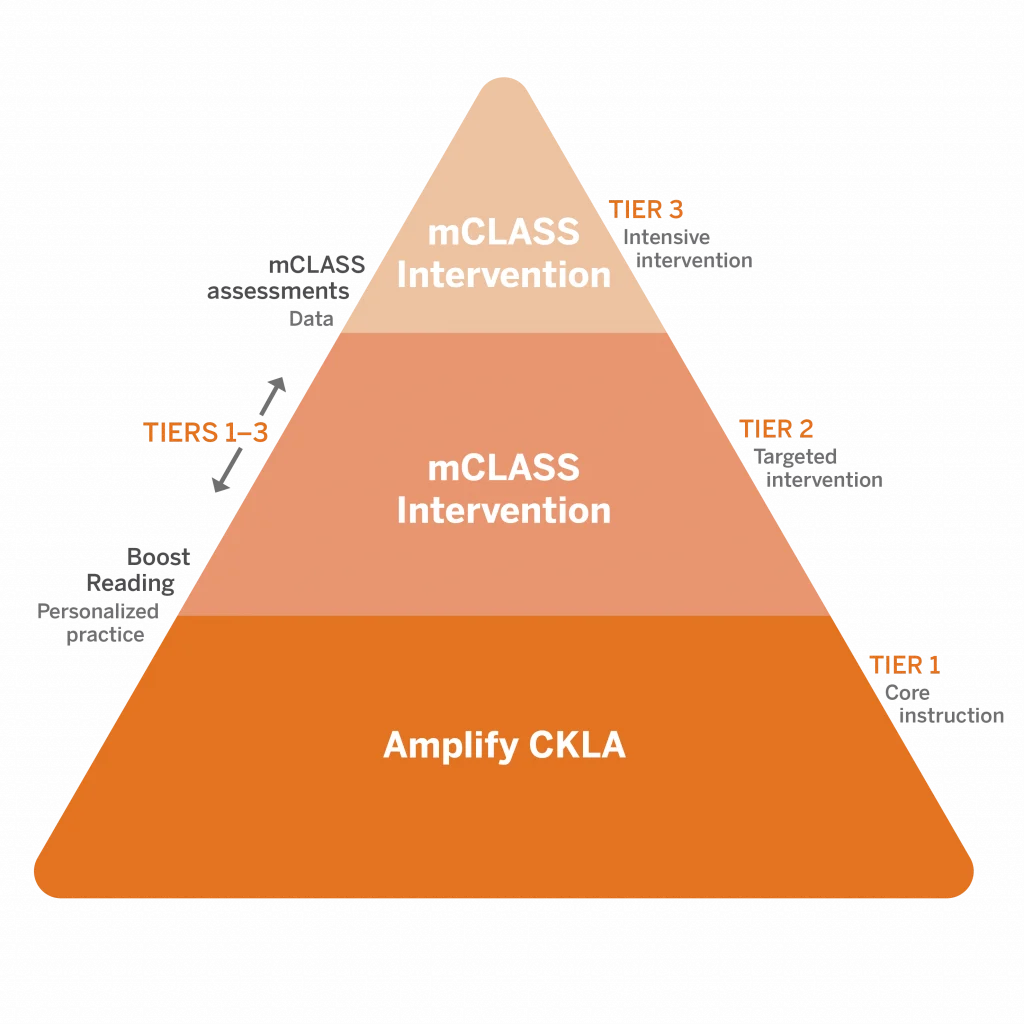
Amplify CKLA 3rd Edition builds on the principles and instruction of previous editions to provide better-than-ever support for teaching and learning. The focus continues on delivering evidence-based instruction across a system of multi-tiered supports aligned with the Science of Reading and Writing.

We’re excited to share this site, where you’ll find a range of materials and literacy tools including Reviewer Resources and Teaching Materials (Teacher Guides, Activity Books, and Student Readers) organized by grade and unit.

We welcome your thoughts and questions!

An astronaut floats in space near the Moon, with a speech bubble displaying

Reviewer resources

Overview and program resources:

Alignment and scope and sequence:

Curriculum maps by grade:

Kindergarten

Explore all available resources for Kindergarten, organized by strand and unit.

Knowledge Strand

Unit 1: Star Light, Star Bright: Nursery Rhymes and Fables

Unit 2: See, Hear, Smell, Taste, Touch: The Five Senses

Unit 3: Underdogs and Heroes: Stories

Unit 4: See How They Grow: Plants

Unit 5: Moo, Cluck, Oink: Farms

Unit 6: Deep Roots: Introduction to Native American Cultures

Unit 7: All Around the World: Geography

Unit 8 (Choice): Royal Tales: Monarchs

Unit 8 (Choice): National Icons: Presidents and American Symbols

Unit 9 (Choice): Our Planet: Taking Care of the Earth

Unit 9 (Choice): Rain and Rainbows: Seasons and Weather

Unit 10: Shaped by Nature: Art and the World Around Us

Skills Strand

Unit 1

Unit 2

Unit 3

Unit 4

Unit 5

Unit 6

Unit 7

Unit 8

Unit 9

Unit 10

Ancillary Components

Grade 1

Explore all available resources for Grade 1, organized by strand and unit.

Knowledge Strand

Unit 1: The Moral of the Story: Fables and Tales

Unit 2: From Nose to Toes: How Your Body Works

Unit 3: Common Threads: Different Lands, Similar Stories

Unit 4: Reach for the Stars: Astronomy

Unit 5: Charting the World: Geography

Unit 6: A World of Homes: Animals and Habitats

Unit 7: A New Nation: American Independence

Unit 8 (Choice): Once Upon a Time: Fairy Tales

Unit 8 (Choice): Our Planet: The History of the Earth

Unit 9 (Choice): From Babylon to the Nile: Early World Civilizations

Unit 9 (Choice): Early Americas: Maya, Aztec, and Inca

Unit 10: Adventure Stories: Tales from the Edge

Skills Strand

Unit 1

Unit 2

Unit 3

Unit 4

Unit 5

Unit 6

Unit 7

Ancillary Components

Grade 2

Explore all available resources for Grade 2, organized by strand and unit.

Knowledge Strand

Unit 1: Fortunes and Feats: Fairy Tales and Tall Tales

Unit 2: The Birthplace of Democracy: Ancient Greece

Unit 3: Legends and Heroes: Greek Myths

Unit 4: Our Planet: Cycles in Nature

Unit 5: Butterflies, Bees, and Beetles: Insects

Unit 6: A House Divided: The American Civil War

Unit 7: Sounds and Stanzas: Poetry

Unit 8 (Choice): Journeys to America: Immigration

Unit 8 (Choice): Making a Difference: Creating Change

Unit 9 (Choice): Building Blocks: All About Nutrition

Unit 9 (Choice): Early Asian Civilizations: India and China

Unit 10: Taking Flight: The Age of Aviation

Skills Strand

Unit 1

Unit 2

Unit 3

Unit 4

Unit 5

Unit 6

Ancillary Components


Grade 3

Explore all available resources for Grade 3, organized by unit.

Core Units

Explore all available resources for Grade 3, organized by unit.

Unit 1: Timeless Tales: Classic Stories

Unit 2: Fur, Fins, and Feathers: Animal Classification

Unit 3: Rhythm and Rhyme: Poetry

Unit 4: Rise and Fall: Ancient Rome

Unit 5: Our Solar System and Beyond: Astronomy

Unit 6: Regions and Cultures: Native Americans

Unit 7 (Choice): Novel Study: Charlotte’s Web

Unit 7 (Choice): Novel Study: Stella Díaz Has Something to Say

Unit 8 (Choice): Systems and Senses: The Human Body

Unit 8 (Choice): From Glow to Echo: Light and Sound

Unit 9: From Blues to Bebop: All That Jazz

Ancillary Components

Supplemental Skills Units

Grade 3 Skills resources are included in core classroom kits, although the instruction isn’t required for Grade 3 standards coverage.

Unit 1

Unit 2

Unit 3

Unit 4


Grade 4

Explore all available resources for Grade 4, organized by unit.

Unit 1: My Story, My Voice: Personal Narratives

Unit 2: Knights and Castles: Europe’s Middle Ages

Unit 3: Meaning and Metaphor: Poetry

Unit 4: Eureka! Student Inventor

Unit 5: Our Planet: Geology

Unit 6: Road to Independence: The American Revolution

Unit 7 (Choice): Novel Study: From the Mixed-Up Files of Mrs. Basil E. Frankweiler

Unit 7 (Choice): Novel Study: The Season of Styx Malone

Unit 8 (Choice): Crafting Stories: A World of Tales

Unit 8 (Choice): Adventure on the High Seas: Treasure Island

Unit 9: Inspiration and Ingenuity: American Innovation

Ancillary Components

Grade 5

Explore all available resources for Grade 5, organized by unit.

Unit 1: In My Own Words: Personal Narratives

Unit 2: Early Americas: Maya, Aztec, and Inca

Unit 3: Visions in Verse: Poetry

Unit 4: A Knight’s Tale: Don Quixote

Unit 5: The Deep Blue World: Oceans

Unit 6: Cultures and Histories: Native Americans

Unit 7 (Choice): Novel Study: The Phantom Tollbooth

Unit 7 (Choice): Novel Study: The Science of Breakable Things

Unit 8 (Choice): Arts and Culture: The Renaissance

Unit 8 (Choice): Through the Forest: A Midsummer Night’s Dream

Unit 9: Building Up the World: Global Architecture

Ancillary Components

Digital platform

In the 2025-26 school year, Amplify CKLA’s all-in-one platform will offer essential tools that streamline instruction for teachers and engage students with meaningful content. Teachers can plan and deliver lessons efficiently, while students can access assignments, assessments, and fun practice games.

A digital interface showing an assessment report on a monitor and a multiple-choice question on a tablet screen. Both screens display educational content from Amplify's assessment tools, providing personalized learning for multilingual learners.

Presentation Screens
Deliver interactive lessons with ready-made, customizable slides for every lesson.

Auto-scored digital assessments
Assess vocabulary, comprehension, and knowledge development at the end of each K–2 Knowledge and 3–5 Integrated Unit.

Standards-based reports
Identify strengths and growth areas for individuals, small groups, or your entire class. Interactive dashboards offer detailed results from assessments and activities.

Skill-building practice games
Engage students with interactive games that reinforce concepts and make learning fun. Powered by Boost Reading™, these games align with lessons and provide real-time feedback.

eReader
Students access texts, take notes, and use audio-enabled eReaders to enhance their reading experience.

Sound Library
Students watch articulation videos and listen to songs for each sound to support phonological awareness.

Vocab App
Helps students in Grades 3-5 practice Amplify CKLA Tier 2 vocabulary words with fun, interactive games.

Intervention Toolkit
Offers user-friendly resources designed to aid educators in identifying and addressing deficiencies in students’ foundation skills.

Program support resources

Additional program resource documents:

Welcome to the Amplify CKLA 3rd Edition program review site!

We’re excited to share everything you need to review Amplify CKLA 3rd Edition, our K–5 core literacy program. On this site, you’ll find a range of materials, including Teacher Guides, Activity Books, and Student Readers, organized by grade and unit.

Please note that the files on this site are static representations of the high-quality materials you’ll receive with your purchase.

We hope you find the site helpful! If you have any questions, please reach out to your Amplify representative.

Reviewer resources

Access key materials designed to support your review of Amplify CKLA 3rd Edition.

Kindergarten

Explore all available resources for Kindergarten, organized by strand and unit.

Knowledge Strand

Unit 1: Star Light, Star Bright: Nursery Rhymes and Fables

Unit 2: See, Hear, Smell, Taste, Touch: The Five Senses

Unit 3: Underdogs and Heroes: Stories

Unit 4: See How They Grow: Plants

Unit 5: Moo, Cluck, Oink: Farms

Unit 6: Deep Roots: Introduction to Native American Cultures

Unit 7: All Around the World: Geography

Unit 8 (Choice): Royal Tales: Monarchs

Unit 8 (Choice): National Icons: Presidents and American Symbols

Unit 9 (Choice): Our Planet: Taking Care of the Earth

Unit 9 (Choice): Rain and Rainbows: Seasons and Weather

Unit 10: Shaped by Nature: Art and the World Around Us

Skills Strand

Unit 1

Unit 2

Unit 3

Unit 4

Unit 5

Unit 6

Unit 7

Unit 8

Unit 9

Unit 10

Ancillary Components


Grade 1

Explore all available resources for Grade 1, organized by strand and unit.

Knowledge Strand

Unit 1: The Moral of the Story: Fables and Tales

Unit 2: From Nose to Toes: How Your Body Works

Unit 3: Common Threads: Different Lands, Similar Stories

Unit 4: Reach for the Stars: Astronomy

Unit 5: Charting the World: Geography

Unit 6: A World of Homes: Animals and Habitats

Unit 7: A New Nation: American Independence

Unit 8 (Choice): Once Upon a Time: Fairy Tales

Unit 8 (Choice): Our Planet: The History of the Earth

Unit 9 (Choice): From Babylon to the Nile: Early World Civilizations

Unit 9 (Choice): Early Americas: Maya, Aztec, and Inca

Unit 10: Adventure Stories: Tales from the Edge

Skills Strand

Unit 1

Unit 2

Unit 3

Unit 4

Unit 5

Unit 6

Unit 7

Ancillary Components


Grade 2

Explore all available resources for Grade 2, organized by strand and unit.

Knowledge Strand

Unit 1: Fortunes and Feats: Fairy Tales and Tall Tales

Unit 2: The Birthplace of Democracy: Ancient Greece

Unit 3: Legends and Heroes: Greek Myths

Unit 4: Our Planet: Cycles in Nature

Unit 5: Butterflies, Bees, and Beetles: Insects

Unit 6: A House Divided: The American Civil War

Unit 7: Sounds and Stanzas: Poetry

Unit 8 (Choice): Journeys to America: Immigration

Unit 8 (Choice): Making a Difference: Creating Change

Unit 9 (Choice): Building Blocks: All About Nutrition

Unit 9 (Choice): Early Asian Civilizations: India and China

Unit 10: Taking Flight: The Age of Aviation

Skills Strand

Unit 1

Unit 2

Unit 3

Unit 4

Unit 5

Unit 6

Ancillary Components


Grade 3

Explore all available resources for Grade 3, organized by unit.

Core Units

Unit 1: Timeless Tales: Classic Stories

Unit 2: Fur, Fins, and Feathers: Animal Classification

Unit 3: Rhythm and Rhyme: Poetry

Unit 4: Rise and Fall: Ancient Rome

Unit 5: Our Solar System and Beyond: Astronomy

Unit 6: Regions and Cultures: Native Americans

Unit 7 (Choice): Novel Study: Charlotte’s Web

Unit 7 (Choice): Novel Study: Stella Díaz Has Something to Say

Unit 8 (Choice): Systems and Senses: The Human Body

Unit 8 (Choice): From Glow to Echo: Light and Sound

Unit 9: From Blues to Bebop: All That Jazz


Supplemental Skills

Grade 3 Skills resources are included in core classroom kits, although the instruction isn’t required for Grade 3 standards coverage.

Unit 1

Unit 2

Unit 3

Unit 4


Grade 4

Explore all available resources for Grade 4, organized by unit.

Unit 1: My Story, My Voice: Personal Narratives

Unit 2: Knights and Castles: Europe’s Middle Ages

Unit 3: Meaning and Metaphor: Poetry

Unit 4: Eureka! Student Inventor

Unit 5: Our Planet: Geology

Unit 6: Road to Independence: The American Revolution

Unit 7 (Choice): Novel Study: From the Mixed-Up Files of Mrs. Basil E. Frankweiler

Unit 7 (Choice): Novel Study: The Season of Styx Malone

Unit 8 (Choice): Crafting Stories: A World of Tales

Unit 8 (Choice): Adventure on the High Seas: Treasure Island

Unit 9: Inspiration and Ingenuity: American Innovation

Grade 5

Explore all available resources for Grade 5, organized by unit.

Unit 1: In My Own Words: Personal Narratives

Unit 2: Early Americas: Maya, Aztec, and Inca

Unit 3: Visions in Verse: Poetry

Unit 4: A Knight’s Tale: Don Quixote

Unit 5: The Deep Blue World: Oceans

Unit 6: Cultures and Histories: Native Americans

Unit 7 (Choice): Novel Study: The Phantom Tollbooth

Unit 7 (Choice): Novel Study: The Science of Breakable Things

Unit 8 (Choice): Arts and Culture: The Renaissance

Unit 8 (Choice): Through the Forest: A Midsummer Night’s Dream

Unit 9: Building Up the World: Global Architecture


Digital platform

Amplify CKLA’s all-in-one platform offers essential tools that streamline instruction for teachers and engage students with meaningful content. Teachers can plan and deliver lessons efficiently, while students can access assignments, assessments, and fun practice games.

A digital interface showing an assessment report on a monitor and a multiple-choice question on a tablet screen. Both screens display educational content from Amplify's assessment tools, providing personalized learning for multilingual learners.

Presentation Screens
Deliver interactive lessons with ready-made, customizable slides for every lesson.

Auto-scored digital assessments
Assess vocabulary, comprehension, and knowledge development at the end of each K–2 Knowledge and 3–5 Integrated Unit.

Standards-based reports
Identify strengths and growth areas for individuals, small groups, or your entire class. Interactive dashboards offer detailed results from assessments and activities.

Skill-building practice games
Engage students with interactive games that reinforce concepts and make learning fun. Powered by Boost Reading™, these games align with lessons and provide real-time feedback.

eReader
Students access texts, take notes, and use audio-enabled eReaders to enhance their reading experience.

Sound Library
Students watch articulation videos and listen to songs for each sound to support phonological awareness.

Vocab App
Helps students in Grades 3–5 practice Amplify CKLA Tier 2 vocabulary words with fun, interactive games.

Intervention Toolkit
Offers user-friendly resources designed to aid educators in identifying and addressing deficiencies in students’ foundation skills.

Welcome to the Amplify CKLA 3rd Edition program review site!

To view this protected page, enter the password below:


Welcome, Minnesota Educators!

To view this protected page, enter the password below:


Welcome, Ohio Department of Education and Workforce!

Amplify CKLA 3rd Edition builds on the principles and instruction of previous editions to provide better-than-ever support for teaching and learning. The focus continues on delivering evidence-based instruction across a system of multi-tiered supports aligned with the Science of Reading and Writing.

We’re excited to share this site, where you’ll find a range of materials and literacy tools including Reviewer Resources and Teaching Materials (Teacher Guides, Activity Books, and Student Readers) organized by grade and unit.

We welcome your thoughts and questions!

Reviewer resources

Alignment and scope and sequence

Core Comprehensive English Language Arts:

Core Foundational Skills:

Curriculum maps

Core Comprehensive English Language Arts:

Core Foundational Skills:

Kindergarten

Explore all available resources for Kindergarten, organized by strand and unit.

Core Comprehensive English Language Arts

Unit 1: Star Light, Star Bright: Nursery Rhymes and Fables

Unit 2: See, Hear, Smell, Taste, Touch: The Five Senses

Unit 3: Underdogs and Heroes: Stories

Unit 4: See How They Grow: Plants

Unit 5: Moo, Cluck, Oink: Farms

Unit 6: Deep Roots: Introduction to Native American Cultures

Unit 7: All Around the World: Geography

Unit 8 (Choice): Royal Tales: Monarchs

Unit 8 (Choice): National Icons: Presidents and American Symbols

Unit 9 (Choice): Our Planet: Taking Care of the Earth

Unit 9 (Choice): Rain and Rainbows: Seasons and Weather

Unit 10: Shaped by Nature: Art and the World Around Us

Core Foundational Skills

Unit 1

Unit 2

Unit 3

Unit 4

Unit 5

Unit 6

Unit 7

Unit 8

Unit 9

Unit 10

Ancillary Components


Grade 1

Explore all available resources for Grade 1, organized by strand and unit.

Core Comprehensive English Language Arts

Unit 1: The Moral of the Story: Fables and Tales

Unit 2: From Nose to Toes: How Your Body Works

Unit 3: Common Threads: Different Lands, Similar Stories

Unit 4: Reach for the Stars: Astronomy

Unit 5: Charting the World: Geography

Unit 6: A World of Homes: Animals and Habitats

Unit 7: A New Nation: American Independence

Unit 8 (Choice): Once Upon a Time: Fairy Tales

Unit 8 (Choice): Our Planet: The History of the Earth

Unit 9 (Choice): From Babylon to the Nile: Early World Civilizations

Unit 9 (Choice): Early Americas: Maya, Aztec, and Inca

Unit 10: Adventure Stories: Tales from the Edge

Core Foundational Skills

Unit 1

Unit 2

Unit 3

Unit 4

Unit 5

Unit 6

Unit 7

Ancillary Components


Grade 2

Explore all available resources for Grade 2, organized by strand and unit.

Core Comprehensive English Language Arts

Unit 1: Fortunes and Feats: Fairy Tales and Tall Tales

Unit 2: The Birthplace of Democracy: Ancient Greece

Unit 3: Legends and Heroes: Greek Myths

Unit 4: Our Planet: Cycles in Nature

Unit 5: Butterflies, Bees, and Beetles: Insects

Unit 6: A House Divided: The American Civil War

Unit 7: Sounds and Stanzas: Poetry

Unit 8 (Choice): Journeys to America: Immigration

Unit 8 (Choice): Making a Difference: Creating Change

Unit 9 (Choice): Building Blocks: All About Nutrition

Unit 9 (Choice): Early Asian Civilizations: India and China

Unit 10: Taking Flight: The Age of Aviation

Core Foundational Skills

Unit 1

Unit 2

Unit 3

Unit 4

Unit 5

Unit 6

Ancillary Components


Grade 3

Explore all available resources for Grade 3, organized by unit.

Core Comprehensive English Language Arts

Unit 1: Timeless Tales: Classic Stories

Unit 2: Fur, Fins, and Feathers: Animal Classification

Unit 3: Rhythm and Rhyme: Poetry

Unit 4: Rise and Fall: Ancient Rome

Unit 5: Our Solar System and Beyond: Astronomy

Unit 6: Regions and Cultures: Native Americans

Unit 7 (Choice): Novel Study: Charlotte’s Web

Unit 7 (Choice): Novel Study: Stella Díaz Has Something to Say

Unit 8 (Choice): Systems and Senses: The Human Body

Unit 8 (Choice): From Glow to Echo: Light and Sound

Unit 9: From Blues to Bebop: All That Jazz

Ancillary Components

Supplemental Skills Units

Grade 3 Supplemental Skills units are included in core classroom kits, although the instruction isn’t required for Grade 3 standards coverage.

Unit 1

Unit 2

Unit 3

Unit 4


Grade 4 Core Comprehensive ELA

Explore all available resources for Grade 4, organized by unit.

Unit 1: My Story, My Voice: Personal Narratives

Unit 2: Knights and Castles: Europe’s Middle Ages

Unit 3: Meaning and Metaphor: Poetry

Unit 4: Eureka! Student Inventor

Unit 5: Our Planet: Geology

Unit 6: Road to Independence: The American Revolution

Unit 7 (Choice): Novel Study: From the Mixed-Up Files of Mrs. Basil E. Frankweiler

Unit 7 (Choice): Novel Study: The Season of Styx Malone

Unit 8 (Choice): Crafting Stories: A World of Tales

Unit 8 (Choice): Adventure on the High Seas: Treasure Island

Unit 9: Inspiration and Ingenuity: American Innovation

Ancillary Components

Grade 5 Core Comprehensive ELA

Explore all available resources for Grade 5, organized by unit.

Unit 1: In My Own Words: Personal Narratives

Unit 2: Early Americas: Maya, Aztec, and Inca

Unit 3: Visions in Verse: Poetry

Unit 4: A Knight’s Tale: Don Quixote

Unit 5: The Deep Blue World: Oceans

Unit 6: Cultures and Histories: Native Americans

Unit 7 (Choice): Novel Study: The Phantom Tollbooth

Unit 7 (Choice): Novel Study: The Science of Breakable Things

Unit 8 (Choice): Arts and Culture: The Renaissance

Unit 8 (Choice): Through the Forest: A Midsummer Night’s Dream

Unit 9: Building Up the World: Global Architecture

Ancillary Components

Digital platform

In the 2025-26 school year, Amplify CKLA’s all-in-one platform will offer essential tools that streamline instruction for teachers and engage students with meaningful content. Teachers can plan and deliver lessons efficiently, while students can access assignments, assessments, and fun practice games.

Presentation Screens
Deliver interactive lessons with ready-made, customizable slides for every lesson.

Auto-scored digital assessments
Assess vocabulary, comprehension, and knowledge development at the end of each K–2 Knowledge and 3–5 Integrated Unit.

Standards-based reports
Identify strengths and growth areas for individuals, small groups, or your entire class. Interactive dashboards offer detailed results from assessments and activities.

Skill-building practice games
Engage students with interactive games that reinforce concepts and make learning fun. Powered by Boost Reading™, these games align with lessons and provide real-time feedback.

eReader
Students access texts, take notes, and use audio-enabled eReaders to enhance their reading experience.

Sound Library
Students watch articulation videos and listen to songs for each sound to support phonological awareness.

Vocab App
Helps students in Grades 3-5 practice Amplify CKLA Tier 2 vocabulary words with fun, interactive games.

Intervention Toolkit
Offers user-friendly resources designed to aid educators in identifying and addressing deficiencies in students’ foundation skills.

Program support resources

Additional program resource documents:

Welcome to the Amplify CKLA 3rd Edition program review site!

To view this protected page, enter the password below:


Welcome to the Amplify CKLA 3rd Edition program review site!

To view this protected page, enter the password below:


Welcome, Michigan Committee for Literacy Achievement!

We’re excited to share everything you need to critically evaluate Amplify CKLA 3rd Edition, our K–5 core literacy program. On this site, you’ll find a range of materials and literacy tools, including Reviewer Resources and Teaching Materials (Teacher Guides, Activity Books, and Student Readers) organized by grade and unit.

We hope you find the site helpful. We welcome your thoughts and questions!

Reviewer resources

Key bid documents:

Overview and program resources:

Alignment and scope and sequence:

Curriculum maps by grade:

Kindergarten

Explore all available resources for Kindergarten, organized by strand and unit.

Knowledge Strand

Unit 1: Star Light, Star Bright: Nursery Rhymes and Fables

Unit 2: See, Hear, Smell, Taste, Touch: The Five Senses

Unit 3: Underdogs and Heroes: Stories

Unit 4: See How They Grow: Plants

Unit 5: Moo, Cluck, Oink: Farms

Unit 6: Deep Roots: Introduction to Native American Cultures

Unit 7: All Around the World: Geography

Unit 8 (Choice): Royal Tales: Monarchs

Unit 8 (Choice): National Icons: Presidents and American Symbols

Unit 9 (Choice): Our Planet: Taking Care of the Earth

Unit 9 (Choice): Rain and Rainbows: Seasons and Weather

Unit 10: Shaped by Nature: Art and the World Around Us

Skills Strand

Unit 1

Unit 2

Unit 3

Unit 4

Unit 5

Unit 6

Unit 7

Unit 8

Unit 9

Unit 10

Ancillary Components


Grade 1

Explore all available resources for Grade 1, organized by strand and unit.

Knowledge Strand

Unit 1: The Moral of the Story: Fables and Tales

Unit 2: From Nose to Toes: How Your Body Works

Unit 3: Common Threads: Different Lands, Similar Stories

Unit 4: Reach for the Stars: Astronomy

Unit 5: Charting the World: Geography

Unit 6: A World of Homes: Animals and Habitats

Unit 7: A New Nation: American Independence

Unit 8 (Choice): Once Upon a Time: Fairy Tales

Unit 8 (Choice): Our Planet: The History of the Earth

Unit 9 (Choice): From Babylon to the Nile: Early World Civilizations

Unit 9 (Choice): Early Americas: Maya, Aztec, and Inca

Unit 10: Adventure Stories: Tales from the Edge

Skills Strand

Unit 1

Unit 2

Unit 3

Unit 4

Unit 5

Unit 6

Unit 7

Ancillary Components


Grade 2

Explore all available resources for Grade 2, organized by strand and unit.

Knowledge Strand

Unit 1: Fortunes and Feats: Fairy Tales and Tall Tales

Unit 2: The Birthplace of Democracy: Ancient Greece

Unit 3: Legends and Heroes: Greek Myths

Unit 4: Our Planet: Cycles in Nature

Unit 5: Butterflies, Bees, and Beetles: Insects

Unit 6: A House Divided: The American Civil War

Unit 7: Sounds and Stanzas: Poetry

Unit 8 (Choice): Journeys to America: Immigration

Unit 8 (Choice): Making a Difference: Creating Change

Unit 9 (Choice): Building Blocks: All About Nutrition

Unit 9 (Choice): Early Asian Civilizations: India and China

Unit 10: Taking Flight: The Age of Aviation

Skills Strand

Unit 1

Unit 2

Unit 3

Unit 4

Unit 5

Unit 6

Ancillary Components


Grade 3

Explore all available resources for Grade 3, organized by unit.

Unit 1: Timeless Tales: Classic Stories

Unit 2: Fur, Fins, and Feathers: Animal Classification

Unit 3: Rhythm and Rhyme: Poetry

Unit 4: Rise and Fall: Ancient Rome

Unit 5: Our Solar System and Beyond: Astronomy

Unit 6: Regions and Cultures: Native Americans

Unit 7 (Choice): Novel Study: Charlotte’s Web

Unit 7 (Choice): Novel Study: Stella Díaz Has Something to Say

Unit 8 (Choice): Systems and Senses: The Human Body

Unit 8 (Choice): From Glow to Echo: Light and Sound

Unit 9: From Blues to Bebop: All That Jazz

Ancillary Components

Grade 4

Explore all available resources for Grade 4, organized by unit.

Unit 1: My Story, My Voice: Personal Narratives

Unit 2: Knights and Castles: Europe’s Middle Ages

Unit 3: Meaning and Metaphor: Poetry

Unit 4: Eureka! Student Inventor

Unit 5: Our Planet: Geology

Unit 6: Road to Independence: The American Revolution

Unit 7 (Choice): Novel Study: From the Mixed-Up Files of Mrs. Basil E. Frankweiler

Unit 7 (Choice): Novel Study: The Season of Styx Malone

Unit 8 (Choice): Crafting Stories: A World of Tales

Unit 8 (Choice): Adventure on the High Seas: Treasure Island

Unit 9: Inspiration and Ingenuity: American Innovation

Ancillary Components

Grade 5

Explore all available resources for Grade 5, organized by unit.

Unit 1: In My Own Words: Personal Narratives

Unit 2: Early Americas: Maya, Aztec, and Inca

Unit 3: Visions in Verse: Poetry

Unit 4: A Knight’s Tale: Don Quixote

Unit 5: The Deep Blue World: Oceans

Unit 6: Cultures and Histories: Native Americans

Unit 7 (Choice): Novel Study: The Phantom Tollbooth

Unit 7 (Choice): Novel Study: The Science of Breakable Things

Unit 8 (Choice): Arts and Culture: The Renaissance

Unit 8 (Choice): Through the Forest: A Midsummer Night’s Dream

Unit 9: Building Up the World: Global Architecture

Ancillary Components

Skills Supplement (Grades 3-5)

These supplementary units for Grades 3-5 reinforce and build on K-2 foundational skills instruction.

Unit 1

Unit 2

Unit 3

Unit 4


Digital platform

In the 2025-26 school year, Amplify CKLA’s all-in-one platform will offer essential tools that streamline instruction for teachers and engage students with meaningful content. Teachers can plan and deliver lessons efficiently, while students can access assignments, assessments, and fun practice games.

A digital interface showing an assessment report on a monitor and a multiple-choice question on a tablet screen. Both screens display educational content from Amplify's assessment tools, providing personalized learning for multilingual learners.

Presentation Screens
Deliver interactive lessons with ready-made, customizable slides for every lesson.

Auto-scored digital assessments
Assess vocabulary, comprehension, and knowledge development at the end of each K–2 Knowledge and 3–5 Integrated Unit.

Standards-based reports
Identify strengths and growth areas for individuals, small groups, or your entire class. Interactive dashboards offer detailed results from assessments and activities.

Skill-building practice games
Engage students with interactive games that reinforce concepts and make learning fun. Powered by Boost Reading™, these games align with lessons and provide real-time feedback.

eReader
Students access texts, take notes, and use audio-enabled eReaders to enhance their reading experience.

Sound Library
Students watch articulation videos and listen to songs for each sound to support phonological awareness.

Vocab App
Helps students in Grades 3–5 practice Amplify CKLA Tier 2 vocabulary words with fun, interactive games.

Intervention Toolkit
Offers user-friendly resources designed to aid educators in identifying and addressing deficiencies in students’ foundation skills.

Program support resources

Additional program resource documents:

Welcome to Amplify CKLA 3rd Edition, Utah Reviewers!

We’re excited to share everything you need to review Amplify CKLA 3rd Edition, our K–5 core literacy program. On this site, you’ll find a comprehensive collection of resources and overviews to get you started, as well as a range of materials to explore the program, including Teacher Guides, Activity Books, Student Readers, and more, organized by grade and unit.

Please note that the files on this site are static representations of the high-quality materials you’ll review on the digital platform.

Reviewer resources

Access key materials designed to support your review of Amplify CKLA 3rd Edition.

Digital platform access

Amplify CKLA’s all-in-one platform offers essential tools that streamline instruction for teachers and engage students with meaningful content.

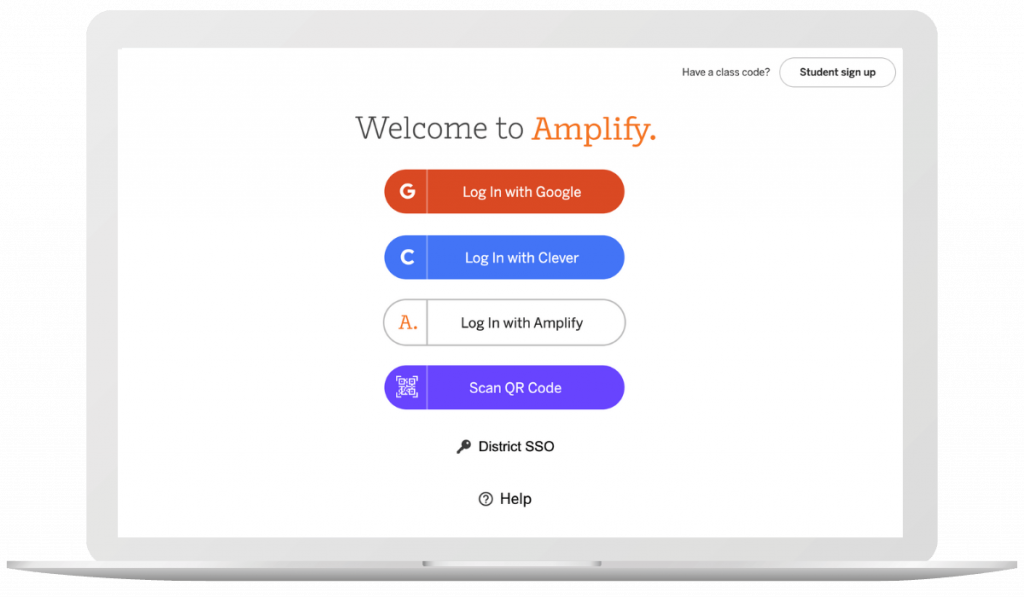
In order to access your digital materials, you’ll need to log into our platform using your unique login credentials found on the Start Here flyer inside of your Reviewer Binder. Once you have located the flyer:

  • Click the orange button below to access the platform.
  • Click “Log in with Amplify.”
  • Enter the username and password provided on your Start Here flyer.

The video below will provide you with instructions on how to access and navigate the digital platform.

Teachers can plan and deliver lessons efficiently, while students can access assignments, assessments, and fun practice games within the CKLA digital platform. The digital experience includes:

Presentation Screens
Deliver interactive lessons with ready-made, customizable slides for every lesson.

Auto-scored digital assessments
Assess vocabulary, comprehension, and knowledge development at the end of each K–2 Knowledge and 3–5 Integrated Unit.

Standards-based reports
Identify strengths and growth areas for individuals, small groups, or your entire class. Interactive dashboards offer detailed results from assessments and activities.

Skill-building practice games
Engage students with interactive games that reinforce concepts and make learning fun. Powered by Boost Reading™, these games align with lessons and provide real-time feedback.

eReader
Students access texts, take notes, and use audio-enabled eReaders to enhance their reading experience.

Sound Library
Students watch articulation videos and listen to songs for each sound to support phonological awareness.

Vocab App
Helps students in Grades 3–5 practice Amplify CKLA Tier 2 vocabulary words with fun, interactive games.

Intervention Toolkit
Offers user-friendly resources designed to aid educators in identifying and addressing deficiencies in students’ foundation skills.

Kindergarten

Explore all available resources for Kindergarten, organized by strand and unit.

Knowledge Strand

Unit 1: Star Light, Star Bright: Nursery Rhymes and Fables

Unit 2: See, Hear, Smell, Taste, Touch: The Five Senses

Unit 3: Underdogs and Heroes: Stories

Unit 4: See How They Grow: Plants

Unit 5: Moo, Cluck, Oink: Farms

Unit 6: Deep Roots: Introduction to Native American Cultures

Unit 7: All Around the World: Geography

Unit 8 (Choice): Royal Tales: Monarchs

Unit 8 (Choice): National Icons: Presidents and American Symbols

Unit 9 (Choice): Our Planet: Taking Care of the Earth

Unit 9 (Choice): Rain and Rainbows: Seasons and Weather

Unit 10: Shaped by Nature: Art and the World Around Us

Skills Strand

Unit 1

Unit 2

Unit 3

Unit 4

Unit 5

Unit 6

Unit 7

Unit 8

Unit 9

Grade 1

Explore all available resources for Grade 1, organized by strand and unit.

Knowledge Strand

Unit 1: The Moral of the Story: Fables and Tales

Unit 2: From Nose to Toes: How Your Body Works

Unit 3: Common Threads: Different Lands, Similar Stories

Unit 4: Reach for the Stars: Astronomy

Unit 5: Charting the World: Geography

Unit 6: A World of Homes: Animals and Habitats

Unit 7: A New Nation: American Independence

Unit 8 (Choice): Once Upon a Time: Fairy Tales

Unit 8 (Choice): Our Planet: The History of the Earth

Unit 9 (Choice): From Babylon to the Nile: Early World Civilizations

Unit 9 (Choice): Early Americas: Maya, Aztec, and Inca

Unit 10: Adventure Stories: Tales from the Edge

Skills Strand

Unit 1

Unit 2

Unit 3

Unit 4

Unit 5

Unit 6

Unit 7

Ancillary Components


Grade 2

Explore all available resources for Grade 2, organized by strand and unit.

Knowledge Strand

Unit 1: Fortunes and Feats: Fairy Tales and Tall Tales

Unit 2: The Birthplace of Democracy: Ancient Greece

Unit 3: Legends and Heroes: Greek Myths

Unit 4: Our Planet: Cycles in Nature

Unit 5: Butterflies, Bees, and Beetles: Insects

Unit 6: A House Divided: The American Civil War

Unit 7: Sounds and Stanzas: Poetry

Unit 8 (Choice): Journeys to America: Immigration

Unit 8 (Choice): Making a Difference: Creating Change

Unit 9 (Choice): Building Blocks: All About Nutrition

Unit 9 (Choice): Early Asian Civilizations: India and China

Unit 10: Taking Flight: The Age of Aviation

Skills Strand

Unit 1

Unit 2

Unit 3

Unit 4

Unit 5

Unit 6

Ancillary Components


Grade 3

Explore all available resources for Grade 3, organized by unit.

Core Units

Unit 1: Timeless Tales: Classic Stories

Unit 2: Fur, Fins, and Feathers: Animal Classification

Unit 3: Rhythm and Rhyme: Poetry

Unit 4: Rise and Fall: Ancient Rome

Unit 5: Our Solar System and Beyond: Astronomy

Unit 6: Regions and Cultures: Native Americans

Unit 7 (Choice): Novel Study: Charlotte’s Web

Unit 7 (Choice): Novel Study: Stella Díaz Has Something to Say

Unit 8 (Choice): Systems and Senses: The Human Body

Unit 8 (Choice): From Glow to Echo: Light and Sound

Unit 9: From Blues to Bebop: All That Jazz


Supplemental Skills

Grade 3 Skills resources are included in core classroom kits, although the instruction isn’t required for Grade 3 standards coverage.

Unit 1

Unit 2

Unit 3

Unit 4


Grade 4

Explore all available resources for Grade 4, organized by unit.

Unit 1: My Story, My Voice: Personal Narratives

Unit 2: Knights and Castles: Europe’s Middle Ages

Unit 3: Meaning and Metaphor: Poetry

Unit 4: Eureka! Student Inventor

Unit 5: Our Planet: Geology

Unit 6: Road to Independence: The American Revolution

Unit 7 (Choice): Novel Study: From the Mixed-Up Files of Mrs. Basil E. Frankweiler

Unit 7 (Choice): Novel Study: The Season of Styx Malone

Unit 8 (Choice): Crafting Stories: A World of Tales

Unit 8 (Choice): Adventure on the High Seas: Treasure Island

Unit 9: Inspiration and Ingenuity: American Innovation


Grade 5

Explore all available resources for Grade 5, organized by unit.

Unit 1: In My Own Words: Personal Narratives

Unit 2: Early Americas: Maya, Aztec, and Inca

Unit 3: Visions in Verse: Poetry

Unit 4: A Knight’s Tale: Don Quixote

Unit 5: The Deep Blue World: Oceans

Unit 6: Cultures and Histories: Native Americans

Unit 7 (Choice): Novel Study: The Phantom Tollbooth

Unit 7 (Choice): Novel Study: The Science of Breakable Things

Unit 8 (Choice): Arts and Culture: The Renaissance

Unit 8 (Choice): Through the Forest: A Midsummer Night’s Dream

Unit 9: Building Up the World: Global Architecture

Welcome, K–8 Reviewers!

We’re honored to introduce you to Amplify Desmos Math California. We’re confident you’ll find this comprehensive program to be a powerful tool for bringing the vision of the California Math Framework to life in classrooms across the state.

Please start with the video on the right to learn how to navigate the program and access key features referenced within our submission. Below you’ll find additional resources to support your review.

Your Review Samples

As a curriculum that incorporates both print and digital resources, it’s important that you explore both our physical materials (delivered to you in grade-specific tubs) and our digital materials (accessible through our platform). We invite you to explore both types of resources using the instructions and tips below.

Print Samples

Your print samples should have arrived in grade-specific tubs with a copy of two Reviewer binders. The K-5 Reviewer binder is contained within the Grade K shipping box and the Grade 6-8 Reviewer binder can be located in the Grade 6 shipping box. As you begin the process of organizing your materials, please refer to the inventory checklist found inside each tub as well as within your Reviewer Binder.

Digital Samples

In order to access your digital samples, you’ll need to log into our platform using your unique login credentials found on a Digital Access Flyer inside of your Reviewer Binder. Once you have located the flyer:

  • Click the orange button below to access the platform.
  • Click “Log in with Amplify.”
  • Enter the username and password provided on your Digital Access Flyer.

Navigation Tips

Below you will find helpful tips for navigating Amplify Desmos Math California. We recommend reading these pages alongside the program’s print materials and digital experience to gain a deeper understanding of the program. 

Click the links below to read about navigating program features including:

Built for California

The Amplify Desmos Math California program is designed around the vision articulated in the California Mathematics Framework to enable all California students to become powerful users of mathematics. Our program incorporates the latest research in student learning, meaning that we:

  • Focus on the Big Ideas: Amplify Desmos Math California’s courses, units, and lessons are centered around the Big Ideas. Big Ideas, like standards, are not considered in isolation. In addition to each unit and lesson’s focal Big Ideas, Amplify Desmos Math California also provides connections among the Big Ideas across units and lessons.
  • Center on open and engaging tasks: Amplify Desmos Math California is grounded in engaging tasks meant to address students’ often-asked question: “Why am I learning this?”  Students are invited into learning with low-floor, high-ceiling tasks that provide an entry point for all. Open tasks in Amplify Desmos Math California provide the space for students to try on multiple strategies and represent their thinking in different ways, and allow student explanation and discussion to serve as the center of the classroom. All lessons offer both print and digital representations of lessons.
  • Provide enhanced digital experiences: Amplify Desmos Math California includes digitally-enhanced lesson activities, incorporating interactive digital tools alongside print materials. These purposefully-placed resources allow students to visualize mathematical concepts, receive actionable feedback while practicing, encounter personalized learning support from an onscreen tutor, and engage in discussions about their thinking and approaches.
  • Treat core instruction and differentiation as integral partners: The Amplify Desmos Math California curriculum provides teachers with lessons, strategies, and resources to eliminate barriers and increase access to grade-level content without reducing the mathematical demand of tasks. Every activity has multiple entry points to ensure that all students are supported and challenged. Intervention and personalized learning activities are directly connected to lesson content and offer students the individualized support as they dive into the mathematics.

Category 1: Mathematics Content/Alignment with the Standards

Standards Maps

The links below provide the Standards Maps for Amplify Desmos Math California for each grade level.

Evaluation Criteria Map

Linked here is the Evaluation Criteria Map for grades K–8. Please note that you will need to be logged into the digital platform to access the links in the Evaluation Criteria Map.

Standards for Mathematical Practice

The links below provide the alignment of Amplify Desmos Math California to the Standards for Mathematical Practice at each grade level.

Drivers of Investigation and Content Connections

Amplify Desmos Math California incorporates the Drivers of Investigation (DIs) and Content Connection (CCs) throughout the program. Throughout the year, students engage with open and authentic tasks of varying durations — from lesson activities to unit-level Explore lessons and longer course-level Investigations. Every lesson and investigation opportunity is grounded around the why, how, and what of the learning experience, and helps teachers bring mathematical concepts to life. 

A three-column chart details: Drivers of Investigation, Standards for Mathematical Practice, and Content Connections, each with their respective codes and brief descriptions.

California English Language Development Standards

The links below provide the alignment of Amplify Desmos Math California to the California English Language Development Standards at each grade level.

California Environmental Principles and Concepts

Select lessons, performance tasks, and investigations across grade levels in Amplify Desmos Math California are aligned to one or more of the California Environmental Principles and Concepts. Click the links below to view how the California Environmental Principles and Concepts are represented in each grade level.

Category 2: Program Organization

Amplify Desmos Math California thoughtfully combines conceptual understanding, procedural fluency, and application. Each lesson is designed to tell a story by posing problems that invite a variety of approaches before guiding students to synthesize their understanding of the learning goals.

Big Ideas

Amplify Desmos Math California’s courses, units, and lessons are centered around the Big Ideas. In addition to each unit and lesson’s focal Big Ideas, Amplify Desmos Math California also provides connections among the Big Ideas across units and lessons. Please refer to Keeping the Big Ideas at the Center (linked below) for specific lesson designs and alignment with the Big Ideas for each grade level.

Program Structure

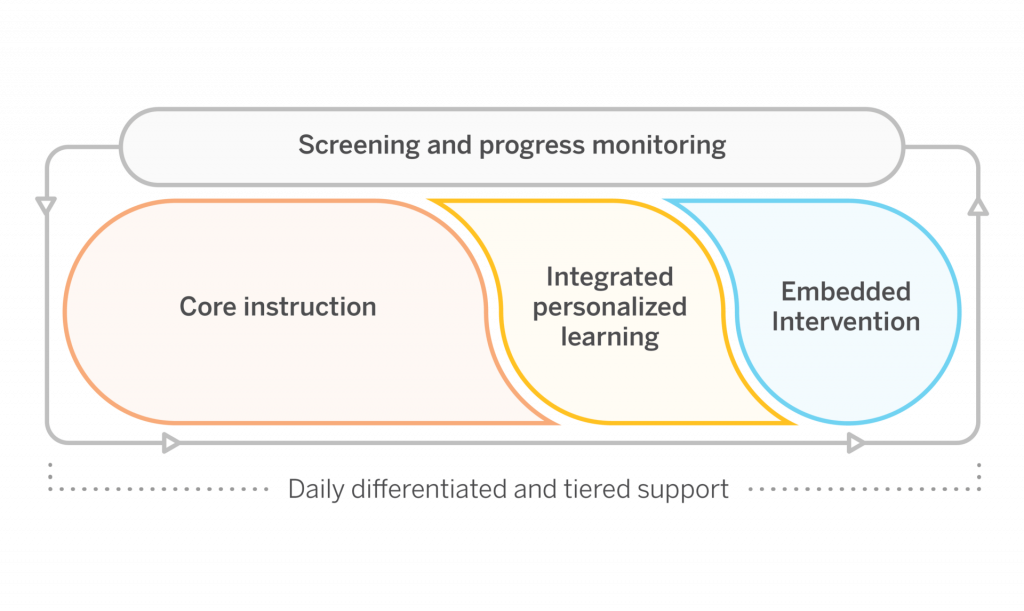
Amplify Desmos Math California combines the best of problem-based lessons, intervention, personalized practice, and assessments into a coherent and engaging experience for both students and teachers.

A diagram showing three stages: Core instruction, Integrated personalized learning, and Embedded intervention, under Screening and progress monitoring with daily tiered support.

Lessons and units in Amplify Desmos Math California are designed around a Proficiency Progression, a model that steps out problem-based learning by systematically building students’ curiosity into lasting grade-level understanding.

Five steps for learning: 1. Activate prior knowledge, 2. Collaborate, 3. Refine ideas, 4. Guide to understanding, 5. Practice and extend for lasting understanding.

In the Proficiency Progression, lessons begin by activating students’ natural curiosity and offering opportunities to generate new ideas through collaboration. Teachers are then able to refine ideas through intentional facilitation and guide students to grade-level understanding, while students retain the ability to use different strategies and methods to show their comprehension of the content. Students are provided ample opportunities to develop lasting understanding.

Scope and Sequence

Below you can view the scope and sequence for each grade level. 

A chart displaying seven kindergarten math units with themes, number of instructional days, and assessment days, totaling 136 suggested instructional days.
Grade 1 instructional units overview showing 7 units on math topics, total suggested days is 153, with each unit listing instructional and assessment days.
Grade 2 math curriculum map showing 8 units with topics, number of instructional and assessment days, and total days; suggested instructional days: 156.
Seven instructional units are shown, each with a title, icon, number of instructional and assessment days, and total days; a note suggests 150 instructional days in total.
A Grade 4 math curriculum overview showing seven units with titles, number of instructional days, and assessment days; the suggested total instructional days is 152.
A curriculum map displays seven math units with icons, titles, instructional days, and assessment days, totaling 149 suggested instructional days.
A chart showing Grade 6 math units, each with instructional days, assessment days, and optional days. Total suggested instructional days is 142, plus 19 optional days.
Overview of Grade 7 math curriculum units, showing unit titles, number of instructional, assessment, and optional days for each, with a total of 125 instructional days plus 22 optional days.
Eight illustrated cards display Grade 8 math units, each with the unit title, topics covered, number of instructional and assessment days, and a total of 131 suggested instructional days.
Curriculum chart showing eight units split into two volumes, with topics, instructional days, assessment days, and optional days listed for each unit over an accelerated 6th-grade year.
A chart displays the breakdown of Accelerated 7 math units, indicating topics, number of instructional days, assessment days, and optional days for each of the nine units across two volumes.

Lesson Design and Structure

A four-part diagram shows: Warm-Up, Activities with a graph of student ideas to grade-level understanding, Synthesis with notes, and Practice and differentiation with students building a structure.

Amplify Desmos Math California is designed with a structured approach to problem-based learning that systematically builds on students’ curiosity and allows students to grapple with the Big Ideas of the California Framework. Every lesson activity is organized into a Launch, Monitor, Connect format.

  • Launch: The launch is a short, whole-class conversation that creates a need or excitement, provides clarity, or helps students connect their prior knowledge or personal experience, which ensures that everyone has access to the upcoming work.  
  • Monitor: As students work individually, in pairs, or in groups, teachers explore student thinking, ask questions, and provide support to help move the conversations closer to the intended math learning goal. 
  • Connect: Teachers connect students’ ideas to the key learning goals of the lesson, facilitating class discussions that help synthesize and solidify the Big Ideas 

Each lesson within Amplify Desmos Math California follows the same structure. 

  • Warm-Up: Every Amplify Desmos Math California lesson begins with a whole class Warm-Up. Warm-Ups are an invitational Instructional Routine intended to provide a social moment at the start of the lesson in which every student has an opportunity to contribute. Warm-Ups may build fluency or highlight a strategy that may be helpful in the current lesson or act as an invitation into the math of the lesson.
  • Lesson Activities: Each lesson includes one or two activities. These activities are the heart of each lesson. Students notice, wonder, explore, calculate, predict, measure, explain their thinking, use math to settle disputes, create challenges for their classmates, and more. Guidance is provided to help teachers launch, monitor, and connect student thinking over the course of the activity.
  • Synthesis and Show What You Know: The Synthesis is an opportunity for the teacher and students to pull all the learning of the lesson together into a lesson takeaway. Students engage in a facilitated discussion to consolidate and refine their ideas about the learning goals, and the teacher synthesizes students’ learning. Show What You Know is a daily assessment opportunity for students to show what they know about the learning goals and what they are still learning.
  • Centers (K–5): Centers are hands-on activities for students in grades K–5 to play collaboratively to strengthen their understanding of key skills and concepts. In grades K–1, students have Daily Center Time built into every lesson. 
  • Practice and Differentiation: Daily practice problems for the day’s lesson are included both online and in the print Student Edition, including fluency, test practice, and spiral review.

Kindergarten–Grade 1

A lesson plan timeline showing phases: Warm-Up (5–10 min, whole class), Lesson Activities (25–30 min), Synthesis (10 min), Centers (15 min), and Practice (time varies).

Grades 2–5

A horizontal flowchart shows a classroom lesson sequence: Warm-Up (5–10 min), Lesson Activities (35 min), Synthesis (10 min), and Practice (time varies); groupings vary.

Grades 6–8

A horizontal timeline shows four lesson segments: Warm-Up (5 min), Lesson Activities (30 min), Synthesis (10 min), and Practice (time varies).

Routines

Amplify Desmos Math California features a variety of lesson routines. Instructional routines and Math Language Routines (MLRs) are used within lessons to highlight student-developed language and ideas, cultivate conversation, support mathematical sense-making, and promote meta-cognition. Both are called out at point-of-use within the Teacher Edition and Teacher Presentation Screens. Below are the types of routines used throughout the Amplify Desmos Math California curriculum:

  • MLR1: Stronger and Clearer Each Time
  • MLR2: Collect and Display
  • MLR3: Critique, Correct, Clarify
  • MLR5: Co-Craft Questions
  • MLR6: Three Reads
  • MLR7: Compare and Connect
  • MLR 8: Discussion Supports
  • Decide and Defend
  • Notice and Wonder
  • Number Talk
  • Tell a Story
  • Think-Pair-Share
  • Which One Doesn’t Belong?

Category 3: Assessments

A variety of performance data in Amplify Desmos Math California provides evidence of student learning, while helping students bolster their skills and understanding.

Unit-Level Assessment

Amplify Desmos Math California has embedded unit assessments that offer key insights into students’ conceptual understanding of math. These assessments provide regular, actionable information about how students are thinking about and processing math, with both auto-scoring and in-depth rubrics that help teachers anticipate and respond to students’ learning needs.

  • Pre-Unit Check: Each unit in grades 2–8 begins with a formative assessment designed to identify the student skills that will be particularly relevant to the upcoming unit. This check is agnostic to the standards covered in the following unit and serves not as a deficit-based acknowledgment of what students do not know, but rather as an affirmation of the knowledge and skills with which students come in.
  • End-of-Unit Assessment: Students engage with rigorous grade-level mathematics through a variety of formats and tasks in the summative End-of-Unit Assessment. A combination of auto-scored (when completed digitally) and rubric-scored items provides deep insights into student thinking. All Amplify Desmos Math California End-of-Unit Assessments include two forms.
  • Sub-Unit Quizzes: Sub-Unit Quizzes are formative assessments embedded regularly in Grades Kindergarten through Algebra 1. In these checks, students are assessed on a subset of conceptual understandings from the unit, with rubrics that help illuminate students’ current understanding and provide guidance for responding to student thinking.
  • Sub-Unit Checklists: These checklists enable teachers to observe key skills and concepts that cannot be assessed on a pencil-and-paper assessment in Kindergarten–Grade 1. The checklists outline the supports students need to achieve mathematical growth and success.
  • Performance Tasks: At the end of each unit in grades 3–8, there is a summative assessment performance task provided to evaluate students’ proficiency with the concepts and skills addressed in the unit. 

Lesson-Level Assessments

Amplify Desmos Math California lessons include daily moments of assessment to provide valuable evidence of learning for both the teacher and student. Beyond formative, summative, and benchmark assessments, students also have opportunities for self-reflection with Watch Your Knowledge Grow. Students take ownership of their learning by reflecting and tracking their progress before and after each unit.

  • Show What You Know: Each lesson has a daily formative assessment focused on one of the key concepts in the lesson. Show What You Know moments are carefully designed to minimize completion time for students while maximizing daily teacher insights to attend to student needs during the following class. 
  • Responsive Feedback™: Teachers have the ability to see and provide in-the-moment feedback as students progress through a digital lesson. Responsive Feedback motivates students and engages them in the learning process.

Diagnostic Assessment

Every grade level features an asset-based diagnostic assessment designed to be administered at the beginning of the year.  Delivered digitally and to the whole class, our diagnostic assessment is uniquely designed to reveal underlying math thinking and identify what students know about grade-level math. With data beyond just right and wrong, teachers have the type of deeper level of insights need to take the right next step.

CAASPP-Aligned Assessment Preparation

Amplify Desmos Math is designed to support students’ mathematical development through problem-based learning, differentiation, and embedded assessments. The program’s emphasis on conceptual understanding, procedural fluency, and application aligns with the mathematical practices and content standards assessed by the CAASPP.

Amplify Desmos Math California includes a CAASPP-aligned Item Bank. This standards-aligned bank of questions allows teachers to filter and search by grade and standard to find items. Once assigned on the digital platform, students will experience CAASPP-like practice with the online digital tools.

Data and Reporting

Amplify Desmos Math California provides teachers and administrators with unified reporting and insights so that educators have visibility into what students know about grade-level math—and can plan instruction accordingly for the whole class, small groups, and individual students. Reporting functionality integrates unit assessments, lesson assessments, diagnostic data, and progress monitoring for a comprehensive look at student learning. Program reports show proficiency and growth by domain, cluster, standard, and priority concept using performance data from unit assessments, then highlight areas of potential student need to allow teachers to modify their instruction and target differentiated support.

Administrator reporting provides a complete picture of student, class, and district performance, allowing administrators to implement instructional and intervention plans.

Category 4: Access and Equity

The Amplify Desmos Math California curriculum provides teachers with lessons, strategies, and resources to eliminate barriers and increase access to grade-level content without reducing the mathematical demand of tasks. Our lessons are developed using the Universal Design for Learning (UDL) framework to proactively ensure that all learners can access and participate in meaningful, challenging learning opportunities.

Every activity has multiple entry points to ensure that all students are supported and challenged. Intervention and personalized learning activities are directly connected to the day’s content and offer students the individualized supports they need to be successful.

Each lesson and unit contains guidance for teachers on how to identify students who may need support, students who need to keep strengthening their understanding, and students who may be ready to stretch their learning. In addition, teachers are provided with recommendations for resources to use with each group of students.

Universal Design for Learning

Each lesson in the program incorporates opportunities for engagement, representation, action, and expression based on the guidelines of Universal Design for Learning (UDL).

  • Multiple Means of Engagement: Students engage in both print and digital learning, and are regularly participating in discussions and hands-on activities. Students are invited to build their own challenge for other students to solve, which provides opportunities for choice and
    autonomy, as well as joy and play.
  • Multiple Means of Representation: Students are encouraged to demonstrate their learning using mathematical representations, both print and digital, and regularly engage with their peers in analyzing multiple possible solutions. Classes engage in open-ended discussions about what individual students notice and wonder about mathematical concepts.
  • Multiple Means of Action and Expression: Learners differ in how they navigate learning environments and express what they know. Students can communicate their ideas in multiple ways, including in print, sketching, uploading photos, or recording an audio response.

Accessibility

Lesson facilitation supports

Every lesson includes at least one specific suggestion the teacher can use to increase access to the lesson without reducing the mathematical demand of the tasks. These suggestions address the following areas:

  • Visual-spatial processing
  • Conceptual processing
  • Executive functioning
  • Memory and attention
  • Fine motor skills

Accessibility tools

Students have the ability to control accessibility tools so that each learning experience is customized to their individual needs. In many instances, these tools can be turned on or off at any point of instruction.

  • Text to speech: Reads text instructions to students in multiple languages
  • Enlarged font: Increases the size of all text on screen
  • Braille mode: Includes narration of digital interactions
  • Language selection: Toggles between languages

Differentiation: In-Lesson Teacher Moves

Within every lesson activity, teachers can use the suggestions in the Differentiation Teacher Moves table to provide in-the-moment instructional support while students are engaged in the work of the lesson. This table can help teachers anticipate the ways students may approach the activity, and provides prompts that they can use during the lesson to Support, Strengthen, and Stretch individual students in their thinking. Teachers are provided with clear student actions and understanding to look for, each matched with immediately usable suggestions for how to respond to the student thinking illustrated in each row of the table. In addition to using these suggestions in the moment as teachers monitor student work, teachers can review the Differentiation table in advance to help them anticipate how students are likely to approach the activity.

A table showing differentiation teacher moves with examples of representing groups in different ways, support prompts, and a stretch question about patterns with more teams.

Differentiation: Beyond the Lesson

Teachers are provided with recommendations for resources to use with each group of students needing support, strengthening, and stretching after each lesson. Support, Strengthen, and Stretch resources include:

  • Mini-Lessons: 15-minute, small-group direct instruction lessons targeted to a specific concept or skill
  • Item Banks: Space for teachers to create practice and assessments by using filters and searching for standards, summative-style items, and more
  • Fluency Practice: Adaptive, personalized practice built out for basic operations and more
  • Centers (K–5): Lesson-embedded routines and practice for students that are vertically aligned across grade levels
  • Extensions: Lesson-embedded Teacher Moves including possible stretch questions and activities for students
  • Lesson Practice: Additional practice problems support every lesson
  • Math Adventures: Strategy-based math games where students engage with math concepts and practice skills in a fun digital environment
  • Lesson Summary Support: Support for students and caregivers that provides efficient explanation of the learning goal with clear examples

Math Identity and Community

The Math Identity and Community feature supports teachers in helping students build confidence in their own mathematical thinking, develop skills to work with and learn from others when doing math, and learn how math is an interwoven part of their broader community. The embedded prompts throughout the lessons are designed to highlight what it means to be good at math, the value of sharing ideas, and the power of flexible and creating thinking. Here are some examples of the Math Identity and Community supports embedded in each lesson:

  • I can be all of me in math class. You will work with partners every day in math class. What do you want your partners to know about you? 
  • We are a math community. What does good listening look like and sound like in a math community? 
  • I am a doer of math. What math strengths did you use today?

Unit Stories

Every unit in grades K–5 contains a Unit Story. These Unit Stories are brief fiction stories read aloud by the teacher at the beginning of each unit that connect to the math of the unit and introduce characters that students will get to know as they engage in the unit. Teachers read the story aloud from their Teacher Edition while projecting illustrations for students from the story, found in the Teacher Presentation Screens for the story. Across the unit, the Unit Story context and characters are used at appropriate points to inspire and engage students in the math as well as in reflections about their math identity and community.

Math Language Development

Every lesson in Amplify Desmos Math California includes opportunities for all students to develop mathematical language as they experience the content. Amplify Desmos Math California purposefully progresses language development from lesson to lesson and across units by supporting students in making their arguments and explanations stronger, clearer, and more precise. This systematic approach to the development of math language can be broken down into the following four categories of support:

  • Vocabulary: Units and lessons start by surfacing students’ language for new concepts, then building connections between their language and the new vocabulary for that unit. This honors the language assets that students bring into their learning.
  • Language goals: Language goals attend to the mathematics students are learning, and are written through the lens of one or more of four language modalities: reading, writing, speaking, and listening.
  • Math Language Routines: Math Language Routines are used within lessons to highlight student-developed language and ideas, cultivate conversation, support mathematical sense-making, and promote meta-cognition.
  • Multilingual/English learner supports: Supports for multilingual/English learners (ML/ELs) are called out at intentional points within each lesson. These specific, targeted suggestions support ML/ELs with modifications that increase access to a task, or through development of contextual or mathematical language (both of which can be supportive of all learners). 

Multilingual and English Learner Supports

Amplify partnered with the English Learner Success Forum (ELSF), a national nonprofit organization that advocates for high-quality instructional materials that are inclusive of multilingual learners. ELSF reviewed Amplify Desmos Math California, and provided directional guidance and feedback to ensure that the program reflects their research-based instructional strategies for multilingual/English learners.

Our Math Language Development Resources book contains lesson-specific strategies and activities for all levels of English Learners (i.e., Emerging, Expanding, Bridging). With support for every lesson, teachers are empowered to help all students, regardless of their language skills, to participate fully, grasp the material, and excel in their mathematical journey.

Amplify Desmos Math California includes a digital glossary for languages other than Spanish. Translations will be provided for up to nine languages.

Amplify Desmos Math California will include Spanish student-facing materials beginning in the 2026–27 school year.

Category 5: Instructional Planning and Support

Amplify Desmos Math California includes a variety of embedded instructional supports to empower teachers to lead effectively and gain actionable insights into student growth and progress. Teachers are equipped with a comprehensive set of resources designed to fulfill the requirements of Category 5.

Within the Teacher Edition front matter:

  • Scope and sequence
  • Big Ideas, Drivers of Investigation, and Content Connections
  • Grade level standards
  • Standards for Mathematical Practice
  • English Language Development Standards
  • Environmental Principals and Concepts

Within each Unit and Sub-Unit Overview:

  • Big Ideas, Drivers of Investigation, and Content Connections
  • Math that Matters Most
  • Grade level standards
  • Standards for Mathematical Practice
  • English Language Development Standards
  • Environmental Principals and Concepts

Within each Lesson:

  • Big Ideas, Drivers of Investigation, and Content Connections
  • Grade level standards
  • Standards for Mathematical Practice
  • English Language Development Standards
  • Environmental Principals and Concepts

At the course level (within the Teacher Edition front matter):

  • Navigating the Program (both print and digital)
  • Facilitating Lesson Activities with Launch, Monitor and Connect
  • Overview of the Digital Facilitation Tools

At the lesson level:

  • Suggestions for timing
  • What materials to prep
  • How to organize and group students 
  • Key lesson takeaways with the Synthesis
  • Recommendations for Differentiation
  • Strategies for intervention and extensions (in the Intervention, Extensions, and Investigation Resources book)

At the activity level:

  • Differentiation recommendations
  • Accessibility tips
  • ML / EL tips
  • Teacher look-fors
  • Recommended Teacher Moves
  • Prompts for guiding student thinking 
  • Sample student responses

A variety of language development supports are provided within the Student and Teacher Editions and Math Language Development Resources book. 

At the lesson level:

  • Diagrams and visuals
  • Sentence frames and word banks
  • Graphic organizers, including Frayer models
  • Vocabulary routines
  • Embedded language supports aligned to the CA ELDs
  • Lesson-specific strategies for Emerging, Expanding, and Bridging

At the unit level: 

  • Words With Multiple Meanings
  • Contextual vocabulary

At the course level:

  • English/Spanish cognates
  • Multilingual Glossary 
  • Additional Practice Resources book
  • Assessment Resources book 
  • Assess and Respond guidance paired with each assessment opportunity
  • Show-What-You-Know activities
  • Answer keys and rubrics 
  • Performance tasks

Welcome to the Amplify Caminos 3rd Edition program review site.

To view this protected page, enter the password below:


Core STEM programs: Strengthen sessions

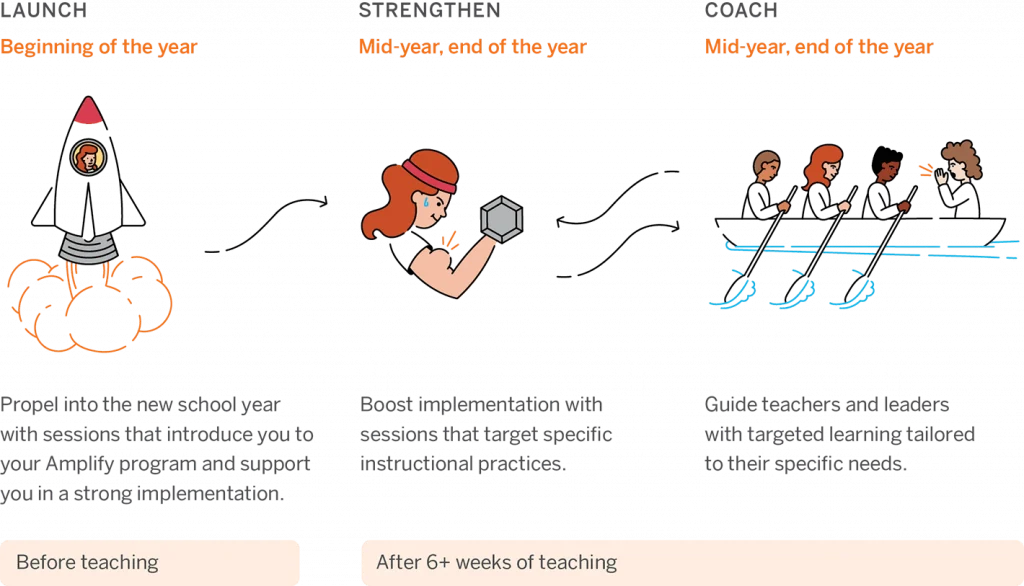
Professional development sets teachers and leaders up for success, whether they are new to or experienced with a program. Each Strengthen session promotes a deeper understanding of the program through targeted instructional practices.

Explore STEM Strengthen sessions by program below.

Professional Learning Partner Guide Certified Provider

Amplify professional development has been vetted by Rivet Education’s team through a rigorous three-step process and is listed in the Professional Learning Partner Guide.

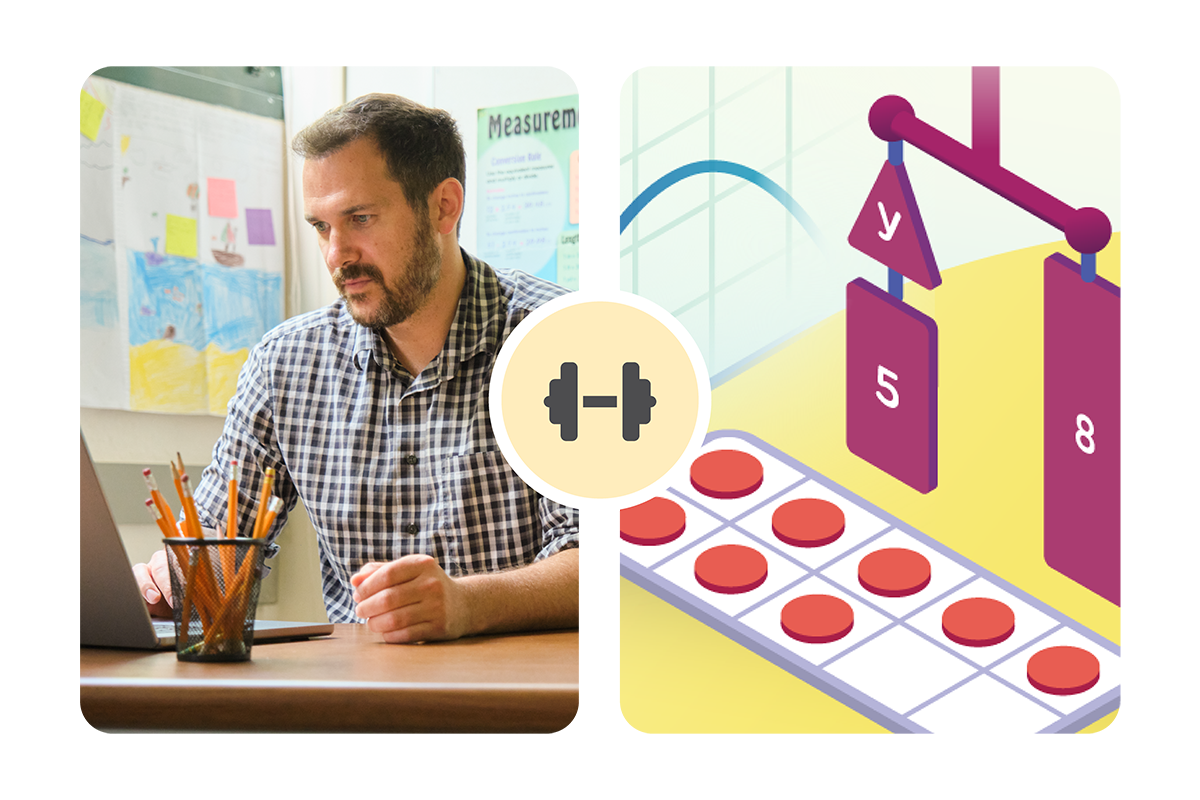
A man works on a laptop at a desk with pencils, next to an illustration of math equations and scales.

About Strengthen sessions

Target specific instructional practices with Strengthen sessions designed for teachers and leaders in year one and beyond.

Ready to schedule? Contact us and an Amplify expert will help identify the session(s) that best support your students’ success.

Each package includes one Strengthen session. Additional sessions can be added as enhancements.

Amplify Math

Amplify Math is a core math curriculum that serves 100% of students in accessing grade-level math every day. The program delivers engaging grade-level math lessons; flexible, social problem-solving experiences both online and off, and insights, data, and reporting that drive performance.

Explore the Amplify Math Strengthen sessions (for grade bands 6–Algebra 1 and Geometry–Algebra 2) for Begin packages and beyond. Click the session title or scroll down to learn more about each session.

Begin packages

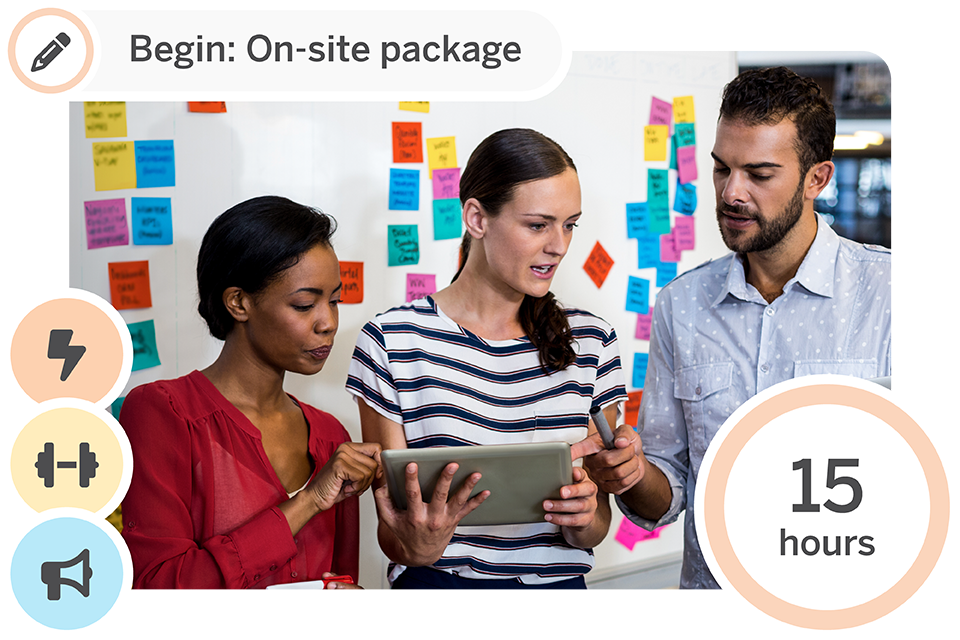
  On-site package
(15 hr.)
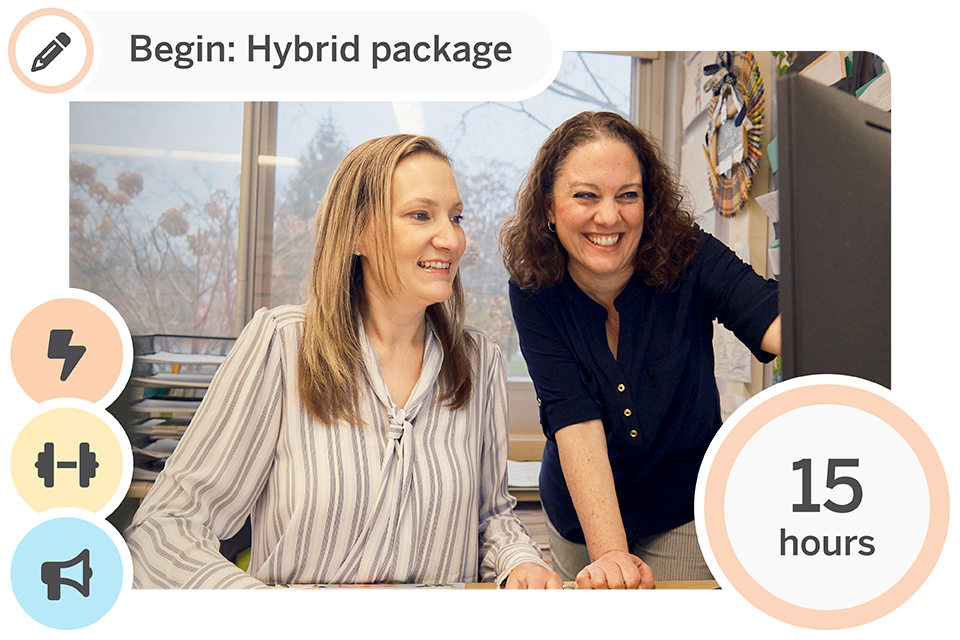
Hybrid
on-site package

(15 hr.)
Hybrid 10 package
(10 hr.)
Hybrid
virtual package

(15 hr.)
Virtual package
(7 hr.)
One Strengthen session per package On-site
3 hr. sessions
On-site
3 hr. sessions
Virtual
1 hr. sessions
Virtual
3 hr. sessions
Virtual
1 hr. sessions
Enhancing planning for 6–A1 teachers A large, light peach-colored checkmark on a transparent background. A large, light peach-colored checkmark on a transparent background.   A large, light peach-colored checkmark on a transparent background.  
Enhancing practice for 6–A1 teachers
A large, light peach-colored checkmark on a transparent background. A large, light peach-colored checkmark on a transparent background.   A large, light peach-colored checkmark on a transparent background.  
Enhancing observations for leaders A large, light peach-colored checkmark on a transparent background. A large, light peach-colored checkmark on a transparent background.   A large, light peach-colored checkmark on a transparent background.  
Unit-level planning for 6–A1 teachers
    A large, light peach-colored checkmark on a transparent background.   A large, light peach-colored checkmark on a transparent background.
Lesson-level planning for 6–A1 teachers
    A large, light peach-colored checkmark on a transparent background.   A large, light peach-colored checkmark on a transparent background.
Increasing engagement with instructional routines for 6–A1 teachers     A large, light peach-colored checkmark on a transparent background.   A large, light peach-colored checkmark on a transparent background.

Begin: Enhancing planning for grade 6–A1 teachers

On-site or virtual, 3 hours

Prepare to teach Amplify Math lessons effectively by engaging in collaborative backward planning with experts. Work alongside our facilitators to understand how to target key concepts and make successful instructional decisions across a unit, and leave with a completed unit plan for your class.

Audience: Teachers, instructional staff (maximum 30 participants)

Begin: Enhancing practice for grade 6–A1 teachers

On-site or virtual, 3 hours

See the Launch, Monitor, Connect problem-based learning model in action, and practice integrating these practices into your facilitation of lesson activities. Leave with guidelines for using the Launch, Monitor, Connect model that you can implement during your next lesson.

Audience: Teachers, instructional staff (maximum 30 participants)

Begin: Enhancing observations for leaders

On-site or virtual, 3 hours

Learn to use our non-evaluative classroom look-for tool for Amplify Math to promote the use of instructional resources, focus on instructional delivery, and monitor instruction. Leave with an action plan for collecting and analyzing observation data to support teachers in their implementation of Amplify Math.

Audience: Leaders (maximum 30 participants)

Begin: Strengthen Focus: Unit-level planning for grade 6–A1 teachers

Virtual, 1 hour

Dive into unit planning as you learn the story of how your upcoming unit is tied to other units and grade levels, and discover the big ideas you will explore alongside your students in Amplify Math.

Audience: Teachers, instructional staff (maximum 30 participants)

Begin: Strengthen Focus: Lesson-level planning for grade 6–A1 teachers

Virtual, 1 hour

Dive into lesson-level planning as you learn how to create a road map that guides student learning, makes connections across lessons, and measures student understanding of the learning goals in Amplify Math.

Audience: Teachers, instructional staff (maximum 30 participants)

Begin: Strengthen Focus: Increasing engagement with Instructional Routines for grade 6–A1 teachers

Virtual, 1 hour

Explore how to use Instructional Routines such as Notice and Wonder to support and engage students as they make sense of new contexts and mathematical problems in Amplify Math.

Audience: Teachers, instructional staff (maximum 30 participants)

Practice packages

  On-site package
(15 hr.)
Hybrid 15,
on-site package

(15 hr.)
Hybrid 13 package
(13 hr.)
Virtual package
(9 hr.)
One Strengthen session per package On-site
3 hr. sessions
On-site
3 hr. sessions
Virtual
1 hr. sessions
Virtual
3 hr. session
Enhancing planning for 6–A1 teachers A large, light peach-colored checkmark on a transparent background. A large, light peach-colored checkmark on a transparent background.   A large, light peach-colored checkmark on a transparent background.
Enhancing practice for 6–A1 teachers
A large, light peach-colored checkmark on a transparent background. A large, light peach-colored checkmark on a transparent background.   A large, light peach-colored checkmark on a transparent background.
Enhancing observations for leaders A large, light peach-colored checkmark on a transparent background. A large, light peach-colored checkmark on a transparent background.   A large, light peach-colored checkmark on a transparent background.
Using differentiation supports for 6–A1 teachers A large, light peach-colored checkmark on a transparent background. A large, light peach-colored checkmark on a transparent background.    A large, light peach-colored checkmark on a transparent background. 
Using data to drive instruction for 6–A1 teachers A large, light peach-colored checkmark on a transparent background. A large, light peach-colored checkmark on a transparent background.   A large, light peach-colored checkmark on a transparent background.
Addressing prerequisite skills for 6–A1 teachers A large, light peach-colored checkmark on a transparent background. A large, light peach-colored checkmark on a transparent background.   A large, light peach-colored checkmark on a transparent background.
Orchestrating math discussions for 6–A1 teachers A large, light peach-colored checkmark on a transparent background. A large, light peach-colored checkmark on a transparent background.   A large, light peach-colored checkmark on a transparent background.
Building language with math routines for 6–A1 teachers     A large, light peach-colored checkmark on a transparent background.  
Unit-level planning for 6–A1 teachers     A large, light peach-colored checkmark on a transparent background.  
Lesson-level planning for 6–A1 teachers     A large, light peach-colored checkmark on a transparent background.  
Increasing engagement with Instructional Routines for 6–A1 teachers     A large, light peach-colored checkmark on a transparent background.  

Practice: Enhancing planning for grade 6–A1 teachers

On-site or virtual, 3 hours

Prepare to effectively teach Amplify Math lessons by engaging in collaborative backward planning with experts. Work alongside our facilitators to understand how to target key concepts and make effective instructional decisions across a unit, and leave with a completed unit plan for your class.

Audience: Teachers, instructional staff (maximum 30 participants)

Practice: Enhancing practice for grade 6–A1 teachers

On-site or virtual, 3 hours

See the Launch, Monitor, Connect problem-based learning model in action, and practice integrating these practices into your facilitation of lesson activities. Leave with guidelines for using the Launch, Monitor, Connect model that you can implement during your next lesson.

Audience: Teachers, instructional staff (maximum 30 participants)

Practice: Enhancing observations for leaders

On-site or virtual, 3 hours

Learn to use our non-evaluative classroom look-for tool for Amplify Math to promote the use of instructional resources, focus on instructional delivery, and monitor instruction. Leave with an action plan for collecting and analyzing observation data to support teachers in their implementation of Amplify Math.

Audience: Leaders (maximum 30 participants)

Practice: Using differentiation supports for grade 6–A1 teachers

On-site or virtual, 3 hours

Learn how to leverage embedded differentiated supports in Amplify Math to ensure that all students can be successful. Walk away with a plan for supporting students in your classroom including multilingual/English learners (ML/ELs), students with disabilities, students who may need extra support, and advanced students.

Audience: Teachers, instructional staff (maximum 30 participants)

Practice: Using data to drive instruction for grade 6–A1 teachers

On-site or virtual, 3 hours

Grow your proficiency in data analysis. Turn student data gathered within Amplify Math into differentiated instruction targeting specific skills. Walk away ready to use the data provided in the curriculum to align embedded support to your students’ unique needs.

Audience: Teachers, instructional staff (maximum 30 participants)

Practice: Addressing prerequisite skills for grade 6–A1 teachers

On-site or virtual, 3 hours

Explore Amplify Math’s just-in-time approach to addressing prerequisite skills. Leave with a deeper understanding of how to use embedded curriculum resources to identify and support prerequisite skills essential for your next unit.

Audience: Teachers, instructional staff (maximum 30 participants)

Practice: Orchestrating math discussions for grade 6–A1 teachers

On-site or virtual, 3 hours

Learn strategies for leading discussions that promote more math talk among all students in your classroom. Walk away with strategies and Amplify Math curriculum tools you can bring back to your classroom to enhance discussion in your next lesson.

Audience: Teachers, instructional staff (maximum 30 participants)

Practice: Strengthen Focus: Building language with math routines for grade 6–A1 teachers

Virtual, 1 hour

Explore how Math Language Routines support students as they make sense of new contexts and mathematical problems in Amplify Math. Leave with strategies for using these routines to support students in learning mathematical practices, content, and language in your upcoming lessons.

Audience: Teachers, instructional staff (maximum 30 participants)

Practice: Strengthen Focus: Unit-level planning for grade 6–A1 teachers

Virtual, 1 hour

Dive into unit planning as you learn the story of how your upcoming unit is tied to other units and grade levels, and discover the big ideas you’ll explore alongside your students in Amplify Math.

Audience: Teachers, instructional staff (maximum 30 participants)

Practice: Strengthen Focus: Lesson-level planning for grade 6–A1 teachers

Virtual, 1 hour

Dive into lesson-level planning as you learn how to create a roadmap for a lesson that guides student learning, makes connections across lessons, and measures student understanding of the learning goals in Amplify Math.

Audience: Teachers, instructional staff (maximum 30 participants)

Practice: Strengthen Focus: Increasing engagement with Instructional Routines for grade 6–A1 teachers

Virtual, 1 hour

Explore how to leverage Instructional Routines such as Notice and Wonder to support students as they make sense of new contexts and mathematical problems in Amplify Math.

Audience: Teachers, instructional staff (maximum 30 participants)

Amplify Desmos Math

Amplify Desmos Math is a core K–12 program—available in English and Spanish—that applies a problem-based approach to develop deep conceptual understanding, procedural fluency, and application. Using technology inspired by students’ natural curiosity, Amplify Desmos Math connects the classroom and fosters real collaboration, discourse, and perseverance in problem-solving. Captivating activities, powerful teaching tools, and lots of support enable students to develop math proficiency that lasts a lifetime.

Explore the Amplify Desmos Math Strengthen sessions (for grades K–5, 6–A1, and high school) for Begin packages and beyond. Click the session title or scroll down to learn more about each session.

Begin packages

Strengthen sessions

  On-site package
(15 hr.)
Hybrid 15,
on-site package

(15 hr.)
Hybrid 10 package
(10 hr.)
Hybrid 15, virtual package
(15 hr.)
Virtual package
(7 hr.)
One Strengthen session per package On-site,
3 hr.
On-site,
3 hr.
Virtual,
1 hr.
Virtual,
3 hr.
Virtual,
1 hr.
Enhancing planning for
K–5, 6
–A1, or high school teachers
A large, light peach-colored checkmark on a transparent background. A large, light peach-colored checkmark on a transparent background.   A large, light peach-colored checkmark on a transparent background.  
Enhancing practice for
K–5, 6
–A1, or high school teachers
A large, light peach-colored checkmark on a transparent background. A large, light peach-colored checkmark on a transparent background.   A large, light peach-colored checkmark on a transparent background.  
Enhancing observations for K–5, 6–A1 leaders, or high school leaders A large, light peach-colored checkmark on a transparent background. A large, light peach-colored checkmark on a transparent background.   A large, light peach-colored checkmark on a transparent background.  
Supporting all learners: Differentiation in Amplify Desmos Math for K–5 or 6–A1 teachers A large, light peach-colored checkmark on a transparent background. A large, light peach-colored checkmark on a transparent background.   A large, light peach-colored checkmark on a transparent background.  
Unit-level planning for
K–5, 6–A1, or high school teachers
    A large, light peach-colored checkmark on a transparent background.   A large, light peach-colored checkmark on a transparent background.

Begin: Amplify Desmos Math: Enhancing planning for K–5, 6–A1, or high school teachers

On-site or virtual, 3 hours

Dive into planning for Amplify Desmos Math, both big picture and day-to-day. Practice using lesson- and unit-planning protocols that will help you build a deep understanding of the math content you’ll be teaching and the planning resources available to you in the curriculum. Walk away with practical strategies for planning, even when you may not have much time.

Audience: Teachers, instructional staff (maximum 30 participants)

Begin: Amplify Desmos Math: Enhancing practice for K–5, 6–A1, or high school teachers

On-site or virtual, 3 hours

Dig into Amplify Desmos Math’s Launch, Monitor, Connect framework to level-up the student discourse in your math class. Explore in-the-moment differentiation support to help you orchestrate discussion and make the most out of key opportunities for conversation and collaboration.

Audience: Teachers, instructional staff (maximum 30 participants)

New session

Begin: Strengthen: Supporting all learners: Differentiation in Amplify Desmos Math for K–5 or 6–A1 teachers

On-site or virtual, 3 hours

Learn how to use the differentiation supports in Amplify Desmos Math to effectively support all learners, both in the moment during a lesson and beyond the lesson. Leave with a plan for implementing resources to support, strengthen, and stretch students’ thinking.

Audience: Teachers, instructional staff (maximum 30 participants)

New session

Begin: Amplify Desmos Math: Enhancing observations for K–5, 6–A1, or high school leaders

High school sessions are available October 2026.

On-site or virtual, 3 hours

Elevate your program knowledge to support teachers with effective Amplify Desmos Math implementation. Leave prepared to identify key instructional elements in a problem-based math lesson, analyze data, and conduct effective classroom observations.

Audience: Leaders (maximum 30 participants)

New session

Begin: Strengthen Focus: Amplify Desmos Math: Unit-level planning for K–5, 6–A1, or high school teachers

Virtual, 1 hour

Dive into unit-level planning to learn the story of your upcoming unit, and discover the big ideas you will explore alongside your students in Amplify Desmos Math.

Audience: Teachers, instructional staff (maximum 30 participants)

Practice packages

Strengthen sessions

  On-site package
(15 hr.)
Hybrid 15,
on-site package

(15 hr.)
Hybrid 13 package
(13 hr.)
Virtual package
(9 hr.)
One Strengthen session per package On-site,
3 hr.
Virtual,
3 hr.
Virtual,
1 hr.
Virtual,
3 hr.
Amplify Desmos Math: Enhancing planning for K–5, 6–A1, or high school teachers A large, light peach-colored checkmark on a transparent background. A large, light peach-colored checkmark on a transparent background.   A large, light peach-colored checkmark on a transparent background.
Amplify Desmos Math: Enhancing practice for K–5, 6–A1, or high school teachers A large, light peach-colored checkmark on a transparent background. A large, light peach-colored checkmark on a transparent background.   A large, light peach-colored checkmark on a transparent background.
Amplify Desmos Math: Enhancing observations for K–5, 6–A, or high school leaders A large, light peach-colored checkmark on a transparent background. A large, light peach-colored checkmark on a transparent background.   A large, light peach-colored checkmark on a transparent background.
Amplify Desmos Math: Supporting all learners: Differentiation in Amplify Desmos Math for K–5 or 6–A1 teachers A large, light peach-colored checkmark on a transparent background. A large, light peach-colored checkmark on a transparent background.   A large, light peach-colored checkmark on a transparent background.
Amplify Desmos Math: Supporting and facilitating meaningful discussions for K–5, 6–A1, or high school teachers A large, light peach-colored checkmark on a transparent background. A large, light peach-colored checkmark on a transparent background.   A large, light peach-colored checkmark on a transparent background.
Amplify Desmos Math: Assessment in action: Analyzing data, reports, and planning next steps for K–5 or 6–A1 teachers A large, light peach-colored checkmark on a transparent background. A large, light peach-colored checkmark on a transparent background.   A large, light peach-colored checkmark on a transparent background.
Amplify Desmos Math: Unit-level planning for K–5, 6–A1, or high school teachers
    A large, light peach-colored checkmark on a transparent background.  
Amplify Desmos Math: Teaching a lesson with digital student screens for K–5 teachers     A large, light peach-colored checkmark on a transparent background.  
Amplify Desmos Math: Snapshots in the Teacher Dashboard for
6–A1 teachers
    A large, light peach-colored checkmark on a transparent background.  
Amplify Desmos Math: Increasing engagement with instructional routines for K–5, 6–A1, or high school teachers     A large, light peach-colored checkmark on a transparent background.  

Practice: Amplify Desmos Math: Enhancing planning for K–5, 6–A1, or high school teachers

On-site or virtual, 3 hours

Dive into both big-picture and day-to-day planning for Amplify Desmos Math. Practice using lesson- and unit-planning protocols that will help you build a deep understanding of the math content you’ll be teaching and the planning resources available to you in the curriculum. Walk away with practical strategies for planning, even when you may not have much time.

Audience: Teachers, instructional staff (maximum 30 participants)

Practice: Amplify Desmos Math: Enhancing practice for K–5, 6–A1, or high school teachers

On-site or virtual, 3 hours

Dig into Amplify Desmos Math’s Launch, Monitor, Connect framework to level up the student discourse in your math class. Explore in-the-moment differentiation support to help you orchestrate discussion and make the most out of key opportunities for conversation and collaboration.

Audience: Teachers, instructional staff (maximum 30 participants)

New session

Practice: Amplify Desmos Math: Enhancing observations for K–5, 6–A1, or high school leaders

High school sessions are available October 2026.

On-site or virtual, 3 hours

Elevate your program knowledge to support teachers with effective Amplify Desmos Math implementation. Leave prepared to identify key instructional elements in a problem-based math lesson, analyze data, and conduct effective classroom observations.

Audience: Leaders (maximum 30 participants)

New session

Practice: Amplify Desmos Math: Supporting all learners: Differentiation in Amplify Desmos Math for K–5 or 6–A1 teachers

On-site or virtual, 3 hours

Learn how to use the differentiation supports in Amplify Desmos Math to effectively support all learners, both in the moment during a lesson and beyond the lesson. Leave with a plan for implementing resources to support, strengthen, and stretch students’ thinking.

Audience: Teachers, instructional staff (maximum 30 participants)

Available October 2026

Practice: Amplify Desmos Math: Supporting and facilitating meaningful discussions for K–5, 6–A1, or high school teachers

On-site or virtual, 3 hours

Explore how to transform your mathematics classroom into a social and collaborative environment where students deepen their understanding by sharing their mathematical thinking. Learn more about how Amplify Desmos Math provides support for these meaningful mathematical conversations.

Audience: Teachers, instructional staff (maximum 30 participants)

Available October 2026

Practice: Amplify Desmos Math: Assessment in action: Analyzing data, reports, and planning next steps for K–5 or 6–A1 teachers

On-site or virtual, 3 hours

Deepen your understanding of the different types of assessments in Amplify Desmos Math and how they provide evidence of student learning. Analyze sample student work to calibrate on assessment scoring, interpret student thinking, and make a plan for instructional next steps.

Audience: Teachers, instructional staff (maximum 30 participants)

New session

Practice: Strengthen Focus: Amplify Desmos Math: Unit-level planning for K–5, 6–A1, or high school teachers

Virtual, 1 hour

Dive into unit-level planning to learn the story of your upcoming unit, and discover the big ideas you will explore alongside your students in Amplify Desmos Math.

Audience: Teachers, instructional staff (maximum 30 participants)

Practice: Strengthen Focus: Amplify Desmos Math: Teaching a lesson with digital student screens for K–5 teachers

Virtual, 1 hour

Get ready to facilitate lessons with digital student screens. Explore what’s possible with the Teacher Dashboard and plan to make the most of these exciting instructional moments.

Audience: Teachers, instructional staff (maximum 30 participants)

Practice: Strengthen Focus: Amplify Desmos Math: Snapshots in the Teacher Dashboard for 6–A1 teachers

Virtual, 1 hour

Explore how to use the Snapshots tool in the Teacher Dashboard to create a collaborative classroom that invites and celebrates student thinking. Leave with planning tips and tricks that will get you ready to use Snapshots during your busy math classes.

Audience: Teachers, instructional staff (maximum 30 participants)

Available October 2026

Practice: Strengthen Focus: Amplify Desmos Math: Increasing engagement with instructional routines for K–5, 6–A1, or high school teachers

Virtual, 1 hour

Explore how to use the instructional routines in Amplify Desmos Math to support and engage students as they make sense of new contexts, develop mathematical language, and solve problems.

Audience: Teachers, instructional staff (maximum 30 participants)

Amplify Science

Amplify Science is a K–8 science curriculum that blends hands-on investigations, literacy-rich activities, and interactive digital tools to empower students to think, read, write, and argue like real scientists and engineers. 

Explore the Amplify Science sessions (for grade bands K–5 and 6–8) for year-one packages and beyond. Select the session title or scroll to learn more about each session.

Begin packages

Strengthen sessions

  On-site package
(15 hr.)
Hybrid 15,
on-site package

(15 hr.)
Hybrid 10 package
(10 hr.)
Hybrid 15, virtual package
(15 hr.)
Virtual package
(7 hr.)
One Strengthen session per package On-site,
3 hr.
Virtual,
3 hr.
Virtual,
1 hr.
Virtual,
3 hr.
Virtual,
1 hr.
Amplify Science: Enhancing planning for K–5 or 6–8 teachers A large, light peach-colored checkmark on a transparent background. A large, light peach-colored checkmark on a transparent background.   A large, light peach-colored checkmark on a transparent background.  
Amplify Science: Enhancing practice
for K–5 or 6–8 teachers

A large, light peach-colored checkmark on a transparent background. A large, light peach-colored checkmark on a transparent background.   A large, light peach-colored checkmark on a transparent background.  
Amplify Science: Enhancing observations for K–8 leaders A large, light peach-colored checkmark on a transparent background. A large, light peach-colored checkmark on a transparent background.   A large, light peach-colored checkmark on a transparent background.  
Amplify Science: Planning an Amplify Science lesson for K–8 teachers
    A large, light peach-colored checkmark on a transparent background.   A large, light peach-colored checkmark on a transparent background.
Amplify Science: Supporting all learners: Exploring the resources for K–8 teachers
    A large, light peach-colored checkmark on a transparent background.   A large, light peach-colored checkmark on a transparent background.
Amplify Science: Supporting all learners: Teacher modeling and student discourse
for K–8 teachers

    A large, light peach-colored checkmark on a transparent background.   A large, light peach-colored checkmark on a transparent background.

Begin: Amplify Science: Enhancing planning for K–5 or 6–8 teachers

On-site or virtual, 3 hours

Learn how to use a planning protocol to internalize an upcoming Amplify Science unit. Leave with a plan to support students engaging in three-dimensional learning while also meeting the needs of all students in your classroom.

Audience: Teachers, instructional staff grades K–5 or 6–8 (maximum 30 participants)

Begin: Amplify Science: Enhancing practice for K–5 or 6–8 teachers

On-site or virtual, 3 hours

Learn how Amplify Science supports phenomenon-based learning. Experience a sequence of model instruction from the curriculum, and walk away with a plan for how you can enhance the curriculum through your teaching practice to build a powerful culture of figuring out in your science classroom.

Audience: Teachers, instructional staff grades K–5 or 6–8 (maximum 30 participants)

Begin: Amplify Science: Enhancing observations for K–8 leaders

On-site or virtual, 3 hours

Learn to use the non-evaluative classroom look-for tool for Amplify Science to promote the use of instructional materials, focus on instructional delivery, and monitor instruction. Leave with an action plan for collecting and analyzing observation data to support teachers in their implementation of Amplify Science.

Audience: Leaders grades K–8 (maximum 30 participants)

Begin: Strengthen Focus: Amplify Science: Planning an Amplify Science lesson for K–8 teachers

Virtual, 1 hour

Develop structure and routines for planning Amplify Science lessons and leave prepared for an upcoming lesson.

Audience: Teachers, instructional staff grades K–8 (maximum 30 participants)

Begin: Strengthen Focus: Amplify Science: Supporting all learners: Exploring the resources for K–8 teachers

Virtual, 1 hour

Learn how to use lesson-specific differentiation briefs, embedded assessments, and activity-specific teacher support notes to maximize instruction for all learners with Amplify Science.

Audience: Teachers, instructional staff grades K–8 (maximum 30 participants)

Begin: Strengthen Focus: Amplify Science: Supporting all learners: Teacher modeling and student discourse for K–8 teachers

Virtual, 1 hour

Explore ways to leverage and build upon two key instructional elements in Amplify Science, and plan how you’ll use these supports to engage all learners in your next lesson.

Audience: Teachers, instructional staff grades K–8 (maximum 30 participants)

Practice packages

Strengthen sessions

  On-site package
(15 hr.)
Hybrid 15,
on-site package

(15 hr.)
Hybrid 13 package
(13 hr.)
Virtual package
(9 hr.)
One Strengthen session per package On-site,
3 hr.
Virtual,
3 hr.
Virtual,
1 hr.
Virtual,
3 hr.
Amplify Science: Enhancing planning for K–5 or 6–8 teachers A large, light peach-colored checkmark on a transparent background. A large, light peach-colored checkmark on a transparent background.   A large, light peach-colored checkmark on a transparent background.
Amplify Science: Enhancing practice for K–5 or 6–8 teachers
A large, light peach-colored checkmark on a transparent background. A large, light peach-colored checkmark on a transparent background.   A large, light peach-colored checkmark on a transparent background.
Amplify Science: Enhancing observations for K–8 leaders A large, light peach-colored checkmark on a transparent background. A large, light peach-colored checkmark on a transparent background.   A large, light peach-colored checkmark on a transparent background.
Amplify Science: Supporting all learners with complex texts for K–5 or 6–8 teachers
A large, light peach-colored checkmark on a transparent background. A large, light peach-colored checkmark on a transparent background.   A large, light peach-colored checkmark on a transparent background.
Amplify Science: Supporting multilingual/English learners for K–5 or 6–8 teachers
A large, light peach-colored checkmark on a transparent background. A large, light peach-colored checkmark on a transparent background.   A large, light peach-colored checkmark on a transparent background.
Amplify Science: Writing in science for K–5 or 6–8 teachers A large, light peach-colored checkmark on a transparent background. A large, light peach-colored checkmark on a transparent background.   A large, light peach-colored checkmark on a transparent background.
Amplify Science: Assessment system for K–5 or 6–8 teachers
A large, light peach-colored checkmark on a transparent background. A large, light peach-colored checkmark on a transparent background.    
Amplify Science: Engineering Internships for 6–8 teachers
A large, light peach-colored checkmark on a transparent background. A large, light peach-colored checkmark on a transparent background.   A large, light peach-colored checkmark on a transparent background.
Amplify Science: Science Seminar for 6–8 teachers
A large, light peach-colored checkmark on a transparent background. A large, light peach-colored checkmark on a transparent background.   A large, light peach-colored checkmark on a transparent background.
Amplify Science: Planning an Amplify Science lesson for K–8 teachers
    A large, light peach-colored checkmark on a transparent background.  
Amplify Science: Supporting all learners: Exploring the resources for K–8 teachers
    A large, light peach-colored checkmark on a transparent background.  
Amplify Science: Supporting all learners: Teacher modeling and student discourse for K–8 teachers
    A large, light peach-colored checkmark on a transparent background.  
Amplify Science: Analyzing student work for K–8 teachers
    A large, light peach-colored checkmark on a transparent background.  
Amplify Science: Supporting all learners: Multimodal learning and multiple at-bats for K–8 teachers
    A large, light peach-colored checkmark on a transparent background.  
Amplify Science: Grading with Amplify Science for K–8 teachers
    A large, light peach-colored checkmark on a transparent background.  
Amplify Science: Enhancing the digital experience for K–5 teachers
    A large, light peach-colored checkmark on a transparent background.  
Amplify Science: Planning with the Coherence Flowchart for K–8 teachers
    A large, light peach-colored checkmark on a transparent background.  

Practice: Amplify Science: Enhancing planning for K–5 or 6–8 teachers

On-site or virtual, 3 hours

Learn how to use a planning protocol to internalize an upcoming Amplify Science unit. Walk away with a plan to support students engaging in three-dimensional learning while also meeting the all needs of students in your classroom.

Audience: Teachers, instructional staff grades K–5 or 6–8 (maximum 30 participants)

Practice: Amplify Science: Enhancing practice for K–5 or 6–8 teachers

On-site or virtual, 3 hours

Learn how Amplify Science supports phenomenon-based learning. Experience a sequence of model instruction from the curriculum, and walk away with a plan for how you can enhance the curriculum through your teaching practice to build a powerful culture of “figuring out” in your science classroom.

Audience: Teachers, instructional staff grades K–5 or 6–8 (maximum 30 participants)

Practice: Amplify Science: Enhancing observations for K–5 or 6–8 leaders

On-site or virtual, 3 hours

Learn to use the non-evaluative classroom look-for tool for Amplify Science to promote the use of instructional materials, focus on instructional delivery, and monitor instruction. Leave with an action plan for collecting and analyzing observation data to support teachers in their implementation of Amplify Science.

Audience: Leaders grades K–5 or 6–8 (maximum 30 participants)

Practice: Amplify Science: Supporting all learners with complex texts for K–5 or 6–8 teachers

On-site or virtual, 3 hours

Collaborate to solve common reading challenges alongside other educatorsLearn strategies to support students in grades K–5 or 6–8 in accessing complex texts in Amplify Science units by engaging in a model-reading sequence. Leave with a plan for incorporating effective strategies into your upcoming Amplify Science reading lesson.

Audience: Teachers, instructional staff grades K–5 or 6–8 (maximum 30 participants)

Practice: Amplify Science: Supporting multilingual/English learners for K–5 or 6–8 teachers

On-site or virtual, 3 hours

Explore strategies and engage in model activities to support multilingual/English learners in grades K–5 or 6–8 in developing their abilities to do, talk, read, write, visualize, and construct arguments in Amplify Science. Leave with strategies to support a deeper understanding of the critical role that language and literacy play in developing scientific understanding.

Audience: Teachers, instructional staff grades K–5 or 6–8 (maximum 30 participants)

Practice: Amplify Science: Writing in science for K–5 or 6–8 teachers

On-site or virtual, 3 hours

Develop an understanding of how the Amplify Science writing approach supports students in grades K–5 or 6–8 in engaging in science practices, making sense of science ideas, and growing as writers. Leave with a plan for supporting student writing in your next unit.

Audience: Teachers, instructional staff grades K–5 or 6–8 (maximum 30 participants)

Practice: Amplify Science: Assessment system for K–5 or 6–8 teachers

On-site or virtual, 3 hours

Analyze a sample formative assessment, deepen your understanding of learning progressions in each Amplify Science unit, and participate in discussions to understand the relationships between different types of assessments and your unit’s learning goals. Walk away with strategies for collecting, analyzing, and responding to student assessment data.

Audience: Teachers, instructional staff grades of K–5 or 6–8 (maximum 30 participants)

Practice: Amplify Science: Engineering Internships for 6–8 teachers

On-site or virtual, 3 hours

Plan for the first Amplify Science Engineering Internship course of your grade level (6–8) by exploring the Futura workspace and digital tools students will use during the internship experience. Leave with an understanding of how students will apply science concept knowledge to construct design solutions. This session will feature one of the following Engineering Internships based on your need: Metabolism, Plate Motion, or Force and Motion.

Audience: Teachers, instructional staff grades 6–8 (maximum 30 participants)

Practice: Amplify Science: Science Seminar for 6–8 teachers

On-site or virtual, 3 hours

Experience a Science Seminar sequence of a sample unit from Amplify Science grade 6–8 from the student perspective! Gain an understanding of how students apply science concepts to engage in argumentation about a phenomenon, and leave with a plan for teaching a Science Seminar unit in your own classroom.

Audience: Teachers, instructional staff grades 6–8 (maximum 30 participants)

Practice: Strengthen Focus: Amplify Science: Planning an Amplify Science lesson for K–8 teachers

Virtual, 1 hour

Develop a structure for planning Amplify Science lessons and leave prepared for an upcoming lesson.

Audience: Teachers, instructional staff grades K–8 (maximum 30 participants)

Practice: Strengthen Focus: Amplify Science: Supporting all learners: Exploring the resources for K–8 teachers

Virtual, 1 hour

Learn how to use lesson-specific differentiation briefs, embedded assessments, and activity-specific teacher support notes to supplement instruction for all learners with Amplify Science.

Audience: Teachers, instructional staff grades K–8 (maximum 30 participants)

Practice: Strengthen Focus: Amplify Science: Supporting all learners: Teacher modeling and student discourse for K–8 teachers

Virtual, 1 hour

Explore ways to leverage and build upon two key instructional elements in Amplify Science and plan for ways to use these supports to engage all learners in your next lesson.

Audience: Teachers, instructional staff grades K–8 (maximum 30 participants)

Practice: Strengthen Focus: Amplify Science: Analyzing student work for K–8 teachers

Virtual, 1 hour

Engage with a protocol to analyze real student work and plan for instructional next steps in Amplify Science. (You are required to bring student formative assessment samples to this session.)

Audience: Teachers, instructional staff grades K–8 (maximum 30 participants)

Practice: Strengthen Focus: Amplify Science: Supporting all learners: Multimodal learning and multiple at-bats for K–8 teachers

Virtual, 3 hours

Learn strategies to develop an understanding of how Amplify Science’s multimodal approach supports all learners.

Audience: Teachers, instructional staff grades K–8 (maximum 30 participants)

Practice: Strengthen Focus: Amplify Science: Grading with Amplify Science for K–8 teachers

Virtual, 1 hour

Develop an understanding of how to use assessment resources in Amplify Science to grade students three-dimensionally and use practices that align with district/school guidelines.

Audience: Teachers, instructional staff grades K–8 (maximum 30 participants)

Practice: Strengthen Focus: Amplify Science: Enhancing the digital experience for K–5 teachers

Virtual, 1 hour

Learn how to go further with Amplify Science digital experience tools to enhance teaching and learning.

Audience: Teachers, instructional staff grades K–5 (maximum 30 participants)

Practice: Strengthen Focus: Amplify Science: Planning with the Coherence Flowchart for K–8 teachers

Virtual, 1 hour

Practice using the Coherence Flowchart resource to plan an upcoming Amplify Science unit.

Audience: Teachers, instructional staff grades K–8 (maximum 30 participants)

Get in touch with a PD expert.

Welcome, Program 3 reviewers!

We’re honored to introduce you to Amplify California Language Arts. We’re confident you’ll find this comprehensive program to be a powerful tool for bringing the vision of the California ELA/ELD Framework to life in classrooms across the state.

Please start with the video on the right to learn how to navigate the program and access key features referenced within our submission. Below you’ll find additional resources to support your review.

Your review samples

We’re excited for you to begin your review of Amplify California Language Arts, a comprehensive biliteracy program for kindergarten through grade 6.

Reviewer Binders (K–6)

Your physical samples should have arrived in grade-specific boxes with three Reviewer Binders.

  • The first binder will contain logistical program review information and the printed Evaluation Criteria Map.
  • The second binder will contain the printed Standards Maps for grades K–2.
  • The third binder will contain the printed Standards Maps for grades 3–6.

Physical samples (trade books)

Your review of the program will be entirely digital with the exception of the trade books that you will be receiving as physical samples. You can expect to receive 13 boxes of physical materials for your review. Twelve boxes of trade books, one for each grade K–5, in English and Spanish, and one box containing your Reviewer Binders.

As you begin the process of organizing your materials, please refer to the inventory checklist found inside each box as well as within your Reviewer Binder.

Digital review materials

In order to access your digital review materials, you’ll need to log in to our platform using your unique login credentials found on a Digital Review Credential flyer inside of your Reviewer Binder. Once you have located the flyer:

  • Click the orange button below to access the platform.
  • Click “Log in with Amplify.”
  • Enter the username and password provided on your Digital Review Credential flyer.

Navigation tips

Before you get started, please review these important functionality notes:

Criteria Map and Standards Maps must be opened on Microsoft Word on your desktop to function as intended. If you open the documents without Microsoft Word on your desktop, citations will be cut off at the bottom of most tables within the document.

Many of our citations are deep-links to PDFs, meaning they will take you to the right page or the first page in the sequence for the citation in question. To ensure this functionality works, please disable any PDF-viewing extensions or plug-ins such as Adobe Acrobat Pro Browser Extension.

[Reviewer program navigation video] Grades K–5

[Reviewer program navigation video] Grade 6

Click here for additional information on navigating the program for grade 6.

Category 1: English Language Arts (ELA) and English Language Development (ELD) content/alignment to standards

Evaluation Criteria Map

Linked below is the Evaluation Criteria Map. Please note that you will need to be logged into the digital platform to access the links in the Evaluation Criteria Map.

ELA Standards Maps

The links below provide the Standards Maps for Amplify California Language Arts for each grade level.

ELD Standards Maps

Category 2: Program organization

Amplify California Language Arts’ biliteracy program is a comprehensive curriculum provides a full year of evidence-based instruction for each grade level, with both integrated and designated English Language Development instruction designed to give multilingual/English learners the tools to thrive. Amplify’s biliteracy program for grades K–6 includes:

  • Core English language arts instruction: Amplify Core Knowledge Language Arts (CKLA) California (grades K–5) and Amplify ELA California (grade 6) covering knowledge building and foundational skills.
    • Provides upper grade foundational skills instruction for grades 3–6.
  • Core Spanish language arts instruction: Amplify Caminos California, a fully parallel SLA program that works in tandem with English core instruction across all grades.
    • Provides upper grade foundational skills instruction for grades 3–6.
  • Designated English Language Development: Language Studio California is the designated English Language Development companion that directly aligns with and supports core English instruction. 
  • Newcomer Support: Amplify California Language Arts Newcomer Support to facilitate instruction for students who are new to both English and the United States.

Program structure

Amplify’s California Language Arts programs are built on what the research shows: Strong readers need both word recognition and language comprehension. Our comprehensive curriculum suite follows the Simple View of Reading bringing together foundational skills and knowledge building to deliver instruction grounded in the Science of Reading.

This model is integral to the structure of the Amplify biliteracy program, which directly aligns with the CA CCSS ELA and ELD standards by combining rigorous decoding and skills instruction with research-based knowledge and language development instruction. In its early grades, the Amplify biliteracy program uses a two-strand structure—Skills/Lectoescritura and Knowledge/Conocimiento—to effectively address this learning challenge while meeting standards expectations for both language development and academic content mastery.

Diagram with three orange squares labeled: "Language comprehension," "Word recognition," and "Skilled reading," connected by multiplication and equals signs, with Spanish headings above each square.

[Reviewer highlight video] Program organization for Category 2

[Reviewer highlight video] Program structure for grades K–2

[Reviewer highlight video] Program structure for grades 3–5

[Reviewer highlight video] Program structure for grade 6

Amplify Caminos California lessons are designed to allow all students time to work toward learning objectives, including peer collaboration and discussion. Since each lesson activity is aligned to subsequent activities, students’ understanding and analysis develops progressively throughout the lesson.

Each lesson follows a predictable structure with clearly marked components, beginning with warm-up routines, progressing through explicit instruction with guided practice, and concluding with independent application activities. The program provides detailed teacher language, including question stems and discussion prompts, ensuring clear and consistent delivery of instruction.

Amplify CKLA California and Amplify Caminos California empower teachers to deliver effective instruction and keep students engaged with the following resources:

  • Teacher Guides
  • Assessment Guides
  • Authentic texts and trade books
  • Knowledge Image Cards
  • Knowledge Flip Books
  • Remediation and intervention resources
  • Decodable readers
  • Student Readers and novels
  • Student Activity Books
  • Dedicated ELD support with Language Studio California
  • Poet’s Journals
  • eReaders
  • Sound Library featuring articulation videos and songs
  • Instructional routine modeling videos
  • Assignable Practice Games
  • On-demand professional development

Amplify ELA California students stay engaged with the following resources:

  • Teacher Guides that include:
    • Detailed lesson plans
    • Standards alignment and exit tickets
    • Real-time differentiation strategies
    • Robust reporting
  • Student Editions that include:
    • High-quality narrative and informational texts
    • Videos, audio supports, and digital experiences that capture their attention
    • Personal Writing Journal to keep all student writing in one place
  • Dedicated ELD support with Language Studio California
  • Trade books

Core literacy philosophy

Support every learner. Meet all learning needs with a Multi-Tiered System of Supports (MTSS) that brings together universal screening, scaffolded core instruction, support for multilingual/English learners, and data-driven intervention to ensure every student gets what they need to succeed.

Deliver consistent foundational skills instruction. Daily explicit, systematic skills instruction in grades K–2, with targeted yet flexible support for students still building decoding confidence in grades 3–6, ensures mastery of essential reading foundations.

Build lasting knowledge across all grades. Through coherently sequenced, content-rich instruction that revisits key vocabulary and concepts with increasing complexity, students build meaningful connections that deepen their vocabulary and reading comprehension.

Strengthen reading through writing at every level. Regular writing instruction grounded in the Science of Writing supports reading comprehension, improves sentence-level writing, and provides the foundation for high-quality composition. As students progress through the upper grades, they engage in increasingly complex analytical tasks—synthesizing ideas, drawing generalizations, and interpreting multiple textual layers through both focused quick-writes and comprehensive essays. 

Foster oral language development. Structured opportunities for academic conversation and evidence-based dialogue build students’ ability to express complex ideas with precision and allow them to participate confidently in classroom discussions.

Measure growth with comprehensive assessments. Assessments range from in-the-moment checks for understanding to summative assessments that measure progress toward skills mastery and standards proficiency, providing the data needed to drive targeted instruction.

Scope and sequence

Below you can view the scope and sequence documents for each grade level. 

Routines

Amplify CKLA California, Amplify Caminos California, and Amplify ELA California include several structured instructional routines that provide predictable patterns for both teachers and students:

Discussion and collaboration routines:

  • Turn and Talk: Partners discuss text-specific content using sentence starters and frames
  • Think-Pair-Share: Students engage in individual thinking, partner discussion, and whole-class sharing
  • Partner reading: Students sit shoulder-to-shoulder, taking turns reading and listening

Foundational Skills routines:

  • Sound-spelling review: Warm-up activities that reinforce phonics patterns
  • Oral blending warm-ups: Teacher-guided practice progressing to independent application
  • Finger-tapping: Techniques for blending sounds
  • Chaining activities: Students manipulate letters to transform one word into another
  • Word Work: Daily short activities focused on domain-specific and academic vocabulary

Knowledge-building routines:

  • Teacher modeling: Demonstration of proper intonation, expression, and pacing
  • Choral reading: Whole-class reading practice
  • Partner reading: Paired fluency practice

Close reading routines

The program includes carefully structured close reading activities that guide students through multiple encounters with complex texts. These routines help students develop deeper comprehension through systematic analysis and discussion.

Each routine includes comprehensive instructional guides with clear-cut directions for implementation, straightforward explanations of concepts, and suggestions for discussion.

Cross-Linguistic Transfer routines

The Cross-Linguistic Transfer (CLT) routines are easy-to-implement, 10–15 minute mini-lessons designed to help bridge English and Spanish literacy and language development. These structured routines are organized by grade bands for K–2, grades 3–5 and grade 6, covering five skill areas:

  • Oral language
  • Reading
  • Vocabulary
  • Language
  • Writing

[Reviewer highlight video] Amplify’s program alignment to Cross-Linguistic Transfer criteria

Designated English Language Development materials

Language Studio California is a K–8 content-based companion for English language learners. Built on Amplify CKLA California and Amplify ELA California’s carefully sequenced Knowledge Domains, it combines engaging content knowledge with targeted supports and research-based strategies to help students move swiftly toward language proficiency. This program includes:

  • Real-world content to provide authentic opportunities to practice reading, writing, speaking, and listening.
  • Scaffolding strategies and differentiated instruction to offer targeted support along five English proficiency levels.
  • Progress monitoring tools to help teachers provide consistent and effective support.
  • Teacher Guides that:
    • Provide impactful progress monitoring tools including formative and summative assessments, and Language Proficiency Assessment rubrics.
    • Offer varied differentiation strategies including Support, Challenge, and Access supports in each lesson segment.
    • Are organized into thoughtful lesson segments—Talk Time, Building Background, On Stage and more—that make learning objectives concrete.
  • Activities that:
    • Expand on domain knowledge from core content and read-alouds and prompt collaborative conversation to practice oral fluency.
    • Support hands-on language activities to promote authentic interaction in the classroom.
    • Help students bridge experiences and knowledge with images, vocabulary activities, graphic organizers, anticipation guides, writing space, and more.

Category 3: Assessments

Systematic MTSS alignment

In alignment with the additional 2025 Guidance 3.1.a, the assessment systems align with MTSS tiers, including universal screening, diagnostic assessments for students demonstrating a need for additional support, and progress monitoring tools that complement California’s required reading difficulties screening schedule per SB 114.

Tier 1:
Universal/ differentiated support
Tier 2: 
Supplemental/ targeted
support
Tier 3: 
Intensified/ intensive
support
Core instruction assessments


Frequency of administration
Amplify CKLA California, Amplify Caminos California, Amplify ELA California assessments

Daily, Weekly, Monthly
Amplify CKLA California, Amplify Caminos California, Amplify ELA California assessments

Daily, Weekly, Monthly
Amplify CKLA California, Amplify Caminos California, Amplify ELA California assessments

Daily, Weekly, Monthly
Universal screening assessments

Frequency of administration
mCLASS DIBELS and Lectura


3 times per year – BOY, MOY, EOY
mCLASS DIBELS and Lectura


3 times per year – BOY, MOY, EOY
mCLASS DIBELS and Lectura


3 times per year – BOY, MOY, EOY
Formal progress monitoring assessments


Frequency of administration
mCLASS DIBELS and Lectura


3 times per year – BOY, MOY, EOY
mCLASS DIBELS and Lectura


Monthly
mCLASS DIBELS and Lectura


Bi-weekly
Informal progress monitoring assessments


Frequency of administration
Amplify CKLA California, Amplify Caminos California, Amplify ELA California core assessments

Daily
Intervention Toolkit progress monitoring assessments


When linked to a lesson in the toolkit
Intervention Toolkit progress monitoring assessments


When linked to a lesson in the toolkit
Diagnostic assessment


Frequency of administration
Amplify skill diagnostic assessment


Amplify Spanish skill diagnostic assessment

Optional after universal screening assessment is administered
Amplify skill diagnostic assessment


Amplify Spanish skill diagnostic assessment

After universal screening assessment is administered

Universal assessment system

Amplify’s mCLASS® DIBELS® 8th Edition (K–8) and mCLASS Lectura (K–6) are universal and dyslexia screening assessments that should be administered three times per year (BOY, MOY, and EOY) to all students. The assessments evaluate student literacy risk, determine progress toward grade-level goals, and indicate the level of instructional  support a student may need. Beginning-of-year screenings require adequate instructional time before administration, particularly in grades K–1, while mid-year and end-of-year assessments evaluate instructional effectiveness and guide tier placement adjustments. These screenings also identify students at risk for dyslexia. Universal screening provides essential data for targeting instruction and measuring instructional system effectiveness.

Core instruction assessments

Amplify CKLA California, Amplify Caminos California, and Amplify ELA California provide a comprehensive suite of assessments for grades K–6 that range from low-stakes, informal formative assessments to more formal summative assessments. These assessments incorporate a variety of methods and question types, including multiple-choice questions, open-ended questions, and oral and written responses.

Formative assessments:

  • Checks for Understanding: Incorporated into each lesson segment throughout daily instruction. Quick pulse-checks that provide immediate feedback during lesson delivery (grades K–5). 
  • Daily formative assessments: Highlighted moments within each lesson for teachers to plan to track mastery of Primary Focus objectives and standards of each lesson to get a clear snapshot of individual and whole-class progress (grades K–5). 
  • Activity pages: Completed as part of lessons and can be used to assess lesson content understanding through various formats (grades K–5).
  • Exit Tickets: Located at the end of lessons, these provide a quick gauge of students’ ability to meet the lesson’s focus standards (grade 6).  
  • Writing Prompts: Prompts integrated throughout lessons during writing activities that provide skill snapshots within lessons and tracks patterns of skill development over time (grade 6).
  • Independent reading activities (Solos): At the end of every lesson, students complete an independent reading activity (“Solo”) with reading questions that are scored to measure comprehension (grade 6).

Summative assessments:

  • Skills end-of-unit assessments (grades K–2) 
  • Knowledge end-of-domain assessments (grades K–2) 
  • End-of-unit assessments (grades 3–5) 
  • Unit essays: A culminating end-of-unit set of lessons that guide students through crafting an essay with a rubric to score mastery of writing skills (grade 6)
  • Unit reading assessments: Auto-scored responses and two constructed response items evaluate comprehension, content understanding, and reading skills using the passages students read during the unit (grade 6)

Performance assessments

Student Performance Assessments are multi-day assessments administered in Grades K–5 at the beginning, middle, and end of year to help teachers gauge student mastery of grade-level Core content. These assessments provide critical data to help teachers set targeted instructional goals and monitor individual and class-wide progress towards core objectives.

Progress monitoring

Amplify’s mCLASS® DIBELS® 8th Edition and mCLASS Lectura provide formal progress monitoring in the discrete skills that are indicative of reading growth and predictive of overall success to provide the most instructionally meaningful information to teachers.

Informal progress monitoring tools can be found within the Intervention Toolkit, including materials for teachers to record, track, and evaluate student progress.

Diagnostic assessment

Interventions within Amplify’s literacy programs are informed by a skill diagnostic assessment that provides detailed data on foundational literacy skill deficits. The Amplify Skill Diagnostic Assessment and Amplify Spanish Skill Diagnostic assessment serve as critical tools in this process, administered specifically to students identified as at risk for reading difficulty through universal screening assessments—particularly those demonstrating mCLASS DIBELS 8th Edition or mCLASS Lectura composite scores in the Well Below or Below Benchmark ranges. These diagnostic assessments provide teachers with the precise skills to begin intervention and remediation.

Category 4: Universal Access

Amplify CKLA California, Amplify Caminos California, and Amplify ELA California are developed using the Universal Design for Learning framework to proactively ensure that all learners can access and participate in meaningful, challenging learning opportunities.

Universal Design for Learning

Amplify CKLA California, Amplify Caminos California, and Amplify ELA California incorporate opportunities for engagement, representation, action, and expression based on the guidelines of Universal Design for Learning.

  • Multiple Means of Engagement: The programs incorporate interesting and motivating ways for students to interact with information and content. The Universal Access section in the introduction of each lesson provides specific lesson-level options based on the needs of individual classrooms and students. Scaffolding for students with various levels of need is incorporated into the design of each lesson.
  • Multiple Means of Representation: The programs provide multiple means of presenting content to maximize student understanding. This includes digital component files that allow for a range of presentations of images and text to support learning. Amplify provides access to universal supports such as point-of-use audio for all core texts, embedded definitions for critical vocabulary, and glossaries in multiple languages. The programs include clarification on language found throughout the program, with sidebars that include support on transition words and syntax, and illustrations to help students understand the concepts they are learning.
  • Multiple Means of Action and Expression: The programs include a range of methods for all students, including Multilingual/English Learners, to navigate and demonstrate learning. This includes physical actions, a range of methods for response, appropriate tools for composition, and varied scaffolding. Lessons provide multiple ways for students to interact with text, allowing their brains to process the language through distinct pathways. Activities harness multiple learning modes, using media tools, digital apps, and a variety of visual and physical experiences to strategically support and enhance student learning.
  • Accessibility: Universal access features include visual aids, enlarged materials, physical objects, and multiple learning modalities through activities like Push & Say and Wiggle Cards. The Universal Access section in the introduction of each lesson provides specific lesson-level options based on the needs of individual classrooms and students.

Embedded differentiation

Amplify CKLA California, Amplify Caminos California, and Amplify ELA California provide built-in differentiation strategies in every lesson for all students.

  • Pre-teaching supports include mini-lessons on:
    • Core vocabulary building
    • Core connections
    • Essential background information building
    • What Have We Already Learned?/What Do We Already Know?
  • Differentiated Support for Core Instruction tables, located in the overview of each K–2 Skills Teacher Guide, provide a list of specific opportunities for reteaching and additional support in each lesson based on skill.
  • Support and Challenge Sidebars in lesson margins offer educators immediate guidance in implementing point-of-use differentiation techniques.
  • Flexible Grouping within lessons provides opportunities for teachers to facilitate small groups, partners, or individualized support based on students’ needs. In the Skills Strand, teachers receive specific guidance for differentiated small group instruction, with targeted support and activities outlined for both Group 1 (students needing additional support) and Group 2 (on-level students) based on data. 
  • Amplify ELA California and Amplify Caminos California provide point-of-use supports embedded within key core lesson activities with six levels of differentiation. The goal of these supports is to fully enable access to grade-level content for all students, including students with disabilities, English learners, and students ready for an additional level of challenge.
  • The Universal Access section of Advance Preparation in each lesson includes varied strategies to ensure all students can access and engage in each lesson.
  • Frequent use of graphic organizers and visual supports in lessons provide opportunities for differentiation based on need. The program also includes a variety of technological supports, such as eReaders with audio.
  • Extension opportunities are suggested throughout lessons, often embedded in writing tasks, which include prompts to use more complex and descriptive vocabulary, figurative language,  multi-clause and complex sentences, and  informational text characteristics.

Assessment-driven MTSS resources

  • The K–6 Intervention Toolkit is available online and provides easy-to-use resources that assist teachers in filling gaps in students’ reading skills, with activities to support print concepts, phonological awareness, phonics, fluency, and other key skills.
  • Fluency packets (Grades 2–6)
  • Foundational Skills Intervention Program for Grades 3–6 support students who would benefit from direct and explicit intervention instruction in the full continuum of foundational skills in the upper grades
  • Flexible Instructional Time including:
    • Pausing Points built into the curriculum that provide teachers with dedicated time to address specific student needs through targeted reteaching, remediation, practice, and extension activities 
    • Pausing Point activities designed to support multilingual/English learners’ competence and confidence through differentiated whole-group, small-group, or individual instruction
  • Boost Reading and Boost Lectura are student-led digital intervention programs that follow the scope and sequences of Amplify CKLA California and Amplify Caminos California respectively, to reinforce the same foundational skills taught in core instruction. It integrates easily into daily routines, while the robust data provided by mCLASS® DIBELS® 8th Edition offers a detailed view of how students progress across all instructional tiers.

Category 5: Instructional Planning and Teacher Support

Amplify CKLA California, Amplify Caminos California, and Amplify ELA California teachers are empowered to deliver effective instruction with various print and digital resources. The program provides comprehensive planning and support materials designed to help teachers prepare for and execute lessons effectively and fulfill the requirements of Category 5.

Implementation supports across K–6

Planning and preparation resources

  • Unit Overviews that provide important background and context for the texts students will read, including highlighted elements within the text and guidance for how students will work with those elements
  • Sub-unit Overviews (Grade 6) that provide an overview of Lesson Objectives and reading and writing assignments, as well as a list of any projections, multimedia, or digital apps that can be projected from the teacher’s included digital license
  • Lesson-by-lesson preparation checklists (Grade 6) accompanying each Sub-unit Overview
  • Lesson Briefs for each individual lesson providing important background and context
  • Content knowledge materials regarding topics that students will examine

Point-of-use instructional guidance

  • Teacher Editions that feature insets of the same text and activity instructions as the corresponding Student Edition, wrapping teacher instruction around these materials
  • Activity guidance at point of use
  • Lesson standards clearly called out
  • Discussion suggestions embedded in lessons
  • Differentiation tips at point of use
  • Detailed Instructional Guides in each activity that include sequencing and grouping suggestions, tips for facilitating discussion, possible student responses and exemplars
  • On-the-Fly supports (Grade 6)—quick call-outs to the identifying features of “on track” and “needs support” students accompanied by short models of student guidance to foster strong performance

Multimedia and digital support

  • Teacher tip videos provide modeling and guidance for implementing key foundational skills routines within the program
  • Digital platform access where teachers can access printable PDFs of differentiated support materials for multilingual/English learners and students struggling to read, including translated Unit Background and Context documents and Text Previews
  • Teacher Dashboard and reporting tools provide real-time visibility into student progress and work for immediate instructional response

Caregiver supports

Communication and overview resources

  • Caregiver Hub available in English and Spanish that provides an overview of the curriculum
  • Caregiver Letters for each K–2 Knowledge Domain and unit in Grades 3–5 that provide an overview of the content, the skills students learn, as well as practical methods that continue the learning and knowledge building at home
  • Unit-specific Caregiver Letters (Grade 6) that provide detailed information regarding what students will read and learn in each unit, including conversation starters that allow caregivers to ask questions and discuss specific aspects of a unit with their student
  • Welcome letters that explain the assessment and placement process while inviting parent involvement and offering support
  • Editable Home-School Communication letters available in English and Spanish
  • Editable Progress Reports for teachers to update parents and guardians on what their child is learning

Content and learning support materials

  • Unit Background and Context documents that provide an introduction and overview to the unit’s topic and themes, available in English and Spanish
  • Text Previews that provide a brief introduction to formative, independent reading assignments (called Solos in Grade 6), available in English and Spanish
  • Unit Overview and Support documents (Grade 6) designed for caregivers that provide information about important questions, assignments, and key aspects of the unit texts, available in English and Spanish
  • Conversation starters included in Knowledge Strand Caregiver Letters to discuss domain topics at home

Home practice and extension activities

  • Take-Home pages in the Skills Strand that include copies of decodable passages, enabling students to share their reading progress with families and continue practicing their skills outside of school
  • Take-Home Letters in the Skills Strand that provide specific guidance for parents to support skills practice at home, such as sound-sorting activities, with detailed instructions and materials for home practice activities
  • Take-Home pages in the Knowledge Strand that provide suggested activities families can do together to reinforce and extend learning beyond the classroom
  • Games and activities on Take-Home Pages that extend classroom instruction, including all the materials and instruction necessary to help families assist students in a fun and engaging way
  • Digital access to decodable texts through the Amplify Caregiver Hub, allowing students to practice their reading skills both in class and at home
  • Weekly spelling lists and directions to decoding activities that can be practiced at home

Welcome, K–8 Program 2 reviewers!

We’re honored to introduce you to Amplify California Language Arts. We’re confident you’ll find this comprehensive program to be a powerful tool for bringing the vision of the California ELA/ELD Framework to life in classrooms across the state.

Please start with the video on the right to learn how to navigate the program and access key features referenced within our submission. Below you’ll find additional resources to support your review.

Your review samples

We’re excited for you to begin your review of Amplify Core Knowledge Language Arts (CKLA) California and Amplify ELA California, Language Studio California for grades K–8. Physical and digital review materials will vary by grade level.

Reviewer Binders (K–8)

Your physical samples should have arrived in grade-specific boxes with three Reviewer Binders.

  • The first binder will contain logistical program review information and the printed Evaluation Criteria Map.
  • The second binder will contain the printed Standards Maps for grades K–4.
  • The third binder will contain the printed Standards Maps for grades 5–8.

Physical samples (K–5)

You can expect to receive 15 boxes of physical materials for your review. As you begin the process of organizing your materials, please refer to the inventory checklist found inside each box as well as within your Reviewer Binder. Please note you will not receive any physical samples for grades 6–8 ELA or Language Studio for grades K-8. Your review of the program for grades 6–8 ELA and Language Studio for grades K-8 will be entirely digital.

Digital samples

In order to access your digital samples, you’ll need to log in to our platform using your unique login credentials found on a Digital Review Credential flyer inside of your Reviewer Binder. Once you have located the flyer:

  • Click the orange button below to access the platform.
  • Click “Log in with Amplify.”
  • Enter the username and password provided on your Digital Review Credential flyer.

Navigation tips

Before you get started, please review these important functionality notes:

Criteria Map and Standards Maps must be opened on Microsoft Word on your desktop to function as intended. If you open the documents without Microsoft Word on your desktop, citations will be cut off at the bottom of most tables within the document.

Many of our citations are deep-links to PDFs, meaning they will take you to the right page or the first page in the sequence for the citation in question. To ensure this functionality works, please disable any PDF-viewing extensions or plug-ins such as Adobe Acrobat Pro Browser Extension.

[Reviewer program navigation video] Grades K–5

[Reviewer program navigation video] Grades 6–8

Click here for additional information on navigating the digital materials for grades 6–8.

Category 1: English Language Arts (ELA) and English Language Development (ELD) Content/Alignment to Standards

Evaluation Criteria Map

Linked below is the Evaluation Criteria Map for grades K–8. Please note that you will need to be logged into the digital platform to access the links in the Evaluation Criteria Map.

ELA Standards Maps

The links below provide the Standards Maps for Amplify California Language Arts for each grade level. Please note that you will need to be logged into the digital platform to access the links in the Standards Maps.

ELD Standards Maps

Category 2: Program Organization

The Amplify California Language Arts Program 2 submission includes Amplify CKLA California for Grades K–5, Amplify ELA California for Grades 6–8, and Amplify Language Studio California for Grades K–8. This comprehensive curriculum provides a full year of evidence-based instruction for each grade level, with both integrated and designated English Language Development instruction designed to give English learners the tools to thrive.

Program structure

Amplify’s California Language Arts programs are built on what the research shows: Strong readers need both word recognition and language comprehension. Our comprehensive curriculum suite follows the Simple View of Reading and The Reading Rope–bringing together foundational skills and knowledge building to deliver instruction grounded in the Science of Reading.

Flowchart illustrating skilled reading as the product of language comprehension and word recognition, grounded in the science of reading.
Diagram illustrating the interplay between language comprehension and word recognition in reading, as seen in early literacy stages. It highlights pathways through knowledge, vocabulary, and sentence understanding, reflecting principles from the CKLA reading program.

Each lesson follows a predictable structure with clearly marked components, beginning with warm-up routines, progressing through explicit instruction with guided practice, and concluding with independent application activities. The program provides detailed teacher language, including question stems and discussion prompts, ensuring clear and consistent delivery of instruction.

[Reviewer highlight video] Program organization for Category 2

[Reviewer highlight video] Program structure for grades K–2

[Reviewer highlight video] Program structure for grades 3–5

[Reviewer highlight video] Program structure for grades 6–8

Amplify CKLA California empowers teachers to deliver effective instruction and keeps students engaged with with the following resources:

  • Teacher Guides
  • Assessment Guides
  • Authentic texts and trade books
  • Knowledge Image Cards
  • Knowledge Flip Books
  • Remediation and intervention resources
  • Decodable readers
  • Student Readers and novels
  • Student Activity Books
  • Dedicated ELD support with Language Studio California
  • Poet’s Journals
  • eReaders
  • Sound Library featuring articulation videos and songs
  • Instructional routine modeling videos
  • Assignable Practice Games
  • On-demand professional development

Amplify ELA California students stay engaged with the following resources:

  • Teacher Guides that include:
    • Detailed lesson plans
    • Standards alignment and exit tickets
    • Real-time differentiation strategies
    • Robust reporting
  • Student Editions that include:
    • High-quality narrative and informational texts
    • Videos, audio supports, and digital experiences that capture their attention
    • Personal Writing Journal to keep all student writing in one place
  • Dedicated ELD support with Language Studio California
  • Trade Books

Core literacy philosophy

Support every learner. Meet all learning needs with a Multi-Tiered System of Supports (MTSS) that brings together universal screening, scaffolded core instruction, support for English learners, and data-driven intervention to ensure every student gets what they need to succeed.

Provide intentional ELD support. Honor students’ linguistic assets while building academic English through both integrated and designated instruction.

Deliver consistent foundational skills instruction. Daily explicit, systematic skills instruction in grades K–2, with targeted yet flexible support for students still building decoding confidence in grades 3–8, ensures mastery of essential reading foundations.

Build lasting knowledge across all grades. Through coherently sequenced, content-rich instruction that revisits key vocabulary and concepts with increasing complexity, students build meaningful connections that deepen their vocabulary and reading comprehension.

Strengthen reading through writing at every level. Regular writing instruction grounded in the Science of Writing supports reading comprehension, improves sentence-level writing, and provides the foundation for high-quality composition. As students progress through the upper grades, they engage in increasingly complex analytical tasks—synthesizing ideas, drawing generalizations, and interpreting multiple textual layers through both focused quick-writes and comprehensive essays. 

Foster oral language development. Structured opportunities for academic conversation and evidence-based dialogue build students’ ability to express complex ideas with precision and allow them to participate confidently in classroom discussions.

Measure growth with comprehensive assessments. Assessments range from in-the-moment checks for understanding to summative assessments that measure progress toward skills mastery and standards proficiency, providing the data needed to drive targeted instruction.

Scope and sequence

Below you can view the scope and sequence for each grade level. 

Routines

Amplify CKLA California and Amplify ELA California include several structured instructional routines that provide predictable patterns for both teachers and students:

Discussion and collaboration routines:

  • Turn and Talk: Partners discuss text-specific content using sentence starters and frames
  • Think-Pair-Share: Students engage in individual thinking, partner discussion, and whole-class sharing
  • Partner reading: Students sit shoulder-to-shoulder, taking turns reading and listening

Foundational Skills routines:

  • Sound-spelling review: Warm-up activities that reinforce phonics patterns
  • Oral blending warm-ups: Teacher-guided practice progressing to independent application
  • Finger-tapping: Techniques for blending sounds
  • Chaining activities: Students manipulate letters to transform one word into another
  • Word Work: Daily short activities focused on domain-specific and academic vocabulary

Knowledge-Building Routines:

  • Teacher modeling: Demonstration of proper intonation, expression, and pacing
  • Choral reading: Whole-class reading practice
  • Partner reading: Paired fluency practice

Close reading routines

The program includes carefully structured close reading activities that guide students through multiple encounters with complex texts. These routines help students develop deeper comprehension through systematic analysis and discussion.

Each routine includes comprehensive instructional guides with clear-cut directions for implementation, straightforward explanations of concepts, and suggestions for discussion.

Designated English Language Development materials

Language Studio California is a K–8 content-based companion for English language learners. Built on Amplify CKLA California’s and Amplify ELA California’s carefully sequenced Knowledge Domains and units, it combines engaging content knowledge with targeted supports and research-based strategies to help students move swiftly toward language proficiency. This program includes:

  • Real-world content to provide authentic opportunities to practice reading, writing, speaking, and listening.
  • Scaffolding strategies and differentiated instruction to offer targeted support along with five English proficiency levels.
  • Progress-monitoring tools to help teachers provide consistent and effective support.
  • Teacher Guides that:
    • Provide impactful progress monitoring tools including formative and summative assessments and Language Proficiency Assessment rubrics.
    • Offer varied differentiation strategies including Support, Challenge, and Access Supports in each lesson segment.
    • Are organized into thoughtful lesson segments—Talk Time, Building Background, On Stage and more—that make learning objectives concrete.
  • Activities that:
    • Expand on domain knowledge from core content and read-alouds and prompt collaborative conversation to practice oral fluency.
    • Support hands-on language activities to promote authentic interaction in the classroom.
    • Help students bridge experiences and knowledge with images, vocabulary activities, graphic organizers, anticipation guides, writing space, and more.

Category 3: Assessments

Systematic MTSS alignment

In alignment with the additional 2025 Guidance 3.1.a, the assessment systems align with MTSS tiers, including universal screening, diagnostic assessments for students demonstrating a need for additional support, and progress monitoring tools that complement the California’s required universal screening schedule per SB 114.

Tier 1:
Universal/ differentiated support
Tier 2: 
Supplemental/ targeted support
Tier 3: 
Intensified/ intensive support
Core instruction assessments


Frequency of administration
Amplify CKLA California, Amplify Caminos California, Amplify ELA California assessments

Daily, Weekly, Monthly
Amplify CKLA California, Amplify Caminos California, Amplify ELA California assessments

Daily, Weekly, Monthly
Amplify CKLA California, Amplify Caminos California, Amplify ELA California assessments

Daily, Weekly, Monthly
Universal screening assessments

Frequency of administration
mCLASS DIBELS and Lectura


3 times per year – BOY, MOY, EOY
mCLASS DIBELS and Lectura


3 times per year – BOY, MOY, EOY
mCLASS DIBELS and Lectura


3 times per year – BOY, MOY, EOY
Formal progress monitoring assessments

Frequency of administration
mCLASS DIBELS and Lectura


3 times per year – BOY, MOY, EOY
mCLASS DIBELS and Lectura


Monthly
mCLASS DIBELS and Lectura


Bi-weekly
Informal progress monitoring assessments


Frequency of administration
Amplify CKLA California, Amplify Caminos California, Amplify ELA California core assessments

Daily
Intervention Toolkit progress monitoring assessments


When linked to a lesson in the toolkit
Intervention Toolkit progress monitoring assessments


When linked to a lesson in the toolkit
Diagnostic assessment


Frequency of administration
Amplify skill diagnostic assessment

Amplify Spanish skill diagnostic assessment

Optional after universal screening assessment is administered
Amplify skill diagnostic assessment

Amplify Spanish skill diagnostic assessment

After universal screening assessment is administered

Universal assessment system

Amplify’s mCLASS® DIBELS® 8th Edition and mCLASS Lectura are universal and dyslexia screening assessments that should be administered three times per year (BOY, MOY and EOY) to all students. The assessments evaluate student literacy risk, determine progress toward grade-level goals, and indicate the level of instructional  support a student may need. Beginning-of-year screenings require adequate instructional time before administration, particularly in grades K–1, while mid-year and end-of-year assessments evaluate instructional effectiveness and guide tier placement adjustments. These screenings also identify students at risk for dyslexia. Universal screening provides essential data for targeting instruction and measuring instructional system effectiveness.

Core instruction assessments

Amplify CKLA California and Amplify ELA California provide a comprehensive suite of assessments for Grades K–8 that range from low-stakes, informal formative assessments to more formal summative assessments. These assessments incorporate a variety of methods and question types, including multiple-choice questions, open-ended questions, and oral and written responses.

Formative assessments:

  • Checks for Understanding: Incorporated into each lesson segment throughout daily instruction. Quick pulse-checks that provide immediate feedback during lesson delivery (grades K–5). 
  • Daily formative assessments: Highlighted moments within each lesson for teachers to plan to track mastery of Primary Focus objectives and standards of each lesson to get a clear snapshot of individual and whole-class progress (grades K–5). 
  • Activity pages: Completed as part of lessons and can be used to assess lesson content understanding through various formats (grades K–5).
  • Exit Tickets: Located at the end of lessons, these provide a quick gauge of students’ ability to meet the lesson’s focus standards (grades 6–8).  
  • Writing Prompts: Prompts integrated throughout lessons during writing activities that provide skill snapshots within lessons and tracks patterns of skill development over time (grades 6–8).
  • Independent reading activities (Solos): At the end of every lesson, students complete an independent reading activity (“solo”) with reading questions that are scored to measure comprehension (grades 6–8).

Summative assessments:

  • Skills end-of-unit assessments (grades K–2) 
  • Knowledge end-of-domain assessments (grades K–2) 
  • End-of-unit assessments (grades 3–5) 
  • Unit essays: A culminating end-of-unit set of lessons that guide students through crafting an essay with a rubric to score mastery of writing skills (grades 6–8)
  • Unit Reading Assessments: Auto-scored responses and two constructed response items evaluate comprehension, content understanding, and reading skills using the passages students read during the unit (grades 6–8)

Performance Assessments

Student Performance Assessments are multi-day assessments administered in Grades K-5 at the beginning, middle, and end of year to help teachers gauge student mastery of grade-level Core content. These assessments provide critical data to help teachers set targeted instructional goals and monitor individual and class-wide progress towards core objectives.

Progress monitoring

Amplify’s mCLASS® DIBELS® 8th Edition and mCLASS Lectura provide formal progress monitoring in the discrete skills that are indicative of reading growth and predictive of overall success to provide the most instructionally meaningful information to teachers.

Informal progress monitoring tools can be found within the Intervention Toolkit, including materials for teachers to record, track, and evaluate student progress.

Diagnostic assessment

Interventions within Amplify’s literacy programs are informed by a skill diagnostic assessment that provides detailed data on foundational literacy skill deficits. The Amplify Skill Diagnostic Assessment and Amplify Spanish Skill Diagnostic assessment serve as critical tools in this process, administered specifically to students identified as at risk for reading difficulty through universal screening assessments—particularly those demonstrating mCLASS DIBELS 8th Edition or mCLASS Lectura composite scores in the Well Below or Below Benchmark ranges. These diagnostic assessments provide teachers with the precise skills to begin intervention and remediation.

Category 4: Universal Access

Amplify CKLA California and Amplify ELA California were built on the principles of Universal Design for Learning (UDL) and reviewed by CAST, a nonprofit education research and development organization. The program is developed using the Universal Design for Learning framework to proactively ensure that all learners can access and participate in meaningful, challenging learning opportunities.

Universal Design for Learning

The programs incorporate opportunities for engagement, representation, action, and expression based on the guidelines of Universal Design for Learning.

  • Multiple Means of Engagement: The programs incorporate interesting and motivating ways for students to interact with information and content. In Amplify CKLA California, the Universal Access section in the introduction of each lesson provides specific lesson-level options based on the needs of individual classrooms and students. Scaffolding for students with various levels of need is incorporated into the design of each lesson.
  • Multiple Means of Representation: The programs provide multiple means of presenting content to maximize student understanding. This includes digital component files that allow for a range of presentations of images and text to support learning. Amplify provides access to universal supports such as point-of-use audio for all core texts, embedded definitions for critical vocabulary, and glossaries in multiple languages. Amplify CKLA California includes clarification on language found throughout the program, with sidebars that include support on transition words and syntax, and illustrations to help students understand the concepts they are learning.
  • Multiple Means of Action and Expression: The programs include a range of methods for all students, including English Learners, to navigate and demonstrate learning. This includes physical actions, a range of methods for response, appropriate tools for composition, and varied scaffolding. In Amplify ELA California, lessons provide multiple ways for students to interact with text, allowing their brains to process the language through distinct pathways. Activities harness multiple learning modes, using media tools, digital apps, and a variety of visual and physical experiences to strategically support and enhance student learning.
  • Accessibility: Universal access features include visual aids, enlarged materials, physical objects, and multiple learning modalities through activities like Push & Say and Wiggle Cards. The Universal Access section in the introduction of each lesson provides specific lesson-level options based on the needs of individual classrooms and students.

Embedded differentiation

Amplify CKLA California and Amplify ELA California provide built-in differentiation strategies in every lesson for all students.

Throughout the Teacher Guides, point-of-use Differentiation icons provide targeted instructional strategies and supports. These icons indicate specific guidance for advanced learners, students who need additional support, and English learners, allowing teachers to easily identify and implement appropriate scaffolds and extensions during instruction. In addition, teachers are provided with recommendations for resources to use with each group of students.

  • Pre-teaching supports include mini-lessons on:
    • Core vocabulary words
    • Core Connections
    • Essential Background Information or Terms
    • What Have We Already Learned/What Do We Already Know?
  • Differentiated Support for Core Instruction tables, located in the overview of each K–2 Skills Teacher Guide, provide a list of specific opportunities for reteaching and additional support in each lesson based on skill.
  • Support and Challenge Sidebars in lesson margins offer educators immediate guidance in implementing point-of-use differentiation techniques.
  • Flexible Grouping within lessons provides opportunities for teachers to facilitate small groups, partners, or individualized support based on students’ needs. In the Skills Strand, teachers receive specific guidance for differentiated small-group instruction, with targeted support and activities outlined for both Group 1 (students needing additional support) and Group 2 (on-level students) based on data. 
  • Amplify ELA California provides point-of-use supports embedded within key core lesson activities with six levels of differentiation. The goal of these supports is to fully enable access to grade-level content for all students, including students with disabilities, English learners, and students ready for an additional level of challenge.
  • The Universal Access section of Advance Preparation in each lesson includes varied strategies to ensure all students can access and engage in each lesson.
  • Frequent use of graphic organizers and visual supports in lessons provide opportunities for differentiation based on need. The program also includes a variety of technological supports, such as eReaders with audio.
  • Extension opportunities are suggested throughout lessons, often embedded in writing tasks, which include prompts to use more complex and descriptive vocabulary, figurative language,  multi-clause and complex sentences, and  informational text characteristics.

Assessment-Driven MTSS resources

  • The K–8 Intervention Toolkit is available online and provides easy-to-use resources that assist teachers in filling gaps in students’ reading skills, with activities to support print concepts, phonological awareness, phonics, fluency, and other key skills
  • Fluency Packets (Grades 2–5)
  • Foundational Skills Intervention Program for Grades 3–8 support students who would benefit from direct and explicit intervention instruction in the full continuum of foundational skills in the upper grades
  • Flexible Instructional Time including:
    • Pausing Points built into the curriculum that provide teachers with dedicated time to address specific student needs through targeted reteaching, remediation, practice, and extension activities 
    • Pausing Point activities designed to support English learners’ competence and confidence through differentiated whole-group, small-group, or individual instruction
  • Boost Reading is a K–5 student-led digital intervention program. Boost Reading follows Amplify CKLA California’s scope and sequence to reinforce the same foundational skills taught in core instruction. It integrates easily into daily routines, while the robust data provided by mCLASS® DIBELS® 8th Edition offers a detailed view of how students progress across all instructional tiers.

Category 5: Instructional Planning and Teacher Support

Amplify CKLA California and Amplify ELA California teachers are empowered to deliver effective instruction with various print and digital resources. The program provides comprehensive planning and support materials designed to help teachers prepare for and execute lessons effectively and fulfill the requirements of Category 5.

Implementation supports across K–8

Planning and preparation resources

  • Unit Overviews that provide important background and context for the texts students will read, including highlighted elements within the text and guidance for how students will work with those elements
  • Sub-unit Overviews (Grades 6–8) that provide an overview of Lesson Objectives and reading and writing assignments, as well as a list of any projections, multimedia, or digital apps that can be projected from the teacher’s included digital license
  • Lesson-by-lesson preparation checklists (Grades 6–8) accompanying each Sub-unit Overview
  • Lesson Briefs for each individual lesson providing important background and context
  • Content knowledge materials regarding topics that students will examine

Point-of-use instructional guidance

  • Teacher Editions that feature insets of the same text and activity instructions as the corresponding Student Edition, wrapping teacher instruction around these materials
  • Activity guidance at point of use
  • Lesson standards clearly called out
  • Discussion suggestions embedded in lessons
  • Differentiation tips at point of use
  • Detailed Instructional Guides in each activity that include sequencing and grouping suggestions, tips for facilitating discussion, possible student responses and exemplars
  • Student Supports in all core lessons that provide teachers with targeted supports in daily core instruction, addressing which might serve the student best in the moment—support, strengthen, stretch—with additional call-outs for newcomers

Multimedia and digital support

  • Teacher tip videos provide modeling and guidance for implementing key foundational skills routines within the program
  • Digital platform access where teachers can access printable PDFs of differentiated support materials for English learners and students struggling with reading, including translated Unit Background and Context documents and Text Previews
  • Teacher dashboard and reporting tools (Grade 6–8) provide real-time visibility into student progress and work for immediate instructional response

Caregiver supports

Communication and overview resources

  • Caregiver Hub available in English and Spanish that provides an overview of the curriculum
  • Caregiver Letters for each K–2 Knowledge Domain and unit in Grades 3–5 that provide an overview of the content, the skills students learn, as well as practical methods that continue the learning and knowledge building at home
  • Unit-specific Caregiver Letters (Grades 6–8) that provide detailed information regarding what students will read and learn in each unit, including conversation starters that allow caregivers to ask questions and discuss specific aspects of a unit with their student
  • Welcome letters that explain the assessment and placement process while inviting parent involvement and offering support
  • Editable Home-School Communication letters available in English and Spanish
  • Editable Progress Reports for teachers to update parents and guardians on what their child is learning

Content and learning support materials

  • Unit Background and Context documents that provide an introduction and overview to the unit’s topic and themes, available in English and Spanish
  • Text Previews that provide a brief introduction to formative, independent reading assignments (called Solos in Grades 6–8), available in English and Spanish
  • Unit Overview and Support documents (Grades 6–8) designed for caregivers that provide information about important questions, assignments, and key aspects of the unit texts, available in English and Spanish
  • Conversation starters included in Knowledge Strand Caregiver Letters to discuss domain topics at home

Home practice and extension activities

  • Take-Home pages in the Skills Strand that include copies of decodable passages, enabling students to share their reading progress with families and continue practicing their skills outside of school
  • Take-Home Letters in the Skills Strand that provide specific guidance for parents to support skills practice at home, such as sound-sorting activities, with detailed instructions and materials for home practice activities
  • Take-Home pages in the Knowledge Strand that provide suggested activities families can do together to reinforce and extend learning beyond the classroom
  • Games and activities on take-home pages that extend classroom instruction, including all the materials and instruction necessary to help families assist students in a fun and engaging way
  • Digital access to decodable texts through the Amplify Caregiver Hub, allowing students to practice their reading skills both in class and at home
  • Weekly spelling lists and directions to decoding activities that can be practiced at home

Core STEM programs: Strengthen sessions

Professional development sets teachers and leaders up for success, whether they are new to or experienced with a program. Each Strengthen session promotes a deeper understanding of the program through targeted instructional practices.

Explore STEM Strengthen sessions by program below.

Professional Learning Partner Guide Certified Provider

Amplify professional development has been vetted by Rivet Education’s team through a rigorous three-step process and is listed in the Professional Learning Partner Guide.

Teacher attentively watching two children build with blocks at a colorful classroom table.

About Strengthen sessions

Support Amplify implementation with sessions that target specific instructional practices for teachers and leaders in year one and beyond. When you’re ready to schedule your Strengthen session, contact us. An Amplify expert will support you in selecting the session that best fits your needs and that will help you push student results forward.

Each package includes one Strengthen session. Additional sessions can be added as enhancements.

Amplify Math

Amplify Math is a core math curriculum that serves 100% of students in accessing grade-level math every day. The program delivers engaging grade-level math lessons; flexible, social problem-solving experiences both online and off ; and insights, data, and reporting that drive performance.

Explore the Amplify Math Strengthen sessions (for grade bands 6–Algebra 1) for Begin packages and beyond. Click the session title or scroll down to learn more about each session.

Begin packages

  On-site package
(15 hr.)
Hybrid
on-site package

(15 hr.)
Hybrid 10 package
(10 hr.)
Hybrid
virtual package

(15 hr.)
Virtual package
(7 hr.)
One session per package On-site
3 hr. sessions
On-site
3 hr. sessions
Virtual
1 hr. sessions
Virtual
3 hr. sessions
Virtual
1 hr. sessions
Enhancing planning A large, light peach-colored checkmark on a transparent background. A large, light peach-colored checkmark on a transparent background.   A large, light peach-colored checkmark on a transparent background.  
Enhancing practice
A large, light peach-colored checkmark on a transparent background. A large, light peach-colored checkmark on a transparent background.   A large, light peach-colored checkmark on a transparent background.  
Enhancing observations for leaders A large, light peach-colored checkmark on a transparent background. A large, light peach-colored checkmark on a transparent background.   A large, light peach-colored checkmark on a transparent background.  
Unit-level planning
    A large, light peach-colored checkmark on a transparent background.   A large, light peach-colored checkmark on a transparent background.
Lesson-level planning
    A large, light peach-colored checkmark on a transparent background.   A large, light peach-colored checkmark on a transparent background.
Increasing engagement with instructional routines     A large, light peach-colored checkmark on a transparent background.   A large, light peach-colored checkmark on a transparent background.

Begin: Enhancing planning for teachers

On-site or virtual, 3 hours

Prepare to teach Amplify Math lessons effectively, by engaging in collaborative backward planning with experts. Work alongside our facilitators to understand how to target key concepts and make successful instructional decisions across a unit, and leave with a completed unit plan for your class.

Audience: Teachers, instructional staff (maximum 30 participants)

Begin: Enhancing practice for teachers

On-site or virtual, 3 hours

See the Launch, Monitor, Connect problem-based learning model in action, and practice integrating these practices into your facilitation of lesson activities. Leave with guidelines for using the Launch, Monitor, Connect model that you can implement during your next lesson.

Audience: Teachers, instructional staff (maximum 30 participants)

Begin: Enhancing observations for leaders

On-site or virtual, 3 hours

Learn to use our non-evaluative classroom look-for tool for Amplify Math to promote the use of instructional resources, focus on instructional delivery, and monitor instruction. Leave with an action plan for collecting and analyzing observation data to support teachers in their implementation of Amplify Math.

Audience: Leaders (maximum 30 participants)

Begin: Strengthen Focus: Unit-level planning

Virtual, 1 hour

Dive into unit planning as you learn the story of how your upcoming unit is tied to other units and grade levels, and discover the big ideas you will explore alongside your students in Amplify Math.

Audience: Teachers, instructional staff (maximum 30 participants)

Begin: Strengthen Focus: Lesson-level planning

Virtual, 1 hour

Dive into lesson-level planning as you learn how to create a road map that guides student learning, makes connections across lessons, and measures student understanding of the learning goals in Amplify Math.

Audience: Teachers, instructional staff (maximum 30 participants)

Begin: Strengthen Focus: Increasing engagement with instructional routines

Virtual, 1 hour

Explore how to use Instructional Routines such as Notice and Wonder to support and engage students as they make sense of new contexts and mathematical problems in Amplify Math.

Audience: Teachers, instructional staff (maximum 30 participants)

Practice packages

  On-site package
(15 hr.)
Hybrid 15,
on-site package

(15 hr.)
Hybrid 13 package
(13 hr.)
Virtual package
(9 hr.)
One session per package On-site
3 hr. sessions
On-site
3 hr. sessions
Virtual
1 hr. sessions
Virtual
1 hr. sessions
Enhancing planning for teachers A large, light peach-colored checkmark on a transparent background. A large, light peach-colored checkmark on a transparent background.   A large, light peach-colored checkmark on a transparent background.
Enhancing practice for teachers
A large, light peach-colored checkmark on a transparent background. A large, light peach-colored checkmark on a transparent background.   A large, light peach-colored checkmark on a transparent background.
Enhancing observations for leaders A large, light peach-colored checkmark on a transparent background. A large, light peach-colored checkmark on a transparent background.   A large, light peach-colored checkmark on a transparent background.
Using differentiation supports for teachers A large, light peach-colored checkmark on a transparent background. A large, light peach-colored checkmark on a transparent background.    A large, light peach-colored checkmark on a transparent background. 
Using data to drive instruction for teachers A large, light peach-colored checkmark on a transparent background. A large, light peach-colored checkmark on a transparent background.   A large, light peach-colored checkmark on a transparent background.
Addressing prerequisite skills for teachers A large, light peach-colored checkmark on a transparent background. A large, light peach-colored checkmark on a transparent background.   A large, light peach-colored checkmark on a transparent background.
Orchestrating math discussions for teachers A large, light peach-colored checkmark on a transparent background. A large, light peach-colored checkmark on a transparent background.   A large, light peach-colored checkmark on a transparent background.
Building language with math routines for teachers     A large, light peach-colored checkmark on a transparent background.  
Unit-level planning for teachers     A large, light peach-colored checkmark on a transparent background.  
Lesson-level planning for teachers     A large, light peach-colored checkmark on a transparent background.  
Increasing engagement with Instructional Routines for teachers     A large, light peach-colored checkmark on a transparent background.  

Practice: Enhancing planning for teachers

On-site or virtual, 3 hours

Prepare to effectively teach Amplify Math lessons by engaging in collaborative backward planning with experts. Work alongside our facilitators to understand how to target key concepts and make effective instructional decisions across a unit, and leave with a completed unit plan for your class.

Audience: Teachers, instructional staff (maximum 30 participants)

Practice: Enhancing practice for teachers

On-site or virtual, 3 hours

See the Launch, Monitor, Connect problem-based learning model in action, and practice integrating these practices into your facilitation of lesson activities. Leave with guidelines for using the Launch, Monitor, Connect model that you can implement during your next lesson.

Audience: Teachers, instructional staff (maximum 30 participants)

Practice: Enhancing observations for leaders

On-site or virtual, 3 hours

Learn to use our non-evaluative classroom look-for tool for Amplify Math to promote the use of instructional resources, focus on instructional delivery, and monitor instruction. Leave with an action plan for collecting and analyzing observation data to support teachers in their implementation of Amplify Math.

Audience: Leaders (maximum 30 participants)

Practice: Using differentiation supports for teachers

On-site or virtual, 3 hours

Learn how to leverage embedded differentiated supports in Amplify Math to ensure that all students can be successful. Walk away with a plan for supporting students in your classroom including English Language Learners (ELLs), students with disabilities, students who may need extra support, and advanced students.

Audience: Teachers, instructional staff (maximum 30 participants)

Practice: Using data to drive instruction for teachers

On-site or virtual, 3 hours

Grow your proficiency in data analysis.Turn student data gathered within Amplify Math into differentiated instruction targeting specific skills. Walk away ready to use the data provided in the curriculum to align embedded support to your students’ unique needs.

Audience: Teachers, instructional staff (maximum 30 participants)

Practice: Addressing prerequisite skills for teachers

On-site or virtual, 3 hours

Explore Amplify Math’s just-in-time approach to addressing prerequisite skills. Leave with a deeper understanding of how to use embedded curriculum resources to identify and support prerequisite skills essential for your next unit.

Audience: Teachers, instructional staff (maximum 30 participants)

Practice: Orchestrating math discussions for teachers

On-site or virtual, 3 hours

Learn strategies for leading discussions that promote more math talk among all students in your classroom. Walk away with strategies and Amplify Math curriculum tools you can bring back to your classroom to enhance discussion in your next lesson.

Audience: Teachers, instructional staff (maximum 30 participants)

Practice: Strengthen Focus: Building language with math routines for teachers

Virtual, 1 hour

Explore how Math Language Routines support students as they make sense of new contexts and mathematical problems in Amplify Math. Leave with strategies for using these routines to support students in learning mathematical practices, content, and language in your upcoming lessons.

Audience: Teachers, instructional staff (maximum 30 participants)

Practice: Strengthen Focus: Unit-level planning for teachers

Virtual, 1 hour

Dive into unit planning as you learn the story of how your upcoming unit is tied to other
units and grade levels, and discover the big ideas you’ll explore alongside your students in Amplify Math.

Audience: Teachers, instructional staff (maximum 30 participants)

Practice: Strengthen Focus: Lesson-level planning for teachers

Virtual, 1 hour

Dive into lesson-level planning as you learn how to create a roadmap for a lesson that guides student learning, makes connections across lessons, and measures student understanding of the learning goals in Amplify Math.

Audience: Teachers, instructional staff (maximum 30 participants)

Practice: Strengthen Focus: Increasing engagement with Instructional Routines for teachers

Virtual, 1 hour

Explore how to leverage Instructional Routines such as Notice and Wonder to support students as they make sense of new contexts and mathematical problems in Amplify Math.

Audience: Teachers, instructional staff (maximum 30 participants)

Amplify Desmos Math

Amplify Desmos Math is a new core K–12 program from Amplify and Desmos Classroom —available in English and Spanish—that applies a problem-based approach to develop deep conceptual understanding, procedural fluency, and application. Using technology inspired by students’ natural curiosity, Amplify Desmos Math connects the classroom and fosters real collaboration, discourse, and perseverance in problem-solving. Captivating activities, powerful teaching tools, and lots of support enable students to develop math proficiency that lasts a lifetime.

Explore the Amplify Desmos Math Strengthen sessions (for grades PreK–Algebra 2) for Begin packages and beyond. Click the session title or scroll down to learn more about each session.

Begin packages

Strengthen sessions

  On-site package
(15 hr.)
Hybrid 15,
on-site package

(15 hr.)
Hybrid 10 package
(10 hr.)
Hybrid 15, virtual package
(15 hr.)
Virtual package
(7 hr.)
One session per package On-site,
3 hr.
On-site,
3 hr.
Virtual,
1 hr.
Virtual,
3 hr.
Virtual,
1 hr.
Enhancing planning for K–5 teachers A large, light peach-colored checkmark on a transparent background. A large, light peach-colored checkmark on a transparent background.   A large, light peach-colored checkmark on a transparent background.  
Enhancing planning for 6–A1 teachers
A large, light peach-colored checkmark on a transparent background. A large, light peach-colored checkmark on a transparent background.   A large, light peach-colored checkmark on a transparent background.  
Enhancing practice for K–5 teachers A large, light peach-colored checkmark on a transparent background. A large, light peach-colored checkmark on a transparent background.   A large, light peach-colored checkmark on a transparent background.  
Enhancing practice for 6–A1 teachers
A large, light peach-colored checkmark on a transparent background. A large, light peach-colored checkmark on a transparent background.   A large, light peach-colored checkmark on a transparent background.  
Desmos Math to Amplify Desmos Math 6–A1 transition training for teachers     A large, light peach-colored checkmark on a transparent background.   A large, light peach-colored checkmark on a transparent background.

Begin: Enhancing planning for K–5 teachers

On-site or virtual, 3 hours

Dive into planning for Amplify Desmos Math, both big picture and day-to-day. Practice using lesson and unit planning protocols that will help you build a deep understanding of the math content you’ll be teaching and the planning resources available to you in the curriculum. Walk away with practical strategies for planning, even when you may not have much time.

Audience: Teachers, instructional staff (maximum 30 participants)

Begin: Enhancing planning for 6–A1 teachers

On-site or virtual, 3 hours

Dive into both big-picture and day-to-day planning for Amplify Desmos Math. Practice using lesson and unit planning protocols that will help you build a deep understanding of the math content you’ll be teaching and the planning resources available to you in the curriculum. Walk away with practical strategies for planning, even when you may not have much time.

Audience: Teachers, instructional staff (maximum 30 participants)

Begin: Enhancing practice for K–5 teachers

On-site or virtual, 3 hours

Dig into Amplify Desmos Math’s Launch, Monitor, Connect framework to level-up the student discourse in your math class. Explore in-the-moment differentiation support to help you orchestrate discussion and make the most out of key opportunities for conversation and collaboration.

Audience: Teachers, instructional staff (maximum 30 participants)

Begin: Enhancing practice for 6–A1 teachers

On-site or virtual, 3 hours

Dig into Amplify Desmos Math’s Launch, Monitor, Connect framework to level up the student discourse in your math classroom. Learn strategies for leveraging the tools in the Teacher Dashboard to orchestrate discussion, and practice planning moves to make the most out of key discussion moments.

Audience: Teachers, instructional staff (maximum 30 participants)

Begin: Strengthen Focus: Desmos Math to Amplify Desmos Math 6–A1 transition training for teachers

Virtual, 1 hour

Participants will get an overview of the similarities and differences between Desmos Math and Amplify Desmos Math, including becoming familiar with changes in materials, the digital platform, and key lesson, assessment, and reporting components.

Audience: Teachers, instructional staff (maximum 30 participants)

Practice packages

Strengthen sessions

  On-site package
(15 hr.)
Hybrid 15,
on-site package

(15 hr.)
Hybrid 13 package
(13 hr.)
Virtual package
(9 hr.)
One session per package On-site,
3 hr.
Virtual,
3 hr.
Virtual,
1 hr.
Virtual,
3 hr.
Enhancing planning for
K–5 teachers
A large, light peach-colored checkmark on a transparent background. A large, light peach-colored checkmark on a transparent background.   A large, light peach-colored checkmark on a transparent background.
Enhancing planning for
6–A1 teachers

A large, light peach-colored checkmark on a transparent background. A large, light peach-colored checkmark on a transparent background.   A large, light peach-colored checkmark on a transparent background.
Enhancing practice for
K–5 teachers
A large, light peach-colored checkmark on a transparent background. A large, light peach-colored checkmark on a transparent background.   A large, light peach-colored checkmark on a transparent background.
Enhancing practice for
6–A1 teachers

A large, light peach-colored checkmark on a transparent background. A large, light peach-colored checkmark on a transparent background.   A large, light peach-colored checkmark on a transparent background.
Strengthen Focus: Teaching a digital lesson for K–5 teachers     A large, light peach-colored checkmark on a transparent background.  
Strengthen Focus: Snapshots in the Teacher Dashboard for 6–A1 teachers     A large, light peach-colored checkmark on a transparent background.  

Practice: Enhancing planning for K–5 teachers

On-site or virtual, 3 hours

Dive into both big-picture and day-to-day planning for Amplify Desmos Math. Practice using lesson and unit planning protocols that will help you build a deep understanding of the math content you’ll be teaching and the planning resources available to you in the curriculum. Walk away with practical strategies for planning, even when you may not have much time.

Audience: Teachers, instructional staff (maximum 30 participants)

Practice: Enhancing planning for 6–A1 teachers

On-site or virtual, 3 hours

Dive into both big-picture and day-to-day planning for Amplify Desmos Math. Practice using lesson and unit planning protocols that will help you build a deep understanding of the math content you’ll be teaching and the planning resources available to you in the curriculum. Walk away with practical strategies for planning, even when you may not have much time.

Audience: Teachers, instructional staff (maximum 30 participants)

Practice: Enhancing practice for K–5 teachers

On-site or virtual, 3 hours

Dig into Amplify Desmos Math’s Launch, Monitor, Connect framework to level-up the student discourse in your math class. Explore in-the-moment differentiation support to help you orchestrate discussion and make the most out of key opportunities for conversation and collaboration.

Audience: Teachers, instructional staff (maximum 30 participants)

Practice: Enhancing practice for 6–A1 teachers

On-site or virtual, 3 hours

Dig into Amplify Desmos Math’s Launch, Monitor, Connect framework to level up the student discourse in your math classroom. Learn strategies for leveraging the tools in the Teacher Dashboard to orchestrate discussion, and practice planning moves to make the most out of key discussion moments.

Audience: Teachers, instructional staff (maximum 30 participants)

Practice: Strengthen Focus: Teaching a digital lesson for K–5 teachers

Virtual, 1 hour

Get ready to facilitate digital lessons with your students. Explore what’s possible with the Teacher Dashboard and plan to make the most of these exciting instructional moments.

Audience: Teachers, instructional staff (maximum 30 participants)

Practice: Strengthen Focus: Snapshots in the Teacher Dashboard for 6–A1 teachers

Virtual, 1 hour

Explore how to use the Snapshots tool in the Teacher Dashboard to create a collaborative classroom that invites and celebrates student thinking. Leave with planning tips and tricks that will get you ready to use Snapshots during your busy math classes.

Audience: Teachers, instructional staff (maximum 30 participants)

Amplify Science

Amplify Science is a K–8 science curriculum that blends hands-on investigations, literacy-rich activities, and interactive digital tools to empower students to think, read, write, and argue like real scientists and engineers. 

Explore the Amplify Science sessions (for grade bands K–5 and 6–8) for year one packages and beyond. Select the session title or scroll to learn more about each session.

Begin packages

Strengthen sessions

  On-site package
(15 hr.)
Hybrid 15,
on-site package

(15 hr.)
Hybrid 10 package
(10 hr.)
Hybrid 15, virtual package
(15 hr.)
Virtual package
(7 hr.)
One session per package On-site,
3 hr.
Virtual,
3 hr.
Virtual,
1 hr.
Virtual,
3 hr.
Virtual,
1 hr.
Enhancing planning
(K–5 or 6–8)
A large, light peach-colored checkmark on a transparent background. A large, light peach-colored checkmark on a transparent background.   A large, light peach-colored checkmark on a transparent background.  
Enhancing practice
(K–5 or 6–8)

A large, light peach-colored checkmark on a transparent background. A large, light peach-colored checkmark on a transparent background.   A large, light peach-colored checkmark on a transparent background.  
Enhancing observations for leaders
(K–8)
A large, light peach-colored checkmark on a transparent background. A large, light peach-colored checkmark on a transparent background.   A large, light peach-colored checkmark on a transparent background.  
Planning an Amplify Science lesson
(K–8) 

    A large, light peach-colored checkmark on a transparent background.   A large, light peach-colored checkmark on a transparent background.
Supporting diverse learners: Exploring the resources
(K–8)

    A large, light peach-colored checkmark on a transparent background.   A large, light peach-colored checkmark on a transparent background.
Supporting diverse learners with embedded supports: Teacher modeling and student discourse
(K–8) 

    A large, light peach-colored checkmark on a transparent background.   A large, light peach-colored checkmark on a transparent background.

Begin: Enhancing planning for teachers
(grades K–5 or 6–8)

On-site or virtual, 3 hours

Learn how to use a planning protocol to internalize an upcoming Amplify Science unit. Leave with a plan to support students engaging in three-dimensional learning while also meeting the diverse needs of students in your classroom.

Audience: Teachers, instructional staff grades K–5 or 6–8 (maximum 30 participants)

Begin: Enhancing practice for teachers
(grades K–5 or 6–8)

On-site or virtual, 3 hours

Learn how Amplify Science supports phenomenon-based learning. Experience a sequence of model instruction from the curriculum, and walk away with a plan for how you can enhance the curriculum through your teaching practice to build a powerful culture of “figuring out” in your science classroom.

Audience: Teachers, instructional staff grades K–5 or 6–8 (maximum 30 participants)

Begin: Enhancing observations for leaders (grades K–8)

On-site or virtual, 3 hours

Learn to use the non-evaluative classroom walkthrough tool for Amplify Science to promote the use of instructional resources, focus on instructional delivery, and monitor instruction. Leave with an action plan for collecting and analyzing observation data to support teachers in their implementation of Amplify Science.

Audience: Leaders grades K–8 (maximum 30 participants)

Begin: Strengthen Focus: Planning an Amplify Science lesson

Virtual, 1 hour

Develop structure and routines for planning Amplify Science lessons and leave prepared for an upcoming lesson.

Audience: Teachers, instructional staff grades K–8 (maximum 30 participants)

Begin: Strengthen Focus: Supporting diverse learners: Exploring the resources (grades K–8)

Virtual, 1 hour

Learn how to use lesson-specific differentiation briefs, embedded assessments, and activity-specific teacher support notes to maximize instruction for diverse learners with Amplify Science.

Audience: Teachers, instructional staff grades K–8 (maximum 30 participants)

Begin: Strengthen Focus: Supporting diverse learners with embedded supports: Teacher modeling and student discourse (grades K–8)

Virtual, 1 hour

Explore ways to leverage and build upon two key instructional elements in Amplify Science, and plan how you’ll use these supports to engage diverse learners in your next lesson.

Audience: Teachers, instructional staff grades K–8 (maximum 30 participants)

Practice packages

Strengthen sessions

  On-site package
(15 hr.)
Hybrid 15,
on-site package

(15 hr.)
Hybrid 13 package
(13 hr.)
Virtual package
(9 hr.)
One session per package On-site,
3 hr.
Virtual,
3 hr.
Virtual,
1 hr.
Virtual,
3 hr.
Enhancing planning
(K–5 or 6–8)
A large, light peach-colored checkmark on a transparent background. A large, light peach-colored checkmark on a transparent background.   A large, light peach-colored checkmark on a transparent background.
Enhancing practice
(K–5 or 6–8)

A large, light peach-colored checkmark on a transparent background. A large, light peach-colored checkmark on a transparent background.   A large, light peach-colored checkmark on a transparent background.
Enhancing observations for leaders
(K–8)
A large, light peach-colored checkmark on a transparent background. A large, light peach-colored checkmark on a transparent background.   A large, light peach-colored checkmark on a transparent background.
Supporting all learners with complex texts
(K–5 or 6–8)

A large, light peach-colored checkmark on a transparent background. A large, light peach-colored checkmark on a transparent background.   A large, light peach-colored checkmark on a transparent background.
Supporting English learners (K–5 or 6–8)
A large, light peach-colored checkmark on a transparent background. A large, light peach-colored checkmark on a transparent background.   A large, light peach-colored checkmark on a transparent background.
Writing in science (K–5 or 6–8) A large, light peach-colored checkmark on a transparent background. A large, light peach-colored checkmark on a transparent background.   A large, light peach-colored checkmark on a transparent background.
Assessment system (K–5 or 6–8)
A large, light peach-colored checkmark on a transparent background. A large, light peach-colored checkmark on a transparent background.    
Engineering Internships (6–8)
A large, light peach-colored checkmark on a transparent background. A large, light peach-colored checkmark on a transparent background.   A large, light peach-colored checkmark on a transparent background.
Science Seminar (6–8)
A large, light peach-colored checkmark on a transparent background. A large, light peach-colored checkmark on a transparent background.   A large, light peach-colored checkmark on a transparent background.
Planning an Amplify Science lesson (K–8)
    A large, light peach-colored checkmark on a transparent background.  
Supporting diverse learners: Exploring the resources (K–8)
    A large, light peach-colored checkmark on a transparent background.  
Supporting diverse learners: Teacher modeling and student discourse (K–8)
    A large, light peach-colored checkmark on a transparent background.  
Analyzing student work (K–8)
    A large, light peach-colored checkmark on a transparent background.  
Supporting diverse learners: Multimodal learning and multiple at-bats (K–8)
    A large, light peach-colored checkmark on a transparent background.  
Grading with Amplify Science (K–8)
    A large, light peach-colored checkmark on a transparent background.  
Enhancing the digital experience (K–5)
    A large, light peach-colored checkmark on a transparent background.  
Planning with the Coherence Flowchart (K–8)
    A large, light peach-colored checkmark on a transparent background.  

Practice: Enhancing planning for teachers
(grades K–5 or 6–8)

On-site or virtual, 3 hours

Learn how to use a planning protocol to internalize an upcoming Amplify Science unit. Walk away with a plan to support students engaging in three-dimensional learning while also meeting the diverse needs of students in your classroom.

Audience: Teachers, instructional staff grades K–5 or 6–8 (maximum 30 participants)

Practice: Enhancing practice for teachers
(grades K–5 or 6–8)

On-site or virtual, 3 hours

Learn how Amplify Science supports phenomenon-based learning. Experience a sequence of model instruction from the curriculum, and walk away with a plan for how you can enhance the curriculum through your teaching practice to build a powerful culture of “figuring out” in your science classroom.

Audience: Teachers, instructional staff grades K–5 or 6–8 (maximum 30 participants)

Practice: Enhancing observations for leaders
(grades K–5 or 6–8)

On-site or virtual, 3 hours

Learn to use the non-evaluative classroom walkthrough tool for Amplify Science to promote the use of instructional resources, focus on instructional delivery, and monitor instruction. Leave with an action plan for collecting and analyzing observation data to support teachers in their implementation of Amplify Science.

Audience: Leaders grades K–5 or 6–8 (maximum 30 participants)

Practice: Supporting all learners with complex texts (grades K–5 or 6–8)

On-site or virtual, 3 hours

Collaborate to solve common reading challenges alongside other educatorsLearn strategies to support students in grades K–5 or 6–8 in accessing complex texts in Amplify Science units by engaging in a model reading sequence. Leave with a plan for incorporating effective strategies into your upcoming Amplify Science reading lesson.

Audience: Teachers, instructional staff grades K–5 or 6–8 (maximum 30 participants)

Practice: Supporting English learners (grades K–5 or 6–8)

On-site or virtual, 3 hours

Explore strategies and engage in model activities to support multilingual/English learners in grades K–5 or 6–8 in developing their abilities to do, talk, read, write, visualize, and construct arguments in Amplify Science. Leave with strategies to support a deeper understanding of the critical role that language and literacy play in developing scientific understanding.

Audience: Teachers, instructional staff grades K–5 or 6–8 (maximum 30 participants)

Practice: Writing in science (grades K–5 or 6–8)

On-site or virtual, 3 hours

Develop an understanding of how the Amplify Science writing approach supports students in grades K–5 or 6–8 in engaging in science practices, making sense of science ideas, and growing as writers. Leave with a plan for supporting student writing in your next unit.

Audience: Teachers, instructional staff grades K–5 or 6–8 (maximum 30 participants)

Practice: Assessment system (grades K–5 or 6–8)

On-site or virtual, 3 hours

Available: Fall 2024

Analyze a sample formative assessment, deepen your understanding of Amplify Science unit learning progressions, and participate in discussions to understand the relationships between different types of assessments and your unit’s learning goals. Walk away with strategies for collecting, analyzing, and responding to student assessment data.

Audience: Teachers, instructional staff grades of K–5 or 6–8 (maximum 30 participants)

Practice: Engineering Internships (grades 6–8)

On-site or virtual, 3 hours

Plan for the first Amplify Science Engineering Internship course of your grade level (6–8) by exploring the Futura workspace and digital tools students will use during the Internship experience. Leave with an understanding of how students will apply science concept knowledge to construct design solutions. This session will feature one of the following Engineering Internships based on your need: Metabolism, Plate Motion, or Force and Motion unit.

Audience: Teachers, instructional staff grades 6–8 (maximum 30 participants)

Practice: Science Seminar (grades 6–8)

On-site or virtual, 3 hours

Experience a Science Seminar sequence of a sample Amplify Science grade 6–8 unit from the student perspective to gain an understanding of how students apply science concepts to engage in argumentation about a phenomenon. Leave with a plan for teaching a Science Seminar unit in your own classroom.

Audience: Teachers, instructional staff grades 6–8 (maximum 30 participants)

Practice: Strengthen Focus: Planning an Amplify Science lesson (grades K–8)

Virtual, 1 hour

Develop a structure for planning Amplify Science lessons and leave prepared for an upcoming lesson.

Audience: Teachers, instructional staff grades K–8 (maximum 30 participants)

Practice: Strengthen Focus: Supporting diverse learners: Exploring the resources (grades K–8)

Virtual, 1 hour

Learn how to use lesson-specific differentiation briefs, embedded assessments, and activity-specific teacher support notes to supplement instruction for diverse learners with Amplify Science.

Audience: Teachers, instructional staff grades K–8 (maximum 30 participants)

Practice: Strengthen Focus: Supporting diverse learners: Teacher modeling and student discourse (grades K–8)

Virtual, 1 hour

Explore ways to leverage and build upon two key instructional elements in Amplify Science and plan for ways to use these supports to engage diverse learners in your next lesson.

Audience: Teachers, instructional staff grades K–8 (maximum 30 participants)

Practice: Strengthen Focus: Analyzing student work (grades K–8)

Virtual, 1 hour

Engage with a protocol to analyze real student work and plan for instructional next steps in Amplify Science. (You are required to bring student formative assessment samples to this session.)

Audience: Teachers, instructional staff grades K–8 (maximum 30 participants)

Practice: Strengthen Focus: Supporting diverse learners: Multimodal learning and multiple at-bats (grades K–8)

Virtual, 3 hours

Learn strategies to develop an understanding of how Amplify Science’s multimodal approach supports diverse learners.

Audience: Teachers, instructional staff grades K–8 (maximum 30 participants)

Practice: Strengthen Focus: Grading with Amplify Science (grades K–8)

Virtual, 1 hour

Develop an understanding of how to use assessment resources in Amplify Science to grade students three dimensionally and use practices that align with district/school guidelines.

Audience: Teachers, instructional staff grades K–8 (maximum 30 participants)

Practice: Strengthen Focus: Enhancing the digital experience (grades K–5)

Virtual, 1 hour

Learn how to go further with Amplify Science digital experience tools to enhance teaching and learning.

Audience: Teachers, instructional staff grades K–5 (maximum 30 participants)

Practice: Strengthen Focus: Planning with the Coherence Flowchart (grades K–8)

Virtual, 1 hour

Practice using the Coherence Flowchart resource to plan an upcoming Amplify Science unit.

Audience: Teachers, instructional staff grades K–8 (maximum 30 participants)

Get in touch with a PD expert

We’re here to provide answers and guidance as you explore your PD journey. Fill out the form to connect with us and discover how Amplify PD can enhance your educational journey.

Setting up your session for success

We know your time is valuable. This site is designed to help you quickly select the right professional development topics for your team and gather the step-by-step guidance you need for a successful session.

Quick Navigation Tips:

  • Find your program: Click any program in the sidebar to expand and explore its specific session topics and online courses.
  • Reset your view: To see the full list of programs again, simply click the “Return to Top” arrow in the bottom right corner or scroll past your current selection.

Preparation checklist

A circular arrow surrounds a checkmark inside a square, with a blue shadow on the right side, representing a completed or approved process.

To make the most of your learning plan, follow the directions below. They’ll guide you through preparing your participants, location, and support for your Launch and Strengthen sessions. (Your PLS will support you in building your Coaching session.)

Onsite sessions

Prepare your participants

Communicate session details with participants:

  • Session time & location
  • Session objectives and topics using the agendas on this page
  • Materials required:
    • A charged device that meets Amplify’s tech requirements
    • Personal Amplify login (if available)
    • Participant notebook (This will be shipped to you or you will receive a PDF attachment in your confirmation email.)

Prepare your space

  • Select a location with a strong internet connection.
  • Mark this location clearly for participants and your PLS.
  • Provide Wi-Fi details for participants and your PLS.
  • Set up a projector and screen with audio.

Plan your support

  • Designate a tech lead to address connectivity issues and provide login and navigation support during the session.
  • For your PLS, share your contact information in case of emergencies and any special directions for accessing the location.
  • Inform your PLS if you did not receive enough participant notebooks.
Remote sessions

Prepare your participants

Communicate session details with participants:

  • Session time & remote meeting link
  • Session objectives and topics using the agendas on this page
  • Materials required:
    • A charged device that meets Amplify’s tech requirements
    • Personal Amplify login (if available)
    • Participant notebook (This will be shipped to you or you will receive a PDF attachment in your confirmation email.)

Prepare your remote space

  • Plan for participants to join from individual devices from separate locations (highly recommended).
  • If participants share a room, they must still use individual devices to fully engage.
    • To prevent audio feedback join using Google Meet’s Companion mode.
    • If using another platform, use headphones or ensure all but one device in the room has its microphone and speakers fully muted.

Plan your support

  • For your PLS, share your remote setup plan.
  • Designate a tech lead to address connectivity issues and provide login and navigation support during the session.

Select your program

Use the sidebar to select your program and explore the objectives and topics covered in your session or online course.

Amplify Caminos

Launch sessions

Launch sessions introduce Amplify programs and support strong implementation.

Session topicDurationAmplify Caminos 1st Edition agendasAmplify Caminos 3rd Edition agendasAmplify Caminos California Edition agendas
Initial training for teachers6 hoursK–2
3–5
K–2
3–5
K–2
3–5
Grade 6
ELA + Caminos
Skills Strand initial training for teachers6 hoursK–2
K–2K–2
Knowledge Strand initial training for teachers6 hoursK–23–5K–2
Program overview for teachers3 hoursK–2
3–5
K–2
3–5
K–2
3–5
Grade 6
Knowledge strand program overview for teachers3 hoursK–2K–2K–2
Skills Strand program overview for teachers3 hoursK–2K–2K–2
Program overview for leaders3 hoursK–5PreK–5TK–5
Skills supplement training for teachers1 hour3–53–6
Transition training for teachers to 3rd Edition1 hourK–2
3–5
Skills Strand
Knowledge Strand

Strengthen sessions

Strengthen sessions deepen understanding of Amplify programs through targeted support.

Session topicDurationAmplify Caminos 1st Edition agendasAmplify Caminos 3rd Edition agendas
Coming soon!
Amplify Caminos California Edition agendas
Coming soon!
Enhancing planning for teachers3 hoursK–2
3–5
K–2
3–5
K–2
3–5
Grade 6
Enhancing practice for teachers3 hoursK–2
3–5
K–2
3–5
K2
3–5
Grade 6
Writing for teachers3 hoursK–2
3–5
Student engagement for teachers1 hourK–5K–5K–5
Grade 6
ELA + Caminos Grade 6
Supporting all learners for teachers1 hourK–5K–5K–5
Pacing for teachers1 hourK–5K–5K–5
Grade 6
ELA + Caminos Grade 6
Enhancing observations for leaders3 hoursGrade 6
Grading and assessment for teachers1 hourGrade 6
ELA + Caminos Grade 6

Coach sessions

Coach sessions can include model lessons, observations, walk-throughs, and/or co-planning. Use the resources to build your coaching session.

DirectionsResource
1. Select agenda items to build your coaching session.Coaching agenda options
2. If you select any PLC or grade-level meetings, select topics for those meetings.PLCs or grade-level planning meeting options

Amplify CKLA

Launch sessions

Launch sessions introduce Amplify programs and support strong implementation.

Session topicDurationAmplify CKLA 2nd Edition agendasAmplify CKLA 3rd Edition agendasAmplify CKLA Florida Edition agendasAmplify CKLA California Edition agendas
Initial training for teachers6 hoursPreK
K–2
3–5
K–2
3–5
K–2
3–5
Transitional Kindergarten (TK)
K–2
3–5
Skills Strand initial training for teachers6 hoursK–2K–2K–2
Knowledge Strand initial training for teachers6 hoursK–2K–2K–2
Program overview for teachers3 hoursPreK
K–2
3–5
K–2
3–5
K–2
3–5
TK
K–2
3–5
Skills Strand program overview for teachers3 hoursK–2K–2K–2
Knowledge Strand program overview for teachers3 hoursK–2K–2K–2
Program overview for leaders3 hoursPreK–5PreK5K–5PreK–5
Transition training for teachers1 hourK–2
3–5
Skills Strand transition training for teachers1 hourK–2
Knowledge Strand transition training for teachers1 hourK–2
Skills supplement training for teachers1 hourGrade 3Grade 33–8

Strengthen sessions

Strengthen sessions deepen understanding of Amplify programs through targeted support.

Session topicDurationAmplify CKLA 2nd Edition agendasAmplify CKLA 3rd Edition agendasAmplify CKLA Florida Edition agendasAmplify CKLA California Edition agendas
Coming soon!
Enhancing planning for teachers3 hoursPreK
K–2
3–5
K–2
3–5
K–2
3–5
TK
K–2
3–5
Enhancing practice for teachers3 hoursK–2
3–5
K–2
3–5
K–2
3–5
K–2
Maximizing impact: Data-informed remediation with the ARG for teachers3 hoursK–2K–2K–2
3–5
Maximizing impact: Data-informed remediation with the ARG/DERG for teachers3 hours3–53–5
Writing for teachers3 hoursK–2
3–5
Coming soon!
K–2
3–5
Enhancing observations for leaders3 hoursK–5K–5K–5K–5
Student engagement for teachers1 hourK–5K–5K–5
Supporting all learners for teachers1 hourK–5K–5K–5
Pacing for teachers1 hourK–5K–5K–5
Amplify CKLA 3rd Edition + mCLASS DIBELS 8th Edition: Data driven instruction for teachers3 hoursComing soon!

Amplify CKLA companion programs

Session topicDurationAmplify CKLA 3rd Edition agendas
Writing Studio companion training for teachers3 hoursK–5
Language Studio companion training for teachers3 hoursK–2
3–5
Language Studio California Edition companion training for teachers3 hoursK–2
3–5

Coach sessions

Coach sessions can include model lessons, observations, walk-throughs, and/or co-planning. Use the resources to build your coaching session.

DirectionsResource
1. Select agenda items to build your coaching session.Coaching agenda options
2. If you select any PLC or grade-level meetings, select topics for those meetings.PLCs or grade-level planning meeting options

Amplify CKLA + Caminos

Launch sessions

Launch sessions introduce Amplify programs and support strong implementation.

Session topicDurationAmplify CKLA 2nd Edition + Amplify Caminos 1st Edition agendasAmplify CKLA/Caminos 3rd edition agendasAmplify CKLA/Caminos California Edition agendas
Initial training for teachers6 hoursK–2
3–5
K–2
3–5
K–2
3–5
Skills Strand initial training for teachers6 hoursK–2K–2K–2
Knowledge Strand initial training for teachers6 hoursK–2K–2K–2
Program overview for leaders3 hoursPreK–5PreK–5TK–5
Transition training for teachers to 3rd Edition1 hourK–2
3–5
Skills Strand
Knowledge Strand

Strengthen sessions

Strengthen sessions deepen understanding of Amplify programs through targeted support.

Session topicDurationAmplify CKLA 2nd Edition + Amplify Caminos 1st Edition agendasAmplify CKLA/Caminos 3rd Edition agendas
Coming soon!
Amplify CKLA/Caminos California Edition agendas
Coming soon!
Enhancing planning for teachers3 hoursK–2
3–5
K–2
3–5
K–2
3–5
Enhancing practice for teachers3 hoursK–2
3–5
K–2
3–5
K–2
3–5
Writing for teachers3 hoursK–2
3–5
Student engagement for teachers1 hourK–5K–5K–5
Supporting all learners for teachers1 hourK–5K–5K–5
Pacing for teachers1 hourK–5K–5K–5

Coach sessions

Coach sessions can include model lessons, observations, walk-throughs, and/or co-planning. Use the resources to build your coaching session.

DirectionsResource
1. Select agenda items to build your coaching session.Coaching agenda options
2. If you select any PLC or grade-level meetings, select topics for those meetings.PLCs or grade-level planning meeting options

Amplify Desmos Math

Launch sessions

Launch sessions introduce Amplify programs and support strong implementation.

Session topicDurationAmplify Desmos Math agendasAmplify Desmos Math California Edition agendas
Initial training for teachers6 hoursK–5
6–A1
High school
Program overview for teachers3 hoursPreK/TK
K–5
6–A1
High school
PreK/TK
High school
Program overview for leaders3 hoursK–5
6–A1
High school
High school

Strengthen sessions

Strengthen sessions deepen understanding of Amplify programs through targeted support.

Session topicDurationAmplify Desmos Math agendasAmplify Desmos Math California Edition agendas
Coming soon!
Supporting all learners for teachers3 hoursK–5
6–A1
Enhancing observations for leaders3 hoursK–A1High school
Enhancing planning for teachers3 hoursK–5
6–A1
High school
Enhancing practice for teachers3 hoursK–5
6–A1
High school
Snapshots in the Teacher Dashboard for teachers1 hour6–A1
Teaching a lesson with digital student screens for teachers1 hourK–5
Unit-level planning for teachers1 hourK–5
6–A1
High school
Supporting and facilitating meaningful discourse for teachers3 hoursComing soon!K–5
6–A1/M1
High school
Assessment in action: Analyzing data, reports, and planning next steps for teachers3 hoursComing soon!K–5
6–A1/M1
Increasing engagement with instructional routines for teachers3 hoursComing soon!

Coach sessions

Coach sessions can include model lessons, observations, walk-throughs, and/or co-planning. Use the resources to build your coaching session.

DirectionsResource
1. Select agenda items to build your coaching session.Coaching agenda options
2. If you select any PLC or grade-level meetings, select topics for those meetings.PLCs or grade-level planning meeting options

Amplify ELA

Launch sessions

Launch sessions introduce Amplify programs and support strong implementation.

Session topicDurationAmplify ELA 2nd Edition agendasAmplify ELA Florida Edition agendasAmplify ELA California Edition agendas
Initial training for teachers6 hours6–86–8Grade 6
ELA + Caminos
Program overview for teachers3 hours6–86–8Grade 6
Program overview for leaders3 hours6–86–8ELA + Caminos

Strengthen sessions

Strengthen sessions deepen understanding of Amplify programs through targeted support.

Session topicDurationAmplify ELA 2nd Edition agendasAmplify ELA California Edition agendas
Coming soon!
Enhancing planning for teachers3 hours6–86–8
ELA + Caminos Grade 6
Enhancing practice for teachers3 hours6–86–8
ELA + Caminos Grade 6
Writing: Improving through feedback for teachers3 hours6–8
Supporting all learners for teachers3 hours6–8
Data-informed instruction for teachers3 hours6–8
Enhancing observations for leaders3 hours6–86–8
ELA + Caminos Grade 6
Teaching with print and digital for teachers1 hour6–8
Lesson planning for teachers1 hour6–8
Pacing for teachers1 hour6–86–8
Increasing student engagement for teachers1 hour6–86–8
Grading and assessment for teachers1 hour6–86–8

Amplify ELA companion programs

Session topicDurationAmplify ELA Language Studio California Edition agenda
Amplify ELA California 68 Language Studio companion for teachers3 hoursAgenda

Coach sessions

Coach sessions can include model lessons, observations, walk-throughs, and/or co-planning. Use the resources to build your coaching session.

DirectionsResource
1. Select agenda items to build your coaching session.Coaching agenda options
2. If you select any PLC or grade-level meetings, select topics for those meetings.PLCs or grade-level planning meeting options

Amplify Math

Launch sessions

Launch sessions introduce Amplify programs and support strong implementation.

Session topicDurationAmplify Math agendas
Initial training for teachers6 hoursGrade 6–Algebra 1
Geometry–Algebra 2
Program overview for teachers3 hoursGrade 6–Algebra 1
Geometry–Algebra 2
Program overview for leaders3 hoursGrade 6–Algebra 1
Geometry–Algebra 2

Strengthen sessions

Strengthen sessions deepen understanding of Amplify programs through targeted support.

Session topicDurationAmplify Math agendas
Enhancing planning for teachers3 hoursAgenda
Enhancing practice for teachers3 hoursAgenda
Addressing prerequisite skills for teachers3 hoursAgenda
Using differentiation supports for teachers3 hoursAgenda
Using data to drive instruction for teachers3 hoursAgenda
Orchestrating math discussions for teachers3 hoursAgenda
Enhancing observations for leaders3 hoursAgenda
Lesson-level planning for teachers1 hourAgenda
Unit-level planning for teachers1 hourAgenda
Increasing engagement with instructional routines for teachers1 hourAgenda
Building language with math routines for teachers1 hourAgenda

Coach sessions

Coach sessions can include model lessons, observations, walk-throughs, and/or co-planning. Use the resources to build your coaching session.

DirectionsResource
1. Select agenda items to build your coaching session.Coaching agenda options
2. If you select any PLC or grade-level meetings, select topics for those meetings.PLCs or grade-level planning meeting options

Amplify Science

Launch sessions

Launch sessions introduce Amplify programs and support strong implementation.

Session topicDurationAmplify Science agendas
Initial training for teachers6 hoursK–5
6–8
Program overview for teachers3 hoursTK
K–5
6–8
Program overview for leaders3 hoursK–5
6–8

Strengthen sessions

Strengthen sessions deepen understanding of Amplify programs through targeted support.

Session topicDurationAmplify Science agendas
Enhancing planning for teachers3 hoursK–5
6–8
Enhancing practice for teachers3 hoursK5
6–8
Supporting all learners with complex texts for teachers3 hoursK–5
6–8
Supporting multilingual/English learners for teachers3 hoursK–5
6–8
Writing in science for teachers3 hoursK–5
6–8
Engineering Internship for teachers3 hoursGrade 6–Metabolism
Grade 7–Plate Motion
Grade 8–Force and Motion
Science Seminar for teachers3 hours6–8
Enhancing observations for leaders3 hoursK–5
6–8
Assessment system for teachers3 hoursK–5
6–8
Enhancing the digital experience for teachers1 hourK–5
Planning with the Coherence Flowchart for teachers1 hourK–8
Planning an Amplify Science lesson for teachers1 hourK–8
Supporting all learners: Exploring the resources for teachers1 hourK–8
Supporting all learners: Teacher modeling and student discourse for teachers1 hourK–8
Supporting all learners: Multimodal instruction for teachers1 hourK–8
Analyzing student work for teachers1 hourK–8
Unit Materials Kits and prep for teachers1 hourK–8
Grading with Amplify Science for teachers1 hourK–8

Coach sessions

Coach sessions can include model lessons, observations, walk-throughs, and/or co-planning. Use the resources to build your coaching session.

DirectionsResource
1. Select agenda items to build your coaching session.Coaching agenda options
2. If you select any PLC or grade-level meetings, select topics for those meetings.PLCs or grade-level planning meeting options

Boost Literacy

Launch sessions

Launch sessions introduce Amplify programs and support strong implementation.

Session topicDurationBoost ReadingBoost Close ReadingBoost LecturaBoost Reading/ Lectura
Getting started for teachers2 hoursK–56–8K–2K–2
Getting started for leaders2 hoursK–5

Strengthen sessions

Strengthen sessions deepen understanding of Amplify programs through targeted support.

Session topicDurationBoost ReadingBoost Close Reading
Maximizing data for teachers1 hourK–56–8

Online courses

Online courses prepare teachers to implement Boost Literacy programs.

Course topicBoost ReadingBoost Close ReadingBoost Lectura
Getting started for teachersK–56–8K–2
Getting started for leadersK–5

mCLASS® Intervention

mCLASS Intervention sessions

Session topicDurationmCLASS Intervention agendas
Initial training for interventionists and coordinators6 hoursK–6

mCLASS Intervention Universal sessions

Session topicDurationAgendas
Initial training + DIBELS 8th Edition:
Administration and scoring training for interventionists and coordinators
9 hoursK–6

Coach sessions

Coach sessions can include model lessons, observations, walk-throughs, and/or co-planning. Use the resources to build your coaching session.

DirectionsResource
1. Select agenda items to build your coaching session.Coaching agenda options
2. If you select any PLC or grade-level meetings, select topics for those meetings.PLCs or grade-level planning meeting options

Online courses

Online courses prepare teachers to administer and score mCLASS Literacy programs.

Course topicCourse overviews
Program overview for interventionistsK–6

mCLASS Literacy

Launch sessions

Launch sessions introduce Amplify programs and support strong implementation.

Session topicDurationmCLASS DIBELS 8th Edition agendasmCLASS Lectura agendasmCLASS DIBELS 8th Edition/mCLASS Lectura agendasLouisiana K–3 Literacy Screener agendas
Administration and instruction essentials for teachers6 hoursK–8K–6 English
K–6 Spanish
K–8K–3
Administration and scoring training for teachers3 hoursK–8K–6 English
K–6 Spanish
K–3
Administration and reporting training for leaders3 hoursK–8K–6K–8

Strengthen sessions

Strengthen sessions deepen understanding of Amplify programs through targeted support.

Session topicDurationmCLASS DIBELS 8th Edition agendasmCLASS Lectura agendasmCLASS DIBELS 8th Edition/ mCLASS Lectura agendasLouisiana K–3 Literacy Screener agendas
Creating a data-driven classroom for teachers3 hoursK–8K–6K–8K–3
Building a data-driven culture for leaders3 hoursK–8K–6K–8K–3
Assessing with fidelity for teachers1 hourK–8K–6K–8K–3
Reporting and instruction basics for teachers1 hourK–8K–6K–8
Progress monitoring for teachers1 hourK–8K–6K–8K–3
Goal setting and growth outcomes for teachers1 hourK–8K–6K–8K–3
Reporting basics for leaders1 hourK–8K–6K–8K–3

Coach sessions

Coach sessions can include model lessons, observations, walk-throughs, and/or co-planning. Use the resources to build your coaching session.

DirectionsResource
1. Select agenda items to build your coaching session.Coaching agenda options
2. If you select any PLC or grade-level meetings, select topics for those meetings.PLCs or grade-level planning meeting options

Online courses

Online courses prepare teachers to administer and score mCLASS Literacy programs.

Course topicmCLASS DIBELS 8th Edition overviewsmCLASS Lectura overviewsLouisiana K–3 Literacy Screener overviewsmCLASS Literacy North Carolina overviewsmCLASS Lectura North Carolina overviewsPaper DIBELS 8th Edition overviews
Administration and instruction essentials for teachersK–8K–6K–3K–6
K–6
Calibration training for teachersK–8
Coming soon!
K–8
Coming soon!
Transition training for DDS teachersK–8
Administration and scoring training for DDS teachersK–8
Administration and reporting training for leadersK–3

mCLASS Math & Boost Math

Launch sessions

Launch sessions introduce Amplify programs and support strong implementation.

Session topicDurationmCLASS Math 2nd Edition agendasCalifornia Edition agendas
Program overview for teachers3 hoursK–5
6–8
K–5
6–8
Program overview for leaders3 hoursK–8K–8

Strengthen sessions

Strengthen sessions deepen understanding of Amplify programs through targeted support.

Session topicDurationmCLASS Math 2nd Edition agendasCalifornia Edition agendas
Student thinking and instructional next steps for teachers3 hoursK–5
6–8
K–5
6–8
mCLASS Math + Boost Math: Understanding and using data to plan intervention3 hoursK–5
6–8
K–5
6–8
Leveraging assessment data to strengthen mathematical thinking for teachers1 hourK–5
6–8

Coach sessions

Coach sessions can include model lessons, observations, walk-throughs, and/or co-planning. Use the resources to build your coaching session.

DirectionsResource
1. Select agenda items to build your coaching session.Coming soon!
2. If you select any PLC or grade-level meetings, select topics for those meetings.Coming soon!

Online courses

Online courses prepare teachers to administer and score mCLASS Literacy programs.

Course topicCourse overviews
Program overview and instructional next steps for teachersComing soon!

General sessions

Amplify Classroom

Amplify Classroom sessions build expertise in Activity Builder to design, organize, and facilitate engaging digital activities.

Session topicDurationAmplify Classroom agendas
Facilitating and building activities in Amplify Classroom for teachers6 hoursAgenda
Introduction to Amplify Classroom activities for teachers3 hoursAgenda
Building activities in Amplify Classroom for teachers3 hoursAgenda

Multilingual/English learners

Multilingual/English learners sessions align instruction with best practices for multilingual reading and writing development.

Session topicDurationMultilingual/English learners agendas
Build your knowledge of multilingual/English learners 90 minutesAgenda
Deepen your knowledge of multilingual/English learners3 hoursAgenda

Problem-based math

Problem-based math sessions identify actionable strategies that build students’ conceptual understanding while developing a sense of joy in learning math

Session topicDurationProblem-based math agendas
Build knowledge of problem-based math for teachers
90 minutesK–5
6–8
High school–Coming soon!
Deepen knowledge of problem-based math for teachers3 hoursK–5
6–8
High school–Coming soon!

Science of Reading

Science of Reading sessions examine the connections between literacy and the brain to align instructional practices with models that develop skilled reading and writing.

Session topicDurationScience of Reading agendas
Build your knowledge of the Science of Reading90 minutesK–5
Deepen your knowledge of the Science of Reading3 hoursK–5

Texas programs

Select your program from the sidebar to explore its sessions.

Amplify Desmos Math Texas sessions

Strengthen sessions

Strengthen sessions deepen understanding of Amplify programs through targeted support.

Session topicDurationmCLASS Math 2nd Edition agendas
Supporting and facilitating meaningful discourse for teachers3 hoursComing soon!
Assessment in action: Analyzing data, reports, and planning next steps for teachers3 hoursComing soon!

Amplify Texas ELAR & SLAR

Launch sessions

Launch sessions introduce Amplify programs and support strong implementation.

Session topicDurationAmplify Texas ELAR agendasAmplify Texas ELAR + SLAR agendasAmplify Texas SLAR agendas
Initial training for teachers6 hoursK–2
3–5
6–8
K–2
3–5
K–2
3–5
Skills Strand initial training for teachers6 hoursK–2K–2K–2
Knowledge Strand initial training for teachers6 hoursK–2K–2K–2
Program overview for teachers3 hoursK–2
3–5
6–8
K–2
3–5
Program overview for leaders3 hoursK–5
6–8
K–5
Skills Strand program overview for teachers3 hoursK–2K–2
Knowledge Strand program overview for teachers3 hoursK–2K–2

Strengthen sessions

Strengthen sessions deepen understanding of Amplify programs through targeted support.

Session topicDurationAmplify Texas ELAR agendasAmplify Texas ELAR + SLAR agendasAmplify Texas SLAR agendas
Enhancing planning for teachers3 hoursK–2
3–5
6–8
K–2
3–5
K–2
3–5
Enhancing practice for teachers3 hoursK–2
3–5
6–8
K–2
3–5
K–2
3–5
Writing for teachers3 hoursK–2
3–5
K–2
3–5
K–2
3–5
Enhancing observations for leaders3 hoursK–5
6–8
Supporting all learners for 6–8 teachers3 hours6–8
Data-informed instruction for teachers3 hours6–8
Student engagement for teachers1 hourK–5
6–8
K–5K–5
Supporting all learners for teachers1 hourK–5K–5K–5
Teaching with print and digital for teachers1 hour6–8
Lesson planning for teachers1 hour6–8
Pacing for teachers1 hourK–5
6–8
K–5K–5
Grading and assessment for teachers1 hour6–8

Coach sessions

Coach sessions can include model lessons, observations, walk-throughs, and/or co-planning. Use the resources to build your coaching session.

DirectionsELAR resourcesELAR + SLAR resources
1. Select agenda items to build your coaching sessionCoaching agenda optionsCoaching agenda options
2. If you select any PLC or grade level meetings, select topics for those meetingsPLCs or grade-level planning meeting options

Boost Reading Texas sessions

Launch & Strengthen sessions

Session topicDurationTexas Boost Reading agendas
Getting started for teachers2 hoursK–5
6–8
Getting started for leaders2 hoursK–5
Maximizing data for teachers1 hourK–5
6–8

mCLASS Literacy Texas sessions

Launch sessions

Launch sessions introduce Amplify programs and support strong implementation.

Session topicDurationmCLASS Texas agendasmCLASS Lectura Texas agendasmCLASS Texas DIBELS 8/ Lectura agendas
Administration and instruction essentials for teachers6 hoursK–8K–2K–2
Administration and scoring training for teachers3 hoursK–8K–2
Administration and reporting training for leaders3 hoursK–8K–2K–2

Strengthen sessions

Strengthen sessions deepen understanding of Amplify programs through targeted support.

Session topicDurationmCLASS DIBELS 8th Edition Texas agendasmCLASS Lectura Texas agendasmCLASS DIBELS 8th Edition/Lectura Texas
Creating a data-driven classroom for teachers3 hoursK–8K–6K–8
Building a data-driven culture for leaders3 hoursK–8K–6K–8
Assessing with fidelity for teachers1 hourK–8K–6
Reporting and instruction basics for teachers1 hourK–8K–6
Progress monitoring for teachers1 hourK–8K–6
Goal setting and growth outcomes for teachers1 hourK–8K–6K–8
Reporting basics for leaders1 hourK–8K–6

Online courses

Course topicmCLASS DIBELS 8th Edition Texas course overviewmCLASS Lectura Texas course overview
Administration and instruction essentials for teachersK–8K–6

mCLASS Math Texas sessions

Launch sessions

Launch sessions introduce Amplify programs and support strong implementation.

Session topicDurationmCLASS Math 2nd Edition agendas
Program overview for teachers3 hoursK–5
Program overview for leaders3 hoursK–5

Strengthen sessions

Strengthen sessions deepen understanding of Amplify programs through targeted support.

Session topicDurationmCLASS Math 2nd Edition agenda
Student thinking and instructional next steps for teachers3 hoursK–5

Online courses

Course topicmCLASS Math 2nd Edition online agenda
Administration and instruction essentials for teachersComing soon!

Welcome, K–8 Program 1 reviewers!

We’re honored to introduce you to Amplify California Language Arts. We’re confident you’ll find this comprehensive program to be a powerful tool for bringing the vision of the California ELA Framework to life in classrooms across the state.

Please start with the video on the right to learn how to navigate the program and access key features referenced within our submission. Below you’ll find additional resources to support your review.

Your review samples

We’re excited for you to begin your review of Amplify Core Knowledge Language Arts (CKLA) California and Amplify ELA California. Physical and digital review materials will vary by grade level.

Reviewer Binders (K–8)

Your physical samples should have arrived in grade-specific boxes with three Reviewer Binders.

  • The first binder will contain logistical program review information and the printed Evaluation Criteria Map.
  • The second binder will contain the printed Standards Maps for grades K–4.
  • The third binder will contain the printed Standards Maps for grades 5–8.

Physical samples (K–5)

You can expect to receive 15 boxes of physical materials for your review. As you begin the process of organizing your materials, please refer to the inventory checklist found inside each box as well as within your Reviewer Binder. Please note you will not receive any physical samples for grades 6–8. Your review of the program for grades 6–8 will be entirely digital.

Digital samples (K–8)

In order to access your digital samples, you’ll need to log in to our platform using your unique login credentials found on a Digital Review Credential flyer inside of your Reviewer Binder. Once you have located the flyer:

  • Click the orange button below to access the platform.
  • Click “Log in with Amplify.”
  • Enter the username and password provided on your Digital Review Credential flyer.

Navigation tips

Before you get started, please review these important functionality notes:

Criteria Map and Standards Maps must be opened on Microsoft Word on your desktop to function as intended. If you open the documents without Microsoft Word on your desktop, citations will be cut off at the bottom of most tables within the document.

Many of our citations are deep-links to PDFs, meaning they will take you to the right page or the first page in the sequence for the citation in question. To ensure this functionality works, please disable any PDF-viewing extensions or plug-ins such as Adobe Acrobat Pro Browser Extension.

[Reviewer program navigation video] Grades K–5

[Reviewer program navigation video] Grades 6–8

Click here for additional information on navigating the digital materials for grades 6–8.

Category 1: English Language Arts (ELA) and English Language Development (ELD) Content/Alignment to Standards

Evaluation Criteria Map

Linked below is the Evaluation Criteria Map for grades K–8. Please note that you will need to be logged into the digital platform to access the links in the Evaluation Criteria Map.

ELA Standards Maps

The links below provide the Standards Maps for Amplify California Core Language Arts for each grade level. Please note that you will need to be logged into the digital platform to access the links in the Standards Maps.

Category 2: Program Organization

The Amplify California Language Arts Program 1 submission includes Amplify CKLA California for Grades K–5 and Amplify ELA California for Grades 6–8. This comprehensive curriculum provides a full year of evidence-based instruction for each grade level, transitioning from foundational literacy to advanced text analysis.

Program structure

Amplify’s California Language Arts programs are built on what the research shows: Strong readers need both word recognition and language comprehension. Our comprehensive curriculum suite follows the Simple View of Reading and The Reading Rope–bringing together foundational skills and knowledge building to deliver instruction grounded in evidence-based literacy practices.

Flowchart illustrating skilled reading as the product of language comprehension and word recognition, grounded in the science of reading.
Diagram illustrating the interplay between language comprehension and word recognition in reading, as seen in early literacy stages. It highlights pathways through knowledge, vocabulary, and sentence understanding, reflecting principles from the CKLA reading program.

Each lesson follows a predictable structure with clearly marked components, beginning with warm-up routines, progressing through explicit instruction with guided practice, and concluding with independent application activities. The program provides detailed teacher language, including question stems and discussion prompts, ensuring clear and consistent delivery of instruction.

[Reviewer highlight video] Program organization for Category 2

[Reviewer highlight video] Program structure for grades K–2

[Reviewer highlight video] Program structure for grades 3–5

[Reviewer highlight video] Program structure for grades 6–8

Amplify CKLA California empowers teachers to deliver effective instruction and keeps students engaged with the following resources:

  • Teacher Guides
  • Assessment Guides
  • Authentic texts and trade books
  • Knowledge Image Cards
  • Knowledge Flip Books
  • Remediation and intervention resources
  • Decodable readers
  • Student Readers and novels
  • Student Activity Books
  • Poet’s Journals
  • eReaders
  • Sound Library featuring articulation videos and songs
  • Instructional routine modeling videos
  • Assignable Practice Games
  • On-demand professional development

Amplify ELA California students stay engaged with the following resources:

  • Teacher Guides that include:
    • Detailed lesson plans
    • Standards alignment and exit tickets
    • Real-time differentiation strategies
    • Robust reporting
  • Student Editions that include:
    • High-quality narrative and informational texts
    • Videos, audio supports, and digital experiences that capture their attention
    • Personal Writing Journal to keep all student writing in one place
  • Trade Books

Core literacy philosophy

Support every learner. Meet all learning needs with a Multi-Tiered System of Supports (MTSS) that brings together universal screening, scaffolded core instruction, support for English learners, and data-driven intervention to ensure every student gets what they need to succeed.

Deliver consistent foundational skills instruction. Daily explicit, systematic skills instruction in grades K–2, with targeted yet flexible support for students still building decoding confidence in grades 3–8, ensures mastery of essential reading foundations.

Build lasting knowledge across all grades. Through coherently sequenced, content-rich instruction that revisits key vocabulary and concepts with increasing complexity, students build meaningful connections that deepen their vocabulary and reading comprehension.

Strengthen reading through writing at every level. Regular writing instruction grounded in the Science of Writing supports reading comprehension, improves sentence-level writing, and provides the foundation for high-quality composition. As students progress through the upper grades, they engage in increasingly complex analytical tasks—synthesizing ideas, drawing generalizations, and interpreting multiple textual layers through both focused quick-writes and comprehensive essays. 

Foster oral language development. Structured opportunities for academic conversation and evidence-based dialogue build students’ ability to express complex ideas with precision and allow them to participate confidently in classroom discussions.

Measure growth with comprehensive assessments. Assessments range from in-the-moment checks for understanding to summative assessments that measure progress toward skills mastery and standards proficiency, providing the data needed to drive targeted instruction.

Scope and sequence

Below you can view the scope and sequence for each grade level. 

Routines

Amplify CKLA California and Amplify ELA California include several structured instructional routines that provide predictable patterns for both teachers and students:

Discussion and collaboration routines:

  • Turn and Talk: Partners discuss text-specific content using sentence starters and frames
  • Think-Pair-Share: Students engage in individual thinking, partner discussion, and whole-class sharing
  • Partner reading: Students sit shoulder-to-shoulder, taking turns reading and listening

Foundational Skills routines:

  • Sound-spelling review: Warm-up activities that reinforce phonics patterns
  • Oral blending warm-ups: Teacher-guided practice progressing to independent application
  • Finger tapping: Techniques for blending sounds
  • Chaining activities: Students manipulate letters to transform one word into another
  • Word Work: Daily short activities focused on domain-specific and academic vocabulary

Knowledge-building routines:

  • Vocabulary preview: Introduction of new words before reading
  • Read-aloud procedures: Established routines for introducing and discussing complex texts
  • Text discussions: Structured comprehension conversations with scaffolded questioning

Fluency routines:

  • Teacher modeling: Demonstration of proper intonation, expression, and pacing
  • Choral reading: Whole-class reading practice
  • Partner reading: Paired fluency practice

Close reading routines

The program includes carefully structured close reading activities that guide students through multiple encounters with complex texts. These routines help students develop deeper comprehension through systematic analysis and discussion.

Each routine includes comprehensive instructional guides with clear-cut directions for implementation, straightforward explanations of concepts, and suggestions for discussion.

Category 3: Assessments

Systematic MTSS alignment

In alignment with the additional 2025 Guidance 3.1.a, the assessment systems align with MTSS tiers, including universal screening, diagnostic assessments for students demonstrating a need for additional support, and progress monitoring tools that complement California’s required universal screening schedule per SB 114.

Tier 1:
Universal/ differentiated support
Tier 2: 
Supplemental/ targeted support
Tier 3: 
Intensified/ intensive support
Core instruction assessments


Frequency of administration
Amplify CKLA California, Amplify ELA California assessments


Daily, Weekly, Monthly
Amplify CKLA California, Amplify ELA California assessments


Daily, Weekly, Monthly
Amplify CKLA California, Amplify ELA California assessments


Daily, Weekly, Monthly
Universal screening assessments

Frequency of administration
mCLASS DIBELS and mCLASS Lectura

3 times per year – BOY, MOY, EOY
mCLASS DIBELS and mCLASS Lectura

3 times per year – BOY, MOY, EOY
mCLASS DIBELS and mCLASS Lectura

3 times per year – BOY, MOY, EOY
Formal progress monitoring assessments


Frequency of administration
mCLASS DIBELS and mCLASS Lectura


3 times per year – BOY, MOY, EOY
mCLASS DIBELS and mCLASS Lectura


Monthly
mCLASS DIBELS and mCLASS Lectura


Bi-weekly
Informal progress monitoring assessments


Frequency of administration
Amplify CKLA California, Amplify ELA California core assessments


Daily
Intervention Toolkit progress monitoring assessments


When linked to a lesson in the toolkit
Intervention Toolkit progress monitoring assessments


When linked to a lesson in the toolkit
Diagnostic assessment


Frequency of administration
Amplify skill diagnostic assessment


Optional after universal screening assessment is administered
Amplify skill diagnostic assessment


After universal screening assessment is administered

Universal assessment system

Amplify’s mCLASS® DIBELS® 8th Edition (K–8) and mCLASS Lectura (K–6) are universal and dyslexia screening assessments that should be administered three times per year (BOY, MOY and EOY) to all students. The assessments evaluate student literacy risk, determine progress toward grade-level goals, and indicate the level of instructional  support a student may need. Beginning-of-year screenings require adequate instructional time before administration, particularly in grades K–1, while mid-year and end-of-year assessments evaluate instructional effectiveness and guide tier placement adjustments. These screenings also identify students at risk for dyslexia. Universal screening provides essential data for targeting instruction and measuring instructional system effectiveness.

Core instruction assessments

Amplify CKLA California and Amplify ELA California provide a comprehensive suite of assessments for Grades K–8 that range from low-stakes, informal formative assessments to more formal summative assessments. These assessments incorporate a variety of methods and question types, including multiple-choice questions, open-ended questions, and oral and written responses.

Formative assessments:

  • Checks for Understanding: Incorporated into each lesson segment throughout daily instruction. Quick pulse-checks that provide immediate feedback during lesson delivery (grades K–5). 
  • Daily formative assessments: Highlighted moments within each lesson for teachers to plan to track mastery of Primary Focus objectives and standards of each lesson to get a clear snapshot of individual and whole-class progress (grades K–5). 
  • Activity pages: Completed as part of lessons and can be used to assess lesson content understanding through various formats (grades K–5).
  • Exit Tickets: Located at the end of lessons, these provide a quick gauge of students’ ability to meet the lesson’s focus standards (grades 6–8).  
  • Writing Prompts: Prompts integrated throughout lessons during writing activities that provide skill snapshots within lessons and tracks patterns of skill development over time (grades 6–8).
  • Independent reading activities (Solos): At the end of every lesson, students complete an independent reading activity (“Solo”) with reading questions that are scored to measure comprehension (grades 6–8).

Summative assessments:

  • Skills end-of-unit assessments (grades K–2) 
  • Knowledge end-of-domain assessments (grades K–2) 
  • End-of-unit assessments (grades 3–5) 
  • Unit essays: A culminating end-of-unit set of lessons that guide students through crafting an essay with a rubric to score mastery of writing skills (grades 6–8)
  • Unit Reading Assessments: Auto-scored responses and two constructed response items evaluate comprehension, content understanding, and reading skills using the passages students read during the unit (grades 6–8)

Performance Assessments

Student Performance Assessments are multi-day assessments administered in Grades K–5 at the beginning, middle, and end of year to help teachers gauge student mastery of grade-level Core content. These assessments provide critical data to help teachers set targeted instructional goals and monitor individual and class-wide progress towards core objectives.

Progress monitoring

Amplify’s mCLASS® DIBELS® 8th Edition and mCLASS Lectura provide formal progress monitoring in the discrete skills that are indicative of reading growth and predictive of overall success to provide the most instructionally meaningful information to teachers.


Informal progress monitoring tools can be found within the Intervention Toolkit, including materials for teachers to record, track, and evaluate student progress.

Diagnostic assessment

Interventions within Amplify’s literacy programs are informed by a skill diagnostic assessment that provides detailed data on foundational literacy skill deficits. The Amplify Skill Diagnostic Assessment and Amplify Spanish Skill Diagnostic assessment serve as critical tools in this process, administered specifically to students identified as at risk for reading difficulty through universal screening assessments—particularly those demonstrating mCLASS DIBELS 8th Edition or mCLASS Lectura composite scores in the Well Below or Below Benchmark ranges. These diagnostic assessments provide teachers with the precise skills to begin intervention and remediation.

Category 4: Universal Access

Amplify CKLA California and Amplify ELA California were built on the principles of Universal Design for Learning (UDL) and reviewed by CAST, a nonprofit education research and development organization. The program is developed using the Universal Design for Learning framework to proactively ensure that all learners can access and participate in meaningful, challenging learning opportunities.

Universal Design for Learning

The programs incorporate opportunities for engagement, representation, action, and expression based on the guidelines of Universal Design for Learning.

  • Multiple Means of Engagement: The programs incorporate interesting and motivating ways for students to interact with information and content. In Amplify CKLA California, the Universal Access section in the introduction of each lesson provides specific lesson-level options based on the needs of individual classrooms and students. Scaffolding for students with various levels of need is incorporated into the design of each lesson.
  • Multiple Means of Representation: The programs provide multiple means of presenting content to maximize student understanding. This includes digital component files that allow for a range of presentations of images and text to support learning. Amplify provides access to universal supports such as point-of-use audio for all core texts, embedded definitions for critical vocabulary, and glossaries in multiple languages. Amplify CKLA California includes clarification on language found throughout the program, with sidebars that include support on transition words and syntax, and illustrations to help students understand the concepts they are learning.
  • Multiple Means of Action and Expression: The programs include a range of methods for all students, including English learners, to navigate and demonstrate learning. This includes physical actions, a range of methods for response, appropriate tools for composition, and varied scaffolding. In Amplify ELA California, lessons provide multiple ways for students to interact with text, allowing their brains to process the language through distinct pathways. Activities harness multiple learning modes, using media tools, digital apps, and a variety of visual and physical experiences to strategically support and enhance student learning.
  • Accessibility: Universal access features include visual aids, enlarged materials, physical objects, and multiple learning modalities through activities like Push & Say and Wiggle Cards. The Universal Access section in the introduction of each lesson provides specific lesson-level options based on the needs of individual classrooms and students.

Embedded differentiation

Amplify CKLA California and Amplify ELA California provide built-in differentiation strategies in every lesson for all students.

  • Pre-teaching supports include mini-lessons on:
    • Core vocabulary building
    • Core connections
    • Essential background information building
    • What Have We Already Learned?/What Do We Already Know?
  • Differentiated Support for Core Instruction tables, located in the overview of each K–2 Skills Teacher Guide, provide a list of specific opportunities for reteaching and additional support in each lesson based on skill.
  • Support and Challenge Sidebars in lesson margins offer educators immediate guidance in implementing point-of-use differentiation techniques.
  • Flexible Grouping within lessons provides opportunities for teachers to facilitate small groups, partners, or individualized support based on students’ needs. In the Skills Strand, teachers receive specific guidance for differentiated small-group instruction, with targeted support and activities outlined for both Group 1 (students needing additional support) and Group 2 (on-level students) based on data. 
  • Amplify ELA California provides point-of-use supports embedded within key core lesson activities with six levels of differentiation. The goal of these supports is to fully enable access to grade-level content for all students, including students with disabilities, English learners, and students ready for an additional level of challenge.
  • The Universal Access section of Advance Preparation in each lesson includes varied strategies to ensure all students can access and engage in each lesson.
  • Frequent use of graphic organizers and visual supports in lessons provide opportunities for differentiation based on need. The program also includes a variety of technological supports, such as eReaders with audio.
  • Extension opportunities are suggested throughout lessons, often embedded in writing tasks, which include prompts to use more complex and descriptive vocabulary, figurative language,  multi-clause and complex sentences, and  informational text characteristics.

Assessment-driven MTSS resources

  • The K–8 Intervention Toolkit is available online and provides easy-to-use resources that assist teachers in filling gaps in students’ reading skills, with activities to support print concepts, phonological awareness, phonics, fluency, and other key skills
  • Fluency Packets (Grades 2–5)
  • Foundational Skills Intervention Program for Grades 3–8 support students who would benefit from direct and explicit intervention instruction in the full continuum of foundational skills in the upper grades
  • Flexible Instructional Time including:
    • Pausing Points built into the curriculum that provide teachers with dedicated time to address specific student needs through targeted reteaching, remediation, practice, and extension activities 
    • Pausing Point activities designed to support English learners’ competence and confidence through differentiated whole-group, small-group, or individual instruction
  • Boost Reading is a K–5 student-led digital intervention program. Boost Reading follows Amplify CKLA California’s scope and sequence to reinforce the same foundational skills taught in core instruction. It integrates easily into daily routines, while the robust data provided by mCLASS® DIBELS® 8th Edition offers a detailed view of how students progress across all instructional tiers.

Category 5: Instructional Planning and Teacher Support

Amplify CKLA California and Amplify ELA California teachers are empowered to deliver effective instruction with various print and digital resources. The program provides comprehensive planning and support materials designed to help teachers prepare for and execute lessons effectively and fulfill the requirements of Category 5.

Implementation supports across K–8

Planning and preparation resources

  • Unit Overviews that provide important background and context for the texts students will read, including highlighted elements within the text and guidance for how students will work with those elements
  • Sub-unit Overviews (Grades 6–8) that provide an overview of Lesson Objectives and reading and writing assignments, as well as a list of any projections, multimedia, or digital apps that can be projected from the teacher’s included digital license
  • Lesson-by-lesson preparation checklists (Grades 6–8) accompanying each Sub-unit Overview
  • Lesson Briefs for each individual lesson providing important background and context
  • Content knowledge materials regarding topics that students will examine

Point-of-use instructional guidance

  • Teacher Editions that feature insets of the same text and activity instructions as the corresponding Student Edition, wrapping teacher instruction around these materials
  • Activity guidance at point of use
  • Lesson standards clearly called out
  • Discussion suggestions embedded in lessons
  • Differentiation tips at point of use
  • Detailed Instructional Guides in each activity that include sequencing and grouping suggestions, tips for facilitating discussion, possible student responses and exemplars
  • Student Supports in all core lessons provide teachers with targeted supports in daily core instruction, addressing which might serve the student best in the moment—support, strengthen, stretch—with additional call-outs for newcomers

Multimedia and digital support

  • Teacher tip videos provide modeling and guidance for implementing key foundational skills routines within the program
  • Digital platform access where teachers can access printable PDFs of differentiated support materials for English learners and readers struggling with text, including translated Unit Background and Context Documents and Text Previews
  • Teacher Dashboard and reporting tools (Grade 6–8) that provide real-time visibility into student progress and work for immediate instructional response

Caregiver supports

Communication and overview resources

  • Caregiver Hub available in English and Spanish that provides an overview of the curriculum
  • Caregiver Letters for each K–2 Knowledge Domain and unit in Grades 3–5 that provide an overview of the content, the skills students learn, as well as practical methods that continue the learning and knowledge building at home
  • Unit-specific Caregiver Letters (Grades 6–8) that provide detailed information regarding what students will read and learn in each unit, including conversation starters that allow caregivers to ask questions and discuss specific aspects of a unit with their student
  • Welcome letters that explain the assessment and placement process while inviting parent involvement and offering support
  • Editable Home-School Communication letters available in English and Spanish
  • Editable Progress Reports for teachers to update parents and guardians on what their child is learning

Content and learning support materials

  • Unit Background and Context documents that provide an introduction and overview to the unit’s topic and themes, available in English and Spanish
  • Text Previews that provide a brief introduction to formative, independent reading assignments (called Solos in Grades 6–8), available in English and Spanish
  • Unit Overview and Support documents (Grades 6–8) designed for caregivers that provide information about important questions, assignments, and key aspects of the unit texts, available in English and Spanish
  • Conversation starters included in Knowledge Strand Caregiver Letters to discuss domain topics at home

Home practice and extension activities

  • Take-Home pages in the Skills Strand that include copies of decodable passages, enabling students to share their reading progress with families and continue practicing their skills outside of school
  • Take-Home Letters in the Skills Strand that provide specific guidance for parents to support skills practice at home, such as sound-sorting activities, with detailed instructions and materials for home practice activities
  • Take-Home pages in the Knowledge Strand that provide suggested activities families can do together to reinforce and extend learning beyond the classroom
  • Games and activities on Take-Home Pages that extend classroom instruction, including all the materials and instruction necessary to help families assist students in a fun and engaging way
  • Digital access to decodable texts through the Amplify Caregiver Hub, allowing students to practice their reading skills both in class and at home
  • Weekly spelling lists and directions to decoding activities that can be practiced at home

Professional development for core programs

Amplify professional development provides learning experiences that intentionally develop the knowledge and skills you need for effective and self-sustaining implementation.

Learn and apply impactful instructional techniques and develop a deeper understanding of your Amplify program(s) by investing in professional development.

Professional Learning Partner Guide Certified Provider

Amplify professional development has been vetted by Rivet Education’s team through a rigorous three-step process and is listed in the Professional Learning Partner Guide.

Two women smiling and looking at a laptop screen, sitting at a desk with a water bottle and notepad. decorative yellow and orange speech bubbles and shapes overlay the image.

About Amplify core programs

Amplify’s high-quality programs make it easier for you to teach inspiring, impactful lessons that celebrate and develop the brilliance of your students. By equipping teachers with resources and strategies to provide robust scaffolding and differentiated instruction, Amplify’s core programs ensure that all students can fully engage with rigorous subject matter.

Literacy

  • Amplify ELAR K–5
  • Amplify SLAR K–5
  • Amplify ELAR 6–8

STEM

  • Amplify Math
  • Desmos Math
  • Amplify Desmos Math (for Grades K–Algebra 1)*
  • Amplify Science

We provide PD sessions for all Amplify programs. Contact your account executive to discuss the extended catalog of PD session options or request a quote.

*Amplify Desmos Math is a new core PreK–12 program from Amplify and Desmos Classroom—available in English and Spanish—that applies a problem-based approach to get results by developing deep conceptual understanding, procedural fluency, and application. Contact us to learn more about the packages and sessions currently available.

About Amplify Professional Development (PD)

Change is more likely to stick and get results when you take a systemic approach. Partner with us to do just that by developing a learning plan that will drive your program implementation, enrich your instructional practices, and increase student impact. Begin and Practice packages are available for core programs.


Prepare

Begin

Practice

Advance
Program-agnostic sessions will set up educators for success in areas such as the Science of Reading and/or problem-based approaches to math. Program-aligned packages will support those who are new to Amplify’s programs. Program-aligned packages will support those who have experience using Amplify’s programs. Offerings will support advanced implementation, build capacity for instructional leaders, certify in-house trainers to deliver Launch sessions, and more.

At each phase of implementation, we offer a range of unique packages and offerings. Sessions are strategically bundled for multiple touch points throughout the year. A variety of high-quality sessions set educators up for success with Amplify programs—whether you’re years into using them or just starting out.

Session types

Select a package to uncover the benefits of a customizable Coach session.

LAUNCH STRENGTHEN COACH
Beginning of year Mid-year, end of year Mid-year, end of year
Illustration of a rocket ship with a red tip, gray fins, and orange flames, featuring a person with red hair visible through a window.
Illustration of a woman with red hair lifting a dumbbell, sweating and flexing her arm to show a muscle.
Three people are in a rowboat; two are rowing while the third faces them, appearing to give instructions or shout.
Propel your teachers into the new school year with sessions that introduce them to their Amplify program and support them in a strong implementation.
Boost implementation with sessions that target specific instructional practices.
Guide teachers and leaders with targeted learning tailored to their specific needs.
Before teaching
After 6+ weeks of teaching
 
Select a package to reveal the components of a launch session. To explore the core strengthen sessions, select your program: Select a package to uncover the benefits of a customizable Coach session.

Interactive sessions empower teachers and leaders implementing Amplify programs, giving them the tools and skills they need to inspire all students to think deeply, creatively, and for themselves.

Explore enhancement options to see how you can further customize your package to build capacity in teachers and leaders and meet the needs of all learners within Amplify literacy, biliteracy, and/or STEM program(s).

Begin packages

You’re in your first year of implementation. You’re ready to start making the shift to evidence-based practices, using your Amplify program(s). You know that individual change is critical to organizational change. Let us support educators with professional development that develops new skills, knowledge, and a positive orientation to change.

Explore the program-aligned package options below to learn more about the modality and duration of each Launch, Strengthen, and Coach session available to you during your first year of implementation.

Select from flexible on-site, hybrid, or virtual packages, including:

  • Launch sessions to introduce Amplify programs and support strong implementation.
  • Strengthen sessions to deepen understanding of the program.
  • Coach sessions to elevate instructional practice and help meet teachers’ and schools’ specific needs.

Each package supports up to 30 participants in similar grade bands.

Overview: Begin packages for Amplify core programs

Package title and duration On-site package (15 hours) Hybrid
on-site package
(15 hours)
Hybrid 10 package (10 hours) Hybrid virtual package (15 hours) Virtual package   (7 hours)
Launch
One session per package
On-site
6 hr.
On-site
6 hr.
On-site
3 hr.
Virtual
6 hr.
(2 half-days)
Virtual
3 hr.
Strengthen
One session per package
On-site
3 hr.
Virtual
3 hr.
Virtual
1 hr.
Virtual
3 hr.
Virtual
1 hr.
Coach
One session per package
On-site
6 hr.
On-site
6 hr.
On-site
6 hr.
On-site
6 hr.
Virtual
3 hr.
Suggested enhancements
Launch add-on On-site or virtual,
3 hr. session
Program overview for leaders

On-site package

Begin: On-site packages include program-aligned, on-site Launch, Strengthen, and Coach sessions. Providing 15 hours of professional development for up to 30 participants, this package will build understanding of research-based practices supported by Amplify program(s) and develop knowledge and skills through a variety of curated sessions.

Begin: On-site package

(15 hours for 30 participants)
    Select the session to learn more.
Launch (1) On-site, 6-hr. session Initial training for teachers
Strengthen (1) On-site, 3-hr. session Explore Core Literacy and Core STEM Strengthen sessions. Session titles scheduled upon request.
Coach (1) On-site, 6-hr. session Coach session
Suggested enhancements On-site or virtual,
3-hr. session
Program overview for leaders

Launch

Propel your school or district into the new school year. Program-aligned Launch sessions introduce teachers and leaders to their unique Amplify program(s) and support a strong implementation.

Initial training for teachers

On-site, 6 hours

Initial training sessions are designed for educators who are new to our program. In our initial training session, educators are oriented to the key components of their program(s), including learning how to navigate, teach, and monitor student progress, while exploring content and program resources. Participants will leave the session with foundational knowledge and skills necessary to begin teaching with the program.

Session options: Amplify ELAR, Amplify SLAR, or Amplify ELAR/SLAR biliteracy, Amplify ELAR 6–8, Amplify Math, Amplify Desmos Math (Grades K–5 or 6–A1), Amplify Science (Grades K–5 or 6–8)

Audience: Teachers, instructional staff (maximum 30 participants)

Suggested enhancement: Program overview for leaders

On-site or virtual, 3 hours

The program overview for leaders session supports district and school-level instructional leaders in effectively coordinating the implementation of the program. Leaders will learn the foundational elements of the program, build an understanding of the key teacher and student practices to look for in classrooms, and develop an implementation plan.

Session options: Amplify ELAR, Amplify SLAR, or Amplify ELAR/SLAR biliteracy; Amplify ELAR 6–8, Amplify Math, Amplify Desmos Math (Grades K–5 or 6–A1), Amplify Science (Grades K–5 or 6–8)

Audience: Leaders (maximum 30 participants)

Strengthen

Strengthen your Amplify implementation with program-specific sessions that support personalized learning and practice in your classroom.

To explore the core strengthen sessions, select your program:

Amplify will partner closely with you to select the appropriate session(s) that will deepen educators’ understanding of Amplify program(s) and equip them with the tools they need to improve students’ learning outcomes. Each package includes one Strengthen session. Additional sessions can be added as Enhancements.

Coach

Elevate instructional practice and help meet teachers’ and schools’ specific needs with customizable Coach sessions.

Coach session

On-site, 6 hours

Coaching sessions focus on building internal school and district capacity and leadership excellence. Coaching is customized to meet a school or district’s needs and can include model lessons, observations, walk-throughs, and/or co-planning.

Session options: Amplify ELAR, Amplify SLAR, or Amplify ELAR/SLAR biliteracy, Amplify Math, Amplify Desmos Math, Amplify Science (Grades K–5 or 6–8)

Audience: Individual teachers, grade-level teams, PLCs,
and/or instructional leaders (maximum 30 participants)

Hybrid 15 on-site package

Begin: Hybrid 15 on-site packages include program-aligned, on-site Launch, Strengthen, and Coach sessions. Providing 15 hours of professional development for up to 30 participants, this package will build understanding of research-based practices supported by Amplify program(s) and develop knowledge and skills through a variety of curated sessions.

Begin: Hybrid 15 on-site package

(15 hours for 30 participants)
    Select the session to learn more.
Launch (1) On-site, 6-hr. session Initial training for teachers
Strengthen (1) Virtual, 3-hr. session Explore the Core Literacy and Core STEM Strengthen sessions. Session titles scheduled upon request.
Coach (1) On-site, 6-hr. session Coach session
Suggested enhancements On-site or virtual,
3-hr. session
Program overview for leaders

Launch

Propel yourself into the new school year. Program-aligned Launch sessions introduce teachers and leaders to their unique Amplify program(s) and support a strong implementation.

Initial training for teachers

On-site, 6 hours

Initial training sessions are designed for educators who are new users. In our initial training session, educators are oriented to the key components of the program, including learning how to navigate, teach, and monitor student progress, while exploring content and program resources. Participants will leave the session with foundational knowledge and skills necessary to begin teaching with the program.

Session options: Amplify ELAR, Amplify SLAR, or Amplify ELAR/SLAR biliteracy, Amplify ELAR 6–8, Amplify Math, Amplify Desmos Math (Grades K–5 or 6–A1), Amplify Science (Grades K–5 or 6–8)

Audience: Teachers, instructional staff (maximum 30 participants)

Suggested enhancement: Program overview for leaders

On-site or virtual, 3 hours

The program overview for leaders session supports district and school-level instructional leaders in effectively supporting the implementation of the program. Leaders will learn the foundational elements of the program, build an understanding of the key teacher and student practices to look for in classrooms, and develop an implementation plan.

Session options: Amplify ELAR, Amplify SLAR, or Amplify ELAR/SLAR biliteracy; Amplify ELAR 6–8, Amplify Math, Amplify Desmos Math (Grades K–5 or 6–A1), Amplify Science (Grades K–5 or 6–8)

Audience: Leaders (maximum 30 participants)

Strengthen

Strengthen your Amplify implementation with program-specific sessions that support personalized learning and practice in your classroom.

To explore the core strengthen sessions, select your program:

Amplify will closely partner with you to select the appropriate session(s) that will deepen educators’ understanding of Amplify program(s) and equip them with the tools they need to improve student’s learning outcomes. Each package includes one Strengthen session. Additional sessions can be added as Enhancements.

Coach

Elevate instructional practice and help meet teachers’ and schools’ specific needs with customizable Coach sessions.

Coach session

On-site, 6 hours

Coaching sessions focus on building internal school and district capacity and leadership excellence. Coaching is customized to meet a school or district’s needs and can include model lessons, observations, walk-throughs, and/or co-planning.

Session options: Amplify ELAR, Amplify SLAR, or Amplify ELAR/SLAR biliteracy, Amplify Math, Amplify Desmos Math, Amplify Science

Audience: Individual teachers, grade-level teams, PLCs,and/or instructional leaders (maximum 30 participants)

Hybrid 10 package

The Begin: Hybrid 10 package includes program-aligned, on-site and virtual Launch, Strengthen, and Coach sessions. Providing 10 hours of professional development for up to 30 participants, this package will build understanding of research-based practices supported by Amplify program(s) and develop knowledge and skills through a variety of curated sessions.

Begin: Hybrid 10 package

(10 hours for up to 30 participants)
    Select the session to learn more.
Launch (1) On-site, 6-hr. session Program overview for teachers
Strengthen (1) Virtual, 1-hr. session Explore Core Literacy and Core STEM Strengthen sessions. Session titles scheduled upon request.
Coach (1) On-site, 6-hr. session Coach session
Suggested enhancements On-site or virtual,
3-hr. session
Program overview for leaders

Launch

Propel your school or district into the new school year. Program-aligned Launch sessions introduce teachers and leaders to their unique Amplify program(s) and support a strong implementation.

Program overview for teachers

On-site, 3 hours

Program overview sessions provide a basic introduction for educators who are new users of the program. In a program overview session, educators learn how to get started with the key features and materials of the program.

Session options: Amplify ELAR, Amplify SLAR, or Amplify ELAR/SLAR biliteracy, Amplify Math, Amplify Desmos Math (Grades K–5 or 6–A1), Amplify Science (Grades K–5 or 6–8)

Audience: Teachers, instructional staff (maximum 30 participants)

Suggested enhancements: Program overview for leaders

On-site or virtual, 3 hours

The program overview for leaders session supports district and school-level instructional leaders in effectively supporting the implementation of the program. Leaders will learn the foundational elements of the program, build an understanding of the key teacher and student practices to look for in classrooms, and develop an implementation plan.

Session options: Amplify ELAR, Amplify SLAR, or Amplify ELAR/SLAR biliteracy; Amplify ELAR 6–8, Amplify Math, Amplify Desmos Math (Grades K–5 or 6–A1), Amplify Science (Grades K–5 or 6–8)

Audience: Leaders (maximum 30 participants)

Strengthen

Strengthen your Amplify implementation with program-specific sessions that support personalized learning and practice in your classroom.

To explore the available core strengthen sessions, select your program:

Amplify will closely partner with you to select the appropriate session(s) that will deepen educators’ understanding of your Amplify program(s) and equip them with the tools they need to improve student’s learning outcomes. Each package includes one Strengthen session. Additional sessions can be added as Enhancements.

Coach

Elevate instructional practice and help meet teachers’ and schools’ specific needs with customizable Coach sessions.

Coach session

On-site, 6 hours

Coaching sessions focus on building internal school and district capacity and leadership excellence. Coaching is customized to meet a school or district’s needs and can include model lessons, observations, walk-throughs, and/or co-planning.

Session options: Amplify ELAR, Amplify SLAR, or Amplify ELAR/SLAR biliteracy, Amplify Math, Amplify Desmos Math, Amplify Science (Grades K–5 or 6–8)

Audience: Individual teachers, grade-level teams, PLCs,
and/or instructional leaders (maximum 30 participants)

Hybrid 15 virtual package

Begin: Hybrid 15 virtual packages include program-aligned, on-site Launch, Strengthen, and Coach sessions. Providing 15 hours of professional development for up to 30 participants, this package will build understanding of research-based practices supported by Amplify program(s) and develop knowledge and skills through a variety of curated sessions.

Begin: Hybrid 15 virtual package

(15 hours for up to 30 participants)
    Select the session to learn more.
Launch (1) Virtual, 6-hr. session
(2 half-days)
Initial training for teachers
Strengthen (1) Virtual, 3-hr. session Explore Core Literacy and Core STEM Strengthen sessions. Session titles scheduled upon request.
Coach (1) On-site, 6-hr. session Coach session
Suggested enhancements On-site or virtual,
3-hr. session
Program overview for leaders

Launch

Propel your school or district into the new school year. Program-aligned Launch sessions introduce teachers and leaders to their unique Amplify program(s) and support a strong implementation.

Initial training for teachers

Virtual, 6 hours (2 half-days)

Initial training sessions are designed for educators who are new to our program. In our initial training session, educators are oriented to the key components of their program(s), including learning how to navigate, teach, and monitor student progress, while exploring content and program resources. Participants will leave the session with foundational knowledge and skills necessary to begin teaching with the program.

Session options: Amplify ELAR, Amplify SLAR, or Amplify ELAR/SLAR biliteracy, Amplify Math, Amplify Desmos Math (Grades K–5 or 6–A1), Amplify Science (Grades K–5 or 6–8)

Audience: Teachers, instructional staff (maximum 30 participants)

Suggested enhancement: Program overview for leaders

On-site or virtual, 3 hours

The program overview for leaders session supports district and school-level instructional leaders in effectively supporting the implementation of the program. Leaders will learn the foundational elements of the program, build an understanding of the key teacher and student practices to look for in classrooms, and develop an implementation plan.

Session options: Amplify ELAR, Amplify SLAR, or Amplify ELAR/SLAR biliteracy; Amplify ELAR 6–8, Amplify Math, Amplify Desmos Math (Grades K–5 or 6–A1), Amplify Science (Grades K–5 or 6–8)

Audience: Leaders (maximum 30 participants)

Strengthen

Strengthen your Amplify implementation with program-specific sessions that support personalized learning and practice in your classroom.

To explore the available core strengthen sessions, select your program:

Amplify will closely partner with you to select the appropriate session(s) that will deepen educators’ understanding of Amplify program(s) and equip them with the tools they need to improve students’ learning outcomes. Each package includes one Strengthen session. Additional sessions can be added as Enhancements.

Coach

Elevate instructional practice and help meet teachers’ and schools’ specific needs with customizable Coach sessions.

Coach session

On-site, 6 hours

Coaching sessions focus on building internal school and district capacity and leadership excellence. Coaching is customized to meet a school or district’s needs and can include model lessons, observations, walk-throughs, and/or co-planning.

Session options: Amplify ELAR, Amplify SLAR, or Amplify ELAR/SLAR biliteracy, Amplify ELAR 6–8, Amplify Math, Amplify Desmos Math (Grades K–5 or 6–A1), Amplify Science (Grades K–5 or 6–8)

Audience: Individual teachers, grade-level teams, PLCs, and/or instructional leaders (maximum 30 participants)

Virtual package

Begin: Virtual packages include program-aligned, on-site Launch, Strengthen, and Coach sessions. Providing seven hours of professional development for up to 30 participants, this package will build understanding of research-based practices supported by Amplify program(s) and develop knowledge and skills through a variety of curated sessions.

Begin: Virtual package

(7 hours for up to 30 participants)
    Select the session to learn more.
Launch (1) Virtual, 3-hr. session Program overview for teachers
Strengthen (1) Virtual, 1-hr. session Explore Core Literacy and Core STEM Strengthen sessions. Session titles scheduled upon request.
Coach (1) Virtual, 3-hr. session Coach session
Suggested enhancements
Launch add-on
On-site, 3-hr. session Program overview for leaders

Launch

Propel your school or district into the new school year. Program-aligned Launch sessions introduce teachers and leaders to their unique Amplify program(s) and support a strong implementation.

Program overview for teachers

Virtual, 3 hours

Program overview sessions provide a basic introduction for educators who are new users of the program. In a program overview session, educators learn how to get started with the key features and materials of the program.

Session options: Amplify ELAR, Amplify SLAR, or Amplify ELAR/SLAR biliteracy, Amplify ELAR 6–8, Amplify Math, Amplify Desmos Math (Grades K–5 or 6–A1), Amplify Science (Grades K–5 or 6–8)

Audience: Teachers, instructional staff (maximum 30 participants)

Suggested enhancement: Program overview for leaders

Virtual, 3 hours

The program overview for leaders session supports district and school-level instructional leaders in effectively supporting the implementation of the program. Leaders will learn the foundational elements of the program, build an understanding of the key teacher and student practices to look for in classrooms, and develop an implementation plan.

Session options: Amplify ELAR, Amplify SLAR, or Amplify ELAR/SLAR biliteracy; Amplify ELAR 6–8, Amplify Math, Amplify Desmos Math (Grades K–5 or 6–A1), Amplify Science (Grades K–5 or 6–8)

Audience: Leaders (maximum 30 participants)

Strengthen

Strengthen your Amplify implementation with program-specific sessions that support personalized learning and practice in your classroom.

To explore the available core strengthen sessions, select your program:

Amplify will closely partner with you to select the appropriate session(s) that will deepen educators’ understanding of your Amplify program(s) and equip them with the tools they need to improve students’ learning outcomes. Each package includes one Strengthen session. Additional sessions can be added as Enhancements.

Coach

Elevate instructional practice and help meet teachers’ and schools’ specific needs with customizable Coach sessions.

Coach session

Virtual, 3 hours

Coaching sessions focus on building internal school and district capacity and leadership excellence. Coaching is customized to meet a school or district’s needs and can include model lessons, observations, walk-throughs, and/or co-planning.

Session options: Amplify ELAR, Amplify SLAR, or Amplify ELAR/SLAR biliteracy, Amplify ELAR 6–8, Amplify Math, Amplify Desmos Math (Grades K–5 or 6–A1), Amplify Science (Grades K–5 or 6–8)

Audience: Individual teachers, grade-level teams, PLCs,
and/or instructional leaders (maximum 30 participants)

Practice packages

You’re becoming familiar with Amplify programs and are ready to deepen your knowledge and implementation. Our team will facilitate learning that emphasizes deeper understanding of resources and instructional practices through learning experiences focused on continuous improvement, enhancing your understanding of your Amplify program(s), and customized coaching.

Explore the program-aligned package options below to learn more about the modality and duration of each Strengthen and Coach session available to you at any time during your second year of implementation.

Select from flexible on-site, hybrid, or virtual packages, including:

  • Strengthen sessions to deepen understanding of the program, expand practice, and drive student outcomes.
  • Coach sessions to elevate instructional practice and help meet teachers’ and schools’ specific needs.

Each package supports up to 30 participants in similar grade bands.

Overview: Practice packages for Amplify core programs

Select the package title to view session descriptions

Package title and duration On-site package
(15 hours)
Hybrid 15 package
(15 hours)
Hybrid 13 package
(13 hours)
Virtual package
(9 hours)
Strengthen*  One session per package On-site, 3-hr. Virtual, 3-hr. Virtual,1-hr. Virtual, 3-hr.

Coach
Two sessions per package    

On-site, 6-hr. On-site, 6-hr. On-site, 6-hr. Virtual, 3-hr.

*The topics of the Strengthen sessions will vary in Practice packages as determined by the needs of the school/district.

Suggested enhancements
Select the sessions to learn more.
Launch add-on
Virtual, 1-hr. session Amplify ELAR Grade 3 Skills supplement training for teachers

On-site package

Practice: On-site packages include program-aligned, on-site Strengthen and Coach sessions. Providing 15 hours of professional development for up to 30 participants, this package will build understanding of research-based practices supported by Amplify program(s) and develop knowledge and skills through a variety of curated sessions.

Practice: On-site package

(15 hours for up to 30 participants)
    Select the session to learn more.
Strengthen (1) On-site, 3-hr. session Explore Core Literacy and Core STEM Strengthen sessions. Session titles scheduled upon request.
Coach (2) On-site, 6-hr. session Practice: Coach session
Suggested enhancements
Select the sessions to learn more.
Launch add-on
Virtual, 1-hr. session Amplify ELAR Grade 3 Skills supplement training for teachers

Strengthen

Strengthen your Amplify implementation with program-specific sessions that support personalized learning and practice in your classroom.

To explore the available core strengthen sessions, select your program:

Amplify will closely partner with you to select the appropriate session(s) that will deepen educators’ understanding of Amplify program(s) and equip them with the tools they need to improve student’s learning outcomes. Each package includes one Strengthen session. Additional sessions can be added as Enhancements.

Coach

Elevate instructional practice and help meet educators’ specific needs with customizable Coach sessions.

Coach session

On-site, 6 hours

Coaching sessions focus on building internal school and district capacity and leadership excellence. Coaching is customized to meet a school or district’s needs and can include model lessons, observations, walk-throughs, and/or co-planning.

Session options: Amplify ELAR, Amplify SLAR, or Amplify ELAR/SLAR biliteracy, Amplify ELAR 6–8, Amplify Math, Amplify Desmos Math (Grades K–5 or 6–A1), Amplify Science (Grades K–5 or 6–8)

Audience: Individual teachers, grade-level teams, PLCs, and/or instructional leaders (maximum 30 participants)

Suggested enhancement: Amplify ELAR Grade 3 Skills supplement for teachers

Virtual, 1 hour

Participants will get an overview of how to implement Amplify ELAR Grade 3 Skills in their classrooms! Learn the foundational elements of Amplify ELAR Grade 3 Skills, including becoming familiar with materials and key lesson components.

Session options: Amplify ELAR

Audience: Grade 3–5 teachers, instructional staff (maximum 30 participants)

Hybrid 15 package

Practice: Hybrid on-site packages include program-aligned, on-site and virtual Strengthen and Coach sessions. Providing 15 hours of professional development for up to 30 participants, this package will build understanding of research-based practices supported by Amplify program(s) and develop knowledge and skills through a variety of curated sessions.

Practice: Hybrid 15 package

(15 hours for 30 participants)
    Select the session to learn more.
Strengthen (1) Virtual, 3-hr. session Explore Core Literacy and Core STEM Strengthen sessions. Session titles scheduled upon request.
Coach (2) On-site, 6-hr. sessions Coach session
Suggested enhancements
Select the sessions to learn more.
Launch add-on Virtual, 1-hr. session Amplify ELAR Grade 3 Skills supplement training for teachers

Strengthen

Strengthen your Amplify implementation with program-specific sessions that support personalized learning and practice in your classroom.

To explore the available core strengthen sessions, select your program:

Amplify will closely partner with you to select the appropriate session(s) that will deepen educators’ understanding of your Amplify program(s) and equip them with the tools they need to improve students’ learning outcomes. Each package includes one Strengthen session. Additional sessions can be added as Enhancements.

Coach

Elevate instructional practice and help meet educators’ specific needs with customizable Coach sessions.

Coach session

On-site, 6 hours

Coaching sessions focus on building internal school and district capacity and leadership excellence. Coaching is customized to meet a school or district’s needs and can include model lessons, observations, walk-throughs, and/or co-planning.

Session options: Amplify ELAR, Amplify SLAR, or Amplify ELAR/SLAR biliteracy, Amplify ELAR 6–8, Amplify Math, Amplify Desmos Math (Grades K–5 or 6–A1), Amplify Science (Grades K–5 or 6–8)

Audience: Individual teachers, grade-level teams, PLCs,
and/or instructional leaders (maximum 30 participants)

Suggested enhancement: Amplify ELAR Grade 3 Skills supplement for teachers

Virtual, 1 hour

Ideal add-on to Launch sessions
Participants will get an overview of how to implement Amplify ELAR Grade 3 Skills in their classrooms! Learn the foundational elements of Amplify ELAR Grade 3 Skills, including becoming familiar with materials and key lesson components.

Session options: Amplify ELAR

Audience: Grade 3–5 teachers, instructional staff (maximum 30 participants)

Hybrid 13 package

Practice: Hybrid on-site packages include program-aligned, on-site and virtual Strengthen and Coach sessions. Providing 13 hours of professional development for up to 30 participants, this package will build understanding of research-based practices supported by Amplify program(s) and develop knowledge and skills through a variety of curated sessions.

Practice: Hybrid 13 package

(13 hours for 30 participants)
    Select the session to learn more.
Strengthen (1) Virtual, 1-hr. session Explore Core Literacy and Core STEM Strengthen sessions. Session titles scheduled upon request.
Coach (2) On-site, 6-hr. sessions Coach session
Suggested enhancements
Select the sessions to learn more.
Launch add-on Virtual, 1-hr. session Amplify ELAR Grade 3 Skills supplement training for teachers

Strengthen

Strengthen your Amplify implementation with program-specific sessions that support personalized learning and practice in your classroom.

To explore the available core strengthen sessions, select your program:

Amplify will closely partner with you to select the appropriate session(s) that will deepen educators’ understanding of Amplify program(s) and equip them with the tools they need to improve students’ learning outcomes. Each package includes one Strengthen session. Additional sessions can be added as Enhancements.

Coach

Elevate instructional practice and help meet educators’ specific needs with customizable Coach sessions.

Coach session

On-site, 6 hours

Coaching sessions focus on building internal school and district capacity and leadership excellence. Coaching is customized to meet a school or district’s needs and can include model lessons, observations, walk-throughs, and/or co-planning.

Session options: Amplify ELAR, Amplify SLAR, or Amplify ELAR/SLAR biliteracy, Amplify ELAR 6–8, Amplify Math, Amplify Desmos Math (Grades K–5 or 6–A1), Amplify Science (Grades K–5 or 6–8)

Audience: Individual teachers, grade-level teams, PLCs, and/or instructional leaders (maximum 30 participants)

Suggested enhancement: Amplify ELAR Grade 3 Skills supplement for teachers

Virtual, 1 hour

Ideal add-on to Launch sessions
Participants will get an overview of how to implement Amplify ELAR Grade 3 Skills in their classrooms! Learn the foundational elements of Amplify ELAR Grade 3 Skills, including becoming familiar with materials and key lesson components.

Session options: Amplify ELAR

Audience: Grade 3–5 teachers, instructional staff (maximum 30 participants)

Virtual package

Practice: Virtual packages include program-aligned, virtual Strengthen and Coach sessions. Providing nine hours of professional development for up to 30 participants, this package will build understanding of research-based practices supported by Amplify program(s) and develop knowledge and skills through a variety of curated sessions.

Practice: Virtual package

(9 hours for 30 participants)
    Select the session to learn more.
Strengthen (1) Virtual, 3-hr. session Explore Core Literacy and Core STEM Strengthen sessions. Session titles scheduled upon request.
Coach (2) Virtual, 3-hr. sessions Coach session
Suggested enhancements
Select the sessions to learn more.
Launch add-on Virtual, 1-hr. session Amplify ELAR Grade 3 Skills supplement training for teachers

Strengthen

Strengthen your Amplify implementation with program-specific sessions that support personalized learning and practice in your classroom.

To explore the available core strengthen sessions, select your program:

Amplify will closely partner with you to select the appropriate session(s) that will deepen educators’ understanding of your Amplify program(s) and equip them with the tools they need to improve student’s learning outcomes. Each package includes one Strengthen session. Additional sessions can be added as Enhancements.

Coach

Support teachers and leaders with learning experiences tailored to meet their specific needs.

Coach session

On-site, 6 hours

Elevate instructional practice and help meet educators’ specific needs with customizable Coach sessions.

Session options: Amplify ELAR, Amplify SLAR, or Amplify ELAR/SLAR biliteracy, Amplify ELAR 6–8, Amplify Math, Desmos Math 6–A1, Amplify Desmos Math (Grades K–5 or 6–A1), Amplify Science (Grades K–5 or 6–8)

Audience: Individual teachers, grade-level teams, PLCs,
and/or instructional leaders (maximum 30 participants)

Suggested enhancement: Amplify ELAR Grade 3 Skills supplement for teachers

Virtual, 1 hour

Ideal add-on to Launch sessions
Participants will get an overview of how to implement Amplify ELAR Grade 3 Skills in their classrooms! Learn the foundational elements of Amplify ELAR Grade 3 Skills, including becoming familiar with materials and key lesson components.

Session options: Amplify ELAR

Audience: Grade 3–5 teachers, instructional staff (maximum 30 participants)

Enhancement options

Want to extend learning for teachers and leaders? Have a unique need that you’d like to address? Seeking more targeted coaching options? Our package enhancements allow you to tailor your PD experience to meet the needs of your staff, whether they’re new or returning to the program.

Enhancements can be purchased for all teachers/leaders or a subset of educators.

General enhancement offerings

Add-on session name Leadership Launch session Leadership Strengthen session Launch
(Practice) session
Strengthen session
Coach session
Amplify ELAR Grade 3 Skills supplement for teachers session
Session audience Leader Leader Teacher, Leader Teacher, Leader Teacher, Leader Teacher
Session modality
/duration
On-site
3-hr.
On-site
3-hr.
On-site
6-hr.
On-site
3-hr.
On-site
6-hr.
Virtual
1-hr.
Virtual
3-hr.
Virtual
3-hr.
On-site
3-hr.
Virtual
3-hr.
Virtual
3-hr.
Virtual 6 hr.
(2 half-days)
Virtual
1-hr.
Virtual
3-hr.

Biliteracy packages

Biliteracy packages for Amplify ELAR and Amplify SLAR

Built on the Science of Reading, Amplify Texas English Language Arts and Reading (ELAR) sequences deep content knowledge with research-based foundational skills. Amplify ELAR is a K–5 literacy curriculum that inspires curiosity and drives results, empowering all students with rich background knowledge.

Amplify SLAR serves as the perfect Spanish language arts partner to Amplify ELAR. These aligned programs combine deep content knowledge with systematic foundational skills instruction grounded in the Science of Reading. They adhere to biliteracy principles and support multiple teaching models.

The table below lists Amplify ELAR and Amplify SLAR packages for first year implementation and beyond.

Begin packages

  On-site
package

(15 hours)
Hybrid on-site package
(15 hours)
Hybrid virtual package
(15 hours)
Virtual package
(10 hours)
Select the session title to view each description.
Launch session
Initial training for teachers
On-site 6 hr. On-site 6 hr.  Virtual, 6 hr. (2 half-days) Virtual, 6 hr. (2 half-days)
Strengthen session
Session titles scheduled upon request.
On-site 3 hr. Virtual 3 hr. Virtual 3 hr. Virtual 1 hr.
Explore Core Literacy Strengthen sessions aligned with the duration and modality of your biliteracy package.
Coach session On-site 6 hr. On-site 6 hr. On-site 6 hr. Virtual 3 hr.

Practice packages

  On-site
package

(15 hours)
Hybrid 15 package
(15 hours)
Hybrid 13 package
(13 hours)
Virtual package
(9 hours)
Strengthen session On-site 3 hr. Virtual 3 hr. Virtual 1 hr. Virtual 3 hr.
Explore Core Literacy Strengthen sessions aligned with the duration and modality of your biliteracy package.
Coach sessions (2) On-site 6 hr. On-site 6 hr. On-site 6 hr. Virtual 3 hr.

Companion programs

Additional sessions are available for Amplify ELAR’s companion programs (Writing Studio and Language Studio).

To learn more about enhancing your Amplify experience by purchasing companion programs and/or accompanying PD sessions, please contact your account executive.

Get in touch with a PD expert

We’re here to provide answers and guidance as you explore your PD journey. Fill out the form to connect with us and discover how Amplify PD can enhance your educational journey.

Texas core programs professional development-NEW

To view this protected page, enter the password below:


Invest in high-quality professional development.

Amplify’s professional development (PD) provides a variety of learning experiences over multiple years to incrementally develop and apply the knowledge and skills needed for effective and self-sustaining implementation.

Gain insights into effective instructional techniques and develop a deeper understanding of your Amplify program(s) by investing in PD.

The foundation for long-lasting and sustainable change

Partner with us to plan long-lasting and sustainable change for your school or district. Change achieved deliberately is much more likely to stick and get results. We can support you through this journey to drive your professional improvement, enrich your instructional practice, and increase student impact.

Professional learning journey

Prepare

You’ll understand research-based practices to support new program implementation.

Prepare learning experiences will help shift literacy and math instruction in areas such as the Science of Reading and/or problem-based approaches to math.

Begin

You’ll build the foundational knowledge and skills necessary to begin teaching with your Amplify program(s).

Program-aligned packages will support those who are new to Amplify’s programs.

Practice

You’ll refine instrucional skills, expand knowledge of your Amplify program(s), and explore more advanced insturctional strategies.

Program-aligned packages will support those who have experience using Amplify’s programs.

Advance

You’ll deepen understanding of content and pedagogy and build-in house capacity to support a robust, sustainable implementation.

Program-aligned offerings will support advanced implementation, build capacity for instructional leaders, certify in-house trainers to deliver Launch sessions, and more.

Learn more about our curated catalog of packages and sessions to support each stage of your learning journey.

Multi-program, suite packages

Core program packages

Literacy

  • Amplify Texas ELAR/SLAR K–5
  • Amplify Texas ELAR 6–8

STEM

  • Amplify Math
  • Amplify Desmos Math (K–A2)
  • Amplify Science
 

Supplemental program sessions

  • Boost Reading Texas K–8
  • Boost Lectura K–2

Assessment program packages

  • mCLASS Texas Edition
  • mCLASS Lectura Texas

mCLASS Intervention K–6 program sessions


Empower teachers to continuously improve.

Professional development helps teachers stay motivated and inspired to grow professionally. Demonstrate your commitment to your staff by empowering them with professional development packages that include on-site or virtual Launch, Strengthen, or Coach sessions, all of which will orient you and your team to the full features of Amplify programs.

You can also personalize your learning experience by adding enhancement sessions to base packages.

Launch

Launch sessions introduce Amplify programs and support strong implementation.

After learning about the program’s foundational principles and key features, you’ll practice administering the program within a collaborative environment.

Strengthen

Strengthen sessions deepen understanding of the program. Session offerings are targeted and meant to take your practice—and your students’ learning—to the next level.

Offered as part of core packages, as well as enhancements, Strengthen sessions are intended to effectively address your students’ needs. Examples include:

  • A focus on data analysis.
  • Examining student writing.
  • Targeted intervention instruction.

Coach

Coach sessions elevate instructional practice and help meet teachers’ and schools’ specific needs.

Partner with an Amplify coach who will support you in planning a day tailored to meet the needs of teachers and/or leaders. Your customized session will leverage our menu of support, which can include:

  • Lesson modeling by an Amplify facilitator.
  • Classroom observations and debriefs.
  • Grade-level planning.

Coach sessions are customized to you with an Amplify facilitator.

Commit to sustainable change for long-term impact.

Learning may ebb and flow between phases depending on your teachers’ and leaders’ needs, experiences, and professional goals. Amplify PD aims to continually grow, develop, and refine instructional practices to support student learning and achievement.

Frequently asked questions

We value your partnership and aim to provide you with the highest quality learning experiences. Check out our frequently asked PD questions below, along with responses.

Additional learning

Once you become an Amplify customer, you’ll have access to many opportunities to continue learning how to get the most out of your Amplify program(s).

To get a sense of our support, check out some of our free resources:

Three children sitting on the floor, reading a book together.

Biliteracy supports

Sessions are available to support educators teaching with both Amplify ELAR and Amplify SLAR core programs, or both mCLASS Texas Edition and mCLASS Lectura Texas assessment programs.

Facilitated in both English and Spanish, these specialized sessions should be scheduled for biliteracy teachers using both curriculums and/or assessments. Substitute a biliteracy session for the six-hour initial training in your package, or add these sessions on to your package for your biliteracy teachers.

Speak to our team to learn more!

Order and payment support

If you’re ready to submit your price quote, purchase order, or payment, please visit our Ordering Support site for more information.

Sample invoice document with orange Accenture logo and text. Includes fields like quote number, PO number, contract details, and invoice number highlighted as INV-123456.

Community of collaboration

Connect with fellow Science of Reading, math, or science advocates in one of our public Facebook groups. Join a community or tune into one of our podcasts today:

Amplify customers can join our exclusive, program-specific Facebook communities to ask pedagogical questions, share Amplify teaching hacks, and more!

Our experts

We are educators supporting educators. Every member of Amplify’s national team of highly experienced and qualified facilitators is a former educator with years of hands-on classroom and/or administrative experience. Our facilitators are passionate about supporting educators in the implementation of their Amplify programs and creating transformational change for all students.

Get in touch with a PD expert

We’re here to provide answers and guidance as you explore your PD journey. Fill out the form to connect with us and discover how Amplify PD can enhance your educational journey.

Welcome, Algebra 1 Reviewers!

We’re honored to introduce you to Amplify Desmos Math California. We’re confident you’ll find this comprehensive program to be a powerful tool for bringing the vision of the California Math Framework to life in classrooms across the state.

Please start with the video on the right to learn how to navigate the program and access key features referenced within our submission. Below you’ll find additional resources to support your review.

Your Review Samples

As a curriculum that incorporates both print and digital resources, it’s important that you explore both our physical materials (delivered to you in grade-specific tubs) and our digital materials (accessible through our platform). We invite you to explore both types of resources using the instructions and tips below.

Print Samples

Your print samples should have arrived in grade-specific tubs with a copy of your Reviewer Binder contained within the Algebra 1 shipping box. As you begin the process of organizing your materials, please refer to the inventory checklist found inside the tub as well as within your Reviewer Binder.

Digital Samples

In order to access your digital samples, you’ll need to log into our platform using your unique login credentials found on a Digital Access Flyer inside of your Reviewer Binder. Once you have located the flyer:

  • Click the orange button below to access the platform.
  • Click “Log in with Amplify.”
  • Enter the username and password provided on your Digital Access Flyer.

Navigation Tips

Below you will find helpful tips for navigating Amplify Desmos Math California. We recommend reading these pages alongside the program’s print materials and digital experience to gain a deeper understanding of the program. 

Click the links below to read about navigating program features including:

Built for California

The Amplify Desmos Math California program is designed around the vision articulated in the California Mathematics Framework to enable all California students to become powerful users of mathematics. Our program incorporates the latest research in student learning, meaning that we:

  • Focus on the Big Ideas: Amplify Desmos Math California’s courses, units, and lessons are centered around the Big Ideas. Big Ideas, like standards, are not considered in isolation. In addition to each unit and lesson’s focal Big Ideas, Amplify Desmos Math California also provides connections among the Big Ideas across units and lessons.
  • Center on open and engaging tasks: Amplify Desmos Math California is grounded in engaging tasks meant to address students’ often-asked question: “Why am I learning this?”  Students are invited into learning with low-floor, high-ceiling tasks that provide an entry point for all. Open tasks in Amplify Desmos Math California provide the space for students to try on multiple strategies and represent their thinking in different ways, and allow student explanation and discussion to serve as the center of the classroom. All lessons offer both print and digital representations of lessons.
  • Provide enhanced digital experiences: Amplify Desmos Math California includes digitally-enhanced lesson activities, incorporating interactive digital tools alongside print materials. These purposefully-placed resources allow students to visualize mathematical concepts, receive actionable feedback while practicing, encounter personalized learning support from an onscreen tutor, and engage in discussions about their thinking and approaches.
  • Treat core instruction and differentiation as integral partners: The Amplify Desmos Math California curriculum provides teachers with lessons, strategies, and resources to eliminate barriers and increase access to grade-level content without reducing the mathematical demand of tasks. Every activity has multiple entry points to ensure that all students are supported and challenged. Intervention and personalized learning activities are directly connected to lesson content and offer students the individualized support as they dive into the mathematics.

Category 1: Mathematics Content/Alignment with the Standards

Standards Map

Linked here is the Standards Map for Amplify Desmos Math California for Algebra 1.

Evaluation Criteria Map

Linked here is the Evaluation Criteria Map Algebra 1. Please note that you will need to be logged into the digital platform to access the links in the Evaluation Criteria Map.

Standards for Mathematical Practice

Linked here is the alignment of Amplify Desmos Math California to the Standards for Mathematical Practice at Algebra 1.

Drivers of Investigation and Content Connections

Amplify Desmos Math California incorporates the Drivers of Investigation (DIs) and Content Connection (CCs) throughout the program. Throughout the year, students engage with open and authentic tasks of varying durations — from lesson activities to unit-level Explore lessons and longer course-level Investigations. Every lesson and investigation opportunity is grounded around the why, how, and what of the learning experience, and helps teachers bring mathematical concepts to life.

A three-column chart details: Drivers of Investigation, Standards for Mathematical Practice, and Content Connections, each with their respective codes and brief descriptions.

California English Language Development Standards

Linked here is the alignment of Amplify Desmos Math California to the California English Language Development Standards for Algebra 1.

California Environmental Principles and Concepts

Select lessons, performance tasks, and investigations across grade levels in Amplify Desmos Math California are aligned to one or more of the California Environmental Principles and Concepts. Click this link to view how the California Environmental Principles and Concepts are represented in Amplify Desmos Math California Algebra 1.

Category 2: Program Organization

Amplify Desmos Math California thoughtfully combines conceptual understanding, procedural fluency, and application. Each lesson is designed to tell a story by posing problems that invite a variety of approaches before guiding students to synthesize their understanding of the learning goals.

Big Ideas

Amplify Desmos Math California’s courses, units, and lessons are centered around the Big Ideas. Big Ideas, like standards, are not considered in isolation. In addition to each unit and lesson’s focal Big Ideas, Amplify Desmos Math California also provides connections among the Big Ideas across units and lessons. Please refer to Keeping the Big Ideas at the Center, linked here, for the Amplify Desmos Math California Algebra 1 lesson design and alignment to the Big Ideas.

Program Structure

Amplify Desmos Math California combines the best of problem-based lessons, intervention, personalized practice, and assessments into a coherent and engaging experience for both students and teachers.

A diagram showing three stages: Core instruction, Integrated personalized learning, and Embedded intervention, under Screening and progress monitoring with daily tiered support.

Lessons and units in Amplify Desmos Math California are designed around a Proficiency Progression, a model that steps out problem-based learning by systematically building students’ curiosity into lasting grade-level understanding.

Five steps for learning: 1. Activate prior knowledge, 2. Collaborate, 3. Refine ideas, 4. Guide to understanding, 5. Practice and extend for lasting understanding.

In the Proficiency Progression, lessons begin by activating students’ natural curiosity and offering opportunities to generate new ideas through collaboration. Teachers are then able to refine ideas through intentional facilitation and guide students to grade-level understanding, while students retain the ability to use different strategies and methods to show their comprehension of the content. Students are provided ample opportunities to develop lasting understanding.

Scope and Sequence

Below you can view the scope and sequence for Amplify Desmos Math California Algebra 1. 

A chart showing Algebra 1 units across two volumes, detailing instructional days, assessment days, and optional days for each unit, totaling 180 days plus 40 optional days.

Lesson Design and Structure

A four-part diagram shows: Warm-Up, Activities with a graph of student ideas to grade-level understanding, Synthesis with notes, and Practice and differentiation with students building a structure.

Amplify Desmos Math California is designed with a structured approach to problem-based learning that systematically builds on students’ curiosity and allows students to grapple with the Big Ideas of the California Framework. Every lesson activity is organized into a Launch, Monitor, Connect format.

Launch: The launch is a short, whole-class conversation that creates a need or excitement, provides clarity, or helps students connect their prior knowledge or personal experience, which ensures that everyone has access to the upcoming work.  

Monitor: As students work individually, in pairs, or in groups, teachers explore student thinking, ask questions, and provide support to help move the conversations closer to the intended math learning goal. 

Connect: Teachers connect students’ ideas to the key learning goals of the lesson, facilitating class discussions that help synthesize and solidify the Big Ideas 

Each lesson within Amplify Desmos Math California follows the same structure. 

Warm-Up: Every Amplify Desmos Math California lesson begins with a whole class Warm-Up. Warm-Ups are an invitational Instructional Routine intended to provide a social moment at the start of the lesson in which every student has an opportunity to contribute. Warm-Ups may build fluency or highlight a strategy that may be helpful in the current lesson or act as an invitation into the math of the lesson.

Lesson Activities: Each lesson includes one or two activities. These activities are the heart of each lesson. Students notice, wonder, explore, calculate, predict, measure, explain their thinking, use math to settle disputes, create challenges for their classmates, and more. Guidance is provided to help teachers launch, monitor, and connect student thinking over the course of the activity.

Synthesis and Show What You Know: The Synthesis is an opportunity for the teacher and students to pull all the learning of the lesson together into a lesson takeaway. Students engage in a facilitated discussion to consolidate and refine their ideas about the learning goals, and the teacher synthesizes students’ learning. Show What You Know is a daily assessment opportunity for students to show what they know about the learning goals and what they are still learning.

Practice and Differentiation: Daily practice problems for the day’s lesson are included both online and in the print Student Edition, including fluency, test practice, and spiral review.

Flowchart showing classroom activity timing: Warm-Up (5 min), Lesson Activities (30 min), Synthesis and Show What You Know (10 min), Practice and Differentiation (time varies).

Routines

Amplify Desmos Math California features a variety of lesson routines. Instructional routines and Math Language Routines (MLRs) are used within lessons to highlight student-developed language and ideas, cultivate conversation, support mathematical sense-making, and promote meta-cognition. Both are called out at point-of-use within the Teacher Edition and Teacher Presentation Screens. Below are the types of routines used throughout the Amplify Desmos Math California curriculum:

  • MLR1: Stronger and Clearer Each Time
  • MLR2: Collect and Display
  • MLR3: Critique, Correct, Clarify
  • MLR5: Co-Craft Questions
  • MLR6: Three Reads
  • MLR7: Compare and Connect
  • MLR 8: Discussion Supports
  • Decide and Defend
  • Notice and Wonder
  • Number Talk
  • Tell a Story
  • Think-Pair-Share
  • Which One Doesn’t Belong?

Category 3: Assessments

A variety of performance data in Amplify Desmos Math California provides evidence of student learning, while helping students bolster their skills and understanding.

Unit-Level Assessment

Amplify Desmos Math California has embedded unit assessments that offer key insights into students’ conceptual understanding of math. These assessments provide regular, actionable information about how students are thinking about and processing math, with both auto-scoring and in-depth rubrics that help teachers anticipate and respond to students’ learning needs.

Pre-Unit Check: Each unit begins with a formative assessment designed to identify the student skills that will be particularly relevant to the upcoming unit. This check is agnostic to the standards covered in the following unit and serves not as a deficit-based acknowledgment of what students do not know, but rather as an affirmation of the knowledge and skills with which students come in.

End-of-Unit Assessment: Students engage with rigorous grade-level mathematics through a variety of formats and tasks in the summative End-of-Unit Assessment. A combination of auto-scored (when completed digitally) and rubric-scored items provides deep insights into student thinking. All Amplify Desmos Math California End-of-Unit Assessments include two forms.

Sub-Unit Quizzes: Sub-Unit Quizzes are formative assessments embedded regularly in Algebra 1. In these checks, students are assessed on a subset of conceptual understandings from the unit, with rubrics that help illuminate students’ current understanding and provide guidance for responding to student thinking.

Performance Tasks: At the end of each unit there is a summative assessment performance task provided to evaluate students’ proficiency with the concepts and skills addressed in the unit. 

Lesson-Level Assessments

Amplify Desmos Math California lessons include daily moments of assessment to provide valuable evidence of learning for both the teacher and student. Beyond formative, summative, and benchmark assessments, students also have opportunities for self-reflection with Watch Your Knowledge Grow. Students take ownership of their learning by reflecting and tracking their progress before and after each unit.

Show What You Know: Each lesson has a daily formative assessment focused on one of the key concepts in the lesson. Show What You Know moments are carefully designed to minimize completion time for students while maximizing daily teacher insights to attend to student needs during the following class. 

Responsive Feedback™: Teachers have the ability to see and provide in-the-moment feedback as students progress through a digital lesson. Responsive Feedback motivates students and engages them in the learning process.

Diagnostic Assessment

Every grade level features an asset-based diagnostic assessment designed to be administered at the beginning of the year.  Delivered digitally and to the whole class, our diagnostic assessment is uniquely designed to reveal underlying math thinking and identify what students know about grade-level math. With data beyond just right and wrong, teachers have the type of deeper level of insights need to take the right next step.

CAASPP-Aligned Assessment Preparation

Amplify Desmos Math is designed to support students’ mathematical development through problem-based learning, differentiation, and embedded assessments. The program’s emphasis on conceptual understanding, procedural fluency, and application aligns with the mathematical practices and content standards assessed by the CAASPP.

Amplify Desmos Math California includes a CAASPP-aligned Item Bank. This standards-aligned bank of questions allows teachers to filter and search by grade and standard to find items. Once assigned on the digital platform, students will experience CAASPP-like practice with the online digital tools.

Data and Reporting

Amplify Desmos Math California provides teachers and administrators with unified reporting and insights so that educators have visibility into what students know about grade-level math—and can plan instruction accordingly for the whole class, small groups, and individual students. Reporting functionality integrates unit assessments, lesson assessments, diagnostic data and progress monitoring for a comprehensive look at student learning. Program reports show proficiency and growth by domain, cluster, standard, and priority concept using performance data from unit assessments, then highlight areas of potential student need to allow teachers to modify their instruction and target differentiated support.

Administrator reporting provides a complete picture of student, class, and district performance, allowing administrators to implement instructional and intervention plans.

Category 4: Access and Equity

The Amplify Desmos Math California curriculum provides teachers with lessons, strategies, and resources to eliminate barriers and increase access to grade-level content without reducing the mathematical demand of tasks. Our lessons are developed using the Universal Design for Learning (UDL) framework to proactively ensure that all learners can access and participate in meaningful, challenging learning opportunities.

Every activity has multiple entry points to ensure that all students are supported and challenged. Intervention and personalized learning activities are directly connected to the day’s content and offer students the individualized supports they need to be successful.

Each lesson and unit contains guidance for teachers on how to identify students who may need support, students who need to keep strengthening their understanding, and students who may be ready to stretch their learning. In addition, teachers are provided with recommendations for resources to use with each group of students.

Universal Design for Learning

Each lesson in the program incorporates opportunities for engagement, representation, action, and expression based on the guidelines of Universal Design for Learning (UDL).

  • Multiple Means of Engagement: Students engage in both print and digital learning, and are regularly participating in discussions and hands-on activities. Students are invited to build their own challenge for other students to solve, which provides opportunities for choice and autonomy, as well as joy and play.
  • Multiple Means of Representation: Students are encouraged to demonstrate their learning using mathematical representations, both print and digital, and regularly engage with their peers in analyzing multiple possible solutions. Classes engage in open-ended discussions about what individual students notice and wonder about mathematical concepts.
  • Multiple Means of Action and Expression: Learners differ in how they navigate learning environments and express what they know. Students can communicate their ideas in multiple ways, including in print, sketching, uploading photos, or recording an audio response.

Accessibility

Every lesson includes at least one specific suggestion the teacher can use to increase access to the lesson without reducing the mathematical demand of the tasks. These suggestions address the following areas:

  • Conceptual Processing
  • Visual-Spatial Processing
  • Executive Functioning
  • Memory and Attention
  • Fine Motor Skills

Students have the ability to control accessibility tools so that each learning experience is customized to their individual needs. In many instances, these tools can be turned on or off at any point of instruction.

  • Text to speech: Reads text instructions to students in multiple languages
  • Enlarged font: Increases the size of all text on screen
  • Braille mode: Includes narration of digital interactions
  • Language selection: Toggles between languages

Differentiation: In-Lesson Teacher Moves

Within every lesson activity, teachers can use the suggestions in the Differentiation Teacher Moves table to provide in-the-moment instructional support while students are engaged in the work of the lesson. This table can help teachers anticipate the ways students may approach the activity, and provides prompts that they can use during the lesson to Support, Strengthen, and Stretch individual students in their thinking. Teachers are provided with clear student actions and understanding to look for, each matched with immediately usable suggestions for how to respond to the student thinking illustrated in each row of the table. In addition to using these suggestions in the moment as teachers monitor student work, teachers can review the Differentiation table in advance to help them anticipate how students are likely to approach the activity.

A chart outlines three differentiation strategies—Support, Strengthen, and Stretch—with specific actions for each. A Math Language Development box is shown at the bottom.

Differentiation: Beyond the Lesson

Teachers are provided with recommendations for resources to use with each group of students needing support, strengthening, and stretching after each lesson. Support, Strengthen, and Stretch resources include:

  • Mini-Lessons: 15-minute, small-group direct instruction lessons targeted to a specific concept or skill
  • Item Banks: Space for teachers to create practice and assessments by using filters and searching for standards, summative-style items, and more
  • Fluency Practice: Adaptive, personalized practice built out for basic operations and more
  • Extensions: Lesson-embedded Teacher Moves including possible stretch questions and activities for students
  • Lesson Practice: Additional practice problems support every lesson
  • Math Adventures: Strategy-based math games where students engage with math concepts and practice skills in a fun digital environment
  • Lesson Summary Support: Support for students and caregivers that provides efficient explanation of the learning goal with clear examples

Math Identity and Community

The Math Identity and Community feature supports teachers in helping students build confidence in their own mathematical thinking, develop skills to work with and learn from others when doing math, and learn how math is an interwoven part of their broader community. The embedded prompts throughout the lessons are designed to highlight what it means to be good at math, the value of sharing ideas, and the power of flexible and creating thinking. Here are some examples of the Math Identity and Community supports embedded in each lesson:

  • I can be all of me in math class. You will work with partners every day in math class. What do you want your partners to know about you? 
  • We are a math community. What does good listening look like and sound like in a math community? 
  • I am a doer of math. What math strengths did you use today?

Math Language Development

Every lesson in Amplify Desmos Math California includes opportunities for all students to develop mathematical language as they experience the content. Amplify Desmos Math California purposefully progresses language development from lesson to lesson and across units by supporting students in making their arguments and explanations stronger, clearer, and more precise. This systematic approach to the development of math language can be broken down into the following four categories of support:

  • Vocabulary: Units and lessons start by surfacing students’ language for new concepts, then building connections between their language and the new vocabulary for that unit. This honors the language assets that students bring into their learning.
  • Language Goals: Language goals attend to the mathematics students are learning, and are written through the lens of one or more of four language modalities: reading, writing, speaking, and listening.
  • Math Language Routines: Math Language Routines are used within lessons to highlight student-developed language and ideas, cultivate conversation, support mathematical sense-making, and promote meta-cognition.
  • Multilingual/English Learner Supports: Supports for multilingual/English learners (ML/ELs) are called out at intentional points within each lesson. These specific, targeted suggestions support ML/ELs with modifications that increase access to a task, or through development of contextual or mathematical language (both of which can be supportive of all learners). 

Multilingual and English Learner Supports

Amplify partnered with the English Learner Success Forum (ELSF), a national nonprofit organization that advocates for high-quality instructional materials that are inclusive of multilingual learners. ELSF reviewed Amplify Desmos Math California, and provided directional guidance and feedback to ensure that the program reflects their research-based instructional strategies for multilingual/English learners.

Our Math Language Development Resources book contains lesson-specific strategies and activities for all levels of English Learners (i.e., Emerging, Expanding, Bridging). With support for every lesson, teachers are empowered to help all students, regardless of their language skills, to participate fully, grasp the material, and excel in their mathematical journey.

Amplify Desmos Math California includes a digital glossary for languages other than Spanish. Translations will be provided for up to nine languages.

Amplify Desmos Math California will include Spanish student-facing materials beginning in the 2026–27 school year.

Category 5: Instructional Planning and Support

Amplify Desmos Math California includes a variety of embedded instructional supports to empower teachers to lead effectively and gain actionable insights into student growth and progress. Teachers are equipped with a comprehensive set of resources designed to fulfill the requirements of Category 5.

Within the Teacher Edition front matter:

  • Scope and sequence
  • Big Ideas, Drivers of Investigation, and Content Connections
  • Grade level standards
  • Standards for Mathematical Practice
  • English Language Development Standards
  • Environmental Principals and Concepts

Within each Unit and Sub-Unit Overview:

  • Big Ideas, Drivers of Investigation, and Content Connections
  • Math that Matters Most
  • Grade level standards
  • Standards for Mathematical Practice
  • English Language Development Standards
  • Environmental Principals and Concepts

Within each Lesson:

  • Big Ideas, Drivers of Investigation, and Content Connections
  • Grade level standards
  • Standards for Mathematical Practice
  • English Language Development Standards
  • Environmental Principals and Concepts

At the course level (within the Teacher Edition front matter):

  • Navigating the Program (both print and digital)
  • Facilitating Lesson Activities with Launch, Monitor and Connect
  • Overview of the Digital Facilitation Tools

At the lesson level:

  • Suggestions for timing
  • What materials to prep
  • How to organize and group students 
  • Key lesson takeaways with the Synthesis
  • Recommendations for Differentiation
  • Strategies for intervention and extensions (in the Intervention, Extensions, and Investigation Resources book)

At the activity level:

  • Differentiation recommendations
  • Accessibility tips
  • ML / EL tips
  • Teacher look-fors
  • Recommended Teacher Moves
  • Prompts for guiding student thinking 
  • Sample student responses

A variety of language development supports are provided within the Student and Teacher Editions and Math Language Development Resources book. 

At the lesson level:

  • Diagrams and visuals
  • Sentence frames and word banks
  • Graphic organizers, including Frayer models
  • Vocabulary routines
  • Embedded language supports aligned to the CA ELDs
  • Lesson-specific strategies for Emerging, Expanding, and Bridging

At the unit level: 

  • Words With Multiple Meanings
  • Contextual vocabulary

At the course level:

  • English/Spanish cognates
  • Multilingual Glossary 

Other Curriculum Guidance

  • Additional Practice Resources book
  • Assessment Resources book 
  • Assess and Respond guidance paired with each assessment opportunity
  • Show-What-You-Know activities
  • Answer keys and rubrics 
  • Performance tasks

Welcome, Math 1 Reviewers!

We’re honored to introduce you to Amplify Desmos Math California. We’re confident you’ll find this comprehensive program to be a powerful tool for bringing the vision of the California Math Framework to life in classrooms across the state.

Please start with the video on the right to learn how to navigate the program and access key features referenced within our submission. Below you’ll find additional resources to support your review.

Your Review Samples

As a curriculum that incorporates both print and digital resources, it’s important that you explore both our physical materials (delivered to you in grade-specific tubs) and our digital materials (accessible through our platform). We invite you to explore both types of resources using the instructions and tips below.

Print Samples

Your print samples should have arrived in grade-specific tubs with a copy of your Reviewer Binder contained within the Math 1 shipping box. As you begin the process of organizing your materials, please refer to the inventory checklist found inside the tub as well as within your Reviewer Binder.

Digital Samples

  • In order to access your digital samples, you’ll need to log into our platform using your unique login credentials found on a Digital Access Flyer inside of your Reviewer Binder. Once you have located the flyer:
    • Click the orange button below to access the platform.
    • Click “Log in with Amplify.”
    • Enter the username and password provided on your Digital Access Flyer.

Navigation Tips

Below you will find helpful tips for navigating Amplify Desmos Math California. We recommend reading these pages alongside the program’s print materials and digital experience to gain a deeper understanding of the program. 

Click the links below to read about navigating program features including:

Built for California

The Amplify Desmos Math California program is designed around the vision articulated in the California Mathematics Framework to enable all California students to become powerful users of mathematics. Our program incorporates the latest research in student learning, meaning that we:

  • Focus on the Big Ideas: Amplify Desmos Math California’s courses, units, and lessons are centered around the Big Ideas. Big Ideas, like standards, are not considered in isolation. In addition to each unit and lesson’s focal Big Ideas, Amplify Desmos Math California also provides connections among the Big Ideas across units and lessons.
  • Center on open and engaging tasks: Amplify Desmos Math California is grounded in engaging tasks meant to address students’ often-asked question: “Why am I learning this?”  Students are invited into learning with low-floor, high-ceiling tasks that provide an entry point for all. Open tasks in Amplify Desmos Math California provide the space for students to try on multiple strategies and represent their thinking in different ways, and allow student explanation and discussion to serve as the center of the classroom. All lessons offer both print and digital representations of lessons.
  • Provide enhanced digital experiences: Amplify Desmos Math California includes digitally-enhanced lesson activities, incorporating interactive digital tools alongside print materials. These purposefully-placed resources allow students to visualize mathematical concepts, receive actionable feedback while practicing, encounter personalized learning support from an onscreen tutor, and engage in discussions about their thinking and approaches.
  • Treat core instruction and differentiation as integral partners: The Amplify Desmos Math California curriculum provides teachers with lessons, strategies, and resources to eliminate barriers and increase access to grade-level content without reducing the mathematical demand of tasks. Every activity has multiple entry points to ensure that all students are supported and challenged. Intervention and personalized learning activities are directly connected to lesson content and offer students the individualized support as they dive into the mathematics.

Category 1: Mathematics Content/Alignment with the Standards

Standards Map

Linked here is the Standards Map for Amplify for Math 1.

Evaluation Criteria Map

Linked here is the Evaluation Criteria Map for Math 1. Please note that you will need to be logged into the digital platform to access the links in the Evaluation Criteria Map.

Standards of Mathematical Practice

Linked here is the alignment of Amplify Desmos Math California to the Standards for Mathematical Practice at Math 1.

Drivers of Investigation and Content Connections

Amplify Desmos Math California incorporates the Drivers of Investigation (DIs) and Content Connection (CCs) throughout the program. Throughout the year, students engage with open and authentic tasks of varying durations — from lesson activities to unit-level Explore lessons and longer course-level Investigations. Every lesson and investigation opportunity is grounded around the why, how, and what of the learning experience, and helps teachers bring mathematical concepts to life. 

A chart with three columns: Drivers of Investigation, Standards for Mathematical Practice, and Content Connections. Each column lists related activities and skills.

California English Language Development Standards

Linked here is the alignment of Amplify Desmos Math California to the California English Language Development Standards for Math 1.

California Environmental Principles and Concepts

Select lessons, performance tasks, and investigations across grade levels in Amplify Desmos Math California are aligned to one or more of the California Environmental Principles and Concepts. Click this link to view how the California Environmental Principles and Concepts are represented in Amplify Desmos Math California Math 1.

Category 2: Program Organization

Amplify Desmos Math California thoughtfully combines conceptual understanding, procedural fluency, and application. Each lesson is designed to tell a story by posing problems that invite a variety of approaches before guiding students to synthesize their understanding of the learning goals.

Big Ideas

Amplify Desmos Math California’s courses, units, and lessons are centered around the Big Ideas. Big Ideas, like standards, are not considered in isolation. In addition to each unit and lesson’s focal Big Ideas, Amplify Desmos Math California also provides connections among the Big Ideas across units and lessons. Please refer to Keeping the Big Ideas at the Center, linked here, for the Amplify Desmos Math California Math 1 lesson design and alignment to the Big Ideas.

Program Structure

Amplify Desmos Math combines the best of problem-based lessons, intervention, personalized practice, and assessments into a coherent and engaging experience for both students and teachers.

A flowchart diagram showing "Screening and progress monitoring" linked to three phases: Core instruction, Integrated personalized learning, and Embedded Intervention, with daily support noted.

Lessons and units in Amplify Desmos Math California are designed around a Proficiency Progression, a model that steps out problem-based learning by systematically building students’ curiosity into lasting grade-level understanding.

Five steps for learning: 1. Activate prior knowledge, 2. Collaborate, 3. Refine ideas, 4. Guide to understanding, 5. Practice and extend for lasting understanding.

In the Proficiency Progression, lessons begin by activating students’ natural curiosity and offering opportunities to generate new ideas through collaboration. Teachers are then able to refine ideas through intentional facilitation and guide students to grade-level understanding, while students retain the ability to use different strategies and methods to show their comprehension of the content. Students are provided ample opportunities to develop lasting understanding.

Scope and Sequence

Below you can view the scope and sequence for Amplify Desmos Math California Math 1. 

Mathematics I syllabus: Unit 1 to Unit 7 across two volumes, covering various math topics with instructional, assessment, and optional days detailed for each unit.

Lesson Design and Structure

Infographic showing a learning process: Warm-Up, Activities, Synthesis, and Reinforcement. Activities aim to increase student understanding over time.

Amplify Desmos Math California is designed with a structured approach to problem-based learning that systematically builds on students’ curiosity and allows students to grapple with the Big Ideas of the California Framework. Every lesson activity is organized into a Launch, Monitor, Connect format.

Launch: The launch is a short, whole-class conversation that creates a need or excitement, provides clarity, or helps students connect their prior knowledge or personal experience, which ensures that everyone has access to the upcoming work.  

Monitor: As students work individually, in pairs, or in groups, teachers explore student thinking, ask questions, and provide support to help move the conversations closer to the intended math learning goal. 

Connect: Teachers connect students’ ideas to the key learning goals of the lesson, facilitating class discussions that help synthesize and solidify the Big Ideas 

Each lesson within Amplify Desmos Math California follows the same structure. 

Warm-Up: Every Amplify Desmos Math California lesson begins with a whole class Warm-Up. Warm-Ups are an invitational Instructional Routine intended to provide a social moment at the start of the lesson in which every student has an opportunity to contribute. Warm-Ups may build fluency or highlight a strategy that may be helpful in the current lesson or act as an invitation into the math of the lesson.

Lesson Activities: Each lesson includes one or two activities. These activities are the heart of each lesson. Students notice, wonder, explore, calculate, predict, measure, explain their thinking, use math to settle disputes, create challenges for their classmates, and more. Guidance is provided to help teachers launch, monitor, and connect student thinking over the course of the activity.

Synthesis and Show What You Know: The Synthesis is an opportunity for the teacher and students to pull all the learning of the lesson together into a lesson takeaway. Students engage in a facilitated discussion to consolidate and refine their ideas about the learning goals, and the teacher synthesizes students’ learning. Show What You Know is a daily assessment opportunity for students to show what they know about the learning goals and what they are still learning.

Practice and Differentiation: Daily practice problems for the day’s lesson are included both online and in the print Student Edition, including fluency, test practice, and spiral review.

Flowchart showing classroom activity timing: Warm-Up (5 min), Lesson Activities (30 min), Synthesis and Show What You Know (10 min), Practice and Differentiation (time varies).

Routines

Amplify Desmos Math California features a variety of lesson routines. Instructional routines and Math Language Routines (MLRs) are used within lessons to highlight student-developed language and ideas, cultivate conversation, support mathematical sense-making, and promote meta-cognition. Both are called out at point-of-use within the Teacher Edition and Teacher Presentation Screens. Below are the types of routines used throughout the Amplify Desmos Math California curriculum:

  • MLR1: Stronger and Clearer Each Time
  • MLR2: Collect and Display
  • MLR3: Critique, Correct, Clarify
  • MLR5: Co-Craft Questions
  • MLR6: Three Reads
  • MLR7: Compare and Connect
  • MLR 8: Discussion Supports
  • Decide and Defend
  • Notice and Wonder
  • Number Talk
  • Tell a Story
  • Think-Pair-Share
  • Which One Doesn’t Belong?

Category 3: Assessments

A variety of performance data in Amplify Desmos Math California provides evidence of student learning, while helping students bolster their skills and understanding.

Unit-Level Assessment

Amplify Desmos Math California has embedded unit assessments that offer key insights into students’ conceptual understanding of math. These assessments provide regular, actionable information about how students are thinking about and processing math, with both auto-scoring and in-depth rubrics that help teachers anticipate and respond to students’ learning needs.

Pre-Unit Check: Each unit begins with a formative assessment designed to identify the student skills that will be particularly relevant to the upcoming unit. This check is agnostic to the standards covered in the following unit and serves not as a deficit-based acknowledgment of what students do not know, but rather as an affirmation of the knowledge and skills with which students come in.

End-of-Unit Assessment: Students engage with rigorous grade-level mathematics through a variety of formats and tasks in the summative End-of-Unit Assessment. A combination of auto-scored (when completed digitally) and rubric-scored items provides deep insights into student thinking. All Amplify Desmos Math California End-of-Unit Assessments include two forms.

Sub-Unit Quizzes: Sub-Unit Quizzes are formative assessments embedded regularly in Math 1. In these checks, students are assessed on a subset of conceptual understandings from the unit, with rubrics that help illuminate students’ current understanding and provide guidance for responding to student thinking.

Performance Tasks: At the end of each unit there is a summative assessment performance task provided to evaluate students’ proficiency with the concepts and skills addressed in the unit. 

Lesson-Level Assessments

Amplify Desmos Math California lessons include daily moments of assessment to provide valuable evidence of learning for both the teacher and student. Beyond formative, summative, and benchmark assessments, students also have opportunities for self-reflection with Watch Your Knowledge Grow. Students take ownership of their learning by reflecting and tracking their progress before and after each unit.

Show What You Know: Each lesson has a daily formative assessment focused on one of the key concepts in the lesson. Show What You Know moments are carefully designed to minimize completion time for students while maximizing daily teacher insights to attend to student needs during the following class. 

Responsive Feedback™: Teachers have the ability to see and provide in-the-moment feedback as students progress through a digital lesson. Responsive Feedback motivates students and engages them in the learning process.

Diagnostic Assessment

Every grade level features an asset-based diagnostic assessment designed to be administered at the beginning of the year.  Delivered digitally and to the whole class, our diagnostic assessment is uniquely designed to reveal underlying math thinking and identify what students know about grade-level math. With data beyond just right and wrong, teachers have the type of deeper level of insights need to take the right next step.

CAASPP-Aligned Assessment Preparation

Amplify Desmos Math is designed to support students’ mathematical development through problem-based learning, differentiation, and embedded assessments. The program’s emphasis on conceptual understanding, procedural fluency, and application aligns with the mathematical practices and content standards assessed by the CAASPP.

Amplify Desmos Math California includes a CAASPP-aligned Item Bank. This standards-aligned bank of questions allows teachers to filter and search by grade and standard to find items. Once assigned on the digital platform, students will experience CAASPP-like practice with the online digital tools.

Data and Reporting

Amplify Desmos Math California provides teachers and administrators with unified reporting and insights so that educators have visibility into what students know about grade-level math—and can plan instruction accordingly for the whole class, small groups, and individual students. Reporting functionality integrates unit assessments, lesson assessments, diagnostic data, and progress monitoring for a comprehensive look at student learning. Program reports show proficiency and growth by domain, cluster, standard, and priority concept using performance data from unit assessments, then highlight areas of potential student need to allow teachers to modify their instruction and target differentiated support.

Administrator reporting provides a complete picture of student, class, and district performance, allowing administrators to implement instructional and intervention plans.

Category 4: Access and Equity

The Amplify Desmos Math California curriculum provides teachers with lessons, strategies, and resources to eliminate barriers and increase access to grade-level content without reducing the mathematical demand of tasks. Our lessons are developed using the Universal Design for Learning (UDL) framework to proactively ensure that all learners can access and participate in meaningful, challenging learning opportunities.

Every activity has multiple entry points to ensure that all students are supported and challenged. Intervention and personalized learning activities are directly connected to the day’s content and offer students the individualized supports they need to be successful.

Each lesson and unit contains guidance for teachers on how to identify students who may need support, students who need to keep strengthening their understanding, and students who may be ready to stretch their learning. In addition, teachers are provided with recommendations for resources to use with each group of students.

Universal Design for Learning

Each lesson in the program incorporates opportunities for engagement, representation, action, and expression based on the guidelines of Universal Design for Learning (UDL).

  • Multiple Means of Engagement: Students engage in both print and digital learning, and are regularly participating in discussions and hands-on activities. Students are invited to build their own challenge for other students to solve, which provides opportunities for choice and
    autonomy, as well as joy and play.
  • Multiple Means of Representation: Students are encouraged to demonstrate their learning using mathematical representations, both print and digital, and regularly engage with their peers in analyzing multiple possible solutions. Classes engage in open-ended discussions about what individual students notice and wonder about mathematical concepts.
  • Multiple Means of Action and Expression: Learners differ in how they navigate learning environments and express what they know. Students can communicate their ideas in multiple ways, including in print, sketching, uploading photos, or recording an audio response.

Accessibility

Every lesson includes at least one specific suggestion the teacher can use to increase access to the lesson without reducing the mathematical demand of the tasks. These suggestions address the following areas:

  • Conceptual Processing
  • Visual-Spatial Processing
  • Executive Functioning
  • Memory and Attention
  • Fine Motor Skills

Students have the ability to control accessibility tools so that each learning experience is customized to their individual needs. In many instances, these tools can be turned on or off at any point of instruction.

  • Text to speech: Reads text instructions to students in multiple languages
  • Enlarged font: Increases the size of all text on screen
  • Braille mode: Includes narration of digital interactions
  • Language selection: Toggles between languages

Differentiation: In-Lesson Teacher Moves

Within every lesson activity, teachers can use the suggestions in the Differentiation Teacher Moves table to provide in-the-moment instructional support while students are engaged in the work of the lesson. This table can help teachers anticipate the ways students may approach the activity, and provides prompts that they can use during the lesson to Support, Strengthen, and Stretch individual students in their thinking. Teachers are provided with clear student actions and understanding to look for, each matched with immediately usable suggestions for how to respond to the student thinking illustrated in each row of the table. In addition to using these suggestions in the moment as teachers monitor student work, teachers can review the Differentiation table in advance to help them anticipate how students are likely to approach the activity.

A differentiation guide for Lesson 3 showing strategies for support, strengthen, and stretch, plus a section on math language development resources, all in a structured layout.

Differentiation: Beyond the Lesson

Teachers are provided with recommendations for resources to use with each group of students needing support, strengthening, and stretching after each lesson. Support, Strengthen, and Stretch resources include:

  • Mini-Lessons: 15-minute, small-group direct instruction lessons targeted to a specific concept or skill
  • Item Banks: Space for teachers to create practice and assessments by using filters and searching for standards, summative-style items, and more
  • Fluency Practice: Adaptive, personalized practice built out for basic operations and more
  • Extensions: Lesson-embedded Teacher Moves including possible stretch questions and activities for students
  • Lesson Practice: Additional practice problems support every lesson
  • Math Adventures: Strategy-based math games where students engage with math concepts and practice skills in a fun digital environment
  • Lesson Summary Support: Support for students and caregivers that provides efficient explanation of the learning goal with clear examples

Math Identity and Community

The Math Identity and Community feature supports teachers in helping students build confidence in their own mathematical thinking, develop skills to work with and learn from others when doing math, and learn how math is an interwoven part of their broader community. The embedded prompts throughout the lessons are designed to highlight what it means to be good at math, the value of sharing ideas, and the power of flexible and creating thinking. Here are some examples of the Math Identity and Community supports embedded in each lesson:

  • I can be all of me in math class. You will work with partners every day in math class. What do you want your partners to know about you? 
  • We are a math community. What does good listening look like and sound like in a math community? 
  • I am a doer of math. What math strengths did you use today?

Math Language Development

Every lesson in Amplify Desmos Math California includes opportunities for all students to develop mathematical language as they experience the content. Amplify Desmos Math California purposefully progresses language development from lesson to lesson and across units by supporting students in making their arguments and explanations stronger, clearer, and more precise. This systematic approach to the development of math language can be broken down into the following four categories of support:

  • Vocabulary: Units and lessons start by surfacing students’ language for new concepts, then building connections between their language and the new vocabulary for that unit. This honors the language assets that students bring into their learning.
  • Language Goals: Language goals attend to the mathematics students are learning, and are written through the lens of one or more of four language modalities: reading, writing, speaking, and listening.
  • Math Language Routines: Math Language Routines are used within lessons to highlight student-developed language and ideas, cultivate conversation, support mathematical sense-making, and promote meta-cognition.
  • Multilingual/English Learner Supports: Supports for multilingual/English learners (ML/ELs) are called out at intentional points within each lesson. These specific, targeted suggestions support ML/ELs with modifications that increase access to a task, or through development of contextual or mathematical language (both of which can be supportive of all learners). 

Multilingual and English Learner Supports

Amplify partnered with the English Learner Success Forum (ELSF), a national nonprofit organization that advocates for high-quality instructional materials that are inclusive of multilingual learners. ELSF reviewed Amplify Desmos Math California, and provided directional guidance and feedback to ensure that the program reflects their research-based instructional strategies for multilingual/English learners.

Our Math Language Development Resources book contains lesson-specific strategies and activities for all levels of English Learners (i.e., Emerging, Expanding, Bridging). With support for every lesson, teachers are empowered to help all students, regardless of their language skills, to participate fully, grasp the material, and excel in their mathematical journey.

Amplify Desmos Math California includes a digital glossary for languages other than Spanish. Translations will be provided for up to nine languages.

Amplify Desmos Math California will include Spanish student-facing materials beginning in the 2026–27 school year.

Category 5: Instructional Planning and Support

Amplify Desmos Math California includes a variety of embedded instructional supports to empower teachers to lead effectively and gain actionable insights into student growth and progress. Teachers are equipped with a comprehensive set of resources designed to fulfill the requirements of Category 5.

Within the Teacher Edition front matter:

  • Scope and sequence
  • Big Ideas, Drivers of Investigation, and Content Connections
  • Grade level standards
  • Standards for Mathematical Practice
  • English Language Development Standards
  • Environmental Principals and Concepts

Within each Unit and Sub-Unit Overview:

  • Big Ideas, Drivers of Investigation, and Content Connections
  • Math that Matters Most
  • Grade level standards
  • Standards for Mathematical Practice
  • English Language Development Standards
  • Environmental Principals and Concepts

Within each Lesson:

  • Big Ideas, Drivers of Investigation, and Content Connections
  • Grade level standards
  • Standards for Mathematical Practice
  • English Language Development Standards
  • Environmental Principals and Concepts

At the course level (within the Teacher Edition front matter):

  • Navigating the Program (both print and digital)
  • Facilitating Lesson Activities with Launch, Monitor and Connect
  • Overview of the Digital Facilitation Tools

At the lesson level:

  • Suggestions for timing
  • What materials to prep
  • How to organize and group students 
  • Key lesson takeaways with the Synthesis
  • Recommendations for Differentiation
  • Strategies for intervention and extensions (in the Intervention, Extensions, and Investigation Resources book)

At the activity level:

  • Differentiation recommendations
  • Accessibility tips
  • ML / EL tips
  • Teacher look-fors
  • Recommended Teacher Moves
  • Prompts for guiding student thinking 
  • Sample student responses

A variety of language development supports are provided within the Student and Teacher Editions and Math Language Development Resources book.

At the lesson level:

  • Diagrams and visuals
  • Sentence frames and word banks
  • Graphic organizers, including Frayer models
  • Vocabulary routines
  • Embedded language supports aligned to the CA ELDs
  • Lesson-specific strategies for Emerging, Expanding, and Bridging

At the unit level: 

  • Words With Multiple Meanings
  • Contextual vocabulary

At the course level:

  • English/Spanish cognates
  • Multilingual Glossary
  • Additional Practice Resources book
  • Assessment Resources book 
  • Assess and Respond guidance paired with each assessment opportunity
  • Show-What-You-Know activities
  • Answer keys and rubrics 
  • Performance tasks

mCLASS Professional Development

To view this protected page, enter the password below:


Expect more from your assessments with mCLASS Math.

Understanding student thinking is the key to accelerating student performance.

Welcome to mCLASS® Math, the benchmarking and progress monitoring system for grades K–8 that measures proficiency, reveals underlying mathematical thinking, and informs instructional support for every learner. Analyzing student responses to reveal valid underlying mathematical thinking—even in wrong answers—helps better target individualized instructional recommendations that build grade-level proficiency.

Meet mCLASS Math.

mCLASS Math’s research-based benchmark and progress monitoring assessment system tracks performance against grade-level expectations to help predict later growth outcomes.

With screening and diagnostic capabilities and empirically established cut scores to assess risk, mCLASS Math reporting helps educators pinpoint strengths and areas of growth for individualized instructional support for every student. Together, these establish a strong Multi-Tiered System of Supports (MTSS).

This powerful assessment is digitally assigned to the whole class three times annually: beginning-of-year (BOY), middle-of-year (MOY), and end-of-year (EOY). The open responses of the assessment give more robust data-points gathered from each item, and it only takes 30 to 40 minutes to complete.

Designed to target critical grade-level skills that predict success, the rich data can be used as a diagnostic tool for Tier 2 and Tier 3 intervention and flags for the potential risk of dyscalculia.

mCLASS Progress Monitoring assessments help teachers chart students’ progression between benchmark assessment windows. For students receiving targeted support, mCLASS Progress Monitoring determines if intervention is effective or adjustments are needed to enhance student learning.

These short yet effective assessments enable teachers to monitor a student’s math performance between mCLASS Benchmark assessments. mCLASS Progress Monitoring assessments can be assigned to a select group of students needing targeted support in a specific skill or Tier 2 or Tier 3 intervention, and are aligned around crucial math domains for each grade level.

Assess in less time.

With the groundbreaking digital analysis of student thinking, mCLASS Math teachers can rely on the predictive validity of assessments in less time.

The powerful Student Response Analysis of open-ended questions provides deep insight into what and how students think—faster and with fewer questions.

A laptop displays a classroom results dashboard for supplemental math, featuring a table of student scores, colored rating bars, and side labels showing numbers 250, 310, and 320.

Access deeper insights.

mCLASS Math’s dynamic data reports offer a window into student thinking, reliably guiding intervention across Tiers 1–3.

The more teachers understand how their students think, the better they can support their growth. The assessment system recognizes students’ individual strengths, experiences, understandings, and strategies—or assets, as we collectively refer to them—to inform the robust data that powers mCLASS Math.

Educator and caregiver reports

Empirically established cut scores and domain-specific measures help teachers plan for tiered intervention with classroom, school, and district-level performance reports set to predict end-of-year outcomes.

To reinforce learning at home, Home Connect letters provide caregivers with easy-to-use reports on their child’s math development.

Student Thinking Report

The Student Thinking Report gives teachers actionable recommendations tailored to how individual students or groups of students approach problems. By understanding the different ways of thinking in skimmable, yet robust, reports, teachers have the tools they need to efficiently plan differentiation to achieve instructional targets.

Actionable recommendations enable teachers to quickly differentiate with intervention resources aligned to common misconceptions.

Research behind mCLASS Math

Based on decades of research for best practices in math, mCLASS Math efficiently assesses students’ skills and thinking to give teachers instant recommendations for small group and individualized instruction.

Following research from leading math experts and an in-depth validation analysis through WestEd, a technical report will be released summer 2025.

A teacher provides instructional support to students wearing headphones as they work on laptops during a math intervention session. Other students are visible in the background.

A dedicated team at Amplify with over 500 combined years of classroom teaching, school leadership, and assessment experience thoughtfully created mCLASS Math with teachers and students in mind.

Following research from leading math experts and an in-depth validation analysis through WestEd, data will be continuously released starting in spring 2025.

A woman with long dark hair, smiling and wearing a dark top, embodies the essence of individualized instruction against a neutral background.

Sandra Pappas

Associate Director of Research

A person in a suit and tie smiles while standing in front of a wall with ivy, embodying the essence of individualized instruction and progress monitoring.

Patrick Callahan, Ph.D.

Educator and Founder of Math ANEX

A man in a suit and tie stands against a gray background, arms crossed, exuding confidence as if ready to offer instructional support. He gazes at the camera with an air of determination and expertise.

Jason Zimba, Ph.D.

Chief Academic Officer of STEM
at Amplify

The mCLASS Math K–5 assessment system is designed to provide educators with reliable and valid measures to identify students needing additional support in mathematics and to inform instructional decisions. Preliminary data presents evidence supporting the psychometric quality of the assessment using the technical standards outlined by the National Center on Intensive Intervention (NCII) and state requirements for screening measures.

Data informs
instruction

mCLASS Math works alongside your core instruction, differentiation, and intervention. The data model behind mCLASS Math provides comprehensive data for each student across grades K–8, easily connecting teachers to the immediate next steps that will support, strengthen, and stretch all learners.

Math activity interface with three ten-frames showing flowers and leaves, a prompt to find the sum 9 + 4 + 3, and movable flowers for counting—ideal for math intervention and progress monitoring.

Personalized Learning accelerates student growth with daily, targeted 15-minute digital activities. Supported by a virtual tutor, students tackle individualized tasks linked to daily lessons, receiving just-in-time support to foster grade-level success.

Explore sample activities

Two educational pages titled "Writing Equations With Unknown Variables" under Teacher Guide ML L06, featuring problem examples, vocabulary, and recommended next steps for teaching. Includes progress monitoring tools to enhance individualized instruction and boost learning outcomes.

Teacher-led, 15-minute Mini-Lessons can build grade-level proficiency by providing research-based, targeted intervention to small groups of students who need additional support.

Explore sample Mini-Lessons

Three educational math worksheets titled "Capture Squares" and "Cover Up," featuring instructions and a multiplication grid, provide instructional support as engaging supplemental math activities for classroom use.

Reinforce students’ understanding of concepts through collaborative, hands-on Centers (grades K–5). These student-led routines provide additional practice with vertical alignment across grade levels.

Explore sample Centers

Fluency Practice uses spaced repetition, an evidence-based approach to promoting memory retention, to teach basic facts. The adaptive nature of the practice allows students to focus less and less on the facts they already know. We’ve partnered with Math for Love to iterate on the popular Multiplication by Heart to create Division by Heart and Addition and Subtraction by Heart I & II. These proven fluency decks—plus Skills Fluency for supporting procedural fluency practice—help students practice crucial skills independently.

Try Fluency Practice

A laptop screen showcases a software interface with an "Item Bank" of selectable cards, ideal for progress monitoring. The interface features sorting options and a left sidebar menu, offering seamless integration for instructional support.

Item Banks provide space for teachers to create custom practice and assessments by using filters and searching for standards, summative-style items, and more.

Collage of math exercises featuring cubes, an avocado-themed problem, and geometric shapes. Includes instruction for selection and explanation, offering instructional support to aid in progress monitoring.

All students should have access to fun and challenging problems. Extensions are 10- to 15-minute activities aligned to the most critical topics for the grade, providing flexible, low-lift activities for the whole class or targeted intervention to small groups of students ready for an extra challenge.

See a sample Extension

One cohesive math experience

As part of Amplify Desmos Math, Amplify’s comprehensive math suite, mCLASS Math provides a strong foundation of actionable data to help teachers diagnose and capitalize on student strengths. Amplify Desmos Math ensures that you have all the core, intervention, and personalized instruction you need to support each stage of a student’s math journey.

Welcome Reviewers, to Amplify Desmos Math!

Amplify Desmos Math thoughtfully combines conceptual understanding, procedural fluency, and application. Each lesson is designed to tell a story by posing problems that invite a variety of approaches before guiding students to synthesize their understanding of the learning goals.

Scroll to learn more about the program and explore sample materials.

About the program

We believe in math that motivates. Our structured approach to problem-based learning builds on students’ curiosity to develop lasting grade-level understandings for all students. 

The program thoughtfully combines conceptual understanding, fluency, and application, motivating students with interesting problems they are eager to solve. Teachers can spend more time where it’s most impactful: creating a collaborative classroom of learners.

A powerful suite of math resources

Amplify Desmos Math combines the best of problem-based lessons, intervention, personalized practice, and assessments into a coherent and engaging experience for both students and teachers.

A digital interface displays a math screener report on the left and a math problem involving division, alongside a visual representation of students lined up on the right, integrating rich math resources from Amplify Desmos Math.

Screening and progress monitoring

mCLASS® Assessments, along with daily formative checks, measure not only what students know, but also how they think. The asset-based assessment system provides teachers with targeted, actionable insights, linked to core instruction and intervention resources.

Two side-by-side math activities for children: on the left, a caterpillar-themed block challenge, and on the right, a worksheet for finding pairs that sum to 10. These exercises are fantastic ways to amplify children's engagement with math concepts.

Core instruction

Amplify Desmos Math lessons provide a structured approach to problem-based learning, helping teachers create a collaborative math community with students at its center. Each lesson systematically builds on students’ curiosity to develop lasting grade-level understandings for all students.

Two pages from a New York math textbook on determining coordinates after a rotation. Includes sections on modeled review, guided practice, and teacher's notes, with diagrams and examples that amplify the learning experience.

Differentiation and intervention

Integrated resources like Mini-Lessons, Fluency Practice, and Math Adventures provide targeted intervention on a specific concept or skill connected to daily instruction. Extensions are also available to stretch students’ understanding.
Boost™ Personalized Learning activities help students access grade-level math through engaging, independent digital practice. Responsive Feedback™ adjusts to students’ work, providing item-level adaptivity to further support their learning.

Two pages from a New York math textbook on determining coordinates after a rotation. Includes sections on modeled review, guided practice, and teacher's notes, with diagrams and examples that amplify the learning experience.

An approach that supports teachers

Clear, step-by-step instructional moves help teachers plan and teach student-centered lessons that use student thinking to differentiate instruction and guide to grade-level understanding. They include:

  • Guidance on what to listen for and how to respond.
  • Clear learning objectives to keep learning on track for each activity and lesson.
  • Daily reinforcement activities to provide direct instruction when needed.

A structured approach to problem-based learning

Problem-based learning asks students to make sense of and think strategically about mathematically interesting problems. This approach allows students’ ideas to take
center stage, so they are active and engaged in their learning process. Teachers are able to hear and respond to student thinking in real time, guiding and differentiating instruction right in the moment.

Moving from “I do, We do, You do” to “You do, We do, I do”
Lessons begin by activating student’s prior knowledge and curiosity, inviting them to explore the math, collaborate, and refine their thinking. By focusing on developing student thinking first, teachers can better connect ideas, guide learning, and synthesize learning objectives.

Lessons that are rigorous and delightful

Every lesson in Amplify Desmos Math is designed to put students at the center of their learning. Utilizing research-based best practices, students engage in meaningful work based on rich problems and real-world experiences.

Two young girls build with colorful blocks at a table while an adult woman observes and assists them in a classroom setting.

Warm-Up

Lessons begin by inviting every student to contribute to the mathematical discussion. Instructional routines are often used to build fluency, set the context, activate prior knowledge, or highlight a strategy that may be helpful in the lesson. 

Rich learning activities

Math knowledge is built through experiences and meaningful interactions. Students notice, wonder, explore, calculate, predict, measure, explain their thinking, use math to settle disputes, create challenges for their classmates, and more. Teachers serve as a guide, using a Launch, Monitor, Connect framework:

  • Launch: Teachers offer a short introduction to the problem or challenge
  • Monitor: As students work individually, in pairs, or in groups, teachers ask questions and provide support to move student thinking closer to the intended math goal.
  • Connect: Teachers connect student ideas to the Key Takeaway of the activity to help students synthesize and solidify the big ideas.

Synthesis

Teachers ensure that students end the lesson with accurate and enduring understandings of the math goal through synthesis of student ideas, explicit instruction, and reflection.

A short Show What You Know assessment allows students to show what they know about the learning goals of the lesson and reveal what they are still learning.

Differentiation and practice

Lasting understanding requires reinforcement. Every lesson offers Lesson Practice instructional recommendations to Support, Strengthen, and Stretch learning.

Two side-by-side math activities for children: on the left, a caterpillar-themed block challenge, and on the right, a worksheet for finding pairs that sum to 10. These exercises are fantastic ways to amplify children's engagement with math concepts.

Print for every lesson with engaging digital experiences

Whether in print or digital form, engaging interactions enable students and teachers to openly exchange ideas. Each lesson includes student print materials, interactive teacher Presentation Screens, and digital resources for practice and differentiation. Some lessons also use manipulatives or provide options for students to use devices individually or in pairs. Device recommendations for student use are age-appropriate, with more frequent usage in middle and high school.

Demo access

Please login to the digital platform to experience our full program as part of your review. In order to access the digital platform, you’ll need to log into using your unique login credentials below.

  • Click the orange button below to access the platform.
  • Click “Log in with Amplify.”
  • Enter the username and password:
    • Username:
    • Password:
  • View the video for helpful platform navigation tips.

Assessments

By starting with what students already know, Amplify Desmos Math helps build a strong foundation for success to guide and support future learning. Teachers are empowered to transform every classroom into an engaged math community that invites, values, and develops student thinking. With explicit guidance on what to look for and how to respond, teachers can effectively support students as they develop their understanding.

Open math workbook showing an End-of-Unit Assessment with multiple-choice and written response questions on fractions and equivalent values.

Program assessments

A variety of performance data in Amplify Desmos Math provides evidence of student learning while helping students bolster their skills and understanding.

Unit-Level Assessments

Our embedded unit assessments offer key insights into students’ conceptual understanding of math. These assessments provide regular, actionable information about how students are thinking about and processing math, with both auto-scoring and in-depth rubrics that help teachers anticipate and respond to students’ learning needs.

Lesson-Level Assessments

Amplify Desmos Math lessons are centered around sense-making and in-the-moment feedback. Daily moments of assessment provide valuable evidence of learning for both the teacher and student.

Data and reporting

Amplify Desmos Math provides teachers and administrators with unified reporting and insights so that educators have visibility into what students know about grade-level math—and can plan instruction accordingly for the whole class, small groups, and individual students.

A table displays students' performance levels across various items, with a detailed score distribution for a specific assessment shown in a separate overlay. Geometric design elements accented the background, providing an engaging visual touch ideal for any math classroom using Amplify Desmos Math.

Assessment reports

Reporting functionality integrates unit assessments, lesson assessments, personalized learning, Benchmark assessments, and Progress Monitoring for a comprehensive look at student learning.

Our reports show proficiency and growth by domain, cluster, standard, and priority concept using performance data from unit assessments. Then our reports highlight areas of potential student need to allow teachers to modify their instruction and target differentiated support.

At-a-glance views of unit-level assessment results inform your instructional planning, and you can also drill down to item-level analysis.

Standards reports

Our standards report allows you to monitor proficiency at the class and individual student levels. Proficiency and growth are shown by domain, cluster, standard, and priority concepts. Areas of potential student need are highlighted to allow teachers to modify their instruction and target differentiated support.

Administrator reports

Amplify Desmos Math provides a complete picture of student, class, and district performance, allowing administrators to implement instructional and intervention plans.

  • Track student, class, and district performance with usage, completion, and assessment data.
  • Accurately group students and classes with the Benchmark and Progress Monitoring data of mCLASS Assessments and allow teachers to reliably implement and track the progress of Tier 2 and Tier 3 intervention.
  • Provide one data-driven solution that educators can rely on for high-quality math instruction.

Differentiation and intervention

Amplify Desmos Math views differentiation as an ongoing process where teachers are both reactive and proactive to student needs, ensuring that all students have clear pathways to proficiency. Through rich data and teacher support, Amplify Desmos Math uses flexible categories of intervention and enrichment that adjust daily according to student thinking.

In-the-moment differentiation supports are available for every lesson, both digitally and in the print Teacher Edition.

A teacher sits at a table with two students, using small objects and a workbook to provide individualized instruction during a Boost Math lesson in a classroom with large windows.
A table showing differentiation teacher moves with examples of representing groups in different ways, support prompts, and a stretch question about patterns with more teams.

In-lesson differentiation

Within every lesson activity, teachers can use the suggestions in the Differentiation Teacher Moves table to provide in-the-moment instructional support while students are engaged in the work of the lesson. This table can help teachers anticipate the ways students may approach the activity, and provides prompts that they can use during the lesson to Support, Strengthen, and Stretch individual students in their thinking. Teachers are provided with clear student actions and understanding to look for, each matched with immediately usable suggestions for how to respond to the student thinking illustrated in each row of the table. In addition to using these suggestions in the moment as teachers monitor student work, teachers can review the Differentiation table in advance to help them anticipate how students are likely to approach the activity.

Differentiation: Beyond the Lesson

Teachers are provided with recommendations for resources to use with each group of students needing support, strengthening, and stretching after each lesson. Support, Strengthen, and Stretch resources include:

  • Mini-Lessons: 15-minute, small-group direct instruction lessons targeted to a specific concept or skill
  • Item Banks: Space for teachers to create practice and assessments by using filters and searching for standards, summative-style items, and more
  • Fluency Practice: Adaptive, personalized practice built out for basic operations and more
  • Centers (K–5): Lesson-embedded routines and practice for students that are vertically aligned across grade levels
  • Extensions: Lesson-embedded Teacher Moves including possible stretch questions and activities for students
  • Lesson Practice: Additional practice problems support every lesson
  • Math Adventures: Strategy-based math games where students engage with math concepts and practice skills in a fun digital environment
Two pages from a math workbook on determining coordinates after a rotation, with diagrams, problem sets, and instructional text, displayed on a yellow and gray background.
A classroom teaching guide displays strategies for discussing pre-image and image in math, goals for a parallelogram lesson, and tips for supporting multilingual learners.

Multilingual/English Learner supports

Supports for multilingual/English learners (ML/ELs) are called out at intentiSupports for multilingual/English learners (ML/ELs) are called out at intentional points within each lesson. These suggested supports are specific, targeted actions that are beneficial for ML/ELs. They often describe a modification to increase access to the task or provide support with contextual or mathematical language development that can often be helpful to all learners. ML/EL supports may also be attached to Math Language Routines.onal points within each lesson. These suggested supports are specific, targeted actions that are beneficial for ML/ELs. They often describe a modification to increase access to the task or provide support with contextual or mathematical language development that can often be helpful to all learners. ML/EL supports may also be attached to Math Language Routines.

Math Language Development

Every lesson in Amplify Desmos Math includes opportunities for all students to develop mathematical language as they experience the content. Amplify Desmos Math purposefully progresses language development from lesson to lesson and across units by supporting students in making their arguments and explanations stronger, clearer, and more precise. This systematic approach to the development of math language can be broken down into the following four categories of support:

  • Vocabulary: Units and lessons start by surfacing students’ language for new concepts, then building connections between their language and the new vocabulary for that unit.
  • Language goals: Language goals attend to the mathematics students are learning, and are written through the lens of one or more of four language modalities: reading, writing, speaking, and listening.
  • Math Language Routines: Math Language Routines are used within lessons to highlight student-developed language and ideas, cultivate conversation, support mathematical sense-making, and promote meta-cognition.
  • Multilingual/English learner supports: Supports for multilingual/English learners (ML/ELs) are called out at intentional points within each lesson.
Two girls sit at a table with open books, one making hand gestures while smiling, the other looking at her and giving a thumbs up. Behind them are shelves filled with books, capturing the lively atmosphere of a math classroom.
Digital educational material showing an activity named "Hamster Homes" involving tube length and platform heights for a hamster cage. Includes a diagram with platforms measuring 9 inches.

K-5 sample materials

Click the links in the drop-down sections below to explore sample materials from each grade. For a full program review, please login to the digital platform or request physical samples.

For helpful navigation tips and more program information, download the Amplify Desmos Math Program Guide.

You can also watch a product expert walk through a lesson and the available program components.

Cover of Amplify Desmos Math Grade K Teacher Edition featuring three children playing with math-related objects and a group of rabbits sitting nearby, aligning with the engaging curriculum seen in New York math classrooms.

Teacher Edition

Planning and instructional guidance is visual, organized, and easy-to-follow. To help you preview the program, we have included samples from a complete sub-unit on this site: Unit 2, Sub-Unit 2: Counting and Comparing Images.

Cover of "Amplify Desmos Math: Student Edition Kindergarten," featuring an illustration of three children playing with math-related toys. A group of small white animals, possibly hamsters, play nearby. The scene brilliantly captures the joy of New York math exploration for young learners.

Student Edition

Motivate students with mathematics that is both rigorous and delightful. To help you preview the program, we have included samples from a complete sub-unit on this site: Unit 2, Sub-Unit 2: Counting and Comparing Images.

Cover of "Amplify Desmos Math Grade K Centers Resources" featuring a large, stylized red and pink "C" on a light pink background with simple geometric designs. This distinctive cover complements New York math curriculums with its engaging visual elements.

Ancillary sampler

Included in the ancillary sampler are examples from the program Assessment Resources, Intervention and Extension Resources, Centers Resources, Additional Practice, and Math Language Development Resources.

A digital activity screen, crafted in the style of Amplify Desmos Math, shows two paths with different quantities of mushrooms. The user is prompted to choose the path with more mushrooms. A bear is on the left side of the screen.

In this lesson, students apply their understanding of how to compare groups of images as they determine which group has more or fewer and then compare their strategies by guiding a bear through a path that has more mushrooms than the other.

Children interact with math activities on a large tablet while observing fish illustrations. The text reads "Amplify Desmos Math Grade 1 Teacher Edition, aligned with New York Math standards.

Skills Unit 2 Teacher Guide

Planning and instructional guidance is visual, organized, and easy-to-follow. To help you preview the program, we have included samples from a complete sub-unit on this site: Unit 1, Sub-Unit 1: Adding and Subtracting Within 10.

Illustration of three children engaged in math activities from the "Amplify Desmos Math: Student Edition 1" textbook. One child holds a number card, while the others manipulate counters and images, experiencing an exciting approach inspired by New York math techniques.

Student Edition

Motivate students with mathematics that is both rigorous and delightful. To help you preview the program, we have included samples from a complete sub-unit on this site: Unit 1, Sub-Unit 1: Adding and Subtracting Within 10.

Cover of "Amplify Desmos Math Centers Resources" for Grade 1, featuring a yellow and white 3D letter "C" on a light background.

Ancillary sampler

Included in the ancillary sampler are examples from the program Assessment Resources, Intervention and Extension Resources, Centers Resources, Additional Practice, and Math Language Development Resources.

An educational game screen, inspired by New York math standards, shows a subtraction problem, "4 - 1," with a frog moving along numbered lily pads to reveal the answer "3.

In this lesson, students find differences when subtracting 1 and 2 from the same number by helping a frog reach a lily pad where it can eat a bug.

Cover of the "Amplify Desmos Math" Grade 2 Teacher Edition, showcasing children measuring with rulers and a poster displaying a mathematical equation, set against whimsical scenery with a colorful dragon. Perfect for New York math classrooms.

Teacher Edition

Planning and instructional guidance is visual, organized, and easy-to-follow. To help you review the program, we have included samples from a complete sub-unit on this site: Unit 1, Sub-Unit 1: Adding and Subtracting.

Cover of "Amplify Desmos Math Student Edition 2" showing three children performing a New York math activity with blocks and measurements.

Student Edition

Motivate students with mathematics that is both rigorous and delightful. To help you preview the program, we have included samples from a complete sub-unit on this site: Unit 1, Sub-Unit 1: Adding and Subtracting.

Cover of an educational book titled "Amplify Desmos Math Grade 2 Centers Resources" featuring a green "C" on a light green background, perfect for enhancing New York math education.

Ancillary sampler

Included in the ancillary sampler are examples from the program Assessment Resources, Intervention and Extension Resources, Centers Resources, Additional Practice, and Math Language Development Resources.

An educational activity where users must select the block with the correct number to make a total of 10 using the given block numbers. The UI, inspired by New York math standards, features a caterpillar and two tree stumps to amplify engagement with Desmos Math tools.

Students continue to develop fluency by finding the number that makes 10 by helping a millipede reach its favorite food – a clump of leaves!

Cover of a "Grade 3 Amplify Desmos Math Teacher Edition" book, featuring a cutaway building with diverse students and a teacher working on New York math problems and organizing materials.

Teacher Edition

Planning and instructional guidance is visual, organized, and easy-to-follow. To help you review the program, we have included samples from a complete sub-unit on this site: Unit 1, Sub-Unit 3: Data on Scaled Graphs.

Cover of "Amplify Desmos Math Student Edition 3" showcasing illustrated children engaged in various mathematical activities inside a glass house structure, reflecting the dynamic energy of New York math.

Student Edition

Motivate students with mathematics that is both rigorous and delightful. To help you preview the program, we have included samples from a complete sub-unit on this site: Unit 1, Sub-Unit 3: Data on Scaled Graphs.

Cover of the Amplify Desmos Math Grade 3 Centers Resources book, featuring a 3D letter "C" in blue and white on a minimalistic background, perfect for aligning with New York math standards.

Ancillary sampler

Included in the ancillary sampler are examples from the program Assessment Resources, Intervention and Extension Resources, Centers Resources, Additional Practice, and Math Language Development Resources.

A page titled "Activity 2" features a table showing counts of rabbits, raccoons, and foxes, an image of animal stickers, and a bar graph representing the number of each animal, designed to amplify your New York math lesson with engaging visual data.

Students compare data represented on bar graphs with different scales by using animal stickers to create scaled bar graphs.

Cover of "Amplify Desmos Math: Teacher Edition Grade 4" showing children learning New York Math outdoors, using large mathematical tools and numbers, with one child in a wheelchair.

Teacher Edition

Planning and instructional guidance is visual, organized, and easy-to-follow. To help you review the program, we have included samples from a complete sub-unit on this site: Unit 1, Sub-Unit 2: Using Factors and Multiples.

Cover of "Amplify Desmos Math: Teacher Edition Grade 4" showing children learning New York Math outdoors, using large mathematical tools and numbers, with one child in a wheelchair.

Student Edition

Motivate students with mathematics that is both rigorous and delightful. To help you preview the program, we have included samples from a complete sub-unit on this site: Unit 1, Sub-Unit 2: Using Factors and Multiples.

Cover of the "Amplify Desmos Math" Grade 4 Centers Resources book, featuring a large, stylized blue letter "C" on a light blue background. This essential resource for New York math educators ensures engaging and effective instruction.

Ancillary sampler

Included in the ancillary sampler are examples from the program Assessment Resources, Intervention and Extension Resources, Centers Resources, Additional Practice, and Math Language Development Resources.

Interactive educational activity asking users to determine platform heights using a 3-inch tube. The interface, inspired by Desmos math tools, features a dragging function and feedback system with a checkbox and "Try another" option, amplifying the learning experience.

Students choose tube lengths to connect to platform heights for hamster homes, identifying possible heights using what they know about multiples.

Illustration of three students engaging with various math activities outdoors and around large blocks. Text at the top reads "Amplify Desmos Math, Grade 5, Teacher Edition" - a perfect resource for New York math educators.

Teacher Edition

Planning and instructional guidance is visual, organized, and easy-to-follow. To help you review the program, we have included samples from a complete sub-unit on this site: Unit 1, Sub-Unit 3: Volume of Solid Figures.

Cover of "Amplify Desmos Math: Student Edition, Grade 5" featuring students engaged in various mathematical activities outside, such as block building, measuring, and gardening—a perfect resource aligning with New York math standards.

Student Edition

Motivate students with mathematics that is both rigorous and delightful. To help you preview the program, we have included samples from a complete sub-unit on this site: Unit 1, Sub-Unit 3: Volume of Solid Figures.

Cover image of "Amplify Desmos Math Grade 5 Centers Resources" featuring a large purple letter C on a light purple background, showcasing the innovative approach of Amplify Desmos Math that's making waves in New York math education.

Ancillary sampler

Included in the ancillary sampler are examples from the program Assessment Resources, Intervention and Extension Resources, Centers Resources, Additional Practice, and Math Language Development Resources.

An interactive screen showing an activity about decomposing a figure into prisms, with a touch of Desmos Math integration. The user is asked to drag points to demonstrate the decomposition. Two prism illustrations are displayed, offering a glimpse of New York Math's approach.

Students decompose a figure into rectangular prisms and determine the volume of the figure by adding the volumes of the individual prisms.

6-A1 sample materials

Click the links in the drop-down sections below to explore sample materials from each grade. For a full program review, please login to the digital platform or request physical samples. 

For helpful navigation tips and more program information, download the Amplify Desmos Math Program Guide.

You can also watch a product expert walk through a lesson and the available program components.

A laptop displays a math warm-up activity with shapes and a scale, in front of two Amplify Desmos Math teacher edition books for grades 1 and 7.
Cover of the Grade 6 Amplify Desmos Math Teacher Edition, showcasing students engaging in various mathematical activities around a balance scale with variables, inspired by New York math educational standards.

Teacher Edition

Planning and instructional guidance is visual, organized, and easy-to-follow. To help you preview the program, we have included samples from a complete sub-unit on this site: Unit 6, Sub-Unit 1: Solving Equations.

Cover of “Amplify Desmos Math, Student Edition, Grade 6” featuring an illustration of children engaging in various New York math-related activities outdoors.

Student Edition

Motivate students with mathematics that is both rigorous and delightful. To help you preview the program, we have included samples from a complete sub-unit on this site: Unit 6, Sub-Unit 1: Solving Equations.

Cover image of "Amplify Desmos Math" for Grade 6, featuring a 3D pink letter "I" and the text "Intervention and Extension Resources." This New York math edition supports students with comprehensive resources.

Ancillary sampler

Included in the ancillary sampler are examples from the program Assessment Resources, Intervention and Extension Resources, Additional Practice, and Math Language Development Resources.

A digital math activity shows foxes on a seesaw balanced with 18-pound weights. A multiple-choice question and text box ask for the weight of a fox in pounds.

Students use equations and tape diagrams to represent seesaw situations and to determine unknown animal weights, helping them make connections between diagrams that represent equations of the form `x+p=q` or `px=q`.

Cover image of "Amplify Desmos Math Teacher Edition Grade 7" featuring an illustration of students engaging in math-related activities with geometric shapes and construction elements against a New York cityscape background.

Teacher Edition

Planning and instructional guidance is visual, organized, and easy-to-follow. To help you preview the program, we have included samples from a complete sub-unit on this site: Unit 6, Sub-Unit 3: Inequalities.

Cover of "Amplify Desmos Math, Student Edition, Grade 7" showing students engaged in math activities against a cityscape reminiscent of New York, with purple geometric structures and a crane in the background.

Student Edition

Motivate students with mathematics that is both rigorous and delightful. To help you preview the program, we have included samples from a complete sub-unit on this site: Unit 6, Sub-Unit 3: Inequalities.

Cover of "Amplify Desmos Math: Grade 7 – Intervention and Extension Resources" featuring a stylized 3D "I" on a light purple background, ideal for both New York math and national curricula.

Ancillary sampler

Included in the ancillary sampler are examples from the program Assessment Resources, Intervention and Extension Resources, Additional Practice, and Math Language Development Resources.

A digital math activity screen shows a character above a number line and a box with the inequality "x > -10" entered. A cursor points to the "Edit my response" button.

Students solve inequalities with positive and negative coefficients to solve a variety of challenges featuring a fictional sheep who eats grass according to an inequality.

Illustration of children engaging in learning activities outdoors near a large slide. The title "Amplify Desmos Math Grade 8 Teacher Edition" is shown at the top, highlighting its relevance to New York math curriculum standards.

Teacher Edition

Planning and instructional guidance is visual, organized, and easy-to-follow. To help you preview the program, we have included samples from a complete sub-unit on this site: Unit 6, Sub-Unit 2: Analyzing Numerical Data.

Cover of the "Amplify Desmos Math" Student Edition for Grade 8, featuring students engaging in various mathematical activities in a stylized outdoor New York setting.

Student Edition

Motivate students with mathematics that is both rigorous and delightful. To help you preview the program, we have included samples from a complete sub-unit on this site: Unit 6, Sub-Unit 2: Analyzing Numerical Data.

Cover of "Amplify Desmos Math Grade 8: Intervention and Extension Resources" featuring a stylized "I" on a gray background, tailored for New York math standards.

Ancillary sampler

Included in the ancillary sampler are examples from the program Assessment Resources, Intervention and Extension Resources, Additional Practice, and Math Language Development Resources.

A graph plots four robot colors by height and eye distance; on the right, matching colored robots stand side by side, labeled Red, Purple, Blue, and Green.

Students connect points on a scatter plot with individuals in a population and rows of data in a table. The analysis of scatter plots continues with data about the eye distances and heights of robots.

Cover of "Amplify Desmos Math: Algebra 1, Teacher Edition" featuring diverse characters engaged in mathematical activities, with a graph and a bridge in the background, illustrating the vibrant energy of New York math.

Teacher Edition

Planning and instructional guidance is visual, organized, and easy-to-follow. To help you preview the program, we have included samples from two complete sub-units on this site: Unit 2, Sub-Units 1–2: One-Variable Equations and Multi-Variable Equations.

Cover of "Amplify Desmos Math" Student Edition A1, featuring an illustration of diverse characters engaging in New York math activities against a backdrop of graphs and mathematical concepts.

Student Edition

Motivate students with mathematics that is both rigorous and delightful. To help you preview the program, we have included samples from two complete sub-units on this site: Unit 2, Sub-Units 1–2: One-Variable Equations and Multi-Variable Equations.

Cover of an Amplify Desmos Math Algebra 1 ancillary sampler, featuring students interacting with graphs and mathematical models, including a rocket and a parabola.

Ancillary sampler

Included in the ancillary sampler are examples from the program Assessment Resources, Intervention and Extension Resources, Additional Practice, and Math Language Development Resources.

A math activity screen shows a cartoon snail, purple blocks, and a table comparing blocks and a math equation; a cursor hovers over the "Edit my response" button.

Students represent the solutions of a situation using a table, a graph, and multiple forms of an equation to identify multiple combinations of blocks that can help Shelley the Snail cross a gap.

Core literacy programs: Strengthen sessions

Professional development sets teachers and leaders up for success, whether they are new to or experienced with a program. Each Strengthen session promotes a deeper understanding of the program through targeted instructional practices.

Explore literacy Strengthen sessions by program below.

Professional Learning Partner Guide Certified Provider

Amplify professional development has been vetted by Rivet Education’s team through a rigorous three-step process and is listed in the Professional Learning Partner Guide.

A woman in glasses arranges classroom materials while holding books; next to her is an illustration of an open book with stars and colorful shapes.

About Strengthen sessions

Support your Amplify implementation with sessions that target specific instructional practices for teachers and leaders who are in year one and beyond. When you’re ready to schedule your Strengthen session, contact us. An Amplify expert will work with you to identify the session(s) that will best support your students’ success.

Each package includes one Strengthen session. Additional sessions can be added as enhancements.

Amplify CKLA and Amplify Caminos

Built on the Science of Reading, Amplify Core Knowledge Language Arts (CKLA) 2nd Edition (PreK–5) and 3rd Edition (K–5) combine deep content instruction with research-based foundational skills, empowering all students with rich background knowledge.

Amplify Caminos 1st Edition serves as the Spanish language arts partner to Amplify CKLA 2nd Edition (K–5), while Amplify Caminos 3rd Edition is partnered with Amplify CKLA 3rd Edition. These aligned programs support our biliteracy principles and teaching models.

Explore Amplify CKLA and Amplify Caminos Strengthen sessions by package below.

Begin packages

  On-site package
(15 hr.)
Hybrid on-site package (15 hr.) Hybrid 10 package
(10 hr.)
Hybrid virtual package
(15 hr.)
Virtual  package
(7 hr.)
One Strengthen session per package On-site,   3 hr. sessions On-site,   3 hr. sessions Virtual,     1 hr. session Virtual,    3 hr. sessions Virtual,     1 hr. session
Enhancing planning for teachers
A large, light peach-colored checkmark on a transparent background. A large, light peach-colored checkmark on a transparent background.   A large, light peach-colored checkmark on a transparent background.  
Enhancing practice for teachers
A large, light peach-colored checkmark on a transparent background. A large, light peach-colored checkmark on a transparent background.   A large, light peach-colored checkmark on a transparent background.  
Enhancing observations for leaders
A large, light peach-colored checkmark on a transparent background. A large, light peach-colored checkmark on a transparent background.   A large, light peach-colored checkmark on a transparent background.  
Language Studio Companion training for K–2 or 3–5 teachers A large, light peach-colored checkmark on a transparent background. A large, light peach-colored checkmark on a transparent background.   A large, light peach-colored checkmark on a transparent background.  
Supporting all learners for teachers
    A large, light peach-colored checkmark on a transparent background.   A large, light peach-colored checkmark on a transparent background.
Pacing for teachers
    A large, light peach-colored checkmark on a transparent background.   A large, light peach-colored checkmark on a transparent background.
Student engagement for teachers
    A large, light peach-colored checkmark on a transparent background.   A large, light peach-colored checkmark on a transparent background.
Amplify CKLA 2nd–3rd Edition transition training for teachers     A large, light peach-colored checkmark on a transparent background.   A large, light peach-colored checkmark on a transparent background.

Begin: Enhancing planning for teachers

On-site or virtual, 3 hours

Deepen your understanding of your next unit by engaging in a step-by-step unit- and lesson-planning protocol. Leave prepared to implement your next unit with a completed unit plan and internalized lessons for your particular biliteracy model.

Session options: Amplify CKLA (2nd Edition or 3rd Edition), Amplify Caminos (1st or 3rd Edition), Amplify CKLA 2nd Edition/Caminos 1st Edition biliteracy, or Amplify CKLA 3rd Edition/Caminos 3rd Edition biliteracy

Audience: PreK (Amplify CKLA), K–2, or 3–5 teachers, instructional staff (maximum 30 participants)

Language: The Amplify CKLA session is facilitated in English. The Amplify Caminos session is facilitated in Spanish. Amplify CKLA/Caminos biliteracy session is facilitated in English and Spanish.

Begin: Enhancing practice for teachers

On-site or virtual, 3 hours

Practice implementing key lesson routines to strengthen your instruction. Leave with guidelines for routines you can implement in your biliteracy classroom tomorrow.

Session options: Amplify CKLA (2nd Edition or 3rd Edition), Amplify Caminos (1st or 3rd Edition), Amplify CKLA 2nd Edition/Caminos 1st Edition biliteracy, or Amplify CKLA 3rd Edition/Caminos 3rd Edition biliteracy

Audience: K–2 or 3–5 teachers, instructional staff (maximum 30 participants)

Language: The Amplify CKLA session is facilitated in English. The Amplify Caminos session is facilitated in Spanish. Amplify CKLA/Caminos biliteracy session is facilitated in English and Spanish.

Begin: Enhancing observations for leaders

On-site or virtual, 3 hours

Sharpen your program knowledge to support educators with effective program implementation. Observe a lesson in action and practice providing high-leverage feedback. Walk away prepared to provide educators with actionable feedback during your next classroom observation.

Session options: Amplify CKLA (2nd Edition), Amplify Caminos (1st or 3rd Edition), Amplify CKLA (2nd Edition), Amplify Caminos (1st or 3rd Edition), Amplify CKLA 2nd Edition/Caminos 1st Edition biliteracy, or Amplify CKLA 3rd Edition/Caminos 3rd Edition biliteracy

Prerequisite: Participants must complete the program overview for leaders before attending this session.

Audience: Leaders (maximum 30 participants)

Language: This session is facilitated in English.

Begin: Language Studio companion training for teachers

On-site and virtual, 3 hours

Participants will be able to summarize the key features of Language Studio. During this session, they will connect key segments of Language Studio to ELD instructional best practices, identify the segments of Language Studio, and plan and practice a Language Studio lesson.

Session options: Amplify CKLA 2nd or 3rd Edition (Grade K–2 or 3–5)

Audience: Teachers, instructional staff (maximum 30 participants)

Begin: Strengthen Focus: Supporting all learners for teachers

Virtual, 1 hour

Dig into embedded supports offered in the Amplify curriculum and prepare to support all learners in your next lesson.

Session options: Amplify CKLA (2nd or 3rd Edition), Amplify Caminos (1st or 3rd Edition), Amplify CKLA 2nd Edition/Caminos 1st Edition biliteracy, or Amplify CKLA 3rd Edition/Caminos 3rd Edition biliteracy

Audience: K–2 and/or 3–5 teachers, instructional staff (maximum 30 participants)

Language: The Amplify CKLA session is facilitated in English. The Amplify Caminos session is facilitated in Spanish. Amplify CKLA/Caminos biliteracy session is facilitated in English and Spanish.

Begin: Strengthen Focus: Pacing for teachers

Virtual, 1 hour

Learn five specific strategies to support pacing in your next lesson.

Session options: Amplify CKLA (2nd or 3rd Edition), Amplify Caminos (1st or 3rd Edition), Amplify CKLA 2nd Edition/Caminos 1st Edition biliteracy, or Amplify CKLA 3rd Edition/Caminos 3rd Edition biliteracy

Audience: K–2 and/or 3–5 teachers, instructional staff (maximum 30 participants)

Language: The Amplify CKLA session is facilitated in English. The Amplify Caminos session is facilitated in Spanish. Amplify CKLA/Caminos biliteracy session is facilitated in English and Spanish.

Begin: Strengthen Focus: Student engagement for teachers

Virtual, 1 hour

Explore engagement strategies that cultivate a student-centered classroom. Leave with a plan to incorporate these strategies in an upcoming lesson.

Session options: Amplify CKLA (2nd or 3rd Edition), Amplify Caminos (1st or 3rd Edition), Amplify CKLA 2nd Edition/Caminos 1st Edition biliteracy, or Amplify CKLA 3rd Edition/Caminos 3rd Edition biliteracy

Audience: K–2 and/or 3–5 teachers, instructional staff (maximum 30 participants)

Language: The Amplify CKLA session is facilitated in English. The Amplify Caminos session is facilitated in Spanish. Amplify CKLA/Caminos biliteracy session is facilitated in English and Spanish.

Begin: Strengthen Focus: Amplify CKLA 2nd–3rd Edition transition training for teachers

Virtual, 1 hour

Participants will get an overview of the similarities and differences between Amplify CKLA 2nd and 3rd Edition, including becoming familiar with changes in materials; the digital platform; and key lesson, assessment, and reporting components.

Session options: Amplify CKLA 2nd Edition (Grades 3–5)

Audience: Teachers, instructional staff (maximum 30 participants)

Practice packages

Strengthen sessions

  On-site package
(15 hr.)
Hybrid 15 package
(15 hr.)
Hybrid 13 package
(13 hr.)
Virtual package
(9 hr.)
One Strengthen session per package On-site,   
3 hr. session
Virtual,     
3 hr. session
Virtual, 1 hr. session Virtual, 3 hr. session
Enhancing planning for teachers
A large, light peach-colored checkmark on a transparent background. A large, light peach-colored checkmark on a transparent background.   A large, light peach-colored checkmark on a transparent background.
Enhancing practice for teachers A large, light peach-colored checkmark on a transparent background. A large, light peach-colored checkmark on a transparent background.   A large, light peach-colored checkmark on a transparent background.
Enhancing observations for leaders A large, light peach-colored checkmark on a transparent background. A large, light peach-colored checkmark on a transparent background.   A large, light peach-colored checkmark on a transparent background.
Maximizing impact: Data-informed remediation with the ARG/DERG for teachers
A large, light peach-colored checkmark on a transparent background. A large, light peach-colored checkmark on a transparent background.   A large, light peach-colored checkmark on a transparent background.
Writing for teachers
A large, light peach-colored checkmark on a transparent background. A large, light peach-colored checkmark on a transparent background.   A large, light peach-colored checkmark on a transparent background.
NEW: mCLASS DIBELS 8 + CKLA 3rd Edition data-driven instruction for K–5 teachers A large, light peach-colored checkmark on a transparent background. A large, light peach-colored checkmark on a transparent background.   A large, light peach-colored checkmark on a transparent background.
Supporting all learners for teachers
    A large, light peach-colored checkmark on a transparent background.  
Pacing for teachers
    A large, light peach-colored checkmark on a transparent background.  
Student engagement for teachers     A large, light peach-colored checkmark on a transparent background.  
NEW: Amplify Caminos 1st–3rd Ed. transition training for teachers     A large, light peach-colored checkmark on a transparent background.  
NEW: Amplify CKLA 2nd Ed./Caminos 1st Ed. to Amplify CKLA 3rd Ed./Caminos 3rd Ed. transition training for teachers     A large, light peach-colored checkmark on a transparent background.  

Practice: Enhancing planning for teachers

On-site or virtual, 3 hours

Deepen your understanding of your next unit by engaging in a step-by-step unit- and lesson-planning protocol. Leave prepared to implement your next unit with a completed unit plan and internalized lessons for your particular biliteracy model.

Session options: Amplify CKLA (2nd Edition or 3rd Edition), Amplify Caminos (1st or 3rd Edition), Amplify CKLA 2nd Edition/Caminos 1st Edition biliteracy, or Amplify CKLA 3rd Edition/Caminos 3rd Edition biliteracy

Audience: PreK (Amplify CKLA), K–2 or 3–5 teachers, instructional staff (maximum 30 participants)

Language: The Amplify CKLA session is facilitated in English. The Amplify Caminos session is facilitated in Spanish. The Amplify CKLA/Caminos biliteracy session is facilitated in English and Spanish.

Practice: Enhancing practice for teachers

On-site or virtual, 3 hours

Practice implementing key lesson routines to strengthen your instruction. Leave with guidelines for routines you can implement in your biliteracy classroom tomorrow.

Session options: Amplify CKLA (2nd Edition or 3rd Edition), Amplify Caminos (1st or 3rd Edition), Amplify CKLA 2nd Edition/Caminos 1st Edition biliteracy, or Amplify CKLA 3rd Edition/Caminos 3rd Edition biliteracy

Audience: K–2 or 3–5 teachers, instructional staff (maximum 30 participants)

Language: The Amplify CKLA session is facilitated in English. The Amplify Caminos session is facilitated in Spanish. The Amplify CKLA/Caminos biliteracy session is facilitated in English and Spanish.

Practice: Enhancing observations for leaders

On-site or virtual, 3 hours

Sharpen your program knowledge to support educators with effective program implementation. Observe a lesson in action and practice providing high-leverage feedback. Walk away prepared to provide educators with actionable feedback during your next classroom observation.

Session options: Amplify CKLA (2nd Edition), Amplify Caminos (1st or 3rd Edition), Amplify CKLA 2nd Edition/Caminos 1st Edition biliteracy, or Amplify CKLA 3rd Edition/Caminos 3rd Edition biliteracy

Prerequisite: Participants must complete the program overview for leaders before attending this session.

Audience: Leaders (maximum 30 participants)

Language: This session is facilitated in English.

Practice: Maximizing impact: Data-informed remediation with the ARG/DERG for teachers

On-site or virtual, 3 hours

Walk away with a deeper understanding of the Assessment and Remediation Guide (K–3) and Decoding and Encoding Remediation Supplement (4–5), as well as a clear instructional plan for your intervention groups. Please note that for Grades K–2, this would only apply if you are using both strands or the Skills Strand only.

Session options: Amplify CKLA 2nd Edition (Amplify CKLA 3rd Edition is available July 2026.)

Audience: K–2 or 3–5 teachers, instructional staff (maximum 30 participants)

Language: This session is facilitated in English.

Practice: Writing for teachers

On-site or virtual, 3 hours

Deepen your understanding of how to support students as they build writing skills. Leave this session prepared to teach an upcoming writing lesson based on your student work analysis. Bring samples of your students’ writing responses from your Amplify programs to this session.

Session options: Amplify CKLA (2nd or 3rd Edition), Amplify Caminos 1st Edition, or Amplify CKLA 2nd Edition/Caminos 1st Edition biliteracy

Audience: PreK, K–2, or 3–5 teachers, instructional staff (maximum 30 participants)

Language: The Amplify CKLA session is facilitated in English. The Amplify Caminos session is facilitated in Spanish. The Amplify CKLA/Caminos biliteracy session is facilitated in English and Spanish.

Available October 2026

Practice: mCLASS DIBELS 8th Edition + Amplify CKLA 3rd Edition data-driven instruction for K–5 teachers

On-site or virtual, 3 hours

Dive deep into mCLASS DIBELS 8th Edition reports and instructional recommendations to drive instructional decisions in Amplify CKLA and stronger student outcomes in your classroom. You will leave ready to leverage mCLASS progress monitoring and grouping tools to support a robust Multi-Tiered System of Supports program, with Amplify CKLA as your core instruction.

Session options: Only for educators using both Amplify CKLA (2nd or 3rd Edition) with mCLASS DIBELS 8th Edition

Audience: PreK–2 or 3–5 teachers, instructional staff (maximum 30 participants)

Language: This session is facilitated in English.

Practice: Strengthen Focus: Supporting all learners for teachers

Virtual, 1 hour

Dig into the many embedded supports offered in the curriculum and prepare for specific ways to bolster all learners in your next lesson.

Session options: Amplify CKLA (2nd Edition or 3rd Edition), Amplify Caminos 1st Edition, or Amplify CKLA 2nd Edition/Caminos 1st Edition biliteracy

Audience: K–2 and/or 3–5 teachers, instructional staff (maximum 30 participants)

Language: The Amplify CKLA session is facilitated in English. The Amplify Caminos session is facilitated in Spanish. The Amplify CKLA/Caminos biliteracy session is facilitated in English and Spanish.

Practice: Strengthen Focus: Pacing for teachers

Virtual, 1 hour

Learn five specific strategies to support pacing in your next lesson.

Session options: Amplify CKLA (2nd Edition or 3rd Edition), Amplify Caminos 1st Edition, or Amplify CKLA 2nd Edition/Caminos 1st Edition biliteracy

Audience: K–2 and/or 3–5 teachers, instructional staff (maximum 30 participants)

Language: The Amplify CKLA session is facilitated in English. The Amplify Caminos session is facilitated in Spanish. The Amplify CKLA/Caminos biliteracy session is facilitated in English and Spanish.

Practice: Strengthen Focus: Student engagement

Virtual, 1 hour

Explore engagement strategies that cultivate a student-centered classroom. Leave with a plan to incorporate these strategies in an upcoming lesson.

Session options: Amplify CKLA (2nd Edition or 3rd Edition), Amplify Caminos 1st Edition, or Amplify CKLA 2nd Edition/Caminos 1st Edition biliteracy

Audience: K–2 and/or 3–5 teachers, instructional staff (maximum 30 participants)

Language: The Amplify CKLA session is facilitated in English. The Amplify Caminos session is facilitated in Spanish. The Amplify CKLA/Caminos biliteracy session is facilitated in English and Spanish.

Available July 2026

Suggested enhancement: Launch substitution: Amplify Caminos 1st–3rd Edition transition training for teachers

Virtual, 1 hour

Participants will get an overview of the similarities and differences between Amplify Caminos 1st and 3rd Editions, including becoming familiar with changes in materials; the digital platform; and key lesson, assessment, and reporting components.

Session options: Amplify Caminos 1st Edition (Grades K–2 or 3–5)

Audience: Teachers, instructional staff (maximum 30 participants)

Available July 2026

Suggested enhancement: Launch substitution: Amplify CKLA 2nd Edition/Caminos 1st Edition to Amplify CKLA 3rd Edition/Caminos 3rd Edition transition training for teachers

Virtual, 1 hour

Participants will get an overview of the similarities and differences between Amplify Caminos 1st and 3rd Editions, including becoming familiar with changes in materials; the digital platform; and key lesson, assessment, and reporting components.

Session options: Amplify CKLA 2nd Edition/Amplify Caminos 1st Edition (Grades K–2 or 3–5)

Audience: Teachers, instructional staff (maximum 30 participants)

Amplify ELA

Amplify ELA 2nd Edition is a blended English language arts curriculum designed specifically to support students in grades 6–8 and prepare them for high school and beyond. With Amplify ELA, students learn to tackle any complex text and make observations, grapple with interesting ideas, and find relevance for themselves. The table below lists Amplify ELA 2nd Edition Strengthen sessions for Begin and beyond by package.

Click the session title or scroll down to learn more about each session.

Begin packages

Strengthen sessions

  On-site package
(15 hr.)
Hybrid 15,
on-site package

(15 hr.)
Hybrid 10 package
(10 hr.)
Hybrid 15, virtual package
(15 hr.)
Virtual package
(7 hr.)
One Strengthen session per package On-site,
3 hr. session
On-site,
3 hr. session
Virtual,
1 hr. session
Virtual,
3 hr. session
Virtual,
1 hr. session
Enhancing planning for teachers A large, light peach-colored checkmark on a transparent background. A large, light peach-colored checkmark on a transparent background.   A large, light peach-colored checkmark on a transparent background.  
Enhancing practice for teachers
A large, light peach-colored checkmark on a transparent background. A large, light peach-colored checkmark on a transparent background.   A large, light peach-colored checkmark on a transparent background.  
Enhancing observations for leaders A large, light peach-colored checkmark on a transparent background. A large, light peach-colored checkmark on a transparent background.   A large, light peach-colored checkmark on a transparent background.  
Teaching with print and digital for teachers
    A large, light peach-colored checkmark on a transparent background.   A large, light peach-colored checkmark on a transparent background.
Lesson planning for teachers
    A large, light peach-colored checkmark on a transparent background.   A large, light peach-colored checkmark on a transparent background.
Pacing for teachers
    A large, light peach-colored checkmark on a transparent background.   A large, light peach-colored checkmark on a transparent background.

Begin: Enhancing planning for teachers

On-site or virtual, 3 hours

Deepen your program knowledge by unpacking learning outcomes, key assessment moments, and student engagement opportunities from an Amplify ELA 2nd Edition unit. Use backward planning to create a detailed plan for a unit of your choice and leave ready to begin the unit with your students.

Audience: Teachers, instructional staff (maximum 30 participants)

Begin: Enhancing practice for teachers

On-site or virtual, 3 hours

Experience a close-reading lesson to increase your understanding of how close reading is taught in Amplify ELA 2nd Edition. Uncover which teacher moves will support students in tackling complex texts. Leave with a strong understanding of how to facilitate a close reading lesson that encourages student collaboration, drives analysis, and deepens understanding.

Audience: Teachers, instructional staff (maximum 30 participants)

Begin: Enhancing observations for leaders

On-site or virtual, 3 hours

Elevate your program knowledge to support colleagues with effective Amplify ELA 2nd Edition implementation. Leave prepared to identify key instructional elements in an Amplify ELA lesson, analyze data, and conduct effective classroom observations.

Audience: Leaders (maximum 30 participants)

Begin: Strengthen Focus: Teaching with print and digital

Virtual, 1 hour

Learn how to administer Amplify ELA 2nd Edition lessons in your classroom using both digital and print curricula.

Audience: Teachers, instructional staff (maximum 30 participants)

Begin: Strengthen Focus: Lesson planning

Virtual, 1 hour

Deepen your understanding of the lessons in your next Amplify ELA 2nd Edition unit by engaging in a step-by-step lesson-planning protocol.

Audience: Teachers, instructional staff (maximum 30 participants)

Begin: Strengthen Focus: Pacing

Virtual, 1 hour

Learn how to identify and use essential activities, timing guidance, and knowledge of your students’ strengths and needs to determine pacing for individual activities and lessons within Amplify ELA 2nd Edition.

Audience: Teachers, instructional staff (maximum 30 participants)

Practice packages

Strengthen sessions

  On-site package
(15 hr.)
Hybrid 15,
on-site 
package
(15 hr.)
Hybrid 13 package
(13 hr.)
Virtual package
(9 hr.)
One Strengthen session per package On-site,
3 hr. sessions
Virtual,
3 hr. sessions
Virtual,
1 hr. session
Virtual,
3 hr. sessions
Enhancing planning for teachers A large, light peach-colored checkmark on a transparent background. A large, light peach-colored checkmark on a transparent background.   A large, light peach-colored checkmark on a transparent background.
Enhancing practice for teachers
A large, light peach-colored checkmark on a transparent background. A large, light peach-colored checkmark on a transparent background.   A large, light peach-colored checkmark on a transparent background.
Enhancing observations for leaders A large, light peach-colored checkmark on a transparent background. A large, light peach-colored checkmark on a transparent background.   A large, light peach-colored checkmark on a transparent background.
Writing: Improving through feedback for teachers
A large, light peach-colored checkmark on a transparent background. A large, light peach-colored checkmark on a transparent background.   A large, light peach-colored checkmark on a transparent background.
Supporting all learners for teachers
A large, light peach-colored checkmark on a transparent background. A large, light peach-colored checkmark on a transparent background.   A large, light peach-colored checkmark on a transparent background.
Data-informed instruction for teachers
A large, light peach-colored checkmark on a transparent background. A large, light peach-colored checkmark on a transparent background.   A large, light peach-colored checkmark on a transparent background.
Teaching with print and digital for teachers
    A large, light peach-colored checkmark on a transparent background.  
Lesson planning for teachers
    A large, light peach-colored checkmark on a transparent background.  
Pacing for teachers
    A large, light peach-colored checkmark on a transparent background.  
Increasing student engagement for teachers
    A large, light peach-colored checkmark on a transparent background.  
Grading and assessment for teachers
    A large, light peach-colored checkmark on a transparent background.  

Practice: Enhancing planning for teachers

On-site or virtual, 3 hours

Deepen your program knowledge by unpacking learning outcomes, key assessment moments, and student engagement opportunities from an Amplify ELA 2nd Edition unit. Use backward planning to create a detailed plan for a unit of your choice and leave ready to begin the unit with your students.

Audience: Teachers, instructional staff (maximum 30 participants)

Practice: Enhancing practice for teachers

On-site or virtual, 3 hours

Experience a close reading lesson to increase your understanding of how close reading is taught in Amplify ELA 2nd Edition. Uncover which teacher moves will support students in tackling complex texts. Leave with a strong understanding of how to facilitate a close reading lesson that encourages collaboration, drives analysis, and deepens understanding.

Audience: Teachers, instructional staff (maximum 30 participants)

Practice: Enhancing observations for leaders

On-site or virtual, 3 hours

Elevate your program knowledge to support colleagues with effective Amplify ELA 2nd Edition implementation. Leave prepared to identify key instructional elements in an Amplify ELA lesson, analyze data, and conduct effective classroom observations.

Audience: Leaders (maximum 30 participants)

Practice: Writing: Improving through feedback for teachers

On-site or virtual, 3 hours

Deepen your understanding of how to support students as they build writing skills in Amplify ELA 2nd Edition. Leave this session prepared to provide targeted feedback that supports student growth in writing. Bring samples of your students’ writing responses from Amplify ELA to this session.

Audience: Teachers, instructional staff (maximum 30 participants)

Practice: Supporting all learners

On-site or virtual, 3 hours

Learn how to effectively use embedded differentiated supports in Amplify ELA 2nd Edition and the Classwork app to support all students—including multilingual/English learners, students with learning disabilities, struggling readers and writers, and advanced students. Walk away with a plan for supporting specific students within your classroom.

Audience: Teachers, instructional staff (maximum 30 participants)

Practice: Data-informed instruction for teachers

On-site or virtual, 3 hours

Analyze your own student data and learn to turn Amplify ELA 2nd Edition data into differentiated and targeted instruction. Walk away ready to use the data provided in the Reporting and Classwork apps to align embedded support to your specific student needs. This session requires educators to analyze student data, so please bring 4–6 weeks of student data from Amplify ELA’s Reporting app to this session.

Audience: Teachers, instructional staff (maximum 30 participants)

Practice: Strengthen Focus: Teaching with print and digital

Virtual, 1 hour

Learn how to administer Amplify ELA 2nd Edition lessons in your classroom using both digital and print curricula.

Audience: Teachers, instructional staff (maximum 30 participants)

Practice: Strengthen Focus: Lesson planning

Virtual, 1 hour

Deepen your understanding of the lessons in your next Amplify ELA 2nd Edition unit by engaging in a step-by-step lesson-planning protocol.

Audience: Teachers, instructional staff (maximum 30 participants)

Practice: Strengthen Focus: Pacing

Virtual, 1 hour

Learn how to identify and use essential activities, timing guidance, and knowledge of your students’ strengths and needs to determine pacing for individual activities and lessons within Amplify ELA 2nd Edition.

Audience: Teachers, instructional staff (maximum 30 participants)

Practice: Strengthen Focus: Increasing student engagement

Virtual, 1 hour

Identify features within Amplify ELA 2nd Edition that increase student engagement, and determine ways to incorporate additional engagement strategies into lessons.

Audience: Teachers, instructional staff (maximum 30 participants)

Practice: Strengthen Focus: Grading and assessment

Virtual, 1 hour

Learn how to use key formative and summative assessments within Amplify ELA 2nd Edition to develop a plan for grading based on the specific requirements of your school or district.

Audience: Teachers, instructional staff (maximum 30 participants)

Get in touch with a PD expert.

Welcome Texas Home Learning Users!

Note: This site is no longer being actively updated. To access the latest 2021-22 Elementary Literacy Program instructional materials, please visit my.amplify.com

If you have any questions, please reach out to texashomelearning@tea.texas.gov

Grade K

Grade 1

Grade 2

Grade 3

Grade 4

Grade 5

Coming Soon!

Welcome

Elementary Literacy Program – Family Welcome Letter

Lectoescritura en Español – Carta de bienvenida para las familias

Grade K

Grade 1

Grade 2

Grade 3

Grade 4

Grade 5

Core literacy programs: Strengthen sessions

Professional development sets teachers and leaders up for success, whether they are new to or experienced with a program. Each Strengthen session promotes a deeper understanding of the program through targeted instructional practices.

Explore literacy Strengthen sessions by program below.

Amplify professional development has been vetted by Rivet Education’s team through a rigorous three-step process and is listed in the Professional Learning Partner Guide.

A woman sits reading a book to two young children on a couch in a colorful library setting.

About Strengthen sessions

Support Amplify implementation with sessions that target specific instructional practices for teachers and leaders who are in year one and beyond. When you’re ready to schedule your Strengthen session, contact us. An Amplify expert will support you in selecting the session that best fits your needs in order to push student results forward.

Each package includes one Strengthen session. Additional sessions can be added as enhancements.

Amplify ELAR and Amplify SLAR K–5

Built on the Science of Reading, Amplify Texas English Language Arts and Reading (ELAR) sequences deep content knowledge with research-based foundational skills. Amplify ELAR is a PreK–5 literacy curriculum that inspires curiosity and drives results, empowering all students with rich background knowledge.

Amplify SLAR is the perfect Spanish language arts partner to Amplify ELAR for grades K–5. Following biliteracy principles and supporting multiple teaching models, the aligned programs combine rich content knowledge with systematic foundational skills instruction grounded in the Science of Reading.

The table below lists Amplify ELAR and Amplify SLAR Strengthen sessions by package for Begin and beyond. Click the session title or scroll down to learn more about each session.

Begin packages

Strengthen sessions

  On-site package
(15 hr.)
Hybrid on-site package (15 hr.) Hybrid 10 package
(10 hr.)
Hybrid virtual package
(15 hr.)
Virtual  package
(7 hr.)
One session per package On-site,   3 hr. sessions On-site,   3 hr. sessions Virtual,     1 hr. session Virtual,    3 hr. sessions Virtual,     1 hr. session
Enhancing planning for teachers
A large, light peach-colored checkmark on a transparent background. A large, light peach-colored checkmark on a transparent background.   A large, light peach-colored checkmark on a transparent background.  
Enhancing practice for teachers
A large, light peach-colored checkmark on a transparent background. A large, light peach-colored checkmark on a transparent background.   A large, light peach-colored checkmark on a transparent background.  
Enhancing observations for leaders
A large, light peach-colored checkmark on a transparent background. A large, light peach-colored checkmark on a transparent background.   A large, light peach-colored checkmark on a transparent background.  
Supporting all learners for teachers
    A large, light peach-colored checkmark on a transparent background.   A large, light peach-colored checkmark on a transparent background.
Pacing for teachers
    A large, light peach-colored checkmark on a transparent background.   A large, light peach-colored checkmark on a transparent background.
Student engagement for teachers
    A large, light peach-colored checkmark on a transparent background.   A large, light peach-colored checkmark on a transparent background.

Begin: Enhancing planning for teachers

On-site or virtual, 3 hours

Deepen your understanding of your next unit by engaging in a step-by-step unit- and lesson-planning protocol. Leave prepared to implement your next unit with a completed unit plan and internalized lessons for your particular biliteracy model.

Session options: Amplify ELAR, Amplify SLAR, or Amplify ELAR/SLAR biliteracy

Audience: K–2 or 3–5 teachers, instructional staff (maximum 30 participants)

Language: The Amplify ELAR session is facilitated in English. The Amplify SLAR session is facilitated in Spanish. The Amplify ELAR/SLAR biliteracy session is facilitated in English and Spanish.

Begin: Enhancing practice for teachers

On-site or virtual, 3 hours

Practice implementing key lesson routines to strengthen your instruction. Leave with guidelines for routines you can implement in your biliteracy classroom tomorrow.

Session options: Amplify ELAR, Amplify SLAR, or Amplify ELAR/SLAR biliteracy

Audience: K–2 or 3–5 teachers, instructional staff (maximum 30 participants)

Language: The Amplify ELAR session is facilitated in English. The Amplify SLAR session is facilitated in Spanish. The Amplify ELAR/SLAR biliteracy session is facilitated in English and Spanish.

Begin: Enhancing observations for leaders

On-site or virtual, 3 hours

Sharpen your program knowledge to support educators with effective program implementation. Observe a lesson in action and practice providing high-leverage feedback. Walk away prepared to provide educators with actionable feedback during your next classroom observation.

Session options: Amplify ELAR, Amplify SLAR, or Amplify ELAR/SLAR biliteracy

Prerequisite: Participants must complete the Program overview for leaders before attending this session.

Audience: Leaders (maximum 30 participants)

Language: This session is facilitated in English.

Begin: Strengthen Focus: Supporting all learners for teachers

Virtual, 1 hour

Dig into embedded supports offered in the Amplify curriculum and prepare to support all learners in your next lesson.

Session options: Amplify ELAR, Amplify SLAR, or Amplify ELAR/SLAR biliteracy

Audience: K–5 teachers, instructional staff (maximum 30 participants)

Language: The Amplify ELAR session is facilitated in English. The Amplify SLAR session is facilitated in Spanish. The Amplify ELAR/SLAR biliteracy session is facilitated in English and Spanish.

Begin: Strengthen Focus: Pacing for teachers

Virtual, 1 hour

Learn five specific strategies to support pacing in your next lesson.

Session options: Amplify ELAR, Amplify SLAR, or Amplify ELAR/SLAR biliteracy

Audience: K–5 teachers, instructional staff (maximum 30 participants)

Language: The Amplify ELAR session is facilitated in English. The Amplify SLAR session is facilitated in Spanish. The Amplify ELAR/SLAR biliteracy session is facilitated in English and Spanish.

Begin: Strengthen Focus: Student engagement for teachers

Virtual, 1 hour

Explore engagement strategies that cultivate a student-centered classroom. Leave with a plan to incorporate these strategies in an upcoming lesson.

Session options: Amplify ELAR, Amplify SLAR, or Amplify ELAR/SLAR biliteracy

Audience: K–5 teachers, instructional staff (maximum 30 participants)

Language: The Amplify ELAR session is facilitated in English. The Amplify SLAR session is facilitated in Spanish. The Amplify ELAR/SLAR biliteracy session is facilitated in English and Spanish.

Practice packages

Strengthen sessions

  On-site package
(15 hr.)
Hybrid 15 package
(15 hr.)
Hybrid 13 package
(13 hr.)
Virtual package
(9 hr.)
One session per package On-site,      3 hr. session Virtual,      3 hr. session Virtual, 1 hr. session Virtual, 3 hr. session
Enhancing planning for teachers
A large, light peach-colored checkmark on a transparent background. A large, light peach-colored checkmark on a transparent background.   A large, light peach-colored checkmark on a transparent background.
Enhancing practice for teachers A large, light peach-colored checkmark on a transparent background. A large, light peach-colored checkmark on a transparent background.   A large, light peach-colored checkmark on a transparent background.
Enhancing observations for leaders A large, light peach-colored checkmark on a transparent background. A large, light peach-colored checkmark on a transparent background.   A large, light peach-colored checkmark on a transparent background.
Writing for teachers
A large, light peach-colored checkmark on a transparent background. A large, light peach-colored checkmark on a transparent background.   A large, light peach-colored checkmark on a transparent background.
Supporting all learners for teachers
    A large, light peach-colored checkmark on a transparent background.  
Pacing for teachers
    A large, light peach-colored checkmark on a transparent background.  
Student engagement for teachers     A large, light peach-colored checkmark on a transparent background.  
Amplify ELAR 2nd Edition Grade 3 Skills supplement for teachers     A large, light peach-colored checkmark on a transparent background.  

Practice: Enhancing planning for teachers

On-site or virtual, 3 hours

Deepen your understanding of your next unit by engaging in a step-by-step unit- and lesson-planning protocol. Leave prepared to implement your next unit with a completed unit plan and internalized lessons for your particular biliteracy model.

Session options: Amplify ELAR, Amplify SLAR, or Amplify ELAR/SLAR biliteracy

Audience: K–2 or 3–5 teachers, instructional staff (maximum 30 participants)

Language: The Amplify ELAR session is facilitated in English. The Amplify SLAR session is facilitated in Spanish. The Amplify ELAR/SLAR biliteracy session is facilitated in English and Spanish.

Practice: Enhancing practice for teachers

On-site or virtual, 3 hours

Practice implementing key lesson routines to strengthen your instruction. Leave with guidelines for routines you can implement in your biliteracy classroom tomorrow.

Session options: Amplify ELAR, Amplify SLAR, or Amplify ELAR/SLAR biliteracy

Audience: K–2 or 3–5 teachers, instructional staff (maximum 30 participants)

Language: The Amplify ELAR session is facilitated in English. The Amplify SLAR session is facilitated in Spanish. The Amplify ELAR/SLAR biliteracy session is facilitated in English and Spanish.

Practice: Enhancing observations for leaders

On-site or virtual, 3 hours

Sharpen your program knowledge to support educators with effective program implementation. Observe a lesson in action and practice providing high-leverage feedback. Walk away prepared to provide educators with actionable feedback during your next classroom observation.

Session options: Amplify ELAR K–5

Prerequisite: Participants must complete the Program overview for leaders before attending this session.

Audience: Leaders (maximum 30 participants)

Language: This session is facilitated in English.

Practice: Writing for teachers

On-site or virtual, 3 hours

Deepen your understanding of how to support students as they build writing skills. Leave this session prepared to teach an upcoming writing lesson based on your student work analysis. Bring samples of your students’ writing responses from your Amplify programs to this session.

Session options: Amplify ELAR, Amplify SLAR, or Amplify ELAR/SLAR biliteracy

Audience: K–2 or 3–5 teachers, instructional staff (maximum 30 participants)

Language: The Amplify ELAR session is facilitated in English. The Amplify SLAR session is facilitated in Spanish. The Amplify ELAR/SLAR biliteracy session is facilitated in English and Spanish.

Practice: Strengthen Focus: Supporting all learners for teachers

Virtual, 1 hour

Dig into the many embedded supports offered in the curriculum and prepare for specific ways to bolster all learners in your next lesson.

Session options: Amplify ELAR, Amplify SLAR, or Amplify ELAR/SLAR biliteracy

Audience: K–5 teachers, instructional staff (maximum 30 participants)

Language: The Amplify ELAR K–5 session is facilitated in English. The Amplify SLAR K–5 session is facilitated in Spanish. The Amplify ELAR K–5/SLAR K–5 biliteracy session is facilitated in English and Spanish.

Practice: Strengthen Focus: Pacing for teachers

Virtual, 1 hour

Learn five specific strategies to support pacing in your next lesson.

Session options: Amplify ELAR, Amplify SLAR, or Amplify ELAR/SLAR biliteracy

Audience: K–5 teachers, instructional staff (maximum 30 participants)

Language: The Amplify ELAR session is facilitated in English. The Amplify SLAR session is facilitated in Spanish. The Amplify ELAR/SLAR biliteracy session is facilitated in English and Spanish.

Practice: Strengthen Focus: Student engagement for teachers

Virtual, 1 hour

Explore engagement strategies that cultivate a student-centered classroom. Leave with a plan to incorporate these strategies in an upcoming lesson.

Session options: Amplify ELAR, Amplify SLAR, or Amplify ELAR/SLAR biliteracy

Audience: K–5 teachers, instructional staff (maximum 30 participants)

Language: The Amplify ELAR session is facilitated in English. The Amplify SLAR session is facilitated in Spanish. The Amplify ELAR/SLAR biliteracy session is facilitated in English and Spanish.

New

Begin: Strengthen Focus: Amplify ELAR 2nd Edition Grade 3 Skills supplement for teachers

Virtual, 1 hour

Participants will get an overview of how to implement Amplify ELAR 2nd Edition Grade 3 Skills in their classrooms! Learn the foundational elements of Amplify ELAR 2nd Edition Grade 3 Skills, including becoming familiar with materials and key lesson components.

Session options: Amplify ELAR 2nd Edition

Audience: Grade 3 teachers, instructional staff (maximum 30 participants)

Amplify ELAR 6–8

Amplify ELAR 6–8 is a blended English language arts curriculum designed specifically to support students in grades 6–8 and prepare them for high school and beyond. With Amplify ELAR 6–8, students learn to tackle any complex text and make observations, grapple with interesting ideas, and find relevance for themselves. The table below lists Amplify ELAR 6–8 Strengthen sessions for Begin and beyond by package.

Click the session title or scroll down to learn more about each session.

Begin packages

  On-site package
(15 hr.)
Hybrid 15,
on-site package

(15 hr.)
Hybrid 10 package
(10 hr.)
Hybrid 15, virtual package
(15 hr.)
Virtual package
(7 hr.)
One session per package On-site,
3 hr. session
On-site,
3 hr. session
Virtual,
1 hr. session
Virtual,
3 hr. session
Virtual,
1 hr. session
Enhancing planning for teachers A large, light peach-colored checkmark on a transparent background. A large, light peach-colored checkmark on a transparent background.   A large, light peach-colored checkmark on a transparent background.  
Enhancing practice for teachers
A large, light peach-colored checkmark on a transparent background. A large, light peach-colored checkmark on a transparent background.   A large, light peach-colored checkmark on a transparent background.  
Enhancing observations for leaders A large, light peach-colored checkmark on a transparent background. A large, light peach-colored checkmark on a transparent background.   A large, light peach-colored checkmark on a transparent background.  
Teaching with print and digital
    A large, light peach-colored checkmark on a transparent background.   A large, light peach-colored checkmark on a transparent background.
Lesson-planning
    A large, light peach-colored checkmark on a transparent background.   A large, light peach-colored checkmark on a transparent background.
Pacing
    A large, light peach-colored checkmark on a transparent background.   A large, light peach-colored checkmark on a transparent background.

Begin: Enhancing planning for teachers

On-site or virtual, 3 hours

Deepen your program knowledge by unpacking learning outcomes, key assessment moments, and student engagement opportunities from an Amplify ELAR 6–8 unit. Use backward planning to create a detailed plan for a unit of your choice and leave ready to begin the unit with your students.

Audience: Teachers, instructional staff (maximum 30 participants)

Begin: Enhancing practice for teachers

On-site or virtual, 3 hours

Experience a close reading lesson to increase your understanding of how close reading is taught in Amplify ELAR 6–8. Uncover which teacher moves will support students in tackling complex texts. Leave with a strong understanding of how to facilitate a close reading lesson that encourages student collaboration, drives analysis, and deepens understanding.

Audience: Teachers, instructional staff (maximum 30 participants)

Begin: Enhancing observations for leaders

On-site or virtual, 3 hours

Elevate your program knowledge to support colleagues with effective Amplify ELAR 6–8 implementation. Leave prepared to identify key instructional elements in an Amplify ELAR 6–8 lesson, analyze data, and conduct effective classroom observations.

Audience: Leaders (maximum 30 participants)

Begin: Strengthen Focus: Teaching with print and digital

Virtual, 1 hour

Learn how to administer Amplify ELAR 6–8 lessons in your classroom using both digital and print curricula.

Audience: Teachers, instructional staff (maximum 30 participants)

Begin: Strengthen Focus: Lesson-planning

Virtual, 1 hour

Deepen your understanding of the lessons in your next Amplify ELAR 6–8 unit by engaging in a step-by-step lesson-planning protocol.

Audience: Teachers, instructional staff (maximum 30 participants)

Begin: Strengthen Focus: Pacing

Virtual, 1 hour

Learn how to identify and use essential activities, timing guidance, and knowledge of your students’ strengths and needs to determine pacing for individual activities and lessons within Amplify ELAR 6–8.

Audience: Teachers, instructional staff (maximum 30 participants)

Practice packages

  On-site package
(15 hr.)
Hybrid 15,
on-site 
package
(15 hr.)
Hybrid 13 package
(13 hr.)
Virtual package
(9 hr.)
One session per package On-site,
3 hr. sessions
Virtual,
3 hr. sessions
Virtual,
1 hr. session
Virtual,
3 hr. sessions
Enhancing planning for teachers A large, light peach-colored checkmark on a transparent background. A large, light peach-colored checkmark on a transparent background.   A large, light peach-colored checkmark on a transparent background.
Enhancing practice for teachers
A large, light peach-colored checkmark on a transparent background. A large, light peach-colored checkmark on a transparent background.   A large, light peach-colored checkmark on a transparent background.
Enhancing observations for leaders A large, light peach-colored checkmark on a transparent background. A large, light peach-colored checkmark on a transparent background.   A large, light peach-colored checkmark on a transparent background.
Writing: Improving through feedback
A large, light peach-colored checkmark on a transparent background. A large, light peach-colored checkmark on a transparent background.   A large, light peach-colored checkmark on a transparent background.
Supporting all learners
A large, light peach-colored checkmark on a transparent background. A large, light peach-colored checkmark on a transparent background.   A large, light peach-colored checkmark on a transparent background.
Data-informed instruction
A large, light peach-colored checkmark on a transparent background. A large, light peach-colored checkmark on a transparent background.   A large, light peach-colored checkmark on a transparent background.
Teaching with print and digital
    A large, light peach-colored checkmark on a transparent background.  
Lesson-planning
    A large, light peach-colored checkmark on a transparent background.  
Pacing
    A large, light peach-colored checkmark on a transparent background.  
Increasing student engagement
    A large, light peach-colored checkmark on a transparent background.  
Grading and assessment
    A large, light peach-colored checkmark on a transparent background.  

Practice: Enhancing planning for teachers

On-site or virtual, 3 hours

Deepen your program knowledge by unpacking learning outcomes, key assessment moments, and student engagement opportunities from an Amplify ELAR 6–8 unit. Use backward planning to create a detailed plan for a unit of your choice and leave ready to begin the unit with your students.

Audience: Teachers, instructional staff (maximum 30 participants)

Practice: Enhancing practice for teachers

On-site or virtual, 3 hours

Experience a close reading lesson to increase your understanding of how close reading is taught in Amplify ELAR 6–8. Uncover which teacher moves will support students in tackling complex texts. Leave with a strong understanding of how to facilitate a close reading lesson that encourages collaboration, drives analysis, and deepens understanding.

Audience: Teachers, instructional staff (maximum 30 participants)

Practice: Enhancing observations for leaders

On-site or virtual, 3 hours

Elevate your program knowledge to support colleagues with effective Amplify ELAR 6–8 implementation. Leave prepared to identify key instructional elements in an Amplify ELAR 6–8 lesson, analyze data, and conduct effective classroom observations.

Audience: Leaders (maximum 30 participants)

Practice: Writing: Improving through feedback

On-site or virtual, 3 hours

Deepen your understanding of how to support students as they build writing skills in Amplify ELAR 6–8. Leave this session prepared to provide targeted feedback that supports student growth in writing. Bring samples of your students’ writing responses from Amplify ELAR 6–8 to this session.

Audience: Teachers, instructional staff (maximum 30 participants)

Practice: Supporting all learners

On-site or virtual, 3 hours

Learn how to effectively use embedded differentiated supports in Amplify ELAR 6–8 and the Classwork app to support all students—including English language learners, students with learning disabilities, struggling readers and writers, and advanced students. Walk away with a plan for supporting specific students within your classroom.

Audience: Teachers, instructional staff (maximum 30 participants)

Practice: Data-informed instruction

On-site or virtual, 3 hours

Analyze your own student data and learn to turn Amplify ELAR 6–8 data into differentiated and targeted instruction. Walk away ready to use the data provided in the Reporting and Classwork apps to align embedded support to your specific student needs. This session requires educators to analyze student data, so please bring 4–6 weeks of student data from Amplify ELAR 6–8’s Reporting app to this session.

Audience: Teachers, instructional staff (maximum 30 participants)

Practice: Strengthen Focus: Teaching with print and digital

Virtual, 1 hour

Learn how to administer Amplify ELAR 6–8 lessons in your classroom using both digital and print curricula.

Audience: Teachers, instructional staff (maximum 30 participants)

Practice: Strengthen Focus: Lesson-planning

Virtual, 1 hour

Deepen your understanding of the lessons in your next Amplify ELAR 6–8 unit by engaging in a step-by-step lesson-planning protocol.

Audience: Teachers, instructional staff (maximum 30 participants)

Practice: Strengthen Focus: Pacing

Virtual, 1 hour

Learn how to identify and use essential activities, timing guidance, and knowledge of your students’ strengths and needs to determine pacing for individual activities and lessons within Amplify ELAR 6–8.

Audience: Teachers, instructional staff (maximum 30 participants)

Practice: Strengthen Focus: Increasing student engagement

Virtual, 1 hour

Identify features within Amplify ELAR 6–8 that increase student engagement, and determine ways to incorporate additional engagement strategies into lessons.

Audience: Teachers, instructional staff (maximum 30 participants)

Practice: Strengthen Focus: Grading and assessment

Virtual, 1 hour

Learn how to use key formative and summative assessments within Amplify ELAR 6–8 to develop a plan for grading based on the specific requirements of your school or district.

Audience: Teachers, instructional staff (maximum 30 participants)

Get in touch with a PD expert

We’re here to provide answers and guidance as you explore your PD journey. Fill out the form to connect with us and discover how Amplify PD can enhance your educational journey.

Amplify Science professional development

Amplify Science blends hands-on investigations, literacy-rich activities, and interactive digital tools to empower students to think, read, write, and argue like real scientists and engineers. We’ve created a wide suite of professional development offerings that will help you meet your unique needs this school year. Find out more below!

Professional Learning Partner Guide Certified Provider

Amplify CKLA, ELA, and Science professional development has been vetted by Rivet Education’s team through a rigorous three-step process and is listed in the Professional Learning Partner Guide.

Three women sitting at a table using a tablet to discuss stimulus funding for schools in a professional meeting.

Plan your professional development

We’re excited to partner with you on your Amplify journey. Flexible professional development pathways have been designed to meet your needs.

Illustration of three educational phases: a teacher launches a rocket, another reads a book, and four individuals discuss in a meeting setting.

Recommended professional development plan

Our team has curated a recommended professional learning path from initial launch to continuous support. Use the Professional Development Planning Guide below to discuss the plan that best meets your school or district needs with your Account Executive.

Sessions overview

Recommended sessions are highlighted below.
Audience Title Duration Modality Available
Launch
K–5 instructional leaders Administrators’ program overview Half day Onsite/Remote Yes^
TK teachers Transitional kindergarten program overview Half day Onsite/Remote Yes
K–5 teachers Initial training 1 day onsite
or 2 days
remote
Onsite/Remote Yes*^
K–5 teachers Program overview Half day Onsite/Remote Yes
Interactive Classroom consultation 90 min. Remote Yes
6–8 instructional leaders Administrators’ program overview Half day Onsite/Remote Yes
6–8 teachers Initial training 1 day onsite
or 2 days
remote
Onsite/Remote Yes*
6–8 teachers Program overview Half day Onsite/Remote Yes
Strengthen
K–5 instructional leaders Strengthening consultation session 60 min. Remote 6/2022
Strengthening consultation package 3 1-hour sessions Remote 6/2022
K–5 teachers Guided unit internalization Half day Onsite/Remote Yes
K–5 teachers The Assessment System Half day Onsite/Remote Yes
Supporting all learners with complex texts Half day Onsite/Remote Yes
Writing in science Half day Onsite/Remote Yes
Supporting English learners Half day Onsite/Remote Yes
Strengthening consultation session 60 min. Remote 6/2022
Strengthening consultation package 3 1-hour sessions Remote 6/2022
6–8 instructional leaders Strengthening consultation session 60 min. Remote 6/2022
Strengthening consultation package 3 1-hour sessions Remote 6/2022
6–8 teachers Guided unit internalization Half day Onsite/Remote Yes
6–8 teachers The Assessment System Half day Onsite/Remote Yes
Supporting all learners with complex texts Half day Onsite/Remote Yes
Writing in science Half day Onsite/Remote Yes
Supporting English learners Half day Onsite/Remote Yes
Engineering Internships Half day Onsite/Remote Yes
Science Seminar Half day Onsite/Remote Yes
Strengthening consultation session 60 min. Remote  6/2022
Strengthening consultation package 3 1-hour sessions Remote  6/2022
Coach
K–5 instructional leaders Job-Embedded Coaching (JEC) 1 day Onsite Yes
K–5 teachers Job-Embedded Coaching (JEC) 1 day Onsite/Remote Yes
6–8 instructional leaders Job-Embedded Coaching (JEC) 1 day Onsite Yes
6–8 teachers Job-Embedded Coaching (JEC) 1 day Onsite/Remote Yes
Note for all workshops:  Any single three-hour offering can be repeated on the same day with different audiences to make one full-day session.
*When delivered remotely, this full-day initial training session (6 hours) is split into two half-day sessions (3 hours each). Part 1 and Part 2 may be scheduled consecutively on the same day or on different days, ideally within ~2 weeks. The same participants should attend both sessions in order to receive all content. This flexible scheduling opportunity for remote sessions will be available starting 6/2022.

^Session will be available for IC customers after June 1, 2022.

Launch

For teachers

Initial training

1 day onsite (6 hours) or 2 half days remote (6 hours)*
Grade band: K–1 / K–5 / 6–8
Grade level: K, 1, 2, 3, 4, 5, 6, 7, 8

In the first half of this session, participants learn the essentials necessary to implement Amplify Science with success. They learn to navigate the digital Amplify Science platform and become familiar with planning resources and strategies. Through a model lesson and guided reflection, participants build an understanding of the instructional approach to teaching and learning. In the second half of this session, participants dig deeper into unit resources to start planning for instruction for their first grade-level unit.

When delivered as a grade band session, Part 1 will feature an exemplar from the following units:

  • K–1 workshops feature an exemplar from the grade 1 unit Animal and Plant Defenses.
  • K–5 workshops feature an exemplar from the grade 4 unit Energy Conversions.
  • 6–8 workshops feature an exemplar from the Metabolism Core unit.

When delivered as a grade level session, Part 1 features the following units:

  • K: Needs of Plants and Animals
  • 1: Animal and Plant Defenses
  • 2: Plant and Animal Relationships
  • 3: Balancing Forces
  • 4: Energy Conversions
  • 5: Patterns of Earth and Sky

6–8 workshops feature one of the following units:

  • Metabolism
  • Plate Motion
  • Force and Motion

Interactive Classroom customers: Select K-5 grade band or K, 1, 2, 3, 4, 5 grade level sessions (available starting 6/2022)

Audience: Teachers (administrators welcome), maximum 30 participants
Modality: Onsite/Remote

*When delivered remotely, this full-day initial training session (6 hours) is split into two half-day sessions (3 hours each). Part 1 and Part 2 may be scheduled consecutively on the same day or on different days, ideally within two weeks. The same participants should attend both sessions in order to receive all content. This flexible scheduling opportunity for remote sessions will be available starting 6/2022.

Interactive Classroom consultation

90 minutes
Grade band: K–5
Prerequisite: Initial training or program overview

In this remote consultation session, participants prepare to leverage Amplify Science’s new K-5 Interactive Classroom experience. The session includes a walkthrough of new digital features available to teachers and an opportunity for participants to experience these enhancements through modeled activities from an exemplar K-5 unit. The session closes with time for participants to explore the digital features and ask questions to support their planning.

*This session is designed for experienced Amplify Science users who are new to adding Interactive Classroom.

Audience: Teachers, maximum 30 participants
Modality: Remote

Program overview

Half day (3 hours)
Grand band: K–1, K–5, 6–8
Grade level: K, 1, 2, 3, 4, 5, 6, 7, 8

In this session, participants learn the essentials necessary to implement Amplify Science with success. They learn to navigate the digital Amplify Science platform and become familiar with planning resources and strategies. Through a model lesson and guided reflection, participants build an understanding of the instructional approach to teaching and learning.

When delivered as a grade band session, an exemplar will be featured from the following units:

  • K–1 workshops feature an exemplar from the grade 1 unit Animal and Plant Defenses.
  • K–5 workshops feature an exemplar from the grade 4 unit Energy Conversions.
  • 6–8 workshops feature an exemplar from Metabolism.

When delivered as a grade level session, the following units will be featured:

  • K: Needs of Plants and Animals
  • 1: Animal and Plant Defenses
  • 2: Plant and Animal Relationships
  • 3: Balancing Forces
  • 4: Energy Conversions
  • 5: Patterns of Earth and Sky

6–8 workshops feature one of the following units:

  • Metabolism
  • Plate Motion
  • Force and Motion

Interactive Classroom customers: Select K-5 grade band or K, 1, 2, 3, 4, 5 grade level sessions

Audience: Teachers (administrators welcome), maximum 30 participants
Modality: Onsite/Remote

Transitional kindergarten program overview

Half day (3 hours)
Grade level: TK

In this session, participants dive into exploring and planning for the first TK unit, Wondering About Noises in Trees. They engage with model activities, experience key instructional routines, and plan how they’ll implement this flexible curriculum in their classrooms. Participants collaborate to build a deep understanding of the TK instructional approach and structure. They will leave ready to start instruction in their classrooms, and take away a suite of additional resources to support their preparation for other TK units.

Audience: Teachers (administrators welcome), maximum 30 participants
Modality: Onsite/Remotewelcome), maximum 30 participants
Modality: Onsite/Remote

For instructional leaders

Administrators’ program overview

Half day (3 hours)
Grade band: K–5 / 6–8

In this session, instructional leaders become familiar with the principles of phenomenon-based teaching and learning, and experience the instructional approach of Amplify Science units. Leaders consider their essential role supporting teachers and students with the implementation of a new science curriculum.

Interactive Classroom customers: Select K-5 grade band session (available starting 6/2022)

Audience: Administrators, department chairs, coaches, maximum 30 participants
Modality: Onsite/Remote

Strengthen

For teachers

The Assessment System

Half day (3 hours)
Grade band: K–5 / 6–8
Prerequisite: Initial training or program overview

In this session, participants learn about the structure and purpose of the varied formative and summative opportunities in the Amplify Science Assessment System. Participants experience and analyze a sample formative assessment, deepen their understanding of unit learning progressions, and acquire strategies for collecting, analyzing, and responding to student assessment data. Collaborative reflections and discussions support participants’ understanding of the relationships among different types of assessments and their unit’s learning goals.

Audience: Teachers (administrators welcome), maximum 30 participants
Modality: Onsite/Remote

Supporting all learners with complex texts

Half day (3 hours)
Grade band: K–5 / 6–8
Prerequisite: Initial training or program overview

In this session, participants learn strategies to support all students as they access the complex texts in Amplify Science units. They explore the connections among the ways professional scientists read and how Amplify Science lessons build students’ capacity as science readers. The workshop includes a model reading sequence, collaborative problem-solving around common student reading challenges, and planning time for upcoming reading lessons in participants’ units.

Audience: Teachers (administrators welcome), maximum 30 participants
Modality: Onsite/Remote

Writing in science

Half day (3 hours)
Grade band: K–5 / 6–8
Prerequisite: Initial training or program overview

K–5: In this session, participants develop an understanding of how the Amplify Science writing approach supports students to engage in science practices, make sense of science ideas, and develop as writers. Participants experience an example multimodal instructional sequence that demonstrates the connections among informal daily writing and the more structured formal scientific explanations and arguments students write in each Amplify Science unit. They dig into resources for analyzing student writing then apply their learning to plan for supporting student writing in their unit.

6-8: In this session, participants develop an understanding of how the Amplify Science writing approach supports students to engage in science practices, make sense of science ideas, and develop as writers. Participants experience an example instructional sequence that demonstrates the varied purposes for frequent small, informal writing opportunities in multimodal science instruction, then they analyze how each core unit’s culminating Science Seminar experience works as a scaffold to support students as they write sophisticated scientific arguments. The session closes with a guided reflection on strategies for supporting student writing.

Audience: Teachers (administrators welcome), maximum 30 participants
Modality: Onsite/Remote

Supporting English learners

Half day (3 hours)
Grade band: K–5 / 6–8
Prerequisite: Initial training or program overview

In this session, participants explore strategies to support English learners’ ability to do, talk, read, write, visualize, and construct arguments like scientists. By engaging in model activities, participants deepen their knowledge of the critical role that language and literacy play in developing scientific understanding. Participants become familiar with the research-based principles underlying the embedded supports and strategies in Amplify Science, which aid in students’ development of disciplinary literacy in science.

Audience: Teachers (administrators welcome), maximum 30 participants
Modality: Onsite/Remote

Guided unit internalization

Half day (3 hours)
Grade band: K–5 / 6–8
Grade level: TK, K, 1, 2, 3, 4, 5, 6, 7, 8
Prerequisite: Initial training or program overview

In this session, participants leverage a planning protocol to internalize an upcoming unit. They apply their understanding of how students engage in three-dimensional learning throughout the unit to plan for the diverse needs of their classrooms and students.

Audience: Teachers (administrators welcome), maximum 30 participants
Modality: Onsite/Remote

Engineering Internships

Half day (3 hours)
Grade level: 6, 7, 8
Prerequisite: Initial training or program overview

In this session, participants explore and plan for the first Engineering Internship of their grade-level course. Participants are oriented to the Futura Workspace and other digital tools used with students in the internship experience. Participants also dive deeper into how students apply science concepts from core units to construct design solutions, learning engineering concepts and practices throughout the process.

Workshop will feature one of the following units:

  • Metabolism Engineering Internship
  • Plate Motion Engineering Internship
  • Force and Motion Engineering Internship

Audience: Teachers (administrators welcome), maximum 30 participants
Modality: Onsite/Remote

Science Seminar

Half day (3 hours)
Grade band: 6–8
Prerequisite: Initial training or program overview

This session focuses on the culminating Science Seminar sequence at the end of the grades 6–8 core units, in which students apply the conceptual understanding built throughout the unit to engage in argumentation about a unique but related phenomenon. Participants experience a Science Seminar sequence from an exemplar unit as students do, then dive into a unit at their grade level to internalize the Science Seminar sequence and plan for instruction.

Audience: Teachers (administrators welcome), maximum 30 participants
Modality: Onsite/Remote

Strengthening consultation session

60-minute session
Grade band: K–5 / 6–8
Grade level: K, 1, 2, 3, 4, 5, 6, 7, 8
Prerequisite: Initial training or program overview

This 60-minute session focuses on a specific topic that will deepen teachers understanding of Amplify Science. An Amplify facilitator will align with the school or district leadership team in advance on the topic (chosen from a menu of options) that will best meet teachers’ unique options.

Topics include:

  • Supporting Diverse Learners: Exploring the resources (for K–8 teachers)
  • Supporting Diverse Learners: Leveraging and Building upon Embedded Supports A: Teacher modeling and student discourse (for K–8 teachers)
  • Supporting Diverse Learners: Leveraging and Building upon Embedded Supports B: Multimodal instruction
  • Planning an Amplify Science lesson (for K–8 teachers)
  • Unit kits and materials prep (for K–5 teachers)
  • Grading with Amplify Science (for K–8 teachers)
  • Analyzing Student Work (for K–8 teachers)

Available starting 6/2022.

Audience: Teachers, maximum 30 participants
Modality: Remote

Strengthening consultation package

3 1-hour sessions
Grade band:K–5 / 6–8
Grade level:K, 1, 2, 3, 4, 5, 6, 7, 8
Prerequisite:Initial training or program overview

This package consists of three 60-minute sessions that can be delivered on the same day or on different days. Each session will focus on a specific topic that will deepen teachers understanding of Amplify Science. An Amplify facilitator will align with the school or district’s leadership team in advance on the topic from a menu of options that will best meet teachers’ unique needs.

Available starting 6/2022.

Audience:Teachers, maximum 30 participants
Modality: Remote

For instructional leaders

Strengthening consultation session

60-minute session
Grade band: K–5 / 6–8
Grade level: K, 1, 2, 3, 4, 5, 6, 7, 8
Prerequisite: Administrators’ program overview

These 60 minute sessions will focus on a specific topic that will deepen instructional leaders’ understanding in Amplify Science and equip them in driving towards stronger student outcomes. An Amplify facilitator will align with the school or district’s leadership team in advance on the topic from a menu of options that will best meet instructional leaders’ unique needs.

Topic available for summer 2022: Amplify Science classroom look-fors (for K-8 leaders).

Available starting 6/2022.

Audience: Administrators, department chairs, coaches, maximum 30 participants
Modality: Remote

Strengthening consultation package

3 1-hour sessions
Grade band: K–5 / 6–8
Prerequisite: Administrators’ program overview

This package consists of three 60-minute sessions that can be delivered on the same day or on different days. Each session will focus on a specific topic that will deepen leaders’ understanding of Amplify Science. An Amplify facilitator will align with the school or district’s leadership team in advance on the topic from a menu of options that will best meet leaders’ unique needs.

Available starting 6/2022.

Audience: Administrators, department chairs, coaches, maximum 30 participants
Modality: Remote

Coach

For teachers

Job-Embedded Coaching (JEC) services: Teachers

1 day (6 hours)
Grade band: K–5 / 6–8
Grade level: K, 1, 2, 3, 4, 5, 6, 7, 8
Prerequisite: Initial training or program overview

Strengthen your implementation of Amplify Science with a coaching onsite visit for your teachers. An Amplify Science Professional Learning Specialist can visit classrooms for observation and debriefs with focused feedback and/or facilitate PLC or grade-level meetings to support teachers with planning decisions. The flexible coaching design allows for a collaborative and personalized approach to support effective program implementation.

Audience: Teachers, maximum 30 participants
Modality: Onsite/Remote

For instructional leaders

Job-Embedded Coaching (JEC): Administrators

1 day (6 hours)
Grade band: K–5 / 6–8
Prerequisite: Administrators’ program overview

In our Coaching sessions, instructional leaders engage in facilitated Professional Learning Walks (PLW)—non-evaluative classroom observations of Amplify Science classrooms that focus on building capacity to identify indicators of strong implementation of the program. Classroom look-fors focus on the use of instructional resources (material access/use and the Classroom Wall), instructional delivery (unpacking the unit phenomena and multimodal instruction), and monitoring of instruction (supporting all learners and use of the Assessment System). Leaders collaboratively analyze collected data in order to identify strengths and areas for growth specific to the implementation of Amplify Science for their teaching teams. Leaders leave with an action plan for supporting their teachers based on the analysis and reflection from the PLW.

Audience: Administrators, department chairs, coaches, maximum 30 participants
Modality: Onsite

Pricing

We offer the following pricing for training sessions and packages:

Session typePricing
2 consecutive full day onsite sessions$4,800
1-day onsite session$3,200
1-day remote session (2 half days)$1,500
1-day remote coaching session$1,200
Half-day onsite session$2,500
Half-day remote session$750
90-minute remote session$500
60-minute remote session$350
3 1-hour remote sessions$1,000
Customized Amplify Science onsite or remote packagesPrice will vary

Please note that the prices are general ranges and may be subject to change.

Contact

Amplify welcomes the opportunity to partner with schools and districts to design professional development plans and answer your questions.

If you would like to order any of our professional development services, please contact your local Amplify sales representative or call (800) 823-1969.

Professional development for multi-program suites

Amplify professional development provides learning experiences that intentionally develop the knowledge and skills you need for effective and self-sustaining implementation.

Now you can learn and apply impactful instructional techniques and develop a deeper understanding of the suite of Amplify programs.

Professional Learning Partner Guide Certified Provider

Amplify professional development has been vetted by Rivet Education’s team through a rigorous three-step process and is listed in the Professional Learning Partner Guide.

A diagram shows three math programs: mCLASS Math with a student's photo, Amplify Desmos Math with math tools, and Boost Math with a robot illustration, all connected by orange lines.

Amplify suites

Each of Amplify’s high-quality, research-based programs is designed to help you teach inspiring math lessons that celebrate and develop your students’ brilliance. When used together, our comprehensive math suite provides even greater support and coherence for every student across your curriculum.

Contact your account executive to discuss PD options or request a quote.

Math

Amplify Desmos Math with mCLASS Math assessments and Boost Personalized Learning combine the best of problem-based lessons, intervention, personalized practice, and assessment into a coherent and engaging experience for both students and teachers. With the full suite, teachers gain access to all the tools they need to inspire and motivate all learners in math class.

Empower educators with:

  • High-quality professional development
    Comprehensive PD sessions equip teachers with the skills and knowledge necessary for effective program implementation, enhancing instructional practices and boosting student outcomes. These sessions support educators in leveraging the full suite of Amplify’s K–5 math programs, ensuring seamless integration and maximizing classroom impact.
  • Core instruction for grades K–12
    Amplify Desmos Math lessons provide a structured approach to problem-based learning, helping teachers create a collaborative math community with students at its center. Each lesson systematically builds on students’ curiosity to develop lasting grade-level understanding for all students. Available in English and Spanish.
  • Integrated personalized practice
    Personalized Learning activities help students access grade-level math through engaging, independent digital practice. Responsive FeedbackTM adjusts to students’ work, providing item-level adaptivity to further support their learning.
  • Screening and progress monitoring
    mCLASS Assessments, along with daily formative checks, measure what students know and how they think. The asset-based assessment system provides teachers with targeted, actionable insights, linked to core instruction and intervention resources.
  • Embedded intervention
    Integrated resources like Mini-Lessons, Fluency Practice, and Math Adventures provide targeted intervention on a specific skill or concept connected to the daily lesson. Extensions are also available to stretch students’ understanding.

Each suite package will include:

LAUNCH STRENGTHEN COACH
Beginning of year Mid-year, end of year Mid-year, end of year
Three people work together at a computer in a classroom; one woman points at the monitor while the others watch attentively.
Two people sit at a table reviewing documents together against a yellow background. An icon of a barbell is displayed in the top left corner.
Two women sit side by side at a table, each with a laptop. One woman points at the other’s screen as they focus on the display against a plain blue background.
Receive one on-site or virtual Launch session for Amplify Desmos Math.
Receive one on-site or virtual Strengthen session for Amplify Desmos Math.
Receive one on-site or virtual Coach session for Amplify Desmos Math.
  In addition, select one 1-hour virtual Strengthen Focus session for the program of your choice:

  • Amplify Desmos Math
  • mCLASS Math
  • Boost Math
In addition, select one more on-site or virtual Coach session for the program of your choice:

  • Amplify Desmos Math
  • mCLASS Math
Add-on: Suggested enhancements are available for each Launch, Strengthen, and Coach session options.
Before teaching After 6+ weeks of teaching  

Begin packages for grades K–5, 6–A1, or high school

Launch sessions

  On-site package
(22 hr.)
Hybrid 22, on-site package
(22 hr.)
Hybrid 17 package
(17 hr.)
Hybrid 22,
virtual
package
(22hr.)
Virtual
package
(14 hr.)
One Launch session per package On-site,
6 hr.
On-site,
6 hr.
On-site,
3 hr.
Virtual,
6 hr.
(2 half-days)
Virtual,
3 hr.
Amplify Desmos Math: Initial training for K–5, 6–A1, or high school teachers
A large, light peach-colored checkmark on a transparent background. A large, light peach-colored checkmark on a transparent background.   A large, light peach-colored checkmark on a transparent background.  
Amplify Desmos Math: Program overview for K–5, 6–A1, or high school teachers
    A large, light peach-colored checkmark on a transparent background.   A large, light peach-colored checkmark on a transparent background.
Suggested enhancements
Launch add-on On-site or virtual, 3 hr. session Amplify Desmos Math: Program overview for K–5, 6–A1, or high school leaders
Launch add-on On-site or virtual, 3 hr. session mCLASS Math 2nd Edition: Program overview for grades K–5 or 6–8 teachers

Strengthen and Coach sessions

One Strengthen session and one additional Strengthen session (1 hr. Focus only) per package. Choose any of the following as a secondary Strengthen touchpoint.

  On-site package
(22 hr.)
Hybrid 22,
on-site package

(22 hr.)
Hybrid 17 package
(17 hr.)
Hybrid 22,
virtual
package
(22hr.)
Virtual
package
(14 hr.)
Virtual
package
Strengthen On-site, 3 hr. Virtual, 3 hr. Virtual,
1 hr.
Virtual, 3 hr. Virtual, 1 hr. Virtual, 2 hr.
Amplify Desmos Math: Enhancing planning for K–5, 6–A1, or high school teachers
A large, light peach-colored checkmark on a transparent background. A large, light peach-colored checkmark on a transparent background.   A large, light peach-colored checkmark on a transparent background.    
Amplify Desmos Math: Enhancing practice for K–5, 6–A1, or high school teachers
A large, light peach-colored checkmark on a transparent background. A large, light peach-colored checkmark on a transparent background.   A large, light peach-colored checkmark on a transparent background.    
Amplify Desmos Math: Enhancing observations for K–5, 6–A1, or high school leaders A large, light peach-colored checkmark on a transparent background. A large, light peach-colored checkmark on a transparent background.   A large, light peach-colored checkmark on a transparent background.    
Amplify Desmos Math: Supporting all learners: Differentiation in Amplify Desmos Math for K–5 or 6–A1 teachers A large, light peach-colored checkmark on a transparent background. A large, light peach-colored checkmark on a transparent background.   A large, light peach-colored checkmark on a transparent background.    
Amplify Desmos Math: Teaching a lesson with digital student screens for K–5 teachers     A large, light peach-colored checkmark on a transparent background.   A large, light peach-colored checkmark on a transparent background.  
Amplify Desmos Math: Unit-level planning for
K–5, 6–A1, or high school teachers
    A large, light peach-colored checkmark on a transparent background.   A large, light peach-colored checkmark on a transparent background.  
Amplify Desmos Math: Snapshots in the Teacher Dashboard for 6–A1 teachers     A large, light peach-colored checkmark on a transparent background.   A large, light peach-colored checkmark on a transparent background.  
mCLASS Math: Leveraging assessment data to strengthen mathematical explanations for K–5 or 6–8 teachers     A large, light peach-colored checkmark on a transparent background.   A large, light peach-colored checkmark on a transparent background.  
Coach On-site,
6 hr.
On-site,
6 hr.
On-site,
6 hr.
On-site,
6 hr.
Virtual,
3 hr.
Coach session
A large, light peach-colored checkmark on a transparent background. A large, light peach-colored checkmark on a transparent background. A large, light peach-colored checkmark on a transparent background. A large, light peach-colored checkmark on a transparent background. A large, light peach-colored checkmark on a transparent background.
Suggested enhancements
Strengthen add-on On-site or virtual, 3 hr. session mCLASS Math + Boost Math: Understanding and using data to plan intervention for grades K–5 or 6–8 teachers
Strengthen add-on On-site or virtual, 3 hr. session Amplify Desmos Math: Supporting and facilitating meaningful discussions for teachers

Launch session options

Propel your school or district into the new school year. Program-aligned Launch sessions introduce teachers and leaders to their unique Amplify program(s) and support a strong implementation.

Begin: Amplify Desmos Math: Initial training for K–5, 6–A1, or high school teachers

On-site, 6 hours

Initial training sessions are designed for educators who are new to our program. In our initial training session, educators are oriented to the key components of their program(s), including learning how to navigate, teach, and monitor student progress, while exploring content and program resources. Participants will leave the session with foundational knowledge and skills necessary to begin teaching with the program.

Session options: Amplify Desmos Math (Grades K–5, 6–A1, or high school)

Audience: Teachers, instructional staff (maximum 30 participants)

Begin: Amplify Desmos Math: Program overview for K–5, 6–A1, or high school teachers

On-site or virtual, 3 hours

Program overview sessions provide a basic introduction for educators who are new users of the program. In a program overview session, educators learn how to get started with the key features and materials of the program.

Session options: Amplify Desmos Math (Grades K–5, 6–A1, or high school)

Audience: Teachers, instructional staff (maximum 30 participants)

Suggested enhancement: Launch add-on: Amplify Desmos Math: Program overview for K–5, 6–A1, or high school leaders

On-site or virtual, 3 hours

Ideal add-on to Launch sessions
The Program overview for leaders supports district and school-level instructional leaders in effectively coordinating the implementation of the program. Leaders will learn the foundational elements of the program, build an understanding of the key teacher and student practices to look for in classrooms, and develop an implementation plan.

Session options: Amplify Desmos Math

Audience: Leaders (maximum 30 participants)

New session

Suggested enhancement: Launch add-on: mCLASS Math 2nd Edition Program overview for K–5 or 6–8 teachers

On-site or virtual, 3 hours

Dive into the essentials of your mCLASS Assessments. Learn how these assessments both highlight students’ strengths and help identify what’s next through an asset-based approach. Leave ready to administer assessments and understand reporting.

Session options: mCLASS Math (grades K–5 or 6–8)

Audience: Leaders (maximum 30 participants)

Strengthen session options

Strengthen your Amplify implementation with program-specific sessions that support personalized learning and practice in your classroom.

Amplify will partner closely with you to select the appropriate session(s) that will deepen educators’ understanding of Amplify program(s) and equip them with the tools they need to improve student’s learning outcomes. Each package includes one Strengthen session. Additional sessions can be added as Enhancements.

Begin: Amplify Desmos Math: Enhancing planning for K–5, 6–A1, or high school teachers

On-site or virtual, 3 hours

Dive into planning for Amplify Desmos Math, both big picture and day-to-day. Practice using lesson- and unit-planning protocols that will help you build a deep understanding of the math content you’ll be teaching and the planning resources available to you in the curriculum. Walk away with practical strategies for planning, even when you may not have much time.

Session options: Amplify Desmos Math (Grades K–5, 6–A1, or high school)

Audience: Teachers, instructional staff (maximum 30 participants)

Begin: Amplify Desmos Math: Enhancing practice for K–5 or 6–A1, or high school teachers

On-site or virtual, 3 hours

Dig into Amplify Desmos Math’s Launch, Monitor, Connect framework to level up the student discourse in your math class. Explore in-the-moment differentiation support to help you orchestrate discussion and make the most out of key opportunities for conversation and collaboration.

Session options: Amplify Desmos Math (Grades K–5, 6–A1, or high school)

Audience: Teachers, instructional staff (maximum 30 participants)

Begin: Amplify Desmos Math: Enhancing observations for K–5 or 6–A1 leaders

Virtual, 1 hour

Elevate your program knowledge to support teachers with effective Amplify Desmos Math implementation. Leave prepared to identify key instructional elements in a problem-based math lesson, analyze data, and conduct effective classroom observations.

Session options: Amplify Desmos Math (Grades K–5 or 6–A1)

Audience: Teachers, instructional staff (maximum 30 participants)

Begin: Supporting all learners: Differentiation in Amplify Desmos Math for K–5 or 6–A1 teachers

On-site or virtual, 3 hours

Learn how to use the differentiation supports in Amplify Desmos Math to effectively support all learners, both in the moment during a lesson and beyond the lesson. Leave with a plan for implementing resources to support, strengthen, and stretch students’ thinking.

Session options: Amplify Desmos Math

Audience: Teachers, instructional staff (maximum 30 participants)

Begin: Strengthen Focus: Amplify Desmos Math: Teaching a lesson with digital student screens for K–5 teachers

Virtual, 1 hour

Get ready to facilitate digital lessons with your students. Explore what’s possible with the Teacher Dashboard and plan to make the most of these exciting instructional moments.

Session options: Amplify Desmos Math (K–5)

Audience: Teachers, instructional staff (maximum 30 participants)

Begin: Strengthen Focus: Amplify Desmos Math: Unit-level planning for K–5, 6–A1, or high school teachers

Virtual, 1 hour

Dive into unit-level planning to learn the story of your upcoming unit, and discover the big ideas you will explore alongside your students in Amplify Desmos Math.

Session options: Amplify Desmos Math (Grades K–5, 6–A1, or high school)

Audience: Teachers, instructional staff (maximum 30 participants)

Begin: Strengthen Focus: Amplify Desmos Math: Snapshots in the Teacher Dashboard for 6–A1 teachers

Virtual, 1 hour

Explore how to use the Snapshots tool in the Teacher Dashboard to create a collaborative classroom that invites and celebrates student thinking. Leave with planning tips and tricks that will get you ready to use Snapshots during your busy math classes.

Session options: Amplify Desmos Math (Grades 6–A1)

Audience: Teachers, instructional staff (maximum 30 participants)

Begin: Strengthen Focus: mCLASS Math: Leveraging assessment data to strengthen mathematical thinking for grades K–5 or 6–8 teachers

Available for grades 6–8 teachers Oct. 2026

Virtual, 1 hour

Dig into mCLASS Math to reveal what students understand about mathematical concepts, and give them the tools to become more clear and confident communicators in math class.

Session options: mCLASS Math (Grades K–5 or 6–8)

Audience: Teachers, instructional staff (maximum 30 participants)

New session

Suggested enhancement: Begin: mCLASS Math and Boost Math: Understanding and using data to plan intervention for grades K–5 or 6–8 teachers

Available for grades 6–8 teachers Oct. 2026

On-site or virtual, 3 hours

Ideal add-on Strengthen session
Explore how Boost Math uses mCLASS Math data to inform intervention recommendations and monitor student progress. Dig into your student data, explore relevant instructional resources, and leave with actionable next steps for intervention.

Session options: mCLASS Math (Grades K–5 or 6–8)

Audience: Teachers, instructional staff (maximum 30 participants)

New session

Suggested enhancement: Begin: Amplify Desmos Math: Supporting and facilitating meaningful discussions for K–5, 6–A1, or high school teachers

On-site or virtual, 3 hours

Explore how Boost Math uses mCLASS Math data to inform intervention recommendations and monitor student progress. Dig into your student data, explore relevant instructional resources, and leave with actionable next steps for intervention.

Session options: mCLASS Math (Grades K–5 or 6–8)

Audience: Teachers, instructional staff (maximum 30 participants)

Coach session options

Elevate instructional practice and help meet teachers’ and schools’ specific needs with customizable Coach sessions.

Coach session

On-site, 6 hours

Coaching sessions focus on building internal school and district capacity and leadership excellence. Coaching is customized to meet a school or district’s needs and can include model lessons, observations, walk-throughs, and/or co-planning.

Session options: Amplify Desmos Math (K–5 or 6–A1) and/or mCLASS Math (Grades K–5 or 6–8)

Audience: Individual teachers, grade-level teams, PLCs, and/or instructional leaders (maximum 30 participants)

Practice packages (grades K–5 or 6–8)

Launch sessions

  On-site package
(16 hr.)
Hybrid 16, on-site package
(16 hr.)
Virtual package
(16 hr.)
One Launch session per package On-site, 3 hr. Virtual, 3 hr. Virtual, 3 hr.
mCLASS Math 2nd Edition Program overview for K–5 or 6–8 teachers
A large, light peach-colored checkmark on a transparent background. A large, light peach-colored checkmark on a transparent background. A large, light peach-colored checkmark on a transparent background.

Strengthen and Coach sessions

  On-site package
(16 hr.)
Hybrid 16, on-site package
(16 hr.)
Virtual package
(16 hr.)
One Strengthen and two Coach sessions per package Virtual, 1 hr. Virtual, 1 hr. Virtual, 1 hr.
Amplify Desmos Math: Teaching a lesson with digital student screens for K–5 teachers
A large, light peach-colored checkmark on a transparent background. A large, light peach-colored checkmark on a transparent background. A large, light peach-colored checkmark on a transparent background.
Amplify Desmos Math: Unit-level planning for K–5, 6–A1, or high school teachers
A large, light peach-colored checkmark on a transparent background. A large, light peach-colored checkmark on a transparent background. A large, light peach-colored checkmark on a transparent background.
Amplify Desmos Math: Increasing engagement with instructional routines for K–5, 6–A1, or high school teachers A large, light peach-colored checkmark on a transparent background. A large, light peach-colored checkmark on a transparent background. A large, light peach-colored checkmark on a transparent background.
mCLASS Math: Leveraging assessment data to strengthen mathematical thinking for grades K–5 or 6–8 teachers A large, light peach-colored checkmark on a transparent background. A large, light peach-colored checkmark on a transparent background. A large, light peach-colored checkmark on a transparent background.
Coaching On-site, 6 hr. On-site, 6 hr. Virtual, 3 hr.
Coach session
A large, light peach-colored checkmark on a transparent background. A large, light peach-colored checkmark on a transparent background. A large, light peach-colored checkmark on a transparent background.
Suggested enhancements
Strengthen add-on Virtual or on-site, 3 hr. Amplify Desmos Math: Enhancing planning for K–5, 6–A1, or high school teachers
Strengthen add-on Virtual or on-site, 3 hr. Amplify Desmos Math: Enhancing practice for K–5, 6–A1, or high school teachers
Strengthen add-on Virtual or on-site, 3 hr. Amplify Desmos Math: Enhancing observation for K–5, 6–A1, or high school leaders
Strengthen add-on Virtual or on-site, 3 hr. Amplify Desmos Math: Supporting all learners for K–5 or 6–A1 teachers
Strengthen add-on Virtual or on-site, 3 hr. Amplify Desmos Math: Supporting and facilitating meaningful discussions for K–5, 6–A1, or high school teachers
Strengthen add-on Virtual or on-site, 3 hr. Amplify Desmos Math: Assessment in action: Analyzing data and reports and planning next steps for K–5 or 6–A1 teachers
Strengthen add-on Virtual or on-site, 3 hr. mCLASS Math and Boost Math: Understanding and using data to plan intervention for K–5 teachers

Launch session options

Propel your school or district into the new school year. Program-aligned Launch sessions introduce teachers and leaders to their unique Amplify program(s) and support a strong implementation.

Practice: mCLASS Math 2nd Edition Program overview for grades K–5 or 6–8 teachers

On-site or virtual, 3 hours

Dive into the essentials of your mCLASS Math assessment program. Learn how these assessments both highlight students’ strengths and help identify what’s next through an asset-based approach. Leave ready to administer assessments and understand reporting.

Session options: mCLASS Math (Grades K–5 or 6–8)

Audience: Teachers, instructional staff (maximum 30 participants)

Strengthen session options

Strengthen your Amplify implementation with program-specific sessions that support personalized learning and practice in your classroom.

Amplify will partner closely with you to select the appropriate session(s) that will deepen educators’ understanding of your Amplify program(s) and equip them with the tools they need to improve students’ learning outcomes. Each package includes one Strengthen session. Additional sessions can be added as Enhancements.

New session

Practice: Amplify Desmos Math: Strengthen: Focus: Teaching a lesson with digital student screens for K–5 teachers

Virtual, 1 hour

Get ready to facilitate lessons with digital student screens. Explore what’s possible with the Teacher Dashboard and plan to make the most of these exciting instructional moments.

Session options: Amplify Desmos Math (K–5)

Audience: Teachers, instructional staff (maximum 30 participants)

Practice: Strengthen Focus: Amplify Desmos Math: Unit-level planning for K–5, 6–A1, or high school teachers

Virtual, 1 hour

Dive into unit-level planning to learn the story of your upcoming unit, and discover the big ideas you will explore alongside your students in Amplify Desmos Math.

Session option: Amplify Desmos Math (Grades K–5, 6–A1, or high school)

Audience: Teachers, instructional staff (maximum 30 participants)

New session

Practice: Strengthen Focus: Amplify Desmos Math: Increasing engagement with instructional routines for K–5, 6–A1, or high school teachers

Available Oct. 2026

Virtual, 1 hour

Explore how to use the instructional routines in Amplify Desmos Math to support and engage students as they make sense of new contexts, develop mathematical language, and solve problems.

Session option: Amplify Desmos Math (Grades K–5 or 6–A1)

Audience: Teachers, instructional staff (maximum 30 participants)

New session

Practice: Strengthen Focus: mCLASS Math: Leveraging assessment data to strengthen mathematical explanations for grades K–5 or 6–8 teachers

Available for grades 6–8 teachers Oct. 2026

Virtual, 1 hour

Dig into mCLASS Math to reveal what students understand about mathematical concepts, and give them the tools to become more clear and confident communicators in math class.

Session option: mCLASS Math (Grades K–5 or 6–8)

Audience: Teachers, instructional staff (maximum 30 participants)

New session

Suggested enhancement: Practice: Amplify Desmos Math: Enhancing planning K–5 or 6–A1 teachers

On-site or virtual, 3 hours

Dive into planning for Amplify Desmos Math, both big picture and day-to-day. Practice using lesson- and unit-planning protocols that will help you build a deep understanding of the math content you’ll be teaching and the planning resources available to you in the curriculum. Walk away with practical strategies for planning, even when you may not have much time.

Session option: Amplify Desmos Math (Grades K–5 or 6–A1)

Audience: Teachers, instructional staff (maximum 30 participants)

New session

Suggested enhancement: Practice: Amplify Desmos Math: Enhancing practice for K–5, 6–A1, or high school teachers

On-site or virtual, 3 hours

Dig into Amplify Desmos Math’s Launch, Monitor, Connect framework to level up the student discourse in your math class. Explore in-the-moment differentiation support to help you orchestrate discussion and make the most out of key opportunities for conversation and collaboration.

Session option: Amplify Desmos Math (Grades K–5, 6–A1, or high school)

Audience: Teachers, instructional staff (maximum 30 participants)

New session

Suggested enhancement: Practice: Amplify Desmos Math: Enhancing observations for K–5, 6–A1, or high school leaders

On-site or virtual, 3 hours

Elevate your program knowledge to support teachers with effective Amplify Desmos Math implementation. Leave prepared to identify key instructional elements in a problem-based math lesson, analyze data, and conduct effective classroom observations.

Session options: Amplify Desmos Math (Grades K–5, 6–A1, or high school)

Audience: Teachers, instructional staff (maximum 30 participants)

New session

Suggested enhancement: Practice: Supporting all learners: Differentiation in Amplify Desmos Math for K–5 or 6–A1 teachers

On-site or virtual, 3 hours

Learn how to use the differentiation supports in Amplify Desmos Math to effectively support all learners, both in the moment during a lesson and beyond the lesson. Leave with a plan for implementing resources to support, strengthen, and stretch students’ thinking.

Session option: Amplify Desmos Math (Grades K–5 or 6–A1)

Audience: Teachers, instructional staff (maximum 30 participants)

New session

Suggested enhancement: Practice: Amplify Desmos Math: Supporting and facilitating meaningful discussions for K–5, 6–A1, or high school teachers

Available Oct. 2026

On-site or virtual, 3 hours

Explore how to transform your mathematics classroom into a social and collaborative environment where students deepen their understanding by sharing their mathematical thinking. Learn more about how Amplify Desmos Math provides support for these meaningful mathematical conversations.

Session option: Amplify Desmos Math (Grades K–5, 6–A1, or high school)

Audience: Teachers, instructional staff (maximum 30 participants)

New session

Suggested enhancement: Practice: Amplify Desmos Math: Assessment in action: Analyzing data, reports, and planning next steps for K–5 or 6–A1 teachers

Available Oct. 2026

On-site or virtual, 3 hours

Deepen your understanding of the different types of assessments in Amplify Desmos Math and how they provide evidence of student learning. Analyze sample student work to calibrate on assessment scoring, interpret student thinking, and make a plan for instructional next steps.

Session option: Amplify Desmos Math (Grades K–5 or 6–A1)

Audience: Teachers, instructional staff (maximum 30 participants)

New session

Suggested enhancement: Practice: mCLASS Math and Boost Math: Understanding and using data to plan intervention for K–5 teachers

Available for grades 6–8 teachers Oct. 2026

On-site or virtual, 3 hours

Ideal add-on Strengthen session
Explore how Boost Math uses mCLASS Math data to inform intervention recommendations and monitor student progress. Dig into your student data, explore relevant instructional resources, and leave with actionable next steps for intervention.

Session option: mCLASS Math (Grades K–5 or 6–8)

Audience: Teachers, instructional staff (maximum 30 participants)

Coach session options

Elevate instructional practice and help meet teachers’ and schools’ specific needs with customizable Coach sessions.

Coach session

On-site, 6 hours

Coaching sessions focus on building internal school and district capacity and leadership excellence. Coaching is customized to meet a school or district’s needs and can include model lessons, observations, walk-throughs, and/or co-planning.

Session options: Amplify Desmos Math (Grades K–5 or 6–A1) and mCLASS Math (Grades K–5 or 6–8)

Audience: Individual teachers, grade-level teams, PLCs, and/or instructional leaders (maximum 30 participants)

Contact us

Ready to lock in your dates? Want to learn more about developing a professional development plan to meet your needs?

Amplify welcomes the opportunity to partner with you to design professional development plans to meet the needs of your staff. Whether you’re returning or new to Amplify program(s), we provide guidance in answering your questions and making package/session recommendations.

If you’d like to order professional development services, please contact your local Amplify sales representative or call (800) 823-1969.

Professional development for core programs

Amplify professional development provides learning experiences that intentionally develop the knowledge and skills you need for effective and self-sustaining implementation.

Learn and apply impactful instructional techniques and develop a deeper understanding of your Amplify program(s) by investing in professional development.

Amplify professional development has been vetted by Rivet Education’s team through a rigorous three-step process and is listed in the Professional Learning Partner Guide.

A man writes at a desk; adjacent images include a math graph with weights labeled 5 and 8, and an open book with stars above it.

About Amplify core programs

Amplify’s programs help you teach inspiring lessons that develop student brilliance through robust scaffolding and differentiated instruction.

Literacy

  • Amplify Core Knowledge Language Arts (CKLA) 2nd Edition and 3rd Edition
  • Amplify Caminos 1st and 3rd Edition
  • Amplify ELA 2nd Edition

STEM

  • Amplify Math
  • Amplify Desmos Math* (for Grades PreK–5, 6–Algebra 1, or high school)
  • Amplify Science (for Grades K–5 or 6–8)

Contact your account executive for extended PD catalog options or quotes.

*Amplify Desmos Math is our new K–12 program (English and Spanish) using a problem-based approach for deep conceptual understanding. Contact us for available packages.

About Amplify professional development (PD)

Take a systemic approach to drive lasting change. Partner with us to create a learning plan that enhances implementation, instruction, and student impact.

At each phase of your journey, packages include different types of learning experiences strategically bundled for multiple touchpoints throughout the year.

Four circular icons in a row showing a lightbulb, pencil, whiteboard, and podium, connected by arrows in a cycle, representing stages of a process.
Prepare
Begin
Practice
Advance


Shift literacy and math instruction and deepen understanding of research-based practices to support new program implementation.


Build the foundational knowledge and skills necessary to begin teaching with your Amplify program(s).


Refine instructional skills, expand knowledge of your Amplify program(s), and explore more advanced instructional strategies.


Deepen understanding of content and pedagogy and build-in house capacity to support a robust, sustainable implementation.

Click to learn more:

Review this page to learn more about the Begin and Practice packages.


Click to learn more:

Session types within packages

LAUNCH STRENGTHEN COACH
Beginning of the year
Mid-year, end of the year Mid-year, end of the year
Three people work together at a computer in a classroom; one woman points at the monitor while the others watch attentively.
Two people sit at a table reviewing documents together against a yellow background. An icon of a barbell is displayed in the top left corner.
Two women sit side by side at a table, each with a laptop. One woman points at the other’s screen as they focus on the display against a plain blue background.
Introduce programs and support implementation Target specific instructional practices

Explore the Strengthen sessions for your:

Tailored learning for specific needs

Begin packages

You’re ready to shift to evidence-based practices in your first year with Amplify programs. Let us support your educators with professional development that builds new skills and knowledge.

Choose from flexible on-site, hybrid, or virtual packages which include:

  • One Launch session to introduce Amplify programs and support strong implementation.
  • One Strengthen session to deepen understanding of the program.
  • One Coach session to elevate instructional practice and meet specific needs.
  • Suggested add-ons are available.

Each package supports up to 30 participants in similar grade bands.

On-site 15 package

Three people stand in front of a whiteboard with colorful sticky notes, discussing content on a tablet. A graphic indicates "Begin: On-site package" and "15 hours.

Participate in 15 hours of program-aligned professional development across three sessions for up to 30 participants. Build understanding of research-based practices and develop knowledge through curated Launch, Strengthen, and Coach sessions.

Begin: On-site 15 package

Session type Modality/duration What’s included
Launch (1) On-site, 6-hr. Initial training for teachers
Strengthen (1) On-site, 3-hr. Program-specific Strengthen session (selected based on your needs) for Core Literacy and STEM programs.
Coach (1) On-site, 6-hr. Coach session
Suggested enhancements
Launch add-on On-site or virtual, 3-hr. Program overview for leaders
Launch add-on Virtual, 1 hr. Amplify CKLA Grade 3–5 Skills supplement training for teachers

Begin: Launch: Initial training for teachers

Amplify Caminos 3rd Edition, Amplify CKLA/Caminos 3rd Edition biliteracy, and Amplify Desmos Math high school sessions are available July 2026.

On-site, 6 hours

Initial training sessions are designed for educators who are new to our program. In our initial training session, educators are oriented to the key components of their program(s), including learning how to navigate, teach, and monitor student progress, while exploring content and program resources. Participants will leave the session with the foundational knowledge and skills necessary to begin teaching with the program.

Session options: Amplify CKLA (2nd and 3rd Edition), Amplify Caminos (1st and 3rd Edition), Amplify CKLA 2nd Edition/Caminos 1st Edition biliteracy, Amplify CKLA 3rd Edition/Caminos 3rd Edition biliteracy, Amplify ELA 2nd Edition, Amplify Math (Grades 6–A1), Amplify Desmos Math (Grades PreK–5, 6–A1, or high school), Amplify Science (Grades K–5 or 6–8)

Audience: Teachers, instructional staff (maximum 30 participants)

Launch add-on

Suggested enhancement: Program overview for leaders

Amplify Caminos 3rd Edition sessions are available July 2026.

On-site or virtual, 3 hours

The program overview for leaders session supports district and school-level instructional leaders in effectively coordinating the implementation of the program. Leaders will learn the foundational elements of the program, build an understanding of the key teacher and student practices to look for in classrooms, and develop an implementation plan.

Session options: Amplify CKLA (2nd and 3rd Edition), Amplify Caminos (1st and 3rd Edition), Amplify CKLA 2nd Edition/Caminos 1st Edition biliteracy, Amplify CKLA 3rd Edition/Caminos 3rd Edition biliteracy, Amplify ELA 2nd Edition, Amplify Math (Grades 6–A1), Amplify Desmos Math (Grades K–5, 6–A1, or high school), Amplify Science (Grades K–5 or 6–8)

Audience: Leaders (maximum 30 participants)

Available July 2026

Suggested enhancement: Launch add-on: Amplify CKLA Grade 3–5 Skills supplement training for teachers

Grades 4 and 5 available July 2026

Virtual, 1 hour

Learn how to implement Amplify CKLA Grades 3–5 Skills in the classroom. Learn the foundational elements of Amplify CKLA Grades 3–5 Skills, including becoming familiar with materials and key lesson components.

Note:

  • Grade 3 Skills is included in the purchase of Amplify CKLA 2nd Edition, while Grade 4 Skills and Grade 5 Skills can be added on.
  • Grades 3–5 Skills are included with the purchase of Amplify CKLA 3rd Edition.

Session options: Amplify CKLA 2nd Edition (Grades 3–5) or Amplify CKLA 3rd Edition (Grades 3–5)

Audience: Teachers, instructional staff (maximum 30 participants)

Strengthen: Program-specific sessions

Strengthen your Amplify implementation with program-specific sessions that support personalized learning and practice in your classroom.

To explore the core Strengthen sessions, select your program:

Amplify will partner closely with you to select the appropriate session(s) that will deepen educators’ understanding of Amplify program(s) and equip them with the tools they need to improve students’ learning outcomes. Each package includes one Strengthen session. Additional sessions can be added as Enhancements.

Coach: Customized support

Amplify Caminos 3rd Edition, Amplify CKLA/Caminos 3rd Edition biliteracy, and Amplify Desmos Math high school sessions are available July 2026.

On-site, 6 hours

Coaching sessions focus on building internal school and district capacity and leadership excellence. Coaching is customized to meet a school or district’s needs and can include model lessons, observations, walk-throughs, and/or co-planning.

Session options: Amplify CKLA (2nd and 3rd Edition), Amplify Caminos (1st and 3rd Edition), Amplify CKLA 2nd Edition/Caminos 1st Edition biliteracy, Amplify CKLA 3rd Edition/Caminos 3rd Edition biliteracy, Amplify ELA 2nd Edition, Amplify Math (Grades 6–A1), Amplify Desmos Math (Grades K–5, 6–A1, or high school), Amplify Science (Grades K–5 or 6–8)

Audience: Individual teachers, grade-level teams, PLCs,
and/or instructional leaders (maximum 30 participants)

Hybrid 15 on-site package

Two women smiling and looking at a computer screen in an office setting; text reads "Begin: Hybrid package" and "15 hours.

Participate in 15 hours of program-aligned professional development across three sessions for up to 30 participants. Build understanding of research-based practices and develop knowledge through curated Launch, Strengthen, and Coach sessions.

Begin: Hybrid 15 on-site package

Session type Modality/duration What’s included
Launch (1) On-site, 6-hr. Initial training for teachers
Strengthen (1) Virtual, 3-hr. Program-specific Strengthen session (selected based on your needs) for Core Literacy and STEM programs.
Coach (1) On-site, 6-hr. Coach session
Suggested enhancements
Launch add-on On-site or virtual, 3-hr. Program overview for leaders
Launch add-on Virtual, 1 hr. Amplify CKLA Grade 3–5 Skills supplement training for teachers

Begin: Launch: Initial training for teachers

Amplify Caminos 3rd Edition, Amplify CKLA/Caminos 3rd Edition biliteracy, and Amplify Desmos Math high school sessions are available July 2026.

On-site, 6 hours

Initial training sessions are designed for educators who are new users. In our initial training session, educators are oriented to the key components of the program, including learning how to navigate, teach, and monitor student progress, while exploring content and program resources. Participants will leave the session with the foundational knowledge and skills necessary to begin teaching with the program.

Session options: Amplify CKLA (2nd and 3rd Edition), Amplify Caminos (1st and 3rd Edition), Amplify CKLA 2nd Edition/Caminos 1st Edition biliteracy, Amplify CKLA 3rd Edition/Caminos 3rd Edition biliteracy, Amplify ELA 2nd Edition, Amplify Math (Grades 6–A1), Amplify Desmos Math (Grades K–5, 6–A1, or high school), Amplify Science (Grades K–5 or 6–8)

Audience: Teachers, instructional staff (maximum 30 participants)

Launch add-on

Suggested enhancement: Program overview for leaders

Amplify Caminos 3rd Edition sessions are available July 2026.

On-site or virtual, 3 hours

The program overview for leaders session supports district and school-level instructional leaders in effectively coordinating the implementation of the program. Leaders will learn the foundational elements of the program, build an understanding of the key teacher and student practices to look for in classrooms, and develop an implementation plan.

Session options: Amplify CKLA (2nd Edition), Amplify Caminos (1st and 3rd Edition), Amplify CKLA 2nd Edition/Caminos 1st Edition biliteracy, Amplify ELA 2nd Edition, Amplify Math (Grades 6–A1), Amplify Desmos Math (Grades K–5 or 6–A1), Amplify Science (Grades K–5 or 6–8)

Audience: Leaders (maximum 30 participants)

Launch add-on

Suggested enhancement: Amplify CKLA Grade 3–5 Skills supplement training for teachers

Virtual, 1 hour

Learn how to implement Amplify CKLA Grades 3–5 Skills in the classroom. Learn the foundational elements of Amplify CKLA Grades 3–5 Skills, including becoming familiar with materials and key lesson components.

Notes:

  • Grade 3 Skills is included in the purchase of Amplify CKLA 2nd Edition, while Grade 4 Skills and Grade 5 Skills can be added on.
  • Grades 3–5 Skills are included with the purchase of Amplify CKLA 3rd Edition.

Session options: Amplify CKLA 2nd Edition (Grades 3–5)

Audience: Teachers, instructional staff (maximum 30 participants)

Strengthen: Program-specific sessions

Strengthen your Amplify implementation with program-specific sessions that support personalized learning and practice in your classroom.

To explore the available core Strengthen sessions, select your program:

Amplify will closely partner with you to select the appropriate session(s) that will deepen educators’ understanding of Amplify program(s) and equip them with the tools they need to improve students’ learning outcomes. Each package includes one Strengthen session. Additional sessions can be added as Enhancements.

Coach session: Customized support

Amplify Caminos 3rd Edition, Amplify CKLA/Caminos 3rd Edition biliteracy, and Amplify Desmos Math high school sessions are available July 2026.

On-site, 6 hours

Coaching sessions focus on building internal school and district capacity and leadership excellence. Coaching is customized to meet a school or district’s needs and can include model lessons, observations, walk-throughs, and/or co-planning.

Session options: Amplify CKLA (2nd and 3rd Edition), Amplify Caminos (1st Edition), Amplify CKLA 2nd Edition/Caminos 1st Edition biliteracy, Amplify CKLA 3rd Edition/Caminos 3rd Edition biliteracy, Amplify ELA 2nd Edition, Amplify Math (Grades 6–A1), Amplify Desmos Math (Grades K–5, 6–A1, or high school), Amplify Science (Grades K–5 or 6–8)

Audience: Individual teachers, grade-level teams, PLCs, and/or instructional leaders (maximum 30 participants)

Hybrid 10 package

Two women smile while looking at a computer monitor in an office. A graphic overlay reads “Begin: Hybrid package” and “10 hours,” with icons for power, fitness, and communication.

Participate in 10 hours of program-aligned professional development across three sessions for up to 30 participants. Build understanding of research-based practices and develop knowledge through curated Launch, Strengthen, and Coach sessions.

Begin: Hybrid 10 package

Session type Modality/duration What’s included
Launch (1) On-site, 3-hr. Program overview for teachers
Strengthen (1) Virtual, 1-hr. Program-specific Strengthen Focus session (selected based on your needs) for Core Literacy and STEM programs.
Coach (1) On-site, 6-hr. Coach session
Suggested enhancements
Launch add-on On-site or virtual,
3-hr.
Program overview for leaders
Launch add-on Virtual, 1 hr. Amplify CKLA Grade 3–5 Skills supplement training for teachers

Begin: Launch: Program overview for teachers

Amplify Caminos 3rd Edition, Amplify CKLA/Caminos 3rd Edition biliteracy, and Amplify Desmos Math high school sessions are available July 2026.

On-site, 3 hours

Program overview sessions provide a basic introduction for educators who are new users of the program. In a program overview session, educators learn how to get started with the key features and materials of the program.

Session options: Amplify CKLA (2nd and 3rd Edition), Amplify Caminos (1st Edition), Amplify CKLA 2nd Edition/Caminos 1st Edition biliteracy, Amplify CKLA 3rd Edition/Caminos 3rd Edition biliteracy, Amplify ELA 2nd Edition, Amplify Math (Grades 6–A1), Amplify Desmos Math (Grades PreK–5, 6–A1, or high school), Amplify Science (Grades K–5 or 6–8)

Audience: Teachers, instructional staff (maximum 30 participants)

Launch add-on

Suggested enhancement: Program overview for leaders

Amplify Caminos 3rd Edition sessions are available July 2026.

On-site or virtual, 3 hours

The program overview for leaders session supports district and school-level instructional leaders in effectively supporting the implementation of the program. Leaders will learn the foundational elements of the program, build an understanding of the key teacher and student practices to look for in classrooms, and develop an implementation plan.

Session options: Amplify CKLA (2nd and 3rd Edition), Amplify Caminos (1st Edition), Amplify CKLA 2nd Edition/Caminos 1st Edition biliteracy, Amplify CKLA 3rd Edition/Caminos 3rd Edition biliteracy (Grades PreK–5), Amplify ELA 2nd Edition (Grades 6–8), Amplify Math (Grades 6–A1), Amplify Desmos Math (Grades K–5, 6–A1, or high school), Amplify Science (Grades K–5 or 6–8)

Audience: Leaders (maximum 30 participants)

Launch add-on

Suggested enhancement: Amplify CKLA Grade 3–5 Skills supplement training for teachers

Virtual, 1 hour

Learn how to implement Amplify CKLA Grades 3–5 Skills in the classroom. Learn the foundational elements of Amplify CKLA Grades 3–5 Skills, including becoming familiar with materials and key lesson components.

Note:

  • Grade 3 Skills is included in the purchase of Amplify CKLA 2nd Edition, while Grade 4 Skills and Grade 5 Skills can be added on.
  • Grades 3–5 Skills are included with the purchase of Amplify CKLA 3rd Edition.

Session options: Amplify CKLA 2nd Edition (Grades 3–5)

Audience: Teachers, instructional staff (maximum 30 participants)

Strengthen: Program-specific sessions

Strengthen your Amplify implementation with program-specific sessions that support personalized learning and practice in your classroom.

To explore the available core Strengthen sessions, select your program:

Amplify will closely partner with you to select the appropriate session(s) that will deepen educators’ understanding of your Amplify program(s) and equip them with the tools they need to improve students’ learning outcomes. Each package includes one Strengthen session. Additional sessions can be added as Enhancements.

Coach session: Customized support

Amplify Caminos 3rd Edition, Amplify CKLA/Caminos 3rd Edition biliteracy, and Amplify Desmos Math high school sessions are available July 2026.

On-site, 6 hours

Coaching sessions focus on building internal school and district capacity and leadership excellence. Coaching is customized to meet a school or district’s needs and can include model lessons, observations, walk-throughs, and/or co-planning.

Session options: Amplify CKLA (2nd and 3rd Edition), Amplify Caminos (1st and 3rd Edition), Amplify CKLA 2nd Edition/Caminos 1st Edition biliteracy, Amplify CKLA 3rd Edition/Caminos 3rd Edition biliteracy, Amplify ELA 2nd Edition, Amplify Math (Grades 6–A1), Amplify Desmos Math (Grades K–5, 6–A1, or high school), Amplify Science (Grades K–5 or 6–8)

Audience: Individual teachers, grade-level teams, PLCs,
and/or instructional leaders (maximum 30 participants)

Hybrid 15 virtual package

A person points at a laptop screen displaying an online training module. Icons and text indicate the start of a virtual package with a duration of 15 hours.

Participate in 15 hours of program-aligned professional development across three sessions for up to 30 participants. Build understanding of research-based practices and develop knowledge through curated Launch, Strengthen, and Coach sessions.

Begin: Hybrid 15 virtual package

Session type Modality/duration What’s included
Launch (1) Virtual, 6-hr.
(2 half-days)
Initial training for teachers
Strengthen (1) Virtual, 3-hr. Program-specific Strengthen session (selected based on your needs) for Core Literacy and STEM programs.
Coach (1) On-site, 6-hr. Coach session
Suggested enhancements
Launch add-on On-site or virtual, 3-hr. Program overview for leaders
Launch add-on Virtual, 1 hr. Amplify CKLA Grade 3–5 Skills supplement training for teachers

Begin: Launch: Initial training for teachers

Amplify Caminos 3rd Edition, Amplify CKLA/Caminos 3rd Edition biliteracy, and Amplify Desmos Math high school sessions are available July 2026.

Virtual, 6 hours (2 half-days)

Initial training sessions are designed for educators who are new to our program. In our initial training session, educators are oriented to the key components of their program(s), including learning how to navigate, teach, and monitor student progress, while exploring content and program resources. Participants will leave the session with the foundational knowledge and skills necessary to begin teaching with the program.

Session options: Amplify CKLA (2nd and 3rd Edition), Amplify Caminos (1st and 3rd Edition), Amplify CKLA 2nd Edition/Caminos 1st Edition biliteracy, Amplify CKLA 3rd Edition/Caminos 3rd Edition biliteracy, Amplify ELA 2nd Edition, Amplify Math (Grades 6–A1), Amplify Desmos Math (Grades K–5, 6–A1, or high school), Amplify Science (Grades K–5 or 6–8)

Audience: Teachers, instructional staff (maximum 30 participants)

Launch add-on

Suggested enhancement: Program overview for leaders

Amplify Caminos 3rd Edition sessions are available July 2026.

On-site or virtual, 3 hours

The program overview for leaders session supports district and school-level instructional leaders in effectively supporting the implementation of the program. Leaders will learn the foundational elements of the program, build an understanding of the key teacher and student practices to look for in classrooms, and develop an implementation plan.

Session options: Amplify CKLA (2nd and 3rd Edition), Amplify Caminos (1st Edition), Amplify CKLA 2nd Edition/Caminos 1st Edition biliteracy, Amplify CKLA 3rd Edition/Caminos 3rd Edition biliteracy, Amplify ELA 2nd Edition, Amplify Math (Grades 6–A1), Amplify Desmos Math (Grades K–5, 6–A1, or high school), Amplify Science (Grades K–5 or 6–8)

Audience: Leaders (maximum 30 participants)

Launch add-on

Suggested enhancement: Amplify CKLA Grade 3–5 Skills supplement training for teachers

Virtual, 1 hour

Learn how to implement Amplify CKLA Grades 3–5 Skills in the classroom. Learn the foundational elements of Amplify CKLA Grades 3–5 Skills, including becoming familiar with materials and key lesson components.

Note:

  • Grade 3 Skills is included in the purchase of Amplify CKLA 2nd Edition, while Grade 4 Skills and Grade 5 Skills can be added on.
  • Grades 3–5 Skills are included with the purchase of Amplify CKLA 3rd Edition.

Session options: Amplify CKLA 2nd Edition (Grades 3–5)

Audience: Teachers, instructional staff (maximum 30 participants)

Strengthen: Program-specific sessions

Strengthen your Amplify implementation with program-specific sessions that support personalized learning and practice in your classroom.

To explore the available core Strengthen sessions, select your program:

Amplify will closely partner with you to select the appropriate session(s) that will deepen educators’ understanding of Amplify program(s) and equip them with the tools they need to improve students’ learning outcomes. Each package includes one Strengthen session. Additional sessions can be added as Enhancements.

Coach session: Customized support

Amplify Caminos 3rd Edition, Amplify CKLA/Caminos 3rd Edition biliteracy, and Amplify Desmos Math high school sessions are available July 2026.

On-site, 6 hours

Coaching sessions focus on building internal school and district capacity and leadership excellence. Coaching is customized to meet a school or district’s needs and can include model lessons, observations, walk-throughs, and/or co-planning.

Session options: Amplify CKLA (2nd and 3rd Edition), Amplify Caminos (1st and 3rd Edition), Amplify CKLA 2nd Edition/Caminos 1st Edition biliteracy, Amplify CKLA 3rd Edition/Caminos 3rd Edition biliteracy, Amplify ELA 2nd Edition, Amplify Math (Grades 6–A1), Amplify Desmos Math (Grades K–5, 6–A1, or high school), Amplify Science (Grades K–5 or 6–8)

Audience: Individual teachers, grade-level teams, PLCs, and/or instructional leaders (maximum 30 participants)

Virtual 7 package

A person points at a laptop screen displaying an educational webpage; icons and text indicate the start of a virtual package lasting 7 hours.

Participate in 7 hours of program-aligned professional development across three sessions for up to 30 participants. Build understanding of research-based practices and develop knowledge through curated Launch, Strengthen, and Coach sessions.

Begin: Virtual 7 package

Session type Modality/duration What’s included
Launch (1) Virtual, 3-hr. Program overview for teachers
Strengthen (1) Virtual, 1-hr. Program-specific Strengthen Focus session (selected based on your needs) for Core Literacy and STEM programs.
Coach (1) Virtual, 3-hr. Coach session
Suggested enhancements
Launch add-on On-site or virtual, 3-hr. Program overview for leaders
Launch add-on Virtual, 1 hr. Amplify CKLA Grade 3–5 Skills supplement training for teachers

Begin: Launch: Program overview for teachers

Amplify Caminos 3rd Edition, Amplify CKLA/Caminos 3rd Edition biliteracy, and Amplify Desmos Math high school sessions are available July 2026.

Virtual, 3 hours

Program overview sessions provide a basic introduction for educators who are new users of the program. In a program overview session, educators learn how to get started with the key features and materials of the program.

Session options: Amplify CKLA (2nd and 3rd Edition), Amplify Caminos (1st and 3rd Edition), Amplify CKLA 2nd Edition/Caminos 1st Edition biliteracy, Amplify CKLA 3rd Edition/Caminos 3rd Edition biliteracy, Amplify ELA 2nd Edition, Amplify Math (Grades 6–A1), Amplify Desmos Math (Grades PreK, K–5, 6–A1, or high school), Amplify Science (Grades K–5 or 6–8)

Audience: Teachers, instructional staff (maximum 30 participants)

Launch add-on

Suggested enhancement: Launch add-on: Program overview for leaders

Amplify Caminos 3rd Edition sessions are available July 2026.

On-site or virtual, 3 hours

The program overview for leaders session supports district and school-level instructional leaders in effectively coordinating the implementation of the program. Leaders will learn the foundational elements of the program, build an understanding of the key teacher and student practices to look for in classrooms, and develop an implementation plan.

Session options: Amplify CKLA (2nd and 3rd Edition), Amplify Caminos (1st and 3rd Edition), Amplify CKLA 2nd Edition/Caminos 1st Edition biliteracy, Amplify CKLA 3rd Edition/Caminos 3rd Edition biliteracy, Amplify ELA 2nd Edition, Amplify Math (Grades 6–A1), Amplify Desmos Math (Grades K–5, 6–A1, or high school), Amplify Science (Grades K–5 or 6–8)

Audience: Leaders (maximum 30 participants)

Launch add-on

Suggested enhancement: Amplify CKLA Grade 3–5 Skills supplement training for teachers

Virtual, 1 hour

Learn how to implement Amplify CKLA Grades 3–5 Skills in the classroom. Learn the foundational elements of Amplify CKLA Grades 3–5 Skills, including becoming familiar with materials and key lesson components.

Note:

  • Grade 3 Skills is included in the purchase of Amplify CKLA 2nd Edition, while Grade 4 Skills and Grade 5 Skills can be added on.
  • Grades 3–5 Skills are included with the purchase of Amplify CKLA 3rd Edition.

Session options: Amplify CKLA 2nd Edition (Grades 3–5)

Audience: Teachers, instructional staff (maximum 30 participants)

Strengthen: Program-specific sessions

Strengthen your Amplify implementation with program-specific sessions that support personalized learning and practice in your classroom.

To explore the available core Strengthen sessions, select your program:

Amplify will closely partner with you to select the appropriate session(s) that will deepen educators’ understanding of your Amplify program(s) and equip them with the tools they need to improve students’ learning outcomes. Each package includes one Strengthen session. Additional sessions can be added as Enhancements.

Coach session: Customized support

Amplify Caminos 3rd Edition, Amplify CKLA/Caminos 3rd Edition biliteracy, and Amplify Desmos Math high school sessions are available July 2026.

Virtual, 3 hours

Coaching sessions focus on building internal school and district capacity and leadership excellence. Coaching is customized to meet a school or district’s needs and can include model lessons, observations, walk-throughs, and/or co-planning.

Session options: Amplify CKLA (2nd and 3rd Edition), Amplify Caminos (1st and 3rd Edition), Amplify CKLA 2nd Edition/Caminos 1st Edition biliteracy, Amplify CKLA 3rd Edition/Caminos 3rd Edition biliteracy, Amplify ELA 2nd Edition, Amplify Math (Grades 6–A1), Amplify Desmos Math (Grades K–5, 6–A1, or high school), Amplify Science (Grades K–5 or 6–8)

Audience: Individual teachers, grade-level teams, PLCs,
and/or instructional leaders (maximum 30 participants)

Practice packages

You’re familiar with Amplify programs and ready to deepen your knowledge and implementation. Let us support your educators with professional development that emphasizes continuous improvement and enhanced understanding.

Choose from flexible on-site, hybrid, or virtual packages:

  • One Strengthen session to deepen understanding of the program, expand practice, and drive student outcomes
  • Two Coach sessions to elevate instructional practice and meet specific needs

Each package supports up to 30 participants in similar grade bands.

On-site 15 package

Three people discuss work while looking at a tablet in front of a whiteboard with colorful sticky notes. A "Practice: On-site package" label and "15 hours" badge are displayed.

Participate in 15 hours of program-aligned professional development across three sessions for up to 30 participants. Build understanding of research-based practices and develop knowledge through curated Strengthen and Coach sessions.

Practice: On-site 15 package

Session type Modality/duration What’s included
Strengthen (1) On-site, 3-hr. Program-specific Strengthen session (selected based on your needs) for Core Literacy and STEM programs.
Coach (2) On-site, 6-hr. Coach session
Suggested enhancements
Launch substitution Virtual, 1-hr. NEW: Amplify Caminos 1st–3rd Ed. transition training for teachers
Launch substitution Virtual, 1-hr. NEW: Amplify CKLA 2nd Ed/Caminos 1st Ed to Amplify CKLA 3rd Ed/Caminos 3rd Ed transition training for teachers
Launch add-on Virtual, 1-hr. Amplify CKLA 3–5 Skills supplement training for teachers
Launch substitution
Virtual, 1-hr. Amplify CKLA 2nd–3rd Edition transition training for teachers
Launch add-on Virtual, 1-hr. Language Studio for CKLA 3rd Edition session

Strengthen: Program-specific sessions

Strengthen your Amplify implementation with program-specific sessions that support personalized learning and practice in your classroom.

To explore the available core Strengthen sessions, select your program:

Amplify will closely partner with you to select the appropriate session(s) that will deepen educators’ understanding of Amplify program(s) and equip them with the tools they need to improve students’ learning outcomes. Each package includes one Strengthen session. Additional sessions can be added as Enhancements.

Coach session: Customized support

Amplify CKLA, Amplify Caminos 3rd Edition, and Amplify Desmos Math K–5 and 6–A1 are available July 2026.

On-site, 6 hours

Coaching sessions focus on building internal school and district capacity and leadership excellence. Coaching is customized to meet a school or district’s needs and can include model lessons, observations, walk-throughs, and/or co-planning.

Session options: Amplify CKLA (2nd and 3rd Edition), Amplify Caminos (1st and 3rd Edition), Amplify CKLA 2nd Edition/Caminos 1st Edition biliteracy, Amplify CKLA 3rd Edition/Caminos 3rd Edition biliteracy, Amplify ELA 2nd Edition, Amplify Math (Grades 6–A1), Amplify Desmos Math (Grades K–5, 6–A1, or high school), Amplify Science (Grades K–5 or 6–8)

Audience: Individual teachers, grade-level teams, PLCs, and/or instructional leaders (maximum 30 participants)

Available July 2026

Suggested enhancement: Launch substitution: Amplify Caminos 1st and 3rd Edition transition training for teachers

Virtual, 1 hour

Participants will get an overview of the similarities and differences between Amplify Caminos 1st and 3rd Editions, including becoming familiar with changes in materials; the digital platform; and key lesson, assessment, and reporting components.

Session options: Amplify Caminos 1st Edition (Grades K–2 or 3–5)

Audience: Teachers, instructional staff (maximum 30 participants)

Available July 2026

Suggested enhancement: Launch substitution: Amplify CKLA 2nd Edition/Caminos 1st Edition to Amplify CKLA 3rd Edition/Caminos 3rd Edition transition training for teachers

Virtual, 1 hour

Participants will get an overview of the similarities and differences between Amplify Caminos 1st and 3rd Editions, including becoming familiar with changes in materials; the digital platform; and key lesson, assessment, and reporting components.

Session options: Amplify CKLA 2nd Edition/Amplify Caminos 1st Edition (Grades K–2 or 3–5)

Audience: Teachers, instructional staff (maximum 30 participants)

Launch add-on

Suggested enhancement: Amplify CKLA Grade 3–5 Skills supplement training for teachers

Virtual, 1 hour

Learn how to implement Amplify CKLA Grades 3–5 Skills in the classroom. Learn the foundational elements of Amplify CKLA Grades 3–5 Skills, including becoming familiar with materials and key lesson components.

Note:

  • Grade 3 Skills is included in the purchase of Amplify CKLA 2nd Edition, while Grade 4 Skills and Grade 5 Skills can be added on.
  • Grades 3–5 Skills are included with the purchase of Amplify CKLA 3rd Edition.

Session options: Amplify CKLA 2nd Edition (Grades 3–5)

Audience: Teachers, instructional staff (maximum 30 participants)

Launch substitution

Suggested enhancement: Launch substitution: Amplify CKLA 2nd Edition to 3rd Edition transition training for teachers

Virtual, 1 hour

Ideal substitution for CKLA 2nd Edition Launch sessions
Participants will get an overview of the similarities and differences between Amplify CKLA 2nd Edition and Amplify CKLA 3rd Edition, including becoming familiar with changes in materials; the digital platform; and key lesson, assessment, and reporting components.

Session options: Amplify CKLA 2nd Edition (Grades K–2 or 3–5)

Audience: Teachers, instructional staff (maximum 30 participants)

Launch add-on

Suggested enhancement: Launch add-on: Language Studio companion training for teachers

On-site and virtual, 3 hour

Ideal add-on for Amplify CKLA (2nd Edition or 3rd Edition) Launch sessions
Participants will be able to summarize the key features of Language Studio. During this session they will connect key segments of Language Studio to ELD instructional best practices, identify the segments of Language Studio, and plan and practice a Language Studio lesson.

Session options: Amplify CKLA 2nd or 3rd Edition (Grades K–2 or 3–5)

Audience: Teachers, instructional staff (maximum 30 participants)

Hybrid 15 package

Two women look at a computer screen and smile in an office setting. Text reads "Practice: Hybrid package" and "15 hours" with icons on the left side.

Participate in 15 hours of program-aligned professional development across three sessions for up to 30 participants. Build understanding of research-based practices and develop knowledge through curated Strengthen and Coach sessions.

Practice: Hybrid 15 package

Session type Modality/duration What’s included
Strengthen (1) Virtual, 3-hr. Program-specific Strengthen session (selected based on your needs) for Core Literacy and STEM programs.
Coach (2) On-site, 6-hr. Coach session
Suggested enhancements
Launch substitution Virtual, 1-hr. NEW: Amplify Caminos 1st and 3rd Ed. transition training for teachers
Launch substitution Virtual, 1-hr. NEW: Amplify CKLA 2nd Ed./Caminos 1st Ed. to Amplify CKLA 3rd Ed./Caminos 3rd Ed. transition training for teachers
Launch add-on Virtual, 1-hr. Amplify CKLA Grade 3–5 Skills supplement training for teachers
Launch substitution Virtual, 1-hr. Amplify CKLA 2nd Edition to 3rd Edition transition training for teachers
Launch add-on Virtual, 1-hr. Language Studio for CKLA 3rd Edition session

Strengthen: Program-specific sessions

Strengthen your Amplify implementation with program-specific sessions that support personalized learning and practice in your classroom.

To explore the available core Strengthen sessions, select your program:

Amplify will closely partner with you to select the appropriate session(s) that will deepen educators’ understanding of your Amplify program(s) and equip them with the tools they need to improve students’ learning outcomes. Each package includes one Strengthen session. Additional sessions can be added as Enhancements.

Coach session: Customized support

Amplify CKLA 3rd Edition and Amplify Desmos Math K–5 and 6–A1 sessions are available July 2026.

On-site, 6 hours

Coaching sessions focus on building internal school and district capacity and leadership excellence. Coaching is customized to meet a school or district’s needs and can include model lessons, observations, walk-throughs, and/or co-planning.

Session options: Amplify CKLA (2nd and 3rd Edition), Amplify Caminos (1st Edition), Amplify CKLA 2nd Edition/Caminos 1st Edition biliteracy, Amplify ELA 2nd Edition, Amplify Math (Grades 6–A1), Amplify Desmos Math (Grades K–5, 6–A1, or high school), Amplify Science (Grades K–5 or 6–8)

Audience: Individual teachers, grade-level teams, PLCs,
and/or instructional leaders (maximum 30 participants)

Available July 2026

Suggested enhancement: Launch substitution: Amplify Caminos 1st and 3rd Edition transition training for teachers

Virtual, 1 hour

Participants will get an overview of the similarities and differences between Amplify Caminos 1st and 3rd Editions, including becoming familiar with changes in materials; the digital platform; and key lesson, assessment, and reporting components.

Session options: Amplify Caminos 1st Edition (Grades K–2 or 3–5)

Audience: Teachers, instructional staff (maximum 30 participants)

Available July 2026

Suggested enhancement: Launch substitution: Amplify CKLA 2nd Edition/Caminos 1st Edition to Amplify CKLA 3rd Edition/Caminos 3rd Edition transition training for teachers

Virtual, 1 hour

Participants will get an overview of the similarities and differences between Amplify Caminos 1st and 3rd Editions, including becoming familiar with changes in materials; the digital platform; and key lesson, assessment, and reporting components.

Session options: Amplify CKLA 2nd Edition/Amplify Caminos 1st Edition (Grades K–2 or 3–5)

Audience: Teachers, instructional staff (maximum 30 participants)

Launch add-on

Suggested enhancement: Amplify CKLA Grade 3–5 Skills supplement training for teachers

Virtual, 1 hour

Learn how to implement Amplify CKLA Grades 3–5 Skills in the classroom. Learn the foundational elements of Amplify CKLA Grades 3–5 Skills, including becoming familiar with materials and key lesson components.

Note:

  • Grade 3 Skills is included in the purchase of Amplify CKLA 2nd Edition, while Grade 4 Skills and Grade 5 Skills can be added on.
  • Grades 3–5 Skills are included with the purchase of Amplify CKLA 3rd Edition.

Session options: Amplify CKLA 2nd Edition (Grades 3–5)

Audience: Teachers, instructional staff (maximum 30 participants)

Launch substitution

Suggested enhancement: Amplify CKLA 2nd Edition to 3rd Edition transition training for teachers

Virtual, 1 hour

Ideal substitution for CKLA 2nd Edition Launch sessions
Participants will get an overview of the similarities and differences between Amplify CKLA 2nd Edition and Amplify CKLA 3rd Edition, including becoming familiar with changes in materials; the digital platform; and key lesson, assessment, and reporting components.

Session options: Amplify CKLA 2nd Edition (Grades 3–5)

Audience: Teachers, instructional staff (maximum 30 participants)

Launch add-on

Suggested enhancement: Launch add-on: Language Studio companion training for teachers

On-site and virtual, 3 hours

Ideal add-on for Amplify CKLA (2nd Edition or 3rd Edition) Launch sessions
Participants will be able to summarize the key features of Language Studio. During this session they will connect key segments of Language Studio to ELD instructional best practices, identify the segments of Language Studio, and plan and practice a Language Studio lesson.

Session options: Amplify CKLA 2nd or 3rd Edition (Grades K–2 or 3–5)

Audience: Teachers, instructional staff (maximum 30 participants)

Hybrid 13 package

Two women work together at a computer in an office, smiling, with a graphic indicating "Practice: Hybrid package" and "13 hours.

Participate in 13 hours of program-aligned professional development across three sessions for up to 30 participants. Build understanding of research-based practices and develop knowledge through curated Strengthen and Coach sessions.

Practice: Hybrid 13 package

Session type Modality/duration What’s included
Strengthen (1) Virtual, 1-hr. Program-specific Strengthen Focus session (selected based on your needs) for Core Literacy and STEM programs.
Coach (2) On-site, 6-hr. Coach session
Suggested enhancements
Launch substitution Virtual, 1-hr. NEW: Amplify Caminos 1st and 3rd Ed. transition training for teachers
Launch substitution Virtual, 1-hr. NEW: Amplify CKLA 2nd Ed./Caminos 1st Ed. to Amplify CKLA 3rd Ed./Caminos 3rd Ed. transition training for teachers
Launch add-on Virtual, 1-hr. Amplify CKLA Grade 3–5 Skills supplement training for teachers
Launch substitution Virtual, 1-hr. Amplify CKLA 2nd Edition to 3rd Edition transition training for teachers

Strengthen: Program-specific sessions

Strengthen your Amplify implementation with program-specific sessions that support personalized learning and practice in your classroom.

To explore the available core Strengthen sessions, select your program:

Amplify will closely partner with you to select the appropriate session(s) that will deepen educators’ understanding of Amplify program(s) and equip them with the tools they need to improve students’ learning outcomes. Each package includes one Strengthen session. Additional sessions can be added as Enhancements.

Coach session: Customized support

Amplify CKLA; Amplify Caminos 3rd Edition; and Amplify Desmos Math K–5, 6–A1, and high school are available July 2026.

On-site, 6 hours

Coaching sessions focus on building internal school and district capacity and leadership excellence. Coaching is customized to meet a school or district’s needs and can include model lessons, observations, walk-throughs, and/or co-planning.

Session options: Amplify CKLA (2nd and 3rd Edition), Amplify Caminos (1st Edition), Amplify CKLA 2nd Edition/Caminos 1st Edition biliteracy, Amplify ELA 2nd Edition, Amplify Math (Grades 6–A1), Amplify Desmos Math (Grades K–5, 6–A1, or high school), Amplify Science (Grades K–5 or 6–8)

Audience: Individual teachers, grade-level teams, PLCs, and/or instructional leaders (maximum 30 participants)

Available July 2026

Suggested enhancement: Launch substitution: Amplify Caminos 1st and 3rd Edition transition training for teachers

Virtual, 1 hour

Participants will get an overview of the similarities and differences between Amplify Caminos 1st and 3rd Editions, including becoming familiar with changes in materials; the digital platform; and key lesson, assessment, and reporting components.

Session options: Amplify Caminos 1st Edition (Grades K–2 or 3–5)

Audience: Teachers, instructional staff (maximum 30 participants)

Available July 2026

Suggested enhancement: Launch substitution: Amplify CKLA 2nd Edition/Caminos 1st Edition to Amplify CKLA 3rd Edition/Caminos 3rd Edition transition training for teachers

Virtual, 1 hour

Participants will get an overview of the similarities and differences between Amplify Caminos 1st 3rd Editions, including becoming familiar with changes in materials; the digital platform; and key lesson, assessment, and reporting components.

Session options: Amplify CKLA 2nd Edition/Amplify Caminos 1st Edition (Grades K–2 or 3–5)

Audience: Teachers, instructional staff (maximum 30 participants)

Launch add-on

Suggested enhancement: Amplify CKLA Grade 3–5 Skills supplement training for teachers

Virtual, 1 hour

Learn how to implement Amplify CKLA Grades 3–5 Skills in the classroom. Learn the foundational elements of Amplify CKLA Grades 3–5 Skills, including becoming familiar with materials and key lesson components.

Note:

  • Grade 3 Skills is included in the purchase of Amplify CKLA 2nd Edition, while Grade 4 Skills and Grade 5 Skills can be added on.
  • Grades 3–5 Skills are included with the purchase of Amplify CKLA 3rd Edition.

Session options: Amplify CKLA 2nd Edition (Grades 3–5)

Audience: Teachers, instructional staff (maximum 30 participants)

Launch substitution

Suggested enhancement: Amplify CKLA 2nd Edition to 3rd Edition transition training for teachers

Virtual, 1 hour

Ideal substitution for CKLA 2nd Edition Launch sessions
Participants will get an overview of the similarities and differences between Amplify CKLA 2nd Edition and Amplify CKLA 3rd Edition, including becoming familiar with changes in materials; the digital platform; and key lesson, assessment, and reporting components.

Session options: Amplify CKLA 3rd Edition (Grades 3–5)

Audience: Teachers, instructional staff (maximum 30 participants)

Virtual 9 package

A person points at a laptop screen displaying an educational program. Text indicates "Practice: Virtual package" and "9 hours" of activity. Icons for learning and fitness are shown on the side.

Participate in 9 hours of program-aligned professional development across three sessions for up to 30 participants. Build understanding of research-based practices and develop knowledge through curated Strengthen and Coach sessions.

Practice: Virtual 9 package

Session type Modality/duration What’s included
Strengthen (1) Virtual, 3-hr. Program-specific Strengthen session (selected based on your needs) for Core Literacy and STEM programs.
Coach (2) Virtual, 3-hr. Coach session
Suggested enhancements
Launch substitution Virtual, 1-hr. NEW: Amplify Caminos 1st and 3rd Ed. transition training for teachers
Launch substitution Virtual, 1-hr. NEW: Amplify CKLA 2nd Ed./Caminos 1st Ed. to Amplify CKLA 3rd Ed./Caminos 3rd Ed. transition training for teachers
Launch add-on Virtual, 1-hr. Amplify CKLA Grade 3–5 Skills supplement training for teachers
Launch substitution Virtual, 1-hr. Amplify CKLA 2nd Edition to 3rd Edition transition training for teachers

Strengthen: Program-specific sessions

Strengthen your Amplify implementation with program-specific sessions that support personalized learning and practice in your classroom.

To explore the available core Strengthen sessions, select your program:

Amplify will closely partner with you to select the appropriate session(s) that will deepen educators’ understanding of your Amplify program(s) and equip them with the tools they need to improve students’ learning outcomes. Each package includes one Strengthen session. Additional sessions can be added as Enhancements.

Coach session: Customized support

Amplify CKLA; Amplify Caminos 3rd Edition; and Amplify Desmos Math K–5, 6–A1, and high school are available July 2026.

On-site, 6 hours

Coaching sessions focus on building internal school and district capacity and leadership excellence. Coaching is customized to meet a school or district’s needs and can include model lessons, observations, walk-throughs, and/or co-planning.

Session options: Amplify CKLA (2nd and 3rd Edition), Amplify Caminos (1st Edition), Amplify CKLA 2nd Edition/Caminos 1st Edition biliteracy, Amplify ELA 2nd Edition, Amplify Math (Grades 6–A1), Amplify Desmos Math (Grades K–5, 6–A1, or high school), Amplify Science (Grades K–5 or 6–8)

Audience: Individual teachers, grade-level teams, PLCs, and/or instructional leaders (maximum 30 participants)

Available July 2026

Suggested enhancement: Launch substitution: Amplify CKLA 2nd Edition/Caminos 1st Edition to Amplify CKLA 3rd Edition/Caminos 3rd Edition transition training for teachers

Virtual, 1 hour

Participants will get an overview of the similarities and differences between Amplify Caminos 1st and 3rd Editions, including becoming familiar with changes in materials; the digital platform; and key lesson, assessment, and reporting components.

Session options: Amplify Caminos 1st Edition (Grades K–2 or 3–5)

Audience: Teachers, instructional staff (maximum 30 participants)

Available July 2026

Suggested enhancement: Launch substitution: Amplify CKLA 2nd Edition/Caminos 1st Edition to Amplify CKLA 3rd Edition/Caminos 3rd Edition transition training for teachers

Virtual, 1 hour

Participants will get an overview of the similarities and differences between Amplify Caminos 1st and 3rd Editions, including becoming familiar with changes in materials; the digital platform; and key lesson, assessment, and reporting components.

Session options: Amplify CKLA 2nd Edition/Amplify Caminos 1st Edition (Grades K–2 or 3–5)

Audience: Teachers, instructional staff (maximum 30 participants)

Launch add-on

Suggested enhancement: Amplify CKLA Grade 3–5 Skills supplement training for teachers

Virtual, 1 hour

Learn how to implement Amplify CKLA Grades 3–5 Skills in the classroom. Learn the foundational elements of Amplify CKLA Grades 3–5 Skills, including becoming familiar with materials and key lesson components.

Note:

  • Grade 3 Skills is included in the purchase of Amplify CKLA 2nd Edition, while Grade 4 Skills and Grade 5 Skills can be added on.
  • Grades 3–5 Skills are included with the purchase of Amplify CKLA 3rd Edition.

Session options: Amplify CKLA 2nd Edition (Grades 3–5)

Audience: Teachers, instructional staff (maximum 30 participants)

Launch substitution

Suggested enhancement: Amplify CKLA 2nd Edition to 3rd Edition transition training for teachers

Virtual, 1 hour

Ideal substitution for Amplify CKLA 2nd Edition Launch sessions
Participants will get an overview of the similarities and differences between Amplify CKLA 2nd Edition and Amplify CKLA 3rd Edition, including becoming familiar with changes in materials; the digital platform; and key lesson, assessment, and reporting components.

Session options: Amplify CKLA 3rd Edition (Grades 3–5)

Audience: Teachers, instructional staff (maximum 30 participants)

Enhancement options

Want to extend learning for teachers and leaders? Have a unique need that you’d like to address? Seeking more targeted coaching options? Our package enhancements allow you to tailor your PD experience to meet the needs of your staff, whether they’re new or returning to the program.

Enhancements can be purchased for all teachers/leaders or a subset of educators.

General enhancement offerings

Session name On-site,
6-hr.
On-site,
3-hr.
Virtual,
6-hr.
(2 half days)
Virtual,
3-hr. 
Virtual,
1-hr.
Leadership Launch session       A large, light peach-colored checkmark on a transparent background.  
Leadership Strengthen session A large, light peach-colored checkmark on a transparent background. A large, light peach-colored checkmark on a transparent background. A large, light peach-colored checkmark on a transparent background. A large, light peach-colored checkmark on a transparent background.  
Launch (Practice) session for teachers and leaders   A large, light peach-colored checkmark on a transparent background.   A large, light peach-colored checkmark on a transparent background. A large, light peach-colored checkmark on a transparent background.
Strengthen session for teachers and leaders   A large, light peach-colored checkmark on a transparent background.   A large, light peach-colored checkmark on a transparent background. A large, light peach-colored checkmark on a transparent background.
Coach session for teachers and leaders A large, light peach-colored checkmark on a transparent background. A large, light peach-colored checkmark on a transparent background.   A large, light peach-colored checkmark on a transparent background.  
Amplify CKLA Grade 3–5 Skills supplement training for teachers         A large, light peach-colored checkmark on a transparent background.
Launch add-on: Language Studio companion training for K–2 or 3–5 teachers   A large, light peach-colored checkmark on a transparent background.   A large, light peach-colored checkmark on a transparent background.  
Launch substitution: Amplify CKLA 2nd Edition to 3rd Edition transition         A large, light peach-colored checkmark on a transparent background.

Launch add-on

Suggested enhancement: Launch add-on: Amplify CKLA Grade 3–5 Skills supplement training for teachers

Virtual, 1 hour

Learn how to implement Amplify CKLA Grades 35 Skills in the classroom. Learn the foundational elements of Amplify CKLA Grades 35 Skills, including becoming familiar with materials and key lesson components.

Note:

  • Grade 3 Skills is included in the purchase of Amplify CKLA 2nd Edition, while Grade 4 Skills and Grade 5 Skills can be added on.
  • Grades 3–5 Skills are included with the purchase of Amplify CKLA 3rd Edition.

Session options: Amplify CKLA 2nd Edition (Grades 3–5)

Audience: Teachers, instructional staff (maximum 30 participants)

Launch add-on

Suggested enhancement: Language Studio companion training for teachers

On-site and virtual, 3 hours

Ideal add-on for Amplify CKLA (2nd or 3rd Edition) Launch sessions

Participants will be able to summarize the key features of Language Studio. During this session, they will connect key segments of Language Studio to ELD instructional best practices, identify the segments of Language Studio, and plan and practice a Language Studio lesson.

Session options: Amplify CKLA 2nd or 3rd Edition (Grades K–2 or 3–5)

Audience: Teachers, instructional staff (maximum 30 participants)

Launch substitution

Suggested enhancement: Amplify CKLA 2nd Edition to 3rd Edition transition training for teachers

Virtual, 1 hour

Ideal substitution for CKLA 2nd Edition Launch sessions
Participants will get an overview of the similarities and differences between Amplify CKLA 2nd Edition and Amplify CKLA 3rd Edition, including becoming familiar with changes in materials; the digital platform; and key lesson, assessment, and reporting components.

Session options: Amplify CKLA 3rd Edition (Grades 3–5)

Audience: Teachers, instructional staff (maximum 30 participants)

Biliteracy packages

Biliteracy packages for Amplify CKLA and Amplify Caminos

We also offer several of the core Amplify CKLA sessions for our biliteracy and Spanish immersion programs. These specialized sessions support educators teaching with both Amplify CKLA and Amplify Caminos programs, facilitated in English, Spanish, or both languages as appropriate.

Contact your account executive for extended PD catalog options or quotes.

Companion programs

Additional sessions are available for Amplify CKLA’s companion programs (Writing Studio and Language Studio).

Get in touch with a PD expert.

Amplify ELA CA Edition professional development

Amplify ELA is an engaging and rigorous curriculum designed specifically for grades 6–8. With Amplify ELA, students learn to tackle any complex text and make observations, grapple with interesting ideas, and find relevance for themselves.

We’ve created a wide suite of professional development offerings that will help you meet your unique needs this school year. Find out more below!

Professional Learning Partner Guide Certified Provider

Amplify CKLA, ELA, and Science professional development has been vetted by Rivet Education’s team through a rigorous three-step process and is listed in the Professional Learning Partner Guide.

Two women sit at a desk; one types on a laptop while the other writes in a spiral notebook. Both are smiling. Colorful posters are visible on the wall behind them.

Plan your professional development

We’re excited to partner with you on your Amplify journey. Flexible professional development pathways have been designed to meet your needs.

Illustration of three educational phases: a teacher launches a rocket, another reads a book, and four individuals discuss in a meeting setting.

Recommended professional development plan

Our team has curated a recommended professional learning path from initial launch to continuous support. Use the Professional Development Planning Guide below to discuss the plan that best meets your school or district needs with your Account Executive.

Sessions overview

Recomended sessions are highlighted below

Title Duration Modality Available
Launch
Comprehensive initial + ELD training for teachers 2 days consecutive Onsite Yes
Initial training for teachers 1 day Onsite Yes
Initial training for teachers 2 half days Remote Yes
Program overview Half day Onsite/Remote Yes
Initial training for instructional leaders Half day Onsite/Remote Yes
Comprehensive ELD training for teachers Half day Remote Yes
Basic ELD training for teachers 90 min. Remote Yes
Strengthen
Enhancing observations for leaders Half day Onsite/Remote 09/01/22
Enhancing planning and practice Half day Onsite/Remote Yes
Analytic reading Half day Onsite/Remote Yes
Supporting all learners Half day Onsite/Remote Yes
Data-informed instruction Half day Onsite/Remote Yes
Writing: Improving through feedback Half day Onsite/Remote Yes
Strengthening consultation package 3 1-hour sessions Remote Yes
Strengthening consultation session 1 hour Remote Yes
Coach
Coaching sessions 2 days consecutive Onsite Yes
Coaching sessions 1 day Onsite/Remote Yes
Half day Onsite/Remote Yes

Launch

Comprehensive initial and ELD training

2 consecutive days (12 hours)

Prepare to implement and support Amplify ELA and Amplify ELD instruction in your schools! Learn about the integrated and designated approaches to supporting language learners using our ELD and ELA programs. Participants will learn how to navigate the Amplify platform, practice giving feedback on student work, and explore how to use Amplify ELA’s reporting features and embedded supports to monitor student progress. Multiple opportunities to practice components of Amplify ELA and Amplify ELD are incorporated throughout this training. Participants will leave feeling confident to begin teaching Amplify ELA and Amplify ELD. Recommended for schools or districts that want embedded practice time. This session is designed for schools who have purchased Amplify ELD, Amplify’s English Language Development program.

Audience: Teachers and coaches, maximum 30 participants

Modality: Onsite

Initial training for teachers

1 day (6 hours)

Prepare to implement and support Amplify ELA instruction in your schools! Learn how Amplify ELA supports students through rigorous and engaging ELA instruction. Participants will navigate the Amplify ELA platform, learn how to give feedback on student work, and explore how to use Amplify ELA’s embedded supports and Reporting app to monitor student progress. Participants will leave with an action plan to begin teaching Amplify ELA.

Audience: Teachers and coaches, maximum 30 participants; Remote, maximum 15 participants

Modality: Onsite

Initial training for teachers

2 half days (3 hours per day, 6 hours total)

This full day initial training session (6 hours) is split into two half-day sessions (3 hours each). Part 1 and Part 2 may be scheduled consecutively on the same day or on different days, ideally within 2 weeks. The same participants should attend both sessions in order to receive all content about key components of Amplify ELA, which includes learning how to navigate, teach, and monitor student progress.

Audience: Teachers and coaches, maximum 30 participants

Modality: Remote

Program essentials

Half day (3 hrs)

Learn the program essentials, including how to navigate the digital curriculum and print materials components and how to locate assessments, data reports, and other features associated with the curriculum.

Audience: Teachers and coaches, maximum 30 participants

Modality: Onsite/Remote

Initial training for instructional leaders

Half day (3 hours)

This training will provide district-and school-level instructional leaders with an overview of Amplify ELA so that they can support their staff in implementing Amplify. Learn basic navigation and gain an understanding of Amplify ELA’s approach to reading, writing, and language instruction. Participants will then have the opportunity to choose how to best support teachers by either developing a school-wide implementation plan or learning strategies for effective classroom observations.

Audience: Ideal for instructional leaders, principals and district staff who oversee the implementation of the new curriculum, maximum 30 participants

Modality: Onsite/Remote

Comprehensive ELD training

Half day (3 hours)

This session is designed for schools who have purchased Amplify ELD, Amplify’s English Language Development program. It reviews the integrated and designated approaches to supporting language learners using our ELA and ELD programs. Participants will learn how to navigate the Amplify ELD platform, plan to teach a lesson, and monitor student progress. Multiple opportunities to practice components of Amplify ELD are incorporated throughout this training. Participants will leave feeling confident to begin teaching Amplify ELD.

Audience: This is an add-on for schools who have already been using or attended an ELA Initial training, maximum 30 participants

Modality: Remote

Basic ELD training

90 min.

This session is designed for schools that have purchased Amplify ELD, Amplify’s English Language Development program. It reviews the integrated and designated approaches to supporting language learners using our ELA and ELD programs. Participants will learn how to navigate the Amplify ELD platform, plan to teach a lesson, and monitor student progress. Participants will leave feeling prepared to begin teaching Amplify ELD.

Audience: This is an add-on for schools who have already been using or attended an ELA Initial training, maximum 30 participants

Modality: Remote

Strengthen

Enhancing observations for leaders

Half day (3 hours)

Prerequisite training: Initial training for leaders

Elevate your program knowledge to support colleagues with effective ELA implementation! Practice analyzing ELA lessons and identify key instructional elements and next steps. Participants will be prepared to analyze data and enhance classroom observations.

Audience: Ideal for instructional leaders, principals and district staff who oversee the implementation of the new curriculum, maximum 30 participants

Modality: Onsite/Remote

Enhancing planning and practice

Half day (3 hours)

Dig into one unit to unpack standards, assessments, and student engagement. Through backward planning, this session guides teachers to think deeply about learning outcomes and key moments of formative assessments. Teachers will leave this session with a detailed plan for a unit of their choice that includes learning outcomes, key assessment moments, and aligned instructional strategies.

Audience: Ideal for new or experienced Amplify ELA teachers or coaches, maximum 30 participants

Modality: Onsite/Remote

Analytic reading

half day (3 hours)

Participants will learn how close reading functions in Amplify ELA and which teacher moves support students as they tackle complex texts. Participants will learn how to facilitate a close reading session to support key reading routines, as well as promote academic discourse and the type of collaboration that drives analysis and deepens understanding.

Audience: Ideal for new or experienced Amplify ELA teachers, maximum 30 participants

Modality: Onsite/Remote

Supporting all learners

Half day (3 hours)

Participants will learn how to effectively use embedded and differentiated supports and the Classwork app to support all students, including ELLs, students with learning disabilities, struggling readers and writers, and advanced students.

Audience: Ideal for new teachers or instructional leaders who want to learn more about included supports in Amplify ELA, maximum 30 participants

Modality: Onsite/Remote

Data-informed instruction

Half day (3 hours)

Participants will review their own student data using the Reporting and Classwork apps and align embedded supports to specific student needs. The goal of this session is to become proficient in turning Amplify ELA data into differentiated and targeted instruction.

Note: This course can be combined with the supporting all learners session to make a full day of training.

Prerequisite: 4–6 weeks of student data in Amplify’s Reporting app. It is recommended that teachers are in at least Unit B.

Audience: Ideal for teachers or support staff who want to learn how to use student data to inform instruction and provide differentiation, maximum 30 participants

Modality: Onsite/Remote

Writing: Improving through feedback

Half day (3 hours)

Participants will learn how writing functions in Amplify ELA and which teacher moves support students as they build writing skills. Participants will learn how feedback supports student growth and will practice giving targeted feedback based on rubrics and assessment data.

Audience: This course tasks teachers to look at their students’ writing, so it is recommended for delivery after 4–6 weeks of curriculum use, maximum 30 participants

Modality: Onsite/Remote

Strengthening consultation package

3 1-hour sessions

This package consists of three 60-minute sessions that can be delivered on the same day or on different days. Each session will focus on a specific topic that will deepen educators’ understanding in ELA and equip them with the tools needed to drive stronger student outcomes. An Amplify facilitator will align with the school or district leadership team in advance of the session on the topic (chosen from a menu of options) that will best meet educators’ unique needs. The menu includes sessions on: engagement, pacing and grading/assessment.

Audience: Teachers and coaches, maximum 30 participants

Modality: Remote

Strengthening consultation session

1 hour

This 60-minute session will focus on a specific topic that will deepen educators’ understanding in ELA and equip them with the tools needed to drive stronger student outcomes. An Amplify facilitator will align with the school or district leadership team in advance of the session on the topic (chosen from a menu of options) that will best meet educators’ unique needs. The menu includes sessions on engagement, pacing, and grading/assessment.

Audience: Teachers and coaches, maximum 30 participants

Modality: Remote

Coach

Coaching session

2 days consecutive (6 hours per day, 12 total)

Strengthen your implementation of Amplify ELA with an Onsite coaching visit for your teachers and/or leaders. Participants can choose from a variety of topics that include, but are not limited to: lesson modeling and debrief (conducted by an Amplify ELA coach), grade-level planning, classroom observations, and leadership consultation. The flexible onsite coaching design allows for a collaborative approach to support effective program implementation.

Audience: Teachers, coaches, and/or instructional leaders, maximum 30 participants

Modality: Onsite

Coaching session

1 day (6 hours)

Strengthen your implementation of Amplify ELA with an Onsite coaching visit for your teachers and/or leaders. Participants can choose from a variety of topics that include, but are not limited to: lesson modeling and debrief (conducted by an Amplify ELA coach), grade-level planning, classroom observations, and leadership consultation. The flexible onsite coaching design allows for a collaborative approach to support effective program implementation.

Audience: Teachers, coaches, and/or instructional leaders

Modality: Onsite/Remote, maximum 30 participants

Coaching session

Half day (3 hours)

Strengthen your implementation of Amplify ELA with a Coaching session for your teachers and/or leaders. Participants can choose from a variety of topics that include, but are not limited to: lesson modeling and debrief (conducted by an Amplify ELA coach), grade-level planning, classroom observations, and leadership consultation. The flexible coaching design allows for a collaborative approach to support effective program implementation.

Audience: Teachers, coaches, and/or instructional leaders, maximum 30 participants

Modality: Onsite/Remote

Pricing

We offer the following pricing for training sessions and packages:

Session type Pricing
2 consecutive days onsite session $4,800
1-day onsite session $3,200
1-day remote session (2 half days remote) $1,500
Half-day onsite session $2,500
Half-day remote session $750
90-min. remote session $500
1-hour remote session $350
3 1-hour remote sessions $1,000

Please note that the prices are general ranges and may be subject to change.

Contact

Amplify welcomes the opportunity to partner with schools and districts to design professional development plans and answer your questions.

If you would like to order any of our professional development services, please contact your local Amplify sales representative or call (800) 823-1969.

Overview Video

The Lawrence Hall of Science

Developed by the science education experts at UC Berkeley’s Lawrence Hall of Science and the digital learning team at Amplify, our program features:

  • phenomena-based approach where students construct a complex understanding of each unit’s anchor phenomenon.
  • A blend of cohesive storylines, hands-on investigations, rich discussions, literacy-rich activities, and digital tools.
  • Carefully crafted units, chapters, lessons, and activities designed to deliver true 3-dimensional learning.
  • An instructional design that supports all learners in accessing all standards.
The logo for The Lawrence Hall of Science, University of California, Berkeley, features blue text on a light background and is recognized by educators using Amplify Science for middle school science programs.

Instructional model

The Amplify Science program is rooted in the proven, research-based pedagogy of Do, Talk, Read, Write, Visualize. Here’s how each element works:

DO

First-hand investigations are an important part of any science classroom, and Amplify Science has students getting hands-on in every unit—from building models of protein molecules to experimenting with electrical systems.

TALK

Student-to-student discourse and full-class discussions are an integral part of the program. Students are provided with numerous opportunities to engage in meaningful oral scientific argumentation, all while fostering a collaborative classroom environment.

READ

Students read scientific articles, focusing their reading activities on searching for evidence related to their investigation and, importantly, on asking and recording questions as they read through fascinating texts on 21st-century topics.

WRITE

Following real-world practices, students write scientific arguments based on evidence they’ve collected, making clear their reasoning about how a given piece of evidence connects to one of several claims.

VISUALIZE

By manipulating digital simulations and using modeling tools to craft visualizations of their thinking— just as real scientists and engineers do—students take their learning far beyond the confines of what they can physically see in the classroom in an exciting and authentic way.

Program structure

Our cyclical lesson design ensures students receive multiple exposures to concepts through a variety of modalities. As they progress through the lessons within a unit, students build and deepen their understanding, increasing their ability to develop and refine complex explanations of the unit’s phenomenon.

It’s this proven program structure and lesson design that enables Amplify Science to address 100% of the NGSS, and support students in mastering the standards.

Graphic showing a research process with four steps: spark intrigue with a real-world problem, explore evidence, explain and elaborate, and evaluate claims, connected in a cycle with arrows.

Unit types

While every unit delivers three-dimensional learning experiences and engages students in gathering evidence from a rich collection of sources, each unit also serves a unique instructional purpose.

In grades 6–8:

  • One unit is a launch unit.
  • Three units are core units.
  • Two units are engineering internships.

Launch units are the first units taught in each year of Amplify Science. The goal of the Launch unit is to introduce students to norms, routines, and practices that will be built on throughout the year, including argumentation, active reading, and using the program’s technology. For example, rather than taking the time to explain the process of active reading in every unit in a given year, it is explained thoroughly in the Launch unit, thereby preparing students to read actively in all subsequent units.

Core units establish the context of the unit by introducing students to a real-world problem. As students move through lessons in a Core unit, they figure out the unit’s anchoring phenomenon, gain an understanding of the unit’s disciplinary core ideas and science and engineering practices, and make linkages across topics through the crosscutting concepts. Each Core unit culminates with a Science Seminar and final writing activity.

Engineering Internship units invite students to design solutions for real-world problems as interns for a fictional company called Futura. Students figure out how to help those in need, from tsunami victims in Sri Lanka to premature babies, through the application of engineering practices. In the process, they apply and deepen their learning from Core units.

Unit sequence

Our lessons follow a structure that is grounded in regular routines while still being flexible enough to allow for a variety of learning experiences.

In fact, our multi-modal instruction offers more opportunities for students to construct meaning, and practice and apply concepts than any other program. What’s more, our modular design means our units can be flexibly arranged to support your instructional goals.

Three columns listing education curriculum topics for grades 6, 7, and 8, focusing on science themes such as microbiomes, mars geology, and harnessing human energy.

Program components

Available digitally and in print, our unit-specific reference guides are chock full of helpful resources, including scientific background knowledge, planning information and resources, color-coded 3-D Statements, detailed lesson plans, tips for delivering instruction, and differentiation strategies.

Amplify Science TG

Hands-on learning is an essential part of Amplify Science, and is integrated into every unit. Students actively participate in science, playing the roles of scientists and engineers as they gather evidence, think critically, solve problems, and develop and defend claims about the world around them. Every unit includes hands-on investigations that are critical to achieving the unit’s learning goals.

A young person wearing gloves looks through a microscope at a table with laboratory supplies, including bottles, slides, and a tray, against a plain blue background.

More hands-on with Flextensions:
Hands-on Flextensions are additional, optional investigations that are included at logical points in the learning progression and give students an opportunity to dig deeper if time permits. These activities offer teachers flexibility to choose to dedicate more time to hands-on learning. Materials referenced in Hands-on Flextension activities will either be included in the unit kit or are easily sourced. Supporting resources such as student worksheets will be included as downloadable PDF files.

Our kits include enough materials to support 200 student uses. In other words, teachers can easily support all five periods and small groups of 4-5 students each. Plus, our unit-specific kits mean teachers just grab the tub they need and then put it all back with ease.

Amplify Science California supports 3-D learning with more materials than any other program.

Our digital Simulations and Practice Tools are powerful resources for exploration, data collection, and student collaboration. They allow students the ability to explore scientific concepts that might otherwise be invisible or impossible to see with the naked eye.

Available for every unit, our Student Investigation Notebooks contain instructions for activities and space for students to record data and observations, reflect on ideas from texts and investigations, and construct explanations and arguments.

In grades 6–8, one copy of the Student Investigation Notebook is included in each unit’s materials kit for use as a blackline master. Each notebook is also available as a downloadable PDF on the Unit Guide page of the digital Teacher’s Guide.

Two booklets titled "El clima cambiante de la Tierra: la desaparición del hielo" and "Earth’s Changing Climate: Vanishing Ice" with landscape illustrations on the covers.

These customizable PowerPoints are available for every lesson of the program and make delivering instruction a snap with visual prompts, colorful activity instructions, investigation set-up videos and animations, and suggested teacher talk in the notes section of each slide.

A laptop displays a PowerPoint presentation in presenter view, with slides about observing objects in plastic containers and related sensory instructions.

Explore your print samples

With your Amplify Science print samples, you’ll find unit-specific Teacher’s References Guides and Student Investigation Notebooks for each grade level.

A note about the Teacher’s Reference Guides:

It’s important that your committee sees the full breadth and depth of our instruction. For that reason, we provided a copy of each of our unit-specific Teacher Reference Guides.

Rest assured that teachers do not use these robust reference guides for day-to-day teaching. For that, we have a hands-free TG!

A laptop screen shows an energy simulation, with surrounding text and diagrams explaining the Earth's system and energy flow.
  • Teacher Reference Guide: Unlike a typical TG that requires a series of supplemental books to support it, our encyclopedic reference guide is chock-full of everything a teacher needs to fully implement our program and the NGSS.
  • Ready-to-Teach Lesson Slides: For daily instruction, teachers need their hands free. That’s why we created ready-to-teach lesson slides for every single lesson. What’s more, they are editable and include suggested teacher talk and point-of-use differentiation and other instructional tips. Click to learn more.

A note about the Materials Kits:

Hands-on learning is at the heart of Amplify Science, and is integrated into every unit. In order to make hands-on learning more manageable for busy teachers, Amplify Science materials are organized into unit-specific kits.

Stacked storage bins with labels, arranged neatly; caption notes they are a sample and may not reflect actual quantities or sizes.

Our unit-specific kits:

  • Include more materials — We give teachers enough materials to support 200 student uses.
  • Are more manageable — Unlike other programs that require large groups of students to share limited sets of materials, our kits include enough to support small groups of 4–5 students.
  • Include supportive videos — Each hands-on activity provides clear instructions for the teacher, with more complex activities supported by video demonstrations and illustrations.

What comes in each grade level kit? Click the links below to see the grade-specific lists of all materials included in each kit.

Access your digital samples

Explore as a teacher

Follow these instructions to explore the Amplify Science digital platform as a teacher.

  • Click the Access Amplify Science Platform button below and bookmark it.
  • Select Log in with Amplify.
  • Enter the username: t1.jeffersoncounty@demo.tryamplify.net
  • Enter the password: Amplify1-jeffersoncounty
  • Click the Science icon.
  • Click on the Program Menu in the top center of the screen and select any grade.
  • Select any unit.

To help familiarize yourself with navigating the digital platform,watch the below navigational video.

Explore as a student

Follow these instructions to explore the Amplify Science digital platform as a student.

  • Click the Access Amplify Science Platform button below and bookmark it.
  • Select Log in with Amplify.
  • Enter the username: s1.jeffersoncounty@demo.tryamplify.net
  • Enter the password: Amplify1-jeffersoncounty
  • Click the Science icon.
  • Click on the Grade Menu in the top center of the screen and select any grade.
  • Select any unit.

Resources to support your review

Welcome to Amplify Science!

On this page, you’ll find resources to help you get started with Amplify Science and have a great first year. Use the menu on the left side of your screen to quickly jump from section to section. Let’s dig in.

A child wearing safety goggles performs a science experiment with a cup and stirrer, surrounded by science-related graphics including molecules, a circuit board, a wave, and a robotic arm.

Program introduction

Onboarding: what to expect

Welcome to Amplify Science! To help you know what’s coming next, we created the following outline of the steps of the on-boarding process. You can use it as a reference.

Admin tools

Administrators please see the following tools to help you support your staff in implementing Amplify Science:

CPS Implementation Rubric

Pre-launch Checklist for Teachers

Five things to consider (and share with teachers) as you being to implement Amplify Science

Elementary school resources (grades K–5)

To ensure your first day using Amplify Science in the classroom is as seamless and smooth as possible, we recommend reviewing the following checklist before the first day of school.

What’s coming to my school?
Each unit of Amplify Science comes with a hands-on materials kit. Each hands-on materials kit arrives in one to three boxes and contains:

  • Consumable materials for two uses of 25 or 36 students (depending on school purchase)
  • Non-consumable materials.
  • Classroom wall materials.
  • Premium print materials (card sorts, vocabulary rings, etc.).
  • 18 copies of each Student Book (5 titles each unit)  (K–1 will receive 5 big books/unit)
  • A blackline master of the Student Investigation Notebook
  • One set of Student Investigation Notebooks (25 or 36)

You can find complete materials lists for each unit in the following PDF. This information is also available in the digital Teacher’s Guide within the program.

On-boarding videos
Our team has created a series of short videos to help get you started with Amplify Science:

Planning guides
As you prepare to plan for a unit, download our planning guides to help walk you through the most important resources to locate in either the print or digital Teacher’s Guide to help you plan:

Additional resources
If you’re interested in learning more about each unit’s anchor phenomena, the Student Books in each unit, and more program features, download the resources below:

Middle school resources (grades 6–8)

To ensure your first day using Amplify Science in the classroom is as seamless and smooth as possible, we recommend reviewing the following checklist before the first day of school.

What’s coming to my school?
Each unit of Amplify Science comes with a hands-on materials kit. Each hands-on materials kit arrives in one to three boxes and contains:

  • Consumable materials for five uses of 40 students
  • Non-consumable materials.
  • Classroom wall materials.
  • Premium print materials (cards, maps, etc.).
  • A blackline master of the Student Investigation Notebook

You can find complete materials lists for each unit in the following PDF. This information is also available in the digital Teacher’s Guide within the program.

Onboarding videos
Our team has created a series of short videos to help get you started with Amplify Science:

Planning guide
As you prepare to plan for a unit, download our planning guide to help walk you through the most important resources to locate in either the print or digital Teacher’s Guide to help you plan.

Additional resources
If you’re interested in learning more about each unit’s anchor phenomena, the Student Books in each unit, and more program features, download the resources below:

Looking for help?

Timely technical, program, and pedagogical support
Our technical and program support is included and available from 8 a.m. to 7 p.m. ET, Monday through Friday, through a variety of channels, including a live chat program that enables teachers to get immediate help in the middle of the school day. As a part our support, Amplify also has an Educational Support Team of former teachers and administrators who provide instructional support for every Amplify curriculum, assessment, and intervention program.

For your most urgent questions:

  • Use our live chat within your program
  • Call our toll-free number: 1 888 850 0945

For less urgent questions:

Reach out to our support team at: help@amplify.com

Amplify ELA: Florida Edition professional development

Amplify ELA is an engaging and rigorous curriculum designed specifically for grades 6–8. With Amplify ELA, students learn to tackle any complex text and make observations, grapple with interesting ideas, and find relevance for themselves.

We’ve created a wide suite of professional development offerings that will help you meet your unique needs this school year. Find out more below!

Professional Learning Partner Guide Certified Provider

Amplify CKLA, ELA, and Science professional development has been vetted by Rivet Education’s team through a rigorous three-step process and is listed in the Professional Learning Partner Guide.

Two women sit at a desk; one types on a laptop while the other writes in a spiral notebook. Both are smiling. Colorful posters are visible on the wall behind them.

Plan your professional development

We’re excited to partner with you on your Amplify journey. Flexible professional development pathways have been designed to meet your needs.

Infographic showing three stages: Launch (rocket icon), Strengthen (person with cube), and Coach (people rowing), each representing phases of a teaching support program throughout the school year.

Recommended professional development plan

Our team has curated a recommended professional learning path from initial launch to continuous support. Use the Professional Development Planning Guide below to discuss the plan that best meets your school or district needs with your Account Executive.

Sessions overview

Recommended sessions are highlighted below

Title Duration Modality Available
Launch
Comprehensive initial training for teachers 2 days consecutive Onsite Yes
Initial training for teachers 1 day Onsite Yes
Initial training for teachers 2 half days Remote Yes
Program overview Half day Onsite/Remote Yes
Initial training for instructional leaders Half day Onsite/Remote Yes
Strengthen
Enhancing observations for leaders Half day Onsite/Remote 09/01/22
Enhancing planning and practice Half day Onsite/Remote Yes
Analytic reading Half day Onsite/Remote Yes
Supporting all learners Half day Onsite/Remote Yes
Data-informed instruction Half day Onsite/Remote Yes
Strengthen consultation session 1 hour Remote Yes
Strengthen consultation package 3 1-hour sessions Remote Yes
Coach
Coaching sessions 2 days consecutive Onsite Yes
Coaching sessions 1 day Onsite/Remote Yes
Half day Onsite/Remote Yes

Launch

Comprehensive initial training for teachers

2 days consecutive (6 hours per day, 12 hours total)

Prepare to implement and support Amplify ELA instruction in your schools! Learn how Amplify ELA supports students through rigorous and engaging ELA instruction. Participants will navigate the Amplify ELA platform, learn to give feedback on student work, and explore how to use Amplify ELA’s embedded supports and Reporting app to monitor student progress. Participants will engage in multiple opportunities to practice components of Amplify ELA and leave confident to begin teaching.

Audience: Teachers and coaches, maximum 30 participants
Modality: Onsite/Remote

Initial training for teachers

1 day (6 hours)

Prepare to implement and support Amplify ELA instruction in your schools! Learn how Amplify ELA supports students through rigorous and engaging ELA instruction. Participants will navigate the Amplify ELA platform, learn to give feedback on student work, and explore how to use Amplify ELA’s embedded supports and Reporting app to monitor student progress. Participants will leave with an action plan to begin teaching Amplify ELA.

Audience: Teachers and coaches, maximum 30 participants
Modality: Onsite

Initial training for teachers

Two half days (3 hours per day, 6 hours total)

This full-day initial training session (6 hours) is split into two half-day sessions (3 hours each). Part 1 and Part 2 may be scheduled consecutively on the same day or on different days, ideally within ~2 weeks. The same participants should attend both sessions in order to receive all content about key components of Amplify ELA, which includes learning how to navigate, teach, and monitor student progress.

Audience: Teachers and coaches, maximum 30 participants
Modality: Remote

Program essentials

Half day (3 hours)

Learn the program essentials including how to navigate the digital curriculum, print materials components and how to locate assessments, data reports and other features associated with the curriculum.

Audience: Teachers and coaches, maximum 30 participants.
Modality: Onsite/Remote

Initial training for instructional leaders

Half day (3 hours)

This training will provide district- and school-level instructional leaders with an overview of Amplify ELA so that they can support their staff in implementing Amplify. Learn basic navigation and gain an understanding of Amplify ELA’s approach to reading, writing, and language instruction. Participants will then have the opportunity to choose how to best support teachers by either developing a school-wide implementation plan or learning strategies for effective classroom observations.

Audience: Ideal for instructional leaders, principals, and district staff who oversee the implementation of the new curriculum, maximum 30 participants
Modality: Onsite/Remote

Strengthen

Enhancing observations for leaders

Half day (3 hours)

Elevate your program knowledge to support colleagues with effective ELA implementation! Practice analyzing ELA lessons and identify key instructional elements and next steps. Participants will be prepared to analyze data and enhance classroom observations.

Prerequisite training: Initial training for leaders

Audience: Ideal for instructional leaders, principals, and district staff who oversee the implementation of the new curriculum, maximum 30 participants
Modality: Onsite/Remote

Enhancing planning and practice

Half day (3 hours)

Dig into one unit to unpack standards, assessments, and student engagement. Through backward planning, this session guides teachers to think deeply about learning outcomes and key moments of formative assessments. Teachers will leave this session with a detailed plan of a unit of their choice that includes learning outcomes, key assessment moments, and aligned instructional strategies.

Audience: Ideal for new or experienced Amplify ELA teachers or coaches, maximum 30 participants
Modality: Onsite/Remote

Analytic reading

Half day (3 hours)

Participants will learn how close reading functions in Amplify ELA and which teacher moves support students as they tackle complex texts. Participants will learn how to facilitate a close reading session to support key reading routines, as well as promote academic discourse and the type of collaboration that drives analysis and deepens understanding.

Audience: Ideal for new or experienced Amplify ELA teachers, maximum 30 participants
Modality: Onsite/Remote

Supporting all learners

Half day (3 hours)

Participants will learn how to effectively use embedded and differentiated supports and the Classwork app to support all students, including English language learners (ELLs), students with learning disabilities, struggling readers and writers, and advanced students.

Audience: Ideal for new teachers or instructional leaders who want to learn more about included supports in Amplify ELA, maximum 30 participants
Modality: Onsite/Remote

Data-informed instruction

Half day (3 hours)

Participants will review their own student data using the Reporting and Classwork apps and align embedded supports to specific student needs. The goal of this session is to become proficient in turning Amplify ELA data into differentiated and targeted instruction.

Note: This course can be combined with the supporting all learners session to make a full day of training.

Prerequisite: 4–6 weeks of student data in Amplify’s Reporting app. It is recommended that teachers are in at least Unit B.

Audience: Ideal for teachers or support staff who want to learn how to use student data to inform instruction and provide differentiation, maximum 30 participants
Modality: Onsite/Remote

Strengthening consultation session

1 hour

This 60-minute session will focus on a specific topic that will deepen educators’ understanding of ELA and equip them with the tools needed to drive stronger student outcomes. An Amplify facilitator will align with the school or district leadership team in advance of the session on the topic (chosen from a menu of options) that will best meet educators’ unique needs. The menu includes sessions on engagement, pacing, and grading/assessment.

Audience: Teachers and coaches, maximum 30 participants
Modality: Remote

Strengthening consultation package

3 1-hour sessions

This package consists of three 60-minute sessions that can be delivered on the same day or on different days. Each session will focus on a specific topic that will deepen educators’ understanding in ELA and equip them with the tools needed to drive stronger student outcomes. An Amplify facilitator will align with the school or district leadership team in advance of the session on the topic (chosen from a menu of options) that will best meet educators’ unique needs. The menu includes sessions on: engagement, pacing and grading/assessment.

Audience: Teachers and coaches, maximum 30 participants
Modality: Remote

Coach

Coaching session

2 days consecutive (6 hours per day, 12 total)

Strengthen your implementation of Amplify ELA with an onsite Coaching visit for your teachers and/or leaders. Participants can choose from a variety of topics that include, but are not limited to: lesson modeling and debrief (conducted by an Amplify ELA coach), grade-level planning, classroom observations, and leadership consultation. The flexible onsite coaching design allows for a collaborative approach to support effective program implementation.

Audience: Teachers, coaches, and/or instructional leaders, maximum 30 participants
Modality: Onsite/Remote

Coaching session

1 day (6 hours)

Strengthen your implementation of Amplify ELA with an onsite Coaching visit for your teachers and/or leaders. Participants can choose from a variety of topics that include, but are not limited to: lesson modeling and debrief (conducted by an Amplify ELA coach), grade-level planning, classroom observations, and leadership consultation. The flexible onsite coaching design allows for a collaborative approach to support effective program implementation.

Audience: Teachers, coaches, and/or instructional leaders, maximum 30 participants
Modality: Onsite/Remote

Coaching session

Half day (3 hours)

Strengthen your implementation of Amplify ELA with a Coaching session for your teachers and/or leaders. Participants can choose from a variety of topics that include, but are not limited to: lesson modeling and debrief (conducted by an Amplify ELA coach), grade-level planning, classroom observations, and leadership consultation. The flexible coaching design allows for a collaborative approach to support effective program implementation.

Audience: Teachers, coaches, and/or instructional leaders, maximum 30 participants
Modality: Onsite/Remote

Pricing

We offer the following pricing for training sessions and packages:

Session type Pricing
2-day onsite session $4,800
1-day onsite session $3,200
1-day remote session (2 half days remote) $1,500
Half-day onsite session $2,500
Half-day remote session $750
1-hour remote session $350
3 1-hour remote sessions $1,000

Please note that the prices are general ranges and may be subject to change.

Contact

Amplify welcomes the opportunity to partner with schools and districts to design professional development plans and answer your questions.

If you would like to order any of our professional development services, please contact your local Amplify sales representative or call (800) 823-1969.

Welcome

Elementary Literacy Program – Family Welcome Letter

Lectoescritura en Español – Carta de bienvenida para las familias

Grade K

Grade 1

Grade 2

Grade 3

Grade 4

Grade 5

Amplify CKLA Review for Alabama

To view this protected page, enter the password below:


Welcome to Amplify Science Pennsylvania
(K–5)!

Amplify Science is an engaging core curriculum designed for three-dimensional, phenomena-based learning.

With Amplify Science, Pennsylvania students shift from learning about to figuring out science through authentic three-dimensional (3D) learning and phenomena-based exploration. In each unit, students take on the role of a scientist or engineer to investigate a real-world problem. This prepares them to become critical thinkers who can solve problems in their communities and beyond.

Four children gather around a classroom table, engaging with their Amplify Science project, as notebooks and papers are spread out in front of them—an inspiring scene supported by Pennsylvania teachers.

What is Amplify Science Pennsylvania?

Customized lessons for Pennsylvania

Amplify Science Pennsylvania (K–5) combines our nationally recognized, proven curriculum with custom lessons specifically designed to ensure you are meeting Pennsylvania’s STEELS standards.

A digital interface displays six science lessons from Amplify Science, with "Ancient Water Purification" in Lesson 2.9 highlighted as a PA STEELS Custom Lesson. Each lesson features a simple sky and mountain graphic, perfect for Science programs for elementary.

The Lawrence Hall of Science

Developed by the science education experts at UC Berkeley’s Lawrence Hall of Science and the digital learning team at Amplify, our program features:

  • phenomena-based approach in which students construct a complex understanding of each unit’s anchor phenomenon.
  • A blend of cohesive storylines, hands-on investigations, rich discussions, literacy-rich activities, and digital tools.
  • Carefully crafted units, chapters, lessons, and activities designed to deliver true three-dimensional learning.
  • An instructional design that supports all learners in accessing all standards.
Aerial view of the lawrence hall of science at the university of california, berkeley, showcasing the building and surrounding trees with a foggy city backdrop.

Proven to work

A pdf cover from wested titled "learning and literacy development together: initial results from a curriculum study," featuring an adult helping children with schoolwork in a classroom.

WestEd Randomized
Control Trial for Grade 1

Read More

Pdf cover titled "curriculum materials designed for the next generation science standards: initial results from gold standard research trials", published by wested.

WestEd Randomized
Control Trial for Grade 7

Read More

A teacher and students engage in a science activity around a table. The text promotes the Amplify Science K–8 curriculum, highlighting its focus on hands-on learning and real-world problem-solving.

Amplify Science Pennsylvania NE
Grades K–5

Read More

Instructional model

The Amplify Science Pennsylvania program is rooted in the proven, research-based pedagogy of Do, Talk, Read, Write, Visualize. Here’s how each element works:

Do

Firsthand investigations are an important part of any science classroom, and Amplify Science Pennsylvania has students getting hands-on in every unit—from building models of protein molecules to experimenting with electrical systems.

Talk

Student-to-student discourse and full-class discussions are an integral part of the program. Students are provided with numerous opportunities to engage in meaningful oral scientific argumentation, all while fostering a collaborative classroom environment.

Read

Students read scientific articles, focusing their reading activities on searching for evidence related to their investigation and on asking and recording questions as they read through fascinating texts on 21st-century topics.

Write

Following real-world practices, students write scientific arguments based on evidence they’ve collected, making clear their reasoning about how a given piece of evidence connects to one of several claims.

Visualize

By manipulating digital simulations and using modeling tools to craft visualizations of their thinking— just as real scientists and engineers
do—students take their learning far beyond the confines of what they can physically see in the classroom in an exciting and authentic way.

Program structure

Our cyclical lesson design ensures that students receive multiple exposures to concepts through a variety of modalities. As they progress through the lessons within a unit, students build and deepen their understanding, increasing their ability to develop and refine complex explanations of the unit’s phenomenon.

It’s this proven program structure and lesson design that enables Amplify Science Pennsylvania to address 100% of the Next Generation Science Standards (NGSS) and support students in mastering the Pennsylvania Science Standards.

Flowchart depicting a critical thinking process with four circular nodes connected by arrows, each node representing a step: posing a real-world problem, exploring evidence, elaborating concepts, and evaluating claims.

Unit types

While every unit delivers three-dimensional learning experiences and engages students in gathering evidence from a rich collection of sources, each unit also emphasizes a particular science and engineering practice.

In grades K–2:

  • One unit emphasizes the practice of investigation.
  • One unit emphasizes the practice of modeling.
  • One unit emphasizes the practice of engineering design.

In grades 3–5, students experience the three unit types above, plus:

One additional unit that emphasizes the practice of argumentation.

Investigation units focus on the process of strategically developing investigations and gathering data to answer questions. Students are first asked to consider questions about what happens in the natural world and why, and are then involved in designing and conducting investigations that produce data to help answer those questions.

Modeling units provide extra support to students engaging in the practice of modeling. Students use physical models, investigate with computer models, and create their own diagrams to help them visualize what might be happening on the nanoscale.

Engineering design units provide opportunities for students to solve complex problems by applying science principles to the design of functional solutions, and iteratively testing those solutions to determine how well they meet preset criteria.

Argumentation units provide students with regular opportunities to explore and discuss available evidence, time and support to consider how evidence may be leveraged in support of claims, and independence that increases as they mount written arguments in support of their claims.

Unit sequence

Our lessons follow a structure that is grounded in regular routines while still being flexible enough to allow for a variety of learning experiences.

In fact, our multimodal instruction offers more opportunities for students to construct meaning, and practice and apply concepts, than any other program. What’s more, our modular design means our units can be flexibly arranged to support your instructional goals.

Chart outlining science curriculum by grade, from kindergarten through grade 5, listing topics such as

Program components

Available digitally and in print, our unit-specific reference guides are chock-full of helpful resources, including scientific background knowledge, planning information and resources, color-coded 3D Statements, detailed lesson plans, tips for delivering instruction, and differentiation strategies.

Amplify Science TG

Hands-on learning is an essential part of Amplify Science Pennsylvania and is integrated into every unit. Students actively participate in science, playing the roles of scientists and engineers as they gather evidence, think critically, solve problems, and develop and defend claims about the world around them. Every unit includes hands-on investigations that are critical to achieving the unit’s learning goals.

Two children sit at a table blowing into plastic straws held together, likely making musical sounds, with containers and rubber bands on the table.

More hands-on with Flextensions:
Hands-on Flextensions are additional, optional investigations that are included at logical points in the learning progression and give students an opportunity to dig deeper if time permits. These activities offer teachers flexibility to choose to dedicate more time to hands-on learning. Materials referenced in Hands-on Flextension activities will either be included in the unit kit or are easily sourced. Supporting resources such as student worksheets will be included as downloadable PDF files.

Our kits include enough non-consumable materials to support a class of 36 students and enough consumable items to support 72 students. In other words, each kit can last two years! Plus, our unit-specific kits mean teachers just grab the tub they need for the unit and then put it all back with ease.

Assorted office and household items displayed on a white background, including rubber bands, binder clips, cardboard, and sports balls.

Each unit of Amplify Science Pennsylvania (K–5) includes six unique Student Books written by educators at the Lawrence Hall of Science specifically for the program. These content-rich nonfiction and informational texts provide opportunities for students to search for evidence relevant to their firsthand investigations, see science practices and dispositions modeled, extend their science knowledge, provide real-world connections as they master reading-to-learn and close reading skills, and construct evidence-based arguments.

Important note:
Students in grades K–5 are never asked to read alone. Rather, books are read to, with, and by students with ample scaffolding and support provided by the teacher. Big Books are read aloud or together with the class to introduce ideas. Student Books allow for small-group reading and reading in pairs.

Two children's books, one in Spanish "Un día ocupado en Villa Empuja" and one in English "A Busy Day in Pushville," both illustrated by Anthony Lewis and depicting a busy town scene.

Available for every unit, our Student Investigation Notebooks contain instructions for activities and space for students to record data and observations, reflect on ideas from texts and investigations, and construct explanations and arguments.

In grades K–5, one copy of the Student Investigation Notebook is included in each unit’s materials kit for use as a blackline master. Each notebook is also available as a downloadable PDF on the Unit Guide page of the digital Teacher’s Guide.

Amplify Science Student Investigation Notebooks

Amplify Science Pennsylvania offers digital experience licenses that make elementary instruction more flexible for students and teachers and provide additional means to engage in remote, hybrid, or in-person learning!

Student-facing digital lessons
With the digital experience, students can engage with digital lesson content in one cohesive experience. It’s the same content from Amplify Science Pennsylvania in a new, integrated format, in which students can interact with slides, Sims, modeling tools, videos, books, and more.

Ecosystem Restoration digital simulation

Digital student notebook pages
Students can draw, write, record audio, and insert images into their Investigation Notebook pages. Their work is automatically saved and delivered to you in real time. When students edit their work, those edits are immediately reflected on your teacher work review page. You can access student responses by clicking “View Work,” where you can see students’ Investigation Notebook pages from the lesson, updating live.

Assign in Amplify
The digital experience allows flexibility with optional features such as scheduling assignments in advance and setting due dates. You can use Scheduling to determine the date and time that the assignment appears in Student Home. You also have the flexibility to schedule when assignments appear and to use dates to remove assignments from Student Home.

Assign in LMS
You can also assign lessons via our integrations with learning management systems (LMS) such as Google Classroom and Microsoft Teams, or by copying a lesson link and sharing it with students through the platform of your choice. The assignment link you send will provide students with direct access to the full lesson—slides, videos, digital tools, and worksheet activities—no student platform navigation required!

Teacher platform and presentation
Teacher-facing lesson content—including sample teacher talk, student responses, pedagogical support, and possible student responses—shows on a teacher’s private Teacher Guide tab. Students only see the lesson slides that are being presented.

Graphic depicting a teacher's device synced with a class presentation for K—5 students. The teacher's laptop displays an Amplify Science lesson on environments, which is mirrored on a larger screen for the class

Explore your print samples

With your Amplify Science Pennsylvania print samples, you’ll find unit-specific Teacher’s References Guides, Student Investigation Notebooks, and sets of Student Books for each grade level.

A note about the Teacher Reference Guides:

It’s important that you see the full breadth and depth of our instruction. For that reason, we provide a copy of each of our unit-specific Teacher Reference Guides.

Teachers do not use these robust reference guides for day-to-day teaching. For that, we have a hands-free Teacher’s Guide!

Three laptop screens displaying educational content on earth's energy system, including diagrams and text annotations.
  • Teacher’s Reference Guide: Unlike a typical Teacher’s Guide that requires a series of supplemental books to support it, our encyclopedic reference guide is chock-full of everything a teacher needs to fully implement our program and the NGSS.
  • Ready-to-Teach Lesson Slides: For daily instruction, teachers need their hands free. That’s why we created ready-to-teach lesson slides for every single lesson. What’s more, the slides are editable and include suggested teacher talk and point-of-use differentiation and other instructional tips. Click to learn more.

A note about the Materials Kits:

Hands-on learning is at the heart of Amplify Science Pennsylvania, and is integrated into every unit. To make hands-on learning more manageable for busy teachers, Amplify Science Pennsylvania materials are organized into unit-specific kits.

Stacked storage bins with labels, arranged neatly; caption notes they are a sample and may not reflect actual quantities or sizes.

What’s different about Amplify’s unit-specific material kits?

  • They include more materials. We give teachers enough non-consumable materials to support a class of 36 students and enough consumables to support 72 student uses. In other words, each kit will last two years.
  • They’re more manageable. Unlike other programs that require large groups of students to share limited sets of materials, our kits include enough to support small groups of four to five students.
  • They include supportive videos. Each hands-on activity provides clear instructions for the teacher, with more complex activities supported by video demonstrations and illustrations.

Grade-specific lists of all materials included in each kit:

Spanish-language support

Amplify Science Pennsylvania is committed to providing support to meet the needs of all learners, including multiple access points for Spanish-speaking students. Developed in conjunction with Spanish-language experts and classroom teachers, several components are available in Spanish across the Amplify Science Pennsylvania curriculum.

Spanish-language materials include:

COMPONENT TEACHER/STUDENT
Student Investigation Notebooks Student
Student Books Student
Printed classroom materials
Unit and chapter questions, key concepts, vocabulary cards, etc.
Teacher and student
Copymasters Teacher
Assessments Teacher
Spanish teacher support license
This license includes teacher talk, projections, and downloadable PDFs of all print materials in Spanish.
Teacher

Resources to support your review

Contact us

Support is always available. Our team is dedicated to helping you every step of the way.

Contact your dedicated Pennsylvania representative.

A woman with long brown hair and glasses wearing a light blue sweater, smiling at the camera against a gray background.

Julie Couch

District Enrollment
<1800 students

A woman with long blonde hair and blue eyes is smiling at the camera, wearing a black top, in a well-lit indoor setting.

Jen Mee

Western PA

A smiling person with shoulder-length gray hair, wearing a peach-colored scarf and a gray sweater, stands against a plain white background. This image captures the essence of Pennsylvania teachers who are dedicated to enriching Science programs for elementary students.

Monica Vincent

Southeast PA

A man with curly brown hair and a beard, smiling broadly, wearing a suit, dress shirt, and floral tie, standing outdoors with trees and grass in the background.

Keenan Zambelli

Northeast & Central PA

Plan your professional development

We’re excited to partner with you on your Amplify journey. Flexible professional development pathways have been designed to meet your needs.


Recommended professional development plan

Our team has curated a recommended professional learning path from initial launch to continuous support. Use the Professional Development Planning Guide below to discuss the plan that best meets your school or district needs with your Account Executive.

Sessions overview

Recommended sessions are highlighted below

Title Duration Modality Available
Launch
Comprehensive initial training for teachers 2 days consecutive Onsite Yes
Initial training for teachers 1 day Onsite Yes
Initial training for teachers 2 half days Remote Yes
Program overview Half day Onsite/Remote Yes
Initial training for instructional leaders Half day Onsite/Remote Yes
Strengthen
Enhancing observations for leaders Half day Onsite/Remote 09/01/22
Enhancing planning and practice Half day Onsite/Remote Yes
Analytic reading Half day Onsite/Remote Yes
Supporting all learners Half day Onsite/Remote Yes
Data-informed instruction Half day Onsite/Remote Yes
Strengthen consultation session 1 hour Remote Yes
Strengthen consultation package 3 1-hour sessions Remote Yes
Coach
Coaching sessions 2 days consecutive Onsite Yes
Coaching sessions 1 day Onsite/Remote Yes
Half day Onsite/Remote Yes

Launch

Comprehensive initial training for teachers

2 days consecutive (6 hours per day, 12 hours total)

Prepare to implement and support Amplify ELA instruction in your schools! Learn how Amplify ELA supports students through rigorous and engaging ELA instruction. Participants will navigate the Amplify ELA platform, learn to give feedback on student work, and explore how to use Amplify ELA’s embedded supports and Reporting app to monitor student progress. Participants will engage in multiple opportunities to practice components of Amplify ELA and leave confident to begin teaching.

Audience: Teachers and coaches, maximum 30 participants
Modality: Onsite/Remote

Initial training for teachers

1 day (6 hours)

Prepare to implement and support Amplify ELA instruction in your schools! Learn how Amplify ELA supports students through rigorous and engaging ELA instruction. Participants will navigate the Amplify ELA platform, learn to give feedback on student work, and explore how to use Amplify ELA’s embedded supports and Reporting app to monitor student progress. Participants will leave with an action plan to begin teaching Amplify ELA.

Audience: Teachers and coaches, maximum 30 participants
Modality: Onsite

Initial training for teachers

Two half days (3 hours per day, 6 hours total)

This full-day initial training session (6 hours) is split into two half-day sessions (3 hours each). Part 1 and Part 2 may be scheduled consecutively on the same day or on different days, ideally within ~2 weeks. The same participants should attend both sessions in order to receive all content about key components of Amplify ELA, which includes learning how to navigate, teach, and monitor student progress.

Audience: Teachers and coaches, maximum 30 participants
Modality: Remote

Program essentials

Half day (3 hours)

Learn the program essentials including how to navigate the digital curriculum, print materials components and how to locate assessments, data reports and other features associated with the curriculum.

Audience: Teachers and coaches, maximum 30 participants.
Modality: Onsite/Remote

Initial training for instructional leaders

Half day (3 hours)

This training will provide district- and school-level instructional leaders with an overview of Amplify ELA so that they can support their staff in implementing Amplify. Learn basic navigation and gain an understanding of Amplify ELA’s approach to reading, writing, and language instruction. Participants will then have the opportunity to choose how to best support teachers by either developing a school-wide implementation plan or learning strategies for effective classroom observations.

Audience: Ideal for instructional leaders, principals, and district staff who oversee the implementation of the new curriculum, maximum 30 participants
Modality: Onsite/Remote

Strengthen

Enhancing observations for leaders

Half day (3 hours)

Elevate your program knowledge to support colleagues with effective ELA implementation! Practice analyzing ELA lessons and identify key instructional elements and next steps. Participants will be prepared to analyze data and enhance classroom observations.

Prerequisite training: Initial training for leaders

Audience: Ideal for instructional leaders, principals, and district staff who oversee the implementation of the new curriculum, maximum 30 participants
Modality: Onsite/Remote

Enhancing planning and practice

Half day (3 hours)

Dig into one unit to unpack standards, assessments, and student engagement. Through backward planning, this session guides teachers to think deeply about learning outcomes and key moments of formative assessments. Teachers will leave this session with a detailed plan of a unit of their choice that includes learning outcomes, key assessment moments, and aligned instructional strategies.

Audience: Ideal for new or experienced Amplify ELA teachers or coaches, maximum 30 participants
Modality: Onsite/Remote

Analytic reading

Half day (3 hours)

Participants will learn how close reading functions in Amplify ELA and which teacher moves support students as they tackle complex texts. Participants will learn how to facilitate a close reading session to support key reading routines, as well as promote academic discourse and the type of collaboration that drives analysis and deepens understanding.

Audience: Ideal for new or experienced Amplify ELA teachers, maximum 30 participants
Modality: Onsite/Remote

Supporting all learners

Half day (3 hours)

Participants will learn how to effectively use embedded and differentiated supports and the Classwork app to support all students, including English language learners (ELLs), students with learning disabilities, struggling readers and writers, and advanced students.

Audience: Ideal for new teachers or instructional leaders who want to learn more about included supports in Amplify ELA, maximum 30 participants
Modality: Onsite/Remote

Data-informed instruction

Half day (3 hours)

Participants will review their own student data using the Reporting and Classwork apps and align embedded supports to specific student needs. The goal of this session is to become proficient in turning Amplify ELA data into differentiated and targeted instruction.

Note: This course can be combined with the supporting all learners session to make a full day of training.

Prerequisite: 4–6 weeks of student data in Amplify’s Reporting app. It is recommended that teachers are in at least Unit B.

Audience: Ideal for teachers or support staff who want to learn how to use student data to inform instruction and provide differentiation, maximum 30 participants
Modality: Onsite/Remote

Strengthening consultation session

1 hour

This 60-minute session will focus on a specific topic that will deepen educators’ understanding of ELA and equip them with the tools needed to drive stronger student outcomes. An Amplify facilitator will align with the school or district leadership team in advance of the session on the topic (chosen from a menu of options) that will best meet educators’ unique needs. The menu includes sessions on engagement, pacing, and grading/assessment.

Audience: Teachers and coaches, maximum 30 participants
Modality: Remote

Strengthening consultation package

3 1-hour sessions

This package consists of three 60-minute sessions that can be delivered on the same day or on different days. Each session will focus on a specific topic that will deepen educators’ understanding in ELA and equip them with the tools needed to drive stronger student outcomes. An Amplify facilitator will align with the school or district leadership team in advance of the session on the topic (chosen from a menu of options) that will best meet educators’ unique needs. The menu includes sessions on: engagement, pacing and grading/assessment.

Audience: Teachers and coaches, maximum 30 participants
Modality: Remote

Coach

Coaching session

2 days consecutive (6 hours per day, 12 total)

Strengthen your implementation of Amplify ELA with an onsite Coaching visit for your teachers and/or leaders. Participants can choose from a variety of topics that include, but are not limited to: lesson modeling and debrief (conducted by an Amplify ELA coach), grade-level planning, classroom observations, and leadership consultation. The flexible onsite coaching design allows for a collaborative approach to support effective program implementation.

Audience: Teachers, coaches, and/or instructional leaders, maximum 30 participants
Modality: Onsite/Remote

Coaching session

1 day (6 hours)

Strengthen your implementation of Amplify ELA with an onsite Coaching visit for your teachers and/or leaders. Participants can choose from a variety of topics that include, but are not limited to: lesson modeling and debrief (conducted by an Amplify ELA coach), grade-level planning, classroom observations, and leadership consultation. The flexible onsite coaching design allows for a collaborative approach to support effective program implementation.

Audience: Teachers, coaches, and/or instructional leaders, maximum 30 participants
Modality: Onsite/Remote

Coaching session

Half day (3 hours)

Strengthen your implementation of Amplify ELA with a Coaching session for your teachers and/or leaders. Participants can choose from a variety of topics that include, but are not limited to: lesson modeling and debrief (conducted by an Amplify ELA coach), grade-level planning, classroom observations, and leadership consultation. The flexible coaching design allows for a collaborative approach to support effective program implementation.

Audience: Teachers, coaches, and/or instructional leaders, maximum 30 participants
Modality: Onsite/Remote

Pricing

We offer the following pricing for training sessions and packages:

Session typePricing
2-day onsite session$4,800
1-day onsite session$3,200
1-day remote session (2 half days remote)$1,500
Half-day onsite session$2,500
Half-day remote session$750
1-hour remote session$350
3 1-hour remote sessions$1,000

Please note that the prices are general ranges and may be subject to change.

Contact

Amplify welcomes the opportunity to partner with schools and districts to design professional development plans and answer your questions.

If you would like to order any of our professional development services, please contact your local Amplify sales representative or call (800) 823-1969.

Amplify ELA professional development

Amplify ELA is an engaging and rigorous curriculum designed specifically for grades 6–8. With Amplify ELA, students learn to tackle any complex text and make observations, grapple with interesting ideas, and find relevance for themselves.

We’ve created a wide suite of professional development offerings that will help you meet your unique needs. Find out more below!

Professional Learning Partner Guide Certified Provider

Amplify CKLA, ELA, and Science professional development has been vetted by Rivet Education’s team through a rigorous three-step process and is listed in the Professional Learning Partner Guide.

A male teacher in a red shirt explaining a lesson to a young female student who is reading a book in a classroom.

Plan your professional development

We’re excited to partner with you on your Amplify journey. Flexible professional development pathways have been designed to meet your needs.

Illustration of three educational phases: a teacher launches a rocket, another reads a book, and four individuals discuss in a meeting setting.

Recommended Professional Development Plan

Our team has curated a recommended professional learning path from initial launch to continuous support. Use the Professional Development Planning Guide below to discuss the plan that best meets your school or district needs with your Account Executive.

Sessions overview

Recomended sessions are highlighted below

Title Duration Modality Available
Launch
Comprehensive initial training for teachers 2 days consecutive Onsite Yes
Initial training for teachers 1 day Onsite Yes
Initial training for teachers 2 half days Remote Yes
Program overview Half day Onsite/Remote Yes
Initial training for leaders Half day Onsite/Remote Yes
Strengthen
Enhancing observations for leaders Half day Onsite/Remote 09/01/22
Enhancing planning and practice Half day Onsite/Remote Yes
Analytic reading Half day Onsite/Remote Yes
Supporting all learners Half day Onsite/Remote Yes
Data-informed instruction Half day Onsite/Remote Yes
Writing: Improving through feedback Half day Onsite/Remote Yes
Strengthening consultation session 1 hour Remote Yes
Strengthening consultation package 3 1-hour sessions Remote Yes
Coach
Coaching sessions 2 days consecutive Onsite Yes
Coaching sessions 1 day Onsite/Remote Yes
Half day Onsite/Remote Yes

Launch

Comprehensive initial training for teachers

2 days consecutive (6 hours per day, 12 hours total)

Prepare to implement and support Amplify ELA instruction in your school! Learn how Amplify ELA supports students through rigorous and engaging ELA instruction. Participants will navigate the Amplify ELA platform, learn to give feedback on student work, and explore how to use Amplify ELA’s embedded supports and Reporting app to monitor student progress. Participants will have multiple opportunities to practice components of Amplify ELA and leave confident to begin teaching.

Audience: Teachers and coaches
Modality: Onsite, maximum 30 participants

Initial training for teachers

1 day (6 hours)

Prepare to implement and support Amplify ELA instruction in your schools! Learn how Amplify ELA supports students through rigorous and engaging ELA instruction. Participants will navigate the Amplify ELA platform, learn to give feedback on student work, and explore how to use Amplify ELA’s embedded supports and Reporting app to monitor student progress. Participants will leave with an action plan to begin teaching Amplify ELA.

Audience: Teachers and coaches, maximum 30 participants
Modality: Onsite

Initial training for teachers

2 half days (3 hours per day, 6 hours total)

This full day initial training session (6 hours) is split into two half-day sessions (3 hours each). Part 1 and Part 2 may be scheduled consecutively on the same day or on different days, ideally within ~2 weeks. The same participants should attend both sessions in order to receive all content about key components of Amplify ELA, which includes learning how to navigate, teach, and monitor student progress.

Audience: Teachers and coaches, maximum 30 participants
Modality: Remote

Program essentials

Half day (3 hours)

Learn the program essentials, including how to navigate the digital curriculum and print materials and where to locate features like assessments and data reports.

Audience: Teachers and coaches, maximum 30 participants
Modality: Onsite/Remote

Initial training for instructional leaders

Half day (3 hours)

This training will provide district- and school-level instructional leaders with an overview of Amplify ELA so that they can support their staff in implementing Amplify.

Learn basic navigation and gain an understanding of Amplify ELA’s approach to reading, writing, and language instruction. Participants will then have the opportunity to choose how to best support teachers by either developing a school-wide implementation plan or learning strategies for effective classroom observations.

Audience: Ideal for instructional leaders, principals, and district staff who oversee the implementation of the new curriculum, maximum 30 participants
Modality: Onsite/Remote

Strengthen

Enhancing observations for leaders

Half day (3 hours)

Elevate your program knowledge to support colleagues with effective ELA implementation! Practice analyzing ELA lessons and identify key instructional elements and next steps. Participants will be prepared to analyze data and enhance classroom observations.

Prerequisite training: Initial training for leaders
Audience: Ideal for instructional leaders, principals, and district staff who oversee the implementation of the new curriculum, maximum 30 participants
Modality: Onsite/Remote

Enhancing planning and practice

Half day (3 hours)

Dig into one unit to unpack standards, assessments, and student engagement. Through backward planning, this session guides teachers to think deeply about learning outcomes and key moments of formative assessments. Teachers will leave this session with a detailed plan of a unit of their choice that includes learning outcomes, key assessment moments, and aligned instructional strategies.

Audience: Ideal for new or experienced Amplify ELA teachers or coaches, maximum 30 participants
Modality: Onsite/Remote

Analytic reading

Half day (3 hours)

Participants will learn how close reading functions in Amplify ELA and which teacher moves will support students tackling complex texts. Participants will also learn how to facilitate a close reading session to develop key reading routines, promote academic discourse, and encourage the type of collaboration that drives analysis and deepens understanding.

Audience: Ideal for new or experienced Amplify ELA teachers, maximum 30 participants
Modality: Onsite/Remote

Supporting all learners

Half day (3 hours)

Participants will learn how to effectively use embedded and differentiated supports and the Classwork app to support all students, including ELLs, students with learning disabilities, struggling readers and writers, and advanced students.

Audience: Ideal for new teachers or instructional leaders who want to learn more about included supports in Amplify ELA, maximum 30 participants
Modality: Onsite/Remote

Data-informed instruction

Half day (3 hours)

Participants will review their own student data using the Reporting and Classwork apps and align embedded supports to specific student needs. The goal of this session is to become proficient in turning Amplify ELA data into differentiated and targeted instruction.

Note: This course can be combined with the supporting all learners session to make a full day of training.

Prerequisite: 4–6 weeks of student data in Amplify’s Reporting app. It is recommended that teachers are in at least Unit B.
Audience: Ideal for teachers or support staff who want to learn how to use student data to inform instruction and provide differentiation, maximum 30 participants
Modality: Onsite/Remote

Writing: Improving through feedback

Half day (3 hours)

Participants will learn how writing functions in Amplify ELA and which teacher moves support students as they build writing skills. Participants will learn how feedback supports student growth and will practice giving targeted feedback based on rubrics and assessment data.

Audience: This course asks teachers to look at their students’ writing, so it is recommended for delivery after 4–6 weeks of curriculum use, maximum 30 participants
Modality: Onsite/Remote

Strengthening consultation session

1 hour

This 60-minute session will focus on a specific topic that will deepen educators’ understanding in Amplify ELAR Texas and equip them with the tools needed to drive stronger student outcomes. An Amplify facilitator will align with the school or district leadership team in advance of the session on the topic (chosen from a menu of options) that will best meet educators’ unique needs. The menu includes sessions on: engagement, pacing and grading/assessment.

Audience: Teachers and coaches, maximum 30 participants
Modality: Remote

Strengthening consultation package

3 1-hour sessions

This package consists of three 60-minute session that can be delivered on the same day or on different days. Each session will focus on a specific topic that will deepen educators’ understanding in ELA and equip them with the tools needed to drive stronger student outcomes. An Amplify facilitator will align with the school or district leadership team in advance of the session on the topic (chosen from a menu of options) that will best meet educators’ unique needs. The menu includes sessions on: engagement, pacing and grading/assessment.

Audience: Teachers and coaches, maximum 30 participants
Modality: Remote

Coach

Coaching session

2 days consecutive (6 hours per day, 12 total)

Strengthen your implementation of Amplify ELA with an onsite coaching visit for your teachers and/or leaders. Participants can choose from a variety of topics that include, but are not limited to: lesson modeling and debrief (conducted by an Amplify ELA coach), grade-level planning, classroom observations, and leadership consultation. The flexible onsite coaching design allows for a collaborative approach to support effective program implementation.

Audience: Teachers, coaches, and/or instructional leaders, maximum 30 participants
Modality: Onsite

Coaching session

1 day (6 hours)

Strengthen your implementation of Amplify ELA with an onsite coaching visit for your teachers and/or leaders. Participants can choose from a variety of topics that include, but are not limited to: lesson modeling and debrief (conducted by an Amplify ELA coach), grade-level planning, classroom observations, and leadership consultation. The flexible onsite coaching design allows for a collaborative approach to support effective program implementation.

Audience: Teachers, coaches, and/or instructional leaders, maximum 30 participants
Modality: Onsite/Remote

Coaching session

Half day (3 hours)

Strengthen your implementation of Amplify ELA with a coaching session for your teachers and/or leaders. Participants can choose from a variety of topics that include, but are not limited to: lesson modeling and debrief (conducted by an Amplify ELA coach), grade-level planning, classroom observations, and leadership consultation. The flexible coaching design allows for a collaborative approach to support effective program implementation.

Audience: Teachers, coaches, and/or instructional leaders, maximum 30 participants
Modality: Onsite/Remote

Pricing

We offer the following pricing for training sessions and packages:

TypePricing
2-day onsite session$4,800
1-day onsite session$3,200
1-day remote session (2 half days remote)$1,500
Half-day onsite session$2,500
Half-day remote session$750
1-hour remote session$350
3 1-hour remote sessions$1,000

Please note that the prices are general ranges and may be subject to change.

Contact

Amplify welcomes the opportunity to partner with schools and districts to design professional development plans and answer your questions.

If you would like to order any of our professional development services, please contact your local Amplify sales representative or call (800) 823-1969.

9

Getting started with Amplify Science California

Dear Elk Grove K–5 teachers,

Welcome to the Amplify Science California family! Below you’ll find everything you need to successfully kick off your science instruction this year.

– Your California team

Amplify Science - Student reading a book remote & hybrid

Program introduction

Onboarding videos

To start using Amplify Science California quickly in your classroom, check out the following onboarding videos. They cover what you need to know to get started fast, from unpacking materials to quickly start using Amplify Science in your classroom and navigating the digital Teacher’s Reference Guide.

Program pacing

Hands-on materials kit

The following videos give you a quick look into our Amplify Science California classroom kits. For each grade level, you’ll find a “How to unpack your kit” video for the first unit of the program.

Teacher digital resources

Watch this video to understand the basic organization of the digital teacher experience and how to navigate the platform.

Want some practice? Download this exploration guide to practice toggling between teacher view, presentation view, and student view.

Our new digital experience also makes it easy to assign work through our LMS integrations.

Our new digital experience also makes it easy to view student work in real time.

Student digital resources

Watch this video to take a peek at the various student digital resources available to your class.

Use this Student Login Click Path document to support students and families logging in from home.

Essential resources

Your Teacher’s Reference Guide is a tremendously rich resource. It’s also packed! That’s why teachers getting started with Amplify Science love our condensed Unit Guides, lesson planners, and device calendars.

Unit Guides

These short and sweet guides provide a big picture overview of each unit’s phenomenon and storyline, the key questions that guide learning, and how the storyline develops from chapter to chapter. We even spoil the big reveal at the end by pointing out ahead of time what students figure out throughout the unit.

A laptop displays an educational website titled "The Earth System" with lesson modules; a printed Teacher’s Guide with a similar cover design is shown beside it.

Kindergarten

Grade 1

Grade 2

Grade 3

Grade 4

Grade 5

Lesson planners

Our lesson planners give you easy access to direct links to key resources within the program.

Kindergarten

Grade 1

Grade 2

Grade 3

Grade 4

Grade 5

Teacher-provided materials

Your Amplify Science classroom kit includes a wide variety of consumable and non-consumable items. In fact, each kit contains enough non-consumables to support a class of 36 students working in small groups, and enough consumables to support 72 student uses.

In addition to these provided items, there are some teacher-provided items required in each unit. For a consolidated list of teacher-provided items per unit, download the appropriate PDF below.

Device calendars

Our at-a-glance device calendars make device management and sharing between grade-level colleagues a breeze. With one calendar per unit (beginning in grade 2), you can easily see which lessons utilize devices.

Approach to assessment

The Amplify Science California assessment system is grounded in the principle that students benefit from regular and varied opportunities to demonstrate understanding through performance. In practice this means that conceptual understanding is revealed through engagement in the science and engineering practices.

Assessment types at a glance

In your classroom, you’ll be utilizing a variety of formative (F) and summative (S) assessments:

  • End-of-Unit Assessment (S): Assessments toward the end of each unit feature a combination of targeted discussions, student-generated models, and written explanations to gauge students’ knowledge and growth.
  • Pre-Unit Assessments (F): Discussion, modeling, and written explanations to gauge students’ knowledge.
  • On-the-Fly Assessments (OtFA) (F): Multi-dimensional tasks integrated regularly throughout the lessons. OtFA opportunities were designed to help teachers make sense of student activity during a learning experience (e.g., student-to-student talk, writing, and model construction) and to provide evidence of how a student is coming to understand core concepts and developing dexterity with SEPs and CCCs. Three-dimensional assessment opportunities make measuring progress toward NGSS learning goals possible.
  • Self-assessments (F): One per chapter; brief opportunities for students to reflect on their own learning, ask questions, and reveal ongoing wonderings about unit content.
  • Critical Juncture Assessments (F): Variety of multidimensional performance tasks intended to assess student progress, occurring at the end of each chapter. Examples include writing scientific explanations, engaging in argumentation, developing and using models, and designing engineering solutions. Based on student performance on the assessment, teachers have access to recommendations for targeted student interventions, suggested follow-ups, or differentiating classroom instruction.
  • End-of-Unit Assessment (S): Assessments toward the end of each unit feature a combination of targeted discussions, student-generated models, and written explanations to gauge students’ knowledge and growth.

Pre-Unit Assessments

Most Pre-Unit assessments are embedded within an activity of the first lesson of a unit. In kindergarten and grade 1, the Pre-Unit assessment (as well as the End-of-Unit assessment) is oral. In grades 2–5 they are typically written. Refer to the Digital Resources area of the Lesson Brief for materials needed for the assessment activity, such as the Clipboard Assessment Tool (K–1 only), copymasters (grades 2–5 only), and an Assessment Guide that will help you interpret and leverage students’ responses.

If you and your students have Interactive Classroom licenses, students can complete their assessment digitally instead of using the copymaster.

When students complete the assessment pages digitally, you’ll be able to review their work on the View Work page.

Critical Juncture Assessments

Critical Juncture assessments typically occur towards the end of each chapter. The Materials and Preparation section will indicate when there is a Critical Juncture to prepare for, but you can also tell when an activity is designed to be a Critical Juncture assessment by the hummingbird icon that will appear within it. Selecting the hummingbird icon will tell you how to assess students’ understanding with the activity, and how to tailor instruction based on what you find. If you need guidance on the “answers” to the assessment activity, refer to the “Possible Responses” tab.

If you are using Classroom Slides or Interactive Classroom, you’ll see a hummingbird or “Critical Juncture” label in the bottom right corner of one of the slides of the activity.

The notes about assessing understanding and tailoring instruction are located in the notes of that slide (on the right-hand side of the Teacher’s Guide tab in the Interactive Classroom experience; underneath the slide in Classroom Slides).

End-of-Unit Assessments

End-of-Unit assessments are typically the last lesson of a unit. In some units, these are two-part assessments that take place over two lessons. The easiest way to find the End-of-Unit assessment is to skim through the lesson titles. Lessons containing End-of-Unit assessments will always have that noted in the title.

Like the Pre-unit assessment, you can find materials for the End-of-unit assessments in the Digital Resources area of the Lesson Brief.

On-the-Fly Assessments

These embedded assessments leverage the formative opportunities in the learning experience students are already engaged in, such as creating models, analyzing data, actively reading, conducting investigations, and more. Refer to the Critical Juncture section above for guidance on finding information about using them.

Unit-level assessment information

You can find overall information about an individual unit’s assessments in the “Assessment System” resource, which is located within the Teacher References section on the Unit Overview page.

The Assessment System resource contains a comprehensive list of all of the assessment opportunities in the unit, including the assessment’s location, a brief indication of what students are doing in that particular activity, what type of assessment it is, which Disciplinary Core Ideas, science and engineering practices, and cross-cutting concepts it specifically addresses, and the kind of evaluation guidance you can expect for it. If you are in a kindergarten or first grade unit, you will also find information on the Clipboard Assessment Tool (used for supporting oral assessment) in this section.

If you’re interested in focusing on information related to the unit’s Critical Juncture and On-the-Fly assessments in particular, check out the “Embedded Formative Assessments” resource, also located within the Teacher References section on the Unit Overview page.

Three-dimensional assessment connections

All assessment opportunities within Amplify Science California include clear labeling around the Disciplinary Core Ideas (DCIs), Crosscutting Concepts (CCCs), and Science and Engineering Practices (SEPs) to help teachers connect formative and summative assessments to specific NGSS dimensions.

Coming soon

Unlike other publishers, we don’t make you wait until your next adoption to get the latest and greatest from Amplify. We’re always launching new and exciting features. In fact, on this page is a list of new features you can look forward to using during the 2023-2024 school year.

FAQs

Program questions

Amplify Science California is a flexible, blended K–8 science curriculum that addresses 100 percent of the Next Generation Science Standards for California and a significant number of the California English Language Development Standards and Common Core State Standards for English Language Arts, Literacy in Science and Technical Subjects, and Math. Together, the units deliver three-dimensional instruction across the following disciplines: Life Science, Earth and Space Science, Physical Science, and Engineering Design.

Amplify Science California does indeed feature some powerful and engaging digital components, which are gradually introduced beginning at grade 2. However, as a fully blended and flexible program, Amplify Science California can be (and has been) implemented in a wide variety of scenarios.

All lessons were designed with device sharing in mind, and never assume that every student has a separate device. While 1:1 scenarios are great, they aren’t required. When devices are necessary for students to fully experience a concept, teachers can opt to share devices across pairs or small groups, or simply display the Sim or Modeling Tool to the whole class and allow students to “drive” using your device.

Rather than introducing a concept on Monday, testing for mastery on Friday, and knowing students will forget everything by the next Tuesday, we set out to help students build meaningful and lasting knowledge that they can retain and transfer over the course of the entire unit. We accomplish this by giving students multiple opportunities (a.k.a. “at-bats”) to encounter, explore, and experience a concept. Said another way, Amplify Science California is actually made up of a series of multi-modal “mini-lessons.” This intentional, cyclical, and iterative design mirrors the 5Es, allows teachers the flexibility to speed up or skip ahead once students have demonstrated mastery, and empowers students to learn concepts more deeply than any other program.

Yes. Rather than separating performance expectations into physical science units, earth and space science units, and life science units, Amplify Science California units are organized around anchoring phenomena designed to give students opportunities to dive deeply into certain Disciplinary Core Ideas (DCIs) while also drawing from or applying to others. In organizing the Amplify Science California middle school units, we’ve carefully sequenced these ideas within each grade level to support the development of deep and coherent understanding.

Many real-world phenomena cross the domain boundaries of life, physical, or earth and space science (as well as engineering). Each Amplify Science California unit begins with an intriguing real-world phenomenon that poses a problem that needs to be understood and/or solved. By the end of the unit, students will have analyzed the anchor phenomenon across multiple scientific domains, possibly designed and tested an engineering solution, and applied what they’ve learned in a different context.

For example:
In the Light Waves unit, students investigate the anchoring phenomenon of why Australia has a much higher skin cancer rate than countries at similar latitudes like Brazil. The focus of this unit is on Disciplinary Core Ideas related to wave properties (PS4.A) and electromagnetic radiation (PS4.B). Students explore these physical science ideas deeply within the unit, and also draw on ideas from earth science (e.g., latitudinal variation of the sun’s energy) and life science (e.g., the effect of energy on the DNA in the nucleus of a cell) in order to explain the central phenomenon.

Absolutely. Hands-on learning is at the heart of Amplify Science California. Integrated into every unit are opportunities for students to take on the role of scientists and engineers as they gather evidence, think critically, solve problems, and develop and defend their claims.

In addition, our unique combination of focus and flex activities means teachers have more options, opportunities, and materials to make learning active. Each hands-on activity provides clear instructions for the teacher, with more complex activities supported by video demonstrations and illustrations.

What’s important to remember is that more hands-on doesn’t necessarily mean better, at least according to the California NGSS. That’s because only two of the eight Science and Engineering Practices (SEPs) are directly related to hands-on learning.

Just as scientists gather evidence from many types of sources, students in the Amplify Science California program gather evidence not just by making physical models, but also by making and interpreting digital models; reading texts; watching videos; and analyzing photographs, maps, and data sets. By doing do, students are provided with more opportunities than any other program to use all of the practices called out in the California NGSS Framework:

  • Asking questions
  • Developing and using models
  • Planning and carrying out investigations
  • Analyzing and interpreting data
  • Using mathematics and computational thinking
  • Constructing explanations
  • Engaging in arguments from evidence
  • Obtaining, evaluating, and communicating information

While all of our units engage students in gathering evidence from a rich collection of sources, the reliance on different types of evidence (and evidence sources) varies according to unit. For instance, some units lend themselves to meaningful hands-on experiences, while in other units the phenomena students are investigating are too slow, too dangerous, or too big to be observed directly. In those units, students rely more heavily on other evidence sources such a physical models or simulations.

Unit types in grades K–5

In each K–5 grade, there is one unit that emphasizes investigation, one that emphasizes modeling, and one that emphasizes design. In addition, in grades 3–5, there is also one unit that emphasizes argumentation.

Unit types in grades 6–8

Each 6–8 grade features three types of units: LaunchCore, and Engineering Internships. Each year has one Launch unit, six Core units, and two Engineering Internships.

For teachers who want to supplement the lessons with even more hands-on activities, optional “flextension” activities are included in many units.

Yes indeed. Amplify Science California integrates all four STEM disciplines—science, technology, engineering, and math, in addition to English Language Arts—throughout the curriculum. In addition, each grade level features specific units that emphasize engineering design.

Yes, the program includes multiple opportunities for summative assessments.

End-of-unit assessments: At grades K–1 these look like targeted conversations, at grades 2–5 we incorporate written responses, and at grades 6–8 we assess through a combination of auto-scored multiple-choice questions and rubric-scored written responses. These summative assessments for each unit are designed to provide valid, reliable, and fair measures of students’ progress and attainment of three-dimensional learning.

Benchmark assessments: Delivered four times per year in grades 3–5 and three times per year in grades 6–8, benchmark assessments report on students’ facilities with each of the grade appropriate DCIs, SEPs, CCCs, and performance expectations of the California NGSS.

Science Seminars and final written arguments (formative and summative components): In grades 6–8, culminating performance tasks for each core unit invite students to figure out a new real-world problem. They collect and analyze evidence, examine a number of claims, and then engage in a full-class discussion where they must state which claims are best supported by the evidence, all while making clear their reasoning that connects the evidence to the claims. After the seminar, students then individually write their final scientific argument, drawing on the DCIs, SEPs, and CCCs they have used over the course of the unit to develop a sophisticated and convincing argument that addresses the problem they’ve been investigating. Rubrics, scoring guides, and examples of student responses at each scoring level are provided to teachers to support the assessment of students’ understanding of concepts and specific practices.

Amplify Science California provides more than enough instructional content to fill 180 days of instruction. However, unlike other programs that expect you to complete 180 discrete lessons, Amplify Science California includes built-in wiggle room.

For example, the typical elementary classroom delivers science instruction only two times per week. Rather than asking teachers to wade through unnecessary content, we designed our program to address 100 percent of the California NGSS in just 66 days at grades K–2 and 88 days at grades 3–5. When it comes to middle school, we address 100 percent of the California NGSS in 146 lessons.

Some classes might last longer than one session due to a number of reasons (e.g., enthusiastic student conversations, challenging topics requiring deeper dives, more time needed to accommodate diverse learners, etc.). Also, teachers might want to supplement Amplify Science California with some of their own favorite lessons. Lastly, we’ve accounted for the inevitable assembly days, class trips, testing schedules, etc. For teachers that want to go deeper or expand upon a unit topic, we also offer a number of additional lessons that are not core to each unit.

Amplify Science California lessons are designed to be completed in the following time frames:
Lessons in grades K–1 are designed for 45 minutes of science instruction.
Lessons in grades 2–5 are designed for 60 minutes of science instruction.

That said, it’s not a problem if you can’t allocate 45 minutes of science instruction every day at K–1, or 60 minutes per day at 2–5. Since there are a total of 66 lessons to address 100 percent of California NGSS at grades K–2, and 88 lessons to address 100 percent of California NGSS at grades 3–5, you can easily teach the lessons in smaller blocks and cover all of the content over the course of the school year.

Each lesson of every Amplify Science California unit includes point-of-use differentiation strategies and embedded teacher and student supports for diverse learners, including English learners, students who need more support, and students who are ready for more challenge. These strategies and methods ensure that all students have access to the same content as their peers.

Two notable categories of suggested modifications are:

  • English-learner-specific strategies such as English/Spanish glossaries, native language supports, and provision of cognates and other content-specific language scaffolds are provided in each unit.
  • Relatively small alterations and additional scaffolds that provide students with greater access to the content.
    These types of scaffolds benefit all learners and include suggestions such as providing graphic organizers, practice with multiple-meaning words, etc.

With Amplify Science California, the use of technology is always purposeful.

For example:

  • The curriculum has a strong emphasis on literacy, with students reading and analyzing informational texts, and writing scientific explanations and arguments.
  • Digital elements are gradually introduced to students in grades 2–3, with the greatest use of digital elements taking place in grades 4–5, as the phenomena at these grades become more challenging to observe directly.
  • The curriculum’s readers and interactive notebook pages are available in both print and digital across all K–5 units.

This curriculum addresses a significant number of the standards as they pertain to science. Throughout each unit, students read science texts, engage in science talk and argumentation, and write evidence-based science explanations. The curriculum supports vocabulary, language, and reading comprehension development. Students also use measurement tools with precision, record and analyze data, make sense of scientific phenomena, and develop solutions to problems experienced in the real world.

Digital questions

Teacher Support notes including sample teacher talk, student responses, pedagogical support, and possible student responses are provided within your student-facing slides. Simply click “Teach” and reference your private Teacher Guide tab. Students will only see the lesson slides that you are presenting.

You, the teacher, must “Start class” to launch the presentation tab. (Remember, without the presentation tab, students would be able to see your teacher notes.)

Clicking “Starting class” also brings students to the correct slide, which is particularly important for young students who are learning to navigate.

Teachers can either press the “End class” button in the bottom right corner of the slide navigation, or they can simply close the presentation tab.

Clicking “End class” also enables students to navigate through the lesson on their own. That means they’ll be able to return to slides and books to review content, to the Sims and Modeling Tools to replay them, or to notebook pages to update their work.

You can click on the “Student preview” option in the bottom right corner (within the menu that opens when you click the three dots) to open a new browser tab where you can preview the student view using your teacher account.

Any work you complete in this student preview (or elsewhere in the teacher experience) will be automatically saved to your account.

Looking for help?

For login or technology issues, please submit an EGUSD Heat ticket. For curriculum and pedagogical questions, please refer to the support resources below.

Powerful (and free!) pedagogical support

Amplify provides a unique kind of support you won’t find from other publishers. We’ve developed an educational support team of former teachers and administrators who provide pedagogical support for every Amplify curriculum, assessment, and intervention program. This service is completely free for all educators who are using our programs and includes:

  • Guidance for developing lesson plans and intervention plans.
  • Information on where to locate standards and other planning materials.
  • Recommendations and tips for day-to-day teaching with Amplify programs.
  • Support with administering and interpreting assessment data and more.

To reach our pedagogical team, use our live chat within your program, call (800) 823-1969, or email edsupport@amplify.com

Timely technical and program support

Our technical and program support is included and available from 4 a.m. to 4 p.m. PT, Monday through Friday, through a variety of channels, including a live chat program that enables teachers to get immediate help in the middle of the school day.

For your most urgent questions:

  • Use our live chat within your program.
  • Call our toll-free number: (800) 823-1969.

For less urgent questions:

Connect with other teachers

Our Amplify Science Facebook group is a community of Amplify Science educators from across the country. It’s a space to share best practices, ideas, and support on everything from implementation to instruction. Join today.

Oregon Math State Review for 9–12

To view this protected page, enter the password below:


Oregon Math State Review for 6–8

To view this protected page, enter the password below:


What is Amplify CKLA?

Amplify CKLA is a core ELA program for grades PK–5 that delivers:

  • A unique research-based approach truly built on the Science of Reading.
  • A combination of explicit foundational skills with meaningful knowledge-building.
  • Embedded support and differentiation that gets all students reading grade-level texts together.
  • Opportunities for students to see the strengths and experiences that all people share while also celebrating each others’ unique identities and experiences.
A colorful rope diagram shows strands for language comprehension and word recognition, with images of reading and phonics materials near respective strands.

How does Amplify CKLA work?

Daily instruction

Grade PreK: Developmentally appropriate foundational knowledge

Our PreK program delivers developmentally appropriate instruction and activities that do more than lay the groundwork for foundational skills—they offer content knowledge, incorporating research that shows true literacy requires background knowledge in history, science, art, and literature. Amplify CKLA PreK easily fits into any class routine, with 45 minutes of interactive instruction designed to accommodate full-day or half-day schedules.

Grades K–2: Dedicated knowledge-building and explicit skills instruction
Every day, students in Grades K–2 complete one full lesson that explicitly and systematically builds foundational reading skills in the Skills Strand, as well as one full lesson that builds robust background knowledge to access complex text in the Knowledge Strand. Through learning in each of these strands, students develop the early literacy skills necessary to help them become confident readers and build the context to understand what they’re reading.

Grades 3–5: Integrated instruction
In Grades 3–5, Knowledge and Skills are integrated in one set of instructional materials. Lessons begin to combine skills and knowledge with increasingly complex texts, close reading, and a greater writing emphasis. Students can then use their skills to go on their own independent reading adventures.

Formative and summative assessments

A young boy in a light blue shirt writes in a notebook at his desk in a classroom, with other students working nearby.

Amplify CKLA features a progression of moment-by-moment assessments to benchmark assessments. Assessment and feedback give teachers the information they need to differentiate instruction effectively.

Checks for Understanding
Each lesson segment incorporates checks for understanding to increase engagement and to let teachers make real-time adjustments to their instruction.

Formative Assessment
Each lesson goal is tied to a formative assessment opportunity, allowing teachers to see which students need more support with a benchmark.

Mid- and End-of-Unit Assessments
Mid-Unit and End-of-Unit Assessments provide valuable information on the skills and content students have mastered. Digital end-of-unit assessments are available on a variety of platforms.

Benchmark and Placement Assessments
Benchmark and Placement Assessments help teachers set goals and monitor the growth of each student, providing a baseline at the beginning of the year and ensuring students are advancing toward grade-level objectives.

Download our CKLA Assessment Sampler

What makes Amplify CKLA different?

Integration with mCLASS DIBELS 8

Amplify CKLA is the only core ELA program that integrates with mCLASS DIBELS 8th Edition.

The CKLA Connect feature matches your students with targeted CKLA lessons based on their mCLASS DIBELS 8th Edition assessment data. In other words, it aligns your assessments more closely with your core curriculum while recommending effective differentiated instruction.

Download this guide to connecting mCLASS DIBELS 8 with Amplify CKLA

A digital dashboard displays lesson plans for CKLA Connect and a group labeled "Letter Sound Knowledge" with two students, showing progress and learning needs.

Built on the Science of Reading

Built out of the latest research in the Science of Reading, Amplify CKLA delivers explicit instruction in foundational knowledge in PreK, both foundational literacy skills (systematic phonics, decoding, and fluency) and background knowledge in grades K–2, and an integrated approach to explicit instruction in grades 3–5.

Review this Science of Reading toolkit to learn more about the Science of Reading best practices integrated throughout CKLA.

Explicit systematic skills instruction

Great reading instruction starts with helping kids develop great decoding skills. By building a solid foundation of phonological awareness and phonics, reading the words on the page becomes automatic so that comprehension and critical thinking can happen. Our instruction is supported by:

  • Step-by-step lessons with multisensory approaches, clear lesson objectives, and embedded formative assessments.
  • Decodable books and student readers with ebook and audiobook versions that feature interesting plots and relatable characters.
  • An engaging sound library with fun songs and videos that develop phonological awareness.
  • An interactive Vocab App featuring engaging activities with immediate feedback and automated, customized instruction based on student performance.

Coherent knowledge instruction

Students build grade-appropriate subject-area knowledge and vocabulary in history, science, literature, and the arts while learning to read, write, and think creatively and for themselves. Our instruction is supported by:

  • Knowledge builders that provide a quick overview of each domain with its key ideas.
  • Interactive Read-Alouds designed to build knowledge and vocabulary.
  • Content-rich anchor texts that support students as they tackle increasingly complex text and sharpen their analytical skills.
  • Social and emotional learning paired with lessons in civic responsibility.
Illustration montage featuring scenes of learning: a cartoon character with books, two people shoveling snow under the stars, and an astronaut on a lunar landscape, with educational interfaces.

Embedded differentiation for all learners

Amplify CKLA provides built-in differentiation strategies in every lesson for all students, including supports for English language learners and Standard English learners.

  • Access supports for ELLs: Integrated ELD supports in each lesson segment for English learners and Standard English learners are specific to students’ mastery of the lesson’s objectives.
  • Support and Challenge for all learners: Lessons include Support and Challenge suggestions that provide assistance or opportunities for more advanced work toward the goal of the lesson. These supports are suitable for all learners, including ELLs.
  • 30 minutes of Additional Support in every Skills lesson: In the Skills Strand, every lesson concludes with an Additional Support section of recommendations for 30 minutes of extended instruction and activities, directly aligned to the skills taught in the lesson to assist students who need more support in mastering the lesson’s objectives.
  • Intervention Toolkit: The Intervention Toolkit provides easy-to-use resources to assist teachers in filling gaps in students’ foundational skills. Teachers will find of hundreds of activities to support phonics, fluency, comprehension, handwriting, and other key skills.

Designated ELD with Language Studio

Amplify CKLA’s designated English Language Development (ELD) component—Language Studio—helps English learners preview and revisit key content within core instruction, building a foundation of academic vocabulary and background knowledge. Core instruction lessons include point-of-use supports for English learners and Support and Challenge strategies for all learners.

Young boy with his hands over his mouth, looking up in wonder, beside a diagram labeled "language studio" with educational elements.

This carefully developed program follows the CKLA Knowledge domains, previewing and reinforcing skills and content from core instruction using instruction specifically built for English learners. The program is also designed around frequent formative assessment, including assessment of language proficiency, giving you effective ways to guide and support your English learners.

Language Studio supports teachers and English learners through the following:

  • 30 minutes of instruction with lesson segments are carefully designed around Content Knowledge, Meaning Making, Language Development, Effective Expression, and Foundational Skills.
  • Every Language Studio lesson accompanies a core lesson, helping English learners deepen domain and academic vocabulary that will help them access core content.
  • Culminating tasks support core projects and target the same skills as primary instruction.

Writing emphasis with Writing Studio

With Writing Studio, students in Grades K-5 focus deeply on the three key text types informative, narrative, and opinion–while applying both the skills and knowledge from the core program.

Writing Studio supports students through:

  • Expanding on core writing instruction to develop analytical thinking through writing.
  • Lessons that focus on writing standards, providing intensive focus and application to strengthen skills.
  • Opportunities to apply knowledge in new contexts and deepen comprehension through writing.
  • Scaffolded writing projects to help all students find success within the stages of the writing process.
Covers of four "Writing Studio Teacher Guide" books for different grades, featuring educational icons in orange, purple, blue, and teal color schemes.

Writing Studio lessons:

  • Allow teachers to differentiate through Support and Challenge prompts for students at all levels, and Access Supports for ELLs.
  • Spark creativity with authentic writing projects that call on students to engage deeply with rich topics and sources.
  • Implement careful design and provide rubrics so that students’ writing skills can visibly grow throughout the year.

A culminating project in each grade asks students to apply their knowledge and understanding of text types and to select the appropriate text type for a final piece of writing.

Personalized practice with Boost Reading

Boost Reading is the student-driven skill practice program within CKLA, providing differentiated, digital instruction in both foundational skills and comprehension strategies. Because Boost Reading is built on the same approach to reading as CKLA, students are able to extend their learning from the core program further, at their own pace.

Amplify CKLA and Boost Reading reinforce each other through:

  • An aligned scope and sequence and instructional approach: In both programs, students get instruction and practice in phonological awareness and phonics, with the most common, least ambiguous spellings first.
  • Consistent vocabulary words: Many Amplify CKLA words are taught and practiced in Boost Reading vocabulary games.
  • Complementary texts: Fiction and nonfiction books within Boost Reading reinforce Amplify CKLA knowledge domains.
  • Seamless integrations between platforms: Students can easily access Boost Reading directly from the Amplify CKLA Student Hub.
Educational website interface showing icons for theater, sounds, library, and activities with a greeting "hello student!" and a grade level indicator.

Ready-to-go slides and all-in-one platform

The slides-based Amplify CKLA digital experience enhances instruction while saving you time. Everything you need is all in one place, making it easier than ever to plan lessons, present digital content, and review student work.

  • Simplify planning and instruction: Teachers have access to ready-to-use and customizable lesson presentation slides, complete with all the prompts from the print Teacher Guide embedded in the teacher view. As teachers deliver each lesson, students can engage with the content in one cohesive
    experience—through Activity Books, slides, digital components, videos, Student Readers, and more.
  • Interactive student activities: Through the Student Home, students can easily access digital lessons with slides, Activity Pages, ebooks, videos, and other interactive resources from one simple dashboard.
  • Your teacher command center: You’re provided with the tools you need to ensure a productive digital experience that’s personalized to meet your students’ needs. This includes a teacher home from which to launch and track lessons, LMS integrations such as Google Classroom and Microsoft Teams, and other customizations based on classroom needs.
  • Get real-time insights into your students’ work: The innovative live review tool enables you to keep an eye on students drawing, recording audio, uploading and capturing images, and typing or writing in pre-placed text boxes in their Activity Pages.

Navigating the program

Digital navigation walkthrough

Physical materials walkthrough

Sample materials

Demo access

A laptop screen displays the Amplify login page with options to log in using Google, Clever, Amplify, QR code, or District SSO. Help and sign-up links are also visible.

Follow the instructions below to access your demo account.

  • Click the CKLA Demo button below.         s1.mcps2024@demo.tryamplify.net
    • Enter the password: Amplify1-mcps2024
    • Click the desired program on the left side of the page.

Additional resources

Amplify CKLA review resources:

Plan your professional development

We’re excited to partner with you on your Amplify journey. Flexible professional development pathways have been designed to meet your needs.

Illustration of three educational phases: a teacher launches a rocket, another reads a book, and four individuals discuss in a meeting setting.

Recommended professional development plan

Our team has curated a recommended professional learning path from initial launch to continuous support. Use the Professional Development Planning Guide below to discuss the plan that best meets your school or district needs with your Account Executive.

Sessions overview

Title Duration Modality Available
Launch
Amplify ELAR Texas 6–8 Comprehensive initial training for teachers 2 days consecutive Onsite Yes
Amplify ELAR Texas 6–8 Initial training for teachers 1 day Onsite Yes
Amplify ELAR Texas 6–8 Initial training for teachers 2 half days Remote Yes
Amplify ELAR Texas 6–8 Initial training for instructional leaders Half day Onsite/Remote Yes
Amplify ELAR Texas 6–8 Getting started package Sess 1: 90 min.
Sess 2: 60 min.
Sess 3: 60 min.
Remote Yes
Strengthen
Amplify ELAR Texas 6–8 Enhancing observations for leaders
Half day Onsite/Remote 09/01/22
Amplify ELAR Texas 6–8 Enhancing planning and practice Half day Onsite/Remote Yes
Amplify ELAR Texas 6–8 Analytic reading Half day Onsite/Remote Yes
Amplify ELAR Texas 6–8 Supporting all learners Half day Onsite/Remote Yes
Amplify ELAR Texas 6–8 Data-informed instruction Half day Onsite/Remote Yes
Amplify ELAR Texas 6–8 Strengthening consultation package 3 1-hour sessions Remote Yes
Amplify ELAR Texas 6–8 Strengthening consultation session 1 hour Remote Yes
Coach
Amplify ELAR Texas 6–8 Coaching sessions 2 days consecutive Onsite Yes
Amplify ELAR Texas 6–8 Coaching sessions
1 day Onsite/Remote Yes
Half day Onsite/Remote Yes

Launch

Amplify ELAR Texas 6–8 Comprehensive initial training for teachers

2 days consecutive (6 hours per day, 12 hours total)

Prepare to implement and support Amplify ELAR Texas instruction in your schools! Learn how Amplify ELAR Texas supports students through rigorous and engaging instruction. Participants will navigate the Amplify ELAR Texas platform, learn to give feedback on student work, and explore how to use the embedded supports and the Reporting app to monitor student progress. Participants will engage in multiple opportunities to practice components of Amplify ELAR Texas and leave confident to begin teaching.

Audience: Teachers and coaches, maximum 30 participants
Modality: Onsite

Amplify ELAR Texas 6–8 Initial training for teachers

1 day (6 hours)

Prepare to implement and support Amplify ELAR Texas instruction in your schools! Learn how Amplify ELAR Texas supports students through rigorous and engaging instruction. Participants will navigate the Amplify ELAR Texas platform, learn to give feedback on student work, and explore how to use the embedded supports and the Reporting app to monitor student progress. Participants will leave with an action plan to begin teaching Amplify ELAR Texas.

Audience: Teachers and coaches, maximum 30 participants
Modality: Onsite

Amplify ELAR Texas 6–8 Initial training for teachers

2 half days (3 hours per day, 6 hours total)

This full day initial training session (6 hours) is split into two half-day sessions (3 hours each). Part 1 and Part 2 may be scheduled consecutively on the same day or on different days, ideally within ~2 weeks. The same participants should attend both sessions in order to receive all content about key components of Amplify ELAR Texas, which includes learning how to navigate, teach, and monitor student progress.

Audience: Teachers and coaches, maximum 30 participants
Modality: Remote

Amplify ELAR Texas 6–8 Initial training for instructional leaders

Half day (3 hours)

This training will provide district and school-level instructional leaders with an overview of Amplify ELAR Texas so that they can support their staff in implementing Amplify. Learn basic navigation and gain an understanding of Amplify’s approach to reading, writing, and language instruction. Participants will then have the opportunity to choose how to best support teachers by either developing a school-wide implementation plan or learning strategies for effective classroom observations.

Audience: Ideal for instructional leaders, principals, and district staff who oversee the implementation of the new curriculum, maximum 30 participants
Modality: Onsite/Remote

Amplify ELAR Texas 6–8 Getting started package

Participants will review the foundational elements of the program, including the structure of materials, and engage in a structured planning process. This 90 minute consultation session will focus on the upcoming unit participants are preparing to teach. This package includes 90 minutes of remote PD and two 60 minute follow-up remote sessions.

Audience: Teachers, coaches, and/or instructional leaders, maximum 30 participants
Modality: Remote

Strengthen

Amplify ELAR Texas 6–8 Enhancing observations for leaders

Half day (3 hours)

Prerequisite Training: Initial training for leaders

Elevate your program knowledge to support colleagues with effective ELAR implementation! Practice analyzing Amplify ELAR Texas lessons and identify key instructional elements and next steps. Participants will be prepared to analyze data and enhance classroom observations.

Audience: Ideal for instructional leaders, principals, and district staff who oversee the implementation of the new curriculum, maximum 30 participants
Modality: Onsite/Remote

Amplify ELAR Texas 6–8 Enhancing planning and practice

Half day (3 hours)

Dig into one unit to unpack standards, assessments, and student engagement. Through backward planning, this session guides teachers to think deeply about learning outcomes and key moments of formative assessments. Teachers will leave this session with a detailed plan of a unit of their choice, that includes learning outcomes, key assessment moments, and aligned instructional strategies.

Audience: Ideal for new or experienced Amplify ELAR Texas teachers or coaches, maximum 30 participants
Modality: Onsite/Remote

Amplify ELAR Texas 6–8 Analytic Reading

Half day (3 hours)

Participants will learn how analytic reading functions in Amplify ELAR Texas and which teacher moves support students as they tackle complex texts. Participants will learn how to facilitate a close reading session to support key reading routines and promote academic discourse and the type of collaboration that drives analysis and deepens understanding.

Audience: Ideal for new or experienced Amplify ELAR Texas teachers, maximum 30 participants
Modality: Onsite/Remote

Amplify ELAR Texas 6–8 Supporting all learners

Half day (3 hours)

Participants will learn how to effectively use embedded and differentiated supports and the Classwork app to support all students, including English language learners (ELL), students with learning disabilities, struggling readers, and writers, and advanced students.

Audience: Ideal for new teachers or instructional leaders who want to learn more about included supports in Amplify ELAR Texas, maximum 30 participants
Modality: Onsite/Remote

Amplify ELAR Texas 6–8 Data-informed instruction

Half day (3 hours)

Prerequisite: 4–6 weeks of student data in Amplify’s Reporting app. It is recommended that teachers are in at least Unit B.

Participants will review their own student data using the Reporting and Classwork apps and align embedded supports to specific student needs. The goal of this session is to become proficient in turning Amplify ELAR Texas data into differentiated and targeted instruction. Note: This course can be combined with the Supporting All Learners session to make a full day of training.

Audience: Ideal for teachers or support staff who want to learn how to use student data to inform instruction and provide differentiation, maximum 30 participants
Modality: Onsite/Remote

Amplify ELAR Texas 6–8 Strengthening consultation session


1 hour

This 60-minute session will focus on a specific topic that will deepen educators” understanding in Amplify ELAR Texas and equip them with the tools needed to drive stronger student outcomes. An Amplify facilitator will align with the school or district leadership team in advance of the session on the topic (chosen from a menu of options) that will best meet educators unique needs. The menu includes sessions on engagement, pacing, and grading/assessment.

Audience: Teachers and coaches, maximum 30 participants
Modality: Remote

Amplify ELAR Texas 6–8 Strengthening consultation package

3 1-hour sessions

This package consists of three 60-minute sessions that can be delivered on the same day or on different days. Each session will focus on a specific topic that will deepen educators’ understanding in ELA and equip them with the tools needed to drive stronger student outcomes. An Amplify facilitator will align with the school or district leadership team in advance of the session on the topic (chosen from a menu of options) that will best meet educators’ unique needs. The menu includes sessions on engagement, pacing, and grading/assessment.

Audience: Teachers and coaches, maximum 30 participants
Modality: Remote

Coach

Amplify ELAR Texas 6–8 Coaching session

2 days consecutive (6 hours per day, 12 total)

Strengthen your implementation of Amplify ELAR Texas with an onsite Coaching visit for your teachers and/or leaders. Participants can choose from a variety of topics that include, but are not limited to: lesson modeling and debrief (conducted by an Amplify coach), grade-level planning, classroom observations, and leadership consultation. The flexible onsite coaching design allows for a collaborative approach to support effective program implementation.

Audience: Teachers, coaches, and/or instructional leaders, maximum 30 participants
Modality: Onsite

Amplify ELAR Texas 6–8 Coaching session

1 day (6 hours)

Strengthen your implementation of Amplify ELAR Texas with an onsite Coaching visit for your teachers and/or leaders. Participants can choose from a variety of topics that include, but are not limited to: lesson modeling and debrief (conducted by an Amplify coach), grade-level planning, classroom observations, and leadership consultation. The flexible onsite coaching design allows for a collaborative approach to support effective program implementation.

Audience: Teachers, coaches, and/or instructional leaders, maximum 30 participants
Modality: Onsite/Remote

Amplify ELAR Texas 6–8 Coaching session

Half day (3 hours)

Strengthen your implementation of Amplify ELAR Texas with a Coaching session for your teachers and/or leaders. Participants can choose from a variety of topics that include, but are not limited to lesson modeling and debrief (conducted by an Amplify coach), grade-level planning, classroom observations, and leadership consultation. The flexible coaching design allows for a collaborative approach to supporting effective program implementation.

Audience: Teachers, coaches, and/or instructional leaders, maximum 30 participants
Modality: Onsite/Remote

Pricing

We offer the following pricing for training sessions and packages:

Session type Pricing
2-day onsite session $4,800
1-day onsite session $3,200
1-day remote session (2 half days remote) $1,500
Half-day onsite session $2,500
Half-day remote session $750
1-hour remote session $350
Remote getting started package $1,000
3 1-hour remote sessions $1,000

Please note that the prices are general ranges and may be subject to change.

Contact

Amplify welcomes the opportunity to partner with schools and districts to design professional development plans and answer your questions.

If you would like to order any of our professional development services, please contact your local Amplify sales representative or call (800) 823-1969.

Elk Grove Science K5

To view this protected page, enter the password below:


Welcome to Amplify Science K–5!

Amplify Science is an engaging core curriculum designed for three-dimensional, phenomena-based learning.

With Amplify Science, Detroit students won’t just passively learn about science concepts. Instead, they will take on the role of scientists and engineers to actively investigate and figure out real-world phenomena. They will do this through a blend of cohesive and compelling storylines, hands-on investigations, collaborative discussions, literacy-rich activities, and interactive digital tools.

Four children around a table engaged in a classroom science project, examining materials closely, with educational posters in the background.

What is Amplify Science?

The Lawrence Hall of Science

Developed by the science education experts at UC Berkeley’s Lawrence Hall of Science and the digital learning team at Amplify, our program features:

  • phenomena-based approach where students construct a complex understanding of each unit’s anchor phenomenon.
  • A blend of cohesive storylines, hands-on investigations, rich discussions, literacy-rich activities, and digital tools.
  • Carefully crafted units, chapters, lessons, and activities designed to deliver true three-dimensional learning.
  • An instructional design that supports all learners in accessing all standards.

Proven to work

WestEd Randomized
Control Trial for Grade 1

Read More

WestEd Randomized
Control Trial for Grade 7

Read More

Amplify Science NE
Grades K–5

Read More

Instructional model

The Amplify Science program is rooted in the proven, research-based pedagogy of Do, Talk, Read, Write, Visualize. Here’s how each element works:

Do

First-hand investigations are an important part of any science classroom, and Amplify Science has students getting hands-on in every unit—from building models of protein molecules to experimenting with electrical systems.

Talk

Student-to-student discourse and full-class discussions are an integral part of the program. Students are provided with numerous opportunities to engage in meaningful oral scientific argumentation, all while fostering a collaborative classroom environment.

Read

Students read scientific articles, focusing their reading activities on searching for evidence related to their investigation and, importantly, on asking and recording questions as they read through fascinating texts on 21st-century topics.

Write

Following real-world practices, students write scientific arguments based on evidence they’ve collected, making clear their reasoning about how a given piece of evidence connects to one of several claims.

Visualize

By manipulating digital simulations and using modeling tools to craft visualizations of their thinking— just as real scientists and engineers
do—students take their learning far beyond the confines of what they can physically see in the classroom in an exciting and authentic way.

Program structure

Our cyclical lesson design ensures students receive multiple exposures to concepts through a variety of modalities. As they progress through the lessons within a unit, students build and deepen their understanding, increasing their ability to develop and refine complex explanations of the unit’s phenomenon.

It’s this proven program structure and lesson design that enables Amplify Science to address 100% of the Next Generation Science Standards (NGSS) and support students in mastering the Pennsylvania Science Standards.

Flowchart depicting a critical thinking process with four circular nodes connected by arrows, each node representing a step: posing a real-world problem, exploring evidence, elaborating concepts, and evaluating claims.

Unit types

While every unit delivers three-dimensional learning experiences and engages students in gathering evidence from a rich collection of sources, each unit also emphasizes a particular science and engineering practice.

In grades K–2:

  • One unit emphasizes the practice of investigation.
  • One unit emphasizes the practice of modeling.
  • One unit emphasizes the practice of engineering design.

In grades 3–5, students experience the three unit types above, plus:

  • One additional unit that emphasizes the practice of argumentation.

Investigation units focus on the process of strategically developing investigations and gathering data to answer questions. Students are first asked to consider questions about what happens in the natural world and why, and are then involved in designing and conducting investigations that produce data to help answer those questions.

Modeling units provide extra support to students engaging in the practice of modeling. Students use physical models, investigate with computer models, and create their own diagrams to help them visualize what might be happening on the nanoscale.

Engineering design units provide opportunities for students to solve complex problems by applying science principles to the design of functional solutions, and iteratively testing those solutions to determine how well they meet preset criteria.

Argumentation units provide students with regular opportunities to explore and discuss available evidence, time and support to consider how evidence may be leveraged in support of claims, and independence that increases as they mount written arguments in support of their claims.

Unit sequence

Our lessons follow a structure that is grounded in regular routines while still being flexible enough to allow for a variety of learning experiences.

In fact, our multi-modal instruction offers more opportunities for students to construct meaning, and practice and apply concepts, than any other program. What’s more, our modular design means our units can be flexibly arranged to support your instructional goals.

Chart outlining science curriculum by grade, from kindergarten through grade 5, listing topics such as

Program components

Available digitally and in print, our unit-specific reference guides are chock-full of helpful resources, including scientific background knowledge, planning information and resources, color-coded 3D Statements, detailed lesson plans, tips for delivering instruction, and differentiation strategies.

Amplify Science TG

Hands-on learning is an essential part of Amplify Science, and is integrated into every unit. Students actively participate in science, playing the roles of scientists and engineers as they gather evidence, think critically, solve problems, and develop and defend claims about the world around them. Every unit includes hands-on investigations that are critical to achieving the unit’s learning goals.

A young person wearing gloves looks through a microscope at a table with laboratory supplies, including bottles, slides, and a tray, against a plain blue background.

More hands-on with Flextensions:
Hands-on Flextensions are additional, optional investigations that are included at logical points in the learning progression and give students an opportunity to dig deeper if time permits. These activities offer teachers flexibility to choose to dedicate more time to hands-on learning. Materials referenced in Hands-on Flextension activities will either be included in the unit kit or are easily sourced. Supporting resources such as student worksheets will be included as downloadable PDF files.

Our kits include enough materials to support 200 student uses. In other words, teachers can easily support all five periods and small groups of 4-5 students each. Plus, our unit-specific kits mean teachers just grab the tub they need and then put it all back with ease.

Assorted office and household items displayed on a white background, including rubber bands, binder clips, cardboard, and sports balls.

Each unit of Amplify Science K–5 includes six unique Student Books written by the Lawrence Hall of Science specifically for the program. These content-rich nonfiction and informational texts provide opportunities for students to search for evidence relevant to their firsthand investigations, see science practices and dispositions modeled, extend their science knowledge, provide real world connections as they master reading-to-learn and close reading skills, and construct evidence-based arguments.

Important note:
Students in grades K–5 are never asked to read alone. Rather, books are read to, with, and by students with ample scaffolding and support provided by the teacher. Big Books are read aloud or together with the class to introduce ideas. Student Books allow for small-group reading and reading in pairs.

Imagen de lado a lado de dos libros titulados "Un día ocupado en Villa Empuja" y "A Busy Day in Pushville", ambos ilustrados por Anthony Lewis.

Available for every unit, our Student Investigation Notebooks contain instructions for activities and space for students to record data and observations, reflect on ideas from texts and investigations, and construct explanations and arguments.

In grades K–5, one copy of the Student Investigation Notebook is included in each unit’s materials kit for use as a blackline master. Each notebook is also available as a downloadable PDF on the Unit Guide page of the digital Teacher’s Guide.

Dos libros de ciencias titulados “Empujar y jalar: diseñar una máquina de pinball” y “Pushes and Pulls: Designing a Pinball Machine” exhibidos uno al lado del otro.

Amplify Science offers digital experience licenses that make elementary instruction more flexible for students and teachers, as well as providing additional means to engage in remote, hybrid, or in-person learning!

Student-facing digital lessons
With the digital experience, students can engage with digital lesson content in one cohesive experience. It’s the same content from Amplify science in a new, integrated format where students can interact with slides, Sims, modeling tools, videos, books, and more.

Ecosystem Restoration digital simulation

Digital student notebook pages
Students can draw, write, record audio, and insert images into their Investigation Notebook pages. Their work is automatically saved and delivered to you in real time. When students edit their work, those edits are immediately reflected on your teacher work review page. You can access student responses by clicking “View Work,” where you can see students’ Investigation Notebook pages from the lesson, updating live.

Assign in Amplify
The digital experience allows flexibility with optional features like scheduling assignments in advance and setting due dates. You can use Scheduling to determine the date and time that the assignment appears in Student Home. You also have the flexibility to schedule when assignments appear and use dates to remove assignments from Student Home.

Assign in LMS
You can also assign lessons via our integrations with Google Classroom and Microsoft Teams, or by copying a lesson link and sharing it with students through the platform of your choice. The assignment link you send will provide students with direct access to the full lesson—slides, videos, digital tools, and worksheet activities—no student platform navigation required!

Teacher platform and presentation
Teacher-facing lesson content—including sample teacher talk, student responses, pedagogical support, and possible student responses—shows on a teacher’s private Teacher Guide tab. Students only see the lesson slides that are being presented.

Graphic depicting a teacher's device synced with a class presentation for K—5 students. The teacher's laptop displays an Amplify Science lesson on environments, which is mirrored on a larger screen for the class

Explore your print samples

With your Amplify Science print samples, you’ll find unit-specific Teacher’s References Guides, Student Investigation Notebooks, and sets of Student Books for each grade level.

A note about the Teacher’s Reference Guides:

It’s important that you see the full breadth and depth of our instruction. For that reason, we provide a copy of each of our unit-specific Teacher Reference Guides.

Rest assured that teachers do not use these robust reference guides for day-to-day teaching. For that, we have a hands-free TG!

Three laptop screens displaying educational content on earth's energy system, including diagrams and text annotations.
  • Teacher Reference Guide: Unlike a typical TG that requires a series of supplemental books to support it, our encyclopedic reference guide is chock-full of everything a teacher needs to fully implement our program and the NGSS.
  • Ready-to-Teach Lesson Slides: For daily instruction, teachers need their hands free. That’s why we created ready-to-teach lesson slides for every single lesson. What’s more, they are editable and include suggested teacher talk and point-of-use differentiation and other instructional tips. Click to learn more.

A note about the Materials Kits:

Hands-on learning is at the heart of Amplify Science, and is integrated into every unit. In order to make hands-on learning more manageable for busy teachers, Amplify Science materials are organized into unit-specific kits.

Stacked storage bins with labels, arranged neatly; caption notes they are a sample and may not reflect actual quantities or sizes.

Our unit-specific kits:

What’s different about Amplify’s unit-specific material kits?  They…

  • Include more materials — We give teachers enough non-consumable materials to support a class of 36 students and enough consumables to support 72 student uses. In other words, each kit will last two years.
  • Are more manageable — Unlike other programs that require large groups of students to share limited sets of materials, our kits include enough to support small groups of four to five students.
  • Include supportive videos — Each hands-on activity provides clear instructions for the teacher, with more complex activities supported by video demonstrations and illustrations.

Grade-specific lists of all materials included in each kit:

Access your digital samples

Explore as a teacher

When you’re ready to explore the teaching experience on your own, follow these instructions to access the Amplify Science digital teacher platform.

  • Click the Access Amplify Science Platform button below and bookmark the page.
  • Select Log in with Amplify.
  • Enter the username: t1.dpsscience@demo.tryamplify.net
  • Enter the password: Amplify1-dpsscience
  • Click on Science on the left hand side.
  • Click on the Grade Menu in the top center of the screen and select any grade.
  • Select any unit.

To help familiarize yourself with navigating the digital platform, watch the below navigational video.

Explore as a student

When you’re ready to explore the student learning experience on your own, follow these instructions to access the Amplify Science digital student platform.

  • Click the Access Amplify Science Platform button below and bookmark the page.
  • Select Log in with Amplify.
  • Enter the username: s1.dpsscience@demo.tryamplify.net
  • Enter the password: Amplify1-dpsscience
  • Click the backpack icon on the top right.
  • Click Science K-5
  • Select any unit.

Spanish-language support

Amplify Science is committed to providing support to meet the needs of all learners, including multiple access points for Spanish-speaking students. Developed in conjunction with Spanish-language experts and classroom teachers, several components are available in Spanish across the Amplify Science curriculum.

Spanish-language materials include:

COMPONENTTEACHER/STUDENT
Student Investigation NotebooksStudent
Student BooksStudent
Printed classroom materials
Unit and chapter questions, key concepts, vocabulary cards, etc.
Teacher and student
CopymastersTeacher
AssessmentsTeacher
Spanish teacher support license
This license includes teacher talk, projections, and downloadable PDFs of all print materials in Spanish.
Teacher

Resources to support your review

Administrators, welcome to Amplify Science!

Here you’ll find information about enrollment and licensing, technical requirements, professional learning resources, and more.

Onboarding: What to expect

Welcome to Amplify Science! There are six basic steps to onboarding. Use this visual as a reference, but also know that our dedicated implementation team will be there to support you during the entire process.

Technology requirements and guidelines

To ensure that your hardware and network meet the minimum technical requirements for performance and support of your curriculum products, please see Amplify’s customer requirements page.

You’ll also want to add the URLs on this page to the corresponding district- or school-level filters so that your teachers and students can access their Amplify Science materials.

Data sharing agreement

Partnering with Amplify through our data sharing program deepens learning outcomes and gives you the performance analysis you need to make impactful decisions within your district or school. By signing our data sharing agreement, your district will help us to better understand student performance as it relates to your state’s standards. It also allows us to compare results with the curriculum-embedded assessments and state-level assessments. These analyses will help you identify the areas where your teachers and students are excelling or may be experiencing challenges.

Stay tuned for additional updates.

Enrollment and licensing overview

During the enrollment and licensing call, your Amplify implementation partner will walk you through the enrollment process. We recommend exploring the enrollment web tool ahead of the call for suggestions on which enrollment method may be best for your district.

The following guides provide additional information about enrollment methods and the data sharing process.

Preparing for your materials

Each unit of Amplify Science comes with a hands-on materials kit.

Each hands-on materials kit arrives in 1–3 boxes and contains the following:

  • Consumable materials
  • Nonconsumable materials
  • Classroom wall materials
  • Premium print materials (cards, maps, etc.)
  • 18 copies of each Student Book (K–5)
  • A blackline master copy of the Student Investigation Notebook (K–5)

You can find complete materials lists for each unit in the following PDFs. This information is also available in the digital Teacher’s Guide within the program.

Once your district’s purchase order has been sent to Amplify and is processed, Amplify will provide tracking information on your materials kits and any additional print materials you’ve ordered.

Administrator Reports

Self-service Administrator Reports allow insight into teacher and student usage and student performance data for the current school year.

Access is limited to district and school administrators. Administrators can directly access these reports at my.amplify.com/admin-reports.

Get more information.

Announcements

Summer extension
With summer fast approaching, we recognize that some districts may be extending the school year and/or continuing the use of Amplify curriculum and programs for summer instruction. If your summer instruction will continue past June 30 and/or you need to make rostering or enrollment changes, follow our guidance on extending your rollover date.

Use stimulus funding to drive transformation
Learn about ESSER I, II, and III funding (or CARES, CRRSA, and ARP) and how to use these funds to help with learning recovery and acceleration. Districts have significant flexibility in how to use the ESSER money, with ESSER II and III specifying that some of the funds should be used to address unfinished learning. All Amplify programs and services meet the criteria for the funding. Get more information about funding and guidelines.

Next steps: How do I support my teachers?

Pre-launch checklist for teachers
Please share our Program Hub with your educators. It will provide helpful information as they prepare to implement Amplify in their classrooms, including a pre-launch checklist. Note that they’ll need to be logged into Amplify Science to access the Hub. If they don’t have a login yet, you can also download and share the  Amplify Science pre-launch checklist for teachers PDF.

Professional learning
We partner with every district to make sure the Amplify Science rollout meets their unique needs. Check out these sample agendas to get a better understanding of what our team has to offer.

Advice and answers
The Science help website is filled with step-by-step resources to address educators’ questions. Encourage your educators to read through these tutorials and search for topics they want to learn more about.

Contact us

Powerful (and free!) pedagogical support
Amplify provides a unique kind of support you won’t find from other publishers. We’ve developed an educational support team of former teachers and administrators who provide pedagogical support at no cost to educators using our programs. This free service includes:

  • Information on where to locate standards and other planning materials.
  • Recommendations and tips for day-to-day teaching with Amplify Science.
  • Support with administering and interpreting assessment data and more.

To reach our pedagogical team, click the orange icon while logged into the curriculum to get immediate help, call (866) 629-2446, or email edsupport@amplify.com.

Timely technical and program support
Our Customer Care and Support team is available Monday through Friday, 7 a.m. to 9 p.m. ET, and Sunday, 10 a.m. to 6 p.m. ET, through a variety of channels:

  • Live chat: Click the orange icon while logged into the curriculum to get immediate help in the middle of the school day.
  • Phone: Call our toll-free number: (800) 823-1969.
  • Email: Send an email to help@amplify.com.

Join our community
Our Amplify Science Facebook group is a community of Amplify Science educators from across the country. It’s a space to share best practices, ideas, and support on everything from implementation to instruction. Join today.

High-impact, evidence-based programs that help students make gap-closing gains in reading and math

Amplify Tutoring engages students and drives measurable academic gains. We partner with districts to ensure that children become confident, proficient readers and mathematical thinkers.

A student and an adult sit at a table, both looking at a laptop screen. The background features blue and yellow geometric shapes with a star icon.

About Amplify Tutoring

Grounded in evidence-based practices and taught by caring, consistent tutors, our high-impact tutoring programs use high-quality instructional materials and data-driven mCLASS® products to support and engage students.

  • Personalized, data-driven instruction
  • Research-backed solutions tailored to support your Multi-Tiered System of Supports (MTSS) framework
  • Customizable—before, during, or after school; year-long, semester-long, and summer programming
  • Comprehensive, hands-on program management and staffing support

Amplify Literacy Tutoring supports K–6 readers through engaging, systematic instruction aligned to the Science of Reading and driven by mCLASS DIBELS® data.

Amplify Math Tutoring accelerates student achievement in grades 3–5 and builds students’ confidence in speaking, writing, and thinking mathematically.

More than a program: a true partner

Hear directly from district leaders and educators who’ve experienced the Amplify Tutoring difference. In these candid conversations, they share how we partner to deliver solutions for schools, gains for students, and support for teachers.

What district leaders and teachers are saying

“Students’ enthusiasm for Amplify Tutoring is evident! From the moment they sit down for their session, you can see how motivated and engaged they are while working with their tutor and peers. … It is very helpful that the tutors provide real-time feedback to students, and it has allowed them to be more confident and committed to their own learning paths.”

—Jennifer Quartano, Teacher, NYC Public Schools

What district leaders and teachers are saying

“There has been an increase in many students’ scores. The students are always excited to participate and the small group instruction truly is making a difference … I am passionate about reaching students who require support. This initiative was very much needed in our school. Thank you, Amplify Tutoring!”

—Denise Bishop, Assistant Principal, Prince George’s County Public Schools

What district leaders and teachers are saying

“I appreciate the support and quick response we have received from Amplify Tutoring this year. We have seen lots of growth with our fourth graders with phonics, decoding, vocabulary, and comprehension that we likely would not have seen without the program!”

—Heather Wasburn, Instructional Coach, Springfield City Schools

Bar chart showing that students with 2–3 literacy tutoring sessions per week outperform national growth norms across grades K–5, compared to students not in tutoring.
Bar chart showing percent correct in performing multi-digit arithmetic for Grades 3, 4, and 5 before and after Amplify Math Tutoring; scores improved in Grades 4 and 5 after tutoring.

Our impact

Amplify Tutoring accelerates learning for students who need it most. Students in Amplify Tutoring are more likely to achieve outsized academic gains than similarly at-risk peers in the same schools who are not enrolled in the program.

A hexagonal badge labeled "National Student Support Accelerator Tutoring Program Design, Amplify Tutoring 2024-2027," recognizing high impact tutoring programs that boost reading competency.

Amplify Tutoring has been awarded the National Student Support Accelerator (NSSA) Tutoring Program Design Badge by Stanford University!

Learn more

Reliable, easy-to-read data

With valid and reliable mCLASS assessments and real-time reporting always within reach, everyone involved in a child’s learning journey—from teachers and tutors to school leaders and families—can support student growth.

  • Teachers have visibility into students’ data and all tutoring lesson content.
  • School and district administrators receive regular tutoring attendance and progress-monitoring reports.
  • Caregivers receive Home Connect letters and activities to help their child practice foundational skills at home.
Screenshot of mCLASS Home Connect dashboard displaying reading assessment data, scores, and activity details with charts and text descriptions.

High-quality instructional materials that power Amplify Literacy Tutoring

Amplify Literacy Tutoring includes high-quality resources to support students’ growth.

Targeted lessons generated by precise data

mCLASS Intervention is a research-backed, ESSA rated program that targets instruction based on students’ mCLASS DIBELS 8th Edition assessment results. With engaging lessons aligned to the Science of Reading that adapt based on students’ progress monitoring results, mCLASS Intervention streamlines time-consuming data analysis for teachers and makes sure that tutoring focuses on the literacy skills students need.

A line graph displays students' letter-sound fluency scores from June to May, showing progress toward a custom goal of 90, with benchmark and performance data points.
A screenshot of the mCLASS Reading assessment dashboard showing student scores, benchmarks, and assessment categories for Bolton Grade 1.

Transparency into student performance

mCLASS DIBELS 8th Edition is our nationally normed benchmarking and progress monitoring assessment tool to measure students’ foundational literacy skills. Students take the benchmark assessment three times a year and progress monitoring occurs every 7–10 lessons in between.

Proven impact for students who need it most

Boost Reading delivers targeted, adaptive practice that meets students where they are, while teachers get simple and meaningful insights into student progress. The program consistently moves students toward grade-level proficiency with just 30 minutes of use per week. Students can continue learning through Boost Reading between tutoring sessions or at home.

High-quality instructional materials that power Amplify Math Tutoring

Amplify Math Tutoring includes high-quality resources to support students’ growth.

Intervention Mini-Lessons aligned to core instruction

Amplify Desmos Math Mini-Lessons provide targeted intervention for students who require additional support or need more time. These lessons are aligned to the most critical topics throughout a unit; they enhance conceptual understanding while improving procedural fluency and application.

Two overlapping math worksheets on a white background with blue and orange squares; worksheets show graphs, equations, and instructional text about graph rotations.

Valuable insights into student mathematical thinking

mCLASS Math is our benchmarking and progress monitoring assessment tool. Students take the benchmark assessment three times a year; progress monitoring occurs every 7–10 lessons in between.

Personalized practice—anytime and at home

Fact fluency practice provides students with regular practice beyond rote memorization. The program is used during tutoring sessions and is available on non-tutoring days. Students also have access to Boost Math’s independent learning activities, to continue practicing between tutoring sessions or at home.

A woman and a boy sit at a table, looking at a tablet together. The background includes blue and orange graphic elements with a clipboard icon.

Consultation and collaboration

Amplify Tutoring tailors our support for educators, schools, districts, caregivers, and state-level leaders, helping to realize the promise of high-impact tutoring programs. Through collaborative partnerships at every level, Amplify Tutoring engages communities in driving academic improvement and boosting attendance.

Our services can include:

Program design consultation: Amplify Tutoring offers expert program design consultation services to help schools and districts create effective and scalable high-impact tutoring programs.

Tailored onboarding: We provide customized training sessions for school, district, and state leaders, ensuring that Amplify Tutoring services are integrated smoothly into existing systems.

Ongoing professional development and coaching: Our program management includes continuous training, coaching support, and office hours with pedagogical experts to fortify the program’s success and adaptability.

Caregiver engagement: We offer resources and support for families and caregivers, including tips for at-home support, helping them stay informed and involved in their child’s progress.

Seamless communication and support: We provide transparent communication and engage all stakeholders—district and school leaders, teachers, caregivers, and students—to keep everyone aligned and informed.

Data reporting: We provide detailed reports and analytics to district and school leaders, giving them the power to monitor progress, make data-driven decisions, and celebrate successes.

Amplify Tutoring is part of a connected early literacy and math suite.

Our literacy and math suite programs are designed to support and complement each other in a Multi-Tiered System of Supports (MTSS). Learn more about our related programs.

Archived Professional Learning Resources for NYC (K-8)

Welcome! This page contains archived professional learning resources designed for the New York City Department of Education Amplify Science adoption for grades K–8.

2023-24 Sessions

Previous Years

Winter 2021 materials:

Fall 2020 materials:

Summer 2020 materials:

Fall 2019 materials:

Summer 2019 materials:

  • Needs of Plants and Animals Presentation (Year 1 schools)
  • Needs of Plants and Animals Presentation (Year 2 schools)

Winter 2021 materials:

Fall 2020 materials:

Summer 2020 materials:

Fall 2019 materials:

Summer 2019 materials:

Winter 2021 materials:

Fall 2020 materials:

Summer 2020 materials:

  • K-5 New Teacher Orientation with Participant Notebook
  • Grades 2-3 Utilizing Program Assessments Effectively Webinar
  • Reaching All Learners for Grades 2-3 Webinar
  • Grade 2 Returning Teacher Remote Learning: Guided Planning Workshop Webinar

Fall 2019 materials:

Summer 2019 materials:

  • Plant and Animal Relationships Presentation (Year 1 schools)
  • Plant and Animal Relationships Presentation (Year 2 schools)

Spring 2021 materials:

  • Unit 4: Focusing on Evidence of Learning for New Teachers Webinar

Winter 2021 materials:

Fall 2020 materials:

Summer 2020 materials:

  • Grade 3 New Teacher Orientation Webinar with Participant Notebook
  • Grades 2-3 Utilizing Program Assessments Effectively Webinar
  • Reaching All Learners for Grades 2-3 Webinar
  • Grade 3 Returning Teacher Remote Learning: Guided Planning Workshop Webinar

Fall 2019 materials:

Summer 2019 materials:

Winter 2021 materials:

Fall 2020 materials:

Summer 2020 materials:

  • Grade 4 New Teacher Orientation Webinar with Participant Notebook
  • Grades 4-5 Utilizing Program Assessments Effectively Webinar
  • Reaching All Learners for Grades 4-5 Webinar
  • Grade 4 Returning Teacher Remote Learning: Guided Planning Workshop Webinar

Fall 2019 materials:

Summer 2019 materials:

  • Energy Conversions P(Year 1 schools)
  • Energy Conversions Energy Conversions (Year 2 schools)

Winter 2021 materials:

Fall 2020 materials:

Summer 2020 materials:

  • Grade 5 New Teacher Orientation Webinar with Participant Notebook
  • Grades 4-5 Utilizing Program Assessments Effectively Webinar
  • Reaching All Learners for Grades 4-5 Webinar
  • Grade 5 Returning Teacher Remote Learning: Guided Planning Workshop Webinar

Fall 2019 materials;

Summer 2019 materials:

Winter 2022 materials:

Spring 2021materials:

Winter 2021materials:

Fall 2020 materials:

Summer 2020 materials:

Fall 2019 materials:

Summer 2019 materials:

Winter 2022 materials:

Spring 2021 materials:

Winter 2021 materials:

Fall 2020 materials:

  • Grade 7: Progress Builds & Embedded Assessments Webinar
  • Grade 7: Amplify Science Remote & Hybrid Resources Webinar

Summer 2020 materials:

Fall 2019 materials:

Summer 2019 materials: 

Winter 2022 materials:

Spring 2021 materials:

Winter 2021 materials:

Fall 2020 materials:

  • Grade 8: Progress Builds & Embedded Assessments Webinar
  • Grade 8: Amplify Science Remote & Hybrid Resources Webinar

Summer 2020 materials:

Fall 2019 materials:

Summer 2019 materials:

Amplify Science resources for Richmond Public Schools

Welcome! This site contains supporting resources designed for the Richmond Public Schools adoption of Amplify Science.

Authored by UC Berkeley’s Lawrence Hall of Science, Amplify Science is a comprehensive program that blends literacy-rich activities, hands-on investigations, and engaging digital experiences to empower Richmond students to think, read, write, and argue like 21st-century scientists and engineers.

Click here to visit Richmond Public Schools’ Science Department page.

Welcome!

This site contains supporting resources designed for the Richmond Public Schools adoption of Amplify Science for grades 3–8. Here are some resources to get you started, but make sure to check back for exciting updates!

Program-wide resources

Click the button below to explore the Amplify Science  Program Guide. You can access the full digital Teacher’s Guide from the Program Guide to explore the program.

Onboarding videos

To start using Amplify Science quickly in your classroom, check out the following onboarding videos. They cover what you need to know to get started fast, from unpacking materials to logging in and navigating the digital Teacher’s Guide.

Getting Started: K-5

This section allows you to become familiar with the program and to guide you through initial preparation for implementing Amplify in your classrooms. here you will find look-for-tools, pacing/planning guides, and editable documents to support unpacking the unit lessons.

The following materials lists and videos give you a quick look into our Amplify Science classroom kits. For each grade level, we have a video for the first unit in the scope and sequence, and we show you how to unpack the kits for all the units.

NOTE: These materials kits are not specific to the Richmond unit progression. Please reference these Richmond unit progression docs for 3–5 and 6–8 so you’ll know which kits to look for in each grade.

Materials lists

Unpacking videos

Getting Started: 6-8

This section allows you to become familiar with the program and to guide you through initial preparation for implementing Amplify in your classrooms. here you will find look-for-tools, pacing/planning guides, and editable documents to support unpacking the unit lessons.

The following materials lists and videos give you a quick look into our Amplify Science classroom kits. For each grade level, we have a video for the first unit in the scope and sequence, and we show you how to unpack the kits for all the units.

NOTE: These materials kits are not specific to the Richmond unit progression. Please reference these Richmond unit progression docs for 3–5 and 6–8 so you’ll know which kits to look for in each grade.

Materials lists

Unpacking videos

6th grade Integrated

7th grade Integrated/Physical science

Additional units

Getting Started: Admin

Admin resources

Getting Started Checklist

Administrator Reports support

K-5 Frequently-Asked Questions

6-8 Frequently-Asked Questions

Professional learning opportunities

Check back for a list of upcoming sessions!

Frequently asked questions

We get it…pacing your instruction, especially with a new program, can be really challenging. In Amplify Science, students internalize concepts through repeated exposures over multiple days with different modalities. We say students get multiple “at-bats” with each concept. As you move through the lessons, avoid looking for concept mastery each day. Instead, try to move through the lesson according to the timing guidelines, maintaining a quick pace.

In classroom discussion activities in particular, you may be tempted to keep the conversation going to ensure that your students fully master the content in that class period. We recommend, though, if the lesson overview says discuss for 10 minutes, cut it off at 10 minutes.

Every Amplify Science unit includes hands-on investigations. But, just as scientists gather evidence from many types of sources, so do students in Amplify Science. Like scientists, students using Amplify Science also gather evidence from physical models, digital models, texts, videos, photographs, maps, and data sets. Doing so requires using the full range of the practices in multi-dimensional learning. It also offers students different ways of acquiring knowledge and experience, multiple means of expressing their understanding, and a variety of resources through which to engage with the content.

Often, students enjoy hands-on investigations, but don’t sufficiently learn key concepts from those experiences. The Amplify Science investigations are designed for efficiency and effectiveness. For teachers who wish to supplement the lessons with more hands-on activities, optional hands-on “flextension” activities are included in many units. Instructional guidance, student sheets, and other supporting resources for them are included as downloadable PDF files and materials needed are either included in the unit kit or easily sourced.

First, take a breath, and know that you will gradually internalize the program routines and overall flow. Also, remember that your students are experiencing the program for the first time with you. Together, you’ll be peeling the onion one layer at a time.

It can be intimidating to begin the school year with a brand-new curriculum: where do you start? The Richmond Resources Site will help you navigate the different supports and resources we have for new Amplify Science teachers. 

The Program Hub is also a great place to direct your own, independent learning about Amplify Science instruction. Once you log into the platform, click on the directory on the top left side. Click into the Program Hub, then Professional Learning, and Getting Started. This will give you access to prioritized resources that will help you plan for your Amplify Science instruction. Additionally, the Amplify Science Help center (also accessible from the Global Navigation menu) is great for short videos about specific topics like supporting EL students, using Classwork, etc.

The variety of multimodal activities that are included in Amplify Science provides students with the opportunity to dive deeply into understanding science ideas, make science exciting to students, and allow for all students to have the benefit of multiple opportunities to access rich science content. Think about how many times you’ve taught a concept and then discovered your students had minimal recall at the end of the week. The truth is, students need multiple, varied exposures to key concepts.

In the program, we make sure that students have the opportunity to DO, TALK, READ, WRITE, and VISUALIZE every important idea. We think of this as providing students with multiple at bats— each encounter with the idea provides students with additional evidence, and the opportunity to develop deeper understanding. Students have multiple opportunities to construct their understanding of the same idea.

This multimodality may feel repetitive, but it is purposeful and impactful. Sometimes the repetition is for 1) hitting other Science and Engineering Practices, and/or 2) giving students multiple and varied opportunities to express their understanding. Many students can easily parrot back what they read and one may think they know it — but ask them to draw a model, and one might see that their understanding is only so deep.  Ultimately we believe that this approach not only serves a broader range of students but will also result in more retention in the long run.

Looking for help?

Technical or pedagogical support

Amplify provides a unique kind of free support you won’t find from other publishers. Technical and pedagogical support teams are available from 7 a.m. to 7 p.m. ET, Monday through Friday.

For your most urgent questions:

  • Use our live chat within your program
  • Call our toll-free number: (800) 823-1969

For less urgent questions, send us an email!

  • Technical support: help@amplify.com
  • Pedagogical support: edsupport@amplify.comWhat is pedagogical support? We have developed an educational support team of former teachers and administrators who provide pedagogical support for every Amplify curriculum, assessment, and intervention program. This service is completely free for all educators who are using our programs and includes:
    • Guidance for developing lesson plans and intervention plans
    • Information on where to locate standards and other planning materials
    • Recommendations and tips for day-to-day teaching with Amplify programs
    • Support with administering and interpreting assessment data and more

Order exceptions

If you need to arrange for the return or exchange of items, contact help@amplify.com and be sure to identify yourself as a Richmond Public Schools teacher.

Welcome to your Amplify Science California pilot!

We’re thrilled to welcome you to the Amplify family, and we look forward to making your experience with Amplify Science California successful from day one.

On this site, you’ll find resources, tips, videos, and other helpful information designed to support you throughout your pilot experience.

Collage of three images showing children engaged in various activities: two boys with a book, two girls using straws, and a group watching intently. Connected by abstract lines and circles.
A woman sits at a table, using a laptop and a textbook. She is in a classroom with shelves of educational supplies in the background.

Tips for getting started successfully

It takes time to learn any new program and get used to its patterns and flow—time that you aren’t always afforded in a pilot situation. Based on our work with thousands of pilot teachers who are now happy users, we can tell you with 100% confidence that it gets easier. In no time, you’ll be preparing and delivering all your lessons with ease.

Until you become comfortable with the organization of each unit and how one lesson flows into the next, the following resources will be key in helping you prepare to teach your first unit.

Unit Guide

These short and sweet guides provide a big picture overview of each unit’s phenomenon and storyline, the key questions that guide learning, and how the storyline develops from chapter to chapter. We even spoil the big reveal at the end by pointing out ahead of time what students figure out throughout the unit.

Ready to download? Navigate to your grade level using the menu bar above, scroll to the Unit Types section, and then download the appropriate Unit Guide(s).

Cover and inner pages of a unit guide titled "Patterns of Earth and Sky" for Grade 5, featuring text explanations and images related to science concepts.
Laptop screen displaying an educational website with a lesson on "tortoise parts" featuring a colorful turtle graphic on the header.

Lesson Overview

Reading this short summary is a great way to get a quick snapshot of the learning that will take place during the day ahead. It includes a short description of the lesson, student learning objectives, and an at-a-glance list of activities.

Where to find it? Log into the digital Teacher’s Guide and navigate to the lesson you want to teach by following this click path: Grade Level > Unit > Chapter > Lesson. Next, scroll to the Lesson Brief section and click Overview. This same information is also found in your printed Teacher’s Reference Guide.

Material and preparation tips

Also found in the Lesson Brief section of your digital Teacher’s Guide and printed Teacher’s Reference Guide is a complete list of materials that you’ll need to gather as well as step-by-step lesson preparation tips organized by:

  • Before the Day of the Lesson
  • Immediately Before the Lesson
  • At the End of the Day
A laptop screen displays the Amplify Science platform, showing a lesson plan titled Materials and Preparation with text boxes detailing teaching steps and preparation tips.
A screenshot of an academic paper about "animal and plant defenses" showing a table of contents with 30 statements, organized into lessons and chapters.

3-D Statements

Color-coded for easy readability and quick scanning, our 3-D Statements can be found at point-of-use for every unit and lesson, making it easy to pinpoint the exact SEPs, DCIs, and CCCs that will be targeted on any given day.

Where to find them? Log into the digital Teacher’s Guide and navigate to any Unit Guide or Lesson Brief and click the expandable box called 3-D Statements. A complete list of 3-D Statements can also be found in the back of any printed Teacher’s Reference Guide.

Coherence Flowcharts

These are another great tool for helping you visualize the flow of a unit and the connections between the questions that drive students’ experiences and:

  • The evidence they gather
  • The solutions they figure out
  • The new questions they generate

Where to find them? Log into the digital Teacher’s Guide, navigate to your desired unit, scroll to the Unit Guide, and look in the Printable Resources section.

Amplify Science California supports you every step of the way on your journey to the California NGSS.

Support is always within reach

Your role as a pilot teacher is important. Your district is counting on you not only to evaluate how Amplify Science California works in your classroom, but also to pick a reliable and supportive long-term partner. We feel confident that we’re that partner, and we look forward to proving that to you during your pilot experience.

Just as it will be when you become a customer, support during your pilot will always be within reach through the following channels.

Pilot support coordinator

Your dedicated pilot support coordinator has extensive experience delivering training, rostering students, answering both pedagogical and technical questions, and delivering demonstration lessons. Said another way, he or she is here to help. So, don’t hesitate to reach out.

Who is my pilot support coordinator? Look for his or her contact information in the pilot support brochure that you received during your pilot implementation training.

Amplify Science California supports you every step of the way on your journey to the California NGSS.
Interface of an educational website on animal and plant defenses, featuring chapter tiles with illustrations, and a chat support window labeled 'Hi Teacher' offering new conversation options.

Intercom chat

In addition to traditional lines of communication, our Intercom feature gives you the ability to chat with our customer support, technical support, and pedagogical support teams in real time directly from the digital platform. This ensures that issues that arise in the classroom can be addressed as quickly as possible.

Support teams can be reached from 4 a.m. to 4 p.m. PST, Monday through Friday.

Email

Our customer support, technical support, and pedagogical support teams can also be reached by email at help@amplify.com.

Support teams can be reached from 4 a.m. to 4 p.m. PST, Monday through Friday.

Open-plan office with people working at desks, multiple computer monitors, plants, and bright natural light from large windows.

Amplify Science Overview

The Lawrence Hall of Science

Developed by the science education experts at UC Berkeley’s Lawrence Hall of Science and the digital learning team at Amplify, our program features:

  • phenomena-based approach where students construct a complex understanding of each unit’s anchor phenomenon.
  • A blend of cohesive storylines, hands-on investigations, rich discussions, literacy-rich activities, and digital tools.
  • Carefully crafted units, chapters, lessons, and activities designed to deliver true 3-dimensional learning.
  • An instructional design that supports all learners in accessing all standards.
The logo for The Lawrence Hall of Science, University of California, Berkeley, features blue text on a light background and is recognized by educators using Amplify Science for middle school science programs.

Instructional model

The Amplify Science program is rooted in the proven, research-based pedagogy of Do, Talk, Read, Write, Visualize. Here’s how each element works:

DO

First-hand investigations are an important part of any science classroom, and Amplify Science has students getting hands-on in every unit—from building models of protein molecules to experimenting with electrical systems.

TALK

Student-to-student discourse and full-class discussions are an integral part of the program. Students are provided with numerous opportunities to engage in meaningful oral scientific argumentation, all while fostering a collaborative classroom environment.

READ

Students read scientific articles, focusing their reading activities on searching for evidence related to their investigation and, importantly, on asking and recording questions as they read through fascinating texts on 21st-century topics.

WRITE

Following real-world practices, students write scientific arguments based on evidence they’ve collected, making clear their reasoning about how a given piece of evidence connects to one of several claims.

VISUALIZE

By manipulating digital simulations and using modeling tools to craft visualizations of their thinking— just as real scientists and engineers do—students take their learning far beyond the confines of what they can physically see in the classroom in an exciting and authentic way.

Program structure

Our cyclical lesson design ensures students receive multiple exposures to concepts through a variety of modalities. As they progress through the lessons within a unit, students build and deepen their understanding, increasing their ability to develop and refine complex explanations of the unit’s phenomenon.

It’s this proven program structure and lesson design that enables Amplify Science to address 100% of the NGSS, and support students in mastering the standards.

Graphic showing a research process with four steps: spark intrigue with a real-world problem, explore evidence, explain and elaborate, and evaluate claims, connected in a cycle with arrows.

Unit types

While every unit delivers three-dimensional learning experiences and engages students in gathering evidence from a rich collection of sources, each unit also emphasizes a particular science and engineering practice.

In grades K–2:

  • One unit emphasizes the practice of investigation.
  • One unit emphasizes the practice of modeling.
  • One unit emphasizes the practice of engineering design.

In grades 3–5, students experience the three unit types above, plus:

  • One additional unit that emphasizes the practice of argumentation.

Investigation units focus on the process of strategically developing investigations and gathering data to answer questions. Students are first asked to consider questions about what happens in the natural world and why, and are then involved in designing and conducting investigations that produce data to help answer those questions.

Modeling units provide extra support to students engaging in the practice of modeling. Students use physical models, investigate with computer models, and create their own diagrams to help them visualize what might be happening on the nanoscale.

Engineering design units provide opportunities for students to solve complex problems by applying science principles to the design of functional solutions, and iteratively testing those solutions to determine how well they meet preset criteria.

Argumentation units provide students with regular opportunities to explore and discuss available evidence, time and support to consider how evidence may be leveraged in support of claims, and independence that increases as they mount written arguments in support of their claims.

Unit sequence

Our lessons follow a structure that is grounded in regular routines while still being flexible enough to allow for a variety of learning experiences.

In fact, our multi-modal instruction offers more opportunities for students to construct meaning, and practice and apply concepts than any other program. What’s more, our modular design means our units can be flexibly arranged to support your instructional goals.

A chart showing science topics by grade: K covers plants, weather, and forces; 1 covers animals, sound, and Earth; 2 covers relationships, materials, and landforms; 3–5 cover energy, traits, systems, and climate.

Program components

Available digitally and in print, our unit-specific reference guides are chock full of helpful resources, including scientific background knowledge, planning information and resources, color-coded 3-D Statements, detailed lesson plans, tips for delivering instruction, and differentiation strategies.

Amplify Science TG

Hands-on learning is an essential part of Amplify Science, and is integrated into every unit. Students actively participate in science, playing the roles of scientists and engineers as they gather evidence, think critically, solve problems, and develop and defend claims about the world around them. Every unit includes hands-on investigations that are critical to achieving the unit’s learning goals.

Two children sit at a table blowing into plastic straws held together, likely making musical sounds, with containers and rubber bands on the table.

More hands-on with Flextensions:
Hands-on Flextensions are additional, optional investigations that are included at logical points in the learning progression and give students an opportunity to dig deeper if time permits. These activities offer teachers flexibility to choose to dedicate more time to hands-on learning. Materials referenced in Hands-on Flextension activities will either be included in the unit kit or are easily sourced. Supporting resources such as student worksheets will be included as downloadable PDF files.

Our kits include enough non-consumable materials to support a class of 36 students and enough consumable items to support 72 students. In other words, each kit can last two years! Plus, our unit-specific kits mean teachers just grab the tub they need for the unit and then put it all back with ease.

Amplify Science California supports 3-D learning with more materials than any other program.

Each unit of Amplify Science K–5 includes six unique Student Books written by the Lawrence Hall of Science specifically for the program. These content-rich nonfiction and informational texts provide opportunities for students to search for evidence relevant to their firsthand investigations, see science practices and dispositions modeled, extend their science knowledge, provide real world connections as they master reading-to-learn and close reading skills, and construct evidence-based arguments.

Important note:
Students in grades K–5 are never asked to read alone. Rather, books are read to, with, and by students with ample scaffolding and support provided by the teacher. Big Books are read aloud or together with the class to introduce ideas. Student Books allow for small-group reading and reading in pairs.

Illustrations of two children's book covers displayed on a tablet, titled "on dia ocupado en villa empuja" and "a busy day in pushville," showing a busy street scene.

Available for every unit, our Student Investigation Notebooks contain instructions for activities and space for students to record data and observations, reflect on ideas from texts and investigations, and construct explanations and arguments.

In grades K–5, one copy of the Student Investigation Notebook is included in each unit’s materials kit for use as a blackline master. Each notebook is also available as a downloadable PDF on the Unit Guide page of the digital Teacher’s Guide.

Amplify Science Student Investigation Notebooks

Amplify Science offers digital experience licenses that make elementary instruction more flexible for students and teachers, as well as providing additional means to engage in remote, hybrid, or in-person learning!

Student-facing digital lessons
With the digital experience, students can engage with digital lesson content in one cohesive experience. It’s the same content from Amplify science in a new, integrated format where students can interact with slides, Sims, modeling tools, videos, books, and more.

Ecosystem Restoration digital simulation

Digital student notebook pages
Students can draw, write, record audio, and insert images into their Investigation Notebook pages. Their work is automatically saved and delivered to you in real time. When students edit their work, those edits are immediately reflected on your teacher work review page. You can access student responses by clicking “View Work,” where you can see students’ Investigation Notebook pages from the lesson, updating live.

[IMAGE TO COME]

Assign in Amplify
The digital experience allows flexibility with optional features like scheduling assignments in advance and setting due dates. Teacher can use Scheduling to determine the date and time that the assignment appears in Student Home. They also have the flexibility to schedule when assignments appear and use dates to remove assignments from Student Home.

Assign in LMS
You can also assign lessons via our integrations with Google Classroom and Microsoft Teams, or by copying a lesson link and sharing it with students through the platform of your choice. The assignment link you send will provide students with direct access to the full lesson—slides, videos, digital tools, and worksheet activities—no student platform navigation required!

Teacher platform and presentation
Teacher-facing lesson content—including sample teacher talk, student responses, pedagogical support, and possible student responses—shows on a teacher’s private Teacher Guide tab. Students only see the lesson slides that are being presented.

Graphic depicting a teacher's device synced with a class presentation for K—5 students. The teacher's laptop displays an Amplify Science lesson on environments, which is mirrored on a larger screen for the class

Explore your print samples

With your Amplify Science print samples, you’ll find unit-specific Teacher’s References Guides, Student Investigation Notebooks, and sets of Student Books for each grade level.

A note about the Teacher’s Reference Guides:

It’s important that you see the full breadth and depth of our instruction. For that reason, we provide a copy of each of our unit-specific Teacher Reference Guides.

Rest assured that teachers do not use these robust reference guides for day-to-day teaching. For that, we have a hands-free TG!

A laptop screen shows an energy simulation, with surrounding text and diagrams explaining the Earth's system and energy flow.
  • Teacher Reference Guide: Unlike a typical TG that requires a series of supplemental books to support it, our encyclopedic reference guide is chock-full of everything a teacher needs to fully implement our program and the NGSS.
  • Ready-to-Teach Lesson Slides: For daily instruction, teachers need their hands free. That’s why we created ready-to-teach lesson slides for every single lesson. What’s more, they are editable and include suggested teacher talk and point-of-use differentiation and other instructional tips. Click to learn more.

A note about the Materials Kits:

Hands-on learning is at the heart of Amplify Science, and is integrated into every unit. In order to make hands-on learning more manageable for busy teachers, Amplify Science materials are organized into unit-specific kits.

Stacked storage bins with labels, arranged neatly; caption notes they are a sample and may not reflect actual quantities or sizes.

What’s different about Amplify’s unit-specific material kits?  They…

  • Include more materials — We give teachers enough non-consumable materials to support a class of 36 students and enough consumables to support 72 student uses. In other words, each kit will last two years.
  • Are more manageable — Unlike other programs that require large groups of students to share limited sets of materials, our kits include enough to support small groups of 4–5 students.
  • Include supportive videos — Each hands-on activity provides clear instructions for the teacher, with more complex activities supported by video demonstrations and illustrations.

Grade-specific lists of all materials included in each kit:

Access your digital samples

Explore as a teacher

When you’re ready to explore the teaching experience on your own, follow these instructions to access the Amplify Science digital teacher platform.

  • Click the Access Amplify Science Platform button below and bookmark the page.
  • Select Log in with Amplify.
  • Enter the username: t1.jeffersoncounty@demo.tryamplify.net
  • Enter the password: Amplify1-jeffersoncounty
  • Click on Science on the left hand side.
  • Click on the Program Menu in the top center of the screen and select any grade.
  • Select any unit.

To help familiarize yourself with navigating the digital platform,watch the below navigational video.

Explore as a student

When you’re ready to explore the student learning experience on your own, follow these instructions to access the Amplify Science digital student platform.

  • Click the Access Amplify Science Platform button below and bookmark the page.
  • Select Log in with Amplify.
  • Enter the username: s1.jeffersoncounty@demo.tryamplify.net
  • Enter the password: Amplify1-jeffersoncounty
  • Click the backpack icon on the top right.
  • Click Science K-5
  • Select any unit.

Resources to support your review

MTSS: The key to success

What helps students succeed in reading? It’s not just one tool, or even one toolkit. Ideally, they’ve got a whole ecosystem—from the latest science to bedtime stories—supporting them in learning to read.

So it makes sense that a Multi-Tiered System of Supports (MTSS) is critical to literary instruction in the classroom. 

What exactly is an MTSS? How does it align with the Science of Reading? And how do they help you support your students?

MTSS, literacy instruction, and the Science of Reading

First, a broad definition. 

A Multi-Tiered System of Supports (MTSS) is a comprehensive framework designed to provide systematic and differentiated support to all students. The tiered approach includes universal interventions for all learners, targeted interventions for those at risk, and intensive interventions for students with specific needs. The goal of an MTSS is to use data-driven decision-making and personalized support to improve academic, behavioral, and emotional outcomes for every student.

And that’s exactly what an MTSS does in the context of literacy instruction. An MTSS operates on the premise that readers have diverse requirements, and it aims to proactively identify and address these needs through a multi-tiered approach.

That’s where it intersects with the Science of Reading. As you know, the Science of Reading refers to the pedagogy and practices that extensive research has found to be most effective for teaching children to read. When implemented in a classroom, the Science of Reading is part of a system—one that aligns with a Multi-Tiered System of Supports (MTSS).

What’s the difference between an MTSS and RTI? 

MTSS vs. RTI: You’ve probably heard these systems mentioned in similar contexts. But just like new readers, we’ve got to learn our letters. 

RTI stands for Response to Intervention, so its very name shows that it’s a response to an identified problem. Actually, it’s a series of academic responses that use data to pinpoint and address the specific challenges of struggling students.

An MTSS and an RTI are similar in that “they are both problem-solving models,” notes Brittney Bills, Ph.D., elementary school principal at Blair Community Schools, speaking with host Susan Lambert on Amplify’s Science of Reading: The Podcast.

And they can be intertwined. But they are not interchangeable. In fact, an RTI is part of an MTSS framework—not the other way around. Also: 

  • An MTSS starts with all students. “With the MTSS model, the universal tier is the first intervention for all students,” says Bills, referring to the curriculum, instruction, and assessments provided to all students at a given grade level. Bills says we can ask: “What does our data demonstrate that our students need within that universal tier? And how can we apply evidence-based practices, as they relate to the Science of Reading, to beef up opportunities for our students there first? Then it’s a layering-on of supports and problem-solving at those other layers, the targeted and intensive tiers, after that.”
  • An MTSS supports prevention. Again, we start universal, then identify issues. Though an RTI is necessary and effective, an MTSS has the aim, and the capacity, to both get at-risk readers back on track and prevent the need for intervention down the line.

The four defining parts of an MTSS

Now, let’s break down the four key components that define an MTSS:

  1. Screening: An MTSS begins with screening to identify students’ proficiency in foundational literacy skills. Screening helps you pinpoint potential challenges in literacy early on, making it possible to tailor interventions for individual students and head problems off at the pass.
  2. Progress monitoring: An MTSS helps you regularly assess and track students’ literacy progress, allowing you to adjust instructional strategies based on real-time data and evolving needs.
  3. Establishing a multi-level prevention system: The multi-level prevention system allows you to adapt to accommodate diverse learning styles and precise learning needs. This personalized approach both supports those at risk and helps build an inclusive classroom where every reader can thrive.
  4. Making data-based decisions: An MTSS gives you the data you need—and guides you in analyzing it—to make the precise adjustments that support every student’s literacy journey. 

An MTSS is a dynamic approach that recognizes that every student is different—and that to provide each with what they need to learn to read, teachers need systems of support, too. 

More to explore

Welcome to your Amplify Science California pilot!

We’re thrilled to welcome you to the Amplify family, and we look forward to making your experience with Amplify Science California successful from day one.

On this site, you’ll find resources, tips, videos, and other helpful information designed to support you throughout your pilot experience.

Collage of three images showing children engaged in various activities: two boys with a book, two girls using straws, and a group watching intently. Connected by abstract lines and circles.
A woman sits at a table, using a laptop and a textbook. She is in a classroom with shelves of educational supplies in the background.

Tips for getting started successfully

It takes time to learn any new program and get used to its patterns and flow—time that you aren’t always afforded in a pilot situation. Based on our work with thousands of pilot teachers who are now happy users, we can tell you with 100% confidence that it gets easier. In no time, you’ll be preparing and delivering all your lessons with ease.

Until you become comfortable with the organization of each unit and how one lesson flows into the next, the following resources will be key in helping you prepare to teach your first unit.

Unit Guide

These short and sweet guides provide a big picture overview of each unit’s phenomenon and storyline, the key questions that guide learning, and how the storyline develops from chapter to chapter. We even spoil the big reveal at the end by pointing out ahead of time what students figure out throughout the unit.

Ready to download? Navigate to your grade level using the menu bar above, scroll to the Unit Types section, and then download the appropriate Unit Guide(s).

Cover and inner pages of a unit guide titled "Patterns of Earth and Sky" for Grade 5, featuring text explanations and images related to science concepts.
Laptop screen displaying an educational website with a lesson on "tortoise parts" featuring a colorful turtle graphic on the header.

Lesson Overview

Reading this short summary is a great way to get a quick snapshot of the learning that will take place during the day ahead. It includes a short description of the lesson, student learning objectives, and an at-a-glance list of activities.

Where to find it? Log into the digital Teacher’s Guide and navigate to the lesson you want to teach by following this click path: Grade Level > Unit > Chapter > Lesson. Next, scroll to the Lesson Brief section and click Overview. This same information is also found in your printed Teacher’s Reference Guide.

Material and preparation tips

Also found in the Lesson Brief section of your digital Teacher’s Guide and printed Teacher’s Reference Guide is a complete list of materials that you’ll need to gather as well as step-by-step lesson preparation tips organized by:

  • Before the Day of the Lesson
  • Immediately Before the Lesson
  • At the End of the Day
A laptop screen displays the Amplify Science platform, showing a lesson plan titled Materials and Preparation with text boxes detailing teaching steps and preparation tips.
A screenshot of an academic paper about "animal and plant defenses" showing a table of contents with 30 statements, organized into lessons and chapters.

3-D Statements

Color-coded for easy readability and quick scanning, our 3-D Statements can be found at point-of-use for every unit and lesson, making it easy to pinpoint the exact SEPs, DCIs, and CCCs that will be targeted on any given day.

Where to find them? Log into the digital Teacher’s Guide and navigate to any Unit Guide or Lesson Brief and click the expandable box called 3-D Statements. A complete list of 3-D Statements can also be found in the back of any printed Teacher’s Reference Guide.

Coherence Flowcharts

These are another great tool for helping you visualize the flow of a unit and the connections between the questions that drive students’ experiences and:

  • The evidence they gather
  • The solutions they figure out
  • The new questions they generate

Where to find them? Log into the digital Teacher’s Guide, navigate to your desired unit, scroll to the Unit Guide, and look in the Printable Resources section.

Amplify Science California supports you every step of the way on your journey to the California NGSS.

Support is always within reach

Your role as a pilot teacher is important. Your district is counting on you not only to evaluate how Amplify Science California works in your classroom, but also to pick a reliable and supportive long-term partner. We feel confident that we’re that partner, and we look forward to proving that to you during your pilot experience.

Just as it will be when you become a customer, support during your pilot will always be within reach through the following channels.

Pilot support coordinator

Your dedicated pilot support coordinator has extensive experience delivering training, rostering students, answering both pedagogical and technical questions, and delivering demonstration lessons. Said another way, he or she is here to help. So, don’t hesitate to reach out.

Who is my pilot support coordinator? Look for his or her contact information in the pilot support brochure that you received during your pilot implementation training.

Amplify Science California supports you every step of the way on your journey to the California NGSS.
Interface of an educational website on animal and plant defenses, featuring chapter tiles with illustrations, and a chat support window labeled 'Hi Teacher' offering new conversation options.

Intercom chat

In addition to traditional lines of communication, our Intercom feature gives you the ability to chat with our customer support, technical support, and pedagogical support teams in real time directly from the digital platform. This ensures that issues that arise in the classroom can be addressed as quickly as possible.

Support teams can be reached from 4 a.m. to 4 p.m. PST, Monday through Friday.

Email

Our customer support, technical support, and pedagogical support teams can also be reached by email at help@amplify.com.

Support teams can be reached from 4 a.m. to 4 p.m. PST, Monday through Friday.

Open-plan office with people working at desks, multiple computer monitors, plants, and bright natural light from large windows.

Customer Privacy Policy

Last Modified: January 23, 2026 | Update History

Most recent update: This Privacy Policy has been updated to address additional rights for individuals in the European Union/UK.

We advise you to read this Privacy Policy in its entirety, including the jurisdiction-specific provisions in the appendix. Click here to review Our U.S. Notice At Collection.

Customer Privacy Policy: K–12 Schools

Who We Are

Amplify Education, Inc. (“Amplify”) is leading the way in next-generation curriculum and assessment. Amplify’s programs provide teachers with powerful tools that help them understand and respond to the needs of each student and use data in a way that is safe, secure, and effective.

Our Products and Services

Amplify’s products support classroom instruction and learning and include Amplify CKLA, Amplify ELA, Amplify Caminos, Amplify Science, Amplify Desmos Math, Boost Reading, Boost Math, mCLASS, Mathigon, associated professional development and tutoring services, and services at classroom.amplify.com (for creating and assigning activities) and student.amplify.com (for use of the activities or curricula as directed by an instructor), and any other product or service that links to this Privacy Policy (together, the “Products”).

Our Approach to Student Data Privacy 

In the course of providing the Products to Schools and their Authorized School Users, Amplify collects, receives, generates, or has access to Student Data (defined below). We consider Student Data to be confidential and we collect and use Student Data solely for educational purposes in connection with providing our Products to, or on behalf of the School as described in this Privacy Policy and our Agreements (defined below). We work to maintain the security and confidentiality of Student Data that we collect or store, and we enable Schools to control the use, access, sharing, and retention of Student Data.

Our Products are geared towards K–12 students (“Students”), and the educators, agents and staff members who use the Products as authorized by their School (“Educators”). Information that directly relates to an identifiable Student (“Student Data”) is owned and controlled by the School, and Amplify receives Student Data as a “school official” under Section 99.31 of the Family Educational Rights and Privacy Act of 1974 (“FERPA”) for the purpose of providing the Products hereunder. In addition, we rely on the School acknowledging that it is acting as the parent’s agent and consenting on the parent’s behalf to process personal information of Students under the age of 13 (“Child Users”) in accordance with the Children’s Online Privacy Protection Act (“COPPA”).

Our collection and use of Student Data is governed by our Agreements with Schools, including this Privacy Policy (“Privacy Policy”), and applicable laws which may include FERPA, COPPA, the Protection of Pupil Rights Amendment (“PPRA”), as well as other applicable federal, state, and local privacy laws and regulations (“Applicable Laws”). As noted above, with respect to FERPA, Amplify receives Student Data as a “school official” under Section 99.31 of FERPA for the purpose of providing its Products, and such Student Data is owned and controlled by the School.

Schools may provide authorization in two ways:

  1. by the School agreeing to our Customer Terms and Conditions located at amplify.com/customer-terms or another written agreement between Amplify and the School, as applicable; or
  2. by an Educator agreeing to the Acceptable Use Policy located at amplify.com/acceptable-use-policy/ (“AUP”) on behalf of the School as outlined in the AUP.

In each case, we collect Student Data and provide these Products solely for the use and benefit of the School and for no other commercial purpose. We require all Schools to review this Privacy Policy, available at amplify.com/customer-privacy, and to make a copy of the Privacy Policy available to the parents or guardians of Child Users.

We also provide limited opportunities for individual users to sign up for an account for use of our Products at-home or otherwise outside of the authorization of a School (“Home Users”). See the Appendix–Supplemental Disclosures for additional information that applies to our Home Users.

What This Privacy Policy Covers 

This Customer Privacy Policy (“Privacy Policy”) describes how Amplify collects, uses, and discloses personal information through the provision of Products.

For purposes of this Privacy Policy, “you” and “your” means Authorized Users (defined below).

This Privacy Policy does not apply to Amplify’s handling of:

  • information collected from users of Amplify’s company website, which is governed by our Website Privacy Policy.
  • job applicant data that we process in accordance with our applicant privacy notice.

There may be different contractual terms or privacy policies in place with some Schools. Such other terms or policies supersede this Privacy Policy for information collected or released under those terms. If you have any questions as to which legal agreement or privacy policy controls the collection and use of your personal information, please contact us using the information provided below. Unless expressly superseded, this Privacy Policy is incorporated into and is subject to the Agreement that governs your use of the Products.

Our Role

Amplify as a processor/service provider: Our School customers are the controllers of Student Data (as well as certain other Educator personal information to the extent required by law or Amplify’s agreement with the School) (together “School Data”).

Amplify acts as a processor/service provider for our School customers with respect to School Data, which means when we use School Data, we do so solely on the instruction of the School. School Data is subject to the School’s privacy policies; therefore, you will need to contact the School directly if you have any questions or would like to exercise your rights with respect to School Data.

Amplify as a controller: We are the controller of all other personal information we collect from non-Student Authorized Users (“Amplify Data”) and can be reached by email at privacy@amplify.com or by mail at Amplify Education, Inc., 55 Washington St.#800, Brooklyn, NY, 11201.

Policy

1. Definitions

Capitalized terms not defined in this section or elsewhere in this Privacy Policy will have the meaning set forth by Applicable Laws.

Agreement” means the underlying contractual agreement between Amplify and the School.

Authorized Users” means all users of our Products, including Authorized School Users, parents and legal guardians, and Home Users.

Authorized School Users” means Students and Educators.

Local Education Authority” means a local education agency or authority, school district, school network, independent school, or other regional education system.

Non-Student Data” means information that is linked or linkable to Authorized Users who are not Students.

School” means the Local Education Authority or State Agency.

State Agency” means the educational agency primarily responsible for the supervision of public elementary and secondary schools in any of the 50 states, the Commonwealth of Puerto Rico, the District of Columbia, or other territories and possessions of the United States, as well as a national or regional ministry or department of education in other countries, as applicable.

2. What personal information do we collect?

When you access or use our Products, you may choose to provide us with personal information, including Student Data. This information may be provided to us directly (e.g. when an account is created or through communications with us) or through your interactions with our Products.

Student Data. Below is a list of the categories of Student Data that may be collected by Amplify or its Products, either directly or through the Authorized School User’s use of the various features and configurations of the Products:

  • Identifier and Enrollment Data, such as name, email, school / state ID number, username and password, grade level, homeroom, courses, teacher names.
    • Why? Most of Amplify’s Products require some basic information about who is in a classroom and who teaches the class—Student or teacher Identifier and Enrollment data. This information is provided to Amplify by the School, either directly from the School’s student information system or via a third party with whom the School contracts to provide that information.
  • Demographic Data, such as date of birth, socioeconomic status, race, national origin, and preferred or primary language.
    • Why? To support school instructional and reporting requirements, Amplify’s Products allow Schools to view reports and analyze data using Demographic Data. Generally, Demographic Data is provided on a voluntary basis by the School. For example, a School may wish to analyze Student literacy assessment results based on English Language Learner status to better tailor classroom instruction, and in that case, the School may provide Demographic Data to enable that reporting.
  • School Records, such as grades, attendance, assessment results, and whether an Individualized Education Plan (IEP or local equivalent) is in place.
    • Why? Some of our Products support grading assignments and administering formative, diagnostic, and curriculum-based assessments. Teachers use that information to support Students’ progress in the program or help with instructional decisions. We do not collect specific details from an IEP, nor do we collect protected health information or other sensitive information.
  • Schoolwork and Student Generated Content, which includes any information contained in Student assignments and assessments, including information in response to instructional activities and participation in collaborative or interactive features of our Products, such as Student responses to academic questions and Student-written essays, as well as images, video, and audio recordings.
    • Why? As part of the digital learning experience, some of our Products may enable Students to write text and create and upload images, video, and audio recordings. For example, in Amplify ELA, students may write essays or submit short-form responses in our platform as part of a lesson on literature. As another example, in Boost Reading, student interactions with reading skills games are recorded to keep track of the student’s progress to level up in the program and to provide visibility to teachers on how students are mastering the skills.
  • Teacher Comments and Feedback, such as scores, written comments, or other feedback that Educators may provide about Student responses or student course performance.
    • Why? To enable teachers to track the performance and provide feedback to their students.
  • Non-Student Data. We may collect the following types of personal information from all other Authorized Users:
    • Contact Information, such as name and email address, as well as grade level taught, school name and school location, whether you are an Educator or Home User that creates an account or uses our Products or communicates with us.
    • Account Information, such as user login and password, for account creation and access purposes.
    • Survey Responses, which you provide in response to surveys or questionnaires.
  • Device and Usage Data. Depending on the Product, we may collect certain information about the device used to connect to our Product, such as device type and model, browser configurations, and persistent identifiers, such as IP addresses and unique device identifiers. We may collect device diagnostic information, such as battery level, usage logs, and error logs, as well as usage, viewing, and technical information (e.g., email open rates), such as the number of requests a device makes, to ensure proper system capacity for all Authorized Users. We may collect IP addresses and use that information to approximate device location to support operation of the Product. To the extent that we collect this information, this data is solely used to support operation of the Product and is not linked to Student Data. For purposes of clarity, Amplify does not use Student Data for marketing or advertising purposes (see section 6 of this Privacy Policy for more information about our commitments regarding Student Data).
    • Why? We use this information to remember returning users and facilitate ease of login, to customize the function and appearance of the Products, and to improve the learning experience. This information also helps us track product usage for various purposes, including website optimization, to ensure proper system capacity, troubleshoot and fix errors, provide technical assistance and customer support, provide and monitor the effectiveness of our Products, monitor and address security concerns, and compile analytics for product improvement and other internal purposes.
    • How? Cookies and Similar Technologies. We collect device and usage data through “cookies,” Web beacons, HTML5 local storage, and other similar technologies, which are used in some of our Products solely to support operation of the Products as described above. While we may use third party cookies and similar technologies for advertising and marketing purposes on our website (in accordance with our Website Privacy Policy), we do not permit such tracking technologies to be present on Student-facing portions of the Products. In particular, we only use the following types of cookies in our Products:
      • Strictly necessary cookies – These are cookies that are required for the operation of our websites and applications that host our Products. They include, for example, cookies that enable you to log into secure areas of our Products. These cookies are not generally stored beyond the browser session and are less likely to include personal information. This category of cookies cannot be disabled.
      • Functionality Cookies – We use these cookies so that we recognize you on the websites and apps that host our Products and remember your previously selected preferences. These cookies are stored on your device between browsing sessions but expire after a pre-defined period. These cookies enable us to “recognize” you when you use our Products, including your preferences such as your preferred language, time, and location. A mix of first party (placed by us) and third-party cookies (placed by third parties) are used.
      • Performance Cookies – These cookies help us and service providers acting on our behalf compile statistics and analytics about users of our Products that are accessed via websites and apps, including Device and Usage Information.
    • Learn how to opt out of cookies and similar technologies by reading the “What Rights and Choices Do You Have?” section of this Privacy Policy below.

3. How do we use personal information?

Student Data. Amplify uses Student Data for educational purposes, to provide the Products, and to ensure secure and effective operation of our Products, including:

  • to provide and improve our educational Products;
  • to support School and Authorized School Users’ activities;
  • to ensure secure and effective operation of our Products;
  • for purposes requested or authorized by the School or Authorized School User or as otherwise permitted by Applicable Laws;
  • for customer support purposes, to respond to the inquiries and fulfill the requests of the School and their Authorized School Users;
  • to enforce Product access and security controls; and
  • to conduct system audits and improve protections against the misuse of our Products, or to detect and prevent fraud and other harmful activities.
  • to enable the adaptive and personalized learning features of the Products.

Non-Student Data. Amplify may use Non-Student Data for the purposes for which Student Data is used as set forth above. In addition, Amplify may use Non-Student Data to provide customized content, advertising and marketing in limited circumstances (e.g. to periodically send newsletters and other promotional materials) directed to Educators and Home Users. For sake of clarity, we do not use Student Data for marketing purposes and we do not direct marketing to Students. Amplify may also use Non-Student Data for internal research and analytics, including generating insights on the use of our Products by Educators in certain Schools so that we can better serve those communities. We will also use Non-Student Data as otherwise required or permitted by law, or as we may notify you at the time of collection. Learn how to opt out of these communications by reading the “What Rights and Choices Do You Have?” section of this Privacy Policy below.

Amplify may use aggregate or de-identified data as described in the Aggregate/De-identified Data section below.

4. To whom do we disclose personal information?

Student Data. We disclose Student Data to third parties only as needed to provide the Products under the Agreement, as directed or permitted by the School or Authorized School User, and as required by law. Such disclosures may include but are not limited to the following:

  • to other Authorized School Users of the School entitled to access such data in connection with the Products;
  • to our service providers, subprocessors, or vendors who have a legitimate need to access such data in order to assist us in providing or supporting our Products, such as platform, infrastructure, and application software. We contractually bind such parties to protect Student Data in a manner consistent with those practices set forth in this Privacy Policy and in accordance with Applicable Laws. A list of Amplify subprocessors is available at https://www.amplify.com/subprocessors;
  • to comply with the law, respond to requests in legal or government enforcement proceedings (such as complying with a subpoena), protect our rights in a legal dispute, or seek assistance of law enforcement in the event of a threat to our rights, security, or property or that of our affiliates, customers, Authorized Users, or others;
  • in the event Amplify or all or part of its assets are acquired or transferred to another party, including in connection with any bankruptcy or similar proceedings, provided that successor entity will be required to comply with the privacy protections in this Privacy Policy with respect to information collected under this Privacy Policy, or we will provide the School with notice and an opportunity to opt out of the transfer of such data prior to the transfer; and
  • except as restricted by Applicable Laws or contracts with the School, we may also share Student Data with Amplify’s affiliated education companies, provided that such disclosure is solely for the purposes of providing Products and at all times is subject to this Policy.

Non-Student Data. Amplify discloses Non-Student Data for the purposes for which Student Data is used as set forth above. Amplify may also disclose Non-Student Data as otherwise required or permitted, or as disclosed at the time of collection. Please note that we do not share mobile information or opt-in consent with third parties / affiliates for their own marketing or promotional purposes.

5. Aggregate/De-identified data

Amplify may use de-identified or aggregate data for purposes allowed under FERPA and other Applicable Laws, to research, develop, and improve educational sites, services, and applications and to demonstrate the effectiveness of the Amplify Products. Amplify will not attempt to re-identify de-identified data. We may use aggregate information (which is information that has been collected in summary form such that the data cannot be associated with any individual) for analytics and reports. For example, our promotional materials may note the total number of students served by our programs in the prior year, but that information cannot be used to identify any one student. We may also share de-identified or aggregate data with research partners to help us analyze the information for product improvement and development purposes.

Records and information are de-identified when all personal information has been removed or obscured, such that the remaining information does not reasonably identify a specific individual. We de-identify Student Data in compliance with Applicable Laws and in accordance with the guidelines of NIST SP 800-122. Amplify has implemented internal procedures and controls to protect against the re-identification of de-identified Student Data. Amplify does not disclose de-identified data to its research partners unless that party has agreed in writing not to attempt to re-identify such data.

6. Data prohibitions, Advertising, Advertising limitations

Amplify will not:

  • sell Student Data to third parties;
  • use or disclose Student Data to inform, influence, or enable targeted advertising to a Student based on Student Data or information or data inferred over time from the Student’s usage of the Products;
  • use Student Data to develop a profile of a Student for any purpose other than providing the Products to a School or Authorized School User, or as authorized by a parent or legal guardian;
  • use Student Data for any commercial purpose other than to provide the Products to the School or Authorized School User, or as permitted by Applicable Laws.

7. External third-party services

This Privacy Policy applies solely to Amplify’s Products and practices. Schools and other Authorized Users may choose to connect or use our Products in conjunction with third-party services and Products. Additionally, our sites and Products may contain links to third-party websites or services . This Privacy Policy does not address, and Amplify is not responsible for, the privacy, information, or other practices of such third parties. Schools should carefully consider which third-party applications to include among the Products and services they provide to Students and vet the privacy and data security standards of those providers.

Authorized Users may be able to log in to our Products using third-party sign-in services such as Clever, ClassLink or Google. These services authenticate your identity and provide you with the option to share certain personal information with us, including your name and email address, to pre-populate our account sign-up form. If you choose to enable a third party to share your third-party account credentials with Amplify, we may obtain personal information via that mechanism. You may configure your accounts on these third-party platform services to control what information they share.

8. Security

Amplify maintains a comprehensive information security program and uses industry standard administrative, technical, operational, and physical measures to safeguard Student Data in its possession against loss, theft and unauthorized use, disclosure, or modification. Amplify performs periodic risk assessments of its information security program and prioritizes the remediation of identified security vulnerabilities. Please see https://amplify.com/security for a detailed description of Amplify’s security program.

In the event Amplify discovers or is notified that Student Data within our possession or control was disclosed to, or acquired by, an unauthorized party, we will investigate the incident, take steps to mitigate the potential impact, and notify the School in accordance with Applicable Laws.

Non-Student Data

Outside of Student Data, Amplify uses commercially reasonable administrative, technical, personnel, and physical measures to safeguard personal information in its possession against loss, theft, and unauthorized use, disclosure or modification.

9. Data Storage and Transfers

We are a United States Company, and our servers are hosted, managed, and controlled by us in the United States. If you are outside of the United States, we use industry standards to protect your data when it leaves your country of residence and your data will always be protected in accordance with this Privacy Policy, Applicable Laws and our Agreement regardless of the storage location.

Additionally, where we transfer your personal information to service providers outside of the United Kingdom (UK), European Economic Area (EEA), or other region that offers similar protections, we use specific appropriate safeguards to contractually obligate such service providers to protect personal information in accordance with Amplify’s commitment to privacy and security and applicable data protection laws.

If you have questions or wish to obtain more information about the international transfer of your personal information or the implemented safeguards, please contact us using the contact information below.

10. Data Retention / Deletion

Student Data

Upon request, we provide the School the opportunity to review and delete the personal information collected from Students. We will retain Student Data for the period necessary to fulfill the purposes outlined in this Privacy Policy and our Agreement with the School. We do not knowingly retain Student Data beyond the time period required to support the School or Authorized School User’s educational purpose, unless authorized by the School or Authorized School User. Upon request, Amplify will return, delete, or destroy Student Data stored by Amplify in accordance with applicable law and customer requirements. We may not be able to delete all data in all circumstances, such as information retained in technical support records, customer service records, back-ups, and similar business records. All such information will be protected in accordance with this Privacy Policy and our Agreement until it has been permanently deleted. Unless otherwise notified by the School, we will delete or de-identify Student Data after termination of our Agreement with the School.

Non-Student Data

Outside of Student Data, we keep personal information as long as it is necessary or relevant for the practices described in this Privacy Policy or as otherwise required by our Agreement with the School, if applicable. We determine the appropriate retention period for personal information on the basis of the amount, nature and sensitivity of the personal information being processed, the potential risk of harm from unauthorized use or disclosure of the personal information, whether we can achieve the purposes of the processing through other means, and on the basis of applicable legal requirements (such as applicable statutes of limitations).

11. What rights and choices do you have?

What Choices Do You Have?

Marketing/Advertising

As noted above, we do not use Student Data for marketing purposes and we do not direct marketing to Students. Amplify does not use third party cookies and similar technologies for advertising and marketing purposes on Student-facing portions of the Products. The choices below apply to Non-Student Authorized Users.

Opt-out of Marketing Communications. If you want to stop receiving promotional materials from Amplify, you can follow the unsubscribe instructions at the bottom of each email or email us at privacy@amplify.com. Amplify does not send marketing communications to Students.

Opt-out of Cookies and Similar Tracking Technologies. With respect to cookies, you may be able to reject cookies through your browser or device controls. Note that you have to opt-out of cookies on each browser or device that you use. If you replace, change, or upgrade your browser or device, or delete your cookies, you may need to use these opt-out tools again. Please be aware that disabling cookies may negatively impact your experience as some features may not work properly. To learn more about browser cookies, including how to manage or delete them, check the “Help,” “Tools,” or similar section of your browser.

What Rights Do You Have?

Individuals in the U.S.

  • What Rights Do You Have With Respect to Student Data?
    • Review and Correction. FERPA requires schools to provide parents with access to their children’s education records, and parents may request that the school correct records that they believe to be inaccurate or misleading.
    • If you are a parent or guardian and would like to review, correct, or update your child’s data stored in our Products, contact your School. Amplify will work with your School to enable your access to and, if applicable, correction of your child’s education records.
    • If you have any questions about whom to contact or other questions about your child’s data, you may contact us using the information provided below.
    • Other Privacy Rights? Please see section 3 of our supplemental disclosures: “Additional U.S. State Privacy Law Rights” for more information about your U.S. privacy rights

Individuals in the EU/UK

Please see section 4 of our supplemental disclosures: “Notice for European Economic Area and United Kingdom Customers” for more information about your EU/UK privacy rights.

12. COPPA

We do not knowingly collect personal information from a Child User unless and until a School or Educator, with the permission of the School, has authorized us to collect such information to provide the Products. Amplify relies on the School acknowledging that it is acting as the parent’s agent and consenting on the parent’s behalf to process personal information of Child Users in accordance with all applicable provisions of COPPA. To the extent COPPA applies to the information we collect, we process such information for educational purposes only, and no other commercial purpose, at the direction of the School and on the basis of the School’s authorization. If you are a parent or guardian and have questions about your child’s use of the Products and any personal information collected, please direct these questions to your child’s school.

Please refer to the Appendix–Supplemental Disclosures if you are a Home User.

13. Updates to this Privacy Policy

We may change this Privacy Policy in the future. For example, we may update it to comply with new laws or regulations, to conform to industry best practices, or to reflect changes in our product offerings. When these changes do not reflect material changes in our practices with respect to use and/or disclosure of Authorized Users’ personal information, including Student Data, such changes to the Privacy Policy will become effective when we post the revised Privacy Policy on our website. In the event there are material changes in our practices that would result in Authorized Users’ personal information being used in a materially different manner than was disclosed when the information was collected, with respect to Student Data, we will notify the School, and with respect to other information, we will notify you via email and provide an opportunity to opt out before such changes take effect.

14. Contact us

If you have questions about this Privacy Policy, please contact us at:

Email: privacy@amplify.com
Mail: Amplify Education, Inc.
55 Washington St.#800
Brooklyn, NY, 11201
Phone: (800) 823-1969
Attn: General Counsel

To report a security vulnerability, visit https://amplify.com/report-a-vulnerability/.

Appendix – Supplemental Disclosures

1. Mathigon and Amplify Classroom accounts

While our Products are geared towards Schools we do provide a limited opportunity for Home Users to use the Products at home—outside of the school context. We do not allow persons under the age of 13 (or those under the age of consent in any applicable jurisdiction) to register for an account with us outside the school context.

If you are a Home User, you are prohibited from collecting or providing any personal information from students or minors. You are permitted to access the platform for instructional purposes, but you may not enroll or roster minors, create accounts for minors, or input any personal information of minors into the Product.

Please note that most parts of Mathigon can be used without creating an account or providing any personal information that directly identifies you.

What Rights Do You Have? If you are a Child User who is 13 or older with a legacy Mathigon account (or the parent or guardian of a Child User with a legacy Mathigon account), you may request that we provide for your review, delete from our records, or cease collecting any Child User personal information. To the extent that you are unable to exercise these rights through self-service features within your account with us, please contact us by sending an email to: help@amplify.com and we will provide assistance.

2. U.S. Notice at Collection

Personal Information We Collect How We Use Personal Information

Student Data, which includes:

  • Roster Information
  • Demographic Data, such as race and national origin
  • School Records
  • Account Information
  • Schoolwork and Student Generated Content
  • Teacher Comments and Feedback
  • Device and Usage Data
  • To provide and improve our educational Products;
  • To support Schools’ and Authorized School Users’ activities;
  • To ensure secure and effective operation of our Products;
  • For purposes requested or authorized by the School or Authorized School Users, or as otherwise permitted by Applicable Laws;
  • For adaptive or personalized learning features of the Products; provided that Student Data is not disclosed;
  • For customer support purposes, to respond to the inquiries and fulfill the requests of the School and their Authorized School Users;
  • To enforce product access and security controls; and
  • To conduct system audits and improve protections against the misuse of our Products, or to detect and prevent fraud and other harmful activities.

Authorized Users, which includes:

  • Contact Information
  • Account Information
  • Survey Responses
  • Device and Usage Data
  • For the purposes for which Student Data is used as set forth above;
  • For marketing purposes in limited circumstances (e.g. to periodically send newsletters and other promotional materials), which will not be based on Student Data or directed to K–12 students;
  • For internal research and analytics; and
  • As otherwise required or permitted, or as we may notify you at the time of collection.

Some of the information described above may be considered “sensitive” under the laws of certain jurisdictions (i.e., account credentials and race/national origin) (“Sensitive Information”). We use Sensitive Information for necessary or reasonably expected purposes – specifically, to provide you with our Services (i.e., account credentials are used to allow account logins and race/national origin are used for the School’s reporting purposes when voluntarily provided by the School).

We do not sell or share your personal information, as described in California law.

We retain your personal information for as long as reasonably necessary for the purposes disclosed in the chart above. Additional information about our retention of Student Data and personal information from other Authorized Users can be found in Section 10 of this Privacy Policy.

Please see the Additional U.S. State Privacy Law Rights section of this appendix for information about your privacy rights pursuant to applicable U.S. law.

Notice of Financial Incentive

From time to time, to support our services, we offer opportunities to complete surveys and questionnaires. As an incentive for completing the survey or questionnaire, you can voluntarily provide personal information as an entry into a raffle drawing or to obtain other benefits, discounts, offers, or deals that may constitute a financial incentive under California law (“Financial Incentive”). The categories of personal information required for us to provide the Financial Incentives include: contact information and any other information that you choose to provide when you complete the survey.

Participation is voluntary and you can opt out at any time before the survey is complete. We do not allow students to participate in our surveys.

The value of the personal information we collect in connection with our Financial Incentives is equivalent to the value of the benefit offered.

3. Additional U.S. State Privacy Law Rights

Note for Requests Relating to Student Data: Because Amplify provides the Products to Schools as a “School Official,” we collect, retain, use, and disclose Student Data only for or on behalf of the School for educational purposes, including the purpose of providing the Products specified in our Agreement with the School and for no other commercial purpose. Accordingly, we act as a “service provider” for the School with respect to School Data. We work with the School to support and assist them in addressing privacy requests relating to School Data. Please reach out to your School directly if you wish to exercise any privacy rights that may be available to you.

For all other requests: With respect to Amplify Data, individuals residing in certain U.S. states have the following rights, regarding your personal information (each of which is subject to various exceptions and limitations):

  • Access. You have the right to request, up to two times every 12 months, that we disclose to you the categories of personal information collected about you; the categories of sources from which the personal information is collected; the categories of personal information sold or shared; the business or commercial purpose for collecting, selling, or sharing the personal information; the categories of third parties with whom personal information was shared; and the specific pieces of personal information collected about you.
  • Correction. You have the right to request that we correct inaccurate personal information collected from you.
  • Deletion. You have the right to request that we delete the personal information that we maintain about you. Even after the deletion of your account, some personal information may remain on our servers, such as in technical support logs, server caches, data backups, or email conversations. These will be automatically deleted after a reasonable amount of time, unless we are legally required to retain information for longer, or unless there is a legitimate business reason (e.g. security and fraud prevention or financial record-keeping). We are not required to delete any information which has been aggregated or de-identified in accordance with Section 5.
  • No Discrimination. You have the right not to be discriminated against for exercising these rights.
  • Appeals. You have a right to appeal decisions concerning your ability to exercise your consumer rights.

See Submitting Requests section below for details on submitting a request to exercise these rights.

4. Notice for European Economic Area (EEA) and United Kingdom (UK) Customers

As detailed at the beginning of our Privacy Policy (under the section titled “Our Role”), Amplify operates primarily as a processor that collects personal information on behalf of the School, and we act as a controller in limited circumstances where we offer Products outside the school context.

If you represent a School in the EEA or the UK, please note that we process personal information in accordance with this Privacy Policy, our Acceptable Use Policy, and our standard Data Protection Agreement, which sets out our responsibilities when it comes to our processing activities. Schools must send an email to privacy@amplify.com to enter into that DPA.

Lawful Basis for Processing

We rely on the following lawful bases for our processing activities:

  • Consent;
    • We obtain your consent to use cookies to collect and process device and usage data to understand how individuals use our Products.
  • Pursuant to a contract for use of our Products;
    • We process School Data to provide our Products (e.g., to create, authenticate and manage your account, to verify your identity, to manage our Products) pursuant to the Agreement between us and the School, as required in order for us to perform our obligations.
  • To comply with our legal obligations;
    • We process all categories of personal information that we collect to ensure the safety and security of our Products where we are complying with security requirements under data protection and cyber and information security law.
    • We process all categories of personal information that we collect to comply with our legal obligations which includes, for example, to access, retain or share certain personal information where we receive a valid request from a government body, law enforcement body, judicial body regulator or similar, to deal with legal claims and prospective legal claims, and to ensure we are complying with applicable laws.
  • When we have a legitimate interest in doing so, which is not outweighed by the risks to the individual.
    • We process all categories of personal information that we collect to support the provision, effective management, and improvement of our Products where such activities are not strictly required under our contract. This is in our legitimate interests to ensure that we are providing the best possible service.
    • We process all categories of personal information that we collect to ensure the safety and security of our services where this is important but not required under the data protection law or cyber and information security laws. This is in our legitimate interests to ensure the security of our services and systems, to prevent threats, abuse or fraudulent or unlawful activity, to promote safety and security and to ensure our Products are used in accordance with our terms and conditions.
    • We process the contact information of Non-Student Authorized Users to manage our relationship, including to respond to queries or otherwise communicate with you in relation to our Products and the operation of our business where this is not strictly required under a contract with you. This is in our legitimate interests to communicate with and resolve queries from users of our Products and to ensure that we are providing the best possible service.

We process the contact information and survey data of Non-Student Authorized Users for internal research and marketing purposes in limited circumstances (e.g. to periodically send newsletters and other promotional materials), which will not be based on Student Data or directed to Students. This is in our legitimate interests to understand our customers and prospective customers, understand how our products and services are perceived in the market, to promote our products, and to grow and develop our business.

Your Data Subject Rights

Note for Requests Relating to School Data: Amplify acts as processor to its School customers with respect to all School Data. We work with our School customers to support and assist them in addressing privacy requests relating to School Data. Please reach out to your School directly if you wish to exercise any privacy rights that may be available to you.

For all other Requests With respect to Amplify Data, you have the following rights if you are in the EEA or UK, subject to certain exceptions:

  • Right of access: You have the right to ask us for confirmation on whether we are processing your personal information and access to that personal information.
  • Right to correction: You have the right to have your personal information corrected.
  • Right to erasure: You have the right to ask us to delete your personal information.
  • Right to withdraw consent: You have the right to withdraw consent that you have provided.
  • Right to lodge a complaint with a supervisory authority: You have the right to lodge a complaint with a supervisory authority.
  • Right to restriction of processing: You have the right to request the limiting of our processing under limited circumstances.
  • Right to data portability: You have the right to receive the personal information that you have provided to us, in a structured, commonly used, and machine-readable format, and you have the right to transmit that information to another controller, including to have it transmitted directly, where technically feasible.
  • Right to object: You have the right to object to our processing of your personal information

See Submitting Requests section below for details on submitting a request to exercise these rights.

5. Submitting Requests

To exercise any of the rights described in sections 2 and 3 of this appendix, email us at privacy@amplify.com and specify which privacy right you intend to exercise. We may require additional information from you to allow us to confirm your identity. The verification steps will vary depending on the sensitivity of the personal information and whether you have an account with us. Please note that your rights may not apply in all cases. For example, we may need to retain your personal information to comply with our legal obligations, resolve disputes, prevent fraud and enforce our agreements. We will inform you if we are not able to fully respond to your requests. You may designate an authorized agent to make a request on your behalf. When submitting the request, please ensure the authorized agent identifies himself/herself/itself as an authorized agent and can show written permission from you to represent you. We may contact you directly to confirm that you have authorized the agent to act on your behalf or confirm your identity.

Complaints

If you have any issues, you have the right to lodge a complaint with an EEA or UK supervisory authority. We would, however, appreciate the opportunity to address your concerns before you approach a data protection regulator and would welcome you directing an inquiry first to us. To do so, please contact us by email at privacy@amplify.com or by mail at Amplify Education, Inc., 55 Washington St.#800, Brooklyn, NY, 11201.

6. Google APIs

Amplify uses Google’s Application Programming Interface (API) Services to enable Authorized Users to log in to Amplify, import classes and rosters from Google Classroom, create assignments in Google Classroom, and copy, edit, and publish Amplify content using Google Slides. Amplify will use and transfer information received from Google’s API in accordance with Google API Service User Data Policy, including the Limited Use requirements.

Update History:

Update: 6/13/2025: This Policy has been updated to align with product updates and to provide additional context for authorized educational use of Amplify’s Products.

Update 6/27/2024: The Policy has been updated to include an explanation regarding Google APIs in the Appendix — Supplemental Disclosures section.

Update 6/30/2023: This Privacy Policy has been updated to address new state law data privacy requirements.

Amplify customer support hub

Quickly find support for every step of your journey, whether you’re new to our programs or a long-time partner. Our support hub offers personalized, responsive assistance to drive strong implementation and boost student outcomes.

Round-the-clock help resources

Access comprehensive support anytime, anywhere with our 24/7 Help Center. Find articles, answers, and quick links with ease in this collection of resources.

For system status updates, click on Amplify System Status.

Screenshot of the Amplify Help Center homepage, featuring a search bar, program links on the left, article categories in the center, and quick links on the right for easy access to customer support.

Need immediate assistance?

Whether you have a free account or your district has purchased an Amplify program, we’re here to help.

Minimalist illustration of an open laptop with an orange abstract shape on the screen and an orange squiggle above the keyboard, symbolizing customer support and enhanced student outcomes.

Request Support.

Free account users and customers can open a case for assistance.

Submit a support request

Full program customer support

Phone support

Speak directly with our knowledgeable agents.

Call: +1 (800) 823-1969 

Hours:
Monday through Friday
7 a.m. — 7 p.m. ET

Live chat

Connect instantly inside your program(s).

Log in at learning.amplify.com and click the chat button in the bottom right corner.

Continuous support along your journey

Personalized assistance

Our team helps with purchasing, order fulfillment, enrollment, and more.

Orange flowchart with stages of a project: purchase, customer support outreach, pd and materials, digital setup, launch, continued outreach, and ongoing support from cs partners.
Illustration of a white clipboard with an orange sheet displaying three wavy horizontal lines, set against a transparent background.

From purchase to implementation

Collaborate with our sales team to explore programs tailored to your unique needs.

Connect with a product expert

An orange gear icon with eight teeth, symbolizing student outcomes, is centered inside a white circle on a black background.

Smooth ordering and payment

Enjoy seamless purchasing with our dedicated team. For quick help, visit our payment support site or contact your account executive.

VISIT PAYMENT SUPPORT

Illustration of a document with a dollar sign and check mark, overlapping a SIM card, symbolizing secure mobile payment or digital financial transaction with added support for customer questions.

Ongoing success and growth

After processing your purchase, our specialized teams guide you through onboarding, professional development, materials delivery, digital setup, and implementation launch.

Discover the tools to transform teaching.

Continued learning and growth

Learn with us:
Join our free online webinars and events to explore thought leadership and gain insights. Stay informed about the latest in education.

Elevate your practice:​​
Explore paid professional development to enhance your skills and integrate our programs effectively. Our resources are tailored to support your success.

Your voice matters!

A laptop and a smartphone display an orange screen with the word "Amplify." in white text, highlighting tools that enhance student outcomes.

Join our lively Facebook communities to connect with fellow educators, share insights, and be part of a network advocating for student success and innovative education.

Boost Reading sample site

To view this protected page, enter the password below:


Amplify Science Success Story

The Lawrence Hall of Science

Developed by the science education experts at UC Berkeley’s Lawrence Hall of Science and the digital learning team at Amplify, our program features:

  • phenomena-based approach where students construct a complex understanding of each unit’s anchor phenomenon.
  • A blend of cohesive storylines, hands-on investigations, rich discussions, literacy-rich activities, and digital tools.
  • Carefully crafted units, chapters, lessons, and activities designed to deliver true three-dimensional learning.
  • An instructional design that supports all learners in accessing all standards.
Aerial view of the lawrence hall of science at the university of california, berkeley, showcasing the building and surrounding trees with a foggy city backdrop.

Proven to work

A pdf cover from wested titled "learning and literacy development together: initial results from a curriculum study," featuring an adult helping children with schoolwork in a classroom.

WestEd Randomized
Control Trial for Grade 1

Read More

Pdf cover titled "curriculum materials designed for the next generation science standards: initial results from gold standard research trials", published by wested.

WestEd Randomized
Control Trial for Grade 7

Read More

A teacher and students engage in a science activity around a table. The text promotes the Amplify Science K–8 curriculum, highlighting its focus on hands-on learning and real-world problem-solving.

Amplify Science NE
Grades K–5

Read More

Instructional model

The Amplify Science program is rooted in the proven, research-based pedagogy of Do, Talk, Read, Write, Visualize. Here’s how each element works:

DO

Firsthand investigations are an important part of any science classroom, and Amplify Science has students getting hands-on in every unit—from building models of protein molecules to experimenting with electrical systems.

TALK

Student-to-student discourse and full-class discussions are an integral part of the program. Students are provided with numerous opportunities to engage in meaningful oral scientific argumentation, all while fostering a collaborative classroom environment.

READ

Students read scientific articles, focusing their reading activities on searching for evidence related to their investigation and, importantly, on asking and recording questions as they read through fascinating texts on 21st-century topics.

WRITE

Following real-world practices, students write scientific arguments based on evidence they’ve collected, making clear their reasoning about how a given piece of evidence connects to one of several claims.

VISUALIZE

By manipulating digital simulations and using modeling tools to craft visualizations of their thinking— just as real scientists and engineers do—students take their learning far beyond the confines of what they can physically see in the classroom in an exciting and authentic way.

Program structure

Our cyclical lesson design ensures students receive multiple exposures to concepts through a variety of modalities. As they progress through the lessons within a unit, students build and deepen their understanding, increasing their ability to develop and refine complex explanations of the unit’s phenomenon.

It’s this proven program structure and lesson design that enables Amplify Science to address 100% of the NGSS and support students in mastering the Oregon Science Standards.

Flowchart depicting a critical thinking process with four circular nodes connected by arrows, each node representing a step: posing a real-world problem, exploring evidence, elaborating concepts, and evaluating claims.

Unit types

While every unit delivers three-dimensional learning experiences and engages students in gathering evidence from a rich collection of sources, each unit also emphasizes a particular science and engineering practice.

In grades K–2:

  • One unit emphasizes the practice of investigation.
  • One unit emphasizes the practice of modeling.
  • One unit emphasizes the practice of engineering design.

In grades 3–5, students experience the three unit types above, plus:

  • One additional unit that emphasizes the practice of argumentation.

Investigation units focus on the process of strategically developing investigations and gathering data to answer questions. Students are first asked to consider questions about what happens in the natural world and why, and are then involved in designing and conducting investigations that produce data to help answer those questions.

Modeling units provide extra support to students engaging in the practice of modeling. Students use physical models, investigate with computer models, and create their own diagrams to help them visualize what might be happening on the nanoscale.

Engineering design units provide opportunities for students to solve complex problems by applying science principles to the design of functional solutions, and iteratively testing those solutions to determine how well they meet preset criteria.

Argumentation units provide students with regular opportunities to explore and discuss available evidence, time and support to consider how evidence may be leveraged in support of claims, and independence that increases as they mount written arguments in support of their claims.

Unit sequence

Our lessons follow a structure that is grounded in regular routines while still being flexible enough to allow for a variety of learning experiences.

In fact, our multi-modal instruction offers more opportunities for students to construct meaning, and practice and apply concepts, than any other program. What’s more, our modular design means our units can be flexibly arranged to support your instructional goals.

Chart outlining science curriculum by grade, from kindergarten through grade 5, listing topics such as

Program components

Available digitally and in print, our unit-specific reference guides are chock-full of helpful resources, including scientific background knowledge, planning information and resources, color-coded 3D Statements, detailed lesson plans, tips for delivering instruction, and differentiation strategies.

Amplify Science TG

Hands-on learning is an essential part of Amplify Science and is integrated into every unit. Students actively participate in science, playing the roles of scientists and engineers as they gather evidence, think critically, solve problems, and develop and defend claims about the world around them. Every unit includes hands-on investigations that are critical to achieving the unit’s learning goals.

Two children sit at a table blowing into plastic straws held together, likely making musical sounds, with containers and rubber bands on the table.

More hands-on with Flextensions:
Hands-on Flextensions are additional, optional investigations that are included at logical points in the learning progression and give students an opportunity to dig deeper if time permits. These activities offer teachers flexibility to choose to dedicate more time to hands-on learning. Materials referenced in Hands-on Flextension activities will either be included in the unit kit or are easily sourced. Supporting resources such as student worksheets will be included as downloadable PDF files.

Our kits include enough non-consumable materials to support a class of 36 students and enough consumable items to support 72 students. In other words, each kit can last two years! Plus, our unit-specific kits mean teachers just grab the tub they need for the unit and then put it all back with ease.

Amplify Science California supports 3-D learning with more materials than any other program.

Each unit of Amplify Science K–5 includes six unique Student Books written by the Lawrence Hall of Science specifically for the program. These content-rich nonfiction and informational texts provide opportunities for students to search for evidence relevant to their firsthand investigations, see science practices and dispositions modeled, extend their science knowledge, provide real world connections as they master reading-to-learn and close reading skills, and construct evidence-based arguments.

Important note:
Students in grades K–5 are never asked to read alone. Rather, books are read to, with, and by students with ample scaffolding and support provided by the teacher. Big Books are read aloud or together with the class to introduce ideas. Student Books allow for small-group reading and reading in pairs.

Illustrations of two children's book covers displayed on a tablet, titled "on dia ocupado en villa empuja" and "a busy day in pushville," showing a busy street scene.

Available for every unit, our Student Investigation Notebooks contain instructions for activities and space for students to record data and observations, reflect on ideas from texts and investigations, and construct explanations and arguments.

In grades K–5, one copy of the Student Investigation Notebook is included in each unit’s materials kit for use as a blackline master. Each notebook is also available as a downloadable PDF on the Unit Guide page of the digital Teacher’s Guide.

Amplify Science Student Investigation Notebooks

Amplify Science offers digital experience licenses that make elementary instruction more flexible for students and teachers, as well as providing additional means to engage in remote, hybrid, or in-person learning!

Student-facing digital lessons
With the digital experience, students can engage with digital lesson content in one cohesive experience. It’s the same content from Amplify science in a new, integrated format where students can interact with slides, Sims, modeling tools, videos, books, and more.

Ecosystem Restoration digital simulation

Digital student notebook pages
Students can draw, write, record audio, and insert images into their Investigation Notebook pages. Their work is automatically saved and delivered to you in real time. When students edit their work, those edits are immediately reflected on your teacher work review page. You can access student responses by clicking “View Work,” where you can see students’ Investigation Notebook pages from the lesson, updating live.

Assign in Amplify
The digital experience allows flexibility with optional features like scheduling assignments in advance and setting due dates. You can use Scheduling to determine the date and time that the assignment appears in Student Home. You also have the flexibility to schedule when assignments appear and use dates to remove assignments from Student Home.

Assign in LMS
You can also assign lessons via our integrations with Google Classroom and Microsoft Teams, or by copying a lesson link and sharing it with students through the platform of your choice. The assignment link you send will provide students with direct access to the full lesson—slides, videos, digital tools, and worksheet activities—no student platform navigation required!

Teacher platform and presentation
Teacher-facing lesson content—including sample teacher talk, student responses, pedagogical support, and possible student responses—shows on a teacher’s private Teacher Guide tab. Students only see the lesson slides that are being presented.

Graphic depicting a teacher's device synced with a class presentation for K—5 students. The teacher's laptop displays an Amplify Science lesson on environments, which is mirrored on a larger screen for the class

Explore your print samples

With your Amplify Science print samples, you’ll find unit-specific Teacher’s References Guides, Student Investigation Notebooks, and sets of Student Books for each grade level.

A note about the Teacher’s Reference Guides:

It’s important that you see the full breadth and depth of our instruction. For that reason, we provide a copy of each of our unit-specific Teacher Reference Guides.

Rest assured that teachers do not use these robust reference guides for day-to-day teaching. For that, we have a hands-free TG!

A laptop screen displays a simulation of energy arrows entering and exiting Earth's system, flanked by diagrams explaining water flow and an energy token model.
  • Teacher Reference Guide: Unlike a typical TG that requires a series of supplemental books to support it, our encyclopedic reference guide is chock-full of everything a teacher needs to fully implement our program and the NGSS.
  • Ready-to-Teach Lesson Slides: For daily instruction, teachers need their hands free. That’s why we created ready-to-teach lesson slides for every single lesson. What’s more, they are editable and include suggested teacher talk and point-of-use differentiation and other instructional tips. Click to learn more.

A note about the Materials Kits:

Hands-on learning is at the heart of Amplify Science, and is integrated into every unit. In order to make hands-on learning more manageable for busy teachers, Amplify Science materials are organized into unit-specific kits.

Stacked storage bins with labels, arranged neatly; caption notes they are a sample and may not reflect actual quantities or sizes.

What’s different about Amplify’s unit-specific material kits?  They…

  • Include more materials — We give teachers enough non-consumable materials to support a class of 36 students and enough consumables to support 72 student uses. In other words, each kit will last two years.
  • Are more manageable — Unlike other programs that require large groups of students to share limited sets of materials, our kits include enough to support small groups of 4–5 students.
  • Include supportive videos — Each hands-on activity provides clear instructions for the teacher, with more complex activities supported by video demonstrations and illustrations.

Grade-specific lists of all materials included in each kit:

Access your digital samples

Explore as a teacher

When you’re ready to explore the teaching experience on your own, follow these instructions to access the Amplify Science digital teacher platform.

  • Click the Access Amplify Science Platform button below and bookmark the page.
  • Select Log in with Amplify.
  • Enter the username: t1.jeffersoncounty@demo.tryamplify.net
  • Enter the password: Amplify1-jeffersoncounty
  • Click on Science on the left hand side.
  • Click on the Program Menu in the top center of the screen and select any grade.
  • Select any unit.

To help familiarize yourself with navigating the digital platform, watch the below navigational video.

Explore as a student

When you’re ready to explore the student learning experience on your own, follow these instructions to access the Amplify Science digital student platform.

  • Click the Access Amplify Science Platform button below and bookmark the page.
  • Select Log in with Amplify.
  • Enter the username: s1.jeffersoncounty@demo.tryamplify.net
  • Enter the password: Amplify1-jeffersoncounty
  • Click the backpack icon on the top right.
  • Click Science K-5
  • Select any unit.

Resources to support your review

Publisher presentation

The Lawrence Hall of Science

Developed by the science education experts at UC Berkeley’s Lawrence Hall of Science and the digital learning team at Amplify, our program features:

  • phenomena-based approach where students construct a complex understanding of each unit’s anchor phenomenon.
  • A blend of cohesive storylines, hands-on investigations, rich discussions, literacy-rich activities, and digital tools.
  • Carefully crafted units, chapters, lessons, and activities designed to deliver true 3-dimensional learning.
  • An instructional design that supports all learners in accessing all standards.
The logo for The Lawrence Hall of Science, University of California, Berkeley, features blue text on a light background and is recognized by educators using Amplify Science for middle school science programs.

Instructional model

The Amplify Science program is rooted in the proven, research-based pedagogy of Do, Talk, Read, Write, Visualize. Here’s how each element works:

DO

First-hand investigations are an important part of any science classroom, and Amplify Science has students getting hands-on in every unit—from building models of protein molecules to experimenting with electrical systems.

TALK

Student-to-student discourse and full-class discussions are an integral part of the program. Students are provided with numerous opportunities to engage in meaningful oral scientific argumentation, all while fostering a collaborative classroom environment.

READ

Students read scientific articles, focusing their reading activities on searching for evidence related to their investigation and, importantly, on asking and recording questions as they read through fascinating texts on 21st-century topics.

WRITE

Following real-world practices, students write scientific arguments based on evidence they’ve collected, making clear their reasoning about how a given piece of evidence connects to one of several claims.

VISUALIZE

By manipulating digital simulations and using modeling tools to craft visualizations of their thinking— just as real scientists and engineers do—students take their learning far beyond the confines of what they can physically see in the classroom in an exciting and authentic way.

Program structure

Our cyclical lesson design ensures students receive multiple exposures to concepts through a variety of modalities. As they progress through the lessons within a unit, students build and deepen their understanding, increasing their ability to develop and refine complex explanations of the unit’s phenomenon.

It’s this proven program structure and lesson design that enables Amplify Science to address 100% of the NGSS, and support students in mastering the Oregon Science Standards.

Graphic showing a research process with four steps: spark intrigue with a real-world problem, explore evidence, explain and elaborate, and evaluate claims, connected in a cycle with arrows.

Unit types

While every unit delivers three-dimensional learning experiences and engages students in gathering evidence from a rich collection of sources, each unit also emphasizes a particular science and engineering practice.

In grades K–2:

  • One unit emphasizes the practice of investigation.
  • One unit emphasizes the practice of modeling.
  • One unit emphasizes the practice of engineering design.

In grades 3–5, students experience the three unit types above, plus:

  • One additional unit that emphasizes the practice of argumentation.

Investigation units focus on the process of strategically developing investigations and gathering data to answer questions. Students are first asked to consider questions about what happens in the natural world and why, and are then involved in designing and conducting investigations that produce data to help answer those questions.

Modeling units provide extra support to students engaging in the practice of modeling. Students use physical models, investigate with computer models, and create their own diagrams to help them visualize what might be happening on the nanoscale.

Engineering design units provide opportunities for students to solve complex problems by applying science principles to the design of functional solutions, and iteratively testing those solutions to determine how well they meet preset criteria.

Argumentation units provide students with regular opportunities to explore and discuss available evidence, time and support to consider how evidence may be leveraged in support of claims, and independence that increases as they mount written arguments in support of their claims.

Unit sequence

Our lessons follow a structure that is grounded in regular routines while still being flexible enough to allow for a variety of learning experiences.

In fact, our multi-modal instruction offers more opportunities for students to construct meaning, and practice and apply concepts than any other program. What’s more, our modular design means our units can be flexibly arranged to support your instructional goals.

Chart outlining science curriculum by grade, from kindergarten through grade 5, listing topics such as

Program components

Available digitally and in print, our unit-specific reference guides are chock full of helpful resources, including scientific background knowledge, planning information and resources, color-coded 3-D Statements, detailed lesson plans, tips for delivering instruction, and differentiation strategies.

Amplify Science TG

Hands-on learning is an essential part of Amplify Science, and is integrated into every unit. Students actively participate in science, playing the roles of scientists and engineers as they gather evidence, think critically, solve problems, and develop and defend claims about the world around them. Every unit includes hands-on investigations that are critical to achieving the unit’s learning goals.

Two children sit at a table blowing into plastic straws held together, likely making musical sounds, with containers and rubber bands on the table.

More hands-on with Flextensions:
Hands-on Flextensions are additional, optional investigations that are included at logical points in the learning progression and give students an opportunity to dig deeper if time permits. These activities offer teachers flexibility to choose to dedicate more time to hands-on learning. Materials referenced in Hands-on Flextension activities will either be included in the unit kit or are easily sourced. Supporting resources such as student worksheets will be included as downloadable PDF files.

Our kits include enough non-consumable materials to support a class of 36 students and enough consumable items to support 72 students. In other words, each kit can last two years! Plus, our unit-specific kits mean teachers just grab the tub they need and then put it all back with ease.

Amplify Science California supports 3-D learning with more materials than any other program.

Each unit of Amplify Science K–5 includes six unique Student Books written by the Lawrence Hall of Science specifically for the program. These content-rich nonfiction and informational texts provide opportunities for students to search for evidence relevant to their firsthand investigations, see science practices and dispositions modeled, extend their science knowledge, provide real world connections as they master reading-to-learn and close reading skills, and construct evidence-based arguments.

Important note:
Students in grades K–5 are never asked to read alone. Rather, books are read to, with, and by students with ample scaffolding and support provided by the teacher. Big Books are read aloud or together with the class to introduce ideas. Student Books allow for small-group reading and reading in pairs.

Amplify Science Student Books

Available for every unit, our Student Investigation Notebooks contain instructions for activities and space for students to record data and observations, reflect on ideas from texts and investigations, and construct explanations and arguments.

In grades K–5, one copy of the Student Investigation Notebook is included in each unit’s materials kit for use as a blackline master. Each notebook is also available as a downloadable PDF on the Unit Guide page of the digital Teacher’s Guide.

Amplify Science Student Investigation Notebooks

Amplify Science offers digital experience licenses that make elementary instruction more flexible for students and teachers, as well as providing additional means to engage in remote, hybrid, or in-person learning!

Student-facing digital lessons
With the digital experience, students can engage with digital lesson content in one cohesive experience. It’s the same content from Amplify science in a new, integrated format where students can interact with slides, Sims, modeling tools, videos, books, and more.

Amplify Science SIM

Digital student notebook pages
Students can draw, write, record audio, and insert images into their Investigation Notebook pages. Their work is automatically saved and delivered to you in real time. When students edit their work, those edits are immediately reflected on your teacher work review page. You can access student responses by clicking “View Work,” where you can see students’ Investigation Notebook pages from the lesson, updating live.

[IMAGE TO COME]

Assign in Amplify
The digital experience allows flexibility with optional features like scheduling assignments in advance and setting due dates. Teacher can use Scheduling to determine the date and time that the assignment appears in Student Home. They also have the flexibility to schedule when assignments appear and use dates to remove assignments from Student Home.

Assign in LMS
You can also assign lessons via our integrations with Google Classroom and Microsoft Teams, or by copying a lesson link and sharing it with students through the platform of your choice. The assignment link you send will provide students with direct access to the full lesson—slides, videos, digital tools, and worksheet activities—no student platform navigation required!

Teacher platform and presentation
Teacher-facing lesson content—including sample teacher talk, student responses, pedagogical support, and possible student responses—shows on a teacher’s private Teacher Guide tab. Students only see the lesson slides that are being presented.

Amplify Science Student Digital

Explore your print samples

Amplify Science physical samples can be found at the Hamersley Library at Western Oregon University. There you’ll find unit-specific Teacher’s References Guides, Student Investigation Notebooks, and sets of Student Books for each grade level.

A note about the Teacher’s Reference Guides:

It’s important that your committee sees the full breadth and depth of our instruction. For that reason, we provided a copy of each of our unit-specific Teacher Reference Guides.

Rest assured that teachers do not use these robust reference guides for day-to-day teaching. For that, we have a hands-free TG!

A laptop screen shows an energy simulation, with surrounding text and diagrams explaining the Earth's system and energy flow.

A note about the Materials Kits:

Hands-on learning is at the heart of Amplify Science, and is integrated into every unit. In order to make hands-on learning more manageable for busy teachers, Amplify Science materials are organized into unit-specific kits.

Stacked storage bins with labels, arranged neatly; caption notes they are a sample and may not reflect actual quantities or sizes.

Our unit-specific kits:

    • Include more materials — We give teachers enough non-consumable materials to support a class of 36 students and enough consumables to support 72 student uses. In other words, each kit will last two years.
    • Are more manageable — Unlike other programs that require large groups of students to share limited sets of materials, our kits include enough to support small groups of 4–5 students.
    • Include supportive videos — Each hands-on activity provides clear instructions for the teacher, with more complex activities supported by video demonstrations and illustrations.

At your request, we did not include our materials kits with our submissions samples. However, we did provide grade-specific lists of all materials included in each kit, which you can also find with the links below.

Access your digital samples

Explore as a teacher

When you’re ready to explore the teaching experience on your own, follow these instructions to access the Amplify Science digital teacher platform.

  • Click the Access Amplify Science Platform button below.
  • Select Log in with Amplify.
  • Enter the teacher username and password found on your unique login flyer enclosed in your physical sample box.
  • Click the Science icon.
  • Click on the Grade Menu in the top center of the screen and select any grade.
  • Select any unit.

To help familiarize yourself with navigating the digital platform, watch the below navigational video.

Explore as a student

When you’re ready to explore the student learning experience on your own, follow these instructions to access the Amplify Science digital student platform.

  • Click the Access Amplify Science Platform button below.
  • Select Log in with Amplify.
  • Enter the student username and password found on your unique login flyer enclosed in your physical sample box.
  • Click the Science icon.
  • Click on the Grade Menu in the top center of the screen and select any grade.
  • Select any unit.

Resources to support your review

What is Amplify CKLA?

Amplify CKLA is a core ELA program for grades K–5 that delivers:

  • A unique research-based approach truly built on the Science of Reading.
  • A combination of explicit foundational skills with meaningful knowledge-building.
  • Embedded support and differentiation that gets all students reading grade-level texts together.
  • Opportunities for students to see the strengths and experiences that all people share while also celebrating each others’ unique identities and experiences.
Reading rope showing knowledge-building and skill development strands, and the merging of language comprehension and word recognition

How does Amplify CKLA work?

Grades K–2: Dedicated knowledge-building and explicit skills instruction
Every day, students in Grades K–2 complete one full lesson that explicitly and systematically builds foundational reading skills in the Skills Strand, as well as one full lesson that builds robust background knowledge to access complex text in the Knowledge Strand. Through learning in each of these strands, students develop the early literacy skills necessary to help them become confident readers and build the context to understand what they’re reading.

Grades 3–5: Integrated instruction
In Grades 3–5, Knowledge and Skills are integrated in one set of instructional materials. Lessons begin to combine skills and knowledge with increasingly complex texts, close reading, and a greater writing emphasis. Students can then use their skills to go on their own independent reading adventures.

How does Amplify CKLA integrate with the other parts of the literacy system?

Amplify CKLA + mCLASS® with DIBELS® 8th Edition

Amplify CKLA integrates with your mCLASS assessment through the CKLA Connect feature, which matches your students with targeted CKLA lessons based on their mCLASS assessment data. In other words, it aligns your assessments more closely with your core curriculum while recommending effective differentiated instruction.

Screenshot of an educational platform. It shows lesson plans for a group on "Letter Sound Knowledge" under the heading "CKLA Connect." Group 2 has 2 students. Activities for phonics skills are listed below.

Amplify CKLA + Amplify Reading

Amplify Reading is the student-driven skill practice program within CKLA, providing differentiated, digital instruction in both foundational skills and comprehension strategies. Because Amplify Reading is built on the same approach to reading as CKLA, students are able to extend their learning from the core program further, at their own pace.

Amplify CKLA and Amplify Reading reinforce each other through:

  • An aligned scope and sequence and instructional approach: In both programs, students get instruction and practice in phonological awareness and phonics, with the most common, least ambiguous spellings first.
  • Consistent vocabulary words: Many Amplify CKLA words are taught and practiced in Amplify Reading vocabulary games.
  • Complementary texts: Fiction and nonfiction books within Amplify Reading reinforce Amplify CKLA knowledge domains.
  • Seamless integrations between platforms: Students can easily access Amplify Reading directly from the Amplify CKLA Student Hub.
Educational website interface showing icons for theater, sounds, library, and activities with a greeting "hello student!" and a grade level indicator.

What makes Amplify CKLA different?

Built on the Science of Reading

Built out of the latest research in the Science of Reading, Amplify CKLA delivers explicit instruction in both foundational literacy skills (systematic phonics, decoding, and fluency) and background knowledge in grades K–2 with an integrated approach to explicit instruction in grades 3–5.

Review this Science of Reading toolkit to learn more about the Science of Reading best practices integrated throughout CKLA.

Explicit systematic skills instruction

Great reading instruction starts with helping kids develop great decoding skills. By building a solid foundation of phonological awareness and phonics, reading the words on the page becomes automatic so that comprehension and critical thinking can happen. Our instruction is supported by:

  • Step-by-step lessons with multisensory approaches, clear lesson objectives, and embedded formative assessments.
  • Decodable books and student readers with ebook and audiobook versions that feature interesting plots and relatable characters.
  • An engaging sound library with fun songs and videos that develop phonological awareness.
  • An interactive Vocab App featuring engaging activities with immediate feedback and automated, customized instruction based on student performance.

Coherent knowledge instruction

Students build grade-appropriate subject-area knowledge and vocabulary in history, science, literature, and the arts while learning to read, write, and think creatively and for themselves. Our instruction is supported by:

  • Knowledge builders that provide a quick overview of each domain with its key ideas.
  • Interactive Read-Alouds designed to build knowledge and vocabulary.
  • Content-rich anchor texts that support students as they tackle increasingly complex text and sharpen their analytical skills.
  • Social and emotional learning paired with lessons in civic responsibility.
Illustration montage featuring scenes of learning: a cartoon character with books, two people shoveling snow under the stars, and an astronaut on a lunar landscape, with educational interfaces.

Embedded differentiation for all learners

Amplify CKLA provides built-in differentiation strategies in every lesson for all students, including supports for English learners and Standard English learners.

  • Access supports for ELs: Integrated ELD supports in each lesson segment
    for English learners and Standard English learners are specific to students’ mastery of the lesson’s objectives.
  • Support and Challenge for all learners: Lessons include Support and Challenge suggestions that provide assistance or opportunities for more advanced work toward the goal of the lesson. These supports are suitable for all learners, including ELs.
  • 30 minutes of Additional Support in every Skills lesson: In the Skills Strand, every lesson concludes with an Additional Support section of recommendations for 30 minutes of extended instruction and activities, directly aligned to the skills taught in the lesson to assist students who need more support in mastering the lesson’s objectives.
  • Intervention Toolkit: The Intervention Toolkit provides easy-to-use resources to assist teachers in filling gaps in students’ foundational skills. Teachers will find of hundreds of activities to support phonics, fluency, comprehension, handwriting, and other key skills.

Designated ELD

Amplify CKLA’s designated English Language Development (ELD) component—Language Studio—helps English learners preview and revisit key content within core instruction, building a foundation of academic vocabulary and background knowledge. Core instruction lessons include point-of-use supports for English learners and Support and Challenge strategies for all learners.

Young boy with his hands over his mouth, looking up in wonder, beside a diagram labeled "language studio" with educational elements.

This carefully developed program follows the CKLA Knowledge domains, previewing and reinforcing skills and content from core instruction using instruction specifically built for English learners. The program is also designed around frequent formative assessment, including assessment of language proficiency, giving you effective ways to guide and support your English learners.

Language Studio supports teachers and English learners through the following:

  • 30 minutes of instruction with lesson segments are carefully designed around Content Knowledge, Meaning Making, Language Development, Effective Expression, and Foundational Skills.
  • Every Language Studio lesson accompanies a core lesson, helping English learners deepen domain and academic vocabulary that will help them access core content.
  • Culminating tasks support core projects and target the same skills as primary instruction.

Ready-to-go slides and all-in-one platform

The slides-based Amplify CKLA digital experience enhances instruction while saving you time. Everything you need is all in one place, making it easier than ever to plan lessons, present digital content, and review student work.

  • Simplify planning and instruction: Teachers have access to ready-to-use and customizable lesson presentation slides, complete with all the prompts from the print Teacher Guide embedded in the teacher view. As teachers deliver each lesson, students can engage with the content in one cohesive
    experience—through Activity Books, slides, digital components, videos, Student Readers, and more.
  • Interactive student activities: Through the Student Home, students can easily access digital lessons with slides, Activity Pages, ebooks, videos, and other interactive resources from one simple dashboard.
  • Your teacher command center: You’re provided with the tools you need to ensure a productive digital experience that’s personalized to meet your students’ needs. This includes a teacher home from which to launch and track lessons, LMS integrations such as Google Classroom and Microsoft Teams, and other customizations based on classroom needs.
  • Get real-time insights into your students’ work: The innovative live review tool enables you to keep an eye on students drawing, recording audio, uploading and capturing images, and typing or writing in pre-placed text boxes in their Activity Pages.

Navigating the program

Digital navigation walkthrough

Physical materials walkthrough

Sample materials

Demo access

Laptop screen displaying a login page for "amplify" with multiple sign-in options including google, clever, a qr code, and district sso.

Follow the instructions below to access your demo account.

  • Click the CKLA Demo button below.
  • Select Log in with Amplify.
  • To explore as a teacher, enter this username: t1.alaskareads@demo.tryamplify.net
  • To explore as a student, enter this username: s1.alaskareads@demo.tryamplify.net
  • Enter the password: Amplify1-alaskareads
  • Click the Programs and apps menu
  • Select CKLA Teacher Resource Site
  • Select the desire grade level

Check out these additional resources

Amplify CKLA review resources:

What is Amplify CKLA?

Amplify CKLA is a core ELA program for grades TK–5 that delivers:

  • A unique research-based approach truly built on the Science of Reading.
  • A combination of explicit foundational skills with meaningful knowledge-building.
  • Embedded support and differentiation that gets all students reading grade-level texts together.
  • Opportunities for students to see the strengths and experiences that all people share while also celebrating each others’ unique identities and experiences.
  • Equitable and authentic Spanish language arts instruction with Amplify Caminos.
Reading rope showing knowledge-building and skill development strands, and the merging of language comprehension and word recognition

How does Amplify CKLA work?

Grades K–2: Dedicated knowledge-building and explicit skills instruction
Every day, students in Grades K–2 complete one full lesson that explicitly and systematically builds foundational reading skills in the Skills Strand, as well as one full lesson that builds robust background knowledge to access complex text in the Knowledge Strand. Through learning in each of these strands, students develop the early literacy skills necessary to help them become confident readers and build the context to understand what they’re reading.

Grades 3–5: Integrated instruction
In Grades 3–5, Knowledge and Skills are integrated in one set of instructional materials. Lessons begin to combine skills and knowledge with increasingly complex texts, close reading, and a greater writing emphasis. Students can then use their skills to go on their own independent reading adventures.

What makes Amplify CKLA different?

Built on the Science of Reading

Built out of the latest research in the Science of Reading, Amplify CKLA delivers explicit instruction in both foundational literacy skills (systematic phonics, decoding, and fluency) and background knowledge in grades K–2 with an integrated approach to explicit instruction in grades 3–5.

Review this Science of Reading toolkit to learn more about the Science of Reading best practices integrated throughout CKLA.

Explicit systematic skills instruction

Great reading instruction starts with helping kids develop great decoding skills. By building a solid foundation of phonological awareness and phonics, reading the words on the page becomes automatic so that comprehension and critical thinking can happen. Our instruction is supported by:

  • Step-by-step lessons with multisensory approaches, clear lesson objectives, and embedded formative assessments.
  • Decodable books and student readers with ebook and audiobook versions that feature interesting plots and relatable characters.
  • An engaging sound library with fun songs and videos that develop phonological awareness.
  • An interactive Vocab App featuring engaging activities with immediate feedback and automated, customized instruction based on student performance.

Coherent knowledge instruction

Students build grade-appropriate subject-area knowledge and vocabulary in history, science, literature, and the arts while learning to read, write, and think creatively and for themselves. Our instruction is supported by:

  • Knowledge builders that provide a quick overview of each domain with its key ideas.
  • Interactive Read-Alouds designed to build knowledge and vocabulary.
  • Content-rich anchor texts that support students as they tackle increasingly complex text and sharpen their analytical skills.
  • Social and emotional learning paired with lessons in civic responsibility.
Illustration montage featuring scenes of learning: a cartoon character with books, two people shoveling snow under the stars, and an astronaut on a lunar landscape, with educational interfaces.

Embedded differentiation for all learners

Amplify CKLA provides built-in differentiation strategies in every lesson for all students, including supports for English learners and Standard English learners.

  • Access supports for ELs: Integrated ELD supports in each lesson segment
    for English learners and Standard English learners are specific to students’ mastery of the lesson’s objectives.
  • Support and Challenge for all learners: Lessons include Support and Challenge suggestions that provide assistance or opportunities for more advanced work toward the goal of the lesson. These supports are suitable for all learners, including ELs.
  • 30 minutes of Additional Support in every Skills lesson: In the Skills Strand, every lesson concludes with an Additional Support section of recommendations for 30 minutes of extended instruction and activities, directly aligned to the skills taught in the lesson to assist students who need more support in mastering the lesson’s objectives.
  • Intervention Toolkit: The Intervention Toolkit provides easy-to-use resources to assist teachers in filling gaps in students’ foundational skills. Teachers will find of hundreds of activities to support phonics, fluency, comprehension, handwriting, and other key skills.

Designated ELD

Amplify CKLA’s designated English Language Development (ELD) component—Language Studio— helps English learners preview and revisit key content within core instruction, building a foundation of academic vocabulary and background knowledge. Core instruction lessons include point-of-use supports for English learners and Support and Challenge strategies for all learners.

Young boy with his hands over his mouth, looking up in wonder, beside a diagram labeled

Built on the California ELA/ELD Framework, our carefully developed program follows the CKLA Knowledge domains, previewing and reinforcing skills and content from core instruction using instruction specifically built for English learners. The program is also designed around frequent formative assessment, including assessment of language proficiency, giving you effective ways to guide and support your English learners.

Language Studio supports teachers and English learners through the following:

  • 30 minutes of instruction with lesson segments are carefully designed around Content Knowledge, Meaning Making, Language Development, Effective Expression, and Foundational Skills.
  • Every Language Studio lesson accompanies a core lesson, helping English learners deepen domain and academic vocabulary that will help them access core content.
  • Culminating tasks support core projects and target the same skills as primary instruction.

Ready-to-go slides and all-in-one platform

The slides-based Amplify CKLA digital experience enhances instruction while saving you time. Everything you need is all in one place, making it easier than ever to plan lessons, present digital content, and review student work.

  • Simplify planning and instruction: Teachers have access to ready-to-use and customizable lesson presentation slides, complete with all the prompts from the print Teacher Guide embedded in the teacher view. As teachers deliver each lesson, students can engage with the content in one cohesive
    experience—through Activity Books, slides, digital components, videos, Student Readers, and more.
  • Interactive student activities: Through the Student Home, students can easily access digital lessons with slides, Activity Pages, ebooks, videos, and other interactive resources from one simple dashboard.
  • Your teacher command center: You’re provided with the tools you need to ensure a productive digital experience that’s personalized to meet your students’ needs. This includes a teacher home from which to launch and track lessons, LMS integrations such as Google Classroom and Microsoft Teams, and other customizations based on classroom needs.
  • Get real-time insights into your students’ work: The innovative live review tool enables you to keep an eye on students drawing, recording audio, uploading and capturing images, and typing or writing in pre-placed text boxes in their Activity Pages.

How does Amplify CKLA integrate with the other parts of the literacy system?

Amplify CKLA + mCLASS® with DIBELS® 8th Edition

Amplify CKLA integrates with your mCLASS assessment through the CKLA Connect feature, which matches your students with targeted CKLA lessons based on their mCLASS assessment data. In other words, it aligns your assessments more closely with your core curriculum while recommending effective differentiated instruction.

Screenshot of an educational platform. It shows lesson plans for a group on "Letter Sound Knowledge" under the heading "CKLA Connect." Group 2 has 2 students. Activities for phonics skills are listed below.

Amplify CKLA + Amplify Reading

Amplify Reading is the student-driven skill practice program within CKLA, providing differentiated, digital instruction in both foundational skills and comprehension strategies. Because Amplify Reading is built on the same approach to reading as CKLA, students are able to extend their learning from the core program further, at their own pace.

Amplify CKLA and Amplify Reading reinforce each other through:

  • An aligned scope and sequence and instructional approach: In both probrams, students get instruction and practice in phonological awareness and phonics, with the most common, least ambiguous spellings first.
  • Consistent vocabulary words: Many Amplify CKLA words are taught and practiced in Amplify Reading vocabulary games.
  • Complementary texts: Fiction and nonfiction books within Amplify Reading reinforce Amplify CKLA knowledge domains.
  • Seamless integrations between platforms: Students can easily access Amplify Reading directly from the Amplify CKLA Student Hub.
Educational website interface showing icons for theater, sounds, library, and activities with a greeting "hello student!" and a grade level indicator.

Navigating the program

Digital navigation walkthrough

Physical materials walkthrough

Check out these additional resources

Amplify CKLA review resources:

What is Amplify Science?

The Lawrence Hall of Science

Developed by the science education experts at UC Berkeley’s Lawrence Hall of Science and the digital learning team at Amplify, our program features:

  • phenomena-based approach where students construct a complex understanding of each unit’s anchor phenomenon.
  • A blend of cohesive storylines, hands-on investigations, rich discussions, literacy-rich activities, and digital tools.
  • Carefully crafted units, chapters, lessons, and activities designed to deliver true three-dimensional learning.
  • An instructional design that supports all learners in accessing all standards.
Aerial view of the lawrence hall of science at the university of california, berkeley, showcasing the building and surrounding trees with a foggy city backdrop.

Proven to work

A pdf cover from wested titled "learning and literacy development together: initial results from a curriculum study," featuring an adult helping children with schoolwork in a classroom.

WestEd Randomized
Control Trial for Grade 1

Read More

Pdf cover titled "curriculum materials designed for the next generation science standards: initial results from gold standard research trials", published by wested.

WestEd Randomized
Control Trial for Grade 7

Read More

A teacher and students engage in a science activity around a table. The text promotes the Amplify Science K–8 curriculum, highlighting its focus on hands-on learning and real-world problem-solving.

Amplify Science NE
Grades K–5

Read More

Instructional model

The Amplify Science program is rooted in the proven, research-based pedagogy of Do, Talk, Read, Write, Visualize. Here’s how each element works:

Do

Firsthand investigations are an important part of any science classroom, and Amplify Science has students getting hands-on in every unit—from building models of protein molecules to experimenting with electrical systems.

Talk

Student-to-student discourse and full-class discussions are an integral part of the program. Students are provided with numerous opportunities to engage in meaningful oral scientific argumentation, all while fostering a collaborative classroom environment.

Read

Students read scientific articles, focusing their reading activities on searching for evidence related to their investigation and, importantly, on asking and recording questions as they read through fascinating texts on 21st-century topics.

Write

Following real-world practices, students write scientific arguments based on evidence they’ve collected, making clear their reasoning about how a given piece of evidence connects to one of several claims.

Visualize

By manipulating digital simulations and using modeling tools to craft visualizations of their thinking— just as real scientists and engineers do—students take their learning far beyond the confines of what they can physically see in the classroom in an exciting and authentic way.

Program structure

Our cyclical lesson design ensures students receive multiple exposures to concepts through a variety of modalities. As they progress through the lessons within a unit, students build and deepen their understanding, increasing their ability to develop and refine complex explanations of the unit’s phenomenon.

It’s this proven program structure and lesson design that enables Amplify Science to address 100% of the NGSS and support students in mastering the Utah Science Standards.

Flowchart depicting a critical thinking process with four circular nodes connected by arrows, each node representing a step: posing a real-world problem, exploring evidence, elaborating concepts, and evaluating claims.

Unit types

While every unit delivers three-dimensional learning experiences and engages students in gathering evidence from a rich collection of sources, each unit also emphasizes a particular science and engineering practice.

In grades K–2:

  • One unit emphasizes the practice of investigation.
  • One unit emphasizes the practice of modeling.
  • One unit emphasizes the practice of engineering design.

In grades 3–5, students experience the three unit types above, plus:

  • One additional unit that emphasizes the practice of argumentation.

Investigation units focus on the process of strategically developing investigations and gathering data to answer questions. Students are first asked to consider questions about what happens in the natural world and why, and are then involved in designing and conducting investigations that produce data to help answer those questions.

Modeling units provide extra support to students engaging in the practice of modeling. Students use physical models, investigate with computer models, and create their own diagrams to help them visualize what might be happening on the nanoscale.

Engineering design units provide opportunities for students to solve complex problems by applying science principles to the design of functional solutions, and iteratively testing those solutions to determine how well they meet preset criteria.

Argumentation units provide students with regular opportunities to explore and discuss available evidence, time and support to consider how evidence may be leveraged in support of claims, and independence that increases as they mount written arguments in support of their claims.

Unit sequence

Our lessons follow a structure that is grounded in regular routines while still being flexible enough to allow for a variety of learning experiences.

In fact, our multi-modal instruction offers more opportunities for students to construct meaning, and practice and apply concepts, than any other program. What’s more, our modular design means our units can be flexibly arranged to support your instructional goals.

Chart outlining science curriculum by grade, from kindergarten through grade 5, listing topics such as

Program components

Available digitally and in print, our unit-specific reference guides are chock-full of helpful resources, including scientific background knowledge, planning information and resources, color-coded 3D Statements, detailed lesson plans, tips for delivering instruction, and differentiation strategies.

Amplify Science TG

Hands-on learning is an essential part of Amplify Science and is integrated into every unit. Students actively participate in science, playing the roles of scientists and engineers as they gather evidence, think critically, solve problems, and develop and defend claims about the world around them. Every unit includes hands-on investigations that are critical to achieving the unit’s learning goals.

Two children sit at a table blowing into plastic straws held together, likely making musical sounds, with containers and rubber bands on the table.

More hands-on with Flextensions:
Hands-on Flextensions are additional, optional investigations that are included at logical points in the learning progression and give students an opportunity to dig deeper if time permits. These activities offer teachers flexibility to choose to dedicate more time to hands-on learning. Materials referenced in Hands-on Flextension activities will either be included in the unit kit or are easily sourced. Supporting resources such as student worksheets will be included as downloadable PDF files.

Our kits include enough non-consumable materials to support a class of 36 students and enough consumable items to support 72 students. In other words, each kit can last two years! Plus, our unit-specific kits mean teachers just grab the tub they need for the unit and then put it all back with ease.

Each unit of Amplify Science K–5 includes six unique Student Books written by the Lawrence Hall of Science specifically for the program. These content-rich nonfiction and informational texts provide opportunities for students to search for evidence relevant to their firsthand investigations, see science practices and dispositions modeled, extend their science knowledge, provide real world connections as they master reading-to-learn and close reading skills, and construct evidence-based arguments.

Important note:
Students in grades K–5 are never asked to read alone. Rather, books are read to, with, and by students with ample scaffolding and support provided by the teacher. Big Books are read aloud or together with the class to introduce ideas. Student Books allow for small-group reading and reading in pairs.

Illustrations of two children's book covers displayed on a tablet, titled "on dia ocupado en villa empuja" and "a busy day in pushville," showing a busy street scene.

Available for every unit, our Student Investigation Notebooks contain instructions for activities and space for students to record data and observations, reflect on ideas from texts and investigations, and construct explanations and arguments.

In grades K–5, one copy of the Student Investigation Notebook is included in each unit’s materials kit for use as a blackline master. Each notebook is also available as a downloadable PDF on the Unit Guide page of the digital Teacher’s Guide.

Amplify Science Student Investigation Notebooks

Amplify Science offers digital experience licenses that make elementary instruction more flexible for students and teachers, as well as providing additional means to engage in remote, hybrid, or in-person learning!

Student-facing digital lessons
With the digital experience, students can engage with digital lesson content in one cohesive experience. It’s the same content from Amplify science in a new, integrated format where students can interact with slides, Sims, modeling tools, videos, books, and more.

Ecosystem Restoration digital simulation

Digital student notebook pages
Students can draw, write, record audio, and insert images into their Investigation Notebook pages. Their work is automatically saved and delivered to you in real time. When students edit their work, those edits are immediately reflected on your teacher work review page. You can access student responses by clicking “View Work,” where you can see students’ Investigation Notebook pages from the lesson, updating live.

Assign in Amplify
The digital experience allows flexibility with optional features like scheduling assignments in advance and setting due dates. You can use Scheduling to determine the date and time that the assignment appears in Student Home. You also have the flexibility to schedule when assignments appear and use dates to remove assignments from Student Home.

Assign in LMS
You can also assign lessons via our integrations with Google Classroom and Microsoft Teams, or by copying a lesson link and sharing it with students through the platform of your choice. The assignment link you send will provide students with direct access to the full lesson—slides, videos, digital tools, and worksheet activities—no student platform navigation required!

Teacher platform and presentation
Teacher-facing lesson content—including sample teacher talk, student responses, pedagogical support, and possible student responses—shows on a teacher’s private Teacher Guide tab. Students only see the lesson slides that are being presented.

Graphic depicting a teacher's device synced with a class presentation for K—5 students. The teacher's laptop displays an Amplify Science lesson on environments, which is mirrored on a larger screen for the class

Explore your print samples

With your Amplify Science print samples, you’ll find unit-specific Teacher’s References Guides, Student Investigation Notebooks, and sets of Student Books for each grade level.

A note about the Teacher’s Reference Guides:

It’s important that you see the full breadth and depth of our instruction. For that reason, we provide a copy of each of our unit-specific Teacher Reference Guides.

Rest assured that teachers do not use these robust reference guides for day-to-day teaching. For that, we have a hands-free TG!

A laptop screen displays a simulation of energy arrows entering and exiting Earth's system, flanked by diagrams explaining water flow and an energy token model.
  • Teacher Reference Guide: Unlike a typical TG that requires a series of supplemental books to support it, our encyclopedic reference guide is chock-full of everything a teacher needs to fully implement our program and the NGSS.
  • Ready-to-Teach Lesson Slides: For daily instruction, teachers need their hands free. That’s why we created ready-to-teach lesson slides for every single lesson. What’s more, they are editable and include suggested teacher talk and point-of-use differentiation and other instructional tips. Click to learn more.

A note about the Materials Kits:

Hands-on learning is at the heart of Amplify Science, and is integrated into every unit. In order to make hands-on learning more manageable for busy teachers, Amplify Science materials are organized into unit-specific kits.

Stacked storage bins with labels, arranged neatly; caption notes they are a sample and may not reflect actual quantities or sizes.

What’s different about Amplify’s unit-specific material kits?  They…

  • Include more materials — We give teachers enough non-consumable materials to support a class of 36 students and enough consumables to support 72 student uses. In other words, each kit will last two years.
  • Are more manageable — Unlike other programs that require large groups of students to share limited sets of materials, our kits include enough to support small groups of 4–5 students.
  • Include supportive videos — Each hands-on activity provides clear instructions for the teacher, with more complex activities supported by video demonstrations and illustrations.

Grade-specific lists of all materials included in each kit:

Access your digital samples

Explore as a teacher

When you’re ready to explore the teaching experience on your own, follow these instructions to access the Amplify Science digital teacher platform.

  • Click the Access Amplify Science Platform button below and bookmark the page.
  • Select Log in with Amplify.
  • Enter the username: t.scienceut@tryamplify.net
  • Enter the password: AmplifyNumber1
  • Click on Science on the left hand side.
  • Click on the Grade Menu in the top center of the screen and select any grade.
  • Select any unit.

To help familiarize yourself with navigating the digital platform, watch the below navigational video.

Explore as a student

When you’re ready to explore the student learning experience on your own, follow these instructions to access the Amplify Science digital student platform.

  • Click the Access Amplify Science Platform button below and bookmark the page.
  • Select Log in with Amplify.
  • Enter the username: s.scienceut@tryamplify.net
  • Enter the password: AmplifyNumber1
  • Click the backpack icon on the top right.
  • Click Science K-5
  • Select any unit.

Resources to support your review

What is Amplify CKLA?

Amplify CKLA is a core ELA program for grades TK–5 that delivers:

  • A unique research-based approach truly built on the Science of Reading.
  • A combination of explicit foundational skills with meaningful knowledge-building.
  • Embedded support and differentiation that gets all students reading grade-level texts together.
  • Opportunities for students to see the strengths and experiences that all people share while also celebrating each others’ unique identities and experiences.
  • Authentic Spanish language arts instruction with Amplify Caminos.
A visual diagram shows strands for language comprehension and word recognition skills intertwining, with related educational materials pictured alongside each set of skills.

How does Amplify CKLA work?

Grades K–2: Dedicated knowledge-building and explicit skills instruction
Every day, students in Grades K–2 complete one full lesson that explicitly and systematically builds foundational reading skills in the Skills Strand, as well as one full lesson that builds robust background knowledge to access complex text in the Knowledge Strand. Through learning in each of these strands, students develop the early literacy skills necessary to help them become confident readers and build the context to understand what they’re reading.

Grades 3–5: Integrated instruction
In Grades 3–5, Knowledge and Skills are integrated in one set of instructional materials. Lessons begin to combine skills and knowledge with increasingly complex texts, close reading, and a greater writing emphasis. Students can then use their skills to go on their own independent reading adventures.

What makes Amplify CKLA different?

Built on the Science of Reading

Built out of the latest research in the Science of Reading, Amplify CKLA delivers explicit instruction in both foundational literacy skills (systematic phonics, decoding, and fluency) and background knowledge in grades K–2 with an integrated approach to explicit instruction in grades 3–5.

Review this Science of Reading toolkit to learn more about the Science of Reading best practices integrated throughout CKLA.

Explicit systematic skills instruction

Great reading instruction starts with helping kids develop great decoding skills. By building a solid foundation of phonological awareness and phonics, reading the words on the page becomes automatic so that comprehension and critical thinking can happen. Our instruction is supported by:

  • Step-by-step lessons with multisensory approaches, clear lesson objectives, and embedded formative assessments.
  • Decodable books and student readers with ebook and audiobook versions that feature interesting plots and relatable characters.
  • An engaging sound library with fun songs and videos that develop phonological awareness.
  • An interactive Vocab App featuring engaging activities with immediate feedback and automated, customized instruction based on student performance.

Coherent knowledge instruction

Students build grade-appropriate subject-area knowledge and vocabulary in history, science, literature, and the arts while learning to read, write, and think creatively and for themselves. Our instruction is supported by:

  • Knowledge builders that provide a quick overview of each domain with its key ideas.
  • Interactive Read-Alouds designed to build knowledge and vocabulary.
  • Content-rich anchor texts that support students as they tackle increasingly complex text and sharpen their analytical skills.
  • Social and emotional learning paired with lessons in civic responsibility.
Illustration montage featuring scenes of learning: a cartoon character with books, two people shoveling snow under the stars, and an astronaut on a lunar landscape, with educational interfaces.

Embedded differentiation for all learners

Amplify CKLA provides built-in differentiation strategies in every lesson for all students, including supports for English learners and Standard English learners.

  • Access supports for ELs: Integrated ELD supports in each lesson segment
    for English learners and Standard English learners are specific to students’ mastery of the lesson’s objectives.
  • Support and Challenge for all learners: Lessons include Support and Challenge suggestions that provide assistance or opportunities for more advanced work toward the goal of the lesson. These supports are suitable for all learners, including ELs.
  • 30 minutes of Additional Support in every Skills lesson: In the Skills Strand, every lesson concludes with an Additional Support section of recommendations for 30 minutes of extended instruction and activities, directly aligned to the skills taught in the lesson to assist students who need more support in mastering the lesson’s objectives.
  • Intervention Toolkit: The Intervention Toolkit provides easy-to-use resources to assist teachers in filling gaps in students’ foundational skills. Teachers will find of hundreds of activities to support phonics, fluency, comprehension, handwriting, and other key skills.

Designated ELD

Amplify CKLA’s designated English Language Development (ELD) component—Language Studio— helps English learners preview and revisit key content within core instruction, building a foundation of academic vocabulary and background knowledge. Core instruction lessons include point-of-use supports for English learners and Support and Challenge strategies for all learners.

Young boy with his hands over his mouth, looking up in wonder, beside a diagram labeled

Built on the California ELA/ELD Framework, our carefully developed program follows the CKLA Knowledge domains, previewing and reinforcing skills and content from core instruction using instruction specifically built for English learners. The program is also designed around frequent formative assessment, including assessment of language proficiency, giving you effective ways to guide and support your English learners.

Language Studio supports teachers and English learners through the following:

  • 30 minutes of instruction with lesson segments are carefully designed around Content Knowledge, Meaning Making, Language Development, Effective Expression, and Foundational Skills.
  • Every Language Studio lesson accompanies a core lesson, helping English learners deepen domain and academic vocabulary that will help them access core content.
  • Culminating tasks support core projects and target the same skills as primary instruction.

Ready-to-go slides and all-in-one platform

The slides-based Amplify CKLA digital experience enhances instruction while saving you time. Everything you need is all in one place, making it easier than ever to plan lessons, present digital content, and review student work.

  • Simplify planning and instruction: Teachers have access to ready-to-use and customizable lesson presentation slides, complete with all the prompts from the print Teacher Guide embedded in the teacher view. As teachers deliver each lesson, students can engage with the content in one cohesive
    experience—through Activity Books, slides, digital components, videos, Student Readers, and more.
  • Interactive student activities: Through the Student Home, students can easily access digital lessons with slides, Activity Pages, ebooks, videos, and other interactive resources from one simple dashboard.
  • Your teacher command center: You’re provided with the tools you need to ensure a productive digital experience that’s personalized to meet your students’ needs. This includes a teacher home from which to launch and track lessons, LMS integrations such as Google Classroom and Microsoft Teams, and other customizations based on classroom needs.
  • Get real-time insights into your students’ work: The innovative live review tool enables you to keep an eye on students drawing, recording audio, uploading and capturing images, and typing or writing in pre-placed text boxes in their Activity Pages.

How does Amplify CKLA integrate with the other parts of the literacy system?

Amplify CKLA + mCLASS® with DIBELS® 8th Edition

Amplify CKLA integrates with your mCLASS assessment through the CKLA Connect feature, which matches your students with targeted CKLA lessons based on their mCLASS assessment data. In other words, it aligns your assessments more closely with your core curriculum while recommending effective differentiated instruction.

A digital dashboard shows lesson summaries for CKLA Connect and a group of two students focusing on letter sound knowledge and related activities.

Amplify CKLA + Amplify Reading

Amplify Reading is the student-driven skill practice program within CKLA, providing differentiated, digital instruction in both foundational skills and comprehension strategies. Because Amplify Reading is built on the same approach to reading as CKLA, students are able to extend their learning from the core program further, at their own pace.

Amplify CKLA and Amplify Reading reinforce each other through:

  • An aligned scope and sequence and instructional approach: In both probrams, students get instruction and practice in phonological awareness and phonics, with the most common, least ambiguous spellings first.
  • Consistent vocabulary words: Many Amplify CKLA words are taught and practiced in Amplify Reading vocabulary games.
  • Complementary texts: Fiction and nonfiction books within Amplify Reading reinforce Amplify CKLA knowledge domains.
  • Seamless integrations between platforms: Students can easily access Amplify Reading directly from the Amplify CKLA Student Hub.
Screenshot of the CKLA Hub interface showing options for Theater, Sounds, Library, and Activities, with a note indicating access to Amplify Reading.

Navigating the program

Digital navigation walkthrough

Physical materials walkthrough

Sample materials

Demo access

A laptop screen displays the Amplify login page with options to log in using Google, Clever, Amplify, QR code, or District SSO.

Follow the instructions below to access your demo account.

  • Click the CKLA and Caminos Demo button below.
  • Select Log in with Amplify.
  • To explore as a teacher, enter this username: t1.westadackla@demo.tryamplify.net
  • To explore as a student, enter this username: s1.westadackla@demo.tryamplify.net
  • Enter the password: Amplify1-westadackla
  • Click the Programs and apps menu
  • Select CKLA Teacher Resource Site
  • Select the desire grade level
  • Use the toggle to switch between English (CKLA) and Spanish (Caminos) resources.

Note: Your demo account access expires on January 19, 2023.

Check out these additional resources

Amplify CKLA review resources:

Welcome!

As the 2021-2022 school year continues to pose new challenges, you’re likely thinking about making your classroom responsive to student needs due to the covid-19 pandemic.

Got additional questions? Use Zoom to attend office hours with Nadya Awadallah, the DOE’s Elementary Science Lead on Fridays from 12-1pm.

Meeting ID: 835 9458 3142

Passcode: 263518

NYC Newsletters

Educator Spotlight Submission

Calling all NYC DOE educators! Do you know an educator who has gone above and beyond? Would you like to highlight your teaching experience for others? Submit nominations here to see them featured as a spotlight in a future edition of our monthly newsletter and on our Instagram pages!

Introduction

This page includes planning, implementation, and professional learning resources for NYC schools using Amplify Science. Please take a moment to familiarize yourself with the categories in the navigation bar on the left side of the page so that you’ll be able to easily find what you need.

Most New York City educators come here looking for specific information, but if you’re new to Amplify Science, we recommend you read through the program guide to learn a little about the program. 

New to Amplify? – Start HERE!

Teachers and Administrators 

Step 1: Review the Amplify Science Navigation Essentials K-5 Video 

Step 2: Review your Scope and sequence/course structure calendar

Step 3: Review the Unpacking the Kit Videos listed below to understand what’s in your unit 1 kit

Step 4: Access your unique log in information to log-in to the Amplify Science Curriculum outlined below under Login support

Step 5: Log into the platform and access our Program Hub.  Select Using this site for self study for a complete suite of training videos and resources for an initial orientation video series

Step 6: Log into the curriculum and begin studying the Unit Map and Teacher’s Guide resources and begin planning your first lesson. Print out the NYC Program Guide for essential program information.

Step 7: Administrator’s ONLY – Review the K-5 Admin Orientation presentation for an overview on the program. Review materials under Admin Resources. 

NOTE: Should you need any additional guidance on how to get started with prep (or anything else!), please feel free to get in touch with our pedagogical support team. They are available Monday-Friday from 7AM-7PM EST. You can reach them via the chat icon in the lower right- hand corner of your screen when logged in, through email (help@amplify.com), or via phone (800-823-1969).

Getting started resources

NYC Resource Site overview – quick links

Technology requirements

Login support

Materials

  • Materials lists – lists of kit contents by unit
    K | 1 | 2 | 3 | 4 | 5
  • Spanish materials lists – lists of Spanish print kit contents by unit
    K | 1 | 2 | 3 | 4 | 5
  • Kit-level packing detail (chart) – high-level information regarding kits including dimensions, weights, etc. 

Unpacking your first Amplify Science classroom kit

All Amplify Science units coming with kits that include hands-on and print materials. The number of boxes (sometimes referred to as “tubs”) varies depending on the unit.

21-22 Login Update

The temporary login credentials for fall ’21 have been deactivated. 

Please make sure you check out the Getting started resources > Login support below for instructions around teacher and the NYC shared student logins.

If there are any issues, please confirm with your STARS programmer that your classes are finalized and then contact the Amplify Help Desk at help@amplify.com or at 1-800-823-1969.

Planning and implementation resources

Use our NYC Field Trip List to plan an engaging field trip for your students!

Use the resources below to plan out your year and ensure you are teaching each standard to mastery.

NYC DOE Supplemental Guiding Documents: Curriculum Gaps

Admin resources

Remote and hybrid learning resources

In response to the shifts towards remote learning, Amplify has created resources for using our programs remotely. Please visit our Program Hub accessible via your Teacher Platform for all of our hybrid and remote learning supports which includes guidance for teachers and parents/guardians.

Additionally, please see below where you’ll find the recordings from our recently held webinars on our remote learning resources and some best practices for implementing Amplify Science in a distance learning setting.

Resource guides

  1. K-8 Remote and hybrid learning guide

On-demand remote learning videos

Professional Learning Opportunities

Interested in attending training? Check out and sign up for this year’s PL offerings here!

All 2021-2022 PL session materials will be uploaded below under Professional learning resources.

Amplify Science Back-to-School Recorded Webinars – Amplify held a series of national office hours throughout the summer and fall to share information about our new resources to support remote and hybrid learning– including recommendations about what to prioritize from your curriculum and essential refresher topics, such as how to navigate your program and find the best planning resources. Feel free to watch all recorded sessions at your convenience.

21-22 Professional learning resources

Fall 2021 materials:

Summer 2021 materials:

Fall 2021 materials:

Summer 2021 materials:

Fall 2021 materials:

Summer 2021 materials:

Fall 2021 materials:

Summer 2021 materials:

Fall 2021 materials:

Summer 2021 materials:

Fall 2021 materials:

Summer 2021 materials:

20-21 Professional learning resources

Winter 2021 materials:

Fall 2020 materials:

Summer 2020 materials:

Winter 2021 materials:

Fall 2020 materials:

Summer 2020 materials:

Winter 2021 materials:

Fall 2020 materials:

Summer 2020 materials:

  • K-5 New Teacher Orientation with Participant Notebook
  • Grades 2-3 Utilizing Program Assessments Effectively Webinar
  • Reaching All Learners for Grades 2-3 Webinar
  • Grade 2 Returning Teacher Remote Learning: Guided Planning Workshop Webinar

Spring 2021 materials:

  • Unit 4: Focusing on Evidence of Learning for New Teachers Webinar

Winter 2021 materials:

Fall 2020 materials:

Summer 2020 materials:

  • Grade 3 New Teacher Orientation Webinar with Participant Notebook
  • Grades 2-3 Utilizing Program Assessments Effectively Webinar
  • Reaching All Learners for Grades 2-3 Webinar
  • Grade 3 Returning Teacher Remote Learning: Guided Planning Workshop Webinar

Winter 2021 materials:

Fall 2020 materials:

Summer 2020 materials:

  • Grade 4 New Teacher Orientation Webinar with Participant Notebook
  • Grades 4-5 Utilizing Program Assessments Effectively Webinar
  • Reaching All Learners for Grades 4-5 Webinar
  • Grade 4 Returning Teacher Remote Learning: Guided Planning Workshop Webinar

Winter 2021 materials:

Fall 2020 materials:

Summer 2020 materials:

  • Grade 5 New Teacher Orientation Webinar with Participant Notebook
  • Grades 4-5 Utilizing Program Assessments Effectively Webinar
  • Reaching All Learners for Grades 4-5 Webinar
  • Grade 5 Returning Teacher Remote Learning: Guided Planning Workshop Webinar

19-20 Professional learning resources

Summer 2019 materials:

Fall 2019 materials:

Spring 2020 materials:

  • Reaching ALL Learners: Utilizing Program Assessments Effectively in Grades K & 1 – Participant Notebook

Summer 2019 materials:

Fall 2019 materials:

Spring 2020 materials:

  • Reaching ALL Learners: Utilizing Program Assessments Effectively in Grades K & 1 – Participant Notebook

Summer 2019 materials:

Fall 2019 materials:

Spring 2020 materials:

  • Reaching ALL Learners: Utilizing Program Assessments Effectively in Grades 2 & 3 – Participant Notebook

Summer 2019 materials:

Fall 2019 materials:

Spring 2020 materials:

  • Reaching ALL Learners: Utilizing Program Assessments Effectively in Grades 2 & 3 – Participant Notebook

Summer 2019 materials:

Fall 2019 materials:

Summer 2019 materials:

Fall 2019 materials;

Caregiver Resources

Caregiver letters – information about Next Generation Science Standards by grade level

K | 1 | 2 | 3 | 4 | 5

Caregiver Hub

Questions

Amplify Science K–5 FAQs

For general questions about the Amplify program (navigation, pedagogy, login), please reach out:

Email – scihelp@amplify.com
Phone – call toll-free at (800) 823-1969, Monday to Friday 7 a.m.–7 p.m. ET

Amplify Chat – click the Amplify Chat icon within the individual teacher account

Amplify customer support hub

Quickly find support for every step of your journey, whether you’re new to our programs or a long-time partner. Our support hub offers personalized, responsive assistance to drive strong implementation and boost student outcomes.

Round-the-clock help resources

Access comprehensive support anytime, anywhere with our 24/7 Help Center. Find articles, answers, and quick links with ease in this collection of resources.

For system status updates, click on Amplify System Status.

Screenshot of the Amplify Help Center homepage, featuring a search bar, program links on the left, article categories in the center, and quick links on the right for easy access to customer support.

Need immediate assistance?

Whether you have a free account or your district has purchased an Amplify program, we’re here to help.

Minimalist illustration of an open laptop with an orange abstract shape on the screen and an orange squiggle above the keyboard, symbolizing customer support and enhanced student outcomes.

Request Support.

Free account users and customers can open a case for assistance.

Submit a support request

Full program customer support

Phone support

Speak directly with our knowledgeable agents.

Call: +1 (800) 823-1969 

Hours:
Monday through Friday
7 a.m. — 7 p.m. ET

Live chat

Connect instantly inside your program(s).

Log in at learning.amplify.com and click the chat button in the bottom right corner.

Continuous support along your journey

Personalized assistance

Our team helps with purchasing, order fulfillment, enrollment, and more.

Orange flowchart with stages of a project: purchase, customer support outreach, pd and materials, digital setup, launch, continued outreach, and ongoing support from cs partners.
Illustration of a white clipboard with an orange sheet displaying three wavy horizontal lines, set against a transparent background.

From purchase to implementation

Collaborate with our sales team to explore programs tailored to your unique needs.

Connect with a product expert

An orange gear icon with eight teeth, symbolizing student outcomes, is centered inside a white circle on a black background.

Smooth ordering and payment

Enjoy seamless purchasing with our dedicated team. For quick help, visit our payment support site or contact your account executive.

VISIT PAYMENT SUPPORT

Illustration of a document with a dollar sign and check mark, overlapping a SIM card, symbolizing secure mobile payment or digital financial transaction with added support for customer questions.

Ongoing success and growth

After processing your purchase, our specialized teams guide you through onboarding, professional development, materials delivery, digital setup, and implementation launch.

Discover the tools to transform teaching.

Continued learning and growth

Learn with us:
Join our free online webinars and events to explore thought leadership and gain insights. Stay informed about the latest in education.

Elevate your practice:​​
Explore paid professional development to enhance your skills and integrate our programs effectively. Our resources are tailored to support your success.

Your voice matters!

A laptop and a smartphone display an orange screen with the word "Amplify." in white text, highlighting tools that enhance student outcomes.

Join our lively Facebook communities to connect with fellow educators, share insights, and be part of a network advocating for student success and innovative education.

Welcome, Florida middle school educators!

Amplify ELA Florida is the program built for Florida middle school teachers and students. We designed the program to help ensure the B.E.S.T standards are covered; the skills are taught; the test is prepped for; and your students are scaffolded and encouraged. We want you to spend your time bringing the text to life, making the classroom hum, and letting every student know you are paying attention to their growth.

Amplify ELA Florida Program Guide

Illustration of a ship with diverse elements including human figures, nature motifs, and space elements on a black background.
A teacher assists two students with a laptop in a classroom, one wearing a hijab, conveying a supportive educational environment.

Instruction matters

Florida’s new standards have been crafted to give your students the B.E.S.T. Amplify ELA Florida’s lessons explore the most compelling aspect of a text and target the standards that best support that analysis through reading, writing, and communication. These key standards are identified as the lesson’s Spotlight benchmark.  Strategic connections are attained in the program through:

  • Florida model texts including rich literature and compelling non-fiction, taught in engaging new ways for today’s learners.
  • Benchmark stacks that build connections within lessons and across units.
  • Foundational instruction that targets key standards and multiple learning modes.
  • Writing that builds directly from reading complex text and is evaluated by Amplify’s Automated Writing Evaluation (AWE).
  • Reading with the B.E.S.T. Modules have been built to guide teachers and students as they begin to work with Florida’s new reading standards, providing an introduction to each grade-level B.E.S.T. Reading Benchmark. (Example module: Grade 6, Understanding Rhetoric)

Knowledge matters

Texts in the Amplify ELA Florida Edition curriculum cover a wide range of topics, themes, and genres with differentiated supports that ensure that all students can work through each reading and lesson. Taken as a whole, the texts show students a diverse picture of the world and help foster a lifelong love of reading. Comprehension develops as students engage with literary and informational text selections that are complex, rich, and meaningful. 

Texts were selected for Amplify ELA Florida Edition using the following criteria: 

  • Text complexity as defined by qualitative, quantitative, and reader and task measurements as required by the B.E.S.T. Standards and the Amplify Text Complexity Index
  • Balance of literary and informational texts
  • Varied representation of genres: novels, plays, poetry, biographies, and other full-length texts
  • Diverse cultures, perspectives, and authors
  • Engaging texts that extend learning and support students as they build knowledge
  • Grade-appropriate texts, with scaffolding and compelling activities to support student engagement with 100% authentic texts
  • A library with more than 700 complete books, both classic and contemporary, encompassing a wide range of genres, topics, and cultural perspectives
Collage featuring a violinist with glowing eyes, a man with a background of space, a robotic arm, a tiger on a grassy knoll, and a city skyline under a starry sky.

Curriculum matters

Amplify ELA Florida is a blended curriculum designed specifically for grades 6–8. The heart of every lesson is the text. Each grade includes six units centered on literary or informational texts, delivered in several forms of media. Your classroom will also benefit from two or three immersive, project-based experiences and a dedicated Story Writing unit.

  • Full B.E.S.T. coverage: Standards are clearly labeled in each lesson, so teachers can save time planning and get back to what they love: teaching. Also included are Benchmark Modules that support teachers’ and students’ introduction to the new standards for Florida.
  • Five levels of differentiation: Based on each student’s needs and the performance measures within Amplify ELA reports, a teacher can choose the differentiation level that’s the right fit for everyone.
  • Embedded Assessments: Teachers benefit from uninterrupted instructional time and a continuously updated picture of each student’s progress with key skills and standards.
  • Powerful feedback tools: Comprehensive tools help teachers maximize both the quantity and quality of feedback.
  • Robust reporting: Our reporting app offers information on student progress to help inform instructional decisions.

All in one place: Embedded teacher support, differentiation tools, student data, text, and other curriculum features—they’re all right there.

Materials

Amplify ELA Florida Edition is a blended curriculum that seamlessly integrates print and digital resources to be used in any learning environment. The resources are designed to facilitate instruction for planning, teaching, learning, and assessment.

Student materials

Available digitally and in print, the student materials guide middle schoolers through complex texts and writing with the following:

  • Student Edition will engage students with high-quality narrative and informational texts.
  • Digital experience will provide videos, a library of more than 700 texts, audio supports, and other online experiences that capture their attention.
A laptop displays a web page titled "read like a movie director, part 1" from amplify ela, featuring text and an eyeball image under the lesson tab.
A laptop displaying a webpage from "amplify ela" featuring the title "brain science" and various educational topics alongside an illustrated collage of diverse human figures.

Teacher materials

Available digitally and in print, the Teacher Edition contains all of the information teachers need to facilitate classroom instruction, including:

  • From detailed lesson plans.
  • Video teacher tips embedded in the lesson.
  • B.E.S.T. standards alignment and assessments including exit tickets.
  • Real-time differentiation strategies.
  • Clarify and Compare lessons.
  • Robust reporting.

Professional learning

Amplify employs a national cohort of more than 50 ELA facilitators, all of whom have experience as former classroom teachers and many of whom are former school and/or district leaders. Our professional learning team has decades of experience working with large districts across the nation. Amplify has experience supporting district launches over multiple years and has partnered with districts of all sizes nationwide. We partner deeply with districts and tailor professional learning to their unique needs.

Florida ELA Implementation

Two women are seated at a desk, smiling and working together on a project with a laptop and notebook in an office setting.

Texas SLAR Literacy Adoption

To view this protected page, enter the password below:


Families and caregivers, welcome to Amplify Desmos Math K–5!

Welcome to the Amplify Desmos Math K–5 Caregiver Hub. We hope your student enjoys exploring math, working with friends to solve problems, and learning new and interesting concepts. And we hope you enjoy the math journey with them! Below are some suggestions and resources for how you can support their learning at home.

Learn more about Amplify Desmos Math.

Para la versión en español, haga clic aquí.

Three children are engaging in a math activity with a grid and orange markers. One child holds a "9-3" card. The background includes beach elements and abstract math symbols.

Caregiver Unit Resources

For every unit of the program, we’ve created a Caregiver Resource that provides a summary of key concepts, plus a problem from the lesson practice set you can work through with your student. You’ll find a Caregiver Resource for each unit, in both English and Spanish.

Unit 1: Math in Our World

Unit 2: Numbers 1–10

Unit 3: Flat Shapes All Around Us

Unit 4: Understanding Addition and Subtraction

Unit 5: Make and Break Apart Numbers Within 10

Unit 6: Numbers 0–20

Unit 7: Solid Shapes All Around Us

Unit 1: Adding, Subtracting, and Working With Data

Unit 2: Addition and Subtraction Story Problems

Unit 3: Adding and Subtracting Within 20

Unit 4: Numbers to 99

Unit 5: Adding Within 100

Unit 6: Measuring Lengths of Up to 120 Length Units

Unit 7: Geometry and Time

Unit 1: Working With Data and Solving Comparison Problems

Unit 2: Adding and Subtracting Within 100

Unit 3: Measuring Length

Unit 4: Addition and Subtraction on the Number Line

Unit 5: Numbers to 1,000

Unit 6: Geometry and Time

Unit 7: Adding and Subtracting Within 1,000

Unit 8: Equal Groups

Unit 1: Introducing Multiplication

Unit 2: Area and Multiplication

Unit 3: Wrapping Up Addition and Subtraction Within 1,000

Unit 4: Relating Multiplication to Division

Unit 5: Fractions as Numbers

Unit 6: Measuring Length, Time, Liquid Volume, and Weight

Unit 7: Two-Dimensional Shapes and Perimeter

Unit 1: Factors and Multiples

Unit 2: Fraction Equivalence and Comparison

Unit 3: Extending Operations to Fractions

Unit 4: From Hundredths to Hundred Thousands

Unit 5: Multiplicative Comparison and Measurement

Unit 6: Multiplying and Dividing Multi-Digit Numbers

Unit 7: Angles and Properties of Shapes

Unit 1: Volume

Unit 2: Fractions as Quotients and Fraction Multiplication

Unit 3: Multiplying and Dividing Fractions

Unit 4: Multiplication and Division With Multi-Digit Whole Numbers

Unit 5: Place Value Patterns and Decimal Operations

Unit 6: More Decimal and Fraction Operations

Unit 7: Shapes on the Coordinate Plane

Unit refresh videos

Unit 1

  • Sub-Unit 2 – Answering the Question “Are There Enough?”
  • Sub-Unit 3 – Counting and Cardinality

Unit 2

  • Sub-Unit 1 – Comparing 2 Groups Using the Terms More, Fewer, and Same
  • Sub-Unit 2 – Counting Objects in Different Orders
  • Sub-Unit 3 – Making Groups to Represent Numerals
  • Sub-Unit 4 – Comparing Written Numbers

Unit 3

  • Sub-Unit 1 – Identifying Circles and Triangles in Different Sizes and Orientations
  • Sub-Unit 2 – Using Positional Words to Describe the Location of Shapes

Unit 4

  • Sub-Unit 1 – Adding and Subtracting Within 10
  • Sub-Unit 2 – Representing Addition and Subtraction Story Problems
  • Sub-Unit 3 – Finding the Values of Expressions

Unit 5

Unit 1

  • Sub-Unit 1 – Organizing Data to Count How Many in Each Category
  • Sub-Unit 2 – Counting on to Add and Counting Back to Subtract
  • Sub-Unit 3 – Representing 2 Categories of Data With Addition Equations

Unit 2

  • Sub-Unit 1 – Representing and Solving Add To, Change Unknown Story Problems
  • Sub-Unit 2 – Using Addition or Subtraction to Find an Unknown Part of a Total Amount
  • Sub-Unit 3 – Solving Compare, Difference Unknown Problems
  • Sub-Unit 4 – Making Sense of Story Problems With Different Questions

Unit 3

  • Sub-Unit 1 – Finding a Difference Using the Relationship Between Addition and Subtraction
  • Sub-Unit 2 – Using the Structure of Teen Numbers to Find Missing Addends
  • Sub-Unit 3 – Breaking Apart Addends to Make 10 When Adding
  • Sub-Unit 4 – Subtracting From Teen Numbers in Parts to Get to 10

Unit 4

  • Sub-Unit 1 – Adding a Ten To and Subtracting a Ten From Multiples of 10
  • Sub-Unit 2 – Representing and Writing Two-Digit Numbers
  • Sub-Unit 3 – Comparing Two-Digit Numbers
  • Sub-Unit 4 – Representing the Same Two-Digit Number With Different Amounts of Tens and Ones

Unit 5

  • Sub-Unit 1 – Adding a Number of Tens or Ones to a Two-Digit Number
  • Sub-Unit 2 – Adding a Two-Digit Number and a One-Digit Number When Composing a Ten is Necessary
  • Sub-Unit 3 – Adding a Two-Digit Number and a Two-Digit Number When Composing a Ten is Necessary

Unit 1

  • Sub-Unit 1 – Choosing Strategies to Add Within 20
  • Sub-Unit 2 – Representing Data in a Picture Graph and Bar Graph
  • Sub-Unit 3 – Finding the Difference Between 2 Categories Shown on a Bar Graph

Unit 2

  • Sub-Unit 1 – Strategies to Solve Story Problems Involving Money
  • Sub-Unit 2 – Decomposing a Ten When Subtracting by Place
  • Sub-Unit 3 – Making Sense of Story Problems About Comparing That Use the Word More
  • Sub-Unit 4 – Making Sense of One- and Two-Step Story Problems

Unit 3

  • Sub-Unit 1 – Measuring the Length of an Object in Centimeters Using a Ruler
  • Sub-Unit 2 – Measuring Objects in Inches and Feet
  • Sub-Unit 3 – Representing Measurement Data on a Line Plot

Unit 4

  • Sub-Unit 1 – Locating Numbers on Number Lines
  • Sub-Unit 2 – Representing Addition and Subtraction Strategies on a Number Line

Unit 5

  • Sub-Unit 1 – Composing Hundreds to Represent Three-Digit Numbers
  • Sub-Unit 2 – Comparing Three-Digit Numbers

Unit 1

  • Sub-Unit 1 – Representing Equal-Groups Situations With Equal-Groups Drawings
  • Sub-Unit 2 – Representing Arrays With Multiplication Equations
  • Sub-Unit 3 – Representing Data Using Scaled Bar Graphs

Unit 2

  • Sub-Unit 1 – Determining the Area of a Rectangle Using Counting and Skip Counting
  • Sub-Unit 2 – Determining the Area of a Rectangle Using Multiplication
  • Sub-Unit 3 – Decomposing to Determine the Area of Rectilinear Figures

Unit 3

  • Sub-Unit 1 – Using the Expanded Form and Partial Sums Algorithms to Add
  • Sub-Unit 2 – Using the Expanded Form Algorithm to Subtract
  • Sub-Unit 3 – Rounding Numbers to the Nearest Hundred and Ten Using Number Lines
  • Sub-Unit 4 – Representing and Solving Two-Step Story Problems Involving Multiplication

Unit 4

  • Sub-Unit 1 – Representing Division Situations With Equal-Groups Drawings
  • Sub-Unit 2 – Representing an Equal-Groups Problem With a Division and Multiplication Equation
  • Sub-Unit 3 – Using the Distributive Property of Multiplication to Multiply a One-Digit Number by a Teen Number
  • Sub-Unit 4 – Decomposing Dividends to Divide

Unit 5

  • Sub-Unit 1 – Writing Unit and Non-Unit Fractions
  • Sub-Unit 2 – Locating Non-Unit Fractions on the Number Line
  • Sub-Unit 3 – Identifying Equivalent Fractions
  • Sub-Unit 4 – Comparing Fractions With the Same Denominator or Same Numerator

Unit 1

  • Sub-Unit 1 – Using Factor Pairs to Determine All the Possible Side Lengths of a Rectangle With a Given Area
  • Sub-Unit 2 – Finding Multiples and Common Multiples

Unit 2

  • Sub-Unit 1 – Locating Fractions with Different Denominators On the Same Number Line
  • Sub-Unit 2 – Using Multiples or Factors to Determine Equivalent Fractions
  • Sub-Unit 3 – Comparing Fractions Using Equivalent Fractions With Common Denominators

Unit 3

  • Sub-Unit 1 – Adding and Subtracting Fractions with the Same Denominator
  • Sub-Unit 2 – Multiplying Whole Numbers and Fractions
  • Sub-Unit 3 – Adding Fractions with Denominators of 10 and 100

Unit 4

  • Sub-Unit 1 – Writing Fractions With Denominators of 10 and 100 as Decimals
  • Sub-Unit 2 – Relationships Between Place Values in Multi-Digit Whole Numbers
  • Sub-Unit 3 – Comparing Multi-Digit Numbers
  • Sub-Unit 4 – Using the Standard Algorithm to Subtract When Decomposing is Required

Unit 5

  • Sub-Unit 1 – Representing Multiplicative Comparison Situations
  • Sub-Unit 2 – Converting Measurements in the Metric System
  • Sub-Unit 3 – Comparing Measurements

Unit 1

  • Sub-Unit 1 – Using the Layered Structure of a Rectangular Prism to Determine the Volume
  • Sub-Unit 2 – Determining the Volume of a Rectangular Prism
  • Sub-Unit 3 – Determining the Volume of Figures Composed of Rectangular Prisms

Unit 2

  • Sub-Unit 1 – Representing Equal-Sharing Story Problems with Fractional Quotients
  • Sub-Unit 2 – Representing Fractions with Equivalent Multiplication and Division Expressions
  • Sub-Unit 3 – Determining the Area of a Rectangle With a Fractional Side Length

Unit 3

  • Sub-Unit 1 – Representing Multiplication of 2 Unit Fractions with Diagrams
  • Sub-Unit 2 – Dividing Whole Numbers by Unit Fractions

Unit 4

  • Sub-Unit 1 – Multiplying Multi-digit Whole Numbers Using the Partial Products and Standard Algorithms
  • Sub-Unit 2 – Dividing Multi-Digit Whole Numbers Using Partial Quotients
  • Sub-Unit 3 – Representing Multi-Step Story Problems with Equations

Unit 5

  • Sub-Unit 1 – Comparing Decimals
  • Sub-Unit 2 – Using the Standard Algorithms to Add and Subtract Decimals
  • Sub-Unit 3 – Multiplying a Whole Number and a Decimal Using the Distributive Property
  • Sub-Unit 4 – Dividing Whole Numbers by Decimals Less Than 1

Access Amplify Desmos Math at home.

In addition to a print Student Edition workbook, your student will have digital access to all learning, practice, and assessment materials through the Amplify platform. The digital curriculum can be accessed in school and at home by following these instructions:

  • Click the Amplify Desmos Math button.
  • Select Log in with Amplify.
  • Enter your student’s username and password provided by your student’s teacher.
  • Select the desired grade level.

Once logged in, caregivers can view student work by opening previous assignments.

Learn how to navigate the student home page.

Materials overview

Amplify Desmos Math supports blended learning with supporting print materials and a unique digital experience. All K–5 lessons are available in a write-in Student Edition book. Many of the lessons include hands-on activities with manipulatives, tools that help students understand abstract concepts by making them tangible. Your student will also work with digital devices for an age-appropriate number of lessons.

When students use devices, teachers can monitor their work in real time, making sure they get the exact support that they need at every part of the lesson, in and outside of class.

Una interfaz digital que muestra los nombres anónimos de los estudiantes y su estado de participación en diversas actividades. La interfaz incluye opciones para realizar resúmenes, capturas de pantalla y vistas individuales de los estudiantes.

Components of a lesson

Students in an Amplify Desmos Math classroom can be seen (and heard!) asking questions, debating answers, justifying their thinking, grappling with problems, and working together and independently.

A typical Amplify Desmos Math lesson includes:

  • Warm-up: A short, attention-getting problem to pique students’ interest in the lesson.
  • Activities: One to two mini-activities that challenge students’ problem-solving skills.
  • Synthesis: Discussion to review and bring together the important concepts from the lesson.
  • Show What You Know and Reflection: Questions for students to show what they know from the lesson. (Note: The Show What You Know lesson assessment is optional for kindergarten and grade 1.)
  • Centers: Student-led activity stations that reinforce the math learned during lesson activities through interactive and often game-like formats. In kindergarten and grade 1, time for Centers is built into the last 15 minutes of every lesson.

To support, strengthen, and stretch students’ learning after the lesson, Amplify Desmos Math offers options for:

  • Differentiation: Mini-Lessons, Centers, Extensions, Boost Personalized Learning, and Fluency Practice.
  • Practice: Additional problems your student’s teacher may assign for classwork or homework.

Support math learning at home.

You can support your student’s math learning outside of school in many ways:

Your student’s teacher may assign practice problems at the end of each lesson for classwork or homework. If your student has already completed the practice problems for the lesson, ask them to walk you through how they solved each problem, or talk about any parts that were challenging for them. Ask your student follow-up questions to encourage the use of math language as they explain their thinking, such as, “How do you know?,” “How can you show your thinking?,” or “How would you describe that?” If students are stuck, ask support questions, such as, “What information do you know here?” or “How could you represent this problem?”

Your student’s teacher may introduce a Center game with students in the lesson or beyond the lesson. These games are aligned to the math of the unit and can be played with students outside of class. Your student’s teacher may introduce a Center game to students during or after completing a lesson, or you may need to teach the game before you play by using easy-to-follow instructions. Sign up for a free account to explore Centers and additional K–5 content in our Featured Collections.

Each unit in Amplify Desmos Math begins with a read-aloud story to engage students and provide context for the math of the unit. Elements and characters from the Unit Story then appear in lessons throughout the unit.

Kindergarten

Grade 1

Grade 2

Grade 3

Grade 4

Grade 5

Relate math to daily activities at home, whether grocery shopping, preparing a meal, or planning for a trip to the store. Your student can help you figure out how many more apples there are than oranges in the grocery cart, show how to split a sandwich into fourths, or figure out how much change you’ll receive in exchange for a $10 bill. Encourage your student to point out ways that you use math in your daily tasks.

Remind your student that getting stuck is part of the process and a necessary—beneficial, even!—part of learning. Many students (and adults) fear making mistakes. But research shows that making mistakes helps our brains grow. When your student gets stuck on a problem, encourage them to keep trying different strategies, even if they’re not sure if they are right.

Get more information.

Have a question about Amplify Desmos Math? Visit our help library to search for articles with answers to your program questions. For additional support, please contact your student’s teacher.

Amplify Texas, K–5

Built on a systematic scope and sequence, Amplify Texas, K–5 programs offer the explicit instruction needed in today’s classrooms. Amplify Texas includes both English and Spanish curriculums. The print version of the English curriculum is titled Amplify Texas ELAR (English Language Arts and Reading). The digital version of the English curriculum is titled Amplify Texas Elementary Literacy Program. The print version of the Spanish curriculum is titled Amplify Texas SLAR (Spanish Language Arts and Reading). The digital version of the Spanish curriculum is titled Amplify Texas Lectoescritura.

We’ve created a wide suite of professional development offerings that will help you meet your unique needs this school year. Find out more below!

Professional Learning Partner Guide Certified Provider

Amplify CKLA, ELA, and Science professional development has been vetted by Rivet Education’s team through a rigorous three-step process and is listed in the Professional Learning Partner Guide.

Teacher observes student completing activity

Plan your professional development

We’re excited to partner with you on your Amplify journey. Flexible professional development pathways have been designed to meet your needs.

Illustration of three educational phases: a teacher launches a rocket, another reads a book, and four individuals discuss in a meeting setting.

Recommended Professional Development Plan

Our team has curated a recommended professional learning path from initial launch to continuous support. Use the Professional Development Planning Guide below to discuss the plan that best meets your school or district needs with your Account Executive.

ELAR

SLAR

Session overview

Recommended sessions are highlighted below.
Audience Title Duration Modality Available
Launch
K–5 instructional leaders Amplify Texas Elementary Literacy Program (digital) and ELAR (print) initial training Half day Onsite/Remote Yes
K–2 teachers Amplify Texas Elementary Literacy Program (digital) and ELAR (print) initial training 1 day Onsite Yes
K–2 teachers Amplify Texas Elementary Literacy Program (digital) and ELAR (print) initial training
2 half days
Remote Yes
Amplify Texas Elementary Literacy Program (digital) and ELAR (print) program overview Half day Onsite/Remote 5/1/22
Amplify Texas Elementary Literacy Program (digital) and ELAR (print) Skills Strand initial training 1 day onsite
or 2 half days
remote
Onsite/Remote Yes
Amplify Texas Elementary Literacy Program (digital) and ELAR (print) Skills Strand program overview Half day Onsite/Remote 5/1/22
Amplify Texas Elementary Literacy Program (digital) Knowledge Strand initial training 1 day onsite
or 2 half days
remote
Onsite/Remote Yes
Amplify Texas Elementary Literacy Program (digital) Knowledge Strand program overview Half day Onsite/Remote 5/1/22
K–2 teachers Amplify Texas Lectoescritura (digital) and SLAR (print) initial training 1 day onsite or 2 half days remote Onsite/Remote 5/1/22
K–2 teachers Amplify Texas Lectoescritura (digital) and SLAR (print) program overview Half day Onsite/Remote 5/1/22
Amplify Texas Lectoescritura (digital) and SLAR (print) Skills Strand (Habilidades y destrezas) initial training 1 day onsite or 2 half days remote Onsite/Remote 5/1/22 
Amplify Texas Lectoescritura (digital) and SLAR (print) Skills Strand (Habilidades y destrezas) program overview Half day Onsite/Remote  10/1/22 
Amplify Texas Lectoescritura (digital) and SLAR (print) Skills Strand (Conocimiento) initial training 1 day onsite or 2 half days remote Onsite/Remote Yes
Amplify Texas Lectoescritura (digital) and SLAR (print) Skills Strand (Conocimiento) program overview  Half day Onsite/Remote  5/1/22 
3–5 teachers Amplify Texas Elementary Literacy program (digital) and ELAR (print) initial training 1 day or 2 half days remote Onsite/Remote Yes
3–5 teachers Amplify Texas Elementary Literacy program (digital) and ELAR (print) program overview Half day Onsite/Remote 5/1/22
3–5 teachers Amplify Texas Lectoescritura (digital) and SLAR (print) initial training 1 day onsite or 2 half days remote Onsite/Remote Yes
3–5 teachers Amplify Texas Lectoescritura (digital) and SLAR (print) program overview Half day Onsite/Remote 5/1/22
Strengthen
K–5 leaders Amplify Texas ELAR enhancing observations for leaders Half day Onsite/Remote 9/1/22
K–2 teachers


Amplify Texas ELAR enhancing planning & practice for K–2 teachers Half day Onsite/Remote Yes
K–2 teachers Amplify Texas ELAR writing for K–2 teachers Half day Onsite/Remote Yes
Amplify Texas SLAR enhancing planning & practice for K–2 teachers 1 day onsite
or 2 half days
remote
Onsite/Remote Yes
Amplify Texas SLAR writing for K–2 teachers Half day Onsite/Remote 12/1/22
3–5 teachers Amplify Texas ELAR enhancing planning & practice for 3–5 teachers Half day Onsite/Remote  Yes
3–5 teachers Amplify Texas ELAR writing for 3–5 teachers Half day Onsite/Remote Yes
Amplify Texas SLAR enhancing planning & practice for 3–5 teachers Half day Onsite/Remote Yes
Amplify Texas SLAR writing for 3–5 teachers Half day Onsite/Remote 12/1/22
K–5 teachers


Amplify Texas ELAR enhancing planning & instruction for English language learners Half day Onsite/Remote 9/1/22
Amplify Texas ELAR enhancing planning & instruction for students with special needs
Half day Onsite/Remote 9/1/22
Amplify Texas ELAR Strengthening consultation session 1 hour or 3 1-hour sessions Remote 2/1/22
Amplify Texas SLAR Strengthening consultation session 1 hour or 3 1-hour sessions Remote 2/1/22
Coaching sessions

K–5 educators (leaders, principals, coaches, and teachers)

Amplify Texas ELAR Coaching session 2 days consecutive Onsite Yes 
K–5 educators (leaders, principals, coaches, and teachers)


Amplify Texas ELAR Coaching session 1 day onsite or 2 half days remote
 
Onsite/Remote Yes
Amplify Texas ELAR Coaching session Half day Remote

Yes


Amplify Texas SLAR Coaching session 2 days consecutive Onsite Yes
Amplify Texas SLAR Coaching session 1 day onsite
or 2 half days
remote
Onsite/Remote Yes
Amplify Texas SLAR Coaching session Half day Remote Yes

Launch

K–5 instructional leaders

Amplify Texas Elementary Literacy Program (digital) and ELAR (print) initial training for K–5 instructional leaders

Half day (3 hours)

Prepare to implement and support Amplify Texas instruction in your schools! Learn how Amplify Texas supports students as they build literacy skills in the early grades and move among reading, writing, speaking and listening, and language activities in the upper grades. Understand the purpose of the Amplify Texas program (Skills, Knowledge, and Integrated Strands) and identify components of the Amplify Texas design principles within lessons. Participants will begin creating an action plan to support communication and change management related to Amplify Texas to staff, parents, and other stakeholders.

Audience: Instructional leaders (principals and coaches), maximum 30 participants
Modality: Onsite/Remote

K–2 teachers

Amplify Texas Elementary Literacy Program (digital) and ELAR (print) initial training for K–2 teachers

1 day onsite (6 hours) or 2 half days remote (6 hours)

Prepare to implement the Amplify Texas K–2 program in your classroom! Learn the foundational elements of Amplify Texas, including the structure of materials, key lesson elements, and how to deliver specific lesson types successfully.

Audience: Teachers (instructional leaders welcome), maximum 30 participants
Modality: Onsite/Remote

Amplify Texas Elementary Literacy Program (digital) and ELAR (print) program overview for K–2 teachers

Half day (3 hours)

Prepare to implement the Amplify Texas K–2 program in your classroom! Learn the foundational elements of the curriculum, including the structure of materials, key lesson elements, and how to deliver specific lesson types successfully.

Audience: Teachers (instructional leaders welcome), maximum 30 participants
Modality: Onsite/Remote

Amplify Texas Elementary Literacy Program (digital) and ELAR (print) Skills Strand initial training for K–2 teachers

1 day onsite (6 hours) or 2 half days remote (6 hours)

Prepare to implement the Amplify Texas Skills Strand program in your classroom! Learn the foundational elements of Amplify Texas, including the structure of materials, key lesson elements, and how to deliver specific lesson types successfully. Participants will begin planning for the first unit and lessons.

Audience: Teachers (instructional leaders welcome), maximum 30 participants
Modality: Onsite/Remote

Amplify Texas Elementary Literacy Program (digital) and ELAR (print) Skills Strand program overview for K–2 teachers

Half day (3 hours)

Prepare to implement the Amplify Texas Skills Strand in your classroom! Learn the foundational elements of the curriculum, including the structure of materials, key lesson elements, and how to deliver specific lesson types successfully.

Audience: Teachers (instructional leaders welcome), maximum 30 participants
Modality: Onsite/Remote

Amplify Texas Elementary Literacy Program (digital) and ELAR (print) Knowledge Strand initial training for K–2 teachers

1 day onsite (6 hours) or 2 half days remote (6 hours)

Prepare to implement the Amplify Texas Knowledge Strand program in your classroom! Learn the foundational elements of Amplify Texas, including the structure of materials, key lesson elements, and how to deliver specific lesson types successfully. Participants will begin planning for the first unit and lessons.

Audience: Teachers (instructional leaders welcome), maximum 30 participants
Modality: Onsite/Remote

Amplify Texas Elementary Literacy Program (digital) and ELAR (print) Knowledge Strand program overview for K–2 teachers

Half day (3 hours)

Prepare to implement the Amplify Texas Knowledge Strand in your classroom! Learn the foundational elements of the curriculum, including the structure of materials, key lesson elements, and how to deliver specific lesson types successfully.

Audience: Teachers (instructional leaders welcome), maximum 30 participants
Modality: Onsite/Remote

Amplify Texas Lectoescritura (digital) and SLAR (print) initial training for K–2 teachers

1 day onsite (6 hours) or 2 half days remote (6 hours)

Prepare to implement Amplify Texas program in your classroom! Learn the foundational elements of Amplify Texas, including the structure of materials, key lesson elements, and how to deliver specific lesson types successfully. Participants will begin planning for the first unit and lessons.

Audience: Teachers (instructional leaders welcome), maximum 30 participants
Modality: Onsite/Remote

Amplify Texas Elementary Lectoescritura (digital) and SLAR (print) program overview for K–2 teachers

Half day (3 hours)

Prepare to implement Amplify Texas in your classroom! Learn the foundational elements of the curriculum, including the structure of materials, key lesson elements, and how to deliver specific lesson types successfully.

Audience: Teachers (instructional leaders welcome), maximum 30 participants
Modality: Onsite/Remote

Amplify Texas Lectoescritura (digital) and SLAR (print) Skills Strand (Habilidades y destrezas) initial training for K–2 teachers

1 day onsite (6 hours) or 2 half days remote (6 hours)

Prepare to implement Amplify Texas Skills Strand (Habilidades y destrezas) program in your classroom! Learn the foundational elements of Amplify Texas, including the structure of materials, key lesson elements, and how to deliver specific lesson types successfully. Participants will begin planning for the first unit and lessons.

Audience: Teachers (instructional leaders welcome), maximum 30 participants
Modality: Onsite/Remote

Amplify Texas Elementary Lectoescritura (digital) and SLAR (print) Skills Strand (Habilidades y destrezas) program overview for K–2 teachers

Half day (3 hours)

Prepare to implement Amplify Texas Skills Strand (Habilidades y destrezas) in your classroom! Learn the foundational elements of the curriculum, including the structure of materials, key lesson elements, and how to deliver specific lesson types successfully.

Audience: Teachers (instructional leaders welcome), maximum 30 participants
Modality: Onsite/Remote

Amplify Texas Lectoescritura (digital) and SLAR (print) Knowledge Strand (Conocimiento) initial training for K–2 teachers

1 day onsite (6 hours) or 2 half days remote (6 hours)

Prepare to implement Amplify Texas Knowledge Strand (Conocimiento) program in your classroom! Learn the foundational elements of Amplify Texas, including the structure of materials, key lesson elements, and how to deliver specific lesson types successfully. Participants will begin planning for the first unit and lessons.

Audience: Teachers (instructional leaders welcome), maximum 30 participants
Modality: Onsite/Remote

Amplify Texas Elementary Lectoescritura (digital) and SLAR (print) Knowledge Strand (Conocimiento) program overview for K–2 teachers

Half day (3 hours)

Prepare to implement Amplify Texas Knowledge Strand (Conocimiento) in your classroom! Learn the foundational elements of the curriculum, including the structure of materials, key lesson elements, and how to deliver specific lesson types successfully.

Audience: Teachers (instructional leaders welcome), maximum 30 participants
Modality: Onsite/Remote

3-5 Teachers

Amplify Texas Elementary Literacy Program (digital) and ELAR (print) initial training for 3–5 teachers

1 day onsite (6 hours) or 2 half days remote (6 hours)

Prepare to implement the Amplify Texas 3–5 program in your classroom! Learn the foundational elements of Amplify Texas, including the structure of materials, key lesson elements, and how to deliver specific lesson types successfully.

Audience: Teachers (instructional leaders welcome), maximum 30 participants
Modality: Onsite/Remote

Amplify Texas Elementary Literacy Program (digital) and ELAR (print) program overview for 3–5 teachers

Half day (3 hours)

Prepare to implement the Amplify Texas 3–5 program in your classroom! Learn the foundational elements of the curriculum, including the structure of materials, key lesson elements, and how to deliver specific lesson types successfully.

Audience: Teachers (instructional leaders welcome), maximum 30 participants
Modality: Onsite/Remote

Amplify Texas Lectoescritura (digital) and SLAR (print) initial training for 3–5 teachers

1 day onsite (6 hours) or 2 half days remote (6 hours)

Prepare to implement the Amplify Texas 3–5 program in your classroom! Learn the foundational elements of Amplify Texas, including the structure of materials, key lesson elements, and how to deliver specific lesson types successfully.

Audience: Teachers (instructional leaders welcome), maximum 30 participants
Modality: Onsite/Remote

Amplify Texas Lectoescritura (digital) and SLAR (print) program overview for 3–5 teachers

Half day (3 hours)

Prepare to implement the Amplify Texas 3–5 program in your classroom! Learn the foundational elements of the curriculum, including the structure of materials, key lesson elements, and how to deliver specific lesson types successfully.

Audience: Teachers (instructional leaders welcome), maximum 30 participants
Modality: Onsite/Remote

Strengthen

K–5 leaders

Amplify Texas ELAR enhancing observations for K–5 leaders

Half day (3 hours)
Prerequisite training: Initial training for instructional leaders

Elevate program knowledge to support colleagues with effective Amplify Texas implementation! Practice analyzing Amplify Texas lessons and identify key instructional elements and next steps. Participants will be prepared to collect data and enhance classroom observations.

Audience: Instructional leaders (principals and coaches), maximum 30 participants
Modality: Onsite/Remote

K–2 teachers

Amplify Texas ELAR enhancing planning & practice for K–2 teachers

Half day (3 hours)
Prerequisite training: Initial training for K–2 teachers

Elevate program knowledge to strengthen your Amplify Texas K–2 implementation! Understand the progression of foundational skills and focus on high-quality questioning and discussion techniques through lesson study and practice. Participants will practice implementing key instructional elements and leave with annotated lessons.

Audience: K–2 teachers (instructional leaders welcome), maximum 30 participants
Modality: Onsite/Remote

Amplify Texas ELAR writing for K–2 teachers

Half day (3 hours)
Prerequisite training: Initial training for K–2 teachers and 2–3 months of Amplify Texas instruction

Dig into Amplify Texas writing instruction and student work in grades K–2! Identify writing opportunities in the Amplify Texas Skills and Knowledge Strand through analysis of a unit and daily lessons and analyze student writing using a program-aligned rubric. Participants will leave with an annotated unit highlighting the writing opportunities and student grouping suggestions.

Audience: K–2 teachers (instructional leaders welcome), maximum 30 participants
Modality: Onsite/Remote

Amplify Texas SLAR enhancing planning & practice for K–2 teachers

Half day (3 hours)
Prerequisite training: Initial training for K–2 teachers

Elevate program knowledge to strengthen your Amplify Texas K–2 implementation! Understand the progression of foundational skills and focus on high-quality questioning and discussion techniques through lesson study and practice. Participants will practice implementing key instructional elements and leave with annotated lessons.

Audience: K–2 teachers (instructional leaders welcome), maximum 30 participants
Modality: Onsite/Remote

Amplify Texas SLAR writing for K–2 teachers

Half day (3 hours)
Prerequisite training: Initial training for K–2 teachers and 2–3 months of Amplify Texas instruction

Dig into Amplify Texas writing instruction and student work in grades K–2! Identify writing opportunities in the Amplify Texas curriculum through analysis of a unit and daily lessons and analyze student writing using a program-aligned rubric. Participants will leave with an annotated unit highlighting the writing opportunities and student grouping suggestions.

Audience: K–2 teachers (instructional leaders welcome), maximum 30 participants
Modality: Onsite/Remote

3–5 teachers

Amplify Texas ELAR enhancing planning & practice for
3–5 teachers

Half day (3 hours)
Prerequisite training: Initial training for 3–5 teachers

Elevate program knowledge to strengthen your Amplify Texas 3–5 implementation! Understand the progression of foundational skills and focus on high-quality questioning and discussion techniques through lesson study and practice. Participants will practice implementing key instructional elements and leave with annotated lessons.

Audience: K–2 teachers (instructional leaders welcome), maximum 30 participants
Modality: Onsite/Remote

Amplify Texas ELAR writing for 3–5 teachers

Half day (3 hours)
Prerequisite training: Initial training for K–2 teachers and 2–3 months of Amplify Texas instruction

Dig into Amplify Texas writing instruction and student work in grades 3–5! Identify writing opportunities in the Amplify Texas curriculum through analysis of a unit and daily lessons and analyze student writing using a program-aligned rubric. Participants will leave with an annotated unit highlighting the writing opportunities and student grouping suggestions.

Audience: K–2 teachers (instructional leaders welcome), maximum 30 participants
Modality: Onsite/Remote

Amplify Texas SLAR enhancing planning & practice for
3–5 teachers

Half day (3 hours)
Prerequisite training: Initial training for 3–5 teachers

Elevate program knowledge to strengthen your Amplify Texas 3–5 implementation! Understand the progression of foundational skills and focus on high-quality questioning and discussion techniques through lesson study and practice. Participants will practice implementing key instructional elements and leave with annotated lessons.

Audience: K–2 teachers (instructional leaders welcome), maximum 30 participants
Modality: Onsite/Remote

Amplify Texas SLAR writing for 3–5 teachers

Half day (3 hours)
Prerequisite training: Initial training for K–2 teachers and 2–3 months of Amplify Texas instruction

Dig into Amplify Texas writing instruction and student work in grades 3–5! Identify writing opportunities in the Amplify Texas curriculum through analysis of a unit and daily lessons and analyze student writing using a program-aligned rubric. Participants will leave with an annotated unit highlighting the writing opportunities and student grouping suggestions.

Audience: K–2 teachers (instructional leaders welcome), maximum 30 participants
Modality: Onsite/Remote

K–5 teachers

Amplify Texas ELAR enhancing planning & instruction for English language learners for K–5 teachers

Half day (3 hours)

Prerequisite training: Initial training

Develop a strong understanding of how to support English language learners (ELLs) with Amplify Texas instruction! Identify program-embedded instructional supports and strategies for ELL students of varying proficiency levels and plan how to adjust instruction based on formative check points. Participants will begin to develop a plan for using program supports and strategies for ELL instruction.

Audience: K–5 classroom teachers and ELL specialists (instructional leaders welcome), maximum 30 participants
Modality: Onsite/Remote

Amplify Texas enhancing planning & instruction for students with special needs for K–5 teachers

Half day (3 hours)

Develop a strong understanding of how to support students with special needs! Identify program-embedded instructional supports and strategies for students with special needs, including connections to IEP goals, and plan how to adjust instruction. Participants will leave with an accommodation plan aligned to Amplify Texas instruction and IEP goals.

Audience: K–5 classroom teachers and special education specialists (instructional leaders welcome), maximum 30 participants
Modality: Onsite/Remote

Amplify Texas ELAR Strengthening consultation session

1 hour or 3 1-hour sessions

These 60-minute sessions will focus on a specific topic that will deepen educators’ understanding of Amplify Texas and equip them with the support they need to drive toward stronger student outcomes. An Amplify facilitator will align with the school or district leadership team in advance of the session on the topic (chosen from a menu of options) that will best meet educators’ unique needs. The menu includes sessions on engagement, pacing, and supporting all learners.

Audience: K–5 classroom teachers (instructional leaders welcome), maximum 30 participants
Modality: Remote

Amplify Texas SLAR Strengthening consultation session

1 hour or 3 1-hour sessions

These 60-minute sessions will focus on a specific topic that will deepen educators’ understanding of Amplify Texas and equip them with the support they need to drive toward stronger student outcomes. An Amplify facilitator will align with the school or district leadership team in advance of the session on the topic (chosen from a menu of options) that will best meet educators’ unique needs. The menu includes sessions on engagement, pacing, and supporting all learners.

Audience: K–5 classroom teachers (instructional leaders welcome), maximum 30 participants
Modality: Remote

Coach

K–5 educators (leaders, principals, coaches, teachers)

Amplify Texas ELAR Coaching for K–5 educators

2 days consecutive (6 hours per day, 12 total)

Prerequisite training: Initial training

Strengthen your implementation of Amplify Texas with a Coaching onsite visit for your teachers and/or leaders! An Amplify facilitator will visit 1–4 school sites for two days. Participants can choose from a variety of topics that include, but are not limited to: lesson modeling (conducted by an Amplify Texas facilitator) and debriefing, grade-level planning, classroom observations, and leadership consultation. The flexible onsite coaching design allows for a collaborative approach to support effective program implementation.

Audience: Teachers and/or instructional leaders (principals and coaches), maximum 30 participants
Modality: Onsite

Amplify Texas ELAR Coaching for K–5 educators

1 day onsite (6 hours) or 2 half days remote (6 hours)

Prerequisite training: Initial training

Strengthen your implementation of Amplify Texas with a Coaching onsite visit for your teachers and/or leaders! An Amplify facilitator will visit 1–2 school sites for one day. Participants can choose from a variety of topics that include, but are not limited to: lesson modeling (conducted by an Amplify Texas facilitator) and debriefing, grade-level planning, classroom observations, and leadership consultation. The flexible onsite coaching design allows for a collaborative approach to support effective program implementation.

Audience: Teachers and/or instructional leaders (principals and coaches), maximum 30 participants
Modality: Onsite/Remote

Amplify Texas ELAR Coaching for K–5 educators

Half day (3 hours)

Prerequisite training: Initial training

Strengthen your implementation of Amplify Texas with a Coaching onsite visit for your teachers and/or leaders! An Amplify facilitator will virtually visit for a half day. Participants can choose from a variety of topics that include, but are not limited to: lesson modeling (conducted by an Amplify Texas facilitator) and debriefing, grade-level planning, classroom observations, and leadership consultation.

Audience: Teachers and/or instructional leaders (principals and coaches)
Modality: Remote

Amplify Texas SLAR Coaching for K–5 educators

2 days consecutive (6 hours per day, 12 total)

Prerequisite training: Initial training

Strengthen your implementation of Amplify Texas with a Coaching onsite visit for your teachers and/or leaders! An Amplify facilitator will visit 1–4 school sites for two days. Participants can choose from a variety of topics that include, but are not limited to: lesson modeling (conducted by an Amplify Texas facilitator) and debriefing, grade-level planning, classroom observations, and leadership consultation. The flexible onsite coaching design allows for a collaborative approach to support effective program implementation.

Audience: Teachers and/or instructional leaders (principals and coaches), maximum 30 participants
Modality: Onsite

Amplify Texas SLAR Coaching for K–5 educators

1 day onsite (6 hours) or 2 half days remote (6 hours)

Prerequisite training: Initial training

Strengthen your implementation of Amplify Texas with a Coaching onsite visit for your teachers and/or leaders! An Amplify facilitator will visit 1–2 school sites for one day. Participants can choose from a variety of topics that include, but are not limited to: lesson modeling (conducted by an Amplify Texas facilitator) and debriefing, grade-level planning, classroom observations, and leadership consultation. The flexible onsite coaching design allows for a collaborative approach to support effective program implementation.

Audience: Teachers and/or instructional leaders (principals and coaches), maximum 30 participants
Modality: Onsite/Remote

Amplify Texas SLAR Coaching for K–5 educators

Half day (3 hours)

Prerequisite training: Initial training

Strengthen your implementation of Amplify Texas with a Coaching onsite visit for your teachers and/or leaders! An Amplify facilitator will virtually visit for a half day. Participants can choose from a variety of topics that include, but are not limited to: lesson modeling (conducted by an Amplify Texas facilitator) and debriefing, grade-level planning, classroom observations, and leadership consultation.

Audience: Teachers and/or instructional leaders (principals and coaches)
Modality: Remote

Pricing

We offer the following pricing for training sessions and packages:

Session typePricing
2-day onsite session$4,800
1-day onsite session$3,200
1-day remote session$1,200
Half day onsite session$2,500
Half day remote session$750
1-hour Strengthening consultation session$350
3 1-hour Strengthening consultation sessions$1000
Customized onsite or remote sessionPrice will vary

Please note that the prices are general ranges and may be subject to change.

Contact

Amplify welcomes the opportunity to partner with schools and districts to design professional development plans and answer your questions.

If you would like to order any of our professional development services, please contact your local Amplify sales representative or call (800) 823-1969.

S3-03: Instructional strategies for integrating science and literacy

A graphic with the text "Science Connections" and "Amplify" features colorful circles and curved lines on a dark gray background.

We’re continuing our investigations around science and literacy with Doug Fisher, Ph.D., professor and chair of educational leadership at San Diego State University. We talk about the importance of integrating science and literacy, as well as practical guidance for teachers who want to unite the two disciplines in their own classrooms.

Listen as we discuss how science and literacy can be powerful allies and specific strategy areas to focus on when integrating the two disciplines. And don’t forget to grab your Science Connections study guide to track your learning and find additional resources!

We hope you enjoy this episode and explore more from Science Connections by visiting our main page!

DOWNLOAD TRANSCRIPT

Douglas Fisher (00:00):

It’s not that you have to become a reading specialist to integrate literacy into science. It’s how our brains work.

Eric Cross (00:10):

Welcome to Science Connections. I’m your host, Eric Cross. This season, we’re making the case for our favorite underdog, which of course is science. Each episode we’re showing how science can be better utilized in the classroom, and making the case for why it’s so important to do so. In our last episode, we examined the evidence showing that science and English instruction can support each other. And now on this episode, we want to give you some more strategies for really making that a reality in your own home or classroom or community. So to help me, I’m joined on this episode by Dr. Douglas Fisher, Professor and Chair of Educational Leadership at San Diego State University. Dr. Fisher is actually someone who has conducted literacy training at my own school, so I’m excited to be able to share some of his wisdom with all of you. Oh, and just a heads up, Dr. Fisher dropped some gems about the ways teachers can integrate literacy and science in their classrooms. So you may want to have a notepad. Ready. And now here’s my conversation with Dr. Douglas Fisher.

Eric Cross (01:12):

Well, Doug, thank you for your time and for being willing to come and talk about literacy and science. I know you’re busy, all over the place, and so I was super-excited that we were able to lock you in and talk about this. And, on this episode, we’re gonna talk about the ways that science and literacy can support each other. And one of the reasons why I’m really excited for you is because you said some really key things for me as a science teacher, when you talked about literacy and supporting students. That just resonated so deeply in me. And I was like, “I need more Doug!” Because we’re on that same frequency. And I know it’s a subject that you’ve spent a lot of time writing about. So can you tell us a little bit about how this became an area of interest or a passion for you? Just literacy, and all of the work that you’ve put into it?

Douglas Fisher (01:54):

Yeah. So I’ve wanted to be a teacher for a really long time. And I went to San Diego State as an undergraduate, and I was taking English class and we were assigned topics. You know, like, you’ll do an assignment, you’ll write a paper for this English class. And I got the topic “illiteracy,” and I was a freshman at San Diego State reading all of these things about adults who don’t read very well or not at all. And I ended up writing my very first college essay on illiteracy — at the time, you know, called illiteracy, at the time. And so I got super interested in this. And so as I moved through college and into my teaching career, literacy became a really important thing for me to think about, because it’s the gatekeeper. You know, you can be taken advantage of, if you’re not very literate. People can use vocabulary against you, if you’re not very literate. We know that people who have higher levels of literacy have better health outcomes. They have better lifespans, longer lifespans. I mean, there’s just — literacy impacts so much more than “Are you reading your fourth-grade textbook?” It really has lifelong implications.

Eric Cross (03:01):

That part that you said about being taken advantage of … I just got a flyer in the mail yesterday. It was one of these mailers that looked like it was an authentic debt-reduction type of thing, but it was really just like a marketing email. If you read the fine print at the very bottom, it had all of this jargon about “This is a paid, you know, for-profit company.” But when you look at it, it had official stamps all over it. And I could imagine if someone’s receiving that, that probably fools a lot of people. Is that kinda like what you’re talking about, like being taken advantage of?

Douglas Fisher (03:28):

Yes. I had a student turn 18, got a letter from a “credit card company” that was offering her daily compounding interest. And if you don’t know what that means — at 23 percent! — if you dunno what that means, you are gonna be a victim. Literacy really influences a lot of our life. It’s also how our brain works. We have a language-based system in our brain. We read, write, speak, listen, and view. And the things we learn, we learn through speaking, reading, writing, listening, and viewing. From what we know, we are the only species that has an external storage mechanism. Like, we have the ability to store complex information outside of our body, in the form of notes. We can type them. We can write them. And we can then go back and retrieve that information, that complex orthographic information later. And it means the same thing. We can say we have a storage system and we’ve been doing this for a really long time. Way back to, you know, hieroglyphics and messages on cave walls. And throughout the ages of humans learning, how to store information that they can re-access again later. That’s become a super-complicated system. It’s how computers operate. And we send messages to each other and we text each other and we write things down, and we’re really good at putting ideas, information out there. Now, if it’s just speaking and listening, then we can forget it. We can say, “No, you said this,” or “I said that.” But when it’s written, and it’s print literacy, you know, it’s the orthographics there, you can go back to the same message and over and over again. Now, you might change the interpretation of it, but the message is still there.

Eric Cross (05:16):

Right. And that is such a key element, at least of modern education, is this written element of it. It’s what many schools live and die by. They’re quantitatively and qualitatively analyzed by it. It’s public. They can see it. And so there’s this heavy emphasis. And why do you think science and literacy can be powerful allies together?

Douglas Fisher (05:38):

Awesome. Well, it’s hard to learn science if you’re not literate.

Eric Cross (05:42):

This is true.

Douglas Fisher (05:42):

But that’s a one-way direction. And yes, science teachers and scientists do a lot of reading, writing, speaking, and listening and viewing. They use the five literacy processes all the time. When we interview scientists, they spend a lot of their time reading the work of other scientists and writing their findings, writing grant proposals, presenting at conferences, you know. So a huge part of the work of a scientist is not just at a bench conducting experiments. But even if you’re conducting experiments, you’re using your literacy processes to think about what you’re seeing in your experiment. So that’s a one-way direction. And I do think literacy has an influence on science. But since science goes the other way, it influences literacy. As you learn more and you understand more about the world, your background knowledge grows, your vocabulary grows, you become more literate in those different areas. And how you think. So if I’m learning about life science; I’m learning how the world works in a more, biologic physical world. And that knowledge helps me think about when I’m reading a novel, and there’s an appeal to some science knowledge or a concept that gets played with, you know, perhaps time-space continuums … well, if I don’t have the science knowledge of how I think the world works, it’s hard for me to understand what this author is doing. So it does go both ways. They feed each other. And the more literate we become, the more complex science information we can understand. ‘Cause our background knowledge and our vocabulary influence how much we understand about what we read. And as we access more complex science information, it starts to change the way we think about other things in our world.

Eric Cross (07:23):

There was a couple of things that you said in that, but one of the first things that kind of perked my ears is when you said grant proposals. Because I have friends that are scientists — and this is one of the things that when I was in school, they don’t talk about — but how much of their research is reliant upon getting funding —

Douglas Fisher (07:37):

Mm-hmm. <affirmative>,

Eric Cross (07:38):

— which you don’t think about if you’re becoming a chemist or a physicist or a biologist or working in the field, is that that funding, coming from the NSF or anywhere else. And sometimes students ask in class like, “Why am I writing so much? Like, I want to go into science!” Or “I wanna do this!” And this is a real-life example of how the writing could actually apply, in addition to all of the things of collecting data and conclusions and results. But that grant proposal thing just really perked my ears, yeah.

Douglas Fisher (08:01):

And if you can’t write a grant proposal, your ideas and experiments are not gonna get funded. And if you can’t write a strong proposal, that compellingly convinces your readers to fund you, you’re not gonna get funded. But then once you get the grant, you have to write publications. You have to share your work with other people. Make PowerPoint presentations and write journal articles or books or whatever. So it’s a cycle that literacy influences the things we do, including the things we do in science.

Eric Cross (08:31):

Now to get in maybe some data, if you were trying to convince someone that like this happy marriage can exist, what would be like your number one piece of evidence to support this, this back and forth of supporting each other?

Douglas Fisher (08:44):

Awesome. So the quote I’ll often say — and this is from studies from more than two decades ago now — but in general, in high school science, students are introduced to 3000 unfamiliar words, 3000. Each year! Because there are words that are used in a scientific way that are used commonly in other places. And there are discipline-specific words. So 3000 words a year in high school science. The Spanish 1 textbook only has 1500 words in it. So science teachers have double the academic-language vocabulary demand that a typical introductory world-language class has. So just the vocabulary alone should say to us, literacy is gonna be important if you’re gonna learn science. And if you don’t understand these technical words, and you don’t understand the way science uses this particular word in this particular way… . When you say the word “process,” it means something very specific In science. “Division” — cellular division is not the way we think about it in mathematics; there’s a similar concept, but cellular division is different than dividing numbers. And those are words that get used in multiple areas. Then you have all these technical terms that you have to be able to use, to understand the concepts. To share the concepts. To talk to other people. Whether you’re in, you know, fifth grade and talking science, or you’re a university professor, there’s a shared language, appropriate for our grade level, that we have shared meanings of.

Eric Cross (10:22):

And we’re essentially … what I’m hearing you say is … most of the people that are listening to this are science teachers. We’re we’re also language teachers. In a sense.

Douglas Fisher (10:29):

So my frustration is when people say, “Every teacher’s a teacher of reading.” And I don’t like that. I’ve written against that phrase. I don’t think all teachers are teachers of reading, any more than all teachers are teachers of chemistry. Or all teachers are teachers of algebra. But what I will say is the human brain learns through language. And all of us — every teacher that I’ve ever met understands that language is important in my class. If my students don’t have strong listening skills and speaking skills; reading, writing, and viewing skills; I’m gonna have a hard time getting them to learn things. If I can help them grow their speaking, listening, reading, writing, and viewing in my content area, I’m gonna do a service for my learning of my subject and also their more broad literacy development.

Eric Cross (11:16):

  1. So, at a high level, what does it look like to integrate science and literacy? We’ve done education for the last, what, hundred years?

Douglas Fisher (11:24):

Mm-hmm. <affirmative>

Eric Cross (11:25):

—kind of pretty similarly, right? Kind of siloed way. What does this look like at the 30,000-foot level? You’re a professor, department chair. Run schools. Speak everywhere. Like, when you think about this from that high level, what does it look like?

Douglas Fisher (11:39):

A high level? Every time I meet with students in a science class, you know, biology or fifth grade or whatever? They should be reading, they should be writing, they should be speaking and listening. Every class. So what print do you want them to access? And it can be a primary source document, it can be an article, it can be from a textbook. Are they reading something? Are they writing to you? Because writing is thinking. If they are writing, they are thinking. As soon as their brain goes somewhere else, they stop writing. The pen won’t move or the fingers don’t type. And then speaking and listening, of course, is the dynamic of our classes. So every day we should see some amount of reading, writing, speaking, and listening, viewing in our classes. That’s at a high level. There are some generic things that seem to work across the literacy. So, learning how to take notes. Focusing on vocabulary. Using graphic organizers. These are generic things that as educators we can use in our classes. Then there’s more specialized things. So, scientists and science teachers think differently than historians and literary critics and art critics. So scientists, if you look at the disciplinary literacy work, there’s a whole body of research where they interview and study high-end experts in their field: chemistry, physics, biology, et cetera. And there are some characteristics that were more disciplined, specific. Scientists like cause and effect relationships. They look for them when they’re reading. They like sourcing information. “Where this come from?” “What’s the history of this idea?” Scientists have a long view in terms of time. Historians have a shorter view of time. English teachers have even shorter view of time. Scientists tend to think in long periods of time. And so all of that influences how a scientist reads and how we should apprentice young people after they get past the generic “I know how to take notes. I know how to study my vocabulary. I know how to do summary writing for my teacher in my notebooks and things,” there’s some generic tools. Once we get past those, we need to be looking at specifically how do people in science use literacy.

Eric Cross (13:52):

I’ve never had my thought process of reading deconstructed just now, but we just described how scientists read. I was like, “Yeah, that’s pretty much how I read, right there.” I also like how you said how we should apprentice young people. And I feel like you as the literacy guy, you chose that word very specifically, as far as apprenticing young people. That is a view, I think, that’s really important to hold. ‘Cause that’s what we’re doing essentially … is, if we’re doing what we should be doing, we are apprenticing these young people.

Douglas Fisher (14:18):

Yes.

Eric Cross (14:18):

And helping them develop. Now, let’s imagine there’s a listener out there and they’re interested in getting better at integrating science and literacy instruction. They want to start somewhere. Before we dive in, do you have any initial words of encouragement for the person who’s like, “Everything is like a priority right now,” in their classroom or in their world?

Douglas Fisher (14:37):

Yeah. So I’ll talk about elementary for just a moment. When we’re reading informational texts in our literacy block, we should be reading information that is aligned to what kids need to learn in science and history in, in that grade level. Why are we reading things that are gonna be in conflict with what they’re gonna learn in science later that day in fourth grade, for example? So when we look at our standards, our expectations, what is it that third graders need to know in history, science, mathematics, language arts? And when we’re reading text and we’re learning to apply our reading strategies during our literacy block, why aren’t we reading topics that build our background knowledge for our science time? So we’re seeing some synergy there. We should be looking at life cycles in grades that are appropriate for life cycles and knowing there’s more to life cycles than the frog and the plant or the seed. There are all kinds of life cycles. And we call ’em life cycles for a reason. That’s a general concept. Now in science, we’re looking at this particular lifecycle right now. And so that’s a high level. If we could get more connection to the content standards during our literacy blocks, it would be very good. When we talk about the time at which we call “science” in the day, in more of the K–8 continuum, the science needs to include some primary source documents. Some real things that students are reading. Read about a scientist; read about a scientist’s discovery; read about what they discovered. So that we’re building our background knowledge. So when we go to do things, activities, labs, simulations, we have background knowledge and we understand what we’re experiencing. It can’t be like—I watched this awesome lesson on lenses and the teacher had all these different lenses in the room and the students came in and they were brand new. They don’t know anything. They were picking ’em up. They’re exploring them. They’re trying to figure out, and they’re trying to come up with theories about what this is and how it works. And then the teacher gave them a reading, a short reading, on refraction of light. And they read this thing. And the clarity that they had about what these lenses must do, well! All of a sudden they’re putting them up to the lights! They’re asking if they can go get the lights out of the storage unit! ‘Cause there’s — and they’re shining different lights through the lenses to see what happens to the light. Because that little bit of reading turned some focus on for the students. And it allowed them to take what I’m thinking about, what I’m trying to figure out, how this thing works in another direction. That’s the power of using literacy in our classes.

Eric Cross (17:20):

And what I’m hearing essentially is transfer across disciplines, across content areas, ultimately. And in an elementary school classroom, would it be fair to say, probably the teacher has more autonomy to be able to do that, since they’re teaching all the subjects? But secondary, logistically, planning and those types of things … from what you’ve seen, is it fair to say this kind of needs to be like a top-down, full vertical alignment, to teach like this?

Douglas Fisher (17:45):

I think that would be awesome to do that. But if I’m a sixth grade English Language Arts teacher and I’m working with my sixth grade science teacher, the conversation should be, “What units are you teaching?” Because I’m choosing informational text. My job is to teach them how to find central ideas. My job is to teach them how to find the details in the text. My job is to have them make a claim and support that claim with evidence. The stuff I use is generic. Yes, we do read some literature and some narratives, but we also read about 50% of the text in English around informational text. So if I can help you and accomplish my standards as well, fantastic. So let’s have this conversation and say, “Oh, this is what you’re teaching in science in the next three weeks? I’m gonna choose some texts and we’re gonna analyze ’em for central idea. We’re gonna analyze ’em for details. We’re gonna, for mood or tone or whatever that we’re teaching. And by the way, I’m building background knowledge. So when they come to you, they know some stuff about what you’re going to be teaching next.” So I don’t think it’s impossible to say teams of teachers could come together and say, “What do we believe that our students need to know and learn and be able to do? And then how do we choose things that are gonna help them accomplish exactly that?”

Eric Cross (19:01):

And that’s empowering. Because that’s one thing that we can control maybe is this East-West, peer-to-peer, different content areas. A system may not be able to change as quickly, but I can definitely go talk to my English team or math team and check in and kind of see, “Hey, where do we have overlap in that?” And I know the times that I’ve accidentally had overlap with the teams, it’s super-exciting. And the students have been more bought in! Because it’s like, we’ve done something on the human microbiome and we’ve talked about genetics and all these different things, and then when they read The Giver, or they read some book about genetics, they have all this knowledge. And they’re excited. And they talk about colorblindness or they come to my class and they’re like, “Hey, we read about this!” It’s almost like they saw a magic trick, the fact that these things linked up. And the engagement has been so much higher when it’s the same content in different classes, but through different lenses. At least, that’s what I’ve seen in my years of teaching.

Douglas Fisher (19:54):

I saw a lesson on space junk that was so cool. Middle-school students learning space junk. And the history teacher had a part of it, science teacher had a part of it, English Language Arts teacher had a part of it. And these students, I mean, you watch them look up all the time, ’cause there’s space junk up there. Where’d it come from? Why is it there? What are the politics of this? How do we clean it up? I mean, it was just so interesting to watch them when the teachers came together. And the teachers met their standards in this couple-week-long space-junk exploration. Investigation was met. Politics was met. All these different things. Economy. You know, how much does it cost to clean up this problem? So there’s really cool opportunities when teachers come together and realize we can work together and improve the literacy and learning of our students.

Eric Cross (20:50):

Absolutely. So before this recording, we picked your brain a bit. And I know that there were three specific strategy areas that you wanted to touch on. And one of those — which is kind of coming back to the 3000-words language teachers — was vocabulary. So what are the opportunities that you see, as far as the way of educators to approach vocabulary? Because, you know, there’s a lot. We got a lot of it. The 3000 words.

Douglas Fisher (21:14):

Yeah. There’s a lot of it. So the worry is, we make a vocabulary list and have students look up the words in definitional kinds of things. That’s not really gonna help. Students need to be using the words. They need to be using the words in their conversations, in their writing, in how they think about your content in science. So vocabulary is a huge predictor of whether or not you understand things. Vocabulary is also a pretty good predictor if you can read on grade level. So when we think about vocabulary, there’s something called word solving. You show students a piece of text and you’re reading it, you’re sharing your thinking, and you say, “Oh, here’s a context clue!” Or “I know this prefix or suffix or root!” And in science, a lot of the words are prefixed, suffixed, or root words. We tend to add things together with a lot of prefixes and suffixes and have roots and bases in science. So we can help students think about, “Oh, what does geo- mean? We already know what geo- means here. It means the same thing in this word. Let’s apply that knowledge.” So word solving is part of it, showing students how we think about words that we might not know. The second is more direct instruction of vocabulary. As students encounter the words, we work on what it means, how we say it. We practice it a few times. The process is called orthographic mapping. It’s kind of a scientific idea here. But you have the sound and the recognition of by-the-word, by sight, and what it means. And your brain starts to automatically recognize that word in the future. So I don’t have to slow down, disrupt my fluency, and try to figure out what the word is saying. ‘Cause I’ve seen it enough. I’ve heard it pronounced enough, I’ve pronounced it enough, and I know what it means. So teachers should be saying, “What words in sixth grade science, what words in third grade science, do my students really need to know?” And I’m gonna have them encounter those words over and over. I’m gonna have them use the words. I’m gonna have them see the words. I’m gonna have them say the words. I’m gonna say the word and we’re gonna be over and over with these terms, so that students incorporate them into their normal view of, “These are the things I know about the world.” By the way, when they go to read that next thing, and they understand “geology,” you know, for sixth graders, for example, they know how to say it. They don’t stumble on it. And it activates a whole bunch of memories in their brains. “This is what geology is.” There are branches of geology, there’s physical geology, there’s all this thinking that activates as they read.

Eric Cross (23:35):

There was a practice that I participated in and am trying to incorporate — I don’t know what the name of it is. But essentially what happened was we were dissecting a flower. And the instructor had us name parts of the flower. But we got to come up with our own names for it.

Douglas Fisher (23:49):

Ah.

Eric Cross (23:50):

So, for instance, the stamen we call “the fuzzy Cheeto.” And we all used our own words and then everything was legitimized. And so we went through and learned the whole activity using our own vocab words. But then, in the end, after we presented and talked about it, then the words, the actual academic language was attached to our word. And we were able to say, “OK, the fuzzy Cheeto is the stamen,” and this, this, this, and this. But it was such an interesting practice, because it kind of legitimized all of our definitions. But we weren’t stumbling on these long Latin terms and things like that. Is there a name for that? Or. … ?

Douglas Fisher (24:29):

Yes. I don’t know the name for that. I think it’s really smart. So here’s what I would say about that, is: we don’t learn words, we learn concepts. Words are labels for our concepts. So what that teacher did for you was allow you to develop concept, a concept knowledge. “There’s a part of this plant, it goes like this, we’re gonna call it fuzzy Cheeto. Now I have this concept. And look, it occurred in all these plants. And those people called it that and that other group called it that. We called it a fuzzy Cheeto. Here’s the part of it.” And then the concept is in your brains. And the teacher said, “It’s really called stamen.” And it’s an instant transfer, because you already had the concept. What we often see is students are trying to learn a really hard academic word and the concept for the word at the same time. And so it slows down the whole process. And there’s higher levels of forgetting. Because human beings, we don’t learn words; we learn concepts. If you don’t have the concept, if I gave you a word out of the blue that you’ve never seen, never heard, and a week from now I asked you to remember it, you probably would not, because it didn’t register. It wasn’t part of your schema. You didn’t have a way to organize the information. You don’t have a concept. So that teacher? It’s a great idea. Got you to develop concept knowledge. And then said, “Here’s a real label for it: What some other people called it when they had the chance to come up with their own names.”

Eric Cross (25:50):

Shout out to my teacher, who was—

Douglas Fisher (25:51):

Right.

Eric Cross (25:52):

It was learned then. It was a great practice. And the fact that you’re right, like, I just mean from my own personal experience, I agree that learning concepts versus complicated words. And it’s interesting that you said higher levels of forgetfulness, you know. And you often hear that complaint about it: “Students forget! Students forget!” But this complex topic and this complex word that’s new to me, and I have to remember both of those things.

Douglas Fisher (26:12):

That’s right.

Eric Cross (26:13):

And the other neat thing that it did, is it actually honored the background and like the founts of knowledge of all the different groups in the classroom. You just said something about “this group called it this and this group called it this,” and so by letting different groups share all of those names, now we’re starting to build these kind of interesting connections. That’s at least what I remember experiencing. And so this, even this practice of this approach is very layered, beyond just kind of generating new knowledge of things. So I appreciate that aspect of it. Now another area that you mentioned was complex text.

Douglas Fisher (26:41):

Yeah.

Eric Cross (26:42):

And how we can get students into complex text. So what can we do there?

Douglas Fisher (26:46):

I think science is an ideal place to get students reading things that are hard for them. And I do believe that some parts of school should be a struggle. Not all day, every day. But there should be doses of struggle, which are good for our brains. And these complex pieces of texts that don’t give up their meanings easily allow students to go back and reread the text and maybe mark the text and talk to peers about the text and answer questions with their groups. And the whole point of complex text is to say, “We persevere through it. We may not understand it fully on our first read. But we go back and we might underline, we might highlight. We might write some margin notes. Our teacher might say, ‘What did this author mean here?’ And we go back and look at that part and we take it apart. What do we think about that? And we talk to each other. It’s showing that when we read things, we work to understand. We work through our thinking, often in the presence of other people. And our understanding grows as we go into the text over and over and over again.” So I said geology earlier. There’s about a two-page article on “what is geology” that sixth graders often read. And some kids find it super boring. It’s a once-read, “OK, geology, I don’t really understand it. There’s a bunch of words in here that I don’t understand.” But if you go back to it a few times and you start taking apart, “What are the branches of geology? Oh, I’m gonna go reread that.” How are these two branches related to each other?” “What are the subtypes of each branch of geology?” “How do geologists do their work?” You start asking questions where students are going back into the text. You spend a little bit of time. Now, the introduction to geology, the students know so much more. So whatever you do next— video experiments, whatever—they have a frame of reference, because of that deep, complex read. It’s probably better than simply telling them, “Here’s the information.”

Eric Cross (28:45):

Right. And I even feel like as an educator, when I reflect on my own learning in the classroom, and then looking at it through the perspective of an educator <laugh>, you find this difference between how you were taught and then what the data says good teaching is.

Douglas Fisher (28:59):

Mm-hmm. <affirmative> mm-hmm. <affirmative>.

Eric Cross (29:00):

It’s so easy to slide back into how you were taught!

Douglas Fisher (29:02):

Yeah.

Eric Cross (29:02):

Even though, you know, you mentally assent to, “This is the best way. This is the data shows.” And you find yourself kind of sliding back at times.

Douglas Fisher (29:10):

Yep. And there’s good evidence to support what you just said, that most people teach the way they experienced school. And it is very hard to change that. And people have studied this. And it’s very hard to change that. Because it worked for us. And we have an n of 1, and it worked for us. Now, remember, there were a whole bunch of other kids in the class that it may not have worked for. And we chose to be in school the rest of our lives, and some of your peers did not choose to be in school the rest of their lives. In fact, some of them hated school and found no redeeming qualities of their experience. So just because it worked for us in a case of one, n of 1, doesn’t mean it worked for all of the kids, or even the majority of them.

Eric Cross (29:57):

Very well said. It’s that, what is that, the survivor bias? Survivorship bias? Where you were the one that made it. But you don’t think about all the other folks. ‘Cause we’re thinking about ourselves.

Douglas Fisher (30:05):

That’s right.

Eric Cross (30:06):

Great case for empathy too, is thinking about the people left and right. Because my friends are like, “I hated science.” And I say, “Who hurt you? Like, what did they do? It’s so amazing, so much fun!”

Douglas Fisher (30:16):

“What happened to you? Science is the coolest. Right? It’s so amazing!”

Eric Cross (30:21):

But I also had a unique experience in seventh grade with my teacher who did some of these things, and made it accessible for so many of us, in opening opportunities that I wouldn’t have had otherwise. But you’re absolutely right. That was my story. That wasn’t the story of everybody that was around me. And I think that’s really important. Now, I know this is also a big one for you, but I wanna talk about writing. What are the opportunities that you see in terms of writing specifically?

Douglas Fisher (30:51):

So would love it if science teachers had short and longer writing tasks in the science time. Of course, you can integrate some of the science writing, the longer ones, in the English language arts time, especially if you’re the elementary teacher and you can have control of the whole day. But I said this earlier; I’ll say it again. Writing is thinking. While you are writing, there’s nothing else you can do but think about what you are writing. Your brain cannot do something else. So if a science teacher wants to know, do their students really understand the concepts? Have them write. Now some of the shorter ones, I like something called “given word” or “generative sentences”: “I’m gonna give you a word: CELL. C-e-l-l. We’re in science. I want you to write the word ‘cell,’ c-e-l-l, in the third position of a sentence. So it’s gonna go word, word, cell, and then more words.” You could also say, “I want the sentence longer than seven words,” or whatever. But the key is, I’m telling you where I want the word. You will know instantly if your students have a sense of what the word “cell” means in the context of science. If they write “my cell phone,” they don’t get it. If they write about spreadsheet cells or jail cells or whatever, they didn’t get it. But if they talk to you about plant cells and animal cells and the components of those cells, and then once they have that sentence down, you can say to them, “Now write three or four more sentences that connect to that sentence.” It’s super simple. So whatever concepts you’re teaching, put ’em in a specific position. Now you don’t have to only put it in the third position. You can say the first position, the fifth position, the fourth position. But it forces them to think about what they know about the word and then how to construct a sentence for you. That’s a very simple way to get some writing from your students that helps you think about what they understand. Other kinds of writing, you can have quick writes, you can have exit-slip writes. There’s something in the research space called the muddiest part, where halfway through the lesson you have them write so far what has been the least understood or the most confusing part of this lesson. And they do a quick write, right there, at the muddiest part. And as a teacher, you flip through these and you start to say, “Oh, these are the points that are confusing to my students.” So if 80% of them all have the same thing, I gotta reteach that. If these five got, “This is the muddiest part,” If these five thought, “This is the muddiest part,” these seven, “I thought this was the muddiest part,” what do I need to do? Because it’s gonna be hard to move forward if this is their area of confusion. There are also all kinds of writing prompts that have a little bit longer. My favorite one is RAFT. What’s your Role? Who’s your Audience? What’s the Format? And what’s the Topic we’re writing about? Super flexible writing prompt. When you teach something, we don’t want students to only think they write to their teacher. So your role is an atom. You are writing to the other atoms. What do you wanna write about? What’s the topic? What’s the format of it? Is it a love letter? Is it a text message? Is it … so we, we mix it up with students in saying, how do they show some knowledge through a prompt that we give them? And then of course, longer pieces as they get older. More opinion pieces through fifth grade. More claims and arguments starting in sixth grade. So that they’re starting to see, “I have to use the evidence from things I’ve learned, read, listened to, watched, and construct something: an opinion, an argument where I back it up with reasons or evidence.” And those longer pieces, you know, less frequently. The shorter pieces, pretty regularly. So the teacher sees the thinking of the students.

Eric Cross (34:29):

When you were speaking about these really creative writing prompts, there were specific students coming into mind, that were coming into mind … they’re, they’re great science students, but they also have this really strong artsy side drawing, creative writing, and things like that. And when you said something about atoms talking to each other, it elicited, in my brain, certain students that would really love this aspect of creativity in the sciences. And it’s not how we’re typically trained as science teachers, to kind of incorporate this, like you said. A book of props. But I’m imagining, like, as a science teacher, if I took this, this would be a great way to reach more students to be able to show what they know, in a way that might resonate with their own intrinsic “Oh, I get to write creatively!” So I was kind of writing furiously as you were sharing all that information there.

Douglas Fisher (35:12):

So here, I’ll give you another example for elementary people. Again, with RAFT. There’s a book called Water Dance. It’s a pretty popular book for elementary teachers. It’s really about the life cycle of water. For example, you are a single drop of water. You are writing to the land. The format is a letter. And you’re explaining your journey. Now, if they can do this, they’re essentially explaining to you the cycle of water. But you got it in a way that people are now, “Oh, I’m a drop of water. So it’s me. My perspective. Where do I go from? Where do I start?” Because you can start anywhere in the cycle, right? My drop could have started in the clouds. My drop could have started in the ground. My drop could have started in the lake. But it has to show you the journey. So there are many ways of showing you the right answers.

Eric Cross (36:02):

And that’s using the RAFT protocol.

Douglas Fisher (36:04):

That’s RAFT: Role, Audience, Format, Topic. It’s been around 20 or 30 years.

Eric Cross (36:09):

You just gave the name to something a teacher shared in our podcast community, Science Connections: The Community, on Facebook. Teacher shared a Google slide deck and on it were just three slides. And the role that the student had to have is they had to show, then tell, the story of a journey of a piece of salmon being eaten, a piece of starch from pasta being eaten, and then an air molecule in a child’s bedroom. And they had to give the path of travel and the experience from the mouth and then breaking down into protein and all those kinds of things. And this teacher shared it and I wish I knew the teacher’s name because I wanna give ’em credit, but they shared it. And so I used it with my students and then had ’em read aloud their stories and dramatize it. And they were so into it!

Douglas Fisher (36:49):

So cool.

Eric Cross (36:50):

But through it, I was able to see that they understood different parts of the body. They understood cell respiration. The whole thing. And it was fun! To watch them get so into this creative writing. And now I know the name of it. That’s been 30 years they were using RAFT. So you just talked a bit about complex texts and writing. And before we go, I wanted to circle back to something that you said, because I think it’s important, and if you could elaborate on it a little bit, about the value of struggle. Can you talk more about that?

Douglas Fisher (37:21):

Sure. I do believe in a lot of the U.S. we’re in an anti-struggle era of education. And it predates Covid. I think it made it worse during Covid. We front load too much. We pre-teach too much. We reduce struggle. We quote, “over-differentiate” for students. And there’s value in struggle. The phrase, “productive struggle” — if you haven’t heard it, Google productive struggle — it’s an interesting concept, that we actually learn more when we engage in this productive struggle. Now, productive struggle originally came from the math world, and it was this idea that it’s worth struggling through things to learn from it, that you’re likely to get it wrong, and then there was productive success. And there are times when we want students to experience success and we make sure we put things in place for productive success. But there are times where we want them to struggle through a concept. ‘Cause it feels pretty amazing when you get on the other side, when you know you struggled and you get to the other side. If you think about the things, listeners, think about the things in your life where you struggled through it and you are most proud of what you accomplished. I want students to have that. I don’t wanna eliminate scaffolding, eliminate differentiation. But I do want some regular doses of struggle. So if you look at the scaffolding, we have a couple choices. We have front-end scaffolds, distributed scaffolds, and back-end scaffolds. Right now we mostly use front-end scaffolds: We pre-teach, we tell students words in advance, that kind of stuff. But what if we refrained from only using front-end scaffolds, and we use more distributed scaffolds, when they encounter. So there’s a difference between “just in case” and “just in time” support for students. So we tend to plan on the “in advance, here are all the things we’re gonna do to remove the struggle before students encounter the struggle.” What if instead we said, “Let them encounter some struggle. Here’s the supports we’re gonna provide. We’re gonna watch; we’re gonna remove those scaffolds, and allow them to have an experience of success, where they realize, ‘I did it. I got it.’” Every science teacher I’ve ever worked with, when they do an experiment or a lab or simulation, they are looking for productive struggle. They don’t tell the answers in advance. They don’t tell if the answers are right. That’s your data. What does your data tell you? I mean, this is what you do. But then the other part of your day when you move into, like, reading, you don’t do that. You fall into the trap of removing struggle. And so allow them to grapple with ideas. Allow them to wonder what words mean. Allow them to say, “I’m not getting this, teacher! It’s really frustrating!” And you say, “Yeah, this is really hard. This is why we’re doing it at school. ‘Cause it’s really hard. If it was easy, I’d have you do it at home. But we’re doing it here, ’cause it’s really hard and it’s OK not to get it at first.” And create a place where errors are seen as opportunities to learn, and struggling through ideas and clarifying your own thinking and arguing with other people to reach an agreement or reach a place where we agree to disagree is part of the power of learning.

Eric Cross (40:38):

There’s a teacher, who I took this from. My master teacher when I was student teaching. And she said that there’s no such thing as failure in science, just data. And I took that same mantra. And I resonate with what you said about how science teachers, all of us, hold onto that productive struggle, because it’s part of being a scientist. It’s part of the experiments. That genuine “aha” moment. Or it didn’t work out? That’s great! That’s totally fine! Let’s write about it and let’s take photos and let’s publish it and let’s be scientists. That’s totally true. As we wrap up, Dr. Fisher, is there any final message that you have to listeners about bringing science and literacy together? I know you speak everywhere, but for everyone that’s listening, if you can put out your encouragement or message or suggestion … you’ve given so many great tips and practical applications. But, any final thoughts on the subject?

Douglas Fisher (41:32):

I think many science teachers are intimidated because they think they have to be reading teachers. And there’s a knowledge base to reading. And some teachers are reading teachers and science teachers, and I don’t wanna dismiss that. But it’s not that you have to become a reading specialist to integrate literacy into science. It’s how our brains work. And so as you think about the way in which you are learning and the ways in which you want your students to learn, what role does language play? What role does speaking, listening, reading, writing, viewing, play in your class? And then provide opportunities for students to do those five things each time you meet with them.

Eric Cross (42:12):

Dr. Fisher, thank you so much for being here and for your encouragement, and sharing your wisdom and experience. And then personally serving my city, here in San Diego, and my students, when they make it to your high school and ultimately the alma mater of San Diego State University.

Douglas Fisher (42:30):

That’s right.

Eric Cross (42:31):

Yeah. We really, really appreciate you in serving all kids and lifting the bar and making things more equitable for all students. And encouraging teachers. So thank you.

Douglas Fisher (42:39):

Thank you very much.

Eric Cross (42:42):

Thanks so much for listening to my conversation with Dr. Douglas Fisher, Professor and Chair of Educational Leadership at San Diego State University. Check out the show notes for links to some of Doug’s work, including the book he co-authored titled Reading and Writing in Science: Tools to Develop Disciplinary Literacy. Please remember to subscribe to Science Connections so that you can catch every episode in this exciting third season. And while you’re there, we’d really appreciate it if you can leave us a review. It’ll help more listeners to find the show. Also, if you haven’t already, please be sure to join our Facebook group, Science Connections: The Community. Next time on the show, we’re going to continue exploring the happy marriage between science and literacy instruction.

Speaker  (43:26):

I had this moment of realization I felt a few months ago: I’m like, if I don’t teach them how to use the AI as a tool, as a collaborator, then they’re gonna graduate into a world where they lose out to people who do know how to do that.

Eric Cross (43:39):

That’s next time on Science Connections. Thanks so much for listening.

Stay connected!

Join our community and get new episodes every other Wednesday!

We’ll also share new and exciting free resources for your classroom every month!

What Dr. Douglas Fisher says about science

“There are really cool opportunities when teachers come together and realize we can work together to improve the literacy and learning of all our students.”

– Dr. Doug Fisher

Professor and Chair of Educational Leadership, San Diego State University

Meet the guest

Douglas Fisher, Ph.D., is professor and chair of Educational Leadership at San Diego State University and a leader at Health Sciences High & Middle College having been an early intervention teacher and elementary school educator. He is the recipient of an International Reading Association William S. Grey citation of merit, an Exemplary Leader award from the Conference on English Leadership of NCTE, as well as a Christa McAuliffe award for excellence in teacher education. He has published numerous articles on reading and literacy, differentiated instruction, and curriculum design as well as books, such as The Restorative Practices PlaybookPLC+: Better Decisions and Greater Impact by DesignBuilding Equity, and Better Learning Through Structured Teaching.

A middle-aged man with short light brown hair and glasses, wearing a white shirt and dark blazer, in a circular frame with a green accent and simple graphic elements.
A laptop screen displays the “Science Connections: The Community” private group page, with science-themed icons decorating the background and edges.

About Science Connections

Welcome to Science Connections! Science is changing before our eyes, now more than ever. So…how do we help kids figure that out? We will bring on educators, scientists, and more to discuss the importance of high-quality science instruction. In this episode, hear from our host Eric Cross about his work engaging students as a K-8 science teacher. 

Welcome to your Amplify Science pilot!

We’re thrilled to welcome you to the Amplify family, and we look forward to making your experience with Amplify Science successful from day one.

On this site, you’ll find resources, tips, videos, and other helpful information designed to support you throughout your pilot experience.

A woman sitting at a desk in a classroom, using a laptop and reviewing a spiral notebook with papers scattered around.

Tips for getting started successfully

It takes time to learn any new program and get used to its patterns and flow—time that you aren’t always afforded in a pilot situation. Based on our work with thousands of pilot teachers who are now happy users, we can tell you with 100% confidence that it gets easier. In no time, you’ll be preparing and delivering all your lessons with ease.

Until you become comfortable with the organization of each unit and how one lesson flows into the next, the following resources will be key in helping you prepare to teach your first unit.

Laptop screen displaying an educational website with a lesson on "tortoise parts" featuring a colorful turtle graphic on the header.

Lesson Overview

Reading this short summary is a great way to get a quick snapshot of the learning that will take place during the day ahead. It includes a short description of the lesson, student learning objectives, and an at-a-glance list of activities.

Where to find it? Log into the digital Teacher’s Guide and navigate to the lesson you want to teach by following this click path: Grade Level > Unit > Chapter > Lesson. Next, scroll to the Lesson Brief section and click Overview. This same information is also found in your printed Teacher’s Reference Guide.

Material and preparation tips

Also found in the Lesson Brief section of your digital Teacher’s Guide and printed Teacher’s Reference Guide is a complete list of materials that you’ll need to gather as well as step-by-step lesson preparation tips organized by:

  • Before the Day of the Lesson
  • Immediately Before the Lesson
  • At the End of the Day
Laptop displaying an educational science website with various navigation tabs and text content visible on the screen.
A screenshot of an academic paper about "animal and plant defenses" showing a table of contents with 30 statements, organized into lessons and chapters.

3-D Statements

Color-coded for easy readability and quick scanning, our 3-D Statements can be found at point-of-use for every unit and lesson, making it easy to pinpoint the exact SEPs, DCIs, and CCCs that will be targeted on any given day.

Where to find them? Log into the digital Teacher’s Guide and navigate to any Unit Guide or Lesson Brief and click the expandable box called 3-D Statements. A complete list of 3-D Statements can also be found in the back of any printed Teacher’s Reference Guide.

Coherence Flowcharts

These are another great tool for helping you visualize the flow of a unit and the connections between the questions that drive students’ experiences and:

  • The evidence they gather
  • The solutions they figure out
  • The new questions they generate

Where to find them? Log into the digital Teacher’s Guide, navigate to your desired unit, scroll to the Unit Guide, and look in the Printable Resources section.

Flowchart outlining animal and plant defenses with sections for unit title, typical defenses, and steps in educational exploration, set on a white background with blue and orange accents.
Amplify Science California supports you every step of the way on your journey to the California NGSS.

Support is always within reach

Your role as a pilot teacher is important. Your district is counting on you not only to evaluate how Amplify Science works in your classroom, but also to pick a reliable and supportive long-term partner. We feel confident that we’re that partner, and we look forward to proving that to you during your pilot experience.

Just as it will be when you become a customer, support during your pilot will always be within reach through the following channels.

Pilot support coordinator

Your dedicated pilot support coordinator has extensive experience delivering training, rostering students, answering both pedagogical and technical questions, and delivering demonstration lessons. Said another way, he or she is here to help. So, don’t hesitate to reach out.

Who is my pilot support coordinator? Look for his or her contact information in the pilot support brochure that you received during your pilot implementation training.

Amplify Science California supports you every step of the way on your journey to the California NGSS.

Intercom chat

In addition to traditional lines of communication, our Intercom feature gives you the ability to chat with our customer support, technical support, and pedagogical support teams in real time directly from the digital platform. This ensures that issues that arise in the classroom can be addressed as quickly as possible.

Support teams can be reached from 4 a.m. to 4 p.m. PST, Monday through Friday.

Email

Our customer support, technical support, and pedagogical support teams can also be reached by email at help@amplify.com.

Support teams can be reached from 7 a.m. to 7 p.m. EST, Monday through Friday.

Professional development for assessment and intervention programs

Amplify professional development (PD) provides learning experiences that intentionally develop the knowledge and skills you need for effective and self-sustaining implementation.

Learn how to administer and score your assessment and develop a deeper understanding of reporting and instruction by investing in professional development.

Professional Learning Partner Guide Certified Provider

Amplify professional development has been vetted by Rivet Education’s team through a rigorous three-step process and is listed in the Professional Learning Partner Guide.

A teacher talks to a student at a desk; two other students, a boy and a girl, are shown smiling and sitting at desks in separate portraits.

About Amplify PD

Change is more likely to stick and get results if you take a systemic approach. Partner with us to do just that by developing a learning plan that will drive your program implementation, enrich your instructional practices, and increase student impact.

Amplify’s professional development is designed to ensure successful, sustained implementation of our programs. Sessions are strategically bundled to provide continuous support, adapting to your K–8 educators’ evolving needs throughout the year.

Four circular icons in a row showing a lightbulb, pencil, whiteboard, and podium, connected by arrows in a cycle, representing stages of a process.

Prepare

Begin

Practice

Advance

Program-agnostic sessions will set up educators for success in areas such as the Science of Reading and/or problem-based approaches to math.

Program-aligned packages will support those who are new to Amplify’s programs.

Program-aligned packages will support those who have experience using Amplify’s programs.

Offerings will support advanced implementation, build capacity for instructional leaders, certify in-house trainers to deliver Launch sessions, and more.

Our packages include:

  • Launch sessions: Propel your teachers into the new school year by introducing them to their Amplify program, laying a strong foundation for effective implementation.
  • Strengthen sessions: Enhance implementation with mid-year sessions that target specific instructional practices, providing the support needed to enhance program efficacy.
  • Coach sessions: Provide tailored guidance and support for educators and leaders to address specific needs, refining and advancing their instructional practices.

About Amplify assessment and intervention programs

Amplify’s high-quality programs make it easier for K–8 educators to teach inspiring, impactful lessons that celebrate and develop the brilliance of their students. Equipped with tools that provide robust scaffolding and differentiated instruction, assessment, and intervention, educators gain real-time insights and can provide personalized, actionable plans that support every learner.

Learn how to get the most out of your assessment and intervention program(s) through Amplify’s PD.

Assessment

  • mCLASS® DIBELS® 8th Edition (grades K–8)
  • mCLASS Lectura (grades K–6)
  • mCLASS DIBELS 8th Edition and mCLASS Lectura biliteracy
  • mCLASS Math (grades K–8)

Intervention

  • mCLASS Intervention

We provide PD sessions for all Amplify programs. Contact your account executive to discuss the extended catalog of PD session options or request a quote.

mCLASS Assessments

We’ve created professional development offerings that will help you meet your unique needs this school year. Explore the Begin and Practice packages available for mCLASS DIBELS 8th Edition (K–8), mCLASS Lectura (K–6), and/or mCLASS Math (K–8) by selecting the session titles to learn more.

Please note that mCLASS DIBELS 8th Edition and mCLASS Lectura biliteracy sessions are currently unavailable for the Hybrid 4 and Virtual 4 packages.

Begin packages for mCLASS Literacy

Assessment programs

  On-site package
(9 hours)
Hybrid 9 package
(9 hours)
Hybrid 4 package
(4 hours)
Virtual 9 package
(9 hours)
Virtual 4 package
(4 hours)
  One Launch and Strengthen session per package
Launch sessions
  On-site
6 hr.
On-site or virtual 3 hr. On-site
3 hr.
Virtual
6 hr.
(2 half-days)
Virtual
3 hr.
Administration and instruction essentials for K–8 teachers A large, light peach-colored checkmark on a transparent background. A large, light peach-colored checkmark on a transparent background.   A large, light peach-colored checkmark on a transparent background.  
Administration and scoring training for K–8 teachers
    A large, light peach-colored checkmark on a transparent background.   A large, light peach-colored checkmark on a transparent background.
Administration and reporting training for K–8 leaders     A large, light peach-colored checkmark on a transparent background.   A large, light peach-colored checkmark on a transparent background.
      Virtual
1 hr.
  Virtual
1 hr.
NEW: mCLASS additional assessment measures training for K–3 teachers     A large, light peach-colored checkmark on a transparent background.   A large, light peach-colored checkmark on a transparent background.
NEW: mCLASS Español assessment measures training for K–3 teachers     A large, light peach-colored checkmark on a transparent background.   A large, light peach-colored checkmark on a transparent background.
NEW: mCLASS/mCLASS Español additional assessment measures training for K–3 teachers     A large, light peach-colored checkmark on a transparent background.   A large, light peach-colored checkmark on a transparent background.
Strengthen sessions
  On-site
3 hr.
Virtual 
3 hr.
Virtual
1 hr.
Virtual 
3 hr.
Virtual 
1 hr.
Creating a data-driven classroom for K–8 teachers A large, light peach-colored checkmark on a transparent background. A large, light peach-colored checkmark on a transparent background.   A large, light peach-colored checkmark on a transparent background.  
Building a data-driven culture for K–8 leaders A large, light peach-colored checkmark on a transparent background. A large, light peach-colored checkmark on a transparent background.   A large, light peach-colored checkmark on a transparent background.  
Assessing with fidelity for K–8 teachers
    A large, light peach-colored checkmark on a transparent background.   A large, light peach-colored checkmark on a transparent background.
Reporting and instruction basics for K–8 teachers     A large, light peach-colored checkmark on a transparent background.   A large, light peach-colored checkmark on a transparent background.
Goal setting and growth outcomes for K–8 teachers     A large, light peach-colored checkmark on a transparent background.   A large, light peach-colored checkmark on a transparent background.
Progress monitoring for K–8 teachers     A large, light peach-colored checkmark on a transparent background.   A large, light peach-colored checkmark on a transparent background.
Reporting basics for K–8 leaders
    A large, light peach-colored checkmark on a transparent background.   A large, light peach-colored checkmark on a transparent background.

*Assessment Strengthen sessions should be scheduled after the most recent benchmark window has closed for participants to work with their own data.

Add-on
  On-site or virtual,
3 hr.
On-site,
6 hr.
Self-paced,
online course
Coach session for individual teachers, grade-level teams, PLCs, and/or instructional leaders A large, light peach-colored checkmark on a transparent background. A large, light peach-colored checkmark on a transparent background.  
mCLASS DIBELS 8th Edition/Lectura: Administration and instruction essentials training for teachers     A large, light peach-colored checkmark on a transparent background.
mCLASS DIBELS 8th Edition: Calibration training for teachers     A large, light peach-colored checkmark on a transparent background.
mCLASS DIBELS 8th Edition: Transition training for DDS teachers     A large, light peach-colored checkmark on a transparent background.

Begin: Launch: Administration and instruction essentials for K–8 teachers


On-site or virtual, 6 hours

Dive into the essentials of your mCLASS assessment program. Learn how to administer and score the assessment(s) and leave ready to leverage mCLASS reports and lessons to accelerate data-driven student outcomes.

Session options: mCLASS DIBELS 8th Edition (K–8), mCLASS Lectura (K–6), and/or mCLASS DIBELS 8th Edition/Lectura

Audience: Teachers, instructional staff (maximum 30 participants)

Language: The mCLASS Lectura session is facilitated in English or Spanish.

Begin: Launch: Administration and scoring training for K–8 teachers

On-site or virtual, 3 hours

Learn how to administer and score your mCLASS assessment(s) and leave ready to collect data using standardized guidelines.

Session options: mCLASS DIBELS 8th Edition (K–8), mCLASS Lectura (K–6)

Audience: Teachers, instructional staff (maximum 30 participants)

Language: The mCLASS Lectura session is facilitated in English or Spanish.

Begin: Launch: Administration and reporting training for K–8 leaders

On-site or virtual, 3 hours

Prepare to implement your assessment program(s) at your school site(s). Determine systems-level actions that will ensure assessment fidelity and leave ready to leverage key admin reports to support data-informed decisions.

Session options: mCLASS DIBELS 8th Edition (K–8), mCLASS Lectura (K–6), and/or mCLASS DIBELS 8th Edition/Lectura

Audience: Leaders (maximum 30 participants)

Language: The mCLASS Lectura session is facilitated in English only.

Available July 2026

Begin: Launch: mCLASS additional assessment measures training for K–3 teachers

Virtual, 1 hour

Participants will dive into the essentials of mCLASS Spelling, RAN, Vocabulary, and/or Oral Language and leave ready to administer the assessment to collect data using standardized guidelines.

Session options: mCLASS DIBELS 8th Edition (K–3)

Audience: Teachers, instructional staff (maximum 30 participants)

Available July 2026

Begin: Launch: mCLASS Español assessment measures training for K–3 teachers

Virtual, 1 hour

Participants will dive into the essentials of mCLASS Spelling Español, Vocabulary Español, and/or Oral Language Español and leave ready to administer the assessment to collect data using standardized guidelines.

Session options: mCLASS Lectura (K–3)

Audience: Teachers, instructional staff (maximum 30 participants)

Language: The mCLASS Lectura session is facilitated in English.

Available July 2026

Begin: Launch: mCLASS/mCLASS Español additional assessment measures training for K–3 teachers

Virtual, 1 hour

Participants will dive into the essentials of mCLASS Spelling/Spelling Español, RAN, Vocabulary/Vocabulary Español, and/or Oral Language/Oral Language Español and leave ready to administer the assessment to collect data using standardized guidelines.

Session options: mCLASS DIBELS 8th Edition (K–3) and mCLASS Lectura (K–3)

Audience: Teachers, instructional staff (maximum 30 participants)

Language: The mCLASS Lectura session is facilitated in English or Spanish.

Begin: Strengthen: Creating a data-driven classroom for K–8 teachers

On-site or virtual, 3 hours

Dive deep into mCLASS reports and instructional recommendations to drive stronger student outcomes in your classroom. You will leave ready to leverage mCLASS progress monitoring and grouping tools to support a robust MTSS program.

Session options: mCLASS DIBELS 8th Edition (K–8), mCLASS Lectura (K–6), and/or mCLASS DIBELS 8th Edition/Lectura

Audience: Teachers, instructional staff (maximum 30 participants)

Language: The mCLASS Lectura session is facilitated in English or Spanish.

Begin: Strengthen: Building a data-driven culture for K–8 leaders

On-site or virtual, 3 hours

Cultivate a schoolwide culture of data-driven practices. Use mCLASS reports to drill into key school-level data and leave with a systems-level action plan to drive stronger student and teacher outcomes.

Session options: mCLASS DIBELS 8th Edition (K–8), mCLASS Lectura (K–6), and/or mCLASS DIBELS 8th Edition/Lectura

Audience: Leaders (maximum 30 participants)

Language: The mCLASS Lectura session is facilitated in English only.

Begin: Strengthen Focus: Assessing with fidelity for K–8 teachers

Virtual, 1 hour

Fortify your assessment administration with trainer-led practice targeted to your unique needs.

Session options: mCLASS DIBELS 8th Edition (K–8), mCLASS Lectura (K–6), and/or mCLASS DIBELS 8th Edition/Lectura

Audience: Teachers, instructional staff (maximum 30 participants)

Language: The mCLASS Lectura session is facilitated in English or Spanish.

Begin: Strengthen Focus: Reporting and instruction basics for K–8 teachers

Virtual, 1 hour

Learn how to use mCLASS classroom reporting, instructional tools, and resources to accelerate data-driven student outcomes.

Session options: mCLASS DIBELS 8th Edition (K–8), mCLASS Lectura (K–6), and/or mCLASS DIBELS 8th Edition/Lectura

Audience: Teachers, instructional staff (maximum 30 participants)

Language: The mCLASS Lectura session is facilitated in English or Spanish.

Begin: Strengthen Focus: Goal setting and growth outcomes for K–8 teachers

Virtual, 1 hour

Learn how to use mCLASS Zones of Growth (Zonas de crecimiento for mCLASS Lectura) reports to set meaningful, ambitious, and attainable student goals that drive student progress and growth.

Session options: mCLASS DIBELS 8th Edition (K–8), mCLASS Lectura (K–6), and/or mCLASS DIBELS 8th Edition/Lectura

Audience: Teachers, instructional staff (maximum 30 participants)

Language: The mCLASS Lectura session is facilitated in English or Spanish.

Begin: Strengthen Focus: Progress monitoring for K–8 teachers

Virtual, 1 hour

Implement mCLASS progress monitoring and MTSS best practices to track student progress and accelerate growth.

Session options: mCLASS DIBELS 8th Edition (K–8), mCLASS Lectura (K–6), and/or mCLASS DIBELS 8th Edition/Lectura

Audience: Teachers, instructional staff (maximum 30 participants)

Language: The mCLASS Lectura session is facilitated in English or Spanish.

Begin: Strengthen Focus: Reporting basics for K–8 leaders

Examine your school-level mCLASS benchmark assessment data to identify key levers for improving student outcomes.

Session options: mCLASS DIBELS 8th Edition (K–8), mCLASS Lectura (K–6), and/or mCLASS DIBELS 8th Edition/Lectura

Audience: Leaders (maximum 30 participants)

Language: The mCLASS Lectura session is facilitated in English only.

Coach session

On-site, 6 hours or virtual, 3 hours

Coach sessions focus on building internal school and district capacity and leadership excellence to accelerate data-driven student outcomes for teachers using mCLASS. Coaching is customized to meet a school or district’s needs and can include observations, modeling, real-time coaching, and/or co-planning.

Audience: Individual teachers, grade-level teams, PLCs, and/or instructional leaders (maximum 30 participants)

mCLASS DIBELS 8th Edition/Lectura: Administration and instruction essentials for teachers

Online course, self-paced

Dive into the essentials of your mCLASS assessment program through this on-demand course. Learn how to administer and score the assessment and leave ready to leverage mCLASS reports and lessons to accelerate data-driven student outcomes.

Upon finishing the course, participants can download a certificate of completion. This subscription includes an individual seat to the course, which takes approximately 8 hours to complete. Participants will be able to access and revisit the course as needed for up to one year.

Course options: mCLASS DIBELS 8th Edition, mCLASS Lectura

Audience: Teachers, instructional staff (individual seat)

Available July 2026

mCLASS DIBELS 8th Edition: Calibration training course for teachers

Online course, self-paced

Ensure accuracy and reliability of mCLASS DIBELS 8th Edition test administration through this on-demand course. Review how to administer and score each teacher-administered measure, then calibrate your scoring through scoring mastery checks.

Upon finishing the course, participants can download a certificate of completion. This subscription includes an individual seat to the course, which takes approximately 1–3 hours to complete, depending on learner needs. Participants will be able to access and revisit the course as needed for up to one year.

Course options: mCLASS DIBELS 8th Edition

Audience: Teachers, instructional staff (individual seat)

mCLASS DIBELS 8th Edition: Transition training course for DDS teachers

Online course, self-paced

Prepare to administer and score the DIBELS 8th Edition assessment in the mCLASS platform through this on-demand course. Learn the essentials of your mCLASS assessment program and leave ready to leverage mCLASS reports and lessons to accelerate data-driven student outcomes.

Upon finishing the course, participants can download a certificate of completion. This subscription includes an individual seat to the course, which takes approximately 8 hours to complete. Participants will be able to access and revisit the course as needed for up to one year.

Course options: mCLASS DIBELS 8th Edition

Audience: Teachers, instructional staff (individual seat)

Begin packages for mCLASS Math 2nd Edition

Assessment programs

  On-site package
(6 hours)
Hybrid 6 package
(6 hours)
Hybrid 4 package
(4 hours)
Virtual 6 package
(6 hours)
Virtual 4 package
(4 hours)
  One Launch and Strengthen session per package
Launch sessions
  On-site
3 hr.
On-site
6 hr.
On-site
3 hr.
Virtual
3 hr.
Virtual
3 hr.
mCLASS Math 2nd Edition: Program overview for K–5 or 6–8 teachers A large, light peach-colored checkmark on a transparent background.   A large, light peach-colored checkmark on a transparent background. A large, light peach-colored checkmark on a transparent background. A large, light peach-colored checkmark on a transparent background.
NEW: mCLASS Math 2nd Edition: Program overview for K–8 leaders A large, light peach-colored checkmark on a transparent background.   A large, light peach-colored checkmark on a transparent background. A large, light peach-colored checkmark on a transparent background. A large, light peach-colored checkmark on a transparent background.
Strengthen sessions
  On-site
3 hr.
Virtual 
3 hr.
Virtual
1 hr.
Virtual 
3 hr.
Virtual 
1 hr.
mCLASS Math 2nd Edition: Student thinking and instructional next steps for K–5 or 68 teachers A large, light peach-colored checkmark on a transparent background. A large, light peach-colored checkmark on a transparent background.   A large, light peach-colored checkmark on a transparent background.  
mCLASS Math 2nd Edition: Leveraging assessment data to strengthen mathematical explanations for K–5 teachers     A large, light peach-colored checkmark on a transparent background.   A large, light peach-colored checkmark on a transparent background.
mCLASS Math and Boost Math: Understanding and using data to plan intervention for K–5 or 6–8 teachers A large, light peach-colored checkmark on a transparent background. A large, light peach-colored checkmark on a transparent background.   A large, light peach-colored checkmark on a transparent background.  
Add-on
mCLASS Math 2nd Edition: Program overview and instructional next steps course for K–5 teachers

Self-paced online course
mCLASS Math 2nd Edition: Program overview and instructional next steps course for 6–8 teachers

Self-paced online course

New

Begin: mCLASS Math: Program overview for K–5 or 6–8 teachers

Available for grades 6–8 teachers July 2026

On-site or virtual, 3 hours

Dive into the essentials of your mCLASS Math assessment program. Learn how these assessments both highlight students’ strengths and help identify what’s next through an asset-based approach. Leave ready to administer assessments and understand reporting.

Audience: Teachers, instructional staff (maximum 30 participants)

New

Begin: mCLASS Math: Program overview for K–5 or 6–8 leaders

Available for grades K–5 and grades 6–8 leaders July 2026

On-site or virtual, 3 hours

Prepare to implement your mCLASS Math assessment program at your school site(s). Determine systems-level actions that will ensure successful assessment administration and leave ready to leverage key admin reports to support data-informed decisions.

Audience: Teachers, instructional staff (maximum 30 participants)

New

Begin: mCLASS Math: Student thinking and instructional next steps for grades K–5 teachers

Available for grades 6–8 teachers Oct. 2026

On-site or virtual, 3 hours

Explore how mCLASS Math helps determine what students know in relation to grade-level content, and how to use data to inform instructional next steps that support, strengthen, and stretch student thinking. Dig into your own student data and leave with actionable next steps that connect directly to the ways your students are thinking about mathematics.

Audience: Teachers, instructional staff (maximum 30 participants)

New

Begin: mCLASS Math + Boost Math: Understanding and using data to plan intervention for grades K–5 or 6–8 teachers

Available for grades K–5 teachers July 2026 and grades 6–8 teachers Oct. 2026

On-site or virtual, 3 hours

Explore how Boost Math uses mCLASS Math data to inform intervention recommendations and monitor student progress. Dig into your student data, explore relevant instructional resources, and leave with actionable next steps for intervention.

Audience: Teachers, instructional staff (maximum 30 participants)

New

Begin: Strengthen Focus: mCLASS Math: Leveraging assessment data to strengthen mathematical explanations for grades K–5 or 6–8 teachers

Available for grades K–5 teachers July 2026 and grades 6–8 teachers Oct. 2026

Virtual, 1 hour

Dig into mCLASS Math to reveal what students understand about mathematical concepts and give them the tools to become more clear and confident communicators in math class.

Audience: Teachers, instructional staff (maximum 30 participants)

Available July 2026

Begin: mCLASS Math 2nd Edition: Program overview and instructional next steps for grades K–5 teachers

Online course, self-paced

Through this self-paced, on-demand online course, participants will dive into the essentials of mCLASS Math K–5 and leave ready to administer the assessment, understand reporting, and take instructional next steps based on the data.

Upon finishing the course, participants can download a certificate of completion. This subscription includes an individual seat to the course, which takes approximately six hours to complete. Participants will be able to access and revisit the course as needed for up to one year.

Course options: mCLASS DIBELS 8th Edition

Audience: Teachers, instructional staff (individual seat)

Available July 2026

Begin: mCLASS Math 2nd Edition: Program overview and instructional next steps for grades 6–8 teachers

Online course, self-paced

Through this self-paced, on-demand online course, participants will dive into the essentials of mCLASS Math 6–8 and leave ready to administer the assessment, understand reporting, and take instructional next steps based on the data.

Upon finishing the course, participants can download a certificate of completion. This subscription includes an individual seat to the course, which takes approximately six hours to complete. Participants will be able to access and revisit the course as needed for up to one year.

Course options: mCLASS DIBELS 8th Edition

Audience: Teachers, instructional staff (individual seat)

Practice packages for mCLASS Literacy

  On-site package
(6 hours)
Virtual 6 package
(6 hours)
Virtual 4 package
(4 hours)
Virtual 2 package
(2 hours)
Two Strengthen sessions per package
Strengthen session titles*
  On-site
3 hr.
Virtual
3 hr.
Virtual
3 hr. and 1 hr.
Virtual
1 hr.
Creating a data-driven classroom for K–8 teachers A large, light peach-colored checkmark on a transparent background. A large, light peach-colored checkmark on a transparent background. A large, light peach-colored checkmark on a transparent background.  
Building a data-driven culture for K–8 leaders A large, light peach-colored checkmark on a transparent background. A large, light peach-colored checkmark on a transparent background. A large, light peach-colored checkmark on a transparent background.  
Assessing with fidelity for K–8 teachers     A large, light peach-colored checkmark on a transparent background. A large, light peach-colored checkmark on a transparent background.
Reporting and instruction basics for K–8 teachers     A large, light peach-colored checkmark on a transparent background. A large, light peach-colored checkmark on a transparent background.
Progress monitoring for K–8 teachers     A large, light peach-colored checkmark on a transparent background. A large, light peach-colored checkmark on a transparent background.
Goal setting and growth outcomes for K–8 teachers     A large, light peach-colored checkmark on a transparent background. A large, light peach-colored checkmark on a transparent background.
Reporting basics for K–8 leaders      A large, light peach-colored checkmark on a transparent background. A large, light peach-colored checkmark on a transparent background.
NEW: mCLASS DIBELS 8 additional assessment measures training for K–8 teachers       A large, light peach-colored checkmark on a transparent background.
NEW: mCLASS Español assessment measures training for K–8 teachers       A large, light peach-colored checkmark on a transparent background.
NEW: mCLASS DIBELS 8 and mCLASS Lectura additional assessment measures training for K–8 teachers       A large, light peach-colored checkmark on a transparent background.

*Assessment Strengthen sessions should be scheduled after the most recent benchmark window has closed for participants to work with their own data.

Add-on
  On-site or virtual, 3 hr. On-site, 6 hr. Self-paced, online course
Coach session for individual teachers, grade-level teams, PLCs, and/or instructional leaders A large, light peach-colored checkmark on a transparent background. A large, light peach-colored checkmark on a transparent background.  
mCLASS DIBELS 8th Edition and Amplify CKLA 3rd Edition: Data-driven instruction for K–5 teachers A large, light peach-colored checkmark on a transparent background.    
mCLASS DIBELS 8th Edition and mCLASS Lectura: Administration and instruction essentials training for teachers     A large, light peach-colored checkmark on a transparent background.
mCLASS DIBELS 8th Edition: Calibration training for teachers     A large, light peach-colored checkmark on a transparent background.
mCLASS DIBELS 8th Edition: Transition training for DDS teachers     A large, light peach-colored checkmark on a transparent background.

Practice: Creating a data-driven classroom for K–8 teachers

On-site or virtual, 3 hours

Dive deep into mCLASS reports and instructional recommendations to drive stronger student outcomes in your classroom. You will leave ready to leverage mCLASS progress monitoring and grouping tools to support a robust MTSS program.

Session options: mCLASS DIBELS 8th Edition (K–8), mCLASS Lectura (K–6), and/or mCLASS DIBELS 8th Edition/Lectura

Audience: Teachers, instructional staff (maximum 30 participants)

Language: The mCLASS Lectura session is facilitated in English or Spanish.

Practice: Building a data-driven culture for K–8 leaders

On-site or virtual, 3 hours

Cultivate a schoolwide culture of data-driven practices. Use mCLASS reports to drill into key school-level data and leave with a systems-level action plan to drive stronger student and teacher outcomes.

Session options: mCLASS DIBELS 8th Edition (K–8), mCLASS Lectura (K–6), and/or mCLASS DIBELS 8th Edition/Lectura

Audience: Leaders (maximum 30 participants)

Language: The mCLASS Lectura session is facilitated in English only.

Practice: Strengthen Focus: Assessing with fidelity for K–8 teachers

Virtual, 1 hour

Fortify your mCLASS DIBELS 8th Edition assessment administration with trainer-led practice targeted to your unique needs.

Session options: mCLASS DIBELS 8th Edition (K–8), mCLASS Lectura (K–6), and/or mCLASS DIBELS 8th Edition/Lectura

Audience: Teachers, instructional staff (maximum 30 participants)

Language: The mCLASS Lectura session is facilitated in English or Spanish.

Practice: Strengthen Focus: Reporting and instruction basics for K–8 teachers

Virtual, 1 hour

Learn how to use mCLASS classroom reporting, instructional tools, and resources to accelerate data-driven student outcomes.

Session options: mCLASS DIBELS 8th Edition (K–8), mCLASS Lectura (K–6), and/or mCLASS DIBELS 8th Edition/Lectura

Audience: Teachers, instructional staff (maximum 30 participants)

Language: The mCLASS Lectura session is facilitated in English or Spanish.

Practice: Strengthen Focus: Progress monitoring for K–8 teachers

Virtual, 1 hour

Implement mCLASS progress monitoring and MTSS best practices to track student progress and accelerate growth.

Session options: mCLASS DIBELS 8th Edition (K–8), mCLASS Lectura (K–6), and/or mCLASS DIBELS 8th Edition/Lectura

Audience: Teachers, instructional staff (maximum 30 participants)

Language: The mCLASS Lectura session is facilitated in English or Spanish.

Practice: Goal setting and growth outcomes for K–8 teachers

Virtual, 1 hour

Learn how to use mCLASS Zones of Growth (Zonas de crecimiento for mCLASS Lectura) reports to set meaningful, ambitious, and attainable student goals that drive student progress and growth.

Session options: mCLASS DIBELS 8th Edition (K–8), mCLASS Lectura (K–6), and/or mCLASS DIBELS 8th Edition/Lectura

Audience: Teachers, instructional staff (maximum 30 participants)

Language: The mCLASS Lectura session is facilitated in English or Spanish.

Practice: Reporting basics for K–8 leaders

Virtual, 1 hour

Examine your school-level mCLASS benchmark assessment data to identify key levers for improving student outcomes.

Session options: mCLASS DIBELS 8th Edition (K–8), mCLASS Lectura (K–6), and/or mCLASS DIBELS 8th Edition/Lectura

Audience: Leaders (maximum 30 participants)

Language: The mCLASS Lectura session is facilitated in English.

Available July 2026

Practice: Strengthen Focus: mCLASS DIBELS 8th Edition additional assessment measures training for K–8 teachers

Virtual, 1 hour

Participants will dive into the essentials of mCLASS Spelling, RAN, Vocabulary, and/or Oral Language and leave ready to administer the assessment to collect data using standardized guidelines.

Session options: mCLASS DIBELS 8th Edition (K–8)

Audience: Leaders (maximum 30 participants)

Available July 2026

Practice: Strengthen Focus: mCLASS Español assessment measures training for K–8 teachers

Virtual, 1 hour

Participants will dive into the essentials of mCLASS Spelling Español, Vocabulary Español, and/or Oral Language Español and leave ready to administer the assessment to collect data using standardized guidelines.

Session options: mCLASS Lectura (K–6)

Audience: Teachers, instructional staff (maximum 30 participants)

Language: The mCLASS Lectura session is facilitated in English.

Available July 2026

Practice: Strengthen Focus: mCLASS DIBELS 8th Edition and mCLASS Lectura additional assessment measures training for K–8 teachers

Virtual, 1 hour

Participants will dive into the essentials of mCLASS Spelling/Spelling Español, RAN, Vocabulary/Vocabulary Español, and/or Oral Language/Oral Language Español and leave ready to administer the assessment to collect data using standardized guidelines.

Session options: mCLASS DIBELS 8th Edition (K–8) and mCLASS Lectura (K–6)

Audience: Teachers, instructional staff (maximum 30 participants)

Language: The mCLASS Lectura session is facilitated in English or Spanish.

Add on: Coach session

On-site, 6 hours or virtual, 3 hours

Coach sessions focus on building internal school and district capacity and leadership excellence to accelerate data-driven student outcomes for teachers using mCLASS. Coaching is customized to meet a school or district’s needs and can include observations, modeling, real-time coaching, and/or co-planning.

Audience: Individual teachers, grade-level teams, PLCs, and/or instructional leaders (maximum 30 participants)

Available October 2026

Add on: mCLASS DIBELS 8th Edition and Amplify CKLA 3rd Edition: Data-driven instruction for K–5 teachers

On-site or virtual, 3 hours

Dive deep into mCLASS reports and instructional recommendations to drive instructional decisions in Amplify CKLA and stronger student outcomes in your classroom. You will leave ready to leverage mCLASS progress monitoring and grouping tools to support a robust Multi-Tiered System of Supports program with Amplify CKLA as your core instruction.

Course options: mCLASS DIBELS 8th Edition and Amplify CKLA 3rd Edition

Audience: K–2 or 3–5 teachers, instructional staff (maximum 30 participants)

Add on: mCLASS DIBELS 8th Edition and mCLASS Lectura: Administration and instruction essentials for teachers

Online course, self-paced

Dive into the essentials of your mCLASS assessment program through this on-demand course. Learn how to administer and score the assessment and leave ready to leverage mCLASS reports and lessons to accelerate data-driven student outcomes.

Upon finishing the course, participants can download a certificate of completion. This subscription includes an individual seat to the course, which takes approximately eight hours to complete. Participants will be able to access and revisit the course as needed for up to one year.

Course options: mCLASS DIBELS 8th Edition, mCLASS Lectura

Audience: Teachers, instructional staff (individual seat)

Available July 2026

Add on: mCLASS DIBELS 8th Edition: Calibration training course for teachers

Online course, self-paced

Ensure accuracy and reliability of mCLASS DIBELS 8th Edition test administration through this on-demand course. Review how to administer and score each teacher-administered measure, then calibrate your scoring through scoring mastery checks.

Upon finishing the course, participants can download a certificate of completion. This subscription includes an individual seat to the course, which takes approximately 1–3 hours to complete, depending on learner needs. Participants will be able to access and revisit the course as needed for up to one year.

Course options: mCLASS DIBELS 8th Edition

Audience: Teachers, instructional staff (individual seat)

Available July 2026

Add on: mCLASS DIBELS 8th Edition: Transition training course for DDS teachers

Online course, self-paced

Prepare to administer and score the DIBELS 8th Edition assessment in the mCLASS platform through this on-demand course. Learn the essentials of your mCLASS assessment program and leave ready to leverage mCLASS reports and lessons to accelerate data-driven student outcomes.

Upon finishing the course, participants can download a certificate of completion. This subscription includes an individual seat to the course, which takes approximately eight hours to complete. Participants will be able to access and revisit the course as needed for up to one year.

Course options: mCLASS DIBELS 8th Edition

Audience: Teachers, instructional staff (individual seat)

Amplify intervention PD sessions

Each intervention program offers Launch and Coach sessions for up to 30 participants per program for year one and beyond. Our interactive sessions are available on-site or virtually, empowering teachers and leaders anywhere with the tools and skills they need to inspire all students to think deeply, creatively, and for themselves.

mCLASS Intervention

mCLASS Intervention is a staff-led Tier 2 and Tier 3 reading intervention program that does the heavy lifting of data analysis and lesson sequencing, freeing up teachers to teach the reading skills each student needs. View the table and select the session title to learn more about each mCLASS Intervention PD session.

  On-site or virtual sessions
6 hr.
Self-paced course
Launch sessions
Initial training for K–6 interventionists and intervention coordinators A large, light peach-colored checkmark on a transparent background.  
Initial training for K–6 interventionists and intervention coordinators   A large, light peach-colored checkmark on a transparent background. 

Coach sessions

  On-site sessions
6 hr.
On-site or virtual sessions
3 hr.
Coach session
 
Coach session
 

Launch

Propel your teachers into the new school year with sessions that introduce them to their Amplify program(s) and support a strong implementation.

Initial training for K–6 interventionists and intervention coordinators

On-site or virtual, 6 hours

In part 1 of this training, interventionists and intervention coordinators will prepare to deliver mCLASS Intervention lessons and learn how to administer the diagnostic and progress monitoring measures. In part 2, intervention coordinators will learn the essentials of coordinating mCLASS Intervention and leave ready to implement the program at their school site.

Audience: Teachers, instructional staff, intervention coordinators (maximum 30 participants)

Initial training course for K–6 interventionists and intervention coordinators

Online course, self-paced

Prepare to deliver mCLASS Intervention lessons and learn how to administer the diagnostic and progress monitoring measures through this on-demand course. Intervention coordinators will additionally learn the essentials of coordinating mCLASS Intervention to support implementation at their school site.

Upon finishing the course, participants can download a certificate of completion. This subscription includes an individual seat to the course, which takes approximately three hours to complete. Participants will be able to access and revisit the course as needed for up to one year.

Audience: Teachers, instructional staff (individual seat)

Coach

Support teachers and leaders with learning experiences tailored to meet their specific needs.

Coach session

On-site, 6 hours

Coach sessions focus on building internal school and district capacity and leadership excellence to accelerate data-driven student outcomes for teachers using mCLASS Intervention. Coaching is customized to meet a school or district’s needs and can include observations, modeling, real-time coaching, and/or co-planning.

Audience: Individual teachers, grade-level teams, PLCs, and/or instructional leaders (maximum 30 participants)

Coach session

On-site or virtual, 3 hours

Coach sessions focus on building internal school and district capacity and leadership excellence to accelerate data-driven student outcomes for teachers using mCLASS Intervention. Coaching is customized to meet a school or district’s needs and can include observations, modeling, real-time coaching, and/or co-planning.

Audience: Individual teachers, grade-level teams, PLCs, and/or instructional leaders (maximum 30 participants)

Additional assessment and intervention programs

Additional sessions and online courses are also available for other mCLASS programs (Paper DIBELS 8th Edition and mCLASS Intervention Universal).

To learn more about enhancing your Amplify experience by purchasing other mCLASS programs and/or accompanying PD sessions, please contact your account executive.

Contact us

Phonological awareness games

In Cut It Out, students isolate individual phonemes by listening to a beginning, middle, or ending sound and choosing a picture of the word containing the sound in that position.

Skills
Phonological awareness

  • Blending at the compound word, syllable, onset-rime, and phoneme level

Standards covered

  • CCSS.ELA-LITERACY.RF.1.2.C — Isolate and pronounce initial, medial vowel, and final sounds (phonemes) in spoken single-syllable words.
  • CCSS.ELA-LITERACY.RF.K.2.D — Isolate and pronounce the initial, medial vowel, and final sounds (phonemes) in three-phoneme (consonant-vowel-consonant, or CVC) words.1 (This does not include CVCs ending with /l/, /r/, or /x/.)

In Gem & Nye, students blend sounds into words, starting with compound words and syllables and then moving to beginning (onset) and ending (rime) sounds and finally individual phonemes, to identify the picture of the word the Soundbots say when blended together.

Skills
Phonological awareness

  • Blending at the compound word, syllable, onset-rime, and phoneme level

Standards covered

  • CCSS.ELA-LITERACY.RF.1.2.B — Orally produce single-syllable words by blending sounds (phonemes), including consonant blends.
  • CCSS.ELA-LITERACY.RF.K.2.B — Count, pronounce, blend, and segment syllables in spoken words.
  • CCSS.ELA-LITERACY.RF.K.2.C — Blend and segment onsets and rimes of single-syllable spoken words.

In Wordbots, students practice segmenting words into their onsets and rimes to determine which Startbots and Endbots form a stimulus word.

Skills
Phonological awareness

  • Segment at the compound-word and onset-rime level

Standards covered

  • CCSS.ELA-LITERACY.RF.K.2.C — Blend and segment onsets and rimes of single-syllable spoken words.
  • CCSS.ELA-LITERACY.RF.K.2.B — Count, pronounce, blend, and segment syllables in spoken words.

In Zoom Boom, students practice rhyming by listening to a word and identifying the picture of the word that rhymes with it.

Skills
Phonological awareness

  • Rhyming

Standards covered

  • CCSS.ELA-LITERACY.RF.K.2.A — Recognize and produce rhyming words.

Phonics Games in Amplify Reading: K–2

In Curioso Crossing, students practice accurate and automatic word recognition by identifying the correct spoken word to guide their Curioso safely throughout the land.

Skills
Phonics – Early Decoding; Advanced Decoding

  • Read high-frequency irregular words, regular words, words with inflected endings, two-syllable words, words with prefixes and suffixes, and multi-syllable words

Standards Covered

  • CCSS.ELA-LITERACY.RF.K.3.B — Associate the long and short sounds with the common spellings (graphemes) for the five major vowels.
  • CCSS.ELA-LITERACY.RF.1.3.B — Decode regularly spelled one-syllable words.
  • CCSS.ELA-LITERACY.RF.1.3.C — Know final -e and common vowel team conventions for representing long vowel sounds.
  • CCSS.ELA-LITERACY.RF.1.3.E — Decode two-syllable words following basic patterns by breaking the words into syllables.
  • CCSS.ELA-LITERACY.RF.1.3.F — Read words with inflectional endings.
  • CCSS.ELA-LITERACY.RF.2.3.A — Distinguish long and short vowels when reading regularly spelled one-syllable words.
  • CCSS.ELA-LITERACY.RF.2.3.C — Decode regularly spelled two-syllable words with long vowels.
  • CCSS.ELA-LITERACY.RF.2.3.D — Decode words with common prefixes and suffixes.
  • CCSS.ELA-LITERACY.RF.2.3.F — Recognize and read grade-appropriate irregularly spelled words.
  • CCSS.ELA-LITERACY.RF.K.3.C — Read common high-frequency words by sight (e.g., the, of, to, you, she, my, is, are, do, does).
  • CCSS.ELA-LITERACY.RF.1.3.G — Recognize and read grade-appropriate irregularly spelled words.

In Food Truck, students practice “chopping” blends, ending sounds (rimes), and whole words into beginning sounds (onsets), ending sounds, and individual letters to create orders for their hungry goblin customers. The difficulty of words and segmenting tasks increases with each level as customers order more sophisticated “dishes.”

Skills
Phonics – Early Decoding

  • Decode and spell words with common rime families

Standards Covered

  • CCSS.ELA-LITERACY.RF.K.3.A — Demonstrate basic knowledge of one-to-one letter-sound correspondences by producing the primary sound or many of the most frequent sounds for each consonant.
  • CCSS.ELA-LITERACY.RF.K.3.B — Associate the long and short sounds with the common spellings (graphemes) for the five major vowels.
  • CCSS.ELA-LITERACY.RF.K.3.D — Distinguish between similarly spelled words by identifying the sounds of the letters that differ.
  • CCSS.ELA-LITERACY.RF.K.2.E — Add or substitute individual sounds (phonemes) in simple, one-syllable words to make new words.
  • CCSS.ELA-LITERACY.RF.1.3.B — Decode regularly spelled one-syllable words.

In Grumpy Goblins, students learn sound-spelling correspondences for consonant digraphs and vowel teams by listening to a sound from a goblin and feeding it the piece of toast with the corresponding letter or combination.

Skills
Phonics – Letter Combinations

  • Sound-spelling correspondences for consonant digraphs and vowel teams

Standards Covered

  • CCSS.ELA-LITERACY.RF.K.3.B — Associate the long and short sounds with the common spellings (graphemes) for the five major vowels.
  • CCSS.ELA-LITERACY.RF.1.3.A — Know the spelling-sound correspondences for common consonant digraphs.
  • CCSS.ELA-LITERACY.RF.2.3.B — Know spelling-sound correspondences for additional common vowel teams.

In Hangry Goblins, students practice letter-sound combinations by feeding individual letter sounds, consonant digraphs, blends, and vowel teams to goblins that become more and more “hangry” until they are given the letters that match their demands.

Skills
Phonics – Letter Sound Correspondence

  • Sound-spelling correspondences for individual letters and letter combinations

Standards covered

  • CCSS.ELA-LITERACY.RF.K.3.A — Demonstrate basic knowledge of one-to-one letter-sound correspondences by producing the primary sound or many of the most frequent sounds for each consonant.
  • CCSS.ELA-LITERACY.RF.K.3.B — Associate the long and short sounds with the common spellings (graphemes) for the five major vowels.
  • CCSS.ELA-LITERACY.RF.1.3.A — Know the spelling-sound correspondences for common consonant digraphs.
  • CCSS.ELA-LITERACY.RF.2.3.B — Know spelling-sound correspondences for additional common vowel teams.

In Picky Goblins, students practice sound-spelling correspondences for individual letters by listening to a sound from a goblin and feeding it the piece of toast with the corresponding.

Skills
Phonics – Letter-Sound Correspondence

  • Sound-Spelling Correspondences for single letters

Standards Covered

  • CCSS.ELA-LITERACY.RF.K.3.A — Demonstrate basic knowledge of one-to-one letter-sound correspondences by producing the primary sound or many of the most frequent sounds for each consonant.
  • CCSS.ELA-LITERACY.RF.K.3.B — Associate the long and short sounds with the common spellings (graphemes) for the five major vowels.

In Read All About It, students practice reading sentences with words that include the sound-spelling correspondences, word features (e.g., prefixes/suffixes), and phonics rules (e.g., vowel consonant long e, syllable patterns) they learned and practiced in other games.

Skills
Phonics – Early Decoding; Advanced Decoding

  • Read grade level text accurately

Standards Covered

  • CCSS.ELA-LITERACY.RF.K.3 — Know and apply grade-level phonics and word analysis skills in decoding words.
  • CCSS.ELA-LITERACY.RF.K.4 — Read emergent-reader texts with purpose and understanding.
  • CCSS.ELA-LITERACY.RF.1.3 — Know and apply grade-level phonics and word analysis skills in decoding words.
  • CCSS.ELA-LITERACY.RF.1.4 — Read with sufficient accuracy and fluency to support comprehension.
  • CCSS.ELA-LITERACY.RF.2.3 — Know and apply grade-level phonics and word analysis skills in decoding words.
  • CCSS.ELA-LITERACY.RF.2.4 — Read with sufficient accuracy and fluency to support comprehension.

In Rhyme Time, students practice with different rime families (words that end with the same sounds and rhyme) and decode words in these families by swapping the first letter sounds of words while the ending sounds remain constant.

Skills
Phonics – Early Decoding

  • Decode words with common rime families

Standards Covered

  • CCSS.ELA-LITERACY.RF.K.3.A — Demonstrate basic knowledge of one-to-one letter-sound correspondences by producing the primary sound or many of the most frequent sounds for each consonant.
  • CCSS.ELA-LITERACY.RF.K.3.B — Associate the long and short sounds with the common spellings (graphemes) for the five major vowels.
  • CCSS.ELA-LITERACY.RF.K.3.D — Distinguish between similarly spelled words by identifying the sounds of the letters that differ.
  • CCSS.ELA-LITERACY.RF.K.2.E — Add or substitute individual sounds (phonemes) in simple, one-syllable words to make new words.
  • CCSS.ELA-LITERACY.RF.1.3.B — Decode regularly spelled one-syllable words.

In Tongue Twist, students practice with different rime families (words that end with the same sounds and rhyme) and build words by changing the ending sound (rime) while the beginning (onset) sounds, consonant blends, and consonant digraphs remain constant.

Skills
Phonics – Early Decoding

  • Decode words with common rime families

Standards covered

  • CCSS.ELA-LITERACY.RF.K.3.A — Demonstrate basic knowledge of one-to-one letter-sound correspondences by producing the primary sound or many of the most frequent sounds for each consonant.
  • CCSS.ELA-LITERACY.RF.K.3.B — Associate the long and short sounds with the common spellings (graphemes) for the five major vowels.
  • CCSS.ELA-LITERACY.RF.K.3.D — Distinguish between similarly spelled words by identifying the sounds of the letters that differ.
  • CCSS.ELA-LITERACY.RF.K.2.E — Add or substitute individual sounds (phonemes) in simple, one-syllable words to make new words.
  • CCSS.ELA-LITERACY.RF.1.3.B — Decode regularly spelled one-syllable words.

In Word City, students identify and manipulate beginning, middle, and ending letter sounds to assemble word chains that form buildings.

Skills
Phonics – Early Decoding

  • Letter-sound correspondence
  • Decoding and spelling regular words

Standards Covered

  • CCSS.ELA-LITERACYRF.K.3.A — Demonstrate basic knowledge of one-to-one letter-sound correspondences by producing the primary sound or many of the most frequent sounds for each consonant.
  • CCSS.ELA-LITERACYRF.1.3.A — Know the spelling-sound correspondences for common consonant digraphs.
  • CCSS.ELA-LITERACYRF.1.3.B — Decode regularly spelled one-syllable words.
  • CCSS.ELA-LITERACYRF.1.3.C — Know final -e and common vowel team conventions for representing long vowel sounds.
  • CCSS.ELA-LITERACYRF.2.3.B — Know spelling-sound correspondences for additional common vowel teams.

Microcomprehension Games in Amplify Reading: K–2

In Because This, That, students learn how common text structures give clues to meaning by rearranging sentences to identify cause and effect or problem and solution.

Skills
Microcomprehension

  • Text Structure: Organize sentences using sequence/chronological order

Standards covered

  • CCSS.ELA-LITERACY.RI.1.3 — Describe the connection between two individuals, events, ideas, or pieces of information in a text.
  • CCSS.ELA-LITERACY.RI.1.8 — Identify the reasons an author gives to support points in a text.
  • CCSS.ELA-LITERACY.RI.2.3 — Describe the connection between a series of historical events, scientific ideas or concepts, or steps in technical procedures in a text.
  • CCSS.ELA-LITERACY.RI.2.8 — Describe how reasons support specific points the author makes in a text.

In Connect It!, students practice using different types of conjunctions (temporal and causal, for example) to combine two clauses into a coherent sentence.

Skills
Microcomprehension

  • Syntactic awareness – connectives

Standards covered

  • CCSS.ELA-LITERACY.L.2.3 — Use knowledge of language and its conventions when writing, speaking, reading, or listening.
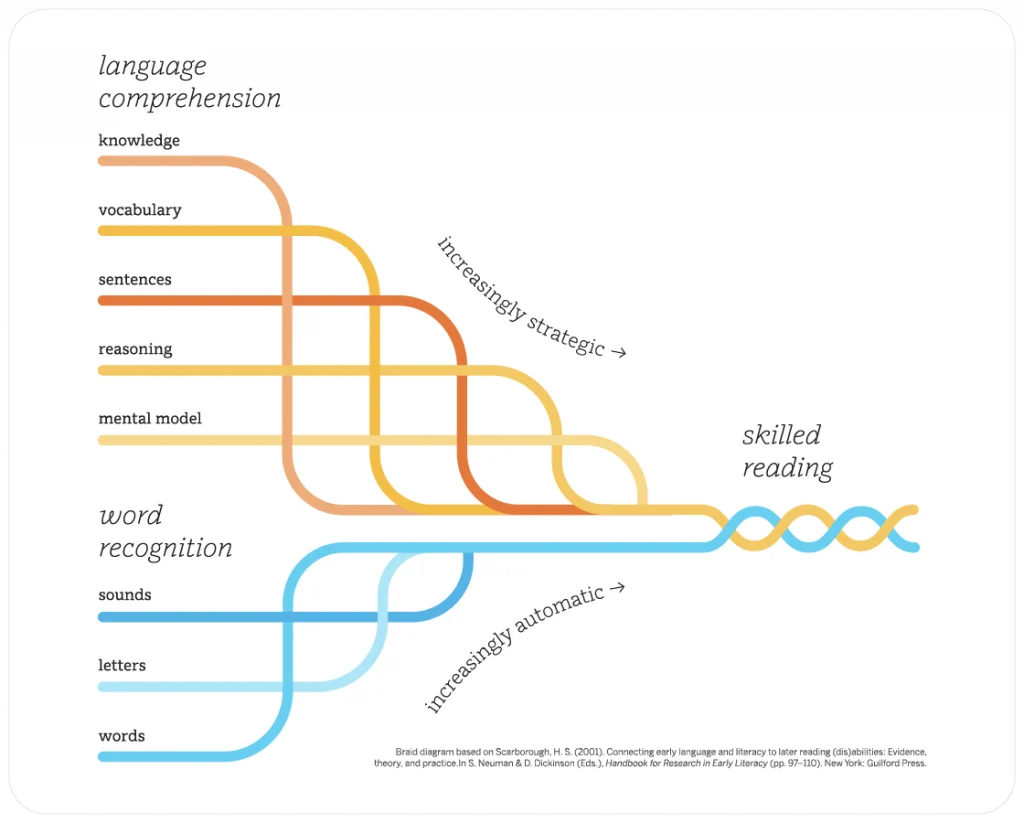
In Message in a Bottle, students build their awareness of syntax and the impact word order has on meaning by unscrambling scraps of lost messages to reconstruct sentences.

Skills
Microcomprehension

  • Syntactic awareness

Standards covered

  • CCSS.ELA-LITERACY.L.1.1 — Demonstrate command of the conventions of standard English grammar and usage when writing or speaking.
  • CCSS.ELA-LITERACY.L.2.1 — Demonstrate command of the conventions of standard English grammar and usage when writing or speaking.

In Mind the Gap, comprehension levels are assessed through a modified cloze exercise in which students make selections to fill in the blanks of a text where approximately every seventh word has been omitted.

Skills
Microcomprehension

  • Reading fluency
  • Syntactic awareness
  • Inference
  • Comprehension monitoring

Standards covered

  • CCSS.ELA-LITERACY.CCRA.R.1 — Read closely to determine what the text says explicitly and to make logical inferences from it; cite specific textual evidence when writing or speaking to support conclusions drawn from the text.
  • CCSS.ELA-LITERACY.CCRA.R.10 — Read and comprehend complex literary and informational texts independently and proficiently.

In Show Off, students learn how common text structures give clues to meaning, using cues from illustrations to rearrange sentences in the correct sequential or chronological order.
Skills
Microcomprehension

  • Text structure: Organize sentences using problem/solution and cause/effect

Standards covered

  • CCSS.ELA-LITERACY.RI.1.3 — Describe the connection between two individuals, events, ideas, or pieces of information in a text.
  • CCSS.ELA-LITERACY.RI.1.8 — Identify the reasons an author gives to support points in a text.
  • CCSS.ELA-LITERACY.RI.2.3 — Describe the connection between a series of historical events, scientific ideas or concepts, or steps in technical procedures in a text.
  • CCSS.ELA-LITERACY.RI.2.8 — Describe how reasons support specific points the author makes in a text.knowledge of one-to-one letter-sound correspondences by producing the primary sound or many of the most frequent sounds for each consonant.

In Sloppy Scrolls, students practice the art of comprehension monitoring, or ensuring that they continually build and check a mental model of what they read. In the game, students are introduced to a world of enchanted scrolls that have lost their magic: they contain inconsistencies, and no longer make sense. The students must attempt to identify the inconsistencies by tapping the sentences that don’t match the rest of the passage. To increase the challenge of the game, some of the passages are presented without errors.

Skills
Microcomprehension

  • Comprehension Monitoring

Standards Covered

  • CCSS.ELA-LITERACY.RL.2.10 — By the end of the year, read and comprehend literature, including stories and poetry, in the grades 2-3 text complexity band proficiently, with scaffolding as needed at the high end of the range.

In Storyboard, students practice making inferences by completing a storyboard that integrates relevant background knowledge missing from a given sentence.

Skills
Microcomprehension

  • Inference

Standards covered

  • CCSS.ELA-LITERACY.RL.K.1 — With prompting and support, ask and answer questions about key details in a text.
  • CCSS.ELA-LITERACY.RI.K.1 — With prompting and support, ask and answer questions about key details in a text.
  • CCSS.ELA-LITERACY.RL.1.1 — Ask and answer questions about key details in a text.
  • CCSS.ELA-LITERACY.RI.1.1 — Ask and answer questions about key details in a text.

In Super Match, students work on developing cognitive flexibility, or the ability to track multiple elements simultaneously, by completing interactive puzzles that associate pictures and words across multiple dimensions (e.g., color and category, or starting sounds and category).

Skills
Microcomprehension

  • Cognitive flexibility

Standards covered

  • CCSS.ELA-LITERACY.L.1.5.A — Sort words into categories (e.g., colors, clothing) to gain a sense of the concepts the categories represent.
  • CCSS.ELA-LITERACY.L.1.5.B — Define words by category and by one or more key attributes (e.g., a duck is a bird that swims; a tiger is a large cat with stripes).
  • CCSS.ELA-LITERACY.RF.1.3 — Know and apply grade-level phonics and word analysis skills in decoding words.

In Unmask That, students build their understanding of anaphora, a tool authors use to avoid repetition, by linking pronouns to their antecedents in text.

Skills
Microcomprehension

  • Syntactic awareness – anaphora

Standards covered

  • CCSS.ELA-LITERACY.L.1.1 — Demonstrate command of the conventions of standard English grammar and usage when writing or speaking.
  • CCSS.ELA-LITERACY.L.2.1 — Demonstrate command of the conventions of standard English grammar and usage when writing or speaking.

Comprehension Games in Amplify Reading: K–2

In Best Buddy, students examine character traits to determine which school club provides the best fit for their fictional friends.

Skills
Comprehension – Key Ideas and Details

  • Character Traits

Standards Covered

  • CCSS.ELA-LITERACY.RL.1.3 — Describe characters, settings, and major events in a story, using key details.
  • CCSS.ELA-LITERACY.RL.2.3 — Describe how characters in a story respond to major events and challenges.

In Book Club, students compare and contrast two books on the same topic or theme to determine which book best meets the needs of a character in the game.

Skills
Comprehension – Integration of Knowledge and Ideas

  • Compare and Contrast Texts

Standards covered

  • CCSS.ELA-LITERACY.RI.1.9 — Identify basic similarities in and differences between two texts on the same topic (e.g., in illustrations, descriptions, or procedures).
  • CCSS.ELA-LITERACY.Rl.2.9 — Compare and contrast the most important points presented by two texts on the same topic.
  • CCSS.ELA-LITERACY.RL.2.9 — Compare and contrast two or more versions of the same story (e.g., Cinderella stories) by different authors or from different cultures.

In Debate-a-Ball, students practice identifying the best evidence to support a claim. Students pick an animal avatar to compete with an automated opponent in debates on familiar topics. To win, students must put forward the best evidence to support each claim more frequently than their opponents. They are taught to identify evidence that is factual and strongly related to the claim.

Skills
Comprehension – Integration of Knowledge and Ideas

  • Evaluate evidence

Standards covered

  • CSS.ELA-LITERACY.RI.2.8 — Describe how reasons support specific points the author makes in a text.

In Picture This, students complete the illustrations for a story by identifying words that describe its setting, characters, problems, and solutions.

Skills
Comprehension – Key Ideas and Details

  • Story Elements/Plot

Standards covered

  • CCSS.ELA-LITERACY.RL.1.1 — Ask and answer questions about key details in a text.
  • CCSS.ELA-LITERACY.RL.1.3 — Describe characters, settings, and major events in a story, using key details.
  • CCSS.ELA-LITERACY.RL.2.1 — Ask and answer such questions as who, what, where, when, why, and how to demonstrate understanding of key details in a text.
  • CCSS.ELA-LITERACY.RL.2.3 — Describe how characters in a story respond to major events and challenges.

In Storybox, students choose settings, situations, and solutions to send characters on different adventures, using details and context to help them resolve problems and complete the story.

Skills
Comprehension – Key Ideas and Details

  • Story Elements/Plot

Standards covered

  • CCSS.ELA-LITERACY.RL.K.3 — With prompting and support, identify characters, settings, and major events in a story.

In Tube Tales, students learn the attributes of different genres and practice identifying them in brief texts.

Skills
Comprehension – Craft and Structure

  • Text schema

Standards covered

  • CCSS.ELA-LITERACY.RL.2.10 — By the end of the year, read and comprehend literature, including stories and poetry, in the grades 2-3 text complexity band proficiently, with scaffolding as needed at the high end of the range.
  • CCSS.ELA-LITERACY.RI.2.5 — Know and use various text features (e.g., captions, bold print, subheadings, glossaries, indexes, electronic menus, icons) to locate key facts or information in a text efficiently.
  • CCSS.ELA-LITERACY.RI.2.10 — By the end of year, read and comprehend informational texts, including history/social studies, science, and technical texts, in the grades 2-3 text complexity band proficiently, with scaffolding as needed at the high end of the range.

In What’s the Big Idea, students examine pictures, picture sequences, and short passages to practice differentiating the main idea from story details.

Skills
Comprehension – Key Ideas and Details

  • Main idea

Standards covered

  • CCSS.ELA-LITERACY.RI.K.2 — With prompting and support, identify the main topic and retell key details of a text.
  • CCSS.ELA-LITERACY.RI.1.2 — Identify the main topic and retell key details of a text.
  • CCSS.ELA-LITERACY.RI.2.2 — Identify the main topic of a multiparagraph text as well as the focus of specific paragraphs within the text.

Vocabulary Games in Amplify Reading: K–2

In Punchline!, students learn how words can have multiple meanings by channeling their inner comedian to crack homonym-based jokes.

Skills
Vocabulary

  • Multiple-meaning words

Standards covered

  • CCSS.ELA-LITERACY.L.2.4.A — Use sentence-level context as a clue to the meaning of a word or phrase.

In Shades of Meaning, students differentiate the nuances in similar words — first by ordering them from weakest to strongest, largest to smallest, or least to greatest; then by putting them into sentences that further clarify their meaning.
Skills
Vocabulary

  • Shades of meaning

Standards covered

  • CCSS.ELA-LITERACY.L.1.5.D — Distinguish shades of meaning among verbs differing in manner (e.g., look, peek, glance, stare, glare, scowl) and adjectives differing in intensity (e.g., large, gigantic) by defining or choosing them or by acting out the meanings.
  • CCSS.ELA-LITERACY.L.2.5.B — Distinguish shades of meaning among closely related verbs (e.g., toss, throw, hurl) and closely related adjectives (e.g., thin, slender, skinny, scrawny).

Amplify Reading: K–2’s Integrated eReader

eReader Overview

Amplify Reading: K–2 has a new library of over 25 fiction and non-fiction ebooks and an adaptive algorithm that unlocks each book at the exact right point in a reader’s development. Moreover, they contain familiar interactions from the games so that students move seamlessly from text-embedded-in-games to games-embedded-in-text, maximizing their sense of growing competency.

The eReader also provides optional supports for its readers. From the settings icon on the title page of each book, students can turn on sentence numbering, read aloud functionality, and reveal words, as well as adjust the text size.

Student Experience
When students are ready for a text, it will appear as one of their quest steps.

When readers first unlock a new book, they read through it without interruption (with read-aloud support if appropriate).

In the second read, students discover embedded activities that repeat the familiar iconography of a game they previously mastered.

At the end of the book, additional activities evaluate students’ comprehension.

Achievements in books are part of the same overall reward system: helping your Curioso grow, just like achievement in skill-building games. Mastery of the content is reflected in the teacher dashboard within the given skill.

How teachers are using Amplify Reading

Independent study/rotation stations
Amplify Reading is a personalized, differentiated program designed to keep students engaged and on task in independent study. The program is most effective when used for a minimum of 45 minutes per week.

Other common uses
We designed the program to be flexible enough to fit any classroom model. Amplify Reading is browser-based, so it works on Chromebooks, iPads, laptops, desktops, and even iPhones. It can also be used at home to extend learning beyond the classroom.

Invest in high-quality professional development

Amplify’s professional development provides a variety of learning experiences over multiple years to incrementally develop and apply the knowledge and skills needed for effective and self-sustaining implementation.

Gain insights into effective instructional techniques, and develop a deeper understanding of your Amplify program(s) by investing in professional development.

Two women sit at a table working on laptops, collaborating and reviewing documents, with icons on the left representing ideas, writing, computers, and achievement.
Collage showing a digital science simulation, a teacher demonstrating science materials on video, and a PDF icon for a K–5 Amplify Science lesson planning template.

The foundation for long-lasting and sustainable change

Partner with members of our professional learning team to plan long-lasting and sustainable change for your school or district. Change is more likely to stick and get results with deliberate planning. We can support your through this journey to drive your professional improvement, enrich your instructional practice, and increase student impact.
Professional learning journey

Every school and district is unique. That’s why we offer flexible delivery options to best meet your specific needs and objectives.

Our professional development programs come in packages or individual sessions, available both on-site and virtually, to help you get the most out of your Amplify program(s).

You can also customize your learning experience by adding extra sessions, such as Science of Reading, supporting multiliterate learners, and a problem-based approach to math, to build on your base package.

Screenshot of Amplify’s PD Library interface with a search bar, colorful resource cards, and highlighted sections: Amplify Caminos, Boost Biliteracy, and Amplify ELA.
Four circular icons in a row showing a lightbulb, pencil, whiteboard, and podium, connected by arrows in a cycle, representing stages of a process.

Prepare

Begin

Practice

Advance
Prepare learning experiences will help shift literacy and math instruction and deepen understanding of research-based practices to support new program implementation. Program-aligned packages will support those who are new to Amplify’s programs. You’ll build the foundational knowledge and skills necessary to begin teaching with your Amplify program(s).

Program-aligned packages will support those who have experience using Amplify’s programs. You’ll refine instructional skills, expand knowledge of your Amplify program(s), and explore more advanced instructional strategies.

Program-aligned offerings will support advanced implementation to deepen understanding of content and pedagogy and build-in house capacity to support a robust, sustainable implementation.

Multi-program, suite packages

Core program packages

Literacy

  • Amplify CKLA
  • Amplify Caminos
  • Amplify ELA

STEM

  • Amplify Math
  • Amplify Desmos Math (K–12)
  • Amplify Science


Intervention program sessions

  • Boost Reading
  • Boost Lectura
  • Boost Close Reading
  • Boost Math

Assessment program packages

  • mCLASS with DIBELS® 8th Edition
  • mCLASS Lectura
  • mCLASS Math

mCLASS Intervention K–6 program sessions


Empower teachers to continuously improve

Professional development helps teachers stay motivated and inspired to grow professionally. Demonstrate your commitment to your staff by empowering them with professional development packages that include on-site or virtual Launch, Strengthen, or Coach sessions, all of which will orient you and your team to the full features of Amplify programs.

You can also personalize your learning experience by adding enhancement sessions to base packages.

A woman with long dark hair smiles while sitting at a table with two others, papers and laptops in front of them. Three circular icons are displayed on the left side.
Three people work together at a computer in a classroom; one woman points at the monitor while the others watch attentively.

Launch

On-site and virtual Launch sessions introduce Amplify programs and support strong implementation. Self-paced, online courses are also available for select Amplify programs and include an on-demand subscription for 12-months.

After learning about the program’s foundational principles and key features, you’ll practice administering it within a collaborative environment.

Two people sit at a table reviewing documents together against a yellow background. An icon of a barbell is displayed in the top left corner.

Strengthen

On-site and virtual Strengthen sessions deepen understanding of the program. Session offerings are targeted and meant to take your practice—and your students’ learning—to the next level.

Offered as part of core packages, as well as enhancements, Strengthen sessions are intended to effectively address your students’ needs. Examples include:

  • A focus on data analysis.
  • Examining student writing.
  • Targeted intervention instruction.
Two women sit side by side at a table, each with a laptop. One woman points at the other’s screen as they focus on the display against a plain blue background.

Coach

On-site and virtual Coach sessions are tailored to elevate instructional practices and meet the unique needs of teachers and/or leaders.

Partner with an Amplify coach who will support you in planning customized sessions leveraging our menu of supports, which can include:

  • Lesson modeling by an Amplify facilitator.
  • Classroom observations and debriefs.
  • Grade-level planning.

Commit to sustainable change for long-term impact

Learning may ebb and flow between phases depending on your teachers’ and leaders’ needs, experiences, and professional goals. Amplify professional development aims to continually grow, develop, and refine instructional practices to support student learning and achievement.

A diagram shows categories about teaching, with “Grading and Assessment” highlighted and selected by a pointing hand cursor. Other categories include instruction, pedagogy, and remediation.
Three overlapping squares with rounded corners, each containing a large question mark, are arranged on a light peach rectangular background.

Frequently asked questions

We value your partnership and aim to provide you with the highest quality learning experiences. Check out our frequently asked PD questions below, along with responses.

Additional learning

Once you become an Amplify customer, you’ll have access to many opportunities to continue learning how to get the most out of your Amplify program(s).

To get a sense of our support, check out some of our free resources:

Two educational course cards: one showing a teacher helping a student, titled "Instructional Moves to Support Motivation in Math Class," and another titled "Data and Dyslexia" with alphabet tiles.
Two speech bubbles on a peach background, one saying "Hello!" in English and the other saying "¡Hola!" in Spanish.

Biliteracy supports

Facilitated in both English and Spanish, specialized biliteracy sessions should be scheduled for teachers using both curricula and/or assessments. Sessions are available to support the use of both Amplify CKLA and Amplify Caminos core programs or mCLASS DIBELS 8th Edition and Lectura assessment programs. Substitute a biliteracy session for the 6-hour initial training in your package, or add these sessions on to your package for your biliteracy teachers.

Speak to our team to learn more!

Order and payment support

If you’re ready to submit your price quote, purchase order, or payment, visit our Ordering Support site for more information.

Three documents labeled as purchase order form, invoice, and price quote, each displaying fields for product details, contact information, and amounts.
Two podcast covers: "Beyond My Years" with colorful graphics and "Science of Reading: The Podcast" with book and sun illustrations; a badge reads "7M+ downloads.

Community of collaboration

Connect with fellow Science of Reading or science advocates in one of our public Facebook groups. Join a community or tune into one of our podcasts today:

Amplify customers can join our exclusive, program-specific Facebook communities to ask pedagogical questions, share Amplify teaching hacks, and more!

Get in touch with a PD expert

Prepare for Amplify professional development

When you grow, your students grow.  

Whether you are implementing Amplify programs for the first time or strengthening instructional practices, our goal is to support your professional growth and help all students succeed.

Feel prepared and ready to grow with us.

This site provides session preparation guidance, the agenda and objectives for all Prepare, Begin and Practice sessions. The Prepare sessions are denoted as such. The Begin and Practice sessions are listed by product type – core, assessment and supplemental. All state-specific training is found in its own section.

A four-step process diagram labeled Prepare, Begin, Practice, and Advance, each with icons and brief descriptions of stages for implementing an educational program.
Four people are sitting at a table; one is reading, two are discussing notes, and one is writing on paper.

Onsite session preparation

Do you have an upcoming onsite PD session? Do you need to know what your participants should bring to their session or what should be provided in the training space? Click ‘learn more’ below for detailed information on how to prepare for your onsite session.

Learn more

Amplify resource hub webinar library

Remote session preparation

Do you have an upcoming remote PD session? Do you need to know what your participants should have at their session or how to set up a remote session? Click ‘learn more’ below for detailed information on how to prepare for your remote session.

Learn more

Prepare session agendas

Launch

Build your Knowledge of Math Problem-Based Learning (90 min)

Deepen your Knowledge of Math Problem-Based Learning (3 hour) 

Launch

Build your Knowledge of Science of Reading (90 min)

Deepen your Knowledge of Science of Reading (3 hour)

Multiliterate learners

  • Build your knowledge of multiliterate learners (90 min)     K–5
  • Deepen your knowledge of multiliterate learners (3 hour)     K–5

Core: Launch and Strengthen session agendas

Select your program to preview a session agenda and any other session specific preparation steps for participants.

Launch

Initial training (6 hours)

  • Initial training for teachers    K–2    3–5
  • Skills Strand initial training for teachers    K–2
  • Knowledge Strand initial training for teachers    K–2

Program overview (3 hours) 

  • Program overview for teachers    K–2    3–5
  • Skills Strand program overview for teachers    K–2
  • Knowledge Strand program overview for teachers    K–2
  • Program overview for leaders     K–5

Strengthen

Strengthen (3 hours)

  • Enhancing planning for teachers    K–2    3–5
  • Enhancing practice for teachers    K–2    3–5
  • Writing    K–2    3–5
    • Note: teachers should bring a recent class set of student writing samples from the Amplify curriculum to this session. 

Focus (1 hour)

  • Student engagement    K–5
  • Supporting all learners    K–5
  • Pacing    K–5

Launch

Initial training (6 hours) 

  • Initial training for teachers    PreK    K–2    3–5
  • Skills Strand initial training for teachers    K–2
  • Knowledge Strand initial training for teachers    K–2

Program overview (3 hours) 

  • Program overview for teachers    PreK    K–2    3–5
  • Skills Strand program overview for teachers   K–2
  • Knowledge Strand program overview for teachers    K–2
  • Program overview for leaders    PreK–5

CKLA Writing Studio (3 hours)

  • Writing Studio companion training for teachers    K–5

CKLA Language Studio (3 hours)

  • Language Studio companion training for teachers    K–2    3–5

CKLA 2nd Edition to 3rd Edition Transition Training (1 hour)

  • Transition Training for Teachers     K–2     3–5
  • Skills Strand Transition Training for Teachers     K–2
  • Knowledge Strand Transition Training for Teachers     K–2

Grade 3 Skills (1 hour)

Strengthen

Strengthen (3 hours)

  • Enhancing planning for teachers    PreK    K–2    3–5
  • Enhancing practice for teachers    K–2    3–5
  • Maximizing impact: Data-informed remediation with the ARG    K–2
    • Note: teachers should bring a recent set of graded class data from an Amplify benchmark or end-of-unit assessment to this session.
  • Maximizing impact: Data-informed remediation with the ARG/DERG    3–5
  • Writing    K–2    3–5
    • Note: teachers should bring a recent class set of student writing samples from the Amplify curriculum to this session. 
  • Enhancing observations for leaders    K–5

Focus (1 hour)

  • Student engagement    K–5
  • Supporting all learners    K–5
  • Pacing    K–5

Launch

Initial training (6 hours) 

  • Initial training for teachers    K–2    3–5
  • Skills Strand initial training for teachers    K–2
  • Knowledge Strand initial training for teachers    K–2

Program overview (3 hours) 

  • Program overview for teachers     K–2    3–5
  • Skills Strand program overview for teachers    K–2
  • Knowledge Strand program overview for teachers    K–2
  • Program overview for leaders     K–5

CKLA 2nd Edition to 3rd Edition Transition Training (1 hour)

  • Transition Training for Teachers     K–2     3–5
  • Skills Strand Transition Training for Teachers     K–2
  • Knowledge Strand Transition Training for Teachers     K–2

Grade 3 Skills (1 hour)

Supplemental training for teachers

Strengthen

Strengthen (3 hours)

  • Enhancing planning for teachers    K–2    3–5
  • Enhancing practice for teachers    K2    3–5
  • Maximizing impact: Data-informed remediation with the ARG    K–2
  • Maximizing impact: Data-informed remediation with the ARG/DERG    3–5
  • Enhancing observations for leaders    K–5

Focus (1 hour)

  • Student engagement    K–5
  • Supporting all learners    K–5
  • Pacing    K–5

Launch

Initial training (6 hours) 

  • Initial training for teachers    K–2    3–5
  • Skills Strand initial training for teachers    K–2
  • Knowledge Strand initial training for teachers    K–2

Program overview (3 hours) 

  • Program overview for leaders    PreK–5

Strengthen

Strengthen (3 hours)

  • Enhancing planning for teachers    K–2    3–5
  • Enhancing practice for teachers    K–2    3–5
  • Writing for teachers     K–2     3–5

Focus (1 hour)

  • Student engagement    K–5
  • Supporting all learners     K–5
  • Pacing     K–5

Launch

Initial training (6 hours) 

  • Initial training for teachers     6–8

Program overview (3 hours) 

  • Program overview for teachers    6–8
  • Program overview for leaders    6–8

Strengthen

Strengthen (3 hours)

  • Enhancing planning for teachers    6–8
  • Enhancing practice for teachers    6–8
  • Writing: Improving through feedback    6–8
  • Supporting all learners    6–8
  • Data-informed instruction    6–8
  • Enhancing observations for leaders    6–8

Focus (1 hour)

  • Teaching with print and digital    6–8
  • Lesson planning    6–8
  • Pacing    6–8
  • Increasing student engagement    6–8
  • Grading and assessment    6–8

Launch

Initial training (6 hours)

Program overview (3 hours) 

Strengthen

Strengthen (3 hours)

Focus (1 hour)

  • Snapshots in the Teacher Dashboard     6–A1
  • Teaching a lesson with Digital Student Screens     K–5
  • Unit-level planning    K–5      6–A1      High School

Launch

Initial training (6 hours) 

  • Initial training for teachers    K–5    6–8

Program overview (3 hours) 

  • Program overview for teachers    TK    K–5    6–8
  • Program overview for leaders    K–5    6–8

Strengthen

Strengthen (3 hours)

Focus (1 hour)

  • Enhancing the digital experience    K–5
  • Planning with the Coherence Flowchart    K–8
  • Planning an Amplify Science lesson    K–8
  • Supporting all learners: exploring the resources    K–8
  • Supporting all learners: teacher modeling and student discourse    K–8
  • Supporting all learners: multimodal instruction    K–8
  • Analyzing student work    K–8
    • Note: teachers should bring a recent set of student work samples from an Amplify Science assessment to this session. 
  • Unit kit materials and prep    K–8
  • Grading with Amplify Science    K–8

Core: Coaching options

Select your program to view options for building a coaching session and coaching PLC or grade-level meeting topic menus.

Coaching session agenda options

Use this resource as a reference for building a coaching session agenda.

Coach PLC session topic menu

Use this resource as a menu of possible topics to choose from for a PLC or grade level meeting.

Note: this resource will only be needed if your coaching session agenda includes a PLC or grade level meeting. 

Coaching session agenda options

Use this resource as a reference for building a coaching session agenda.

Coach PLC session topic menu

Use this resource as a menu of possible topics to choose from for a PLC or grade level meeting.

Note: this resource will only be needed if your coaching session agenda includes a PLC or grade level meeting. 

Coaching session agenda options

Use this resource as a reference for building a coaching session agenda.

Coach PLC session topic menu

Use this resource as a menu of possible topics to choose from for a PLC or grade level meeting.

Note: this resource will only be needed if your coaching session agenda includes a PLC or grade level meeting. 

Coaching session agenda options

Use this resource as a reference for building a coaching session agenda.

Coach PLC session topic menu

Use this resource as a menu of possible topics to choose from for a PLC or grade level meeting.

Note: this resource will only be needed if your coaching session agenda includes a PLC or grade level meeting. 

Coaching session agenda options

Use this resource as a reference for building a coaching session agenda.

Coach PLC session topic menu

Use this resource as a menu of possible topics to choose from for a PLC or grade level meeting.

Note: this resource will only be needed if your coaching session agenda includes a PLC or grade level meeting. 

Coaching session agenda options

Use this resource as a reference for building a coaching session agenda.

Coach PLC session topic menu

Use this resource as a menu of possible topics to choose from for a PLC or grade level meeting.

Note: this resource will only be needed if your coaching session agenda includes a PLC or grade level meeting. 

Assessment and intervention: Launch and Strengthen session agendas

Select your program to preview a session agenda and any other session specific preparation steps for participants.

Launch

Program overview (3 hours) 

Program overview (3 hours) 

Launch

Program overview + DIBELS 8th Edition Administration and scoring training (6 hours) 

Initial training + DIBELS 8th Edition Administration and scoring training (9 hours) 

Assessment and Intervention: Coaching options

Select your program to view options for building a coaching session agenda.

Coaching session agenda options

Use this resource as a reference for building a coaching session agenda.

Coach PLC session topic menu

Use this resource as a menu of possible topics to choose from for a PLC or grade level meeting.

Note: this resource will only be needed if your coaching session agenda includes a PLC or grade level meeting. 

Coaching session agenda options

Use this resource as a reference for building a coaching session agenda.

Coach PLC session topic menu

Use this resource as a menu of possible topics to choose from for a PLC or grade level meeting.

Note: this resource will only be needed if your coaching session agenda includes a PLC or grade level meeting. 

Coaching session agenda options

Use this resource as a reference for building a coaching session agenda.

Coach PLC session topic menu

Use this resource as a menu of possible topics to choose from for a PLC or grade level meeting.

Note: this resource will only be needed if your coaching session agenda includes a PLC or grade level meeting. 

Boost: Launch and Strengthen session agendas

Select your program to preview a session agenda and any other session specific preparation steps for participants.

Launch

Getting started (2 hours)  

Strengthen

Focus (1 hour)

Launch

Getting started (2 hours)

Launch

Getting started (2 hours)

Launch

Getting started (2 hours) 

Strengthen

Focus (1 hour)  

Launch

Getting started (2 hours) 

Strengthen

Focus (1 hour)

State-specific session agendas

Select your program to preview a session agenda and any other session specific preparation steps for participants.

Launch

Initial training (6 hours) 

  • Initial training for teachers       K–2    3–5    6–8
  • Skills strand initial training for teachers    K–2
  • Knowledge strand initial training for teachers    K–2

Program overview (3 hours)

  • Program overview for teachers    K–2    3–5    6–8
  • Program overview for leaders    K–5    6–8
  • Skills strand program overview for teachers   K–2
  • Knowledge strand program overview for teachers    K–2

Strengthen

Strengthen (3 hours) 

  • Enhancing planning for teachers                    K–2     3–5     6–8
  • Enhancing practice for teachers                      K–2     3–5    6–8
  • Writing     K–2     3–5    6–8
  • Enhancing observations for leaders                    K–5    6–8
  • Supporting all learners for 6–8 teachers              6–8
  • Data informed instruction    6–8

Focus (1 hour)

  • Student engagement     K–5    6–8
  • Supporting all learners     K–5
  • Pacing     K–5    6–8
  • Teaching with print and digital    6–8
  • Lesson planning    6–8
  • Grading and assessment    6–8

Coach

K–5

Use this resource as a menu of possible topics to choose from for a PLC or grade level meeting.

Note: this resource will only be needed if your coaching session agenda includes a PLC or grade level meeting. 

6–8

Use this resource as a menu of possible topics to choose from for a PLC or grade level meeting.

Note: this resource will only be needed if your coaching session agenda includes a PLC or grade level meeting.

Launch

Initial training (6 hours) 

  • Initial training for teachers    K–2    3–5
  • Skills strand initial training for teachers    K–2
  • Knowledge strand initial training for teachers    K–2

Program overview (3 hours) 

  • Program overview for teachers    K–2    3–5
  • Skills strand program overview for teachers    K–2
  • Knowledge strand program overview for teachers    K–2

Strengthen

Strengthen (3 hours) 

  • Enhancing planning for teachers     K–2     3–5
  • Enhancing practice for teachers     K–2     3–5
  • Writing     K–2     3–5

Focus (1 hour)

  • Student engagement     K–5
  • Supporting all learners     K–5
  • Pacing     K–5

Launch

Initial training (6 hours) 

  • Initial training for teachers     K–2     3–5
  • Skills strand initial training for teachers    K–2
  • Knowledge strand initial training for teachers    K–2

Program overview (3 hours)

  • Program overview for leaders    K–5

Strengthen

Strengthen (3 hours) 

  • Enhancing planning for teachers        K–2     3–5
  • Enhancing practice for teachers        K–2     3–5
  • Writing     K–2     3–5

Focus (1 hour)

  • Student engagement     K–5
  • Supporting all learners     K–5
  • Pacing     K–5

Coach

K–5

Use this resource as a menu of possible topics to choose from for a PLC or grade level meeting.

Note: this resource will only be needed if your coaching session agenda includes a PLC or grade level meeting. 

Launch

Initial training (6 hours) 

  • Initial training for teachers    K–2    3–5

Program overview (3 hours) 

  • Program overview for teachers    K–2    3–5
  • Program overview for leaders    K–5

Strengthen

Strengthen (3 hours) 

  • Enhancing planning for teachers     K–2     3–5
  • Enhancing practice for teachers     K–2     3–5
  • Writing     K–2     3–5
  • Maximizing Impact: data-informed remediation with the ARG for teachers    K–2     3–5
  • Enhancing observations for leaders     K–5

Launch

Initial training (6 hours) 

  • Initial training for teachers    K–2    3–5

Launch

Initial training (6 hours) 

  • Initial training for teachers    6–8

Program overview (3 hours)

  • Program overview for teachers    6–8
  • Program overview for leaders    6–8

Launch

Administration and instruction essentials (6 hours) 

Administration and scoring training (3 hours) 

Launch

Getting started (2 hours) 

  • Getting started for teachers    K–5    6–8
  • Getting started for leaders    K–5

Strengthen

Focus (1 hour)

  • Maximizing data for teachers     K–5     6–8

High-impact literacy tutoring for K–6 built on the Science of Reading-NEW | Amplify

To view this protected page, enter the password below:


Achieve next-level literacy growth with a cohesive Science of Reading suite.

The Science of Reading programs in Amplify’s early literacy suite empower you to meet the dynamic needs of every student learning to read. Discover the programs that best fit your literacy priorities and how they work together for a seamless teaching and learning environment.

“There were other programs that claimed to be Science of Reading, but no other vendor provided the suite of products together. So from our perspective, [Amplify’s literacy suite] met our needs because it aligned and provided us the best suite of products. Hands down. We couldn’t find anybody else who touched that.”

Nicole Peterson, Director, PreK–8 Education

Sampson County Schools, North Carolina

A true Science of Reading early literacy suite for grades K–5

Amplify has combined the critical elements of a Science of Reading system of assessment, core curriculum, personalized learning, and intervention. Based on 20 years of experience with the Science of Reading, this complete system saves you time and aligns your literacy practices.

  • Assess with mCLASS®: A universal and dyslexia screener, powered by DIBELS® 8th Edition
  • Instruct with Amplify Core Knowledge Language Arts (CKLA)®: Core curriculum to build foundational skills and knowledge
  • Support with Boost Reading: Student-led digital intervention to extend and reinforce core instruction
  • Intervene with mCLASS Intervention: Staff-led Tier 2 and 3 intervention for intensive support
  • Science of Reading professional development: Amplify training, events, and podcasts to strengthen instruction

mCLASS assessment

Powered by DIBELS 8th Edition, mCLASS is a universal and dyslexia screener, plus a progress monitoring tool, all in one. With this comprehensive tool, you have precise one-minute measures delivered one-on-one that give you the data you can trust to make informed instructional decisions.

Amplify CKLA core curriculum

mCLASS data informs instructional needs and identifies whole-class and small-group areas of focus.

mCLASS can replace Amplify CKLA’s benchmark assessments in K–2 and can identify appropriate Amplify CKLA instruction for small groups.

Boost Reading digital intervention

Boost Reading and mCLASS integrate to provide adaptive, student-led practice in targeted skill areas. 

mCLASS data automatically places students at the appropriate Boost Reading starting point.

You can track student progress with side-by-side mCLASS and Boost Reading growth data.

mCLASS Intervention

mCLASS assessment identifies risk early on and places students in and out of mCLASS Intervention groups.

mCLASS progress monitoring data creates intervention groups and daily lesson plans for 10-day cycles.

Amplify CKLA core curriculum

Amplify Core Knowledge Language Arts (CKLA) provides explicit, systematic foundational skills instruction combined with intentional knowledge building. Rich content spans topics in history, science, literature, and the arts to build deep background knowledge.

mCLASS assessment

Amplify CKLA instructs in the same critical literacy skills measured by mCLASS, aligning your assessment and core curriculum.

mCLASS can replace Amplify CKLA’s benchmark assessments in K–2 and can identify appropriate Amplify CKLA instruction for small groups.

Boost Reading digital intervention

Boost Reading reinforces skills through a shared scope and sequence with Amplify CKLA.

Instruction adjusts, providing differentiated skill development where needed and advancing students to the next level.

Dynamic growth reporting offers insight into how Amplify CKLA skills are developing over time.

mCLASS Intervention

mCLASS Intervention allows you to support Tier 1 instruction to get at-risk readers on track.

mCLASS Intervention lesson plans extend skills learned in Amplify CKLA curriculum.

Phonological awareness and phonics focus complements Amplify CKLA’s Skills Strand.

Boost Reading digital intervention

Boost Reading is a digital intervention program that adapts to every learner, reinforcing core instruction while providing support for remediation and intervention. The program delivers differentiated, student-led practice and clear growth reporting data, helping you understand how students are progressing at a glance.

mCLASS assessment

Boost Reading and mCLASS integrate to provide adaptive, student-led practice in targeted skill areas.

mCLASS data automatically places students at the appropriate Boost Reading starting point.

You can track student progress with side-by-side mCLASS and Boost Reading growth data.

Amplify CKLA core curriculum

Boost Reading reinforces skills through a shared scope and sequence with Amplify CKLA.

Instruction adjusts, providing differentiated skill development where needed and advancing students to the next level.

Advanced growth reporting offers insight into how Amplify CKLA skills are developing over time.

mCLASS Intervention

Boost Reading and mCLASS Intervention provide a complete system for intervention support.

Use mCLASS Intervention for staff-led small groups and Boost Reading for student-led digital intervention.

Together, they provide continuous intervention support across all tiers.

mCLASS Intervention

mCLASS Intervention is a Tier 2 and 3 targeted, staff-led intervention program made easy with automatic data-driven grouping and sequenced explicit, systematic skills lesson plans to support at-risk students.

mCLASS assessment

mCLASS assessment identifies risk early on and places students in and out of mCLASS intervention groups.

mCLASS benchmark and progress monitoring data creates groups and daily lesson plans for 10-day cycles.

Amplify CKLA core curriculum

mCLASS Intervention allows you to support Tier 1 instruction to get at-risk readers on track.

mCLASS Intervention lesson plans extend skills learned in Amplify CKLA instruction.

Phonological awareness and phonics focus complements Amplify CKLA’s Skills Strand.

Boost Reading digital intervention

Boost Reading and mCLASS Intervention provide a complete system for intervention support.

Use mCLASS Intervention for staff-led small groups and Boost Reading for student-led digital intervention.

Together, they provide continuous intervention support across all tiers.

A 20% boost in literacy rates:

Our Science of Reading programs are helping Aldine Independent School District in Texas rewrite its literacy narrative.

Read more

The cohesive early literacy system teachers and students deserve

Support your MTSS and RTI models

A strong Multi-Tiered System of Supports (MTSS) enables you to make data-based decisions and confidently meet every student’s needs. Our integrated early literacy suite includes universal and dyslexia screening, core curriculum, personalized learning, intervention, and ongoing professional development.

Each program in the suite is directly aligned to the Response to Intervention (RTI) model of tiered instruction.

Aligned resources that do away with piecemealing

A literacy ecosystem built on the same Science of Reading principles and pedagogical foundation ensures that students experience a cohesive and reinforced literacy journey. Our programs allow you to support all students without cobbling together additional resources to fill in the gaps.

They follow an explicit and systematic structure, build knowledge, and assess and instruct on all of the foundational skills essential to literacy development.

The data you need to make informed decisions

Our universal and dyslexia screening data is predictive and reliable, and it’s aligned to the entire instructional system. It enables you to make informed decisions for whole-group, small-group, and individual instruction, as well as resource allocation at the school and district level.

Amplify’s early literacy programs support you wherever you are in the Science of Reading journey. Download our Science of Reading roadmap to help you determine where to start.

Download now

Our early literacy programs in action

Case study: Aldine Independent School District, Texas

Implementing Amplify CKLA core curriculum, Boost Reading personalized learning, and mCLASS assessment boosted reading proficiency from 30% to 50%

Read more

Case study: Allen Parish School District, Louisiana

After just one year of integrating mCLASS assessment and Amplify CKLA core curriculum, Grade 1 student reading proficiency rose from 58% to 80% across eleven Title 1 schools

Read more

Case study: West Jefferson Hills School District, Pennsylvania

Students reached the 98th percentile among their peers nationwide after implementing Amplify CKLA core curriculum, Boost Reading personalized learning, and mCLASS assessment. The shift not only inspired students in their literacy journey, but also made teachers feel more confident in teaching literacy.

Read more

Science of Reading resources

Successfully adopting new Science of Reading literacy programs will change lives. We provide extensive resources, professional learning, and complementary events and webinars so you can begin using your new programs with fidelity.

Science of Reading essentials

Champion research-based literacy programs in your classroom with our extensive Science of Reading resources.

Science of Writing: A Primer

Unlock writing mastery! Explore our new primer on literacy research and the Science of Writing.

Portada de "Science of Reading: The Podcast" con un libro abierto, formas coloridas y la palabra "Amplify".

Cultivate lifelong learning

Gain useful knowledge with our top-rated podcast.

Niño con camisa verde escribiendo con un lápiz amarillo; barra lateral que muestra recursos educativos como Amplify CKLA y Amplify Science.

Staff development services

Invest in a professional development plan.

“[We wanted] something that moved kids beyond the traditional low-level type of thinking about literacy, reading, and engaging with text. The choice of Amplify became clear for our district. The tremendous professional support from Amplify, matched with the commitment of our people. We’re finally seeing something different, and the results are encouraging.”

Matthew Patterson, Ph.D., Assistant Superintendent

West Jefferson Hills School District , Pennsylvania

Passion for reading in Sampson County, NC

Mia and Grade 2 teacher Jenny Denning explored the power of the Amplify early literacy suite together.

Inspiring confidence in Tennessee

Kaleb and Assistant Principal Casey Price tackled reading from the ground up with Amplify’s early literacy programs.

Welcome to Amplify Science Pennsylvania
(6–8)!

Amplify Science is an engaging core curriculum designed for three-dimensional, phenomena-based learning.

With Amplify Science, Pennsylvania students shift from learning about to figuring out science, through authentic three-dimensional (3D) learning and phenomena-based exploration. In each unit, students take on the role of a scientist or engineer to investigate a real-world problem. This prepares them to become critical thinkers who can solve problems in their communities and beyond.

Two students sit at a classroom table, smiling and working together on a laptop and worksheet, guided by Pennsylvania teachers, with other students in the background.

What is Amplify Science Pennsylvania?

Customized lessons for Pennsylvania

Amplify Science Pennsylvania (6–8) combines our nationally recognized, proven curriculum with custom lessons specifically designed to ensure that you are meeting Pennsylvania’s STEELS standards.

A digital dashboard displays six science lesson tiles, featuring "Designing for Energy Sustainability" in the lower right corner, and supports three-dimensional learning inspired by Amplify Science and PA STEELS standards.

The Lawrence Hall of Science

Developed by the science education experts at UC Berkeley’s Lawrence Hall of Science and the digital learning team at Amplify, our program features:

  • phenomena-based approach, in which students construct a complex understanding of each unit’s anchor phenomenon.
  • A blend of cohesive storylines, hands-on investigations, rich discussions, literacy-rich activities, and digital tools.
  • Carefully crafted units, chapters, lessons, and activities designed to deliver true three-dimensional learning.
  • An instructional design that supports all learners in accessing all standards.
Aerial view of the lawrence hall of science at the university of california, berkeley, showcasing the building and surrounding trees with a foggy city backdrop.

Proven to work

A pdf cover from wested titled "learning and literacy development together: initial results from a curriculum study," featuring an adult helping children with schoolwork in a classroom.

WestEd Randomized
Control Trial for Grade 1

Read More

Pdf cover titled "curriculum materials designed for the next generation science standards: initial results from gold standard research trials", published by wested.

WestEd Randomized
Control Trial for Grade 7

Read More

A teacher and students engage in a science activity around a table. The text promotes the Amplify Science K–8 curriculum, highlighting its focus on hands-on learning and real-world problem-solving.
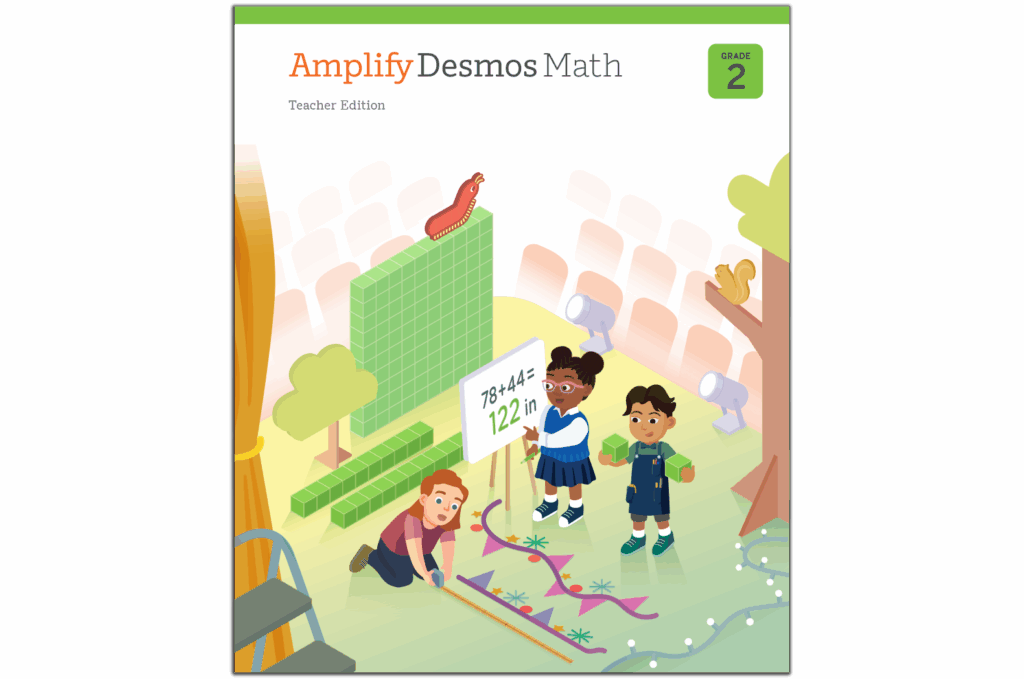
Amplify Science Pennsylvania NE
Grades K–5

Read More

Instructional model

The Amplify Science Pennsylvania program is rooted in the proven, research-based pedagogy of Do, Talk, Read, Write, Visualize. Here’s how each element works:

Do

First-hand investigations are an important part of any science classroom, and Amplify Science Pennsylvania has students getting hands-on in every unit—from building models of protein molecules to experimenting with electrical systems.

Talk

Student-to-student discourse and full-class discussions are an integral part of the program. Students are provided with numerous opportunities to engage in meaningful oral scientific argumentation while fostering a collaborative classroom environment.

Read

Students read scientific articles, focusing on searching for evidence related to their investigation and on asking and recording questions as they read through fascinating texts on 21st-century topics.

Write

Following real-world practices, students write scientific arguments based on evidence they’ve collected, making clear their reasoning about how a given piece of evidence connects to one of several claims.

Visualize

By manipulating digital simulations and using modeling tools to craft visualizations of their thinking— just as real scientists and engineers
do—students take their learning far beyond the confines of what they can physically see in the classroom in an exciting and authentic way.

Program structure

Our cyclical lesson design ensures that students receive multiple exposures to concepts through a variety of modalities. As they progress through the lessons within a unit, students build and deepen their understanding, increasing their ability to develop and refine complex explanations of the unit’s phenomenon.

It’s this proven program structure and lesson design that enables Amplify Science Pennsylvania to address 100% of the Next Generation Science Standards (NGSS), and support students in mastering the Pennsylvania Science Standards.

Flowchart depicting a critical thinking process with four circular nodes connected by arrows, each node representing a step: posing a real-world problem, exploring evidence, elaborating concepts, and evaluating claims.

Unit types

While every unit delivers three-dimensional learning experiences and engages students in gathering evidence from a rich collection of sources, each unit also serves a unique instructional purpose.

In grades 6–8:

  • One unit is a launch unit.
  • Three units are core units.
  • Two units are engineering internships.

Launch units are the first units taught in each year of Amplify Science Pennsylvania. The goal of the Launch unit is to introduce students to norms, routines, and practices that will be built on throughout the year, including argumentation, active reading, and using the program’s technology. For example, rather than taking the time to explain the process of active reading in every unit in a given year, it is explained thoroughly in the Launch unit, thereby preparing students to read actively in all subsequent units.

Core units establish the context of the unit by introducing students to a real-world problem. As students move through lessons in a Core unit, they figure out the unit’s anchoring phenomenon, gain an understanding of the unit’s disciplinary core ideas and science and engineering practices, and make linkages across topics through the crosscutting concepts. Each Core unit culminates with a Science Seminar and final writing activity.

Engineering Internship units invite students to design solutions for real-world problems as interns for a fictional company called Futura. Students figure out how to help those in need, from tsunami victims in Sri Lanka to premature babies, through the application of engineering practices. In the process, they apply and deepen their learning from Core units.

Unit sequence

Our lessons follow a structure that is grounded in regular routines while still being flexible enough to allow for a variety of learning experiences.

In fact, our multimodal instruction offers more opportunities for students to construct meaning, and practice and apply concepts, than any other program. What’s more, our modular design means our units can be flexibly arranged to support your instructional goals.

Three columns listing education curriculum topics for grades 6, 7, and 8, focusing on science themes such as microbiomes, mars geology, and harnessing human energy.

Program components

Available digitally and in print, our unit-specific reference guides are chock full of helpful resources, including scientific background knowledge, planning information and resources, color-coded 3D Statements, detailed lesson plans, tips for delivering instruction, and differentiation strategies.

Amplify Science TG

Hands-on learning is an essential part of Amplify Science Pennsylvania, and is integrated into every unit. Students actively participate in science, playing the roles of scientists and engineers as they gather evidence, think critically, solve problems, and develop and defend claims about the world around them. Every unit includes hands-on investigations that are critical to achieving the unit’s learning goals.

A young person wearing gloves looks through a microscope at a table with laboratory supplies, including bottles, slides, and a tray, against a plain blue background.

More hands-on with Flextensions:
Hands-on Flextensions are additional, optional investigations that are included at logical points in the learning progression and give students an opportunity to dig deeper if time permits. These activities offer teachers flexibility to choose to dedicate more time to hands-on learning. Materials referenced in Hands-on Flextension activities will either be included in the unit kit or are easily sourced. Supporting resources such as student worksheets will be included as downloadable PDF files.

Our kits include enough materials to support 200 student uses. In other words, teachers can easily support all five periods and small groups of 4–5 students each. Plus, our unit-specific kits mean teachers just grab the tub they need and then put all the materials back with ease.

Assorted office and household items displayed on a white background, including rubber bands, binder clips, cardboard, and sports balls.

Our digital Simulations and Practice Tools are powerful resources for exploration, data collection, and student collaboration. They allow students the ability to explore scientific concepts that might otherwise be invisible or impossible to see with the naked eye.

Available for every unit, our Student Investigation Notebooks contain instructions for activities and space for students to record data and observations, reflect on ideas from texts and investigations, and construct explanations and arguments.

In grades 6–8, one copy of the Student Investigation Notebook is included in each unit’s materials kit for use as a blackline master. Each notebook is also available as a downloadable PDF on the Unit Guide page of the digital Teacher’s Guide.

Two booklets titled "El clima cambiante de la Tierra: la desaparición del hielo" and "Earth’s Changing Climate: Vanishing Ice" with landscape illustrations on the covers.

These customizable PowerPoints are available for every lesson of the program and make delivering instruction a snap with visual prompts, colorful activity instructions, investigation set-up videos and animations, and suggested teacher talk in the notes section of each slide.

Amplify Science Classroom Slides

Explore your print samples

With your Amplify Science Pennsylvania print samples, you’ll find unit-specific Teacher’s References Guides and Student Investigation Notebooks for each grade level.

A note about the Teacher Reference Guides:

It’s important that your committee sees the full breadth and depth of our instruction. For that reason, we’ve provided a copy of each of our unit-specific Teacher Reference Guides.

Teachers do not use these robust reference guides for day-to-day teaching. For that, we have a hands-free Teacher’s Guide!

Three laptop screens displaying educational content on earth's energy system, including diagrams and text annotations.
  • Teacher Reference Guide: Unlike a typical Teacher Guide that requires a series of supplemental books to support it, our encyclopedic reference guide is chock-full of everything a teacher needs to fully implement our program and the NGSS.
  • Ready-to-Teach Lesson Slides: For daily instruction, teachers need their hands free. That’s why we created ready-to-teach lesson slides for every single lesson. What’s more, they are editable and include suggested teacher talk and point-of-use differentiation and other instructional tips. Click to learn more.

A note about the Materials Kits:

Hands-on learning is at the heart of Amplify Science Pennsylvania, and is integrated into every unit. In order to make hands-on learning more manageable for busy teachers, Amplify Science Pennsylvania materials are organized into unit-specific kits.

Stacked storage bins with labels, arranged neatly; caption notes they are a sample and may not reflect actual quantities or sizes.

Our unit-specific kits:

  • Include more materials. We give teachers enough materials to support 200 student uses.
  • Are more manageable. Unlike other programs that require large groups of students to share limited sets of materials, our kits include enough to support small groups of four to five students.
  • Include supportive videos. Each hands-on activity provides clear instructions for the teacher, with more complex activities supported by video demonstrations and illustrations.

Within each kit, we provide grade-specific lists of all materials included, which you can also find using the links below.

Spanish-language support

Amplify Science Pennsylvania is committed to providing support to meet the needs of all learners, including multiple access points for Spanish-speaking students. Developed in conjunction with Spanish-language experts and classroom teachers, several components are available in Spanish across the Amplify Science Pennsylvania curriculum.

Spanish-language materials include:

COMPONENT TEACHER/STUDENT
Student Investigation Notebooks Student
Science articles Student
Video transcripts Student
Digital simulation translation keys Student
Printed classroom materials
Unit and chapter questions, key concepts, vocabulary cards, etc.
Teacher
Copymasters Teacher
Assessments Teacher
Digital student experience license
This license gives students access to the student resources in Spanish, including instructional text, articles, and assessments. Teachers can control student access to Spanish-language content through the digital Teacher’s Guide.
Teacher
Spanish teacher support license
This license includes teacher talk, projections, downloadable PDFs of all print resources, and video transcripts and closed captioning in Spanish.
Teacher

Resources to support your review

Contact us

Support is always available. Our team is dedicated to helping you every step of the way.

Contact your dedicated Pennsylvania representative here.

A woman with long brown hair and glasses wearing a light blue sweater, smiling at the camera against a gray background.

Julie Couch

District Enrollment
<1800 students

A woman with long blonde hair and blue eyes is smiling at the camera, wearing a black top, in a well-lit indoor setting.

Jen Mee

Western PA

A smiling person with shoulder-length gray hair, wearing a peach-colored scarf and a gray sweater, stands against a plain white background. This image captures the essence of Pennsylvania teachers who are dedicated to enriching Science programs for elementary students.

Monica Vincent

Southeast PA

A man with curly brown hair and a beard, smiling broadly, wearing a suit, dress shirt, and floral tie, standing outdoors with trees and grass in the background.

Keenan Zambelli

Northeast & Central PA