What’s included in our Spanish language arts curriculum

Amplify Core Knowledge Language Arts® (CKLA) is available in both English and Spanish. Amplify Caminos al Conocimiento Esencial, our robust Spanish language arts companion for grades K–5, supports multiple teaching models, including dual language immersion and transitional classrooms.

A laptop screen displays a kindergarten instructional webpage in Spanish, showing lesson categories with illustrated thumbnails and navigation options.

Year at a glance

The program’s intentional Knowledge Sequence from K–5 connects knowledge and vocabulary within a grade level and across grade levels, for deeper reading comprehension and preparation for college, career, and life. Instead of “activating prior knowledge,” Amplify Caminos helps you build it in the classroom from day one, for every child, expanding each student’s knowledge base long before they transition to reading to learn.

Curriculum flowchart showing reading themes and activities from Kindergarten to Grade 5, organized by grade level and literary theme, with interconnected boxes for each topic.

Units & domains at a glance

Each Knowledge Domain in grades K–2 and Unit in grades 3–5 varies in the number of days based on instructional purpose. Just as with our top-rated Amplify CKLA program, the Amplify Caminos materials engage and delight young learners with resources that are both appealing and original.

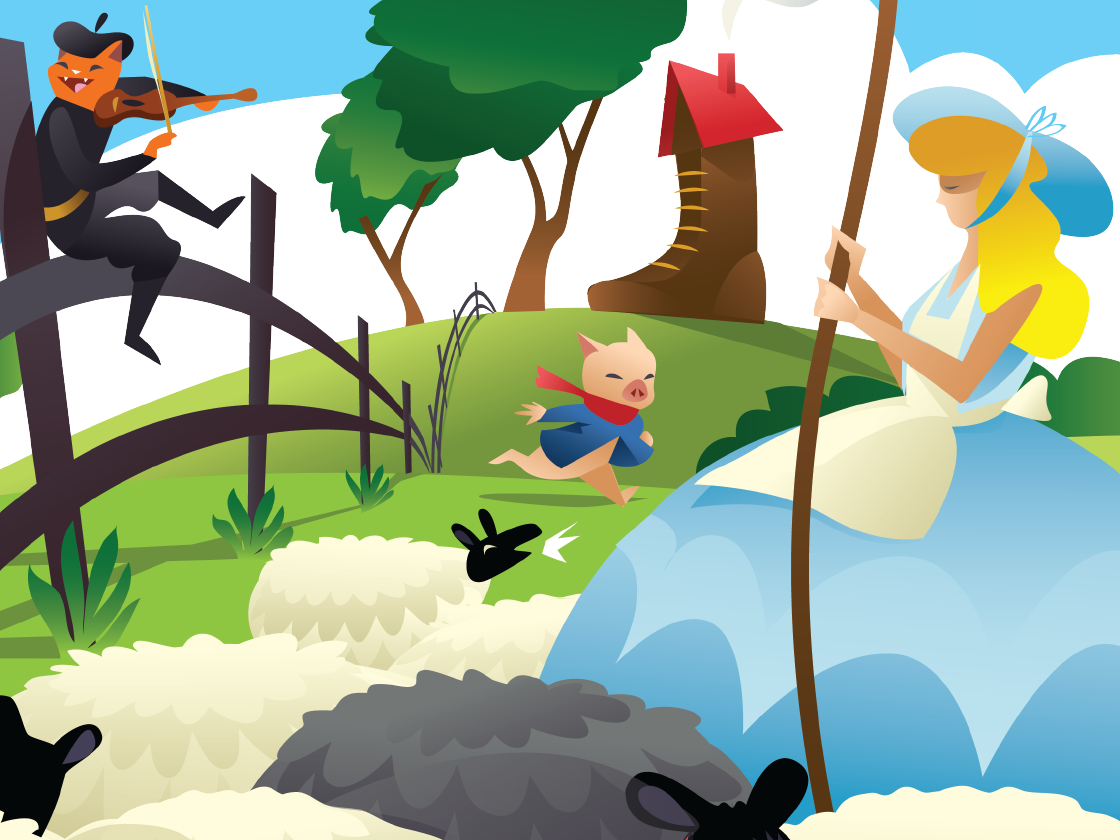
Una mujer rubia con un vestido azul cuida ovejas blancas y negras, sosteniendo un bastón de pastor. Un cerdo vestido de azul corre y un hombre de negro toca el violín en una valla. Al fondo hay una casa.

Domain

Nursery Rhymes and Fables/Rimas y fábulas infantiles

Start learning about literature with these classic Mother Goose rhymes.

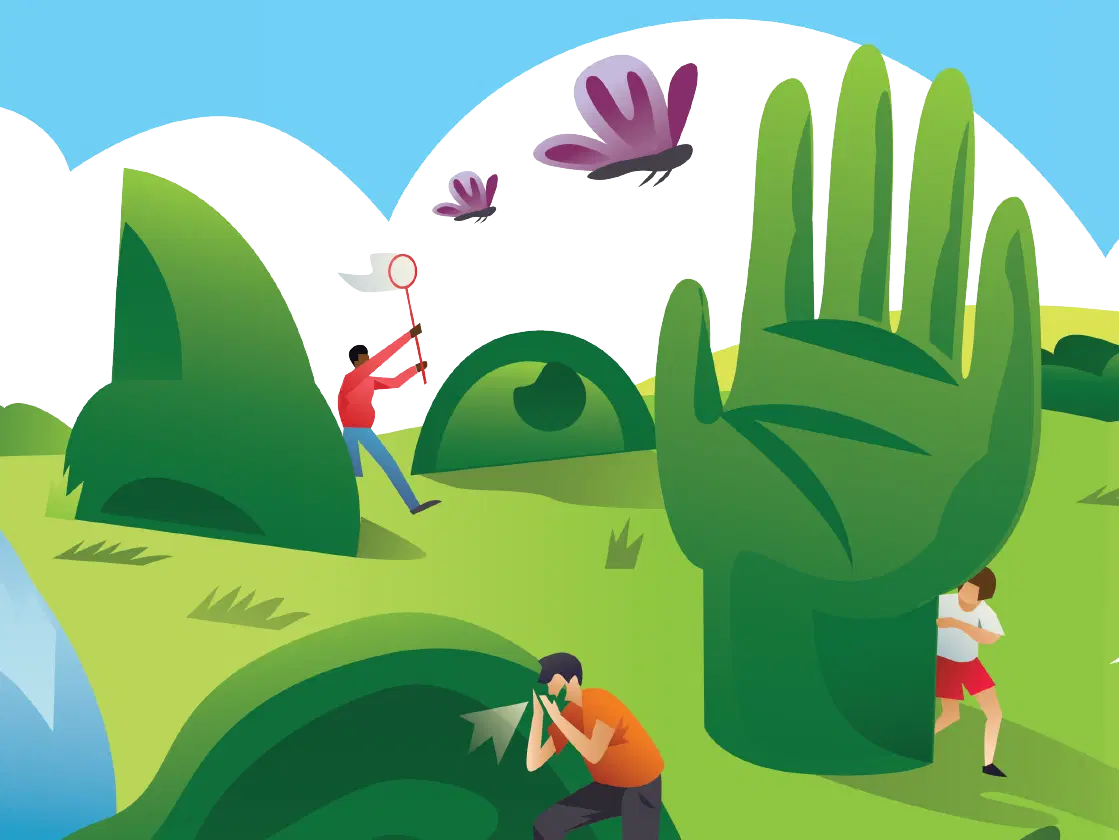
Ilustración de tres personas en un paisaje cubierto de hierba, una tratando de atrapar mariposas con una red, otra escondiéndose detrás de una escultura alta y frondosa de una mano y otra con binoculares.

Domain

The Five Senses/Los cinco sentidos

Learning about the body starts with learning about how we experience the world.

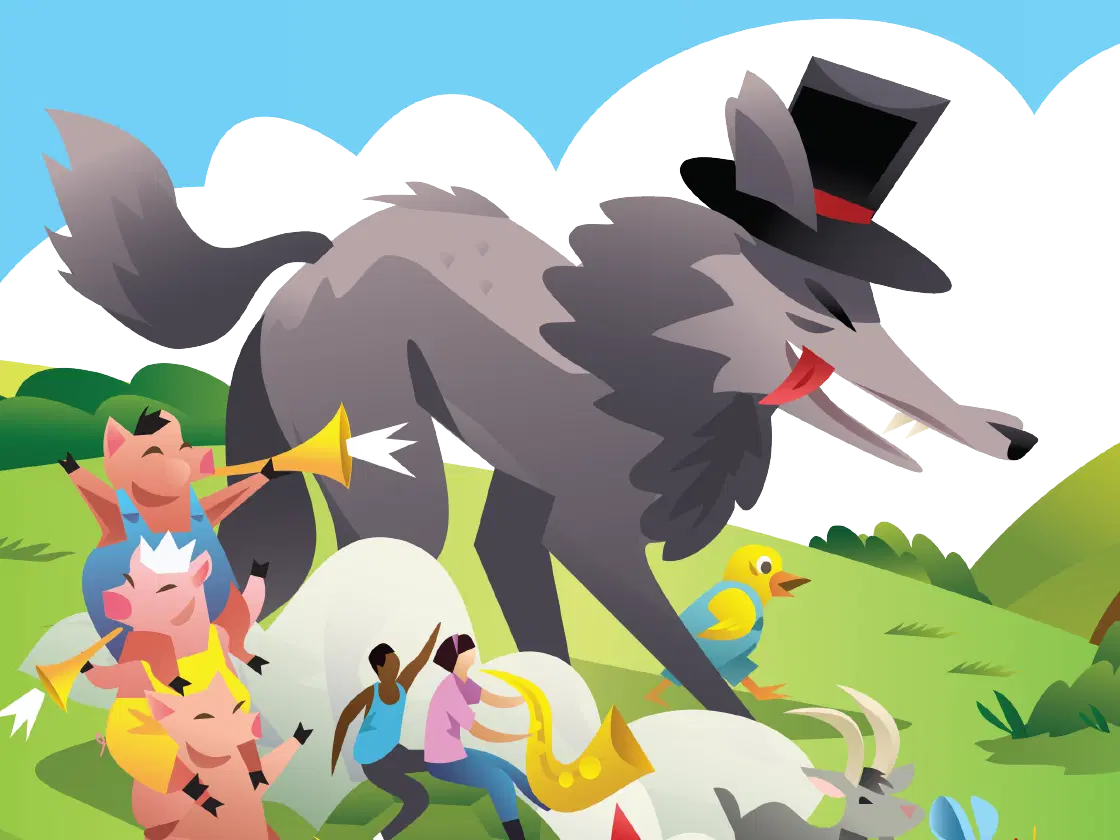
Una ilustración que representa a un gran lobo con sombrero de copa liderando un desfile de animales y personas con instrumentos musicales a través de un paisaje montañoso.

Domain

Stories/Cuentos

Learn about the parts of a book and some of the stories that go in one.

Una ilustración vibrante de una escena rural con colinas, una granja, una mariposa, un sol brillante, varias verduras como tomates y lechugas, y un gusano en el suelo.

Domain

Plants/Plantas

Discover the lifecycle of plants and the history of George Washington Carver.

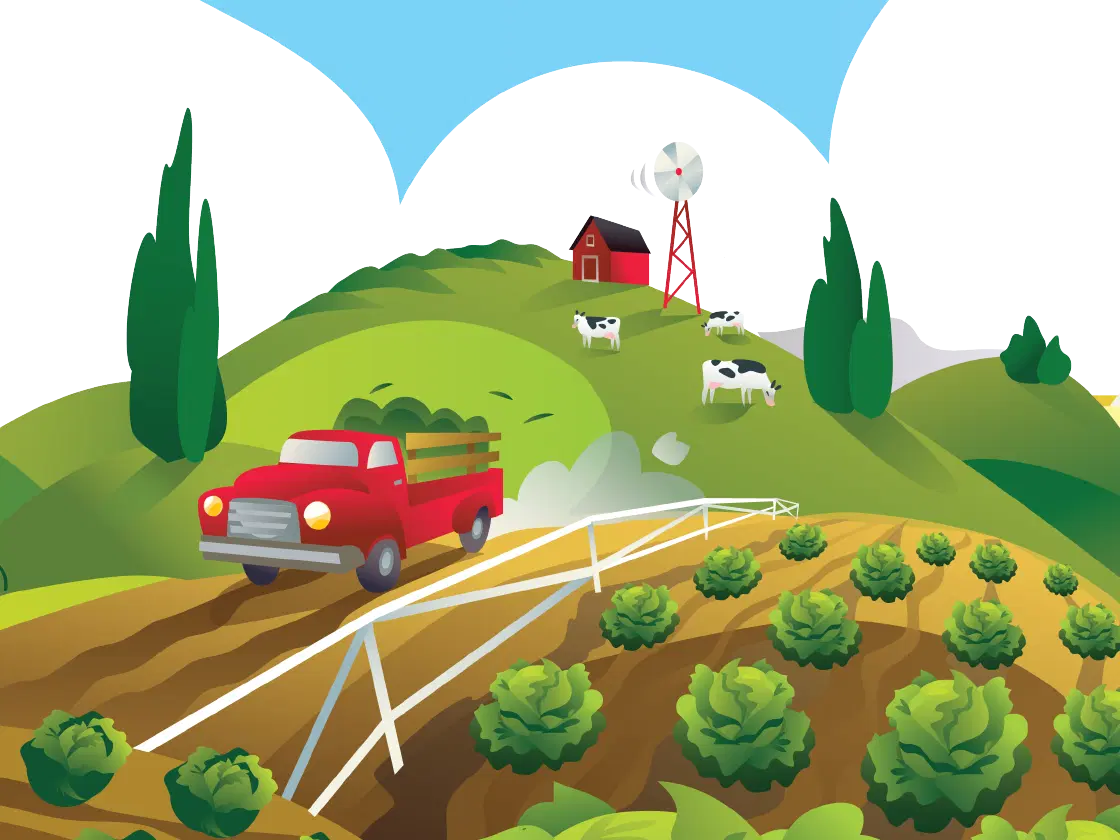
Ilustración de una escena de granja que muestra un camión rojo que transporta verduras, campos de cultivo, vacas pastando en una colina, un granero y un molino de viento contra un cielo azul.

Domain

Farms/Granjas

Now we know how plants make their food… but what about animals?

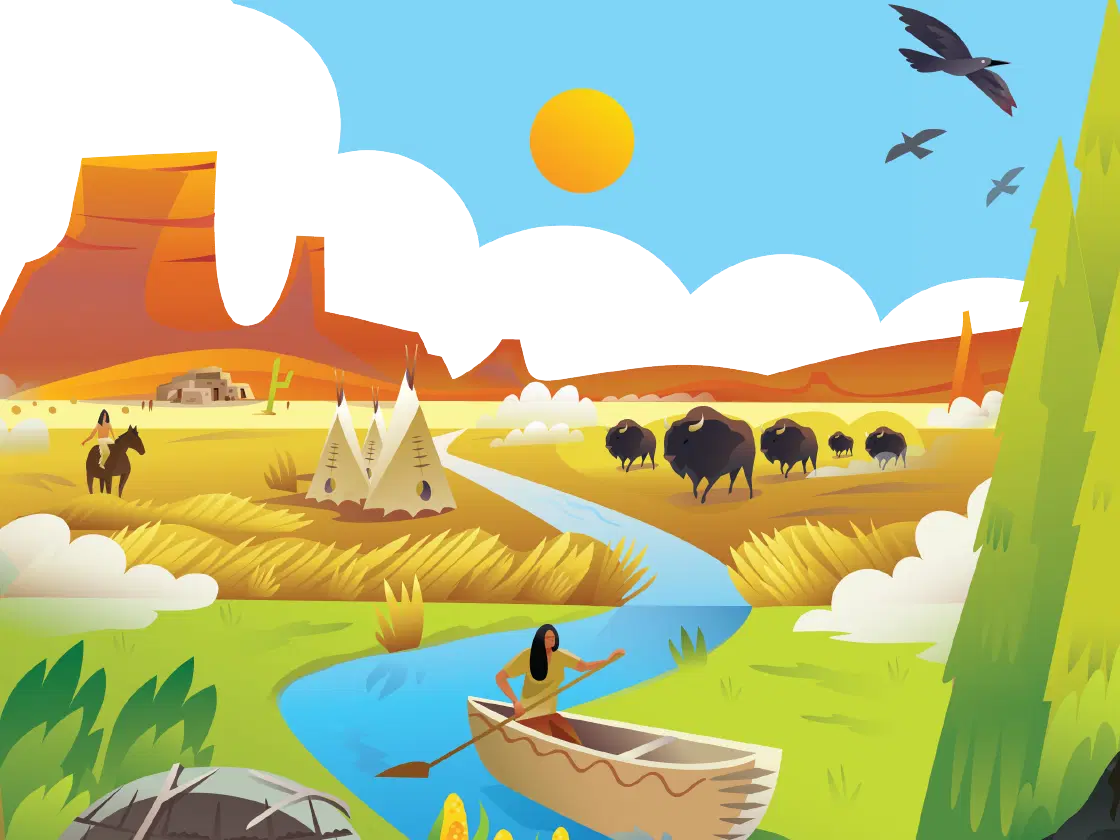
Ilustración de un nativo remando en una canoa en un río con búfalos pastando en un campo, tipis al fondo y pájaros volando en el cielo bajo un sol brillante.

Domain

Native Americans/Los nativos americanos

Who were the first people in America? A look at the Lenape, Wampanoag, and Lakota Sioux.

Una ilustración muestra un rey y una reina en tronos, un castillo en un acantilado y una mujer con enanos cerca de un árbol. Cortinas rojas enmarcan la escena.

Domain

Kings and Queens/Reyes y reinas

To understand fairy tales, it’s best to first understand royalty.

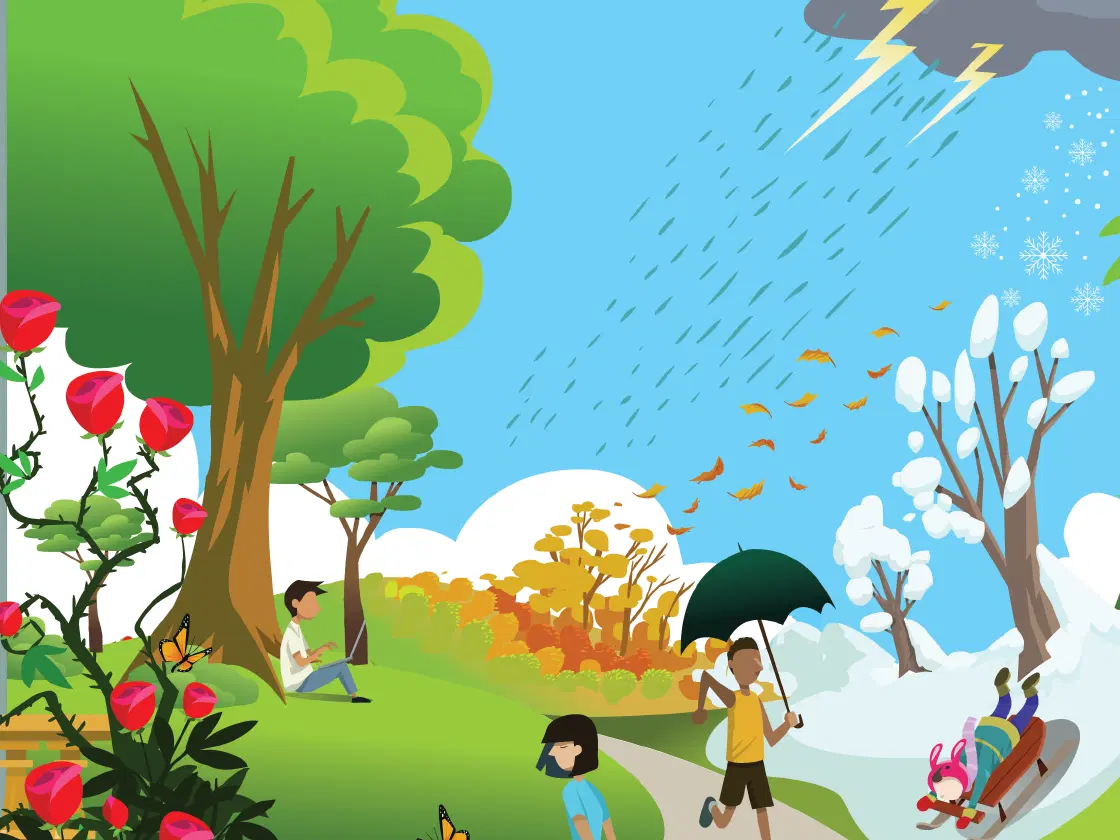
Ilustración que muestra las cuatro estaciones: primavera con flores, verano con árboles verdes, otoño con hojas que caen e invierno con nieve y gente en trineo. Un niño lee debajo de un árbol.

Domain

Seasons and Weather/Las estaciones y el tiempo

The study of natural cycles continues with the weather and why it happens.

Un velero de madera con símbolos de cruz roja en sus velas navega cerca de una isla tropical con exuberante vegetación y palmeras. A lo lejos se ven otros dos barcos en el agua.

Domain

Columbus and the Pilgrims/Colón y los peregrinos

A look at the first contact between Europe and the Americas, and some of its results.

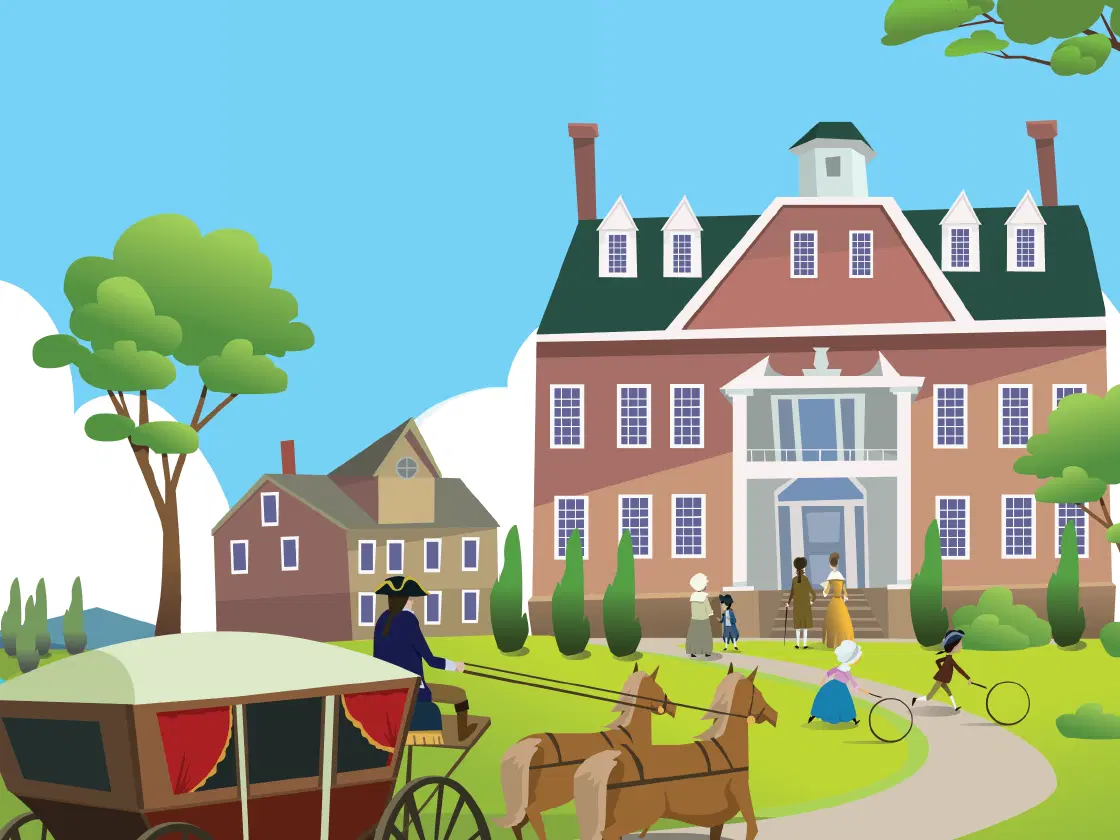
Una escena histórica muestra gente afuera de una gran mansión de estilo colonial con dos chimeneas. En primer plano se ve un carruaje tirado por caballos y a la izquierda se ve una casa más pequeña.

Domain

Colonial Towns and Townspeople/Las colonias y sus habitantes

Before the War for Independence, how did the town and country depend on one another?

Ilustración de personas clasificando materiales reciclables en un parque cerca de un río contaminado. Las fábricas emiten humo al fondo, mientras que las mariposas, las flores y los árboles están presentes en el primer plano.

Domain

Taking Care of the Earth/Cuidar el planeta Tierra

We only have one Earth—here are some ways to help care for it.

Ilustración del Monte Rushmore con los rostros tallados de cuatro presidentes de Estados Unidos. Un águila vuela en primer plano.

Domain

Presidents and American Symbols/Presidentes y símbolos de los Estados Unidos

Start learning about government through the lives of five presidents.

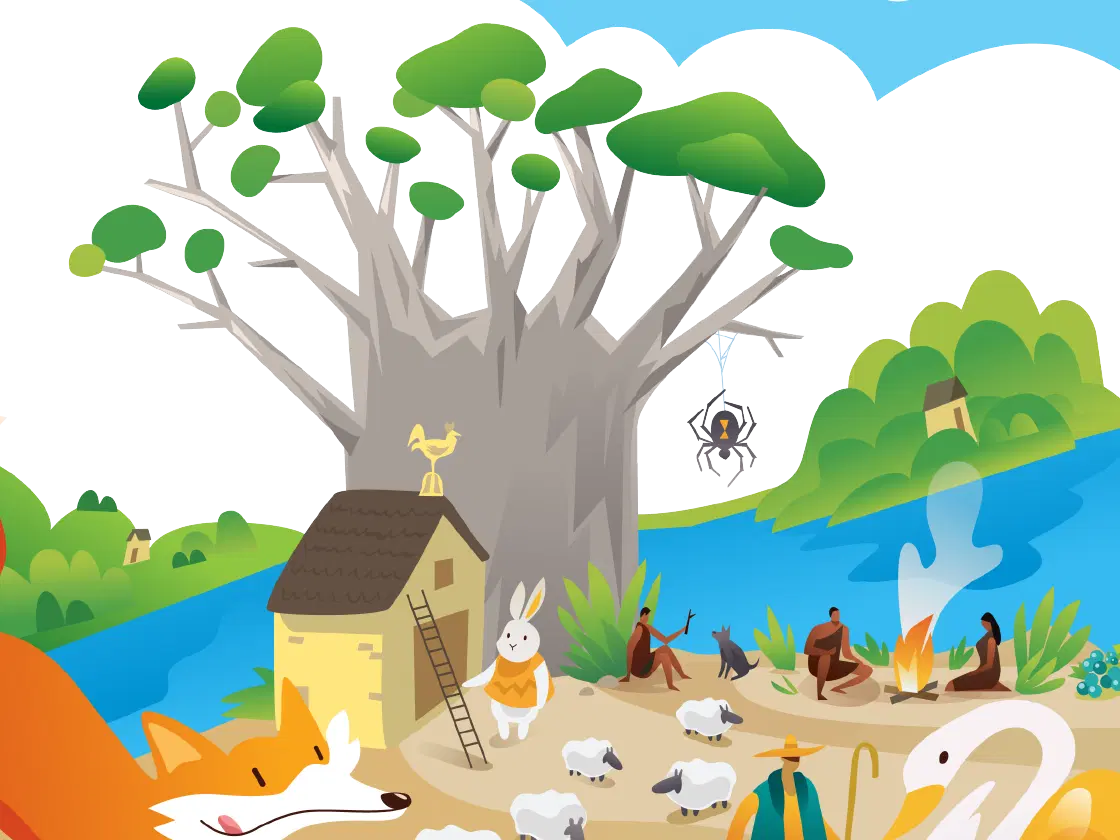
Una ilustración caprichosa que muestra animales de granja alrededor de una casa en un árbol junto a un río. Un zorro, un conejo y una oveja interactúan mientras la gente acampa junto a una fogata al fondo. Una araña cuelga del árbol.

Domain

Fables and Stories/Fábulas y cuentos

Learn some of the key elements of a story through classic fables.

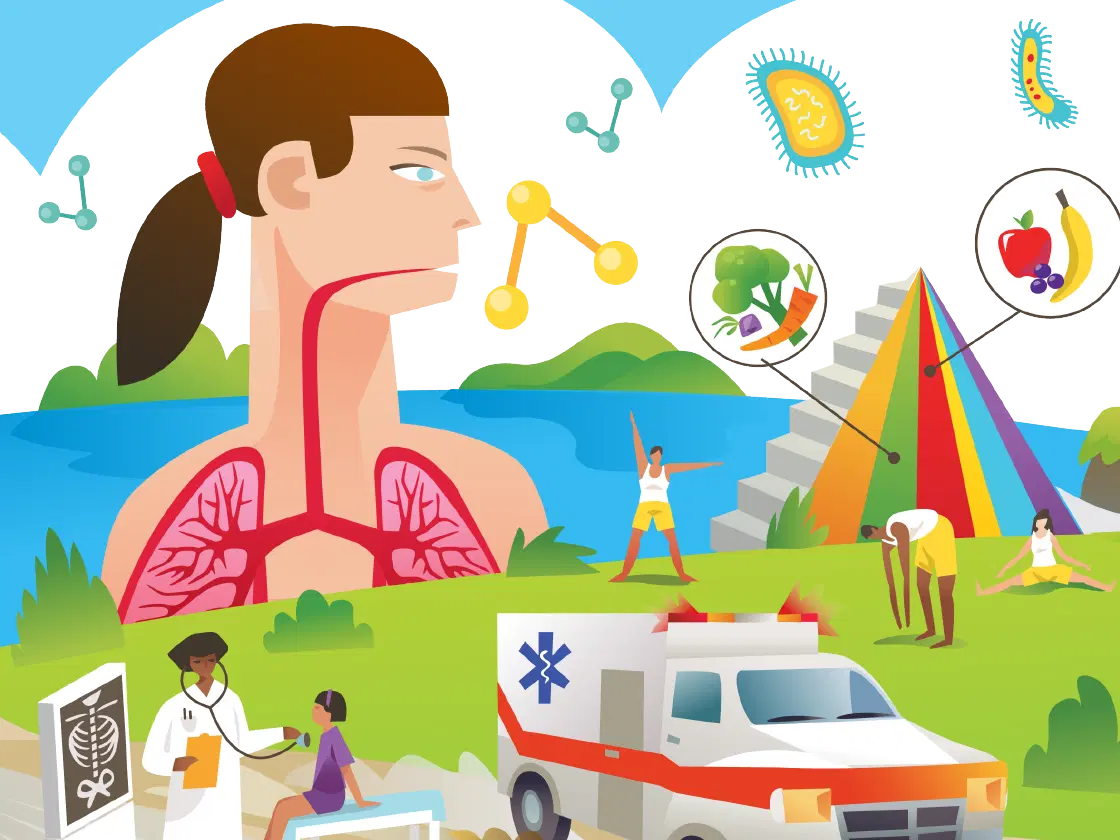
Ilustración que presenta anatomía humana, actividades de estilo de vida saludable, profesionales médicos, símbolos dietéticos, una ambulancia y microorganismos, destacando la conexión entre salud, nutrición y ejercicio.

Domain

The Human Body/El cuerpo humano

What are germs? What are the organs? And what does it all have to do with health?

Una ilustración que presenta varias escenas de cuentos de hadas y folclore, incluida una calabaza grande, un tigre, Caperucita Roja, personas con atuendos tradicionales y una pagoda roja con una montaña de fondo.

Domain

Different Lands, Similar Stories/Tierras diferentes, cuentos similares

A world tour of storytelling, and the stories that stay the same across the world.

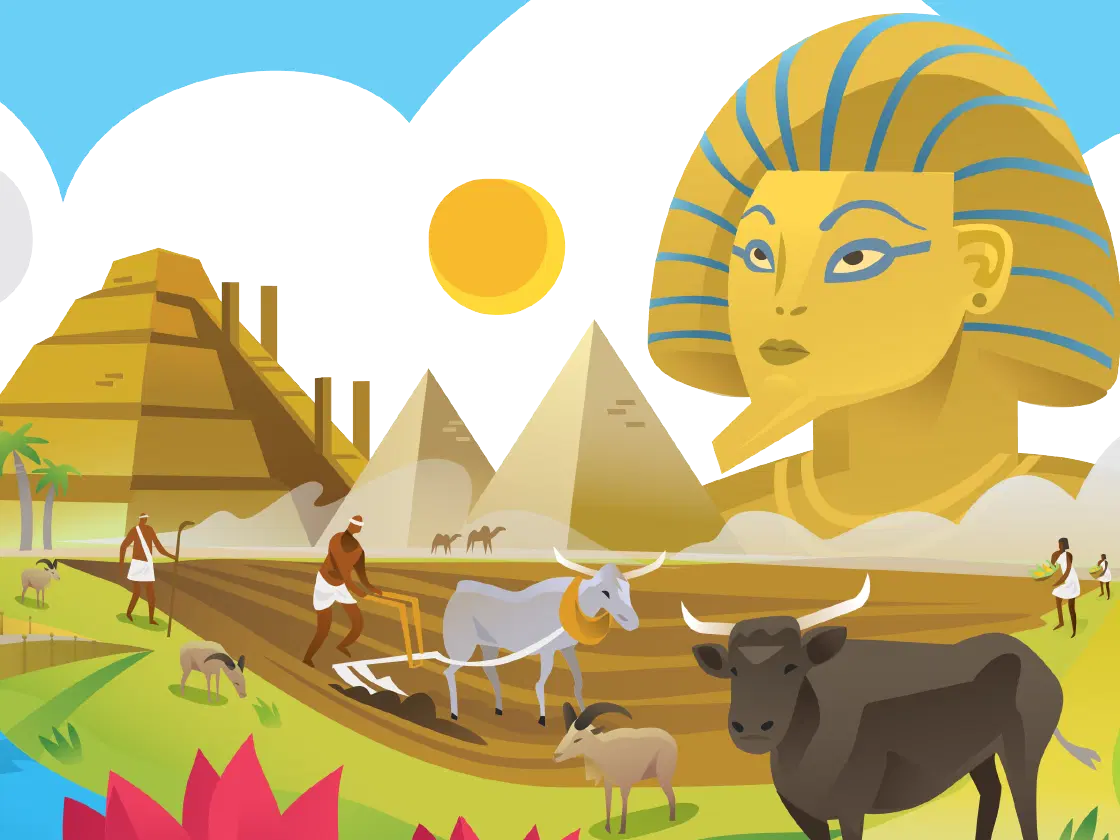
Ilustración que muestra el antiguo Egipto con pirámides, la Esfinge, agricultores arando un campo con bueyes y ganado pastando bajo un cielo soleado.

Domain

Early World Civilizations/Antiguas civilizaciones del mundo

Rivers, farming, writing, and laws: just what does it take to build a civilization?

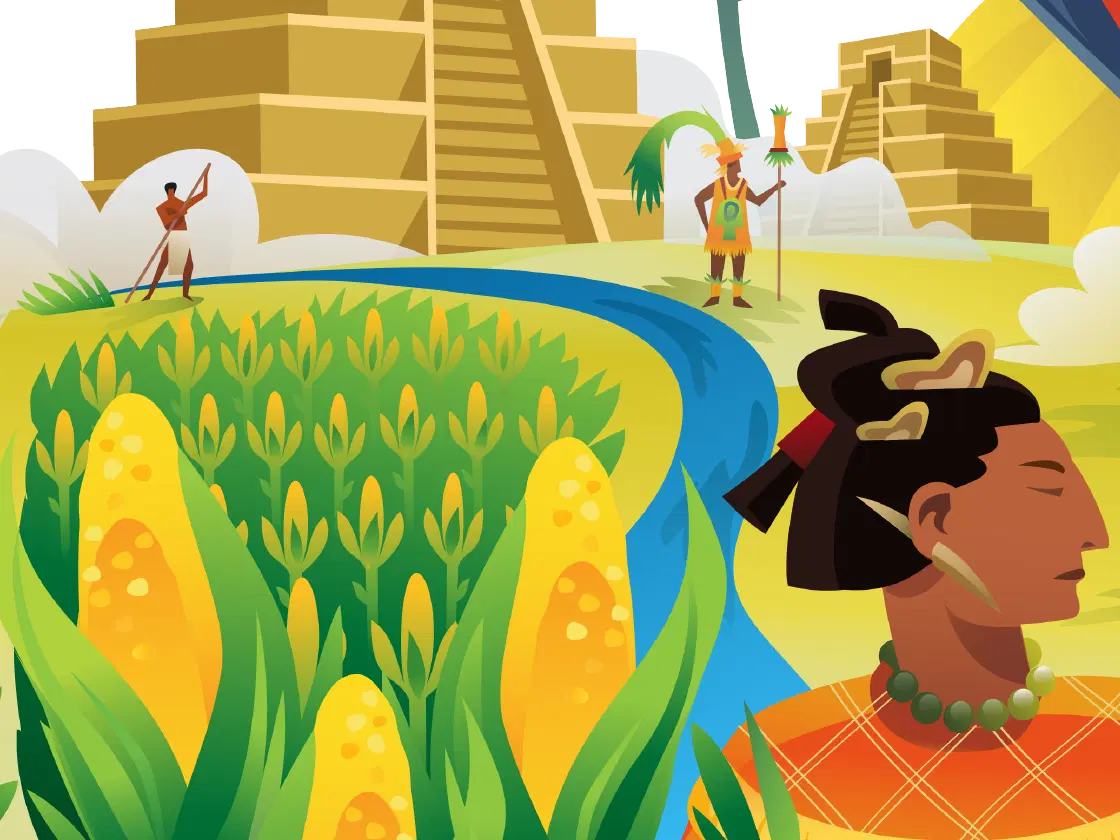
Escena ilustrada de la antigua Mesoamérica con maíz, un río, agricultores y pirámides al fondo. En primer plano se ve a una persona con traje tradicional.

Domain

Early American Civilizations/Antiguas civilizaciones de América

What will we find in the great temples of the Aztec, Maya, and Inca civilizations?

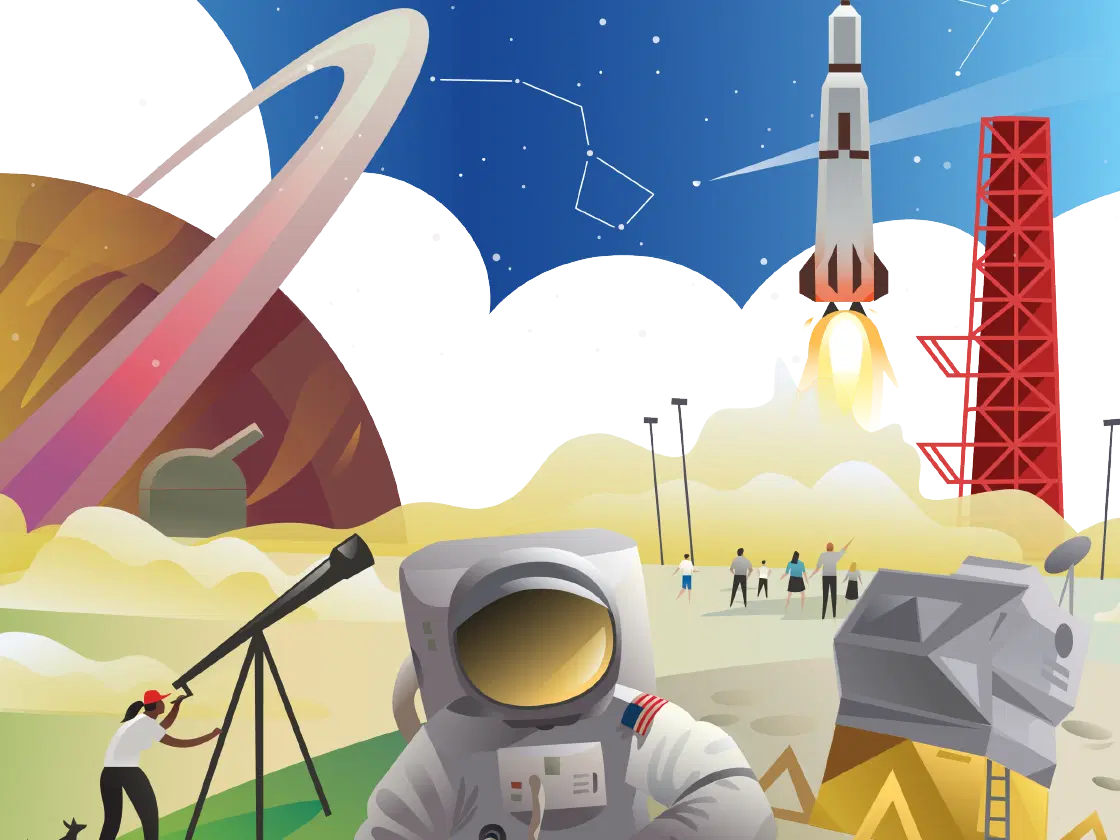
Ilustración de la exploración espacial: se lanza un cohete, un astronauta se para cerca de un módulo de aterrizaje, una persona usa un telescopio y aparece un planeta distante con anillos sobre un fondo estrellado.

Domain

Astronomy/Astronomía

How the Earth relates to the moon, the sun, and the rest of the planets.

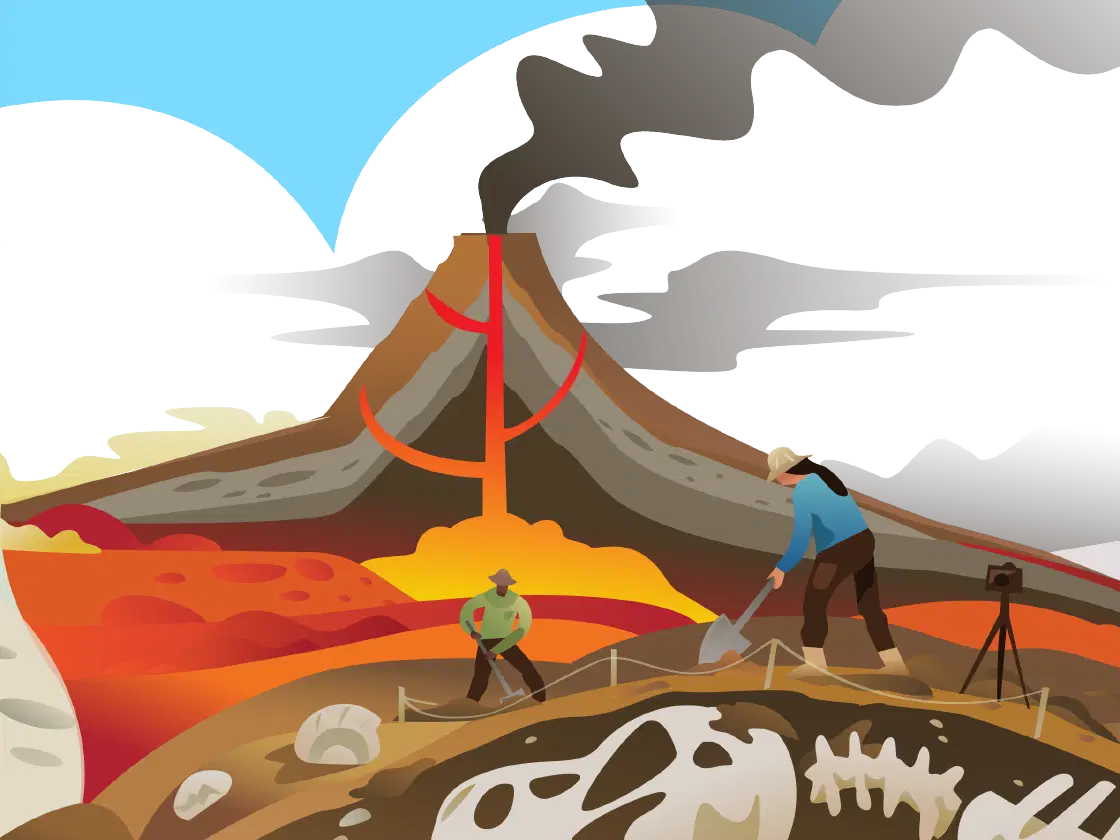
Dos paleontólogos en un paisaje volcánico examinan fósiles en primer plano, mientras un volcán emite humo y lava al fondo.

Domain

The History of the Earth/La historia de la Tierra

Just what lies beneath the Earth’s surface, and what can it teach us about the past?

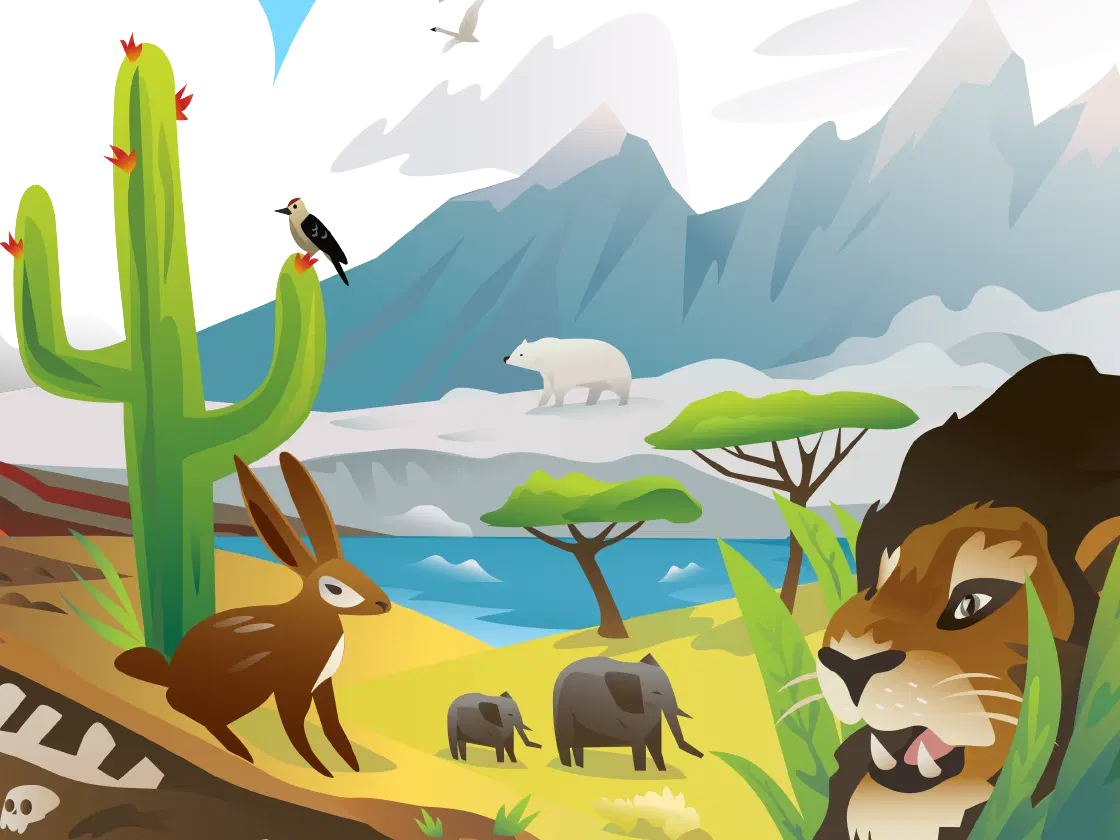
Una escena de vida silvestre diversa que presenta un cactus del desierto con un pájaro, un conejo, elefantes, un león, un oso polar sobre el hielo y montañas distantes bajo un cielo nublado.

Domain

Animals and Habitats/Los animales y sus hábitats

A look at the connection between how animals live and where they make their homes.

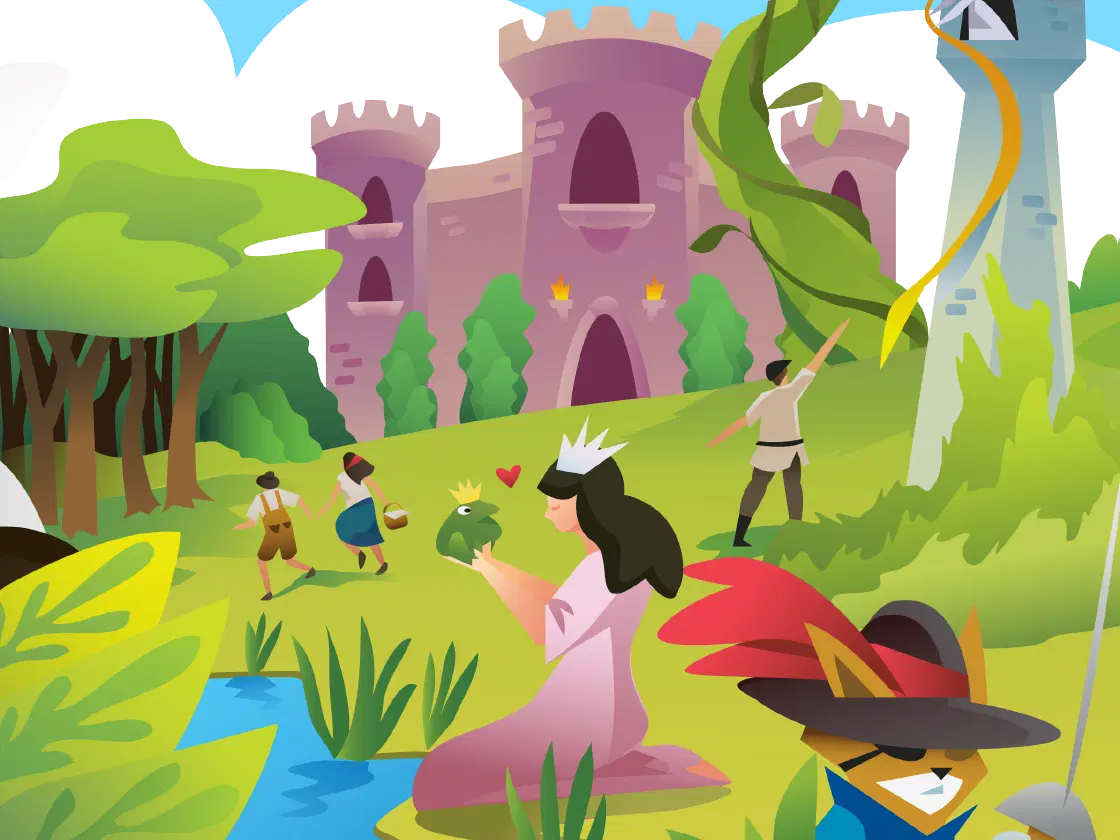
Una princesa con un vestido rosa sostiene una rana junto a un arroyo con un castillo, árboles y gente al fondo. En primer plano camina un zorro con un sombrero con una pluma roja.

Domain

Fairy Tales/Cuentos de hadas

What do fairy tales have to teach us about how stories are told?

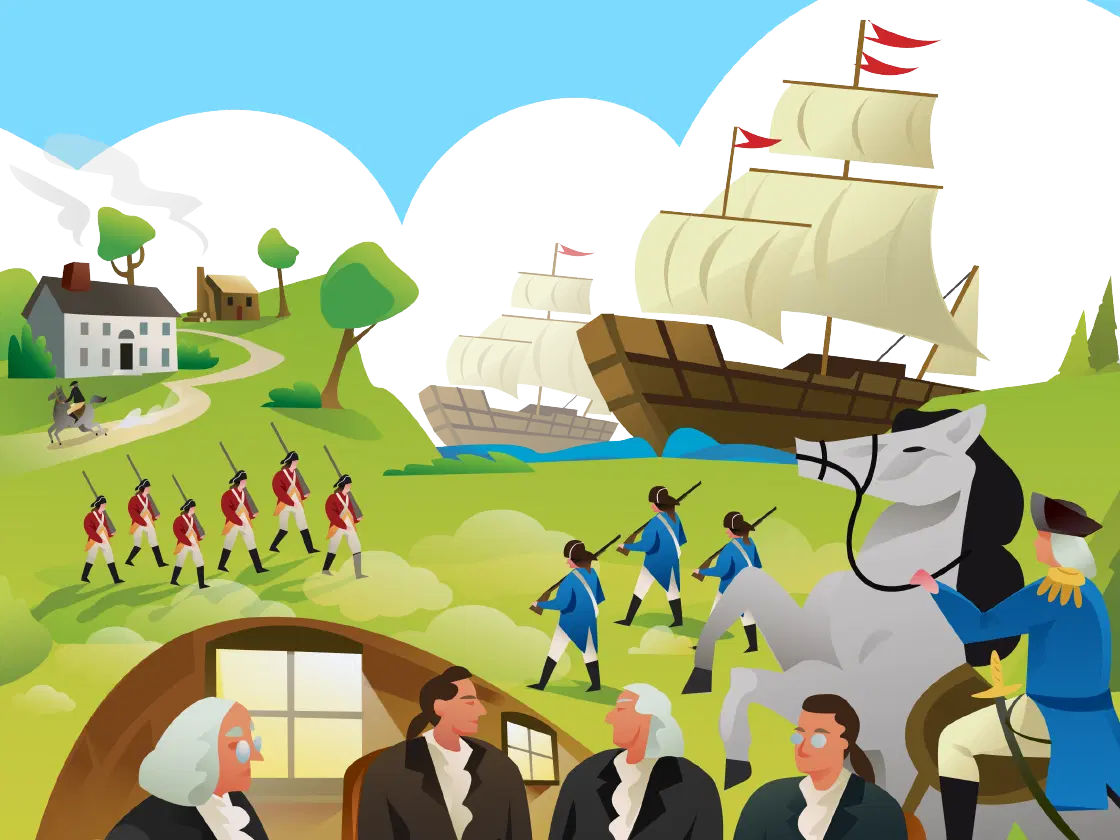
Ilustración que muestra una escena histórica con soldados, veleros y hombres con atuendo colonial discutiendo en el interior.

Domain

A New Nation: American Independence/Una nueva nación: la independencia de los Estados Unidos

The story of the birth of the United States out of the 13 Colonies.

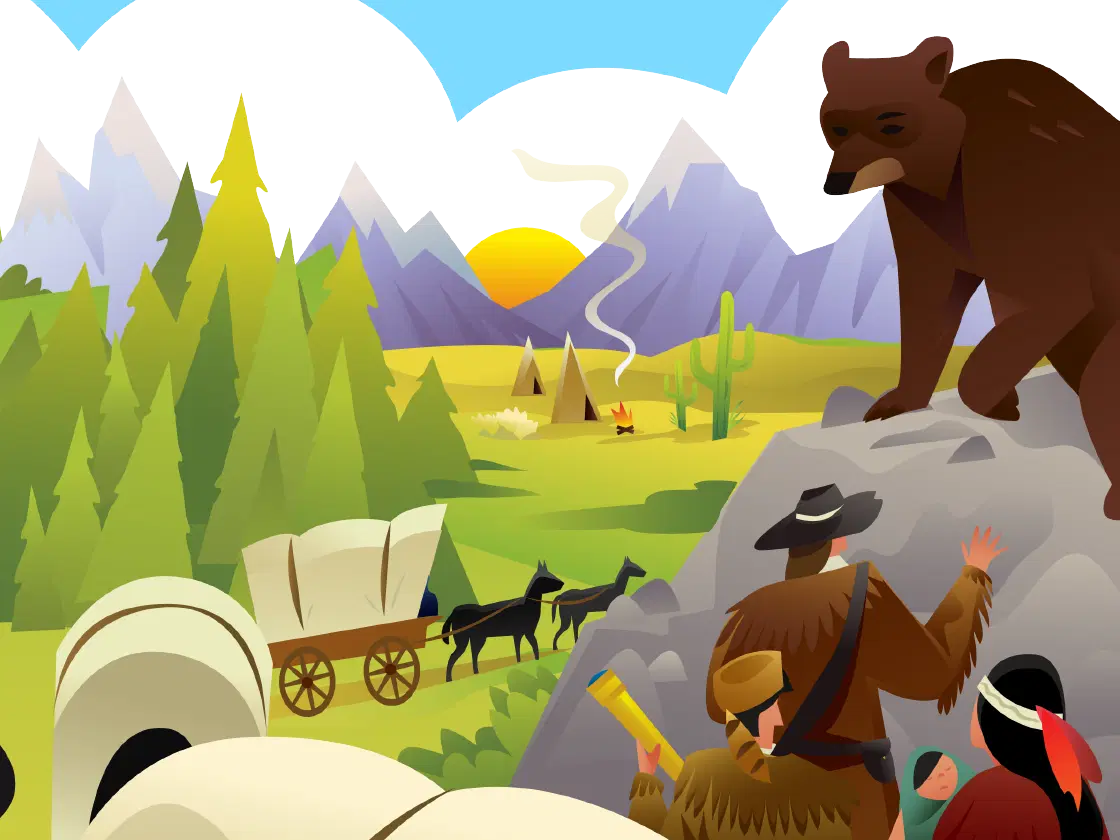
Los pioneros con carros cubiertos y caballos señalan hacia un valle con tipis nativos, fogatas y humo elevándose. Un oso se encuentra sobre una roca y se ven montañas al fondo.

Domain

Frontier Explorers/Exploradores de la Frontera

The story of the journey west from the newborn U.S.A. to find the Pacific Ocean.

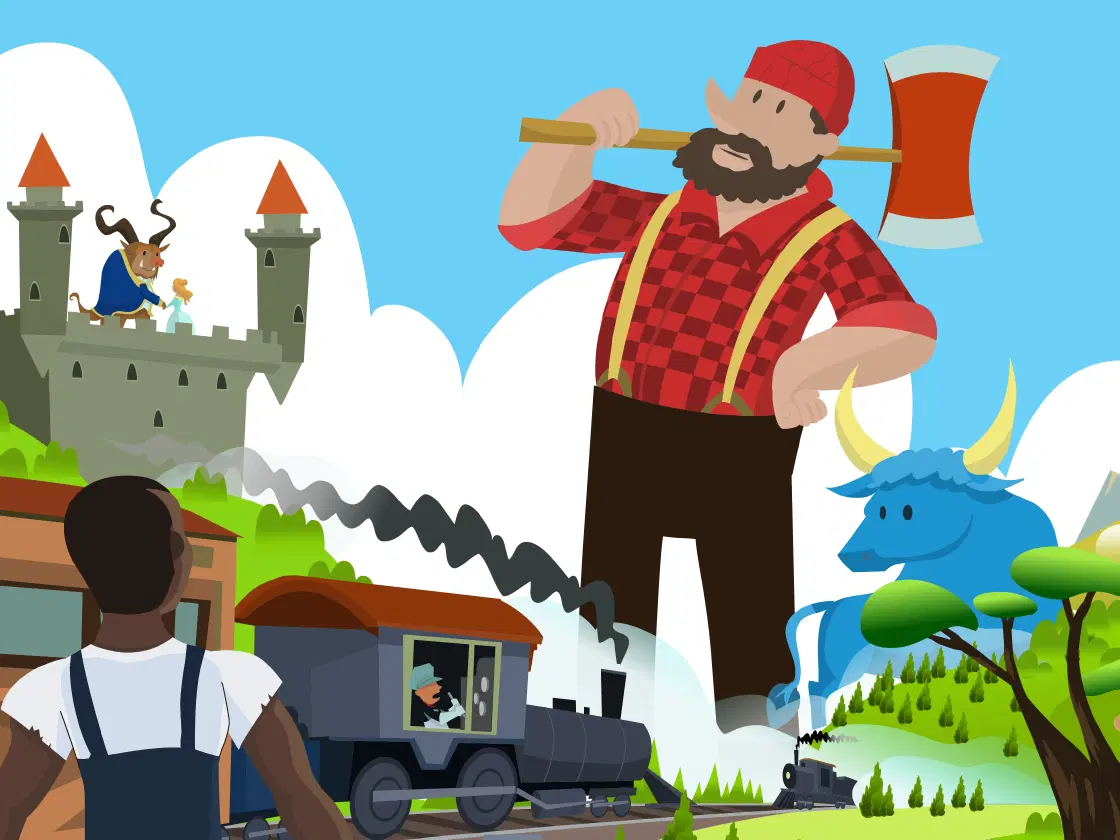
Un hombre con un hacha se encuentra entre paisajes exagerados con un castillo, un tren con humo, un buey azul y una persona con un mono observando la escena.

Domain

Fairy Tales and Tall Tales/Cuentos de hadas y cuentos exagerados

Learn about exaggeration and characterization on the frontier.

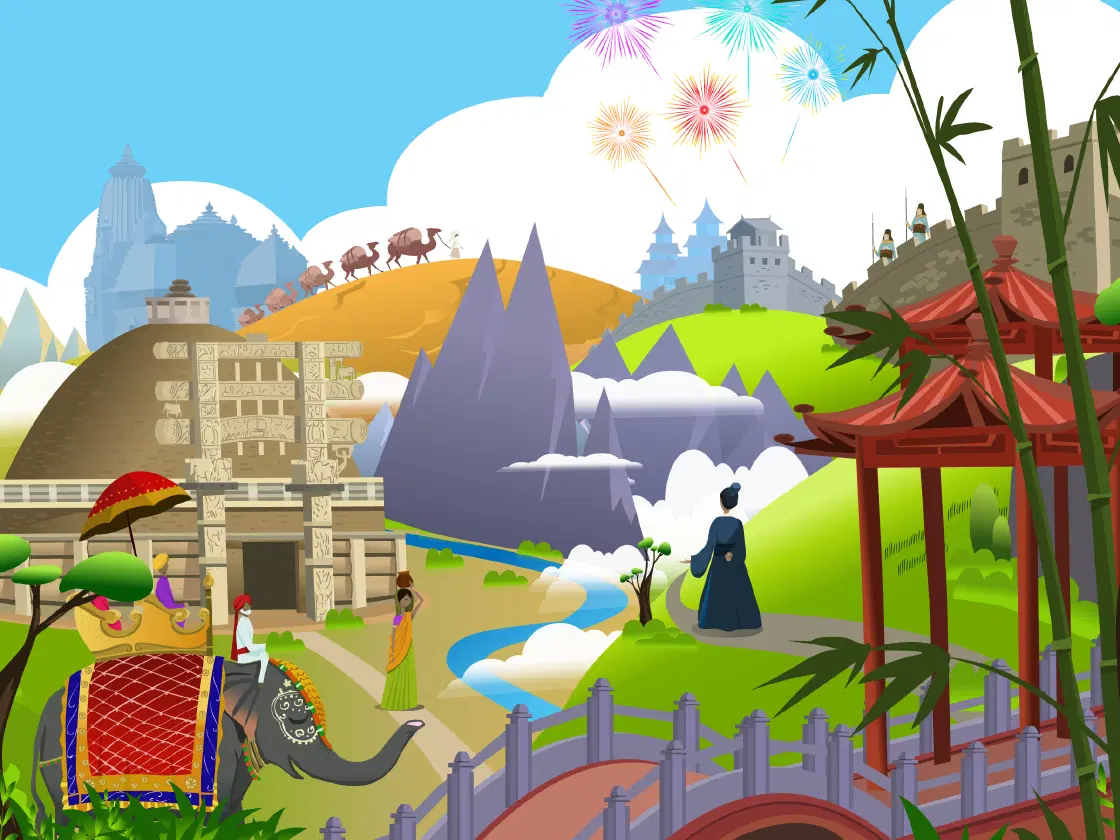
Ilustración de un paisaje vibrante que presenta diversos monumentos culturales, incluidos templos, palacios, pirámides, una escena de elefantes, montañas distantes y fuegos artificiales en el cielo.

Domain

Early Asian Civilizations/Antiguas civilizaciones de Asia

Tour the world of classical civilization, starting with India and China.

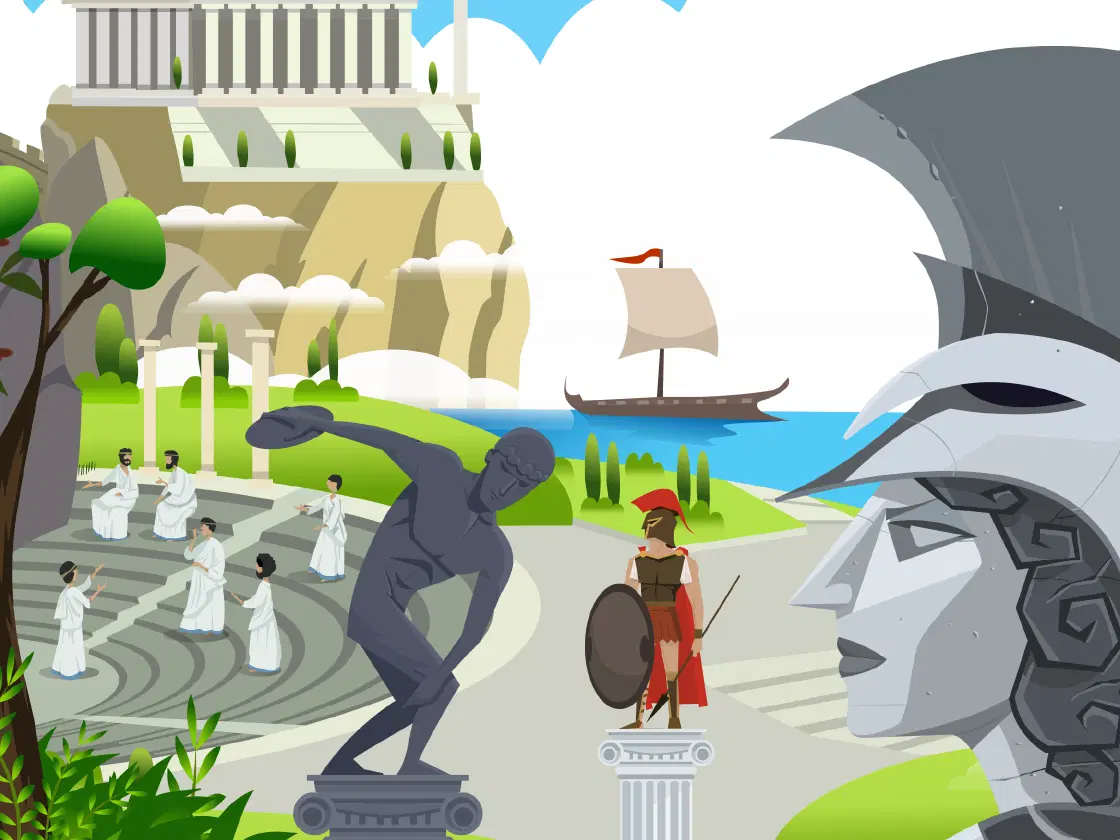
Ilustración que muestra la antigua Grecia con un anfiteatro, estatuas, soldados con armadura, un barco y un templo en una colina rodeada de vegetación.

Domain

Ancient Greek Civilization/La civilización griega antigua

The tour continues with the philosophy and politics of Greece.

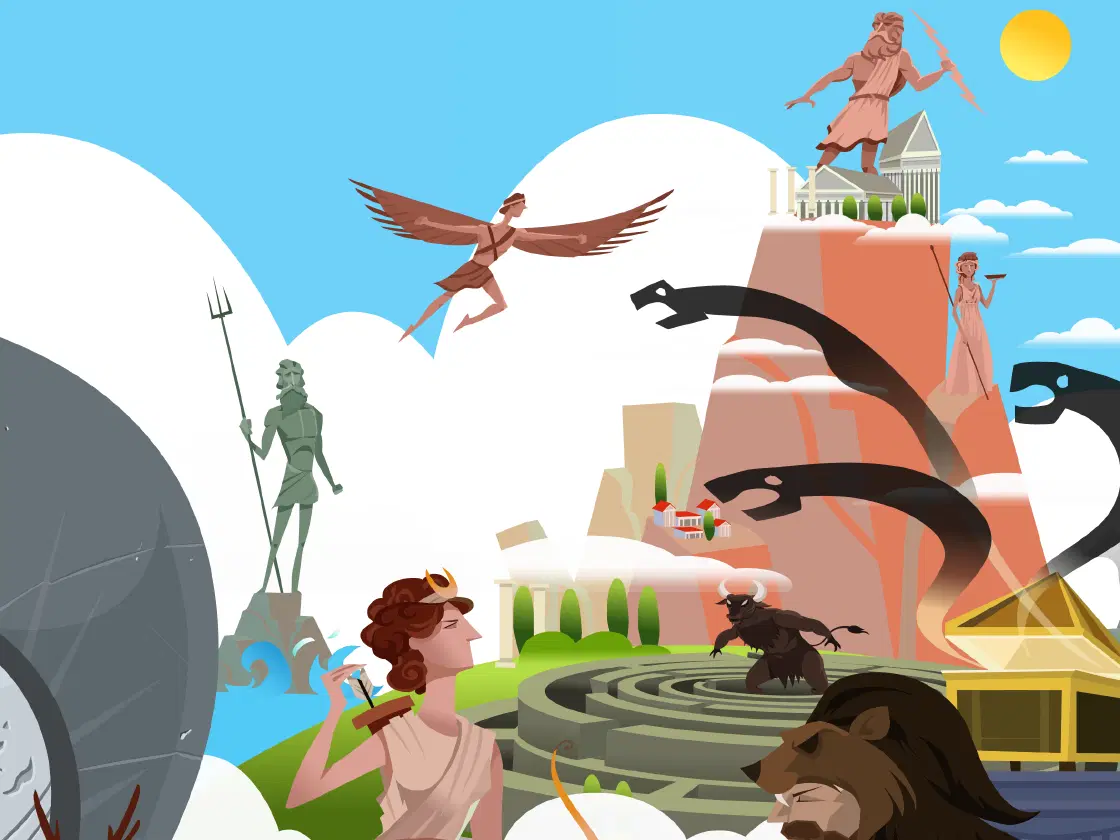
Illustration of various mythological scenes including greek gods, a flying horse, and roman architecture under a sunny sky.

Domain

Greek Myths/Mitos griegos

Dive deep into the characters and storytelling of classic myths.

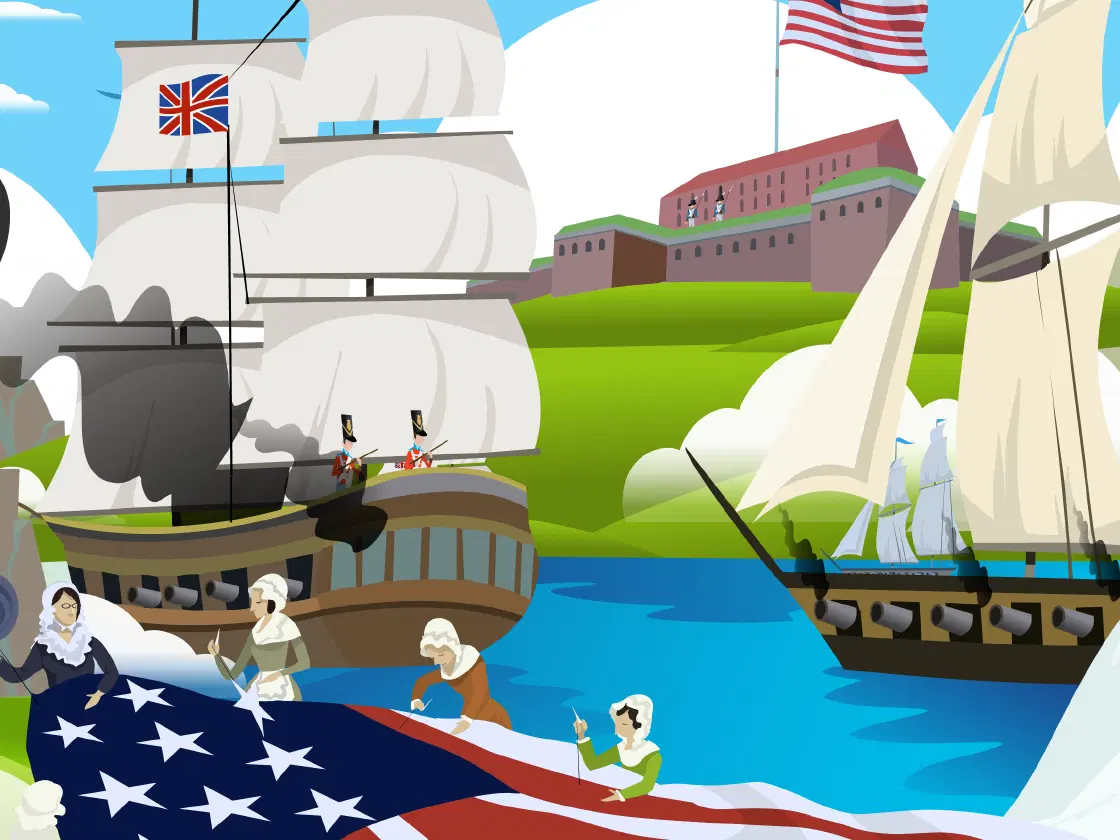
Ilustración de una batalla entre barcos británicos y estadounidenses cerca de un fuerte. El barco británico está a la izquierda con soldados, mientras que el barco estadounidense está a la derecha. La gente porta una gran bandera estadounidense en primer plano.

Domain

The War of 1812/La guerra de 1812

Learn about America’s “Second War for Independence.”

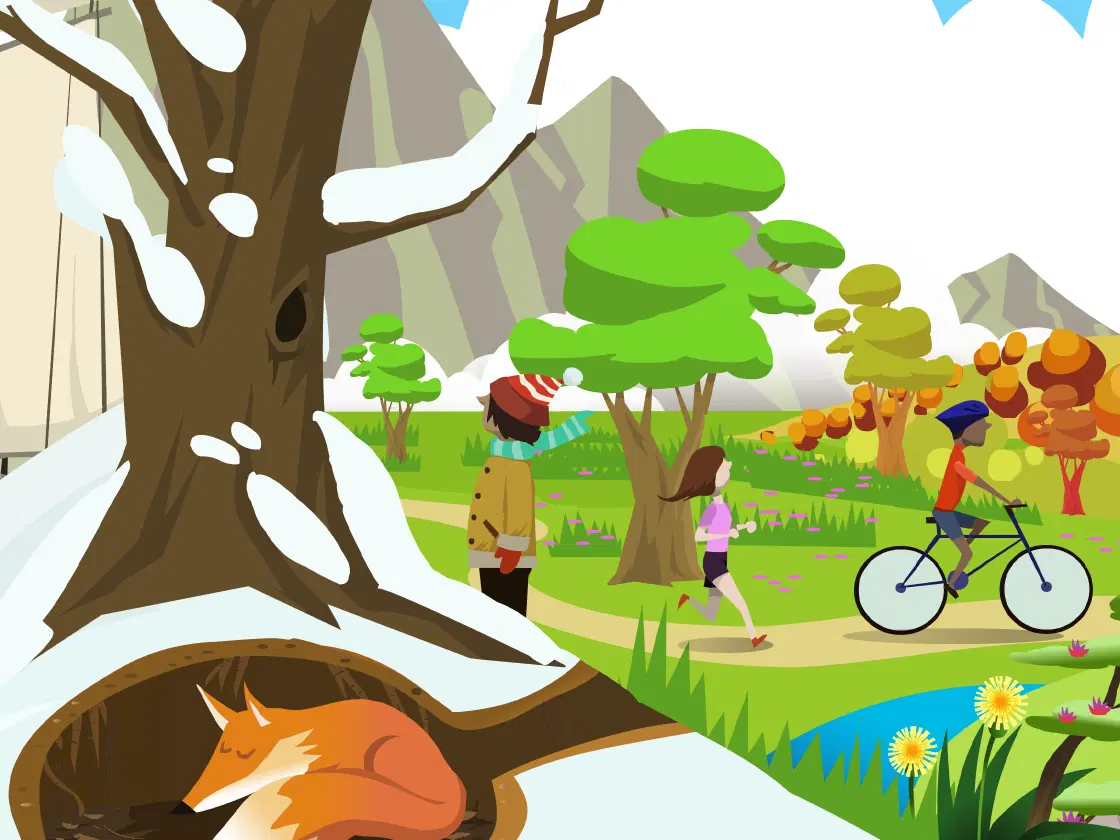
Un paisaje nevado con un zorro durmiendo en una madriguera, gente corriendo y andando en bicicleta por un sendero y árboles que muestran los cambios estacionales.

Domain

Cycles in Nature/Los ciclos de la naturaleza

Introducing the natural cycles that make our lives possible.

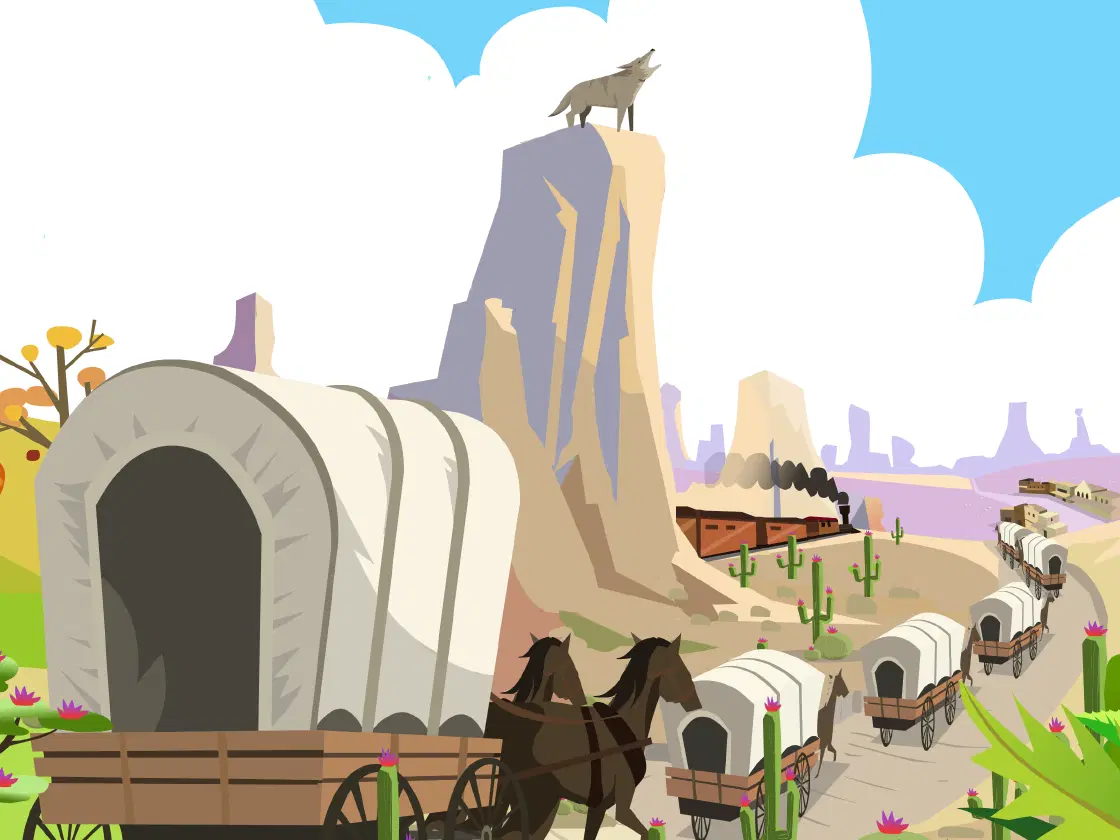
Ilustración de carros cubiertos tirados por caballos a lo largo de un sendero en el desierto, con un coyote aullando sobre una alta formación rocosa y un tren de vapor al fondo.

Domain

Westward Expansion/La expansión hacia el oeste

Why did pioneers go west? What happened to the people who were there?

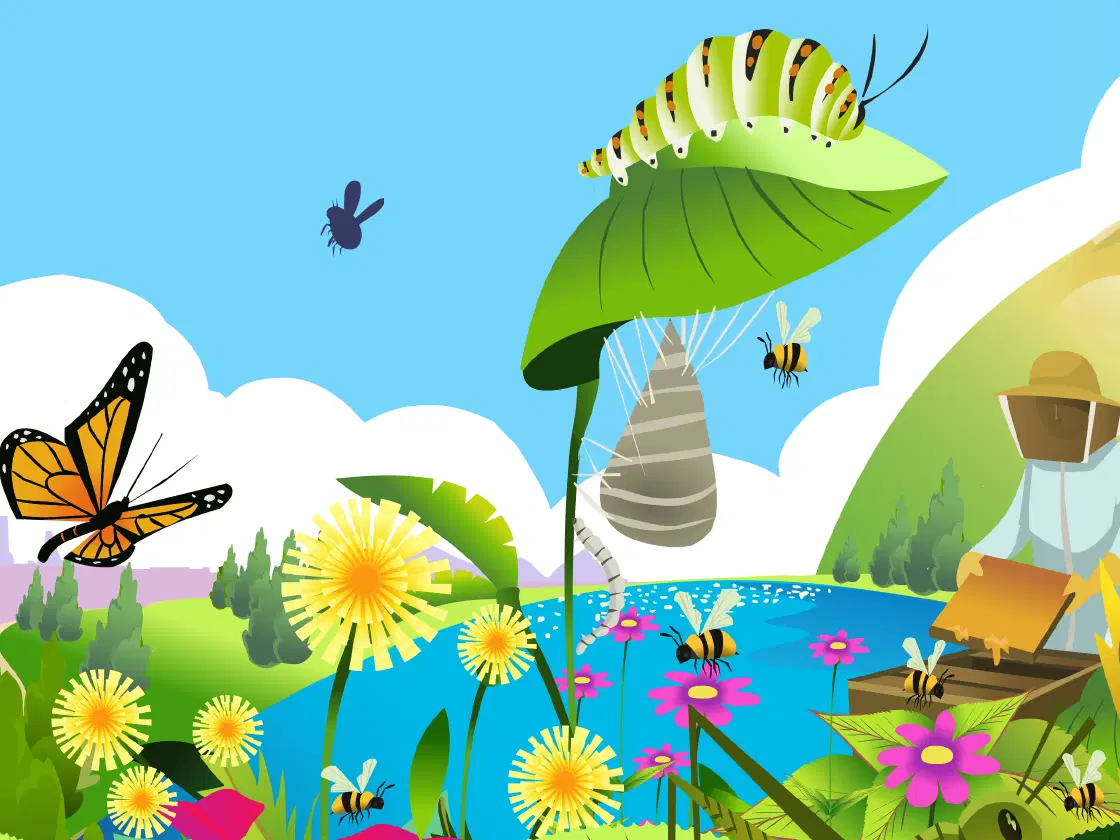
Ilustración de un jardín vibrante con flores, abejas, mariposas, una oruga en una hoja, una crisálida y un apicultor que maneja una colmena junto a un estanque.

Domain

Insects/Los insectos

Lay the grounds for animal classification by looking at solitary and social insects.

Ilustración de una escena histórica con gente escuchando el discurso de un hombre en una plataforma. Al fondo se ve un río y una procesión de personas. En primer plano hay un documento de proclamación.

Domain

The U.S. Civil War/La Guerra Civil de los Estados Unidos

Begin to grapple with U.S. history’s central crisis over slavery.

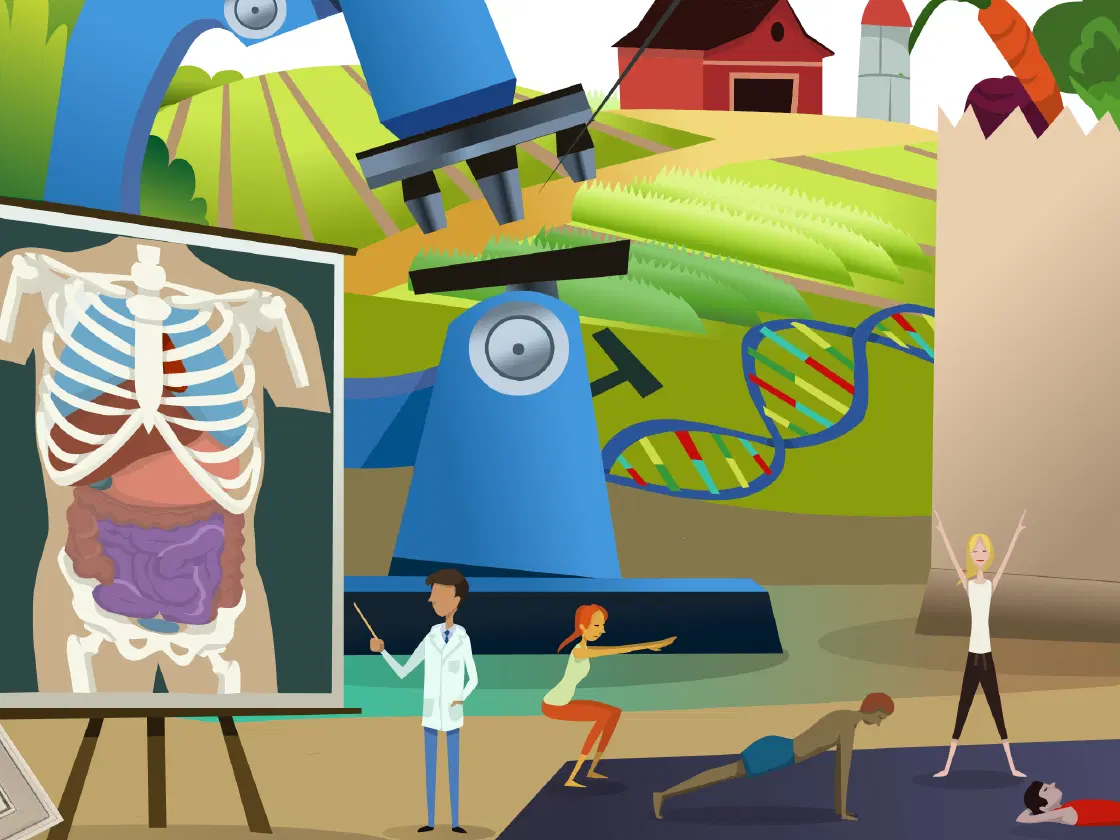
Una escena en la que aparece una persona explicando un diagrama anatómico humano, otra persona haciendo ejercicio, una cadena de ADN, campos y un microscopio de fondo.

Domain

Human Body: Building Blocks and Nutrition/El cuerpo humano: componentes básicos y nutrición

A deeper dive into the digestive system and the nutrition process.

Un grupo diverso de personas se encuentra en un muelle con vistas a un bullicioso puerto con barcos y un gran barco, un avión volando por encima y la Estatua de la Libertad al fondo.

Domain

Immigration/La inmigración

Why did people immigrate to the United States, and what did they find here?

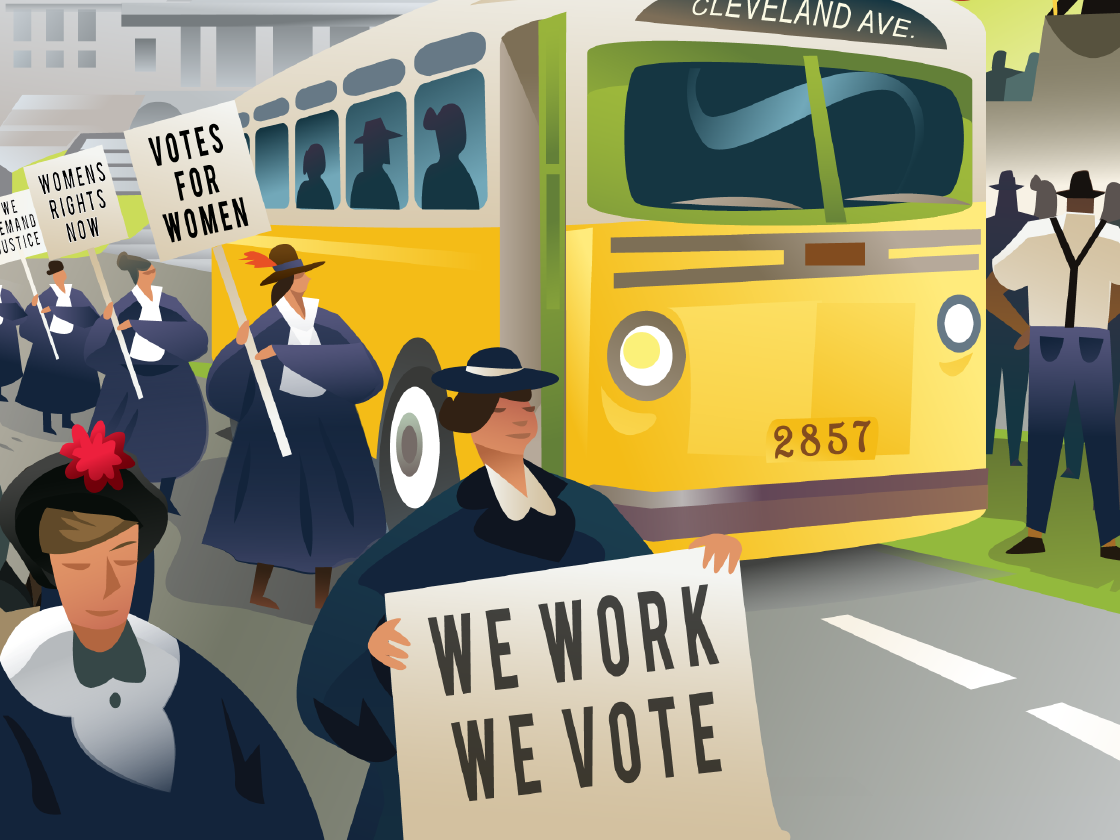
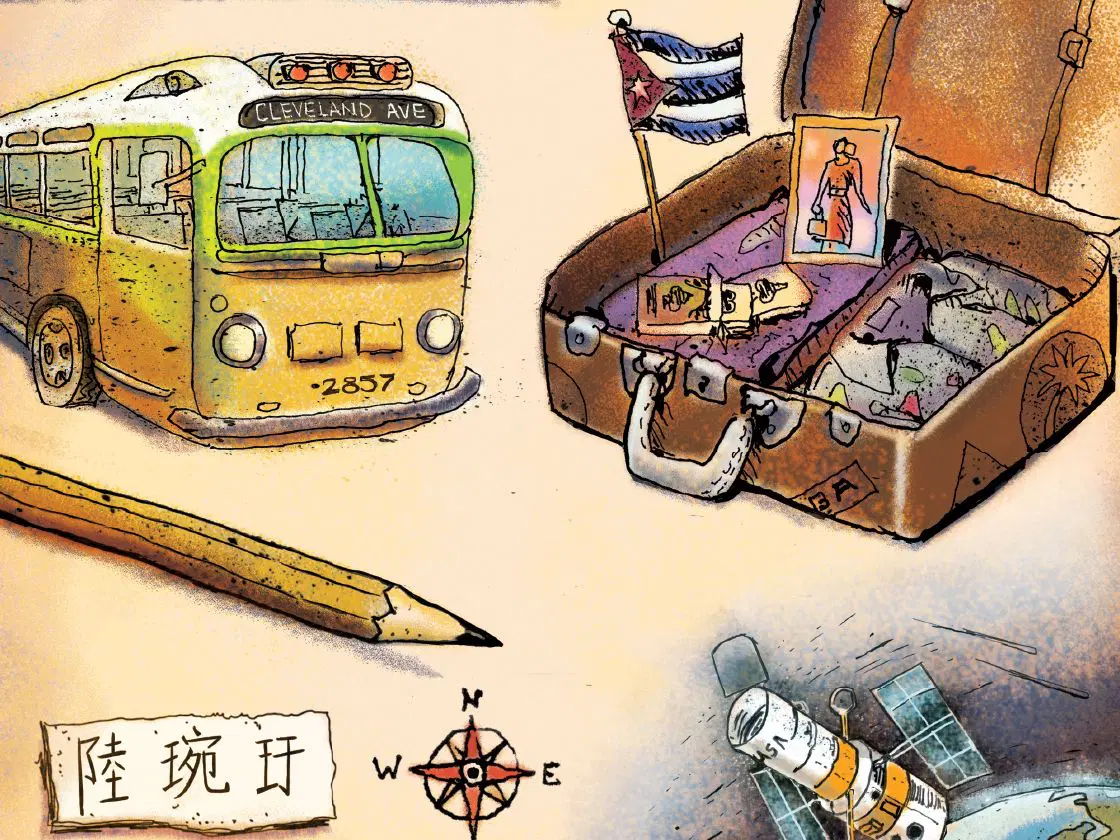
Women in early 20th-century clothing march with signs for voting rights and justice in front of a yellow bus labeled "Cleveland Ave.," making history that can inspire lessons in a K–2 language arts curriculum.

Domain

Fighting for a Cause/Luchar por una causa

How people can do extraordinary things to make the world better for everyone.

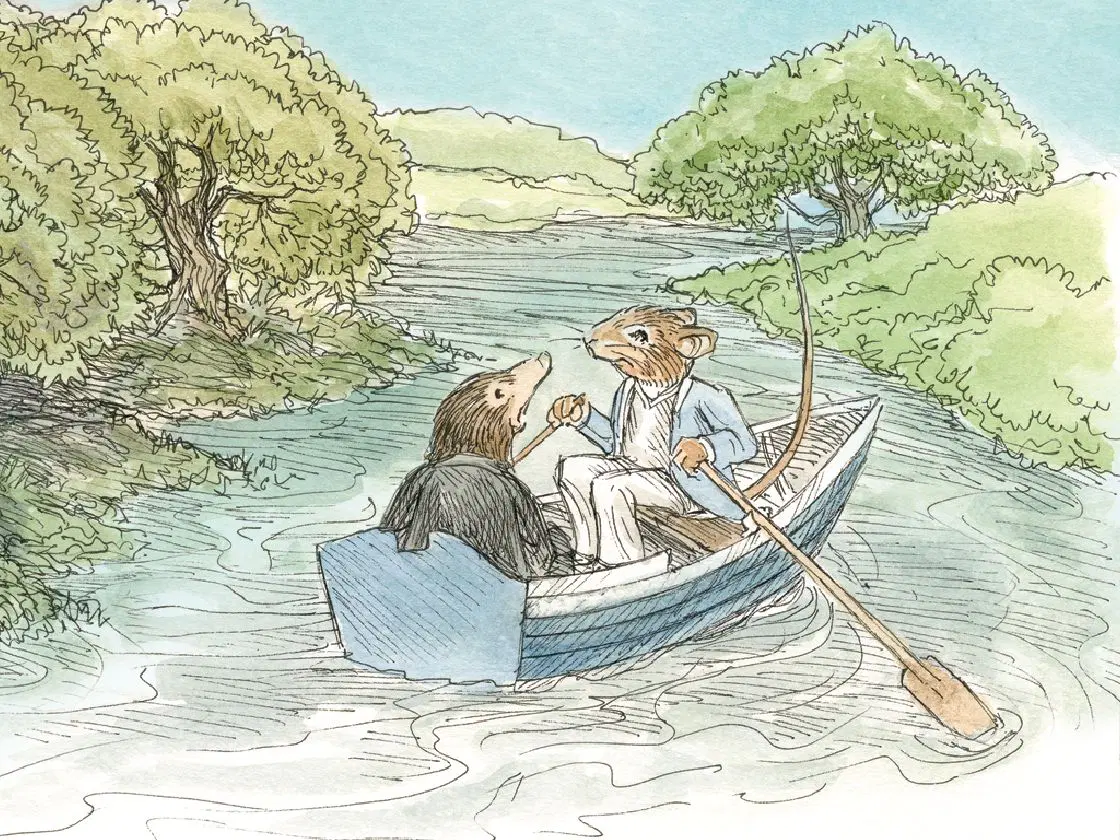
Dos ratones antropomórficos en un bote de remos, uno de ellos remando, navegan por un río tranquilo rodeado de exuberante vegetación y árboles. El ratón que rema lleva una chaqueta azul y el otro ratón parece conversar.

Unit 1

Classic Tales: The Wind in the Willows/Cuentos Clásicos: El viento en los sauces

A deep dive into character, theme, and POV in classic stories from around the world.

Ilustración de un jaguar, una garza, una rana roja, una tortuga y un pez en un paisaje vibrante con montañas y vegetación bajo un cielo soleado.

Unit 2

Animal Classification/La clasificación de los animales

How do we classify different animals by their appearance and behavior?

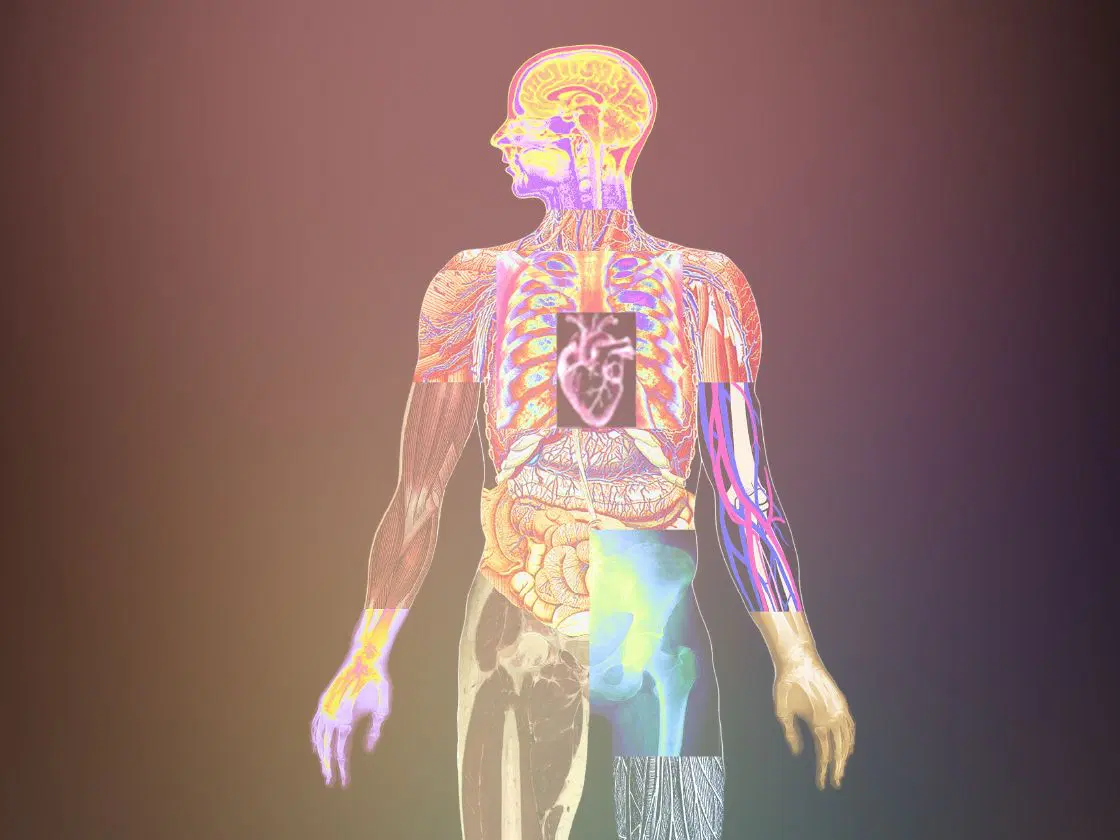
Ilustración de una figura humana que muestra la anatomía interna, incluidos el cerebro, los pulmones, el corazón, el sistema digestivo y una articulación de la cadera resaltada sobre un fondo degradado.

Unit 3

The Human Body: Systems and Senses/El cuerpo humano: sistemas y sentidos

Let’s take a closer look at how the skeleton, muscles, and nervous system all work.

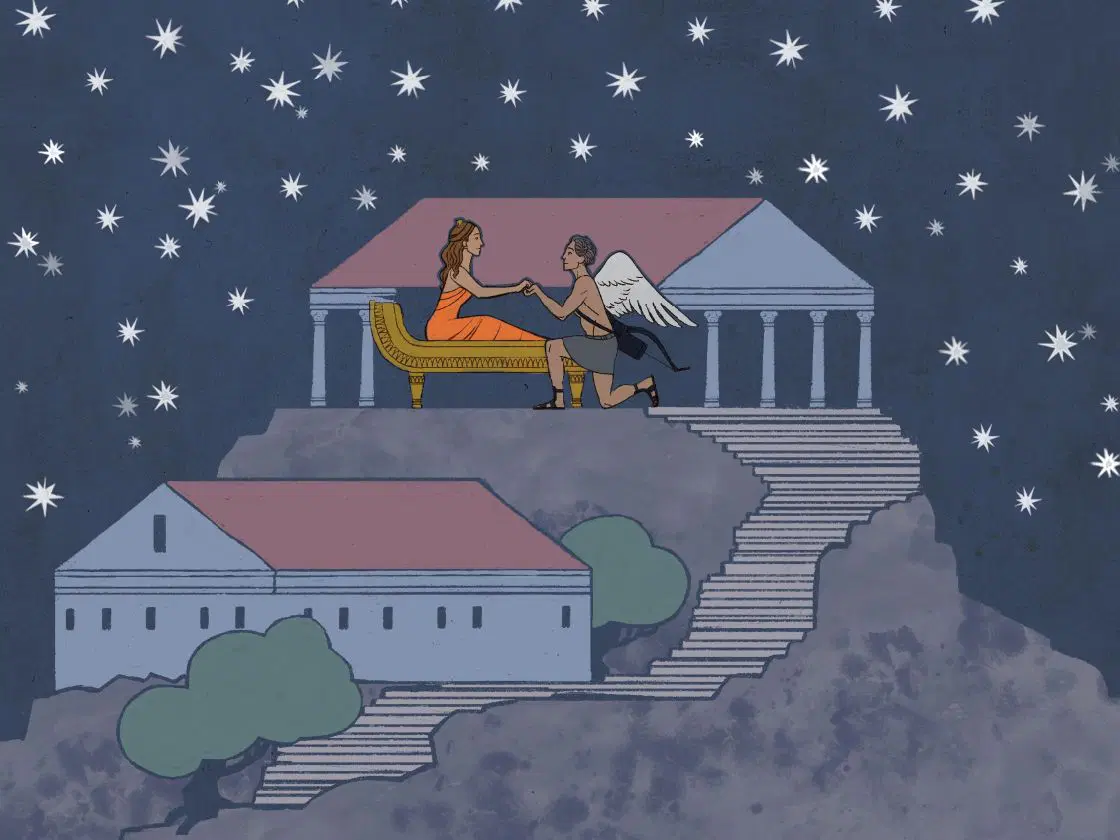
Un ángel se arrodilla ante una mujer sentada en un sofá dorado encima de un templo en una noche estrellada. Unas escaleras conducen al templo en un paisaje montañoso.

Unit 4

The Ancient Roman Civilization/La civilización romana antigua

What is Rome’s greatest cultural contribution? In this unit, your students decide.

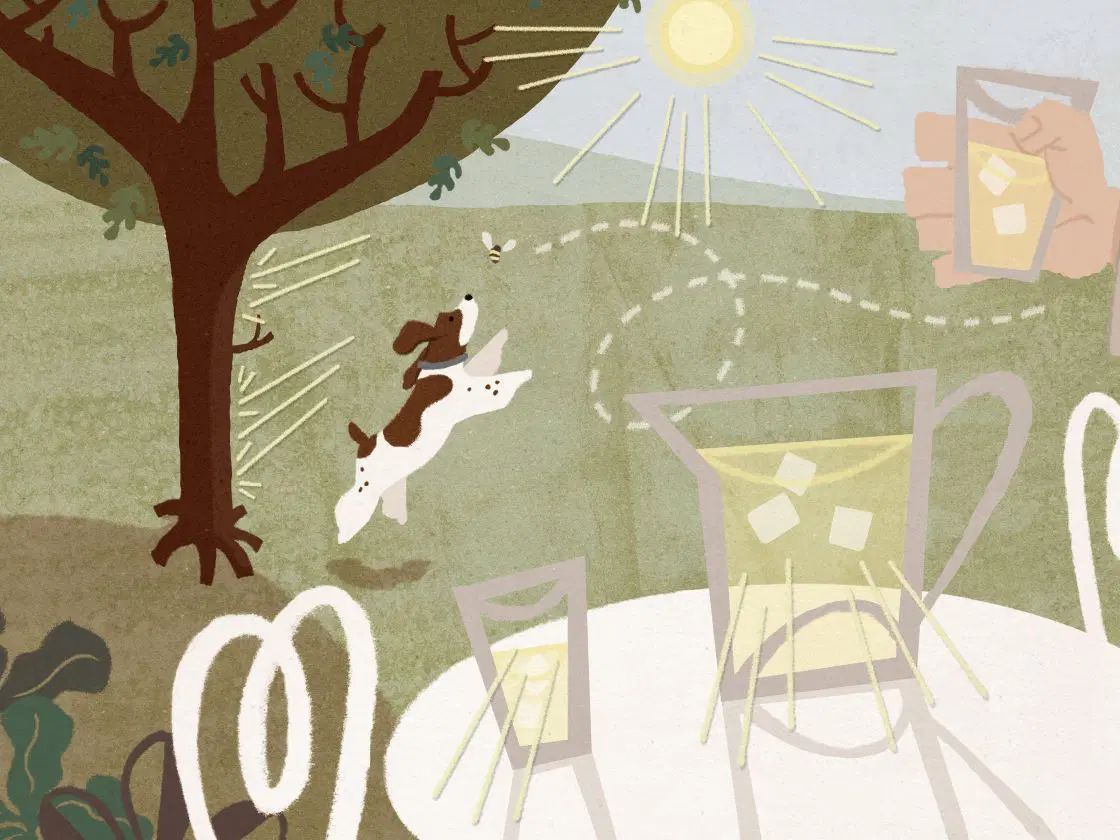
Ilustración de un perro saltando bajo un árbol, persiguiendo una abeja, con una mesa en primer plano sosteniendo una jarra y vasos de limonada. El sol brilla intensamente en el cielo.

Unit 5

Light and Sound/La luz y el sonido

The science behind all the ways we see and hear the world.

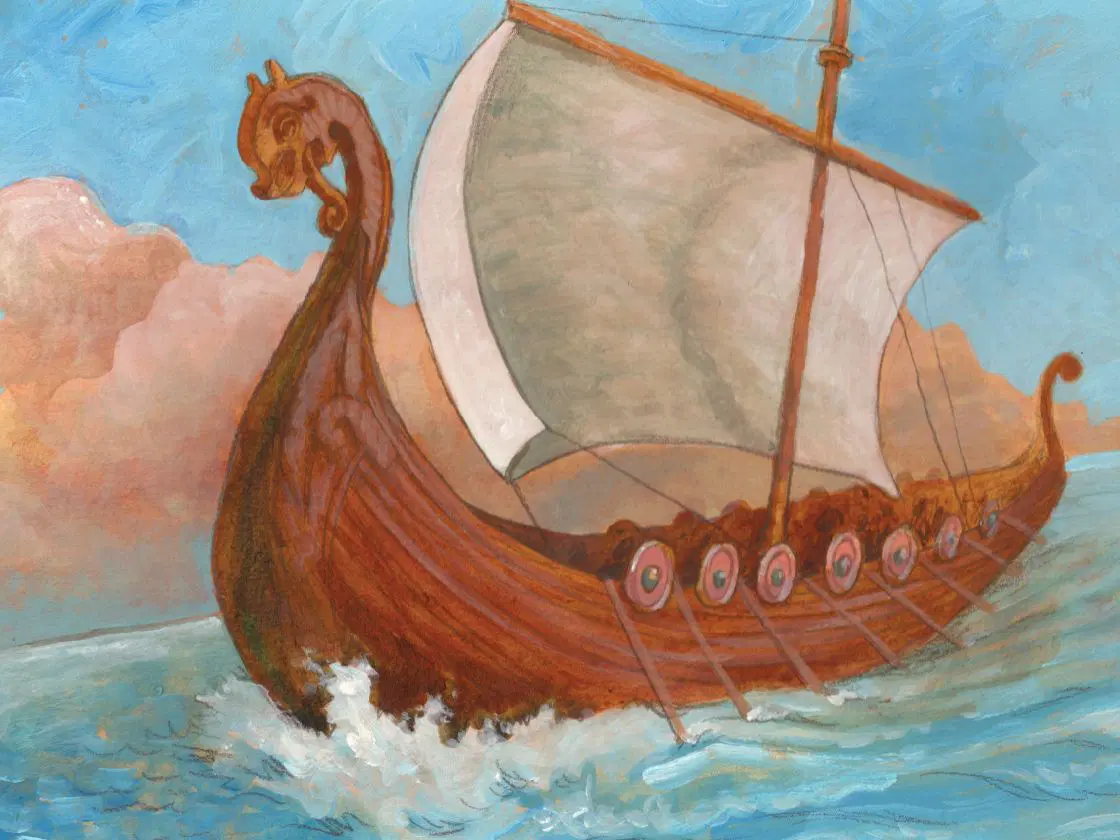
Un barco vikingo con una proa en forma de dragón navega en el océano bajo un cielo azul con nubes. El barco tiene una sola vela grande y varios escudos recubren sus costados.

Unit 6

The Viking Age/La era vikinga

An immersive narrative experience about what life was like in Viking communities.

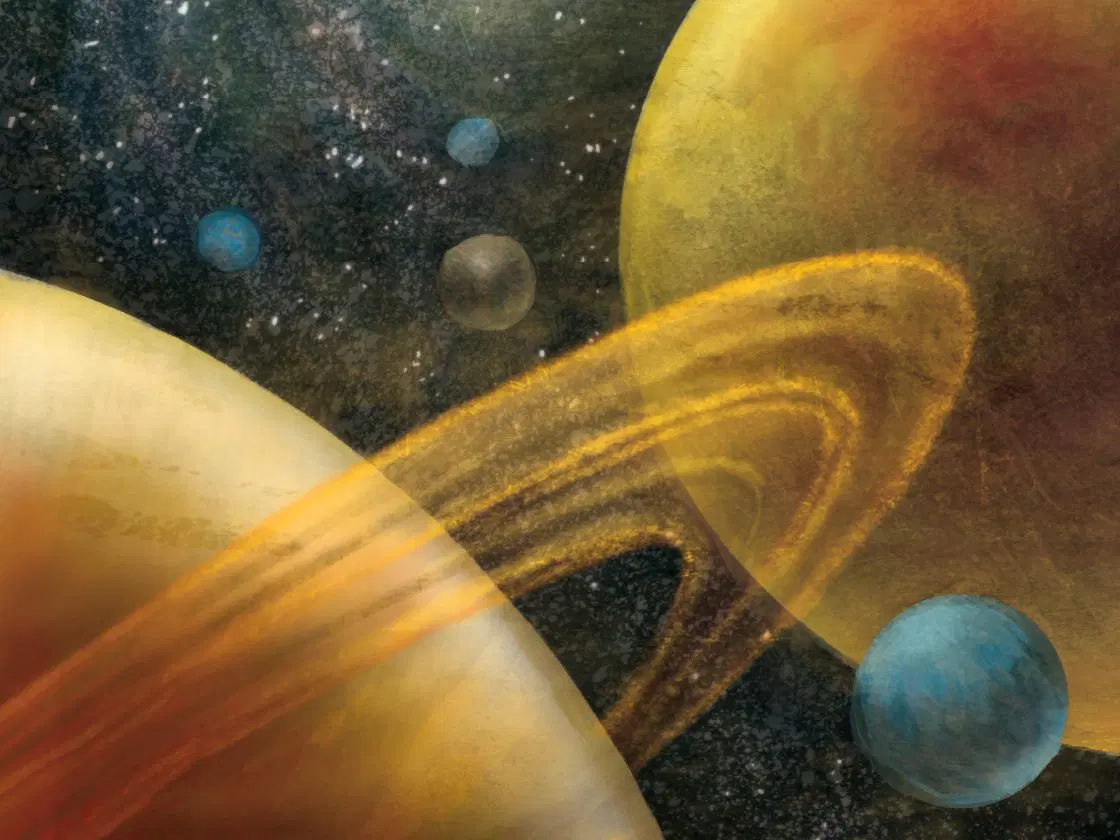
Ilustración de una escena espacial con varios planetas y anillos sobre un fondo de estrellas. Dos planetas grandes dominan el primer plano y se ven planetas más pequeños al fondo.

Unit 7

Astronomy: Our Solar System and Beyond/Astronomía: nuestro sistema solar y más allá

More about our universe, including a writing project about daily life on a space station.

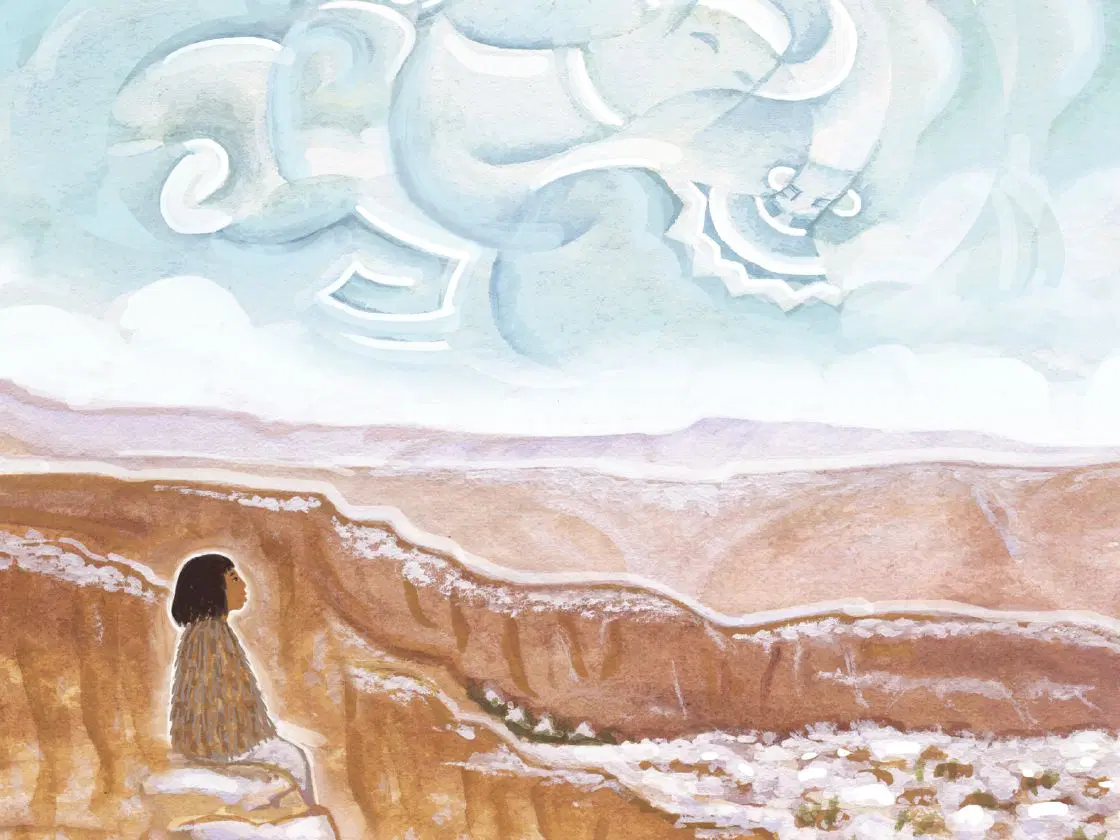
Una persona sentada en el borde de un acantilado con vistas a un vasto paisaje desértico con nubes arremolinadas en el cielo.

Unit 8

Native Americans: Regions and Cultures/Los nativos americanos: regiones y culturas

How did Native American nations change their way of life in different parts of the world?

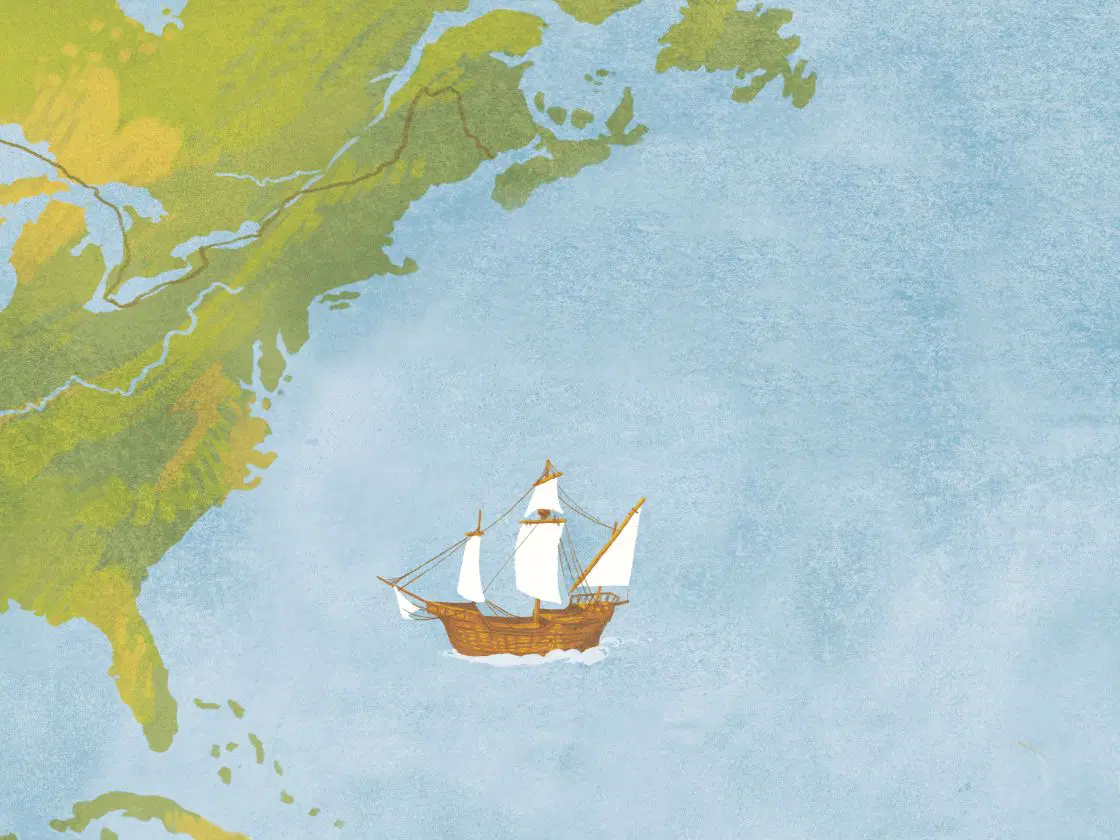
Ilustración de un velero en el océano con la costa este de América del Norte visible a la izquierda.

Unit 9

Early Explorations of North America/La exploración europea de América del Norte

What was it like to sail to North America with the early European explorers?

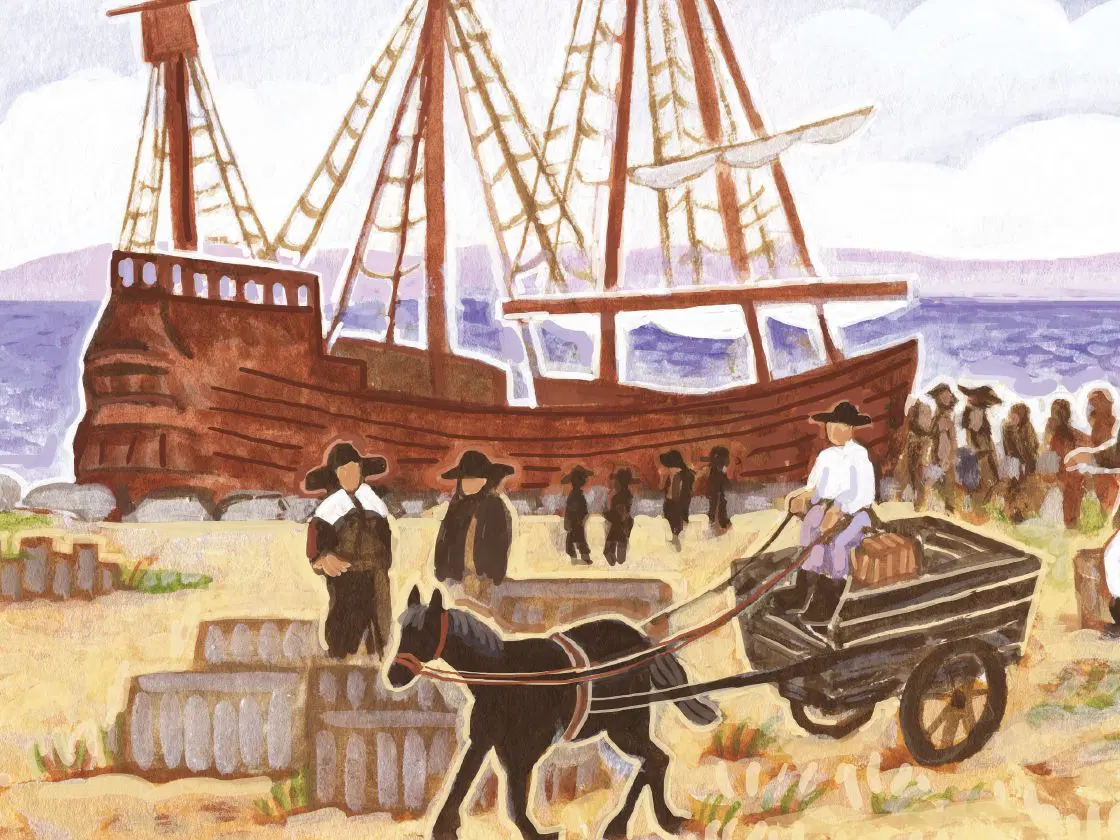
Una pintura representa una escena del siglo XVII con colonos, un velero al fondo y un hombre conduciendo un carro tirado por caballos cargado de mercancías. Se ve a otras personas descargando y trabajando cerca.

Unit 10

Colonial America/La época colonial en los Estados Unidos

A study of the very different ways of life in the different pre-U.S. colonies.

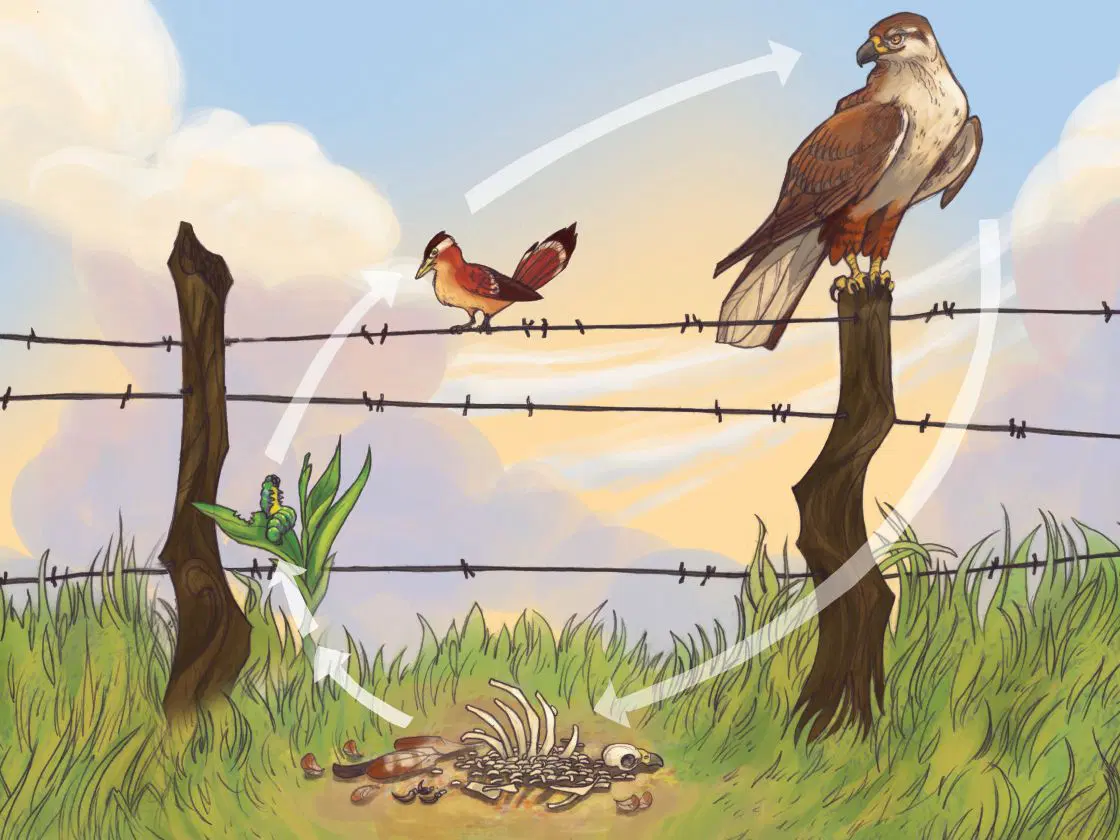
Ilustración que muestra el ciclo de la vida: un esqueleto en el suelo, un pájaro posado en una cerca, otro pájaro en una planta y un ave rapaz más grande arriba, todos conectados por flechas circulares.

Unit 11

Ecology/Ecología

Students keep ecologist’s journals to learn about our world and how best to protect it.

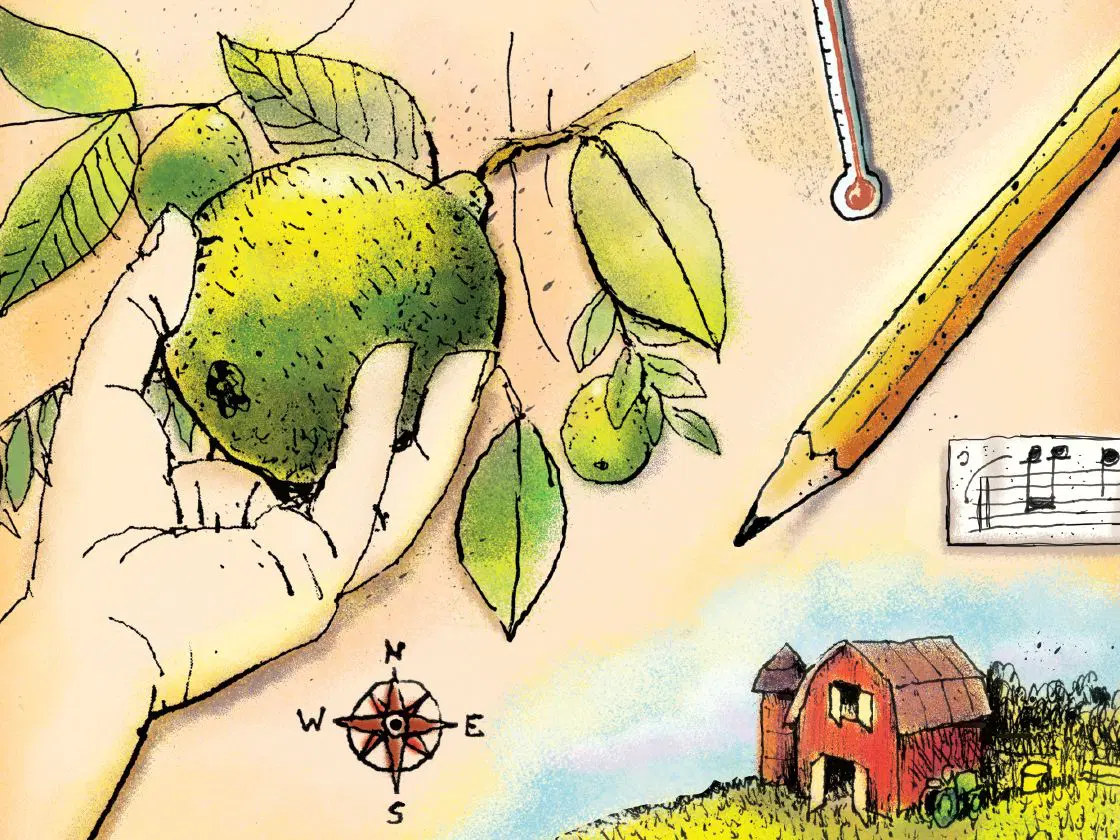
Una mano alcanza una manzana verde en una rama. Cerca hay una brújula, un termómetro, un lápiz, notas musicales y un granero rojo sobre un paisaje cubierto de hierba.

Unit 1

Personal Narratives/Narrativas personales

Read stories of personal experience… and learn to reflect on your own.

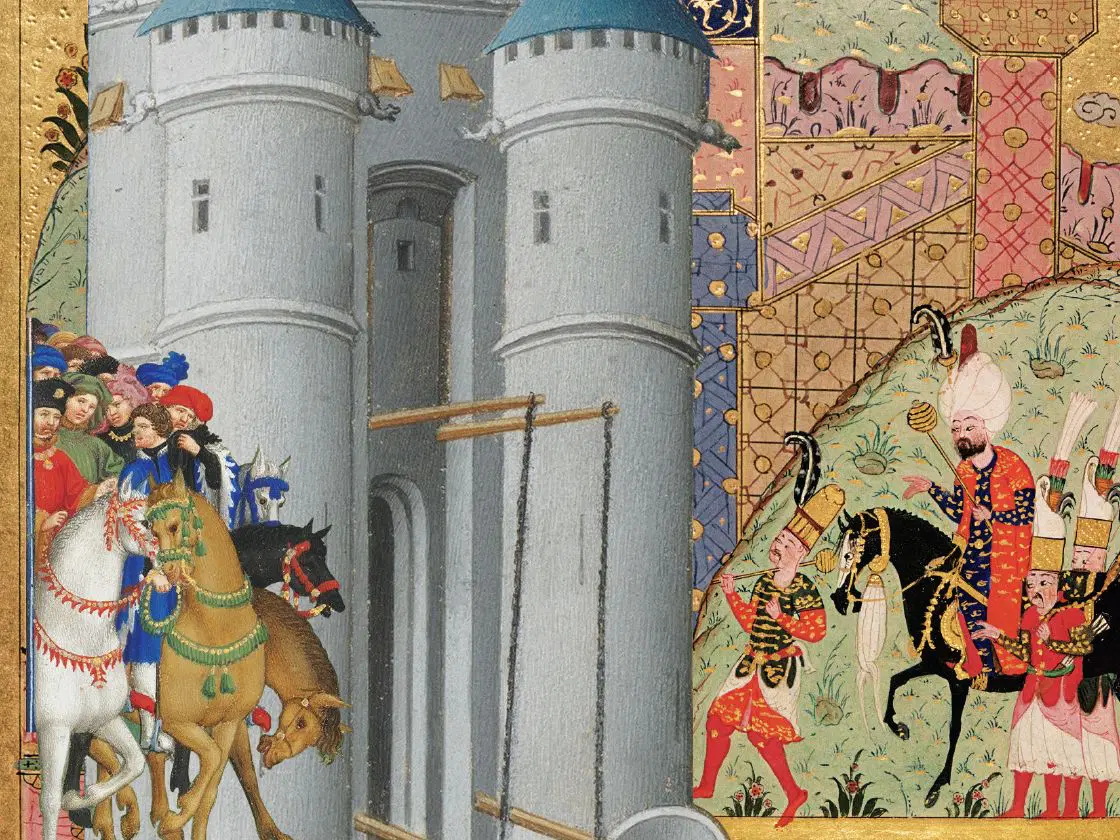
Ilustración medieval que representa un grupo de figuras con armadura a la entrada de un alto castillo gris con puente levadizo, adornado con banderas y rodeado por un paisaje decorado y fondos ornamentados.

Unit 2

Empires in the Middle Ages/Los imperios en la Edad Media, parte 1 & Los imperios en la Edad Media, parte 2

Explore the medieval history of Europe and the Middle East.

Ilustración dorada de un dragón con alas sobre fondo beige, rodeado de diversos elementos decorativos como estrellas, hojas y estampados abstractos.

Unit 3

Poetry/Poesía

Study the poetry of many nations using licensed text anthologies, and begin to write your own.

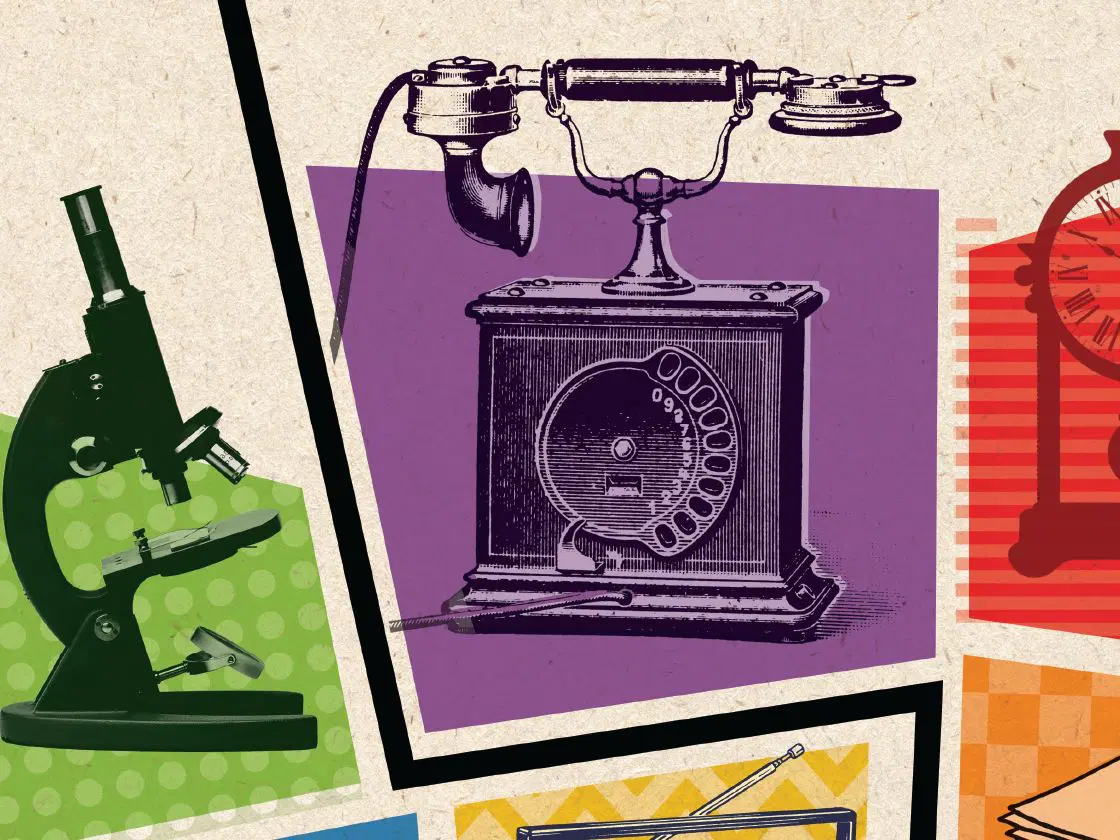
Vintage styled illustrations of a microscope, an old telephone, and a clock on textured background with geometric patterns.

Unit 4

Eureka! Student Inventor/¡Eureka! Estudiante inventor

Transform the class into a lab for students to build and present inventions.

Formaciones rocosas en un paisaje desértico con capas vibrantes y arremolinadas de arenisca roja, naranja y amarilla bajo un cielo parcialmente nublado.

Unit 5

Geology/Geología

Plate tectonics, volcanoes, erosion: all the forces that shape the Earth.

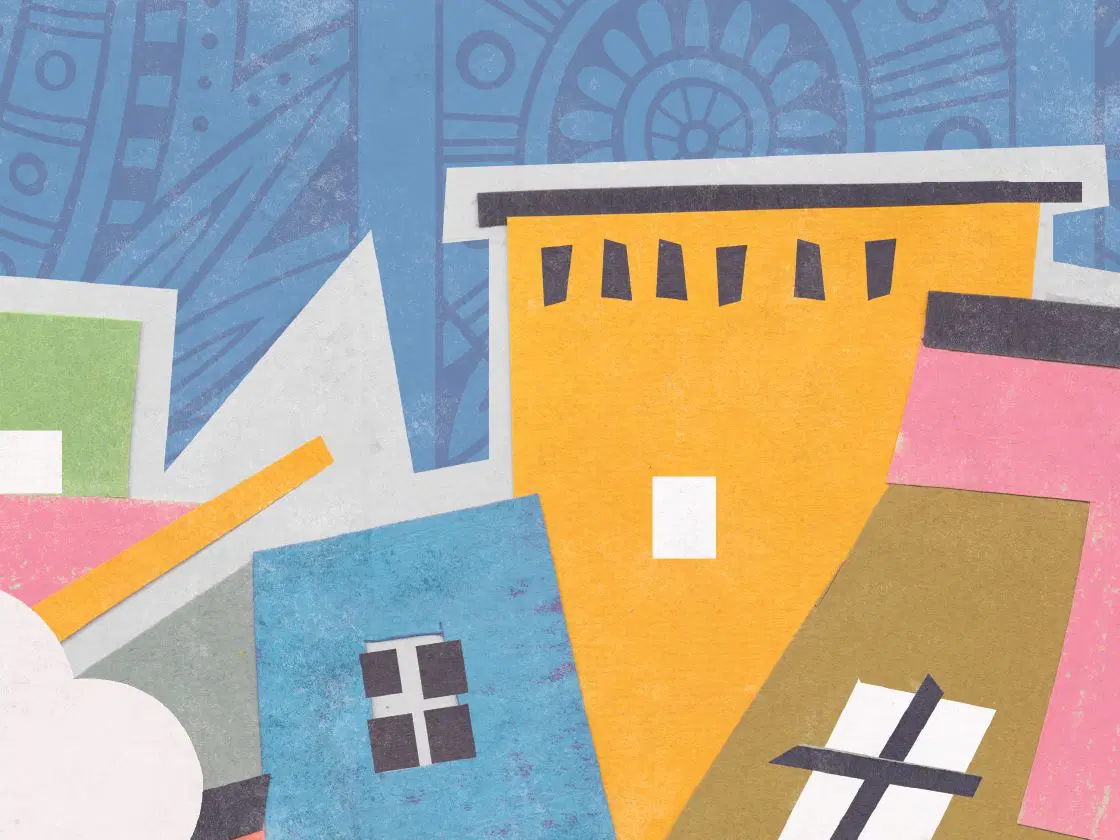
Una imagen abstracta y colorida que representa varias formas geométricas de edificios sobre un fondo azul estampado.

Unit 6

Contemporary Fiction with excerpts from The House on Mango Street/Ficción Contemporánea con Fragmentos de La Casa en Mango Street

Explore The House on Mango Street… and write a book while doing it.

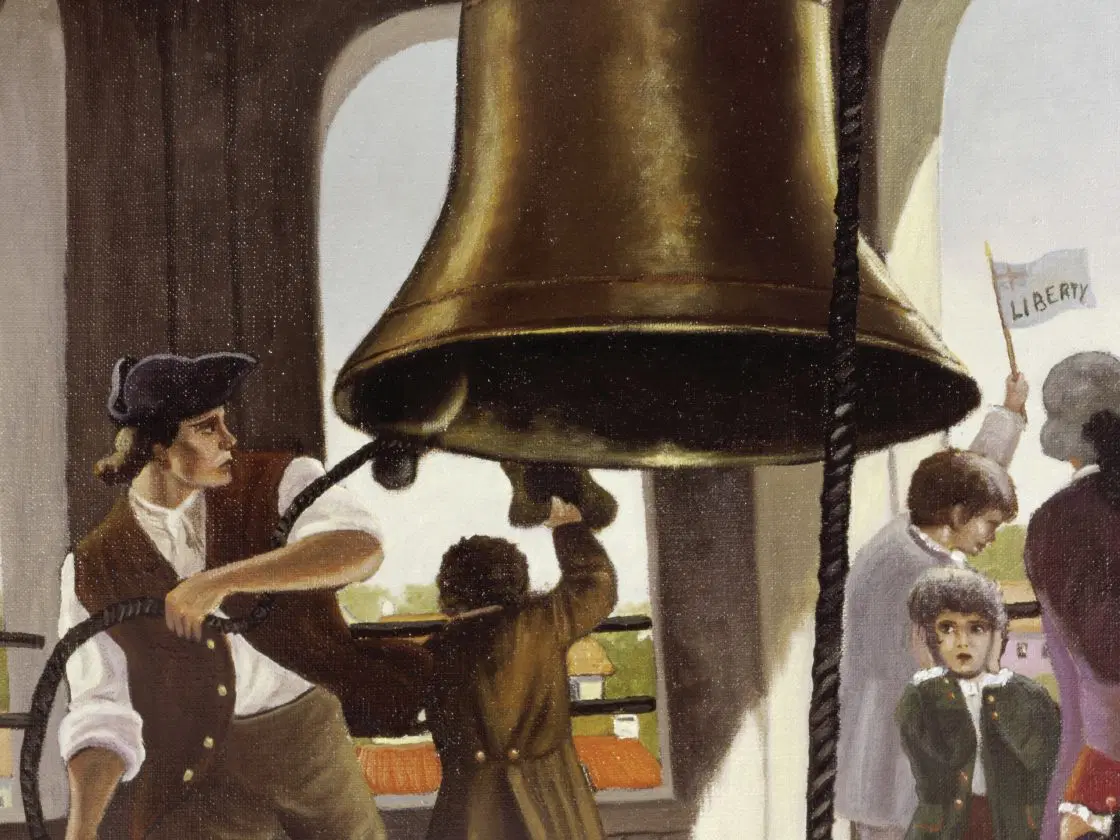
Cuadro que representa a un hombre y un niño tocando una gran campana en una torre, con espectadores al fondo y un cartel de "LIBERTAD" visible.

Unit 7

American Revolution/La Revolución estadounidense

Why did America seek independence? Let’s investigate the causes and effects.

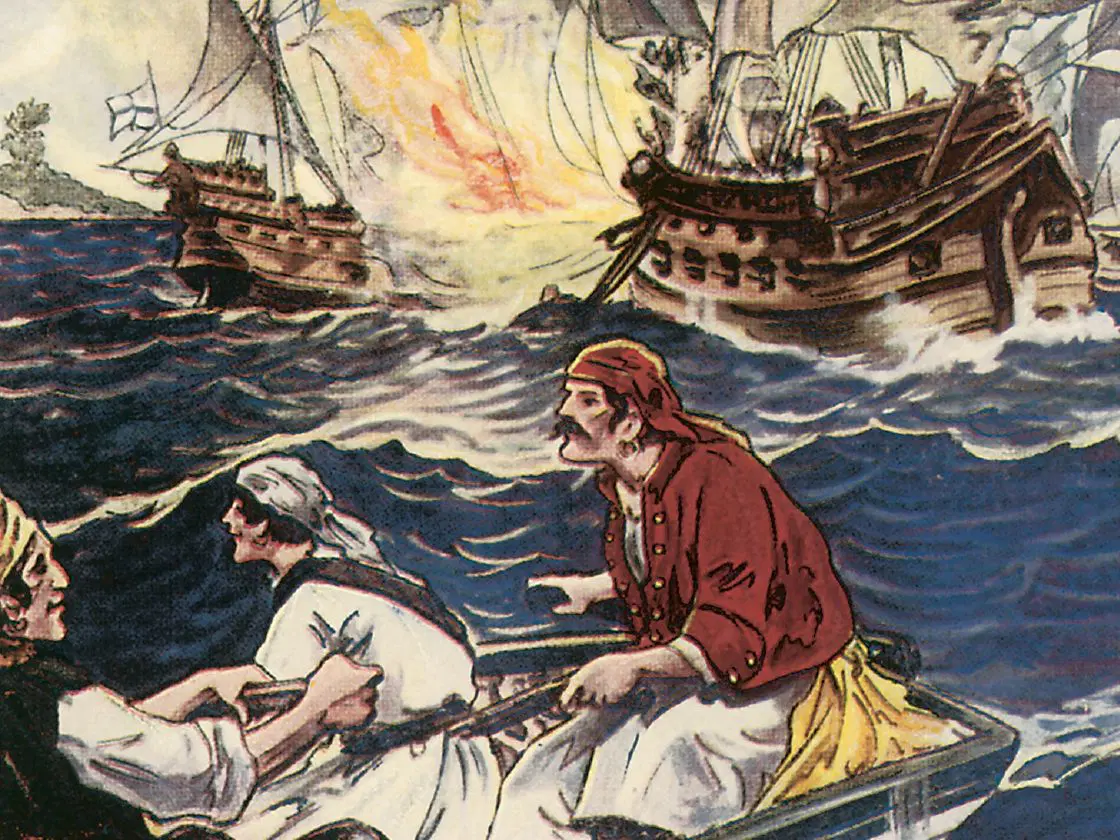
Un pequeño bote de remos con tres personas navega por mares agitados mientras dos grandes barcos luchan al fondo, con humo y fuego visibles.

Unit 8

Treasure Island/La Isla del Tesoro

How dSeek the treasure of plot in this detailed study of a classic fiction adventure.

Unit 1

Personal Narratives/Narrativas personales

Through writing and sharing their writing, students begin to identify themselves as writers.

Unit 2

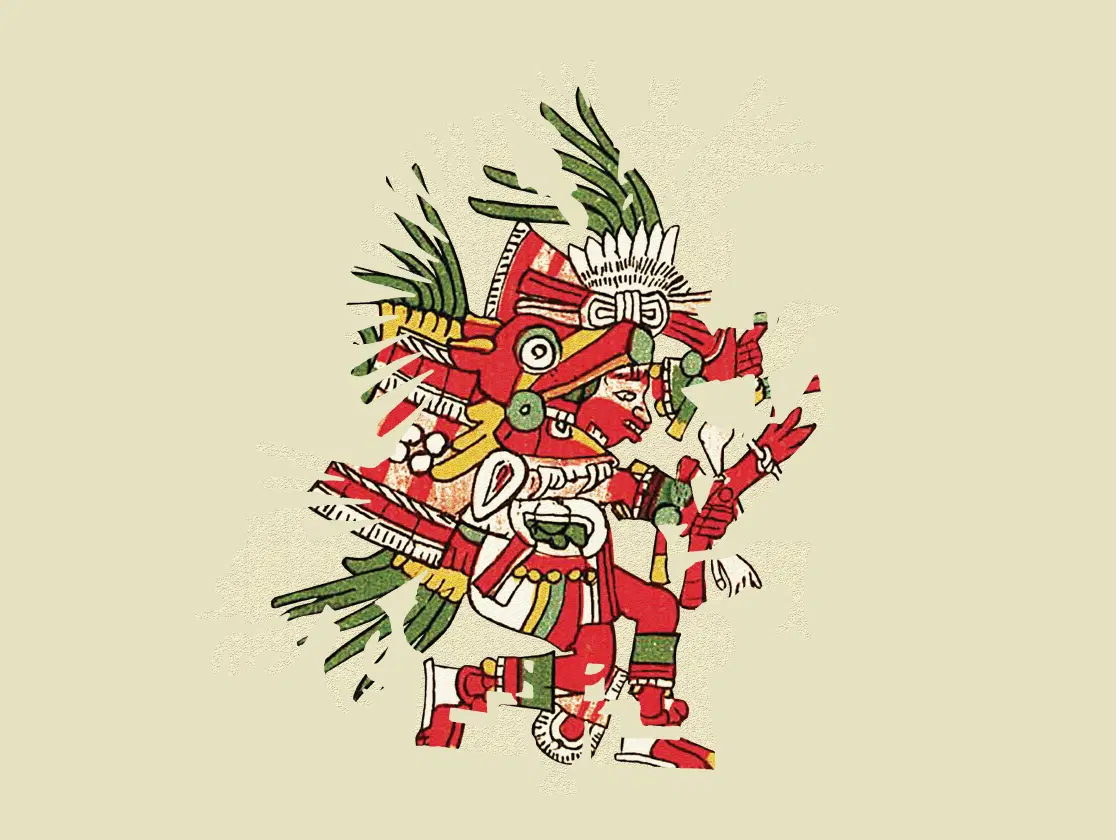
Early American Civilizations/Las primeras civilizaciones americanas

Students craft a codex to explain the rise and fall of the Maya, Aztec, and Inca people.

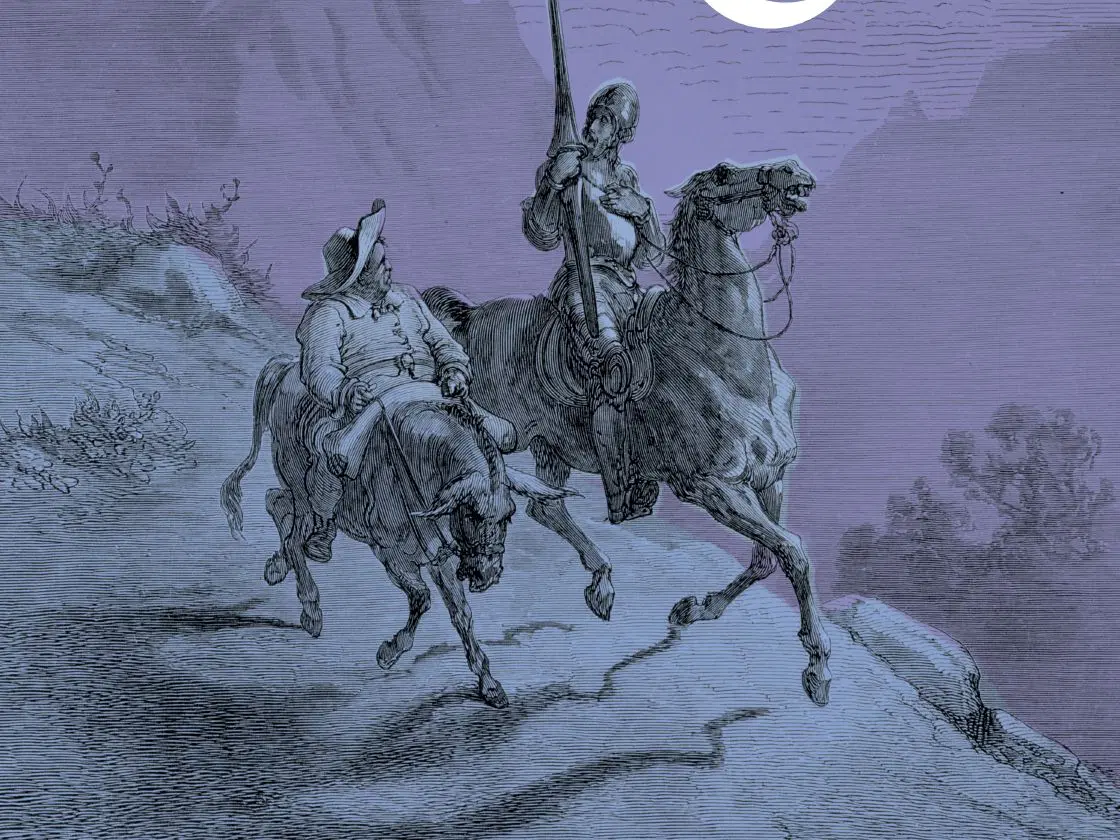
Dos jinetes medievales a caballo, uno de ellos con la espada en alto, avanzan por un terreno rocoso. El fondo presenta un paisaje brumoso bajo un tono violeta.

Unit 3

Poetry/Poesía

Students close read many forms of poetry… and learn to write them.

Collage ilustrado con un paraguas, un cuervo, un sextante náutico, estrellas, una luna creciente y una brújula sobre un fondo beige texturizado.

Unit 4

Adventures of Don Quixote/Las Aventuras de Don Quijote

Was Don Quixote right to fight the windmill? In this full-length novel study, students decide.

Unit 5

The Renaissance/El Renacimiento

Exploring the art and literature of the Renaissance through the works of its masters.

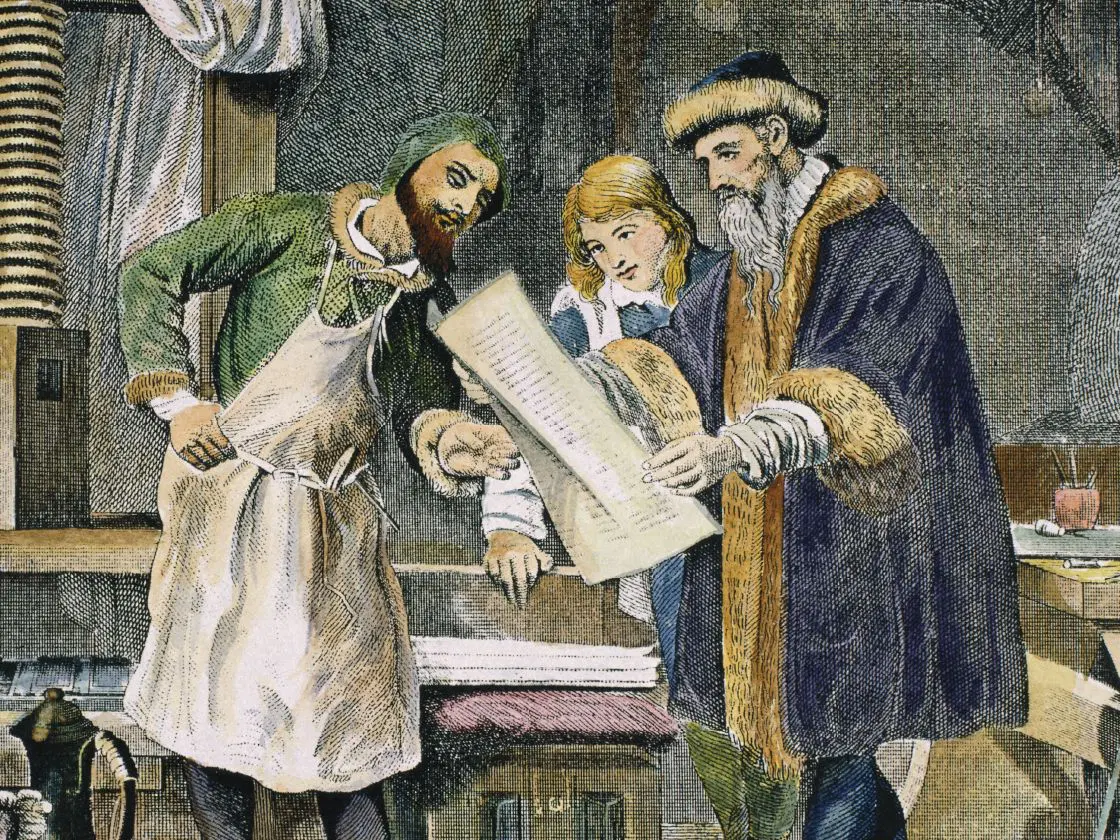
Tres hombres vestidos con ropa de época examinan una gran hoja de papel dentro de una imprenta. Un hombre parece llevar un delantal, mientras que otro señala el papel y el tercero observa de cerca.

Unit 6

The Reformation/La Reforma

How did the printing press transform the religion and society of Europe?

Patrón botánico morado y lila con hojas, plantas y formas abstractas, incluida una luna creciente y estrellas, sobre un fondo violeta oscuro.

Unit 7

William Shakespeare’s A Midsummer Night’s Dream/Sueño de Una Noche de Verano de William Shakespeare

Students enter the world of Shakespeare by reading, designing, and acting out his work.

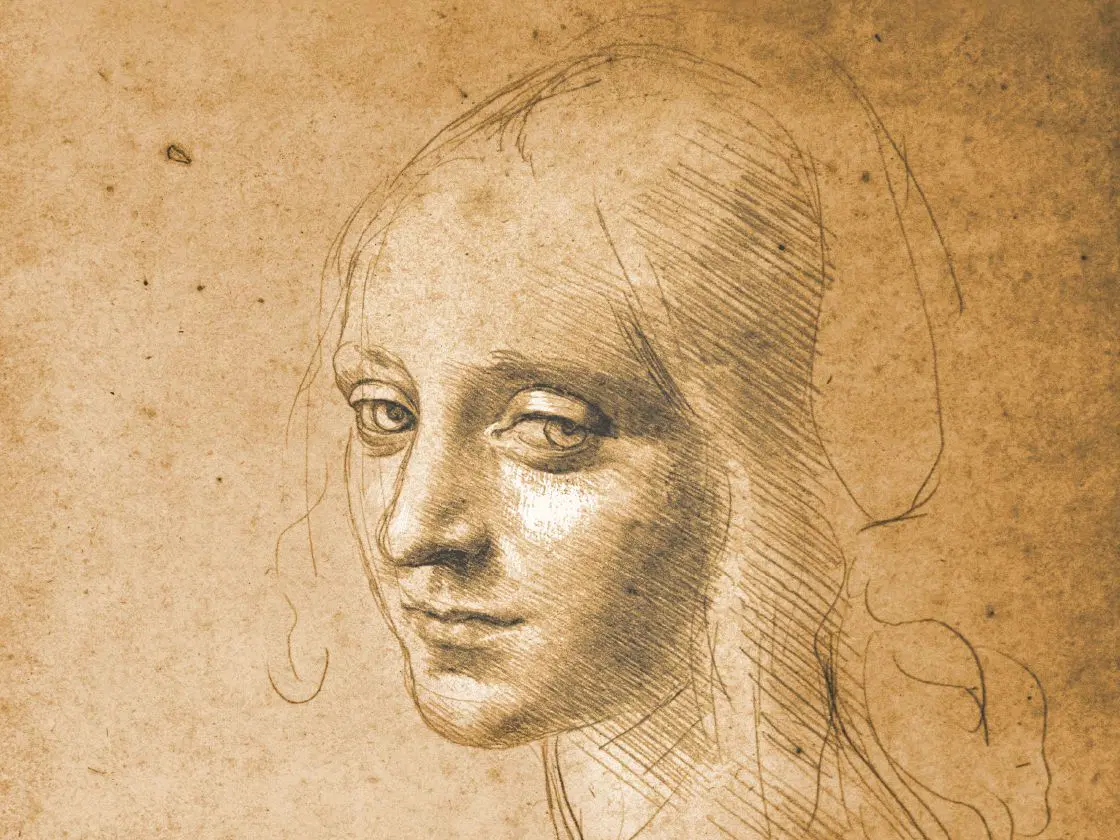
Retrato en tonos sepia de una joven de pelo largo, con un collar de pedrería y un chal drapeado.

Unit 8

Native Americans/Los nativos americanos

How did the policies of the U.S. government impact Native American culture and lives?

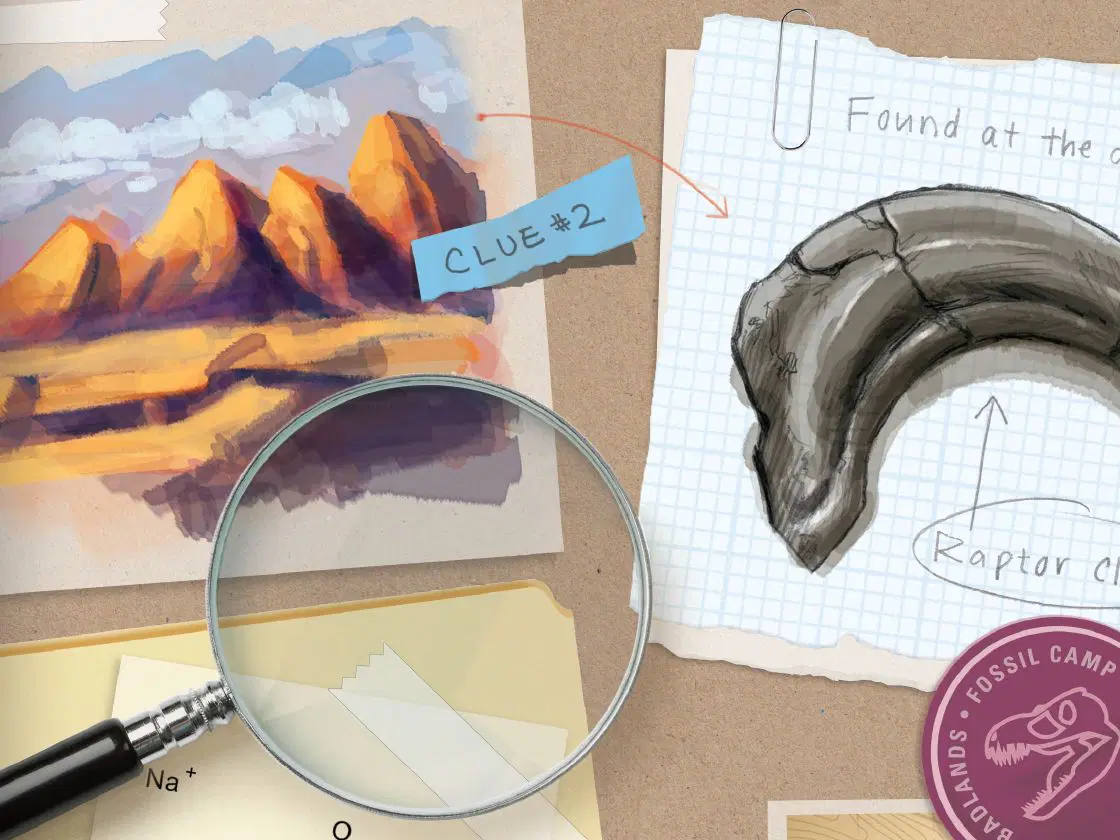
Una lupa sobre documentos que contienen una pintura de paisaje de montañas, un dibujo con la etiqueta "Raptor Claw" y una nota adhesiva con la "Pista n.° 2". También se ven un sobre y una insignia exterior.

Unit 9

Chemical Matter/Química

Students use knowledge of chemistry to solve a mystery.

Print & digital components

The program includes instructional guidance and student materials for a year of instruction, with lessons and activities that keep students engaged every day.

Component

FORMAT

Knowledge (Conocimientos) Teacher Guides (K–2)

Knowledge Strand Teacher Guides contain Amplify CKLA’s cross-curricular read-alouds and application activities, all of which are standards-based to build mastery of content knowledge and literacy skills. There is one Teacher Guide per Knowledge Domain.

Print and digital

Knowledge Image Cards (K–2)

Amplify Caminos includes Image Cards for each Knowledge Domain to bring each topic to life through vivid visuals.

Print and digital

Knowledge Flip Books (K–2)

Projectable Flip Books are provided to accompany the read-alouds in each Knowledge Domain.

Digital

Teacher Guides (3–5)

Teacher Guides for grades 3–5 units are based on content-rich topics and incorporate reading, writing, speaking, and listening skills in the context of background knowledge. There is one Teacher Guide per unit.

Print or digital

Teacher Resource Site (K–5)

The program includes a one-stop-shop website for lesson projections, digital versions of all Amplify Caminos materials, lesson planning resources, multimedia (such as eBooks), and more.

Digital

Professional Learning Site (K–5)

The Professional Learning site includes training materials, best practices, and other resources to develop program expertise. Access professional development anywhere, anytime.

Digital

Component

FORMAT

Knowledge (Conocimiento) Activity Books (K–2)

Activity Books provide students with the opportunity to deepen world and word knowledge by responding to text in a diversity of ways.

Print

Student Readers (3–5)

Student Readers serve as content-rich anchor texts for each unit. Units such as Poetry and Contemporary Fiction feature authentic texts originally written in Spanish.

Activity Books (3–5)

Activity Books in grades 3–5 provide daily opportunities for students to hone reading and writing skills within the context of each unit.

Print and digital

Explore more programs

Our programs are designed to support and complement one another. Learn more about our related programs.

What’s included in our literacy curriculum for 6–8

Amplify ELA is a blended literacy curriculum designed specifically for grades 6–8. The heart of every lesson is the text. Our core English Language Arts curriculum enables teachers to teach skills through texts and develop their students’ muscles for building meaning through reading. With Amplify ELA, students learn to attack any complex text and make observations, grapple with interesting ideas, and find relevance for themselves.

Year at a glance

Each grade includes six core units centered on literary or informational texts, delivered in several forms of media. In addition to these main units, students will engage with targeted Grammar lessons and a dedicated Story Writing unit, plus two to three immersive learning experiences called Quests.

Dahl & Narrative

1 assessment lesson
4 sub-units | 28 lessons | 4-6 weeks

A man with a mustache looks through a microscope at a slide, with abstract yellow lines in the background.

Mysteries & Investigations

1 assessment lesson
5 sub-units | 32 lessons | 4-6 weeks

A man with a mustache looks through a microscope at a slide, with abstract yellow lines in the background.

The Chocolate Collection

1 assessment lesson
5 sub-units | 25 lessons | 4-6 weeks

The Greeks

Myth World Quest

1 assessment lesson
4 sub-units | 25 lessons | 4-6 weeks

A man with a mustache looks through a microscope at a slide, with abstract yellow lines in the background.

Summer of the Mariposas

1 assessment lesson
2 sub-units | 27 lessons | 4-6 weeks

A man with a mustache looks through a microscope at a slide, with abstract yellow lines in the background.

The Titanic Collection

1 assessment lesson
5 sub-units | 25 lessons | 4-6 weeks

A man with a mustache looks through a microscope at a slide, with abstract yellow lines in the background.

Red Scarf Girl

1 assessment lesson
4 sub-units | 31 lessons | 4-6 weeks

A man with a mustache looks through a microscope at a slide, with abstract yellow lines in the background.

Character & Conflict

1 assessment lesson
4 sub-units | 29 lessons | 4-6 weeks

A man with a mustache looks through a microscope at a slide, with abstract yellow lines in the background.

Brain Science

Perception Academy Quest

1 assessment lesson
4 sub-units | 25 lessons | 4-6 weeks

A man with a mustache looks through a microscope at a slide, with abstract yellow lines in the background.

Poetry & Poe

The “Who Killed Edgar Allen Poe” Quest

1 assessment lesson
5 sub-units | 29 lessons | 4-6 weeks

A man with a mustache looks through a microscope at a slide, with abstract yellow lines in the background.

The Frida & Diego Collection

1 assessment lesson
5 sub-units | 25 lessons | 4-6 weeks

A man with a mustache looks through a microscope at a slide, with abstract yellow lines in the background.

The Gold Rush Collection

1 assessment lesson
5 sub-units | 25 lessons | 4-6 weeks

A man with a mustache looks through a microscope at a slide, with abstract yellow lines in the background.

Perspectives & Narrative

1 assessment lesson
4 sub-units | 27 lessons | 4-6 weeks

A man with a mustache looks through a microscope at a slide, with abstract yellow lines in the background.

Liberty & Equality

1 assessment lesson
6 sub-units | 38 lessons | 4-6 weeks

A man with a mustache looks through a microscope at a slide, with abstract yellow lines in the background.

Science & Science Fiction

1 assessment lesson
3 sub-units | 29 lessons | 4-6 weeks

A man with a mustache looks through a microscope at a slide, with abstract yellow lines in the background.

Shakespeare’s Romeo & Juliet

1 assessment lesson
2 sub-units | 22 lessons | 4-6 weeks

A man with a mustache looks through a microscope at a slide, with abstract yellow lines in the background.

The Holocaust: Memory & Meeting

1 assessment lesson
6 sub-units | 21 lessons | 4-6 weeks

A man with a mustache looks through a microscope at a slide, with abstract yellow lines in the background.

The Space Race Collection

1 assessment lesson
5 sub-units | 25 lessons | 4-6 weeks

Units at a glance

Amplify ELA lessons follow a structure both grounded in regular routines and flexible enough to allow for a variety of learning experiences. Lesson structures vary from day to day, ensuring that students are always engaged.

Learn more in the Amplify ELA Grade Overview.

Unit 6A

Dahl & Narrative

Students begin with narrative writing to develop foundational Focus skills and establish key classroom routines. Teachers use this work to create targeted feedback cycles and build a vibrant community centered on diverse experiences. Students then apply observational skills to Roald Dahl’s Boy: Tales of Childhood, learning to work closely with textual evidence.

Unit 6B

Mysteries & Investigations

Students read like an investigator to embark on a multi-genre study into the mesmerizing world of scientific and investigative sleuthing. The Secret of the Yellow Death: A True Story of Medical Sleuthing by Suzanne Jurmain, and Sir Arthur Conan Doyle’s Sherlock Holmes stories take place in the late 19th century, when medical diagnostics and criminal investigations were still evolving into scientific fields.

Unit 6C

The Chocolate Collection

Students explore primary documents and research the diverse cultural roles chocolate has played over 3,700 years, from its various uses in ancient Mexico to issues with modern production. Along the way, they build information literacy skills, craft research questions, and collaborate in Socratic seminars. Students also learn how to construct an evidence-based argument and use those skills to write pieces aimed at convincing readers about chocolate preferences, school lunch policies, and recommendations for local candy stores.

Unit 6D

The Greeks

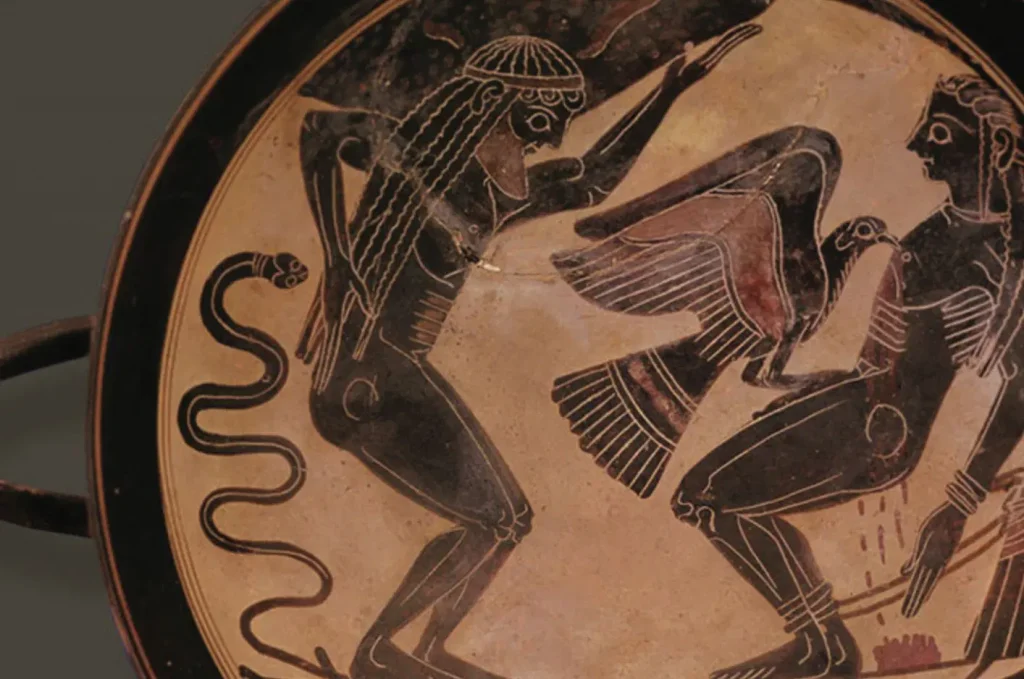
Students closely explore and analyze three stories from Greek mythology: “Prometheus,” “Odysseus,” and “Arachne.” Drawing on the routines and skills established in previous units, these lessons ask students to move from considering the state of a single person to contemplating broader questions concerning the role people play in the world and the various communities they inhabit.

Unit 6E

Summer of the Mariposas

Students read Summer of the Mariposas by Guadalupe García McCall, a contemporary Latino retelling of The Odyssey. Following five sisters on their journey into Mexico and back, students explore this reimagining of the hero’s journey as they encounter Mexican folklore and Aztec legends along the way. Students analyze character development, compare the novel to Homer’s original, research Aztec mythology, explore symbolism, and engage in collaborative discussions before writing an essay about what makes the heroes successful.

Unit 6F

The Titanic Collection

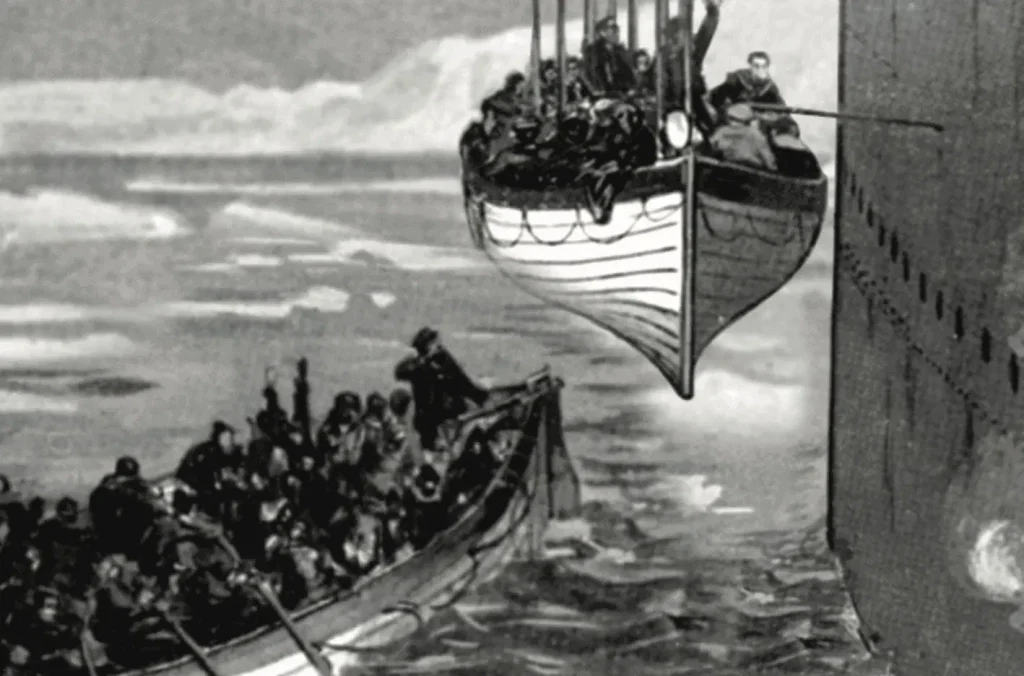
Students explore primary documents and conduct research to understand the 1912 Titanic disaster, building information literacy skills by examining artifacts such as dining menus, ship photos, telegraph transcripts, and newspaper accounts. Each student is assigned a passenger from the manifest and writes a narrative account from that person’s perspective, considering different views. Students also participate in Socratic seminars to examine the complicated issues within the Titanic story.

Unit 7A

Red Scarf Girl & Narrative

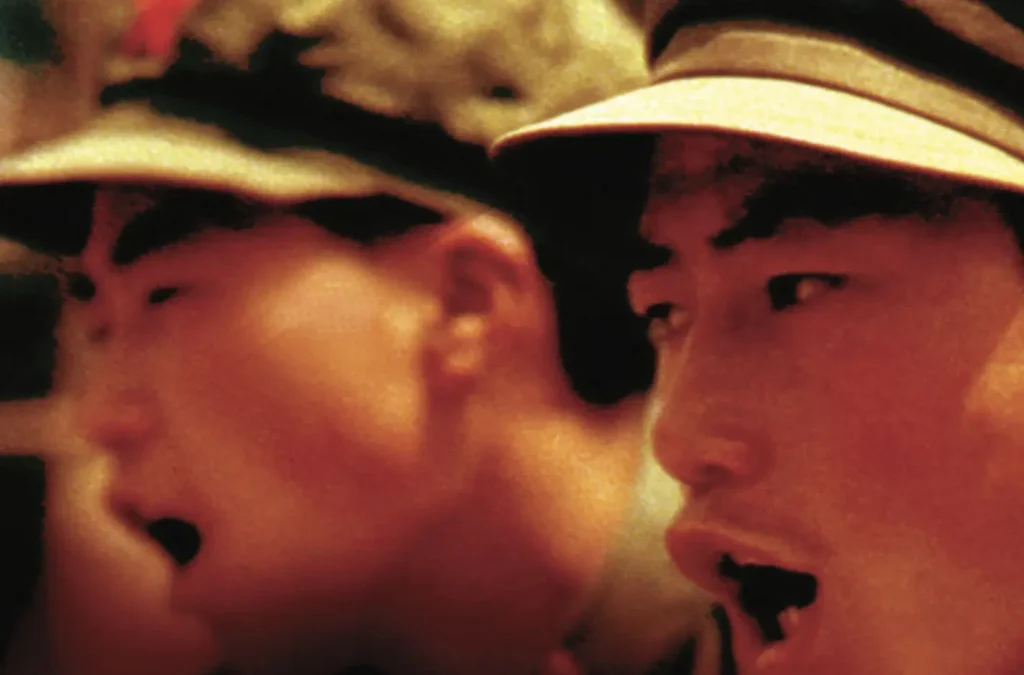
Students begin with narrative writing to develop foundational Focus skills while teachers establish targeted feedback cycles and build a classroom community centered on diverse experiences. After exploring how they describe their own experiences and emotions, students apply the same close attention to analyzing details in Ji-li Jiang’s Red Scarf Girl: A Memoir of the Cultural Revolution.

Unit 7B

Character & Conflict

Students analyze characters’ responses to conflict and examine how authors use character interactions to develop theme and perspective. They read Carson McCullers’ “Sucker” and Lorraine Hansberry’s A Raisin in the Sun, both texts that explore how families facing hardships can support and harm one another. Students observe complex character growth and discuss issues of identity, family obligations, and differing notions of success.

Unit 7C

Brain Science

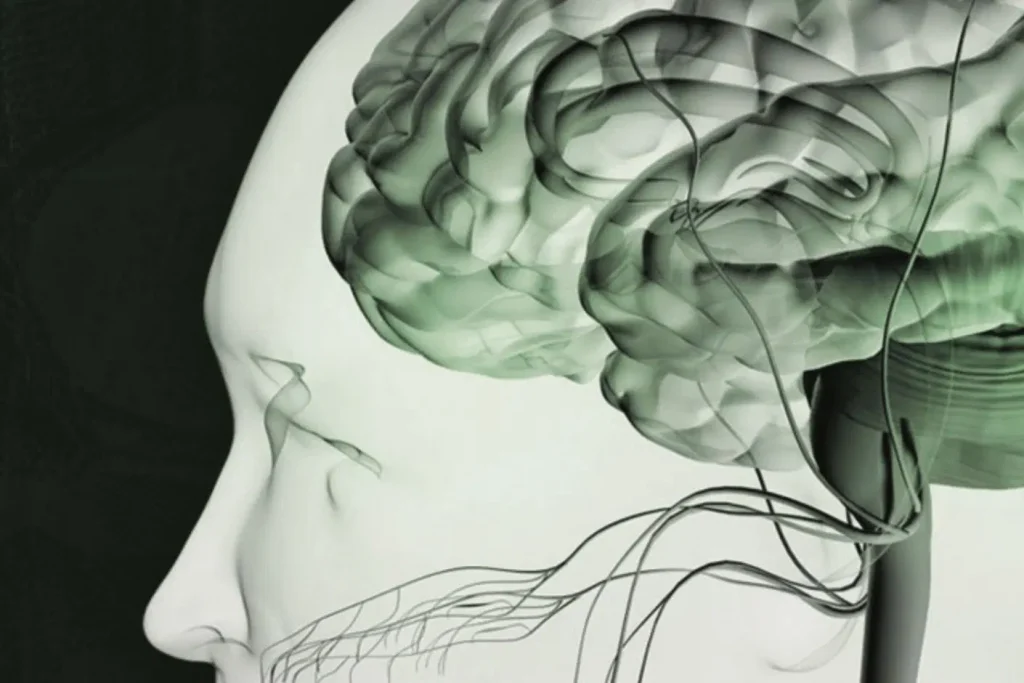
Students explore narrative nonfiction and informational texts about brain science to understand what it means to be human and how their developing brains impact daily experiences. They also build awareness of their cognitive strengths and analyze the structures of informational texts and scientific arguments. Key texts include Phineas Gage, Inventing Ourselves: The Secret Life of the Teenage Brain, and Oliver Sacks’ The Man Who Mistook His Wife for a Hat.

Unit 7D

Poetry & Poe

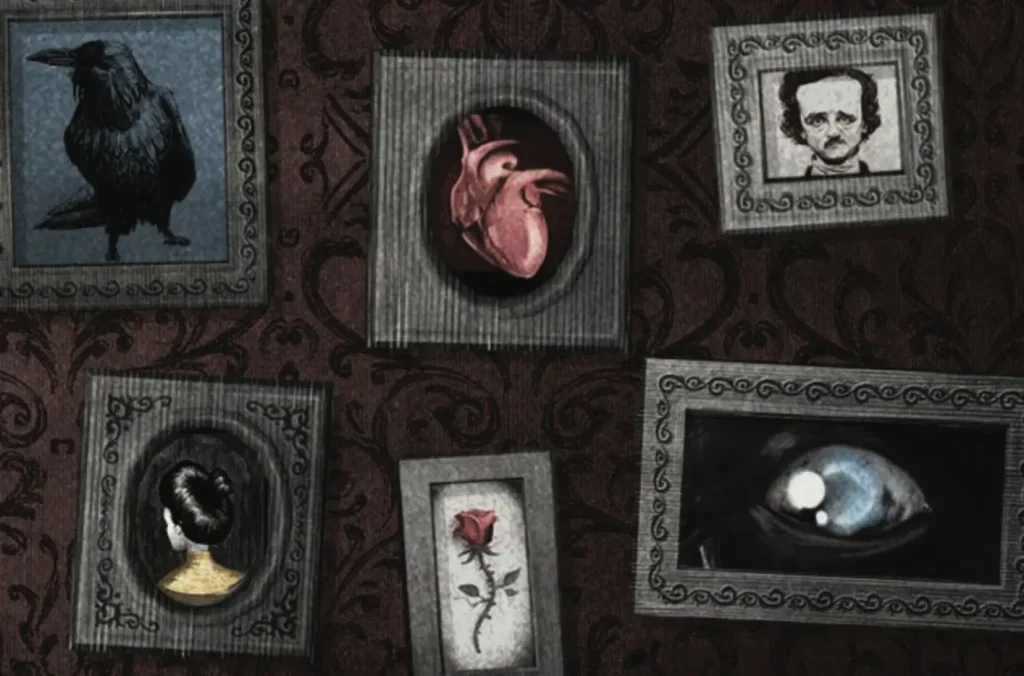
Students learn visualization techniques to read like a movie director, beginning with poems by D.H. Lawrence, Federico García Lorca, and Emily Dickinson to form mental images. They then read three Edgar Allan Poe texts, creating storyboards and analyzing narrative elements to learn about unreliable narrators. Students also participate in the murder-mystery Quest “Who Killed Edgar Allan Poe?” and write an essay arguing whether they can trust a narrator in the unit’s texts.

Unit 7E

The Frida & Diego Collection

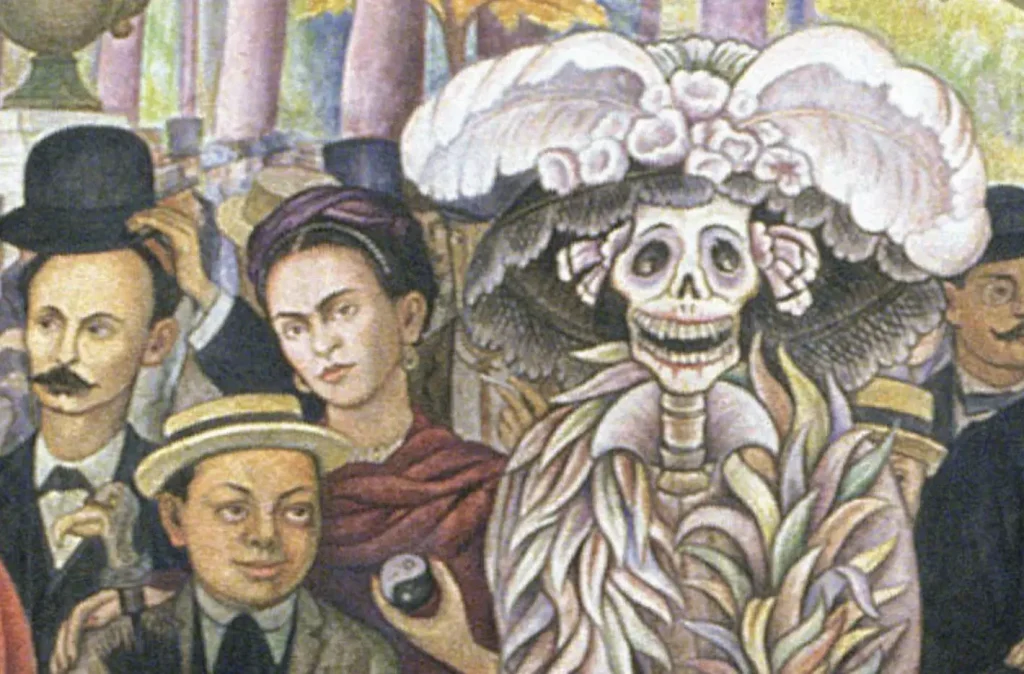
Students explore primary source documents and research on Mexican artists Diego Rivera and Frida Kahlo, learning how they drew inspiration from Latin American folklore, politics, and customs. Along the way, students build information literacy by generating research questions and visual analysis skills through close reading of key paintings. They also compare the artists’ descriptive writing to Shakespeare’s and analyze figurative language. The unit culminates in a research project showcasing their interpretation of Frida and Diego’s work and legacy.

Unit 7F

The Gold Rush Collection

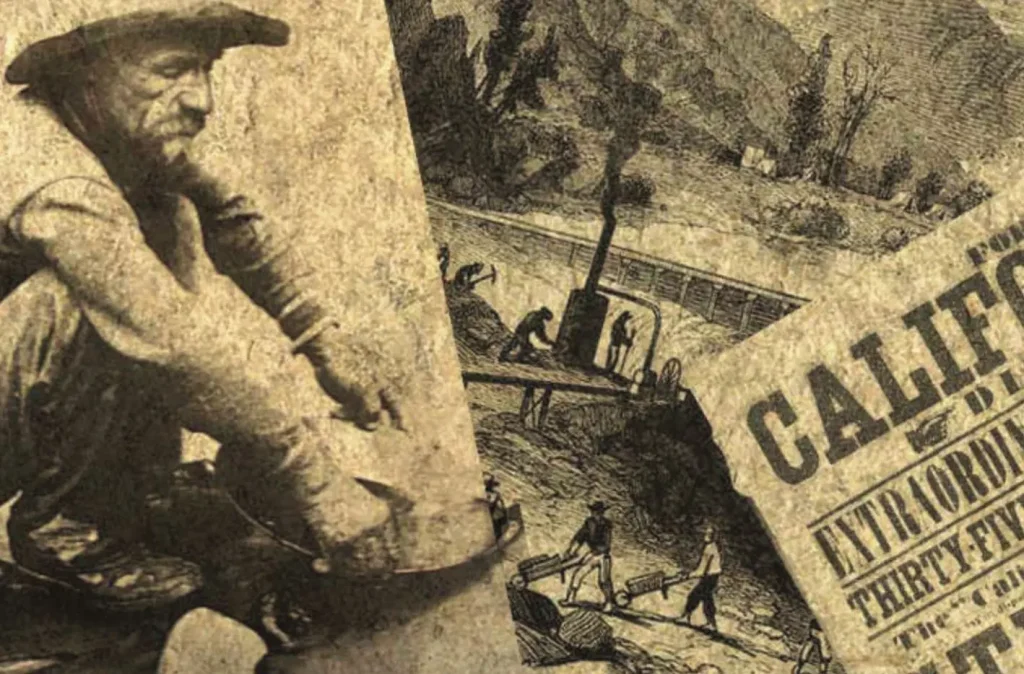
Students explore primary documents and conduct research on the California Gold Rush, building information literacy skills and constructing research questions. They also learn about the diverse people who participated, compare fictional and historical accounts, and participate in Socratic seminars. Students write narrative accounts from specific perspectives and complete a culminating research assignment combining essay and media project elements.

Unit 8A

Perspectives & Narrative

Students learn to read like writers, paying attention to craft and writing moves that shape reader experience and developing Focus and Showing skills as they build collaborative classroom routines. Students study three narrative texts, exploring themes of belonging and identity through close reading. They also practice alternating between analytic and narrative writing, and conclude with an essay arguing whether the mothers in Amy Tan’s “Fish Cheeks” are role models. 

Unit 8B

Liberty & Equality

Students study Civil War-era writings that debate the meaning of “all men are created equal,” exploring various perspectives on American ideals. Key texts include Walt Whitman’s Leaves of Grass, Frederick Douglass’ Narrative, and Harriet Ann Jacobs’s Incidents in the Life of a Slave Girl. The unit culminates with an essay examining Douglass’s arguments and Lincoln’s Gettysburg Address to consider what America means by “all men are created equal.”

Unit 8C

Science & Science Fiction

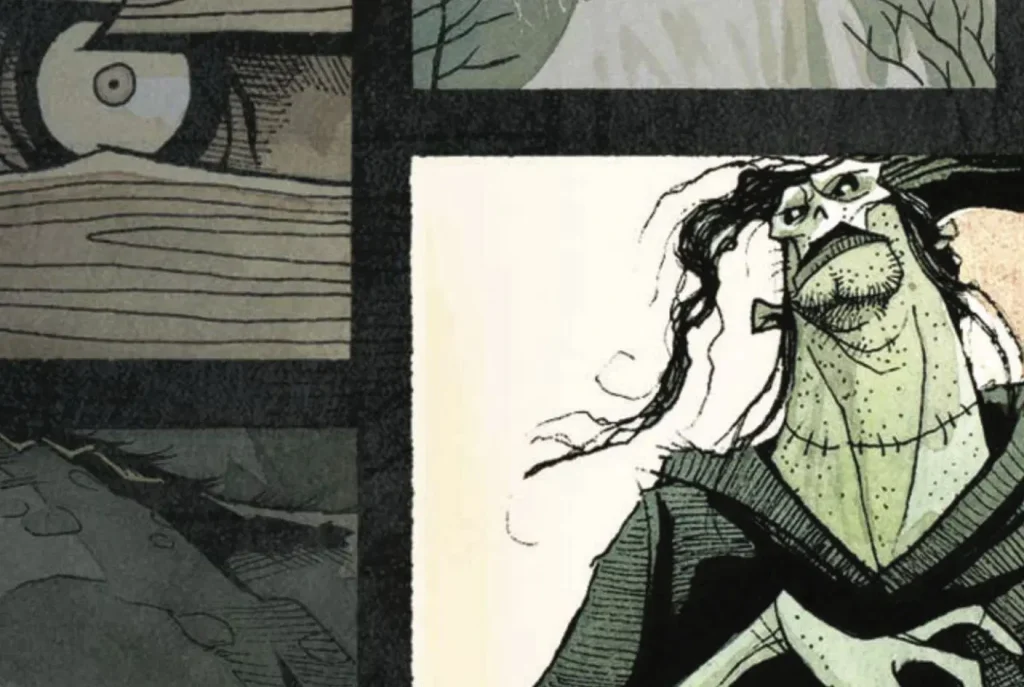
Students read Gris Grimly’s Frankenstein, a graphic novel adaptation of Mary Shelley’s novel, exploring themes of creator responsibility, societal influence, and the risks of scientific inquiry. They trace Victor’s sympathy for his creation, rewrite scenes from the creature’s perspective, and debate whether Victor owes the creature a companion. The unit concludes with an essay determining whether the creature should be considered human.

Unit 8D

Shakespeare’s Romeo & Juliet

Students read five excerpts from Shakespeare’s Romeo and Juliet to learn key elements of Shakespearean English through close reading. They practice memorizing and reciting the famous “Prologue,” put on stage performances, translate Shakespeare’s language into contemporary terms, and study the Shakespearean sonnet form. The unit concludes with an essay arguing whether love or hate is responsible for Romeo’s death.

Unit 8E

Holocaust: Memory & Meaning

Students use close reading to explore memoirs and primary sources that address two key Holocaust questions: How do societies become participants in atrocity, and what are our responsibilities as witnesses? Students analyze multiple perspectives through texts, including Alexander Kimel’s “I Cannot Forget,” Irene Butter’s Shores Beyond Shores, 1936 Olympics propaganda, and excerpts from Maus and Night.

Unit 8F

The Space Race Collection

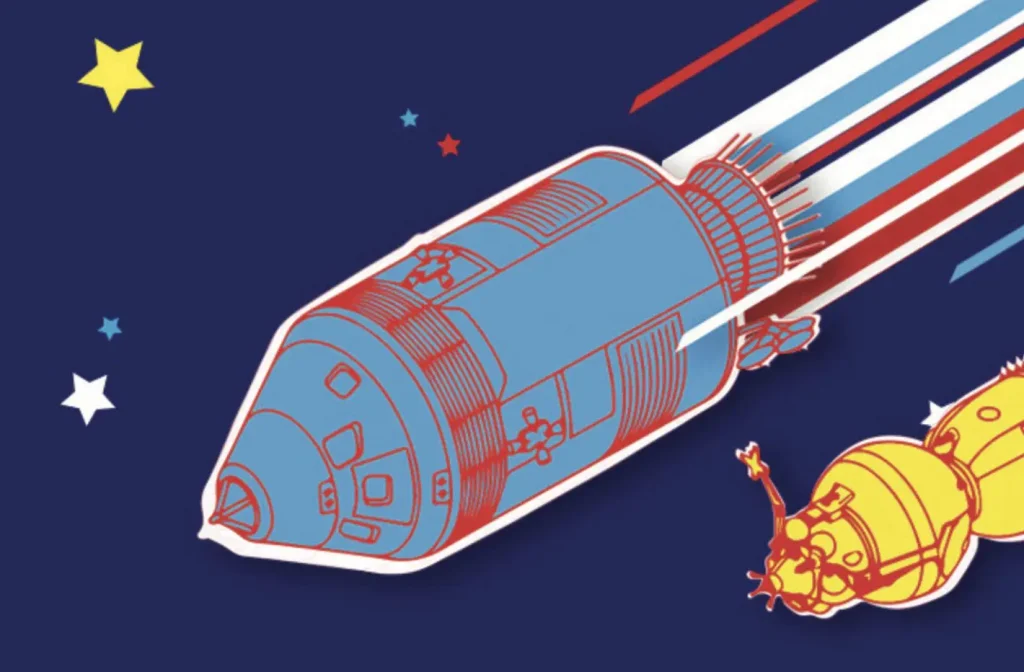
Students explore primary documents and conduct research on the Space Race. They build information literacy skills, construct research questions, and learn about diverse participants from Soviet cosmonauts to American heroes like Buzz Aldrin and Katherine Johnson. Each student researches an assigned cosmonaut or astronaut and writes space blog entries from their perspective. Students also complete a capstone research essay and media project.

Print & digital components

The program includes instructional guidance and student materials for a year of instruction, with lessons and activities that keep students engaged every day.

A diagram shows the Amplify ELA curriculum with examples of the digital teacher edition on a tablet, print teacher edition pages, and a teacher projection of an artwork on a screen.

Teacher materials

Teacher Edition

Available digitally and in print, the Teacher’s Edition contains all the information teachers need to facilitate classroom instruction, including detailed lesson plans, video teacher tips, presentation slides, standards alignment, Exit Tickets, real-time differentiation strategies, and robust reporting.

Student materials

Student Edition

Available digitally and in print, student materials guide middle schoolers through complex texts and writing by engaging them with high-quality narrative and informational texts—providing videos, audio supports, and a digital experience that captures their attention. They also keep all of their writing in one place with a personal Writing Journal.

A collection of Amplify ELA materials including a print student edition, a digital student edition on a laptop, a writing journal, and an Arachne literature module.

Explore more programs

Our programs are designed to support and complement one another. Learn more about our related programs.

Welcome, Amplify ELA families!

We’re excited to welcome you and your student to the Amplify ELA program for the new school year, and to provide you with exceptional learning opportunities through ELA. We’ve assembled the following resources and guides to help you support your student and enable them to have the most productive experience with our platform throughout the year.

Para la versión en español, haga clic aquí.

Illustrated collage with people playing sports, riding bikes, and a thoughtful person’s portrait, framed by natural elements and a rocket launching, next to an "EdReports Review Year 2020" badge.

What is Amplify ELA?

Amplify ELA helps students in grades 6–8 read and understand complex texts that encourage them to grapple with interesting ideas and find relevance for themselves. Amplify ELA is a blended program that includes both digital and print materials, but can also be used as a print-only version. Students using Amplify ELA read text passages closely, interpret what they find, discuss their thinking with peers, and develop their ideas in writing. The lesson structure is easy to follow, but flexible enough to allow for a variety of learning experiences and varied enough to keep students engaged. 

Features include:

  • Functionality that allows individual students to work at their own level while also being challenged appropriately.
  • Built-in tools that allow teachers to track and respond to student work.
  • The digital Amplify Library, which contains more than 700 downloadable, full-length fiction and nonfiction books.
  • The Vocab App, which uses game-like activities to help students master keywords from the program’s texts. (Students using print materials will see keywords highlighted.)
  • Independent writing assignments called Solos, available on mobile devices.
  • Interactive projects called Quests that accompany certain units to provide additional practice with analytical reading, writing, speaking, and listening skills.

Getting started

How you can support the child in your care:

  • If possible, read with your student daily; even 15 minutes of reading together each day can make a huge impact. You can read aloud sections of the text together—many middle grade students enjoy performing sections of dialogue by taking on the role of a character in a play, or adding some dramatic flair to a poem with which they are working. If your student struggles with reading aloud, you might try reading the text to them with expression, then having them read it back to you. For additional practice, there are an array of fluency activities in the program’s Flex Days. Ask your student to help you find these activities.
  • Find moments to discuss what they are reading and discovering. Examples of questions you could ask: What stood out to you from what you read today? Were any sentences or words confusing? What was most surprising? What do you think the writer was trying to communicate? Do you agree with the writer’s ideas or descriptions? What connections can you make between what you are reading and your own life, or other issues you’ve heard about?
  • Listen to your student read their written responses or have them share with a friend over the phone or video chat. 
  • Browse the Amplify Library with your student to find books they’ll enjoy and be able to read fluently and independently.
  • Review this Protecting Kids Online website by the Federal Trade Commission addressing digital safety.

Accessing texts in the Amplify Library

We encourage students to utilize the core texts from the Amplify Library while at home! Please follow these steps to download a text for offline reading:

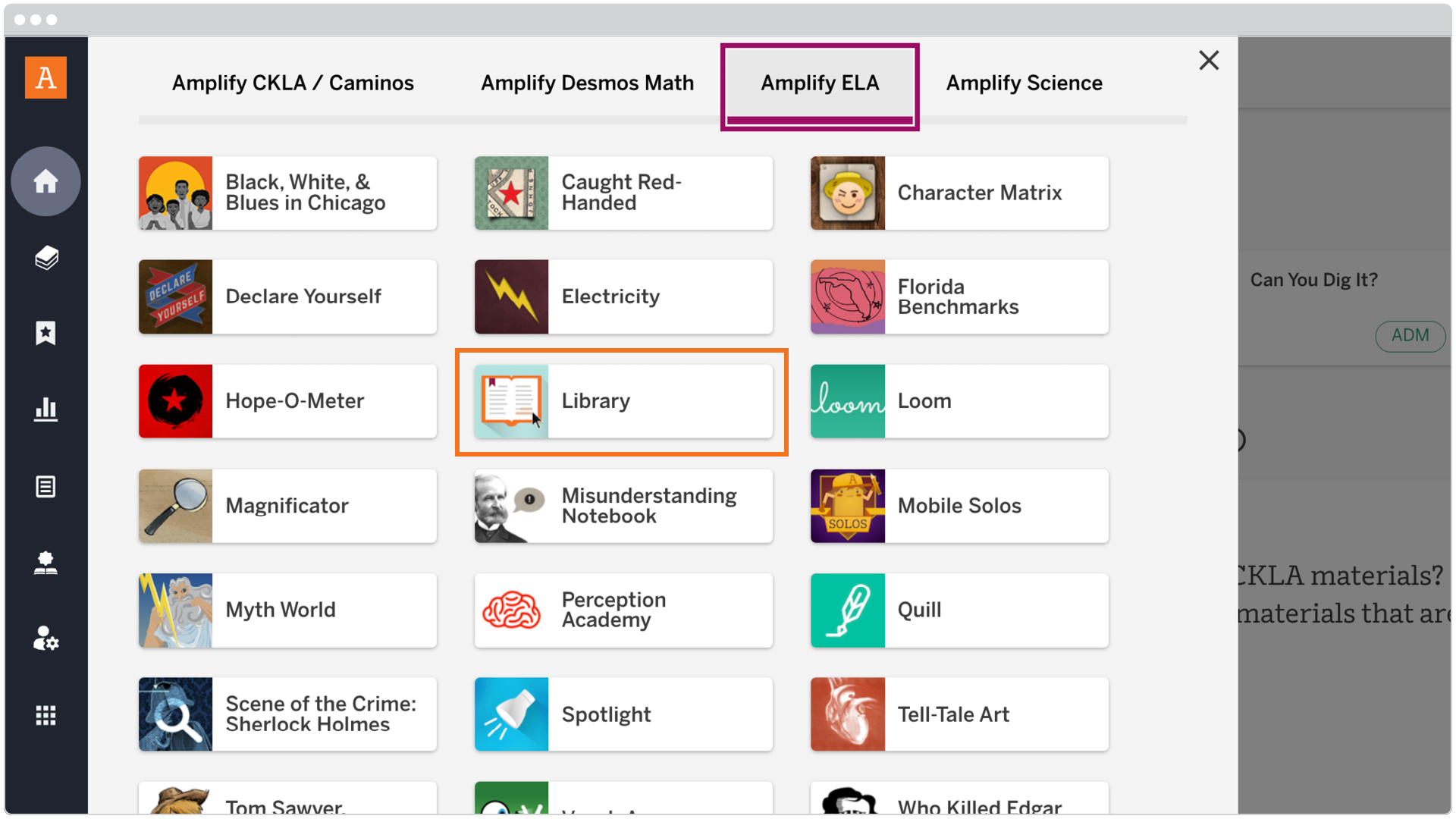
1. Navigate to the Program & Apps menu at the top of your screen and scroll through to find the Amplify Library icon. When you select it, the Amplify Library will open in a new tab.

A digital menu displays various educational tools and resources, with "Amplify ELA" highlighted at the top and the "Library" option outlined in orange.

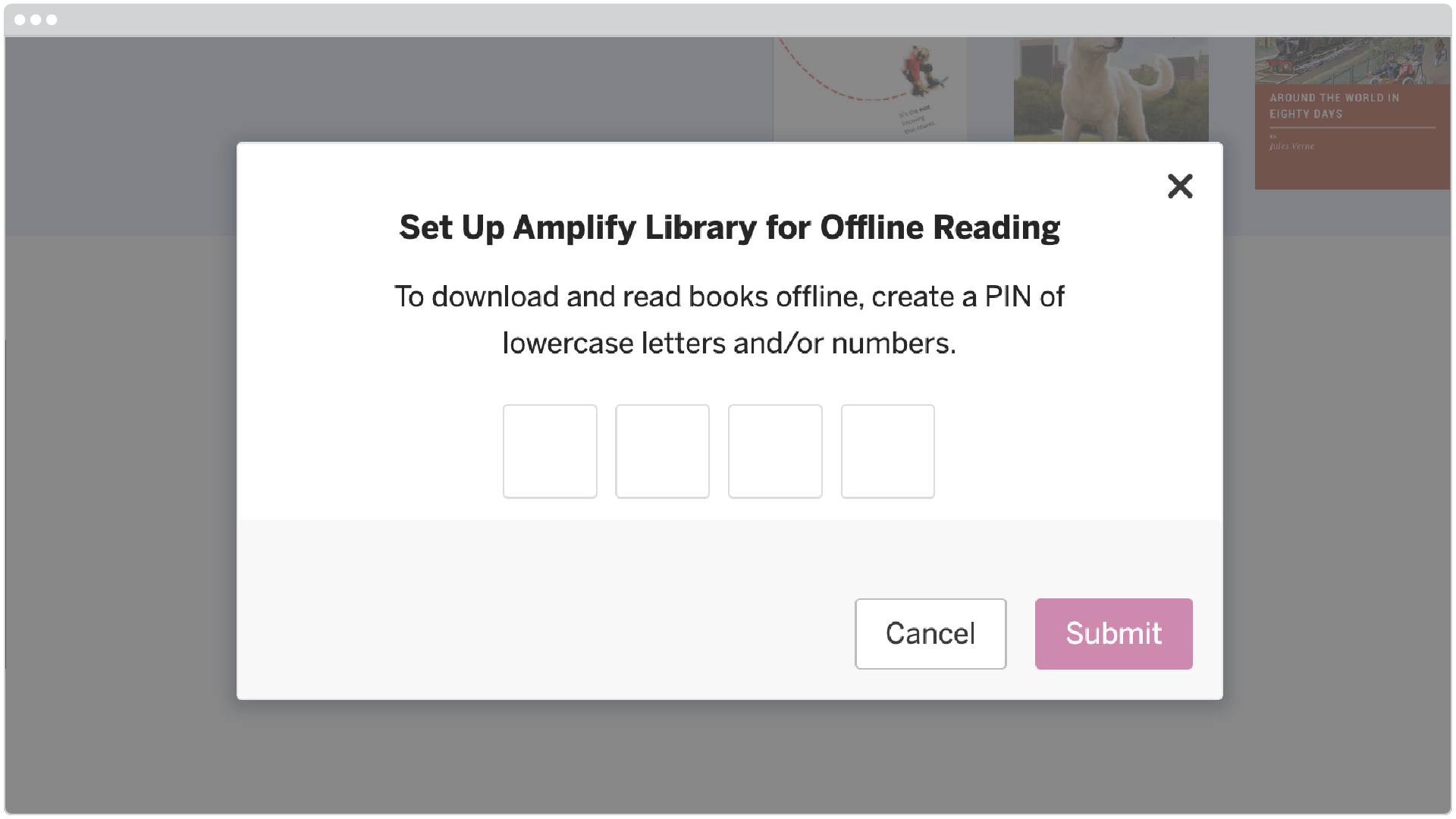
2. If prompted, follow the directions to set up a pin for the Amplify Library; otherwise, proceed to the next step.

A pop-up window prompts the user to create a four-character PIN of lowercase letters and/or numbers for offline reading, with Cancel and Submit buttons.

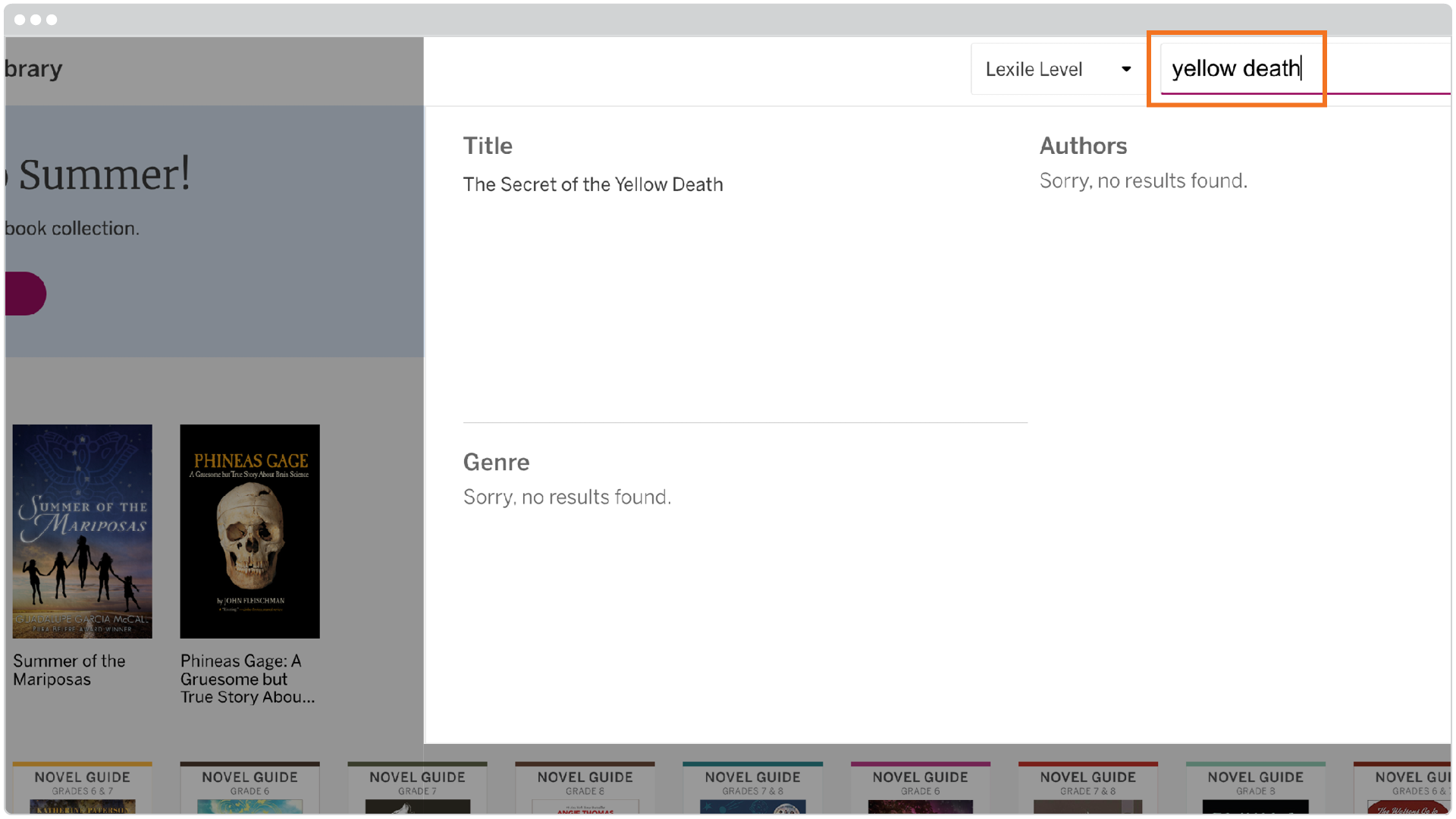
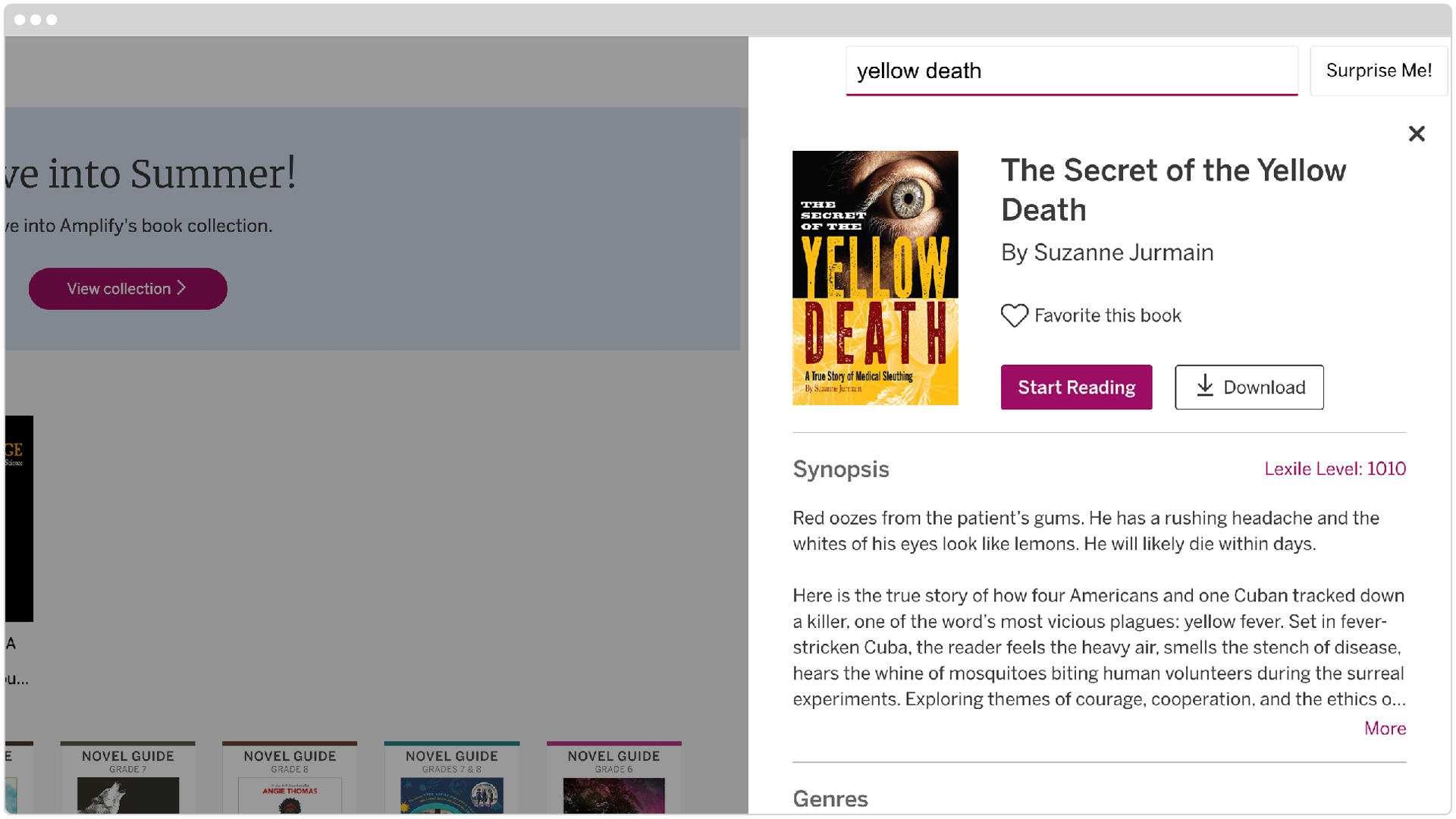
3. In the upper right corner of your screen, search for the book you would like to download. Example: The Secret of the Yellow Death: A True Story of Medical Sleuthing.

A digital library search page displays "yellow death" in the search bar with no results found for title, authors, or genre. Book covers are visible in the left sidebar.

4. Select the Download button.

A digital library interface displays the book "The Secret of the Yellow Death" by Suzanne Jurmain, showing its cover, synopsis, and options to read or download.

5.  If you lose connection while still in the Amplify Library, you can continue to access and read the downloaded book(s). If the page refreshes without internet access, or you try to login on another device without internet access, you will lose access to the downloaded book(s) until the internet connection is restored. 

To retrieve your downloaded texts: 

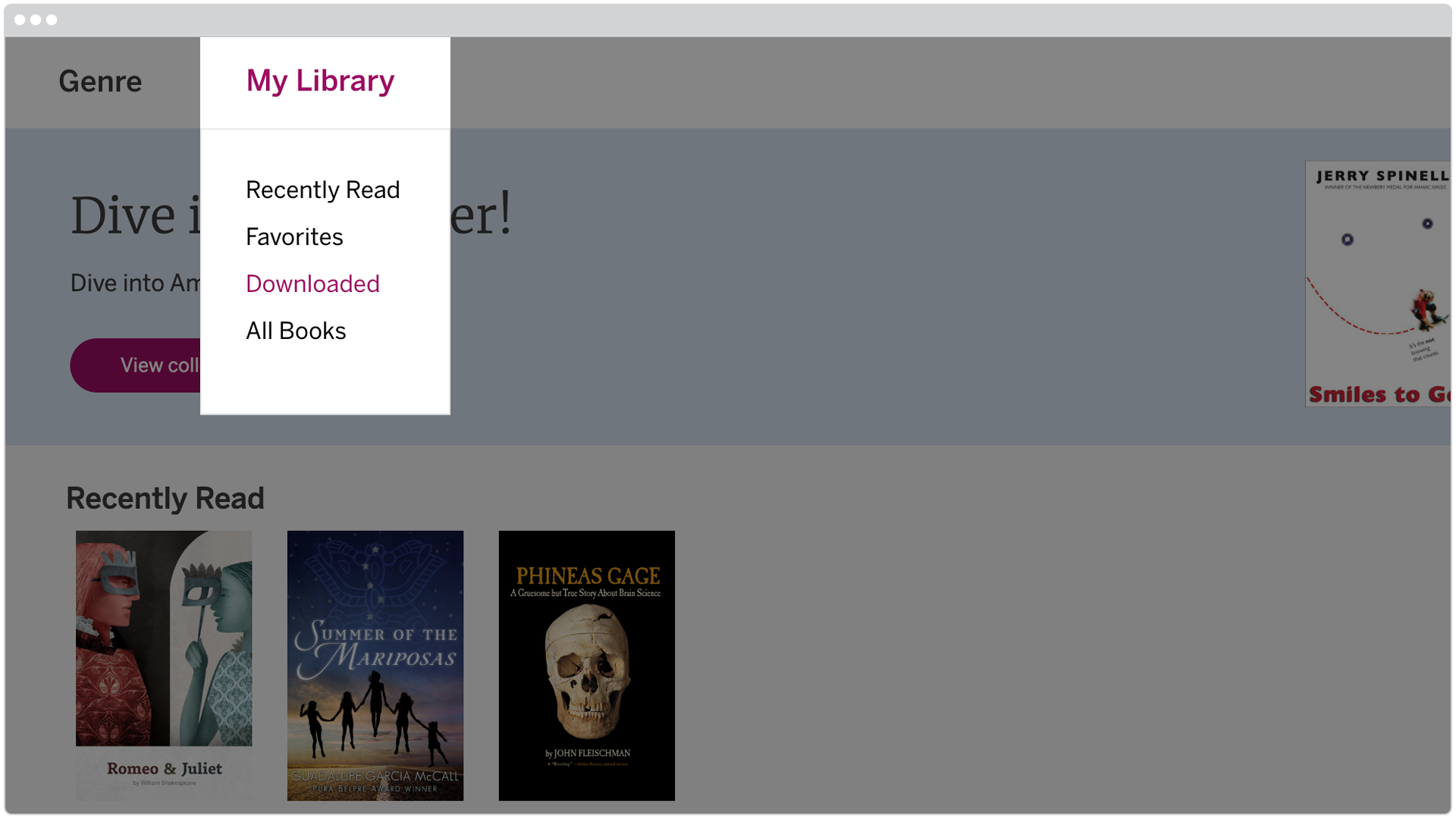
  1.  In the Amplify Library app, open the My Library drop-down menu in the upper left corner.
  2. Select Downloaded. 
  3. Choose the text you wish to read from all of your pre-downloaded texts.
A dropdown menu under "My Library" shows options: Recently Read, Favorites, Downloaded (highlighted), and All Books. Below, a Recently Read section displays three book covers.

Materials overview

Not every school will operate the same way, but students attending schools that have both the print and digital editions of the program will likely have the following print materials at home:

  • Student Edition: This includes all of the readings and activities necessary for instruction throughout the year. Students can read the selections both digitally and in print, annotating in either format. The lessons in the print Student Edition reflect each digital lesson, but have been modified to work effectively in print. 
  • Writing Journals: This provides space for students to respond to Writing Prompts and complete other written assignments. 

In the case that students are without access to devices or the internet, they can continue to complete key reading and writing assignments using the print Student Editions and student Writing Journals.

Teachers can also access, print, and mail student Novel Guides for up to 12 commonly taught novels. Six of these novels are available in the Amplify Library, and most should be available in a public library.

Unit overviews

Below are quick overviews of each unit your student will be working through in their grade throughout the year. Included along with each unit is a downloadable guide that provides a more in-depth look at what content is covered and how you can help your student advance their understanding of the topics.

  • Unit 6A: Dahl & Narrative  
    • Students begin with narrative writing to quickly boost their writing production, learn the foundational skill of focus, and become comfortable with key classroom habits and routines they will use all year. Students then apply their new observational focus to some lively readings from Roald Dahl’s memoir Boy and learn how to work closely with textual evidence.
  • Unit 6B: Mysteries & Investigations
    • Students read like an investigator to embark on a multi-genre study of the mesmerizing world of scientific and investigative sleuthing. At the end of the unit, students write an essay explaining which trait is most useful to problem-solving investigators.
  • Unit 6C: The Chocolate Collection
    • The Aztecs used it as currency. Robert Falcon Scott took it to the Antarctic. The Nazis made it into a bomb designed to kill Churchill. The 3,700-year-long history of chocolate is full of twists and turns, making it a rich and rewarding research topic. In this unit, students explore primary source documents and conduct independent research to better understand the strange and wonderful range of roles that chocolate has played for centuries around the world.
  • Unit 6D: The Greeks
    • Greek myths help us understand not only ancient Greek culture but also the world around us and our role in it. Drawing on the routines and skills established in previous units, these lessons ask students to move from considering the state of a single person—themselves or a character—to contemplating broader questions concerning the role people play in the world and the communities they inhabit within it.
  • Unit 6E: Summer of Mariposas
    • The borderlands between the United States and Mexico are the place of legends, both true and fictional. Summer of the Mariposas, by Guadalupe Garcia McCall, plants a retelling of the Odyssey into this setting, launching five sisters on an adventure into a world of heroes and evildoers derived from Aztec myths and Latinx legends. On the journey, the sisters reconcile the dissolution of their parent’s marriage and find new strength in their identity and connection to Aztec lineage. Students consider how McCall uses the structure of the hero’s journey to celebrate women, heritage, and a broad definition of family. Students also have the opportunity to compare these characters’ fictional journey into Mexico to a description of one boy’s true journey into the United States.
  • Unit 6F: The Titanic Collection 
    • In this research unit, students learn to tell the difference between primary, secondary, and tertiary sources; determine if a given source is reliable; and understand the ethical uses of information. Students then construct their own research questions and explore the internet for answers. They also take on the role of a passenger from the Titanic’s manifest to consider gender and class issues as they research and write narrative accounts from the point of view of their passenger.  
  • Unit 6G: Beginning Story Writing
    • In this unit, students get to practice their creative writing skills and learn the elements of storytelling and character development, as well as the importance of vivid language. Students gain a sense of ownership over their writing as they experiment with the impact of their authorial choices on sentences, language, character traits, and plot twists.
  • Grade 6: Grammar
    • In this unit, students complete self-guided grammar instruction and practice that teachers assign to them throughout the year. Sub-units are organized by key grammar topics, so teachers can assign the content that best meets their student’s needs while making sure students work with the key grammar topics for their grades.
  • Unit 7A: Red Scarf Girl & Narrative
    • In this study of a highly engaging memoir of a young woman growing up in China during the Cultural Revolution, students quickly learn the history and politics of this tumultuous period by focusing on the story of someone living through the upheaval. As students follow her journey through a world turned upside down, they will track the changes in her feelings and motivations over time.
  • Unit 7B: Character & Conflict
    • By reading the play A Raisin in the Sun and the short story “Sucker,” students explore how people facing hardships can inflict unintentional harm on the people around them. The two narratives work together to provide opportunities for students to analyze characters’ responses to conflict and the author’s development of ideas over the course of a piece of fiction.
  • Unit 7C: Brain Science
    • Could you survive an iron rod through your skull? Phineas Gage did, and his gruesome-but-true story allows students to build background information and analyze other informational texts, including the contemporary The Man Who Mistook His Wife For A Hat and the relevant Demystifying the Adolescent Brain.
  • Unit 7D: Poetry & Poe
    • Poe’s texts always offer so much to notice, decipher, talk about—and creep us out. Since things are not always what they seem, students must use close reading skills to question whether they should believe what Poe’s narrator is telling them … or not.
  • Unit 7E: The Frida & Diego Collection
    • Mexico’s most famous and provocative artists, Diego Rivera and Frida Kahlo, were an extraordinary couple who lived in extraordinary times. They were both soul mates and complete opposites. Their multifaceted lives and work offer students rich and fascinating subjects to study as they examine primary source documents and conduct independent research.
  • Unit 7F: The Gold Rush Collection
    • In this research unit, students choose from a large collection of primary and secondary sources to learn about the wide range of people who took part in the California Gold Rush. They also take on the role of someone who lived during the gold rush and write journal entries from their perspective.
  • Unit 7G: Intermediate Story Writing
    • In this unit, students get to practice their creative writing skills and learn the elements of storytelling and character development, as well as the importance of vivid language. Students gain a sense of ownership over their writing as they experiment with the impact of their authorial choices on sentences, language, character traits, and plot twists.
  • Grade 7: Grammar
    • In this unit, students complete self-guided grammar instruction and practice that teachers assign to them throughout the year. Sub-units are organized by key grammar topics, so teachers can assign the content that best meets their student’s needs while making sure students work with the key grammar topics for their grades.
  • Unit 8A: Perspectives & Narrative
    • This unit aims to teach students to read like writersThey practice paying attention to the craft of writing and to the moves a good writer makes to shape the way we see a scene or feel about a character—to stir us up, surprise us, or leave us wondering what will happen next. Students closely read examples of rich, layered narrative nonfiction, analyze the techniques each author uses to make their writing resonate, and practice applying these techniques to their own narrative writing.
  • Unit 8B: Liberty & Equality
    • In this unit, students look at the words of a range of creators—from poet Walt Whitman to abolitionist Frederick Douglass to President Abraham Lincoln—to see how their writing contributed to an extreme shift in social organization: a whole new concept of what it means for people to be considered “equal.” They also study multiple perspectives on the Civil War, including the memoir of a girl who was enslaved, a confederate girl’s diary, and a nonfiction account of the young boys who served as soldiers during the war. 
  • Unit 8C: Science & Science Fiction
    • Students read Gris Grimly’s Frankenstein, a graphic novel that adds captivating illustrations to an abridgment of the 1818 edition of Mary Shelley’s book. Paired with Shelley’s text, Grimly’s haunting—and, at times, horrific—representations of Frankenstein’s creature push students to wrestle with some of the text’s central themes: the source of humanity and the root of evil. Students then write an essay in which, after arguing both sides of the question, they determine whether or not Frankenstein’s creature should ultimately be considered human.
  • Unit 8D: Shakespeare’s Romeo & Juliet
    • Romeo and Juliet combines romance with action, offering a wide range of themes and scenes for students to read about and act out. Your middle schoolers are at the right age to identify with the lovers’ strong feelings—and also old enough to think critically about the choices Romeo and Juliet make.
  • Unit 8E: Holocaust: Memory & Meaning
    • This unit uses a range of primary source articles, images, and videos, as well as literary nonfiction and graphic nonfiction, to study what made the atrocities of the Holocaust possible. Students investigate how propaganda was generated and employed to create a political environment that ultimately corrupted a society. The Olympics are seen through the lens of an international propaganda campaign, providing cover for Nazis to begin eliminating non-Aryans from their culture. The final sub-unit examines the outcomes of Nazi doctrine and the impact on Jewish victims and survivors.
  • Unit 8F: The Space Race Collection
    • In this unit, students to put their research and close-reading skills to the test to distinguish between reliable  and unreliable sources, explore primary documents, and conduct independent research to better understand the space race that took place between two of the world’s superpowers. This dramatic story offers students a rich research topic to explore as they build information literacy skills, learn how to construct their own research questions, and explore the internet for answers.
  • Grade 8: Grammar
    • In this unit, students complete self-guided grammar instruction and practice that teachers assign to them throughout the year. Sub-units are organized by key grammar topics, so teachers can assign the content that best meets their student’s needs while making sure students work with the key grammar topics for their grades.
  • Unit 8G: Advanced Story Writing
    • In this unit, students get to practice their creative writing skills. They’ll learn the elements of storytelling and character development, and the power of vivid language to grab readers and pull them into a story.

Additional activities

Quests: 

You may notice your student working with peers on the same interactive project over several days, trying to solve a mystery or explain a historical event. That’s what happens when a teacher assigns a Quest: an in-depth week-long exploration that requires collaboration and deepens engagement with texts and topics.

Vocab App:

The Vocab App helps students master vocabulary words through game-like activities that challenge them to think through morphology, analogy, and synonyms/antonyms, and to decipher meaning through context.

Have a question about Amplify ELA?

Visit our help library to search for articles with answers to your program questions. 

For additional curriculum support, please contact your student’s teacher.

What’s included in our Spanish language arts curriculum

Amplify Core Knowledge Language Arts® (CKLA) is available in both English and Spanish. Amplify Caminos al Conocimiento Esencial, our robust Spanish language arts companion for grades K–5, supports multiple teaching models, including dual language immersion and transitional classrooms.

A laptop screen displays a kindergarten instructional webpage in Spanish, showing lesson categories with illustrated thumbnails and navigation options.

Year at a glance

The program’s intentional Knowledge Sequence from K–5 connects knowledge and vocabulary within a grade level and across grade levels, for deeper reading comprehension and preparation for college, career, and life. Instead of “activating prior knowledge,” Amplify Caminos helps you build it in the classroom from day one, for every child, expanding each student’s knowledge base long before they transition to reading to learn.

Curriculum flowchart showing reading themes and activities from Kindergarten to Grade 5, organized by grade level and literary theme, with interconnected boxes for each topic.

Units & domains at a glance

Each Knowledge Domain in grades K–2 and Unit in grades 3–5 varies in the number of days based on instructional purpose. Just as with our top-rated Amplify CKLA program, the Amplify Caminos materials engage and delight young learners with resources that are both appealing and original.

Una mujer rubia con un vestido azul cuida ovejas blancas y negras, sosteniendo un bastón de pastor. Un cerdo vestido de azul corre y un hombre de negro toca el violín en una valla. Al fondo hay una casa.

Domain

Nursery Rhymes and Fables/Rimas y fábulas infantiles

Start learning about literature with these classic Mother Goose rhymes.

Ilustración de tres personas en un paisaje cubierto de hierba, una tratando de atrapar mariposas con una red, otra escondiéndose detrás de una escultura alta y frondosa de una mano y otra con binoculares.

Domain

The Five Senses/Los cinco sentidos

Learning about the body starts with learning about how we experience the world.

Una ilustración que representa a un gran lobo con sombrero de copa liderando un desfile de animales y personas con instrumentos musicales a través de un paisaje montañoso.

Domain

Stories/Cuentos

Learn about the parts of a book and some of the stories that go in one.

Una ilustración vibrante de una escena rural con colinas, una granja, una mariposa, un sol brillante, varias verduras como tomates y lechugas, y un gusano en el suelo.

Domain

Plants/Plantas

Discover the lifecycle of plants and the history of George Washington Carver.

Ilustración de una escena de granja que muestra un camión rojo que transporta verduras, campos de cultivo, vacas pastando en una colina, un granero y un molino de viento contra un cielo azul.

Domain

Farms/Granjas

Now we know how plants make their food… but what about animals?

Ilustración de un nativo remando en una canoa en un río con búfalos pastando en un campo, tipis al fondo y pájaros volando en el cielo bajo un sol brillante.

Domain

Native Americans/Los nativos americanos

Who were the first people in America? A look at the Lenape, Wampanoag, and Lakota Sioux.

Una ilustración muestra un rey y una reina en tronos, un castillo en un acantilado y una mujer con enanos cerca de un árbol. Cortinas rojas enmarcan la escena.

Domain

Kings and Queens/Reyes y reinas

To understand fairy tales, it’s best to first understand royalty.

Ilustración que muestra las cuatro estaciones: primavera con flores, verano con árboles verdes, otoño con hojas que caen e invierno con nieve y gente en trineo. Un niño lee debajo de un árbol.

Domain

Seasons and Weather/Las estaciones y el tiempo

The study of natural cycles continues with the weather and why it happens.

Un velero de madera con símbolos de cruz roja en sus velas navega cerca de una isla tropical con exuberante vegetación y palmeras. A lo lejos se ven otros dos barcos en el agua.

Domain

Columbus and the Pilgrims/Colón y los peregrinos

A look at the first contact between Europe and the Americas, and some of its results.

Una escena histórica muestra gente afuera de una gran mansión de estilo colonial con dos chimeneas. En primer plano se ve un carruaje tirado por caballos y a la izquierda se ve una casa más pequeña.

Domain

Colonial Towns and Townspeople/Las colonias y sus habitantes

Before the War for Independence, how did the town and country depend on one another?

Ilustración de personas clasificando materiales reciclables en un parque cerca de un río contaminado. Las fábricas emiten humo al fondo, mientras que las mariposas, las flores y los árboles están presentes en el primer plano.

Domain

Taking Care of the Earth/Cuidar el planeta Tierra

We only have one Earth—here are some ways to help care for it.

Ilustración del Monte Rushmore con los rostros tallados de cuatro presidentes de Estados Unidos. Un águila vuela en primer plano.

Domain

Presidents and American Symbols/Presidentes y símbolos de los Estados Unidos

Start learning about government through the lives of five presidents.

Una ilustración caprichosa que muestra animales de granja alrededor de una casa en un árbol junto a un río. Un zorro, un conejo y una oveja interactúan mientras la gente acampa junto a una fogata al fondo. Una araña cuelga del árbol.

Domain

Fables and Stories/Fábulas y cuentos

Learn some of the key elements of a story through classic fables.

Ilustración que presenta anatomía humana, actividades de estilo de vida saludable, profesionales médicos, símbolos dietéticos, una ambulancia y microorganismos, destacando la conexión entre salud, nutrición y ejercicio.

Domain

The Human Body/El cuerpo humano

What are germs? What are the organs? And what does it all have to do with health?

Una ilustración que presenta varias escenas de cuentos de hadas y folclore, incluida una calabaza grande, un tigre, Caperucita Roja, personas con atuendos tradicionales y una pagoda roja con una montaña de fondo.

Domain

Different Lands, Similar Stories/Tierras diferentes, cuentos similares

A world tour of storytelling, and the stories that stay the same across the world.

Ilustración que muestra el antiguo Egipto con pirámides, la Esfinge, agricultores arando un campo con bueyes y ganado pastando bajo un cielo soleado.

Domain

Early World Civilizations/Antiguas civilizaciones del mundo

Rivers, farming, writing, and laws: just what does it take to build a civilization?

Escena ilustrada de la antigua Mesoamérica con maíz, un río, agricultores y pirámides al fondo. En primer plano se ve a una persona con traje tradicional.

Domain

Early American Civilizations/Antiguas civilizaciones de América

What will we find in the great temples of the Aztec, Maya, and Inca civilizations?

Ilustración de la exploración espacial: se lanza un cohete, un astronauta se para cerca de un módulo de aterrizaje, una persona usa un telescopio y aparece un planeta distante con anillos sobre un fondo estrellado.

Domain

Astronomy/Astronomía

How the Earth relates to the moon, the sun, and the rest of the planets.

Dos paleontólogos en un paisaje volcánico examinan fósiles en primer plano, mientras un volcán emite humo y lava al fondo.

Domain

The History of the Earth/La historia de la Tierra

Just what lies beneath the Earth’s surface, and what can it teach us about the past?

Una escena de vida silvestre diversa que presenta un cactus del desierto con un pájaro, un conejo, elefantes, un león, un oso polar sobre el hielo y montañas distantes bajo un cielo nublado.

Domain

Animals and Habitats/Los animales y sus hábitats

A look at the connection between how animals live and where they make their homes.

Una princesa con un vestido rosa sostiene una rana junto a un arroyo con un castillo, árboles y gente al fondo. En primer plano camina un zorro con un sombrero con una pluma roja.

Domain

Fairy Tales/Cuentos de hadas

What do fairy tales have to teach us about how stories are told?

Ilustración que muestra una escena histórica con soldados, veleros y hombres con atuendo colonial discutiendo en el interior.

Domain

A New Nation: American Independence/Una nueva nación: la independencia de los Estados Unidos

The story of the birth of the United States out of the 13 Colonies.

Los pioneros con carros cubiertos y caballos señalan hacia un valle con tipis nativos, fogatas y humo elevándose. Un oso se encuentra sobre una roca y se ven montañas al fondo.

Domain

Frontier Explorers/Exploradores de la Frontera

The story of the journey west from the newborn U.S.A. to find the Pacific Ocean.

Un hombre con un hacha se encuentra entre paisajes exagerados con un castillo, un tren con humo, un buey azul y una persona con un mono observando la escena.

Domain

Fairy Tales and Tall Tales/Cuentos de hadas y cuentos exagerados

Learn about exaggeration and characterization on the frontier.

Ilustración de un paisaje vibrante que presenta diversos monumentos culturales, incluidos templos, palacios, pirámides, una escena de elefantes, montañas distantes y fuegos artificiales en el cielo.

Domain

Early Asian Civilizations/Antiguas civilizaciones de Asia

Tour the world of classical civilization, starting with India and China.

Ilustración que muestra la antigua Grecia con un anfiteatro, estatuas, soldados con armadura, un barco y un templo en una colina rodeada de vegetación.

Domain

Ancient Greek Civilization/La civilización griega antigua

The tour continues with the philosophy and politics of Greece.

Illustration of various mythological scenes including greek gods, a flying horse, and roman architecture under a sunny sky.

Domain

Greek Myths/Mitos griegos

Dive deep into the characters and storytelling of classic myths.

Ilustración de una batalla entre barcos británicos y estadounidenses cerca de un fuerte. El barco británico está a la izquierda con soldados, mientras que el barco estadounidense está a la derecha. La gente porta una gran bandera estadounidense en primer plano.

Domain

The War of 1812/La guerra de 1812

Learn about America’s “Second War for Independence.”

Un paisaje nevado con un zorro durmiendo en una madriguera, gente corriendo y andando en bicicleta por un sendero y árboles que muestran los cambios estacionales.

Domain

Cycles in Nature/Los ciclos de la naturaleza

Introducing the natural cycles that make our lives possible.

Ilustración de carros cubiertos tirados por caballos a lo largo de un sendero en el desierto, con un coyote aullando sobre una alta formación rocosa y un tren de vapor al fondo.

Domain

Westward Expansion/La expansión hacia el oeste

Why did pioneers go west? What happened to the people who were there?

Ilustración de un jardín vibrante con flores, abejas, mariposas, una oruga en una hoja, una crisálida y un apicultor que maneja una colmena junto a un estanque.

Domain

Insects/Los insectos

Lay the grounds for animal classification by looking at solitary and social insects.

Ilustración de una escena histórica con gente escuchando el discurso de un hombre en una plataforma. Al fondo se ve un río y una procesión de personas. En primer plano hay un documento de proclamación.

Domain

The U.S. Civil War/La Guerra Civil de los Estados Unidos

Begin to grapple with U.S. history’s central crisis over slavery.

Una escena en la que aparece una persona explicando un diagrama anatómico humano, otra persona haciendo ejercicio, una cadena de ADN, campos y un microscopio de fondo.

Domain

Human Body: Building Blocks and Nutrition/El cuerpo humano: componentes básicos y nutrición

A deeper dive into the digestive system and the nutrition process.

Un grupo diverso de personas se encuentra en un muelle con vistas a un bullicioso puerto con barcos y un gran barco, un avión volando por encima y la Estatua de la Libertad al fondo.

Domain

Immigration/La inmigración

Why did people immigrate to the United States, and what did they find here?

Women in early 20th-century clothing march with signs for voting rights and justice in front of a yellow bus labeled "Cleveland Ave.," making history that can inspire lessons in a K–2 language arts curriculum.

Domain

Fighting for a Cause/Luchar por una causa

How people can do extraordinary things to make the world better for everyone.

Dos ratones antropomórficos en un bote de remos, uno de ellos remando, navegan por un río tranquilo rodeado de exuberante vegetación y árboles. El ratón que rema lleva una chaqueta azul y el otro ratón parece conversar.

Unit 1

Classic Tales: The Wind in the Willows/Cuentos Clásicos: El viento en los sauces

A deep dive into character, theme, and POV in classic stories from around the world.

Ilustración de un jaguar, una garza, una rana roja, una tortuga y un pez en un paisaje vibrante con montañas y vegetación bajo un cielo soleado.

Unit 2

Animal Classification/La clasificación de los animales

How do we classify different animals by their appearance and behavior?

Ilustración de una figura humana que muestra la anatomía interna, incluidos el cerebro, los pulmones, el corazón, el sistema digestivo y una articulación de la cadera resaltada sobre un fondo degradado.

Unit 3

The Human Body: Systems and Senses/El cuerpo humano: sistemas y sentidos

Let’s take a closer look at how the skeleton, muscles, and nervous system all work.

Un ángel se arrodilla ante una mujer sentada en un sofá dorado encima de un templo en una noche estrellada. Unas escaleras conducen al templo en un paisaje montañoso.

Unit 4

The Ancient Roman Civilization/La civilización romana antigua

What is Rome’s greatest cultural contribution? In this unit, your students decide.

Ilustración de un perro saltando bajo un árbol, persiguiendo una abeja, con una mesa en primer plano sosteniendo una jarra y vasos de limonada. El sol brilla intensamente en el cielo.

Unit 5

Light and Sound/La luz y el sonido

The science behind all the ways we see and hear the world.

Un barco vikingo con una proa en forma de dragón navega en el océano bajo un cielo azul con nubes. El barco tiene una sola vela grande y varios escudos recubren sus costados.

Unit 6

The Viking Age/La era vikinga

An immersive narrative experience about what life was like in Viking communities.

Ilustración de una escena espacial con varios planetas y anillos sobre un fondo de estrellas. Dos planetas grandes dominan el primer plano y se ven planetas más pequeños al fondo.

Unit 7

Astronomy: Our Solar System and Beyond/Astronomía: nuestro sistema solar y más allá

More about our universe, including a writing project about daily life on a space station.

Una persona sentada en el borde de un acantilado con vistas a un vasto paisaje desértico con nubes arremolinadas en el cielo.

Unit 8

Native Americans: Regions and Cultures/Los nativos americanos: regiones y culturas

How did Native American nations change their way of life in different parts of the world?

Ilustración de un velero en el océano con la costa este de América del Norte visible a la izquierda.

Unit 9

Early Explorations of North America/La exploración europea de América del Norte

What was it like to sail to North America with the early European explorers?

Una pintura representa una escena del siglo XVII con colonos, un velero al fondo y un hombre conduciendo un carro tirado por caballos cargado de mercancías. Se ve a otras personas descargando y trabajando cerca.

Unit 10

Colonial America/La época colonial en los Estados Unidos

A study of the very different ways of life in the different pre-U.S. colonies.

Ilustración que muestra el ciclo de la vida: un esqueleto en el suelo, un pájaro posado en una cerca, otro pájaro en una planta y un ave rapaz más grande arriba, todos conectados por flechas circulares.

Unit 11

Ecology/Ecología

Students keep ecologist’s journals to learn about our world and how best to protect it.

Una mano alcanza una manzana verde en una rama. Cerca hay una brújula, un termómetro, un lápiz, notas musicales y un granero rojo sobre un paisaje cubierto de hierba.

Unit 1

Personal Narratives/Narrativas personales

Read stories of personal experience… and learn to reflect on your own.

Ilustración medieval que representa un grupo de figuras con armadura a la entrada de un alto castillo gris con puente levadizo, adornado con banderas y rodeado por un paisaje decorado y fondos ornamentados.

Unit 2

Empires in the Middle Ages/Los imperios en la Edad Media, parte 1 & Los imperios en la Edad Media, parte 2

Explore the medieval history of Europe and the Middle East.

Ilustración dorada de un dragón con alas sobre fondo beige, rodeado de diversos elementos decorativos como estrellas, hojas y estampados abstractos.

Unit 3

Poetry/Poesía

Study the poetry of many nations using licensed text anthologies, and begin to write your own.

Vintage styled illustrations of a microscope, an old telephone, and a clock on textured background with geometric patterns.

Unit 4

Eureka! Student Inventor/¡Eureka! Estudiante inventor

Transform the class into a lab for students to build and present inventions.

Formaciones rocosas en un paisaje desértico con capas vibrantes y arremolinadas de arenisca roja, naranja y amarilla bajo un cielo parcialmente nublado.

Unit 5

Geology/Geología

Plate tectonics, volcanoes, erosion: all the forces that shape the Earth.

Una imagen abstracta y colorida que representa varias formas geométricas de edificios sobre un fondo azul estampado.

Unit 6

Contemporary Fiction with excerpts from The House on Mango Street/Ficción Contemporánea con Fragmentos de La Casa en Mango Street

Explore The House on Mango Street… and write a book while doing it.

Cuadro que representa a un hombre y un niño tocando una gran campana en una torre, con espectadores al fondo y un cartel de "LIBERTAD" visible.

Unit 7

American Revolution/La Revolución estadounidense

Why did America seek independence? Let’s investigate the causes and effects.

Un pequeño bote de remos con tres personas navega por mares agitados mientras dos grandes barcos luchan al fondo, con humo y fuego visibles.

Unit 8

Treasure Island/La Isla del Tesoro

How dSeek the treasure of plot in this detailed study of a classic fiction adventure.

Unit 1

Personal Narratives/Narrativas personales

Through writing and sharing their writing, students begin to identify themselves as writers.

Unit 2

Early American Civilizations/Las primeras civilizaciones americanas

Students craft a codex to explain the rise and fall of the Maya, Aztec, and Inca people.

Dos jinetes medievales a caballo, uno de ellos con la espada en alto, avanzan por un terreno rocoso. El fondo presenta un paisaje brumoso bajo un tono violeta.

Unit 3

Poetry/Poesía

Students close read many forms of poetry… and learn to write them.

Collage ilustrado con un paraguas, un cuervo, un sextante náutico, estrellas, una luna creciente y una brújula sobre un fondo beige texturizado.

Unit 4

Adventures of Don Quixote/Las Aventuras de Don Quijote

Was Don Quixote right to fight the windmill? In this full-length novel study, students decide.

Unit 5

The Renaissance/El Renacimiento

Exploring the art and literature of the Renaissance through the works of its masters.

Tres hombres vestidos con ropa de época examinan una gran hoja de papel dentro de una imprenta. Un hombre parece llevar un delantal, mientras que otro señala el papel y el tercero observa de cerca.

Unit 6

The Reformation/La Reforma

How did the printing press transform the religion and society of Europe?

Patrón botánico morado y lila con hojas, plantas y formas abstractas, incluida una luna creciente y estrellas, sobre un fondo violeta oscuro.

Unit 7

William Shakespeare’s A Midsummer Night’s Dream/Sueño de Una Noche de Verano de William Shakespeare

Students enter the world of Shakespeare by reading, designing, and acting out his work.

Retrato en tonos sepia de una joven de pelo largo, con un collar de pedrería y un chal drapeado.

Unit 8

Native Americans/Los nativos americanos

How did the policies of the U.S. government impact Native American culture and lives?

Una lupa sobre documentos que contienen una pintura de paisaje de montañas, un dibujo con la etiqueta "Raptor Claw" y una nota adhesiva con la "Pista n.° 2". También se ven un sobre y una insignia exterior.

Unit 9

Chemical Matter/Química

Students use knowledge of chemistry to solve a mystery.

Print & digital components

The program includes instructional guidance and student materials for a year of instruction, with lessons and activities that keep students engaged every day.

Component

FORMAT

Knowledge (Conocimientos) Teacher Guides (K–2)

Knowledge Strand Teacher Guides contain Amplify CKLA’s cross-curricular read-alouds and application activities, all of which are standards-based to build mastery of content knowledge and literacy skills. There is one Teacher Guide per Knowledge Domain.

Print and digital

Knowledge Image Cards (K–2)

Amplify Caminos includes Image Cards for each Knowledge Domain to bring each topic to life through vivid visuals.

Print and digital

Knowledge Flip Books (K–2)

Projectable Flip Books are provided to accompany the read-alouds in each Knowledge Domain.

Digital

Teacher Guides (3–5)

Teacher Guides for grades 3–5 units are based on content-rich topics and incorporate reading, writing, speaking, and listening skills in the context of background knowledge. There is one Teacher Guide per unit.

Print or digital

Teacher Resource Site (K–5)

The program includes a one-stop-shop website for lesson projections, digital versions of all Amplify Caminos materials, lesson planning resources, multimedia (such as eBooks), and more.

Digital

Professional Learning Site (K–5)

The Professional Learning site includes training materials, best practices, and other resources to develop program expertise. Access professional development anywhere, anytime.

Digital

Component

FORMAT

Knowledge (Conocimiento) Activity Books (K–2)

Activity Books provide students with the opportunity to deepen world and word knowledge by responding to text in a diversity of ways.

Print

Student Readers (3–5)

Student Readers serve as content-rich anchor texts for each unit. Units such as Poetry and Contemporary Fiction feature authentic texts originally written in Spanish.

Activity Books (3–5)

Activity Books in grades 3–5 provide daily opportunities for students to hone reading and writing skills within the context of each unit.

Print and digital

Explore more programs

Our programs are designed to support and complement one another. Learn more about our related programs.

Corona-Norco Unified School District

To view this protected page, enter the password below:


Welcome, San Diego reviewers!

To view this protected page, enter the password below:


Amplify ELA – Atlanta Review3

To view this protected page, enter the password below:


Welcome, Atlanta reviewers!

To view this protected page, enter the password below:


S3-03: Instructional strategies for integrating science and literacy

A graphic with the text "Science Connections" and "Amplify" features colorful circles and curved lines on a dark gray background.

We’re continuing our investigations around science and literacy with Doug Fisher, Ph.D., professor and chair of educational leadership at San Diego State University. We talk about the importance of integrating science and literacy, as well as practical guidance for teachers who want to unite the two disciplines in their own classrooms.

Listen as we discuss how science and literacy can be powerful allies and specific strategy areas to focus on when integrating the two disciplines. And don’t forget to grab your Science Connections study guide to track your learning and find additional resources!

We hope you enjoy this episode and explore more from Science Connections by visiting our main page!

DOWNLOAD TRANSCRIPT

Douglas Fisher (00:00):

It’s not that you have to become a reading specialist to integrate literacy into science. It’s how our brains work.

Eric Cross (00:10):

Welcome to Science Connections. I’m your host, Eric Cross. This season, we’re making the case for our favorite underdog, which of course is science. Each episode we’re showing how science can be better utilized in the classroom, and making the case for why it’s so important to do so. In our last episode, we examined the evidence showing that science and English instruction can support each other. And now on this episode, we want to give you some more strategies for really making that a reality in your own home or classroom or community. So to help me, I’m joined on this episode by Dr. Douglas Fisher, Professor and Chair of Educational Leadership at San Diego State University. Dr. Fisher is actually someone who has conducted literacy training at my own school, so I’m excited to be able to share some of his wisdom with all of you. Oh, and just a heads up, Dr. Fisher dropped some gems about the ways teachers can integrate literacy and science in their classrooms. So you may want to have a notepad. Ready. And now here’s my conversation with Dr. Douglas Fisher.

Eric Cross (01:12):

Well, Doug, thank you for your time and for being willing to come and talk about literacy and science. I know you’re busy, all over the place, and so I was super-excited that we were able to lock you in and talk about this. And, on this episode, we’re gonna talk about the ways that science and literacy can support each other. And one of the reasons why I’m really excited for you is because you said some really key things for me as a science teacher, when you talked about literacy and supporting students. That just resonated so deeply in me. And I was like, “I need more Doug!” Because we’re on that same frequency. And I know it’s a subject that you’ve spent a lot of time writing about. So can you tell us a little bit about how this became an area of interest or a passion for you? Just literacy, and all of the work that you’ve put into it?

Douglas Fisher (01:54):

Yeah. So I’ve wanted to be a teacher for a really long time. And I went to San Diego State as an undergraduate, and I was taking English class and we were assigned topics. You know, like, you’ll do an assignment, you’ll write a paper for this English class. And I got the topic “illiteracy,” and I was a freshman at San Diego State reading all of these things about adults who don’t read very well or not at all. And I ended up writing my very first college essay on illiteracy — at the time, you know, called illiteracy, at the time. And so I got super interested in this. And so as I moved through college and into my teaching career, literacy became a really important thing for me to think about, because it’s the gatekeeper. You know, you can be taken advantage of, if you’re not very literate. People can use vocabulary against you, if you’re not very literate. We know that people who have higher levels of literacy have better health outcomes. They have better lifespans, longer lifespans. I mean, there’s just — literacy impacts so much more than “Are you reading your fourth-grade textbook?” It really has lifelong implications.

Eric Cross (03:01):

That part that you said about being taken advantage of … I just got a flyer in the mail yesterday. It was one of these mailers that looked like it was an authentic debt-reduction type of thing, but it was really just like a marketing email. If you read the fine print at the very bottom, it had all of this jargon about “This is a paid, you know, for-profit company.” But when you look at it, it had official stamps all over it. And I could imagine if someone’s receiving that, that probably fools a lot of people. Is that kinda like what you’re talking about, like being taken advantage of?

Douglas Fisher (03:28):

Yes. I had a student turn 18, got a letter from a “credit card company” that was offering her daily compounding interest. And if you don’t know what that means — at 23 percent! — if you dunno what that means, you are gonna be a victim. Literacy really influences a lot of our life. It’s also how our brain works. We have a language-based system in our brain. We read, write, speak, listen, and view. And the things we learn, we learn through speaking, reading, writing, listening, and viewing. From what we know, we are the only species that has an external storage mechanism. Like, we have the ability to store complex information outside of our body, in the form of notes. We can type them. We can write them. And we can then go back and retrieve that information, that complex orthographic information later. And it means the same thing. We can say we have a storage system and we’ve been doing this for a really long time. Way back to, you know, hieroglyphics and messages on cave walls. And throughout the ages of humans learning, how to store information that they can re-access again later. That’s become a super-complicated system. It’s how computers operate. And we send messages to each other and we text each other and we write things down, and we’re really good at putting ideas, information out there. Now, if it’s just speaking and listening, then we can forget it. We can say, “No, you said this,” or “I said that.” But when it’s written, and it’s print literacy, you know, it’s the orthographics there, you can go back to the same message and over and over again. Now, you might change the interpretation of it, but the message is still there.

Eric Cross (05:16):

Right. And that is such a key element, at least of modern education, is this written element of it. It’s what many schools live and die by. They’re quantitatively and qualitatively analyzed by it. It’s public. They can see it. And so there’s this heavy emphasis. And why do you think science and literacy can be powerful allies together?

Douglas Fisher (05:38):

Awesome. Well, it’s hard to learn science if you’re not literate.

Eric Cross (05:42):

This is true.

Douglas Fisher (05:42):

But that’s a one-way direction. And yes, science teachers and scientists do a lot of reading, writing, speaking, and listening and viewing. They use the five literacy processes all the time. When we interview scientists, they spend a lot of their time reading the work of other scientists and writing their findings, writing grant proposals, presenting at conferences, you know. So a huge part of the work of a scientist is not just at a bench conducting experiments. But even if you’re conducting experiments, you’re using your literacy processes to think about what you’re seeing in your experiment. So that’s a one-way direction. And I do think literacy has an influence on science. But since science goes the other way, it influences literacy. As you learn more and you understand more about the world, your background knowledge grows, your vocabulary grows, you become more literate in those different areas. And how you think. So if I’m learning about life science; I’m learning how the world works in a more, biologic physical world. And that knowledge helps me think about when I’m reading a novel, and there’s an appeal to some science knowledge or a concept that gets played with, you know, perhaps time-space continuums … well, if I don’t have the science knowledge of how I think the world works, it’s hard for me to understand what this author is doing. So it does go both ways. They feed each other. And the more literate we become, the more complex science information we can understand. ‘Cause our background knowledge and our vocabulary influence how much we understand about what we read. And as we access more complex science information, it starts to change the way we think about other things in our world.

Eric Cross (07:23):

There was a couple of things that you said in that, but one of the first things that kind of perked my ears is when you said grant proposals. Because I have friends that are scientists — and this is one of the things that when I was in school, they don’t talk about — but how much of their research is reliant upon getting funding —

Douglas Fisher (07:37):

Mm-hmm. <affirmative>,

Eric Cross (07:38):

— which you don’t think about if you’re becoming a chemist or a physicist or a biologist or working in the field, is that that funding, coming from the NSF or anywhere else. And sometimes students ask in class like, “Why am I writing so much? Like, I want to go into science!” Or “I wanna do this!” And this is a real-life example of how the writing could actually apply, in addition to all of the things of collecting data and conclusions and results. But that grant proposal thing just really perked my ears, yeah.

Douglas Fisher (08:01):

And if you can’t write a grant proposal, your ideas and experiments are not gonna get funded. And if you can’t write a strong proposal, that compellingly convinces your readers to fund you, you’re not gonna get funded. But then once you get the grant, you have to write publications. You have to share your work with other people. Make PowerPoint presentations and write journal articles or books or whatever. So it’s a cycle that literacy influences the things we do, including the things we do in science.

Eric Cross (08:31):

Now to get in maybe some data, if you were trying to convince someone that like this happy marriage can exist, what would be like your number one piece of evidence to support this, this back and forth of supporting each other?

Douglas Fisher (08:44):

Awesome. So the quote I’ll often say — and this is from studies from more than two decades ago now — but in general, in high school science, students are introduced to 3000 unfamiliar words, 3000. Each year! Because there are words that are used in a scientific way that are used commonly in other places. And there are discipline-specific words. So 3000 words a year in high school science. The Spanish 1 textbook only has 1500 words in it. So science teachers have double the academic-language vocabulary demand that a typical introductory world-language class has. So just the vocabulary alone should say to us, literacy is gonna be important if you’re gonna learn science. And if you don’t understand these technical words, and you don’t understand the way science uses this particular word in this particular way… . When you say the word “process,” it means something very specific In science. “Division” — cellular division is not the way we think about it in mathematics; there’s a similar concept, but cellular division is different than dividing numbers. And those are words that get used in multiple areas. Then you have all these technical terms that you have to be able to use, to understand the concepts. To share the concepts. To talk to other people. Whether you’re in, you know, fifth grade and talking science, or you’re a university professor, there’s a shared language, appropriate for our grade level, that we have shared meanings of.

Eric Cross (10:22):

And we’re essentially … what I’m hearing you say is … most of the people that are listening to this are science teachers. We’re we’re also language teachers. In a sense.

Douglas Fisher (10:29):

So my frustration is when people say, “Every teacher’s a teacher of reading.” And I don’t like that. I’ve written against that phrase. I don’t think all teachers are teachers of reading, any more than all teachers are teachers of chemistry. Or all teachers are teachers of algebra. But what I will say is the human brain learns through language. And all of us — every teacher that I’ve ever met understands that language is important in my class. If my students don’t have strong listening skills and speaking skills; reading, writing, and viewing skills; I’m gonna have a hard time getting them to learn things. If I can help them grow their speaking, listening, reading, writing, and viewing in my content area, I’m gonna do a service for my learning of my subject and also their more broad literacy development.

Eric Cross (11:16):

  1. So, at a high level, what does it look like to integrate science and literacy? We’ve done education for the last, what, hundred years?

Douglas Fisher (11:24):

Mm-hmm. <affirmative>

Eric Cross (11:25):

—kind of pretty similarly, right? Kind of siloed way. What does this look like at the 30,000-foot level? You’re a professor, department chair. Run schools. Speak everywhere. Like, when you think about this from that high level, what does it look like?

Douglas Fisher (11:39):

A high level? Every time I meet with students in a science class, you know, biology or fifth grade or whatever? They should be reading, they should be writing, they should be speaking and listening. Every class. So what print do you want them to access? And it can be a primary source document, it can be an article, it can be from a textbook. Are they reading something? Are they writing to you? Because writing is thinking. If they are writing, they are thinking. As soon as their brain goes somewhere else, they stop writing. The pen won’t move or the fingers don’t type. And then speaking and listening, of course, is the dynamic of our classes. So every day we should see some amount of reading, writing, speaking, and listening, viewing in our classes. That’s at a high level. There are some generic things that seem to work across the literacy. So, learning how to take notes. Focusing on vocabulary. Using graphic organizers. These are generic things that as educators we can use in our classes. Then there’s more specialized things. So, scientists and science teachers think differently than historians and literary critics and art critics. So scientists, if you look at the disciplinary literacy work, there’s a whole body of research where they interview and study high-end experts in their field: chemistry, physics, biology, et cetera. And there are some characteristics that were more disciplined, specific. Scientists like cause and effect relationships. They look for them when they’re reading. They like sourcing information. “Where this come from?” “What’s the history of this idea?” Scientists have a long view in terms of time. Historians have a shorter view of time. English teachers have even shorter view of time. Scientists tend to think in long periods of time. And so all of that influences how a scientist reads and how we should apprentice young people after they get past the generic “I know how to take notes. I know how to study my vocabulary. I know how to do summary writing for my teacher in my notebooks and things,” there’s some generic tools. Once we get past those, we need to be looking at specifically how do people in science use literacy.

Eric Cross (13:52):

I’ve never had my thought process of reading deconstructed just now, but we just described how scientists read. I was like, “Yeah, that’s pretty much how I read, right there.” I also like how you said how we should apprentice young people. And I feel like you as the literacy guy, you chose that word very specifically, as far as apprenticing young people. That is a view, I think, that’s really important to hold. ‘Cause that’s what we’re doing essentially … is, if we’re doing what we should be doing, we are apprenticing these young people.

Douglas Fisher (14:18):

Yes.

Eric Cross (14:18):

And helping them develop. Now, let’s imagine there’s a listener out there and they’re interested in getting better at integrating science and literacy instruction. They want to start somewhere. Before we dive in, do you have any initial words of encouragement for the person who’s like, “Everything is like a priority right now,” in their classroom or in their world?

Douglas Fisher (14:37):

Yeah. So I’ll talk about elementary for just a moment. When we’re reading informational texts in our literacy block, we should be reading information that is aligned to what kids need to learn in science and history in, in that grade level. Why are we reading things that are gonna be in conflict with what they’re gonna learn in science later that day in fourth grade, for example? So when we look at our standards, our expectations, what is it that third graders need to know in history, science, mathematics, language arts? And when we’re reading text and we’re learning to apply our reading strategies during our literacy block, why aren’t we reading topics that build our background knowledge for our science time? So we’re seeing some synergy there. We should be looking at life cycles in grades that are appropriate for life cycles and knowing there’s more to life cycles than the frog and the plant or the seed. There are all kinds of life cycles. And we call ’em life cycles for a reason. That’s a general concept. Now in science, we’re looking at this particular lifecycle right now. And so that’s a high level. If we could get more connection to the content standards during our literacy blocks, it would be very good. When we talk about the time at which we call “science” in the day, in more of the K–8 continuum, the science needs to include some primary source documents. Some real things that students are reading. Read about a scientist; read about a scientist’s discovery; read about what they discovered. So that we’re building our background knowledge. So when we go to do things, activities, labs, simulations, we have background knowledge and we understand what we’re experiencing. It can’t be like—I watched this awesome lesson on lenses and the teacher had all these different lenses in the room and the students came in and they were brand new. They don’t know anything. They were picking ’em up. They’re exploring them. They’re trying to figure out, and they’re trying to come up with theories about what this is and how it works. And then the teacher gave them a reading, a short reading, on refraction of light. And they read this thing. And the clarity that they had about what these lenses must do, well! All of a sudden they’re putting them up to the lights! They’re asking if they can go get the lights out of the storage unit! ‘Cause there’s — and they’re shining different lights through the lenses to see what happens to the light. Because that little bit of reading turned some focus on for the students. And it allowed them to take what I’m thinking about, what I’m trying to figure out, how this thing works in another direction. That’s the power of using literacy in our classes.

Eric Cross (17:20):

And what I’m hearing essentially is transfer across disciplines, across content areas, ultimately. And in an elementary school classroom, would it be fair to say, probably the teacher has more autonomy to be able to do that, since they’re teaching all the subjects? But secondary, logistically, planning and those types of things … from what you’ve seen, is it fair to say this kind of needs to be like a top-down, full vertical alignment, to teach like this?

Douglas Fisher (17:45):

I think that would be awesome to do that. But if I’m a sixth grade English Language Arts teacher and I’m working with my sixth grade science teacher, the conversation should be, “What units are you teaching?” Because I’m choosing informational text. My job is to teach them how to find central ideas. My job is to teach them how to find the details in the text. My job is to have them make a claim and support that claim with evidence. The stuff I use is generic. Yes, we do read some literature and some narratives, but we also read about 50% of the text in English around informational text. So if I can help you and accomplish my standards as well, fantastic. So let’s have this conversation and say, “Oh, this is what you’re teaching in science in the next three weeks? I’m gonna choose some texts and we’re gonna analyze ’em for central idea. We’re gonna analyze ’em for details. We’re gonna, for mood or tone or whatever that we’re teaching. And by the way, I’m building background knowledge. So when they come to you, they know some stuff about what you’re going to be teaching next.” So I don’t think it’s impossible to say teams of teachers could come together and say, “What do we believe that our students need to know and learn and be able to do? And then how do we choose things that are gonna help them accomplish exactly that?”

Eric Cross (19:01):

And that’s empowering. Because that’s one thing that we can control maybe is this East-West, peer-to-peer, different content areas. A system may not be able to change as quickly, but I can definitely go talk to my English team or math team and check in and kind of see, “Hey, where do we have overlap in that?” And I know the times that I’ve accidentally had overlap with the teams, it’s super-exciting. And the students have been more bought in! Because it’s like, we’ve done something on the human microbiome and we’ve talked about genetics and all these different things, and then when they read The Giver, or they read some book about genetics, they have all this knowledge. And they’re excited. And they talk about colorblindness or they come to my class and they’re like, “Hey, we read about this!” It’s almost like they saw a magic trick, the fact that these things linked up. And the engagement has been so much higher when it’s the same content in different classes, but through different lenses. At least, that’s what I’ve seen in my years of teaching.

Douglas Fisher (19:54):

I saw a lesson on space junk that was so cool. Middle-school students learning space junk. And the history teacher had a part of it, science teacher had a part of it, English Language Arts teacher had a part of it. And these students, I mean, you watch them look up all the time, ’cause there’s space junk up there. Where’d it come from? Why is it there? What are the politics of this? How do we clean it up? I mean, it was just so interesting to watch them when the teachers came together. And the teachers met their standards in this couple-week-long space-junk exploration. Investigation was met. Politics was met. All these different things. Economy. You know, how much does it cost to clean up this problem? So there’s really cool opportunities when teachers come together and realize we can work together and improve the literacy and learning of our students.

Eric Cross (20:50):

Absolutely. So before this recording, we picked your brain a bit. And I know that there were three specific strategy areas that you wanted to touch on. And one of those — which is kind of coming back to the 3000-words language teachers — was vocabulary. So what are the opportunities that you see, as far as the way of educators to approach vocabulary? Because, you know, there’s a lot. We got a lot of it. The 3000 words.

Douglas Fisher (21:14):

Yeah. There’s a lot of it. So the worry is, we make a vocabulary list and have students look up the words in definitional kinds of things. That’s not really gonna help. Students need to be using the words. They need to be using the words in their conversations, in their writing, in how they think about your content in science. So vocabulary is a huge predictor of whether or not you understand things. Vocabulary is also a pretty good predictor if you can read on grade level. So when we think about vocabulary, there’s something called word solving. You show students a piece of text and you’re reading it, you’re sharing your thinking, and you say, “Oh, here’s a context clue!” Or “I know this prefix or suffix or root!” And in science, a lot of the words are prefixed, suffixed, or root words. We tend to add things together with a lot of prefixes and suffixes and have roots and bases in science. So we can help students think about, “Oh, what does geo- mean? We already know what geo- means here. It means the same thing in this word. Let’s apply that knowledge.” So word solving is part of it, showing students how we think about words that we might not know. The second is more direct instruction of vocabulary. As students encounter the words, we work on what it means, how we say it. We practice it a few times. The process is called orthographic mapping. It’s kind of a scientific idea here. But you have the sound and the recognition of by-the-word, by sight, and what it means. And your brain starts to automatically recognize that word in the future. So I don’t have to slow down, disrupt my fluency, and try to figure out what the word is saying. ‘Cause I’ve seen it enough. I’ve heard it pronounced enough, I’ve pronounced it enough, and I know what it means. So teachers should be saying, “What words in sixth grade science, what words in third grade science, do my students really need to know?” And I’m gonna have them encounter those words over and over. I’m gonna have them use the words. I’m gonna have them see the words. I’m gonna have them say the words. I’m gonna say the word and we’re gonna be over and over with these terms, so that students incorporate them into their normal view of, “These are the things I know about the world.” By the way, when they go to read that next thing, and they understand “geology,” you know, for sixth graders, for example, they know how to say it. They don’t stumble on it. And it activates a whole bunch of memories in their brains. “This is what geology is.” There are branches of geology, there’s physical geology, there’s all this thinking that activates as they read.

Eric Cross (23:35):

There was a practice that I participated in and am trying to incorporate — I don’t know what the name of it is. But essentially what happened was we were dissecting a flower. And the instructor had us name parts of the flower. But we got to come up with our own names for it.

Douglas Fisher (23:49):

Ah.

Eric Cross (23:50):

So, for instance, the stamen we call “the fuzzy Cheeto.” And we all used our own words and then everything was legitimized. And so we went through and learned the whole activity using our own vocab words. But then, in the end, after we presented and talked about it, then the words, the actual academic language was attached to our word. And we were able to say, “OK, the fuzzy Cheeto is the stamen,” and this, this, this, and this. But it was such an interesting practice, because it kind of legitimized all of our definitions. But we weren’t stumbling on these long Latin terms and things like that. Is there a name for that? Or. … ?

Douglas Fisher (24:29):

Yes. I don’t know the name for that. I think it’s really smart. So here’s what I would say about that, is: we don’t learn words, we learn concepts. Words are labels for our concepts. So what that teacher did for you was allow you to develop concept, a concept knowledge. “There’s a part of this plant, it goes like this, we’re gonna call it fuzzy Cheeto. Now I have this concept. And look, it occurred in all these plants. And those people called it that and that other group called it that. We called it a fuzzy Cheeto. Here’s the part of it.” And then the concept is in your brains. And the teacher said, “It’s really called stamen.” And it’s an instant transfer, because you already had the concept. What we often see is students are trying to learn a really hard academic word and the concept for the word at the same time. And so it slows down the whole process. And there’s higher levels of forgetting. Because human beings, we don’t learn words; we learn concepts. If you don’t have the concept, if I gave you a word out of the blue that you’ve never seen, never heard, and a week from now I asked you to remember it, you probably would not, because it didn’t register. It wasn’t part of your schema. You didn’t have a way to organize the information. You don’t have a concept. So that teacher? It’s a great idea. Got you to develop concept knowledge. And then said, “Here’s a real label for it: What some other people called it when they had the chance to come up with their own names.”

Eric Cross (25:50):

Shout out to my teacher, who was—

Douglas Fisher (25:51):

Right.

Eric Cross (25:52):

It was learned then. It was a great practice. And the fact that you’re right, like, I just mean from my own personal experience, I agree that learning concepts versus complicated words. And it’s interesting that you said higher levels of forgetfulness, you know. And you often hear that complaint about it: “Students forget! Students forget!” But this complex topic and this complex word that’s new to me, and I have to remember both of those things.

Douglas Fisher (26:12):

That’s right.

Eric Cross (26:13):

And the other neat thing that it did, is it actually honored the background and like the founts of knowledge of all the different groups in the classroom. You just said something about “this group called it this and this group called it this,” and so by letting different groups share all of those names, now we’re starting to build these kind of interesting connections. That’s at least what I remember experiencing. And so this, even this practice of this approach is very layered, beyond just kind of generating new knowledge of things. So I appreciate that aspect of it. Now another area that you mentioned was complex text.

Douglas Fisher (26:41):

Yeah.

Eric Cross (26:42):

And how we can get students into complex text. So what can we do there?

Douglas Fisher (26:46):

I think science is an ideal place to get students reading things that are hard for them. And I do believe that some parts of school should be a struggle. Not all day, every day. But there should be doses of struggle, which are good for our brains. And these complex pieces of texts that don’t give up their meanings easily allow students to go back and reread the text and maybe mark the text and talk to peers about the text and answer questions with their groups. And the whole point of complex text is to say, “We persevere through it. We may not understand it fully on our first read. But we go back and we might underline, we might highlight. We might write some margin notes. Our teacher might say, ‘What did this author mean here?’ And we go back and look at that part and we take it apart. What do we think about that? And we talk to each other. It’s showing that when we read things, we work to understand. We work through our thinking, often in the presence of other people. And our understanding grows as we go into the text over and over and over again.” So I said geology earlier. There’s about a two-page article on “what is geology” that sixth graders often read. And some kids find it super boring. It’s a once-read, “OK, geology, I don’t really understand it. There’s a bunch of words in here that I don’t understand.” But if you go back to it a few times and you start taking apart, “What are the branches of geology? Oh, I’m gonna go reread that.” How are these two branches related to each other?” “What are the subtypes of each branch of geology?” “How do geologists do their work?” You start asking questions where students are going back into the text. You spend a little bit of time. Now, the introduction to geology, the students know so much more. So whatever you do next— video experiments, whatever—they have a frame of reference, because of that deep, complex read. It’s probably better than simply telling them, “Here’s the information.”

Eric Cross (28:45):

Right. And I even feel like as an educator, when I reflect on my own learning in the classroom, and then looking at it through the perspective of an educator <laugh>, you find this difference between how you were taught and then what the data says good teaching is.

Douglas Fisher (28:59):

Mm-hmm. <affirmative> mm-hmm. <affirmative>.

Eric Cross (29:00):

It’s so easy to slide back into how you were taught!

Douglas Fisher (29:02):

Yeah.

Eric Cross (29:02):

Even though, you know, you mentally assent to, “This is the best way. This is the data shows.” And you find yourself kind of sliding back at times.

Douglas Fisher (29:10):

Yep. And there’s good evidence to support what you just said, that most people teach the way they experienced school. And it is very hard to change that. And people have studied this. And it’s very hard to change that. Because it worked for us. And we have an n of 1, and it worked for us. Now, remember, there were a whole bunch of other kids in the class that it may not have worked for. And we chose to be in school the rest of our lives, and some of your peers did not choose to be in school the rest of their lives. In fact, some of them hated school and found no redeeming qualities of their experience. So just because it worked for us in a case of one, n of 1, doesn’t mean it worked for all of the kids, or even the majority of them.

Eric Cross (29:57):

Very well said. It’s that, what is that, the survivor bias? Survivorship bias? Where you were the one that made it. But you don’t think about all the other folks. ‘Cause we’re thinking about ourselves.

Douglas Fisher (30:05):

That’s right.

Eric Cross (30:06):

Great case for empathy too, is thinking about the people left and right. Because my friends are like, “I hated science.” And I say, “Who hurt you? Like, what did they do? It’s so amazing, so much fun!”

Douglas Fisher (30:16):

“What happened to you? Science is the coolest. Right? It’s so amazing!”

Eric Cross (30:21):

But I also had a unique experience in seventh grade with my teacher who did some of these things, and made it accessible for so many of us, in opening opportunities that I wouldn’t have had otherwise. But you’re absolutely right. That was my story. That wasn’t the story of everybody that was around me. And I think that’s really important. Now, I know this is also a big one for you, but I wanna talk about writing. What are the opportunities that you see in terms of writing specifically?

Douglas Fisher (30:51):

So would love it if science teachers had short and longer writing tasks in the science time. Of course, you can integrate some of the science writing, the longer ones, in the English language arts time, especially if you’re the elementary teacher and you can have control of the whole day. But I said this earlier; I’ll say it again. Writing is thinking. While you are writing, there’s nothing else you can do but think about what you are writing. Your brain cannot do something else. So if a science teacher wants to know, do their students really understand the concepts? Have them write. Now some of the shorter ones, I like something called “given word” or “generative sentences”: “I’m gonna give you a word: CELL. C-e-l-l. We’re in science. I want you to write the word ‘cell,’ c-e-l-l, in the third position of a sentence. So it’s gonna go word, word, cell, and then more words.” You could also say, “I want the sentence longer than seven words,” or whatever. But the key is, I’m telling you where I want the word. You will know instantly if your students have a sense of what the word “cell” means in the context of science. If they write “my cell phone,” they don’t get it. If they write about spreadsheet cells or jail cells or whatever, they didn’t get it. But if they talk to you about plant cells and animal cells and the components of those cells, and then once they have that sentence down, you can say to them, “Now write three or four more sentences that connect to that sentence.” It’s super simple. So whatever concepts you’re teaching, put ’em in a specific position. Now you don’t have to only put it in the third position. You can say the first position, the fifth position, the fourth position. But it forces them to think about what they know about the word and then how to construct a sentence for you. That’s a very simple way to get some writing from your students that helps you think about what they understand. Other kinds of writing, you can have quick writes, you can have exit-slip writes. There’s something in the research space called the muddiest part, where halfway through the lesson you have them write so far what has been the least understood or the most confusing part of this lesson. And they do a quick write, right there, at the muddiest part. And as a teacher, you flip through these and you start to say, “Oh, these are the points that are confusing to my students.” So if 80% of them all have the same thing, I gotta reteach that. If these five got, “This is the muddiest part,” If these five thought, “This is the muddiest part,” these seven, “I thought this was the muddiest part,” what do I need to do? Because it’s gonna be hard to move forward if this is their area of confusion. There are also all kinds of writing prompts that have a little bit longer. My favorite one is RAFT. What’s your Role? Who’s your Audience? What’s the Format? And what’s the Topic we’re writing about? Super flexible writing prompt. When you teach something, we don’t want students to only think they write to their teacher. So your role is an atom. You are writing to the other atoms. What do you wanna write about? What’s the topic? What’s the format of it? Is it a love letter? Is it a text message? Is it … so we, we mix it up with students in saying, how do they show some knowledge through a prompt that we give them? And then of course, longer pieces as they get older. More opinion pieces through fifth grade. More claims and arguments starting in sixth grade. So that they’re starting to see, “I have to use the evidence from things I’ve learned, read, listened to, watched, and construct something: an opinion, an argument where I back it up with reasons or evidence.” And those longer pieces, you know, less frequently. The shorter pieces, pretty regularly. So the teacher sees the thinking of the students.

Eric Cross (34:29):

When you were speaking about these really creative writing prompts, there were specific students coming into mind, that were coming into mind … they’re, they’re great science students, but they also have this really strong artsy side drawing, creative writing, and things like that. And when you said something about atoms talking to each other, it elicited, in my brain, certain students that would really love this aspect of creativity in the sciences. And it’s not how we’re typically trained as science teachers, to kind of incorporate this, like you said. A book of props. But I’m imagining, like, as a science teacher, if I took this, this would be a great way to reach more students to be able to show what they know, in a way that might resonate with their own intrinsic “Oh, I get to write creatively!” So I was kind of writing furiously as you were sharing all that information there.

Douglas Fisher (35:12):

So here, I’ll give you another example for elementary people. Again, with RAFT. There’s a book called Water Dance. It’s a pretty popular book for elementary teachers. It’s really about the life cycle of water. For example, you are a single drop of water. You are writing to the land. The format is a letter. And you’re explaining your journey. Now, if they can do this, they’re essentially explaining to you the cycle of water. But you got it in a way that people are now, “Oh, I’m a drop of water. So it’s me. My perspective. Where do I go from? Where do I start?” Because you can start anywhere in the cycle, right? My drop could have started in the clouds. My drop could have started in the ground. My drop could have started in the lake. But it has to show you the journey. So there are many ways of showing you the right answers.

Eric Cross (36:02):

And that’s using the RAFT protocol.

Douglas Fisher (36:04):

That’s RAFT: Role, Audience, Format, Topic. It’s been around 20 or 30 years.

Eric Cross (36:09):

You just gave the name to something a teacher shared in our podcast community, Science Connections: The Community, on Facebook. Teacher shared a Google slide deck and on it were just three slides. And the role that the student had to have is they had to show, then tell, the story of a journey of a piece of salmon being eaten, a piece of starch from pasta being eaten, and then an air molecule in a child’s bedroom. And they had to give the path of travel and the experience from the mouth and then breaking down into protein and all those kinds of things. And this teacher shared it and I wish I knew the teacher’s name because I wanna give ’em credit, but they shared it. And so I used it with my students and then had ’em read aloud their stories and dramatize it. And they were so into it!

Douglas Fisher (36:49):

So cool.

Eric Cross (36:50):

But through it, I was able to see that they understood different parts of the body. They understood cell respiration. The whole thing. And it was fun! To watch them get so into this creative writing. And now I know the name of it. That’s been 30 years they were using RAFT. So you just talked a bit about complex texts and writing. And before we go, I wanted to circle back to something that you said, because I think it’s important, and if you could elaborate on it a little bit, about the value of struggle. Can you talk more about that?

Douglas Fisher (37:21):

Sure. I do believe in a lot of the U.S. we’re in an anti-struggle era of education. And it predates Covid. I think it made it worse during Covid. We front load too much. We pre-teach too much. We reduce struggle. We quote, “over-differentiate” for students. And there’s value in struggle. The phrase, “productive struggle” — if you haven’t heard it, Google productive struggle — it’s an interesting concept, that we actually learn more when we engage in this productive struggle. Now, productive struggle originally came from the math world, and it was this idea that it’s worth struggling through things to learn from it, that you’re likely to get it wrong, and then there was productive success. And there are times when we want students to experience success and we make sure we put things in place for productive success. But there are times where we want them to struggle through a concept. ‘Cause it feels pretty amazing when you get on the other side, when you know you struggled and you get to the other side. If you think about the things, listeners, think about the things in your life where you struggled through it and you are most proud of what you accomplished. I want students to have that. I don’t wanna eliminate scaffolding, eliminate differentiation. But I do want some regular doses of struggle. So if you look at the scaffolding, we have a couple choices. We have front-end scaffolds, distributed scaffolds, and back-end scaffolds. Right now we mostly use front-end scaffolds: We pre-teach, we tell students words in advance, that kind of stuff. But what if we refrained from only using front-end scaffolds, and we use more distributed scaffolds, when they encounter. So there’s a difference between “just in case” and “just in time” support for students. So we tend to plan on the “in advance, here are all the things we’re gonna do to remove the struggle before students encounter the struggle.” What if instead we said, “Let them encounter some struggle. Here’s the supports we’re gonna provide. We’re gonna watch; we’re gonna remove those scaffolds, and allow them to have an experience of success, where they realize, ‘I did it. I got it.’” Every science teacher I’ve ever worked with, when they do an experiment or a lab or simulation, they are looking for productive struggle. They don’t tell the answers in advance. They don’t tell if the answers are right. That’s your data. What does your data tell you? I mean, this is what you do. But then the other part of your day when you move into, like, reading, you don’t do that. You fall into the trap of removing struggle. And so allow them to grapple with ideas. Allow them to wonder what words mean. Allow them to say, “I’m not getting this, teacher! It’s really frustrating!” And you say, “Yeah, this is really hard. This is why we’re doing it at school. ‘Cause it’s really hard. If it was easy, I’d have you do it at home. But we’re doing it here, ’cause it’s really hard and it’s OK not to get it at first.” And create a place where errors are seen as opportunities to learn, and struggling through ideas and clarifying your own thinking and arguing with other people to reach an agreement or reach a place where we agree to disagree is part of the power of learning.

Eric Cross (40:38):

There’s a teacher, who I took this from. My master teacher when I was student teaching. And she said that there’s no such thing as failure in science, just data. And I took that same mantra. And I resonate with what you said about how science teachers, all of us, hold onto that productive struggle, because it’s part of being a scientist. It’s part of the experiments. That genuine “aha” moment. Or it didn’t work out? That’s great! That’s totally fine! Let’s write about it and let’s take photos and let’s publish it and let’s be scientists. That’s totally true. As we wrap up, Dr. Fisher, is there any final message that you have to listeners about bringing science and literacy together? I know you speak everywhere, but for everyone that’s listening, if you can put out your encouragement or message or suggestion … you’ve given so many great tips and practical applications. But, any final thoughts on the subject?

Douglas Fisher (41:32):

I think many science teachers are intimidated because they think they have to be reading teachers. And there’s a knowledge base to reading. And some teachers are reading teachers and science teachers, and I don’t wanna dismiss that. But it’s not that you have to become a reading specialist to integrate literacy into science. It’s how our brains work. And so as you think about the way in which you are learning and the ways in which you want your students to learn, what role does language play? What role does speaking, listening, reading, writing, viewing, play in your class? And then provide opportunities for students to do those five things each time you meet with them.

Eric Cross (42:12):

Dr. Fisher, thank you so much for being here and for your encouragement, and sharing your wisdom and experience. And then personally serving my city, here in San Diego, and my students, when they make it to your high school and ultimately the alma mater of San Diego State University.

Douglas Fisher (42:30):

That’s right.

Eric Cross (42:31):

Yeah. We really, really appreciate you in serving all kids and lifting the bar and making things more equitable for all students. And encouraging teachers. So thank you.

Douglas Fisher (42:39):

Thank you very much.

Eric Cross (42:42):

Thanks so much for listening to my conversation with Dr. Douglas Fisher, Professor and Chair of Educational Leadership at San Diego State University. Check out the show notes for links to some of Doug’s work, including the book he co-authored titled Reading and Writing in Science: Tools to Develop Disciplinary Literacy. Please remember to subscribe to Science Connections so that you can catch every episode in this exciting third season. And while you’re there, we’d really appreciate it if you can leave us a review. It’ll help more listeners to find the show. Also, if you haven’t already, please be sure to join our Facebook group, Science Connections: The Community. Next time on the show, we’re going to continue exploring the happy marriage between science and literacy instruction.

Speaker  (43:26):

I had this moment of realization I felt a few months ago: I’m like, if I don’t teach them how to use the AI as a tool, as a collaborator, then they’re gonna graduate into a world where they lose out to people who do know how to do that.

Eric Cross (43:39):

That’s next time on Science Connections. Thanks so much for listening.

Stay connected!

Join our community and get new episodes every other Wednesday!

We’ll also share new and exciting free resources for your classroom every month!

What Dr. Douglas Fisher says about science

“There are really cool opportunities when teachers come together and realize we can work together to improve the literacy and learning of all our students.”

– Dr. Doug Fisher

Professor and Chair of Educational Leadership, San Diego State University

Meet the guest

Douglas Fisher, Ph.D., is professor and chair of Educational Leadership at San Diego State University and a leader at Health Sciences High & Middle College having been an early intervention teacher and elementary school educator. He is the recipient of an International Reading Association William S. Grey citation of merit, an Exemplary Leader award from the Conference on English Leadership of NCTE, as well as a Christa McAuliffe award for excellence in teacher education. He has published numerous articles on reading and literacy, differentiated instruction, and curriculum design as well as books, such as The Restorative Practices PlaybookPLC+: Better Decisions and Greater Impact by DesignBuilding Equity, and Better Learning Through Structured Teaching.

A middle-aged man with short light brown hair and glasses, wearing a white shirt and dark blazer, in a circular frame with a green accent and simple graphic elements.
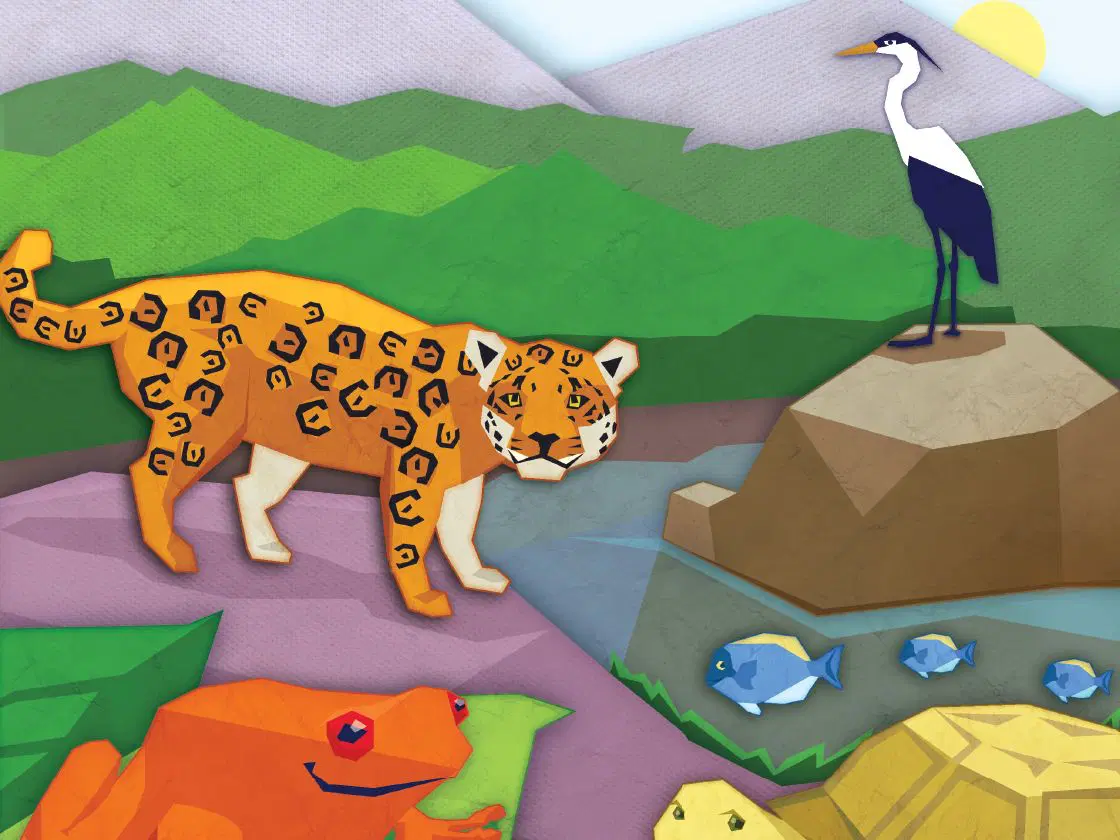
A laptop screen displays the “Science Connections: The Community” private group page, with science-themed icons decorating the background and edges.

About Science Connections

Welcome to Science Connections! Science is changing before our eyes, now more than ever. So…how do we help kids figure that out? We will bring on educators, scientists, and more to discuss the importance of high-quality science instruction. In this episode, hear from our host Eric Cross about his work engaging students as a K-8 science teacher. 

S5.E6. Why skepticism is essential to the Science of Reading, with Dr. Claude Goldenberg

To view this protected page, enter the password below: