Virginia Instructional Materials Review-Cycle II
Virginia Instructional Materials Review, Cycle II
Virginia Instructional Materials Review
Amplify Core Knowledge Language Arts (CKLA) curriculum approved by the Virginia Department of Education and the Virginia State Board of Education for Literacy Instruction
Brooklyn, NY (June 29, 2023) — Amplify, a publisher of next-generation curriculum and assessment programs, announced today that the Virginia Department of Education (VDOE) has determined that Amplify CKLA meets the requirements of the Virginia Literacy Act (VLA). This approval will encourage schools across Virginia to implement evidence-based literacy instruction in K–3 classrooms.
Amplify CKLA is used by more than 2.7 million students in all 50 states and Washington, D.C. The program sequences deep content knowledge with research-based foundational skills, including phonics, vocabulary, reading comprehension, and writing skills. The curriculum is based on research and evidence-based practices that are proven to be effective in teaching literacy skills to young readers.
With the goal of improving early literacy outcomes, the VLA mandates that school districts in Virginia implement evidence-based literacy instruction and intervention in K–3 classrooms. When it goes into effect in the 2024-25 school year, it will directly benefit the state’s one in three K–2 students who read below benchmark.
“Amplify is honored that our program is being offered to Virginia’s educators as they help their students to become stronger readers,” said Melissa Ulan, senior vice president of literacy products at Amplify. “Built on the science of reading, Amplify CKLA enables educators to bring proven insights and practices into their classrooms.”
Virginia’s steps towards implementing evidence-based literacy instruction are important for ensuring that every child in the state learns to read.
About Amplify
A pioneer in K–12 education since 2000, Amplify is leading the way in next-generation curriculum and assessment. Our captivating core and supplemental programs in literacy, math, and science engage all students in rigorous learning and inspire them to think deeply, creatively, and for themselves. Our formative assessment products turn data into practical instructional support to help all students build a strong foundation in early reading and math. All of our programs provide teachers with powerful tools that help them understand and respond to the needs of every student. Today, Amplify reaches more than 10 million students in all 50 states. To learn more, visit https://amplify.com.
Media Contact
Kristine Frech
media@amplify.com
West Virginia’s review of the program built for middle schools, Amplify ELA
Virginia 6–8 ELA Review Site
Virginia, welcome to Amplify ELA!
Welcome to the Amplify ELA review site for the Commonwealth.
This site is designed to help you learn about Amplify ELA—a core English Language Arts curriculum for Grades 6–8. Here are a few important documents gathered together to help you feel confident that Amplify ELA is aligned to Virginia’s English Language Arts standards.

Overview Presentation
After watching the video to the right, scroll down to learn even more, download resources, and access a demo.
Amplify ELA Correlations
Amplify ELA Grade 6 Reading Correlation
Amplify ELA Writing Correlations
Amplify ELA Grade 6 Writing Correlation
What is Amplify ELA?
Amplify ELA is a core program for grades 6–8 that delivers:
- A unique research-based approach designed to get all students reading at grade-level text together.
- An instructional design that inspires students to read more deeply, write more vividly, and think more critically.
- A rich combination of dynamic texts, lively discussions, and interactive Quests that truly engages middle schoolers and inspires them to participate in learning.
Interested to learn more about the research behind the program?
Click the link to access the Amplify ELA Research Hub.


What do students explore?
Amplify ELA provides everything teachers need to deliver a full year’s worth of standards-based instruction.
Each grade level of Amplify ELA consists of six multimedia units. Four or five of the units are focused on complex literary texts and one or two are collections based on primary source documents and research. Each grade also provides two or three immersive learning experiences called Quests, a dedicated story writing unit, and a poetry unit.


How does Amplify ELA engage all students?
Watching students mature into adolescents: inspiring. Knowing how to engage and motivate their changing brains: science.
The middle school years are marked by a period of tremendous growth and change for students—physically, emotionally, and socially. Amplify ELA understands and embraces these changes, and delivers instruction specifically designed to tap into adolescents’ natural inclinations toward collaboration, exploration, and autonomy.


Differentiation
Amplify believes all students are capable of reading grade-level text together.
Amplify ELA ensures all students have access to the same text. With six distinct levels of differentiation, your student is supported or challenged in a way that meets their unique needs. This includes multilingual/English learners at the developing, expanding, and bridging levels as well as students needing substantial support or an extra challenge.


Assessment
In Amplify ELA, all units include a robust system of embedded assessment that provides teachers with actionable student performance data long before end-of-unit or benchmark exams. The Embedded Assessment Measure (EAM) reports allow teachers to easily track and interpret student performance without ever interrupting the flow of daily instruction to test students.
Clear and actionable student performance data
With intelligent feedback tools and embedded assessments, Amplify ELA makes it easy to monitor student progress and intervene where needed—no matter where teaching and learning is taking place.
Automated Writing Assessment
Amplify’s Automated Writing Evaluation assesses student writing for Focus, Use of Evidence, and Conventions, providing critical feedback for teachers and data for Amplify’s writing reports.
Reporting
Amplify ELA Reporting provides teachers with clear data to understand patterns of student performance and deliver scaffolds and supports as students need them.
Click this link for more information on assessments in Amplify ELA.
Access demo
Ready to explore on your own? Follow the instructions below to access your demo account.
Explore as a student
First, watch the quick student navigation video to the right. Then, follow the instructions below to access your demo account.
- Click this link: learning.amplify.com
- Select Log in with Amplify
- Username s2.ela@tryamplify.net
- Password AmplifyNumber1
Introducing our 2023 Science of Reading Star Award finalists!

Roll out the red carpet and shine those spotlights—it’s time to meet the 25 finalists for our 2023 Science of Reading Star Awards!
These educators and leaders help light the way for the next generation. They’ve implemented Science of Reading principles and guided their students toward lifelong literacy. They’ve demonstrated expert change management and professional development. Get ready to meet some of the brightest minds in education as we celebrate their achievements and see what makes them truly stellar!
Join our virtual event and awards program on May 23.
But first…meet our 2023 finalists! Below, you’ll hear from the nominees themselves, as well as the colleagues who nominated them, about what makes them stars.
The Changemaker Award
For exemplary leadership in guiding a district through a shift to the Science of Reading.
And the finalists are…
Heather Campbell
Learning Coach, Sunset Elementary, Washington County District, UT
Why she’s a star: “Heather’s philosophy that all students can learn to read if given proper instruction has changed the data. Our school made the change and the data is showing our students are thriving.” —Shelli Campbell, Learning Coach
Javonna Mack
Lead Content Teacher, Caddo Parish School, LA
Why she’s a star: “Whether working with students or teachers, Mrs. Mack keeps best practices grounded in the Science of Reading at the forefront. She constantly strives to build teachers’ expertise in teaching students to read through content-rich professional learning communities, often on Saturdays or after the workday has ended.” —Shannon Southwell, Lead Content Teacher
Aaron Jura
Reading Interventionist, Bloomingdale, IL School District
Why he’s a star: “Aaron has been the catalyst for our entire district embracing this shift to the Science of Reading, and we are just at the beginning of this amazing journey.” —Nicole Gabany, Reading Interventionist
Nicole Peterson
Director of PreK–8 Education, Sampson County Schools, NC
Why she’s a star: “She has created, initiated, implemented, monitored, evaluated, and adjusted processes and systems to ensure that teachers have access to resources, training, materials, and professional development to ensure that all students gain equitable access to high-quality, evidence-based instruction.” —Matthew McLean, Director, PreK–8th Grade Education
Virginia Quinn-Mooney
Teacher, Northville Elementary School, CT
Why she’s a star: “Virginia has gone from one person with a personal commitment to advancing her literacy knowledge. She has now impacted countless educators, parents, etc., with her tenacity and learning journey.” —Nicole Gregory, Teacher
The Data Dynamo Award
For commendable use of data to align a literacy system and maximize student achievement
Shennoy Barnett
Kindergarten Teacher, South Smithfield Elementary, NC
Why she’s a star: “My objective is to help as many children as I can become fluent readers and critical thinkers. As a literacy specialist here for just four months, I made great strides with literacy with my students.” —Shennoy Barnett, Kindergarten Teacher
Anne Elizabeth Carter
Kindergarten Teacher, Wake County District, NC
Why she’s a star: “Through systematic and explicit phonics instruction as well as targeted language comprehension instruction—using texts that incorporate science and social studies content as well as build knowledge systematically—my kiddos were TRULY learning how to read accurately and fluently.” —David Gaudet, Principal
Bethani Ploegstra
Kindergarten Teacher, Union Colony Elementary, CO
Why she’s a star: “She takes data from mCLASS® DIBELS®, Lexia, and SchoolPace (part of our reading curriculum), as well as formative feedback from what she hears and sees students doing daily in the classroom, to immediately adjust what she presents next to students, whether individually, in small groups, or whole class.” —Mandy Bailey, Assistant Principal
The Knowledge Builder Award
For showing the world that the Science of Reading is more than just phonics, and empowers students with knowledge from elementary to middle school
Corey Beil
Instructional Interventionist, Quakertown Community School District, PA
Why he’s a star: “He incorporated literacy into his daily math instruction by providing our students with opportunities to understand and connect with the content more deeply. Our students were exposed to practicing literacy concepts while expanding their mathematical knowledge and foundational understanding.” —Julianne Pennabaker, Teacher
Kim Smaw
Principal, Rosalyn Yalow Charter School, NY
Why she’s a star: “She was able to persuade the learning community to adopt the Science of Reading, firmly convincing them that this curriculum could empower students to gain rich learning experiences.” —Deirdre Frost, Reading Intervention Specialist
Angie Dutton
Instructional Coach, Onslow County Schools, NC
Why she’s a star: “Her positive attitude about the Science of Reading is contagious and is most likely why other educators feel comfortable reaching out to her for questions and guidance.” —Stacey Horne, Instructional Coach
Nicole Brodie
ELA Grade 7 Teacher, Long Middle School, GA
Why she’s a star: “She encourages her students to use their [voices] for change and impact and supports them in their learning process academically, [socially, and emotionally].”
—Renee Dawson, Grade 7 English Language Arts Teacher
The Intervention Innovator Award
For admirable use of intervention strategies to get at-risk readers back on track
Suzanne Maddox
RTI Teacher, Robertson County Schools, TN
Why she’s a star: “Mrs. Maddox reviewed individual student data, worked with teachers, and began using CKLA Skills and the intervention materials provided with this curriculum to continue a sounds-first approach to meeting the individual needs of students.” —Brooke Callis, RTI Teacher
Sara Thornton
Reading Interventionist, Senior Team Lead, Schmitt Elementary, CO
Why she’s a star: “Sara’s enthusiasm for and dedication to her work has been an inspiration to all involved and has resulted in a successful transition to the Science of Reading—as evidenced by our students’ amazing academic growth!” —Hayley Gunter, Reading Interventionist, Senior Team Lead
Markaya Aga
Reading Interventionist, Merit Academy, CO
Why she’s a star: “Since she has come on board at our school, the mindset around literacy and the growth of our programming [has improved] ten-fold. We need more educators like Markaya!” —Allison Hanson, Reading Interventionist
The Language Luminary Award
For outstanding success in developing the skills and strengths of emergent bilingual students
Wanda Ramirez
Grade 2 Teacher, El Sol Science and Arts Academy, CA
Why she’s a star: “We used to emphasize to students that what they know in one language cannot be used in the other language. Now, as a dual-immersion educator, I have the opportunity to change that mindset, teach my students to embrace their native [language], and empower them to use their entire linguistic ability. It’s a very powerful thing to be able to do.” —Wanda Ramirez, Grade 2 Teacher
Esmeralda Martinez
Kindergarten Teacher, Compass Community Schools, TN
Why she’s a star: “She has consistently worked on improving her teaching methods, tried new ways to engage the class, and worked diligently to support all of our students.” —Rachel, Marinari, Teacher
Christine Black
ESL Teacher, North Dover Elementary School, NJ
Why she’s a star: “We have a rapidly expanding ESL population, and Mrs. Black works tirelessly to ensure that her students are expanding their ELA skills in accordance with the major tenets of the Science of Reading.” —Dawn Gawalis, ESL Teacher
Rookie of the Year Award
For showing the world that the Science of Reading is more than just phonics, and empowers students with knowledge from elementary to middle school
Caitlyn Cockram
Teacher, Patrick County Schools, VA
Why she’s a star: “We have offered professional development in vocabulary and implementing SOR strategies, and Caitlyn is always one of the first teachers to sign up. She is dedicated to improving student achievement through research and evidence-based practices.” —Callie Wheeler, Teacher
Andrea Mason
Academic Interventionist, County Line Elementary School, GA
Why she’s a star: “Making the shift from balanced literacy to the Science of Reading hasn’t always been easy. But I continue to research and implement these best practices with my students because I can see that they are now on a path to becoming strong readers.” —Jennifer Ezell, Academic Interventionist
Mallory Pendergast
Phonics Teacher, Literacy Interventionist, Circle City Prep, IN
Why she’s a star: “As a kindergarten teacher, she led 100% of her scholars to be reading on grade level in the first quarter and maintained that momentum through the first semester.” —Sami Hyde, Senior Instructional Coach
ESSER Ace Award
For notable and innovative use of stimulus funds to help kids rediscover the joy of reading
Stephanie Hurst
District Literacy Specialist, Maple Avenue Elementary, NH
Why she’s a star: “She is also a voice on the utilization of [the] ESSER Fund—using the distribution of funds per federal protocol to ensure that the district’s lowest-performing schools have access to quality instructional materials and professional development all grounded in the Science of Reading.” —Mark Blount, K–12 Literacy Specialist
Callie Wheeler and Sara Vernon
Instructional Coaches, Patrick County Schools, VA
Why Callie’s a star: “Mrs. Wheeler played a key role in creating a culture of literacy within our schools, where the Science of Reading is central to the education of our students.” —Sara Vernon, Instructional Coach
Why Sara’s a star: “Sara has worked tirelessly to make the shift from the vision that was grounded in balanced literacy to one that is now making waves in Southwest Virginia with its Know Better, Do Better, Be Better approach to reading instruction.” —Callie Wheeler, Instructional Coach
Edie Bostic
Literacy Coach, Gallia Local, OH
“As a teacher, district Title I coordinator, elementary principal, and now district literacy coach, she continually champions the students under her care and is passionate about those students receiving the highest levels of instruction.” —Leslie Henry, Principal
Inspired? We are! Register to join our May 23 Science of Reading Star Awards virtual ceremony!
More to explore
Learn with and from other top-notch educators like you through our family of podcasts.
Amplify Desmos Math for West Virginia
WV CKLA
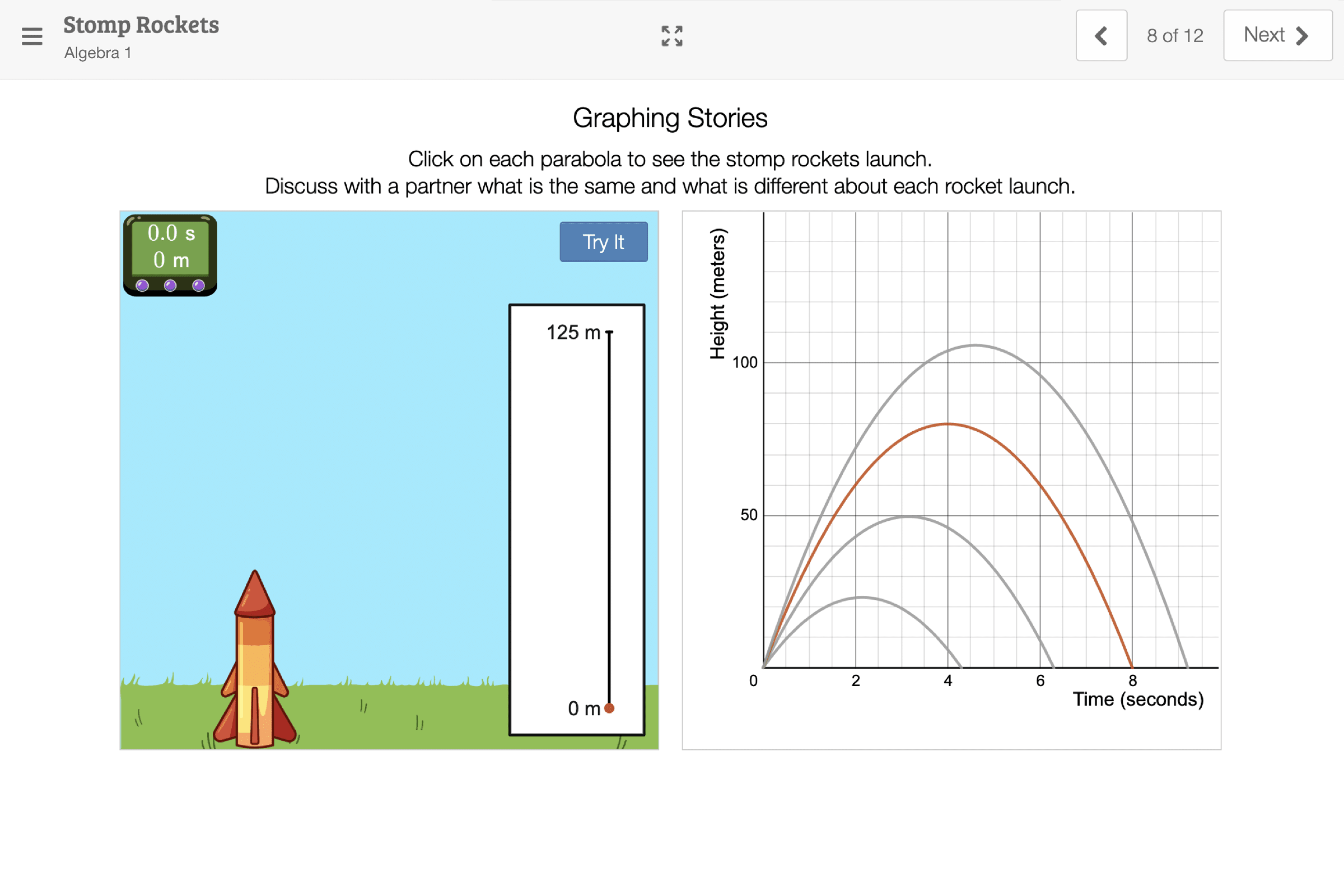
Winter Wrap-Up 01: Problem-solving and facilitating classroom discussions
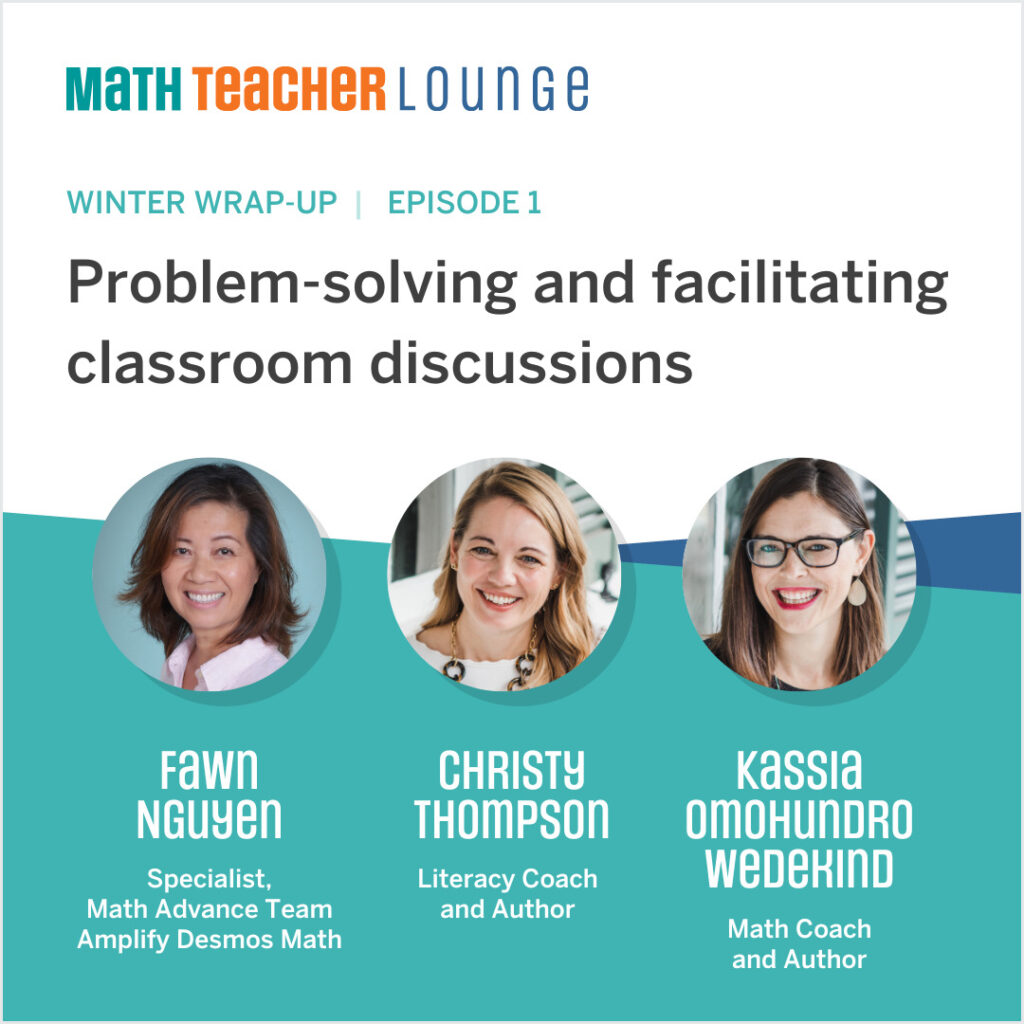
As we prep for an exciting new season of Math Teacher Lounge: The Podcast, hosts Bethany Lockhart Johnson and Dan Meyer are looking back at the amazing speakers and conversations from past episodes and sharing some of their favorites!
First up: A season 2 double feature of the power of problem-solving with Fawn Nguyen and Facilitating Classroom Discussions with authors Christy Hermann Thompson and Kassia Omohundro Wedekind.
Fawn is a specialist on Amplify’s advanced math team and a former math teacher and math coach—so she knows her stuff! You’ll hear about her five criteria for good problem-solving problems, and the power and importance of exposing all students to problem-solving.
Then, we’ll move into Bethany and Dan’s conversation with Christy and Kassia to learn how hands-down conversations allow students to become better listeners and the steps you can take to implement hands-down conversations in your classroom.
Explore more from Math Teacher Lounge by visiting our main page.
Dan Meyer: (00:01)
Hey folks. Welcome back to Math Teacher Lounge. My name is Dan Meyer.
Bethany Lockhart Johnson: (00:03)
And I’m Bethany Lockhart Johnson. Hello! Happy New Year! Hello, Dan Meyer.
Dan Meyer: (00:09)
HNY, Bethany. HNY to you and to all of the listeners out there in Math Teacher Lounge. HNY is the abbreviation that I use sometimes.
Bethany Lockhart Johnson: (00:18)
Oh, is that what that is? Is that—I wasn’t sure what that was. If on my birthday you send me HBD…no.
Dan Meyer: (00:25)
Yeah.
Bethany Lockhart Johnson: (00:25)
No. Unacceptable.
Dan Meyer: (00:27)
I will. No, you want the full thing. To demonstrate my care for your birthday, I gotta spell the whole thing out. I’m just trying to stay relevant. You know, I’m just trying to stay relevant and youthful. So I’m using The Abreevs.
Bethany Lockhart Johnson: (00:38)
The Brevvies.
Dan Meyer: (00:40)
To the extent of even abbreviating the word “abbreviation.” . So, any New Year’s resolutions you wanna share with the listeners, Bethany? While you think, I’ll just share mine real quick here. This is the year of the perfect Wordle streak for yours truly, Dan Meyer. I’m going the full 365. Watch. Watch me do it, folks. I’m naming it here. Live on air. recorded on air. Perfect Wordle year. What you got for the listeners, Bethany?
Bethany Lockhart Johnson: (01:10)
Let’s see. It’s raining very hard here in Southern California, and my newest resolution is to embrace nature. My child wants nothing more than to go and splash in all the puddles.
Dan Meyer: (01:22)
Nice.
Bethany Lockhart Johnson: (01:23)
And be amongst the mud. And what I’m gonna keep telling myself—and so far, so far, I’ve been doing pretty good with this—thrive, child. Splash. Squish. We can dry you off. You will not melt. So I want to keep finding opportunities. Like, for instance, my response is, “It’s pouring rain. Let’s stay under covers and let’s read this book together!” And his response is like, banging on the windows, like, “Please let me go outside.” So I myself have some rain boots. I’m going to go forth and splash with my child. So hopefully you’ll see me doing that a bit more.
Dan Meyer: (02:08)
Love that.
Bethany Lockhart Johnson: (02:09)
Ask me what I’m doing. I’m outside, splashing in nature.
Dan Meyer: (02:12)
I don’t wanna put words in your mouth, but I have felt a bit like parenting is a means for rounding out aspects of my own personality that I have felt are—or habits or hobbies that are lacking. Like, I’ve never been real outdoorsy or into camping, but I don’t want that to limit my own kids’ aspirations or interests. So let’s do the thing that’s not super natural for me, for their own sake. Which is kind of what I’m hearing a little bit from you, which—that sounds exciting.
Bethany Lockhart Johnson: (02:35)
Do you wanna go camping together? Like, our families?
Dan Meyer: (02:38)
Uhhh. Let’s take this one off the air. I also love something that’s more relevant to a teachers audience that you said, that I think is super interesting, is how there’s ways that we can make the jobs harder for ourselves, that are optional. And what I hear from you is like, “I’m just not gonna freak out. We’re getting wet. We’re getting soggy. And I’m just not gonna freak out.” And I just think that that’s interesting to think about, the things that we take on, you know, that’s optional. Freaking out is optional, sometimes. And there’s other areas, I think, for parenting or for teaching, where it’s like, “Oh, do I really need to choose this particular battle?” And to reconsider that.
Bethany Lockhart Johnson: (03:19)
And in that spirit, our whole Wordle episode that we talked about? Do you remember you talked about how beautiful Wordle mistakes are, and how you keep learning from mistakes? I mean, you obviously want the final correct answer, but just, you know, when you get on a losing streak, Dan, I hope you’ll continue to pat yourself on the back.
Dan Meyer: (03:38)
Well, I will not be taking on a losing streak, or even lose one day. This is what’s gonna happen here. I’m just speaking that and putting it out in the universe.
Bethany Lockhart Johnson: (03:49)
Speak it!
Dan Meyer: (03:50)
But if it happens, I will be taking a long break from all human interaction. And lamenting, as I do.
Bethany Lockhart Johnson: (03:59)
Camping. Dan’s off in the woods, weeping.
Dan Meyer: (04:01)
That’s right. That’s right. Yeah. Well, we wanna share with you folks—an exciting programming note is that we are currently working very hard on producing a special fifth season of this podcast. You thought the other seasons were special? Let me tell you, this fifth season gives new meaning to the word “special.” And we can’t wait to tell you more about that. But in the meantime, Bethany, you wanna tell ’em what we’re up to in the meantime?
Bethany Lockhart Johnson: (04:26)
Well, Dan and I went back and we were having a conversation about some of our most favorite conversations, or the conversations that people bring up to us. Like, when we were at the CMC conference, or NCTM, folks, when we talk about the podcast, they’re like, “Oh, I loved this one.” “Oh, I love this one.” And that, to me, I don’t know, that is exciting. And so, while we’re putting together this new season over these next few weeks, we’re gonna feature a few of our favorite conversations from our first four seasons. Dan, four seasons!
Dan Meyer: (04:59)
We’ve been at this for four seasons! And I do want to just emphasize something you said, Bethany: that all of our conversations are our favorite conversations. They’re all our special children. What we just felt like you, the listeners, did not quite learn enough from some of these, and so we really needed you to hear them again to make sure you got everything that you should get out of them. So, let’s tell ’em who’s up first. And who’s up first is a conversation we had about problem-solving with Fawn Nguyen, who’s an advanced math team specialist here at Amplify. Been a former math coach, math teacher. Just really done the work, is what I’d say about Fawn.
Bethany Lockhart Johnson: (05:38)
If you have been listening to this podcast, you’re like, “Whoa, whoa. Wait, I have not missed an episode. I didn’t hear Fawn’s interview.” That is because we used to be video only, not podcasts. So this conversation with Fawn was from, what, our second season?
Dan Meyer: (05:55)
Yeah.
Bethany Lockhart Johnson: (05:56)
And we were on video. And another thing about it is it was, this is a conversation that, when folks talk about problem-solving, a lot of the responses we’ve gotten are like, “Wait, I’ve never thought of problem-solving this way.” In fact, you’ll hear us say that exact thing . So we really appreciated the time with Fawn. And yeah.
Dan Meyer: (06:17)
Enjoy it, folks. Especially enjoy Fawn’s—I think a four-part?—definition of problem-solving, a word that’s often kind of mushily defined. And Fawn really goes into, I think, precision and depth on it. So hope you folks enjoy it.
Dan Meyer: (06:35)
Give a wave, Fawn, to the camera. Would you? Cool. Fawn has been a teacher for a very long time. She is someone who could have left the classroom at any point and taken any number of jobs in the math-teaching universe. But I’ve always admired that Fawn has taught kids for a very long time, and that has given her, in my view, just a lot of clarity on what is important to her about students. I’ve seen her not get upset or obsessed with certain kinds of small niche issues that a lot of us, like, they get a lot of us down in the classroom, sometimes. And she’s maintained a laser focus on among many other things, problem-solving as a virtue in mathematics classrooms. So, please welcome Fawn to our show. Fawn, thanks so much for being here.
Fawn Nguyen: (07:18)
Hey, thank you so much. Thank you. I am so excited and honored that you guys invited me for this, Bethany and Dan.
Bethany Lockhart Johnson: (07:24)
Thank you for being here.
Fawn Nguyen: (07:26)
I love you, Bethany. Dan, I can tolerate, but I love you.
Dan Meyer: (07:30)
I really worked myself up there on that complimentary opening for you, and that’s how you get me back, here? OK. Problem-solving is fully on the consciousness of math teachers. Every math teacher knows that they need to say, like, “Yeah, oh, problem-solving. Yes. Love it. Do it. I dig it.” But even so, I feel like it’s become kind of a buzzword. Like, it’s not always obvious what that means…or am I doing problem-solving, really? So we’re curious: As someone who is a problem-solving expert, who is asked all over the world to talk about problem-solving: How do I know if I’m doing problem-solving in my classroom?
Fawn Nguyen: (08:12)
This is not my definition of it, but—nor am I an expert, by the way, Dan, thank you! but I try really, really hard and work on it!—my definition—or it’s not my definition, but I like it because it’s short and honest—is “problem-solving is what we do when we don’t know what to do.” And so—
Bethany Lockhart Johnson: (08:32)
Ooh!
Fawn Nguyen: (08:32)
—with that mind-frame, I’m hoping teachers think more about what they task. Because I think it gets mislabeled a lot, as to what is problem-solving. If the kids already know what to do, there’s a solution path. Then it’s not problem-solving.
Dan Meyer: (08:48)
Yeah. So what are examples then? An example of, like, I might call something problem-solving, but it it fails that particular definition that you just proposed there. Very short, very honest definition.
Fawn Nguyen: (08:59)
Just, it needs to have constraint and contradiction to what the kids think naturally. It should come as a surprise. There’s an element of surprise in it. There’s tension.
Dan Meyer: (09:11)
Maybe if there’s harder numbers or, you know, decimals or fractions in the same kind of procedure…I can feel myself thinking, “Yeah, this is hard. This is problem-solving. Problem-solving equals hard. But we already know what to do.”
Fawn Nguyen: (09:27)
Or just word problems. That’s the most common thing. As soon as it just has words attached to the math, it becomes problem-solving. But that’s just coding it to me. That’s just coding it with words, wrapping it around. It doesn’t mean anything until we read through and see if there’s true problem-solving in it.
Bethany Lockhart Johnson: (09:45)
Like, what’s the moment that it becomes problem-solving? In the way that you envision it?
Fawn Nguyen: (09:53)
Well, I think there’s the bigger problem-solving of really bringing a task…I wanna call it left field. It just—we rarely ever, if ever, see it in the regular coursework, but it can also be problem-solving if we just take what we expect the children to do at the end of the unit, how about we front-load that? To me, that’s also problem-solving. And I’m trying to encourage teachers to do that last problem first. The task writers put more thought—not that they don’t do the rest of it!—but you know, this is a special one, because they label it “challenge,” or “enrichment,” or “are you ready for more?” I’ve seen those. And so it is this really special problem. And I would love for us to think about “do that first.” Because my biggest fear is that because it comes at the end, that not all the children are involved. And so that to me is the saddest part. Because we might not get to it, right? In mathematics, we always think, “OK, well, let’s do these problems and then we don’t have time for the rest.” But I think that’s your richest task right there, is at the very end. So why don’t we front-load it, start it, and it’s OK—of course it’s OK!—that we don’t all get it. But the exposure to all students is so important. Talk about, you know, equity. Talk about that, everybody gets the same thing. If everyone dug into that first one with everybody’s collaboration, and we get to share that, and then we leave it, because “Yeah, OK, now we learn more of the other stuff, right? That hopefully support. And then we can go back. And now everybody had a chance to go get into it, and then we can come back to it as, as many problems, we need to go back to it.”
Bethany Lockhart Johnson: (11:37)
And that feels so powerful. Because it feels like—as a teacher, I’m thinking it would also inform my work, how I approach the unit, and how I approach the next steps. Right? Like, what kind of work would we be doing if I let it, if I allow it, to change the way that I approach the unit.
Dan Meyer: (11:58)
Yeah. What you’re describing is so powerful, and really asks a lot of the task designers as well, I think. There are problem-solving tasks that really require, like, abstract knowledge of the way formulas and variables fit together. And what I love about what Amplify is doing with their problem-solving, what you’re helping them do, is that they start with a true low floor that can draw in every student. And they might get stuck at different places; that’s fine. But everyone has a way in. That’s exciting.
Fawn Nguyen: (12:24)
It’s a big deal for me to have this opportunity and this trust, to integrate problem-solving into the curriculum, make it intentional. It’s difficult to implement. It is, to be honest. Because for me, what is a good task? This makes one of my four criteria: One is, it is non-routine. It is simply stated. Simply stated—that’s like your low floor. And then has multiple solutions. And the fourth: This makes it. Because that the teacher enjoys solving it. And so you have to enjoy solving it to bring it. Because so that way I can say to my kids, “This is my gift.” It really is, Because, you know, it has so much fun and joy. And I appreciate the struggle. And I wanna illustrate an example. For example, let’s say Dan and I are classmates. And I know that Dan gets A’s on his tests and the lowest score he ever got was an 89%. I, on the other hand, just sitting right next to him, I average D. I have a D average on everything. While Bethany, our amazing and wonderful teacher, brings in a problem. And when she brings it in, she says, “I worked on this problem. I found this problem; I worked on it; and I struggled with it. And it was amazing. I enjoyed it so much, I’m sharing it with you.” And all of a sudden it’s like, “OK!” And I”m sitting there, right? My teacher loves this problem so much; she’s bringing it in to share with us. And now, all of a sudden, it’s not, you know…and I know she only gives us non-routine. When she talks about problem-solving, it’s non-routine. So it’s not directly tied to the textbook that I’ve been struggling with. So it gives me a chance, it gives me a chance to contribute. To think differently. And now, suddenly I look forward to working with Dan, because in this space, in this problem-solving space, Dan is no longer Mr. Know-It-All. And so that’s what I mean by—I am saying this a hundred times, and I will not stop saying it—problem-solving levels the playing field. Our world is filled with unsolved problems. Are you kidding me? Right? We look around us, we have so many things that are not solvable, or people are working on it, and yet in mathematics, what happens? The bell rings; we start; and we solve everything during that time, and we leave. And that’s…yeah. No! No! We need to wrestle with problems.
Dan Meyer: (15:04)
And that was our conversation with Fawn Nguyen, which we first released way back in November, 2021. You folks can follow Fawn on Twitter at Fawn P Nguyen. Um, that’s @ F A W N P N G U Y E N.
Bethany Lockhart Johnson: (15:18)
So our episode today is a double feature. We are featuring another conversation that we loved from Season Two. This is a conversation with Christy Hermann Thompson and Kassia Omohundro Wedekind. They’re authors of the book, “Hands Down, Speak Out: Listening and Talking Across Literacy and Math.” And I don’t know if you remember, but not only did we have a conversation with them, but we did a whole book study on Facebook, a Facebook Live book study, over the course of several months. And it was one of my most favorite things. And then they did a webinar at the end. So our conversation with them on the podcast for me felt like such a beautiful dive into their book. And you know, I’ve said it before, you think you have something down in the classroom, you’re like, “Oh, hand-raising, I’ve got that down.” You think you have it down, but then somebody says, “OK, but have you ever considered thiiiis?” You know, and it just—
Dan Meyer: (16:17)
NOT that??
Bethany Lockhart Johnson: (16:18)
, Not that? Something totally different? And I loved talking with them. They’re a lot of fun. And I loved the book.
Dan Meyer: (16:23)
Wonderful conversation, great book. Very provocative ideas. Yeah. As someone who’s like, “OK, classroom management, I gotta get the hand-raising going…”. In the classroom before we talked, they offered a really potent challenge to some really standard classroom management ideas. Yeah. Loved it.
Bethany Lockhart Johnson: (16:40)
And this conversation also offers some really practical tips for facilitating student conversations. So we think you’ll enjoy it. Here’s our conversation with Christy and Kassia.
Bethany Lockhart Johnson: (16:53)
So today we are talking about “Hands Down, Speak Out: Listening and Talking Across Literacy and Math, K—5.” And we have the authors here, Kassia Omohundro Wedekind and Christy Hermann Thompson. Before we begin, let’s define what a hands-down conversation is. A hands-down conversation is just another way to structure discourse in your classroom. So in a typical classroom, you might see students raising their hand and waiting on a teacher to call on them before they share their ideas or engage in discussion. But in a hands-down conversation, it’s students’ ideas and voices that are taking the lead, and teachers are stepping back and focusing on listening and facilitating. Hello! Welcome to the Lounge.
Kassia Omohundro Wedekind: (17:44)
Thank you. We’re excited to be here. We’re fans of Season One. So we’re ready to go.
Dan Meyer: (17:50)
I was a secondary teacher but I still found so much to love about the book. I think facilitating conversations is just generally challenging, and perhaps even more so in math, where answers feel so tightly dialed-in, in lots of ways. But I loved it. I would love for you to just explain to our audience, what is a hands-down conversation and how does that contrast with what might be standard practice for some people? For some classes?
Christy Hermann Thompson: (18:13)
We just started using the term hands-down conversation because we wanted to differentiate the fact that there are different times to have different types of dialogue in the math classroom, in the literacy classroom. And we use this as one of our tools. Right? It’s not that every day, all day long, we’re very against hand-raising and should never see that again. We find that having this as one of our tools will be where we make really clear to the students that this is a moment where we’re turning it over to you to negotiate the space and make the decisions about when your voice comes in and who speaks next. You know, carry on kind of like that dinner table or that playground or, you know, whatever is your natural habitat for talk. And bringing that into the classroom and then hoping that it also someday transfers back out of the classroom back into the real world.
Bethany Lockhart Johnson: (19:09)
For the teachers who feel like that’s terrifying to have students just start speaking, and speaking without any sort of control or my little equity sticks, my little popsicle sticks, or my popcorn, or whatever other thing they’re using, what would you say is the first step?
Christy Hermann Thompson: (19:25)
So I think recognizing and naming that fear is part of it. And then saying to yourself, “What’s the worst that could happen here?” You know, I think the worst that could happen is that nobody talks and it’s totally silent. Or on the other hand, everybody talks at the same time. And both of those things will happen! And so what? It’s gonna be messy. And if you just acknowledge that it’s gonna look messy, and that’s part of growing; that every child as they learn—and every adult—is messy as they grow.
Kassia Omohundro Wedekind: (19:59)
And we have to see what kinds of things will happen in a hands-down conversation. Like there’s no prerequisite. You just start and then you see what happens. And those are the signs that tell you, “What can help this community grow as talkers and listeners? If everyone’s talking at the same time, and they’re kind of pushing each other over with their words by saying, “I have something to add!” “I have something to add!” or something like that, that’s a common thing that sometimes happens at the beginning. Then you know that the next step is to do some work about how to hold your thoughts back, how to add, wait for a space in the conversation to talk. And those are all things we need people to know out in the world.
Bethany Lockhart Johnson: (20:41)
So can you give an example of a micro-lesson that…well, first, what do you define as a micro-lesson? And then, what’s an example of one that maybe somebody who wants to dip their toe into the world of hands-down conversations that they could try?
Christy Hermann Thompson: (20:56)
The reason we call them micro-lessons is because we wanted to differentiate from the term mini lesson, which is out there and tends to describe about 10 or 15 minutes that might take place at the beginning of a work period of time. And this is much smaller than that. We usually follow a pretty predictable structure of naming. Here’s this thing that’s so helpful when we’re having conversations, and we love to especially be able to name something that a student had done: “Kaylee did this yesterday and it really helped us.” So what we might call that is, “And then here’s how Kaylee and other people might do that. They might do something like this.” And, you know, having a little anchor chart, so there’s a visual reminder of that skill. “So when we’re having a conversation today, you could try…”. And that’s basically a micro-lesson, just in a nutshell.
Kassia Omohundro Wedekind: (21:51)
When I was doing these hands-down conversations and I had more space for myself to listen as a teacher, I’m like, “Well, look at those kids, like, slumped onto the ground, like, pulling the carpet apart, but they’re having this amazing conversation!” And so I learned that listening is a lot broader. So in this lesson that I’m thinking about, we just talk with kids about what are lots of different ways that listening can look like. Sometimes with younger kids, I’ll take pictures of them listening in different ways and we’ll notice things about them together. And then we invite them to talk with their Turn and Talk partner about like, “How do you like to be listened to?” Or “Tell me about how you listen.” And just kind of broaden that. And really, I like to think that like the micro-lessons are for the kids, but also I’m saying those things to say them for myself. Like, “Remember, you don’t have to insist that kids are staring each other down in the eyes all the time. Like, “It’s OK when they’re doing other things. There’s other ways of listening.” So I think I’ve learned as much from the micro-lessons each time I do them as the kids that I’m trying to help grow as listeners and talkers, as well.
Dan Meyer: (23:00)
You folks have a lot of really eloquent ideals you express, around democratic classrooms and engagement. But you also have just some very tangible, practical…even down to, like, how a teacher positions their body in space and the way they use their eyes to connect. I think it would be really helpful for teachers to hear that it’s not just they’re signing on to a manifesto of sorts, but there’s ways they can act their way into the beliefs that you both expressed here.
Christy Hermann Thompson: (23:26)
When I’m starting hands-down conversation work, if I put myself a little bit outside of the circle and look down, and give myself a clipboard, it, it helps me bite my tongue and it helps me give better wait time and see what the kids are doing before I have that tendency to jump in and teach and do lots of teacher-y things.
Bethany Lockhart Johnson: (23:48)
Kassia and Christy, thank you so much for joining us. We are so excited to have this conversation and to share your work. This is exciting. And I feel like this conversation is just the beginning of a deeper dive into this book.
Kassia Omohundro Wedekind: (24:01)
Thanks for having us.
Christy Hermann Thompson: (24:02)
Thank you.
Dan Meyer: (24:03)
Thank you both.
Bethany Lockhart Johnson: (24:06)
Thanks so much for listening to our conversations with Fawn Nguyen and Christy Hermann Thompson and Kassia Omohundro Wedekind, both of which were released in 2021, part of our second season. And, you know, we hoped you enjoyed listening to it for a first, second, maybe third, fourth time.
Dan Meyer: (24:24)
Let’s be real. There’s some real fans out there.
Bethany Lockhart Johnson: (24:26)
We loved it then. We love it now!
Dan Meyer: (24:28)
Yep, yep, yep. Please keep in touch with the show by following us on Twitter at MTL Show, and join our Facebook group, the Math Teacher Lounge community. We’d love to hear from you there. And please stay tuned for more info on what we’re cooking up here in the Math Teacher Lounge. Thank you folks for listening. Take care, Bethany.
Bethany Lockhart Johnson: (24:47)
Bye now.
Stay connected!
Join our community and get new episodes every other Tuesday!
We’ll also share new and exciting free resources for your classroom every month.


Meet the guests
Fawn Nguyen
Fawn began her work with Amplify in 2022 as a Math Advance Team Specialist. She was a math coach for a K-8 school district for three years, and a middle school teacher for 30 years before that. Fawn has also received a number of accolades as an educator.
Christy Thompson
Christy Thompson is a Literacy Coach in Fairfax County Public Schools in Virginia. She has spent her teaching and coaching career particularly focused on listening to and learning from the talk of our youngest students.
Kassia Omohundro Wedekind
Kassia Omohundro Wedekind spent many wonderful years as a classroom teacher and math coach in Fairfax County Public Schools in Virginia and now splits her time between being an independent math coach and an editor at Stenhouse Publishers. Her favorite days are spent in classrooms learning from the many ways children talk, listen and negotiate meaning together.

About Math Teacher Lounge: The podcast
Math Teacher Lounge is a biweekly podcast created specifically for K–12 math educators. In each episode co-hosts Bethany Lockhart Johnson (@lockhartedu) and Dan Meyer (@ddmeyer) chat with guests, taking a deep dive into the math and educational topics you care about.
Join the Math Teacher Lounge Facebook group to continue the conversation, view exclusive content, interact with fellow educators, participate in giveaways, and more!
You might also like:
Amplify K–6 ELA programs for Fairfax County
Welcome, Fairfax County Reviewers!
Thank you for exploring our evidence-based K–6 programs built on the Science of Reading and aligned to Virginia standards and Fairfax County’s learning model.
Amplify CKLA for Grades K–5 and Amplify ELA for Grade 6 intentionally build knowledge alongside skills and are aligned within and across grades. Meaningful learning experiences for students pair with powerful instructional support for teachers to drive results.
The following resources will support your review. These include clips of Amplify programs in action; details about key features of the curriculum; and research on the real-world successes of schools, districts, and states who’ve partnered with Amplify.

Amplify CKLA for Grades K–5
Introduction to Amplify CKLA
We’re excited for you to see how Amplify CKLA provides high-quality resources to support literacy instruction for all students! This program is flexible, offering stand-alone foundational skills instruction as well as the program core English Language Arts.
Amplify CKLA Skills is built on the latest reading science and provides comprehensive instruction in all foundational reading skills, featuring:
- Phonological awareness, phonics, and word recognition.
- Strong, systematic sound-first instruction to support students in learning to decode.
- Language skills, including conventions, spelling, and grammar.
- Reading comprehension.
- Writing instruction.
CKLA for Grades K–2 provides a two-strand approach. The first is the Foundational Skills Strand (as described above) and the second is the Knowledge Strand, in which students build rich background knowledge through multidisciplinary read-alouds. CKLA takes an Integrated approach in Grades 3–5, in which lesson sequencing is especially focused on rich, worldly content.
We encourage you to check out the K–2 Knowledge Strand and 3–5 Integrated approach sections of this site to explore the components further and gain access to the engaging and diverse texts students and teachers are using in their classrooms every day!
K–2 Skills Strand
In the CKLA classroom, students practice reading while stretching themselves toward higher goals. In K–2, daily dedicated skills time gives students a solid foundation, while the upper grades integrate this instruction with knowledge lessons in which students engage with increasingly complex, content-rich texts and writing activities.
Start with the sound
All instruction starts with phonological awareness, which research has shown to benefit the greatest number of students. Students begin by learning to recognize sounds, as well as to articulate them.
Build to the phoneme
Over time, students build up their awareness of phonemes. We give teachers a variety of tools, including multisensory gestures, to help kids develop this awareness.
Crack the code
Once students can recognize sounds, they learn to form the corresponding letter codes. CKLA starts by teaching the sound-spellings that appear most frequently in English, which lets your students read and write as many words as possible, as soon as possible.
Grow in complexity
The lessons continue to challenge students as they progress, introducing complications like multisyllabic words, “tricky words,” and homophones. In each case, students encounter more complicated words as they become ready for them.
K–2 Knowledge Strand
While students are learning how to read, Knowledge Domains give them authentic and engaging reasons to read. Students will use their skills to explore domains that relate to storytelling, science, and the history of our world as seen through the eyes of many different groups. With these domains, you’ll bring the world to your students, showing them how reading can become an exciting, rewarding, and useful part of their lives.
Build connections and context
Each CKLA Knowledge Domain gives students a base of vocabulary and concepts, building on what they’ve learned in previous domains. This helps students make connections within and across grades, building a base of background knowledge that will help them navigate new and more complex texts.
Listen and understand
Students learn to listen and understand before they learn to read. By delivering knowledge through classroom read-alouds, Amplify CKLA teaches students the key comprehension skills they’ll use throughout their reading lives.
Emphasis on interactivity
Amplify CKLA prioritizes interactions between students, which challenge and encourage them to think about the material rather than simply receive it. Each lesson includes several opportunities and options for formative assessment and immediate adjustment to the needs of both the class and the individual students.
Assess what’s important
The end-of-domain digital assessments that follow Knowledge Domains are fully voice-acted, ensuring that each student’s comprehension skills are authentically tested. This not only builds students’ test-taking confidence, but gives you a more accurate picture of your class.
3–5 Integrated approach
By Grades 3–5, students have mastered the basics of decoding and are eager to use what they’ve learned to reach out to the world. Although read-alouds remain an important part of lessons, students are also encouraged to practice independent reading starting in Grade 3, developing their autonomy and confidence as readers alongside strong teacher support.
Writing and language
As students progress from K–2, writing activities start to emphasize analysis, creativity, and independent thinking about lesson materials.
Core Quests: Transforming the classroom
Each of the units in Grades 3–5 contain a Core Quest—a special unit in which all the rules of the classroom change as students engage with language in surprising new ways. In Grade 5, for example, students learn to love the dense Shakespearian language of “A Midsummer Night’s Dream” through imagery, close reading, and performance.
Key CKLA features
Built out of the latest research in the Science of Reading, Amplify CKLA delivers explicit instruction in both foundational literacy skills (systematic phonics, decoding, and fluency) and background knowledge in Grades K–2, with an integrated approach to explicit instruction in Grades 3–5.
Review this Science of Reading Toolkit to learn more about the Science of Reading best practices integrated throughout CKLA.
Great reading instruction starts with great decoding skills. When students build a solid foundation of phonological awareness and phonics, reading the words on the page becomes automatic so that comprehension and critical thinking can happen.
Our instruction is supported by:
- Step-by-step lessons with multisensory approaches, clear lesson objectives, and embedded formative assessments.
- Unmatched, 100% decodable books and student readers that feature engaging plots and relatable characters.
- An engaging sound library with fun songs and videos that develop phonological awareness.
Students build grade-appropriate subject-area knowledge and vocabulary in history, science, literature, and the arts while learning to read, write, and think creatively and for themselves.
Our instruction is supported by:
- Knowledge builders that provide a quick overview of each domain with its key ideas.
- Interactive read-alouds designed to build knowledge and vocabulary.
- Content-rich anchor texts that support students as they tackle increasingly complex text and sharpen their analytical skills.
From the printed page to the screen, we bring foundational skills and knowledge of the world to your young learners, and make the transition from classroom to home learning seamless.
Download the Amplify CKLA Components Guide to see components by grade.
Amplify Caminos is an equitable Spanish language arts program for Grades K–5 that will engage your students and inspire them to become confident readers, writers, and thinkers.
Designed to support any biliteracy model (including ESL, transitional bilingual, dual language, and Spanish immersion), Amplify Caminos can be used in tandem with Amplify CKLA to provide a fully equitable, one-to-one English and Spanish solution.
Amplify ELA for Grade 6
Amplify ELA is a blended English language arts curriculum designed specifically to prepare middle school students for high school and beyond. This interactive core curriculum brings complex texts to life with lively classroom discussions and meaningful digital experiences in which students grapple with interesting ideas and find relevance for themselves.
Amplify ELA’s built-in 100-Day Pathway outlines required content for each grade level, while providing teachers time and space to teach the supplemental lessons and activities they love.
The program has received an all-green rating on EdReports—read the review.
Amplify ELA delivers:
- A unique research-based approach designed to get all students reading grade-level text together.
- An instructional design that inspires students to read more deeply, write more vividly, and think more critically.
- A rich combination of dynamic texts, lively discussions, and interactive Quests that engages and inspires middle school students.
EdReports and Knowledge Matters Campaign
Amplify CKLA for Grades K–5 is among the few elementary core curricula to be both rated all green on EdReports (earning green scores across all gateways) and recognized by the Knowledge Matters Campaign for its excellence in intentionally building knowledge. Amplify ELA for grade 6 also earned all-green scores on EdReports.
Access FCPS reviewer platform
To experience Amplify’s K–6 ELA programs for FCPS, complete the following steps.
Access your teacher demo account:
- Access the reviewer site.
- Select Log in with Amplify.
- Enter your teacher username: t1.fcps-demo@demo.tryamplify.net
- Enter your password: Amplify1-fcps-demo
Access your student demo account:
- Access the reviewer site.
- Select Log in with Amplify.
- Enter your student username: s1.fcps-demo@demo.tryamplify.net
- Enter your password: Amplify1-fcps-demo
VA correlations
CKLA Kindergarten correlation
CKLA Grade 1 correlation
CKLA Grade 2 correlation
CKLA Grade 3 correlation
CKLA Grade 4 correlation
CKLA Grade 5 correlation
Additional reviewer resources
Amplify CKLA Program Guide (Grades K–5)
Amplify ELA Program Guide (Grade 6)
Amplify biliteracy and Science of Reading principles
Diversity, equity, inclusion, and accessibility
Text complexity
Trade books
Amplify CKLA meets Virginia Literacy Act (VLA) requirements
Get in touch
To learn more, contact Michael Kasloff at mkasloff@amplify.com.

Welcome, Florida K–5 educators!
Amplify Core Knowledge Language Arts (CKLA) Florida is the program built on the latest Science of Reading research. Using a fundamentally different approach to language arts, Amplify CKLA Florida sequences deep content knowledge with research-based foundational skills.
Built on the science of reading
The cornerstones of reading comprehension in Florida assert that foundational instruction matters; knowledge matters; and curriculum matters. Amplify CKLA Florida is built on the Science of Reading. To support you before your review, we put together a Science of Reading Toolkit that will provide some insight into the research behind the Science of Reading. It will also show why we designed Amplify CKLA for Florida educators to mirror this critical research.


Foundational instruction matters
Amplify CKLA Florida’s first design principle is a research-based, explicit, and systematic approach to foundational skills that gets real results.
- Explicit.
- Learning isn’t left to chance. All 44 sounds and their 150 spellings in the English language are taught, practiced, and mastered, with ample opportunity for students to encounter each sound-spelling in diverse settings.
- Sequential.
- By moving in a sequence from easier to more complex in phonics and foundational reading skills, students master concepts before moving forward and gradually become more independent.
- Rewarding
- Learning to read should be fun. Decodable chapter books that feature dynamic plots and characters make kids want to read more. The engaging stories feature children who discover fossils, a grandmother who flies hang gliders, and more.
Knowledge matters
Amplify CKLA Florida’s second design principle is that reading comprehension depends more on relevant background knowledge than on mastery of reading strategies. Knowledge builds on knowledge.
Our approach to building background knowledge is based on three pillars often overlooked in other programs. It is:
- Content-specific.
Clearly outlined content objectives are specific and support the development of knowledge in history, science, literature, culture, and the arts. - Cumulative.
Topics and vocabulary connect within and across grades, allowing students to extend knowledge and revisit topics in increasing depth in later grades. - Coherent.
When curriculum is fragmentary and disconnected, students face repetitions as well as gaps that can hinder learning. An intentional design ensures the curriculum fits together as a whole. - Amplify and ReadWorks have partnered to provide Amplify CKLA Florida classrooms a way to expand knowledge in connected yet varied ways.
- ReadWorks
- Login Credentials for ReadWorks
Username: t.floridackla@tryamplify.net
Password: FLReviewer
- Login Credentials for ReadWorks
- ReadWorks

Curriculum matters
Amplify CKLA was built on the science of reading research to meet the all standards in a vertically and horizontally aligned, coherent, and cumulative knowledge-based curriculum. To encourage a broader view of literacy, our intentional design embraces history, art, science, music and other disciplines to ensure that all West Virginia students have a level playing field.
What’s included
Amplify CKLA provides engaging print and multimedia materials—accessible from anywhere—that are designed to provide a robust, literacy-rich foundation in every classroom.
Proven high-quality teacher materials
Teacher supports include research-based lessons that integrate foundational literacy skills and cross-curricular content knowledge.
- Teacher Guides
- Kindergarten Example Unit: Skills and Knowledge
- Grade 1 Example Unit: Skills and Knowledge
- Grade 2 Example Unit: Skills and Knowledge
- Grade 3 Example Unit: Integrated Skills and Knowledge
- Grade 4 Example Unit: Integrated Skills and Knowledge
- Grade 5 Example Unit: Integrated Skills and Knowledge
- Projectable lesson components
- Writing Studio (example from Grade 4)
- The Hub for digital components
- Vocabulary Lessons (example from Grade 1)
- Quests for the Core for Grades 3–5 (immersive, problem-based learning, example from Grade 5)
- Professional development website with model lessons and training resources
- Teacher Resource Site
- Assessments in Amplify CKLA Florida
- Trade Book Guides, and Novel Guides

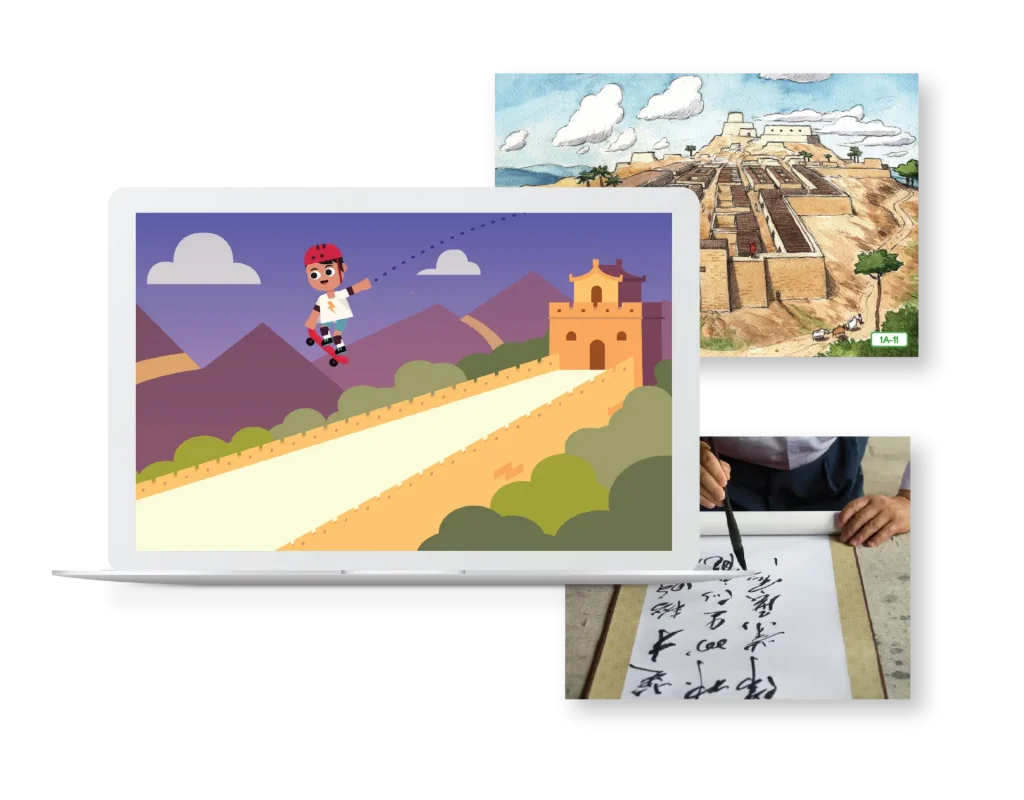
Student materials
Engaging student resources include dynamic decodable chapter books and content-rich, cross-curricular Readers.
- Student Readers
- Activity Books
- Kindergarten: Skills: Unit 7 and Knowledge: Domain 7-12
- Grade 1: Skills: Unit 4 and Knowledge: Domain 1-6
- Grade 2: Skills: Unit 2 and Knowledge: Domain 7-12
- Grade 3: Unit 7
- Grade 4: Unit 8
- Grade 5: Unit 8
- Formative Assessments
- Poet’s Journal and Writer’s Journal (write-in resources for Grades 4–5, example grade 5)
- The Hub for digital components
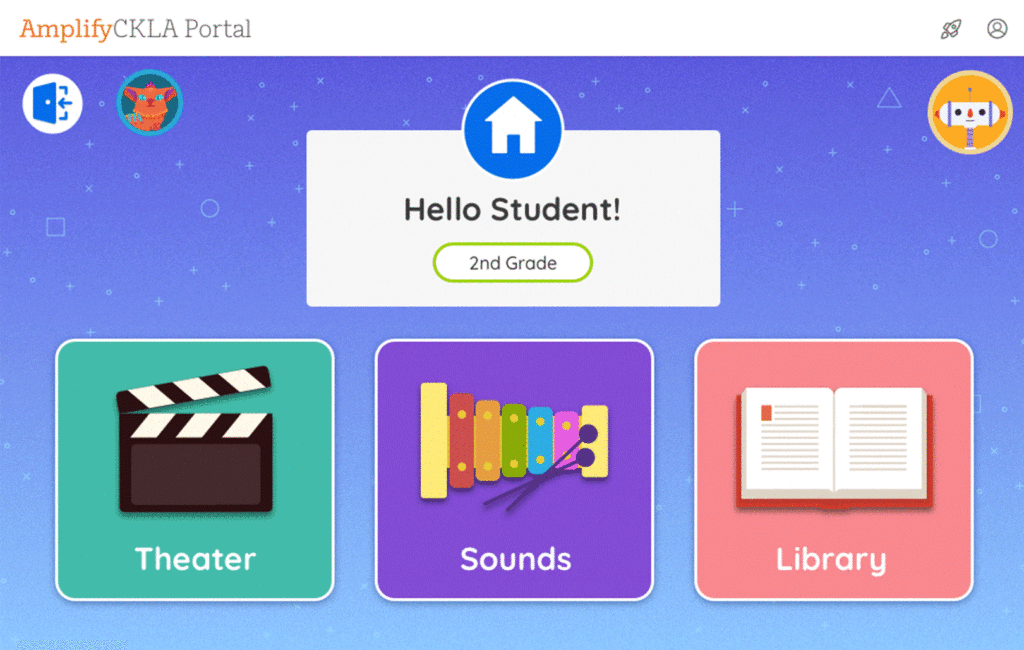
Digital resources
Access the program’s online resources anywhere, anytime, from any device.
- Digital Hub
- Knowledge Builder animated videos (example from Grade 2)
- Sound Library songs and videos (examples from Kindergarten)
- eReader
- Vocabulary App
- Recorded Read-Alouds
- Professional development website
- Real-time program support via email, live chat, and phone

Hands-on phonics materials
Multisensory phonics and foundational skills resources give students the opportunity to practice key skills using diverse, fun approaches that build independence.
- Large and Small Letter Cards
- Spelling Cards
- Chaining Folders
- Digital Big Books
Florida Resources
- FL Program Guide
- Assessment Guide
- Poetry and Vocabulary Lesson Sampler
- Curriculum Maps
- Grade K Skills and Knowledge
- Grade 1 Skills and Knowledge
- Grade 2 Skills and Knowledge
- Grade 3 Integrated
- Grade 4 Integrated
- Grade 5 Integrated

Professional learning
Amplify employs a national cohort of more than 50 ELA facilitators, all of whom have experience as former classroom teachers and many of whom are former school and/or district leaders. Our professional learning team has decades of experience working with large districts across the nation. Amplify has experience supporting district launches over multiple years and has partnered with districts of all sizes nationwide. We partner deeply with districts and tailor professional learning to their unique needs.

Welcome Fort Wayne middle school educators!
We’re honored that you’re considering Amplify ELA for grades 6-8. Below you’ll find resources to guide you in your review including:
- An overview and introductory video.
- Program resources to break down the program structure and its components.
- Step-by-step digital review of all teacher and student materials.
- Additional resources and an opportunity to request physical samples and access to multimedia resources.
West Virginia alignment coming soon!
Overview
Amplify ELA is a blended curriculum designed for middle school students and teachers, featuring:
- An engaging digital program with comprehensive print materials, including Teacher Editions, Student Editions, and Writing Journals for grades 6–8.
- A year’s worth of instruction for each grade.
- Complex, content-rich literary and informational texts.
- Differentiation that supports all students with reading complex texts, and an interactive eReader with an array of multimedia tools.
- Embedded assessments that allow for uninterrupted instructional time.
- The Amplify Library—a digital collection of over 700 full-length texts.
Access and equity
We have a responsibility to provide ELA instruction that gives every student the same opportunity to succeed and excel


Program resources
Download these resources before reviewing the program to better understand program structure, components, digital resources, and more.


Start your review
Follow these steps to complete your digital review of the teacher and student materials for each grade level. Once you’ve completed your digital review, complete the form at the bottom of the page for physical samples and full access to the multimedia resources.
Review step 1: See Amplify ELA in action
Hear from teachers, administrators, and students across the country who are using Amplify ELA in their classrooms right now.
Review step 2: Watch this Amplify ELA overview
Before you explore the program, watch this overview to get familiar with the program and ways to find resources for you and your students online.
Review step 3: Start exploring
To complete your review digitally, click the orange button below to explore the digital platform. You’ll have access to two full units for every grade.
When you explore the digital platform, a quick guided tour will familiarize you with navigation of the program and its features.
While you can access all of the print resources from the digital Teacher’s Guide, we’ve collected a few exemplars for each grade level:
Grade 6: Summer of the Mariposas
Grade 7: Poetry & Poe
Grade 8: The Space Race Collection

Additional resources to support your review


Request sample
You can request physical samples or full access to multimedia resources for additional review or reach out to your Amplify Sales representative if you have questions.

Nathan Toles
Field Manager
(317) 430-787
Welcome West Virginia middle school educators!
We’re honored that you’re considering Amplify ELA for grades 6-8. Below you’ll find resources to guide you in your review including:
- An overview and introductory video.
- Program resources to break down the program structure and its components.
- Step-by-step digital review of all teacher and student materials.
- Additional resources and an opportunity to request physical samples and access to multimedia resources.
West Virginia alignment coming soon!
Overview
Amplify ELA is a blended curriculum designed for middle school students and teachers, featuring:
- An engaging digital program with comprehensive print materials, including Teacher Editions, Student Editions, and Writing Journals for grades 6–8.
- A year’s worth of instruction for each grade.
- Complex, content-rich literary and informational texts.
- Differentiation that supports all students with reading complex texts, and an interactive eReader with an array of multimedia tools.
- Embedded assessments that allow for uninterrupted instructional time.
- The Amplify Library—a digital collection of over 700 full-length texts.
Before you explore the program on your own, watch the program walkthrough to the right.
Access and equity
We have a responsibility to provide ELA instruction that gives every student the same opportunity to succeed and excel

Program resources
Download these resources before reviewing the program to better understand program structure, components, digital resources, and more.


Start your review
Follow these steps to complete your digital review of the teacher and student materials for each grade level. Once you’ve completed your digital review, complete the form at the bottom of the page for physical samples and full access to the multimedia resources.
Review step 1: See Amplify ELA in action
Hear from teachers, administrators, and students across the country who are using Amplify ELA in their classrooms right now.
Review step 2: Watch this Amplify ELA overview
Before you explore the program, watch this overview to get familiar with the program and ways to find resources for you and your students online.
Review step 3: Start exploring
To complete your review digitally, click the orange button below to explore the digital platform. You’ll have access to two full units for every grade.
When you explore the digital platform, a quick guided tour will familiarize you with navigation of the program and its features.
While you can access all of the print resources from the digital platform, we’ve collected a few exemplars for each grade level:
Grade 6: Summer of the Mariposas
Grade 7: Poetry & Poe
Grade 8: Space Race
Review step 4: Check out these additional resources to support your review
Request more information
You can request physical samples or full access to the digital resources by submitting the form to the right, or if you have any questions reach out directly to your sales representative, Melissa Webb.
Melissa Webb
Account Executive
mwebb@amplify.com
(304) 552-0234
Corona-Norco Unified School District
Amplify ELA – Atlanta Review3
Core Principles:
These core principles guide our operations, employee behavior and product development:
- Customer Control: We help school districts securely manage their personally identifiable student information. The districts direct our use of the data, and control who has access to that data and with whom it is shared.
- Educational Purpose: Personal student information can only be used for customer-authorized purposes to support student learning through the secure and effective operation of our educational tools.
- Transparency: School districts, teachers, parents and students have the right to know what information is collected by school technology, how it is used and by whom, as clearly described in our privacy policy.
- Commitment: Privacy and security are thoroughly embedded into our organizational practices. We dedicate substantial resources to systems, processes and personnel required to protect student information.
Amplify Data Privacy and Security Practices:
Amplify maintains a customer data privacy policy that explains our data collection, handling and use practices.
Amplify also maintains a data security policy that explains how student data is protected from unauthorized access. Data security practices at Amplify are developed and maintained in accordance with the internationally recognized ISO27002 security standards. In addition, Amplify has successfully completed the SOC 2 Type 2 examination of controls relevant to security and conducts such examination on an annual basis.
For more information, please review our customer privacy policy and security practices. If you have additional questions, please contact us at privacy@amplify.com.
State Law Compliance
Amplify has entered into Data Privacy Agreements (DPAs) with districts across the country to facilitate compliance with applicable laws governing student data privacy. These DPAs can be applied to any Amplify product.
Unless otherwise noted, the DPAs are based on the Student Data Privacy Consortium’s (SDPC) model agreement which was created to simplify the contracting process between providers and local education agencies (LEAs) while ensuring LEAs have the necessary data protection obligations in place with providers. For additional information please visit the SDPC website and select your state.
General Offer of Privacy Terms:
To expedite your district’s need for a DPA and streamline the contracting process, we have compiled the following DPAs, listed by state.
By executing the General Offer of Privacy Terms, your LEA can “piggy back” off an existing DPA that other LEAs in your state have already agreed to. If you do not see your state below, please contact privacy@amplify.com.
Instructions:
(i) Please download the General Offer of Privacy Terms, (ii) sign and send the executed copy to your Amplify account representative, and (iii) retain a copy for your records. If you have any questions please reach out to privacy@amplify.com.
*Please note, states marked with an asterisk do not have a General Offer of Privacy Terms; however, please review the instructions below on how to quickly implement a DPA in compliance with your LEA’s state law.
Arizona: To enter into Amplify’s AZ-NDPA-V1, please sign the General Offer of Privacy Terms
Arkansas: To enter into Amplify’s AR-NDPA-V1, please sign the and General Offer of Privacy Terms
California: To enter into Amplify’s CA-NDPA, Version 1.5, please sign the General Offer of Privacy Terms
Connecticut*
To facilitate your district’s compliance with the requirements of Connecticut’s student data privacy law (Connecticut General Statutes §§ 10-234aa through 10-234dd), Amplify is proud to offer our “Connecticut Terms of Service Addendum” linked below. This Addendum supplements Amplify’s Terms and Conditions for use of Amplify products licensed by the district available at https://amplify.com/customer-terms.
Addendum: Connecticut Terms of Service Addendum
Instructions: Please retain a copy for your records – no further action is required.
Florida: To enter into Amplify’s FL-NDPA, Version 1.0, please sign the General Offer of Privacy Terms
Hawaii*
Amplify has entered into a Data Sharing Agreement with the Hawaii State Department of Education (HIDOE) which applies to any LEA associated with HIDOE. If your LEA is not a part of the HIDOE and you require a data privacy agreement, please reach out to privacy@amplify.com.
Illinois: To enter into Amplify’s IL-NDPA (which includes the IL State Supplemental Terms), please sign the General Offer of Privacy Terms
Iowa: To enter into Amplify’s IA-NDPA (which includes the IA State Supplemental Terms), please sign the General Offer of Privacy Terms
Maine: To enter into Amplify’s MA-ME-MO-NH-NY-OH-RI-VT DPA, Version 1 (which includes the ME State Supplemental Terms), please sign the General Offer of Privacy Terms
Massachusetts: To enter into Amplify’s MA-ME-MO-NH-NY-OH-RI-VT DPA, Version 1 (which includes the MA State Supplemental Terms), please sign the General Offer of Privacy Terms
Missouri: To enter into Amplify’s MO-NDPA, Version 1.0, please sign the General Offer of Privacy Terms
Montana: To enter into Amplify’s MT DPA, Version 3, please sign the General Offer of Privacy Terms
Nebraska: To enter into Amplify’s NE NDPA (which includes the NE State Supplemental Terms), please sign the General Offer of Privacy Terms
New York*
Option 1:
To facilitate your district’s compliance with the requirements of New York State Education Law § 2-D and regulations promulgated thereunder, Amplify is proud to offer our “New York Data Privacy and Security Addendum” linked below. This Addendum supplements Amplify’s Terms and Conditions for use of Amplify products licensed by the educational agency available at https://amplify.com/customer-terms.
Addendum: New York Data Privacy and Security Addendum
Instructions: Please retain a copy for your records- no further action is required.
Option 2:
To enter into Amplify’s MA-ME-MO-NH-NY-OH-RI-VT DPA, Version 1 (which includes the NY State Supplemental Terms), please sign the General Offer of Privacy Terms
New Hampshire: To enter into Amplify’s MA-ME-MO-NH-NY-OH-RI-VT DPA, Version 1 (which includes the NH State Supplemental Terms), please sign the General Offer of Privacy Terms
North Carolina*
The Data Confidentiality and Security Agreement issued by the North Carolina Department of Public Instruction (NCDPI) is not applicable to Amplify’s services given Amplify does not have a direct integration to any state system via API/plugin. You can review the NCDPI guidance here: https://www.dpi.nc.gov/about-dpi/technology-services/third-party-data-integration. However, Amplify can sign this form with some revisions. As such, we have prepared an Addendum which supplements the Data Confidentiality and Security Agreement.
Instructions: Please download a copy of the Data Confidentiality and Security Agreement with Amplify Addendum, return an executed copy to your account executive, and retain a copy for your records.
Ohio: To enter into Amplify’s OH-NDPA Version 1.0, please sign the General Offer of Privacy Terms
Oregon: To enter into Amplify’s OR-NDPA-V1, please sign the General Offer of Privacy Terms
Rhode Island: To enter into Amplify’s MA-ME-MO-NH-NY-OH-RI-VT DPA, Version 1 (which includes the RI State Supplemental Terms), please sign the General Offer of Privacy Terms
Tennessee: To enter into Amplify’s TN-NDPA-V1, please sign the General Offer of Privacy Terms
Texas: To enter into Amplify’s TX-NDPA-V1R6, please sign the General Offer of Privacy Terms
Utah: To enter into Amplify’s UT-NDPA, Version 1, please sign the General Offer of Privacy Terms
Vermont: To enter into Amplify’s MA-ME-MO-NH-NY-OH-RI-VT DPA, Version 1 (which includes the VT State Supplemental Terms), please sign the General Offer of Privacy Terms
Virginia: To enter into Amplify’s VA-DPA, please sign the General Offer of Privacy Terms
Washington: To enter into Amplify’s WA-NDPA, Version 1, please sign the General Offer of Privacy Terms
Wisconsin: To enter into Amplify’s WI SDPA, Version 1, please sign the General Offer of Privacy Terms
Wyoming: To enter into Amplify’s WY-NDPA-V1, please sign the General Offer of Privacy Terms
What to expect
Researchers and practitioners have defined effective pathways to reading success and still, combining the science of early reading with the art of implementing change remains a challenge. Chandler Unified School District is partnering with current thought leaders, academics, and Amplify facilitators to immerse participants in reading research and improvement science, supporting your district in developing practical, actionable solutions focused on helping young learners become successful readers. Your school team will have the opportunity to work hands-on with our experts and leave the experience with two specific, targeted commitments to a behavior or system change (a “change idea”), which they can implement to improve reading performance.
Speaker bios
Dr. Elfrieda “Freddy” Hiebert (Ph.D., University of Wisconsin, 1979) is the President and CEO of TextProject, a non-profit aimed at providing open-access resources for instruction of beginning and struggling readers. Freddy has had a long career as a literacy educator and is also a research associate at the University of California. Her research, which addresses how fluency, vocabulary, and knowledge can be fostered through appropriate texts, has been published in numerous scholarly journals and books. Hiebert’s contributions to research and practice have been recognized through awards such as the Oscar Causey Award for Outstanding Contributions to Reading Research (Literacy Research Association, 2015), Research to Practice award (American Educational Research Association, 2013), William S. Gray Citation of Merit Award for Outstanding Contributions to Reading Research (International Reading Association, 2008), and membership in the Reading Hall of Fame (2008).
Dillon Hauptfuhrer is the Associate Director of Curriculum Development for the Teach Like a Champion Team. Dillon brings eight years of leading and teaching to her role creating curriculum for the Teach Like A Champion team. Prior to joining the team, Dillon served as a Principal in Residence and Academic Dean at Achievement First in Brooklyn and she worked with YES Prep in Houston for six years as both a teacher, Content Specialist, and Dean of Students. Dillon is a graduate of the University of Virginia and received her M. Ed from Harvard’s Graduate School of Education.
Jen Rugani is the Associate Director of Curriculum and School Support for the Teach Like a Champion Team. As a former principal of Uncommon Schools’ Leadership Prep Canarsie Elementary Academy, member of the inaugural cohort of Teach Like a Champion Fellows, and elementary school teacher, Jen Rugani brings 9 years of leading and teaching to her work creating curriculum and supporting schools. Jen is a graduate of Harvard University and has a Master’s degree from Relay Graduate School of Education, where she also completed the National Principal’s Academy Fellowship.
Pre-reads
Reading Reconsidered
Hard Words
Agenda
Presentations
Welcome, Richmond City reviewers!
Thank you for taking the time to review Amplify ELA for middle school. The items below will allow you to experience our blended program with access to our print materials, digital curriculum, and resources to support your review.
Amplify ELA’s blended model enables teachers to design instruction based on their classroom needs and resources. Our engaging print edition highlights the many digital experiences teachers can share with students through classroom projections. Teachers can make choices about when their students use devices while providing 100% standards coverage and without compromising learning.

Digital program
The content and instruction in Amplify ELA’s digital program mirrors the content provided in the print Teacher Edition and Student Edition. However, the digital program offers more opportunity to engage students through the use of multimedia and a variety of learning apps. Teachers will also find embedded apps to help with scoring, providing student feedback, and reporting.
Visit learning.amplify.com/ela-v2 to review Amplify ELA’s digital program.

Grade 6 materials


Student Edition:

Grade 7 materials


Student Edition:
Grade 8 materials


Student Edition:

Resources

Resources to help with your review:
Inspiring the next generation of Richmond scientists, engineers, and curious citizens
Amplify Science is an engaging core curriculum designed for three-dimensional, phenomena-based learning.

A powerful partnership
Amplify Science was developed by the science education experts at UC Berkeley’s Lawrence Hall of Science and the digital learning team at Amplify.
The University of California, Berkeley’s Lawrence Hall of Science is a recognized leader in PreK–12 science education, producing groundbreaking curriculum products for more than 40 years, including the international award-winning Seeds of Science/Roots of Reading®. The Hall’s curriculum materials are used in one in four classrooms across the nation.

Amplify has been pioneering digital education products for more than 15 years, empowering teachers across the country to offer more personalized instruction and accelerate the potential of their students to become more active, engaged learners. Amplify has supported more than 200,000 educators and three million students in all 50 states.
Instructional model
The Amplify Science program is rooted in the proven, research-based pedagogy of Do, Talk, Read, Write, Visualize. Here’s how each element works:
DO
First-hand investigations are an important part of any science classroom, and Amplify Science has students getting hands-on in every unit, from building models of protein molecules to experimenting with electrical systems.
TALK
Student-to-student discourse and full class discussions are an integral part of the program. Students are provided with numerous opportunities to engage in meaningful oral scientific argumentation, all while fostering a collaborative classroom environment.
READ
Students read scientific articles, focusing their reading activities on searching for evidence related to their investigation, and importantly, on asking and recording questions as they read through fascinating texts on 21st-century topics.
WRITE
Following real-world practices, students write scientific arguments based on evidence they’ve collected, making clear their reasoning about how a given piece of evidence connects to one of several claims.
VISUALIZE
By manipulating digital simulations and using modeling tools to craft visualizations of their thinking— just as real scientists and engineers do—students take their learning far beyond the confines of what they can physically see in the classroom in an exciting and authentic way.
Elementary school course structure
- Pushes and Pulls
- Needs of Plants and Animals
- Sunlight and Water
- Spinning Earth
- Light and Sound
- Animal and Plant Defenses
- Properties of Materials
- Plant and Animal Relationships
- Weather and Climate
- Balancing Forces
- Environments and Survival
- Inheritance and Traits
- Changing Landforms
- Vision and Light
- Earth’s Features
- Waves, Energy, and Information
- Patterns of Earth and Sky
- The Earth System
- Ecosystem Restoration
- Modeling Matter
- Energy Conversions
- Balancing Forces
Middle school course structure
- Microbiome
- Earth, Moon, and Sun
- Ocean, Atmosphere, and Climate
- Weather Patterns
- Earth’s Changing Climate
- Metabolism
- Populations and Resources
- Matter and Energy in Ecosystems
- Traits and Reproduction
- Natural Selection
- Evolutionary History
- Harnessing Human Energy
- Force and Motion
- Force and Motion Engineering Internship
- Thermal Energy
- Phase Change
- Light Waves
- Phase Change Engineering Internship
- Chemical Reactions
- Magnetic Fields
Inside an Amplify Science classroom

Resources to support your review
- What’s so phenomenal about phenomena? – ebook
- Phenomena in grades K-5
- Student Books in grades K–5
- Literacy-rich science instruction in grades K–5
- Engineering in Amplify Science
- Virginia Standards Alignment
Ready to learn more?
To begin your review, fill out the form for more information about Amplify Science and to access the online digital curriculum.
2025
September 18, 2025
Edutopia: “Using Virtual Manipulatives in Math Class”
August 19, 2025
Education Week: “Here’s Why It’s Important for Teachers to Have a Say in Curriculum”
August 18, 2025
Investors Hangout: “Amplify Classroom Revolutionizes K-12 Teaching Experience”
August 5, 2025
WhaTech: “K-12 Online Education Market Set for Strong Expansion, Reaching $349.77 Billion by 2029”
August 4, 2025
Education Week: “Districts Using ‘High-Quality’ Reading Curricula Still Supplement With Other Materials. Why?”
July 9, 2025
K-12 Dive: “Youngest students see big reading gains post-COVID on DIBELS assessment”
June 25, 2025
The 74: “How Districts in Georgia, Maryland and D.C. Are Raising Reading Proficiency”
May 28, 2025
Open PR: “K-12 Online Education Market Forecast 2025-2034: Comprehensive Analysis And Growth Opportunities”
May 27, 2025
District Administration: “Early literacy: How to implement programs that start strong”
May 20, 2025
EdSource: “California schools prepare to introduce universal reading screening”
April 23, 2025
The 74: “Eric Adams Expands Reading, Math Curriculum Mandates to All NYC Middle Schools”
April 21, 2025
Daily News: “NYC expanding reading, math curriculum overhaul to more schools”
March 19, 2025
Education Next: “School Reinvention in Practice”
February 28, 2025
K-12 Dive, “Test yourself on this week’s K-12 news”
February 26, 2025
K-12 Dive: “Only 56% of K-2 students are ready to read”
January 24, 2025
Chalkbeat Philadelphia: “Two AI-powered charter schools could soon open in Pennsylvania”
January 16, 2025
Tech & Learning: “What is Polypad and How Can Teachers Use It?”
2024
December 18, 2024
EdSource: “State takes another step toward mandatory testing for reading difficulties in 2025”
December 6, 2024
Chalkbeat Philadelphia: “Philadelphia is now spending over $100 million on its curriculum overhaul. Here’s a breakdown.”
November 27, 2024
Lincoln Journal Star: “Lincoln Public Schools drops a classification rating on statewide assessment”
November 6, 2024
EdNC: “New K-3 literacy data shows growth in skills for North Carolina students”
October 1, 2024
The 74: “As NY District Implements Science of Reading, Parents Push for New Focus on Math”
September 18, 2024
Tech & Learning: “Tech & Learning Announces Winners of Best for Back to School 2024”
August 22, 2024
Chalkbeat Philadelphia: “Philadelphia school board renews charters, funds tutoring and a new science curriculum”
August 2, 2024
EdNC: “‘Dedication of our teachers’ praised in an update on the state’s science of reading journey”
July 31, 2024
The 74: “Classroom Case Study: To Maximize the Impact of Curriculum Mandates, Follow the Science of Reading”
July 23, 2024
Chalkbeat: “Should teachers customize their lessons or just stick to the ‘script’?”
July 7, 2024
The Economist: “Will artificial intelligence transform school?”
June 24, 2024
Chalkbeat: “Math instruction overhaul: NYC unveils new curriculum mandate for middle and high schools”
June 6, 2024
EdNC: “Perspective | Teachers are the heroes of the literacy story in North Carolina”
May 24, 2024
The Dallas Morning News: “How Don Quixote changed a Dallas public school classroom”
May 2, 2024
Akron.com: “Tutoring program at Summit Academy Akron Elementary School attracts national interest”
April 25, 2024
Edutopia: “Using Tech Tools to Energize Young Students’ Math Learning”
April 4, 2024
EdNC: “State Board hears update on district ESSER spending, literacy data, and Restart schools”
March 22, 2024
Thomas B Fordham Institute: “Five takeaways from Ohio’s baseline survey of elementary reading curricula”
March 15, 2024
The 74: “New Data: Despite K-2 Reading Gains, Students Face a ‘Much Harder Journey’ Ahead”
March 5, 2024
The 74: “Case Study: How One Texas School District Is Repurposing Staff Development Time to Embrace the Science of Reading”
February 21, 2024
Times Record News: “UPDATED: Texas Education Commissioner Mike Morath likes what he sees at local school”
February 19, 2024
Chalkbeat: “Chicago Public Schools recover from pandemic declines more than other districts, study shows”
February 7, 2024
The 74: “Building Oral Language Skills and Equity Through High-Quality Reading Curriculum”
2023
December 19, 2023
The 74: “Best Education Articles of 2023: Our 23 Most Important Stories About Students, Schools & Learning Recovery ”
December 8, 2023
Education Week: “Aligned Science Curriculum, Better Scores? Research Finds a Connection”
December 6, 2023
WRAL News: “Reading readiness rises in NC’s K-3 classrooms, new data shows”
November 27, 2023
The Dallas Morning News: “Dallas’ new lessons aim to keep kids on track, but some worry about limiting teachers”
November 2, 2023
Fort Worth Report: “Black students in Fort Worth ISD still struggle to read at grade level”
October 31, 2023
Chicago Tribune: “Lake Forest-area schools take stock of state grades; ‘While we celebrate our successes, we acknowledge that the journey … is ongoing’”
October 19, 2023
Chalkbeat: “NYC eyes middle and high school literacy overhaul. It’s asking families to weigh in.”
October 16, 2023
The 74: “As Virginia Rolls Out Ambitious Statewide High-Dosage Tutoring Effort This Week, 3 Keys to Success”
October 6, 2023
Language Magazine: “Embracing Bilingual Assessment”
September 18, 2023
Tech & Learning: “Best for Back to School 2023”
September 18, 2023
Chalkbeat: “Chicago Public Schools hired hundreds of tutors with federal COVID money. Can they keep them?”
September 7, 2023
EdNC: “Perspective | Union County Public Schools empowers educators, elevates readers”
August 14, 2023
Chicago Parent: “Common Core Math: How to Help Your Kids”
August 6, 2023
The News & Observer: “NC sees big increase in reading skills among K-3 students. Is the state back on track?”
August 4, 2023
The 74: “Slow Literacy Gains, Long COVID in Kids: 7 Insights into Pandemic Recovery and Aftermath in U.S. Schools”
August 3, 2023
EdNC: “State Board of Education: New reading data, parental leave, and a call to support public schools”
July 28, 2023
Houston Public Media: “New literacy curriculum is among the many changes coming to HISD”
July 17, 2023
Houston Chronicle: “Mike Miles says HISD schools will teach the ‘science of reading.’ Here’s what that means.”
July 11, 2023
The 74: “‘Education’s Long COVID’: New Data Shows Recovery Stalled for Most Students”
July 6, 2023
Houston Chronicle: “HISD superintendent gives voluntary schools one last chance to back out of New Education System”
June 29, 2023
The Report Card: “Larry Berger on Curriculum”
June 2, 2023
EdWeek Market Brief:”K-12 Dealmaking: Substitute Teaching Startup Secures $38M; Amplify Raises Undisclosed Series C”
May 25, 2023
The 74: “Expanding Access to Tutors: Nonprofit Grants $6 Million to 32 Learning Organizations Across 20 States to Help More Students”
April 21, 2023
The 74: “The ‘Transformation is Real’ as Science of Reading Takes Hold in N.C. Schools”
April 18, 2023
The 74: “Louisiana District Ravaged by Hurricane & COVID is Bouncing Back with Science”
April 5, 2023
WFAE: “NC midyear reading data shows gains, but third-grade goals remain elusive”
April 5, 2023
EdNC: “K-3 students show growth in literacy skills, mid-year DPI data show”
March 24, 2023
The 74: “COVID & School Recovery: Critics Warn Washington Bill Would Reduce Classroom Learning Time By 4 Hours a Week”
March 24, 2023
Edutopia: “Using Collective Leadership to Make a Major Shift in Your District”
March 15, 2023
K-12 Dive: “California at center of latest push for science-based reading approaches”
March 7, 2023
District Administration: “ESSER pressure: How one district intends to spend wisely as deadline looms”
March 3, 2023
The 74: “‘The Other Long COVID’ Affecting Kids: Missed Opportunities”
March 2, 2023
3 WTKR: “More students on track to learn to read in 2022-2023 school year since start of pandemic, researchers say”
March 2, 2023
ABC 7: “Reading skills rebounding for young students following pandemic disruptions”
March 1, 2023
K-12 Dive: “By The Numbers: DIBELS testing shows improved reading progress over last two years”
February 27, 2023
The 74: “Exclusive: Despite K-2 Reading Gains, Results Flat for 3rd Grade ‘COVID Kids’”
February 27, 2023
Education Week: “Students’ Early Literacy Skills Are Rebounding. See What the Data Show”
February 7, 2023
The 74: “Using High-Quality Curriculum Doesn’t Mean You Can’t Still Have Fun Learning”
January 13, 2023
NPR: “Can a middle school class help scientists create a cooler place to play?”
January 6, 2023
News & Record: “After a numbing low, NC students now heading in ‘right direction’ in reading, math”
January 5, 2023
CBS17.com: “K-3 students in NC make significant strides on literacy exams, DPI says”
2022
December 20, 2022
District Administration: “Literacy Under the Lights: 10 ways to bring the community back together”
December 14, 2022
The 74: “14 Charts This Year That Helped Us Better Understand Covid’s Impact On Students Teachers and Schools”
December 14, 2022
The 74: “Learning Loss Is Worse than NAEP Showed. Middle School Math Must Be the Priority”
November 21, 2022
Voicebot.ai: “SoapBox Labs Brings Child-Centered Voice AI to Dyslexia Detection Assessment”
October 24, 2022
Education Week: “Two Decades of Progress, Nearly Gone: National Math, Reading Scores Hit Historic Lows”
October 20, 2022
The 74: “Exclusive Literacy Data: Small Gains Since Last Fall, But No Reading Rebound”
August 30, 2022
The 74: “Test English Learners in the Languages They Speak at School and at Home”
August 29, 2022
WTKR TV NC: “News 3 investigates childhood literacy rates, raising money to give books to local kids for new school year”
August 28, 2022
EdNC: “Elementary students made growth last year in skills that lead to reading proficiency, new data show”
August 18, 2022
SHRM Blog: “The Great Resignation Skipped Us. Here’s why.”
August 16, 2022
Forbes: “Curious About Knowledge-Building Curricula? Check Out This Website”
July 20, 2022
District Administration: “Out-of-school STEM learning is much more powerful when it’s inclusive”
July 19, 2022
Chalkbeat: “The state of learning loss: 7 takeaways from the latest data”
June 28, 2022
The Preschool Podcast: “Early literacy strategies that stick with Darryl from Run-DMC and Makeda from Nickelodeon [Podcast]”
May 24, 2022
Forbes: “States That Want To Boost Literacy Should Keep An Eye On Texas”
April 24, 2022
Business Ecosystem Alliance: “Ecosystems in Education–Collaborating to Efficiently Serve the End User”
April 18, 2022
KQED Mind Shift: “Weighing the best strategies for reading intervention”
April 15, 2022
Fordham Institute: “Assessing a standards-aligned physical science curriculum”
March 23, 2022
The Baltimore Sun: “National test scores show student gains from in-person learning in all but a critical group: new and pre-readers | COMMENTARY”
March 15, 2022
NPR: “Two years ago schools shut down around the world. These are the biggest impacts”
March 11, 2022
The Hub – Dallas ISD: “Students at Greiner and Anson Jones Elementary find success in reading and writing with a new program”
March 10, 2022
NY Daily News: “Read it and weep: The new reading instruction emergency”
March 10, 2022
WISH TV Indianapolis: “Study shows student performance plummeted during pandemic”
March 9, 2022
New York Post: “Young students have suffered ‘alarming’ drops in reading skills during pandemic”
March 9, 2022
The Daily Caller: “Childhood Literacy Plummeted Following Pandemic Shutdowns, Studies Show”
March 8, 2022
The New York Times: “It’s ‘Alarming’: Children Are Severely Behind in Reading”
March 7, 2022
Education Next: “The Education Exchange: Pandemic Hurt Younger Students’ Learning Worse, Amplify Data Suggest”
February 28, 2022
The 74: “Our 12 Best Education Articles in February: Reflections on 700 Days of COVID Chaos, Setting a Bar for Unmasking in Schools, Burying Schools in Record Requests & More”
February 24, 2022
The Daily Advertiser: “Reading scores improve slightly, but pre-COVID reading levels are ‘the wrong goal’”
February 24, 2022
Wall Street Journal: “The School Shutdowns and Lost Literacy”
February 23, 2022
K-12 Dive: “DIBELS data illustrates pandemic reading setbacks”
February 22, 2022
ABC 7 Buffalo: “Children falling behind in reading”
February 18, 2022
The Carolina Journal: “Report: Elementary students lag in literacy due to pandemic”
February 16, 2022
The 74: “‘We Have First-Graders Who Can’t Sing the Alphabet Song’: Pandemic Continues to Push Young Readers Off Track, New Data Shows”
February 16, 2022
Education Week: “More Than 1 in 3 Children Who Started School in the Pandemic Need ‘Intensive’ Reading Help”
February 4, 2022
Literary Hub: “EXCLUSIVE: Watch Joshua Bennett Discuss A.R. Ammons’s poem “Cascadilla Falls”
January 26, 2022
The Ross Kaminsky Show: “Susan Lambert and the Literacy Gap”
January 19, 2022
K-12 Dive: “Report: Colorado reading law update boosts quality of literacy curriculum”
2021
December 15, 2021
Chalkbeat: “How Denver plans to address a drop in early elementary reading scores”
December 8, 2021
The SHRM Blog: “What’s the Best Work Perk of All? Contributing to the Social Good”
November 13, 2021
Hechinger Report: ‘The Reading Year’: First grade is critical for reading skills, but kids coming from disrupted kindergarten experiences are way behind”
October 20, 2021
Hechinger Report: “OPINION: Younger students were among those most hurt during the pandemic”
September 2, 2021
EdSurge: “An Edtech User’s Glossary to Speech Recognition and AI in the Classroom”
September, 2021
SIIA Education: “ED TECH SUCCESS STORIES”
August 23, 2021
CNN: “Irish tech firm helps kids’ voices be heard”
August 18, 2021
SoapBox Labs: “Can Speech Recognition Help Children Learn to Read?”
August 12, 2021
FOX Chicago Broadcast Interview: “Pandemic widens literacy gap for students”
August 3, 2021
T.H.E Journal: “More Students of Color at Risk in Reading After Pandemic”
July 28, 2021
The 74: “Early Reading Skills See a Rebound From In-Person Learning, But Racial Gaps Have Grown Wider, Tests Show”
July 28, 2021
K-12 Dive: “Reports: Math, reading progress slowed during first full school year of pandemic”
July 20, 2021
EdNC: “The mCLASS reading assessment tool is back in North Carolina classrooms, but it’s going to look different”
July 5, 2021
WBAL: “Baltimore students from all socio-economic backgrounds get a chance to ‘Amplify’ their learning skills”
June 15, 2021
Language Magazine: “Using Evidence to Overcome Adversity”
May 7, 2021
The Dallas Morning News: “How can a one-minute kindergarten test help teachers tackle the ‘COVID slide’?”
April 20, 2021
Education Week: “How Teachers and Curriculum Will Shape Ed Tech’s Future: A CEO Makes the Case”
March 24, 2021
The Hechinger Report: “OPINION: Children will need summer tutors to make up for pandemic learning loss”
March 23, 2021
Education Week: “Most States Fail to Measure Teachers’ Knowledge of the ‘Science of Reading,’ Report Says”
March 17, 2021
Axios: “How online education and tutoring could fight COVID learning loss”
March 16, 2021
USA Today: “Students are struggling to read behind masks and screens during COVID-19, but ‘expectations are no different’”
March 16, 2021
The 74: “Schools and COVID, a Year Later: 12 Months After Classrooms Closed, 12 Key Things We’ve Learned About How the Pandemic Disrupted Student Learning”
February 25, 2021
K–12 Dive: “Reading gaps widen in mid-year data, especially for K-1 students of color”
February 24, 2021
The 74: “One Year into Pandemic, Far Fewer Young Students are on Target to Learn How to Read, Tests Show”
February 17, 2021
NBC Los Angeles: “Local Students Design Rovers in Mission to Mars Student Challenge”
February 5, 2021
District Administration: “To save literacy, focus first on high-quality core instruction”
February 4, 2021
The Hechinger Report: “5 ways schools hope to fight Covid-19 learning loss”
January 5, 2021
The 74: “Science Matters Now More than Ever. The Time to Start Teaching It Is in Elementary School”
2020
December 15, 2020
Education Week: “Students’ Reading Losses Could Strain Schools’ Capacity to Help Them Catch Up”
December 9, 2020
Education Post: “How to Help Beginning Readers During the Pandemic”
December 3, 2020
American Consortium for Equity in Education: “The Importance of Quality Curriculum With Industry Voice”
September 29, 2020
The 74: “Beyond the Scantron: Ed Tech CEO Larry Berger on Why the Pandemic Is No Excuse to Abscond Accountability and ‘Disruptions Are Great Opportunities to Try Something New’”
May 25, 2020
The 74: “Class Disrupted Podcast Episode 2: Why Is My Child Doing So Many Worksheets Right Now?”
February 5, 2020
Getting Smart Podcast: “Larry Berger on EdTech Past and Future”
Strengthening critical thinking with a content-first approach: How Amplify CKLA is closing gaps in an elementary classroom

In my first-grade classroom, we’ve been studying early world civilizations. My students and I have pretended to hop in our time machines and travel back—first to ancient Mesopotamia, then to ancient Egypt. We’ve written our names on clay tablets in cuneiform and learned what it means for a religion to be polytheistic. We’ve compared and contrasted early farming systems and places of worship. As I prepared to read aloud another lesson a few days ago, I mentioned to the class that it was the eleventh lesson in the unit of study, prompting widened eyes and a chorus of “Already!?”
I teach eighteen six- and seven-year olds in a Title I school, where half of the students are low-income, 75% are non-white, and over half are multilingual/English learners or speak another language at home. In my job, I’m honored to empower students who schools and society have not always served well. I became a teacher to help end that inequity—to close the knowledge gap and ensure that low-income, non-white, and immigrant children receive the tools they need to build a bright future. A growing body of research tells us that a strong base of content knowledge is essential for student growth and success in literacy. We also know that students who come from low-income backgrounds are less likely to come to school possessing the academic background knowledge of their peers, presumably because they have more limited opportunities to come across this type of knowledge at home. For this reason, I’m grateful that around a year and a half ago, my district adopted the knowledge-based literacy curriculum CKLA.
Scenes from a knowledge-based curriculum
What does knowledge-based learning look like in practice? Here’s one powerful example of how a knowledge-forward lesson helped my students succeed in practicing an important literacy skill. We were reading about Howard Carter, the British archaeologist who wanted to locate Tutenkhaman’s tomb. The lesson lends itself well to one of our state’s curriculum standards for the quarter: to make and confirm predictions about nonfiction text. Part one of the Read-Aloud ends on a cliffhanger: After a years-long search with no success, encountering dead ends and tomb robbers, Carter uncovers a hidden door marked with a royal seal.
“A prediction,” I explained, “is a careful guess about what you think might happen, based on the clues you already know. Think about what you know from the story, and predict what Carter might find behind the door.” We quickly reviewed some of the main points as I scribed on chart paper: Carter had been searching for Tutenkhaman’s tomb for six years, pharaohs were often buried with treasure or gold, the door they found was in the last possible place to look in the Valley of the Kings. I handed out papers I’d prepared with sentence frames for students to record or dictate their ideas. We hadn’t yet spent much time this year explicitly practicing prediction-making—in fact, I wondered how many of my students even knew what the word prediction meant—but I could see the wheels already turning behind most of my students’ eyes as they wiggled with excitement, envisioning gold, ghosts, King Tut’s tomb, or a pile of bones.
“Maybe nothing,” one student—a six-year-old who speaks primarily Spanish at home—told me with a shrug as I helped him write down his ideas. “Maybe the tomb robbers took it all.”
How to improve critical thinking—with knowledge
Even though my students might or might not have been familiar with the literacy skill of making and confirming predictions, the rich and meaty Read-Aloud set them up for success. It was rife with topics of interest to many a six- or seven-year-old—exploration, tomb robbers, golden treasure, mummies—which kept them engaged. And it included plenty of details through which they could actually draw a meaningful inference about what Carter might have found. I had to explain only once that a prediction should be based on information you already have—not a random guess—and every one of my eighteen students successfully generated a plausible idea.
This is the magic of a knowledge-based curriculum. It levels gaps in learning by generating a rich, shared base of content knowledge that supports the development of key literacy skills. My students were successful in plausibly guessing what might happen next in the story because they had a strong grasp of the information about Howard Carter. I might have chosen to teach an entire mini-lesson on prediction-making first and then asked my students to apply the skill to a less thoughtfully selected text, or to an independently selected book on their own, but if they weren’t already familiar with the topics it covered, my guess is that they would have been far less successful.
The curriculum standards for literacy in both the Common Core and Virginia (my school’s state) emphasize critical thinking skills and specific comprehension strategies, such as inferencing, over content knowledge. This is understandable: Students must learn to make meaning of a text in front of them, not just read the words on the page. But as Natalie Wexler puts it, “The ability to think critically…is inextricably linked to how much knowledge you have about the situation at hand” (The Knowledge Gap, 39). How could my students make a prediction about a future event in a text if they didn’t understand the textual clues they were given in the first place? Especially given that students from low-income homes are likely to possess less background knowledge about the curriculum they will encounter in school, a focus on teaching skills in isolation can contribute to a far-from-level playing field.
Teaching “comprehension skills” first and then expecting students to apply them is common practice in the method of literacy instruction frequently referred to as balanced literacy. Though the conversation about literacy is, thankfully, moving toward a research-backed approach focused on the Science of Reading, we still have a long way to go. While student teaching during my education master’s program less than three years ago, I was encouraged to teach mini-lessons on topics such as “finding the main idea” and “using topic headings to understand,” which students would then practice with independently selected texts. This approach is not supported by research as a best practice—and it assumes a shared base of cultural knowledge. In that way, it entrenches inequality by privileging students who may already possess more background knowledge, allowing our most vulnerable learners to fall even further behind.
By contrast, a knowledge-based curriculum creates that base together, giving all students a better chance at success. My own experience confirms the research. CKLA empowers my students to take ownership of their learning, expand their vocabularies, make connections, and passionately engage. I’m grateful to use an evidence-based curriculum designed to ensure that every student—including those too often left behind by our schools and other institutions—can learn to read.
More to explore
- Join thousands of educators like you and subscribe to Science of Reading: The Podcast!
- Science of Reading Star Awards: Meet and celebrate other educators who are leading the way!
Advice for next year—for teachers, from teachers

It’s that time of the year again—when the trees are blooming, summer is coming, and already teachers are peeking ahead to next fall!
It’s also a strategic time for educational leaders, who are already beginning to set professional development goals for teachers for the coming school year.
There are lots of excellent educational resources for teachers and leaders to access at this time—including, of course, other teachers and leaders!
That’s why we took this moment to ask Amplify Ambassadors: What advice would you offer to educators just starting their journey with Amplify?
Here’s what they had to say, both about Amplify products and about teaching in general.
Teacher-to-teacher advice about Amplify products
—Darcey Linton, Teacher, Student Support, Wissahickon School District, Pennsylvania
“Approach Amplify with the same wonder and enthusiasm as the children in your classroom! Take advantage of the fact that everything is new to all of you, and explore and adventure through each lesson together. One of our best resources is a working document we share that is filled with ‘notes for next year,’ something that we add ideas, links, and lab ideas to each year to make them easier to retrieve and implement the next time through.”
—Kim Eich, 6th-Grade Teacher, Anoka Hennepin ISD #11, Minnesota
Amplify ELA: “Don’t skip the Quests! Especially in 7th grade, I love doing the Poe Quest and Perception Academy in [the] Brain Science [unit].”
—Christine Wallace, Teacher/Reading Specialist, North Lakeland School District, Wisconsin
“Gather read-alouds about the CKLA knowledge domain topic. The recommended trade books listed on the Family Take Home page are a great way to start. I’ve borrowed them from our school library, and asked for donations. I display the books for students to see. Students are able to grab them and read them throughout the day. Having themed, content-rich books readily available to students allows them to build on their knowledge in a meaningful way.”
—Alyssa Villalobos, 2nd-Grade Teacher, Riverside Unified School District, California
“I encouraged teachers to walk through both levels of the demo account offered in order to preview the student experience in Boost. This allowed them to see the progression of skills and expectations to know the base of what is being developed, and what they are working toward in the more advanced components.”
—Elizabeth Sillies, District Literacy Coach and Title I Supervisor, Three Rivers Local School District, Ohio
Try it with fidelity first to see what works best for your teaching style and student needs. Once you have a grasp of the curriculum, then you can better supplement or modify it for you and your students’ needs.
—Ashley Carter, Science Teacher, Indian River School District, Delaware
Amplify CKLA: “When pre-teaching vocabulary words before the Read-Aloud, come up with a simple hand motion or facial expression for each word, [for example] hugging your body for the word ‘embrace.’ Have the kids do the motions along with you and then listen for the words as you read. When they hear one of the vocabulary words, they should do the motion with you. The physical response helps cement language acquisition, especially for the majority of my students who are learning English, and listening for the words and motions keeps all students engaged. Plus, it adds a micro-movement break.”
—Kathe McCormick-Evans, 1st-Grade Teacher, Arlington Public Schools, Virginia
“For Amplify CKLA, read the Intro section of each unit!! These are so full of professional development for the teachers. It will help you understand the why behind each theme and also explain some of the phonics rules you will be teaching to the students.”
—Allie Appeal, Instructional Coach, School District of Arcadia, Wisconsin
“Don’t rush through the program to get it done. You won’t love it and your kids won’t love it. Take your time and enjoy the journey! The kids and you will appreciate [it] so much more!”
—Stephanie Schuettpelz, Teacher, Marion School District, Wisconsin
mCLASS® DIBELS® 8th Edition: “Try to progress monitor as often as possible. Weekly or every two weeks would be a great time frame based on the needs of the students.”
—Shennoy Barnett-Bell, Teacher, Johnston County Public Schools, North Carolina
Teacher-to-teacher advice about teaching (and more)
—Melba Jordan, Teacher, Richmond County School System, Georgia
“Trust the process, especially in the upper grades when you cannot yet see the end result.”
—Maria Fadden, PreK–8 Literacy Coach, Belle Plaine Public Schools, Minnesota
“Set a timer every time you allow students to work independently or in groups. This allows them to start to use and understand time management. It makes everyone work with purpose and work quietly. I also play relaxing music as a white noise in the background.”
—Kerri Lintl, Teacher, Merrimac Community School, Wisconsin
Make it fun! Your interest gets the students more involved than any fun activity you plan.
—Jadyn Kramp, 4th-Grade Teacher, Wayne County School District, Kentucky
Amplify CKLA: “Don’t be afraid to read word by word. You don’t have to memorize the script.”
—Denise Sandoval, Literacy Coach, Catch Up & Read partnered with Dallas ISD, Texas
“Enthusiasm and positivity are contagious!”
—Stacey Smart, Reading Specialist, Romeo Community Schools, Michigan
5 ways to boost biliteracy with the Science of Reading
Research shows that bilingual instruction (including dual language instruction and dual language immersion) supports the long-term success of dual language learners—in both languages, and beyond.
How do we best support those students?
More precisely, how are we serving our emergent bilingual students so that they can develop their biliteracy? This is a question posed by biliteracy expert and Amplify product specialist Alestra Flores Menéndez. And in our recent webinar Leveraging the Science of Reading to Boost Biliteracy, she and other experts attempt to answer it.
The power of biliteracy
Knowing more than one language is a powerful tool for opening up new worlds, meeting different people—or even just asking directions in an unfamiliar place.
But that’s not all. Bilingualism itself is a cognitive strength. Research conducted in 2015 by Claude Goldenberg and Kirstin Wagner links bilingualism to increased control over attention, improved working memory, greater awareness of the structure and form of language, and better abstract and symbolic representation skills.
“Our multilingual learners really are using their brains differently,” says Flores Menéndez.
And as with all students, we need to start early to make sure they’ve got their best shot at literacy.
The number of emerging bilingual students in our classrooms is growing, with 15.5% of them in grades K–3. That group includes the key developmental year—third grade.
Third grade is seen as the last year students learn to read before they start reading to learn. Without proficiency by fourth grade, they’re at risk of struggle across subjects.
And for many students, literacy is biliteracy. So how to make sure they get there?
Helping all multilingual learners succeed
“Bilingual instruction has been proven to be the most effective,” says Amplify biliteracy specialist Ana Torres, M.Ed., citing research by Virginia Thomas and Wayne Collier.
Other models (English immersion, transitional bilingual) are a fit for students with certain language profiles. As Torres notes, “We have to be intentional and purposeful to make sure there are positive outcomes for all students.”
But the proven impact of the bilingual model shows this: Knowledge of, and in, a second language builds from the first.
Foundational skills, vocabulary, and knowledge are essential, and all transfer to the second language—through explicit, research-based instruction.
Key elements of that instruction:
- Assessing literacy in both languages. “Assessing what [students] know in their native language is crucial to their success in acquiring that second language,” says Torres. A 2019 study at the University of Oregon looked at phonological awareness among Spanish-speaking pre-K students. (Phonological awareness represents the understanding that words are made up of a series of discrete sounds.) When assessed in English, 63% of students needed Tier 2 or 3 intervention. But when assessed in Spanish, only 21% did. “We need to look at the overall picture of students’ literacy,” Torres says. “Otherwise they’re going to get the wrong instruction.”
- Deliberately bridging from the native language to the new one. Spanish and English share many elements, among them letter sounds. If students know the sounds of the letter m in Spanish, they’ll be able to map that sound onto the same letter in English.
- Grounding in the Science of Reading. The Simple View of Reading has been validated in more than 150 studies across multiple languages. Foundational skills, vocabulary, and knowledge can all transfer through explicit instruction.
- Honoring students’ home languages, cultures, and community experiences. “It’s well documented that when children feel a sense of belonging, they’re more motivated to learn and experience more success in school,” says Menéndez. “Students should see themselves reflected positively in any curricular material.”
- Emphasizing knowledge. Perhaps you’re familiar with the iconic baseball study. Students with prior knowledge of baseball greatly outperformed their peers on reading comprehension—even those peers who were stronger readers. “Building knowledge is absolutely essential for literacy development,” says Menéndez.
Learn more
Explore Amplify Caminos.
Watch the full webinar: Leveraging the Science of Reading to Boost Biliteracy.
Biliteracy and Science of Reading principles in English and Spanish.
Read about The Importance of Dual Language Assessment in Early Literacy.
Binge our biliteracy podcast playlist.
Small district, big change: Patrick County’s journey with the Science of Reading
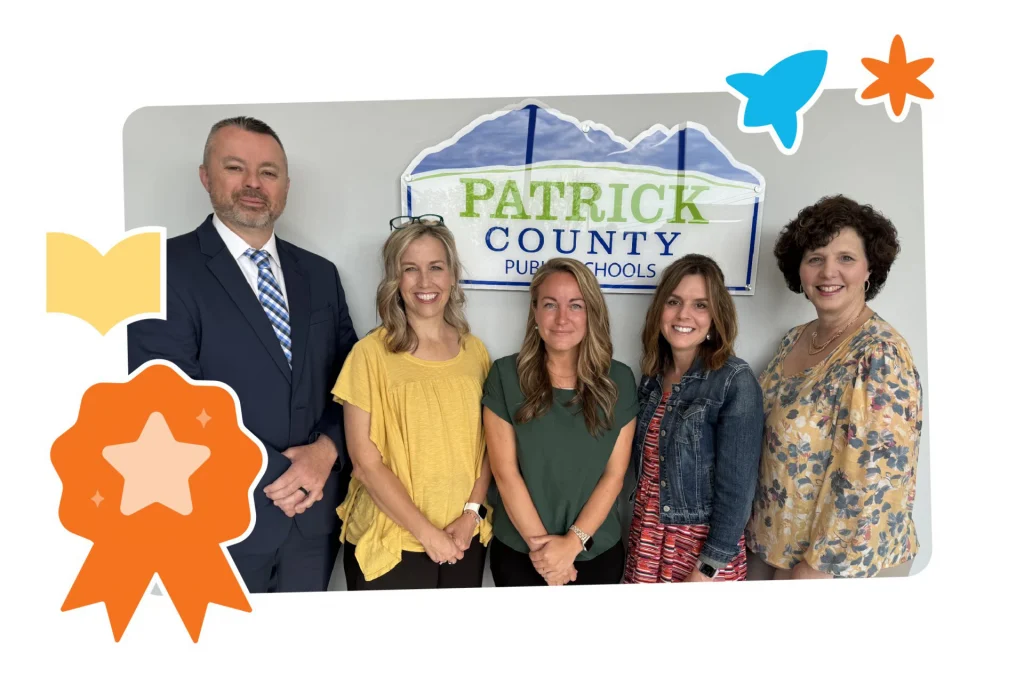
In rural southwest Virginia, Patrick County Public Schools—a small district with big ambitions—has redefined early literacy through a transformative approach to reading instruction.
Teachers and leaders are shifting long-held instructional practices and embracing a Science of Reading-based framework. With the dedication of instructional coaches like Sara Vernon and Callie Wheeler, this district is building classrooms full of proficient readers and shaping a new culture of reading.
This commitment to reimagining literacy instruction has earned Patrick County Public Schools the Science of Reading Star Awards District Captain award—a testament to the district’s vision for improved student reading outcomes.
Before: Reading instruction challenges
Before this shift, reading instruction in Patrick County matched familiar approaches across the country, grounded in programs like Jan Richardson, Lucy Calkins, and Fountas and Pinnell. Educators like Wheeler and Vernon initially relied on balanced literacy and whole language techniques, believing that increased exposure to texts alone could help children learn to read.
However, especially during the pandemic, they began to see students struggle—including, in Wheeler’s case, her own child—and begain to wonder if there might be a better way.
Vernon and Wheeler found their approaches lacking—until they found each other. When their paths crossed in Patrick County, they realized a shared need to re-evaluate their instructional approaches. Conversations with colleagues and research into the Science of Reading framework opened their eyes to new possibilities, sparking a commitment to overhaul literacy instruction in the district.
Building a coalition for change
Vernon and Wheeler were not alone in their vision. District leaders and teachers became eager collaborators. Together, they built a coalition for change, advocating for professional development and resources to support a district-wide implementation of evidence-based practices grounded in the Science of Reading.
Recognizing the need for expert training, they secured ESSER funds to attend the Plain Talk about Literacy and Learning Conference, which deepened their understanding of structured, evidence-based reading practices. This journey transformed not only Vernon and Wheeler’s methods but also those of their colleagues, building a strong foundation for the new approach.
Embracing Science of Reading-based best practices
With district support, Vernon and Wheeler led the selection and adoption of Amplify’s CKLA curriculum, which aligns with the Science of Reading. To extend teachers’ understanding, they offered podcast studies, professional development sessions on the research behind reading instruction, and LETRS (Language Essentials for Teachers of Reading and Spelling) training.
Teachers throughout the district quickly saw the benefits, with kindergarten students making tangible reading progress. The new curriculum emphasizes background knowledge, foundational skills, and a diagnostic approach that ensures each student’s needs are met.
Teachers previously grounded in balanced literacy practices began to embrace the change. Many began to see that teaching phonics and sound-first strategies brought faster and more meaningful progress in reading.
As Wheeler explained, they wanted teachers to fully understand the research behind CKLA and the Science of Reading—empowering them to support students more effectively.
Sustaining a culture of literacy and growth
Today, Patrick County is witnessing an inspiring literacy transformation. Continuous feedback sessions, classroom observations, and data-driven discussions are all part of an evolving system where educators feel encouraged to explore new ideas and take calculated risks.
The district’s openness to change and the collaborative spirit among teachers have been instrumental in creating a culture where educators feel empowered to enhance student learning outcomes.
Reflecting on their achievements, Vernon and Wheeler emphasize the profound impact of this district-wide change. As their assistant superintendent put it: “The worst thing we could ever do is to know that what we were doing wasn’t working and not change.”
Patrick County’s journey is a testament to what’s possible in even the smallest districts when leaders and teachers commit to bold, research-based reforms that truly put students first.
S3-05: Thinking is power
Join us as we sit down with Melanie Trecek-King, college professor and creator of Thinking is Power, to explore how much of an asset science can truly be in developing the skills students need to navigate the real world. You’ll learn about “fooling” students and the importance of developing critical thinking, information literacy, and science literacy in the classroom. We’ll also share real strategies and lesson examples that help build these essential skills and engage students in learning.
And don’t forget to grab your Science Connections study guide to track your learning and find additional resources!
We hope you enjoy this episode and explore more from Science Connections by visiting our main page!
Melanie Trecek-King (00:00):
We say knowledge is power, but it’s not enough to know things. And there’s too much to know. So being able to think and not fall for someone’s bunk is my goal for my students.
Eric Cross (00:12):
Welcome to Science Connections. I’m your host, Eric Cross. On this third season, we’ve been talking about science’s underdog status. And just this past March at the NSTA conference in Atlanta, I had the chance to speak with science educators from around the country about this very topic.
Hermia Simanu (00:28):
Right now, there’s only two teachers in our high school teaching science.
Shane Dongilli (00:32):
I have 45 minutes once a week with each class. The focus is reading and math.
Alexis Tharpe (00:38):
Oftentimes science gets put by the wayside. And you know, I love math and I love my language arts, but I also think science needs to place be placed on that high pedestal as well.
Askia Little (00:46):
In fifth grade, oh, they teach science, because that’s the only grade that it’s tested.
Eric Cross (00:50):
That was Hermia Simanu from American Samoa. Her team flew for three days to make it to the conference. You also heard from Shane Dongilli from North Carolina, Alexis Tharpe from Virginia, and Askia Little from Texas. All of these teachers were excited to be at the conference and had a lot to say about the state of science education in their local schools. Throughout this season, we’ve been trying to make the case for science, showing how science can be utilized more effectively in the classroom. We’ve explored the evidence showing that science supports literacy instruction. We’ve talked about science and the responsible use of technology like AI. My hope is that all of you listeners out there can use some of this evidence to feel empowered to make the case for science in your own communities. And on this episode, we’re going to examine how science can help develop what might be the most important skill that we try to develop in our students: Good thinking. On this episode, I’m joined by a biologist who actually advocated for eliminating the Intro to Bio course at her college. Instead, Professor Trecek-King created a new course focused on critical thinking, information literacy, and science literacy skills. In this conversation, we discuss why the science classroom is such a good environment for helping students become better thinkers. Now, I don’t think that you can make a much stronger argument for science than using it to develop the skills that Melanie describes in this conversation. So, without further ado, I’m thrilled to bring you this conversation with Melanie Trecek-King, Associate Professor of Biology at Massasoit Community College, and creator of Thinking Is Power. Here’s Melanie.
Eric Cross (02:29):
Well, Melanie, thank you for joining us on the show. It’s so good to have you.
Melanie Trecek-King (02:34):
I am so happy to be here.
Eric Cross (02:35):
Now, I went to your session at NSTA in Chicago … I think it was two years ago. A couple years ago. And I was listening to your session, and as I was listening to you, I started Reverse Engineering in my mind what you were doing with your college students. I started reverse engineering the K–8. I was like, “This is amazing.” Where has what you’ve been doing been hiding? We need this not just in the college, higher ed. We need this all the way up and down. Because I hadn’t seen it before. So I think a good place for us to start is gonna be like the story of how and why you as a biologist wound up making the case to actually eliminate the Intro to Biology course at your college. So can you start off and tell us a little bit about that story?
Melanie Trecek-King (03:20):
Sure. So I started teaching at a community college in Massachusetts. And I absolutely love teaching at a community college. And I was teaching the courses that people who don’t wanna be scientists when they grow up have to take to fulfill their science requirement. And that course was Intro Bio. And I tried every way I could figure out to make that class be useful,] relevant to students. I mean, the thing is, our world is based on science and you have to understand science to be a good consumer of information, to make good decisions. And I’m a biologist, so it pains me to say this, but you know, somewhere in the middle of teaching students about the stages of mitosis and protein synthesis, I thought, “Is this really — like, if I have one semester that’s gonna be the last chance that someone’s gonna get a science education, is this really what they need?” And I just decided, “No.” So, to my college’s credit, they were very supportive. I went to them and said, “You know, I think we should assess the non-majors courses. Like, why do we teach non-majors science?” And we all agreed, well, it was for science literacy. OK, great. Do our existing non-majors courses do that? And so we evaluated each of the courses. I made a case that Intro Bio was not doing it. And so we actually replaced it with a course that I call Science for Life. And the whole course is designed to teach science literacy, critical thinking, and information literacy skills.
Eric Cross (04:48):
And so you did this while you were looking at mitosis. And you’re looking at students who may or may not be science majors. And then kind of asking that question. I know every educator asks this, and whether or not it’s welcomed or supported is a different question: “Is what I’m teaching actually gonna be relevant and useful later on down the road for this group of students?” And you actually got to run with it and then create this course, this new course. So, what were the skills that you were hoping to achieve with the new course you developed, and and why were those skills so important?
Melanie Trecek-King (05:21):
Well, if I just go back for a second to what you said, ’cause it, really hit me: I remember the actual moment — it had been building up to that point, but the actual moment that it hit me — I was teaching students the stages of mitosis. And I was applying it to cancer, because the thought is that if we use issues that are relevant to students to teach concepts, that it will be more meaningful to them. They’ll learn it better; they’ll be able to apply it. And they just looked absolutely deflated. They didn’t wanna be there. And I had this moment where I thought, “You know, if, if these students ever have cancer somewhere in their lives, is what I taught them going to be something that they remember? Is it going to be useful to them?” And quite frankly, like, no. <Laugh> They’re not gonna remember proto-oncogenes. And quite frankly, is that really what they need to know at that moment? What they need to know is, “What does this mean? Who is a reliable source of information here? If these treatments are recommended, what is the evidence for them? What are the cost-benefit analyses? Where do I go to find reliable information?” And in that space, cancer in particular, we have this whole field of — I wanna say charlatans, ’cause they may not actually be lying, but they’re pedaling false cures, false hopes. And people need that kind of hope, and so in their time of need, they’re more likely to fall for that kind of thing. Which leads me to the skills that I teach students. I call them this tree of skills. And the order is important. I start — and there’s a lot of overlap to be fair — but critical thinking, and then information literacy, and science literacy. The idea is that students carry in their pockets access to basically all of human’s knowledge at this moment in time. And if they needed to access it, they could. The question is, do they know what they’re looking for? Are they aware of their own biases that are leading them to certain sources, or certain false hopes? Are there certain things that are making them more vulnerable to the people that might prey on them? Are they able to use that information to make good decisions? There’s a great Carl Sagan quote, and it’s something like, “If we teach people only the findings of science, no matter how useful or even inspiring they may be, without communicating the method, then how is anyone to be able to tell the difference between science and pseudoscience?” So yes, the process of science is a process of critical thinking. However, we do tend to present science most of the time. Like, here’s what science has learned. And to be fair, those things that we’ve learned from science are really useful and inspiring. But if we don’t teach the process, so you’ve got somebody now who let’s say has been diagnosed with cancer and is on their phone and they’re scrolling through social media and everything looks the same. And of course the algorithms learn who you are. Next thing you know, there’s all of these like pseudo-treatments popping up. It all looks the same. Somebody who says that acupuncture can be used to cure cancer can feel the same, from someone who doesn’t understand the process of science, as a medical fact. And so the process is the process of critical thinking. My class everything is open note. The quizzes are open note. The exams — and I say open note, they’re also open online, because I know for the rest of their life they’re gonna have resources available to them; I want them to be good consumers with that information, which to me requires metacognition and critical thinking and information literacy and all those skills that I’m trying to teach them.
Eric Cross (08:58):
You’re basically taking what … we’ve taught science for so long. And more recently, it’s changed to more focusing on skills. At least in K through 12. But a lot of it was just memorization of a ton of different things that now we can pull up our phone, go on the internet. You can pull up a lot of those facts. But those facts don’t necessarily translate to actual real-world skills. When I listen to… I kind of make this analogy sometimes: students say … it’s funny, I have 12-year-olds that say this. They go, “How come they don’t teach us how to do our taxes?” And you know they’re regurgitating what they hear from adults, right? “Teach us real-world skills!” And I was like, really, if we taught you right now how to do your taxes, how many of you would really be like, “Oh, this is an awesome lesson! We’re really engaged!” But their point is that “I wanna learn something that I could actually use later on, that’s that I’m gonna carry on.” And in your course, you’re talking about these skills that actually can apply. Like you said, if I had cancer and I’m looking at different types of medical procedures, do I have the skills to really be able to evaluate and make informed decisions on that? And that’s, that’s not something that I’ve seen explicitly taught really anywhere. And I hadn’t heard anybody talk about it, really, until I heard your session, where you’ve kind of unpacked this, and over the last couple of years, have created some programs or resources for educators, where they can take this into their classroom. So what were some of those skills, again? What were were some of the skills that you thought, “I wanna make sure that my students can walk out and they know how to do this and apply it to maybe several different fields”?
Melanie Trecek-King (10:35):
Oh, that’s a really good question. Because the whole thing was a process for me. Like, when I finally let go of Intro Bio, I was so glad to see that class go, by the way. ‘Cause I just felt like I was beating a dead horse. So when I let go of it, I thought, “What do they need instead?” And for me, what I realized was I was trying to make the class I would’ve wanted to take. I realized the things that I personally didn’t know, that my own education maybe let me down a bit. But things that I thought were important. So then I took all of those, synthesized them, tried to figure out the best order. The class is currently in its third iteration. And I hope every iteration is an improvement. But I’m thinking about the students that I taught before the pandemic. It was Intro Bio. Up to just maybe the couple years before the pandemic, and during the pandemic, we had a new virus and we had a new vaccine and we had new treatments. There was hydroxychloroquine and there was ivermectin and then there’s masks. Are masks effective? Well, you know, in what circumstances? What kind of mask? There are all of these questions. And that whole thing was we saw science playing out in real time.
Eric Cross (11:50):
Absolutely.
Melanie Trecek-King (11:51):
And so were my students able to follow that? And then what happened in that process is that science became politicized. And in a time where things are uncertain and we need answers, ’cause it’s scary, people want certainty and science doesn’t tend to provide that. Especially when it’s just starting out. And then when it becomes politicized, people decide that they’re going to — it’s not necessarily a conscious decision — but they retreat into what people in their camps are saying or their groups are saying. Which actually leads me to one of the more important parts of information literacy skills in there, which is most of our knowledge is shared. We tend to have overinflated senses of what we individually know. And studies actually show that with Google, if you have access to Google, you think you’re smarter than if you don’t have access to Google. But we all have access to knowledge in our communities, and that’s one of the reasons humans are so successful, is that we can each specialize in different things and share our expertise and become greater than the sum of our parts. The problem with that, of course, is that we forget what we don’t know, and we assume that we know what the community knows. And so recognizing the limits of your own knowledge and how different communities produce knowledge, like the different epistemic processes that communities use to come to knowledge. When it comes down to it, an important part of knowing is knowing who to trust, right? Knowing where the source of knowledge lives. And in order to do that, you have to understand the processes that they’re using to come to that knowledge and the limits of your own knowledge. And then how to find who has that knowledge so that you can use that to make better decisions.
Eric Cross (13:38):
So, when I hear what you’re doing with your college students, and I think about what I’m doing in the classroom, in the middle school, we are really focusing on literacy as skills. Reading, writing, speaking, listening. And then when I think of the next step of the journey, your information literacy and the literacy you’re teaching is really the application of those things in the real world. And the examples that you gave are very critical examples. Evaluating claims about Covid. Making informed decisions about a medical procedure that you might need. And we all get that applied to us. We’re scrolling through social media and somehow social media is listening. It’s figuring out exactly what I’m doing, because all of a sudden the ads are telling me … how did you know I was alking about KitchenAid mixers now? I just said KitchenAid mixers and it’s gonna show up in my feed! But <laugh> I take that in the same way from the same place that I take in maybe an oncologist. So it’s it’s coming through the same channels. So now I kind of wanna pivot. So we’ve talked about what you’re doing, why you’re doing it, the connection between “am I really teaching the skills that my students need in the science class? Is it really critical thinking explicitly or is it just kind of implied?” Now I wanna ask you how you do it. What’s the annotated, abbreviated kind of syllabus of your course?
Melanie Trecek-King (15:03):
So the course is called Science for Life. And the premise behind it is the kinds of skills and understanding of the process of science that they would need to make good decisions to be empowered in a world based on science. And so the very first lecture, I say, “OK, I’m gonna tell you a story and I just want you to listen to the story. And at the end I’m gonna ask you why I told the story.” And the story that I tell them is some of the history of the witchcraft trials in Europe. And I start with the Malleus Maleficarum, or the Hammer of Witches, from the Pope, and about how people would accuse witches of causing birth defects or storms or crops dying. And, the best evidence that they had to absolutely know somebody was a witch was if somebody accused them, and then if they were accused, if they confessed. OK? But the problem is, to get them to confess, they would torture them. Roasting over coals, or splitting until somebody broke. And so I tell my students, “OK, this was absolute proof that someone was guilty of witchcraft. I don’t know about you; I would confess to anything, right? Make it stop!” So this is where I get to ask students, “Why would I ask you this? Why would I tell you this story? And traumatize you on the very first day of lecture?” And they see the reasoning, right? They thought they had evidence. The question was, is that good evidence? And so, you know, I’m getting students to have a basic understanding of epistemology, right? Without calling it that, or without going into all of the philosophical background of epistemology. Apply this to your own reasoning. What are you wrong about? Well, you probably wouldn’t know. OK, how would you know if you were wrong? Like what kinds of things do you feel that you’re so right about? How good is your evidence for that? So what I want them to do is internalize the thinking about thinking, and analyzing how they come to conclusions, and proportioning how strongly they believe. Their confidence in how right they are. So I think starting with that kind of misinformation, and getting students to internalize that process is important. But I think the example is really useful, because most of my students don’t believe in witchcraft. Right? So it’s not an issue that would immediately threaten them in some way. So when, when a belief is tied to identity or how we see ourselves or is really important to us, then it’s very difficult to be objective about that belief. And so by starting with witchcraft, it’s not triggering. I get them to think about thinking and practice that muscle so that when we get to those more important issues, they have the skills they need to evaluate them.
Eric Cross (17:55):
So would it be fair to say that your Science for Life class is really applied scientific thinking for the real world?
Melanie Trecek-King (18:01):
Absolutely. That’s the idea. I mean, science is too good to keep to ourselves, right? And it’s everywhere. So how can you understand the world through a scientific lens?
Eric Cross (18:10):
What are the nuts and bolts of how you teach your students these strategies? What do you do? What are some strategies and techniques that we can maybe share with listeners? And then where I want to go after that is I wanna ask you, how early do you think this can be started? So lemme start off first with, what do you do?
Melanie Trecek-King (18:28):
So I use three different strategies. One is, I provide students with a toolkit. And the toolkit is one that I created and it is like my one toolkit to rule them all. It is trying to apply critical thinking and science reasoning all together in one place. So that if students are met with a claim, they’ve got the toolkit with an acronym. They can now start and have somewhere to go. In that if I gave you a claim and said, “Just critically think through this claim,” I mean, that’s a mighty task. But if you have a structured toolkit, then it’s hopefully a systemic way that’s helpful. The toolkit is summarized by FLOATER. I have published it on Skeptical Inquirer. It’s free. So it’s Falsifiability, Logical, Objectivity, Alternative Explanations, Tentative Conclusions, Evidence, and Reproducibility. So I provide students with a toolkit. The next thing I do is I use a lot of misinformation in class. Back to what Carl Sagan says: What I heard was we should use pseudoscience to teach students the difference between a pseudo-scientific process and a scientific process. So, I use science denial, conspiracy theories, and give my students a lot of opportunities to practice evaluating claims with the toolkit. And the other thing I do is, I use inoculation activities. So inoculation theory is based on William McGuire’s original research in the ’60s, which is basically like a vaccine analogy. Where you can inject a small amount of a virus or bacterium into the body, so that it creates an immune response, so that it can learn the real thing. And so in the real world, it can fight it off. Inoculation theory does the same thing, but with misinformation. So, what we can do is, in controlled environments, expose students to little bits of misinformation so that they can recognize it in the real world. There’s different kinds of inoculation, but I’m a big fan of what’s called active and technique-based inoculation. So technique-based means that students are learning not the facts of misinformation, not factually why this thing is wrong, but about the technique used to deceive. So maybe the use of fake experts. Or maybe the use of anecdotes. Or the use of logical fallacies. The other part of that is active, which is where students create the misinformation. So for example, my students, just now, we finished covering pseudoscience. And I teach students the characteristics of pseudoscience. And basically we have fun with it. Where they pretend to be grifters and they sell a pseudoscience product. And so they have to make an ad like they’d see on social media, using the different techniques. And the point there is that it’s supposed to be funny, right? And lighthearted. But in a real way, by using the techniques used to sell something like pseudoscience, it’s opening their eyes. You can’t unsee how every alternative product has, “it’s an all-natural and used for centuries and millions use it and look at this person who says, ‘Wow, it worked for me!’ And it’s certified by some society that doesn’t exist, but this doctor behind it says that it’s really great!” I mean, it’s all the same stuff. So they create the misinformation using their own techniques.
Eric Cross (22:02):
That’s one of my favorite things that you’ve talked about, and I want to dive in that a little bit more. But when you’re teaching the toolkit, FLOATER, what does that look like in the classroom, when you’re actually breaking all of those things down? What does it look like as you’re walking your students through this, and you’re kind of coaching them on all of those different things? ‘Cause I feel like some things might be like, “Oh yeah, I got that.” And then some of them might be, “Oh, what is that?”
Melanie Trecek-King (22:24):
Yeah, it takes me probably a good solid lecture to get through the basis of the toolkit. But then over the rest of the semester, I’ll spend more time going into different parts, different rules, a bit more in-depth. So, for example, logical fallacies and objectivity. So the rule of objectivity basically states that you need to be honest with yourself. I’m gonna quote Feynman here, so: “The first principle is that you must not fool yourself — and you are the easiest person to fool.” We don’t tend to think that we can be fooled. But of course we can. So actually, if you wanna talk about it, I start class by fooling my students.
Eric Cross (23:03):
Wait, what do you do? What do you do for that?
Melanie Trecek-King (23:05):
Oh, so this is really fun. Day 1 of class, after the syllabus, I tell my … so you’re in my class now, Eric. “So I have a friend, and she’s a psychic. She’s an astrologer and she’s pretty good at what she does. I mean, she’s got books and she’s been on TV and stuff. She knows I teach this course about skepticism. And so she’s agreed to test how effective she is by providing personality assessments to students in class. So if you wanna participate, what I need from you is your birthday, your full name, answer a few questions. Like, if your house was on fire and you could take one thing, what would it be? Or if you could get paid for anything to do anything for a living, what would it be? Um, there’s a third one. Oh! If you could have any superpower, what would it be?” So the next class, it’s usually over a weekend. The next class I say, “OK, I’ve got your personality assessments back, but remember, we wanna test how effective she is. So in order to do that, I need you to read your profile as quietly as possible. And then I’m gonna have you rate her accuracy on a scale of 1 to 5. OK? So close your eyes; rate her.” Over the years doing this, it’s about a 4.3 to 4.5 out of 5. They think she’s pretty accurate. OK? “So now, if you feel comfortable, get with a person next to you. And I want you to talk about what parts of the personality assessment really spoke to you and, and why, and why you thought she was accurate or not.” And it takes them 5, 10 minutes before they realize they all got the same one. So, this is not my original experiment. It was first done by Bertram Forer in … I think it was the ’50s. And it’s done in psychology classrooms. James Randi made it famous. But the personality assessment itself is full of what are called Barnum statements. So, named after P.T. Barnum. These are statements that are very generic. So, “You have a need to be liked and admired by people. You are often quiet and reserved, but there are times where you can be the life of the party.”
Eric Cross (25:13):
How do you know this about me, by the way? This is a — I feel like you know me right now.
Melanie Trecek-King (25:17):
“There are times where you’ve wondered whether you’ve done the right thing.”
Eric Cross (25:19):
This is getting weird.
Melanie Trecek-King (25:21):
I’m just on fire, right? So these are Barnum statements. They’re the basis of personality assessment.
Eric Cross (25:29):
Mel, can I pause you right there? You said Barnum. Is that the same Barnum, like Barnum & Bailey Circus?
Melanie Trecek-King (25:34):
Yeah. P.T. Barnum, who didn’t actually say “There’s a sucker born every minute,” but we attribute him with that kind of ethos. These statements though, if you read a horoscope or even like personality indicators, like the MBTI, it is basically pseudo-scientific. And it ends up with lots of these Barnum statements. They produce what’s called the Barnum Effect, which is, “Wow, that’s so me! How did you know me?” I could even do more. Like, you have a box of photos in your house that need to be sorted. Or unused prescriptions. And these can apply to nearly everyone, but they produce this effect where we go, “Wow, that is so me!” Right? So by fooling them this way, I get to … well, so the next thing is, “Yes, I lied to you. And I’d like to tell you I won’t do that again. But I’m not going to, ’cause I might. So be on your guard.” But I did it for free. And why did I do it? “I did it because I could tell you ‘I could fool you,’ but you wouldn’t necessarily believe me. So I fooled you, so that you would learn what it feels like to be fooled.” It’s not fun. But we’re gonna make a joke outta this. And students are almost never upset about this ’cause it’s a fun process and they’re all fooled. And again, the point is, I didn’t disprove psychic powers. I didn’t just disprove psychics with this exercise. But I did show you how easy it was to fake. So if somebody is gonna tell you that they can know these things about you through some way, hopefully the evidence they provide should be stronger than something that’s easily faked. Right? Extraordinary claims require extraordinary evidence. If you claim to be able to read my personality based on my birthdate, then I need more than something that you can be taught to do in 15 minutes. So, I fool them to convince them that they could be fooled.
Eric Cross (27:27):
You’re giving them a practice scenario for thinking. And I was thinking about basketball. I grew up playing basketball. And my coach would have our own team be the defenders of the next team we were gonna play, so that we can be prepared for the defense. We were gonna see. Now, when I’m thinking about education, and what you just said reminded me of this, it’s like we’re often just teaching offense. We’re always teaching the plays. We’re always teaching what to do. But we rarely teach defense. What happens when someone comes towards you and, and they challenge you or they come at you with claims? How do we evaluate this? And I think in pockets we do it. We do claim-evidence-reasoning. We present claims and evidence and reasoning. But we don’t always have practice defending them. And I think there’s great resources. There’s Argumentation Toolkit and there’s all these awesome resources that do this. But does that fit? You’re kind of having them practice defense?
Melanie Trecek-King (28:26):
Yeah. You know, that’s brilliant. I never considered that analogy. But, yeah, in the real world, you don’t just get to always try to score all the time. Someone’s gonna challenge you and give you a claim that maybe you haven’t heard before. So how do you think through it?
Eric Cross (28:41):
Yeah. And you become better. So now I’m thinking about how early could we start doing this? For one, I love the idea of lying to your students, because I do that. And it’s just such a fun scenario. How early could we start implementing these strategies or these ideas or these toolkits? In your mind, what do you imagine? How early could we start this with young people?
Melanie Trecek-King (29:07):
Yeah. I’m so glad you asked that question, ’cause honestly, by the time they get to me, it’s almost too late. And I don’t wanna say it’s too late, ’cause it’s never too late. But, oh, we need to start so much earlier! That example that I gave about the selling pseudoscience argument? I have a wonderful colleague, Bertha Vasquez, who’s a middle school teacher in Miami and the director of TIES at CFI. She did this with her middle school students. And quite frankly, their examples were just as good, or in some cases better, than my college students. And they had so much fun with it, too. And she just said that, you know, <laugh>, they actually are more savvy with the kinds of things that they see online than we — I don’t wanna say give them credit for. But almost that we want to believe. My students give me examples of things that are from corners of the internet that I didn’t know existed. And quite frankly, that’s probably a good thing for my own mental health. But students are on there too, like middle school students, and we need to prepare them for the kinds of things that they see in the wild.
Eric Cross (30:13):
So in middle school, definitely. Now, you’ve also done some work in high school as well, right? In Oklahoma? Did you do some. …?
Melanie Trecek-King (30:17):
Yeah.
Eric Cross (30:18):
…some work with high schoolers? What was that like? Did you see any impact there?
Melanie Trecek-King (30:21):
So I didn’t actually do it in Oklahoma. I have taught the course … actually, you were talking about younger kids. I’ve taught the course to high schoolers in my area that are parts of dual enrollment. And they absolutely ate up the curriculum. And they were wonderful, wonderful students. And it was completely appropriate for … they were juniors, actually. But the course has also been taught in Oklahoma, through a dual enrollment program as well. And it was a small sample size. But we have pre-post testing that showed that it improved their critical thinking, their acceptance of science. But anecdotally the head of the program there said that in his years doing this, he’d never seen a course that helped them improve in their other courses so well. So, I felt very rewarded by hearing this. But apparently their critical thinking skills and information literacy skills helped them succeed in their other courses that they were taking. And I love that the students were transferring those skills to other classes. That’s the whole point.
Eric Cross (31:23):
And that’s a big … I think that what you just said is really the core, especially of what we’ve been talking about this season: What you’re talking about and what you’re teaching can transfer and supports literacy. And this is an example of science doing that across all other content areas. So I think that that’s huge, that that was said. What do people say about this course? I know I went on your website, and I looked at some of the comments that some folks were saying, and I know it’s just a snippet, but what do you hear from the education world about this? Because I don’t see it in many places. I see it kind of embedded, sprinkled into different content areas. But you’re actually teaching it explicitly. Do you tend to find positive feedback, overwhelmingly? Or do you get pushback on on some of this? What’s it been like for you?
Melanie Trecek-King (32:16):
I think the biggest pushback — and it’s good pushback, and I would agree entirely — is with inoculation activities, you do need to be careful to, when you debrief students, you wanna tell them why you did what you did and to use their powers for good and not for fooling other people. And I think importantly, for not putting misinformation out into the wild without having context around it. So if you do these kinds of inoculation activities, like if you have your students create pseudoscience ads, don’t just let them put them on social media. Obviously, you can’t control everything that they’re doing. But explain to them why you wouldn’t wanna do that. As far as everything else, I’ve heard really great feedback. You’re referencing my website. So, when I put together the course, I was trying to find resources for students to read. Textbooks are ridiculously expensive and I couldn’t find anything that I really wanted students to buy. So I just started writing, and I put it on my site. I have a site that’s basically the core of the curriculum. More in progress. And then I’ve got some of the topics that we explore and those are all assigned readings. My students are captive, in that I know they want a grade, and for four months they have to sit with me for the entire semester, in that I’ve specifically ordered the content in a way that would be most conducive to them learning these things. On the internet, though, and on social media, ’cause I post on there as well, people come in from all kinds of entry points, and so the goal would be to have them start at the beginning and go to the end. But people … I’m pleasantly surprised that there is an audience for critical thinking and science literacy content out there. And so that really warms my heart. But I am doing more and more for educators. And so I have a section for educators. I put content on there. I put assignments, the assignments that we’ve talked about and more, are on there. And the educators that I’ve had use it have just been really wonderful. Like, I hear great things. If I might, the biggest issue that I’m having is actually reaching educators. I’ve gone to — I met you at NSCA, actually, that was only last summer.
Eric Cross (34:30):
Oh, wow. Wow.
Melanie Trecek-King (34:32):
Right?
Eric Cross (34:32):
Yeah, you’re right. It wasn’t even a year.
Melanie Trecek-King (34:35):
Yeah, I think it was like July last year. So, um, you’ve been to the conferences. And I just went to the last one as well. But I have yet to figure out a way to really get in front of enough educators to share the content. So if anybody’s listening and is interested in learning more, please let me know! <Laugh>
Eric Cross (34:52):
Yes. And we talked about your website, but I didn’t say what the website was. So it’s ThinkingIsPower.com.
Melanie Trecek-King (34:57):
Yes.
Eric Cross (34:58):
And on there, there’s tons of resources. There is the toolkit. And it’s all free.
Melanie Trecek-King (35:06):
Yes.
Eric Cross (35:07):
And there’s a dope t-shirt on there that I just bought today, that Melanie’s actually wearing right now. It says, “Be curious, be skeptical, and be humble.” And I love that. Because I think one of the things that we can’t forget about teaching people how to think and critically evaluating information, sometimes those conversations can become very dehumanizing. And what I mean by that is it sometimes can become, like, intellectual sport, where we forget that there’s a human being on the other other side. And we lose that empathy and compassion. We can kind of see that. It just becomes this intellectual jousting and arguing. And one of the things I know about you, and when you talk about this or you talk about the work that you do, and even the shirt that you’re wearing, there’s this, “be humble.” There’s this human that is never lost in this. And you said it, too: When you’re teaching your students and you’re equipping them with all of these intellectual skills and all of these tools, to use it for good. So to maintain your humanity, to maintain your character, and then to use it to edify and lift people up, not to go out and do harm. That balance, I think, is so, so important. So it’s something that I really appreciate about you and how you teach.
Melanie Trecek-King (36:19):
I appreciate those kind words. Actually—
Eric Cross (36:21):
Oh, of course!
Melanie Trecek-King (36:22):
—and if I might, I sometimes see people using critical thinking like a weapon. It’s like, “I have learned fallacies and I’m just gonna use the tools of critical thinking to tell you why you’re stupid, or why you’re wrong, and why my position is right!” But real critical thinking involves applying those same standards to your own thought processes. And even something like argumentation: the goal of our argumentation is not to BE right; it’s to GET it right. And so we’re on the same team. If we’re arguing about something, if the idea is in scientific argumentation we’re trying to find the truth, which one of us is making a better argument based on the evidence? Can your perspective help me see my own blind spots and vice versa? And the more different perspectives that we have, the more able we are to find whatever reality is. But we are in this together. And so, yeah, I think … I’m glad to hear that that’s coming through. But if you don’t have the kind of humility that says, “You know, I could be wrong,” then you’re never gonna change your mind anyway. So having the humility to say, I’m wrong. <Laugh>
Eric Cross (37:33):
Yeah. You end up just seeing people just defend turf, as opposed to support “look for truth.” And I know for me, my own education journey, I end up with more questions than answers anyways. So I go in trying to find an answer for something and I end up with 10 more questions. And I go, “OK, this is kind of how it is.” You go down this rabbit hole and you just end up with all these different questions. And it forces the humility, because you’re like, “I don’t know! I think this is what it could be, but it could also be these other answers or explanations. So this is just where I’m at, based on what we know right now, at this present time, which might shift.”
Melanie Trecek-King (38:07):
And that sounds reasonable. Yes. Which might shift. Yes.
Eric Cross (38:11):
And especially for us as life-science biology teachers, our content is something that definitely shifts. I know some of the things I teach now are not things that I learned when I was even in middle school. Just because things evolve. They change. We learn, we get new data. That’s just the way it is.
Melanie Trecek-King (38:24):
<Sighs> And Pluto is no longer a planet.
Eric Cross (38:26):
I know. Rest in — well, no, Pluto’s still there. Yeah. It’s no longer a planet. But that was one part of my kindergarten memorizations <laugh> is Pluto being in there.
Melanie Trecek-King (38:36):
Gotta change your mind.
Eric Cross (38:38):
I know. Any words of advice for science educators out there who want to focus more on honing these critical thinking skills and strategies with their own students, but they don’t know where to start? Where would you point them? Or what advice would you give them?
Melanie Trecek-King (38:52):
I think start with what you want the students to know. And not necessarily the FACTS that you want students to know, but start with the skills that you want them to know. And then really be honest with your process. When I designed Science for Life, I started with, “these are the skills that I want students to know.” And everything was in service of that. So this sort of backwards design, I think, helped me follow a path that was more likely to be useful, if that makes any sense. But it really required doing it all over again. So don’t be afraid to question the things that you’re currently doing, even if that’s all you’ve been taught or all you know.
Eric Cross (39:41):
What I’m hearing is, don’t be afraid to question your own assumptions about what you’re doing. And don’t be afraid to adapt or change or modify. Kinda, pivot. Be flexible.
Melanie Trecek-King (39:51):
Yes, be flexible and pivot. And this is where I’m in a different position than middle school and high school educators. Because I have complete freedom over what I teach in my class.
Eric Cross (40:01):
Sure.
Melanie Trecek-King (40:01):
At the end of the semester, I always joke with non-majors that there’s nothing they have to know, which actually gives me a lot of flexibility, because I could teach ’em a lot of different things. So if there are things that you have to teach students, obviously that’s one thing. But I personally think that the way that we’ve been teaching science needs a refresher. A rethinking. And so I would say, “If you want your students to learn science literacy, honestly ask, what does that mean to you? And what would that look like to get to that point?” For me, though, it was also keeping in mind that maybe I didn’t already know the best way to do that.
Eric Cross (40:43):
One of the things you mentioned earlier is trying to reach out to educators. And I know that when we work together, it’s a force multiplier. And what you’re doing is developing skills. And there’s these skills that are happening right now in academia that you’re doing. And then how do we transfer that into middle and high school. Or, I’m sorry, middle and elementary school, high school. We need to get more people into this conversation to kind of brainstorm and figure that out. We have a Facebook group, Science Connections: The Community, where we have educators that gather. That can be one place we start the conversation. And again, I know on your website you’ve been super active on social media; you’ve grown your presence on Twitter and all these different places, engaging with folks. Which is awesome. ‘Cause I know I see your posts and I’m saving the things that you’re posting and I’m thinking of ways that I can do it in my classroom. I’m gonna take that product. By the way, is that on your website, the lesson that you do with the product?
Melanie Trecek-King (41:43):
No, actually. So the article, “How to Sell Pseudoscience” is … I know Bertha Vasquez wrote up a version of it.
Eric Cross (41:50):
Maybe we can grab that. ‘Cause we might be able to put that into the show notes for folks, because she’s a middle school educator. If there’s already something that’s been done for teachers like us, we’re like, “Yeah, let me get that and let me remix it and make it my own!” if there’s already a exemplar out there.
Melanie Trecek-King (42:04):
Yeah, she’s done it. And so I will absolutely share that with you.
Eric Cross (42:08):
So, all season long, we’ve been talking about science as the underdog. We kind of framed it, you know, science oftentimes takes a back seat to math and English. It’s kinda the first thing to go. Or the first area where time can get cut. Because of what gets tested gets focused on, oftentimes. And then in addition to that, when you’re a multi-subject teacher, elementary science isn’t just one thing — it’s every field. You know, you’re a biologist, which is different than a geologist. And when you’re teaching every subject, that’s a lot. And you might not have had a science class for years. And the realities that we’re seeing over and over with different researchers and practitioners is that science could actually enhance literacy, and building those skills. And I think you really talked about it with the critical thinking skills. Those can transfer. Or the administrator that said, “This is one of the only courses I’ve seen where it transfers to other areas.” Could you share maybe with our listeners, just any advice for advocating for science in their own world?
Melanie Trecek-King (43:13):
Wow, I’m not sure I’m qualified to answer that question! One of the things that comes to mind though — because I was listening to your last episode and educators … I honestly didn’t realize how little time they had for science. And how often science was then the first to go, to allow room for other subjects. But science overlaps with a lot of other issues. And so I feel like there could be a way to bring in science when teaching these other subjects. So, for example, argumentation and logical fallacies are easy to apply to reading and writing. Information literacy, and being able to find good information online, teaching students how to laterally read, to be able to check a source, or how to use Google effectively, to put in neutral search terms to find sources, or teaching students how to recognize the characteristics of conspiratorial thinking: All of these things can overlap with so many other subjects. So the scientist in me is a little biased towards science being important enough to do this. But try to bring it into the other subjects. It doesn’t have to be completely separate.
Eric Cross (44:43):
So integrating science into other things. And I … big believer. And a hundred percent agree with you. Now I’m gonna ask a question that kinda like takes us backwards. You shared an app with me when we first met that I thought was really cool. And I know it’s a friend or colleague of yours. But as a middle school teacher, I thought it was great, because it was something that my students could download and practice some of the skills that you’re talking about. Would you talk a little bit about the cranky uncle? Is it the Cranky Uncle app?
Melanie Trecek-King (45:17):
Cranky Uncle.
Eric Cross (45:18):
Could you share a little bit about that?
Melanie Trecek-King (45:20):
Yeah. Cranky Uncle is awesome. So, Cranky Uncle is the brainchild of John Cook, who is the founder of Skeptical Science and the author of the 97% Consensus study on climate change. Cranky Uncle … so he’s also a cartoonist. And Cranky Uncle is a cartoon game where … I don’t even have to explain who Cranky Uncle is to my students. Everybody inherently gets the, the character, right? So he’s like the guy at Thanksgiving that you don’t wanna talk to because he denies climate change and he’s just really cranky. But Cranky Uncle uses the techniques of science denial, which are summarized by the acronym FLICC: So it’s Fake experts, Logical fallacies, Impossible expectations, Cherry-picking, and Conspiratorial thinking. So he uses those techniques. Again, this is technique-based inoculation. So they recognize the techniques in the game, and you earn cranky points. And as you make Cranky crankier and crankier because you’re recognizing his techniques, you learn the techniques of science denial, and level up and open up other techniques. This is another one of those examples where climate change has a lot of science behind it, right? And if you wanted to get to the science behind climate change for any particular issue … so let’s say it’s cold today, so I’m gonna say there’s no climate change. OK? If I’m gonna unpack that at a factual level, and with science, we could be here for a while. But if I told you, “That’s like saying, ‘I just ate a sandwich so there’s no global hunger.’” OK? So that’s a parallel argument. Humorous. Love to use this kind of argumentation, ’cause it makes for some … I mean, it’s funny, but you get the point. It’s an anecdote. And anecdotes aren’t good evidence. So just like that, you could teach the technique of using an anecdotal fallacy for climate-change denial. So, I have my students play this game. You could do it when you’re studying argumentation. You could do it for science denial. I use an inoculation extension with that, where I have my students pretend that … um, actually, back up for a second. So I teach a class on critical thinking. And at the end of semesters I would get emails from students on, well, they’re failing the class, but they really shouldn’t, for all of these reasons. And reading these emails, I’m like, “If you think that’s a good argument, you clearly didn’t learn what I was hoping you would learn.” So I now have my students, early in the semester, after they play Cranky, pretend that it is the end of the semester and you’re failing the class and you’re failing because you didn’t do the work. Use at least four of the fallacies from class to argue for why you should pass. So they have to put it on a discussion forum, and they’ll say things like, “Well, if you fail me, then I won’t get into graduate school and then people will die and it will all be your fault.” Or, “My dog died, and so I was really sad.” Or, um, “You’re just a terrible teacher. And you’re short. So I don’t like you.” Or that kind of thing. So, oh, they love to attack my character. It’s really funny. But it’s supposed to be funny. And the point is, the students are using those arguments, they’re using the fallacies, to argue for something. And so by creating that misinformation themselves, they learn how those fallacies work. But taken together, I mean, everything that we just talked about there, Cranky Uncle, and the fallacy assignment, or whatever iteration you want that to be in, that doesn’t have to be in a purely science unit. Right? That could be sociology. It could be argumentation. It could be English.
Eric Cross (49:01):
Absolutely. That could be totally a prompt in an English class. And practiced in there. And then this could be an interdisciplinary thing, going back and forth between English and and science. Just having these discussions and looking at it from different angles. And you’re practicing the skills in two different contexts. So you get into argumentation. And then that app, I know I had fun with it. And the questions on there definitely resonate with people in my own family. I’m like, “I feel like I’m talking to exactly somebody that I’m related to right now.” <Laugh> Melanie, anything else that you wanna share, or discuss or highlight, before we wrap up?
Melanie Trecek-King (49:39):
So we could talk about lateral reading, if you like. ‘Cause I know a lot of educators use the crap test.
Eric Cross (49:45):
Please, please, please talk about that.
Melanie Trecek-King (49:47):
So, when evaluating sources, a lot of educators teach what’s called the CRAP test. And I wish I remembered what it stood for. But basically what you do, a lot of us have been taught when you go to a website, to figure out if it’s reliable, you wanna go to the about page. Read the mission; see who they are; maybe read some of the content; evaluate the language. So is it inflammatory? Are they making logical arguments? Are the links to reputable sources as well? And the problem is that if a site wants to mislead you, they’re not going to tell you that it’s a bunk site, right? They’re just gonna do a good job of misleading you. And so, what you wanna do instead … the CRAP test basically is an evaluation of a site. And that’s what’s called vertical reading. So you’re looking through a site to determine if it’s reliable. Uh, I think his name’s Sam Wineberg at Stanford, proposed something called lateral reading. Where, instead of on the site, what you wanna do is literally open a new tab and into the search engine type the source. You could do the claim, too. And then something like Reliability or FactCheck or whatever it’s that you’re checking, and then see what other reputable sites have to say about it. So, in their study, actually, they did a really interesting study where they compared professional fact checkers to PhD historians to Stanford undergrads. And they evaluated — I wish you could … um, there’s two pediatrician organizations. One’s like the American Association of Pediatrics and the American Academy of Pediatricians, something like that. They’re very similar sounding. So you give them to students. I do this with my students as well, the same study. So I give my students those two websites. And I say, “Which one of these is more reliable?” And they do exactly what most of us do, which is spend time on the site looking around. And most of the time, if not nearly all the time, they come to the wrong conclusion. And so then I tell them what lateral reading is: “OK, instead of looking through the site, open a new tab, search the organization and reliability.” Something like that. And it takes probably 30 seconds before they realize one of them has been dubbed by the Southern Poverty Law Center as a hate group. As opposed to the other one, which is like a hundred year old huge pediatrician organization that produces their own journals and so on. But nearly all my students are fooled. And in the study, none of the fact checkers were fooled. I’m gonna get the number right. It’s something like 50% of the historians and 20% of the Stanford undergraduates got the correct answer. And they spent a lot more time on it. So it’s a great way to teach students how to use the power of the internet to evaluate sources much more quickly and, effectively. And yes, use Wikipedia, right? Wikipedia is not a final answer, but Wikipedia is actually pretty accurate. So if Wikipedia is the first place you stop, then yes, go there, see what Wikipedia says, and then follow some of their sources.
Eric Cross (52:47):
What popped in my head was like, Yelp reviews for websites. That almost sounds like what it was. It’s like when I search for a product, I don’t go and read the product description marketing. ‘Cause that’s all designed to sell me on something. But I’ll go and look in Reliability, if it’s like a car, or just other sites to cross-reference. And that sounds like what you were talking about is like cross-referencing. Seeing what FactChecker [sic] said about this site, versus seeing what a site says about itself.
Melanie Trecek-King (53:14):
Well, that’s a great analogy. Because if I wanted to know if a product was effective, what the manufacturer says about the product, clearly there’s a strong chance of bias. Right? They’re going to be on their best, um, put their best foot forward. Versus, what do independent reviewers say about this product?
Eric Cross (53:35):
Yep. And I am known to research something to death. And I get something called “paralysis by analysis.”
Melanie Trecek-King (53:42):
Ohhhh, yeah.
Eric Cross (53:44):
And it’s so bad that even if I’m trying to buy, like, towels, I need to find the best-bang-for-the-buck towel. I have to defer some of these decisions out, because I’m on the internet for three hours now. I’ll be a pseudo-expert in towels, and thread count, and all of that stuff. But yeah, that maybe that’s just the science person.
Melanie Trecek-King (54:03):
I mean, I feel your pain. I do the same thing. <Laugh> It’s annoying. Like, it’s just towels. What does it really matter? But yeah.
Eric Cross (54:10):
Coffee! It doesn’t matter what it is. I just need to go, “OK, I have to use these powers for good. Otherwise I’m gonna be researching forever.”
Melanie Trecek-King (54:16):
I wanna say one other thing. So, again, this is a college class and I have a lot of freedom. But one of the driving philosophies behind the class is a wonderful quote in a book, Schick and Vaughn, How to Think about Weird Things. And they said, “The quality of your life is determined by the quality of your decisions, and the quality of your decisions is determined by the quality of your thinking.” And I know my students want a grade. But I’m really trying to teach them how to be empowered through better thinking. That’s where the name “Thinking is Power” came from. I mean, we say “Knowledge is Power,” but it’s not enough to know things. And there’s too much to know. So being able to think and be empowered to have your own agency and not fall for someone’s bunk is my goal for my students.
Eric Cross (55:07):
And doing that is gonna help them through the rest of their lives. Not be swindled, not be taken advantage of, be able to make better decisions. There’s so many benefits to building that skill. And I know your students have definitely grown and benefited. I’m sure you’ve heard, long after you’ve taught them, heard back from them and how they’ve applied that course to their lives. Melanie, thank you so much for being here. For a few things. One, for providing and filling this space where there’s such a need. Again, the critical thinking resources, the tools that you used, are so, so important. If we ever lived in a time where they were critical, it was really what we experienced during the pandemic in the last few years. We watched people’s information literacy and science literacy play out in real time. And we literally saw life-and-death decisions being made based off those skills. That highlighted, I think how important this is. And then, taking the time to generate resources for educators like myself, that we can take and adapt and put into our classroom and start teaching our students. ‘Cause like you said, by the time they get to you, they’re, they’re so far downstream or so far in a system that, depending on the teachers that they’ve had and the education system they’ve been in, may or may not have even touched on these things. They might have learned a lot of facts, but they may not have built their muscle to be able to critically analyze and interpret the world around them. And you’ve just — even the last year, it hasn’t even been a year since we talked the first time — I’ve watched your resources continue to grow, and you share them. And so I, on behalf of those of us in K–12, thank you. And thank you for being here.
Melanie Trecek-King (56:49):
Oh, well, thank you so much for this opportunity. Thank you for everything that you do, reaching out to other educators and for giving me a platform to hopefully reach other educators.
Eric Cross (57:00):
Thanks so much for listening to my conversation with Melanie Trecek-King, Associate Professor of Biology at Massasoit Community College and creator of Thinking Is Power. Make sure you don’t miss any new episodes of Science Connections by subscribing to the show, wherever you get podcasts. And while you’re there, we’d really appreciate it if you can leave us a review. It’ll help more listeners to find the show. You can find more information on all of Amplify shows at our podcast hub, Amplify.com/Hub. Thanks again for listening.
Stay connected!
Join our community and get new episodes every other Wednesday!
We’ll also share new and exciting free resources for your classroom every month!
Meet the guest
Melanie Trecek-King is the creator of Thinking is Power, an online resource that provides critical thinking education to the general public. She is currently an associate professor of biology at Massasoit Community College, where she teaches a general-education science course designed to equip students with empowering critical thinking, information literacy, and science literacy skills. An active speaker and consultant, Trecek-King loves to share her “teach skills, not facts” approach with other science educators, and help schools and organizations meet their goals through better thinking. Trecek-King is also the education director for the Mental Immunity Project and CIRCE (Cognitive Immunology Research Collaborative), which aim to advance and apply the science of mental immunity to inoculate minds against misinformation.
About Science Connections
Welcome to Science Connections! Science is changing before our eyes, now more than ever. So…how do we help kids figure that out? We will bring on educators, scientists, and more to discuss the importance of high-quality science instruction. In this episode, hear from our host Eric Cross about his work engaging students as a K-8 science teacher.
You might also like:

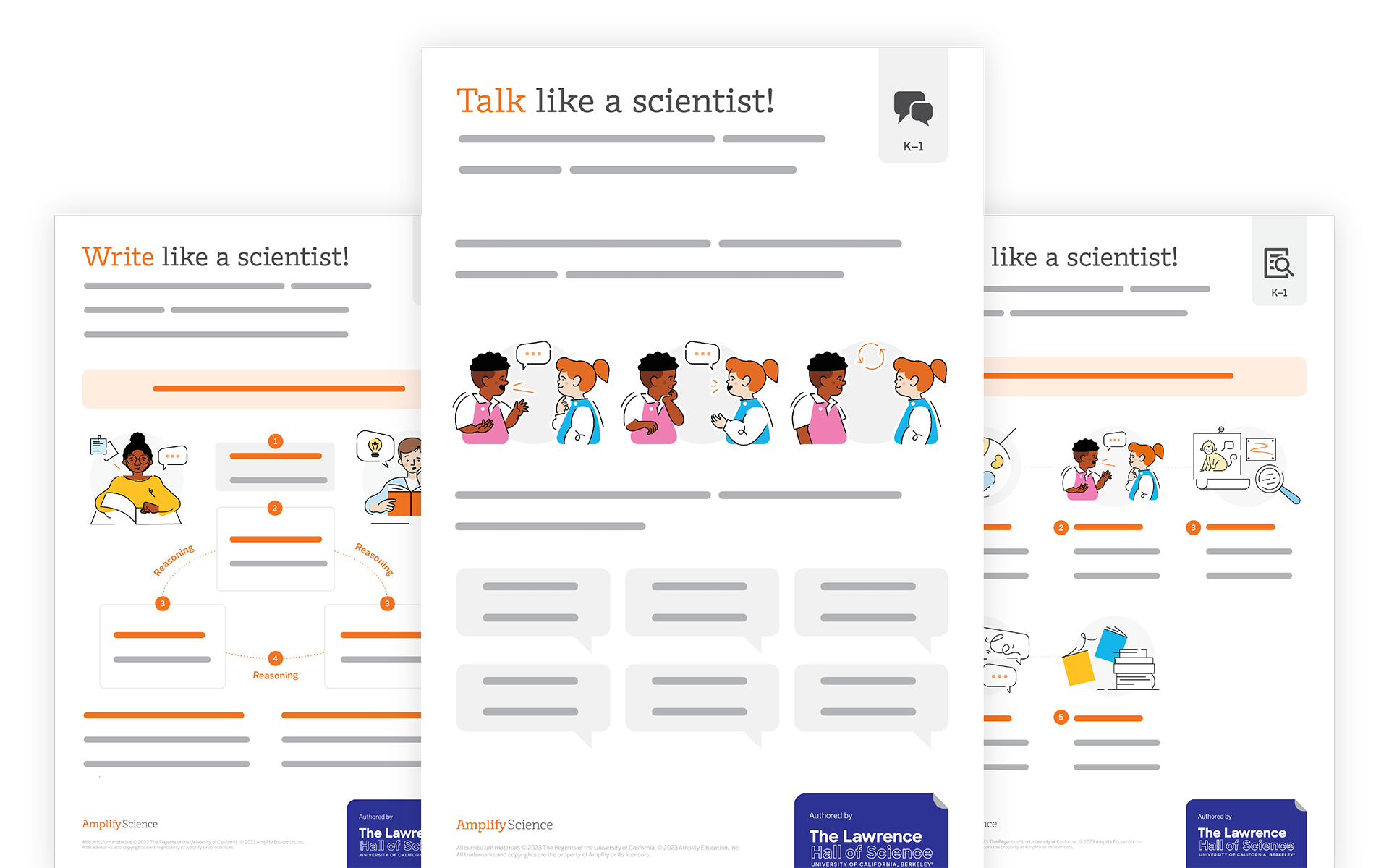
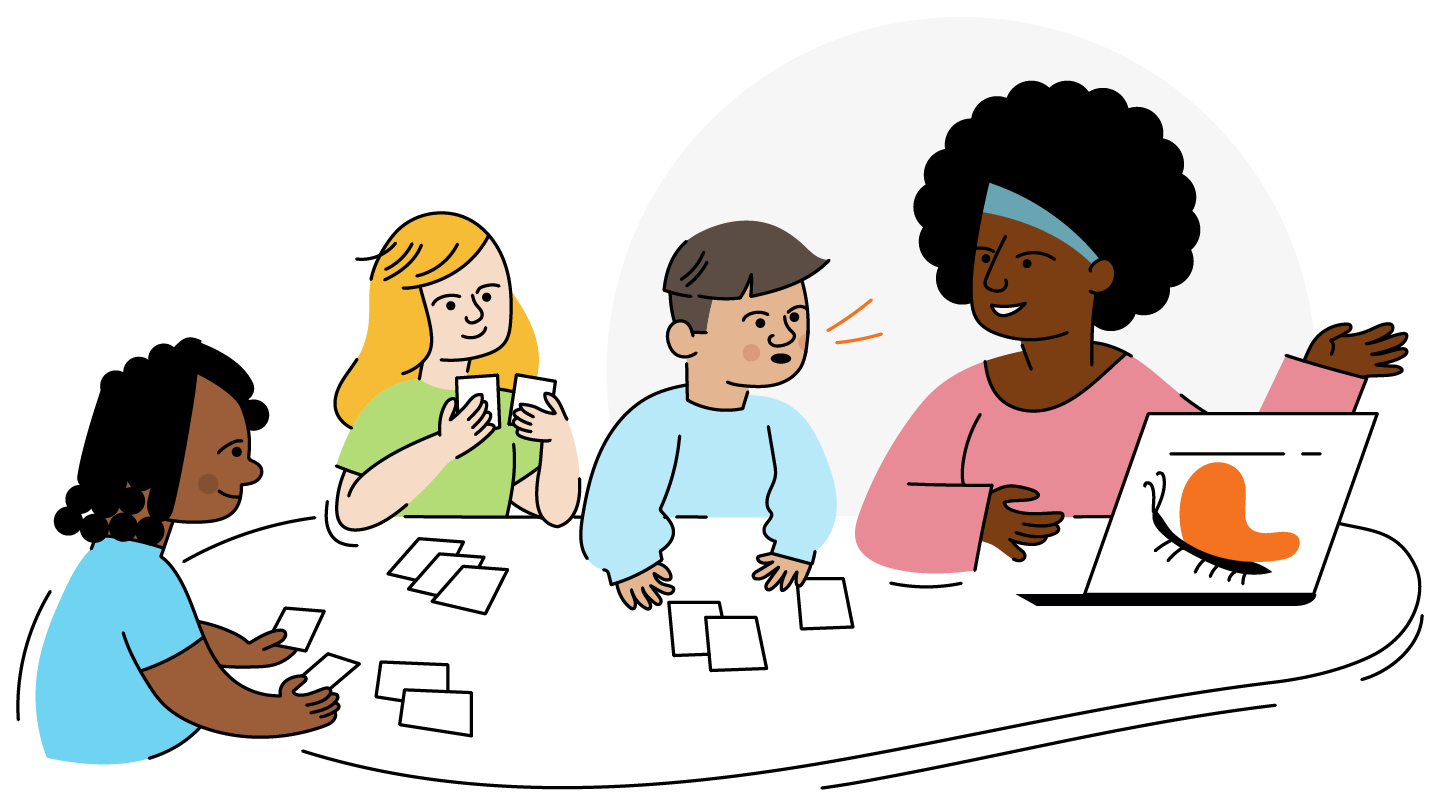
Welcome, Atlanta reviewers!
Welcome, San Diego reviewers!
LITERACY CHAMPIONS
The Science of Reading Star Awards
Making the shift to the Science of Reading is no small feat. Every day, educators like you are successfully improving student outcomes in schools and communities, and we’re eager to celebrate your accomplishments with the Science of Reading Star Awards.
We’re no longer accepting submissions for this year’s Star Awards cycle. See you next year!

Get excited for the prizes!
Exceptional accomplishments deserve to be rewarded.
All award winners will receive:
- Honorary Amplify Ambassadorship.
- Amplification on our website and social media.
- A Science of Reading starter library.
- Enrollment in Science of Reading: The Learning Lab for each winner and a friend.
- Tons of swag!
The grand prize winners in the District and School categories will receive access to an exclusive library of professional development resources. The grand prize winner in the Individual category will be given full conference registration and associated travel costs to The Annual Conference of The Reading League.
Recognizing leaders in education
Learning to read is nothing short of a transformation—and at the heart of this transformation are literacy educators harnessing the Science of Reading to ignite lifelong learning.
Science of Reading Star Award winners shine bright, going above and beyond to light the path for students nationwide. Be part of the celebration—help us recognize these heroes!
An award category for everyone!

District:
The District Captain
This award honors a district that exemplifies strong Science of Reading practices across the board.

School:
The Literacy Legend
This award honors a school that has seen significant reading gains among their students school-wide when using the Science of Reading.

Individual:
The Background Knowledge Builder
This award is for showing the world that the Science of Reading empowers students with knowledge, context, and vocabulary from elementary through middle school.
Individual:
The Changemaker
This award is for showcasing exemplary Science of Reading routines and practices, and serving as an inspiration to others on the journey.
Individual:
The Comprehension Champion
This award is for fostering deep understanding and critical thinking by expertly guiding students to make meaning from complex texts, ask thoughtful questions, and connect reading to their world and experiences.

Individual:
The Data Dynamo
This award is for expertly using data to drive instruction within an MTSS framework, identifying student needs with precision, and implementing targeted interventions that accelerate literacy growth for every learner.

Individual:
The Language Luminary
This award is for outstanding success in developing the skills and strengths of emergent bilingual students and multilingual/English learners.

Individual:
The Science of Reading Rookie
This award is for a teacher in their first three years of teaching, already making strides with the Science of Reading.

Individual:
The Writing Whiz
This award is for integrating writing instruction with the Science of Reading, cultivating articulate and confident writers through innovative and effective practices.

Submit a nomination to the Science of Reading Star Awards!
Entry is quick and simple—just provide the required information and an overview of the nominee you think deserves recognition.
- You may submit multiple entries, but please nominate for only one category at a time.
- Your submission can include an overview of the educator, school, or district’s journey with the Science of Reading; how they overcame challenges; how they are empowering their students with the Science of Reading; how they implemented strong Science of Reading practices; and/or what results they are seeing.
- The more specific you can be in your submission, the better! If data is a big part of your story, we’d love to hear about it.
- As part of your entry, you agree to allow us to contact you about the details of your application.
- A member of the team will be in contact by March 2026 if you are short-listed as a finalist.
Problem-solving and facilitating classroom discussions

Meet Our Guest(s):

Fawn Nguyen, Christy Thompson, and Kassia Omohundro Wedekind
Fawn Nguyen began her work with Amplify in 2022 as a Math Advance Team Specialist. She was a math coach for a K-8 school district for three years, and a middle school teacher for 30 years before that. Fawn has also received a number of accolades as an educator.
Christy Thompson is a Literacy Coach in Fairfax County Public Schools in Virginia. She has spent her teaching and coaching career particularly focused on listening to and learning from the talk of our youngest students.
Kassia Omohundro Wedekind spent many wonderful years as a classroom teacher and math coach in Fairfax County Public Schools in Virginia and now splits her time between being an independent math coach and an editor at Stenhouse Publishers. Her favorite days are spent in classrooms learning from the many ways children talk, listen and negotiate meaning together.
Meet our hosts: Bethany Lockhart Johnson and Dan Meyer
Bethany Lockhart Johnson is an elementary school educator and author. Prior to serving as a multiple-subject teacher, she taught theater and dance, and now loves incorporating movement and creative play into her classroom. Bethany is committed to helping students find joy in discovering their identities as mathematicians. In addition to her role as a full-time classroom teacher, Bethany is a Student Achievement Partners California Core Advocate and is active in national and local mathematics organizations. Bethany is a member of the Illustrative Mathematics Elementary Curriculum Steering Committee and serves as a consultant, creating materials to support families during distance learning.
Dan Meyer taught high school math to students who didn’t like high school math. He has advocated for better math instruction on CNN, Good Morning America, Everyday With Rachel Ray, and TED.com. He earned his doctorate from Stanford University in math education and is currently the Dean of Research at Desmos, where he explores the future of math, technology, and learning. Dan has worked with teachers internationally and in all 50 United States and was named one of Tech & Learning’s 30 Leaders of the Future.
Quotes
“It's a big deal for me to have the opportunity and this trust to integrate problem-solving into the curriculum.”
Stay connected!
Science of Reading Essentials: The science of learning



Transcripts and additional resources:
Meet Our Guest(s):

Natalie Wexler
Natalie Wexler is the author of multiple books, including Beyond the Science of Reading: Connecting Literacy Instruction to the Science of Learning and The Knowledge Gap: The Hidden Cause of America’s Broken Education System—and How to Fix It; and is the co-author, together with Judith C. Hochman, Ed.D., of The Writing Revolution: A Guide to Advancing Thinking Through Writing in All Subjects and Grades. She has a free Substack newsletter called Minding the Gap, and she was the host of the Knowledge Comprehension podcast, Season 1. More information is available on her website, www.nataliewexler.com.

Nathaniel Swain, Ph.D.
Nathaniel Swain is a teacher, instructional coach, and writer. He produces a blog for teachers called Dr. Swain’s Cognitorium and is cohost of the Chalk Dust podcast with Rebecca Birch. Nathaniel works directly with schools and systems through an online learning platform called Luminary.
He founded a community of educators committed to the science of learning, called Think Forward Educators. He also has a best-selling book, Harnessing the Science of Learning: Success Stories to Help Kickstart Your School Improvement.

Hugh Catts, Ph.D.
Hugh Catts’ research interests include the early identification and prevention of reading and disabilities. He is a former board member of the International Dyslexia Association and former president of the Society for the Scientific Study of Reading. He has received the Samuel T. Orton Award, the International Dyslexia Association’s highest honor, and the Honors of the Association award from the American Speech-Language-Hearing Association, for his career contributions in these disciplines. His current research concerns the early identification of reading and language difficulties and the nature and assessment of reading comprehension problems.

Daniel Willingham, Ph.D.
Daniel Willingham is a professor of psychology at the University of Virginia, where he has taught since 1992. Until about 2000, his research focused solely on the brain basis of learning and memory. Today, all of his research concerns the application of cognitive psychology to K–12 education. He is the author of several books, including the best-selling Why Don’t Students Like School? and Outsmart Your Brain. His writing on education has appeared in 23 languages. In 2017, he was appointed by President Barack Obama to the National Board for Education Sciences.

Peter C. Brown
Peter C. Brown is a bestselling writer and novelist, retired from a career as a management consultant. He is the lead author of Make It Stick: The Science of Successful Learning. Make It Stick has been translated into 17 foreign languages and received international acclaim for changing the way we understand learning.
Jamey Peavler, Ed.D.
Jamey Peavler is a co-director of and full-time instructor in the Graduate Reading Science program at Mount St. Joseph University. Before joining Mount St. Joseph, Jamey served as director of training for the M.A. Rooney Foundation. In addition, she works for the National Council for Teacher Quality (NCTQ) as a higher-education textbook and teacher licensure reviewer. Her research interests include instructional design, the impact of spaced practice and interleaving to support effortful retrieval and retention of information, the role of oral language and syntactic awareness on comprehension and written expression, and foundational skills for supporting literacy in the early childhood setting.


David Rapp, Ph.D.
David Rapp is the Walter Dill Scott Professor of Education, Social Policy, and Psychology at Northwestern University. His research examines language and memory, focusing on the cognitive mechanisms responsible for successful learning and knowledge failures. This has included investigations into the influence of inaccurate information on comprehension, the evaluation of technologies that support formal and informal learning, and the iterative development of tools and curricula intended to support literacy. Rapps’ projects have been funded by the National Science Foundation, the U.S. Department of Education, the National Institute on Aging, and Meta.
Meet our host, Susan Lambert, Ed.D.
Susan Lambert is chief academic officer of literacy at Amplify and host of Science of Reading: The Podcast. Throughout her career, she has focused on creating high-quality learning environments using evidence-based practices. Lambert is a mom of four, a grandma of four, a world traveler, and a collector of stories.
As the host of Science of Reading: The Podcast, Lambert explores the increasing body of scientific research around how reading is best taught. A former classroom teacher, administrator, and curriculum developer, she’s dedicated to turning theory into best practices that educators can put right to use in the classroom, and to showcasing national models of reading instruction excellence.
Quotes
“To build a meaningful memory of something that you can hold on to and use, you have to think about it.”
“Memory is a cognitive process. It's the way the brain encodes, stores, and retrieves information.”
“You can't learn something new if it doesn't connect to something you already know.”
“The catch about writing is it's hugely important. It can help cement knowledge and long-term memory, deep knowledge, et cetera.”
“When we have knowledge in our long-term memory, all of these limitations suddenly disappear.”
“We can only work with a limited set of information and when there's too much happening in our working memory, we experience cognitive overload. Essentially, our system is overloaded and we shut down.”
“Essentially, memory is what enables us to retain knowledge, skills, and experiences, forming the foundation for all learning and cognition.”
“The resonance model of comprehension suggests when someone asks a question, lots of ideas get activated automatically in memory.”
“Your mind is very good at bringing up from memory the necessary facts, the facts that will help you given the context.”
“A lot of our students that are having difficulty are experiencing cognitive overload. So the first thing we need to think about is how are we gonna minimize that for them?”
The joy of reading aloud, with Molly Ness



Transcripts and additional resources:
Read Alouds for All Learners: A Comprehensive Plan for Every Subject, Every Day, Grades PreK–8 by Molly Ness
Use promo code “AmplifyPodcast20” for a 20% discount on the paperback version of Read Alouds for All Learners.*
Meet Our Guest(s):

Molly Ness, Ph.D.
Molly Ness is a reading researcher, former classroom teacher, and teacher educator. She earned a doctorate in reading education at the University of Virginia and spent 16 years as an associate professor at Fordham University. The author of five books and numerous articles, Molly serves on the board of directors for the International Literacy Association.
Meet our host, Susan Lambert
Susan Lambert is the Chief Academic Officer of Elementary Humanities at Amplify, and the host of Science of Reading: The Podcast. Her career has been focused on creating high-quality learning environments using evidence-based practices. Susan is a mom of four, a grandma of four, a world traveler, and a collector of stories.
As the host of Science of Reading: The Podcast, Susan explores the increasing body of scientific research around how reading is best taught. As a former classroom teacher, administrator, and curriculum developer, Susan is dedicated to turning theory into best practices that educators can put right to use in the classroom, and to showcasing national models of reading instruction excellence.

Quotes
“A read-aloud is an interactive language experience…where a teacher reads something, elicits a conversation from students. Those conversational turns are so essential in [a] read-aloud. It's a shared literacy experience around a text.”
“What I don't think teachers understand, and I say this having been one of those teachers, is the intentionality that needs to happen in planning the read-aloud.”
“When we add things like think-alouds and being explicit in our vocabulary, we are building [students’] metacognition and [their] ability to understand text.”
“We all have those gaps in knowledge and life experiences, regardless of where we come from and regardless of our zip code and regardless of our personal or family situation.”
Knowledge building can’t wait, with HyeJin Hwang

Transcripts and additional resources:
Meet Our Guest(s):

HyeJin Hwang, Ph.D.
HyeJin Hwang is an assistant professor in the department of educational psychology at the University of Minnesota, Twin Cities. She earned her Ph.D. in Educational Studies (Literacy, Language, and Culture) at the University of Michigan and worked as a postdoctoral scholar at the Florida Center for Reading Research. Her research interests revolve around reading comprehension and content learning in K–12 settings, particularly for multilingual students. Hwang’s work has been published in research journals such as Reading Research Quarterly, Scientific Studies of Reading, and AERA Open, as well as practitioner journals such as The Reading Teacher and Reading in Virginia. Her work has been supported by the American Educational Research Association, the President’s Postdoctoral Fellowship Program at the University of Minnesota, and the American Psychological Association Division 15 (Educational Psychology).
Meet our host, Susan Lambert
Susan Lambert is the Chief Academic Officer of Elementary Humanities at Amplify, and the host of Science of Reading: The Podcast. Her career has been focused on creating high-quality learning environments using evidence-based practices. Lambert is a mom of four, a grandma of four, a world traveler, and a collector of stories.
As the host of Science of Reading: The Podcast, Lambert explores the increasing body of scientific research around how reading is best taught. As a former classroom teacher, administrator, and curriculum developer, Lambert is dedicated to turning theory into best practices that educators can put right to use in the classroom, and to showcasing national models of reading instruction excellence.
Quotes
“Knowledge building cannot wait. …Start from the beginning of schooling, from early grades. Multilingual students and monolingual students, they both need support developing knowledge and literacy skills.”
“In knowledge building, we usually like to go for cultivating in-depth knowledge. That means interconnected ideas need to be told throughout multiple lessons, multiple classes, rather than planning individual separate lessons.”
“When readers have good broad knowledge, prior knowledge, then it is more likely the readers can recall text information ideas, and they can make better inferences about missing ideas in text.”
Translating research into action, with Amie Burkholder


Special Episode: Translating research into action, with Amie Burkholder – For Testing
Translating research into action, with Amie Burkholder

Transcripts and additional resources:
Meet Our Guest(s):
Amie Burkholder
Amie Burkholder is a literacy coach, national speaker, and author of Literacy Unlocked: How to Implement the Science of Reading With Young Learners. With over 15 years in education, Amie helps teachers bridge research and practice through structured literacy. She’s the creator of the Route2Reading Membership and Foundations to Fluency phonics curriculum, approved in Virginia. Amie is passionate about making the Science of Reading practical for real classrooms and helping every child become a confident reader.
Meet our host: Susan Lambert
Susan Lambert is Chief Academic Officer of Literacy at Amplify and host of Science of Reading: The Podcast. Throughout her career, she has focused on creating high-quality learning environments using evidence-based practices. Lambert is a mom of four, a grandma of four, a world traveler, and a collector of stories.
As the host of Science of Reading: The Podcast, Lambert explores the increasing body of scientific research around how reading is best taught. A former classroom teacher, administrator, and curriculum developer, she’s dedicated to turning theory into best practices that educators can put right to use in the classroom, and to showcasing national models of reading instruction excellence.
Quotes
“I want [the book] to follow the research, but I want it to be simple enough for teachers to execute, [and] also engaging enough for kids to want to do it.”
“If you try to change everything you're doing, you're not going to do anything well. Pick one area of your literacy block you’re really gonna nail. Once you nail that, add another one.”
“Look to those that you trust to guide you.”
Unlocking reading: Comprehension strategies vs. knowledge building, with Daniel Willingham, Ph.D.

Transcripts and additional resources:
Meet Our Guest(s):
Daniel Willingham, Ph.D.
Daniel Willingham, Ph.D., is a Professor of Psychology at the University of Virginia, where he has taught since 1992. Until about 2000, his research focused solely on the brain basis of learning and memory. Today, all of his research concerns the application of cognitive psychology to K–16 education. He is the author of several books, including the best-selling Why Don’t Students Like School? and, most recently, Outsmart Your Brain. His writing on education has appeared in 23 languages. In 2017 he was appointed by President Barack Obama to the National Board for Education Sciences.
Meet our host, Susan Lambert
Susan Lambert is Chief Academic Officer of Literacy at Amplify and host of Science of Reading: The Podcast. Throughout her career, she has focused on creating high-quality learning environments using evidence-based practices. Lambert is a mom of four, a grandma of four, a world traveler, and a collector of stories.
As the host of Science of Reading: The Podcast, Lambert explores the increasing body of scientific research around how reading is best taught. A former classroom teacher, administrator, and curriculum developer, she’s dedicated to turning theory into best practices that educators can put right to use in the classroom, and to showcasing national models of reading instruction excellence.
Quotes
“Your brain is really good at only bringing out the information from long-term memory that is relevant for the context. All of that's happening outside of awareness.”
“When reading is really humming, when it's really working well, it's like visual perception. You're just enjoying the view and you're oblivious to all of the cognitive machinery in the background that's letting you see.”
“Expecting that knowledge-rich curriculum is going to solve all problems… that's [not] what a reading program is. No, a reading program is multifaceted and needs to have lots of components.”
“Knowledge accrues slowly and it's going to take a while. You need to be patient.”