Welcome!

Amplify Science: California Edition is an immersive and engaging core curriculum authored by UC Berkeley’s Lawrence Hall of Science and built specifically for the NGSS.

K–8 Integrated Course Model

Grades 6–8 Integrated Model

Grades 6–8 Discipline Specific Model

Amplify Science

A new core curriculum designed from the ground up for the NGSS.

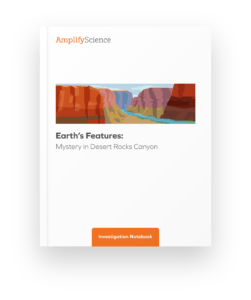
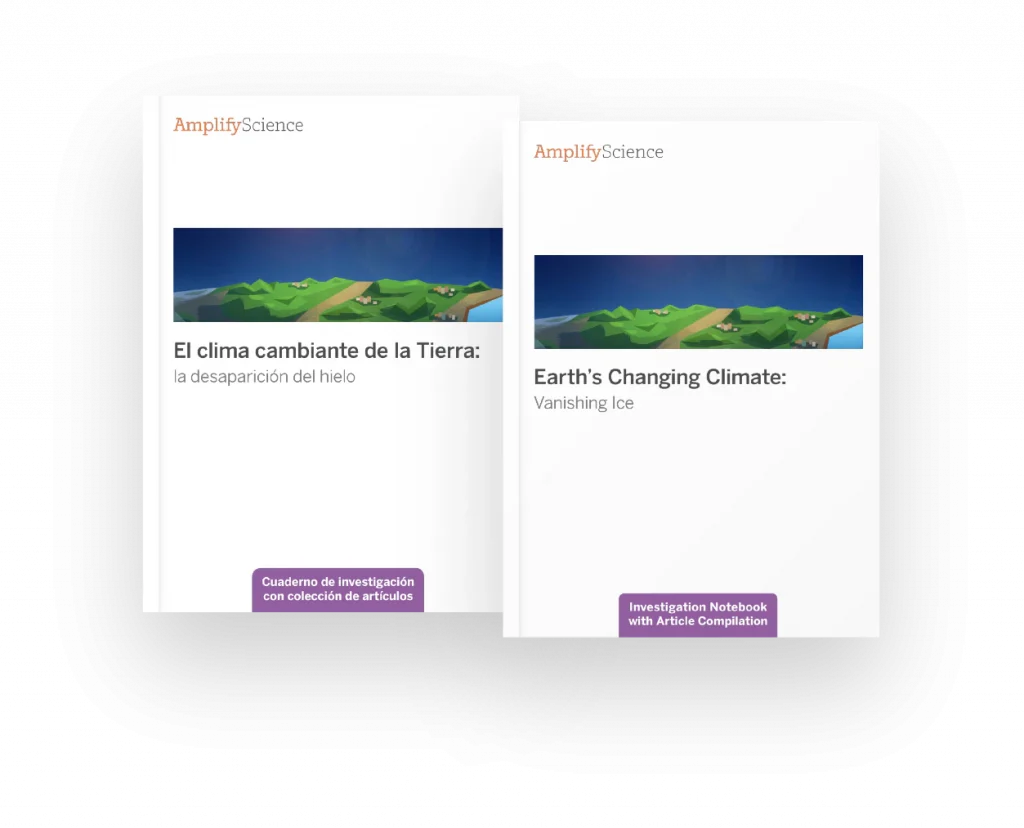
Preview the Student Books and Student Investigation Notebooks

Grades 6–8 Integrated Model

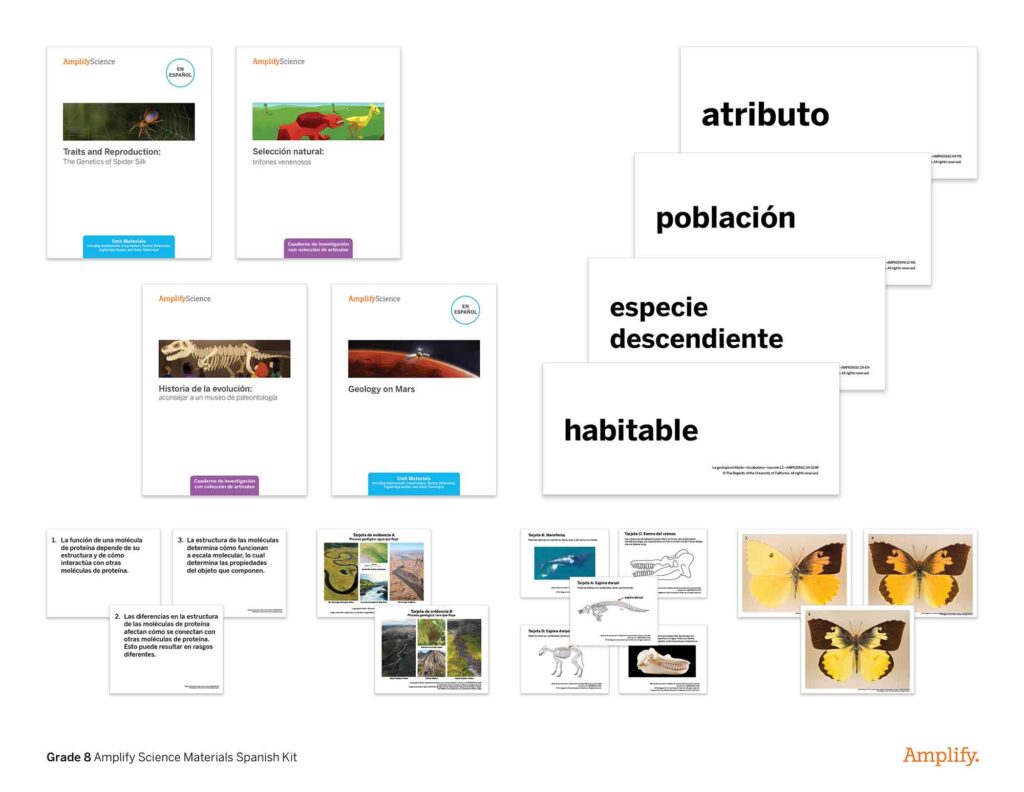
Spanish Student Books and Student Investigation Notebooks

Puyallup 6–8 Science Review | Amplify

To view this protected page, enter the password below:


Welcome, Idaho science reviewers!

To view this protected page, enter the password below:


Utah ELA Review for Grades PK–5

Thank you for taking the time to review Amplify’s core ELA program for PK–5. Amplify Core Knowledge Language Arts® (CKLA) is a state-approved core ELA curriculum designated as a primary core program that fully meets the Science of Reading requirements outlined in SB 127.

Amplify CKLA, developed in partnership with the Core Knowledge Foundation, was designed to help teachers implement Science of Reading principles and evidence-based instructional practices. Scroll down to learn how CKLA is uniquely designed to help all your students make learning leaps in literacy.

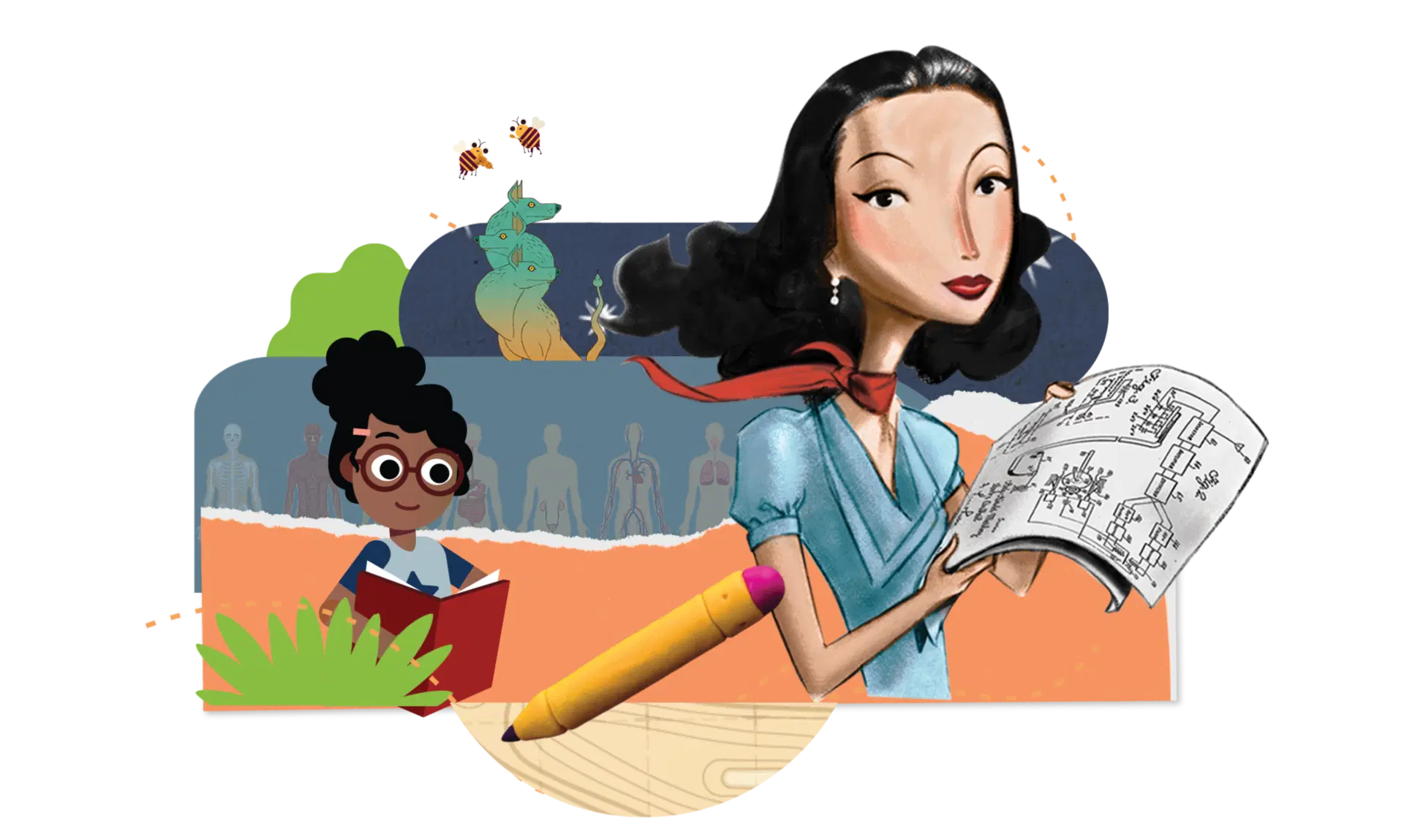
Illustration of a diverse group of people engaged in creative activities, including a woman holding architectural plans and a young girl reading a book.

Step 1: Program Introduction

Welcome to Amplify CKLA! Before you dive into our materials, watch the video below to learn about the big picture behind Amplify CKLA’s pedagogy.

In this video, Susan Lambert (Chief Academic Officer and host of Science of Reading: The Podocast) shares why Amplify CKLA was created, how it is built on the Science of Reading, and the impact it’s making across the country.

Step 2: Program Overview

Amplify CKLA is different for a reason. Watch the overview video below to learn about these differences and why educators love them.

In this video, you’ll get an in-depth look at the program’s overall structure and organization, the design behind our proven lessons, and the materials included to support teaching and learning.

The Amplify CKLA Program Guide also provides an in-depth view of how Amplify CKLA works, how it’s structured, and why it’s uniquely capable of helping you bring reading instruction based on the Science of Reading to your classroom.

Evidence-based design

Amplify CKLA is rooted in Science of Reading research. Mirroring Scarborough’s Rope, Amplify CKLA delivers a combination of explicit foundational skills with meaningful knowledge-building.

  • In Grades PK–2, dedicated knowledge-building and explicit skills instruction are taught simultaneously through two distinct instructional strands.
  • In Grades 3–5, dedicated knowledge-building and explicit skills instruction are woven together and delivered through one integrated strand.
Scarborough's Rope

Grades K–2 Skills and Knowledge Strands
Every day students in Grades K–2 complete one full lesson that explicitly and systematically builds foundational reading skills in the Skills Strand, as well as one full lesson that builds robust background knowledge to access complex text in the Knowledge Strand. Through learning in each of these strands, students develop the early literacy skills necessary to help them become confident readers and build the context to understand what they’re reading.

Grades 3–5 Integrated Strand
In Grades 3–5, Knowledge and Skills are integrated in one set of instructional materials. Lessons begin to combine skills and knowledge with increasingly complex texts, close reading, and a greater writing emphasis. Students can then use their skills to go on their own independent reading adventures.

Key features

For each Amplify CKLA key feature below, click the drop down arrow to learn more.

Built out of the latest research in the Science of Reading, Amplify CKLA delivers explicit instruction in both foundational literacy skills (systematic phonics, decoding, and fluency) and background knowledge in grades PK–2 with an integrated approach to explicit instruction in grades 3–5.

Review this Science of Reading toolkit to learn more about the Science of Reading best practices integrated throughout CKLA.

Amplify CKLA aligns with the instructional principles recommended by Orton Gillingham and LETRS.

  • Structured–Concepts are taught through consistent routines
  • Sequential–Concepts are taught in a logical, well-planned sequence
  • Systematic–Phonemes are taught from simplest to most complex
  • Explicit–Decoding and encoding concepts are taught directly and explicitly
  • Multi-sensory–Instruction is delivered through visual, auditory, and kinesthetic-tactile pathways
  • Cumulative–Concepts are applied in decodable, connected texts with constant review and reinforcement

Watch this video to learn more!

Additionally, great reading instruction starts with helping kids develop great decoding skills. Our instruction is supported by:

The Science of Reading reveals knowledge as an essential pillar of reading comprehension and lifelong literacy. Hear from author Natalie Wexler and CKLA customers on edWebinar about the importance of knowledge-building in reading instruction.

Students build grade-appropriate subject-area knowledge and vocabulary in history, science, literature, and the arts while learning to read, write, and think creatively and for themselves. Our instruction is supported by:

  • Knowledge builders that provide a quick overview of each domain with its key ideas.
  • Interactive Read-Alouds designed to build knowledge and vocabulary.
  • Content-rich anchor texts that support students as they tackle increasingly complex text and sharpen their analytical skills.
  • Social and emotional learning paired with lessons in civic responsibility.

Amplify CKLA not only received an all-green rating from the rigorous evaluators at EdReports, but it was also recently recognized by the Knowledge Matters Campaign as a high-quality literacy program that excels in building knowledge. Our shared message: background knowledge is essential to literacy and learning.

Student-led reading practice should be purposeful and connected to the core. That’s why Amplify createdBoost Reading. As an optional add-on to Amplify CKLA, students have the opportunity to practice skills directly tied to the skills they’ve been working on during core reading time. Boost Reading also adapts to each student to address their personal gaps and bolsters foundational skills at a pace that supports their individual development.

Boost Reading’s collection of 40+ adaptive games target foundational reading skills and develops them in alignment with Science of Reading principles. Unlike other adaptive games, we ensure students:

  • Practice the right skills at the right time. Our embedded placement tool ensures students receive the content and skill practice most appropriate for their current reading level. From there, students move through our curriculum along their own learning pathway where they encounter personalized content tailored to their evolving skill and grade levels.
  • Progress along a pathway that adapts on multiple dimensions, not just one. For example, a student can work on early first-grade decoding in one game while building more advanced vocabulary knowledge in another.
  • Practice skills in tandem. For example, a student is never forced to master one skill area before proceeding to the next. Instead, we offer students that opportunity to work on multiple skills concurrently.
  • Feel supported with scaffolding, instruction, and practice that adapts based on student performance.
  • Stay engaged by giving them immediate and clear feedback. These results are never punitive. Instead our always-positive feedback is delivered in the context of the game world and is designed to motivate students to keep trying.

Click the buttons below to learn more:

Step 3: Program Resources

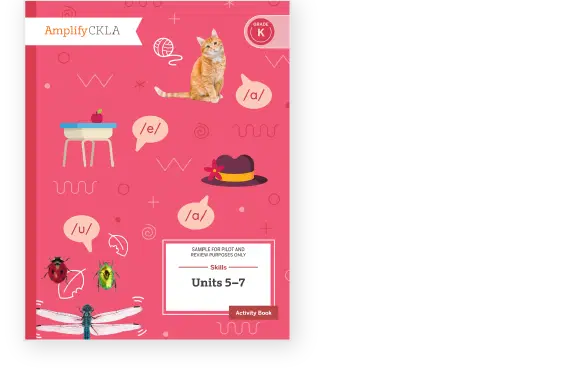
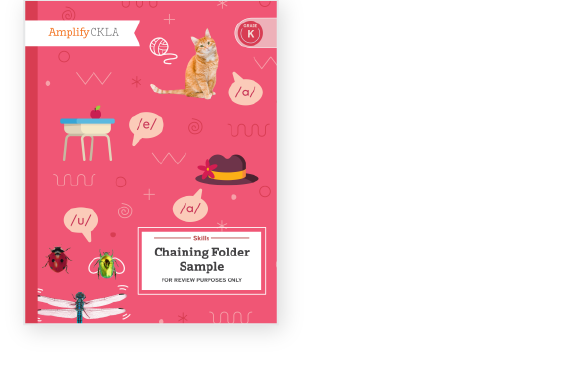
Easy-to-use print materials

Amplify CKLA’s easy-to-use materials bring foundational skills and knowledge to life in the classroom.

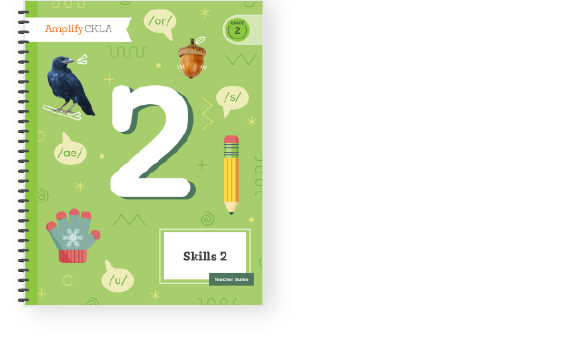
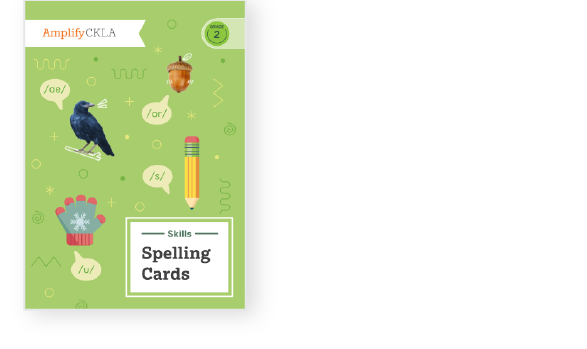
Download the Amplify CKLA Components guide to see components by grade and watch the print materials walkthrough below.

Engaging CKLA digital experience

The top-rated content of Amplify CKLA is now live with the digital experience that enhances instruction and saves time.

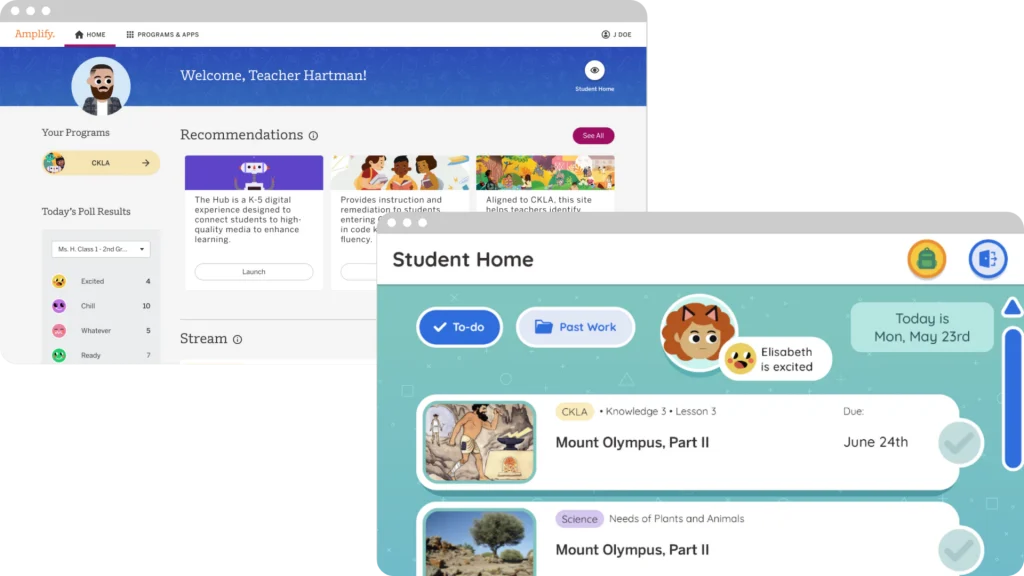
Two digital dashboards are displayed: one for teachers showing recommendations and a program list, and one for students showing to-do items and a lesson named Mount Olympus, Part II.

With the digital experience, everything is in one place, making it easier and more engaging than ever to plan lessons, present digital content, and review student work. Click the arrows below to learn more.

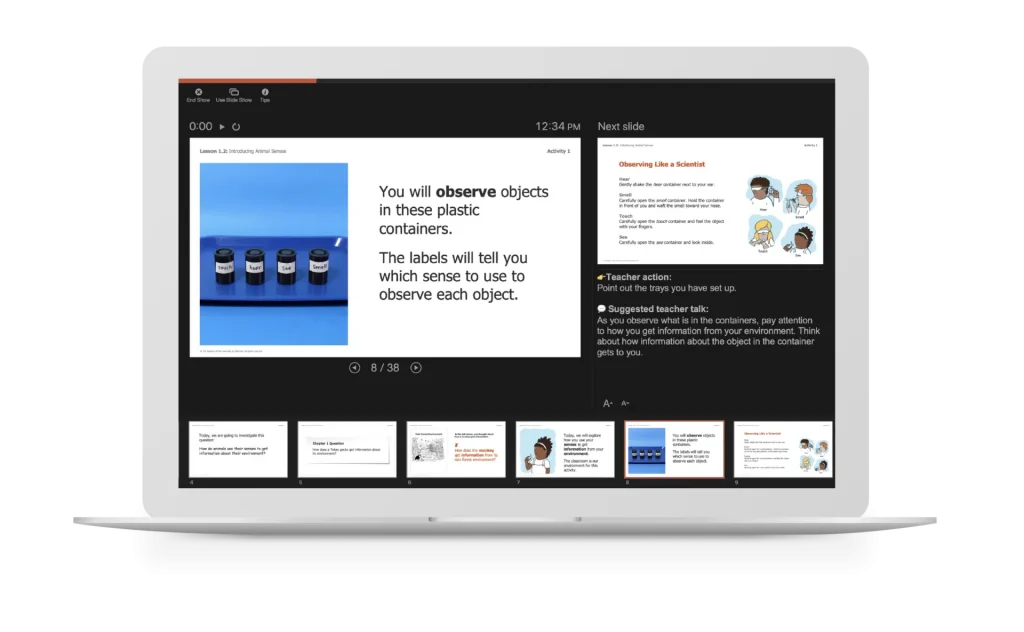
With the digital experience, teachers have access to ready-to-use and customizable lesson presentation slides, complete with all the prompts from the print Teacher Guide embedded in the teacher view. As teachers deliver each lesson, students can engage with the content in one cohesive experience—through these CKLA resources: Activity Books, slides, digital components, videos, Student Readers, and more.

The innovative live review tool found in the digital experience enables you to keep an eye on all of your students as they work on drawing, recording audio, uploading and capturing images, and typing or writing in pre-placed textboxes in their Activity Pages. This dynamic tool provides countless classroom management benefits, enabling you to spot and correct common mistakes as they’re happening, praise your students for thoughtful work, and identify students who are not engaged in the task at hand. Simply put, it will give you those valuable “eyes in the back of your head” you’ve warned your students about!

The digital experience integrates with various LMSs, allowing you and your students to access Amplify CKLA with the software you’re already comfortable using.

In the Amplify CKLA student digital experience, your students have one intuitive access point to fully engage with classroom instruction. Through the Student Home, students can easily access digital lessons with slides, Activity Pages, ebooks, videos, and other interactives from one simple dashboard. Students can draw, record audio, upload and capture images, and type or write in pre-placed text boxes in their Activity Pages.

CKLA review resources

Step 4: State Review Resources

Step 5: Program Access

Explore as a teacher

Before logging in, watch this brief video on navigating the CKLA Teacher Platform.

Ready to explore as a teacher? Follow these instructions:

  • Click the Amplify CKLA Teacher Platform button below.
  • Select Log in with Amplify.
  • Enter the teacher username: t1.utcklapk5@demo.tryamplify.net
  • Enter the teacher password: Amplify1-utcklapk5
  • Choose CKLA from the “Your Programs” menu on Educator Home.
  • Select a grade level from the drop-down menu at the top of the page.

Ready to explore as a Student? Follow these instructions:

  • Click the Amplify CKLA Teacher Platform button below.
  • Select Log in with Amplify.
  • Enter the student username: s1.utahcklapk5@demo.tryamplify.net
  • Enter the student password: Amplify1-utahcklapk5

Inspiring the next generation of Rochester scientists, engineers, and curious scholars

Dear Rochester educator,

We’re extremely excited to be part of your science review process.

Built from the ground up for three-dimensional, phenomena-based learning, Amplify Science helps your Rochester scholars go from learning about to figuring out scientific concepts.

Explore the sections below and learn how Amplify creates rigorous, relevant learning experiences for the next generation of scientists, engineers, and curious citizens.

—Jennifer Fosegan, Rochester Senior Account Executive

Standards-based and grounded in research

Amplify Science is an engaging new core curriculum designed for three-dimensional, phenomena-based learning. Developed by the science education experts at UC Berkeley’s Lawrence Hall of Science and the digital learning team at Amplify, our program is used by hundreds of schools across the country, including New York City Public Schools, Chicago Public Schools, and Denver Public Schools.

Amplify Science was designed from the ground up to meet the Next Generation Science Standards. To ensure alignment to the New York State Science Learning Standards (NYSSLS), our partners at the New York City Department of Education created additional resources that can be made available for RCSD to implement.

Instructional model

The Amplify Science program is rooted in the proven, research-based pedagogy of Do, Talk, Read, Write, Visualize. Here’s how each element works:

Phenomena-based approach

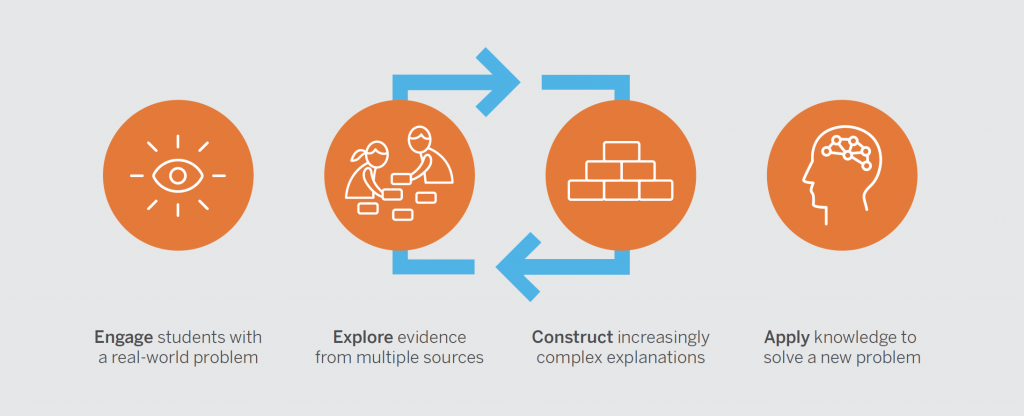
In each Amplify Science unit, students take on the roles of scientists or engineers in order to investigate a real-world problem. Students work to define the problem and collect and make sense of evidence. Once the context is clear, students collect evidence from multiple sources and through a variety of modalities.

At the end of the unit, students are presented with a brand-new problem, giving them an opportunity to apply what they’ve learned over the course of the unit to a new context. This represents a shift from asking students to learn about science to supporting students in figuring out the science.

Resources to support your review

What’s included

COMPONENT

FORMAT

Teacher’s Guides and digital experience

Available digitally and in print, the Teacher’s Guides contain all of the information teachers need to facilitate classroom instruction, including detailed lesson plans, classroom slides, high-level overview documentation, differentiation strategies, standards alignments, materials and preparation steps, teacher support strategies, and in-context professional development, possible student responses, and more.

Print and digital

Hands-on materials kits

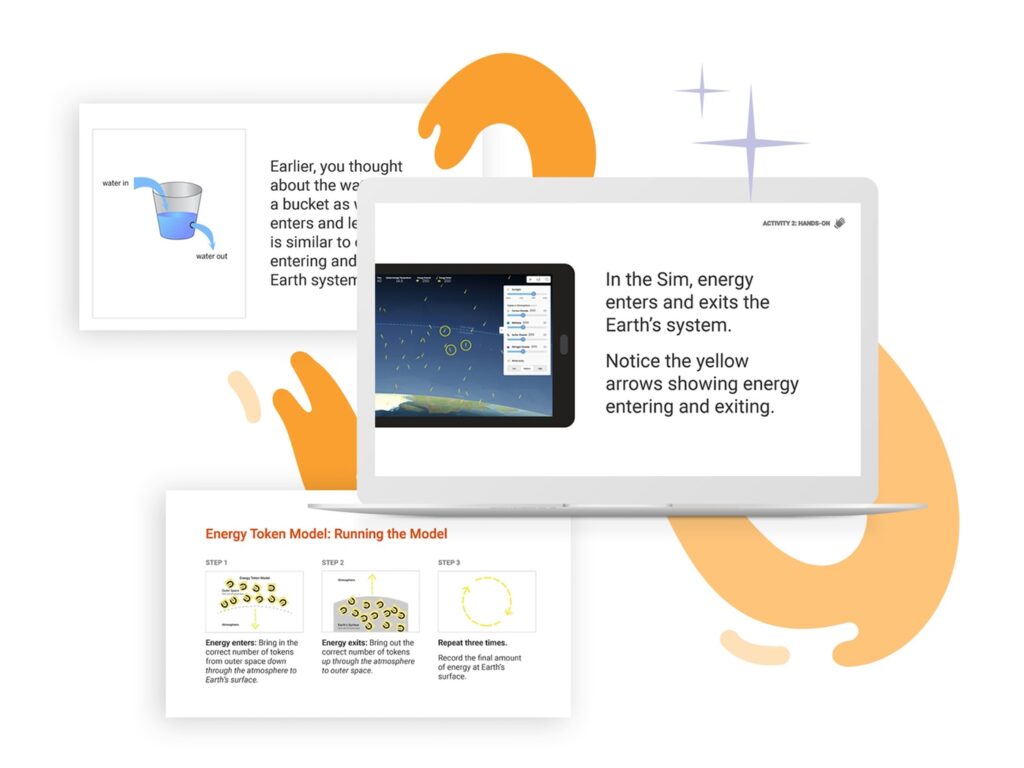
Hands-on learning is integrated into every unit of Amplify Science. Each hands-on activity is supported through clear instructions for the teacher, as well as easily accessible materials in unit-specific kits. Each kit contains hands-on materials, both consumable and nonconsumable, and various print materials (e.g., Vocabulary and Key Concept cards). With Amplify Science, students can actively participate in science: gathering evidence, thinking critically, making observations, and communicating their claims

Kit

COMPONENT

FORMAT

Student Investigation Notebooks

Available for every unit, the Student Investigation Notebooks contain instructions for activities and space for students to record data, reflect on ideas from texts and investigations, and construct explanations and arguments.

Print and digital

Student books

The age-appropriate Student Books in Amplify Science allow students to engage with content-rich text, obtain evidence, develop research and close reading skills, and construct arguments and explanations about the ideas they are learning in class.

Print and digital

Student digital experience

Students can easily engage with the student digital experience, so effective learning can occur in every type of classroom environment.

In grades 4–5, students are introduced to digital simulations. Developed exclusively for Amplify Science, these digital tools serve as venues of exploration and data collection, allowing students to discover and construct their understanding of science concepts and phenomena.

Digital

Spanish parity

Amplify Science is committed to providing support to meet the needs of all learners. For Spanish-speaking students, greater access to rich science content is achieved with Amplify Science through the use of a pedagogical approach that offers multiple points of entry. In addition, Spanish language supports are available across the curriculum, including Spanish kits that offer Spanish versions of all student-facing print materials, as well as Spanish digital licenses for teachers. Learn more about the Spanish components available across Amplify Science.

The same rigor in terms of scientific accuracy, literacy development, and the use of rich content and language in the creation of the Amplify Science Spanish materials. To ensure equity, all Spanish materials were carefully translated using academic Spanish, paying particular attention to consistency and the use of grade-level-appropriate language in order to support language development.

Review online

Ready to explore on your own? Follow the instructions below to access your demo account.

First, watch this navigation video. Then, click the orange button “Log in to Amplify Science” to log in.

  • Select Log in with Amplify.
  • Enter username and password:
    • Teacher username: t1.rcsdtrial@demo.tryamplify.net
    • Student username: s1.rcsdtrial@demo.tryamplify.net
    • Password (both teacher and student): Amplify1-rcsdtrial

Disciplinary Core Ideas (DCI) review
Each Amplify Science unit is designed around a unit-specific learning progression that aligns with NGSS disciplinary core ideas (DCI) and crosscutting concepts. The levels that comprise the unit’s learning progression are cumulative. As students progress through the unit, they are able to integrate prior understandings with new insights, and there are continuing opportunities for students to master conceptual understanding of early unit content in subsequent chapters of the unit.

This means that standards are often addressed across entire units instead of in one particular activity or lesson. Thus, the lessons noted below are examples of where the concept represented in the listed DCI is addressed, but this list should not be considered exhaustive. Instead, students have frequent opportunities to engage with these ideas throughout the unit, the grade, and the grade band. 

To view the specified lessons, explore our RCSD Digital Review Guide or select a grade level below.

DCI ESS2.D: Weather and Climate
Before you begin reviewing these lessons, make sure to locate the following Student Books from your Unit Kit: What is the Weather Like Today? and Tornado! Predicting Severe Weather

Select the Sunlight and Weather unit, click Chapter 1, and locate the lessons below:

Lesson 1.1

  • Activities 2 and 3, Step-by-step tab
  • Student bookWhat is the Weather Like Today? (note: located in your Unit Kit)

Lesson 1.2

  • Activities 1 and 3, Step-by-step tab

Lesson 1.3

  • Activities 1 and 2, Step-by-step tab

Lesson 1.4

  • Lesson Brief, Digital Resources, “Playground Weather Calendars and Playground Weather Graphs (Completed)”
  • Activity 1, Step-by-step tab (especially steps 5, 9, and 10) and Teacher Support tab (“Assessment, Assessment Opportunity: Assessing Students’ Understanding of Types of Weather”)

Lesson 5.1

  • Activity 1, Step-by-step tab (especially steps 6–7) and Teacher Support, Assessment tab (“Assessment Opportunity: Assessing Students’ Understanding of Weather and Why We Measure It”)
  • Student book, Tornado! Predicting Severe Weather (note: located in your Unit Kit), pages 6–9

DCI PS4.A: Wave Properties
Before you begin reviewing these lessons, make sure to locate the following materials from your Unit Kit: Light and Sound Student Investigation Notebook; Student Book: What Vibrates?

Select the Light and Sound unit, click Chapter 4, and locate the lessons below:

Lesson 4.1

  • Lesson Brief, Digital Resources, “Assessment Guide”
  • Activity 3, Step-by-step tab (especially steps 1–12)
  • Light and Sound Student Investigation Notebook, page 24 (note: located in your Unit Kit)

Lesson 4.2

  • Activity 2, Step-by-step tab and On-the-Fly Assessment (hummingbird icon)
  • Activity 3, Step-by-step tab and On-the-Fly Assessment (hummingbird icon)
  • Activity 4, Instructional Guide
  • Student bookWhat Vibrates? (note: located in your Unit Kit)
  • Light and Sound Student Investigation Notebook, page 25 (note: located in your Unit Kit)

Lesson 4.3

  • Lesson Brief, Digital Resources, “I Hear a Sound. What Vibrates? Mini-Book copymaster”
  • Activity 1, Step-by-step tab (especially steps 5–11, 13), and Teacher Support tab (“Instructional Suggestion, Going Further: Sound Can Cause Vibrations”)
  • Activity 3, Step-by-step tab
  • Activity 4, Step-by-step tab and On-the-Fly Assessment (hummingbird icon)

DCI LS2.A: Interdependent Relationships in Ecosystems
Before you begin reviewing these lessons, make sure to locate the following materials from your Unit Kit: Plant and Animal Relationships Student Investigation Notebook; Student book A Plant is a System.

Select the Plant and Animal Relationships unit, click Chapter 1, and locate the lessons below:

Lesson 1.6

  • Activities 2–4, Step-by-step tab
  • Plant and Animal Relationships Student Investigation Notebook (note: located in your Unit Kit), pages 15–19

Lesson 1.7

  • Activity 2, Step-by-step tab, Possible Responses tab, and Critical Juncture Assessment (hummingbird icon)
  • Activity 3, Step-by-step tab

Lesson 2.2

  • Activity 2, Step-by-step tab (especially steps 4–12) and Possible Responses tab
  • Student bookA Plant is a System (note: located in your Unit Kit)

DCI ESS2.D: Weather and Climates
Before you begin reviewing these lessons, make sure to locate the following materials from your Unit Kit: Weather and Climate Student Investigation Notebook; Student Books Dangerous Weather Ahead and Sky Notebook.

Select the Weather and Climate unit, click Chapter 4, and locate the lessons below:

Lesson 1.4

  • Activity 2, Step-by-step tab 
  • Student bookSky Notebook (note: located in your Unit Kit)

Lesson 2.3

  • Activity 3, Step-by-step tab and Possible Responses tab
  • Weather and Climate Student Investigation Notebook, page 28 (note: located in your Unit Kit)

Lesson 3.2

  • Lesson Brief, Digital Resources, “Anchorage, Queenstown, and Saint Petersburg Graphs copymaster”
  • Activities 2 and 3, Step-by-step tab

Lesson 3.3,

  • Activity 2, Step-by-step tab, Possible Responses tab, and On-the-Fly Assessment (hummingbird icon)

Lesson 3.6

  • Activity 1, Step-by-step tab (especially steps 3–5) and On-the-Fly Assessment (hummingbird icon)

Lesson 3.7

  • Lesson Brief,  Digital Resources, “End-of-Unit Writing: Arguing About Future Island Weather Version A copymaster” and “Assessment Guide”
  • Activity 3, Step-by-step tab (especially steps 3–7)

Lesson 4.2

  • Activity 2, Step-by-step tab, Possible Responses tab, and On-the-Fly Assessment (hummingbird icon)
  • Student book, Dangerous Weather Ahead (note: located in your Unit Kit)

DCI PS4.A: Wave Properties
Before you begin reviewing these lessons, make sure to locate the following materials from your Unit Kit: Student books Warning: Tsunami! and Patterns in Communication.

Select the Waves, Energy, and Information unit, click Chapters 1 and 3, and locate the lessons below:

Chapter 1

Lesson 1.4

  • Activity 1, Step-by-step tab (especially steps 1, and 4)
  • Student bookWarning: Tsunami! (note: located in your Unit Kit)
  • Activity 2, Step-by-step tab, On-the-Fly Assessment (hummingbird icon), and Teacher Support tab (“Instructional Suggestion, Providing More Experience: Waves in Water”)

Chapter 3

Lesson 3.1

  • Activity 2, Step-by-step tab (especially steps 4–8) and On-the-Fly Assessment (hummingbird icon)
  • Activity 3, Step-by-step tab and Waves, Energy, and Information Simulation

Lesson 3.2

  • Activity 3, Step-by-step tab, On-the-Fly Assessment (hummingbird icon), and Waves, Energy, and Information Simulation 

Lesson 3.3

  • Activity 4, Step-by-step tab and On-the-Fly Assessment (hummingbird icon)
  • Student bookPatterns in Communication (note: located in your Unit Kit), pages 6–7

DCI LS2.A: Interdependent Relationships in Ecosystems
Before you begin reviewing these lessons, make sure to take out the following materials from your Unit Kit: Student books Restoration Case Studies and Walk in the Woods; Organism Print Name Cards: Set 1.

Select the Ecosystem Restoration unit, click Chapters 1, 2, and 3, and locate the lessons below:

Lesson 1.6

  • Activity 2, Step-by-step tab, Possible Responses tab, and Ecosystem Modeling Tool (Box 2 on student apps page, “1.6 Healthy Ecosystem Model”)
  • Activity 3, Step-by-step tab (especially steps 2 and 3), Possible Responses tab, and Critical Juncture Assessment (hummingbird icon)

Lesson 1.7

  • Activity 2, Step-by-step tab
  • Activity 3, Step-by-step tab (especially steps 3–7) and On-the-Fly Assessment (hummingbird icon)
  • Printable Resources, Print Materials (8.5” x 11”), Organism Name Cards: Set 1, pages 12–17 (note: located in your Unit Kit)

Lesson 1.8

  • Activity 3, Step-by-step tab (especially steps 6–8) and Possible Responses tab

Lesson 2.3

  • Activity 3, Step-by-step tab (especially steps 1–4), Possible Responses tab, and Ecosystem Modeling Tool (Box 3 on student apps page, “2.3 Plant Needs Model”)

Lesson 2.5

  • Activity 3, Step-by-step tab
  • Student bookRestoration Case Studies (note: located in your Unit Kit)

Lesson 3.2

  • Activity 2, Step-by-step tab
  • Student bookWalk in the Woods (note: located in your Unit Kit), pages 6–10

Lesson 3.3

  • Activity 4, Step-by-step tab and Ecosystem Restoration Simulation

Lesson 3.4

  •  Activity 2, Step-by-step tab, Possible Responses tab, On-the-Fly Assessment (hummingbird icon), and Ecosystem Restoration Simulation

Lesson 3.5

  • Activity 2, Step-by-step tab and Teacher Support tab (“Instructional Suggestion, Going Further: Balance and Interdependence of Ecosystems: Impacts of Invasive Species”)
  • Student bookRestoration Case Studies (note: located in your Unit Kit), pages 11, 31, and 47

Lesson 3.6

  • Activity 2, Step-by-step tab (especially steps 4–5), Possible Responses tab, and Critical Juncture Assessment (hummingbird icon)

Lesson 3.7

  • Activity 1, Step-by-step tab, Possible Responses tab, and Ecosystem Modeling Tool (Box 5 on student apps page, “3.7 No Decomposers Model”)

Looking for help?

Contact your Rochester Account Executive:

Jennifer Fosegan
(585) 590-4200
jfosegan@amplify.com

Amplify Science

A new core curriculum designed from the ground up for the NGSS.

Preview the Student Books and Student Investigation Notebooks

Spanish Student Books and Student Investigation Notebooks

Amplify Science

A new core curriculum designed from the ground up for the NGSS.

Preview the Student Books and Student Investigation Notebooks

Grades 6–8 Integrated Model

NGSS Benchmark Assessments

The Amplify NGSS Benchmark Assessments were authored by Amplify and were not developed as part of the Amplify Science program or created by the Lawrence Hall of Science.

Review the digital curriculum

  1. Click on the orange button below.
  2. Sign in with Google with this username and password:

Username: FLsciencestudent@demo.tryamplify.net
Password: AmplifyNumber1

3. Click on the orange Amplify Curriculum button.

Note: You may be asked by Google to provide your location. If this occurs, please type in: Brooklyn, NY. If Brooklyn, NY does not work, type in: Alpharetta, GA . (This is a Google authentication security measure.)

Comprehensive Student Investigation Notebooks

Comprehensive Science 1

Comprehensive Science 2

Comprehensive Science 3

Domain Student Investigation Notebooks

Earth and Space Science

Life Science

Physical Science

Kindergarten

Needs of Plants and Animals

Pushes and Pulls

Sunlight and Weather

Grade 1

Animal and Plant Defenses

Light and Sound

Spinning Earth

Grade 2

Plant and Animal Relationships

Properties of Materials

Changing Landforms

Grade 3

Balancing Forces

Environments and Survival

Inheritance and Traits

Weather and Climate

Grade 4

Energy Conversions

Earth’s Features

Vision and Light

Waves, Energy, and Information

Grade 5

Patterns of Earth and Sky

Ecosystem Restoration

The Earth System

Modeling Matter

Grade 6

Grade 7

Grade 8

A digital experience exclusively for Amplify CKLA 2nd Edition

Amplify Core Knowledge Language Arts (CKLA) 2nd Edition’s top-rated content is available with a digital experience that enhances instruction and saves time. With everything you need in one place, this platform makes it easier and more engaging to plan lessons, present digital content, and review student work.

Information on this page relates to Amplify CKLA 2nd Edition. Access Amplify CKLA 3rd Edition here.

A teacher presenting a slide titled "introducing the read-aloud" for a lesson on "the aztec: the legend of the eagle and the serpent," featuring colorful graphics on a computer screen.

Simplify planning and instruction

With the digital experience, teachers have access to ready-to-use and customizable lesson presentation slides, complete with all the prompts from the print Teacher Guide embedded in the teacher view. As teachers deliver each lesson, students can engage with the content in one cohesive experience—through these CKLA resources: Activity Books, slides, digital components, videos, Student Readers, and more.

Get real-time insights into your students’ work

The innovative live review tool found in the digital experience enables you to keep an eye on all of your students as they work on drawing, recording audio, uploading and capturing images, and typing or writing in pre-placed textboxes in their Activity Pages. This dynamic tool provides countless classroom management benefits, enabling you to spot and correct common mistakes as they’re happening, praise your students for thoughtful work, and identify students who are not engaged in the task at hand. Simply put, it will give you those valuable “eyes in the back of your head” you’ve warned your students about!

Learning Management System integrations

The digital experience integrates with various LMSs, allowing you and your students to access Amplify CKLA with the software you’re already comfortable using.

Engage your students with one easy-to-use access point

In the Amplify CKLA student digital experience, your students have one intuitive access point to fully engage with classroom instruction. Through the Student Home, students can easily access digital lessons with slides, Activity Pages, ebooks, videos, and other interactives from one simple dashboard. Students can draw, record audio, upload and capture images, and type or write in pre-placed text boxes in their Activity Pages.

A closer look at grades 6–8

Amplify Science California is based on the latest research on teaching and learning and helps teachers deliver rigorous and riveting lessons through hands-on investigations, literacy-rich activities, and interactive digital tools that empower students to think, read, write, and argue like real scientists.

In the 6–8 classroom, this looks like students:

  • Collecting evidence from a variety of sources.
  • Making sense of evidence in a variety of ways.
  • Formulating convincing scientific arguments.

Is your school implementing the domain model? Click here.

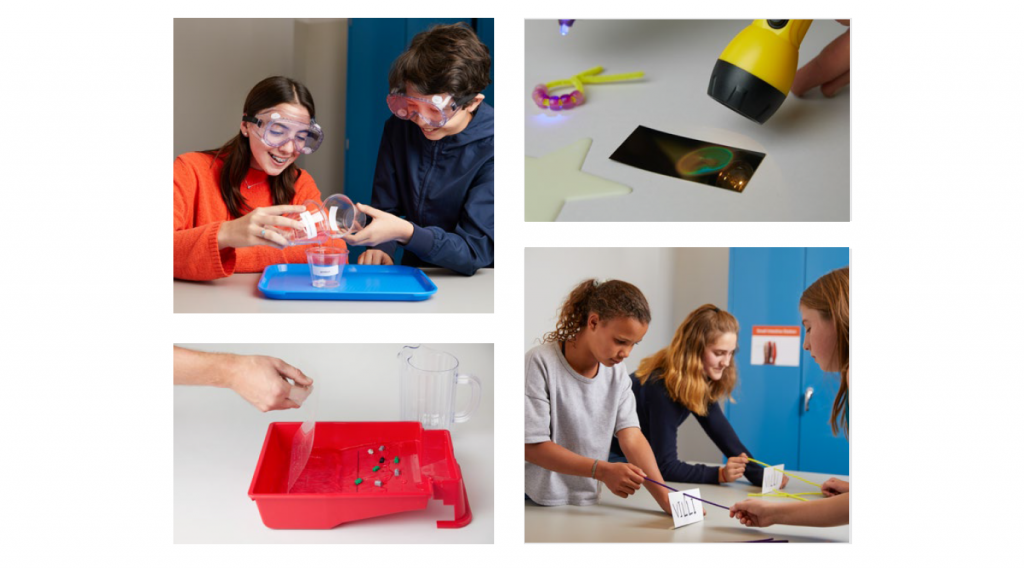
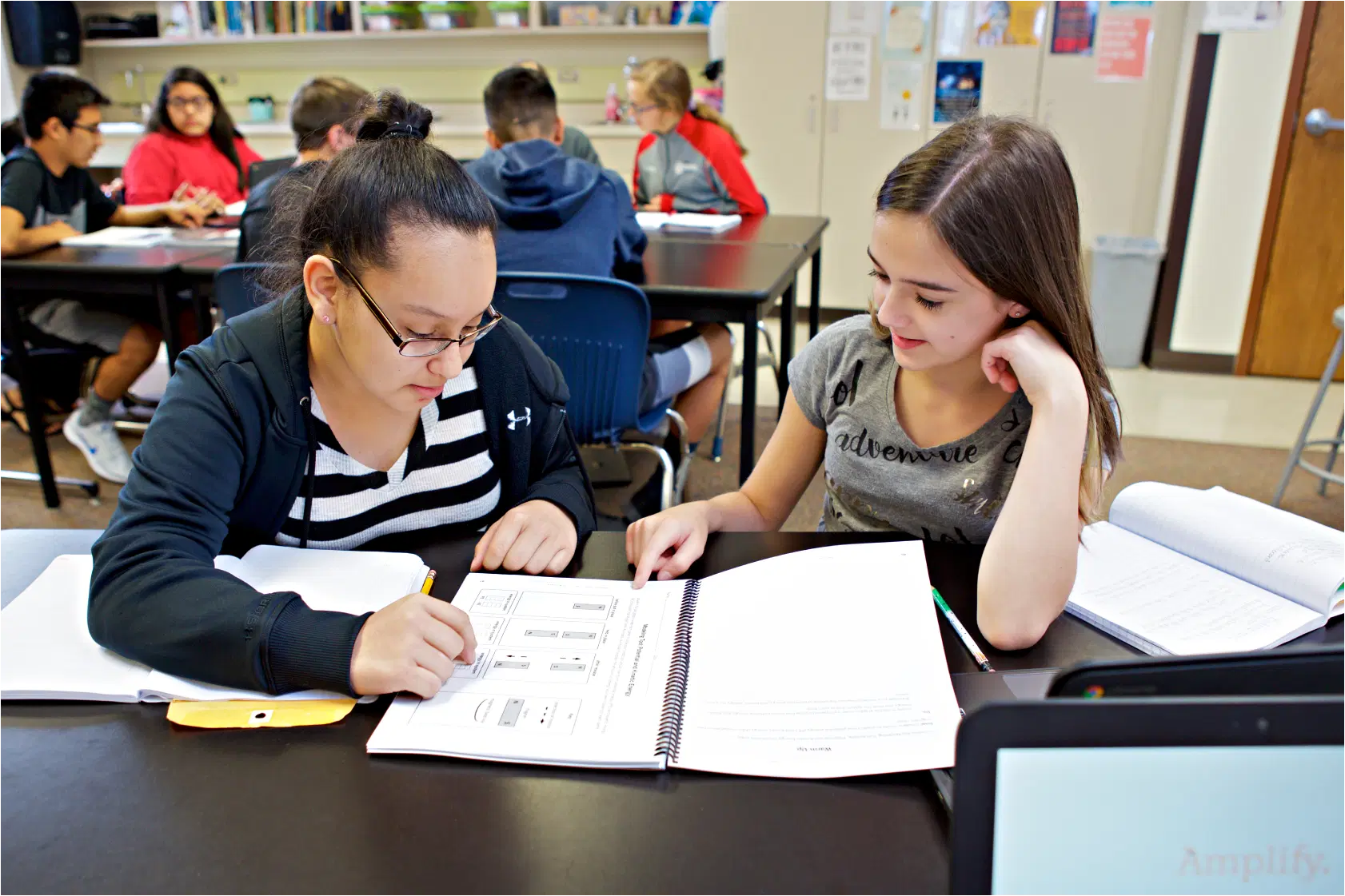
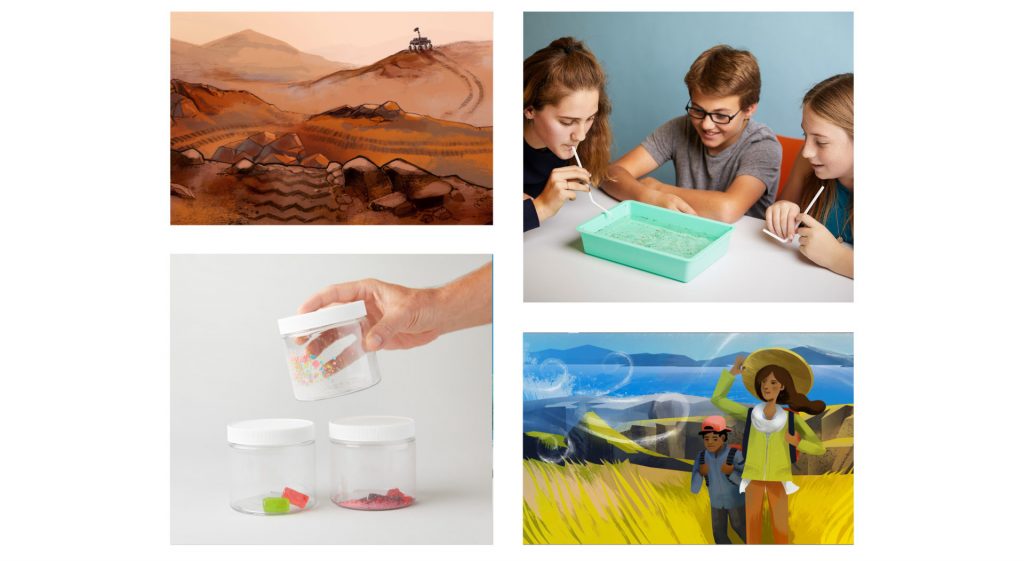
Collage of four images showing children engaged in educational activities such as conducting experiments and crafting in a classroom setting.
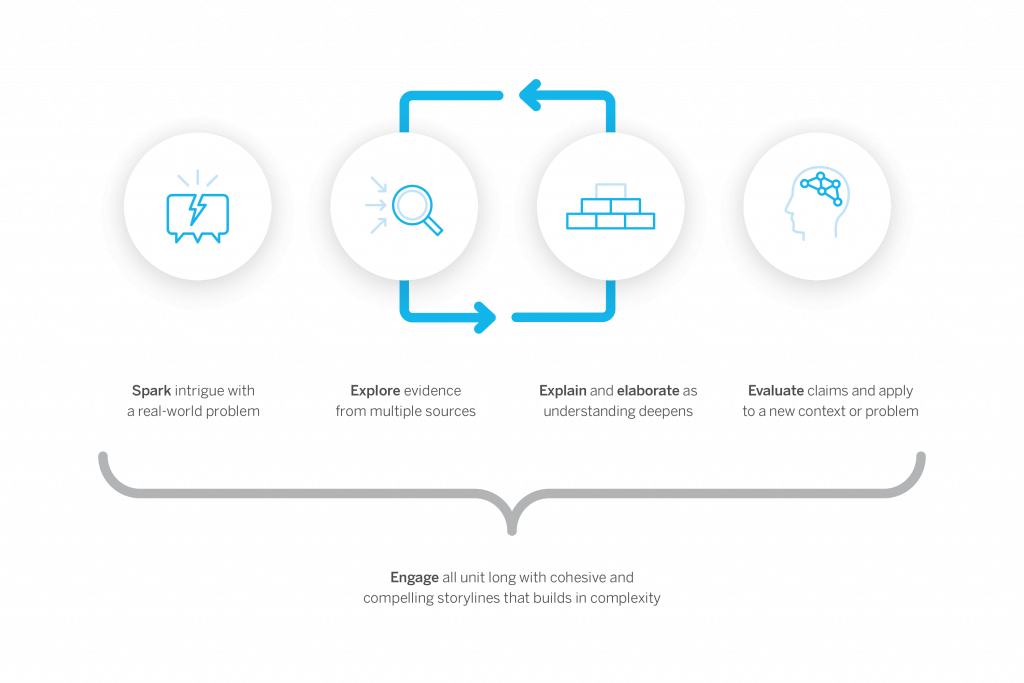
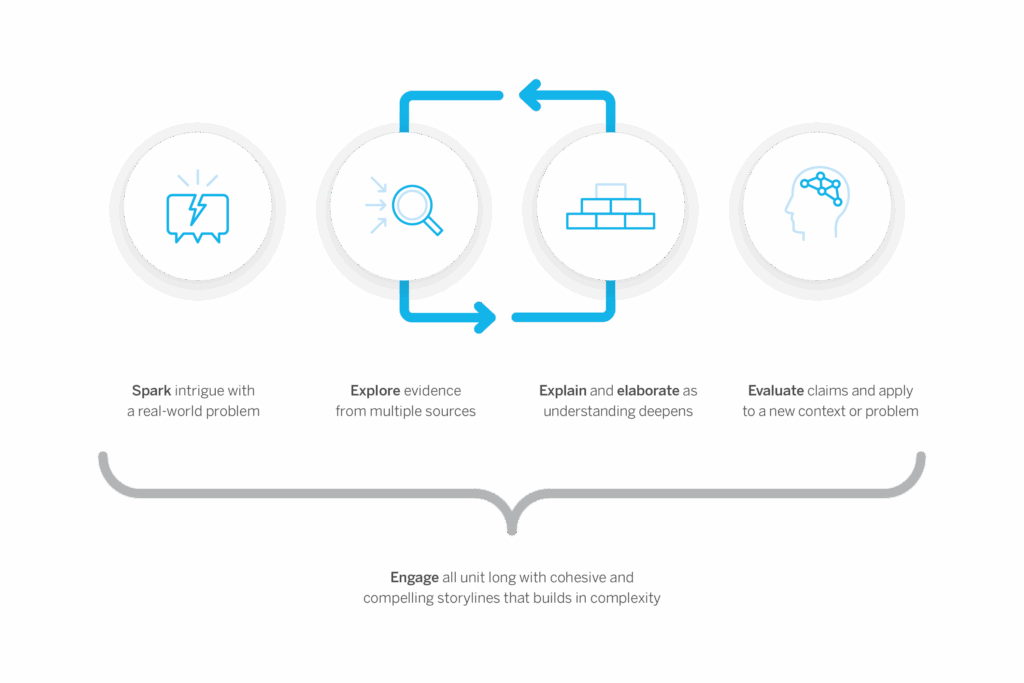
A four-step process diagram with icons: spark a real-world problem, explore sources, explain and elaborate, and evaluate claims, all linking to engage with cohesive storylines.

Program structure

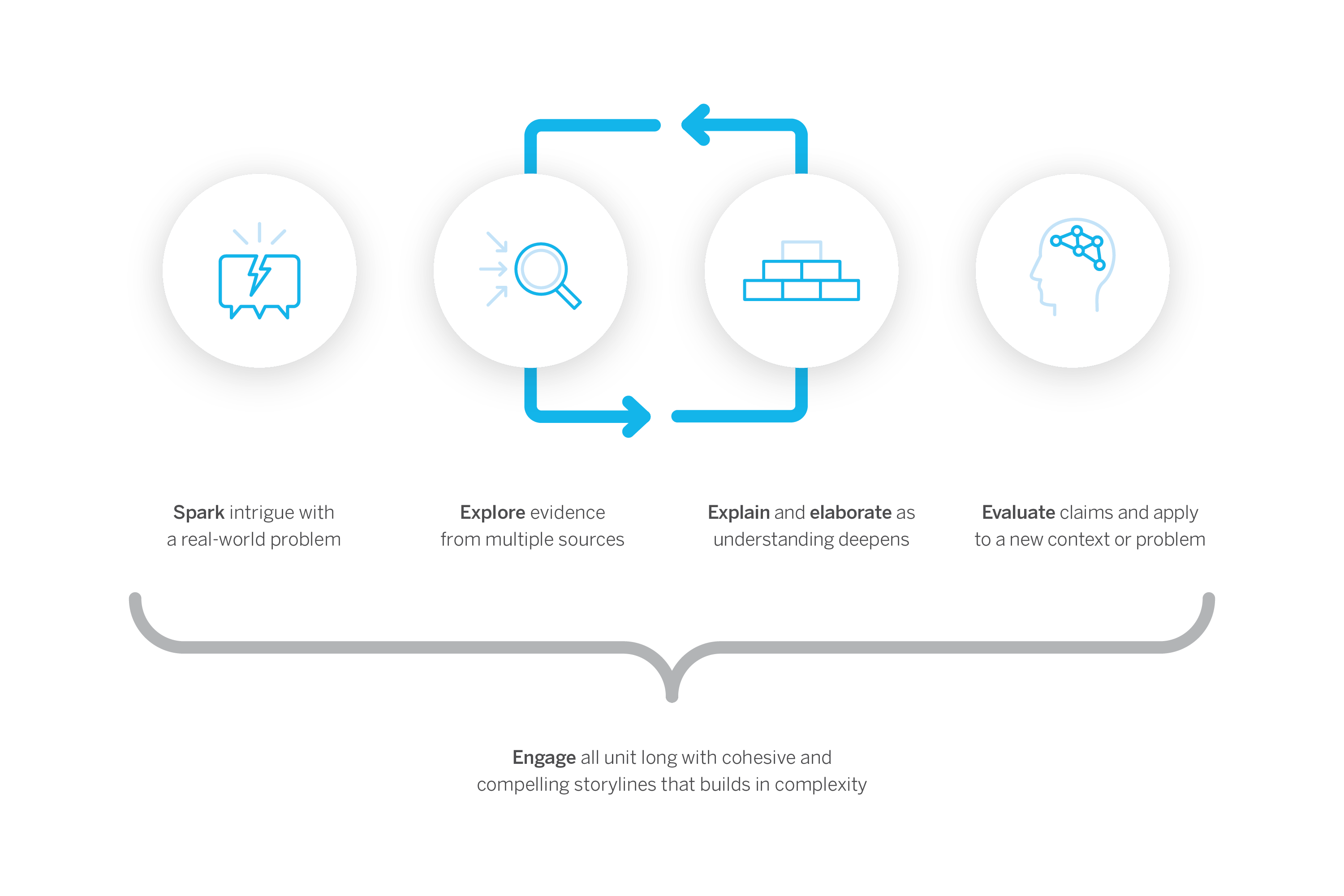
Our cyclical lesson design ensures students receive multiple exposures to concepts through a variety of modalities. As they progress through the lessons within a unit, students build and deepen their understanding, increasing their ability to develop and refine complex explanations of the unit’s phenomenon.

It’s this proven program structure and lesson design that enables Amplify Science California to teach less, but achieve more. Rather than asking teachers to wade through unnecessary content, we designed our 6–8 program to address 100% of the California NGSS in fewer lessons than other programs.

Scope and sequence

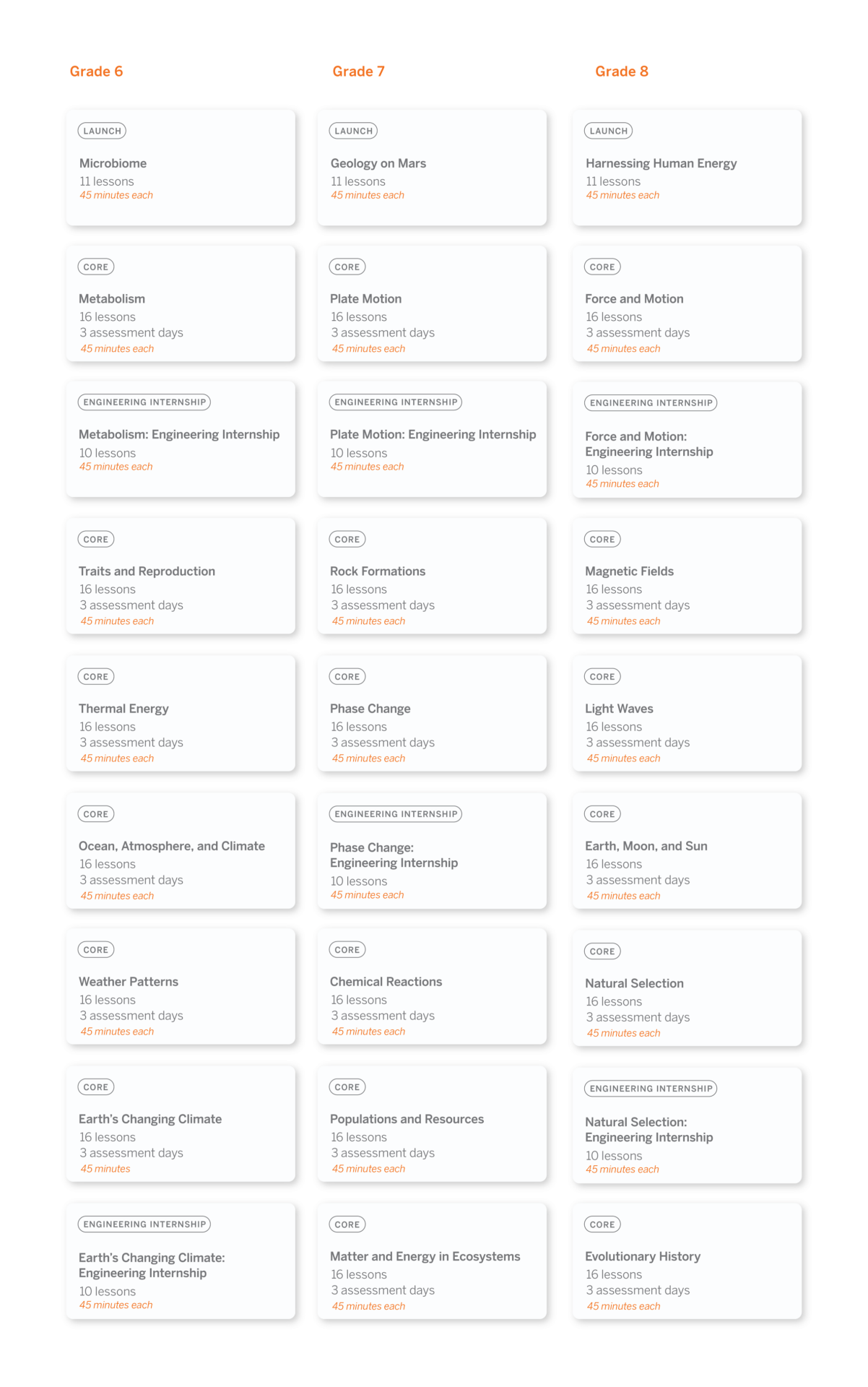
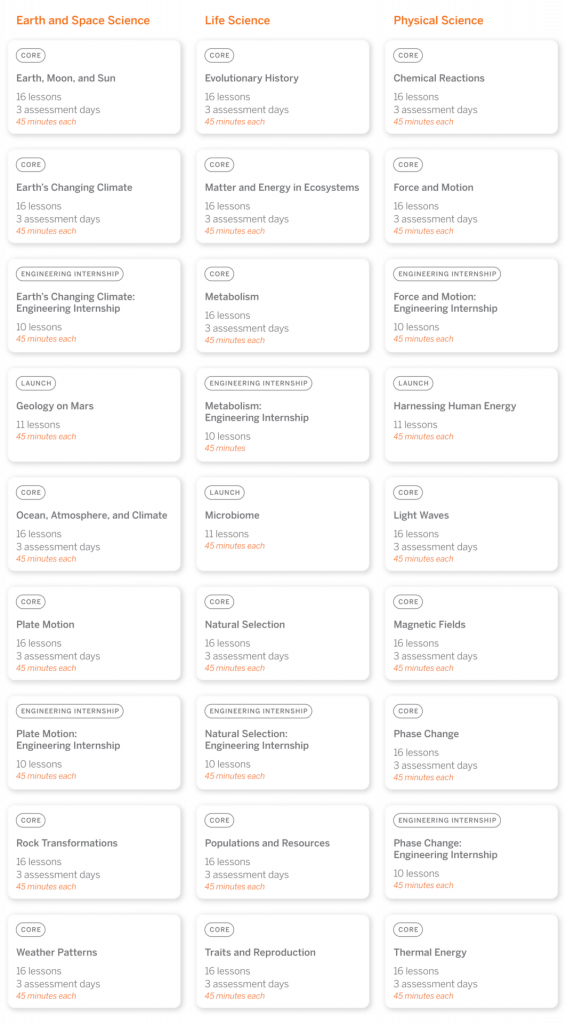
Every year our grades 6–8 sequence consists of 9 units, with each unit containing 10–19 lessons. Lessons are written to last a minimum of 45-minutes, though teachers can expand or contract the timing to meet their needs.

Chart displaying educational science topics for grades 6 to 8, categorized by grade level, duration in days, and number of classes. Includes subjects like microbiome, geology, and natural selection.

Unit types

Each unit delivers three-dimensional learning experiences and engages students in gathering evidence from a rich collection of sources, while also serving a unique purpose.

In grades 6–8, there are three types of units:

  • One unit is a launch unit.
  • Three units are core units.
  • Two units are engineering internships.
Launch units

Launch units are the first units taught in each year of Amplify Science California. The goal of the Launch unit is to introduce students to norms, routines, and practices that will be built on throughout the year, including argumentation, active reading, and using the program’s technology. For example, rather than taking the time to explain the process of active reading in every unit in a given year, it is explained thoroughly in the Launch unit, thereby preparing students to read actively in all subsequent units.

Core units

Core units establish the context of the unit by introducing students to a real-world problem. As students move through lessons in a Core unit, they figure out the unit’s anchoring phenomenon, gain an understanding of the unit’s disciplinary core ideas and science and engineering practices, and make linkages across topics through the crosscutting concepts. Each Core unit culminates with a Science Seminar and final writing activity.

Engineering Internship units

Engineering Internship units invite students to design solutions for real-world problems as interns for a fictional company called Futura. Students figure out how to help those in need, from tsunami victims in Sri Lanka to premature babies, through the application of engineering practices. In the process, they apply and deepen their learning from Core units.

Units at a glance

Abstract art with vibrant colors featuring a yellow silhouette of a person holding a book against a background of geometric shapes, swirling patterns, and bold textures.
Microbiome

Domain: Life Science

Unit type: Launch

Student role: Microbiological researchers

Phenomenon: The presence of 100 trillion microorganisms living on and in the human body may keep the body healthy.  

Abstract artwork of a person's side profile with geometric shapes and colorful patterns flowing from the head, holding a small sledgehammer. A vision chart is visible in the corner.
Metabolism

Domain: Life Science

Unit type: Core

Student role: Medical researchers

Phenomenon: Elisa, a young patient, feels tired all the time.  

Download unit guide

Orange abstract background with hexagonal shapes featuring icons of a bar chart, plant, safety vest, test tube, peach, and stethoscope.
Metabolism Engineering Internship

Domains: Life Science, Engineering Design

Unit type: Engineering internship

Student role: Food engineers

Phenomenon: Designing health bars with different molecular compositions can effectively meet the metabolic needs of patients or rescue workers.  

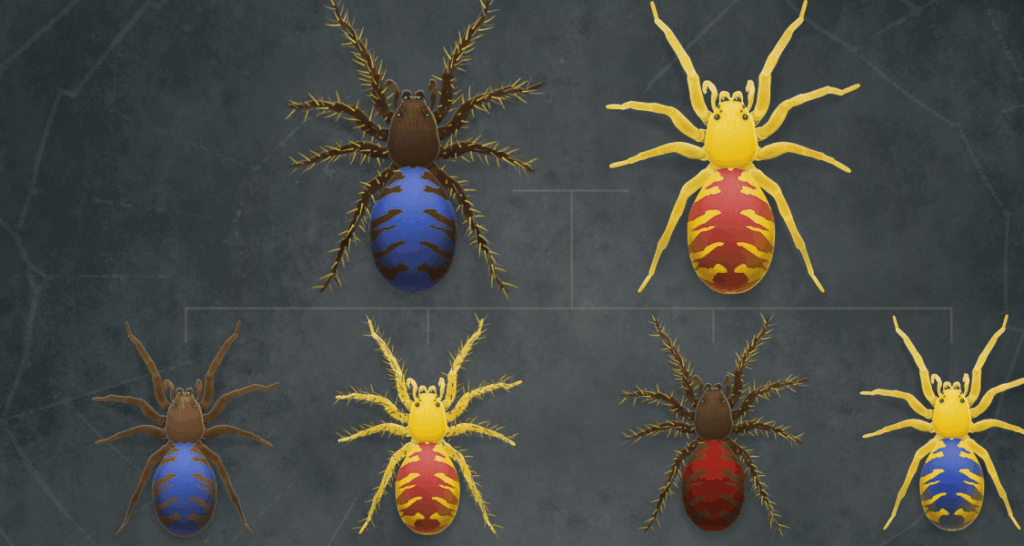
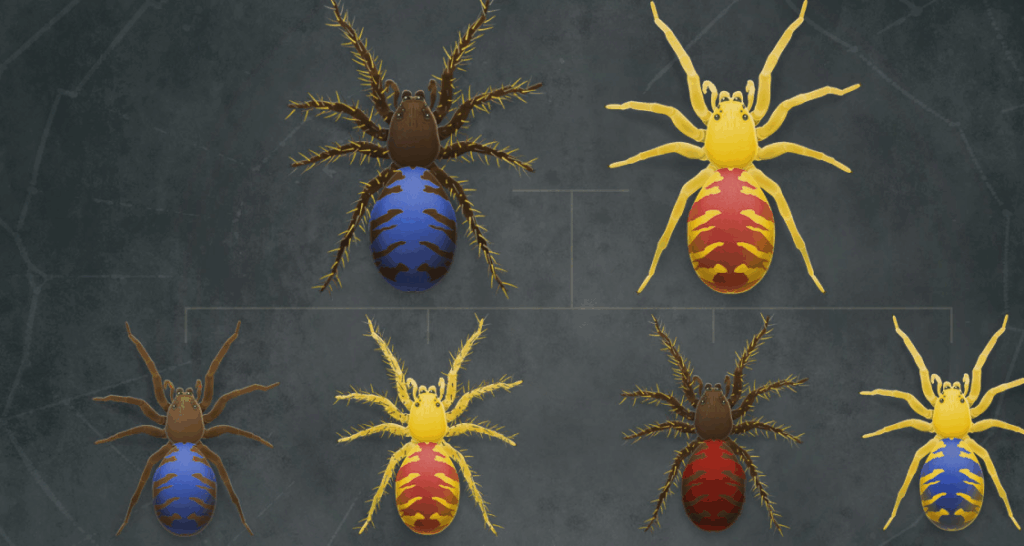
Imagen que muestra un gráfico de arañas de diferentes colores con patrones distintos de patas y cuerpo, incluidas variaciones de color marrón, amarillo y azul. El fondo es una superficie oscura y texturizada.
Traits and Reproduction

Domain: Life Science

Unit type: Core

Student role: Biomedical students

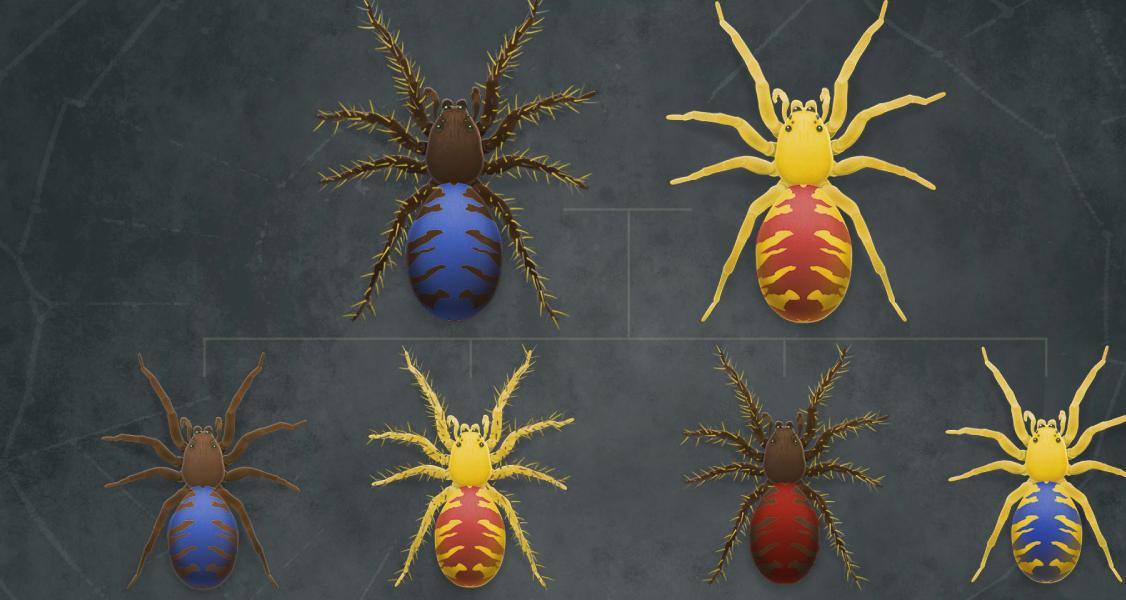
Phenomenon: Darwin’s bark spider offspring have different silk flexibility traits, even though they have the same parents.  

Download unit guide

Illustration of a person in a red hat and fur-lined coat with eyes closed, surrounded by large orange circles on a dark background.
Thermal Energy

Domain: Physical Science

Unit type: Core

Student role: Thermal scientists

Phenomenon: One of two proposed heating systems for Riverdale School will best heat the school. 

Download unit guide

Abstract artwork depicting a bright sun with blue and orange swirling patterns next to green hills under a sky with shades of blue, orange, and red.
Ocean, Atmosphere, and Climate

Domains: Earth and Space Science, Physical Science

Unit type: Core

Student role: Climatologists

Phenomenon: During El Niño years, the air temperature in Christchurch, New Zealand is cooler than usual.  

An illustration from the Weather Patterns unit
Weather Patterns

Domains: Earth and Space Science, Physical Science

Unit type: Core

Student role: Forensic meteorologists

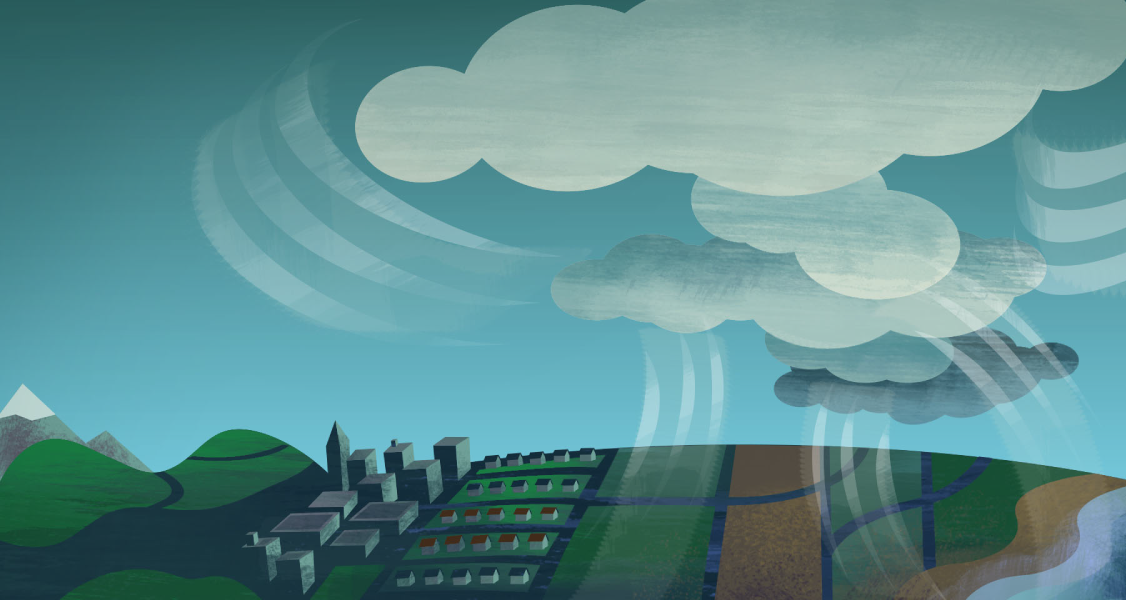
Phenomenon: In recent years, rainstorms in Galetown have been unusually severe.  

Download unit guide

An illustration from the Earth's Changing Climate unit
Earth’s Changing Climate

Domains: Earth and Space Science, Life Science

Unit type: Core

Student role: Climatologists

Phenomenon: The ice on Earth’s surface is melting.  

Download unit guide

Abstract geometric design in shades of blue and purple featuring a hexagon with icons of a building, wrench, molecules, sun, paint can, and screwdriver.
Earth’s Changing Climate Engineering Internship

Domains: Earth and Space Science, Engineering Design

Unit type: Engineering internship

Student role: Civil engineers

Phenomenon: Designing rooftops with different modifications can reduce a city’s impact on climate change.  

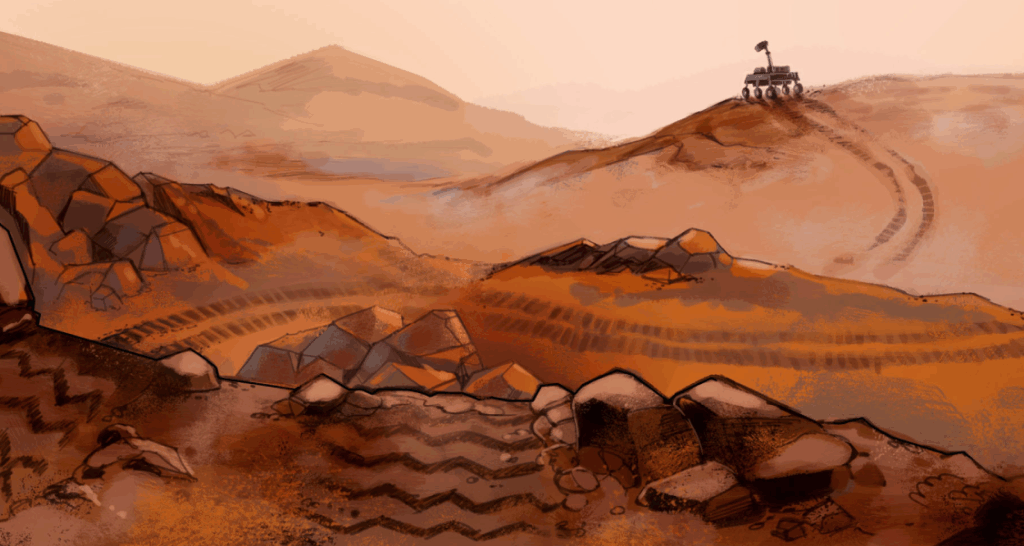
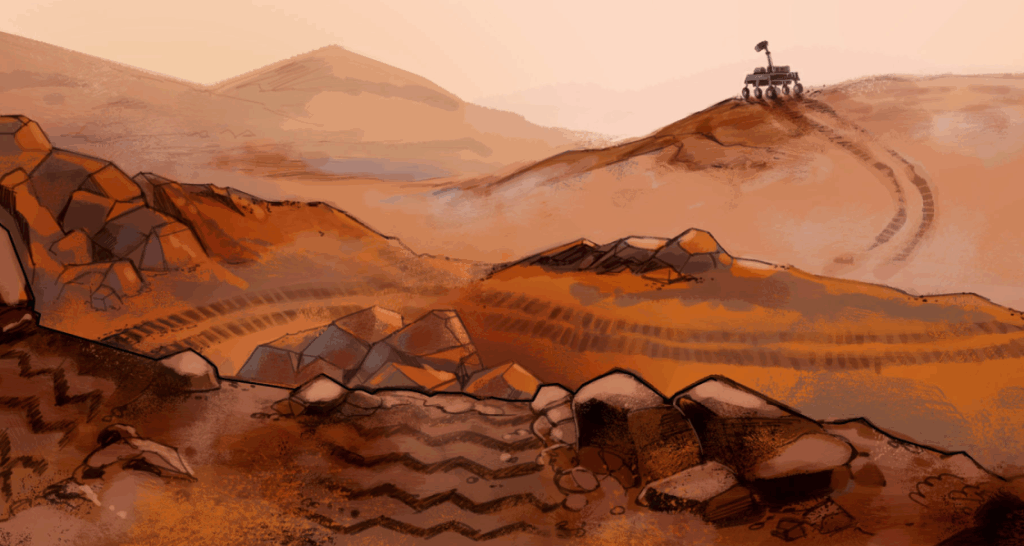
A barren, rocky desert landscape with rover tracks leading to a distant vehicle on a hill under a hazy sky.
Geology on Mars

Domain: Earth and Space Science

Unit type: Launch

Student role: Planetary geologists

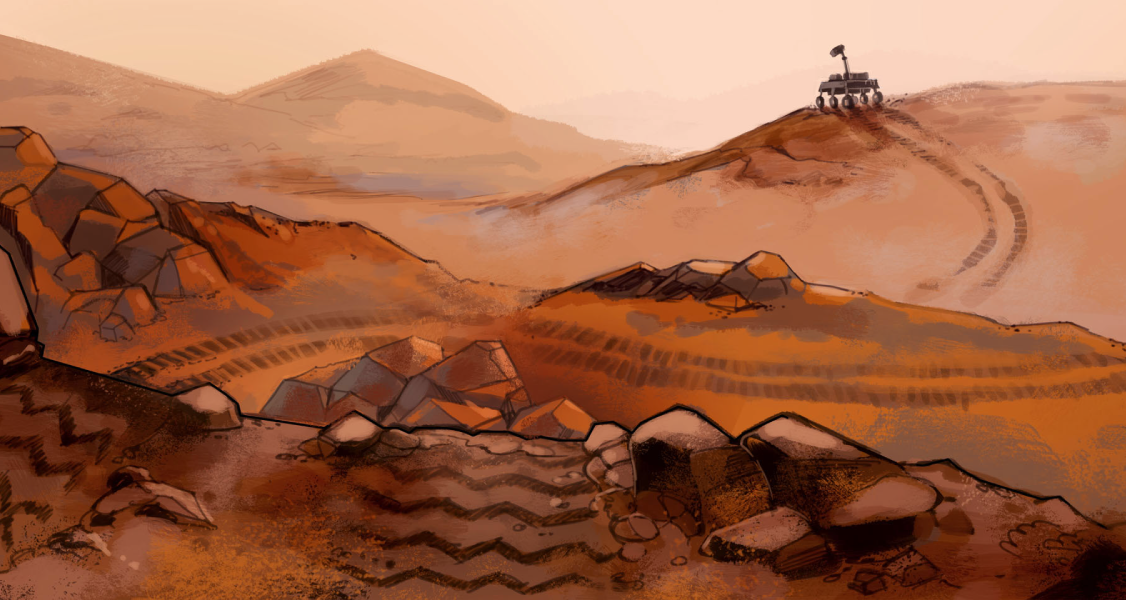
Phenomenon: Analyzing data about landforms on Mars can provide evidence that Mars may have once been habitable. 

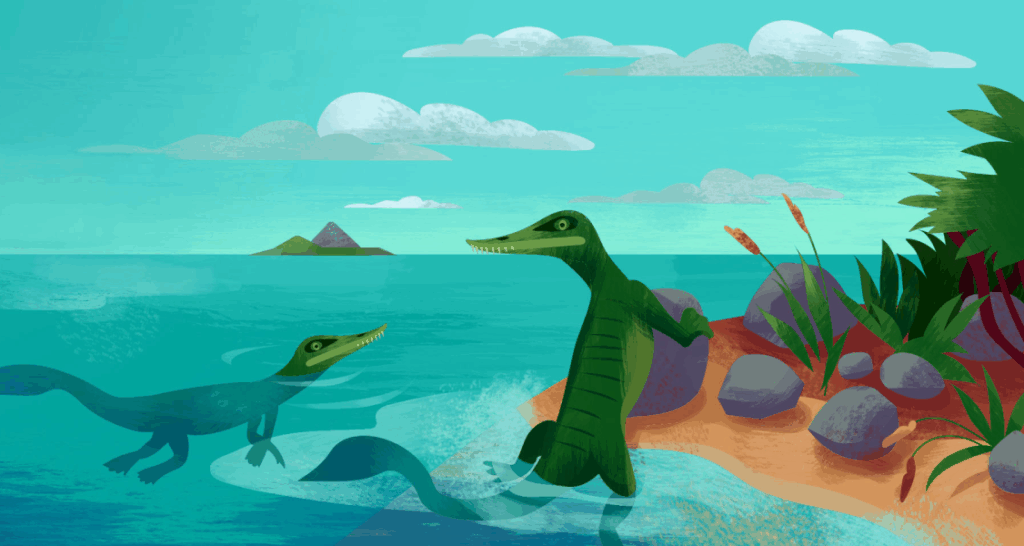
Two prehistoric reptiles with long snouts and tails are near the shore, one on land and one in water, with plants, rocks, and an island in the background.
Plate Motion

Domain: Earth and Space Science

Unit type: Core

Student role: Geologists

Phenomenon: Mesosaurus fossils have been found on continents separated by thousands of kilometers of ocean, even though the Mesosaurus species once lived all together.  

Download unit guide

Geometric design featuring a telescope, mountain, sound waves, and cosmic elements on a purple hexagonal background.
Plate Motion Engineering Internship

Domains: Earth and Space Science, Engineering Design

Unit type: Engineering internship

Student role: Mechanical engineering interns

Phenomenon: Patterns in earthquake data can be used to design an effective tsunami warning system.  

Illustration of a cross-section of Earth showing a volcano near the ocean. Trees, mountains, and clouds are visible above, with subterranean layers below.
Rock Transformations

Domain: Earth and Space Science

Unit type: Core

Student role: Geologists

Phenomenon: Rock samples from the Great Plains and from the Rocky Mountains — regions hundreds of miles apart — look very different, but have surprisingly similar mineral compositions.  

Download unit guide

Ilustración que muestra las etapas de fusión de una paleta de naranja: entera, parcialmente derretida, más derretida y casi derretida por completo, con palitos de madera, sobre un fondo morado.
Phase Change

Domains: Physical Science, Earth and Space Science

Unit type: Core

Student role: Chemists

Phenomenon: A methane lake on Titan no longer appears in images taken by a space probe two years apart

Download unit guide

Green geometric background with a hexagonal emblem containing a parachute icon, ruler, bandage, and stacked layers on a gradient pattern.
Force and Motion Engineering Internship

Domains: Engineering Design, Physical Science

Unit type: Engineering internship

Student role: Mechanical engineering interns

Phenomenon: Designing emergency supply delivery pods with different structures can maintain the integrity of the supply pods and their contents.  

An illustration from the Chemical Reactions unit
Chemical Reactions

Domains: Physical Science, Life Science, Earth and Space Science

Unit type: Core

Student role: Forensic chemists

Phenomenon: A mysterious brown substance has been detected in the tap water of Westfield.  

Download unit guide

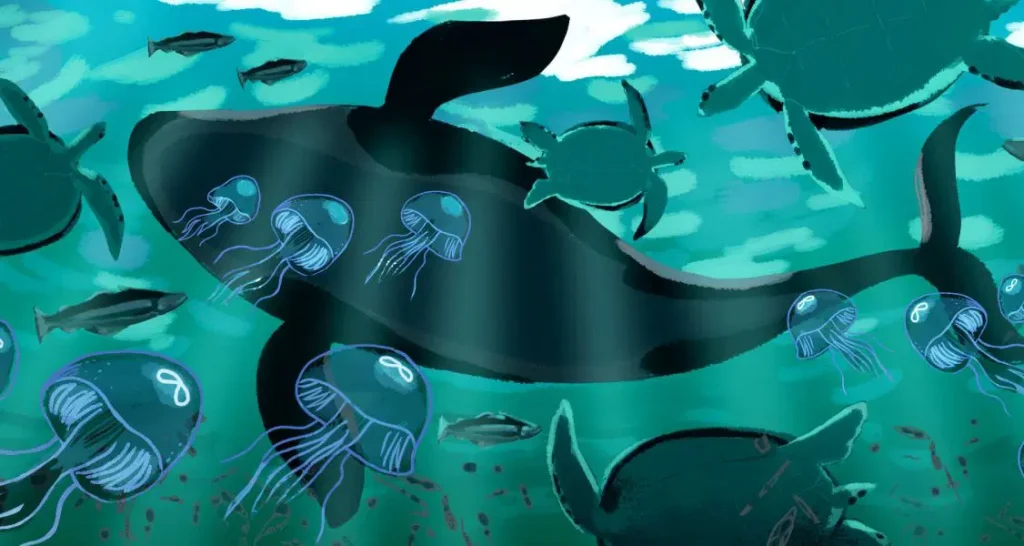
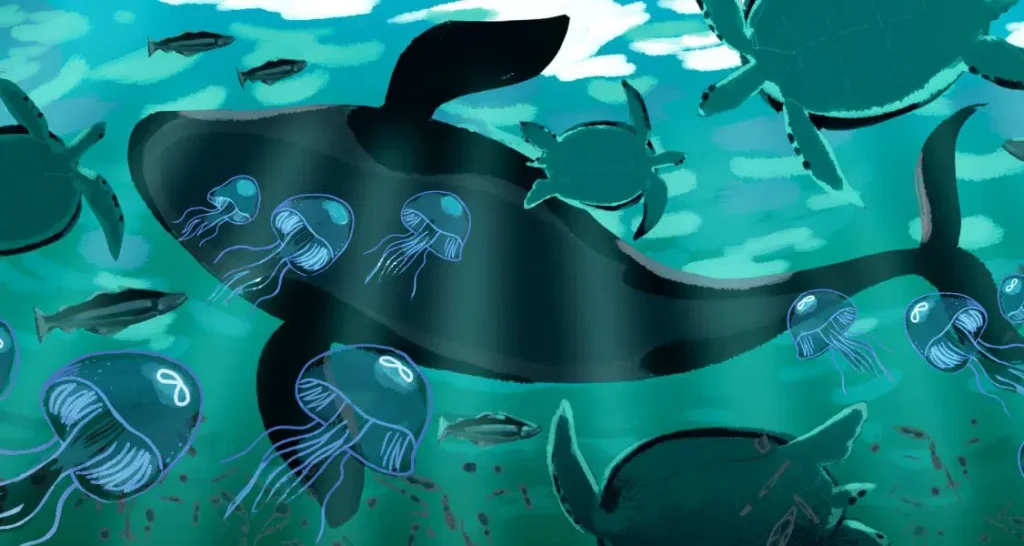
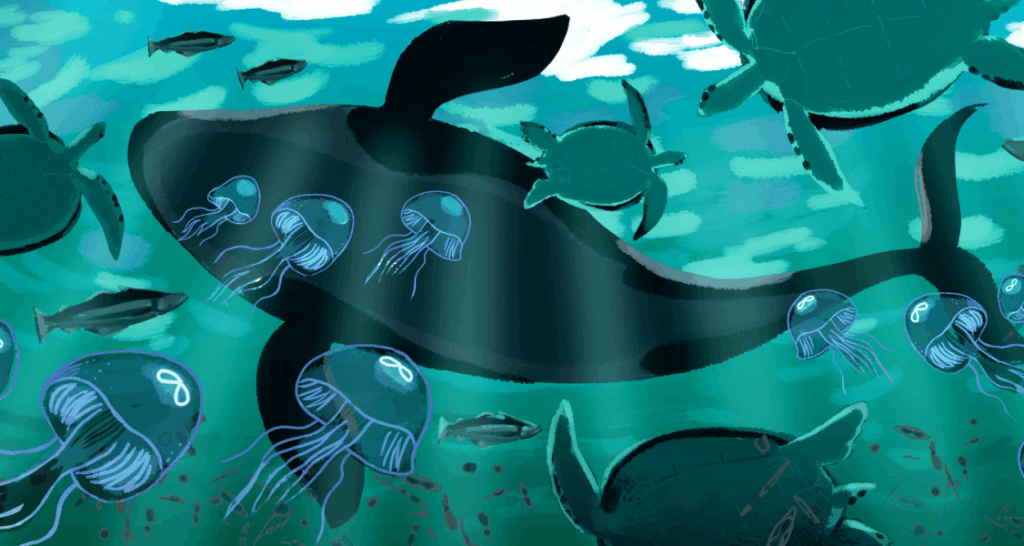
An illustration of a whale with jellyfish and turtles from Amplify Science
Populations and Resources

Domains: Life Science, Earth and Space Science

Unit type: Core

Student role: Biologists

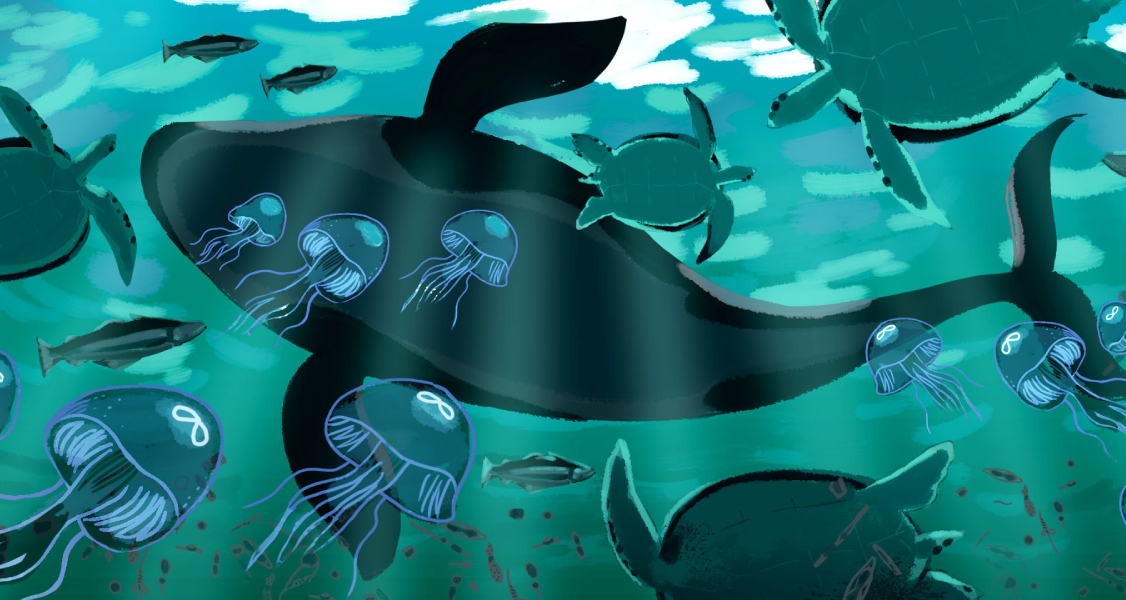
Phenomenon: The size of the moon jelly population in Glacier Sea has increased. 

Download unit guide

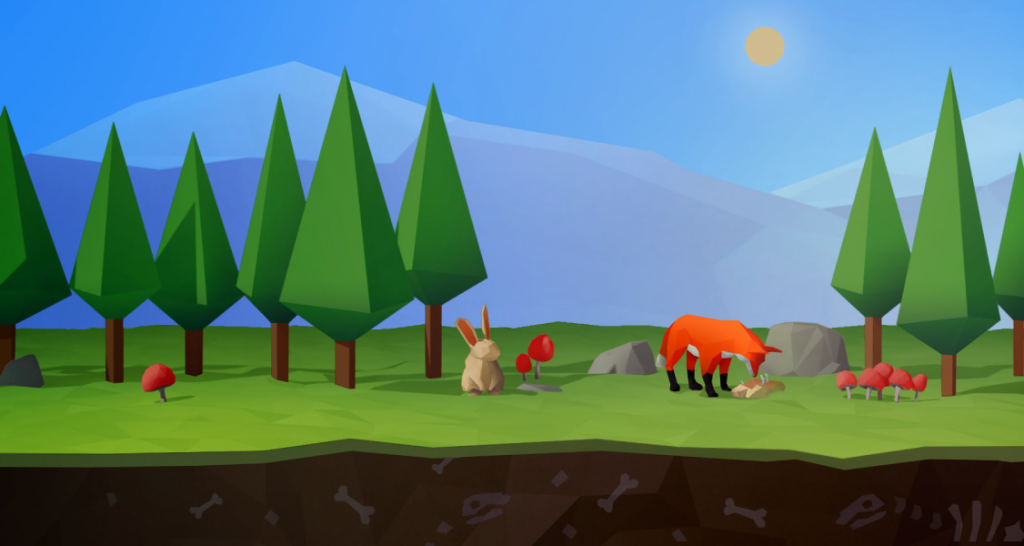
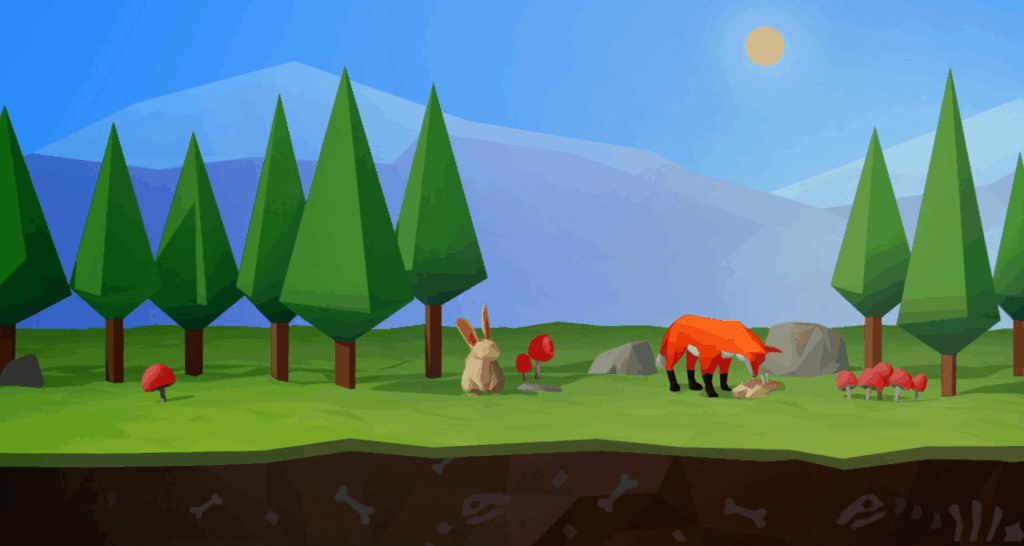
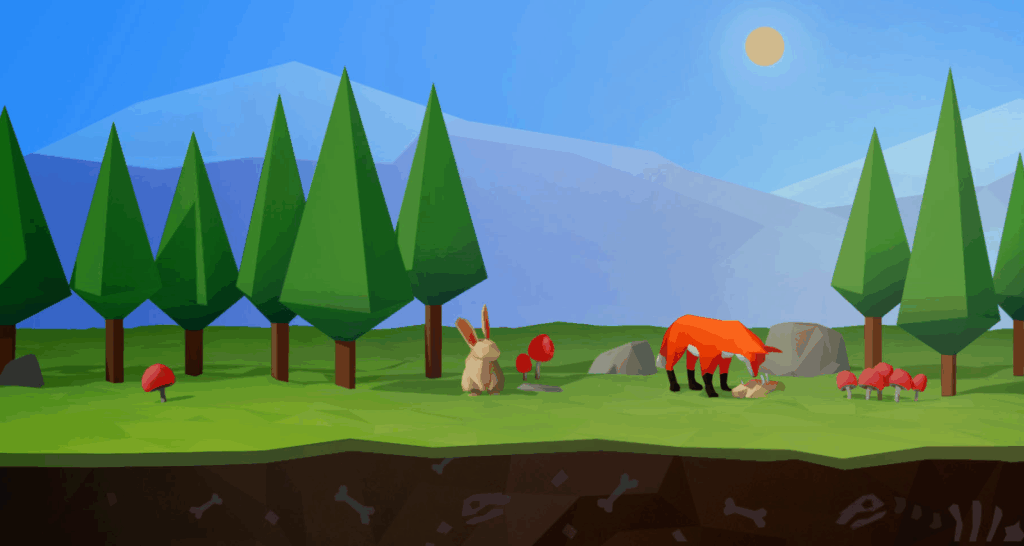
Low-poly landscape with trees and mushrooms. A fox sniffs the ground, a rabbit sits nearby, and mountains and sun are in the background.
Matter and Energy in Ecosystems

Domains: Life Science, Earth and Space Science, Physical Science

Unit type: Core

Student role: Ecologists

Phenomenon: The biodome ecosystem has collapsed.  

Download unit guide

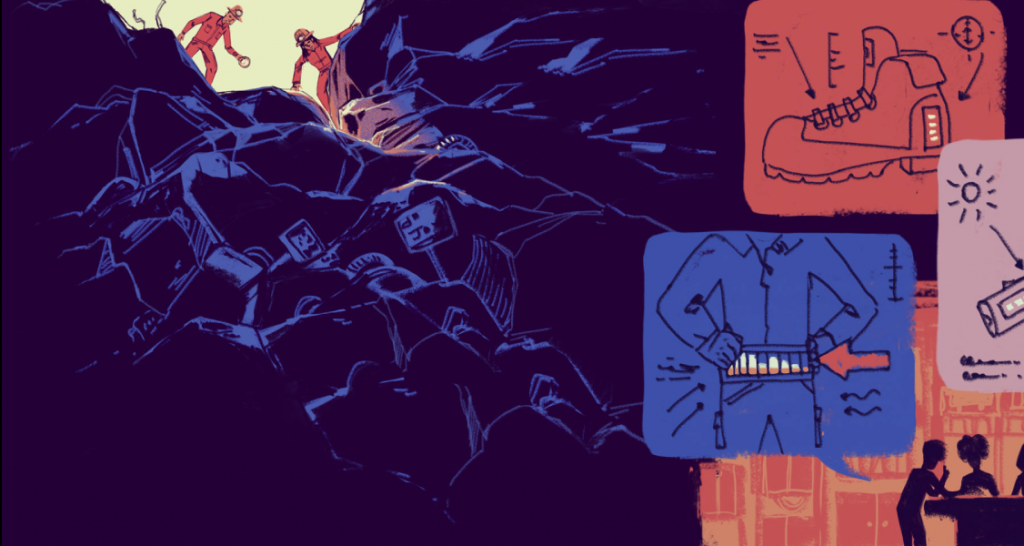
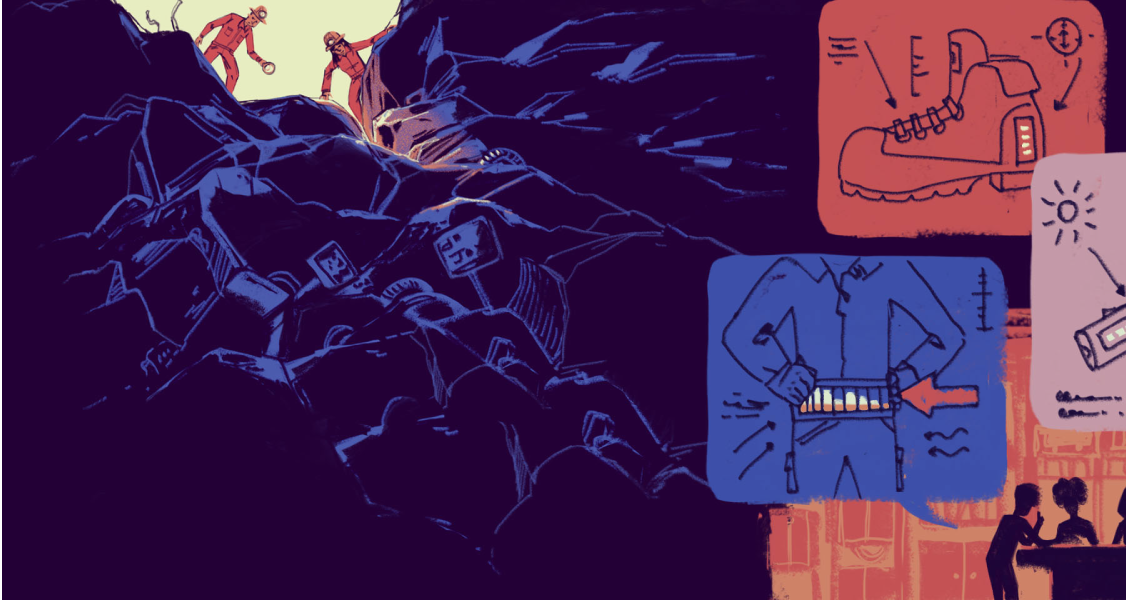
Two people climbing rocky terrain; illustrations show a hiking boot and a belt with gear.
Harnessing Human Energy

Domains: Physical Science, Earth and Space Science, Engineering Design

Unit type: Launch

Student role: Energy scientists

Phenomenon: Rescue workers can use their own human kinetic energy to power the electrical devices they use during rescue missions.  

Illustration of a futuristic space station with large solar panels, orbiting in deep space, emitting a blue glow from its propulsion system.
Force and Motion

Domain: Physical Science

Unit type: Core

Student role: Physicists

Phenomenon: The asteroid sample-collecting pod failed to dock at the space station as planned.

Download unit guide

Green geometric graphic featuring icons: a baby, thermometer, layers, medical alert, and a flame.
Phase Change Engineering Internship

Domains: Engineering Design, Physical Science

Unit type: Engineering internship

Student role: Chemical engineering interns

Phenomenon: Designing portable baby incubators with different combinations of phase change materials can keep babies at a healthy temperature.  

Illustration of a roller coaster filled with people, hands raised, going down a steep track against a bright blue sky with clouds.
Magnetic Fields

Domain: Physical Science

Unit type: Core

Student role: Physicists

Phenomenon: During a test launch, a spacecraft traveled much faster than expected.  

An illustration from the Light Waves unit
Light Waves

Domains: Physical Science, Life Science, Earth and Space Science

Unit type: Core

Student role: Spectroscopists

Phenomenon: The rate of skin cancer is higher in Australia than in other parts of the world.

Download unit guide

A city skyline at night with a prominent full moon, stars in the sky, and a bridge silhouette on the left.
Earth, Moon, and Sun

Domains: Earth and Space Science, Physical Science

Unit type: Core

Student role: Astronomers

Phenomenon: An astrophotographer can only take pictures of specific features on the Moon at certain times.  

Download unit guide

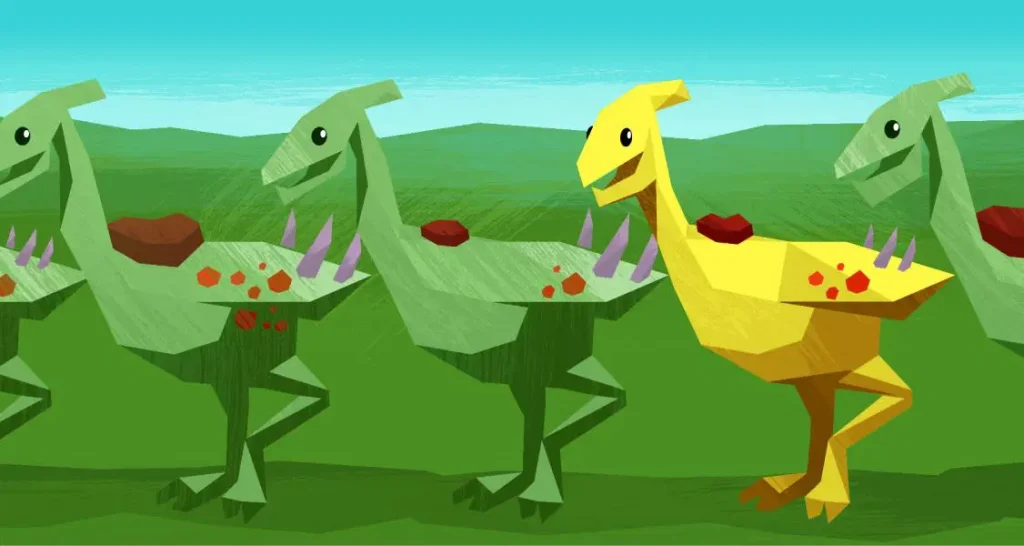
Four low-poly dinosaurs with missing body sections are standing in a row; one is yellow, and the others are green. They have purple spikes and red patches on their bodies.
Natural Selection

Domains: Life Science, Earth and Space Science

Unit type: Core

Student role: Biologists

Phenomenon: The newt population in Oregon State Park has become more poisonous over time.  

Download unit guide

Red geometric background with icons including a mosquito, DNA strand, bar chart, and world map inside a hexagon.
Natural Selection Engineering Internship

Domains: Engineering Design, Life Science

Unit type: Engineering internship

Student role: Clinical engineers

Phenomenon: Designing malaria treatment plans that use different combinations of drugs can reduce drug resistance development while helping malaria patients.  

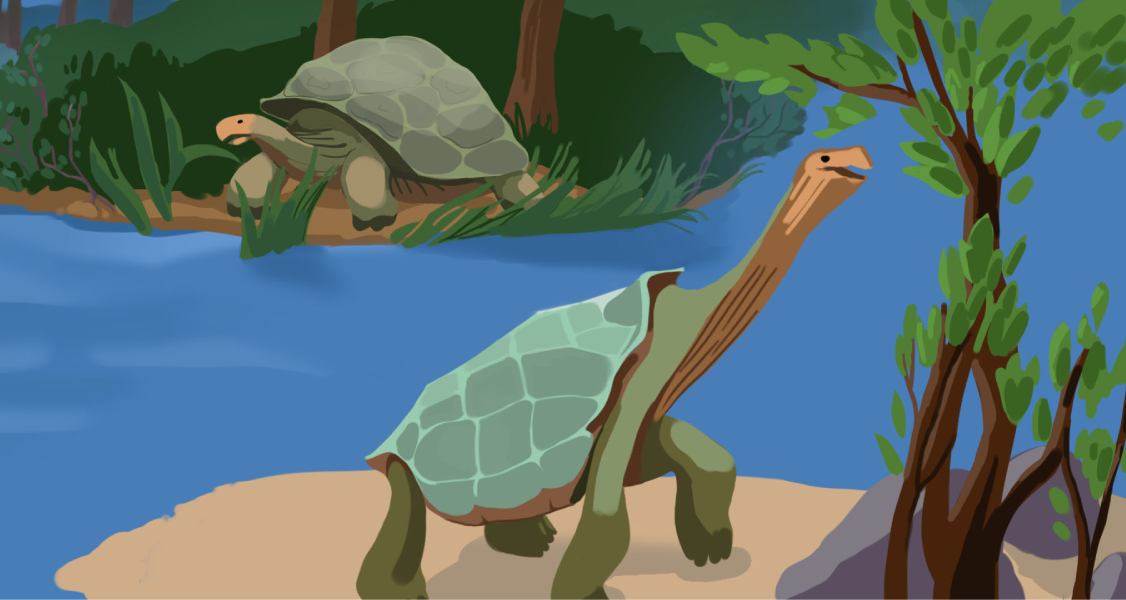
Two giant tortoises with long necks stand near water; one tortoise feeds on leaves from a tree while the other is near dense vegetation.
Evolutionary History

Domains: Life Science, Earth and Space Science

Unit type: Core

Student role: Paleontologists

Phenomenon: A mystery fossil at the Natural History Museum has similarities with both wolves and whales.    

Download unit guide

Montana 6–8 Science

To view this protected page, enter the password below:


Peoria 6–8 Science Review

To view this protected page, enter the password below:


Welcome, Middle School Science Reviewers!

Thank you for taking the time to review Amplify Science for grades 6–8. On this site, you’ll find all the resources you need to learn more about this engaging and robust NGSS program. Plus, we make it easy to experience our program firsthand with a live demo account that features our interactive learning platform.

A person in protective glasses examines a glass of water, surrounded by illustrations of a rocket, telescope, polar bear, clouds, rain, and moon phases on a colorful abstract background.

Overview

With Amplify Science, students don’t just passively learn about science concepts.

No matter where your students are learning—whether at school or at home—they take on the role of scientists and engineers to actively investigate and make sense of real-world phenomena. They do this through a blend of cohesive and compelling storylines, hands-on investigations, collaborative discussions, literacy-rich activities, and interactive digital tools.

Listen to these educators share how the program empowers students to think, read, write, and argue like real scientists and engineers every day.

EdReports All-Green

Amplify Science for grades K–8 has been rated all-green by EdReports.

Read the review on EdReports.

A boy stirs a clear liquid in a plastic cup while a girl smiles beside him in a classroom with students and a teacher in the background. EdReports badge is overlaid in the corner.

Program structure

Our cyclical lesson design ensures students receive multiple exposures to concepts through a variety of modalities.

As they progress through the lessons within a unit, students build and deepen their understanding, increasing their ability to develop and refine complex explanations of the unit’s phenomenon. It’s this proven program structure and lesson design that enables Amplify Science to address 100% of the NGSS in fewer days than other programs.

Graphic showing a research process with four steps: spark intrigue with a real-world problem, explore evidence, explain and elaborate, and evaluate claims, connected in a cycle with arrows.

Unit Sequence

Our lessons follow a structure that is grounded in regular routines while still being flexible enough to allow for a variety of learning experiences.
 
In fact, our multi-modal instruction offers more opportunities for students to construct meaning, and practice and apply concepts than any other program. What’s more, our modular design means our units can be flexibly arranged to support your instructional goals.

Collage of four images: a watercolor desert scene, three kids examining a gadget, a hand placing beads into a container, and a woman in a sunhat in a stylized field.
Abstract art with vibrant colors featuring a yellow silhouette of a person holding a book against a background of geometric shapes, swirling patterns, and bold textures.

Unit 1

Microbiome

Domain: Life Science

Unit type: Launch

Student role: Microbiological researchers

Phenomenon: The presence of 100 trillion microorganisms living on and in the human body may keep the body healthy.  

Abstract artwork of a person's side profile with geometric shapes and colorful patterns flowing from the head, holding a small sledgehammer. A vision chart is visible in the corner.

Unit 2

Metabolism

Domain: Life Science

Unit type: Core

Student role: Medical researchers

Phenomenon: Elisa, a young patient, feels tired all the time.  

Orange abstract background with hexagonal shapes featuring icons of a bar chart, plant, safety vest, test tube, peach, and stethoscope.

Unit 3

Metabolism Engineering Internship

Domains: Life Science, Engineering Design

Unit type: Engineering internship

Student role: Food engineers

Phenomenon: Designing health bars with different molecular compositions can effectively meet the metabolic needs of patients or rescue workers.  

An image showing a graphic of spiders of different colors with distinct leg and body patterns, including brown, yellow, and blue variations. The background is a dark, textured surface.

Unit 4

Traits and Reproduction

Domain: Life Science

Unit type: Core

Student role: Biomedical students

Phenomenon: Darwin’s bark spider offspring have different silk flexibility traits, even though they have the same parents.  

Illustration of a person in a red hat and fur-lined coat with eyes closed, surrounded by large orange circles on a dark background.

Unit 5

Thermal Energy

Domain: Physical Science

Unit type: Core

Student role: Thermal scientists

Phenomenon: One of two proposed heating systems for Riverdale School will best heat the school. 

Abstract artwork depicting a bright sun with blue and orange swirling patterns next to green hills under a sky with shades of blue, orange, and red.

Unit 6

Ocean, Atmosphere, and Climate

Domains: Earth and Space Science, Physical Science

Unit type: Core

Student role: Climatologists

Phenomenon: During El Niño years, the air temperature in Christchurch, New Zealand is cooler than usual.  

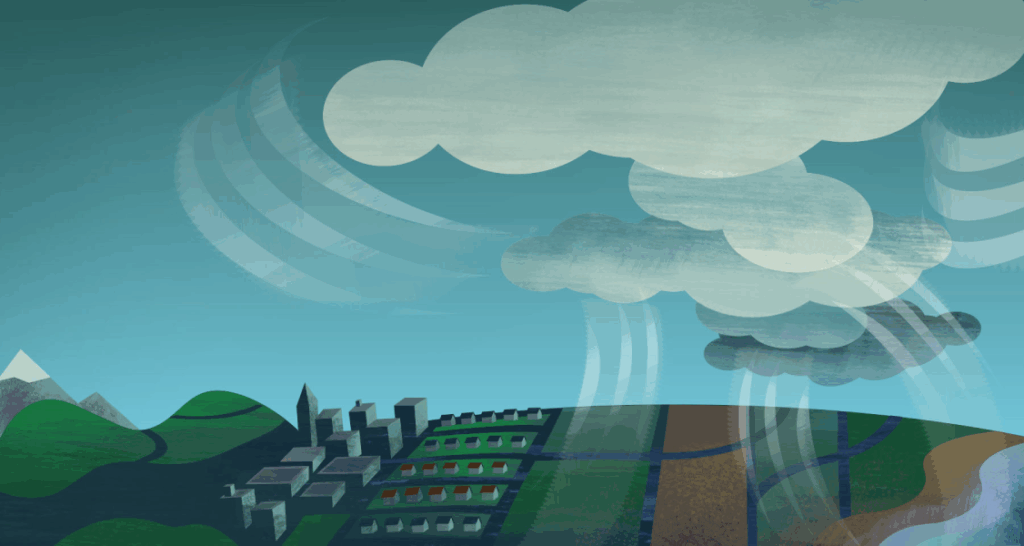
Illustration of a village with houses, fields and mountains under a cloudy sky with waves of wind or rain.

Unit 7

Weather Patterns

Domains: Earth and Space Science, Physical Science

Unit type: Core

Student role: Forensic meteorologists

Phenomenon: In recent years, rainstorms in Galetown have been unusually severe.  

A polar bear stands on a small ice floe in the ocean with an orange sun in the sky and distant icy mountains in the background.

Unit 8

Earth’s Changing Climate

Domains: Earth and Space Science, Life Science

Unit type: Core

Student role: Climatologists

Phenomenon: The ice on Earth’s surface is melting.  

Abstract geometric design in shades of blue and purple featuring a hexagon with icons of a building, wrench, molecules, sun, paint can, and screwdriver.

Unit 9

Earth’s Changing Climate Engineering Internship

Domains: Earth and Space Science, Engineering Design

Unit type: Engineering internship

Student role: Civil engineers

Phenomenon: Designing rooftops with different modifications can reduce a city’s impact on climate change.  

A barren, rocky desert landscape with rover tracks leading to a distant vehicle on a hill under a hazy sky.

Unit 1

Geology on Mars

Domain: Earth and Space Science

Unit type: Launch

Student role: Planetary geologists

Phenomenon: Analyzing data about landforms on Mars can provide evidence that Mars may have once been habitable. 

Two prehistoric reptiles with long snouts and tails are near the shore, one on land and one in water, with plants, rocks, and an island in the background.

Unit 2

Plate Motion

Domain: Earth and Space Science

Unit type: Core

Student role: Geologists

Phenomenon: Mesosaurus fossils have been found on continents separated by thousands of kilometers of ocean, even though the Mesosaurus species once lived all together.  

Geometric design featuring a telescope, mountain, sound waves, and cosmic elements on a purple hexagonal background.

Unit 3

Plate Motion Engineering Internship

Domains: Earth and Space Science, Engineering Design

Unit type: Engineering internship

Student role: Mechanical engineering interns

Phenomenon: Patterns in earthquake data can be used to design an effective tsunami warning system.  

Illustration of a cross-section of Earth showing a volcano near the ocean. Trees, mountains, and clouds are visible above, with subterranean layers below.

Unit 4

Rock Transformations

Domain: Earth and Space Science

Unit type: Core

Student role: Geologists

Phenomenon: Rock samples from the Great Plains and from the Rocky Mountains — regions hundreds of miles apart — look very different, but have surprisingly similar mineral compositions.  

Illustration showing the stages of melting an orange popsicle: whole, partially melted, more melted, and almost completely melted, with wooden sticks, on a purple background.

Unit 5

Phase Change

Domains: Physical Science, Earth and Space Science

Unit type: Core

Student role: Chemists

Phenomenon: A methane lake on Titan no longer appears in images taken by a space probe two years apart

Green geometric background with a hexagonal emblem containing a parachute icon, ruler, bandage, and stacked layers on a gradient pattern.

Unit 6

Force and Motion Engineering Internship

Domains: Engineering Design, Physical Science

Unit type: Engineering internship

Student role: Mechanical engineering interns

Phenomenon: Designing emergency supply delivery pods with different structures can maintain the integrity of the supply pods and their contents.  

Abstract digital artwork featuring numerous red and gray circles overlapping a split background of blue and light purple, creating a dynamic and energetic composition.

Unit 7

Chemical Reactions

Domains: Physical Science, Life Science, Earth and Space Science

Unit type: Core

Student role: Forensic chemists

Phenomenon: A mysterious brown substance has been detected in the tap water of Westfield.  

An illustration of a whale with jellyfish and turtles from Amplify Science

Unit 8

Populations and Resources

Domains: Life Science, Earth and Space Science

Unit type: Core

Student role: Biologists

Phenomenon: The size of the moon jelly population in Glacier Sea has increased. 

Low-poly landscape with trees and mushrooms. A fox sniffs the ground, a rabbit sits nearby, and mountains and sun are in the background.

Unit 9

Matter and Energy in Ecosystems

Domains: Life Science, Earth and Space Science, Physical Science

Unit type: Core

Student role: Ecologists

Phenomenon: The biodome ecosystem has collapsed.  

Two people climbing rocky terrain; illustrations show a hiking boot and a belt with gear.

Unit 1

Harnessing Human Energy

Domains: Physical Science, Earth and Space Science, Engineering Design

Unit type: Launch

Student role: Energy scientists

Phenomenon: Rescue workers can use their own human kinetic energy to power the electrical devices they use during rescue missions.  

A spacecraft approaches and docks with a space station featuring large blue solar panels, set against a backdrop of outer space.

Unit 2

Force and Motion

Domain: Physical Science

Unit type: Core

Student role: Physicists

Phenomenon: The asteroid sample-collecting pod failed to dock at the space station as planned.

Green geometric graphic featuring icons: a baby, thermometer, layers, medical alert, and a flame.

Unit 3

Phase Change Engineering Internship

Domains: Engineering Design, Physical Science

Unit type: Engineering internship

Student role: Chemical engineering interns

Phenomenon: Designing portable baby incubators with different combinations of phase change materials can keep babies at a healthy temperature.  

Illustration of a roller coaster filled with people, hands raised, going down a steep track against a bright blue sky with clouds.

Unit 4

Magnetic Fields

Domain: Physical Science

Unit type: Core

Student role: Physicists

Phenomenon: During a test launch, a spacecraft traveled much faster than expected.  

Illustration of Earth with arrows and wavy lines representing solar radiation entering the atmosphere, showing a focus on the Asia-Pacific region.

Unit 5

Light Waves

Domains: Physical Science, Life Science, Earth and Space Science

Unit type: Core

Student role: Spectroscopists

Phenomenon: The rate of skin cancer is higher in Australia than in other parts of the world.

A city skyline at night with a prominent full moon, stars in the sky, and a bridge silhouette on the left.

Unit 6

Earth, Moon, and Sun

Domains: Earth and Space Science, Physical Science

Unit type: Core

Student role: Astronomers

Phenomenon: An astrophotographer can only take pictures of specific features on the Moon at certain times.  

Four low-poly dinosaurs with missing body sections are standing in a row; one is yellow, and the others are green. They have purple spikes and red patches on their bodies.

Unit 7

Natural Selection

Domains: Life Science, Earth and Space Science

Unit type: Core

Student role: Biologists

Phenomenon: The newt population in Oregon State Park has become more poisonous over time.  

Red geometric background with icons including a mosquito, DNA strand, bar chart, and world map inside a hexagon.

Unit 8

Natural Selection Engineering Internship

Domains: Engineering Design, Life Science

Unit type: Engineering internship

Student role: Clinical engineers

Phenomenon: Designing malaria treatment plans that use different combinations of drugs can reduce drug resistance development while helping malaria patients.  

Two giant tortoises with long necks stand near water; one tortoise feeds on leaves from a tree while the other is near dense vegetation.

Unit 9

Evolutionary History

Domains: Life Science, Earth and Space Science

Unit type: Core

Student role: Paleontologists

Phenomenon: A mystery fossil at the Natural History Museum has similarities with both wolves and whales.    

Access program

Watch the video to the right plus the ones below showing you how to navigate our digital platform. When you’re ready, follow the instructions below to log into our live demo account.

  • Click the orange button below to access the platform.
  • Choose the resources you’d like to review.
  • Pick your grade level from the drop-down menu.
  • Scroll down to find additional grade-level resources.

Navigating an Engineering Internship (Part 1)

This Part 1 video demonstrates how Engineering Internship units invite students to design solutions for real-world problems as interns for a fictional company called Futura. In the process, they apply and deepen their learning from Core units.

Navigating an Engineering Internship (Part 2)

This Part 2 video demonstrates how to use the Futura Workspace to manage the immersive experience of the Engineering Internship units. This includes guidance on how to create student groups, how to review student work, and how to send students targeted feedback on their designs.

Navigating our reporting tools

Teachers of Amplify Science grades 6–8 have access to a feature called Reporting. When unit assessments are administered digitally, the Reporting tool enables teachers to analyze student performance on the unit assessments.

Differentiation post-assessment

Every core unit of Amplify Science 6–8 features a formal formative assessment opportunity at the mid-way point, or “Critical Juncture,” of the unit, which provides an important opportunity for differentiation.

Get in touch

Smiling man with short hair and a trimmed beard wearing a light blue collared shirt against a plain white background.

Have questions? Bob McCarty is standing by and ready to help.

Robert “Bob” McCarty
Senior Account Executive
(435) 655-1731
rmccarty@amplify.com

Sweetwater 6–8 Science

To view this protected page, enter the password below:


A closer look at grades 6–8 (domain)

Amplify Science is based on the latest research on teaching and learning and helps teachers deliver rigorous and riveting lessons through hands-on investigations, literacy-rich activities, and interactive digital tools that empower students to think, read, write, and argue like real scientists.

In the 6–8 classroom, this looks like students:

  • Collecting evidence from a variety of sources.
  • Making sense of evidence in a variety of ways.
  • Formulating convincing scientific arguments.

Is your school implementing the domain model? Click here.

Collage of four images showing children engaged in educational activities such as conducting experiments and crafting in a classroom setting.
A four-step process: Spark intrigue, Explore evidence, Explain and elaborate, and Evaluate claims, leading to ongoing engagement and building complexity.

Program structure

Our cyclical lesson design ensures students receive multiple exposures to concepts through a variety of modalities. As they progress through the lessons within a unit, students build and deepen their understanding, increasing their ability to develop and refine complex explanations of the unit’s phenomenon.

It’s this proven program structure and lesson design that enables Amplify Science to teach less, but achieve more. Rather than asking teachers to wade through unnecessary content, we designed our 6–8 program to address 100% of the NGSS in fewer lessons than other programs.

Scope and sequence

Every year our grades 6–8 sequence consists of 9 units, with each unit containing 10–19 lessons. Lessons are written to last a minimum of 45-minutes, though teachers can expand or contract the timing to meet their needs.

A grid of educational icons, each representing a different science topic, such as earth and space science, life science, and physical science, with titles and lesson counts.

Unit types

Each unit delivers three-dimensional learning experiences and engages students in gathering evidence from a rich collection of sources, while also serving a unique purpose.

In grades 6–8, there are three types of units:

  • One unit is a launch unit.
  • Three units are core units.
  • Two units are engineering internships.
Launch units

Launch units are the first units taught in each year of Amplify Science. The goal of the Launch unit is to introduce students to norms, routines, and practices that will be built on throughout the year, including argumentation, active reading, and using the program’s technology. For example, rather than taking the time to explain the process of active reading in every unit in a given year, it is explained thoroughly in the Launch unit, thereby preparing students to actively read in all subsequent units.

Core units

Core units establish the context of the unit by introducing students to a real-world problem. As students move through lessons in a Core unit, they figure out the unit’s anchoring phenomenon, gain an understanding of the unit’s disciplinary core ideas and science and engineering practices, and make linkages across topics through the crosscutting concepts. Each Core unit culminates with a Science Seminar and final writing activity.

Engineering Internship units

Engineering Internship units invite students to design solutions for real-world problems as interns for a fictional company called Futura. Students figure out how to help those in need, from tsunami victims in Sri Lanka to premature babies, through the application of engineering practices. In the process, they apply and deepen their learning from Core units.

Units at a glance

A rover sits on a rocky, reddish hill under a hazy sky, leaving visible tire tracks across the barren landscape.
Geology on Mars

Domain: Earth and Space Science

Unit type: Launch

Student role: Planetary geologists

Phenomenon: Analyzing data about landforms on Mars can provide evidence that Mars may have once been habitable.    

Two prehistoric marine reptiles with long snouts are near a rocky shoreline, one on land and one in the water, with an island and clouds in the background.
Plate Motion

Domain: Earth and Space Science

Unit type: Core

Student role: Geologists

Phenomenon: Mesosaurus fossils have been found on continents separated by thousands of kilometers of ocean, even though the Mesosaurus species once lived all together.    

A geometric badge with a mountain, telescope, and audio wave icons on a purple background with polygonal shapes.
Plate Motion Engineering Internship

Domain: Earth and Space Science

Unit type: Engineering internship

Student role: Mechanical engineering interns

Phenomenon: Patterns in earthquake data can be used to design an effective tsunami warning system.    

Illustration of a volcano by the sea with smoke, trees, mountains, and a cross-section showing a fault line beneath the ground.
Rock Transformations

Domain: Earth and Space Science

Unit type: Core

Student role: Geologists

Phenomenon: Rock samples from the Great Plains and from the Rocky Mountains — regions hundreds of miles apart — look very different, but have surprisingly similar mineral compositions.    

Illustration of a city skyline at night with buildings, a bridge, and a large full moon in a starry sky.
Earth, Sun, and Moon

Domain: Earth and Space Science

Unit type: Core

Student role: Astronomers

Phenomenon: An astrophotographer can only take pictures of specific features on the Moon at certain times.    

Abstract digital painting of a landscape with green hills, a red-orange horizon, and a large yellow sun surrounded by blue and orange swirling shapes on the right.
Ocean, Atmosphere, and Climate

Domain: Earth and Space Science

Unit type: Core

Student role: Climatologists

Phenomenon: During El Niño years, the air temperature in Christchurch, New Zealand is cooler than usual.    

Illustration of a town with houses and fields under a sky with large clouds and swirling wind patterns, set against a backdrop of hills and mountains.
Weather Patterns

Domain: Earth and Space Science

Unit type: Core

Student role: Forensic meteorologists

Phenomenon: In recent years, rainstorms in Galetown have been unusually severe.    

A polar bear stands on a small ice floe surrounded by water and floating ice under a red sun in an Arctic landscape.
Earth’s Changing Climate

Domain: Earth and Space Science

Unit type: Core

Student role: Climatologists

Phenomenon: The ice on Earth’s surface is melting.    

Hexagonal badge with icons including a wrench, building, sun, screwdriver, paint can, and molecules on a purple geometric background.
Earth’s Changing Climate Engineering Internship

Domain: Earth and Space Science

Unit type: Engineering internship

Student role: Civil engineers

Phenomenon: Designing rooftops with different modifications can reduce a city’s impact on climate change.    

Colorful abstract digital artwork featuring a yellow figure holding a device, with blue and red shapes and textured patterns in the background.
Microbiome

Domain: Life Science

Unit type: Launch

Student role: Microbiological researchers

Phenomenon: The presence of 100 trillion microorganisms living on and in the human body may keep the body healthy.    

An abstract illustration of a person having their mouth and throat examined with a tongue depressor, surrounded by colorful shapes, with an eye chart in the background.
Metabolism

Domain: Life Science

Unit type: Core

Student role: Medical researchers

Phenomenon: Elisa, a young patient, feels tired all the time.    

Geometric orange background with a hexagon icon displaying symbols for statistics, farming, healthcare, safety vest, chemistry, and agriculture.
Metabolism Engineering Internship

Domain: Life Science

Unit type: Engineering internship

Student role: Food engineers

Phenomenon: Designing health bars with different molecular compositions can effectively meet the metabolic needs of patients or rescue workers.    

Six spiders with different colors and stripe patterns are arranged in a grid pattern on a dark background, showing variations in leg and body color.
Traits and Reproduction

Domain: Life Science

Unit type: Core

Student role: Biomedical students

Phenomenon: Darwin’s bark spider offspring have different silk flexibility traits, even though they have the same parents.    

An underwater scene shows a whale surrounded by jellyfish, sea turtles, and fish, with sunlight filtering through the water.
Populations and Resources

Domain: Life Science

Unit type: Core

Student role: Biologists

Phenomenon: The size of the moon jelly population in Glacier Sea has increased.    

A low-poly landscape with trees, mushrooms, a rabbit sitting, and a fox bending down near another rabbit under a sunny sky with mountains in the background.
Matter and Energy in Ecosystems

Domain: Life Science

Unit type: Core

Student role: Ecologists

Phenomenon: What caused the mysterious crash of a biodome ecosystem?    

Three green dinosaurs and one yellow dinosaur stand in a row on grass, each with purple spikes and a red spot on their backs. The sky is blue with light clouds.
Natural Selection

Domain: Life Science

Unit type: Core

Student role: Biologists

Phenomenon: The newt population in Oregon State Park has become more poisonous over time.    

Red-toned graphic with hexagonal badge featuring a world map, a mosquito, a DNA strand, charts, cubes, and circular icons. Geometric background pattern.
Natural Selection Engineering Internship

Domain: Life Science

Unit type: Engineering internship

Student role: Clinical engineers

Phenomenon: Designing malaria treatment plans that use different combinations of drugs can reduce drug resistance development while helping malaria patients.  

Two giant tortoises are near a river; one is by the water and the other is standing on land and stretching its neck toward a leafy tree.

Evolutionary History

Domain: Life Science

Unit type: Core

Student role: Paleontologists

Phenomenon: A mystery fossil at the Natural History Museum has similarities with both wolves and whales.    

Two people climb over rocky terrain strewn with electronic waste, with illustrated insets showing a hiking boot, a solar-powered device, and a person adjusting a belt-like gadget.
Harnessing Human Energy

Domain: Physical Science

Unit type: Launch

Student role: Energy scientists

Phenomenon: Rescue workers can use their own human kinetic energy to power the electrical devices they use during rescue missions.    

A spacecraft approaches a modular space station with large solar panels, set against a backdrop of outer space.
Force and Motion

Domain: Physical Science

Unit type: Core

Student role: Physicists

Phenomenon: The asteroid sample-collecting pod failed to dock at the space station as planned.    

Green geometric background with a hexagonal badge showing a parachute, a box, a ruler, a bandage, and stacked layers.
Force and Motion Engineering Internship

Domain: Physical Science

Unit type: Engineering internship

Student role: Mechanical engineering interns

Phenomenon: Designing emergency supply delivery pods with different structures can maintain the integrity of the supply pods and their contents. 

Illustration of a roller coaster car full of people with raised arms, speeding down a loop against a blue sky with clouds.
Magnetic Fields

Domain: Physical Science

Unit type: Core

Student role: Physicists

Phenomenon: During a test launch, a spacecraft traveled much faster than expected.    

Illustration of a person in a red coat and hat with arms crossed, eyes closed, surrounded by large orange and brown circles, possibly representing snow or lights.
Thermal Energy

Domain: Physical Science

Unit type: Core

Student role: Thermal scientists

Phenomenon: One of two proposed heating systems for Riverdale School will best heat the school.    

An orange popsicle gradually melts, shown in four stages from solid to completely melted, with wooden sticks visible, against a purple background.
Phase Change

Domain: Physical Science

Unit type: Core

Student role: Chemists

Phenomenon: A methane lake on Titan no longer appears in images taken by a space probe two years apart.    

A green background with a picture of a person and a sandwich.
Phase Change Engineering Internship

Domain: Physical Science

Unit type: Engineering internship

Student role: Chemical engineering interns

Phenomenon: Designing portable baby incubators with different combinations of phase change materials can keep babies at a healthy temperature.    

Digital illustration showing red and blue molecules on a blue background transitioning to a lighter background, representing molecular diffusion across a boundary.
Chemical Reactions

Domain: Physical Science

Unit type: Core

Student role: Forensic chemists

Phenomenon: A mysterious brown substance has been detected in the tap water of Westfield.    

Illustration of Earth with yellow arrows and colored waves approaching from the left, representing incoming solar or cosmic radiation.
Light Waves

Domain: Physical Science

Unit type: Core

Student role: Spectroscopists

Phenomenon: The rate of skin cancer is higher in Australia than in other parts of the world.    

A closer look at grades 6–8

Amplify Science is based on the latest research on teaching and learning and helps teachers deliver rigorous and riveting lessons through hands-on investigations, literacy-rich activities, and interactive digital tools that empower students to think, read, write, and argue like real scientists.

In the 6–8 classroom, this looks like students:

  • Collecting evidence from a variety of sources.
  • Making sense of evidence in a variety of ways.
  • Formulating convincing scientific arguments.

Is your school implementing the domain model? Click here.

Collage of four images showing children engaged in educational activities such as conducting experiments and crafting in a classroom setting.
A four-step process diagram: Spark intrigue, Explore evidence, Explain and elaborate, and Evaluate claims, connected by arrows, with an engagement statement below.

Program structure

Our cyclical lesson design ensures students receive multiple exposures to concepts through a variety of modalities. As they progress through the lessons within a unit, students build and deepen their understanding, increasing their ability to develop and refine complex explanations of the unit’s phenomenon.

It’s this proven program structure and lesson design that enables Amplify Science to teach less, but achieve more. Rather than asking teachers to wade through unnecessary content, we designed our 6–8 program to address 100% of the NGSS in fewer lessons than other programs.

Scope and sequence

Every year our grades 6–8 sequence consists of 9 units, with each unit containing 10–19 lessons. Lessons are written to last a minimum of 45-minutes, though teachers can expand or contract the timing to meet their needs.

A grid of educational icons, each representing a different science topic, such as earth and space science, life science, and physical science, with titles and lesson counts.

Unit types

Each unit delivers three-dimensional learning experiences and engages students in gathering evidence from a rich collection of sources, while also serving a unique purpose.

In grades 6–8, there are three types of units:

  • One unit is a launch unit.
  • Three units are core units.
  • Two units are engineering internships.
Launch units

Launch units are the first units taught in each year of Amplify Science. The goal of the Launch unit is to introduce students to norms, routines, and practices that will be built on throughout the year, including argumentation, active reading, and using the program’s technology. For example, rather than taking the time to explain the process of active reading in every unit in a given year, it is explained thoroughly in the Launch unit, thereby preparing students to read actively in all subsequent units.

Core units

Core units establish the context of the unit by introducing students to a real-world problem. As students move through lessons in a Core unit, they figure out the unit’s anchoring phenomenon, gain an understanding of the unit’s disciplinary core ideas and science and engineering practices, and make linkages across topics through the crosscutting concepts. Each Core unit culminates with a Science Seminar and final writing activity.

Engineering Internship units

Engineering Internship units invite students to design solutions for real-world problems as interns for a fictional company called Futura. Students figure out how to help those in need, from tsunami victims in Sri Lanka to premature babies, through the application of engineering practices. In the process, they apply and deepen their learning from Core units.

Units at a glance

Abstract digital artwork featuring a yellow human figure, red shapes, and a blue-toned screen, with vibrant, multicolored patterns and textures in the background.
Microbiome

Domain: Life Science

Unit type: Launch

Student role: Microbiological researchers

Phenomenon: The presence of 100 trillion microorganisms living on and in the human body may keep the body healthy.  

An abstract illustration of a person receiving an oral examination, with colorful geometric shapes and an eye chart in the background.
Metabolism

Domain: Life Science

Unit type: Core

Student role: Medical researchers

Phenomenon: Elisa, a young patient, feels tired all the time.  

Abstract orange background with geometric shapes, featuring icons of a vest, bar chart, leaf, beaker, fruit, medical stethoscope, and an envelope within a hexagonal frame.
Metabolism Engineering Internship

Domains: Life Science, Engineering Design

Unit type: Engineering internship

Student role: Food engineers

Phenomenon: Designing health bars with different molecular compositions can effectively meet the metabolic needs of patients or rescue workers.  

Six spiders with varying body colors (brown, yellow, blue, and red) and patterns are arranged on a dark, textured background, seemingly in a diagram or chart formation.
Traits and Reproduction

Domain: Life Science

Unit type: Core

Student role: Biomedical students

Phenomenon: Darwin’s bark spider offspring have different silk flexibility traits, even though they have the same parents.  

Illustration of a person with closed eyes in a red winter coat and hat, surrounded by falling snow and orange circles on a dark background.
Thermal Energy

Domain: Physical Science

Unit type: Core

Student role: Thermal scientists

Phenomenon: One of two proposed heating systems for Riverdale School will best heat the school. 

Abstract illustration of a sun with blue and orange rays over a colorful landscape featuring green hills and a vibrant sky.
Ocean, Atmosphere, and Climate

Domains: Earth and Space Science, Physical Science

Unit type: Core

Student role: Climatologists

Phenomenon: During El Niño years, the air temperature in Christchurch, New Zealand is cooler than usual.  

Illustration of clouds above a small town and farmland, with wind currents depicted swirling through the landscape under a blue sky.
Weather Patterns

Domains: Earth and Space Science, Physical Science

Unit type: Core

Student role: Forensic meteorologists

Phenomenon: In recent years, rainstorms in Galetown have been unusually severe.  

A polar bear stands on a small floating ice sheet in the ocean, surrounded by melting ice, with a red sun in the sky.
Earth’s Changing Climate

Domains: Earth and Space Science, Life Science

Unit type: Core

Student role: Climatologists

Phenomenon: The ice on Earth’s surface is melting.  

A purple hexagonal graphic with icons including a building, wrench, screwdriver, sun, molecules, paint bucket, and tiles on a geometric patterned background.
Earth’s Changing Climate Engineering Internship

Domains: Earth and Space Science, Engineering Design

Unit type: Engineering internship

Student role: Civil engineers

Phenomenon: Designing rooftops with different modifications can reduce a city’s impact on climate change.  

A robotic rover sits on a hill in a rocky, reddish landscape, with visible tracks in the dust leading to its current position under a hazy sky.
Geology on Mars

Domain: Earth and Space Science

Unit type: Launch

Student role: Planetary geologists

Phenomenon: Analyzing data about landforms on Mars can provide evidence that Mars may have once been habitable. 

Two green prehistoric reptiles with long snouts are near the shore; one is on land while the other swims in blue water, with plants, rocks, and an island in the background.
Plate Motion

Domain: Earth and Space Science

Unit type: Core

Student role: Geologists

Phenomenon: Mesosaurus fossils have been found on continents separated by thousands of kilometers of ocean, even though the Mesosaurus species once lived all together.  

A purple geometric background featuring a hexagonal badge with a telescope, mountain, audio wave, and star symbols inside.
Plate Motion Engineering Internship

Domains: Earth and Space Science, Engineering Design

Unit type: Engineering internship

Student role: Mechanical engineering interns

Phenomenon: Patterns in earthquake data can be used to design an effective tsunami warning system.  

Illustration showing an ocean, forest, and mountains with a smoking volcano, plus a cross-section of underground tectonic plates.
Rock Transformations

Domain: Earth and Space Science

Unit type: Core

Student role: Geologists

Phenomenon: Rock samples from the Great Plains and from the Rocky Mountains — regions hundreds of miles apart — look very different, but have surprisingly similar mineral compositions.  

Four stages of an orange popsicle melting on a stick, from fully frozen on the left to completely melted on the right, against a plain background.
Phase Change

Domains: Physical Science, Earth and Space Science

Unit type: Core

Student role: Chemists

Phenomenon: A methane lake on Titan no longer appears in images taken by a space probe two years apart

Green geometric background with an outlined hexagon containing icons: a parachute, ruler, letter "A," bandage, stacked blocks, and a folded corner paper.
Force and Motion Engineering Internship

Domains: Engineering Design, Physical Science

Unit type: Engineering internship

Student role: Chemical engineering interns

Phenomenon: Designing portable baby incubators with different combinations of phase change materials can keep babies at a healthy temperature. Domains: Engineering Design, Physical Science

Abstract illustration showing red and blue circles on a split blue and light background, representing molecular movement across a membrane or barrier.
Chemical Reactions

Domains: Physical Science, Life Science, Earth and Space Science

Unit type: Core

Student role: Forensic chemists

Phenomenon: A mysterious brown substance has been detected in the tap water of Westfield.  

An underwater scene with a large whale surrounded by turtles, jellyfish, and various fish swimming in different directions.
Populations and Resources

Domains: Life Science, Earth and Space Science

Unit type: Core

Student role: Biologists

Phenomenon: The size of the moon jelly population in Glacier Sea has increased. 

Low-poly digital illustration of a fox hunting a rabbit in a forest with pine trees, mushrooms, mountains, and the sun in the background. Another rabbit sits near the trees.
Matter and Energy in Ecosystems

Domains: Life Science, Earth and Space Science, Physical Science

Unit type: Core

Student role: Ecologists

Phenomenon: The biodome ecosystem has collapsed.  

Two people climb over rocks filled with electronic devices; inset illustrations show a boot, a belt of batteries, and a radio.
Harnessing Human Energy

Domains: Physical Science, Earth and Space Science, Engineering Design

Unit type: Launch

Student role: Energy scientists

Phenomenon: Rescue workers can use their own human kinetic energy to power the electrical devices they use during rescue missions.  

A spacecraft approaches and docks with a modular space station featuring large blue solar panels, set against a black space background.
Force and Motion

Domain: Physical Science

Unit type: Core

Student role: Physicists

Phenomenon: The asteroid sample-collecting pod failed to dock at the space station as planned.

Green graphic with hexagonal emblem showing an infant, a thermometer, layered materials, a medical symbol, and a flame icon.
Force and Motion Engineering Internship

Domains: Engineering Design, Physical Science

Unit type: Engineering internship

Student role: Chemical engineering interns

Phenomenon: Designing emergency supply delivery pods with different structures can maintain the integrity of the supply pods and their contents.

Illustration of a roller coaster car with passengers raising their arms as they descend a steep track against a blue sky with clouds.
Magnetic Fields

Domain: Physical Science

Unit type: Core

Student role: Physicists

Phenomenon: During a test launch, a spacecraft traveled much faster than expected.  

Illustration of the Earth with arrows representing radiation or energy entering the atmosphere from space, focused on the Asia-Pacific region.
Light Waves

Domains: Physical Science, Life Science, Earth and Space Science

Unit type: Core

Student role: Spectroscopists

Phenomenon: The rate of skin cancer is higher in Australia than in other parts of the world.

A city skyline at night with illuminated windows, a large full moon, stars in the sky, and a bridge visible on the left side.
Earth, Moon, and Sun

Domains: Earth and Space Science, Physical Science

Unit type: Core

Student role: Astronomers

Phenomenon: An astrophotographer can only take pictures of specific features on the Moon at certain times.  

Four polygonal dinosaurs walking in a row, three green and one yellow, each with a rock and purple spikes on their backs, set against a grassy background with a blue sky.
Natural Selection

Domains: Life Science, Earth and Space Science

Unit type: Core

Student role: Biologists

Phenomenon: The newt population in Oregon State Park has become more poisonous over time.  

Red geometric background featuring a hexagonal emblem with icons of a world map, mosquito, DNA strand, bar chart, and interconnected blocks.
Natural Selection Engineering Internship

Domains: Engineering Design, Life Science

Unit type: Engineering internship

Student role: Clinical engineers

Phenomenon: Designing malaria treatment plans that use different combinations of drugs can reduce drug resistance development while helping malaria patients.  

Two tortoises with long necks are by a river; one is browsing leaves from a bush while the other is walking near the water's edge.
Evolutionary History

Domains: Life Science, Earth and Space Science

Unit type: Core

Student role: Paleontologists

Phenomenon: A mystery fossil at the Natural History Museum has similarities with both wolves and whales.    

A closer look at grades 6–8 (domain)

Amplify Science California is based on the latest research on teaching and learning and helps teachers deliver rigorous and riveting lessons through hands-on investigations, literacy-rich activities, and interactive digital tools that empower students to think, read, write, and argue like real scientists.

In the 6–8 classroom, this looks like students:

  • Collecting evidence from a variety of sources.
  • Making sense of evidence in a variety of ways.
  • Formulating convincing scientific arguments.

Is your school implementing the integrated model? Click here.

Collage of four images showing children engaged in educational activities such as conducting experiments and crafting in a classroom setting.
Graphic showing a research process with four steps: spark intrigue with a real-world problem, explore evidence, explain and elaborate, and evaluate claims, connected in a cycle with arrows.

Program structure

Our cyclical lesson design ensures students receive multiple exposures to concepts through a variety of modalities. As they progress through the lessons within a unit, students build and deepen their understanding, increasing their ability to develop and refine complex explanations of the unit’s phenomenon.

It’s this proven program structure and lesson design that enables Amplify Science California to teach less, but achieve more. Rather than asking teachers to wade through unnecessary content, we designed our 6–8 program to address 100% of the California NGSS in fewer lessons than other programs.

Scope and sequence

Every year of our grades 6–8 sequence consists of 9 units, with each unit containing 10–19 lessons. Lessons are written to last a minimum of 45 minutes, though teachers can expand or contract the timing to meet their needs.

A grid of educational icons, each representing a different science topic, such as earth and space science, life science, and physical science, with titles and lesson counts.

Unit types

Each unit delivers three-dimensional learning experiences and engages students in gathering evidence from a rich collection of sources, while also serving a unique purpose.

In grades 6–8, there are three types of units:

  • One unit is a launch unit.
  • Three units are core units.
  • Two units are engineering internships.
Launch units

Launch units are the first units taught in each year of Amplify Science California. The goal of the Launch unit is to introduce students to norms, routines, and practices that will be built on throughout the year, including argumentation, active reading, and using the program’s technology. For example, rather than taking the time to explain the process of active reading in every unit in a given year, it is explained thoroughly in the Launch unit, thereby preparing students to actively read in all subsequent units.

Core units

Core units establish the context of the unit by introducing students to a real-world problem. As students move through lessons in a Core unit, they figure out the unit’s anchoring phenomenon, gain an understanding of the unit’s disciplinary core ideas and science and engineering practices, and make linkages across topics through the crosscutting concepts. Each Core unit culminates with a Science Seminar and final writing activity.

Engineering Internship units

Engineering Internship units invite students to design solutions for real-world problems as interns for a fictional company called Futura. Students figure out how to help those in need, from tsunami victims in Sri Lanka to premature babies, through the application of engineering practices. In the process, they apply and deepen their learning from Core units.

Units at a glance

A barren, rocky desert landscape with rover tracks leading to a distant vehicle on a hill under a hazy sky.
Geology on Mars

Domain: Earth and Space Science

Unit type: Launch

Student role: Planetary geologists

Phenomenon: Analyzing data about landforms on Mars can provide evidence that Mars may have once been habitable.    

Two prehistoric reptiles with long snouts and tails are near the shore, one on land and one in water, with plants, rocks, and an island in the background.
Plate Motion

Domain: Earth and Space Science

Unit type: Core

Student role: Geologists

Phenomenon: Mesosaurus fossils have been found on continents separated by thousands of kilometers of ocean, even though the Mesosaurus species once lived all together.    

Download unit guide

Geometric design featuring a telescope, mountain, sound waves, and cosmic elements on a purple hexagonal background.
Plate Motion Engineering Internship

Domain: Earth and Space Science

Unit type: Engineering internship

Student role: Mechanical engineering interns

Phenomenon: Patterns in earthquake data can be used to design an effective tsunami warning system.    

Illustration of a cross-section of Earth showing a volcano near the ocean. Trees, mountains, and clouds are visible above, with subterranean layers below.
Rock Transformations

Domain: Earth and Space Science

Unit type: Core

Student role: Geologists

Phenomenon: Rock samples from the Great Plains and from the Rocky Mountains — regions hundreds of miles apart — look very different, but have surprisingly similar mineral compositions.    

Download unit guide

A city skyline at night with a prominent full moon, stars in the sky, and a bridge silhouette on the left.
Earth, Sun, and Moon

Domain: Earth and Space Science

Unit type: Core

Student role: Astronomers

Phenomenon: An astrophotographer can only take pictures of specific features on the Moon at certain times.    

Download unit guide

Abstract artwork depicting a bright sun with blue and orange swirling patterns next to green hills under a sky with shades of blue, orange, and red.
Ocean, Atmosphere, and Climate

Domain: Earth and Space Science

Unit type: Core

Student role: Climatologists

Phenomenon: During El Niño years, the air temperature in Christchurch, New Zealand is cooler than usual.    

Ilustración de un pueblo con casas, campos y montañas bajo un cielo nublado con olas de viento o lluvia.
Weather Patterns

Domain: Earth and Space Science

Unit type: Core

Student role: Forensic meteorologists

Phenomenon: In recent years, rainstorms in Galetown have been unusually severe.    

Download unit guide

Un oso polar se encuentra sobre un pequeño témpano de hielo en el océano con un sol naranja en el cielo y lejanas montañas heladas al fondo.
Earth’s Changing Climate

Domain: Earth and Space Science

Unit type: Core

Student role: Climatologists

Phenomenon: The ice on Earth’s surface is melting.    

Download unit guide

Abstract geometric design in shades of blue and purple featuring a hexagon with icons of a building, wrench, molecules, sun, paint can, and screwdriver.
Earth’s Changing Climate Engineering Internship

Domain: Earth and Space Science

Unit type: Engineering internship

Student role: Civil engineers

Phenomenon: Designing rooftops with different modifications can reduce a city’s impact on climate change.    

Abstract art with vibrant colors featuring a yellow silhouette of a person holding a book against a background of geometric shapes, swirling patterns, and bold textures.
Microbiome

Domain: Life Science

Unit type: Launch

Student role: Microbiological researchers

Phenomenon: The presence of 100 trillion microorganisms living on and in the human body may keep the body healthy.    

Abstract artwork of a person's side profile with geometric shapes and colorful patterns flowing from the head, holding a small sledgehammer. A vision chart is visible in the corner.
Metabolism

Domain: Life Science

Unit type: Core

Student role: Medical researchers

Phenomenon: Elisa, a young patient, feels tired all the time.    

Download unit guide

Orange abstract background with hexagonal shapes featuring icons of a bar chart, plant, safety vest, test tube, peach, and stethoscope.
Metabolism Engineering Internship

Domain: Life Science

Unit type: Engineering internship

Student role: Food engineers

Phenomenon: Designing health bars with different molecular compositions can effectively meet the metabolic needs of patients or rescue workers.    

Imagen que muestra un gráfico de arañas de diferentes colores con patrones distintos de patas y cuerpo, incluidas variaciones de color marrón, amarillo y azul. El fondo es una superficie oscura y texturizada.
Traits and Reproduction

Domain: Life Science

Unit type: Core

Student role: Biomedical students

Phenomenon: Darwin’s bark spider offspring have different silk flexibility traits, even though they have the same parents.    

Download unit guide

An illustration of a whale with jellyfish and turtles from Amplify Science
Populations and Resources

Domain: Life Science

Unit type: Core

Student role: Biologists

Phenomenon: The size of the moon jelly population in Glacier Sea has increased.    

Download unit guide

Low-poly landscape with trees and mushrooms. A fox sniffs the ground, a rabbit sits nearby, and mountains and sun are in the background.
Matter and Energy in Ecosystems

Domain: Life Science

Unit type: Core

Student role: Ecologists

Phenomenon: What caused the mysterious crash of a biodome ecosystem?    

Download unit guide

Four low-poly dinosaurs with missing body sections are standing in a row; one is yellow, and the others are green. They have purple spikes and red patches on their bodies.
Natural Selection

Domain: Life Science

Unit type: Core

Student role: Biologists

Phenomenon: The newt population in Oregon State Park has become more poisonous over time.    

Download unit guide

Red geometric background with icons including a mosquito, DNA strand, bar chart, and world map inside a hexagon.
Natural Selection Engineering Internship

Domain: Life Science

Unit type: Engineering internship

Student role: Clinical engineers

Phenomenon: Designing malaria treatment plans that use different combinations of drugs can reduce drug resistance development while helping malaria patients.  

Two giant tortoises with long necks stand near water; one tortoise feeds on leaves from a tree while the other is near dense vegetation.
Evolutionary History

Domain: Life Science

Unit type: Core

Student role: Paleontologists

Phenomenon: A mystery fossil at the Natural History Museum has similarities with both wolves and whales.    

Download unit guide

Two people climbing rocky terrain; illustrations show a hiking boot and a belt with gear.
Harnessing Human Energy

Domain: Physical Science

Unit type: Launch

Student role: Energy scientists

Phenomenon: Rescue workers can use their own human kinetic energy to power the electrical devices they use during rescue missions.    

Illustration of a futuristic space station with large solar panels, orbiting in deep space, emitting a blue glow from its propulsion system.
Force and Motion

Domain: Physical Science

Unit type: Core

Student role: Physicists

Phenomenon: The asteroid sample-collecting pod failed to dock at the space station as planned.    

Download unit guide

Green geometric background with a hexagonal emblem containing a parachute icon, ruler, bandage, and stacked layers on a gradient pattern.
Force and Motion Engineering Internship

Domain: Physical Science

Unit type: Engineering internship

Student role: Mechanical engineering interns

Phenomenon: Designing emergency supply delivery pods with different structures can maintain the integrity of the supply pods and their contents. 

Illustration of a roller coaster filled with people, hands raised, going down a steep track against a bright blue sky with clouds.
Magnetic Fields

Domain: Physical Science

Unit type: Core

Student role: Physicists

Phenomenon: During a test launch, a spacecraft traveled much faster than expected.    

Illustration of a person in a red hat and fur-lined coat with eyes closed, surrounded by large orange circles on a dark background.
Thermal Energy

Domain: Physical Science

Unit type: Core

Student role: Thermal scientists

Phenomenon: One of two proposed heating systems for Riverdale School will best heat the school.    

Download unit guide

Ilustración que muestra las etapas de fusión de una paleta de naranja: entera, parcialmente derretida, más derretida y casi derretida por completo, con palitos de madera, sobre un fondo morado.
Phase Change

Domain: Physical Science

Unit type: Core

Student role: Chemists

Phenomenon: A methane lake on Titan no longer appears in images taken by a space probe two years apart.    

Download unit guide

Green geometric graphic featuring icons: a baby, thermometer, layers, medical alert, and a flame.
Phase Change Engineering Internship

Domain: Physical Science

Unit type: Engineering internship

Student role: Chemical engineering interns

Phenomenon: Designing portable baby incubators with different combinations of phase change materials can keep babies at a healthy temperature.    

Obra de arte digital abstracta que presenta numerosos círculos rojos y grises superpuestos sobre un fondo dividido de azul y violeta claro, creando una composición dinámica y enérgica.
Chemical Reactions

Domain: Physical Science

Unit type: Core

Student role: Forensic chemists

Phenomenon: A mysterious brown substance has been detected in the tap water of Westfield.    

Download unit guide

An illustration from the Light Waves unit
Light Waves

Domain: Physical Science

Unit type: Core

Student role: Spectroscopists

Phenomenon: The rate of skin cancer is higher in Australia than in other parts of the world.    

Download unit guide

What’s included in our K–8 literacy assessment and instruction suite

mCLASS DIBELS 8th Edition® provides every teacher, coach, and administrator with a data-driven system that supports each student’s unique needs—from efficient one-minute skills assessments in English and Spanish to granular diagnostic insights. You’ll have all of the tools you need to ensure your students receive effective instruction and discover their true skills as readers.

Learn more about mCLASS’s precise measurement, predictive results, and preventive instruction.

Skills at a glance

mCLASS includes benchmark, progress monitoring and dyslexia screening measures in English and Spanish that are predictive of long-term reading success and detect the critical early warning signs of dyslexia risk. Together, mCLASS DIBELS 8th Edition and mCLASS Lectura identify whether a student is at risk due to a stronger proficiency in one language or difficulties associated with dyslexia.

Equal skill coverage in English and Spanish

*Fluidez en nombrar letras (FNL) in Spanish and Letter Naming Fluency (LNF) in English are validated as phonological processing measures (also known as RAN), thus making RAN available in both languages.

Additional dyslexia screening measures

Educator and caregiver reports

The rich data you collect through direct observation is instantly available from a variety of reports that simplify student growth analysis and instructional planning. All stakeholders, from teachers and administrators to parents and guardians, will gain a deep understanding of student performance and know how to provide extra practice. See the complete mCLASS Reporting Guide.

Class and student reports

Detailed class and student reports help you quickly pinpoint which students need more support. You’ll be able to see every student’s skill progression from the beginning of their literacy journey to later grades and know exactly when a change in instruction is needed. Measure transcripts from every benchmark and progress monitoring probe also provide you with insight into student responses during assessment.

Goal setting

mCLASS includes tools for setting goals and evaluating growth outcomes to ensure the instruction you are providing each individual student is meeting their needs and accelerating their growth. The program uses each student’s initial performance to assign goals, which you can further customize as their learning progresses.

Administrator reports

The mCLASS reporting and analysis suite makes it possible to analyze performance trends across a variety of demographic categories at the class, school, district, and state level. Principals, administrators, and district leaders are empowered to evaluate the success of instructional strategies, allocate training resources, or decide where to deploy additional staff.

Caregiver reports

The Home Connect letter allows educators to share information about a child’s reading development with parents and guardians in simple charts and family-friendly language. The letters provided include instructional resources in print and online for families to help practice skills at home.

Data-driven instruction

mCLASS helps you make sense of data by instantly providing targeted instructional recommendations and teacher resources based on students’ assessment results. mCLASS data also informs instruction within Amplify’s suite of intervention, personalized learning, and core programs grounded in the Science of Reading.

Automatic small-group and one-on-one instruction

The mCLASS Instruction feature included with DIBELS 8th Edition and mCLASS Lectura automatically generates skill profiles and recommends teacher-led activities for small groups and individual students. Recommendations can be updated based on the latest benchmark and progress monitoring results.

Tier 2 and 3 instruction with mCLASS Intervention

mCLASS data not only helps you identify which students are in need of intensive support, but also places them into Amplify’s Tier 2 and 3 instruction program, mCLASS Intervention. mCLASS Intervention builds a skill profile for each student, forms engaging lesson plans, and updates the instructional recommendations every ten days based on the latest benchmark and progress monitoring results.

Core instruction with Amplify CKLA

By combining the results from mCLASS assessments with Amplify CKLA, you can provide targeted whole-class instruction specific to your students’ risk levels and areas of growth. The small-group instruction recommendations in mCLASS provide activities that reinforce what students have learned during Amplify CKLA core instruction.

Personalized practice with Boost Reading

mCLASS data seamlessly integrates with Boost Reading to personalize student practice in targeted skill areas. With more than 50 immersive mini-games that build skills in phonics, phonological awareness, vocabulary, and comprehension, Boost Reading provides students with independent practice time they’ll love, while freeing teachers up to provide small-group instruction.

Explore more programs based on the Science of Reading

The programs in our literacy suite are designed to support and complement each other. Learn more about our related programs.

mCLASS Intervention

Boost Reading

Amplify CKLA

CKLA Review for Scottsdale

Thank you for taking the time to review Amplify’s core ELA program for K–5.

Amplify Core Knowledge Language Arts (CKLA) is a cutting-edge and effective core ELA program for students in grades K–5. It was developed in partnership with the Core Knowledge Foundation, was specifically designed to help teachers implement Science of Reading principles, and features proven evidence-based instructional practices.

Step 1: Program Introduction

Welcome to Amplify CKLA! Before you dive into our materials, watch the video below to learn about the big picture behind Amplify CKLA’s pedagogy.

In this video, Susan Lambert (Chief Academic Officer and host of Science of Reading: The Podocast) shares why Amplify CKLA was created, how it is built on the Science of Reading, and the impact it’s making across the country.

Step 2: Program Overview

Amplify CKLA is different for a reason. Watch the overview video below to learn about these differences and why educators love them.

In this video, you’ll get an in-depth look at the program’s overall structure and organization, the design behind our proven lessons, and the materials included to support teaching and learning.

The Amplify CKLA Program Guide also provides an in-depth view of how Amplify CKLA works, how it’s structured, and why it’s uniquely capable of helping you bring reading instruction based on the Science of Reading to your classroom.

Evidence-based design

Amplify CKLA is rooted in Science of Reading research. Mirroring Scarborough’s Rope, Amplify CKLA delivers a combination of explicit foundational skills with meaningful knowledge-building.

  • In Grades PK–2, dedicated knowledge-building and explicit skills instruction are taught simultaneously through two distinct instructional strands.
  • In Grades 3–5, dedicated knowledge-building and explicit skills instruction are woven together and delivered through one integrated strand.

Grades K–2 Skills and Knowledge Strands
Every day students in Grades K–2 complete one full lesson that explicitly and systematically builds foundational reading skills in the Skills Strand, as well as one full lesson that builds robust background knowledge to access complex text in the Knowledge Strand. Through learning in each of these strands, students develop the early literacy skills necessary to help them become confident readers and build the context to understand what they’re reading.

Grades 3–5 Integrated Strand
In Grades 3–5, Knowledge and Skills are integrated in one set of instructional materials. Lessons begin to combine skills and knowledge with increasingly complex texts, close reading, and a greater writing emphasis. Students can then use their skills to go on their own independent reading adventures.

Key features

Built out of the latest research in the Science of Reading, Amplify CKLA delivers explicit instruction in both foundational literacy skills (systematic phonics, decoding, and fluency) and background knowledge in grades K–2 with an integrated approach to explicit instruction in grades 3–5.

Review this Science of Reading toolkit to learn more about the Science of Reading best practices integrated throughout CKLA.

Great reading instruction starts with helping kids develop great decoding skills. By building a solid foundation of phonological awareness and phonics, reading the words on the page becomes automatic so that comprehension and critical thinking can happen. Our instruction is supported by:

  • Step-by-step lessons with multi-sensory approaches, clear lesson objectives, and embedded formative assessments.
  • Decodable books and student readers with ebook and audiobook versions that feature engaging plots and relatable characters.
  • An engaging sound library with fun songs and videos that develop phonological awareness.
  • An interactive Vocab App featuring engaging activities with immediate feedback and automated, customized instruction based on student performance.

Students build grade-appropriate subject-area knowledge and vocabulary in history, science, literature, and the arts while learning to read, write, and think creatively and for themselves. Our instruction is supported by:

  • Knowledge builders that provide a quick overview of each domain with its key ideas.
  • Interactive Read-Alouds designed to build knowledge and vocabulary.
  • Content-rich anchor texts that support students as they tackle increasingly complex text and sharpen their analytical skills.
  • Social and emotional learning paired with lessons in civic responsibility.

Getting students caught up on reading skills requires more than just an extra mini-lesson here or there. It requires targeted and intensive instruction delivered in short bursts. Our intervention component:

  • Assesses and analyzes students’ areas of mastery and growth.
  • Automatically groups students with like needs.
  • Provides educators with ready-to-teach, research-based instructional progressions that last 10-days.
  • Progress monitors students, updates their skill profiles, and reforms groups for the next 10-day period.

Student-led reading practice should be purposeful and connected to the core. In addition to practicing skills directly tied to the skills they’ve been working on during ELA time, Amplify CKLA students have opportunities to interact with adaptive content that addresses their personal gaps and bolsters foundational skills at a pace that supports their individual development.

Our collection of 40+ adaptive games target foundational reading skills and develops them in alignment with Science of Reading principles. Unlike other adaptive games, we ensure students:

  • Practice the right skills at the right time. Our embedded placement tool ensures students receive the content and skill practice most appropriate for their current reading level. From there, students move through our curriculum along their own learning pathway where they encounter personalized content tailored to their evolving skill and grade levels.
  • Progress along a pathway that adapts on multiple dimensions, not just one. For example, a student can work on early first-grade decoding in one game while building more advanced vocabulary knowledge in another.
  • Practice skills in tandem. For example, a student is never forced to master one skill area before proceeding to the next. Instead, we offer students that opportunity to work on multiple skills concurrently.
  • Feel supported with scaffolding, instruction, and practice that adapts based on student performance.
  • Stay engaged by giving them immediate and clear feedback. These results are never punitive. Instead our always-positive feedback is delivered in the context of the game world and is designed to motivate students to keep trying.

From the printed page to the screen, we bring foundational skills and knowledge to life in the classroom.

Download the Amplify CKLA Components guide to see components by grade.

Download the Remote and hybrid learning guide to learn how we support in-person, remote, and hybrid instruction.

Engaging digital experience

The top-rated content of Amplify CKLA is now live with the digital experience that enhances instruction and saves time.

With the digital experience, everything is in one place, making it easier and more engaging than ever to plan lessons, present digital content, and review student work. Click the arrows below to learn more.

With the digital experience, teachers have access to ready-to-use and customizable lesson presentation slides, complete with all the prompts from the print Teacher Guide embedded in the teacher view. As teachers deliver each lesson, students can engage with the content in one cohesive experience—through these CKLA resources: Activity Books, slides, digital components, videos, Student Readers, and more.

The innovative live review tool found in the digital experience enables you to keep an eye on all of your students as they work on drawing, recording audio, uploading and capturing images, and typing or writing in pre-placed textboxes in their Activity Pages. This dynamic tool provides countless classroom management benefits, enabling you to spot and correct common mistakes as they’re happening, praise your students for thoughtful work, and identify students who are not engaged in the task at hand. Simply put, it will give you those valuable “eyes in the back of your head” you’ve warned your students about!

The digital experience integrates with various LMSs, allowing you and your students to access Amplify CKLA with the software you’re already comfortable using.

In the Amplify CKLA student digital experience, your students have one intuitive access point to fully engage with classroom instruction. Through the Student Home, students can easily access digital lessons with slides, Activity Pages, ebooks, videos, and other interactives from one simple dashboard. Students can draw, record audio, upload and capture images, and type or write in pre-placed text boxes in their Activity Pages.

Step 3: Program Resources

Digital navigation walkthrough

Physical materials walkthrough

Step 4: Arizona Review Resources

Arizona resources:

CKLA review resources:

Step 5: Demo Program Access

Explore as a teacher

Before logging in, watch this brief video on navigating the CKLA Teacher Platform.

Ready to explore as a teacher? Follow these instructions:

  • Click the Amplify CKLA Teacher Platform button below.
  • Select Log in with Amplify.
  • Enter the teacher username: t1.scottsdaleunified@demo.tryamplify.net
  • Enter the password: Amplify1-scottsdaleunified
  • Click the CKLA icon.
  • Select a grade level from the drop-down menu at the top of the page.

Explore as a student

Before logging in, watch this brief video on navigating the CKLA Student Hub.

Ready to explore as a student? Follow these instructions:

  • Click the CKLA Student Hub button below.
  • Select Log in with Amplify.
  • Enter the student username: s1.scottsdaleunified@demo.tryamplify.net
  • Enter the password: Amplify1-scottsdaleunified
  • Click the Hub icon
  • Select a grade level.

Welcome, Granite SD, to Amplify CKLA!

Thank you for taking the time to review Amplify’s core ELA program for K–5. Amplify Core Knowledge Language Arts® (CKLA) is a state-approved core ELA curriculum designated as a primary core program that fully meets the Science of Reading requirements outlined in SB 127.

Amplify CKLA, developed in partnership with the Core Knowledge Foundation, was designed to help teachers implement Science of Reading principles and evidence-based instructional practices. Scroll down to learn how CKLA is uniquely designed to help all your students make learning leaps in literacy.

Step 1: Program Introduction

Welcome to Amplify CKLA! Before you dive into our materials, watch the video below to learn about the big picture behind Amplify CKLA’s pedagogy.

In this video, Susan Lambert (Chief Academic Officer and host of Science of Reading: The Podcast) shares why Amplify CKLA was created, how it is built on the Science of Reading, and the impact it’s making across the country.

Step 2: Program Overview

Amplify CKLA is different for a reason. Watch the overview video below to learn about these differences and why educators love them.

In this video, you’ll get an in-depth look at the program’s overall structure and organization, the design behind our proven lessons, and the materials included to support teaching and learning.

The Amplify CKLA Program Guide also provides an in-depth view of how Amplify CKLA works, how it’s structured, and why it’s uniquely capable of helping you bring reading instruction based on the Science of Reading to your classroom.

Evidence-based design

Amplify CKLA is rooted in Science of Reading research. Mirroring Scarborough’s Rope, Amplify CKLA delivers a combination of explicit foundational skills with meaningful knowledge-building.

  • In Grades K–2, dedicated knowledge-building and explicit skills instruction are taught simultaneously through two distinct instructional strands.
  • In Grades 3–5, dedicated knowledge-building and explicit skills instruction are woven together and delivered through one integrated strand.

Grades K–2 Skills and Knowledge Strands
Every day students in Grades K–2 complete one full lesson that explicitly and systematically builds foundational reading skills in the Skills Strand, as well as one full lesson that builds robust background knowledge to access complex text in the Knowledge Strand. Through learning in each of these strands, students develop the early literacy skills necessary to help them become confident readers and build the context to understand what they’re reading.

Grades 3–5 Integrated Strand
In Grades 3–5, Knowledge and Skills are integrated in one set of instructional materials. Lessons begin to combine skills and knowledge with increasingly complex texts, close reading, and a greater writing emphasis. Students can then use their skills to go on their own independent reading adventures.

Key features

For each Amplify CKLA key feature below, click the drop down arrow to learn more.

Built out of the latest research in the Science of Reading, Amplify CKLA delivers explicit instruction in both foundational literacy skills (systematic phonics, decoding, and fluency) and background knowledge in grades K–2 with an integrated approach to explicit instruction in grades 3–5.

Review this Science of Reading toolkit to learn more about the Science of Reading best practices integrated throughout CKLA.

Amplify CKLA aligns with the instructional principles recommended by Orton Gillingham and LETRS.

  • Structured–Concepts are taught through consistent routines
  • Sequential–Concepts are taught in a logical, well-planned sequence
  • Systematic–Phonemes are taught from simplest to most complex
  • Explicit–Decoding and encoding concepts are taught directly and explicitly
  • Multi-sensory–Instruction is delivered through visual, auditory, and kinesthetic-tactile pathways
  • Cumulative–Concepts are applied in decodable, connected texts with constant review and reinforcement

Watch this video to learn more!

Additionally, great reading instruction starts with helping kids develop great decoding skills. Our instruction is supported by:

The Science of Reading reveals knowledge as an essential pillar of reading comprehension and lifelong literacy. Hear from author Natalie Wexler and CKLA customers on edWebinar about the importance of knowledge-building in reading instruction.

Students build grade-appropriate subject-area knowledge and vocabulary in history, science, literature, and the arts while learning to read, write, and think creatively and for themselves. Our instruction is supported by:

  • Knowledge builders that provide a quick overview of each domain with its key ideas.
  • Interactive Read-Alouds designed to build knowledge and vocabulary.
  • Content-rich anchor texts that support students as they tackle increasingly complex text and sharpen their analytical skills.
  • Social and emotional learning paired with lessons in civic responsibility.

Amplify CKLA not only received an all-green rating from the rigorous evaluators at EdReports, but it was also recently recognized by the Knowledge Matters Campaign as a high-quality literacy program that excels in building knowledge. Our shared message: background knowledge is essential to literacy and learning.

Student-led reading practice should be purposeful and connected to the core. That’s why Amplify createdBoost Reading. As an optional add-on to Amplify CKLA, students have the opportunity to practice skills directly tied to the skills they’ve been working on during core reading time. Boost Reading also adapts to each student to address their personal gaps and bolsters foundational skills at a pace that supports their individual development.

Boost Reading’s collection of 40+ adaptive games target foundational reading skills and develops them in alignment with Science of Reading principles. Unlike other adaptive games, we ensure students:

  • Practice the right skills at the right time. Our embedded placement tool ensures students receive the content and skill practice most appropriate for their current reading level. From there, students move through our curriculum along their own learning pathway where they encounter personalized content tailored to their evolving skill and grade levels.
  • Progress along a pathway that adapts on multiple dimensions, not just one. For example, a student can work on early first-grade decoding in one game while building more advanced vocabulary knowledge in another.
  • Practice skills in tandem. For example, a student is never forced to master one skill area before proceeding to the next. Instead, we offer students that opportunity to work on multiple skills concurrently.
  • Feel supported with scaffolding, instruction, and practice that adapts based on student performance.
  • Stay engaged by giving them immediate and clear feedback. These results are never punitive. Instead our always-positive feedback is delivered in the context of the game world and is designed to motivate students to keep trying.

Click the buttons below to learn more:

Step 3: Program Resources

Easy-to-use print materials

Amplify CKLA’s easy-to-use materials bring foundational skills and knowledge to life in the classroom.

Download the Amplify CKLA Components guide to see components by grade and watch the print materials walkthrough below.

Engaging CKLA digital experience

The top-rated content of Amplify CKLA is now live with the digital experience that enhances instruction and saves time.

With the digital experience, everything is in one place, making it easier and more engaging than ever to plan lessons, present digital content, and review student work. Click the arrows below to learn more.

With the digital experience, teachers have access to ready-to-use and customizable lesson presentation slides, complete with all the prompts from the print Teacher Guide embedded in the teacher view. As teachers deliver each lesson, students can engage with the content in one cohesive experience—through these CKLA resources: Activity Books, slides, digital components, videos, Student Readers, and more.

The innovative live review tool found in the digital experience enables you to keep an eye on all of your students as they work on drawing, recording audio, uploading and capturing images, and typing or writing in pre-placed textboxes in their Activity Pages. This dynamic tool provides countless classroom management benefits, enabling you to spot and correct common mistakes as they’re happening, praise your students for thoughtful work, and identify students who are not engaged in the task at hand. Simply put, it will give you those valuable “eyes in the back of your head” you’ve warned your students about!

The digital experience integrates with various LMSs, allowing you and your students to access Amplify CKLA with the software you’re already comfortable using.

In the Amplify CKLA student digital experience, your students have one intuitive access point to fully engage with classroom instruction. Through the Student Home, students can easily access digital lessons with slides, Activity Pages, ebooks, videos, and other interactives from one simple dashboard. Students can draw, record audio, upload and capture images, and type or write in pre-placed text boxes in their Activity Pages.

CKLA review resources

Step 4: State Review Resources

Step 5: Program Access

Explore as a teacher

Before logging in, watch this brief video on navigating the CKLA Teacher Platform.

Ready to explore as a teacher? Follow these instructions:

  • Click the Amplify CKLA Teacher Platform button below.
  • Select Log in with Amplify.
  • Enter the teacher username: t1.graniteckla@demo.tryamplify.net
  • Enter the teacher password: Amplify1-graniteckla
  • Choose CKLA from the “Your Programs” menu on Educator Home.
  • Select a grade level from the drop-down menu at the top of the page.

CKLA Review for Arizona

Thank you for taking the time to review Amplify’s core ELA program for K–5.

Amplify Core Knowledge Language Arts (CKLA) is a cutting-edge and effective core ELA program for students in grades K–5. It was developed in partnership with the Core Knowledge Foundation, was specifically designed to help teachers implement Science of Reading principles, and features proven evidence-based instructional practices.

Step 1: Program Introduction

Welcome to Amplify CKLA! Before you dive into our materials, watch the video below to learn about the big picture behind Amplify CKLA’s pedagogy.

In this video, Susan Lambert (Chief Academic Officer and host of Science of Reading: The Podcast) shares why Amplify CKLA was created, how it is built on the Science of Reading, and the impact it’s making across the country.

Step 2: Program Overview

Amplify CKLA is different for a reason. Watch the overview video below to learn about these differences and why educators love them.

In this video, you’ll get an in-depth look at the program’s overall structure and organization, the design behind our proven lessons, and the materials included to support teaching and learning.

The Amplify CKLA Program Guide also provides an in-depth view of how Amplify CKLA works, how it’s structured, and why it’s uniquely capable of helping you bring reading instruction based on the Science of Reading to your classroom.

Evidence-based design

Amplify CKLA is rooted in Science of Reading research. Mirroring Scarborough’s Rope, Amplify CKLA delivers a combination of explicit foundational skills with meaningful knowledge-building.

  • In Grades K–2, dedicated knowledge-building and explicit skills instruction are taught simultaneously through two distinct instructional strands.
  • In Grades 3–5, dedicated knowledge-building and explicit skills instruction are woven together and delivered through one integrated strand.

Grades K–2 Skills and Knowledge Strands
Every day students in Grades K–2 complete one full lesson that explicitly and systematically builds foundational reading skills in the Skills Strand, as well as one full lesson that builds robust background knowledge to access complex text in the Knowledge Strand. Through learning in each of these strands, students develop the early literacy skills necessary to help them become confident readers and build the context to understand what they’re reading.

Grades 3–5 Integrated Strand
In Grades 3–5, Knowledge and Skills are integrated in one set of instructional materials. Lessons begin to combine skills and knowledge with increasingly complex texts, close reading, and a greater writing emphasis. Students can then use their skills to go on their own independent reading adventures.

Key features

Built out of the latest research in the Science of Reading, Amplify CKLA delivers explicit instruction in both foundational literacy skills (systematic phonics, decoding, and fluency) and background knowledge in grades K–2 with an integrated approach to explicit instruction in grades 3–5.

Review this Science of Reading toolkit to learn more about the Science of Reading best practices integrated throughout CKLA.

Great reading instruction starts with helping kids develop great decoding skills. By building a solid foundation of phonological awareness and phonics, reading the words on the page becomes automatic so that comprehension and critical thinking can happen. Our instruction is supported by:

  • Step-by-step lessons with multi-sensory approaches, clear lesson objectives, and embedded formative assessments.
  • Decodable books and student readers with ebook and audiobook versions that feature engaging plots and relatable characters.
  • An engaging sound library with fun songs and videos that develop phonological awareness.
  • An interactive Vocab App featuring engaging activities with immediate feedback and automated, customized instruction based on student performance.

Students build grade-appropriate subject-area knowledge and vocabulary in history, science, literature, and the arts while learning to read, write, and think creatively and for themselves. Our instruction is supported by:

  • Knowledge builders that provide a quick overview of each domain with its key ideas.
  • Interactive Read-Alouds designed to build knowledge and vocabulary.
  • Content-rich anchor texts that support students as they tackle increasingly complex text and sharpen their analytical skills.
  • Lessons in civic responsibility.

Getting students caught up on reading skills requires more than just an extra mini-lesson here or there. It requires targeted and intensive instruction delivered in short bursts. Our intervention component:

  • Assesses and analyzes students’ areas of mastery and growth.
  • Automatically groups students with like needs.
  • Provides educators with ready-to-teach, research-based instructional progressions that last 10-days.
  • Progress monitors students, updates their skill profiles, and reforms groups for the next 10-day period.

Student-led reading practice should be purposeful and connected to the core. In addition to practicing skills directly tied to the skills they’ve been working on during ELA time, Amplify CKLA students have opportunities to interact with adaptive content that addresses their personal gaps and bolsters foundational skills at a pace that supports their individual development.

Our collection of 40+ adaptive games target foundational reading skills and develops them in alignment with Science of Reading principles. Unlike other adaptive games, we ensure students:

  • Practice the right skills at the right time. Our embedded placement tool ensures students receive the content and skill practice most appropriate for their current reading level. From there, students move through our curriculum along their own learning pathway where they encounter personalized content tailored to their evolving skill and grade levels.
  • Progress along a pathway that adapts on multiple dimensions, not just one. For example, a student can work on early first-grade decoding in one game while building more advanced vocabulary knowledge in another.
  • Practice skills in tandem. For example, a student is never forced to master one skill area before proceeding to the next. Instead, we offer students that opportunity to work on multiple skills concurrently.
  • Feel supported with scaffolding, instruction, and practice that adapts based on student performance.
  • Stay engaged by giving them immediate and clear feedback. These results are never punitive. Instead our always-positive feedback is delivered in the context of the game world and is designed to motivate students to keep trying.

From the printed page to the screen, we bring foundational skills and knowledge to life in the classroom.

Download the Amplify CKLA Components guide to see components by grade.

Download the Remote and hybrid learning guide to learn how we support in-person, remote, and hybrid instruction.

Engaging digital experience

The top-rated content of Amplify CKLA is now live with the digital experience that enhances instruction and saves time.

With the digital experience, everything is in one place, making it easier and more engaging than ever to plan lessons, present digital content, and review student work.

With the digital experience, teachers have access to ready-to-use and customizable lesson presentation slides, complete with all the prompts from the print Teacher Guide embedded in the teacher view. As teachers deliver each lesson, students can engage with the content in one cohesive experience—through these CKLA resources: Activity Books, slides, digital components, videos, Student Readers, and more.

The innovative live review tool found in the digital experience enables you to keep an eye on all of your students as they work on drawing, recording audio, uploading and capturing images, and typing or writing in pre-placed textboxes in their Activity Pages. This dynamic tool provides countless classroom management benefits, enabling you to spot and correct common mistakes as they’re happening, praise your students for thoughtful work, and identify students who are not engaged in the task at hand. Simply put, it will give you those valuable “eyes in the back of your head” you’ve warned your students about!

The digital experience integrates with various LMSs, allowing you and your students to access Amplify CKLA with the software you’re already comfortable using.

In the Amplify CKLA student digital experience, your students have one intuitive access point to fully engage with classroom instruction. Through the Student Home, students can easily access digital lessons with slides, Activity Pages, ebooks, videos, and other interactives from one simple dashboard. Students can draw, record audio, upload and capture images, and type or write in pre-placed text boxes in their Activity Pages.

Step 3: Program Resources

Digital navigation walkthrough

Physical materials walkthrough

Step 4: Arizona Review Resources

Arizona resources:

CKLA review resources:

What is mCLASS?

mCLASS is a best-in-class assessment platform that houses a suite of proven, gold-standard assessment measures and tools that can be flexibly combined to meet the unique literacy needs of both teachers and students across grades K–6, including:

  • Universal screening
  • Diagnostic assessment
  • Dyslexia screening
  • Text Reading and Comprehension (a.k.a. running records via mCLASS: Reading 3D)
  • Progress monitoring
  • Dual language reporting
  • Targeted teacher-led instruction

What is the DIBELS 8th Edition assessment?

Developed by the University of Oregon, the DIBELS 8th Edition is the latest version of the DIBELS® (Dynamic Indicators of Basic Early Literacy Skills) assessment.

With this latest version, the University of Oregon Center on Teaching and Learning (UO CTL) made significant efforts to ensure measures would meet state-level screening requirements for universal screening, diagnostic assessment, and dyslexia screening. To support this, measures were updated based on the latest research to meet increased standards of reliability and validity. In addition, adaptive procedures and discontinue rules focus on the assessment of priority skills and prevent over-testing.

Summary of changes:

  • Consistent measures within grades will provide improved growth measurement.
  • All subtests have been revised to be grade-specific and to increase in difficulty, covering a full progression of skills and minimizing floor and ceiling effects. This provides the opportunity for students to demonstrate what they know and further pinpoint what they don’t know.
  • Phoneme Segmentation Fluency replaces First Sound Fluency. The expanded coverage minimizes floor effect and provides information about difficulty in Phonemic Awareness skills without the additional First Sound Fluency measure.
  • A new subtest, Word Reading Fluency, helps identify students with poor sight word reading skills that other subtests miss.
  • For all measures, the basic scoring procedures remain the same. For Nonsense Word Fluency, credit is given for recording words as whole words even if the student misses in the first attempt.
  • Oral Reading Fluency is now only one passage, instead of three. Retell has been removed. Thus, Oral Reading Fluency assessment will take a third of the time.

Assessment measures by grade

DIBELS measures at each grade level 
Measure Grade K Grade 1 Grade 2 Grade 3 Grades 4–6
Letter naming fluency A large, light peach-colored checkmark on a transparent background. A large, light peach-colored checkmark on a transparent background.      
Phonemic segmentation fluency A large, light peach-colored checkmark on a transparent background. A large, light peach-colored checkmark on a transparent background.      
Nonsense word fluency A large, light peach-colored checkmark on a transparent background. A large, light peach-colored checkmark on a transparent background. A large, light peach-colored checkmark on a transparent background. A large, light peach-colored checkmark on a transparent background.  
Word reading fluency A large, light peach-colored checkmark on a transparent background. A large, light peach-colored checkmark on a transparent background. A large, light peach-colored checkmark on a transparent background. A large, light peach-colored checkmark on a transparent background. A large, light peach-colored checkmark on a transparent background.
Oral reading fluency   A large, light peach-colored checkmark on a transparent background. A large, light peach-colored checkmark on a transparent background. A large, light peach-colored checkmark on a transparent background. A large, light peach-colored checkmark on a transparent background.
Maze (basic comprehension)     A large, light peach-colored checkmark on a transparent background. A large, light peach-colored checkmark on a transparent background. A large, light peach-colored checkmark on a transparent background.
Amplify measures at each grade level
Oral language A large, light peach-colored checkmark on a transparent background. A large, light peach-colored checkmark on a transparent background. A large, light peach-colored checkmark on a transparent background. A large, light peach-colored checkmark on a transparent background.  
Vocabulary A large, light peach-colored checkmark on a transparent background. A large, light peach-colored checkmark on a transparent background. A large, light peach-colored checkmark on a transparent background. A large, light peach-colored checkmark on a transparent background. A large, light peach-colored checkmark on a transparent background.

Assessment measures sample videos

DIBELS 8th Edition measure: Phonemic Segmentation Fluency (PSF)

DIBELS 8th Edition measure: Nonsense Word Fluency (NWF)

DIBELS 8th Edition measure: Letter Naming Fluency (LNF)

DIBELS 8th Edition measure: Word Reading Fluency (WRF)

DIBELS 8th Edition measure: Oral Reading Fluency (ORF)

What makes mCLASS with DIBELS 8th Edition different?

mCLASS with DIBELS 8th Edition combines the power of the mCLASS assessment platform and the effectiveness of the DIBELS 8th Edition assessment measures. As a result – educators are empowered with the latest and greatest assessment tool.

More than a test, mCLASS with DIBELS 8th Edition is an integrated system that closes the knowing-doing gap by helping teachers take immediate instructional action that’s right for each and every student.

Assessment systems must enable and compel educators to answer not just the “What” questions, but also the “So What” and “Now What” questions. These are the questions that are essential in transforming classroom instruction, and the questions that mCLASS with DIBELS 8th Edition helps teachers answer with confidence.

What makes mCLASS with DIBELS 8th Edition different?

  1. It gives teachers access to the latest digital version of the DIBELS assessment. Amplify is the only licensed provider of the digital DIBELS 8th Edition assessment. As such, our solution is the only one to enhance the DIBELS 8th Edition assessment with the power, reliability, and quickness of the mCLASS system.
  2. It makes it faster and easier to understand where every student is in their early literacy journey. By combining 1:1 observational diagnostic assessments, dyslexia screening, progress monitoring, instant scoring, rigorous reporting, automatic student grouping, and targeted instruction all in one place, it reduces the instructional delays associated with manual scoring, manual data analysis, and manual lesson planning.
  3. It makes every instructional minute count. In addition to one-minute measures that quickly gauge student progress toward reading proficiency, it leverages a teacher’s most powerful instructional tool — their own 1:1 observations.
  4. It drives growth more efficiently. Rather than relying on broad composite scores alone, granular data and in-depth insights for every student help teachers pinpoint exact skill gaps and areas of unfinished learning, making whole-group, small-group, and 1:1 instruction more targeted and effective.
  5. It saves teachers time. Instant reports, automatic student groups, and ready-to-teach lessons mean teachers spend less time cobbling together materials and more time working directly with students and responding to their needs.

How does mCLASS with DIBELS 8th Edition support screening for dyslexia risk?

DIBELS 8th Edition measures have been updated based on the latest research. They now offer stronger measures of processing speed, phonological awareness, and alphabetic principles for dyslexia screening purposes.

To support this, a new subtest in Word Reading Fluency was introduced and revisions were made to Letter Naming Fluency, Phonemic Segmentation Fluency, and Nonsense Fluency subtests to improve their ability to screen for deficits commonly associated with dyslexia risk, such as phonological awareness, rapid naming ability, and alphabetic principle. These measures provide early warning signs for neurological processing difficulties that contribute to risk for dyslexia (Wolf & Bowers, 1999; Denckla & Rudel, 1974).

Moreover, measures in Oral Language and Vocabulary are included to provide additional information to help evaluate additional risk areas associated with dyslexia risk.

How does mCLASS with DIBELS 8th Edition support the use of running records?

Track your students’ reading progress from every angle with the Text Reading and Comprehension (TRC) assessment. When TRC is paired with the DIBELS 8th Edition assessment, classroom teachers unlock the ability to record reading behaviors through running digital records. Available in English and Spanish, it measures reading comprehension and provides insight into how each student finds meaning in text.

A laptop screen displays a student reading assessment report with benchmark levels, progress data, and color-coded reading categories for Jon Smith in the mCLASS platform.

Measures include:

  • Lesson plans for whole class, small-group, and one-on-one instruction.
  • Small-group advisor, which organizes students into groups based on strengths and gaps.
  • Item-level advisor, which drills deep into student responses to uncover patterns, strengths, and gaps.
  • Instructional resources for each student’s parent/guardian(s).

How does mCLASS with DIBELS 8th Edition turn data into instant action?

mCLASS with DIBELS 8th Edition gives you instant results and clear next steps for each student.

Quick and actionable reports provide detailed insight into students’ reading development across foundational literacy skills for teachers, specialists, administrators, and caregivers.

Tablet displaying a student performance table. Columns for assessment times; rows for performance levels. Percentages and student counts are provided in each assessment area and level.

Diagnostic assessment

mCLASS with DIBELS 8th Edition analyzes individual student response data through a proprietary scoring algorithm that pinpoints a student’s specific area(s) of growth and improvement, providing classroom teachers in-depth insight into a students’ instructional needs.

Ready-to-teach instruction

Immediately following the analysis of individual student responses, mCLASS with DIBELS 8th Edition provides an in-depth diagnostic report complete with suggested next steps, also known as “mCLASS Instruction.”

mCLASS Instruction evaluates each student’s responses on each individual subtest and instantly:

  • Provides a list of specific needs by student, such as struggling with medial vowel sounds or difficulty reading words with consonant blends.
  • Groups students automatically based on similar discrete skill needs, not simply composite scores like other assessment tools.
  • Recommends a variety of ready-to-teach lessons that specifically target each individual student’s areas of need or common areas of need for small-group instruction.

Classroom skill and benchmark summary

The Classroom Skill Summary report is a dashboard showing benchmark performance on each skill. Teachers can use it to determine which skill areas need instructional focus at a classroom level.

The Classroom Benchmark Summary report is a classroom-wide view of overall reading performance. Teachers can use this report to determine if composite scores improved, declined, or remained the same each semester.

Detailed benchmark performance

Teachers can see each student’s performance during the current school year, on each subtest as well as the overall composite. The benchmark goal displays below the subtest name when applicable. The ability to sort the columns in this report gives teachers more flexibility to analyze data the way they prefer.

Dyslexia screening

Identify students who are at risk for reading difficulties, including dyslexia, based on their results from foundational skills measures and additional measures as needed by local policies.

Progress monitoring summary

See which subtests have been assessed since the most recent benchmark assessment, how students performed on the three most recent progress monitoring assessments for each measure, and which students have not been progress monitored since the benchmark assessment.

Goal setting tool

The Zones of Growth (ZoG) analysis uses a rich set of national data to determine student goals for the next benchmark period. Teachers can use the Goal Setting Tool to view these recommended goals or modify the default goals for individual students as they see fit, if the default goal is too challenging or not challenging enough.

Growth outcomes

Teachers and interventionists can see each student’s actual growth achieved and how it compares to the goal that was set for the student.

Caregiver supports

The mCLASS Home Connect website houses literacy resources for parents and caregivers, including at-home lessons organized by skill. Our mCLASS parent/caregiver letters in English and Spanish ensure that families know how to best support their child.

Screenshot of the mclass home connect website showing educational activities in three categories: word race, count the ways, and mystery game, with navigation options at the top.

Self-guided tour

Our self-guided tour is a great way to orient yourself to the organization of our mCLASS platform. Click the button below to get started.

A webpage titled "mCLASS overview" featuring text about the mCLASS early literacy suite for grades K-6. The page includes photos of children engaged in reading activities and navigation options on the left.

Demo access

Follow the instructions below to login to your demo account.

  • Click the mCLASS Demo button below.
  • Select Log in with Amplify.
  • Enter the username: d8demoD
  • Enter the password: 1234
  • Click the Reading tile.

 
Once you are logged in:

  • Find the Class/Group dropdown field and select Grade 1.
  • Right above the Class Summary, click Beginning of Year or Middle of Year and explore the data.
  • Scroll down to the class list. Each column within the class list is sortable by clicking the double arrow in the column header.
  • Click on any score to see the measure transcript.
  • Click on a student’s name to see historical data and progress monitoring graphs.

After exploring the Benchmark tab in the purple bar:

  • Click on the Instruction tab.
  • If you don’t see groups, click Updated recommendations.
  • Explore freely! The Groups, Students, and All Activities tabs have rich information.
  • Click the Progress tab.
  • Click on Home Connect to see a sample of our caregiver letters.

What is mCLASS?

mCLASS is a best-in-class assessment platform that houses a suite of proven, gold-standard assessment measures and tools that can be flexibly combined to meet the unique literacy needs of both teachers and students across grades K–6, including:

  • Universal screening
  • Diagnostic assessment
  • Dyslexia screening
  • Progress monitoring
  • Dual language reporting
  • Targeted teacher-led instruction

What is the DIBELS 8th Edition assessment?

Developed by the University of Oregon, the DIBELS 8th Edition is the latest version of the DIBELS® (Dynamic Indicators of Basic Early Literacy Skills) assessment.

With this latest version, the University of Oregon Center on Teaching and Learning (UO CTL) made significant efforts to ensure measures would meet state-level screening requirements for universal screening, diagnostic assessment, and dyslexia screening. To support this, measures were updated based on the latest research to meet increased standards of reliability and validity. In addition, adaptive procedures and discontinue rules focus on the assessment of priority skills and prevent over-testing.

Summary of changes:

  • Consistent measures within grades will provide improved growth measurement.
  • All subtests have been revised to be grade-specific and to increase in difficulty, covering a full progression of skills and minimizing floor and ceiling effects. This provides the opportunity for students to demonstrate what they know and further pinpoint what they don’t know.
  • Phoneme Segmentation Fluency replaces First Sound Fluency. The expanded coverage minimizes floor effect and provides information about difficulty in Phonemic Awareness skills without the additional First Sound Fluency measure.
  • A new subtest, Word Reading Fluency, helps identify students with poor sight word reading skills that other subtests miss.
  • For all measures, the basic scoring procedures remain the same. For Nonsense Word Fluency, credit is given for recording words as whole words even if the student misses in the first attempt.
  • Oral Reading Fluency is now only one passage, instead of three. Retell has been removed. Thus, Oral Reading Fluency assessment will take a third of the time.

Assessment measures by grade

DIBELS measures at each grade level 
MeasureGrade KGrade 1Grade 2Grade 3
Letter naming fluency
Phonemic segmentation fluency
Nonsense word fluency
Word reading fluency
Oral reading fluency
Maze (basic comprehension)
Amplify measures at each grade level
Oral language
Vocabulary

Assessment measures sample videos

DIBELS 8th Edition measure: Phonemic Segmentation Fluency (PSF)

DIBELS 8th Edition measure: Nonsense Word Fluency (NWF)

DIBELS 8th Edition measure: Letter Naming Fluency (LNF)

DIBELS 8th Edition measure: Word Reading Fluency (WRF)

DIBELS 8th Edition measure: Oral Reading Fluency (ORF)

How is mCLASS with DIBELS 8th Edition different?

mCLASS with DIBELS 8th Edition combines the power of the mCLASS assessment platform and the effectiveness of the DIBELS 8th Edition assessment measures. As a result – educators across the state are empowered with the latest and greatest assessment tool.

More than a test, mCLASS with DIBELS 8th Edition is an integrated system that closes the knowing-doing gap by helping teachers take immediate instructional action that’s right for each and every student.

Assessment systems must enable and compel educators to answer not just the “What” questions, but also the “So What” and “Now What” questions. These are the questions that are essential in transforming classroom instruction, and the questions that mCLASS with DIBELS 8th Edition helps teachers answer with confidence.

How is mCLASS with DIBELS 8th Edition different?

  1. It gives teachers access to the latest digital version of the DIBELS assessment. Amplify is the only licensed provider of the digital DIBELS 8th Edition assessment. As such, our solution is the only one to enhance the DIBELS 8th Edition assessment with the power, reliability, and quickness of the mCLASS system.
  2. It makes it faster and easier to understand where every student is in their early literacy journey. By combining 1:1 observational diagnostic assessments, dyslexia screening, progress monitoring, instant scoring, rigorous reporting, automatic student grouping, and targeted instruction all in one place, it reduces the instructional delays associated with manual scoring, manual data analysis, and manual lesson planning.
  3. It brings more equity to the classroom. When used in conjunction with mCLASS Lectura, teachers have access to dual language reports that highlight a student’s strengths and weaknesses in both English and Spanish.
  4. It makes every instructional minute count. In addition to one-minute measures that quickly gauge student progress toward reading proficiency, it leverages a teacher’s most powerful instructional tool — their own 1:1 observations.
  5. It drives growth more efficiently. Rather than relying on broad composite scores alone, granular data and in-depth insights for every student help teachers pinpoint exact skill gaps and areas of unfinished learning, making whole-group, small-group, and 1:1 instruction more targeted and effective.
  6. It saves teachers time. Instant reports, automatic student groups, and ready-to-teach lessons mean teachers spend less time cobbling together materials and more time working directly with students and responding to their needs.

How does mCLASS with DIBELS 8th Edition support screening for dyslexia risk?

DIBELS 8th Edition measures have been updated based on the latest research. They now offer stronger measures of processing speed, phonological awareness, and alphabetic principles for dyslexia screening purposes.

To support this, a new subtest in Word Reading Fluency was introduced and revisions were made to Letter Naming Fluency, Phonemic Segmentation Fluency, and Nonsense Fluency subtests to improve their ability to screen for deficits commonly associated with dyslexia risk, such as phonological awareness, rapid naming ability, and alphabetic principle. These measures provide early warning signs for neurological processing difficulties that contribute to risk for dyslexia (Wolf & Bowers, 1999; Denckla & Rudel, 1974).

Moreover, measures in Oral Language and Vocabulary are included to provide additional information to help evaluate additional risk areas associated with dyslexia risk.

How does mCLASS with DIBELS 8th Edition turn data into instant action?

mCLASS with DIBELS 8th Edition gives you instant results and clear next steps for each student.

Quick and actionable reports provide detailed insight into students’ reading development across foundational literacy skills for teachers, specialists, administrators, and caregivers.

Chart comparing student assessment performance across the year in categories: beginning, middle, and end, with a breakout box summarizing results by percentage and student count.

Diagnostic assessment

mCLASS with DIBELS 8th Edition analyzes individual student response data through a scoring algorithm which aligns to the Colorado Department of Education’s stated purpose of a diagnostic assessment.

Our innovative approach to diagnostic assessment leverages an item-level evaluation of individual student responses in order to provide deeper insights into specific student weaknesses and areas of improvement. mCLASS with DIBELS 8th Edition analyzes individual student response data through a scoring algorithm which aligns to the Colorado Department of Education’s stated purpose of a diagnostic: “… to pinpoint a student’s specific area(s) of weakness and provide in-depth information about students’ skills and instructional needs.”

Ready-to-teach instruction

Immediately following the analysis of individual student responses, mCLASS with DIBELS 8th Edition provides an in-depth diagnostic report complete with suggested next steps, also known as “mCLASS Instruction.”

mCLASS Instruction evaluates each student’s responses on each individual subtest and instantly:

  • Provides a list of specific needs by student, such as struggling with medial vowel sounds or difficulty reading words with consonant blends.
  • Groups students automatically based on similar discrete skill needs, not simply composite scores like other assessment tools.
  • Recommends a variety of ready-to-teach lessons that specifically target each individual student’s areas of need or common areas of need for small-group instruction.

Classroom skill and benchmark summary

The Classroom Skill Summary report is a dashboard showing benchmark performance on each skill. Teachers can use it to determine which skill areas need instructional focus at a classroom level.

The Classroom Benchmark Summary report is a classroom-wide view of overall reading performance. Teachers can use this report to determine if composite scores improved, declined, or remained the same each semester.

Detailed benchmark performance

Teachers can see each student’s performance during the current school year, on each subtest as well as the overall composite. The benchmark goal displays below the subtest name when applicable. The ability to sort the columns in this report gives teachers more flexibility to analyze data the way they prefer.

Dyslexia screening

Identify students who are at risk for reading difficulties, including dyslexia, based on their results from foundational skills measures and additional measures as needed by local policies.

Progress monitoring summary

See which subtests have been assessed since the most recent benchmark assessment, how students performed on the three most recent progress monitoring assessments for each measure, and which students have not been progress monitored since the benchmark assessment.

Goal setting tool

The Zones of Growth (ZoG) analysis uses a rich set of national data to determine student goals for the next benchmark period. Teachers can use the Goal Setting Tool to view these recommended goals or modify the default goals for individual students as they see fit, if the default goal is too challenging or not challenging enough.

Growth outcomes

Teachers and interventionists can see each student’s actual growth achieved and how it compares to the goal that was set for the student.

Colorado READ Plans

Amplify recommends that a student who is categorized by the DIBELS 8th Edition composite score as “At High Risk” (denoted in all reports as “red”) be considered as potentially having a “Significant Reading Deficiency,” then further diagnosed using mCLASS’ Instruction diagnostics.

When devising a READ Plan, teachers and instructional staff should first consider students at high risk on DIBELS 8th Edition as potentially having a “Significant Reading Deficiency,” and eligible for a READ Plan. Students are then further diagnosed using mCLASS’ Instruction diagnostics. When devising a READ Plan, teachers can rely on the relevant mCLASS Instruction and Reports to comply with the READ Act.

Caregiver supports

The mCLASS Home Connect website houses literacy resources for parents and caregivers, including at-home lessons organized by skill. Our mCLASS parent/caregiver letters in English and Spanish ensure that families know how to best support their child.

Screenshot of the mclass home awareness webpage displaying educational games and activities for children, categorized by setting and skill level.

Explore our self-guided tour

Our self-guided tour is a great way to orient yourself to the organization of our mCLASS platform. Click the button below to get started.

Contact us

Looking to speak directly with your Colorado representative? Get in touch with a team member by emailing HelloColorado@amplify.com or by calling us directly.

Enrollment over 2,500 studentsEnrollment under 2,500 students
Monty LammersSenior Account Executive(719) 964-4501mlammers@amplify.comVanessa ScottAccount Executive(602) 690-9216vscott@amplify.com

What is mCLASS?

mCLASS is a best-in-class assessment platform that houses a suite of proven, gold-standard assessment measures and tools that can be flexibly combined to meet the unique literacy needs of both teachers and students across grades K–6, including:

  • Universal screening
  • Diagnostic assessment
  • Dyslexia screening
  • Text Reading and Comprehension (a.k.a. running records via mCLASS: Reading 3D)
  • Progress monitoring
  • Dual language reporting
  • Targeted teacher-led instruction

What is the DIBELS 8th Edition assessment?

Developed by the University of Oregon, the DIBELS 8th Edition is the latest version of the DIBELS® (Dynamic Indicators of Basic Early Literacy Skills) assessment.

With this latest version, the University of Oregon Center on Teaching and Learning (UO CTL) made significant efforts to ensure measures would meet state-level screening requirements for universal screening, diagnostic assessment, and dyslexia screening. To support this, measures were updated based on the latest research to meet increased standards of reliability and validity. In addition, adaptive procedures and discontinue rules focus on the assessment of priority skills and prevent over-testing.

Summary of changes:

  • Consistent measures within grades will provide improved growth measurement.
  • All subtests have been revised to be grade-specific and to increase in difficulty, covering a full progression of skills and minimizing floor and ceiling effects. This provides the opportunity for students to demonstrate what they know and further pinpoint what they don’t know.
  • Phoneme Segmentation Fluency replaces First Sound Fluency. The expanded coverage minimizes floor effect and provides information about difficulty in Phonemic Awareness skills without the additional First Sound Fluency measure.
  • A new subtest, Word Reading Fluency, helps identify students with poor sight word reading skills that other subtests miss.
  • For all measures, the basic scoring procedures remain the same. For Nonsense Word Fluency, credit is given for recording words as whole words even if the student misses in the first attempt.
  • Oral Reading Fluency is now only one passage, instead of three. Retell has been removed. Thus, Oral Reading Fluency assessment will take a third of the time.

Assessment measures by grade

DIBELS measures at each grade level 
Measure Grade K Grade 1 Grade 2 Grade 3 Grades 4–6
Letter naming fluency A large, light peach-colored checkmark on a transparent background. A large, light peach-colored checkmark on a transparent background.      
Phonemic segmentation fluency A large, light peach-colored checkmark on a transparent background. A large, light peach-colored checkmark on a transparent background.      
Nonsense word fluency A large, light peach-colored checkmark on a transparent background. A large, light peach-colored checkmark on a transparent background. A large, light peach-colored checkmark on a transparent background. A large, light peach-colored checkmark on a transparent background.  
Word reading fluency A large, light peach-colored checkmark on a transparent background. A large, light peach-colored checkmark on a transparent background. A large, light peach-colored checkmark on a transparent background. A large, light peach-colored checkmark on a transparent background. A large, light peach-colored checkmark on a transparent background.
Oral reading fluency   A large, light peach-colored checkmark on a transparent background. A large, light peach-colored checkmark on a transparent background. A large, light peach-colored checkmark on a transparent background. A large, light peach-colored checkmark on a transparent background.
Maze (basic comprehension)     A large, light peach-colored checkmark on a transparent background. A large, light peach-colored checkmark on a transparent background. A large, light peach-colored checkmark on a transparent background.
Amplify measures at each grade level
Oral language A large, light peach-colored checkmark on a transparent background. A large, light peach-colored checkmark on a transparent background. A large, light peach-colored checkmark on a transparent background. A large, light peach-colored checkmark on a transparent background.  
Vocabulary A large, light peach-colored checkmark on a transparent background. A large, light peach-colored checkmark on a transparent background. A large, light peach-colored checkmark on a transparent background. A large, light peach-colored checkmark on a transparent background. A large, light peach-colored checkmark on a transparent background.

Assessment measures sample videos

DIBELS 8th Edition measure: Phonemic Segmentation Fluency (PSF)

DIBELS 8th Edition measure: Nonsense Word Fluency (NWF)

DIBELS 8th Edition measure: Letter Naming Fluency (LNF)

DIBELS 8th Edition measure: Word Reading Fluency (WRF)

DIBELS 8th Edition measure: Oral Reading Fluency (ORF)

What makes mCLASS with DIBELS 8th Edition different?

mCLASS with DIBELS 8th Edition combines the power of the mCLASS assessment platform and the effectiveness of the DIBELS 8th Edition assessment measures. As a result – educators are empowered with the latest and greatest assessment tool.

More than a test, mCLASS with DIBELS 8th Edition is an integrated system that closes the knowing-doing gap by helping teachers take immediate instructional action that’s right for each and every student.

Assessment systems must enable and compel educators to answer not just the “What” questions, but also the “So What” and “Now What” questions. These are the questions that are essential in transforming classroom instruction, and the questions that mCLASS with DIBELS 8th Edition helps teachers answer with confidence.

What makes mCLASS with DIBELS 8th Edition different?

  1. It gives teachers access to the latest digital version of the DIBELS assessment. Amplify is the only licensed provider of the digital DIBELS 8th Edition assessment. As such, our solution is the only one to enhance the DIBELS 8th Edition assessment with the power, reliability, and quickness of the mCLASS system.
  2. It makes it faster and easier to understand where every student is in their early literacy journey. By combining 1:1 observational diagnostic assessments, dyslexia screening, progress monitoring, instant scoring, rigorous reporting, automatic student grouping, and targeted instruction all in one place, it reduces the instructional delays associated with manual scoring, manual data analysis, and manual lesson planning.
  3. It brings more equity to the classroom. When used in conjunction with mCLASS Lectura, teachers have access to dual language reports that highlight a student’s strengths and weaknesses in both English and Spanish.
  4. It makes every instructional minute count. In addition to one-minute measures that quickly gauge student progress toward reading proficiency, it leverages a teacher’s most powerful instructional tool — their own 1:1 observations.
  5. It drives growth more efficiently. Rather than relying on broad composite scores alone, granular data and in-depth insights for every student help teachers pinpoint exact skill gaps and areas of unfinished learning, making whole-group, small-group, and 1:1 instruction more targeted and effective.
  6. It saves teachers time. Instant reports, automatic student groups, and ready-to-teach lessons mean teachers spend less time cobbling together materials and more time working directly with students and responding to their needs.

How does mCLASS with DIBELS 8th Edition support screening for dyslexia risk?

DIBELS 8th Edition measures have been updated based on the latest research. They now offer stronger measures of processing speed, phonological awareness, and alphabetic principles for dyslexia screening purposes.

To support this, a new subtest in Word Reading Fluency was introduced and revisions were made to Letter Naming Fluency, Phonemic Segmentation Fluency, and Nonsense Fluency subtests to improve their ability to screen for deficits commonly associated with dyslexia risk, such as phonological awareness, rapid naming ability, and alphabetic principle. These measures provide early warning signs for neurological processing difficulties that contribute to risk for dyslexia (Wolf & Bowers, 1999; Denckla & Rudel, 1974).

Moreover, measures in Oral Language and Vocabulary are included to provide additional information to help evaluate additional risk areas associated with dyslexia risk.

How does mCLASS with DIBELS 8th Edition support the use of running records?

Track your students’ reading progress from every angle with the Text Reading and Comprehension (TRC) assessment. When TRC is paired with the DIBELS 8th Edition assessment, classroom teachers unlock the ability to record reading behaviors through running digital records. Available in English and Spanish, it measures reading comprehension and provides insight into how each student finds meaning in text.

A laptop screen displays the mCLASS report for a student named Jon Smith, showing his benchmark history and progress across different categories like reading levels and various assessments.

Measures include:

  • Lesson plans for whole class, small-group, and one-on-one instruction.
  • Small-group advisor, which organizes students into groups based on strengths and gaps.
  • Item-level advisor, which drills deep into student responses to uncover patterns, strengths, and gaps.
  • Instructional resources for each student’s parent/guardian(s).

How does mCLASS with DIBELS 8th Edition turn data into instant action?

mCLASS with DIBELS 8th Edition gives you instant results and clear next steps for each student.

Quick and actionable reports provide detailed insight into students’ reading development across foundational literacy skills for teachers, specialists, administrators, and caregivers.

Tablet displaying a student performance table. Columns for assessment times; rows for performance levels. Percentages and student counts are provided in each assessment area and level.

Diagnostic assessment

mCLASS with DIBELS 8th Edition analyzes individual student response data through a proprietary scoring algorithm that pinpoints a student’s specific area(s) of growth and improvement, providing classroom teachers in-depth insight into a students’ instructional needs.

Ready-to-teach instruction

Immediately following the analysis of individual student responses, mCLASS with DIBELS 8th Edition provides an in-depth diagnostic report complete with suggested next steps, also known as “mCLASS Instruction.”

mCLASS Instruction evaluates each student’s responses on each individual subtest and instantly:

  • Provides a list of specific needs by student, such as struggling with medial vowel sounds or difficulty reading words with consonant blends.
  • Groups students automatically based on similar discrete skill needs, not simply composite scores like other assessment tools.
  • Recommends a variety of ready-to-teach lessons that specifically target each individual student’s areas of need or common areas of need for small-group instruction.

Classroom skill and benchmark summary

The Classroom Skill Summary report is a dashboard showing benchmark performance on each skill. Teachers can use it to determine which skill areas need instructional focus at a classroom level.

The Classroom Benchmark Summary report is a classroom-wide view of overall reading performance. Teachers can use this report to determine if composite scores improved, declined, or remained the same each semester.

Detailed benchmark performance

Teachers can see each student’s performance during the current school year, on each subtest as well as the overall composite. The benchmark goal displays below the subtest name when applicable. The ability to sort the columns in this report gives teachers more flexibility to analyze data the way they prefer.

Dyslexia screening

Identify students who are at risk for reading difficulties, including dyslexia, based on their results from foundational skills measures and additional measures as needed by local policies.

Progress monitoring summary

See which subtests have been assessed since the most recent benchmark assessment, how students performed on the three most recent progress monitoring assessments for each measure, and which students have not been progress monitored since the benchmark assessment.

Goal setting tool

The Zones of Growth (ZoG) analysis uses a rich set of national data to determine student goals for the next benchmark period. Teachers can use the Goal Setting Tool to view these recommended goals or modify the default goals for individual students as they see fit, if the default goal is too challenging or not challenging enough.

Growth outcomes

Teachers and interventionists can see each student’s actual growth achieved and how it compares to the goal that was set for the student.

Caregiver supports

The mCLASS Home Connect website houses literacy resources for parents and caregivers, including at-home lessons organized by skill. Our mCLASS parent/caregiver letters in English and Spanish ensure that families know how to best support their child.

Screenshot of the mclass home connect website showing educational activities in three categories: word race, count the ways, and mystery game, with navigation options at the top.

Amplify Science

A new core curriculum designed from the ground up for the NGSS.

Grades 6–8 Integrated Model

Spanish Student Books and Student Investigation Notebooks

What is mCLASS?

mCLASS is a best-in-class assessment platform that houses a suite of proven, gold-standard assessment measures and tools that can be flexibly combined to meet the unique literacy needs of both teachers and students across grades K–6, including:

  • Universal screening
  • Diagnostic assessment
  • Dyslexia screening
  • Text Reading and Comprehension (a.k.a. running records via mCLASS: Reading 3D)
  • Progress monitoring
  • Dual language reporting
  • Targeted teacher-led instruction

What is the DIBELS 8th Edition assessment?

Developed by the University of Oregon, the DIBELS 8th Edition is the latest version of the DIBELS® (Dynamic Indicators of Basic Early Literacy Skills) assessment.

With this latest version, the University of Oregon Center on Teaching and Learning (UO CTL) made significant efforts to ensure measures would meet state-level screening requirements for universal screening, diagnostic assessment, and dyslexia screening. To support this, measures were updated based on the latest research to meet increased standards of reliability and validity. In addition, adaptive procedures and discontinue rules focus on the assessment of priority skills and prevent over-testing.

Summary of changes:

  • Consistent measures within grades will provide improved growth measurement.
  • All subtests have been revised to be grade-specific and to increase in difficulty, covering a full progression of skills and minimizing floor and ceiling effects. This provides the opportunity for students to demonstrate what they know and further pinpoint what they don’t know.
  • Phoneme Segmentation Fluency replaces First Sound Fluency. The expanded coverage minimizes floor effect and provides information about difficulty in Phonemic Awareness skills without the additional First Sound Fluency measure.
  • A new subtest, Word Reading Fluency, helps identify students with poor sight word reading skills that other subtests miss.
  • For all measures, the basic scoring procedures remain the same. For Nonsense Word Fluency, credit is given for recording words as whole words even if the student misses in the first attempt.
  • Oral Reading Fluency is now only one passage, instead of three. Retell has been removed. Thus, Oral Reading Fluency assessment will take a third of the time.

Assessment measures by grade

DIBELS measures at each grade level 
Measure Grade K Grade 1 Grade 2 Grade 3 Grades 4–6
Letter naming fluency A large, light peach-colored checkmark on a transparent background. A large, light peach-colored checkmark on a transparent background.      
Phonemic segmentation fluency A large, light peach-colored checkmark on a transparent background. A large, light peach-colored checkmark on a transparent background.      
Nonsense word fluency A large, light peach-colored checkmark on a transparent background. A large, light peach-colored checkmark on a transparent background. A large, light peach-colored checkmark on a transparent background. A large, light peach-colored checkmark on a transparent background.  
Word reading fluency A large, light peach-colored checkmark on a transparent background. A large, light peach-colored checkmark on a transparent background. A large, light peach-colored checkmark on a transparent background. A large, light peach-colored checkmark on a transparent background. A large, light peach-colored checkmark on a transparent background.
Oral reading fluency   A large, light peach-colored checkmark on a transparent background. A large, light peach-colored checkmark on a transparent background. A large, light peach-colored checkmark on a transparent background. A large, light peach-colored checkmark on a transparent background.
Maze (basic comprehension)     A large, light peach-colored checkmark on a transparent background. A large, light peach-colored checkmark on a transparent background. A large, light peach-colored checkmark on a transparent background.
Amplify measures at each grade level
Oral language A large, light peach-colored checkmark on a transparent background. A large, light peach-colored checkmark on a transparent background. A large, light peach-colored checkmark on a transparent background. A large, light peach-colored checkmark on a transparent background.  
Vocabulary A large, light peach-colored checkmark on a transparent background. A large, light peach-colored checkmark on a transparent background. A large, light peach-colored checkmark on a transparent background. A large, light peach-colored checkmark on a transparent background. A large, light peach-colored checkmark on a transparent background.

Assessment measures sample videos

DIBELS 8th Edition measure: Phonemic Segmentation Fluency (PSF)

DIBELS 8th Edition measure: Nonsense Word Fluency (NWF)

DIBELS 8th Edition measure: Letter Naming Fluency (LNF)

DIBELS 8th Edition measure: Word Reading Fluency (WRF)

DIBELS 8th Edition measure: Oral Reading Fluency (ORF)

What makes mCLASS with DIBELS 8th Edition different?

mCLASS with DIBELS 8th Edition combines the power of the mCLASS assessment platform and the effectiveness of the DIBELS 8th Edition assessment measures. As a result – educators are empowered with the latest and greatest assessment tool.

More than a test, mCLASS with DIBELS 8th Edition is an integrated system that closes the knowing-doing gap by helping teachers take immediate instructional action that’s right for each and every student.

Assessment systems must enable and compel educators to answer not just the “What” questions, but also the “So What” and “Now What” questions. These are the questions that are essential in transforming classroom instruction, and the questions that mCLASS with DIBELS 8th Edition helps teachers answer with confidence.

What makes mCLASS with DIBELS 8th Edition different?

  1. It gives teachers access to the latest digital version of the DIBELS assessment. Amplify is the only licensed provider of the digital DIBELS 8th Edition assessment. As such, our solution is the only one to enhance the DIBELS 8th Edition assessment with the power, reliability, and quickness of the mCLASS system.
  2. It makes it faster and easier to understand where every student is in their early literacy journey. By combining 1:1 observational diagnostic assessments, dyslexia screening, progress monitoring, instant scoring, rigorous reporting, automatic student grouping, and targeted instruction all in one place, it reduces the instructional delays associated with manual scoring, manual data analysis, and manual lesson planning.
  3. It brings more equity to the classroom. When used in conjunction with mCLASS Lectura, teachers have access to dual language reports that highlight a student’s strengths and weaknesses in both English and Spanish.
  4. It makes every instructional minute count. In addition to one-minute measures that quickly gauge student progress toward reading proficiency, it leverages a teacher’s most powerful instructional tool — their own 1:1 observations.
  5. It drives growth more efficiently. Rather than relying on broad composite scores alone, granular data and in-depth insights for every student help teachers pinpoint exact skill gaps and areas of unfinished learning, making whole-group, small-group, and 1:1 instruction more targeted and effective.
  6. It saves teachers time. Instant reports, automatic student groups, and ready-to-teach lessons mean teachers spend less time cobbling together materials and more time working directly with students and responding to their needs.

How does mCLASS with DIBELS 8th Edition support screening for dyslexia risk?

DIBELS 8th Edition measures have been updated based on the latest research. They now offer stronger measures of processing speed, phonological awareness, and alphabetic principles for dyslexia screening purposes.

To support this, a new subtest in Word Reading Fluency was introduced and revisions were made to Letter Naming Fluency, Phonemic Segmentation Fluency, and Nonsense Fluency subtests to improve their ability to screen for deficits commonly associated with dyslexia risk, such as phonological awareness, rapid naming ability, and alphabetic principle. These measures provide early warning signs for neurological processing difficulties that contribute to risk for dyslexia (Wolf & Bowers, 1999; Denckla & Rudel, 1974).

Moreover, measures in Oral Language and Vocabulary are included to provide additional information to help evaluate additional risk areas associated with dyslexia risk.

How does mCLASS with DIBELS 8th Edition support the use of running records?

Track your students’ reading progress from every angle with the Text Reading and Comprehension (TRC) assessment. When TRC is paired with the DIBELS 8th Edition assessment, classroom teachers unlock the ability to record reading behaviors through running digital records. Available in English and Spanish, it measures reading comprehension and provides insight into how each student finds meaning in text.

A laptop screen displays an educational progress report for a student named Jon Smith, showing reading levels and benchmarks in three categories: BOY, MOY, and EOY.

Measures include:

  • Lesson plans for whole class, small-group, and one-on-one instruction.
  • Small-group advisor, which organizes students into groups based on strengths and gaps.
  • Item-level advisor, which drills deep into student responses to uncover patterns, strengths, and gaps.
  • Instructional resources for each student’s parent/guardian(s).

How does mCLASS with DIBELS 8th Edition turn data into instant action?

mCLASS with DIBELS 8th Edition gives you instant results and clear next steps for each student.

Quick and actionable reports provide detailed insight into students’ reading development across foundational literacy skills for teachers, specialists, administrators, and caregivers.

A tablet screen displays a student assessment summary table with color-coded categories for phonemic awareness, letter sounds, and decoding, comparing results from beginning to end of year.

Diagnostic assessment

mCLASS with DIBELS 8th Edition analyzes individual student response data through a proprietary scoring algorithm that pinpoints a student’s specific area(s) of growth and improvement, providing classroom teachers in-depth insight into a students’ instructional needs.

Ready-to-teach instruction

Immediately following the analysis of individual student responses, mCLASS with DIBELS 8th Edition provides an in-depth diagnostic report complete with suggested next steps, also known as “mCLASS Instruction.”

mCLASS Instruction evaluates each student’s responses on each individual subtest and instantly:

  • Provides a list of specific needs by student, such as struggling with medial vowel sounds or difficulty reading words with consonant blends.
  • Groups students automatically based on similar discrete skill needs, not simply composite scores like other assessment tools.
  • Recommends a variety of ready-to-teach lessons that specifically target each individual student’s areas of need or common areas of need for small-group instruction.

Classroom skill and benchmark summary

The Classroom Skill Summary report is a dashboard showing benchmark performance on each skill. Teachers can use it to determine which skill areas need instructional focus at a classroom level.

The Classroom Benchmark Summary report is a classroom-wide view of overall reading performance. Teachers can use this report to determine if composite scores improved, declined, or remained the same each semester.

Detailed benchmark performance

Teachers can see each student’s performance during the current school year, on each subtest as well as the overall composite. The benchmark goal displays below the subtest name when applicable. The ability to sort the columns in this report gives teachers more flexibility to analyze data the way they prefer.

Dyslexia screening

Identify students who are at risk for reading difficulties, including dyslexia, based on their results from foundational skills measures and additional measures as needed by local policies.

Progress monitoring summary

See which subtests have been assessed since the most recent benchmark assessment, how students performed on the three most recent progress monitoring assessments for each measure, and which students have not been progress monitored since the benchmark assessment.

Goal setting tool

The Zones of Growth (ZoG) analysis uses a rich set of national data to determine student goals for the next benchmark period. Teachers can use the Goal Setting Tool to view these recommended goals or modify the default goals for individual students as they see fit, if the default goal is too challenging or not challenging enough.

Growth outcomes

Teachers and interventionists can see each student’s actual growth achieved and how it compares to the goal that was set for the student.

Caregiver supports

The mCLASS Home Connect website houses literacy resources for parents and caregivers, including at-home lessons organized by skill. Our mCLASS parent/caregiver letters in English and Spanish ensure that families know how to best support their child.

Screenshot of the mCLASS Home Connect webpage showing three phonological awareness activities for grades K-2 with brief descriptions and a PDF download button.

Self-guided tour

Our self-guided tour is a great way to orient yourself to the organization of our mCLASS platform. Click the button below to get started.

A webpage titled "mCLASS overview" featuring text about the mCLASS early literacy suite for grades K-6. The page includes photos of children engaged in reading activities and navigation options on the left.

Demo access

Follow the instructions below to login to your demo account.

  • Click the mCLASS Demo button below.
  • Select Log in with Amplify.
  • Enter the username: d8demoD
  • Enter the password: 1234
  • Click the Reading tile.

 
Once you are logged in:

  • Find the Class/Group dropdown field and select Grade 1.
  • Right above the Class Summary, click Beginning of Year or Middle of Year and explore the data.
  • Scroll down to the class list. Each column within the class list is sortable by clicking the double arrow in the column header.
  • Click on any score to see the measure transcript.
  • Click on a student’s name to see historical data and progress monitoring graphs.

After exploring the Benchmark tab in the purple bar:

  • Click on the Instruction tab.
  • If you don’t see groups, click Updated recommendations.
  • Explore freely! The Groups, Students, and All Activities tabs have rich information.
  • Click the Progress tab.
  • Click on Home Connect to see a sample of our caregiver letters.

What is mCLASS?

mCLASS is a best-in-class assessment platform that houses a suite of proven, gold-standard assessment measures and tools that can be flexibly combined to meet the unique literacy needs of both teachers and students across grades K–6, including:

  • Universal screening
  • Diagnostic assessment
  • Dyslexia screening
  • Text Reading and Comprehension (a.k.a. running records via mCLASS: Reading 3D)
  • Progress monitoring
  • Dual language reporting
  • Targeted teacher-led instruction

What is the DIBELS 8th Edition assessment?

Developed by the University of Oregon, the DIBELS 8th Edition is the latest version of the DIBELS® (Dynamic Indicators of Basic Early Literacy Skills) assessment.

With this latest version, the University of Oregon Center on Teaching and Learning (UO CTL) made significant efforts to ensure measures would meet state-level screening requirements for universal screening, diagnostic assessment, and dyslexia screening. To support this, measures were updated based on the latest research to meet increased standards of reliability and validity. In addition, adaptive procedures and discontinue rules focus on the assessment of priority skills and prevent over-testing.

Summary of changes:

  • Consistent measures within grades will provide improved growth measurement.
  • All subtests have been revised to be grade-specific and to increase in difficulty, covering a full progression of skills and minimizing floor and ceiling effects. This provides the opportunity for students to demonstrate what they know and further pinpoint what they don’t know.
  • Phoneme Segmentation Fluency replaces First Sound Fluency. The expanded coverage minimizes floor effect and provides information about difficulty in Phonemic Awareness skills without the additional First Sound Fluency measure.
  • A new subtest, Word Reading Fluency, helps identify students with poor sight word reading skills that other subtests miss.
  • For all measures, the basic scoring procedures remain the same. For Nonsense Word Fluency, credit is given for recording words as whole words even if the student misses in the first attempt.
  • Oral Reading Fluency is now only one passage, instead of three. Retell has been removed. Thus, Oral Reading Fluency assessment will take a third of the time.

Assessment measures by grade

DIBELS measures at each grade level 
Measure Grade K Grade 1 Grade 2 Grade 3 Grades 4–6
Letter naming fluency A large, light peach-colored checkmark on a transparent background. A large, light peach-colored checkmark on a transparent background.      
Phonemic segmentation fluency A large, light peach-colored checkmark on a transparent background. A large, light peach-colored checkmark on a transparent background.      
Nonsense word fluency A large, light peach-colored checkmark on a transparent background. A large, light peach-colored checkmark on a transparent background. A large, light peach-colored checkmark on a transparent background. A large, light peach-colored checkmark on a transparent background.  
Word reading fluency A large, light peach-colored checkmark on a transparent background. A large, light peach-colored checkmark on a transparent background. A large, light peach-colored checkmark on a transparent background. A large, light peach-colored checkmark on a transparent background. A large, light peach-colored checkmark on a transparent background.
Oral reading fluency   A large, light peach-colored checkmark on a transparent background. A large, light peach-colored checkmark on a transparent background. A large, light peach-colored checkmark on a transparent background. A large, light peach-colored checkmark on a transparent background.
Maze (basic comprehension)     A large, light peach-colored checkmark on a transparent background. A large, light peach-colored checkmark on a transparent background. A large, light peach-colored checkmark on a transparent background.
Amplify measures at each grade level
Oral language A large, light peach-colored checkmark on a transparent background. A large, light peach-colored checkmark on a transparent background. A large, light peach-colored checkmark on a transparent background. A large, light peach-colored checkmark on a transparent background.  
Vocabulary A large, light peach-colored checkmark on a transparent background. A large, light peach-colored checkmark on a transparent background. A large, light peach-colored checkmark on a transparent background. A large, light peach-colored checkmark on a transparent background. A large, light peach-colored checkmark on a transparent background.

Assessment measures sample videos

DIBELS 8th Edition measure: Phonemic Segmentation Fluency (PSF)

DIBELS 8th Edition measure: Nonsense Word Fluency (NWF)

DIBELS 8th Edition measure: Letter Naming Fluency (LNF)

DIBELS 8th Edition measure: Word Reading Fluency (WRF)

DIBELS 8th Edition measure: Oral Reading Fluency (ORF)

What makes mCLASS with DIBELS 8th Edition different?

mCLASS with DIBELS 8th Edition combines the power of the mCLASS assessment platform and the effectiveness of the DIBELS 8th Edition assessment measures. As a result – educators are empowered with the latest and greatest assessment tool.

More than a test, mCLASS with DIBELS 8th Edition is an integrated system that closes the knowing-doing gap by helping teachers take immediate instructional action that’s right for each and every student.

Assessment systems must enable and compel educators to answer not just the “What” questions, but also the “So What” and “Now What” questions. These are the questions that are essential in transforming classroom instruction, and the questions that mCLASS with DIBELS 8th Edition helps teachers answer with confidence.

What makes mCLASS with DIBELS 8th Edition different?

  1. It gives teachers access to the latest digital version of the DIBELS assessment. Amplify is the only licensed provider of the digital DIBELS 8th Edition assessment. As such, our solution is the only one to enhance the DIBELS 8th Edition assessment with the power, reliability, and quickness of the mCLASS system.
  2. It makes it faster and easier to understand where every student is in their early literacy journey. By combining 1:1 observational diagnostic assessments, dyslexia screening, progress monitoring, instant scoring, rigorous reporting, automatic student grouping, and targeted instruction all in one place, it reduces the instructional delays associated with manual scoring, manual data analysis, and manual lesson planning.
  3. It brings more equity to the classroom. When used in conjunction with mCLASS Lectura, teachers have access to dual language reports that highlight a student’s strengths and weaknesses in both English and Spanish.
  4. It makes every instructional minute count. In addition to one-minute measures that quickly gauge student progress toward reading proficiency, it leverages a teacher’s most powerful instructional tool — their own 1:1 observations.
  5. It drives growth more efficiently. Rather than relying on broad composite scores alone, granular data and in-depth insights for every student help teachers pinpoint exact skill gaps and areas of unfinished learning, making whole-group, small-group, and 1:1 instruction more targeted and effective.
  6. It saves teachers time. Instant reports, automatic student groups, and ready-to-teach lessons mean teachers spend less time cobbling together materials and more time working directly with students and responding to their needs.

How does mCLASS with DIBELS 8th Edition support screening for dyslexia risk?

DIBELS 8th Edition measures have been updated based on the latest research. They now offer stronger measures of processing speed, phonological awareness, and alphabetic principles for dyslexia screening purposes.

To support this, a new subtest in Word Reading Fluency was introduced and revisions were made to Letter Naming Fluency, Phonemic Segmentation Fluency, and Nonsense Fluency subtests to improve their ability to screen for deficits commonly associated with dyslexia risk, such as phonological awareness, rapid naming ability, and alphabetic principle. These measures provide early warning signs for neurological processing difficulties that contribute to risk for dyslexia (Wolf & Bowers, 1999; Denckla & Rudel, 1974).

Moreover, measures in Oral Language and Vocabulary are included to provide additional information to help evaluate additional risk areas associated with dyslexia risk.

How does mCLASS with DIBELS 8th Edition support the use of running records?

Track your students’ reading progress from every angle with the Text Reading and Comprehension (TRC) assessment. When TRC is paired with the DIBELS 8th Edition assessment, classroom teachers unlock the ability to record reading behaviors through running digital records. Available in English and Spanish, it measures reading comprehension and provides insight into how each student finds meaning in text.

A laptop screen displays a student reading assessment report with benchmark levels, progress data, and color-coded reading categories for Jon Smith in the mCLASS platform.

Measures include:

  • Lesson plans for whole class, small-group, and one-on-one instruction.
  • Small-group advisor, which organizes students into groups based on strengths and gaps.
  • Item-level advisor, which drills deep into student responses to uncover patterns, strengths, and gaps.
  • Instructional resources for each student’s parent/guardian(s).

How does mCLASS with DIBELS 8th Edition turn data into instant action?

mCLASS with DIBELS 8th Edition gives you instant results and clear next steps for each student.

Quick and actionable reports provide detailed insight into students’ reading development across foundational literacy skills for teachers, specialists, administrators, and caregivers.

Tablet displaying a student performance table. Columns for assessment times; rows for performance levels. Percentages and student counts are provided in each assessment area and level.

Diagnostic assessment

mCLASS with DIBELS 8th Edition analyzes individual student response data through a proprietary scoring algorithm that pinpoints a student’s specific area(s) of growth and improvement, providing classroom teachers in-depth insight into a students’ instructional needs.

Ready-to-teach instruction

Immediately following the analysis of individual student responses, mCLASS with DIBELS 8th Edition provides an in-depth diagnostic report complete with suggested next steps, also known as “mCLASS Instruction.”

mCLASS Instruction evaluates each student’s responses on each individual subtest and instantly:

  • Provides a list of specific needs by student, such as struggling with medial vowel sounds or difficulty reading words with consonant blends.
  • Groups students automatically based on similar discrete skill needs, not simply composite scores like other assessment tools.
  • Recommends a variety of ready-to-teach lessons that specifically target each individual student’s areas of need or common areas of need for small-group instruction.

Classroom skill and benchmark summary

The Classroom Skill Summary report is a dashboard showing benchmark performance on each skill. Teachers can use it to determine which skill areas need instructional focus at a classroom level.

The Classroom Benchmark Summary report is a classroom-wide view of overall reading performance. Teachers can use this report to determine if composite scores improved, declined, or remained the same each semester.

Detailed benchmark performance

Teachers can see each student’s performance during the current school year, on each subtest as well as the overall composite. The benchmark goal displays below the subtest name when applicable. The ability to sort the columns in this report gives teachers more flexibility to analyze data the way they prefer.

Dyslexia screening

Identify students who are at risk for reading difficulties, including dyslexia, based on their results from foundational skills measures and additional measures as needed by local policies.

Progress monitoring summary

See which subtests have been assessed since the most recent benchmark assessment, how students performed on the three most recent progress monitoring assessments for each measure, and which students have not been progress monitored since the benchmark assessment.

Goal setting tool

The Zones of Growth (ZoG) analysis uses a rich set of national data to determine student goals for the next benchmark period. Teachers can use the Goal Setting Tool to view these recommended goals or modify the default goals for individual students as they see fit, if the default goal is too challenging or not challenging enough.

Growth outcomes

Teachers and interventionists can see each student’s actual growth achieved and how it compares to the goal that was set for the student.

Caregiver supports

The mCLASS Home Connect website houses literacy resources for parents and caregivers, including at-home lessons organized by skill. Our mCLASS parent/caregiver letters in English and Spanish ensure that families know how to best support their child.

Screenshot of the mclass home connect website showing educational activities in three categories: word race, count the ways, and mystery game, with navigation options at the top.

Self-guided tour

Our self-guided tour is a great way to orient yourself to the organization of our mCLASS platform. Click the button below to get started.

A webpage titled "mCLASS overview" featuring text about the mCLASS early literacy suite for grades K-6. The page includes photos of children engaged in reading activities and navigation options on the left.

Demo access

Follow the instructions below to login to your demo account.

  • Click the mCLASS Demo button below.
  • Select Log in with Amplify.
  • Enter the username: d8demoD
  • Enter the password: 1234
  • Click the Reading tile.

 
Once you are logged in:

  • Find the Class/Group dropdown field and select Grade 1.
  • Right above the Class Summary, click Beginning of Year or Middle of Year and explore the data.
  • Scroll down to the class list. Each column within the class list is sortable by clicking the double arrow in the column header.
  • Click on any score to see the measure transcript.
  • Click on a student’s name to see historical data and progress monitoring graphs.

After exploring the Benchmark tab in the purple bar:

  • Click on the Instruction tab.
  • If you don’t see groups, click Updated recommendations.
  • Explore freely! The Groups, Students, and All Activities tabs have rich information.
  • Click the Progress tab.
  • Click on Home Connect to see a sample of our caregiver letters.

What is mCLASS?

mCLASS is a best-in-class assessment platform that houses a suite of proven, gold-standard assessment measures and tools that can be flexibly combined to meet the unique literacy needs of both teachers and students across grades K–6, including:

  • Universal screening
  • Diagnostic assessment
  • Dyslexia screening
  • Progress monitoring
  • Dual language reporting
  • Quick 1-minute assessment measures
  • Real-time results, instant analysis, automatic student grouping
  • Targeted teacher-led instruction with ready-to-use mini-lessons

What is the DIBELS 8th Edition assessment?

Developed by the University of Oregon, the DIBELS 8th Edition is the latest version of the DIBELS® (Dynamic Indicators of Basic Early Literacy Skills) assessment.

With this latest version, the University of Oregon Center on Teaching and Learning (UO CTL) made significant efforts to ensure measures would meet state-level screening requirements for universal screening, diagnostic assessment, and dyslexia screening. To support this, measures were updated based on the latest research to meet increased standards of reliability and validity. In addition, adaptive procedures and discontinue rules focus assessment on priority skills and prevent over-testing.

Summary of changes:

  • Consistent measures within grades will provide improved growth measurement.
  • All subtests have been revised to be grade-specific and to increase in difficulty, covering a full progression of skills and minimizing floor and ceiling effects. This provides the opportunity for students to demonstrate what they know and further pinpoint what they don’t know.
  • Phoneme Segmentation Fluency replaces First Sound Fluency. The expanded coverage minimizes floor effect and provides information about difficulty in PA skills without the additional FSF measure.
  • A new subtest, Word Reading Fluency, helps identify students with poor sight word reading skills that other subtests miss.
  • For all measures, the basic scoring procedures remain the same. For NWF, credit is given for recording words as whole words even if the student misses in the first attempt.
  • Oral Reading Fluency is now only one passage, instead of three. Retell has been removed. Thus, ORF assessment will take a third of the time.

Assessment measures by grade

DIBELS measures at each grade level 
Measure Grade K Grade 1 Grade 2 Grade 3
Letter naming fluency A large, light peach-colored checkmark on a transparent background. A large, light peach-colored checkmark on a transparent background.    
Phonemic segmentation fluency A large, light peach-colored checkmark on a transparent background. A large, light peach-colored checkmark on a transparent background.    
Nonsense word fluency A large, light peach-colored checkmark on a transparent background. A large, light peach-colored checkmark on a transparent background. A large, light peach-colored checkmark on a transparent background. A large, light peach-colored checkmark on a transparent background.
Word reading fluency A large, light peach-colored checkmark on a transparent background. A large, light peach-colored checkmark on a transparent background. A large, light peach-colored checkmark on a transparent background. A large, light peach-colored checkmark on a transparent background.
Oral reading fluency   A large, light peach-colored checkmark on a transparent background. A large, light peach-colored checkmark on a transparent background. A large, light peach-colored checkmark on a transparent background.
Maze (basic comprehension)     A large, light peach-colored checkmark on a transparent background. A large, light peach-colored checkmark on a transparent background.
Amplify measures at each grade level
Oral language A large, light peach-colored checkmark on a transparent background. A large, light peach-colored checkmark on a transparent background. A large, light peach-colored checkmark on a transparent background. A large, light peach-colored checkmark on a transparent background.
Vocabulary A large, light peach-colored checkmark on a transparent background. A large, light peach-colored checkmark on a transparent background. A large, light peach-colored checkmark on a transparent background. A large, light peach-colored checkmark on a transparent background.

Assessment measures sample videos

DIBELS 8th Edition measure: Phonemic Segmentation Fluency (PSF)

DIBELS 8th Edition measure: Nonsense Word Fluency (NWF)

DIBELS 8th Edition measure: Letter Naming Fluency (LNF)

DIBELS 8th Edition measure: Word Reading Fluency (WRF)

DIBELS 8th Edition measure: Oral Reading Fluency (ORF)

How is mCLASS with DIBELS 8th Edition different?

mCLASS with DIBELS 8th Edition combines the power of the mCLASS assessment platform and the effectiveness of the DIBELS 8th Edition assessment measures. As a result – educators across the state are empowered with the latest and greatest assessment tool.

More than a test, mCLASS with DIBELS 8th Edition is an integrated system that closes the knowing-doing gap by helping teachers take immediate instructional action that’s right for each and every student.

Assessment systems must enable and compel educators to answer not just the “What” questions, but also the “So What” and “Now What” questions. These are the questions that are essential in transforming classroom instruction, and the questions that mCLASS with DIBELS 8th Edition helps teachers answer with confidence.

How is mCLASS with DIBELS 8th Edition different?

  1. It gives teachers access to the latest digital version of the DIBELS assessment. Amplify is the only licensed provider of the digital DIBELS 8th Edition assessment. As such, our solution is the only one to enhance the DIBELS 8th Edition assessment with the power, reliability, and quickness of the mCLASS system.
  2. It makes it faster and easier to understand where every student is in their early literacy journey. By combining 1:1 observational diagnostic assessments, dyslexia screening, progress monitoring, instant scoring, rigorous reporting, automatic student grouping, and targeted instruction all in one place, it reduces the instructional delays associated with manual scoring, manual data analysis, and manual lesson planning.
  3. It brings more equity to the classroom. When used in conjunction with mCLASS Lectura, teachers have access to dual language reports that highlight a student’s strengths and weaknesses in both English and Spanish.
  4. It makes every instructional minute count. In addition to one-minute measures that quickly gauge student progress toward reading proficiency, it leverages a teacher’s most powerful instructional tool — their own 1:1 observations.
  5. It drives growth more efficiently. Rather than relying on broad composite scores alone, granular data and in-depth insights for every student help teachers pinpoint exact skill gaps and areas of unfinished learning, making whole-group, small-group, and 1:1 instruction more targeted and effective.
  6. It saves teachers time. Instant reports, automatic student groups, and ready-to-teach lessons mean teachers spend less time cobbling together materials and more time working directly with students and responding to their needs.

How does mCLASS with DIBELS 8th Edition support screening for dyslexia risk?

DIBELS 8th Edition measures have been updated based on the latest research. They now offer stronger measures of processing speed, phonological awareness, and alphabetic principles for dyslexia screening purposes.

To support this, a new subtest in Word Reading Fluency was introduced and revisions were made to Letter Naming Fluency, Phonemic Segmentation Fluency, and Nonsense Fluency subtests to improve their ability to screen for deficits commonly associated with dyslexia risk, such as phonological awareness, rapid naming ability, and alphabetic principle. These measures provide early warning signs for neurological processing difficulties that contribute to risk for dyslexia (Wolf & Bowers, 1999; Denckla & Rudel, 1974).

Moreover, measures in Oral Language and Vocabulary are included to provide additional information to help evaluate additional risk areas associated with dyslexia risk.

How does mCLASS with DIBELS 8th Edition turn data into instant action?

mCLASS with DIBELS 8th Edition gives you instant results and clear next steps for each student.

Quick and actionable reports provide detailed insight into students’ reading development across foundational literacy skills for teachers, specialists, administrators, and caregivers.

Chart comparing student assessment performance across the year in categories: beginning, middle, and end, with a breakout box summarizing results by percentage and student count.

Diagnostic assessment

mCLASS with DIBELS 8th Edition analyzes individual student response data through a innovative scoring algorithm that leverages an item-level evaluation of individual student responses in order to provide deeper insights into specific student weaknesses and areas of improvement.

Ready-to-teach instruction

Immediately following the analysis of individual student responses, mCLASS with DIBELS 8th Edition provides an in-depth diagnostic report complete with suggested next steps, also known as “mCLASS Instruction.”

mCLASS Instruction evaluates each student’s responses on each individual subtest and instantly:

  • Provides a list of specific needs by student, such as struggling with medial vowel sounds or difficulty reading words with consonant blends.
  • Groups students automatically based on similar discrete skill needs, not simply composite scores like other assessment tools.
  • Recommends a variety of ready-to-teach lessons that specifically target each individual student’s areas of need or common areas of need for small-group instruction.

Classroom skill and benchmark summary

The Classroom Skill Summary report is a dashboard showing benchmark performance on each skill. Teachers can use it to determine which skill areas need instructional focus at a classroom level.

The Classroom Benchmark Summary report is a classroom-wide view of overall reading performance. Teachers can use this report to determine if composite scores improved, declined, or remained the same each semester.

Detailed benchmark performance

Teachers can see each student’s performance during the current school year, on each subtest as well as the overall composite. The benchmark goal displays below the subtest name when applicable. The ability to sort the columns in this report gives teachers more flexibility to analyze data the way they prefer.

Dyslexia screening

Identify students who are at risk for reading difficulties, including dyslexia, based on their results from foundational skills measures and additional measures as needed by local policies.

Progress monitoring summary

See which subtests have been assessed since the most recent benchmark assessment, how students performed on the three most recent progress monitoring assessments for each measure, and which students have not been progress monitored since the benchmark assessment.

Goal setting tool

The Zones of Growth (ZoG) analysis uses a rich set of national data to determine student goals for the next benchmark period. Teachers can use the Goal Setting Tool to view these recommended goals or modify the default goals for individual students as they see fit, if the default goal is too challenging or not challenging enough.

Growth outcomes

Teachers and interventionists can see each student’s actual growth achieved and how it compares to the goal that was set for the student.

Caregiver supports

The mCLASS Home Connect website houses literacy resources for parents and caregivers, including at-home lessons organized by skill. Our mCLASS parent/caregiver letters in English and Spanish ensure that families know how to best support their child.

Screenshot of the mclass home awareness webpage displaying educational games and activities for children, categorized by setting and skill level.

Explore our self-guided tour

Our self-guided tour is a great way to orient yourself to the organization of our mCLASS platform. Click the button below to get started.

mCLASS self-guided tour

What is mCLASS?

mCLASS is a best-in-class assessment platform that houses a suite of proven, gold-standard assessment measures and tools that can be flexibly combined to meet the unique literacy needs of both teachers and students across grades K–6, including:

  • Universal screening
  • Diagnostic assessment
  • Dyslexia screening
  • Progress monitoring
  • Dual language reporting
  • Targeted teacher-led instruction

What is the DIBELS 8th Edition assessment?

Developed by the University of Oregon, the DIBELS 8th Edition is the latest version of the DIBELS® (Dynamic Indicators of Basic Early Literacy Skills) assessment.

With this latest version, the University of Oregon Center on Teaching and Learning (UO CTL) made significant efforts to ensure measures would meet state-level screening requirements for universal screening, diagnostic assessment, and dyslexia screening. To support this, measures were updated based on the latest research to meet increased standards of reliability and validity. In addition, adaptive procedures and discontinue rules focus on the assessment of priority skills and prevent over-testing.

Summary of changes:

  • Consistent measures within grades will provide improved growth measurement.
  • All subtests have been revised to be grade-specific and to increase in difficulty, covering a full progression of skills and minimizing floor and ceiling effects. This provides the opportunity for students to demonstrate what they know and further pinpoint what they don’t know.
  • Phoneme Segmentation Fluency replaces First Sound Fluency. The expanded coverage minimizes floor effect and provides information about difficulty in Phonemic Awareness skills without the additional First Sound Fluency measure.
  • A new subtest, Word Reading Fluency, helps identify students with poor sight word reading skills that other subtests miss.
  • For all measures, the basic scoring procedures remain the same. For Nonsense Word Fluency, credit is given for recording words as whole words even if the student misses in the first attempt.
  • Oral Reading Fluency is now only one passage, instead of three. Retell has been removed. Thus, Oral Reading Fluency assessment will take a third of the time.

Assessment measures by grade

DIBELS measures at each grade level 
Measure Grade K Grade 1 Grade 2 Grade 3
Letter naming fluency A large, light peach-colored checkmark on a transparent background. A large, light peach-colored checkmark on a transparent background.    
Phonemic segmentation fluency A large, light peach-colored checkmark on a transparent background. A large, light peach-colored checkmark on a transparent background.    
Nonsense word fluency A large, light peach-colored checkmark on a transparent background. A large, light peach-colored checkmark on a transparent background. A large, light peach-colored checkmark on a transparent background. A large, light peach-colored checkmark on a transparent background.
Word reading fluency A large, light peach-colored checkmark on a transparent background. A large, light peach-colored checkmark on a transparent background. A large, light peach-colored checkmark on a transparent background. A large, light peach-colored checkmark on a transparent background.
Oral reading fluency   A large, light peach-colored checkmark on a transparent background. A large, light peach-colored checkmark on a transparent background. A large, light peach-colored checkmark on a transparent background.
Maze (basic comprehension)     A large, light peach-colored checkmark on a transparent background. A large, light peach-colored checkmark on a transparent background.
Amplify measures at each grade level
Oral language A large, light peach-colored checkmark on a transparent background. A large, light peach-colored checkmark on a transparent background. A large, light peach-colored checkmark on a transparent background. A large, light peach-colored checkmark on a transparent background.
Vocabulary A large, light peach-colored checkmark on a transparent background. A large, light peach-colored checkmark on a transparent background. A large, light peach-colored checkmark on a transparent background. A large, light peach-colored checkmark on a transparent background.

Assessment measures sample videos

DIBELS 8th Edition measure: Phonemic Segmentation Fluency (PSF)

DIBELS 8th Edition measure: Nonsense Word Fluency (NWF)

DIBELS 8th Edition measure: Letter Naming Fluency (LNF)

DIBELS 8th Edition measure: Word Reading Fluency (WRF)

DIBELS 8th Edition measure: Oral Reading Fluency (ORF)

How is mCLASS with DIBELS 8th Edition different?

mCLASS with DIBELS 8th Edition combines the power of the mCLASS assessment platform and the effectiveness of the DIBELS 8th Edition assessment measures. As a result – educators across the state are empowered with the latest and greatest assessment tool.

More than a test, mCLASS with DIBELS 8th Edition is an integrated system that closes the knowing-doing gap by helping teachers take immediate instructional action that’s right for each and every student.

Assessment systems must enable and compel educators to answer not just the “What” questions, but also the “So What” and “Now What” questions. These are the questions that are essential in transforming classroom instruction, and the questions that mCLASS with DIBELS 8th Edition helps teachers answer with confidence.

How is mCLASS with DIBELS 8th Edition different?

  1. It gives teachers access to the latest digital version of the DIBELS assessment. Amplify is the only licensed provider of the digital DIBELS 8th Edition assessment. As such, our solution is the only one to enhance the DIBELS 8th Edition assessment with the power, reliability, and quickness of the mCLASS system.
  2. It makes it faster and easier to understand where every student is in their early literacy journey. By combining 1:1 observational diagnostic assessments, dyslexia screening, progress monitoring, instant scoring, rigorous reporting, automatic student grouping, and targeted instruction all in one place, it reduces the instructional delays associated with manual scoring, manual data analysis, and manual lesson planning.
  3. It brings more equity to the classroom. When used in conjunction with mCLASS Lectura, teachers have access to dual language reports that highlight a student’s strengths and weaknesses in both English and Spanish.
  4. It makes every instructional minute count. In addition to one-minute measures that quickly gauge student progress toward reading proficiency, it leverages a teacher’s most powerful instructional tool — their own 1:1 observations.
  5. It drives growth more efficiently. Rather than relying on broad composite scores alone, granular data and in-depth insights for every student help teachers pinpoint exact skill gaps and areas of unfinished learning, making whole-group, small-group, and 1:1 instruction more targeted and effective.
  6. It saves teachers time. Instant reports, automatic student groups, and ready-to-teach lessons mean teachers spend less time cobbling together materials and more time working directly with students and responding to their needs.

How does mCLASS with DIBELS 8th Edition support screening for dyslexia risk?

DIBELS 8th Edition measures have been updated based on the latest research. They now offer stronger measures of processing speed, phonological awareness, and alphabetic principles for dyslexia screening purposes.

To support this, a new subtest in Word Reading Fluency was introduced and revisions were made to Letter Naming Fluency, Phonemic Segmentation Fluency, and Nonsense Fluency subtests to improve their ability to screen for deficits commonly associated with dyslexia risk, such as phonological awareness, rapid naming ability, and alphabetic principle. These measures provide early warning signs for neurological processing difficulties that contribute to risk for dyslexia (Wolf & Bowers, 1999; Denckla & Rudel, 1974).

Moreover, measures in Oral Language and Vocabulary are included to provide additional information to help evaluate additional risk areas associated with dyslexia risk.

How does mCLASS with DIBELS 8th Edition turn data into instant action?

mCLASS with DIBELS 8th Edition gives you instant results and clear next steps for each student.

Quick and actionable reports provide detailed insight into students’ reading development across foundational literacy skills for teachers, specialists, administrators, and caregivers.

Tablet displaying a student performance table. Columns for assessment times; rows for performance levels. Percentages and student counts are provided in each assessment area and level.

Diagnostic assessment

mCLASS with DIBELS 8th Edition analyzes individual student response data through a scoring algorithm which aligns to the Colorado Department of Education’s stated purpose of a diagnostic assessment.

Our innovative approach to diagnostic assessment leverages an item-level evaluation of individual student responses in order to provide deeper insights into specific student weaknesses and areas of improvement. mCLASS with DIBELS 8th Edition analyzes individual student response data through a scoring algorithm which aligns to the Colorado Department of Education’s stated purpose of a diagnostic: “… to pinpoint a student’s specific area(s) of weakness and provide in-depth information about students’ skills and instructional needs.”

For a full list of diagnostic observations, click the button below to download the Digital Assessment Materials navigation guide.

Ready-to-teach instruction

Immediately following the analysis of individual student responses, mCLASS with DIBELS 8th Edition provides an in-depth diagnostic report complete with suggested next steps, also known as “mCLASS Instruction.”

mCLASS Instruction evaluates each student’s responses on each individual subtest and instantly:

  • Provides a list of specific needs by student, such as struggling with medial vowel sounds or difficulty reading words with consonant blends.
  • Groups students automatically based on similar discrete skill needs, not simply composite scores like other assessment tools.
  • Recommends a variety of ready-to-teach lessons that specifically target each individual student’s areas of need or common areas of need for small-group instruction.

Classroom skill and benchmark summary

The Classroom Skill Summary report is a dashboard showing benchmark performance on each skill. Teachers can use it to determine which skill areas need instructional focus at a classroom level.

The Classroom Benchmark Summary report is a classroom-wide view of overall reading performance. Teachers can use this report to determine if composite scores improved, declined, or remained the same each semester.

Detailed benchmark performance

Teachers can see each student’s performance during the current school year, on each subtest as well as the overall composite. The benchmark goal displays below the subtest name when applicable. The ability to sort the columns in this report gives teachers more flexibility to analyze data the way they prefer.

Dyslexia screening

Identify students who are at risk for reading difficulties, including dyslexia, based on their results from foundational skills measures and additional measures as needed by local policies.

Progress monitoring summary

See which subtests have been assessed since the most recent benchmark assessment, how students performed on the three most recent progress monitoring assessments for each measure, and which students have not been progress monitored since the benchmark assessment.

Goal setting tool

The Zones of Growth (ZoG) analysis uses a rich set of national data to determine student goals for the next benchmark period. Teachers can use the Goal Setting Tool to view these recommended goals or modify the default goals for individual students as they see fit, if the default goal is too challenging or not challenging enough.

Growth outcomes

Teachers and interventionists can see each student’s actual growth achieved and how it compares to the goal that was set for the student.

Colorado READ Plans

Amplify recommends that a student who is categorized by the DIBELS 8th Edition composite score as “At High Risk” (denoted in all reports as “red”) be considered as potentially having a “Significant Reading Deficiency,” then further diagnosed using mCLASS’ Instruction diagnostics.

When devising a READ Plan, teachers and instructional staff should first consider students at high risk on DIBELS 8th Edition as potentially having a “Significant Reading Deficiency,” and eligible for a READ Plan. Students are then further diagnosed using mCLASS’ Instruction diagnostics. When devising a READ Plan, teachers can rely on the relevant mCLASS Instruction and Reports to comply with the READ Act.

Caregiver supports

The mCLASS Home Connect website houses literacy resources for parents and caregivers, including at-home lessons organized by skill. Our mCLASS parent/caregiver letters in English and Spanish ensure that families know how to best support their child.

Screenshot of the mclass home connect website showing educational activities in three categories: word race, count the ways, and mystery game, with navigation options at the top.

Explore our self-guided tour

Our self-guided tour is a great way to orient yourself to the organization of our mCLASS platform. Click the button below to get started.

A webpage titled "mCLASS overview" featuring text about the mCLASS early literacy suite for grades K-6. The page includes photos of children engaged in reading activities and navigation options on the left.

Contact us

Looking to speak directly with your Colorado representative? Get in touch with a team member by emailing HelloColorado@amplify.com or by calling us directly.

Enrollment over 2,500 students

Monty Lammers

Senior Account Executive

(719) 964-4501

mlammers@amplify.com

Enrollment over 2,500 students

Vanessa Scott

Account Executive

(602) 690-9216

vscott@amplify.com

Review the digital teacher’s guide

  1. Sign in with this username and password:
  2. Click on the orange button below.
  3. Select “Log in with Amplify”.

Username: t.LouisianaReview@tryamplify.net
Password: AmplifyNumber1

Navigational Guides

Watch the video
Get an overview of the program as a whole.

Take the guided tour
Click through to learn how to navigate around our program.

Preview the Student Books and Investigation Notebooks

Kindergarten

Needs of Plants and Animals

Pushes and Pulls

Sunlight and Weather

Grade 1

Animal and Plant Defenses

Light and Sound

Spinning Earth

Grade 2

Plant and Animal Relationships

Properties of Materials

Changing Landforms

Grade 3

Balancing Forces

Environments and Survival

Inheritance and Traits

Weather and Climate

Grade 4

Energy Conversions

Earth’s Features

Vision and Light

Waves, Energy, and Information

Grade 5

Patterns of Earth and Sky

Ecosystem Restoration

The Earth System

Modeling Matter

Preview the Student Books and Investigation Notebooks

Kindergarten

Needs of Plants and Animals

Pushes and Pulls

Sunlight and Weather

Grade 1

Animal and Plant Defenses

Light and Sound

Spinning Earth

Grade 2

Plant and Animal Relationships

Properties of Materials

Changing Landforms

Grade 3

Balancing Forces

Environments and Survival

Inheritance and Traits

Weather and Climate

Grade 4

Energy Conversions

Earth’s Features

Vision and Light

Waves, Energy, and Information

Grade 5

Patterns of Earth and Sky

Ecosystem Restoration

The Earth System

Modeling Matter

Security

To protect the security of Amplify’s virtual events, we request you do not share login credentials with unregistered individuals.

Harassment

Amplify has zero tolerance for any form of discrimination, harassment, or bullying. If you experience harassment or hear of any incidents of unacceptable behavior, we ask that you inform hr-support@amplify.com so that we can take the appropriate action.

Unacceptable behavior is defined as:

  • Harassment, intimidation, or discrimination in any form.
  • Verbal abuse of any attendee, speaker, volunteer, industry partner, exhibitor, Amplify staff member, service provider, or other event guest. (Examples of verbal abuse include, but are not limited to, verbal comments related to gender, sexual orientation, disability, physical appearance, body size, race, religion, or national origin.)
  • Inappropriate use of nudity and/or sexual images in public spaces or in presentations, or threatening or stalking any attendee, speaker, volunteer, industry partner, exhibitor, Amplify staff member, service provider, or other meeting guest.

Solicitation

Presentations, postings, and messages should not contain promotional materials, special offers, job offers, product announcements, or solicitation for services. Amplify reserves the right to remove such messages and potentially ban sources of those solicitations.

Amplify reserves the right to take any action deemed necessary and appropriate, including immediate removal from the meeting without warning, in response to any incident of unacceptable behavior, and Amplify reserves the right to prohibit attendance at any future meeting, virtual or in person.

Dyslexia toolkit for teachers

What do students at risk for dyslexia struggle with?

  • Delay in learning tasks such as tying shoes, telling time
  • Difficulty expressing self
  • Inattentiveness, distractibility
  • Inability to follow directions
  • Left-right confusion
  • Difficulty learning alphabet, times tables, words of songs
  • Difficulty learning rhymes
  • Poor playground skills
  • Difficulty learning to read
  • Mixing order of letters or numbers when writing
  • Reversing letters or numbers

Supporting students with dyslexia: What can you do?

According to the International Dyslexia Association official publication of Perspectives on Language and Literacy, Vol. 44, 2018, here are six steps to help your struggling students:

1. Screen for dyslexia

  • Become involved in implementing or improving universal screening programs for dyslexia by reminding administrators about specific laws.
  • If you suspect your student has dyslexia, request that common reading and writing skills associated with dyslexia are assessed (e.g., basic reading skills [phonics and sight word identification], spelling, reading rate).

2. Dyslexia training for teachers and reading specialists

  • Advocate for the appointment of a specific person in charge of dyslexia training.
  • Request specific teacher training that includes structured literacy programs (e.g., explicit, systematic reading instruction, phonics instruction, etc.). Request dyslexia awareness training for all K–12 teachers.

3. Eligibility for accommodations and services for students with dyslexia

  • Become involved in the Response to Intervention, Multi-tiered system of support, or a similar system at your school. Ensure that the accommodations and services that are provided are appropriate for students with dyslexia.
  • Collaborate with colleagues to evaluate the effectiveness of accommodations and services being provided to students with dyslexia.

4. Classroom instruction for students with dyslexia

  • Become familiar with differentiated instruction strategies (e.g., use of centers during instruction).
  • Learn and help colleagues learn about specific reading programs designed to help students with dyslexia (e.g., structured literacy programs).

5. Dyslexia handbook

  • Request that your state or district develop a dyslexia handbook to guide teachers and offer other states’ handbooks as a reference.

6. Dyslexia awareness

  • Consult with fellow educational professionals in your school(s) to hold events and encourage discussions about dyslexia during October (National Dyslexia Month).

DIBELS® 8th Edition is validated for the following measures:

DIBELS 8th Edition Subtest Alignment with Dyslexia Screening Areas

Rapid Naming AbilityPhonological AwarenessAlphabetic PrincipleWord Reading
Letter Naming Fluency
Phonemic Segmentation Fluency
Nonsense Word Fluency
Word Reading Fluency
Oral Reading Fluency

How mCLASS can help you identify and support at-risk students

mCLASS® with DIBELS® 8th Edition’s free dyslexia screening measures provide additional screening for risk of dyslexia in students in grades K–3 through subtests that help identify early warning signs of reading difficulty. Measures include:

  • Vocabulary
  • Encoding
  • Rapid Automatized Naming (RAN)
  • Word Reading Fluency (WRF)
  • Letter Naming Fluency (LNF)
  • Phonemic Segmentation Fluency (PSF)

2025

September 18, 2025

Edutopia: “Using Virtual Manipulatives in Math Class”

Read Full Article

August 19, 2025

Education Week: “Here’s Why It’s Important for Teachers to Have a Say in Curriculum”

Read Full Article

August 18, 2025

Investors Hangout: “Amplify Classroom Revolutionizes K-12 Teaching Experience”

Read Full Article

August 5, 2025

WhaTech: “K-12 Online Education Market Set for Strong Expansion, Reaching $349.77 Billion by 2029”

Read Full Article

August 4, 2025

Education Week: “Districts Using ‘High-Quality’ Reading Curricula Still Supplement With Other Materials. Why?”

Read Full Article

July 9, 2025

K-12 Dive: “Youngest students see big reading gains post-COVID on DIBELS assessment”

Read Full Article

June 25, 2025

The 74: “How Districts in Georgia, Maryland and D.C. Are Raising Reading Proficiency”

Read Full Article

May 28, 2025

Open PR: “K-12 Online Education Market Forecast 2025-2034: Comprehensive Analysis And Growth Opportunities”

Read Full Article

May 27, 2025

District Administration: “Early literacy: How to implement programs that start strong”

Read Full Article

May 20, 2025

EdSource: “California schools prepare to introduce universal reading screening”

Read Full Article

April 23, 2025

The 74: “Eric Adams Expands Reading, Math Curriculum Mandates to All NYC Middle Schools”

Read Full Article

April 21, 2025

Daily News: “NYC expanding reading, math curriculum overhaul to more schools”

Read Full Article

March 19, 2025

Education Next: “School Reinvention in Practice”

Read Full Article

February 28, 2025

K-12 Dive, “Test yourself on this week’s K-12 news”

Read Full Article

February 26, 2025

K-12 Dive: “Only 56% of K-2 students are ready to read”

Read Full Article

January 24, 2025

Chalkbeat Philadelphia: “Two AI-powered charter schools could soon open in Pennsylvania”

Read Full Article

January 16, 2025

Tech & Learning: “What is Polypad and How Can Teachers Use It?”

Read Full Article

2024

December 18, 2024

EdSource: “State takes another step toward mandatory testing for reading difficulties in 2025”

Read Full Article

December 6, 2024

Chalkbeat Philadelphia: “Philadelphia is now spending over $100 million on its curriculum overhaul. Here’s a breakdown.”

Read Full Article

November 27, 2024

Lincoln Journal Star: “Lincoln Public Schools drops a classification rating on statewide assessment”

Read Full Article

November 6, 2024

EdNC: “New K-3 literacy data shows growth in skills for North Carolina students”

Read Full Article

October 1, 2024

The 74: “As NY District Implements Science of Reading, Parents Push for New Focus on Math”

Read Full Article

September 18, 2024

Tech & Learning: “Tech & Learning Announces Winners of Best for Back to School 2024”

Read Full Article

August 22, 2024

Chalkbeat Philadelphia: “Philadelphia school board renews charters, funds tutoring and a new science curriculum”

Read Full Article

August 2, 2024

EdNC: “‘Dedication of our teachers’ praised in an update on the state’s science of reading journey”

Read Full Article

July 31, 2024

The 74: “Classroom Case Study: To Maximize the Impact of Curriculum Mandates, Follow the Science of Reading”

Read Full Article

July 23, 2024

Chalkbeat: “Should teachers customize their lessons or just stick to the ‘script’?”

Read Full Article

July 7, 2024

The Economist: “Will artificial intelligence transform school?”

Read Full Article

June 24, 2024

Chalkbeat: “Math instruction overhaul: NYC unveils new curriculum mandate for middle and high schools”

Read Full Article

June 6, 2024

EdNC: “Perspective | Teachers are the heroes of the literacy story in North Carolina”

Read Full Article

May 24, 2024

The Dallas Morning News: “How Don Quixote changed a Dallas public school classroom”

Read Full Article

May 2, 2024

Akron.com: “Tutoring program at Summit Academy Akron Elementary School attracts national interest”

Read Full Article

April 25, 2024

Edutopia: “Using Tech Tools to Energize Young Students’ Math Learning”

Read Full Article

April 4, 2024

EdNC: “State Board hears update on district ESSER spending, literacy data, and Restart schools”

Read Full Article

March 22, 2024

Thomas B Fordham Institute: “Five takeaways from Ohio’s baseline survey of elementary reading curricula”

Read Full Article

March 15, 2024

The 74: “New Data: Despite K-2 Reading Gains, Students Face a ‘Much Harder Journey’ Ahead”

Read Full Article

March 5, 2024

The 74: “Case Study: How One Texas School District Is Repurposing Staff Development Time to Embrace the Science of Reading”

Read Full Article

February 21, 2024

Times Record News: “UPDATED: Texas Education Commissioner Mike Morath likes what he sees at local school”

Read Full Article

February 19, 2024

Chalkbeat: “Chicago Public Schools recover from pandemic declines more than other districts, study shows”

Read Full Article

February 7, 2024

The 74: “Building Oral Language Skills and Equity Through High-Quality Reading Curriculum”

Read Full Article

2023

December 19, 2023

The 74: “Best Education Articles of 2023: Our 23 Most Important Stories About Students, Schools & Learning Recovery ”

Read Full Article

December 8, 2023

Education Week: “Aligned Science Curriculum, Better Scores? Research Finds a Connection”

Read Full Article

December 6, 2023

WRAL News: “Reading readiness rises in NC’s K-3 classrooms, new data shows”

Read Full Article

November 27, 2023

The Dallas Morning News: “Dallas’ new lessons aim to keep kids on track, but some worry about limiting teachers”

Read Full Article

November 2, 2023

Fort Worth Report: “Black students in Fort Worth ISD still struggle to read at grade level”

Read Full Article

October 31, 2023

Chicago Tribune: “Lake Forest-area schools take stock of state grades; ‘While we celebrate our successes, we acknowledge that the journey … is ongoing’”

Read Full Article

October 19, 2023

Chalkbeat: “NYC eyes middle and high school literacy overhaul. It’s asking families to weigh in.”

Read Full Article

October 16, 2023

The 74: “As Virginia Rolls Out Ambitious Statewide High-Dosage Tutoring Effort This Week, 3 Keys to Success”

Read Full Article

October 6, 2023

Language Magazine: “Embracing Bilingual Assessment”

Read Full Article

September 18, 2023

Tech & Learning: “Best for Back to School 2023”

Read Full Article

September 18, 2023

Chalkbeat: “Chicago Public Schools hired hundreds of tutors with federal COVID money. Can they keep them?”

Read Full Article

September 7, 2023

EdNC: “Perspective | Union County Public Schools empowers educators, elevates readers”

Read Full Article

August 14, 2023

Chicago Parent: “Common Core Math: How to Help Your Kids”

Read Full Article

August 6, 2023

The News & Observer: “NC sees big increase in reading skills among K-3 students. Is the state back on track?”

Read Full Article

August 4, 2023

The 74: “Slow Literacy Gains, Long COVID in Kids: 7 Insights into Pandemic Recovery and Aftermath in U.S. Schools”

Read Full Article

August 3, 2023

EdNC: “State Board of Education: New reading data, parental leave, and a call to support public schools”

Read Full Article

July 28, 2023

Houston Public Media: “New literacy curriculum is among the many changes coming to HISD”

Read Full Article

July 17, 2023

Houston Chronicle: “Mike Miles says HISD schools will teach the ‘science of reading.’ Here’s what that means.”

Read Full Article

July 11, 2023

The 74: “‘Education’s Long COVID’: New Data Shows Recovery Stalled for Most Students”

Read Full Article

July 6, 2023

Houston Chronicle: “HISD superintendent gives voluntary schools one last chance to back out of New Education System”

Read Full Article

June 29, 2023

The Report Card: “Larry Berger on Curriculum”

Read Full Article

June 2, 2023

EdWeek Market Brief:”K-12 Dealmaking: Substitute Teaching Startup Secures $38M; Amplify Raises Undisclosed Series C”

Read Full Article

May 25, 2023

The 74: “Expanding Access to Tutors: Nonprofit Grants $6 Million to 32 Learning Organizations Across 20 States to Help More Students”

Read Full Article

April 21, 2023

The 74: “The ‘Transformation is Real’ as Science of Reading Takes Hold in N.C. Schools”

Read Full Article

April 18, 2023

The 74: “Louisiana District Ravaged by Hurricane & COVID is Bouncing Back with Science”

Read Full Article

April 5, 2023

WFAE: “NC midyear reading data shows gains, but third-grade goals remain elusive”

Read Full Article

April 5, 2023

EdNC: “K-3 students show growth in literacy skills, mid-year DPI data show”

Read Full Article

March 24, 2023

The 74: “COVID & School Recovery: Critics Warn Washington Bill Would Reduce Classroom Learning Time By 4 Hours a Week”

Read Full Article

March 24, 2023

Edutopia: “Using Collective Leadership to Make a Major Shift in Your District”

Read Full Article

March 15, 2023

K-12 Dive: “California at center of latest push for science-based reading approaches”

Read Full Article

March 7, 2023

District Administration: “ESSER pressure: How one district intends to spend wisely as deadline looms”

Read Full Article

March 3, 2023

The 74: “‘The Other Long COVID’ Affecting Kids: Missed Opportunities”

Read Full Article

March 2, 2023

3 WTKR: “More students on track to learn to read in 2022-2023 school year since start of pandemic, researchers say”

Read Full Article

March 2, 2023

ABC 7: “Reading skills rebounding for young students following pandemic disruptions”

Read Full Article

March 1, 2023

K-12 Dive: “By The Numbers: DIBELS testing shows improved reading progress over last two years”

Read Full Article

February 27, 2023

The 74: “Exclusive: Despite K-2 Reading Gains, Results Flat for 3rd Grade ‘COVID Kids’”

Read Full Article

February 27, 2023

Education Week: “Students’ Early Literacy Skills Are Rebounding. See What the Data Show”

Read Full Article

February 7, 2023

The 74: “Using High-Quality Curriculum Doesn’t Mean You Can’t Still Have Fun Learning”

Read Full Article

January 13, 2023

NPR: “Can a middle school class help scientists create a cooler place to play?”

Read Full Article

January 6, 2023

News & Record: “After a numbing low, NC students now heading in ‘right direction’ in reading, math”

Read Full Article

January 5, 2023

CBS17.com: “K-3 students in NC make significant strides on literacy exams, DPI says”

Read Full Article

2022

December 20, 2022

District Administration: “Literacy Under the Lights: 10 ways to bring the community back together”

Read Full Article

December 14, 2022

The 74: “14 Charts This Year That Helped Us Better Understand Covid’s Impact On Students Teachers and Schools”

Read Full Article

December 14, 2022

The 74: “Learning Loss Is Worse than NAEP Showed. Middle School Math Must Be the Priority”

Read Full Article

November 21, 2022

Voicebot.ai: “SoapBox Labs Brings Child-Centered Voice AI to Dyslexia Detection Assessment”

Read Full Article

October 24, 2022

Education Week: “Two Decades of Progress, Nearly Gone: National Math, Reading Scores Hit Historic Lows”

Read Full Article

October 20, 2022

The 74: “Exclusive Literacy Data: Small Gains Since Last Fall, But No Reading Rebound”

Read Full Article

August 30, 2022

The 74: “Test English Learners in the Languages They Speak at School and at Home”

Read Full Article

August 29, 2022

WTKR TV NC: “News 3 investigates childhood literacy rates, raising money to give books to local kids for new school year”

Read Full Article

August 28, 2022

EdNC: “Elementary students made growth last year in skills that lead to reading proficiency, new data show”

Read Full Article

August 18, 2022

SHRM Blog: “The Great Resignation Skipped Us. Here’s why.”

Read Full Article

August 16, 2022

Forbes: “Curious About Knowledge-Building Curricula? Check Out This Website”

Read Full Article

July 20, 2022

District Administration: “Out-of-school STEM learning is much more powerful when it’s inclusive”

Read Full Article

July 19, 2022

Chalkbeat: “The state of learning loss: 7 takeaways from the latest data”

Read Full Article

June 28, 2022

The Preschool Podcast: “Early literacy strategies that stick with Darryl from Run-DMC and Makeda from Nickelodeon [Podcast]”

Listen To The Podcast

May 24, 2022

Forbes: “States That Want To Boost Literacy Should Keep An Eye On Texas”

Read Full Article

April 24, 2022

Business Ecosystem Alliance: “Ecosystems in Education–Collaborating to Efficiently Serve the End User”

Watch Full Video

April 18, 2022

KQED Mind Shift: “Weighing the best strategies for reading intervention”

Read Full Article

April 15, 2022

Fordham Institute: “Assessing a standards-aligned physical science curriculum”

Read Full Article

March 23, 2022

The Baltimore Sun: “National test scores show student gains from in-person learning in all but a critical group: new and pre-readers | COMMENTARY”

Read Full Article

March 15, 2022

NPR: “Two years ago schools shut down around the world. These are the biggest impacts”

Read Full Article

March 11, 2022

The Hub – Dallas ISD: “Students at Greiner and Anson Jones Elementary find success in reading and writing with a new program”

Read Full Article

March 10, 2022

NY Daily News: “Read it and weep: The new reading instruction emergency”

Read Full Article

March 10, 2022

WISH TV Indianapolis: “Study shows student performance plummeted during pandemic”

Read Full Article

March 9, 2022

New York Post: “Young students have suffered ‘alarming’ drops in reading skills during pandemic”

Read Full Article

March 9, 2022

The Daily Caller: “Childhood Literacy Plummeted Following Pandemic Shutdowns, Studies Show”

Read Full Article

March 8, 2022

The New York Times: “It’s ‘Alarming’: Children Are Severely Behind in Reading”

Read Full Article

March 7, 2022

Education Next: “The Education Exchange: Pandemic Hurt Younger Students’ Learning Worse, Amplify Data Suggest”

Listen to the Podcast

February 28, 2022

The 74: “Our 12 Best Education Articles in February: Reflections on 700 Days of COVID Chaos, Setting a Bar for Unmasking in Schools, Burying Schools in Record Requests & More”

Read Full Article

February 24, 2022

The Daily Advertiser: “Reading scores improve slightly, but pre-COVID reading levels are ‘the wrong goal’”

Read Full Article

February 24, 2022

Wall Street Journal: “The School Shutdowns and Lost Literacy”

Read Full Article

February 23, 2022

K-12 Dive: “DIBELS data illustrates pandemic reading setbacks”

Read Full Article

February 22, 2022

ABC 7 Buffalo: “Children falling behind in reading”

Read Full Article

February 18, 2022

The Carolina Journal: “Report: Elementary students lag in literacy due to pandemic”

Read Full Article

February 16, 2022

The 74: “‘We Have First-Graders Who Can’t Sing the Alphabet Song’: Pandemic Continues to Push Young Readers Off Track, New Data Shows”

Read Full Article

February 16, 2022

Education Week: “More Than 1 in 3 Children Who Started School in the Pandemic Need ‘Intensive’ Reading Help”

Read Full Article

February 4, 2022

Literary Hub: “EXCLUSIVE: Watch Joshua Bennett Discuss A.R. Ammons’s poem “Cascadilla Falls”

Read Full Article

January 26, 2022

The Ross Kaminsky Show: “Susan Lambert and the Literacy Gap”

Listen to the podcast

January 19, 2022

K-12 Dive: “Report: Colorado reading law update boosts quality of literacy curriculum”

Read Full Article

2021

December 15, 2021

Chalkbeat: “How Denver plans to address a drop in early elementary reading scores”

Read full article

December 8, 2021

The SHRM Blog: “What’s the Best Work Perk of All? Contributing to the Social Good”

Read full article

November 13, 2021

Hechinger Report: ‘The Reading Year’: First grade is critical for reading skills, but kids coming from disrupted kindergarten experiences are way behind”

Read full article

October 20, 2021

Hechinger Report: “OPINION: Younger students were among those most hurt during the pandemic”

Read full article

September 2, 2021

EdSurge: “An Edtech User’s Glossary to Speech Recognition and AI in the Classroom”

Read full article

September, 2021

SIIA Education: “ED TECH SUCCESS STORIES”

Read full article

August 23, 2021

CNN: “Irish tech firm helps kids’ voices be heard”

Read full article

August 18, 2021

SoapBox Labs: “Can Speech Recognition Help Children Learn to Read?”

Read full article

August 12, 2021

FOX Chicago Broadcast Interview: “Pandemic widens literacy gap for students”

Read full article

August 3, 2021

T.H.E Journal: “More Students of Color at Risk in Reading After Pandemic”

Read full article

July 28, 2021

The 74: “Early Reading Skills See a Rebound From In-Person Learning, But Racial Gaps Have Grown Wider, Tests Show”

Read full article

July 28, 2021

K-12 Dive: “Reports: Math, reading progress slowed during first full school year of pandemic”

Read full article

July 20, 2021

EdNC: “The mCLASS reading assessment tool is back in North Carolina classrooms, but it’s going to look different”

Read full article

July 5, 2021

WBAL: “Baltimore students from all socio-economic backgrounds get a chance to ‘Amplify’ their learning skills”

Read full article

June 15, 2021

Language Magazine: “Using Evidence to Overcome Adversity”

Read full article

May 7, 2021

The Dallas Morning News: “How can a one-minute kindergarten test help teachers tackle the ‘COVID slide’?”

Read full article

April 20, 2021

Education Week: “How Teachers and Curriculum Will Shape Ed Tech’s Future: A CEO Makes the Case”

Read full article

March 24, 2021

The Hechinger Report: “OPINION: Children will need summer tutors to make up for pandemic learning loss”

Read full article

March 23, 2021

Education Week: “Most States Fail to Measure Teachers’ Knowledge of the ‘Science of Reading,’ Report Says”

Read full article

March 17, 2021

Axios: “How online education and tutoring could fight COVID learning loss”

Read full article

March 16, 2021

USA Today: “Students are struggling to read behind masks and screens during COVID-19, but ‘expectations are no different’”

Read full article

March 16, 2021

The 74: “Schools and COVID, a Year Later: 12 Months After Classrooms Closed, 12 Key Things We’ve Learned About How the Pandemic Disrupted Student Learning”

Read full article

February 25, 2021

K–12 Dive: “Reading gaps widen in mid-year data, especially for K-1 students of color”

Read full article

February 24, 2021

The 74: “One Year into Pandemic, Far Fewer Young Students are on Target to Learn How to Read, Tests Show”

Read full article

February 17, 2021

NBC Los Angeles: “Local Students Design Rovers in Mission to Mars Student Challenge”

Read full article

February 5, 2021

District Administration: “To save literacy, focus first on high-quality core instruction”

Read full article

February 4, 2021

The Hechinger Report: “5 ways schools hope to fight Covid-19 learning loss”

Read full article

January 5, 2021

The 74: “Science Matters Now More than Ever. The Time to Start Teaching It Is in Elementary School”

Read full article

2020

December 15, 2020

Education Week: “Students’ Reading Losses Could Strain Schools’ Capacity to Help Them Catch Up”

Read full article

December 9, 2020

Education Post: “How to Help Beginning Readers During the Pandemic”

Read full article

December 3, 2020

American Consortium for Equity in Education: “The Importance of Quality Curriculum With Industry Voice”

Read full article

September 29, 2020

The 74: “Beyond the Scantron: Ed Tech CEO Larry Berger on Why the Pandemic Is No Excuse to Abscond Accountability and ‘Disruptions Are Great Opportunities to Try Something New’”

Read full article

May 25, 2020

The 74: “Class Disrupted Podcast Episode 2: Why Is My Child Doing So Many Worksheets Right Now?”

Read full article

February 5, 2020

Getting Smart Podcast: “Larry Berger on EdTech Past and Future”

Read full article

mCLASS® with DIBELS® 8th Edition for Colorado

To view this protected page, enter the password below:


A collage featuring a hot air balloon, dove, frog, parrot, rocket ship, and Earth with illustrated mountains and stars across a colorful background.

Amplify CKLA 3rd Edition Pilot Packs

Middle-of-year pilot

We know it can be overwhelming to start a new curriculum, but we’re here to help every step of the way! Within this site, you’ll find resources to help you get started before your implementation training, including a materials checklist, unit and domain summaries, support videos, and more. These tools will support your core literacy instruction with Amplify CKLA during your pilot period. We hope this site is helpful in getting you started.

Middle-of-year pilot
Get started

To get started with your new pilot of Amplify CKLA 3rd Edition, you’ll first want to review the following:

You may also find the resources below helpful as you begin your pilot:

Access key materials designed to support your review of Amplify CKLA 3rd Edition.

Amplify CKLA’s all-in-one digital platform offers essential tools that streamline instruction for teachers and engage students with meaningful content. Teachers can plan and deliver lessons efficiently, while students can access assignments, assessments, and fun practice games.

Presentation Screens
Deliver interactive lessons with ready-made, customizable slides for every lesson.

Auto-scored digital assessments
Assess vocabulary, comprehension, and knowledge development at the end of each K–2 Knowledge and 3–5 Integrated Unit.

Standards-based reports
Identify strengths and growth areas for individuals or your entire class. Interactive dashboards offer detailed results from assessments and activities.

Skill-building practice games
Engage students with interactive games that reinforce concepts and make learning fun. Powered by Boost Reading™, these games align with lessons and provide real-time feedback.

eReader
Students access texts, take notes, and use audio-enabled eReaders to enhance their reading experience.

Sound Library
Students watch articulation videos and listen to songs for each sound to support phonological awareness.

Two computer screens display educational assessment interfaces, with reports and questions on charting world geography and sentence usage.

Middle-of-year Pilot Pack materials

Below are the components of your Amplify CKLA Pilot Pack, organized by grade level and teacher/student materials. Please click on your grade level to review the teacher and student materials listed and verify that all items have been received.

A spiral-bound book cover titled "Skills 5" with a large number 5 in the center, surrounded by images of a cat, chair, bugs, and a hat, on a pink background.

Teacher materials

Skills Unit 5 Teacher Guide
A kindergarten teacher guide titled "Skills 6" with illustrations of a cat, insects, a hat, and phonetic symbols on a pink background.

Teacher materials

Skills Unit 6 Teacher Guide
Red spiral notebook cover titled "Skills 7" with illustrations of a cat, insects, a hat, and various symbols.

Teacher materials

Skills Unit 7 Teacher Guide
Illustrated book cover titled "Ox and Man" with a man riding an ox, followed by two people, set in a vibrant landscape.

Teacher materials

Skills Unit 5 Big Book
Illustrated underwater scene with a child wearing goggles, surrounded by colorful fish and coral. The word "kit" is at the top of the image.

Teacher materials

Skills Unit 6 Big Book
Illustration of three animated characters in a flying car above a futuristic cityscape with the name "Seth" in the sky.

Teacher materials

Skills Unit 7 Big Book
Educational card cover for "Small Letter Cards" from Amplify CKLA. Pink background with various icons including a hat, cat, insects, and phonetic symbols. Grade K marked in the corner.

Teacher materials

Small Letter Card Set
Red cover of a language learning book featuring a cat, hat, table, fruits, and insects with speech bubbles containing phonetic symbols. Text reads “Amplify CKLA” and “Skills Large Letter Cards.”.

Teacher materials

Large Letter Card Set
Illustrated poster with a cat, insects, a hat, and a table with an apple. Features phonetic symbols /a/, /e/, and /u/. Text reads "Amplify CKLA" and "Skills Sound Posters, Grade K".

Teacher materials

Sound Posters Sample
A red card labeled "Sound Cards" with images of a cat, insect, hat, and food, speech bubbles with "/u/", and an ISBN barcode; labeled "Amplify CKLA Grade K.

Teacher materials

Sound Cards Sample
Illustrated book cover of "The Five Senses" shows people enjoying activities in a park, such as playing music, picnicking, and interacting with animals.

Teacher materials

Knowledge 2 Teacher Guide
Illustrated book cover titled "Underdogs and Heroes: Stories." Features a child playing violin, animals, and a farmhouse in the background. Part of Amplify CKLA Knowledge 3 for Grade K.

Teacher materials

Knowledge 3 Teacher Guide
Cover of a geography teacher guide titled "All Around the World: Geography," featuring images of a globe, landscapes, and people.

Teacher materials

Knowledge 7 Teacher Guide
Cover of "Shaped by Nature: Art and the World Around Us" teacher guide for Grade K. Features colorful art supplies and nature imagery.

Teacher materials

Knowledge 10 Teacher Guide
Illustration of people in a park: children playing, adults with a barbecue, a man playing guitar, a food truck, and a person with a black dog. Text: "Knowledge 2 - The Five Senses".

Teacher materials

Knowledge 2 Image Cards
Illustrated book cover with farm animals, a child playing the violin, and a pink building in the background. Title: "Underdogs and Heroes: Stories.

Teacher materials

Knowledge 3 Image Cards
Cover of "All Around the World: Geography" book, featuring a globe, children, and photos of various landscapes and cities.

Teacher materials

Knowledge 7 Image Cards
Cover of "The First Drawing" by Mordicai Gerstein, featuring a prehistoric child drawing a mammoth on a cave wall, with a torch illuminating the scene.

Teacher materials

The First Drawing
Illustrated book cover titled "van Gogh and the Sunflowers" by Laurence Anholt, featuring a drawn man and child holding sunflowers.

Teacher materials

Van Gogh and the Sunflowers
Illustrated book cover titled "My Name is Georgia" by Jeanette Winter, featuring a woman holding a red flower against a sky with clouds.

Teacher materials

My Name is Georgia
The book cover features "A Life Made by Hand: The Story of Ruth Asawa" by Andrea D'Aquino, with abstract art and a flower design.

Teacher materials

A Life Made by Hand
Book cover of "Rainbow Weaver" featuring an illustrated girl with long hair in a colorful woven outfit, set against a bright sky. Authored by Linda Elovitz Marshall, illustrated by Elisa Chavarri.

Teacher materials

Rainbow Weaver/Tejedora del Arcoiris
Book cover of "Luna Loves Art" by Joseph Coelho and Fiona Lumbers, featuring a girl with art supplies and colorful splashes.

Teacher materials

Luna Loves Art

Cover of "Amplify CKLA" Skills activity book for Grade K, featuring illustrations of insects, a cat, and a hat on a pink background with phonetic symbols.

Student materials

Skills Unit 5, 6 and 7 Activity Book Sample
Illustration of a diver swimming among colorful fish and coral under the sea with the word "Kit" at the top.

Student materials

Skills Unit 6 Reader
A cartoon family rides in a green futuristic flying car, surrounded by tall skyscrapers and colorful sky elements. The name "Seth" is in the sky.

Student materials

Skills Unit 7 Reader
Pink sample cover for the Amplify CKLA Skills Chaining Folder. Features a cat, hat, ladybug, bee, and dragonfly illustrations, along with phonetic symbols and a warning: "FOR REVIEW PURPOSES ONLY.

Student materials

Chaining Folder
A kindergarten picture reader book with images of a cat, hat, insects, table with vase, and phonetic symbols on a pink background.

Student materials

Picture Reader Sample
Red Amplify CKLA activity book cover featuring a globe, sunflowers, and a list of contents related to geography and art.

Student materials

Knowledge 2, 3, 7 and 10 Activity Book Sample
Yellow book cover titled "Skills 2" with illustrations of a frog, knight, and coins. Part of Amplify CKLA, Grade 1, Unit 2.

Teacher materials

Skills Unit 2 Teacher Guide
Cover of "Skills 3 Teacher Guide" with a large number 3. Features images of coins, a planet, a knight, and a frog. Various phonetic symbols are scattered in the background.

Teacher materials

Skills Unit 3 Teacher Guide
Cover of a workbook titled "Skills 4" featuring a large number 4, a knight, a frog, coins, a moon, and various phonetic symbols on an orange background.

Teacher materials

Skills Unit 4 Teacher Guide
Illustrated book cover titled "Gran" showing an older woman hugging two children in front of a house.

Teacher materials

Skills Unit 2 Big Book
Illustration of a fox reading a book titled "Fables" to a rabbit and squirrel in a forest clearing with sunlight filtering through the trees.

Teacher materials

Skills Unit 3 Big Book
Cover of a workbook titled "From Nose to Toes: How Your Body Works," featuring X-ray images of skeletons and organs on a spiral-bound teacher guide.

Teacher materials

Knowledge 2 Teacher Guide
Textbook cover titled "Common Threads: Different Lands, Similar Stories," with illustrations of three children exploring nature, including a large mushroom and vibrant flowers.

Teacher materials

Knowledge 3 Teacher Guide
Cover of "Charting the World: Geography" teacher guide, featuring a hand-drawn world map with colored pins, a compass, and pencils.

Teacher materials

Knowledge 5 Teacher Guide
Cover of "Adventure Stories: Tales from the Edge" showing Earth's view with space paraphernalia and an inset of a historic building and explorers on brown horses.

Teacher materials

Knowledge 10 Teacher Guide
Educational book cover featuring X-ray images, cartoon organs, and germs. Title: "From Nose to Toes: How Your Body Works," Grade 1. Includes a cartoon of a brain in a skull.

Teacher materials

Knowledge 2 Image Cards
Illustrated book cover showing characters exploring a vibrant woodland with large mushrooms and plants. Title: "Common Threads: Different Lands, Similar Stories." Grade 1, Amplify CKLA.

Teacher materials

Knowledge 3 Image Cards
A geography workbook cover featuring a hand-drawn world map, various papers, a magnifying glass, a compass, and pencils on a wooden table.

Teacher materials

Knowledge 5 Image Cards
Educational chart for Grade 1 consonants showing pronunciation and examples like "g" in "gag" and "ch" in "chip.

Teacher materials

Code Poster Set
Cover of a yellow booklet titled "Skills Spelling Cards" with images of coins, a frog, a robot, the moon, and phonetic symbols.

Teacher materials

Spelling Card Set
Yellow educational card with a knight, frog, coins, moon, speech bubbles with phonetic symbols, and text that reads "Amplify CKLA" and "Skills Large Letter Cards.

Teacher materials

Large Letter Card Set
Book cover titled "My Name is Gabito" by Monica Brown, illustrated by Raúl Colón, featuring a boy reaching for a book under a tree.

Teacher materials

My Name is Gabito/Me llamo Gabito
Book cover of "Tomas and the Galapagos Adventure" by Carolyn Lunn, illustrated by Ashley Rades, featuring a child with a turtle and a volcanic island in the background.

Teacher materials

Tomas and the Galapagos Adventure
Book cover of "The Astronaut with a Song for the Stars," showing a person playing a flute in a spacecraft.

Teacher materials

The Astronaut with a Song
for the Stars: The Story of Dr. Ellen Ochoa
Book cover of "Mae Among the Stars" featuring an illustration of a child in a space suit against a starry background.

Teacher materials

Mae Among the Stars
Illustrated book cover titled "Shark Lady" showing a woman in scuba gear swimming with a shark, surrounded by fish and ocean plants.

Teacher materials

Shark Lady: The True Story of How Eugenie Clark Became the Ocean’s Most Fearless Scientist
Cover of "Manfish: A Story of Jacques Cousteau" by Jennifer Berne, featuring an illustration of a diver with fish, set against a deep blue background.

Teacher materials

Manfish
Book cover of "Keep On! The Story of Matthew Henson" featuring an illustration of Henson in polar gear with a dog, a sun, and a flag. Written by Deborah Hopkinson, illustrated by Stephen Alcorn.

Teacher materials

Keep On! The Story of Matthew Henson, Co-Discoverer of the North Pole
Book cover titled "The Top of the World: Climbing Mount Everest" by Steve Jenkins, featuring an illustration of a climber on a snowy peak with mountains in the background.

Teacher materials

The Top of the World: Climbing Mount Everest

Cover of a book titled "Amplify CKLA Skills Units 2-4 Activity Book" with images of a moon, coins, a frog, and a knight on a yellow background.

Student materials

Unit 2, 3 and 4 Skills Activity Book Sample
Illustration of a smiling person wearing glasses hugging two children under a tree, with a house and text "Gran" in the background.

Student materials

Skills Unit 2 Reader
Illustrated book cover titled "Fables" features a fox reading to forest animals in a woodland setting.

Student materials

Skills Unit 3 Reader
Book cover titled "The Green Fern Zoo" featuring illustrations of various animals against a leafy background.

Student materials

Skills Unit 4 Reader
Cover of an activity book titled "Amplify CKLA." It features an open book with a person, a space shuttle, and nature in the background. A list of knowledge themes is included.

Student materials

Knowledge 2, 3, 5 and 10 Activity Book Sample
Green book cover titled "Skills 2" with a large number 2, featuring images of a crow, acorn, gloves, and a pencil.

Teacher materials

Skills Unit 2 Teacher Guide
Green workbook cover titled "Skills 3" with images of a crow, acorn, pencil, and gloves. Grade 2.

Teacher materials

Skills Unit 3 Teacher Guide
Book cover for "Skills 4 Teacher Guide" from Amplify CKLA, Grade 2, featuring a large number 4, a crow, acorn, pencil, mitten, and various symbols on a green background.

Teacher materials

Skills Unit 4 Teacher Guide
A chart displays various vowel sounds with phonetic symbols and example letter combinations on a green and white background labeled "Vowels.

Teacher materials

Code Posters
Green educational card cover with a crow, acorn, pencil, mittens, and phonetic symbols. Title: "Amplify CKLA Skills Spelling Cards, Grade 2.

Teacher materials

Spelling Card Set
Book cover titled "Fortunes and Feats: Fairy Tales and Tall Tales" featuring a knight, a dragon, a train, and a castle in a whimsical landscape.

Teacher materials

Knowledge 1 Teacher Guide
Cover of "Butterflies, Bees, and Beetles: Insects" teacher guide, featuring a colorful illustration of various insects and flowers against a sky background.

Teacher materials

Knowledge 5 Teacher Guide
Cover of a book titled "Sounds and Stanzas: Poetry" with whimsical illustrations of animals and leaves emerging from an open book. It is labeled as a Teacher Guide, Level 2.

Teacher materials

Knowledge 7 Teacher Guide
Cover of "Taking Flight: The Age of Aviation" teacher guide. It features a propeller, hot air balloons, a blimp, and a sunrise above clouds.

Teacher materials

Knowledge 10 Teacher Guide
Cover of a book titled "Butterflies, Bees, and Beetles: Insects" featuring various insects, flowers, and grass under a blue sky.

Teacher materials

Knowledge 5 Image Cards
Colorful book cover with a person reading, surrounded by illustrated animals and autumn leaves. Text reads, "Amplify CKLA, Knowledge 7, Sounds and Stanzas: Poetry, Image Cards.

Teacher materials

Knowledge 7 Image Cards
Children's book cover of "Up and Away!" by Jason Henry, featuring a whimsical illustration of a flying ship with two characters and colorful birds.

Teacher materials

Up and Away! How Two Brothers Invented the Hot Air Balloon
Illustration of Louis Blériot's historic flight across the English Channel in a vintage aircraft, with people preparing the plane.

Teacher materials

The Glorious Flight: Across the Channel with Louis
Book cover of "The Flying Girl: How Aida de Acosta Learned to Soar" by Margarita Engle, illustrated by Sara Palacios, showing a girl flying an early aircraft with birds nearby.

Teacher materials

The Flying Girl: How Aída de Acosta Learned to Soar
Book cover titled "Wood, Wire, Wings." A woman looks at flying airplanes. Authors: Kirsten W. Larson and illustrator Tracy Subisak. Subheading: "Emma Lilian Todd Invents an Airplane.

Teacher materials

Wood, Wire, Wings: Emma Lilian Todd Invents an Airplane
Cover of "Helicopter Man" shows a helicopter silhouette against a sunset, with a black-and-white photo of a man holding a hat. Title in yellow, author Ellen B. text included.

Teacher materials

Helicopter Man: Igor Sikorsky and His Amazing Invention
Illustrated book cover titled "The Tuskegee Airmen Story" by Lynn M. Homan and Thomas Reilly. It shows a pilot in front of an aircraft named "Boss Lady.

Teacher materials

The Tuskegee Airmen Story
Cover of "Skyward" by Sally Deng, featuring illustrations of female pilots and planes from WWII. Subheading: "The Story of Female Pilots in WWII." Published by Flying Eye Books.

Teacher materials

Skyward: The Story of Female Pilots in WWII
Book cover titled Book cover of "Aim for the Skies" featuring portraits of Jerrie Mock and Joan Merriam Smith with an illustration of Amelia Earhart in the background.

Teacher materials

Aim for the Skies: Jerrie Mock and Joan Merriam Smith’s Race to Complete Amelia Earhart’s Quest
Cover of a book titled "Amplify CKLA, Units 2-3, Activity Book." The green background features a crow, acorn, pencil, gloves, and phonetic symbols.

Student materials

Skills Unit 2 and 3 Activity Book Sample
A green activity book cover labeled “Skills Unit 4” features a pencil, a raven, an acorn, a mitten, and phonetic symbols. The top left corner displays the Amplify CKLA logo.

Student materials

Skills Unit 4 Activity Book Sample
Illustrated book cover titled "Bedtime Tales" featuring a bearded man with two children sitting on a patterned quilt.

Student materials

Skills Unit 2 Reader
Illustrated book cover titled "Kids Excel" shows children playing double Dutch jump rope in a park setting.

Student materials

Skills Unit 3 Reader
A woman and a boy walk together on a city sidewalk. The woman is smiling and holding papers; the boy is wearing a red shirt and looks happy. Text reads "The Job Hunt.

Student materials

Skills Unit 4 Reader
Green cover of an Amplify CKLA Grade 2 Activity Book featuring a hot air balloon, magnifying glass, and list of knowledge topics.

Student materials

Knowledge 1, 5, 7 and 10 Activity Book Sample
A textbook cover titled "Fur, Fins, and Feathers: Animal Classification." It features illustrations of various animals in a lush forest and pond setting.

Teacher materials

Unit 2 Teacher Guide
A book cover titled "Rhythm and Rhyme: Poetry" for Grade 3. It features an illustration of a pond with butterflies, a frog, and water lilies.

Teacher materials

Unit 3 Teacher Guide
Textbook cover titled "Unit 6: Regions and Cultures: Native Americans" with various related images including landscapes, dwellings, and icebergs, and a Teacher Guide note.

Teacher materials

Unit 6 Teacher Guide
Cover of "Novel Study: Charlotte's Web" teacher guide, featuring a barn scene with farm tools, a spider web, ribbons, a jug, and a picnic table.

Teacher materials

Unit 7 Teacher Guide
Illustrated cover showing various Native American scenes, including boats, wildlife, a longhouse, and traditional dwellings. Text reads "Regions and Cultures: Native Americans, Unit 6, Grade 3.

Teacher materials

Unit 6 Image Cards
Illustrated cover of a book titled "Rhythm and Rhyme: Poetry" featuring a pond with butterflies, lily pads, and a barcode at the bottom left. Grade 3 and "Amplify CKLA" are noted in the corner.

Teacher materials

Unit 3 Image Cards
Cover of an activity book titled "Amplify CKLA" with images of a deer, parrot, and elephant, over a blue background.

Student materials

Unit 2 and 6 Activity Book Sample
Book cover of "Rhythm and Rhyme: Poetry" featuring a pond with butterflies and lilies. Upper left corner shows "Amplify CKLA Grade 3.

Student materials

Poet’s Journal
Cover of "Novel Study: Charlotte's Web" activity book showing a barn scene with farm decorations, a sneaker, and a window view of a pasture.

Student materials

Unit 7 Activity Book Sample
Illustrated book cover titled "Rattenborough’s Guide to Animals," featuring a jungle scene with a monkey, parrot, leopard, pelican, and alligator.

Student materials

Unit 2 Reader
Book cover titled "Regions and Cultures: Native Americans," featuring images of indigenous landscapes, canoes, teepees, and dwellings. Grade 3, Unit 6.

Student materials

Unit 6 Reader
Cover of "Charlotte's Web" by E.B. White, showing a girl holding a pig with a medal award graphic and anniversary edition label.

Student materials

Charlotte’s Web
Cover of a teacher guide titled "Meaning and Metaphor: Poetry" featuring bookshelves with colorful, imaginative illustrations.

Teacher materials

Unit 3 Teacher Guide
Textbook cover titled "Our Planet: Geology" featuring a volcano with lava, surrounded by forests, part of a 4th-grade curriculum unit from Amplify CKLA.

Teacher materials

Unit 5 Teacher Guide
Illustrated book cover titled "Road to Independence: The American Revolution." Shows a candle-lit desk with parchment, a quill, and a pendulum clock by a window with stars.

Teacher materials

Unit 6 Teacher Guide
Cover of a teacher guide titled "Novel Study: From the Mixed-Up Files of Mrs. Basil E. Frankweiler" featuring a bookshelf and various items.

Teacher materials

Unit 7 Teacher Guide
Book cover titled "Meaning and Metaphor: Poetry" for Grade 4. Features colorful illustrations of animals and trees among books on a shelf. Badge says "Poet's Journal.

Student materials

Poet’s Journal
Cover of an Amplify CKLA activity book featuring a volcano, kite, and candle illustrations. Text indicates topics: our planet, geology, road to independence, and the American Revolution.

Student materials

Unit 5 and 6 Activity Book Sample
Activity book cover for Grade 4 Unit 7, "From the Mixed-Up Files of Mrs. Basil E. Frankweiler." Features a bookshelf with various items and view of a cityscape through a window.

Student materials

Unit 7 Activity Book Sample
Textbook cover titled "The Changing Earth," unit 5, grade 4. It features an erupting volcano with a cross-section view.

Student materials

Unit 5 Reader
Book cover titled "Road to Independence" from "Amplify CKLA Grade 4, Unit 6." Features a historical setting with quill, candle, and clock by a window at night.

Student materials

Unit 6 Reader
Cover of "From the Mixed-Up Files of Mrs. Basil E. Frankweiler" featuring two children on a red carpeted museum staircase.

Student materials

From the Mixed Up Files of Mrs. Basil E. Frankweiler
Cover of a teacher's guide titled "Early Americas: Maya, Aztec, and Inca," featuring images of temples, mountains, a bird, and cacti.

Teacher materials

Unit 2 Teacher Guide
Cover of a teacher guide titled "Visions in Verse: Poetry." Features a scenic landscape with birds, trees, and a pond, plus a pink spiral binding on the left.

Teacher materials

Unit 3 Teacher Guide
Cover of "The Deep Blue World: Oceans" teacher guide featuring illustrations of marine life, including a whale shark, turtle, and various fish. The background is a vibrant ocean scene.

Teacher materials

Unit 5 Teacher Guide
Book cover titled "The Phantom Tollbooth," featuring a room with a bookshelf and a window showing a fantastical landscape.

Teacher materials

Unit 7 Teacher Guide
Purple textbook cover titled "Early Americas: Maya, Aztec, and Inca" for Grade 5, Unit 2. Features an illustration of a city, a bird, and a hand.

Student materials

Unit 2 Activity Book Sample
Activity book cover titled "The Deep Blue World: Oceans" with illustrations of a diver, sea creatures, and an open book on a purple background.

Student materials

Unit 5 Activity Book Sample
Cover of a poetry journal titled "Visions in Verse" for Grade 5, featuring a tree, birds, and a snake in a colorful landscape.

Student materials

Poet’s Journal
Cover of the "Novel Study: The Phantom Tollbooth" activity book, featuring a colorful room with bookshelves, toys, and a scenic painting on the wall.

Student materials

Unit 7 Activity Book Sample
Textbook cover titled "Early Americas: Civilizations and Empires" for Grade 5, featuring images of ancient ruins, landscapes, and a cactus.

Student materials

Unit 2 Reader
Textbook cover titled "Life in the Fathoms" featuring a diver, various sea creatures, and colorful coral reefs.

Student materials

Unit 5 Reader
Cover of "The Phantom Tollbooth" by Norton Juster, featuring a boy peering into a large clock held by a dog with a clock face.

Student materials

The Phantom Tollbooth

Access the Amplify CKLA all-in-one digital platform

Teachers and students piloting CKLA 3rd Edition will receive login information to access the digital platform.

If you have not received your login information please contact your administrative team. If you are in charge of licensing and enrollment for your school/district and have not received login information please reach out to your account representative or help@amplify.com.

Contact us

Contact your account executive to sign up for implementation training.

Welcome, Ohio educators!

Designed from the ground up to teach students to think, read, write, and argue like real scientists and engineers, Amplify Science combines literacy-rich activities with hands-on learning and digital tools to engage students in exploring compelling phenomena in every unit.

Students in a classroom interact with educational technology, featuring a diagram and charts on a screen, while working collaboratively on a laptop.

Overview

Developed by UC Berkeley’s Lawrence Hall of Science, our program features:

  • phenomena-based approach where students construct a more complex understanding of each unit’s anchor phenomenon.
  • A blend of cohesive storylines, hands-on investigations, rich discussions, literacy-rich activities, and digital tools.
  • Newly crafted units, chapters, lessons, and activities designed to deliver true 3-dimensional learning.
  • An instructional design that supports all learners in accessing all standards.

Approach to literacy

Two young children sit at a classroom table reading a book together, with educational materials spread out in front of them.

[Video] Literacy in action (K–5)

Watch students use scientific text to obtain information and practice reading skills, while using writing prompts to create arguments using evidence.

A student sits at a desk writing with a pencil while focused on his work, with classroom materials visible in the background.

[Video] Literacy in action (6–8)

Watch students use scientific text to obtain information and practice reading skills, while using writing prompts to create arguments using evidence.

A teacher in a green shirt helps a young student with writing at a classroom table, with other students and large numbers visible on the wall in the background.

Literacy-rich science instruction (K–5)

Immersing young students in reading, writing, and arguing like real scientists and engineers.

Two students sit at a table in a classroom, working on an assignment together. Other students are also seated and appear to be engaged in their work. Papers and books are spread out on the tables.

Active Reading in grades 6–8

Engaging middle school students in complex science texts.

Elementary school

Get started by watching this class share what they’re figuring out with Amplify Science. >

In Grades K–3 we recommend the national grade level units of Amplify Science to provide students with the appropriate grade level literacy and background knowledge. Individual units are available to purchase.

When you’re ready:

  1. Find a summary of each unit below including each unit’s student role and anchor phenomenon.
  2. Download some helpful resources to support your review.
  3. Explore the digital Teacher’s Guide by clicking the orange “Review now” button.
An illustration from Needs of Plants and Animals unit

Unit 1

Needs of Plants and Animals

Student role: Scientists

Phenomenon: There are no monarch caterpillars in the Mariposa Grove community garden ever since vegetables were planted.

An illustration from the Pushes and Pulls unit

Unit 2

Pushes and Pulls

Student role: Pinball engineers

Phenomenon: Pinball machines allow people to control the direction and strength of forces on a ball.

Silueta de una estructura de parque infantil contra un cielo azul con nubes y tres soles amarillos.

Unit 3

Sunlight and Weather

Student role: Weather scientists

Phenomenon: Students at one school are too cold during morning recess, while students at another are too hot during afternoon recess.

Illustration of sea turtles swimming among seaweed in the ocean, with a large shark in the background.

Unit 1

Animal and Plant Defenses

Student role: Marine scientists

Phenomenon: Spruce the Sea Turtle will soon be released back into the ocean, where she will survive despite predators.

An illustration from the Light and Sound unit

Unit 2

Light and Sound

Student role: Light and sound engineers

Phenomenon: A puppet show company uses light and sound to depict realistic scenes in puppet shows.

An illustration from the Spinning Earth unit

Unit 3

Spinning Earth

Student role: Sky scientists

Phenomenon: The sky looks different to Sai and his grandma when they talk on the phone at night.

An elephant standing next to a tree uses its trunk to pick a fruit from a branch while more fruit hangs above.

Unit 1

Plant and Animal Relationships

Student role: Plant scientists

Phenomenon: No new chalta trees are growing in the fictional Bengal Tiger Reserve in India.

A hand holds a red bean on a table, while a wooden stick spreads white glue and scattered beans. Also on the table are a white cup and a yellow pen.

Unit 2

Properties of Materials

Student role: Glue engineers

Phenomenon: Different glue recipes result in glues that have different properties.

Ilustración de una costa con acantilados, un edificio de centro recreativo con un techo rojo y un letrero, árboles de hoja perenne, una bandera azul y una playa de arena debajo.

Unit 3

Changing Landforms

Student role: Geologists

Phenomenon: The cliff on which Oceanside Recreation Center is situated appears to be receding.

Una ilustración de un tren de alta velocidad moderno y aerodinámico que viaja por una vía elevada con un paisaje verde de fondo.

Unit 1

Balancing Forces

Student role: Engineers

Phenomenon: The fictional town of Faraday is getting a new train. Unlike typical trains, this one floats, which is causing some concern among the town’s citizens.

An illustration from the Inheritance and Traits unit

Unit 2

Inheritance and Traits

Student role: Wildlife biologists

Phenomenon: An adopted wolf in Graystone National Park has some traits in common with one wolf pack in the park and other traits in common with a different pack.

An illustration from the Environments and Survival unit

Unit 3

Environments and Survival

Student role: Biomimicry engineers

Phenomenon: Over 10 years, a population of grove snails has changed. Populations with yellow shells have decreased, while those with banded shells have increased.

An illustration from the Weather and Climate unit

Unit 4

Weather and Climate

Student role: Meteorologists

Phenomenon: Three different islands, each a contender for becoming an orangutan reserve, experience different weather patterns.

An illustration from the Energy Conversions unit

Unit 1

Energy Conversions

Student role: System engineers

Phenomenon: The fictional town of Ergstown experiences frequent blackouts. Their electrical system seems to be failing.

An illustration from the Earth's Features unit

Unit 2

Earth’s Features

Student role: Geologists

Phenomenon: A mysterious fossil is discovered in a canyon within the fictional Desert Rocks National Park.

An illustration from the Modeling Matter unit

Unit 3

Modeling Matter

Student role: Food scientists

Phenomenon: Some ingredients dissolve in a salad dressing while others, like oil and vinegar, appear to separate.

An illustration from the Earth System unit

Unit 4

The Earth System

Student role: Water resource engineers

Phenomenon: East Ferris, a city on one side of the fictional Ferris Island, is experiencing a water shortage, while West Ferris is not.

An illustration from the Patterns of Earth and Sky unit

Unit 1

Patterns of Earth and Sky

Student role: Astronomers

Phenomenon: An ancient artifact depicts what we see in the sky at different times of the day, but it appears to be missing a piece.

An illustration from the Vision and Light unit

Unit 2

Vision and Light

Student role: Conservation biologists

Phenomenon: The population of Tokay geckos in a rain forest in the Philippines has decreased since the installation of new highway lights.

An illustration from the Waves, Energy, and Information unit

Unit 3

Waves, Energy, and Information

Student role: Marine scientists

Phenomenon: Mother dolphins in the fictional Blue Bay National Park communicate with their calves despite the distance between them.

An illustration from the Ecosystem Restoration unit

Unit 4

Ecosystem Restoration

Student role: Ecologists

Phenomenon: The jaguars, sloths, and cecropia trees in a reforested section of a Costa Rican rain forest are not growing or thriving.

Middle school

When you’re ready:

  1. Find a summary of each unit below including each unit’s student role and anchor phenomenon.
  2. Download some helpful resources to support your review.
  3. Explore the digital Teacher’s Guide by clicking the orange “Review now” button.
Illustration of a cross-section of Earth showing a volcano near the ocean. Trees, mountains, and clouds are visible above, with subterranean layers below.

CORE

Rock Transformations

Domain: Earth and Space Science

Unit type: Core

Student role: Geologists

Phenomenon: Rock samples from the Great Plains and from the Rocky Mountains — regions hundreds of miles apart — look very different, but have surprisingly similar mineral compositions.

Ilustración que muestra las etapas de fusión de una paleta de naranja: entera, parcialmente derretida, más derretida y casi derretida por completo, con palitos de madera, sobre un fondo morado.

CORE

Phase Change

Domains: Physical Science, Earth and Space Science

Unit type: Core

Student role: Chemists

Phenomenon: A methane lake on Titan no longer appears in images taken by a space probe two years apart.

Green geometric graphic featuring icons: a baby, thermometer, layers, medical alert, and a flame.

ENGINEERING INTERNSHIP

Phase Change Engineering Internship

Domains: Engineering Design, Physical Science

Unit type: Engineering internship

Student role: Chemical engineering interns

Phenomenon: Designing portable baby incubators with different combinations of phase change materials can keep babies at a healthy temperature.

Illustration of a person in a red hat and fur-lined coat with eyes closed, surrounded by large orange circles on a dark background.

CORE

Thermal Energy

Domain: Physical Science

Unit type: Core

Student role: Thermal scientists

Phenomenon: One of two proposed heating systems for Riverdale School will best heat the school.

Abstract art with vibrant colors featuring a yellow silhouette of a person holding a book against a background of geometric shapes, swirling patterns, and bold textures.

LAUNCH

Microbiome

Domain: Life Science

Unit type: Launch

Student role: Microbiological researchers

Phenomenon: The presence of 100 trillion microorganisms living on and in the human body may keep the body healthy.

Abstract artwork of a person's side profile with geometric shapes and colorful patterns flowing from the head, holding a small sledgehammer. A vision chart is visible in the corner.

CORE

Metabolism

Domain: Life Science

Unit type: Core

Student role: Medical researchers

Phenomenon: Elisa, a young patient, feels tired all the time.

Orange abstract background with hexagonal shapes featuring icons of a bar chart, plant, safety vest, test tube, peach, and stethoscope.

ENGINEERING INTERNSHIP

Metabolism Engineering Internship

Domains: Life Science, Engineering Design

Unit type: Engineering internship

Student role: Food engineers

Phenomenon: Designing health bars with different molecular compositions can effectively meet the metabolic needs of patients or rescue workers.

Two people climbing rocky terrain; illustrations show a hiking boot and a belt with gear.

LAUNCH

Harnessing Human Energy

Domains: Physical Science, Earth and Space Science, Engineering Design

Unit type: Launch

Student role: Energy scientists

Phenomenon: Rescue workers can use their own human kinetic energy to power the electrical devices they use during rescue missions.

A girl runs with a colorful kite displaying literacy skills; text reads "Amplify. Science of Reading: A Primer | Part One" on a grassy landscape background.

CODING SCIENCE INTERNSHIP

Coding Science Internship: Coral Restoration (Optional)

Domains: Life Science, Coding Science

Unit type: Coding Science Internship

Student role: Coding science interns

Phenomenon: Implementing a restoration project to improve the health of coral reef populations in Hawaii.

Abstract artwork depicting a bright sun with blue and orange swirling patterns next to green hills under a sky with shades of blue, orange, and red.

CORE

Ocean, Atmosphere, and Climate

Domains: Earth and Space Science, Physical Science

Unit type: Core

Student role: Climatologists

Phenomenon: During El Niño years, the air temperature in Christchurch, New Zealand is cooler than usual.

An illustration from the Weather Patterns unit

CORE

Weather Patterns

Domains: Earth and Space Science, Physical Science

Unit type: Core

Student role: Forensic meteorologists

Phenomenon: In recent years, rainstorms in Galetown have been unusually severe.

An illustration from the Earth's Changing Climate unit

CORE

Earth’s Changing Climate

Domains: Earth and Space Science, Life Science

Unit type: Core

Student role: Climatologists

Phenomenon: The ice on Earth’s surface is melting.

Abstract geometric design in shades of blue and purple featuring a hexagon with icons of a building, wrench, molecules, sun, paint can, and screwdriver.

ENGINEERING INTERNSHIP

Earth’s Changing Climate Engineering Internship

Domains: Earth and Space Science, Engineering Design

Unit type: Engineering internship

Student role: Civil engineers

Phenomenon: Designing rooftops with different modifications can reduce a city’s impact on climate change.

A city skyline at night with a prominent full moon, stars in the sky, and a bridge silhouette on the left.

CORE

Earth, Moon, and Sun

Domains: Earth and Space Science, Physical Science

Unit type: Core

Student role: Astronomers

Phenomenon: An astrophotographer can only take pictures of specific features on the Moon at certain times.

An illustration from the Chemical Reactions unit

CORE

Chemical Reactions

Domains: Physical Science, Life Science, Earth and Space Science

Unit type: Core

Student role: Forensic chemists

Phenomenon: A mysterious brown substance has been detected in the tap water of Westfield.

An illustration from the Light Waves unit

CORE

Light Waves

Domains: Physical Science, Life Science, Earth and Space Science

Unit type: Core

Student role: Spectroscopists

Phenomenon: The rate of skin cancer is higher in Australia than in other parts of the world.

An illustration of a whale with jellyfish and turtles from Amplify Science

CORE

Populations and Resources

Domains: Life Science, Earth and Space Science

Unit type: Core

Student role: Biologists

Phenomenon: The size of the moon jelly population in Glacier Sea has increased.

Low-poly landscape with trees and mushrooms. A fox sniffs the ground, a rabbit sits nearby, and mountains and sun are in the background.

CORE

Matter and Energy in Ecosystems

Domains: Life Science, Earth and Space Science, Physical Science

Unit type: Core

Student role: Ecologists

Phenomenon: The biodome ecosystem has collapsed.

A girl runs with a colorful kite displaying literacy skills; text reads "Amplify. Science of Reading: A Primer | Part One" on a grassy landscape background.

CODING SCIENCE INTERNSHIP

Coding Science Internship: Coral Restoration (Optional)

Domains: Life Science, Coding Science

Unit type: Coding Science Internship

Student role: Coding science interns

Phenomenon: Implementing a restoration project to improve the health of coral reef populations in Hawaii.

A barren, rocky desert landscape with rover tracks leading to a distant vehicle on a hill under a hazy sky.

LAUNCH

Geology on Mars

Domain: Earth and Space Science

Unit type: Launch

Student role: Planetary geologists

Phenomenon: Analyzing data about landforms on Mars can provide evidence that Mars may have once been habitable.

Two prehistoric reptiles with long snouts and tails are near the shore, one on land and one in water, with plants, rocks, and an island in the background.

CORE

Plate Motion

Domain: Earth and Space Science

Unit type: Core

Student role: Geologists

Phenomenon: Mesosaurus fossils have been found on continents separated by thousands of kilometers of ocean, even though the Mesosaurus species once lived all together.

Geometric design featuring a telescope, mountain, sound waves, and cosmic elements on a purple hexagonal background.

ENGINEERING INTERNSHIP

Plate Motion Engineering Internship

Domains: Earth and Space Science, Engineering Design

Unit type: Engineering internship

Student role: Mechanical engineering interns

Phenomenon: Patterns in earthquake data can be used to design an effective tsunami warning system.

Una nave espacial se acerca a una estación espacial modular con paneles solares extendidos en una ilustración ambientada en el espacio.

CORE

Force and Motion

Domain: Physical Science

Unit type: Core

Student role: Physicists

Phenomenon: The asteroid sample-collecting pod failed to dock at the space station as planned.

Green geometric background with a hexagonal emblem containing a parachute icon, ruler, bandage, and stacked layers on a gradient pattern.

ENGINEERING INTERNSHIP

Force and Motion Engineering Internship

Domains: Engineering Design, Physical Science

Unit type: Engineering internship

Student role: Mechanical engineering interns

Phenomenon: Designing emergency supply delivery pods with different structures can maintain the integrity of the supply pods and their contents.

Illustration of a roller coaster filled with people, hands raised, going down a steep track against a bright blue sky with clouds.

CORE

Magnetic Fields

Domain: Physical Science

Unit type: Core

Student role: Physicists

Phenomenon: During a test launch, a spacecraft traveled much faster than expected.

Imagen que muestra un gráfico de arañas de diferentes colores con patrones distintos de patas y cuerpo, incluidas variaciones de color marrón, amarillo y azul. El fondo es una superficie oscura y texturizada.

CORE

Traits and Reproduction

Domain: Life Science

Unit type: Core

Student role: Biomedical students

Phenomenon: Darwin’s bark spider offspring have different silk flexibility traits, even though they have the same parents.

Four low-poly dinosaurs with missing body sections are standing in a row; one is yellow, and the others are green. They have purple spikes and red patches on their bodies.

CORE

Natural Selection

Domains: Life Science, Earth and Space Science

Unit type: Core

Student role: Biologists

Phenomenon: The newt population in Oregon State Park has become more poisonous over time.

Red geometric background with icons including a mosquito, DNA strand, bar chart, and world map inside a hexagon.

ENGINEERING INTERNSHIP

Natural Selection Engineering Internship

Domains: Life Science, Earth and Space Science

Student role: Clinical engineers

Phenomenon: Designing malaria treatment plans that use different combinations of drugs can reduce drug resistance development while helping malaria patients.

Illustration of a cross-section of Earth showing a volcano near the ocean. Trees, mountains, and clouds are visible above, with subterranean layers below.

CORE

Rock Transformations (optional)

Domain: Earth and Space Science

Unit type: Core

Student role: Geologists

Phenomenon: Rock samples from the Great Plains and from the Rocky Mountains — regions hundreds of miles apart — look very different, but have surprisingly similar mineral compositions.

Two giant tortoises with long necks stand near water; one tortoise feeds on leaves from a tree while the other is near dense vegetation.

CORE

Evolutionary History

Domains: Life Science, Earth and Space Science

Unit type: Core

Student role: Paleontologists

Phenomenon: A mystery fossil at the Natural History Museum has similarities with both wolves and whales.

A girl runs with a colorful kite displaying literacy skills; text reads "Amplify. Science of Reading: A Primer | Part One" on a grassy landscape background.

CODING SCIENCE INTERNSHIP

Coding Science Internship: Coral Restoration (Optional)

Domains: Life Science, Coding Science

Unit type: Coding Science Internship

Student role: Coding science interns

Phenomenon: Implementing a restoration project to improve the health of coral reef populations in Hawaii.

Resources to support your review

Select a topic below to explore helpful resources with more information about Amplify Science, the program’s development, and pedagogy.

Two young girls, one with braided hair and the other with blonde hair, smiling and looking at a laptop screen in a classroom.
Four-step educational infographic depicting problem-solving process: engaging with real-world problems, exploring multiple sources, constructing explanations, and applying knowledge to new problems.
Integrated 5e model

Learn how the 5E elements are integrated throughout every unit.

Two children engaged in an animated conversation while sitting at a school desk with laptops and books.
Phenomena and storylines (K–5)

Read more about the real-world phenomena featured in each unit.

Children doing schoolwork at home
Phenomena and storylines (6–8)

Read more about the real-world phenomena featured in each unit.

A screenshot from a video titled "amplify science in action: a week in the..." featuring a smiling woman sitting in a classroom setting.
[Video] Planning in action (K–5)

Watch how easy it is for Amplify Science teachers to prep their 3-D instruction.

A woman smiling and gesturing while speaking, seated in a classroom with computers and educational materials around her, with a paused video screen featuring text about "amplify science.
[Video] Planning in action (6–8)

Watch how easy it is for Amplify Science teachers to prep their 3-D instruction.

Two young children sit at a classroom table, one smiling broadly, during an Amplify Science educational activity.
[Video] Hands-on in action (K–5)

Watch Amplify Science students conduct hands-on investigations.

A student in a classroom uses a dropper to add liquid to clear plastic cups during a science experiment. Other students and lab materials are visible in the background.
[Video] Hands-on in action (6–8)

Watch Amplify Science students conduct hands-on investigations.

Two young girls sit side by side at a desk, looking at a laptop screen and working together in a classroom setting.
[Video] Simulations and modeling tools (K–5)

Watch how students investigate phenomena with the help of digital tools.

Two students sit at a table in a classroom, working on laptops and talking, with other students visible in the background.
[Video] Simulations and modeling tools (6–8)

Watch how students investigate phenomena with the help of digital tools.

A young girl wearing safety goggles stretches a gooey substance from a cup in a kitchen or classroom setting.
Summary of Investigations (K–5) coming soon

Explore the types of investigations that students conduct.

A young person wearing gloves looks through a microscope at a table with laboratory supplies, including bottles, slides, and a tray, against a plain blue background.
Summary of Investigations (6–8) coming soon

Explore the types of investigations that students conduct.

A young boy and girl sitting in a classroom, reading a book together with focused expressions.
Program structure and components (K–5)

Take a closer look at how the program is organized.

Teacher assisting two students working on laptops in a classroom; other students are in the background.
Program structure and components (6–8)

Take a closer look at how the program is organized.

Digital collage of various devices displaying educational content about earth’s energy system, including graphs and text explanations.
[Video] New! Classroom Slides

Learn more about our customizable PowerPoints for every lesson.

A laptop screen displays a writing lesson with prompts and a student's response in Amplify Classwork. The student's answer discusses dangers related to a specific scenario involving a sick child.
Classwork (6–8)

A new, intuitive approach to reviewing student work online.

An adult sits on a couch using a laptop while a child next to them does homework in a notebook.
Remote and hybrid learning guide

Amplify is here to help! Amplify Science will soon feature product enhancements and new resources that will help manage the new landscape of back-to-school 2020.

Educational presentation slides from grade 8 amplify science materials spanish kit, displaying various science topics like geology and biology.
Spanish-language supports

Learn more about the Spanish-language supports in Amplify Science.

students collaborating and using laptops
English Learners

Learn how we make learning accessible for English learners.

Amplify Science California supports you every step of the way on your journey to the California NGSS.
Students needing support

Learn how we make learning accessible for students who need more support.

Teacher using a tablet while conducting an mCLASS reading intervention with three young students seated around a table in a classroom.
Students ready for more

Learn how we make learning more rigorous for students ready for a challenge.

Two boys work together on a laptop while a woman—likely one of their middle school teachers—sits beside them, observing and smiling in a classroom setting.
Accessibility

Read more about text design and accessibility, including embedded Read-Aloud audio.

A teacher discusses educational content in front of a whiteboard while students in the classroom raise their hands eagerly.
Approach to assessment (K–5)

Learn about our embedded formative and summative assessments.

Two students sit at desks writing in notebooks and using laptops in a classroom setting.
Approach to assessment (6–8)

Learn about our embedded formative and summative assessments.

A teacher and a young student looking at a laptop together in a colorful classroom decorated with children's artwork.
NGSS Benchmark assessments

Learn more about the Next Generation Science Standards Benchmark assessments created by Amplify.

A young girl in a classroom gives a thumbs up with both hands, smiling broadly, while other students look on in the background.
NGSS Benchmark assessments

NGSS alignment by performance expectation.

Two students in a classroom, one looking at the camera and the other listening intently, with a whiteboard displaying educational content in the background.
NGSS alignment (6–8)

NGSS alignment by performance expectation.

Ready to explore with digital access and physical samples?

Start your digital review and request physical samples with these three easy steps.

  1. Note these Ohio specific login credentials for your digital access.
    Username: t.ohscience@tryamplify.net
    Password: AmplifyNumber1
  2. Click Review now.
  3. Complete the form and select Log in with Amplify to input the Ohio specific login.
A woman sits at a desk in a classroom, working on a laptop with an open binder and papers in front of her.

Contact an Amplify representative

For any questions, fill out the form to the right and a member of our sales team will reach out to you soon.

Katie Cannon
Senior Account Executive

Casie Rayes
Account executive

Matt Paupore
Senior Account Executive

Welcome, Nebraska educators!

Designed from the ground up for the NGSS to teach students to think, read, write, and argue like real scientists and engineers, Amplify Science combines literacy-rich activities with hands-on learning and digital tools to engage students in exploring compelling phenomena in every unit.

Students in a classroom interact with educational technology, featuring a diagram and charts on a screen, while working collaboratively on a laptop.

Overview

Developed by UC Berkeley’s Lawrence Hall of Science, our program features:

  • phenomena-based approach where students construct a more complex understanding of each unit’s anchor phenomenon.
  • A blend of cohesive storylines, hands-on investigations, rich discussions, literacy-rich activities, and digital tools.
  • Newly crafted units, chapters, lessons, and activities designed to deliver true 3-dimensional learning.
  • An instructional design that supports all learners in accessing all standards.

Explore your grade level

Then select your grade level below to learn more about how we make this type of rich learning accessible to all students at every grade.

Elementary school

When you’re ready:

  1. Find a summary of each unit below including each unit’s student role and anchor phenomenon.
  2. Download some helpful resources to support your review.
  3. Explore the digital Teacher’s Guide by clicking the orange “Review now” button.
A boy reads a book with an illustrated background featuring a dinosaur skull, the Earth, trees, clouds, and water.
An illustration from Needs of Plants and Animals unit

Unit 1

Needs of Plants and Animals

Student role: Scientists

Phenomenon: There are no monarch caterpillars in the Mariposa Grove community garden ever since vegetables were planted.

An illustration from the Pushes and Pulls unit

Unit 2

Pushes and Pulls

Student role: Pinball engineers

Phenomenon: Pinball machines allow people to control the direction and strength of forces on a ball.

Silueta de una estructura de parque infantil contra un cielo azul con nubes y tres soles amarillos.

Unit 3

Sunlight and Weather

Student role: Weather scientists

Phenomenon: Students at one school are too cold during morning recess, while students at another are too hot during afternoon recess.

Illustration of sea turtles swimming among seaweed in the ocean, with a large shark in the background.

Unit 1

Animal and Plant Defenses

Student role: Marine scientists

Phenomenon: Spruce the Sea Turtle will soon be released back into the ocean, where she will survive despite predators.

An illustration from the Light and Sound unit

Unit 2

Light and Sound

Student role: Light and sound engineers

Phenomenon: A puppet show company uses light and sound to depict realistic scenes in puppet shows.

An illustration from the Spinning Earth unit

Unit 3

Spinning Earth

Student role: Sky scientists

Phenomenon: The sky looks different to Sai and his grandma when they talk on the phone at night.

An elephant standing next to a tree uses its trunk to pick a fruit from a branch while more fruit hangs above.

Unit 1

Plant and Animal Relationships

Student role: Plant scientists

Phenomenon: No new chalta trees are growing in the fictional Bengal Tiger Reserve in India.

A hand holds a red bean on a table, while a wooden stick spreads white glue and scattered beans. Also on the table are a white cup and a yellow pen.

Unit 2

Properties of Materials

Student role: Glue engineers

Phenomenon: Different glue recipes result in glues that have different properties.

Ilustración de una costa con acantilados, un edificio de centro recreativo con un techo rojo y un letrero, árboles de hoja perenne, una bandera azul y una playa de arena debajo.

Unit 3

Changing Landforms

Student role: Geologists

Phenomenon: The cliff on which Oceanside Recreation Center is situated appears to be receding.

Una ilustración de un tren de alta velocidad moderno y aerodinámico que viaja por una vía elevada con un paisaje verde de fondo.

Unit 1

Balancing Forces

Student role: Engineers

Phenomenon: The fictional town of Faraday is getting a new train. Unlike typical trains, this one floats, which is causing some concern among the town’s citizens.

An illustration from the Inheritance and Traits unit

Unit 2

Inheritance and Traits

Student role: Wildlife biologists

Phenomenon: An adopted wolf in Graystone National Park has some traits in common with one wolf pack in the park and other traits in common with a different pack.

An illustration from the Environments and Survival unit

Unit 3

Environments and Survival

Student role: Biomimicry engineers

Phenomenon: Over 10 years, a population of grove snails has changed. Populations with yellow shells have decreased, while those with banded shells have increased.

An illustration from the Weather and Climate unit

Unit 4

Weather and Climate

Student role: Meteorologists

Phenomenon: Three different islands, each a contender for becoming an orangutan reserve, experience different weather patterns.

An illustration from the Energy Conversions unit

Unit 1

Energy Conversions

Student role: System engineers

Phenomenon: The fictional town of Ergstown experiences frequent blackouts. Their electrical system seems to be failing.

An illustration from the Vision and Light unit

Unit 2

Vision and Light

Student role: Conservation biologists

Phenomenon: The population of Tokay geckos in a rain forest in the Philippines has decreased since the installation of new highway lights.

An illustration from the Earth's Features unit

Unit 3

Earth’s Features

Student role: Geologists


Phenomenon: A mysterious fossil is discovered in a canyon within the fictional Desert Rocks National Park.

An illustration from the Waves, Energy, and Information unit

Unit 4

Waves, Energy, and Information

Student role: Marine scientists

Phenomenon: Mother dolphins in the fictional Blue Bay National Park communicate with their calves despite the distance between them.

An illustration from the Patterns of Earth and Sky unit

Unit 1

Patterns of Earth and Sky

Student role: Astronomers

Phenomenon: An ancient artifact depicts what we see in the sky at different times of the day, but it appears to be missing a piece.

An illustration from the Modeling Matter unit

Unit 2

Modeling Matter

Student role: Food scientists

Phenomenon: Some ingredients dissolve in a salad dressing while others, like oil and vinegar, appear to separate

Illustration of a pixelated green mountain cliff deconstructing into a digital grid, with red dots floating over a tranquil sea and flying white birds.

Unit 3

The Earth System

Student role: Water resource engineers

Phenomenon: East Ferris, a city on one side of the fictional Ferris Island, is experiencing a water shortage, while West Ferris is not.

An illustration from the Ecosystem Restoration unit

Unit 4

Ecosystem Restoration

Student role: Ecologists

Phenomenon: The jaguars, sloths, and cecropia trees in a reforested section of a Costa Rican rain forest are not growing or thriving.

Middle school

When you’re ready:

  1. Find a summary of each unit below including each unit’s student role and anchor phenomenon.
  2. Download some helpful resources to support your review.
  3. Explore the digital Teacher’s Guide by clicking the orange “Review now” button.
A person in a black hoodie smiles while working on a laptop, surrounded by illustrations of rockets, satellites, popsicles, and the Earth.
Abstract art with vibrant colors featuring a yellow silhouette of a person holding a book against a background of geometric shapes, swirling patterns, and bold textures.

LAUNCH

Microbiome

Domain: Life Science

Unit type: Launch

Student role: Microbiological researchers

Phenomenon: The presence of 100 trillion microorganisms living on and in the human body may keep the body healthy.  

Abstract artwork of a person's side profile with geometric shapes and colorful patterns flowing from the head, holding a small sledgehammer. A vision chart is visible in the corner.

CORE

Metabolism

Domain: Life Science

Unit type: Core

Student role: Medical researchers

Phenomenon: Elisa, a young patient, feels tired all the time.  

Orange abstract background with hexagonal shapes featuring icons of a bar chart, plant, safety vest, test tube, peach, and stethoscope.

ENGINEERING INTERNSHIP

Metabolism Engineering Internship

Domains: Life Science, Engineering Design

Unit type: Engineering internship

Student role: Food engineers

Phenomenon: Designing health bars with different molecular compositions can effectively meet the metabolic needs of patients or rescue workers.  

Imagen que muestra un gráfico de arañas de diferentes colores con patrones distintos de patas y cuerpo, incluidas variaciones de color marrón, amarillo y azul. El fondo es una superficie oscura y texturizada.

CORE

Traits and Reproduction

Domain: Life Science

Unit type: Core

Student role: Biomedical students

Phenomenon: Darwin’s bark spider offspring have different silk flexibility traits, even though they have the same parents.  

Illustration of a person in a red hat and fur-lined coat with eyes closed, surrounded by large orange circles on a dark background.

CORE

Thermal Energy

Domain: Physical Science

Unit type: Core

Student role: Thermal scientists

Phenomenon: One of two proposed heating systems for Riverdale School will best heat the school.  

Abstract artwork depicting a bright sun with blue and orange swirling patterns next to green hills under a sky with shades of blue, orange, and red.

CORE

Ocean, Atmosphere, and Climate

Domains: Earth and Space Science, Physical Science

Unit type: Core

Student role: Climatologists

Phenomenon: During El Niño years, the air temperature in Christchurch, New Zealand is cooler than usual.  

An illustration from the Weather Patterns unit

CORE

Weather Patterns

Domains: Earth and Space Science, Physical Science

Unit type: Core

Student role: Forensic meteorologists

Phenomenon: In recent years, rainstorms in Galetown have been unusually severe.  

An illustration from the Earth's Changing Climate unit

CORE

Earth’s Changing Climate

Domains: Earth and Space Science, Life Science

Unit type: Core

Student role: Climatologists

Phenomenon: The ice on Earth’s surface is melting.  

Abstract geometric design in shades of blue and purple featuring a hexagon with icons of a building, wrench, molecules, sun, paint can, and screwdriver.

Engineering Internship

Earth’s Changing Climate Engineering Internship

Domains: Earth and Space Science, Engineering Design

Unit type: Engineering internship

Student role: Civil engineers

Phenomenon: Designing rooftops with different modifications can reduce a city’s impact on climate change.  

A barren, rocky desert landscape with rover tracks leading to a distant vehicle on a hill under a hazy sky.

LAUNCH

Geology on Mars

Domain: Earth and Space Science

Unit type: Launch

Student role: Planetary geologists

Phenomenon: Analyzing data about landforms on Mars can provide evidence that Mars may have once been habitable.  

Two prehistoric reptiles with long snouts and tails are near the shore, one on land and one in water, with plants, rocks, and an island in the background.

CORE

Plate Motion

Domain: Earth and Space Science

Unit type: Core

Student role: Geologists

Phenomenon: Mesosaurus fossils have been found on continents separated by thousands of kilometers of ocean, even though the Mesosaurus species once lived all together.   

Geometric design featuring a telescope, mountain, sound waves, and cosmic elements on a purple hexagonal background.

ENGINEERING INTERNSHIP

Plate Motion Engineering Internship

Domains: Earth and Space Science, Engineering Design

Unit type: Engineering internship

Student role: Mechanical engineering interns

Phenomenon: Patterns in earthquake data can be used to design an effective tsunami warning system.  

Illustration of a cross-section of Earth showing a volcano near the ocean. Trees, mountains, and clouds are visible above, with subterranean layers below.

CORE

Rock Transformations

Domain: Earth and Space Science

Unit type: Core

Student role: Geologists

Phenomenon: Rock samples from the Great Plains and from the Rocky Mountains — regions hundreds of miles apart — look very different, but have surprisingly similar mineral compositions.  

Ilustración que muestra las etapas de fusión de una paleta de naranja: entera, parcialmente derretida, más derretida y casi derretida por completo, con palitos de madera, sobre un fondo morado.

CORE

Phase Change

Domains: Physical Science, Earth and Space Science

Unit type: Core

Student role: Chemists

Phenomenon: A methane lake on Titan no longer appears in images taken by a space probe two years apart.  

Green geometric graphic featuring icons: a baby, thermometer, layers, medical alert, and a flame.

ENGINEERING INTERNSHIP

Phase Change Engineering Internship

Domains: Engineering Design, Physical Science

Unit type: Engineering internship

Student role: Chemical engineering interns

Phenomenon: Designing portable baby incubators with different combinations of phase change materials can keep babies at a healthy temperature.  

An illustration from the Chemical Reactions unit

CORE

Chemical Reactions

Domains: Physical Science, Life Science, Earth and Space Science

Unit type: Core

Student role: Forensic chemists

Phenomenon: A mysterious brown substance has been detected in the tap water of Westfield.   

An illustration of a whale with jellyfish and turtles from Amplify Science

CORE

Populations and Resources

Domains: Life Science, Earth and Space Science

Unit type: Core

Student role: Biologists

Phenomenon: The size of the moon jelly population in Glacier Sea has increased.  

Low-poly landscape with trees and mushrooms. A fox sniffs the ground, a rabbit sits nearby, and mountains and sun are in the background.

CORE

Matter and Energy in Ecosystems

Domains: Life Science, Earth and Space Science, Physical Science

Unit type: Core

Student role: Ecologists

Phenomenon: The biodome ecosystem has collapsed.  

Two people climbing rocky terrain; illustrations show a hiking boot and a belt with gear.

LAUNCH

Harnessing Human Energy

Domains: Physical Science, Earth and Space Science, Engineering Design

Unit type: Launch

Student role: Energy scientists

Phenomenon: Rescue workers can use their own human kinetic energy to power the electrical devices they use during rescue missions.  

Illustration of a futuristic space station with large solar panels, orbiting in deep space, emitting a blue glow from its propulsion system.

CORE

Force and Motion

Domain: Physical Science

Unit type: Core

Student role: Physicists

Phenomenon: The asteroid sample-collecting pod failed to dock at the space station as planned.   

Green geometric background with a hexagonal emblem containing a parachute icon, ruler, bandage, and stacked layers on a gradient pattern.

ENGINEERING INTERNSHIP

Force and Motion Engineering Internship

Domains: Engineering Design, Physical Science

Unit type: Engineering internship

Student role: Mechanical engineering interns

Phenomenon: Designing emergency supply delivery pods with different structures can maintain the integrity of the supply pods and their contents.  

Illustration of a roller coaster filled with people, hands raised, going down a steep track against a bright blue sky with clouds.

CORE

Magnetic Fields

Domain: Physical Science

Unit type: Core

Student role: Physicists

Phenomenon: During a test launch, a spacecraft traveled much faster than expected.  

An illustration from the Light Waves unit

CORE

Light Waves

Domains: Physical Science, Life Science, Earth and Space Science

Unit type: Core

Student role: Spectroscopists

Phenomenon: The rate of skin cancer is higher in Australia than in other parts of the world.   

A city skyline at night with a prominent full moon, stars in the sky, and a bridge silhouette on the left.

CORE

Earth, Moon, and Sun

Domains: Earth and Space Science, Physical Science

Unit type: Core

Student role: Astronomers

Phenomenon: An astrophotographer can only take pictures of specific features on the Moon at certain times.  

Four low-poly dinosaurs with missing body sections are standing in a row; one is yellow, and the others are green. They have purple spikes and red patches on their bodies.

CORE

Natural Selection

Domains: Life Science, Earth and Space Science

Unit type: Core

Student role: Biologists

Phenomenon: The newt population in Oregon State Park has become more poisonous over time.  

Red geometric background with icons including a mosquito, DNA strand, bar chart, and world map inside a hexagon.

ENGINEERING INTERNSHIP

Natural Selection Engineering Internship

Domains: Engineering Design, Life Science

Unit type: Engineering internship

Student role: Clinical engineers

Phenomenon: Designing malaria treatment plans that use different combinations of drugs can reduce drug resistance development while helping malaria patients.   

Two giant tortoises with long necks stand near water; one tortoise feeds on leaves from a tree while the other is near dense vegetation.

CORE

Evolutionary History

Domains: Life Science, Earth and Space Science

Unit type: Core

Student role: Paleontologists

Phenomenon: A mystery fossil at the Natural History Museum has similarities with both wolves and whales.    

Resources to support your review

Select a topic below to explore helpful resources with more information about Amplify Science, the program’s development, and pedagogy.

Dos niñas están sentadas en una mesa, mirando juntas la pantalla de una computadora portátil en un salón de clases. Al fondo se ven estanterías con libros y materiales de clase.
Two children engaged in an animated conversation while sitting at a school desk with laptops and books.
Phenomena and storylines (K–5)

Read more about the real-world phenomena featured in each unit.

Children doing schoolwork at home
Phenomena and storylines (6–8)

Read more about the real-world phenomena featured in each unit.

Four-step educational infographic depicting problem-solving process: engaging with real-world problems, exploring multiple sources, constructing explanations, and applying knowledge to new problems.
Integrated 5e model

Learn how the 5E elements are integrated throughout every unit.

A woman smiling and gesturing while speaking, seated in a classroom with computers and educational materials around her, with a paused video screen featuring text about "amplify science.
[Video] Planning in action (K–5)

Watch how easy it is for Amplify Science teachers to prep their 3-D instruction.

A screenshot from a video titled "amplify science in action: a week in the..." featuring a smiling woman sitting in a classroom setting.
[Video] Planning in action (6–8)

Watch how easy it is for Amplify Science teachers to prep their 3-D instruction.

Two children sitting at a table, one in a yellow shirt and the other in pink, smiling and looking forward.
[Video] Hands-on in action (K–5)

Watch Amplify Science students conduct hands-on investigations.

A boy in a science classroom observes a reaction in a clear cup. Other students and lab materials are in the background.
[Video] Hands-on in action (6–8)

Watch Amplify Science students conduct hands-on investigations.

Two children in school uniforms work together on laptops in a classroom setting, with focus on learning and collaboration.
[Video] Simulations and modeling tools (K–5)

Watch how students investigate phenomena with the help of digital tools.

Students sitting at a table using laptops, engaging in a classroom activity.
[Video] Simulations and modeling tools (6–8)

Watch how students investigate phenomena with the help of digital tools.

A young girl wearing safety goggles stretches a gooey substance from a cup in a kitchen or classroom setting.
Summary of Investigations (K–5)

Explore the types of investigations that students conduct.

A young person wearing gloves looks through a microscope at a table with laboratory supplies, including bottles, slides, and a tray, against a plain blue background.
Summary of Investigations (6–8)

Explore the types of investigations that students conduct.

A young boy and girl sitting in a classroom, reading a book together with focused expressions.
Program structure and components (K–5)

Take a closer look at how the program is organized.

Teacher assisting two students working on laptops in a classroom; other students are in the background.
Program structure and components (6–8)

Take a closer look at how the program is organized.

Digital collage of various devices displaying educational content about earth’s energy system, including graphs and text explanations.
[Video] New! Classroom Slides

Learn more about our customizable PowerPoints for every lesson.

A laptop screen displays a writing lesson with prompts and a student's response in Amplify Classwork. The student's answer discusses dangers related to a specific scenario involving a sick child.
Classwork (6–8)

A new, intuitive approach to reviewing student work online.

students collaborating and using laptops
English Learners

Learn how we make learning accessible for English learners.

Amplify Science California supports you every step of the way on your journey to the California NGSS.
Students needing support

Learn how we make learning accessible for students who need more support.

Teacher using a tablet while conducting an mCLASS reading intervention with three young students seated around a table in a classroom.
Students ready for more

Learn how we make learning more rigorous for students ready for a challenge.

Two young children sit at a table looking at an open book, with other books placed in front of them. A play button is visible over the image.
[Video] Literacy in action (K–5)

Watch students use scientific text to obtain information and practice reading skills, while using writing prompts to create arguments using evidence

A student writes in a notebook, holding a pencil, focused on the task.
[Video] Literacy in action (6–8)

Watch students use scientific text to obtain information and practice reading skills, while using writing prompts to create arguments using evidence.

A teacher in a green shirt helps a young student with writing at a classroom table, with other students and large numbers visible on the wall in the background.
Literacy-rich science instruction (K–5)

Immersing young students in reading, writing, and arguing like real scientists and engineers.

Two students sit at a table in a classroom, working on an assignment together. Other students are also seated and appear to be engaged in their work. Papers and books are spread out on the tables.
Active Reading in grades 6–8

Engaging middle school students in complex science texts.

Two boys work together on a laptop while a woman—likely one of their middle school teachers—sits beside them, observing and smiling in a classroom setting.
Accessibility

Read more about text design and accessibility, including embedded Read-Aloud audio.

A teacher discusses educational content in front of a whiteboard while students in the classroom raise their hands eagerly.
Approach to assessment (K–5)

Learn about our embedded formative and summative assessments.

Two students sit at desks writing in notebooks and using laptops in a classroom setting.
Approach to assessment (6–8)

Learn about our embedded formative and summative assessments.

A teacher and a young student looking at a laptop together in a colorful classroom decorated with children's artwork.
NGSS Benchmark assessments

Learn more about the Next Generation Science Standards Benchmark assessments created by Amplify.

A young girl in a classroom gives a thumbs up with both hands, smiling broadly, while other students look on in the background.
NGSS alignment (K–5)

NGSS alignment by performance expectation.

Two students in a classroom, one looking at the camera and the other listening intently, with a whiteboard displaying educational content in the background.
NGSS alignment (6–8)

NGSS alignment by performance expectation.

Two children sit at a table with Chromebooks, facing each other and talking, in a classroom with books and storage bins in the background.
Remote and hybrid learning guide

Amplify is here to help! Amplify Science will soon feature product enhancements and new resources that will help manage the new landscape of back-to-school 2020.

Educational presentation slides from grade 8 amplify science materials spanish kit, displaying various science topics like geology and biology.
Spanish-language supports

Learn more about the Spanish-language supports in Amplify Science.

Ready to start exploring with digital access?

A woman sits at a desk in a classroom, working on a laptop with an open binder and papers in front of her.

Contact an Amplify representative

Laina Armbruster
larmbruster@amplify.com
(602) 791-4135

Bob McCarty
rmccarty@amplify.com
(435) 655-1731

Kristin McDonald
kmcdonald@amplify.com
(515) 240-0244

Review Materials

Teacher Reference Guides

It’s important that your committee sees the full breadth and depth of our instruction. For that reason, we provided a copy of each of our unit-specific Teacher Reference Guides. Before you panic, rest assured that teachers do not use these robust reference guides for day-to-day teaching. For that, we have a hands-free TG!

Amplify Science lesson slides

  • Teacher Reference Guide: Unlike a typical TG that requires a series of supplemental books to support it, our encyclopedic reference guide is chock-full of everything a teacher needs to fully implement our program and the NGSS.
  • Ready-to-Teach Digital Lessons: For daily instruction, teachers need their hands free. That’s why we created ready-to-teach lesson slides for every single lesson What’s more, they are editable and include suggested teacher talk and point-of-use differentiation and other instructional tips. Read this help article to learn more.

Hands-on kits

Every unit of our program includes a dedicated hands-on materials kit. Due to the amount of materials involved, we provided your committee two sample kits per grade level. Our unit-specific kits make material management easy for teachers—they grab the tub they need and then put it all back with ease. Plus, items needed for multiple units are duplicated and found in each tub.

Amplify Science hands-on kits

Our unit-specific kits:

  • Include more materials — We give you enough non-consumable materials to support 200 student uses.
  • Are more manageable — Unlike other programs that require large groups of students to share limited sets of materials, our kits include enough to support small groups of 4–5 students.
  • Include supportive videos — Each hands-on activity provides clear instructions for the teacher, with more complex activities supported by video demonstrations and illustrations.

Overview

Developed by UC Berkeley’s Lawrence Hall of Science, our program features:

  • A phenomena-based approach where students construct a more complex understanding of each unit’s anchor phenomenon.
  • A blend of cohesive storylines, hands-on investigations, rich discussions, literacy-rich activities, and digital tools.
  • Cohesive units, chapters, lessons, and activities designed to deliver true 3-dimensional learning.
  • An instructional design that supports all learners in accessing all standards.


Hands-on investigations

Literacy integration

Simulations and modeling tools

Classroom discussions

EdReports All-Green

Amplify Science for grades K–8 has been rated all-green by EdReports.

Read the review on EdReports.

Program structure

Our cyclical lesson design ensures students receive multiple exposures to concepts through a variety of modalities.

As they progress through the lessons within a unit, students build and deepen their understanding, increasing their ability to develop and refine complex explanations of the unit’s phenomenon. It’s this proven program structure and lesson design that enables Amplify Science to address 100% of the NGSS in fewer days than other programs.

Navigating an Engineering Internship (Part 2)

This Part 2 video demonstrates how to use the Futura Workspace to manage the immersive experience of the Engineering Internship units. This includes guidance on how to create student groups, how to review student work, and how to send students targeted feedback on their designs.

Unit sequence

Our lessons follow a structure that is grounded in regular routines while still being flexible enough to allow for a variety of learning experiences.

In fact, our multi-modal instruction offers more opportunities for students to construct meaning, and practice and apply concepts than any other program. What’s more, our modular design means our units can be flexibly arranged to support your instructional goals.

Unit 1

Microbiome

Domain: Life Science

Unit type: Launch

Student role: Microbiological researchers

Phenomenon: The presence of 100 trillion microorganisms living on and in the human body may keep the body healthy.  

Unit 2

Metabolism

Domain: Life Science

Unit type: Core

Student role: Medical researchers

Phenomenon: Elisa, a young patient, feels tired all the time.  

See how this unit works

Unit 3

Metabolism Engineering Internship

Domains: Life Science, Engineering Design

Unit type: Engineering internship

Student role: Food engineers

Phenomenon: Designing health bars with different molecular compositions can effectively meet the metabolic needs of patients or rescue workers.  

Unit 4

Traits and Reproduction

Domain: Life Science

Unit type: Core

Student role: Biomedical students

Phenomenon: Darwin’s bark spider offspring have different silk flexibility traits, even though they have the same parents.  

See how this unit works

Unit 5

Thermal Energy

Domain: Physical Science

Unit type: Core

Student role: Thermal scientists

Phenomenon: One of two proposed heating systems for Riverdale School will best heat the school.  

See how this unit works   

Unit 6

Ocean, Atmosphere, and Climate

Domains: Earth and Space Science, Physical Science

Unit type: Core

Student role: Climatologists

Phenomenon: During El Niño years, the air temperature in Christchurch, New Zealand is cooler than usual.  

Unit 7

Weather Patterns

Domains: Earth and Space Science, Physical Science

Unit type: Core

Student role: Forensic meteorologists

Phenomenon: In recent years, rainstorms in Galetown have been unusually severe.  

See how this unit works

Unit 8

Earth’s Changing Climate

Domains: Earth and Space Science, Life Science

Unit type: Core

Student role: Climatologists

Phenomenon: The ice on Earth’s surface is melting.  

See how this unit works

Unit 9

Earth’s Changing Climate Engineering Internship

Domains: Earth and Space Science, Engineering Design

Unit type: Engineering internship

Student role: Civil engineers

Phenomenon: Designing rooftops with different modifications can reduce a city’s impact on climate change.  

Unit 1

Geology on Mars

Domain: Earth and Space Science

Unit type: Launch

Student role: Planetary geologists

Phenomenon: Analyzing data about landforms on Mars can provide evidence that Mars may have once been habitable.  

Unit 2

Plate Motion

Domain: Earth and Space Science

Unit type: Core

Student role: Geologists

Phenomenon: Mesosaurus fossils have been found on continents separated by thousands of kilometers of ocean, even though the Mesosaurus species once lived all together.  

See how this unit works

Unit 3

Plate Motion Engineering Internship

Domains: Earth and Space Science, Engineering Design

Unit type: Engineering internship

Student role: Mechanical engineering interns

Phenomenon: Patterns in earthquake data can be used to design an effective tsunami warning system.    

Unit 4

Rock Transformations

Domain: Earth and Space Science

Unit type: Core

Student role: Geologists

Phenomenon: Rock samples from the Great Plains and from the Rocky Mountains — regions hundreds of miles apart — look very different, but have surprisingly similar mineral compositions.   

See how this unit works

Unit 5

Phase Change

Domains: Physical Science, Earth and Space Science

Unit type: Core

Student role: Chemists

Phenomenon: A methane lake on Titan no longer appears in images taken by a space probe two years apart.  

See how this unit works

Unit 6

Phase Change Engineering Internship

Domains: Engineering Design, Physical Science

Unit type: Engineering internship

Student role: Chemical engineering interns

Phenomenon: Designing portable baby incubators with different combinations of phase change materials can keep babies at a healthy temperature.  

Unit 7

Chemical Reactions

Domains: Physical Science, Life Science, Earth and Space Science

Unit type: Core

Student role: Forensic chemists

Phenomenon: A mysterious brown substance has been detected in the tap water of Westfield.  

See how this unit works

Unit 8

Populations and Resources

Domains: Life Science, Earth and Space Science

Unit type: Core

Student role: Biologists

Phenomenon: The size of the moon jelly population in Glacier Sea has increased.  

See how this unit works  

Unit 9

Matter and Energy in Ecosystems

Domains: Life Science, Earth and Space Science, Physical Science

Unit type: Core

Student role: Ecologists

Phenomenon: The biodome ecosystem has collapsed.  

See how this unit works 

Unit 1

Harnessing Human Energy

Domains: Physical Science, Earth and Space Science, Engineering Design

Unit type: Launch

Student role: Energy scientists

Phenomenon: Rescue workers can use their own human kinetic energy to power the electrical devices they use during rescue missions.   

Unit 2

Force and Motion

Domain: Physical Science

Unit type: Core

Student role: Physicists

Phenomenon: The asteroid sample-collecting pod failed to dock at the space station as planned.  

See how this unit works

Unit 3

Force and Motion Engineering Internship

Domains: Engineering Design, Physical Science

Unit type: Engineering internship

Student role: Mechanical engineering interns

Phenomenon: Designing emergency supply delivery pods with different structures can maintain the integrity of the supply pods and their contents.  

Unit 4

Magnetic Fields

Domain: Physical Science

Unit type: Core

Student role: Physicists

Phenomenon: During a test launch, a spacecraft traveled much faster than expected.  

Unit 5

Light Waves

Domains: Physical Science, Life Science, Earth and Space Science

Unit type: Core

Student role: Spectroscopists

Phenomenon: The rate of skin cancer is higher in Australia than in other parts of the world.  

See how this unit works

Unit 6

Earth, Moon, and Sun

Domains: Earth and Space Science, Physical Science

Unit type: Core

Student role: Astronomers

Phenomenon: An astrophotographer can only take pictures of specific features on the Moon at certain times.  

Unit 7

Natural Selection

Domains: Life Science, Earth and Space Science

Unit type: Core

Student role: Biologists

Phenomenon: The newt population in Oregon State Park has become more poisonous over time.  

See how this unit works

Unit 8

Metabolism Engineering Internship

Domains: Life Science, Engineering Design

Unit type: Engineering internship

Student role: Food engineers

Phenomenon: Designing health bars with different molecular compositions can effectively meet the metabolic needs of patients or rescue workers.  

Unit 9

Evolutionary History

Domains: Life Science, Earth and Space Science

Unit type: Core

Student role: Paleontologists

Phenomenon: A mystery fossil at the Natural History Museum has similarities with both wolves and whales.    

See how this unit works

Access program

Watch the video to the right plus the ones below showing you how to navigate our digital platform. When you’re ready, follow the instructions below to log into our live demo account.

  • Click the orange button below to access the platform.
  • To explore as a teacher, enter this username (t1.washoemssci@demo.tryamplify.net) and this password ( Amplify1-washoemssci).
  • To explore as a student, enter this username (s1.washoemssci@demo.tryamplify.net) and this password ( Amplify1-washoemssci).
  • Choose your grade level from the drop-down menu.


Access the digital platform now

Navigating an Engineering Internship (Part 1)

This Part 1 video demonstrates how Engineering Internship units invite students to design solutions for real-world problems as interns for a fictional company called Futura. In the process, they apply and deepen their learning from Core units.

Navigating an Engineering Internship (Part 2)

This Part 2 video demonstrates how to use the Futura Workspace to manage the immersive experience of the Engineering Internship units. This includes guidance on how to create student groups, how to review student work, and how to send students targeted feedback on their designs.

Navigating our reporting tools

Teachers of Amplify Science grades 6–8 have access to a feature called Reporting. When unit assessments are administered digitally, the Reporting tool enables teachers to analyze student performance on the unit assessments.

Differentiation post-assessment

Every core unit of Amplify Science 6–8 features a formal formative assessment opportunity at the mid-way point, or Critical Juncture, of the unit, which provides an important opportunity for differentiation.

Resources

Overview

With Amplify Science, students don’t just passively learn about science concepts.

No matter where your students are learning, they take on the role of scientists and engineers to actively investigate and make sense of real-world phenomena. They do this through a blend of cohesive and compelling storylines, hands-on investigations, collaborative discussions, literacy-rich activities, and interactive digital tools.

Watch the videos below to learn how the program empowers students to think, read, write, and argue like real scientists and engineers every day.

Grades 6–8

EdReports All-Green

Amplify Science for grades K–8 has been rated all-green by EdReports.

Read the review on EdReports.

Program structure

Our cyclical lesson design ensures students receive multiple exposures to concepts through a variety of modalities.

As they progress through the lessons within a unit, students build and deepen their understanding, increasing their ability to develop and refine complex explanations of the unit’s phenomenon. It’s this proven program structure and lesson design that enables Amplify Science to address 100% of the NGSS in fewer days than other programs.

Unit sequence

Our lessons follow a structure that is grounded in regular routines while still being flexible enough to allow for a variety of learning experiences.

In fact, our multi-modal instruction offers more opportunities for students to construct meaning, and practice and apply concepts than any other program. What’s more, our modular design means our units can be flexibly arranged to support your instructional goals.

Unit 1

Geology on Mars

Domain: Earth and Space Science

Unit type: Launch

Student role: Planetary geologists

Phenomenon: Analyzing data about landforms on Mars can provide evidence that Mars may have once been habitable.  

Unit 2

Plate Motion

Domain: Earth and Space Science

Unit type: Core

Student role: Geologists

Phenomenon: Mesosaurus fossils have been found on continents separated by thousands of kilometers of ocean, even though the Mesosaurus species once lived all together.  

Unit 3

Plate Motion Engineering Internship

Domains: Earth and Space Science, Engineering Design

Unit type: Engineering internship

Student role: Mechanical engineering interns

Phenomenon: Patterns in earthquake data can be used to design an effective tsunami warning system.    

Unit 4

Rock Transformations

Domain: Earth and Space Science

Unit type: Core

Student role: Geologists

Phenomenon: Rock samples from the Great Plains and from the Rocky Mountains — regions hundreds of miles apart — look very different, but have surprisingly similar mineral compositions.   

Unit 5

Earth, Moon, and Sun

Domains: Earth and Space Science, Physical Science

Unit type: Core

Student role: Astronomers

Phenomenon: An astrophotographer can only take pictures of specific features on the Moon at certain times.  

Unit 6

Ocean, Atmosphere, and Climate

Domains: Earth and Space Science, Physical Science

Unit type: Core

Student role: Climatologists

Phenomenon: During El Niño years, the air temperature in Christchurch, New Zealand is cooler than usual.  

Unit 7

Weather Patterns

Domains: Earth and Space Science, Physical Science

Unit type: Core

Student role: Forensic meteorologists

Phenomenon: In recent years, rainstorms in Galetown have been unusually severe.  

Unit 8

Earth’s Changing Climate

Domains: Earth and Space Science, Life Science

Unit type: Core

Student role: Climatologists

Phenomenon: The ice on Earth’s surface is melting.  

Unit 9

Earth’s Changing Climate Engineering Internship

Domains: Earth and Space Science, Engineering Design

Unit type: Engineering internship

Student role: Civil engineers

Phenomenon: Designing rooftops with different modifications can reduce a city’s impact on climate change.  

Metabolism Engineering Internship

Domains: Life Science, Engineering Design

Unit type: Engineering internship

Student role: Food engineers

Phenomenon: Designing health bars with different molecular compositions can effectively meet the metabolic needs of patients or rescue workers.  

Rock Transformations

Domain: Earth and Space Science

Unit type: Core

Student role: Geologists

Phenomenon: Rock samples from the Great Plains and from the Rocky Mountains — regions hundreds of miles apart — look very different, but have surprisingly similar mineral compositions.   

Evolutionary History

Domains: Life Science, Earth and Space Science

Unit type: Core

Student role: Paleontologists

Phenomenon: A mystery fossil at the Natural History Museum has similarities with both wolves and whales.    

Unit 1

Microbiome

Domain: Life Science

Unit type: Launch

Student role: Microbiological researchers

Phenomenon: The presence of 100 trillion microorganisms living on and in the human body may keep the body healthy.  

Unit 2

Metabolism

Domain: Life Science

Unit type: Core

Student role: Medical researchers

Phenomenon: Elisa, a young patient, feels tired all the time.  

Unit 3

Metabolism Engineering Internship

Domains: Life Science, Engineering Design

Unit type: Engineering internship

Student role: Food engineers

Phenomenon: Designing health bars with different molecular compositions can effectively meet the metabolic needs of patients or rescue workers.  

Unit 4

Traits and Reproduction

Domain: Life Science

Unit type: Core

Student role: Biomedical students

Phenomenon: Darwin’s bark spider offspring have different silk flexibility traits, even though they have the same parents.  

Unit 5

Populations and Resources

Domains: Life Science, Earth and Space Science

Unit type: Core

Student role: Biologists

Phenomenon: The size of the moon jelly population in Glacier Sea has increased.    

Unit 6

Matter and Energy in Ecosystems

Domains: Life Science, Earth and Space Science, Physical Science

Unit type: Core

Student role: Ecologists

Phenomenon: The biodome ecosystem has collapsed.   

Unit 7

Natural Selection

Domains: Life Science, Earth and Space Science

Unit type: Core

Student role: Biologists

Phenomenon: The newt population in Oregon State Park has become more poisonous over time.  

Unit 8

Natural Selection Engineering Internship

Domains: Engineering Design, Life Science

Unit type: Engineering internship

Student role: Clinical engineers

Phenomenon: Designing malaria treatment plans that use different combinations of drugs can reduce drug resistance development while helping malaria patients.  

Unit 9

Evolutionary History

Domains: Life Science, Earth and Space Science

Unit type: Core

Student role: Paleontologists

Phenomenon: A mystery fossil at the Natural History Museum has similarities with both wolves and whales.     

Unit 1

Harnessing Human Energy

Domains: Physical Science, Earth and Space Science, Engineering Design

Unit type: Launch

Student role: Energy scientists

Phenomenon: Rescue workers can use their own human kinetic energy to power the electrical devices they use during rescue missions.   

Unit 2

Force and Motion

Domain: Physical Science

Unit type: Core

Student role: Physicists

Phenomenon: The asteroid sample-collecting pod failed to dock at the space station as planned.  

Unit 3

Force and Motion Engineering Internship

Domains: Engineering Design, Physical Science

Unit type: Engineering internship

Student role: Mechanical engineering interns

Phenomenon: Designing emergency supply delivery pods with different structures can maintain the integrity of the supply pods and their contents.  

Unit 4

Magnetic Fields

Domain: Physical Science

Unit type: Core

Student role: Physicists

Phenomenon: During a test launch, a spacecraft traveled much faster than expected.  

Unit 5

Thermal Energy

Domain: Physical Science

Unit type: Core

Student role: Thermal scientists

Phenomenon: One of two proposed heating systems for Riverdale School will best heat the school.   

Unit 6

Phase Change

Domains: Physical Science, Earth and Space Science

Unit type: Core

Student role: Chemists

Phenomenon: A methane lake on Titan no longer appears in images taken by a space probe two years apart.  

Unit 7

Phase Change Engineering Internship

Domains: Engineering Design, Physical Science

Unit type: Engineering internship

Student role: Chemical engineering interns

Phenomenon: Designing portable baby incubators with different combinations of phase change materials can keep babies at a healthy temperature.  

Unit 8

Chemical Reactions

Domains: Physical Science, Life Science, Earth and Space Science

Unit type: Core

Student role: Forensic chemists

Phenomenon: A mysterious brown substance has been detected in the tap water of Westfield.  

Unit 9

Light Waves

Domains: Physical Science, Life Science, Earth and Space Science

Unit type: Core

Student role: Spectroscopists

Phenomenon: The rate of skin cancer is higher in Australia than in other parts of the world.  

Access program

Watch the video to the right plus the ones below showing you how to navigate our digital platform. When you’re ready, follow the instructions below to log into our live demo account.

  • Click the orange button below to access the platform.
  • To explore as a teacher, enter this username (t1.cartwrightsd@demo.tryamplify.net) and this password (Amplify1-cartwrightsd).
  • To explore as a student, enter this username (s1.cartwrightsd@demo.tryamplify.net) and this password (Amplify1-cartwrightsd).
  • Choose your grade level from the drop-down menu.


Access the digital platform now

Navigating an Engineering Internship (Part 1)

This Part 1 video demonstrates how Engineering Internship units invite students to design solutions for real-world problems as interns for a fictional company called Futura. In the process, they apply and deepen their learning from Core units.

Navigating an Engineering Internship (Part 2)

This Part 2 video demonstrates how to use the Futura Workspace to manage the immersive experience of the Engineering Internship units. This includes guidance on how to create student groups, how to review student work, and how to send students targeted feedback on their designs.

Navigating a Launch Unit

Launch units are the first units taught in each year of the program. The goal of a Launch unit is to introduce students to norms, routines, and practices that will be built on throughout the year.

Navigating a Core Unit

Core units introduce a real-world problem and support students as they figure out the anchoring phenomenon and gain an understanding of the unit’s DCIs, SEPs, and CCCs.

Navigating our reporting tools

Teachers of Amplify Science grades 6–8 have access to a feature called Reporting. When unit assessments are administered digitally, the Reporting tool enables teachers to analyze student performance on the unit assessments.

Differentiation post-assessment

Every core unit of Amplify Science 6–8 features a formal formative assessment opportunity at the mid-way point, or Critical Juncture, of the unit, which provides an important opportunity for differentiation.

Navigating an Engineering Internship

Engineering Internship units invite students to design solutions for real-world problems as interns for a fictional company called Futura. In the process, they apply and deepen their learning from Core units.

Navigating Classwork and Reporting

Classwork is our new online grading tool that gives you quick and easy access to unreviewed work, student portfolios of work, and automatically generated differentiation groups.

Resources

Welcome to Grade 7

BACK TO MAIN 6–8 PAGE

Amplify Science California is so effective you can cover 100% of the NGSS in fewer lessons than other programs.
 
Plus, you can breathe a sigh of relief knowing we give you enough materials to support 200 students. In fact, our material kits:

  • Support small groups of 4-5 students.
  • Make organization and finding materials easy.
  • Last longer with only one of the nine kits requiring refills.
A collage showing a rocky landscape, a forest with foxes, two kids doing a science experiment, and hands tending to seedlings in a plastic container.

What students learn

When you’re ready:

  • Find a summary of each unit below including each unit’s student role and anchor phenomenon.
  • Click on the orange “See how the unit works” link to download a helpful Unit Guide. These guides make great companions to busy reviewers looking for a big-picture understanding of how each unit works.
A barren, rocky desert landscape with rover tracks leading to a distant vehicle on a hill under a hazy sky.

Unit 1

Geology on Mars

Student role: Planetary geologists

Phenomenon: Analyzing data about landforms on Mars can provide evidence that Mars may have once been habitable.

Two prehistoric reptiles with long snouts and tails are near the shore, one on land and one in water, with plants, rocks, and an island in the background.

Unit 2

Plate Motion

Student role: Geologists

Phenomenon: Mesosaurus fossils have been found on continents separated by thousands of kilometers of ocean.

See how this unit works

Geometric design featuring a telescope, mountain, sound waves, and cosmic elements on a purple hexagonal background.

Unit 3

Plate Motion Engineering Internship

Student role: Mechanical engineering interns

Phenomenon: Patterns in earthquake data can be used to design an effective tsunami warning system.

Illustration of a cross-section of Earth showing a volcano near the ocean. Trees, mountains, and clouds are visible above, with subterranean layers below.

Unit 4

Rock Transformations

Student role: Geologists


Phenomenon: Rock samples from different U.S. regions look different, but have similar mineral compositions.

See how this unit works

Illustration showing the stages of melting an orange popsicle: whole, partially melted, more melted, and almost completely melted, with wooden sticks, on a purple background.

Unit 5

Phase Change

Student role: Chemists

Phenomenon: A methane lake on Titan no longer appears in images taken by a space probe two years apart.

See how this unit works

Green geometric graphic featuring icons: a baby, thermometer, layers, medical alert, and a flame.

Unit 6

Phase Change Engineering Internship

Student role: Chemical engineering interns

Phenomenon: Designing portable baby incubators with different phase change materials helps keep babies’ temperatures healthy.

Abstract digital artwork featuring numerous red and gray circles overlapping a split background of blue and light purple, creating a dynamic and energetic composition.

Unit 7

Chemical Reactions

Student role: Forensic chemists

Phenomenon: A mysterious reddish-brown substance has been detected in the tap water of Westfield.

See how this unit works

An illustration of a whale with jellyfish and turtles from Amplify Science

Unit 8

Populations and Resources

Student role: Biologists

Phenomenon: The size of the moon jelly population in the fictional Glacier Sea has experienced a puzzling increase.

See how this unit works

Low-poly landscape with trees and mushrooms. A fox sniffs the ground, a rabbit sits nearby, and mountains and sun are in the background.

Unit 9

Matter and Energy in Ecosystems

Student role: Ecologists

Phenomenon: A sealed biodome built by a group of Econauts mysteriously crashed despite following the advice of experts.

See how this unit works

How teachers teach

When you’re ready:

  • Scroll down and take a closer look at your classroom resources.
  • Click on the orange links below each component to see grade-specific samples.
A laptop displays a PowerPoint presentation in presenter view, with slides about observing objects in plastic containers and related sensory instructions.

Classroom Slides

These customizable PowerPoints are available for every lesson of the program and make delivering instruction a snap with visual prompts, colorful activity instructions, investigation set-up videos and animations, and suggested teacher talk in the notes section of each slide.

Video introduction to Classroom Slides

Sample Classroom Slides

A printed teacher’s guide labeled “Plate Motion: Mystery of the Mesosaurus Fossils” is displayed next to a laptop showing the same curriculum’s digital interface.

Teacher’s Reference Guide

Available digitally and in print, our unit-specific reference guides are chock full of helpful resources, including scientific background knowledge, planning information and resources, color-coded 3-D Statements, detailed lesson plans, tips for delivering instruction, and differentiation strategies.

Login to platform below to access

Assorted craft supplies including a bottle of rubbing alcohol, plastic containers, colorful beads, small dropper bottles, plastic cups, and clear plastic spoons on a white background.

Materials Kits

Our kits include enough non-consumable materials to support 200 student uses. In other words, you have enough materials to support all five periods and small groups of 4-5 students each. Plus, our unit-specific kits mean you just grab the tub you need and then put it all back with ease.

List of investigations by unit

List of materials by unit

A laptop screen displaying a map with three ecosystem options, each illustrated by different animal icons and accompanied by relevant data lists.

Simulations and Practice Tools

Our digital Simulations and Practice Tools are powerful resources for exploration, data collection, and student collaboration. They allow students the ability to explore scientific concepts that might otherwise be invisible or impossible to see with the naked eye.

Video overview of digital tools

List of digital tools by unit

Device calendars by unit

Two science textbooks, one in Spanish and one in English, titled "Movimento de placas" and "Plate Motion," both featuring an illustrated Mesosaurus fossil on the cover.

Consumable Notebooks

Available for every unit, our Student Investigation Notebooks contain instructions for activities and space for students to record data and observations, reflect on ideas from texts and investigations, and construct explanations and arguments.

Sample Student Investigation Notebook

Sample Student Investigation Notebook (Spanish)

Cover of a science textbook showing a girl doing an experiment, surrounded by animals, jellyfish, a rocket, and scientific symbols, with the title "Amplify Science.

Student Edition Hardcover

This durable Student Edition is grade-level specific and contains all of the articles that students refer to throughout the year. Districts may choose to pair these traditional student texts with our digital student experience or new 2-volume consumable notebook set.

A person with headphones works on a laptop; a line from their head transforms into a rocket, symbolizing imagination, innovation, and the foundational skills essential for multilingual learners.

Coming Soon

Unlike other publishers, we don’t make you wait until your next adoption to get the latest and greatest from Amplify. We’re always launching new and exciting features. What’s more, we’ll push them out to you even after you adopt us!

See what’s coming for 2020-2021

Navigating the program

  • Click the orange button below to access the platform.
  • Choose the resources you’d like to review.
  • Pick your grade level from the drop-down menu.
  • Scroll down to find additional grade-level resources.

Navigating a Launch Unit

Launch units are the first units taught in each year of the program. The goal of a Launch unit is to introduce students to norms, routines, and practices that will be built on throughout the year.

Navigating an Engineering Internship

Engineering Internship units invite students to design solutions for real-world problems as interns for a fictional company called Futura. In the process, they apply and deepen their learning from Core units.

Navigating a Core Unit

Core units introduce a real-world problem and support students as they figure out the anchoring phenomenon and gain an understanding of the unit’s DCIs, SEPs, and CCCs.

Navigating Classwork and Reporting

Classwork is our new online grading tool that gives you quick and easy access to unreviewed work, student portfolios of work, and automatically generated differentiation groups.

Welcome to Earth and Space Science

BACK TO MAIN 6–8 PAGE

Amplify Science California is so effective you can cover 100% of the NGSS in fewer lessons than other programs.
 
Plus, you can breathe a sigh of relief knowing we give you enough materials to support 200 students. In fact, our material kits:

  • Support small groups of 4-5 students.
  • Make organization and finding materials easy.
  • Last longer with only one of the nine kits requiring refills.
A collage of images: top left, digital art of a desert scene; top right, three kids doing a science experiment; bottom left, a hand holding a jar and two others beside; bottom right, digital art of a person and child in a field.

What students learn

When you’re ready:

  • Find a summary of each unit below including each unit’s student role and anchor phenomenon.
  • Click on the orange “See how the unit works” link to download a helpful Unit Guide. These guides make great companions to busy reviewers looking for a big-picture understanding of how each unit works.
A barren, rocky desert landscape with rover tracks leading to a distant vehicle on a hill under a hazy sky.

Unit 1

Geology on Mars

Student role: Planetary geologists

Phenomenon: Analyzing data about landforms on Mars can provide evidence that Mars may have once been habitable.

Two prehistoric reptiles with long snouts and tails are near the shore, one on land and one in water, with plants, rocks, and an island in the background.

Unit 2

Plate Motion

Student role: Geologists

Phenomenon: Mesosaurus fossils have been found on continents separated by thousands of kilometers of ocean.

See how this unit works

Geometric design featuring a telescope, mountain, sound waves, and cosmic elements on a purple hexagonal background.

Unit 3

Plate Motion Engineering Internship

Student role: Mechanical engineering interns

Phenomenon: Patterns in earthquake data can be used to design an effective tsunami warning system.

Illustration of a cross-section of Earth showing a volcano near the ocean. Trees, mountains, and clouds are visible above, with subterranean layers below.

Unit 4

Rock Transformations

Student role: Geologists


Phenomenon: Rock samples from different U.S. regions look different, but have similar mineral compositions.

See how this unit works

A city skyline at night with a prominent full moon, stars in the sky, and a bridge silhouette on the left.

Unit 5

Earth, Moon, and Sun

Student role: Astronomers

Phenomenon: Pictures of specific features on the Moon can only be taken by an astrophotographer at certain times.

See how this unit works

Abstract artwork depicting a bright sun with blue and orange swirling patterns next to green hills under a sky with shades of blue, orange, and red.

Unit 6

Ocean, Atmosphere, and Climate

Student role: Climatologists

Phenomenon: During El Niño years, the air temperature in Christchurch, New Zealand is cooler than usual.

Ilustración de un pueblo con casas, campos y montañas bajo un cielo nublado con olas de viento o lluvia.

Unit 7

Weather Patterns

Student role: Forensic meteorologists

Phenomenon: The strong storms in Galetown didn’t just begin. They have become more and more severe over the years.

See how this unit works

Un oso polar se encuentra sobre un pequeño témpano de hielo en el océano con un sol naranja en el cielo y lejanas montañas heladas al fondo.

Unit 8

Earth’s Changing Climate

Student role: Climatologists

Phenomenon: The ice on Earth’s surface is melting.

See how this unit works

Abstract geometric design in shades of blue and purple featuring a hexagon with icons of a building, wrench, molecules, sun, paint can, and screwdriver.

Unit 9

Earth’s Changing Climate Engineering Internship

Student role: Civil engineers

Phenomenon: Designing rooftops with different modifications can reduce a city’s impact on climate change.

How teachers teach

When you’re ready:

  • Scroll down and take a closer look at your classroom resources.
  • Click on the orange links below each component to see grade-specific samples.
A laptop displays a PowerPoint presentation in presenter view, with slides about observing objects in plastic containers and related sensory instructions.
Classroom Slides

These customizable PowerPoints are available for every lesson of the program and make delivering instruction a snap with visual prompts, colorful activity instructions, investigation set-up videos and animations, and suggested teacher talk in the notes section of each slide.

Video introduction to Classroom Slides

A printed teacher’s guide labeled “Plate Motion: Mystery of the Mesosaurus Fossils” is displayed next to a laptop showing the same curriculum’s digital interface.
Teacher’s Reference Guide

Available digitally and in print, our unit-specific reference guides are chock full of helpful resources, including scientific background knowledge, planning information and resources, color-coded 3-D Statements, detailed lesson plans, tips for delivering instruction, and differentiation strategies.

Login to platform below to access

Assorted rocks, plastic jars, stacks of clear plastic cups, wrapped candies, and scattered dice laid out on a white background.
Materials Kits

Our kits include enough non-consumable materials to support 200 student uses. In other words, you have enough materials to support all five periods and small groups of 4-5 students each. Plus, our unit-specific kits mean you just grab the tub you need and then put it all back with ease.

A laptop screen displaying a map with three ecosystem options, each illustrated by different animal icons and accompanied by relevant data lists.
Simulations and Practice Tools

Our digital Simulations and Practice Tools are powerful resources for exploration, data collection, and student collaboration. They allow students the ability to explore scientific concepts that might otherwise be invisible or impossible to see with the naked eye.

Video overview of digital tools

Two booklets titled "El clima cambiante de la Tierra: la desaparición del hielo" and "Earth’s Changing Climate: Vanishing Ice" with landscape illustrations on the covers.
Consumable Notebooks

Available for every unit, our Student Investigation Notebooks contain instructions for activities and space for students to record data and observations, reflect on ideas from texts and investigations, and construct explanations and arguments.

Cover of the "Amplify Science" Grade 8 textbook featuring illustrations of space, insects, technology, crowds, and scientific diagrams.
Student Edition Hardcover

This durable Student Edition is grade-level specific and contains all of the articles that students refer to throughout the year. Districts may choose to pair these traditional student texts with our digital student experience or new 2-volume consumable notebook set.

A person with headphones works on a laptop; a line from their head transforms into a rocket, symbolizing imagination, innovation, and the foundational skills essential for multilingual learners.
Coming Soon

Unlike other publishers, we don’t make you wait until your next adoption to get the latest and greatest from Amplify. We’re always launching new and exciting features. What’s more, we’ll push them out to you even after you adopt us!

See what’s coming for 2020-2021

Navigating the program

  • Click the orange button below to access the platform.
  • Choose the resources you’d like to review.
  • Pick your grade level from the drop-down menu.
  • Scroll down to find additional grade-level resources.

Navigating a Launch Unit

Launch units are the first units taught in each year of the program. The goal of a Launch unit is to introduce students to norms, routines, and practices that will be built on throughout the year.

Navigating an Engineering Internship

Engineering Internship units invite students to design solutions for real-world problems as interns for a fictional company called Futura. In the process, they apply and deepen their learning from Core units.

Navigating a Core Unit

Core units introduce a real-world problem and support students as they figure out the anchoring phenomenon and gain an understanding of the unit’s DCIs, SEPs, and CCCs.

Navigating Classwork and Reporting

Classwork is our new online grading tool that gives you quick and easy access to unreviewed work, student portfolios of work, and automatically generated differentiation groups.

A closer look at grades 6–8

Amplify Science California is based on the latest research on teaching and learning and helps teachers deliver rigorous and riveting lessons through hands-on investigations, literacy-rich activities, and interactive digital tools that empower students to think, read, write, and argue like real scientists.

In the 6–8 classroom, this looks like students:

  • Collecting evidence from a variety of sources.
  • Making sense of evidence in a variety of ways.
  • Formulating convincing scientific arguments.

Is your school implementing the domain model? Click here.

Collage of four images showing children engaged in educational activities such as conducting experiments and crafting in a classroom setting.
A four-step process diagram with icons: spark a real-world problem, explore sources, explain and elaborate, and evaluate claims, all linking to engage with cohesive storylines.

Program structure

Our cyclical lesson design ensures students receive multiple exposures to concepts through a variety of modalities. As they progress through the lessons within a unit, students build and deepen their understanding, increasing their ability to develop and refine complex explanations of the unit’s phenomenon.

It’s this proven program structure and lesson design that enables Amplify Science California to teach less, but achieve more. Rather than asking teachers to wade through unnecessary content, we designed our 6–8 program to address 100% of the California NGSS in fewer lessons than other programs.

Scope and sequence

Every year our grades 6–8 sequence consists of 9 units, with each unit containing 10–19 lessons. Lessons are written to last a minimum of 45-minutes, though teachers can expand or contract the timing to meet their needs.

Chart displaying educational science topics for grades 6 to 8, categorized by grade level, duration in days, and number of classes. Includes subjects like microbiome, geology, and natural selection.

Unit types

Each unit delivers three-dimensional learning experiences and engages students in gathering evidence from a rich collection of sources, while also serving a unique purpose.

In grades 6–8, there are three types of units:

  • One unit is a launch unit.
  • Three units are core units.
  • Two units are engineering internships.
Launch units

Launch units are the first units taught in each year of Amplify Science California. The goal of the Launch unit is to introduce students to norms, routines, and practices that will be built on throughout the year, including argumentation, active reading, and using the program’s technology. For example, rather than taking the time to explain the process of active reading in every unit in a given year, it is explained thoroughly in the Launch unit, thereby preparing students to read actively in all subsequent units.

Core units

Core units establish the context of the unit by introducing students to a real-world problem. As students move through lessons in a Core unit, they figure out the unit’s anchoring phenomenon, gain an understanding of the unit’s disciplinary core ideas and science and engineering practices, and make linkages across topics through the crosscutting concepts. Each Core unit culminates with a Science Seminar and final writing activity.

Engineering Internship units

Engineering Internship units invite students to design solutions for real-world problems as interns for a fictional company called Futura. Students figure out how to help those in need, from tsunami victims in Sri Lanka to premature babies, through the application of engineering practices. In the process, they apply and deepen their learning from Core units.

Units at a glance

Abstract art with vibrant colors featuring a yellow silhouette of a person holding a book against a background of geometric shapes, swirling patterns, and bold textures.
Microbiome

Domain: Life Science

Unit type: Launch

Student role: Microbiological researchers

Phenomenon: The presence of 100 trillion microorganisms living on and in the human body may keep the body healthy.  

Abstract artwork of a person's side profile with geometric shapes and colorful patterns flowing from the head, holding a small sledgehammer. A vision chart is visible in the corner.
Metabolism

Domain: Life Science

Unit type: Core

Student role: Medical researchers

Phenomenon: Elisa, a young patient, feels tired all the time.  

Download unit guide

Orange abstract background with hexagonal shapes featuring icons of a bar chart, plant, safety vest, test tube, peach, and stethoscope.
Metabolism Engineering Internship

Domains: Life Science, Engineering Design

Unit type: Engineering internship

Student role: Food engineers

Phenomenon: Designing health bars with different molecular compositions can effectively meet the metabolic needs of patients or rescue workers.  

Imagen que muestra un gráfico de arañas de diferentes colores con patrones distintos de patas y cuerpo, incluidas variaciones de color marrón, amarillo y azul. El fondo es una superficie oscura y texturizada.
Traits and Reproduction

Domain: Life Science

Unit type: Core

Student role: Biomedical students

Phenomenon: Darwin’s bark spider offspring have different silk flexibility traits, even though they have the same parents.  

Download unit guide

Illustration of a person in a red hat and fur-lined coat with eyes closed, surrounded by large orange circles on a dark background.
Thermal Energy

Domain: Physical Science

Unit type: Core

Student role: Thermal scientists

Phenomenon: One of two proposed heating systems for Riverdale School will best heat the school. 

Download unit guide

Abstract artwork depicting a bright sun with blue and orange swirling patterns next to green hills under a sky with shades of blue, orange, and red.
Ocean, Atmosphere, and Climate

Domains: Earth and Space Science, Physical Science

Unit type: Core

Student role: Climatologists

Phenomenon: During El Niño years, the air temperature in Christchurch, New Zealand is cooler than usual.  

An illustration from the Weather Patterns unit
Weather Patterns

Domains: Earth and Space Science, Physical Science

Unit type: Core

Student role: Forensic meteorologists

Phenomenon: In recent years, rainstorms in Galetown have been unusually severe.  

Download unit guide

An illustration from the Earth's Changing Climate unit
Earth’s Changing Climate

Domains: Earth and Space Science, Life Science

Unit type: Core

Student role: Climatologists

Phenomenon: The ice on Earth’s surface is melting.  

Download unit guide

Abstract geometric design in shades of blue and purple featuring a hexagon with icons of a building, wrench, molecules, sun, paint can, and screwdriver.
Earth’s Changing Climate Engineering Internship

Domains: Earth and Space Science, Engineering Design

Unit type: Engineering internship

Student role: Civil engineers

Phenomenon: Designing rooftops with different modifications can reduce a city’s impact on climate change.  

A barren, rocky desert landscape with rover tracks leading to a distant vehicle on a hill under a hazy sky.
Geology on Mars

Domain: Earth and Space Science

Unit type: Launch

Student role: Planetary geologists

Phenomenon: Analyzing data about landforms on Mars can provide evidence that Mars may have once been habitable. 

Two prehistoric reptiles with long snouts and tails are near the shore, one on land and one in water, with plants, rocks, and an island in the background.
Plate Motion

Domain: Earth and Space Science

Unit type: Core

Student role: Geologists

Phenomenon: Mesosaurus fossils have been found on continents separated by thousands of kilometers of ocean, even though the Mesosaurus species once lived all together.  

Download unit guide

Geometric design featuring a telescope, mountain, sound waves, and cosmic elements on a purple hexagonal background.
Plate Motion Engineering Internship

Domains: Earth and Space Science, Engineering Design

Unit type: Engineering internship

Student role: Mechanical engineering interns

Phenomenon: Patterns in earthquake data can be used to design an effective tsunami warning system.  

Illustration of a cross-section of Earth showing a volcano near the ocean. Trees, mountains, and clouds are visible above, with subterranean layers below.
Rock Transformations

Domain: Earth and Space Science

Unit type: Core

Student role: Geologists

Phenomenon: Rock samples from the Great Plains and from the Rocky Mountains — regions hundreds of miles apart — look very different, but have surprisingly similar mineral compositions.  

Download unit guide

Ilustración que muestra las etapas de fusión de una paleta de naranja: entera, parcialmente derretida, más derretida y casi derretida por completo, con palitos de madera, sobre un fondo morado.
Phase Change

Domains: Physical Science, Earth and Space Science

Unit type: Core

Student role: Chemists

Phenomenon: A methane lake on Titan no longer appears in images taken by a space probe two years apart

Download unit guide

Green geometric background with a hexagonal emblem containing a parachute icon, ruler, bandage, and stacked layers on a gradient pattern.
Force and Motion Engineering Internship

Domains: Engineering Design, Physical Science

Unit type: Engineering internship

Student role: Mechanical engineering interns

Phenomenon: Designing emergency supply delivery pods with different structures can maintain the integrity of the supply pods and their contents.  

An illustration from the Chemical Reactions unit
Chemical Reactions

Domains: Physical Science, Life Science, Earth and Space Science

Unit type: Core

Student role: Forensic chemists

Phenomenon: A mysterious brown substance has been detected in the tap water of Westfield.  

Download unit guide

An illustration of a whale with jellyfish and turtles from Amplify Science
Populations and Resources

Domains: Life Science, Earth and Space Science

Unit type: Core

Student role: Biologists

Phenomenon: The size of the moon jelly population in Glacier Sea has increased. 

Download unit guide

Low-poly landscape with trees and mushrooms. A fox sniffs the ground, a rabbit sits nearby, and mountains and sun are in the background.
Matter and Energy in Ecosystems

Domains: Life Science, Earth and Space Science, Physical Science

Unit type: Core

Student role: Ecologists

Phenomenon: The biodome ecosystem has collapsed.  

Download unit guide

Two people climbing rocky terrain; illustrations show a hiking boot and a belt with gear.
Harnessing Human Energy

Domains: Physical Science, Earth and Space Science, Engineering Design

Unit type: Launch

Student role: Energy scientists

Phenomenon: Rescue workers can use their own human kinetic energy to power the electrical devices they use during rescue missions.  

Illustration of a futuristic space station with large solar panels, orbiting in deep space, emitting a blue glow from its propulsion system.
Force and Motion

Domain: Physical Science

Unit type: Core

Student role: Physicists

Phenomenon: The asteroid sample-collecting pod failed to dock at the space station as planned.

Download unit guide

Green geometric graphic featuring icons: a baby, thermometer, layers, medical alert, and a flame.
Phase Change Engineering Internship

Domains: Engineering Design, Physical Science

Unit type: Engineering internship

Student role: Chemical engineering interns

Phenomenon: Designing portable baby incubators with different combinations of phase change materials can keep babies at a healthy temperature.  

Illustration of a roller coaster filled with people, hands raised, going down a steep track against a bright blue sky with clouds.
Magnetic Fields

Domain: Physical Science

Unit type: Core

Student role: Physicists

Phenomenon: During a test launch, a spacecraft traveled much faster than expected.  

An illustration from the Light Waves unit
Light Waves

Domains: Physical Science, Life Science, Earth and Space Science

Unit type: Core

Student role: Spectroscopists

Phenomenon: The rate of skin cancer is higher in Australia than in other parts of the world.

Download unit guide

A city skyline at night with a prominent full moon, stars in the sky, and a bridge silhouette on the left.
Earth, Moon, and Sun

Domains: Earth and Space Science, Physical Science

Unit type: Core

Student role: Astronomers

Phenomenon: An astrophotographer can only take pictures of specific features on the Moon at certain times.  

Download unit guide

Four low-poly dinosaurs with missing body sections are standing in a row; one is yellow, and the others are green. They have purple spikes and red patches on their bodies.
Natural Selection

Domains: Life Science, Earth and Space Science

Unit type: Core

Student role: Biologists

Phenomenon: The newt population in Oregon State Park has become more poisonous over time.  

Download unit guide

Red geometric background with icons including a mosquito, DNA strand, bar chart, and world map inside a hexagon.
Natural Selection Engineering Internship

Domains: Engineering Design, Life Science

Unit type: Engineering internship

Student role: Clinical engineers

Phenomenon: Designing malaria treatment plans that use different combinations of drugs can reduce drug resistance development while helping malaria patients.  

Two giant tortoises with long necks stand near water; one tortoise feeds on leaves from a tree while the other is near dense vegetation.
Evolutionary History

Domains: Life Science, Earth and Space Science

Unit type: Core

Student role: Paleontologists

Phenomenon: A mystery fossil at the Natural History Museum has similarities with both wolves and whales.    

Download unit guide

A closer look at grades 6–8 (domain)

Amplify Science California is based on the latest research on teaching and learning and helps teachers deliver rigorous and riveting lessons through hands-on investigations, literacy-rich activities, and interactive digital tools that empower students to think, read, write, and argue like real scientists.

In the 6–8 classroom, this looks like students:

  • Collecting evidence from a variety of sources.
  • Making sense of evidence in a variety of ways.
  • Formulating convincing scientific arguments.

Is your school implementing the integrated model? Click here.

Collage of four images showing children engaged in educational activities such as conducting experiments and crafting in a classroom setting.
Graphic showing a research process with four steps: spark intrigue with a real-world problem, explore evidence, explain and elaborate, and evaluate claims, connected in a cycle with arrows.

Program structure

Our cyclical lesson design ensures students receive multiple exposures to concepts through a variety of modalities. As they progress through the lessons within a unit, students build and deepen their understanding, increasing their ability to develop and refine complex explanations of the unit’s phenomenon.

It’s this proven program structure and lesson design that enables Amplify Science California to teach less, but achieve more. Rather than asking teachers to wade through unnecessary content, we designed our 6–8 program to address 100% of the California NGSS in fewer lessons than other programs.

Scope and sequence

Every year of our grades 6–8 sequence consists of 9 units, with each unit containing 10–19 lessons. Lessons are written to last a minimum of 45 minutes, though teachers can expand or contract the timing to meet their needs.

A grid of educational icons, each representing a different science topic, such as earth and space science, life science, and physical science, with titles and lesson counts.

Unit types

Each unit delivers three-dimensional learning experiences and engages students in gathering evidence from a rich collection of sources, while also serving a unique purpose.

In grades 6–8, there are three types of units:

  • One unit is a launch unit.
  • Three units are core units.
  • Two units are engineering internships.
Launch units

Launch units are the first units taught in each year of Amplify Science California. The goal of the Launch unit is to introduce students to norms, routines, and practices that will be built on throughout the year, including argumentation, active reading, and using the program’s technology. For example, rather than taking the time to explain the process of active reading in every unit in a given year, it is explained thoroughly in the Launch unit, thereby preparing students to actively read in all subsequent units.

Core units

Core units establish the context of the unit by introducing students to a real-world problem. As students move through lessons in a Core unit, they figure out the unit’s anchoring phenomenon, gain an understanding of the unit’s disciplinary core ideas and science and engineering practices, and make linkages across topics through the crosscutting concepts. Each Core unit culminates with a Science Seminar and final writing activity.

Engineering Internship units

Engineering Internship units invite students to design solutions for real-world problems as interns for a fictional company called Futura. Students figure out how to help those in need, from tsunami victims in Sri Lanka to premature babies, through the application of engineering practices. In the process, they apply and deepen their learning from Core units.

Units at a glance

A barren, rocky desert landscape with rover tracks leading to a distant vehicle on a hill under a hazy sky.
Geology on Mars

Domain: Earth and Space Science

Unit type: Launch

Student role: Planetary geologists

Phenomenon: Analyzing data about landforms on Mars can provide evidence that Mars may have once been habitable.    

Two prehistoric reptiles with long snouts and tails are near the shore, one on land and one in water, with plants, rocks, and an island in the background.
Plate Motion

Domain: Earth and Space Science

Unit type: Core

Student role: Geologists

Phenomenon: Mesosaurus fossils have been found on continents separated by thousands of kilometers of ocean, even though the Mesosaurus species once lived all together.    

Download unit guide

Geometric design featuring a telescope, mountain, sound waves, and cosmic elements on a purple hexagonal background.
Plate Motion Engineering Internship

Domain: Earth and Space Science

Unit type: Engineering internship

Student role: Mechanical engineering interns

Phenomenon: Patterns in earthquake data can be used to design an effective tsunami warning system.    

Illustration of a cross-section of Earth showing a volcano near the ocean. Trees, mountains, and clouds are visible above, with subterranean layers below.
Rock Transformations

Domain: Earth and Space Science

Unit type: Core

Student role: Geologists

Phenomenon: Rock samples from the Great Plains and from the Rocky Mountains — regions hundreds of miles apart — look very different, but have surprisingly similar mineral compositions.    

Download unit guide

A city skyline at night with a prominent full moon, stars in the sky, and a bridge silhouette on the left.
Earth, Sun, and Moon

Domain: Earth and Space Science

Unit type: Core

Student role: Astronomers

Phenomenon: An astrophotographer can only take pictures of specific features on the Moon at certain times.    

Download unit guide

Abstract artwork depicting a bright sun with blue and orange swirling patterns next to green hills under a sky with shades of blue, orange, and red.
Ocean, Atmosphere, and Climate

Domain: Earth and Space Science

Unit type: Core

Student role: Climatologists

Phenomenon: During El Niño years, the air temperature in Christchurch, New Zealand is cooler than usual.    

Ilustración de un pueblo con casas, campos y montañas bajo un cielo nublado con olas de viento o lluvia.
Weather Patterns

Domain: Earth and Space Science

Unit type: Core

Student role: Forensic meteorologists

Phenomenon: In recent years, rainstorms in Galetown have been unusually severe.    

Download unit guide

Un oso polar se encuentra sobre un pequeño témpano de hielo en el océano con un sol naranja en el cielo y lejanas montañas heladas al fondo.
Earth’s Changing Climate

Domain: Earth and Space Science

Unit type: Core

Student role: Climatologists

Phenomenon: The ice on Earth’s surface is melting.    

Download unit guide

Abstract geometric design in shades of blue and purple featuring a hexagon with icons of a building, wrench, molecules, sun, paint can, and screwdriver.
Earth’s Changing Climate Engineering Internship

Domain: Earth and Space Science

Unit type: Engineering internship

Student role: Civil engineers

Phenomenon: Designing rooftops with different modifications can reduce a city’s impact on climate change.    

Abstract art with vibrant colors featuring a yellow silhouette of a person holding a book against a background of geometric shapes, swirling patterns, and bold textures.
Microbiome

Domain: Life Science

Unit type: Launch

Student role: Microbiological researchers

Phenomenon: The presence of 100 trillion microorganisms living on and in the human body may keep the body healthy.    

Abstract artwork of a person's side profile with geometric shapes and colorful patterns flowing from the head, holding a small sledgehammer. A vision chart is visible in the corner.
Metabolism

Domain: Life Science

Unit type: Core

Student role: Medical researchers

Phenomenon: Elisa, a young patient, feels tired all the time.    

Download unit guide

Orange abstract background with hexagonal shapes featuring icons of a bar chart, plant, safety vest, test tube, peach, and stethoscope.
Metabolism Engineering Internship

Domain: Life Science

Unit type: Engineering internship

Student role: Food engineers

Phenomenon: Designing health bars with different molecular compositions can effectively meet the metabolic needs of patients or rescue workers.    

Imagen que muestra un gráfico de arañas de diferentes colores con patrones distintos de patas y cuerpo, incluidas variaciones de color marrón, amarillo y azul. El fondo es una superficie oscura y texturizada.
Traits and Reproduction

Domain: Life Science

Unit type: Core

Student role: Biomedical students

Phenomenon: Darwin’s bark spider offspring have different silk flexibility traits, even though they have the same parents.    

Download unit guide

An illustration of a whale with jellyfish and turtles from Amplify Science
Populations and Resources

Domain: Life Science

Unit type: Core

Student role: Biologists

Phenomenon: The size of the moon jelly population in Glacier Sea has increased.    

Download unit guide

Low-poly landscape with trees and mushrooms. A fox sniffs the ground, a rabbit sits nearby, and mountains and sun are in the background.
Matter and Energy in Ecosystems

Domain: Life Science

Unit type: Core

Student role: Ecologists

Phenomenon: What caused the mysterious crash of a biodome ecosystem?    

Download unit guide

Four low-poly dinosaurs with missing body sections are standing in a row; one is yellow, and the others are green. They have purple spikes and red patches on their bodies.
Natural Selection

Domain: Life Science

Unit type: Core

Student role: Biologists

Phenomenon: The newt population in Oregon State Park has become more poisonous over time.    

Download unit guide

Red geometric background with icons including a mosquito, DNA strand, bar chart, and world map inside a hexagon.
Natural Selection Engineering Internship

Domain: Life Science

Unit type: Engineering internship

Student role: Clinical engineers

Phenomenon: Designing malaria treatment plans that use different combinations of drugs can reduce drug resistance development while helping malaria patients.  

Two giant tortoises with long necks stand near water; one tortoise feeds on leaves from a tree while the other is near dense vegetation.
Evolutionary History

Domain: Life Science

Unit type: Core

Student role: Paleontologists

Phenomenon: A mystery fossil at the Natural History Museum has similarities with both wolves and whales.    

Download unit guide

Two people climbing rocky terrain; illustrations show a hiking boot and a belt with gear.
Harnessing Human Energy

Domain: Physical Science

Unit type: Launch

Student role: Energy scientists

Phenomenon: Rescue workers can use their own human kinetic energy to power the electrical devices they use during rescue missions.    

Illustration of a futuristic space station with large solar panels, orbiting in deep space, emitting a blue glow from its propulsion system.
Force and Motion

Domain: Physical Science

Unit type: Core

Student role: Physicists

Phenomenon: The asteroid sample-collecting pod failed to dock at the space station as planned.    

Download unit guide

Green geometric background with a hexagonal emblem containing a parachute icon, ruler, bandage, and stacked layers on a gradient pattern.
Force and Motion Engineering Internship

Domain: Physical Science

Unit type: Engineering internship

Student role: Mechanical engineering interns

Phenomenon: Designing emergency supply delivery pods with different structures can maintain the integrity of the supply pods and their contents. 

Illustration of a roller coaster filled with people, hands raised, going down a steep track against a bright blue sky with clouds.
Magnetic Fields

Domain: Physical Science

Unit type: Core

Student role: Physicists

Phenomenon: During a test launch, a spacecraft traveled much faster than expected.    

Illustration of a person in a red hat and fur-lined coat with eyes closed, surrounded by large orange circles on a dark background.
Thermal Energy

Domain: Physical Science

Unit type: Core

Student role: Thermal scientists

Phenomenon: One of two proposed heating systems for Riverdale School will best heat the school.    

Download unit guide

Ilustración que muestra las etapas de fusión de una paleta de naranja: entera, parcialmente derretida, más derretida y casi derretida por completo, con palitos de madera, sobre un fondo morado.
Phase Change

Domain: Physical Science

Unit type: Core

Student role: Chemists

Phenomenon: A methane lake on Titan no longer appears in images taken by a space probe two years apart.    

Download unit guide

Green geometric graphic featuring icons: a baby, thermometer, layers, medical alert, and a flame.
Phase Change Engineering Internship

Domain: Physical Science

Unit type: Engineering internship

Student role: Chemical engineering interns

Phenomenon: Designing portable baby incubators with different combinations of phase change materials can keep babies at a healthy temperature.    

Obra de arte digital abstracta que presenta numerosos círculos rojos y grises superpuestos sobre un fondo dividido de azul y violeta claro, creando una composición dinámica y enérgica.
Chemical Reactions

Domain: Physical Science

Unit type: Core

Student role: Forensic chemists

Phenomenon: A mysterious brown substance has been detected in the tap water of Westfield.    

Download unit guide

An illustration from the Light Waves unit
Light Waves

Domain: Physical Science

Unit type: Core

Student role: Spectroscopists

Phenomenon: The rate of skin cancer is higher in Australia than in other parts of the world.    

Download unit guide

A closer look at grades 6–8

Amplify Science is based on the latest research on teaching and learning and helps teachers deliver rigorous and riveting lessons through hands-on investigations, literacy-rich activities, and interactive digital tools that empower students to think, read, write, and argue like real scientists.

In the 6–8 classroom, this looks like students:

  • Collecting evidence from a variety of sources.
  • Making sense of evidence in a variety of ways.
  • Formulating convincing scientific arguments.

Is your school implementing the domain model? Click here.

Collage of four images showing children engaged in educational activities such as conducting experiments and crafting in a classroom setting.
A four-step process diagram: Spark intrigue, Explore evidence, Explain and elaborate, and Evaluate claims, connected by arrows, with an engagement statement below.

Program structure

Our cyclical lesson design ensures students receive multiple exposures to concepts through a variety of modalities. As they progress through the lessons within a unit, students build and deepen their understanding, increasing their ability to develop and refine complex explanations of the unit’s phenomenon.

It’s this proven program structure and lesson design that enables Amplify Science to teach less, but achieve more. Rather than asking teachers to wade through unnecessary content, we designed our 6–8 program to address 100% of the NGSS in fewer lessons than other programs.

Scope and sequence

Every year our grades 6–8 sequence consists of 9 units, with each unit containing 10–19 lessons. Lessons are written to last a minimum of 45-minutes, though teachers can expand or contract the timing to meet their needs.

A grid of educational icons, each representing a different science topic, such as earth and space science, life science, and physical science, with titles and lesson counts.

Unit types

Each unit delivers three-dimensional learning experiences and engages students in gathering evidence from a rich collection of sources, while also serving a unique purpose.

In grades 6–8, there are three types of units:

  • One unit is a launch unit.
  • Three units are core units.
  • Two units are engineering internships.
Launch units

Launch units are the first units taught in each year of Amplify Science. The goal of the Launch unit is to introduce students to norms, routines, and practices that will be built on throughout the year, including argumentation, active reading, and using the program’s technology. For example, rather than taking the time to explain the process of active reading in every unit in a given year, it is explained thoroughly in the Launch unit, thereby preparing students to read actively in all subsequent units.

Core units

Core units establish the context of the unit by introducing students to a real-world problem. As students move through lessons in a Core unit, they figure out the unit’s anchoring phenomenon, gain an understanding of the unit’s disciplinary core ideas and science and engineering practices, and make linkages across topics through the crosscutting concepts. Each Core unit culminates with a Science Seminar and final writing activity.

Engineering Internship units

Engineering Internship units invite students to design solutions for real-world problems as interns for a fictional company called Futura. Students figure out how to help those in need, from tsunami victims in Sri Lanka to premature babies, through the application of engineering practices. In the process, they apply and deepen their learning from Core units.

Units at a glance

Abstract digital artwork featuring a yellow human figure, red shapes, and a blue-toned screen, with vibrant, multicolored patterns and textures in the background.
Microbiome

Domain: Life Science

Unit type: Launch

Student role: Microbiological researchers

Phenomenon: The presence of 100 trillion microorganisms living on and in the human body may keep the body healthy.  

An abstract illustration of a person receiving an oral examination, with colorful geometric shapes and an eye chart in the background.
Metabolism

Domain: Life Science

Unit type: Core

Student role: Medical researchers

Phenomenon: Elisa, a young patient, feels tired all the time.  

Abstract orange background with geometric shapes, featuring icons of a vest, bar chart, leaf, beaker, fruit, medical stethoscope, and an envelope within a hexagonal frame.
Metabolism Engineering Internship

Domains: Life Science, Engineering Design

Unit type: Engineering internship

Student role: Food engineers

Phenomenon: Designing health bars with different molecular compositions can effectively meet the metabolic needs of patients or rescue workers.  

Six spiders with varying body colors (brown, yellow, blue, and red) and patterns are arranged on a dark, textured background, seemingly in a diagram or chart formation.
Traits and Reproduction

Domain: Life Science

Unit type: Core

Student role: Biomedical students

Phenomenon: Darwin’s bark spider offspring have different silk flexibility traits, even though they have the same parents.  

Illustration of a person with closed eyes in a red winter coat and hat, surrounded by falling snow and orange circles on a dark background.
Thermal Energy

Domain: Physical Science

Unit type: Core

Student role: Thermal scientists

Phenomenon: One of two proposed heating systems for Riverdale School will best heat the school. 

Abstract illustration of a sun with blue and orange rays over a colorful landscape featuring green hills and a vibrant sky.
Ocean, Atmosphere, and Climate

Domains: Earth and Space Science, Physical Science

Unit type: Core

Student role: Climatologists

Phenomenon: During El Niño years, the air temperature in Christchurch, New Zealand is cooler than usual.  

Illustration of clouds above a small town and farmland, with wind currents depicted swirling through the landscape under a blue sky.
Weather Patterns

Domains: Earth and Space Science, Physical Science

Unit type: Core

Student role: Forensic meteorologists

Phenomenon: In recent years, rainstorms in Galetown have been unusually severe.  

A polar bear stands on a small floating ice sheet in the ocean, surrounded by melting ice, with a red sun in the sky.
Earth’s Changing Climate

Domains: Earth and Space Science, Life Science

Unit type: Core

Student role: Climatologists

Phenomenon: The ice on Earth’s surface is melting.  

A purple hexagonal graphic with icons including a building, wrench, screwdriver, sun, molecules, paint bucket, and tiles on a geometric patterned background.
Earth’s Changing Climate Engineering Internship

Domains: Earth and Space Science, Engineering Design

Unit type: Engineering internship

Student role: Civil engineers

Phenomenon: Designing rooftops with different modifications can reduce a city’s impact on climate change.  

A robotic rover sits on a hill in a rocky, reddish landscape, with visible tracks in the dust leading to its current position under a hazy sky.
Geology on Mars

Domain: Earth and Space Science

Unit type: Launch

Student role: Planetary geologists

Phenomenon: Analyzing data about landforms on Mars can provide evidence that Mars may have once been habitable. 

Two green prehistoric reptiles with long snouts are near the shore; one is on land while the other swims in blue water, with plants, rocks, and an island in the background.
Plate Motion

Domain: Earth and Space Science

Unit type: Core

Student role: Geologists

Phenomenon: Mesosaurus fossils have been found on continents separated by thousands of kilometers of ocean, even though the Mesosaurus species once lived all together.  

A purple geometric background featuring a hexagonal badge with a telescope, mountain, audio wave, and star symbols inside.
Plate Motion Engineering Internship

Domains: Earth and Space Science, Engineering Design

Unit type: Engineering internship

Student role: Mechanical engineering interns

Phenomenon: Patterns in earthquake data can be used to design an effective tsunami warning system.  

Illustration showing an ocean, forest, and mountains with a smoking volcano, plus a cross-section of underground tectonic plates.
Rock Transformations

Domain: Earth and Space Science

Unit type: Core

Student role: Geologists

Phenomenon: Rock samples from the Great Plains and from the Rocky Mountains — regions hundreds of miles apart — look very different, but have surprisingly similar mineral compositions.  

Four stages of an orange popsicle melting on a stick, from fully frozen on the left to completely melted on the right, against a plain background.
Phase Change

Domains: Physical Science, Earth and Space Science

Unit type: Core

Student role: Chemists

Phenomenon: A methane lake on Titan no longer appears in images taken by a space probe two years apart

Green geometric background with an outlined hexagon containing icons: a parachute, ruler, letter "A," bandage, stacked blocks, and a folded corner paper.
Force and Motion Engineering Internship

Domains: Engineering Design, Physical Science

Unit type: Engineering internship

Student role: Chemical engineering interns

Phenomenon: Designing portable baby incubators with different combinations of phase change materials can keep babies at a healthy temperature. Domains: Engineering Design, Physical Science

Abstract illustration showing red and blue circles on a split blue and light background, representing molecular movement across a membrane or barrier.
Chemical Reactions

Domains: Physical Science, Life Science, Earth and Space Science

Unit type: Core

Student role: Forensic chemists

Phenomenon: A mysterious brown substance has been detected in the tap water of Westfield.  

An underwater scene with a large whale surrounded by turtles, jellyfish, and various fish swimming in different directions.
Populations and Resources

Domains: Life Science, Earth and Space Science

Unit type: Core

Student role: Biologists

Phenomenon: The size of the moon jelly population in Glacier Sea has increased. 

Low-poly digital illustration of a fox hunting a rabbit in a forest with pine trees, mushrooms, mountains, and the sun in the background. Another rabbit sits near the trees.
Matter and Energy in Ecosystems

Domains: Life Science, Earth and Space Science, Physical Science

Unit type: Core

Student role: Ecologists

Phenomenon: The biodome ecosystem has collapsed.  

Two people climb over rocks filled with electronic devices; inset illustrations show a boot, a belt of batteries, and a radio.
Harnessing Human Energy

Domains: Physical Science, Earth and Space Science, Engineering Design

Unit type: Launch

Student role: Energy scientists

Phenomenon: Rescue workers can use their own human kinetic energy to power the electrical devices they use during rescue missions.  

A spacecraft approaches and docks with a modular space station featuring large blue solar panels, set against a black space background.
Force and Motion

Domain: Physical Science

Unit type: Core

Student role: Physicists

Phenomenon: The asteroid sample-collecting pod failed to dock at the space station as planned.

Green graphic with hexagonal emblem showing an infant, a thermometer, layered materials, a medical symbol, and a flame icon.
Force and Motion Engineering Internship

Domains: Engineering Design, Physical Science

Unit type: Engineering internship

Student role: Chemical engineering interns

Phenomenon: Designing emergency supply delivery pods with different structures can maintain the integrity of the supply pods and their contents.

Illustration of a roller coaster car with passengers raising their arms as they descend a steep track against a blue sky with clouds.
Magnetic Fields

Domain: Physical Science

Unit type: Core

Student role: Physicists

Phenomenon: During a test launch, a spacecraft traveled much faster than expected.  

Illustration of the Earth with arrows representing radiation or energy entering the atmosphere from space, focused on the Asia-Pacific region.
Light Waves

Domains: Physical Science, Life Science, Earth and Space Science

Unit type: Core

Student role: Spectroscopists

Phenomenon: The rate of skin cancer is higher in Australia than in other parts of the world.

A city skyline at night with illuminated windows, a large full moon, stars in the sky, and a bridge visible on the left side.
Earth, Moon, and Sun

Domains: Earth and Space Science, Physical Science

Unit type: Core

Student role: Astronomers

Phenomenon: An astrophotographer can only take pictures of specific features on the Moon at certain times.  

Four polygonal dinosaurs walking in a row, three green and one yellow, each with a rock and purple spikes on their backs, set against a grassy background with a blue sky.
Natural Selection

Domains: Life Science, Earth and Space Science

Unit type: Core

Student role: Biologists

Phenomenon: The newt population in Oregon State Park has become more poisonous over time.  

Red geometric background featuring a hexagonal emblem with icons of a world map, mosquito, DNA strand, bar chart, and interconnected blocks.
Natural Selection Engineering Internship

Domains: Engineering Design, Life Science

Unit type: Engineering internship

Student role: Clinical engineers

Phenomenon: Designing malaria treatment plans that use different combinations of drugs can reduce drug resistance development while helping malaria patients.  

Two tortoises with long necks are by a river; one is browsing leaves from a bush while the other is walking near the water's edge.
Evolutionary History

Domains: Life Science, Earth and Space Science

Unit type: Core

Student role: Paleontologists

Phenomenon: A mystery fossil at the Natural History Museum has similarities with both wolves and whales.    

A closer look at grades 6–8 (domain)

Amplify Science is based on the latest research on teaching and learning and helps teachers deliver rigorous and riveting lessons through hands-on investigations, literacy-rich activities, and interactive digital tools that empower students to think, read, write, and argue like real scientists.

In the 6–8 classroom, this looks like students:

  • Collecting evidence from a variety of sources.
  • Making sense of evidence in a variety of ways.
  • Formulating convincing scientific arguments.

Is your school implementing the domain model? Click here.

Collage of four images showing children engaged in educational activities such as conducting experiments and crafting in a classroom setting.
A four-step process: Spark intrigue, Explore evidence, Explain and elaborate, and Evaluate claims, leading to ongoing engagement and building complexity.

Program structure

Our cyclical lesson design ensures students receive multiple exposures to concepts through a variety of modalities. As they progress through the lessons within a unit, students build and deepen their understanding, increasing their ability to develop and refine complex explanations of the unit’s phenomenon.

It’s this proven program structure and lesson design that enables Amplify Science to teach less, but achieve more. Rather than asking teachers to wade through unnecessary content, we designed our 6–8 program to address 100% of the NGSS in fewer lessons than other programs.

Scope and sequence

Every year our grades 6–8 sequence consists of 9 units, with each unit containing 10–19 lessons. Lessons are written to last a minimum of 45-minutes, though teachers can expand or contract the timing to meet their needs.

A grid of educational icons, each representing a different science topic, such as earth and space science, life science, and physical science, with titles and lesson counts.

Unit types

Each unit delivers three-dimensional learning experiences and engages students in gathering evidence from a rich collection of sources, while also serving a unique purpose.

In grades 6–8, there are three types of units:

  • One unit is a launch unit.
  • Three units are core units.
  • Two units are engineering internships.
Launch units

Launch units are the first units taught in each year of Amplify Science. The goal of the Launch unit is to introduce students to norms, routines, and practices that will be built on throughout the year, including argumentation, active reading, and using the program’s technology. For example, rather than taking the time to explain the process of active reading in every unit in a given year, it is explained thoroughly in the Launch unit, thereby preparing students to actively read in all subsequent units.

Core units

Core units establish the context of the unit by introducing students to a real-world problem. As students move through lessons in a Core unit, they figure out the unit’s anchoring phenomenon, gain an understanding of the unit’s disciplinary core ideas and science and engineering practices, and make linkages across topics through the crosscutting concepts. Each Core unit culminates with a Science Seminar and final writing activity.

Engineering Internship units

Engineering Internship units invite students to design solutions for real-world problems as interns for a fictional company called Futura. Students figure out how to help those in need, from tsunami victims in Sri Lanka to premature babies, through the application of engineering practices. In the process, they apply and deepen their learning from Core units.

Units at a glance

A rover sits on a rocky, reddish hill under a hazy sky, leaving visible tire tracks across the barren landscape.
Geology on Mars

Domain: Earth and Space Science

Unit type: Launch

Student role: Planetary geologists

Phenomenon: Analyzing data about landforms on Mars can provide evidence that Mars may have once been habitable.    

Two prehistoric marine reptiles with long snouts are near a rocky shoreline, one on land and one in the water, with an island and clouds in the background.
Plate Motion

Domain: Earth and Space Science

Unit type: Core

Student role: Geologists

Phenomenon: Mesosaurus fossils have been found on continents separated by thousands of kilometers of ocean, even though the Mesosaurus species once lived all together.    

A geometric badge with a mountain, telescope, and audio wave icons on a purple background with polygonal shapes.
Plate Motion Engineering Internship

Domain: Earth and Space Science

Unit type: Engineering internship

Student role: Mechanical engineering interns

Phenomenon: Patterns in earthquake data can be used to design an effective tsunami warning system.    

Illustration of a volcano by the sea with smoke, trees, mountains, and a cross-section showing a fault line beneath the ground.
Rock Transformations

Domain: Earth and Space Science

Unit type: Core

Student role: Geologists

Phenomenon: Rock samples from the Great Plains and from the Rocky Mountains — regions hundreds of miles apart — look very different, but have surprisingly similar mineral compositions.    

Illustration of a city skyline at night with buildings, a bridge, and a large full moon in a starry sky.
Earth, Sun, and Moon

Domain: Earth and Space Science

Unit type: Core

Student role: Astronomers

Phenomenon: An astrophotographer can only take pictures of specific features on the Moon at certain times.    

Abstract digital painting of a landscape with green hills, a red-orange horizon, and a large yellow sun surrounded by blue and orange swirling shapes on the right.
Ocean, Atmosphere, and Climate

Domain: Earth and Space Science

Unit type: Core

Student role: Climatologists

Phenomenon: During El Niño years, the air temperature in Christchurch, New Zealand is cooler than usual.    

Illustration of a town with houses and fields under a sky with large clouds and swirling wind patterns, set against a backdrop of hills and mountains.
Weather Patterns

Domain: Earth and Space Science

Unit type: Core

Student role: Forensic meteorologists

Phenomenon: In recent years, rainstorms in Galetown have been unusually severe.    

A polar bear stands on a small ice floe surrounded by water and floating ice under a red sun in an Arctic landscape.
Earth’s Changing Climate

Domain: Earth and Space Science

Unit type: Core

Student role: Climatologists

Phenomenon: The ice on Earth’s surface is melting.    

Hexagonal badge with icons including a wrench, building, sun, screwdriver, paint can, and molecules on a purple geometric background.
Earth’s Changing Climate Engineering Internship

Domain: Earth and Space Science

Unit type: Engineering internship

Student role: Civil engineers

Phenomenon: Designing rooftops with different modifications can reduce a city’s impact on climate change.    

Colorful abstract digital artwork featuring a yellow figure holding a device, with blue and red shapes and textured patterns in the background.
Microbiome

Domain: Life Science

Unit type: Launch

Student role: Microbiological researchers

Phenomenon: The presence of 100 trillion microorganisms living on and in the human body may keep the body healthy.    

An abstract illustration of a person having their mouth and throat examined with a tongue depressor, surrounded by colorful shapes, with an eye chart in the background.
Metabolism

Domain: Life Science

Unit type: Core

Student role: Medical researchers

Phenomenon: Elisa, a young patient, feels tired all the time.    

Geometric orange background with a hexagon icon displaying symbols for statistics, farming, healthcare, safety vest, chemistry, and agriculture.
Metabolism Engineering Internship

Domain: Life Science

Unit type: Engineering internship

Student role: Food engineers

Phenomenon: Designing health bars with different molecular compositions can effectively meet the metabolic needs of patients or rescue workers.    

Six spiders with different colors and stripe patterns are arranged in a grid pattern on a dark background, showing variations in leg and body color.
Traits and Reproduction

Domain: Life Science

Unit type: Core

Student role: Biomedical students

Phenomenon: Darwin’s bark spider offspring have different silk flexibility traits, even though they have the same parents.    

An underwater scene shows a whale surrounded by jellyfish, sea turtles, and fish, with sunlight filtering through the water.
Populations and Resources

Domain: Life Science

Unit type: Core

Student role: Biologists

Phenomenon: The size of the moon jelly population in Glacier Sea has increased.    

A low-poly landscape with trees, mushrooms, a rabbit sitting, and a fox bending down near another rabbit under a sunny sky with mountains in the background.
Matter and Energy in Ecosystems

Domain: Life Science

Unit type: Core

Student role: Ecologists

Phenomenon: What caused the mysterious crash of a biodome ecosystem?    

Three green dinosaurs and one yellow dinosaur stand in a row on grass, each with purple spikes and a red spot on their backs. The sky is blue with light clouds.
Natural Selection

Domain: Life Science

Unit type: Core

Student role: Biologists

Phenomenon: The newt population in Oregon State Park has become more poisonous over time.    

Red-toned graphic with hexagonal badge featuring a world map, a mosquito, a DNA strand, charts, cubes, and circular icons. Geometric background pattern.
Natural Selection Engineering Internship

Domain: Life Science

Unit type: Engineering internship

Student role: Clinical engineers

Phenomenon: Designing malaria treatment plans that use different combinations of drugs can reduce drug resistance development while helping malaria patients.  

Two giant tortoises are near a river; one is by the water and the other is standing on land and stretching its neck toward a leafy tree.

Evolutionary History

Domain: Life Science

Unit type: Core

Student role: Paleontologists

Phenomenon: A mystery fossil at the Natural History Museum has similarities with both wolves and whales.    

Two people climb over rocky terrain strewn with electronic waste, with illustrated insets showing a hiking boot, a solar-powered device, and a person adjusting a belt-like gadget.
Harnessing Human Energy

Domain: Physical Science

Unit type: Launch

Student role: Energy scientists

Phenomenon: Rescue workers can use their own human kinetic energy to power the electrical devices they use during rescue missions.    

A spacecraft approaches a modular space station with large solar panels, set against a backdrop of outer space.
Force and Motion

Domain: Physical Science

Unit type: Core

Student role: Physicists

Phenomenon: The asteroid sample-collecting pod failed to dock at the space station as planned.    

Green geometric background with a hexagonal badge showing a parachute, a box, a ruler, a bandage, and stacked layers.
Force and Motion Engineering Internship

Domain: Physical Science

Unit type: Engineering internship

Student role: Mechanical engineering interns

Phenomenon: Designing emergency supply delivery pods with different structures can maintain the integrity of the supply pods and their contents. 

Illustration of a roller coaster car full of people with raised arms, speeding down a loop against a blue sky with clouds.
Magnetic Fields

Domain: Physical Science

Unit type: Core

Student role: Physicists

Phenomenon: During a test launch, a spacecraft traveled much faster than expected.    

Illustration of a person in a red coat and hat with arms crossed, eyes closed, surrounded by large orange and brown circles, possibly representing snow or lights.
Thermal Energy

Domain: Physical Science

Unit type: Core

Student role: Thermal scientists

Phenomenon: One of two proposed heating systems for Riverdale School will best heat the school.    

An orange popsicle gradually melts, shown in four stages from solid to completely melted, with wooden sticks visible, against a purple background.
Phase Change

Domain: Physical Science

Unit type: Core

Student role: Chemists

Phenomenon: A methane lake on Titan no longer appears in images taken by a space probe two years apart.    

A green background with a picture of a person and a sandwich.
Phase Change Engineering Internship

Domain: Physical Science

Unit type: Engineering internship

Student role: Chemical engineering interns

Phenomenon: Designing portable baby incubators with different combinations of phase change materials can keep babies at a healthy temperature.    

Digital illustration showing red and blue molecules on a blue background transitioning to a lighter background, representing molecular diffusion across a boundary.
Chemical Reactions

Domain: Physical Science

Unit type: Core

Student role: Forensic chemists

Phenomenon: A mysterious brown substance has been detected in the tap water of Westfield.    

Illustration of Earth with yellow arrows and colored waves approaching from the left, representing incoming solar or cosmic radiation.
Light Waves

Domain: Physical Science

Unit type: Core

Student role: Spectroscopists

Phenomenon: The rate of skin cancer is higher in Australia than in other parts of the world.    

Dyslexia: Early screening for risk

Dyslexia is one of the most common forms of learning disability, with some estimates suggesting that it may affect more than 17 percent of school-age students (Shaywitz, 2004). Although there are many different forms of reading difficulty, dyslexia is primarily characterized by difficulty in word-level reading ability, often due to deficits in automaticity or phonological processing.

Universal screening is an essential practice for identifying reading difficulties in the early grades, including characteristics of dyslexia. According to the International Dyslexia Association (IDA), early identification of reading difficulties helps get students the support they need and prevents further difficulty.

Amplify’s universal and dyslexia screening in one too

Measure what matters 

mCLASS® with DIBELS 8th Edition® provides a formative assessment solution that supports the identification of students at risk for reading difficulties, including difficulty related to dyslexia. DIBELS 8th Edition was developed by the University of Oregon with the primary focus of ensuring that the measures are able to meet state-level dyslexia screening requirements.

How mCLASS identifies students at risk of dyslexia

When screening for risk, nothing can replace the power of listening to a child read—listening to their strengths as a reader AND their struggles. 

With mCLASS, teachers administer predictive one-minute assessment measures that involve listening to students interact with sounds, letters, words, and text while screening for reading difficulties.

They will document all behaviors simultaneously on a mobile device. Accurate, efficient collection of data allows for immediate analysis that results in a clear identification of risk, not only for reading difficulty but also for dyslexia. 

Research and statistics

Identifying at-risk students: What comes next?

“90 percent of students who struggle in third grade will continue to struggle at the end of elementary school if they do not receive intervention.

Research and statistics about dyslexia in early literacy

Identifying at-risk students: What comes next?

“74 percent of students who are poor readers in third grade will be poor readers in ninth grade, and, in general, have a higher risk of academic failure and school dropout. ”

Research and statistics about dyslexia in early literacy

Identifying at-risk students: What comes next?

“According to a 2015 National Assessment of Educational Progress study, only 35 percent of fourth-grade students were proficient in reading. Most of these children will spend the rest of their time in school trying to catch up. ”

Research and statistics about dyslexia in early literacy

Dyslexia toolkit
This toolkit offers answers for educators looking to learn about dyslexia and how to screen for it.

Download the toolkit

mClass solutions

mCLASS Instruction

mCLASS Instruction provides teachers with a single view of the personalized, blended instruction (teacher-led and online) that is available to support individual student or small-group needs in skill areas directly assessed in the mCLASS assessment. 

Employ teacher-led instruction for whole classes, small-groups, and individual students, including activities created by Susan Hall, author of I’ve DIBEL’d, Now What, are provided for skill practice.

Additional instructional resources for comprehension include grade-level passages that provide more practice.

Boost Reading

Get online student instruction and practice with Boost Reading, which places students in a personalized instruction path based on mCLASS assessment data and adapts based on progress in the curriculum. Students engage with skills-based games as well as an eReader.

mCLASS intervention

Receive rigorous, teacher-led intervention with mCLASS Intervention to address students most in need of support.

mCLASS Home Connect

Teachers can download a letter with student assessment results to send home to parents

and guardians, or use as a basis for discussion at conferences. Home Connect letters describe how the measures relate to skills development. Progress bars indicate the student’s performance on each measure.

Home Connect extends reporting to parents and guardians in a way that is easily understood and provides suggestions for positive action.

Request a demo

Simply complete the form to request a demo, and an Amplify sales representative will be in touch.

Coming soon for 2023!

The Amplify Caminos digital experience

Launching for the 2023 school year, Amplify Caminos will include a digital experience that enhances instruction and saves you time. With the digital experience, everything you need will be in one place, making it easier and more engaging than ever to plan lessons, present digital content, and review student work.

Scroll down to explore how the digital experience works for Amplify CKLA—the English language arts counterpart to Caminos.

Simplify planning and instruction

With the digital experience, teachers have access to ready-to-use and customizable lesson presentation slides, complete with all the prompts from the print Teacher Guide embedded in the teacher view. As teachers deliver each lesson, students can engage with the content in one cohesive experience—through these CKLA resources: Activity Books, slides, digital components, videos, Student Readers, and more.

Get real-time insights into your students’ work

The innovative live review tool found in the digital experience enables you to keep an eye on all of your students as they work on drawing, recording audio, uploading and capturing images, and typing or writing in pre-placed textboxes in their Activity Pages. This dynamic tool provides countless classroom management benefits, enabling you to spot and correct common mistakes as they’re happening, praise your students for thoughtful work, and identify students who are not engaged in the task at hand. Simply put, it will give you those valuable “eyes in the back of your head” you’ve warned your students about!

Learning Management System integrations

The digital experience integrates with various LMSs, allowing you and your students to access Amplify CKLA with the software you’re already comfortable using.

Engage your students with one easy-to-use access point

In the Amplify CKLA student digital experience, your students have one intuitive access point to fully engage with classroom instruction. Through the Student Home, students can easily access digital lessons with slides, Activity Pages, ebooks, videos, and other interactives from one simple dashboard. Students can draw, record audio, upload and capture images, and type or write in pre-placed text boxes in their Activity Pages.

Website Terms of Use

Description of Site Services; Acceptance of Terms of Use

Welcome to www.amplify.com (together with any successor sites and the Site Services and Company Content (each as defined below), in whole and in part, the “Site”). The Site is operated by Amplify Education, Inc. (“Company” or “we”). The services that Company makes available on or through the Site include education-related articles, information and instructional services, purchasing functionality, support chat functionality and any other features, content, services, functionality and applications offered from time to time by Company on or through the Site (collectively, “Site Services”).

BY ACCESSING OR USING THE SITE, YOU REPRESENT AND WARRANT THAT YOU ARE OF LEGAL AGE TO ENTER INTO THIS TERMS OF USE AGREEMENT (“AGREEMENT”) AND YOU AGREE TO BE BOUND BY THE TERMS AND CONDITIONS OF THIS AGREEMENT. BY PURCHASING GOODS AND SERVICES ON THE SITE, YOU ARE ACCEPTING THE PRACTICES DESCRIBED IN THIS AGREEMENT AS WELL AS ANY ADDITIONAL TERMS OF USE THAT MAY BE ASSOCIATED WITH THE PARTICULAR GOODS AND SERIVICES YOU ARE PURCHASING.

Please read this Agreement carefully. If you are an employee or other representative of a school or other organization who is accessing or using the Site on behalf of such organization, then you are agreeing to this Agreement on behalf of yourself and such organization. We may modify this Agreement at any time in our discretion, and we may provide such modifications to you by any reasonable means, including by posting the revised version of this Agreement on the Site. You can determine when this Agreement was last revised by referring to the “LAST UPDATED” legend at the top of this Agreement. Your access to or use of the Site following any changes to this Agreement will constitute your acceptance of those changes. Notwithstanding the foregoing, any changes to this Agreement shall not apply to any dispute between you and us arising prior to the date on which we posted the revised version of this Agreement incorporating such changes or otherwise notified you of such changes. If you do not agree to be bound by this Agreement, you must not access or use the Site. Your access to and use of certain parts of the Site may require you to accept additional terms and conditions, and may require you to download certain Software or Content (each as defined below).

Jurisdictional Issues

The Site is controlled and operated by Company from the United States, and is not intended to subject Company to the laws or jurisdiction of any state, country or territory other than that of the United States. Company does not represent or warrant that the Site is appropriate or available for use in any particular jurisdiction other than the United States. In choosing to access and use the Site, you do so on your own initiative and at your own risk, and you are responsible for complying with all local laws, rules and regulations. You are also subject to United States export controls and are responsible for any violations of such controls, including any United States embargoes and other federal rules and regulations restricting exports. We may limit the Site’s availability to any person, geographic area or jurisdiction we choose, at any time and in our discretion. Not all products or services described on the Site are available in all states or territories.

Company content

The Site contains information, text, files, images, video, sounds, musical works, computer code, works of authorship, applications, and other materials and content (collectively, “Content”) of Company or its licensors (“Company Content”). The Site (including the Company Content) is protected by copyright, trademark, trade secret and other laws, and as between you and Company, Company owns and retains all rights in the Site. Company hereby grants to you a limited, revocable, non-sublicensable license, during the term of the Agreement, to access, display and perform the Company Content (excluding any computer code) solely for your personal, non-commercial use and solely as necessary to access and use the Site. Except as expressly permitted by Company in this Agreement or on the Site, you may not copy, download, stream, capture, reproduce, duplicate, archive, upload, modify, translate, create derivative works based upon, publish, broadcast, transmit, retransmit, distribute, perform, display, sell or otherwise use or transfer any Content. You may not, either directly or through the use of any device, software, online resource or other means, remove, alter, bypass, avoid, interfere with or circumvent any copyright, trademark or other proprietary notice on the Content or any digital rights management mechanism, device, or other content protection or access control measure associated with the Content.

User content

You may not access or use the Site for any commercial purpose. You are responsible for all Content that you post, upload, transmit, e-mail or otherwise make available on, through or in connection with the Site (collectively, “User Content”). Please choose carefully the Content that you make available on, through or in connection with the Site. Company does not control any Content other than Company Content, and as such you may be exposed to offensive, indecent, inaccurate or otherwise objectionable Content by accessing or using the Site. Company is not responsible or liable for any Content or the conduct of any Site user. If you become aware of any misuse of the Site, please report such misuse immediately to Company at general@amplify.com. Company reserves the right (but has no obligation) to monitor the Site, including for inappropriate Content or conduct, and to remove any Content in Company’s discretion and without liability to you or any third party.

Your proprietary rights

You retain any ownership rights that you have in your User Content. You hereby grant to Company and its affiliates, licensees and authorized users, a perpetual, non-exclusive, fully paid-up and royalty-free, sublicensable (through multiple tiers), transferable (in whole or in part), worldwide license to use, modify, excerpt, adapt, create derivative works and compilations based upon, publicly perform, publicly display, reproduce and distribute such User Content on, through or in connection with the Site and/or any other commercial or non-commercial endeavor of Company or any of its affiliates, including in connection with any distribution or syndication thereof to Third Party Services (as defined below), on and through all media formats now known or hereafter devised, for any and all purposes including promotional, marketing, trade and commercial purposes. The exercise of such rights shall not require any further permission or notice, payment or attribution to you or any third party. Company reserves the right to limit the storage capacity made available for User Content.

You represent and warrant that: (a) you own the User Content made available by you, or otherwise have the right to grant the license set forth in this Section, and (b) the posting of such User Content through or in connection with the Site does not violate the privacy rights, publicity rights, copyrights, contract rights or any other rights of any person or entity. You agree to pay for all royalties, fees and any other monies owing to any person or entity by reason of the use of such User Content.

Use of the site

You agree not to:

  • Post, upload or otherwise transmit or link to Content that is: unlawful; threatening; harmful; abusive; pornographic or includes nudity; offensive; harassing; excessively violent; tortious; defamatory; false or misleading; obscene; vulgar; libelous; hateful; or discriminatory.
  • Violate the rights of others, including patent, trademark, trade secret, copyright, privacy, publicity, contract or other proprietary rights.
  • Harass or harm another person.
  • Exploit or endanger a minor.
  • Impersonate any person or entity.
  • Introduce or engage in activity that involves the use of viruses, bots, worms, Trojan horses, Easter eggs, time bombs, spyware or any other computer code, files or programs that interrupt, destroy or limit the functionality of any computer software or hardware or telecommunications equipment, or otherwise permit the unauthorized access to or use of a computer or a computer network.
  • Interfere with, damage, disable, disrupt, impair, create an undue burden on, or gain unauthorized access to the Site or any Account, or Company’s servers or networks;
  • Restrict or inhibit any other person from using the Site (including by hacking or defacing the Site). Cover, remove, disable, block or obscure the Site (including advertisements on the Site).
  • Use technology or any automated system, such as scripts or bots, to collect user names, passwords, e-mail addresses or any other data from or through the Site, or to circumvent or modify any security technology or software that is part of the Site.
  • Send or cause to send (directly or indirectly) unsolicited bulk messages or other unsolicited bulk communications of any kind through the Site. If you do so, you acknowledge you will have caused substantial harm to Company, and that the amount of such harm would be extremely difficult to measure. As a reasonable estimation of such harm, you agree to pay to Company $50.00 for each actual or intended recipient of such communication.
  • Modify, adapt, translate, reverse engineer, decompile or disassemble the Site.
  • Solicit, collect or request any information for commercial or unlawful purposes.
  • Post, upload or otherwise transmit an image or video of another person without that person’s consent.
  • Use the Site to advertise, promote or engage in any commercial activity (including engaging in sales, contests or sweepstakes) without Company’s prior written consent.
  • Frame or mirror the Site without Company’s express prior written consent.
  • Use the Site in a manner inconsistent with any applicable law, rule or regulation.
  • Use any robot, spider, site search/retrieval application or other manual or automatic device to retrieve, index, “scrape,” “data mine,” or in any way gather content of the Site or reproduce or circumvent the navigational structure or presentation of the Site without Company’s express prior written consent. Notwithstanding the foregoing, Company grants to the operators of public search engines the permission to use spiders to copy material from the Site for the sole purpose of, and solely to the extent necessary for, creating publicly-available searchable indices of such material, but not caches or archives of such material. Company reserves the right to revoke these exceptions either generally or in specific cases.
  • Attempt, facilitate or encourage others to do any of the foregoing.

Company reserves the right to investigate and take appropriate legal action against anyone who, in Company’s discretion, violates this Agreement or attempts to do so, including terminating or suspending a user’s Account or access to or use of the Site, or reporting any User Content or conduct to law enforcement authorities.

You (and not Company) are responsible for obtaining and maintaining all telecommunications, broadband and computer hardware, equipment and services needed to access and use the Site, and for paying all charges related thereto.

User disputes

You are solely responsible for your interactions with other users of the Site, providers of Third Party Services (as defined below) or any other third parties with whom you interact on, through or in connection with the Site.

Purchases

Company may make available products and services for purchase through the Site, and may use third-party suppliers and service providers to enable e-commerce functionality on the Site. You may only purchase products and services that appear on the Site and that are delivered to an address located in the United States. You may only purchase products and services for personal, non-commercial use by you, your educational institution or students of your educational institution. We may limit quantities or refuse any order for any reason or no reason, including if we have reasonable cause to believe an order is for onward sale or resale other than through distribution channels approved by us. We make no promise that products or services available on the Site are appropriate or available for use in locations outside the United States, and purchasing products or services for delivery to or use in territories where their contents are unlawful is prohibited. If you choose to purchase products or services from locations outside the United States, you do so at your own risk. It is your responsibility to ascertain and obey all applicable local, state, federal and international laws (including minimum age requirements) in regard to the possession, use and sale of any product or service made available through the Site.

If you wish to purchase any product or service made available through the Site, you may be asked to supply certain information relevant to your transaction, including your credit card number, the expiration date of your credit card, your billing address and your shipping information. YOU REPRESENT AND WARRANT THAT YOU HAVE THE LEGAL RIGHT TO USE ANY CREDIT CARD(S) USED IN CONNECTION WITH ANY TRANSACTION. By submitting such information, you grant to Company the right to provide such information to third parties for purposes of facilitating the completion of transactions initiated by you or on your behalf. Verification of information may be required prior to the acknowledgement or completion of any transaction. While it is our practice to confirm orders by e-mail, the receipt of an e-mail order confirmation does not constitute our acceptance of an order or our confirmation of an offer to sell a product or service.

Details of the products and services available for purchase are set forth on the Site. All prices are displayed exclusive of all taxes and shipping/freight charges. Available payment methods, methods of shipping and shipping charges (including charges for expedited shipping, if available) are detailed on the Site. Company may also collect and remit sales tax on your purchase as required by United States law. If you are a tax-exempt entity, please enter the appropriate information where requested on your order form and we will not collect sales tax on your purchase.

Generally, credit and debit cards are not charged until we either ship the product(s) or confirm store availability (at which time you will be charged only for the products we have actually shipped along with any applicable taxes and shipping charges). However, we may pre-authorize your order amount with your credit or debit card issuer at the time you place the order, which may have an effect on your available credit line. When paying for a preorder with a debit card, you will be charged at the time you place your preorder. Please contact your credit or debit card issuer for more information. If you ordered a special delivery product, you will be charged once a delivery time is confirmed. For digitally delivered orders, your credit or debit card will be charged at the time that you initiate the download of the product.

All purchases made through the Site are made pursuant to a shipment contract. As a result, risk of loss and title for products purchased through the Site pass to you upon delivery of the products to the carrier. You are responsible for filing any claims with carriers for damaged and/or lost shipments. Please note that all shipping addresses must be compliant with the shipping restrictions contained on the Site.

Products, services and specifications

All products and services described or depicted on the Site, and all related features, content, specifications and prices, are subject to change at any time without notice. Certain weights, measures and similar descriptions are approximate and are provided for convenience purposes only. Packaging may vary from that shown. We make reasonable efforts to accurately display the attributes of our products, including the applicable colors; however, the actual color you see will depend on your computer system, and we cannot guarantee that your computer will accurately display such colors. The inclusion of any product or service on the Site at a particular time does not imply or warrant that such product or service will be available at any time. Occasionally, the manufacture or distribution of a certain product or service may be delayed for a number of reasons. In such event, we will make reasonable efforts to notify you of the delay and keep you informed of the revised delivery schedule. By placing an order, you represent that the products and services ordered will be used only in a lawful manner. All DVDs and similar products are sold for private, non-commercial home use (where no admission fee is charged), non-public performance, or classroom or instructional use only, and may not be duplicated.

Return and exchange policy

Unless otherwise specified in the terms associated with a particular product, you may return or exchange any product purchased through the Site within fourteen (14) days of receipt, by calling our customer service hotline, 1–800–823–1969, in the event that the purchased product is defective or you received the wrong product. Except for the foregoing, you may not return, cancel or exchange any product or service. Certain jurisdictions may provide additional statutory rights. Nothing herein is meant to limit your return or cancellation rights under local law. In the event that a return or exchange is due to an incorrect order or faulty product, we will be responsible for the shipping costs associated with such return. We will ship a replacement product upon receiving your defective or incorrect product and verifying the reason for the return or exchange.

Accuracy of information

We attempt to ensure that information on the Site is complete, accurate and current. Despite our efforts, the information on the Site may occasionally be inaccurate, incomplete or out of date. We make no representation as to the completeness, accuracy or currency of any information on the Site. For example, products or services included on the Site may be unavailable, may have different attributes than those listed, or may carry a different price than that stated on the Site. If an item’s correct price is higher than our stated price, we will, at our discretion, either contact you for instructions before shipping or cancel your order and notify you of such cancellation. Items in your “Shopping Bag” reflect the current price displayed on the item’s product detail page. Please note that this price may differ from the price displayed when the item was first placed in your Shopping Bag. In addition, we may make changes in information about price and availability without notice.

Chemicals, agricultural materials, and other hazardous materials

Certain products made available through the Site may include chemicals, agricultural materials or other material that may be subject to regulations or restrictions with respect to import or export, or to whom we may sell such material or where or how such material may be used. It is your responsibility to read and abide by all warning notices that accompany any products that you purchase. In addition, we reserve the right to request additional information from you, verify your identity, limit sales to certified educational or research institutions, or cancel or delay your order if required by law or if we believe it is necessary or advisable. Due to special shipping and handling requirements, freight companies routinely impose a surcharge on each package of hazardous material shipped. In such event, we will add such surcharge to your order.

Registration and account security

You may have the ability to create an account on or through the Site (an “Account”). If you submit registration information to create an Account, you represent and warrant that all information submitted to Company in connection with such registration is complete and accurate, and that you will update such information if it changes. If you create an Account, you are responsible for all use of your Account, and for maintaining the confidentiality of the information used to access your Account (including user name and password). You agree not to share your user name or password with anyone, or use anyone else’s Account at any time. You agree to notify Company immediately if you suspect any unauthorized use of, or access to, your Account (including your user name and password). You acknowledge that the reuse of your password in connection with accounts on other websites increases the risk that the security of your Account may be compromised.

The Site may make available, or third parties may provide, links to other websites, applications, resources, advertisements, Content or other products or services created, hosted or made available by third parties (“Third Party Services”), and such third party may use other third parties to provide portions of the Third Party Service to you, such as technology, development or payment services. When you access or use a Third Party Service, you are interacting with the applicable third party, not with Company, and you do so at your own risk. Company is not responsible for and makes no warranties, express or implied, as to the Third Party Services or the providers of such Third Party Services (including the accuracy or completeness of the information provided by such Third Party Service or the privacy practices of any third party). Inclusion of any Third Party Service or a link thereto on the Site does not imply approval or endorsement of such Third Party Service. Company is not responsible or liable for the content or practices of any Third Party Service or third party, even if such Third Party Service links to or is linked by the Site, and even if such Third Party Service is operated by an affiliate of Company or a company otherwise connected with us or the Site

Feedback

Unless we expressly agree otherwise in writing, if you provide us with any ideas, proposals, suggestions or materials (“Feedback”), whether related to the Site or otherwise, you hereby acknowledge and agree that (a) your provision of any Input is gratuitous, unsolicited and without restriction and does not place Company under any fiduciary or other obligation; and (b) any Feedback is not confidential and Company has no confidentiality obligations with respect to such Feedback.. You hereby grant to us a world-wide, royalty-free, fully paid-up, exclusive, perpetual, irrevocable, transferable and fully sublicensable (through multiple tiers) license, without additional consideration to you or any third party, to reproduce, distribute, perform and display (publicly or otherwise), adapt, modify and otherwise use and exploit such Feedback, in any format or media now known or hereafter developed, and you hereby represent and warrant that you have all necessary rights to grant the foregoing license. We may use Feedback for any purpose whatsoever without permission or notice, compensation or attribution to you or any third party. You are and remain responsible and liable for the content of any Feedback.

Privacy

Please review the Privacy Policy for the Site, available at http://www.amplify.com/privacy, to learn about our information collection, usage and disclosures practices with respect to information collected by us through the Site. Please note that certain products or services made available by us, other than the Site, may be subject to different privacy policies. In addition, the Site’s Privacy Policy does not address, and we are not responsible or liable for, the information collection, usage and disclosures practices of any third party or Third Party Service.

Disclaimers

THE SITE, USER CONTENT, THIRD PARTY SERVICES, AND ALL PRODUCTS AND SERVICES SOLD THROUGH THE SITE (COLLECTIVELY, THE “SITE PRODUCTS”) ARE MADE AVAILABLE “AS-IS” AND “AS AVAILABLE” AND COMPANY DOES NOT GUARANTEE OR PROMISE ANY SPECIFIC RESULTS FROM USE OF THE SITE PRODUCTS. COMPANY AND ITS AFFILIATES EXPRESSLY DISCLAIM ANY WARRANTIES AND CONDITIONS OF ANY KIND, WHETHER EXPRESS OR IMPLIED, INCLUDING THE IMPLIED WARRANTIES OF MERCHANTABILITY, FITNESS FOR A PARTICULAR PURPOSE AND NON-INFRINGEMENT. IN PARTICULAR, COMPANY AND ITS AFFILIATES MAKE NO WARRANTY THAT THE SITE OR USER CONTENT OR THIRD PARTY SERVICES, OR YOUR ACCESS TO OR USE THEREOF, WILL BE UNINTERRUPTED, TIMELY, SECURE, ERROR-FREE, ACCURATE OR RELIABLE. UNDER NO CIRCUMSTANCES SHALL WE BE LIABLE FOR ANY CONSEQUENCES OF ANY UNAUTHORIZED USE OF THE SITE PRODUCTS THAT VIOLATES ANY APPLICABLE LAW OR REGULATION. CERTAIN STATE LAWS DO NOT ALLOW LIMITATIONS ON IMPLIED WARRANTIES OR THE EXCLUSION OR LIMITATION OF CERTAIN DAMAGES. IF THESE LAWS APPLY TO YOU, SOME OR ALL OF THE ABOVE DISCLAIMERS, EXCLUSIONS, OR LIMITATIONS MAY NOT APPLY TO YOU, AND YOU MIGHT HAVE ADDITIONAL RIGHTS.

Under no circumstances will Company or its affiliates be responsible for any loss or damage, including property damage, personal injury or death, resulting from use of the Site, Products, problems or technical malfunction in connection with use of the Site, Products, attendance at any Company event or the conduct of any Site users, whether online or offline. Your use of the Site, Products is solely your responsibility and at your own risk. The User Content and Third Party Services do not necessarily reflect the opinions or policies of Company or its affiliates.

Limitations on liability

IN NO EVENT WILL COMPANY OR ITS AFFILIATES BE LIABLE TO YOU OR ANY THIRD PARTY FOR ANY INDIRECT, CONSEQUENTIAL, EXEMPLARY, INCIDENTAL, SPECIAL OR PUNITIVE DAMAGES, INCLUDING LOST PROFIT DAMAGES, ARISING FROM YOUR USE OF THE SITE PRODUCTS, EVEN IF COMPANY OR ONE OF ITS AFFILIATES HAS BEEN ADVISED OF THE POSSIBILITY OF SUCH DAMAGES. NOTWITHSTANDING ANYTHING TO THE CONTRARY CONTAINED HEREIN, THE TOTAL LIABILITY OF COMPANY AND ITS AFFILIATES TO YOU FOR ANY CAUSE WHATSOEVER AND REGARDLESS OF THE FORM OF THE ACTION, WILL AT ALL TIMES BE LIMITED TO THE AMOUNT PAID, IF ANY, BY YOU TO COMPANY FOR THE SITE PRODUCTS.

Indemnity

You agree to indemnify and hold harmless Company, its affiliates, subcontractors and other partners, and each of their respective officers, agents, partners and employees, from any losses, costs, expenses (including reasonable attorneys’ fees), liabilities, claims or demands, due to or arising out of your use of the Site, your breach or alleged breach of this Agreement, your violation or alleged violation of any rights of another, or any Content that you post or otherwise submit on, through or in connection with the Site.

Termination

This Agreement remains in full force and effect while you access or use the Site. If you create an Account, you may terminate your Account at any time, for any reason, by contacting us at general@amplify.com. Company may terminate or suspend your Account and/or your access to or use of the Site at any time, for any or no reason, with or without prior notice or explanation, and without liability. Upon any such suspension or termination, your right to access and use the Site will immediately cease, and Company may immediately deactivate or delete your Account and all files and other information associated with it, and/or bar any further access to such files and other information. Company shall not be liable to you or any third party for any suspension or termination of your Account or of access to or use of the Site or any such files or other information, and shall not be required to make such files and other information available to you after any such suspension or termination. Sections 2, 5, 13, 17, 18, 19, 22, and 26 shall survive any expiration or termination of this Agreement.

U.S. export controls

All software made available in connection with the Site (“Software”) may be subject to United States export controls. No Software may be downloaded from or through the Site or otherwise exported or re-exported in violation of U.S. export laws.

Governing law

The terms of this Agreement are governed by the laws of the State of New York, U.S.A., without regard to its conflicts of law provisions, and regardless of your location.

Arbitration

EXCEPT FOR DISPUTES THAT QUALIFY FOR SMALL CLAIMS COURT, ALL DISPUTES ARISING OUT OF OR RELATED TO THIS AGREEMENT, WHETHER BASED IN CONTRACT, TORT, STATUTE, FRAUD, MISREPRESENTATION OR ANY OTHER LEGAL THEORY, WILL BE RESOLVED THROUGH FINAL AND BINDING ARBITRATION BEFORE A NEUTRAL ARBITRATOR INSTEAD OF IN A COURT BY A JUDGE OR JURY, AND YOU AGREE THAT COMPANY AND YOU ARE EACH WAIVING THE RIGHT TO TRIAL BY A JURY. YOU AGREE THAT ANY ARBITRATION UNDER THIS AGREEMENT WILL TAKE PLACE ON AN INDIVIDUAL BASIS; CLASS ARBITRATIONS AND CLASS ACTIONS ARE NOT PERMITTED AND YOU ARE AGREEING TO GIVE UP THE ABILITY TO PARTICIPATE IN A CLASS ACTION.

Arbitration procedure

Any arbitration under Section 23 above will be administered by the American Arbitration Association under its Commercial Arbitration Rules and Supplementary Procedures for Consumer-Related Disputes (“Supplementary Procedures”), as amended by this Agreement. The Supplementary Procedures are available online at http://www.adr.org/aaa/ShowPDF?doc=ADRSTG_015820. The arbitrator will conduct hearings, if any, by teleconference or videoconference, rather than by personal appearances, unless the arbitrator determines upon request by you or by us that an in-person hearing is appropriate. Any in-person appearances will be held at a location which is reasonably convenient to both parties with due consideration of their ability to travel and other pertinent circumstances. If the parties are unable to agree on a location, such determination should be made by the AAA or by the arbitrator. The arbitrator’s decision will follow the terms of this Agreement and will be final and binding. The arbitrator will have authority to award temporary, interim or permanent injunctive relief or relief providing for specific performance of this Agreement, but only to the extent necessary to provide relief warranted by the individual claim before the arbitrator. The award rendered by the arbitrator may be confirmed and enforced in any court having jurisdiction thereof. Notwithstanding any of the foregoing, nothing in this Agreement will preclude you from bringing issues to the attention of federal, state, or local agencies, and, if the law allows, they can seek relief against us for you.
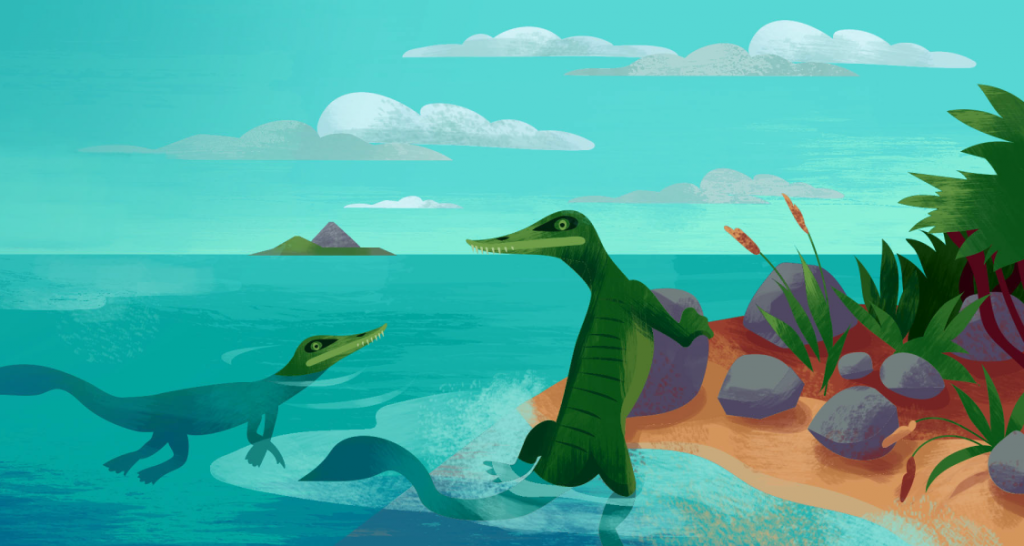
Employment opportunities

Company may, from time to time, post Company employment opportunities on the Site and/or invite users to submit resumes to Company. If you choose to submit your name, contact information, resume and/or other personal information to Company in response to such employment listings, you are authorizing Company to use this information for all lawful and legitimate hiring, employment and other business purposes. Company also reserves the right, at its discretion, to forward such information to Company’s affiliates for their legitimate business purposes. Nothing in this Agreement or contained on the Site will constitute a promise by Company to review any such information, or to contact, interview, hire or employ any individual who submits such information.

The Digital Millennium Copyright Act of 1998 (“DMCA”) provides recourse for copyright owners who believe that material appearing on the Internet infringes their rights under U.S. copyright law. If you believe that any material residing on or linked to from the Site infringes your copyright, please send (or have your agent send) to Company’s Copyright Agent a notification of claimed infringement with all of the following information: (a) identification of the copyrighted work claimed to have been infringed, or, if multiple copyrighted works are covered by a single notification, a representative list of such works; (b) identification of the claimed infringing material and information reasonably sufficient to permit us to locate the material on the Site (such as the URL(s) of the claimed infringing material); (c) information reasonably sufficient to permit us to contact you, such as an address, telephone number, and, if available, an e-mail address; (d) a statement by you that you have a good-faith belief that the disputed use is not authorized by the copyright owner, the copyright owner’s agent or the law; (e) a statement by you that the above information in your notification is accurate and a statement by you, made under penalty of perjury, that you are the owner of an exclusive right that is allegedly infringed or are authorized to act on such owner’s behalf; and (f) your physical or electronic signature. Company’s Copyright Agent for notification of claimed infringement can be reached as follows: Copyright Agent, Amplify Education, Inc., 55 Washington Street, Brooklyn, NY 11201; Facsimile: 212-796-2311; Attn: Legal. Company’s Copyright Agent for notification of claimed infringement can also be reached electronically at: legal@amplify.com. Company reserves the right to terminate infringers’ and suspected infringers’ Accounts or their access to or use of the Site.

Notice for California residents

Under California Civil Code Section 1789.3, California users are entitled to the following consumer rights notice: If you have a question or complaint regarding the Site, please contact us by writing to Amplify Education, Inc., 55 Washington Street, Brooklyn, NY 11201 or by calling us at 212–213–8177 or sending a fax to 212–796–2311. California residents may reach the Complaint Assistance Unit of the Division of Consumer Services of the California Department of Consumer Affairs by mail at 1625 North Market Blvd., Sacramento, CA 95834, or by telephone at (916) 445–1254 or (800) 952–5210.

Other terms

This Agreement does not, and shall not be construed to, create any partnership, joint venture, employer-employee, agency or franchisor-franchisee relationship between you and Company. You may not assign, transfer or sublicense any or all of your rights or obligations under this Agreement without our express prior written consent. We may assign, transfer or sublicense any or all of our rights or obligations under this Agreement without restriction. The failure of Company to exercise or enforce any right or provision of this Agreement will not operate as a waiver of such right or provision. The Section titles in this Agreement are for convenience only and have no legal or contractual effect. References to and mentions of the word “include,” “includes,” “including,” or “e.g.” will mean “including, without limitation.” References to “discretion” will mean “sole discretion.” This Agreement operates to the fullest extent permissible by law. If any provision of this Agreement is unlawful, void or unenforceable, that provision is deemed severable from this Agreement and does not affect the validity or enforceability of any remaining provisions. Without limitation, you agree that a printed version of this Agreement and of any notice given in electronic form shall be admissible in judicial or administrative proceedings based upon or relating to this Agreement to the same extent and subject to the same conditions as other business documents and records originally generated and maintained in printed form. Company will not be responsible for failures to fulfill any obligations due to causes beyond its control.


Please contact us at legal@amplify.com with any questions regarding this Agreement.